
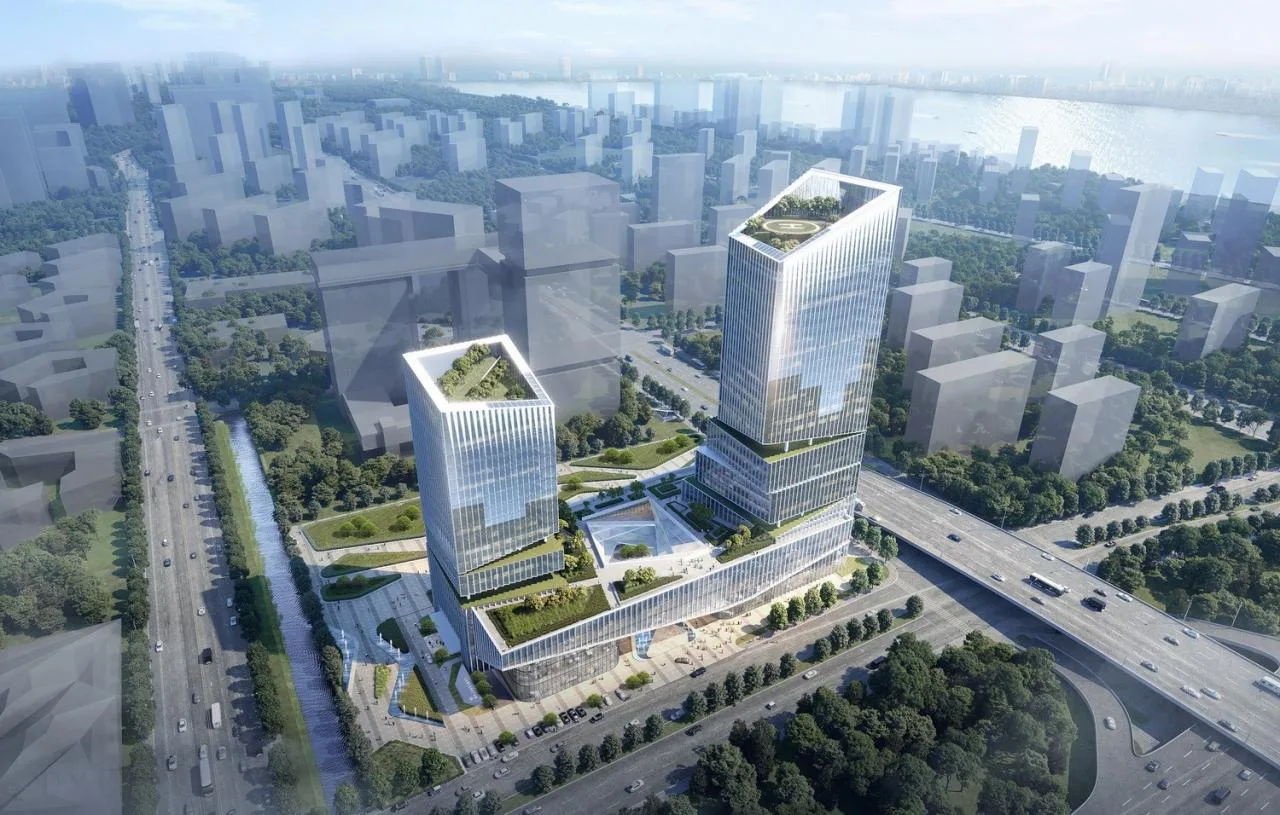
The river and sky blend seamlessly, while the shadows cast by the sails emerge from the sun’s edge.
01 Island Window
Nanjing Jiangxinzhou lies approximately 6.5 kilometers from the city center, bordered by Hexi New City to the east and Jiangbei New District to the west. Known as the only “pearl in the river” developed cohesively in Nanjing, it is a key site for the province and city’s vision of an “ecological technology city and low-carbon smart island.” The project site is adjacent to Jiajiang Bridge, the main gateway connecting the city center to Jiangxinzhou and an essential “window” showcasing the island’s image.
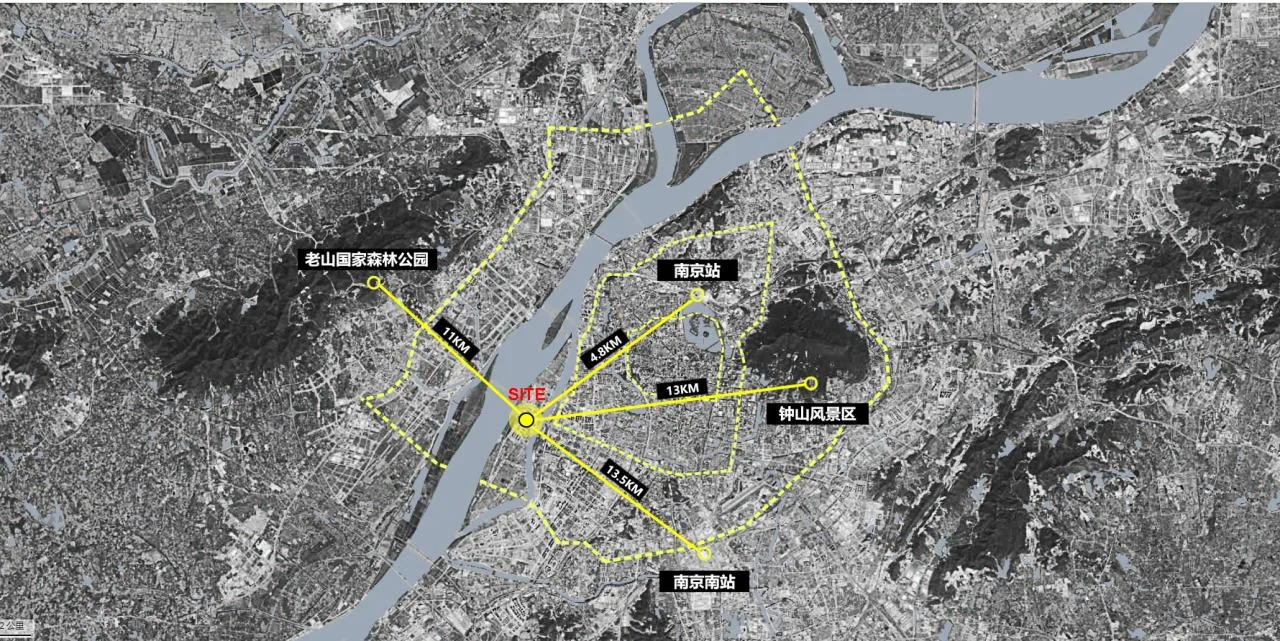
△ Location Analysis
The entire ecological technology island embraces the vision of “gathering global resources and fostering smart innovation,” emphasizing comprehensive ecological development led by high-end technology service industries.
This district focuses on creating a “Future Smart Transportation Industrial Park.” To the west lies the Zhongxin Avenue approach bridge, to the north the Jiajiang Bridge, and to the south the Jiangxinzhou Station of Metro Line 10. This convenient transportation network supports a Transit-Oriented Development (TOD) model. The site is located east of Singapore’s Eco Tech Island and just steps away from the river landscape.
02 Riverside Twin Towers
The site, designated for scientific research and design, covers 18,331.55 square meters with a building area nearing 115,000 square meters. It features a floor area ratio of 4.5 and consists of two towers with a podium. The west tower’s height is capped at 120 meters, while the east tower is limited to 80 meters.
How can the design respond to the city’s context, leveraging the site’s scenic and transportation advantages, while focusing on the theme of “future travel” and creating a “low-carbon, human-centric, and boundaryless” industrial park of tomorrow?
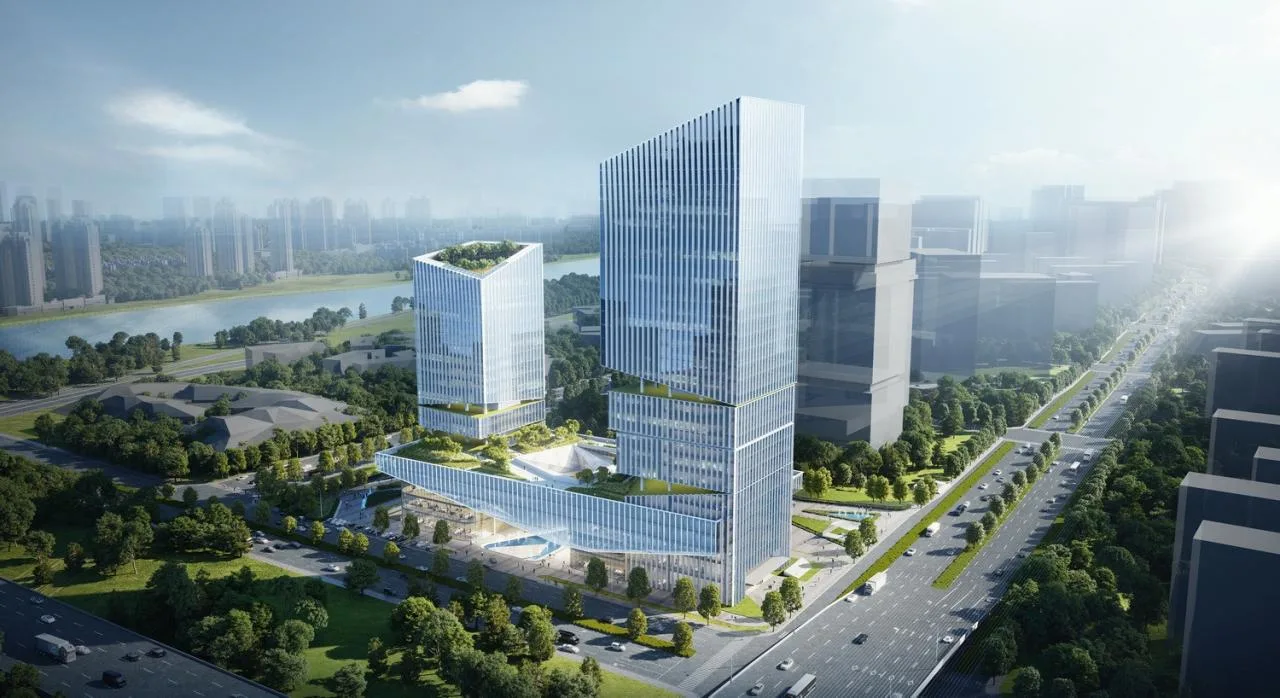
Taking into account the urban interface facing the Jiajiang Bridge and the landscape views toward Jiangxin Square, the two towers are staggered to create a visual corridor opening to the river. The podium’s lower middle floor is elevated, connecting the urban park to the north with the tree-lined square to the south, forming a landscape axis. This elevated space blurs the boundary between architecture and landscape, offering flexible areas for leisure and social interaction.
03 River Heart Boat
The design draws inspiration from poetic descriptions of Jiangxinzhou, historically a docking point for ships. The twin towers resemble sails, with the podium acting as the “boat” carrying them—imbuing the design with symbolic meaning. The separation between tower and podium creates an aerial garden that enhances a sense of lightness. The podium’s corner slopes downward, opening the building to its surroundings and reinforcing the image of a “boat at the river’s heart.”
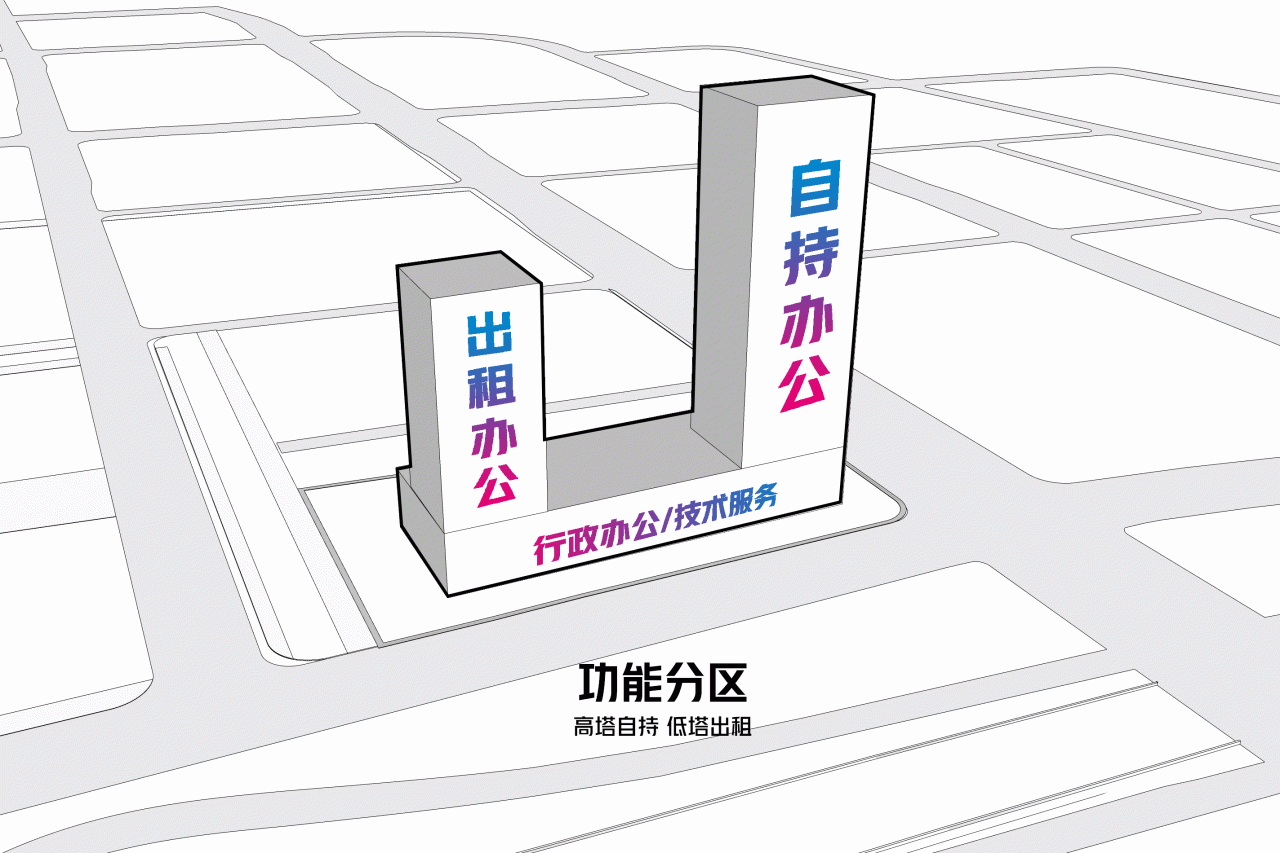
△ Block Generation
The west tower is a self-sustaining office building standing at 119.2 meters with typical floor plates around 1,800 square meters. It features a traditional central core tube layout and a floor height of 4.2 meters, accommodating diverse modern office needs. The east tower, a sales office building at 77.2 meters tall with floor plates of approximately 1,200 square meters, employs a skewed tube design to maximize river views. A two-story lobby faces the waterfront square on the tower’s east side.
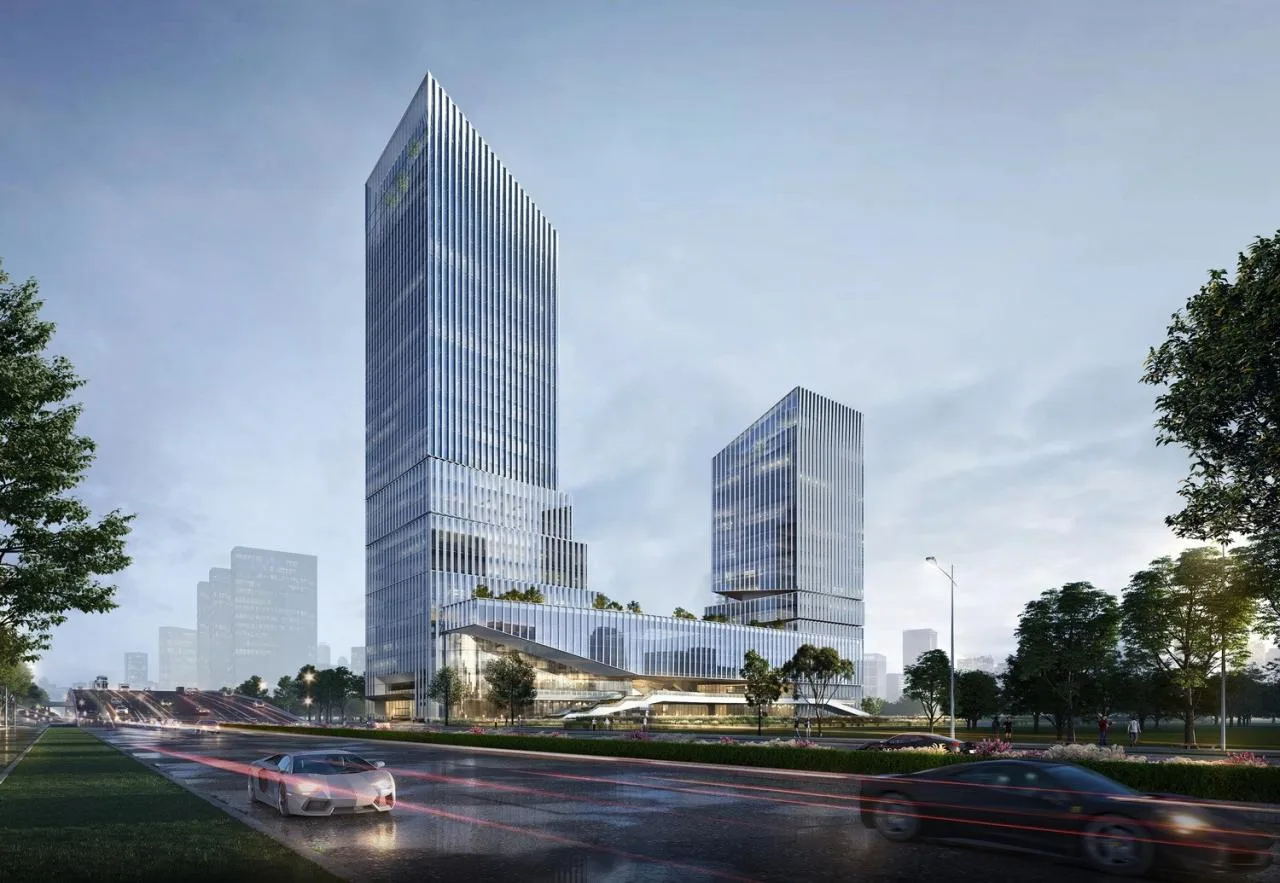
The podium’s ground floor is a four-story structure divided into two blocks—east and west. The west side houses administrative offices, while the east side serves public functions. Both sections have independent elevated entrances and are connected to upper floors via steps on the southern side.
04 White Egret Wings
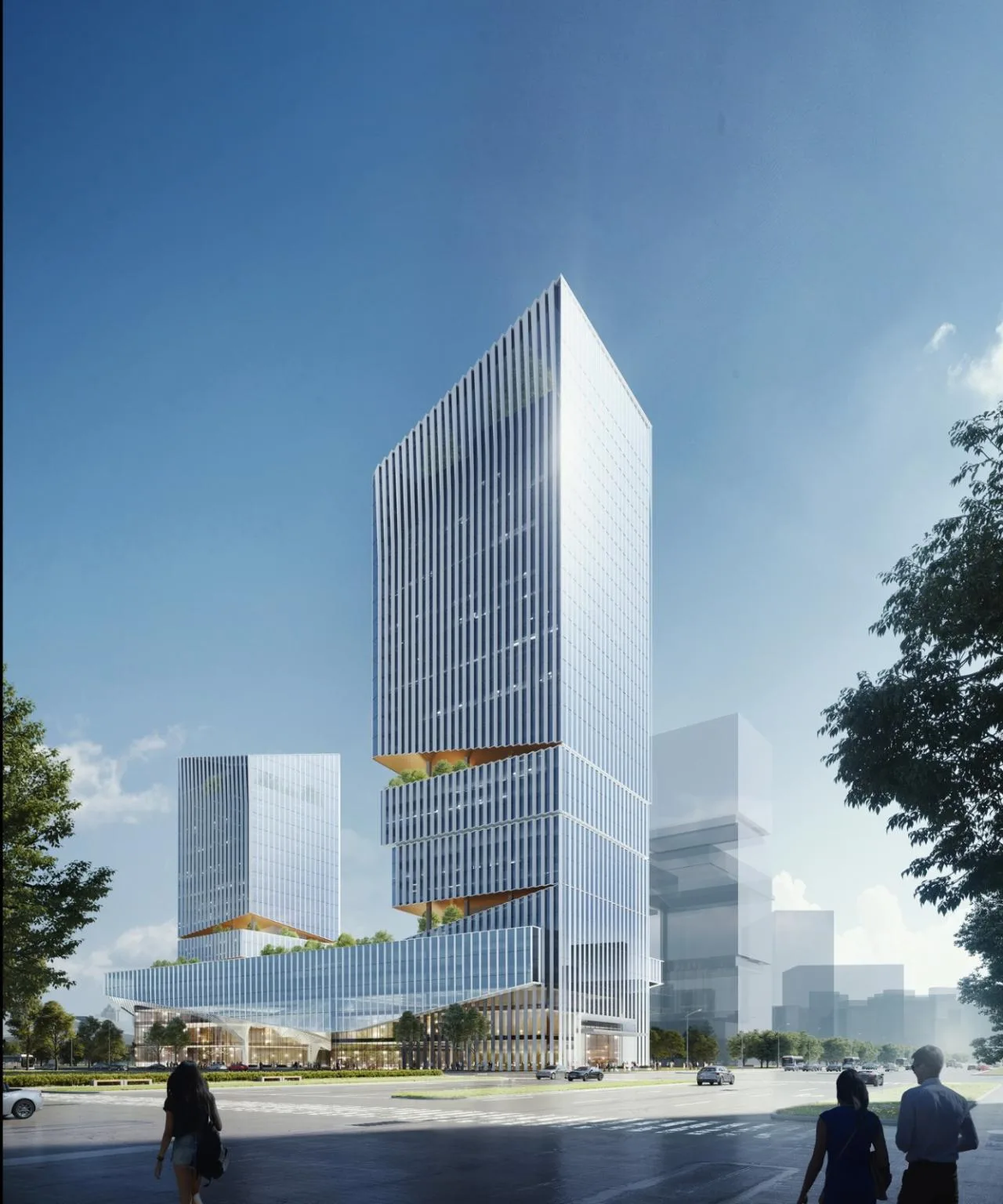
The building facades maintain a cohesive design language while varying details. The north and south tower facades feature folding windows that direct interior views toward the riverside while adding rich texture on the exterior, reflecting the river’s shimmering waves back to the city.
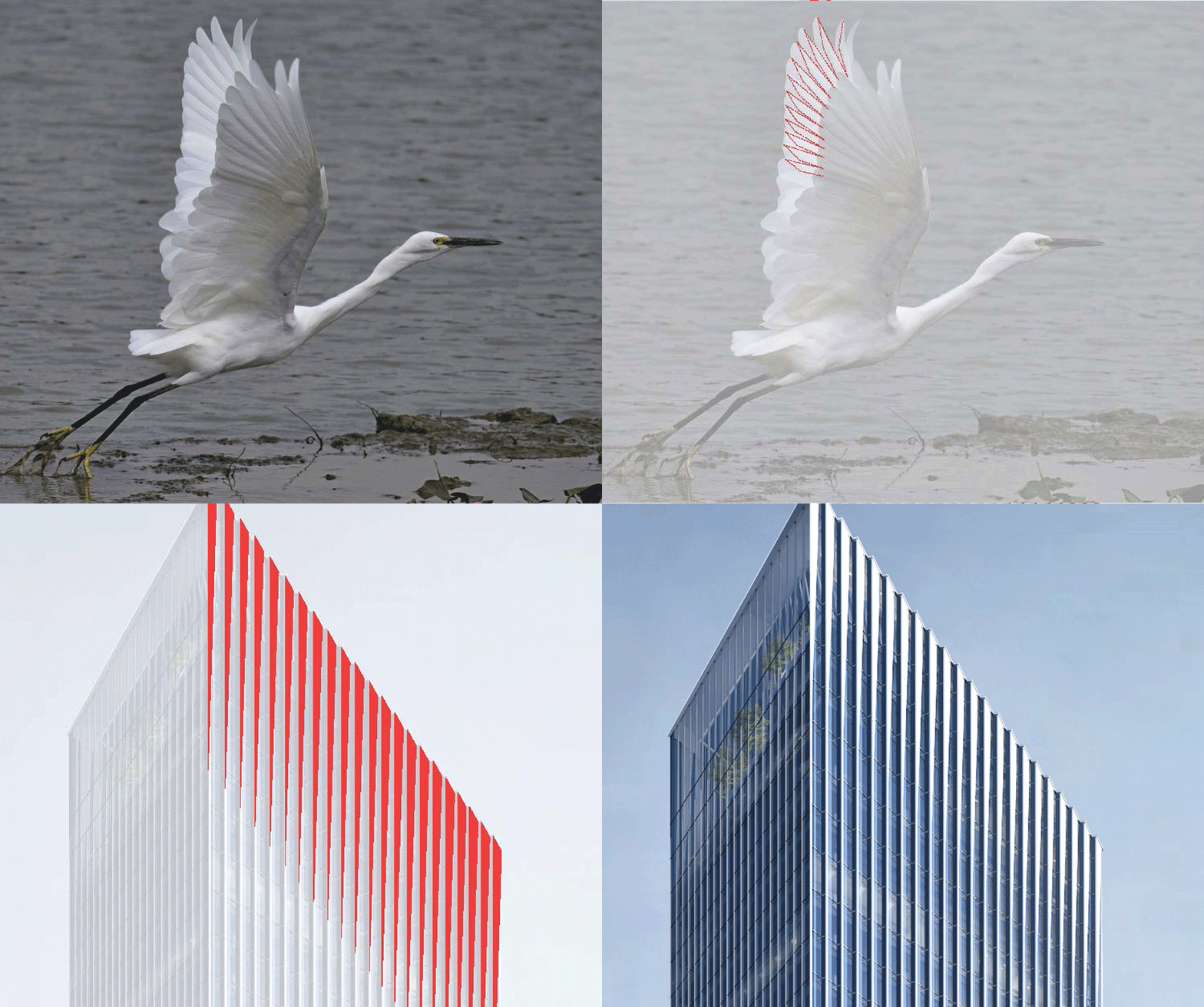
The upward lines evoke the wings of a white egret, with white aluminum panels folding and expanding toward the tower crown, conveying a sense of flight. The courtyard skin in the podium also draws inspiration from “wings,” spiraling upward from the first floor to the rooftop.
05 Floating Oasis
The south-facing, tree-lined plaza blends modern urban corridors with office and leisure spaces, extending the building’s linear elements to create floating oases. Free-form landscaping organizes pedestrian flows, entrances, and riverside views into a cohesive, empathetic public environment that harmoniously integrates with the architecture.
Landscape design addresses four distinct functional levels: the south-facing tree-lined square, waterfront square, office courtyard, and the podium’s green rooftop.
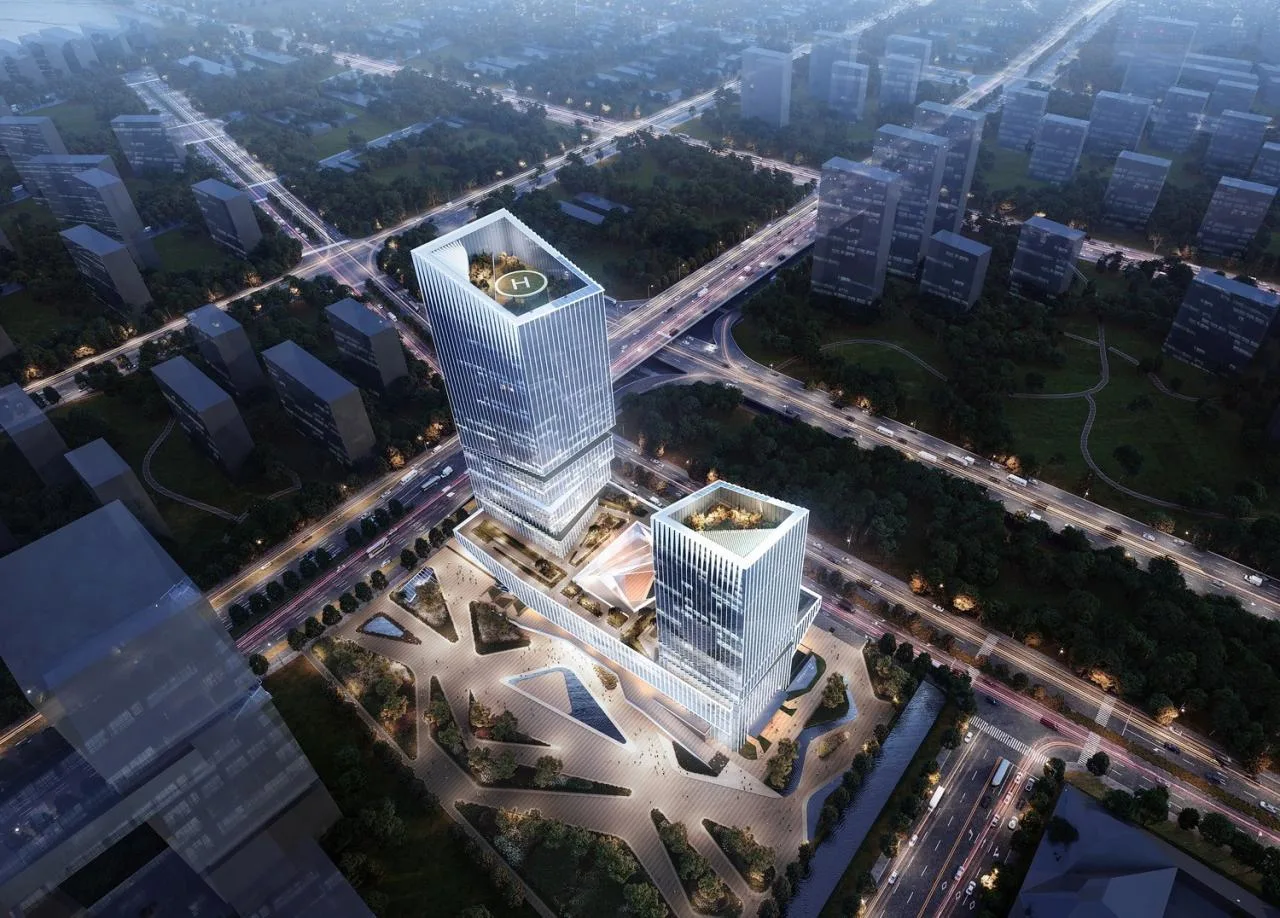
At the urban scale, the south side accommodates heavy foot traffic from public transit along the street. Architectural oblique lines guide pedestrian flow, while water features and linear designs in paving, pools, and seating create an artistic “mudflat” atmosphere. This design seamlessly connects buildings, landscapes, and pedestrian movement through organic, free-form shapes.
Large steps and ramps link the outdoor landscape to the building’s vertical space, connecting with a “slow-moving aerial system” on the west side. This multi-level pedestrian network integrates landscape and architecture harmoniously.
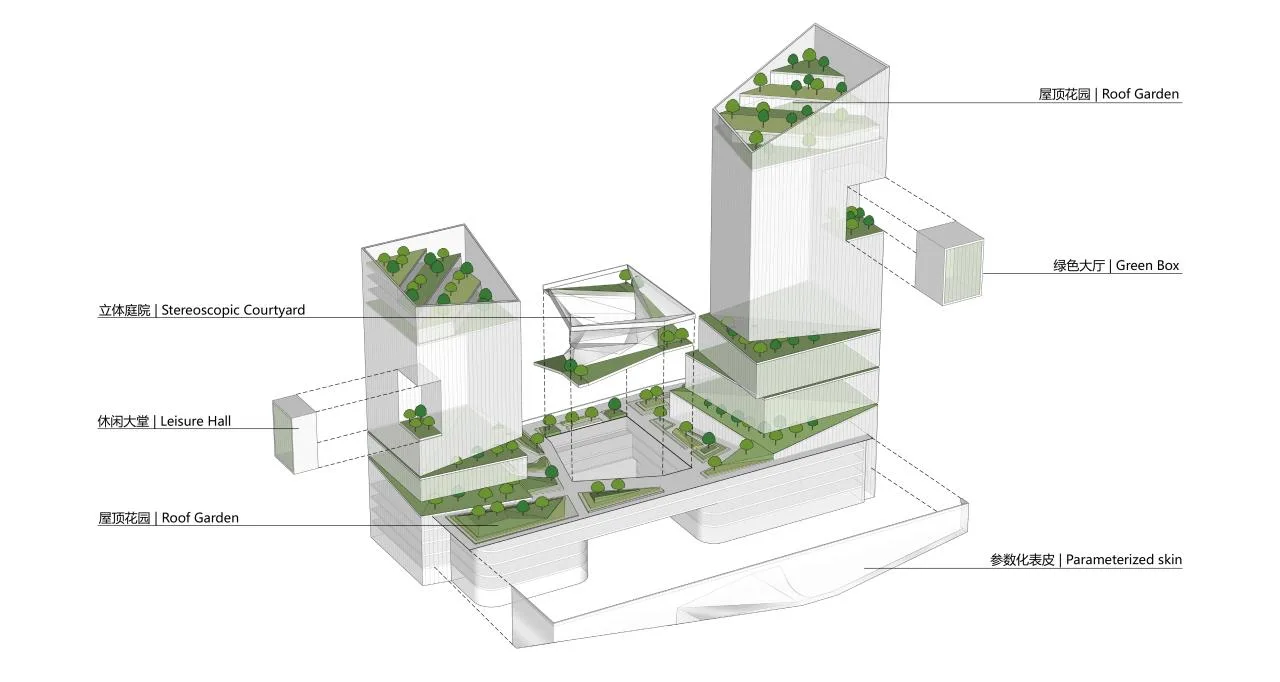
△ Landscape Structure
Architectural space incorporates an aerial ecological garden created by “cutting” the facade, enabling seamless connections between office spaces and outdoor gardens. The podium roof’s fifth facade features green roofs surrounding a vibrant atrium and tower, forming a genuine “urban green boat.”
06 Future Travel
The project plans to establish a city-level Future Travel Experience Hall alongside public service platforms for testing and certification, technology R&D, and software simulation. It will offer incubation, investment, brand promotion, and other support services for intelligent driving companies. Aligned with the “New Public Transport City” initiative, the project aims to gather upstream and downstream industry resources in intelligent driving, creating a “Future Travel Industry Park” where enterprises focusing on smart travel, roadside equipment, data services, and related solutions converge.
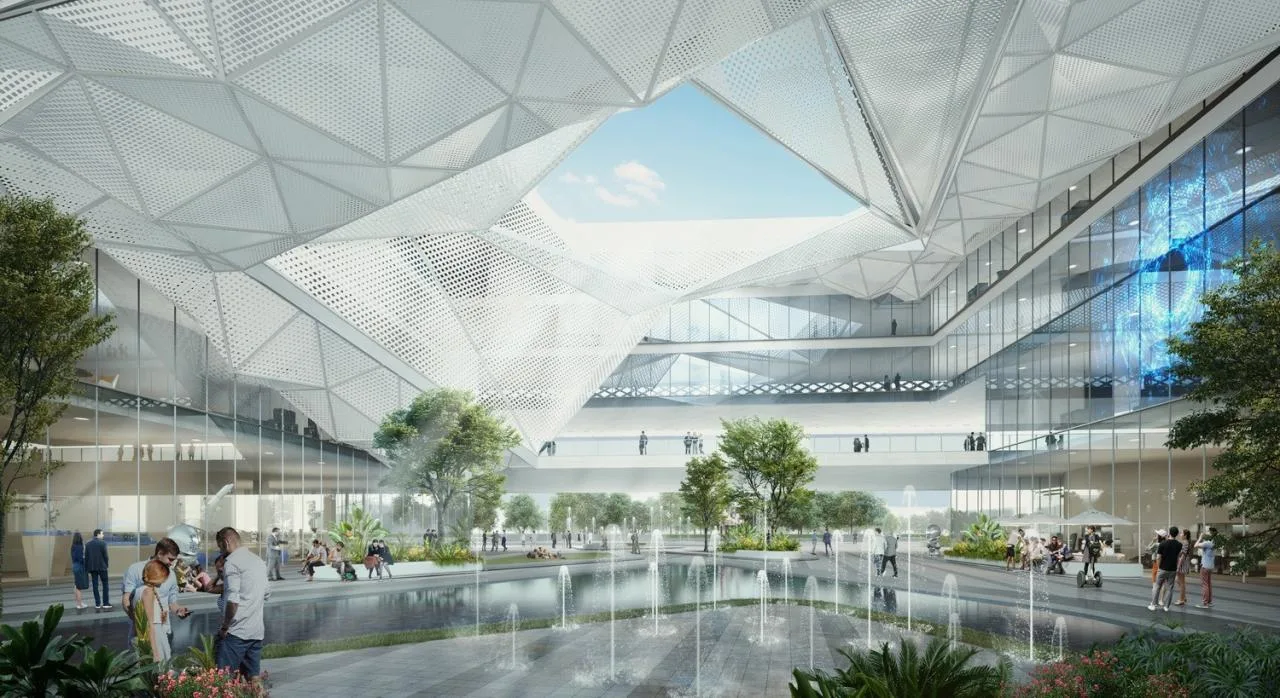
Multiple transportation modes are central to the project’s concept. Interfaces for subway, ground transit, autonomous driving, aerial slow travel systems, and aircraft are integrated to promote a green, low-carbon lifestyle.
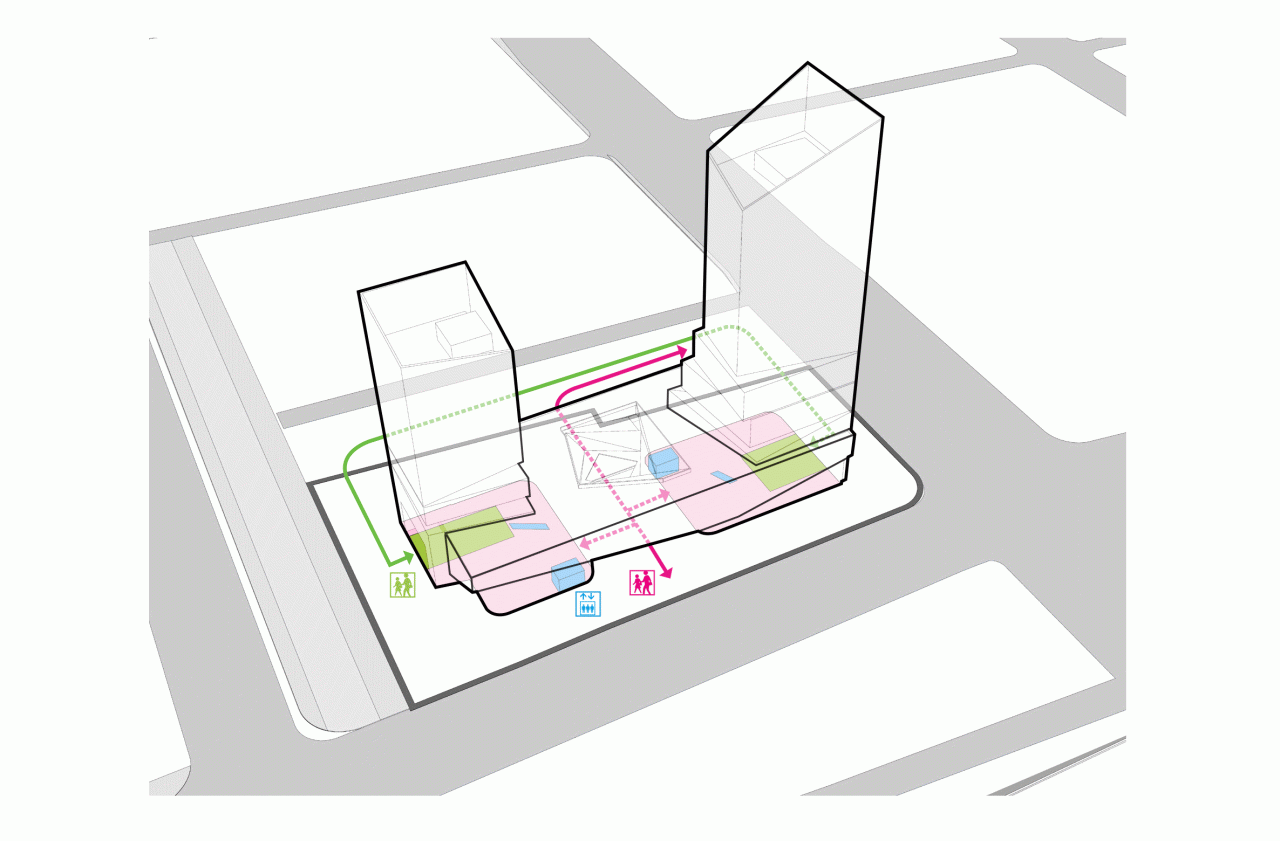
△ Streamline Analysis
The majority of office workers and visitors approach from the southwest subway exit, which links directly to the large tree-lined square to the south, creating a high-quality urban open space. From the square’s southern edge, visitors can access various areas on the first floor or ascend to the landscape platform via escalators and engaging stairways.
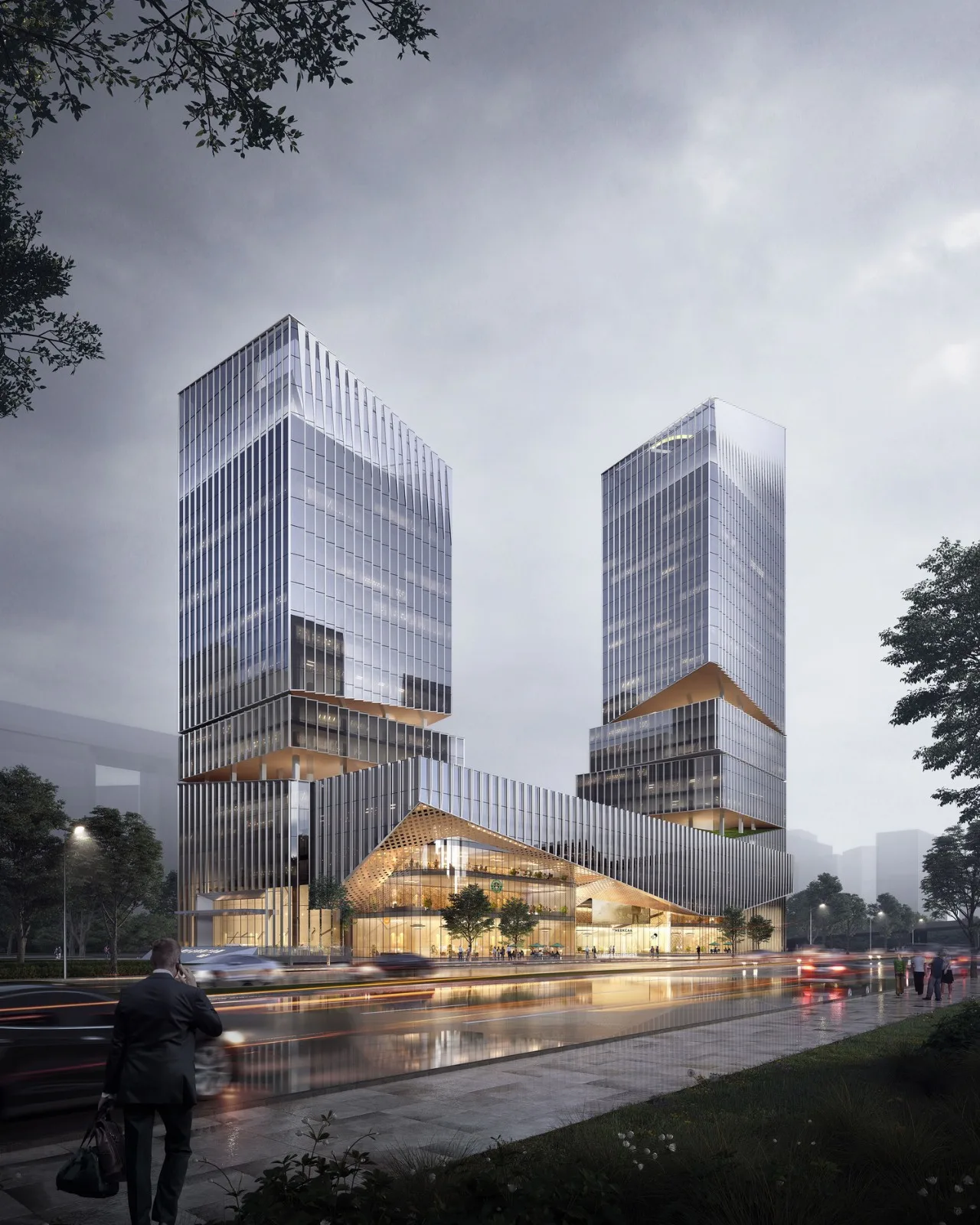
The platform connects to the “Air Slow Moving System,” leading the way toward a future of green transportation and low-carbon living. A ramp on the southeast side accommodates future intelligent robot activities, and the tower roof includes a small apron area reserved for potential “flying” travel innovations.
Project Drawings
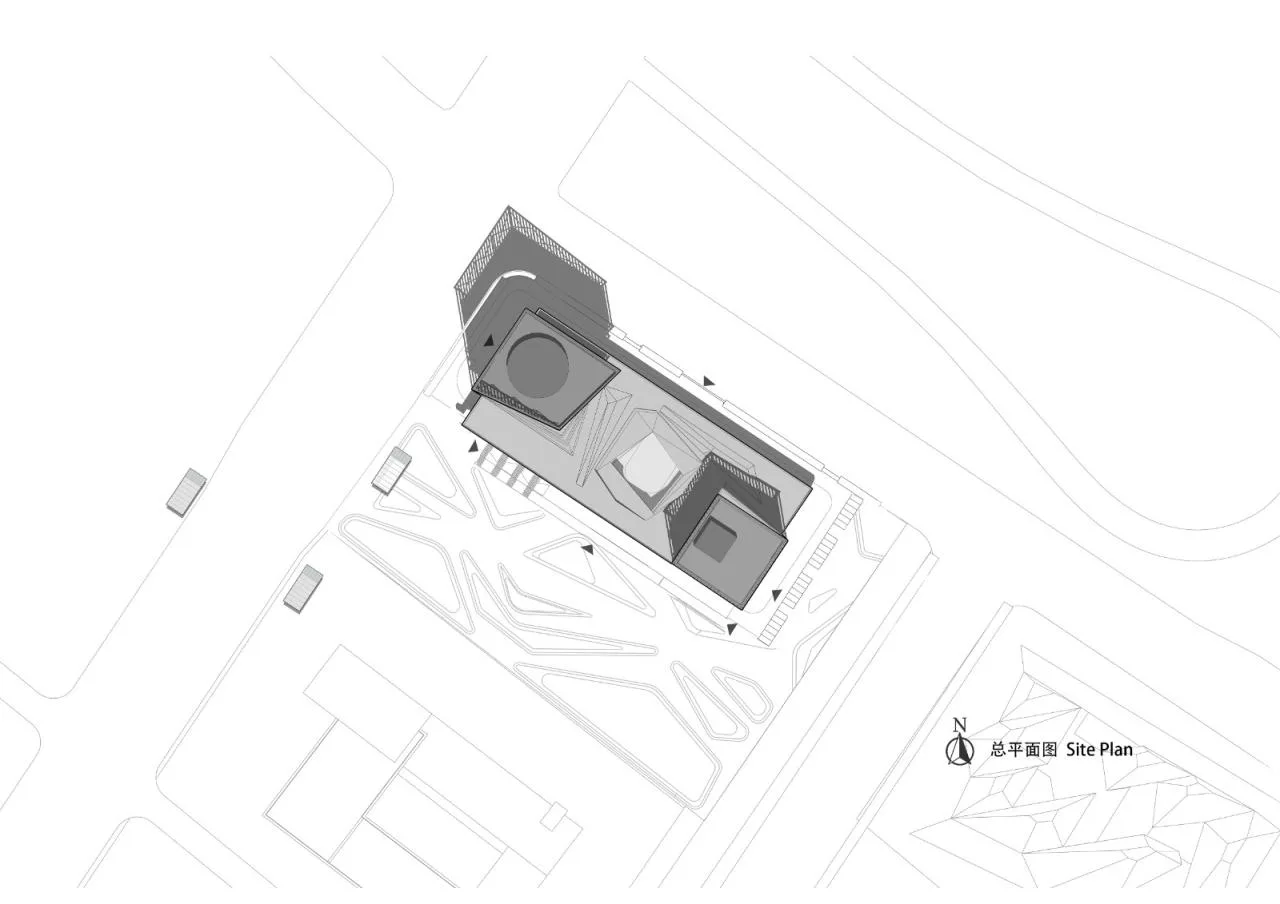
△ General Layout Plan
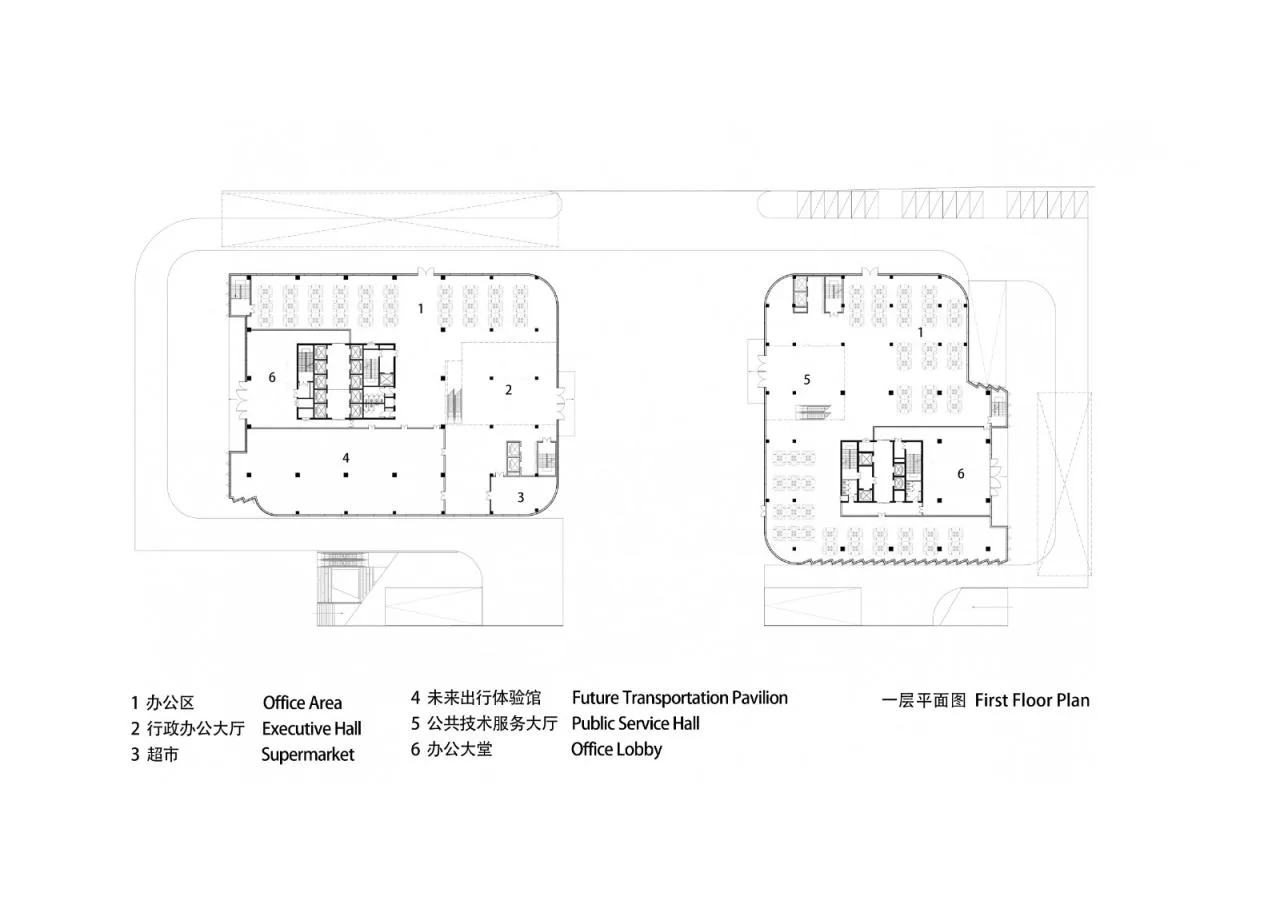
△ First Floor Plan
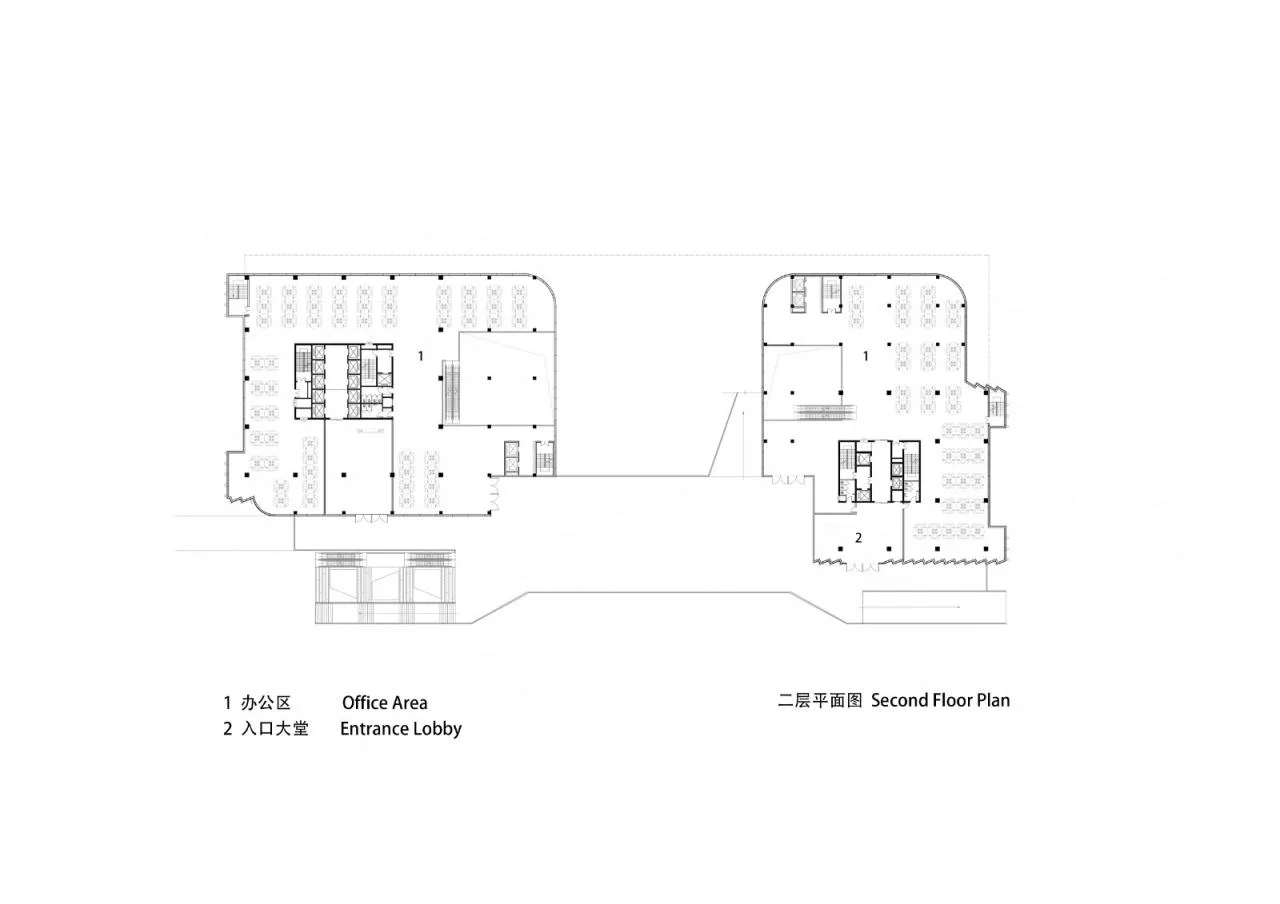
△ Second Floor Plan
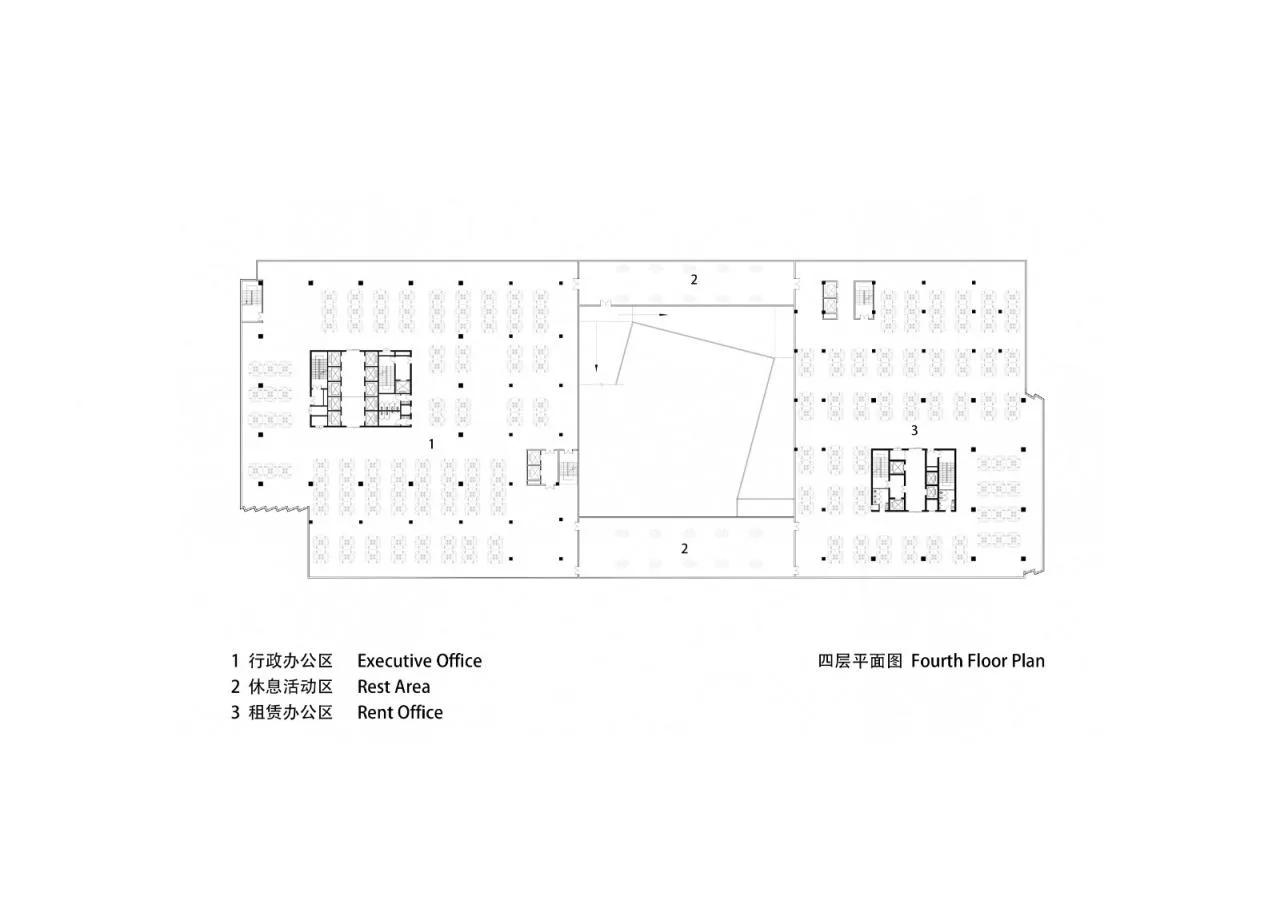
△ Fourth Floor Plan
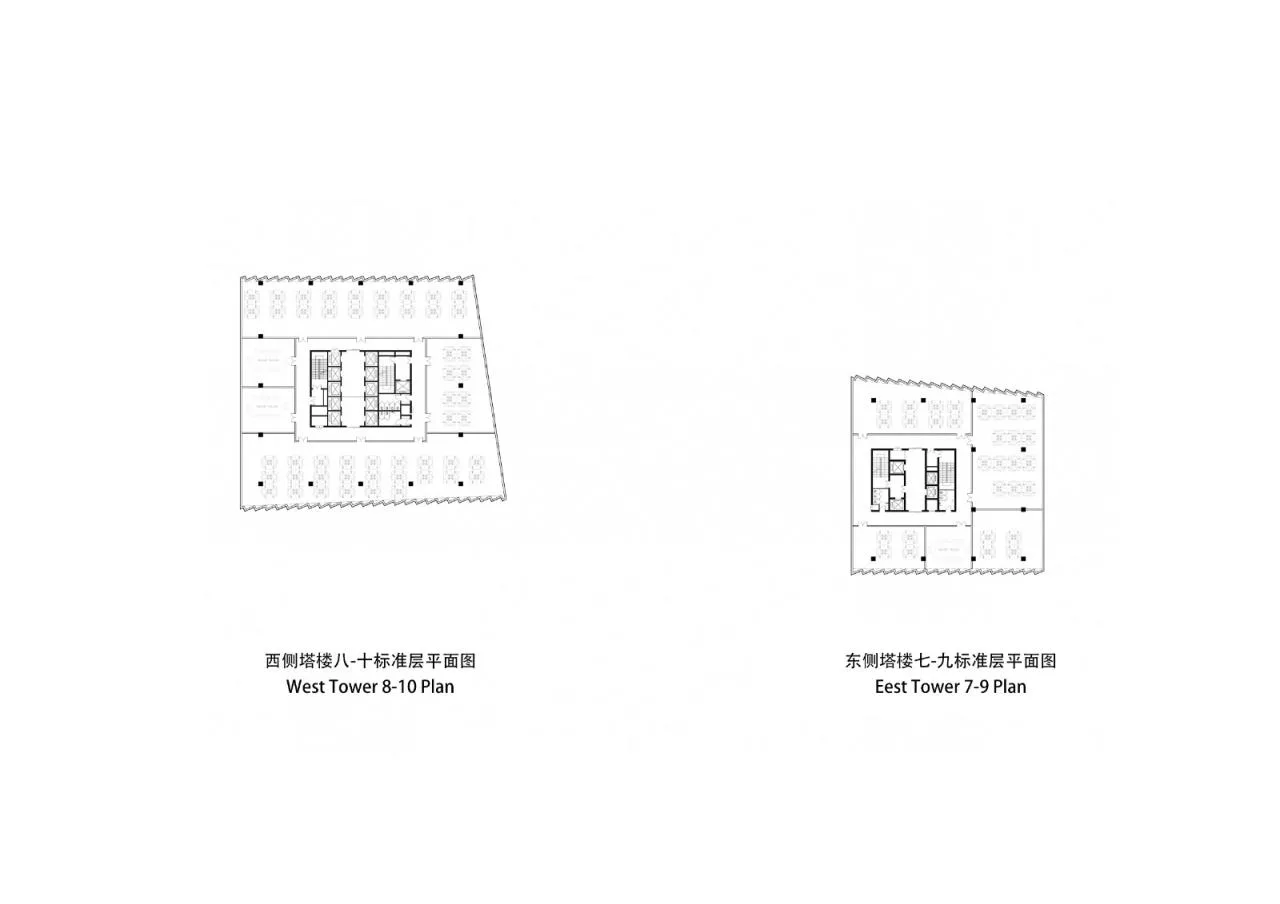
△ Standard Floor Plan
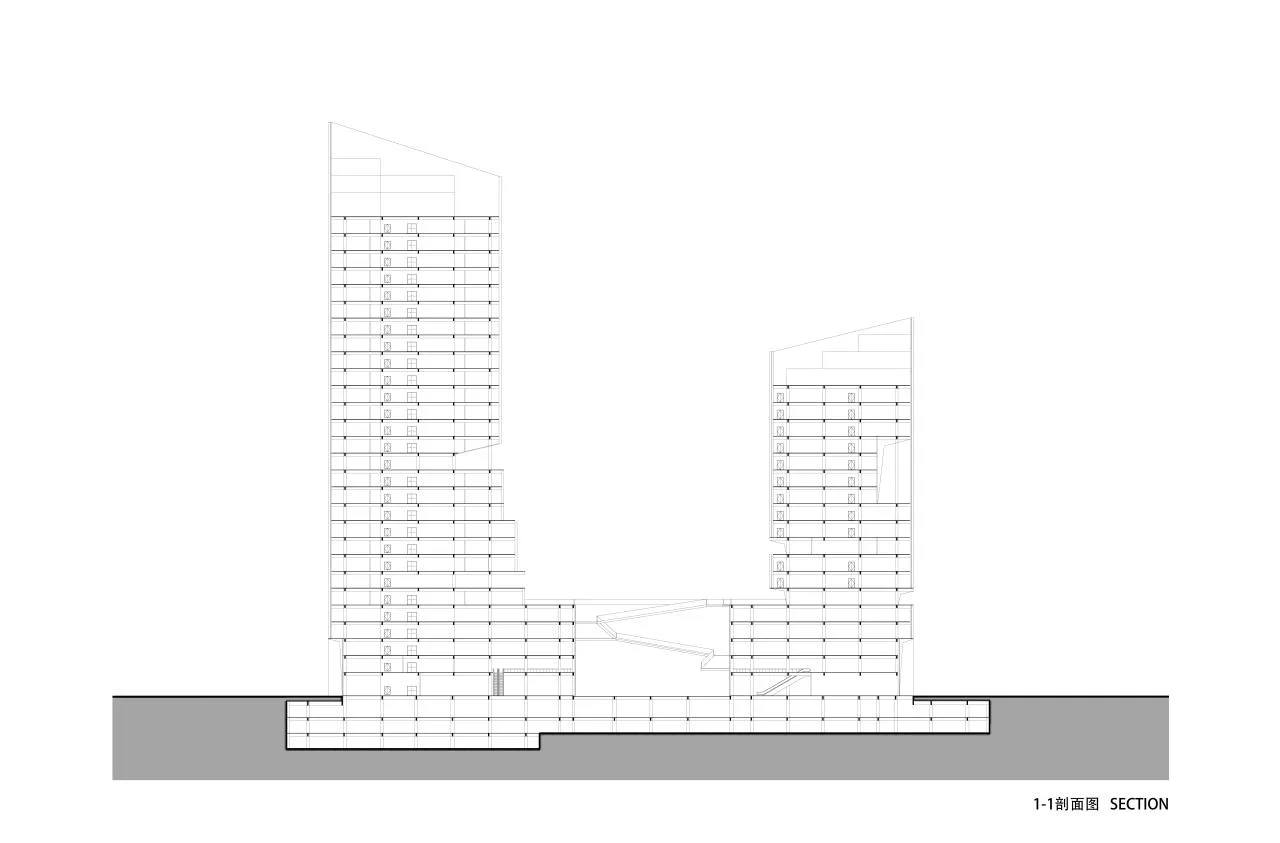
△ Section Diagram
Project Information
Project Name: Architectural Concept Design for Plot 14-001 of Nanjing Jiangxinzhou Ecological Technology Island
Design Company: GEN Jianhe Studio
Design Date: April 2021
Site Area: 18,331.55 square meters
Building Area: 115,377 square meters
Design Team: Zhang Xin, Xu Jie, Wang Shasha, Huang Hao, Zhang Supervisor, Zhu Tong















Must log in before commenting!
Sign Up