
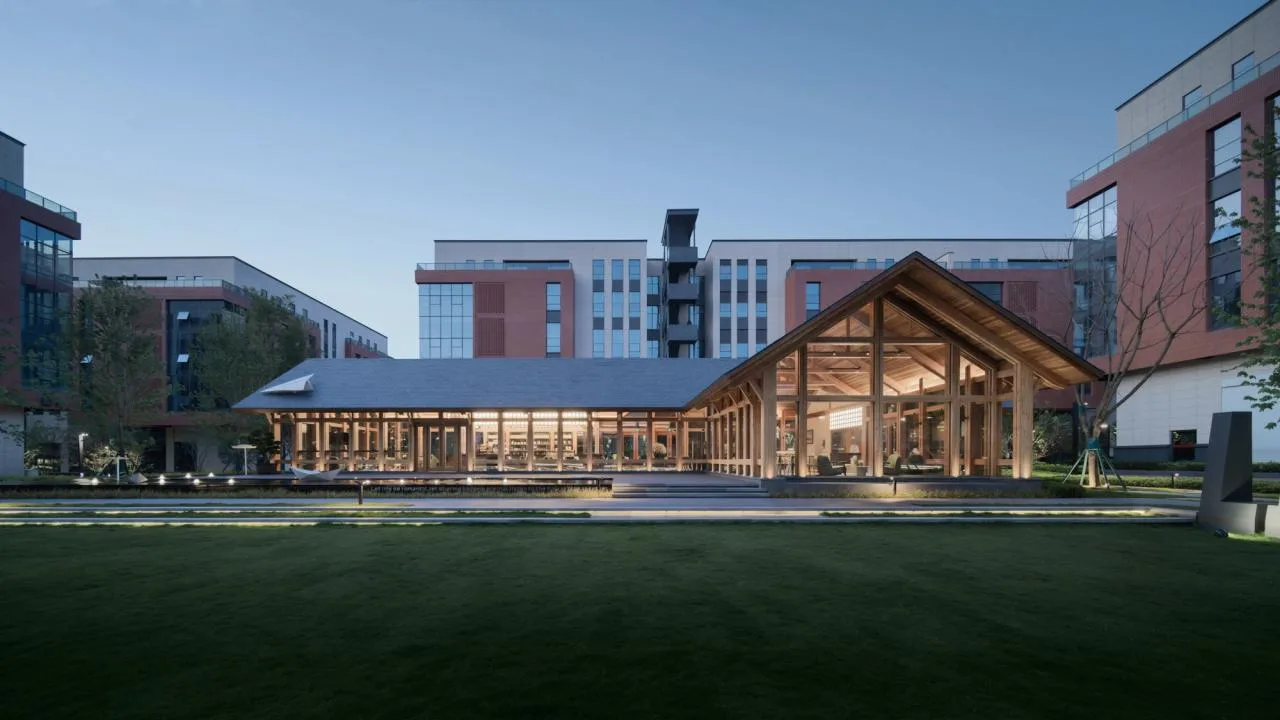
Coffee Shop Overview
The design embraces the concept of “wooden structure – local – warm architecture,” integrating a multidimensional approach of “nature, culture, and technology,” and follows a hierarchical strategy focusing on “material, structure, and space.”
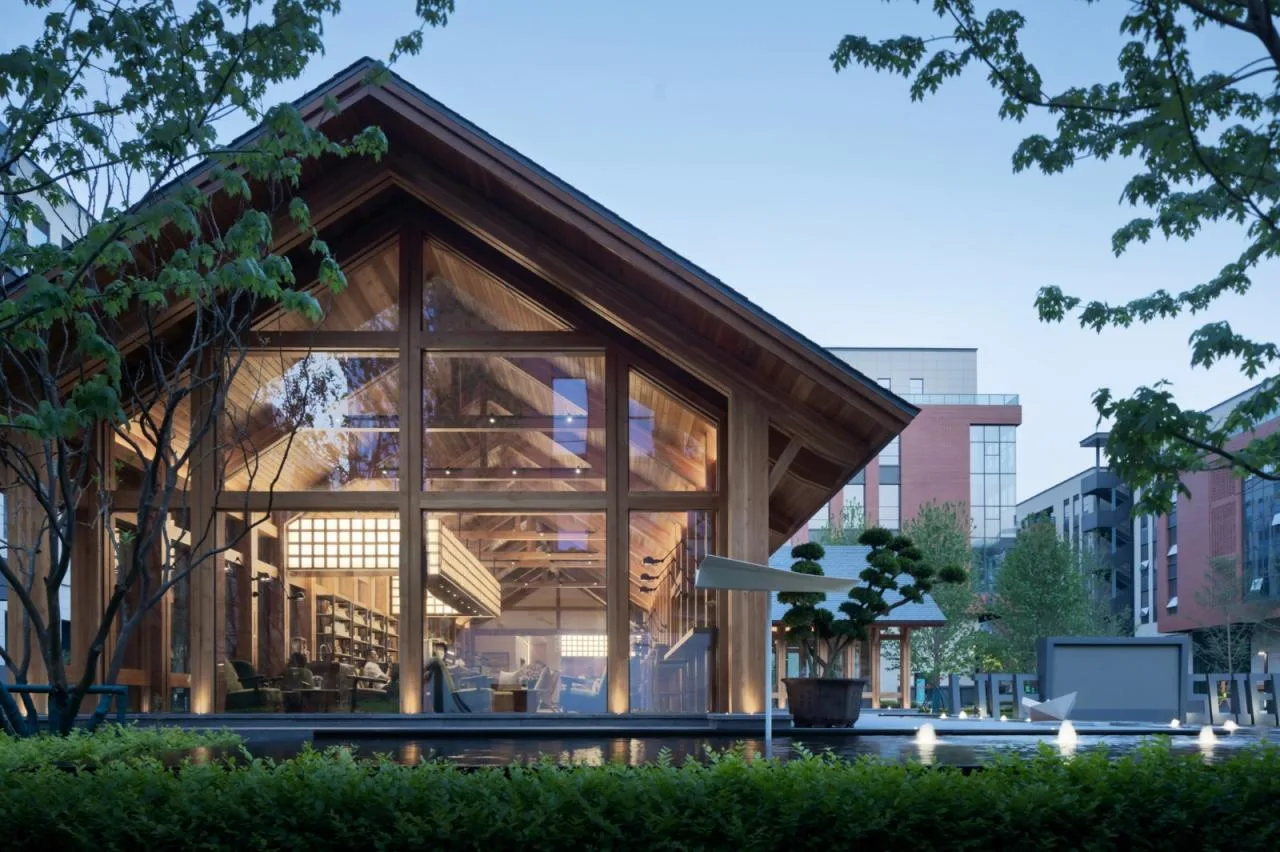
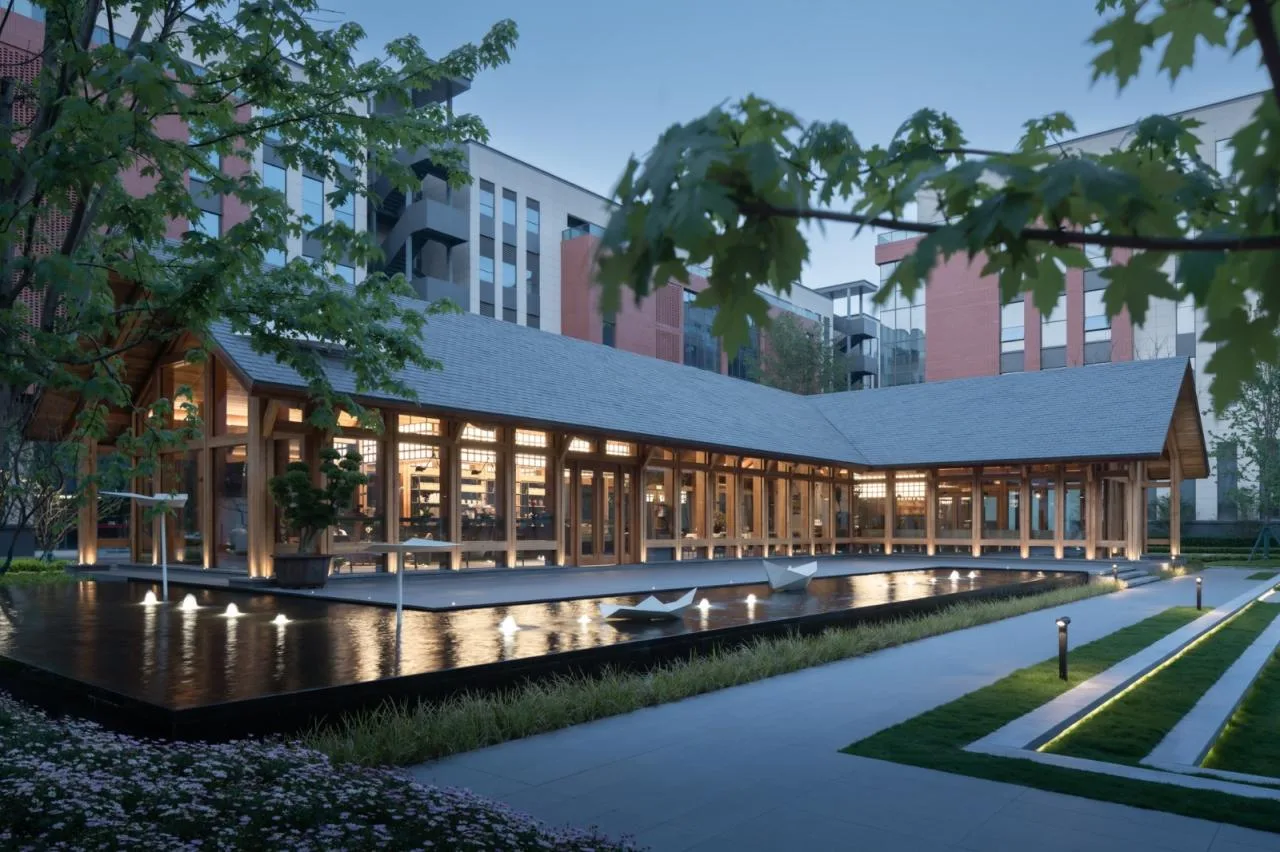
Dadi (International) Life Science Park is situated in Liangjiang Water and Soil New City, Chongqing, covering approximately 400 acres. The planned construction area is about 600,000 square meters, with a total investment nearing 2 billion yuan. Located adjacent to the Chongqing International Expo Center, it forms part of the Chongqing Liangjiang New Area Science and Technology Innovation Base, a key project supported by the Ministry of Science and Technology of China.
The park specializes in biopharmaceutical industries, backed by both the Chongqing Municipal Government and the Liangjiang New Area Management Committee. It serves as the core hub for the Chongqing Liangjiang New Area Overseas Students Entrepreneurship Park Incubation Center and is a significant municipal park developed through a government-enterprise partnership. The first phase aims to attract 22 biopharmaceutical companies, establishing a new center for the international biopharmaceutical industry cluster.
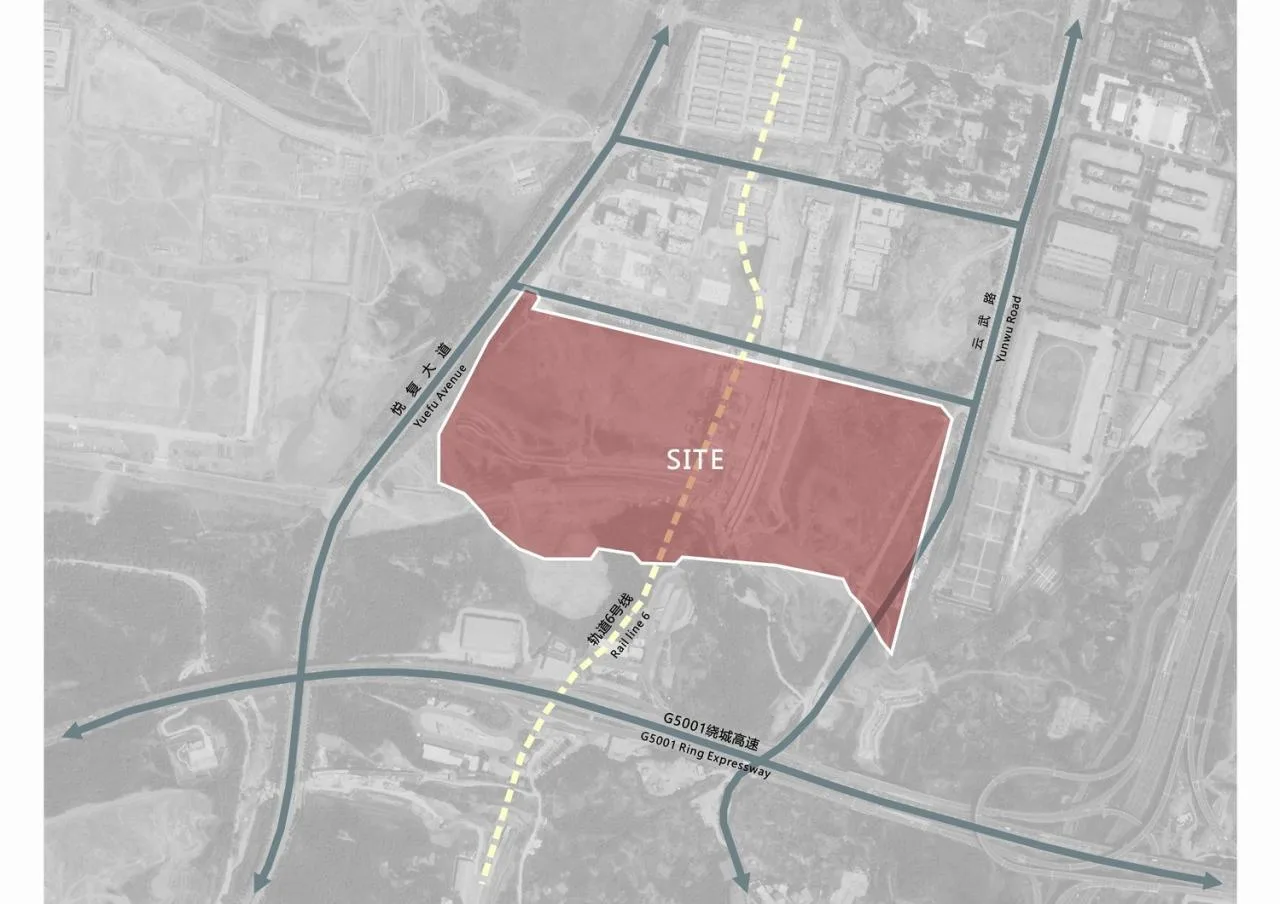
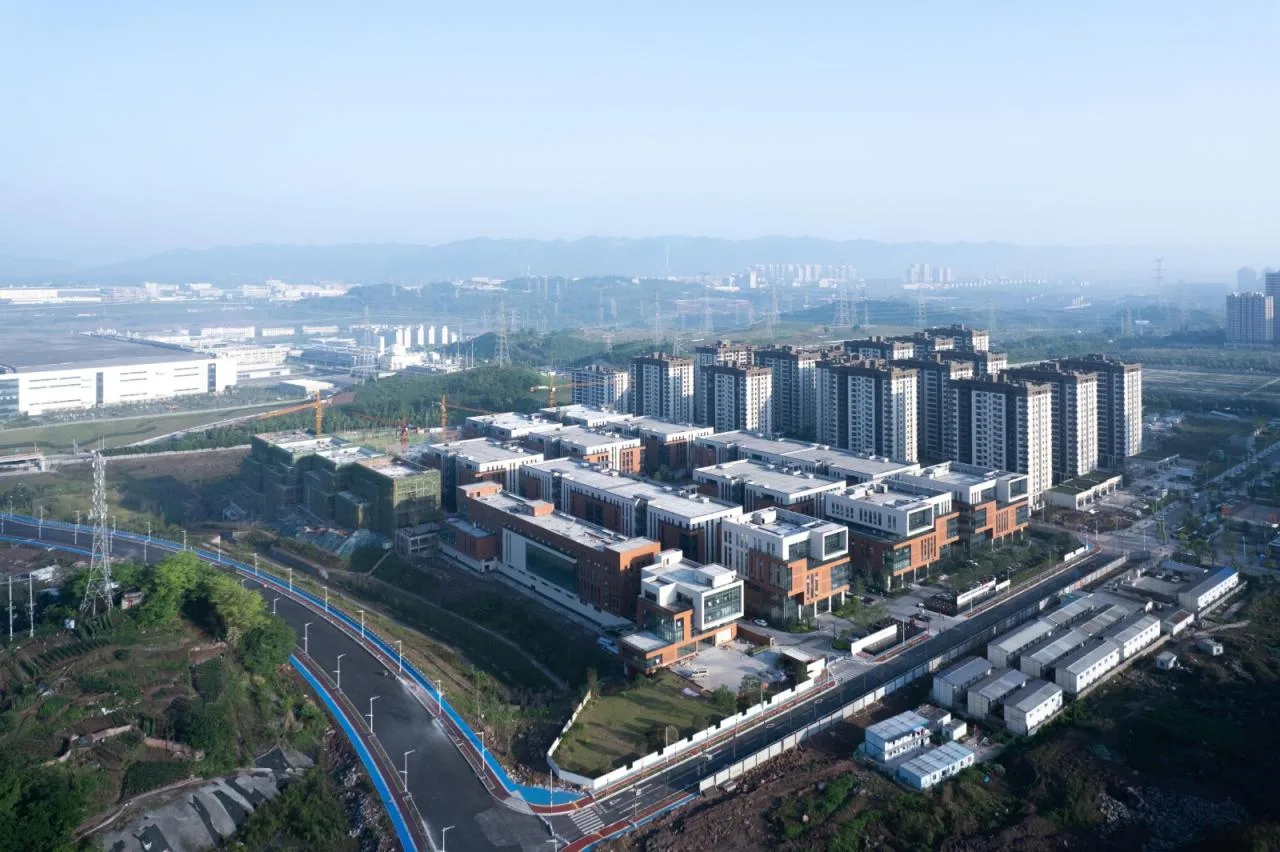
As an industrial project targeting production and R&D enterprises within the high-tech medical sector, the architect reserved a central 3,000 square meter plot within this densely built park specifically for the café. This space aims to enhance the environmental quality throughout the park.
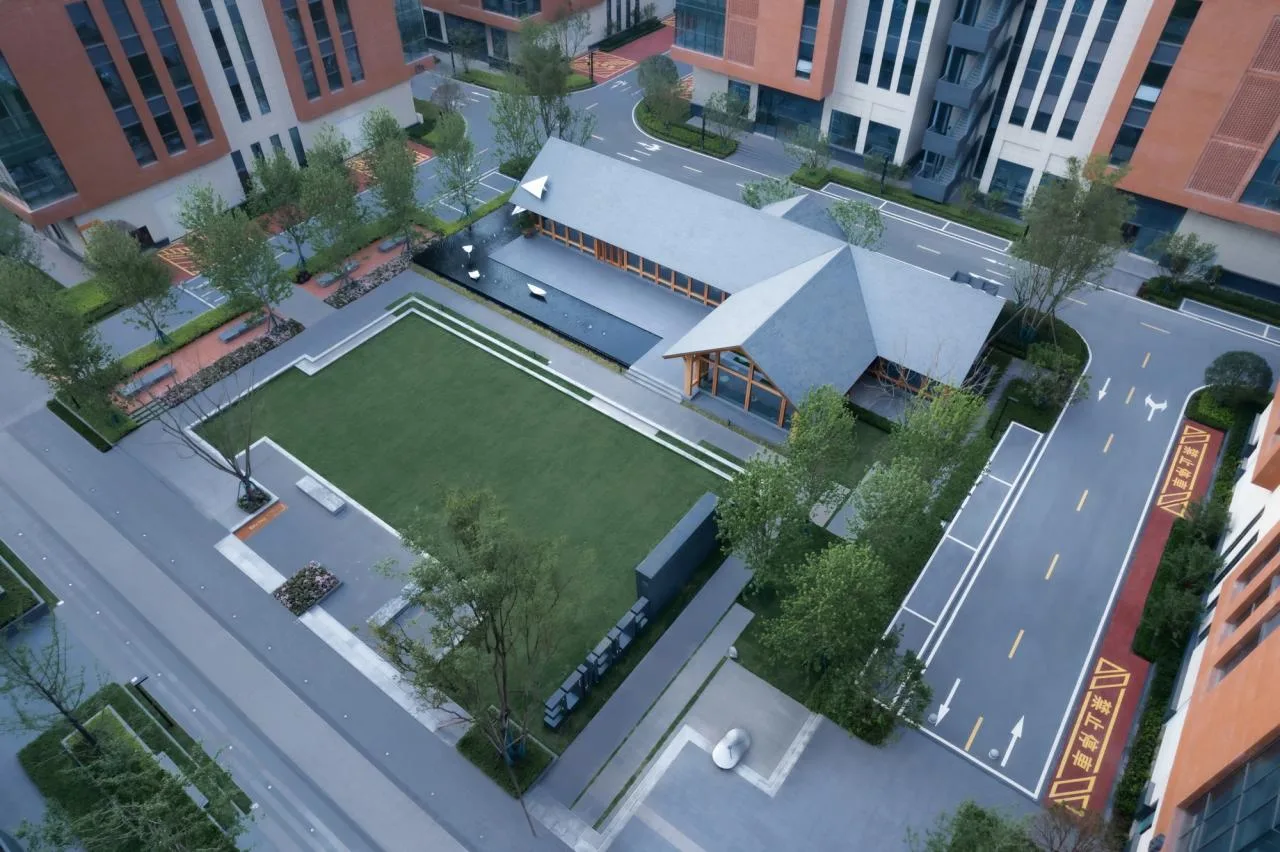
Wood is a vital building material renowned for its natural, eco-friendly, green, low-carbon, and renewable properties—qualities unmatched by other materials. Its organic composition creates a warm and inviting atmosphere, fostering positive emotions for occupants. Research shows that wood reduces stress and promotes health recovery. Reflecting this, the designer embraced the concept of “warm architecture” for this supporting building within the science park.
Warm Architecture Concept
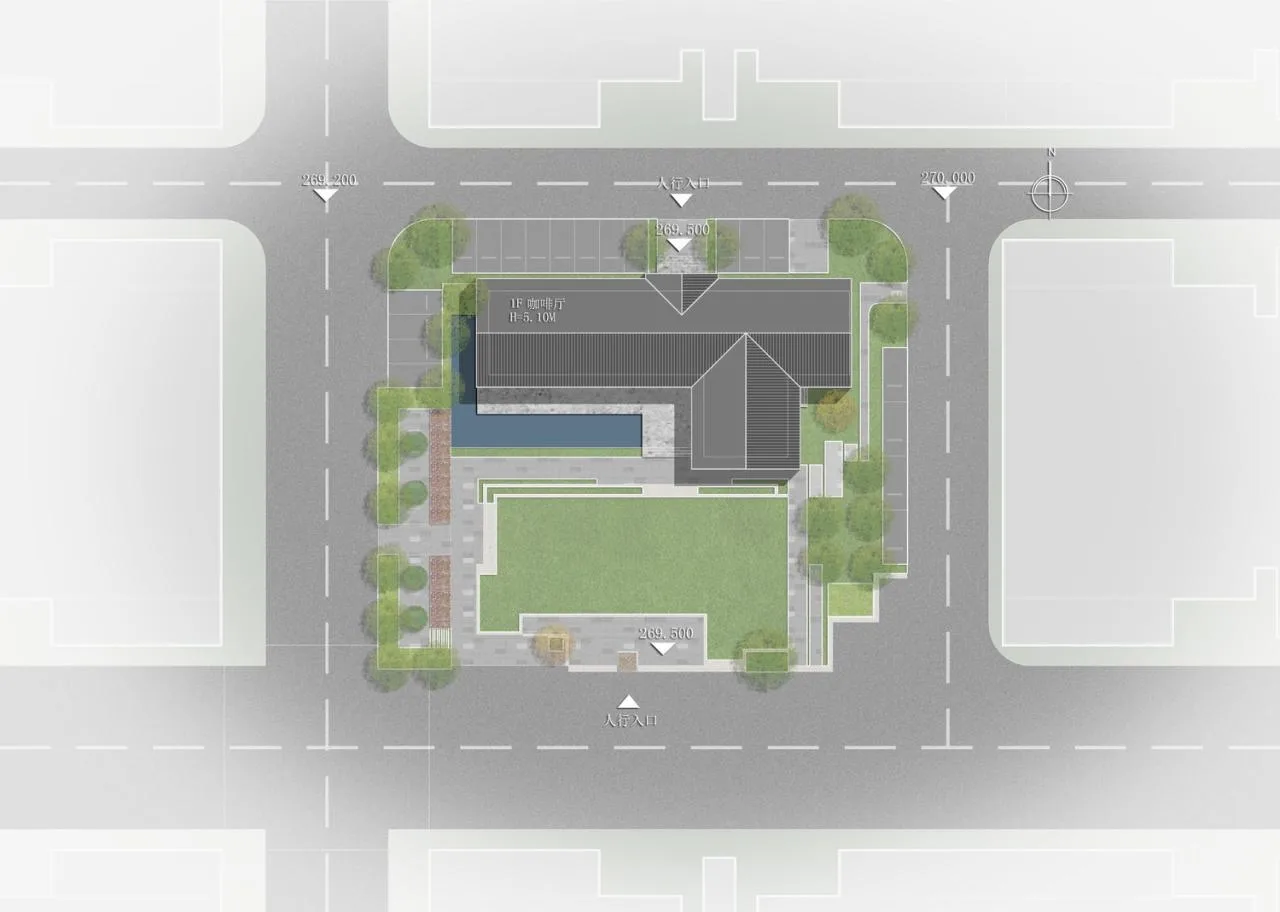
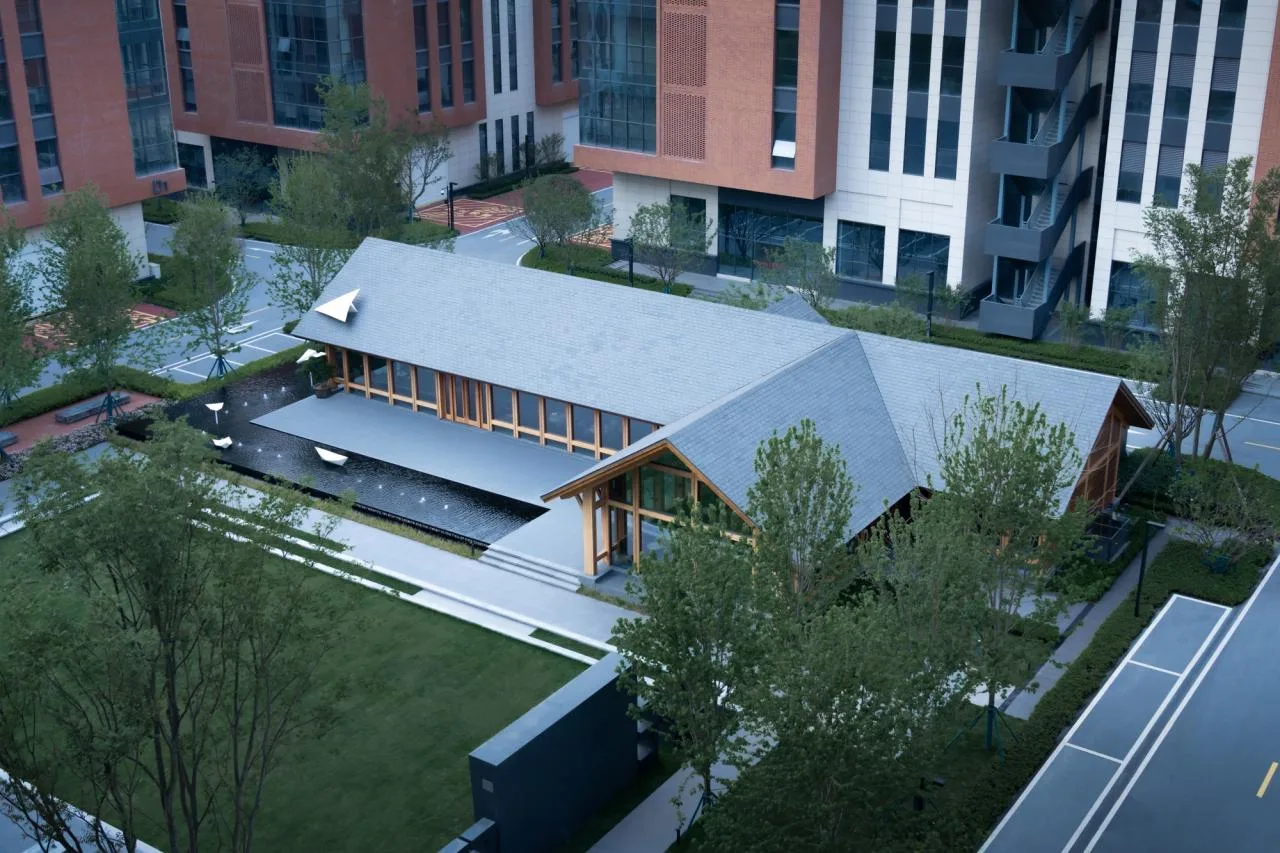
Located on the main axis of the park, the café is easily accessible to employees across various zones. The site measures approximately 65 meters in length and 47 meters in width, oriented north-south, with the park’s primary scenic axis to the south. The café building is positioned on the northern side, with the southern side serving as the main landscape space, forming a transitional zone with the park’s scenic axis.
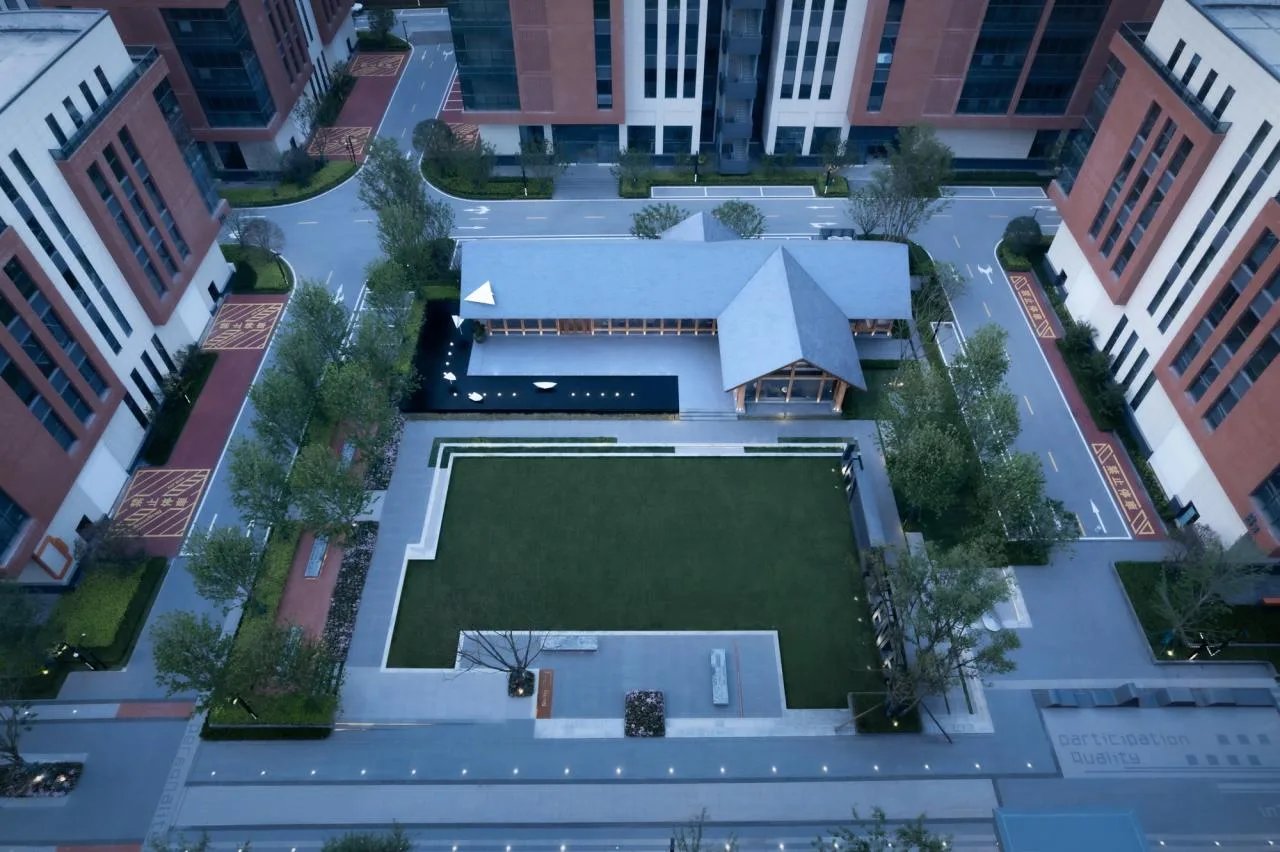
The building’s footprint extends 36 meters east to west and 8 meters deep, optimized for a café’s functional needs and natural daylight. The linear volume is punctuated by a 9-meter by 8-meter extension on the south side, creating a focal point and spatial enclosure.
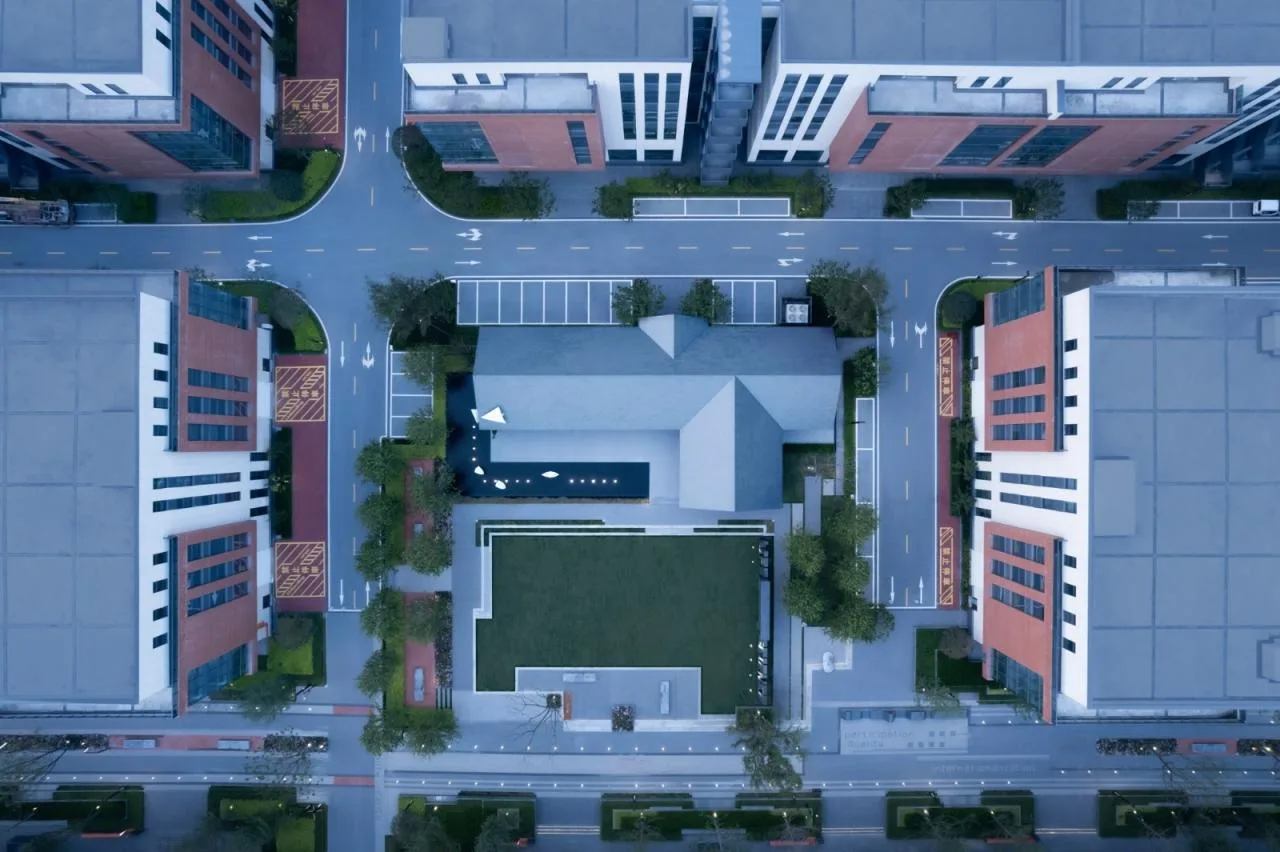
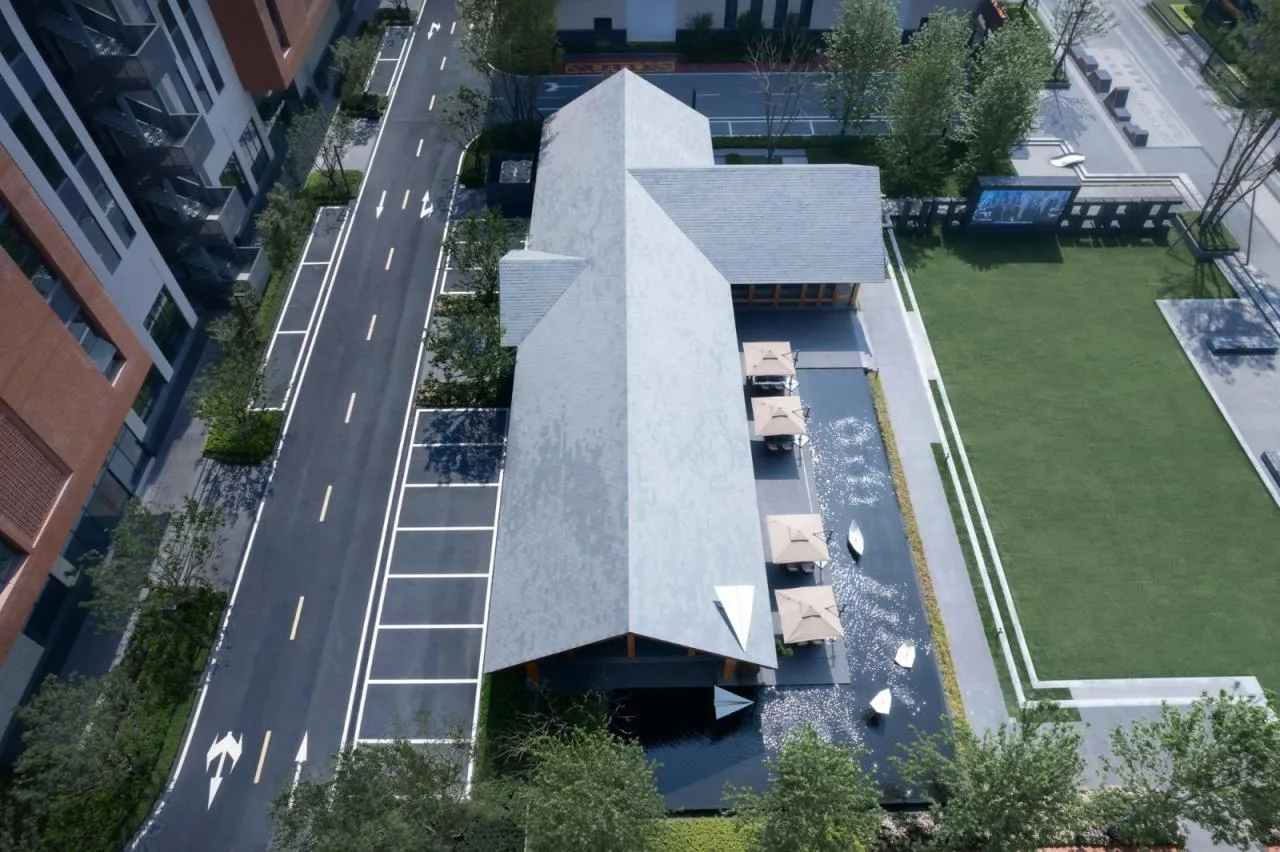
The architecture reflects modern craftsmanship with a focus on creating a relaxing, warm atmosphere within the dense industrial park. The natural variation in wood grain and color imparts a subtle, lively character to the building, offering visitors a pleasant journey from the park’s main scenic axis to the café itself.
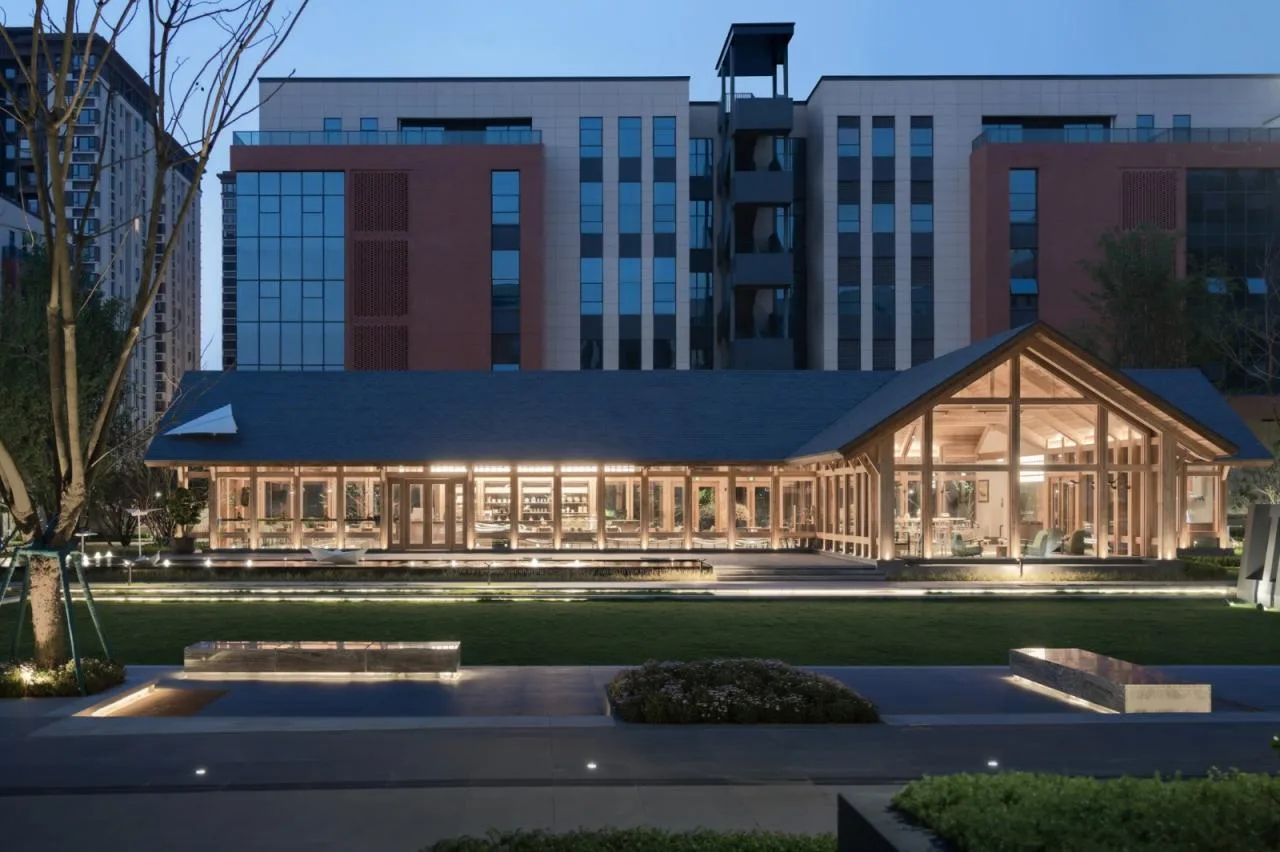
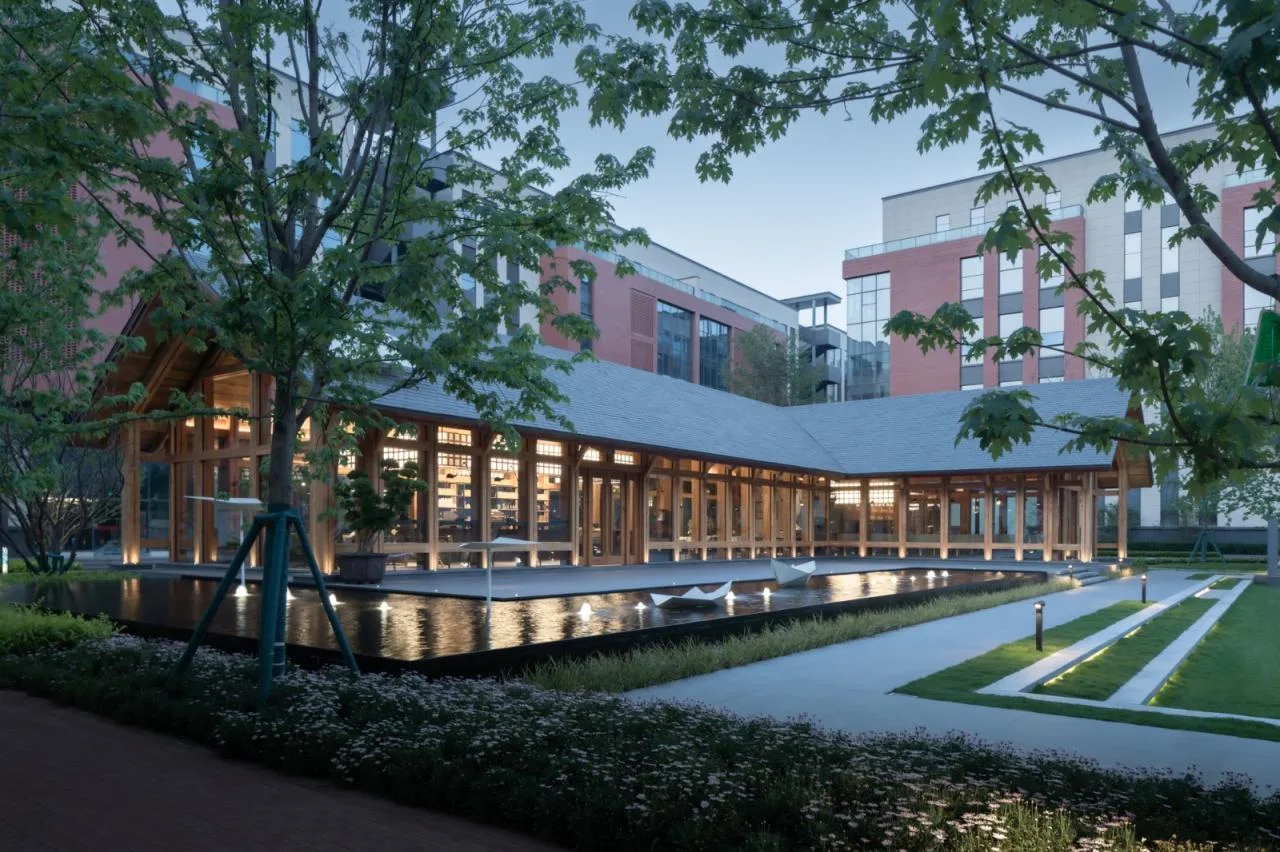
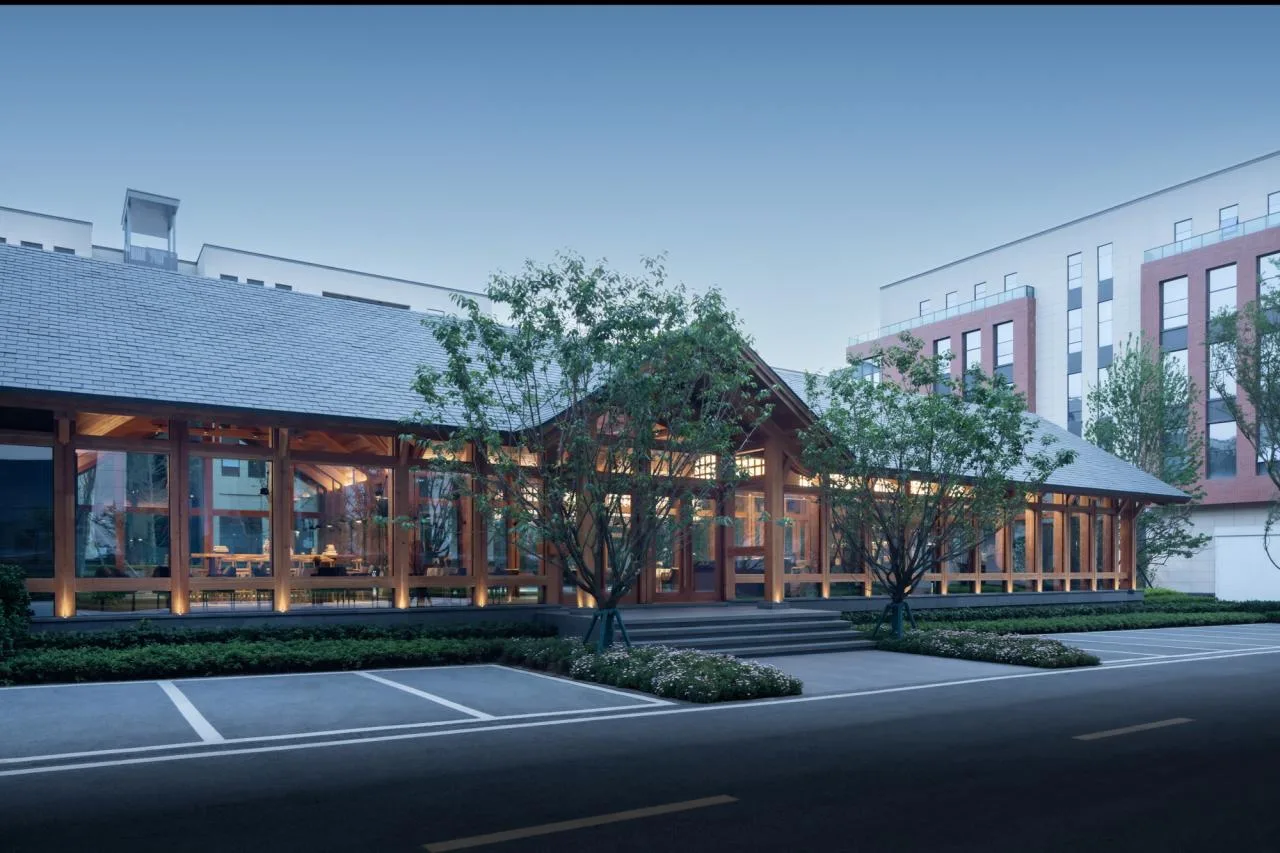
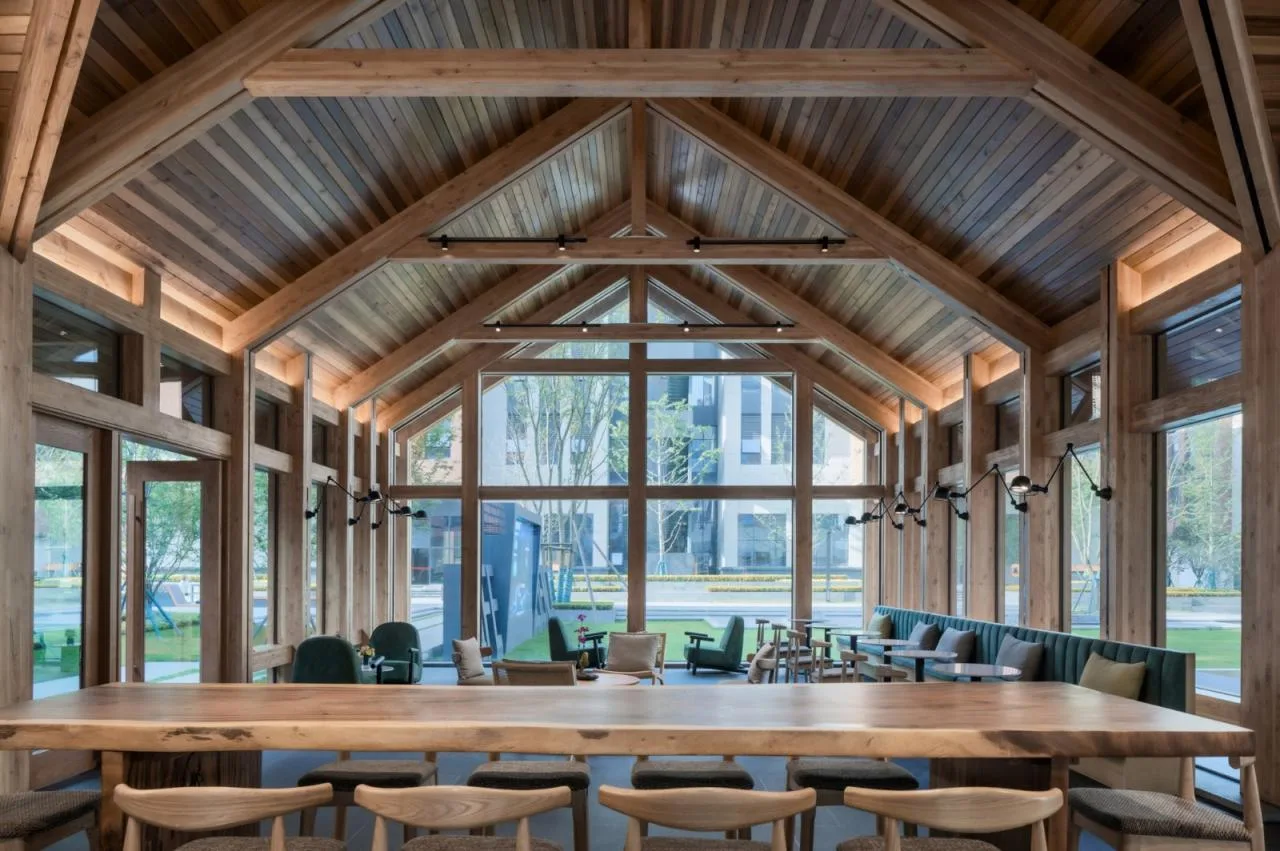
The building features a symmetrical double-sloped roof, with eaves at 3.6 meters and a maximum indoor floor height of 5.9 meters. The elevated grey space at the roof’s edge creates a subtle transition between interior and exterior, emphasizing the unity of enclosed spaces separated by material form.
Zero Emissions
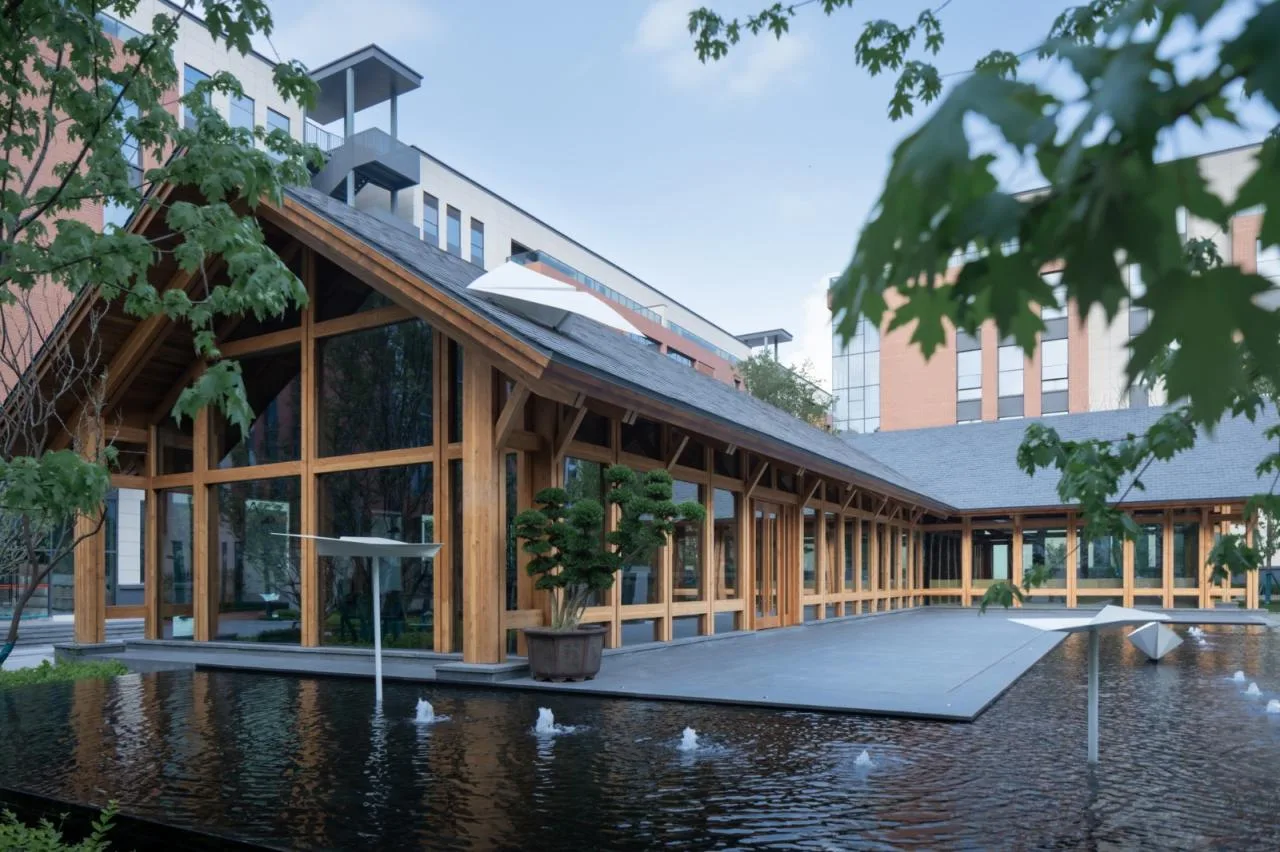
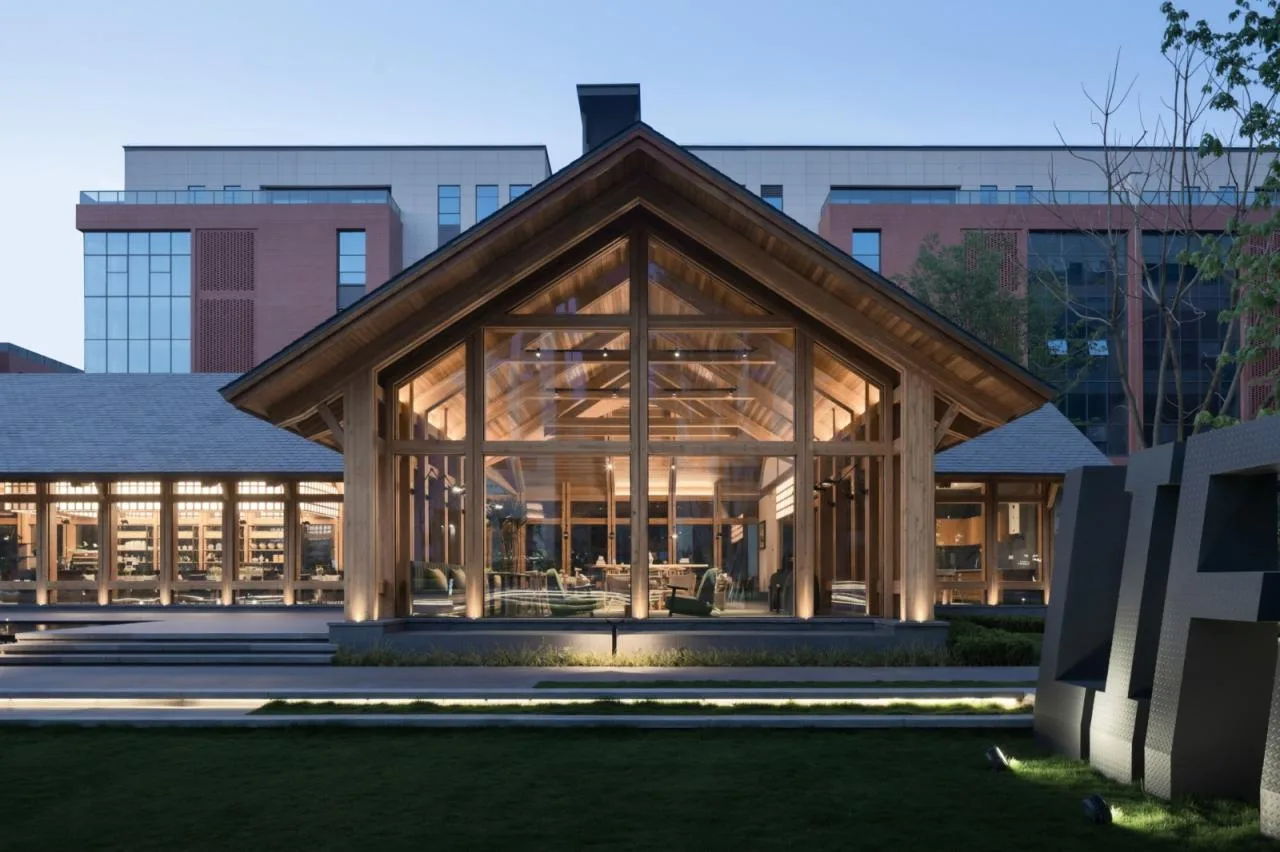
Wood not only reduces stress and inspires positive emotions but also injects vitality into the entire park through this iconic architectural design. The designer utilized Douglas fir CLT (cross-laminated timber) to create an almost fully prefabricated building, aligning with the dual carbon strategy to achieve a “zero emission” structure.
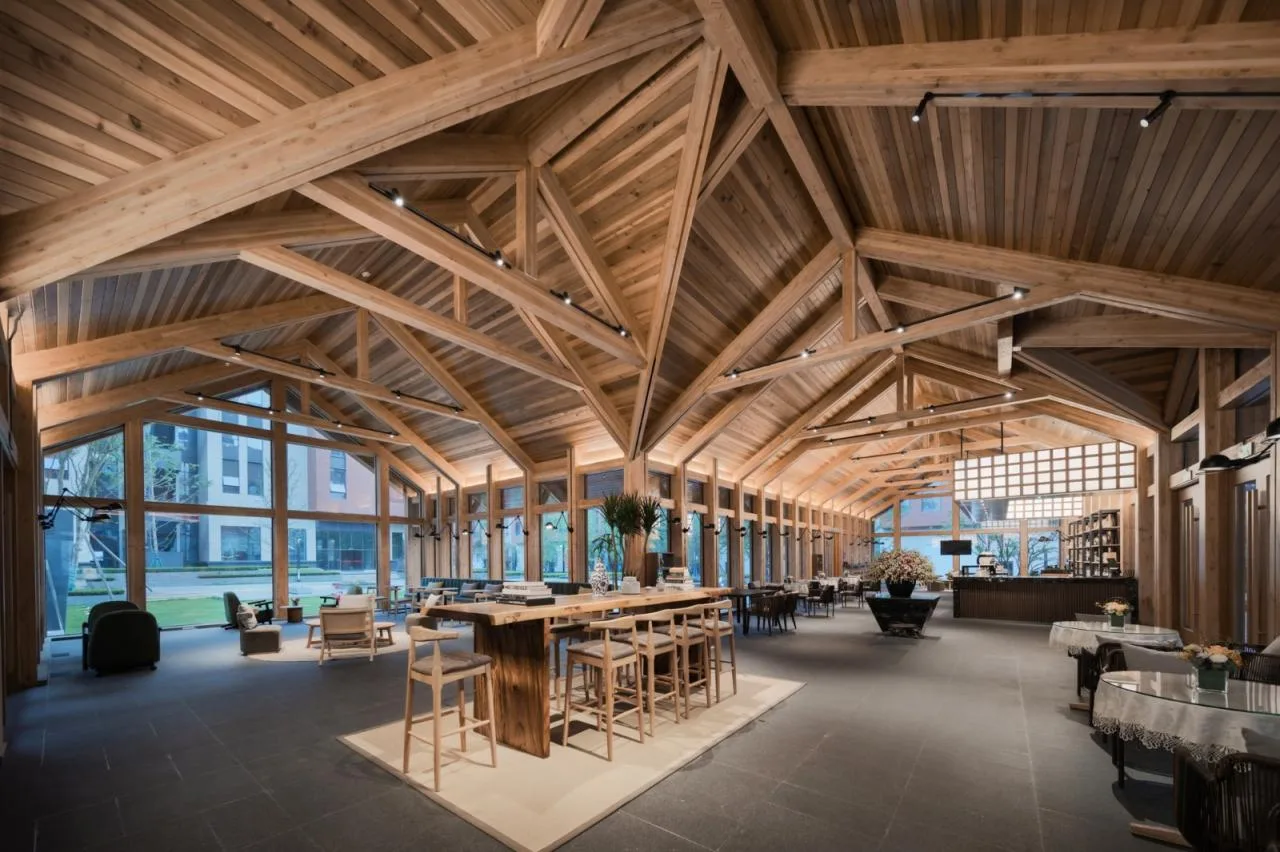
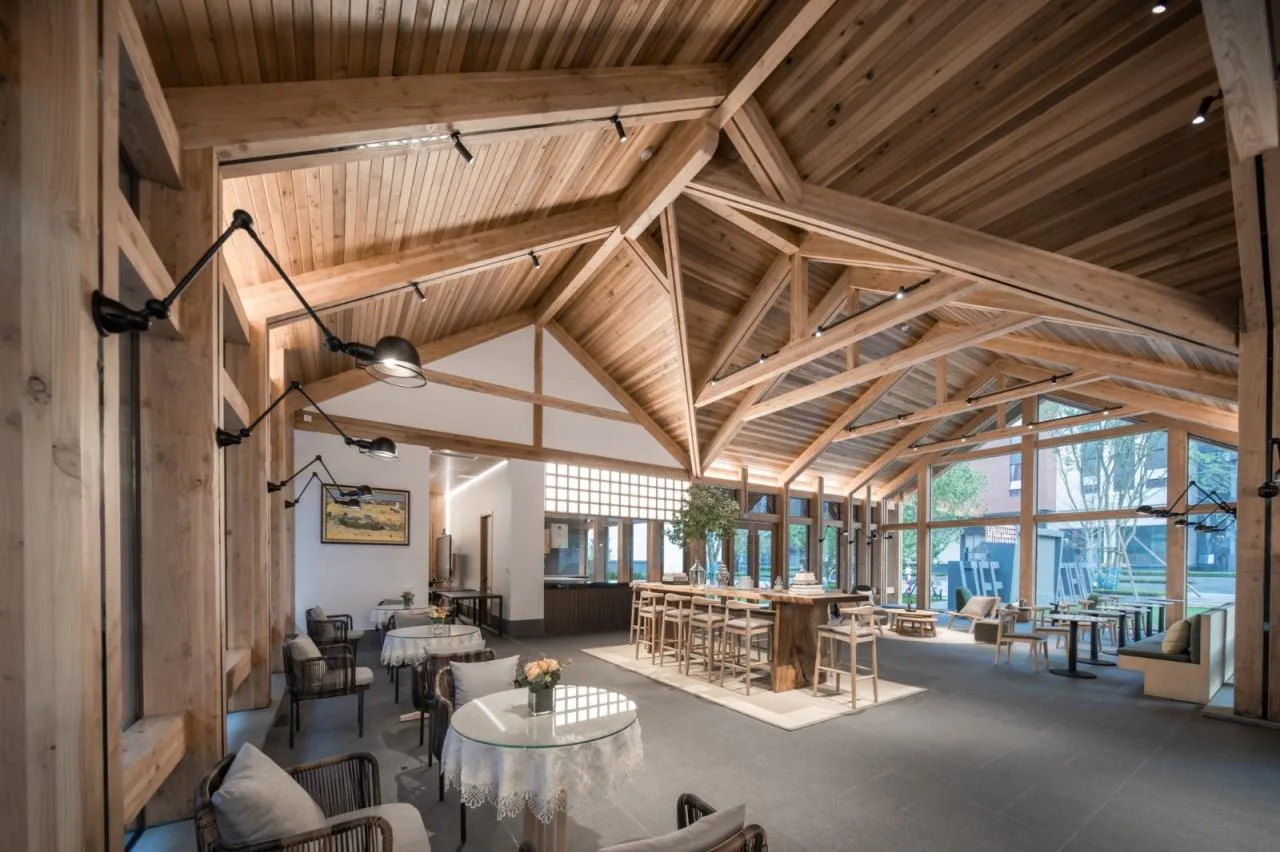
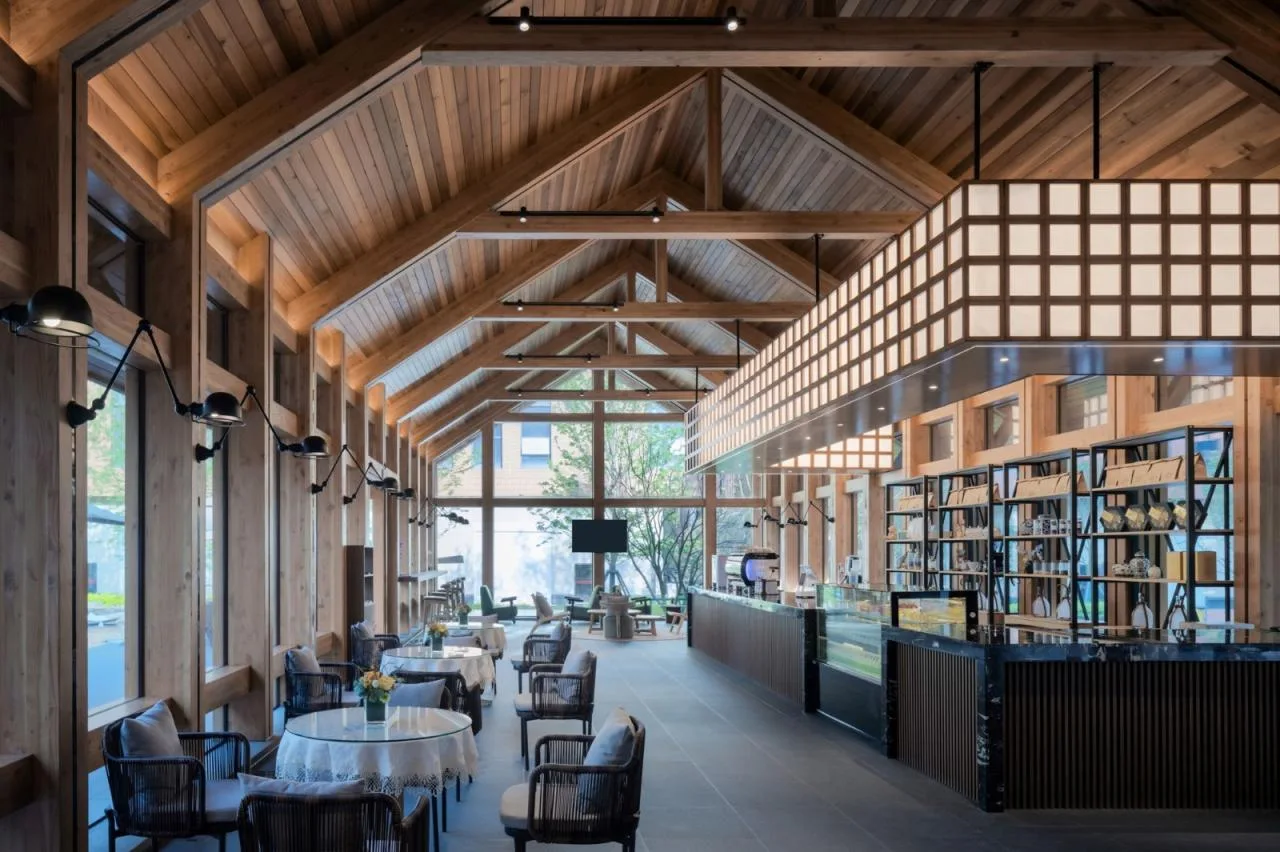
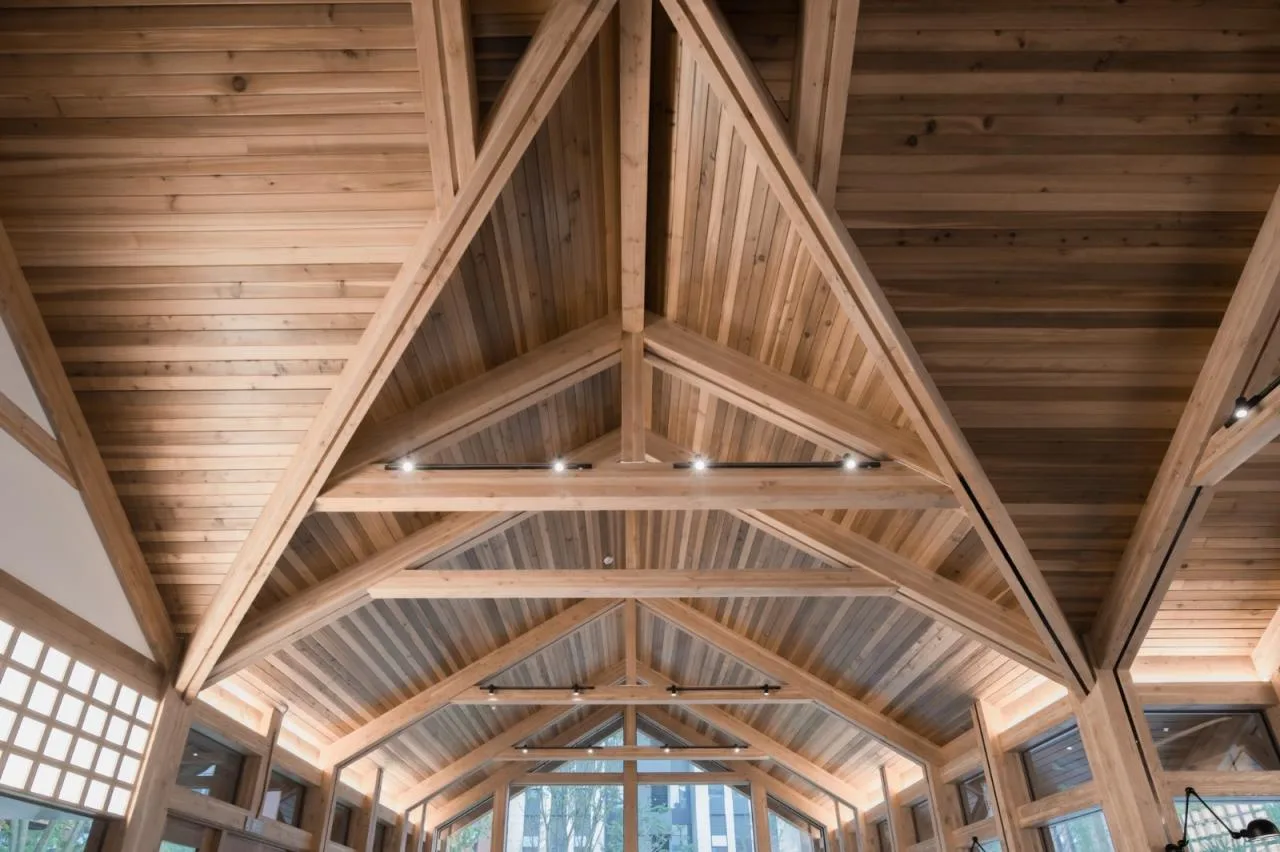
The architect designed a simple, standardized framework with modular units spaced 1.5 meters apart to form the core structure. This efficient arrangement eliminates the need for complex decoration after the main structure is complete. The rhythm and sequence of the beams and columns naturally express architectural beauty both inside and out, reducing costs by simplifying unnecessary finishes.
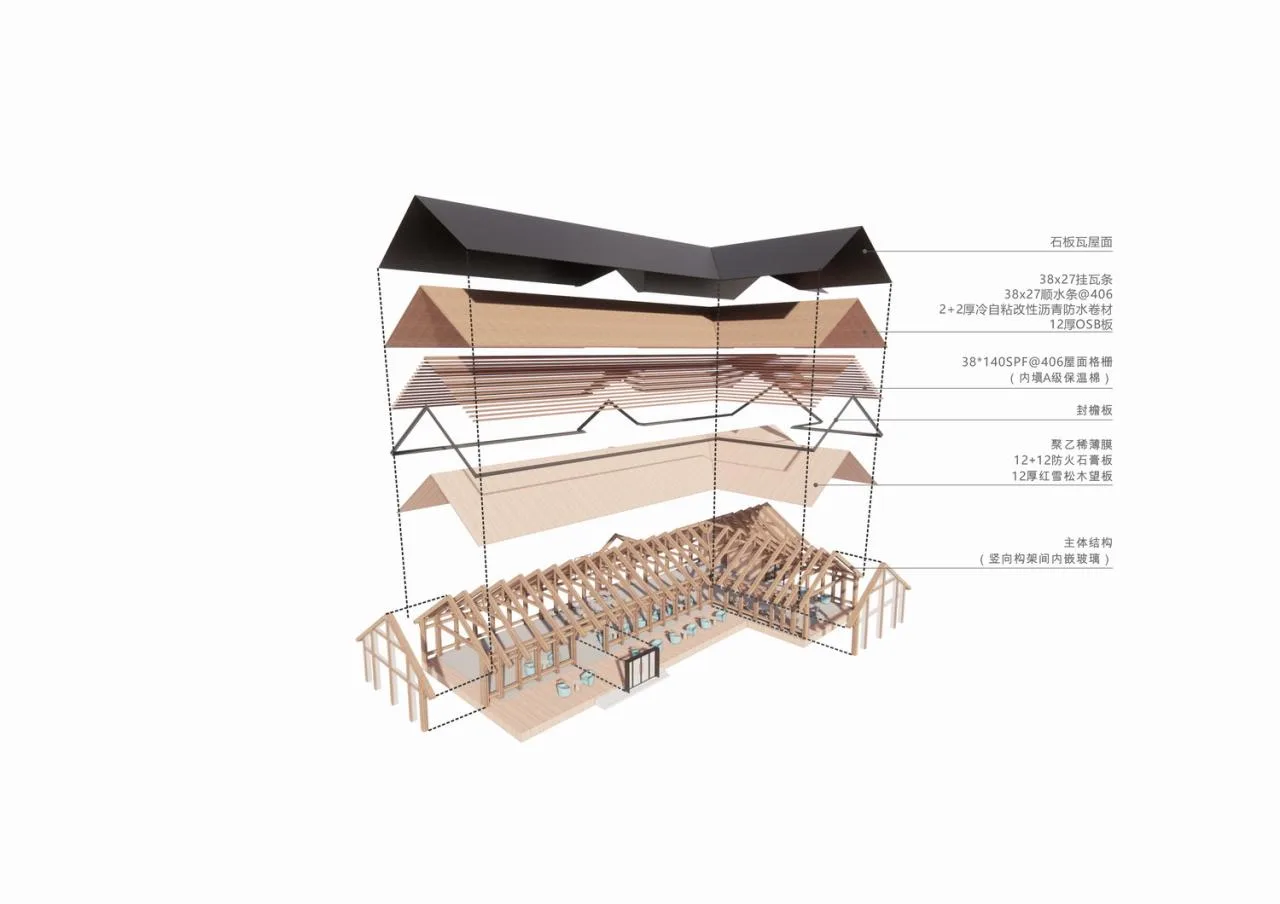
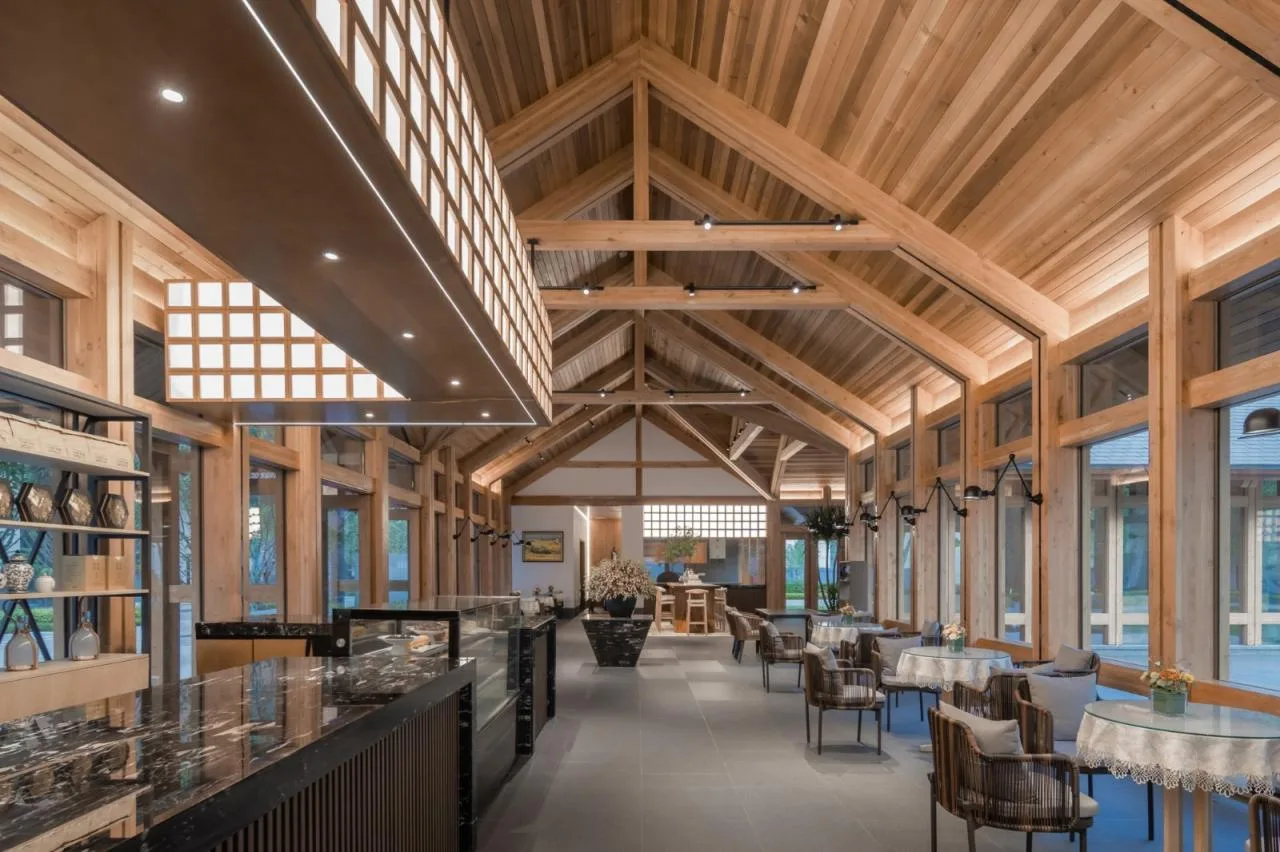
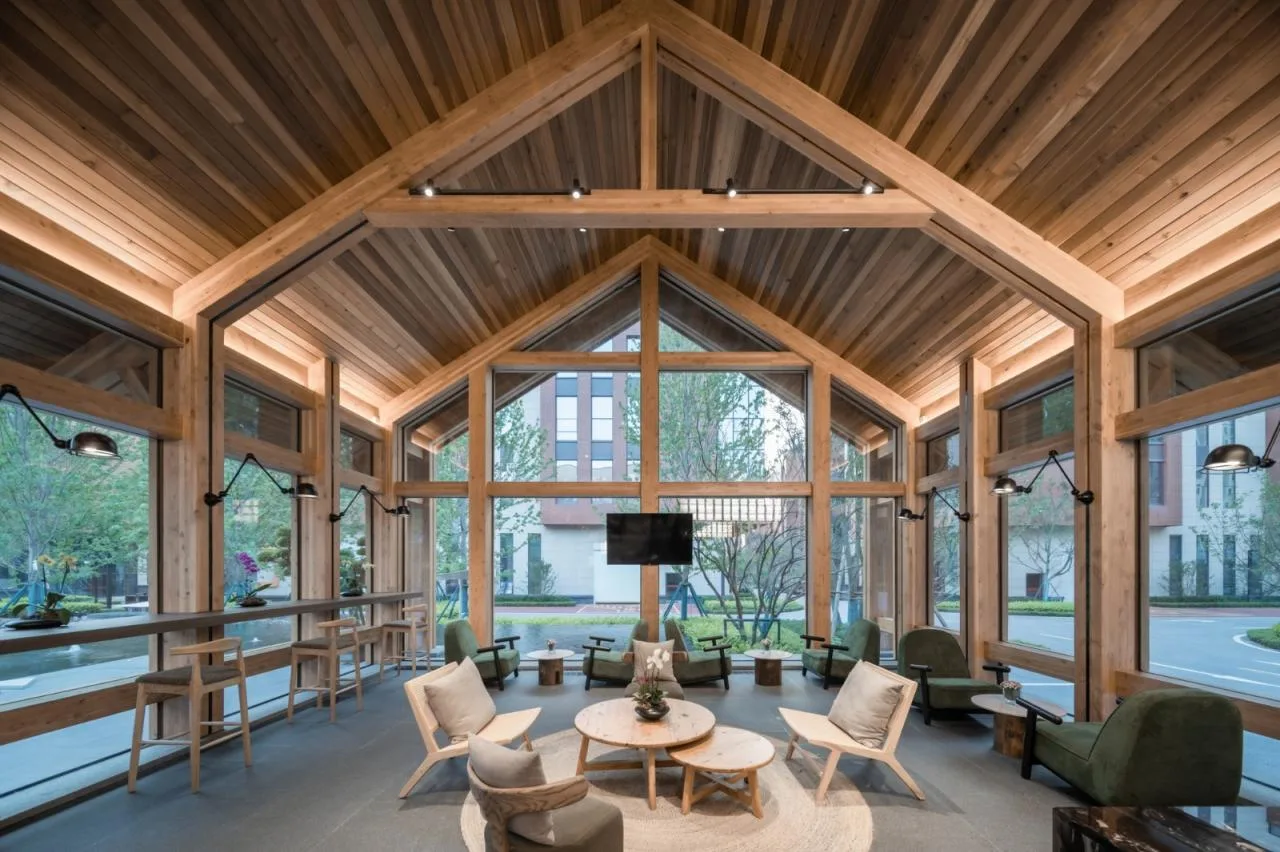
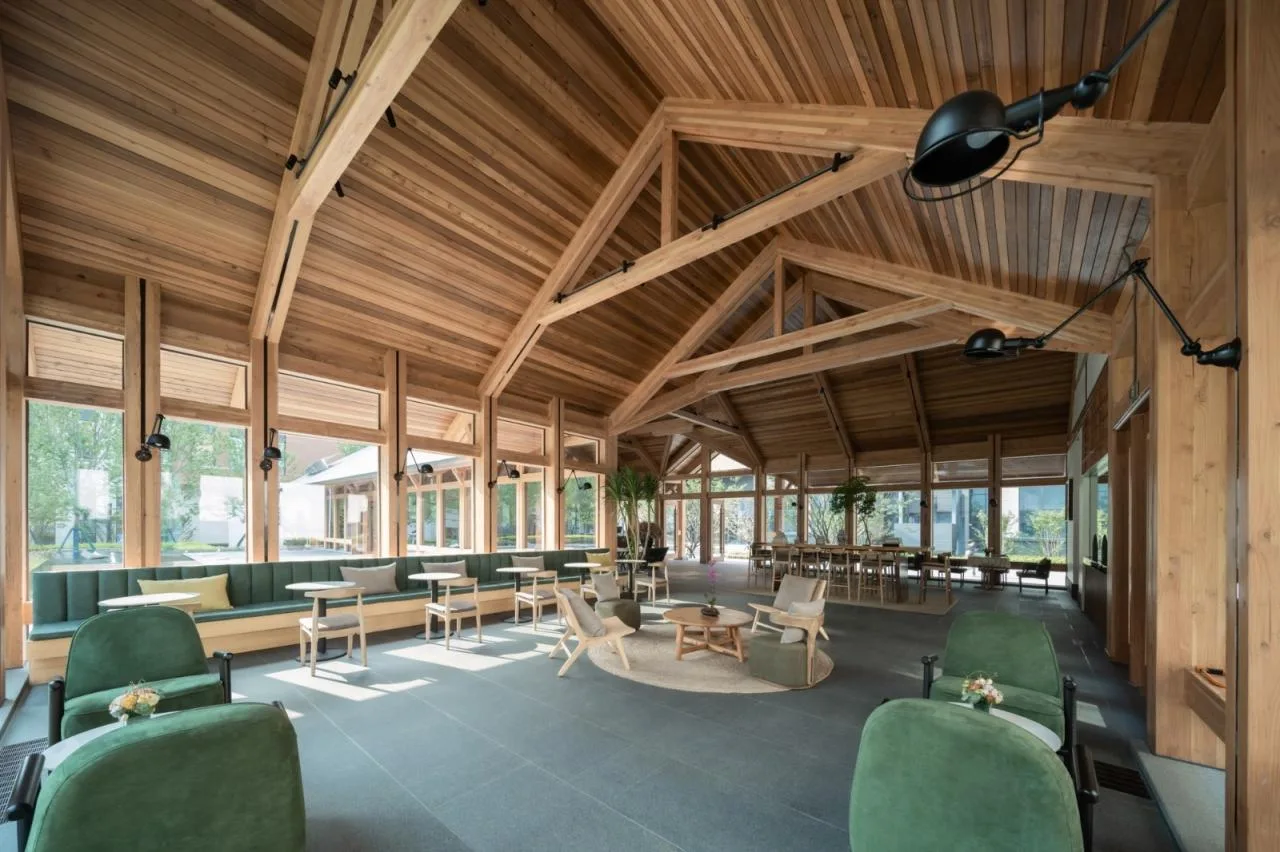
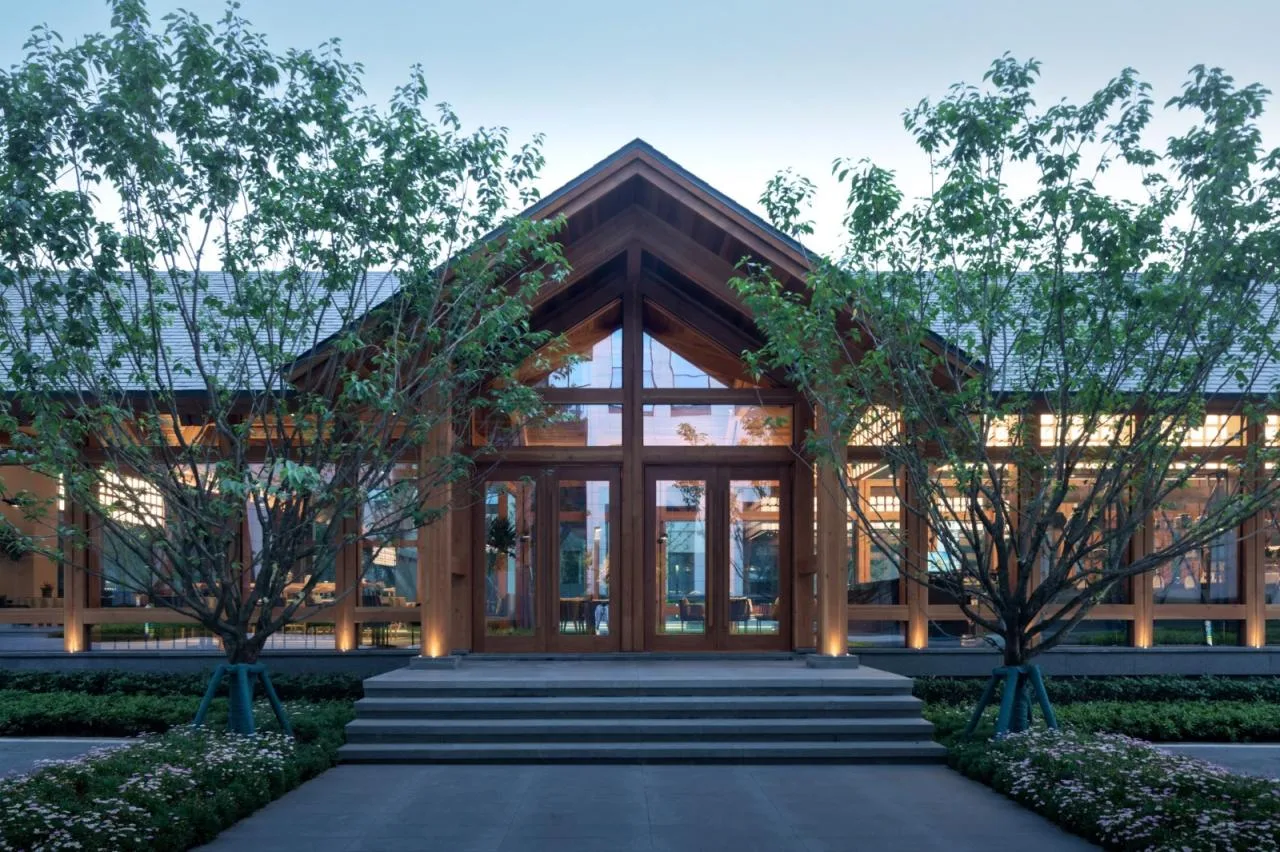
The craftsmanship aesthetic is elevated with refined spatial forms created by the repetition of beams and columns, producing a neat and rhythmic environment. The space feels open and bright, with warm yellow laminated wood beams exposed to the exterior, enhancing the cozy atmosphere.
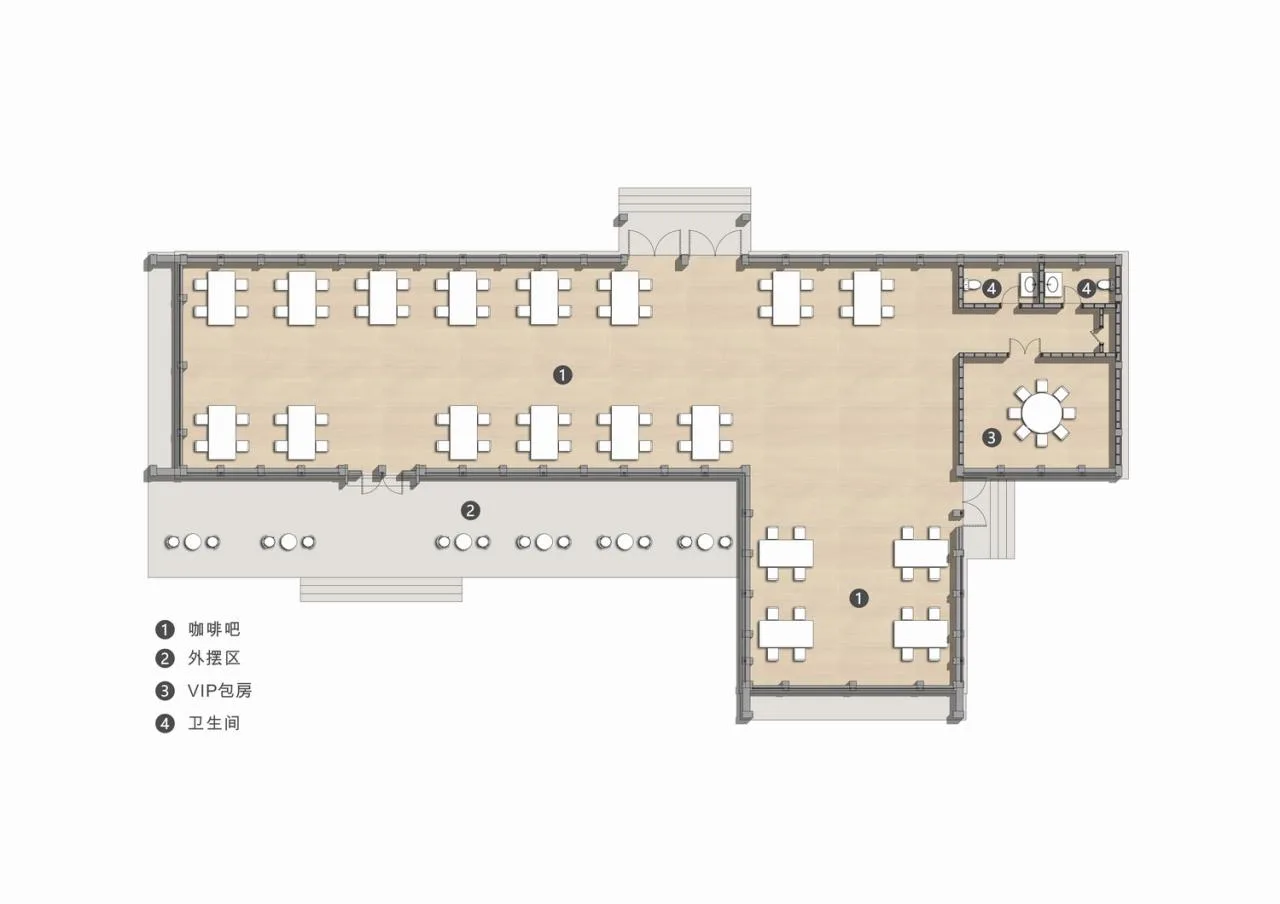
Plan View
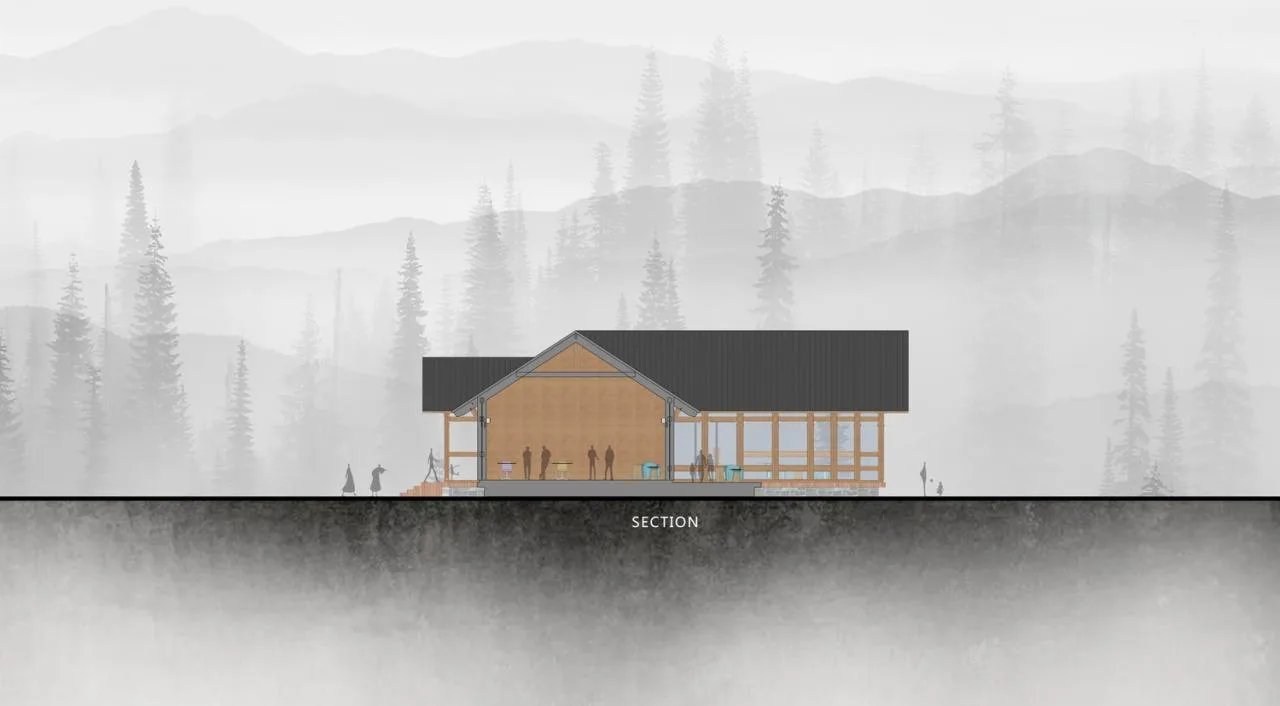
Sectional Drawing
Structural Details
The traditional beam-column load-bearing logic is faithfully reproduced through modern technology. Optimized materials and techniques enable more innovative spatial creations.
The entrance gate is designed with the same wood material as the main structure, seamlessly integrating with the facade. The architect deliberately avoided aluminum alloy frames for doors, windows, or curtain walls, requiring a flawless connection between structure and facade systems. Structural column deformation must align with door and window frame tolerances, while meeting insulation and wind pressure requirements through precise node design.
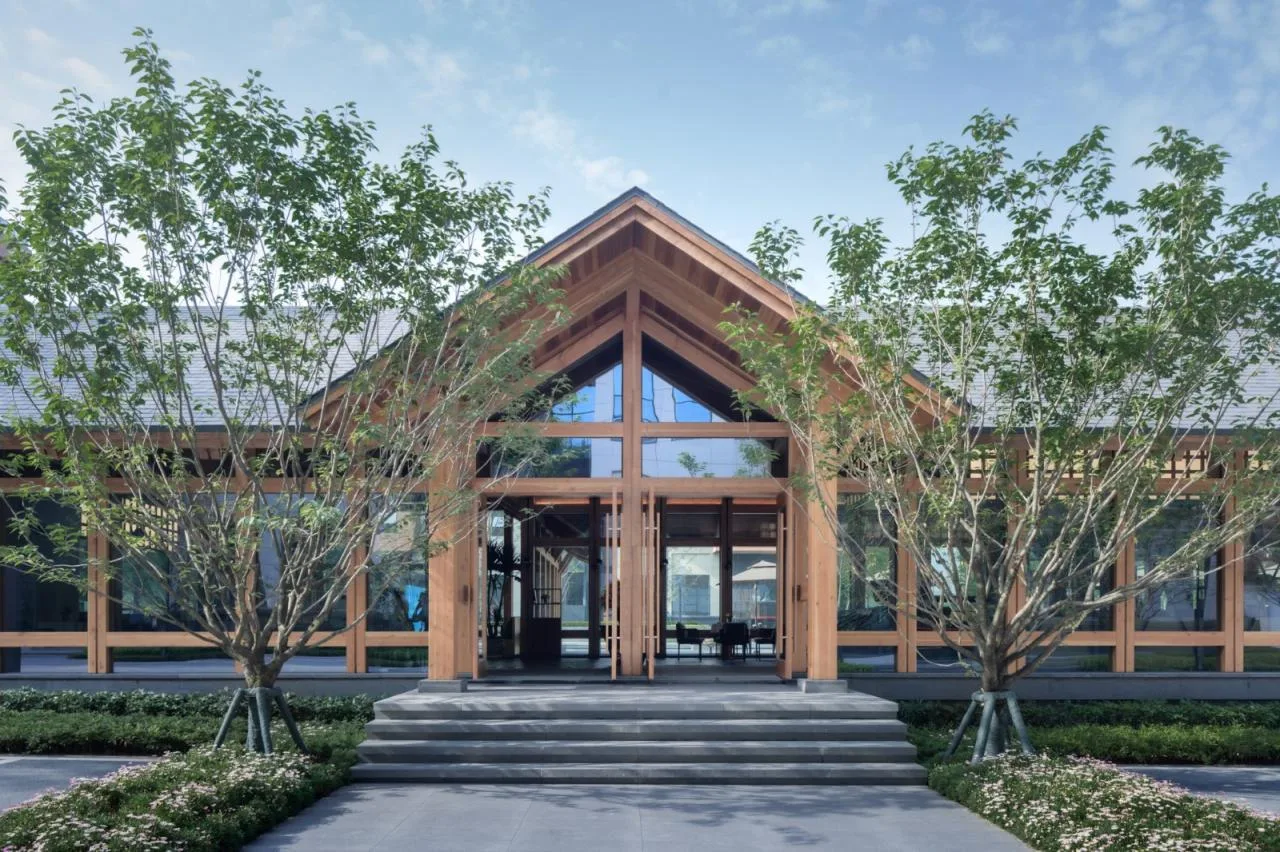
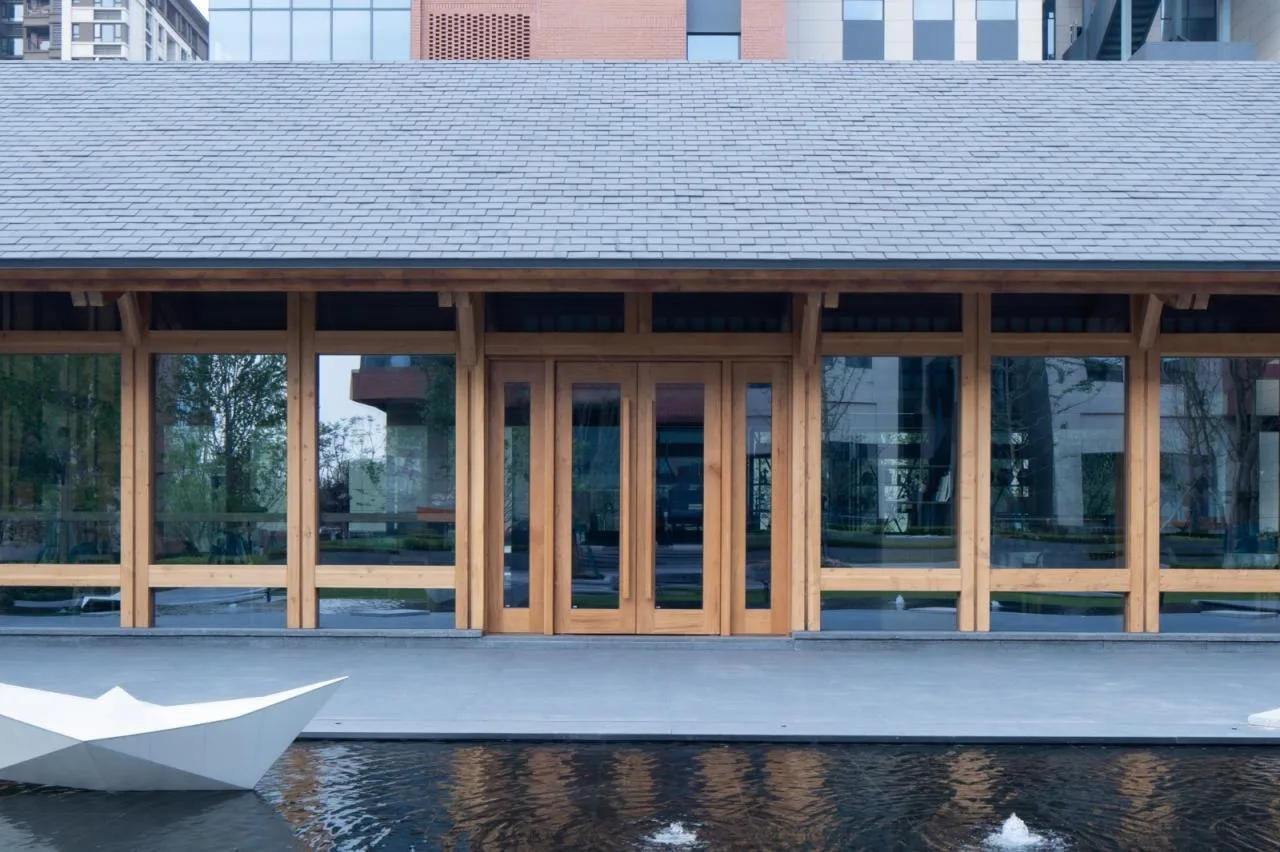
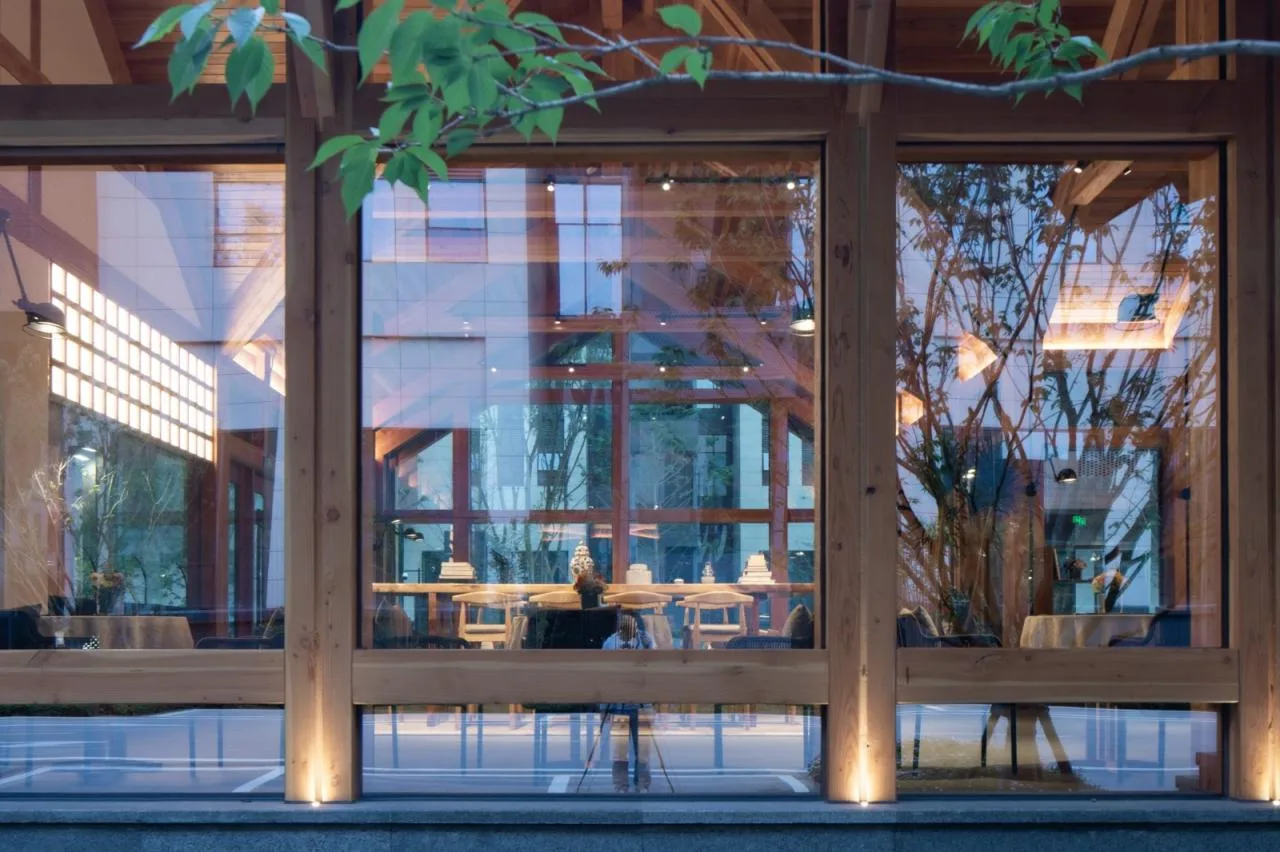
To add visual interest despite the building’s modest size, columns were treated with slots, creating the illusion of double columns.
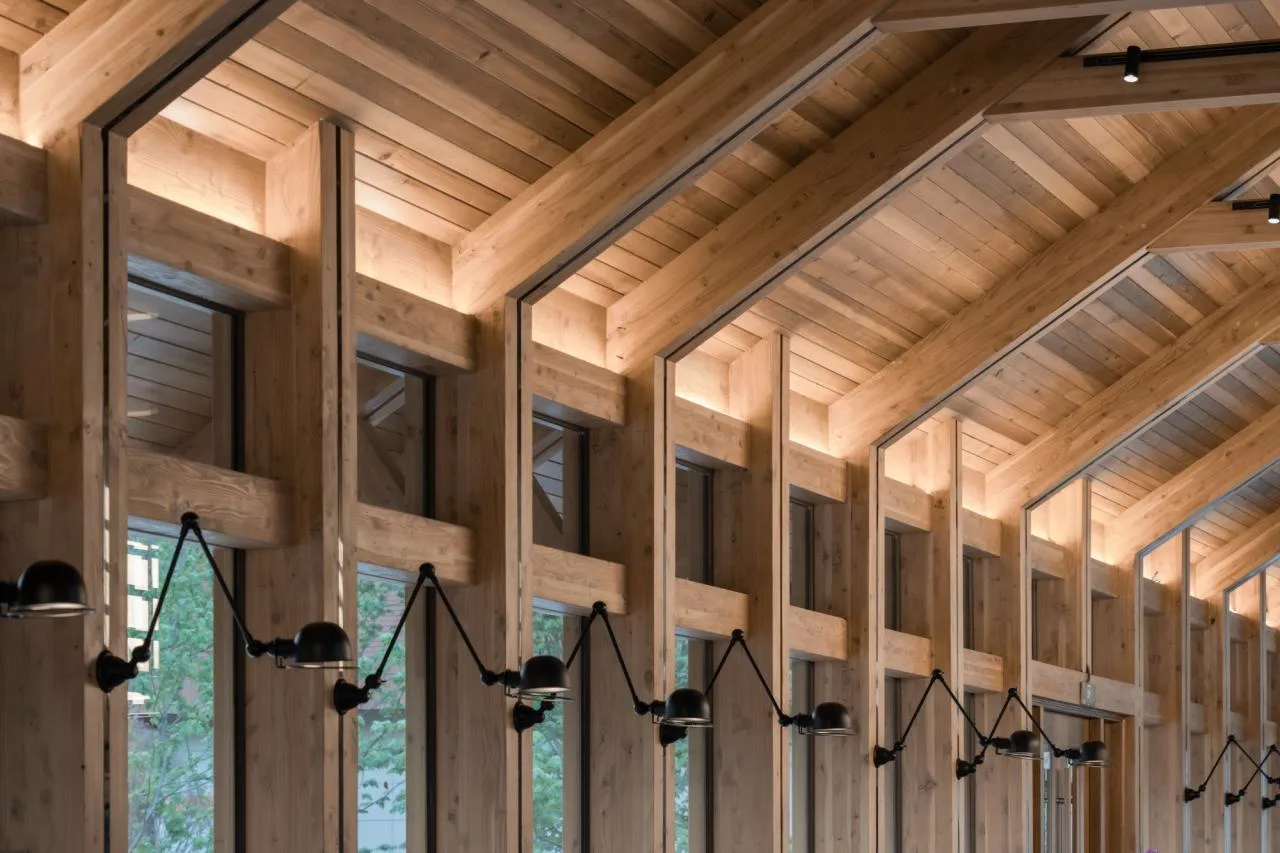
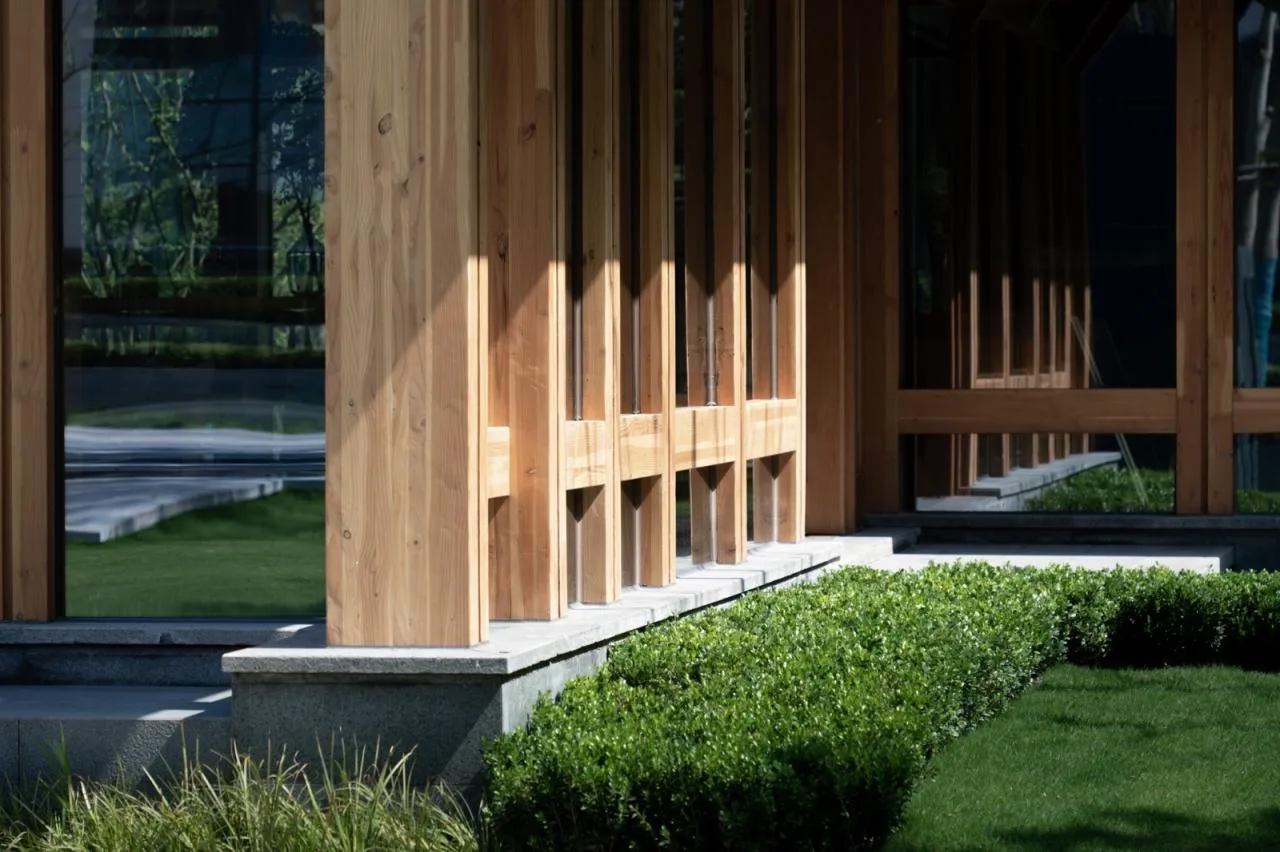
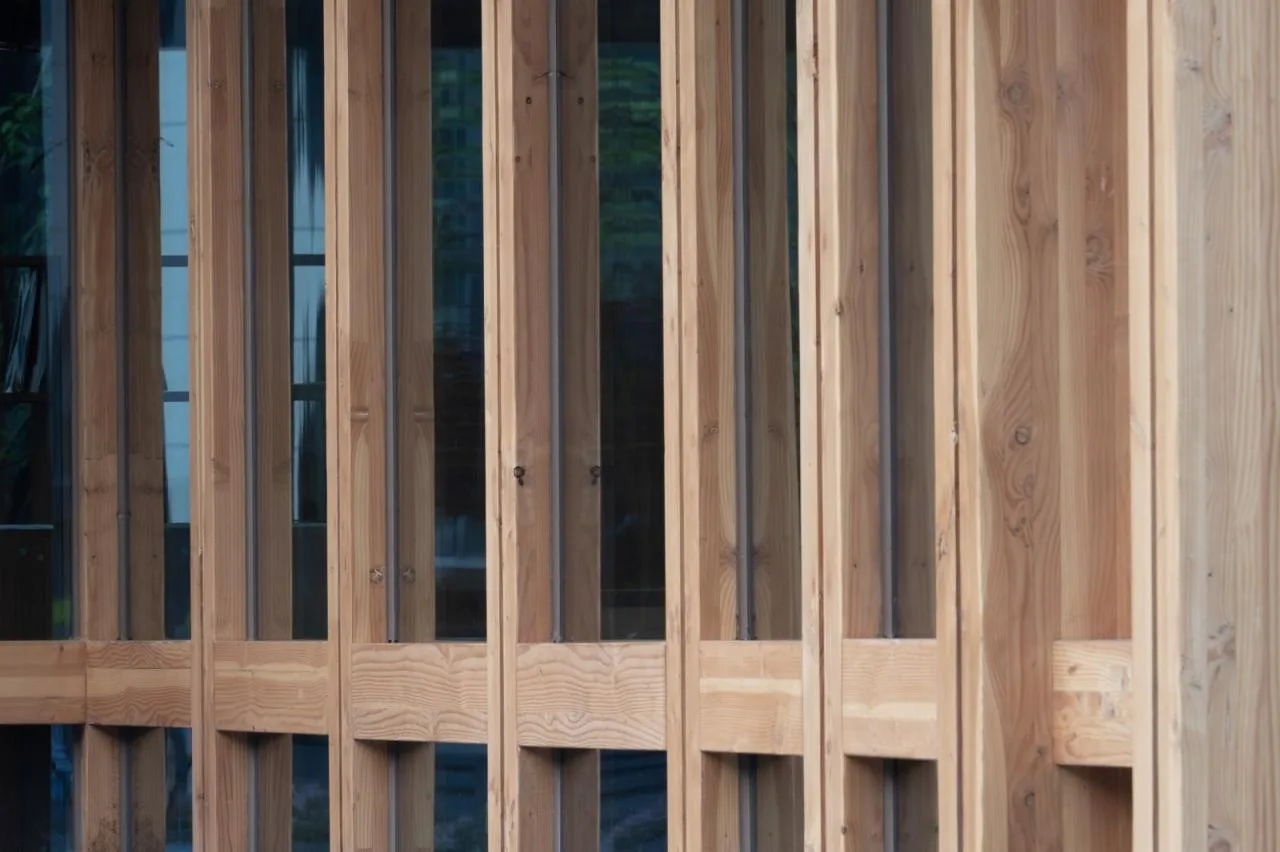
The eaves rafters feature a variable cross-section, tapering at the ends to create a lighter, more comfortable canopy space.
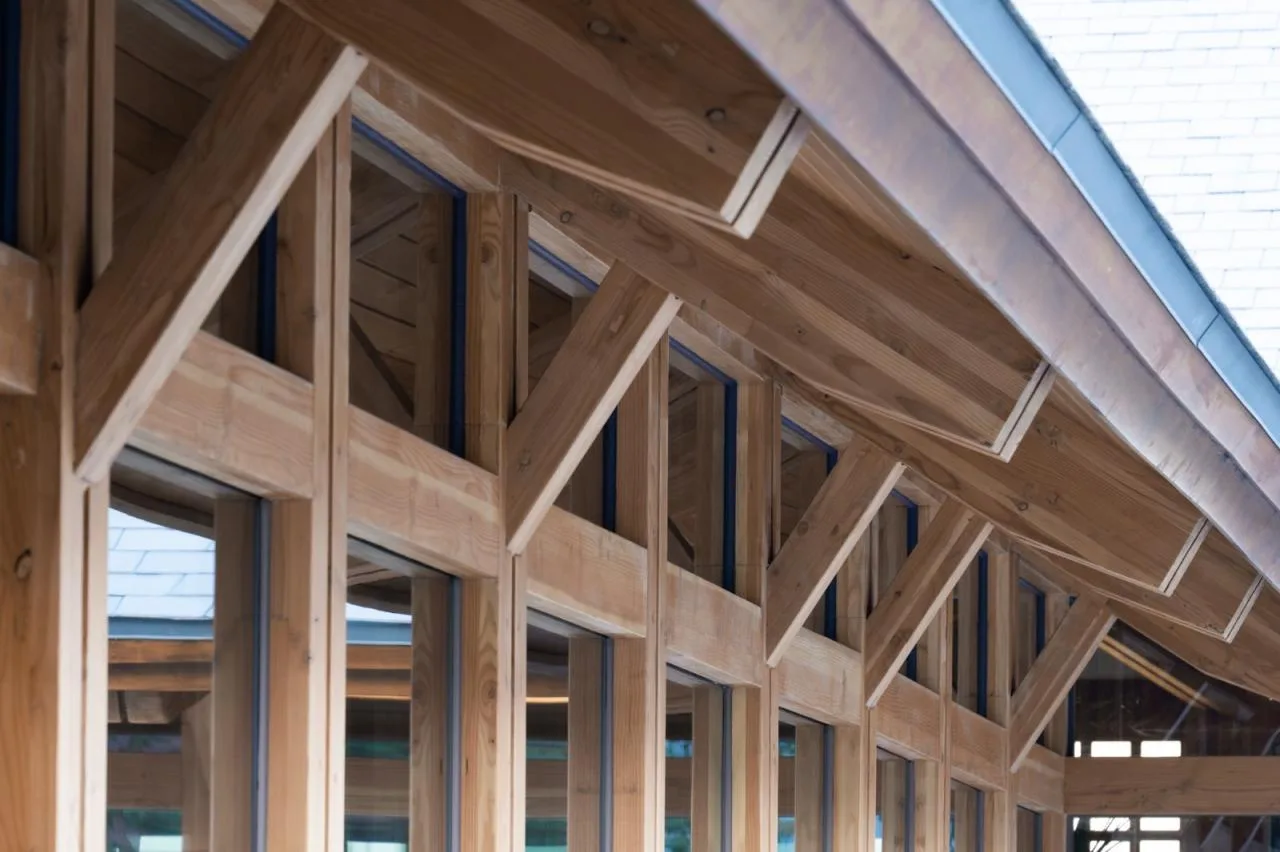
Strict production standards ensured window frame compatibility during structural fabrication, meeting all insulation and sealing requirements. This results in a seamless integration of facade, door/window curtain walls, and structural stress elements.
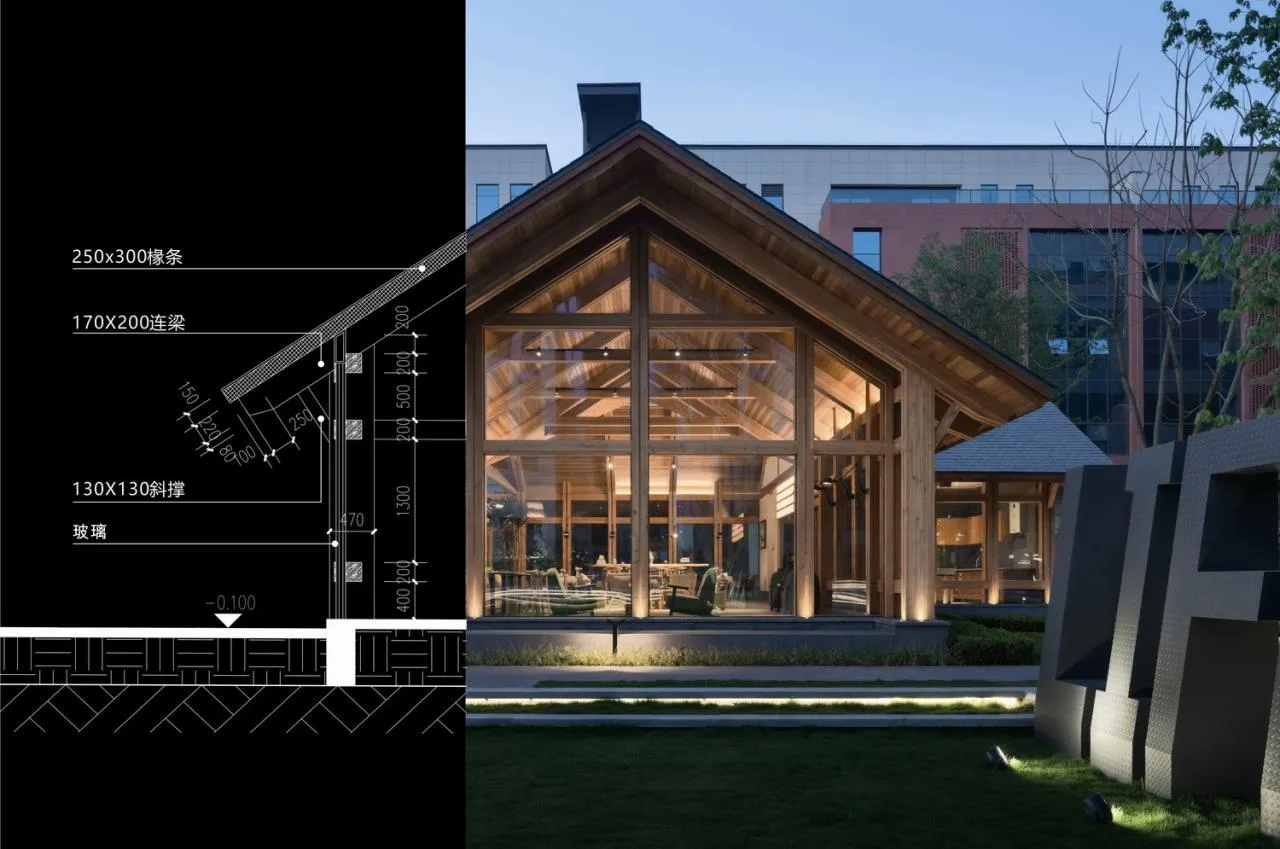
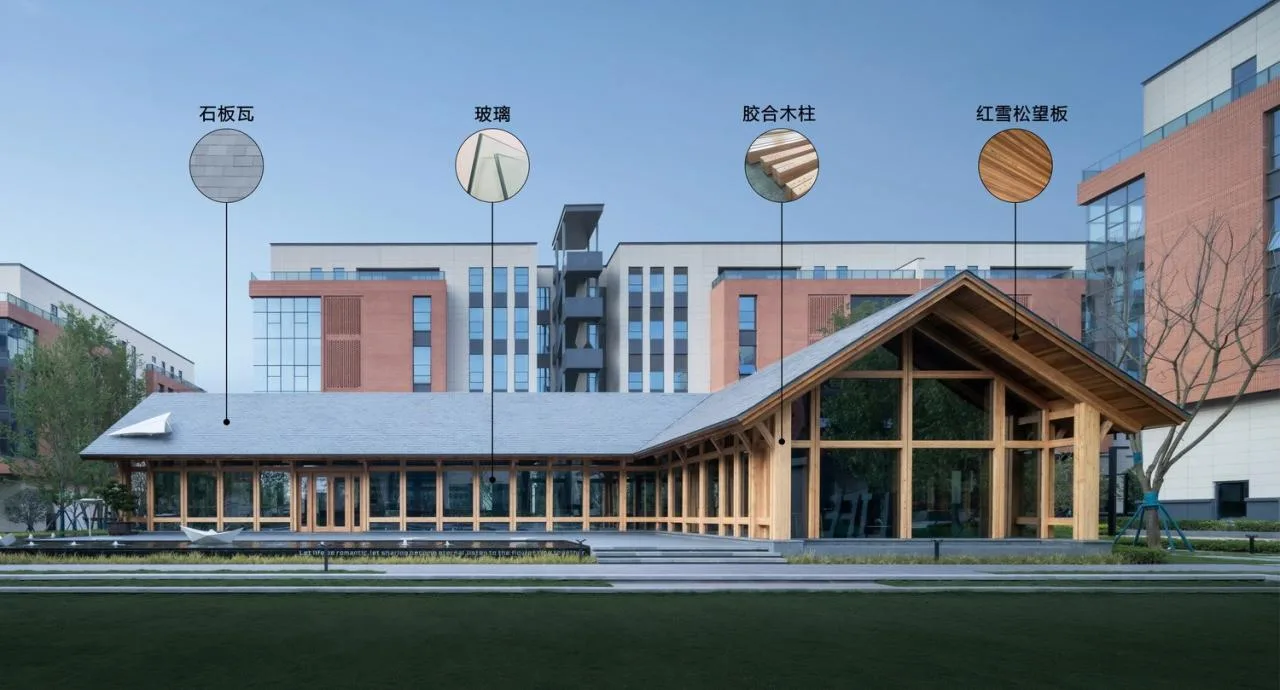
Facade Material Analysis
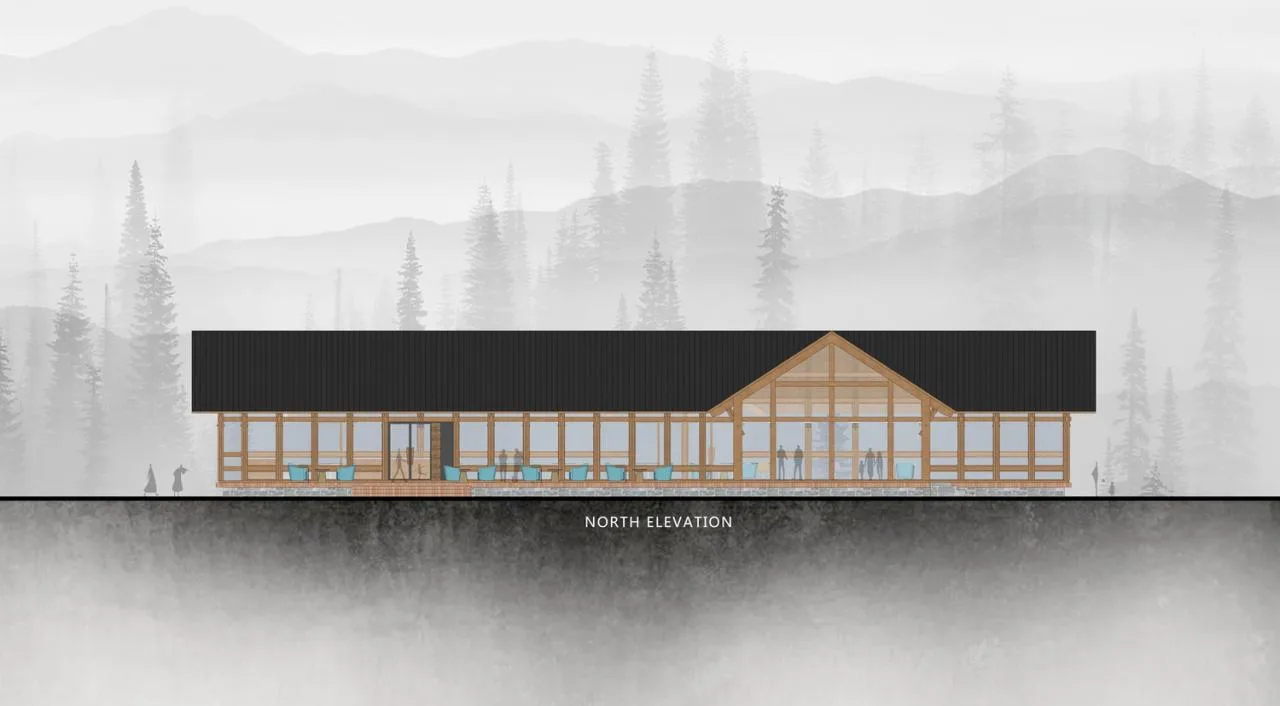
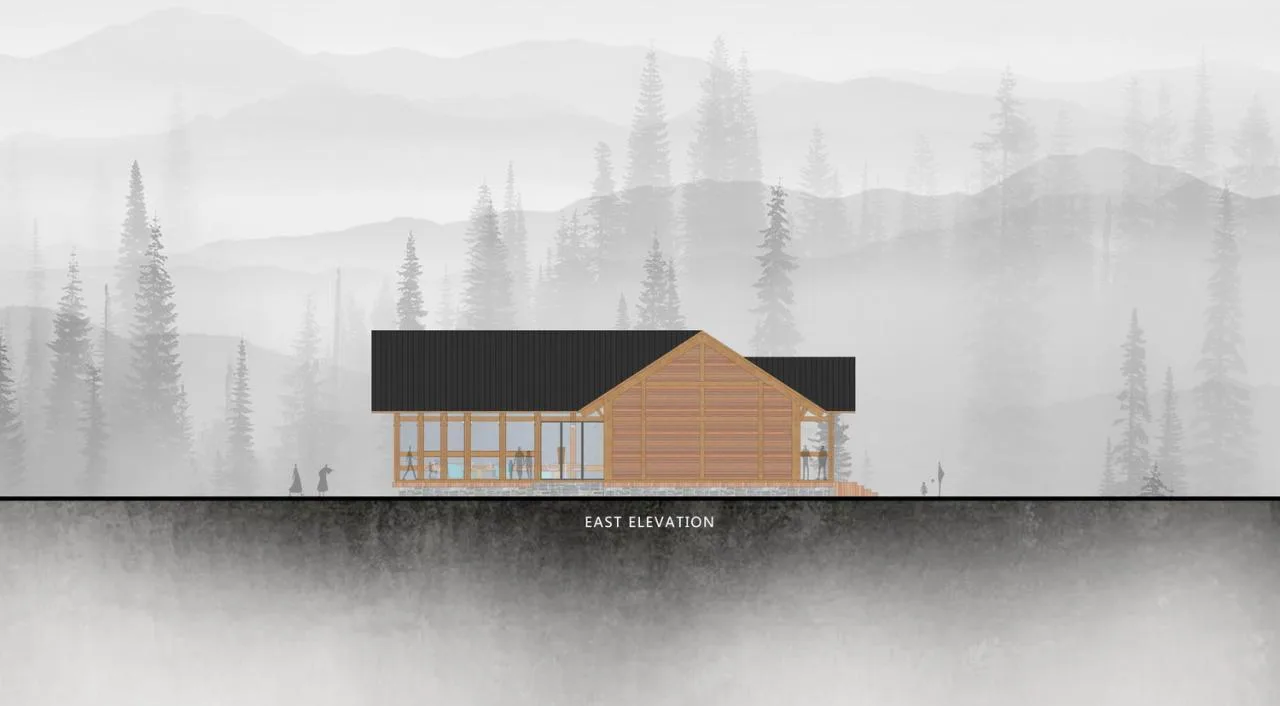
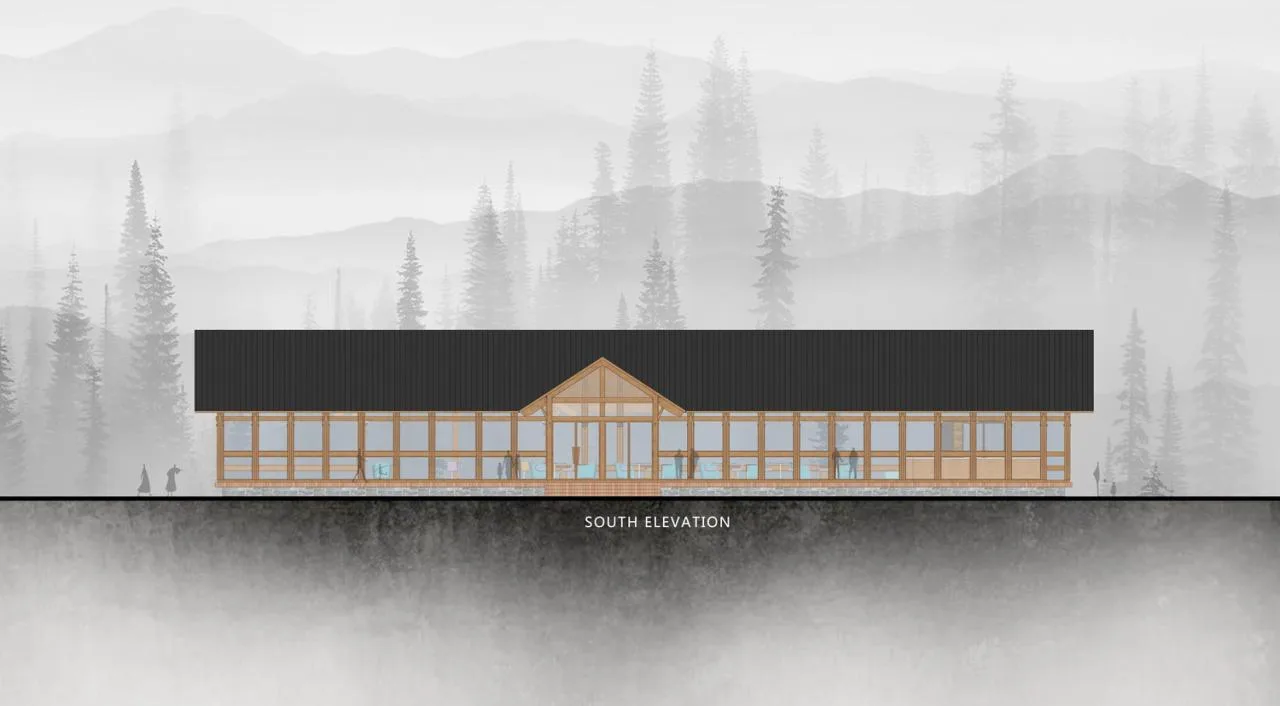
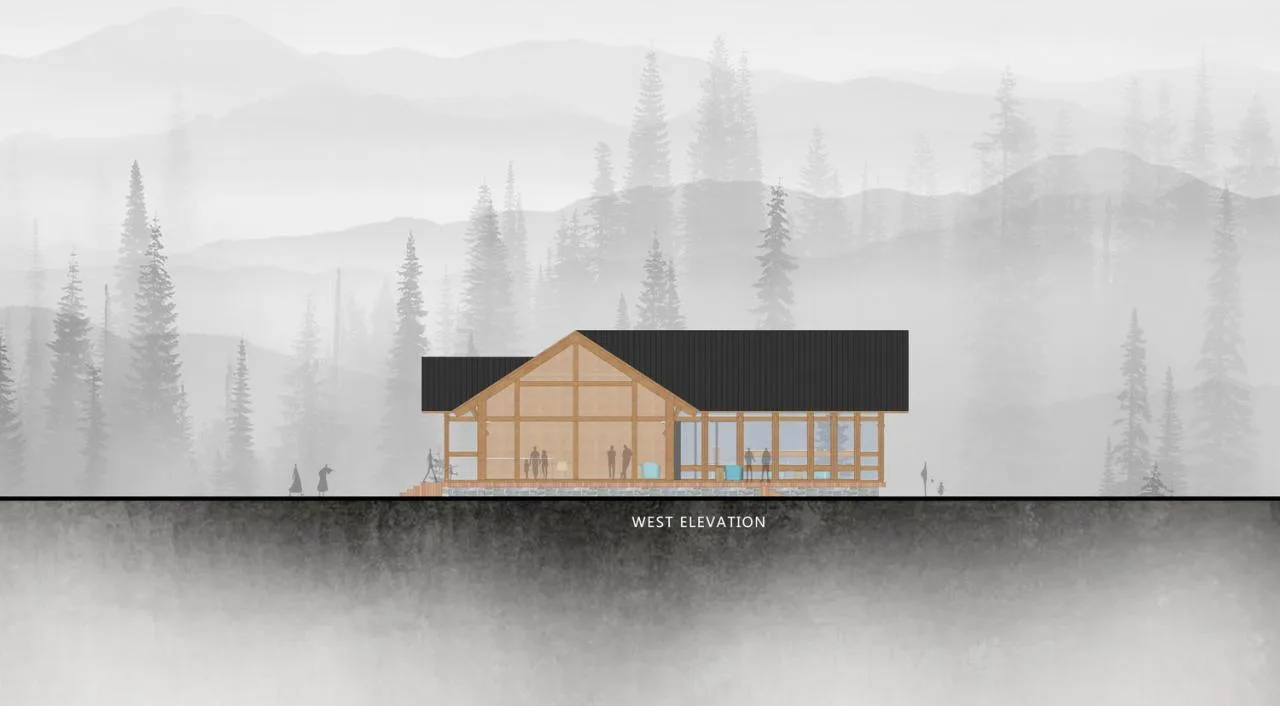
Modern wooden structures rely on efficient prefabrication, requiring skilled technicians for processing and assembly, which ensures high-quality construction.
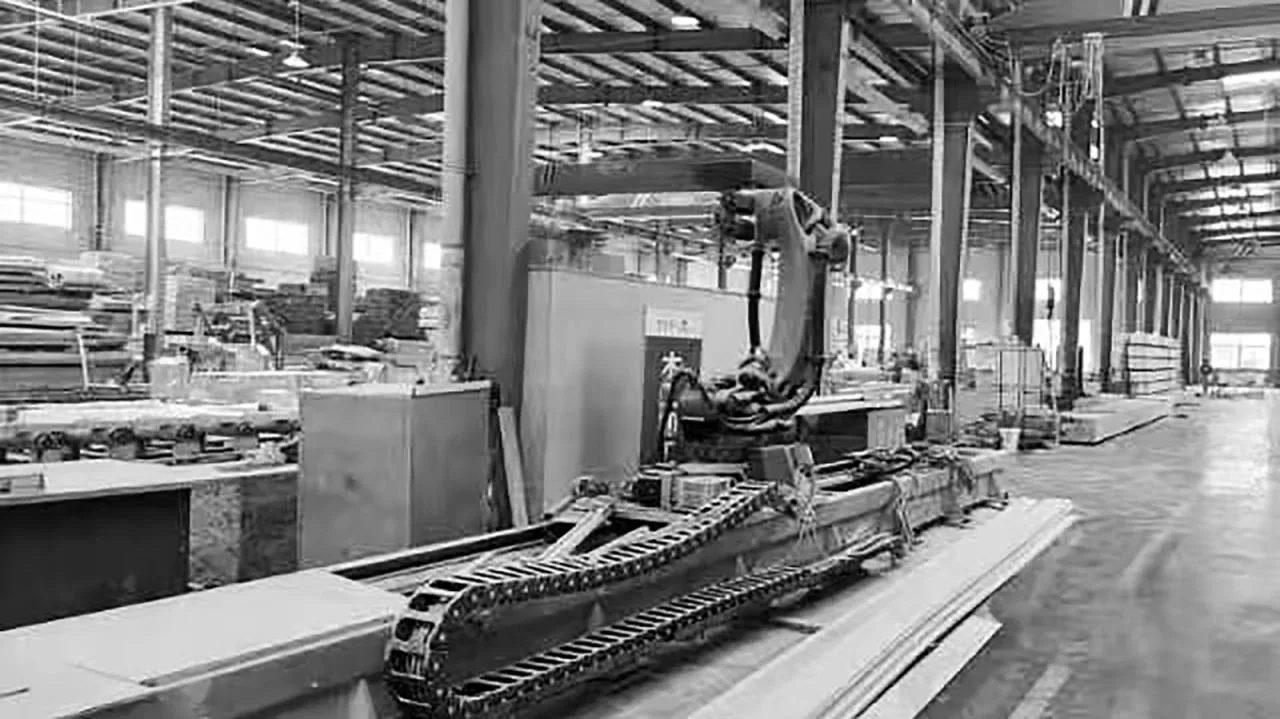
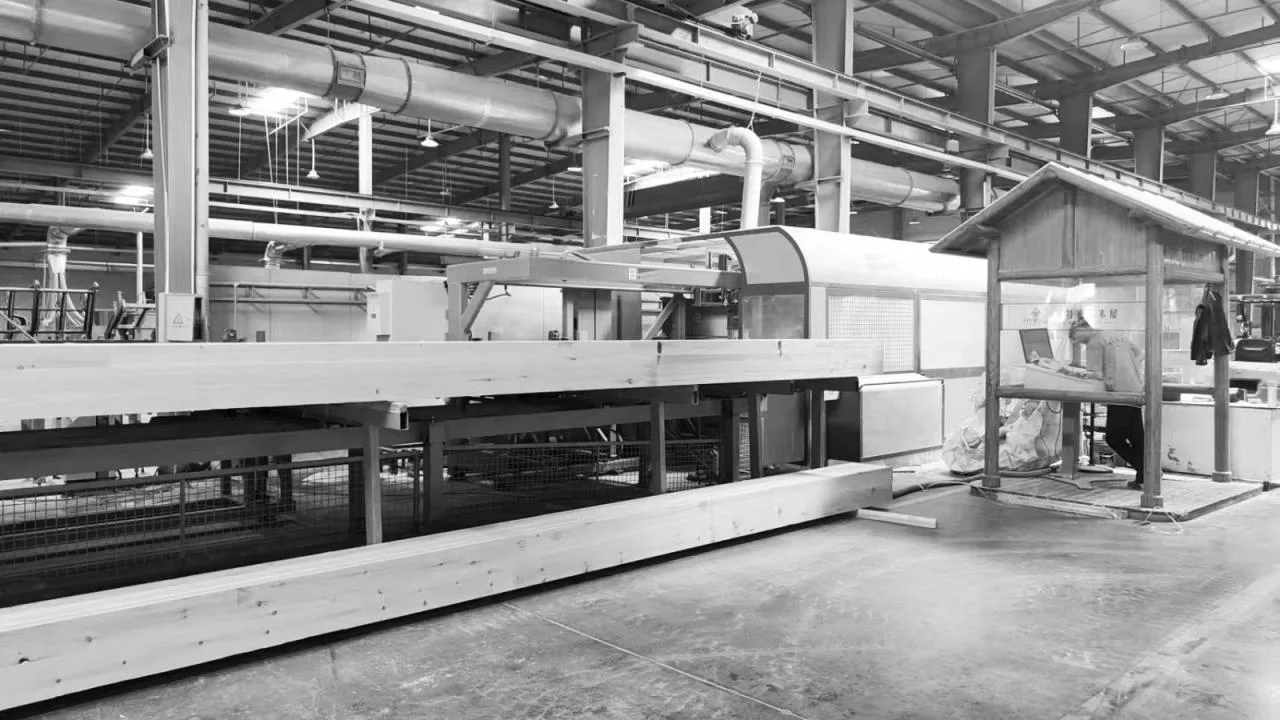
All structural components in this project were produced in an intelligent factory. The designer modeled the components digitally, precisely defining specifications, dimensions, openings, and bolt positions. This data was then linked with CAD software to guide robotic manufacturing, achieving millimeter-level accuracy, which greatly facilitates on-site assembly.
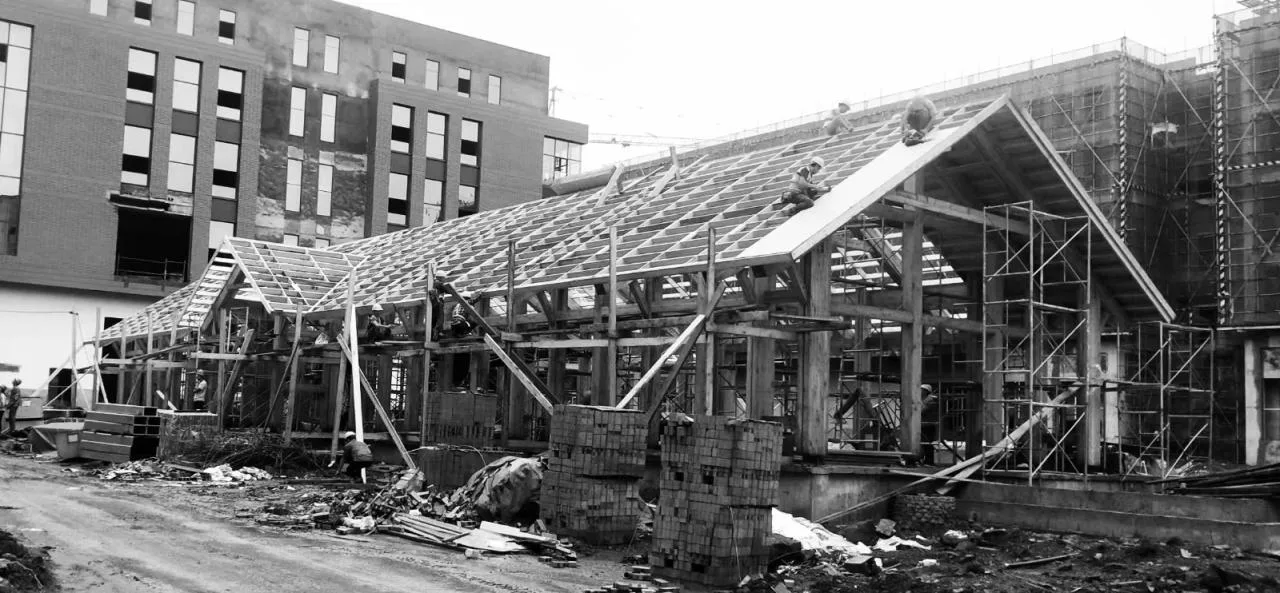
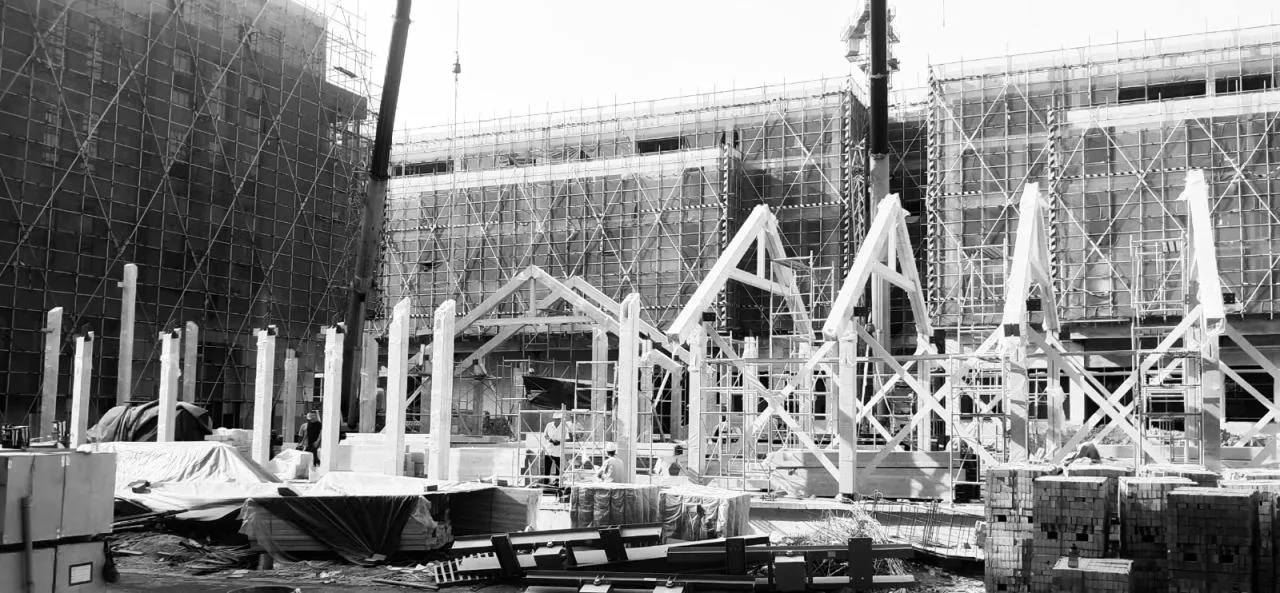
Thanks to this precision, on-site work involved only positioning column bases accurately, while the wooden structure was assembled like building blocks. Covering over 300 square meters, the main structure was assembled in just two days with five to six workers and one crane, showcasing the advantages of prefabricated construction.
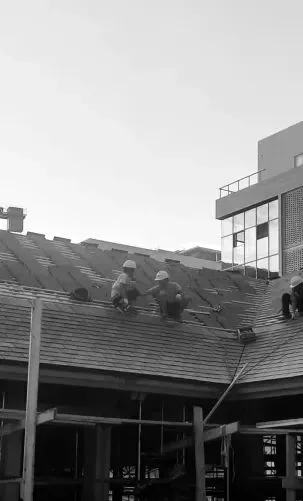
Construction Site
Conclusion
Designing wooden structures requires balancing the building’s external appearance, logical structural systems, and integrating factors including functionality, regional environment, cultural context, and material technology. This broad approach expands design perspectives and makes the building process more practical.
This project exemplifies the integration and optimization of modern technology across materials, construction, structure, and spatial design. It responds humbly and simply to the site’s natural, cultural, and technological context.
Project Information
Project Name: Café at Dadi International Life Science Park
Location: Yuefu Avenue, Chongqing
Owner: Chongqing Dadi Biomedical Technology Industrial Park Development Co., Ltd
Function: Coffee Shop
Building Area: 357 square meters
Wood Structure Engineering: Shanghai Junzhi Construction Technology Co., Ltd
Structural Team: Chen Wenjuan, Chen Jingyong, Chen Lang
Project Manager: Luo Aijun
Architectural Design: Chongqing Erqi Architectural Design Co., Ltd
Design Team: Zhu Liangyang, Ren Li, Liu Qian
Construction Drawing: Chongqing Design Institute Co., Ltd
Landscape Design: Chongqing Aolan Landscape Planning and Design Co., Ltd
Interior Design: Chongqing Baiming Decoration Design Engineering Co., Ltd
Design Period: May to October 2020
Completion: December 2021
Photography: PrismImage
















Must log in before commenting!
Sign Up