
It’s easy to design a dream city, but it takes much thought to create a living city.
——Death and Life in Major American Cities
Streets are vital urban spaces that carry the full spectrum of daily life. They serve as a city’s memory—from childhood recollections to the era of smart cities, street life is intimately tied to urban prosperity. Today, many cities suffer fragmentation: some spaces are grand but lack humanity, while others are physically dirty and disorderly, breeding social issues.
As the primary showcase of urban culture, street views directly reflect a city’s civilization and cultural depth. People now play an increasingly crucial role in urban development. Urban renewal has evolved from the initial phase of large-scale demolition and reconstruction to accommodate population growth, to a new phase focused on attracting and retaining residents to prevent urban decline.
Streets have become a key battleground for urban renewal. Materially, they provide convenient transportation; spiritually, street scenes carry cultural memories of local neighborhoods. Revitalizing streetscapes in old neighborhoods is essential to invigorate public spaces, highlight cultural richness, show urban care, and create characteristic new urban spaces.
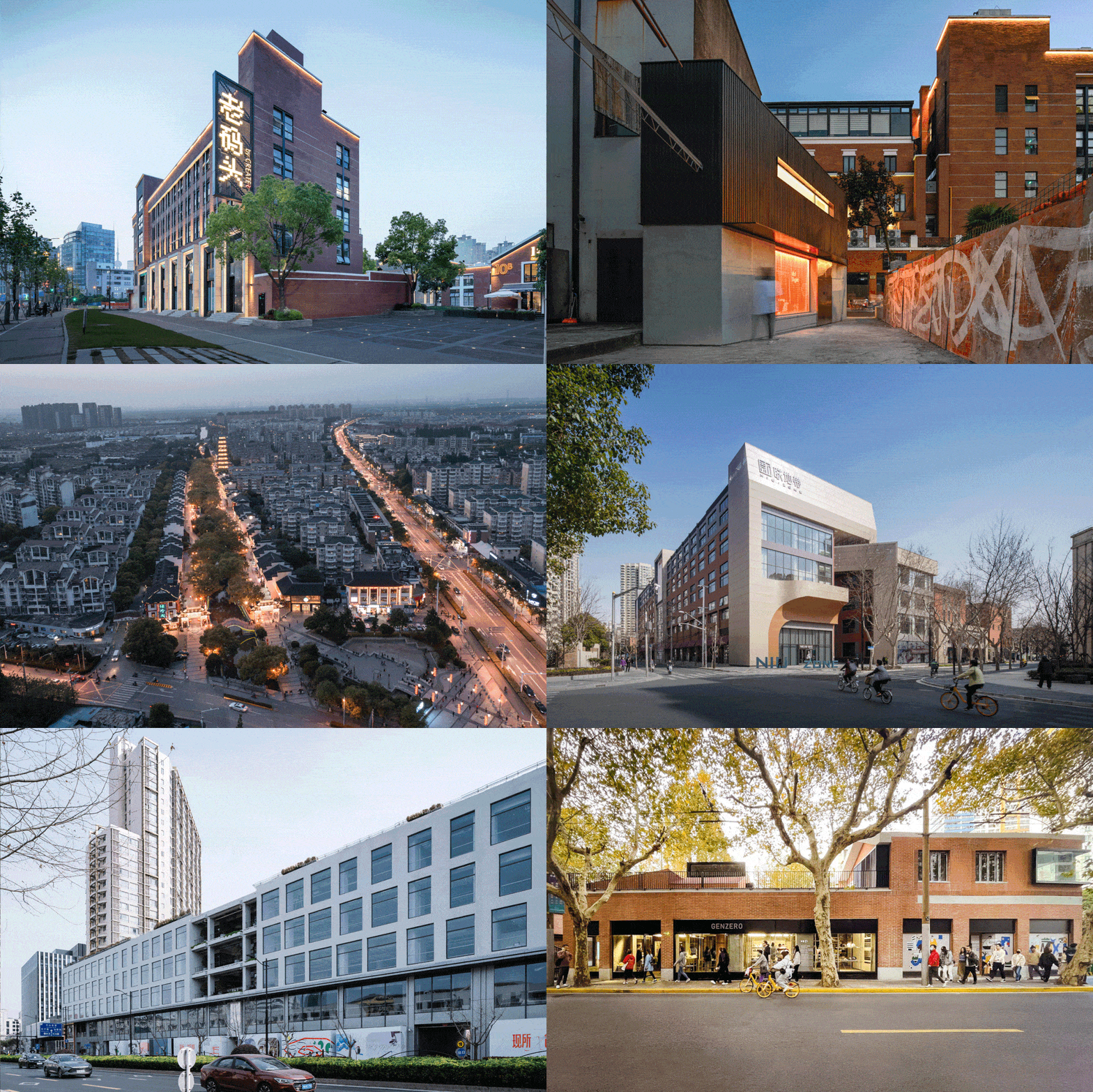
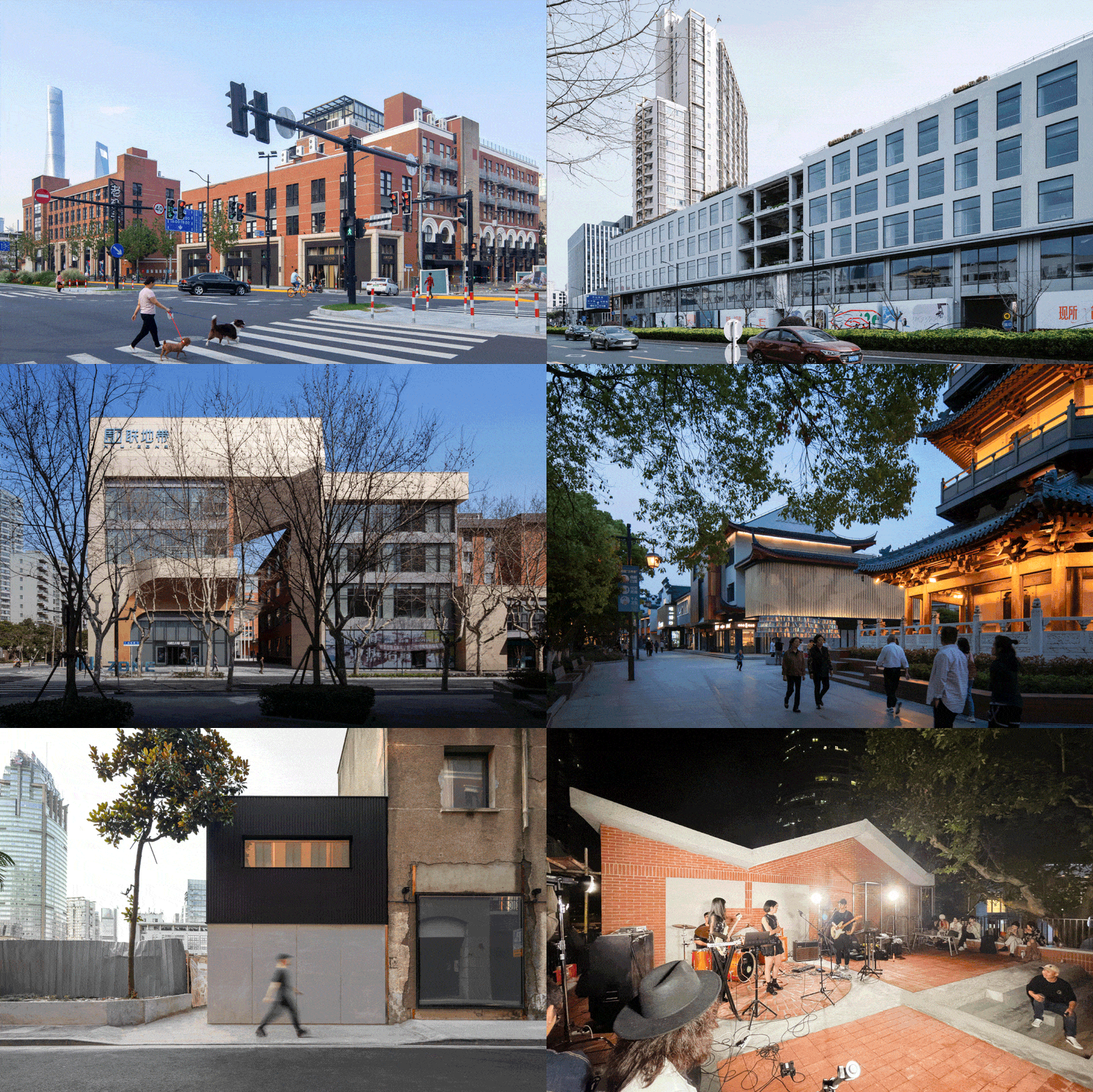
In recent years, Sanyi has been involved in numerous neighborhood renewal projects, improving urban spaces, guiding restoration, and solving practical challenges. Here, we share six past projects to deepen understanding and inspire new ideas for urban renewal and streetscape design.
01 Landscape Creation: The Start of Urban Regeneration
Creating landscape value to reshape vibrancy
The transformation of industrial heritage has shifted from merely reusing space to shaping urban landscapes. In today’s mobile internet society, industrial heritage renewal is not just about functional building change but also about crafting post-industrial cultural landscapes.
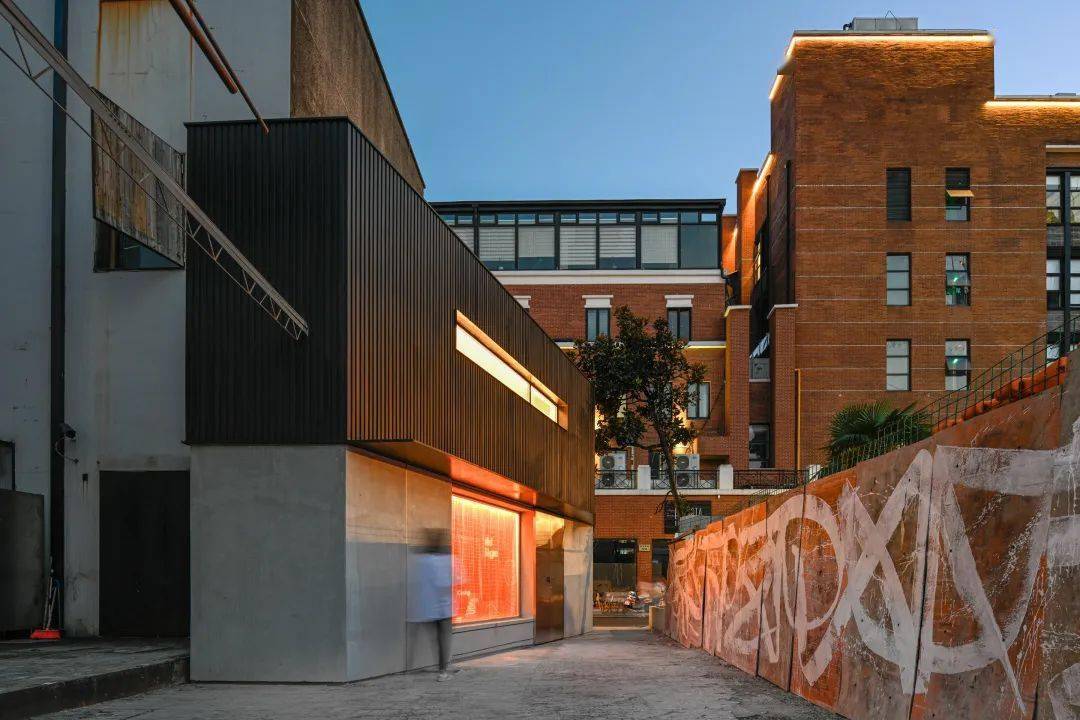
In early 2020, Sanyi Design conducted a minor renovation of the Water House’s boiler room, creating a “Mini Stage” that serves as a transition between the Water House and upcoming public green spaces, introducing the concept of “social landscaping”.
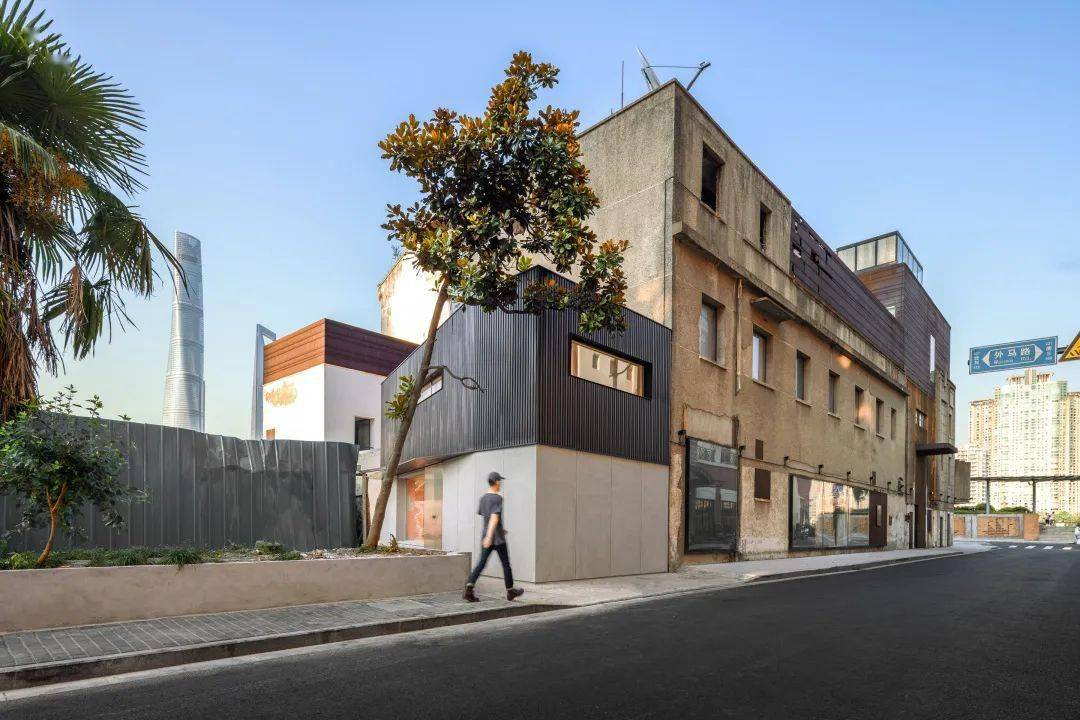
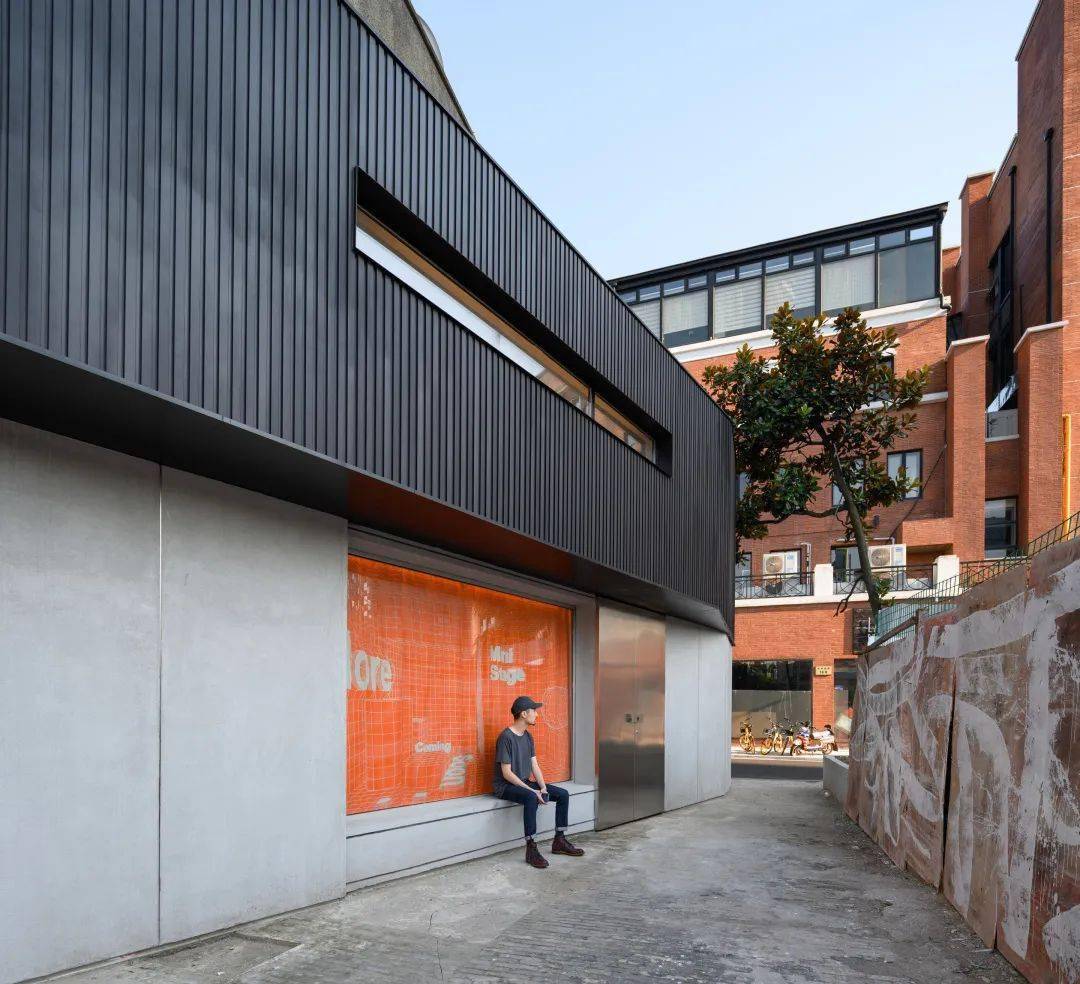
Photo by Liu Songkai
The Water House, situated in Shanghai’s newly planned South Bund old pier area, is a three-story building originally used as the Japanese armed forces’ headquarters in the 1930s. A fourth floor was added ten years ago to transform it into a boutique design hotel. The boiler room lies at the building’s end, both connected and separate.
During renovation, the focus was not on continuing prior materials or forms, but on shifting the visual narrative toward function, using a strategy of spatial, temporal, and functional “flow” to create new scenery.
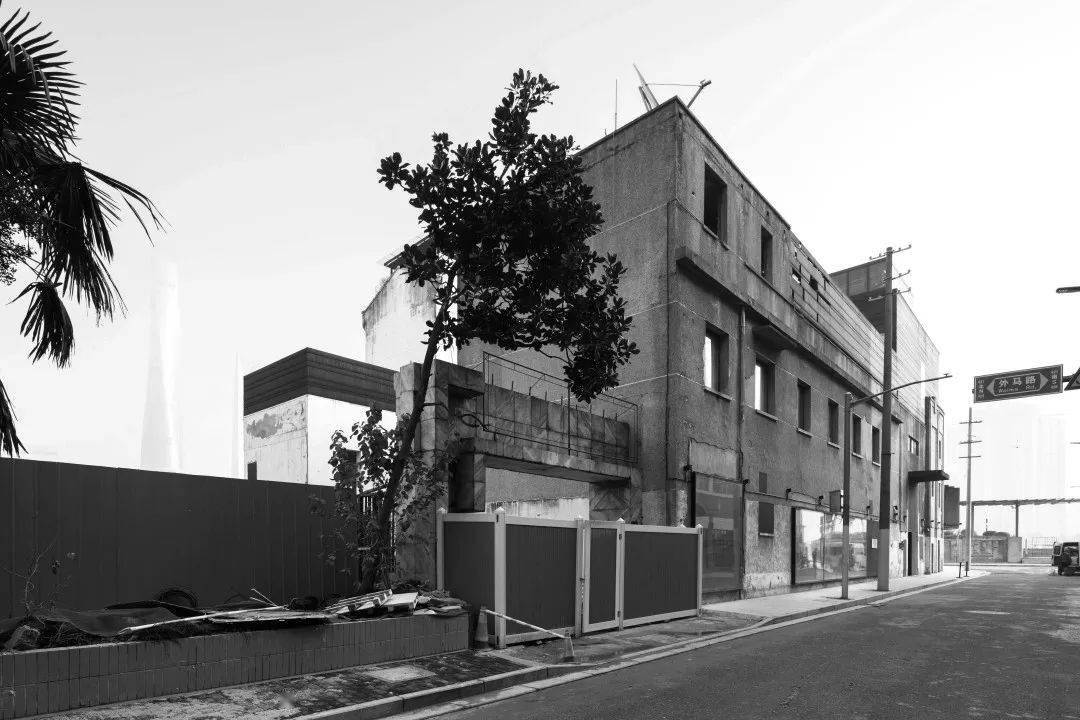
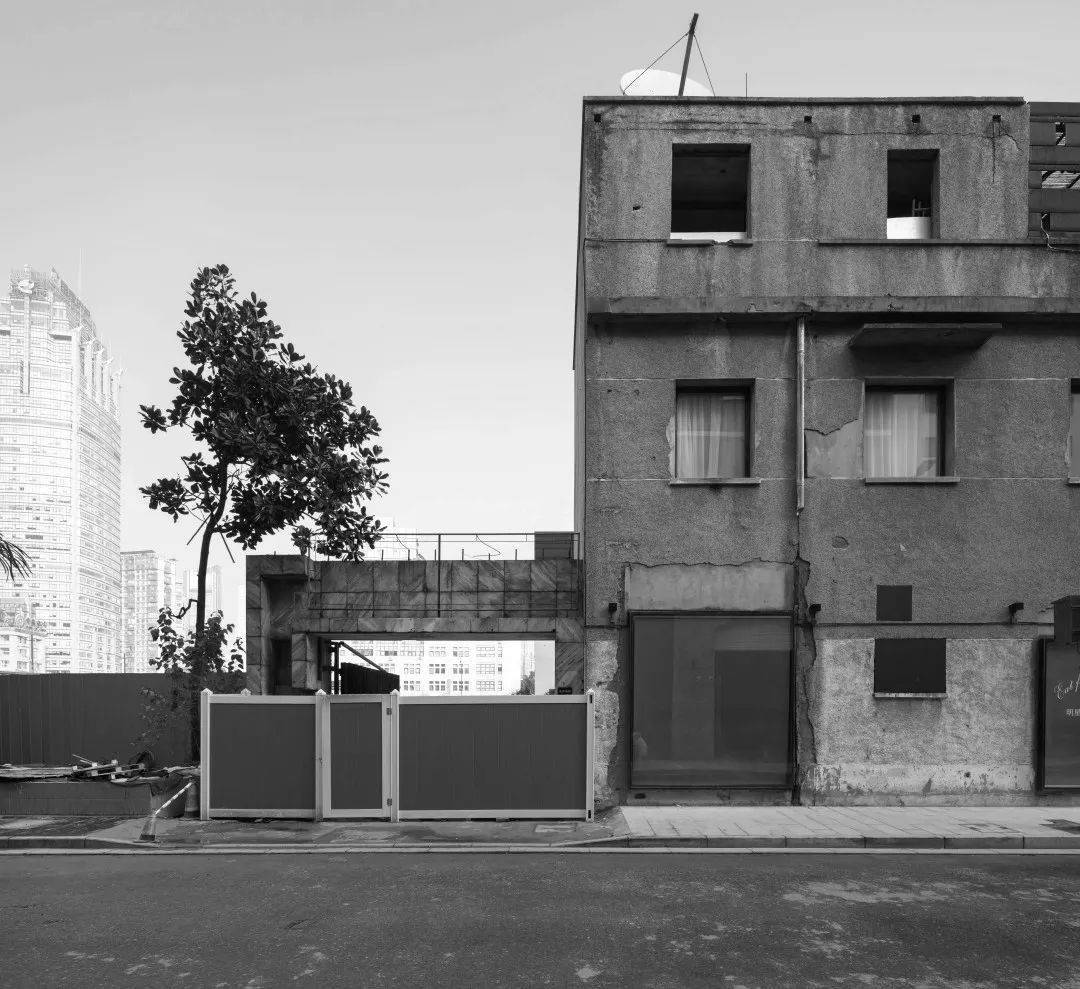
Site old photo by Liu Songkai
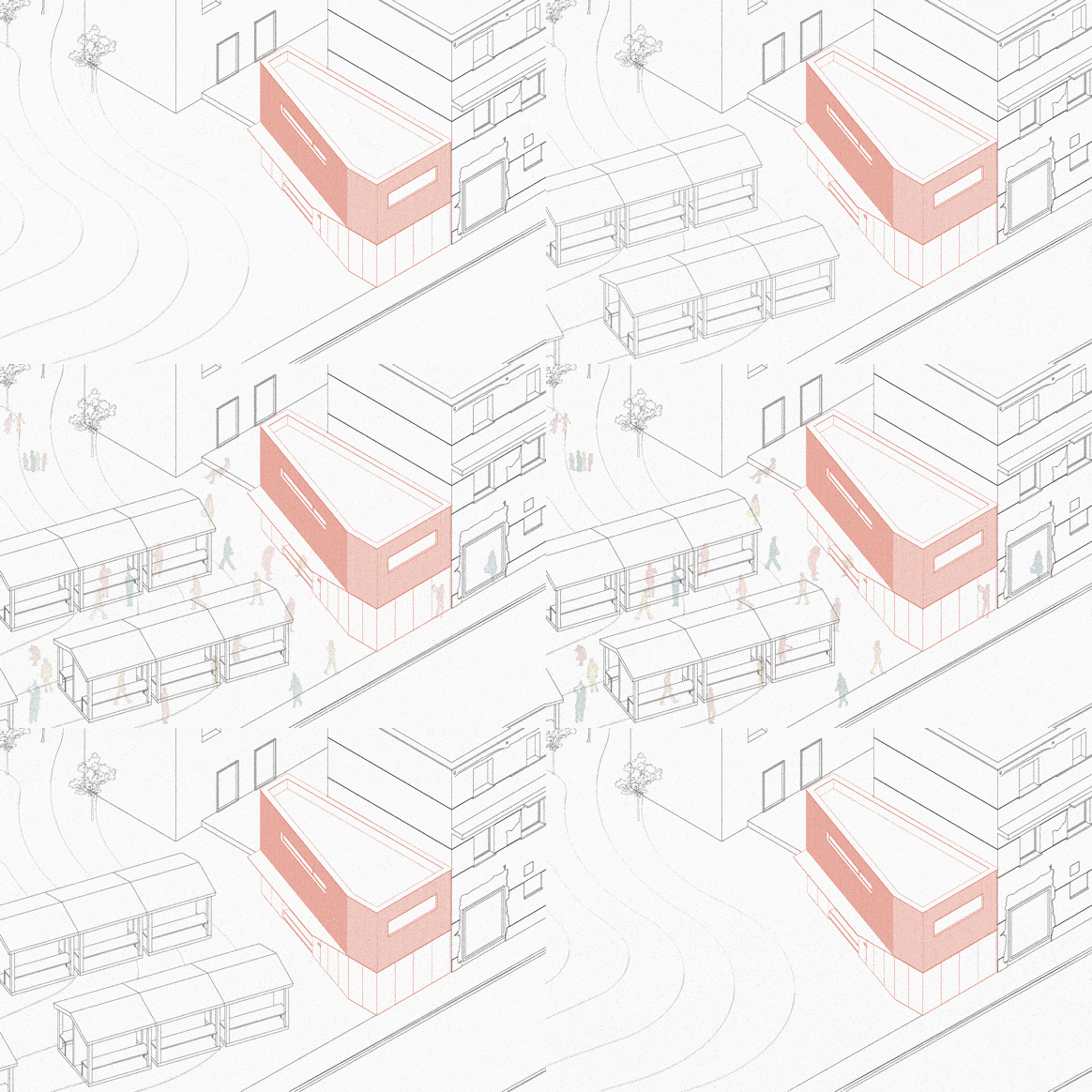
Located at the building’s edge, the boiler room was aligned with the street to naturally create a “flowing” spatial axis that guides people movement, transforming the industrial site’s atmosphere into a more open, public space.
The facade connecting the boiler room and original building features a closed lower layer to maintain enclosure, which gradually becomes more open due to building height changes. This transition from closed to open generates an orderly, inclusive flow and a landscaped transitional site.
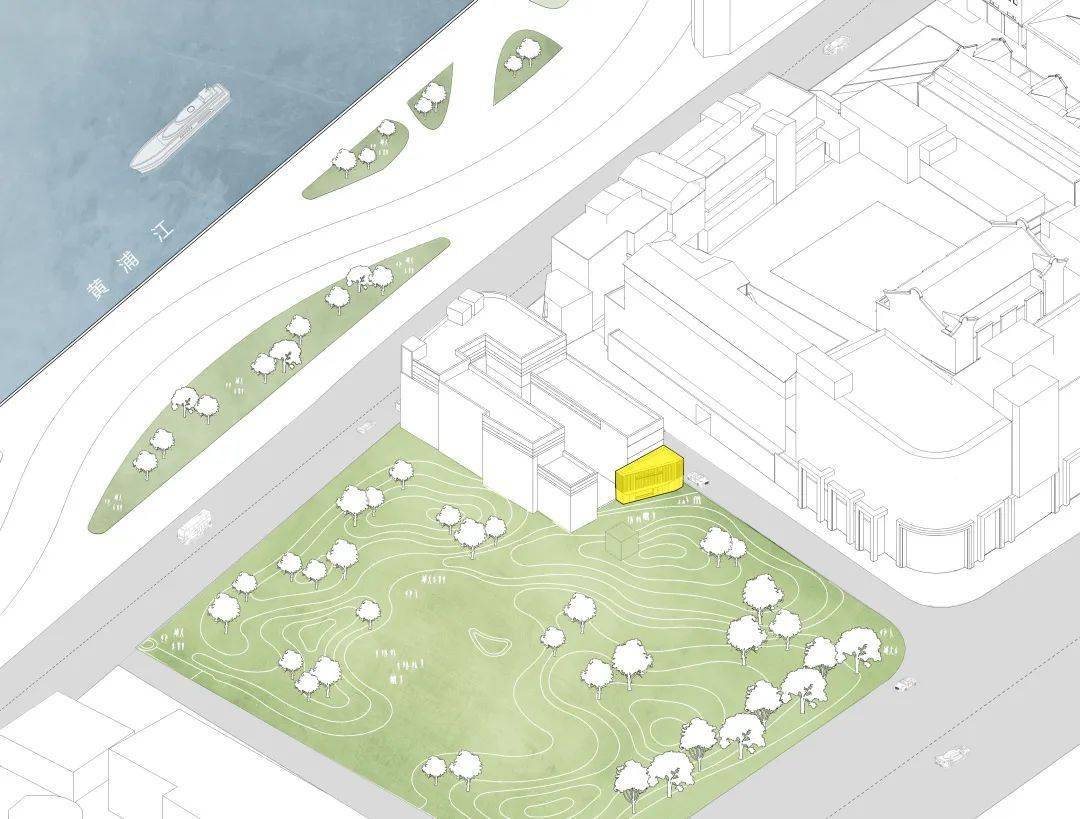
Location Analysis Diagram
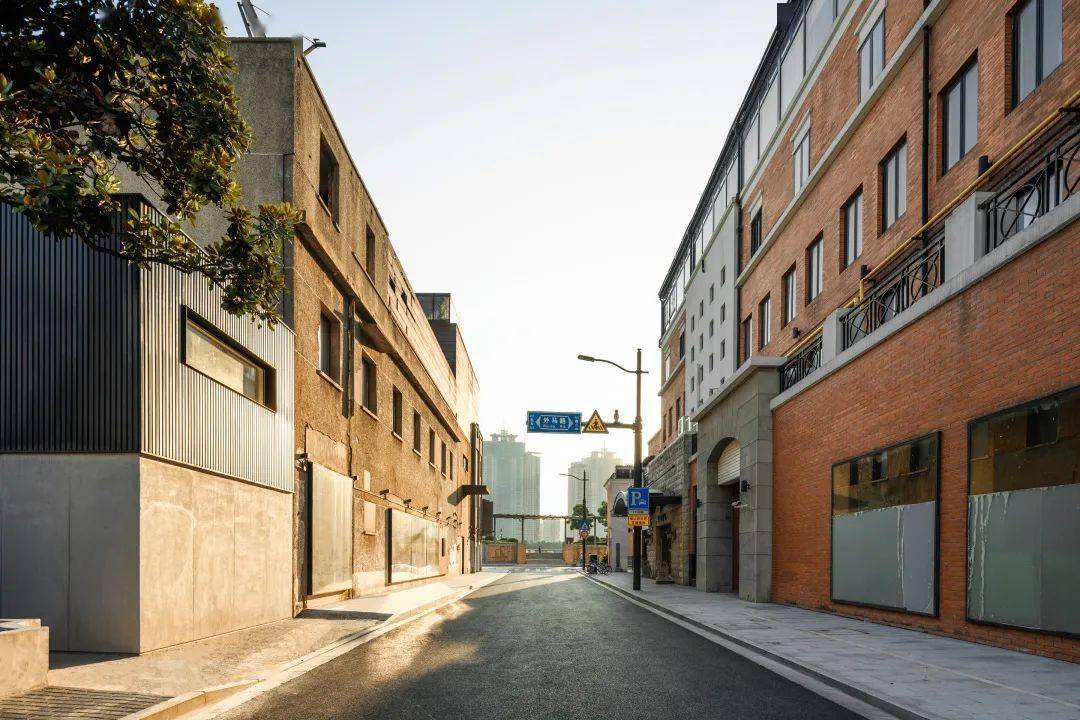
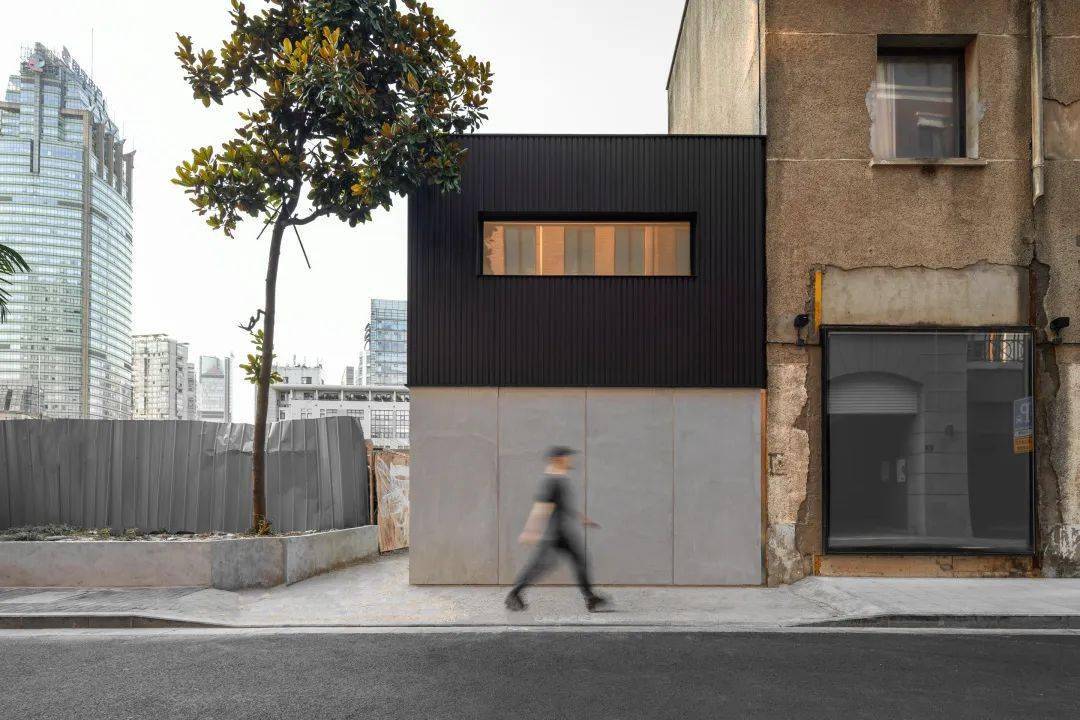
Photo by Liu Songkai
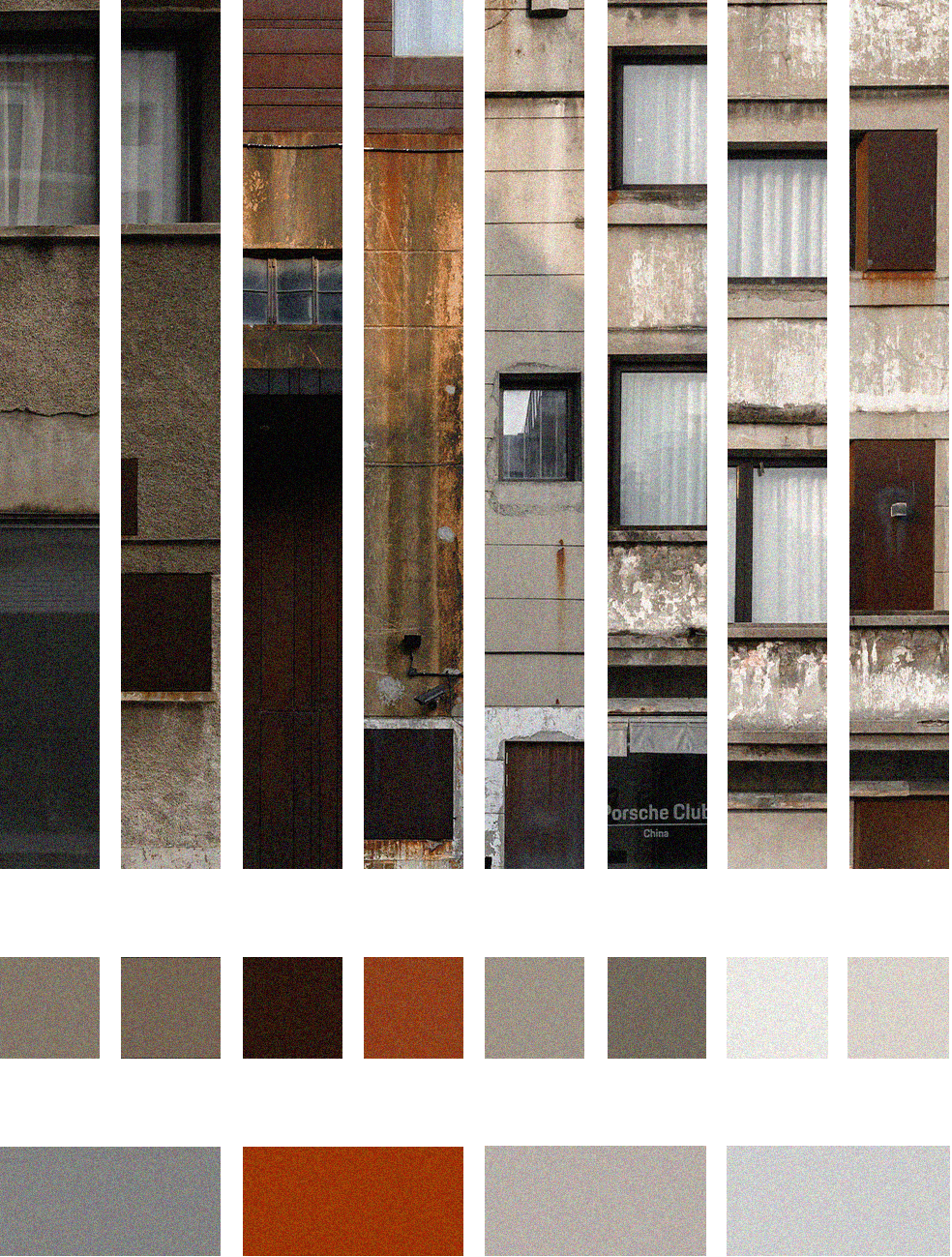
Material choices include folded aluminum panels, cement, and color elements drawn from the surroundings, embedding memories of past time into tangible forms.
Material extraction research
The contrast between new and old materials emphasizes the temporal flow between past and present, making history feel enclosed yet connected.
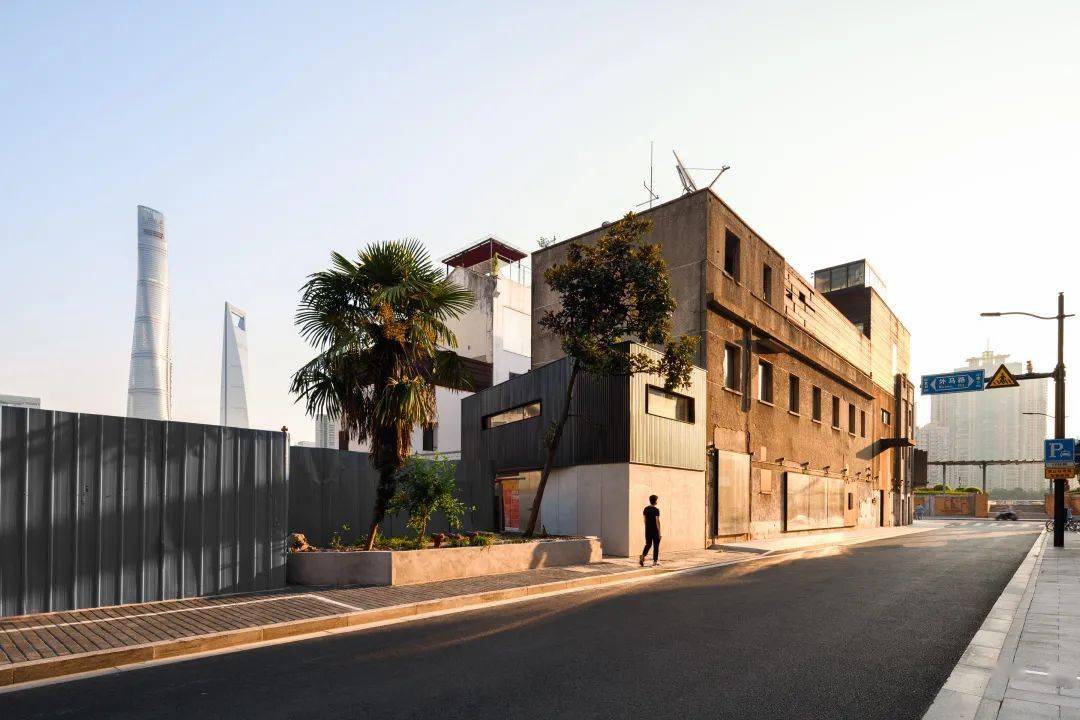
Photo by Liu Songkai
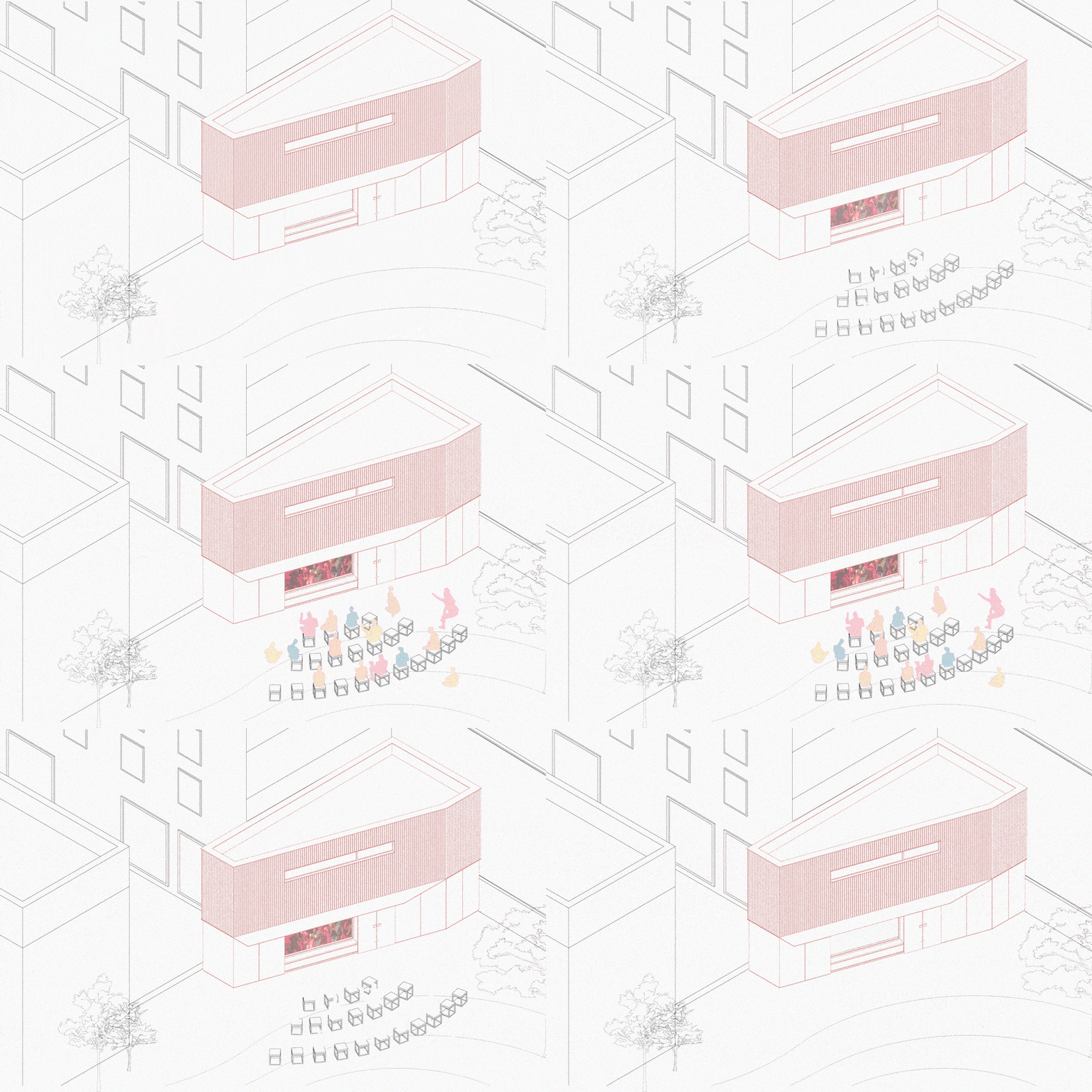
New functions include cultural and tourism displays facing the city park, integrated modern canopies, lighting, and seating on the facade, enhancing openness and interactivity after the “flow” transformation. Small public spaces inside the building connect with larger green spaces, creating immersive experiences that bring the past to life.
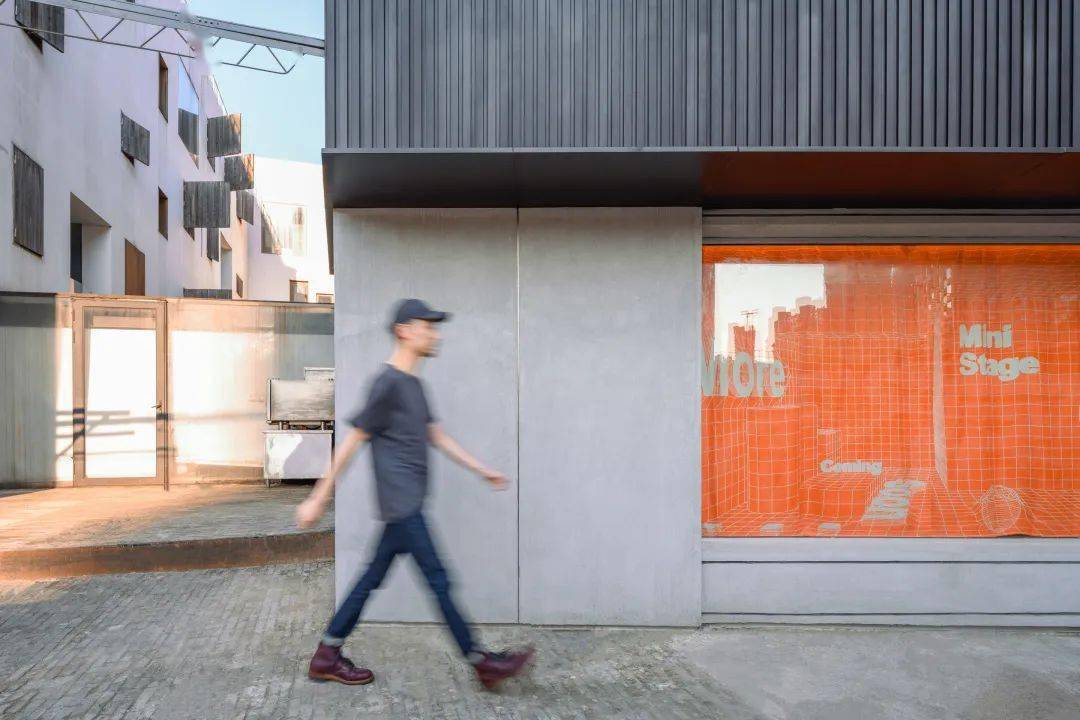
Photo by Liu Songkai
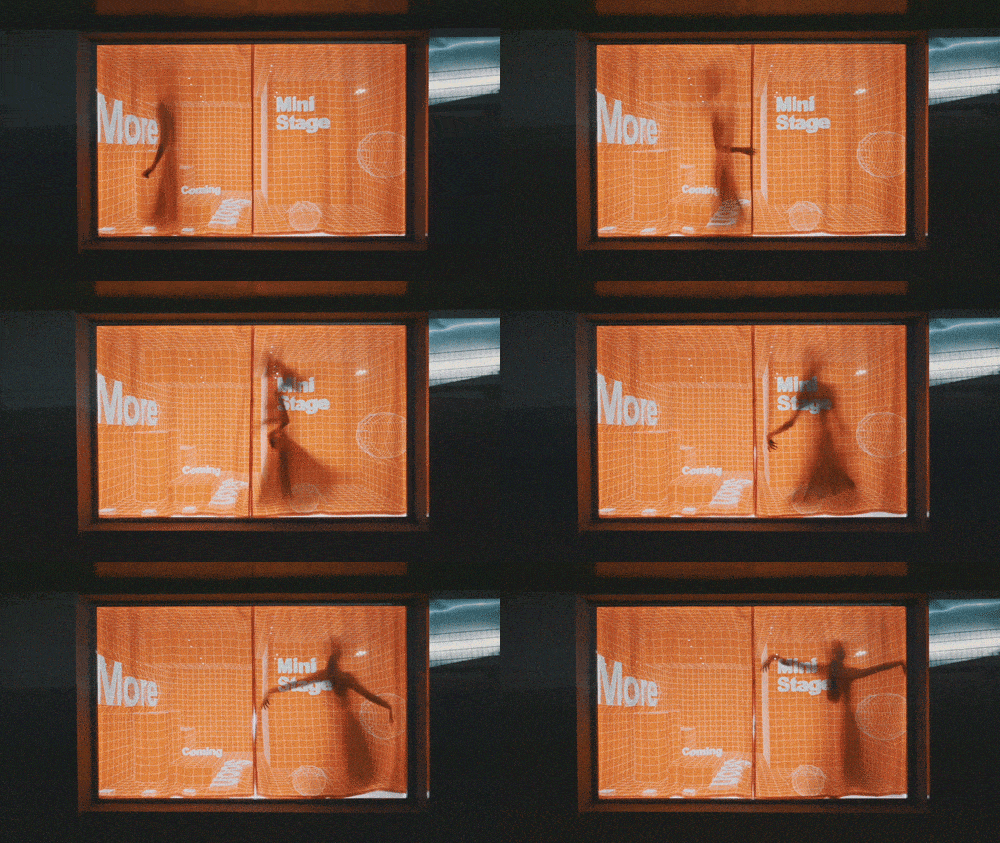
By involving micro spaces and audiences in spatial landscaping, the Water House writes a new chapter—a story diverging from the original social landscape, forming a new timeline and marking the beginning of urban growth and evolution, becoming a vital part of the Bund narrative.
02 Art at the Street Corner: Bringing Light to Life
Preserving venue memories, connecting with residents, and meeting new community needs
Street views are not static; they carry the emotions, historical, and cultural memories of locals. Yet rapid urban construction and population shifts have homogenized cityscapes. To address contemporary development needs, rebuilding a lifestyle with regional character, showcasing neighborhood culture, and embracing dynamic evolution are key to enhancing residents’ quality of life and defining streetscape identity.
Sanyi’s Yuyuan Road Art Live Studio, the “head” plot of the Yuyuan Art and Life Block in Shanghai’s Changning District, initiates the whole block’s revival. Employing four strategies—memory continuity, updated form, upgraded function, and resource integration—Sanyi architects blend cultural commerce, community life, and art to foster a vibrant district that balances fashionable living with original community needs.
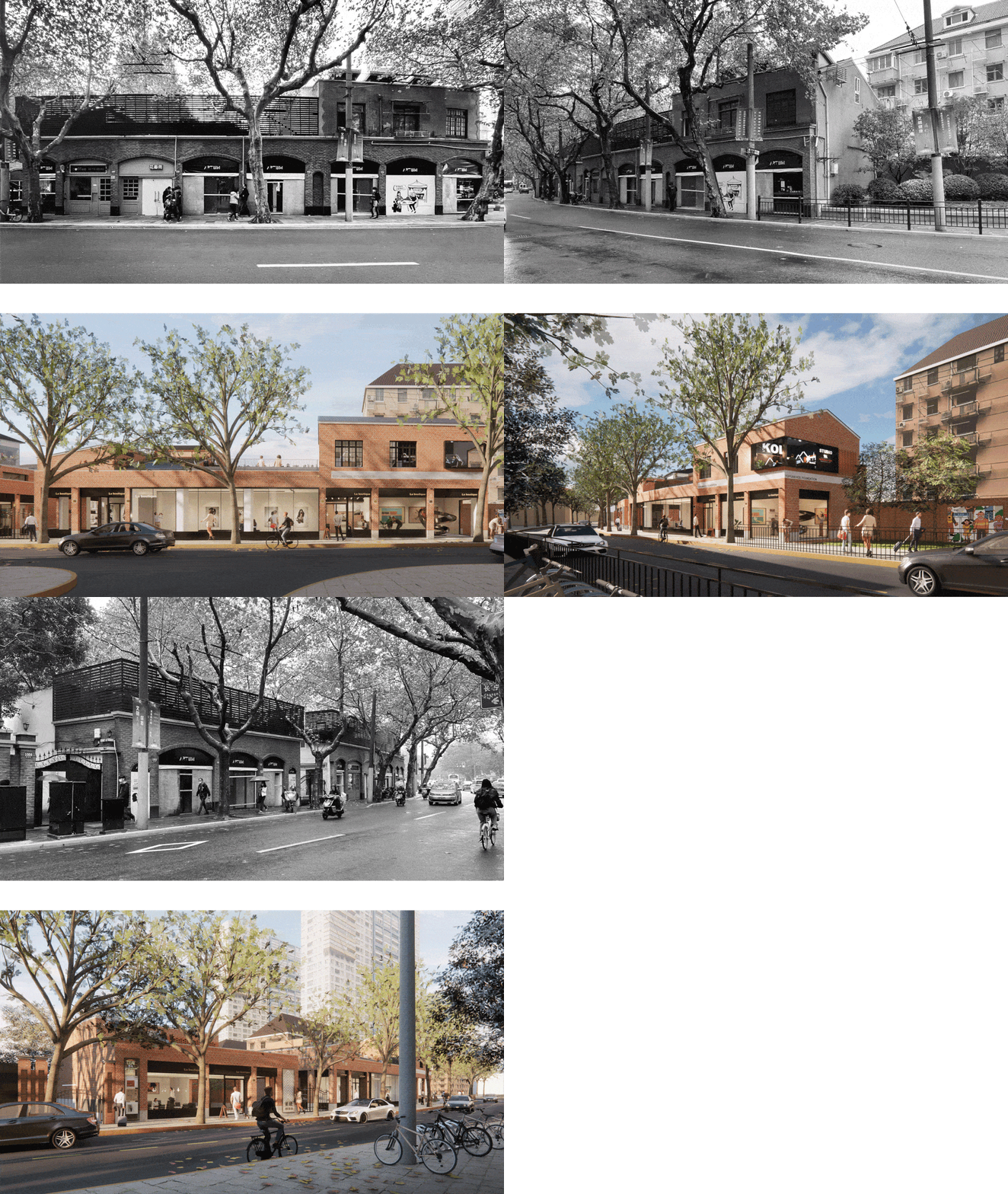
Original building and renovation renderings
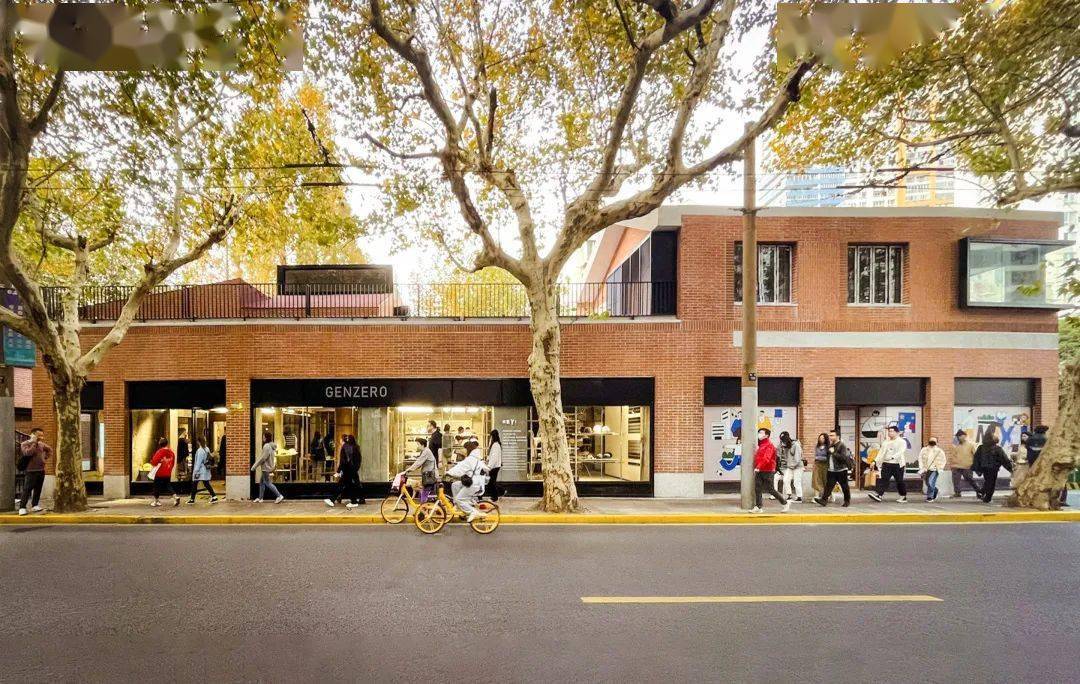
During facade renovation, a restrained approach preserved the original red brick and street interface to maintain a sense of place and memory for residents, blending quietly with Yuyuan Road’s historical style. Although simple, the red bricks provide dynamic visual interest through irregular patterns, directional changes, hollow overlaps, and geometric textures on the roof, adding rhythm and narrative.
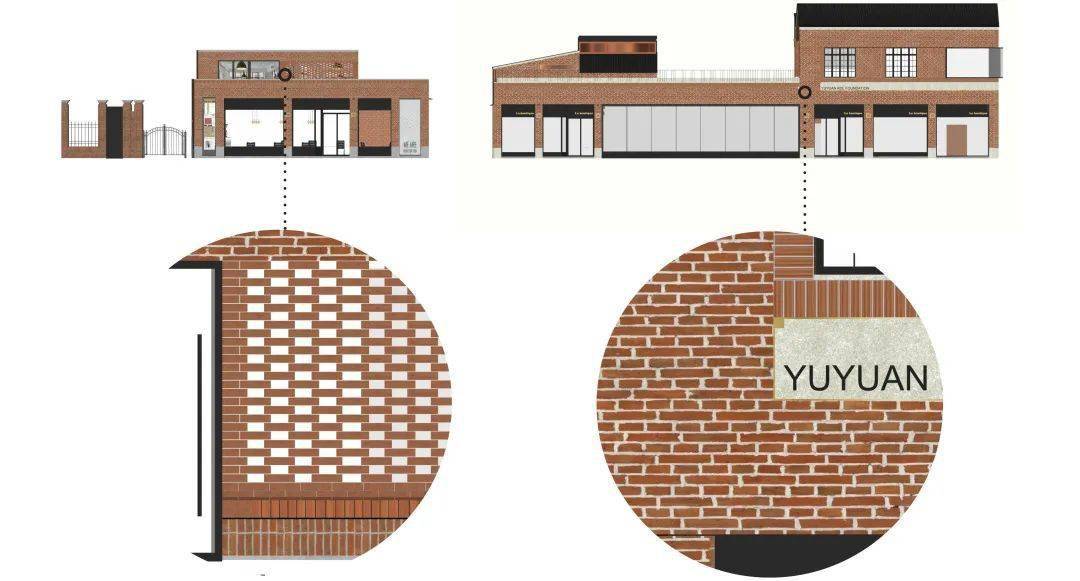
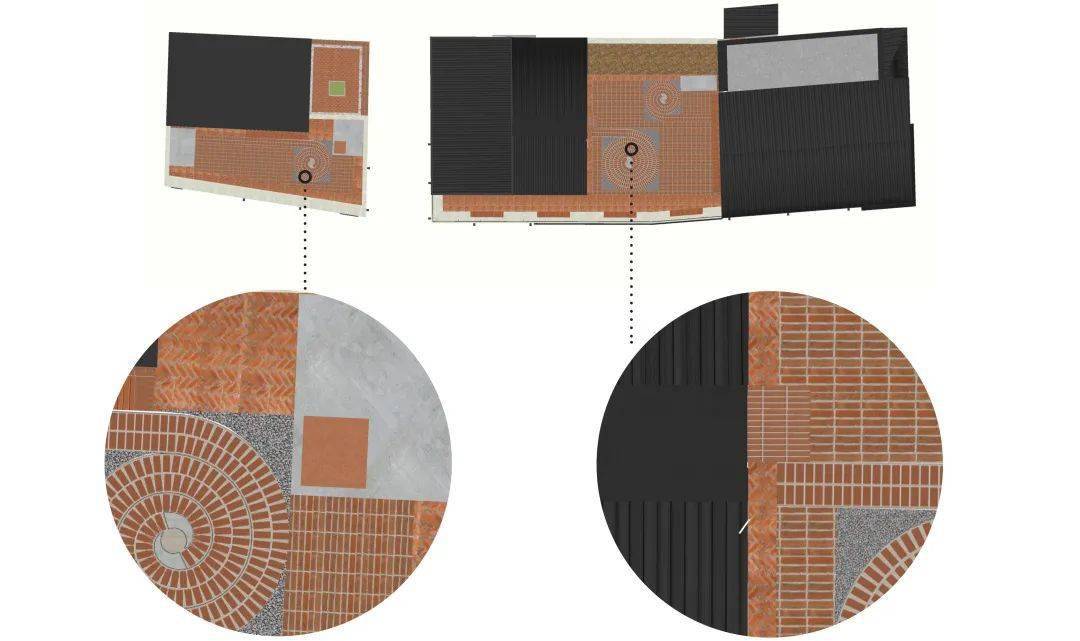
Local tile texture analysis
Adding a large glass surface and transparent bay windows at corners introduces a fresh, lively atmosphere. The design integrates life-focused, interactive elements to connect with residents, offering warmth, fun, and a forward-looking community lifestyle.
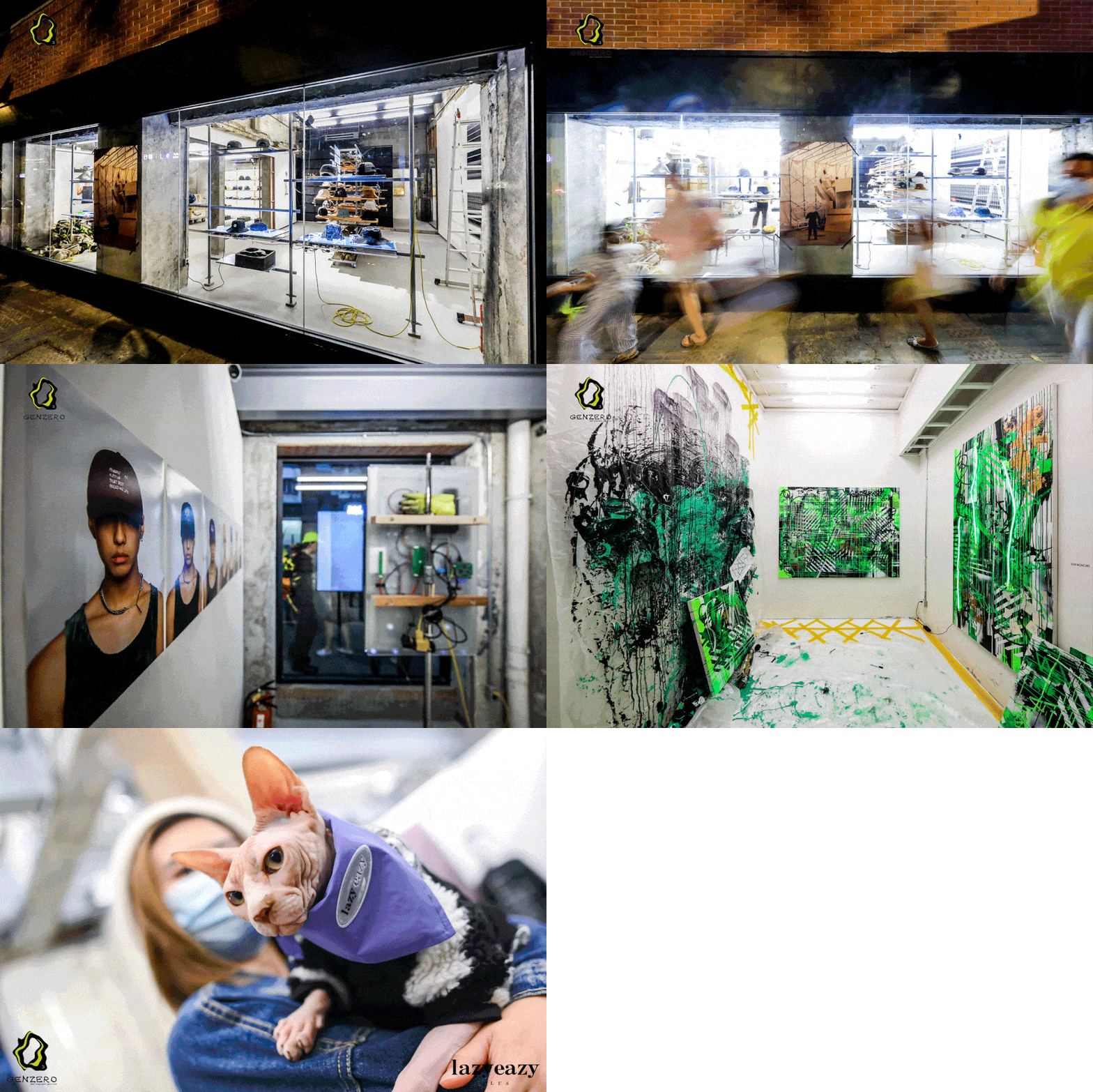
Visit China’s largest offline hat store at 1000 Yuyuan Road © GENZERO
The second-floor roof terrace is a lively, smoky space designed for residents. Renovated from the original roof layout, it emphasizes sharing, relaxation, and freedom—ideal for meditation or gatherings under the starry sky amid garden surroundings, fostering connection between old and new friends in a relaxed atmosphere.
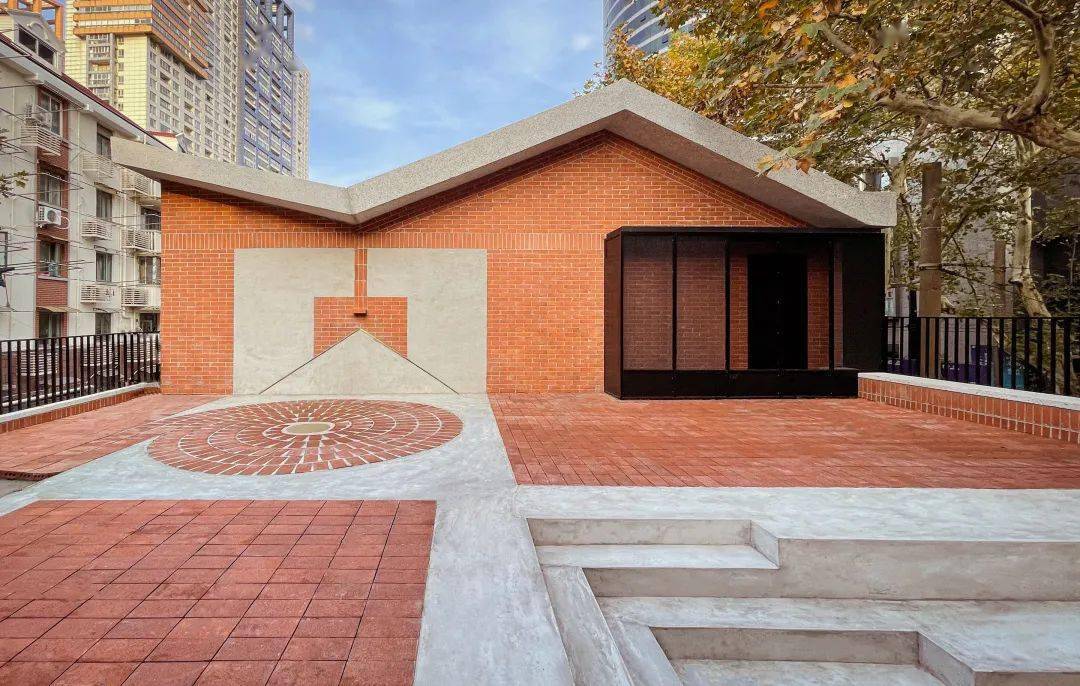
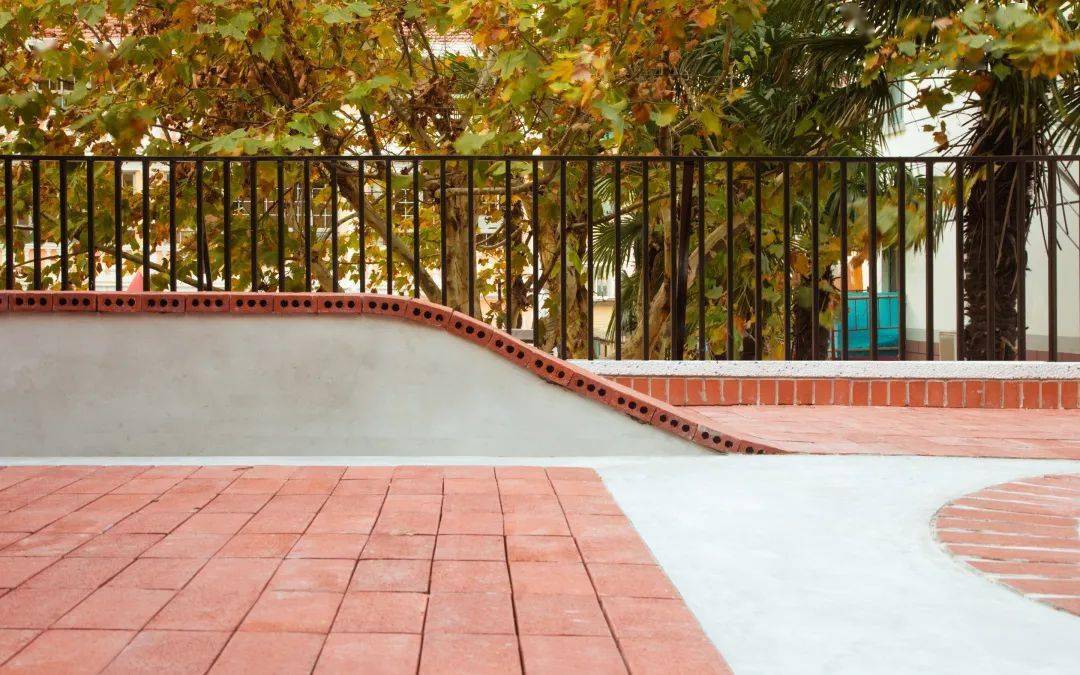
From exquisite dining at Ermen Ding’s to trendy hat shops and Archimedes Radio’s real-time offline and online interaction, Sanyi architects have crafted a social, stress-relief, and vibrant neighborhood space—a lifestyle in itself.
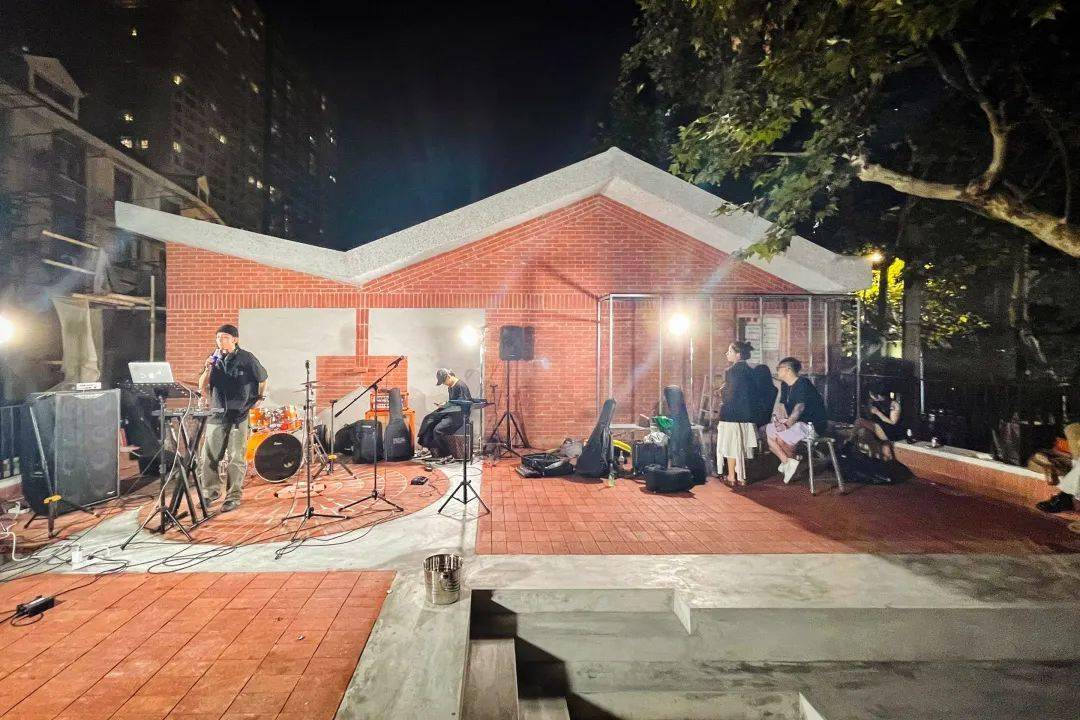
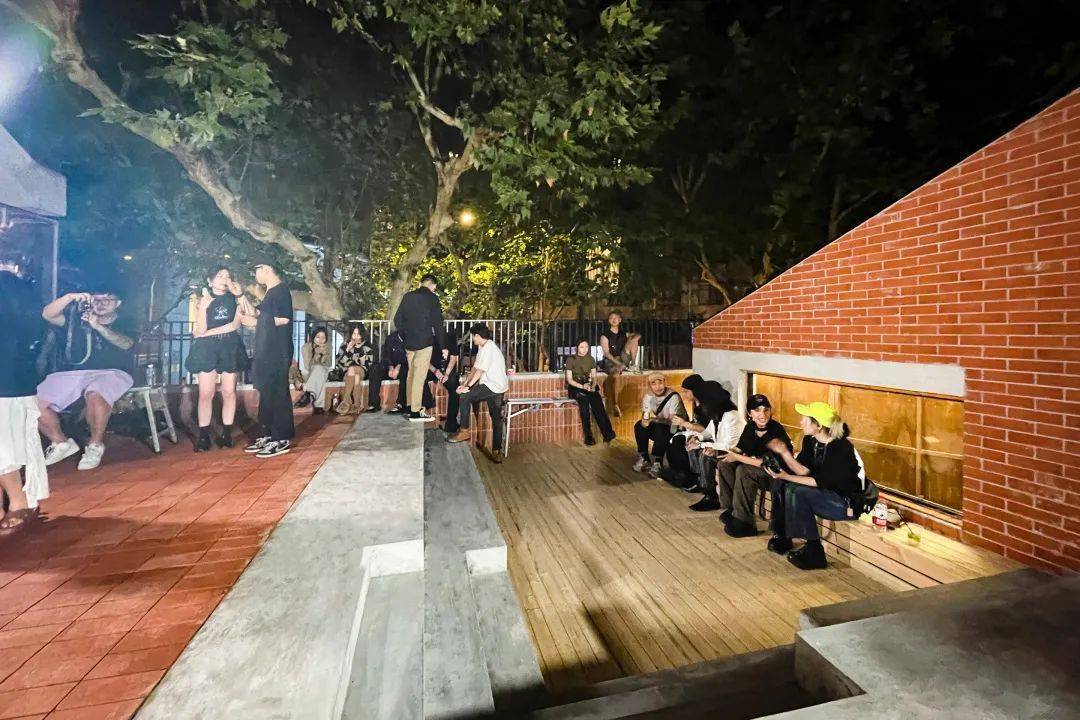
Outdoor music party © San Yi China
03 Preserving the Old Street Story and City Nostalgia
Maintaining historical context and revitalizing historic urban spaces
Like people, cities carry memories through their life stories. Renovating historic cultural districts requires a dual approach: protecting heritage while revitalizing and repurposing spaces. With protection as the foundation and activation as support, historical districts can harness their own vitality and preserve authentic context.
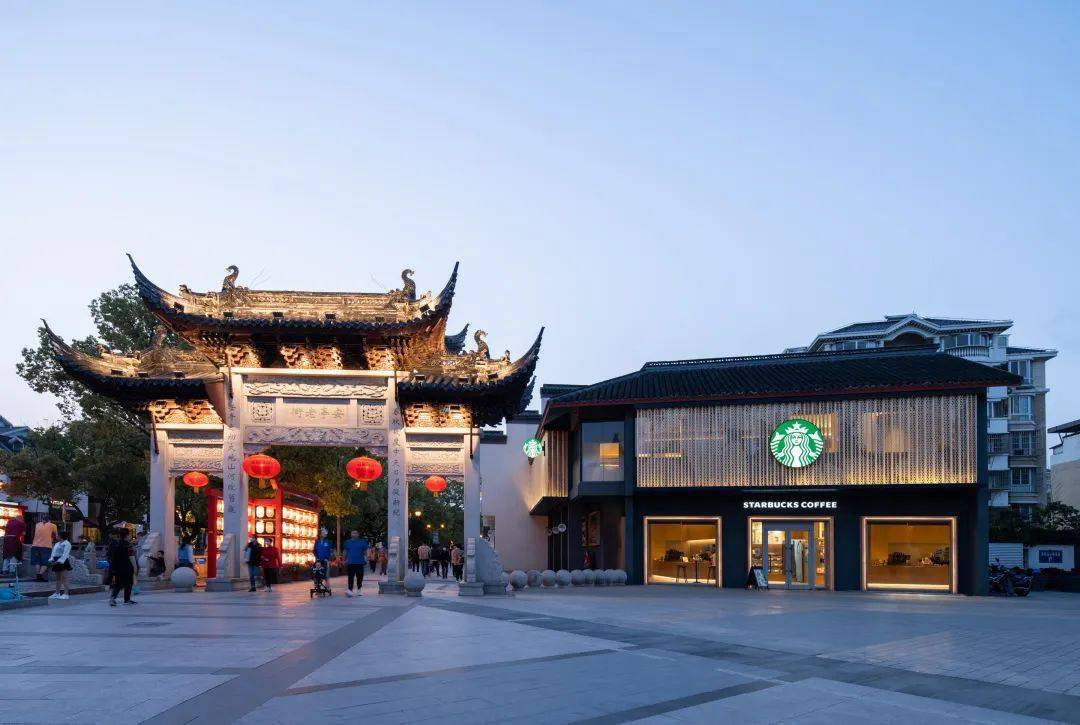
Photo by Liu Songkai
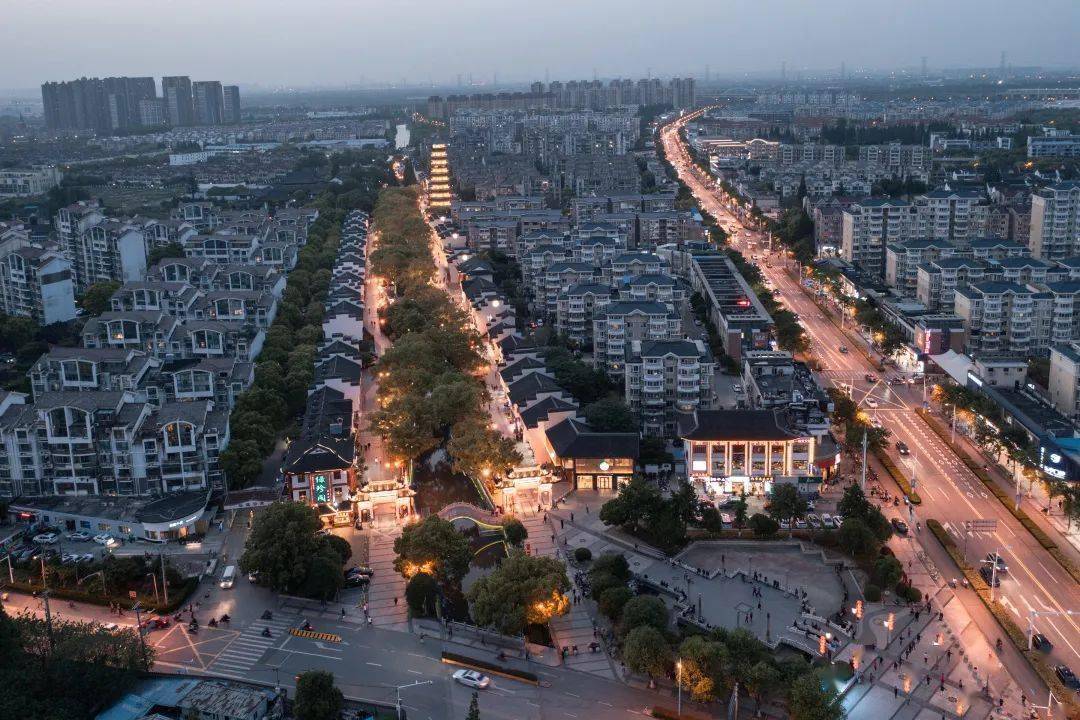
In Shanghai’s urban fabric, Jing’an Temple epitomizes historical narrative, while Anting Town, the western gateway, offers a vivid cultural entry point. Named after a pavilion from the Han Dynasty, Anting blends over 1,200 years of history with automotive industry development, rich cultural heritages, and enduring stories.
Last year, Sanyi completed the Anting Old Street renovation, blending the “old street story” with upgraded businesses, injecting new life while preserving historical essence.
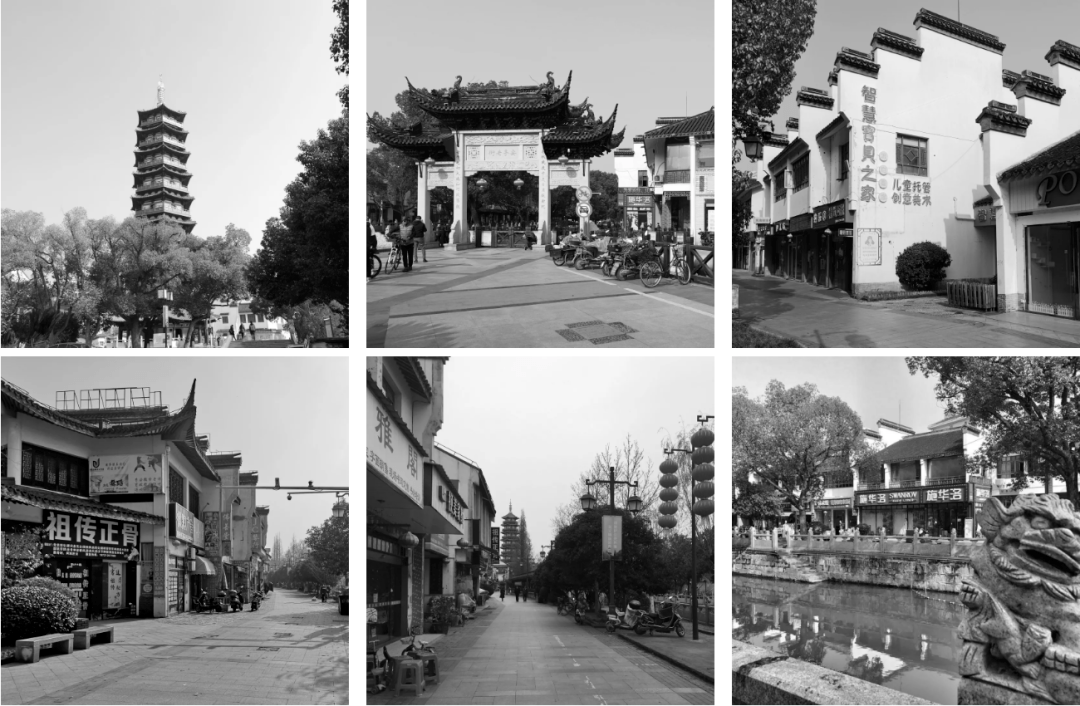
Anting Old Street historical photo © San Yi China
The old street follows the river, featuring a square with Yong’an Tower and ginkgo trees leading toward urban streets. Traditional cultural features include horse head walls and single-eave gable roofs. A long corridor between the commercial street and waterfront offers rest.
The architect returned to the site’s origins, seeking appropriate language and dialogue forms that resonate with the place’s spirit to construct layered, juxtaposed spaces.
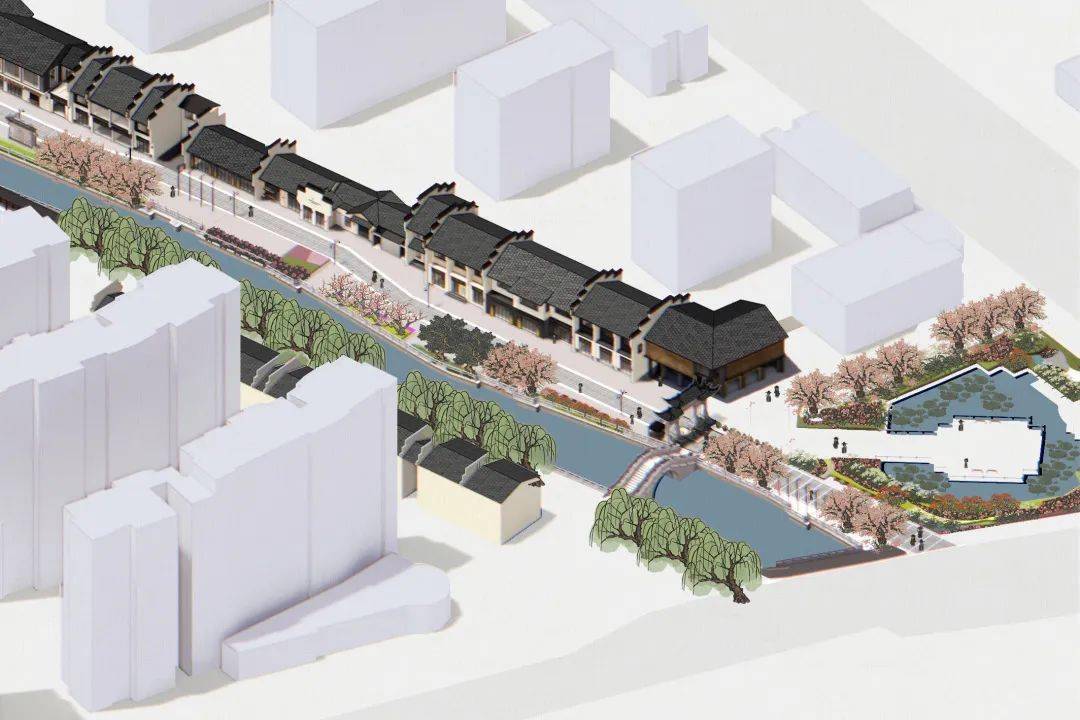
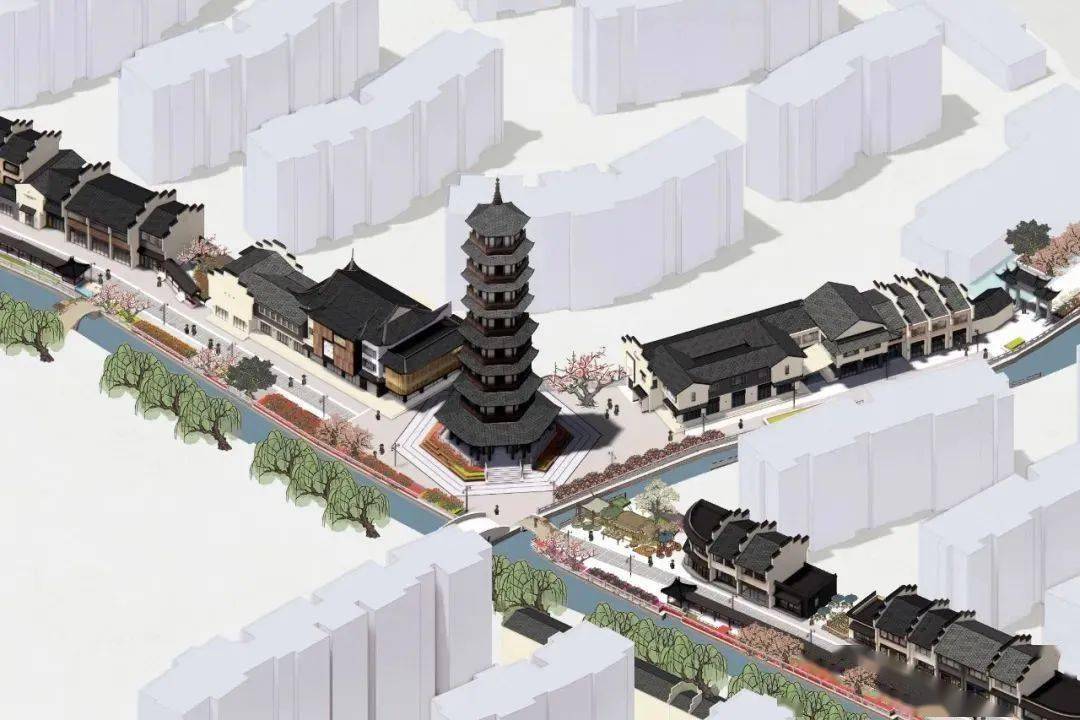
Bird’s-eye view rendering
The design approach emphasized preservation rather than demolition, maintaining the central square, trees, architectural forms, and covered corridors. Elements diminishing the street’s charm—such as low-end storefronts, exposed electrical boxes, and disorderly signs—were addressed.
The slow-moving space was reconfigured, with added rest platforms along street and river landscapes, river cleanup, unified signage, and improved lighting to unify the street ambiance.

Transformation analysis diagram
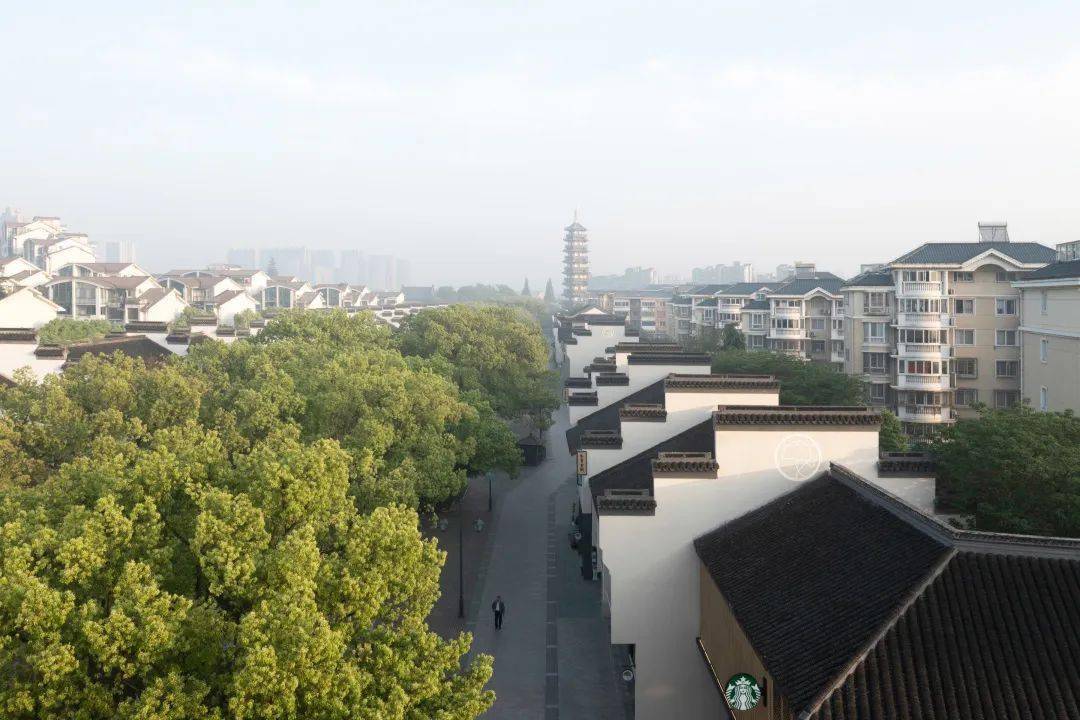
Photo by Liu Songkai
The architect refined building facades around Yong’an Tower square and extended improvements down the street, rhythmically enhancing facade appearance and user experience.

Transformation analysis diagram
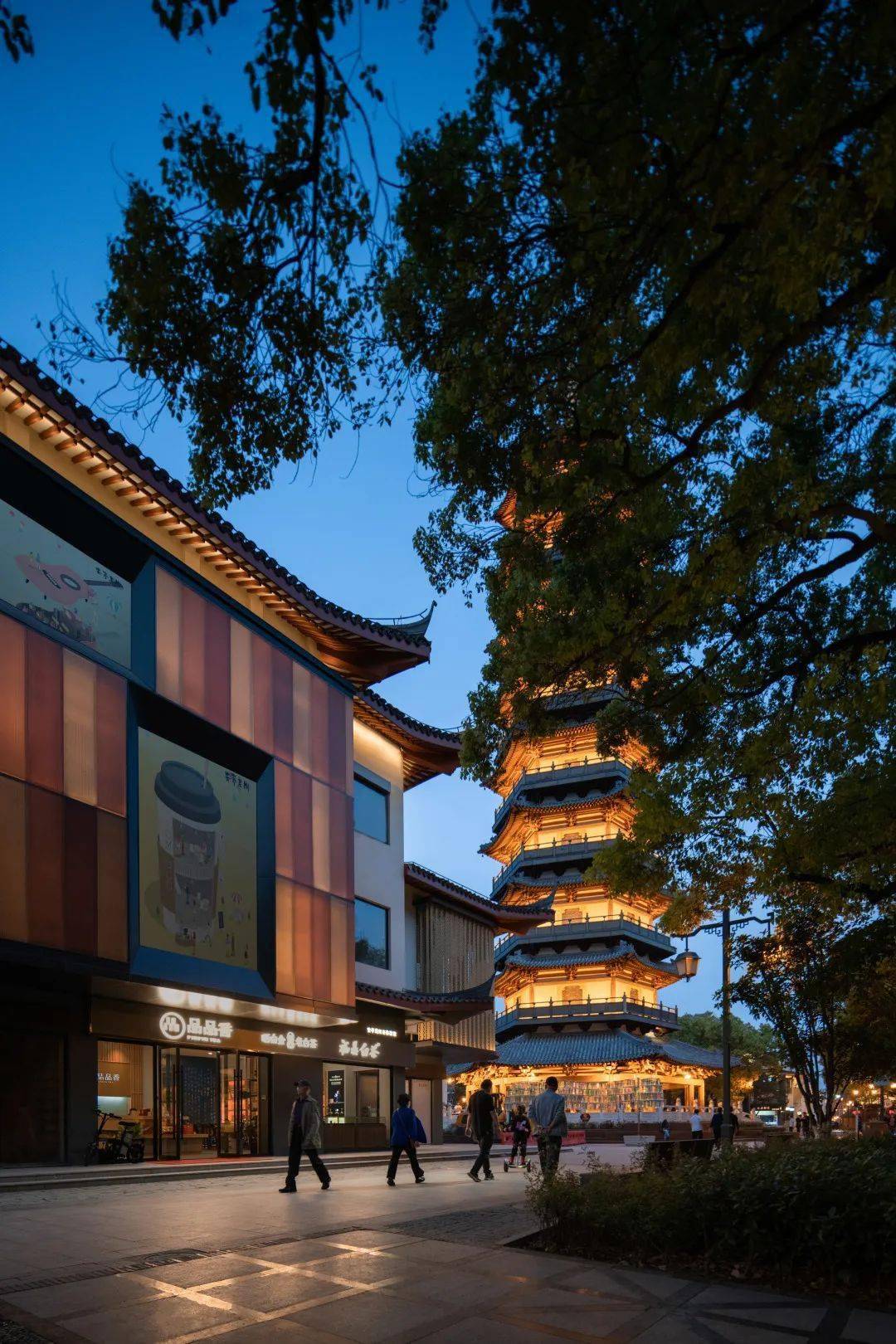
Photo by Liu Songkai
Anting Old Street, home to ancient ginkgo trees, inspired facade updates with metal panels perforated to form ginkgo leaf patterns. Door and window frames on the first floor match ginkgo leaf colors, complemented by custom ginkgo-inspired sidelights.
Ginkgo leaves form decorative panels for a unified visual effect. On the horse head wall, a matte black metal frame with black text on coarse fabric integrates the “Anting Old Street” signage into the architecture.

Transformation analysis diagram
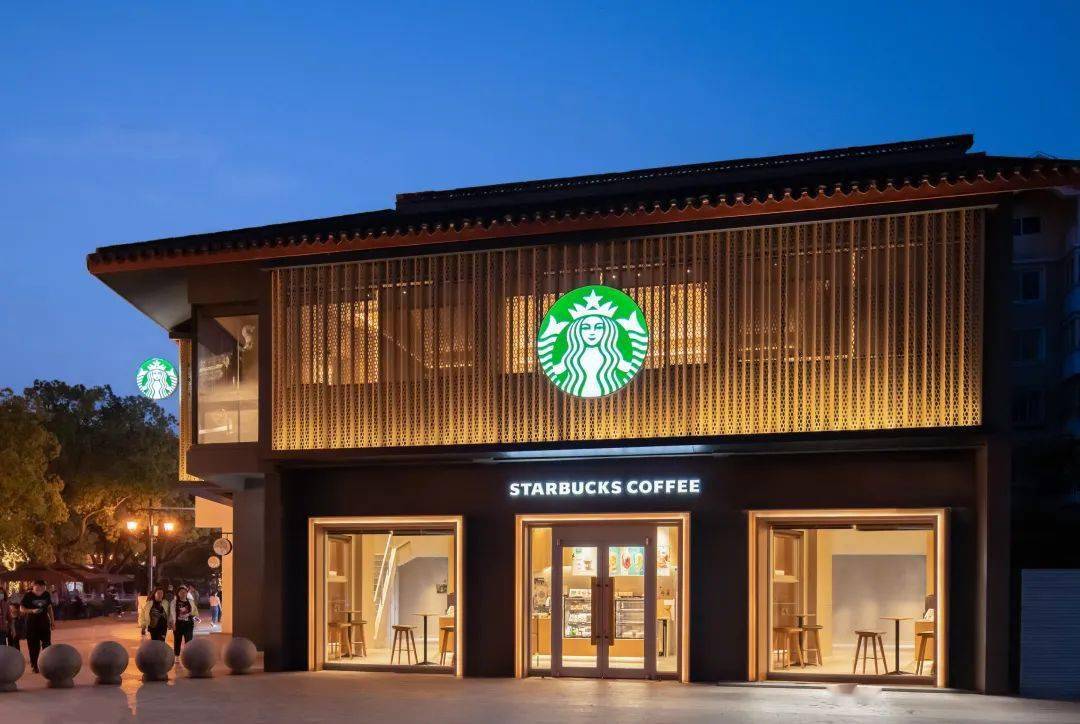
Photo by Liu Songkai
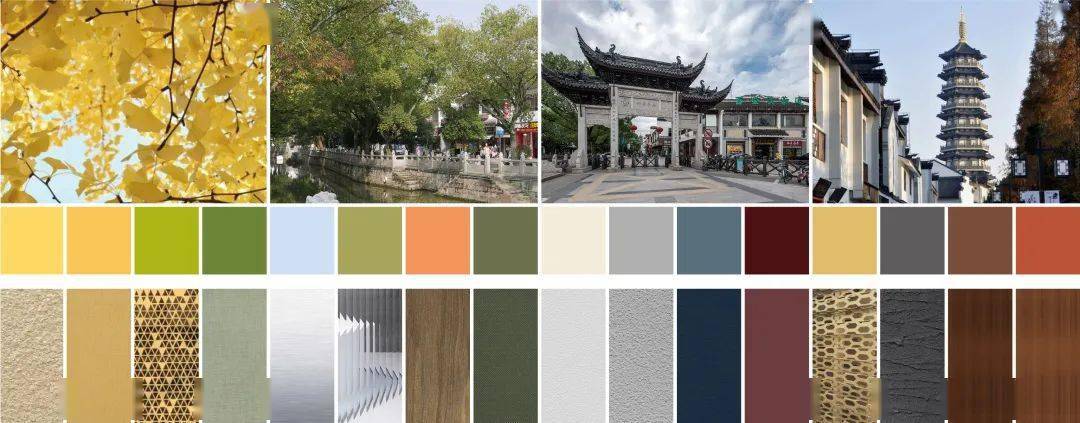

Material studies and sidelighting design
The architect translated site elements into construction materials, bringing historical memories to users. With material optimization, business upgrades, and cultural revival, the renovated Anting Old Street now thrives as a livable, vibrant, and culturally rich creative space—warmer and more inviting than before.
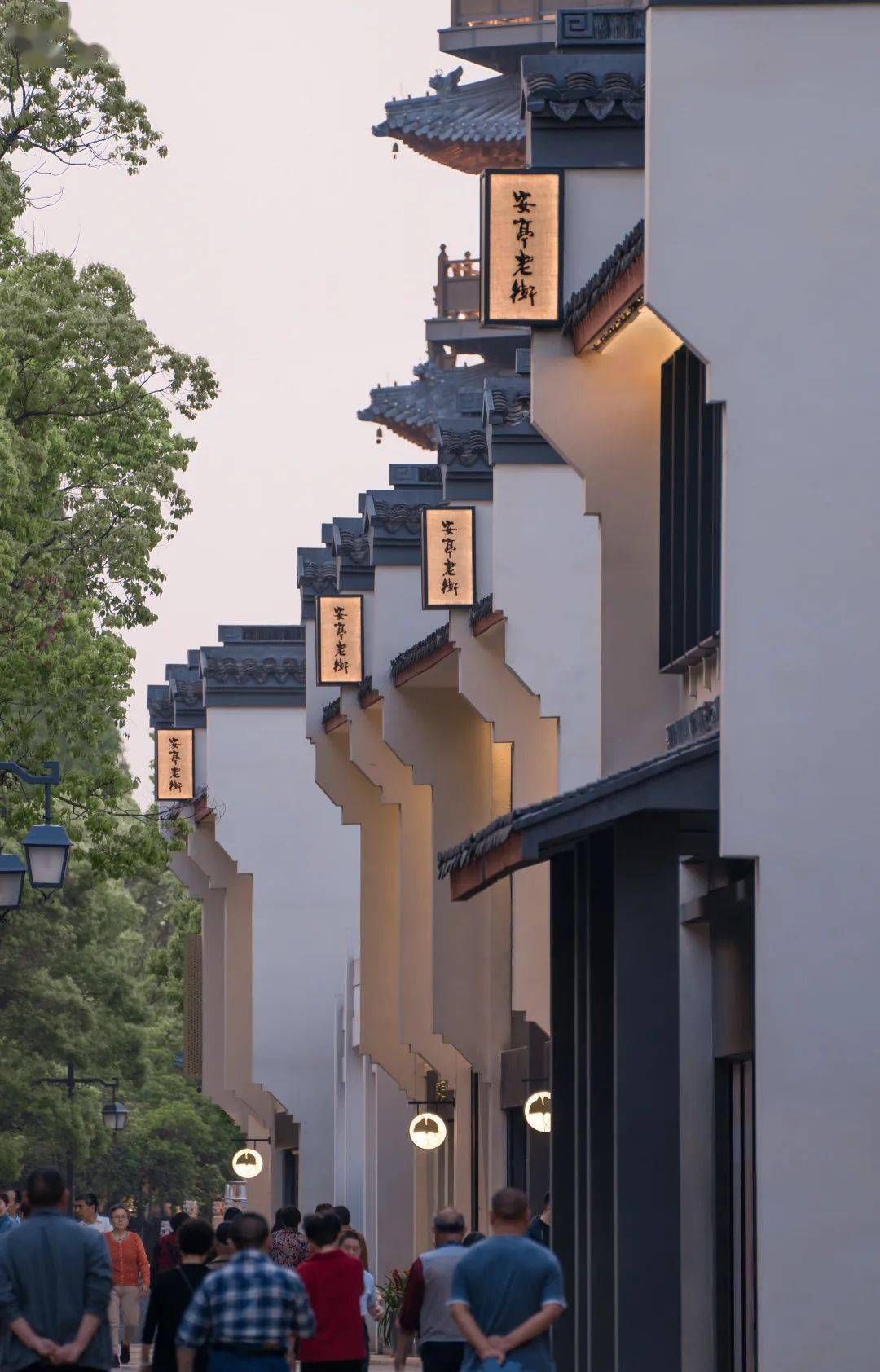
Photo by Liu Songkai
04 From Industrial Rust Belt to Lifestyle Showcase Belt
Diverse architectural forms blending old and new with open interfaces
Industrial heritage marks crucial urban history, tracing industrial development stages. Renovating modern industrial buildings requires preserving structures and revitalizing their vitality to integrate them into contemporary urban life.
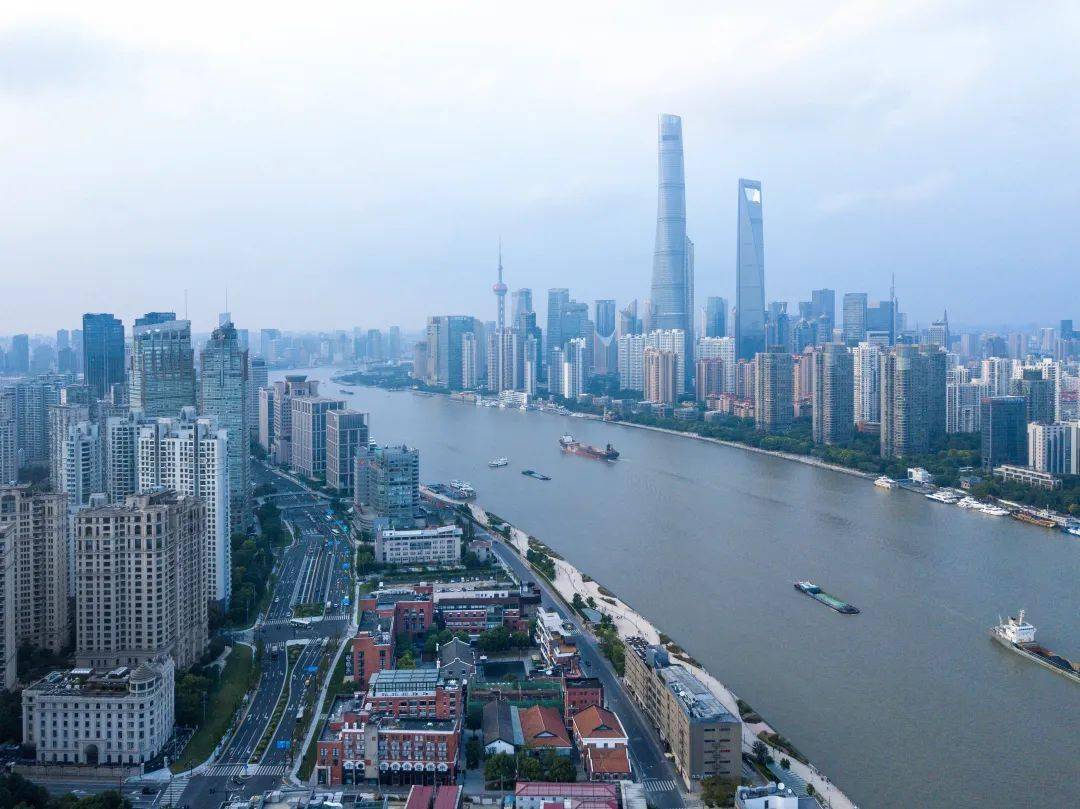
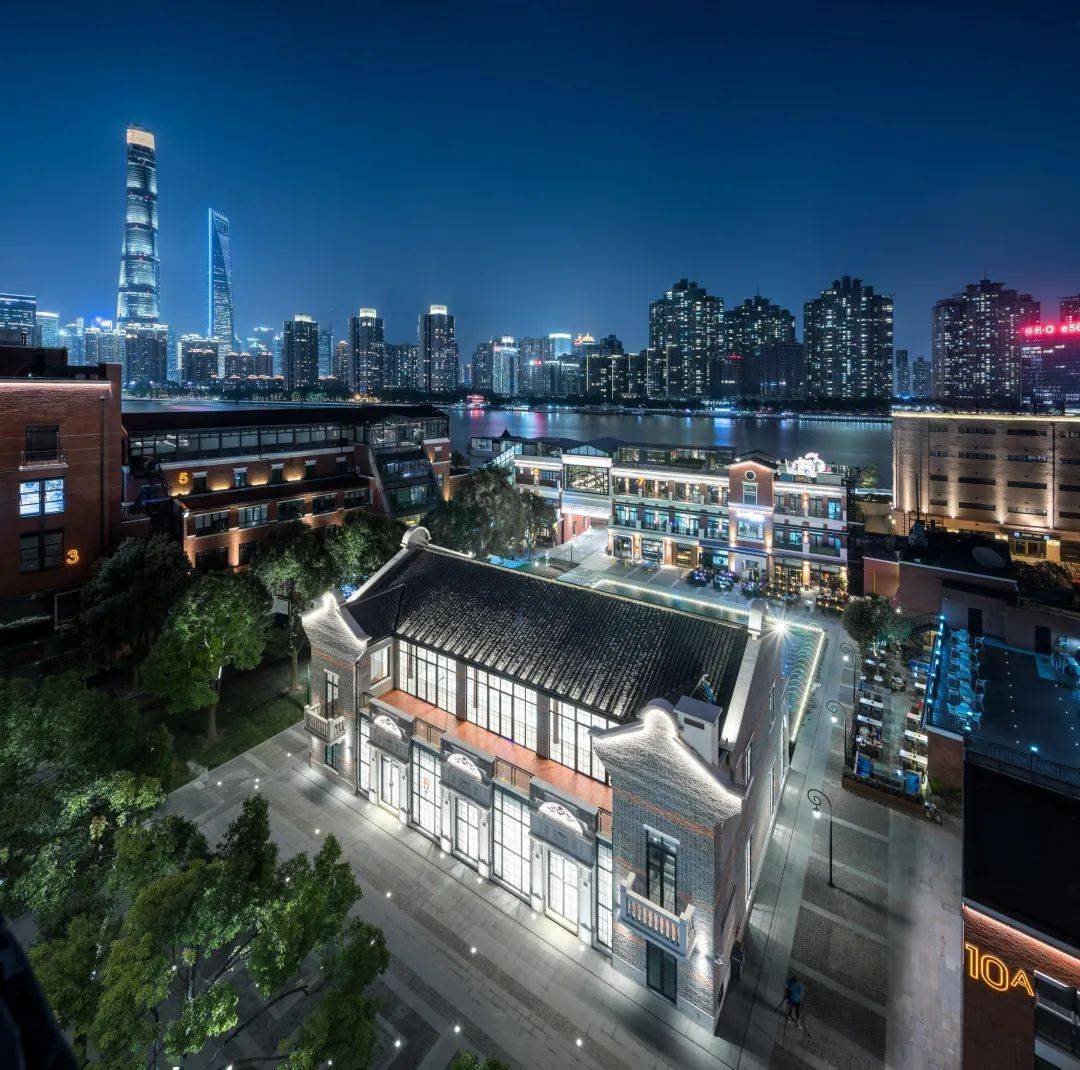
Photography: Existence of Architecture (Part 1), Wu Qingshan (Part 2)
Shanghai, a key industrial city, retains rich industrial heritage in its urban landscape. The old Shanghai Shiliupu wharf, once bustling with warehouses and fishermen, holds the memories of generations and marks the city’s legendary origins.
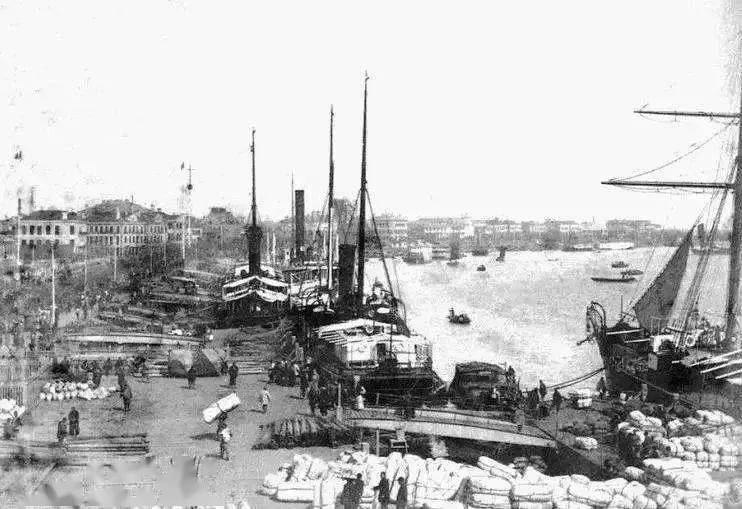
Old Shanghai the 16 Pu
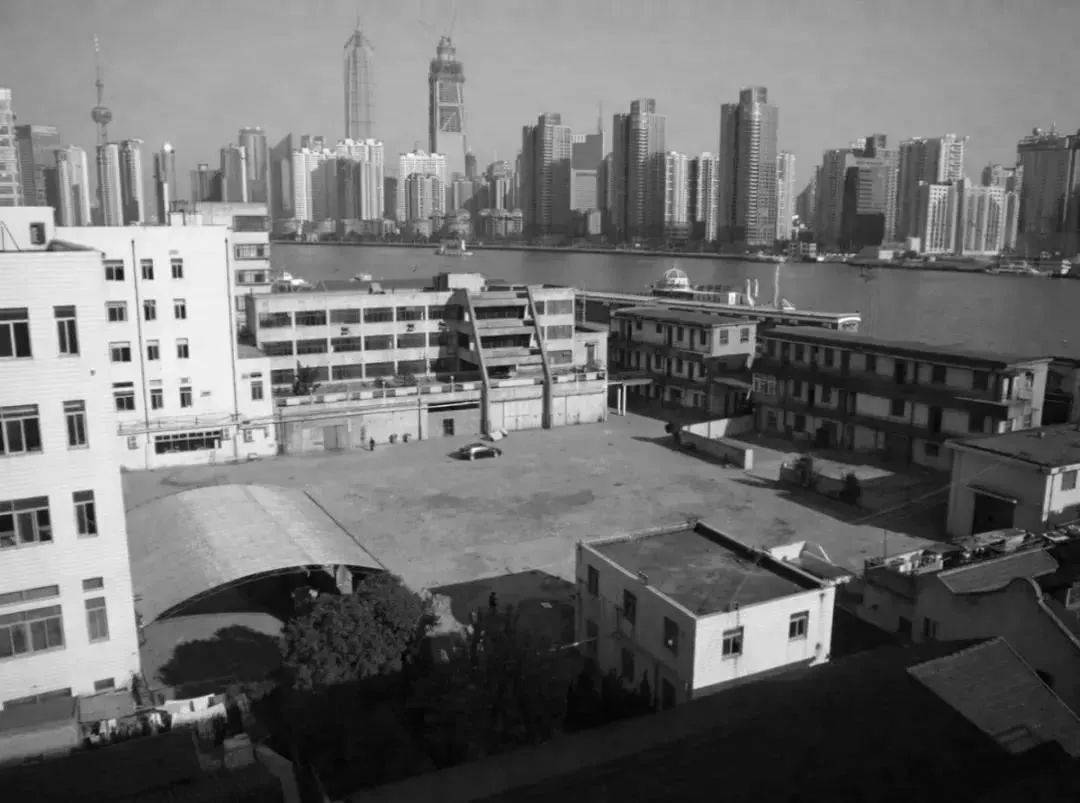
Shanghai Oil and Fat Factory
Today, the old dock has shed its former hustle, reemerging with renewed vitality. In 2007, Sanyi completed initial renovations, turning the dock into a celebrated urban attraction. A second upgrade in 2019 reorganized resources and reconfigured spaces, giving the dock a fresh identity along the Huangpu River.
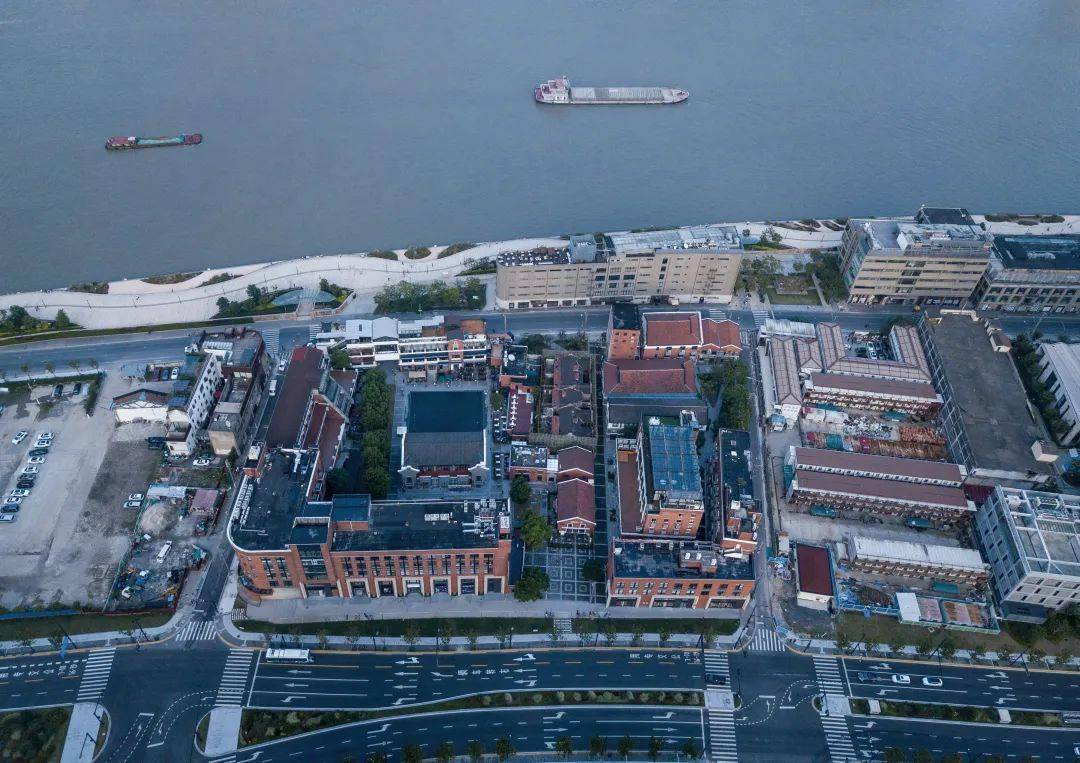
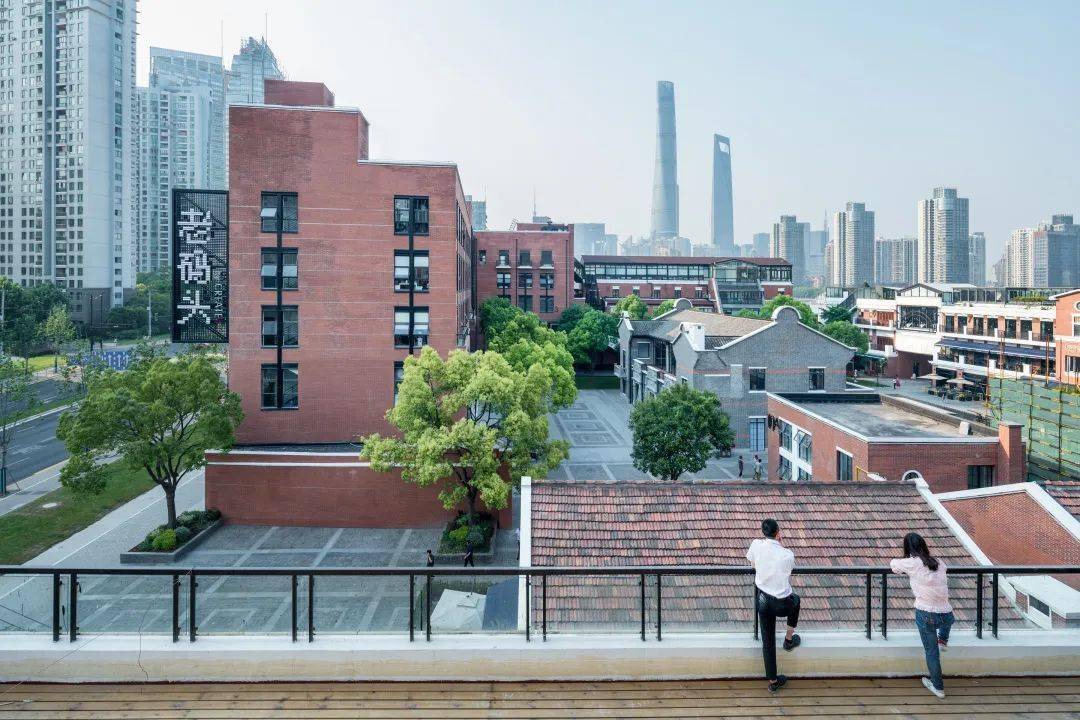
Photography: Existence of Architecture (Part 1), Wu Qingshan (Part 2)
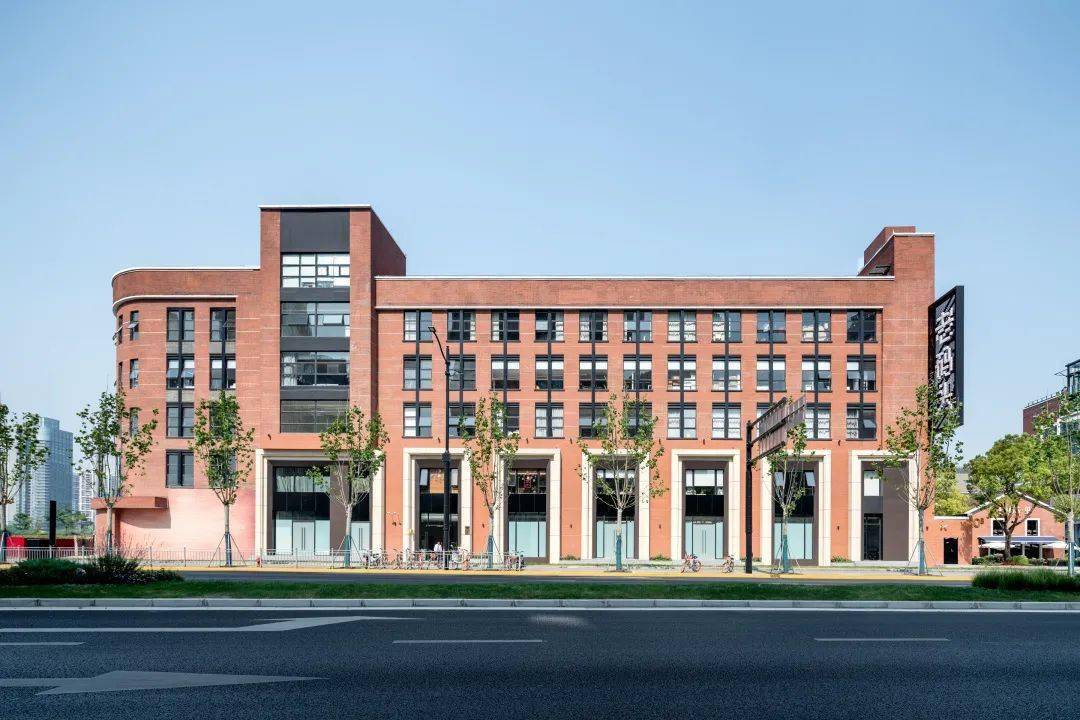
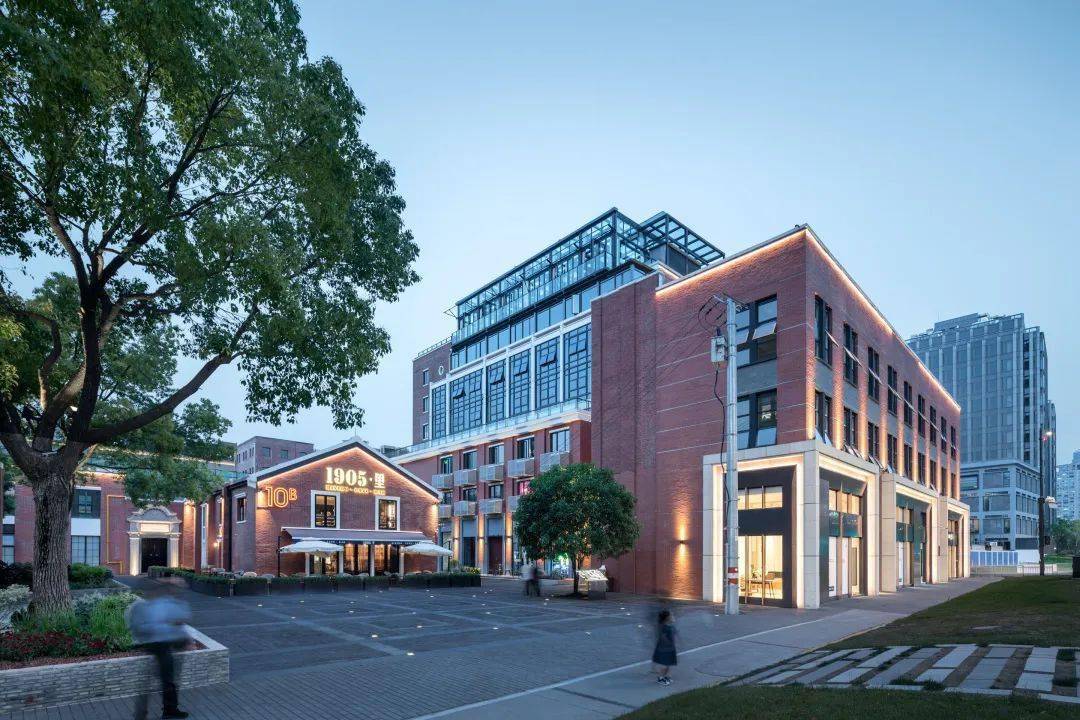
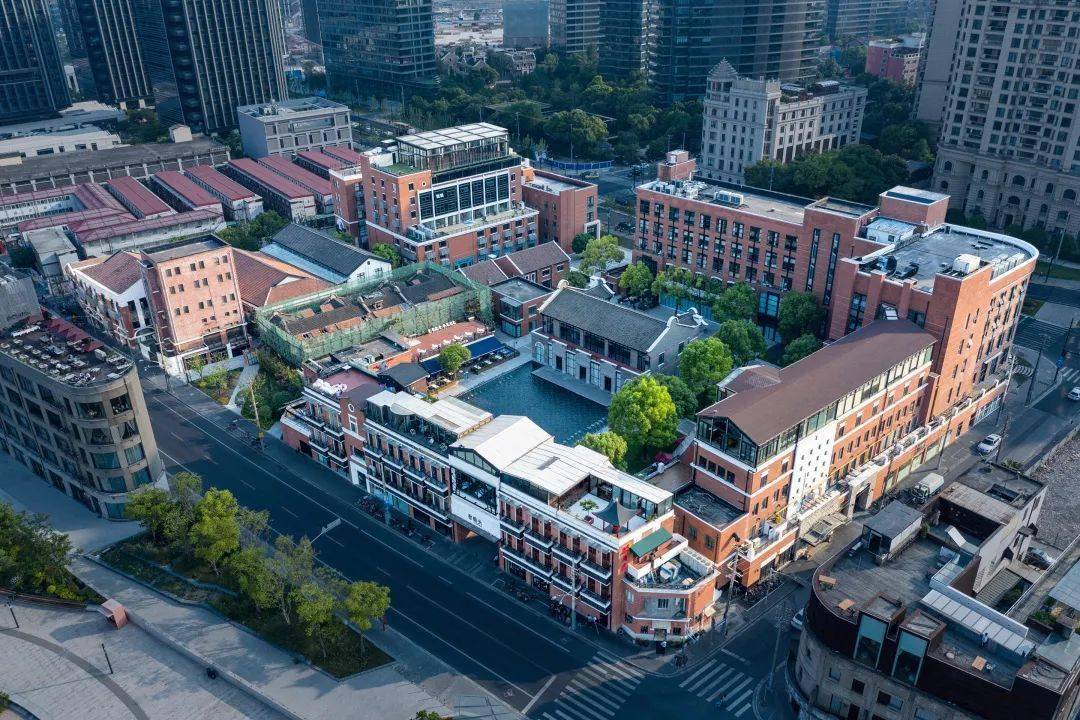
The classic red brick facade sets the tone, inspired by Shanghai’s refined Shikumen architectural style, expanded and adapted in form. Renovations focused on decoration and reinforcement, preserving cultural heritage while integrating modern materials. The combination of glass, tiles, steel, paint, and signage blends old industrial textures with new designs, creating a unified, innovative architectural landscape that generates fresh commercial value.
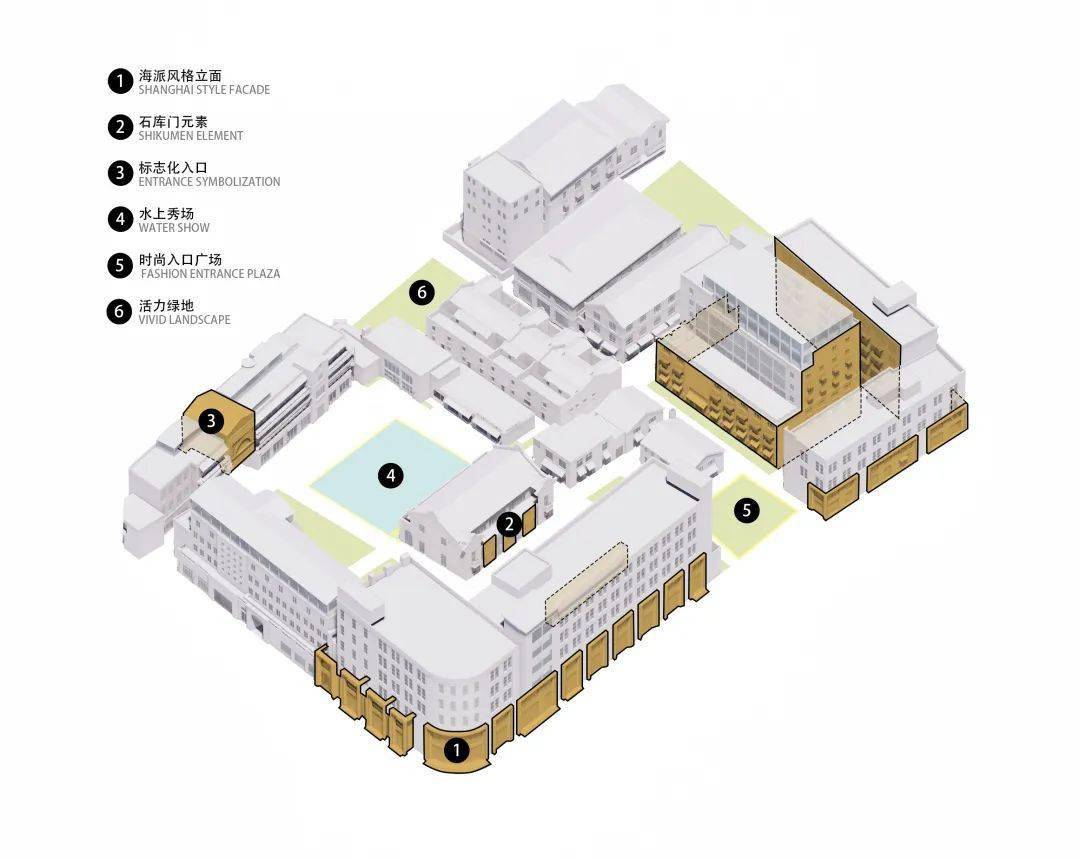
Old dock renovation elements
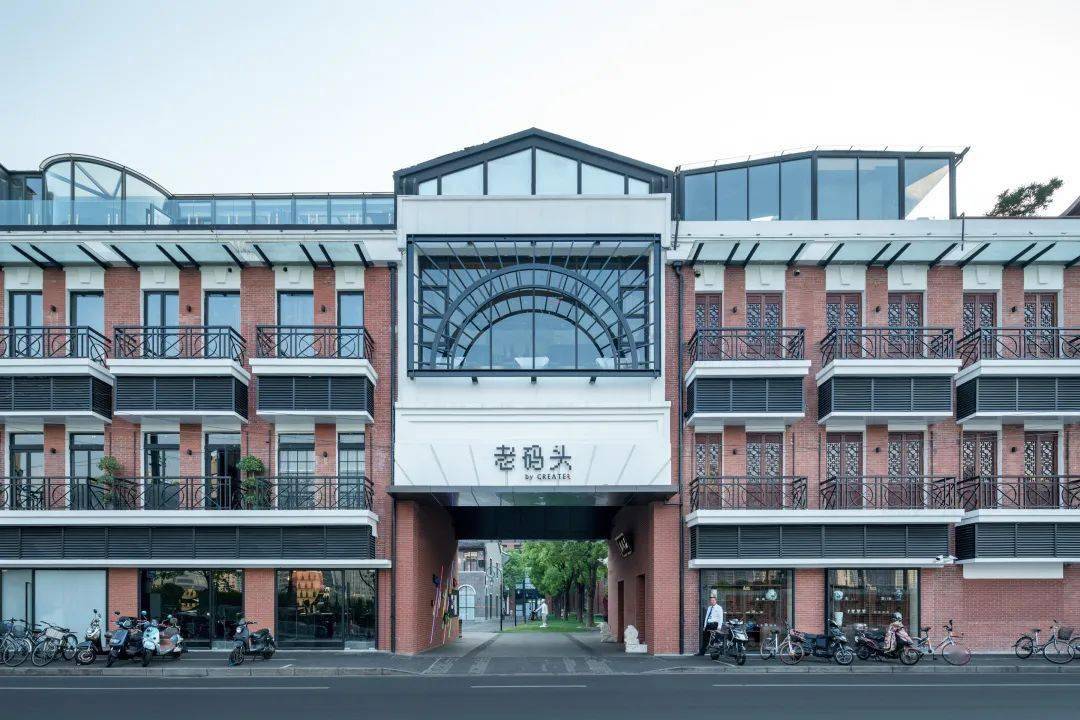
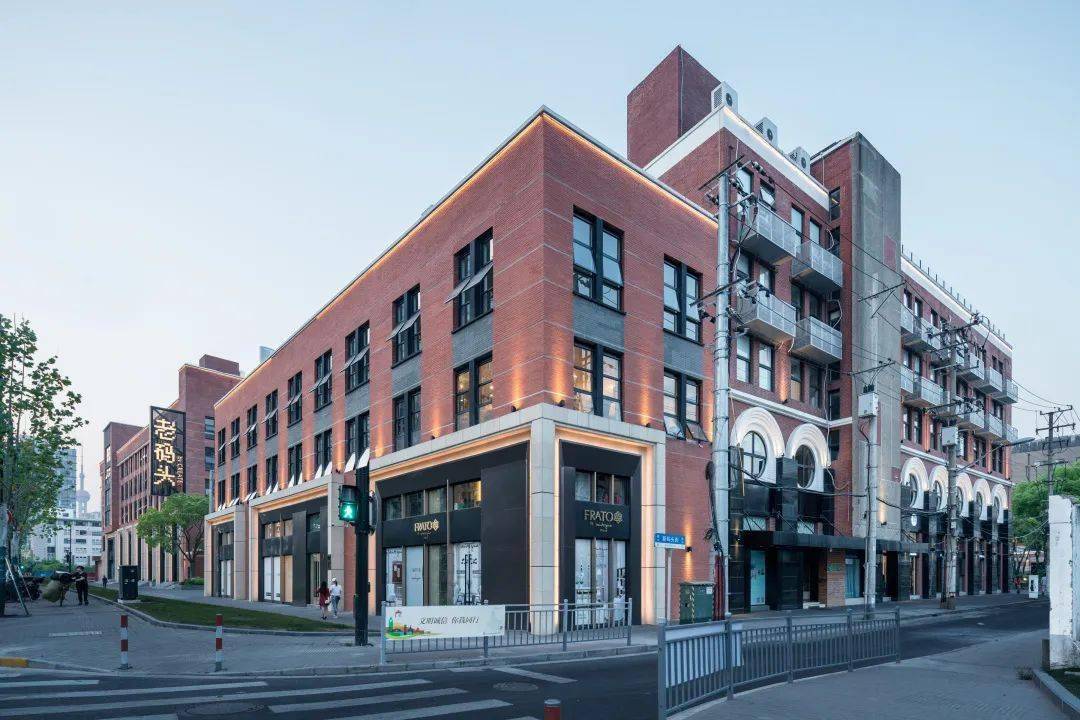
Photography by Wu Qingshan
To boost recognition, a large identification sign with pixelated fonts was installed along Zhongshan South Road, modernizing the “Old Wharf” urban brand and attracting younger audiences.
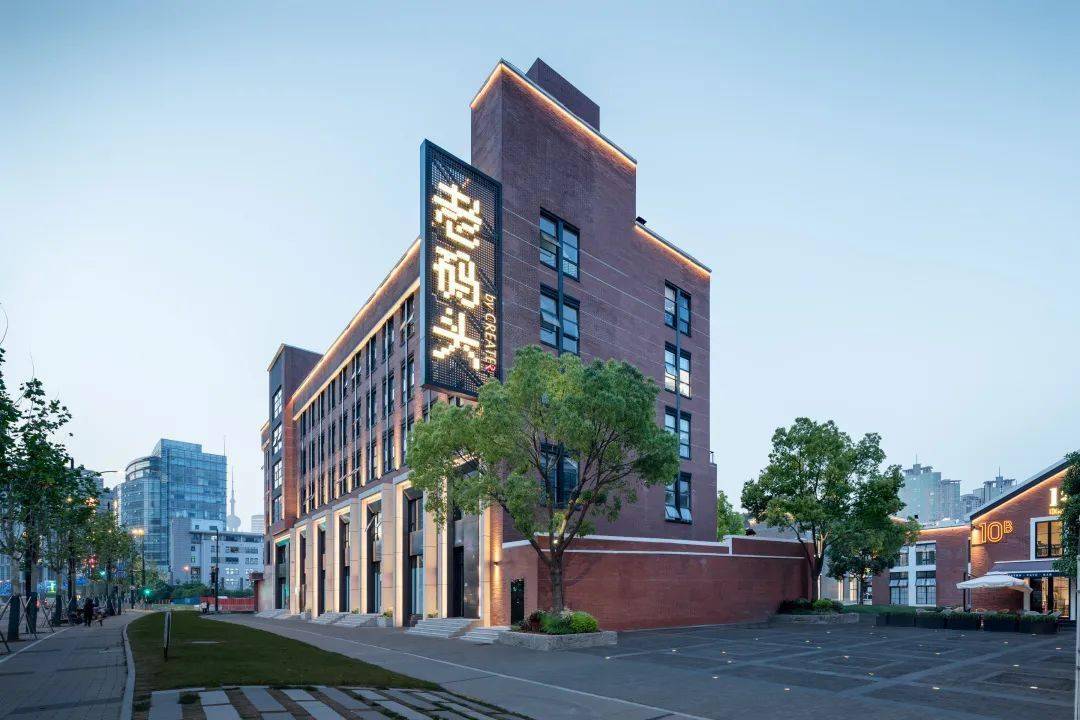
Photography by Wu Qingshan
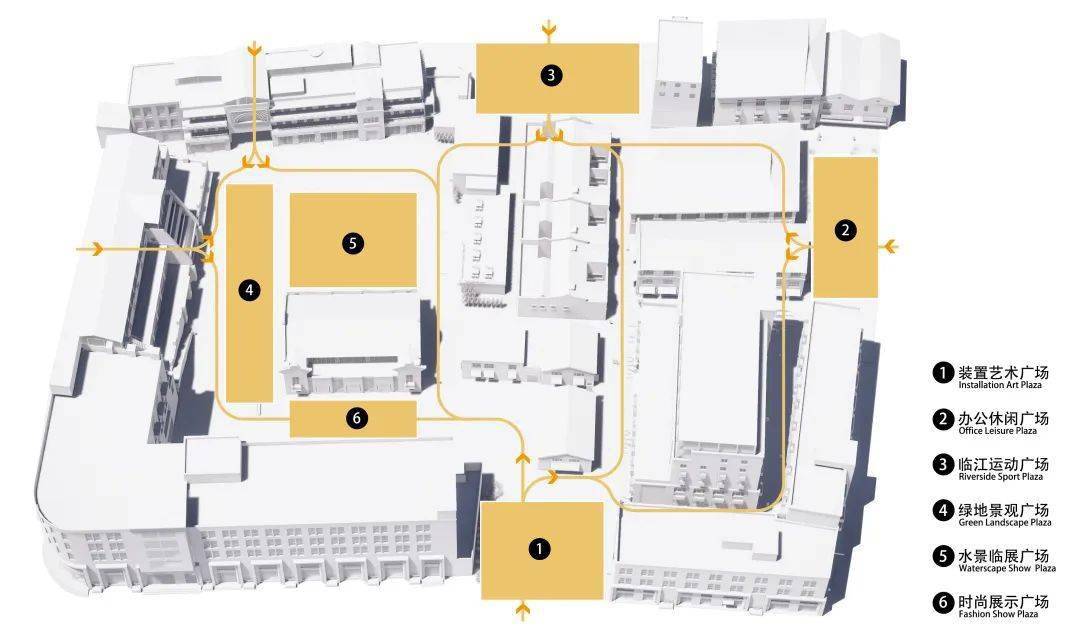
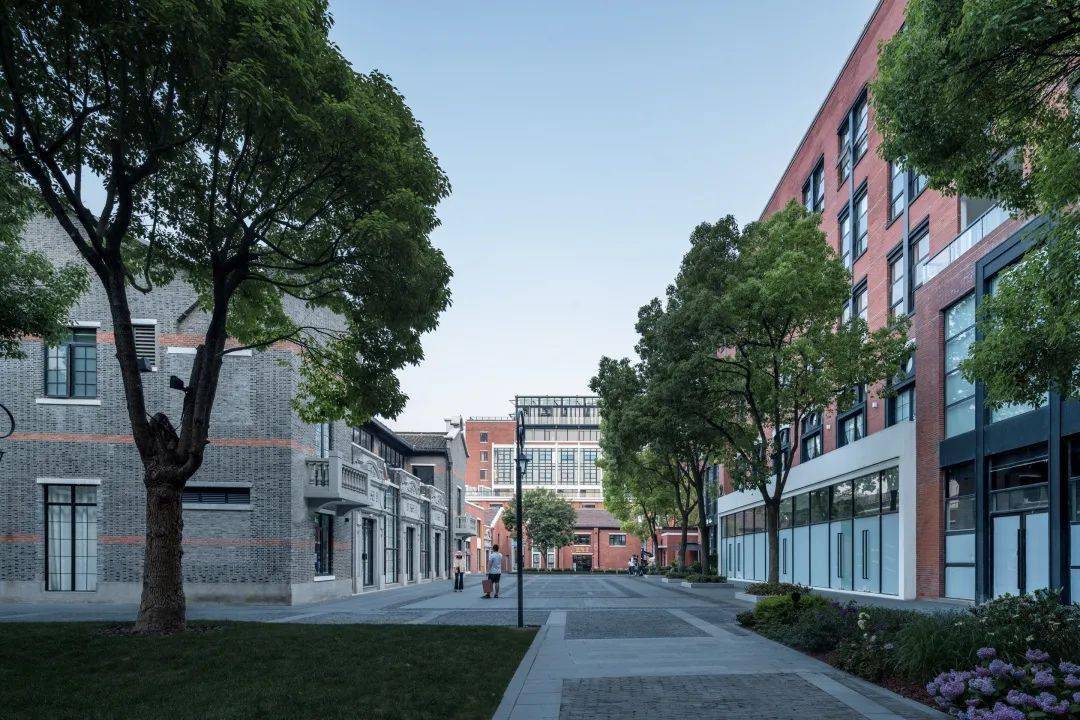
Inspired by “porosity theory,” architects aimed to make the park a sponge with infinite potential, adopting an open interface design. The old pier spans the block and ring road, with multiple street openings enlarged to create diverse landscapes and leisure spots, offering pleasant pedestrian access and encouraging visits to the core area.
The porous interface of the old dock
The open boundaries enhance charm and crowd attraction, making the project organic and inclusive, while enabling diverse urban activities.
Photography by Wu Qingshan
The revitalized old dock is becoming an art park, fashion venue, and creative studio hub, transforming from an “industrial rust belt” to a vibrant “lifestyle showcase belt” and continuing its legendary story.
Photography by Wu Qingshan
05 Blending Old and New: The Transformation of Old Factories
Integrating historical scenery into modern architecture to create iconic landmarks
In many cities, especially tier-one cities, basic urban functions are well established, and residents seek higher quality of life, including public activity and creative spaces. Land scarcity challenges expansion, so repurposing inefficient spaces into functional assets for citizens is vital.
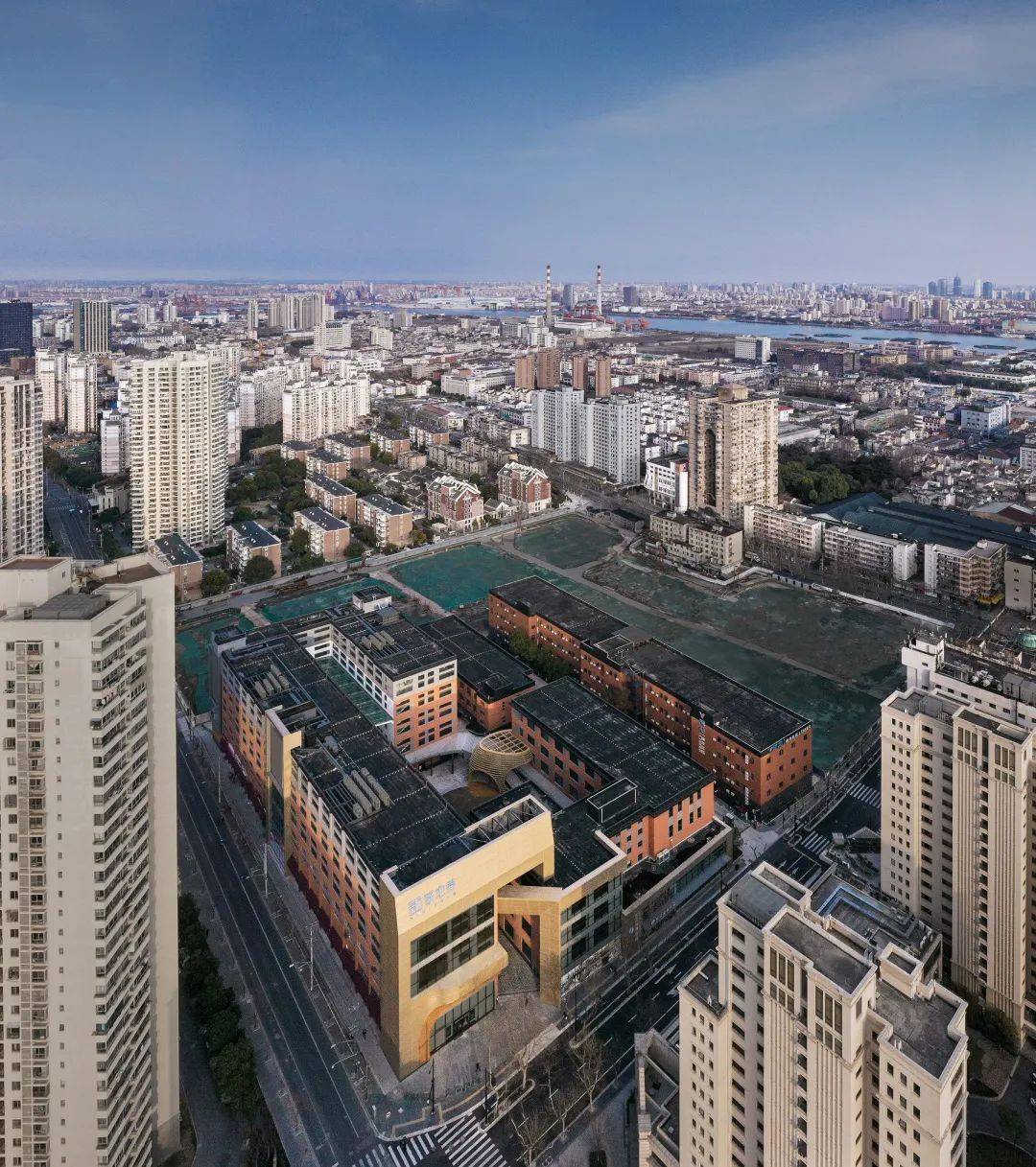
In 2019, the Shanghai Urban Space Art Festival revitalized Yangpu’s old industrial zone, repurposing buildings and opening public spaces to foster cultural growth. The NIU ZONE New Link Zone, formerly the Shanghai Medical Equipment Factory, was transformed by Sanyi architects into a mixed-use creative park blending commerce, offices, and apartments, breathing new life into old buildings and fueling urban vitality.
Photography: Ziran Architecture Photography
The site includes four multi-story buildings forming a landscape square and a street-alley interface. The challenge: maximize impact with minimal cost.
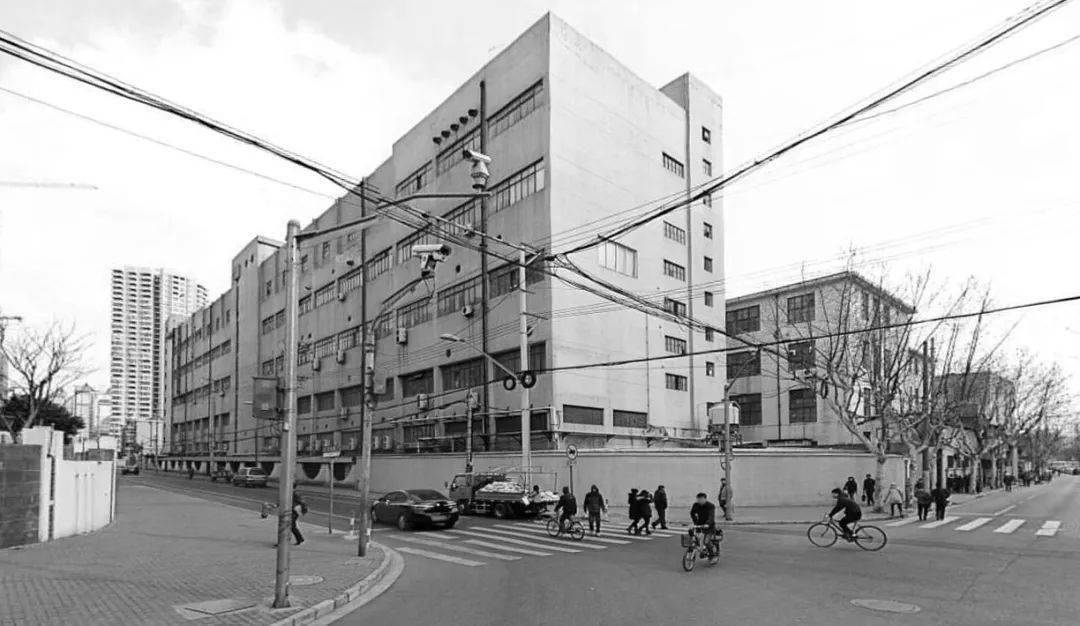
Old architectural photos
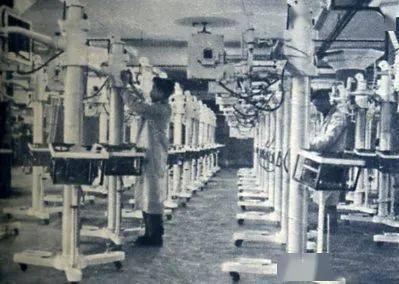
Former medical device factory
The design team unified the four buildings’ forms and colors. The street-facing facade features a three-stage layout with a consistent red exterior and interior. White highlights functional changes and yellow accents create focal points. The coordinated palette achieves rich visual variety at low cost.
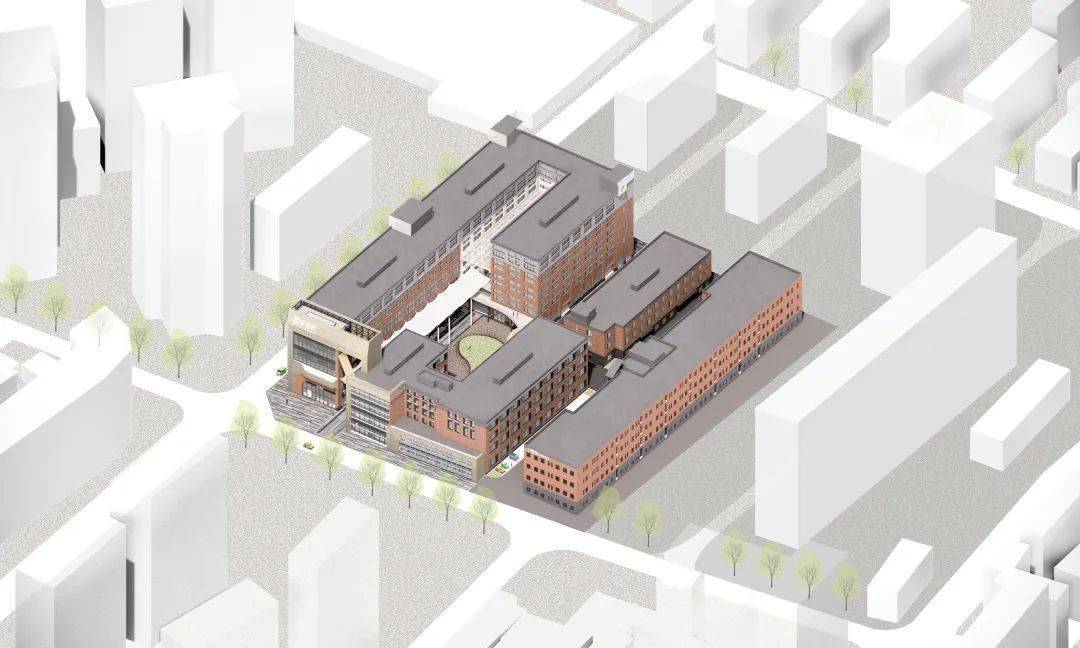
Bird’s-eye view rendering
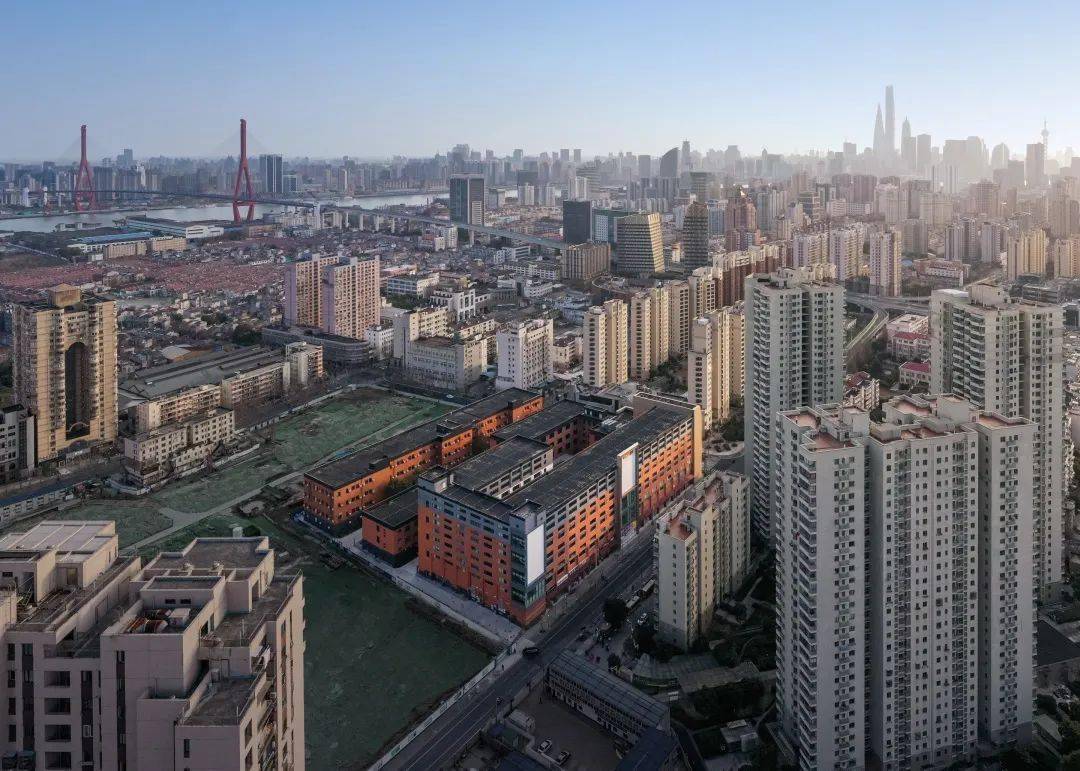
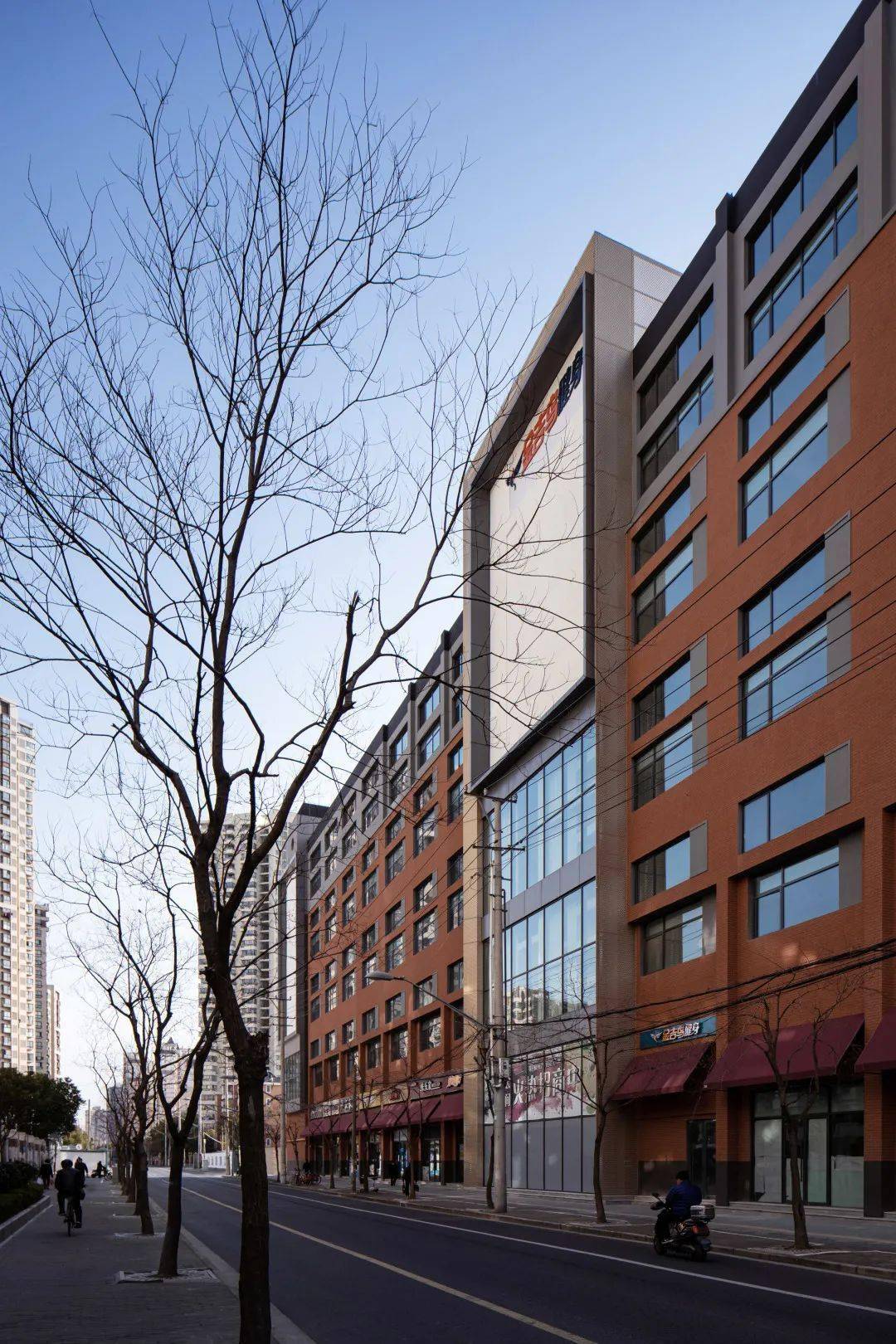
Photography: Ziran Architecture Photography
The architects added a new structure inspired by London’s Hyde Park Corner, called “Hyde Corner,” uniting two previously separated buildings. A horizontal steel structure slopes downward to form an inviting entrance, guiding visitors inward and enhancing the venue’s spatial depth.
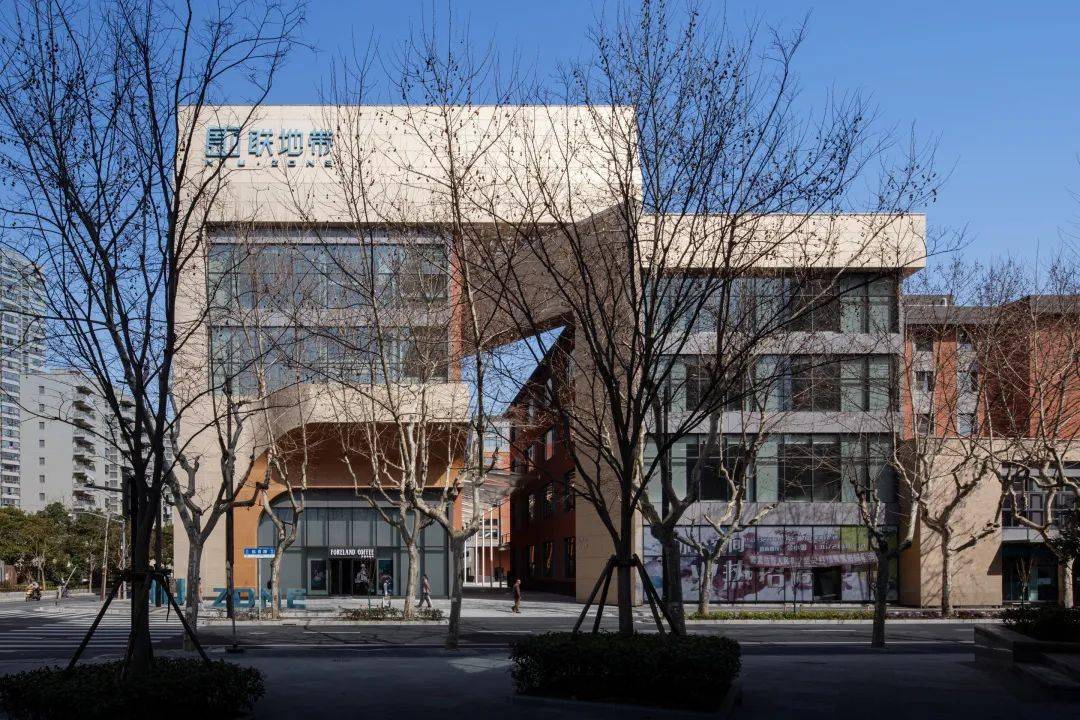
Photography: Ziran Architecture Photography
Perforated aluminum panels make up the facade, using material transparency to reduce building monotony and achieve elegant design effects affordably.
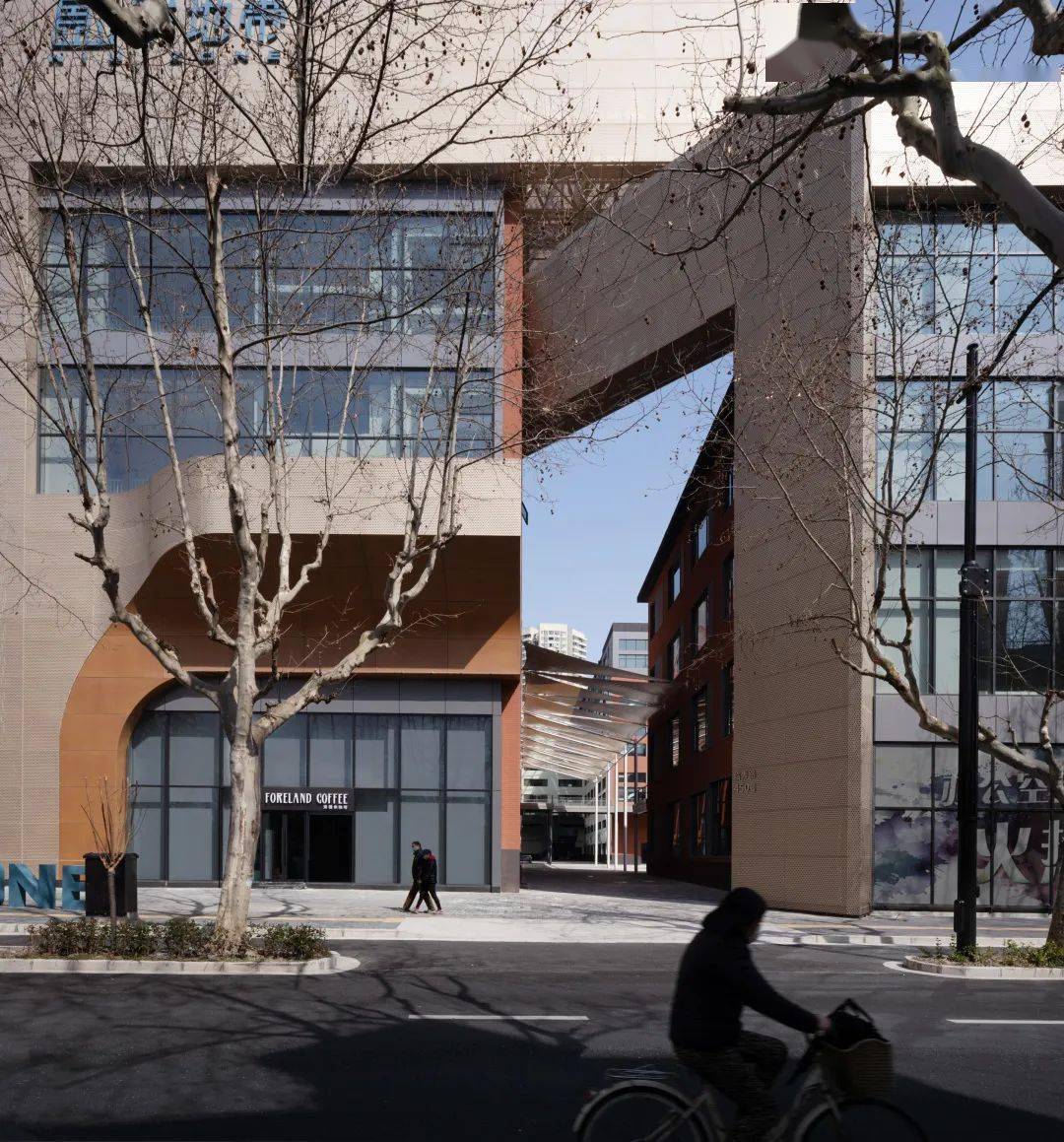
Photography: Ziran Architecture Photography
A curved gray space evokes an arch, creating a semi-urban, semi-architectural corridor that offers shelter and interaction between buildings and pedestrians.
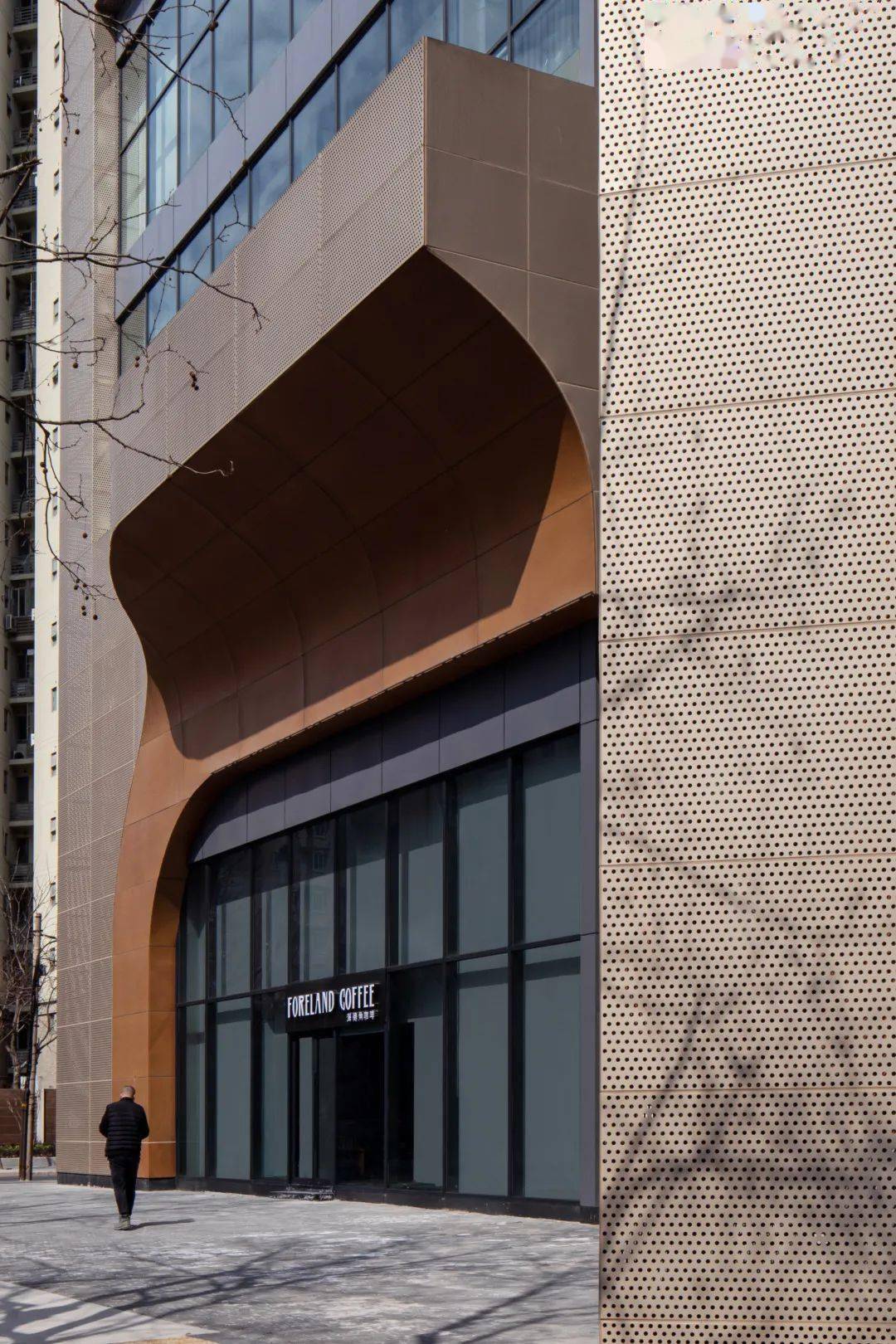
Photography: Ziran Architecture Photography
Looking through the entrance reveals the “Sail Acceleration” soft landscape installation, inviting exploration. From “Hyde Corner” to “Sail Acceleration,” continuing through the “Cloud Corridor” and “Humanistic Theater,” the architects have crafted an engaging landscape axis awaiting discovery.
06 Grand Upgrade of a Former Landmark in the Old Commercial District
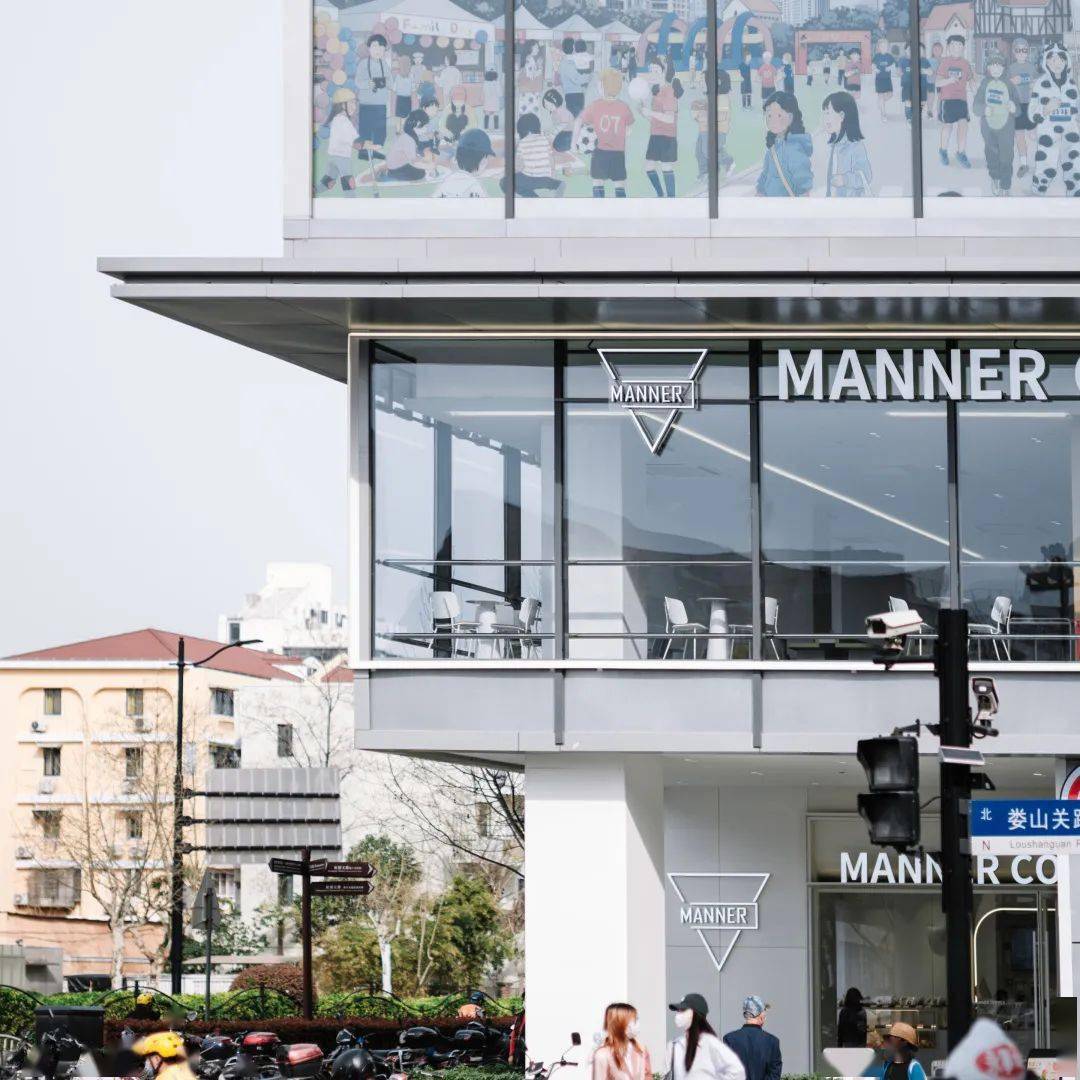
Breaking up long monotonous facades with a fashionable ‘big showcase’
With evolving consumer demands, experiential and emotional satisfaction are paramount. Aging commercial districts face challenges in innovation and vitality. How to renew and revitalize these areas, unlocking new growth, is a pressing concern for businesses.
At the end of 2020, Sanyi was commissioned to research urban renewal for the Hongqiao Tiandu commercial plot on Tianshan Road. Amid consumer upgrades, how can declining old urban and commercial areas rediscover vitality? After a year of renovation, the project transformed magnificently into Xiansuo Chuangyi MIX, opening in December 2021 and attracting fashion merchants, heralding the transformation of the “Trendy Tianshan” area.
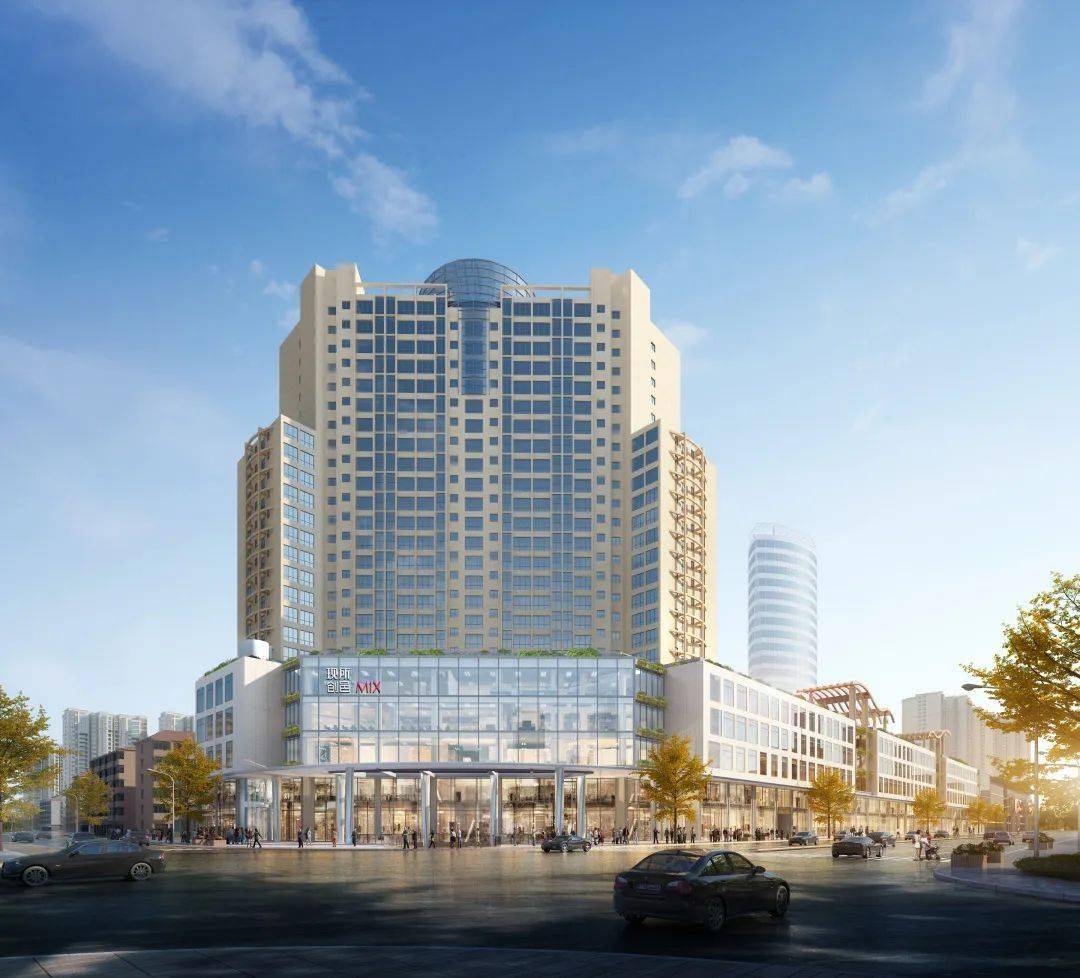
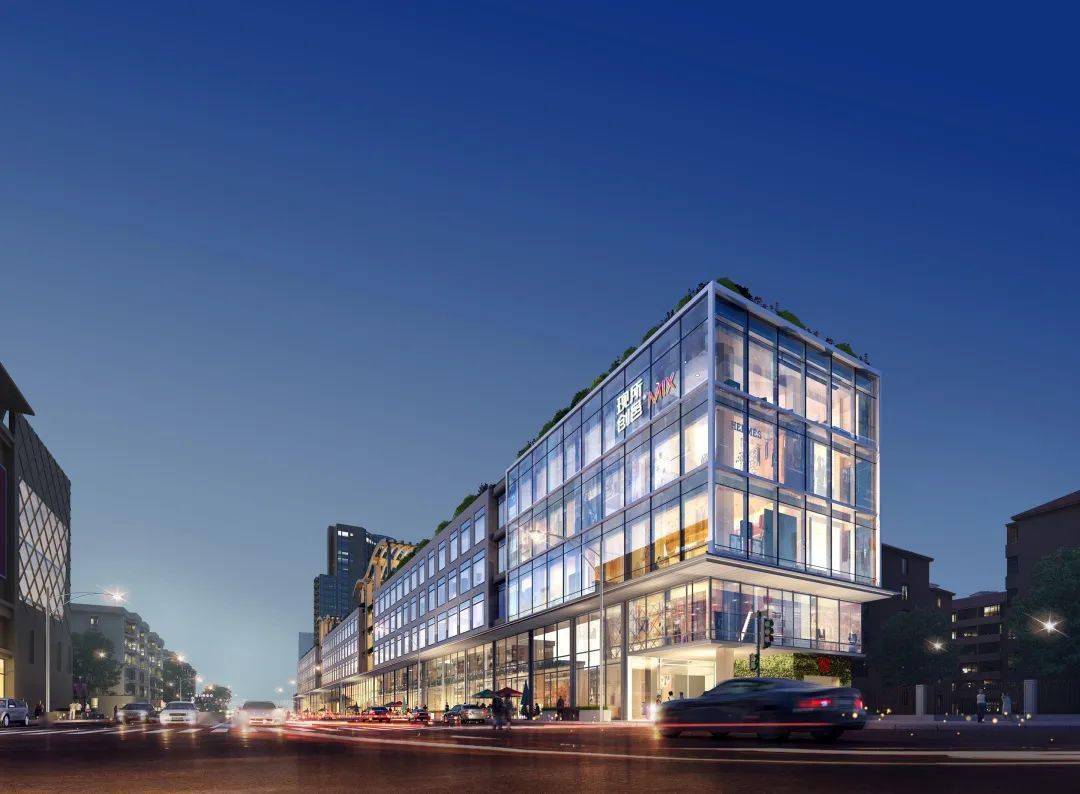
Rendering
The original facade featured gold and silver aluminum panels and blue glass curtain walls. Over time, the building’s image had become dated and cluttered. Spanning 240 meters along Tianshan Road, the long, monotonous facade created a sense of oppression.
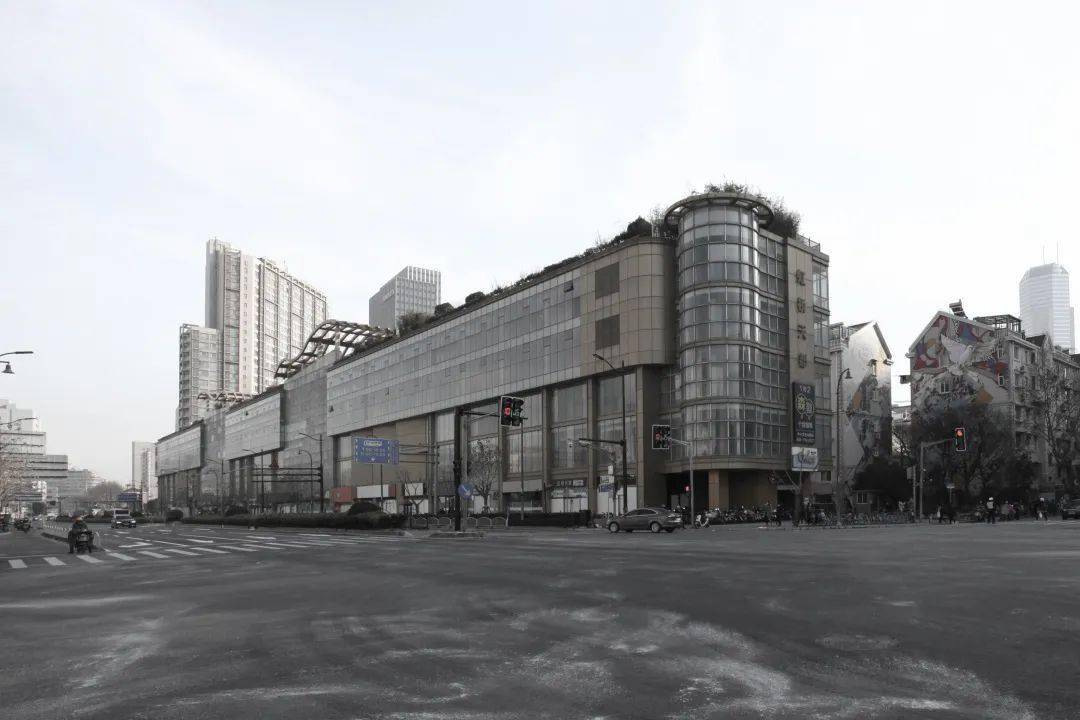
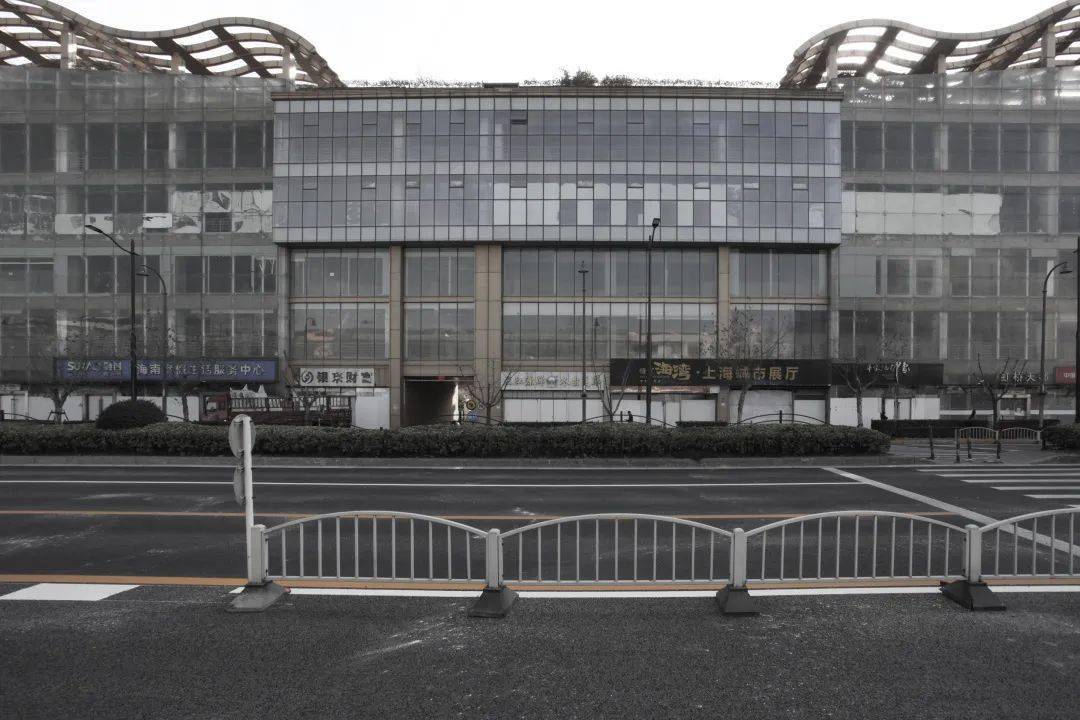
Old architectural photos © San Yi China
The designer re-divided the building’s proportions, opening two previously enclosed terraces to create “green valleys” with lush plants. This connected with rooftop green spaces and softened the long urban facade, reducing street-level oppression.
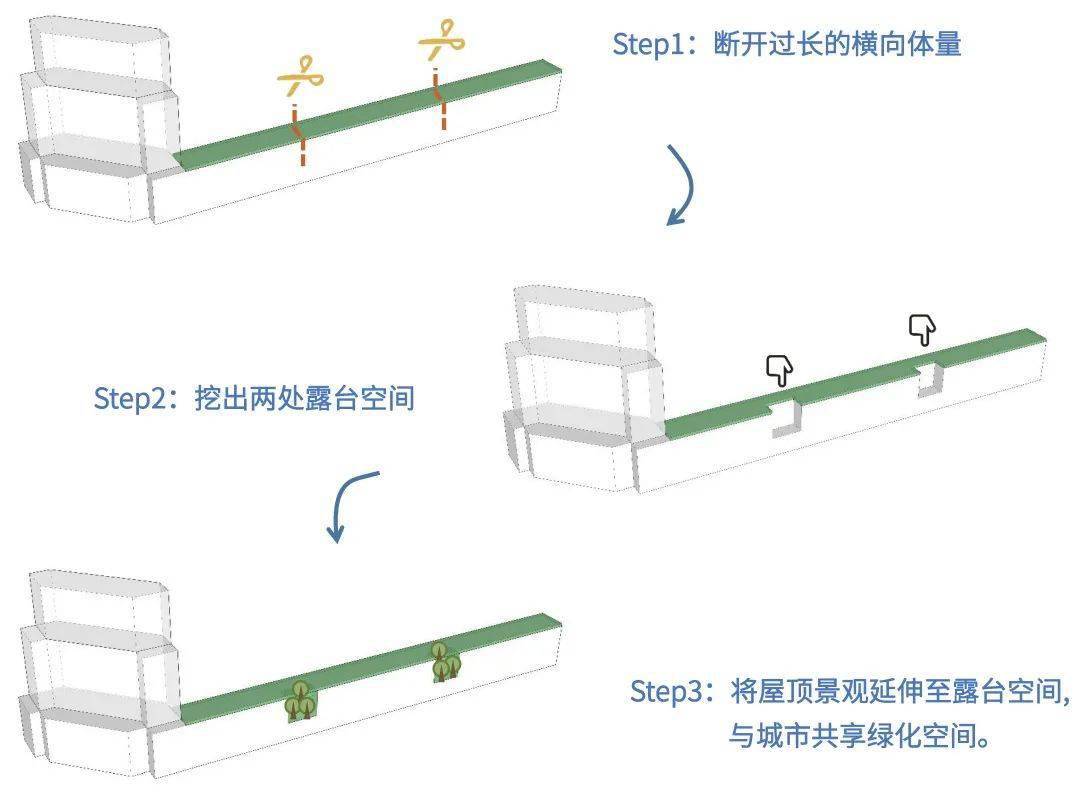
Breaking up excessively long facades
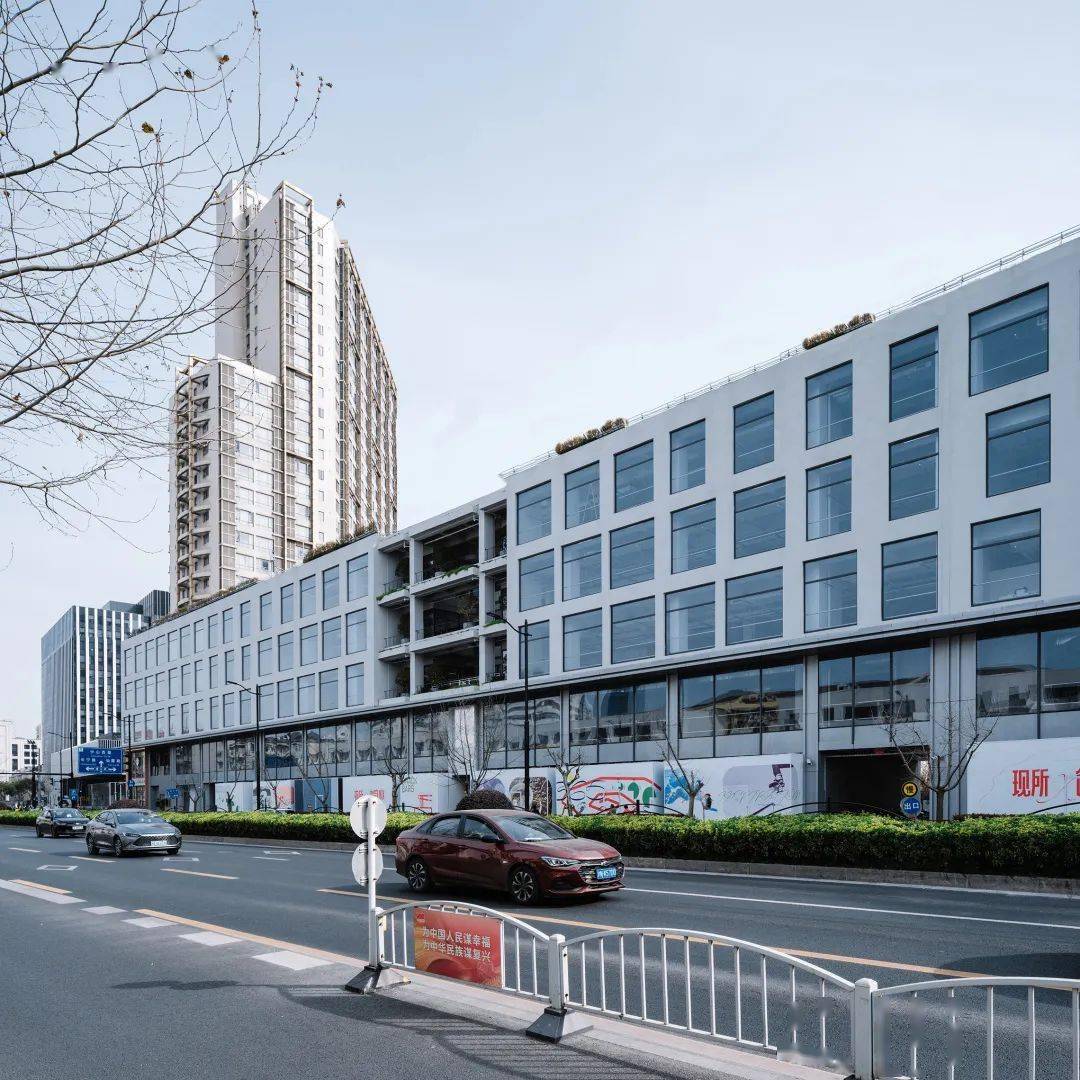
Photo by Liu Songkai
Positioned as young, trendy, and fashionable, Hyundai · Chuangyi MIX employs a simple exterior design with transparent glass, bright paint, and silver aluminum panels to achieve “big effect” at low cost.
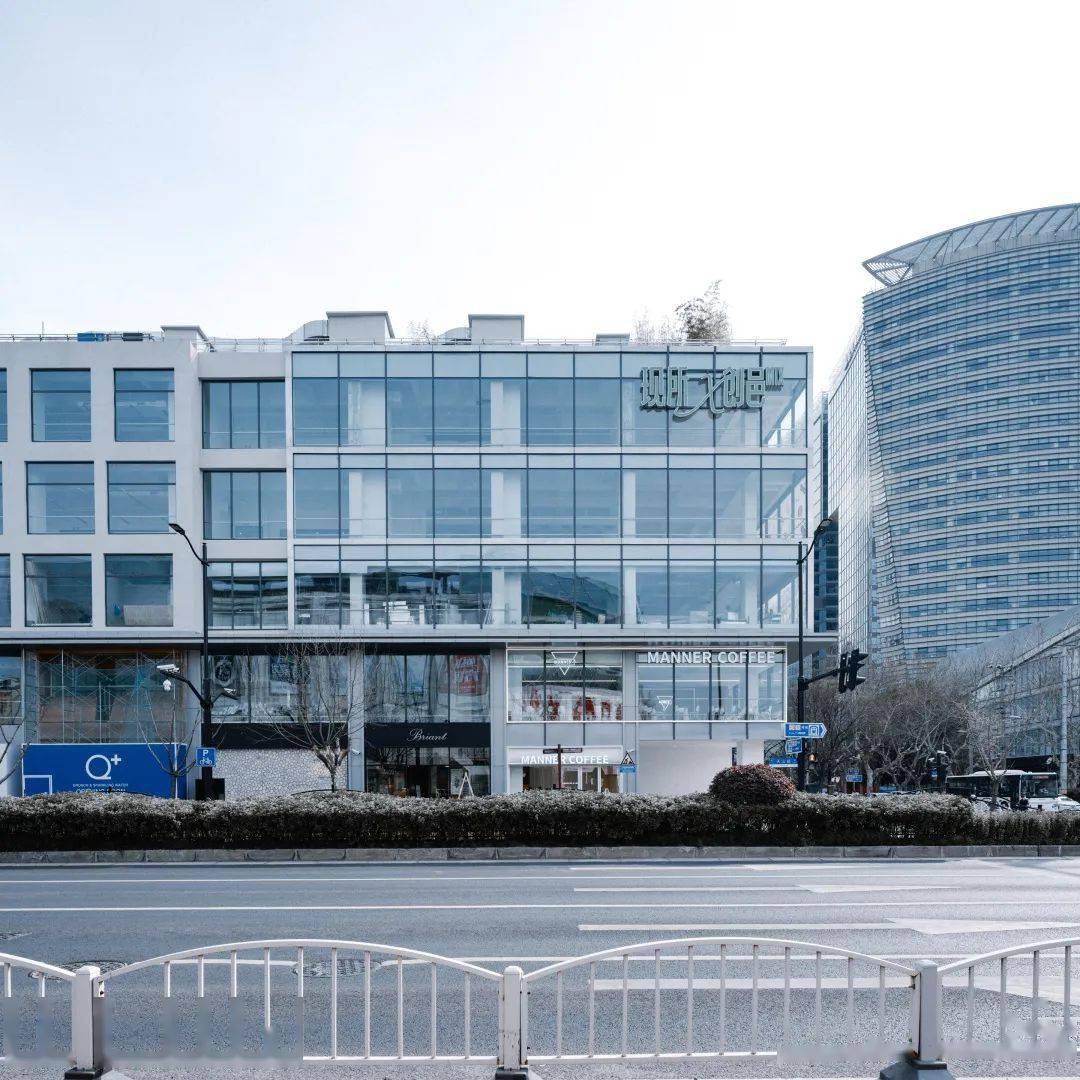
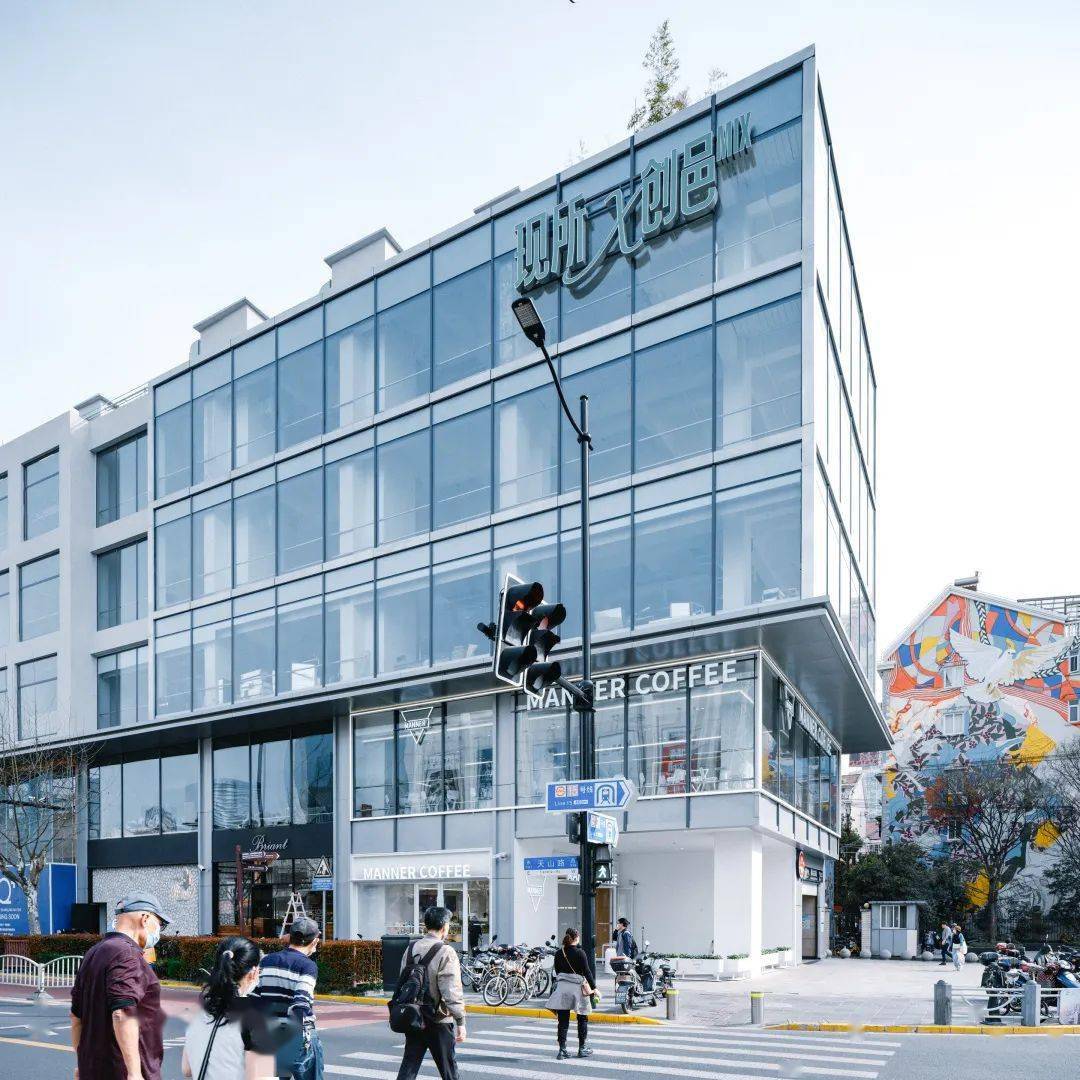
Photo by Liu Songkai
The design merges commercial and office functions with balanced proportions. The first two floors maintain the original facade outline with flat floor-to-ceiling glass and aluminum panels. Floors three to five feature embedded shop windows within the flat exterior wall, creating visual variety that is simple yet impactful, shaping a fresh architectural image.
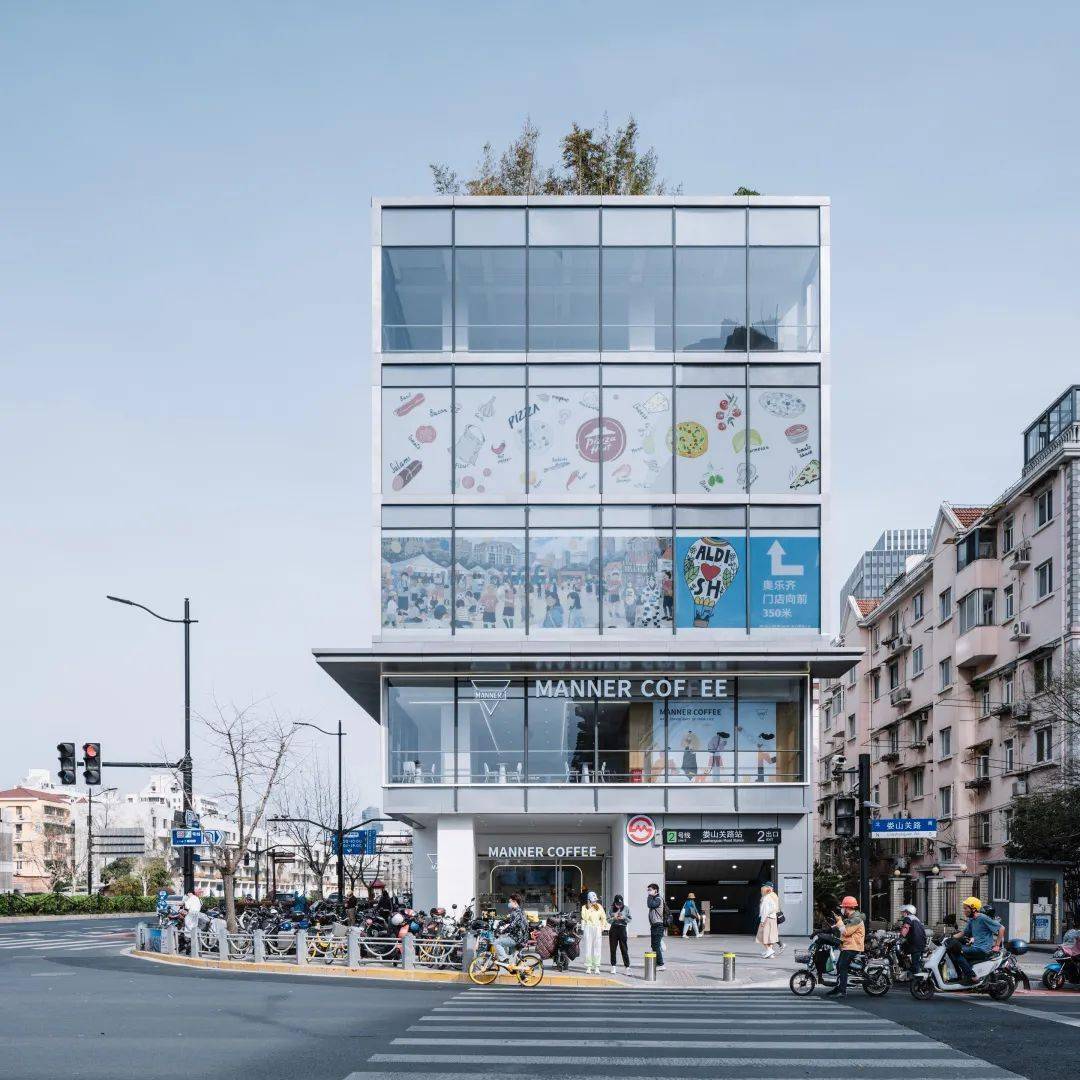
Photo by Liu Songkai
Beyond updating commercial-office facades, the project adds a natural-feeling organic facade along Tianshan Road, complemented by a mini botanical garden and semi-open sunken square at Zunyi Road intersection, injecting vibrant life into the city. Future Square will regularly host fashion shows and performances, offering trendy artistic experiences. Xiansuo · Chuangyi MIX is set to become a popular green, shared urban space and a leading edge residential area co-created by the community.












Must log in before commenting!
Sign Up