
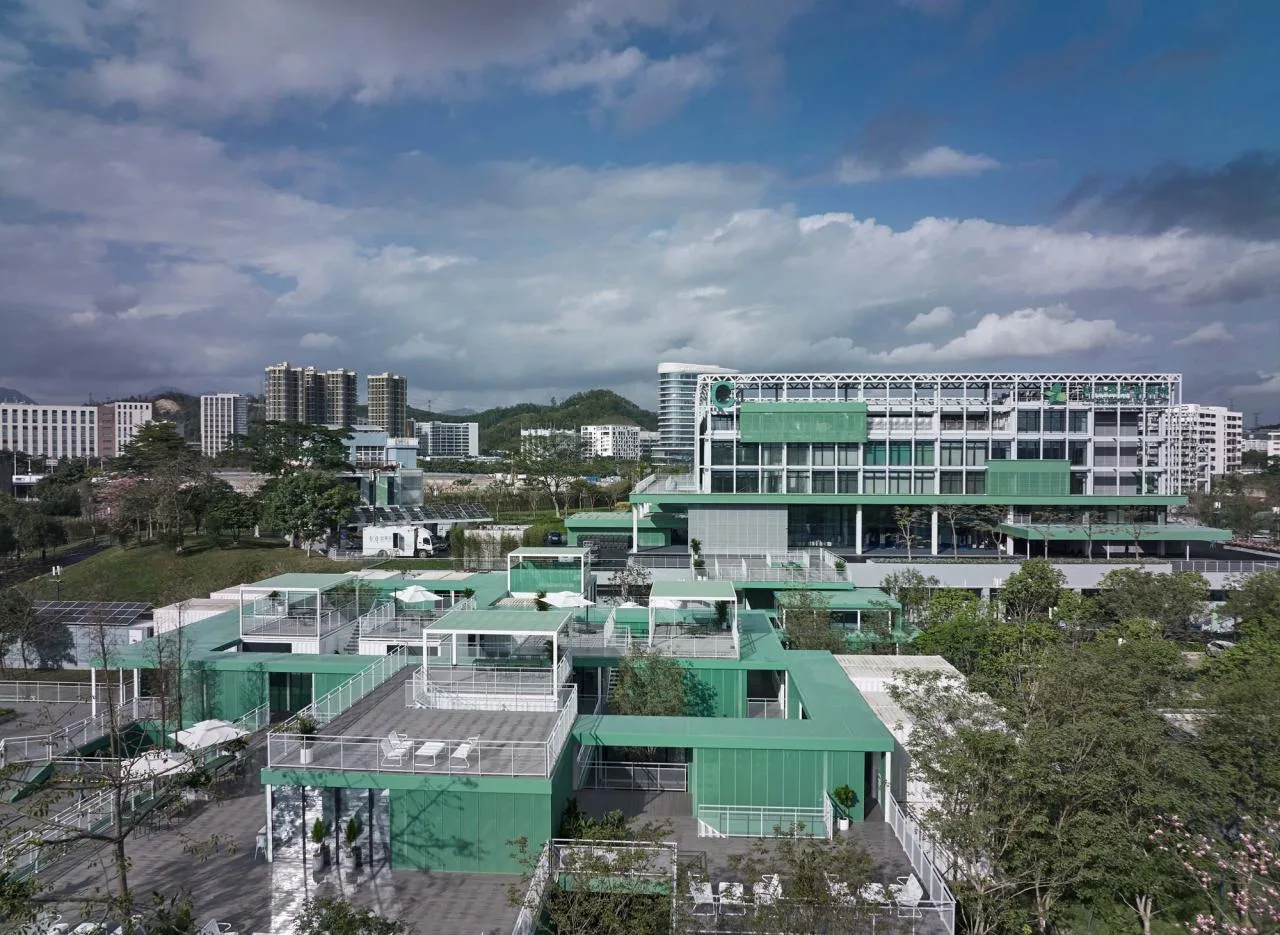
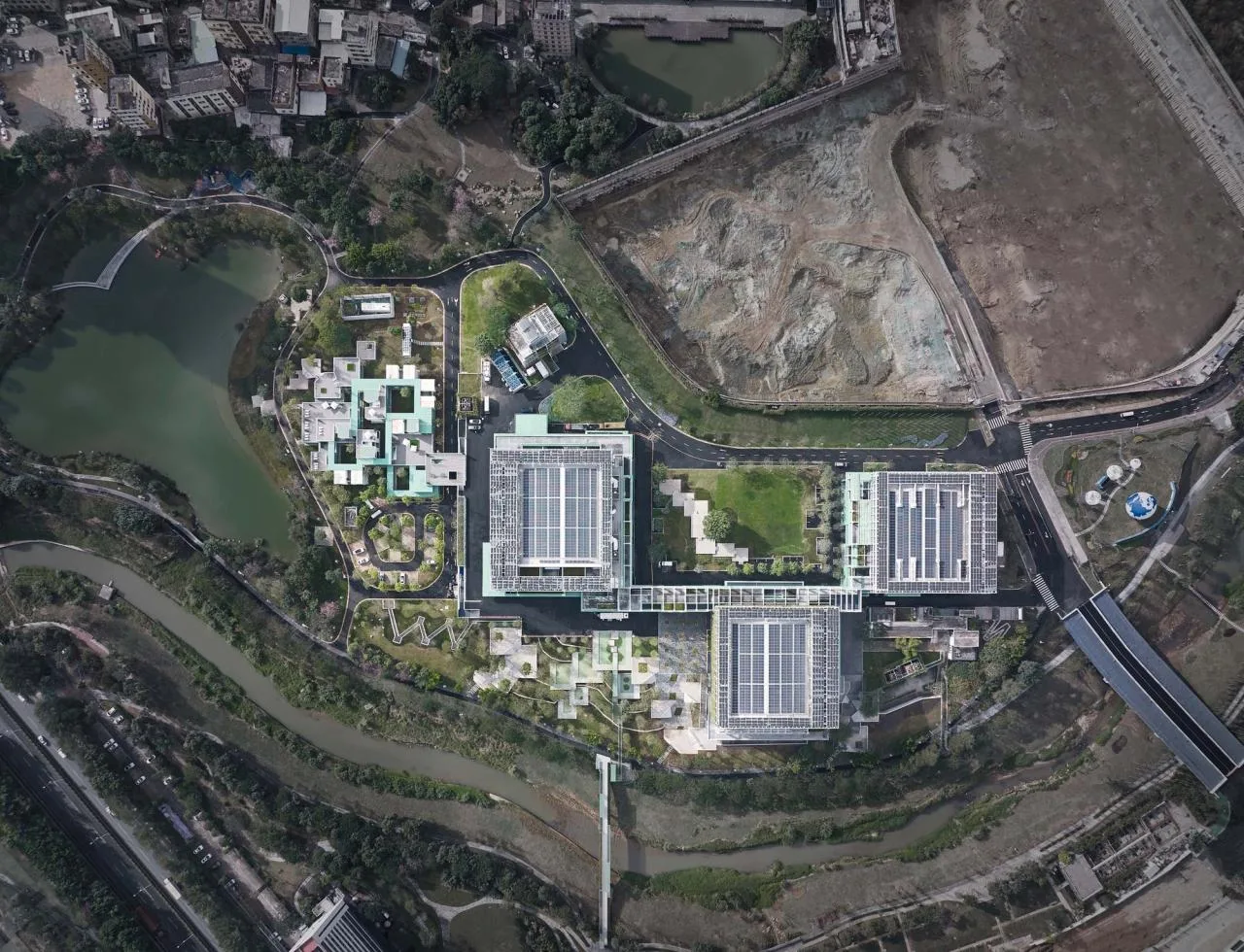
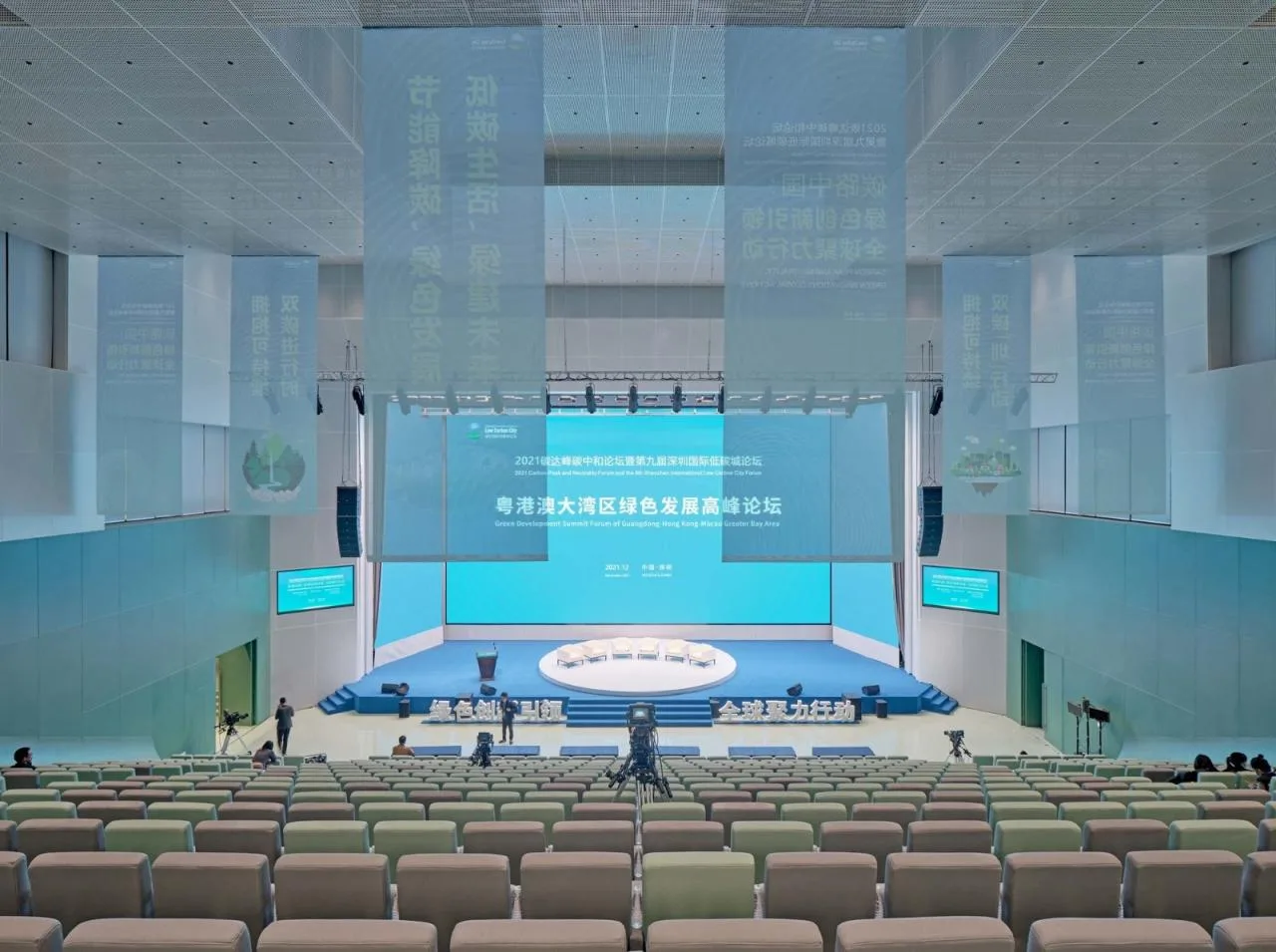
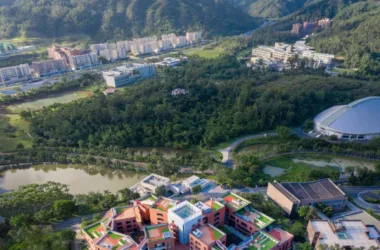
The renovation of the Shenzhen International Low Carbon City Convention and Exhibition Center is situated in Longgang District, Shenzhen, adjacent to the ecological riverbank of the Dingshan River. Originally, the three venues hosted the inaugural “Shenzhen International Low Carbon City Forum” in 2013. After the renovation was completed, the project hosted the “2021 Carbon Peak and Carbon Neutrality Forum and the 9th Shenzhen International Low Carbon City Forum” in December 2021.
Before the upgrade, the three main venues—the Low Carbon Exhibition Hall, Low Carbon Conference Hall, and Low Carbon Trading Hall—were steel frame structures with vast, enclosed interiors that felt monotonous. Additionally, safety issues such as peeling exterior panels and aging facilities compromised the buildings’ functionality for events and low-carbon technology showcases.
Given the constraints of the existing structures, the renovation employed a limited intervention approach to open the closed facades, break down the overwhelming scale, and integrate the venue with the natural ecological coastline of the Dingshan River. The design framework revolves around the concepts of the Breathing Hall, Vitality Corridor, Ecological Box, and Growth Hill, aiming to create a “low-carbon city” that breathes freely, grows naturally, and seamlessly blends green living into daily life.
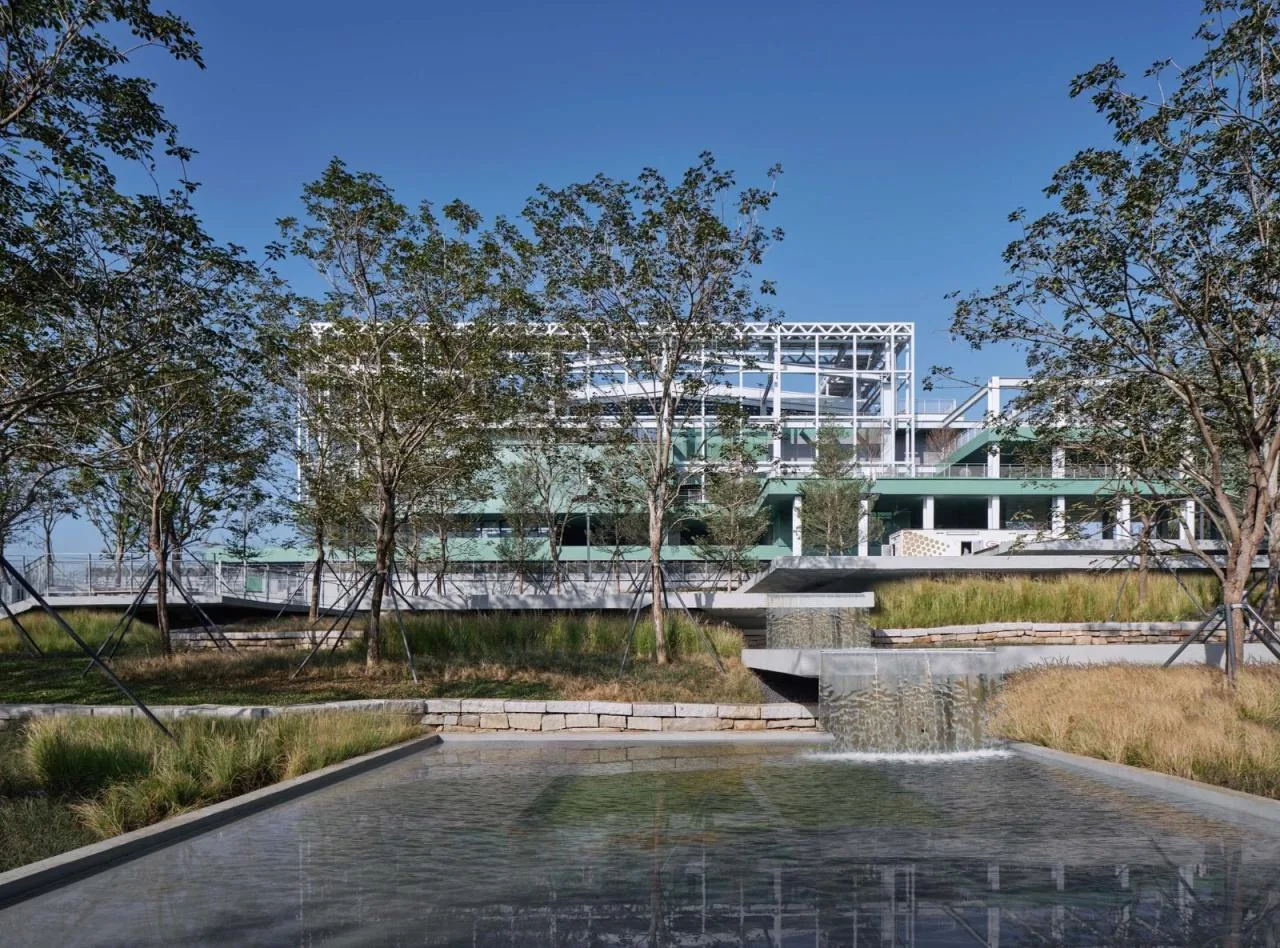
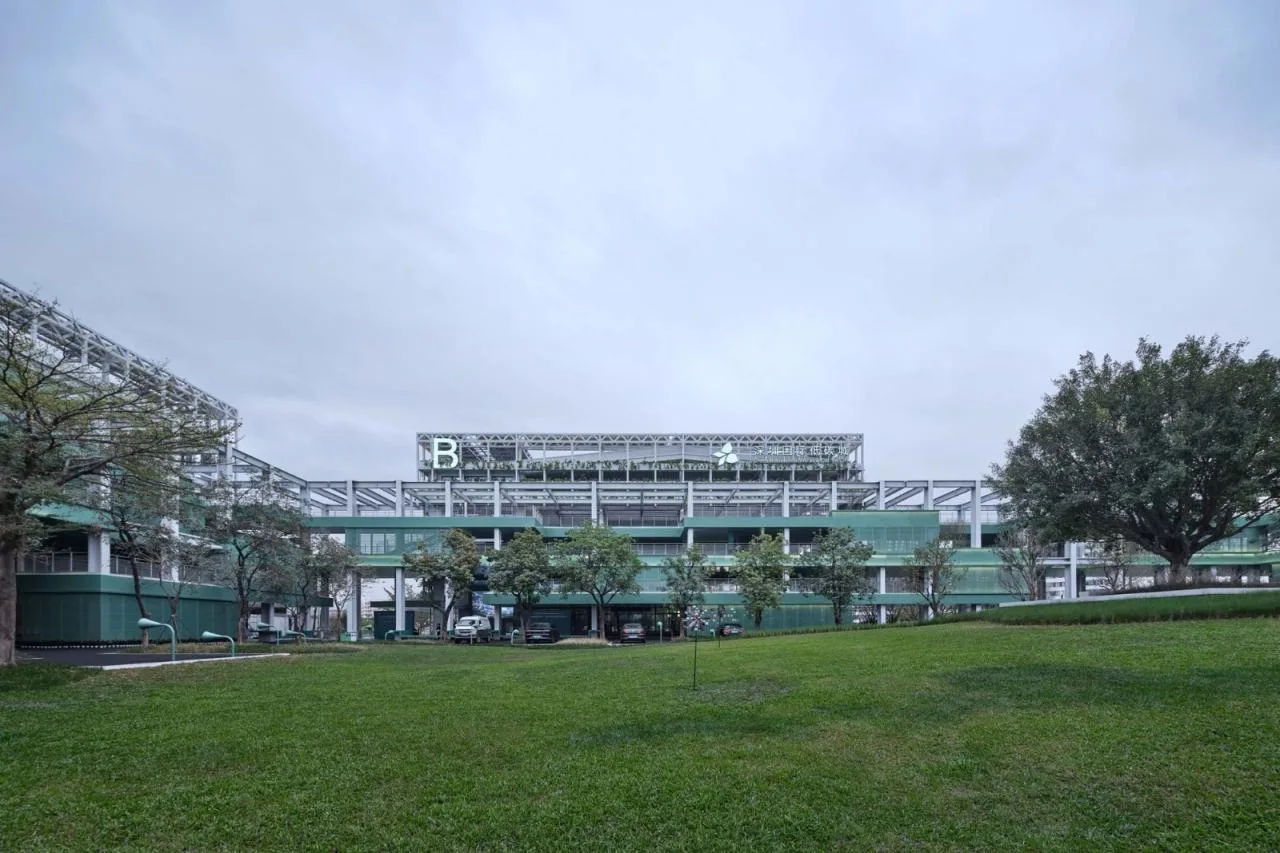
The Breathing Hall preserves and enhances the primary functions of the three key buildings: the Exhibition Hall, Conference Hall, and Trading Hall. The renovation involved removing unsafe enclosure components and reconstructing open facades that harmonize with the environment. This strategy opened the underlying space, creating a visual continuity between interior and exterior areas.
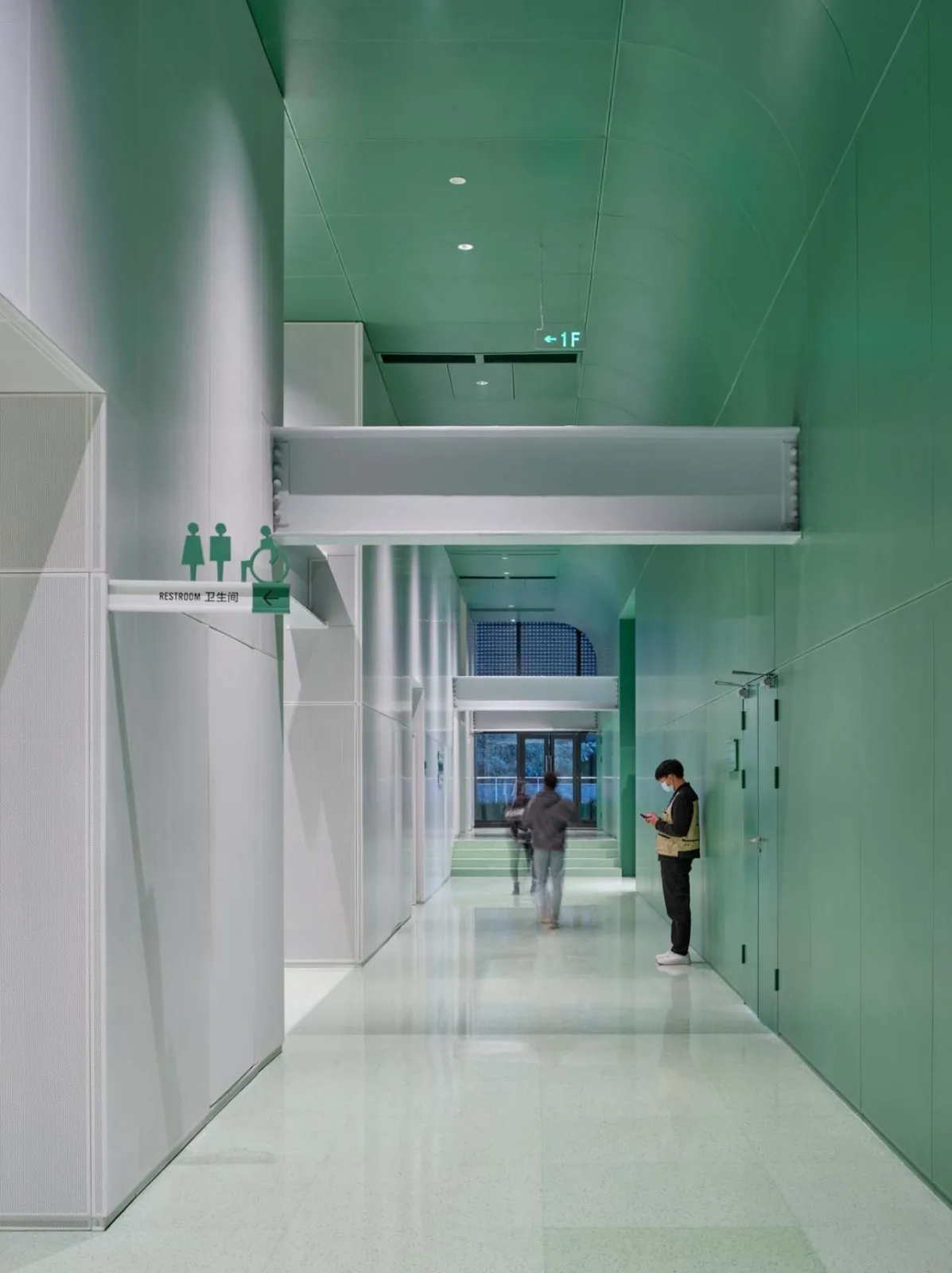
The original steel frame was preserved and repainted in fresh white, emphasizing both the building’s structural character and its low-carbon architectural concept. Portions of the exterior walls were recessed within the framework, transforming the facades from closed to open and alleviating the heavy visual impact of the large volume. Numerous transitional spaces between the site and indoor areas were introduced, resulting in an airy, “breathing” environment.
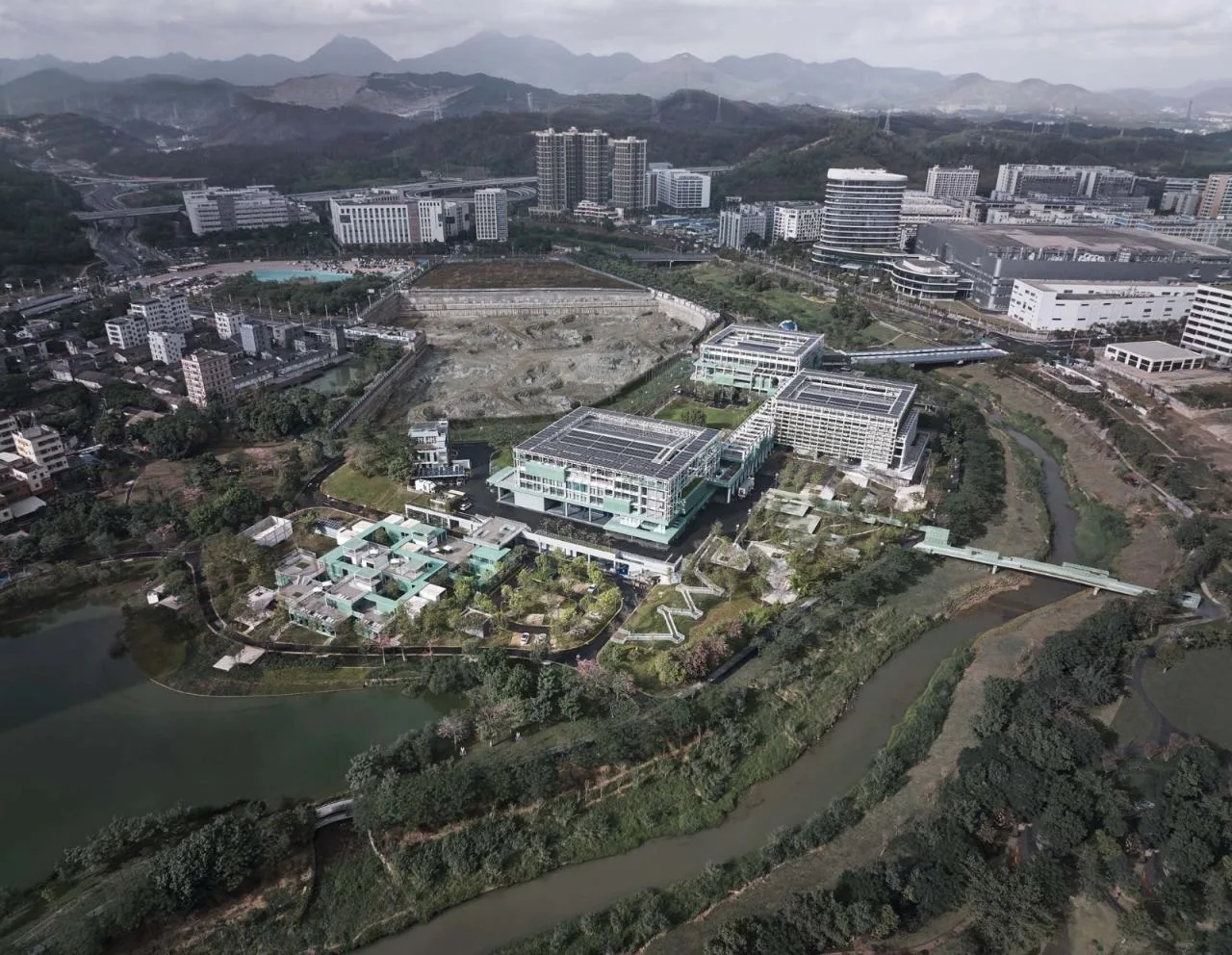
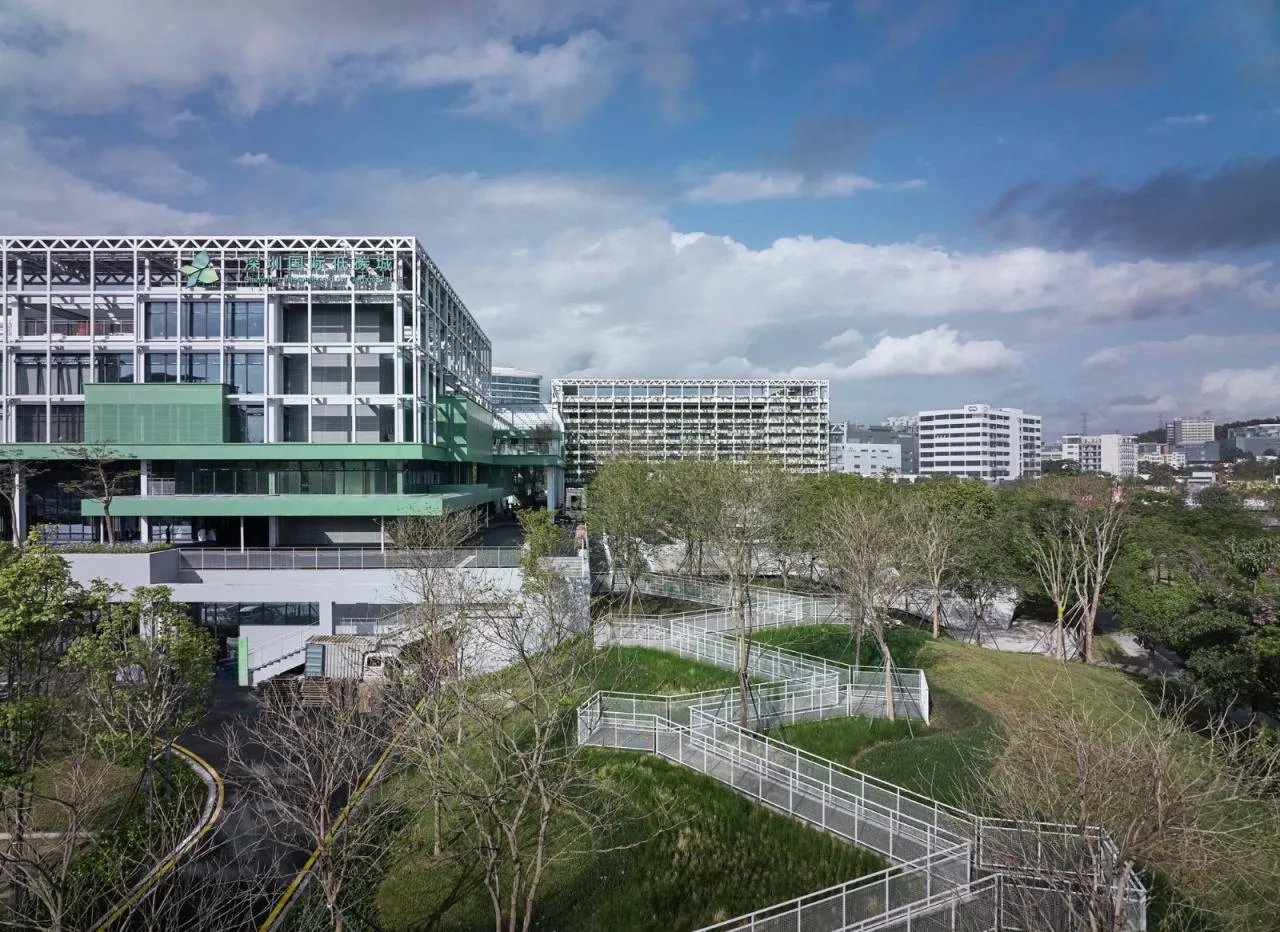
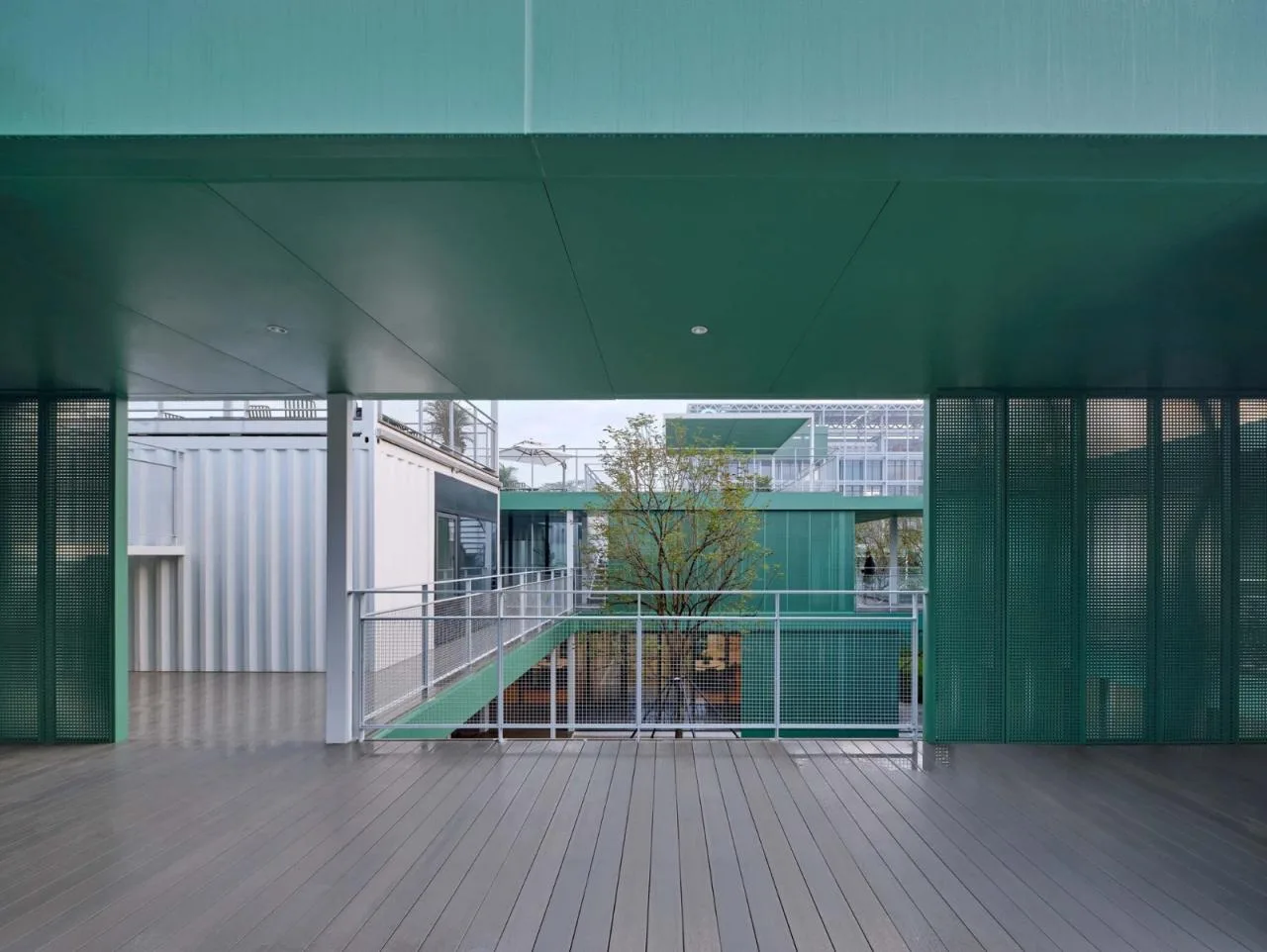
The Vitality Corridor repurposes the existing steel-framed external corridors connecting the three venues into a lively, green-filled passage. It extends toward the lake, linking to a low-carbon food collection area made from converted containers. The corridor also spans the Dingshan River, forming an ecological bridge that connects both sides.
During low-carbon conferences, the corridor functions as the public service axis of the event. In everyday life, it serves as a leisure zone promoting a low-carbon lifestyle.
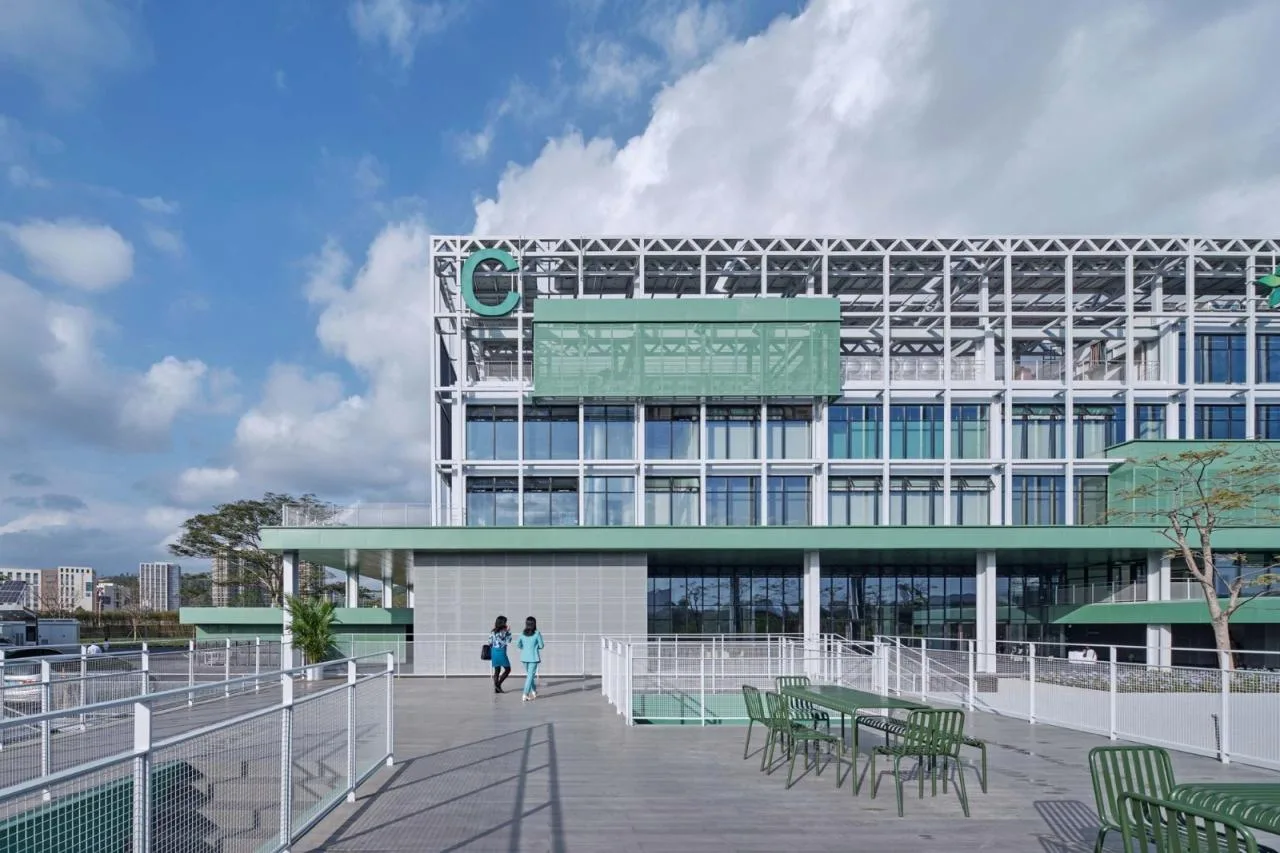
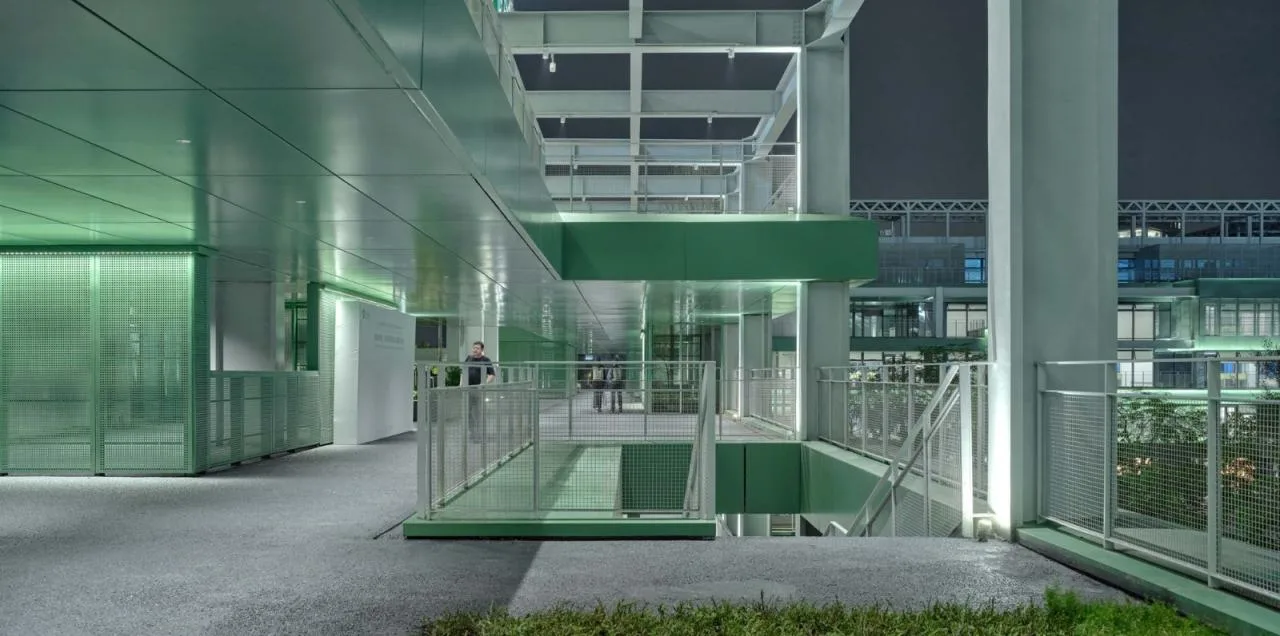
The Ecological Box functions as modular units scattered throughout the site and buildings. Some are stacked along the Vitality Corridor, serving as spaces for tea breaks and social conversations. Others are integrated into indoor building spaces, providing office and conference areas with aerial ecological courtyards. Additionally, some are arranged within the landscape and along the Dingshan River Bridge, offering outdoor leisure and viewing platforms. These ecological boxes create a cohesive link between the architecture and the surrounding environment.
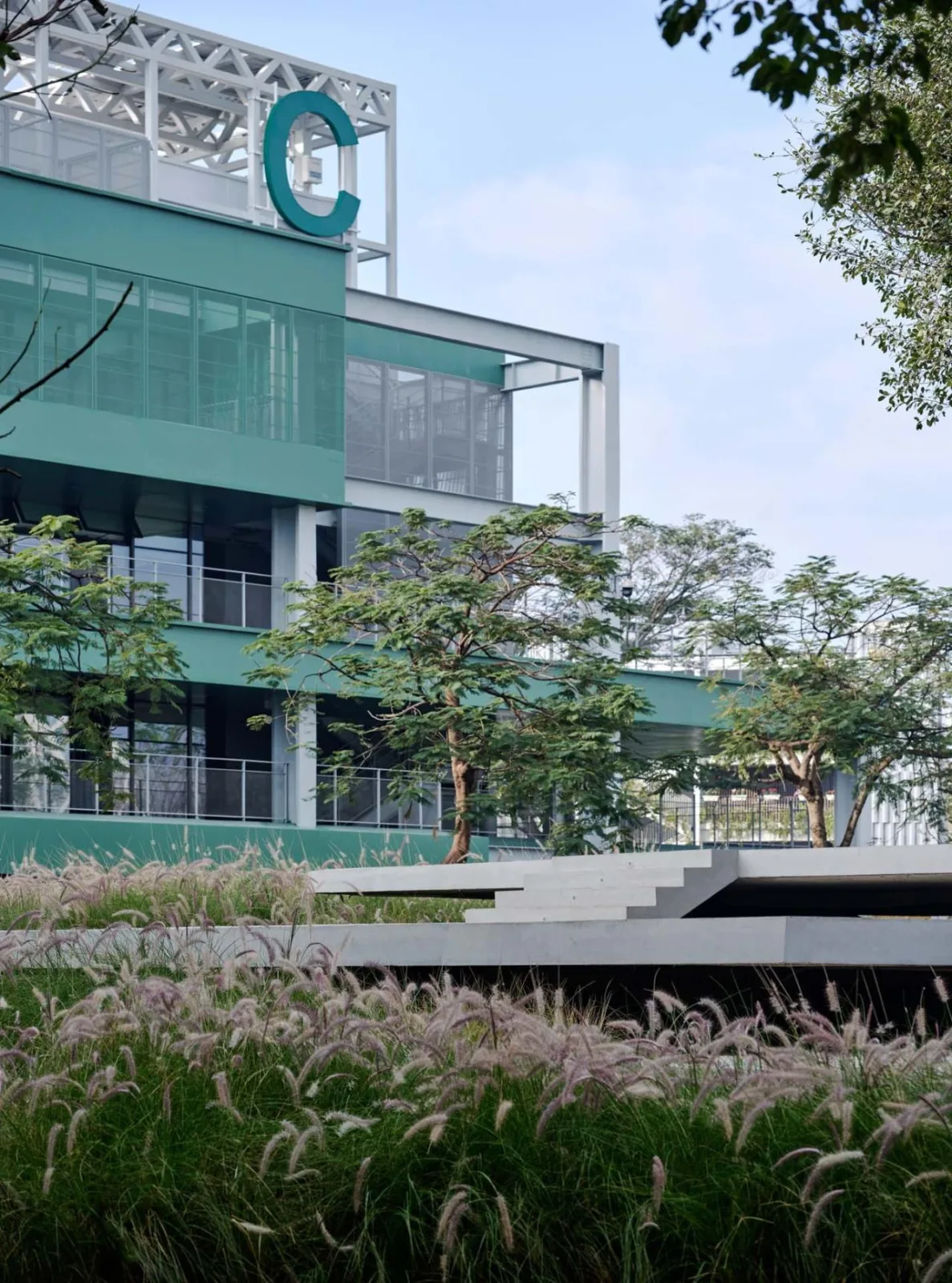
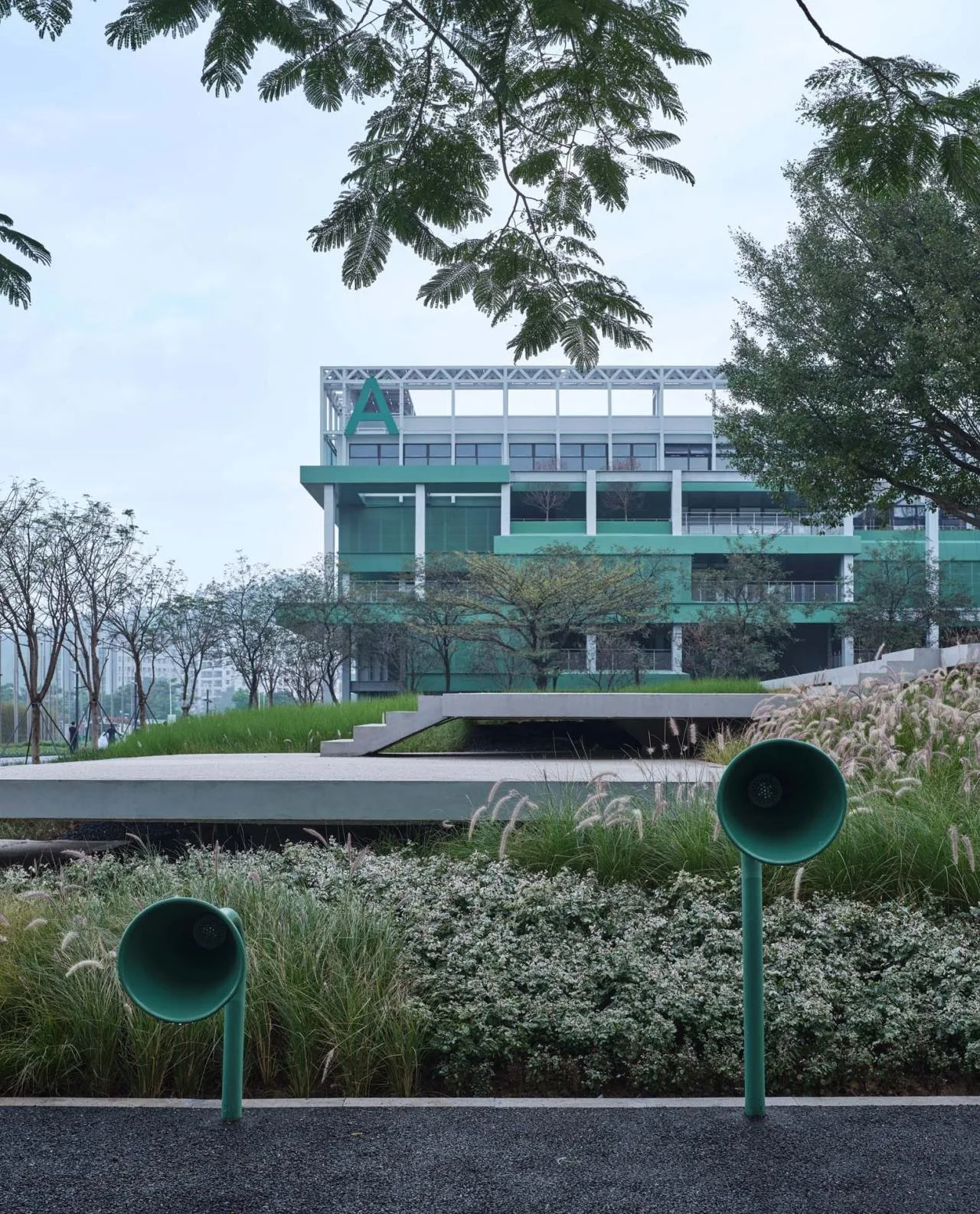
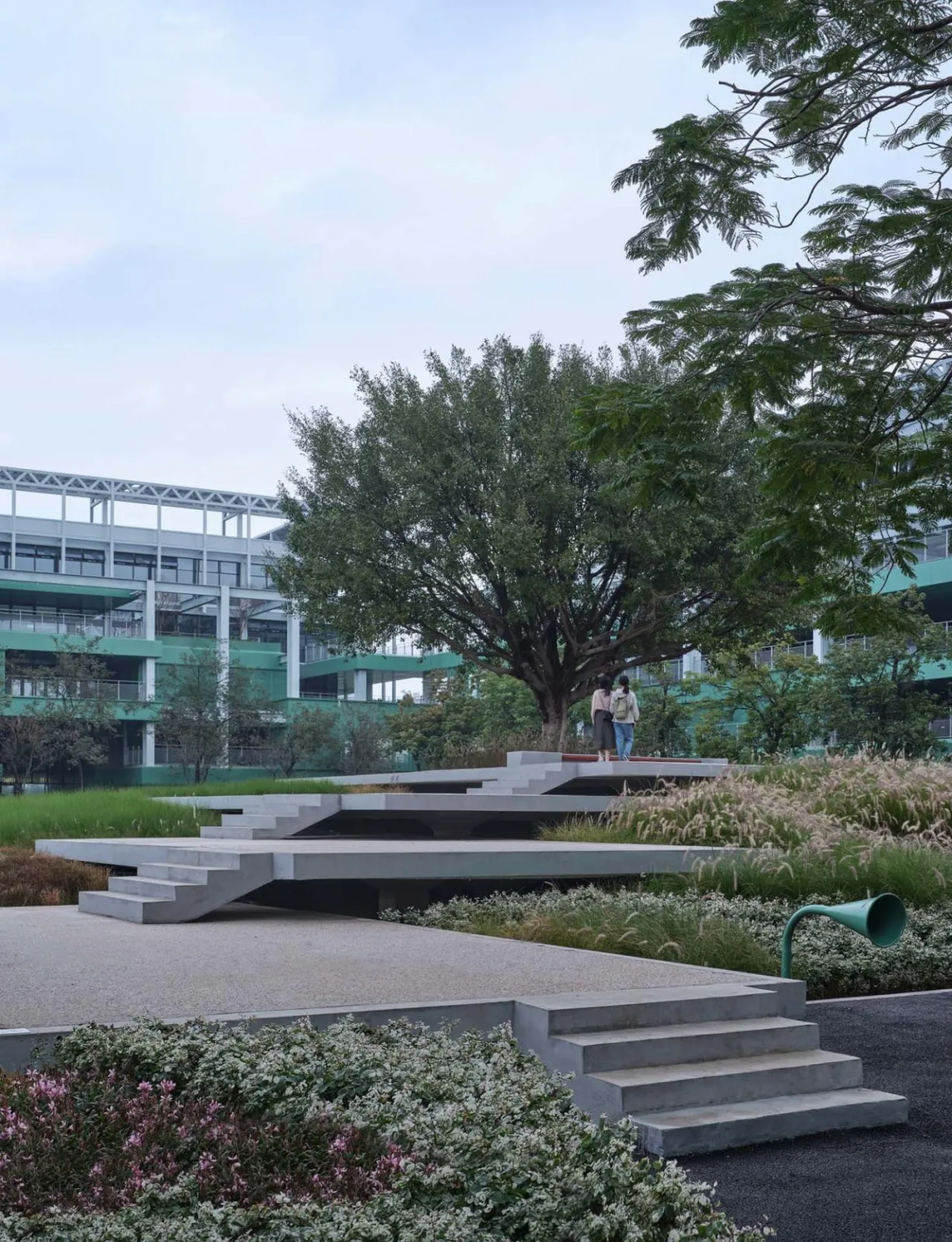
The Growth Hill’s ecological boxes extend across the site, forming a distinctive hill feature. The soft hill transforms the hard, tiered water features of the original site into cascading ecological water layers. A stacked stone hill incorporates a folded plate system atop the original outdoor steps, creating a continuous landscape platform.
The Tree Hill offers a layered walking path surrounding a raised banyan tree in the central courtyard, while the Memory Hill weaves preserved tree clusters into a winding ecological experience trail. These various growth mounds adapt to the terrain, spreading organically to establish site-specific landscape narratives.
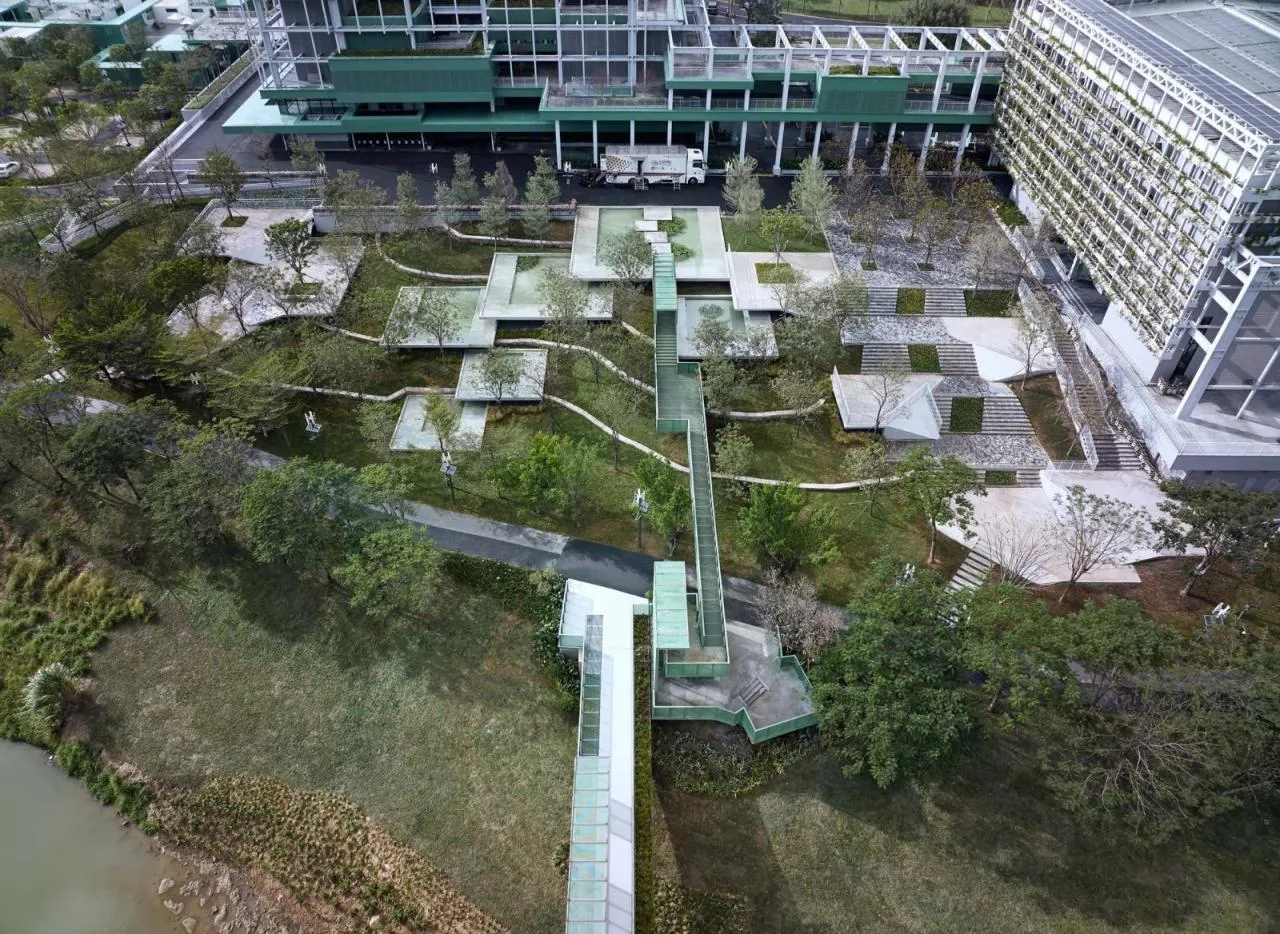
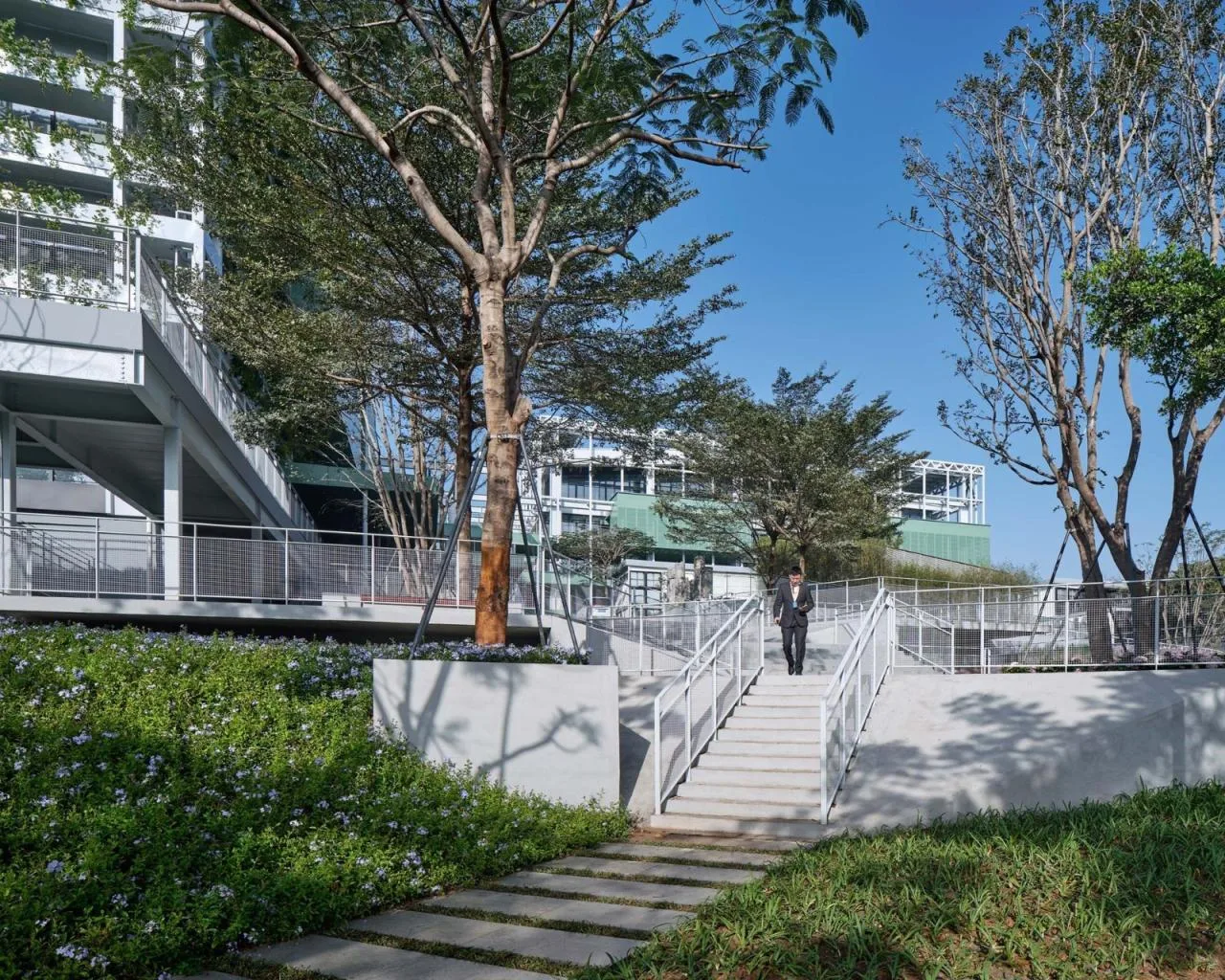
The Low Carbon Food Collection area is located between the main building and Butterfly Lake. It consists of service-oriented buildings assembled from prefabricated container modules. These container units are manufactured off-site and assembled on location, forming a movable, eco-friendly building complex.
The spatial combination of gray-white container bodies and gray-green corridor systems creates a modern courtyard with distinctive scenery. During forums, this area serves reception and light catering functions, while in daily use, it supports leisure activities for the community.
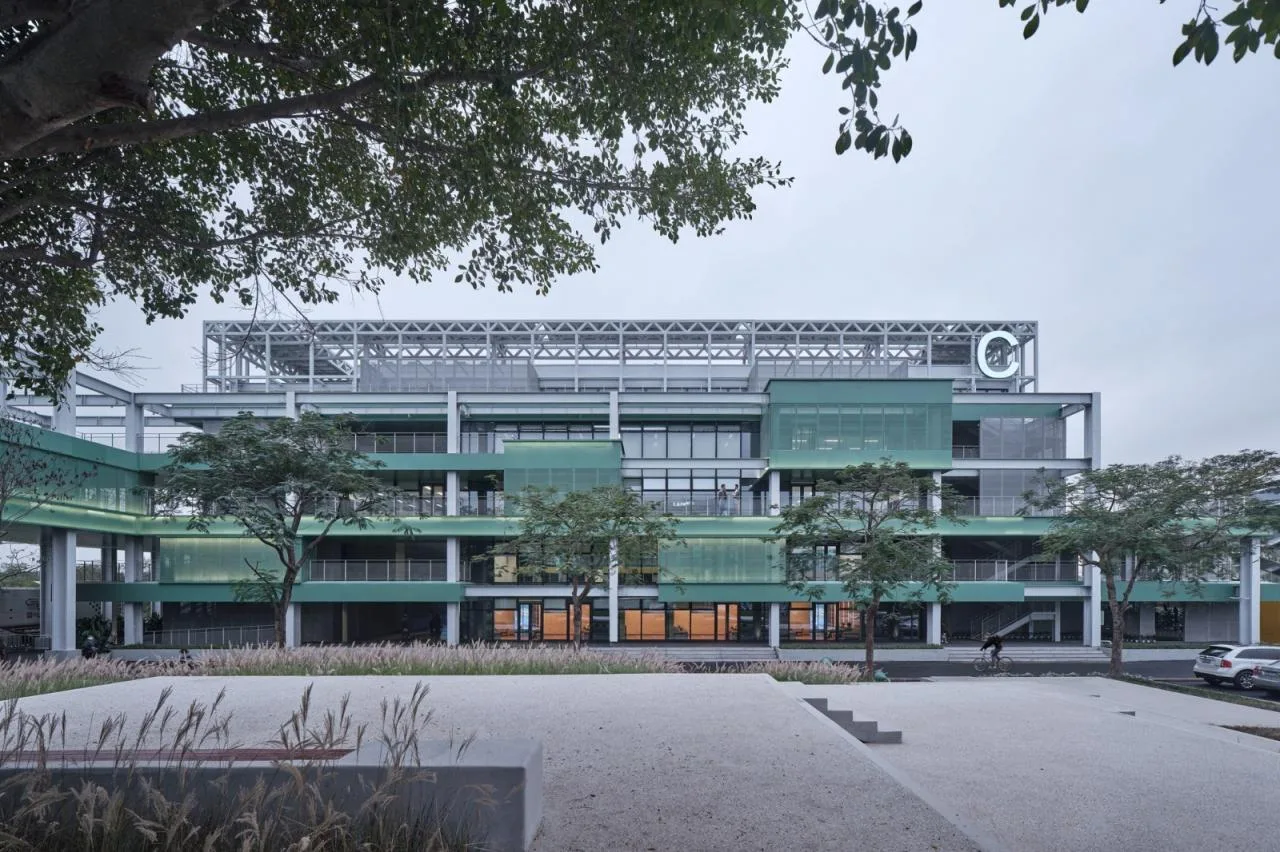
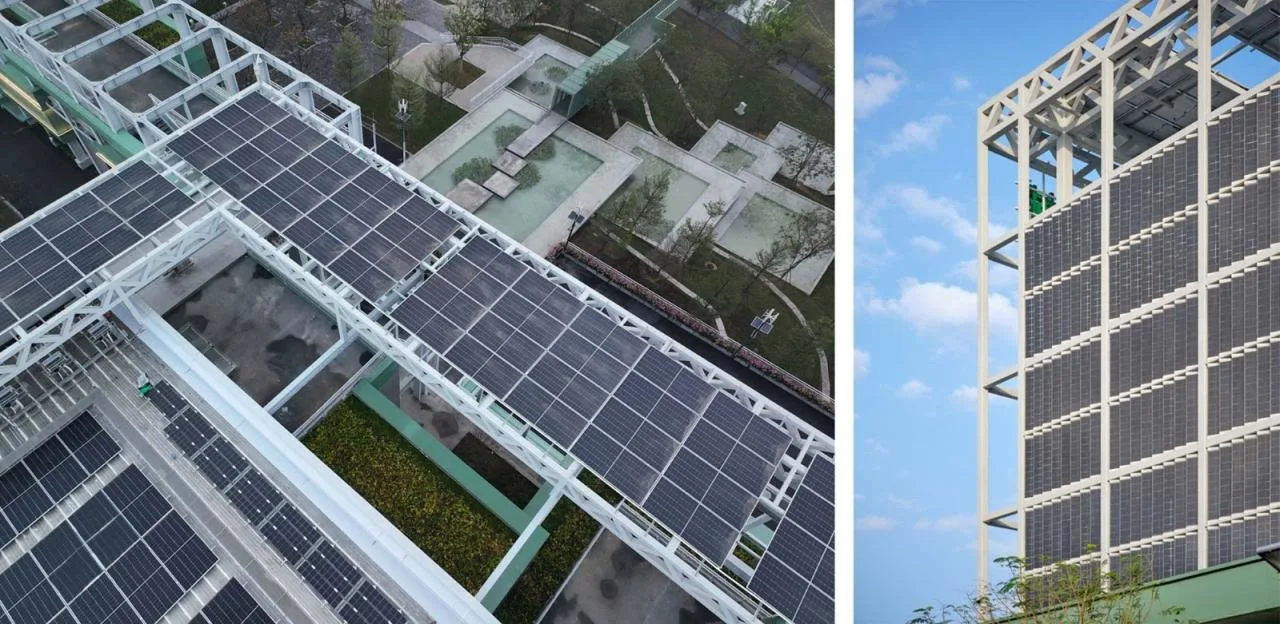
The Low Carbon City project is designed with the ambitious goal of achieving “near-zero energy buildings and zero-carbon parks.” The building complex itself functions as the largest exhibit of the low-carbon forum. The roofs of the main buildings are equipped with high-efficiency monocrystalline silicon photovoltaic panels and advanced inverters.
Buildings A and B generate more renewable energy annually than their total energy consumption, while Building C achieves a 69% renewable energy utilization rate. The entire park’s carbon reduction reaches an impressive 95.3%. Additionally, 120 green and low-carbon technologies are integrated throughout the design and construction process, blending environmental awareness with practical experience, making this project a true embodiment of a “low-carbon city.”
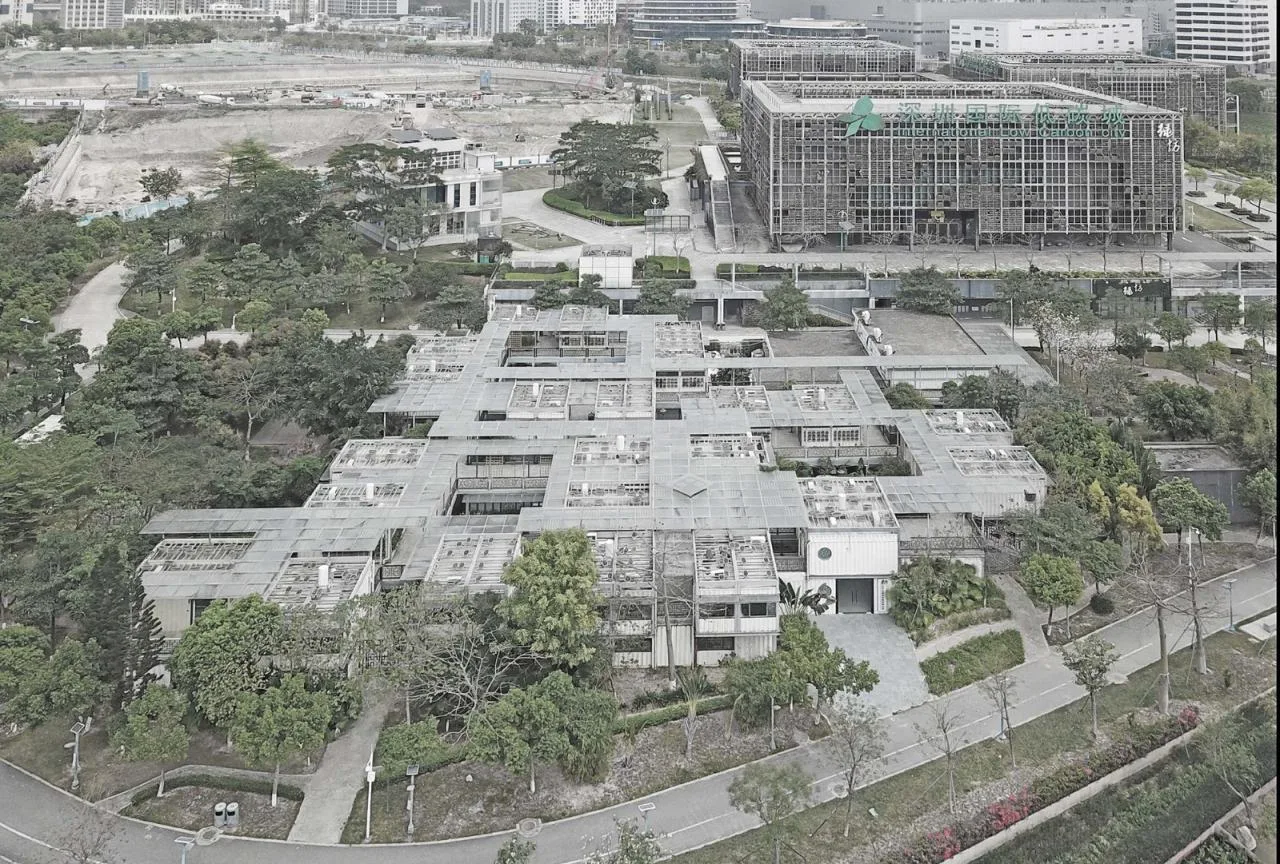
Before Renovation
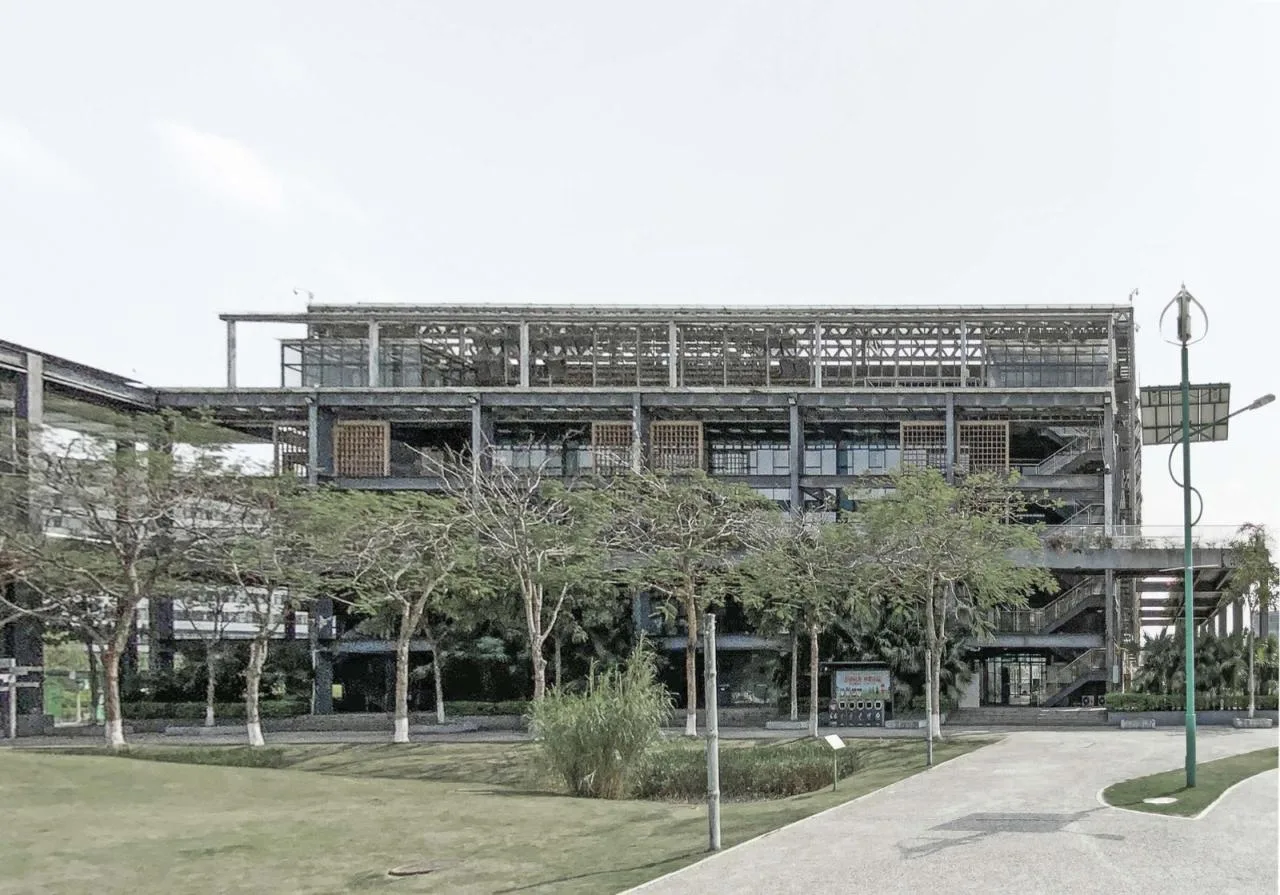
Before Renovation
Project Drawings
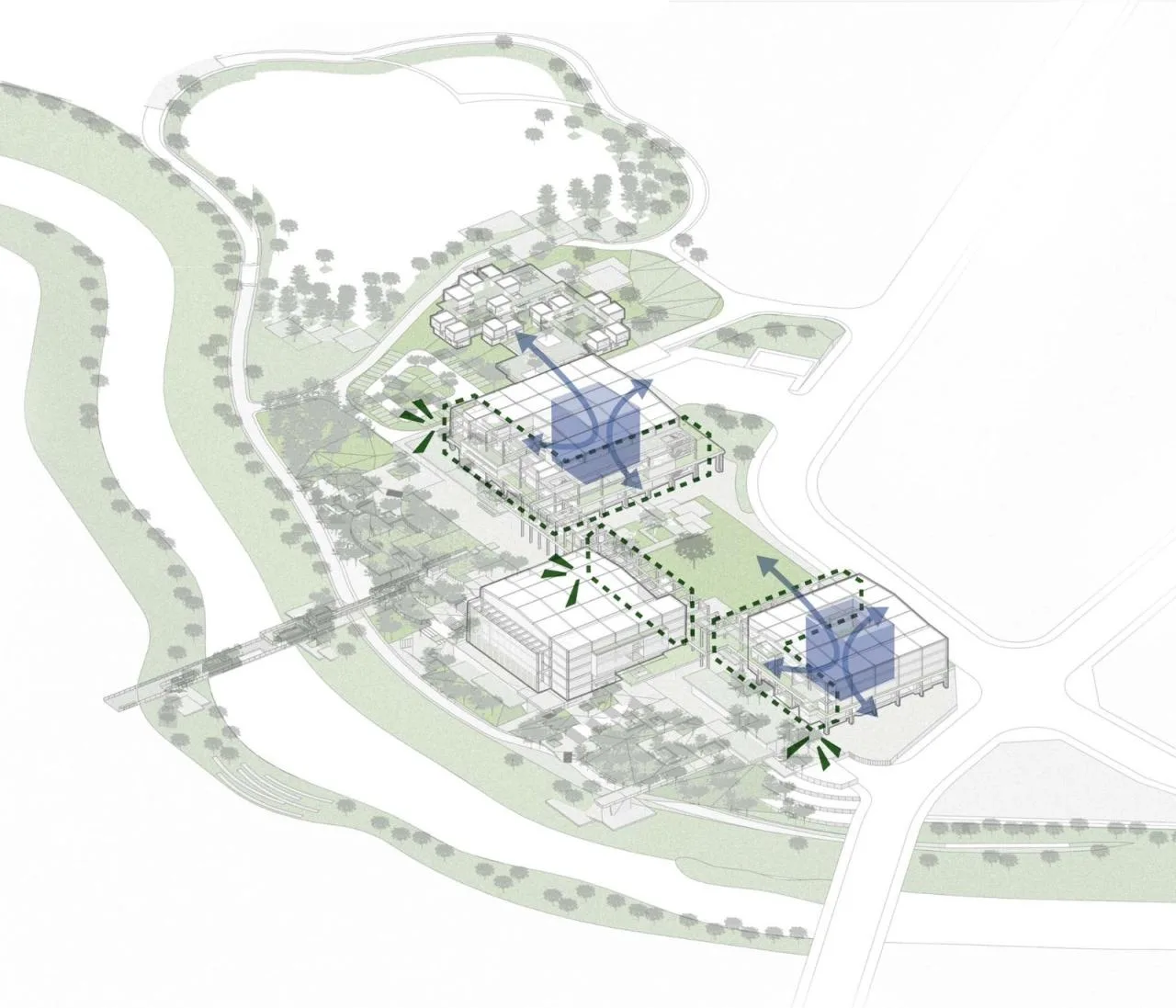
△ Breathing Hall
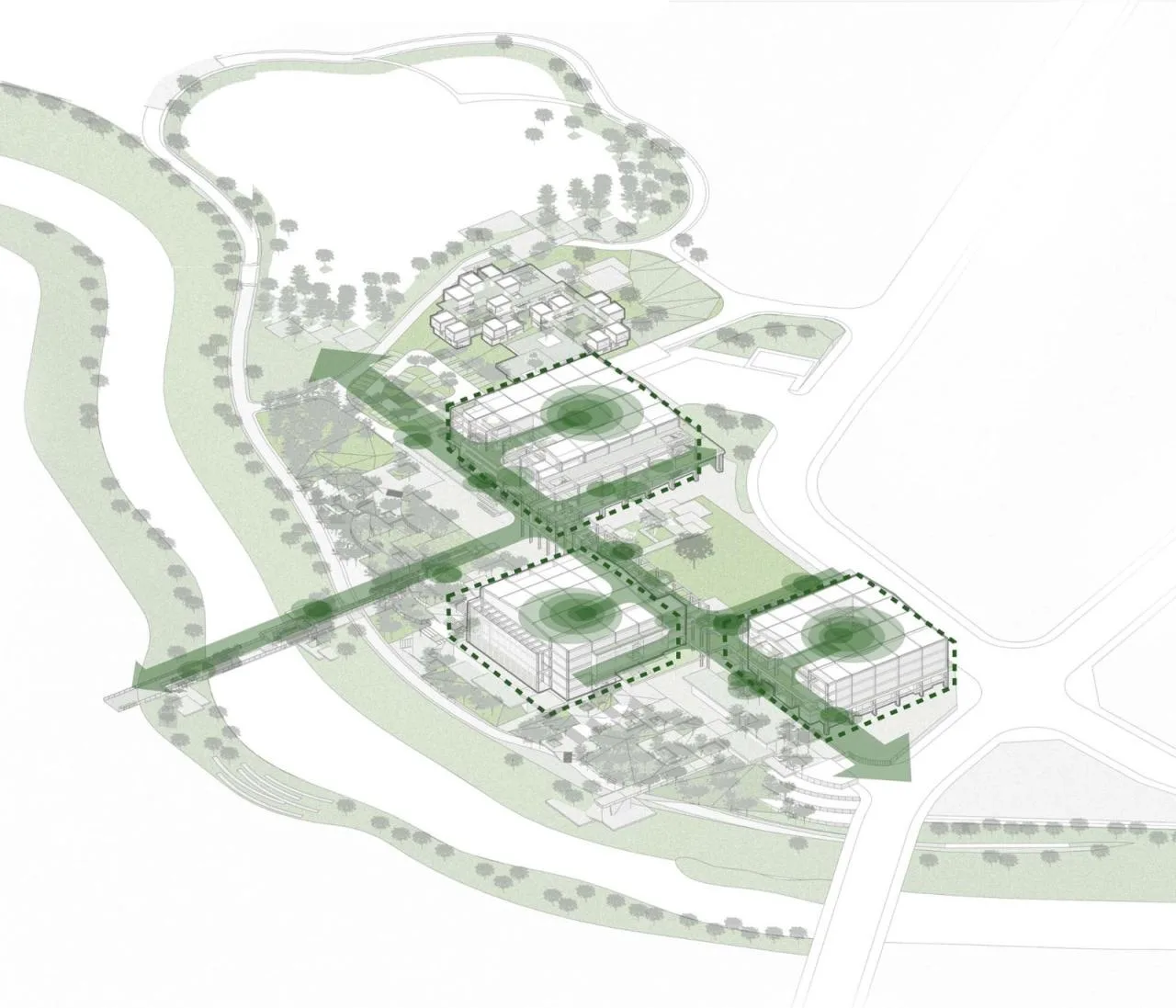
△ Vitality Corridor
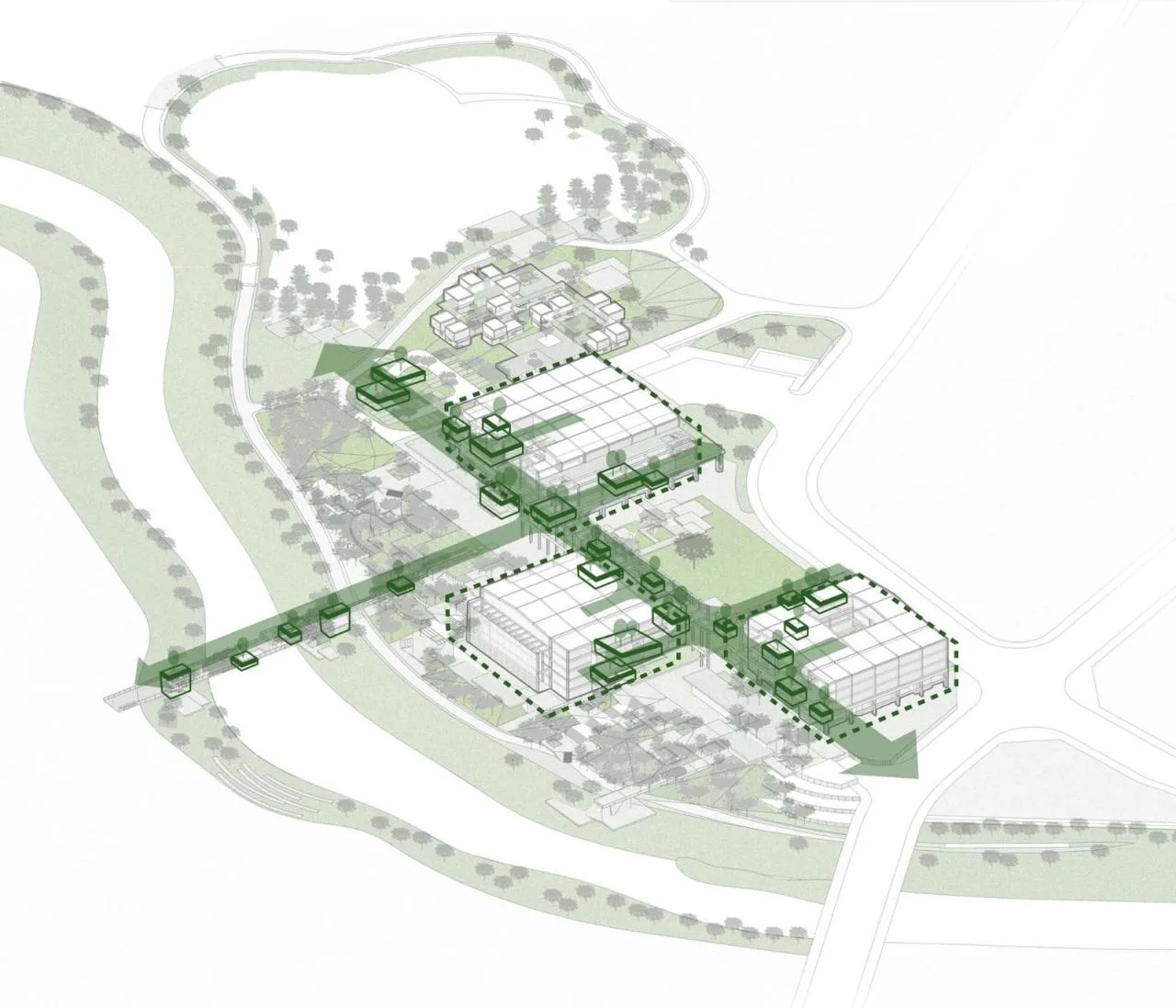
△ Ecological Box
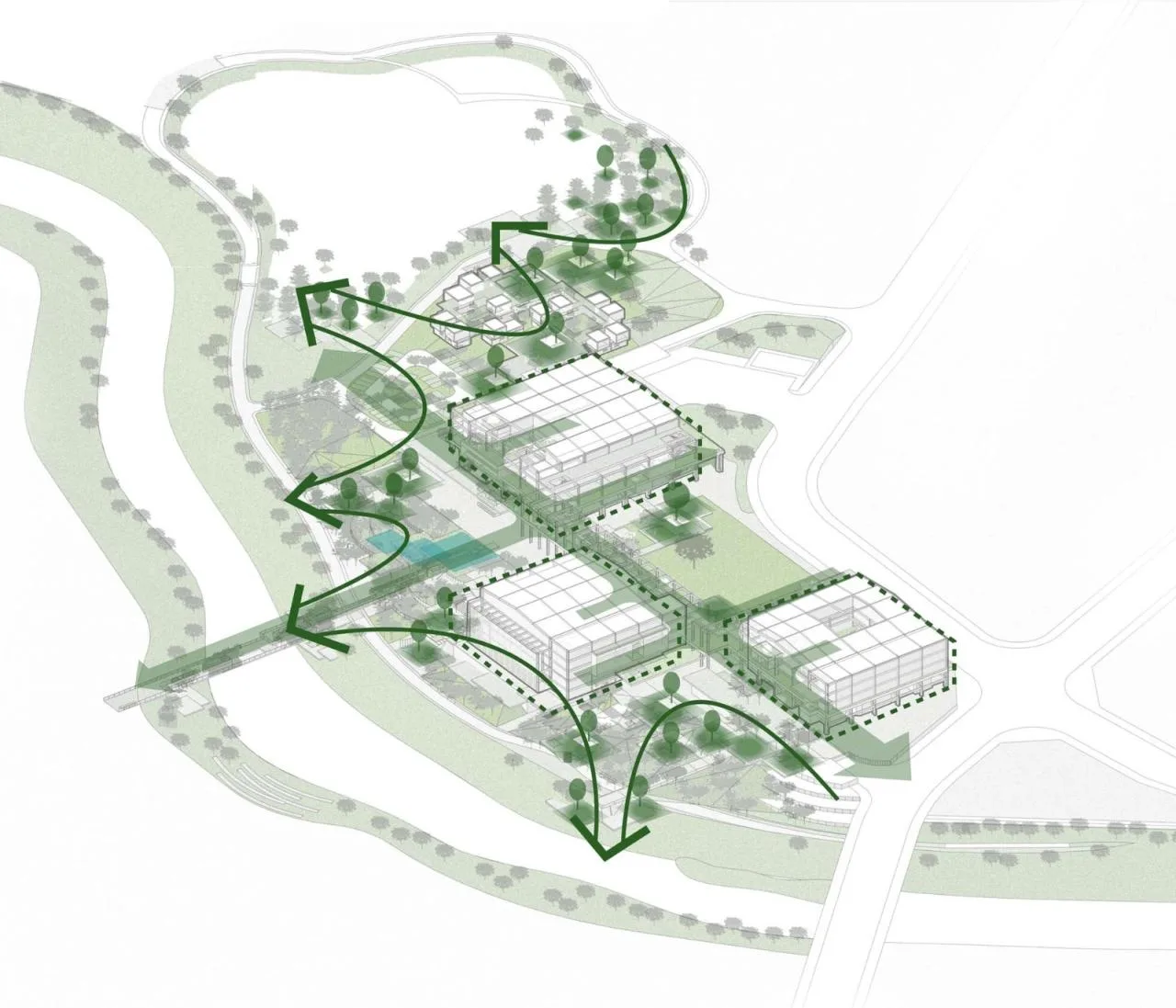
△ Growth Hill
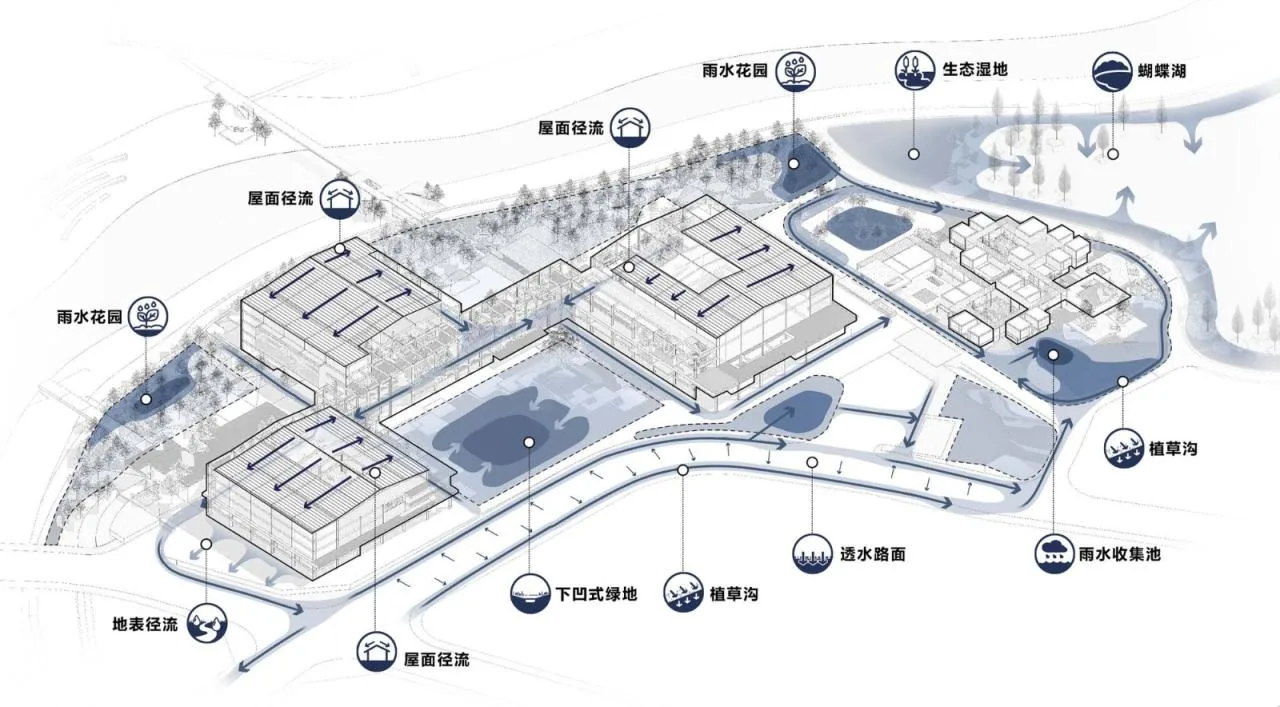
Application Diagram of Sponge Technology
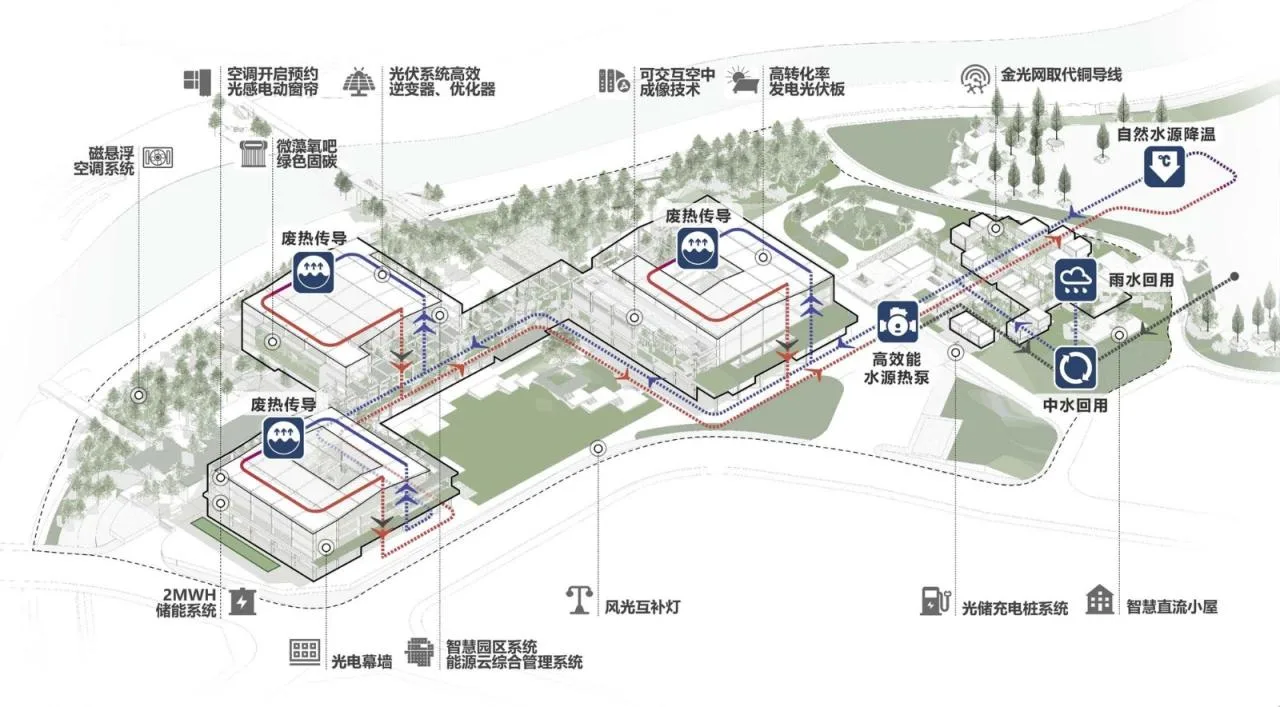
△ Diagram of Low-Carbon Technology Applications
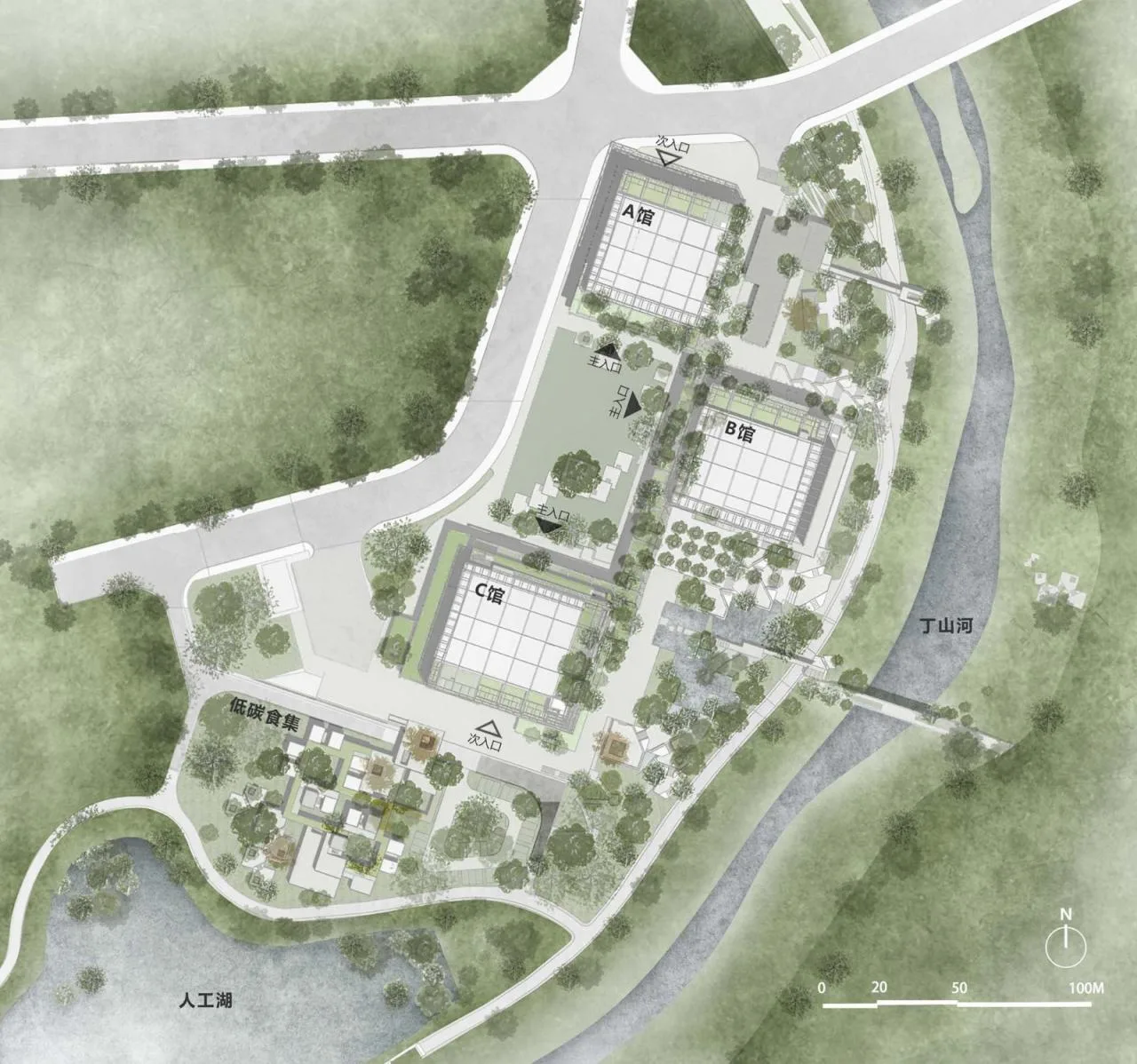
△ General Layout Plan
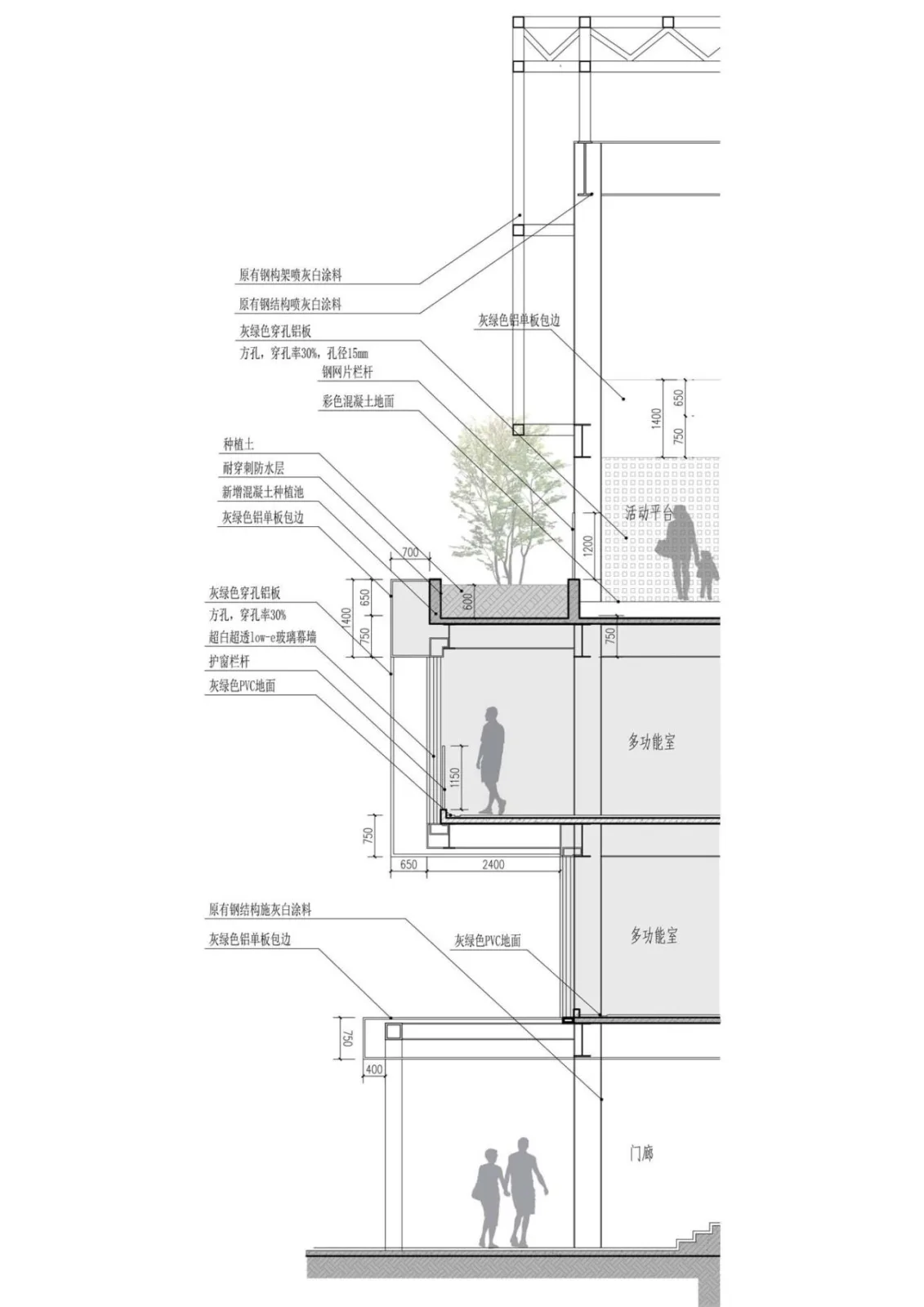
△ Node Details
Project Information
Architectural Design: Tongji Original Design Studio
Area: 24,400 m²
Project Year: 2021
Photographer: Octopus Seeks Architecture
Lead Architects: Zhang Ming, Zhang Zi
Design Team: Liu Bingrui, Zhang Linqi, Guo Luwei, Zhang Xianglin, Zhang Wenjun, Wu Yanyang (intern), Han Jiazhi (intern)
Architectural Development Team: Chen Zhuo, Chen Guodong, Lin Liang, He Ling, Wu Fukun
Structural Development Team: Tan Zhuoping, Liu Peng, Cheng Yanhong
Mechanical & Electrical Development Team: Liu Wentao, Du Jianwei, Shang Shuangshuang
Landscape Development Team: Qin Cao, Gan Haitao, Song Shu, Cai Shengjie, Cao Jianhui
Project Architects: Ding Kuo, Ding Chun
Development Design Team: Shendu Design Group Co., Ltd
Construction Agency: China Resources (Shenzhen) Co., Ltd
Location: Shenzhen, China















Must log in before commenting!
Sign Up