
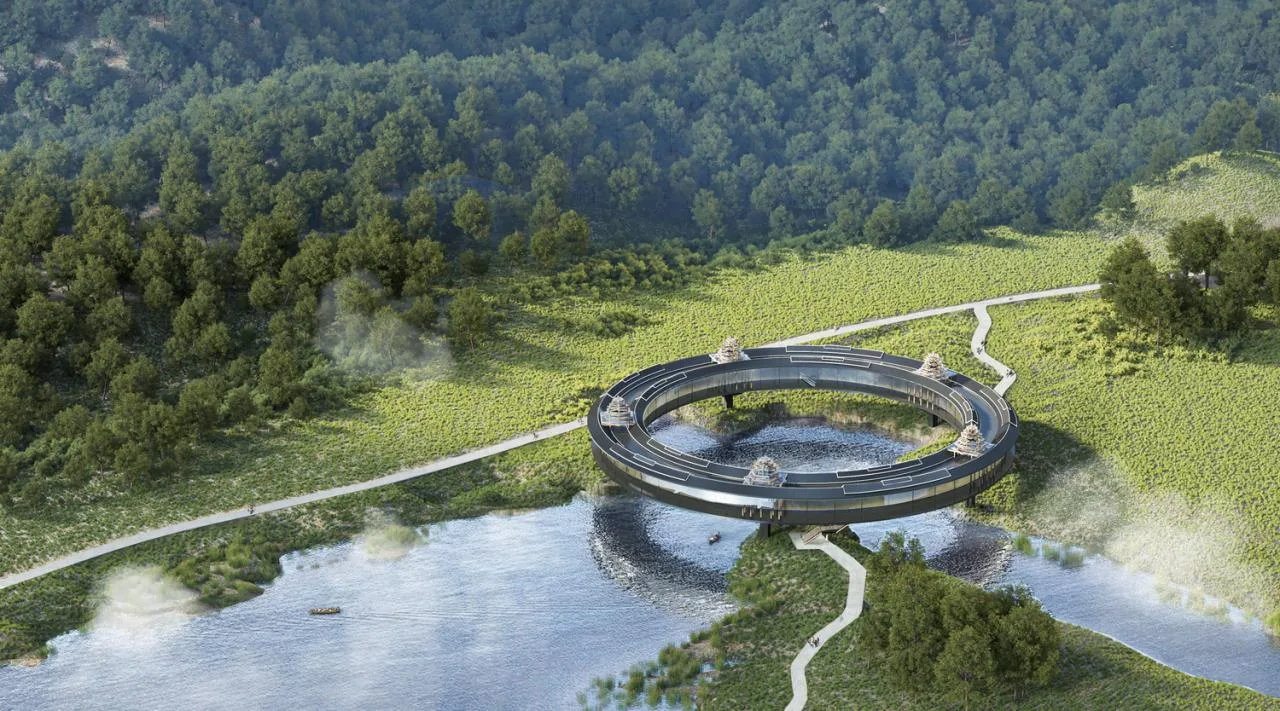
This project is situated in Zhoubei Village, Guyi Town, Sanjiang Dong Autonomous County, Liuzhou City, Guangxi Province. Nestled along both banks of the Xunjiang River, Zhoubei Village lies in a valley characterized by rolling hills. At its heart rests a tranquil lake, resembling a serene jade gem.
The design draws inspiration from the local cultural symbols and spatial imagery of the Wind and Rain Bridge. Emphasizing respect for nature and regional culture, the project aims to preserve and evolve the architectural language of the Wind and Rain Bridge. It seeks to fulfill the needs of both tourists and villagers while embodying the spiritual heritage of the local Dong community.
Spatial Composition
The village buildings are arranged along the mountainside, featuring traditional wooden structures like drum towers and stilted houses. Zhoubei Village is embraced by mountains and water, sheltered from the sun behind, with winding paths ahead and forests behind. The houses are exposed to wind and rain, situated beside a river-shaped lake adjacent to the village.
The original site blocks form a surrounding layout, with main roads flanking both sides of the river. The interaction between the village’s water system and its overall form can be categorized into three patterns: proximity, environment, and penetration. Zhoubei Village’s water system and layout embody a “crossing” form.
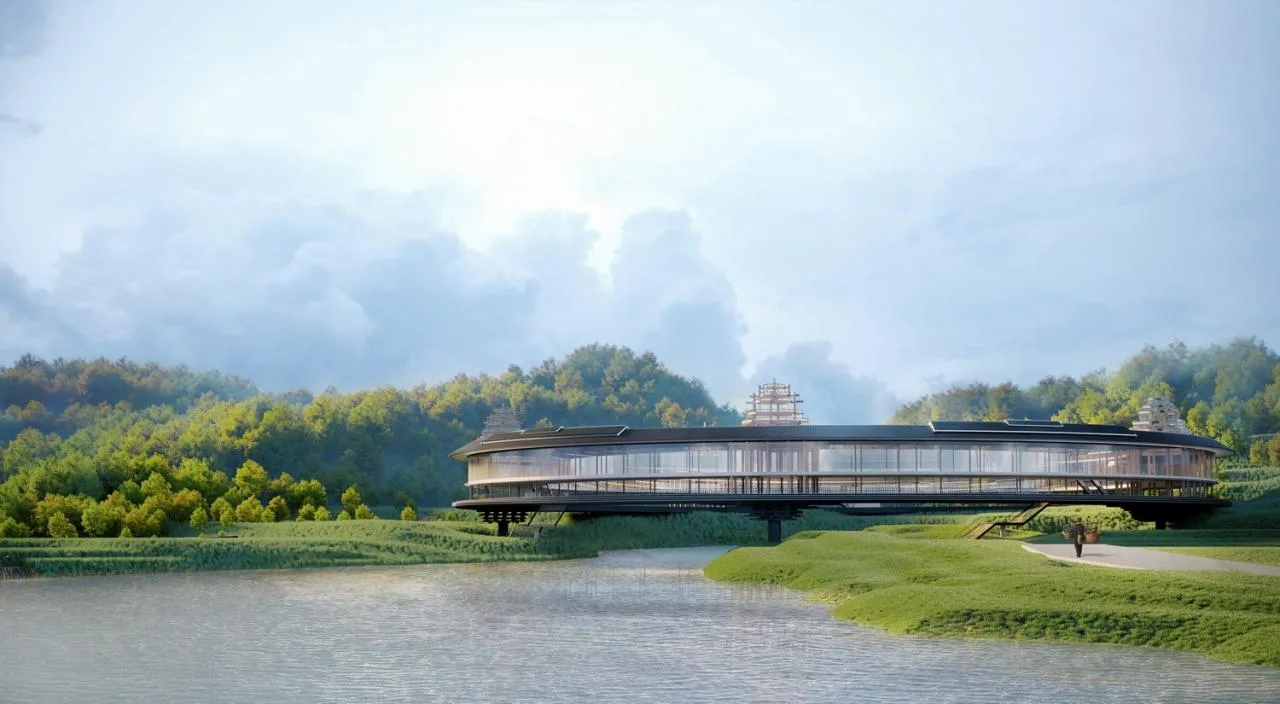
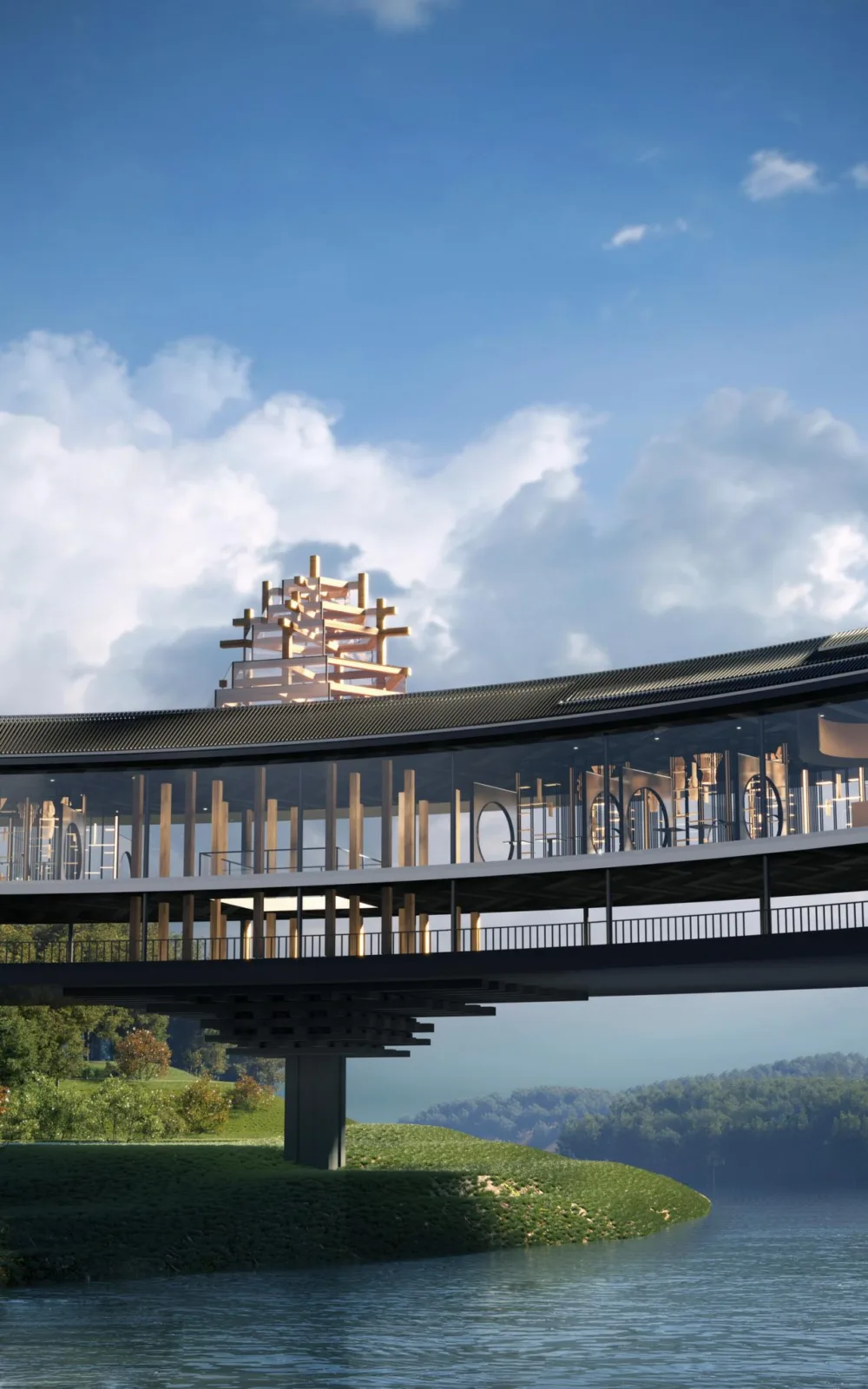
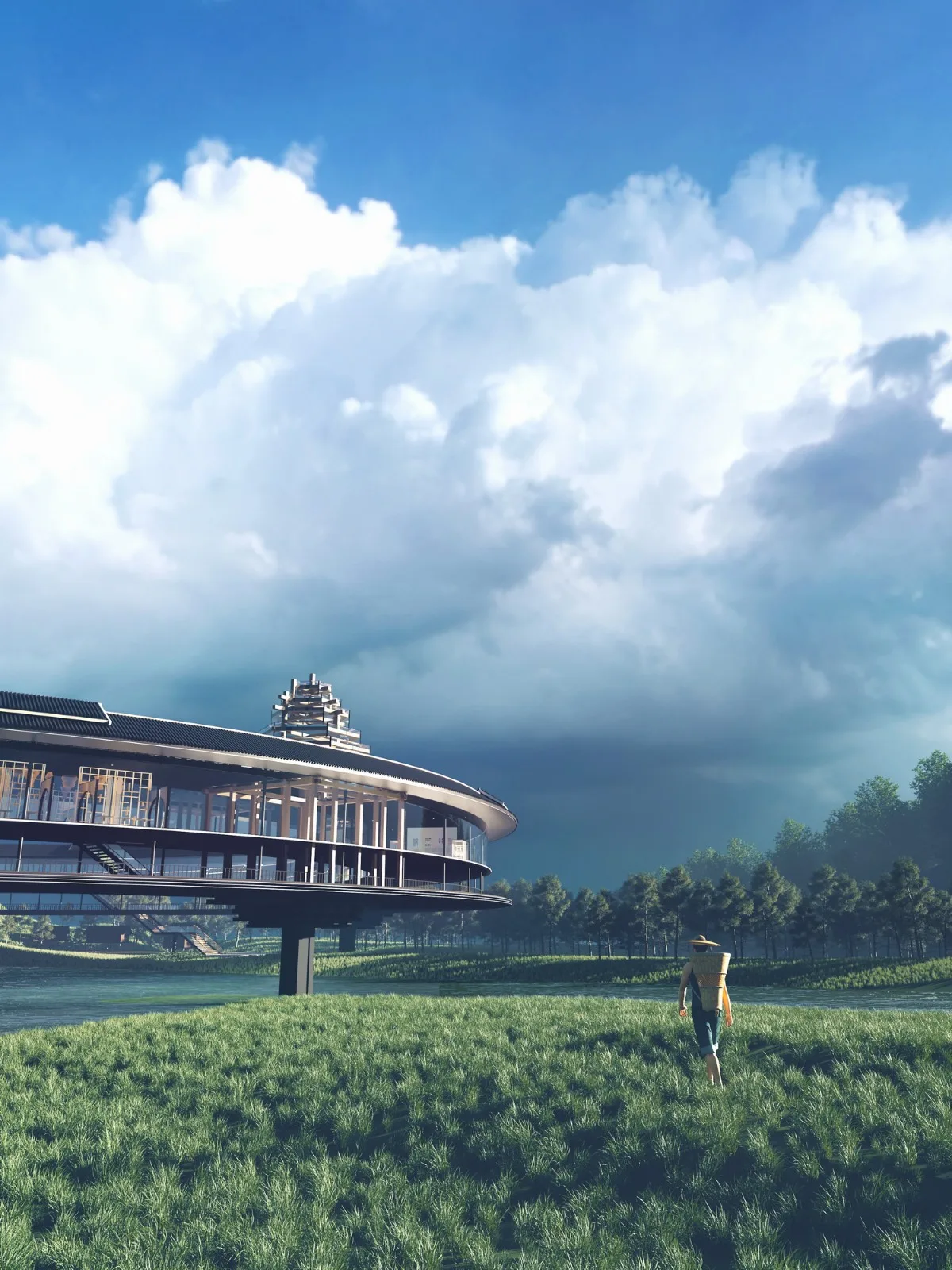
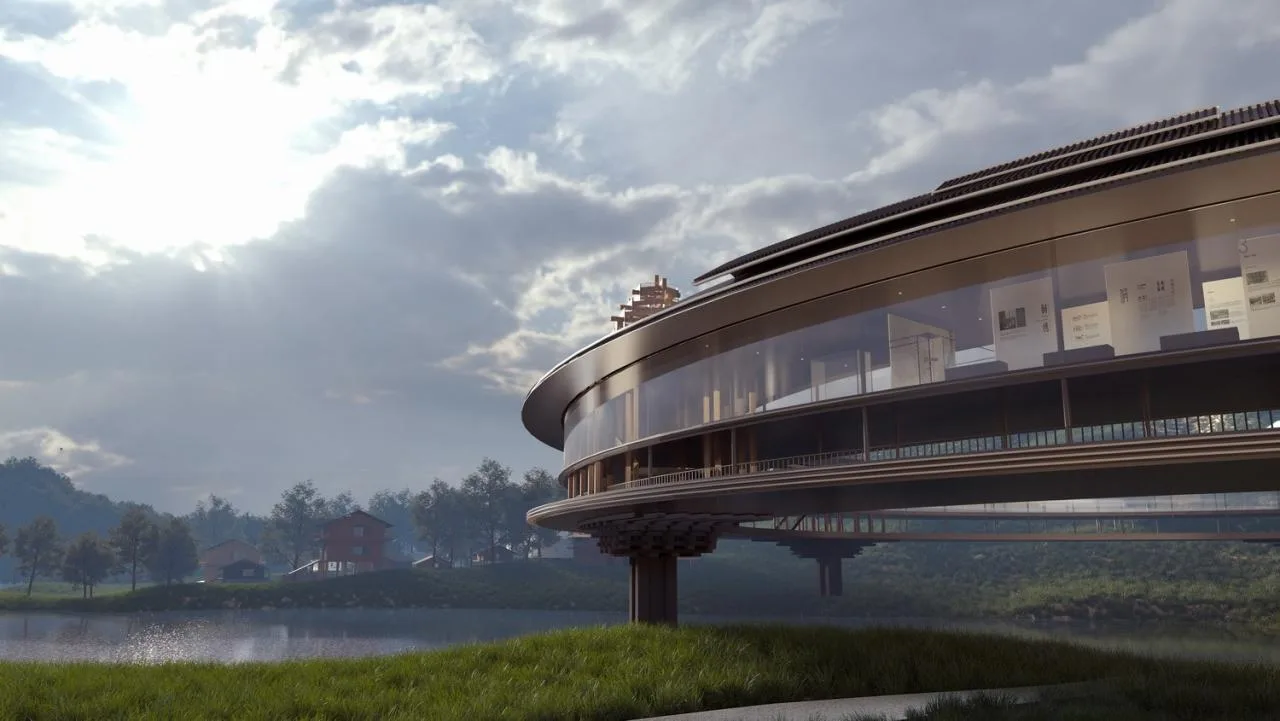
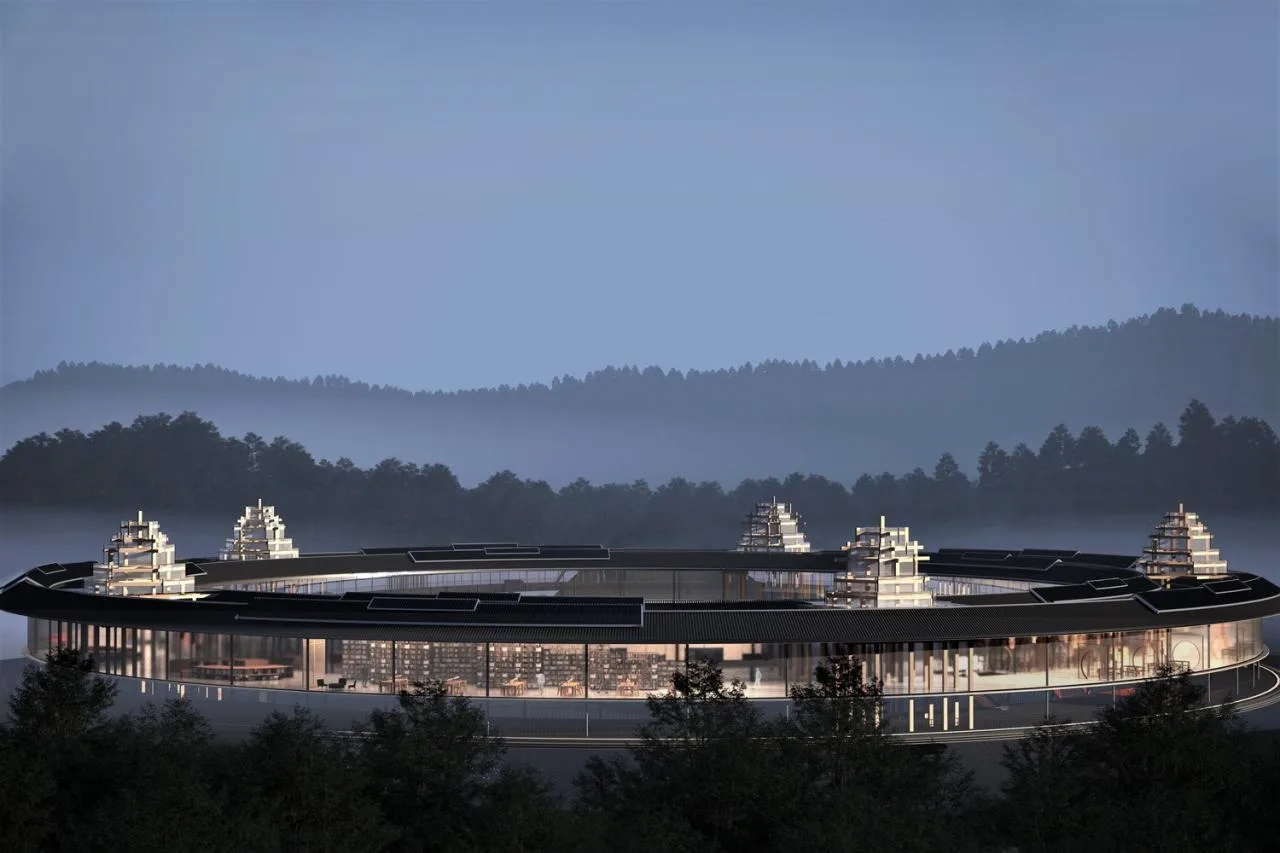
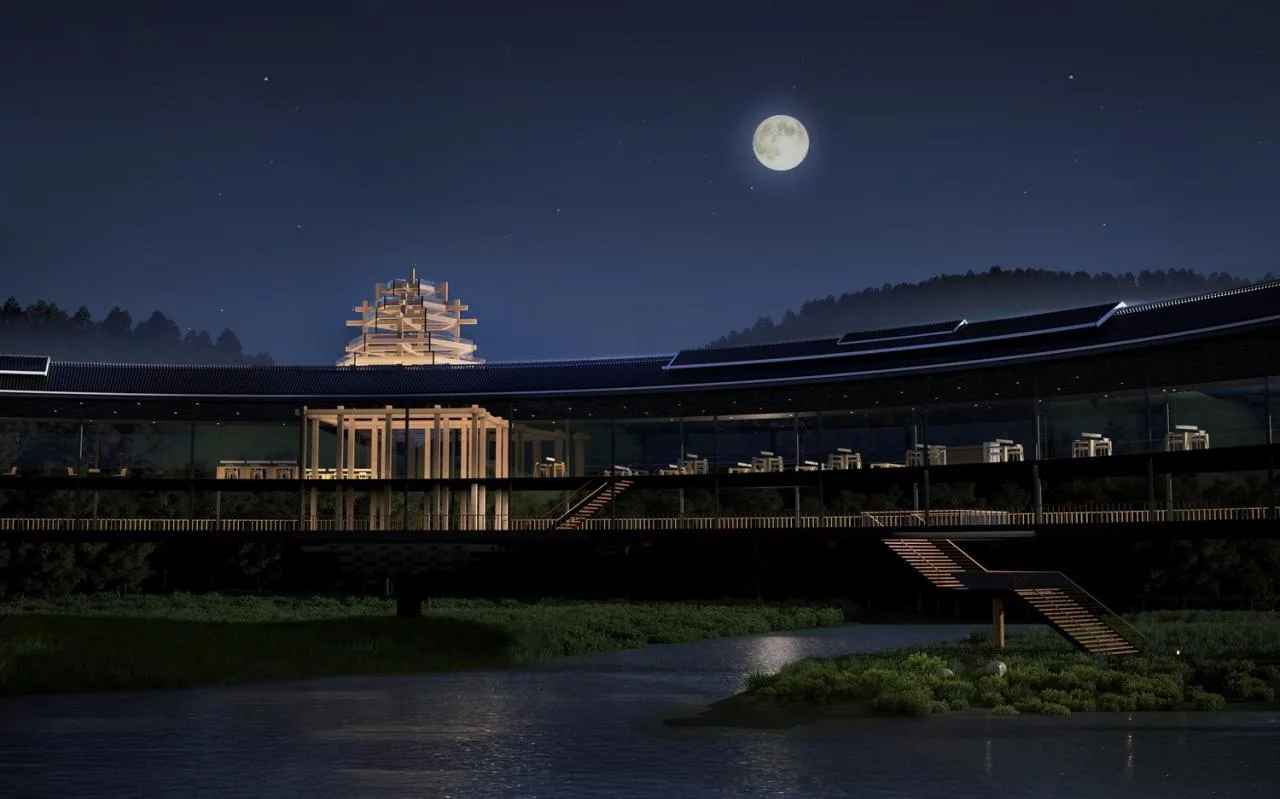
To better integrate the terrain and waterways, the traditional Wind and Rain Bridge structure has been transformed from straight lines into curves, forming a circular shape above the lake. This design connects both sides of the river, creating additional pathways and optimizing space utilization while maintaining the building’s unity.

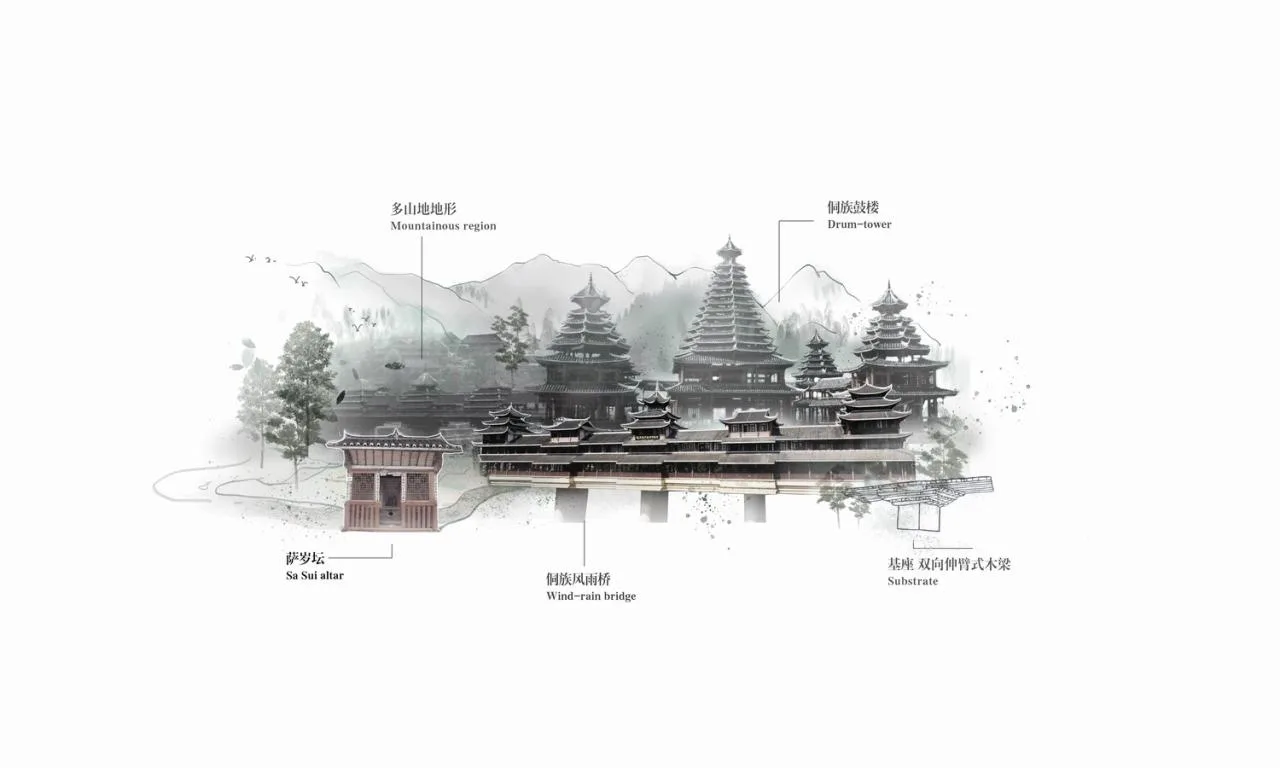
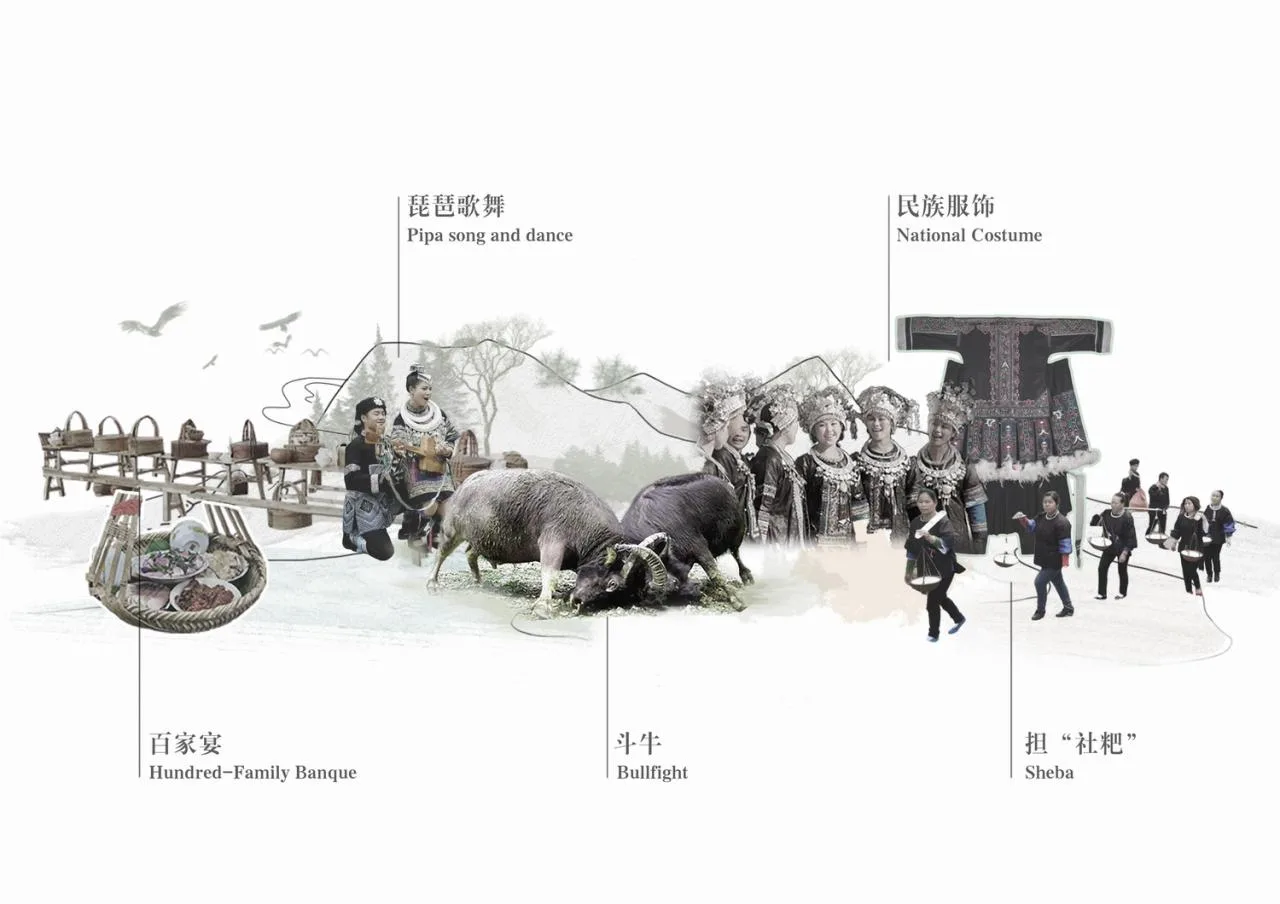
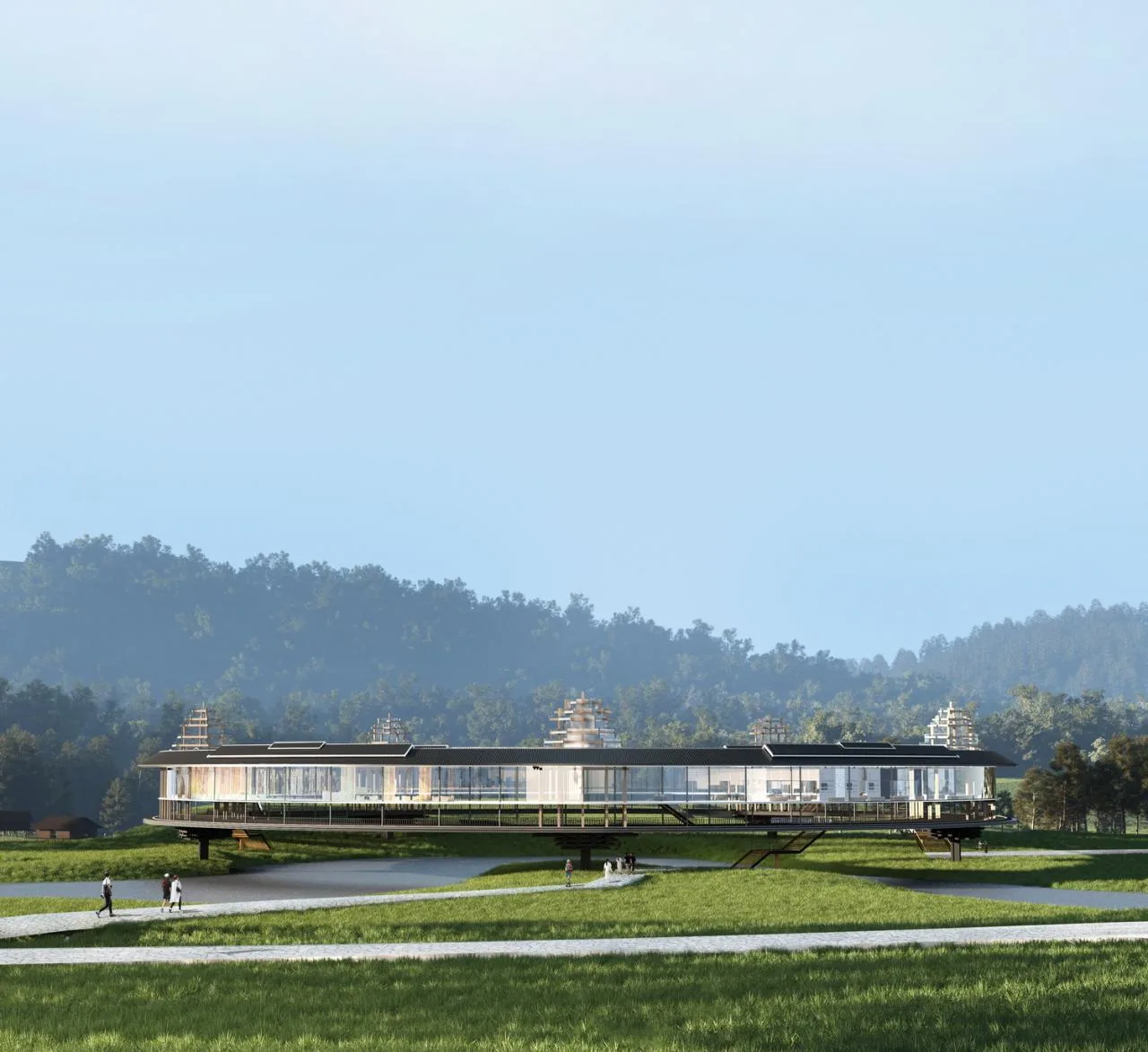
The design preserves the fundamental elements of the original Wind and Rain Bridge, creating a distinctive architectural language that reflects Dong culture.
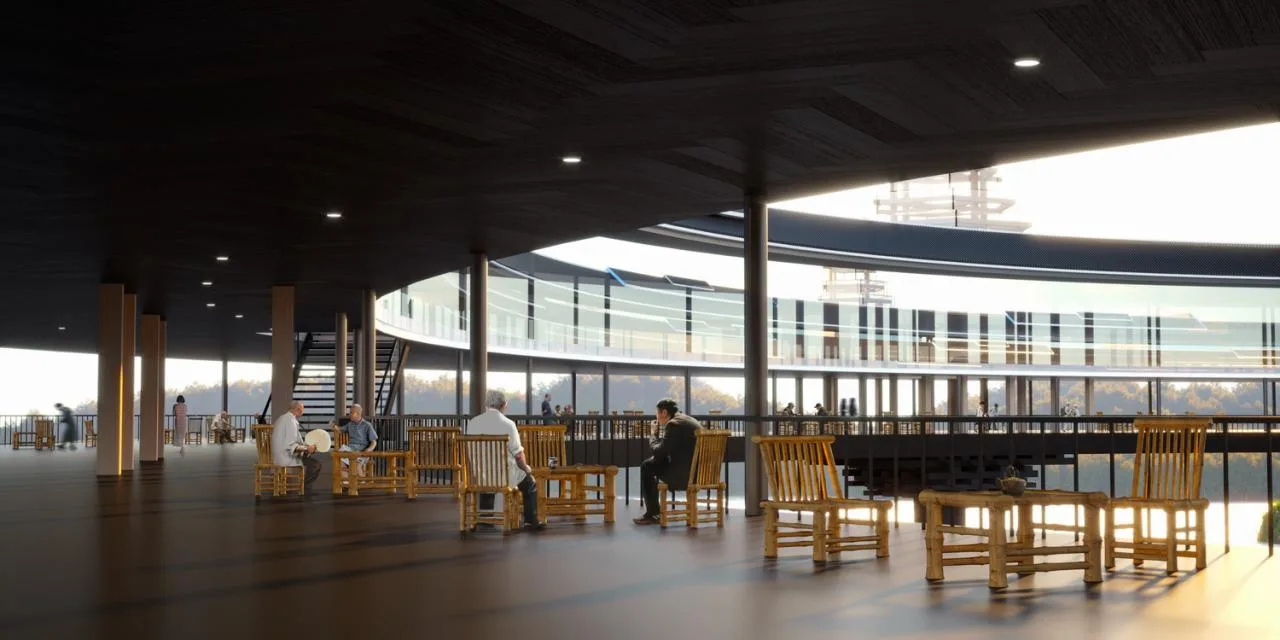
The building’s overall space is divided into two levels. The first level maintains the traditional functions of the Dong ethnic Wind and Rain Bridge, serving as a passage for pedestrians and a gathering place for locals to drink tea, chat, and relax. The second level features five main areas: a library, a village history exhibition hall, an observation deck, a tea house, and a tourist reception center. These spaces showcase ethnic customs through various public activities.
Building Structure
The Wind and Rain Bridge, also called the Covered Bridge or Fu Bridge, typically features a long corridor-style walkway with benches on both sides for pedestrians to rest. Multiple pagoda-style pavilions adorn the corridor’s roof, decorated with auspicious symbols like treasure gourds and thousand-year cranes.
The roof is covered with sturdy tiles, and all exposed wooden surfaces are coated with anti-corrosion tung oil, ensuring durability against wind and rain.
However, traditional wooden construction methods have drawbacks, especially in terms of fire prevention and corrosion resistance. The all-wood structure of Wind and Rain Bridges is vulnerable to fire damage.
Therefore, in designing the Wind and Rain Ring House, the goal is to inherit and innovate upon traditional architecture by balancing respect for the natural environment and regional style with modern construction techniques. This approach preserves the village’s cultural heritage while enhancing spatial experience and ensuring the longevity of traditional architecture.
The design retains the original spatial style and cultural symbols. From an exterior perspective, the circular form connects the village while preserving the original function of the Wind and Rain Bridge.
Features
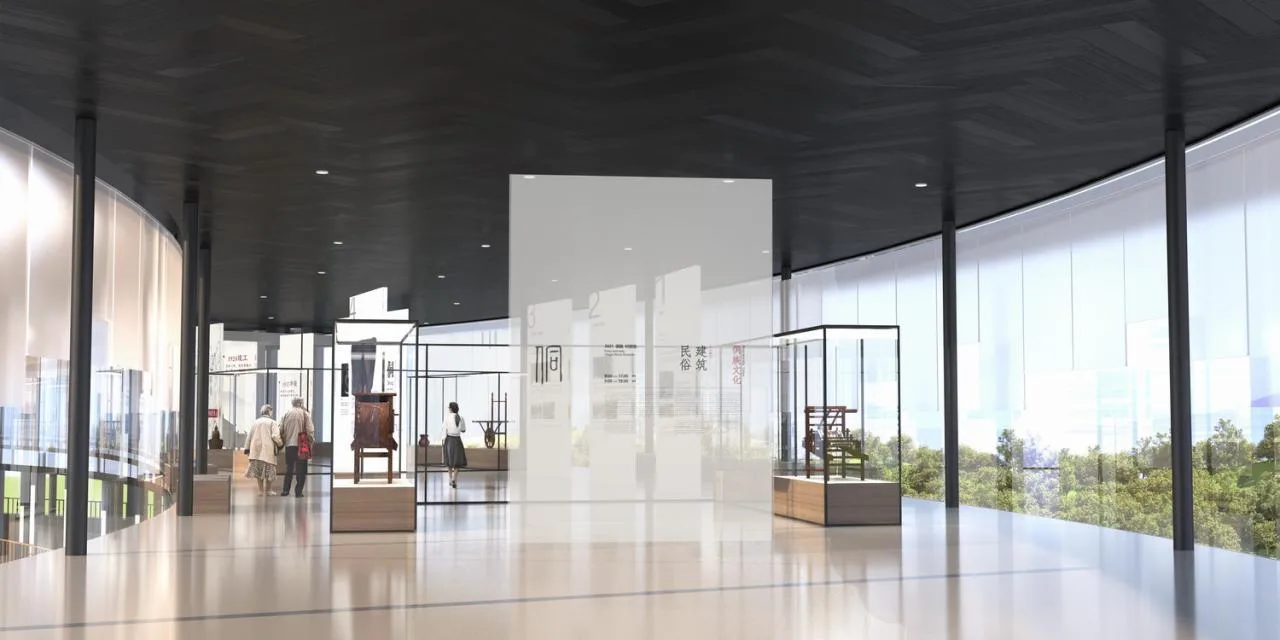
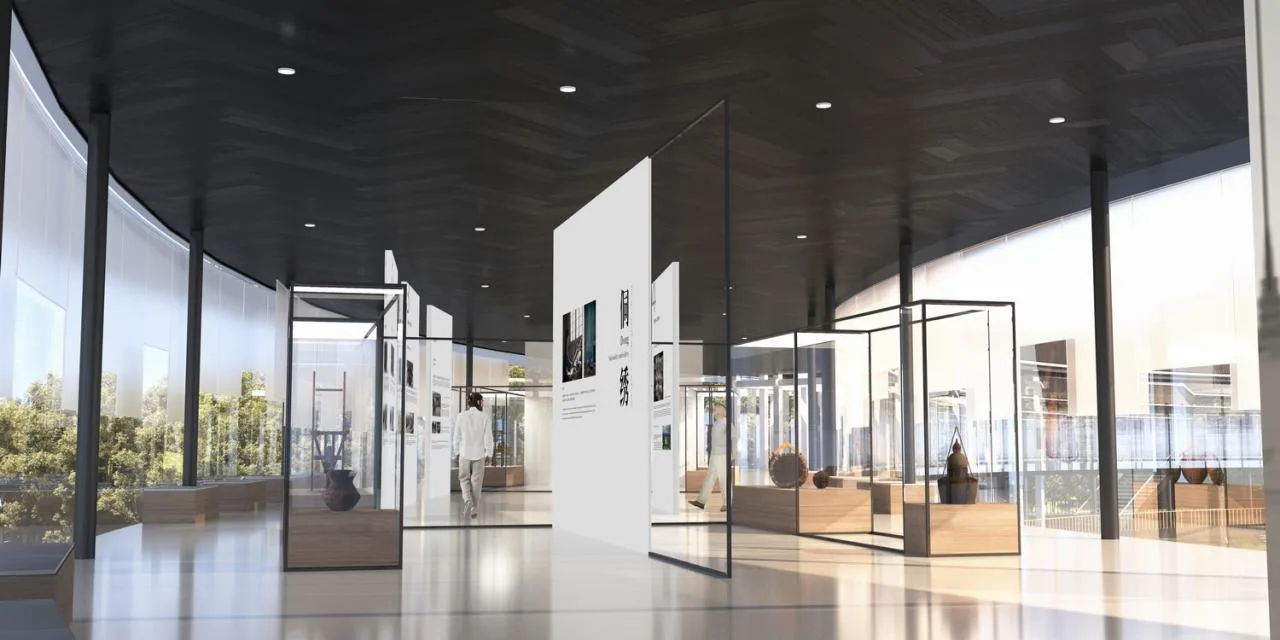
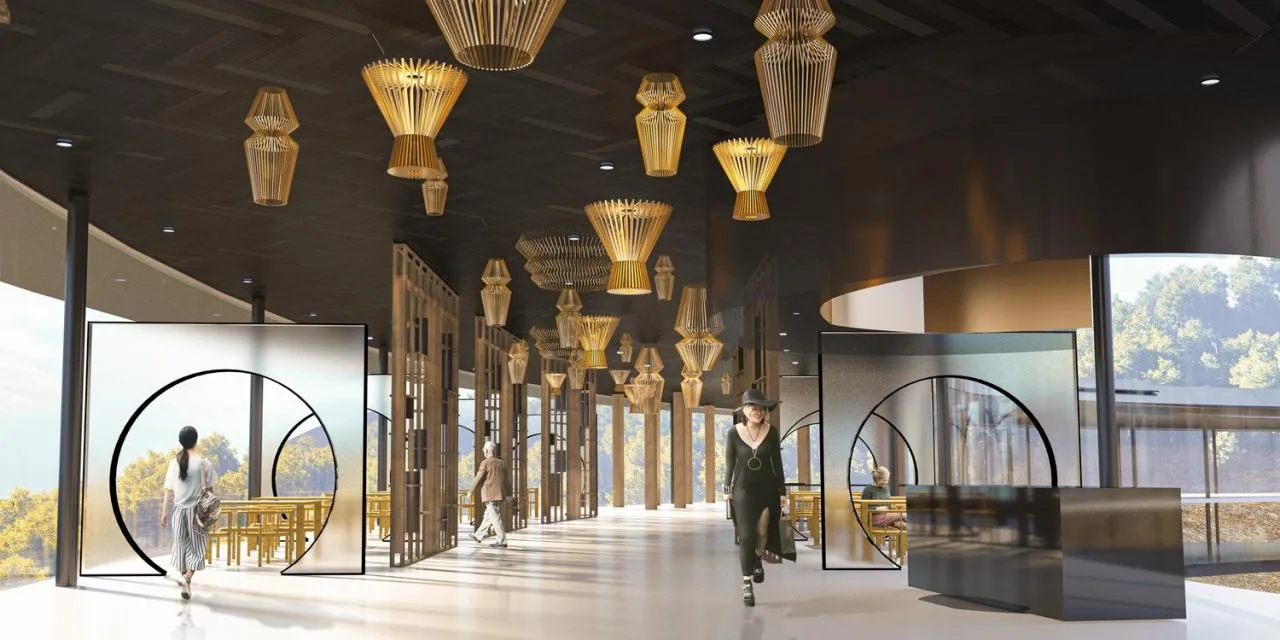
The exhibition hall showcases the history and unearthed cultural relics of the Dong ethnic group. Black borders interspersed between display boards and cabinets create a dynamic visual effect, inviting visitors to explore the mysteries of Dong history and culture.
The vibrant cultural colors of the Dong people featured on the exhibition boards contrast with the primary palette of wood, black, and white, enriching the space with diverse ethnic characteristics.
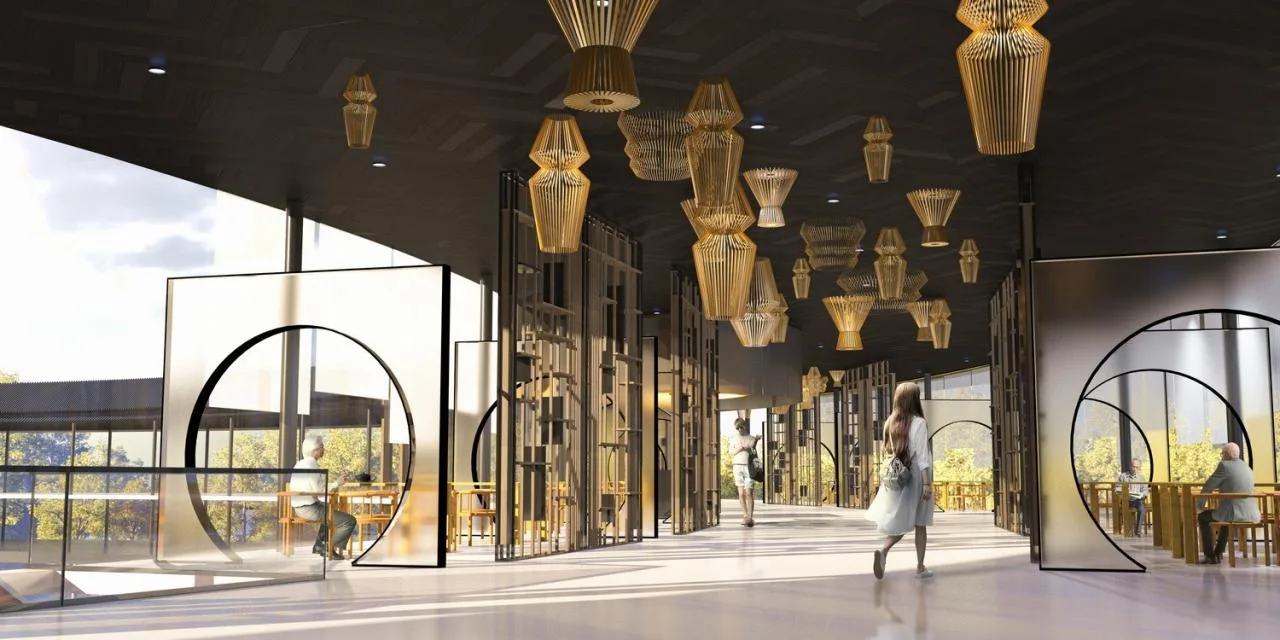
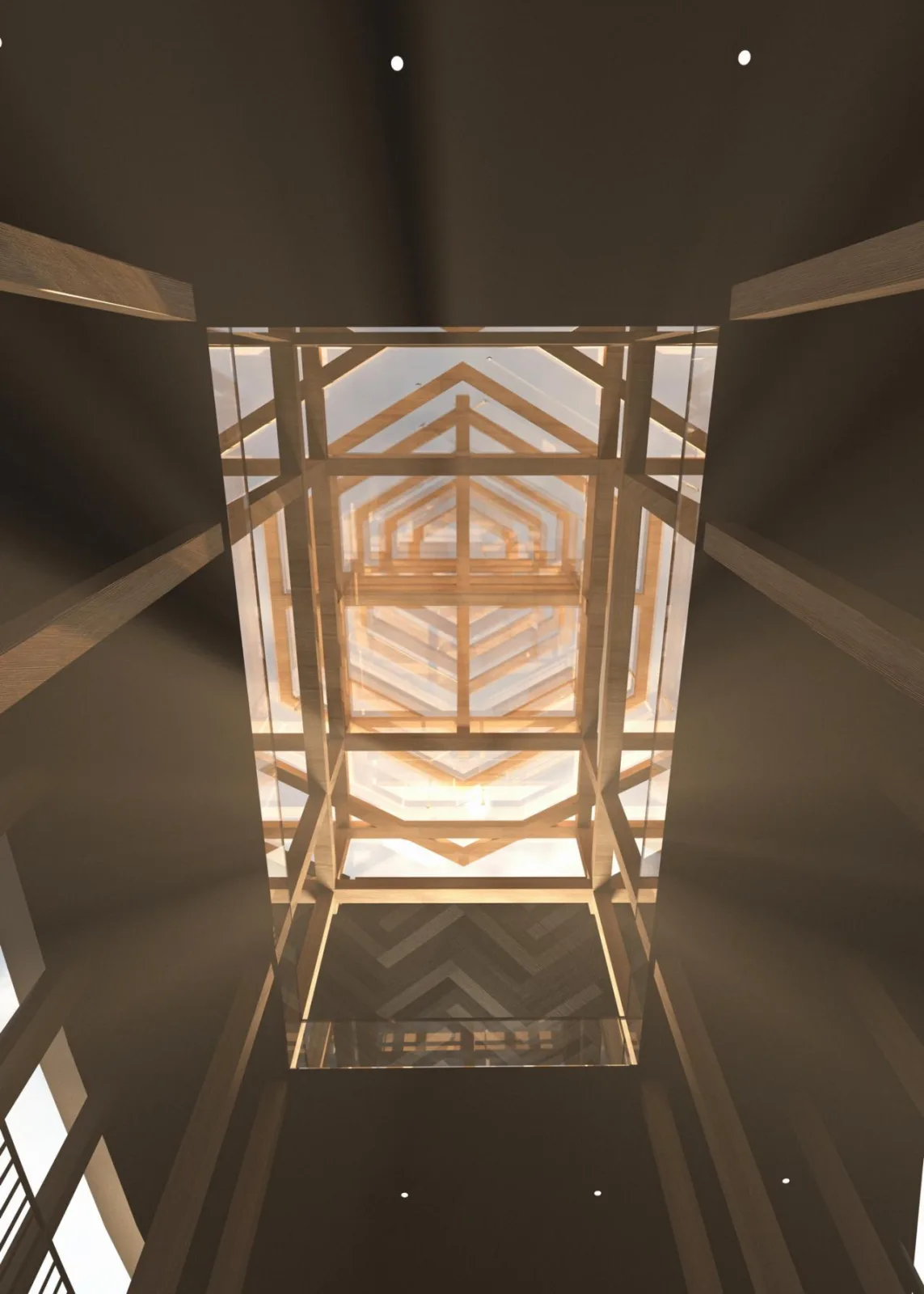
The complex includes a tea house area, honoring the Dong people’s tea-drinking tradition. Positioned by the river, it allows locals and tourists to enjoy the soothing sounds of flowing water during tea tasting. The skylight is designed in an abstract gourd shape, symbolizing the Dong people’s wish for good fortune expressed through gourds.
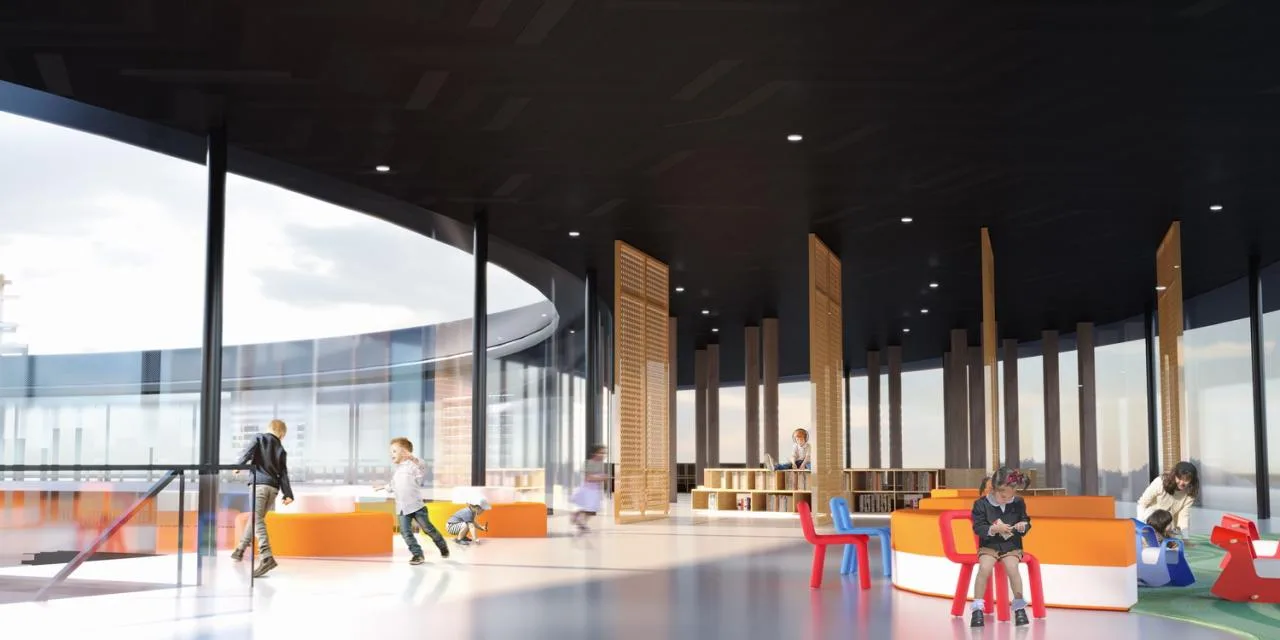
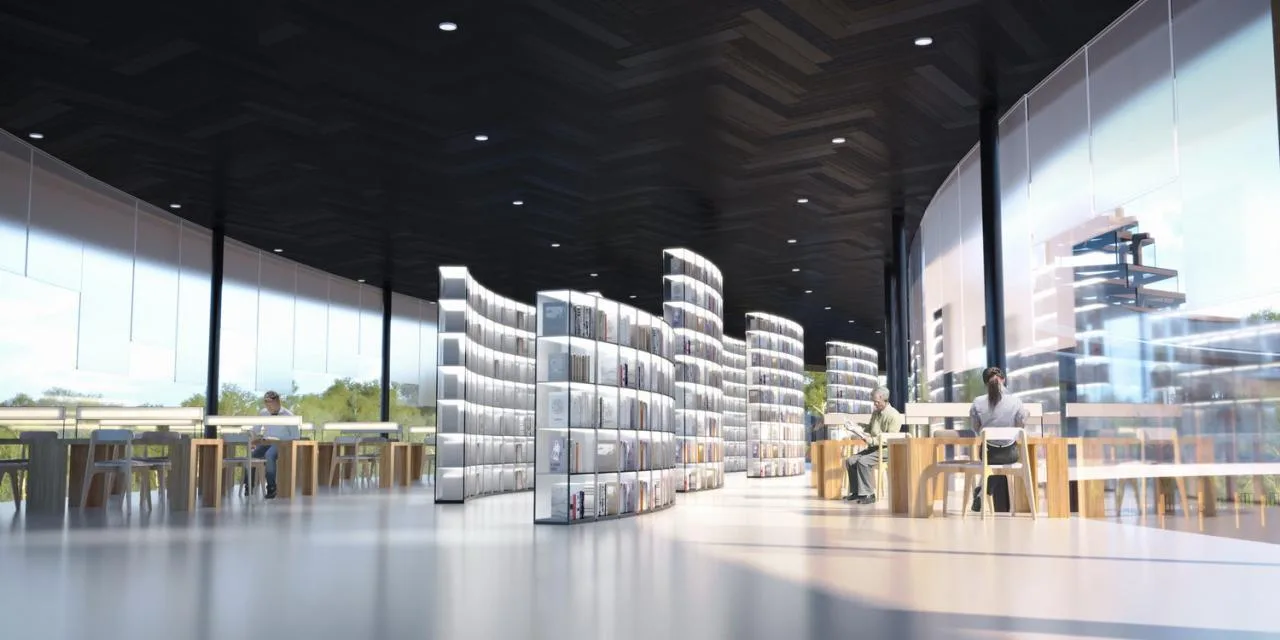
The library is thoughtfully divided into three areas: a children’s book play zone, a self-study space, and a reading area, defined by staggered and curved bookshelves. This design addresses the lack of large libraries in neighboring villages and fulfills the reading and entertainment needs of villagers, children, and visitors alike.
This design integrates seamlessly with the village’s original spatial layout, redefining building boundaries and blending humble simplicity with poetic elegance.
Conclusion
The Wind and Rain Bridge of the Dong ethnic group is more than a river crossing—it is a vital community hub. Over time, it has come to embody the village’s feng shui, ethnic identity, and spiritual nourishment, becoming a nationally recognized architectural icon.
The Wind and Rain Ring House design inherits and evolves the traditional Wind and Rain Bridge. It honors the past while addressing the cultural and practical needs of the local community, preserving Dong culture, promoting cultural tourism, and revitalizing traditional rural architecture for the modern era.
Project Drawings
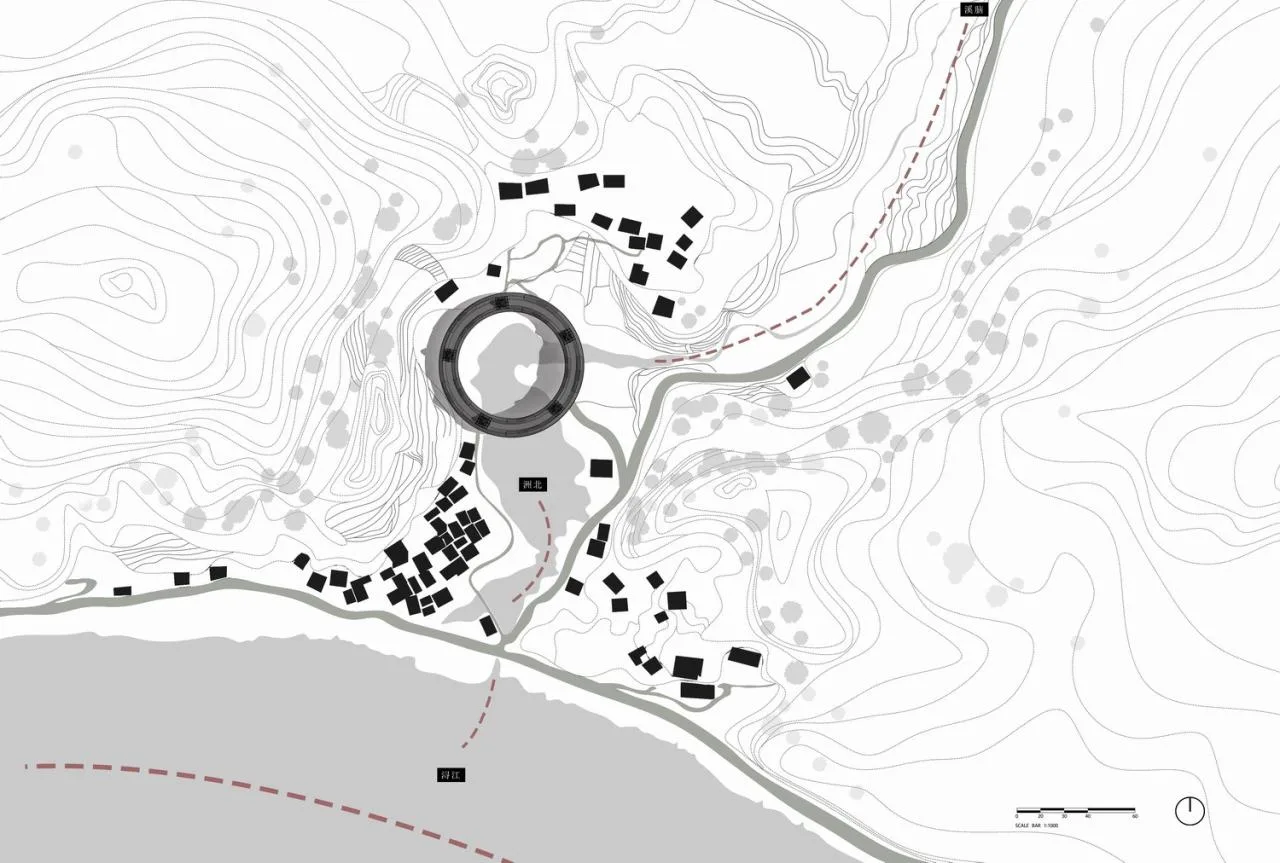
△ Location Analysis

△ Site Analysis
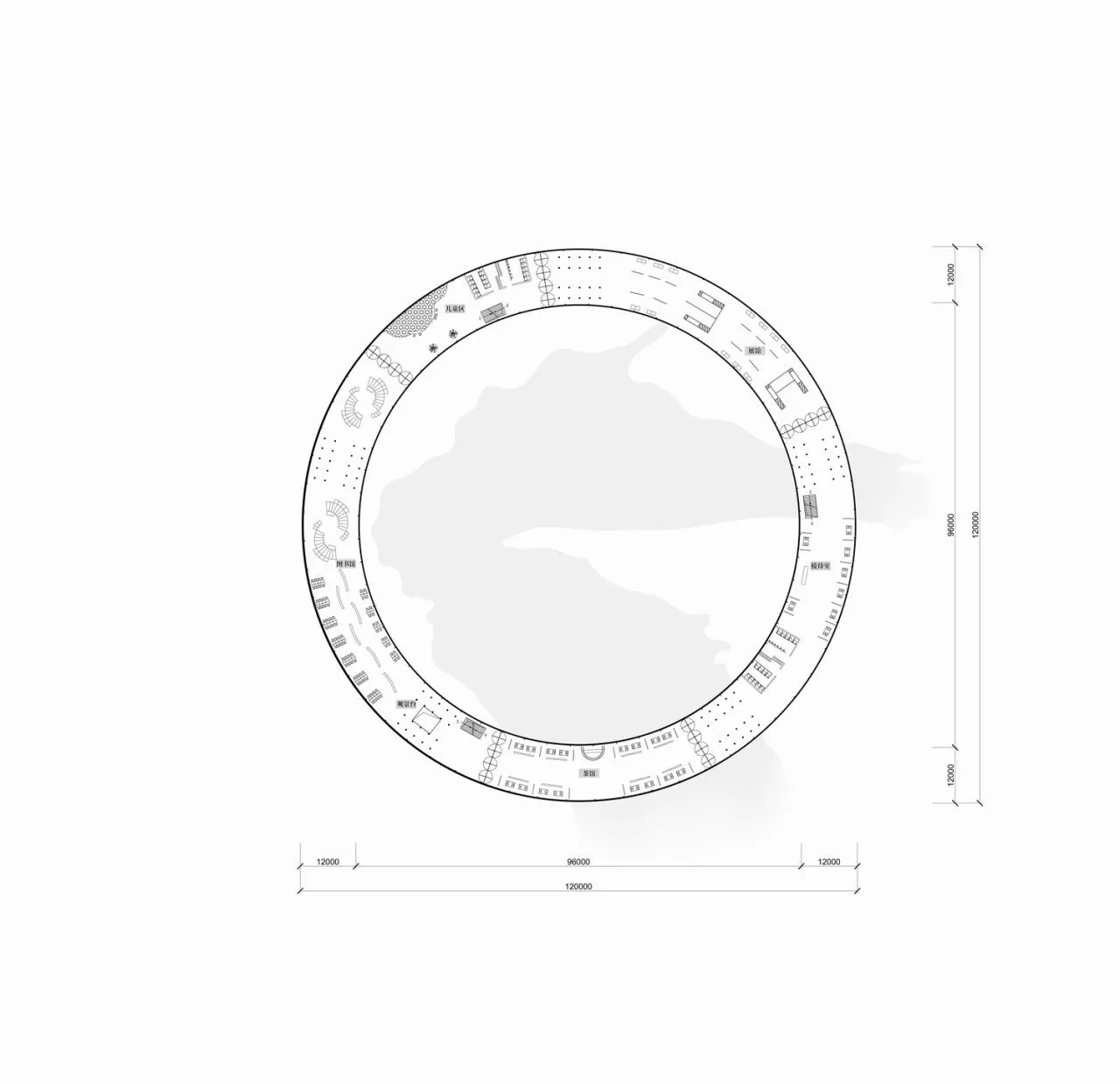
△ First Floor Plan
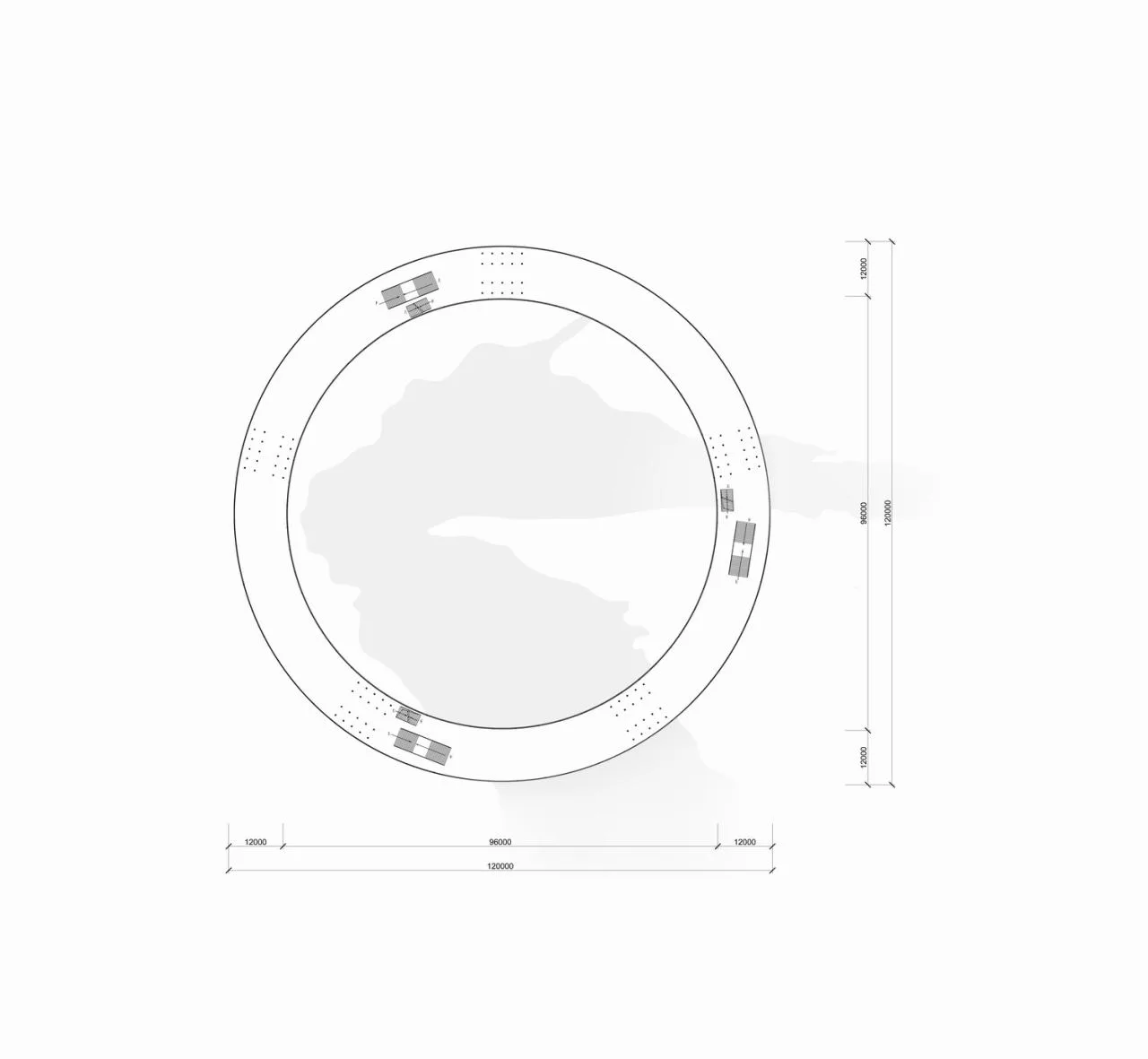
△ Second Floor Plan
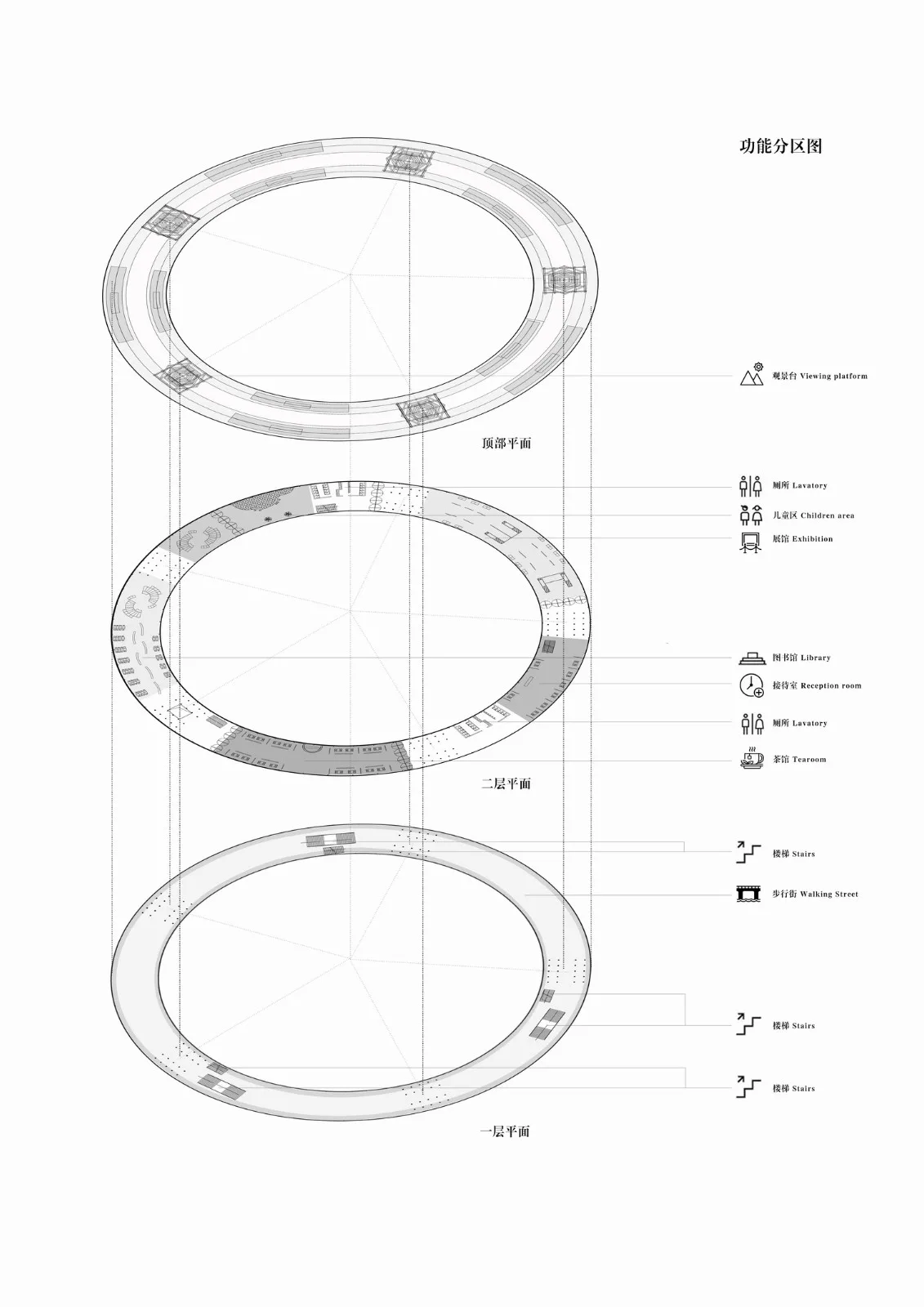
△ Functional Zoning Diagram
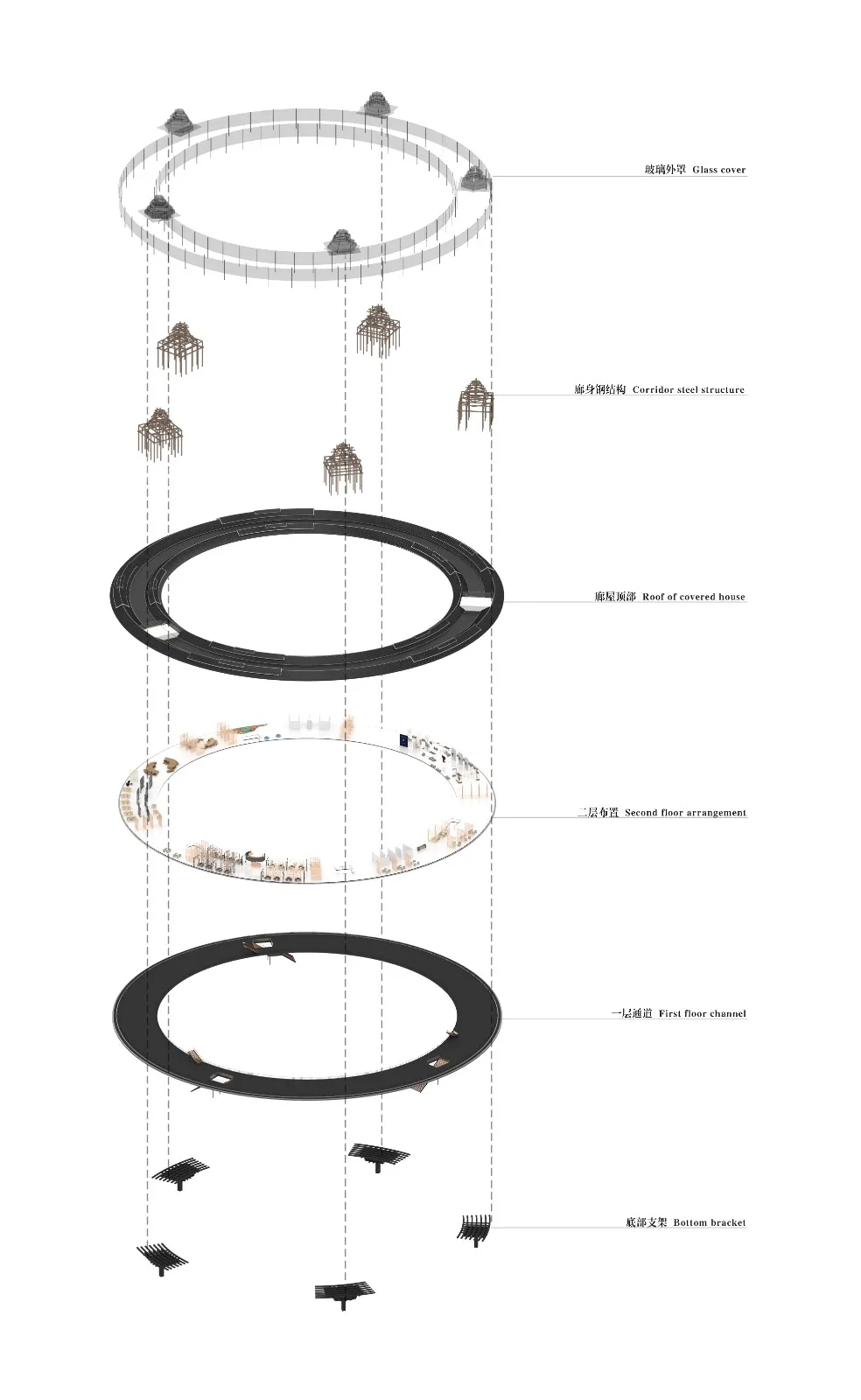
△ Structural Analysis Diagram
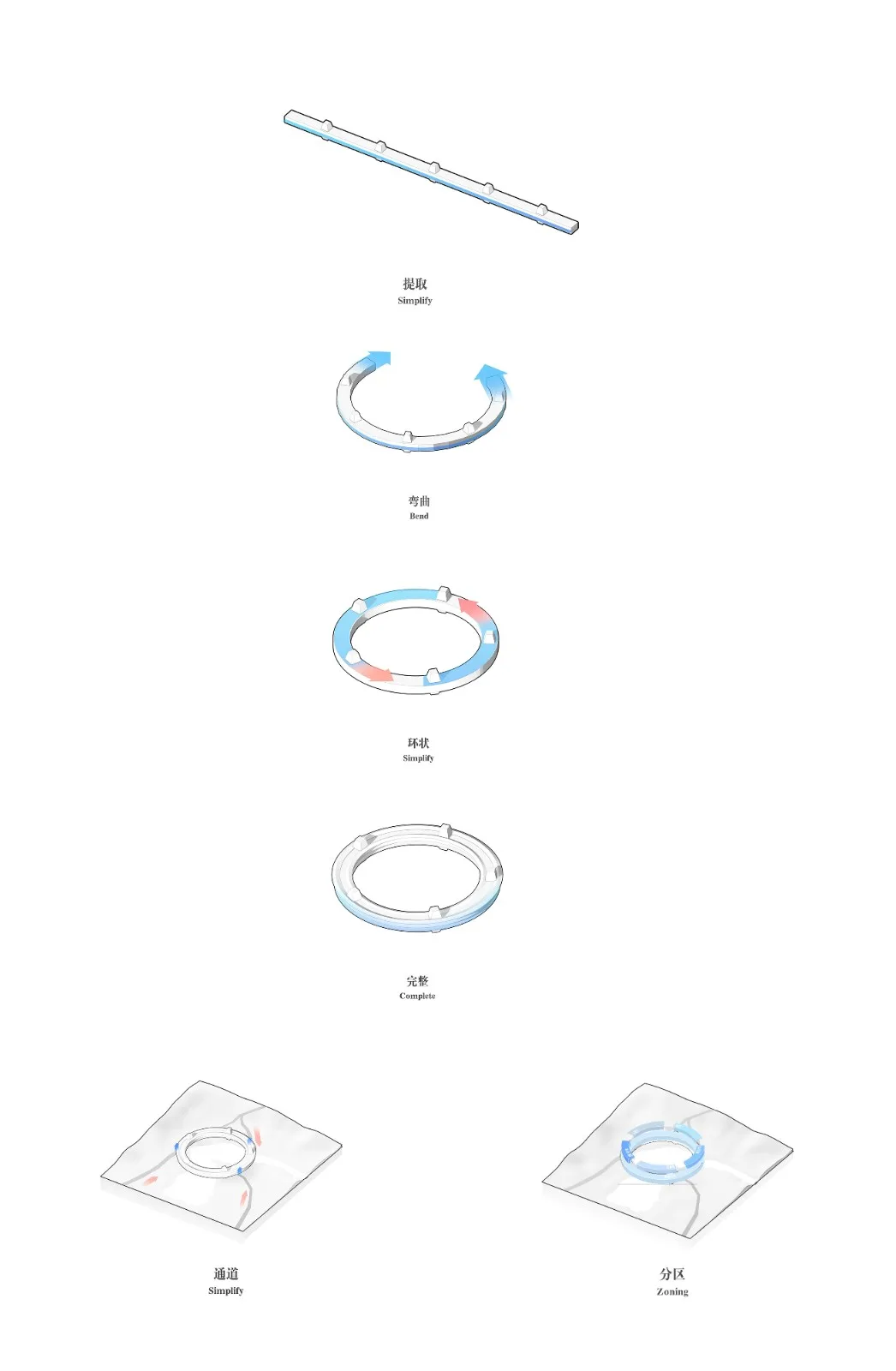
△ Shape Derivation
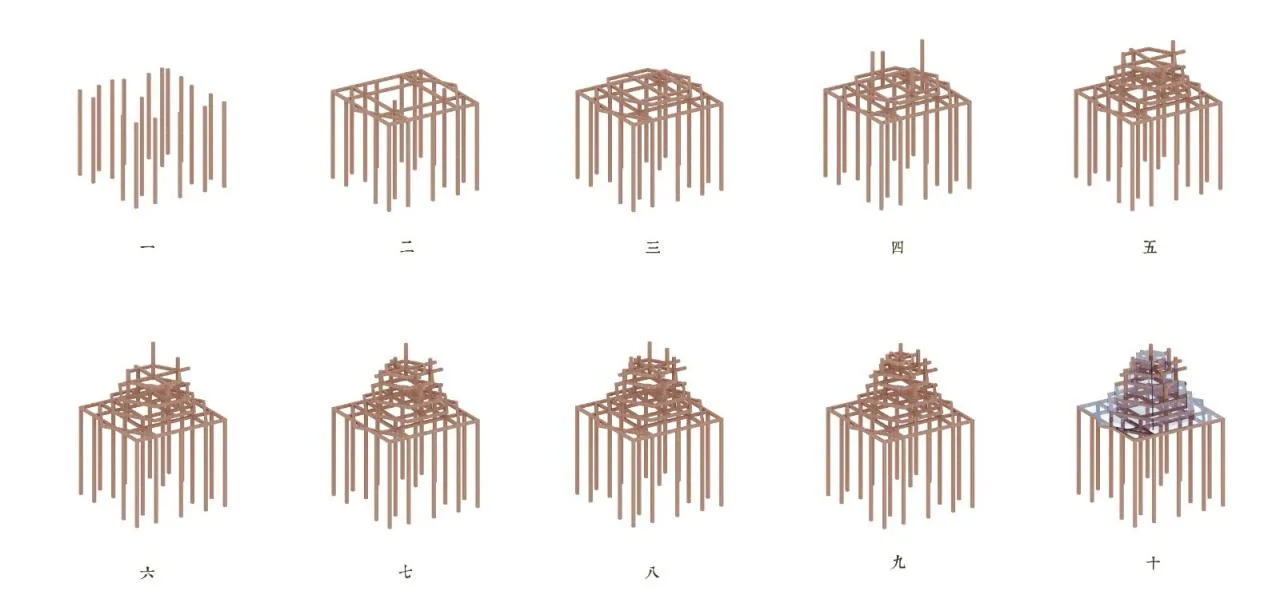
△ Structural Derivation
Project Information
Project Name: Wind and Rain Ring House – Design Scheme for Zhoubei Village Cultural Complex in Sanjiang County
Designer: Non Expert Architecture
Project Design & Year of Completion: January 2022
Principal Designer: Ding Xianglei
Design Team: Bai Wenhao, Wang Haiyu, Hao Jiahe
Project Location: Guangxi, China
Site Area: 11,304 square meters
Building Area: 4,069 square meters
Photography Copyright: Site images are sourced from the internet; all other image copyrights belong to Non Expert Architecture.















Must log in before commenting!
Sign Up