
Project Background: MUDA Architecture’s “Kuansan Tang – Oriental Cultural Living Space” is located beside Qingyang Palace in Chengdu, Sichuan Province, China. Qingyang Palace, with origins dating back to the Zhou Dynasty, was originally known as Qingyang Si. Later, during the Tang Dynasty, Emperor Xizong sought refuge in Shu, renamed it Qingyang Palace, and dedicated himself to its development. It is renowned as the “first Taoist temple in western Sichuan” and stands as one of China’s most famous Taoist temples.
Design Concept: Inspired by the Taoist classic “Laozi,” the design embraces the philosophy: “For the valley of the world, constant virtue is sufficient, returning to simplicity.” The valley symbolizes life’s origin—formless and infinite—capable of taking any shape. This imagery highlights the “emptiness” and “nothingness” between realities, offering endless possibilities to nurture life. The flowing water represents vitality, continuously nourishing the valley and all its elements. This dynamic embodies Taoist views of the world and life, emphasizing a vibrant, eternal relationship between valley and water. MUDA Architecture translated these ideas into a virtual “valley” through architectural space, using the concept of flowing streams to shape place and narrative.
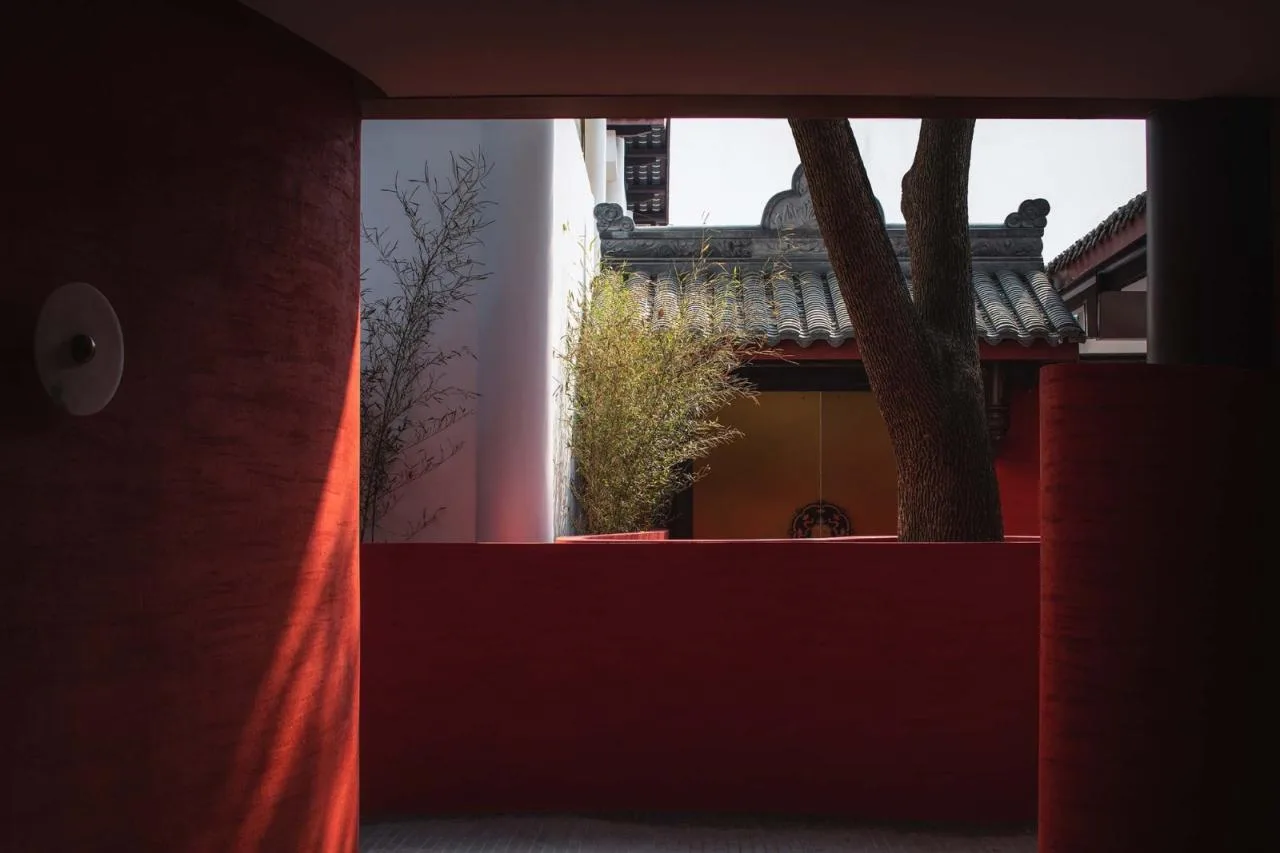
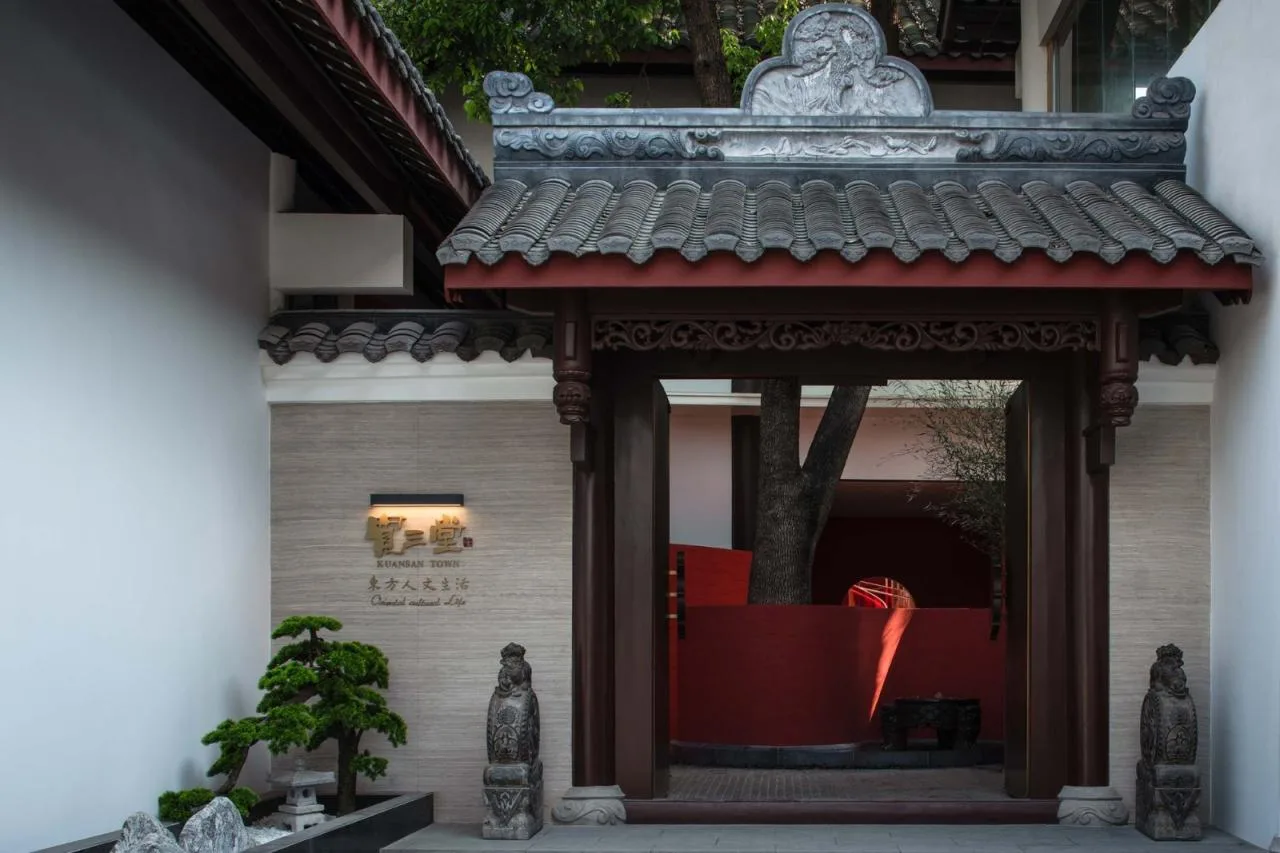
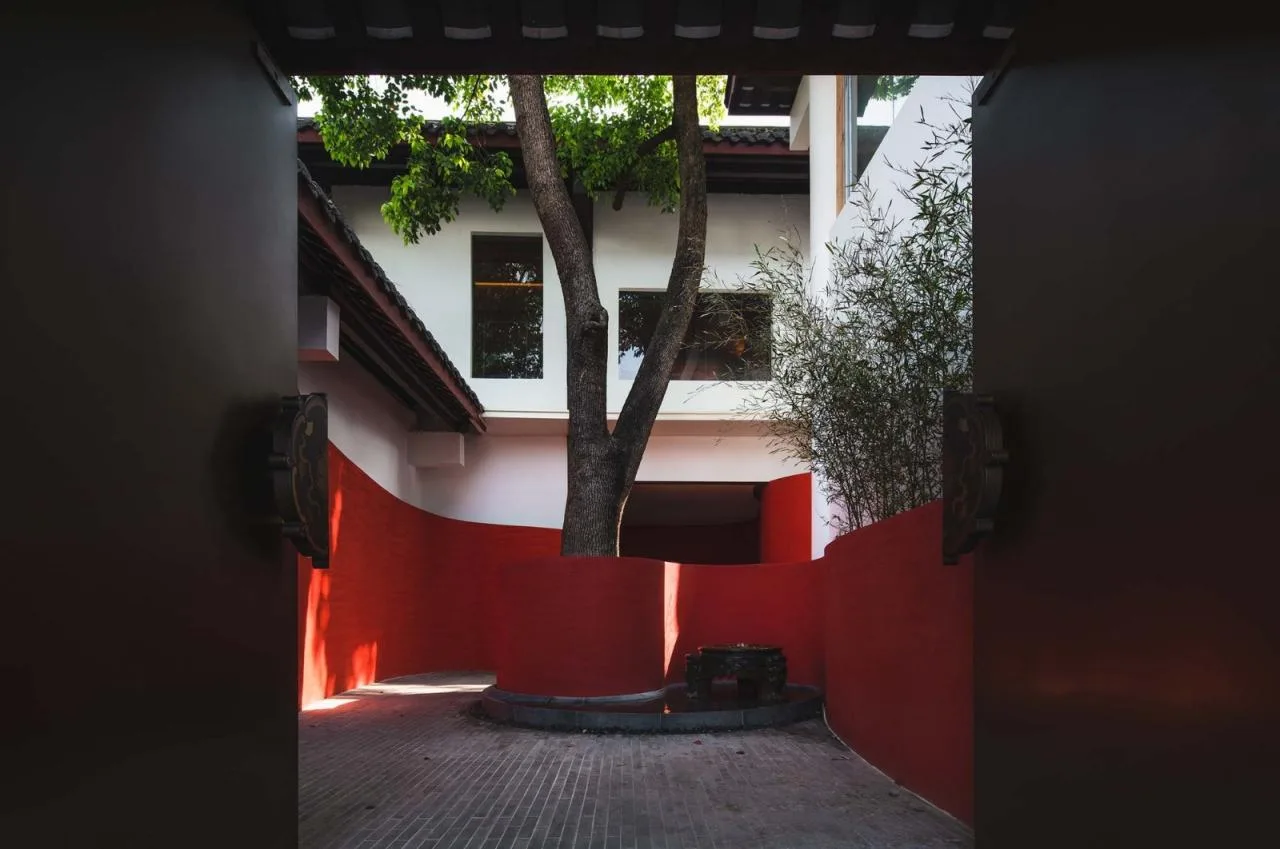
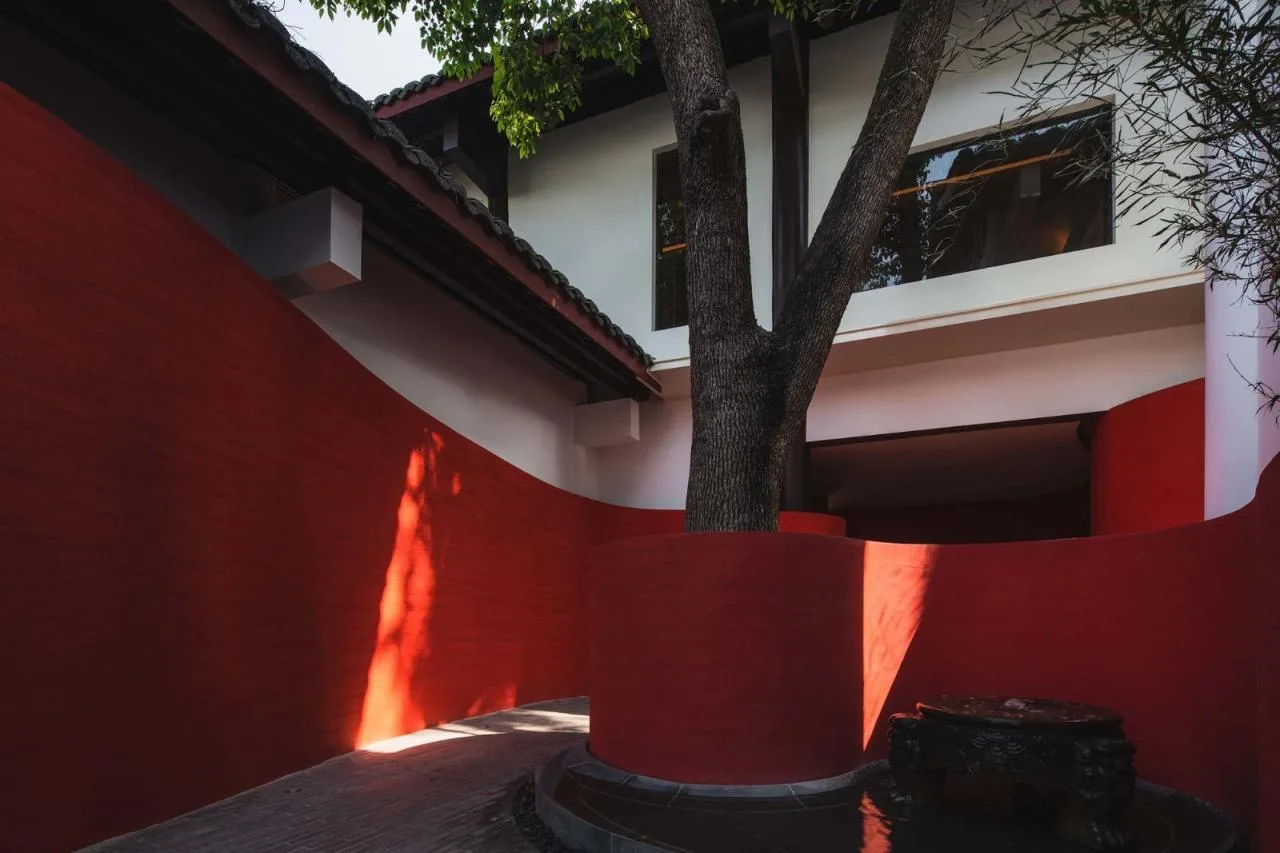
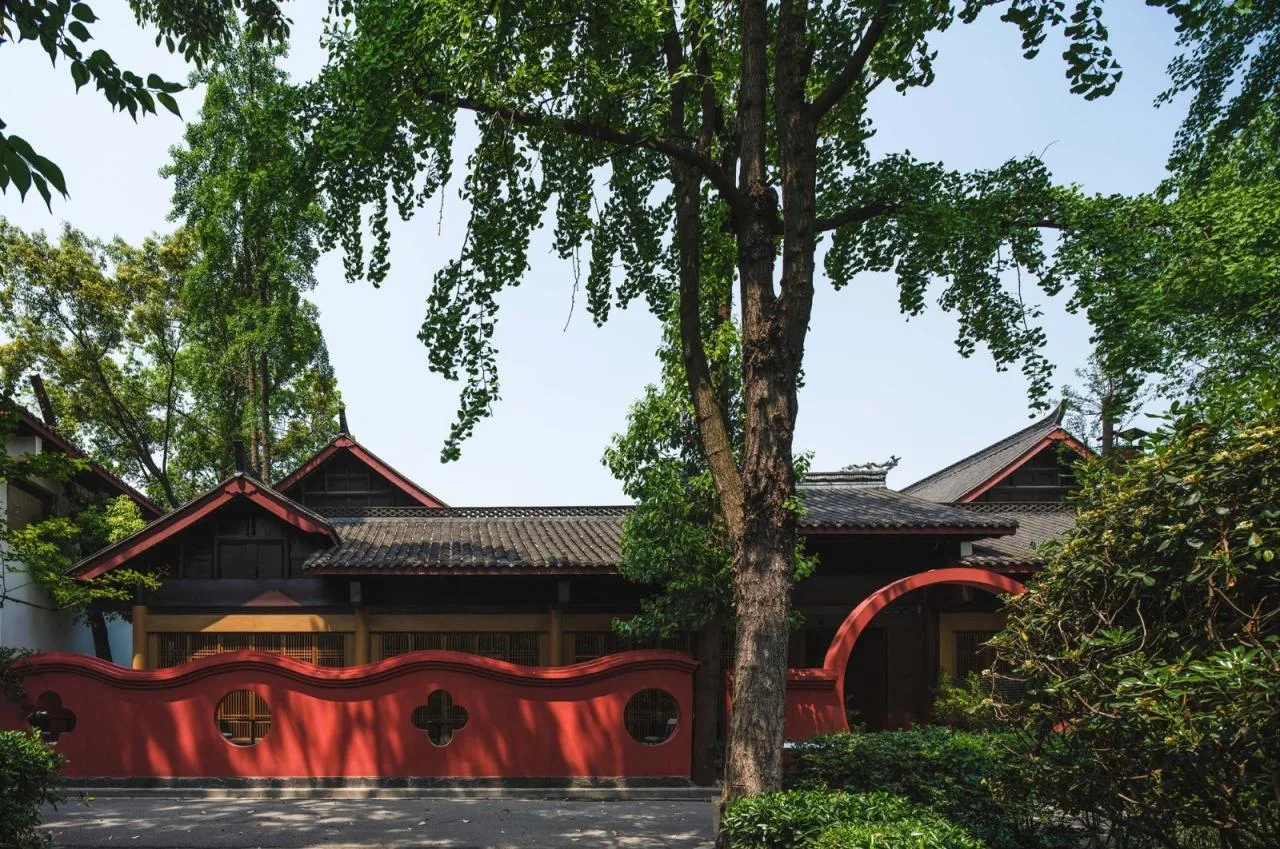
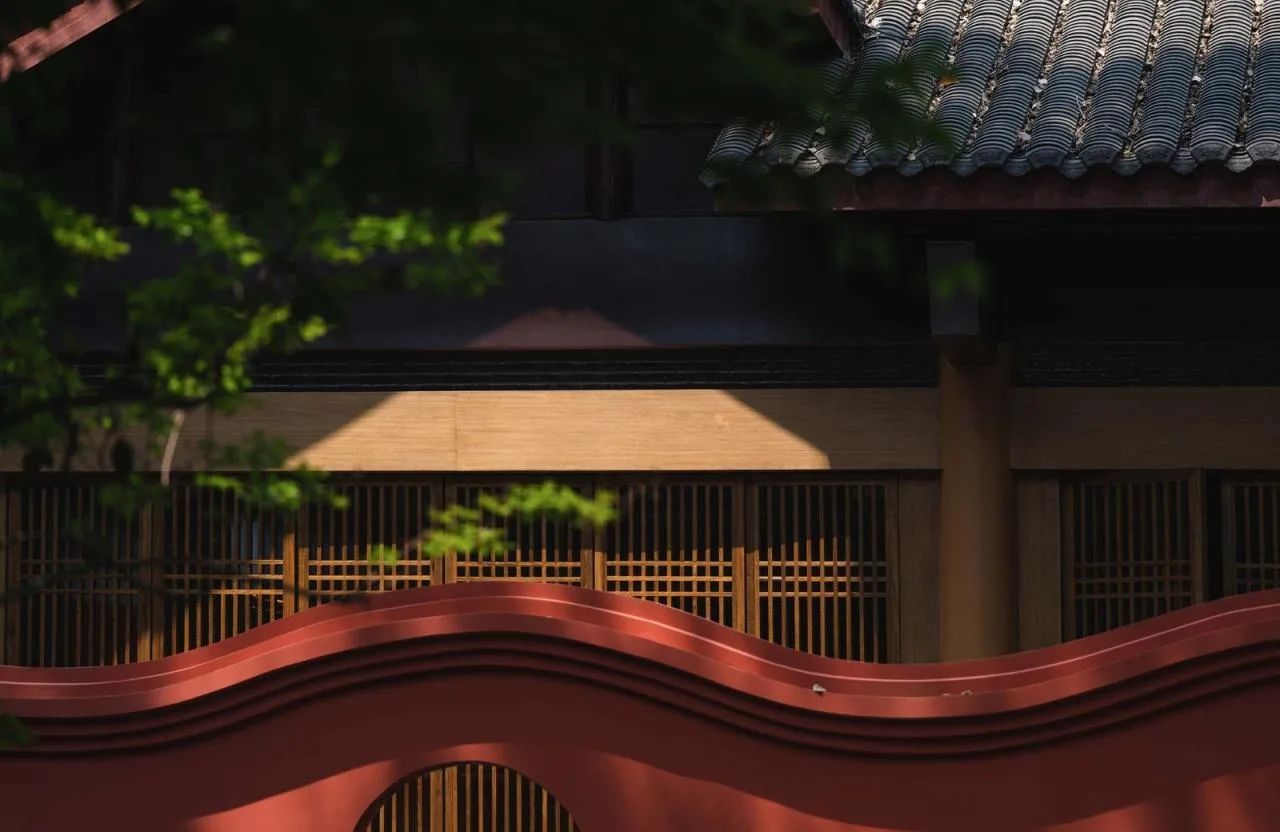
South Entrance: The project features two southeastern entrances. The southern entrance, serving as the social gateway, is located along Chengdu’s First Ring Road, adjacent to Qingyanggong subway station. Symbolizing the “boundless realm,” it represents Wuji—the primordial chaos before yin and yang, the origin of all things. Visitors pass through two antique copper doors into a winding red landscape wall that exudes a strong traditional oriental aesthetic. The red walls and gray tiles, surrounded by centuries-old trees growing inward, guide visitors’ eyes deeper into the valley.
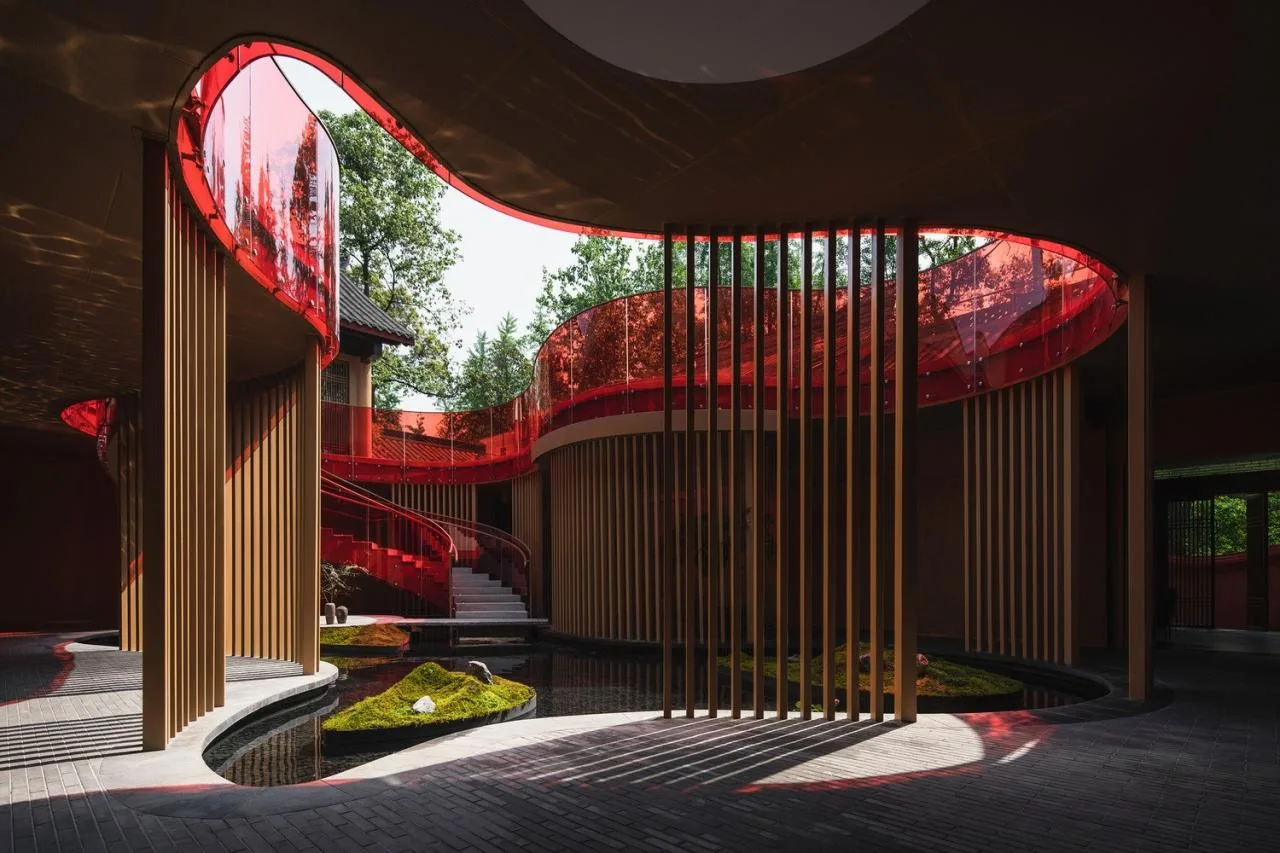
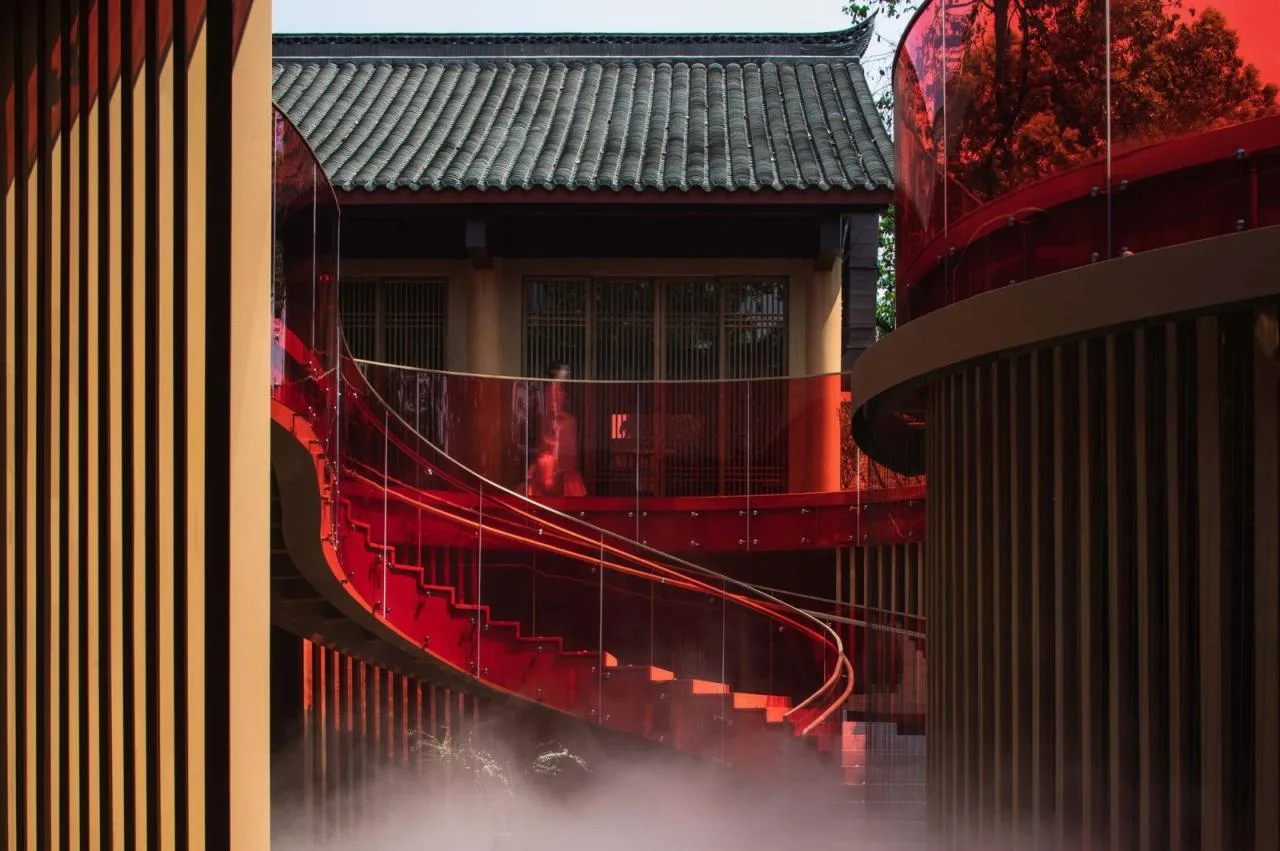
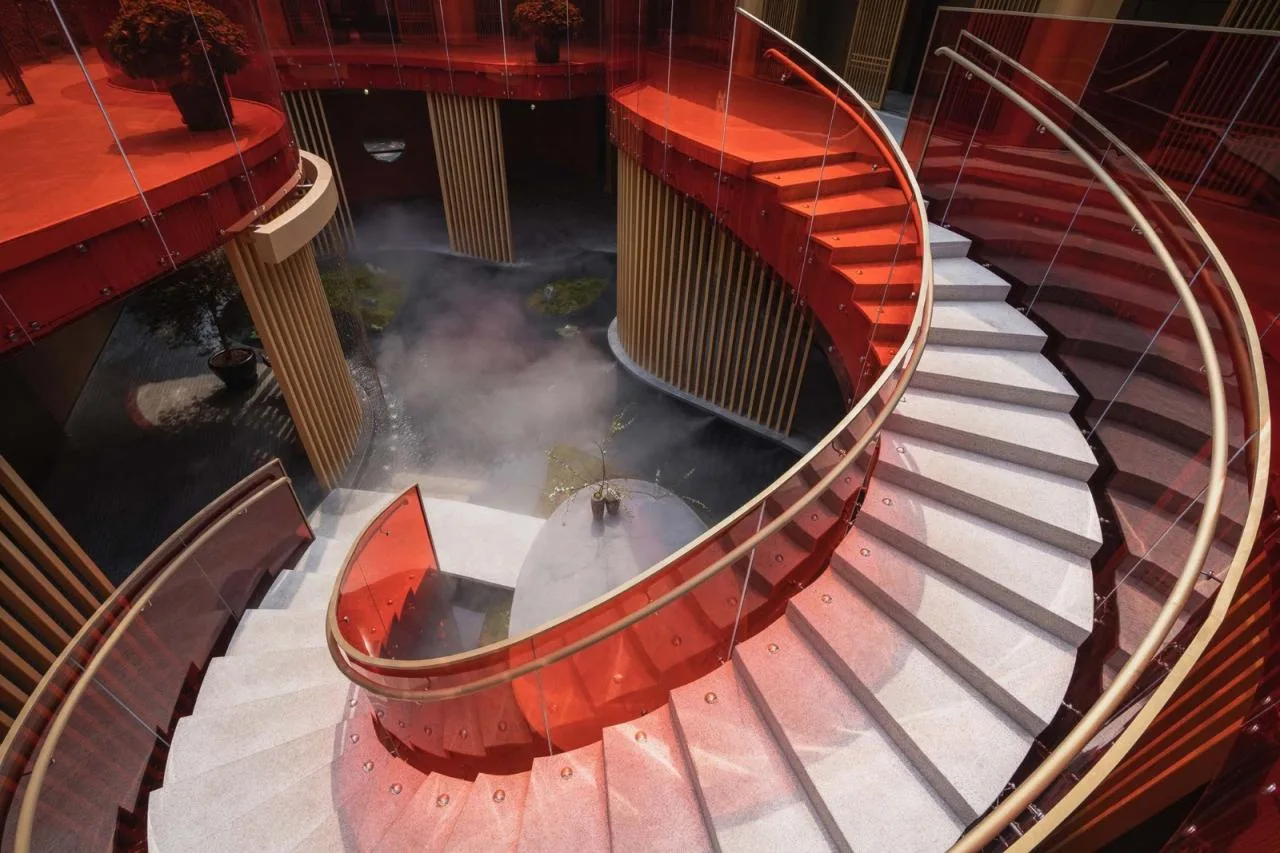
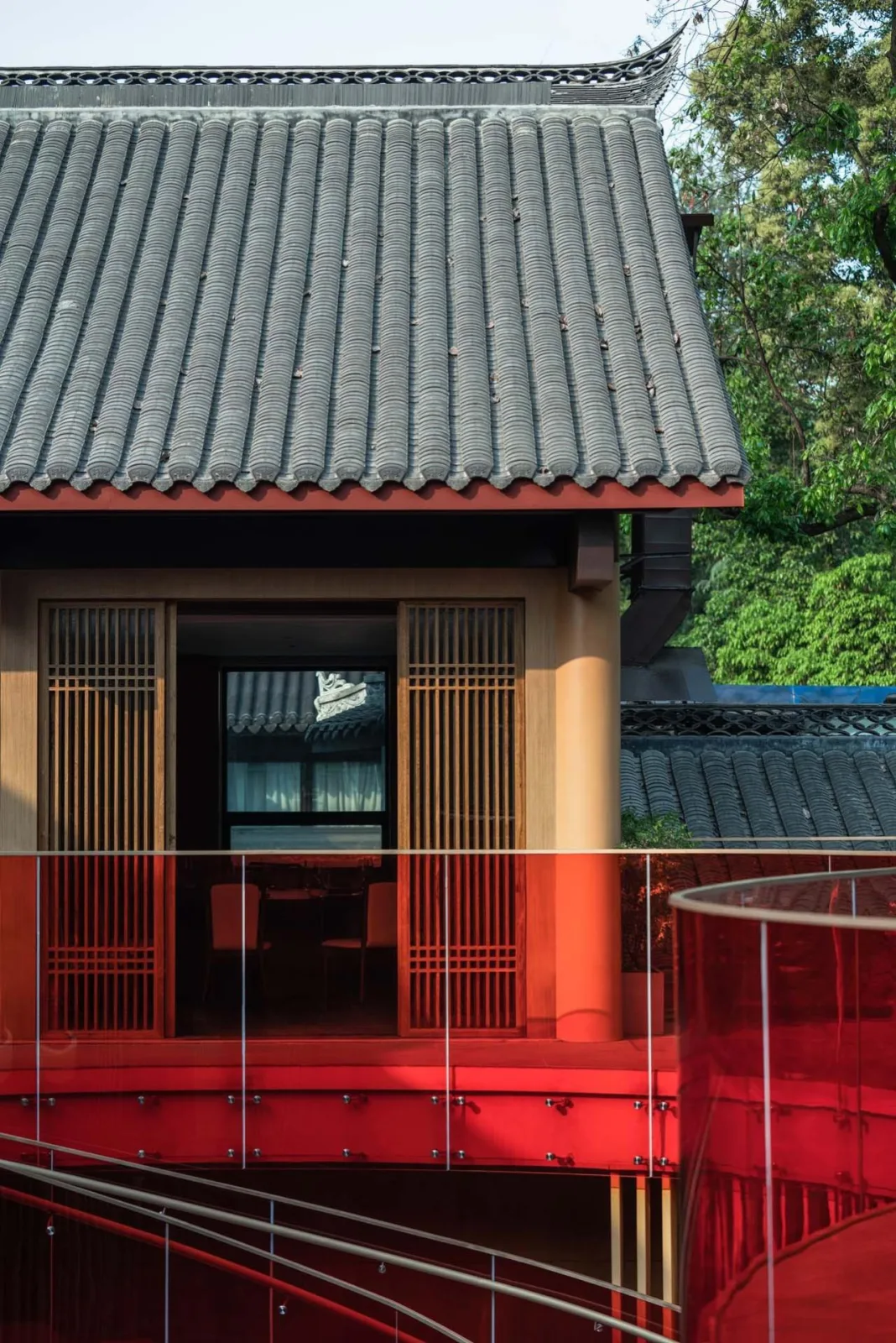
Courtyard: Rooted in Taoist philosophy—”Man follows the earth, the earth follows the sky, the sky follows the Tao, and the Tao follows nature”—the courtyard embodies the “valley” concept central to the project. MUDA Architecture began with the Taoist principle of “the sky is round and the earth is square,” creating an outdoor platform on the second floor with smooth curved edges and red glass railings symbolizing this idea. Looking upward reveals framed views of blue sky and green trees. The square courtyard on the first floor is landscaped to reflect the Taoist motif of “one pond and three mountains,” harmonizing natural elements with philosophical ideals.
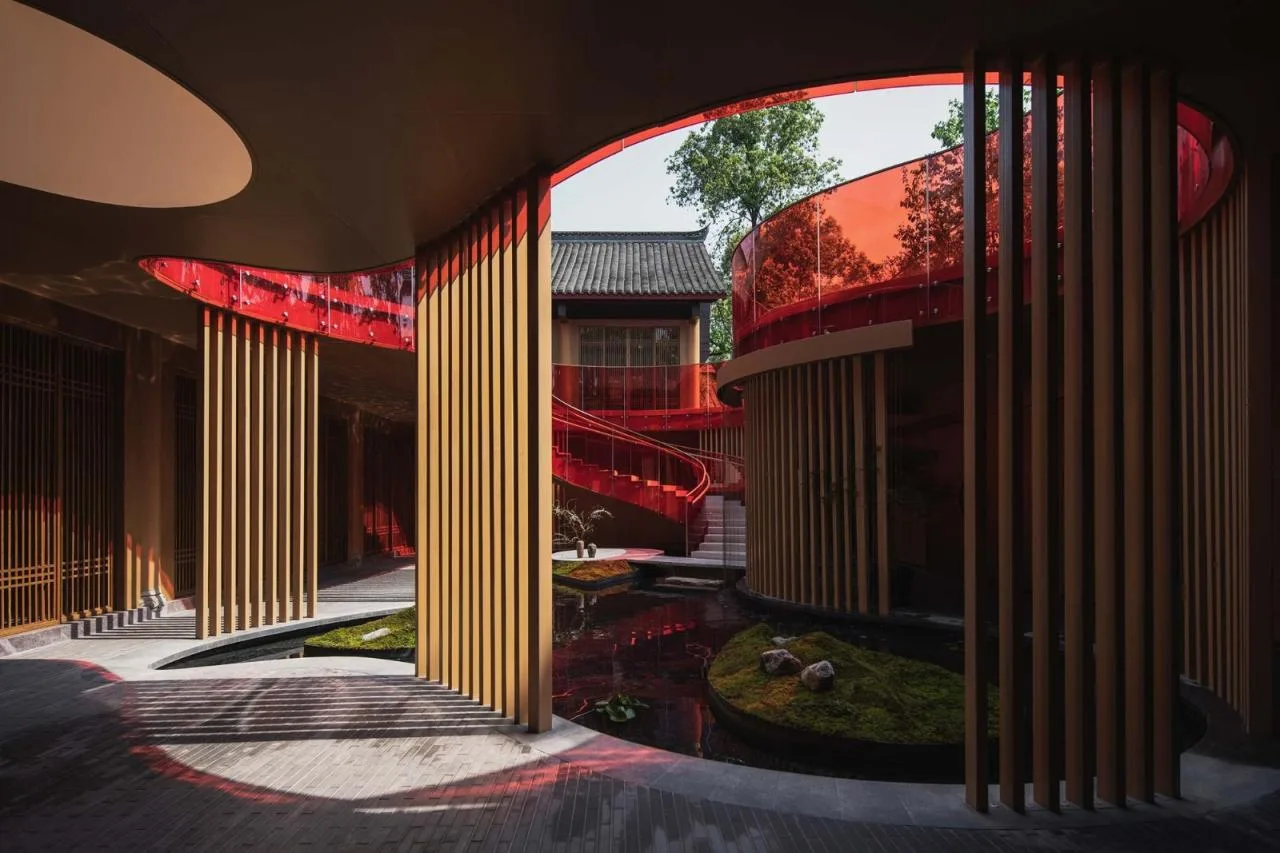
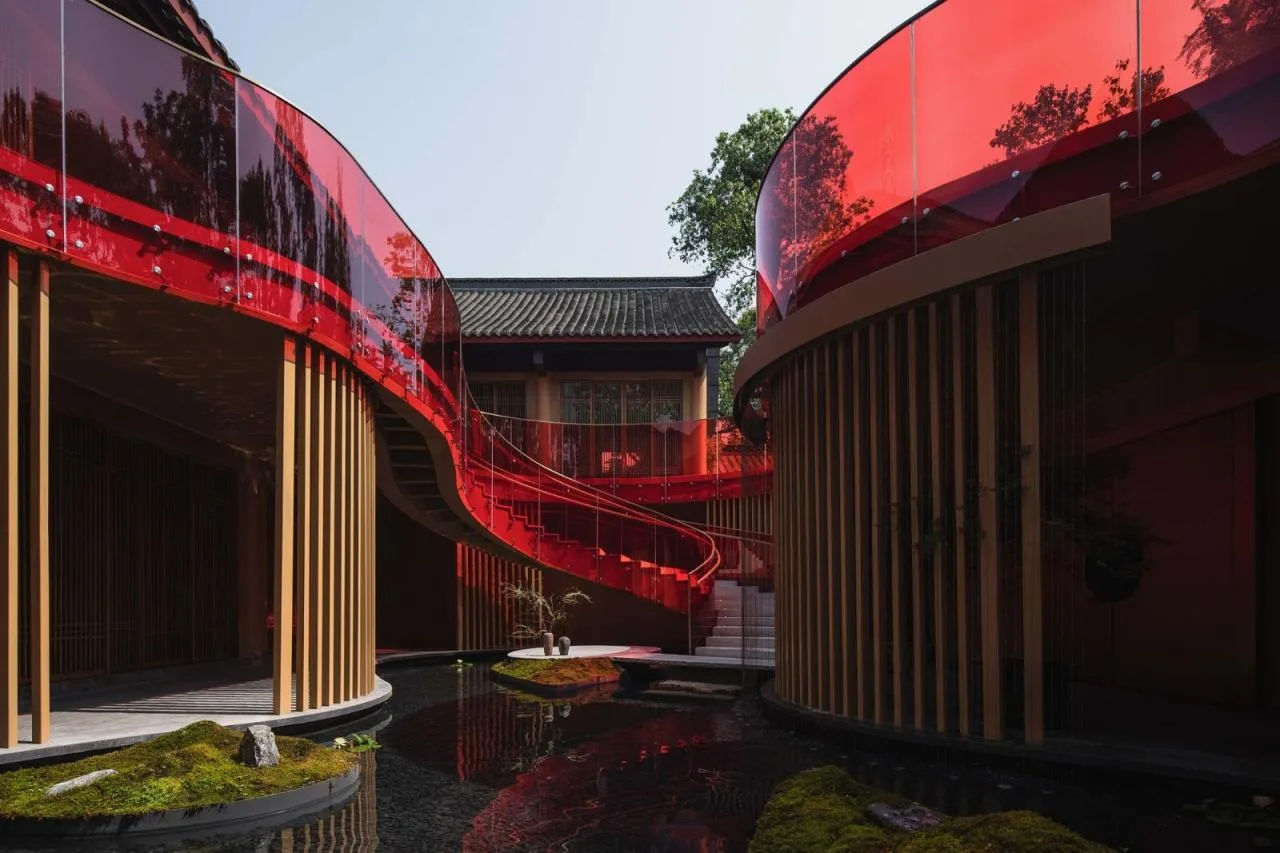
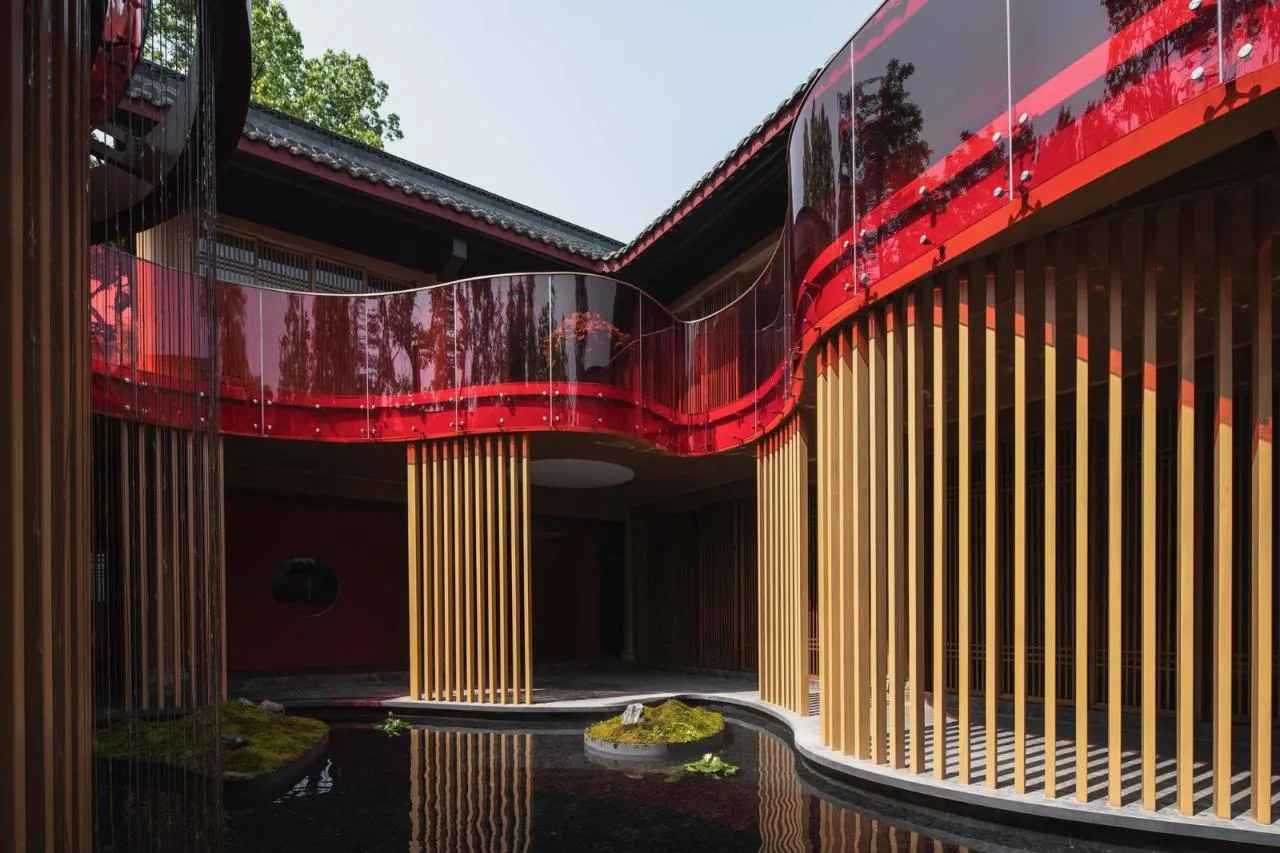
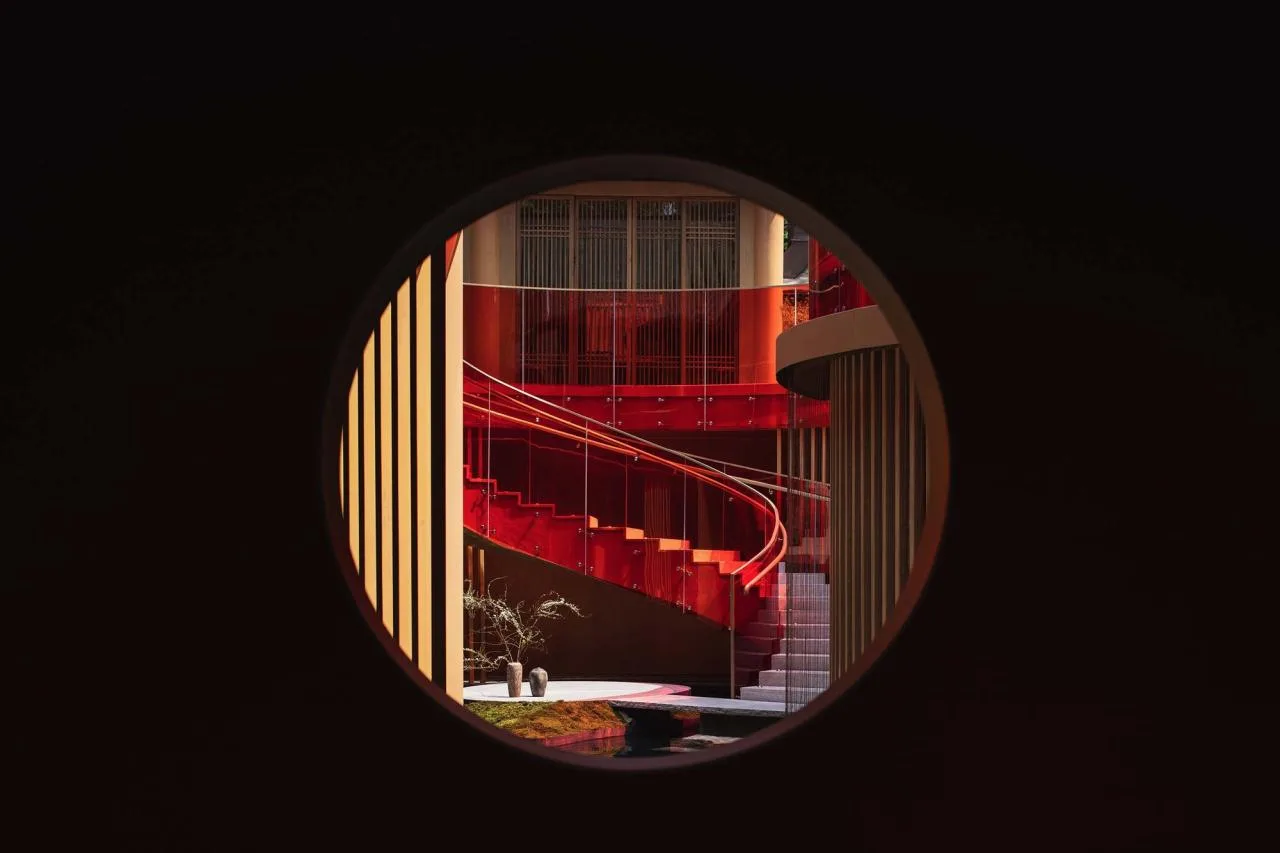
MUDA Architecture aims to blend scenery into the design through varied landscaping techniques, revealing new views step by step. The courtyard’s structural steel columns reorganize spatial perspectives, enabling smooth visitor movement and dynamic views. A curved spiral staircase connects the first and second floors, while the curved second-floor platform allows spatial flexibility and diverse viewing angles toward Qingyang Palace. The design invites visitors to experience a seamless flow between interior and exterior, using window frames and traditional garden principles to immerse guests fully in the environment.
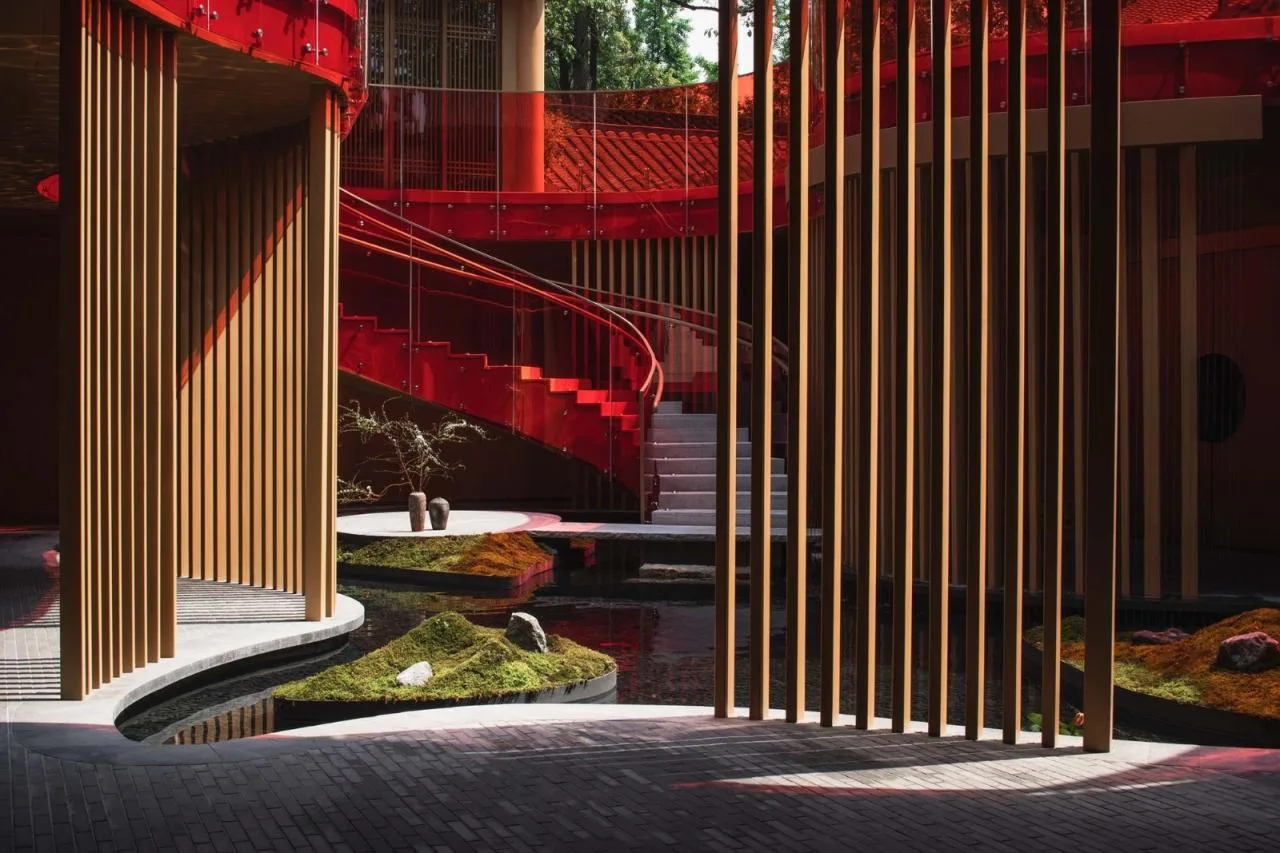
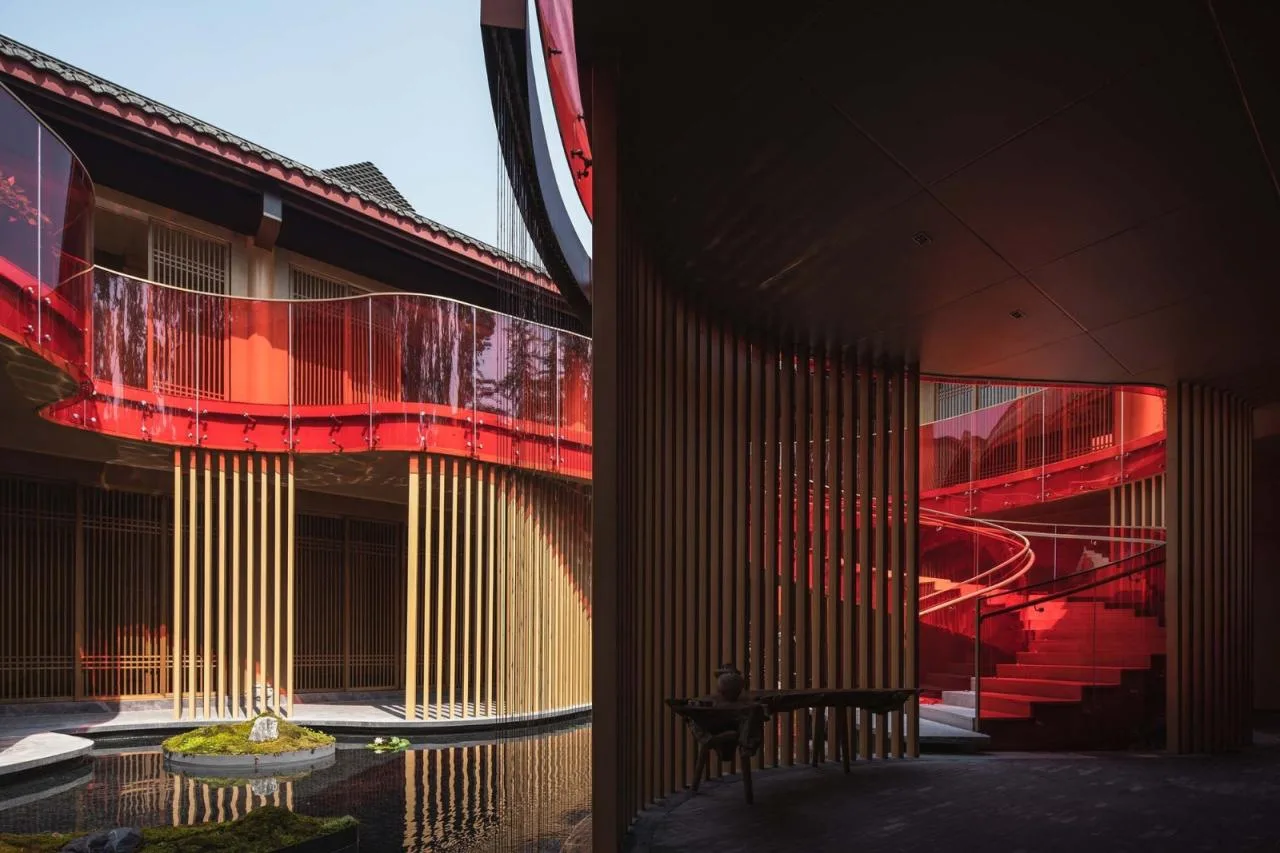
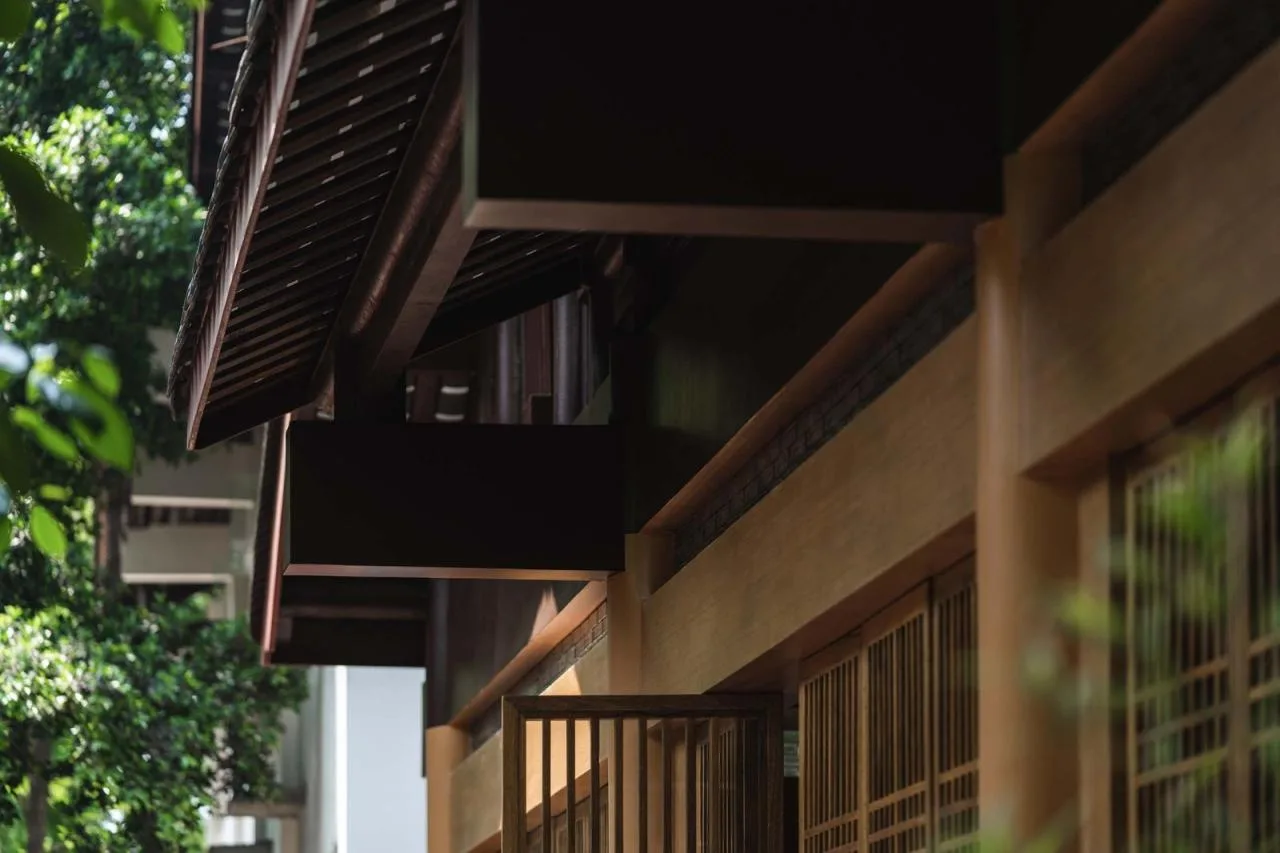
Indoor Space: The garden private rooms are designed to engage with the unique natural surroundings. Adjacent to the ancient pagoda of Qingyang Palace, several centuries-old ginkgo trees weave through the exterior setting. The interior palette centers on wood and white tones, with flexible wooden lattice sliding doors enhancing spatial transparency. This design blurs the boundary between inside and outside, harmonizing with the scenery of Qingyang Palace.
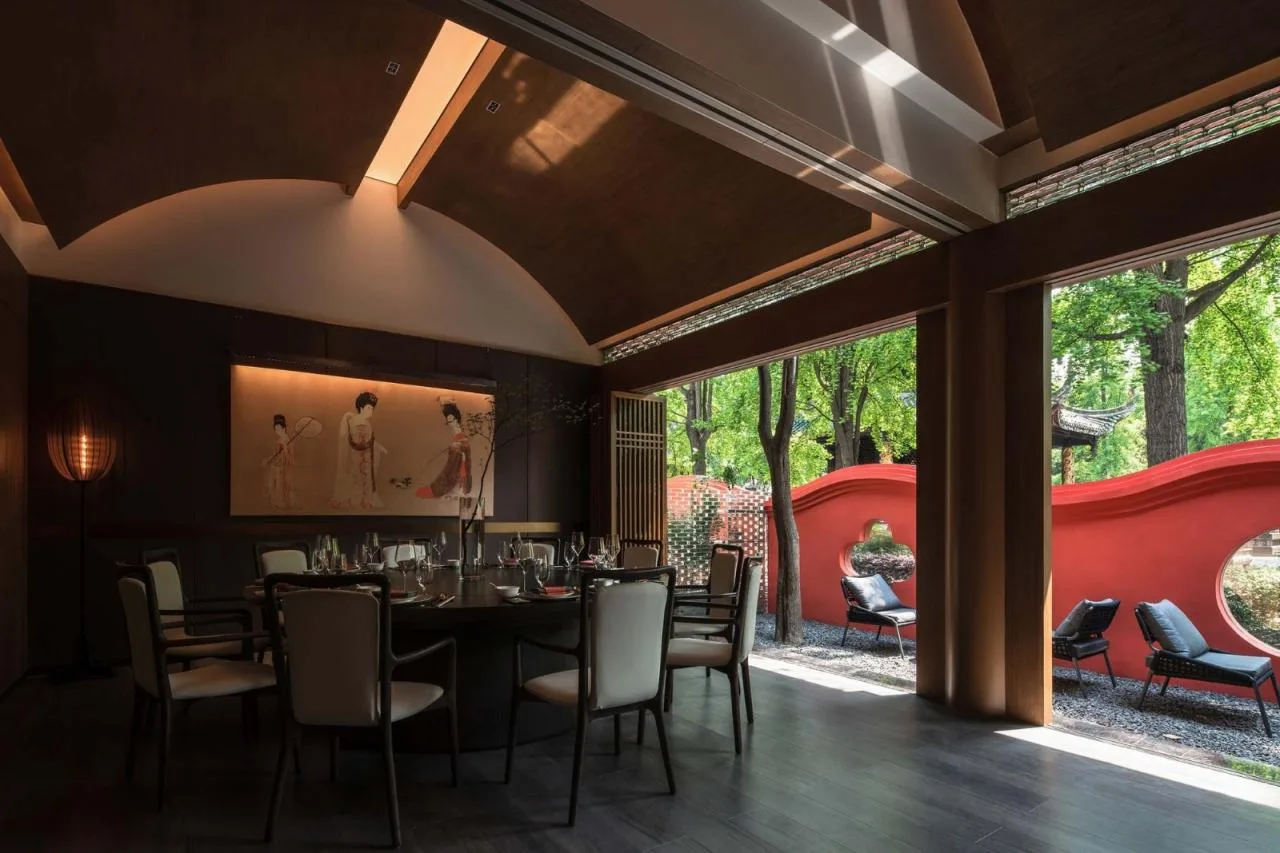
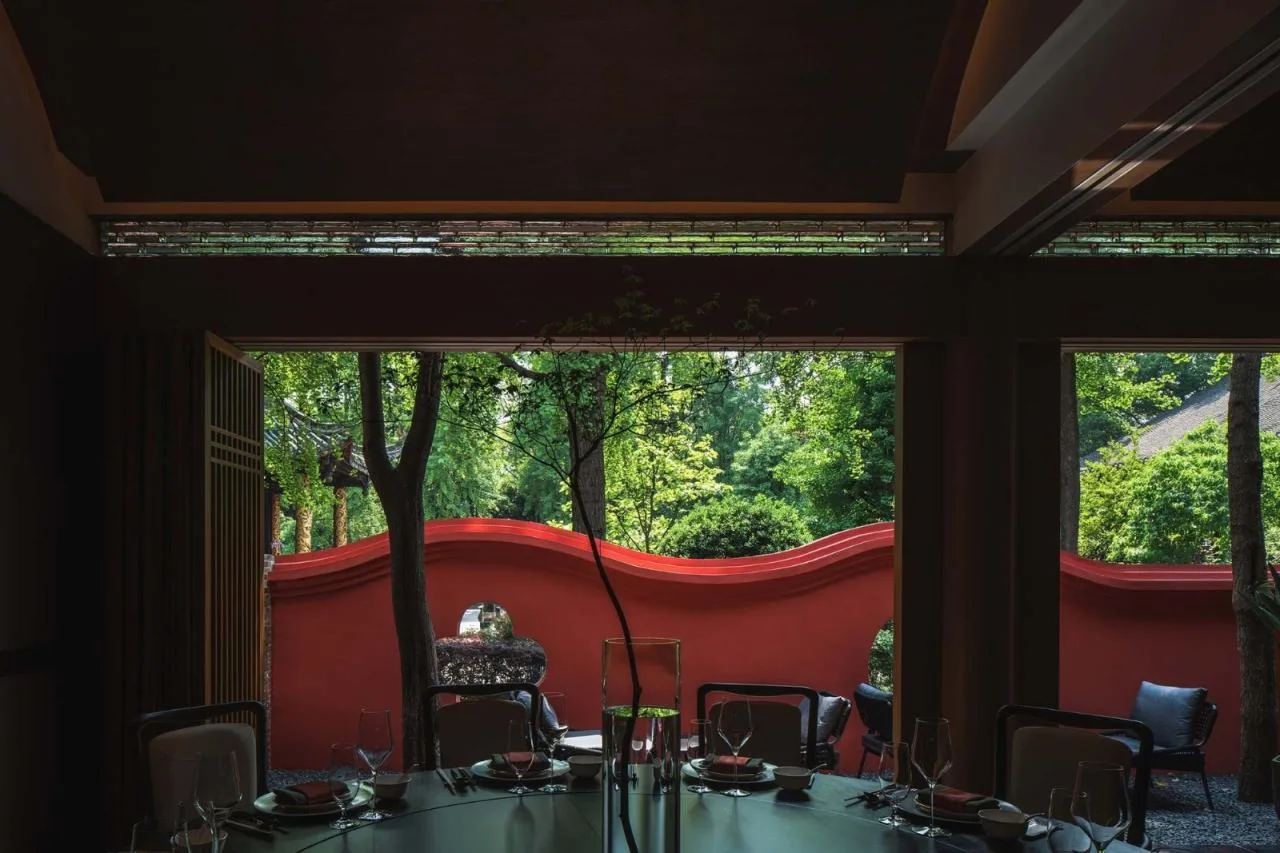
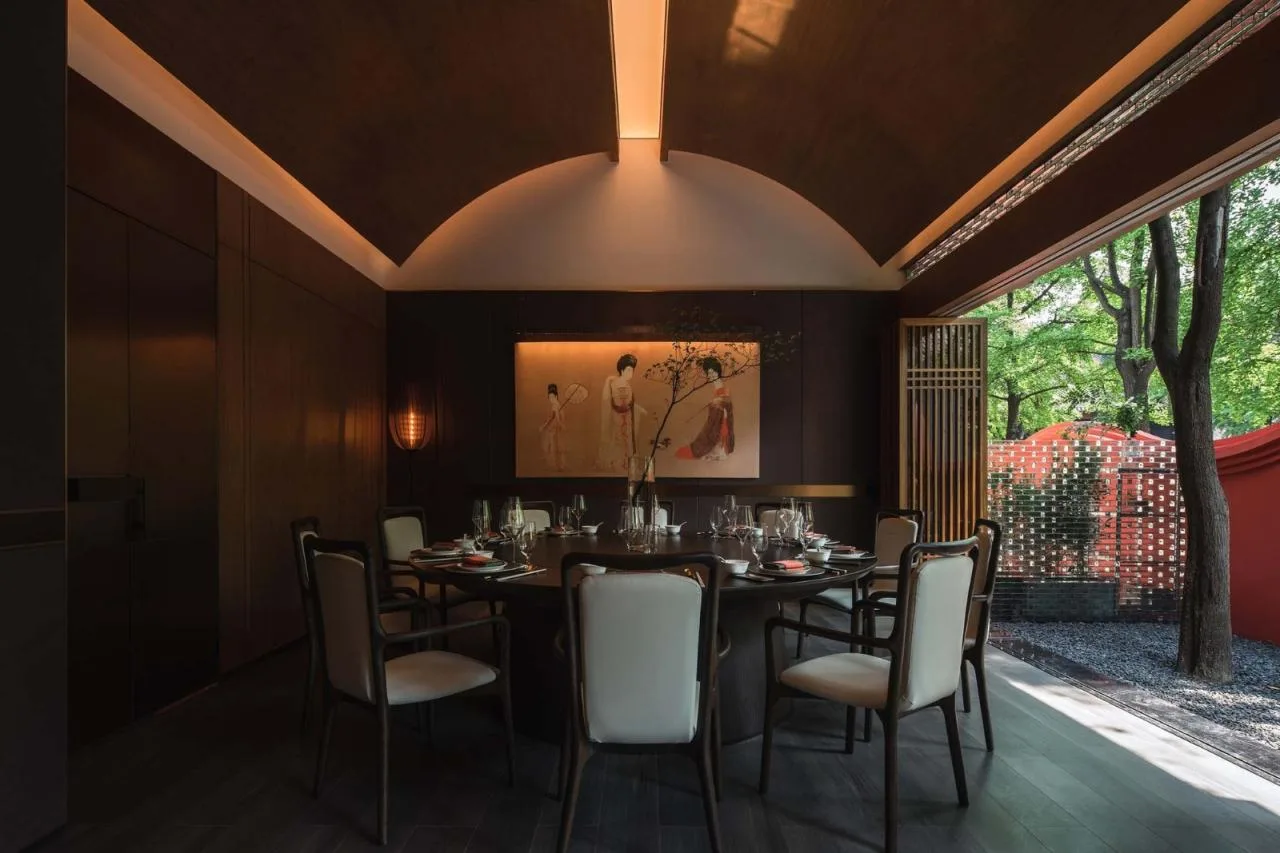
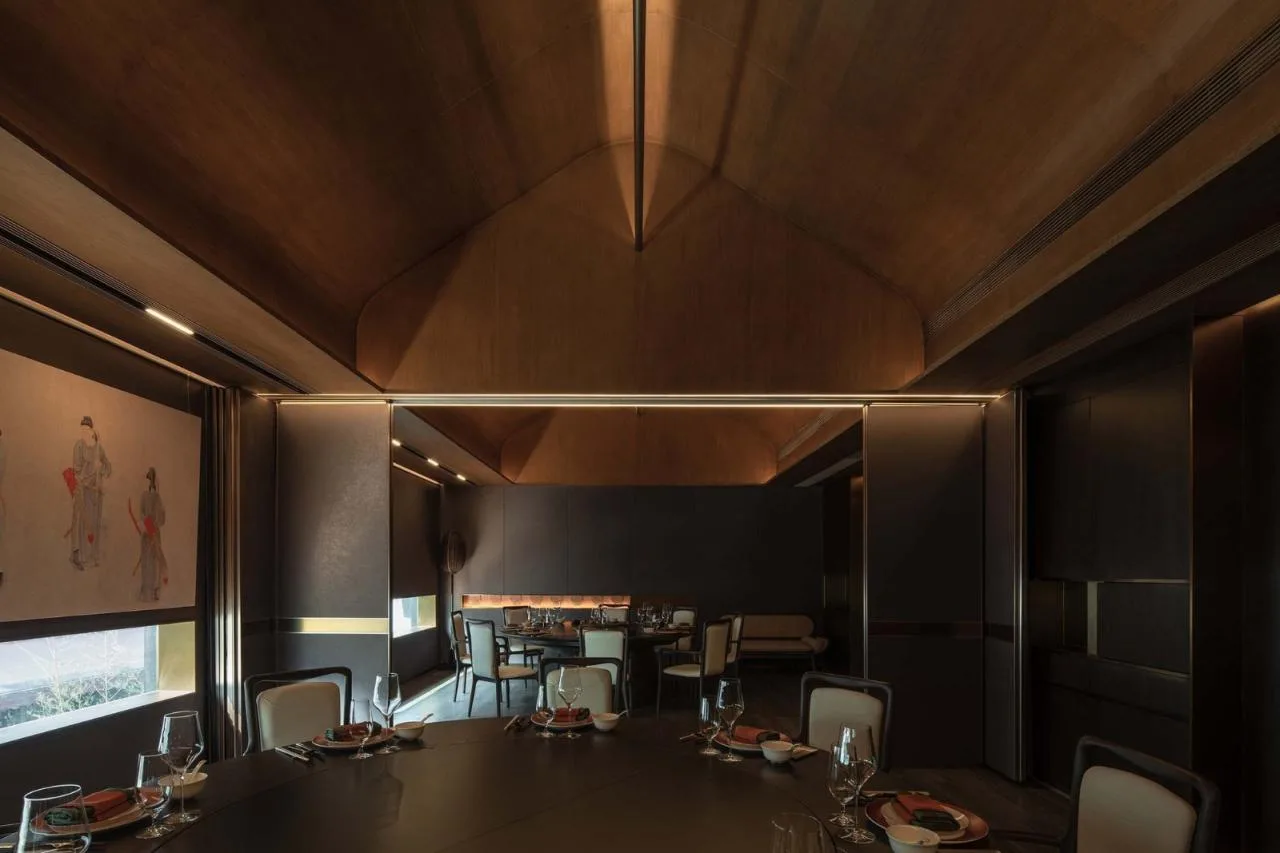
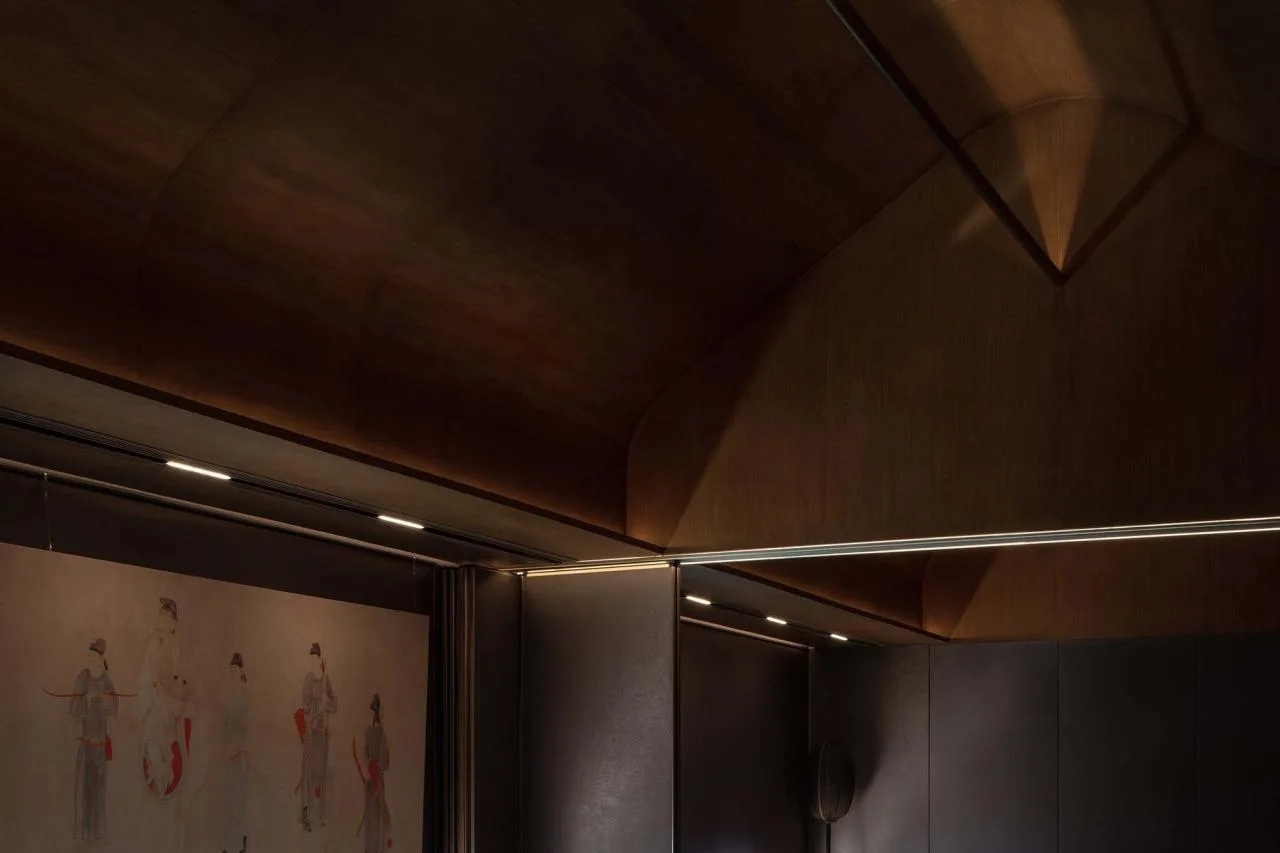
Continuous Private Rooms: Both the first and second floors feature continuous private rooms. The second floor showcases a wood-grain arc roof element formed by the sloping ceiling. Flexible movable partitions allow adaptive use of these spaces, while the minimalist soft decoration ensures a calm, orderly environment. Wood veneer and dark gray soft wall treatments, combined with ambient ceiling lighting, create a cohesive yet distinct atmosphere tailored for individual use.
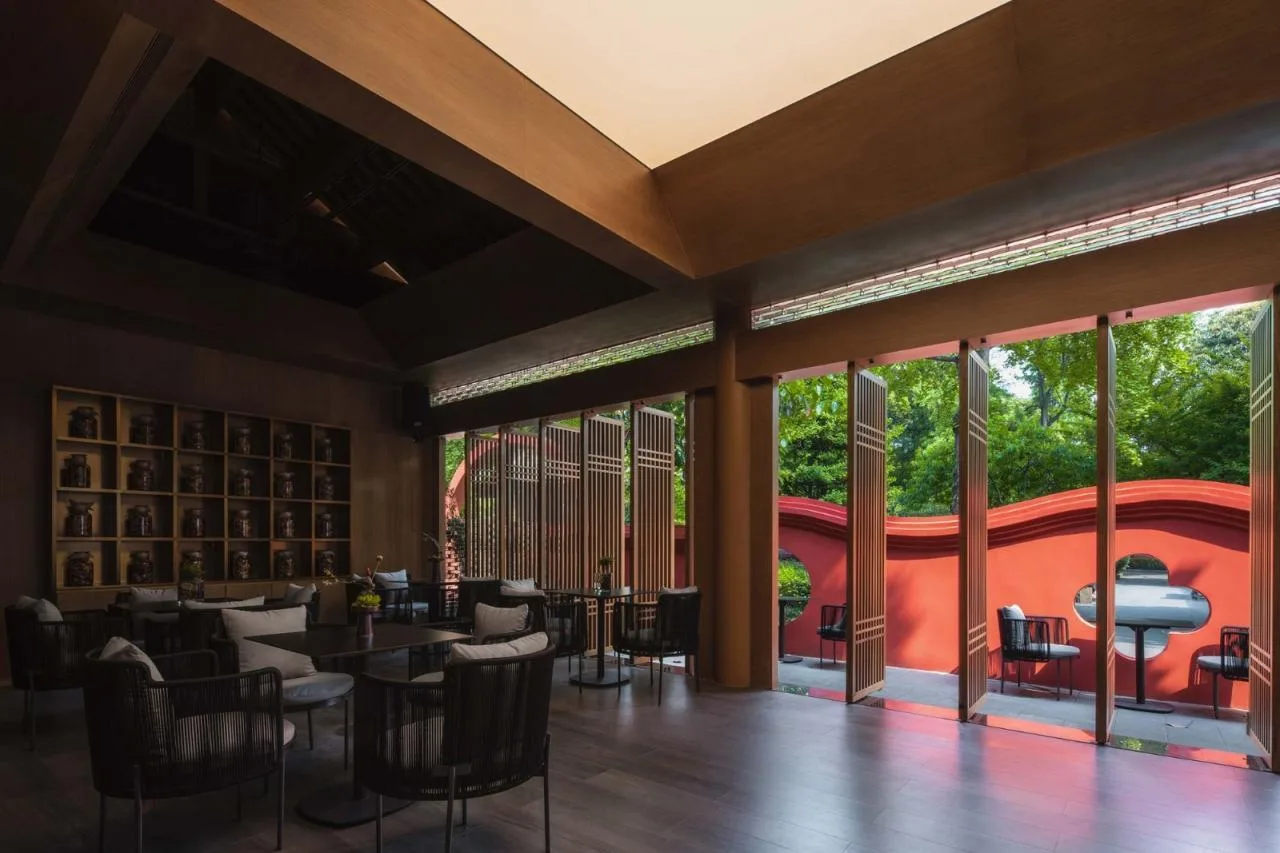
Tea Room: The tea room’s bar area is embraced by a tall ginkgo tree, with leaves extending indoors to blur the boundary between nature and interior space. The design features three layers of rectangular hollow ceilings, with warm wooden tones dominating the palette. A luminous film embedded in the ceiling provides soft, peaceful lighting. The sliding door facing Qingyang Palace fully rotates open, transforming the outdoor display area into a coffee and dessert lounge, enhancing the connection between indoor and outdoor natural landscapes.
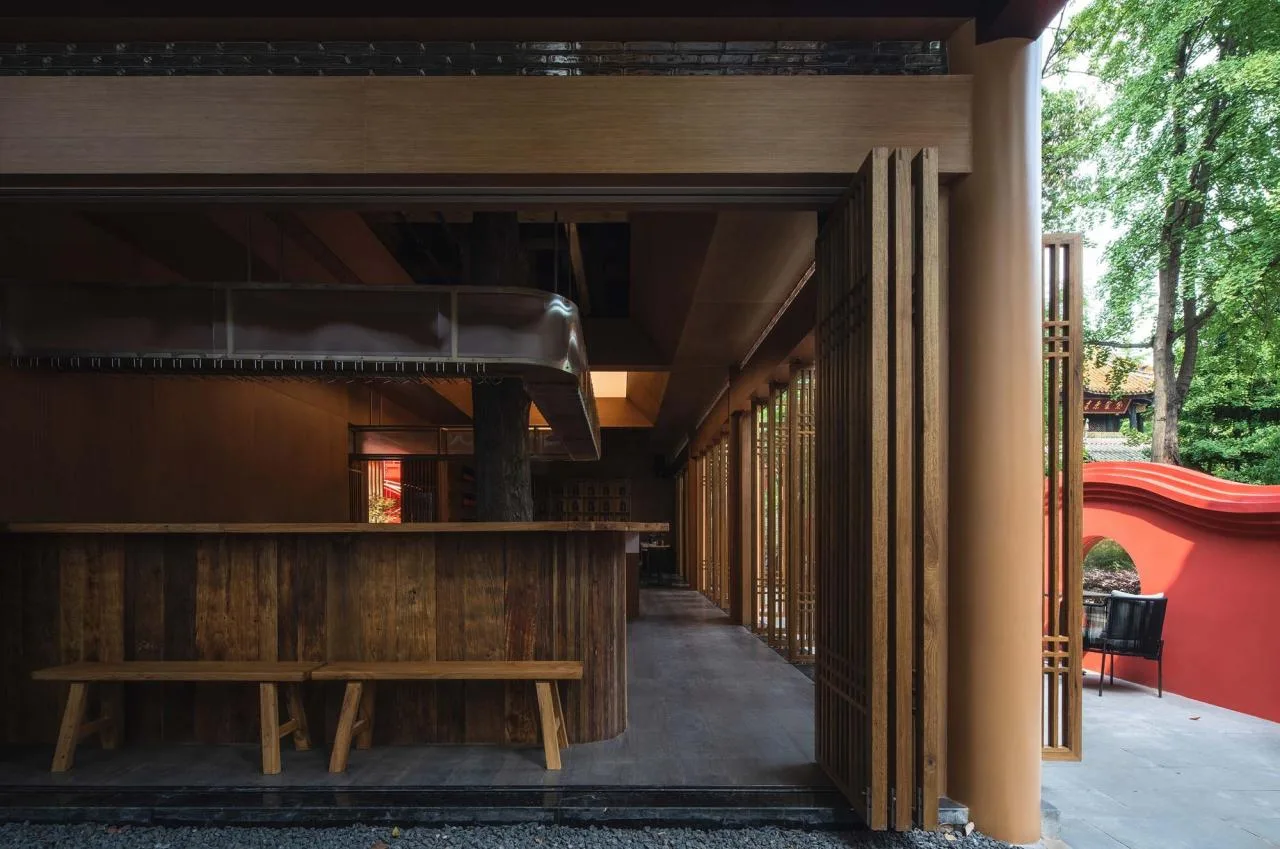
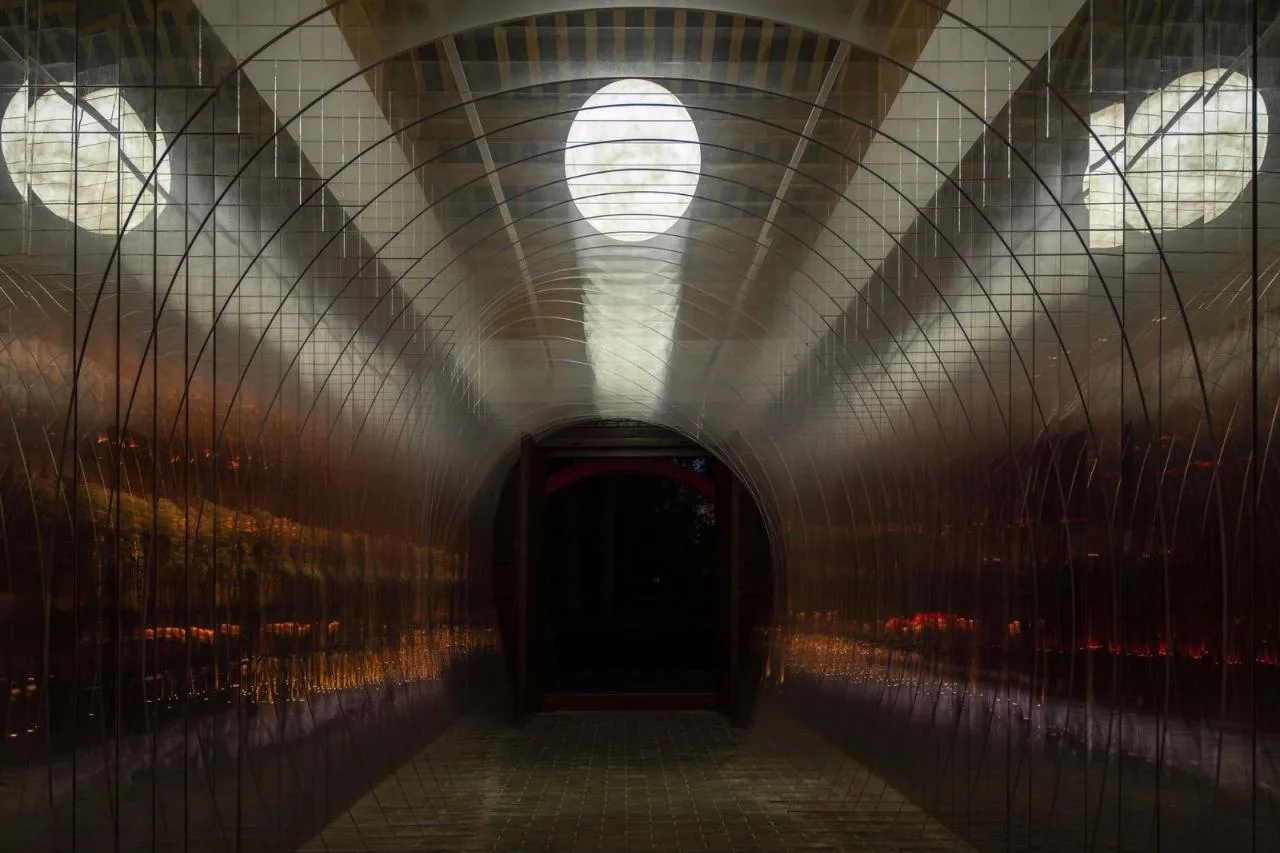
Entrance to Qingyang Palace: Separated from Qingyang Palace by only a wall, the east entrance serves as a symbolic connection, referred to as “the gate of all wonders.” This entrance adds layers of spatial and temporal meaning, forming a tunnel that links history and the present. On one side lies the culturally rich Qingyang Palace, steeped in time, while on the other is a contemporary space embodying the spirit of the future East while honoring traditional culture. The “Gate of Wonders” thus bridges time and space.
Conclusion: The Taoist image of the “valley” symbolizes the “emptiness” and “nothingness” between realities, through which the past, present, and future of the entire building can be perceived. This concept reflects Eastern philosophical views such as “Taiyi” and “Taigu,” which approach development from a holistic perspective. The valley is intangible, and the architectural space aims to exist in harmonious balance.
Project Drawings
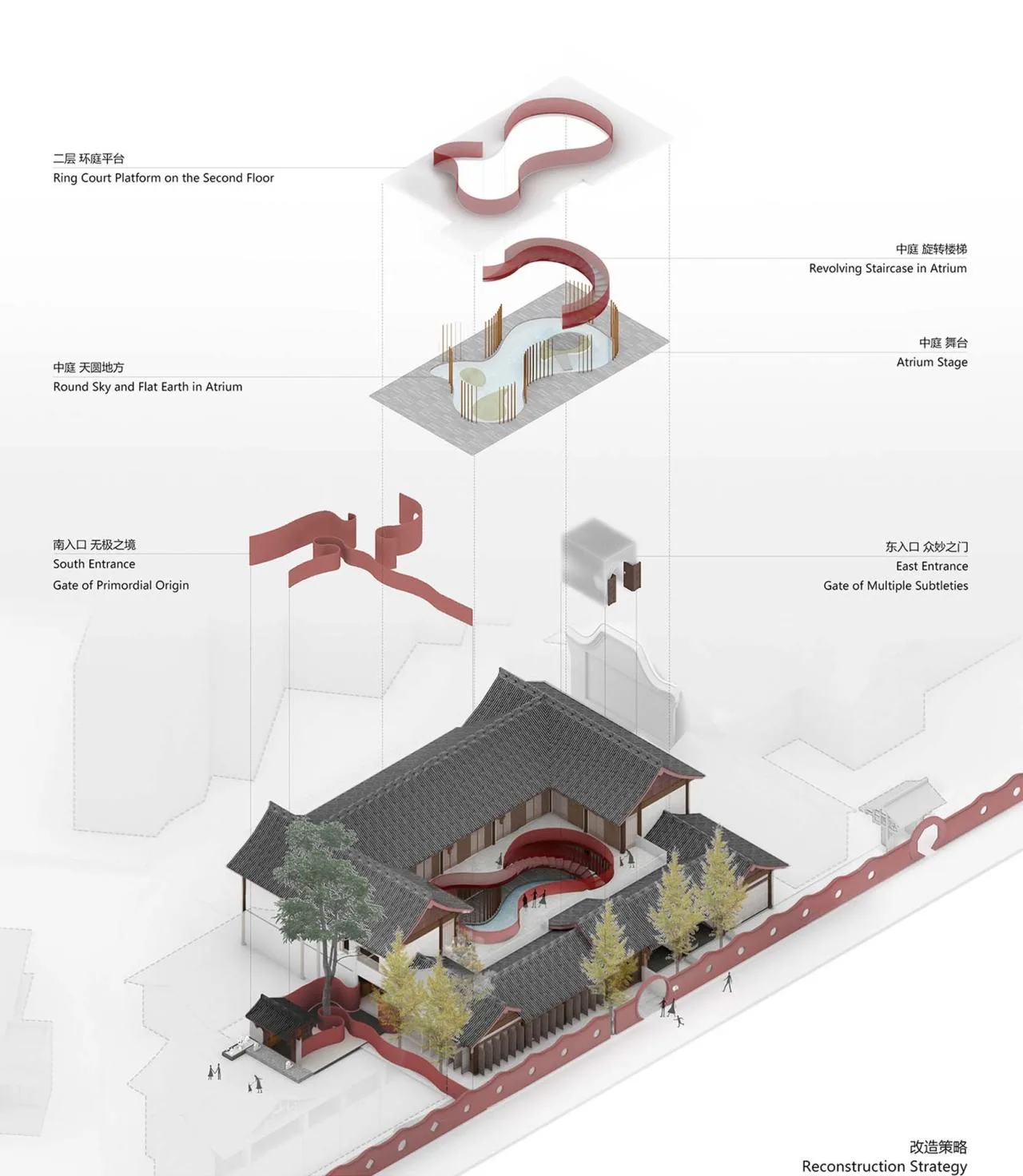
△ Transformation Strategy
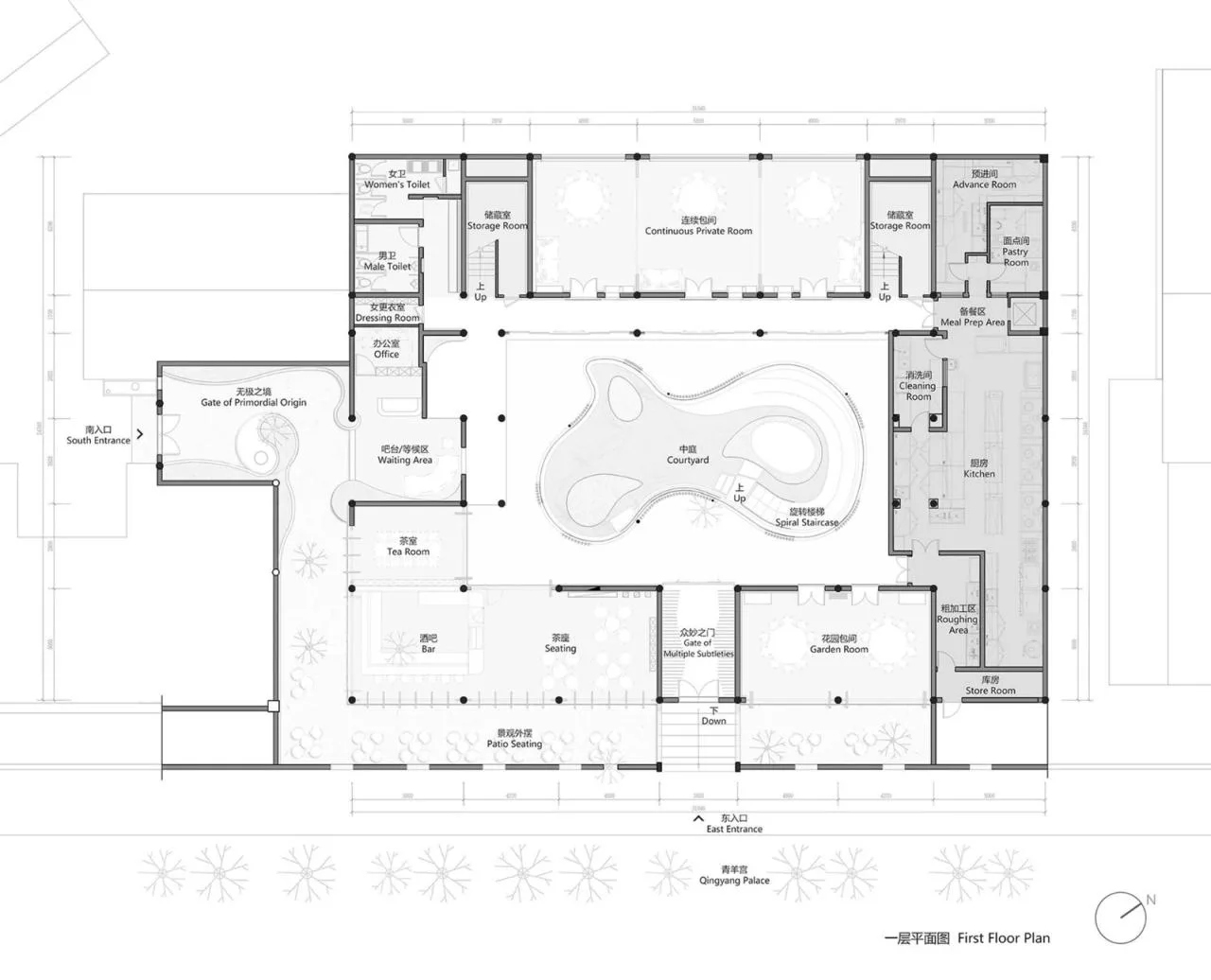
△ First Floor Plan
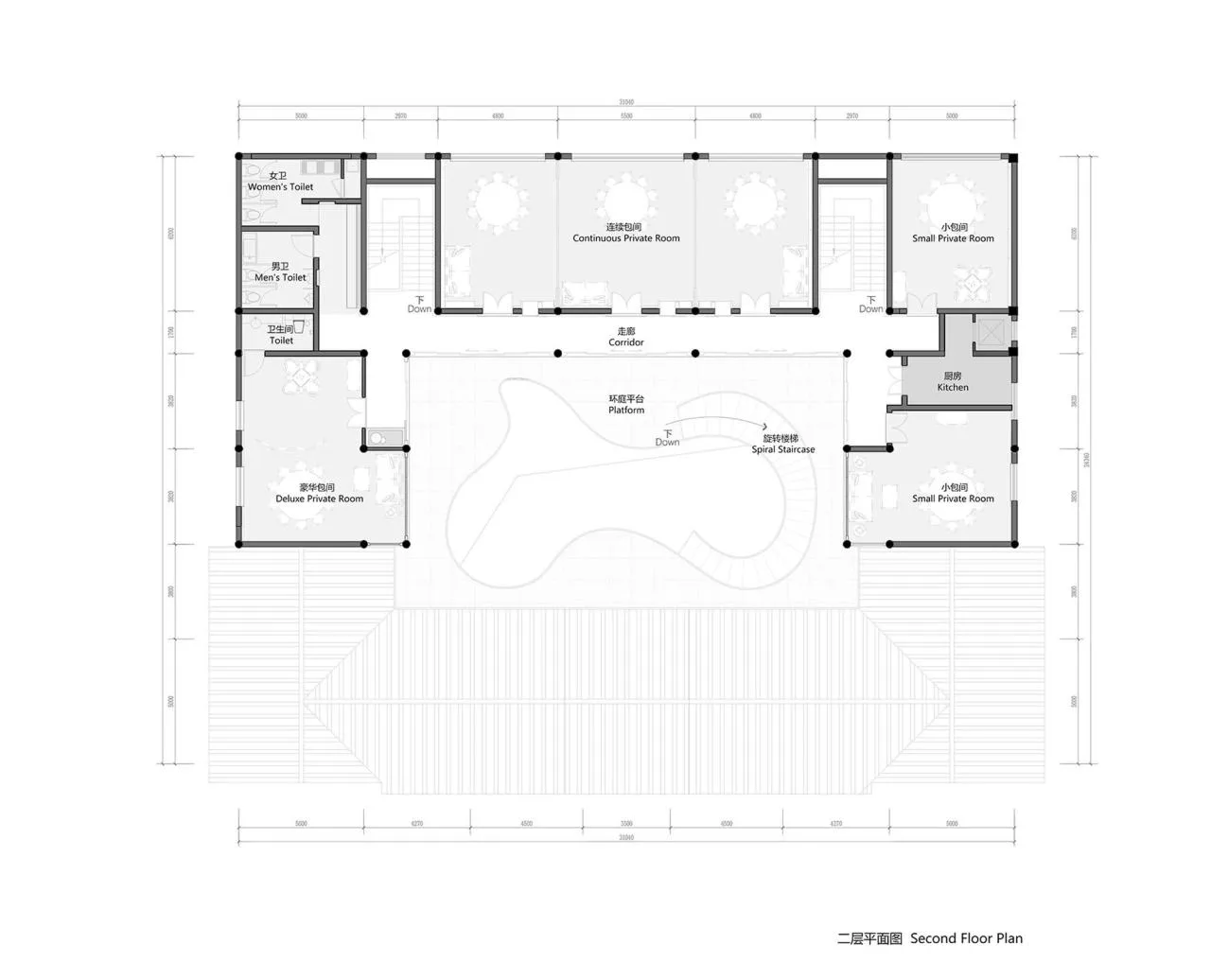
△ Second Floor Plan
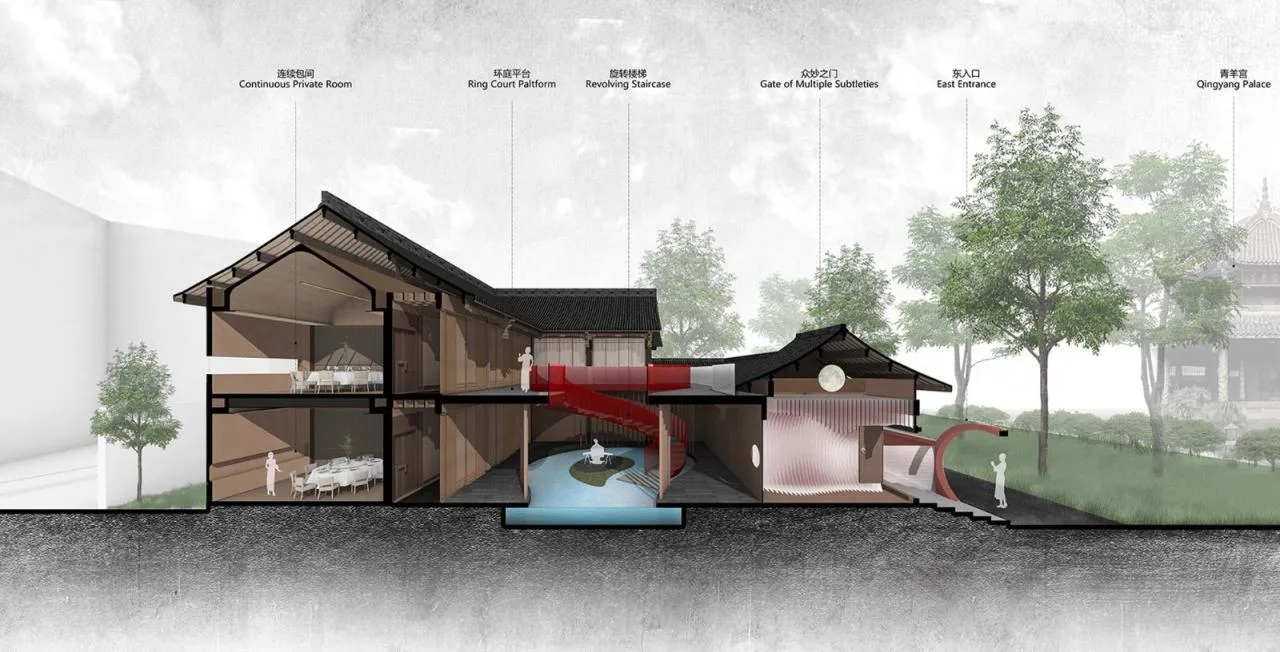
△ Section Diagram
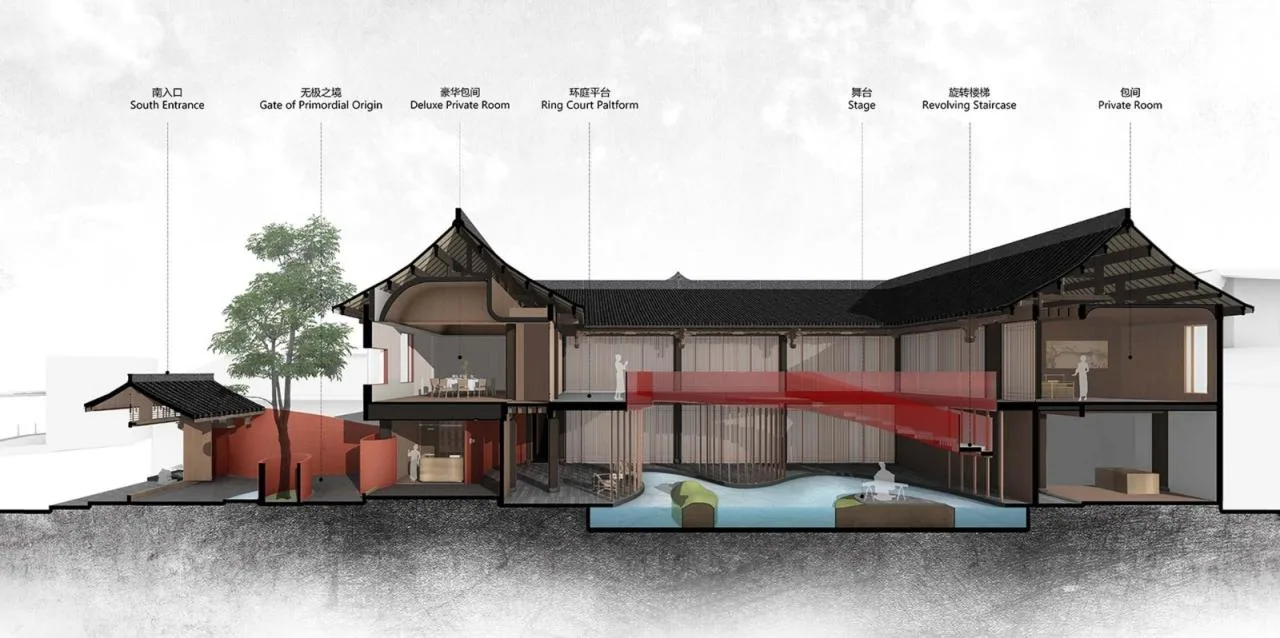
△ Section Diagram
Project Information
Architectural Design: Muda Architecture
Area: 900 square meters
Project Year: 2022
Photographer: Form in Space Photography
Manufacturer: NANOGRESS Ceramic Tiles, South Glass Group, Keding, Bellamo Art Coatings
Lead Architect: Lu Yun
Design Team: Li Aidong, Lv Chenyu, Rong Dian, Zhan Ziqi, He Fan, Fu Yao
Owner: Chengdu Kuansan Tang Life Culture Creative Co., Ltd
Lighting Design Consultant: DOPI Lighting Design
Structural Consultant: Yuki Law
Location: Chengdu, China















Must log in before commenting!
Sign Up