
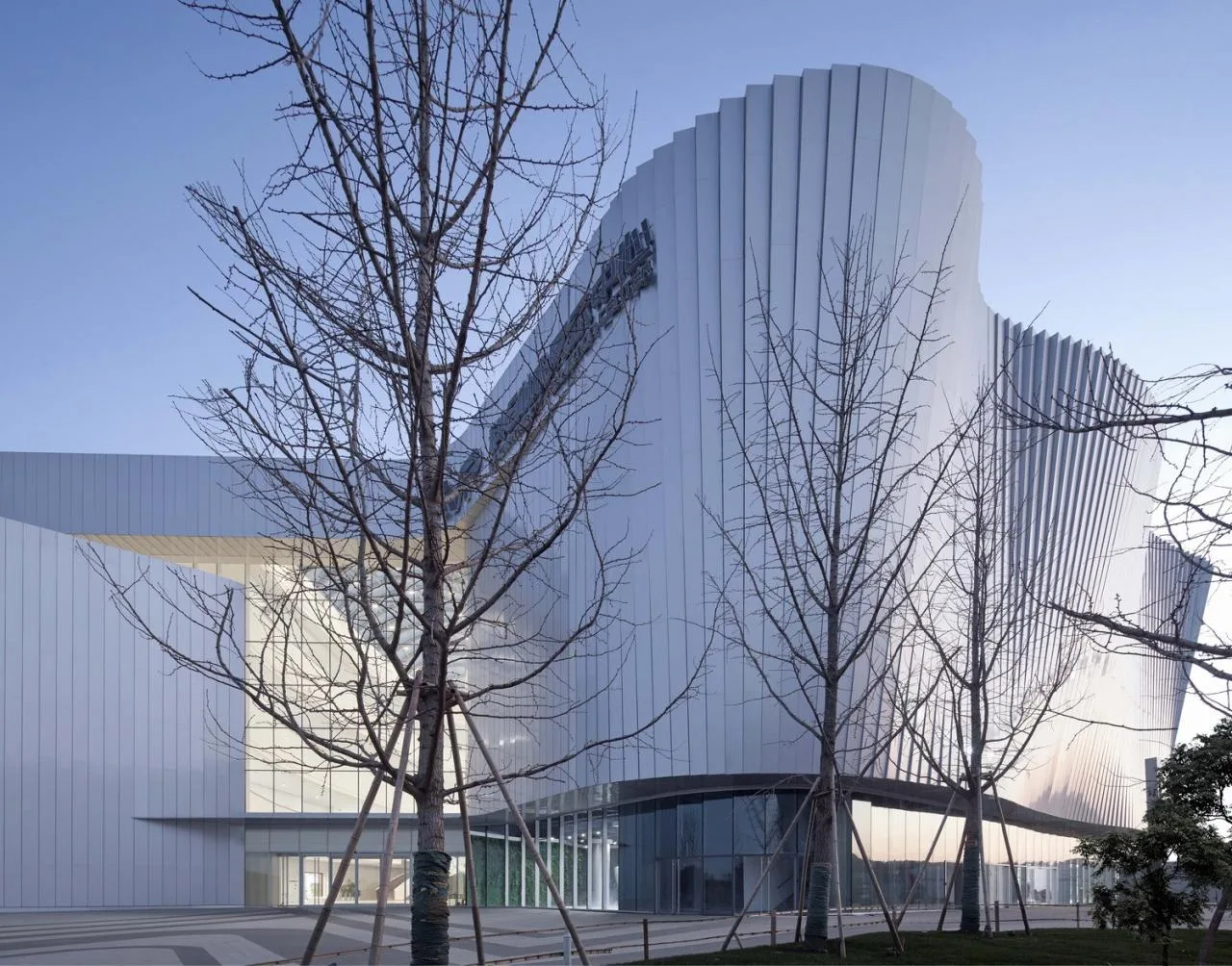
Interpreting specific design themes requires specialized study of their attributes and, more importantly, a wholehearted commitment fueled by innovative thinking.
The VR Exhibition Center at Nanchang VR Science and Technology Innovation City is strategically located near Central Lake and Central Green Space, at the intersection of Jiulong Avenue and Science and Technology Innovation Street. Boasting excellent landscape resources and an urban showcase interface, it, together with the conference center east of Jiulong Avenue, forms a VR tourism experience zone. Serving as a venue for regularly updating and introducing the latest advancements in global virtual reality technologies, products, and industries, it stands as a hub for technological innovation, talent cultivation, and industrial incubation. This makes it a key platform for demonstrating and showcasing advanced industry applications.
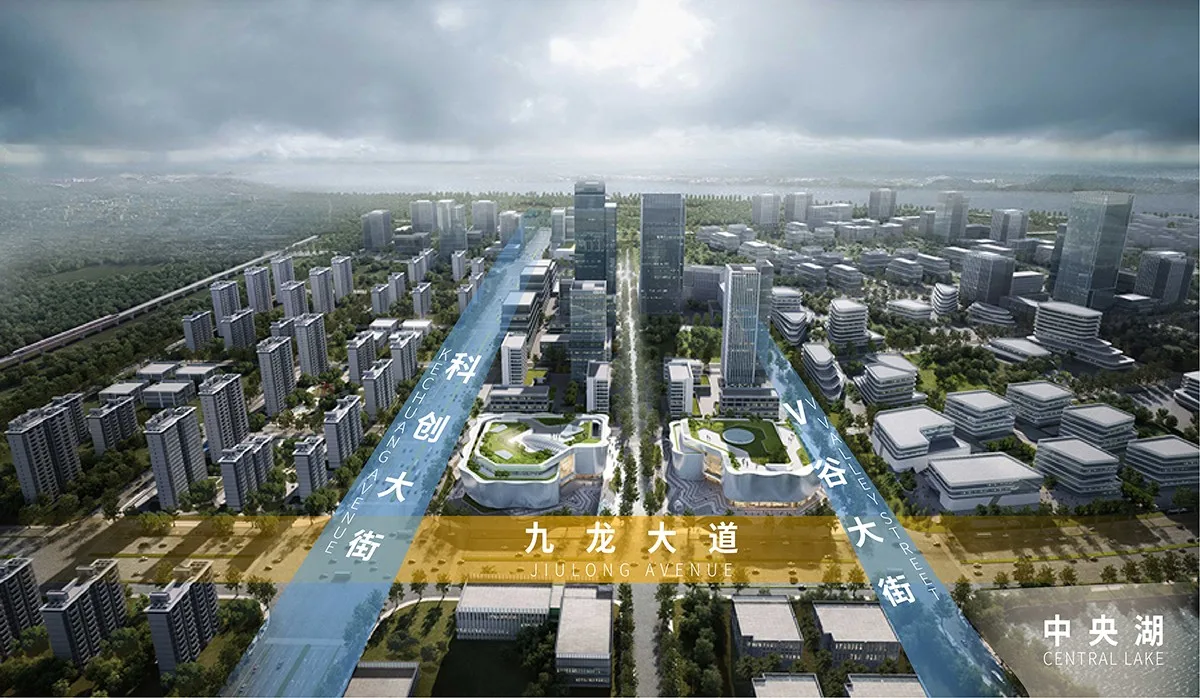
△ Partial aerial view of Nanchang VR Science and Technology Innovation City
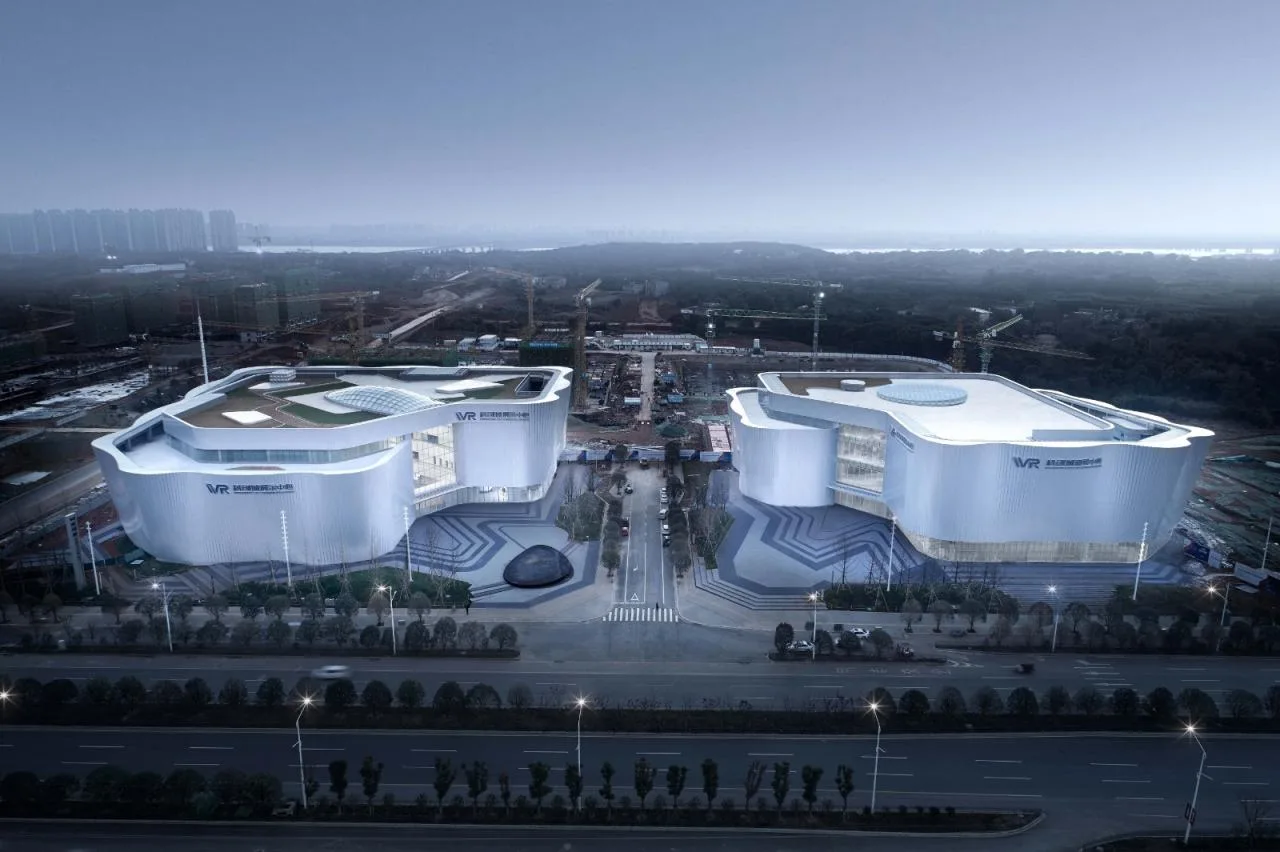
△ Street scene © Xia Qiang
Utilizing VR virtual reality technology, this project blends virtual and real elements. The designers translate their vision onto paper, harnessing the interaction between reality and virtuality in the design process. Their goal is to create highly innovative works that embody the venue’s virtual and real, futuristic, and technological nature through forward-thinking design and expert execution, showcasing and advancing the development of virtual and real technologies in China.
01 Curved Form
Spiral Rising Waves
Recognizing architecture as a physical entity, the designers skillfully manipulate shapes to dissolve the building’s volume, achieving a futuristic and technological aesthetic that reflects the pioneering nature of VR technology.
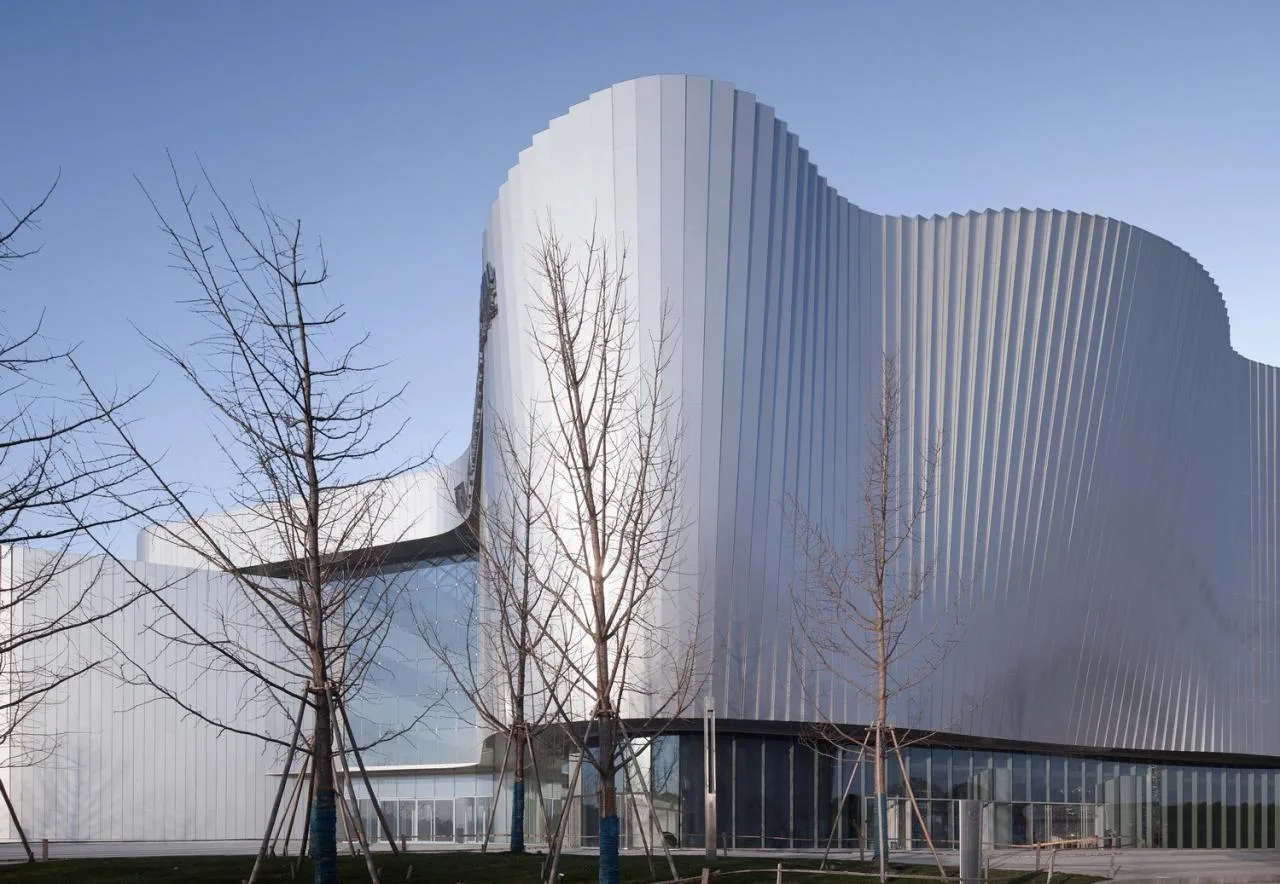
The design team envisions a structure that begins at ground level and spirals upward in wave-like forms, creating a seamless whole. The negative space resulting from this spiral rise forms dynamic flow variations and a concave area at the start and end junction, naturally defining the main entrance. The undulating spiral facade features swaying forms of varying sizes along different rotation axes, enriching the building’s exterior. The combination of spiral skin and the interplay of virtual and real materials produces a floating effect, virtualizing the entire building volume and offering visitors an immersive experience blending virtual and real worlds.
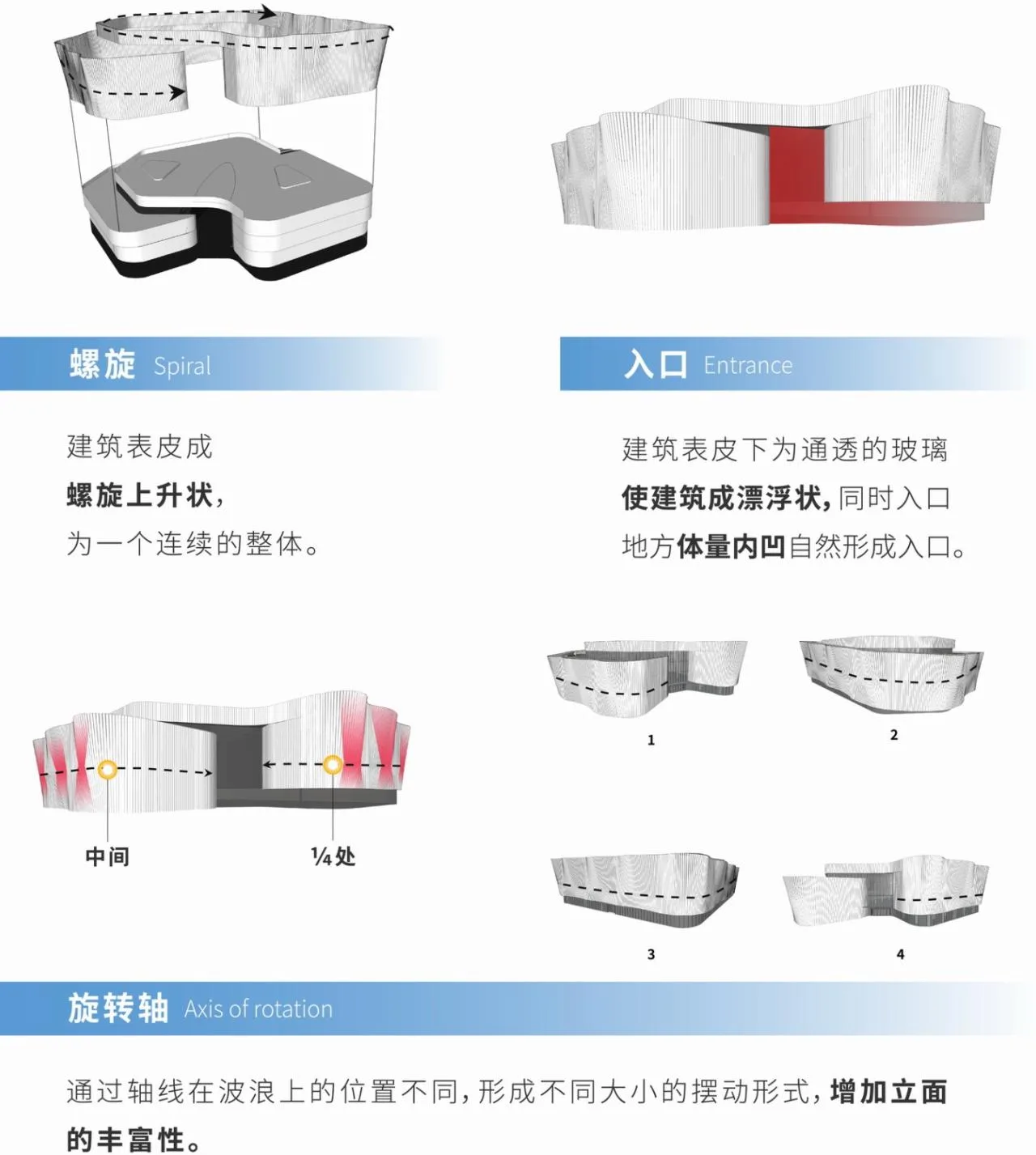
Concept of Spiral Rising Waves
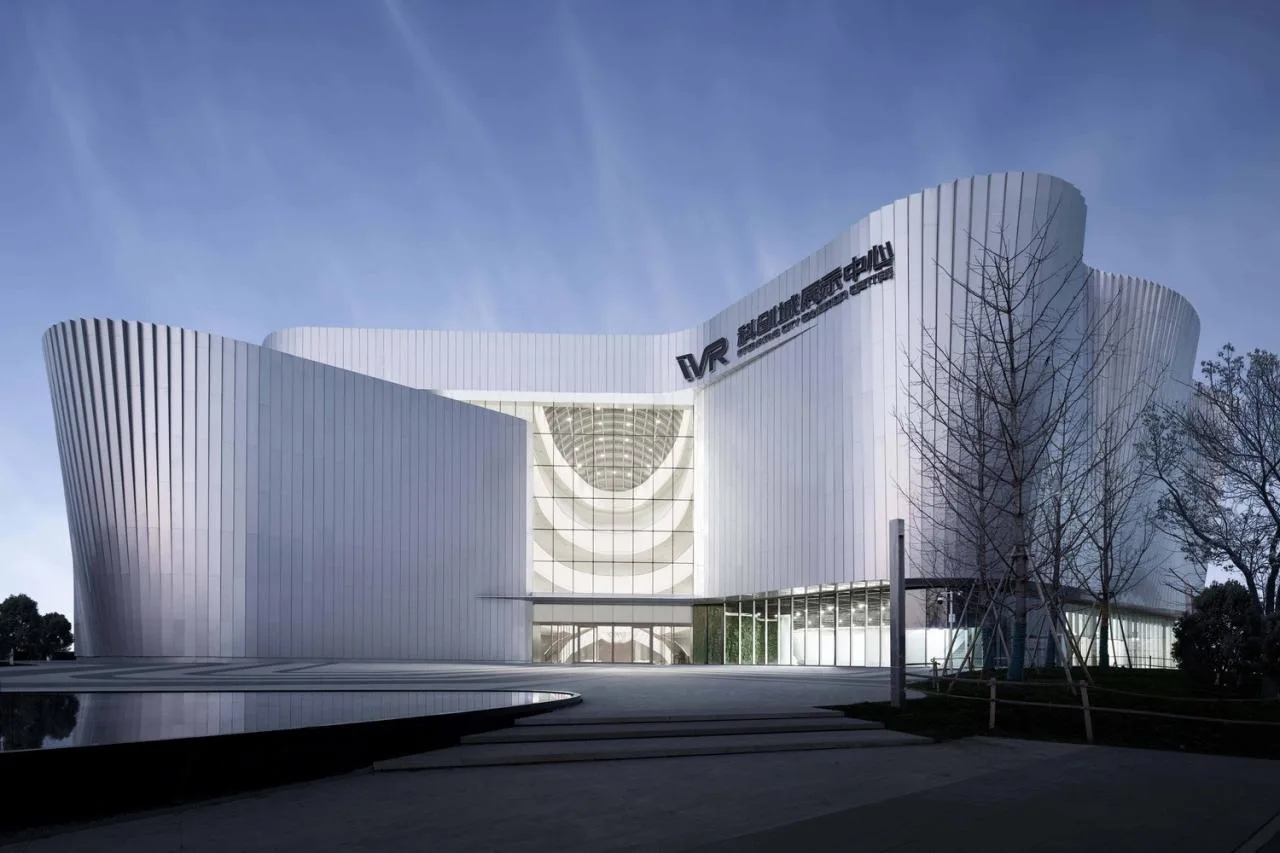
Actual spiral rising shape at the square interface © Xia Qiang
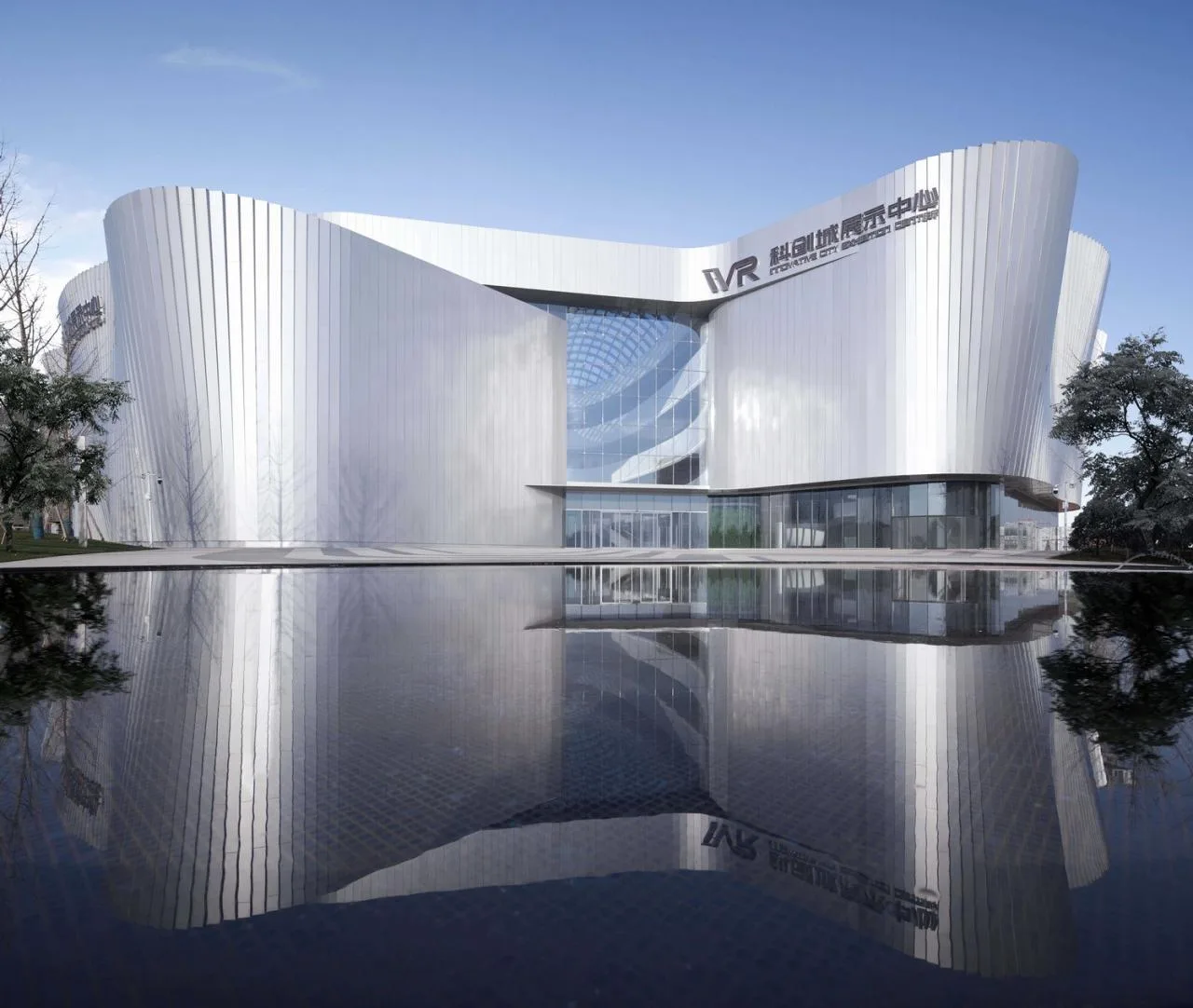
△ Blending virtual images with real scenes © Xia Qiang
02 Technological Innovation
Systematic Control Within Moderate Budget
The designers emphasize practical implementation by employing professional parametric design techniques to transform virtual concepts into reality. They simplify complex forms and develop innovative 3D wave shapes. Additionally, the hierarchical structural innovation facilitates efficient skin construction while maintaining high aesthetic value within reasonable economic constraints.
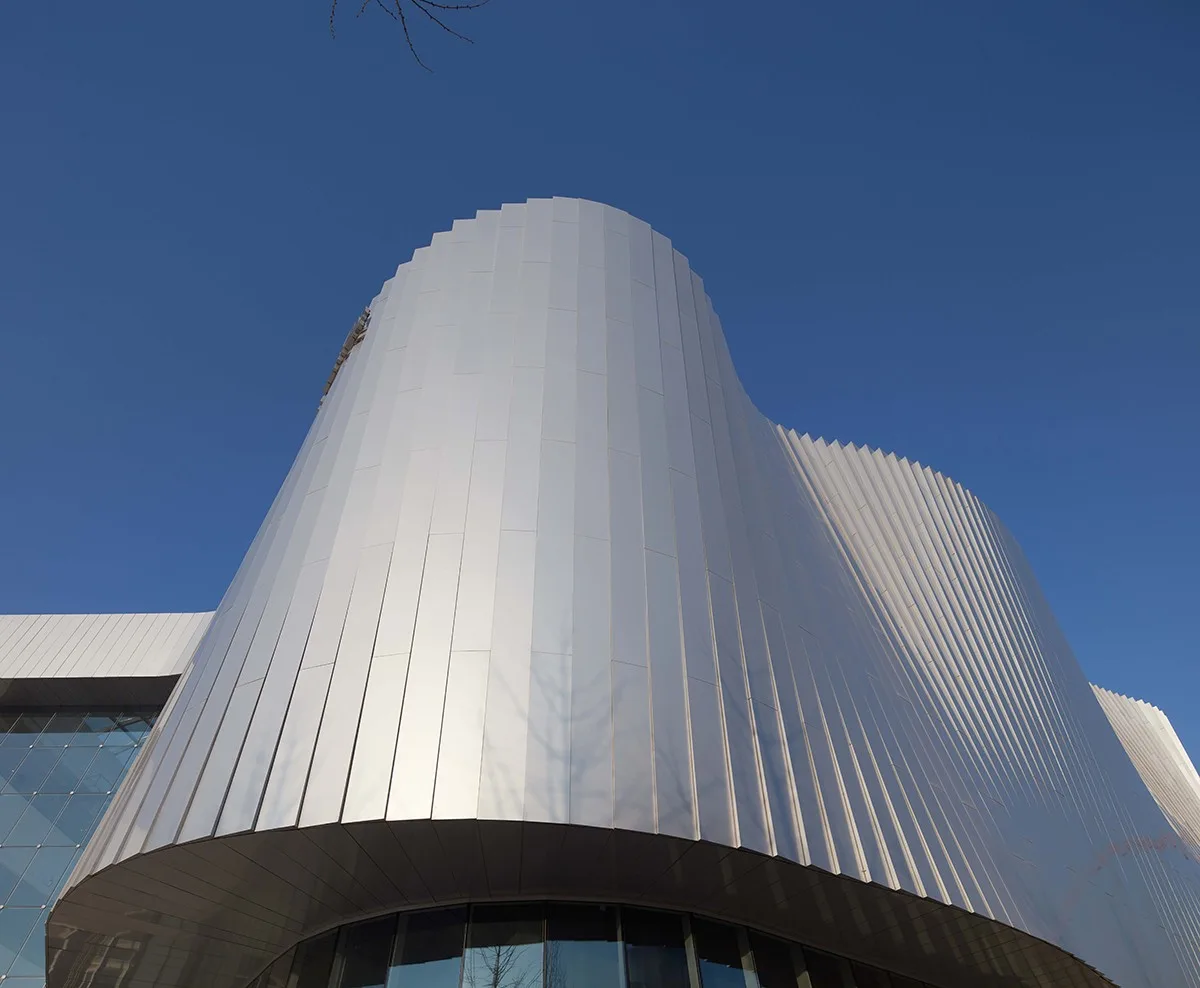
Parameterized facade skin
Creating a 3D Surface from a 2D Plane
To better control the rhythm of the exterior skin and manage the complexity of construction, the design breaks down the irregular metal curtain wall into four standard units using parametric design. These units are combined in an ordered manner to form the three-dimensional shape. This modular facade system can be replicated, resulting in material savings.
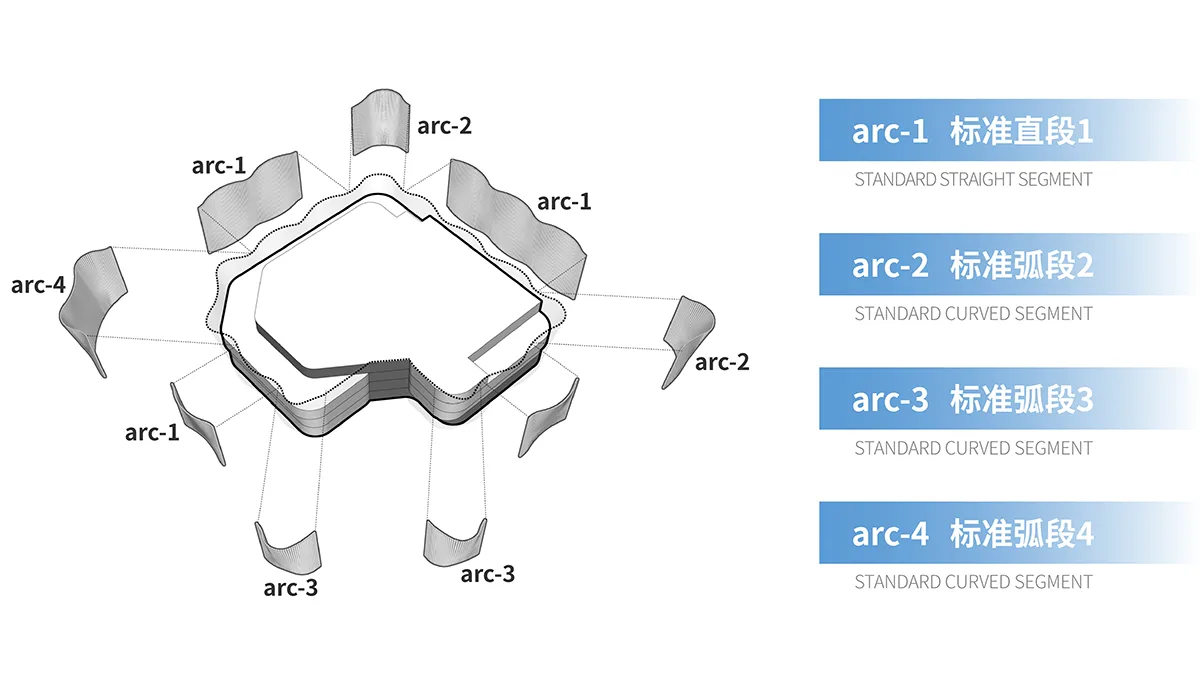
△ Standardized unit analysis
Based on variations in wave curvature, the facade is divided into four modules: a side without folded edges, and sides with folded edges measuring 100mm, 200mm, and 300mm respectively. This classification reduces the number of folded aluminum panels required, optimizes the folded areas of the metal curtain wall, and decreases material waste by 35.5%. The modular curtain wall design and standardized material division maximize the realization of the original design intent.
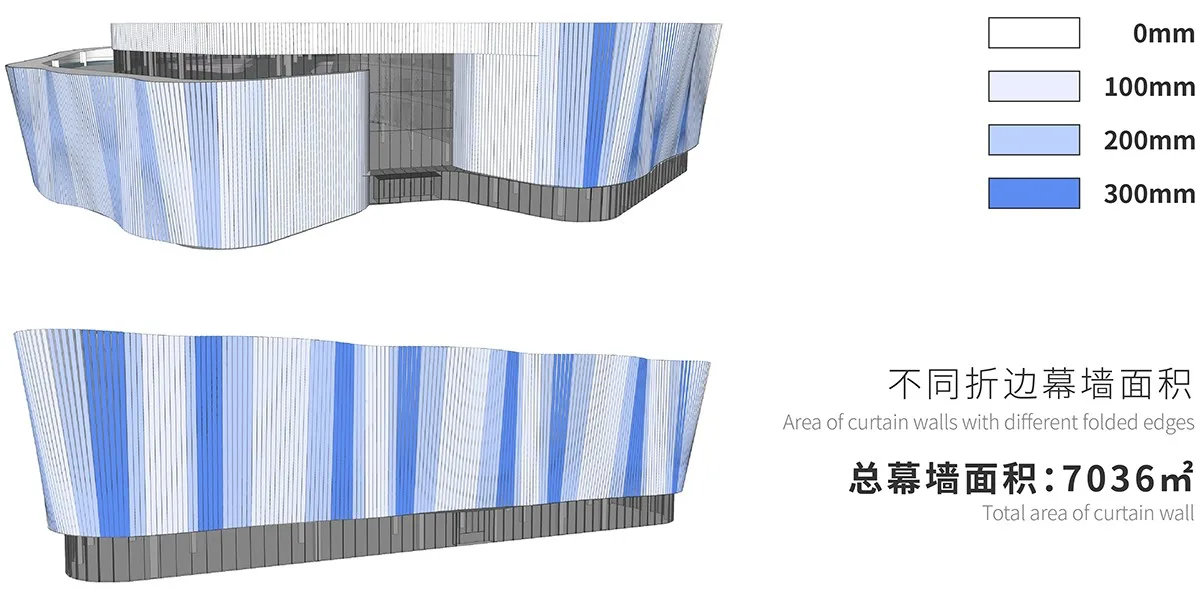
△ Modular facade analysis
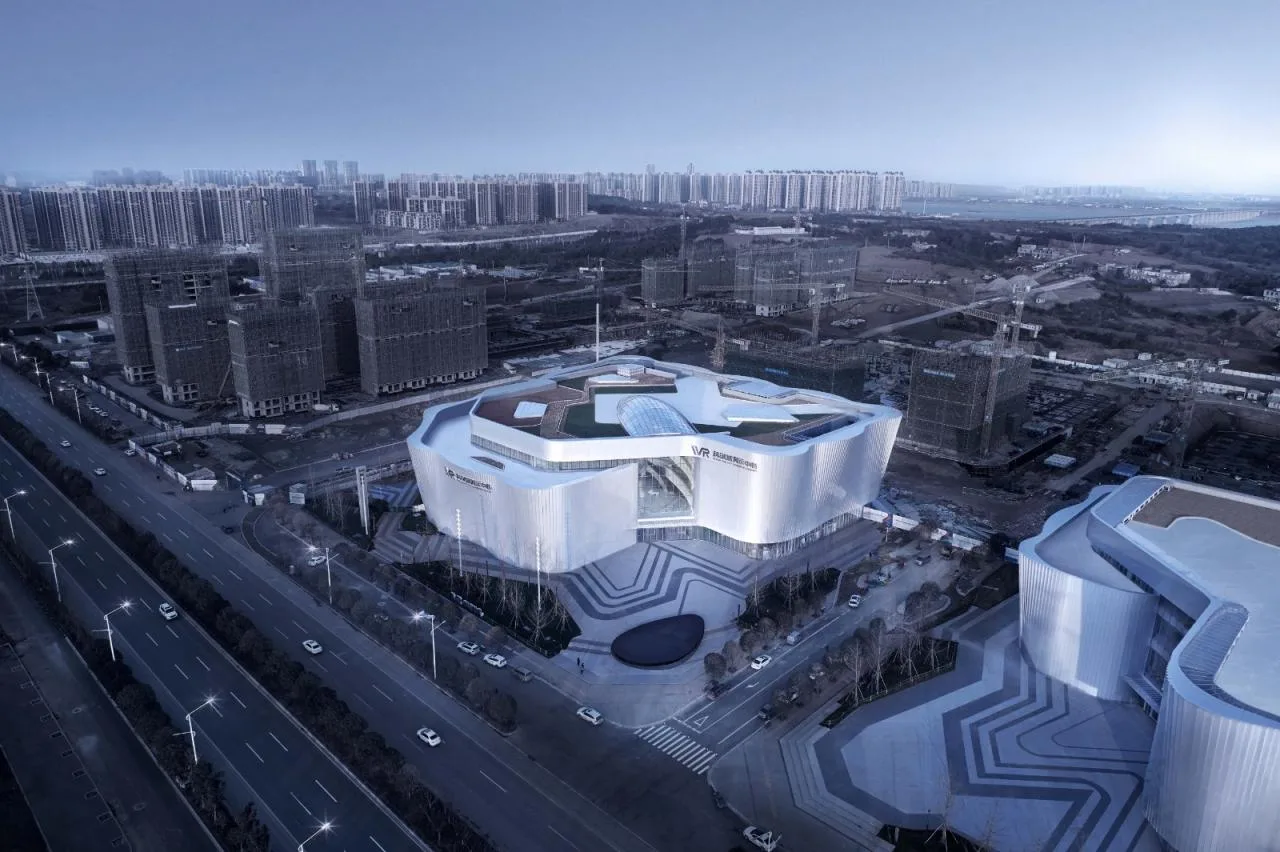
△ Bird’s-eye view of wave-shaped structures © Xia Qiang
Hierarchical Structure
Depth of External Support Keel for Civil Engineering
To support the spiral wave-shaped exterior skin, a keel aligned with the shape’s direction is added outside the civil engineering structure. This keel is clad with a silver high-gloss aluminum panel featuring slits, creating a rhythmic and melodic three-dimensional effect.
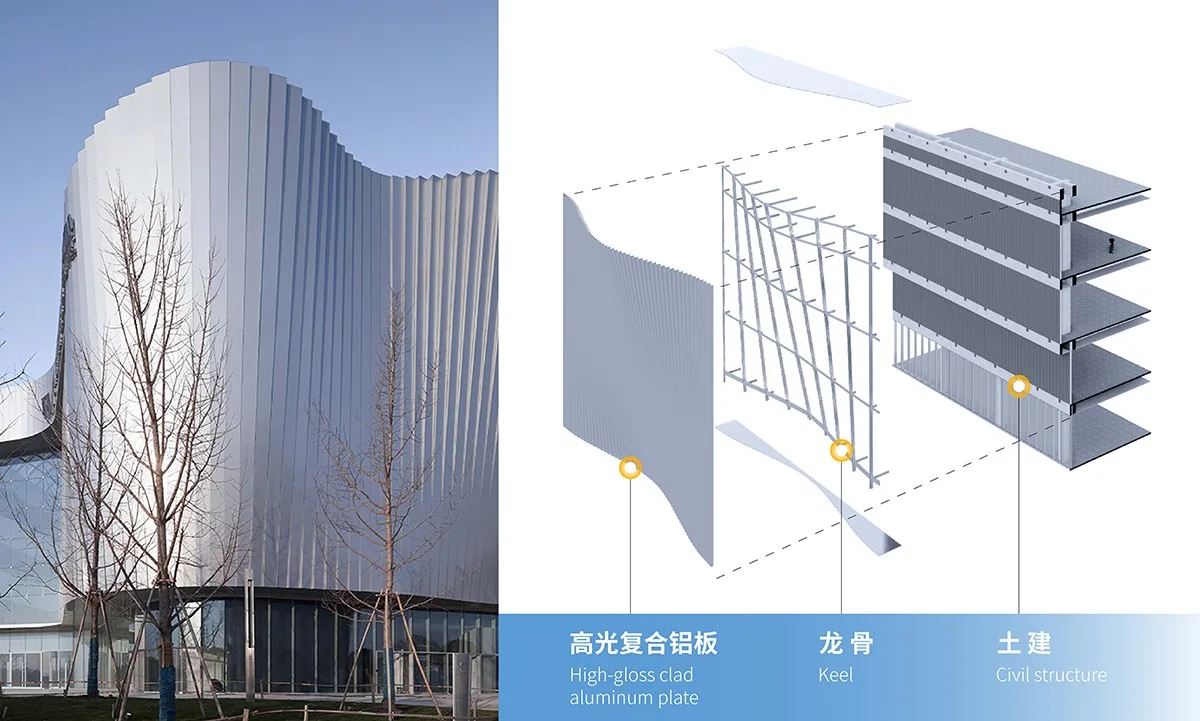
△ Structural innovation concept
The civil engineering layer-by-layer overhanging design controls the curtain wall keel’s projection depth without altering the building’s shape, thus reducing costs. The main metal aluminum panels measure 5.35m by 0.6m, with lengths kept within 6m for ease of transport. The 0.6m width minimizes material waste. Joints feature a staggered design to avoid alignment issues caused by on-site errors. Except for ladder-shaped panels at the corners, all others are standard rectangular panels, ensuring manageable construction and cost. The structure spans 24 meters, allowing for a column-free layout.
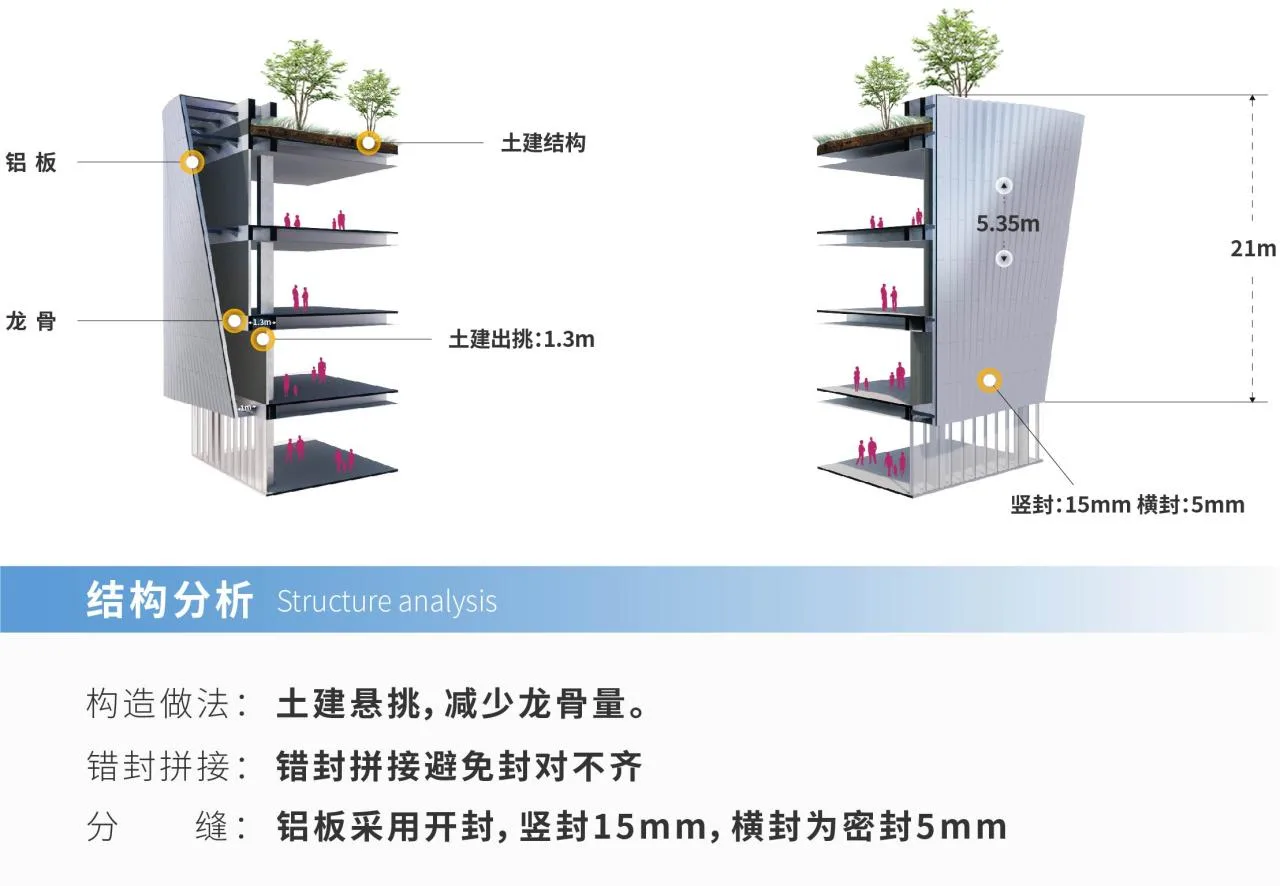
Analysis of standard sections in building structures
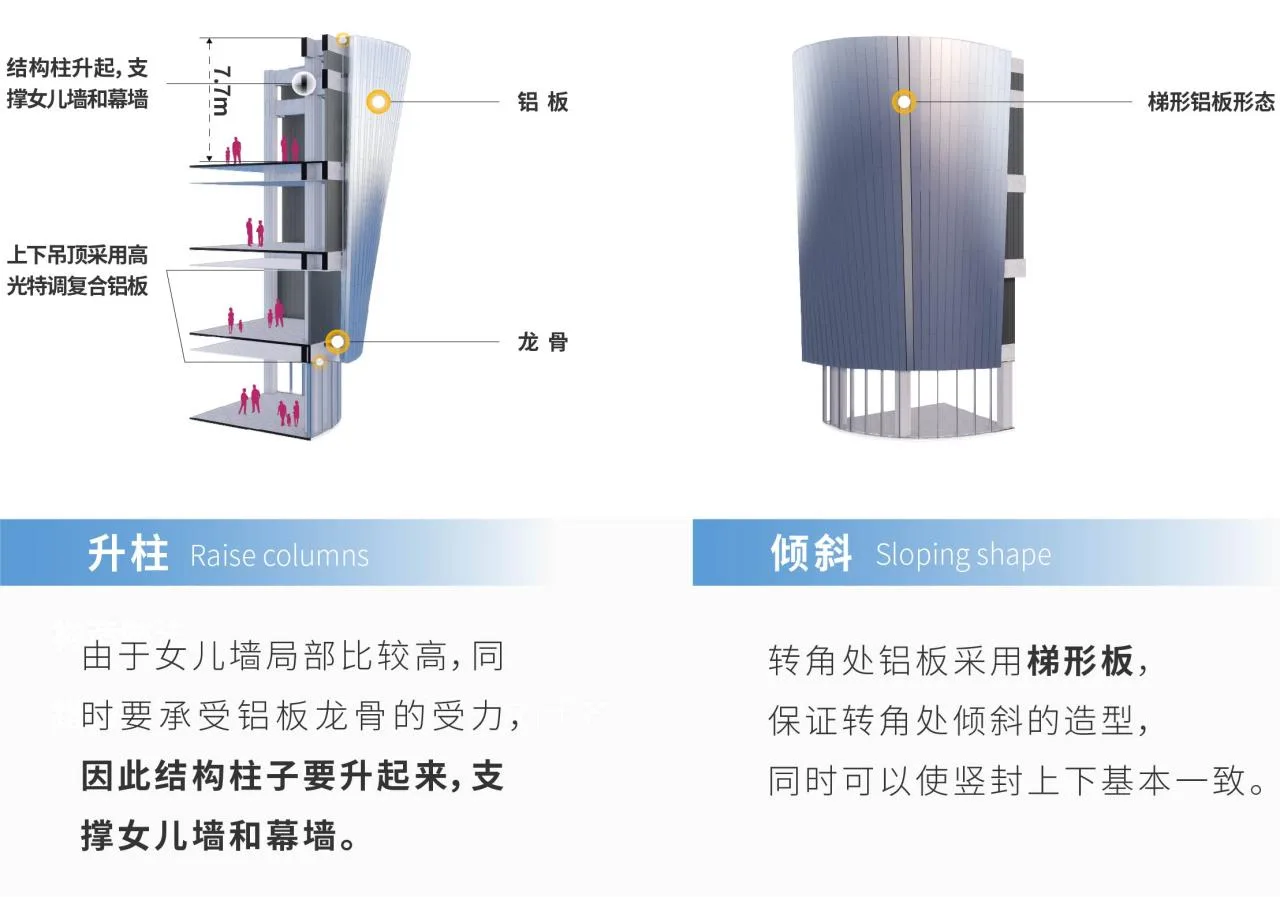
Analysis of corner node details in building structures
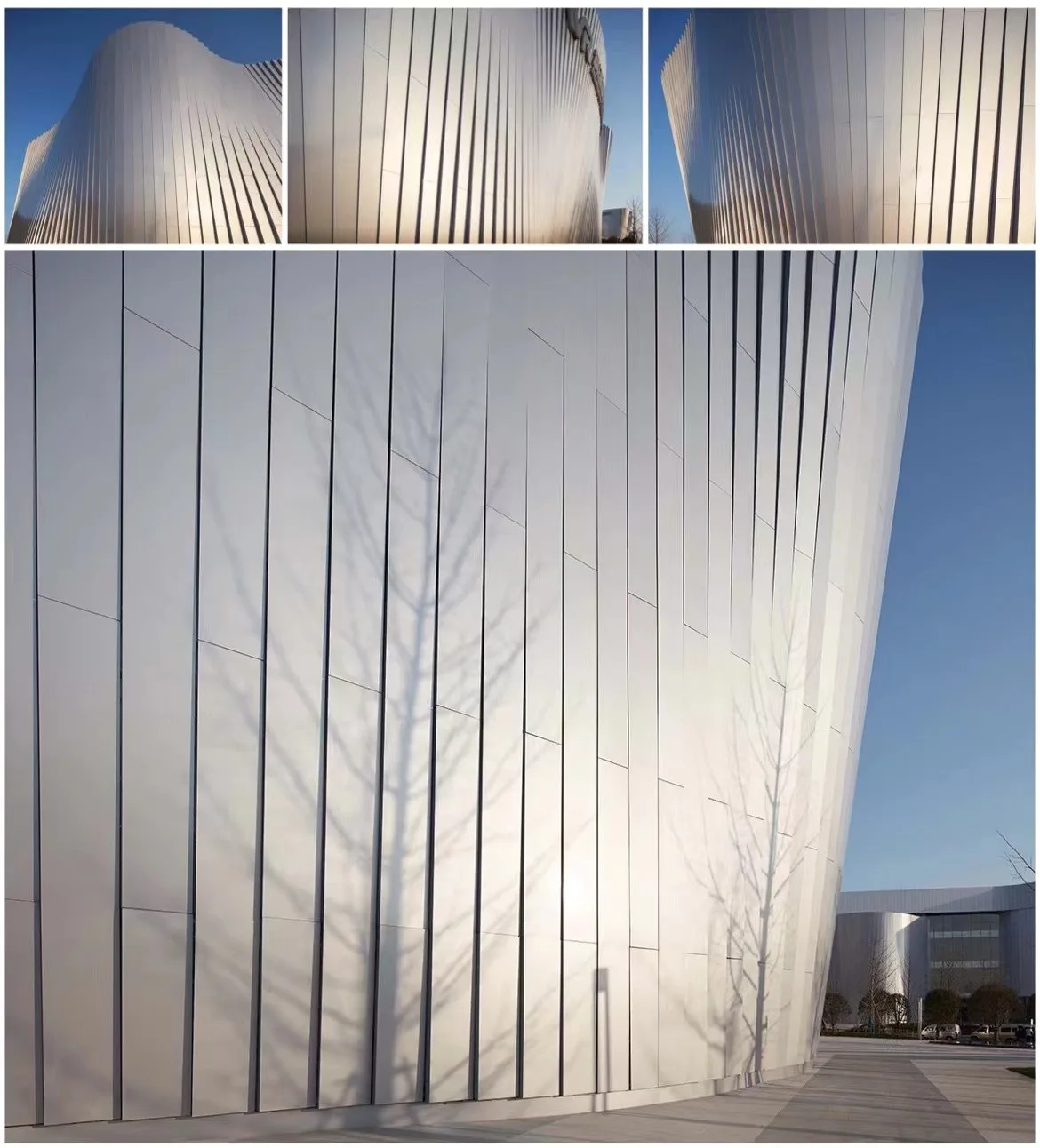
△ Local real scene of building curtain wall © Xia Qiang
03 Fine Craftsmanship
Standardized Design for New Buildings
The design features a 40mm ultra-thin canopy with a 7-meter cantilever, a 24-meter inclined column, and a grand glass skylight structure, integrating multiple functions within an elliptical atrium. The boundaries between the plaza, lobby, exhibition halls, and rooftop gardens are intentionally blurred, fostering an interactive environment between present reality and the future.
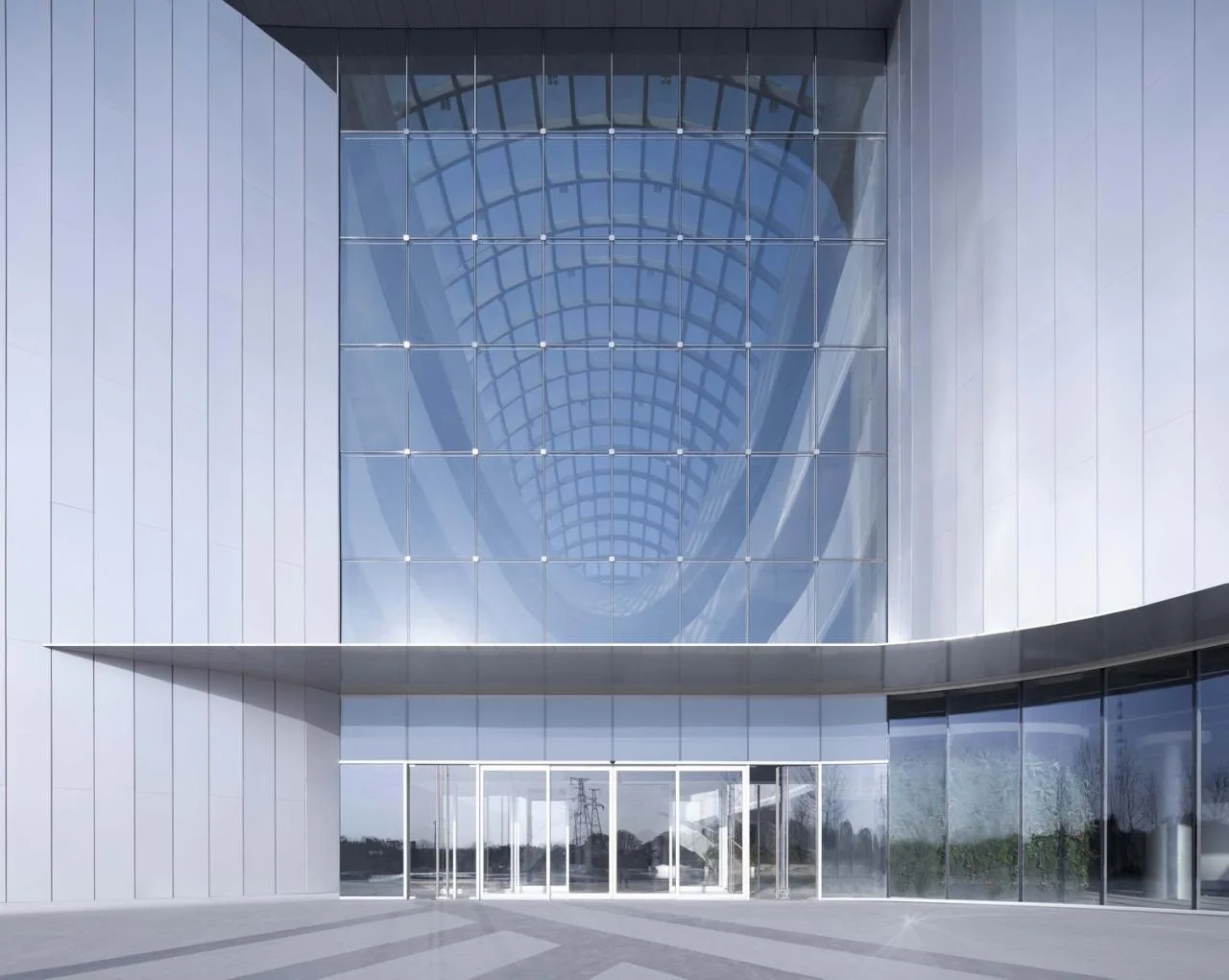
At the building entrance, the skylight is designed as a glass truss, achieving a lightweight and transparent feel. Combined with the large atrium space, this design creates a seamless and fluid exhibition experience, achieving a harmonious unity of form and function. The 40mm ultra-thin floating canopy at the entrance, shaped to follow the building’s flow, highlights the meticulous attention to detail.
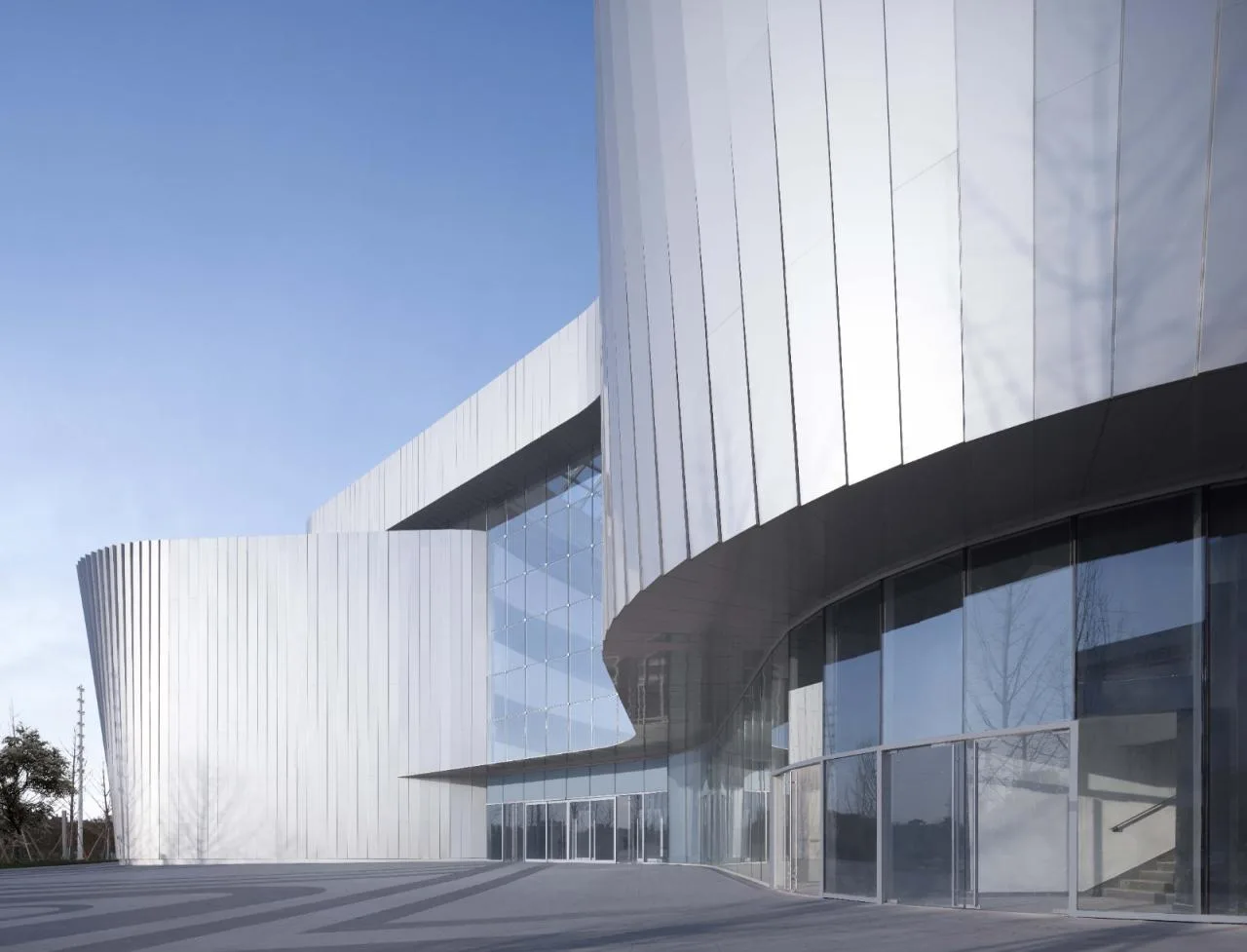
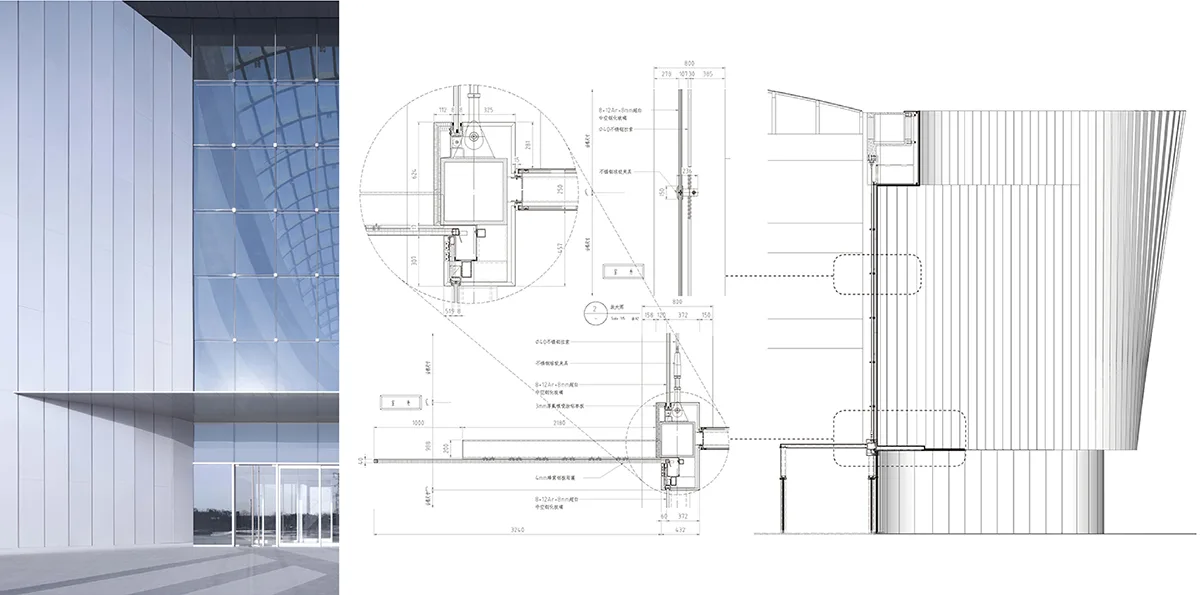
△ Realistic images of the main entrance © Xia Qiang
For fire rescue windows and first-floor evacuation doors, the design employs staggered metal curtain walls to create openings without disrupting the architectural logic. By opening the axis, only the gaps appear on the facade, preserving the overall aesthetic from a distance while fulfilling mandatory fire safety regulations.
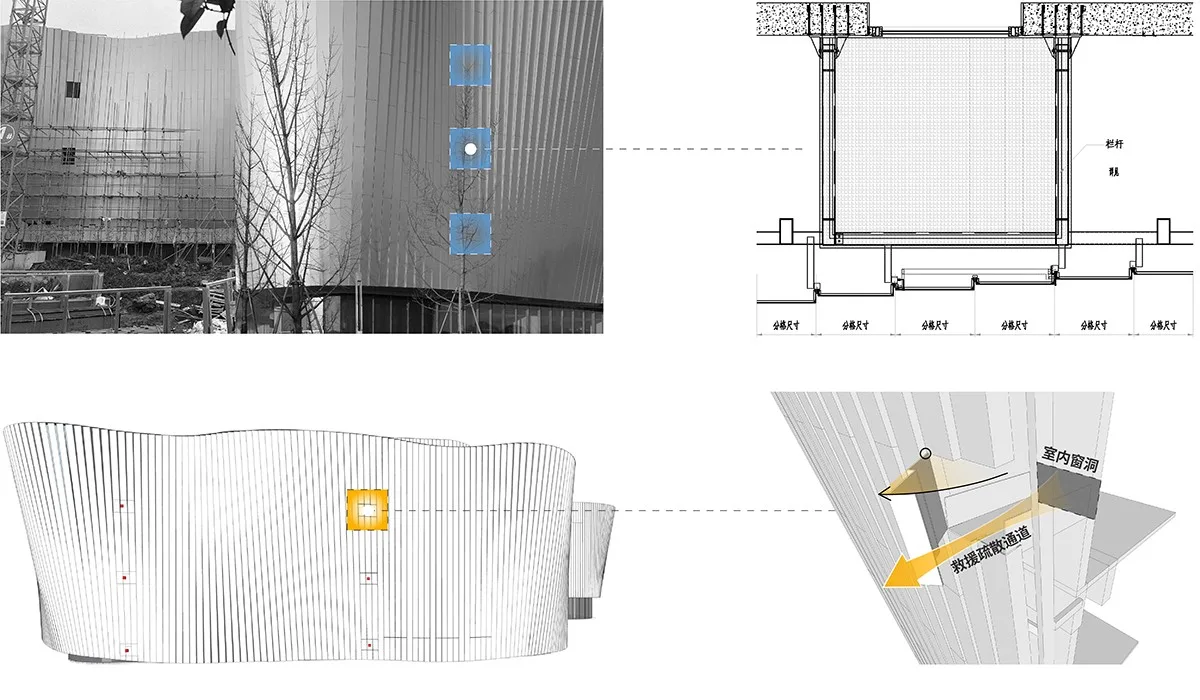
Design analysis of building fire rescue windows
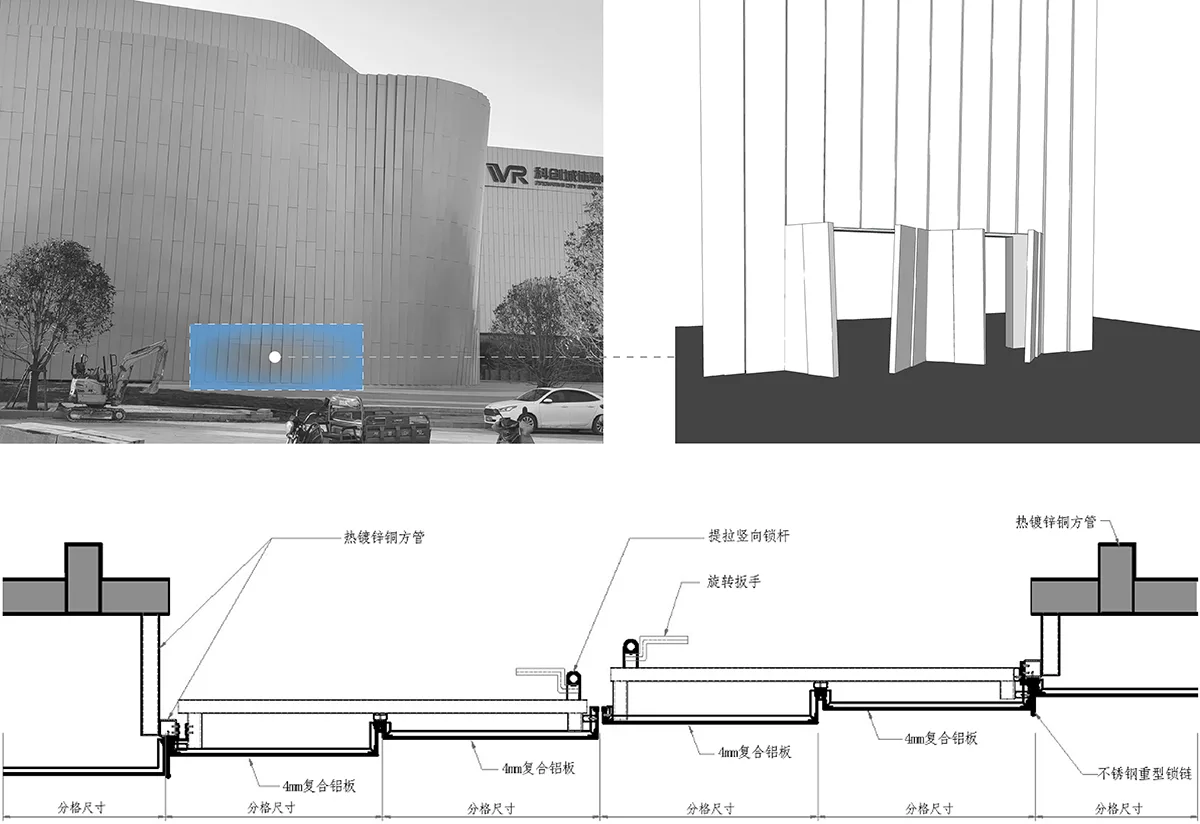
Design analysis of first-floor evacuation doors
Regarding the building’s fifth facade (roof), the design team worked closely with construction, landscape, and other design units to integrate the VRV air conditioning equipment seamlessly into the landscape design. The civil air shaft is positioned adjacent to the roof parapet wall and integrated with it upon exiting the roof, ensuring a cohesive roofscape. The mechanical and electrical air shafts are fully incorporated into the roof’s landscape design.
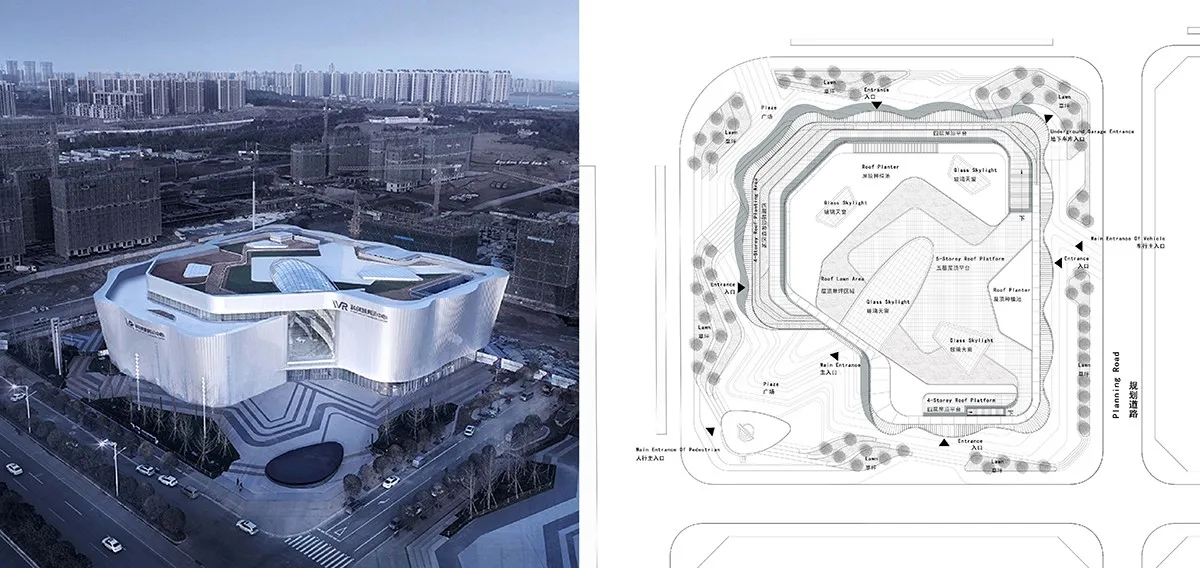
Design analysis of the building’s fifth facade
Building infinite possibilities with fresh thinking
The sense of the future is not only reflected in the design inspiration but is embedded throughout the entire lifecycle of the building. Continuous innovation in design concepts and thinking will further propel the development and realization of contemporary and future-oriented architecture.
Project Drawings
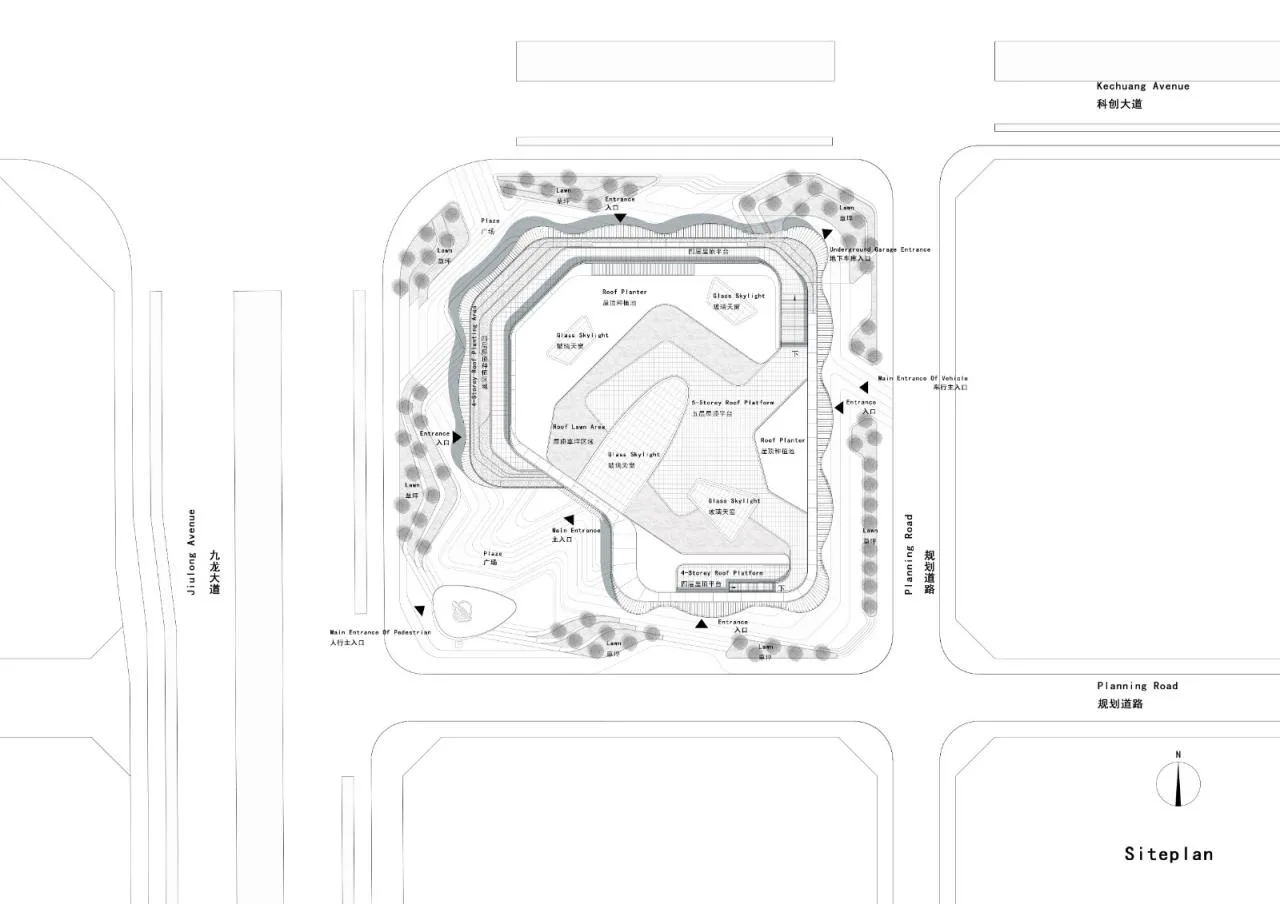
△ General layout plan
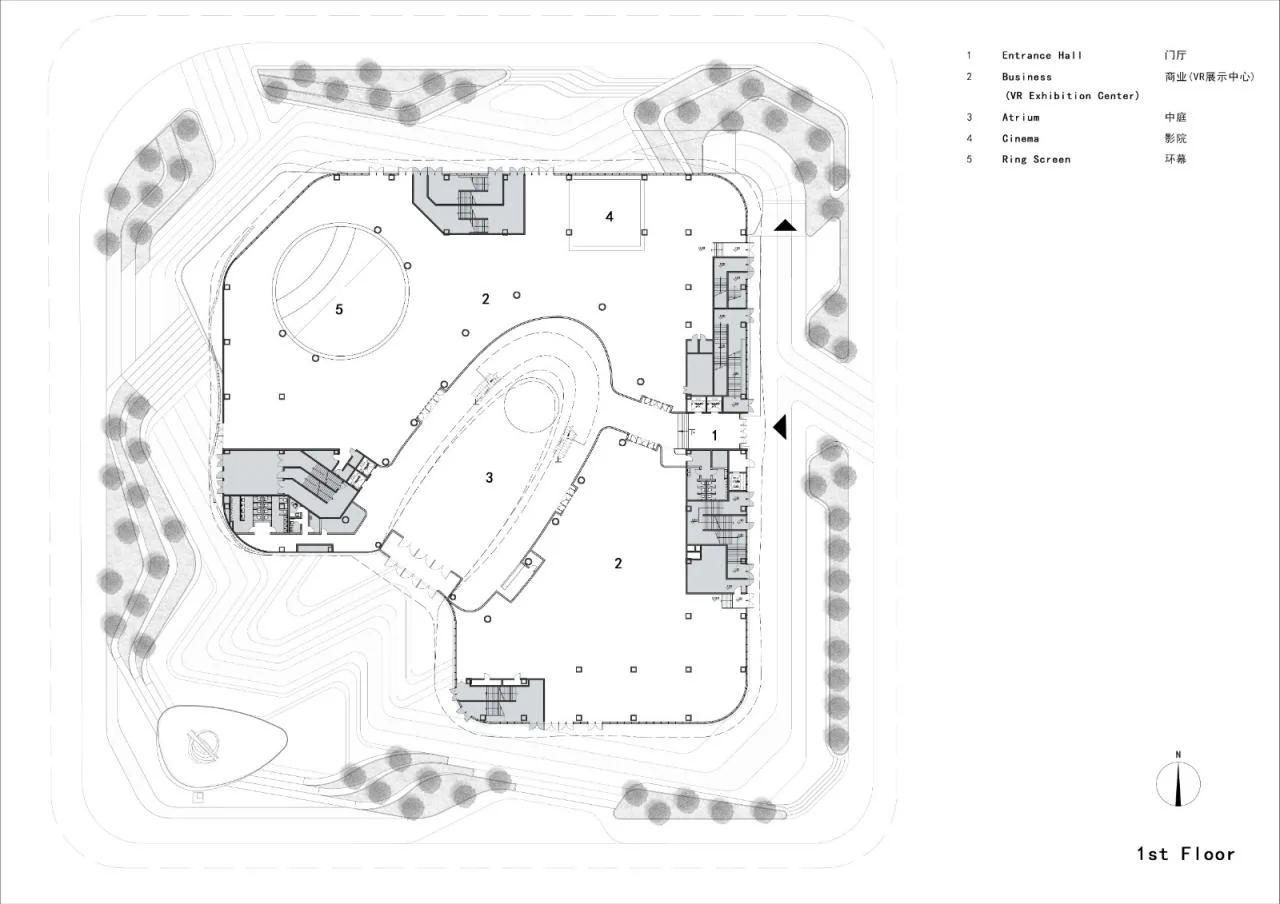
△ First floor plan
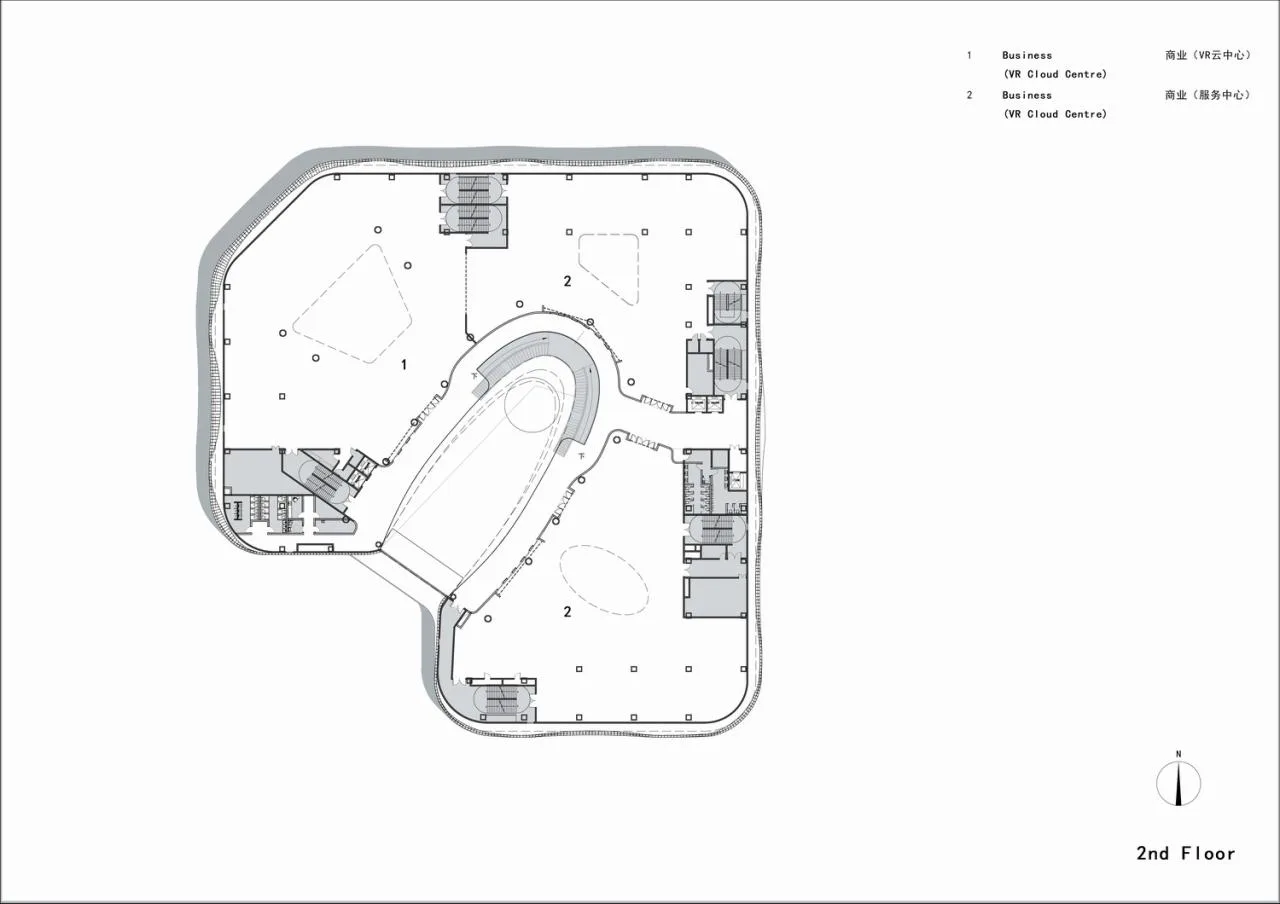
△ Second floor plan
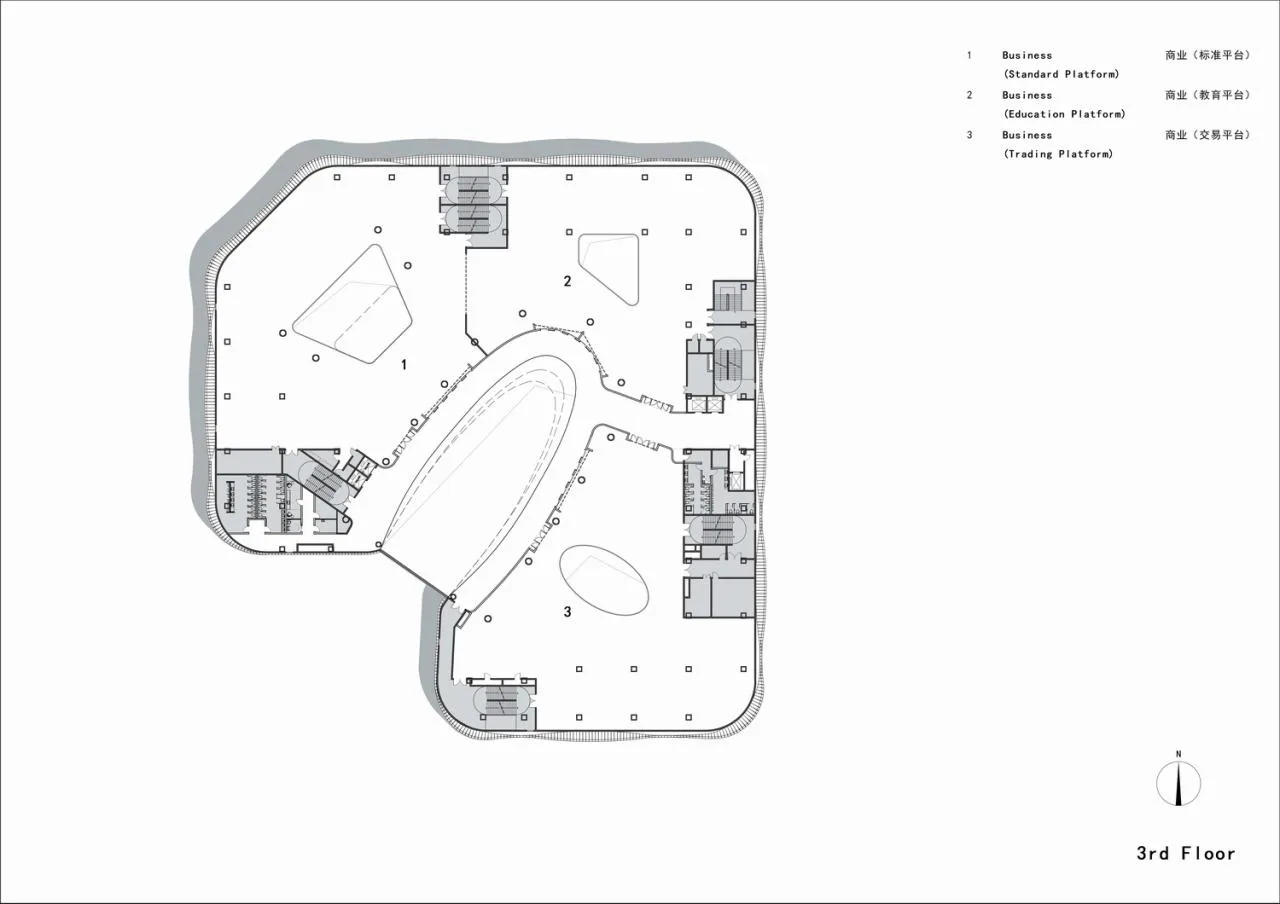
△ Third floor plan
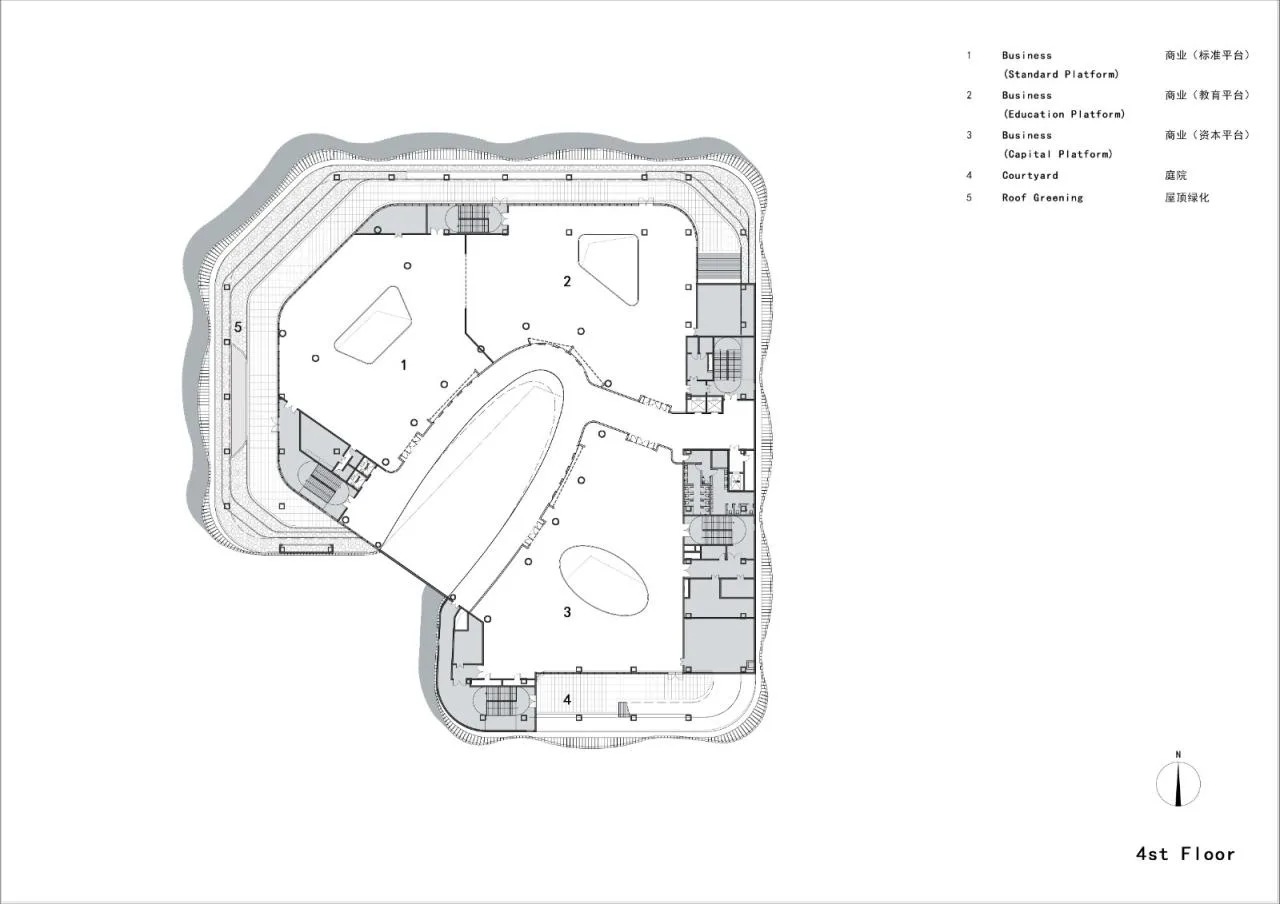
△ Fourth floor plan
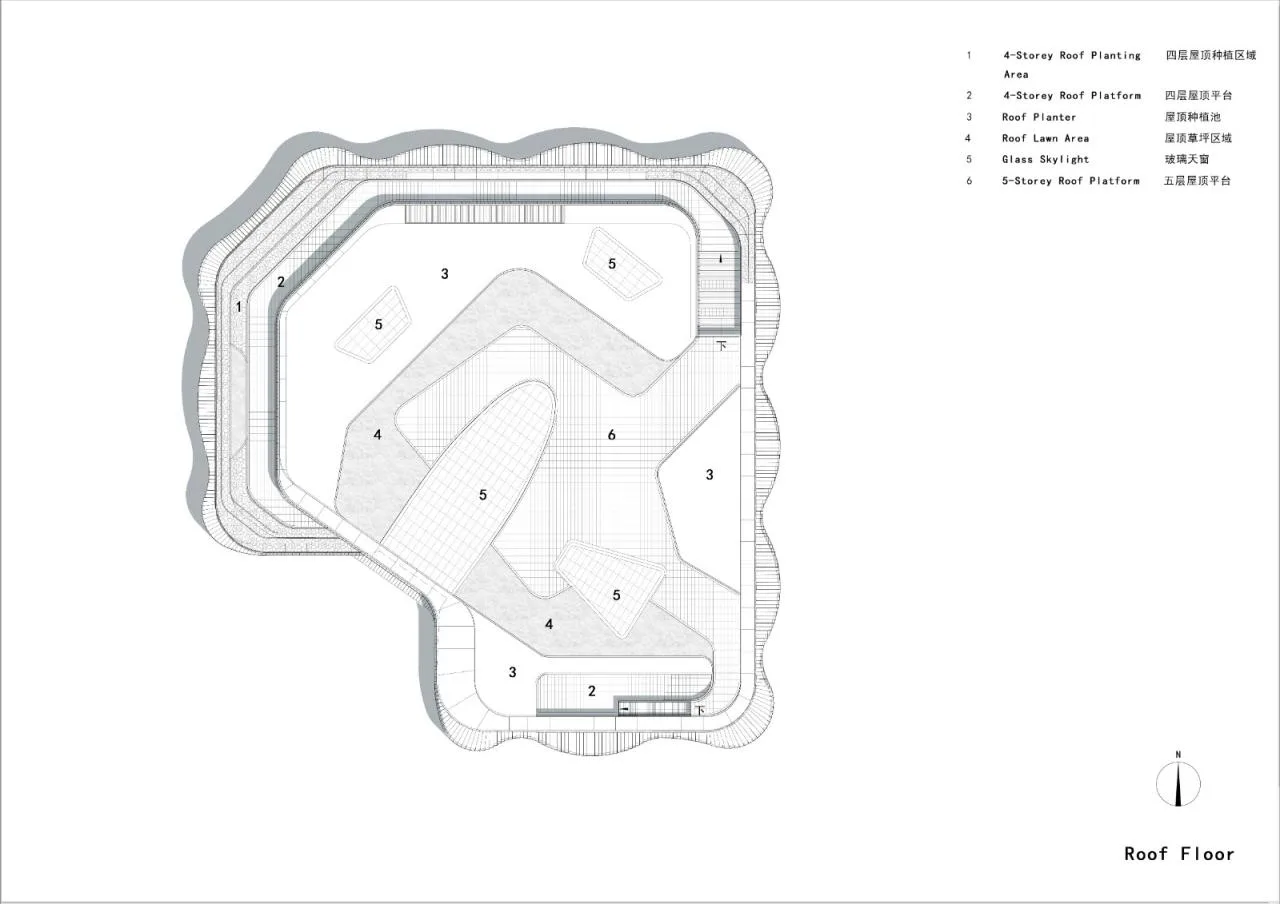
△ Roof plan
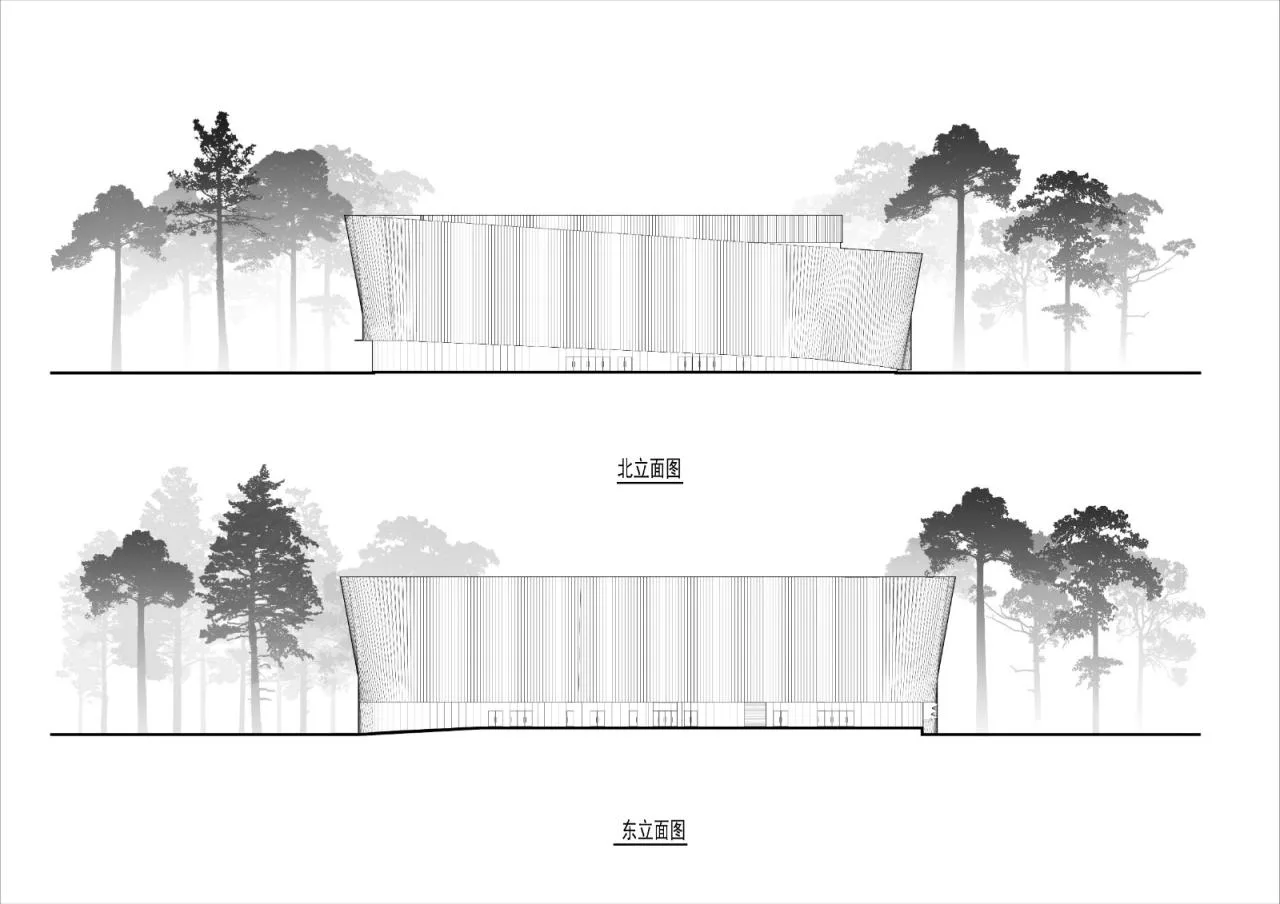
△ Elevation drawing
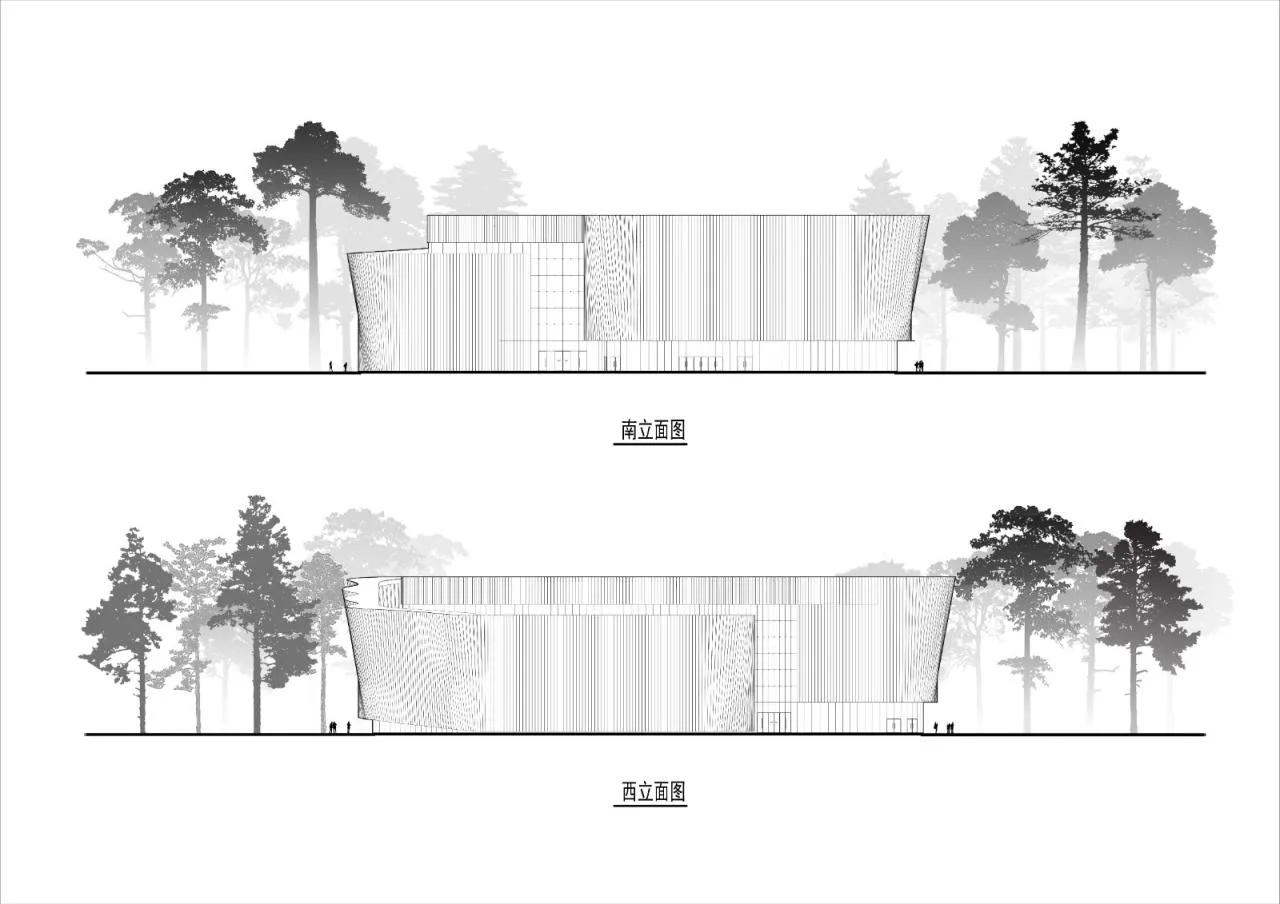
△ Elevation drawing
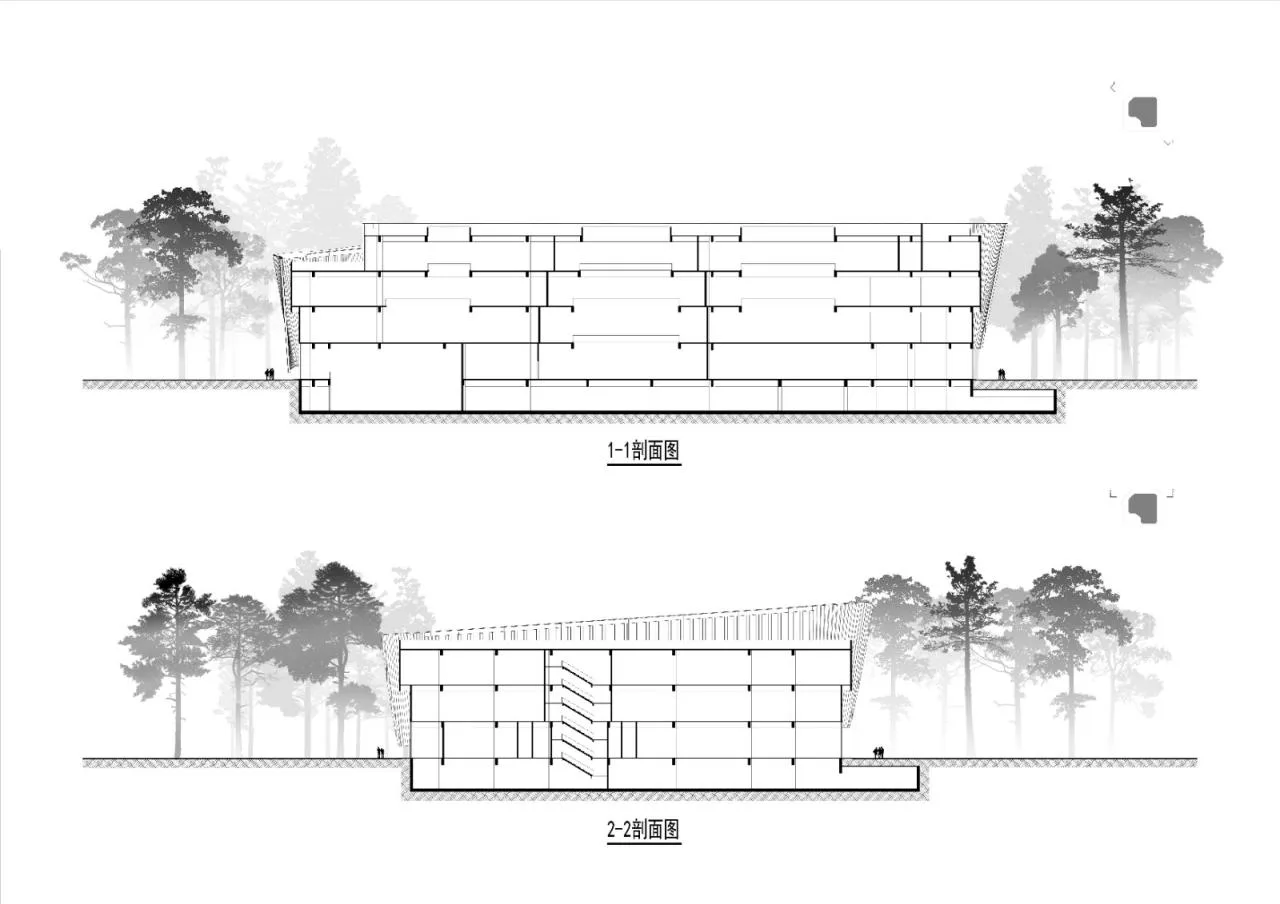
△ Section diagram
Project Information
Building Type: Exhibition Center
Building Area: 33,586 square meters
Developer: Greenland Holdings Group Jiangxi Business Unit | Honggutan Urban Investment
Architectural Design: UA You’an Design
Construction Drawing Design: UA You’an Design
Location: Nanchang, Jiangxi, China
















Must log in before commenting!
Sign Up