
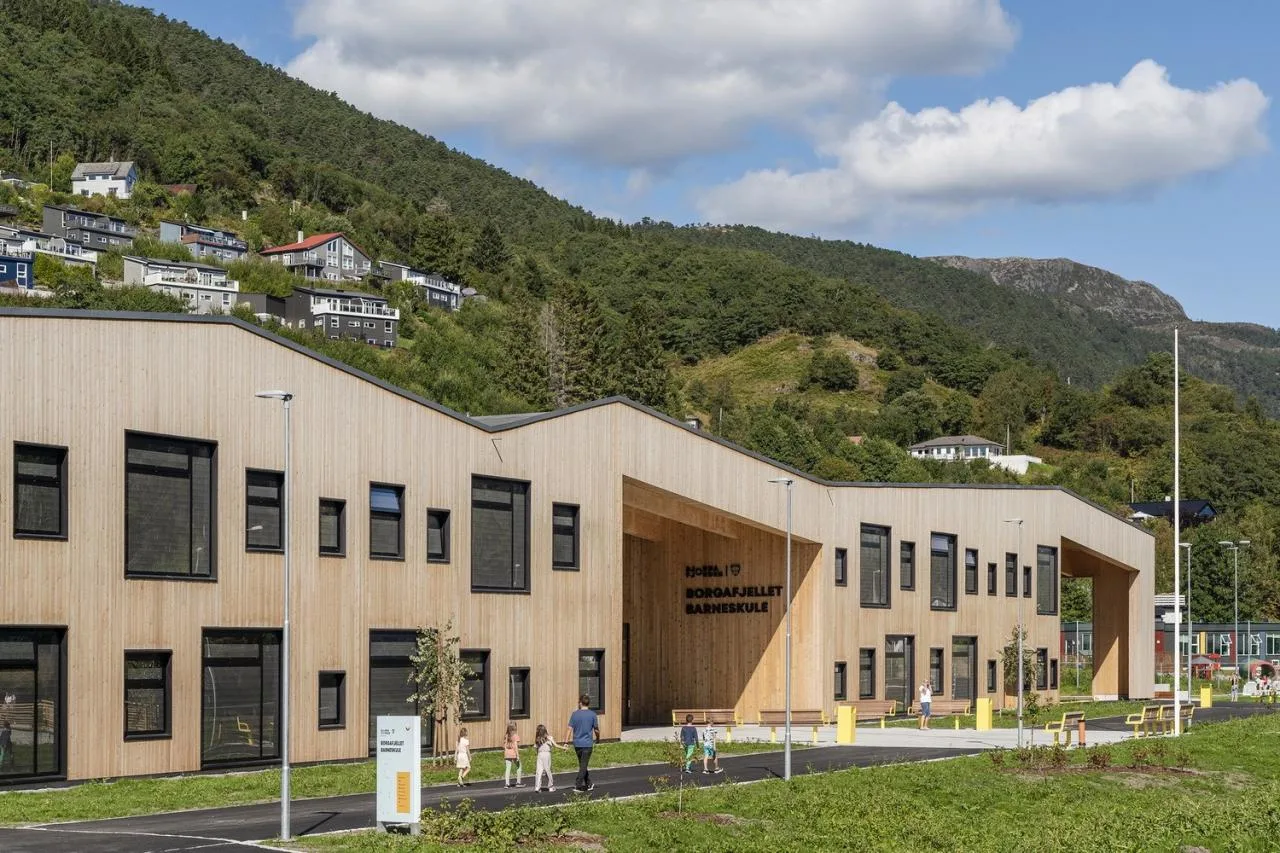
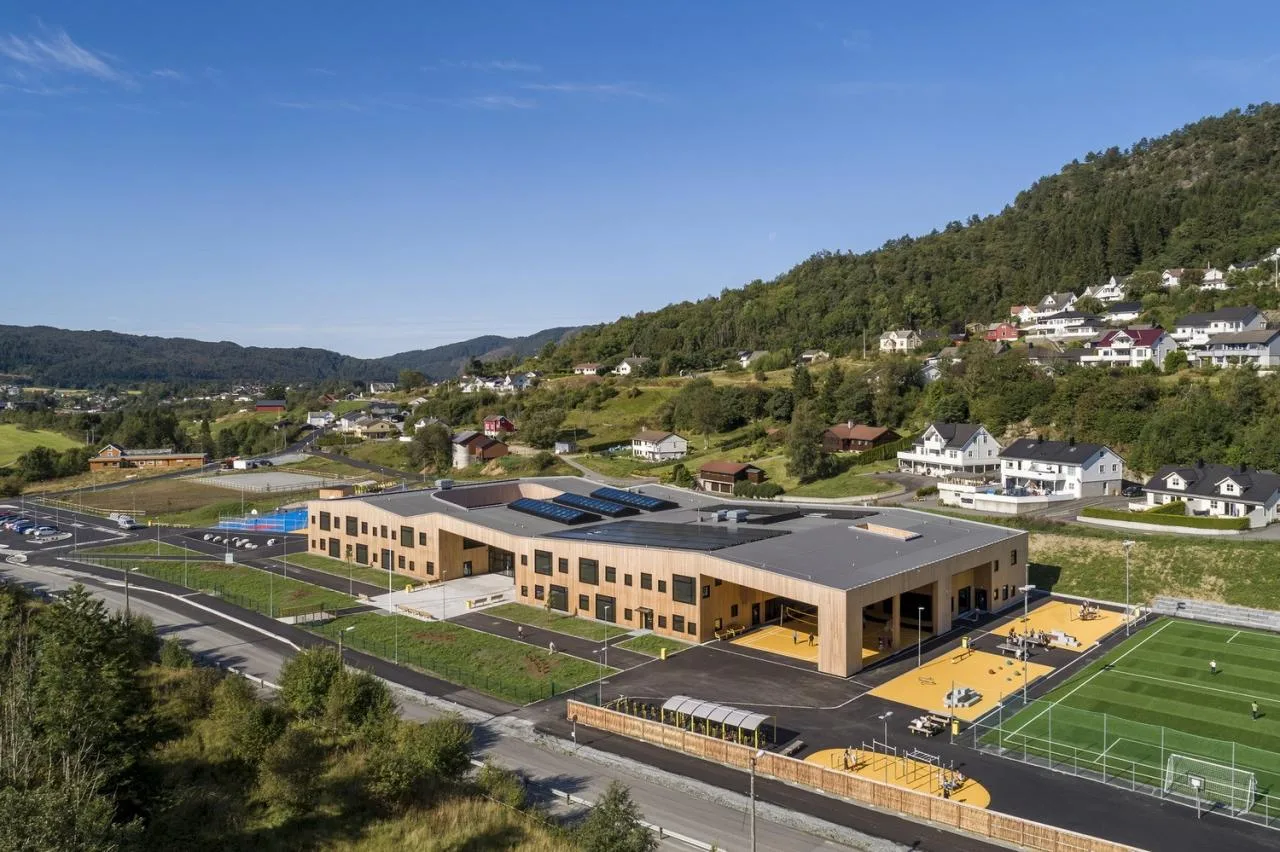
Located near Bergen on Norway’s west coast, the newly opened Borgafjellet Elementary School stands out for its innovative combination of mixed ventilation and solid wood cladding. The project’s primary goal was to create the healthiest possible indoor environment for 420 students and staff. The design team developed a highly sustainable and forward-thinking building, emphasizing sustainable development, a reduced climate footprint, durable materials, and excellent indoor air quality.
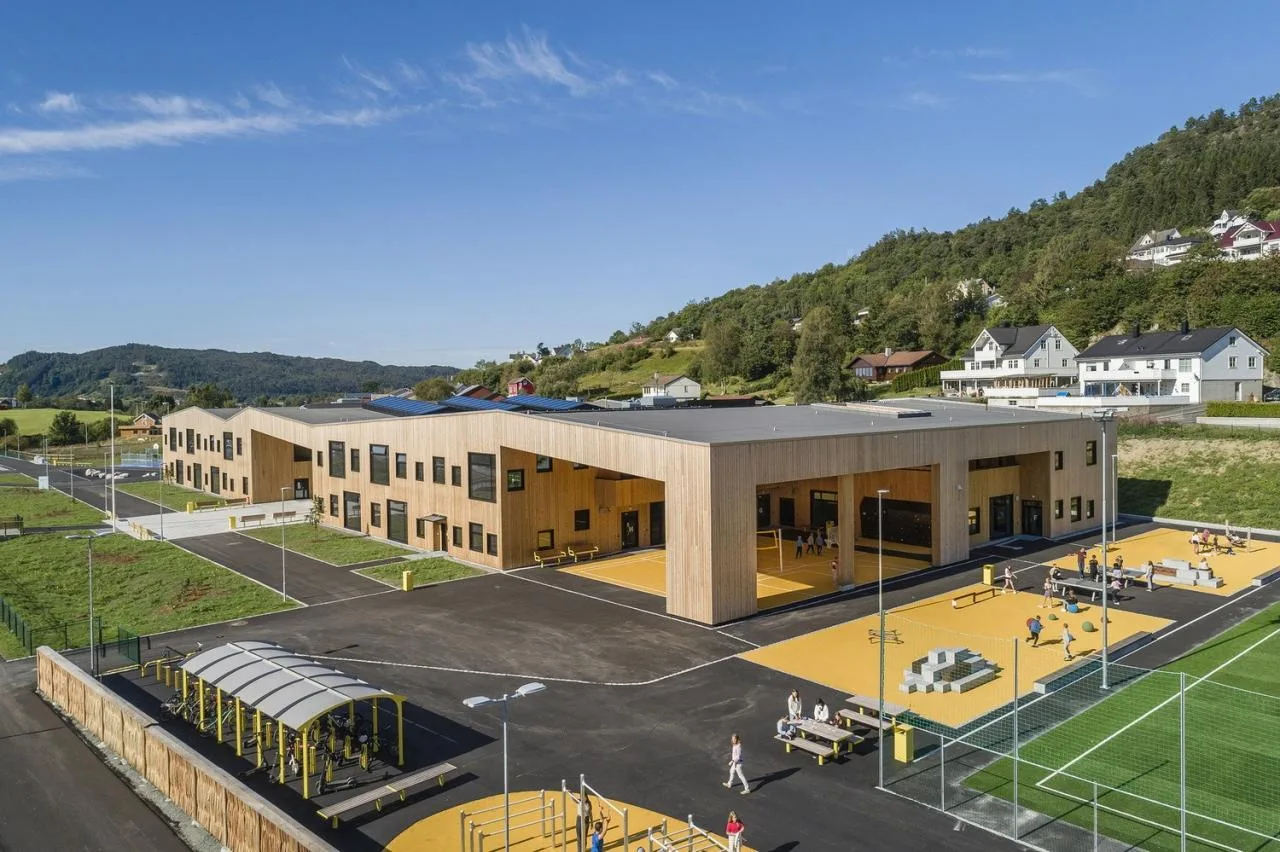
LINK Arkitektur served as the consultant throughout the entire process, covering planning, landscape architecture, architectural physics, and architecture. From initial concept to project completion, the collaboration between the client and the design team was close and productive, yielding valuable insights along the way. Bjørn Feltens, the architect and project manager at LINK Arkitektur, highlighted that the project demanded expertise in both solid wood construction and mixed ventilation. To meet these challenges, a strong interdisciplinary team was assembled to maximize the project’s potential.
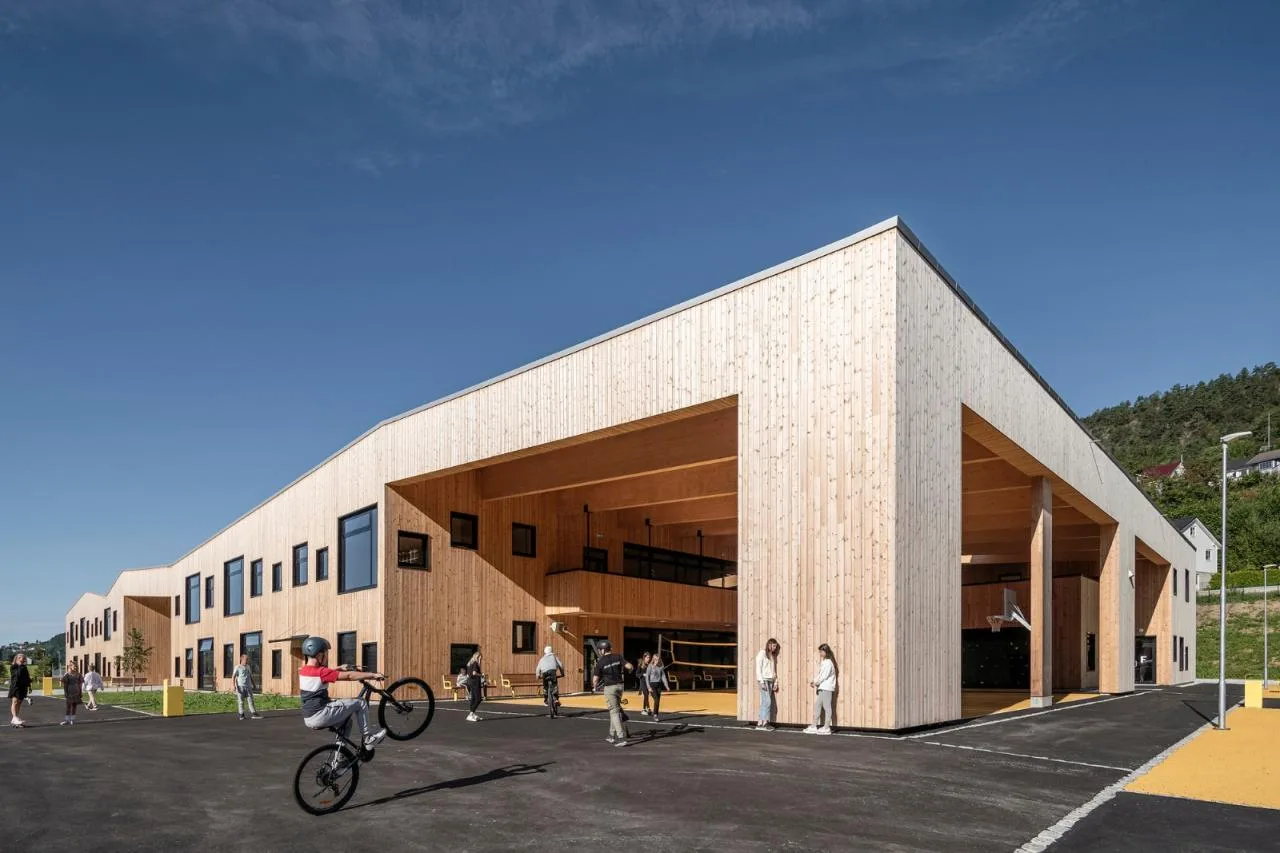
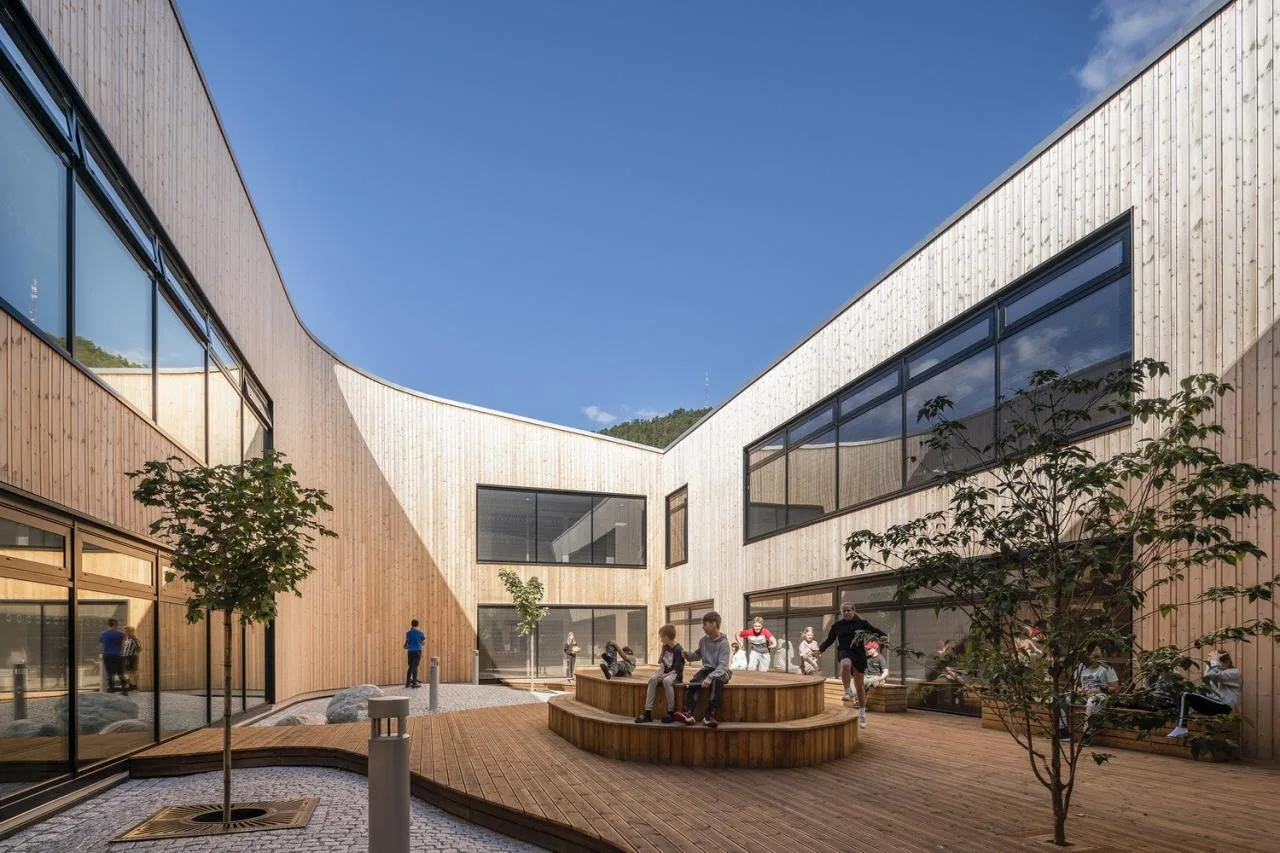
The school extensively incorporates solid wood in its construction, which not only significantly lowers the building’s climate footprint but also helps maintain stable indoor humidity levels. Solid wood is used in exterior and interior walls, floor partitions, roofs, stairs, railings, and load-bearing interior walls. Even the non-load-bearing interior walls are finished with solid wood surfaces. Additionally, the building employs mixed ventilation, combining mechanical systems with natural air supply. Fresh air enters through automatically controlled windows, enhancing air quality and effectively regulating temperature.
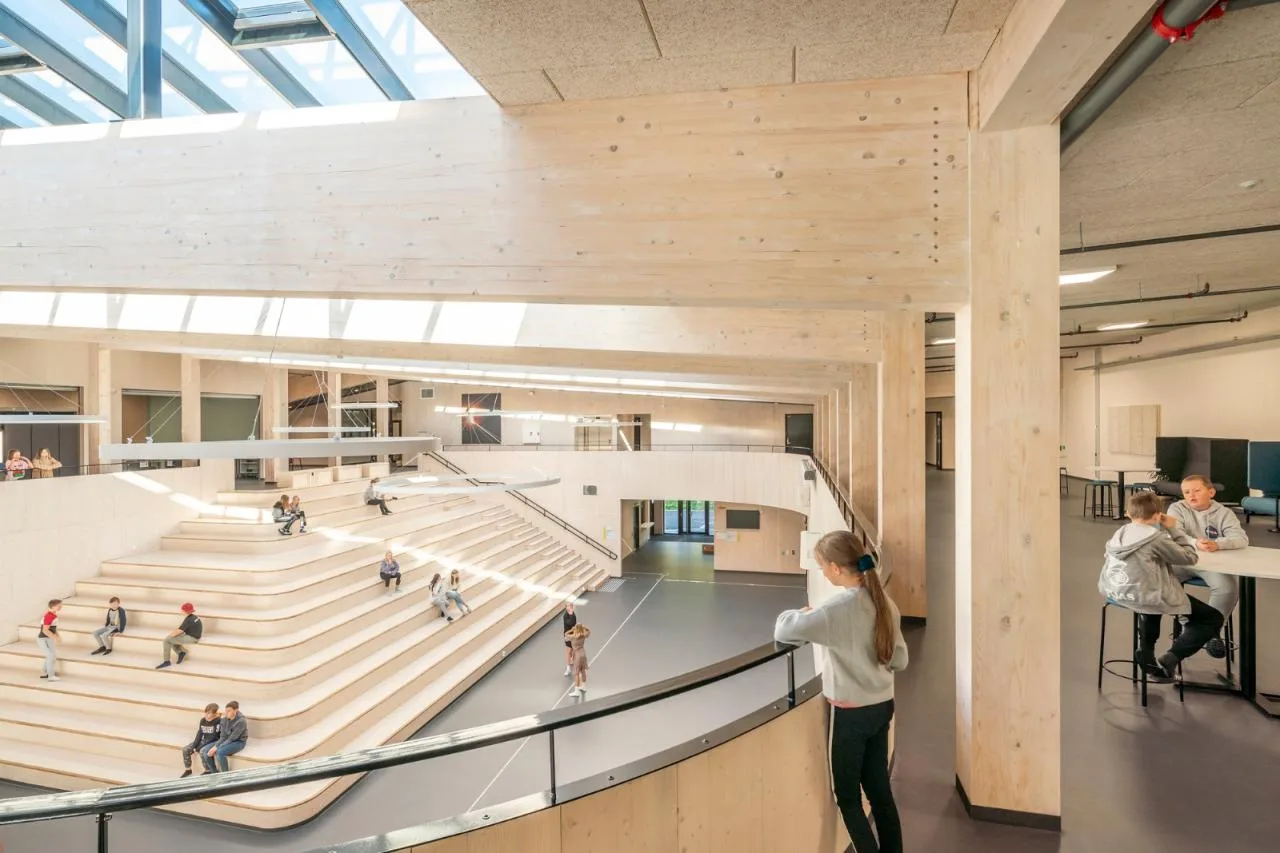
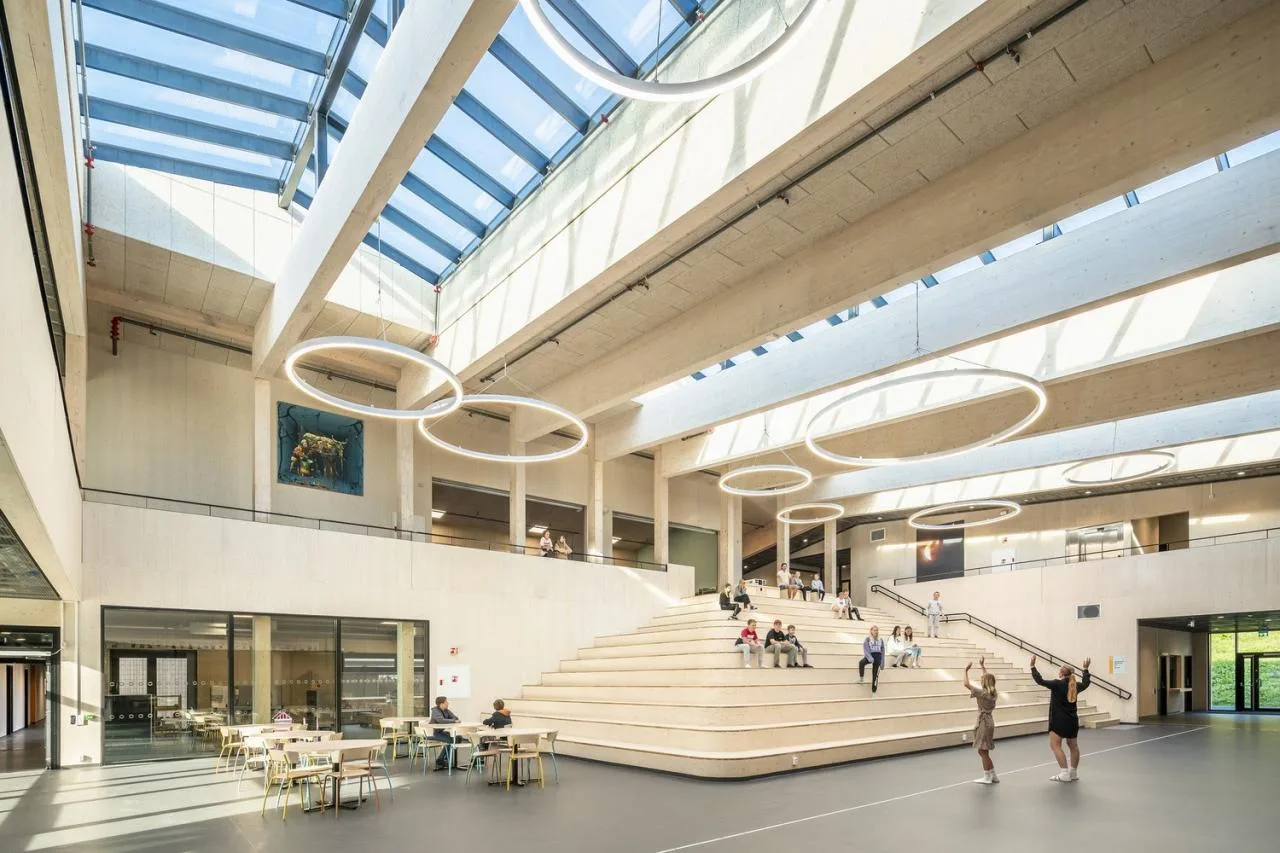
Due to the region’s notoriously harsh climate, with approximately 230 days of heavy rain annually, the school includes a large outdoor activity area sheltered by a wide-span covered roof. This outdoor space serves as a valuable asset to the local community and draws visitors from nearby areas. Maintenance is made easy through the use of durable materials such as mining pine cladding, solar panels on the roof, and local energy wells. The mixed ventilation system also contributes to significant energy savings and reduces the school’s overall environmental impact.
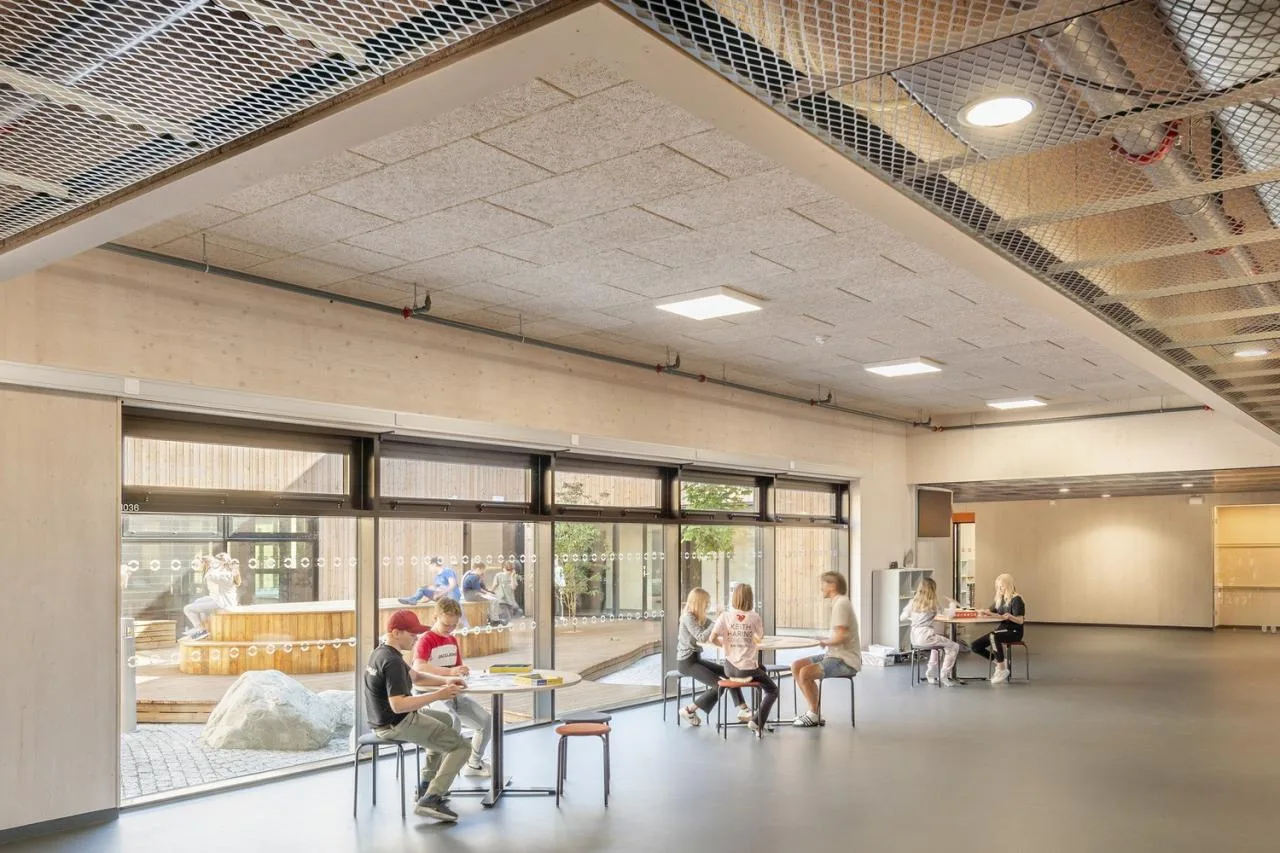
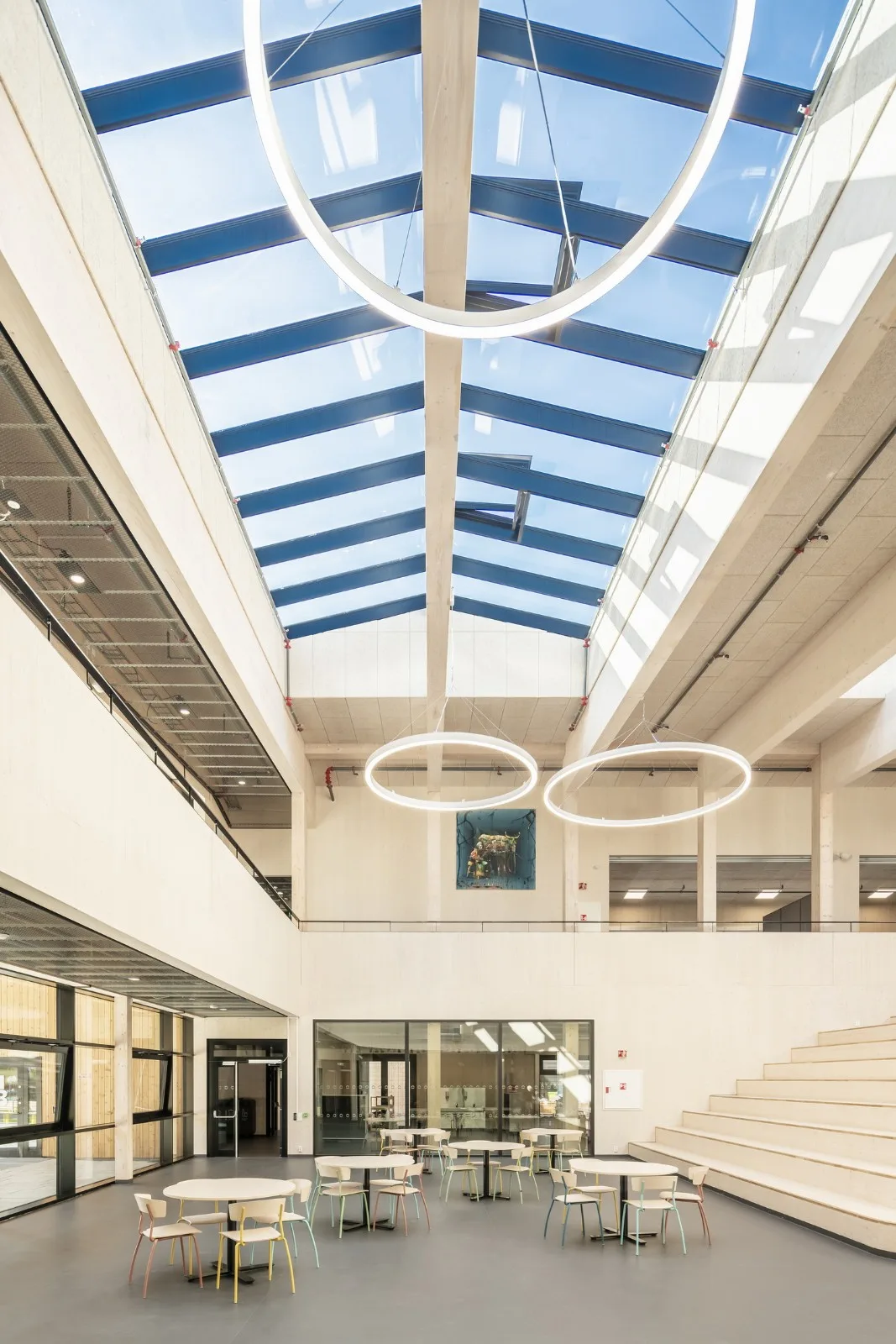
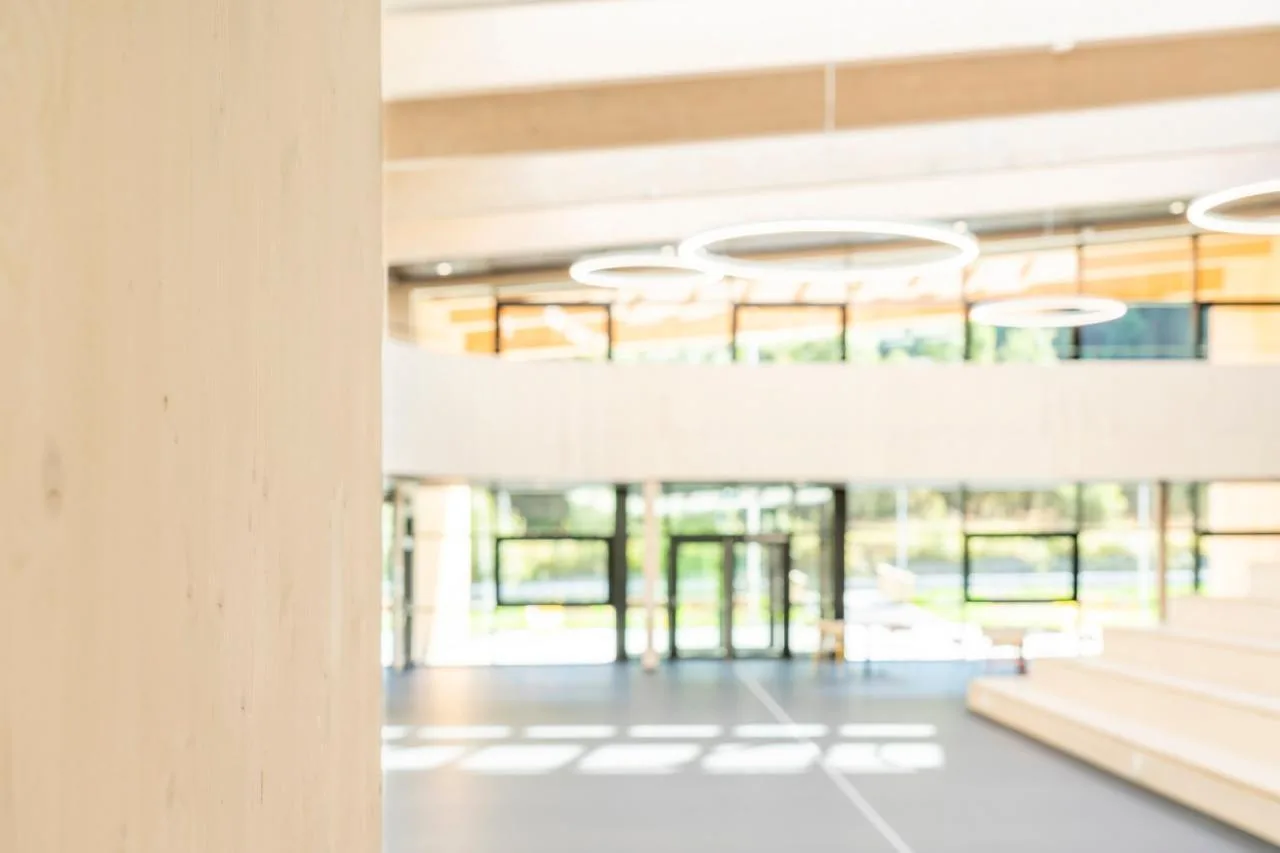
The healthy indoor microclimate is defined by the use of wood, which provides a warm, natural aesthetic that supports both physical and mental well-being. The varied natural earth and mineral tones give each layer its unique character, complemented by natural pigment wall paints that emit a soft, warm glow. Ventilation, temperature, and humidity all influence the classroom microclimate, improving indoor air quality and positively impacting students’ health and learning performance.
Project Drawings
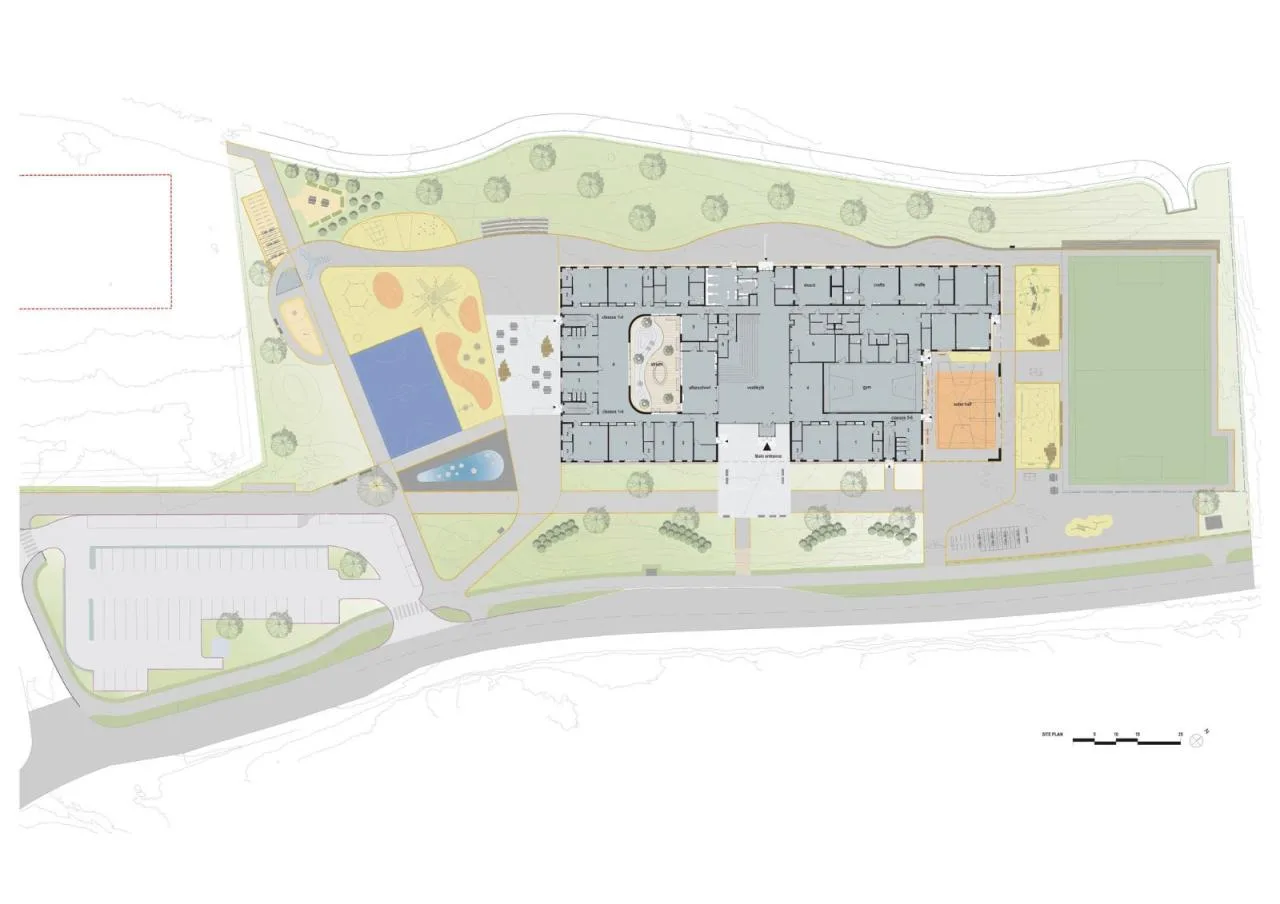
△ General Layout Plan
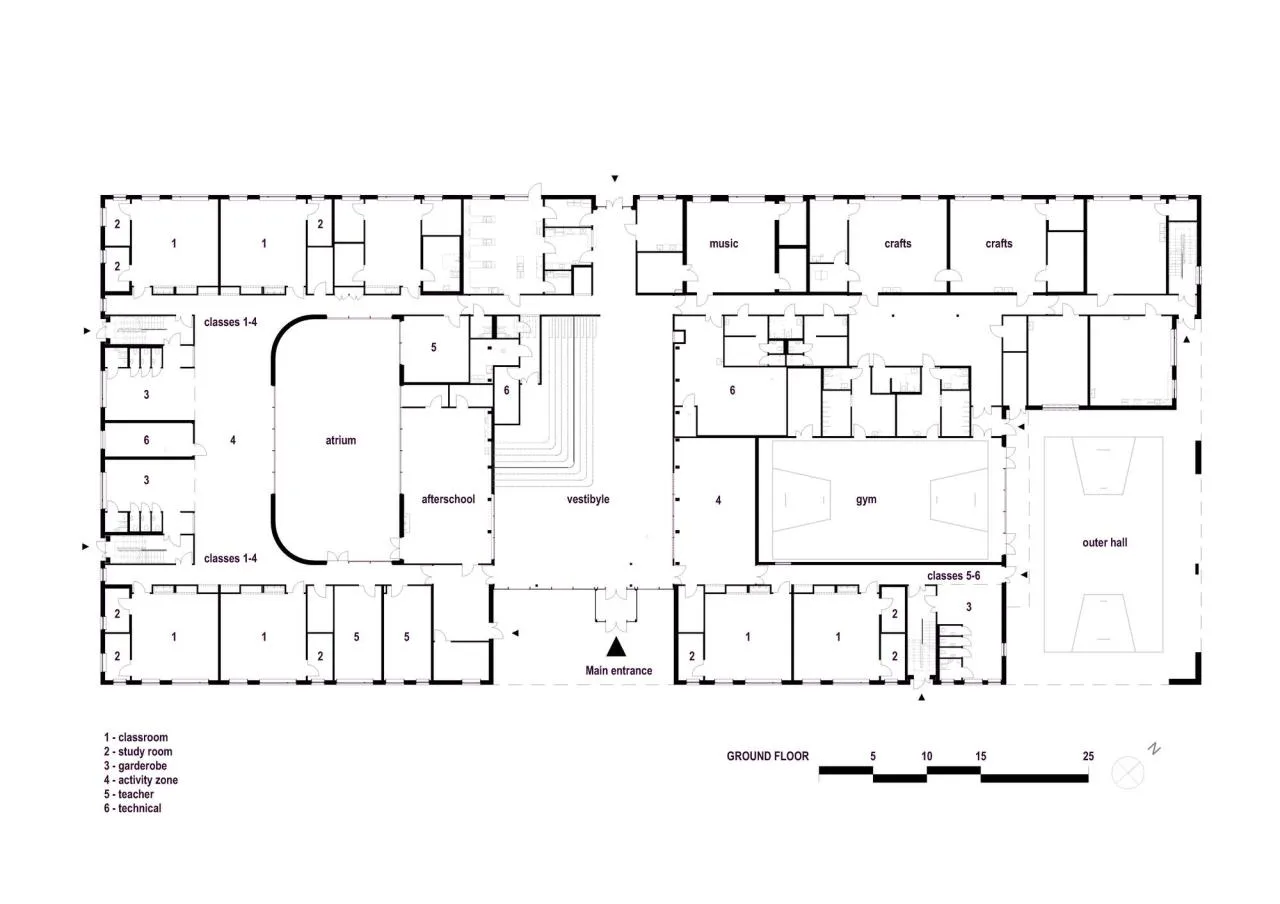
△ First Floor Plan
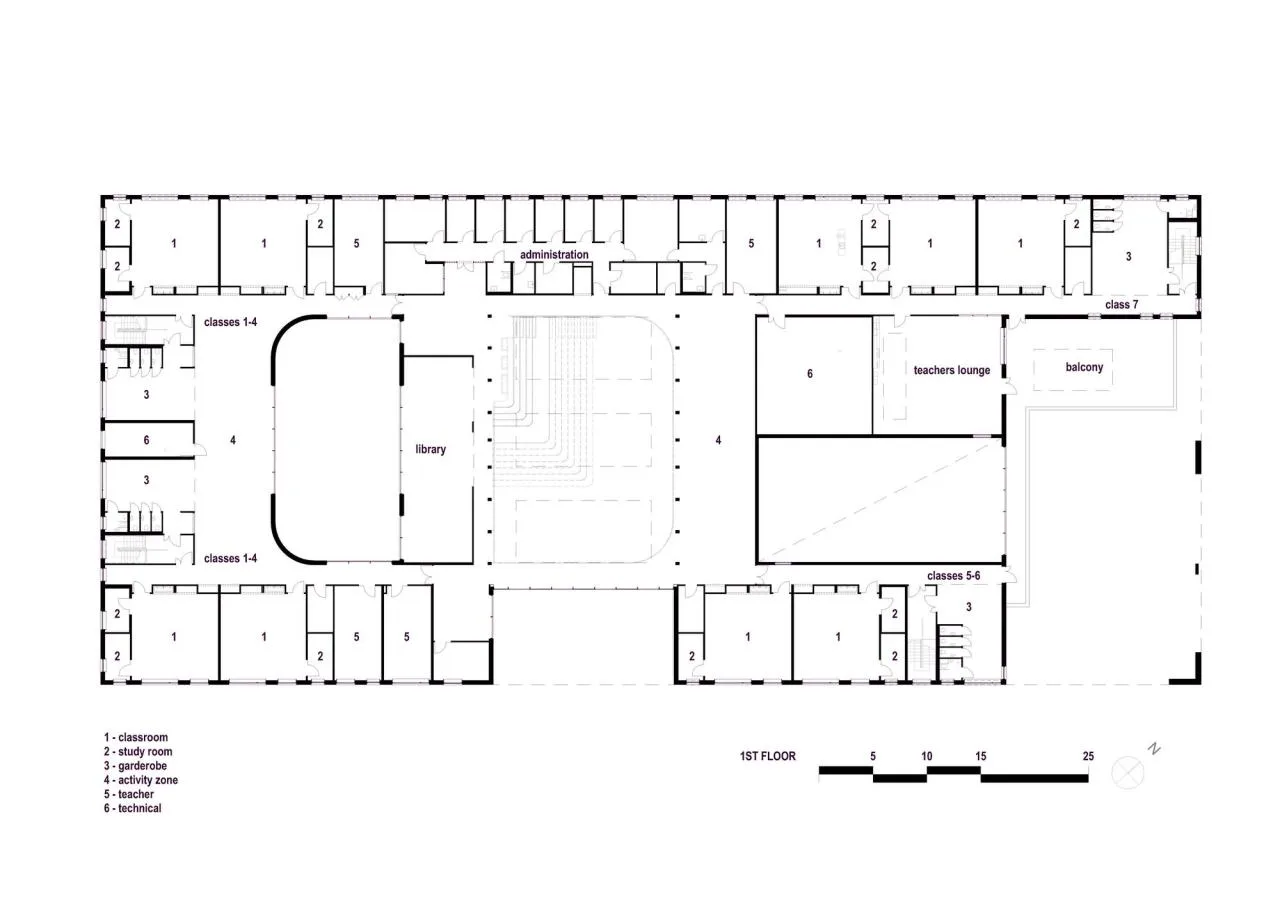
△ Second Floor Plan
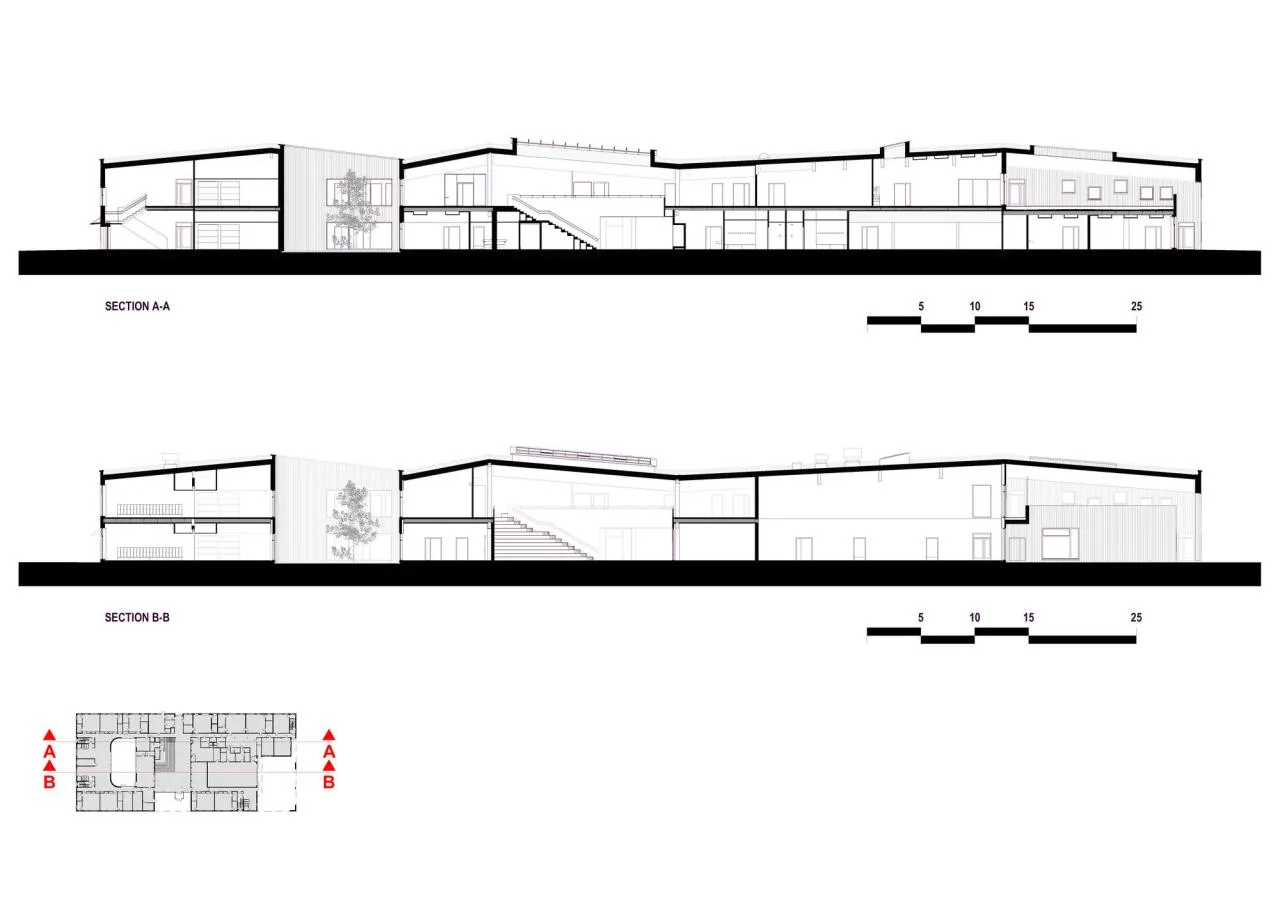
△ Section Diagram
Project Information
Architectural Design: LINK arkitektur
Area: 7,100 m²
Project Year: 2021
Photographer: Hundven Elements Photography
Manufacturers: AMG Montaza, Binderholz, KEIM
Project Manager: Bjørn Feltens
Architectural Design Team: Sonja Fastenrath, Zsolt Nagy
Partition Plan: Camilla Mohr
Location: Norway













Must log in before commenting!
Sign Up