
The Sanyanjing Historic District is located in Nanchang, a city with a rich history spanning thousands of years in China. This project is situated in the heart of the old city, named after the historic site “Sanyanjing.” The district holds the same level of protection as Nanchang’s renowned landmarks such as Tengwang Pavilion, Wanshou Palace, and Bayi Square Historic District, all of which reflect the unique character of this famous city.
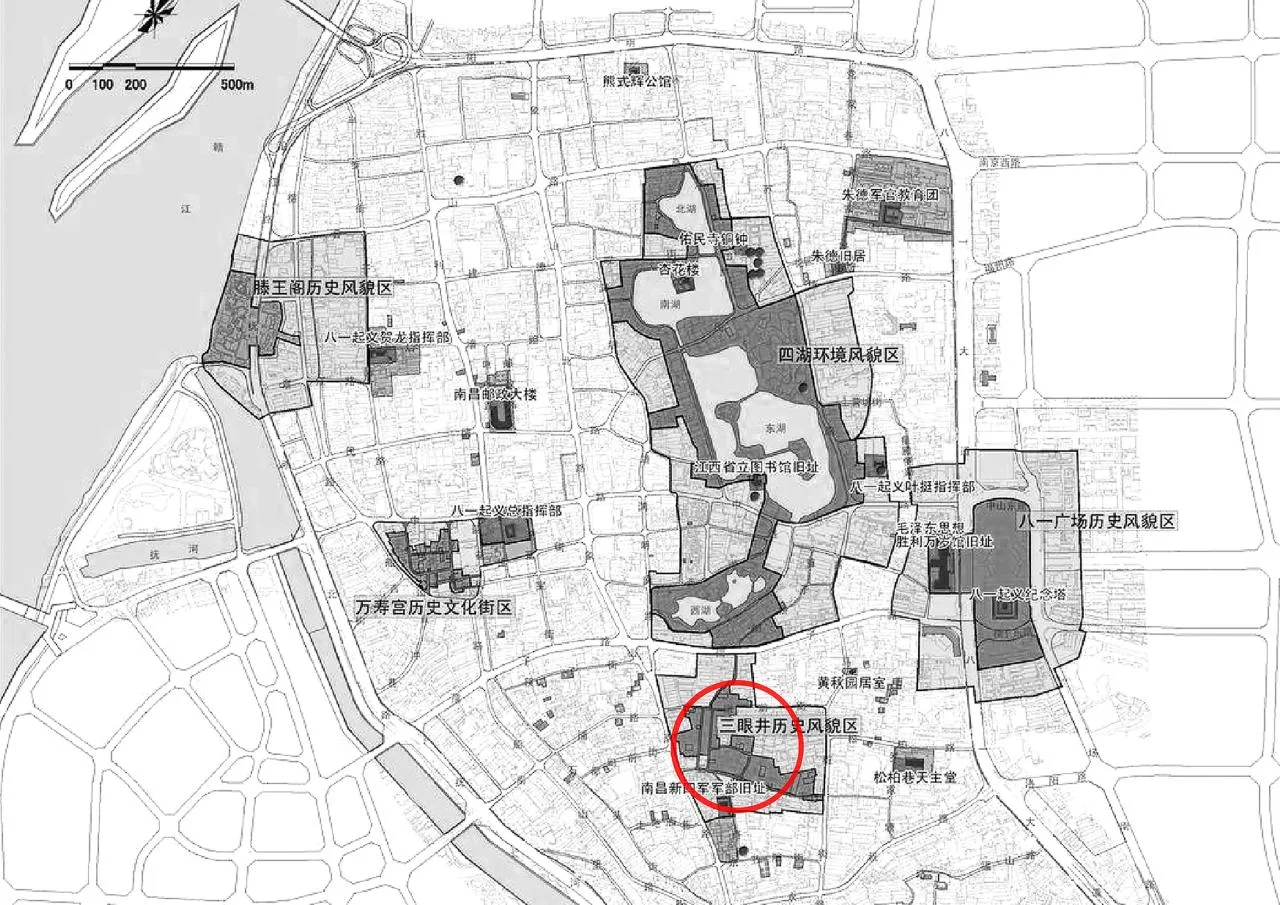
△ Project Location
Historical city maps archived in the urban records show the base site highlighted in red. Centuries ago, this was the core urban area of ancient Nanchang. The site contains buildings from various historical periods, featuring diverse architectural styles from the late Qing Dynasty, through the Republic of China era, the Cultural Revolution, and into modern times.
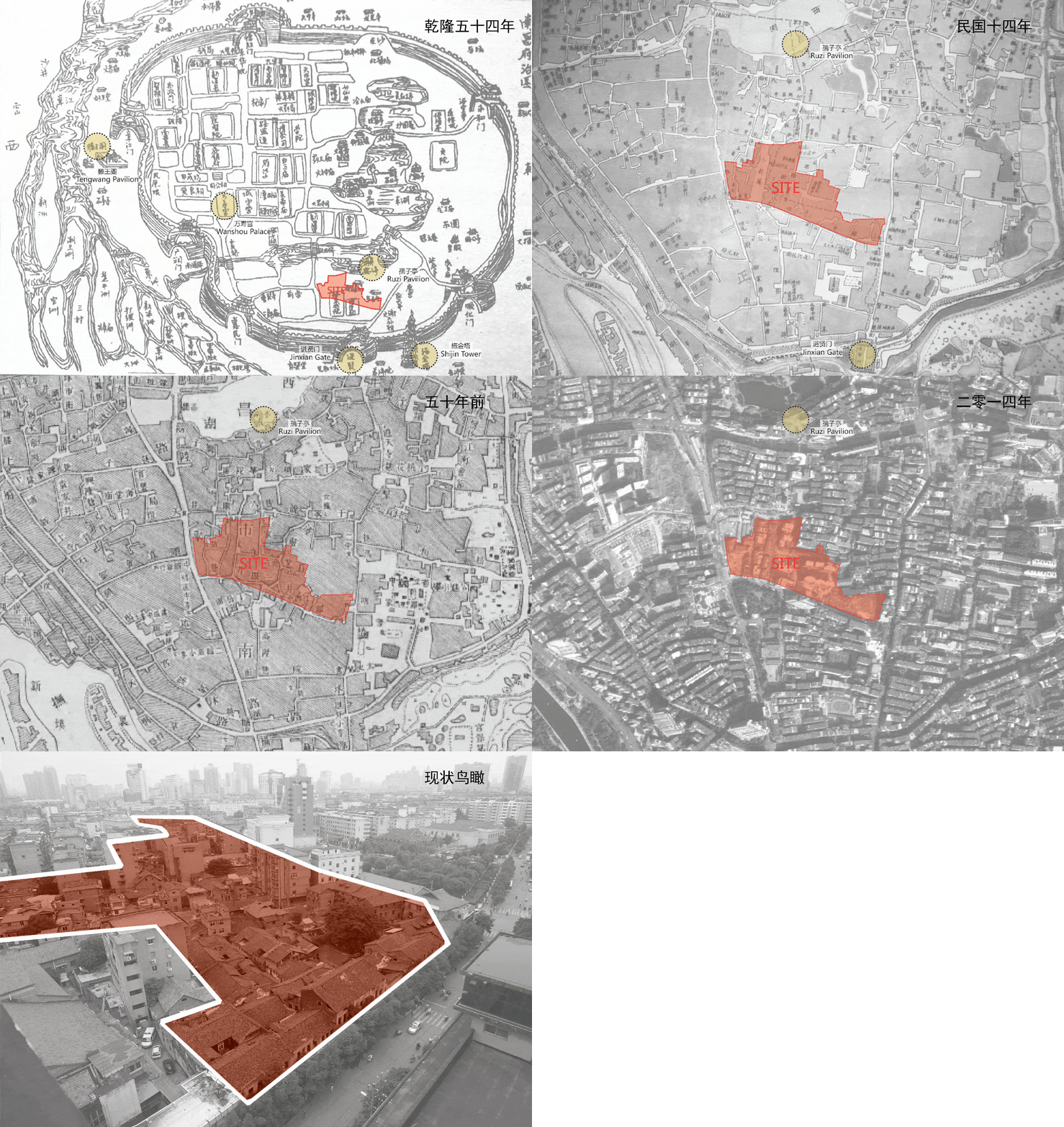
△ Evolution of Surrounding Landforms
Aside from a few historically protected buildings, most structures are in a state of disrepair. However, after thorough on-site investigation, the design team identified that this rich combination of architectural styles from different periods is the most defining feature of the site. Integrating these elements into a commercial district design presents a unique and exciting challenge.
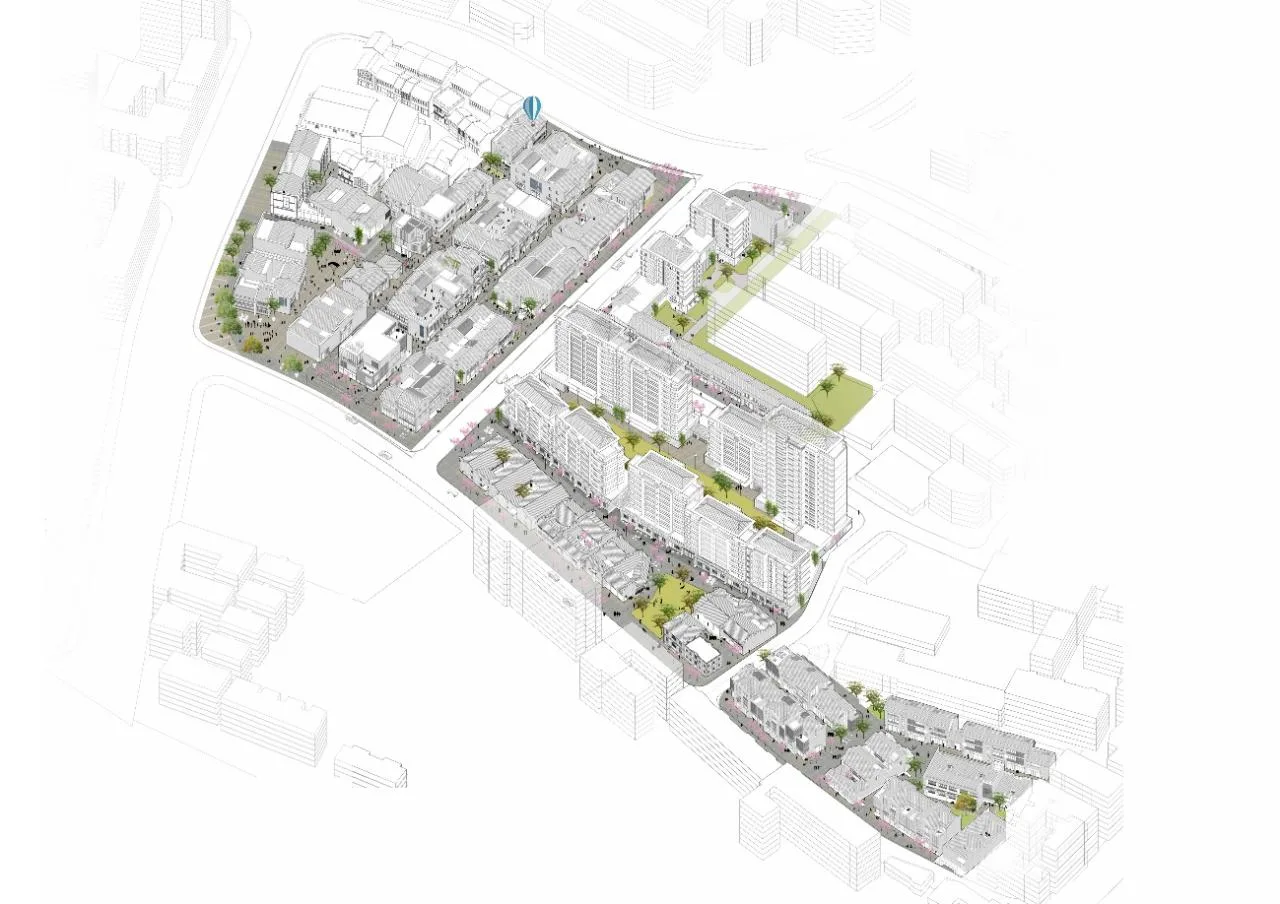
△ Bird’s-eye View of the Plan
The image on the left shows the 2014 city map before renovation, and the right shows the updated version. The texture of the main streets has been preserved to honor the site’s historical memory.
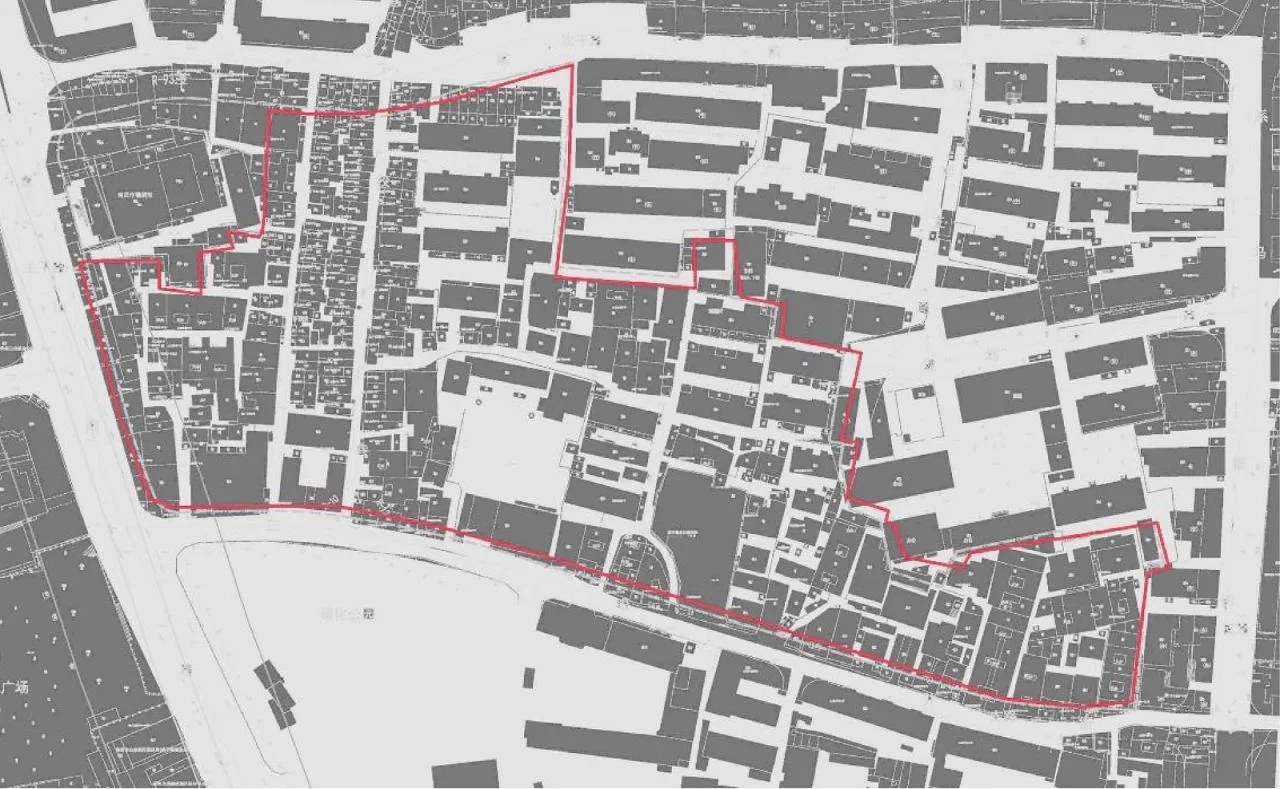
Original Texture of Sanyanjing Block (2014)
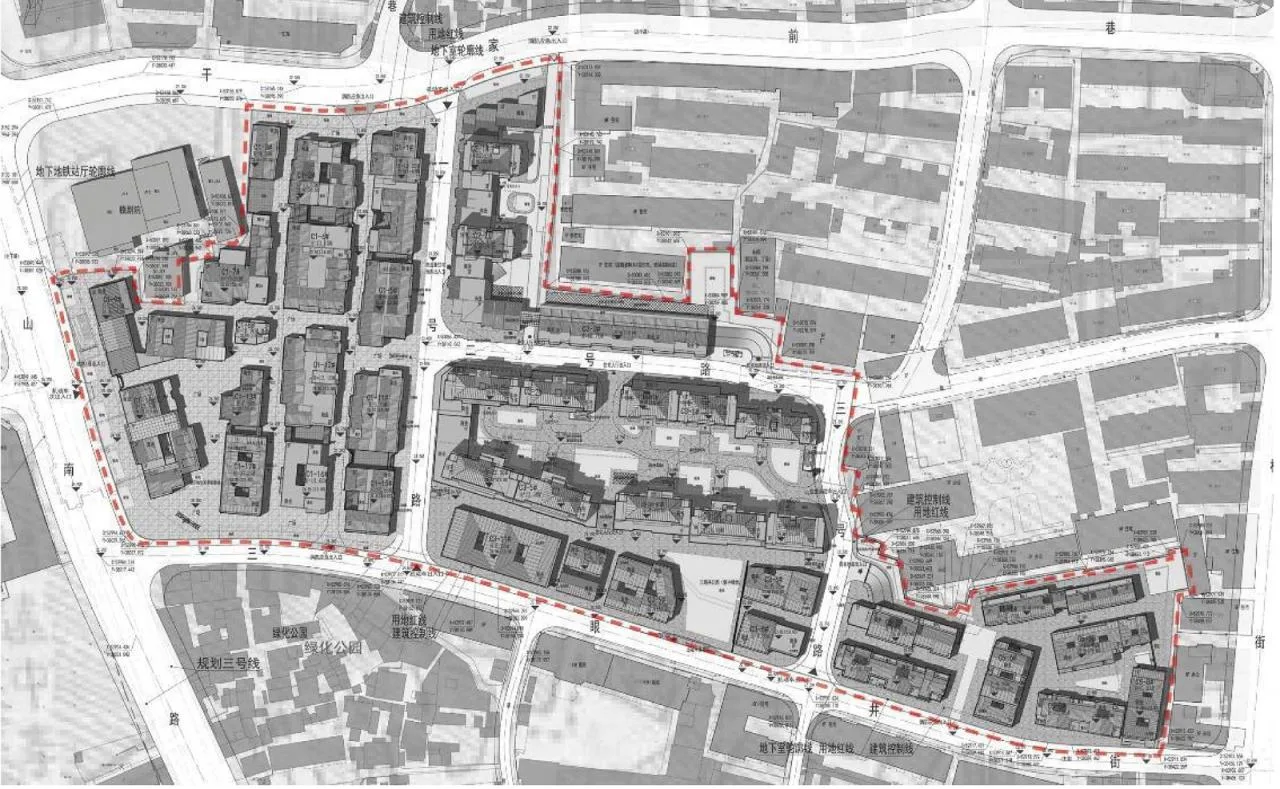
△ Preserving Texture and Continuing Memory
The main streets in this site have existed for several hundred years. As primary commercial thoroughfares, they retain their original, relatively narrow widths rather than adopting the scale of modern commercial streets. These streets range from four to ten meters wide and are surrounded by gardens and small squares of varying sizes and functions that connect all the commercial shops. The squares accommodate a variety of civic and commercial activities. At each entrance square, visitors can view two or three different historic buildings, creating a distinctive commercial street frontage.
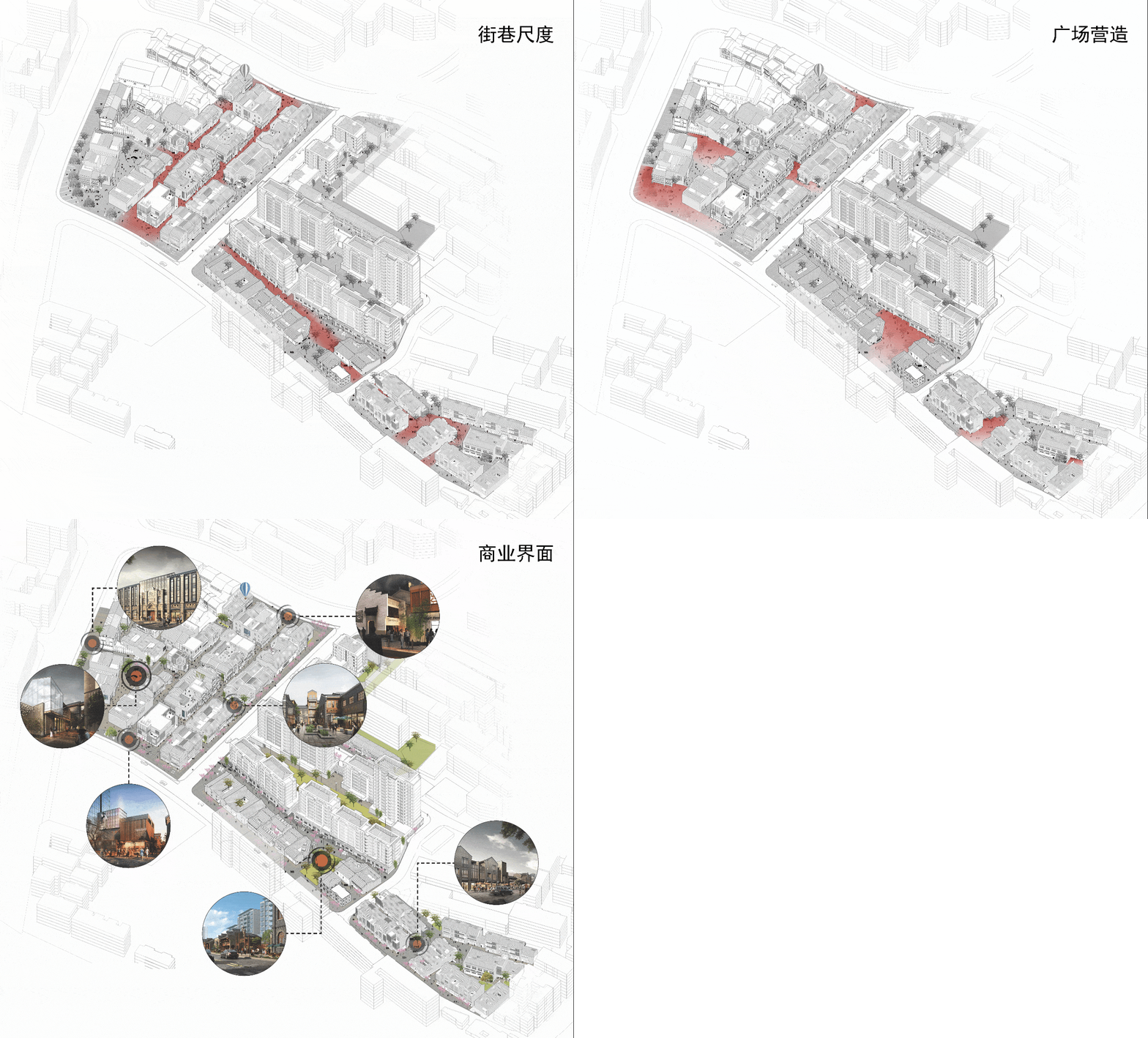
△ Texture and Node Analysis
Architectural styles within the site fall into three main categories:
- Historic protected buildings restored to their original appearance;
- Buildings restored to reflect the architectural characteristics of their historical periods;
- New constructions that integrate elements from the site.
All new buildings relate to the existing structures on site—they do not stand isolated but instead harmonize with the overall environment.
Among the many buildings, several stand out as the most representative examples of the site’s architectural diversity.
Wan’an Yunsheng Examination Hall is a protected historic building with a history spanning centuries. During the Qing Dynasty, it served as a resting place for candidates traveling to Beijing for imperial exams. Due to its age, many components had deteriorated. After a comprehensive survey, most original stone elements were preserved, while bricks and wood were replaced with new materials.
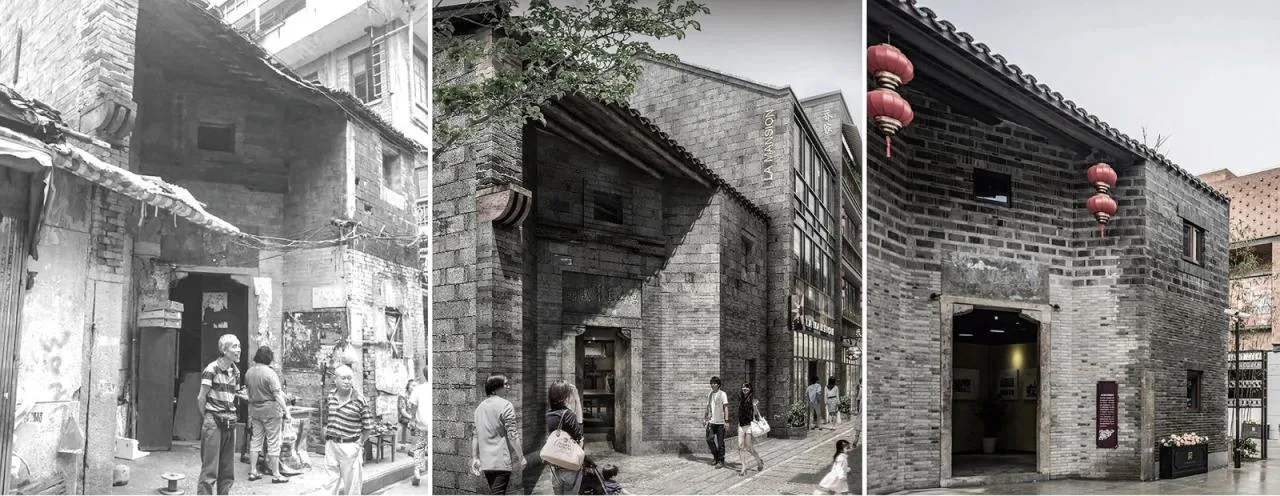
△ Restoration of Original Appearance
The traditional Gan Opera stage in Nanchang was reconstructed using the same pure wooden craftsmanship as originally used, reviving an antique wooden stage that serves as a lively gathering place in the commercial squares.
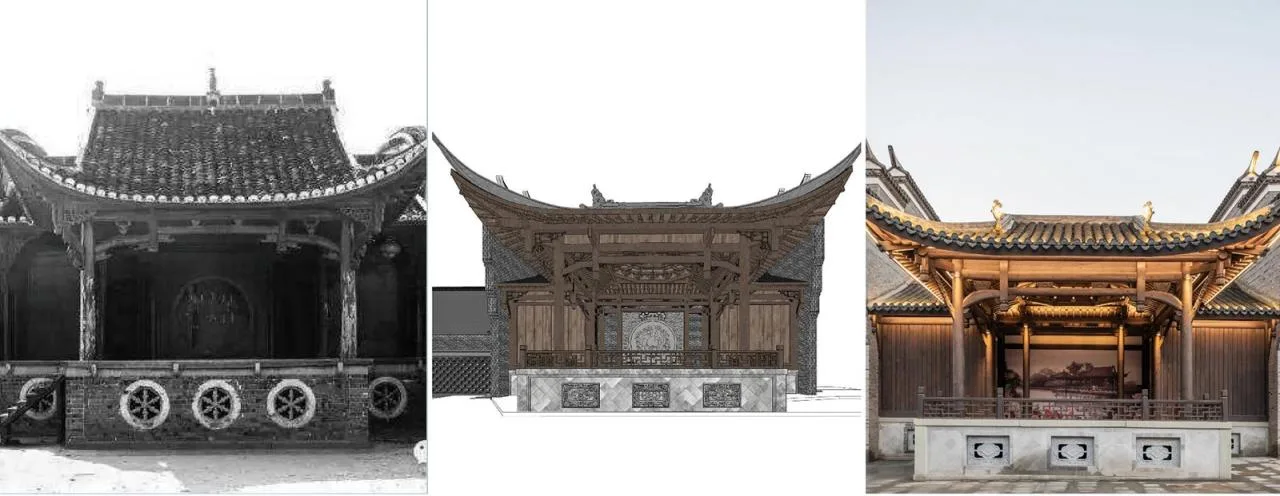
△ Restoration of Original Appearance
At the center of the site stands a four-story red brick residential building constructed in the 1970s. While not officially protected, this building features many distinctive architectural elements such as its red brick facade and prefabricated railings. These elements preserve the memory of the site and serve as an iconic landmark facing the eastern entrance square.
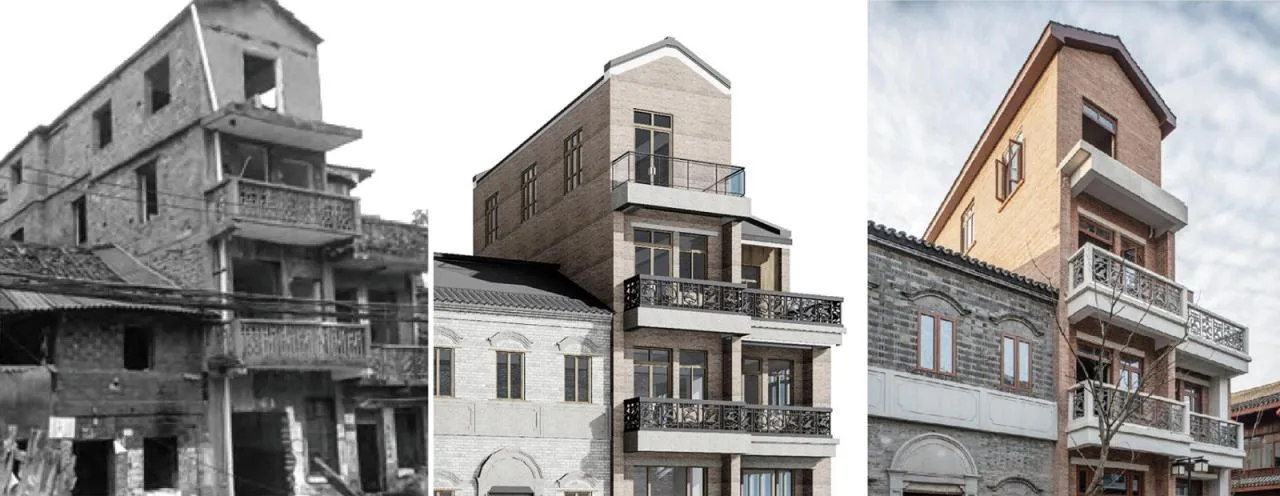
△ Renovation and Rectification
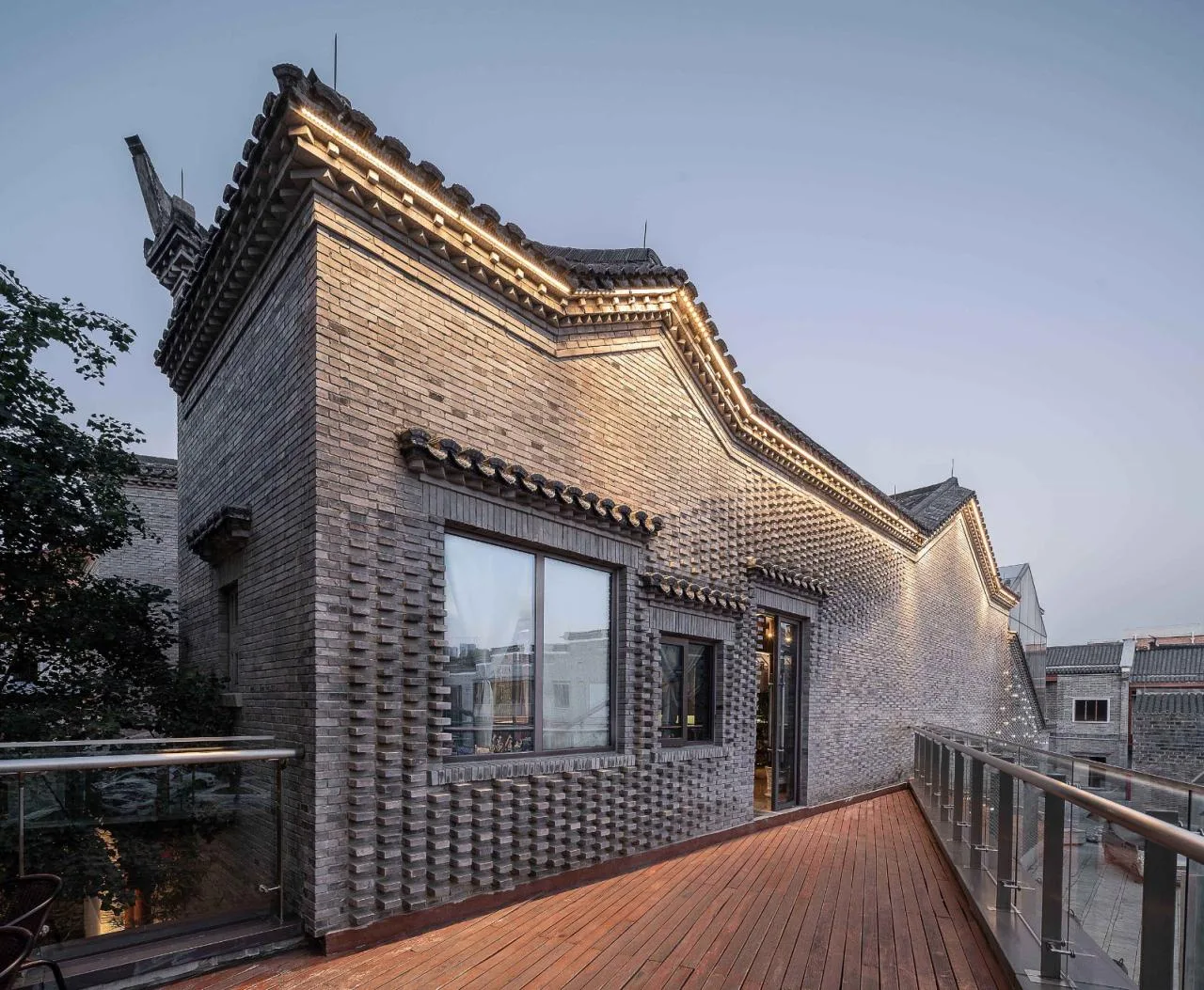
Some buildings on site were originally constructed illegally, but their brick wall textures and construction techniques are compelling. We extracted these architectural elements and incorporated them into a new commercial building, which will serve as a café where visitors can relax and socialize. The café’s name aligns with our design concept: “Carving Time.”
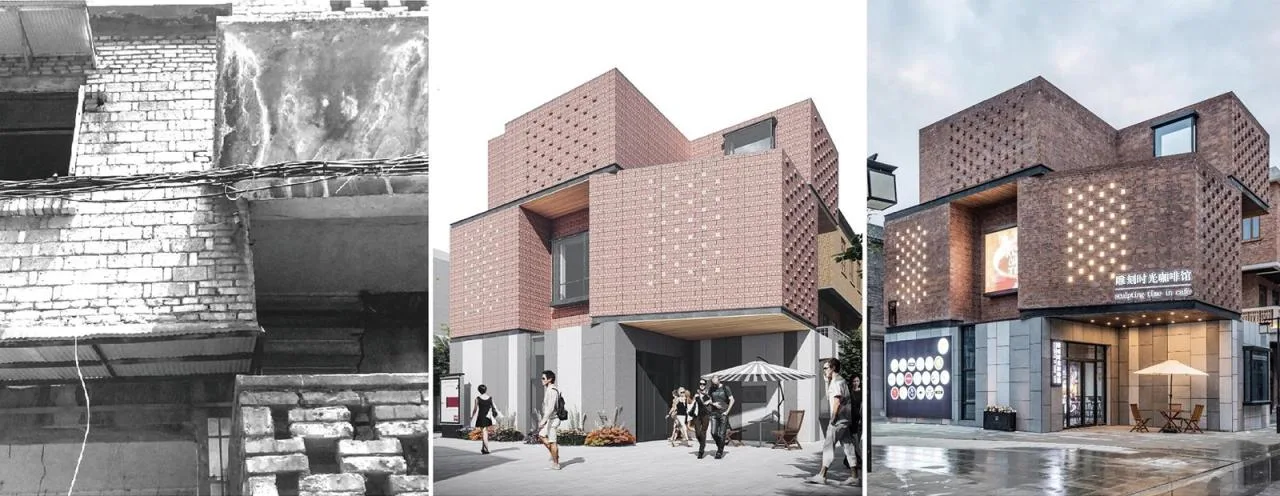
△ Renovation and Rectification
Buildings from the 1980s and 1990s inspired the design of new textures, extracting wall elements and applying parametric tiling techniques to create innovative facades. A glass box embedded into the wall faces the commercial center square and the wooden stage, serving as an elevated viewing platform.
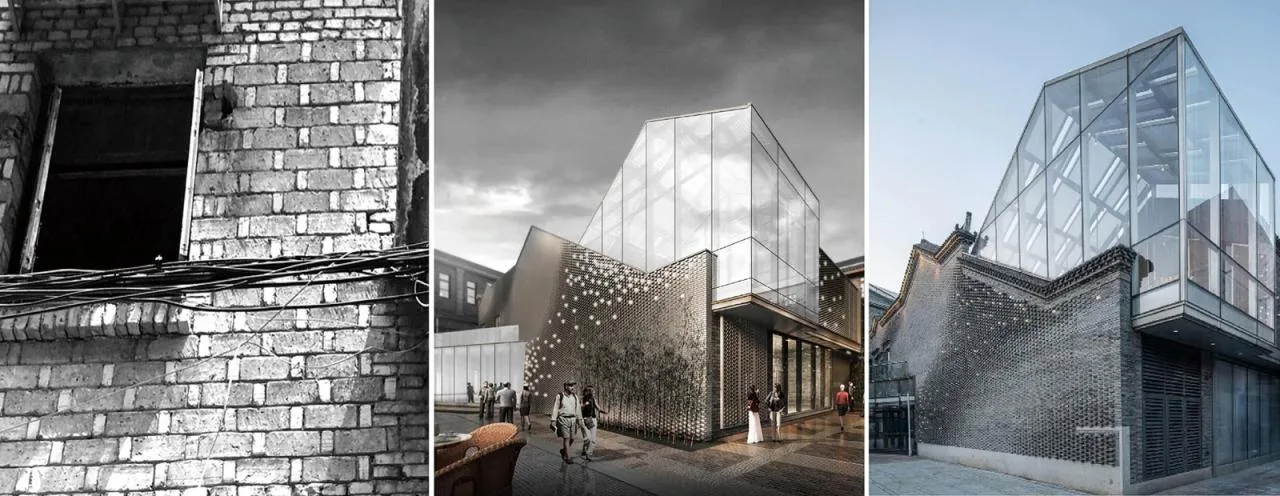
△ Renovation Update
The facades along the east and west streets of the schoolyard showcase a blend of architectural styles dating from the Ming Dynasty to modern times.
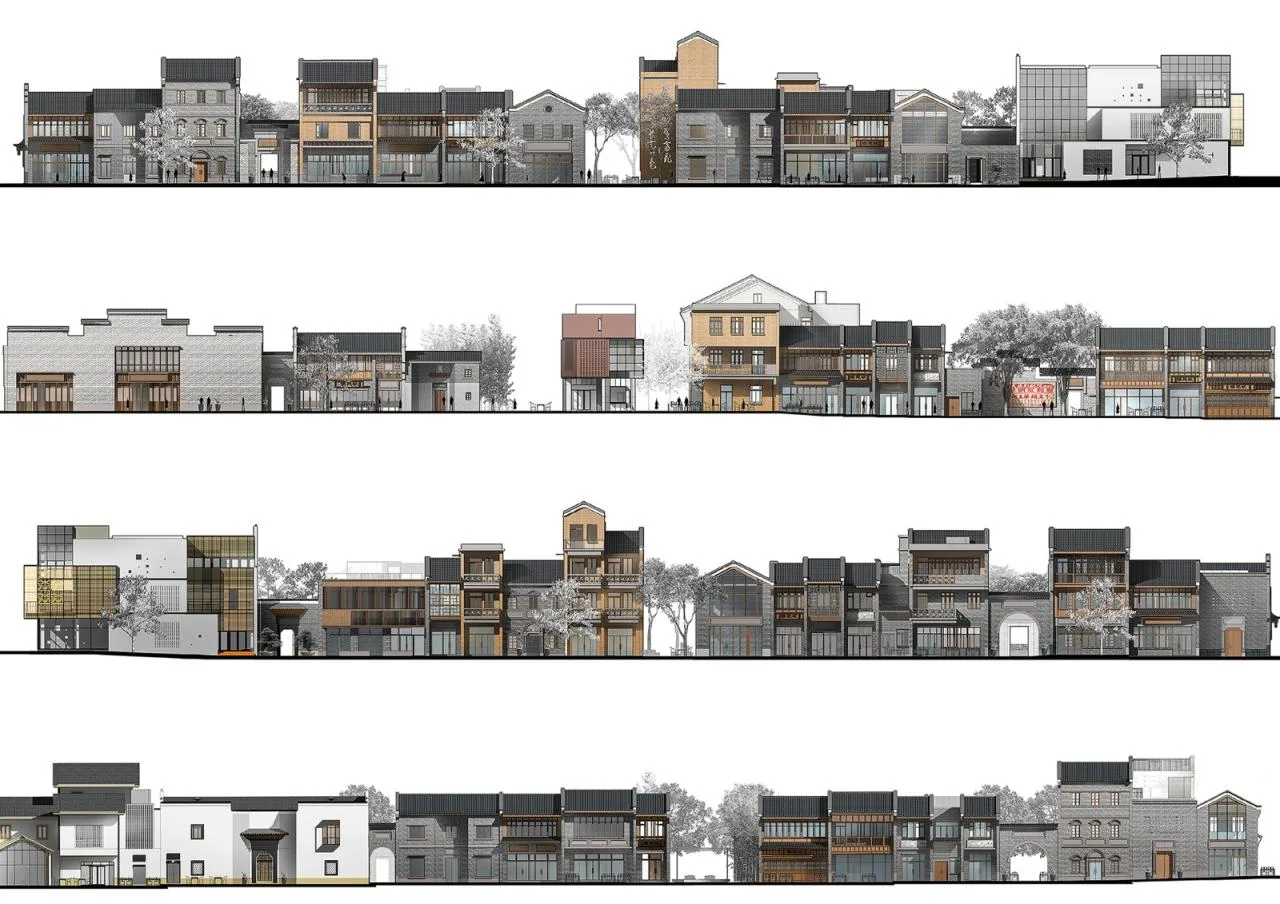
△ Building Facade
Walking through the streets and alleys, visitors experience a vivid narrative of time. Modern shops constructed with parametric methods stand alongside authentic wooden stage structures, creating a unique sensation of time travel.
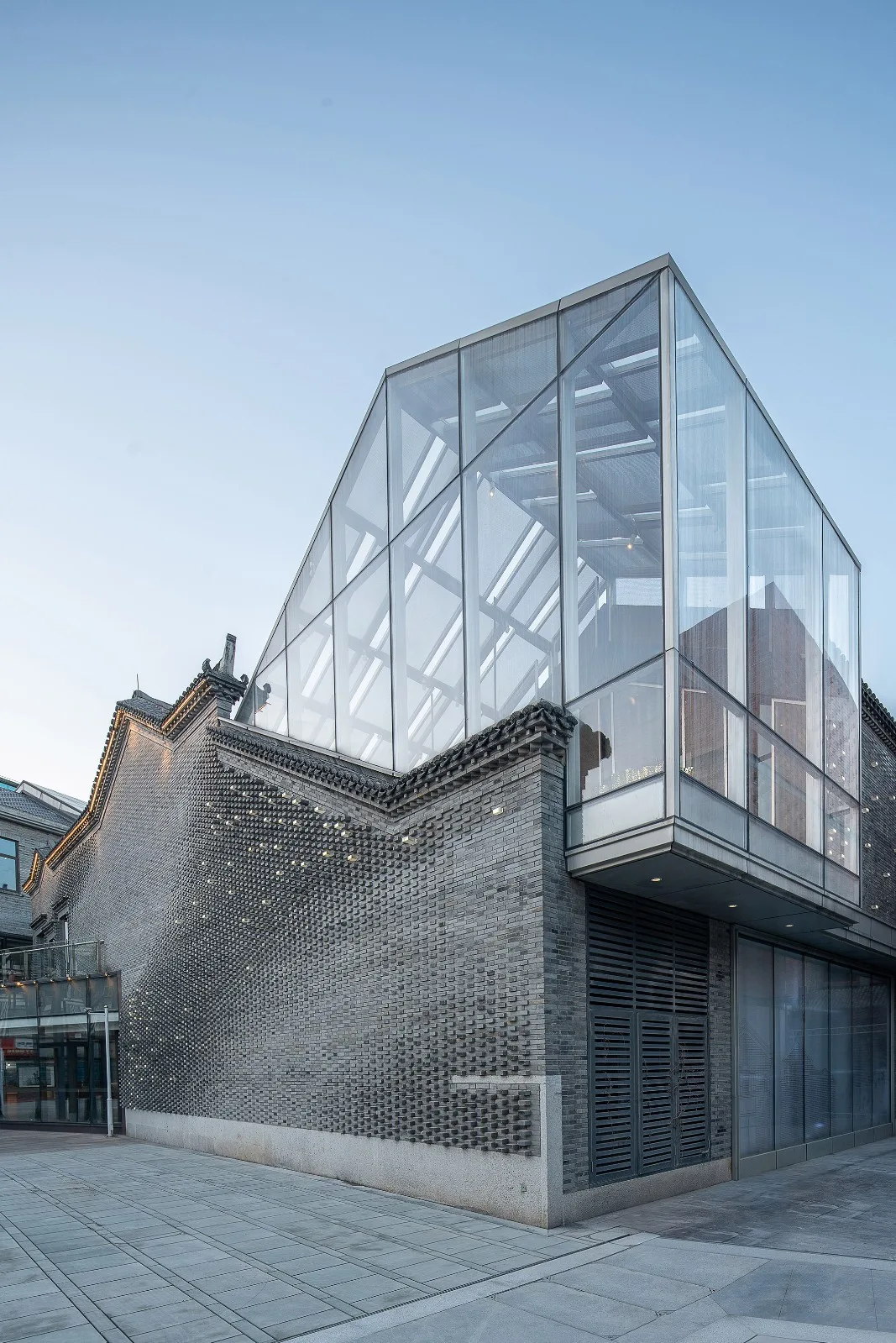
△ Exhibition Center
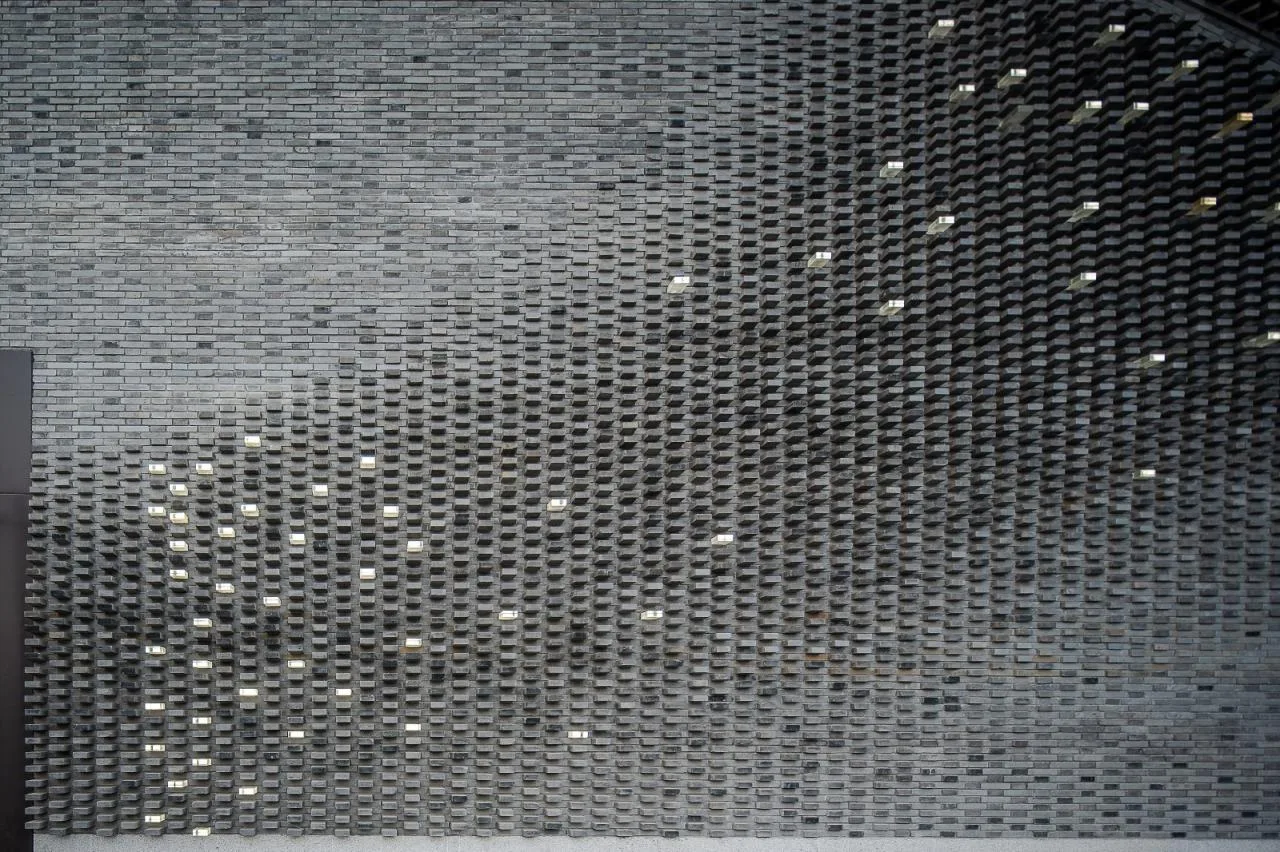
Parametric Tiling
Parametric Tiling
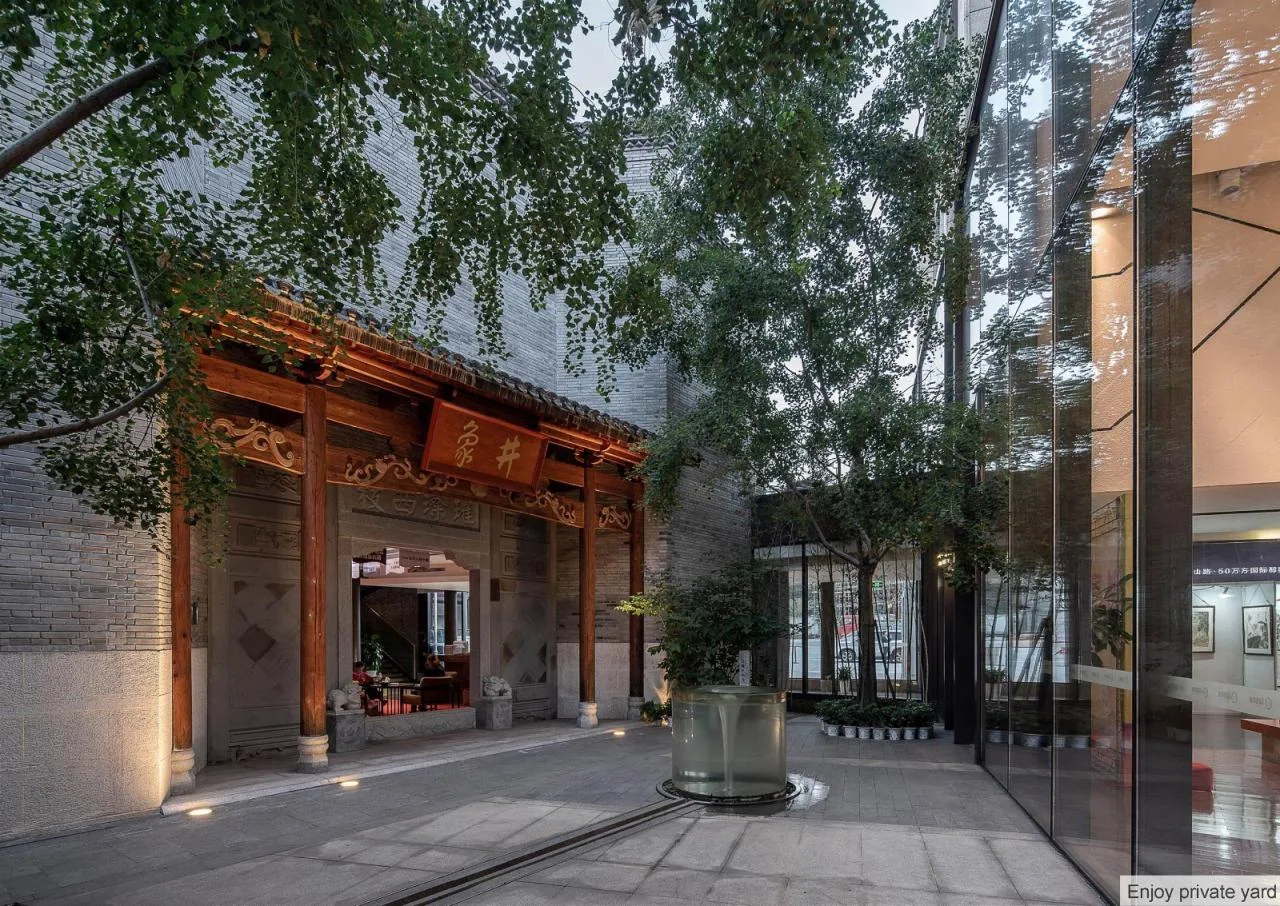
△ Ancient Inner Courtyard
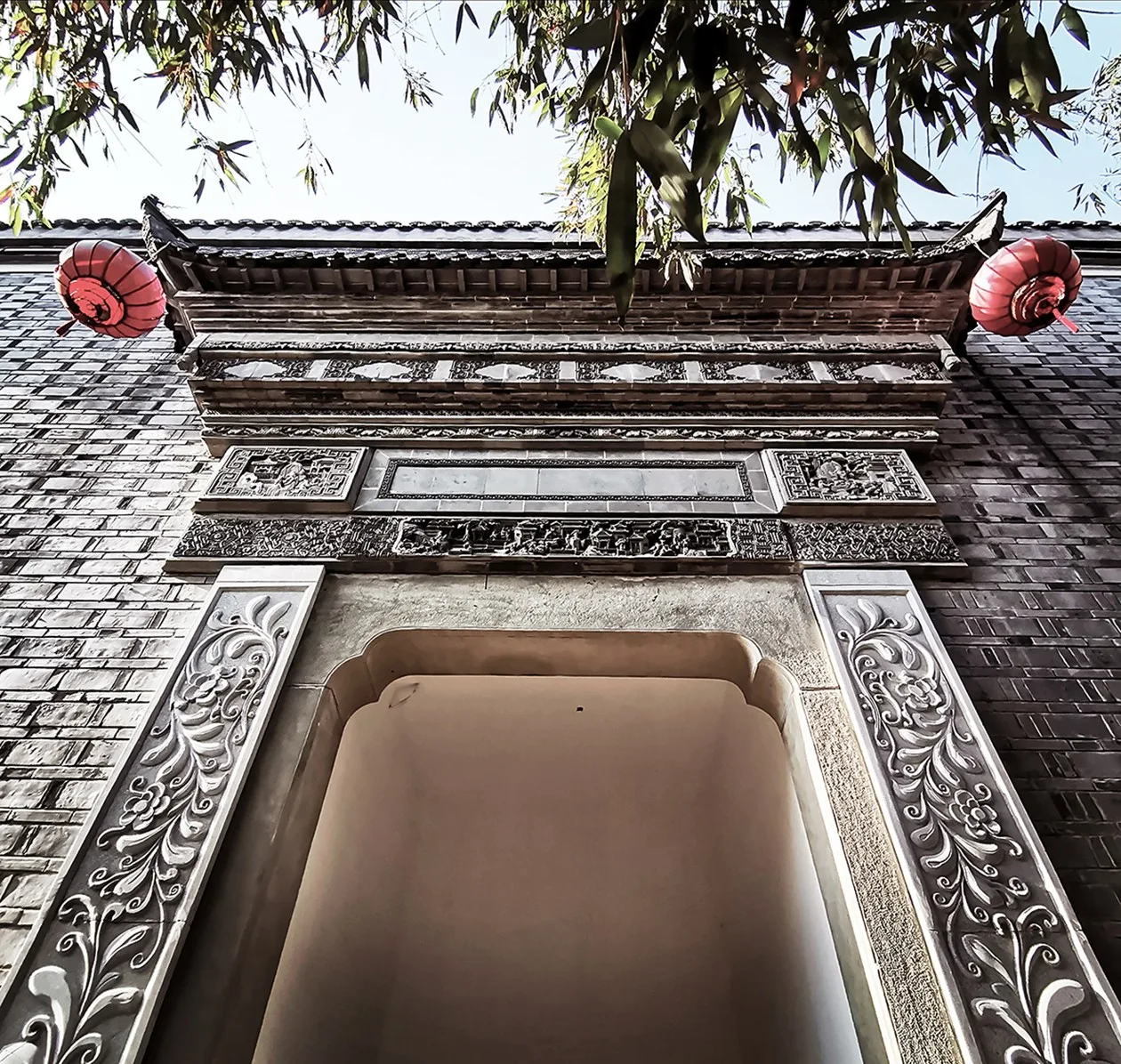
△ Brick Carving Display
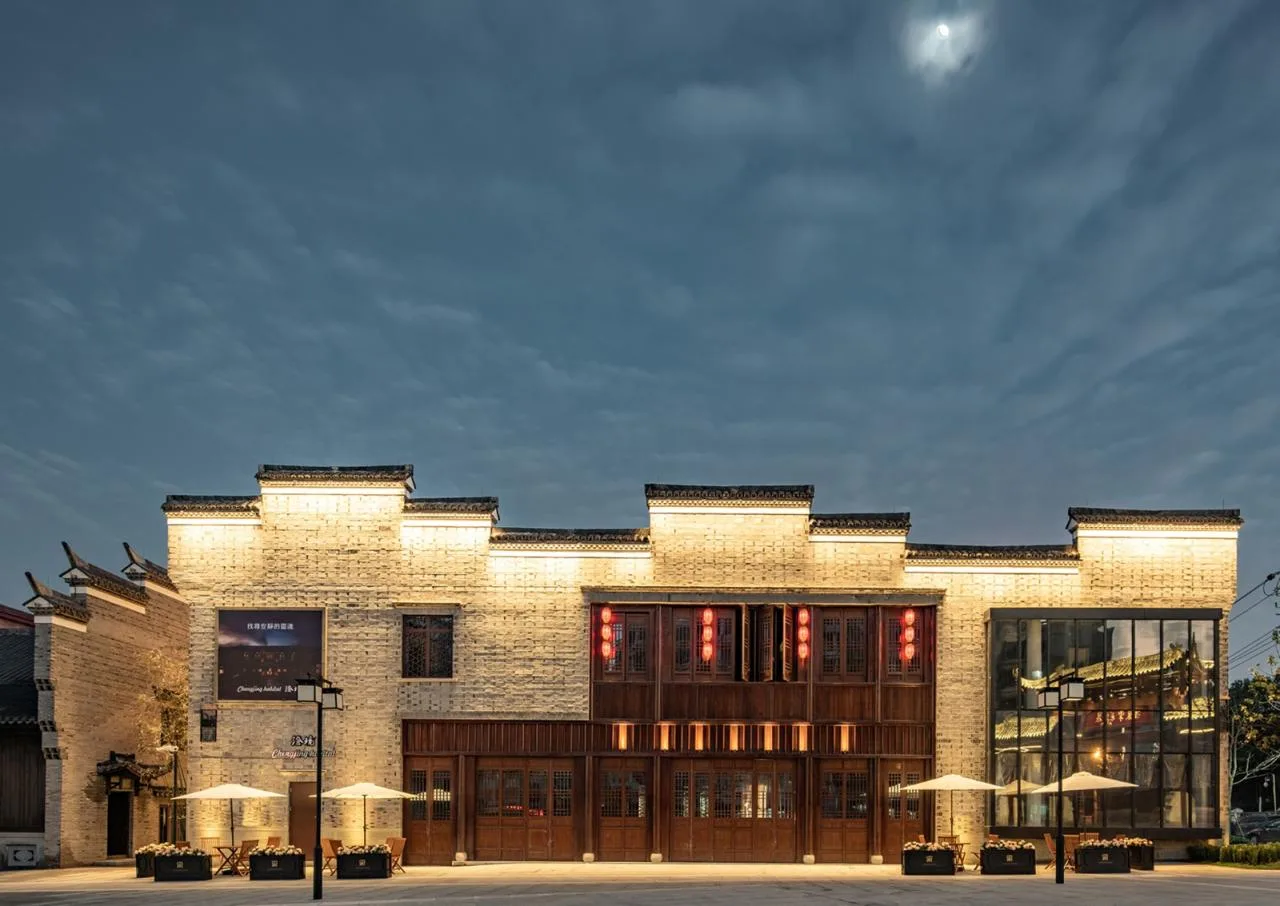
△ Double Courtyard Residential Buildings
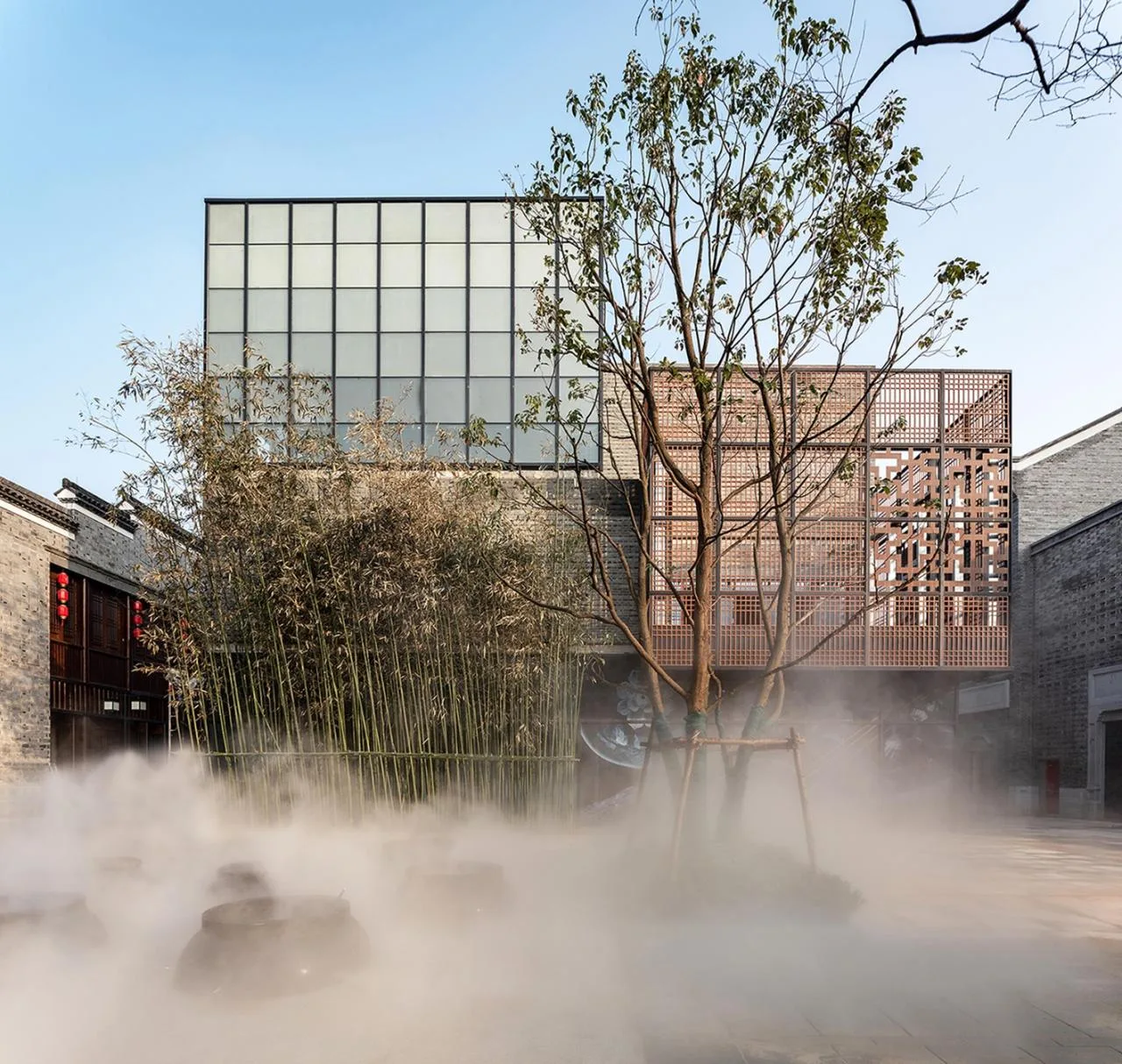
△ Double Courtyard Residential Buildings
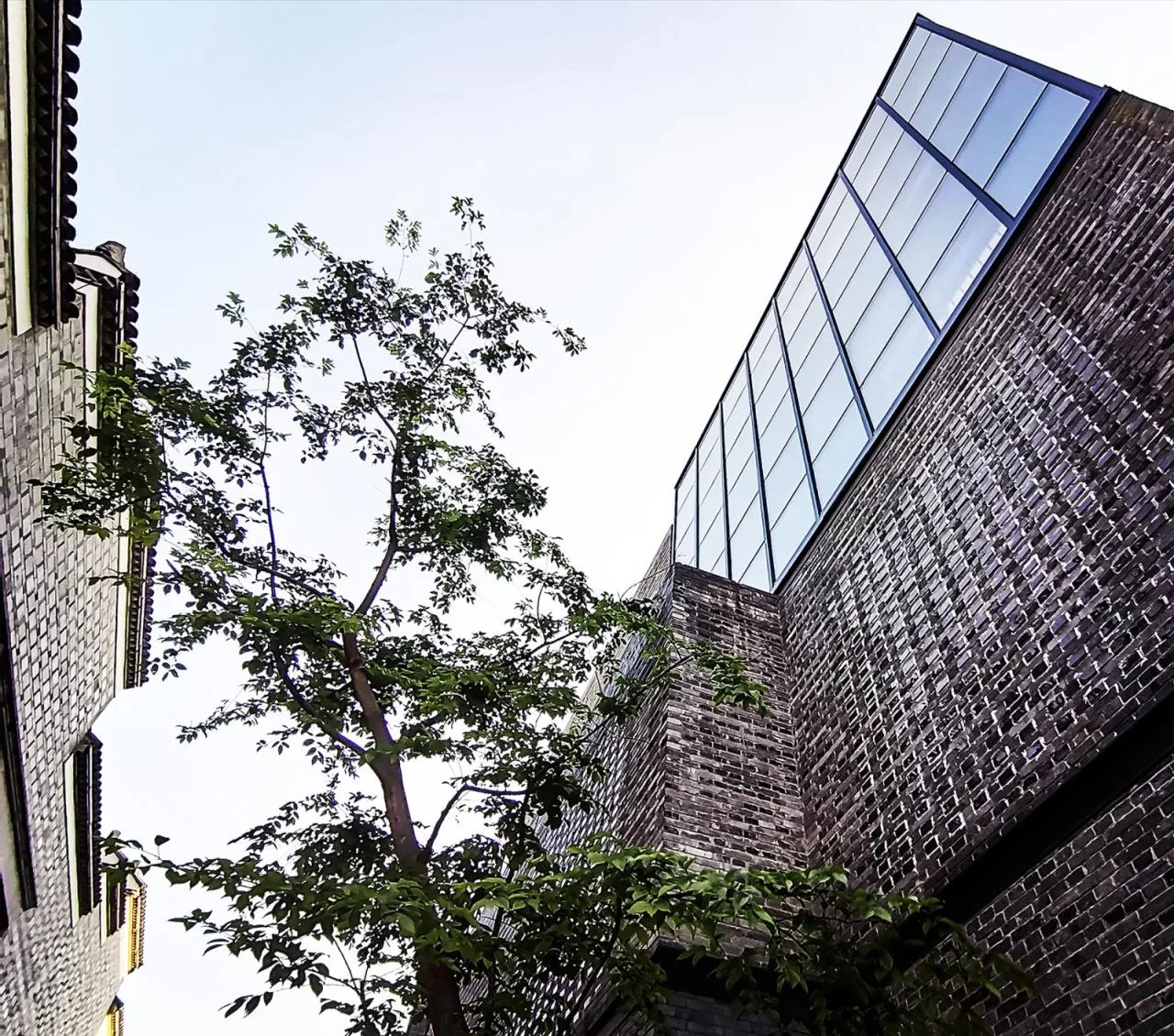
△ Clear Water Brick Wall
This street transcends time and space, linking history with the future. In these alleys filled with local spirit, visitors can experience the architectural styles of different eras, from the late Qing Dynasty and Republic of China to modern times. The design not only enhances the neighborhood’s image and value but also revives cultural memories passed down through centuries, inspiring contemporary urban vitality.
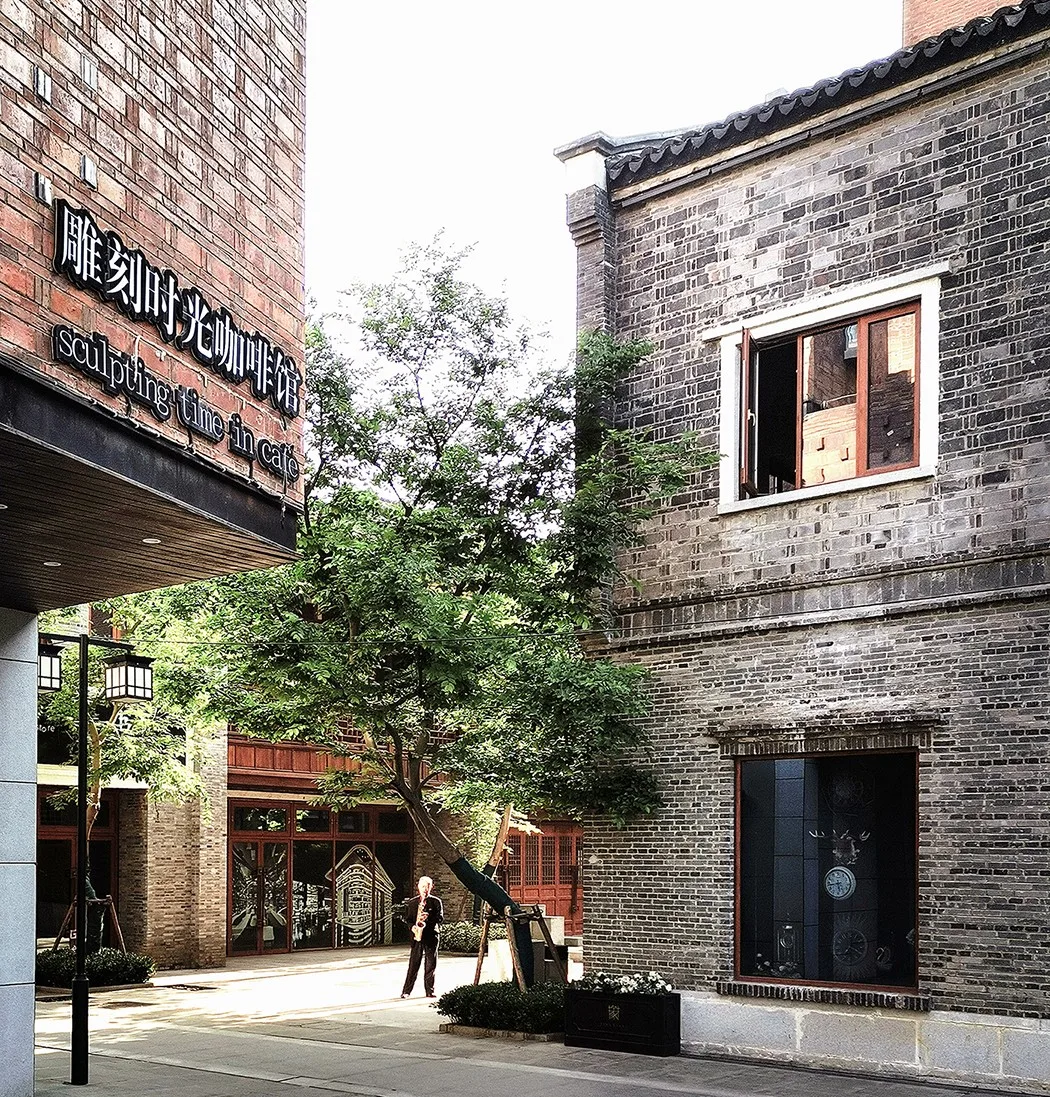
△ Architectural Display
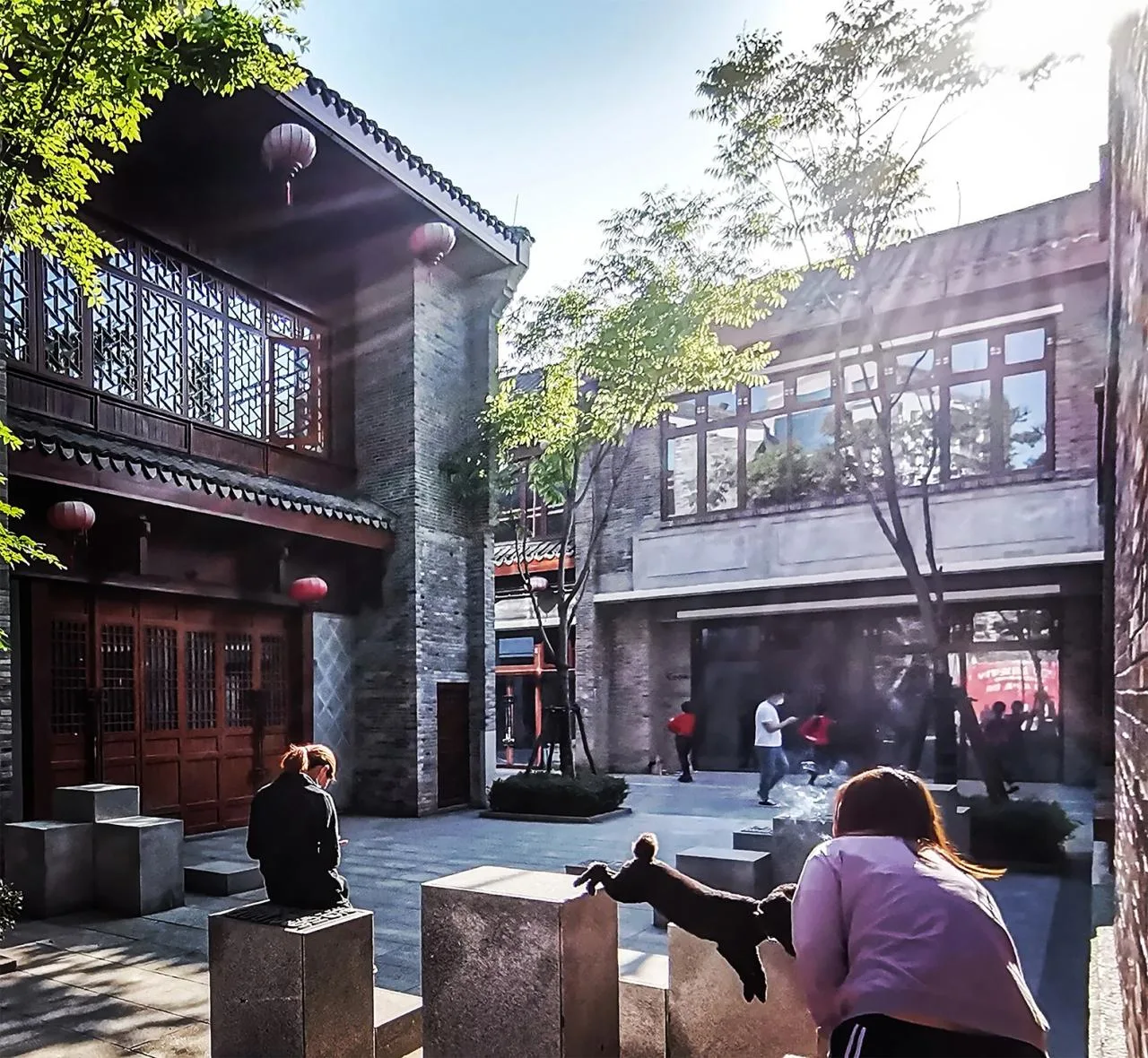
△ Architectural Display
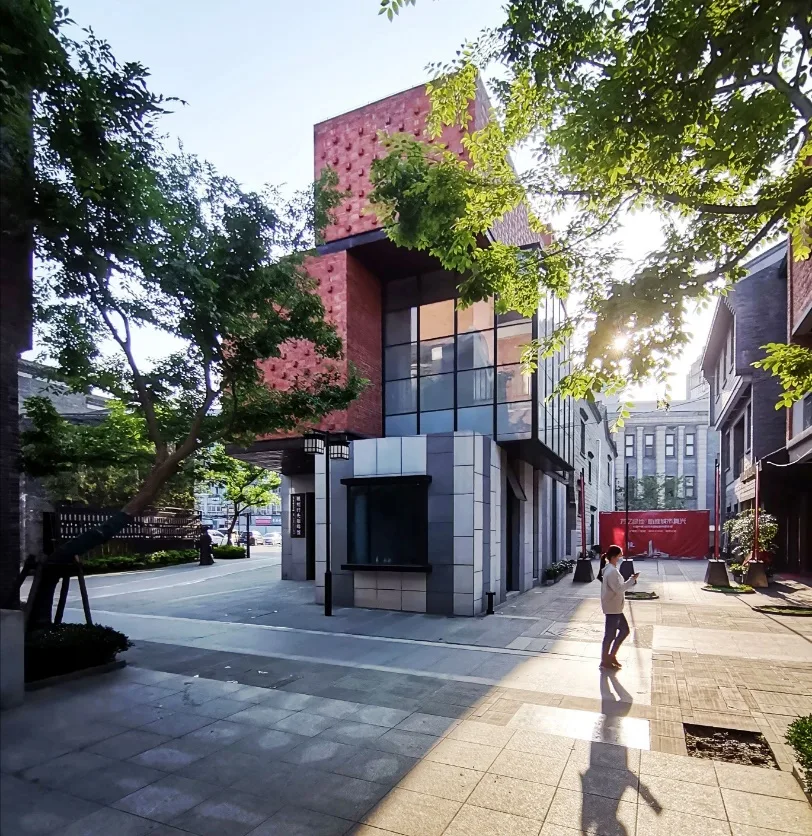
△ Architectural Display
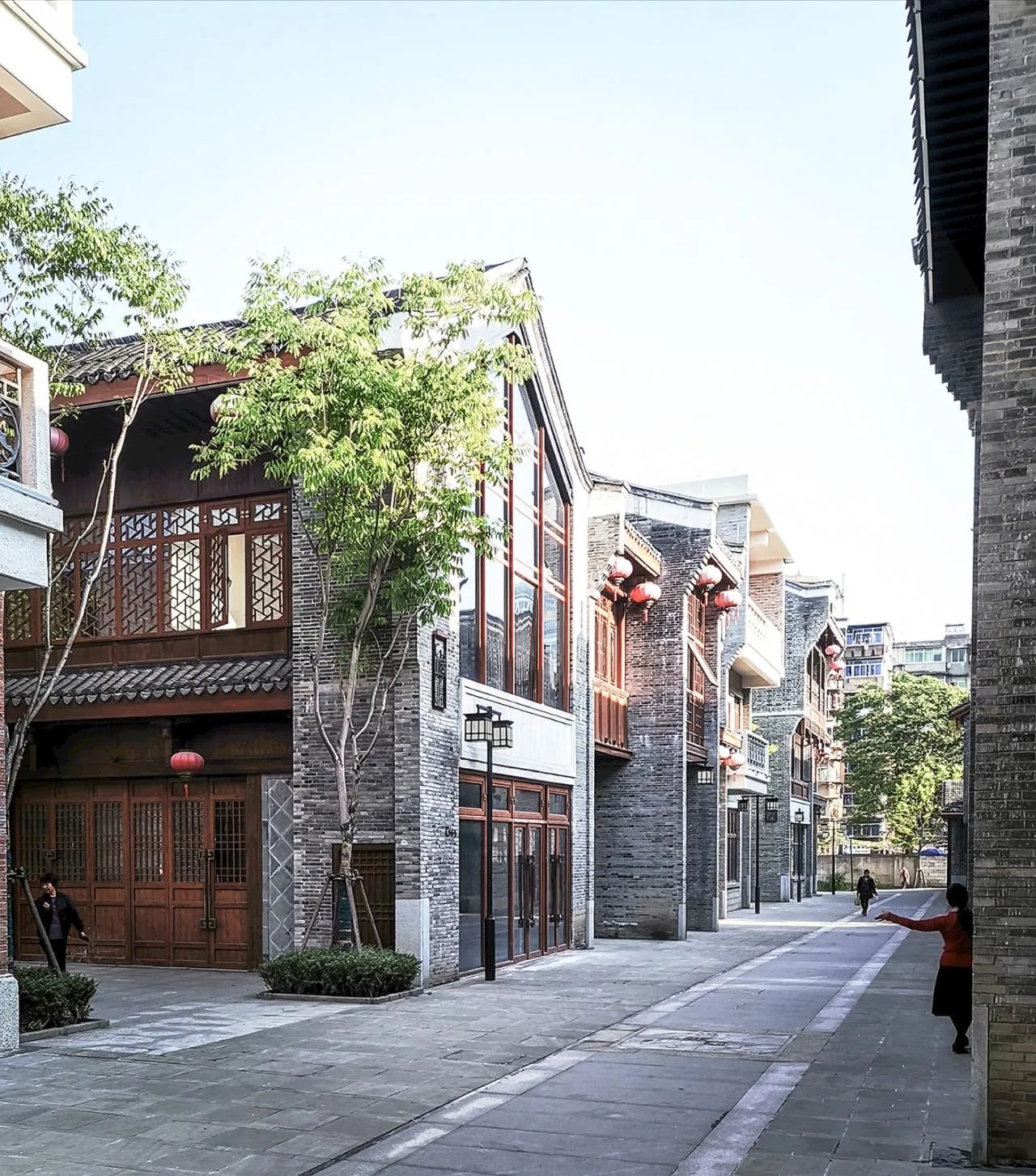
△ Architectural Display
The design accommodates the functional requirements of the site, including business needs, storefront signage, lighting, and equipment layout. Structural changes have transformed the old brick-and-wood construction into a reinforced concrete frame, supporting modern commercial activities such as dining.
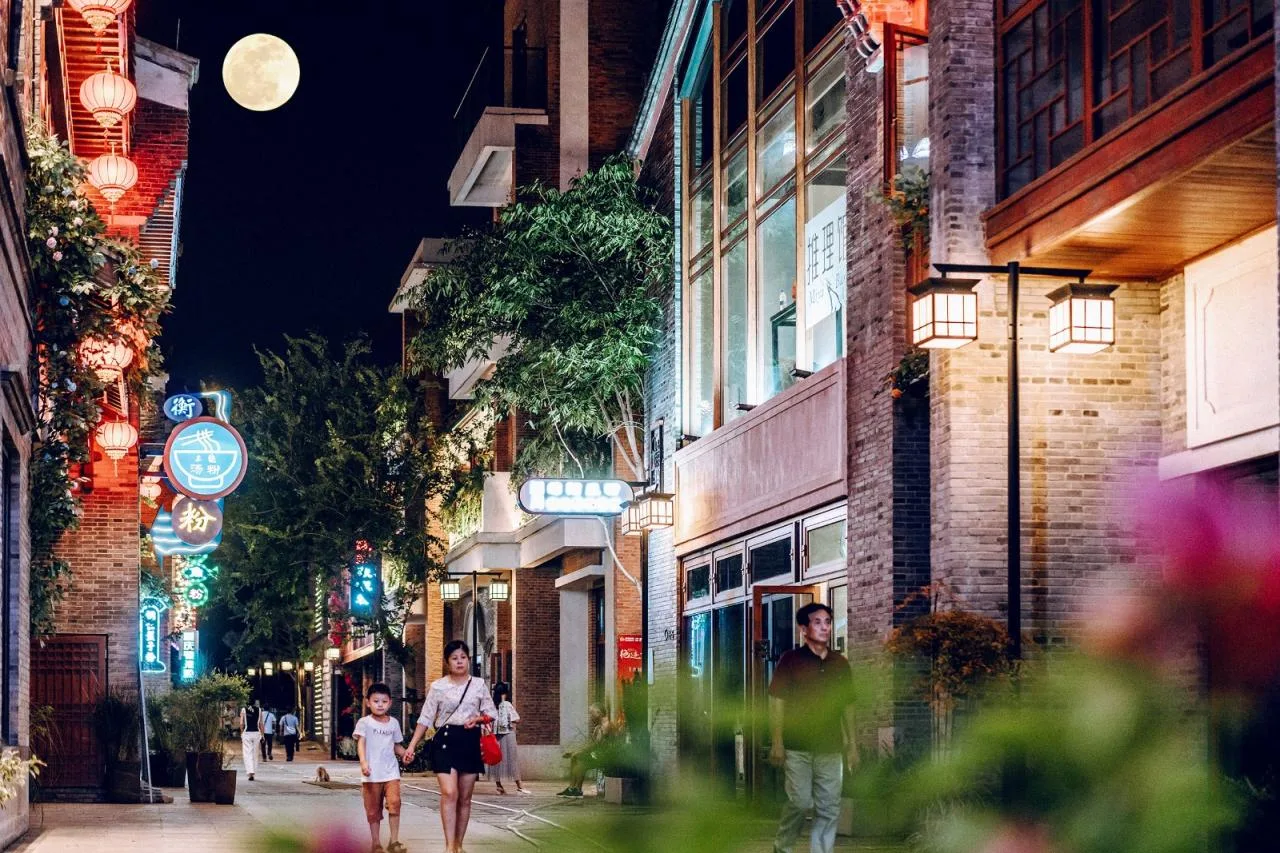
△ Architectural Display
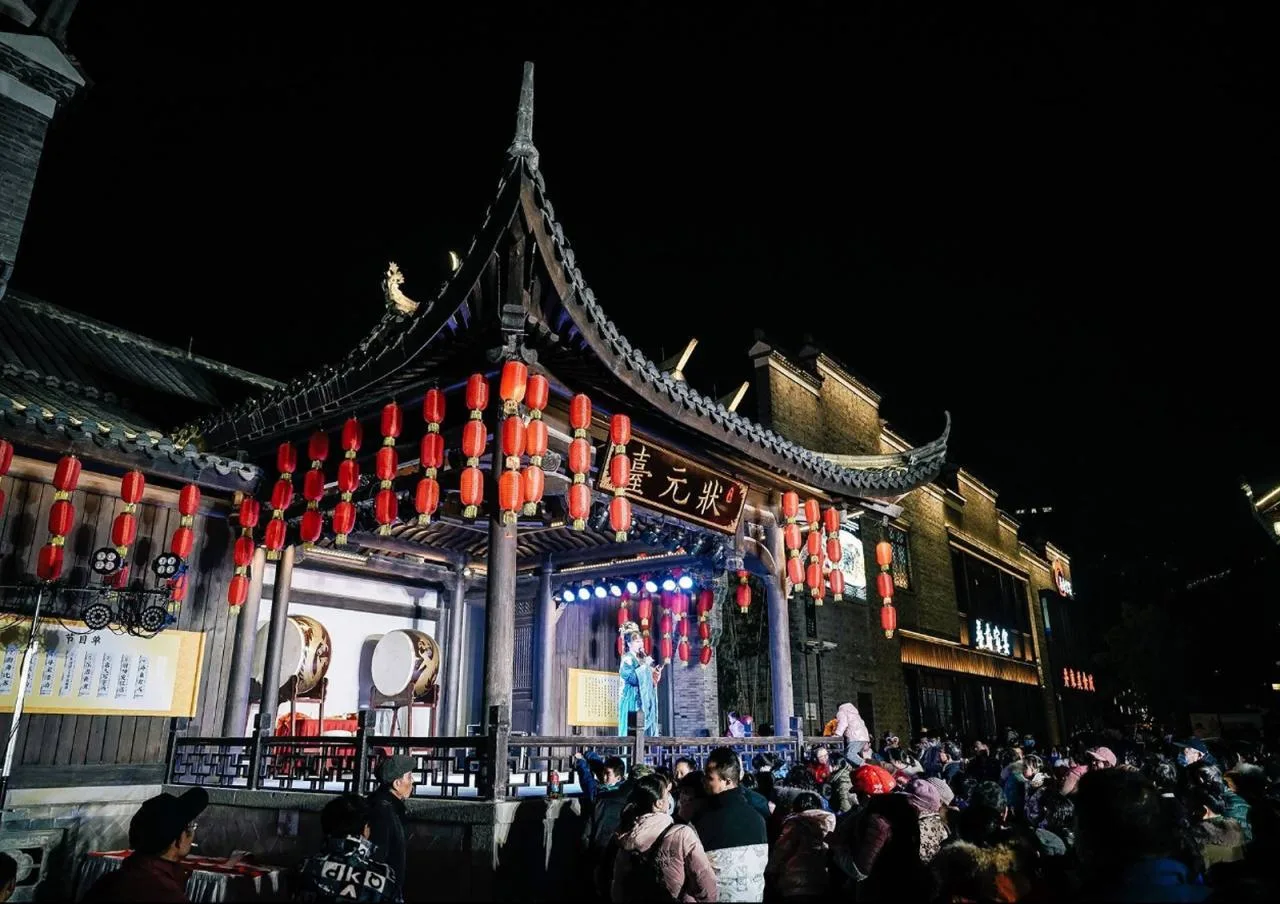
Wooden Stage
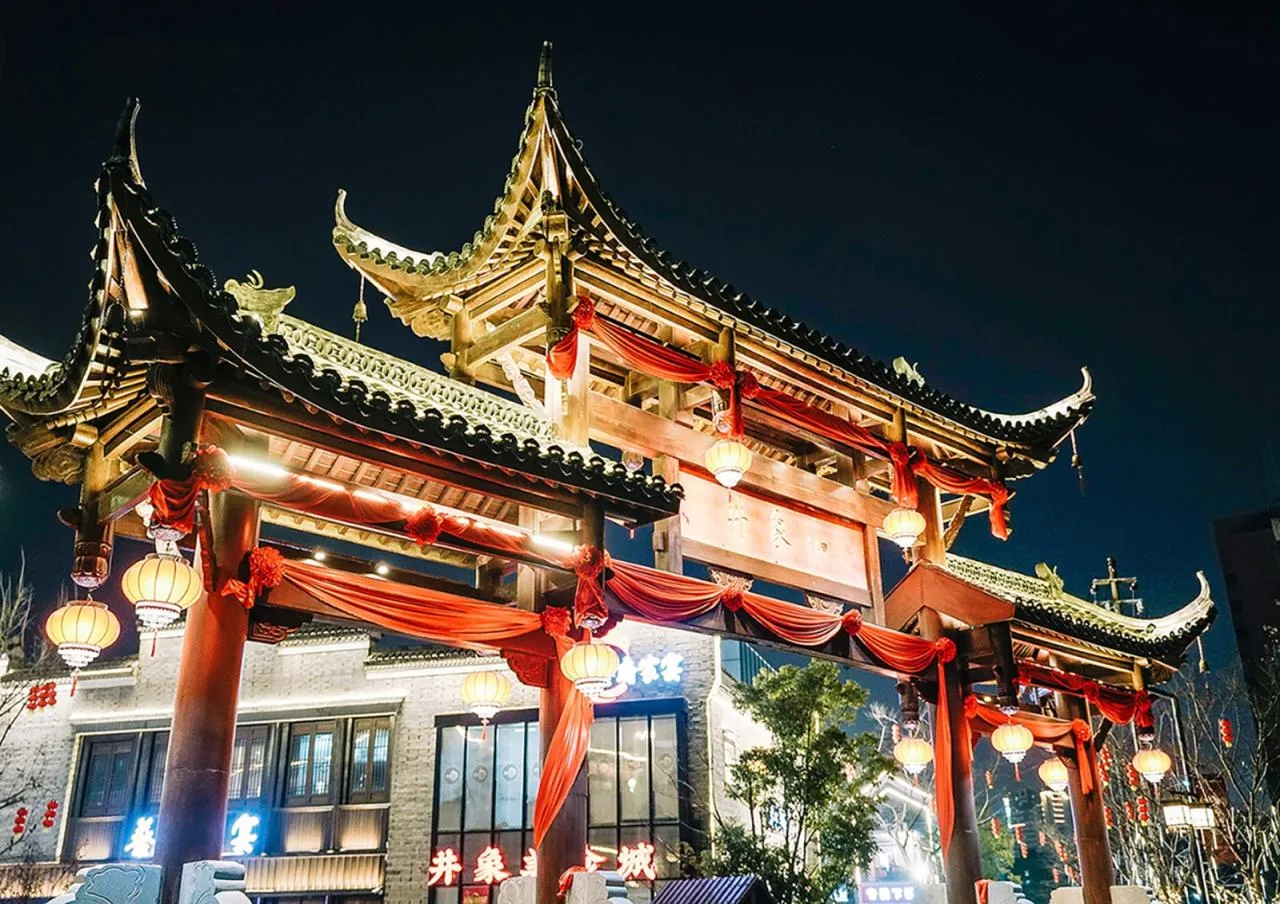
△ Gate Tower Display
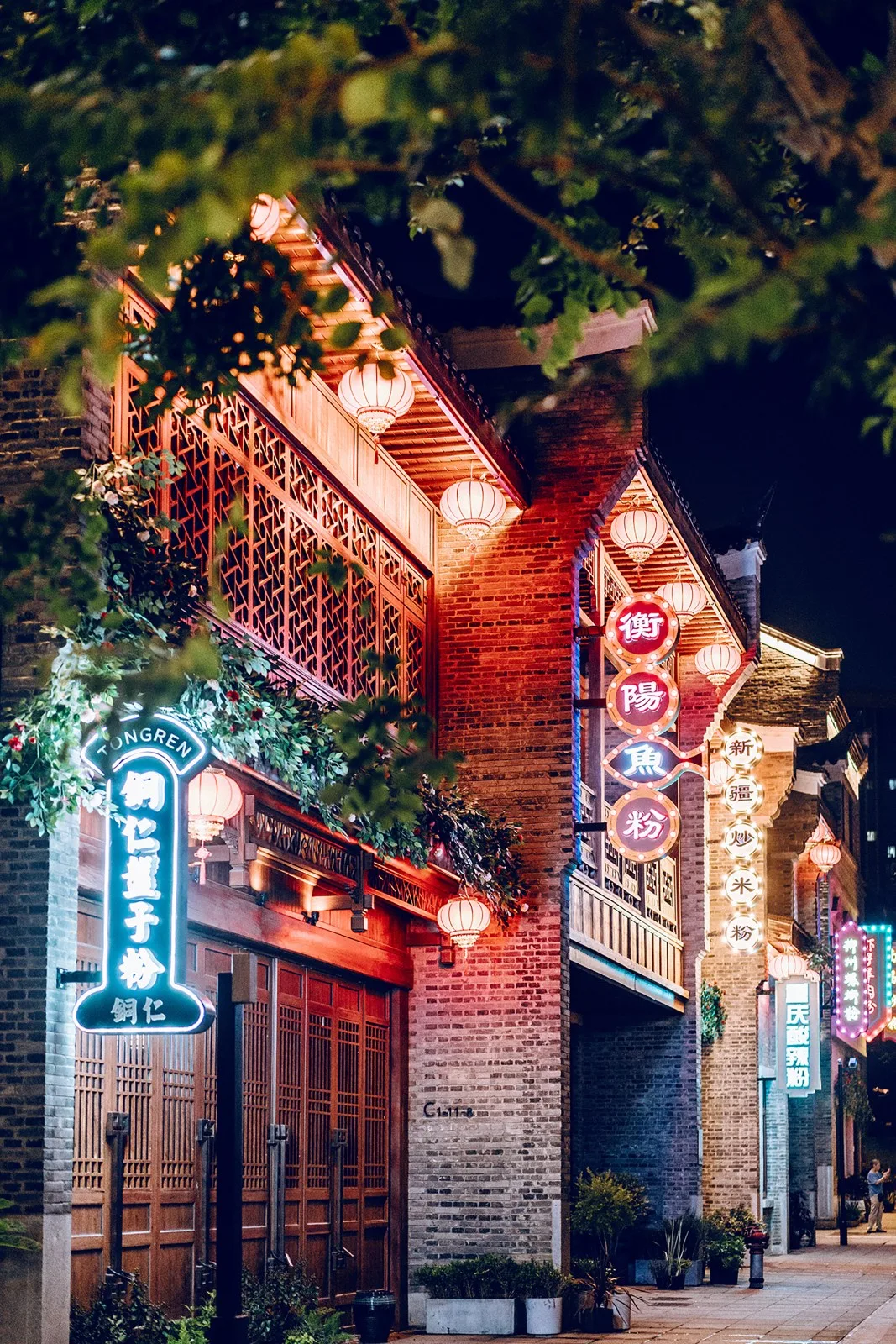
△ Architectural Display
Project Information
Project Name: Time Flow Charm: Nanchang Sanyanjing Historical Block Protection and Renovation Project
Developer: Greenland Holdings Group Jiangxi Regional Management Headquarters
Location: Xihu District, Nanchang City
Function: Commercial, Residential
Design Firm: UA You’an Design Auxiliary Line Studio
Lead Architects: Chen Lei, Zhou Jungang
Design Team: Yan Xuehua, Yin Shanhong, Ye Yulin, Ma Zhenlong, Yu Cheng, Li Changlong, Yin Shun, Cai Yanhong, Wen Xiaodong, Ma Xin, Li Dong, Zhang Ke, Zheng Ling
Construction Drawing Design: UA You’an Design
Urban Design: SOM
Landscape Design: SWA
Interior Design: Shanghai Feishi Design (Public Interior Areas), HBA (Exhibition Center)
Logo Design: ENG Shanghai Yingqi Logo
Construction: Zhejiang Shengsheng Construction Group Co., Ltd.
Site Area: 48,856.7 square meters
Building Area: 76,319.7 square meters
Structural Form: Reinforced Concrete Frame
Design Period: 2014–2016
Construction Period: 2016–2019
Photography: Zhou Jungang, Jiuli, Jiantang















Must log in before commenting!
Sign Up