
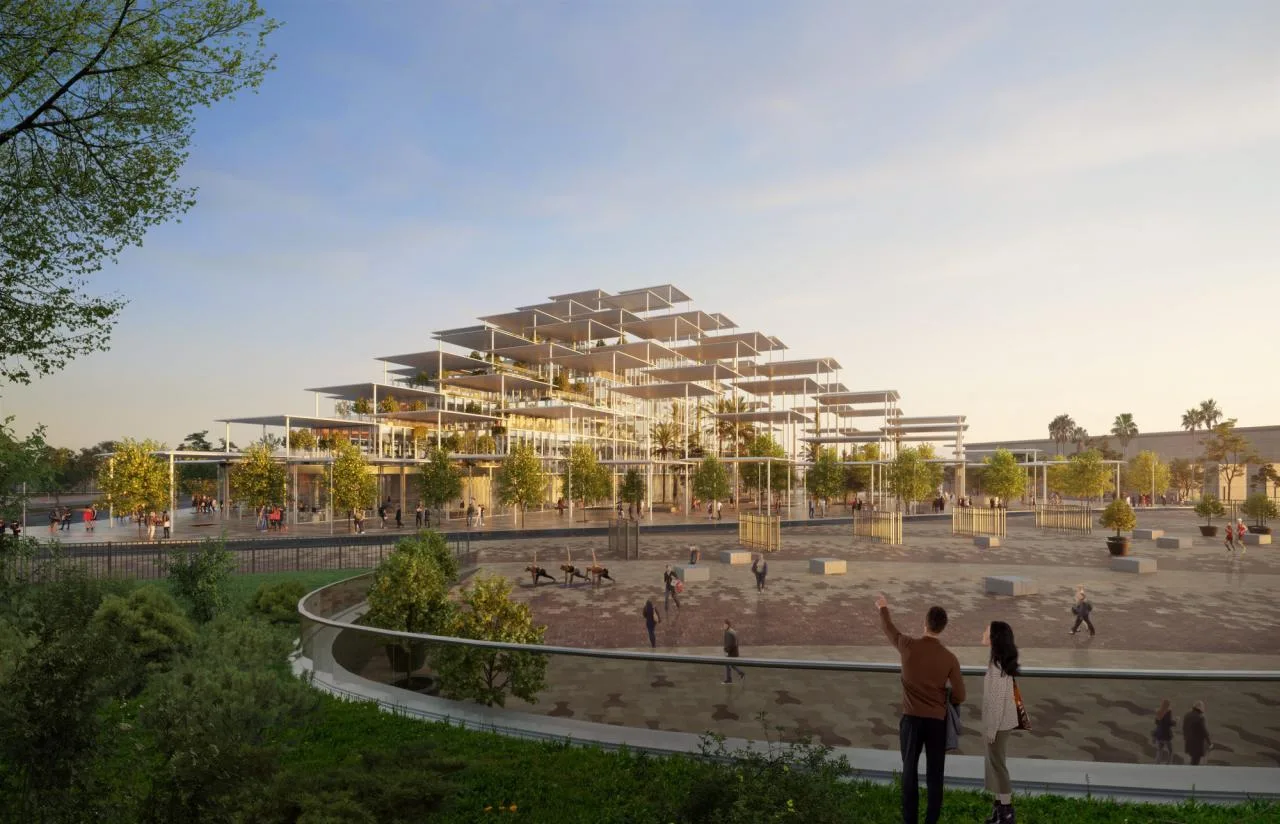
BIG, in collaboration with Argenia Ingeniería y Arquitectura, Buro Happold, and HCP Arquitectos y Urbanistas, won the International Multidisciplinary Competition to design the new Joint Research Centre (JRC) headquarters in Seville, Spain. BIG’s proposal draws inspiration from the architectural heritage of southern Spanish cities, aligning with JRC’s mission to push the boundaries of sustainable development. The design embraces Europe’s New Bauhaus initiative, setting a new standard for future research workspaces that foster collaboration and creativity.
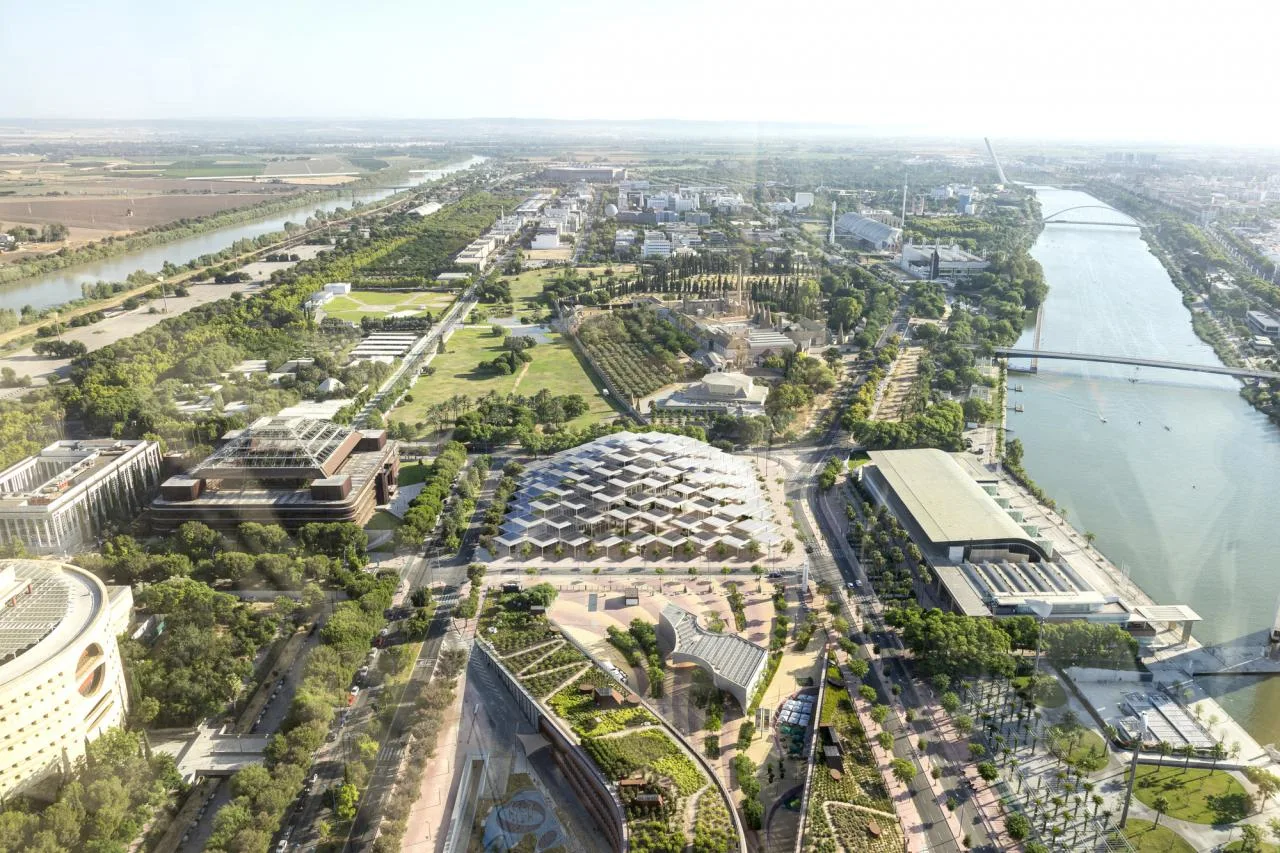
The new 9,900 square meter building for the European Commission is located on Cartuja Island, the site of the 1992 Seville World Expo. This location supports Seville’s ambition to become a global leader in sustainable development by 2025 and aligns with the eCity Sevilla project’s goal of decarbonization and 100% renewable energy on Cartuja Island. The JRC building will house 12 research units, support facilities, and both public and private outdoor spaces.
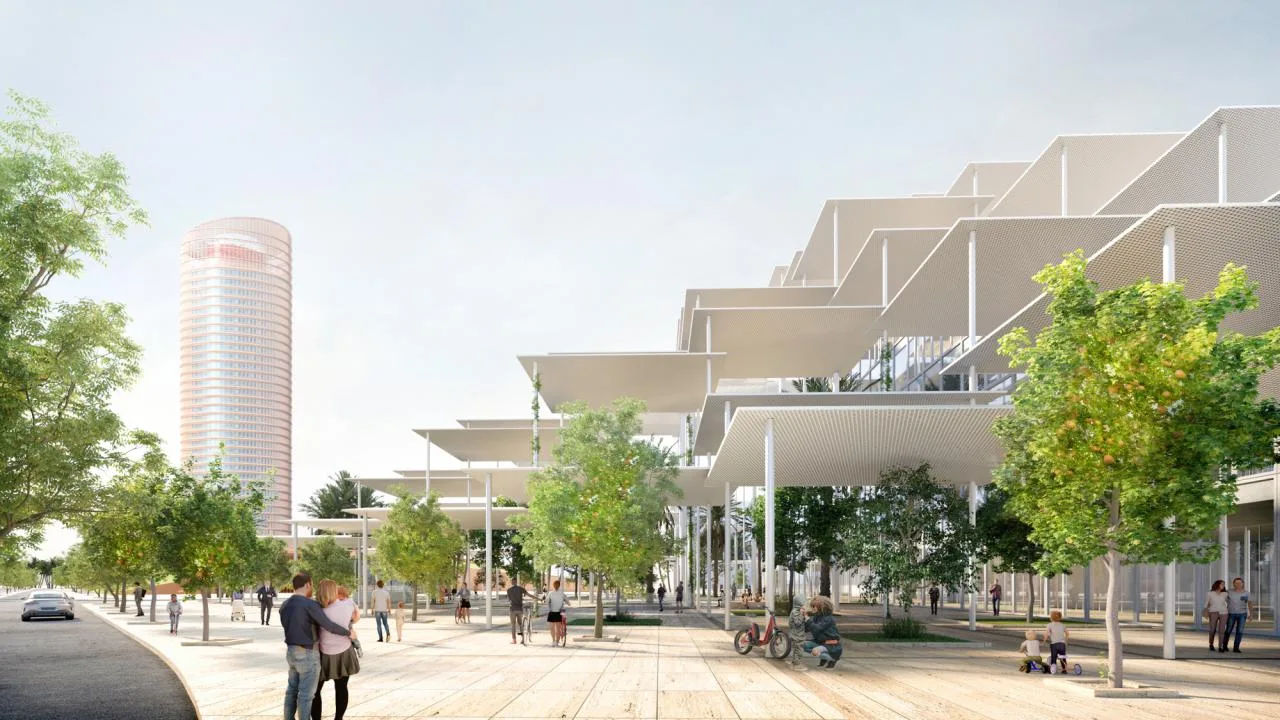
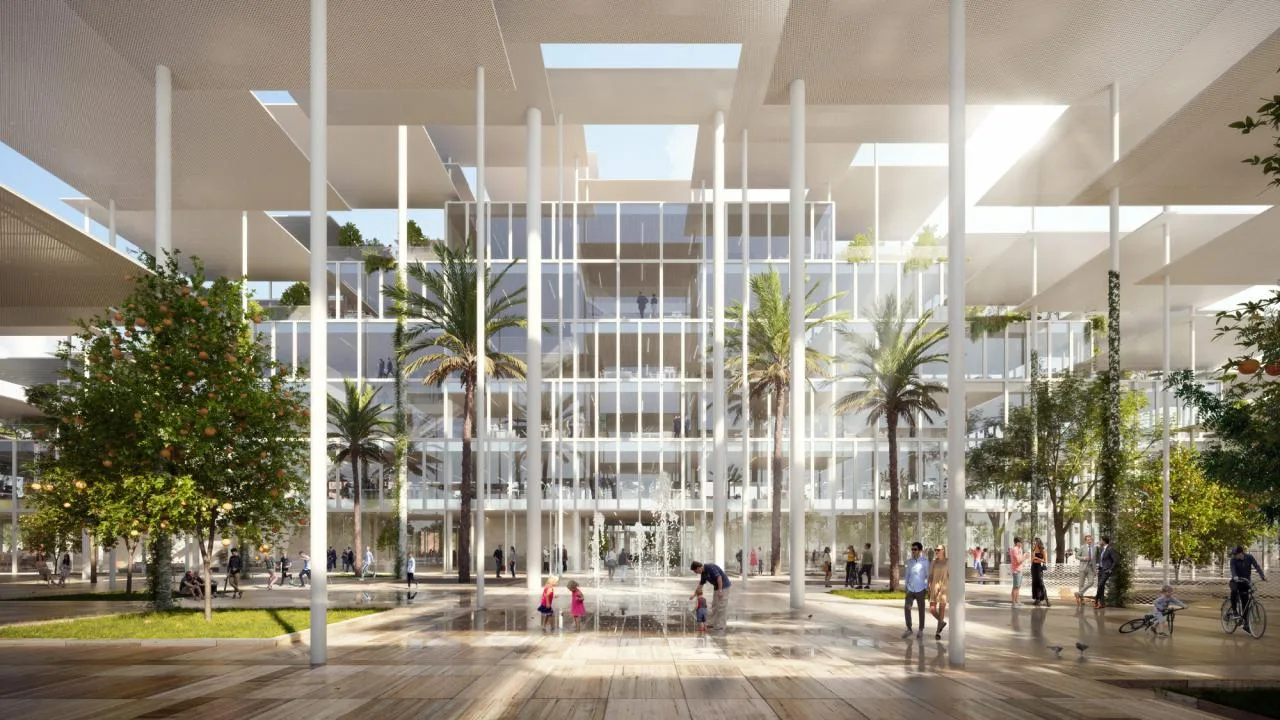
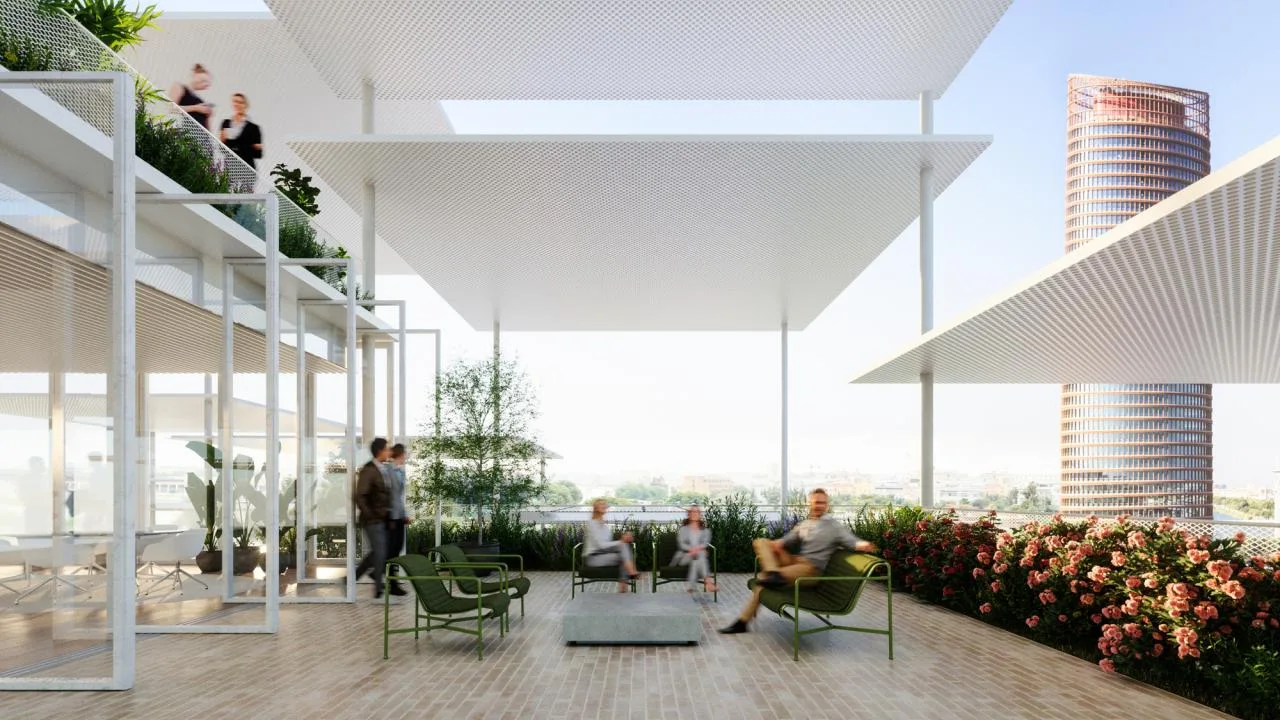
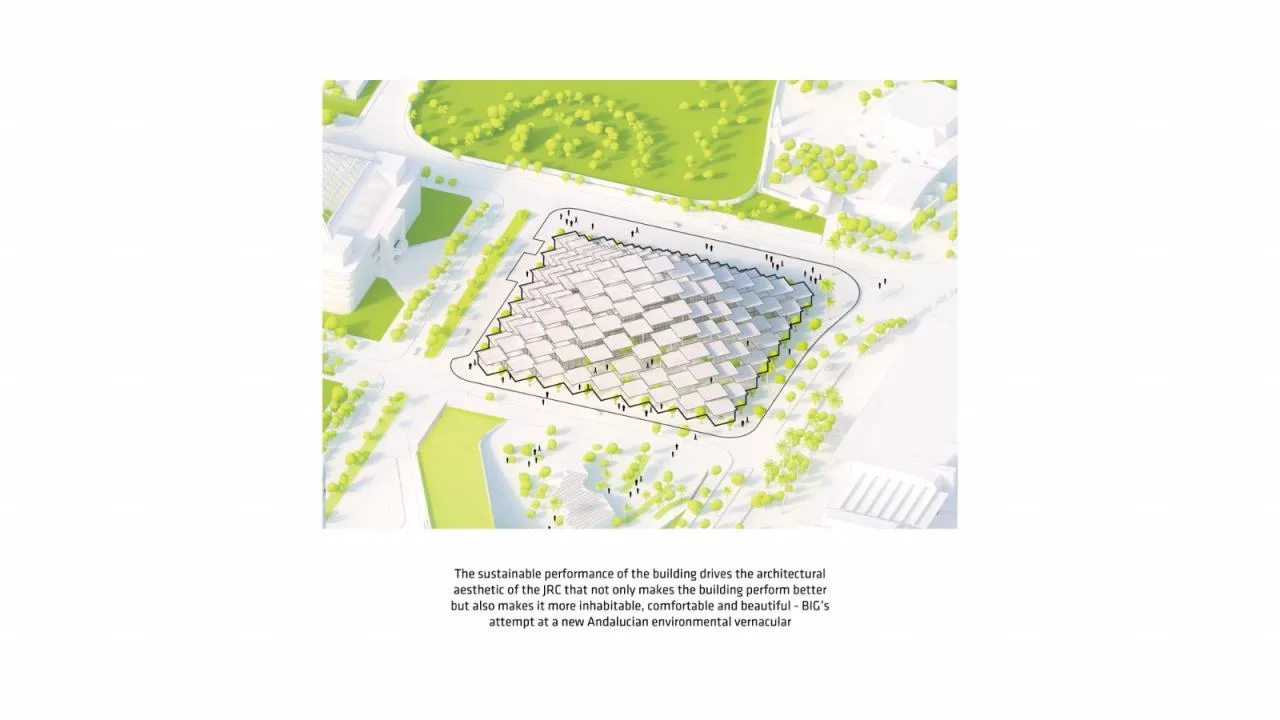
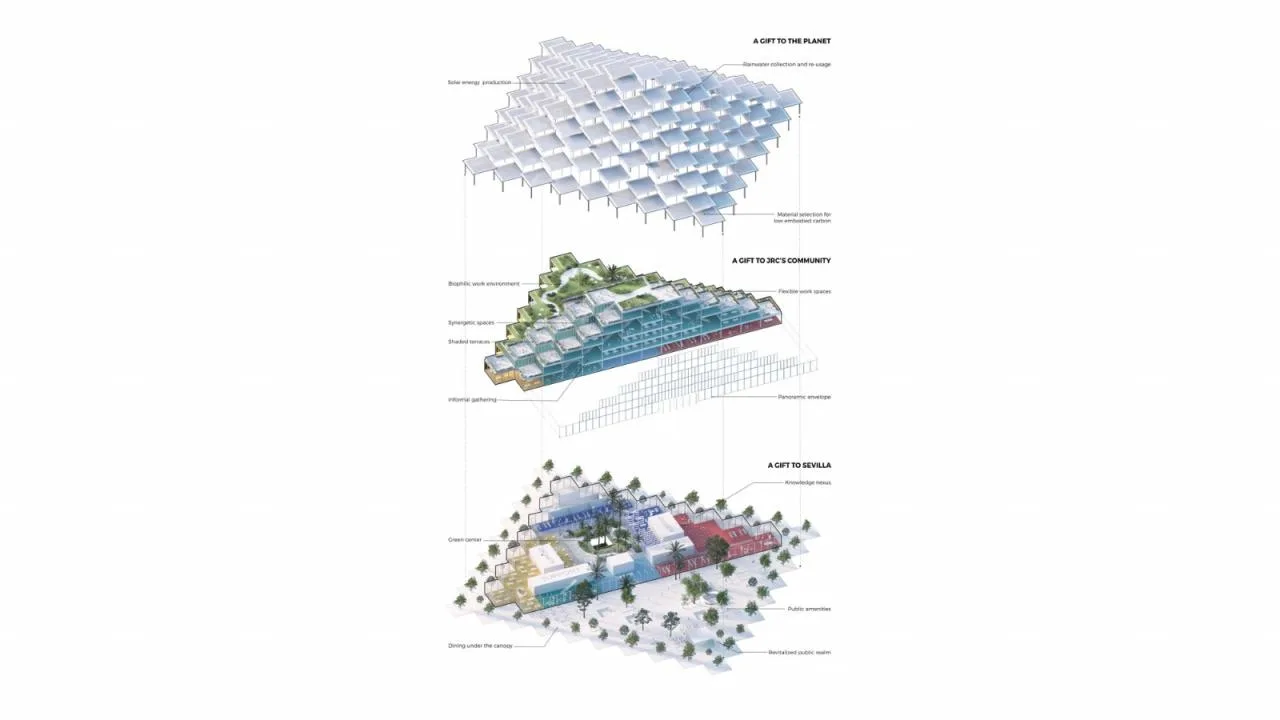
The international design competition, launched in 2021 with 66 participating firms, inspired BIG’s design featuring a pergola that mimics the shaded squares and streets typical of Seville. This pergola provides shade over the square, gardens, and buildings beneath, supported by columns and topped with solar panels to reduce the building’s energy consumption.
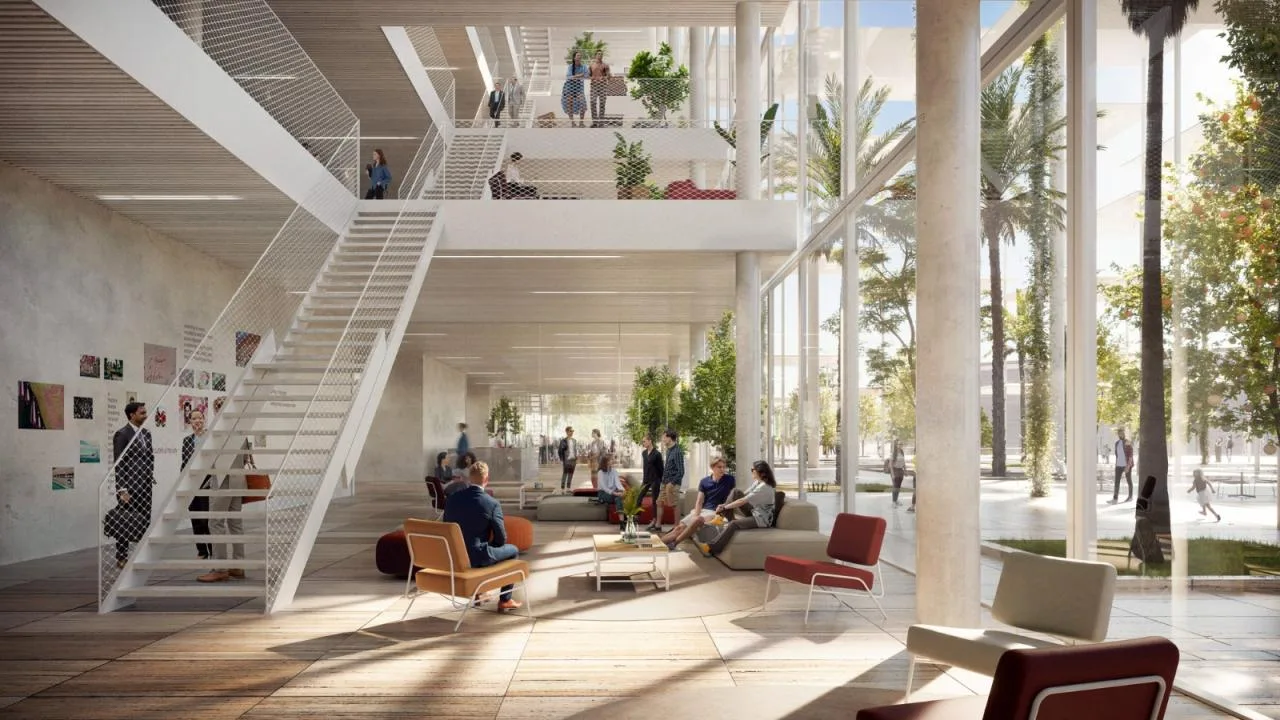
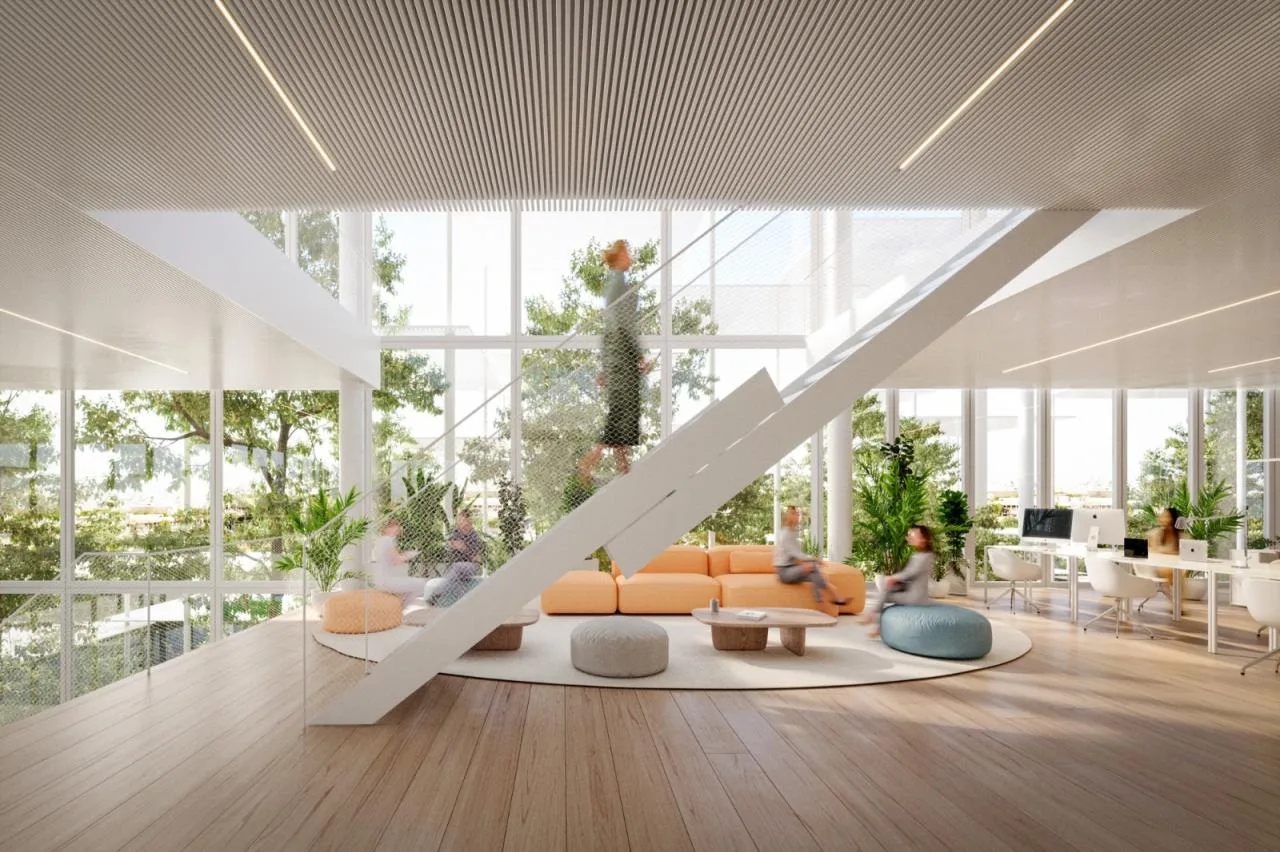
The flexible layout is designed to adapt to JRC’s evolving needs. Two diagonal gaps run through the building’s geometric modules, connecting floors and encouraging social interaction. These gaps extend from the ground-level facilities to a top-floor café, encouraging stair use and fostering informal meetings and communication among colleagues.
Passive design strategies include natural cross ventilation and optimal daylighting through shallow floor slabs and the pergola, significantly reducing the need for artificial lighting, air conditioning, and mechanical ventilation.
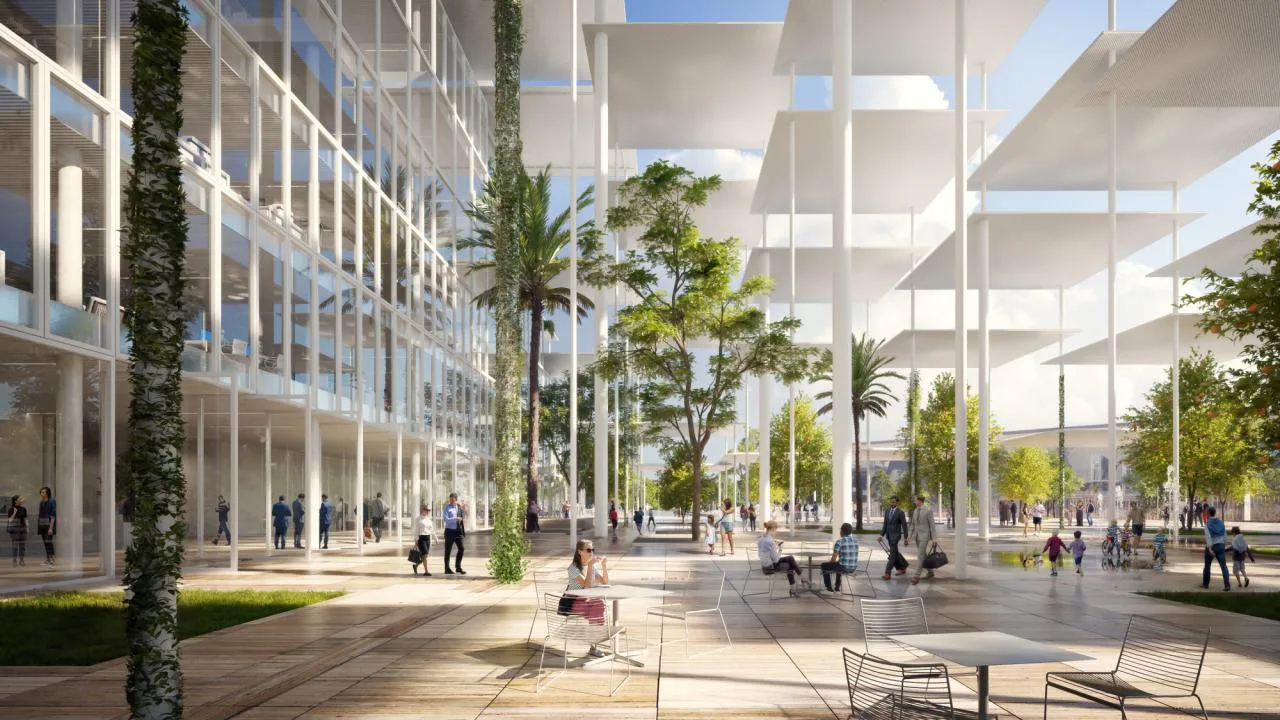
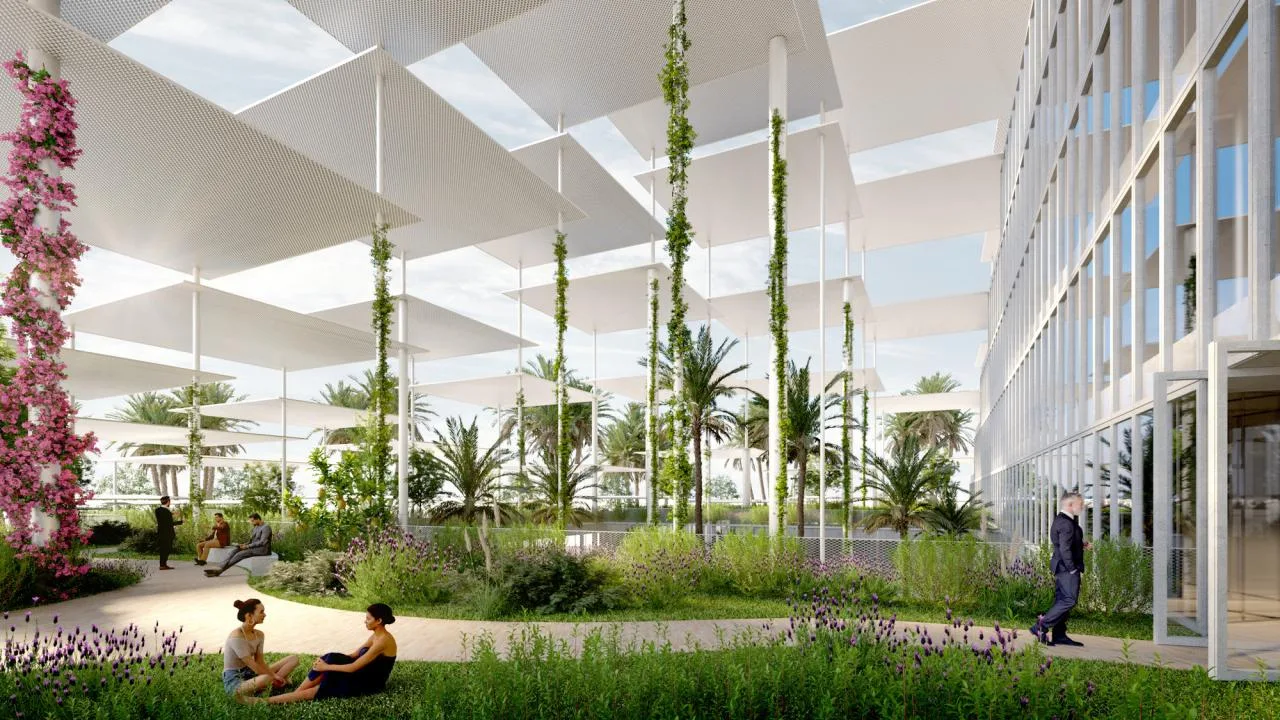
The design emphasizes the use of local materials such as limestone, wood, and ceramic tiles. The building’s concrete is low-carbon, reducing CO2 emissions by up to 30%, and the pergola is constructed from recycled steel. Outdoor gardens, greenery, and water features are thoughtfully integrated to mitigate the urban heat island effect and create a comfortable microclimate.
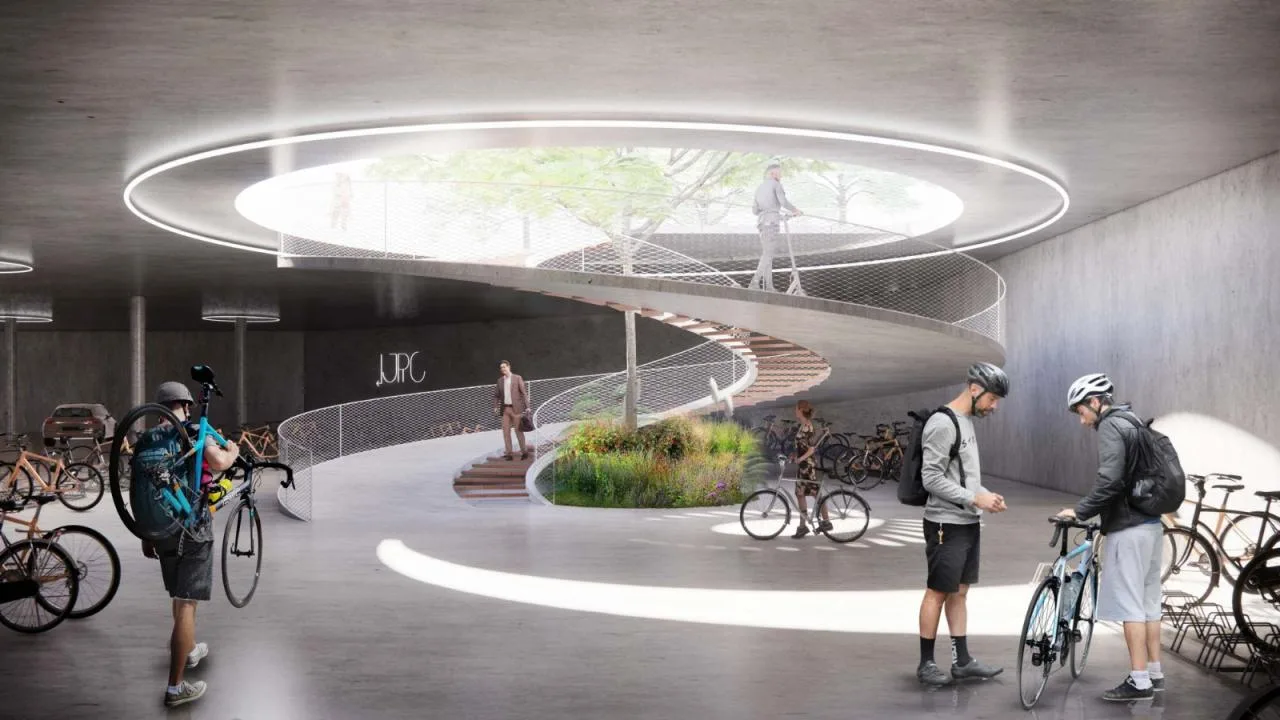
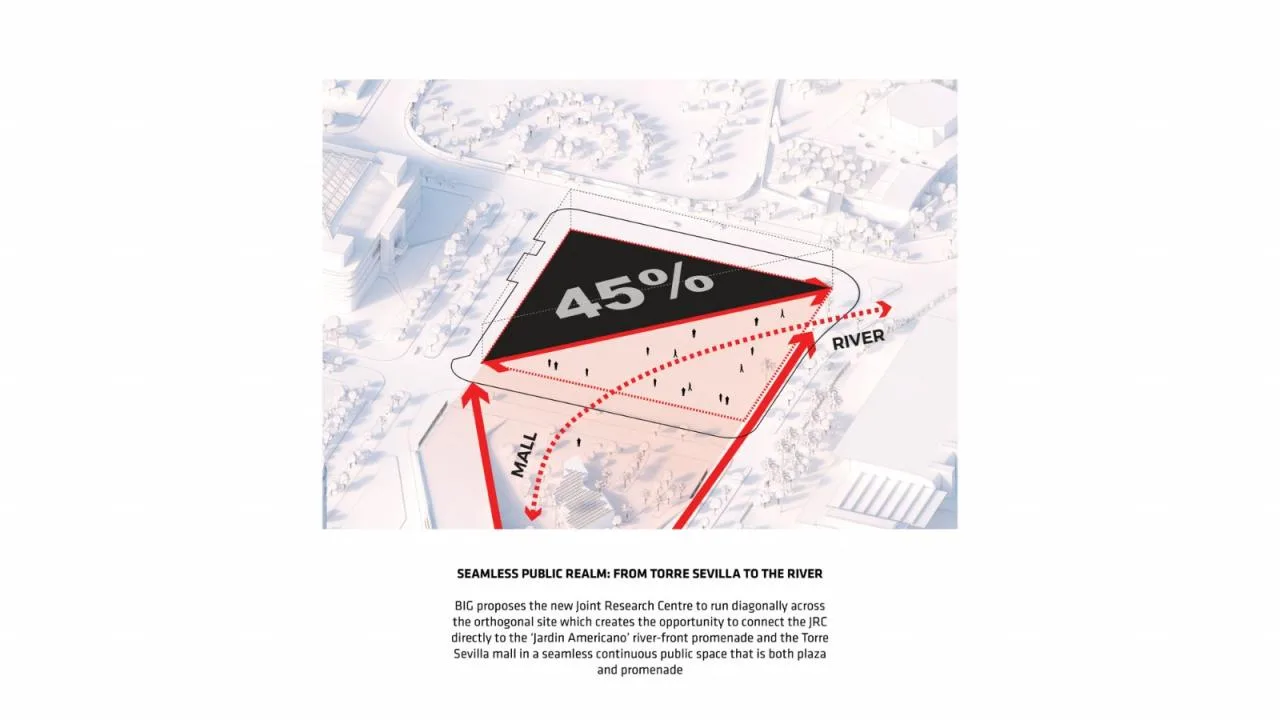
BIG’s design situates the building diagonally within the orthogonal site, linking the JRC to the Garden Americano Riverside Promenade and the Torre Sevilla Shopping Center. This creates a continuous, unified public space serving as both plaza and promenade. The site features a public square on one side and a private garden for the JRC community on the other. The building’s recessed floor slabs create terraces and shaded outdoor areas for relaxation, socializing, and enjoying city views.
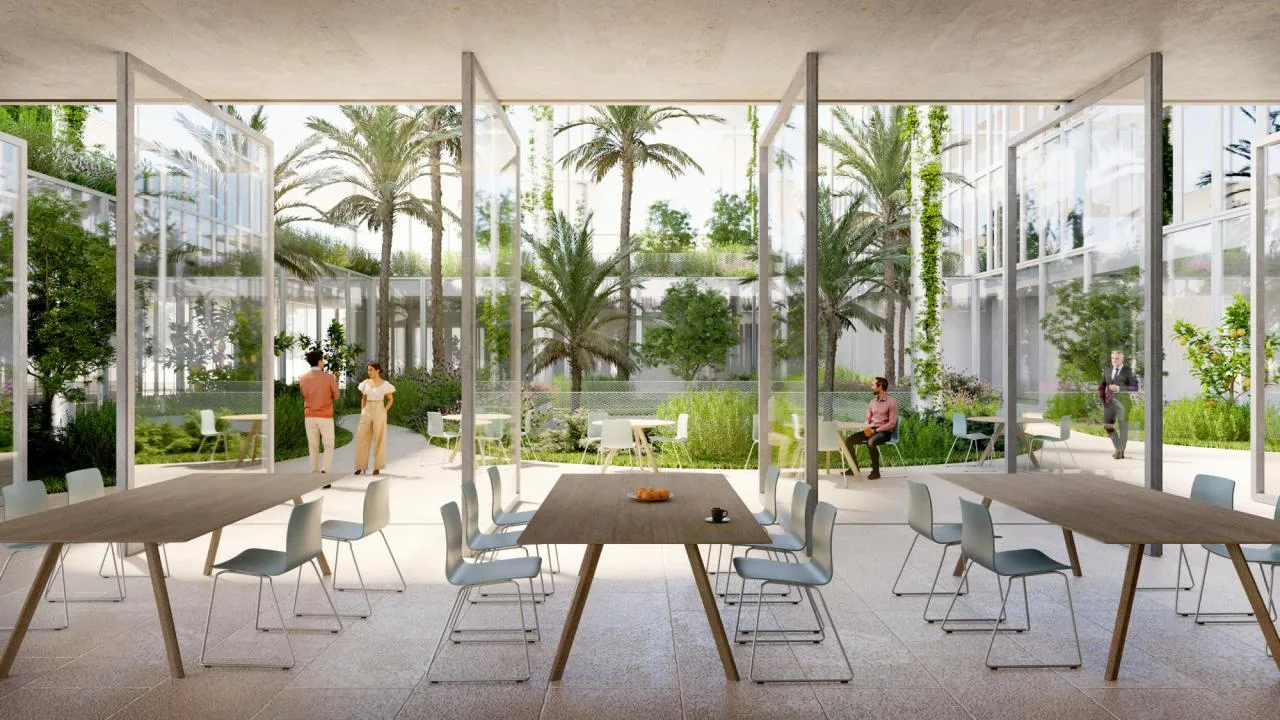
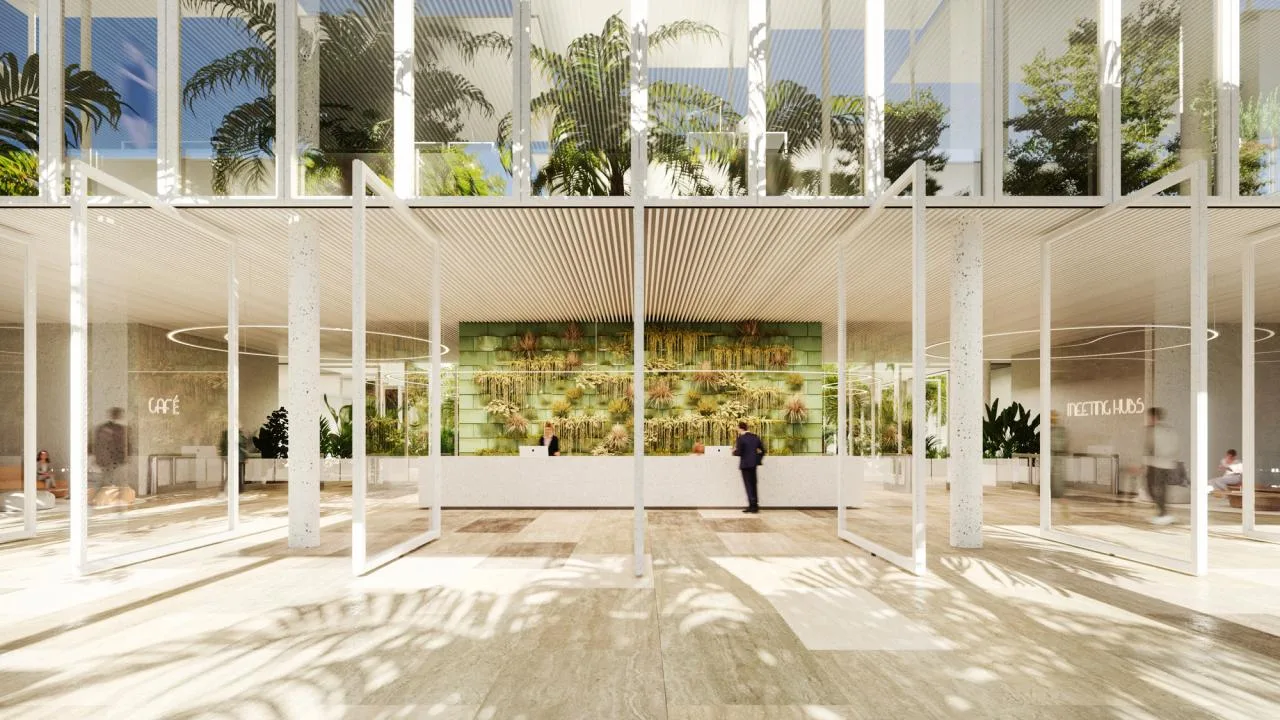
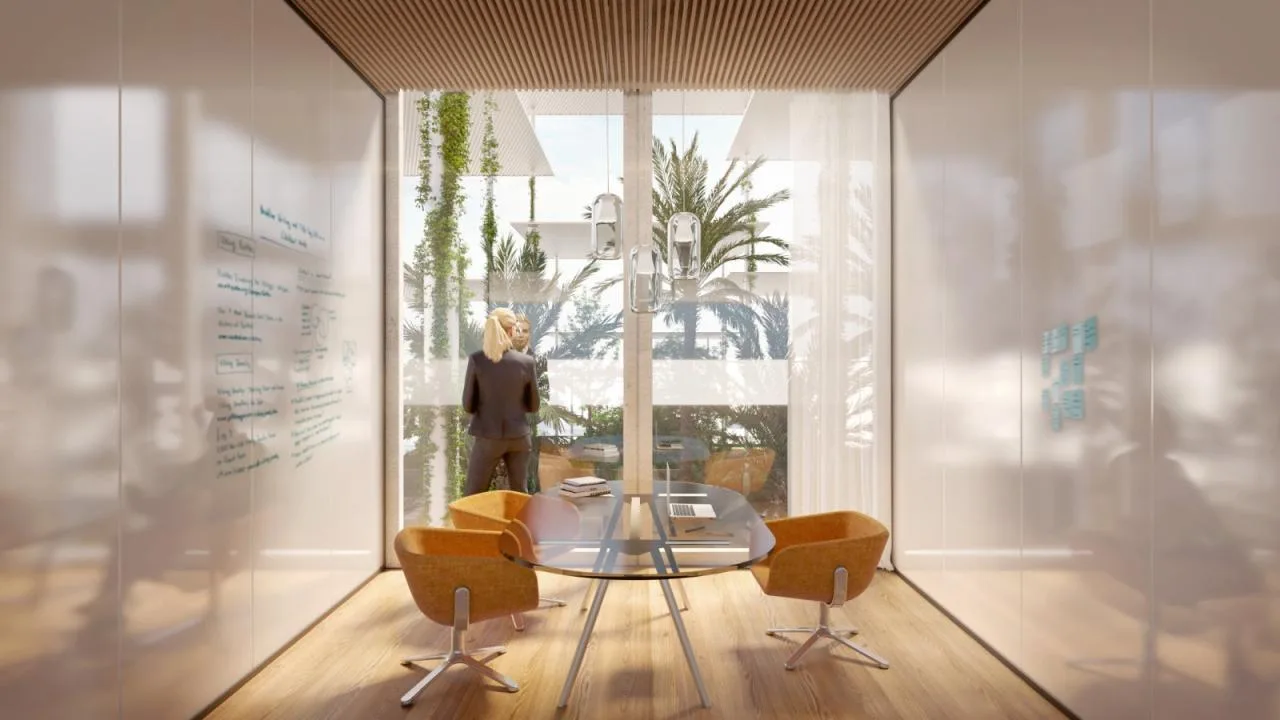
The interior layout places public amenities such as dining areas, conference facilities, and social spaces on the ground floor, while offices and research units occupy the upper floors to ensure privacy and security. Collaborative workspaces overlook the square, and quiet, focused areas face the garden, enhancing work-life balance.
“With the design of the Seville Joint Research Centre, we aimed to marry architectural beauty with sustainable performance. Our goal was not only to enhance the building’s functionality but also to create a livable and visually appealing environment,” said Bjarke Ingels. “This project brings me full circle—having studied in Andalusia before returning to ETSAB in Barcelona, where I now lead a 50-person BIG branch. It connects the past and the future in a brand-new Andalusian context.”
In May 2021, the European Commission’s Joint Research Centre (JRC) launched an international interdisciplinary design competition with support from the International Union of Architects (UIA) to create the new JRC headquarters in Seville. The competition sought a forward-thinking, innovative, and cost-effective design that integrates multiple disciplines to meet the highest sustainability standards for new construction projects.
The international jury, chaired by Bernard Magenhann, Deputy Director General of JRC, reviewed 15 shortlisted projects before selecting the winning design. The jury praised the proposal’s timeless quality derived from its sunshade elements and its ability to create inviting urban spaces that promote transparency, inclusivity, and energy efficiency.
The second prize went to Dorte Mandrup, supported by Ines Ingenieros Consultores, Jansana, De la Villa, De Paauw, Arquitectes, Installacions Arquitectoniques, and Activitats Arquitectoniques. The third prize was awarded to Cobe, with partners Esteyco, FSL Ingeniería y Diseño Sostenible, Estudi Ramon Folch i Associates, and b720 Arquitectura. Construction of the JRC building is expected to begin in 2024.
Project Drawings
△ Analysis Chart
△ Analysis Chart

△ Analysis Chart
△ Analysis Chart













Must log in before commenting!
Sign Up