
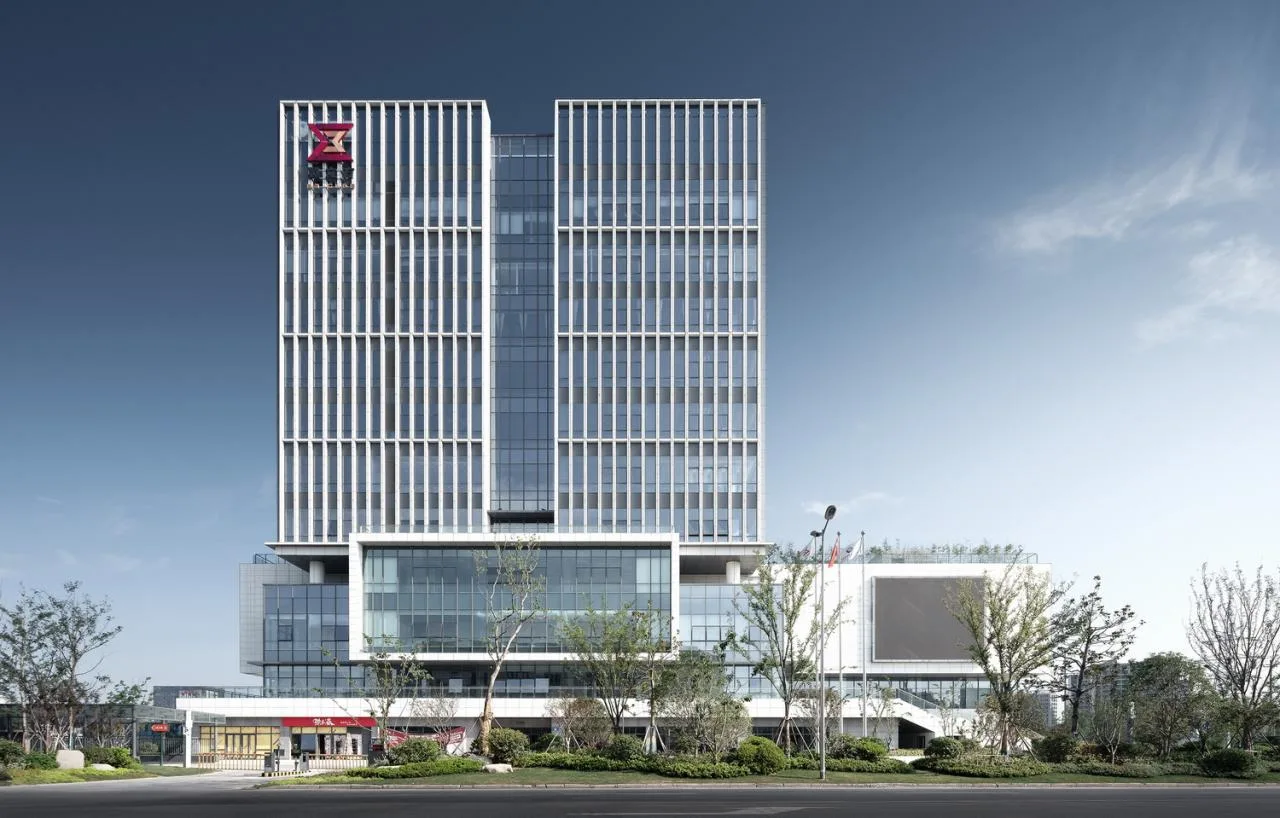
01 Wedge
The concept of an educational complex was first introduced in 2015 and gradually developed into an urban hub that combines various functions. These include a family growth center, early childhood education and training, children’s theater, bookstore, quality education and training, a multi-functional small theater, and a research and learning center.
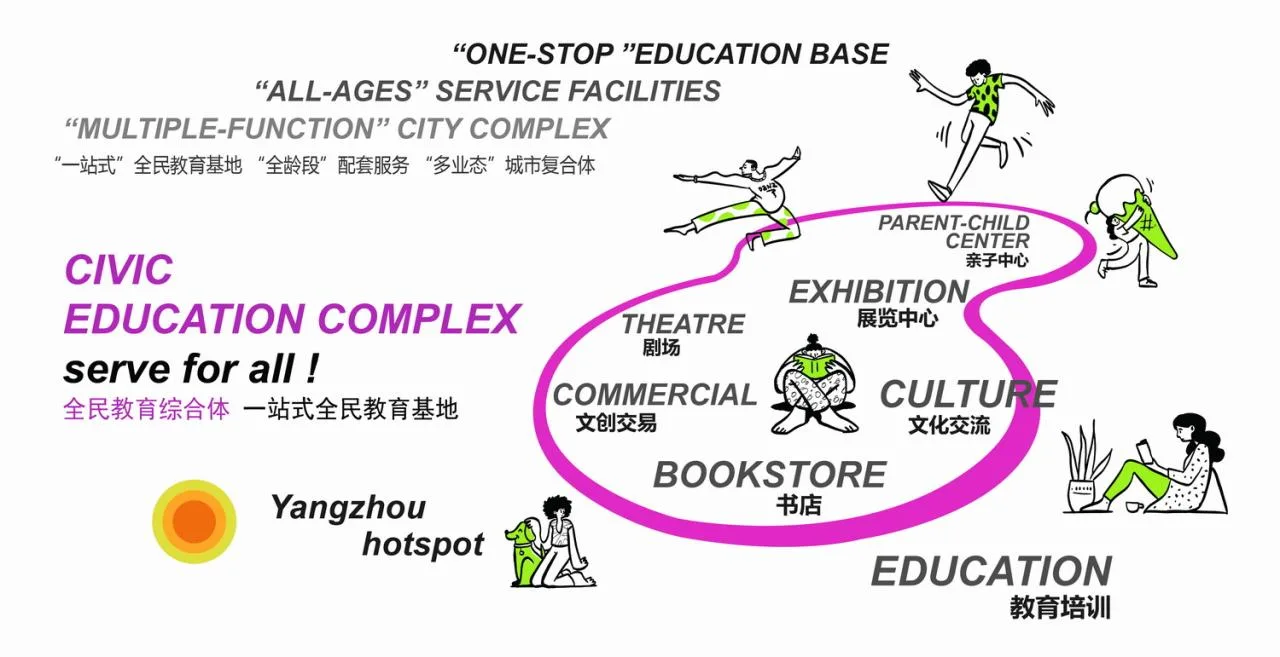
Unlike shopping malls focused on education and training, which are often profit-driven and lack integration of educational resources, traditional educational venues such as youth centers, art centers, cultural centers, and senior universities serve specific groups and operate as non-commercial entities. This limits their service scope and operational flexibility, making it difficult to support all age groups in one facility.
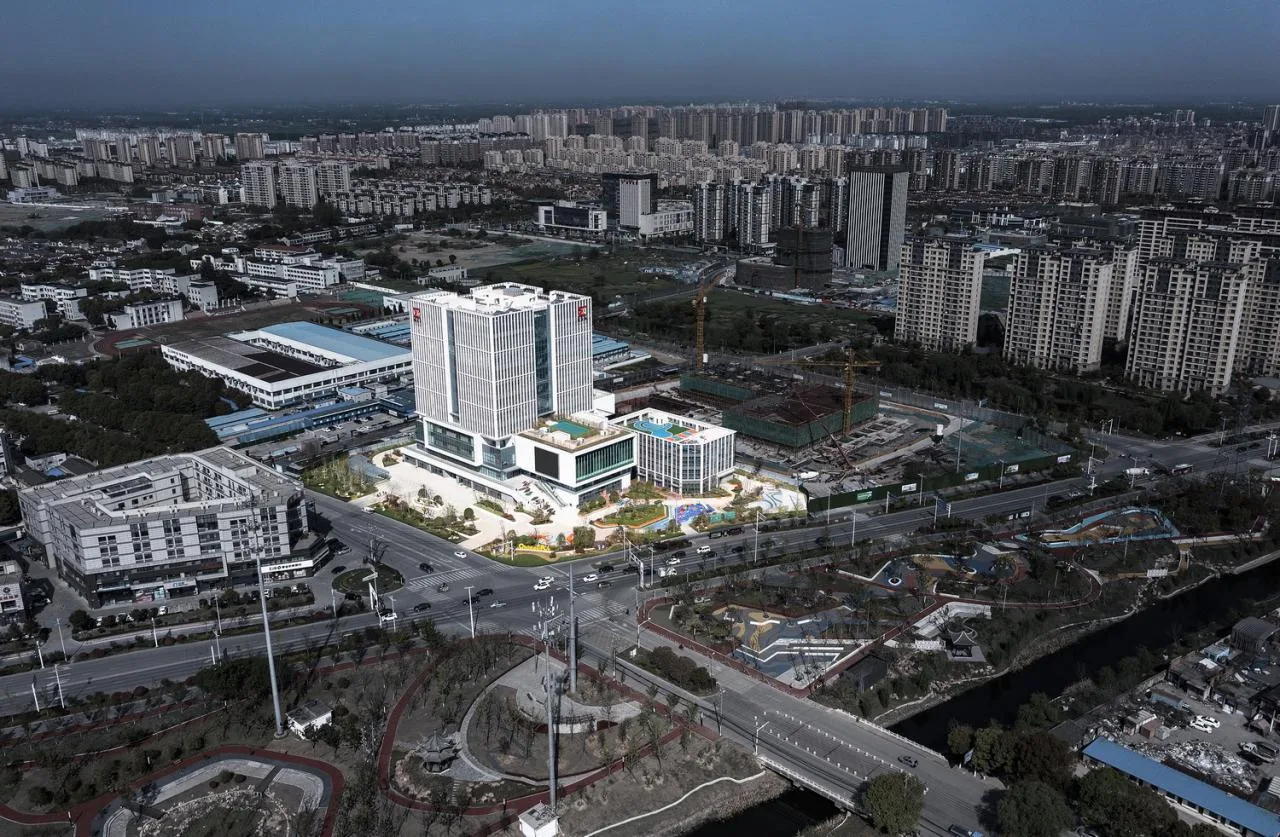
Our client, Yangzhou Science and Education Group, understanding market demand and leveraging its unique resources, aims to establish a comprehensive national-quality education base in the historic and cultural city of Yangzhou. This base integrates regional education, culture, and arts services, characterized by a “one-stop,” “all-age group,” and “multi-format” approach.
02 Unique Location
The project is situated in the Jiangwang area of Hanjiang District, Yangzhou City. To the north lies the core commercial and economic center of Hanjiang District. To the east runs Guozhan Road, the city’s main thoroughfare, facing the Xiyingou Community Park. The south borders the Chengnan Expressway, marking the southern end of Hanjiang District’s central axis. This location serves as a landmark and the southern gateway from the expressway.
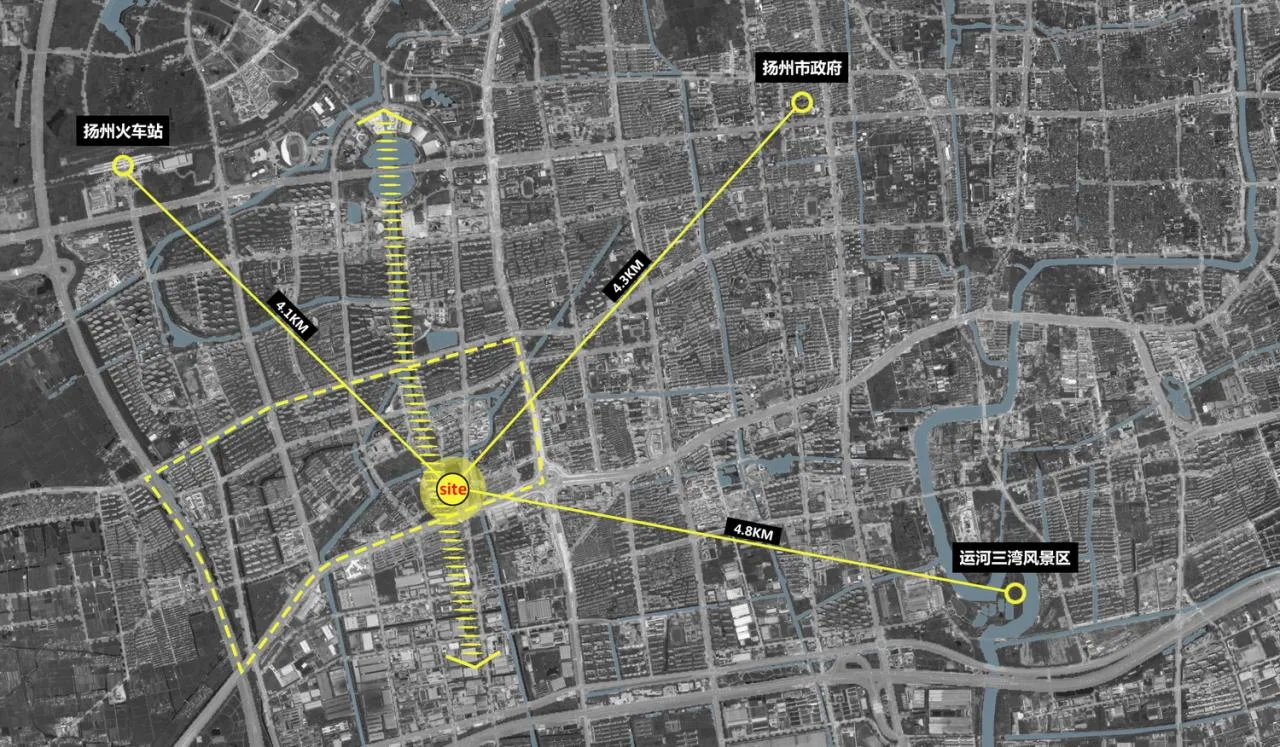
△ Location Analysis
03 Spatial Form
The plot’s prime urban frontage faces southeast along Guozhan Road, overlooking the park and green spaces, as well as the city’s main roads and elevated highways. The question arises: how should the design respond to such a prominent urban interface?
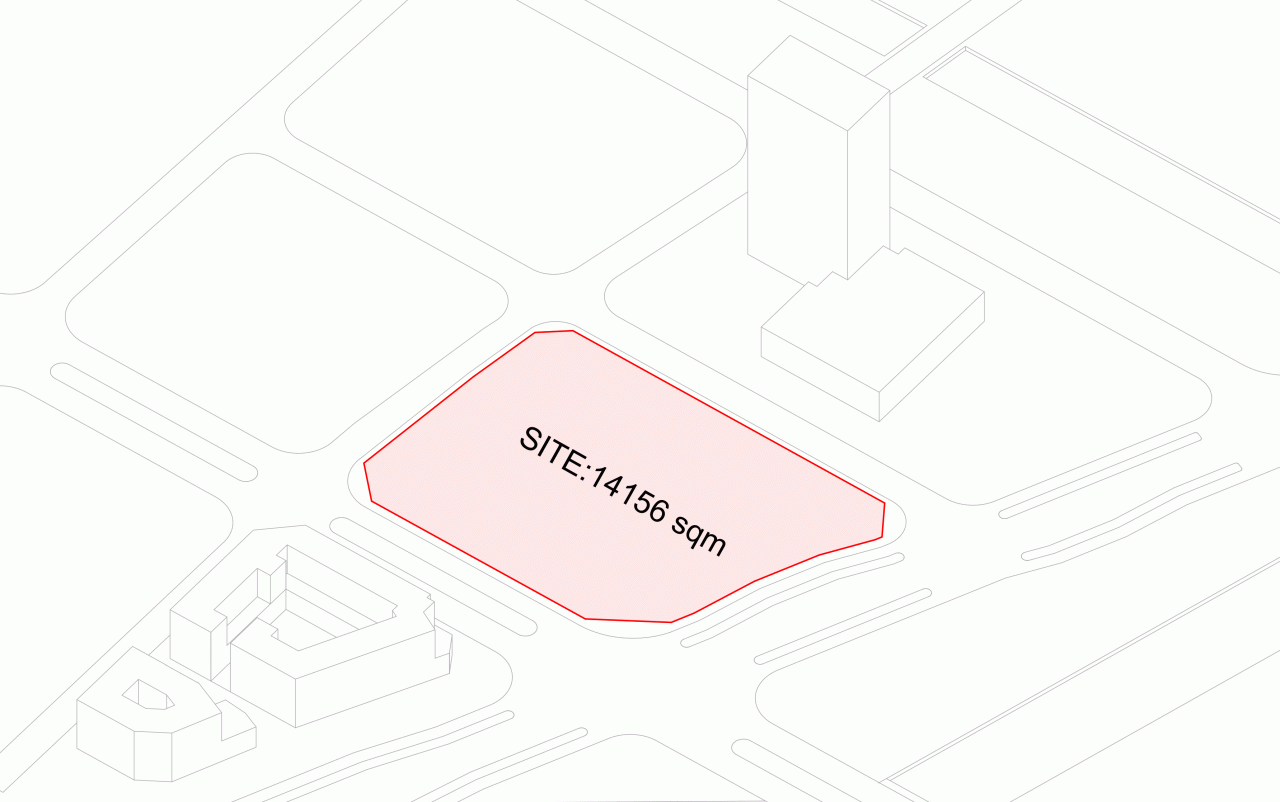
△ Block Generation
In the initial design, we established a dialogue with the urban green belt by incorporating an aerial green courtyard at the southeast corner. This extends greenery vertically through a layered setback landscape, integrating multiple dimensions of nature into the building’s façade.
04 Cube of E
The design revolves around the theme “E³” (Education), from which the project name “Wing Cube” is derived. It symbolizes the aspiration to “give wings to people and help them soar.”
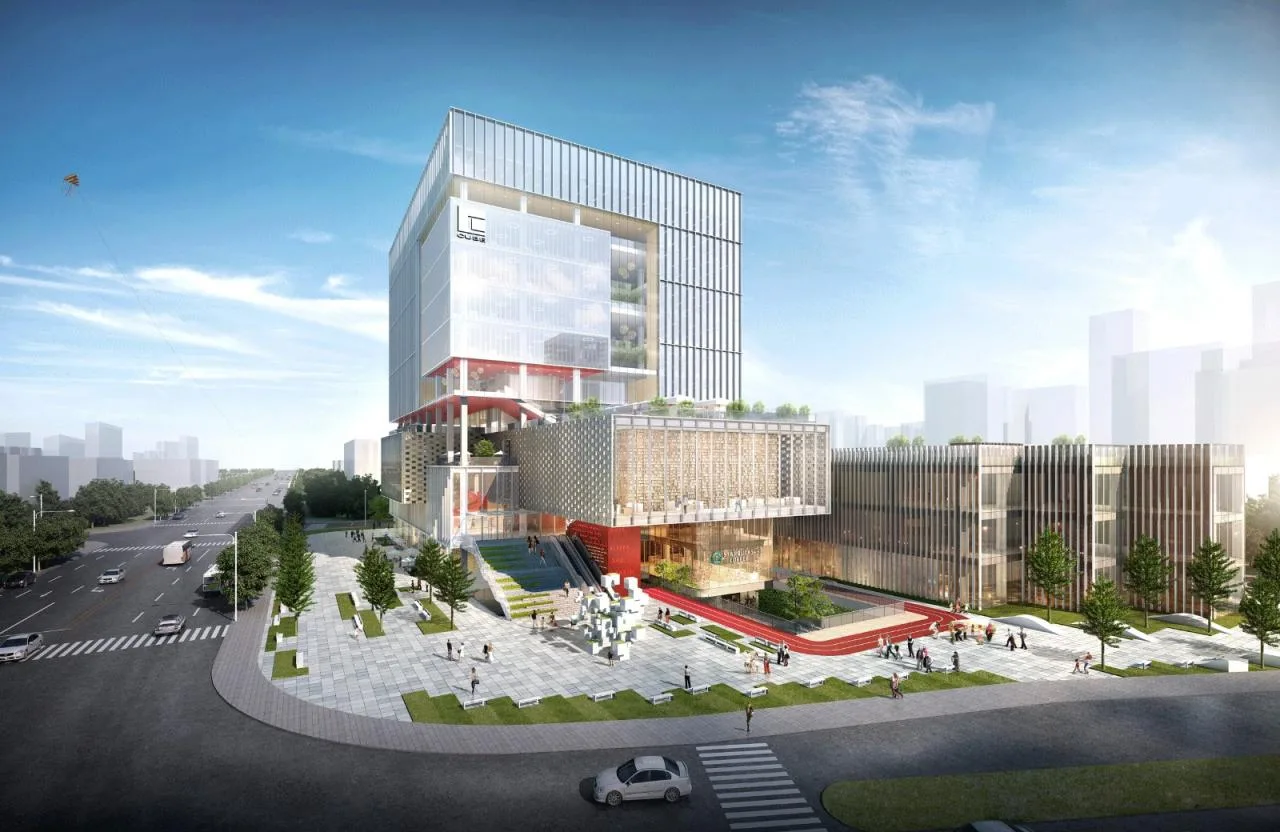
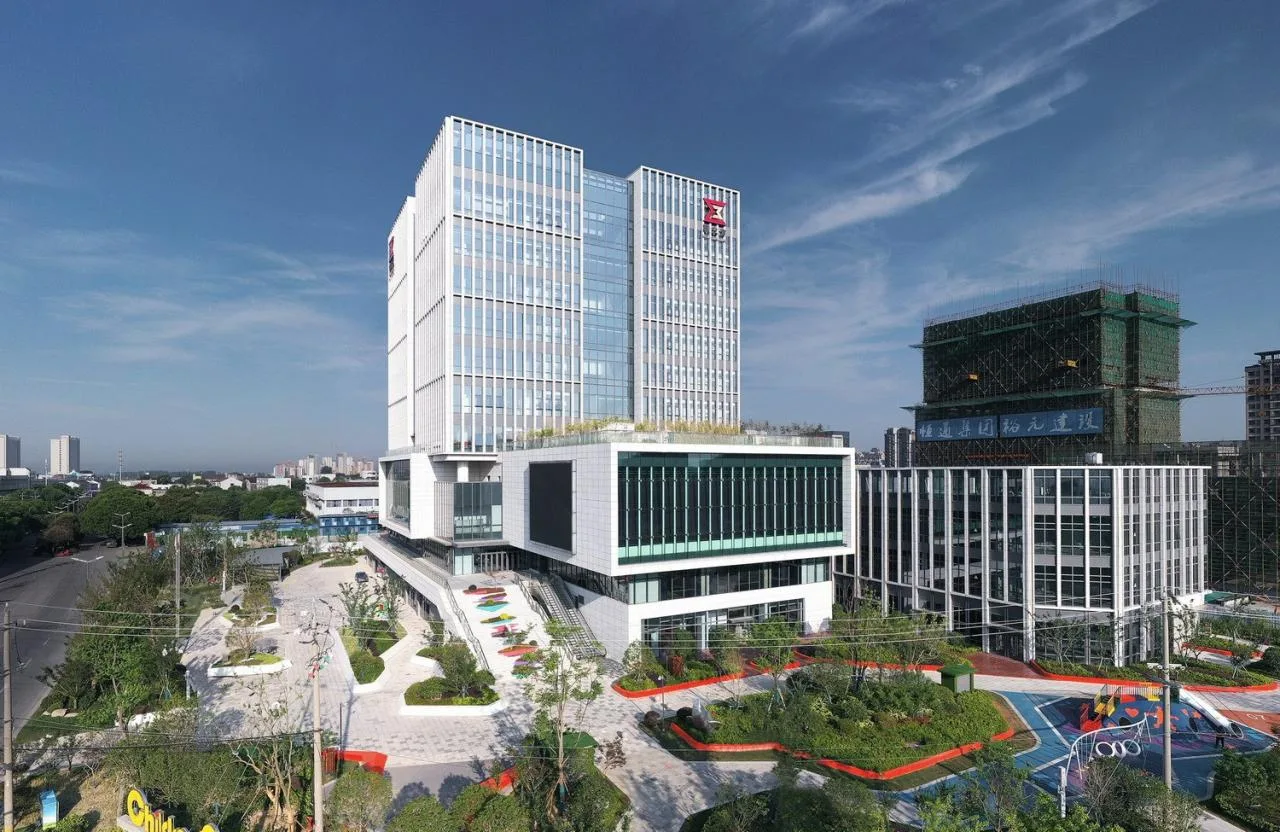
△ Winning Bid and Implementation Plan
The building has an above-ground construction area of 36,800 square meters. The tower, representing training and heritage, covers about 40% of the total area. The remaining 55% is allocated to cultural and creative commercial facilities within the group house. These include a small daycare park, a 400-seat theater, a multi-functional exhibition hall, a themed bookstore, and supporting dining and parent-child stores.
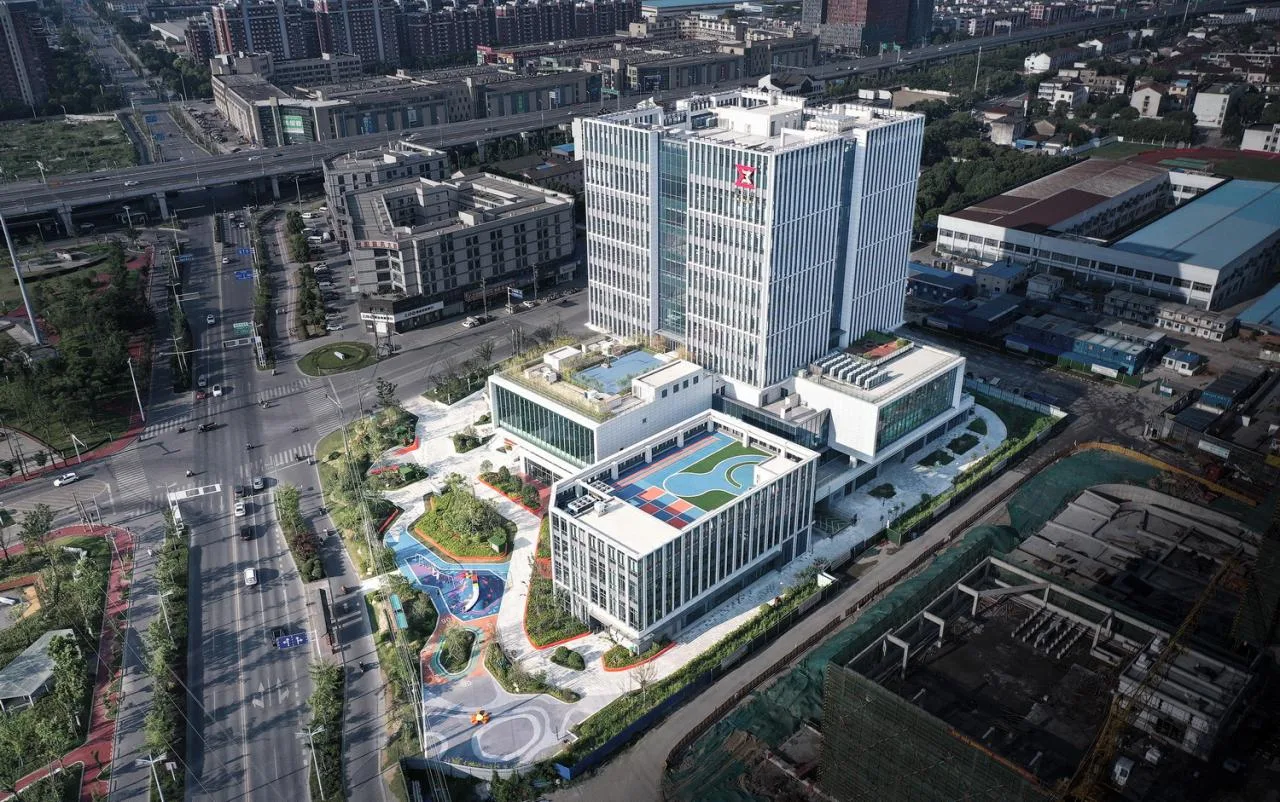
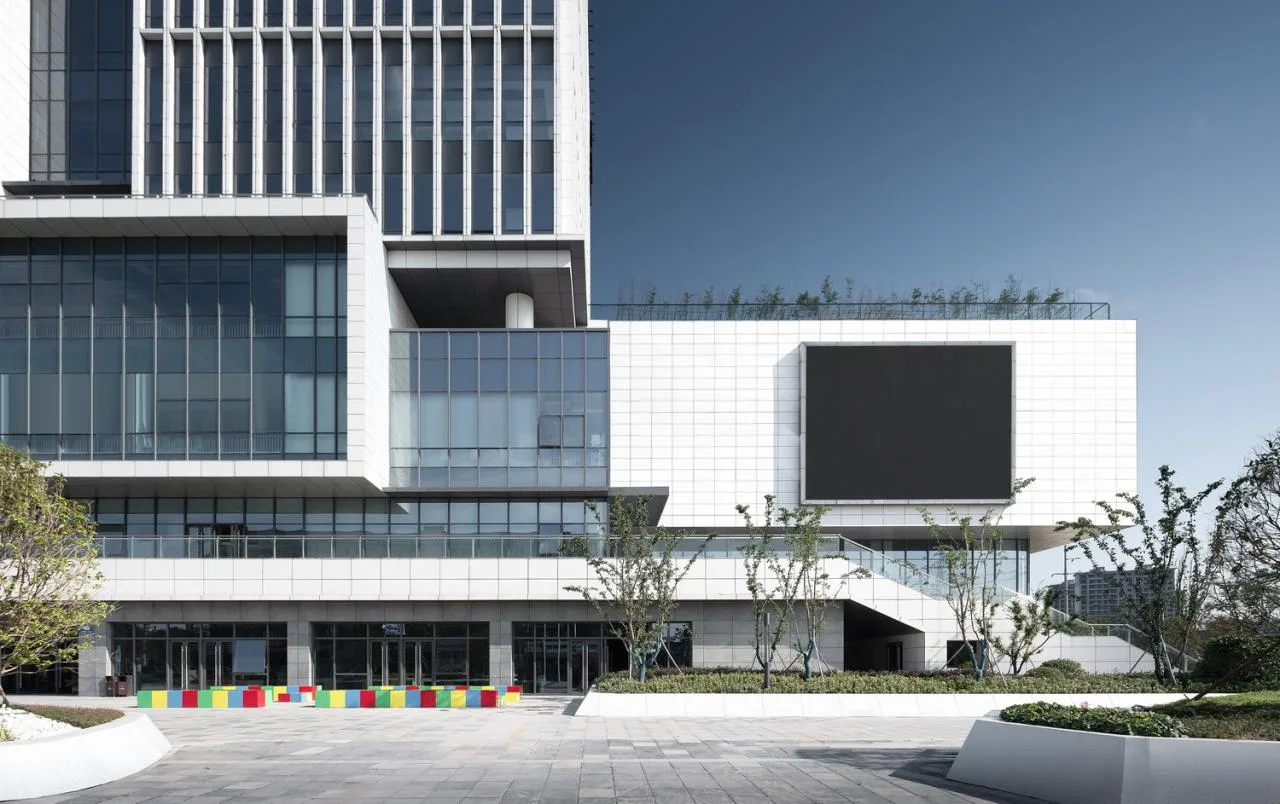
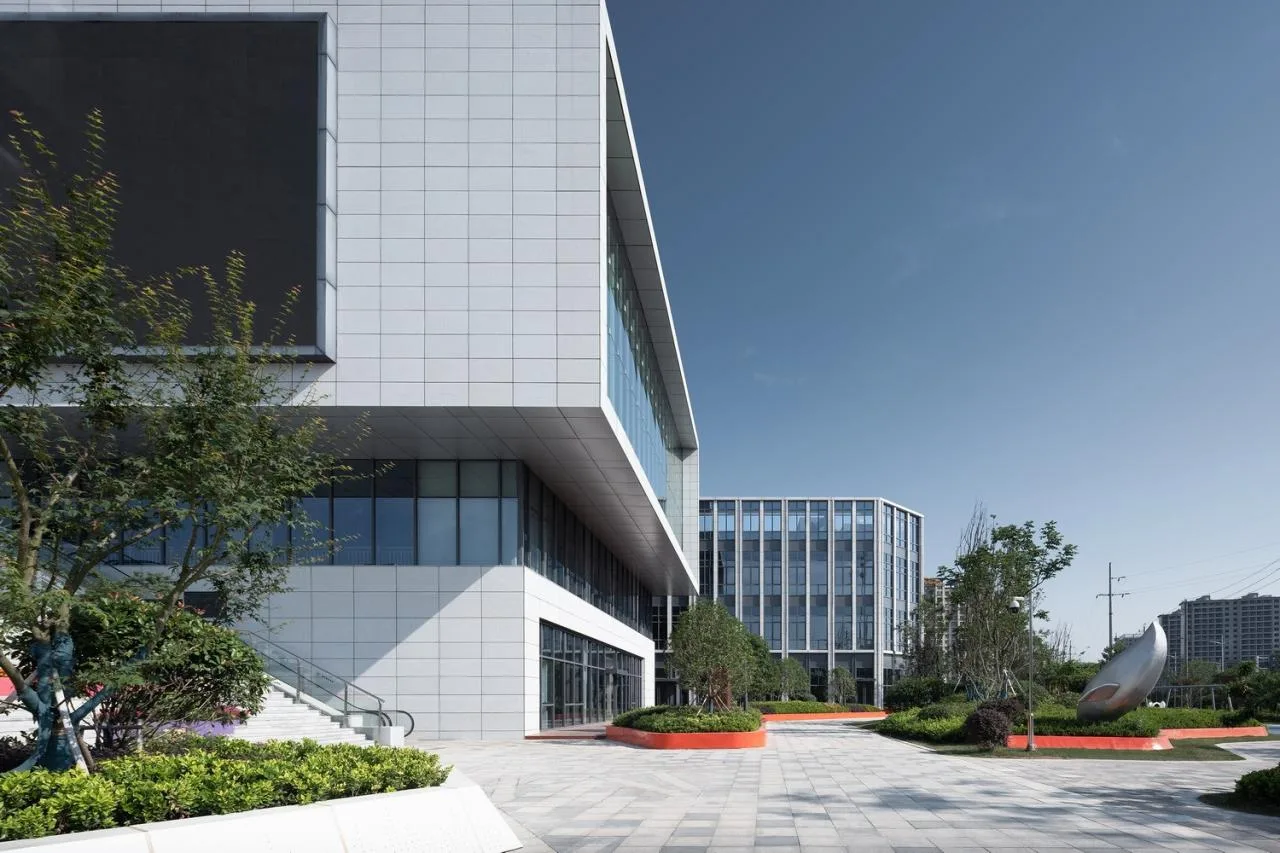
Architecturally, the design expresses its function through a series of interlocking “boxes”—the “childcare” box, “theater” box, “bookstore” box, and “training and heritage” box. These create rich, engaging gray spaces for visitors to linger and explore.
05 Functional Layout
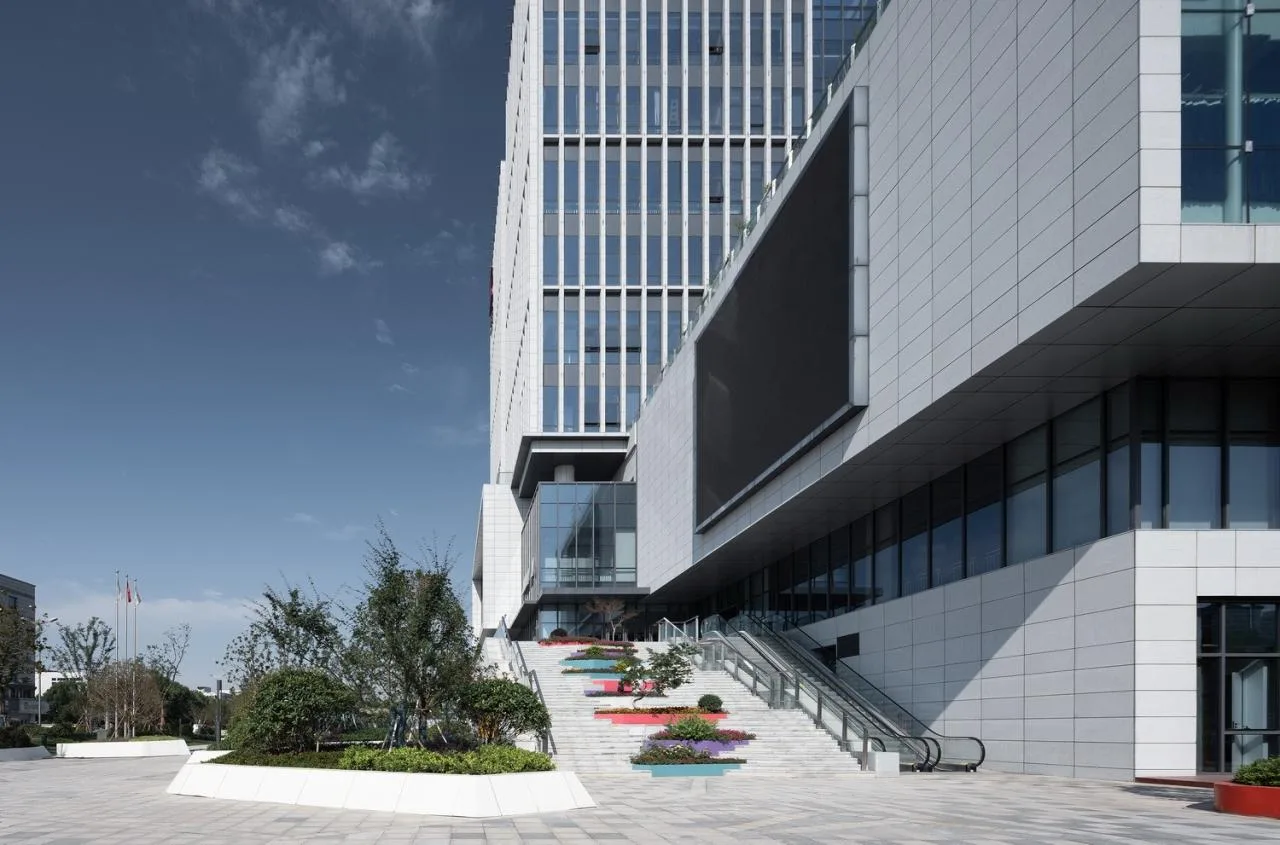
By analyzing the commercial potential of the site, the project’s functions are strategically positioned. The main tower is located on the west side with a square base for easy access. The commercial podium lies beneath the tower, featuring two floors and a grand southeast staircase leading to the shops on the second floor.
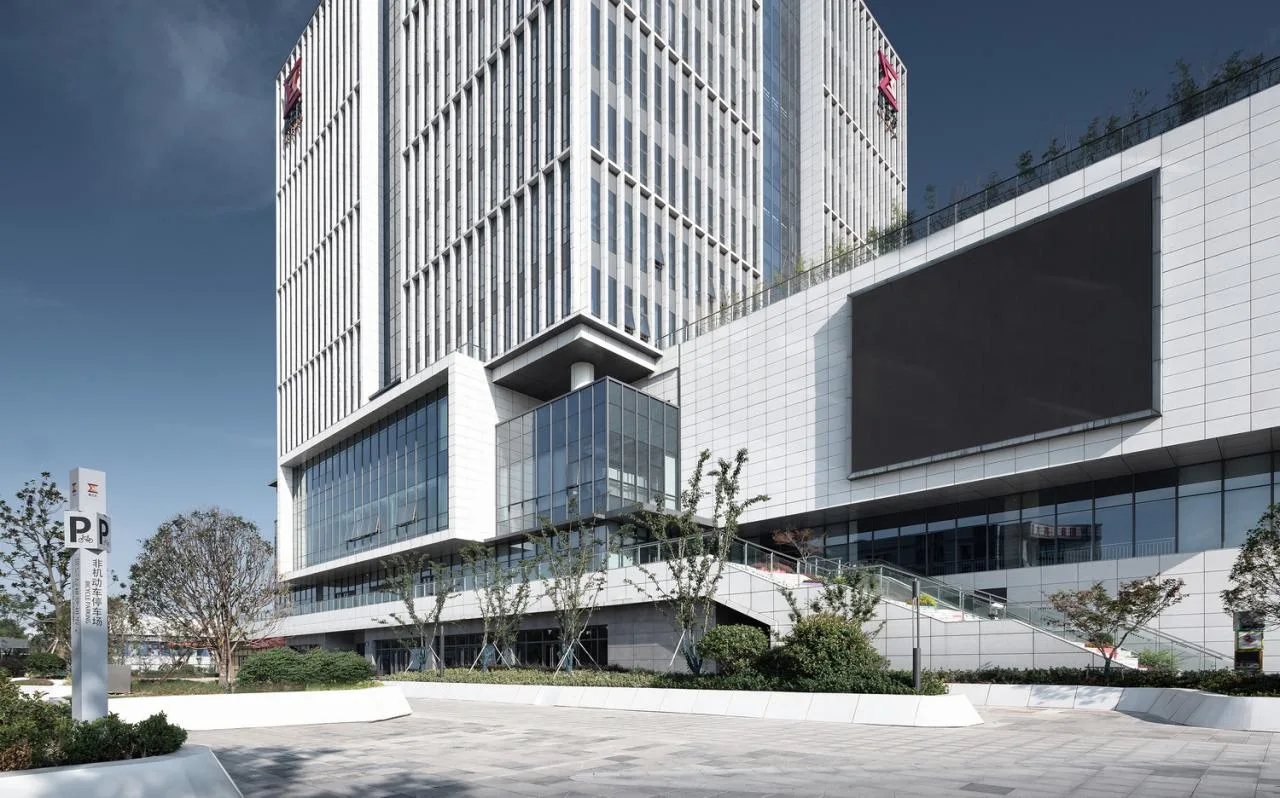
The multifunctional hall and theater are positioned on the tower’s east side, overlooking the green park. The nursery sits at the northeast corner, adjacent to the green belt, featuring a separate entrance on the north side.
06 One Building, One City
Yangzhou is a city rich in folk art and culture, deeply ingrained with literary and artistic heritage. Reflecting this, the design team incorporated the concept of a “city” within the educational complex, integrating elements like shopping malls, schools, libraries, theaters, food streets, and sports fields.
The atrium acts as a “street” connecting vertical spaces, with each floor representing a “block.” Visitors can access any floor through public areas starting from the first floor. This space hosts plays, concerts, musicals, lectures, and training sessions, allowing visitors to experience the building as if walking through a vibrant city.
07 Multi-level Greening
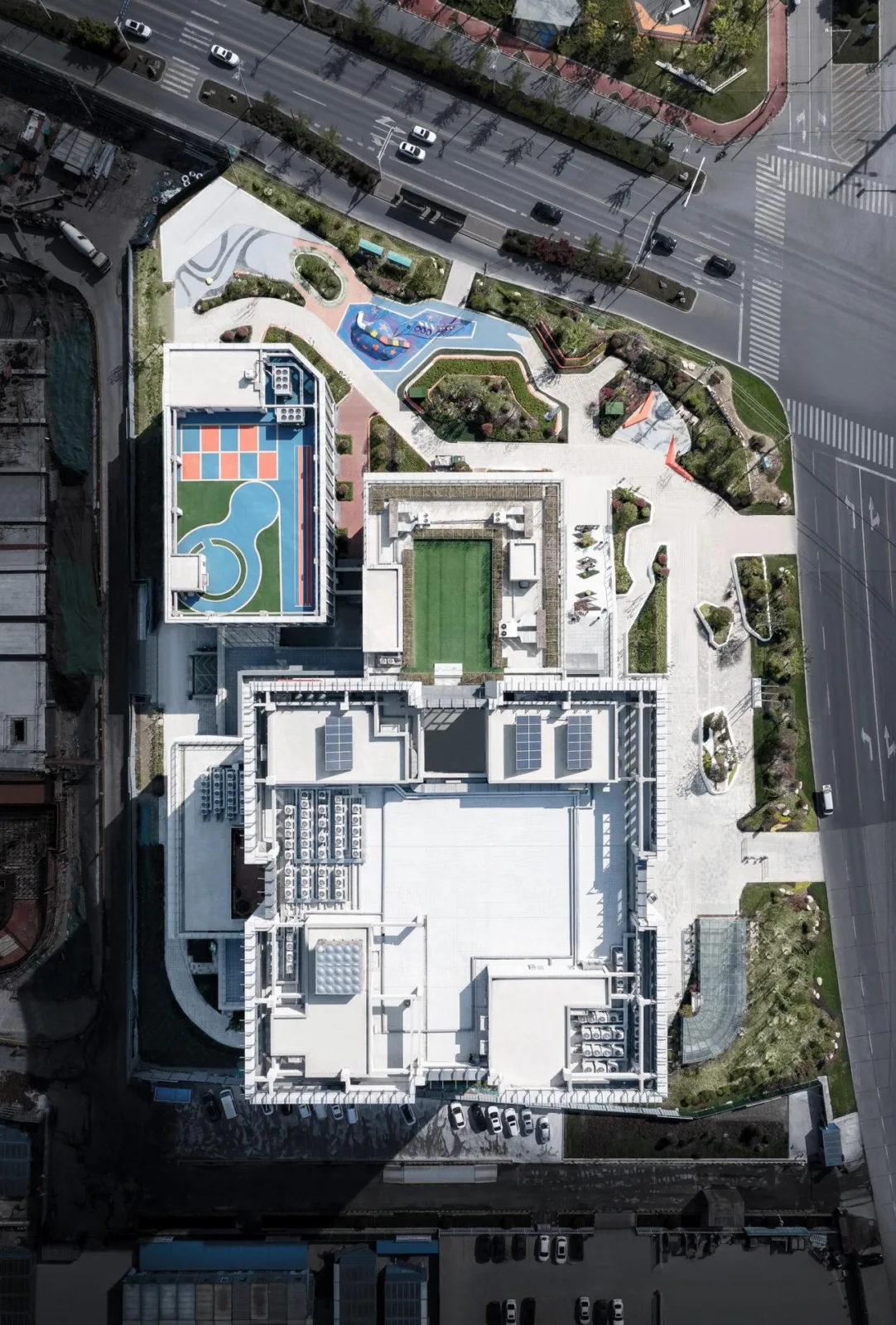
The building’s staggered form naturally creates layered platforms, which become prominent features of the project. These platforms, combined with indoor spaces, form rooftop gardens with diverse themes.
The second-floor platform integrates children’s businesses with an aerial circular walkway. The third-floor preschool roof serves as an outdoor activity area. The fourth-floor podium features corner gardens, creating an immersive outdoor reading environment for the themed bookstore and cultural businesses. The fifth-floor east-facing roof is designed as a rooftop sports field.
08 Virtual and Real Narrative
As a historic and cultural city, Yangzhou follows strict urban design guidelines regulating building length, aspect ratio, and glass curtain wall coverage. With a 60-meter height limit, the building risks appearing short and bulky. The tower complies with guidelines requiring the main façade width not to exceed 50 meters for buildings over 50 meters tall and limiting glass curtain walls to 60% of the exterior facade.
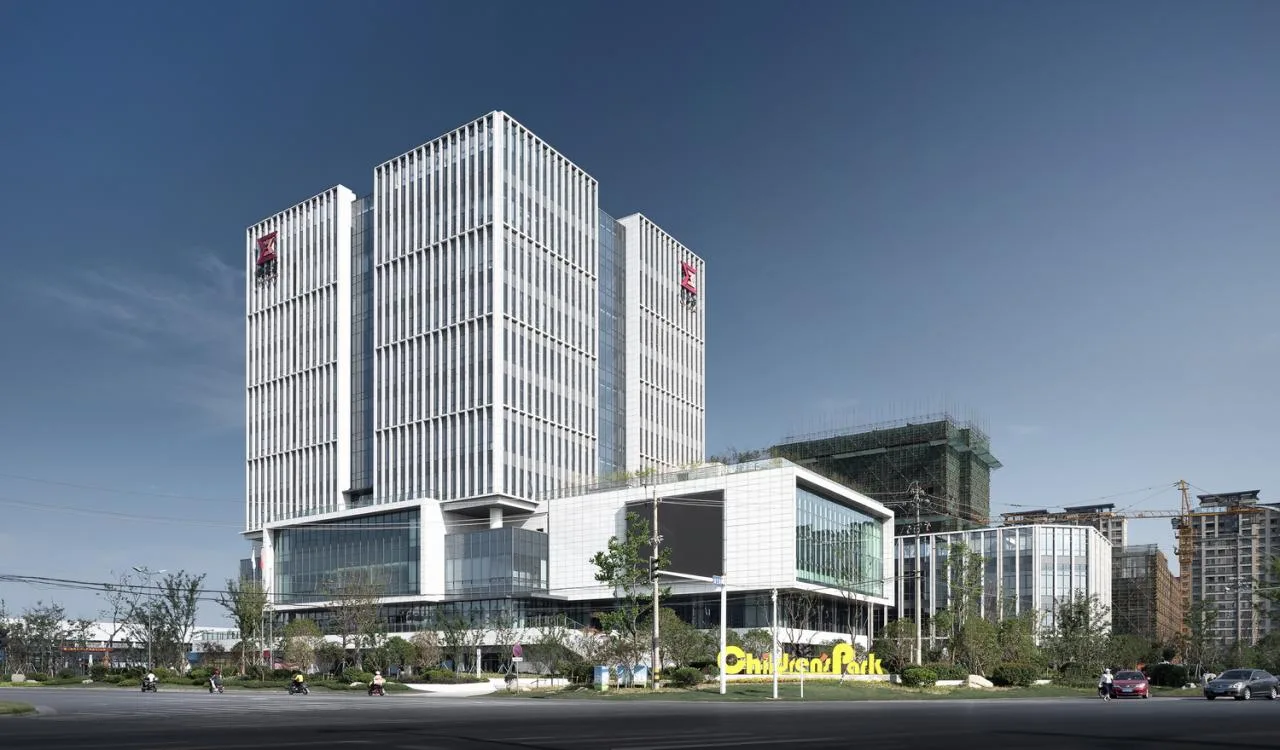
The design language and facade treatments are divided into three sections. The upper section of the training building features uniform lighting and a vertical frame façade. The middle section houses the cultural and creative bookstore and theater on the third and fourth floors, forming a distinctive suspended “cross intersection.”
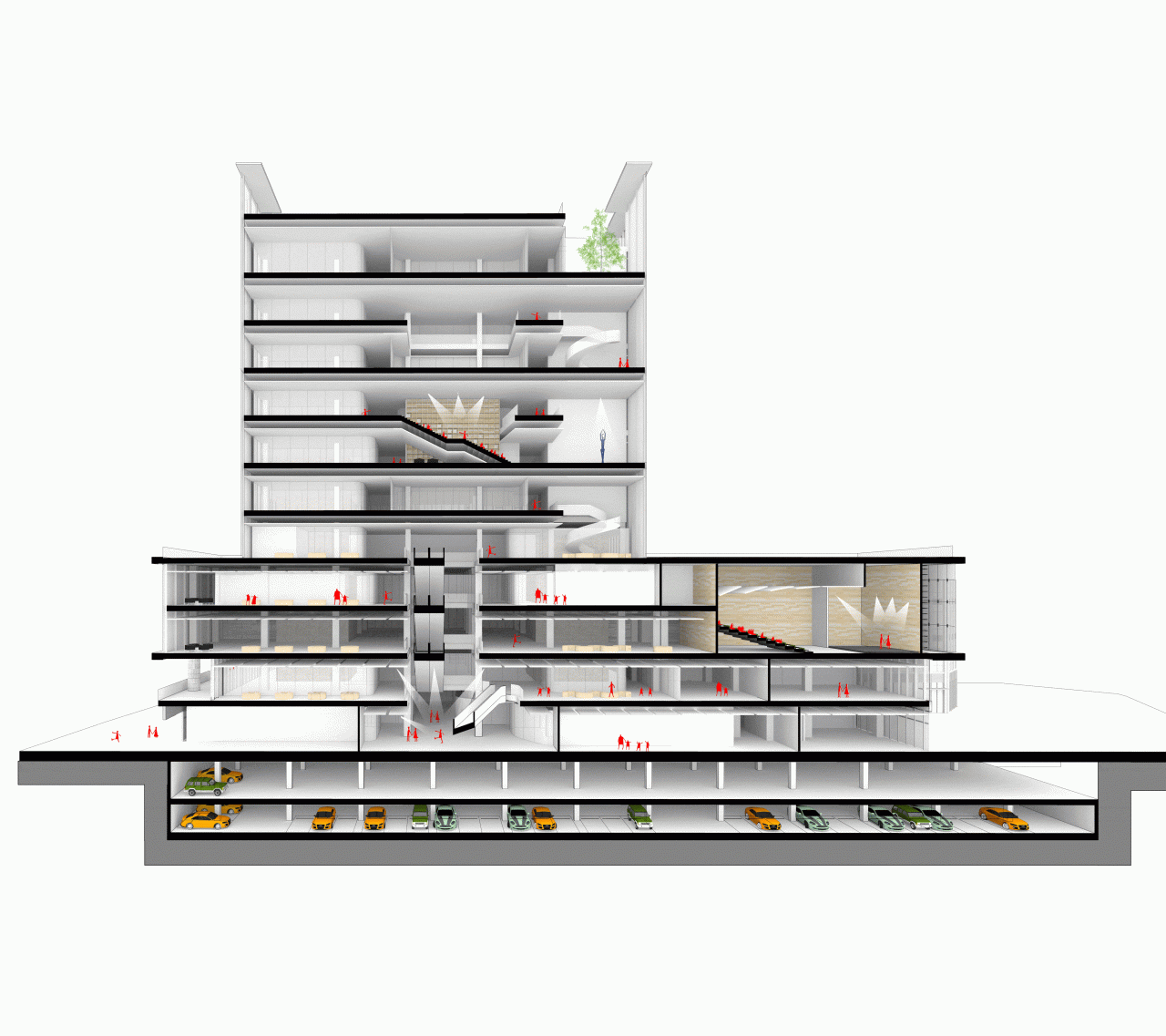
△ Sectional Perspective View
The facade primarily uses stone to emphasize solidity, with large glass curtain walls at the four ends of the “cross,” creating a visual dialogue with the city. The base features a “double-layered” platform with horizontal lines and large steps, enhancing a sense of horizontal stability.
09 Vertical Commercial Complex
This project is a high-rise commercial building. Except for the first and top floors, all others have a commercial floor height of 5.1 meters, accommodating varied spatial needs. Commercial spaces and theaters, which attract large crowds, require wide and numerous staircases. Scissor stairs are used at this height to meet evacuation width requirements efficiently while reducing the total number of staircases.
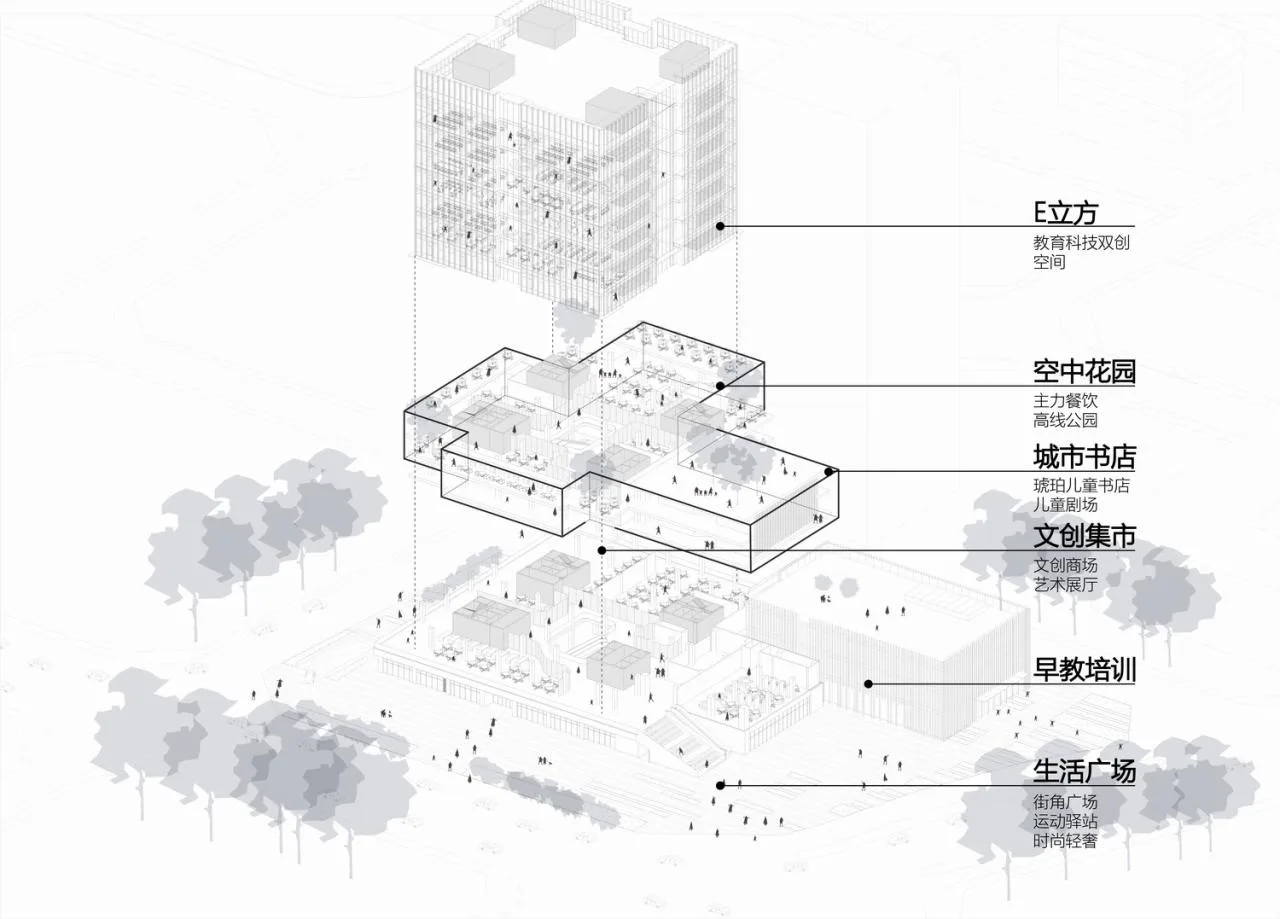
△ Layered Axonometric Diagram
10 Interior Design
The interior design centers on the themes of “wings” and “cubes,” using triangles and hexahedrons as key elements throughout the space. A vibrant palette of contrasting colors, combined with partial ceiling treatments and exposed industrial-style ceilings, creates a dynamic atmosphere.
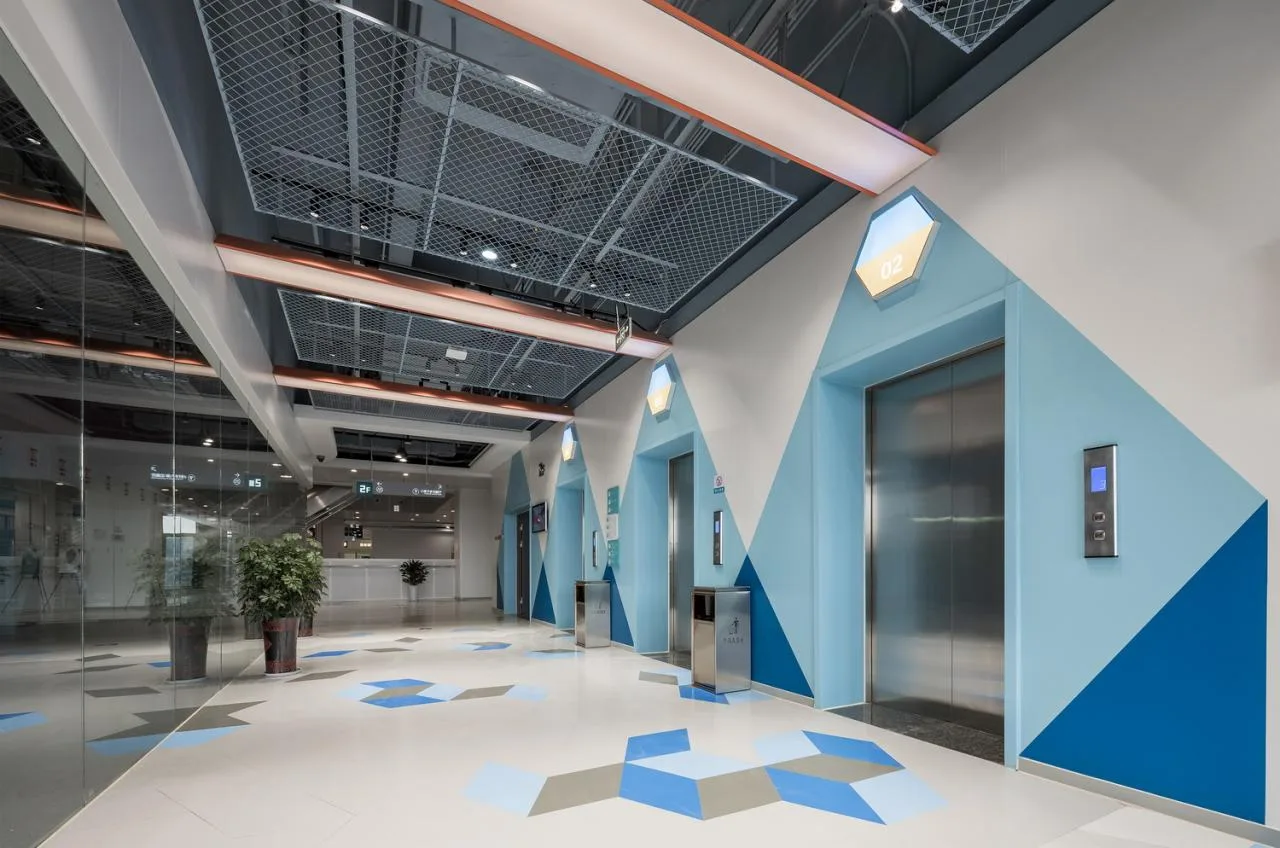
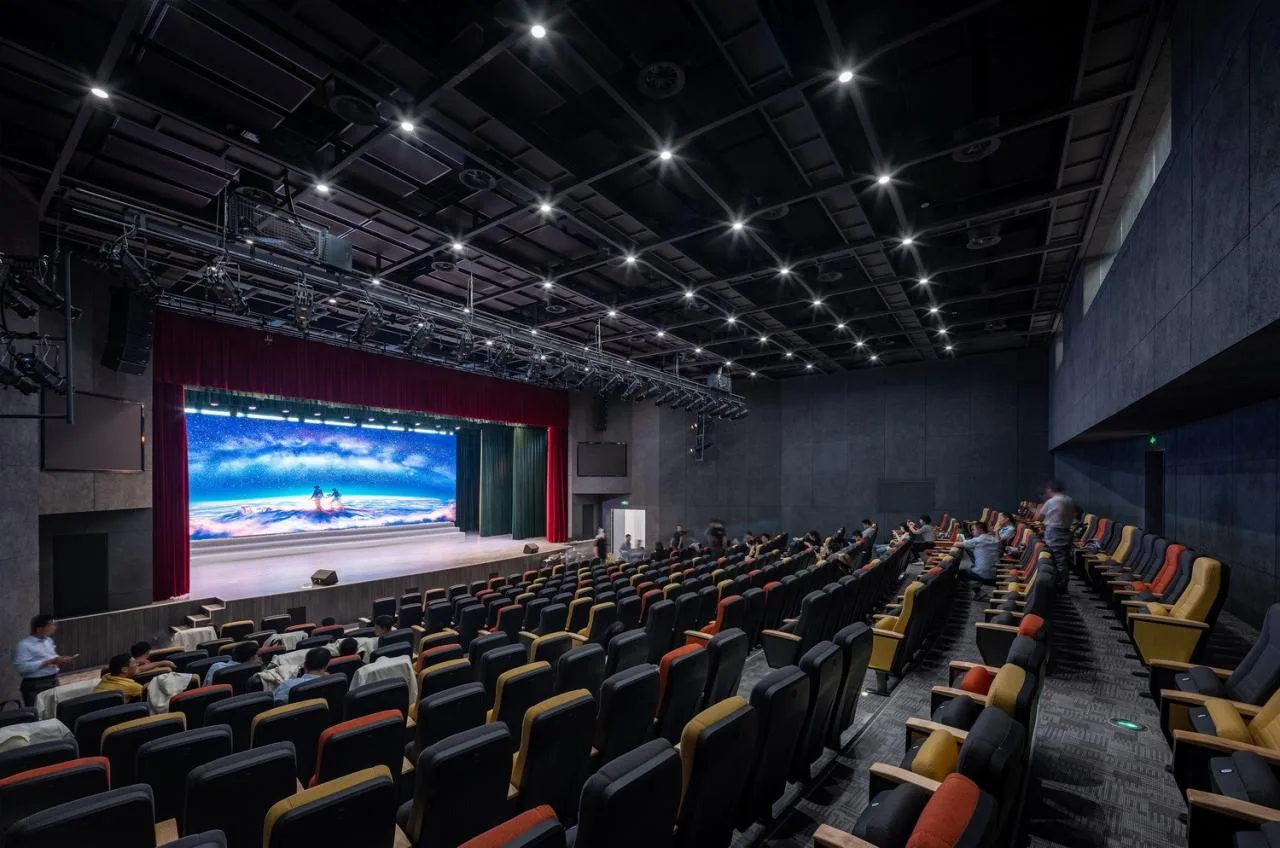
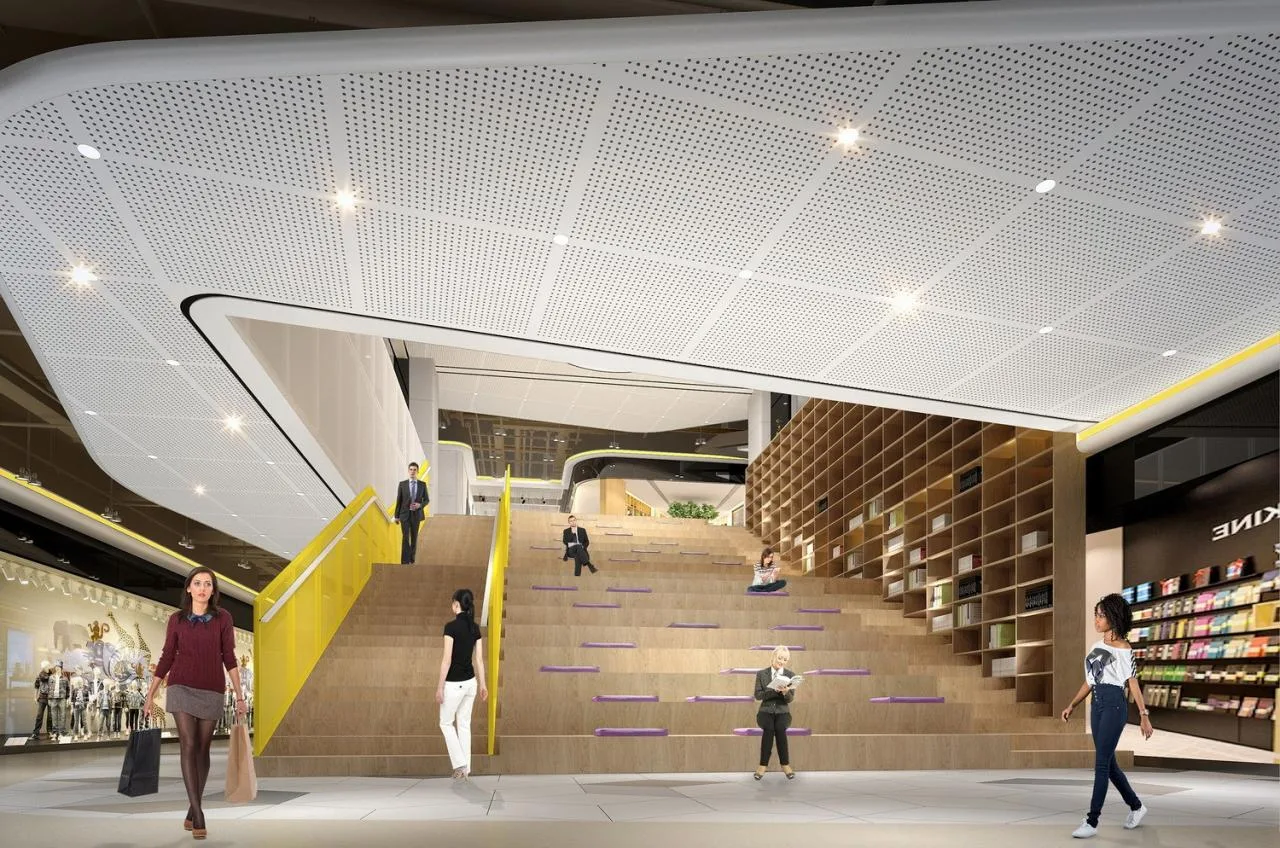
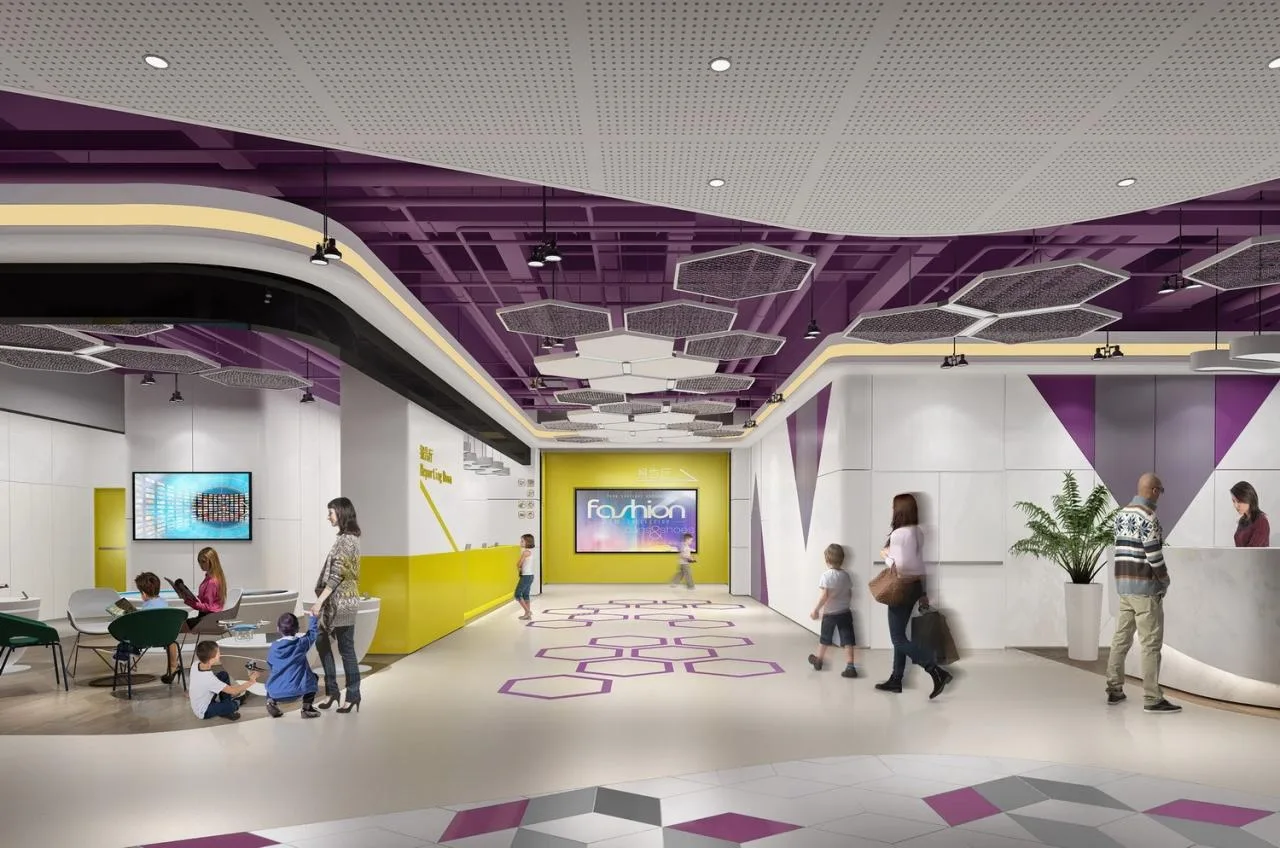
The building’s programs correspond to age groups: early childhood education, youth quality education, youth subject training, and vocational education from bottom to top. The interior color schemes also shift accordingly to reflect these stages.
11 Landscape Design
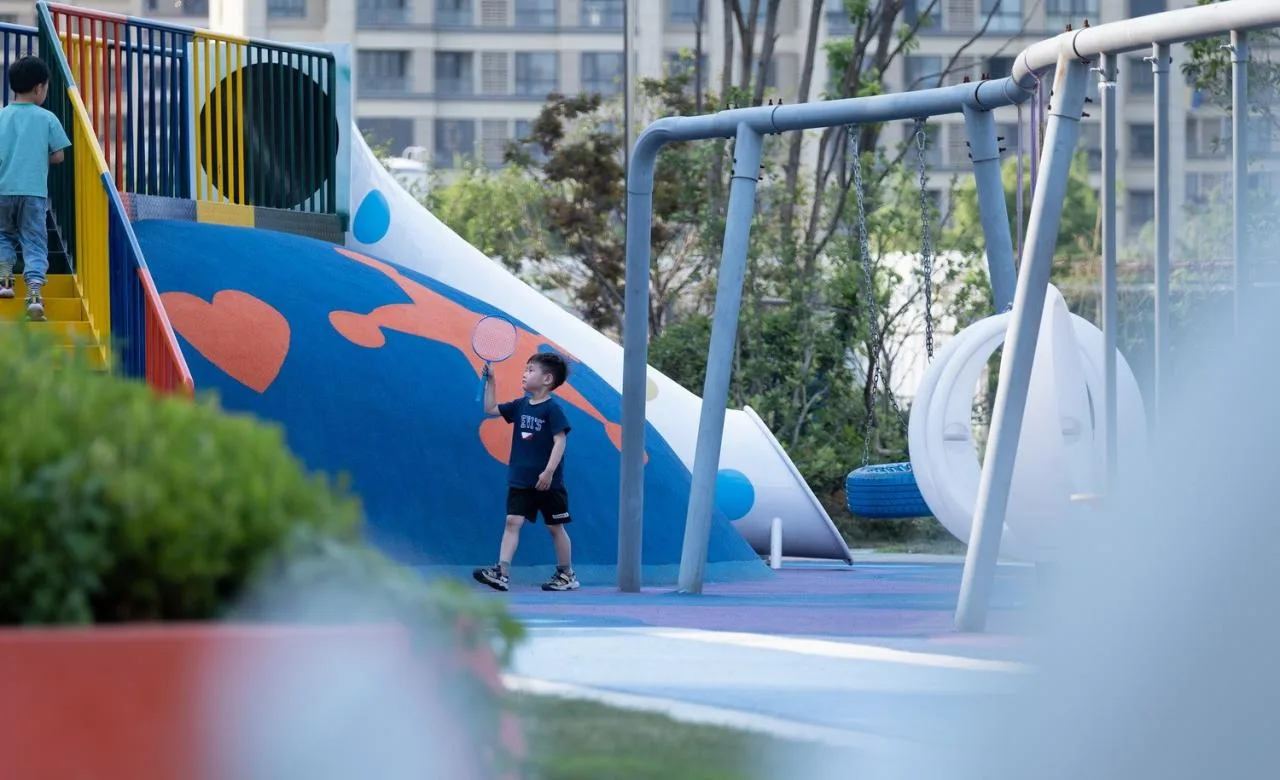
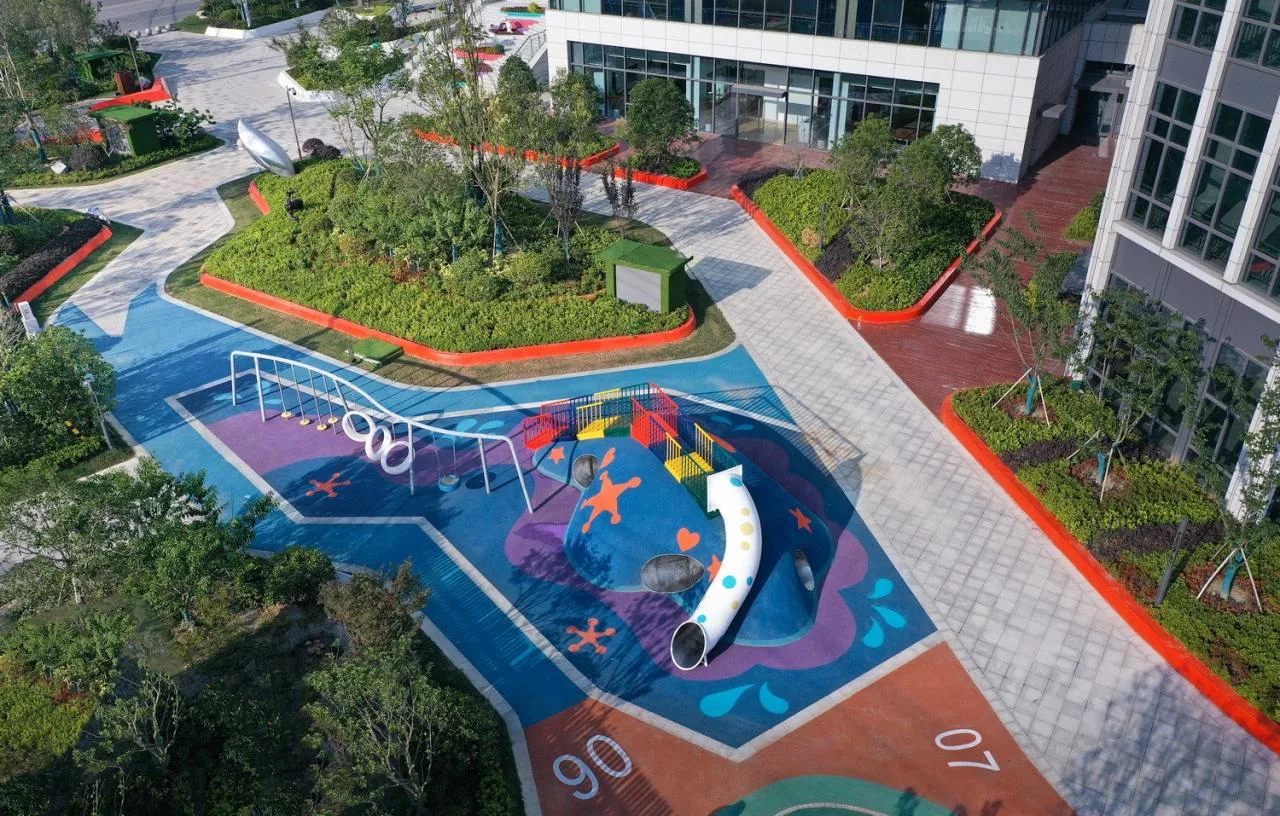
The landscape design is inspired by the “tree man,” creating a lively, trunk-like form through changes in floor levels at main entrances and exits. Drawing from the cultural heritage of “oracle bone inscriptions,” it guides pedestrian flow while evoking childlike charm. An exploration area is created on the east side of the daycare garden, integrated with a green belt, featuring scenically-themed outdoor activity spaces for children using subtle terrain variations.
12 Follow-up
The Wing Cube Education Complex took nearly five years from its inception in 2016 to completion and opening in 2021. Throughout this period, it navigated shifts and challenges within the education and training sector. As an emerging model, the education complex lacks a mature blueprint, requiring ongoing exploration and iteration of business formats and operation methods. This brings both challenges and opportunities to the design process.
For the design team, this project provided a unique opportunity to blend cultural space experiences with commercial logic, creating vibrant urban environments that fulfill people’s aspirations for a joyful and beautiful life.
Project Drawings
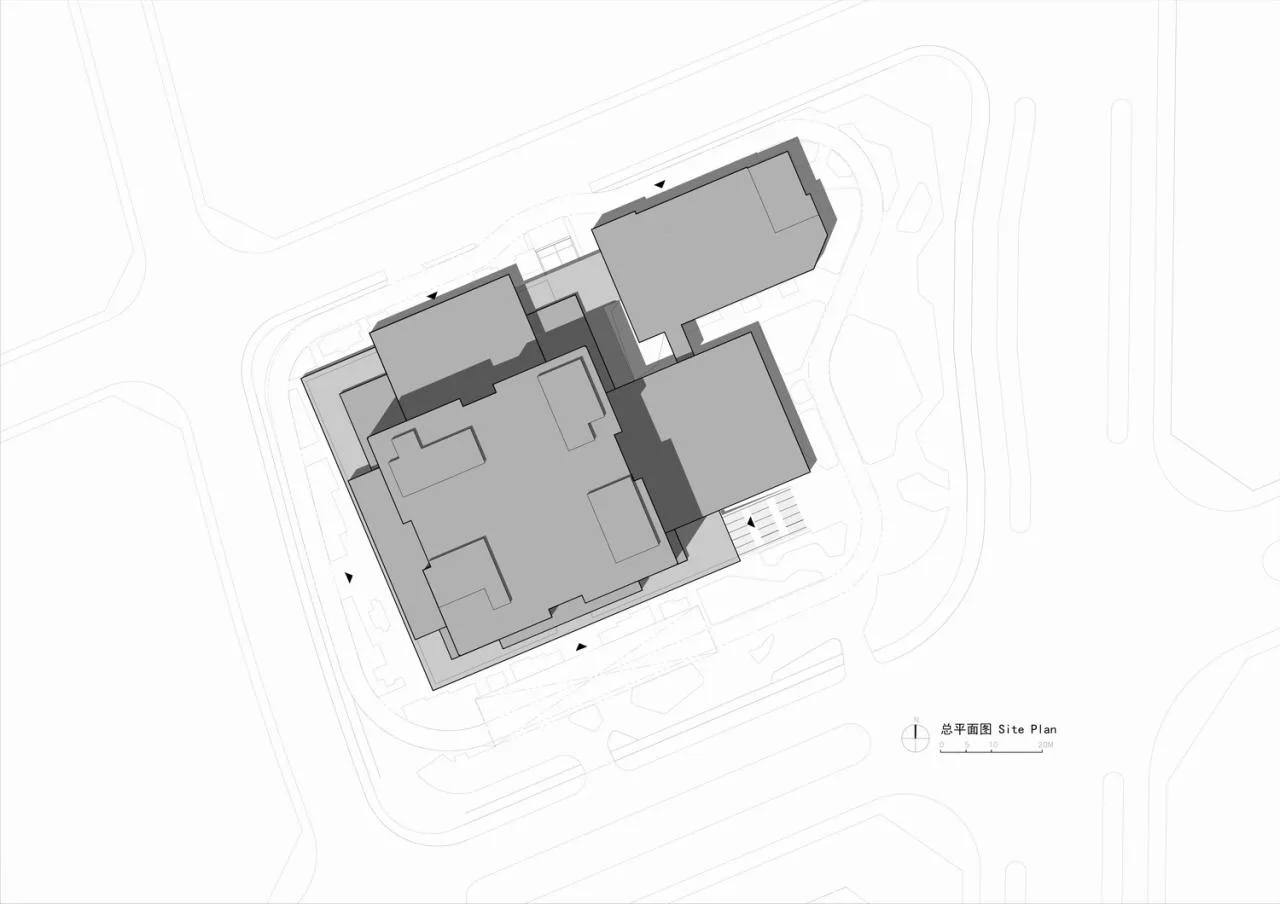
△ General Layout Plan
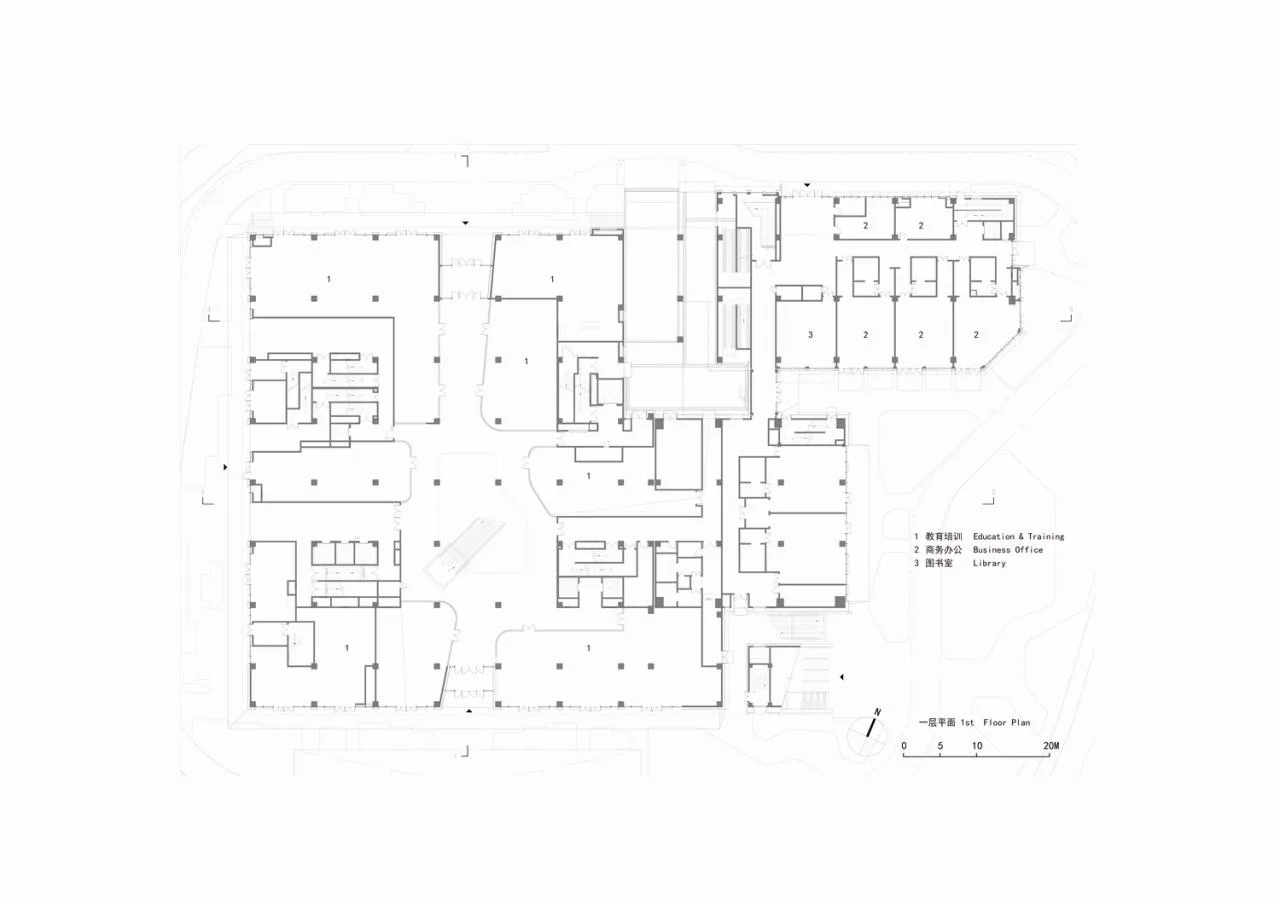
△ First Floor Plan
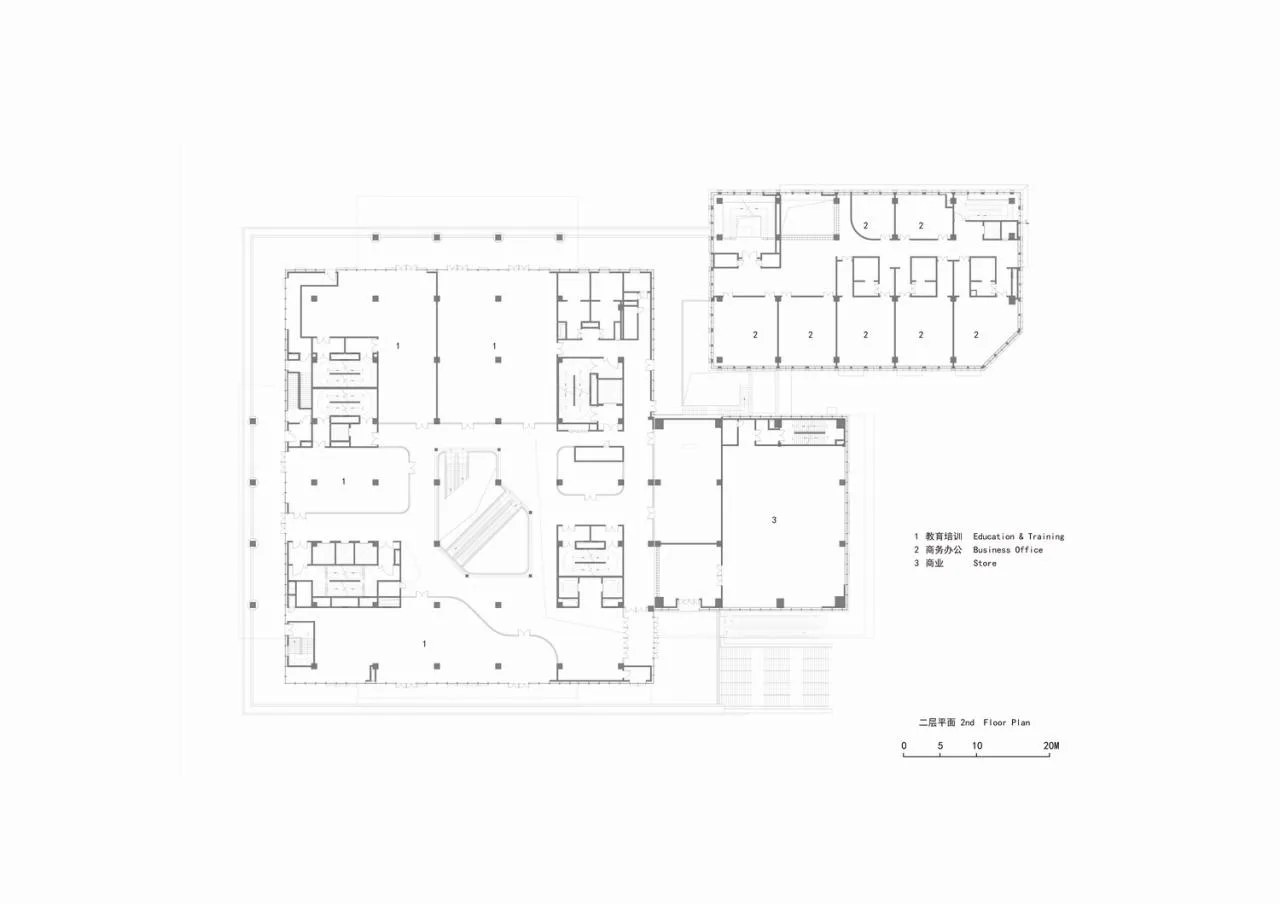
△ Second Floor Plan
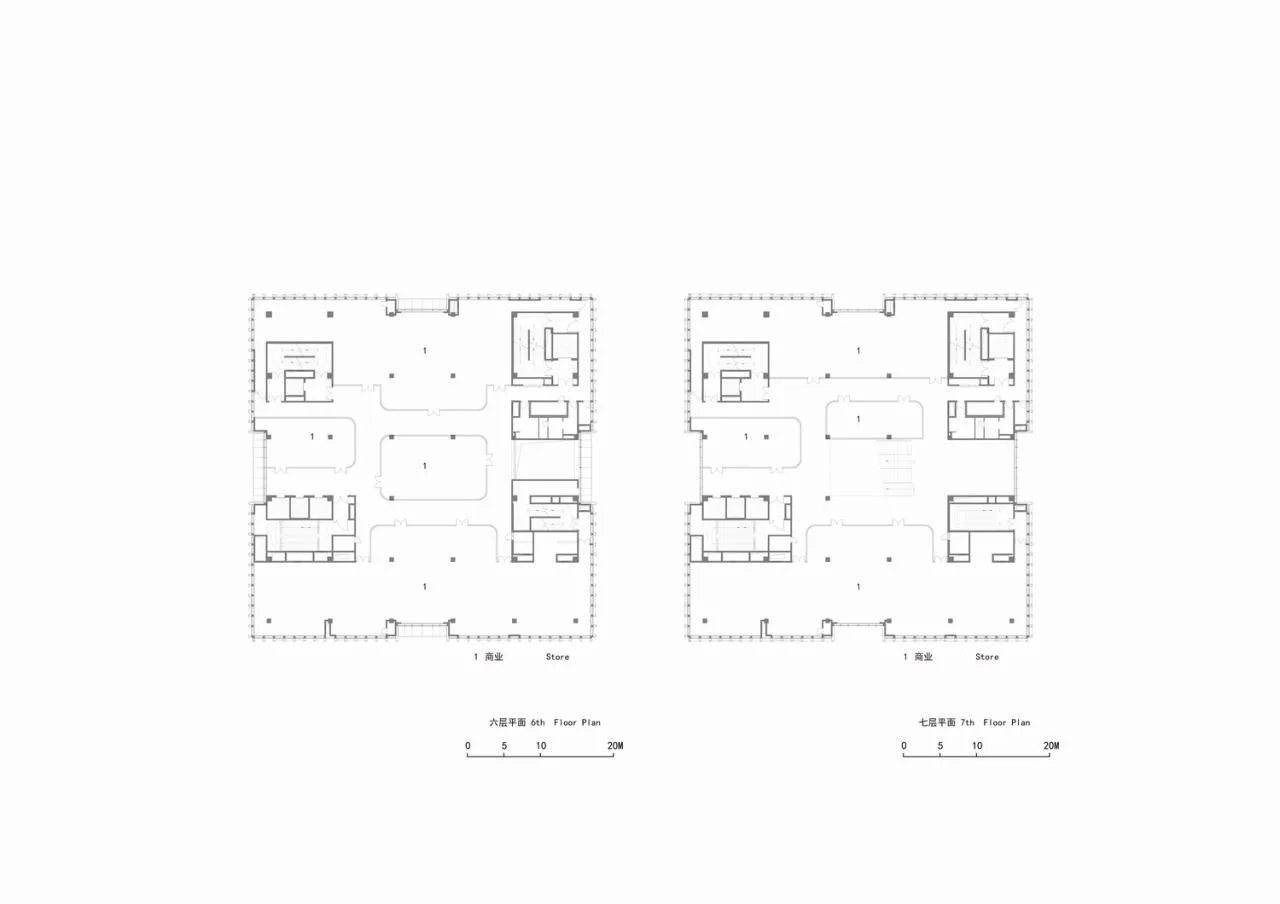
△ Sixth or Seventh Floor Plan
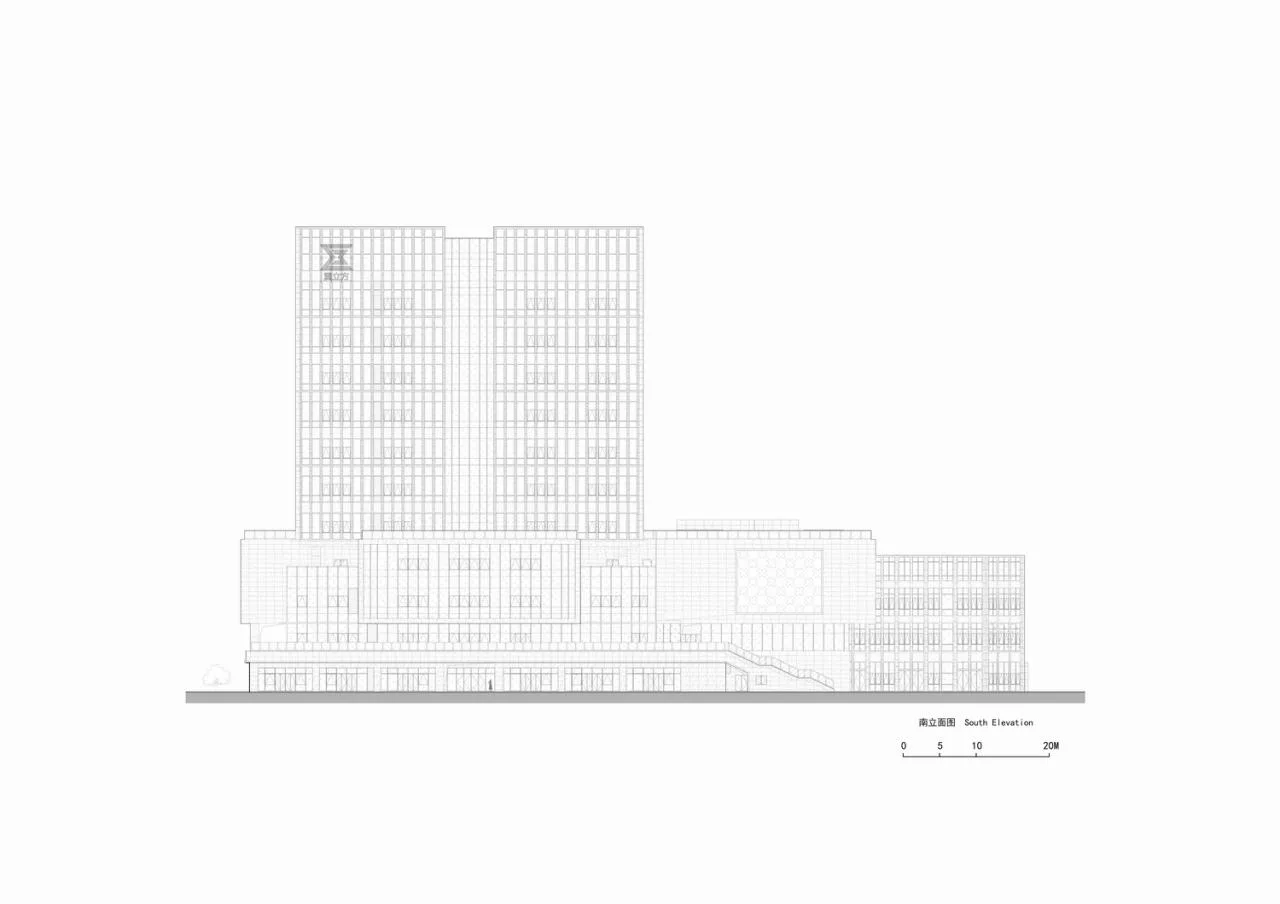
△ Elevation Drawing
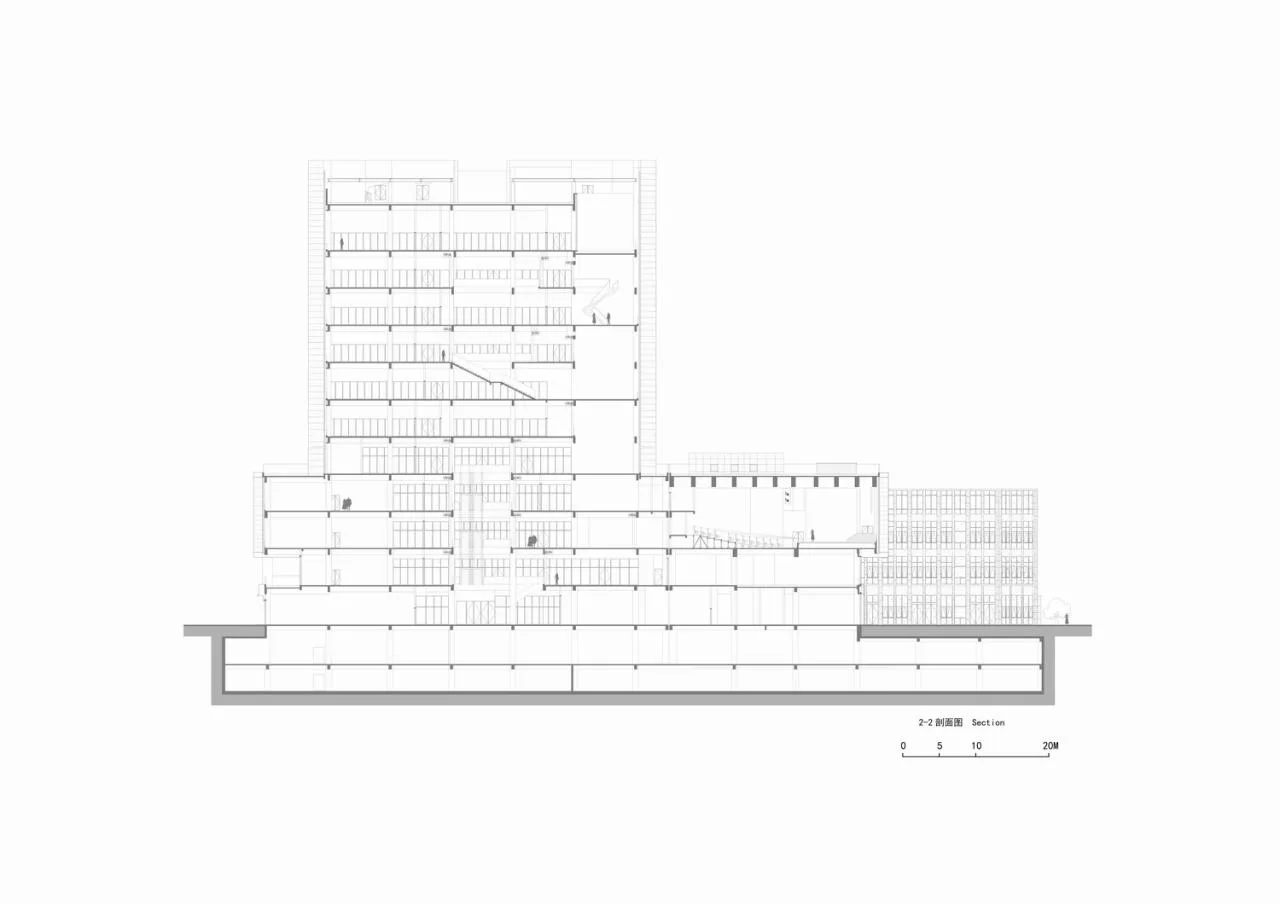
△ Section Diagram
Project Information
Project Name: Yangzhou Yiliangfang Education Development Center
Project Type: Educational Complex
Owner Company: Yangzhou Education Asset Management Co., Ltd
Design Company: GEN Jianhe Studio
Design Period: December 2016
Completion Date: March 2021
Building Size: 57,700 square meters
Design Manager: Le Wei
Concept Design Team: Zou Danni, Yan Xiaojian, Pan Xuemin, Zhou Kui, Lin Qiushan
Construction Drawings Team: Chen Xin, Wang Xiaobing, Li Jiabin, Zhang Ling, Wang Yizheng, Yuan Huizhi, Zhang Aihong, Xiao Long
Interior Design: Lu Jinlei, Wang Bin
Landscape Design: Ma Bin, Su Ni, Chen Meiling
Photography Team: Architectural Vision















Must log in before commenting!
Sign Up