
The traditional drawing review process typically follows these steps: the owner or supervisor organizes the review → the designer shares the drawings → construction and supervision representatives raise questions → each item is studied → meeting documents are created → signatures and stamps are obtained. The effectiveness of this process relies not only on the thoroughness of the design party’s disclosure but also on the preliminary review conducted by the construction and supervision teams before the formal review.
Currently, several challenges are common in the design and preliminary review of drawings:
1) Design institutes face a mismatch between design fees and the rapid growth of the real estate industry, resulting in compressed design cycles. Clients often push for fast drafts, and when deadlines are too tight, rough or incomplete drawings become inevitable.
2) Once drawings are received, construction teams struggle to conduct effective preliminary reviews. Often, these reviews become mere formalities, with nine out of ten projects rushing to meet tight deadlines—from foundation construction to structural milestones like topping out. Project managers juggle managing the site during the day and reviewing drawings at night, and the review quality is further limited by the expertise of construction technicians, making a thorough and effective review difficult.
Using BIM technology to review drawing issues revolutionizes the traditional process and effectively addresses common shortcomings in construction management drawing reviews. The application of BIM in this area offers several key advantages:
1) Rapid identification of drawing issues:
- After receiving early-stage project drawings, the BIM team forms a modeling collaboration group, pooling resources to focus on specific areas and specialties. This approach allows the project model to be built and drawing problems to be detected quickly, even under tight schedules.
- A modeling communication group enables BIM modelers to collaborate closely throughout the modeling process. They can identify errors, omissions, or unclear descriptions related to structural components, waterproofing compliance, sump depth and location, post-pouring strips, and whether detailed structural node drawings are consistent or missing. They also detect structural collisions or missing elements.
- Once the model is completed, a designated lead merges individual contributions and compiles a comprehensive review report summarizing all identified drawing issues.
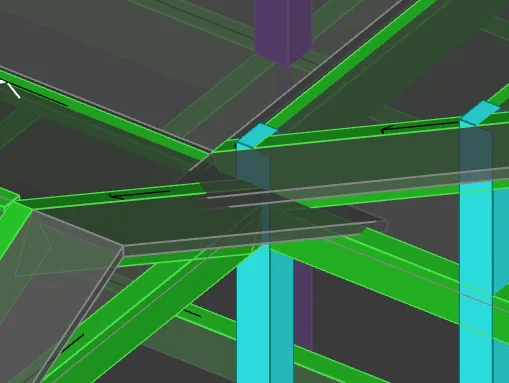
Figure 1: Roof structure collision
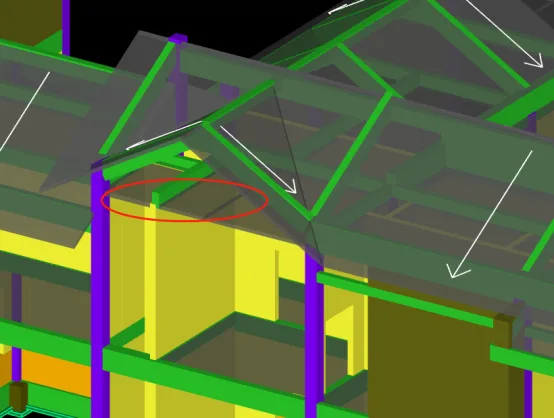
Figure 2: Missing structural beams
2) Design optimization – After compiling drawing issues, internal communication with the construction team helps filter problems by considering construction feasibility and benefits. Issues that could increase workload or cost are evaluated carefully, and unfavorable issues may be selectively retained.
For example, in one project, the roof beam width of Building 16 conflicted with curtain wall installation nodes. Reporting this for redesign risked delaying construction. Instead, after discussions, the team decided to proceed with the structural drawing as is and requested the design team to optimize the curtain wall node scheme. This solution ensured both the curtain wall quality and construction schedule were maintained.
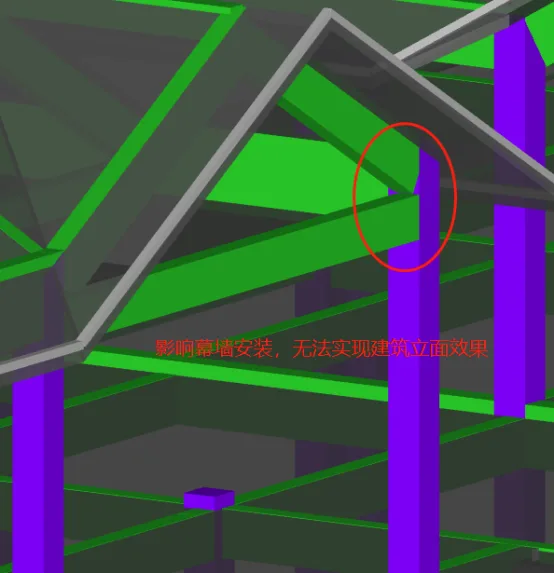
Figure 3: Structural Model
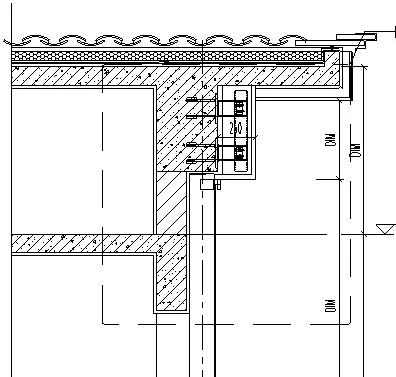
Figure 4: Curtain Wall Nodes
During the drawing review meetings, issues are raised with Party A and the design team, offering solutions focused on construction practicality to help them make informed decisions. Finally, feedback is compiled and review minutes are prepared.
3) Efficient disclosure – BIM personnel are stationed on-site during construction to assist project departments in management. The model is continuously updated based on actual construction conditions. For complex areas prone to drawing errors, 3D model disclosure provides a clearer and more intuitive understanding than traditional 2D drawings.
Article source: Yunjiang Digital Research Institute / Chen Weigao Jianrong
















Must log in before commenting!
Sign Up