
Revit software, one of the leading BIM tools with a significant market share, is widely used and well-established in civil construction. It features an independent collaborative design platform and integrates numerous functionalities. The key characteristics of Revit are highlighted below:

(1) Support for Multiple Views and Windows
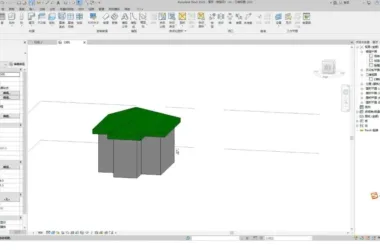
Revit models allow users to visualize all building components through various formats, including 2D plans, elevations, sections, and 3D views. This multi-dimensional approach ensures precise definition of model elements, promoting accurate creation.
Moreover, during the modeling process, users can verify the position, shape, size, and other parameters of the design by simultaneously viewing multiple windows with different perspectives within the same interface.
This functionality not only guarantees the accuracy of the designer’s scheme but also enables decision-makers and construction teams to fully comprehend the design intent. It offers a clear and intuitive understanding of the project, facilitating informed and reliable decisions based on real design requirements.
(2) Parametric Design
All components in Revit are parameter-driven, meaning each element’s appearance, size, and other attributes are controlled by a set of property parameters. Any changes to these parameters automatically update the corresponding components.
Revit’s powerful parametric modification engine links all parameters, so altering one element triggers updates across all related views. This interconnected system reduces manual work, maintains consistency among model components, and enhances both design efficiency and quality.
(3) Integration of Multiple Functions
Revit addresses design challenges across disciplines such as architecture, structural engineering, and MEP by supporting export in various file formats (IFC, DWG, NWC, etc.).
Additionally, it offers integrated features like cloud rendering, 3ds Max material input for advanced visualization, project clash detection, and green building analysis. These built-in modules significantly improve the efficiency of design, analysis, and project collaboration.













Must log in before commenting!
Sign Up