
The BIM software used during the architectural scheme design phase can be broadly categorized into two main types: BIM core modeling software and collaborative design software that operates based on BIM models.
(1) BIM Core Modeling Software
The primary goal at the architectural scheme design stage is to develop a comprehensive building information model through collaborative teamwork. This phase requires specialized software tailored to various key disciplines such as architecture, structural engineering, and electromechanical systems. Multiple professionals, including architects, civil engineers, and equipment engineers, collaborate closely throughout the project development.
Leading international software developers and their products used in this stage are illustrated in Figure 1.
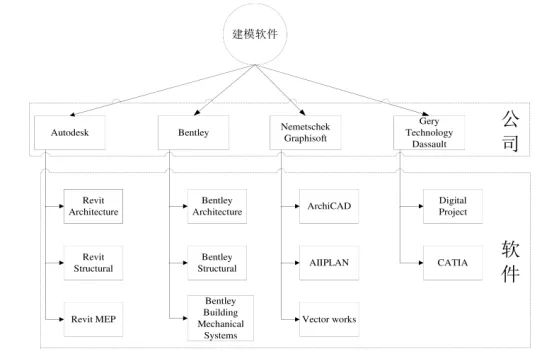
Figure 1: BIM Design Modeling Software
(2) Collaborative Design Software
Collaborative design software built on BIM technology typically includes tools for 2D drafting, conceptual modeling, visualization, and analysis:
- 2D Drafting Software: Often used as supplementary tools in scheme design, with examples like CAD.
- Conceptual Modeling Software: Commonly paired with BIM modeling tools, examples include SketchUp, Rhinoceros, and Grasshopper.
- Visualization Software: Programs such as 3Ds Max, Lightscape, and Accurender exchange data seamlessly with BIM modeling software to enable effective visualization during design.
- Analysis Software: Environmental analysis tools like Ecotect and GreenBuilding Studio, acoustic analysis software such as Adobe Audition, and pedestrian traffic simulators like Transcad are frequently used in this stage.
- Surveying Assistance: GIS fixed-point monitoring tools such as Trimble support initial surveying tasks.
In summary, BIM technology software offers comprehensive support for the functional requirements throughout the architectural scheme design process.
















Must log in before commenting!
Sign Up