
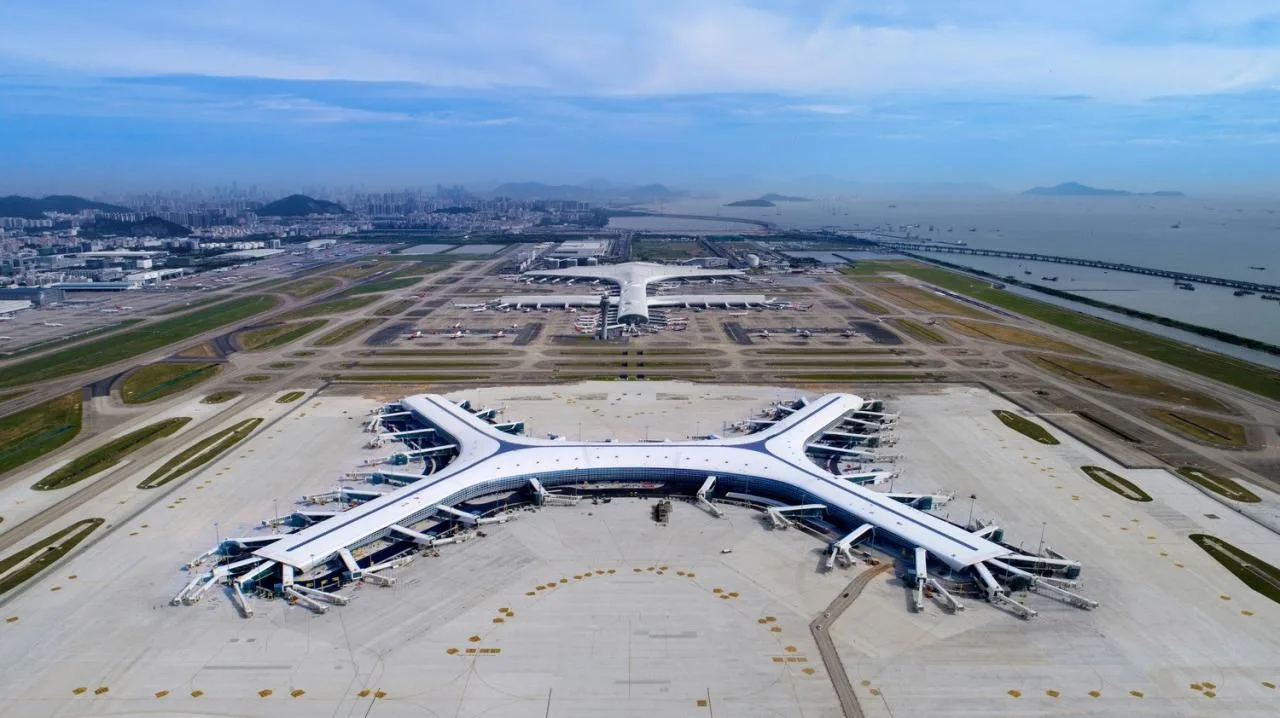
Bird’s-eye view of the satellite hall. Image source: China Construction Eighth Engineering Division.
The satellite hall at Shenzhen Bao’an International Airport, developed through an international competition won by Guangdong Architectural Design and Research Institute Co., Ltd. (GDAD) in partnership with Aedas and Landron & Brown (USA), officially opened in December 2021 after more than five years of design and construction.
As one of southern China’s major aviation hubs, Shenzhen Bao’an International Airport’s new satellite hall, positioned directly north of the existing Terminal 3, marks a significant milestone in the airport’s expansion. This addition plays a vital role in establishing a world-class airport cluster in the Guangdong-Hong Kong-Macao Greater Bay Area,” stated Chen Xiong, Director, Deputy General Manager, and Chief Architect of GDAD.
Covering a total area of 238,885 square meters, the satellite hall is designed to accommodate the airport’s growing demands, servicing up to 22 million passengers annually. Strategically located on the airport’s central axis along with Terminal 3 and the planned Terminal 2, the buildings are seamlessly connected via an Automated People Mover (APM) system and an integrated baggage cargo handling system.
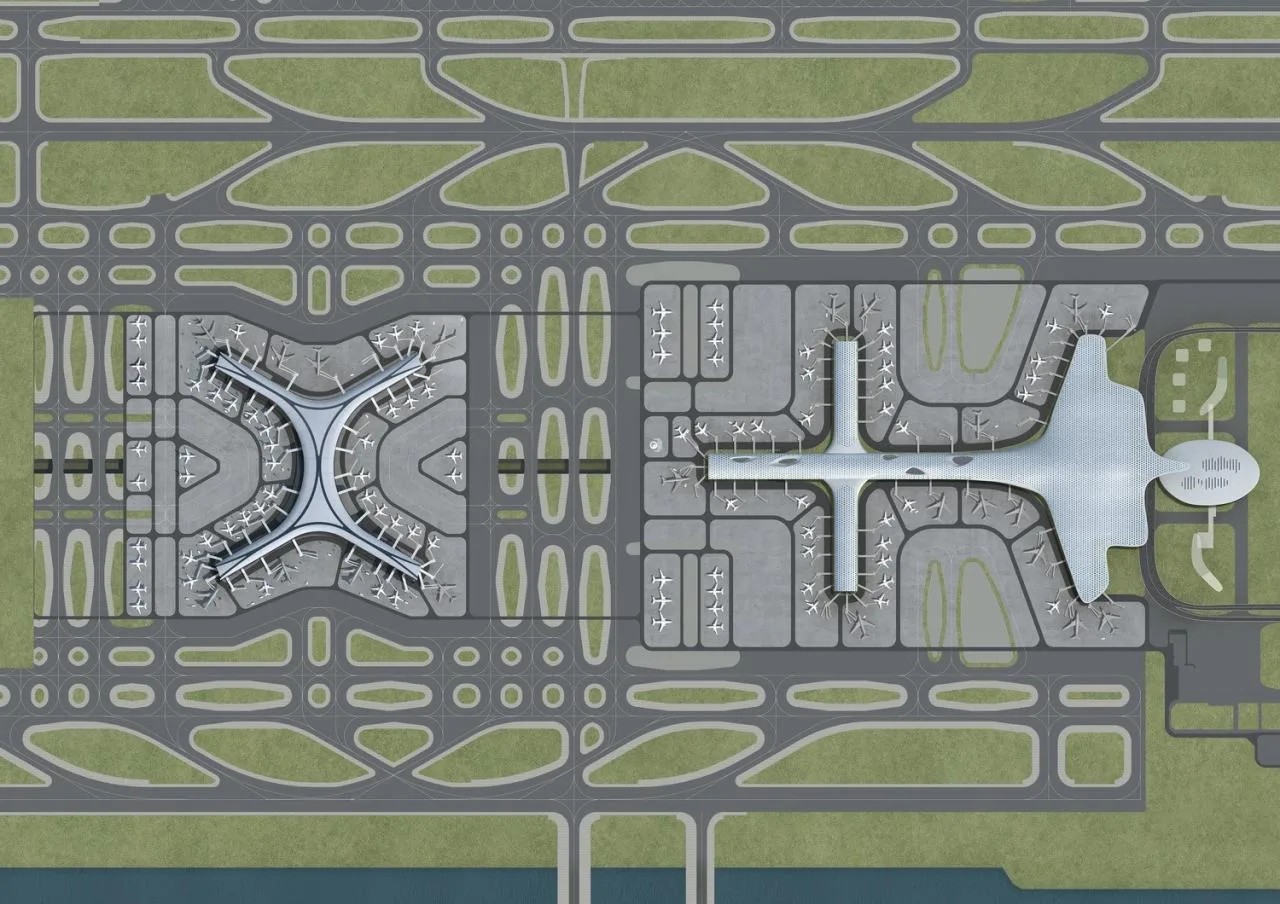
The satellite hall and Terminal 3 are aligned along the airport’s central axis.
“This terminal building is bright, warm, natural, and welcoming—truly a distinctive satellite hall unique to Shenzhen,” said Chen Xiong.
“Our aim is to offer passengers a comfortable and seamless transfer experience, prioritizing functionality and flexibility,” added Tang Zhouxing, Executive Director of Aedas. This vision is reflected in the comprehensive and thoughtful design approach.
The design team conducted extensive research based on the owners’ requirements. The satellite hall features an optimized “X”-shaped layout that ensures smooth airport operations while minimizing passenger walking distances, creating a relaxed and enjoyable travel environment.
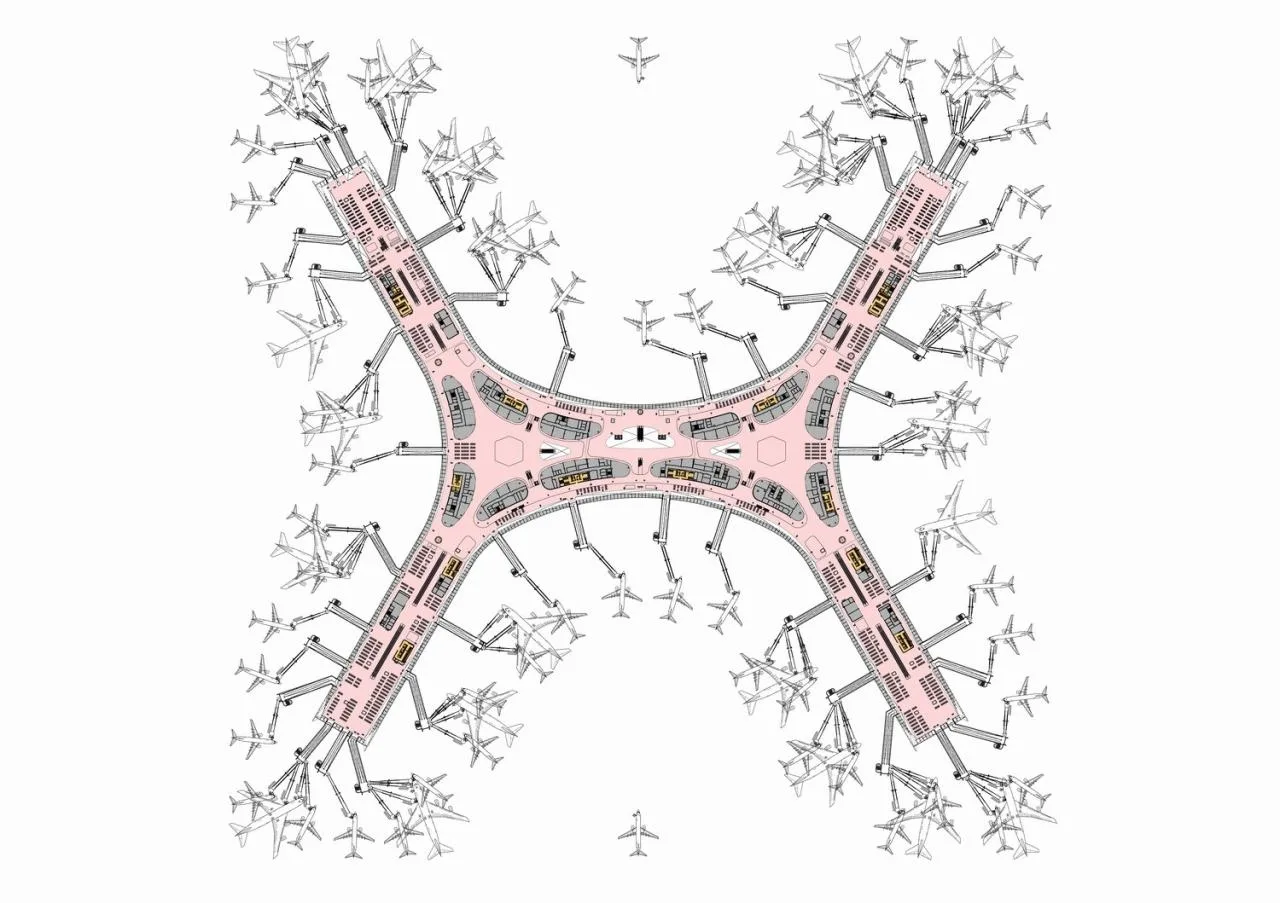
△ “X” plan layout.
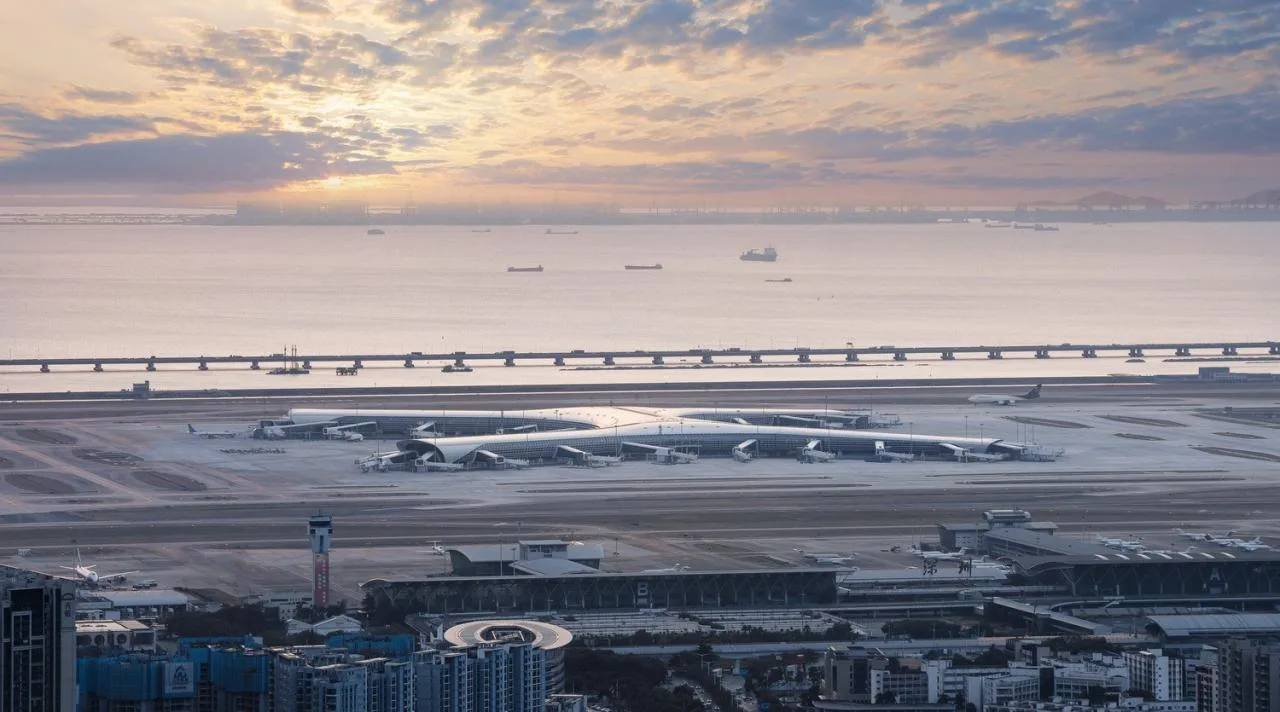
Satellite hall at sunset. Photo by Zhang Qianxi.
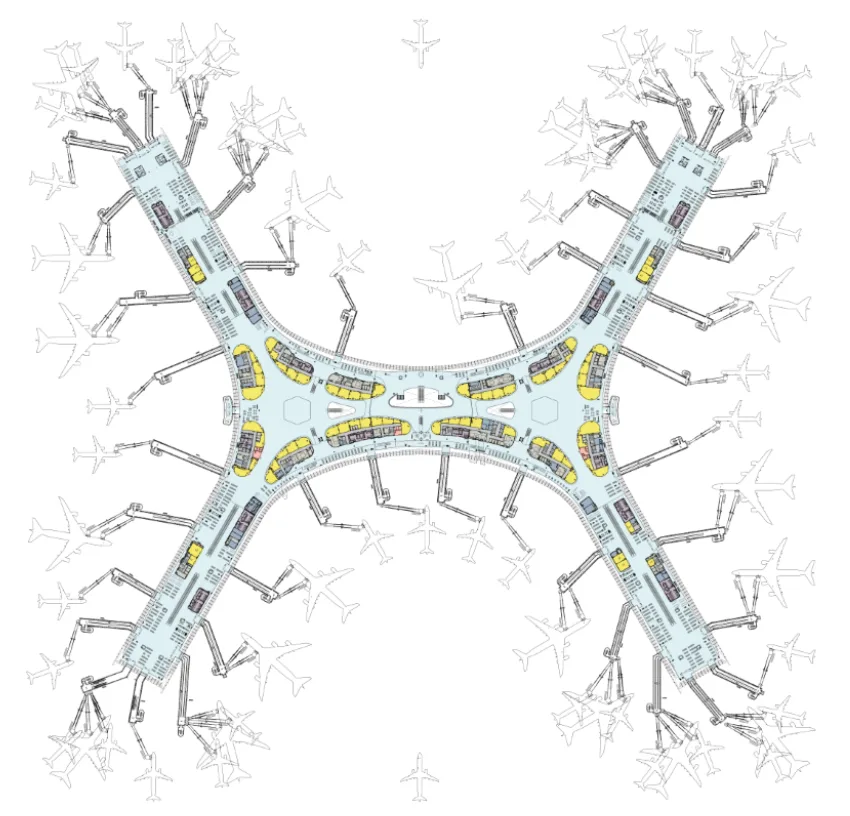
△ Third floor plan. Image source: GDAD.
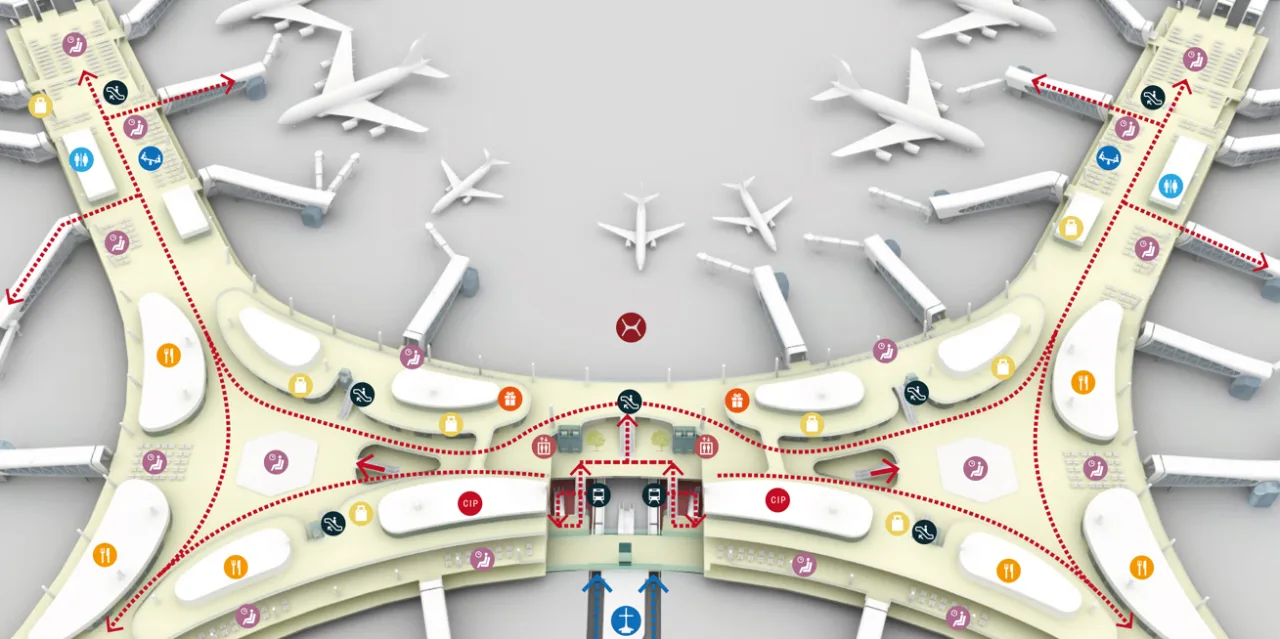
△ Three-level streamline diagram. Image source: GDAD.
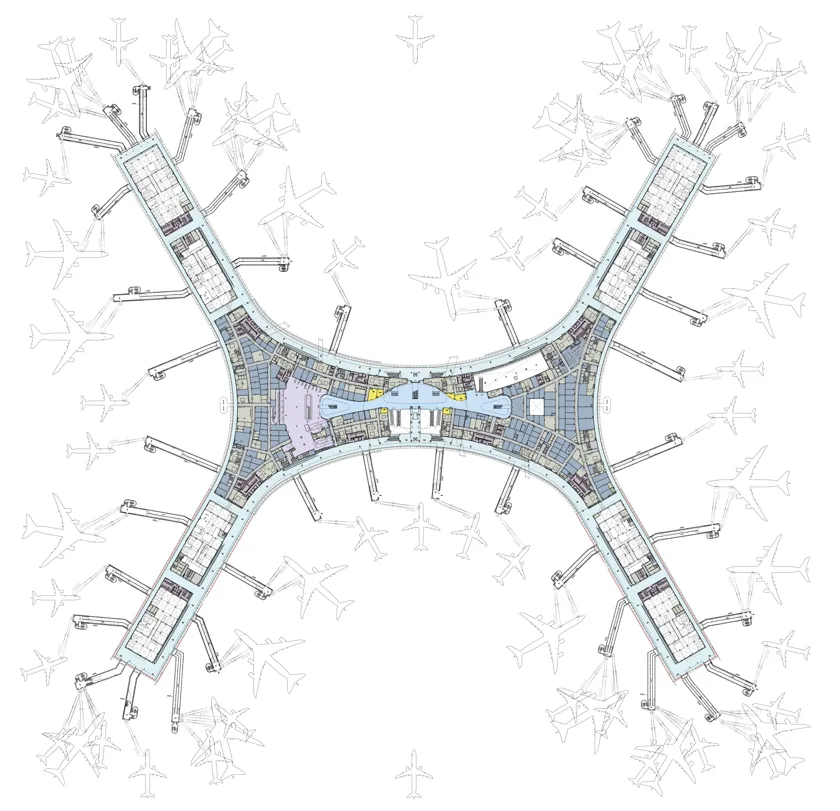
△ Second floor plan. Image source: GDAD.
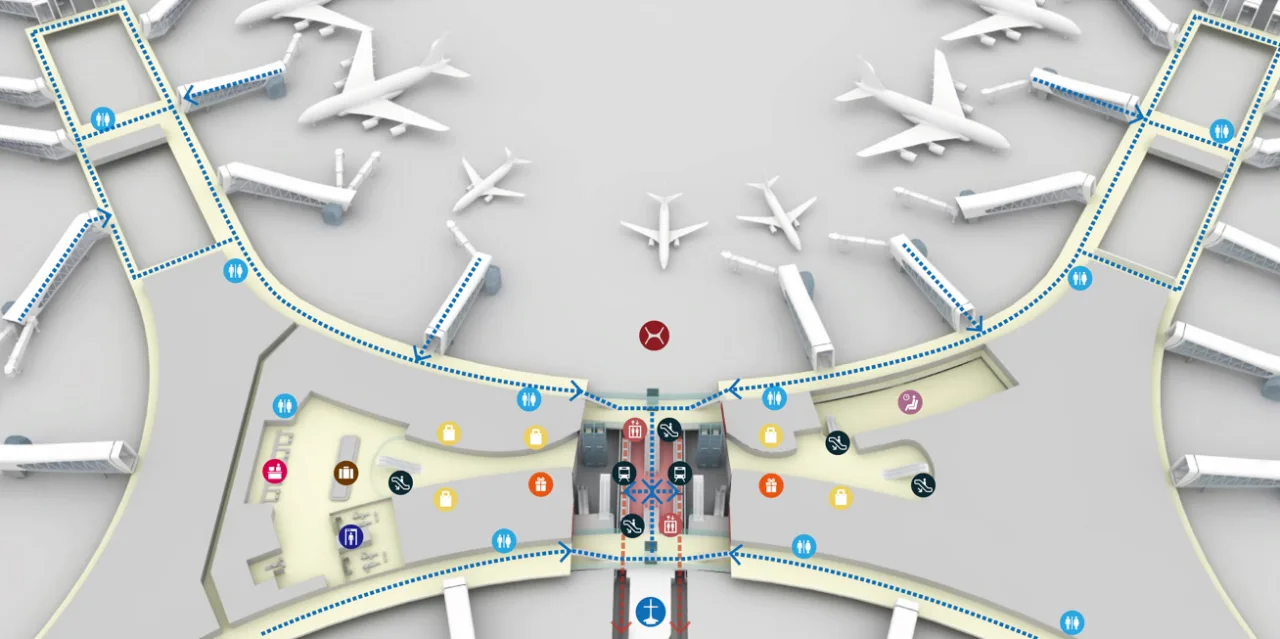
△ Second floor streamline diagram. Image source: GDAD.
High-Performance Green Building
The satellite hall’s distinctive elliptical, streamlined shape not only complements the existing Terminal 3 but also defines its iconic exterior and interior spatial character. Inspired by the gentle river flowing through the region, the design incorporates roof skylights that flood the interior with natural light, providing intuitive directional cues for passengers.
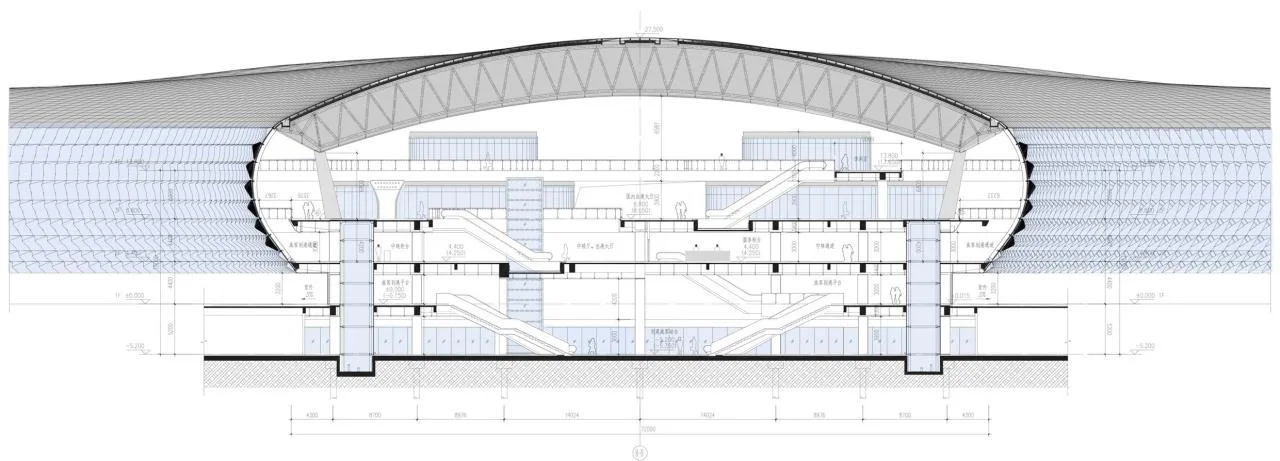
△ Sectional view. Image source: GDAD.
Dynamic exterior shading elements significantly reduce heat gain, working in tandem with internal shading systems to maximize energy efficiency. The shading components were optimized using 3D modeling software, categorized into four standardized types to balance cost savings and construction efficiency. The curved, double-layered curtain wall façade lends the building a grand and striking architectural presence.
The boarding bridges are designed with elegance and sophistication, departing from traditional boarding passage layouts to integrate seamlessly with the satellite hall’s overall form. At 5.4 meters wide, the bridges offer spacious interiors and excellent ventilation, enhancing the boarding experience.
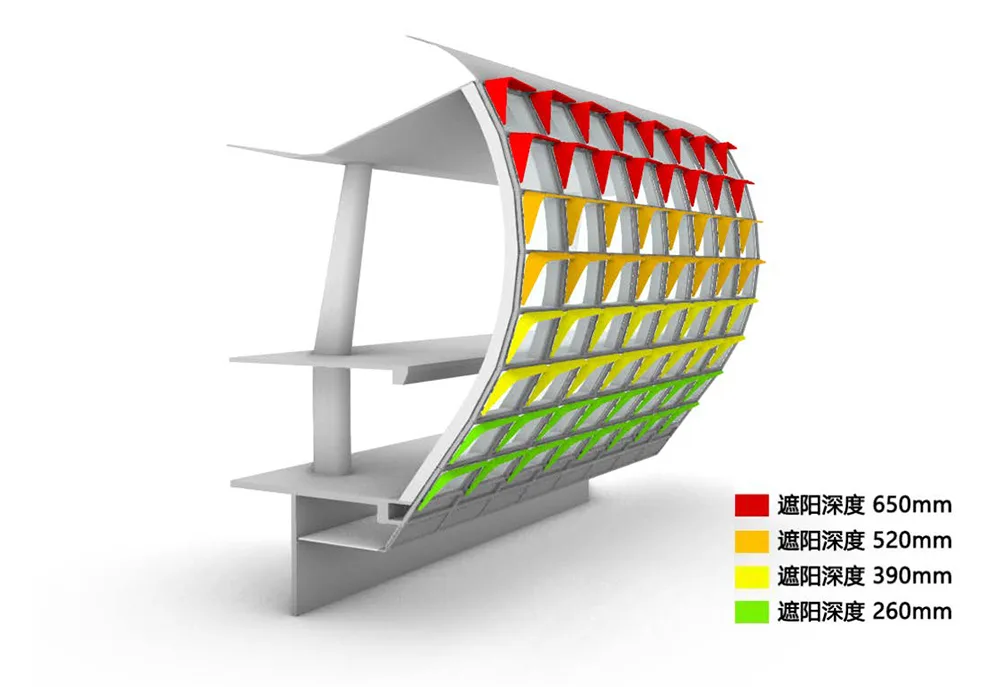
△ Classification and size of fish-scale sunshades. Image source: GDAD.
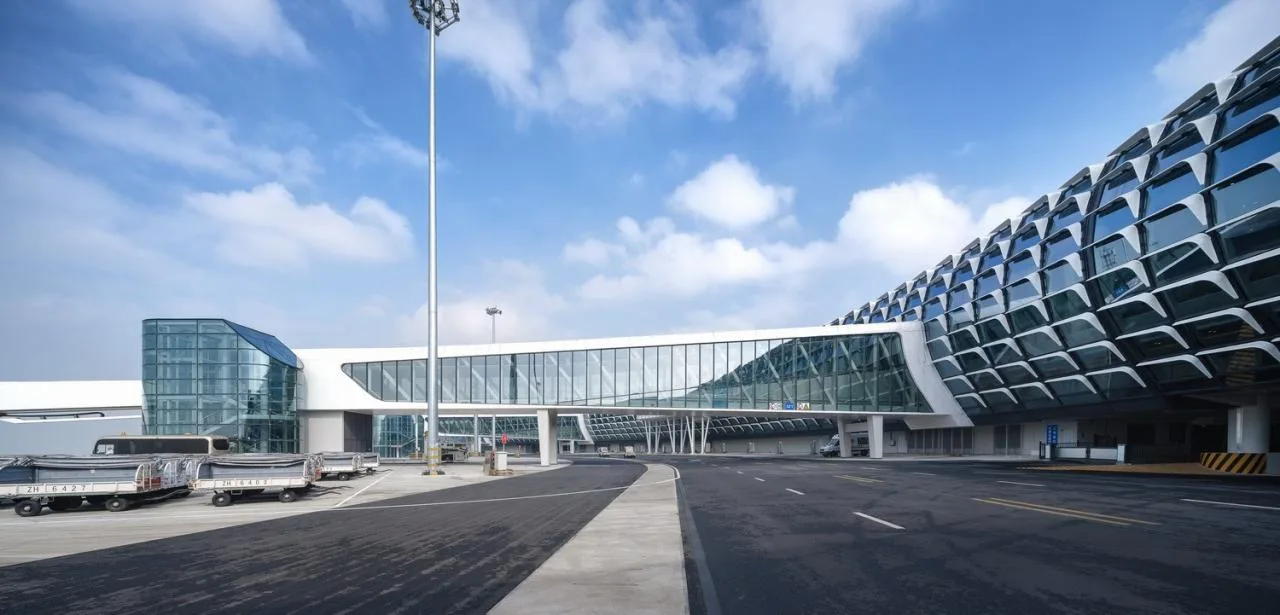
Boarding corridor bridge. Photo by Zhang Qianxi.
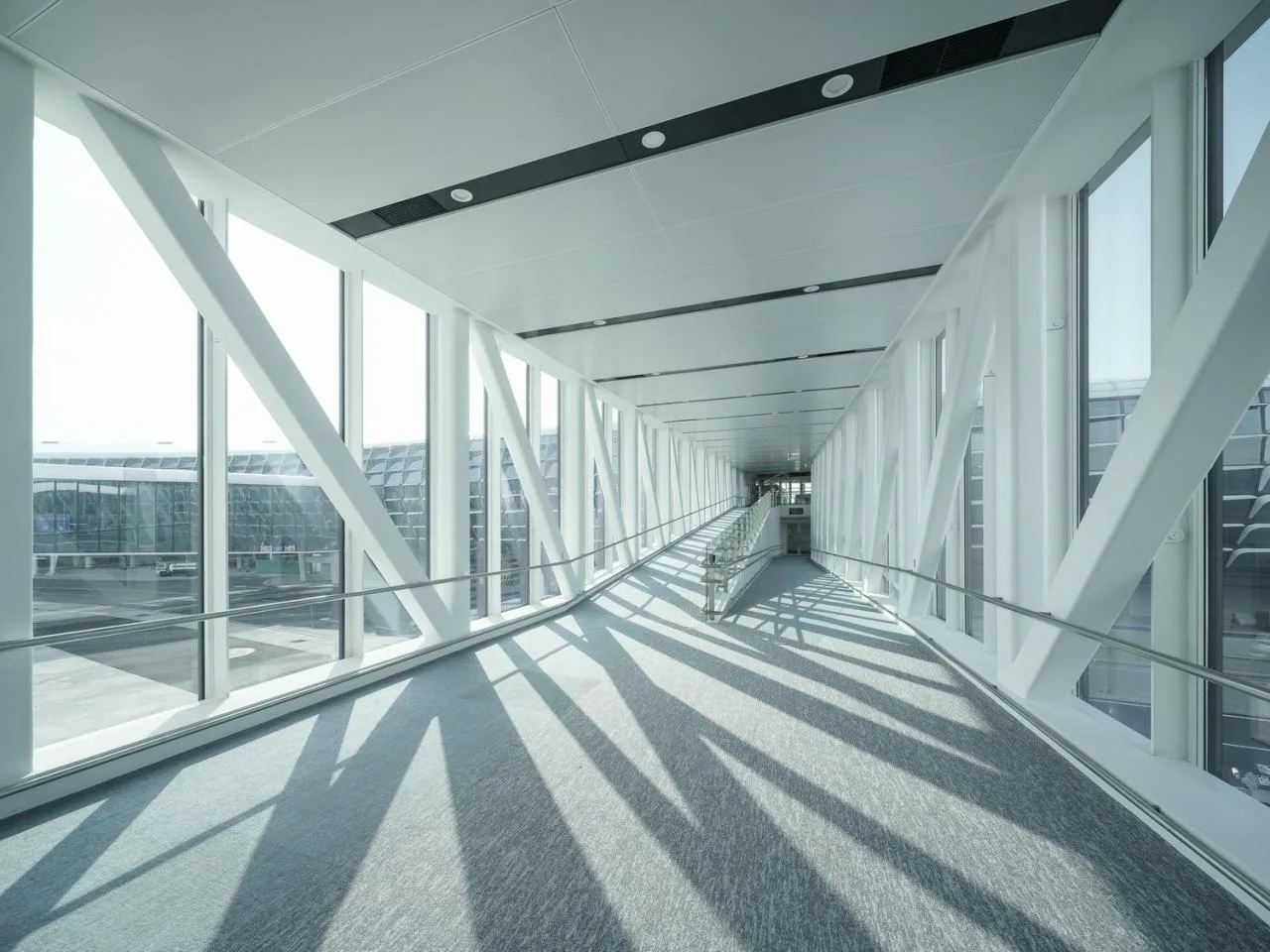
Inside the boarding bridge. Photo by Zhang Qianxi.
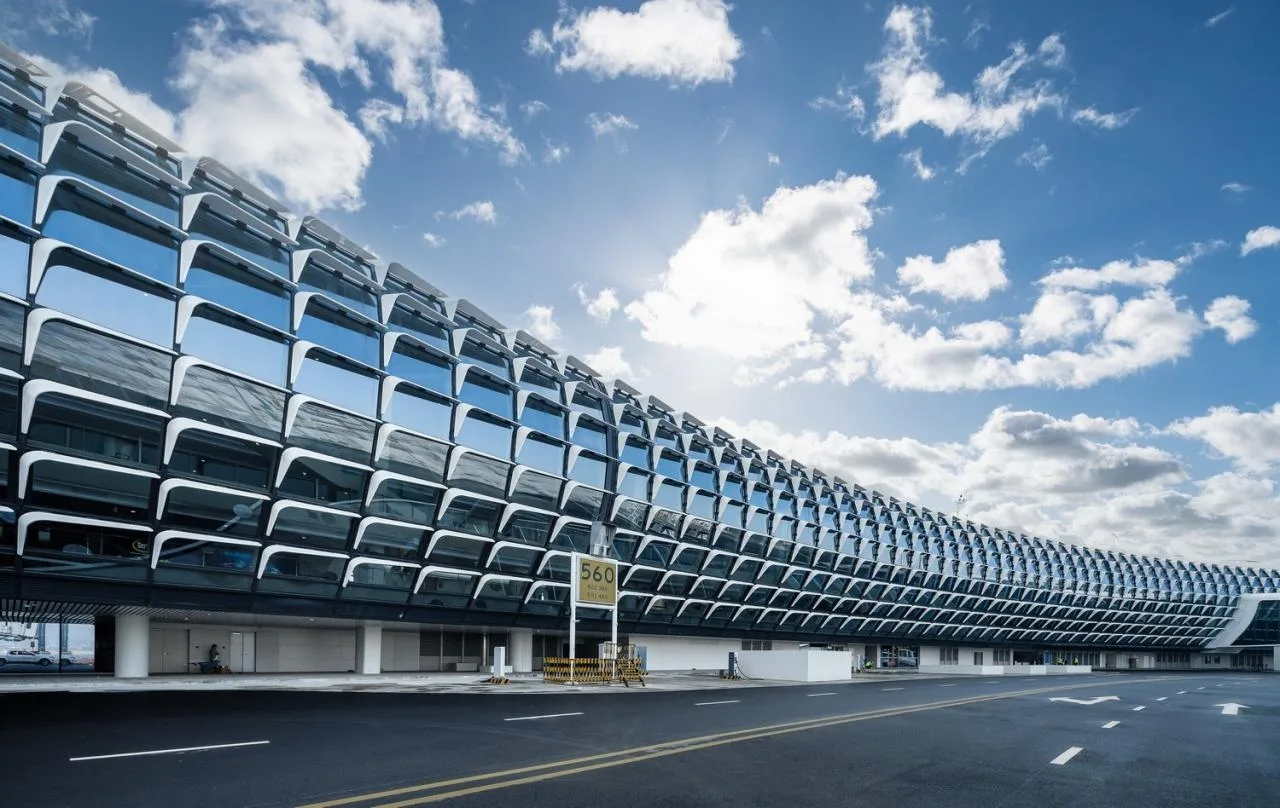
External shading components. Photo by Zhang Qianxi.
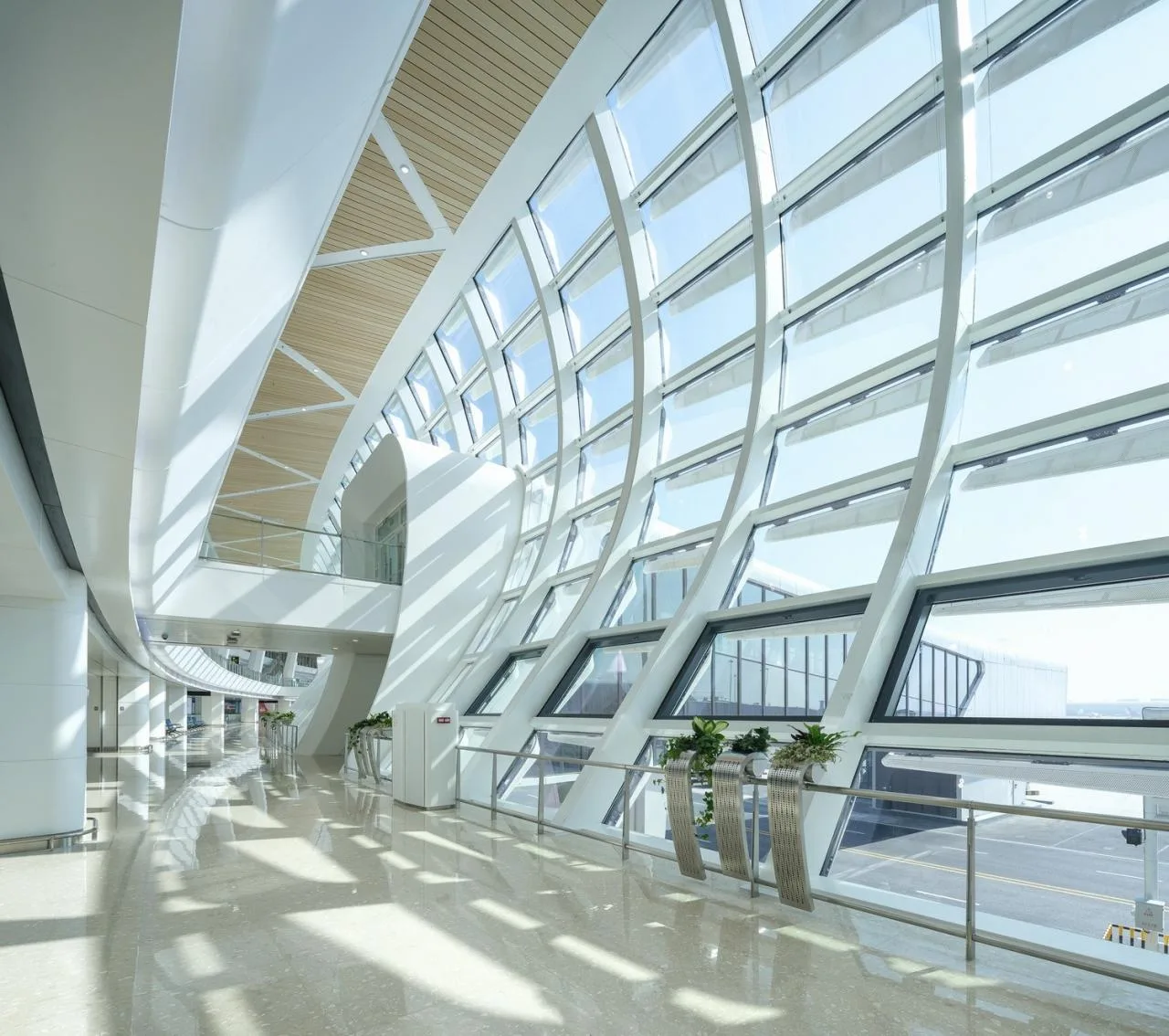
△ Curved double-layer glass curtain wall. Photo by Zhang Qianxi.
The satellite hall also features two outdoor green viewing platforms that overlook the urban skyline of Shenzhen and the Pearl River Estuary. Its innovative green, energy-saving design combined with abundant green spaces has earned it China’s three-star green building certification.
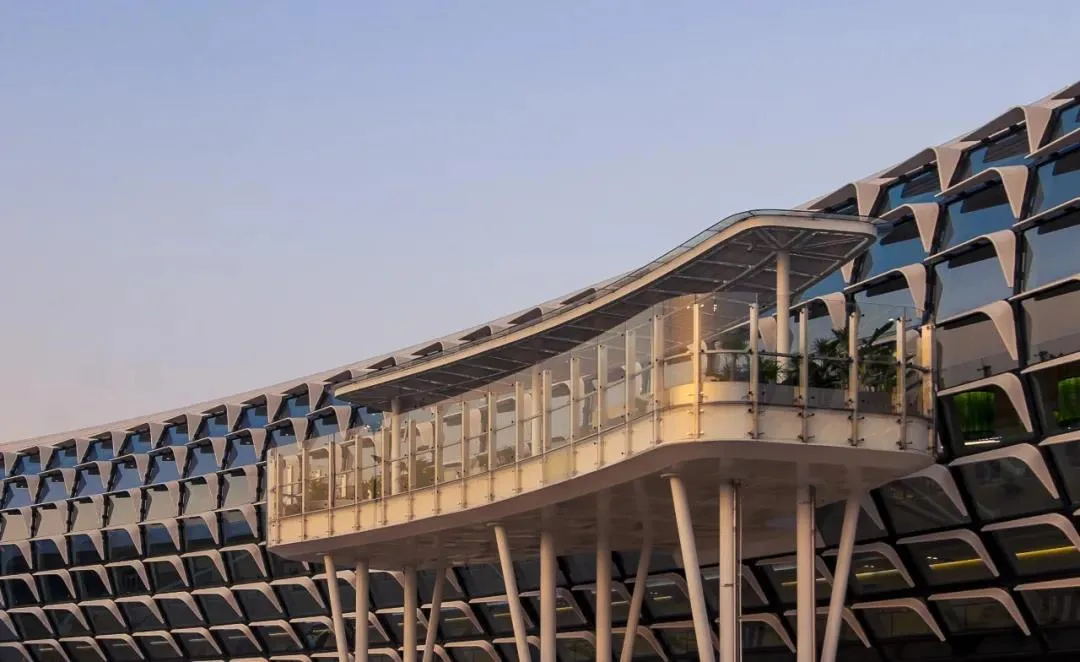
Green viewing platform. Photo by Chen Weizhong.
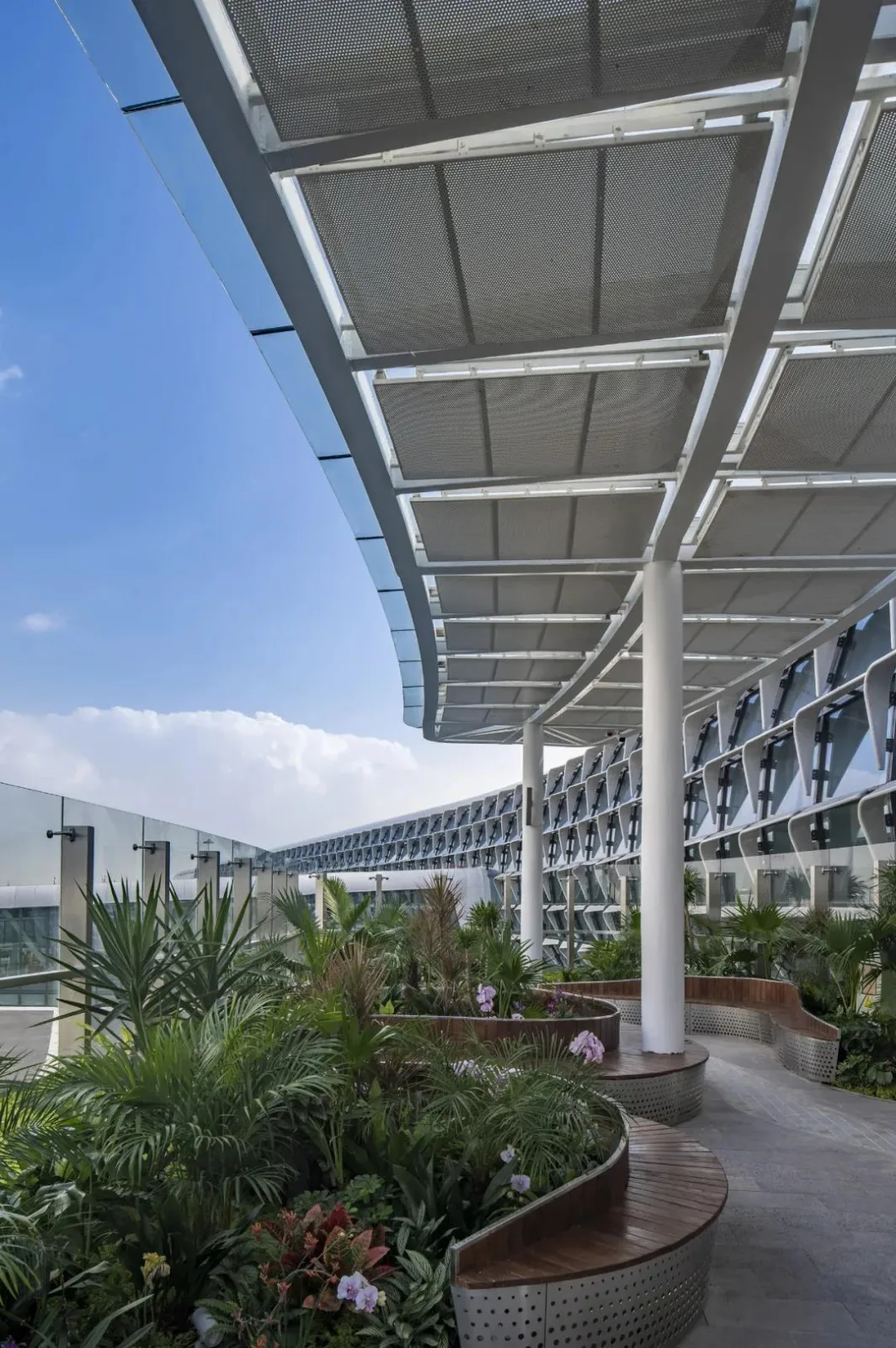
Green public space. Photo by Chen Weizhong.
Comfortable and Human-Centered Indoor Environment
A people-oriented metro station was designed to enable seamless transfer to the satellite hall. The station interior features warm-toned stone walls and floors paired with sleek silver-white metal ceilings, creating a spacious and bright atmosphere.
The departure platform is equipped with Pengcheng Wings LED screens that guide passengers to escalators leading to the departure hall. Additionally, a light strip atop the platform screen doors changes color in sync with arriving and departing trains, providing passengers with clear visual cues and enhancing travel convenience.
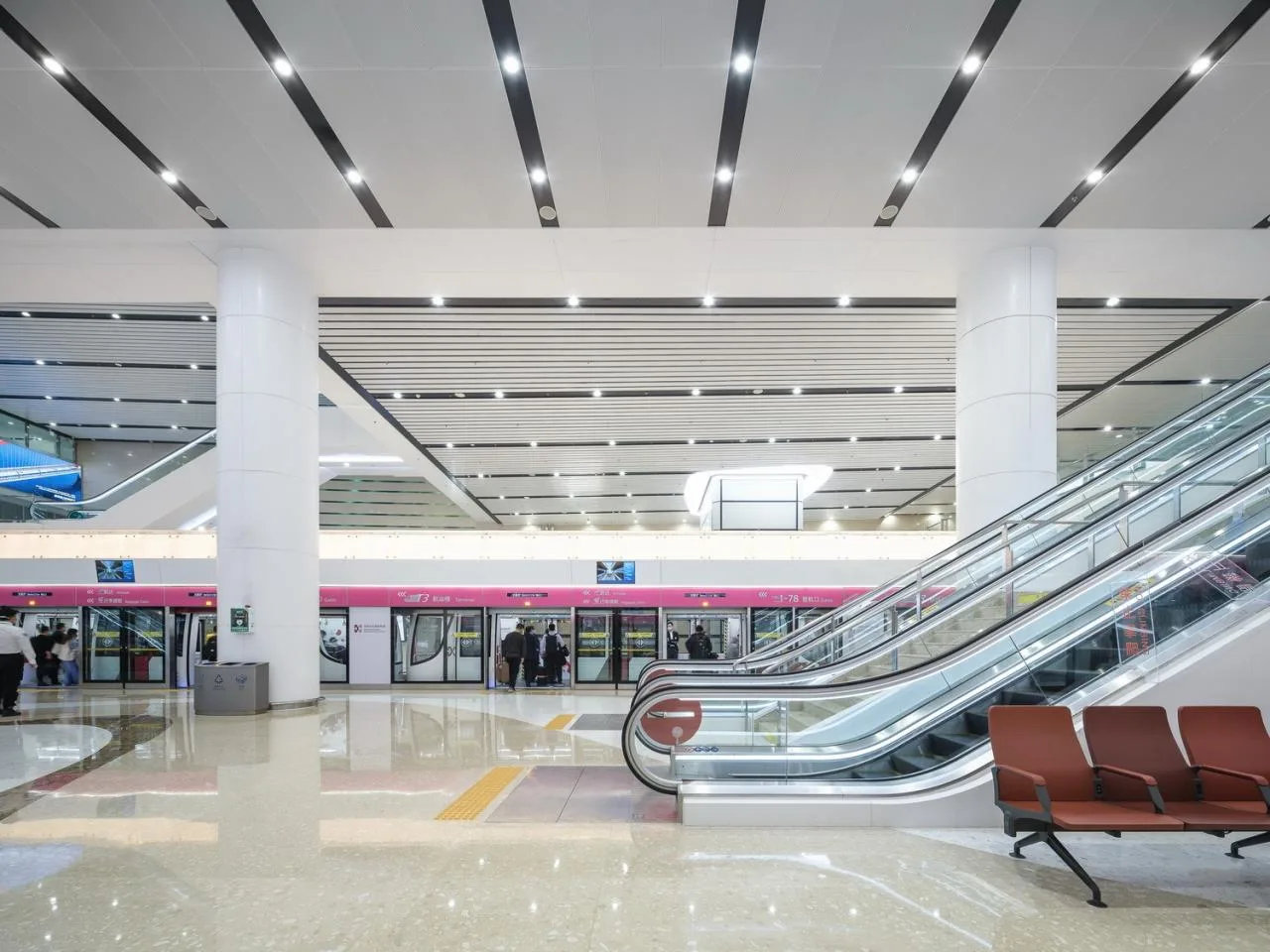
△ MRT station. Photo by Zhang Qianxi.
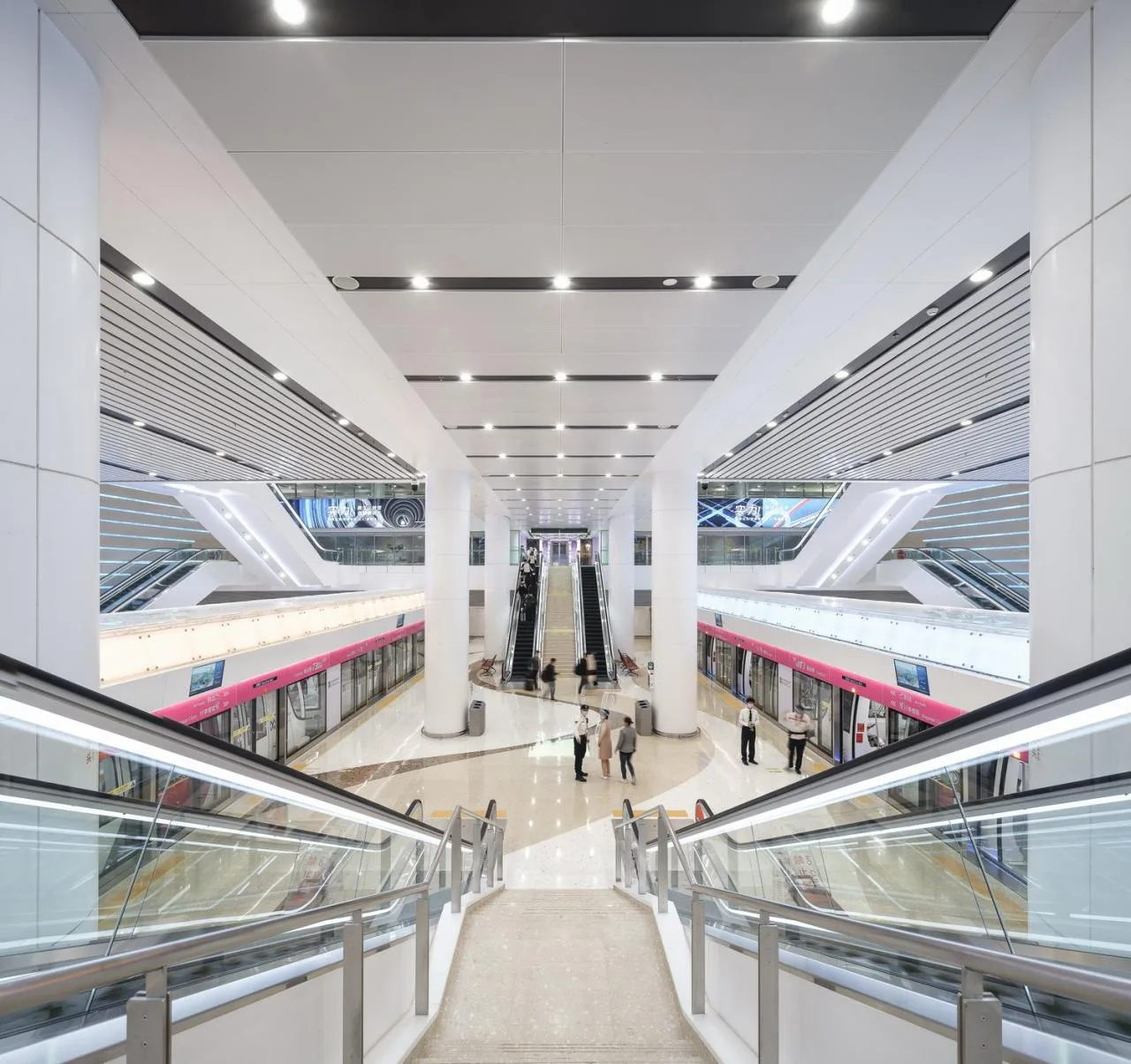
△ MRT station. Photo by Zhang Qianxi.
Upon exiting the metro station, passengers enter the bright, spacious central atrium of the satellite hall. A 1.2-kilometer-long skylight system spans the building, featuring triangular perforated aluminum panels that filter direct sunlight. The warm light reflects off the imitation wood-grain triangular ceiling patterns, creating dynamic light and shadow effects that naturally guide passengers.
The design centers around this atrium, establishing a lively multi-level commercial and dining area inspired by Shenzhen. Carefully selected materials and colors ensure the storefronts harmonize with the overall architecture of the satellite hall.
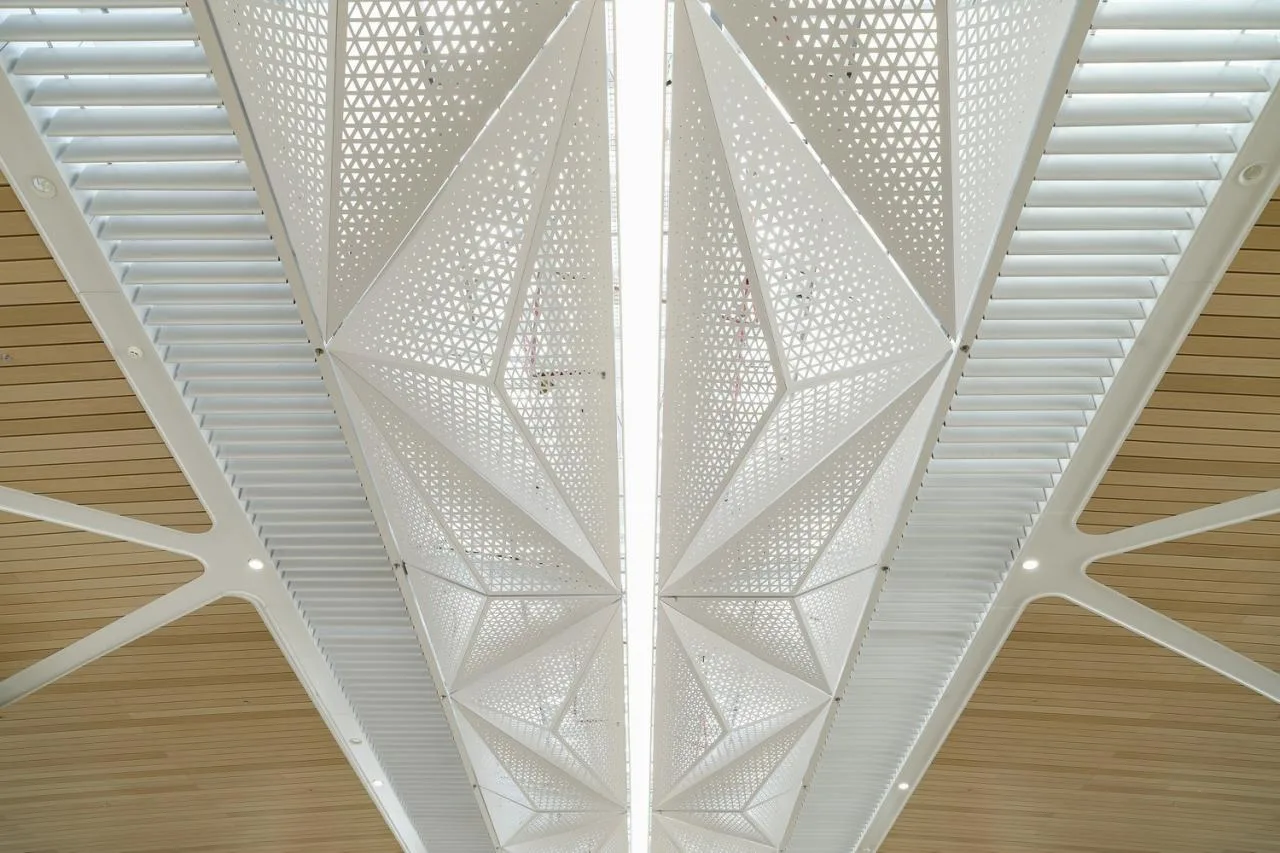
Triangle ceiling pattern. Photo by Zhang Qianxi.
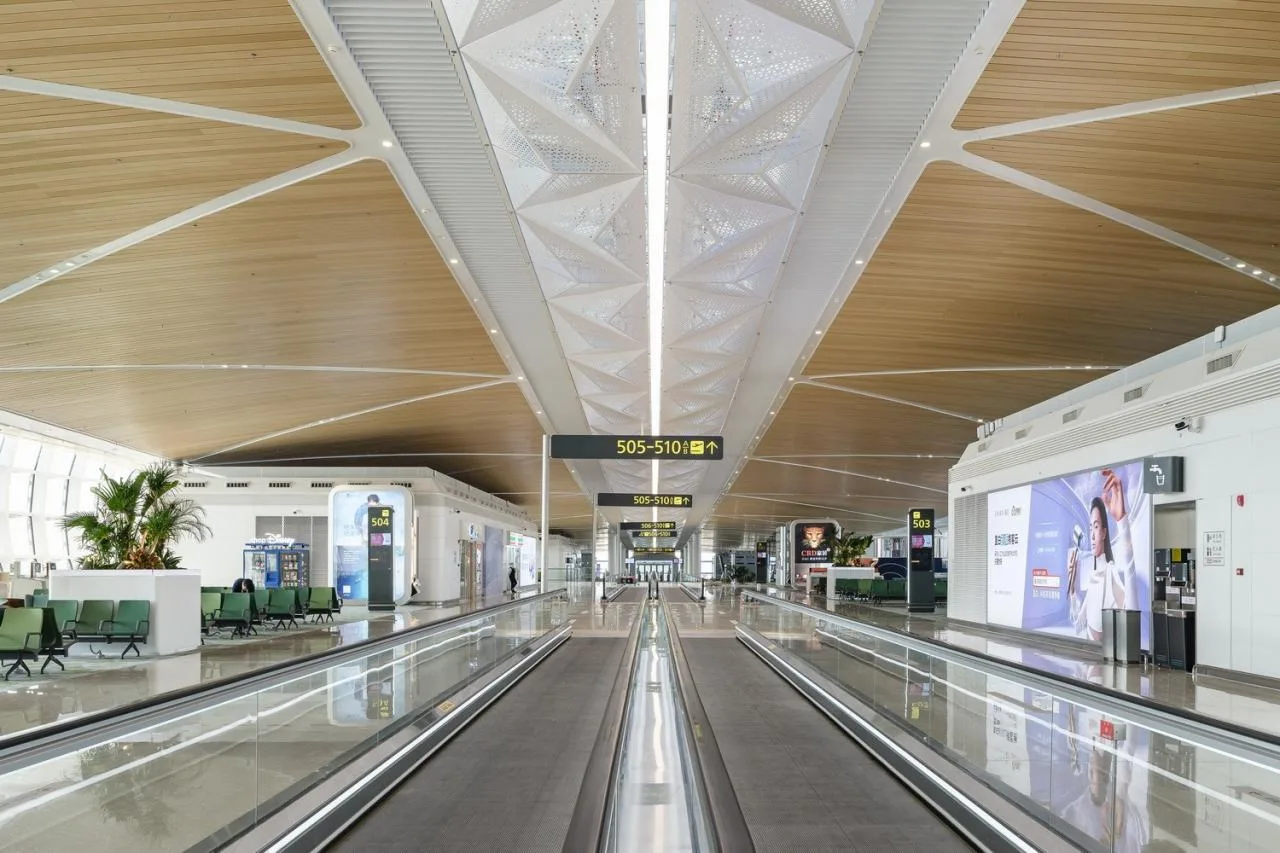
Diamond Sky. Photo by Zhang Qianxi.
At both ends of the commercial space, a 17-meter-high Twin Star Plaza is designed, surrounded by triangular skylights and LED screens. This immersive area is ideal for hosting events and exhibitions in the future.
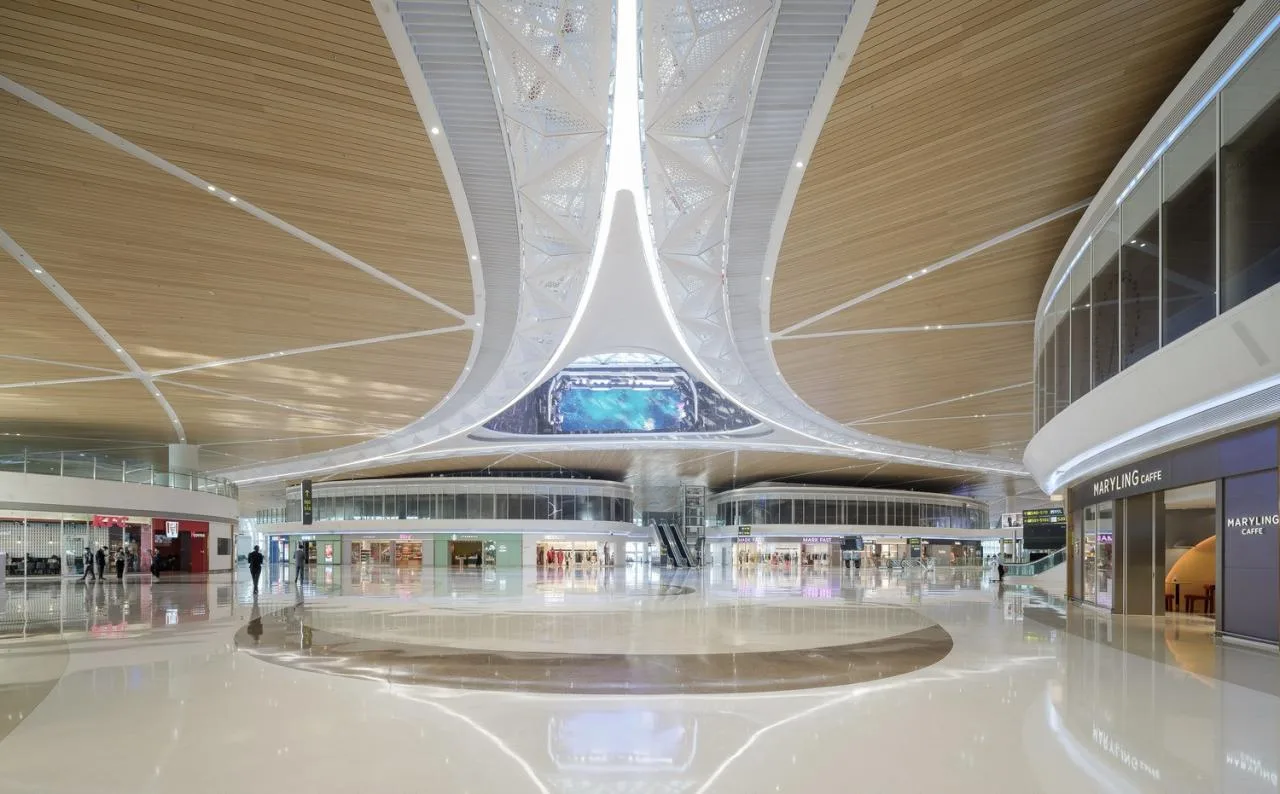
Twin Star Plaza. Photo by Zhang Qianxi.
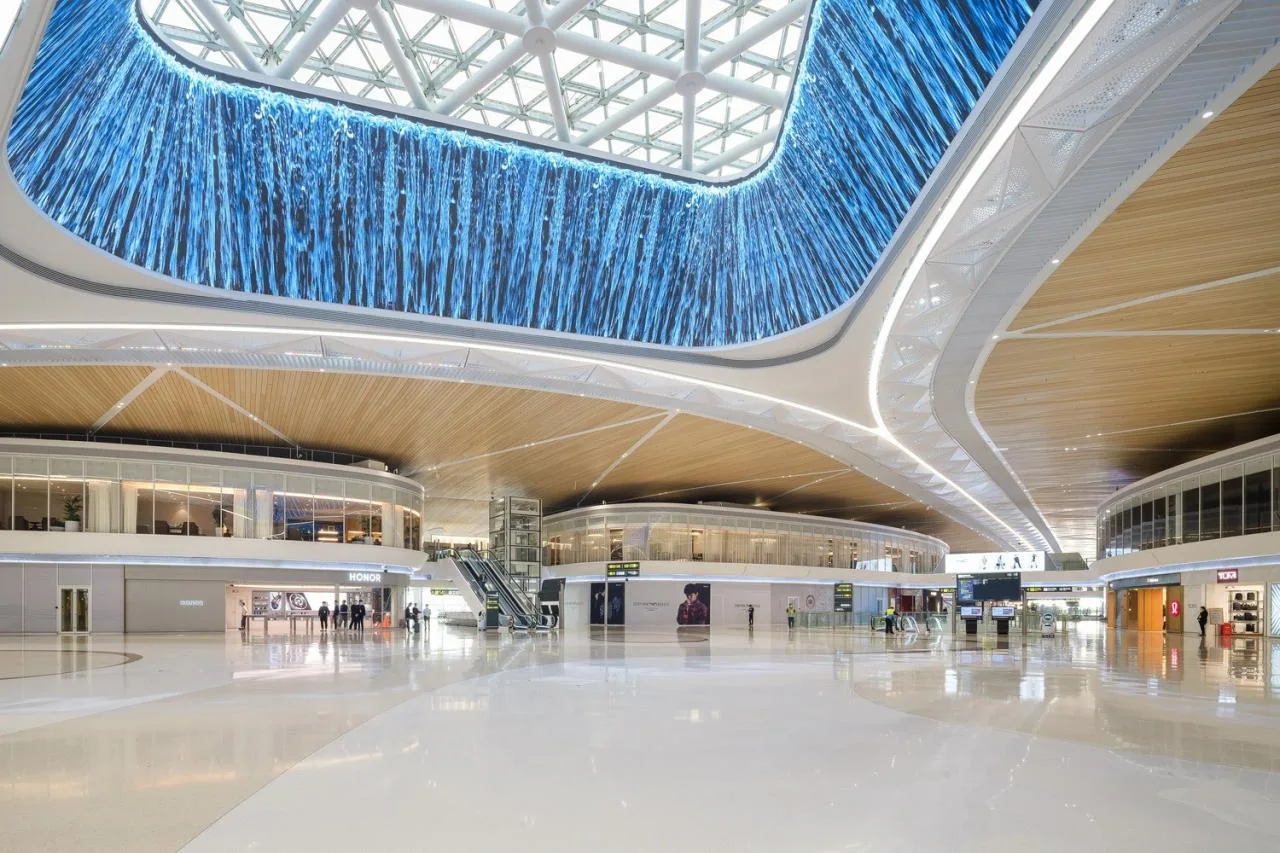
Surrounding LED screens. Photo by Zhang Qianxi.
The corridor is themed around the four seasons—spring, summer, autumn, and winter—visually dividing the space into four distinct areas that promote a calm and pleasant atmosphere.
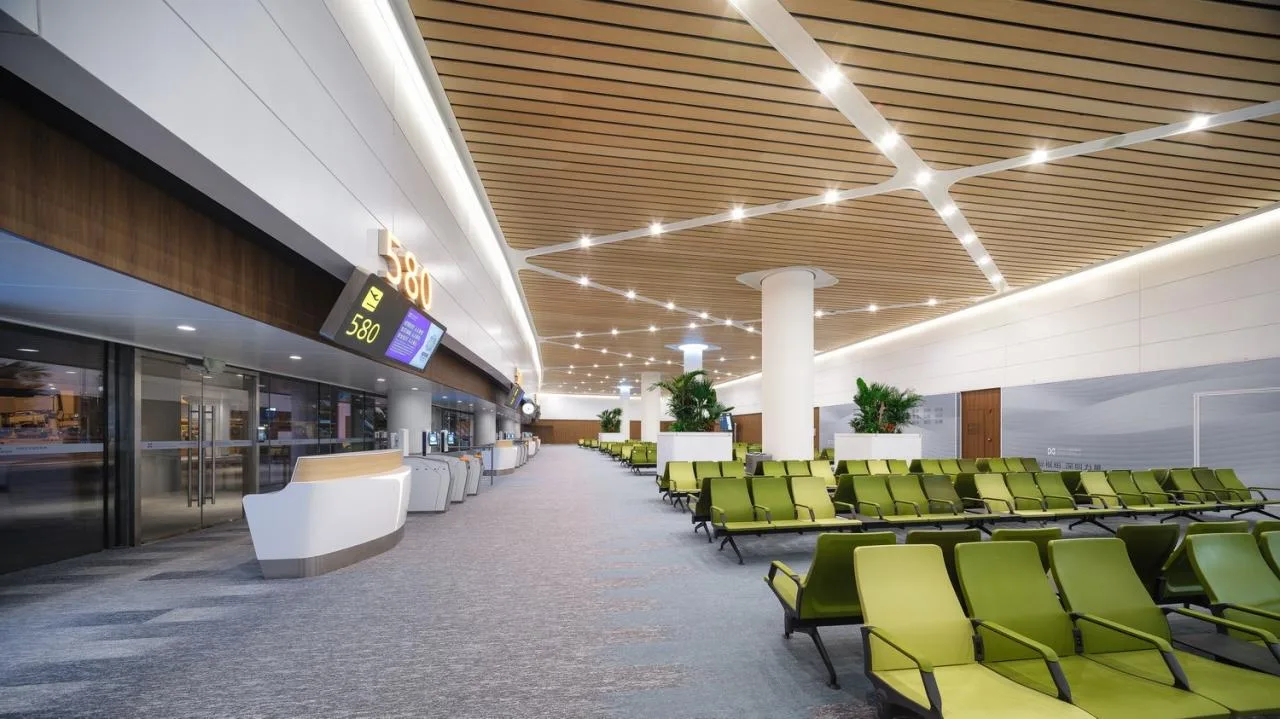
Waiting hall. Photo by Zhang Qianxi.
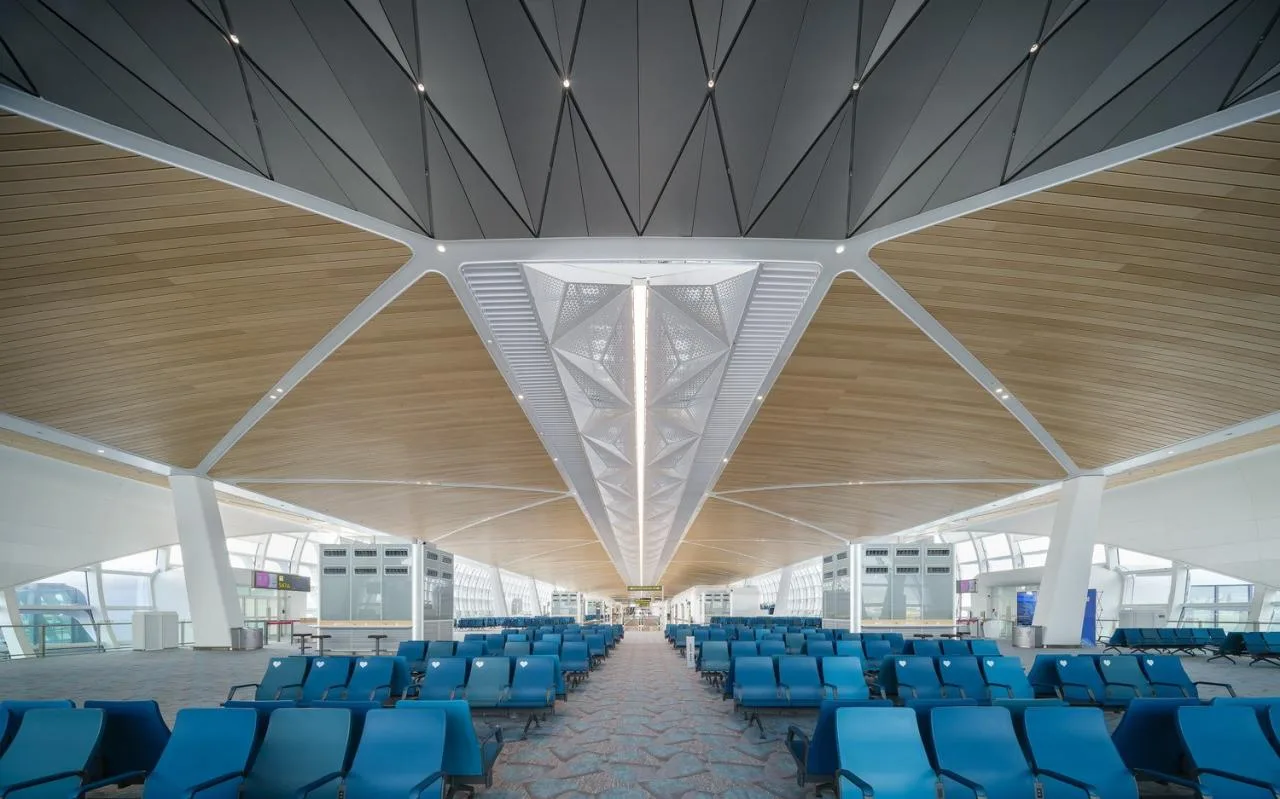
△ Color-coded waiting areas. Photo by Zhang Qianxi.
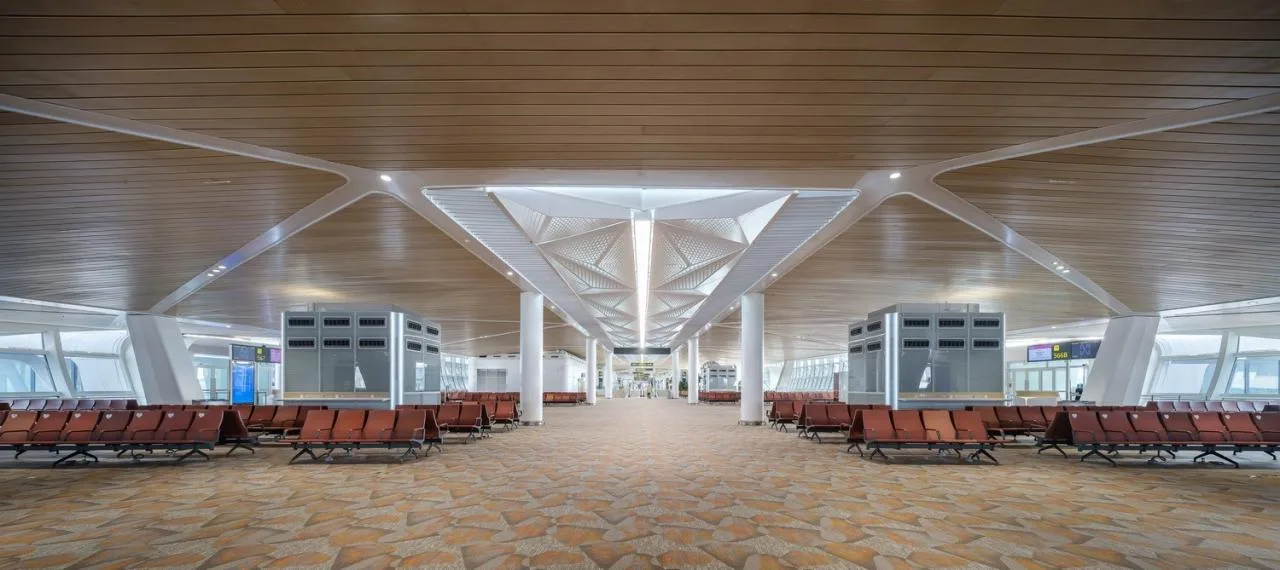
The waiting hall is spacious and bright. Photo by Zhang Qianxi.
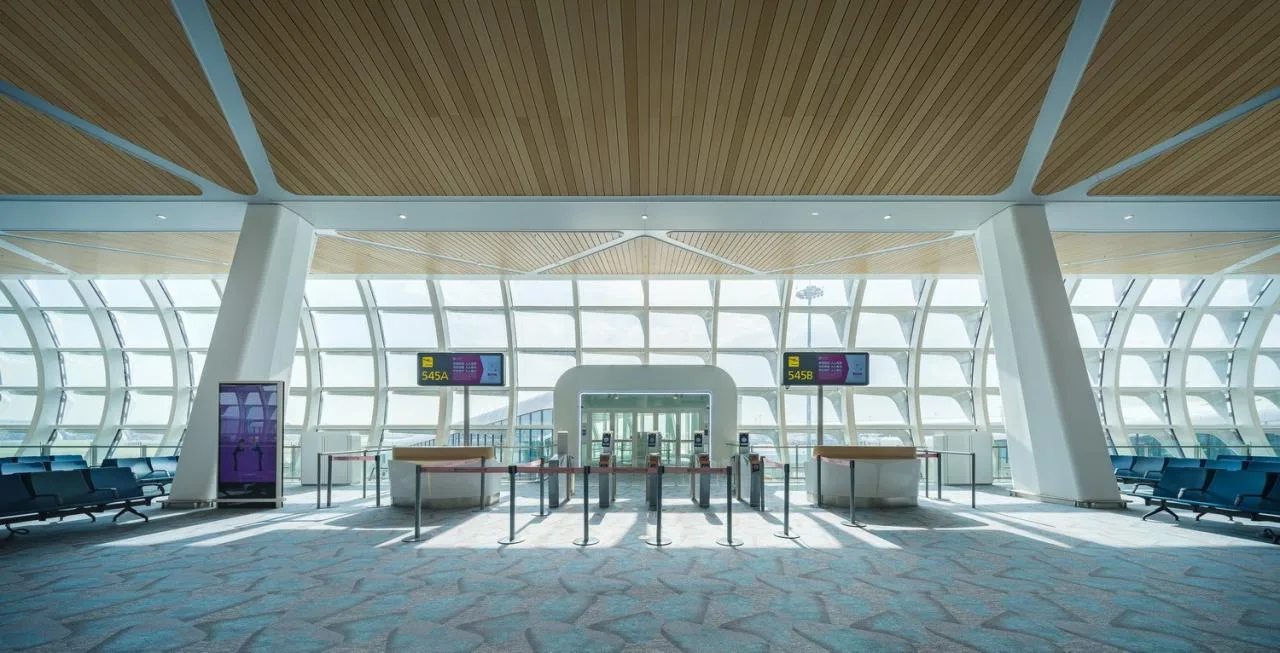
The waiting hall is spacious and bright. Photo by Zhang Qianxi.
“Our goal is to create a convenient and pleasant travel experience for passengers through the new satellite hall at Shenzhen Bao’an International Airport, setting a new benchmark for aviation architecture,” said Tang Zhouxing.
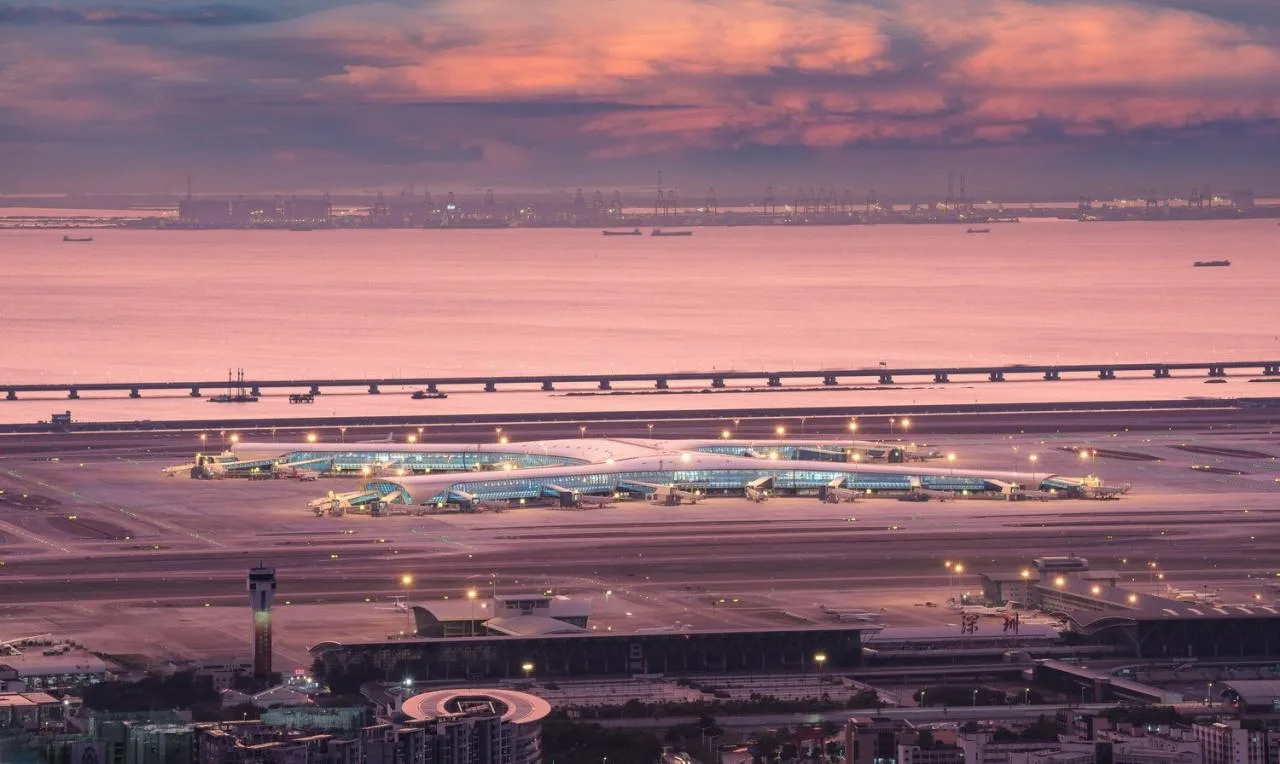
Satellite hall illuminated at night. Photo by Zhang Qianxi.
Project Information
Project: Shenzhen Bao’an International Airport Satellite Hall
Location: Shenzhen, China
Design Architects: Guangdong Provincial Institute of Architectural Design and Research Co., Ltd. (GDAD), Aedas, Landron & Brown (USA)
Owner: Shenzhen Airport Group
Building Area: 238,885.38 square meters
Completion Year: 2021
Aedas Lead Designers: Max Connop, Global Design Director; Tang Zhouxing, Executive Director
GDAD Chief Architects: Chen Xiong, Zhou Chang, Luo Zhiwei, Chen Yiran, Lin Jiankang, Li Qizhen, Huang Yibin
Planning: Landron & Brown (USA)















aminal for building.