
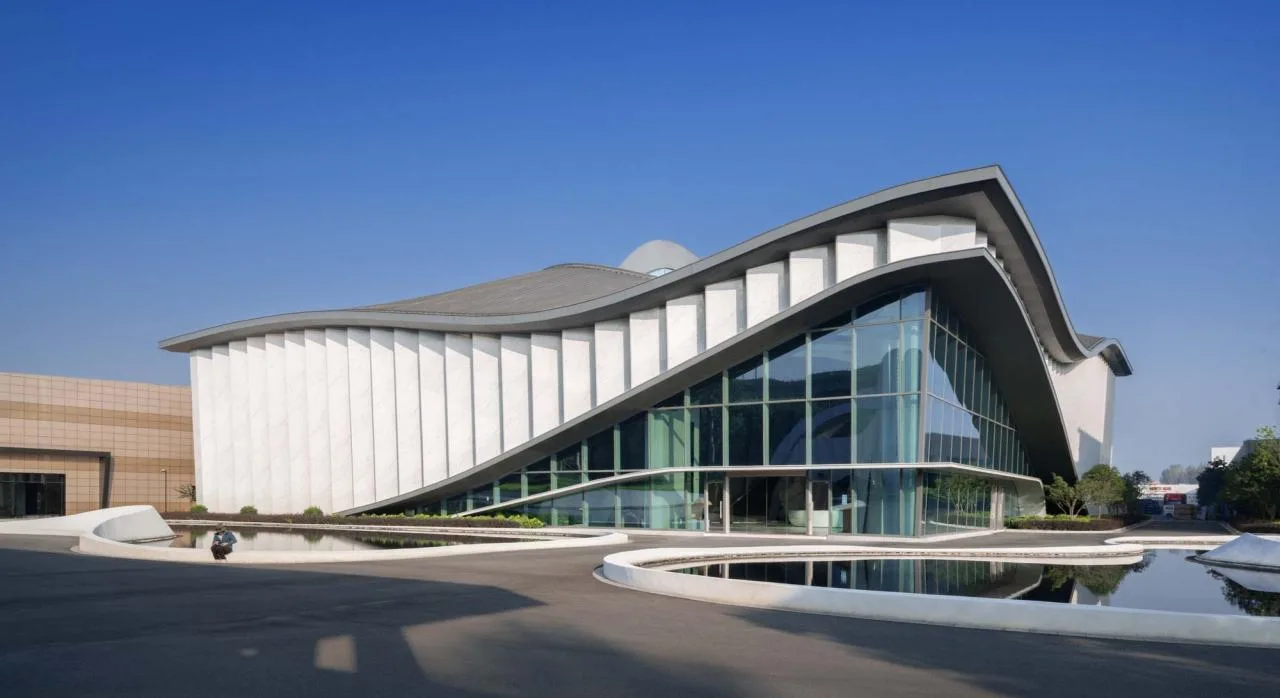
The Nobel Technology and Culture Center is situated at the southern tip of the Hangzhou Jiaxing Huzhou Plain, alongside the Grand Canal in Yuhang. After five years of meticulous design and supervision, it opened to the public in 2022, offering a dynamic space for craftsmen, entrepreneurs, designers, material researchers, and visitors to connect and exchange ideas.
This multifunctional center encompasses education, exhibitions, conferences, immersive experiences, and research and development. As the world’s first and largest ceramic rock slab experience space, it strives to pioneer industrial innovation and elevate the significance of the ceramic manufacturing industry by integrating advanced industrial technology with architectural design.
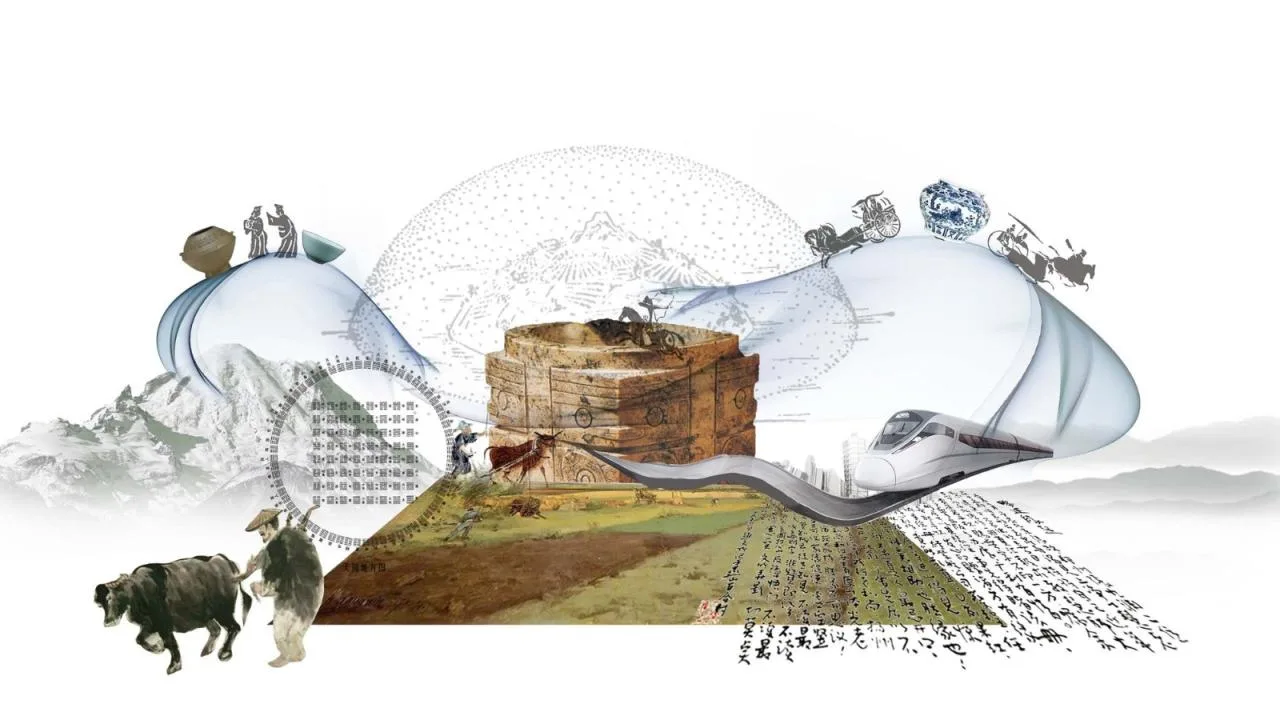
Kuo He CROX Lin Congran explains, “At the dawn of Chinese civilization, the birthplace of Liangzhu culture, the landscape and architecture are intricately sculpted. Our aim is to revive the spirit of Cong and transform the cultural relics of ‘Li Tian Di Si Fang’ into spaces that embody nature’s essence.”
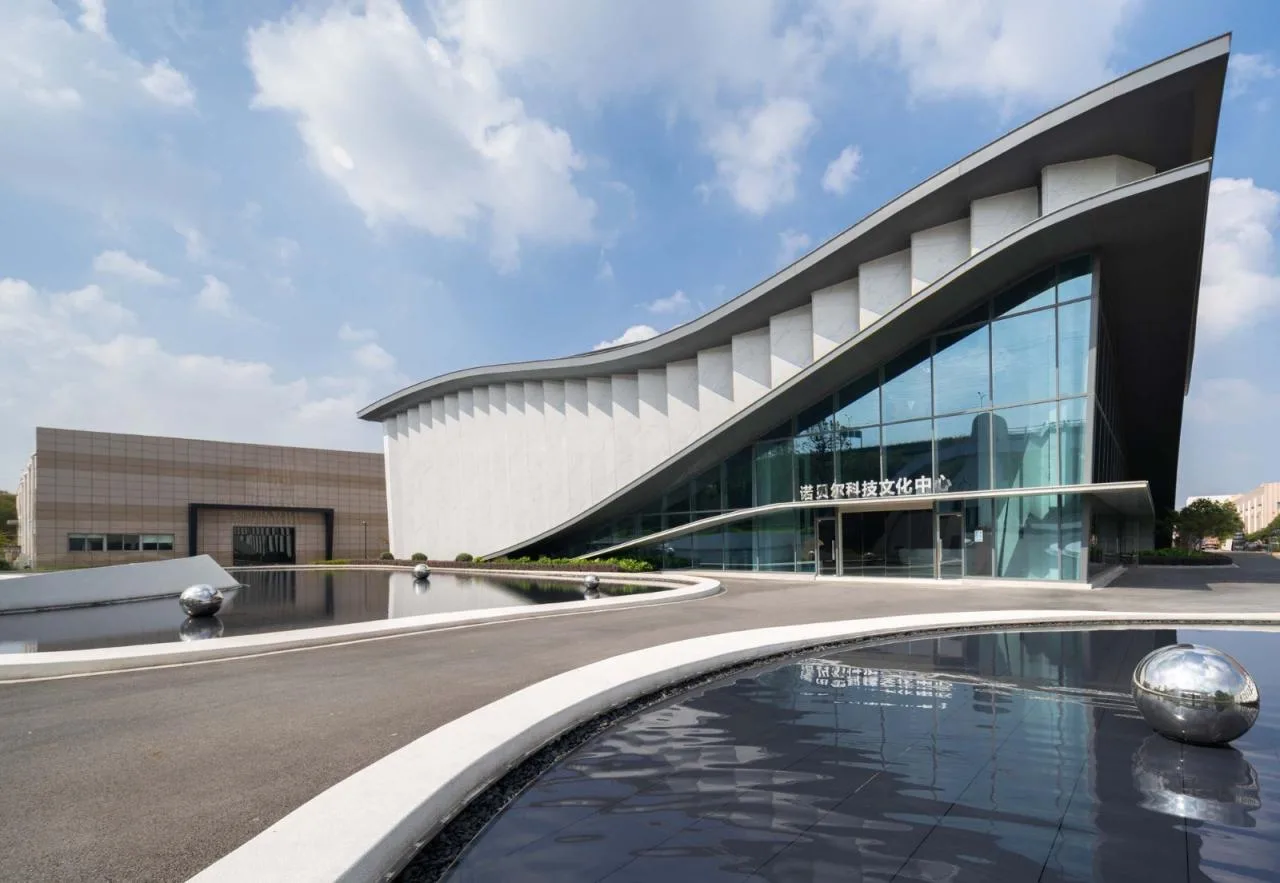
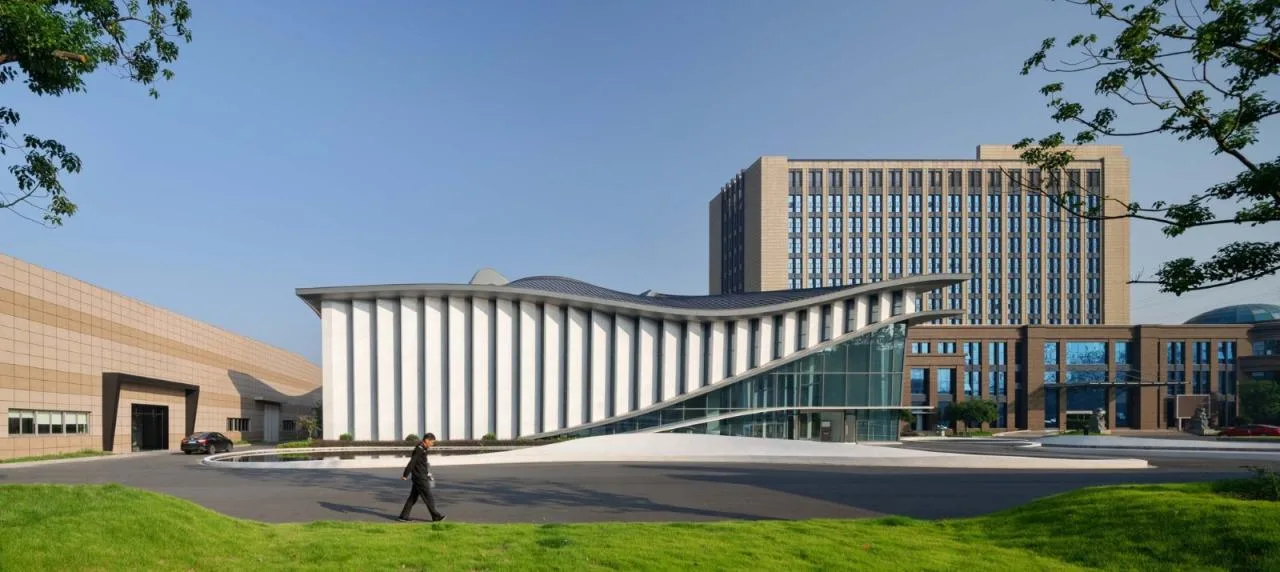
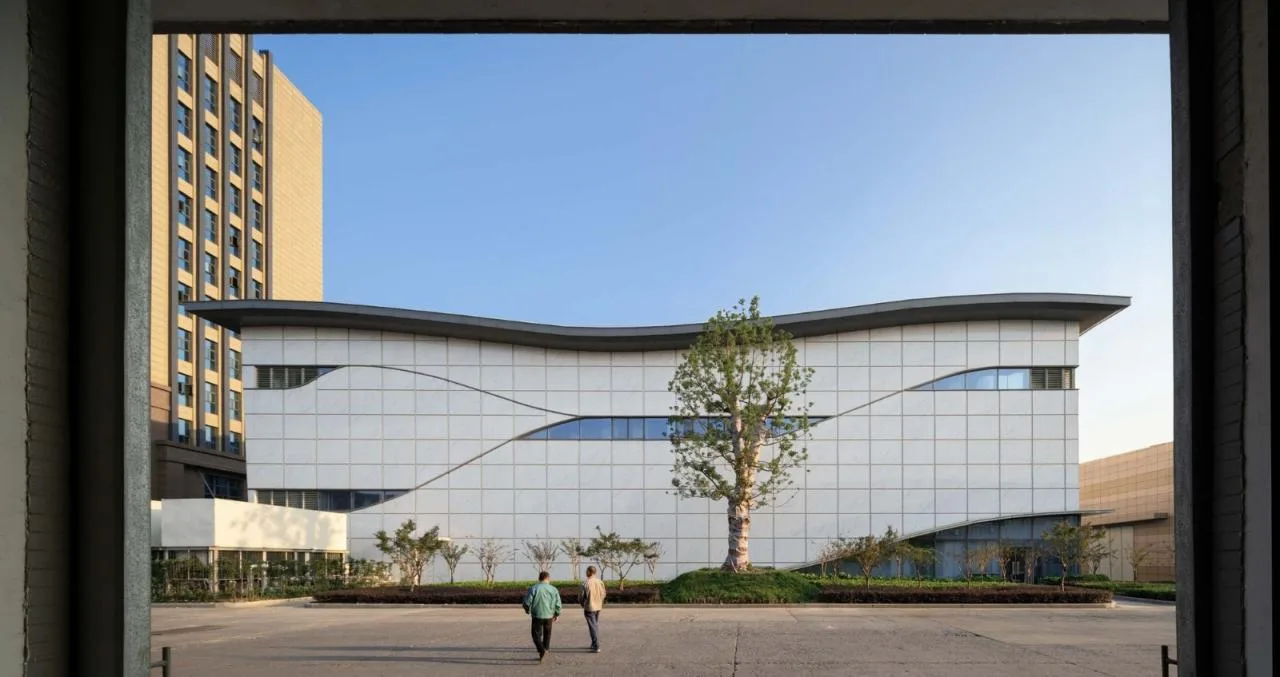
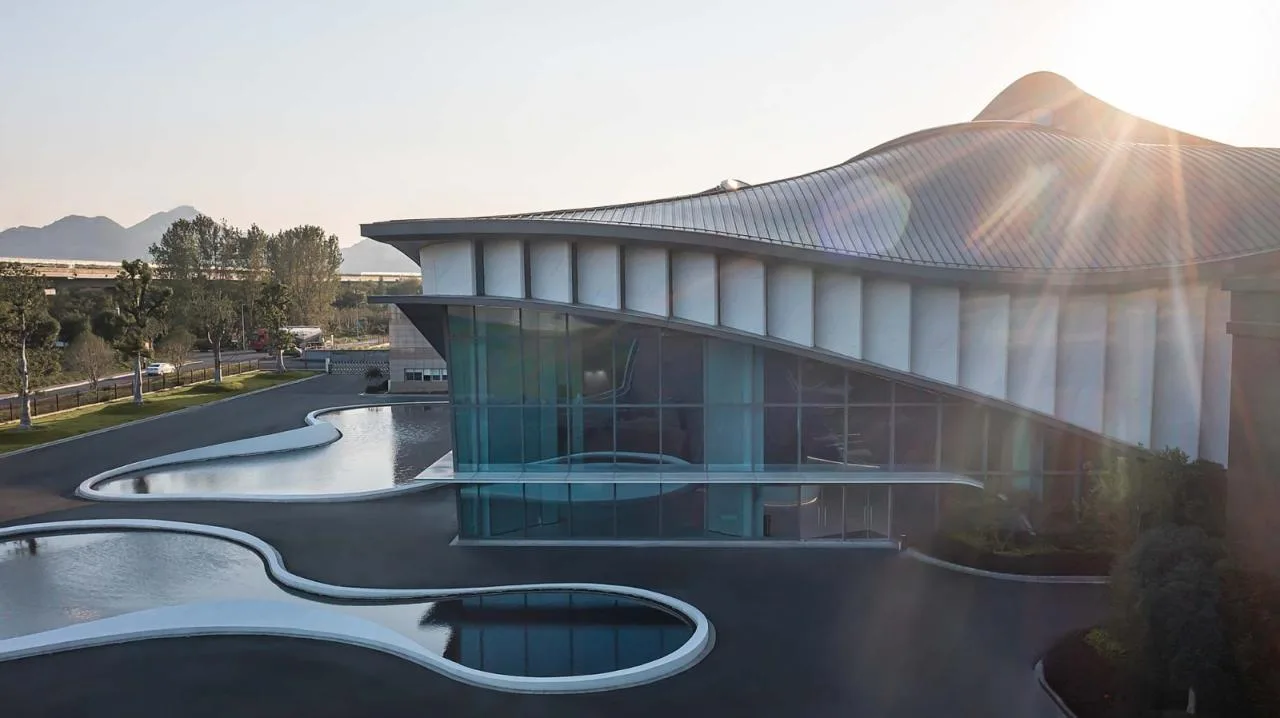
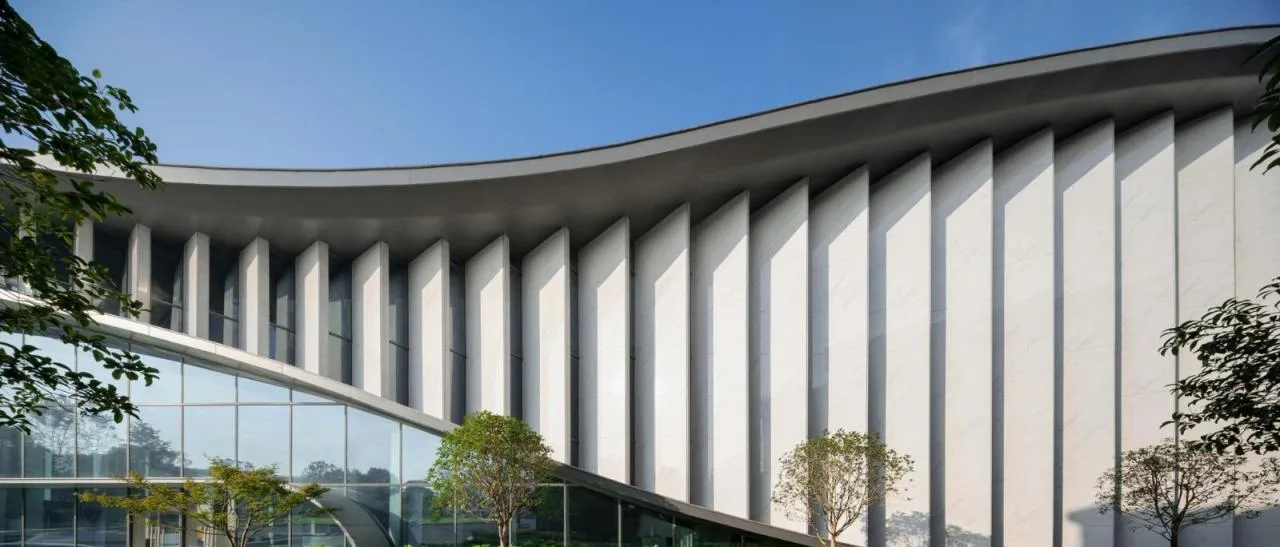
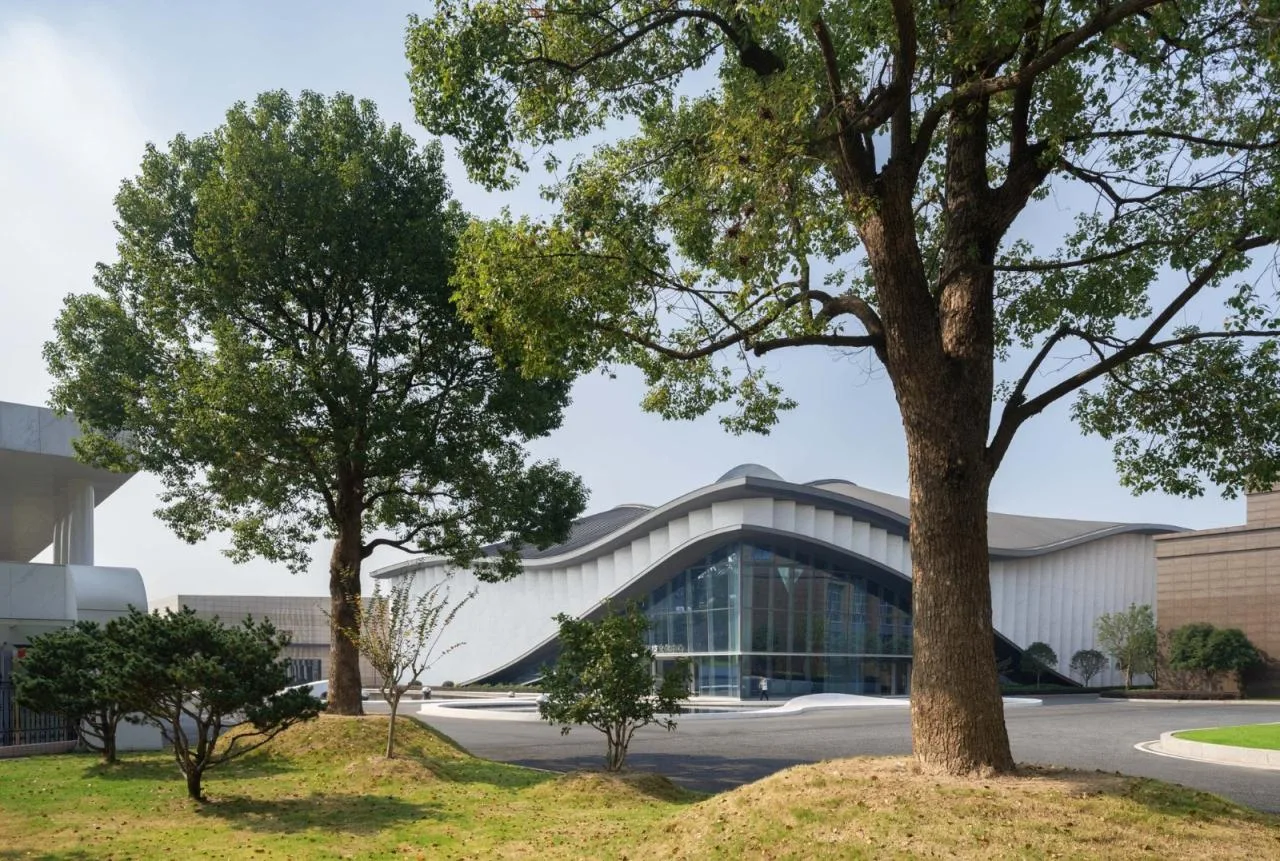
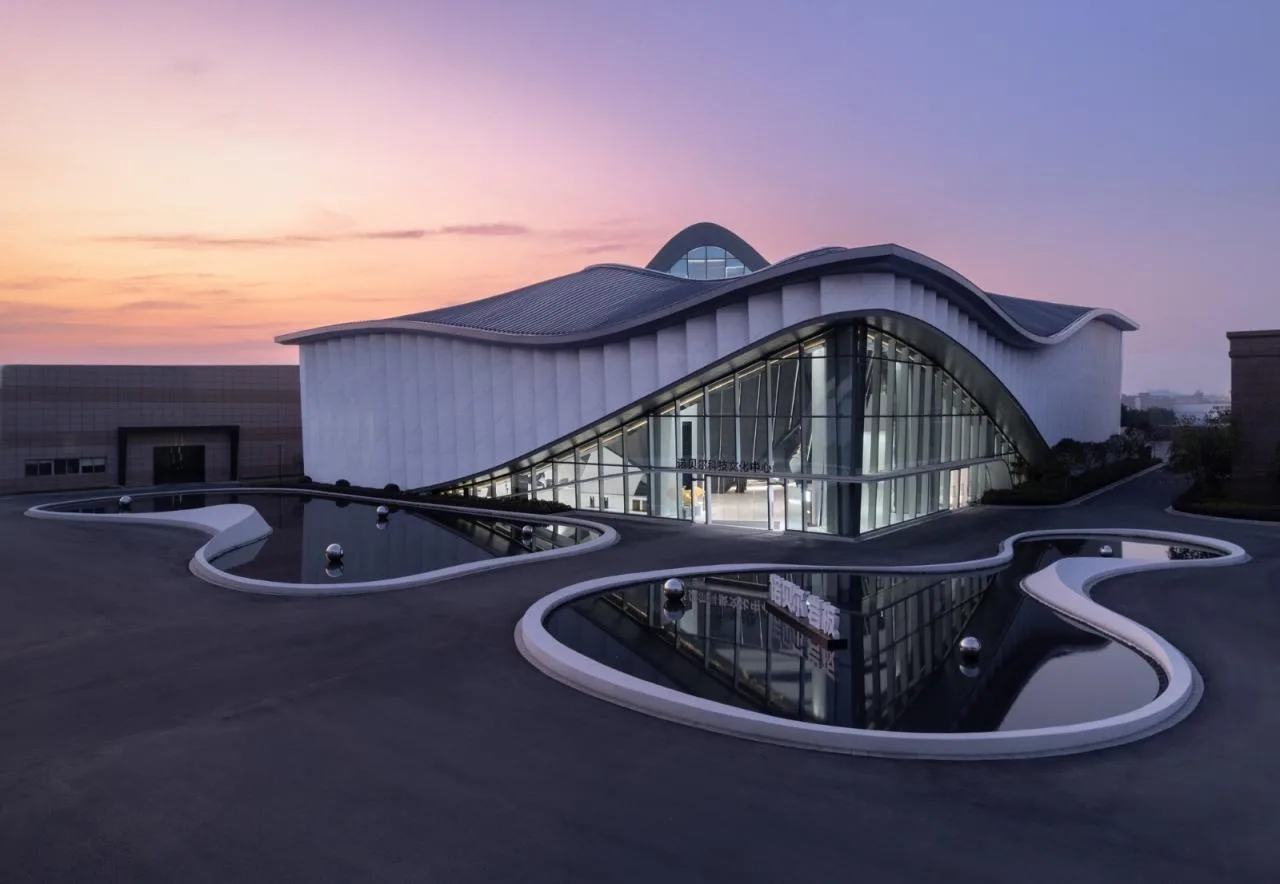
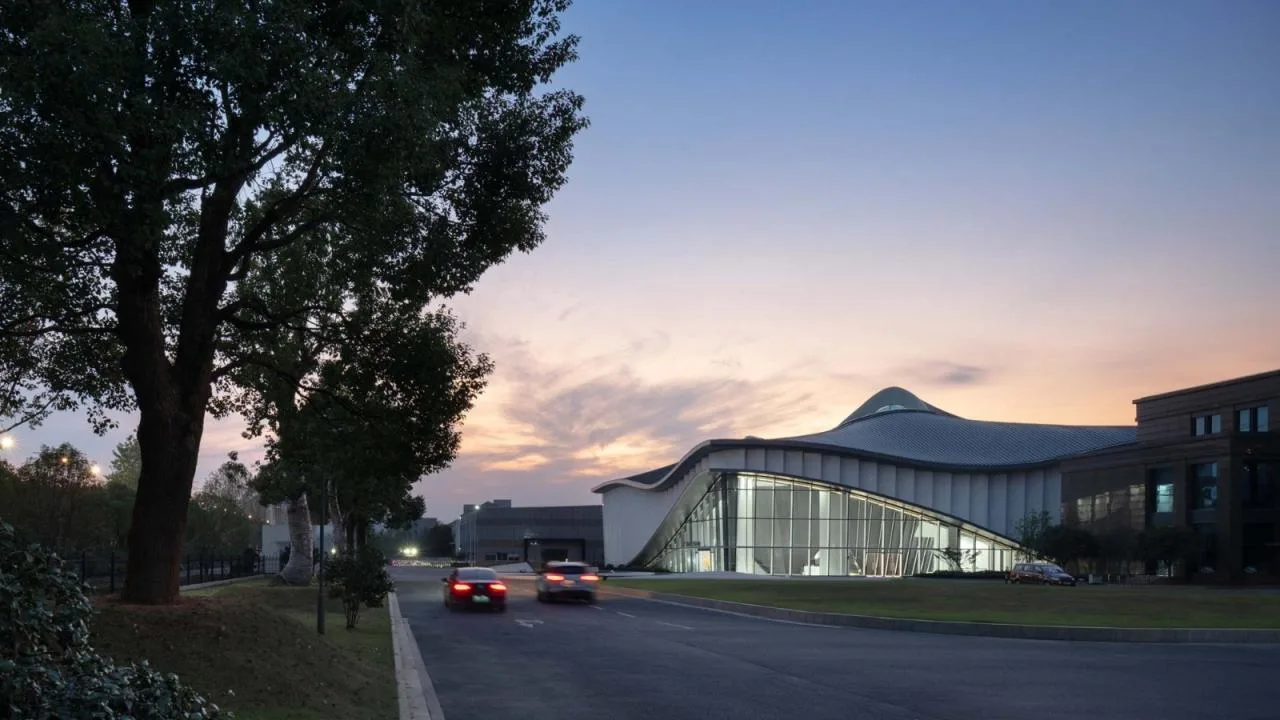
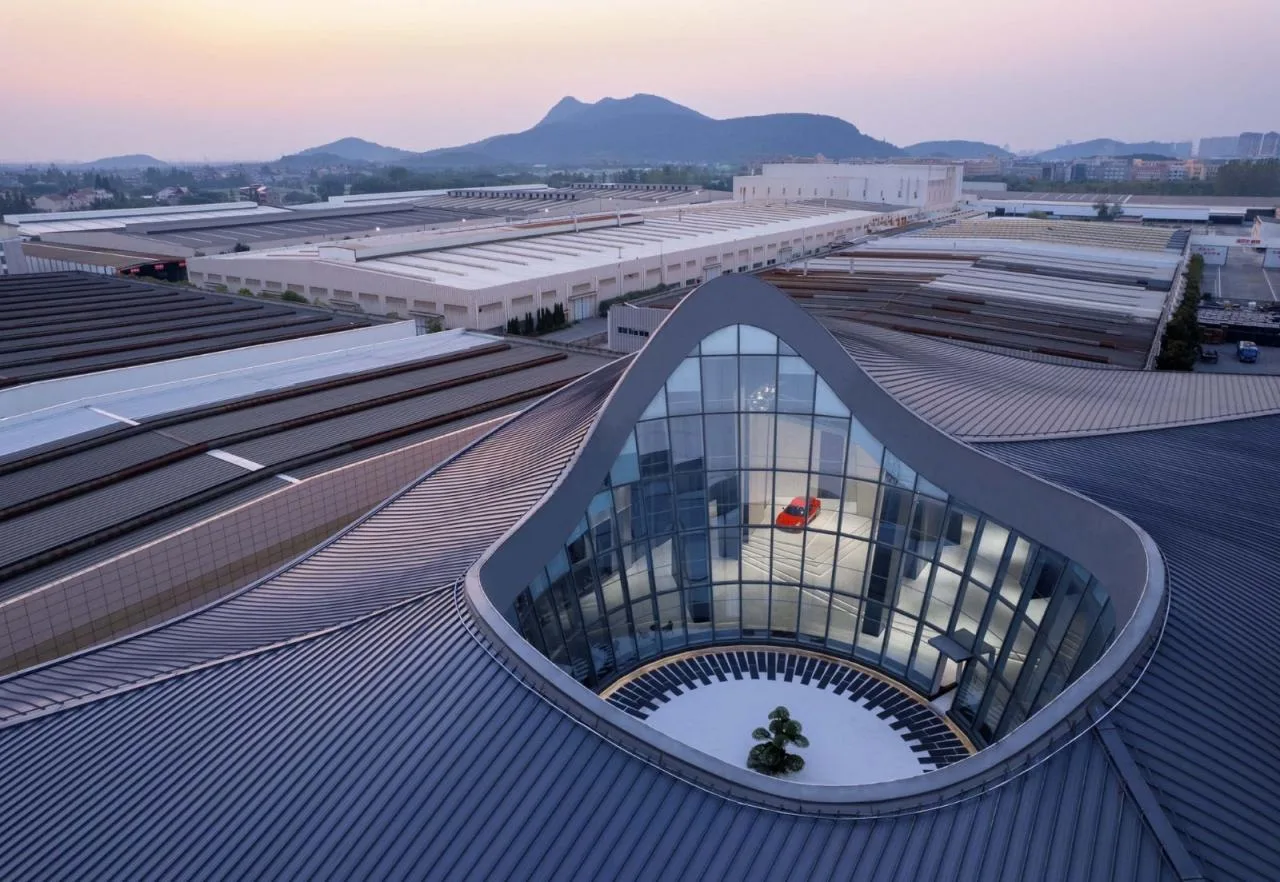
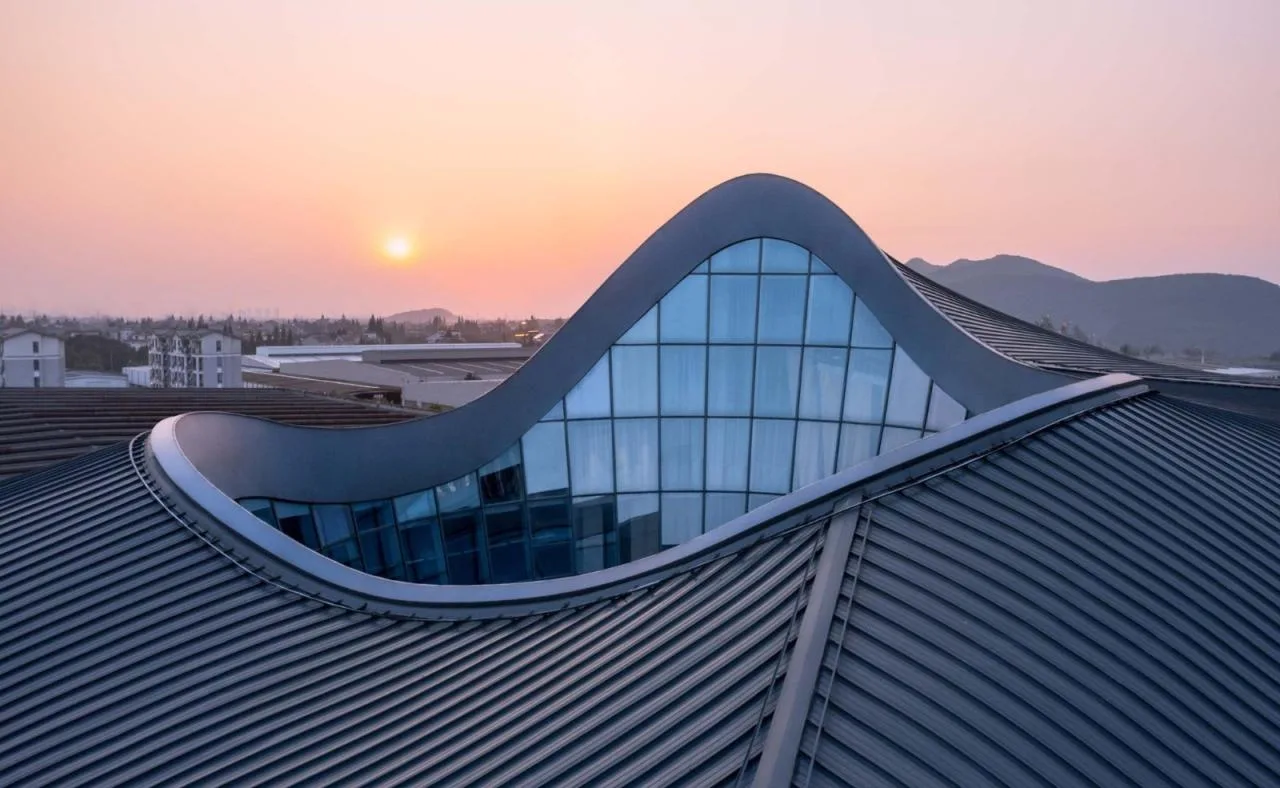
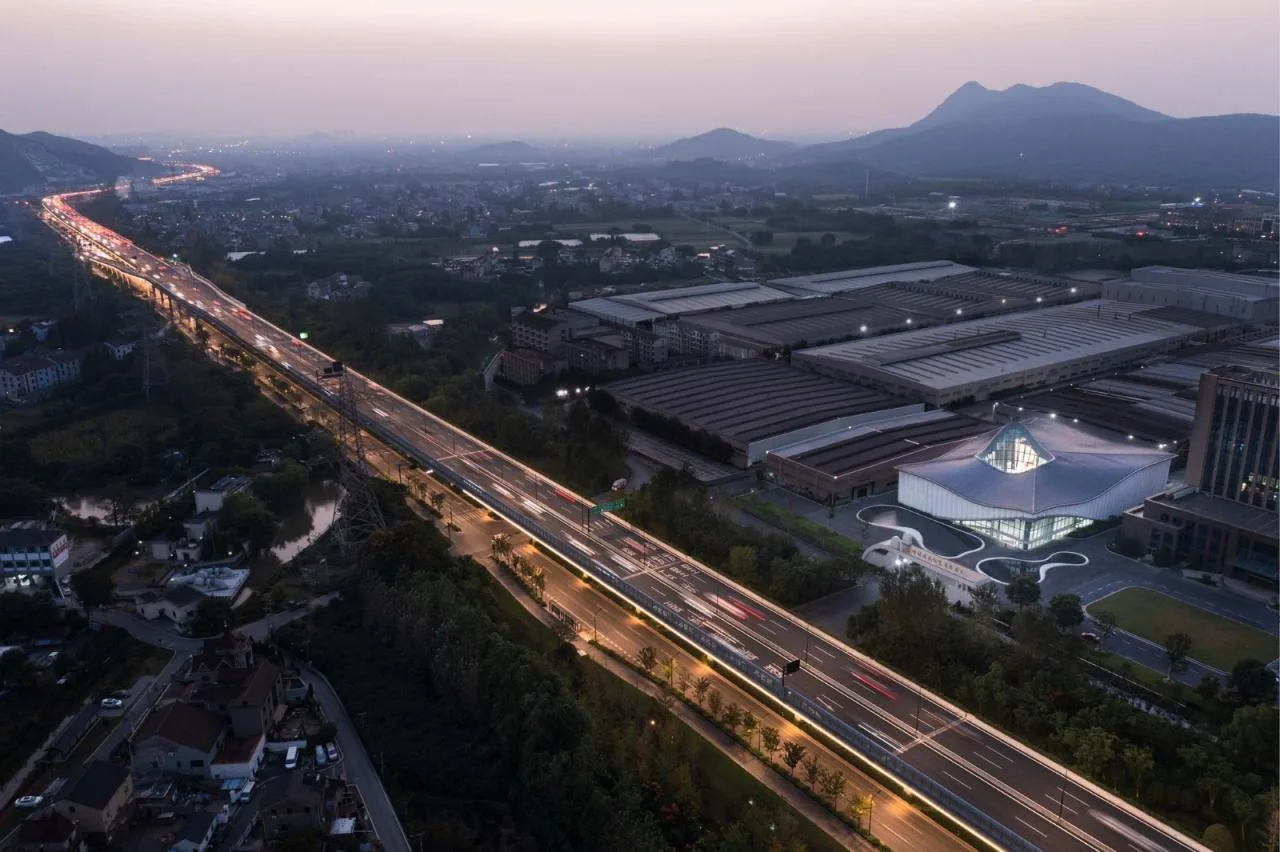
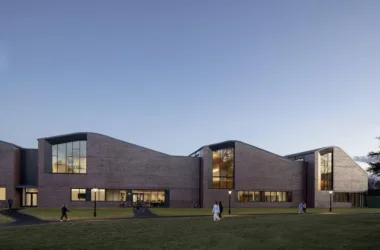
“The architectural form unfolds between sky and earth, framed by the natural contours of Chaoshan, Banshan, and Linping Mountains, creating a fluid, curved design. The building rests on a square foundation, with clay-like modeling techniques shaping a freehand sloping roof. This curved roof resembles a raised valley within an industrial park, balancing the tension between the factory and the elevated roads and bridges nearby.”
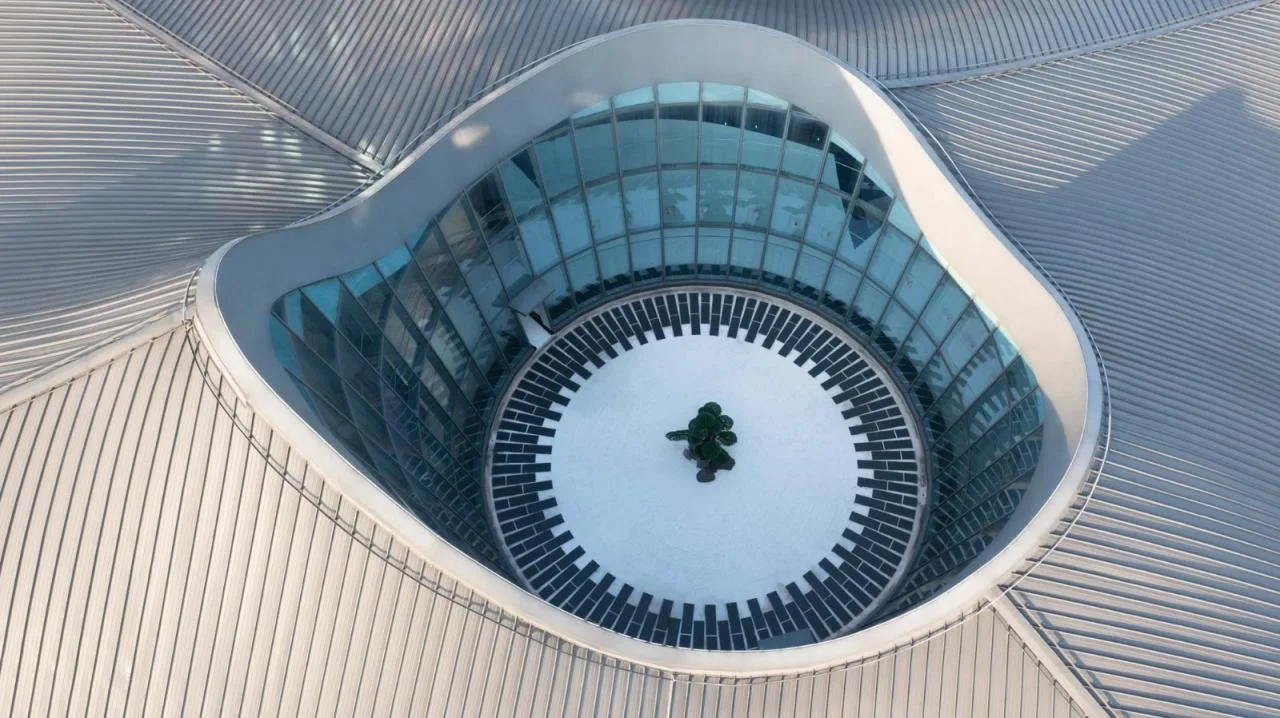
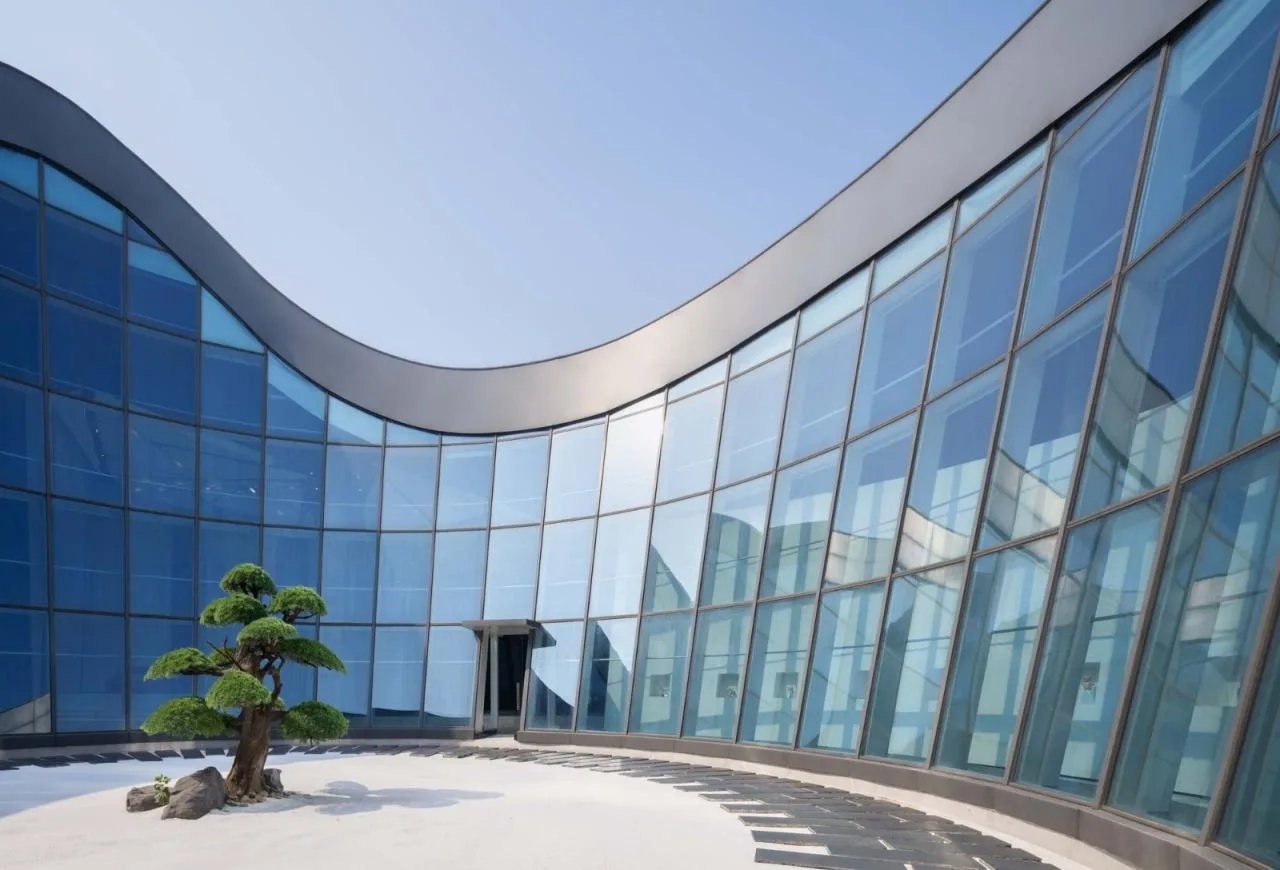
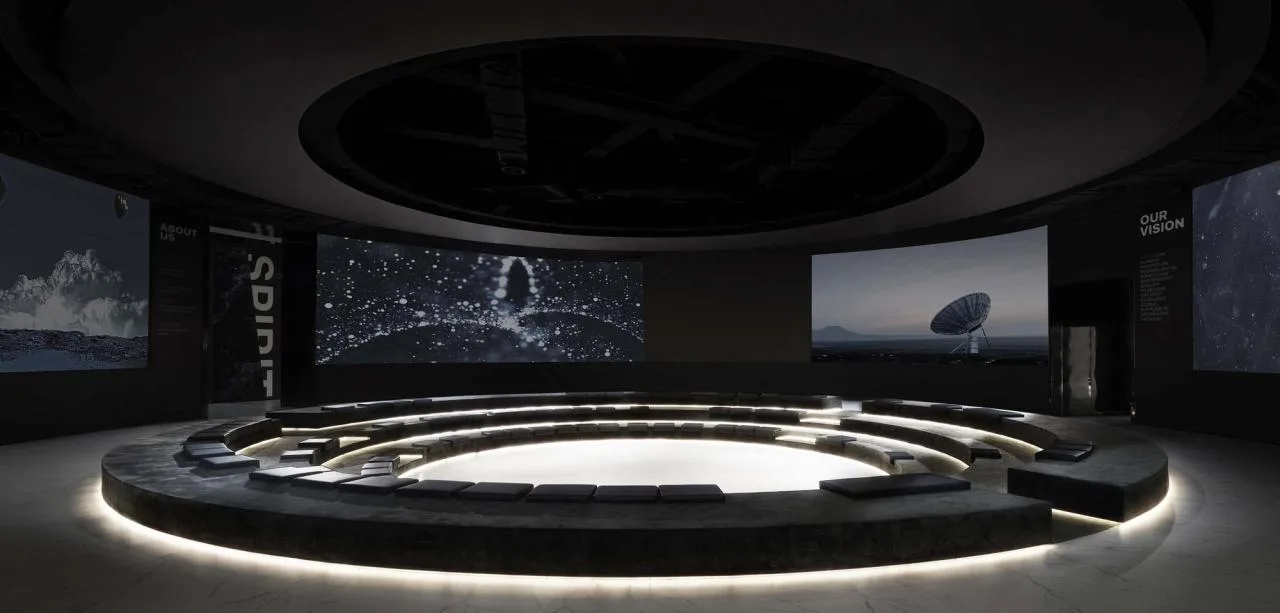
“Visitors passing by experience a seamless extension of the distant mountains into the site, giving the factory a harmonious, natural atmosphere. The center of the raised roof features an open void that faces the sky; this hollow circle not only brings light and air inside but also mirrors the circular multifunctional auditorium below, encouraging cultural exchange.”
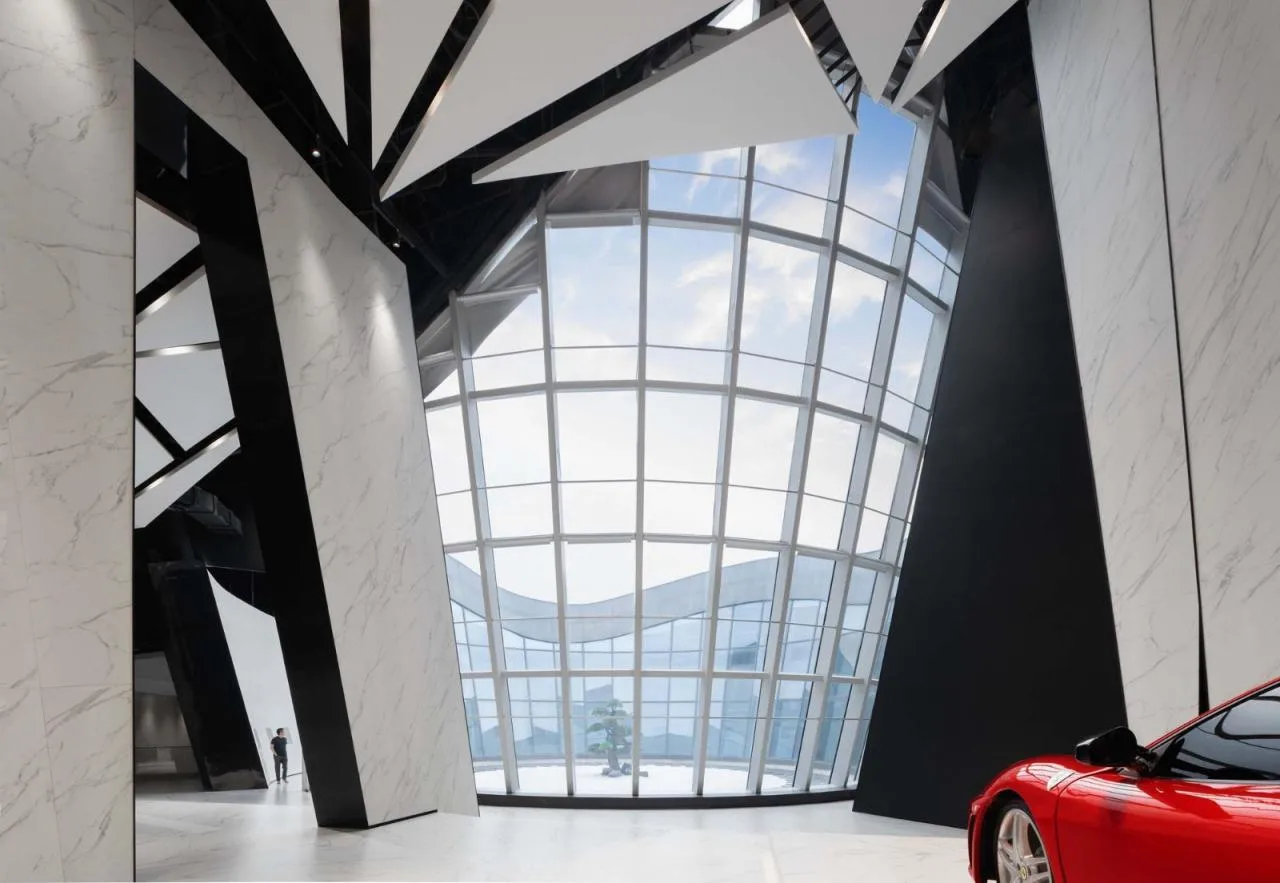
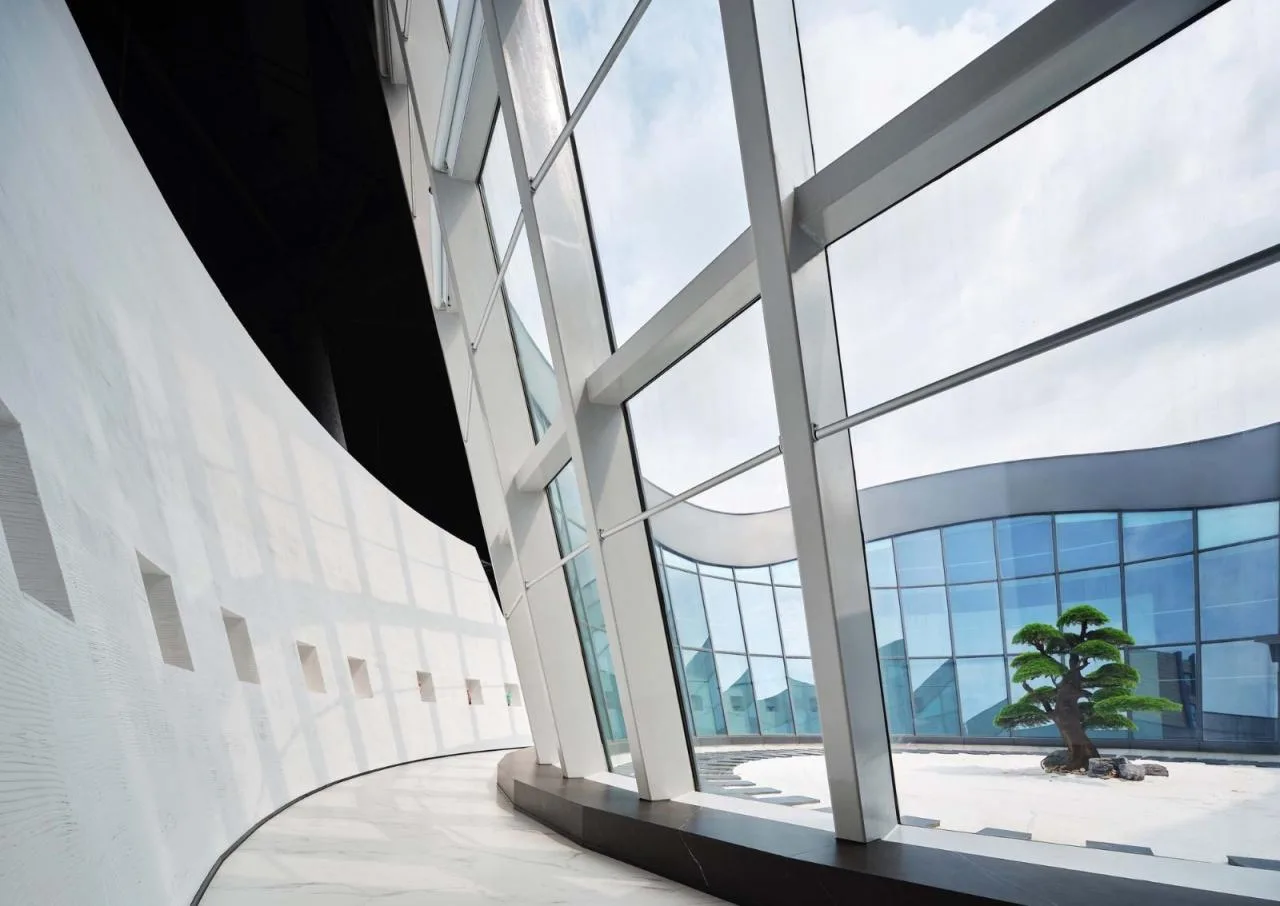
“The courtyard, surrounded by natural landscapes and thoughtful insights, symbolizes the harmony between humanity and nature, uniting the building’s interior and exterior into a cohesive whole.”
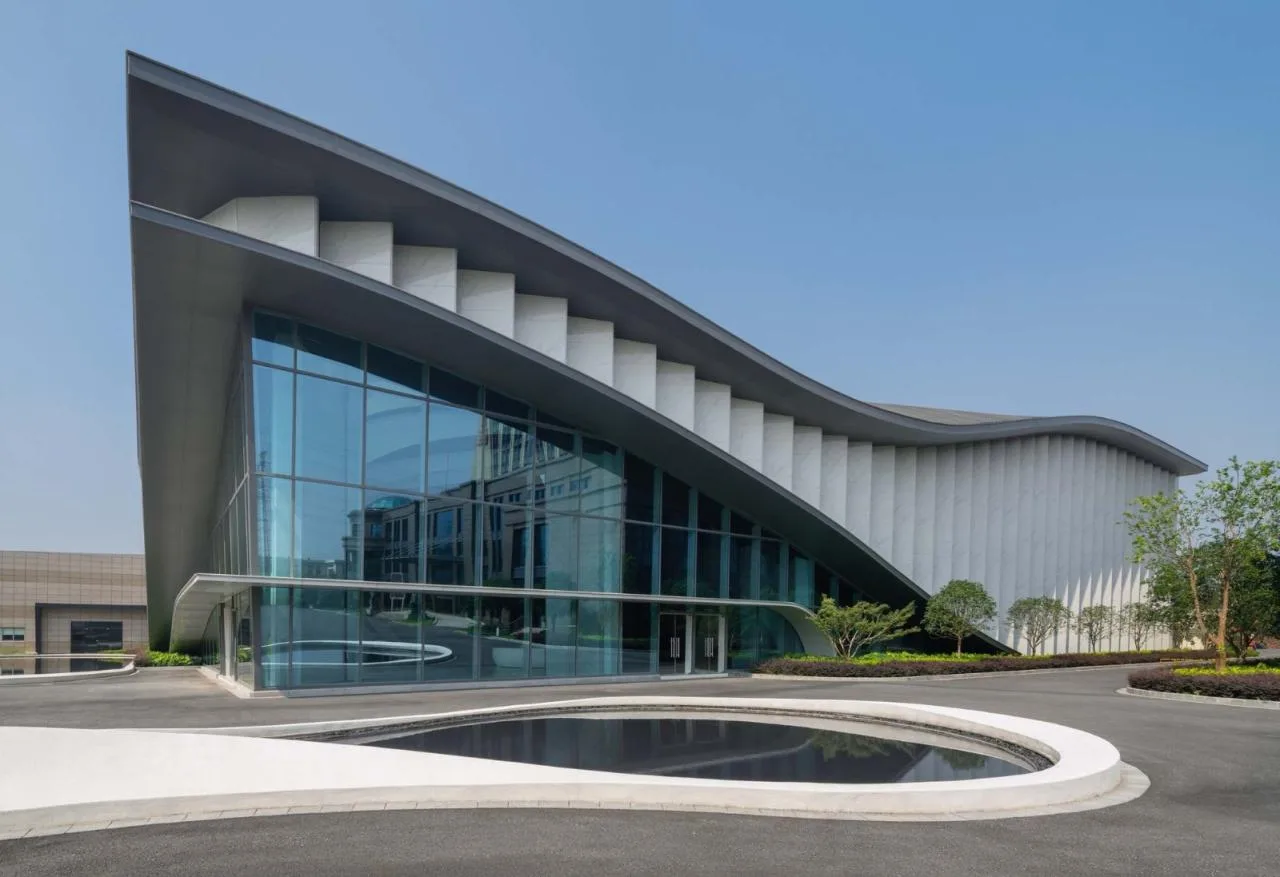
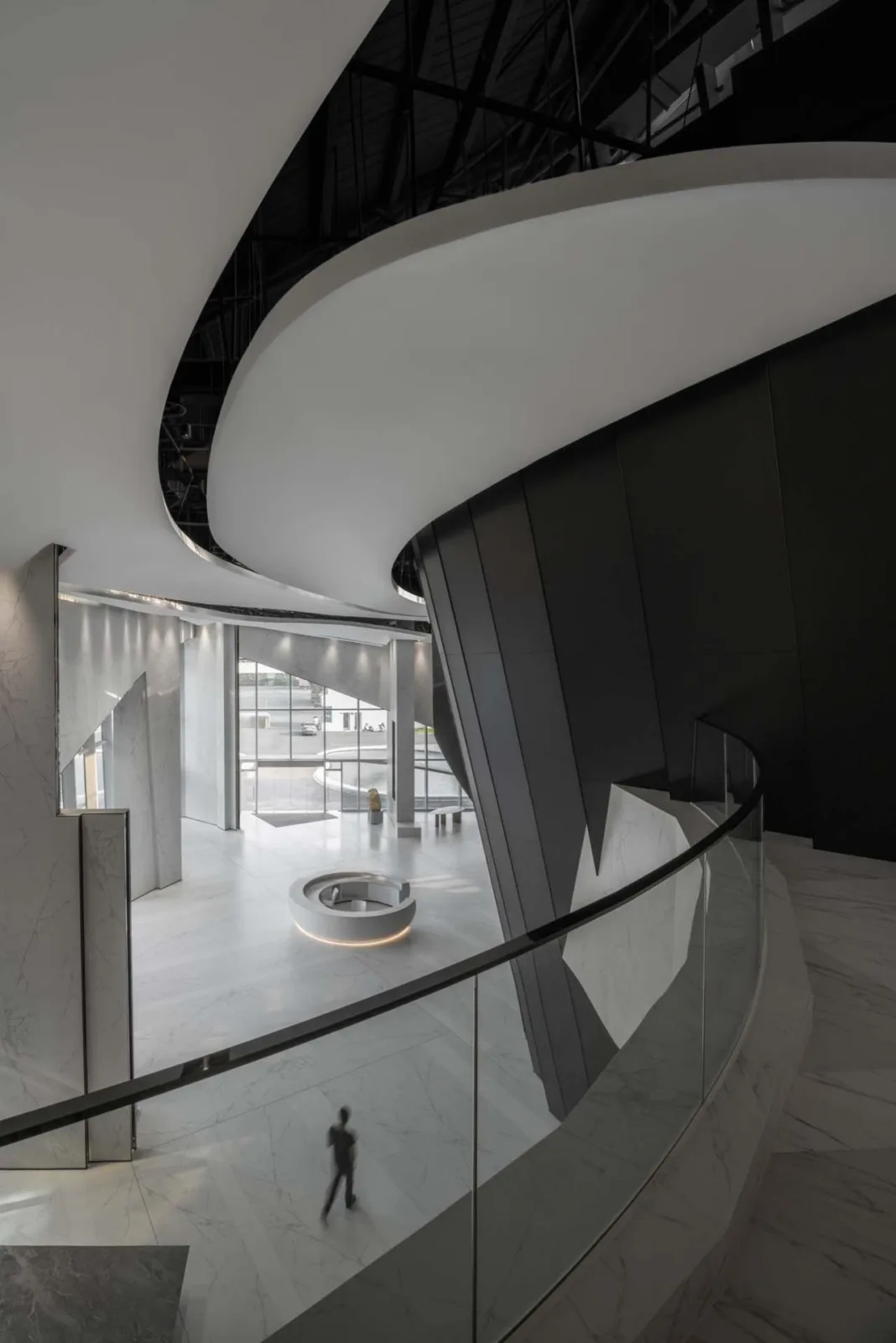
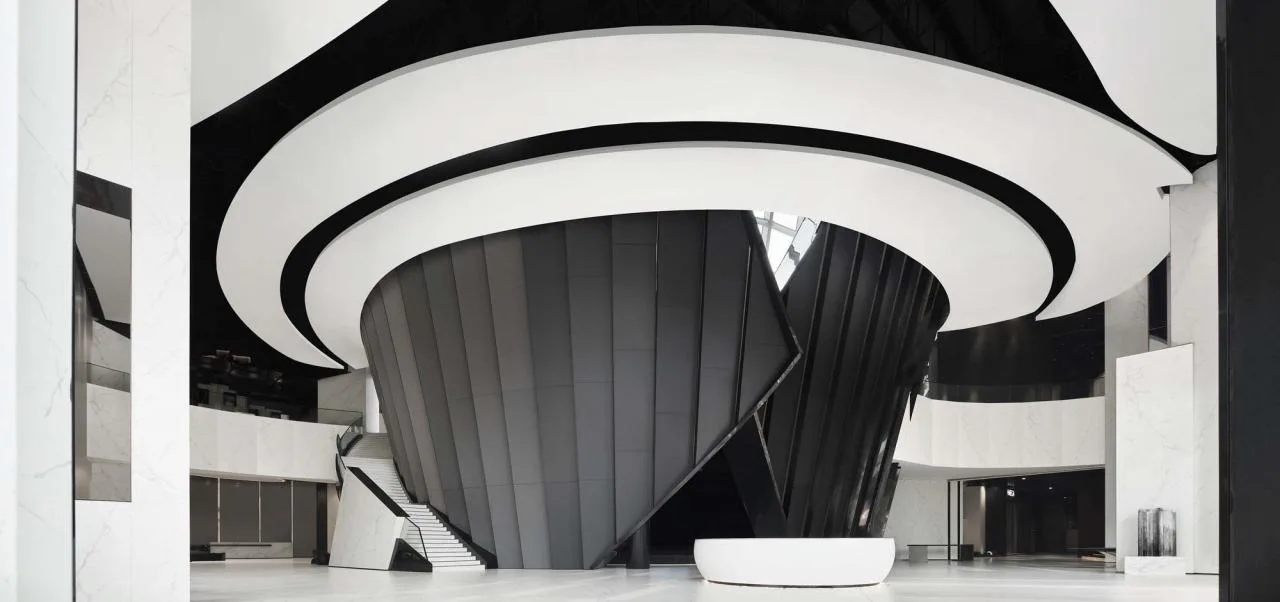
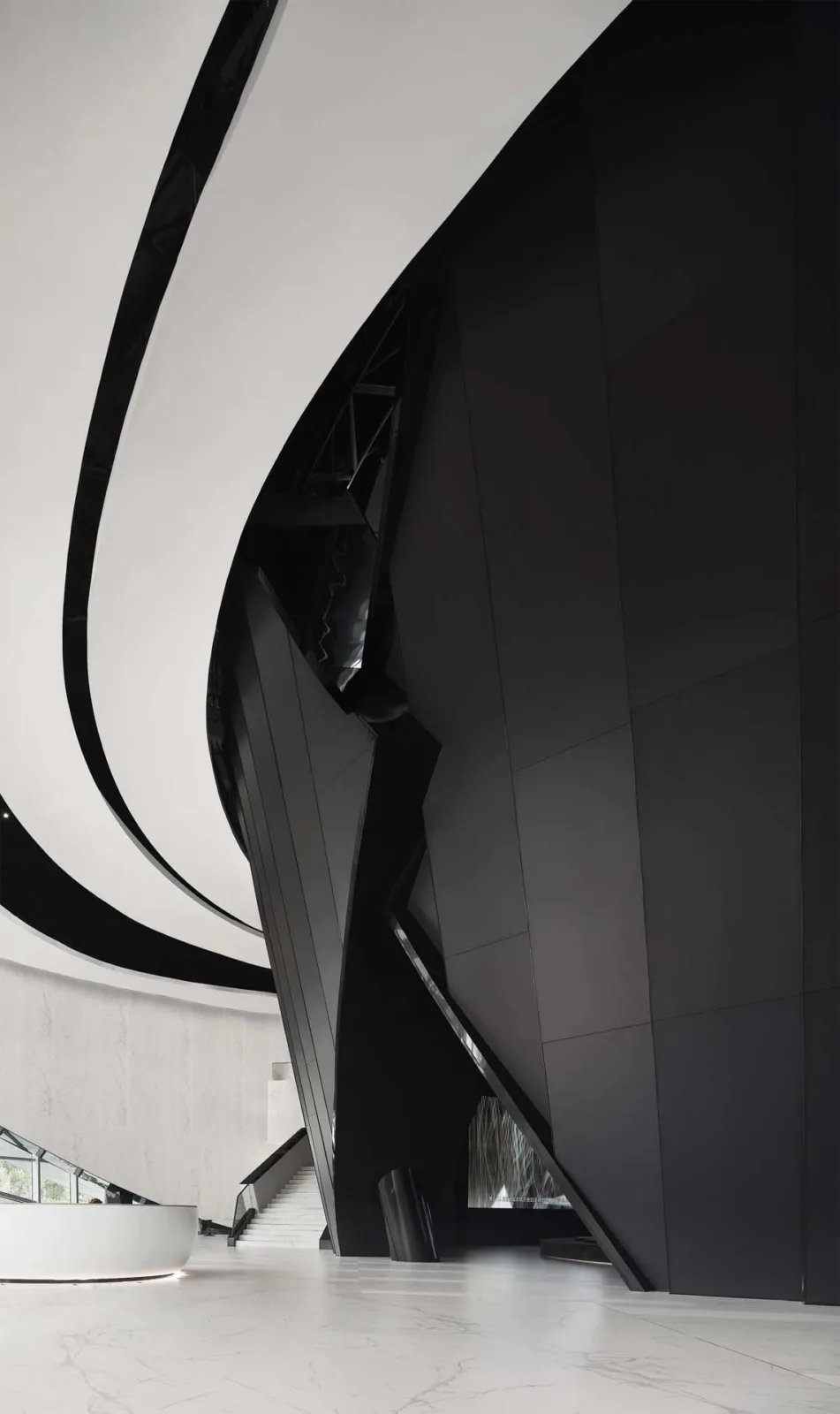
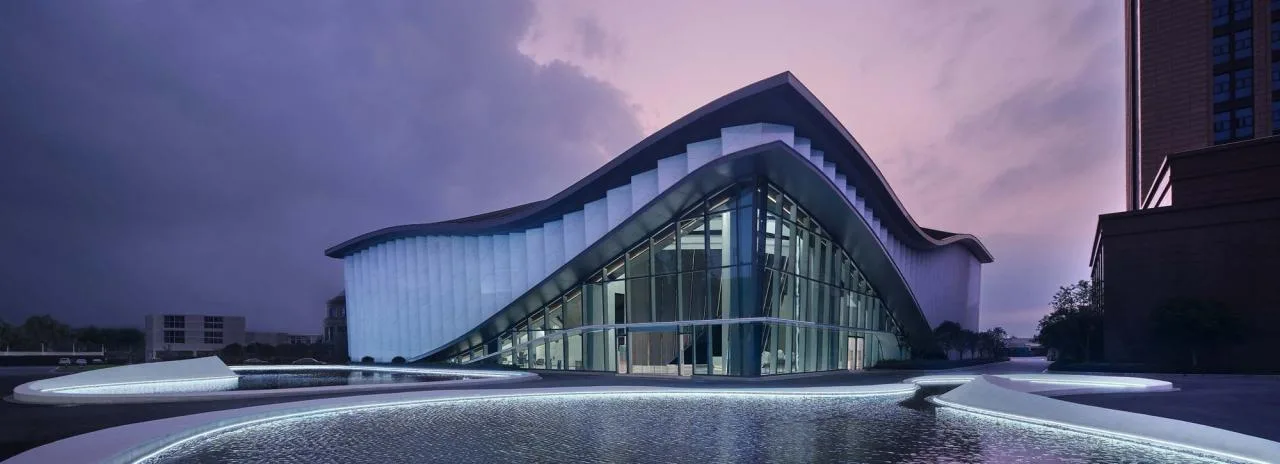
The cultural center rises like a mountain range emerging from the earth’s surface, guiding visitors along winding paths past reflective water pools to a raised entrance. The walls create a serene and ordered ambiance through the play of light and shadow, while sunlight filters through the gap between two large curved walls, casting a layered, ceremonial glow.
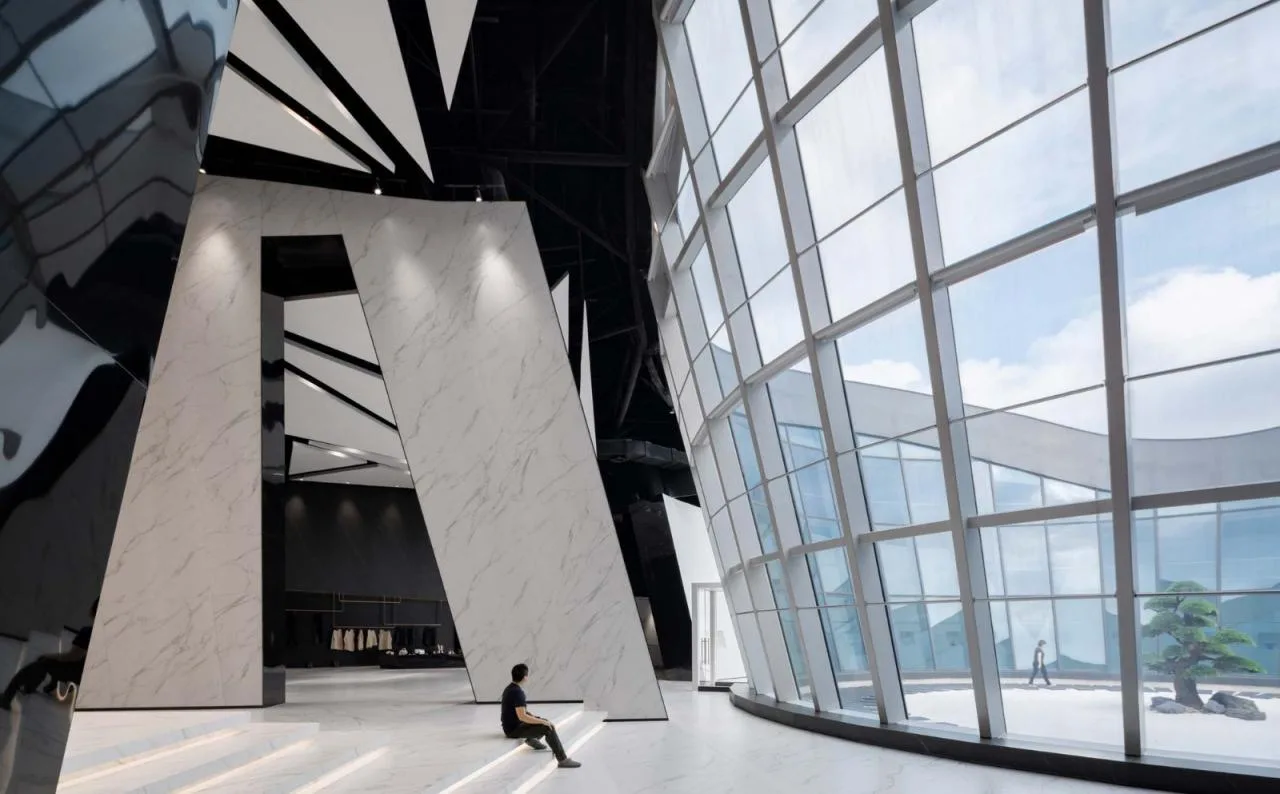
From the entrance, visitors can access various exhibition halls or ascend the curved staircase to the upper level. The second floor centers around a tranquil atrium, allowing a natural transition between functional spaces. Its carefully crafted location offers pleasant surprises that leave lasting impressions.
The dynamic flow extends beyond the interior. The surrounding views, seamless integration of indoor and outdoor spaces, and the depth of natural atmosphere evoke the narrative of “Peach Blossom Spring”: “At first, the path is narrow, only wide enough for one person. After walking several steps, it suddenly opens up to a flat, spacious land with houses nestled among trees and bamboo, surrounded by beautiful fields and ponds.”
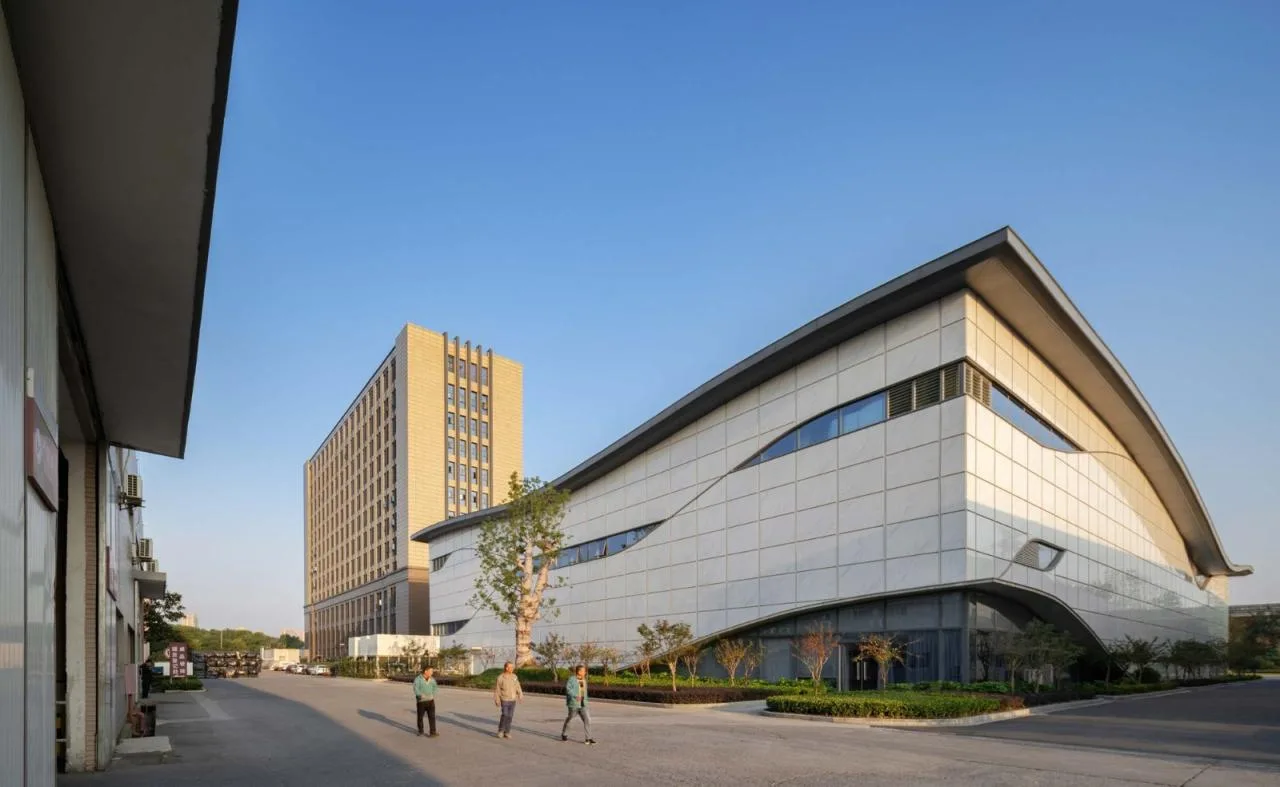
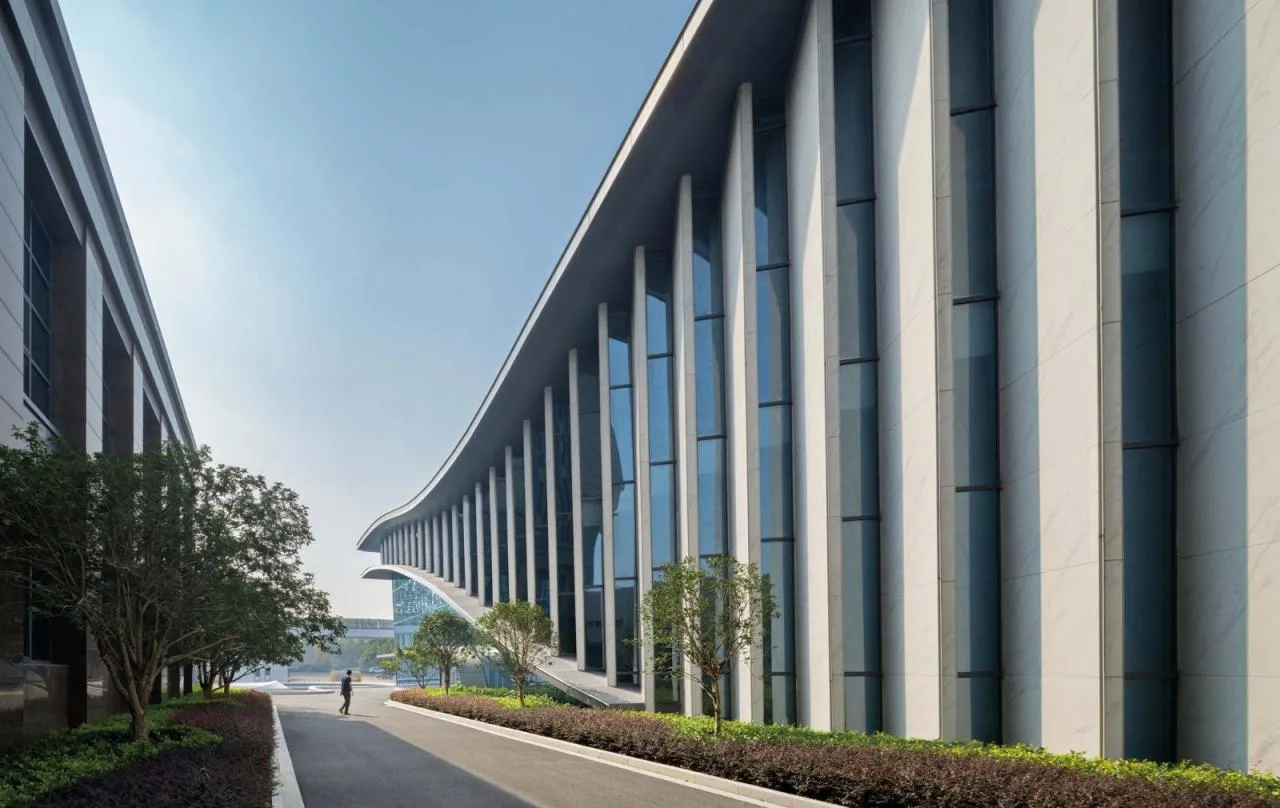
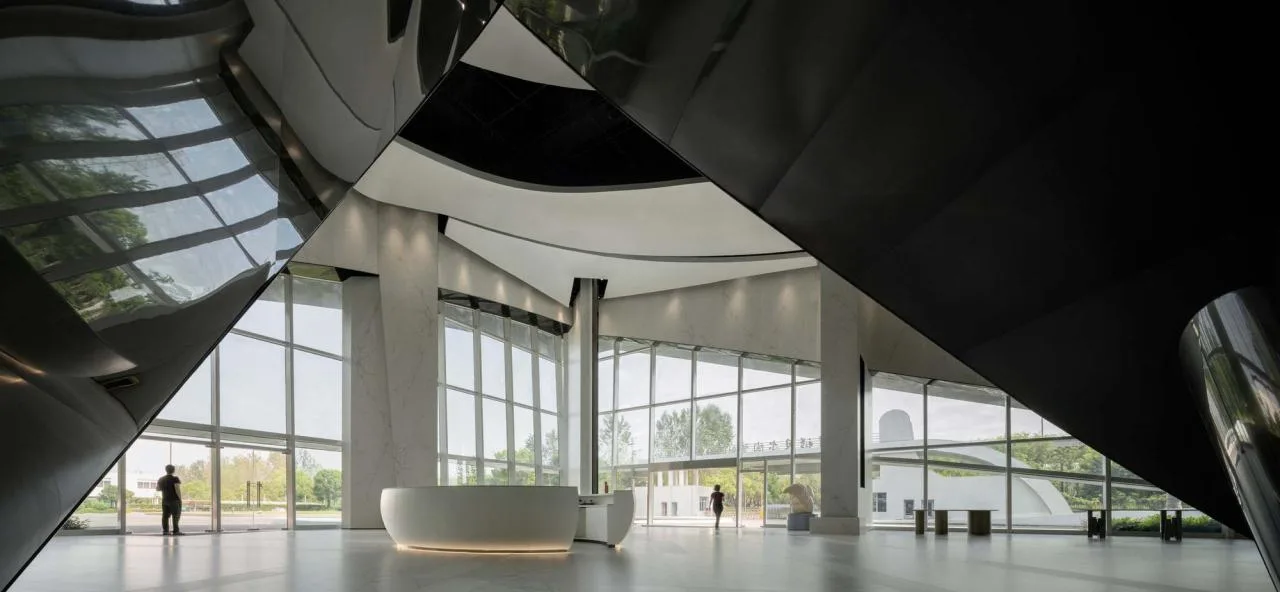
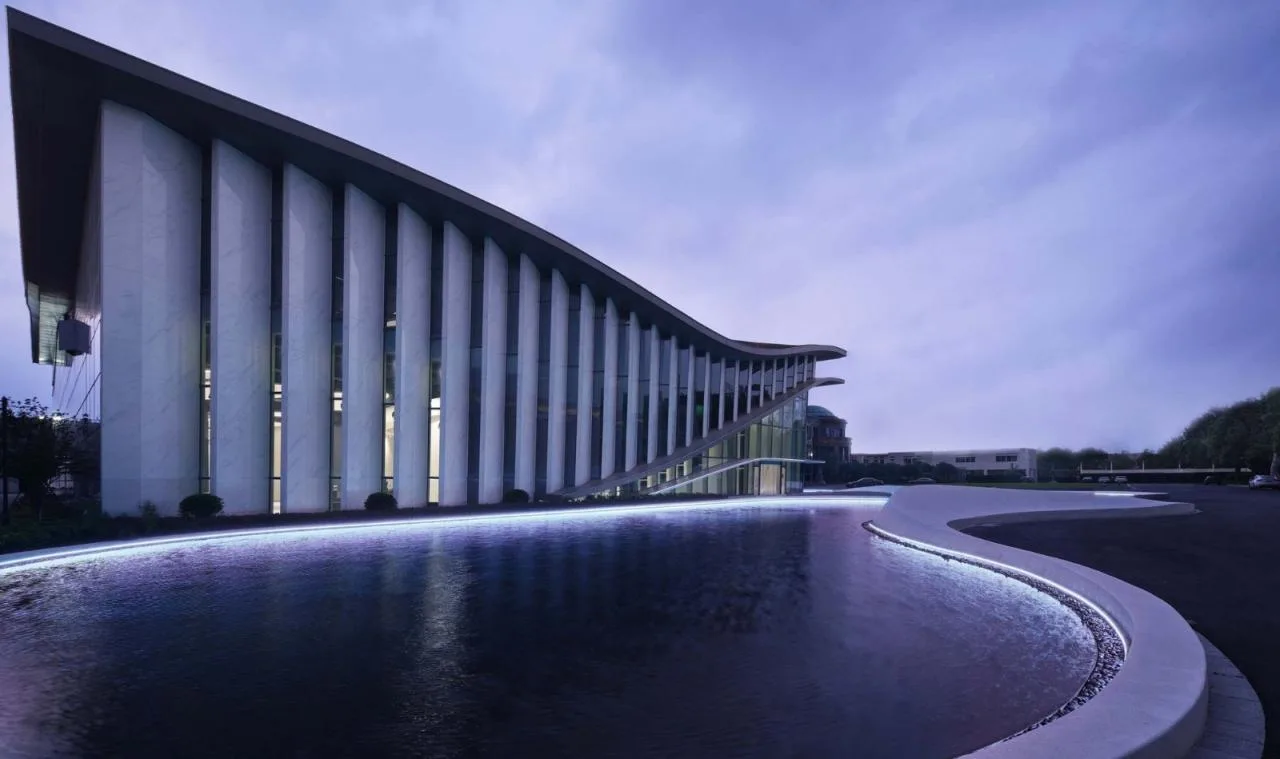
The architects prioritized sustainability by minimizing the use of non-renewable resources. Nobel’s recyclable ceramic rock panels are featured both inside and outside the building, with the exterior panels designed to mimic white water ripples. Compared to traditional stone, these panels are easier to clean and more resistant to weathering.
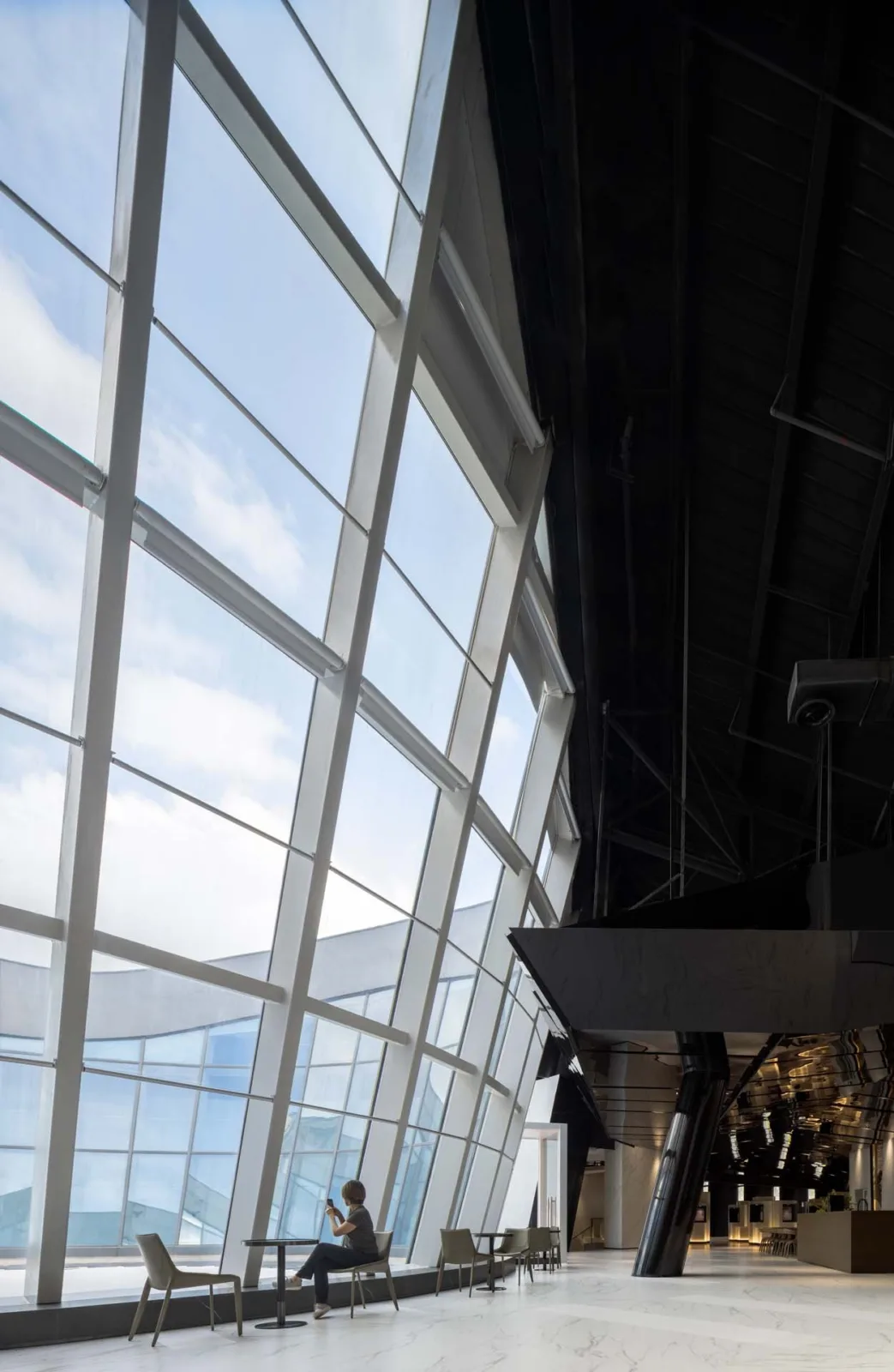
Technologically, the design overcomes the 1.5 square meter limit for dry-hanging single external wall blocks, setting new material standards for the construction industry. Large expanses of rock panels and transparent curtain walls create vertical windows whose cutting angles are precisely calculated based on solar radiation. This ensures excellent natural lighting throughout the building while reducing solar heat gain and energy consumption.
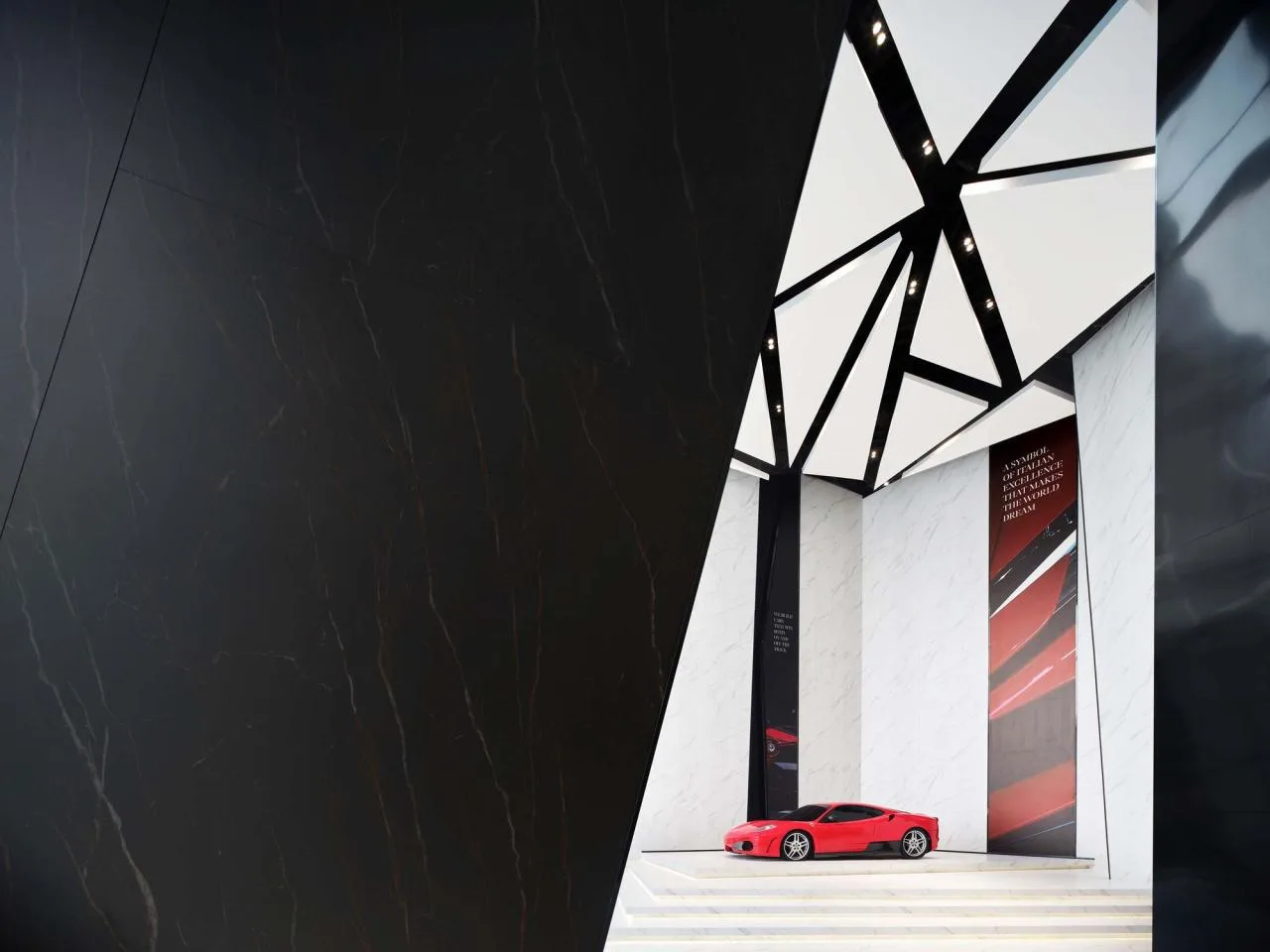
Inside, over 12,500 square meters of ceramic rock panels are used extensively, from small surfaces like tabletops, countertops, floors, and cabinet doors to large-scale areas such as lobbies, bars, conference rooms, and VIP lounges, showcasing their versatility across diverse functions.
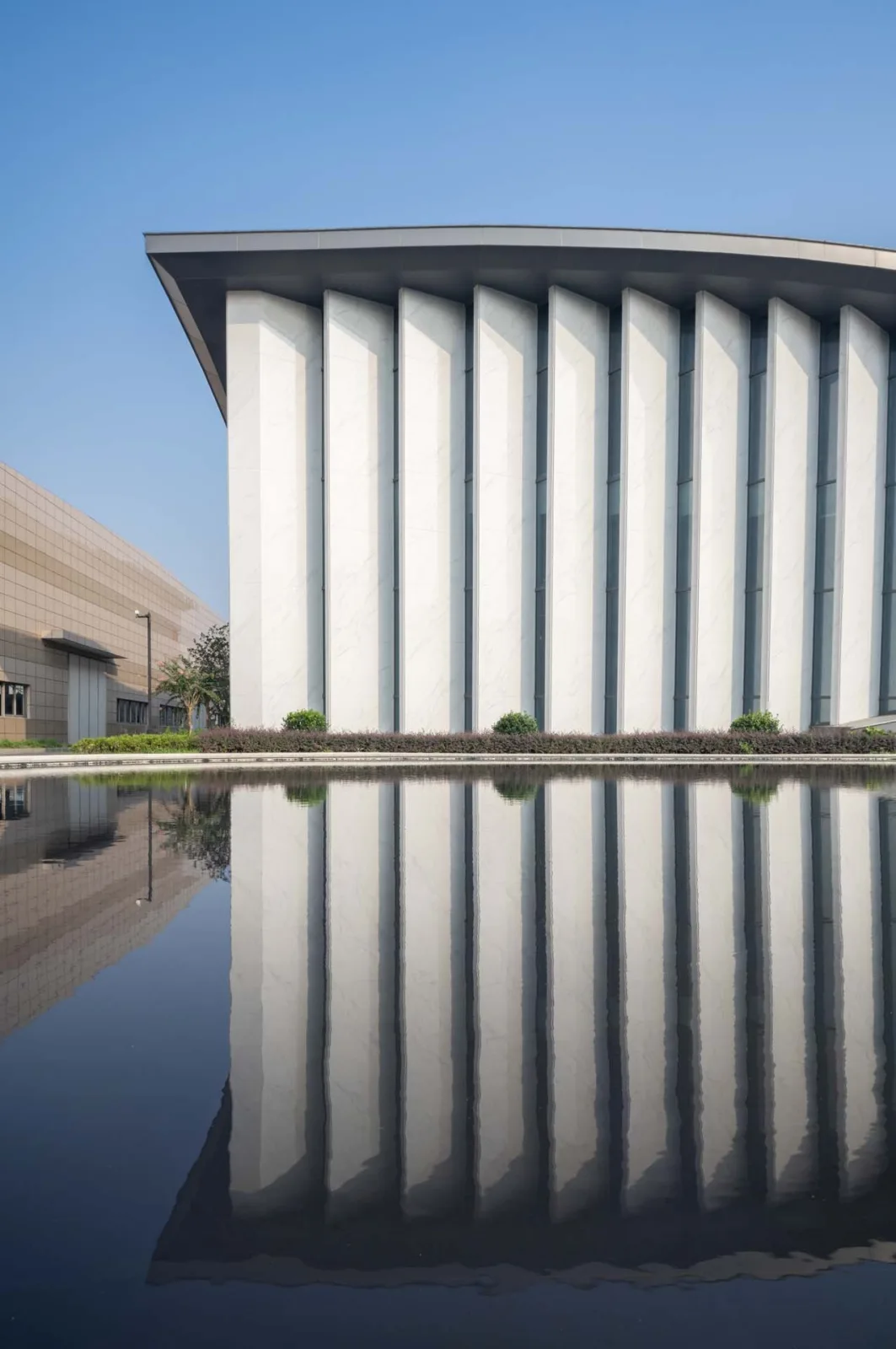
The invention of ceramics marks a significant milestone in human progress. Objects serve as carriers of life and mediums of art. From the artisan spirit to technological production, both objects and architecture reflect human needs, regional identity, and functional attributes.
However, whether dealing with small objects or grand buildings, a purely functional approach can lead to spiritual disconnect over time. By centering on “nature” as the connecting core and appreciating the cultural meaning embedded in relics, the Nobel Ceramic Rock Plate Technology Cultural Center transcends its role as a museum to become a future “monumental” architectural landmark.
Project Drawings
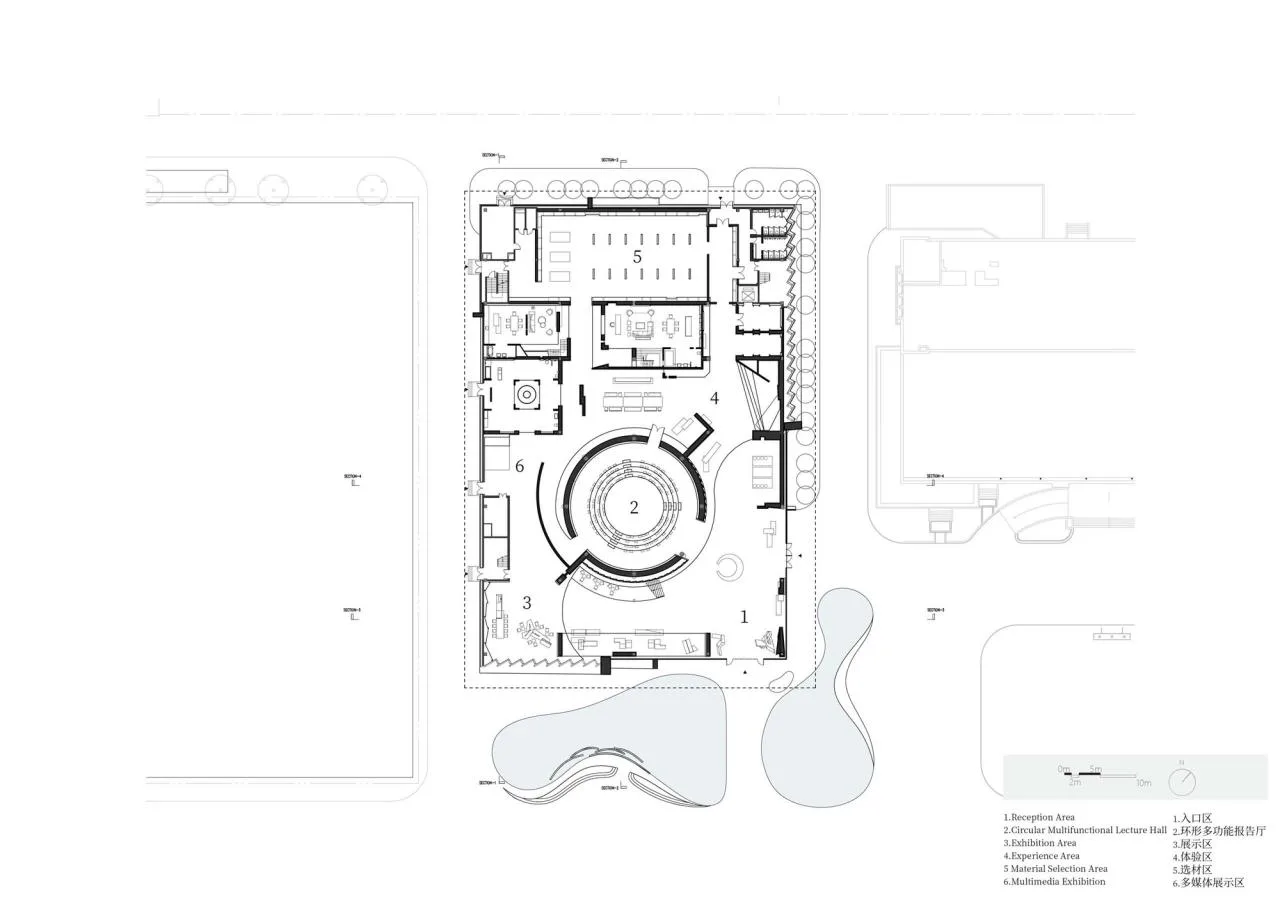
△ General Layout Plan
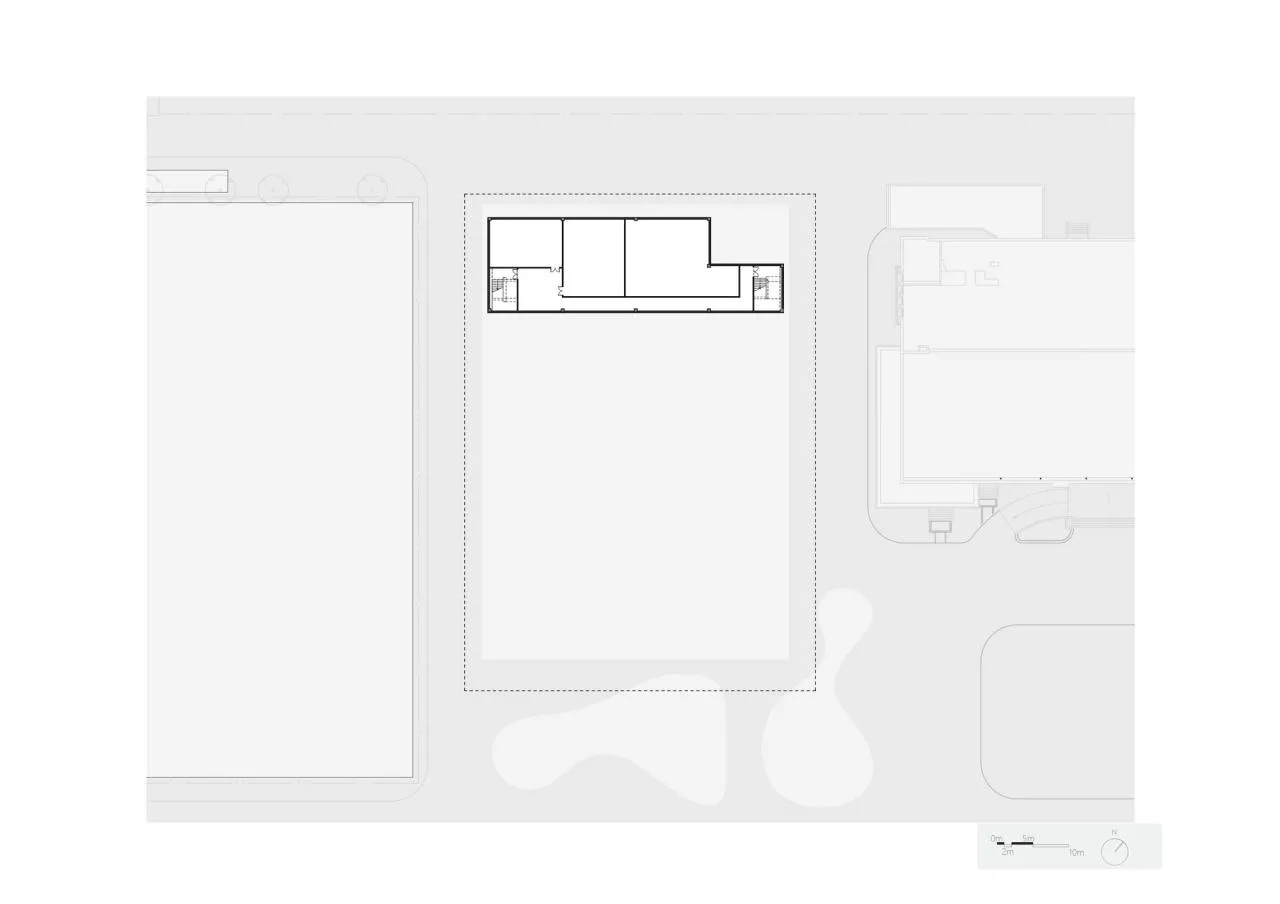
△ Basement Floor Plan
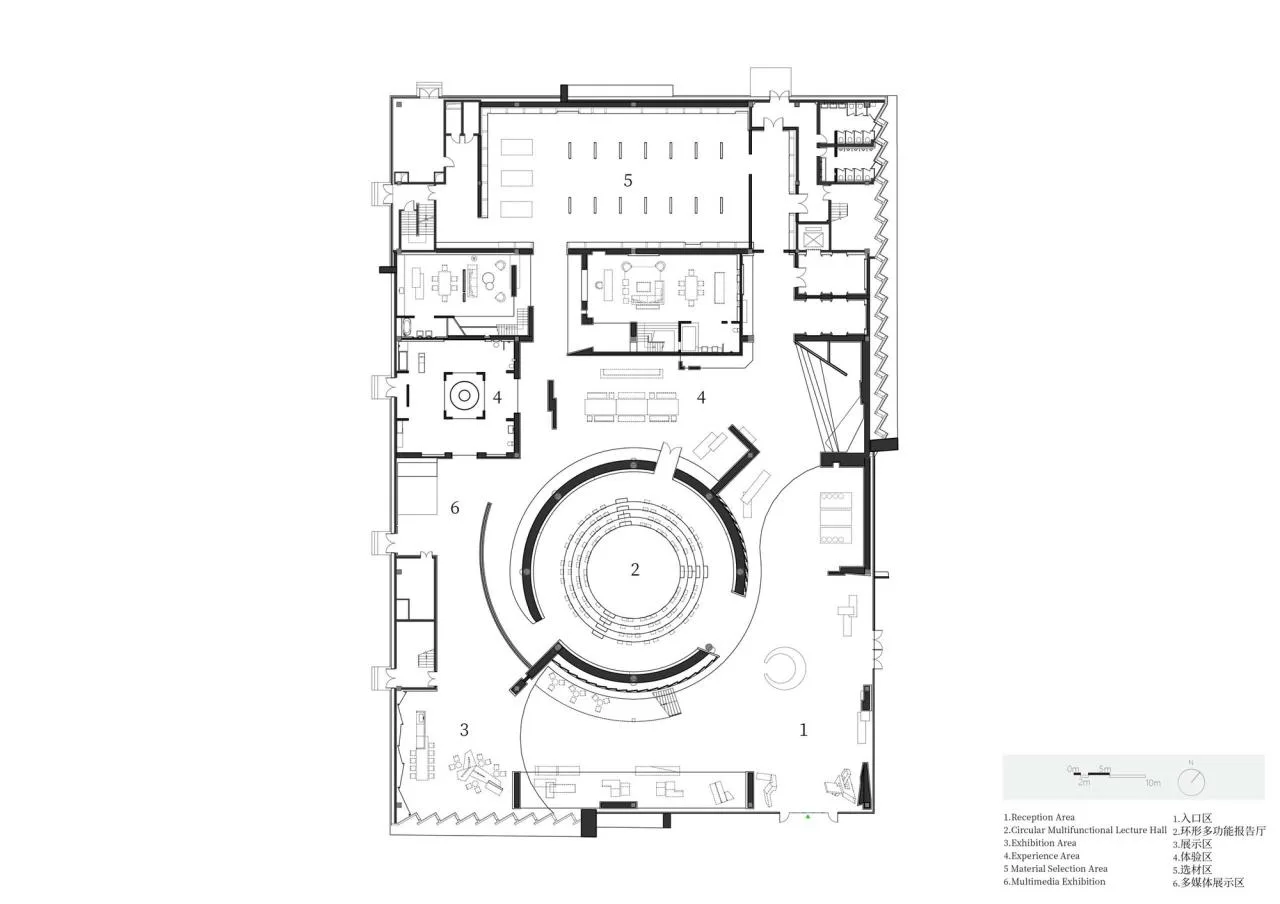
△ First Floor Plan
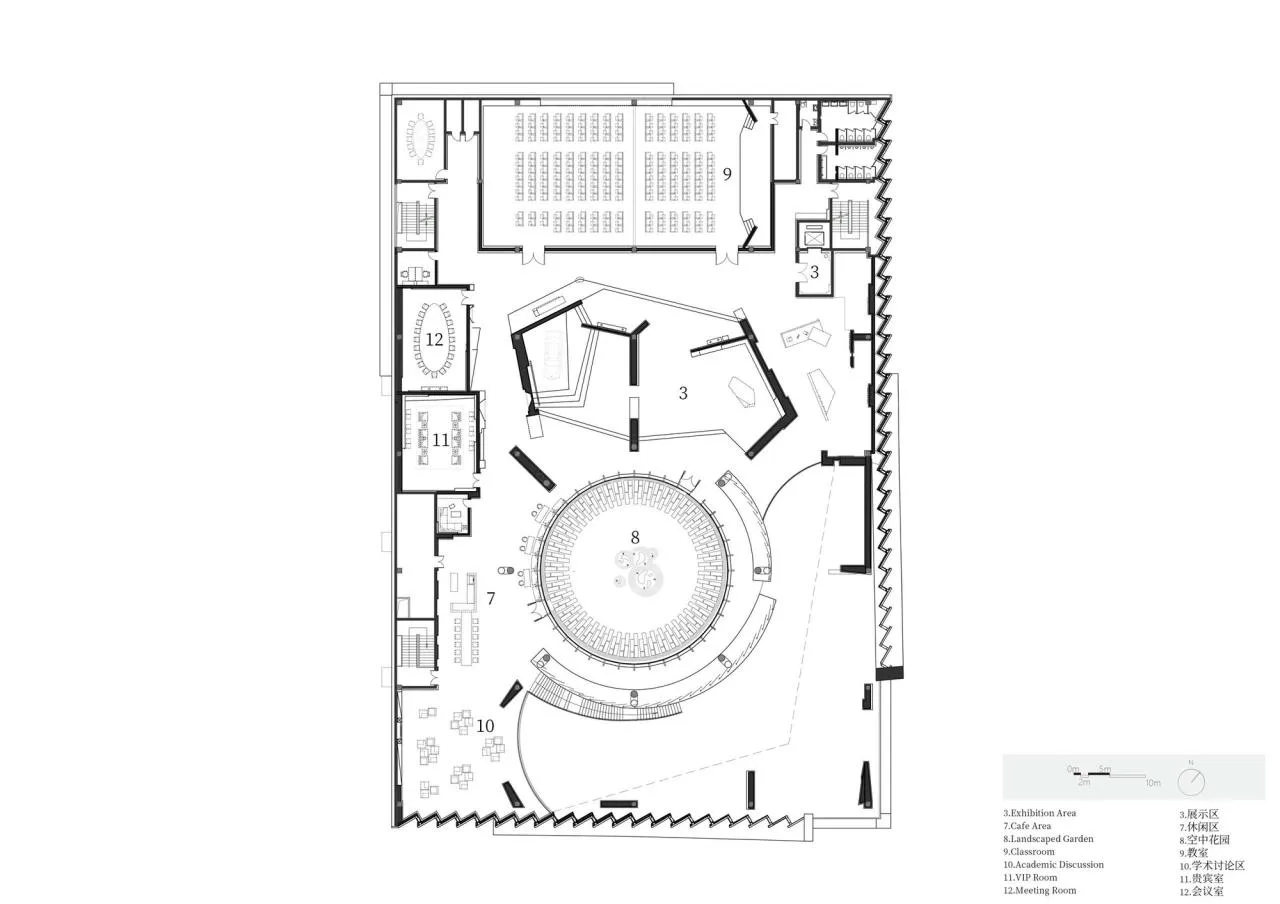
△ Second Floor Plan
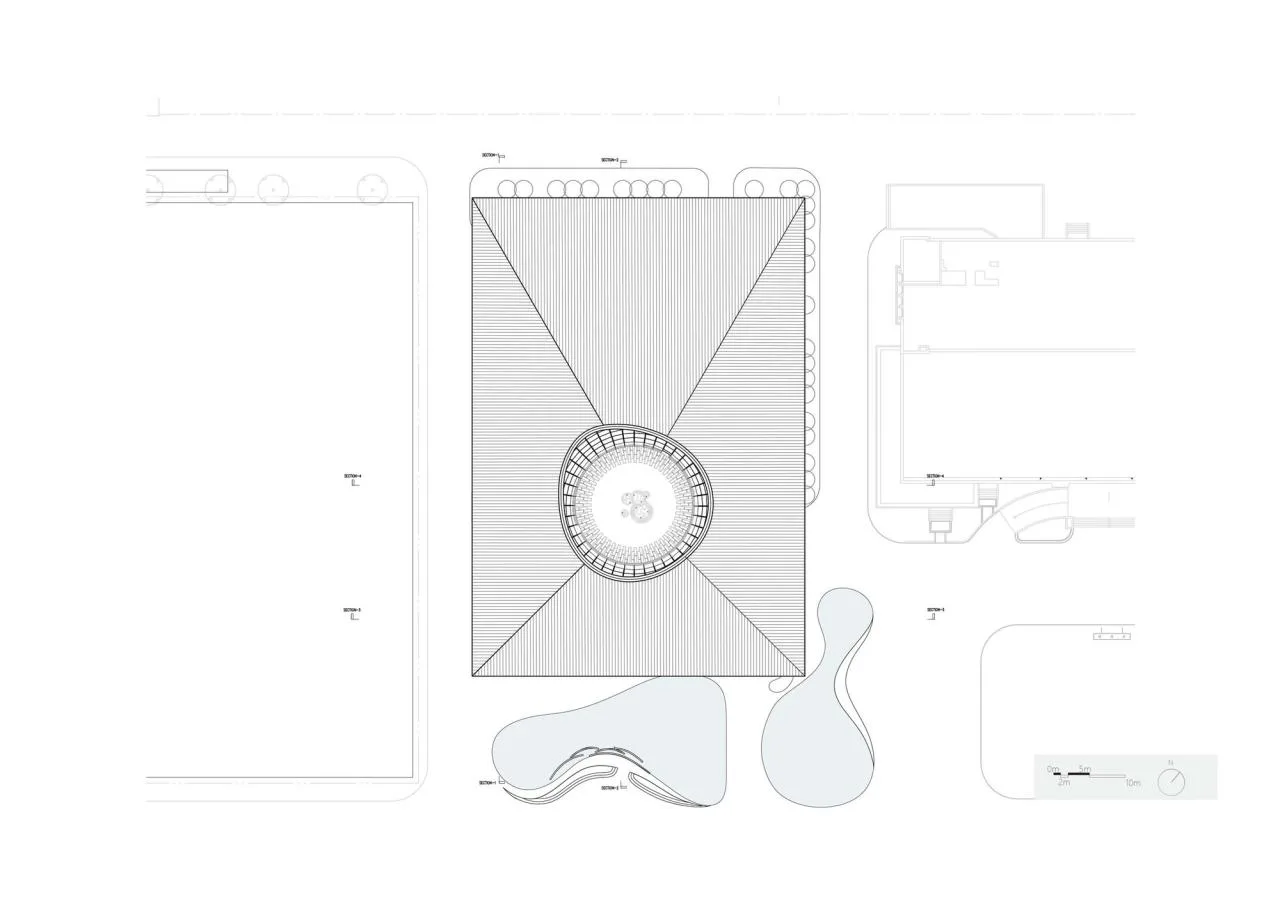
△ Roof Plan
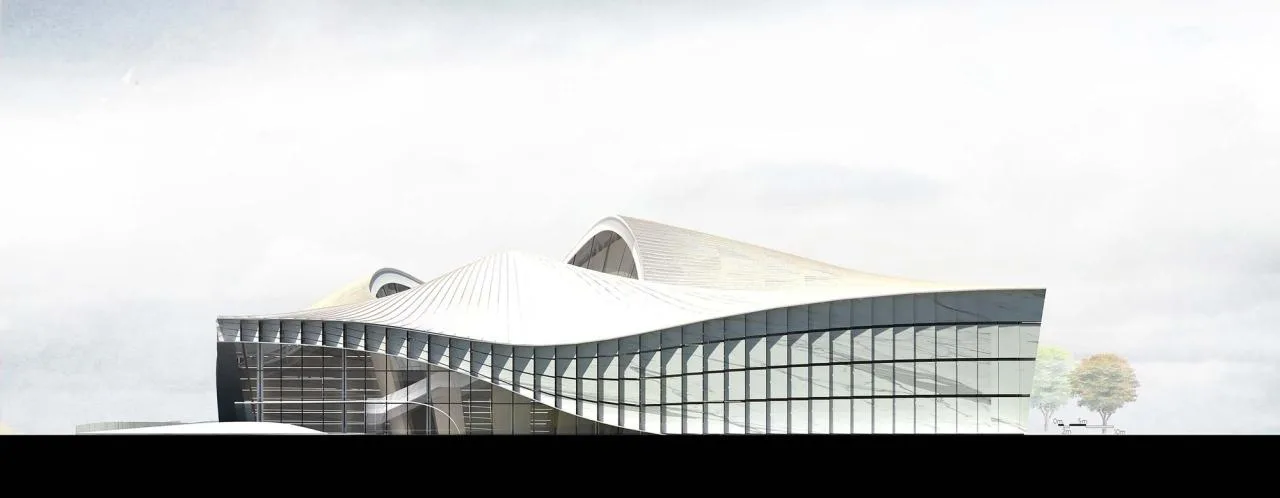
△ Elevation Drawing
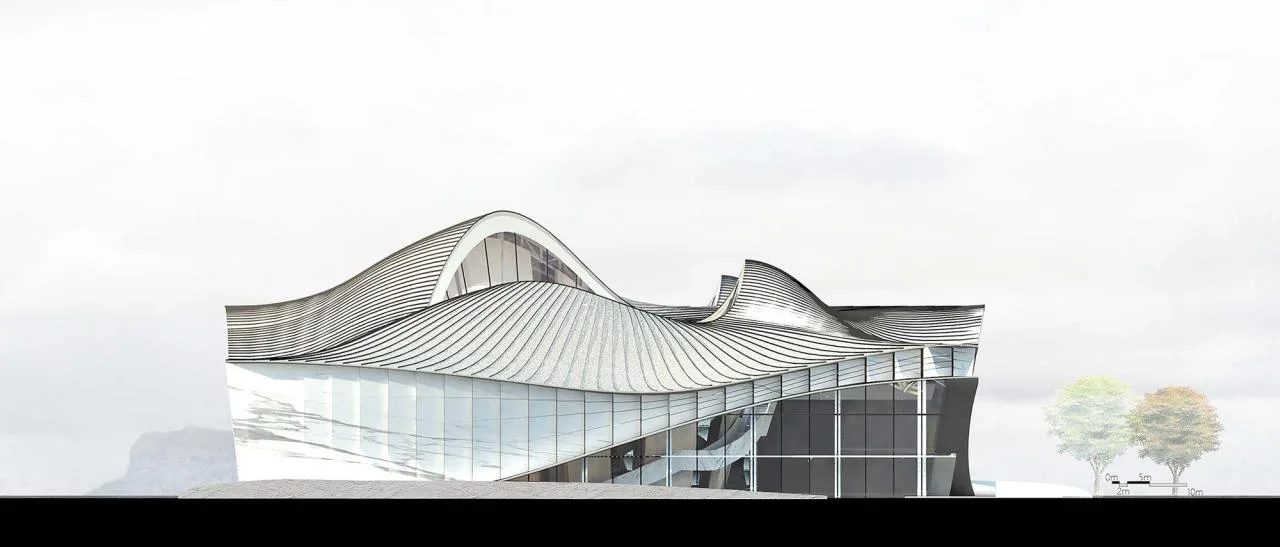
△ Elevation Drawing
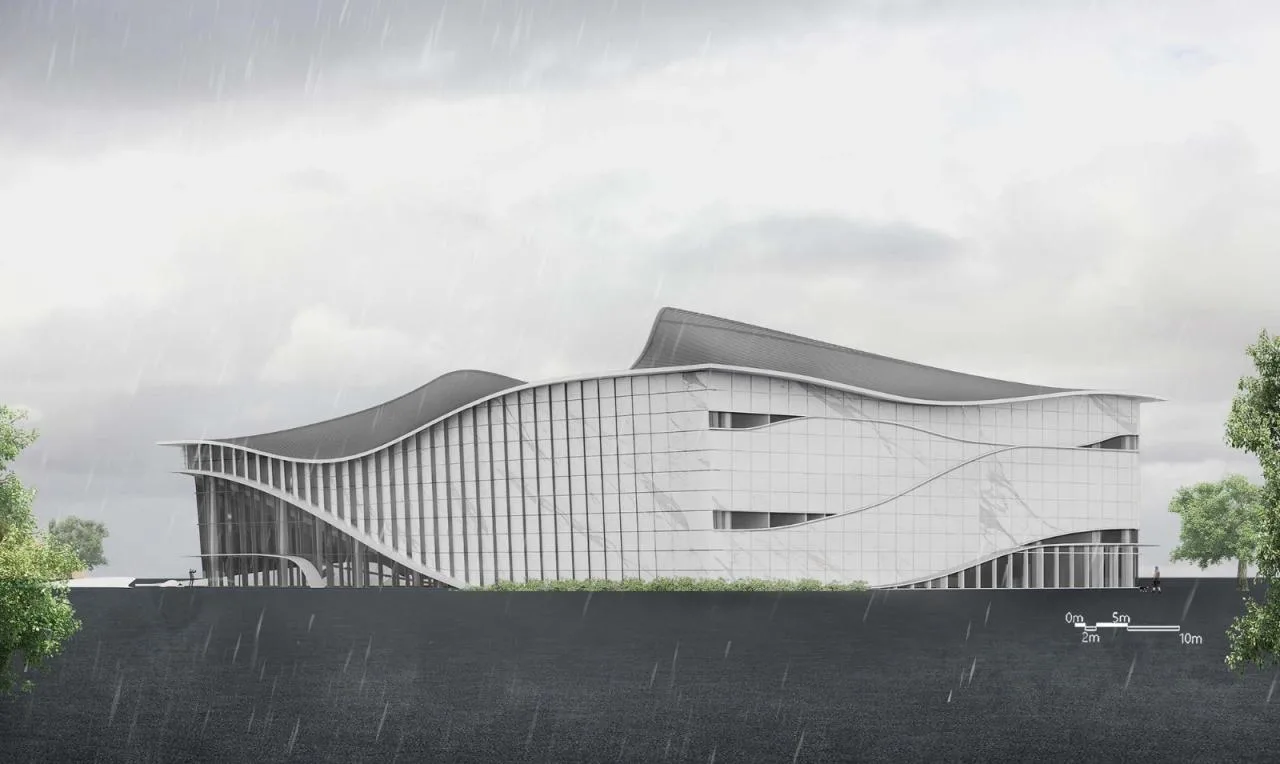
△ Elevation Drawing
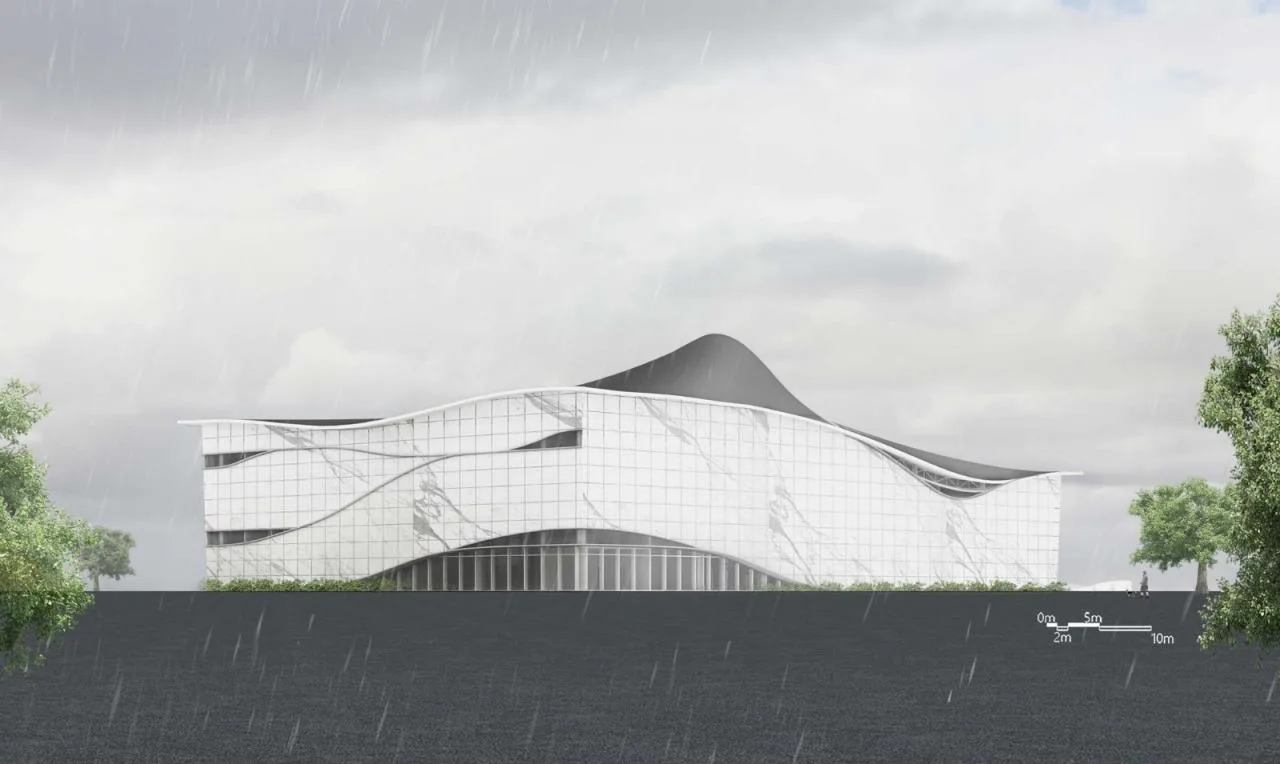
△ Elevation Drawing
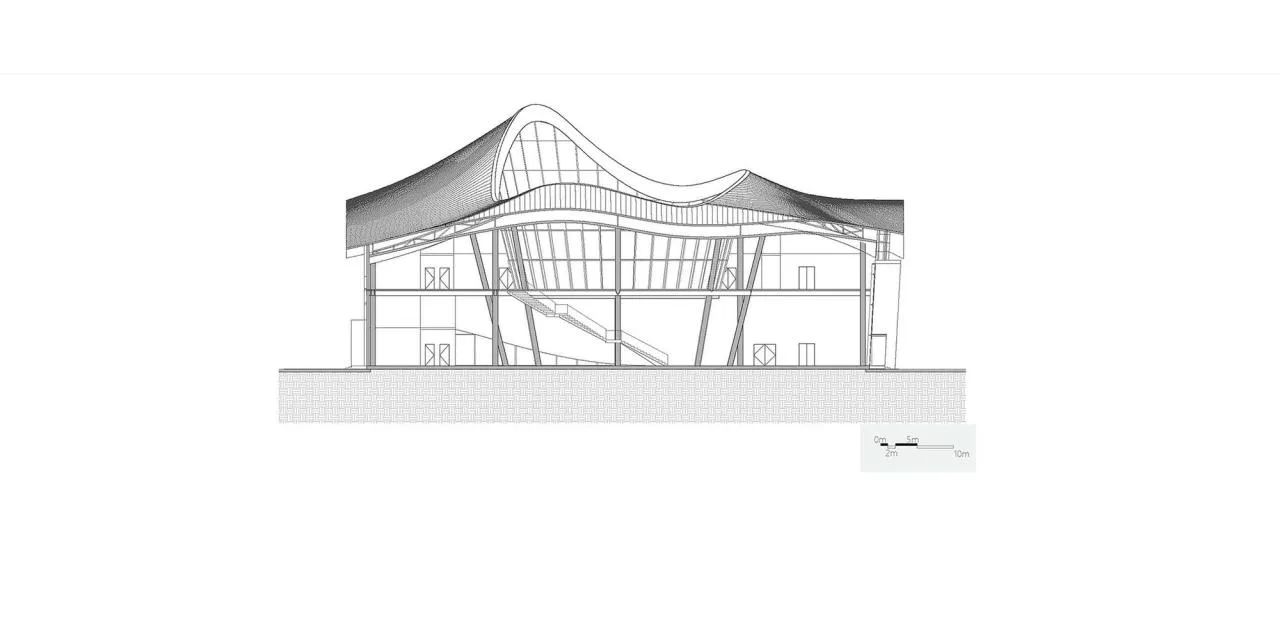
△ Section Diagram
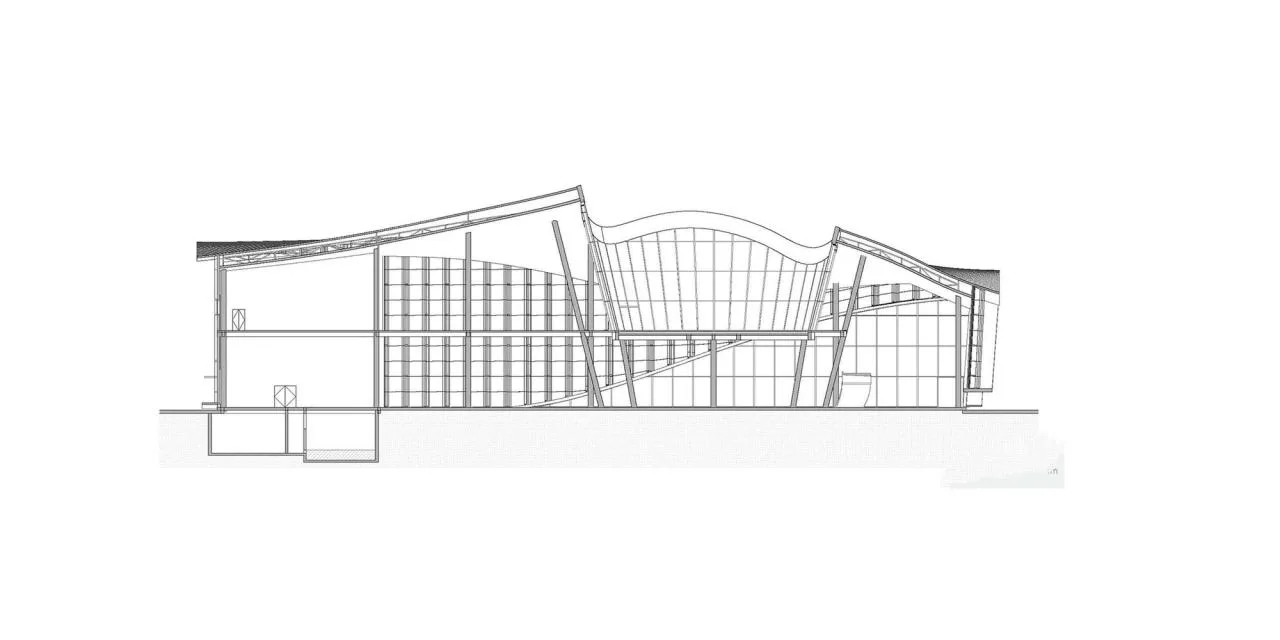
△ Section Diagram
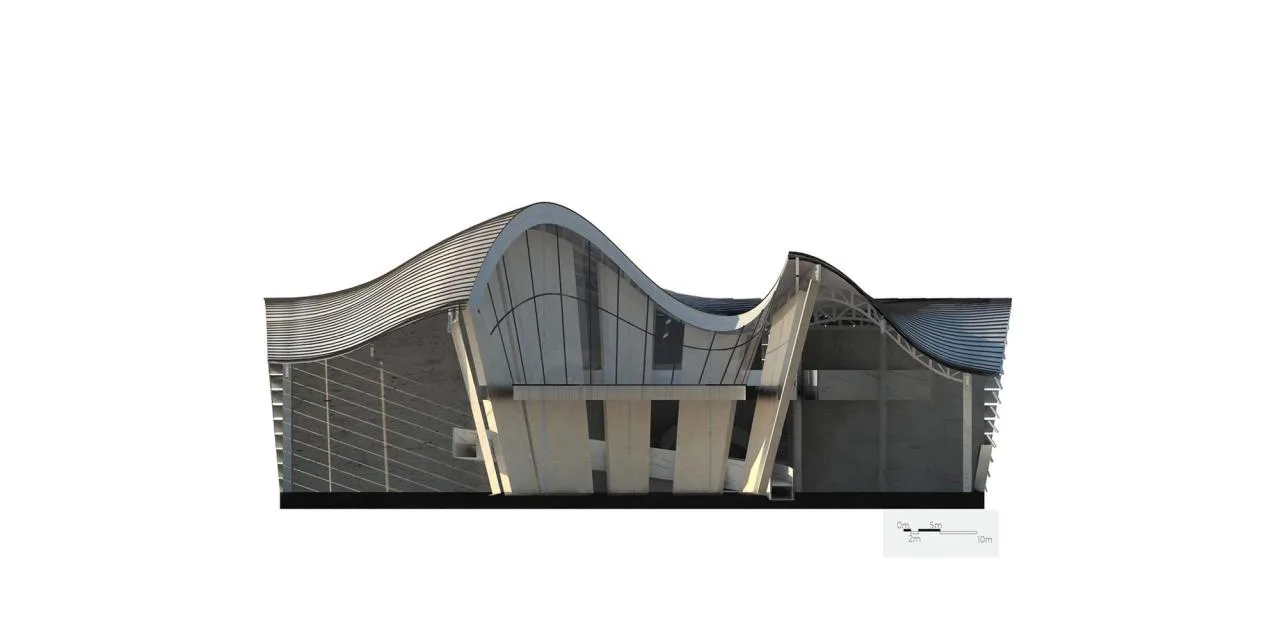
△ Section Diagram
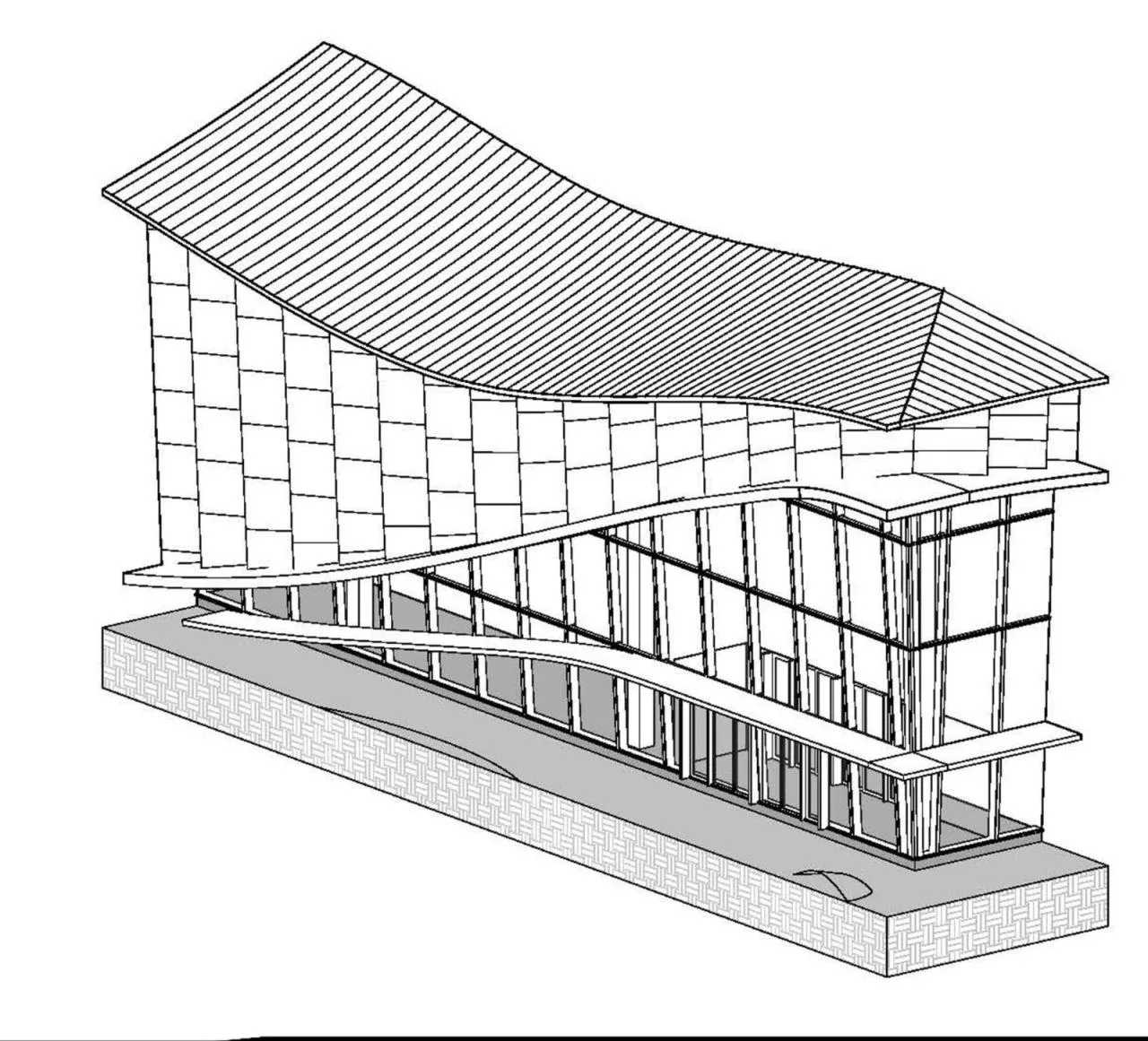
△ Detailed Schematic Diagram
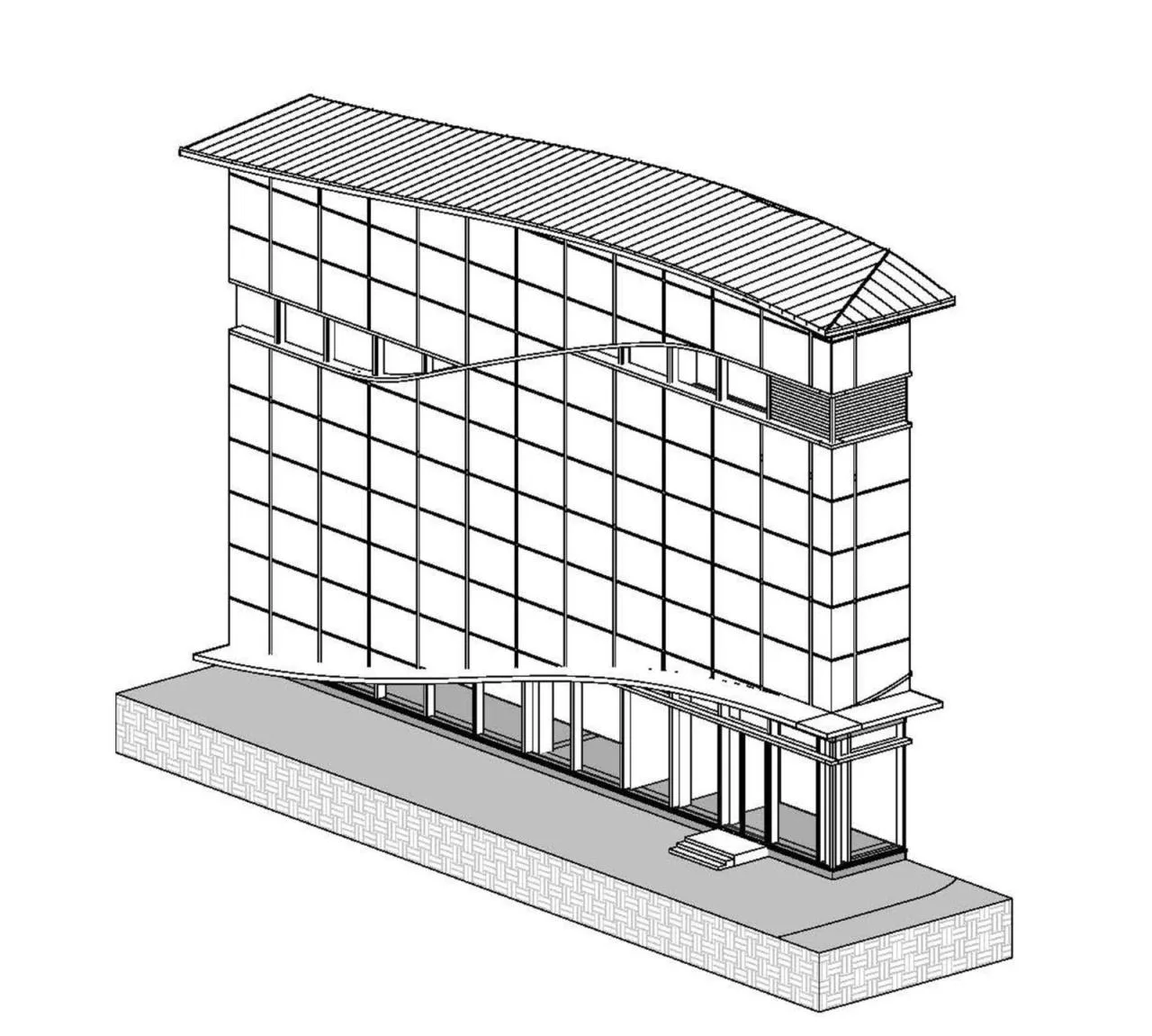
△ Detailed Schematic Diagram
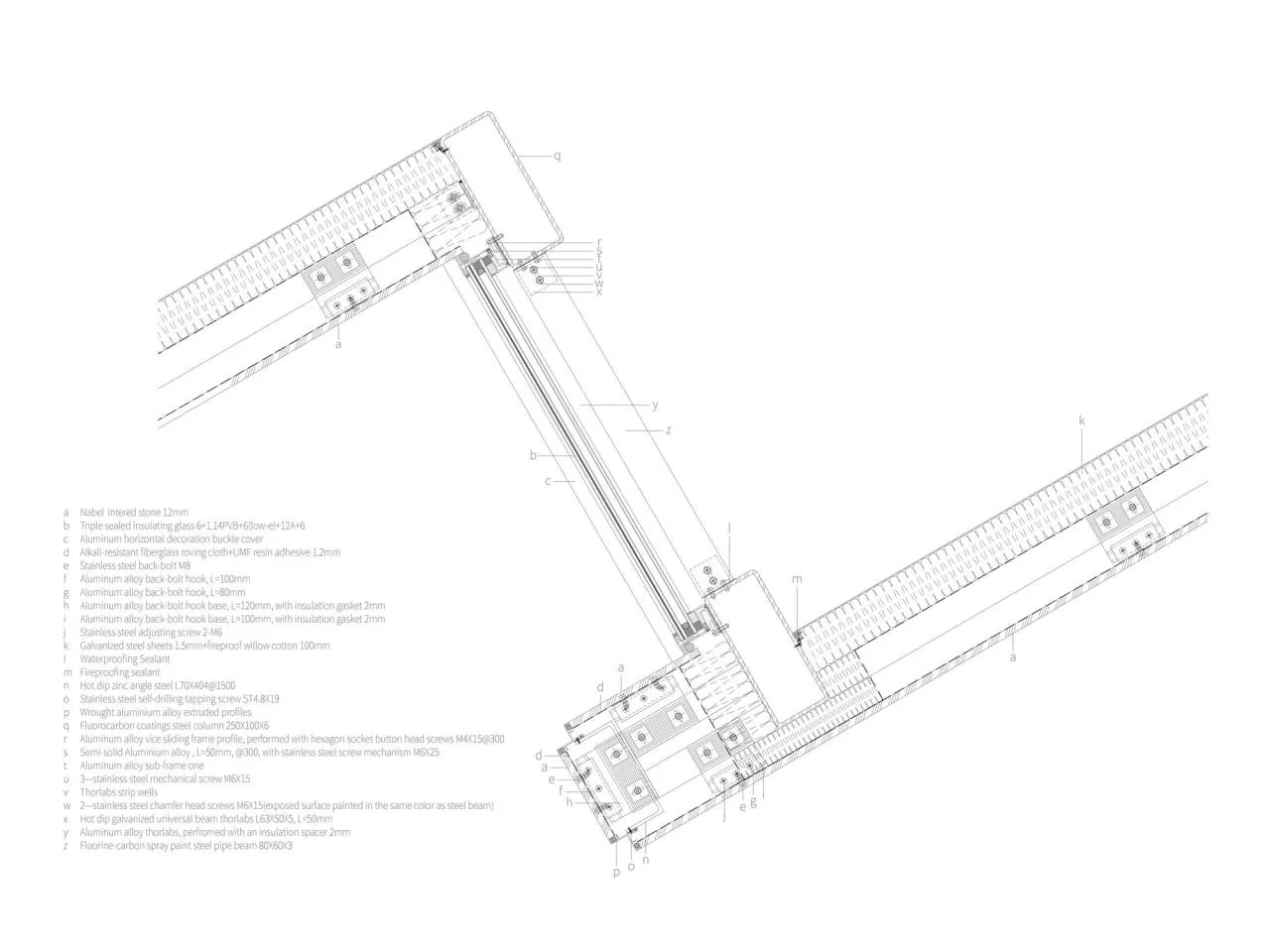
△ Structural Detail Drawing
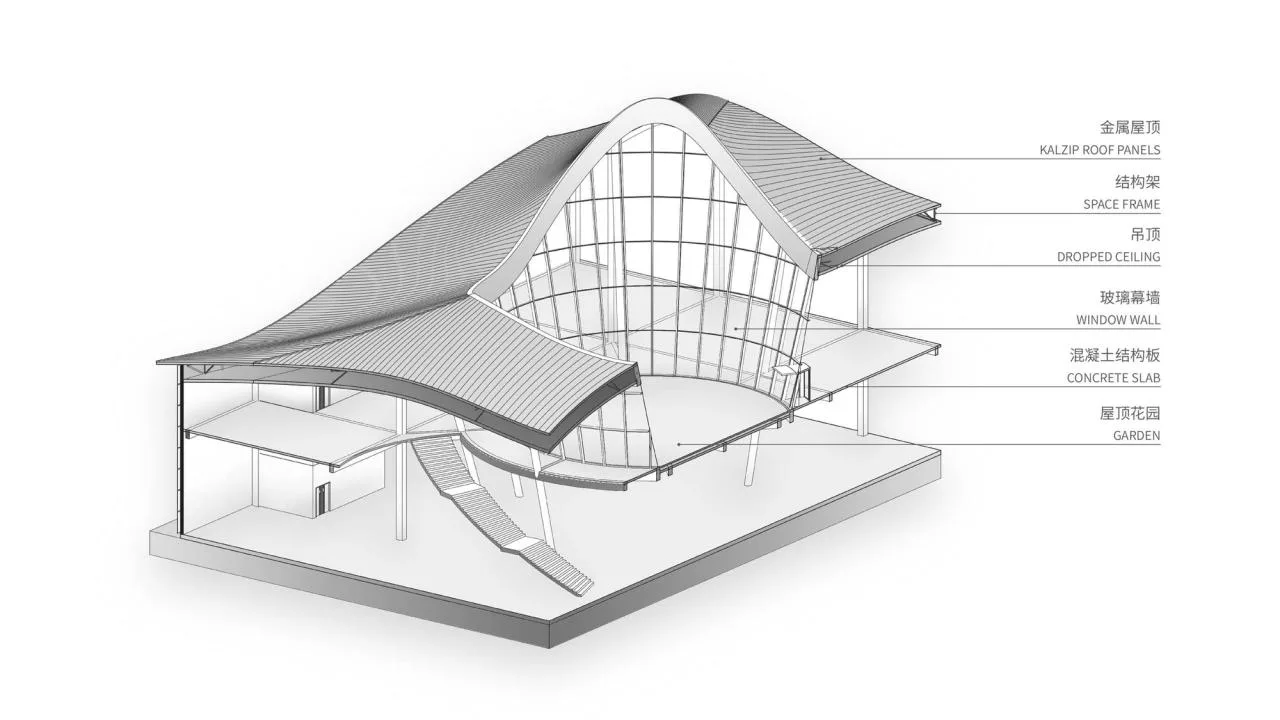
△ Structural Schematic Diagram
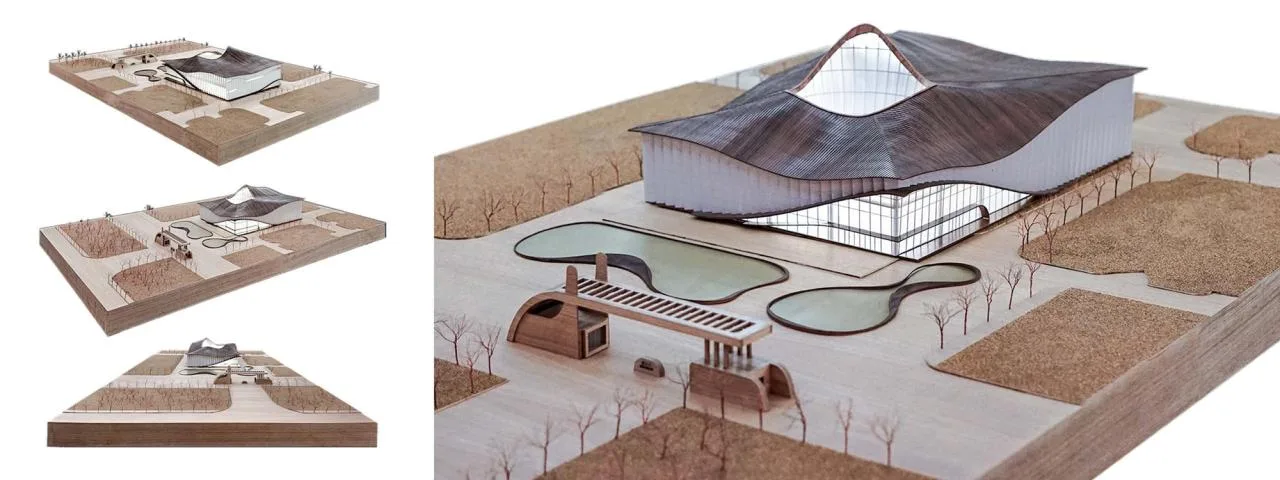
△ Model Diagram
Project Information
Architectural Design: CROX
Area: 7068 m²
Project Year: 2022
Photography: Highlight Images
Lead Designers: Lin Congran, Du Baijun
Design Team: Lin Congran, Du Baijun, Li Bentao, Sun Lidong, Darcy, Liu Hui, Zhang Xiu, Zhou Tianye, Gu Bowen, Zhou Chenyuan, Huang Peigeng, Ale, Zhu Han, Zhang Ding
Interior Design: Bairen Design, Du Baijun, Wang Zhiyun, Wang Xufei, Lv Qingqing, Zhao Zechao, Sun Haojun, Lin Xinchen
Client: Hangzhou Nobel Ceramics Co., Ltd.
Curtain Wall Design: Zhejiang Tianshang Architectural Design Co., Ltd.
Rendering: Beijing Fancy Digital Technology Co. Ltd., Shanghai PRID Decoration Engineering Design Co. Ltd.
Location: Hangzhou, China














Must log in before commenting!
Sign Up