
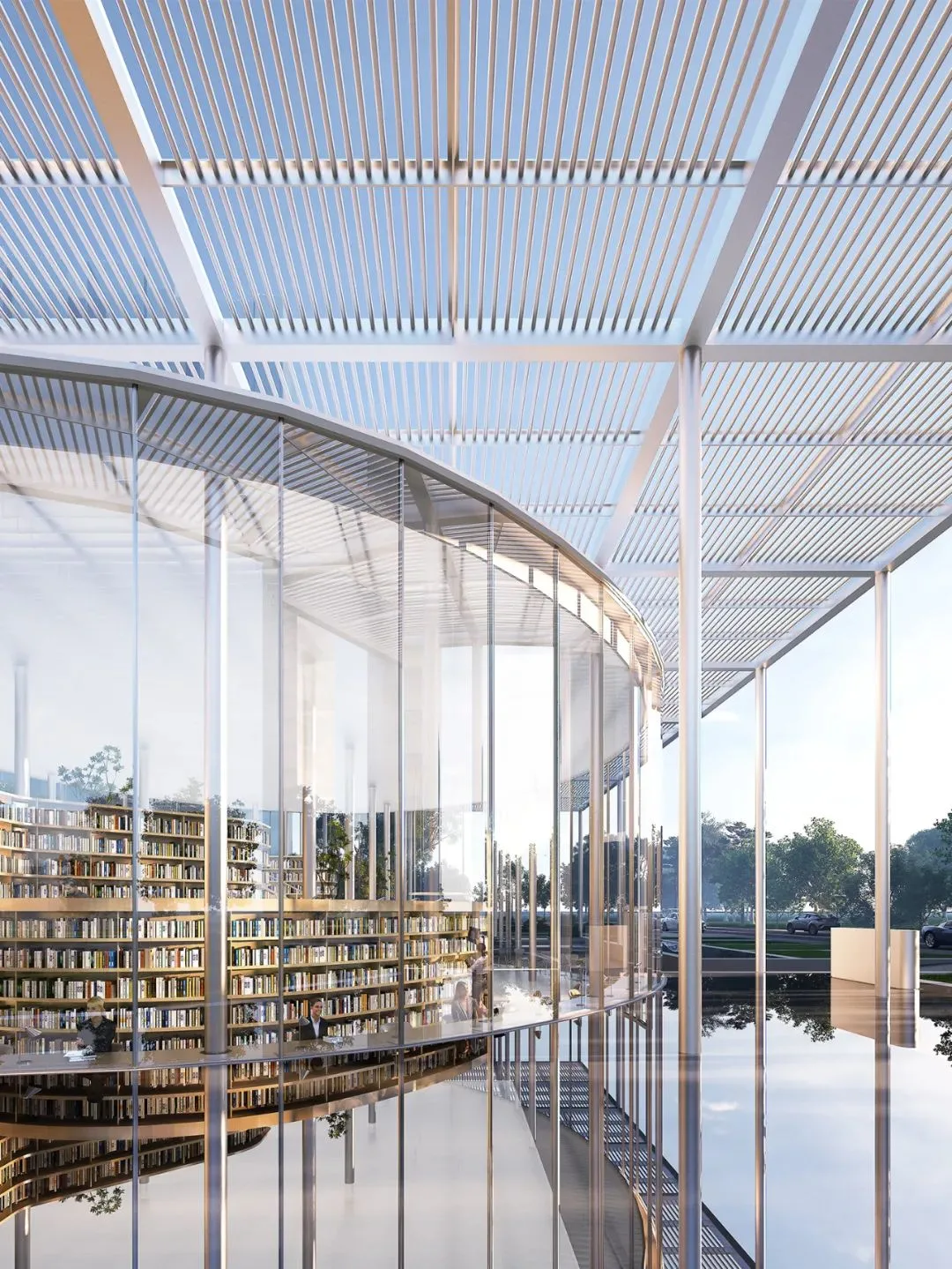
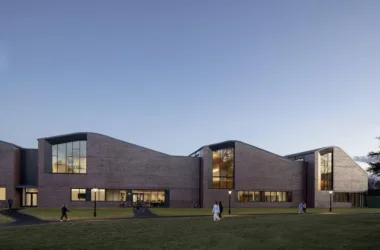
△ Seamless transparency between interior and exterior
01 Region and Context: Clouds as Curtains, Fields as Ladders
Hanyin, a small town in southern Shaanxi, is nestled between the Qinling Mountains to the north and the Bashan Mountains to the south. Fenghuang Mountain stretches east to west, with the Han River and Moon River converging nearby. The landscape is dominated by shallow hills and mountains. The Qinling Mountains shield the area from northern cold winds and retain moisture from the south, creating a subtropical humid climate in Hanyin.
During Emperor Qianlong’s reign, the Wu family from Huaihua, Hunan, settled in the valley at the foot of Fenghuang Mountain in Hanyin County. They introduced advanced agricultural techniques and terraced farming methods from southern China. After more than ten generations, they developed the largest and best-preserved Qing Dynasty terraced fields in southern Shaanxi, with a history spanning over 260 years.
In May, during the rice seedling transplanting season, the irrigated terraces shimmer with vibrant green seedlings, painting a picturesque water-town landscape. Viewed from above, beneath the clouds, the layered and curved terraced fields form a breathtaking blend of human ingenuity and natural beauty spanning centuries.
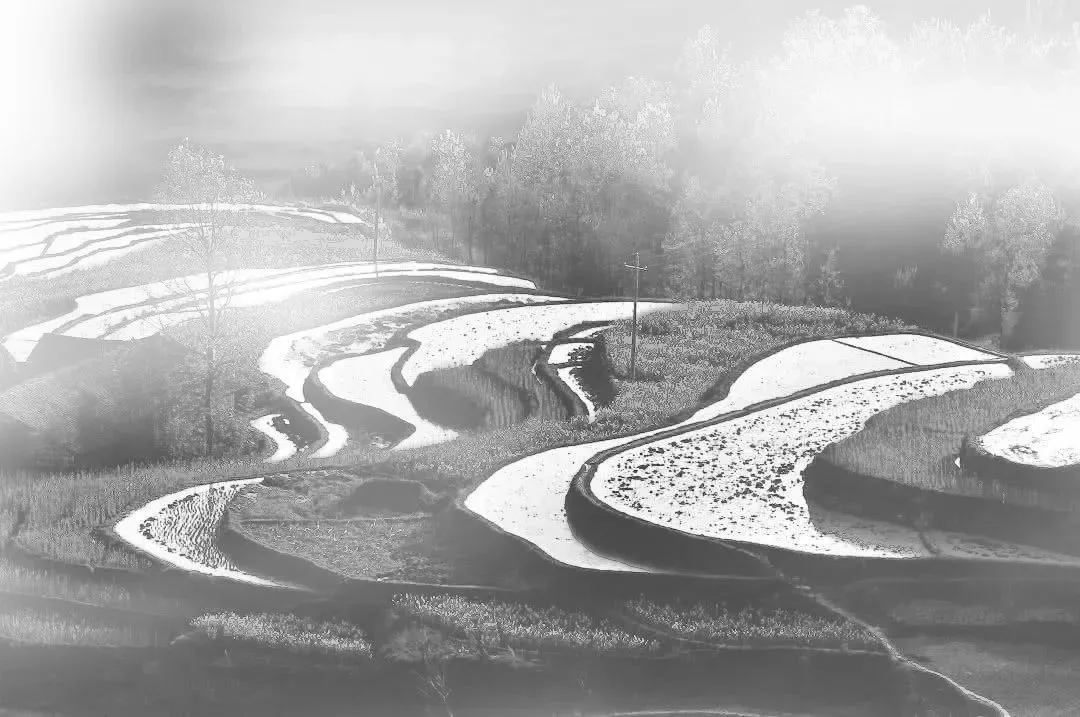
Terraced Fields in the Shallow Hills
02 Inspiration and Interpretation: A Bookstore Platform Embracing the Environment Beneath the Clouds
The concept of Yunman Bookstore was inspired by the local climate, natural surroundings, and ancestral wisdom. The terraced fields cloaked in clouds and mist left a deep impression and served as the foundation for the design.

Impressions of Terraced Fields Under Clouds and Mist
The bookstore’s ceiling features a suspended cloud curtain emitting a soft, white light. Below it, a three-story reading area with elegant setback lines mimics the terraced landscape. The building is enclosed by a 360-degree panoramic glass curtain wall, seamlessly connecting the indoor reading spaces with the outdoor water features and park.
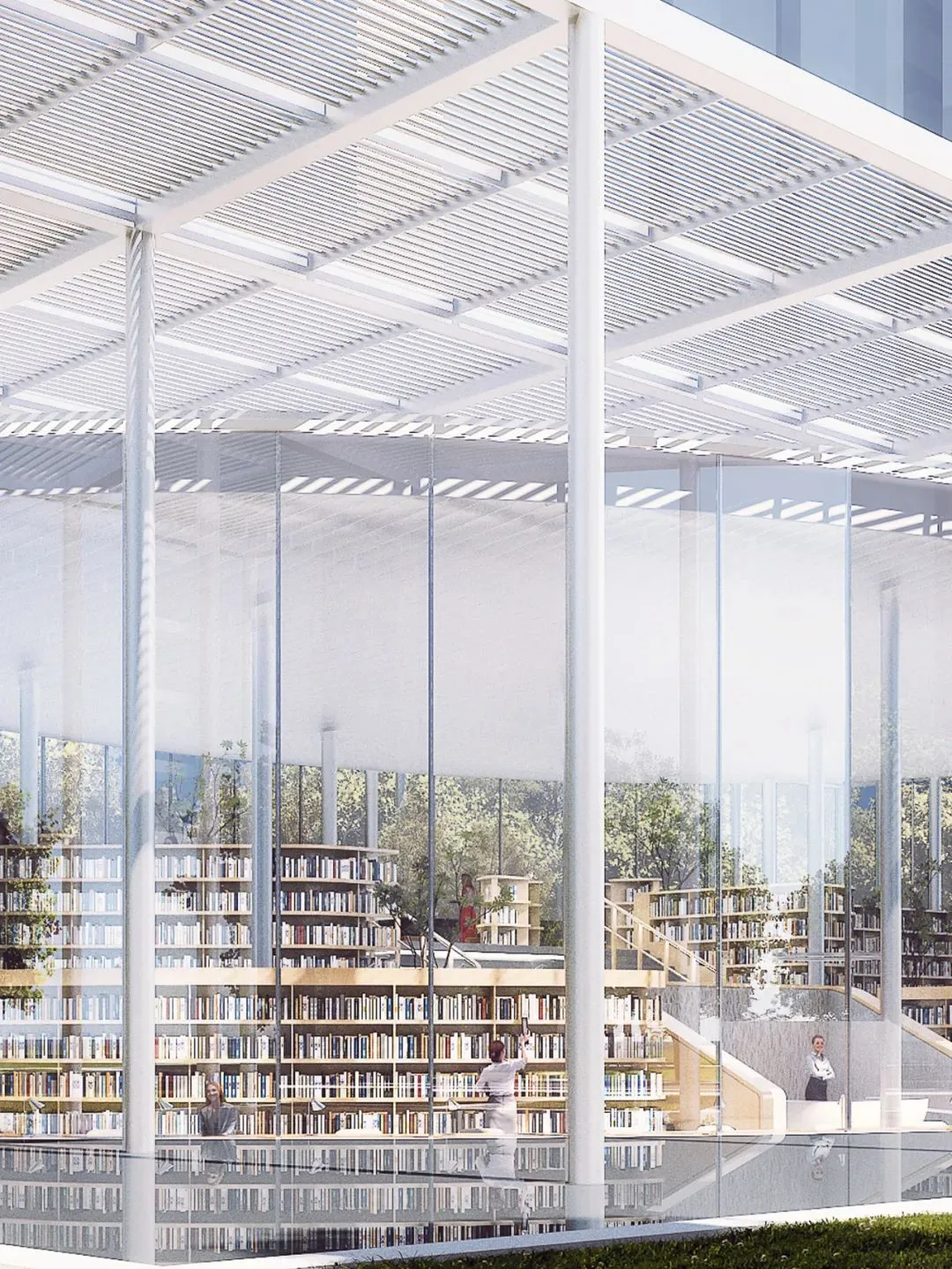
△ Cloud curtain ceiling, setbacks, water surface, and park
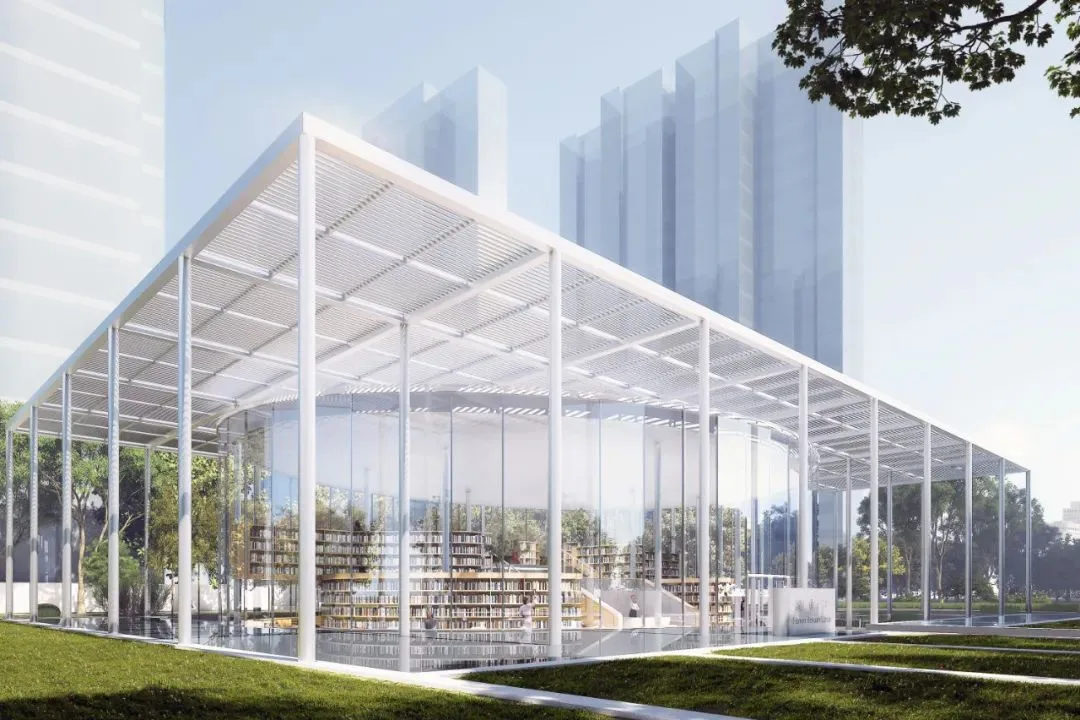
360-degree panoramic glass curtain wall
The first floor is intentionally set 0.75 meters lower, creating a seamless extension between the interior window tabletop and the outdoor water surface and lawn. Through the glass, visitors connect with nature, and every sensation and poetic moment becomes a harmonious dialogue between humans, architecture, and the environment.
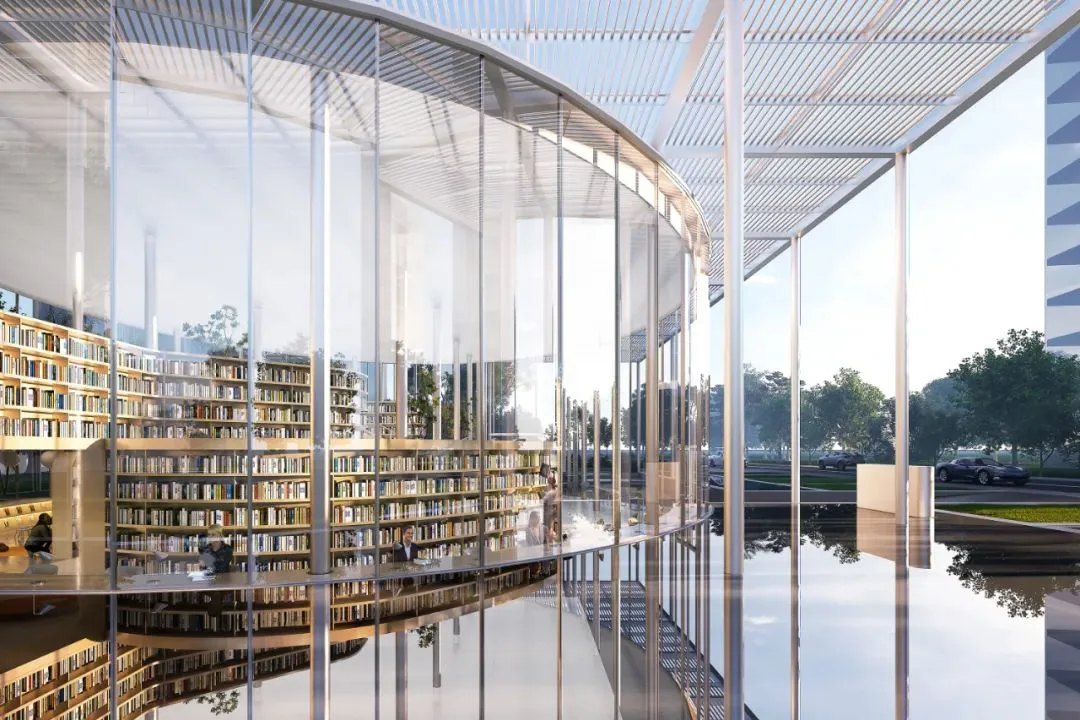
△ Expansion of sunken space and water surface – outdoor view
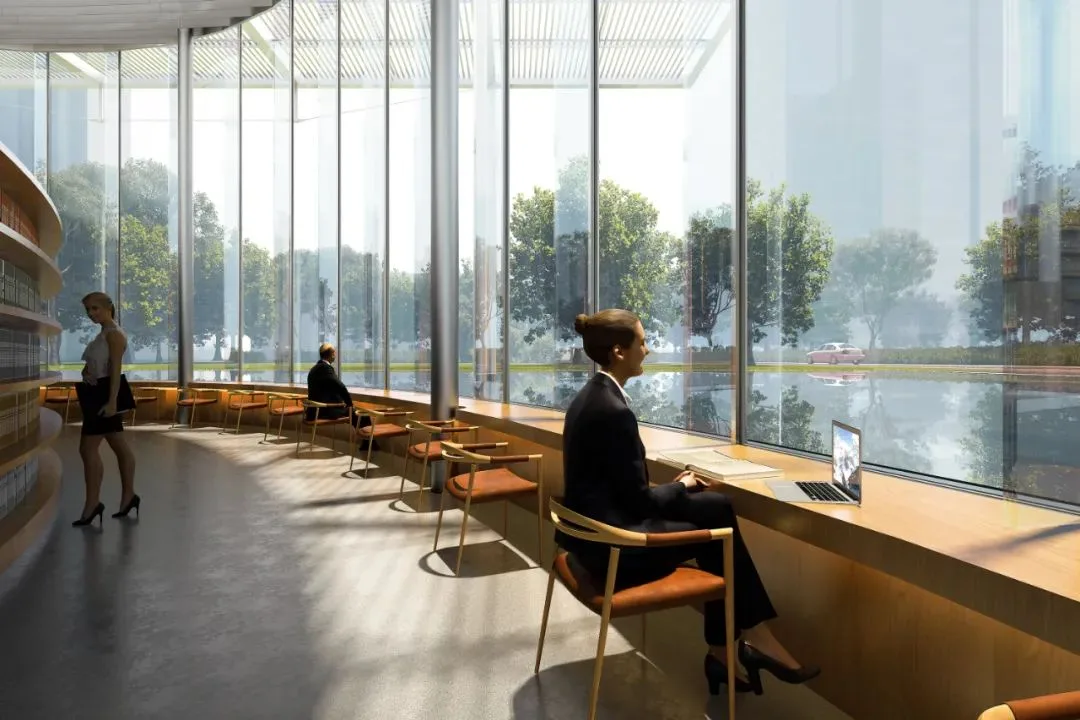
△ Expansion of sunken space and water surface – indoor view
03 Structure and Space: Clear Logical Relationship Between Square and Circle
The building’s core consists of an oval-shaped glass volume supported by a network-patterned shading structure. The glass’s transparency is achieved through a suspended glass ribbed curtain wall system, allowing for minimal visual obstruction.
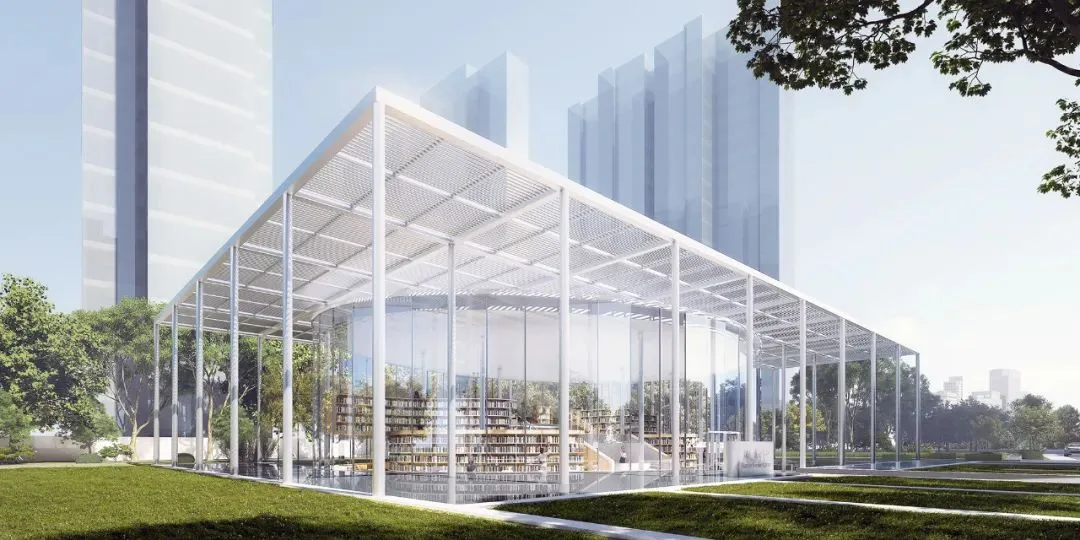
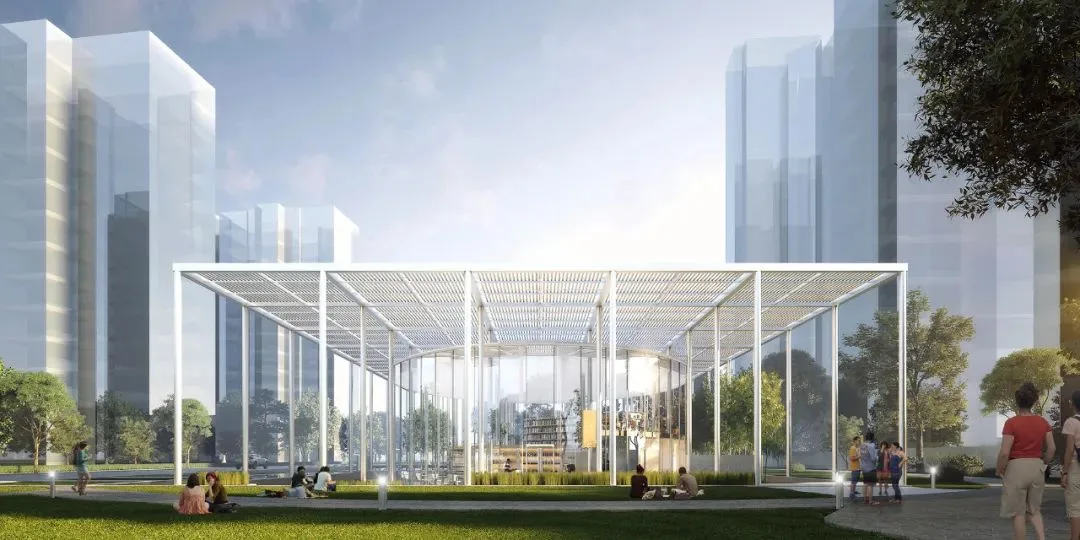
Transparent glass volume beneath △ grid framework
Each glass panel measures approximately 1.5 meters wide by 7.7 meters high. The panels are suspended from the roof structure using concealed fixtures, minimizing opaque elements within the view and giving the building a lightweight, transparent appearance.
Unlike traditional closed libraries, this glass structure liberates occupants by inviting the sky, earth, light, and landscape inside while fully showcasing the interior to the outside. Visitors continuously experience the shifting light, shadows, and passage of time.
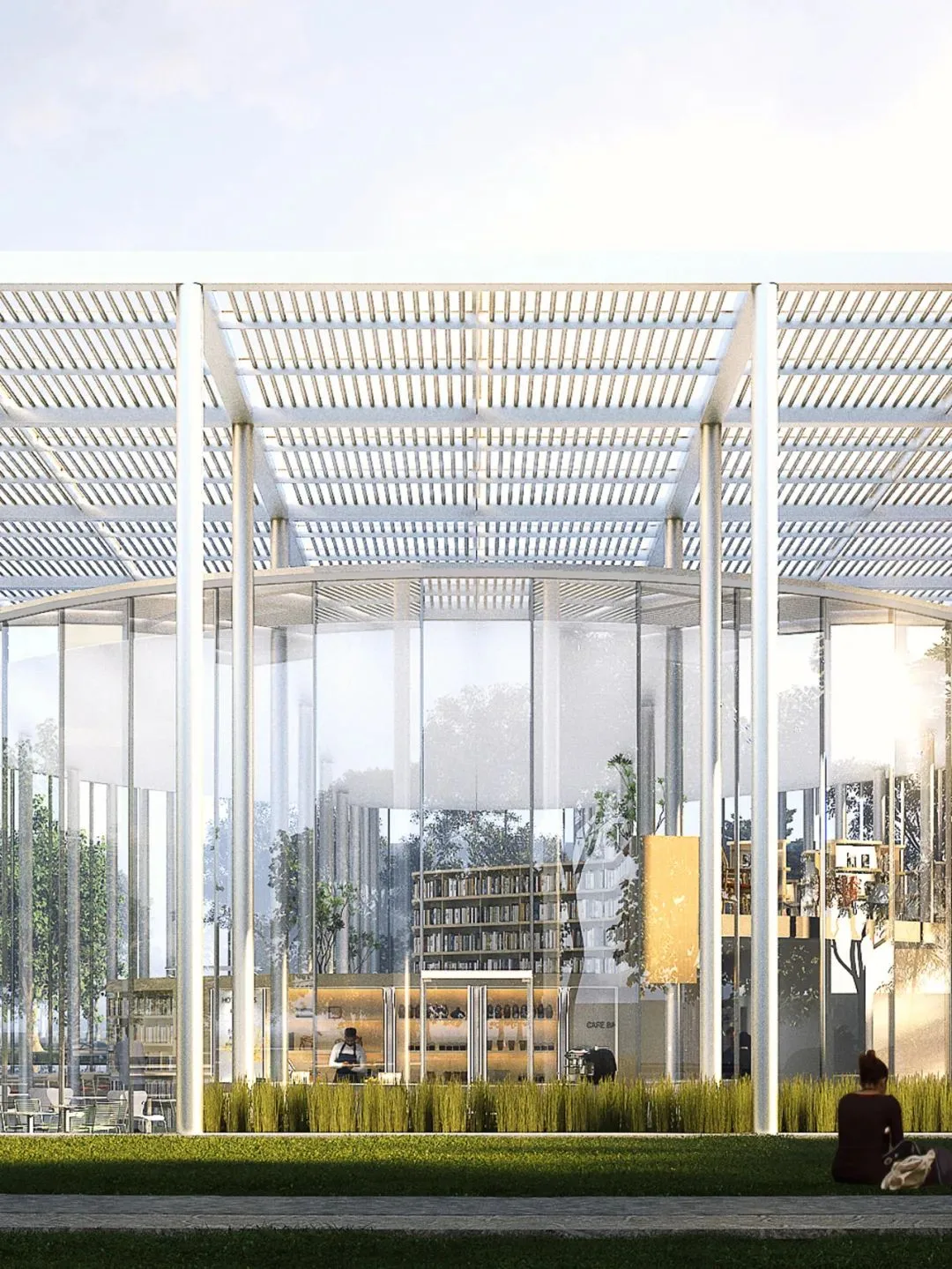
△ Single-panel glass achieves ultimate transparency
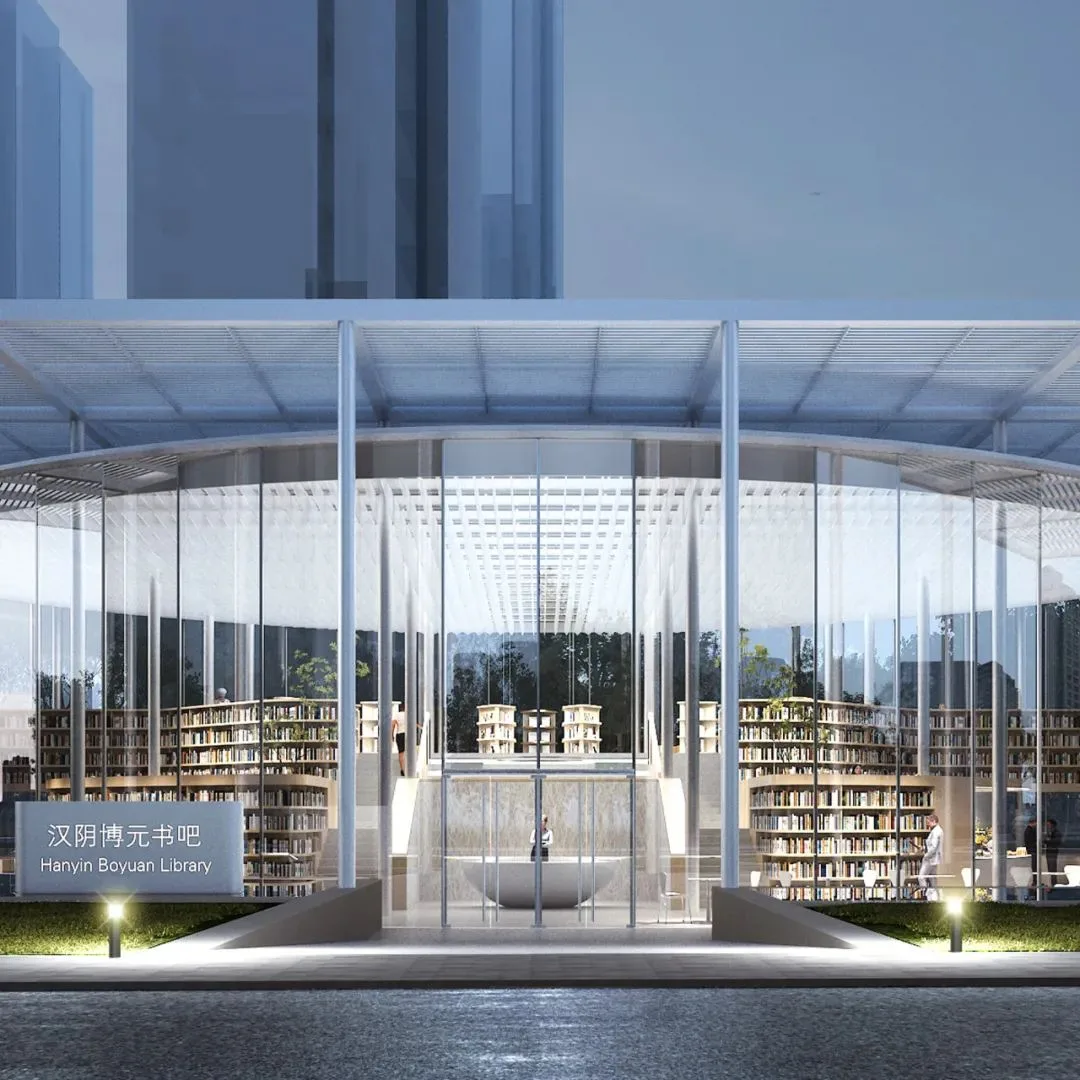
△ Experience the flow of time as night lighting illuminates the space
Above the glass volume, a mesh shading structure filters direct sunlight to provide gentle lighting indoors and in outdoor courtyards.
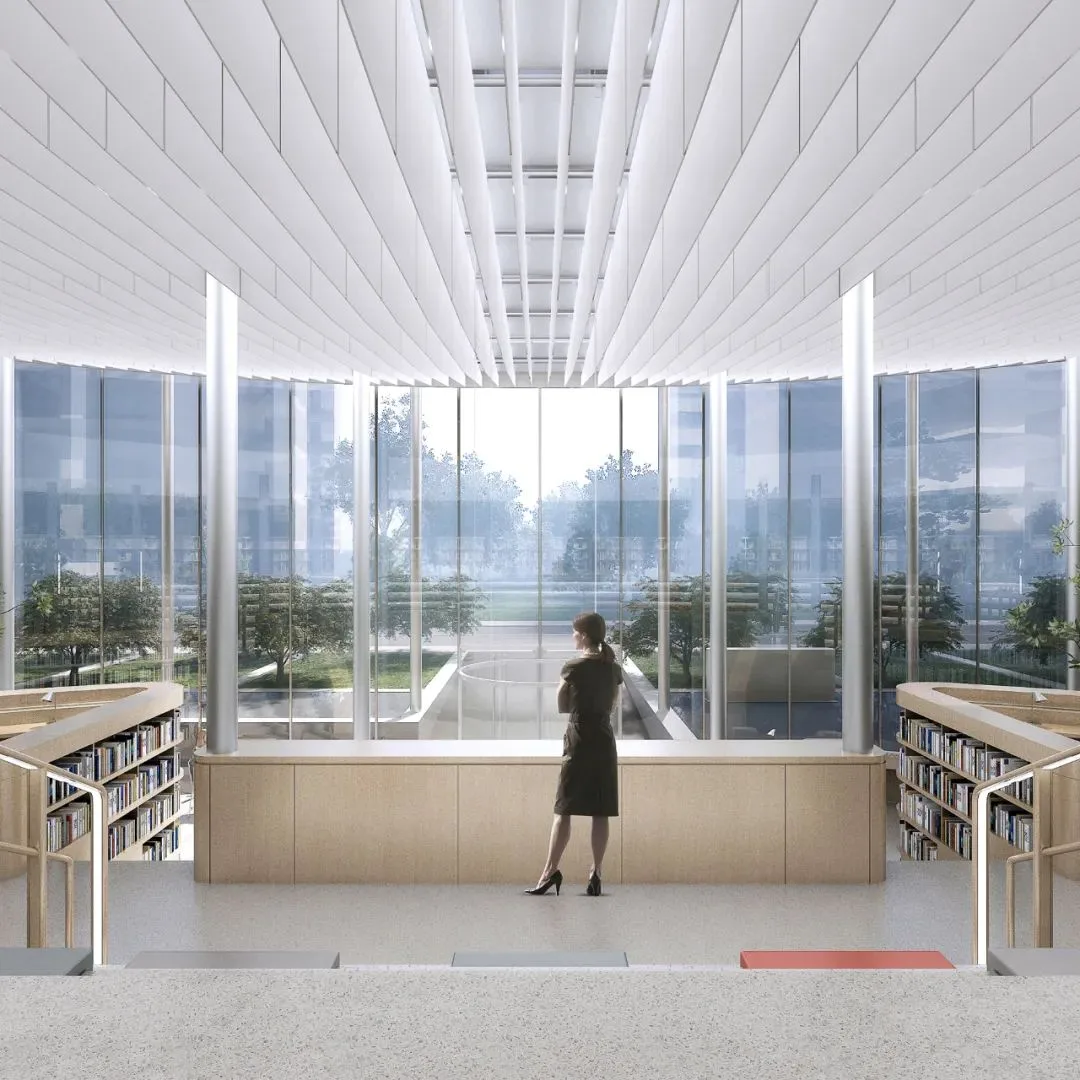
△ Soft indoor lighting
The column grid and crossbeam network of the sunshade structure impose order on the building and create a buffer zone between the park and the interior.
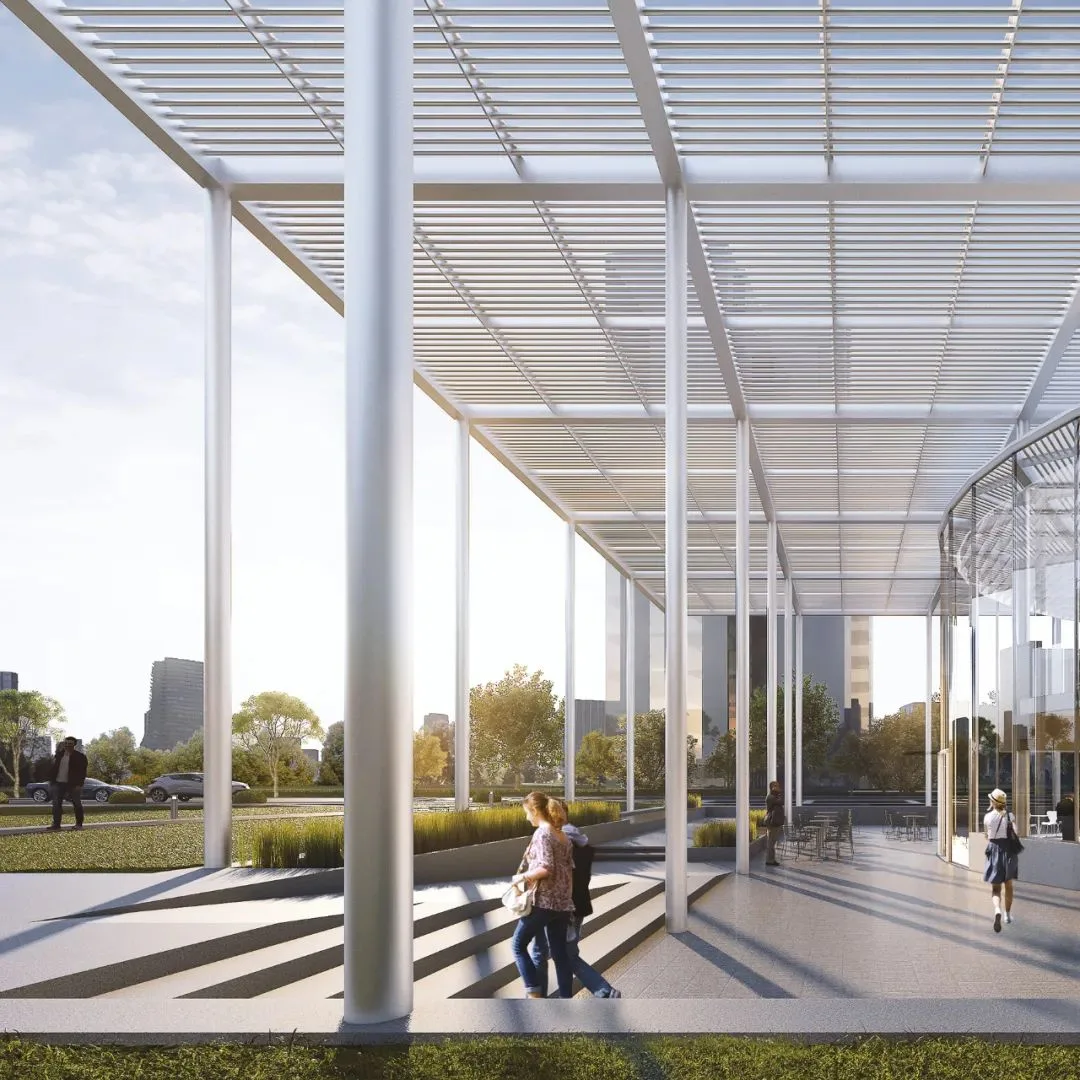
Transition space from park to building
04 Interior Layout: An Open Cultural Hub
The interior resembles terraced fields, topped with floating cloud curtains. The three floors rise stepwise, forming terraced reading platforms.
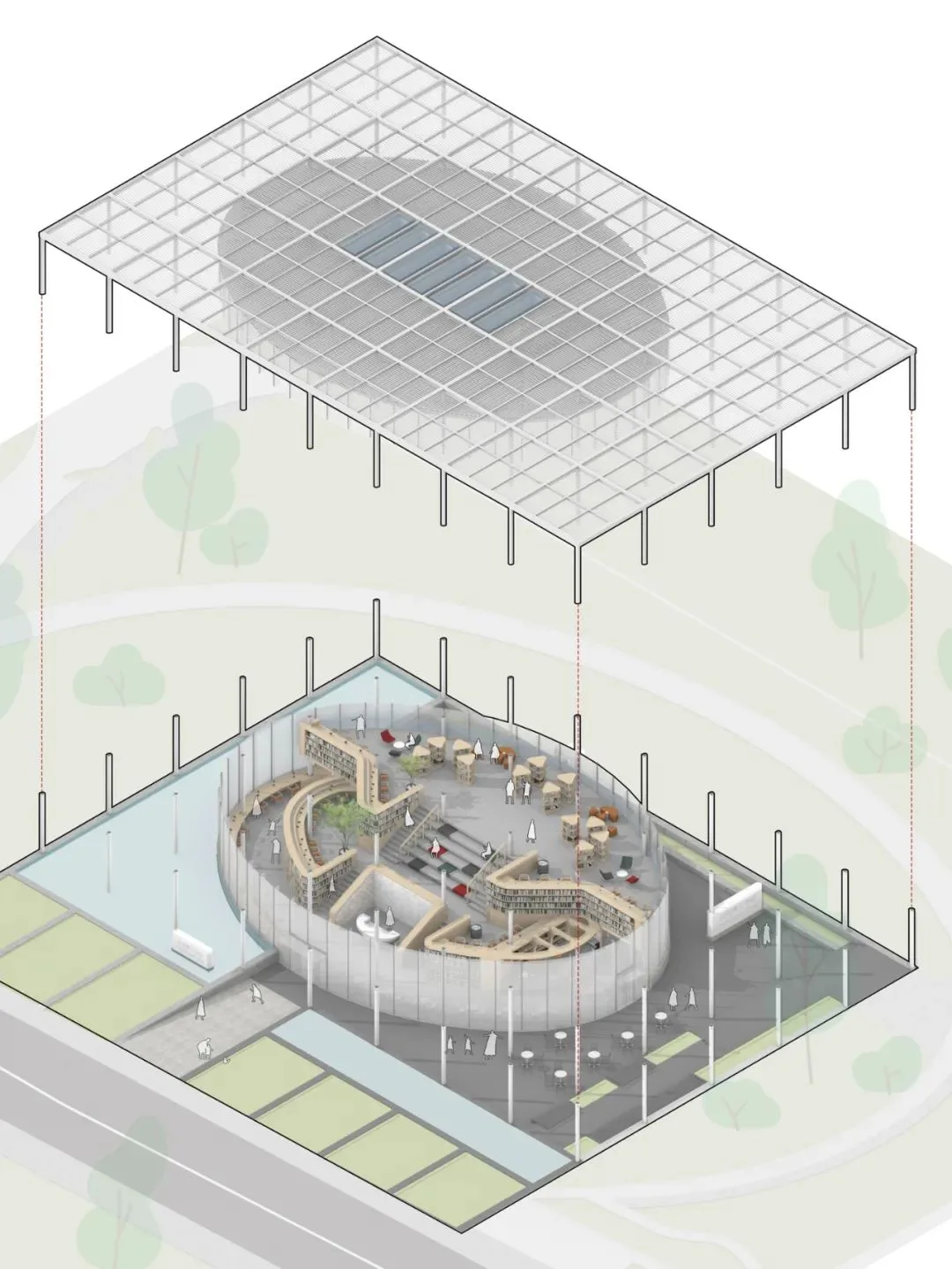
△ Architectural axonometric drawing
The interior employs clear geometric symmetry, creating a central focus and evoking a strong sense of sacredness and ceremony.
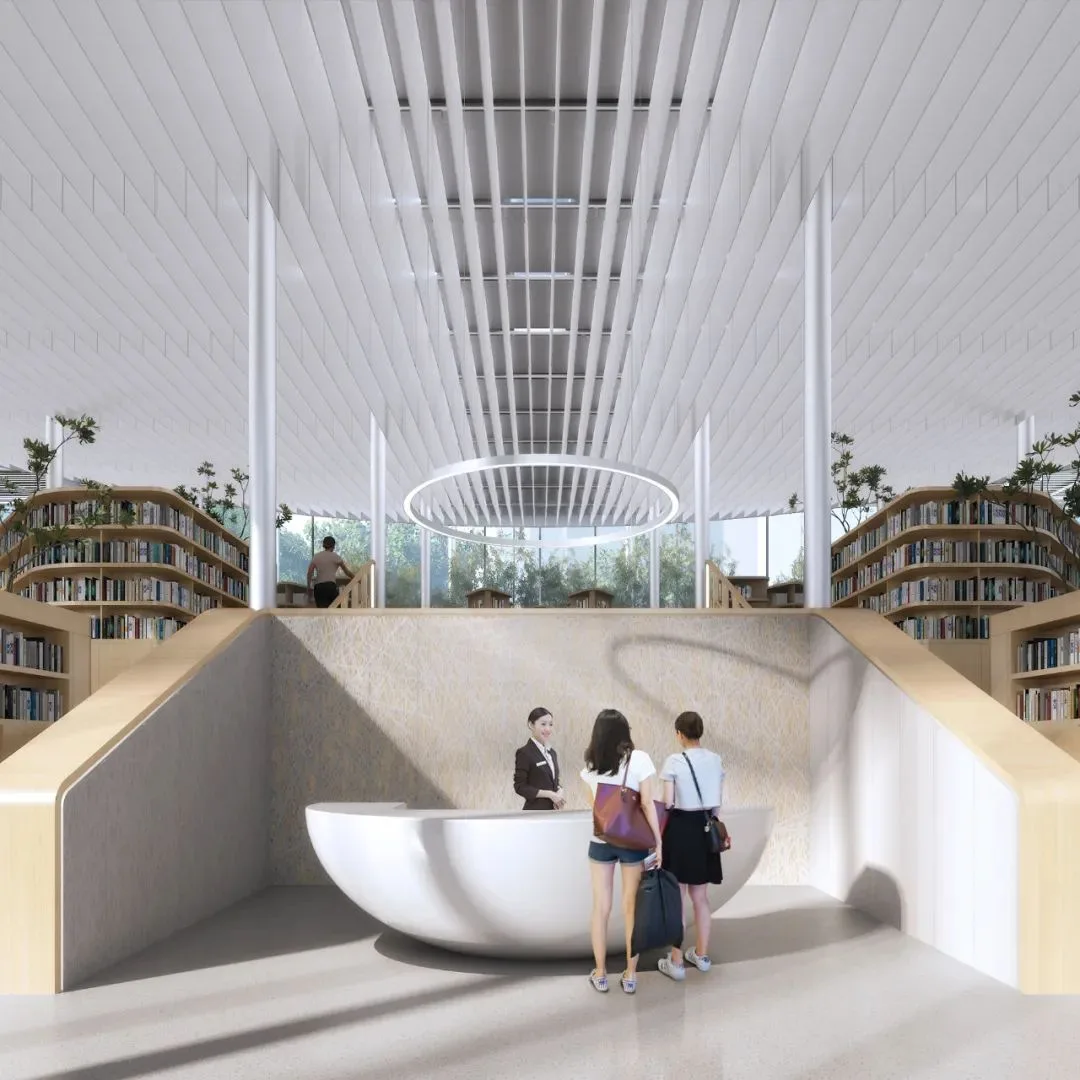
Central axis of △ space
The first floor features a coffee bar and a children’s reading area, expanding the library’s appeal to a broader audience.
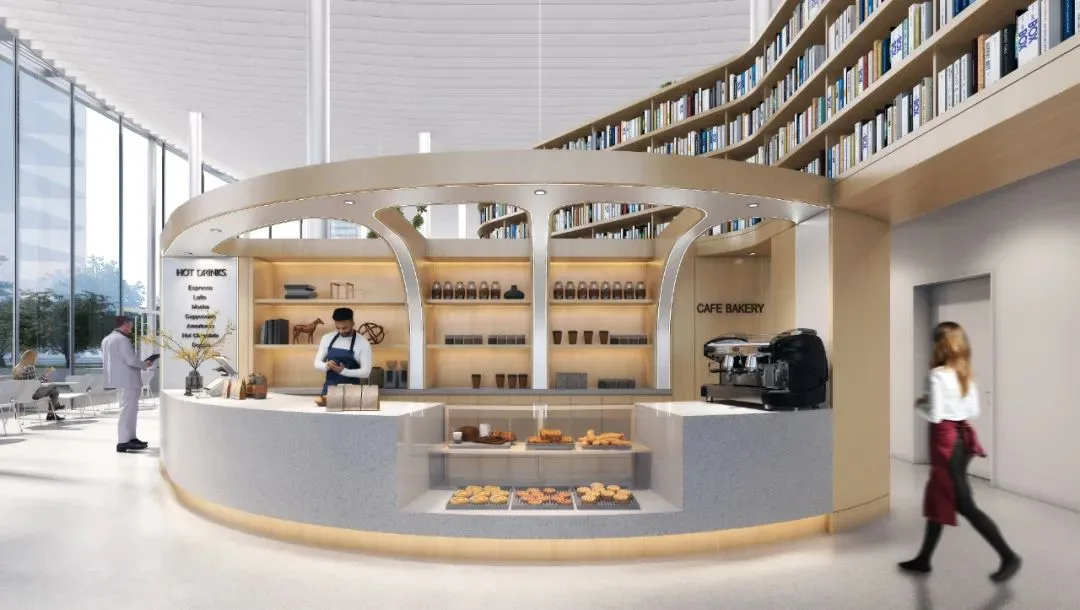
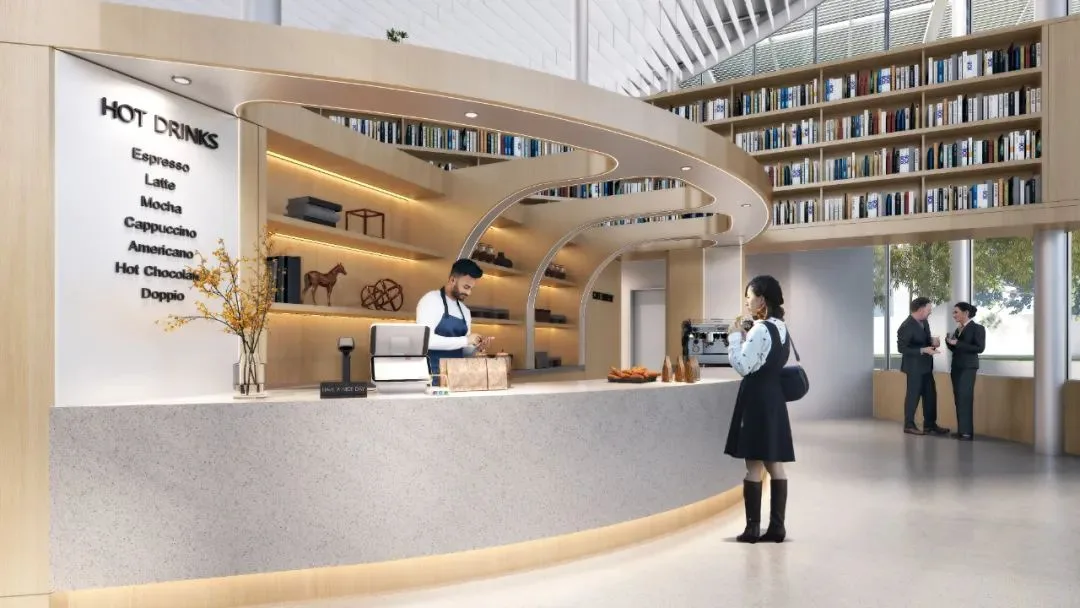
△ Coffee bar counter
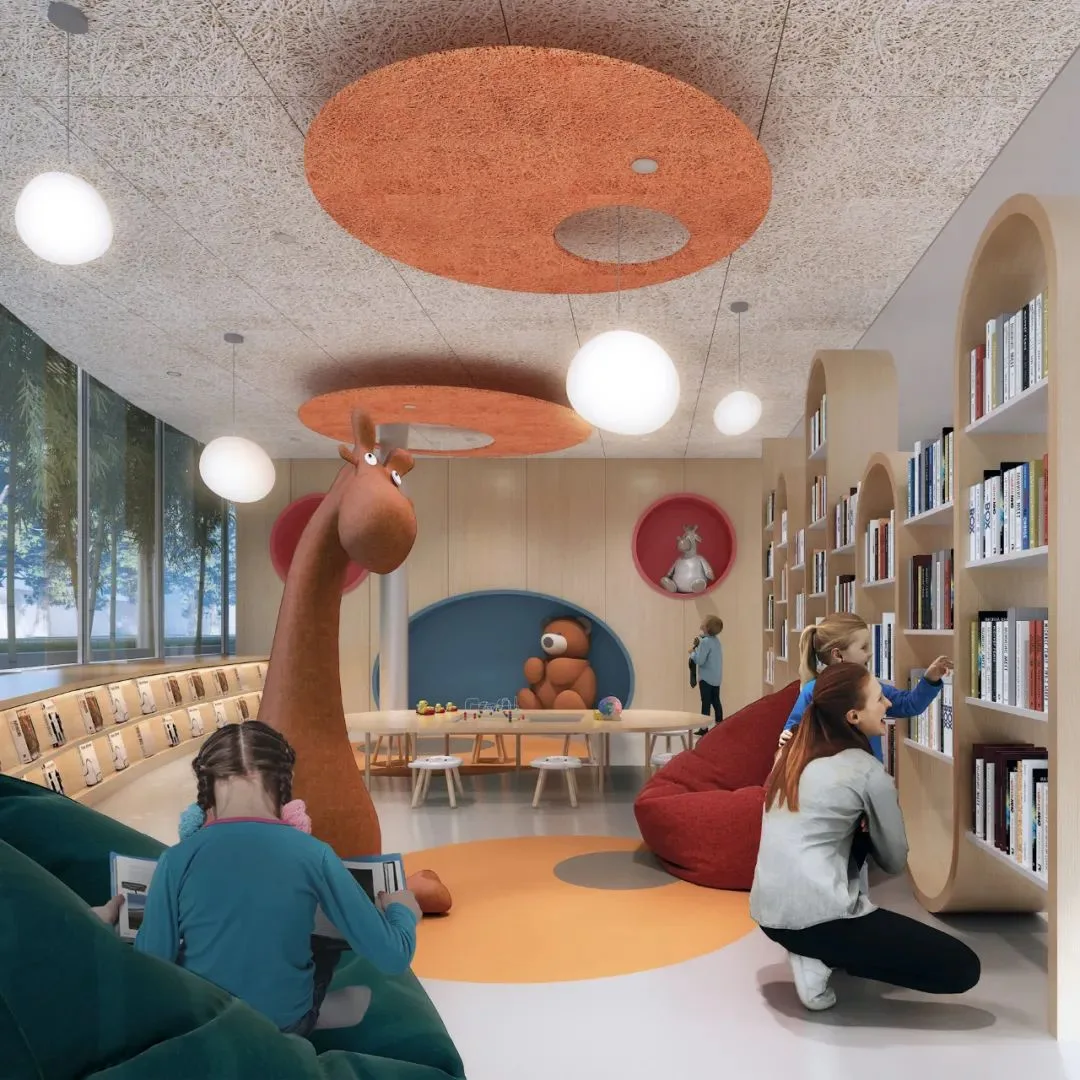
△ Children’s Reading Area
The three-tiered reading platforms, connected by a grand staircase, create a clear spatial progression. Protected by cloud curtains and ceiling, the space balances openness and hierarchy.
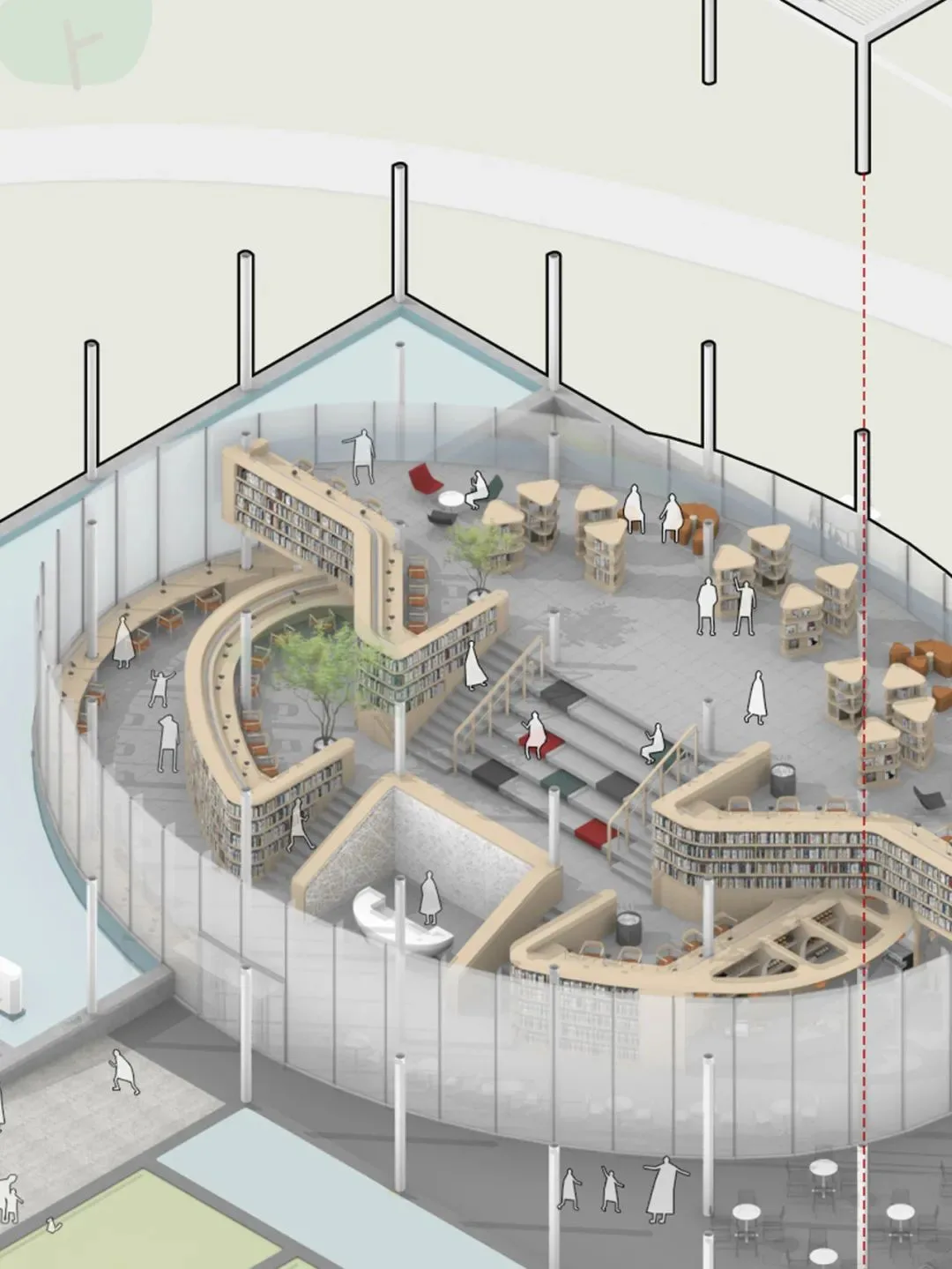
Three progressively rising reading platforms
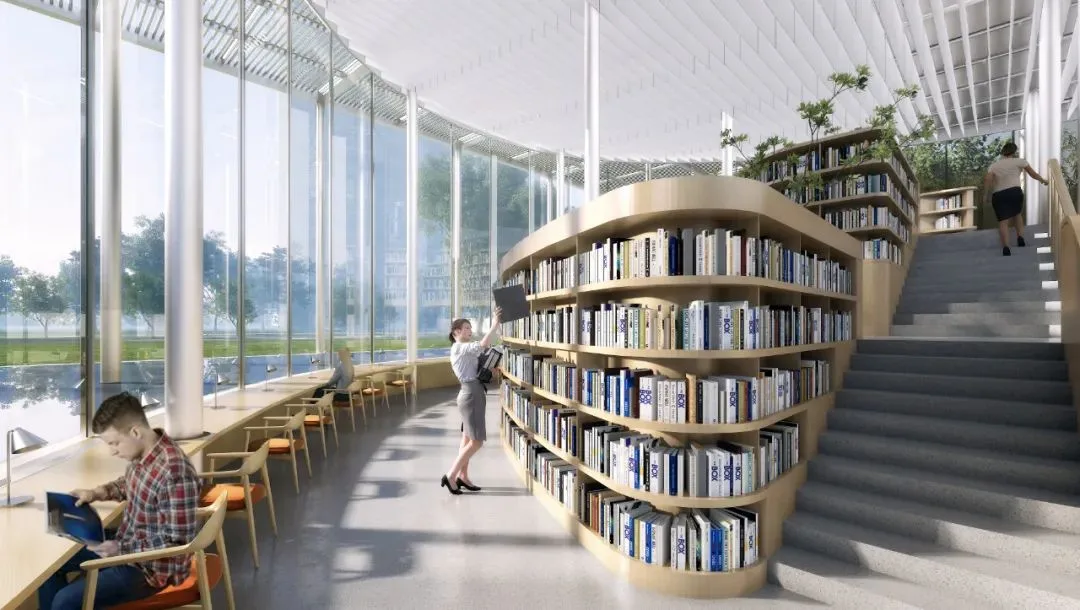
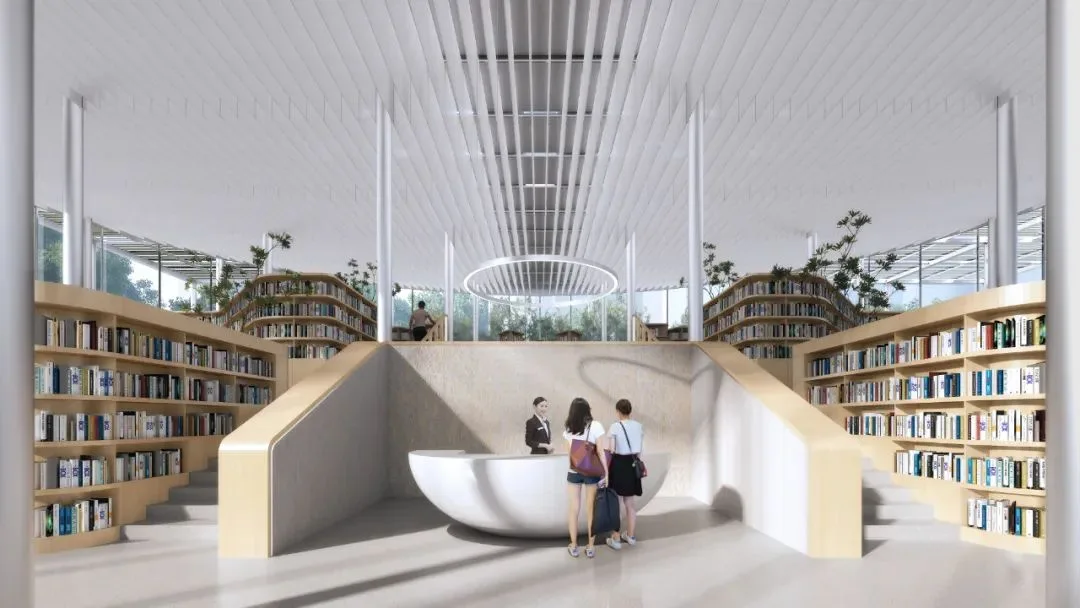
△ First-floor reading area
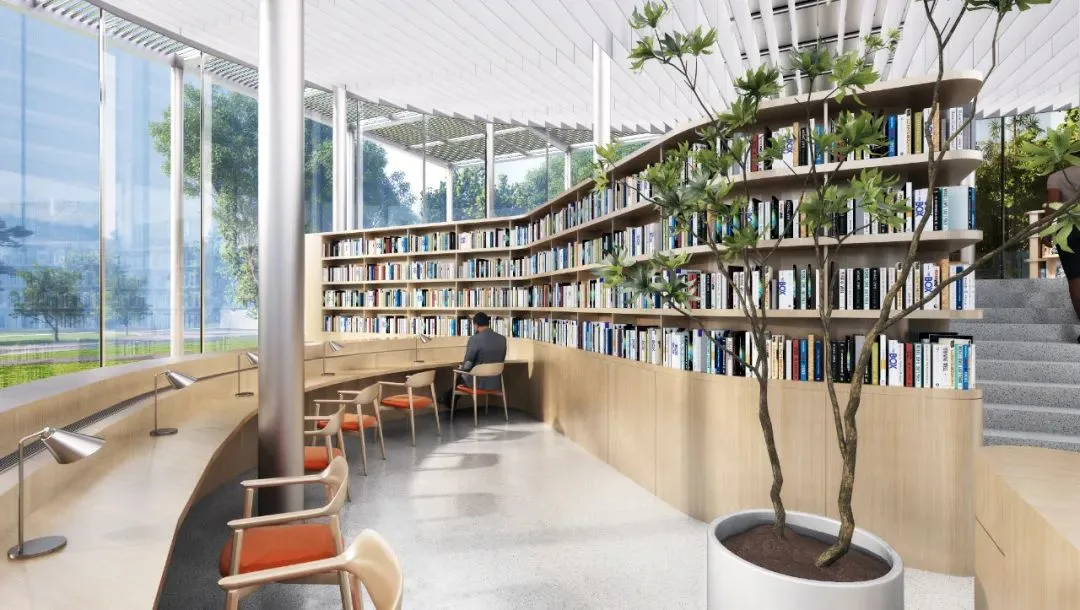
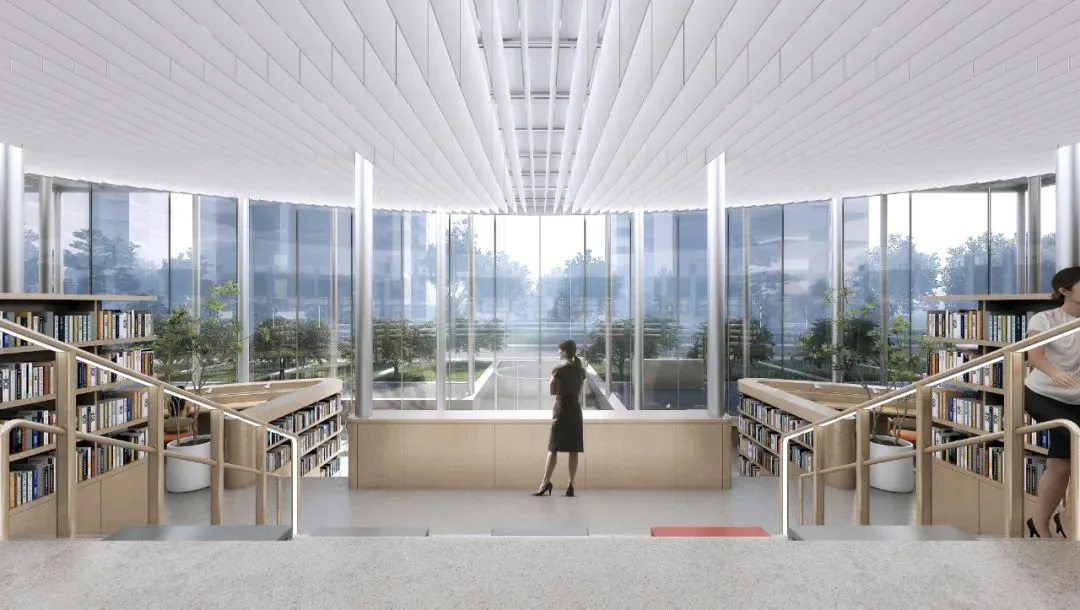
△ Middle-level reading space
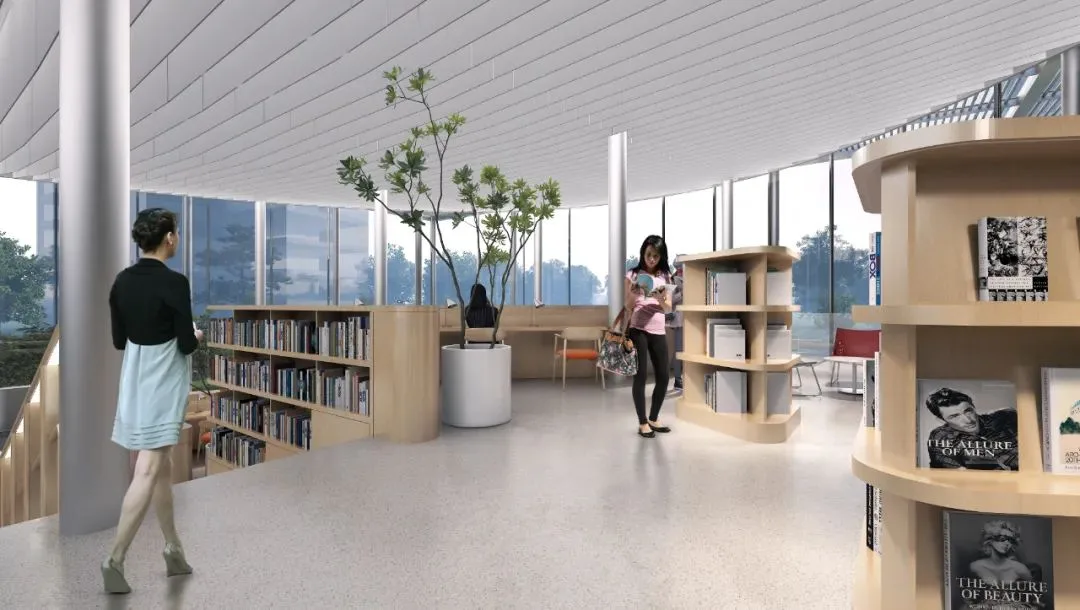
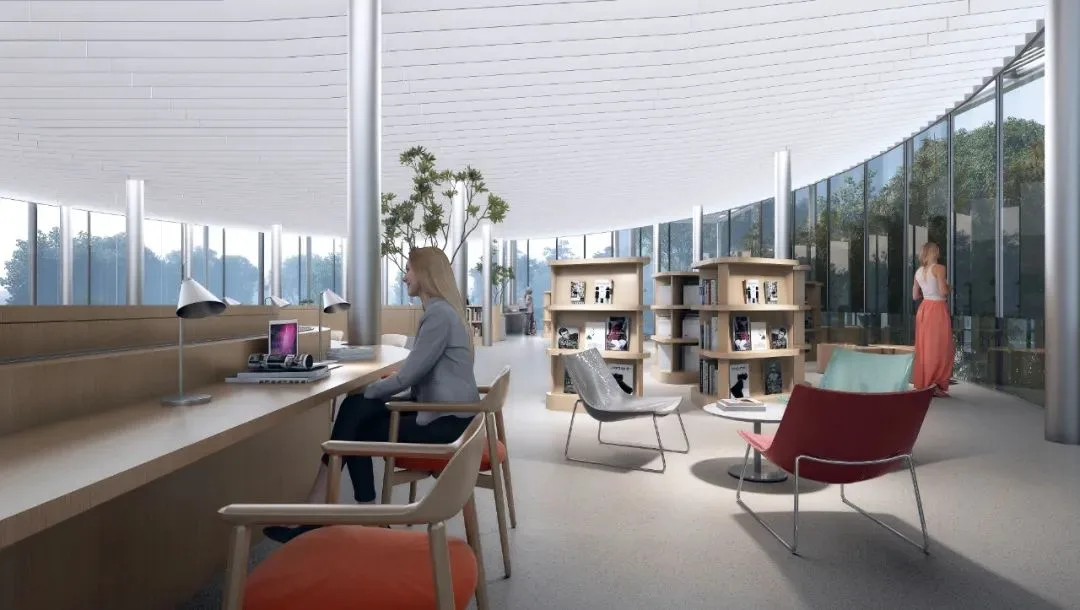
Top-level reading area
05 Integrated Design: Precise Modulus-Based Coordination
The building’s floor plan is based on a 5.4m x 5.4m grid system. This modular framework governs the column layout, roof shading structure, oval glass curtain wall shape, glass grid, interior spatial arrangement, as well as the ceiling and floor grids. The rigorous geometric system transforms poetic design intentions into practical construction logic, harmonizing emotion with reason—an enduring principle of UUA.
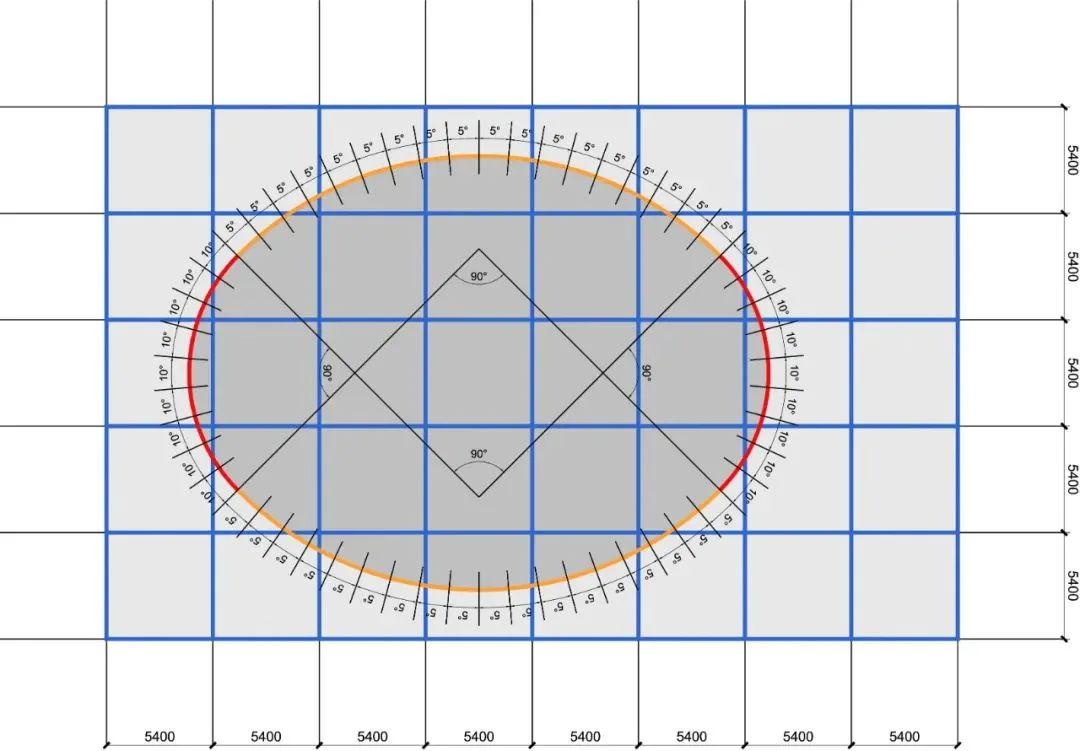
Building plan guided by geometric modulus
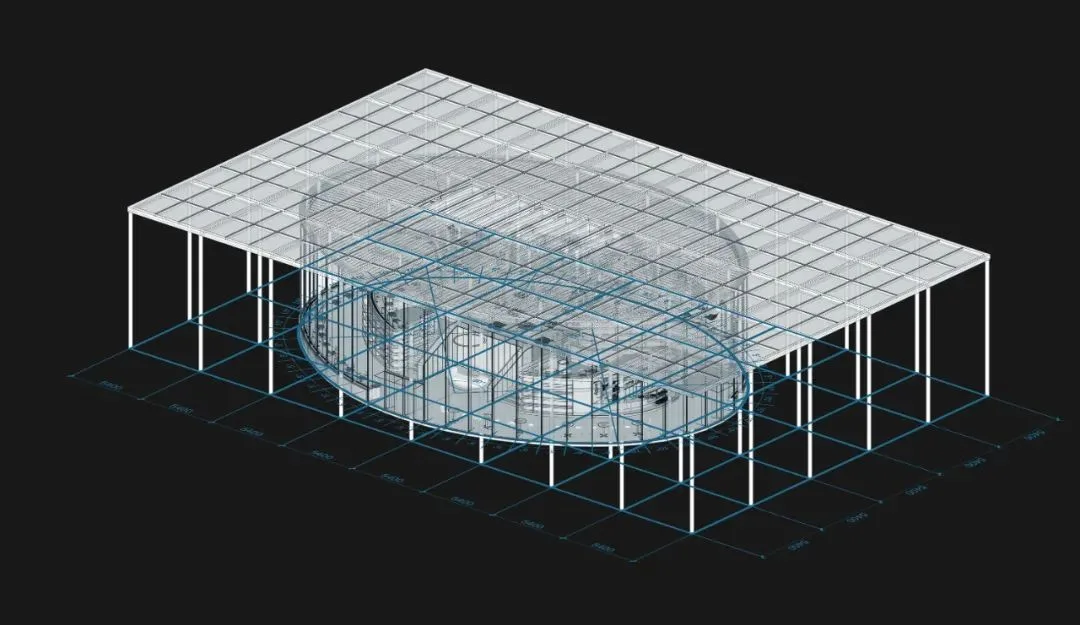
Architectural form controlled by geometric modulus
06 Conclusion
Yunman Bookstore breaks conventional boundaries to create an eco-friendly cultural sanctuary. Departing from the traditional closed library model, it embraces transparency and openness in its exterior structure, revealing indoor scenes to the environment while ensuring physical comfort. This fosters a relaxed, enjoyable reading experience immersed in nature.
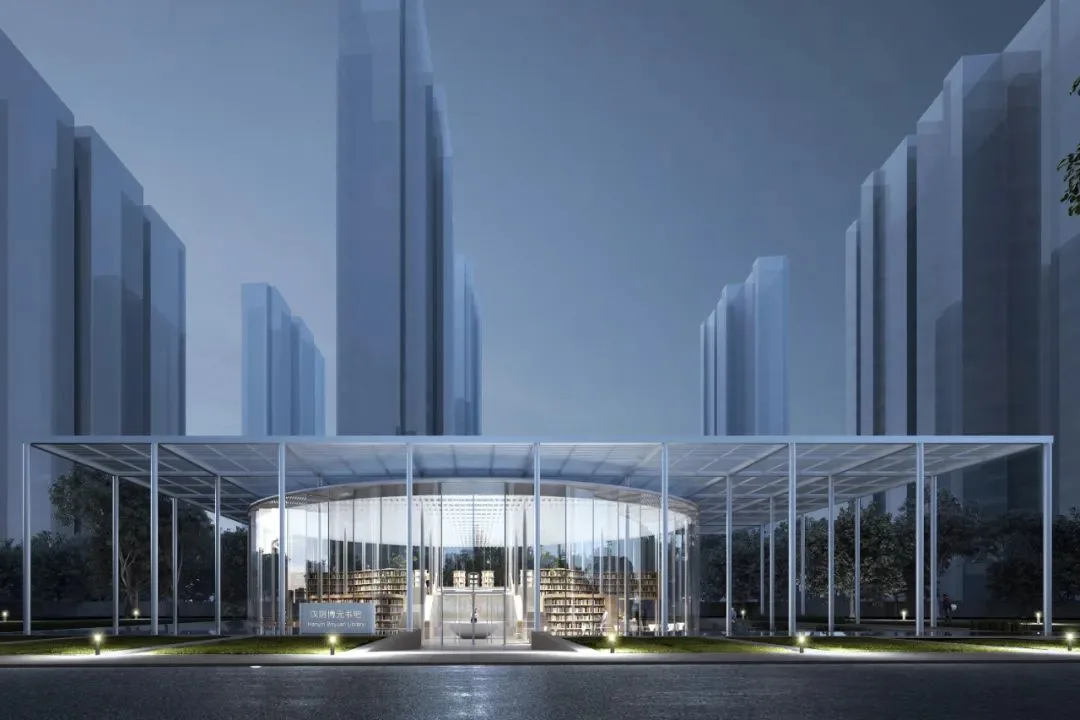
Transparency illustrated by the building’s night view
From a construction standpoint, UUA relies on industrialized prefabrication techniques, focusing on technical methods and material properties to support design goals and realize art through technology.
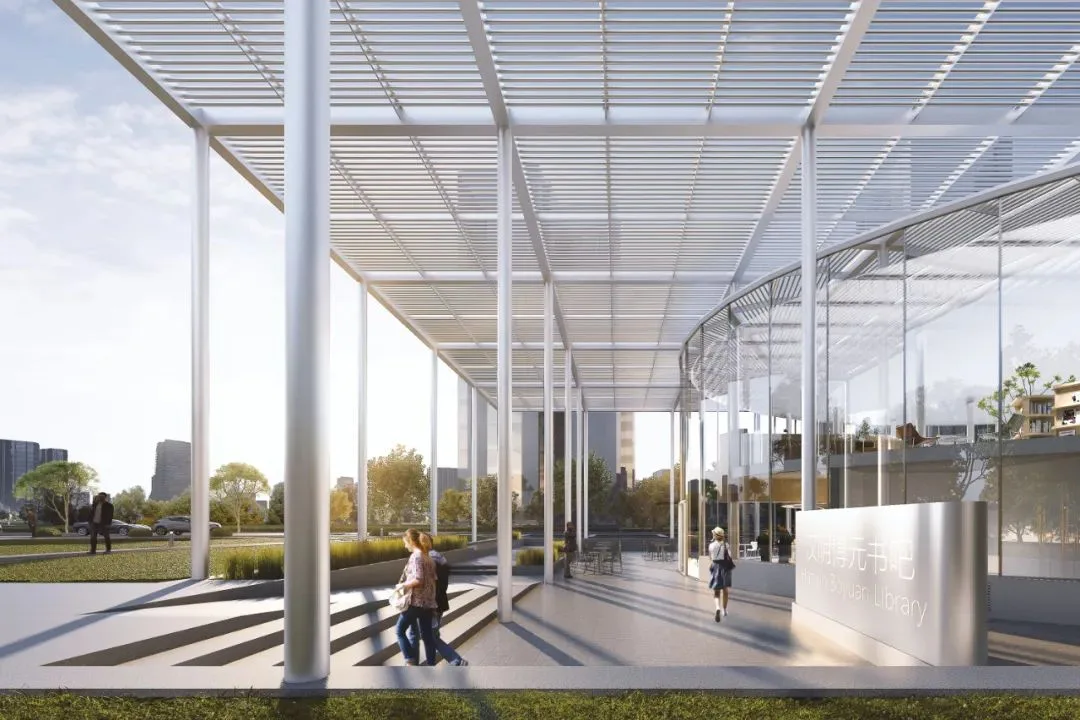
A transparent, lightweight, outward-looking, and natural architectural language
Yunman Bookstore offers a fresh cultural and architectural experience through its transparent, lightweight, and nature-integrated design. It represents a meaningful exploration of expressing the “publicness” of public buildings.
07 Technical Drawings
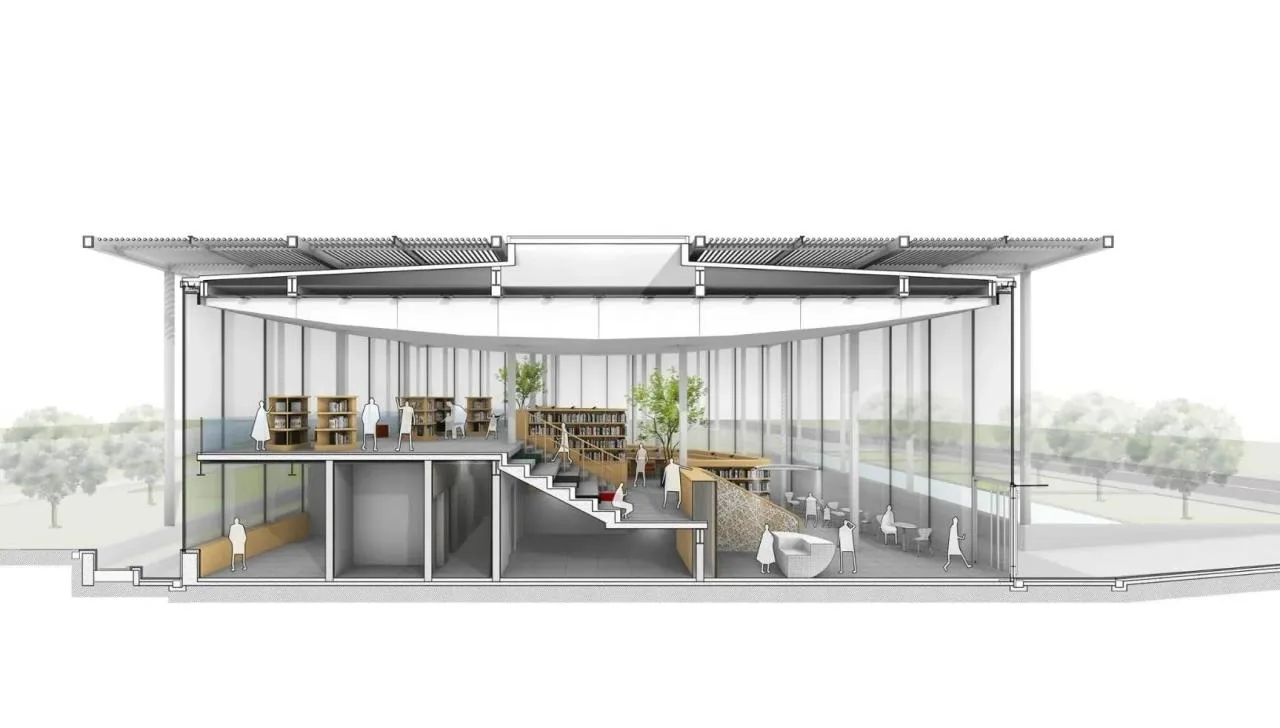
△ Longitudinal profile
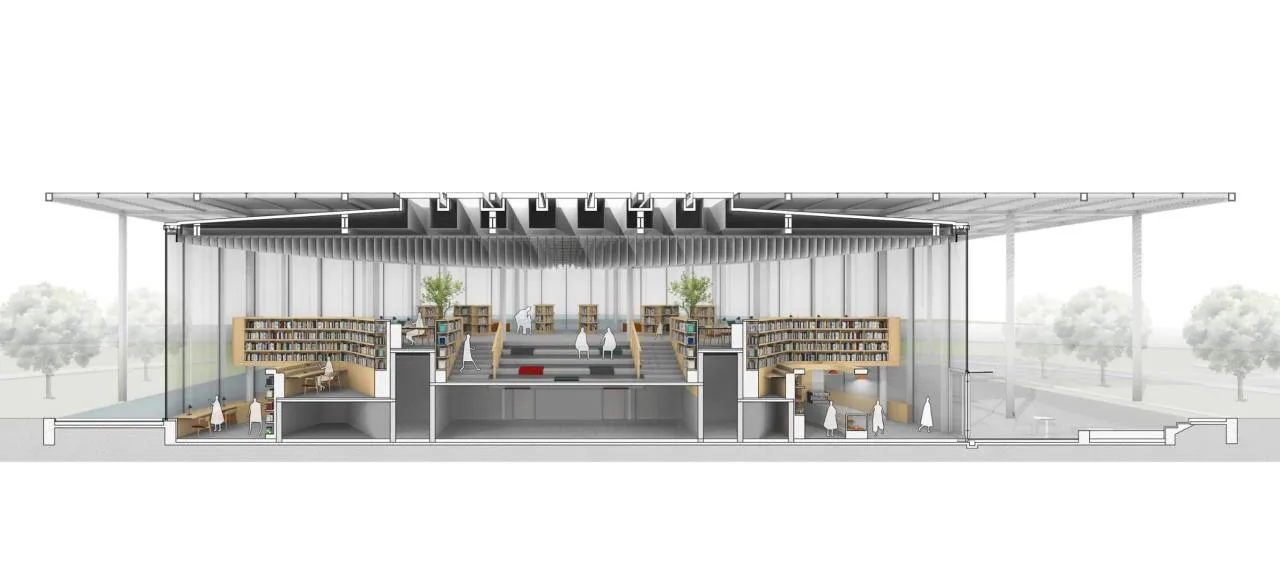
△ Cross section
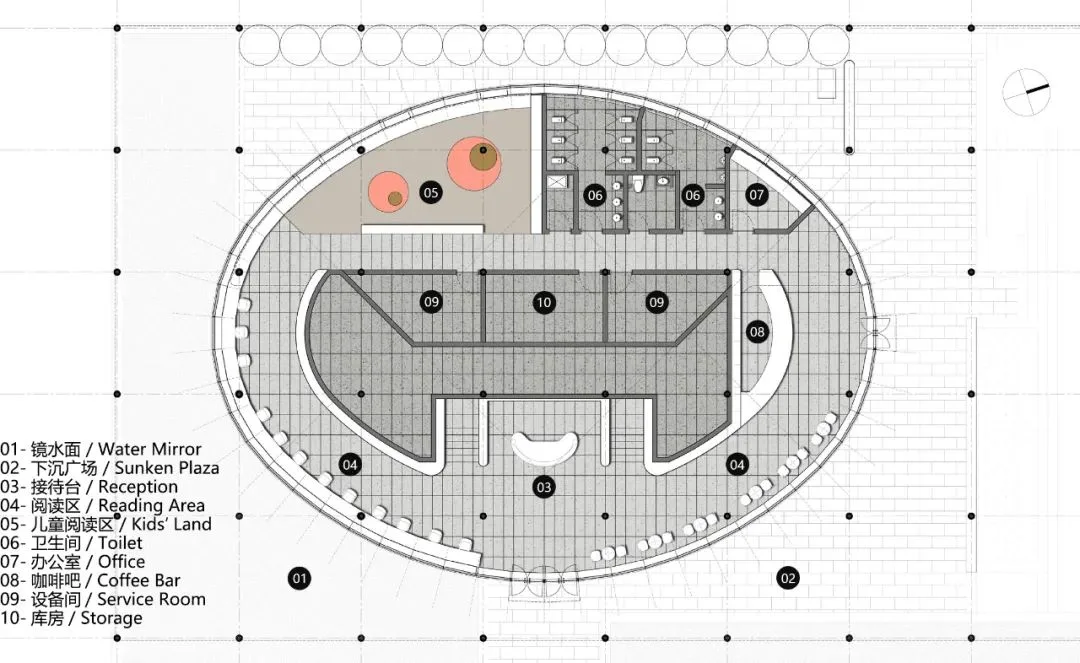
△ First floor plan
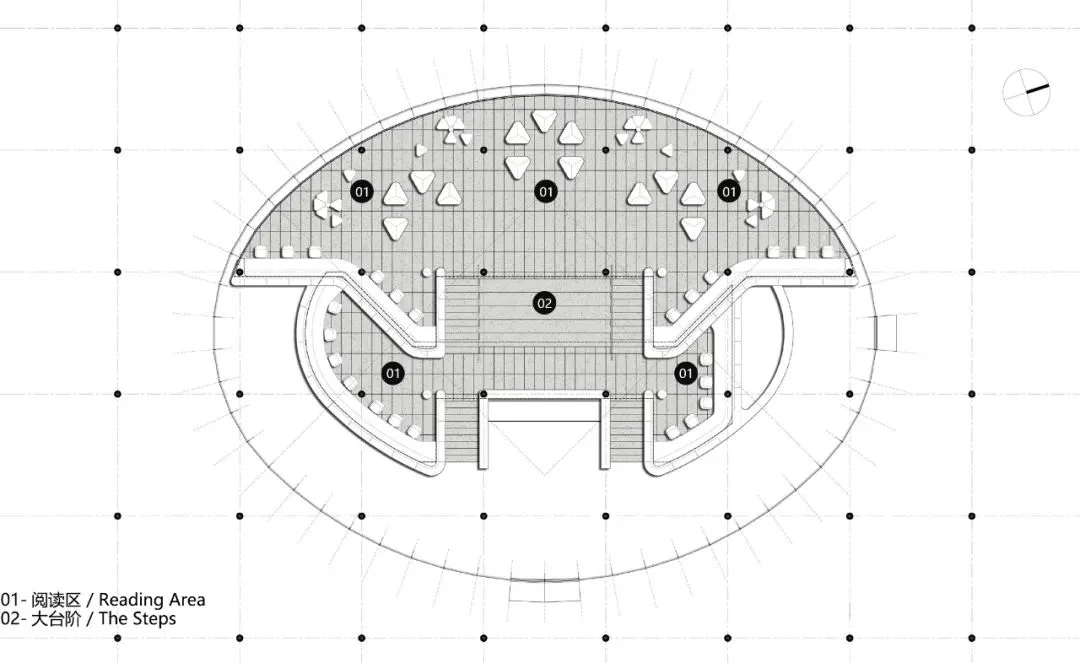
Top floor plan
08 Animated Video
△ Concept animation © UUA

Project Information
Location: Ankang, Shaanxi
Project Size: 1,000 square meters
Architectural & Interior Design: UUA Architects
Lead Partners: Li Yongzheng, Li Qizhi
Project Team: He Wenbo (Project Architect), Deng Liang, Zhao Shengli (Interior Designer), Fang Hongbo, Lv Yanfeng
Client: Ankang Boyuan
Design Period: November 2020 – December 2021
Construction: Spring 2022















Must log in before commenting!
Sign Up