
BIM stands for “Building Information Modeling,” which in Chinese is translated as “Building Information Modeling.” It serves as a comprehensive information carrier for construction projects. According to the National Institute of Standards and Technology in the United States, BIM is defined as an engineering data model that integrates various relevant information of construction projects using three-dimensional digital technology. It represents a digital expression of the physical and functional characteristics of engineering project facilities.
In essence, the foundation of BIM technology is three-dimensional technology, the core is information data, and the goal is to clearly depict the logical relationships throughout the entire engineering project process. Simply put, BIM can be summarized as 3D + Information + Process.
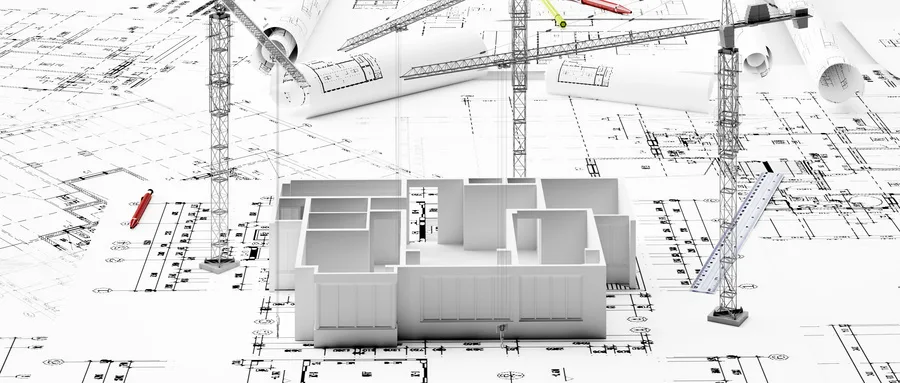
In traditional building projects, subcontractors typically receive drawings that only cover their own specialized fields. This often makes it difficult to perform conflict checks between different disciplines before construction begins. As a result, there is a high risk of rework and repeated construction, leading to significant cost waste. However, BIM-based drawing optimization can effectively reduce or even eliminate such issues.
The BIM-based drawing optimization process starts with collision detection, which involves five main steps:
- Submitting the established civil engineering and installation engineering models to the appropriate detection software;
- Reviewing and revising the models;
- Performing backend collision detection based on the construction process and generating detection results;
- Experts searching for and verifying the relevant conflicting drawings;
- Preparing a collision detection report.
After the collision inspection is complete, the BIM software’s 3D visualization tools analyze and address each collision point individually. At the same time, considering the building’s functionality and construction convenience, a comprehensive design of pipeline layout principles is conducted. Ultimately, a secondary pipeline layout is finalized to minimize collisions and optimize the drawings effectively.
















Must log in before commenting!
Sign Up