
Born from water and seamlessly integrated into its surroundings, flowing curves define this technological ark.
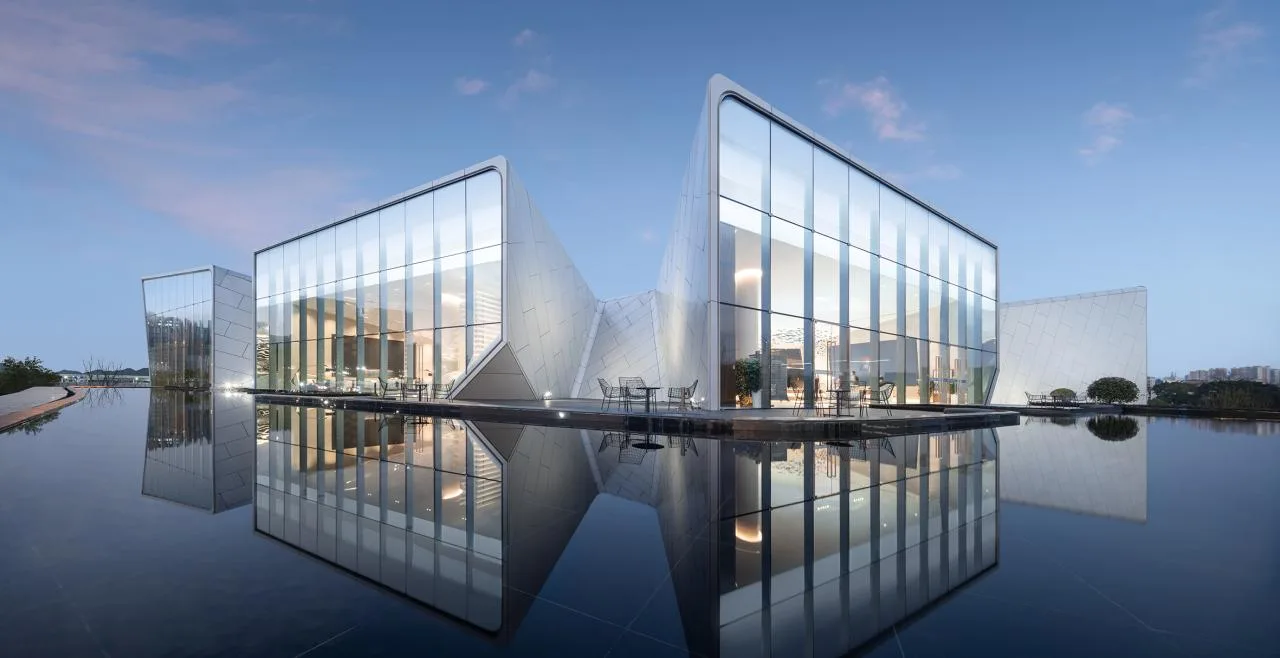
Situated on the banks of the Zhangjiang River with views of Wenfeng and Dongshan, this project capitalizes on its exceptional landscape.
The architectural design harmonizes with the natural environment, embodying industrial beauty and a futuristic sense of technology while enhancing the urban skyline.
Located in Nankang District, Ganzhou City, Jiangxi Province, China—a region renowned for its stunning natural scenery and rich Three Kingdoms cultural heritage—the site is adjacent to the Zhangjiang River and surrounded by three parks. Positioned close to water, the architecture tells a story inspired by this aquatic setting.
Linshui
Revitalizing the urban landscape through thoughtful design
Overlooking the Zhangjiang River and facing Wenfeng and Dongshan, this site sits along Furong North Avenue in Nankang District, offering sweeping river views and breathtaking scenery. The design is deeply rooted in the environmental context, blending seamlessly with the water and landscape to capture the “spirit of the place.”
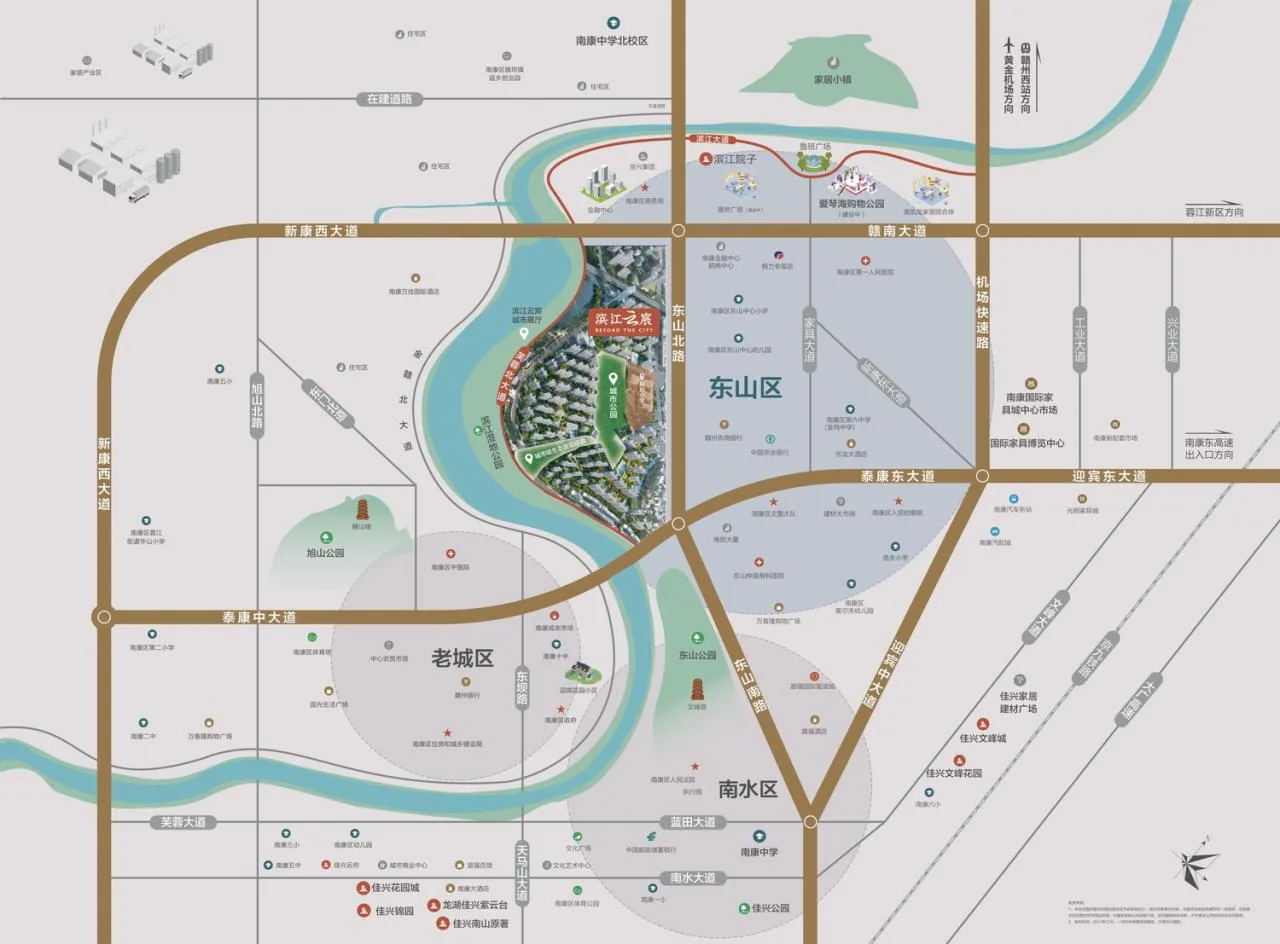
⊙ Regional Location
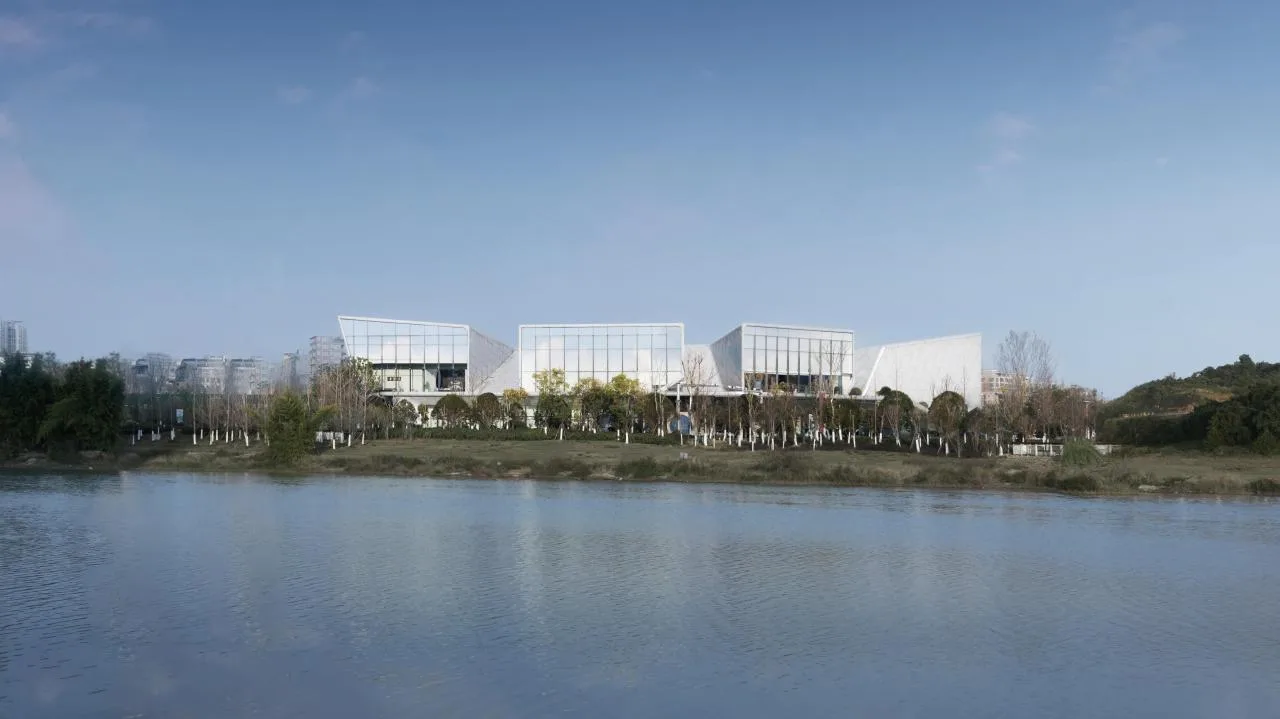
The spirit of a place reveals cultural and spiritual characteristics through the creation of spatial environments, allowing visitors to sense and appreciate its unique atmosphere. This project combines visible water elements and architecture, producing a memorable and harmonious interaction.
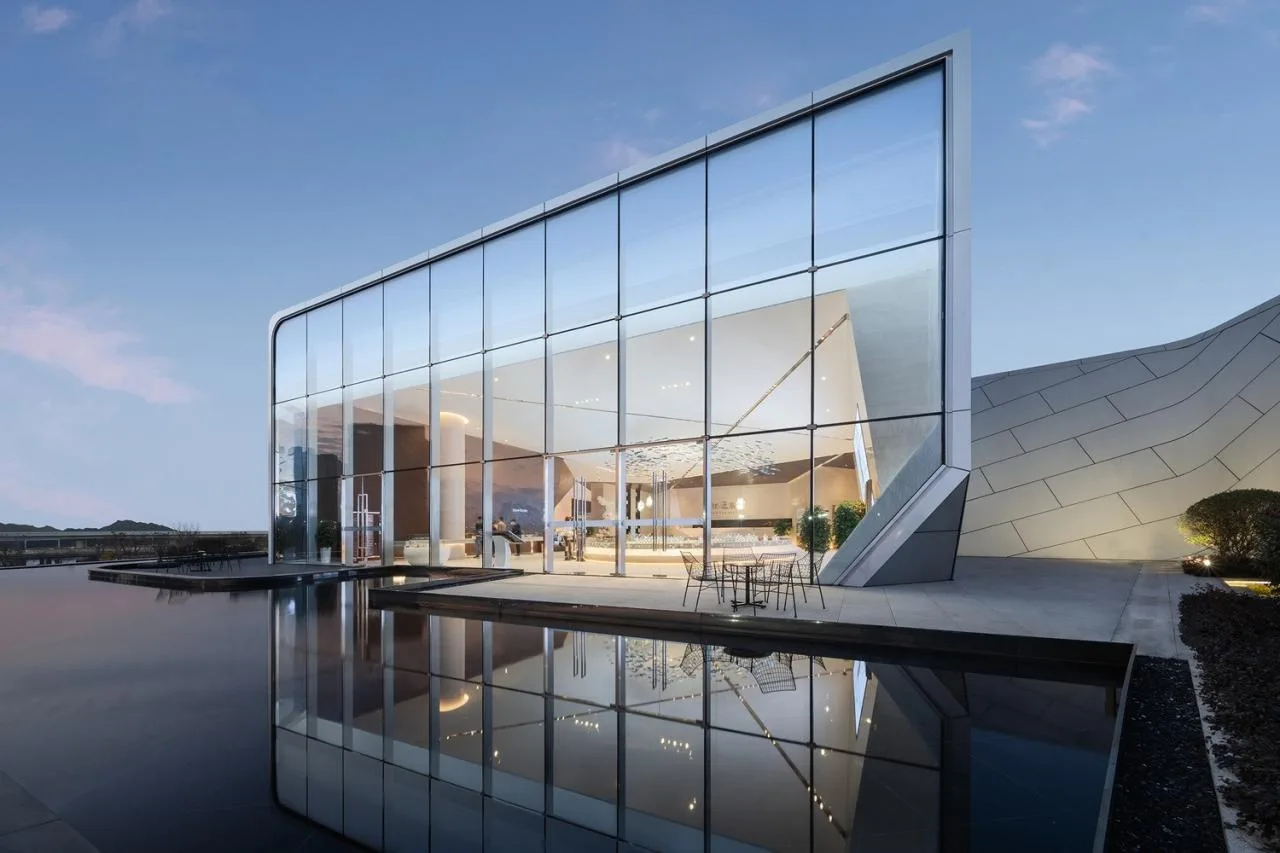
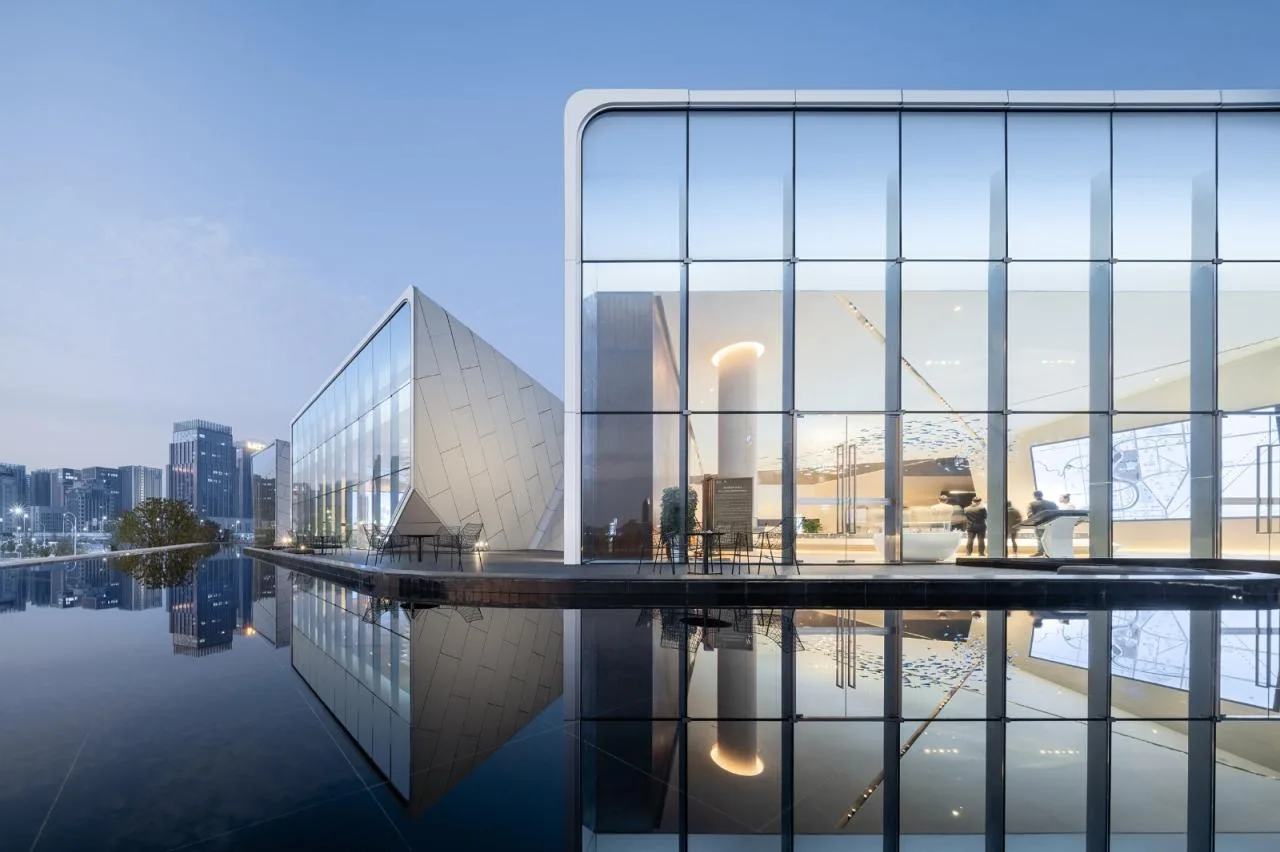
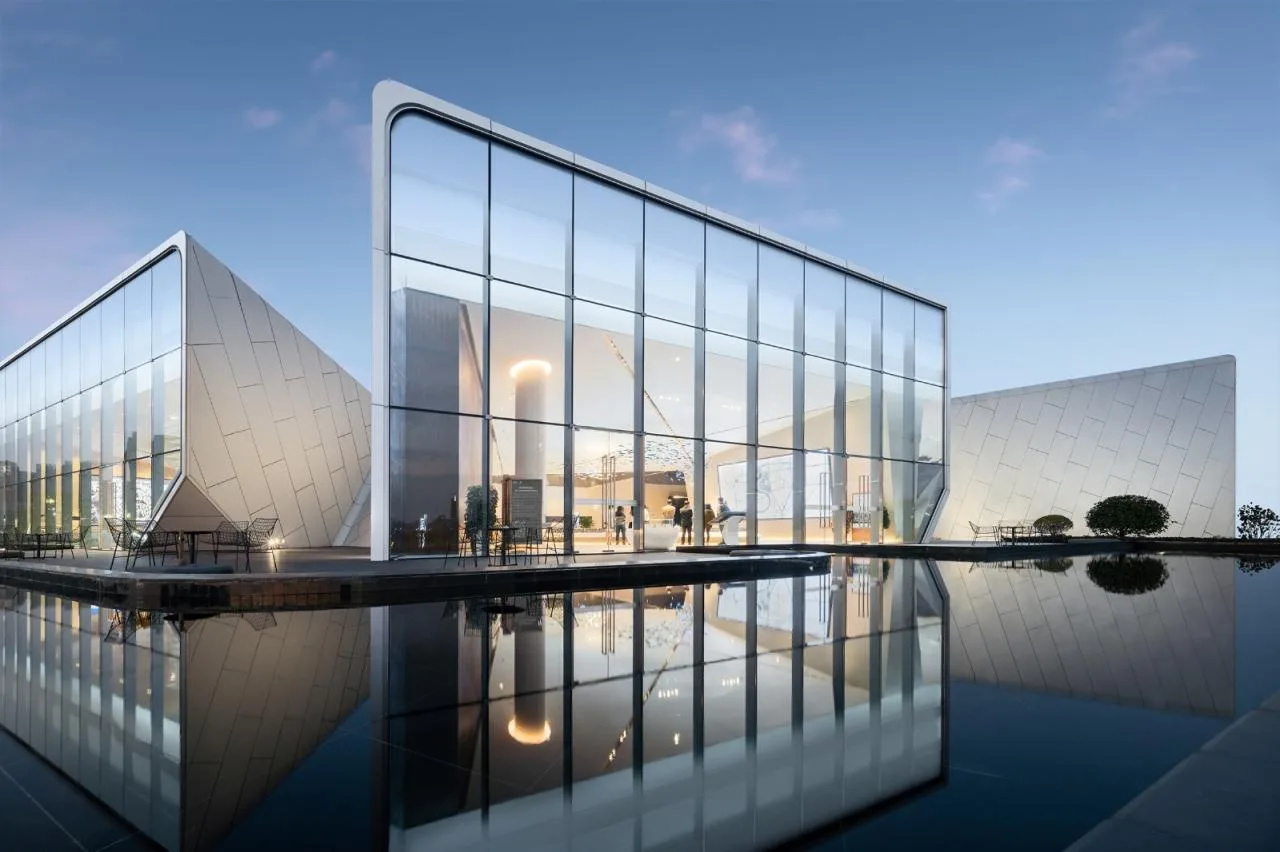
From west to east, the furthest and deepest view of the Zhangjiang River is framed by the Canglang Window. The widest southern water scenery unfolds at the Qianqing Window, with distant views of Wenfeng Tower through the Window, and the City Window directs attention toward the park on the inner shore. Roads separate the buildings, requiring raised windows to overcome obstacles and extend sightlines.
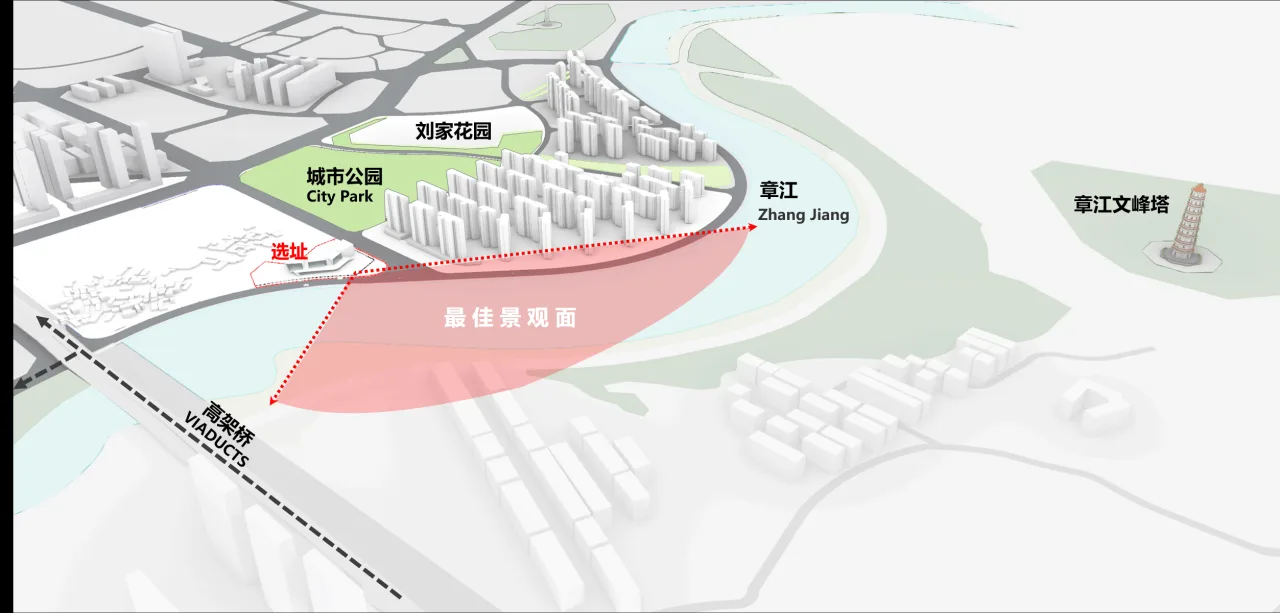
⊙ Visual Analysis
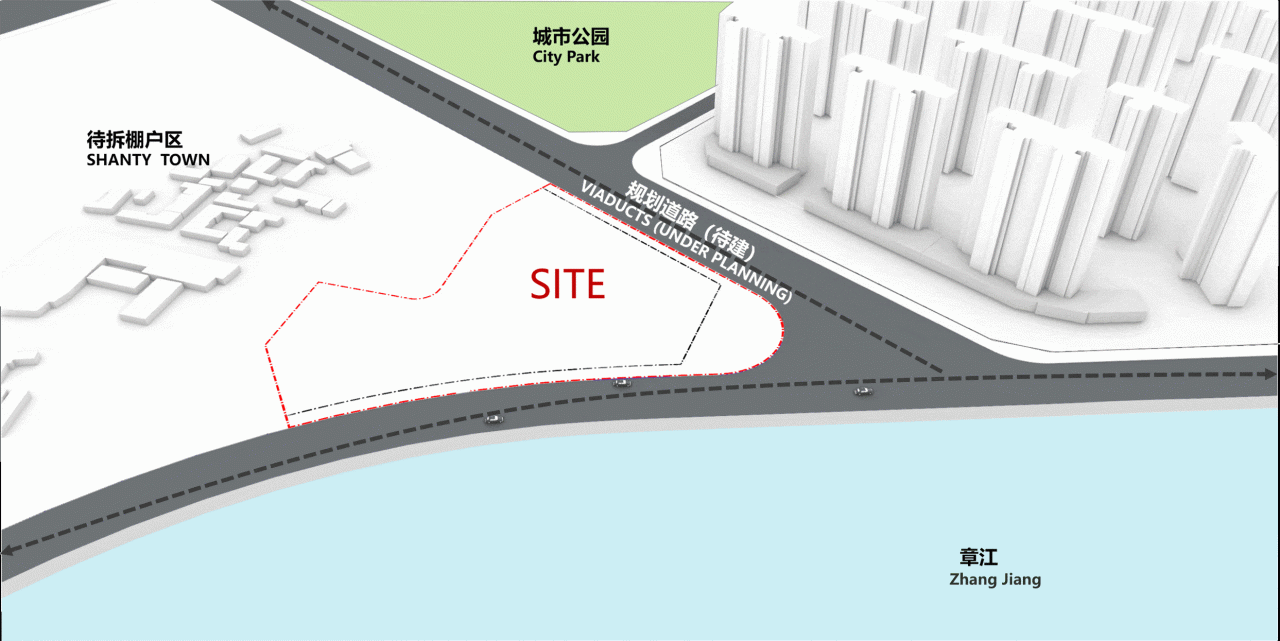
The site is bordered by roads on both sides, resulting in an irregular shape. Through a complementary architectural and landscape design, an overall cohesive and immersive visitor experience was achieved.
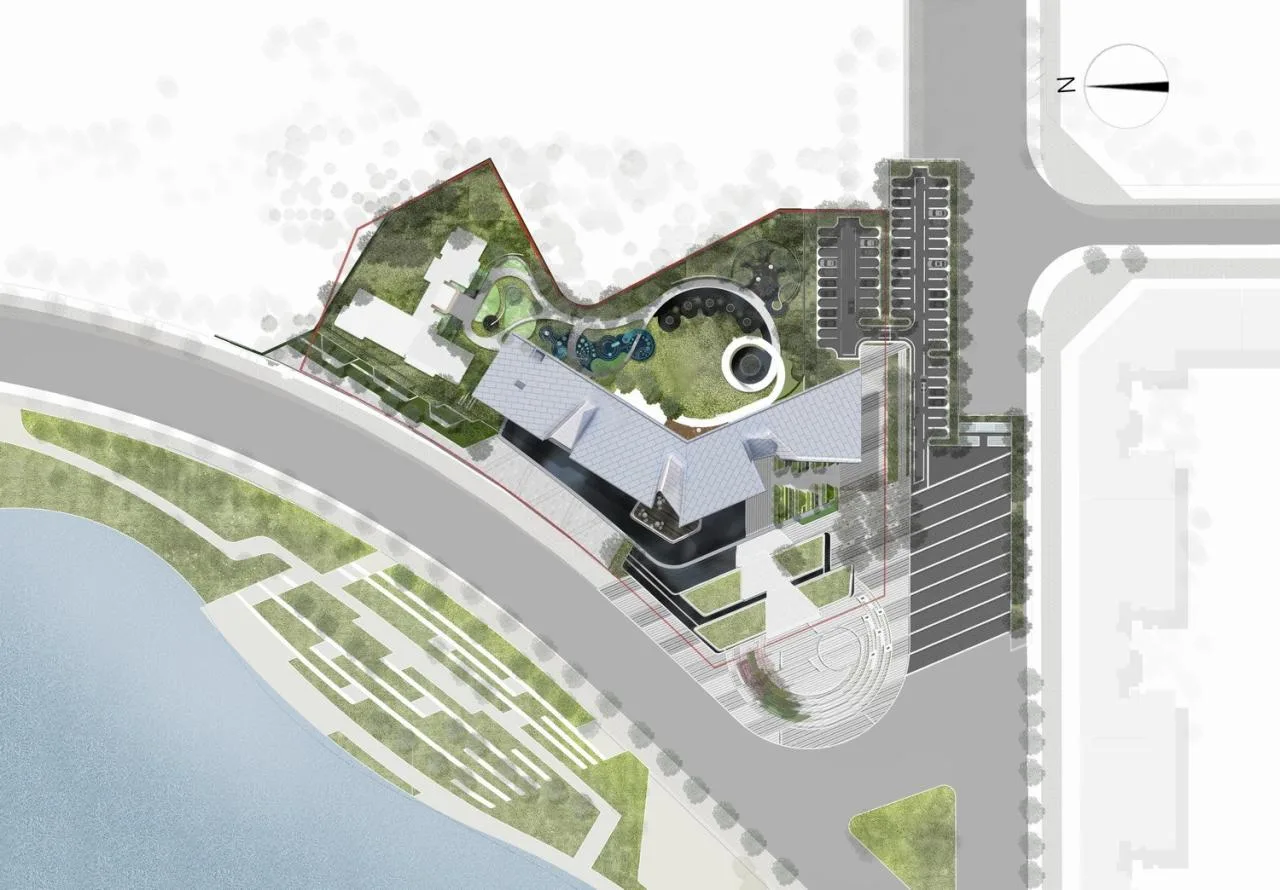
⊙ General Layout Plan
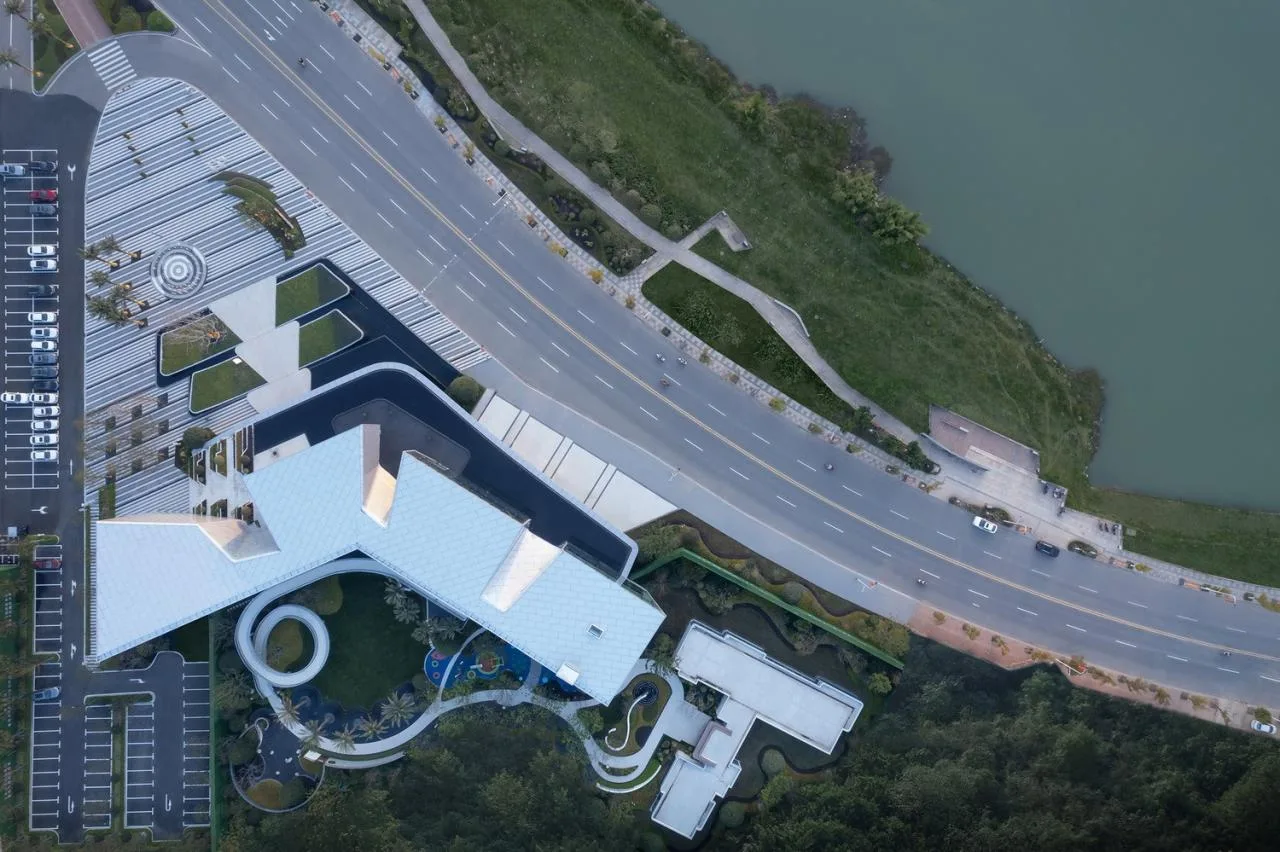
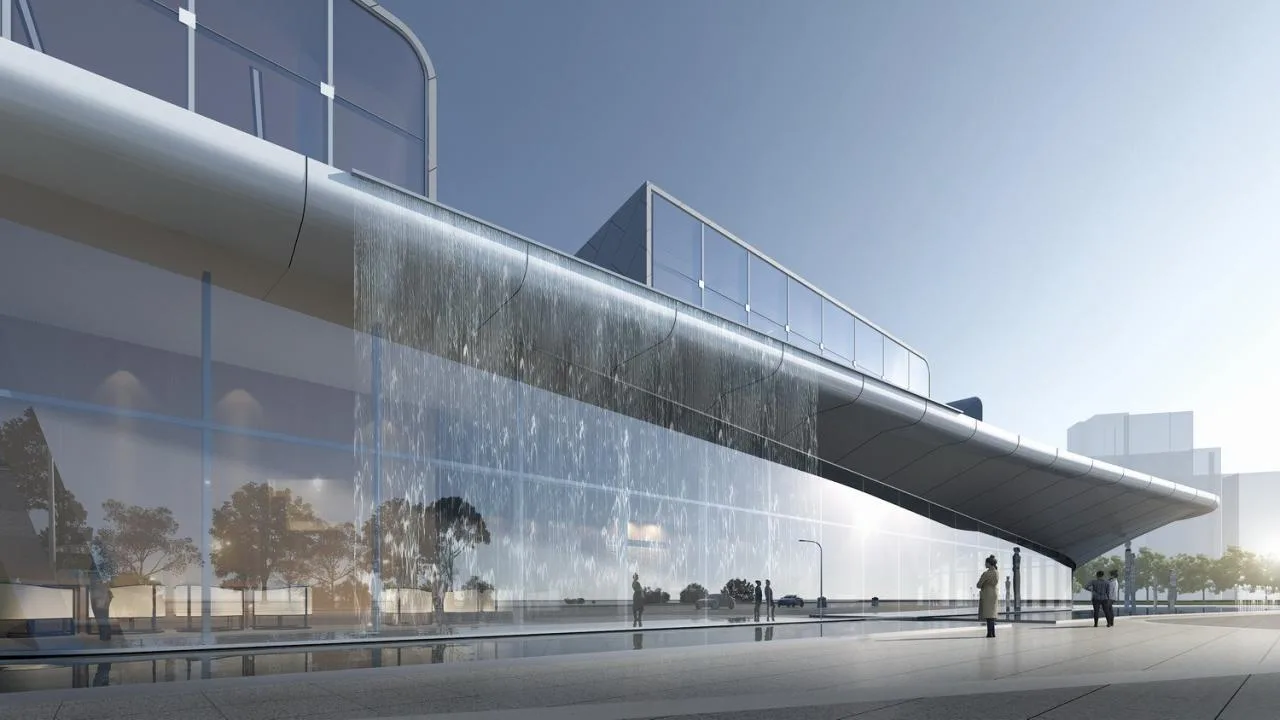
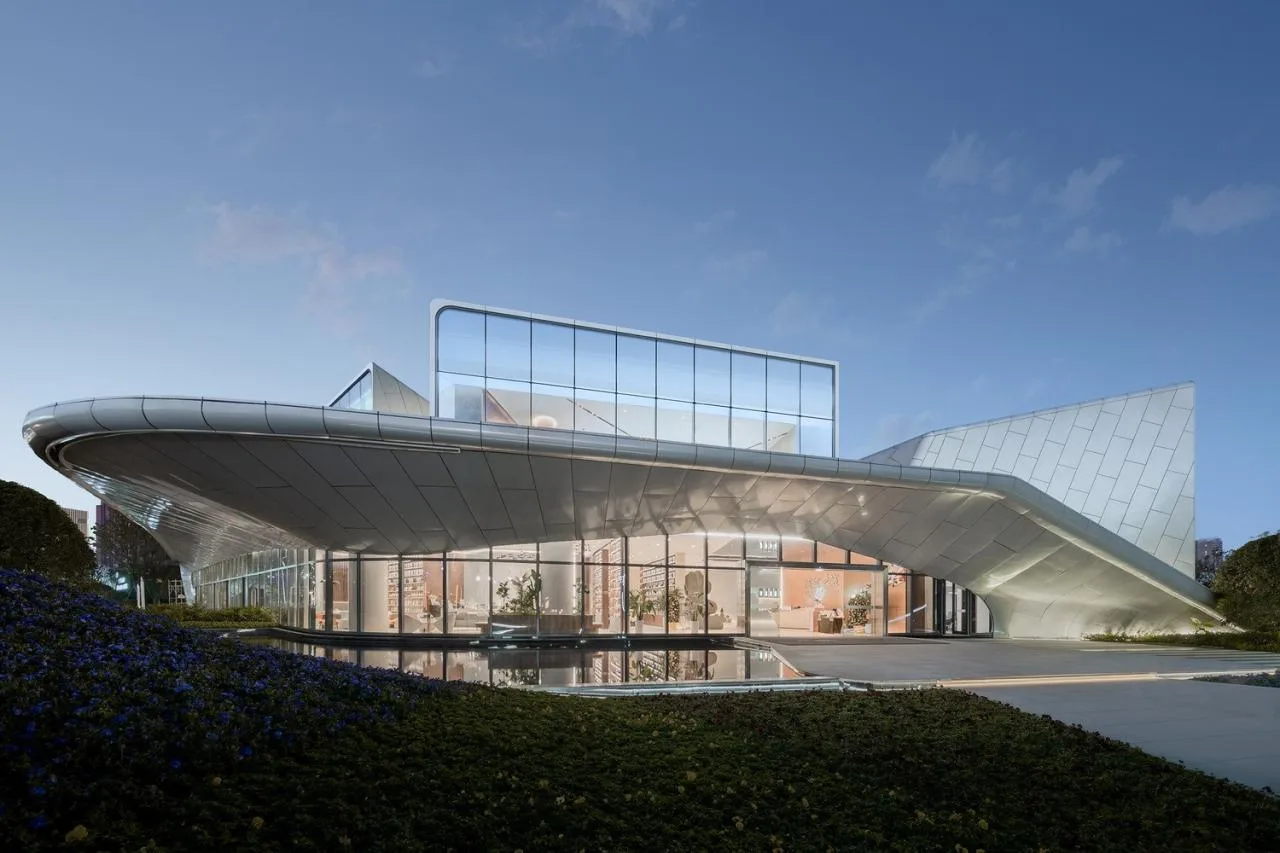
From afar, the building resembles a technological ark floating on water. Its sleek, monochromatic metal exterior blends seamlessly with the sky and river hues. Up close, the design mimics waves, encircled by water features and flowing curtains, telling a story of water and the image of a waterborne ark.
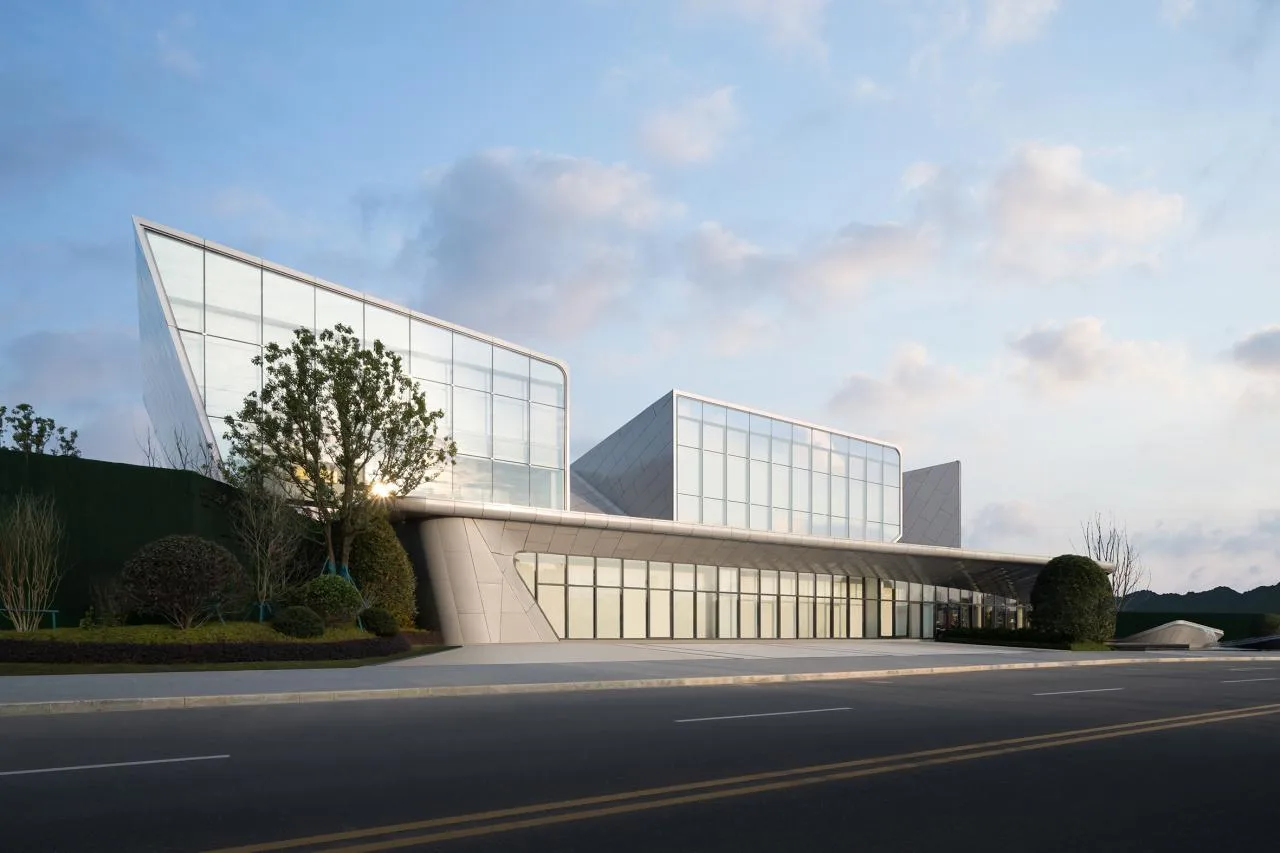
Architectural Form
Crafting a technological ark with streamlined shapes
Prioritizing landscape integration and expressing industrial beauty with a technological flair, multiple design options were explored. Inspired by concepts like “forest stream,” “spray,” and “four rivers returning to the hall,” the final design embraces the “technology ark” theme—featuring spacious, bright French windows and smooth, concise forms.
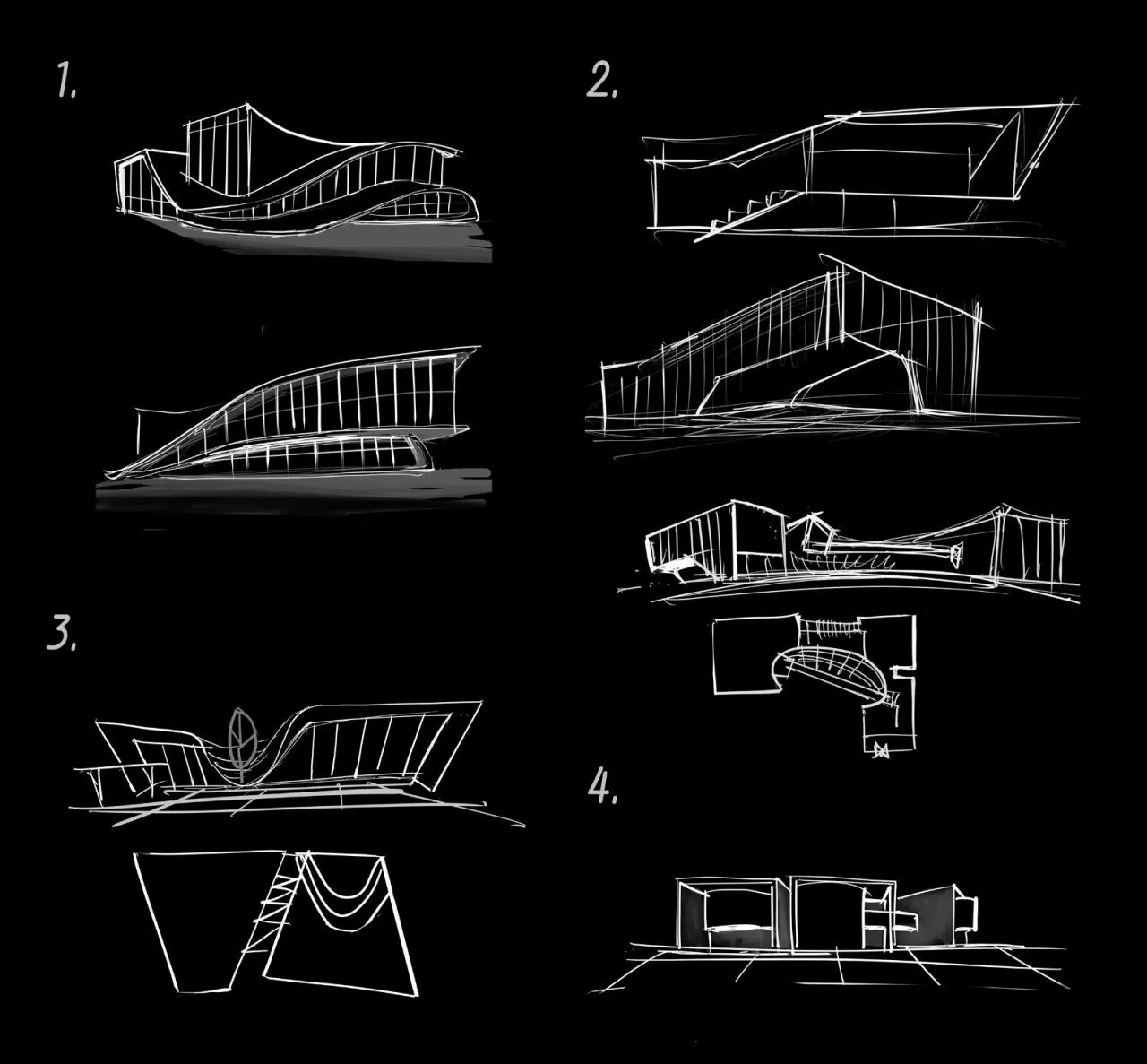
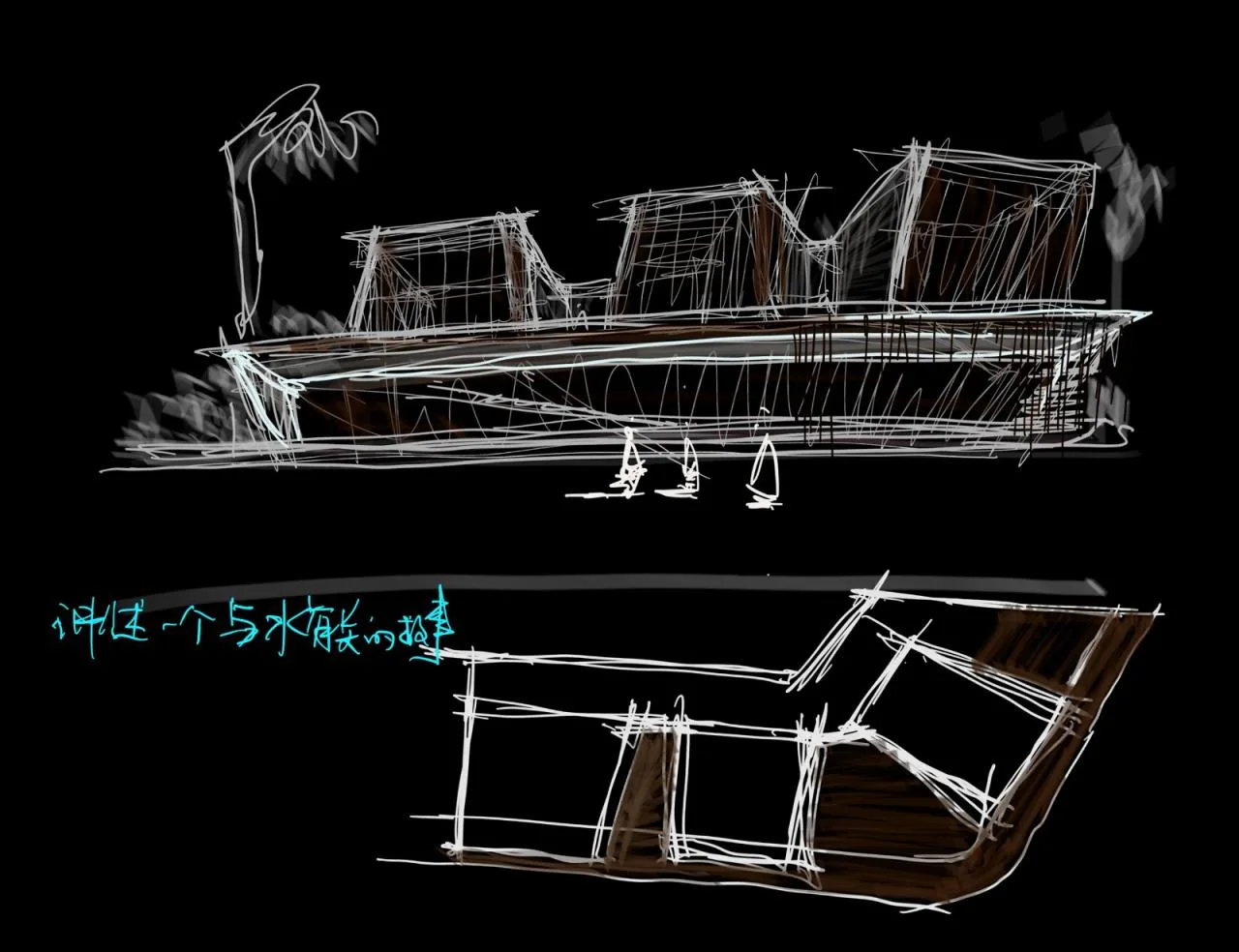
⊙ Hand-Drawn Display
Form Generation
Located at a road intersection and adjacent to a city park, the site’s northern boundary suffered from demolition, lowering its landscape value. The building extends along the Zhangjiang River, rotated to fit the plot. At the T-shaped junction, an entrance plaza is created, with segmented blocks forming a framing effect. Landscape resources are maximized by using “windows” as frames targeting important distant views.
⊙ Form Development
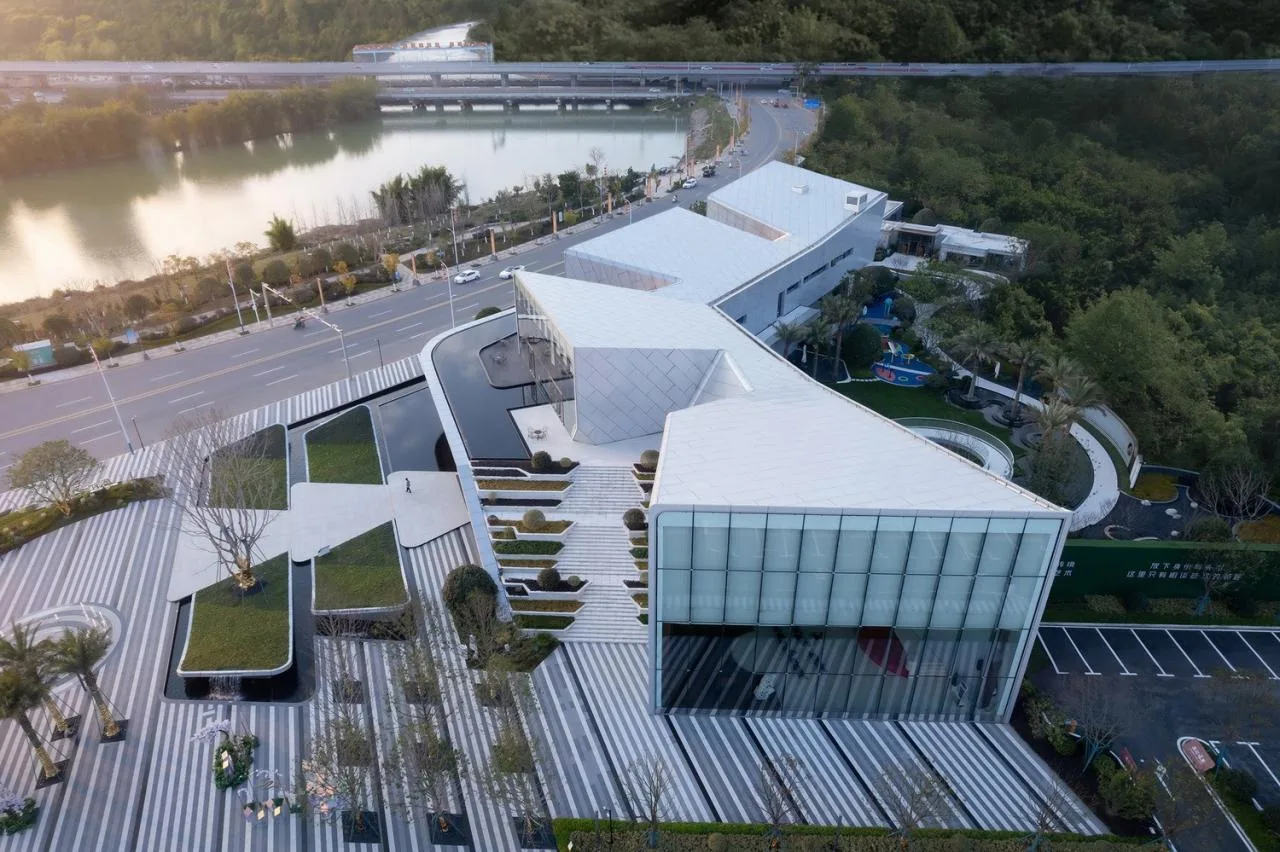
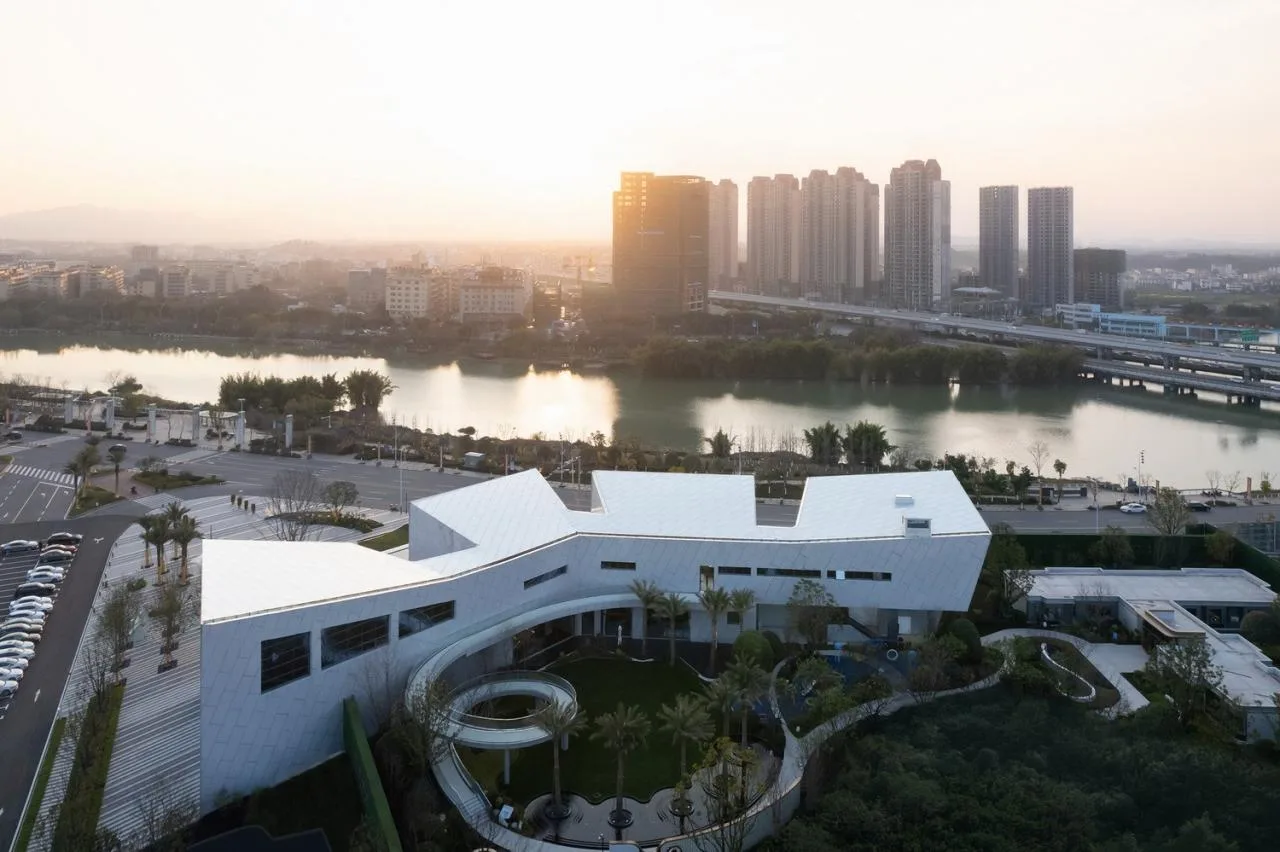
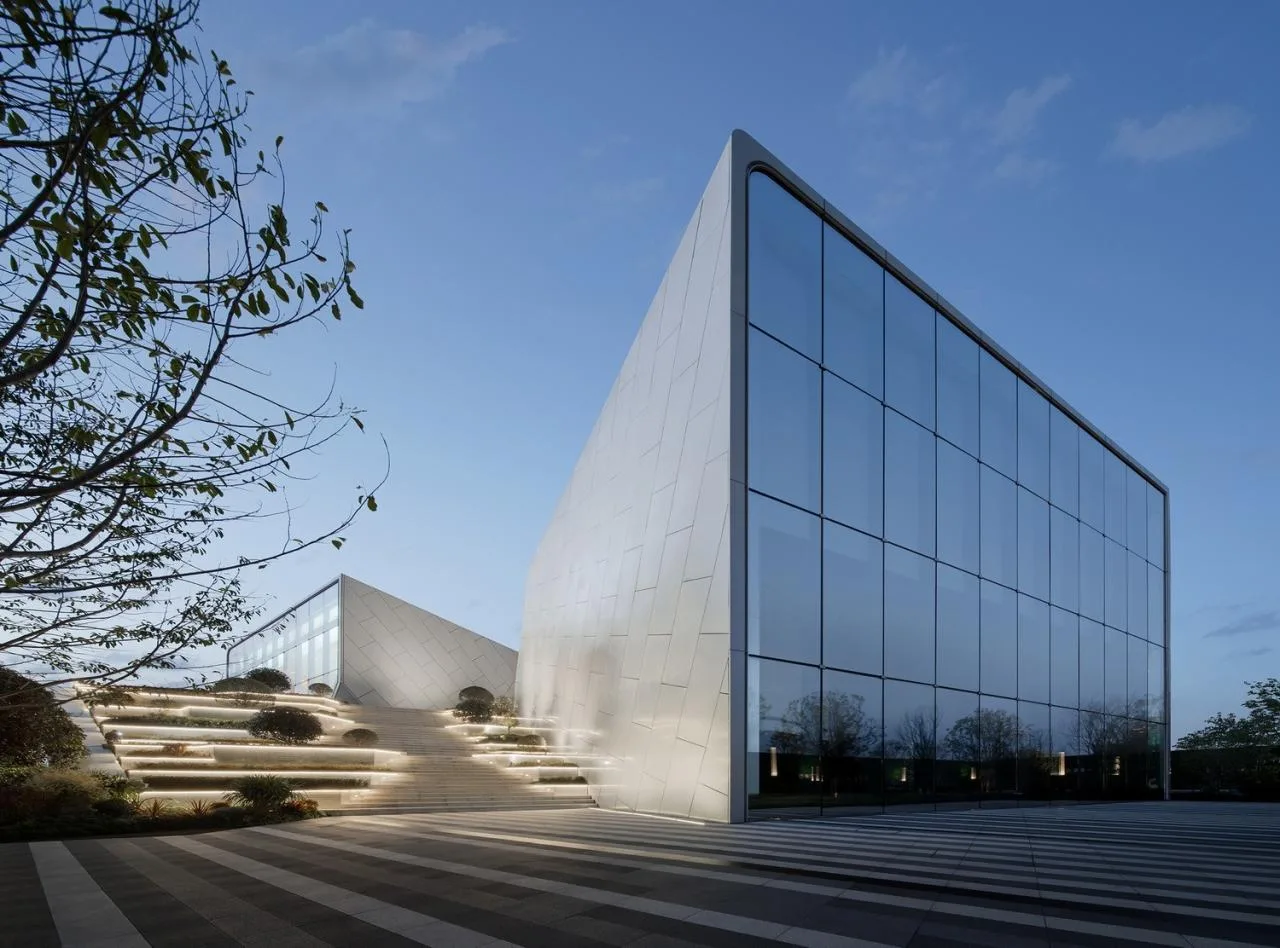
The entrance plaza landscaping is meticulously arranged using simple geometric forms that ascend in layers, echoing the building’s platform like waves rolling ashore. The building’s base evokes the essence of waves.
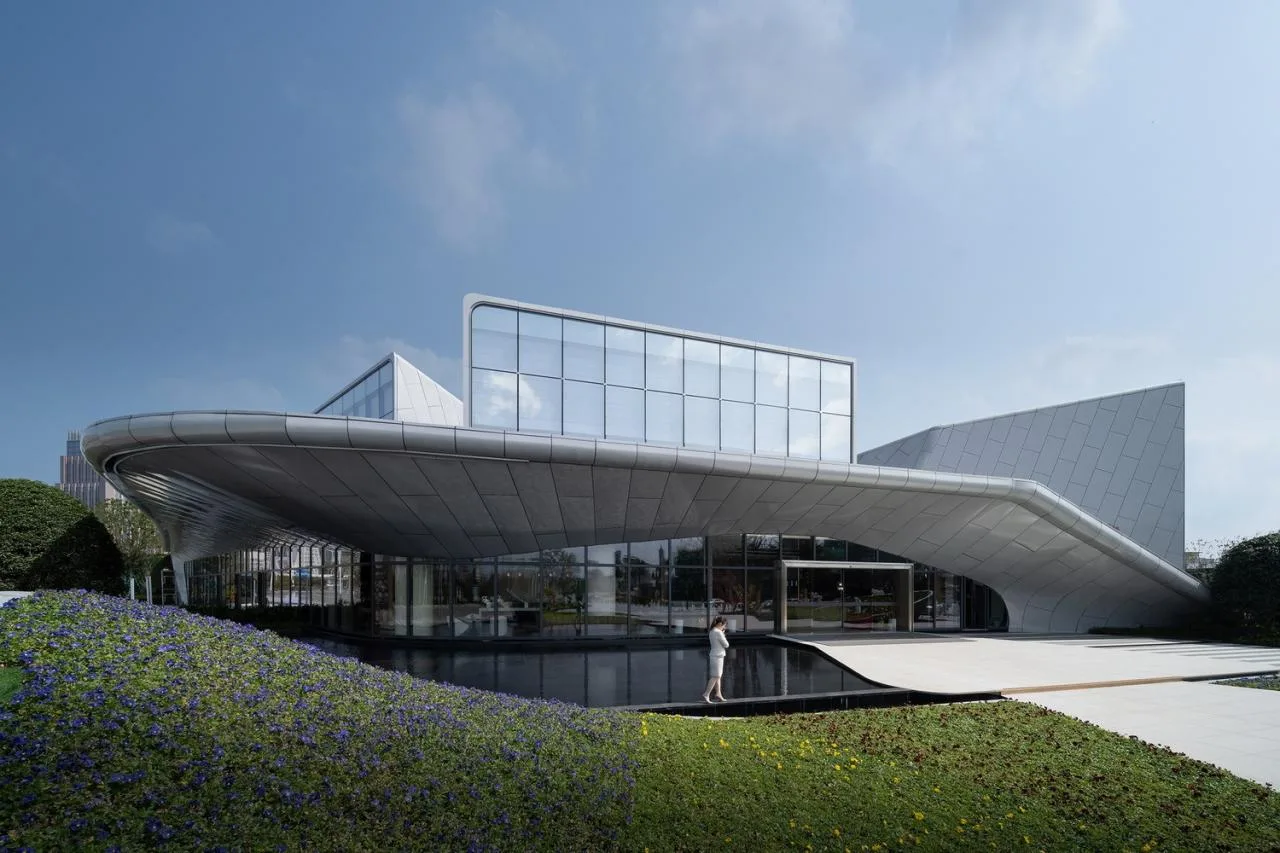
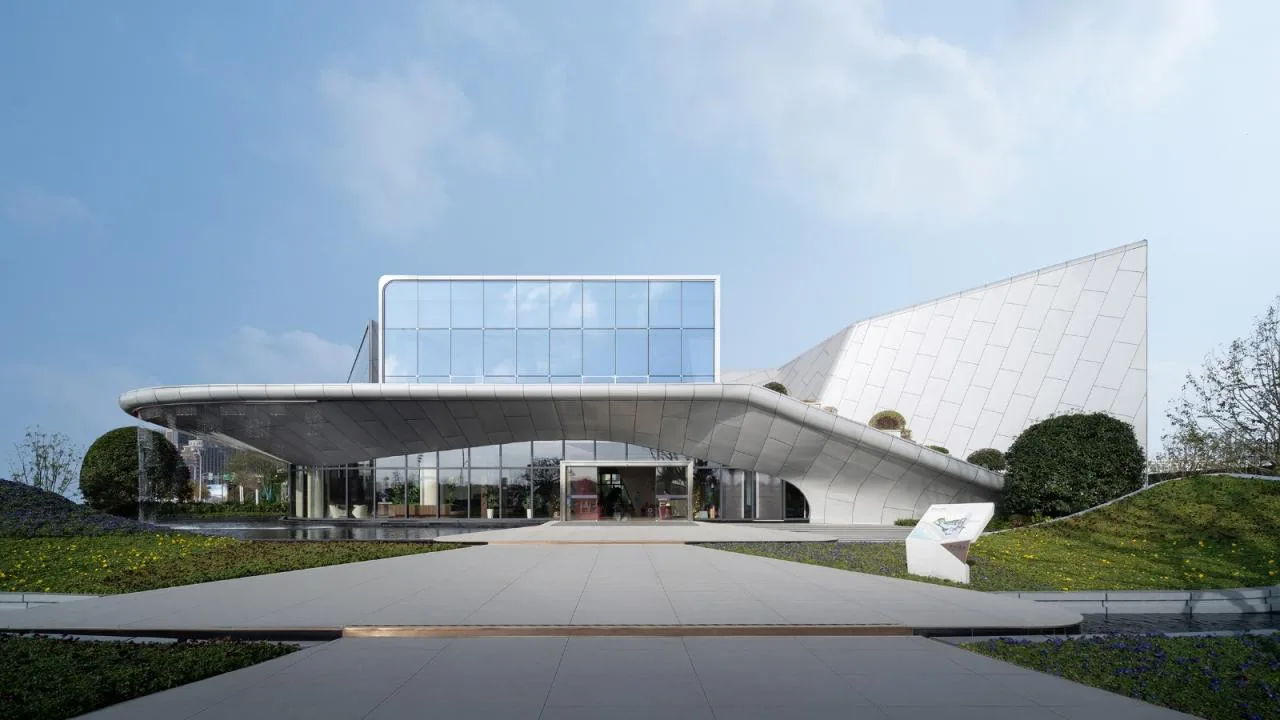
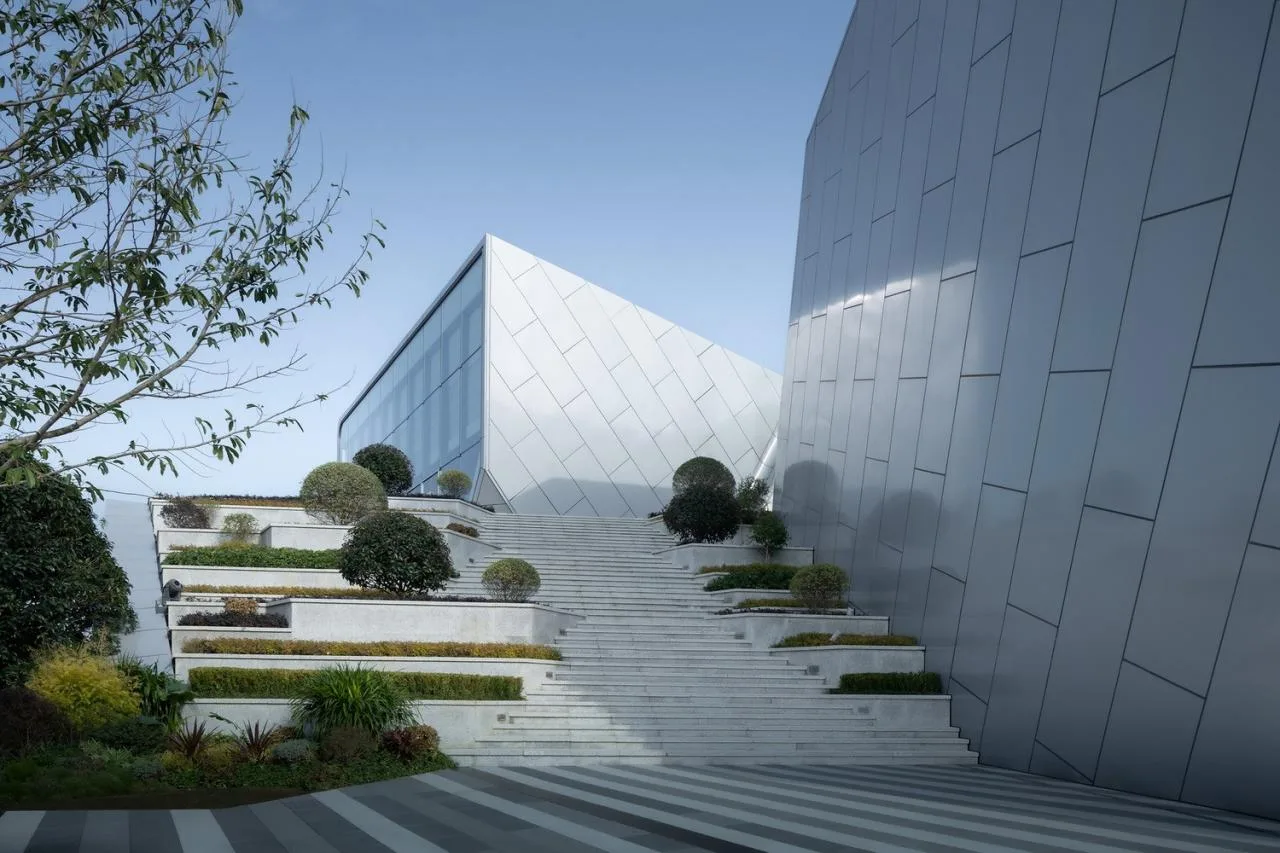
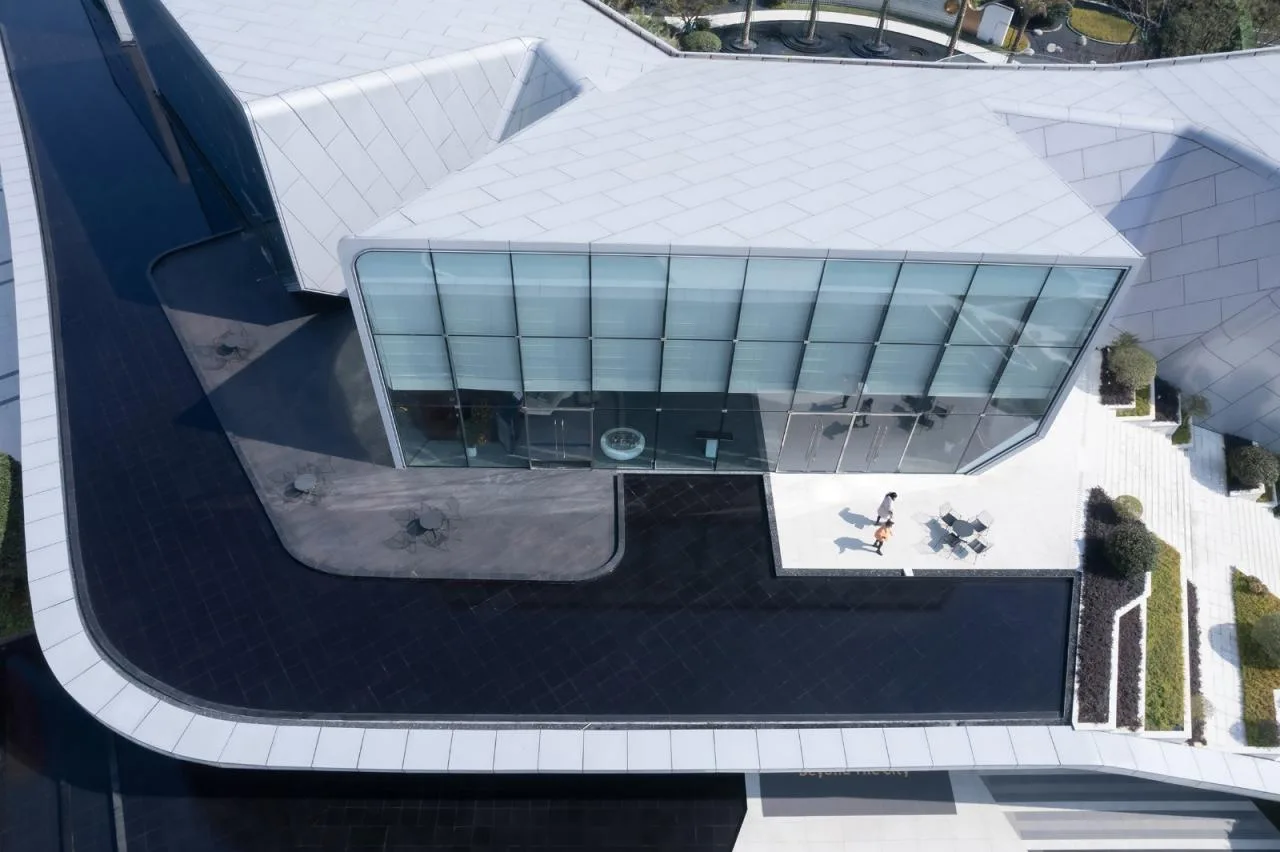
From the entrance, the platform wrapping around the building reinforces the concept of a technological ark. Ascending the stairs to the second-floor platform offers a water-friendly gathering space and enhances the purity of views through the water-facing windows. These design elements amplify the spatial character and highlight the spirit of the place.
⊙ Renderings
Water elements run through the entire visitor experience—from the entrance landscape to the extended second-floor platforms. Water is represented from surface level to cascading curtains, seamlessly integrating architecture and landscape. This synergy fosters memorable experiences rooted in the spirit of the place.
The rear courtyard offers a secluded, tranquil space with a uniquely irregular shape. Curved ramps define the boundaries, with vibrant colors animating the area. Spaces are designated for children’s play and group activities.
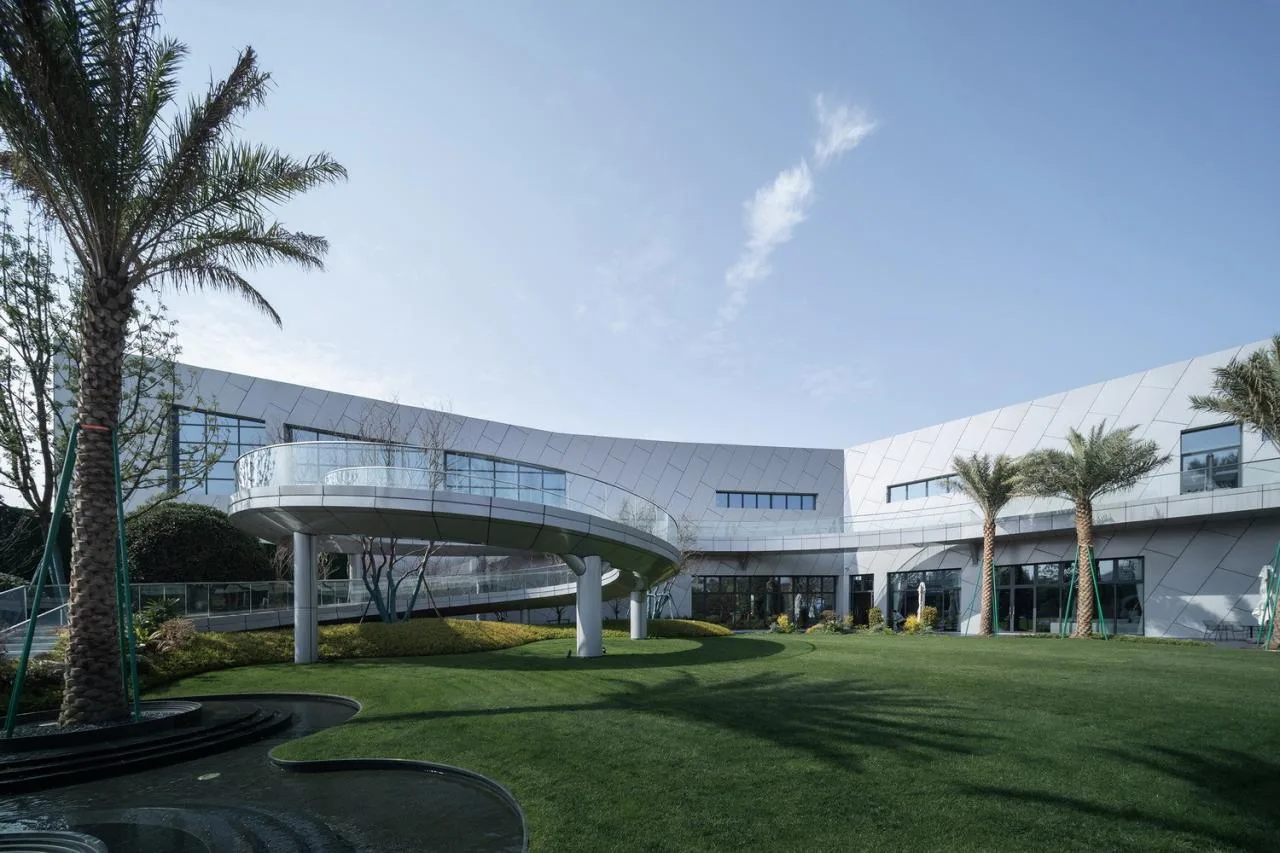
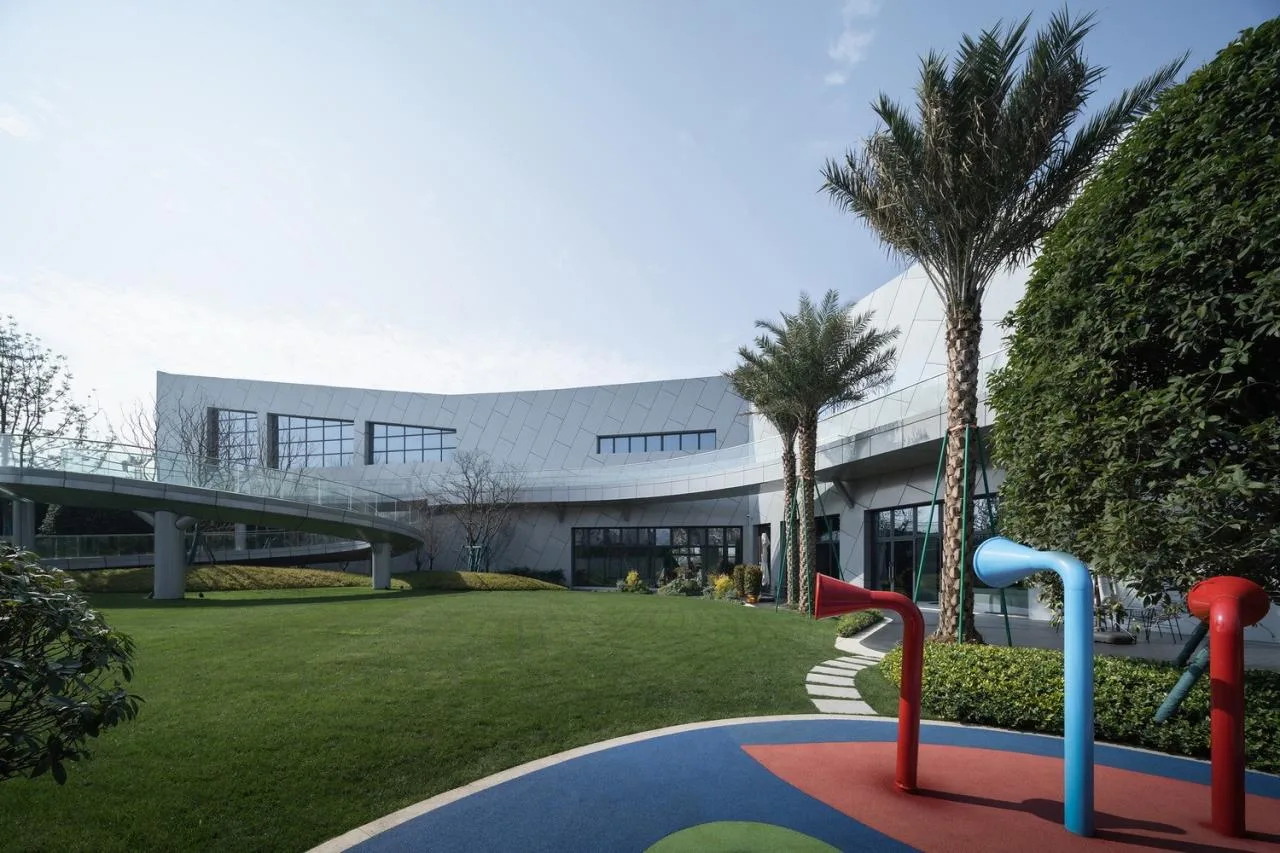
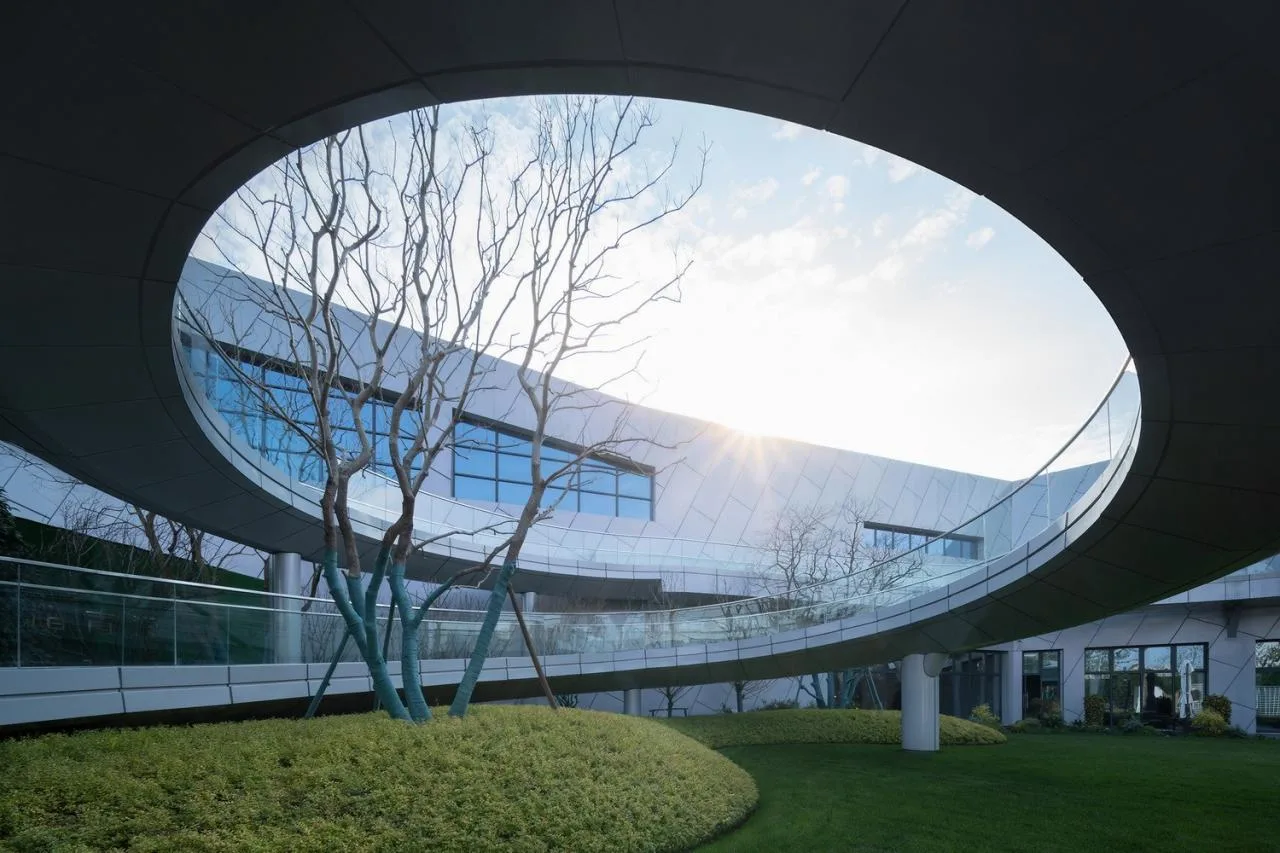
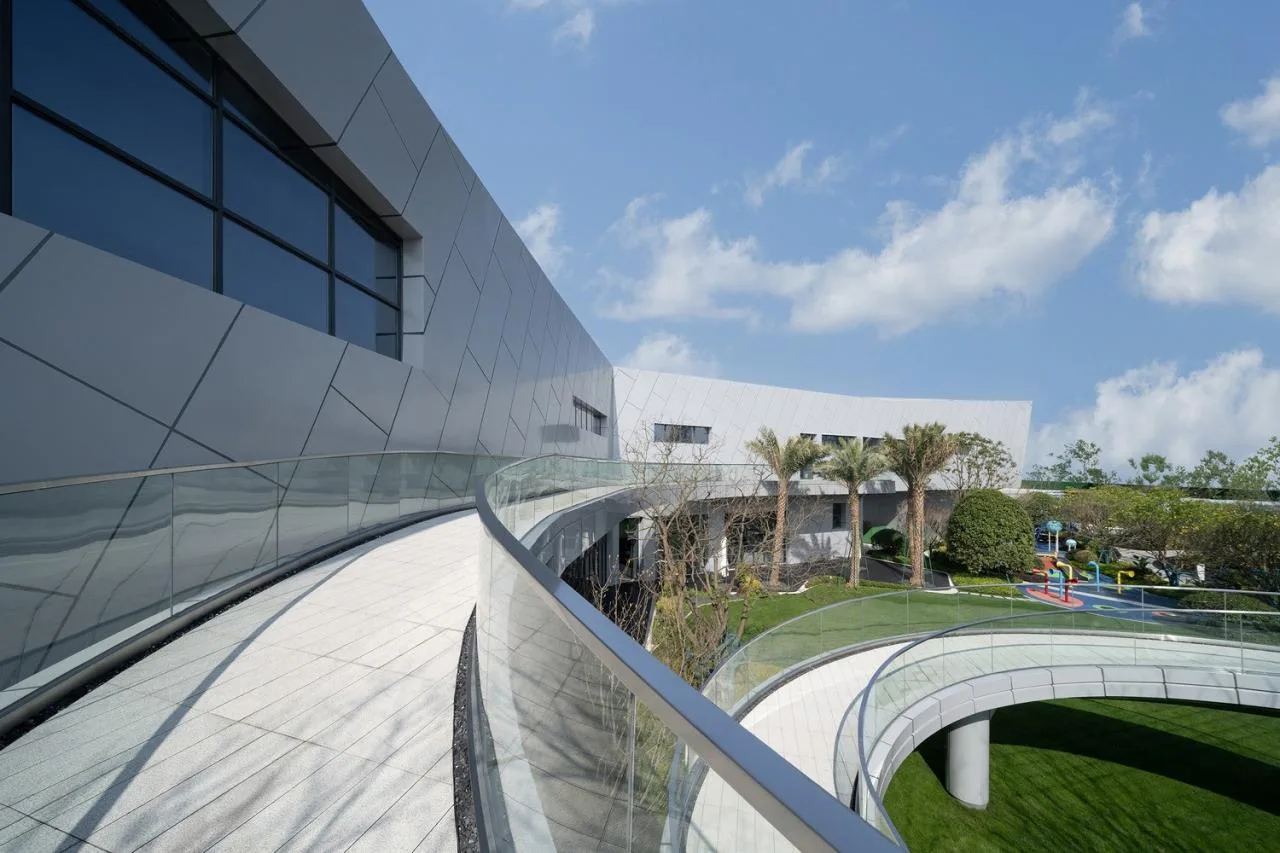
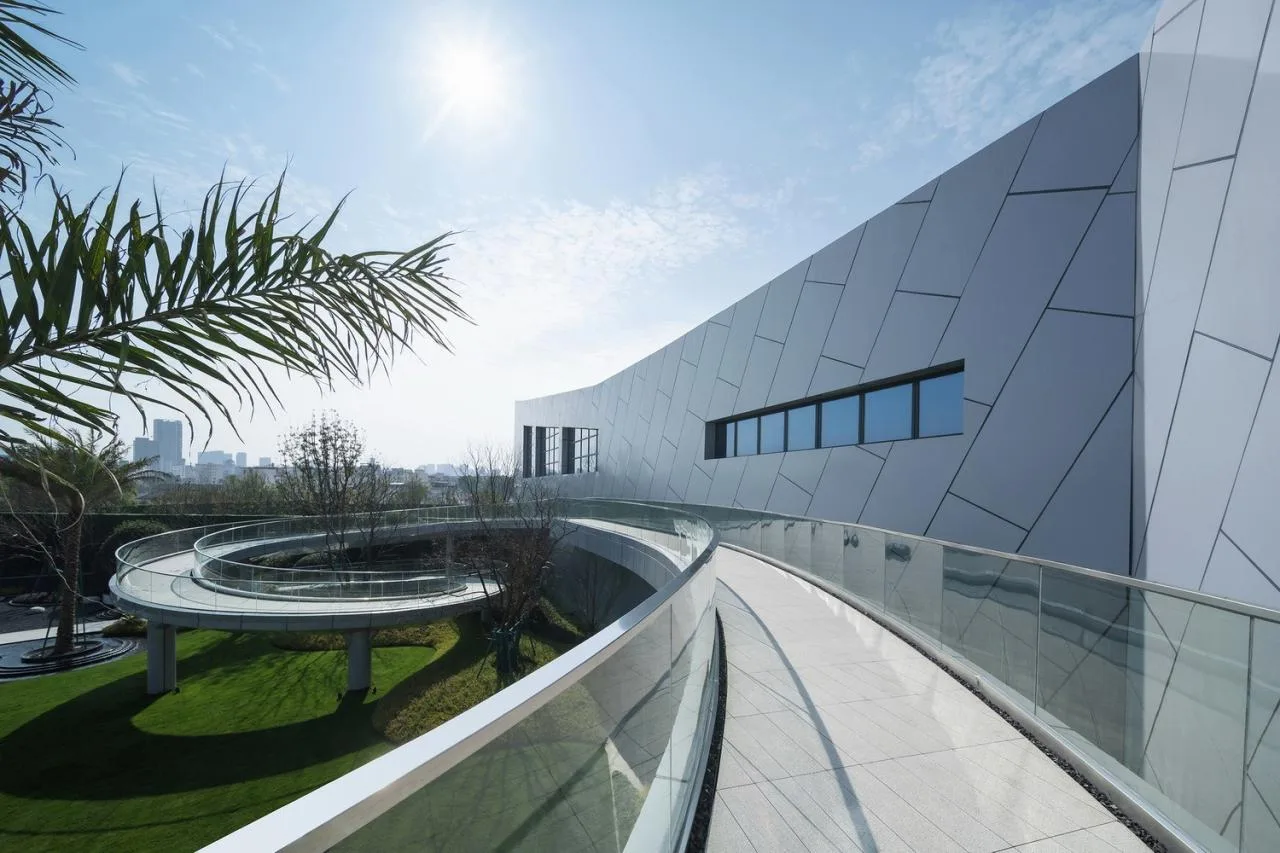
The smoothly curved ramp softens the site’s irregular shape, enhancing pedestrian flow and creating diverse gray spaces within the expansive outdoor area. Overlapping corridors and alternating light and shadow enrich the landscape’s visual depth.
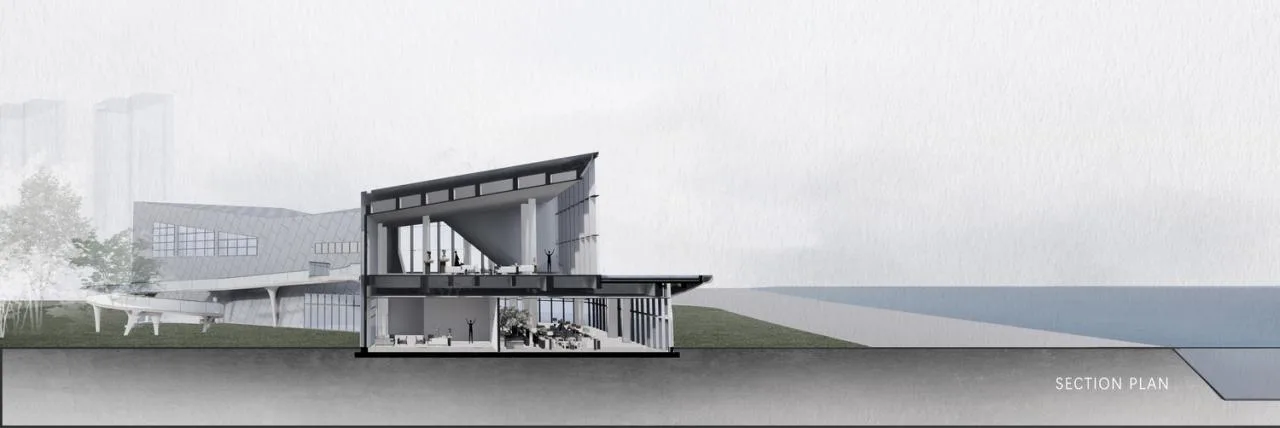
⊙ Sectional Drawing
Seiko
Achieving exceptional quality control through meticulous details
From an urban planning perspective, this project serves a social role as a microcosm of the riverside metropolis. It incorporates multifunctional spaces including coffee bars, bookstores, performance halls, private banquet rooms, the Nankang Yunshu Museum, and Yunqi Space. The design aims to create a vibrant thematic exhibition area offering a rich, multidimensional experience.
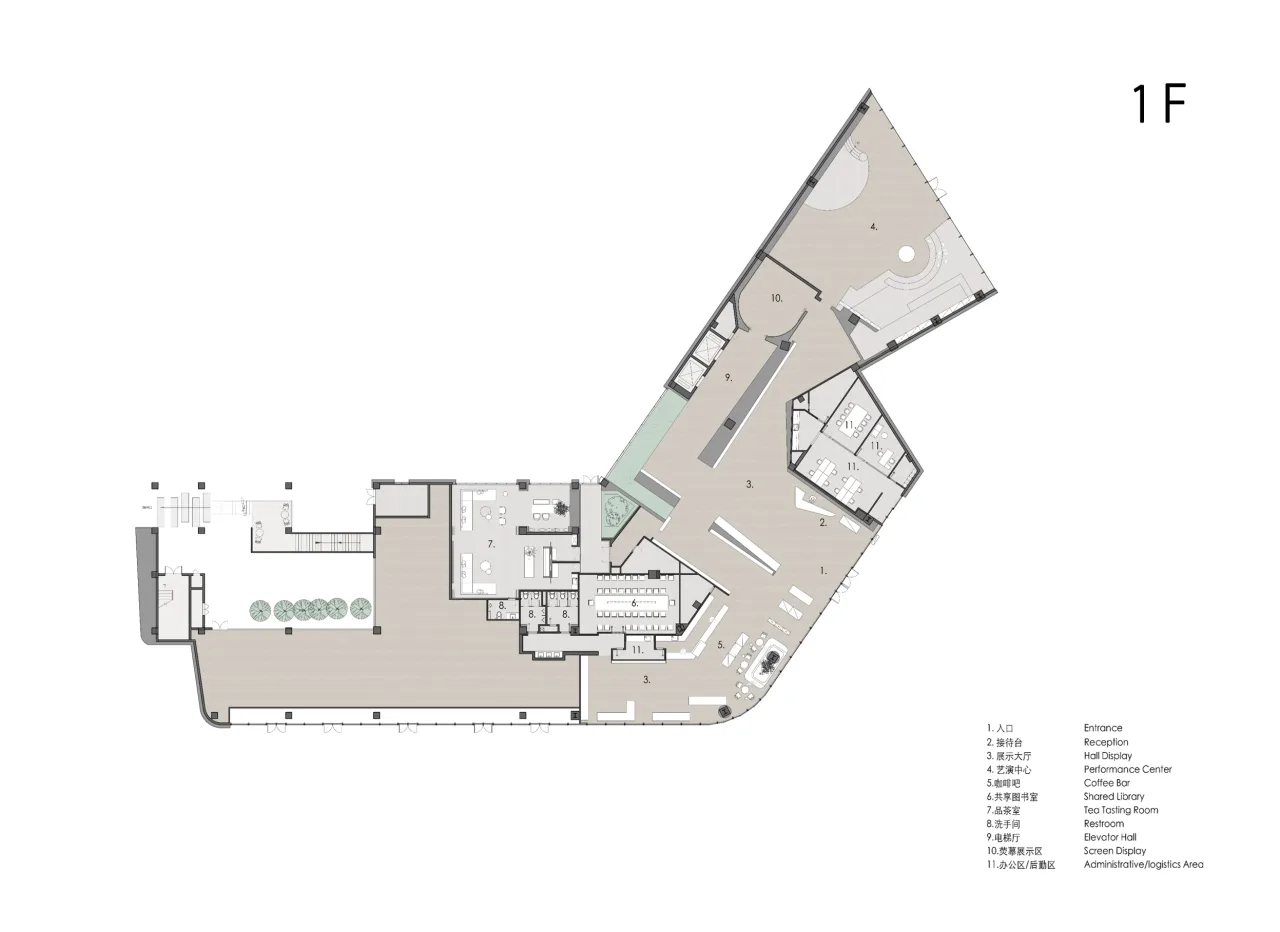
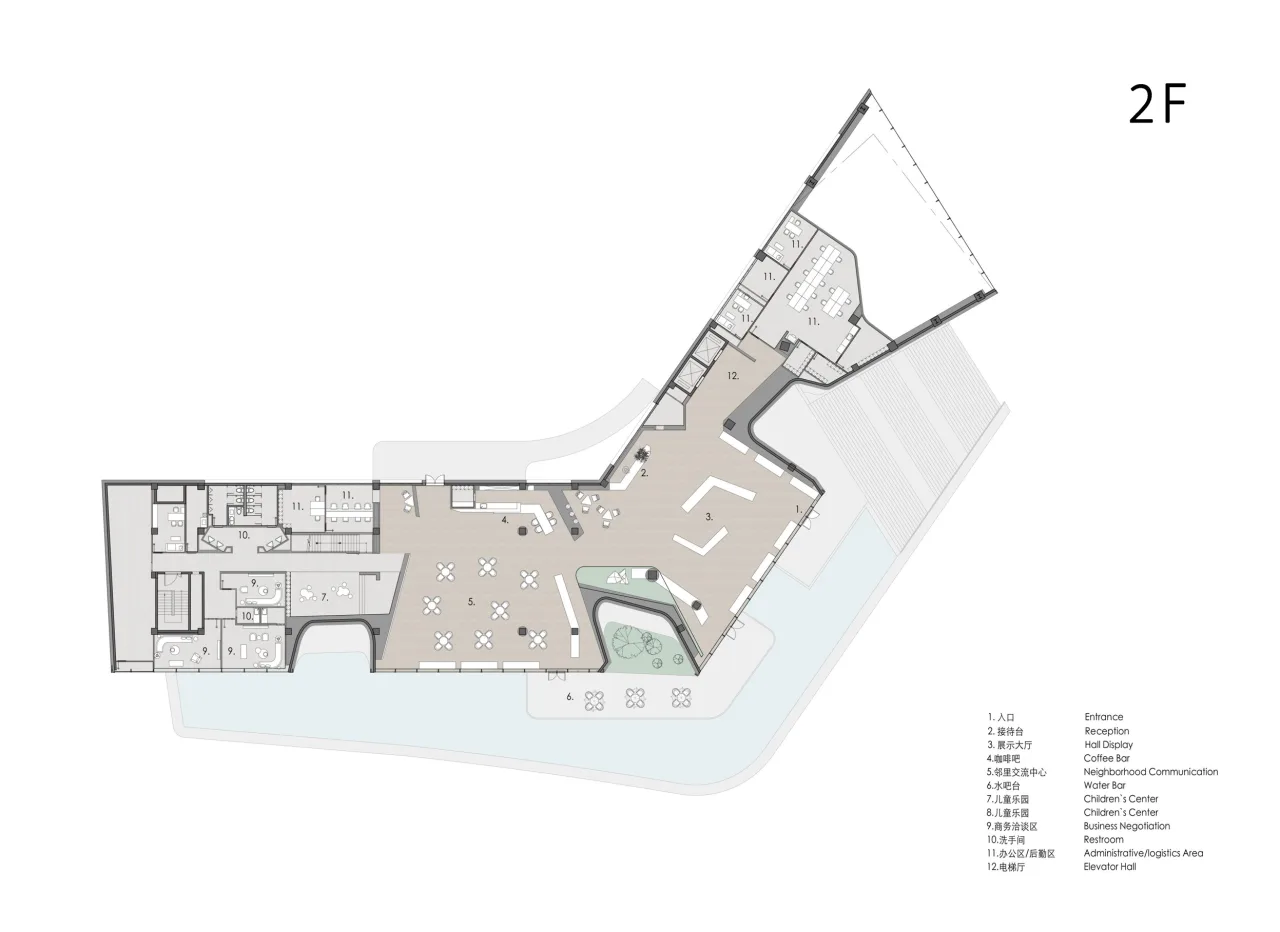
⊙ Plan View
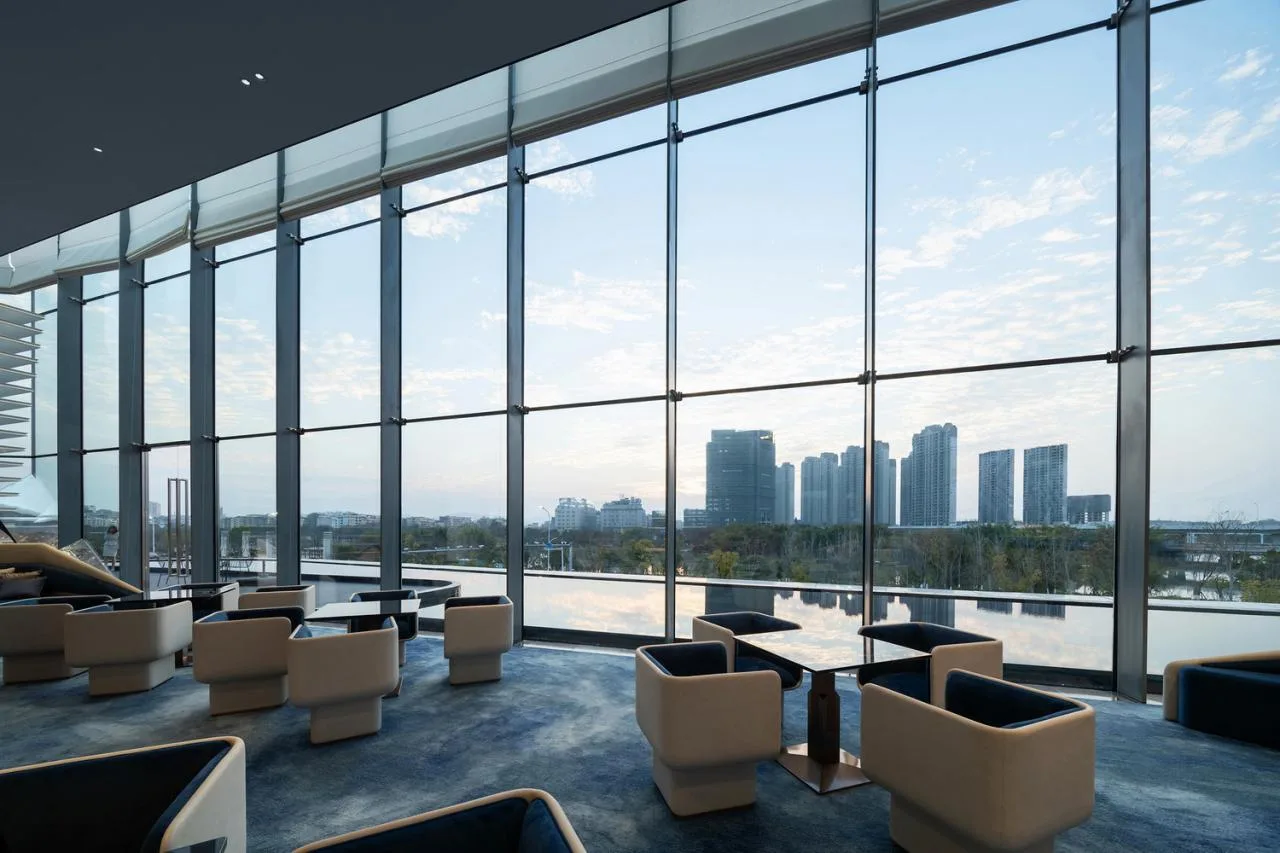
Large, tall windows provide excellent views for visitors. These expansive glass surfaces have been a crucial design element, fully showcasing the beauty of the city’s riverscape.
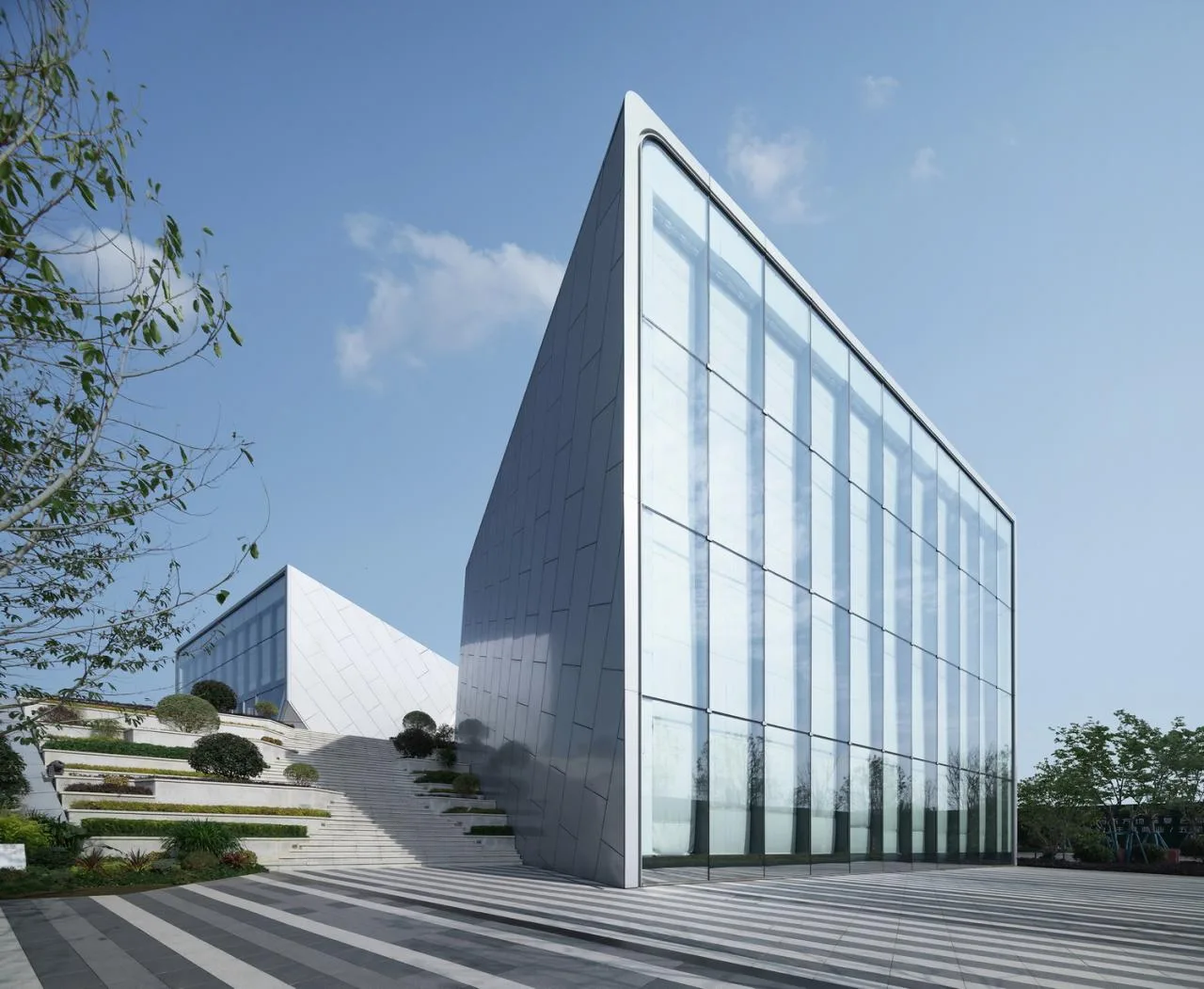
The large-scale crystal-clear glass demands high standards in both scale and texture. Considering the height of the glazing posed significant structural challenges, brushed stainless steel ribs were selected for their lightweight, slender profile and superior strength, adding a modern touch.
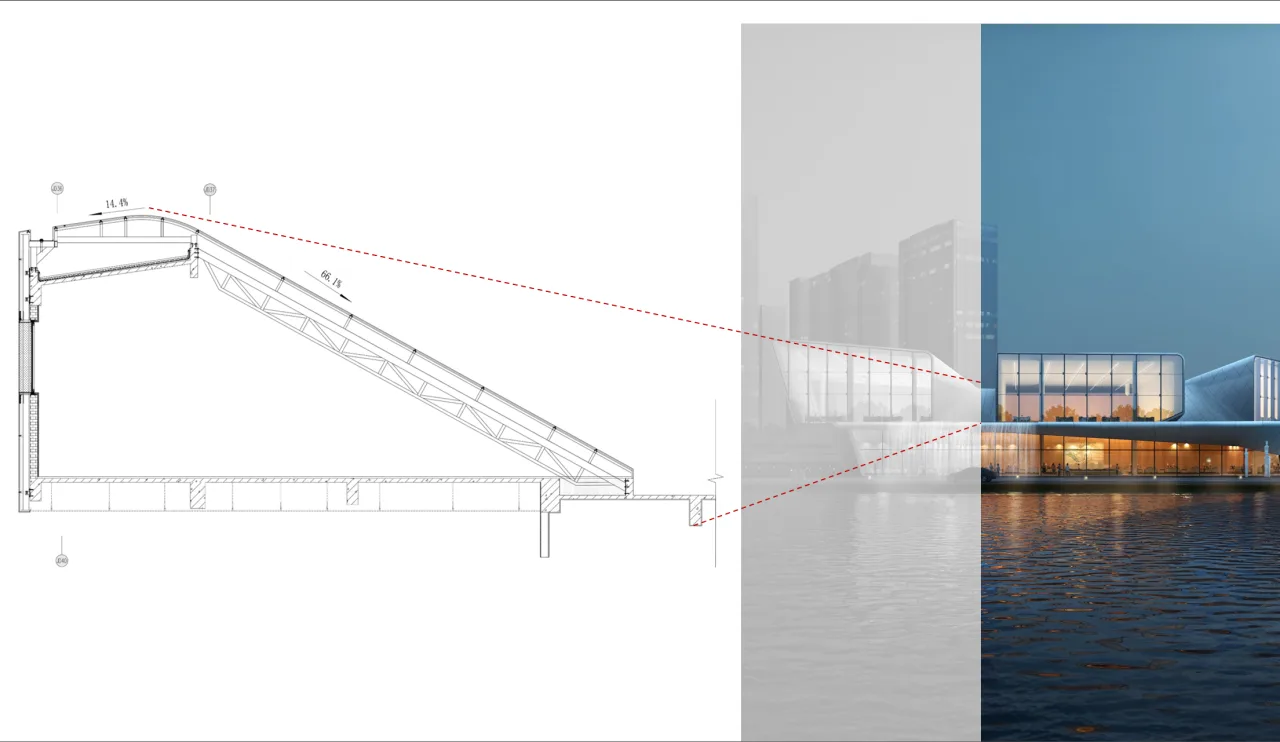
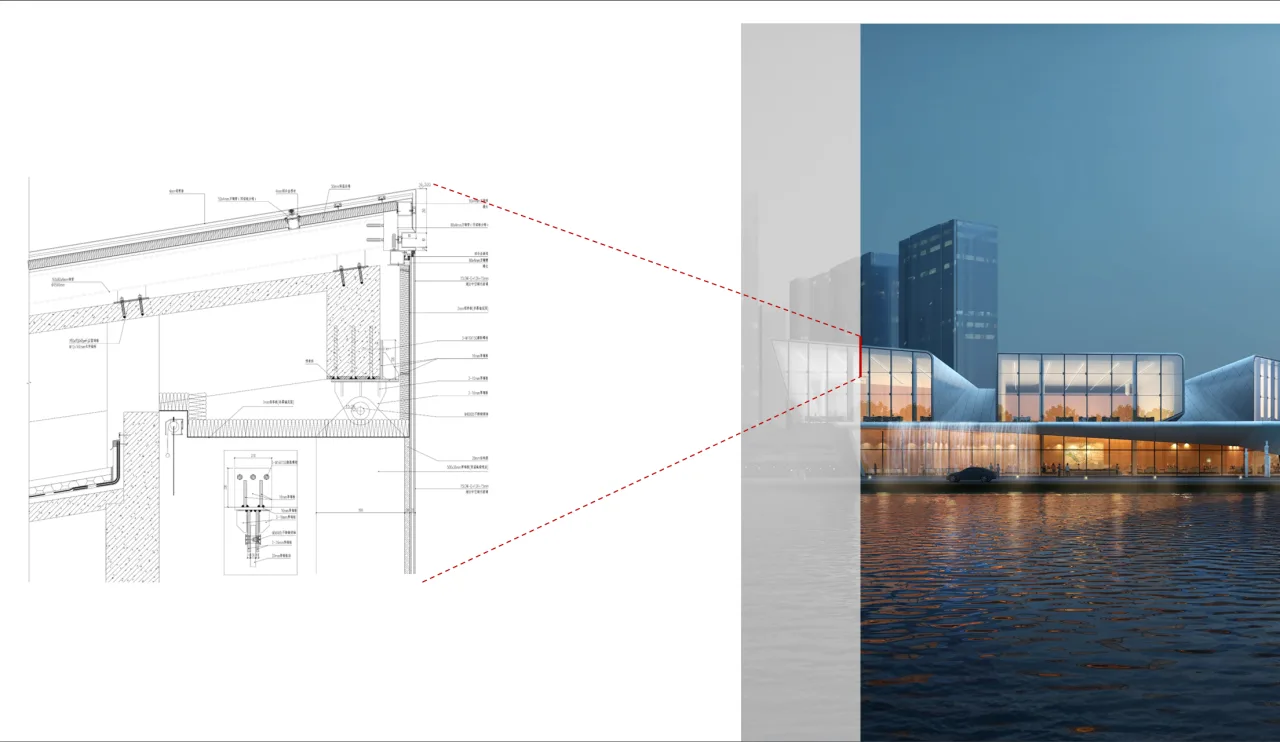
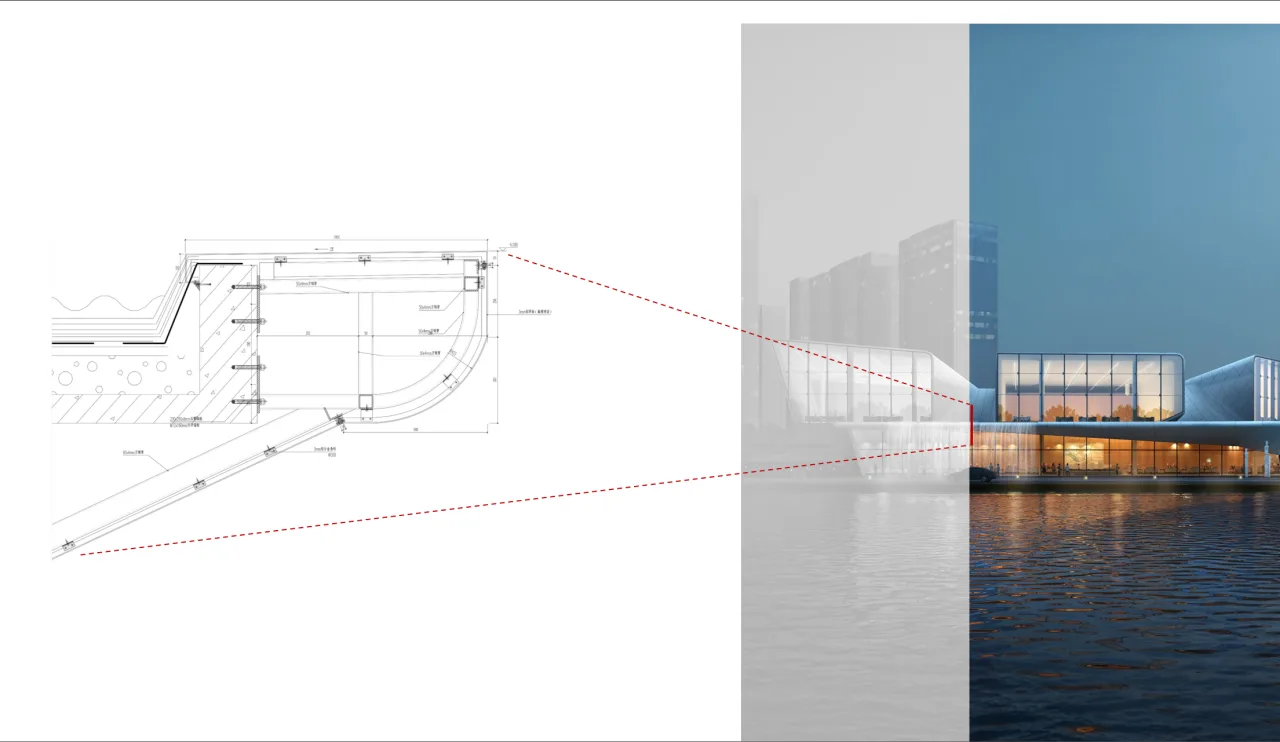
⊙ Curtain Wall Detail
After evaluating iridescent, matte, and high-gloss aluminum panels, the design team chose silver-white high-gloss brushed aluminum for its sophisticated gray tone and strong connection to water purity.
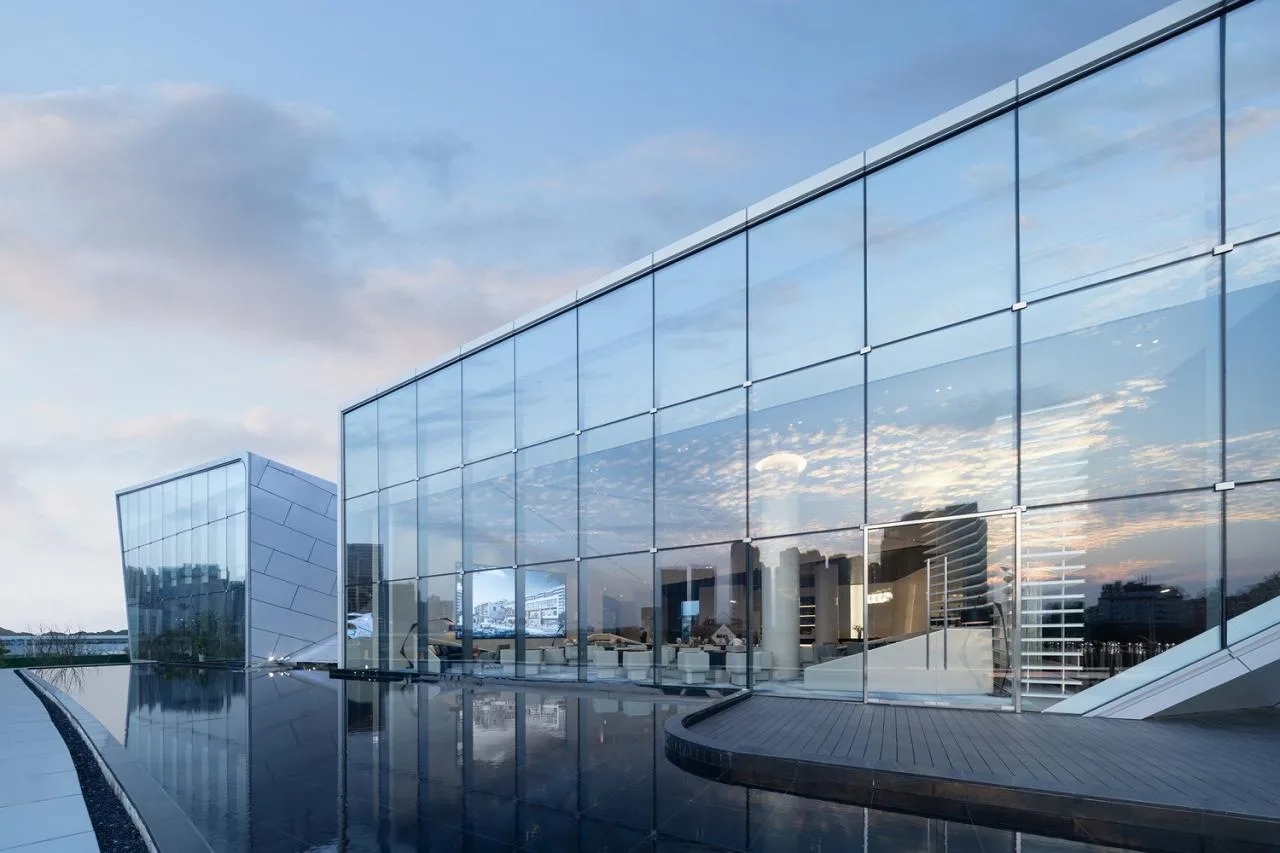
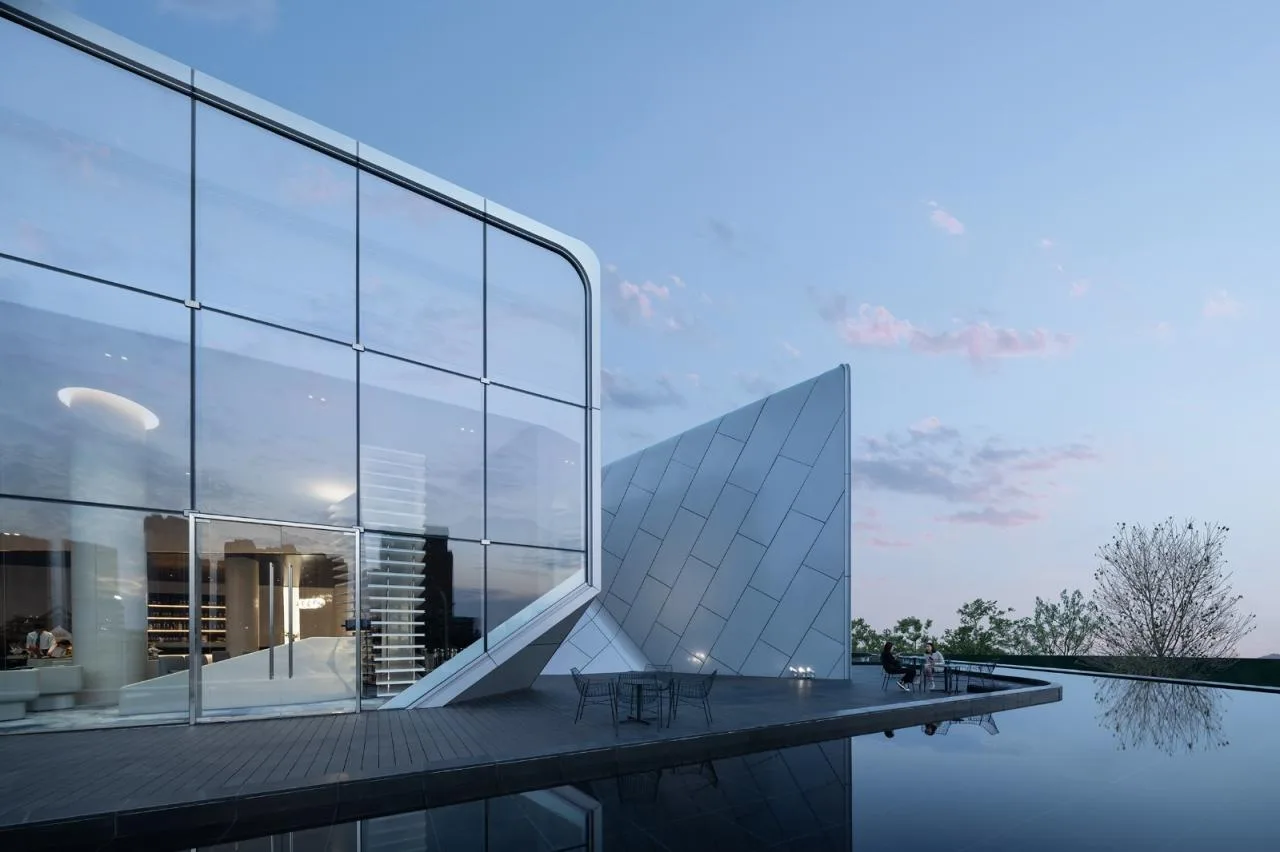
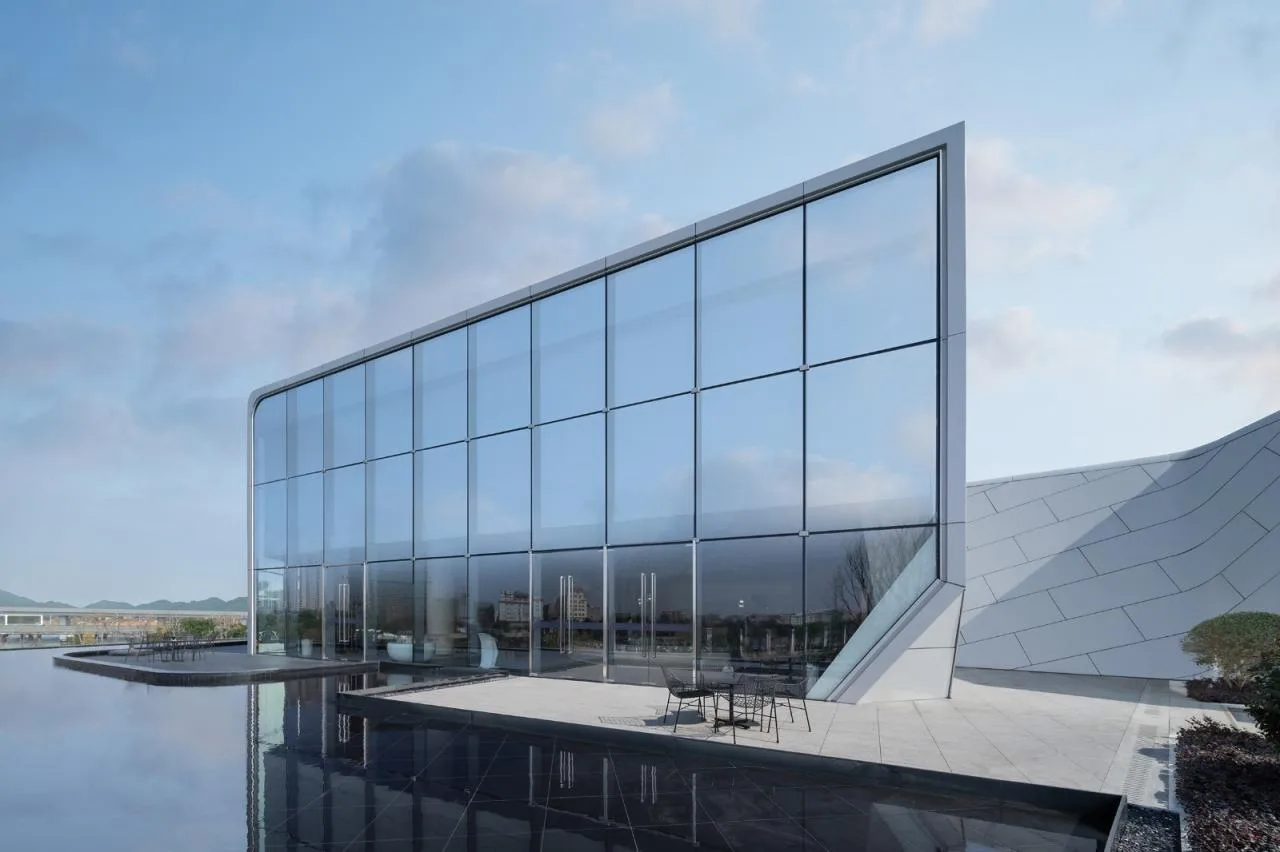
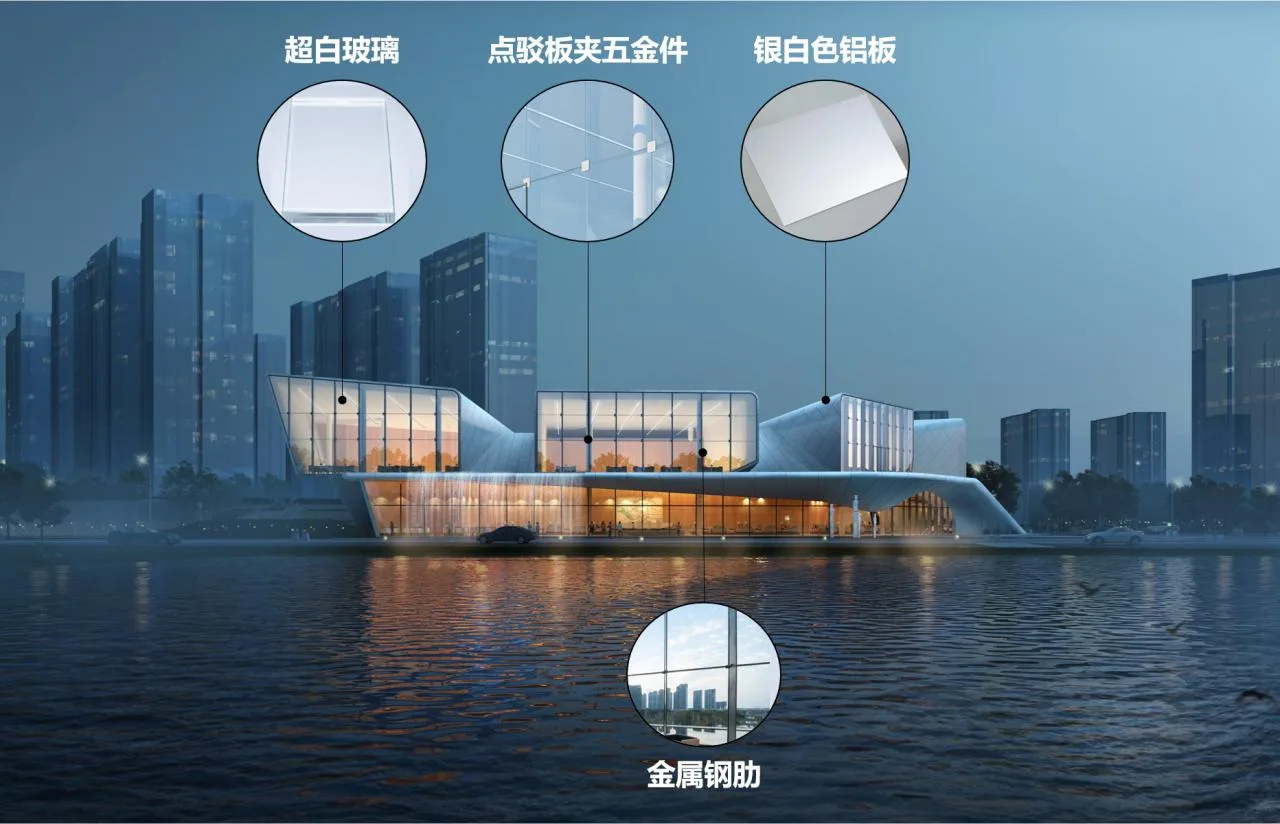
⊙ Material Analysis
The waterside buildings evoke the traditional “water pavilion” of garden architecture. Their facades, clad in aluminum panels and glass curtain walls, reinterpret this heritage through modern technology, meeting both aesthetic and functional demands. This approach ensures lightness and transparency while integrating harmoniously with the surrounding environment and water features.
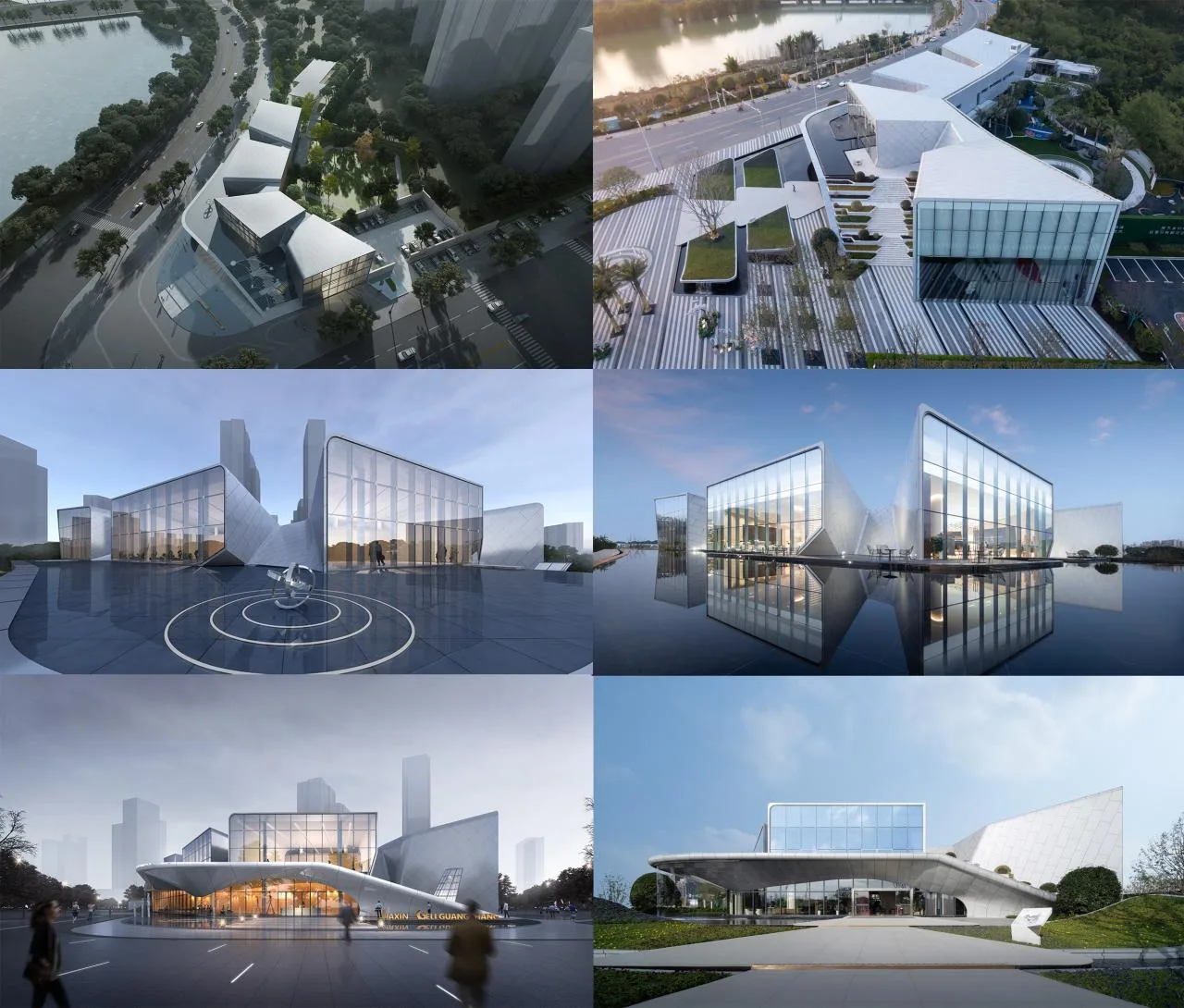
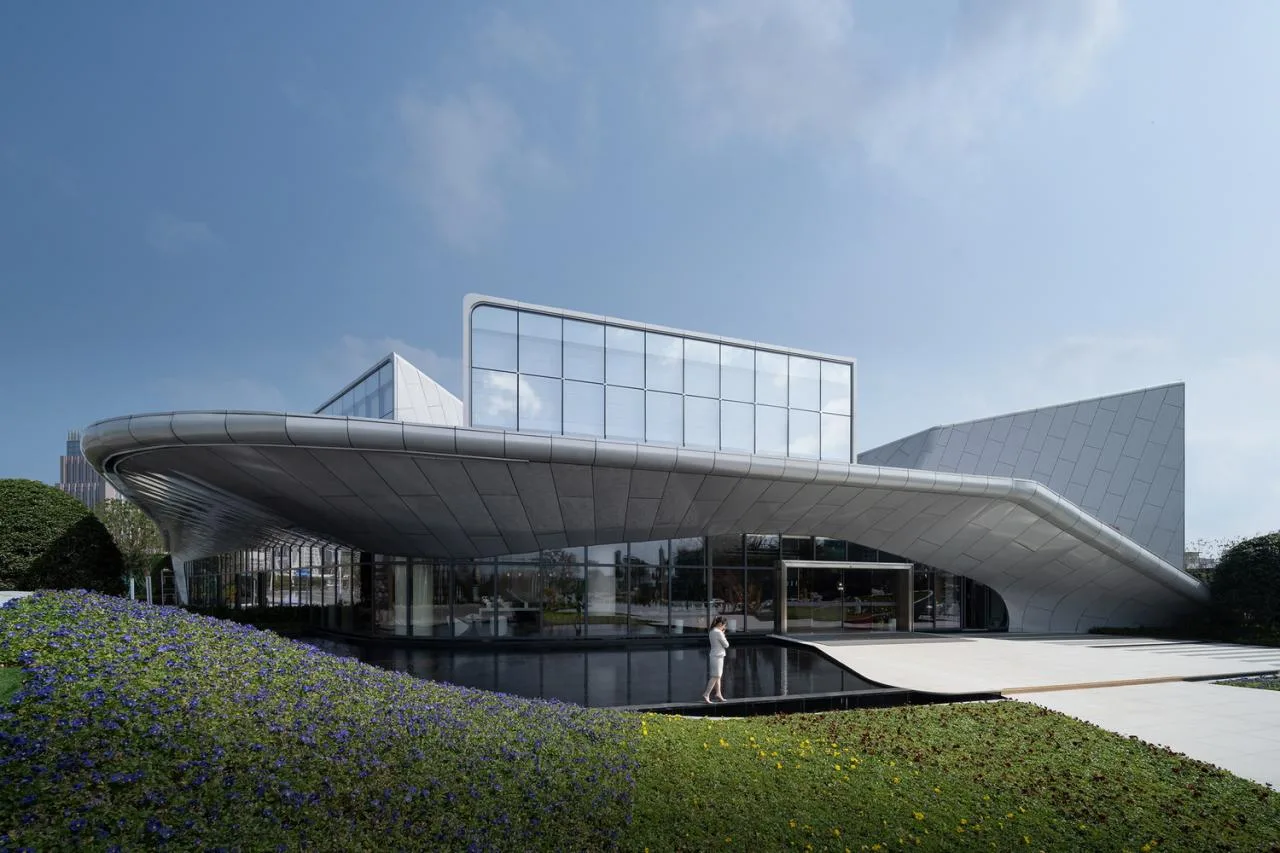
The carefully crafted chamfered edges create a double-layered pool platform. The aluminum panels offer excellent flexibility, allowing for precise adjustments of two-dimensional curves and three-dimensional surfaces—each hyperbolic aluminum panel is unique.
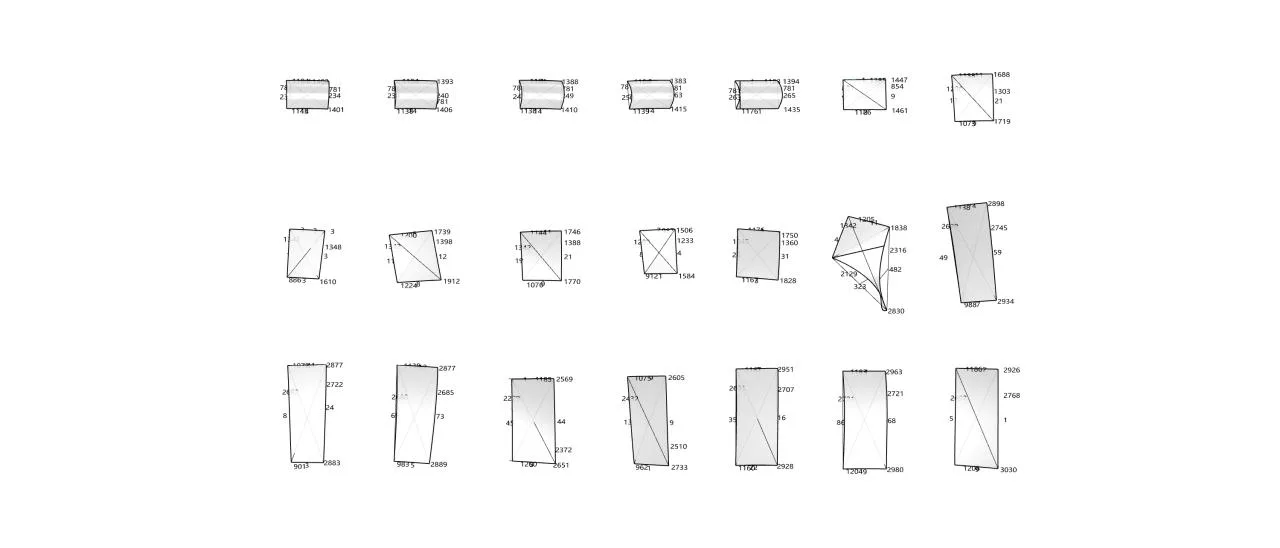
⊙ Hyperbolic Aluminum Panel Dimension Diagram
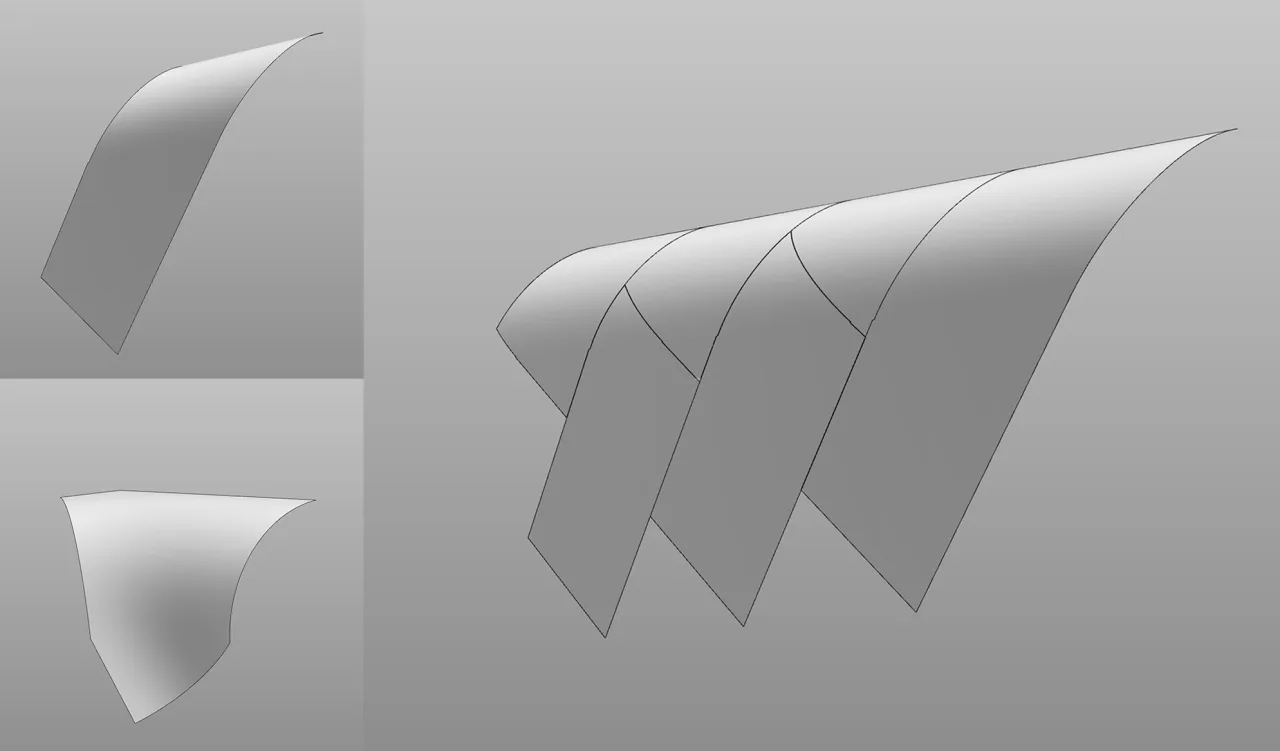
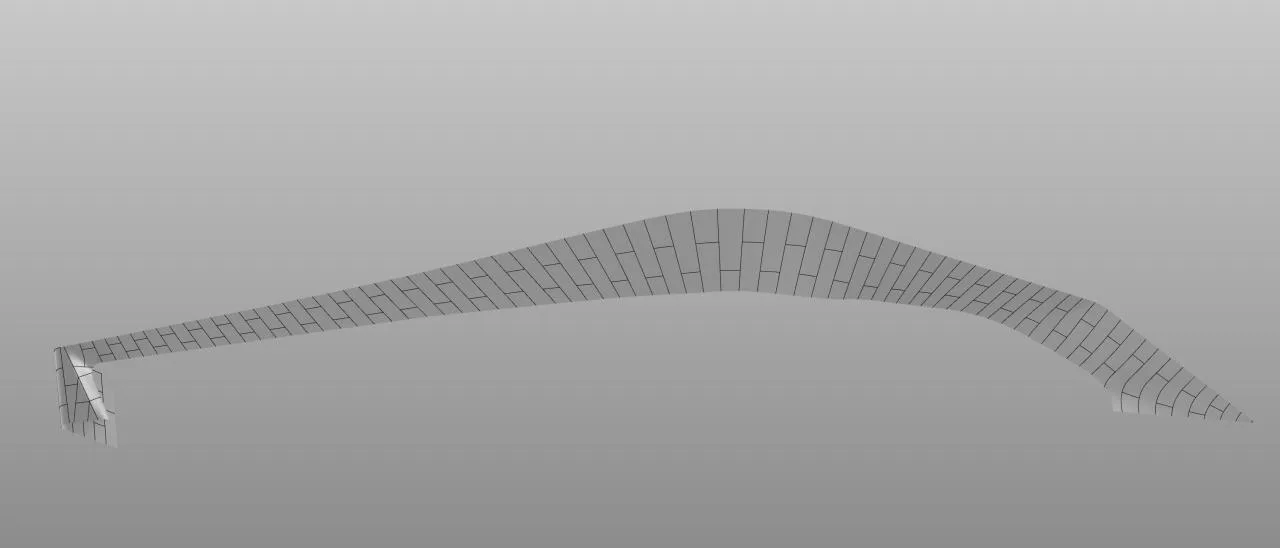
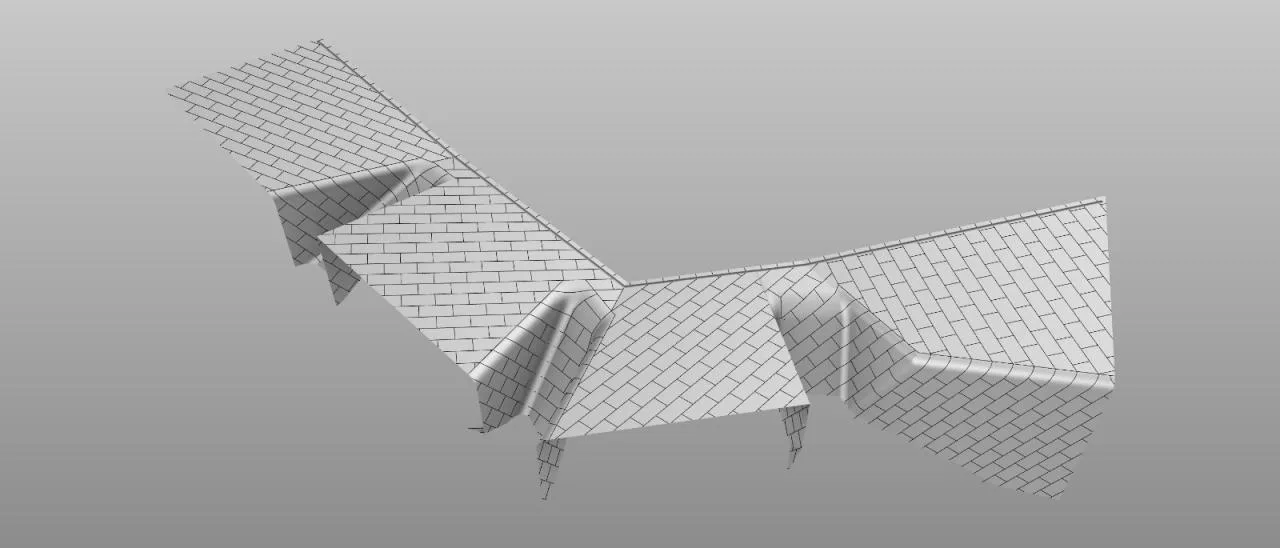
⊙ Aluminum Panel Shape Analysis
At night, indoor lighting softly diffuses through the aluminum panels. The minimalistic walls, ground lights, and reflections from surrounding water features blur the boundaries between interior and exterior, creating a captivating interplay of light and shadow.
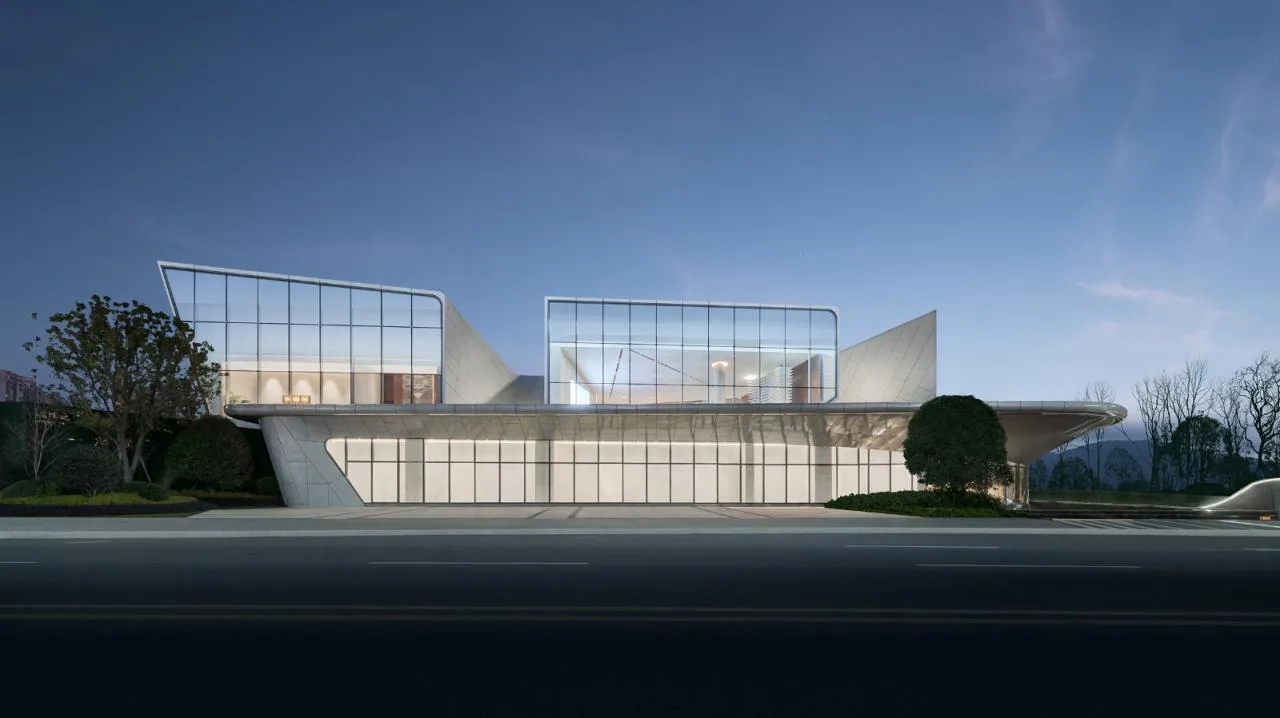
On the building’s east side, steps rise alongside water features, adorned with light strips of varying lengths. During the day, these act as sculptural elements perfect for photos and social media check-ins; at night, they infuse the building with a radiant glow.
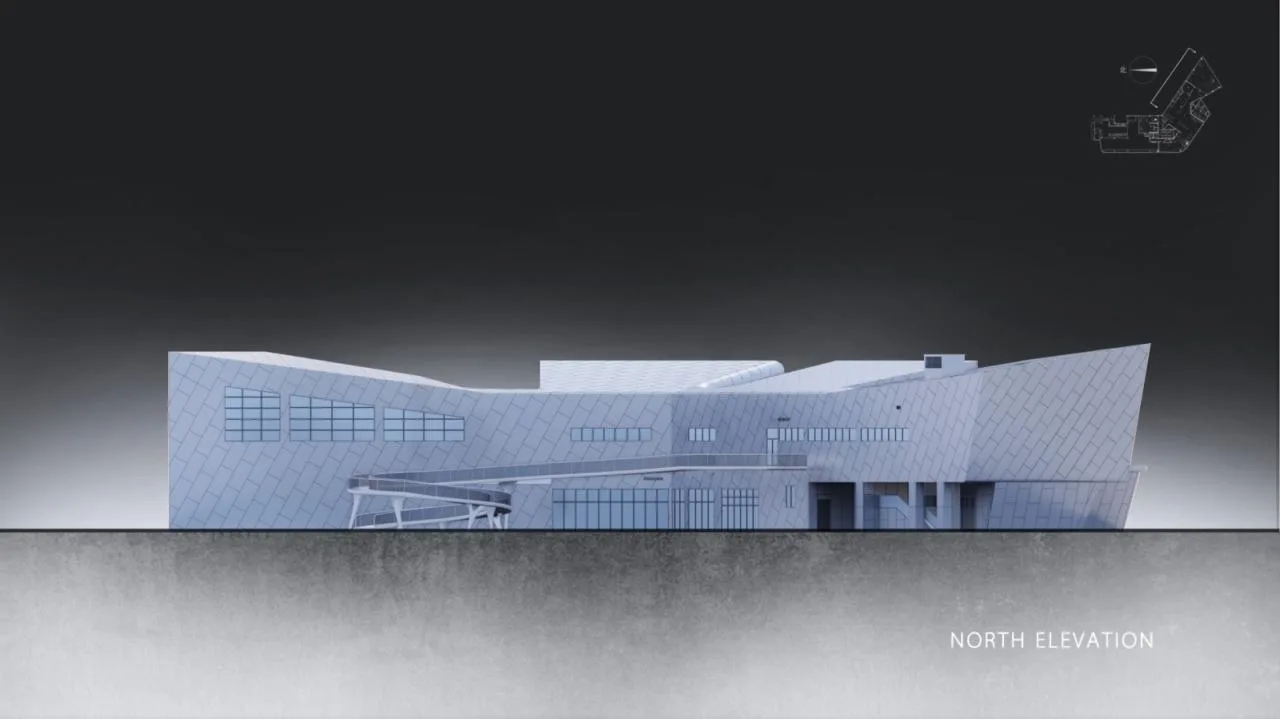
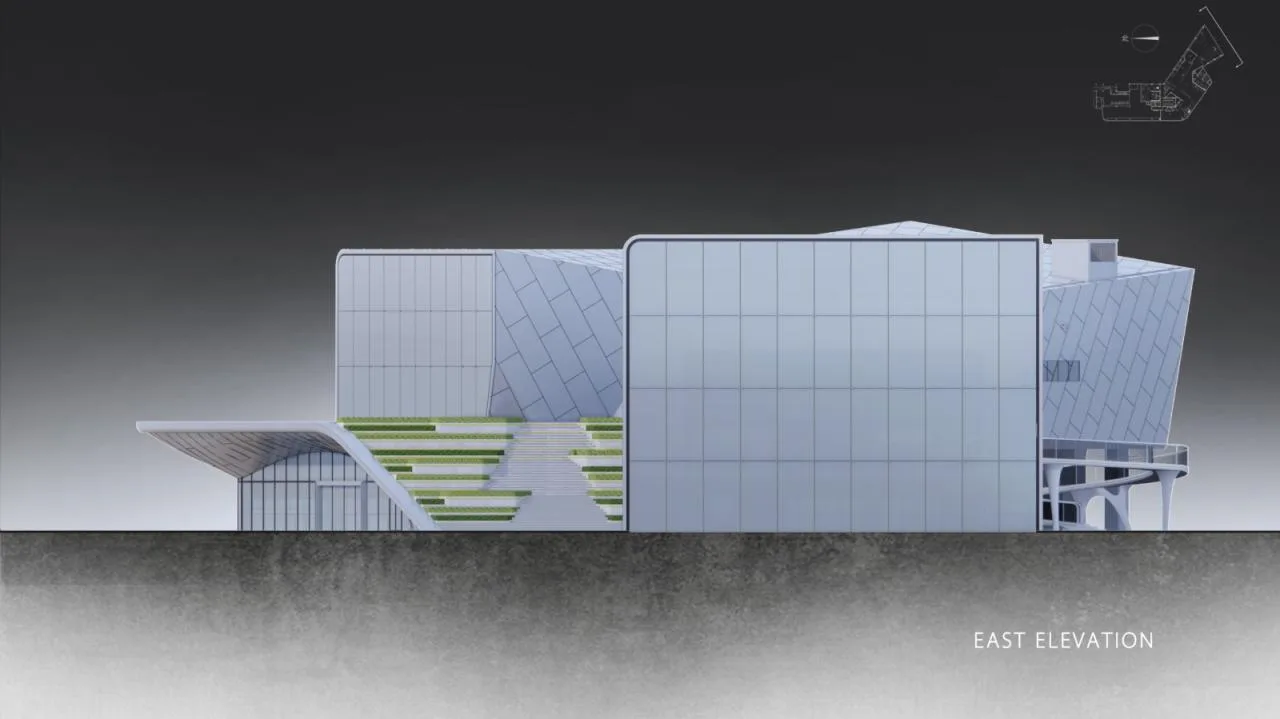
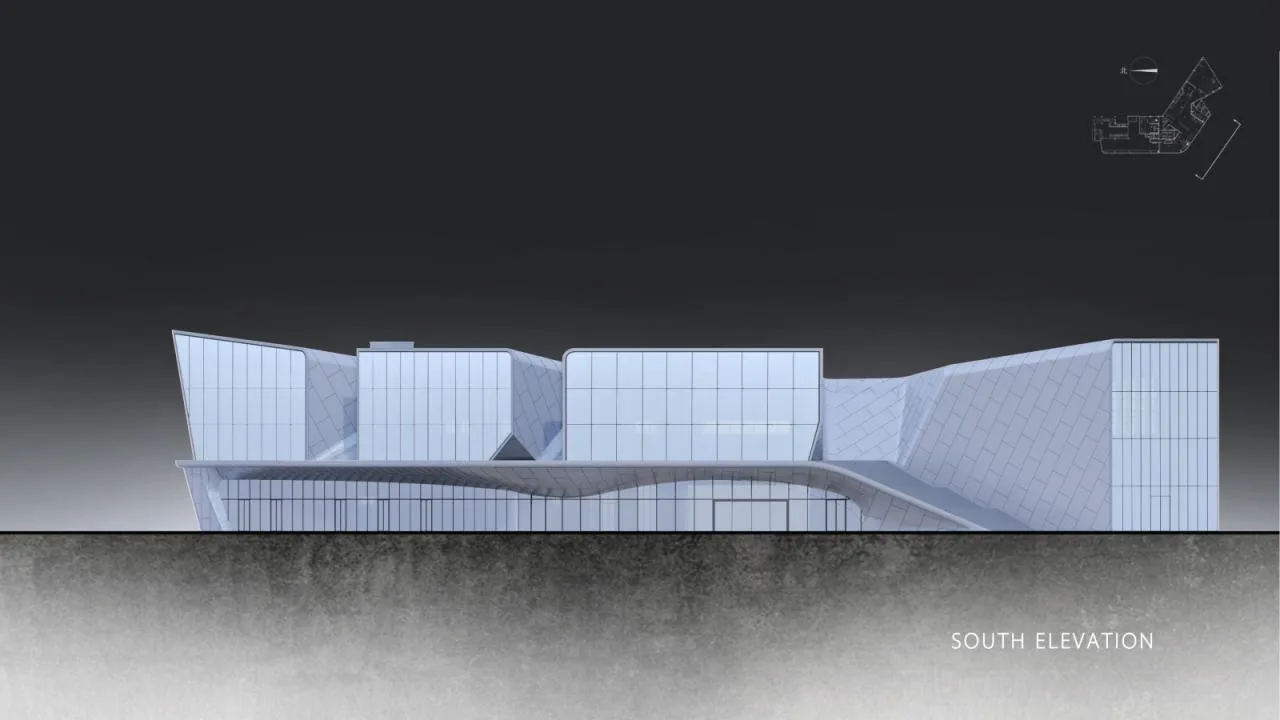
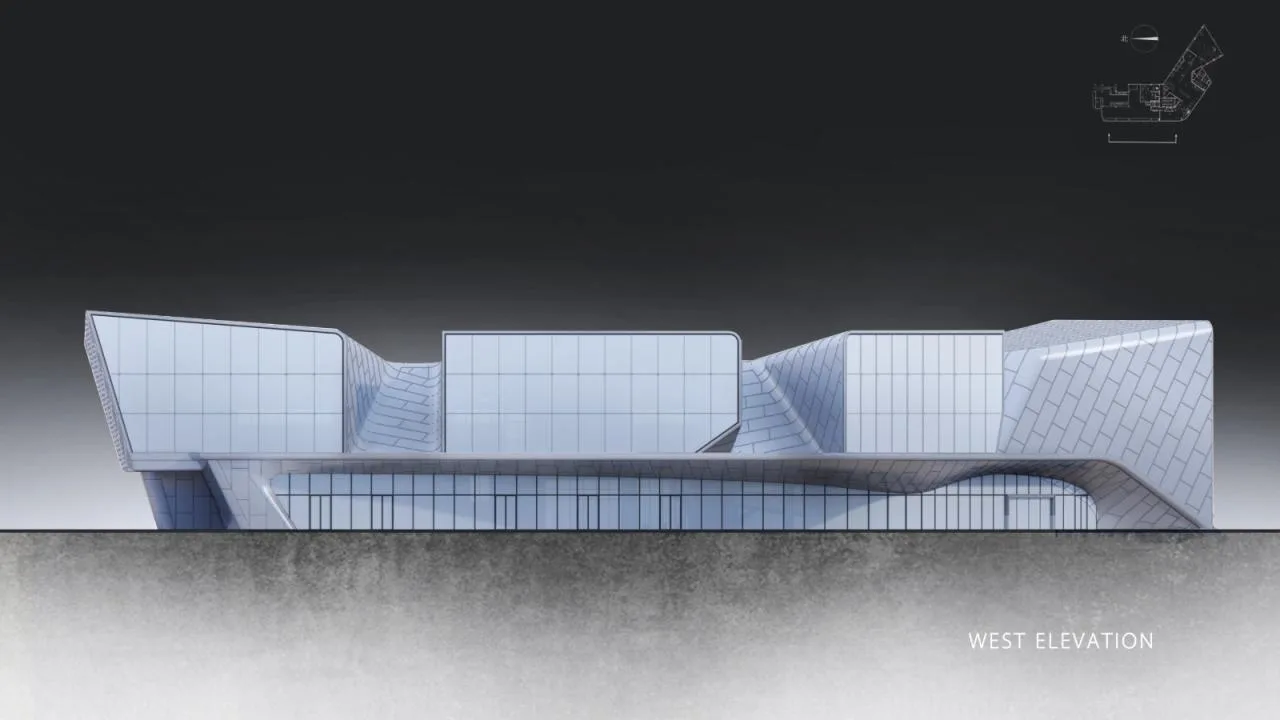
⊙ Elevation View
Project Details
Project Name: Ganzhou Jinrun; Binjiang Yunchen Exhibition Center
Location: Furong North Avenue, Ganzhou City, Jiangxi Province
Client: Jiangxi Jinrun Real Estate Co., Ltd
Function: Exhibition Center
Building Area: 3,157 square meters
Architectural Design: Chengzhi Design
Chief Architect: Li Jie
Design Director: Yan Fang
Design Team: Sun Yonggang, Lin Wei, Hu Ruibing
Landscape Design: Shanghai Yigou Creative Design Co., Ltd
Interior Design: JIAI Interior Design (Shanghai) Co., Ltd
Curtain Wall Design: Zhejiang Zhongnan Construction Group Co., Ltd
Construction Drawing Design: Chengdu Benchmark Fangzhong Architectural Design Co., Ltd
Design Period: June 2021
Completion Date: December 2021
Graphic Arrangement: Chengzhi Brand
Project Photography: PrismImage















Must log in before commenting!
Sign Up