
“Human beings were originally silent, communicating through imagery. Only imagery can truly walk hand in hand with nature.” — Boris Pasternak
As another year comes to a close, we continue to move forward despite the ongoing challenges posed by the COVID-19 pandemic. This unexpected pause has prompted reflection on the relationships between people, and between people and buildings. Are buildings merely cold, concrete boxes? Or do they serve as more—a “big tree” rooted in the land, providing a home for human consciousness?
Xiaoyin Architecture Firm, based in Chengdu, China, pioneers the theory of imagery architecture. Our mission is to harmonize with nature, crafting poetic spaces imbued with emotion and vitality, and creating innovative, multidimensional experiential environments. We plant the seeds of contemporary architecture in high-altitude, cold regions, blending earth and sky.
1. What technical challenges arise when building in high-altitude, cold plateau regions?
The Ranwu Lake Camp is among the projects in Tibet with some of the largest temperature fluctuations. Seasonal variations and day-to-night temperature swings can exceed 40 degrees Celsius, imposing strict limitations on material and equipment selection.
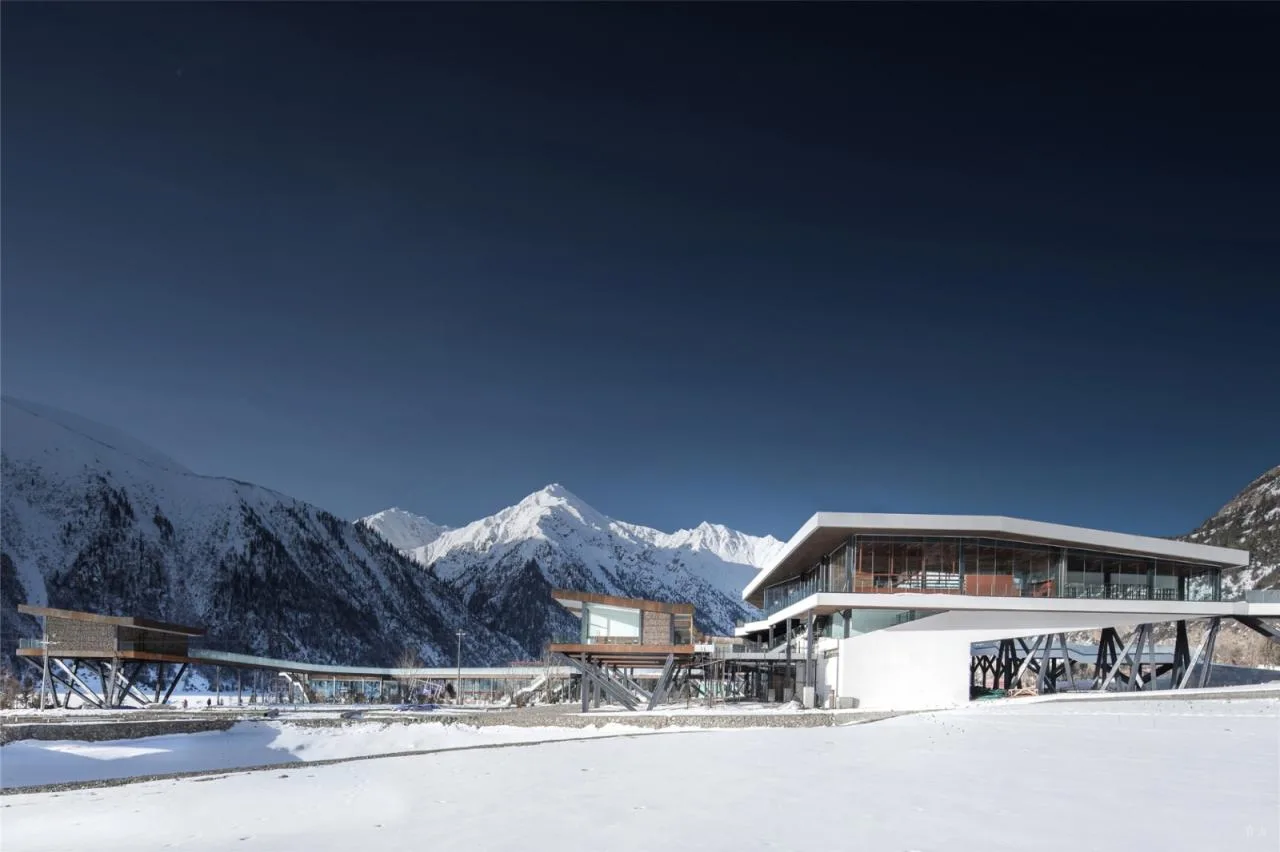
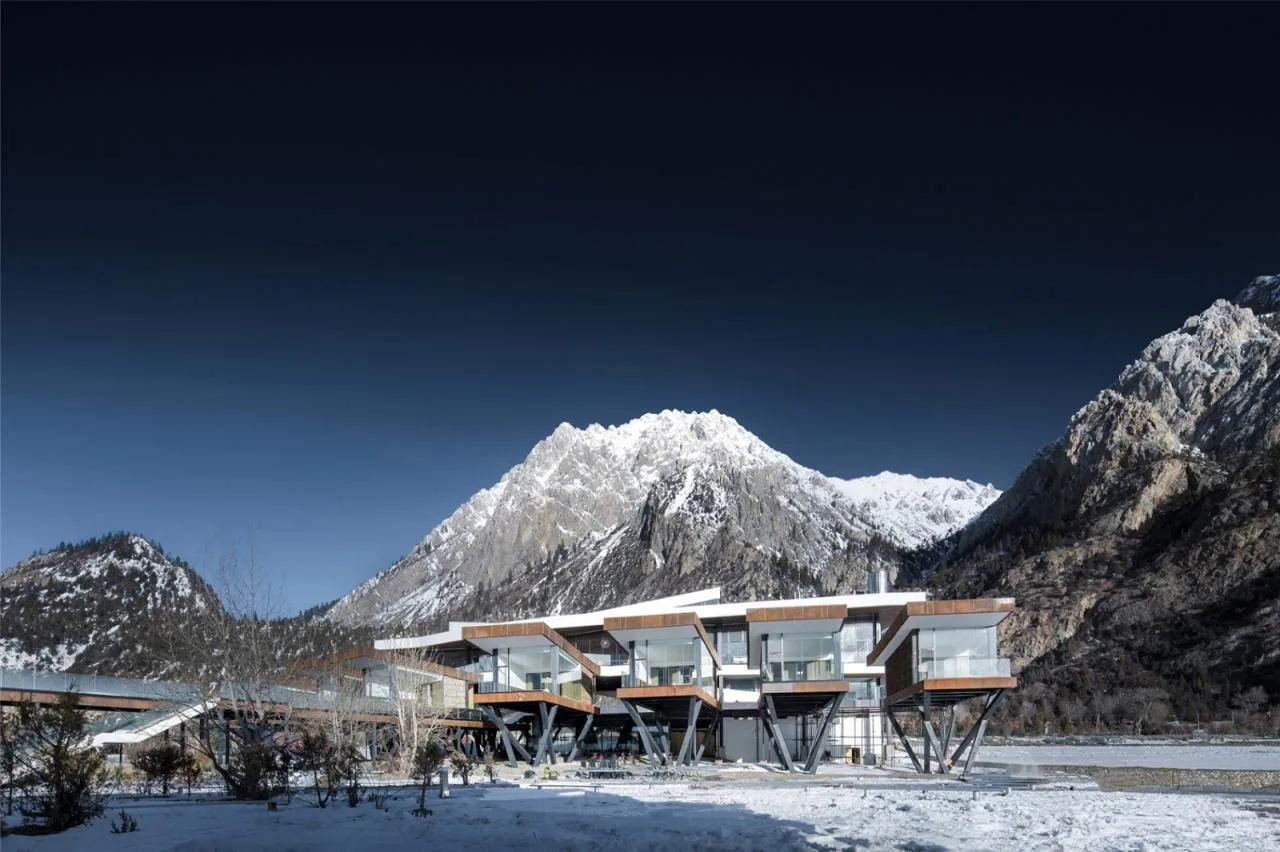
△ Photography of Existing Buildings at Ranwu Lake Camp
Beyond temperature extremes, severe weather significantly disrupts construction schedules. Much of Tibet experiences snow and ice for over five months annually. Sudden summer storms, including rain, snow, high winds, and heat, further restrict construction periods. For example, the Bangda Grassland, home to the Bangda Tourism Distribution Center, is snow-covered from late October until roughly May.
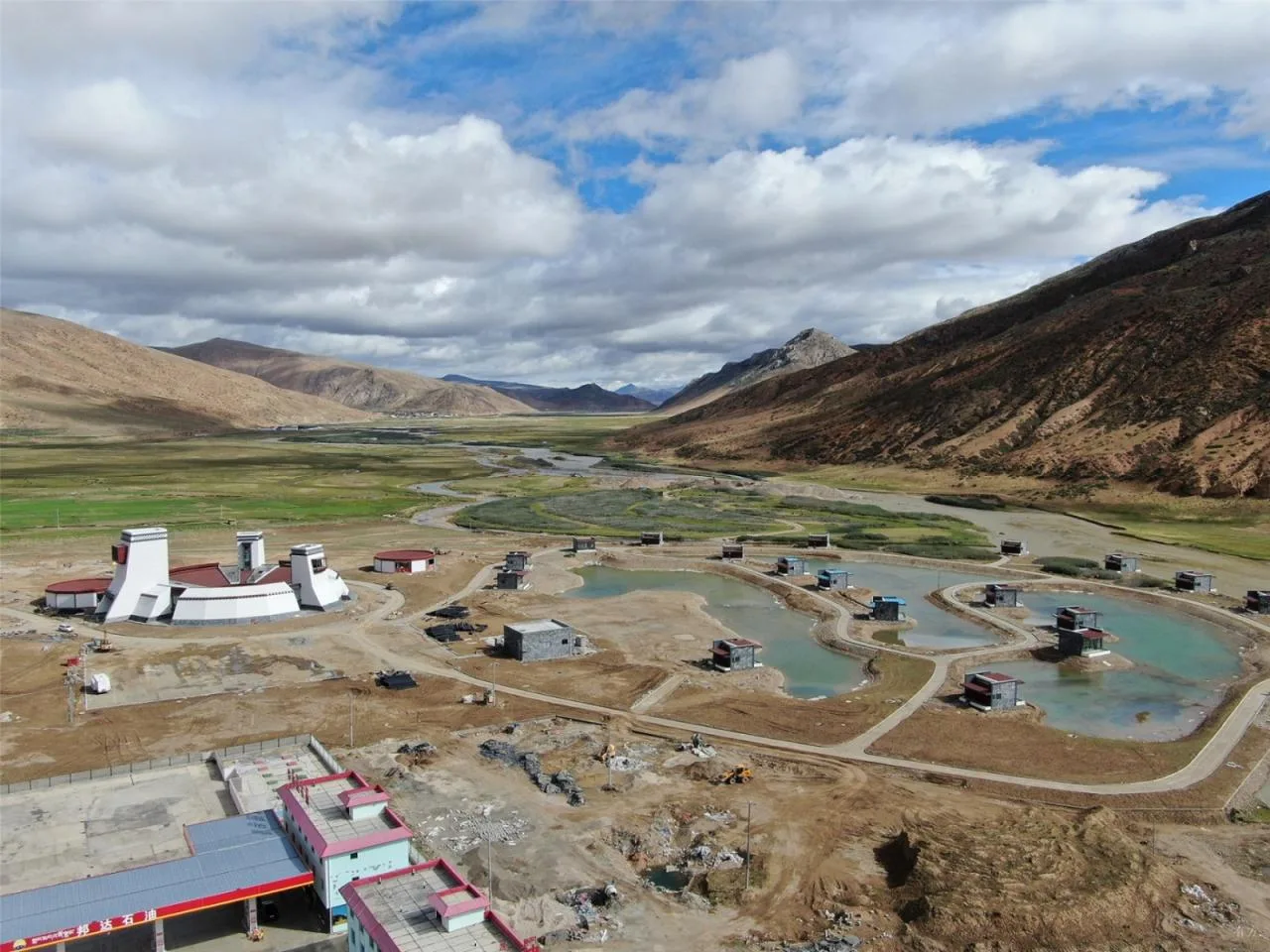
Bangda Tourism Distribution Center under construction © Xiaoyin Architecture
The rugged terrain of Tibet also poses major challenges. Roads are narrow and winding, filled with tunnels and culverts, and frequent mudslides and landslides damage infrastructure, severely impacting material and equipment transportation. Oversized building materials (longer than 13 meters) and heavy machinery like cranes and pile drivers are nearly impossible to transport. The unpredictable road conditions and weather further complicate logistics.
High altitude presents significant physical challenges to construction workers. At elevations above 3,900 meters, the initial team assigned to a 2016 project withdrew within two weeks. Even at 2,800 meters, multiple waves of workers were cycled during pile foundation drilling at the Nujiang Observation Deck, as many low-altitude workers cannot acclimate. Additionally, high altitude complicates specialized construction techniques such as welding, concrete pouring, and metal sheet installation.
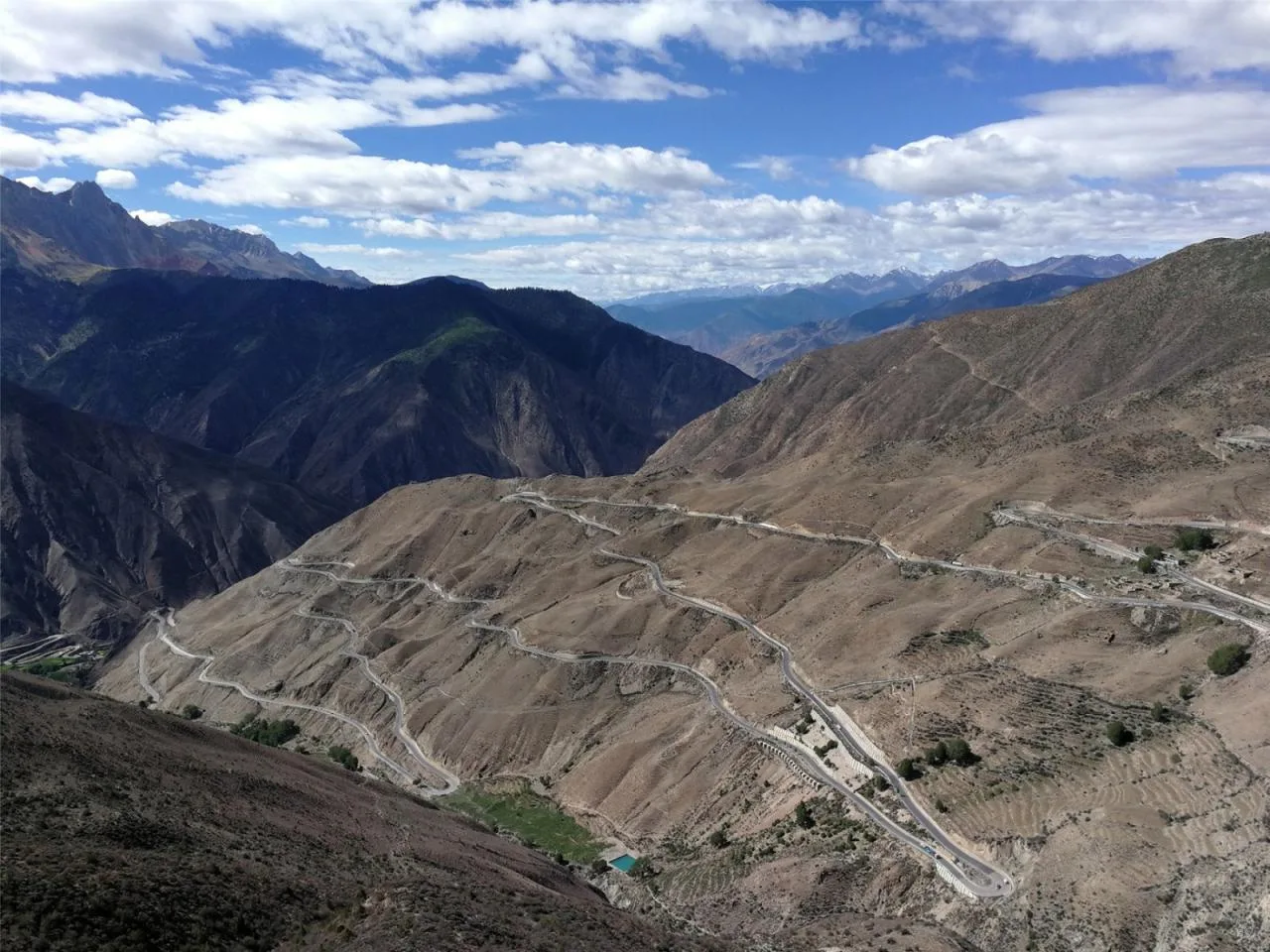
72 turns on Tian Road © Xiaoyin Architecture
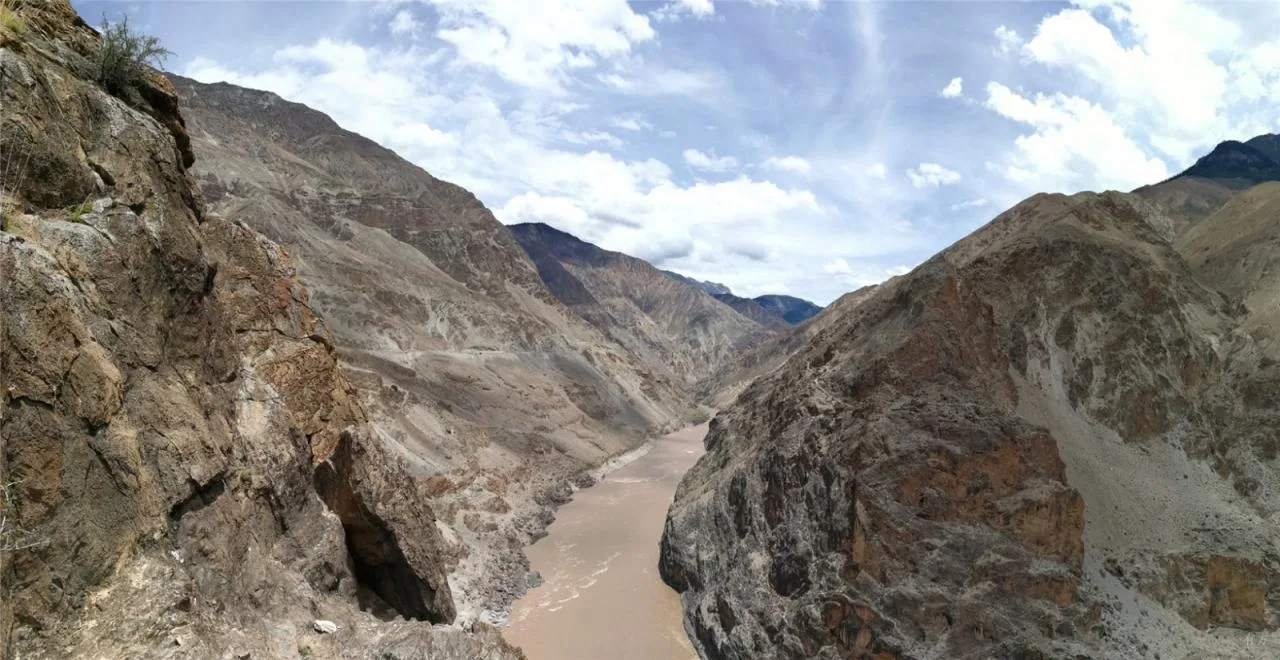
△ Nujiang Observation Deck Project Site © Xiaoyin Architecture
2. How have these challenges been addressed? Any original technological innovations?
True originality in construction methods is rare; most techniques are adaptations or rediscoveries of established practices. Our approach is to select suitable methods to solve problems effectively. Genuine innovation often comes from revolutionary developments in new materials.
Given the extreme temperature swings, we avoid materials with high deformation coefficients prone to aging, warping, or detachment due to temperature changes. We prioritize stone, wood, cement-based products, local materials, and metals with low deformation rates. Adhesive construction techniques are favored over cement bonding, which is vulnerable to cracking, peeling, and corrosion caused by temperature extremes and freezing.
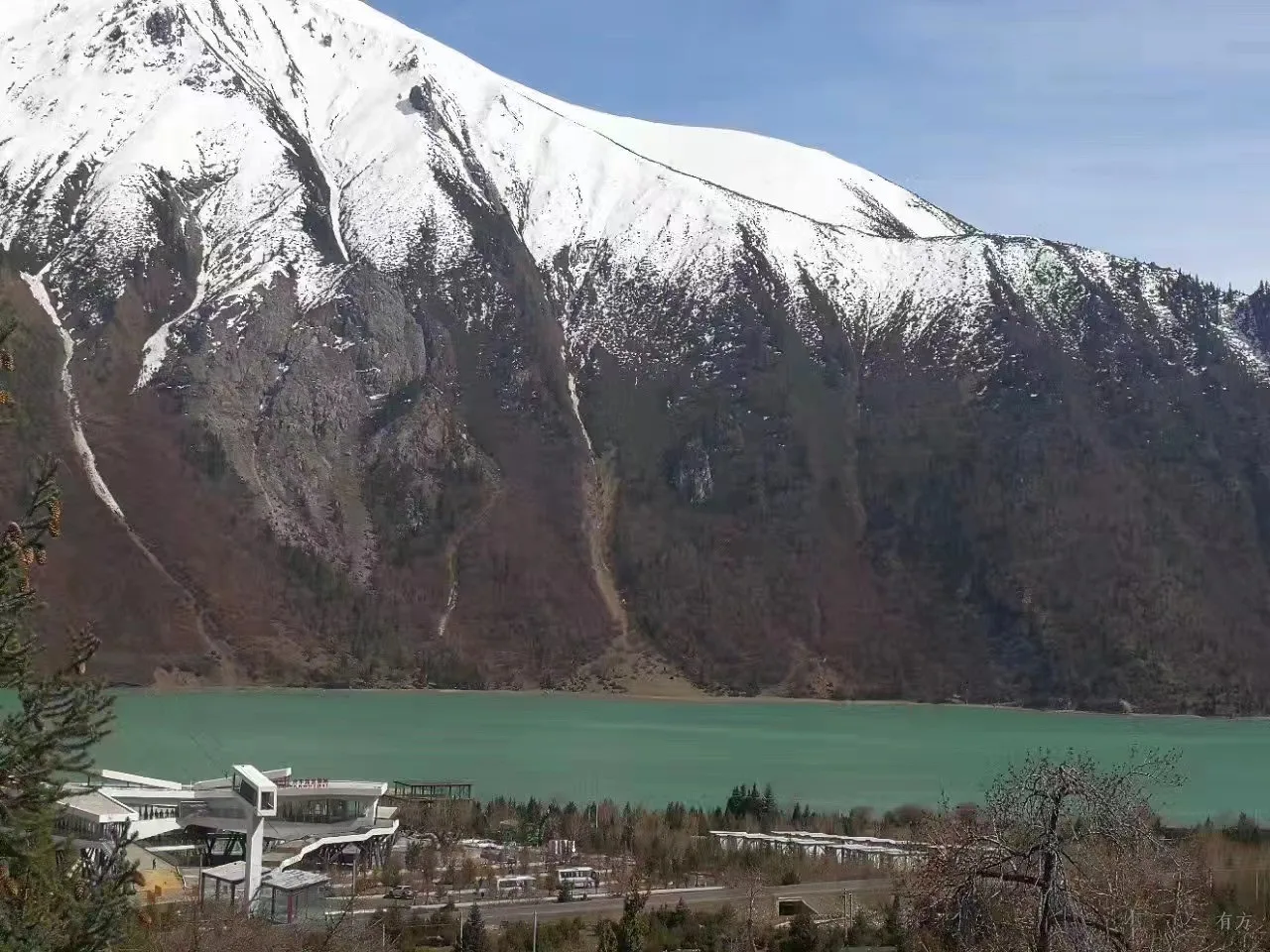
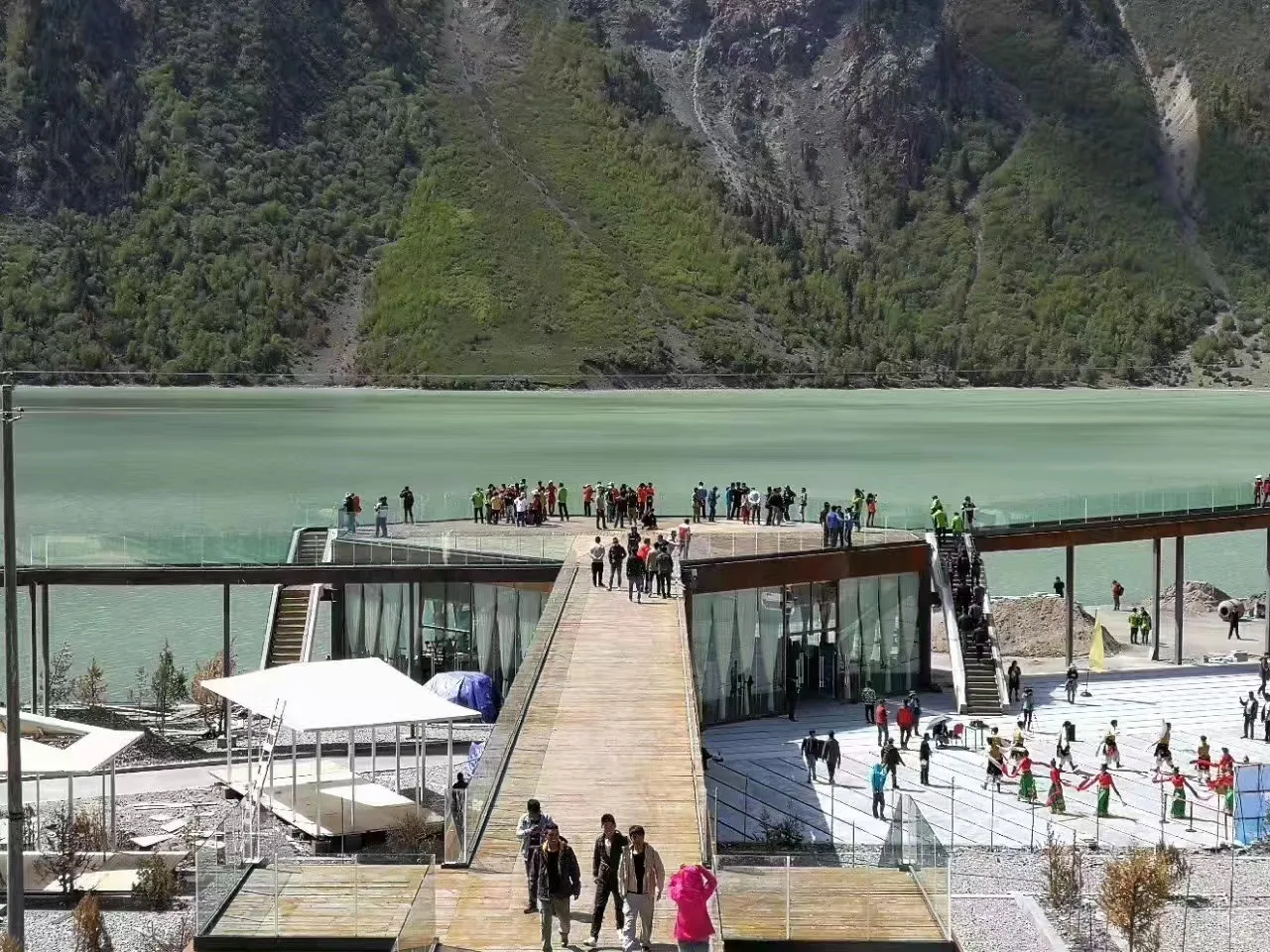
Ranwu Lake Camp, our inaugural project in Tibet, features a steel structure core. After extensive material trials, we selected white cement fiberboard, red weather-resistant steel plates, locally sourced pebbles, and reclaimed train sleepers for the exterior. Upon completion, it became a benchmark project along the 318 highway, significantly influencing Tibetan architecture and opening opportunities for subsequent projects.
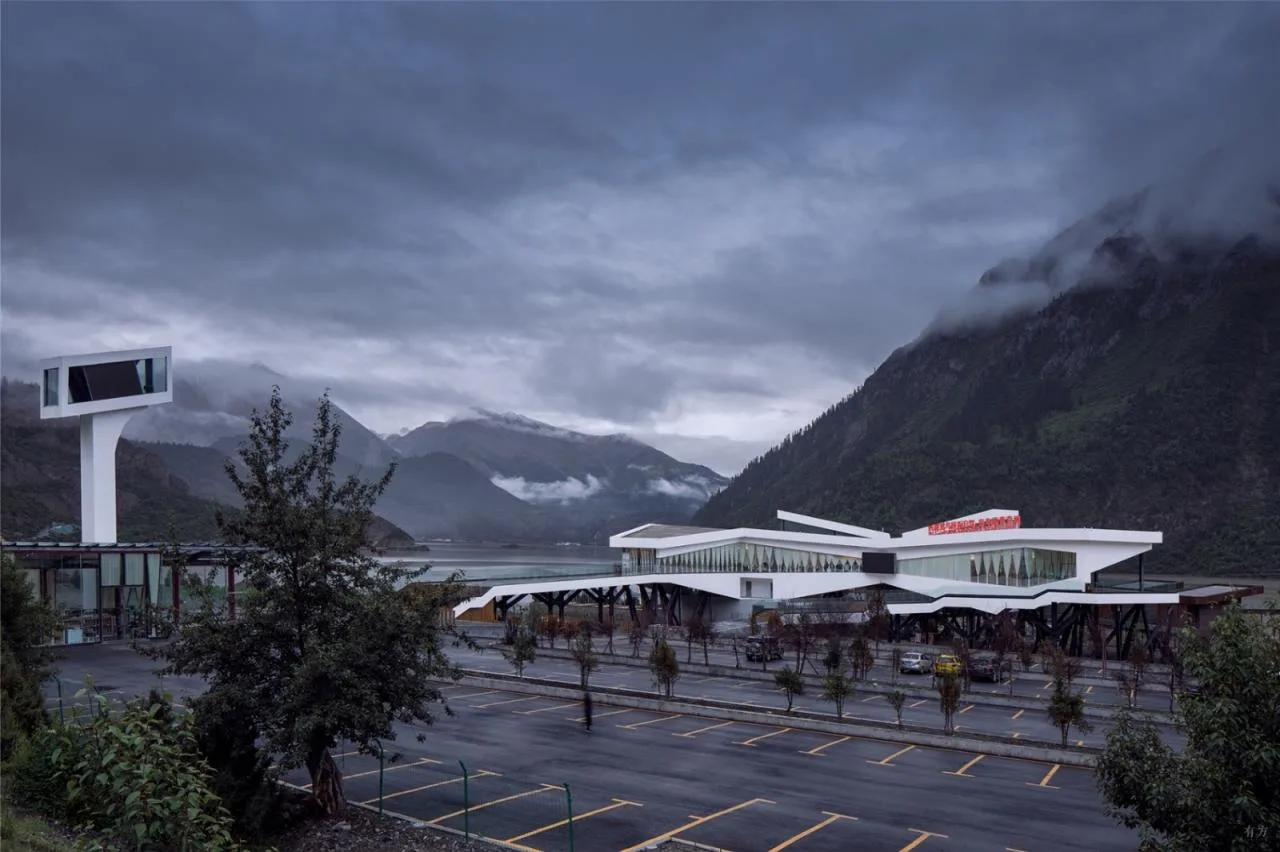
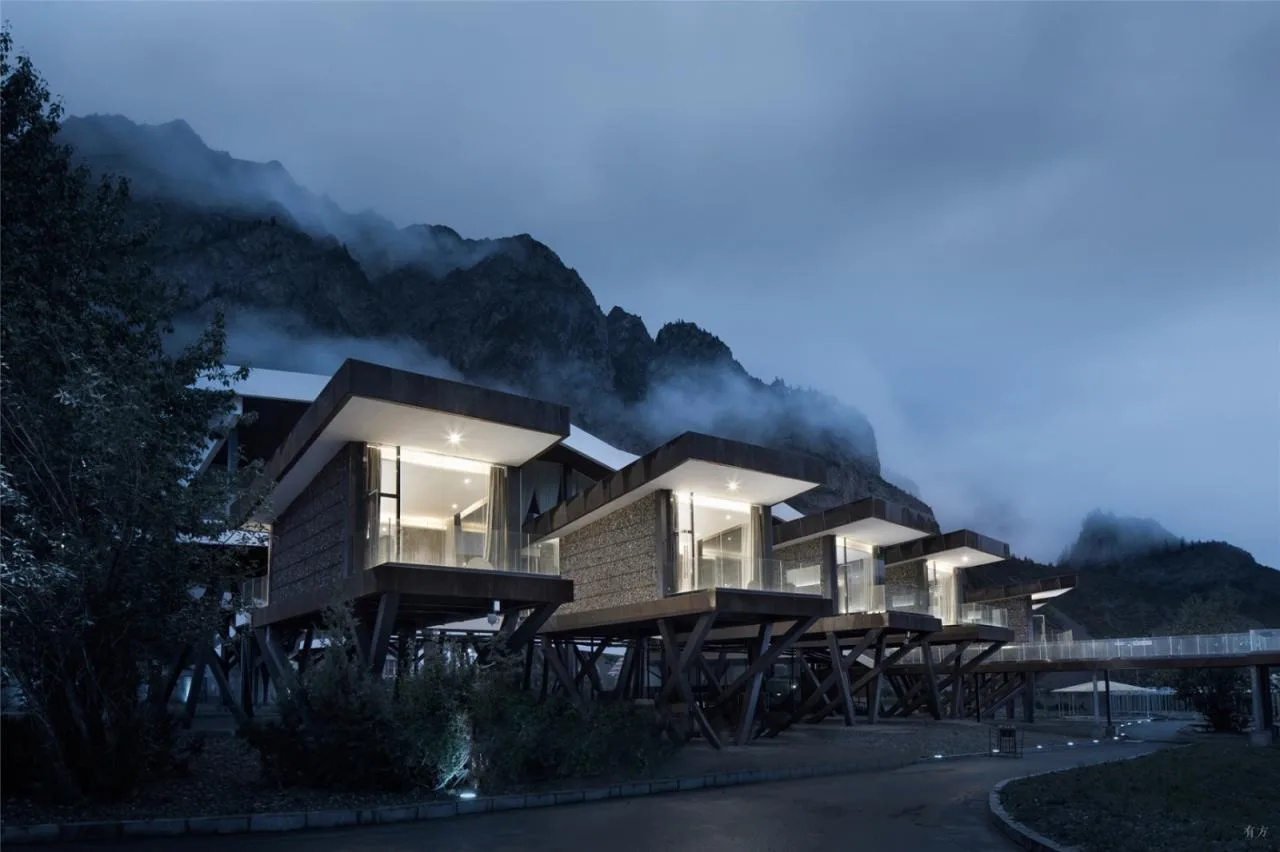
△ Ranwu Lake Camp Photography: Existing Buildings
The Nujiang 72 Turn Canyon Viewing Platform, currently under construction, promises to be a unique and challenging project in Tibet. Its steel truss structure extends 27 meters from the cliff, featuring red weather-resistant steel plates and imported SGP laminated glass.
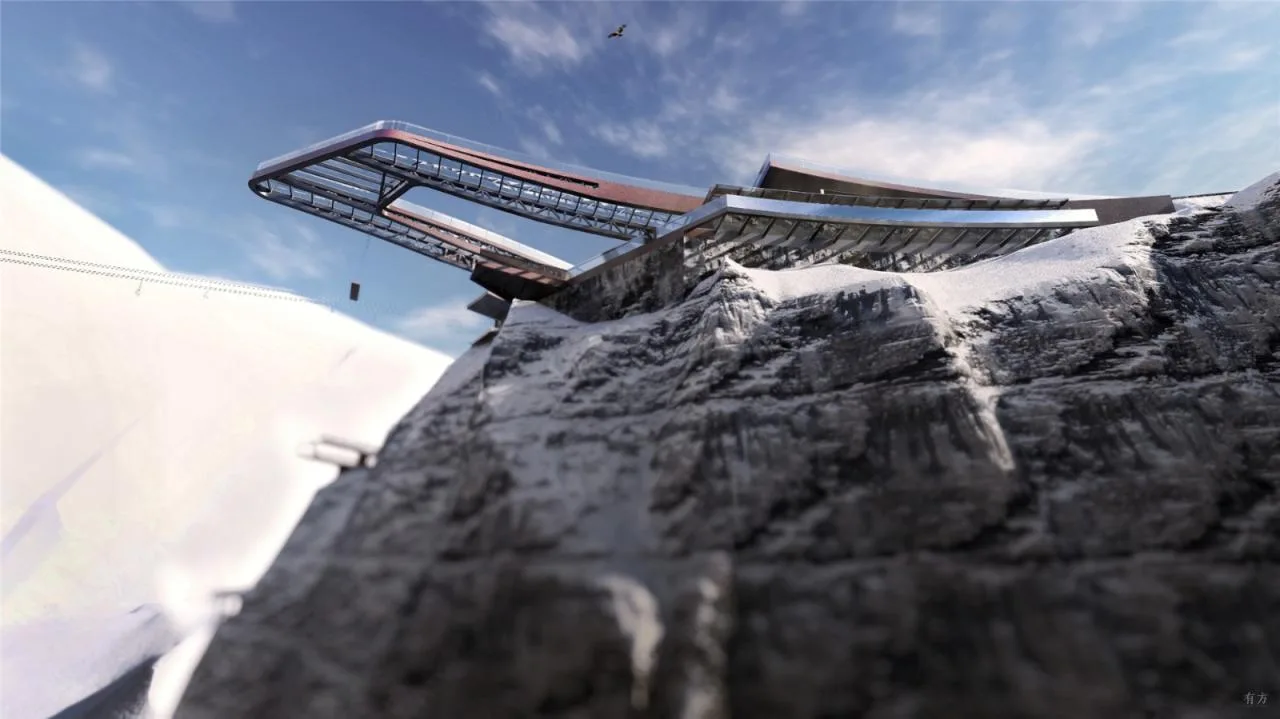
△ Nujiang Observation Deck Rendering © Xiaoyin Architecture
The Bangda Tourism Distribution Center, situated on the Bangda Grassland at 4,200 meters, utilizes a steel structure with exteriors crafted from white ceramic tiles, aluminum panels, local cobblestones, and slate tiles. The Lhasa Mercedes Benz Global Service Center, our first urban Tibetan project near Princess Wencheng Theater and overlooking the Potala Palace, also employs steel framing with white and saffron ceramic tiles paired with dark gray high-strength alloy aluminum plates.
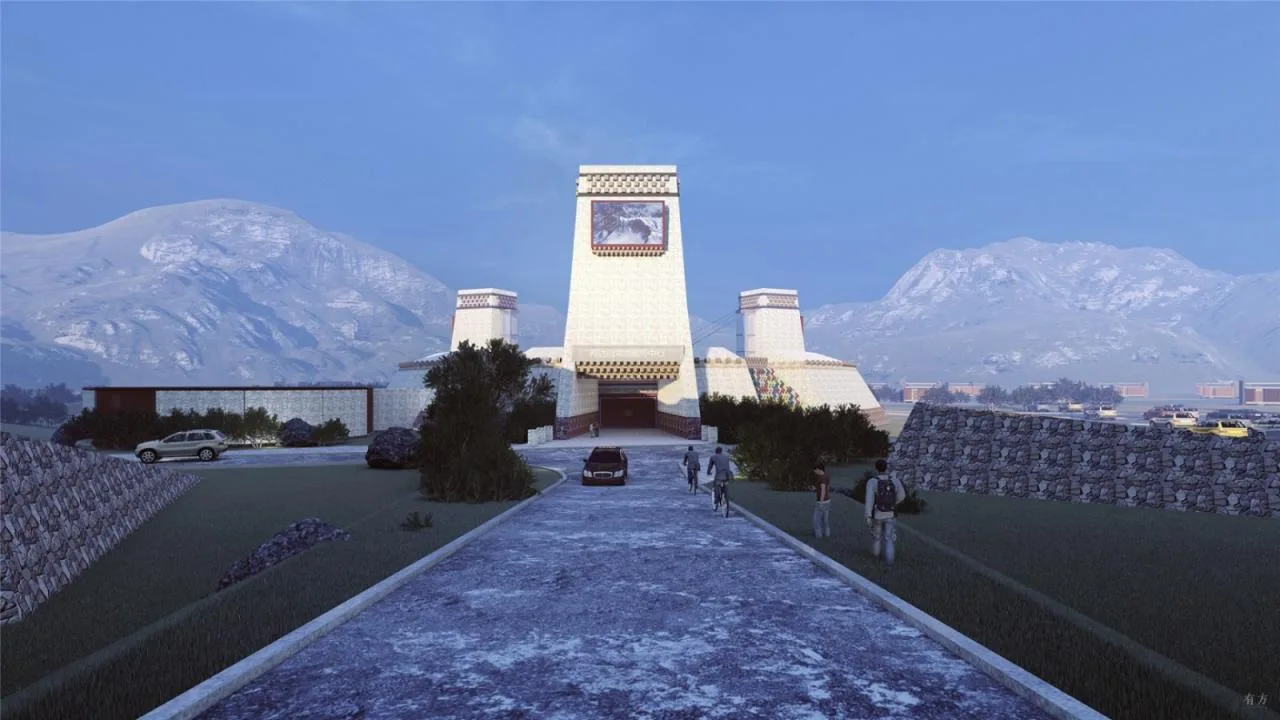
△ Bangda Tourism Distribution Service Center Rendering © Xiaoyin Architecture
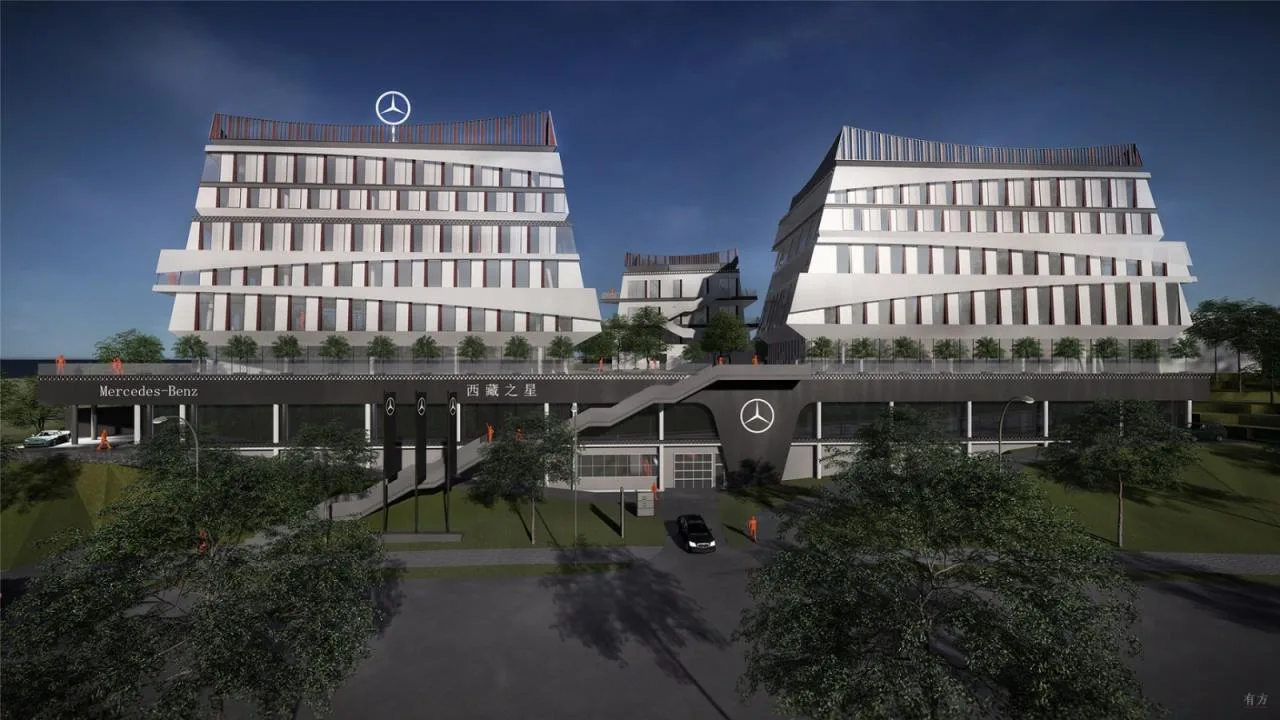
△ Lhasa Mercedes Benz Global Service Center Rendering © Xiaoyin Architecture
In remote, weather-challenged areas like Tibet, steel structures are ideal due to reduced on-site construction, rapid assembly, and controllable costs. These projects all feature durable, weather-resistant materials with straightforward construction techniques designed to simplify on-site work and facilitate efficient execution. We aim for creativity while ensuring high quality and timely completion.
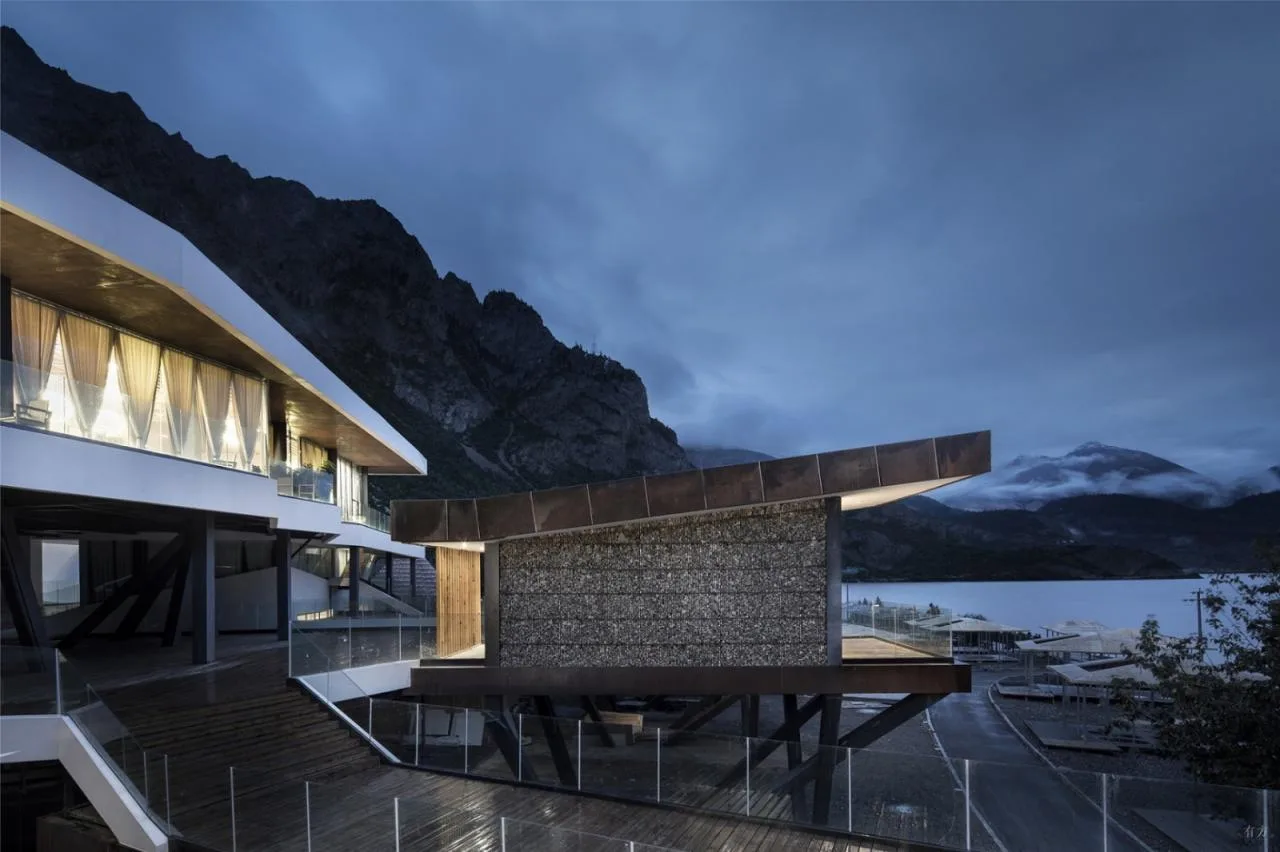
△ Ranwu Lake Camp Photography: Existing Buildings
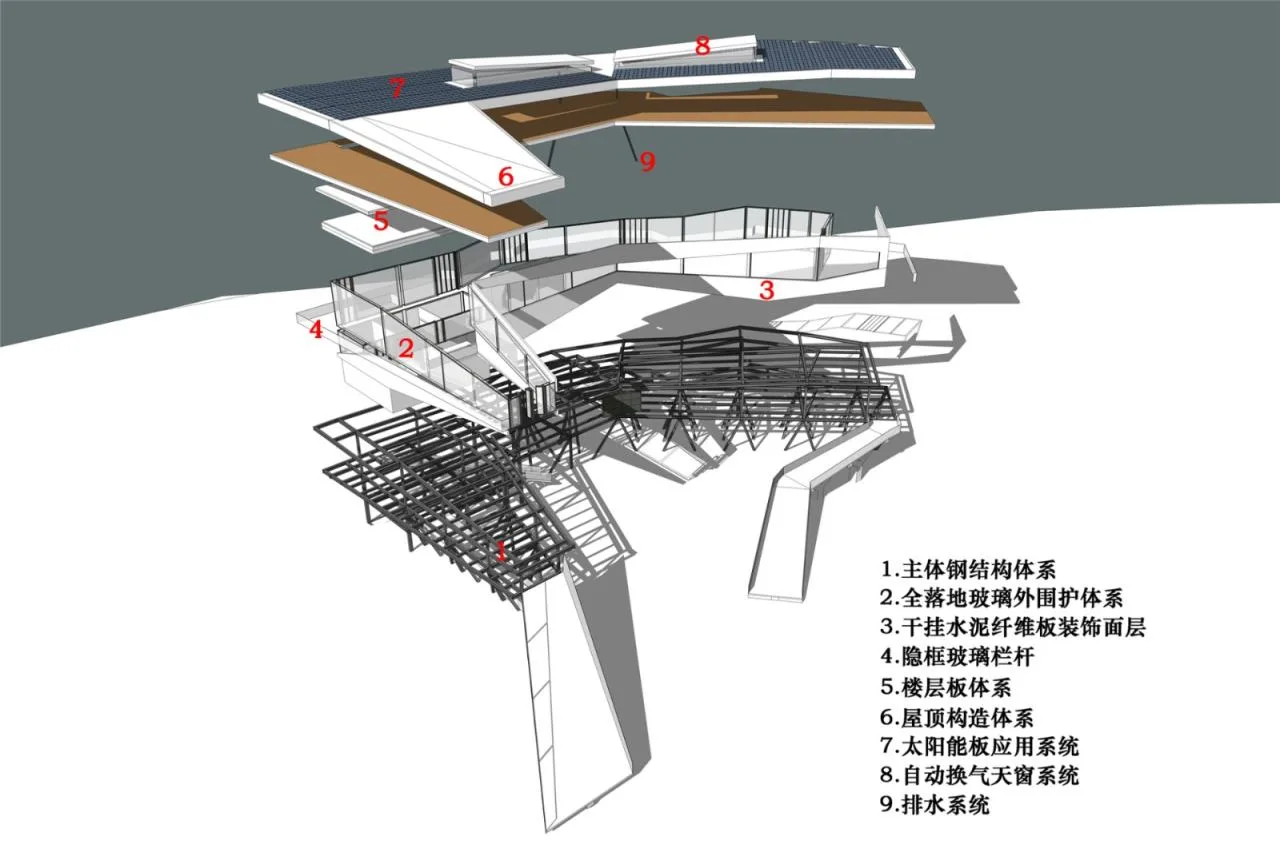
Structural analysis of Ranwu Lake Camp © Xiaoyin Architecture
Due to the region’s unique conditions, meticulous scheduling and process planning are essential to avoid the detrimental effects of snow, ice, and sudden adverse weather, ensuring project progress.
Thus, our work extends beyond design to encompass logistical constraints faced in remote areas. Early-stage design considerations include minimizing oversized materials to ease transportation. For steel structures in high elevations, components are designed for straightforward disassembly, preserving material integrity and facilitating transport. Given the difficulty in delivering large equipment, alternative construction methods and practical equipment choices are vital to maintain smooth progress.
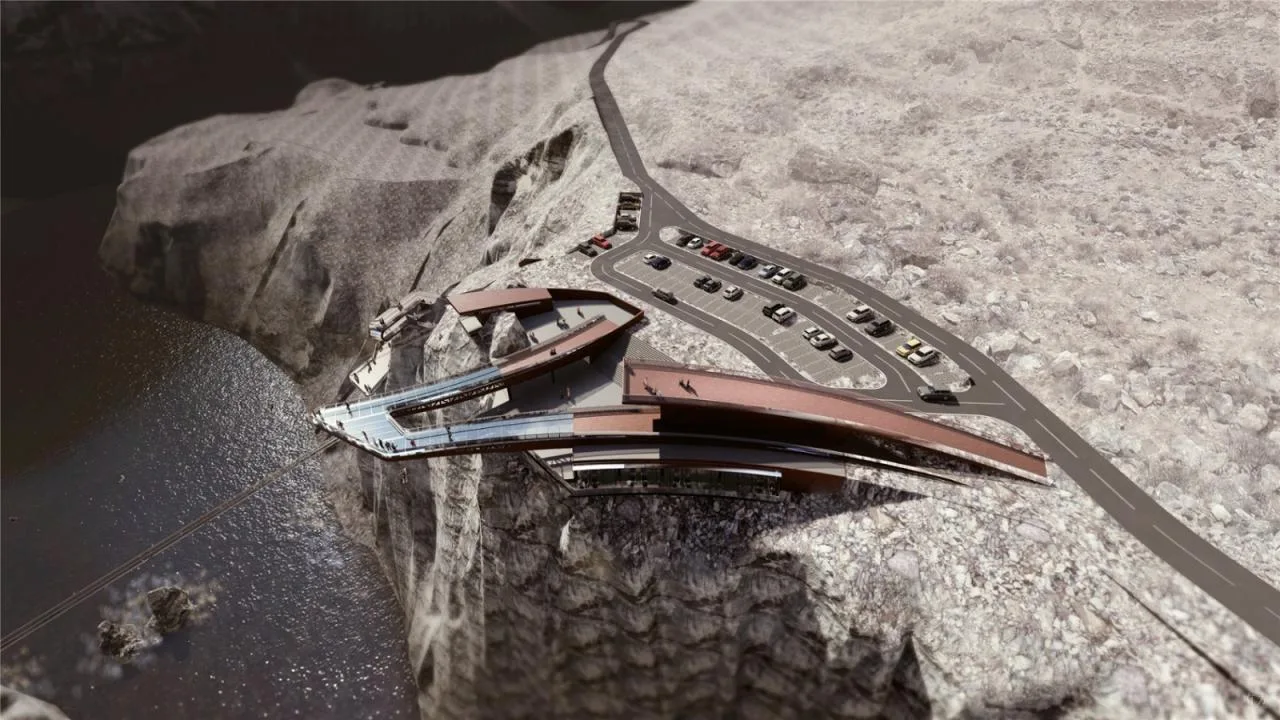
△ Nujiang Observation Deck Rendering © Xiaoyin Architecture
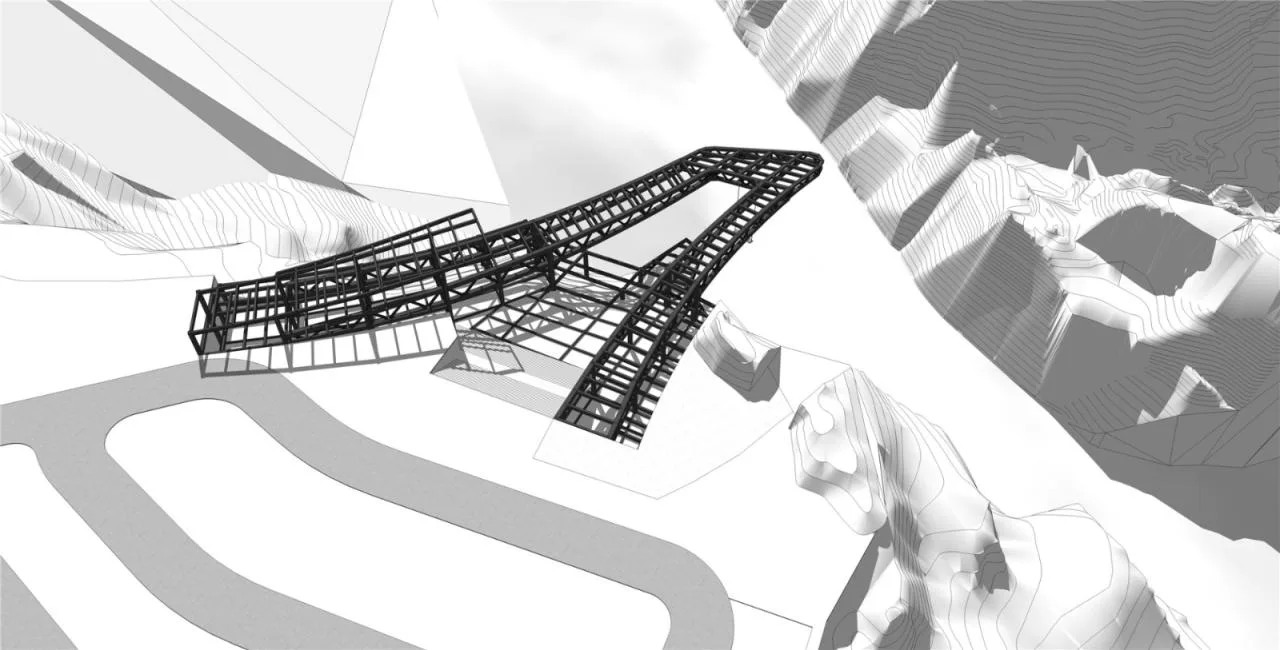
△ Nujiang Observation Deck Steel Structure Model © Xiaoyin Architecture
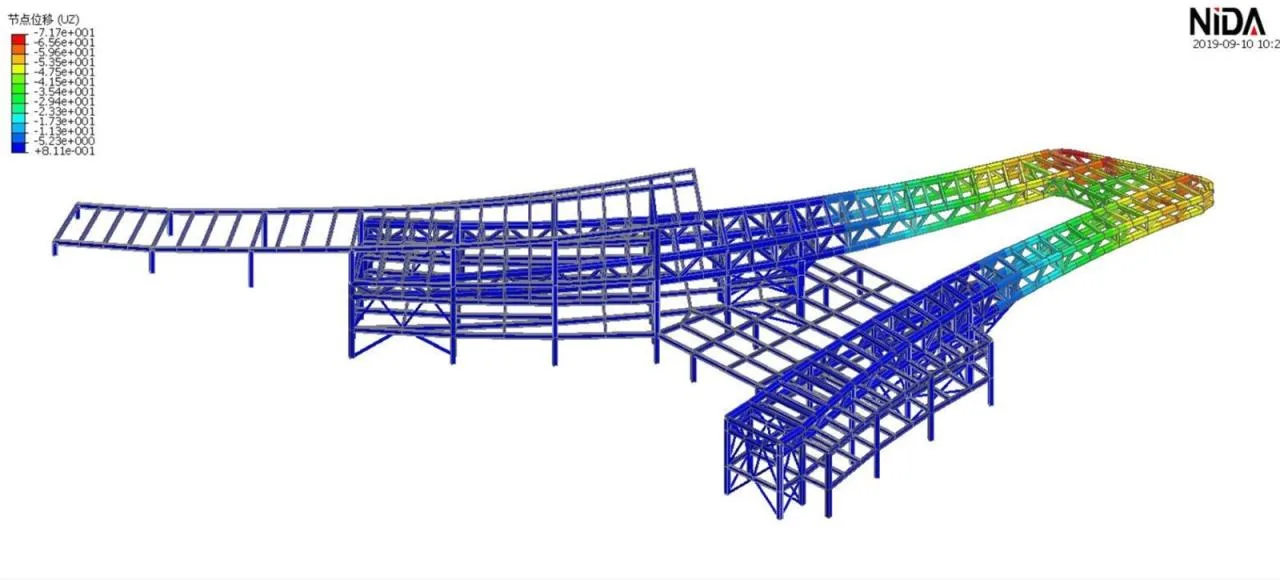
△ Simulation of steel structure assembly and disassembly for Nujiang Observation Deck © Xiaoyin Architecture
We strive to avoid complex construction methods, as high altitude and cold conditions severely test workers’ physical and mental endurance. Choosing reasonable processes and preparation, along with thorough project area consultations, helps prevent resource waste from “high-tech” methods unsuited to local conditions.
The challenges faced in Tibetan projects are exemplified by the Nu River Observation Deck. This project encapsulates nearly all typical design and construction problems encountered in Tibetan high-altitude engineering. From the outset, the concept embraced “challenge”—not only to provide visitors with an exhilarating experience but also to push the limits of engineering in such extreme environments, laying vital groundwork for future projects.
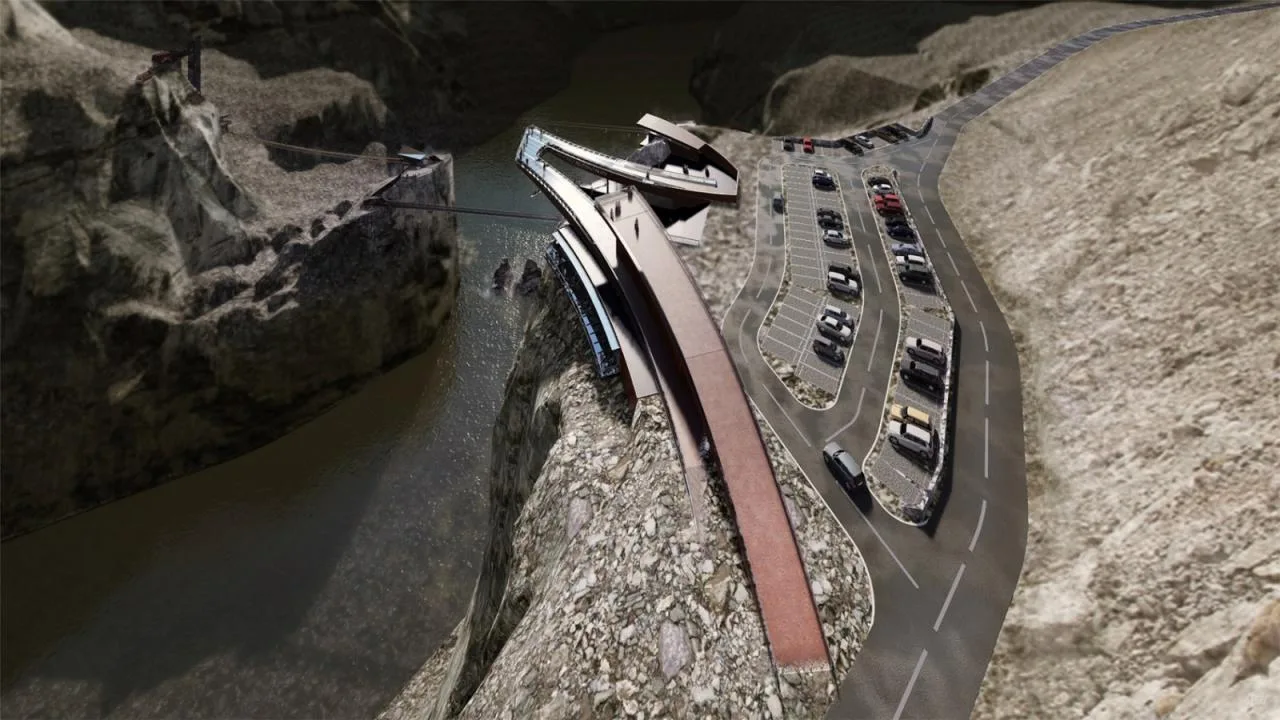
△ Nujiang Observation Deck Rendering © Xiaoyin Architecture
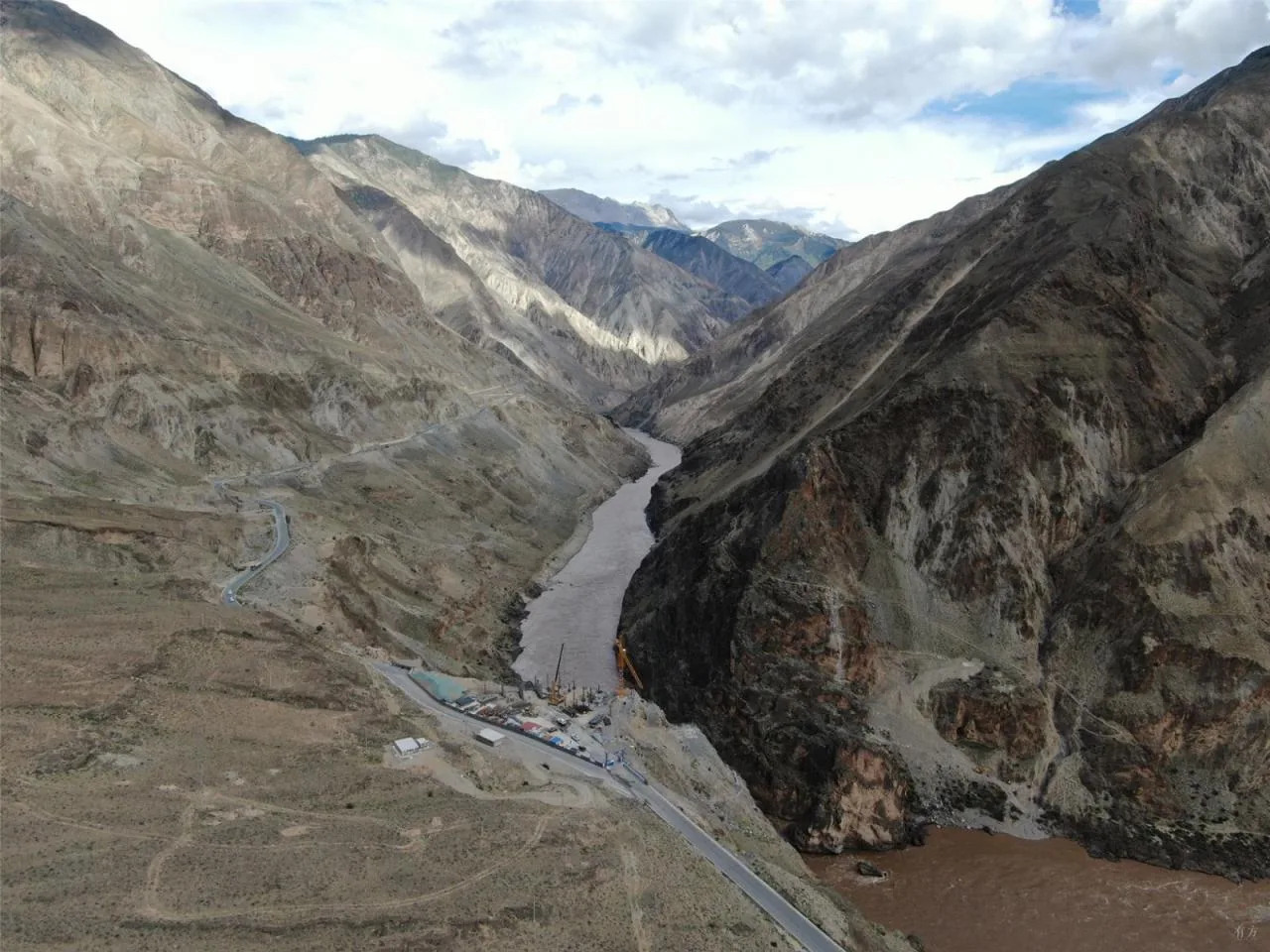
Perched on a cliff 110 meters above the Nu River, the site spans 260 meters at the river’s mouth. While the north bank borders highway G318, the south bank has no road access, limiting accessibility. From initial terrain surveys and geological assessments, the project faced numerous difficulties. To evoke the thrill of “seeking danger within danger” along the 72 turns of Tianlu and Nujiang Canyon, the design boldly pushed boundaries. Extensive specialized studies—geological disaster assessments, wind tunnel testing, tuned mass damper calculations, and cantilever steel structure simulations—provided essential technical support for construction.
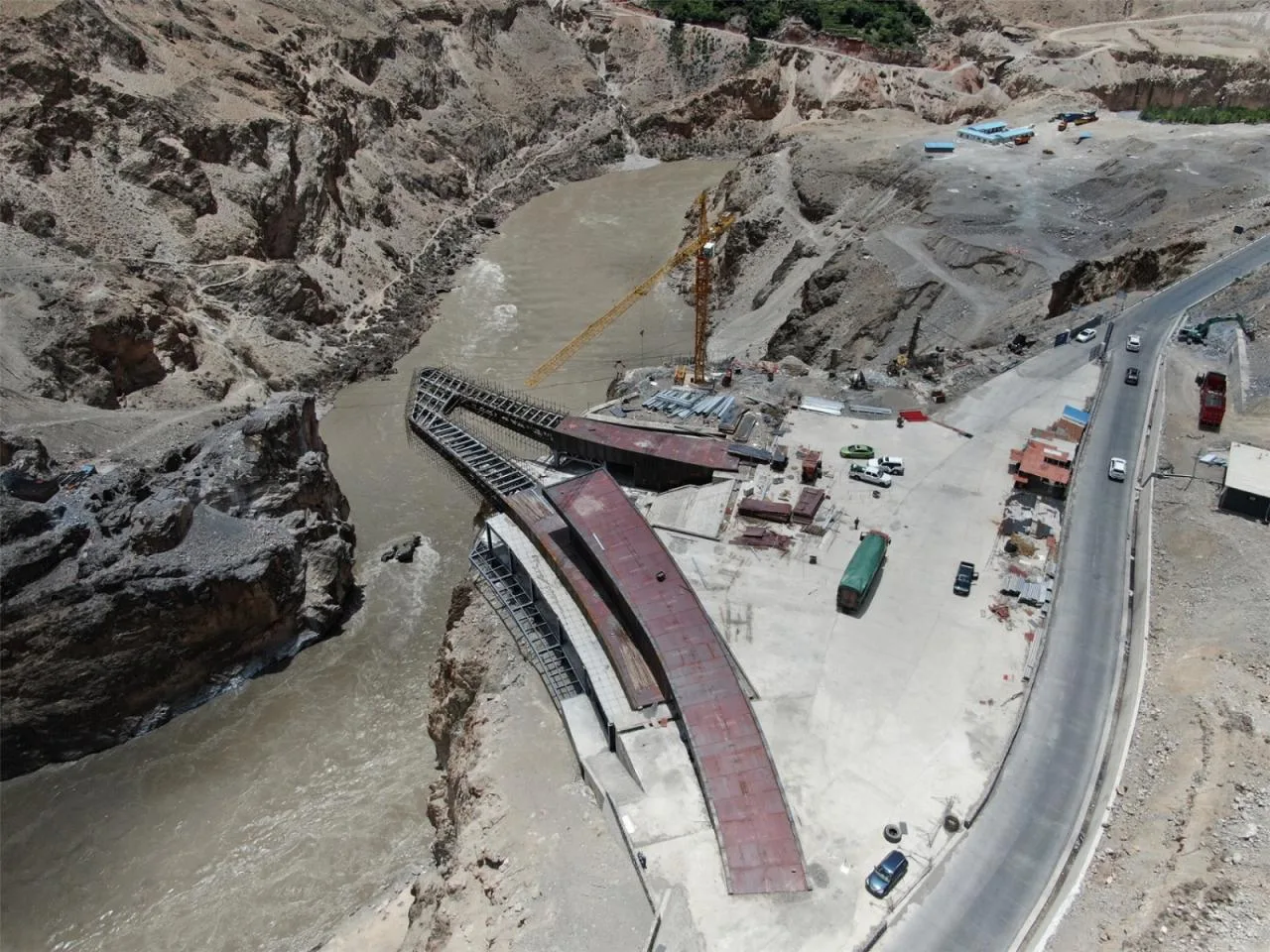
Nu River Observation Deck under construction © Xiaoyin Architecture
The site’s thin air, low oxygen, and year-round strong winds (level six or higher) add to challenges. Unstable mountain geology leads to frequent mudslides and rockfalls during rainy seasons, posing serious safety hazards. The construction team collaborated closely to overcome these hurdles.
Problem 1: Surveying and Layout
With structures spanning 260 meters across the Nu River, the south bank is accessible only via narrow footpaths requiring hand-and-foot climbing. Despite detailed 1:100 scale topographic maps, actual surveying and layout proved difficult. Steep cliffs and strong valley winds prevented drone usage, forcing manual RTK instrument measurements. No temporary roads existed, so workers were suspended by safety ropes while surveying cliff faces.
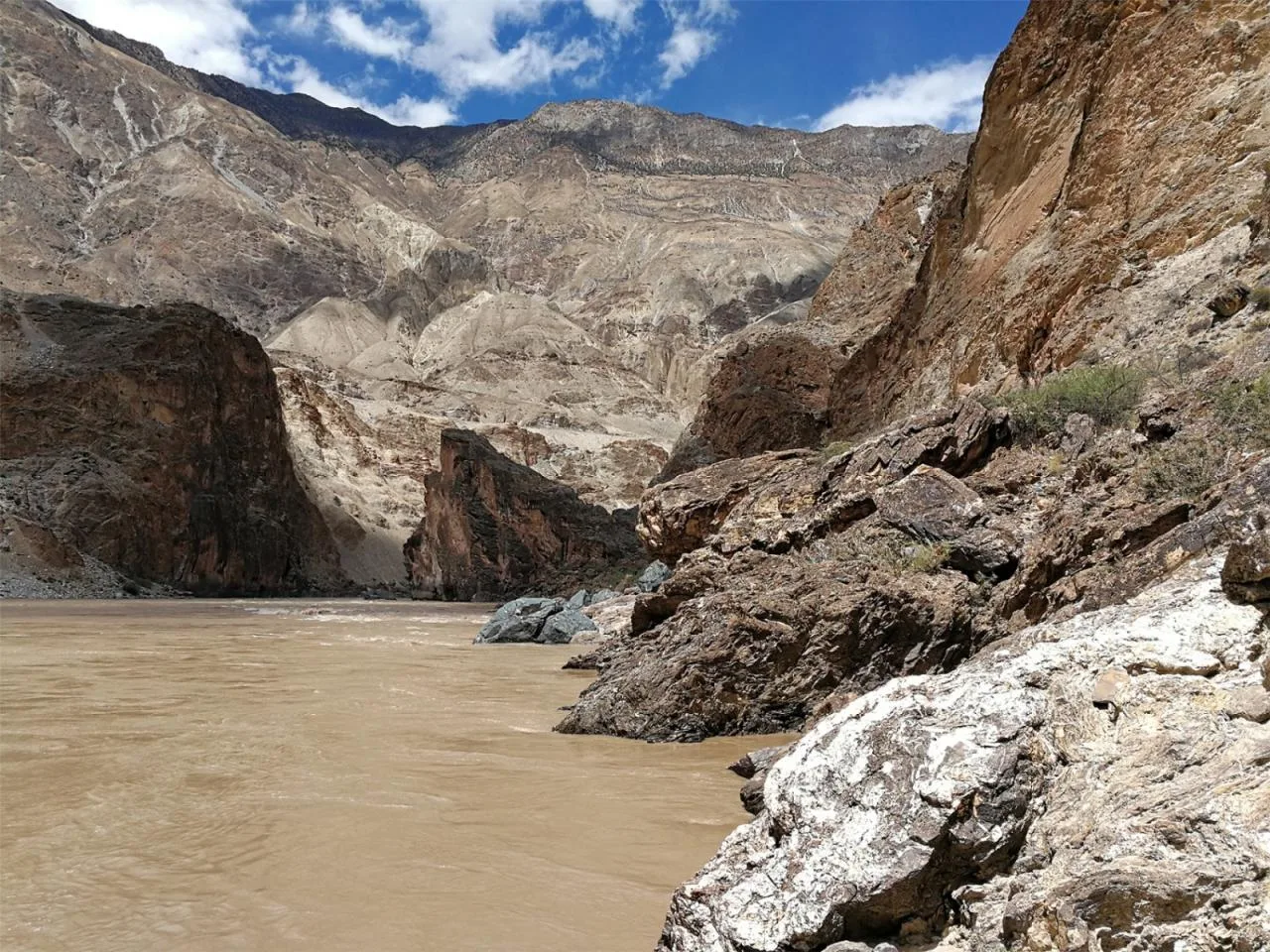
Steep viewing platform site © Xiaoyin Architecture
Problem 2: Foundation Excavation
The observation deck, located between the 72nd turn of Tianlu Road and Tiger Leaping Gorge, sits on cliffs inaccessible to large machinery. Pile foundations had to be drilled manually, reaching depths up to 35 meters into varying rock layers. Hard, dense rock required custom drill bits, as off-the-shelf options were inadequate. Rock samples were analyzed by manufacturers, resulting in tailored drill bits. Pile foundation construction spanned six months, involving six teams and hundreds of workers.
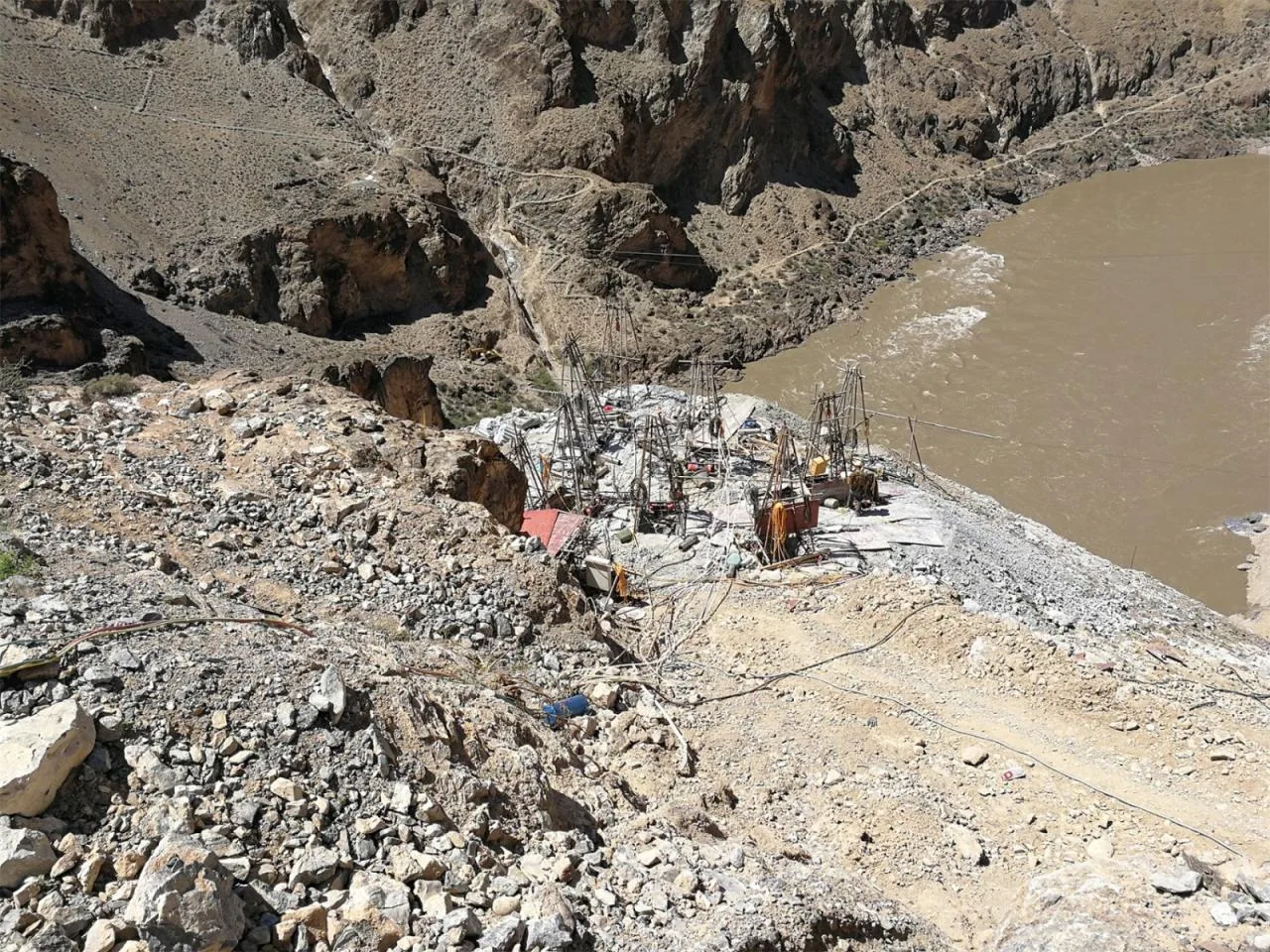
Water mill drills used for pile driving on cliff edges © Xiaoyin Architecture
Problem 3: Transporting Personnel, Equipment, and Materials
Access to the south bank lacks construction roads. Workers must travel several kilometers, cross the Nu River via a temporary steel bridge, then hike to the site. At 2,800 meters elevation, round trips take about four hours without carrying loads. The reinforced concrete deep pile foundations and steel structures require heavy, specialized materials that cannot be moved by manpower alone. Medium machinery like excavators and compressors are also unable to reach the site.
To solve this, a temporary cross-river zip line was installed for machinery transport, later supplemented by a freight zip line for materials. The project also successfully delivered a 100-ton crane and erected a 60-meter tower crane on the north bank. Materials are unloaded by crane, transferred via tower crane to the zip line, and then manually transported to various points on the south bank, involving at least four transfers.
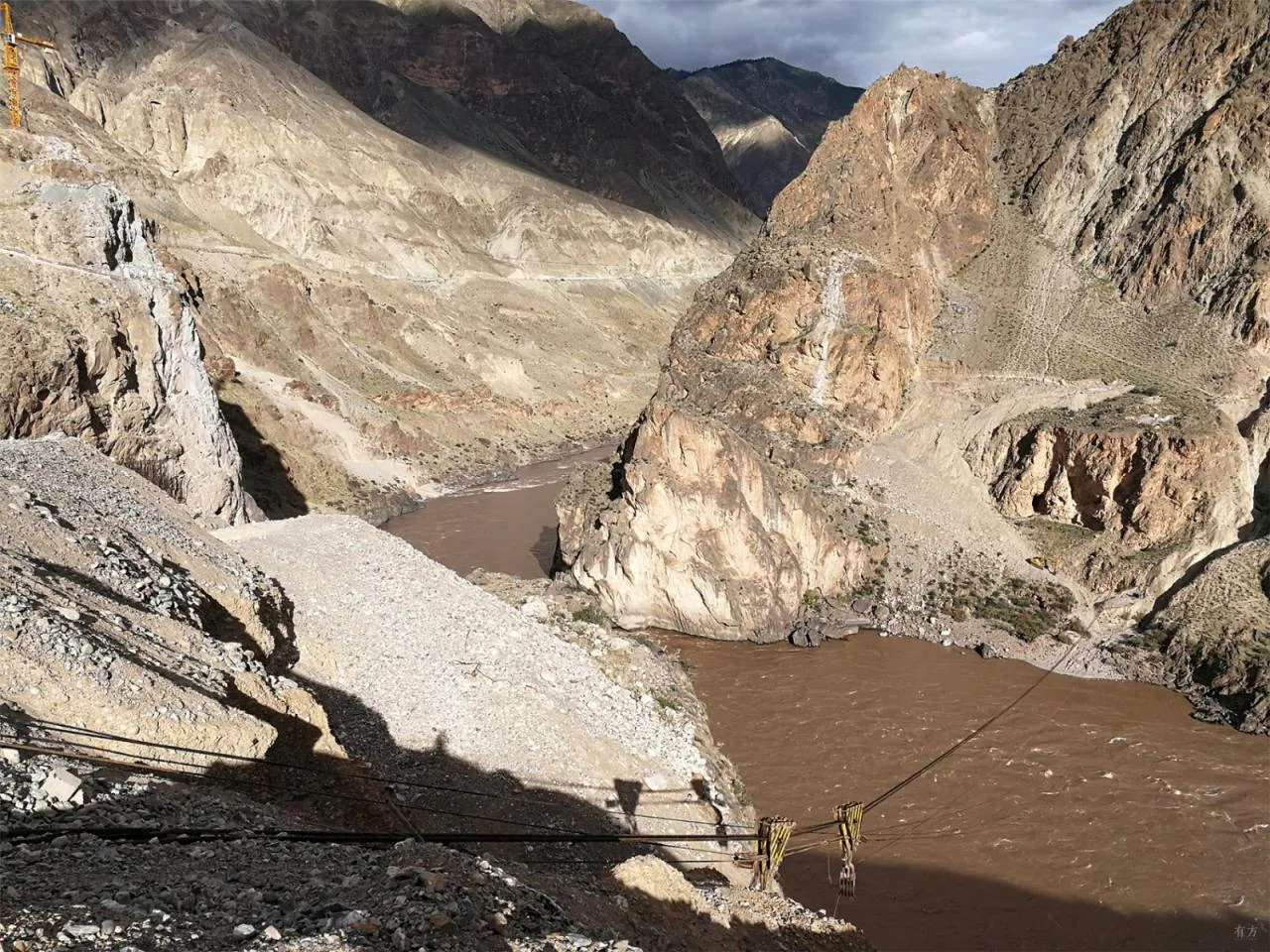
△ Cross river freight zip line © Xiaoyin Architecture
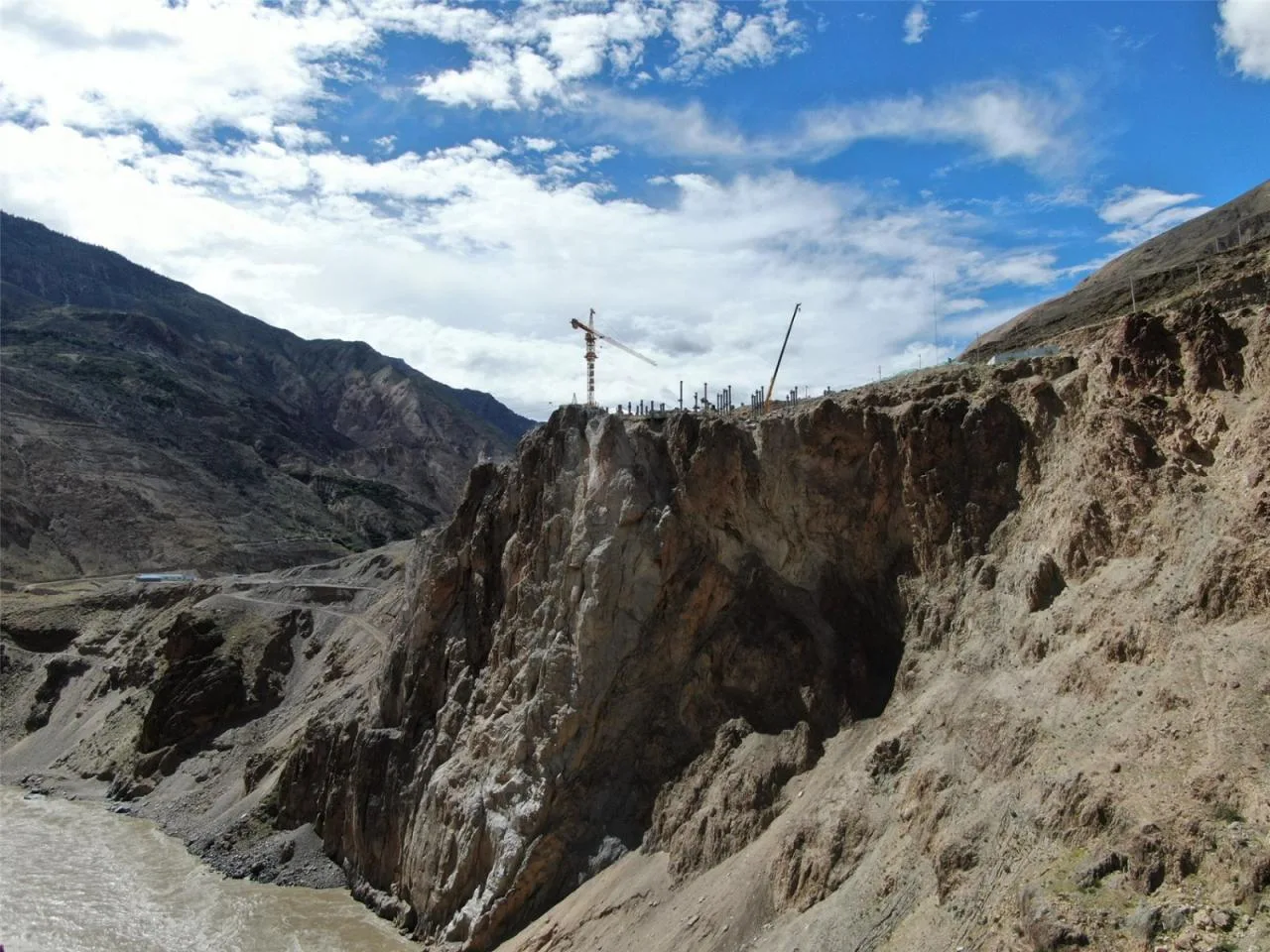
Tower cranes and hoists at cliff edges © Xiaoyin Architecture
Problem 4: Concrete Pouring
Structural engineers mandated high-grade commercial concrete, prohibiting self-mixed batches to ensure quality. The nearest concrete plant is over 40 kilometers away in Basu County, and mixer trucks cannot cross the river due to their weight. To address this, a 150-meter temporary bridge with a dedicated concrete pipeline was built across the Nu River.
Frequent pipe blockages required immediate clearing to avoid material loss and costly pipeline replacement. Long transport times and complex river crossings demanded precise scheduling to minimize waste. Some pouring points atop cliffs were unreachable by pipeline; with engineer approval, self-mixed concrete was used here, though progress was slow despite meeting quality standards.
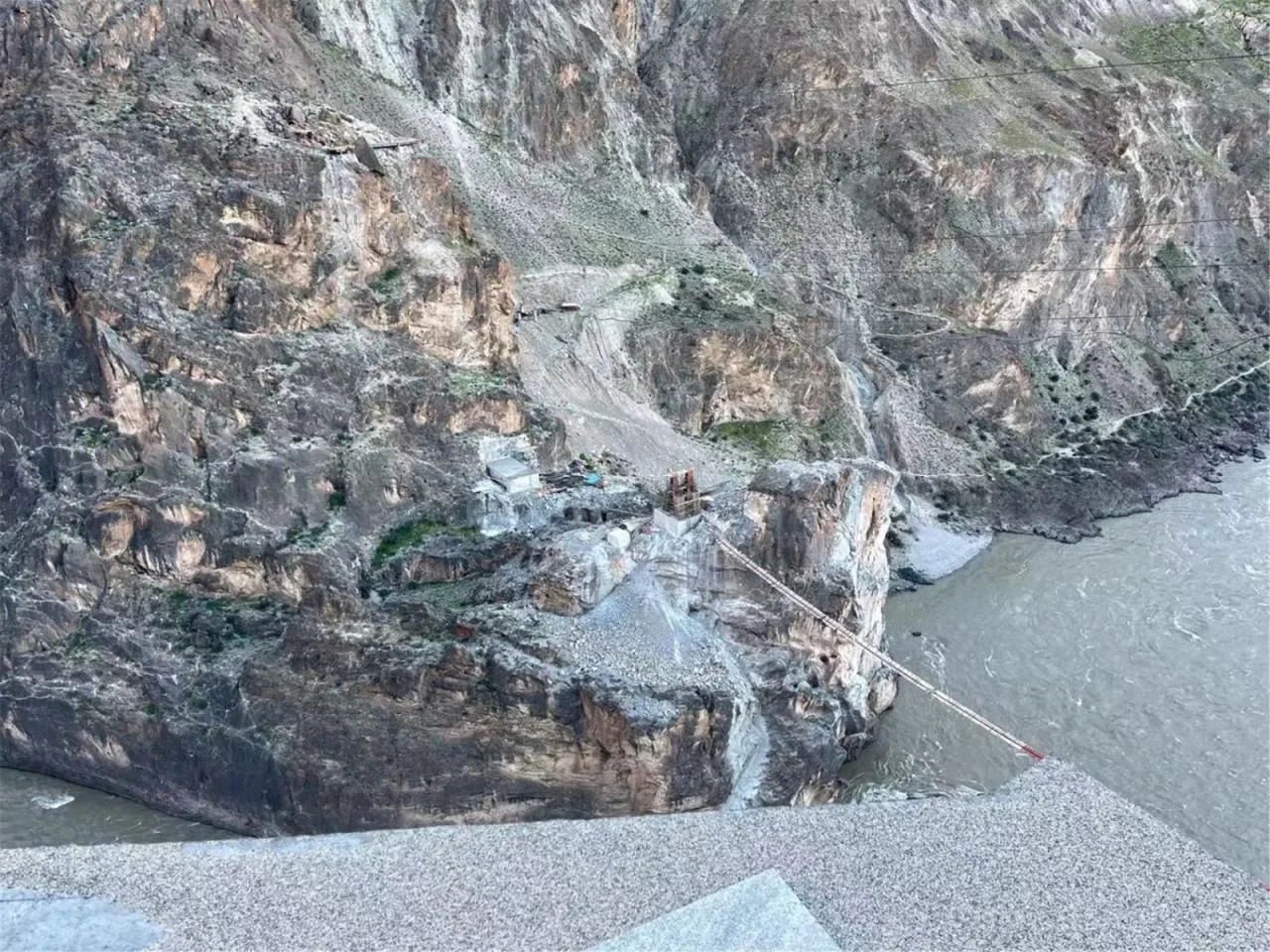
△ Cross river bridge © Xiaoyin Architecture
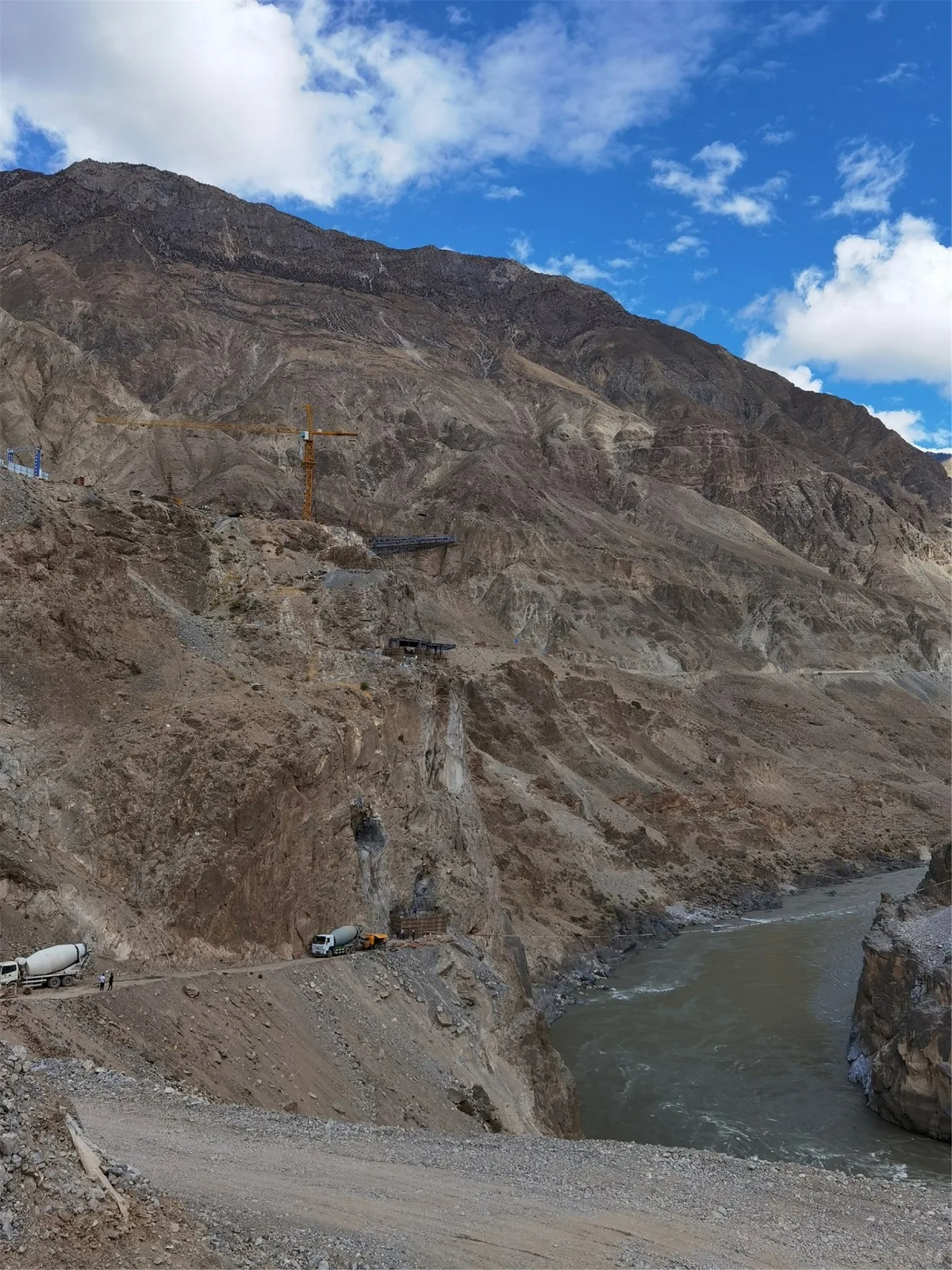
△ Pipeline for concrete transport across the river © Xiaoyin Architecture
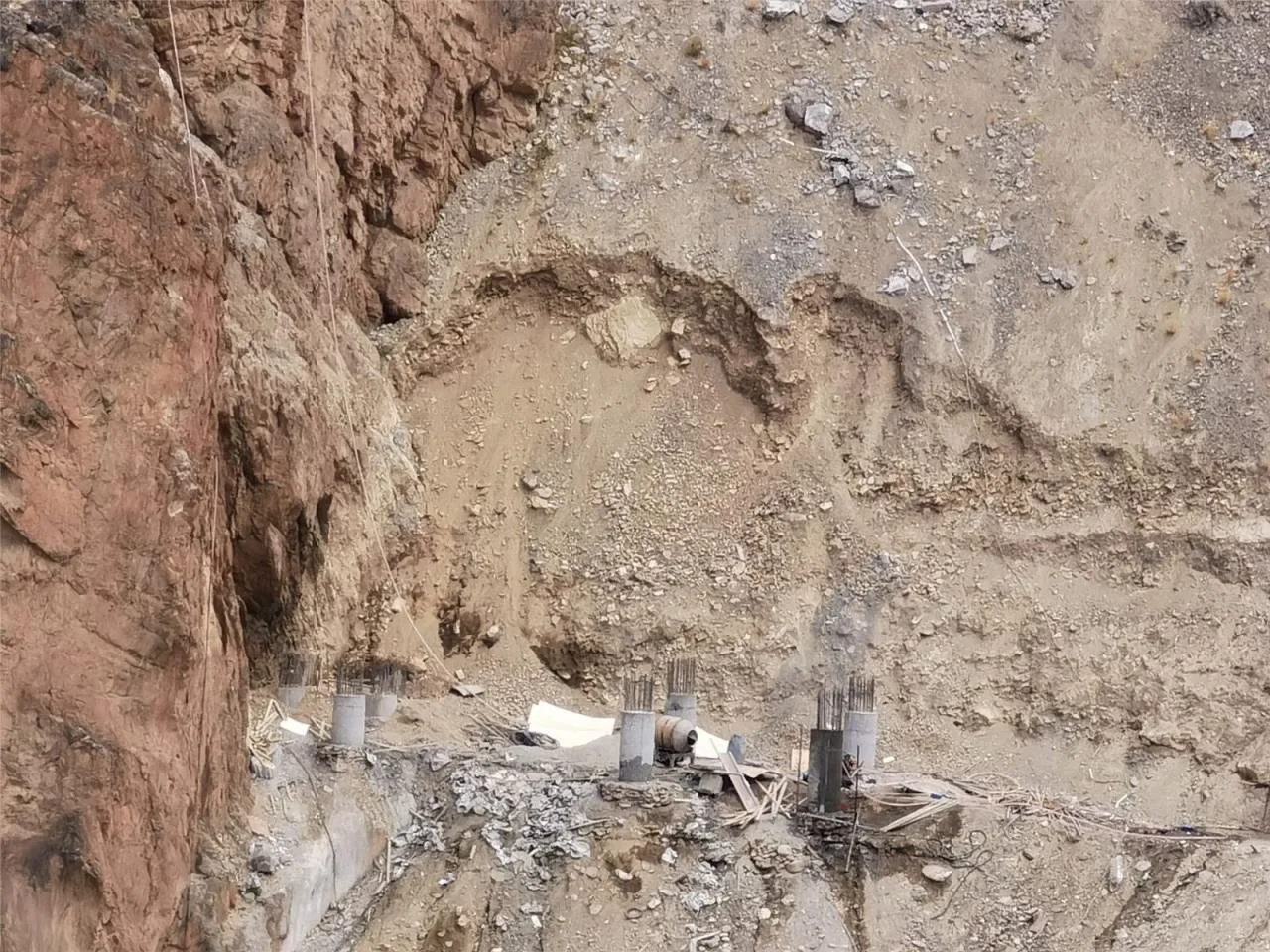
△ Self-mixed concrete pouring © Xiaoyin Architecture
Problem 5: Cliffside Wall Foundation Construction
The observation deck’s cross-river glass suspension bridge required tunnel anchoring foundations drilled 30 meters deep into cliff walls, over 20 meters above the platform, above turbulent river waters. Machinery could not access the site; scaffolding was erected on the cliff face, and workers used air compressors and pickaxes for excavation. Surface rock weathering and loosening caused frequent rockfalls, adding safety risks.
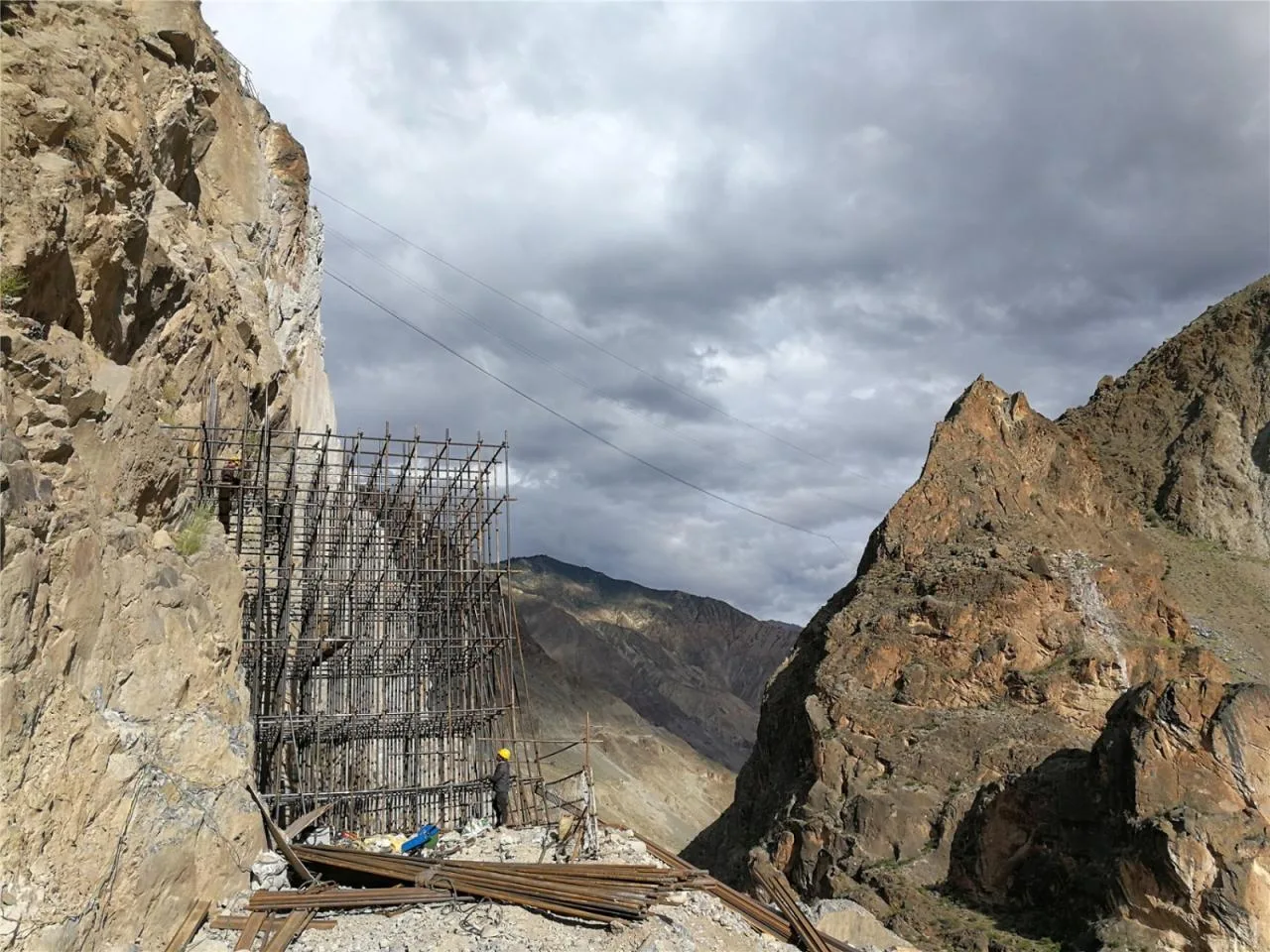
Scaffolding on cliffs during side wall foundation construction © Xiaoyin Architecture
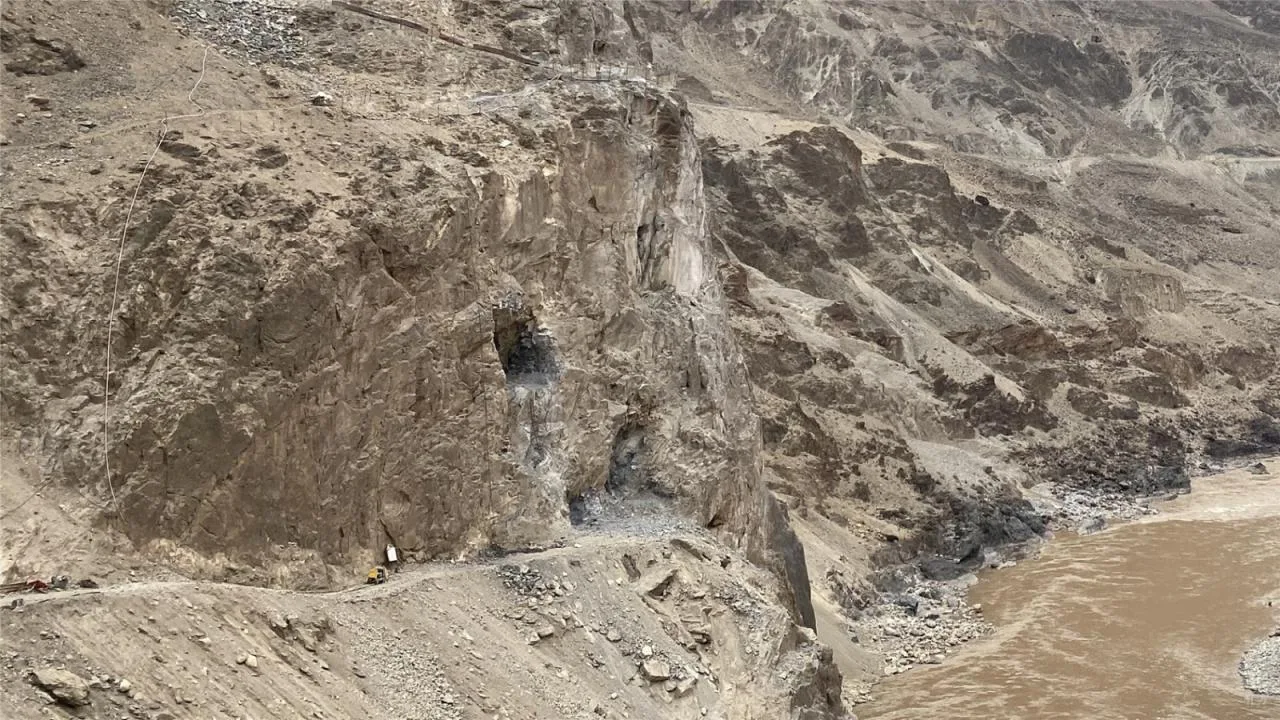
Tunnel anchor on cliff © Xiaoyin Architecture
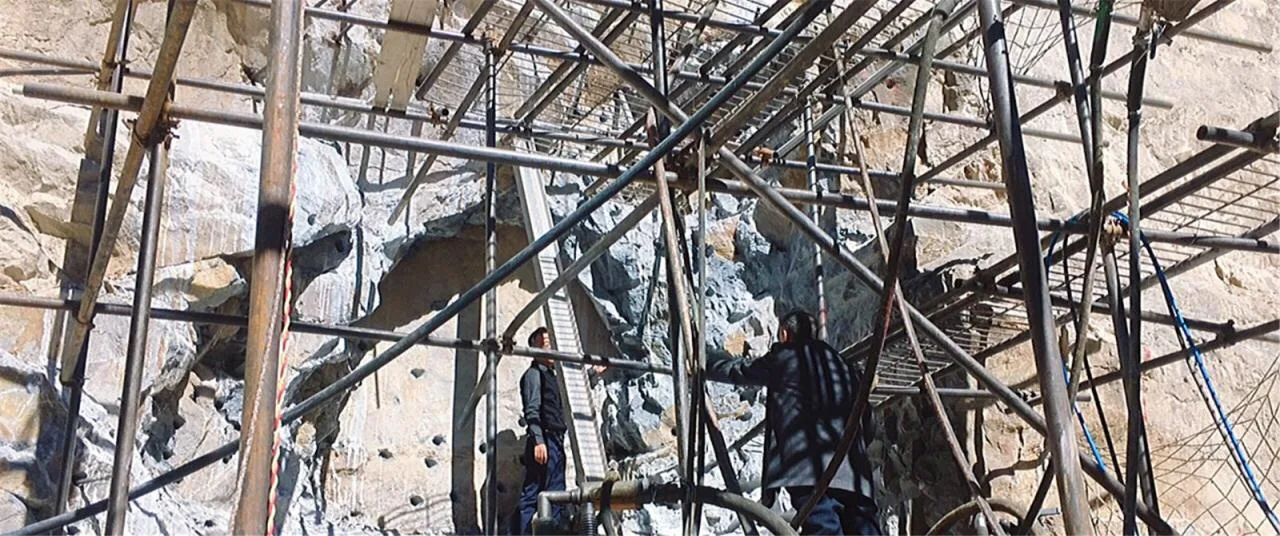
△ Tunnel anchor drilling and excavation © Xiaoyin Architecture
Problem 6: Steel Structure Hoisting
The observation deck’s steel truss structure features a 27-meter cantilever with a truss height tapering from 2.4 meters near the support to 1.5 meters at the cantilever end, standing roughly 110 meters above the Nu River. Due to G318’s transport restrictions, the truss was prefabricated in 46 sections, transported to the site, assembled, and lifted in place. The cantilever’s 26 truss sections demanded precise pre-arching, welding, and displacement control under constant strong winds, requiring skilled workers and meticulous installation—a rare feat in Tibet.
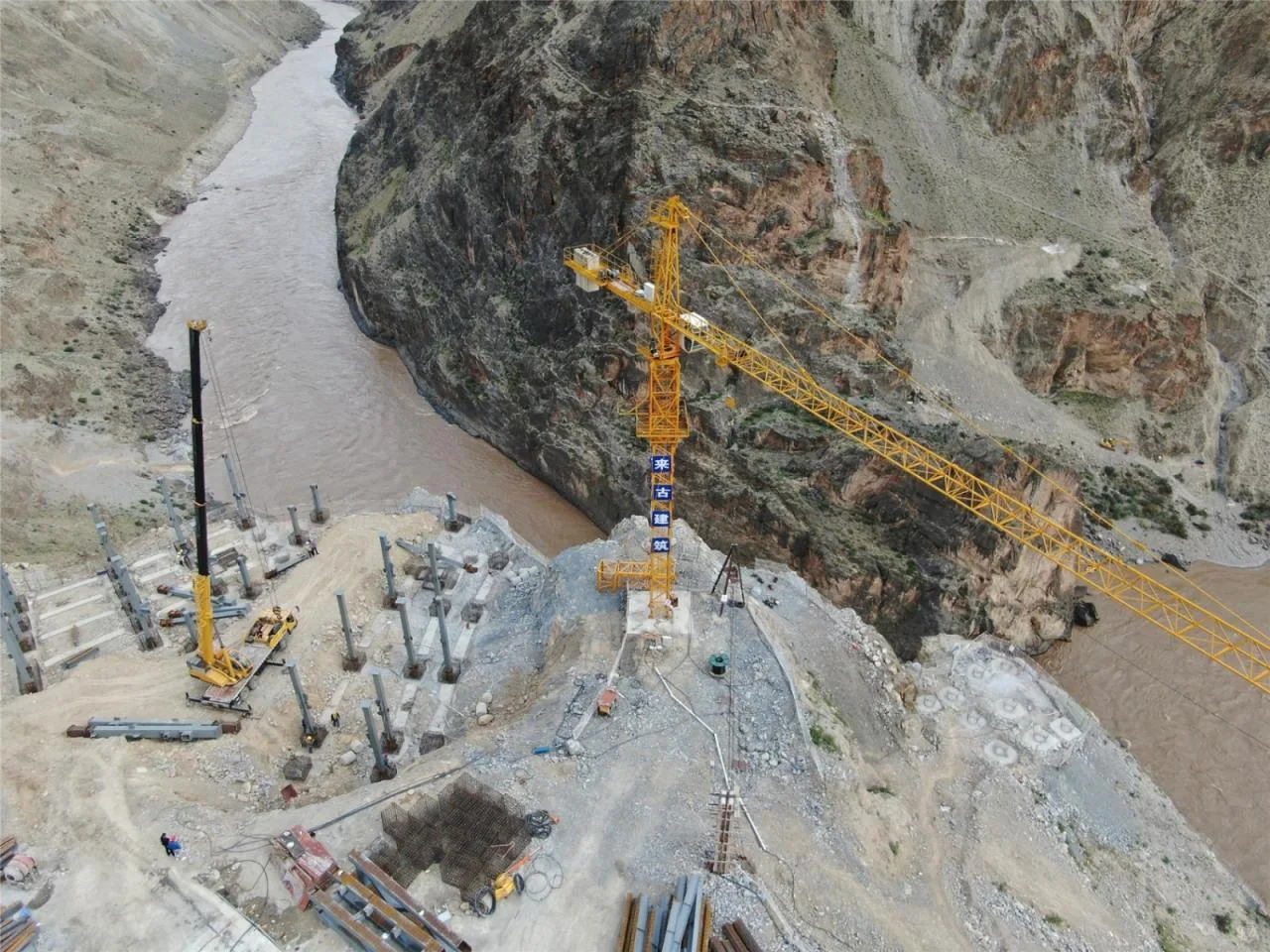
△ Steel structure hoisting © Xiaoyin Architecture
3. Where do cultural conflicts arise during construction?
Conflicts naturally emerge through contact and communication. More importantly is how to resolve them to reach consensus and win-win outcomes. Whether related to religious beliefs or local protectionism, respect is essential.
The best way to avoid conflict is thorough understanding of local religious beliefs beforehand. Ignoring this can lead to serious disputes. Regarding “local protection,” it’s crucial to understand common social agreements, coordinate with local governments and representatives, and communicate effectively to reach mutually beneficial agreements that clear obstacles before construction begins.
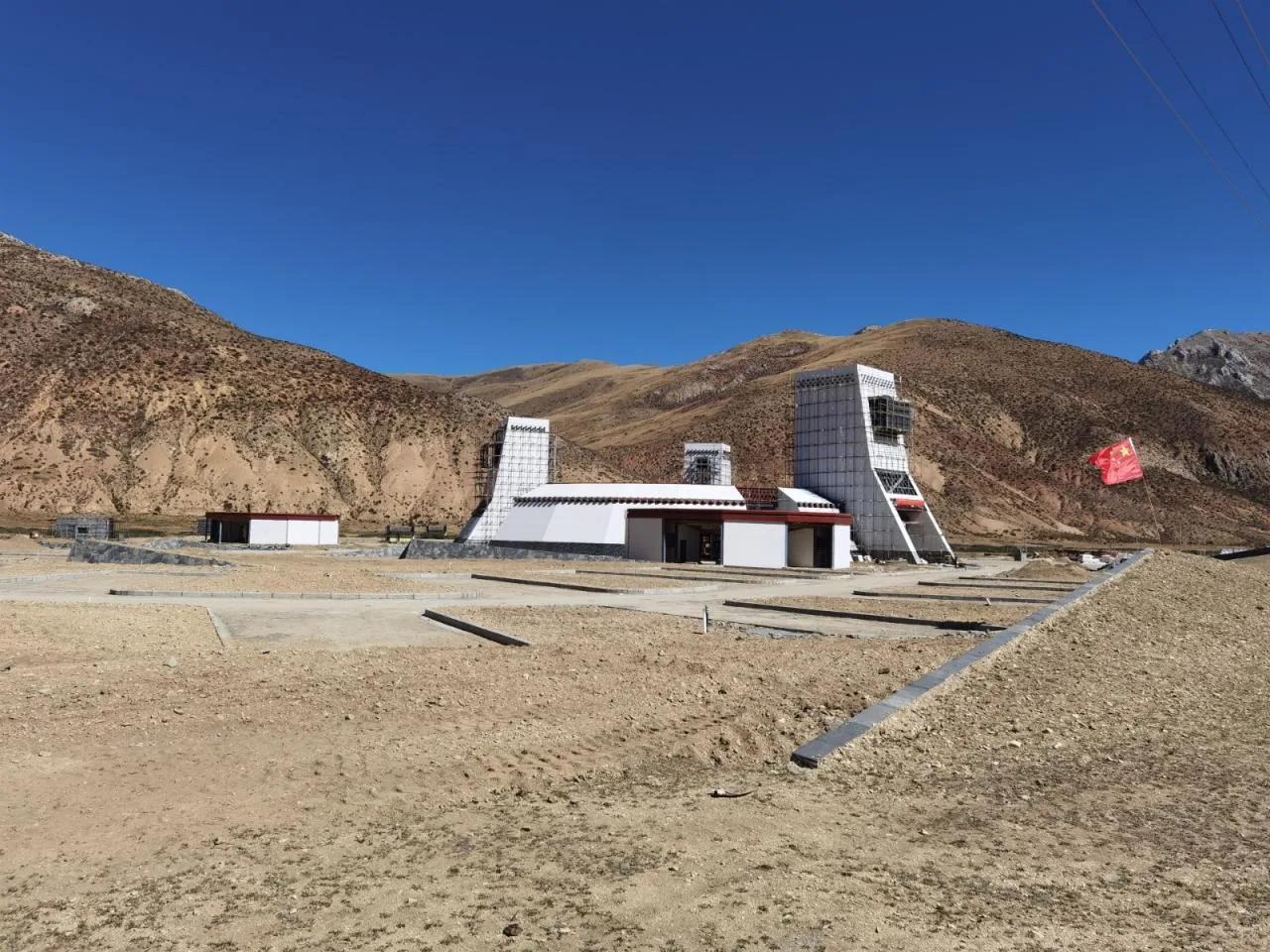
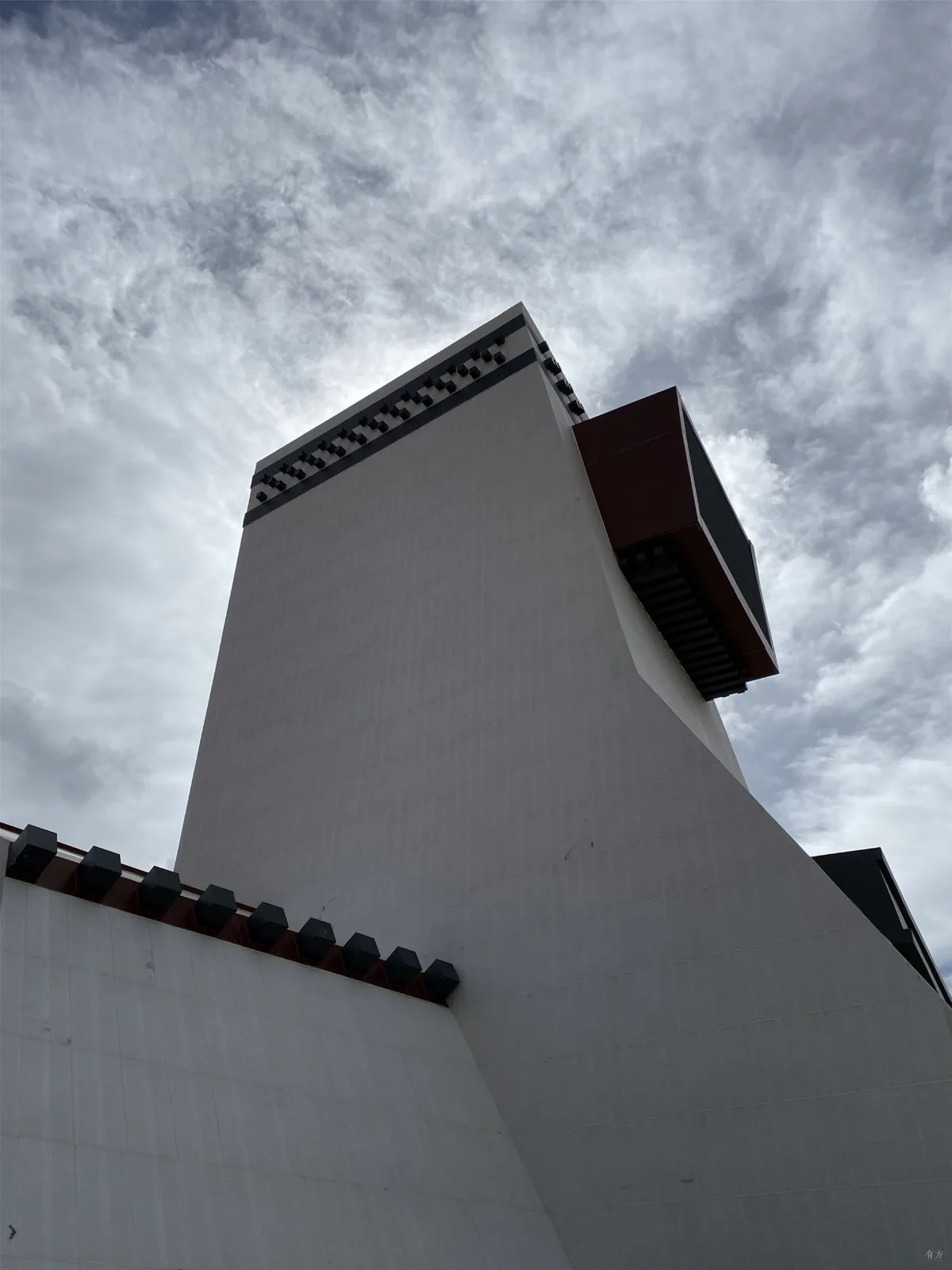
Bangda Tourism Distribution Center under construction © Xiaoyin Architecture
4. How do you harmonize and integrate with Tibetan regional culture?
First and foremost, respect is key. We explore opportunities for innovation and breakthroughs while honoring local traditions. Near towns and villages, we aim to create architectural tones that harmonize with surrounding living customs, forms, decorations, materials, and colors. In remote areas, we prioritize the relationship between architecture and nature, allowing buildings to blend seamlessly into the environment.
We also express regional cultural characteristics such as beliefs, colors, and traditional elements. While respecting local culture, we embrace contemporary ideas and innovations to foster mutual development, progress, and integration.
The Bangda Tourism Distribution Center and Lhasa Mercedes Benz Global Service Center, located near towns, reflect local architecture. Conversely, remote sites like Wuhu Camp and the Nujiang Observation Deck embrace contemporary design integrated with nature.
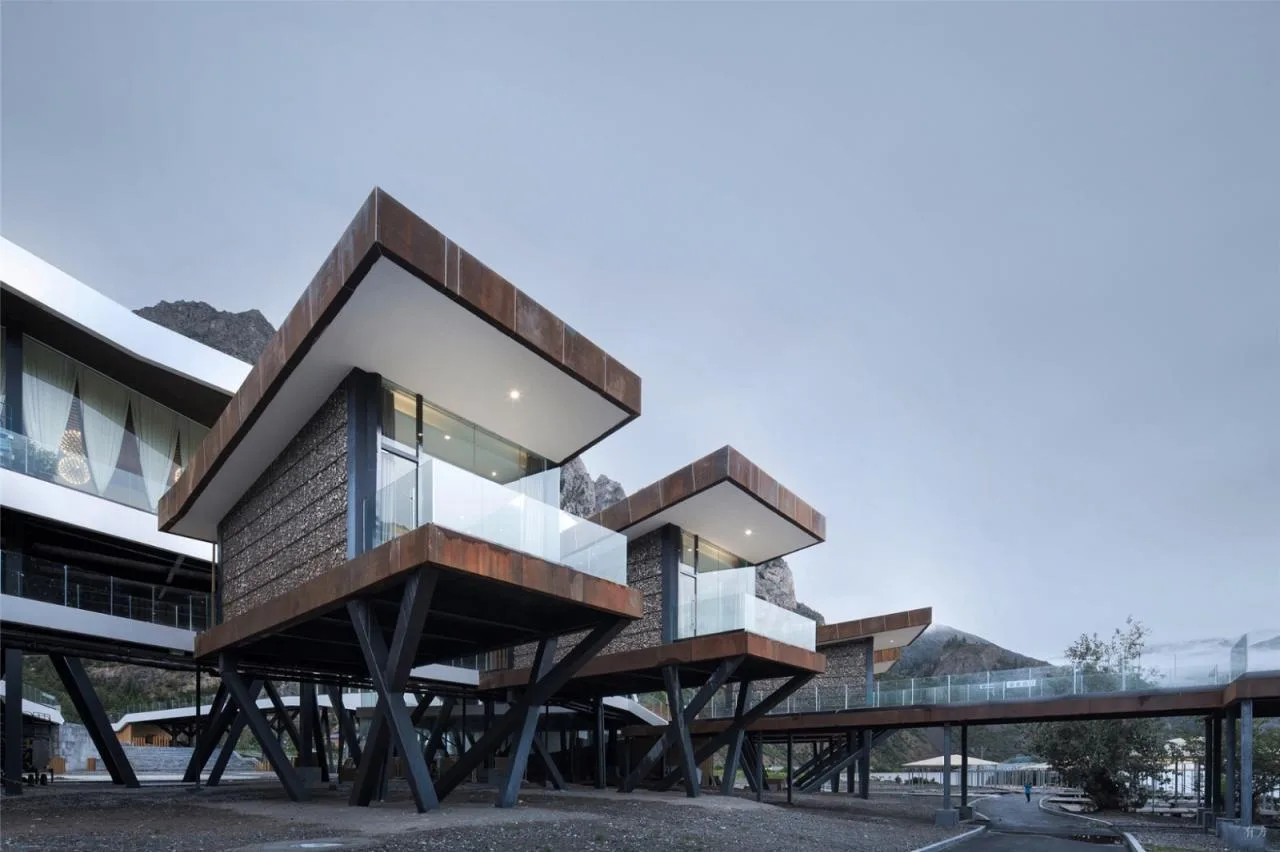
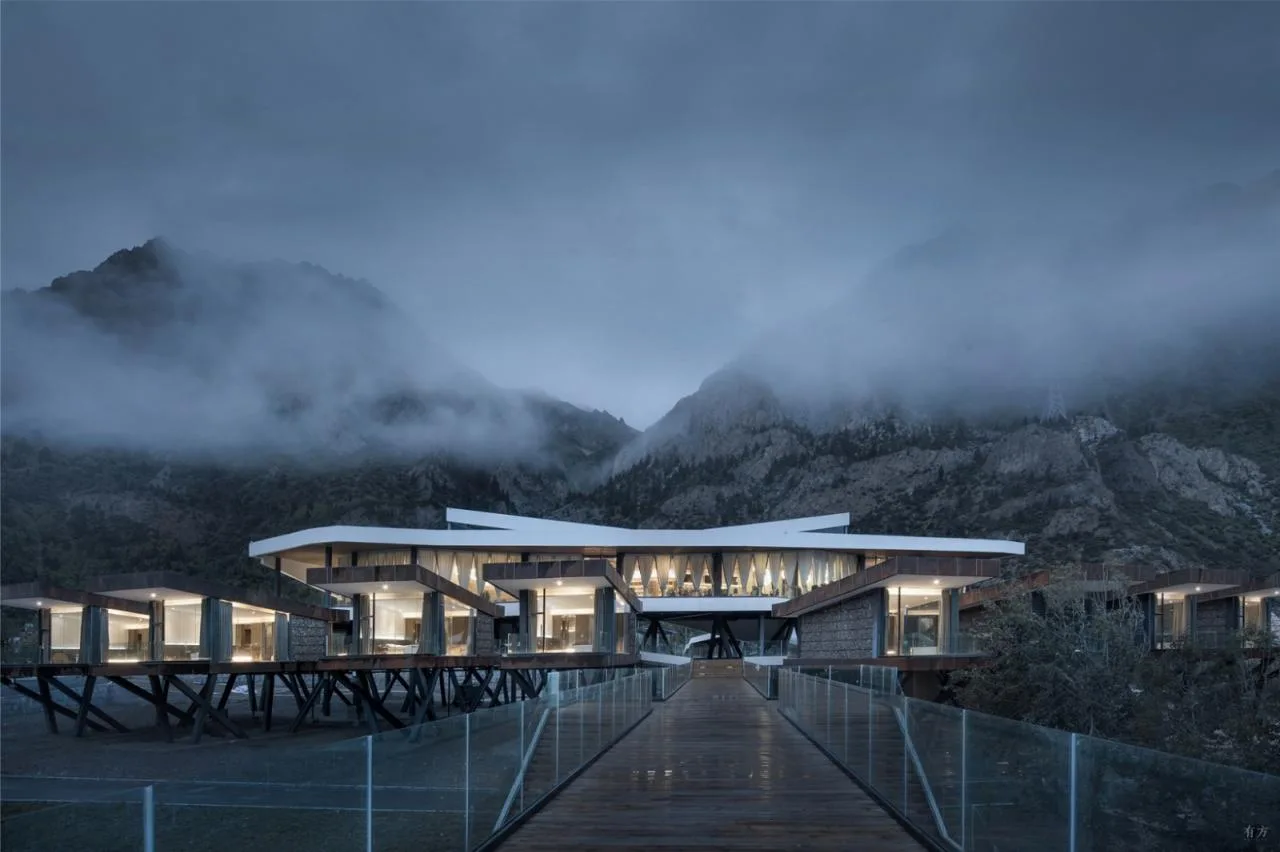
△ Ranwu Lake Camp Photography: Existing Buildings
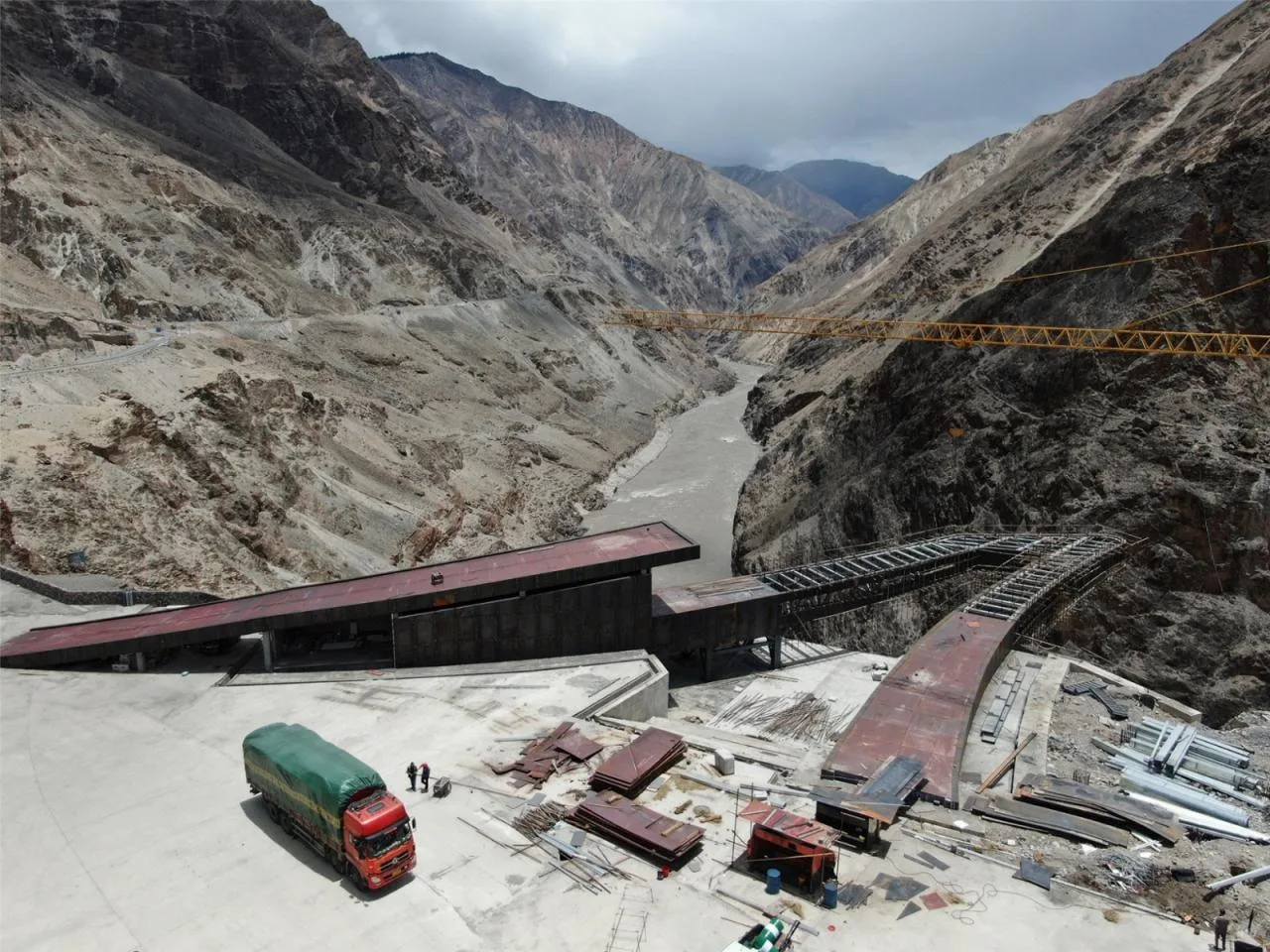
△ Nujiang Observation Deck © Xiaoyin Architecture
5. How is “green construction” integrated into the design and building process? How do you minimize impact on the fragile plateau ecology?
While construction inevitably causes some disturbance, our design strategies emphasize green construction through careful site selection, minimal earth intervention, sustainable materials, and efficient structures. We prioritize preserving original terrain and mature trees. While small grasslands and ground cover plants are relatively easy to restore in Tibet, tree planting is challenging.
We maximize terrain utilization, adapt to local conditions, and avoid large-scale excavation or fill. Steel structures and prefabricated assembly reduce environmental impact by minimizing on-site activity.
For instance, the Ranwu Lake campsite is built on barren land formed by mudslides and gullies, with buildings suspended above ground. This design helps manage seasonal floods along highway G318 and allows land to revert to natural grasslands and shrubs. Adjacent barren land has been planted with trees that have flourished over the years, transforming the campsite into a jungle.
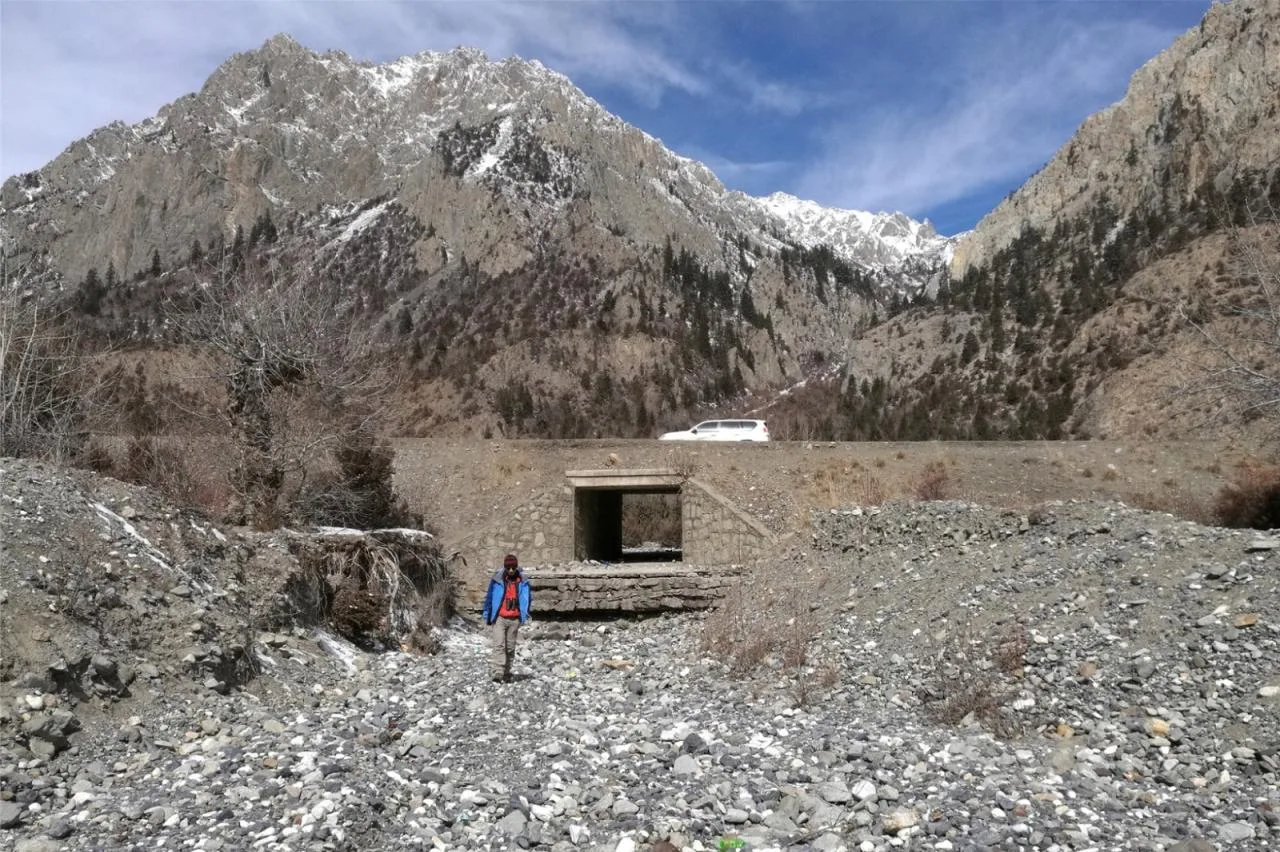
△ Ranwu Lake campsite site selection in a debris flow gully © Xiaoyin Architecture
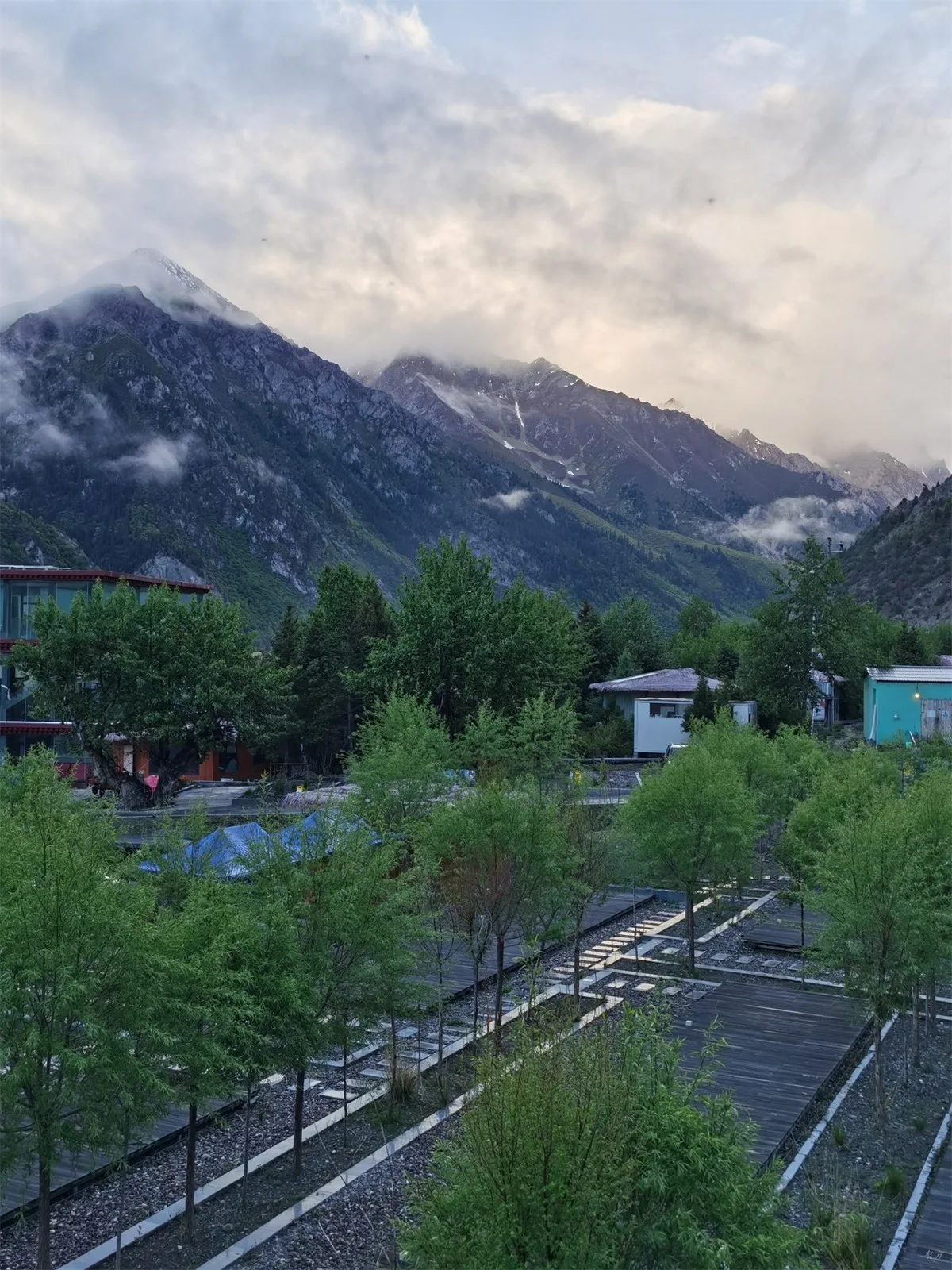
Trees grown at the campsite in 2021 © Xiaoyin Architecture
Some projects are in desolate areas where buildings minimally impact the environment. In these cases, we actively improve the environment by planting trees and developing fruit forests to create greener landscapes. The Nujiang Observation Deck is perched on a desert cliff, designed as a bold tourist attraction along G318. The government plans to plant extensive fruit forests nearby, gradually greening the desert in coming years.
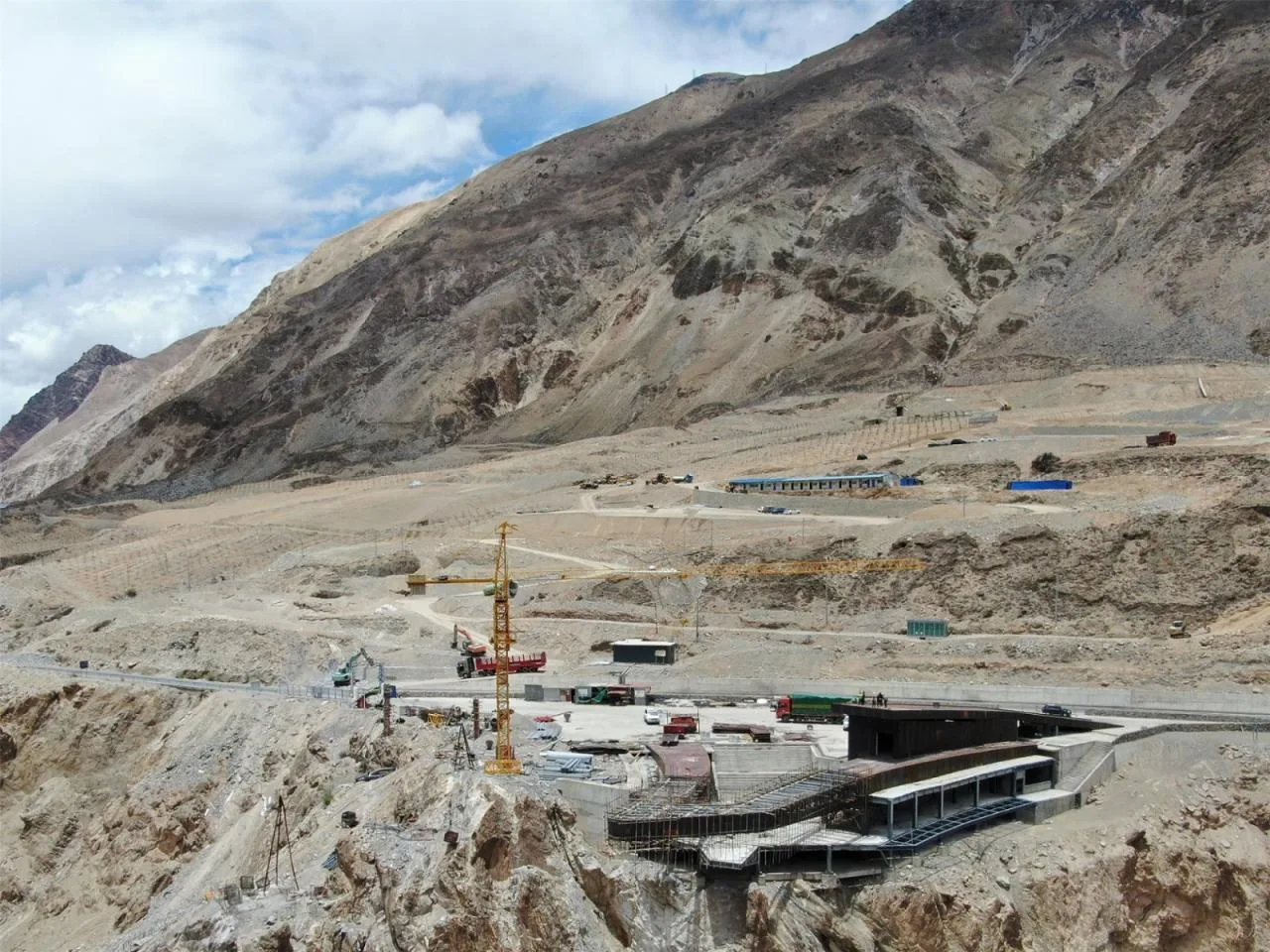
Newly planted fruit forest on the north side of the observation deck © Xiaoyin Architecture
6. What specific needs and expectations do property owners have for commercial projects in high-altitude areas?
The fundamental needs of all owners are survival and development. High-altitude development requires broad participation but is challenged by physiological impacts on humans, limiting many commercial activities. Exploring viable commercial formats and co-developing products with owners is a complex process.
To facilitate activity and enhance experiences at altitude, architectural designs must prioritize human comfort, including heating, oxygen supply, and efficient transportation planning.
7. How do economic and market factors influence overall design?
This is an interactive process where economic and market efficiency directly affect a place’s vitality. The pandemic restricted travel, impacting tourism-driven Tibetan areas. Without people’s participation, economic circulation halts, and places slowly decline.
Generally, a place’s appeal determines if people want to engage and promote its economy. A well-designed project plays a crucial role in stimulating development, effectively and precisely. Architecture serves people; their willingness to participate shapes a site’s vitality, which in turn drives economic and market success.
△ Ranwu Lake Campsite © Xiaoyin Architecture
Ranwu Town has a population of 1,496 across 133 households. Following completion of the Ranwu Lake campsite, agricultural e-commerce platforms enabled local villagers to market produce externally, lifting 60 impoverished households. Average household incomes rose from under 3,000 yuan annually to 35,000 yuan. The project generated an annual poverty alleviation bonus of 4 million yuan, spurred construction of 45 new hotels, and significantly improved tourist living conditions.
The Nujiang Observation Deck has created at least 48 local jobs, generating over 3 million yuan in annual employment income. We look forward to its completion, which will further empower regional tourism and invigorate this dynamic area.
△ Ranwu Lake Campsite © Xiaoyin Architecture















Must log in before commenting!
Sign Up