
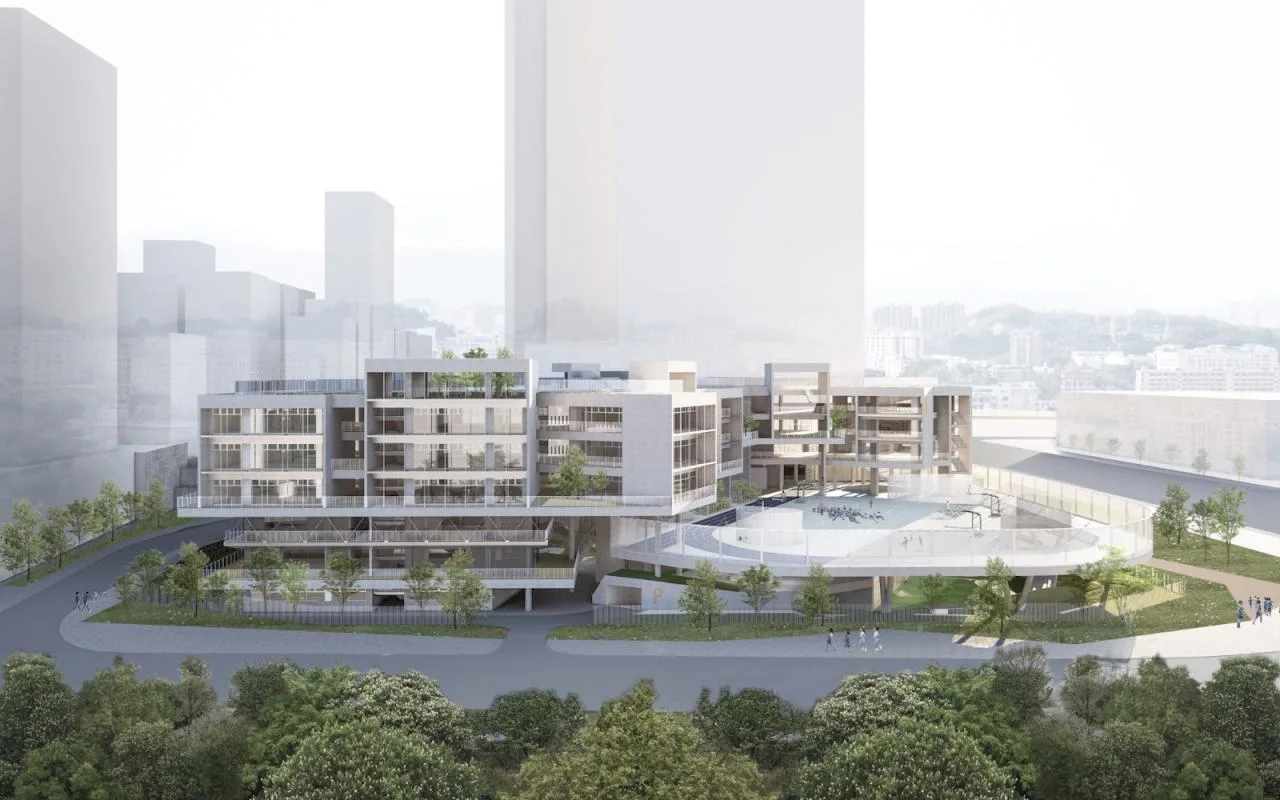
Design Strategy One: Preserving the Urban Landscape Experience
The site of Xuecun Village Elementary School was originally a natural mountain. Urban development divided this natural terrain into plots of varying heights, separated by roads, forming a unique urban geographical pattern that includes urban villages, residential zones, and public buildings. This design aims to maintain the original height relationships of the urban geography by organizing multiple terraces that reflect these differences.
By introducing an urban landscape belt into the campus, the design creates a shared resource interface between the school and the city, establishing an open campus boundary that retains the experience of the natural mountain within the urban environment.
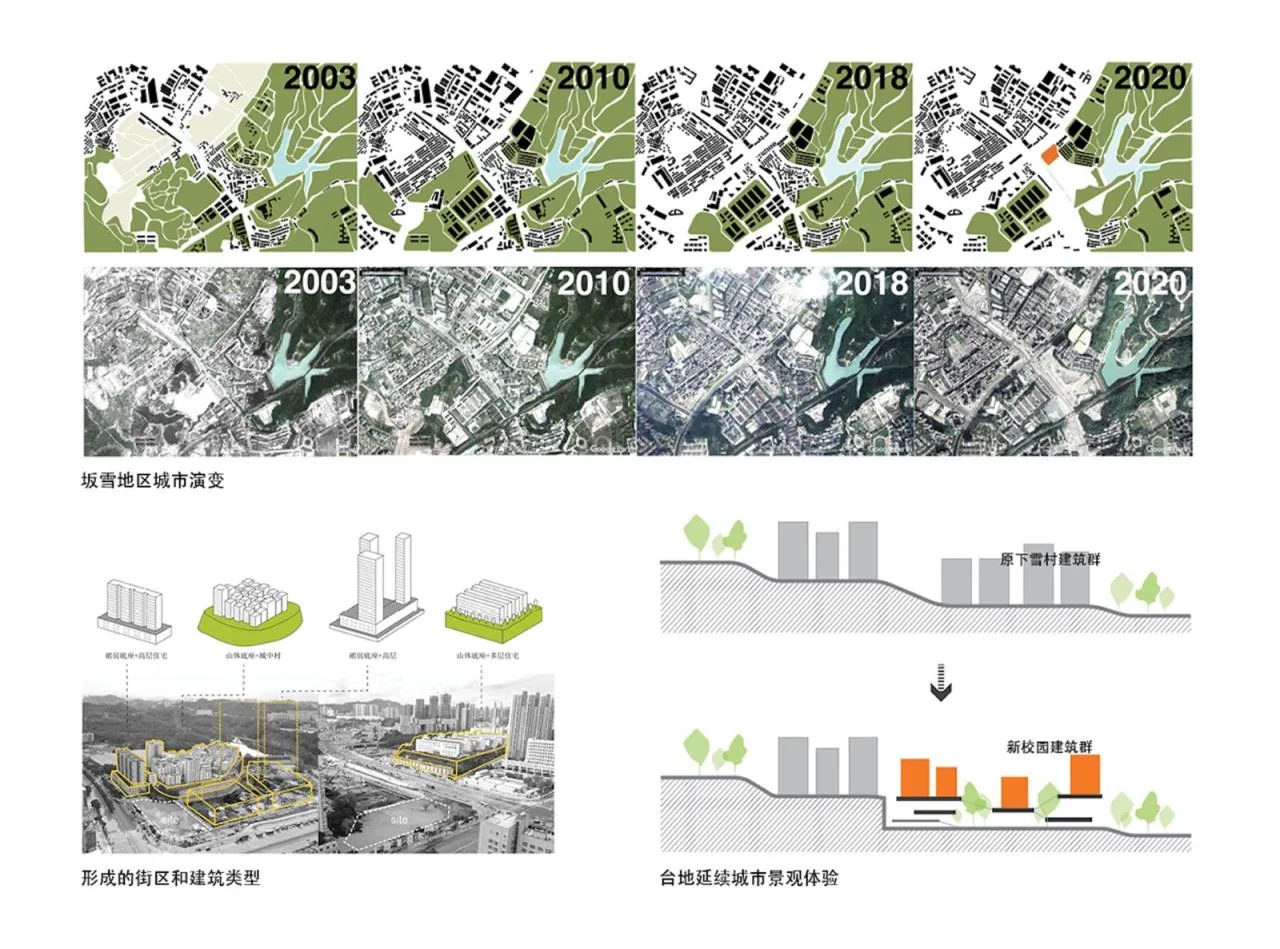
Design Strategy Two: Integrating Surrounding Growth
Traditional Hakka villages in Longgang typically feature fortified architectural complexes with strong communal values, centered around clans. The building layouts reflect this collective lifestyle and spiritual orientation.
This proposal incorporates Hakka architectural cultural elements into the campus spatial planning, transforming the traditional “centripetal cohesion” into a modern concept of “enclosed growth.” The design shifts from rigid standards to a more organic architectural form.
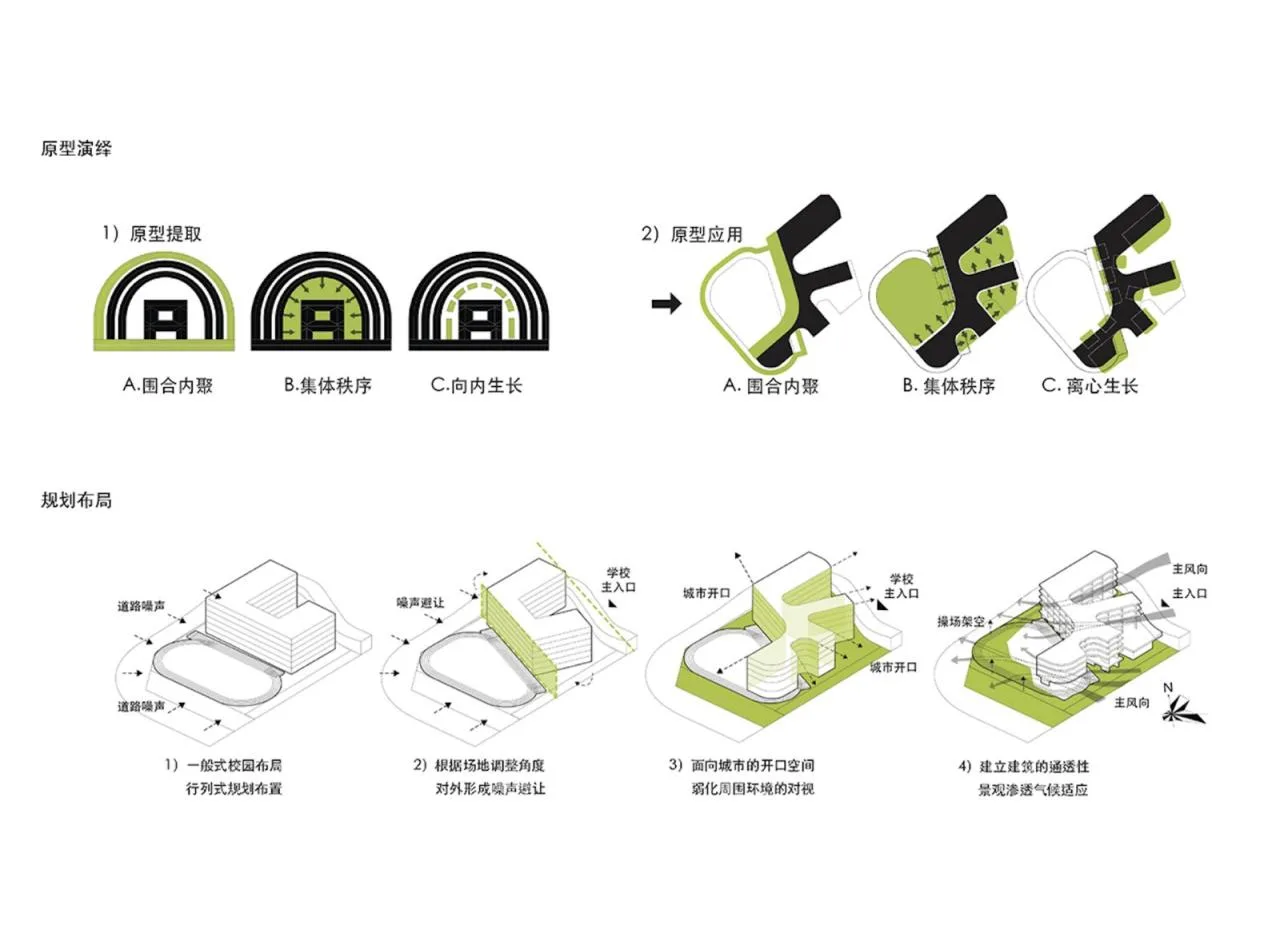
Design Strategy Three: The ‘Academy’ as a Collective Spirit
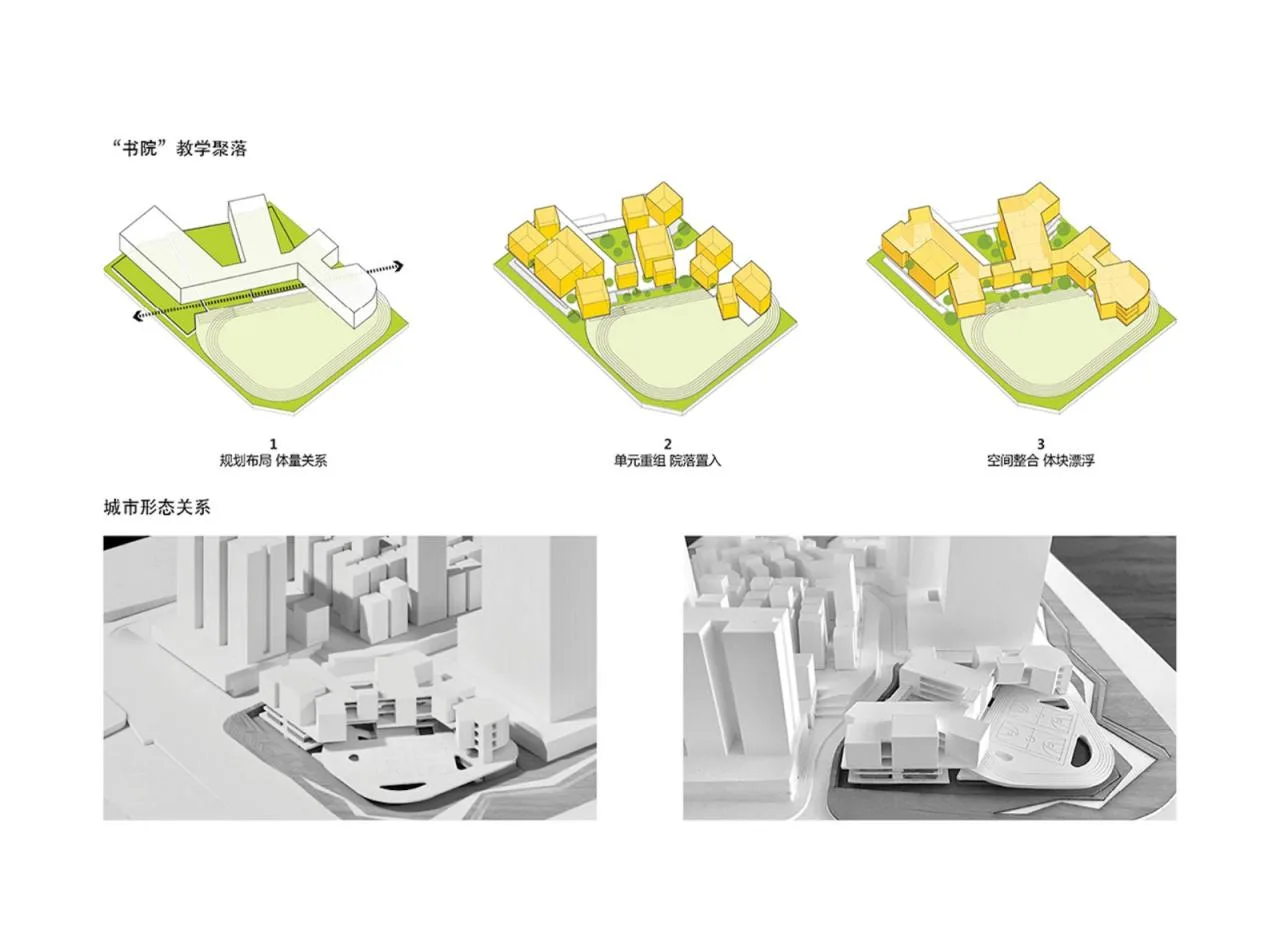
On the upper terraces, the design breaks down teaching units and recombines them to form an aerial “academy” – a teaching complex scaled appropriately for elementary students, offering rich spatial experiences.
This arrangement preserves the collective characteristics of traditional Hakka architecture while reflecting the urban form of Xuecun Village surrounding the site.
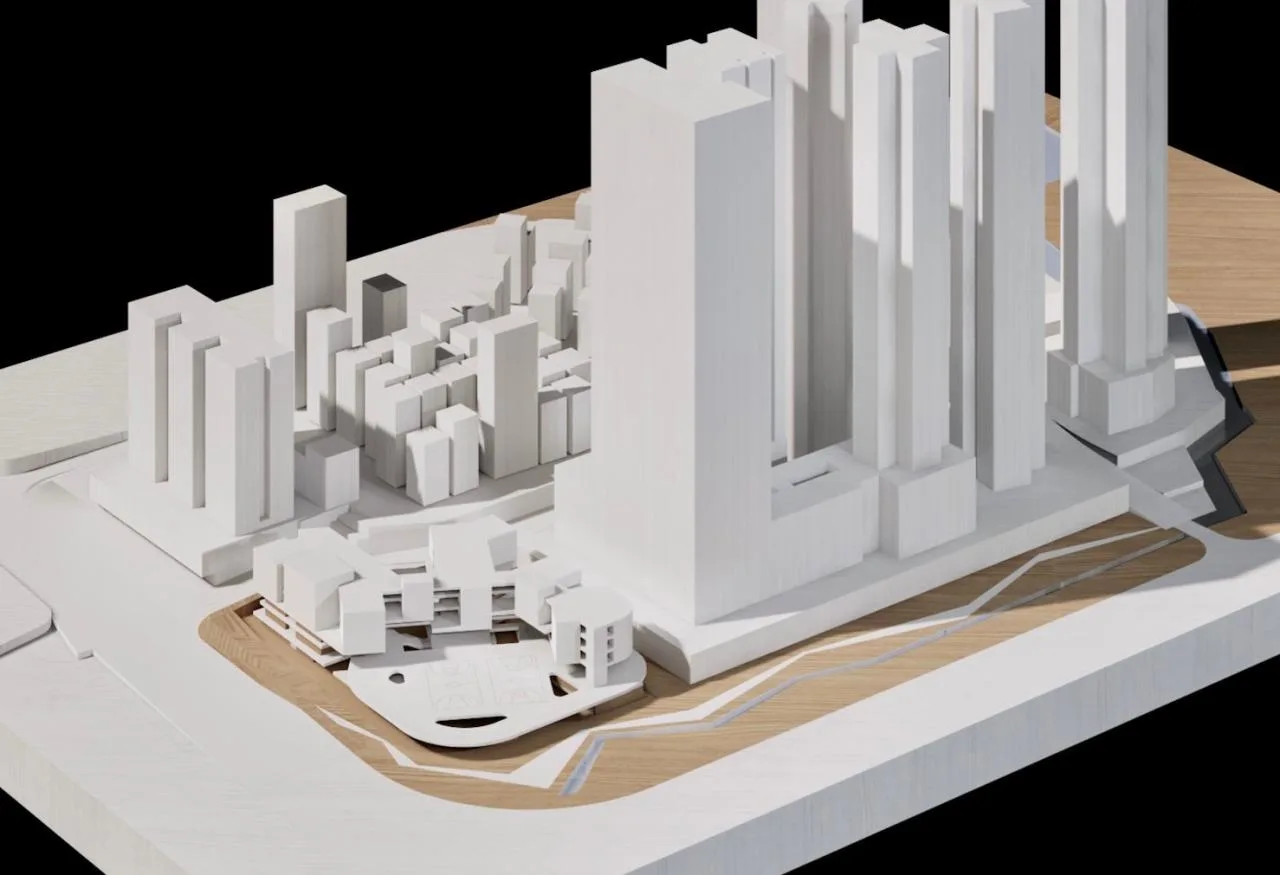
Exterior Space Visualization
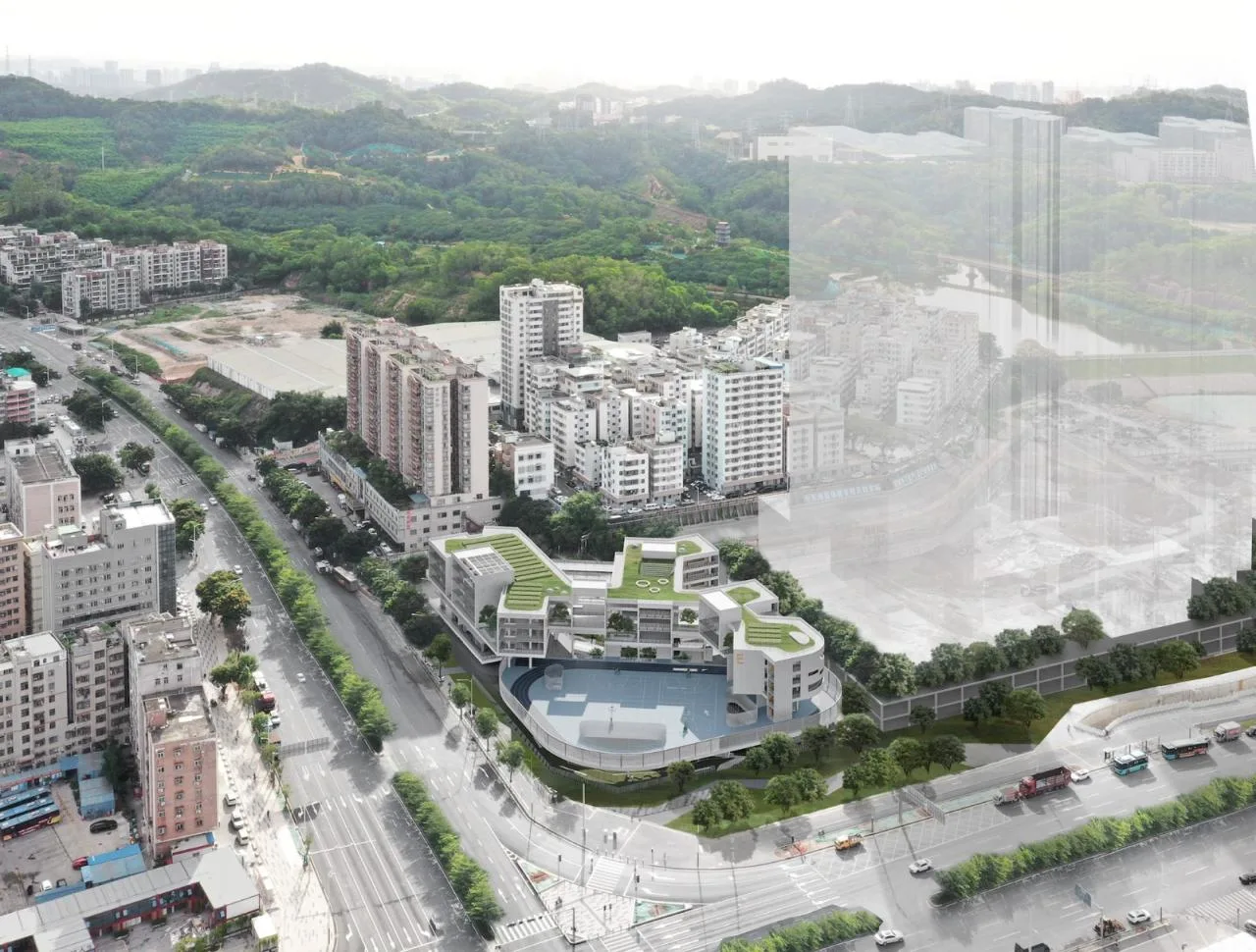
Campus Relationship with Surrounding City and Nature
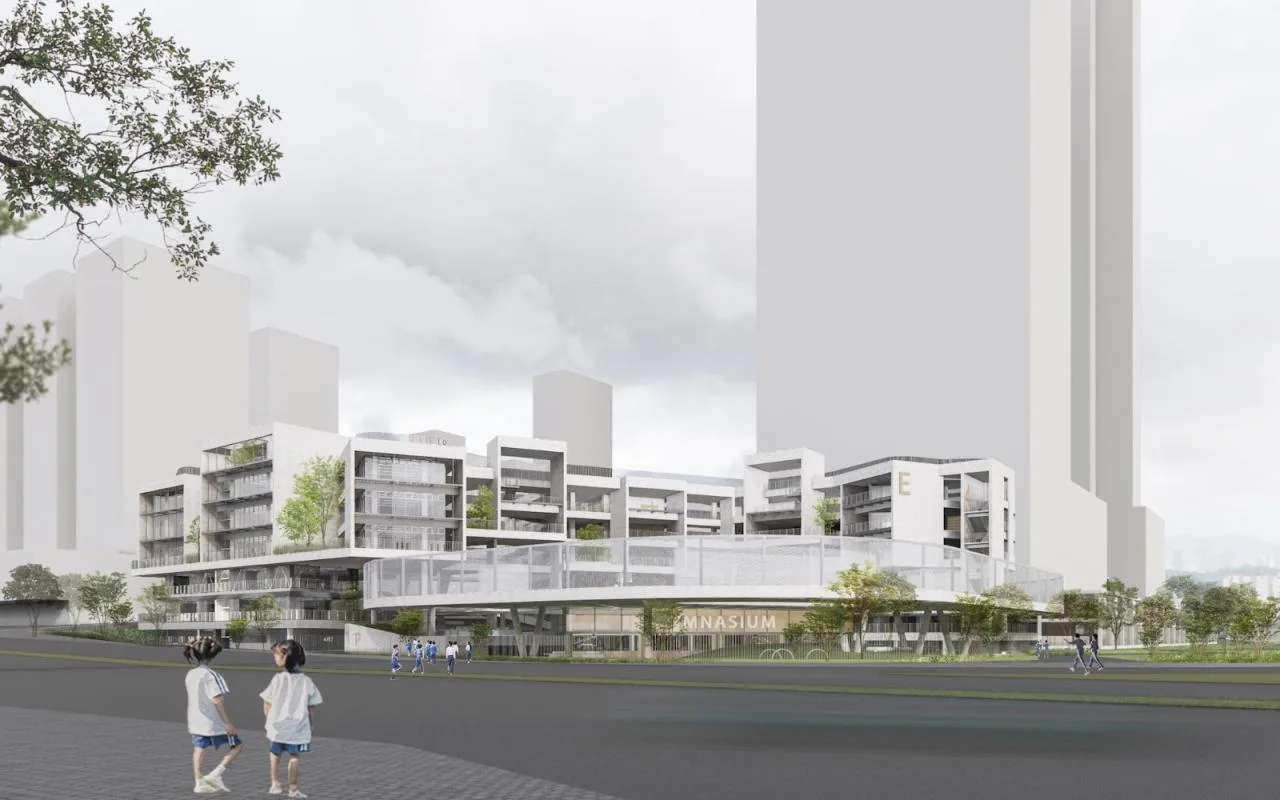
△ Urban Interface of Campus
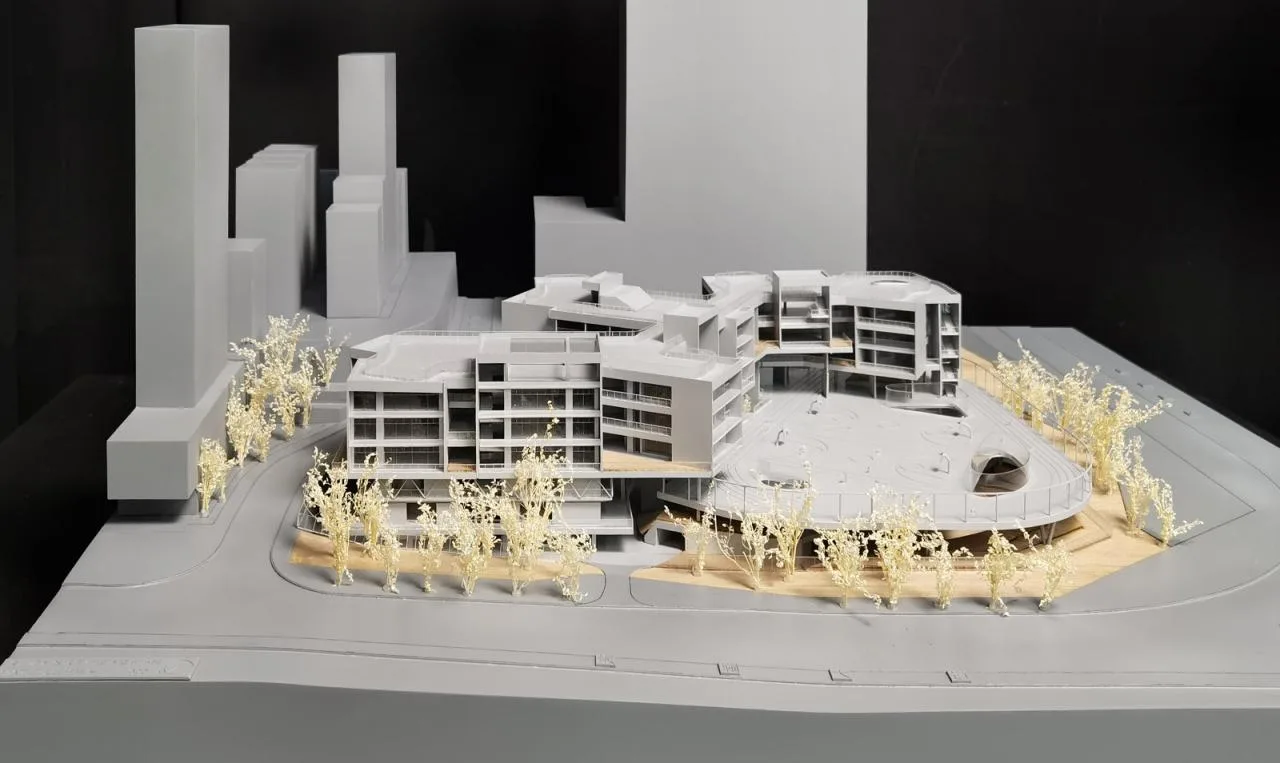
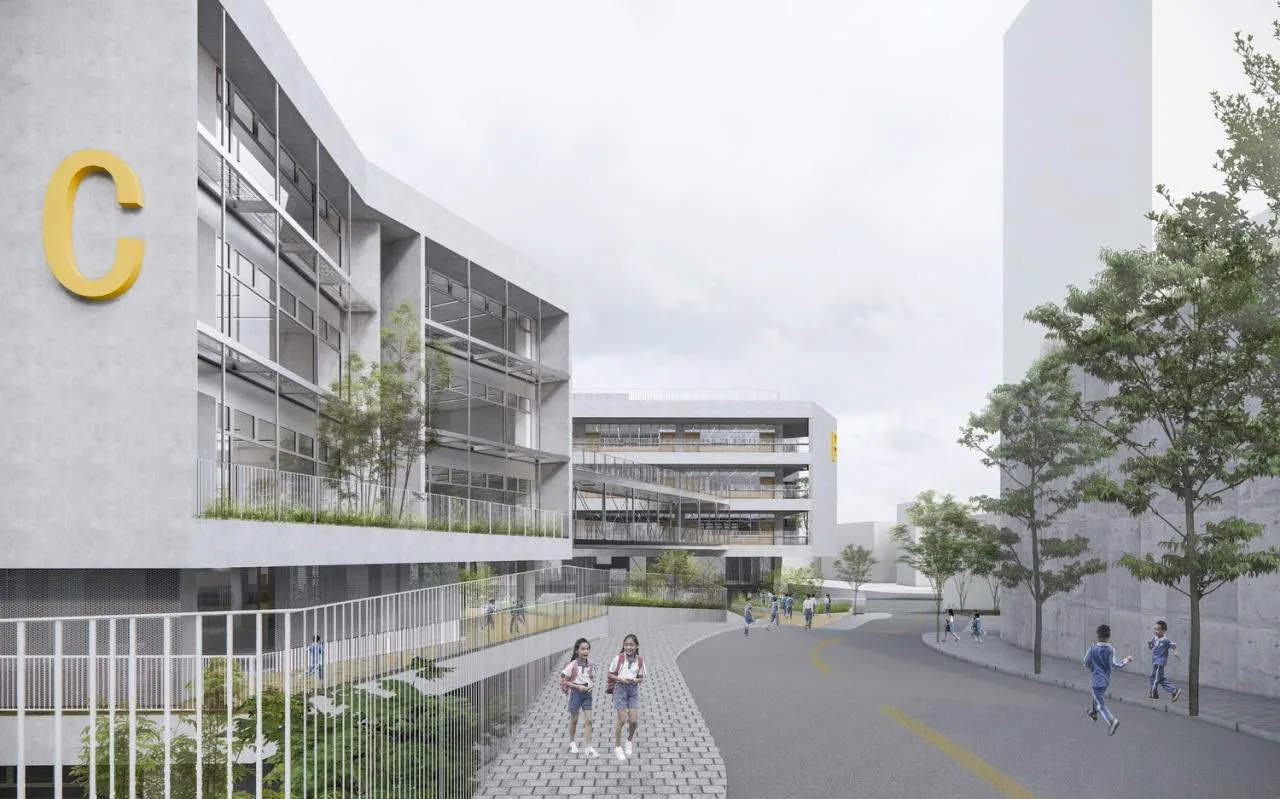
△ Entrance Teaching Building
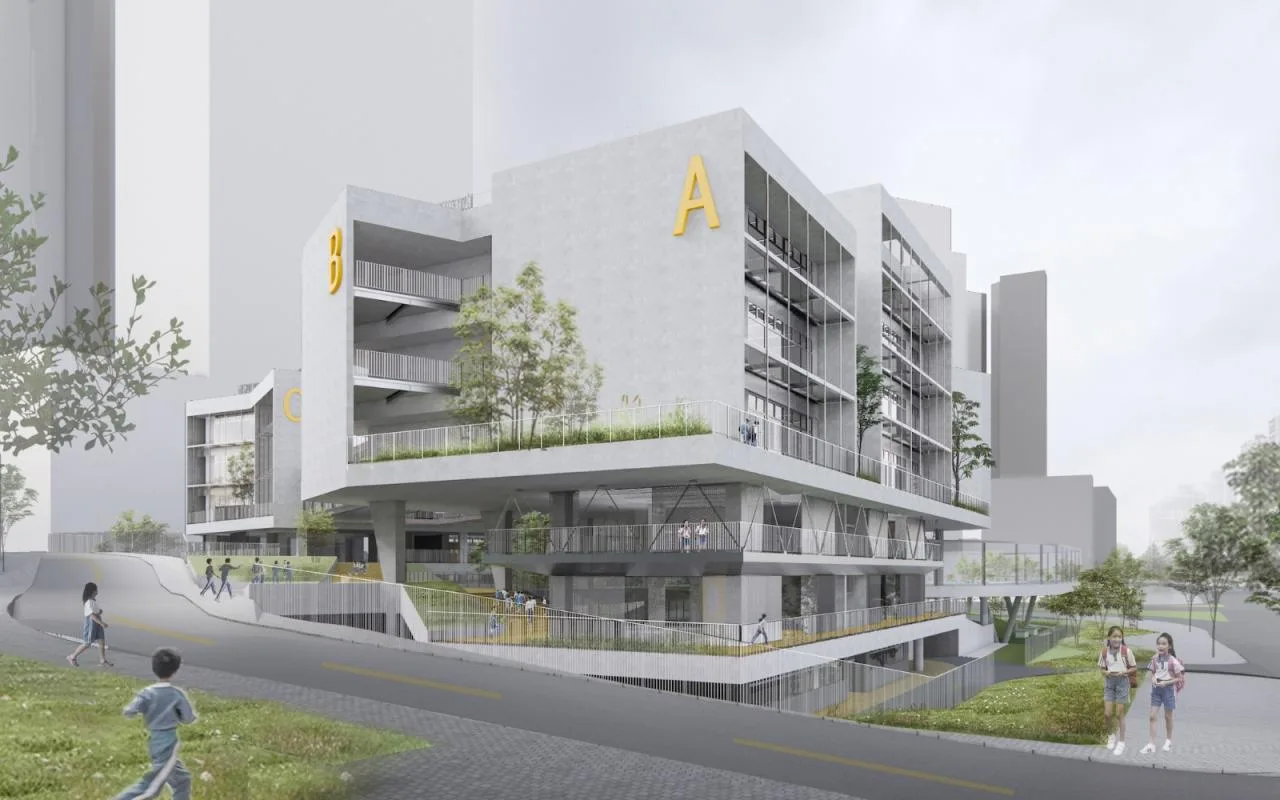
△ Open Interface at Corner Slope
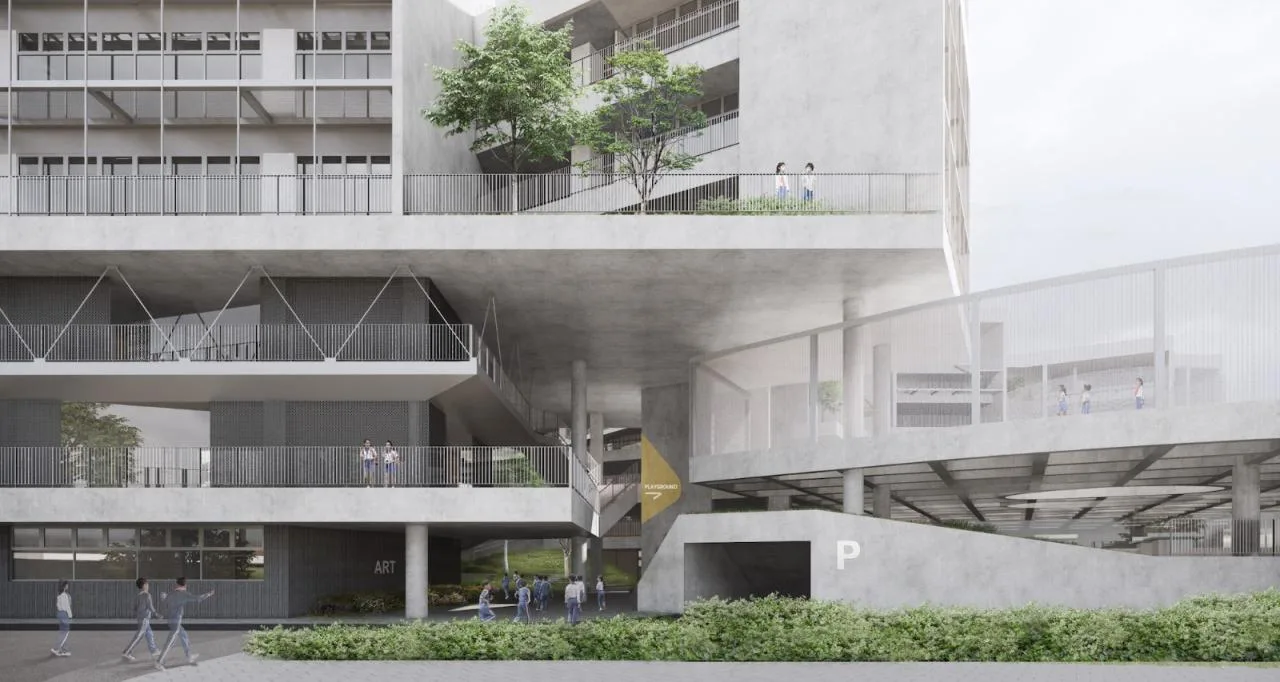
Multi-layered Terraces and Their Spatial Relationships
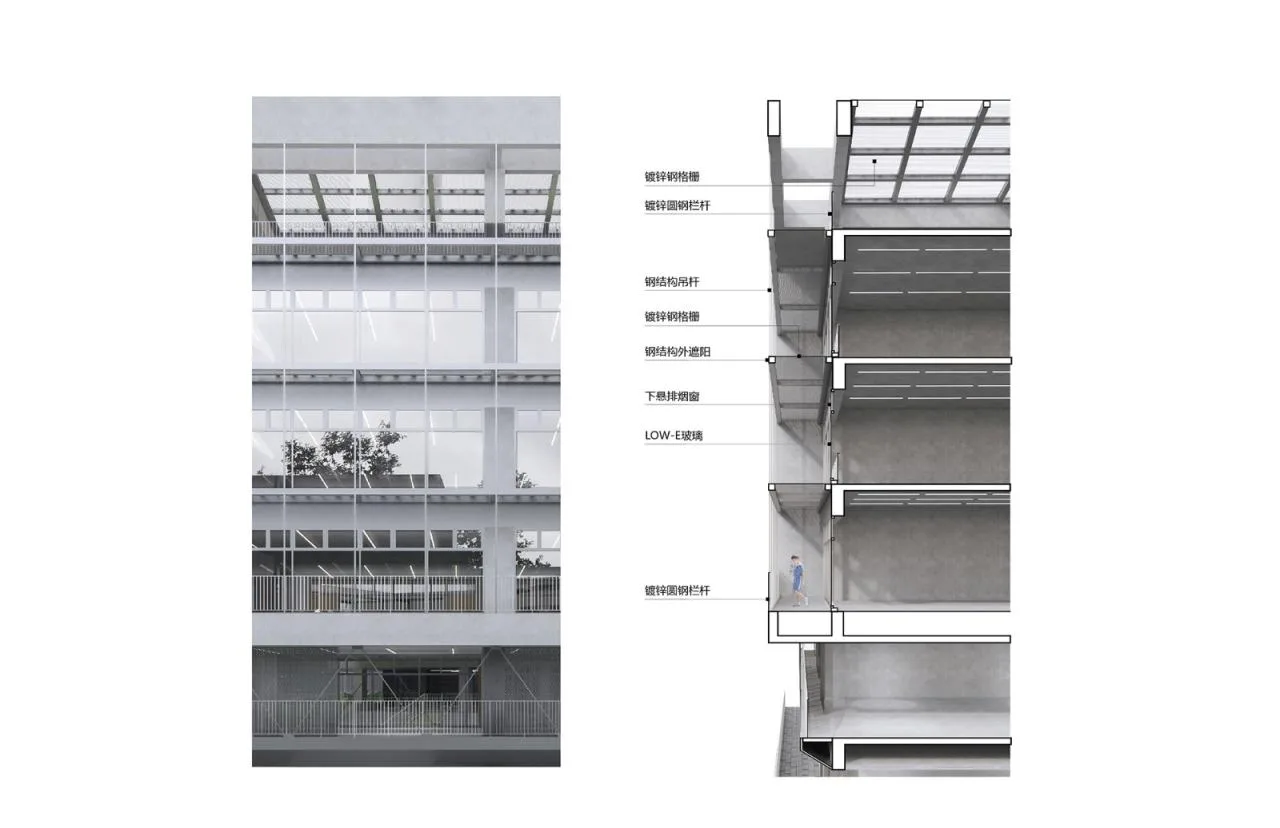
△ Facade Design Analysis
Layered Platform Formation
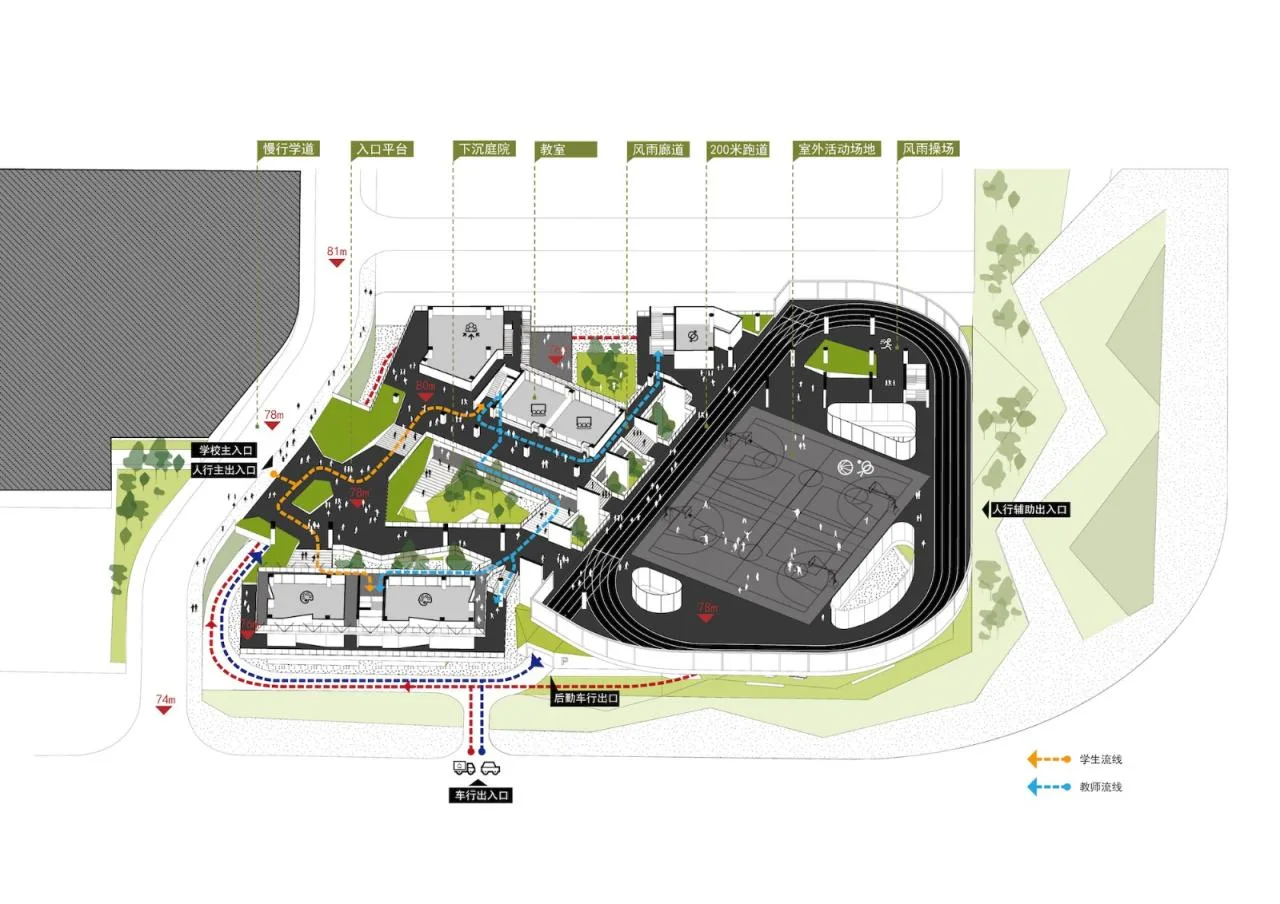
The school’s main entrance is situated at an elevation of 78 meters along the planned Sixth Road, featuring an entrance platform that connects the city road to the campus. This platform serves as a gathering and pick-up area.
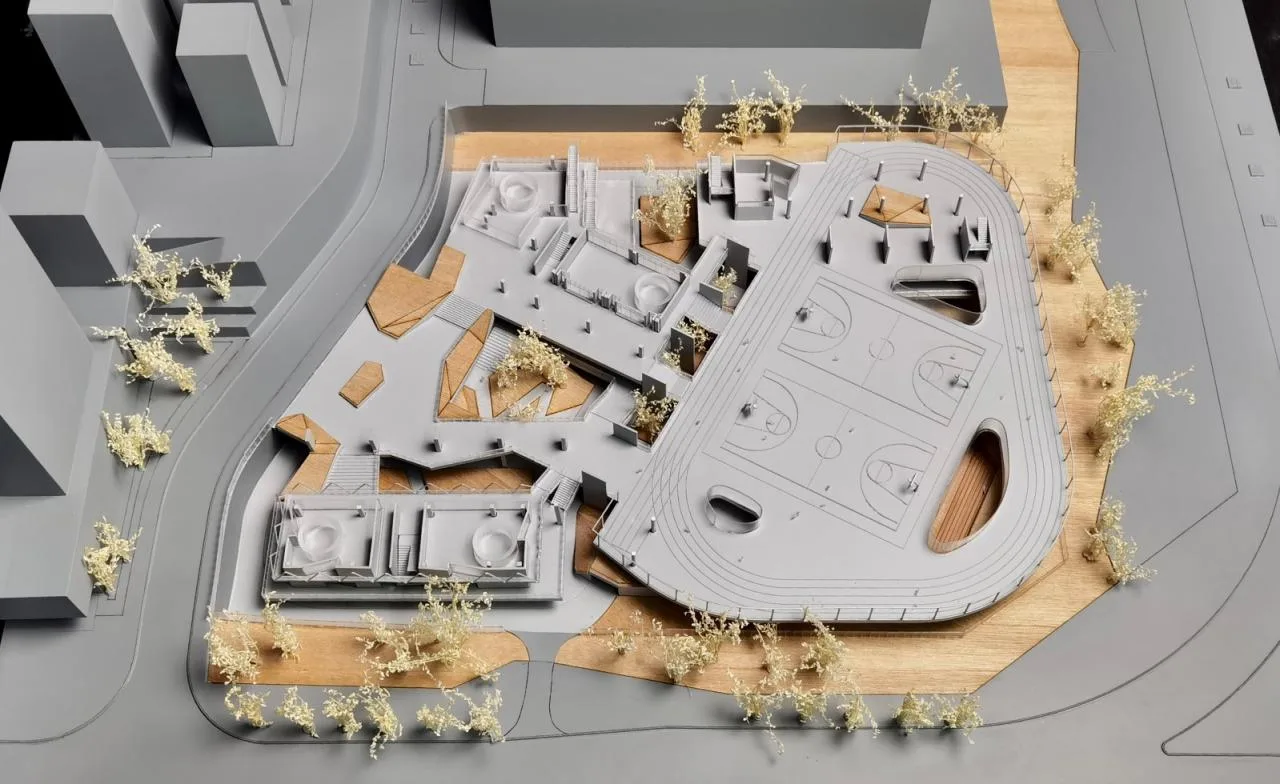
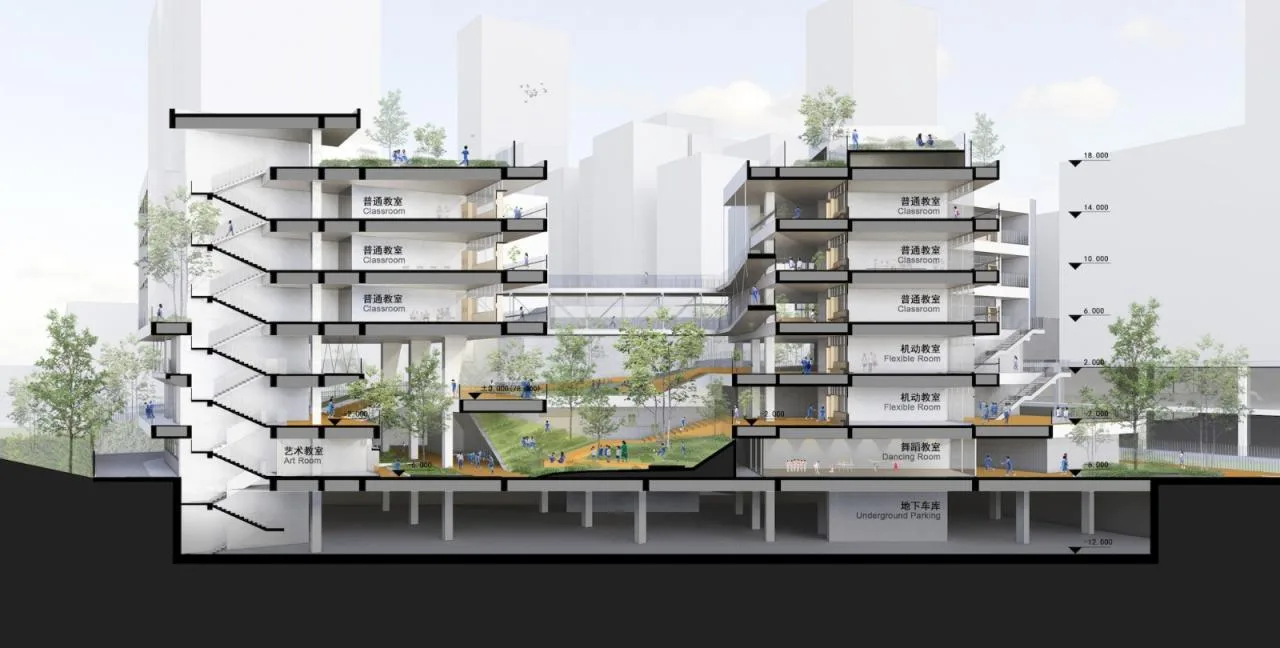
To enrich campus activity space, multiple platforms at varying heights connect the teaching buildings, forming a central open courtyard and creating a layered, transparent spatial effect. These staggered platforms emphasize the floating teaching clusters above.
Additionally, this multi-platform design softens the boundary between the campus buildings and the adjacent road, promoting spatial integration between the campus interior and the urban environment.
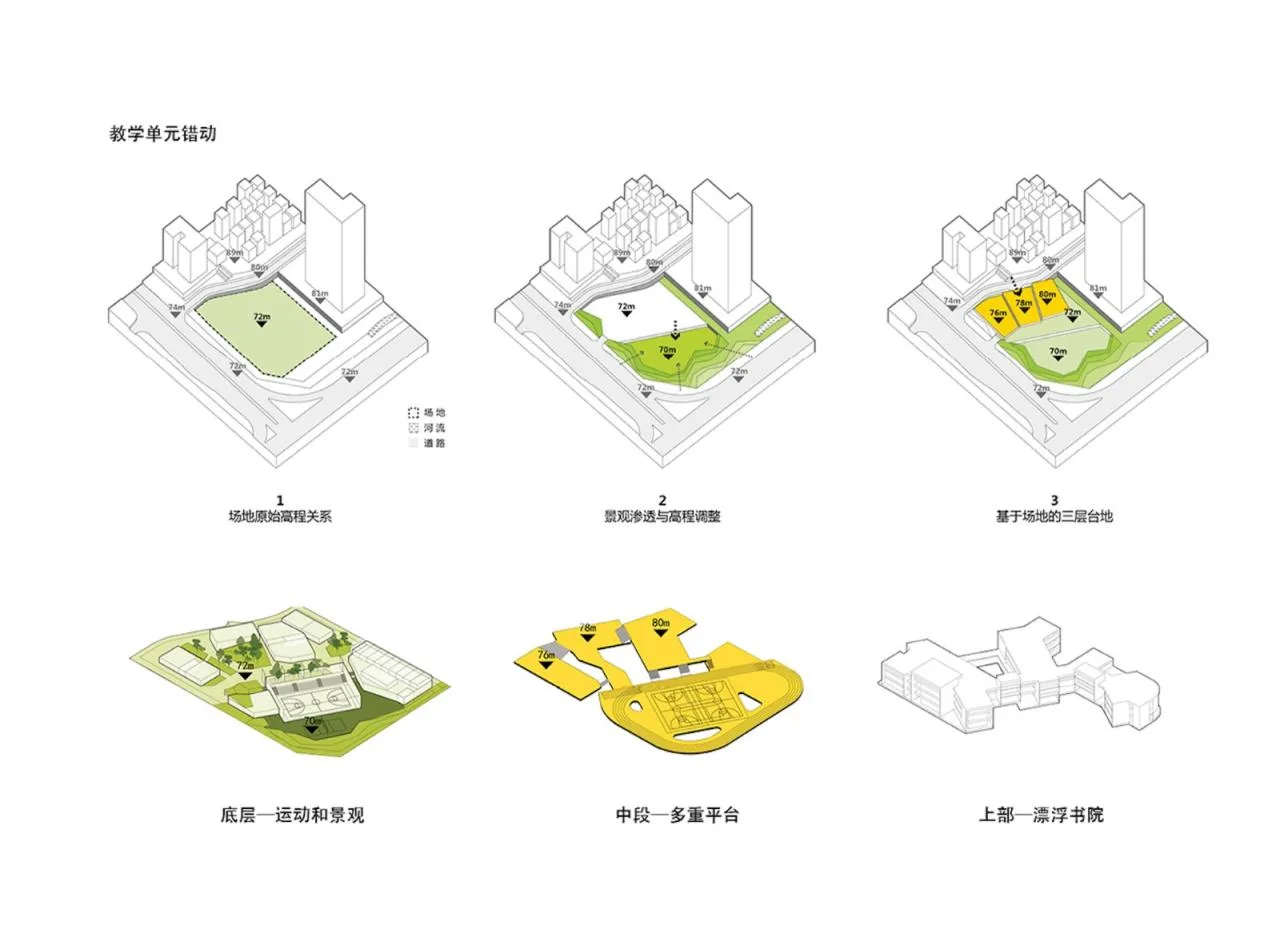
High-density campuses often elevate playgrounds due to functional constraints. However, to enhance user experience and “reduce density,” this design leverages the surrounding road elevations to place the track and field sports area at the same height as the campus entrance platform.
The sports field is accessible through elevated courtyards and levels connected to the entrance, facilitating convenient daily use for elementary students.
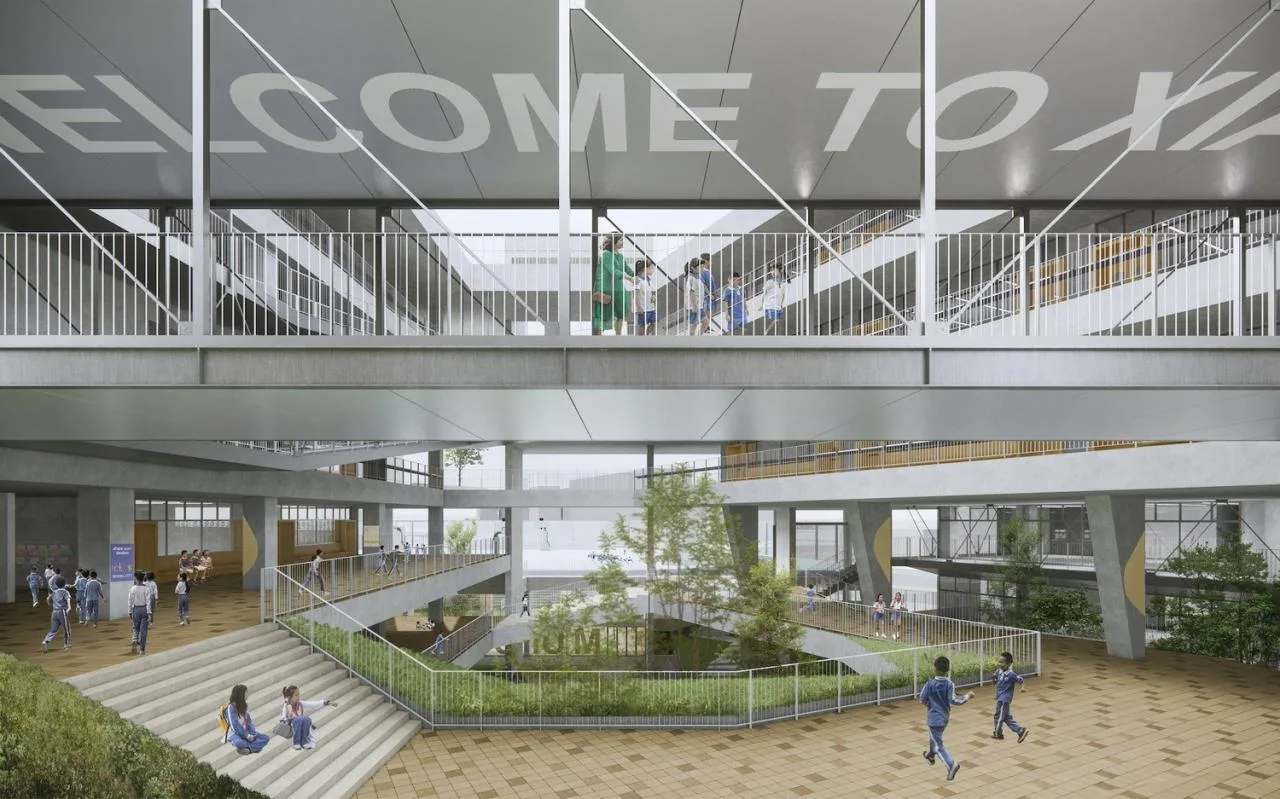
△ Main Entrance Platform and Sunken Courtyard
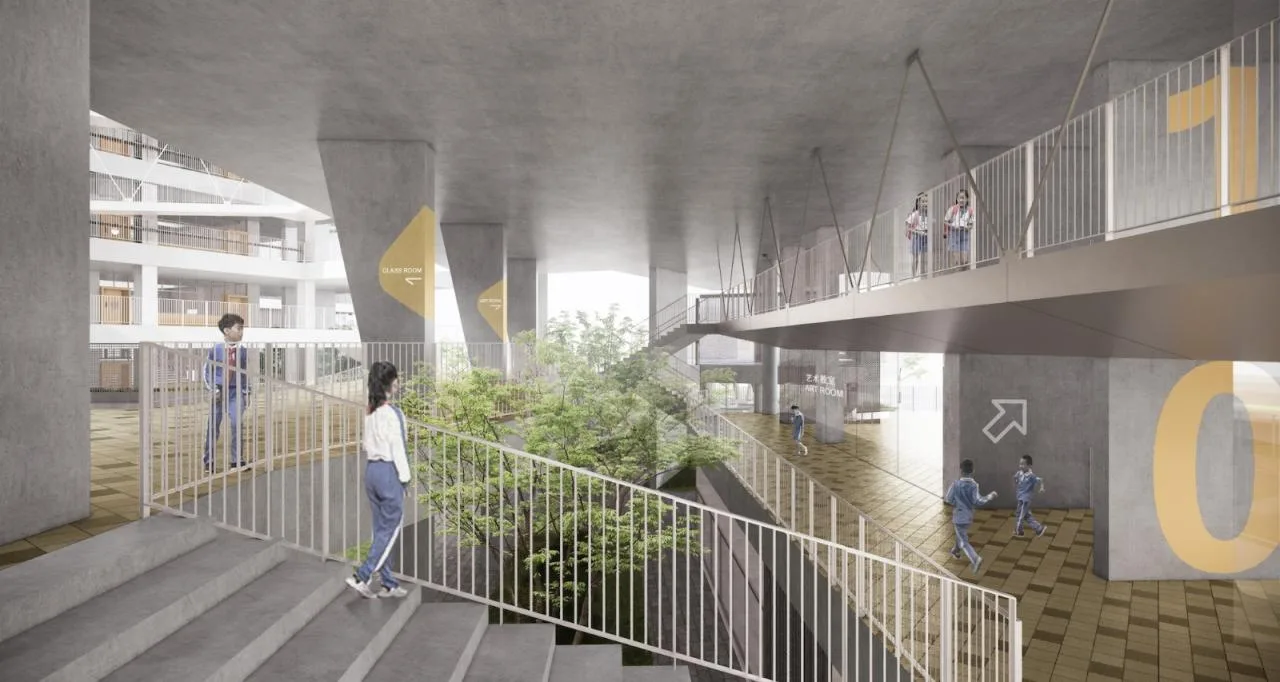
Interconnected Multi-level Platforms
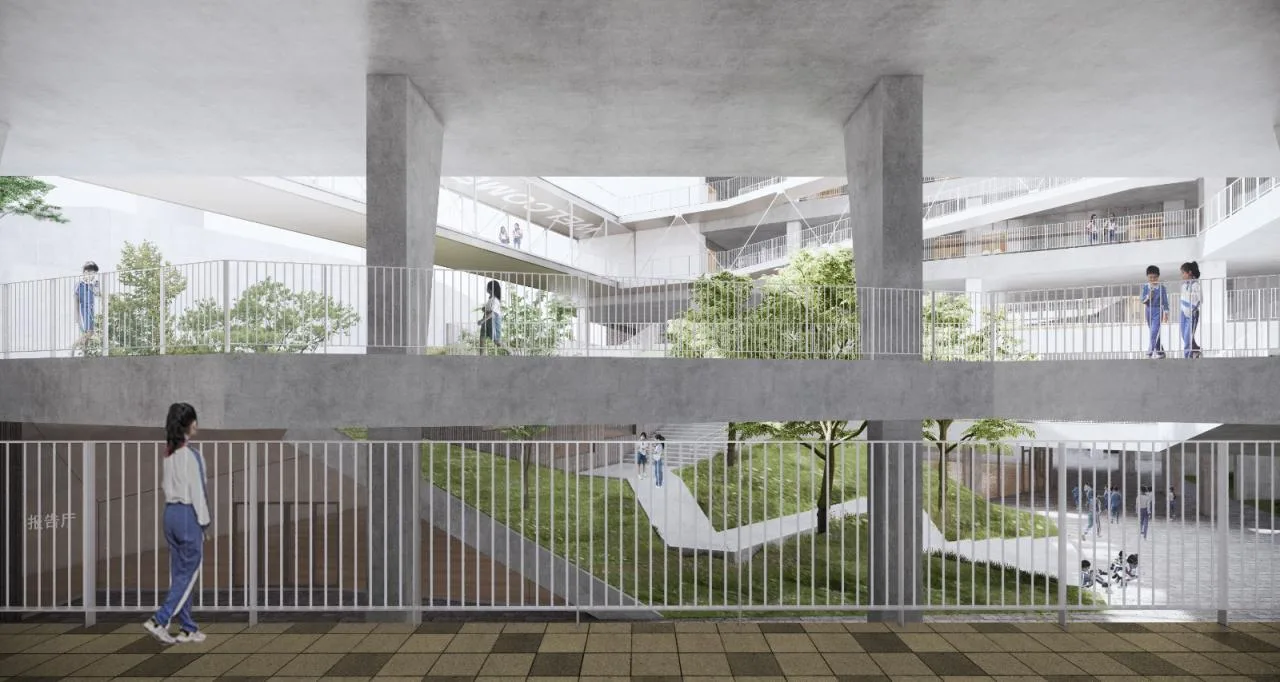
△ Overlapping Sightlines at Different Heights
Aerial ‘Academy’
The aerial corridor connecting the three teaching buildings is expanded on the side facing the sports field. The ground floor is elevated, while the upper part facing the city aligns with the exterior facade of the teaching buildings.
This protruding volume reinforces the campus’s “settlement” identity and creates a multifunctional space for students’ activities during breaks, doubling as an informal outdoor teaching area.
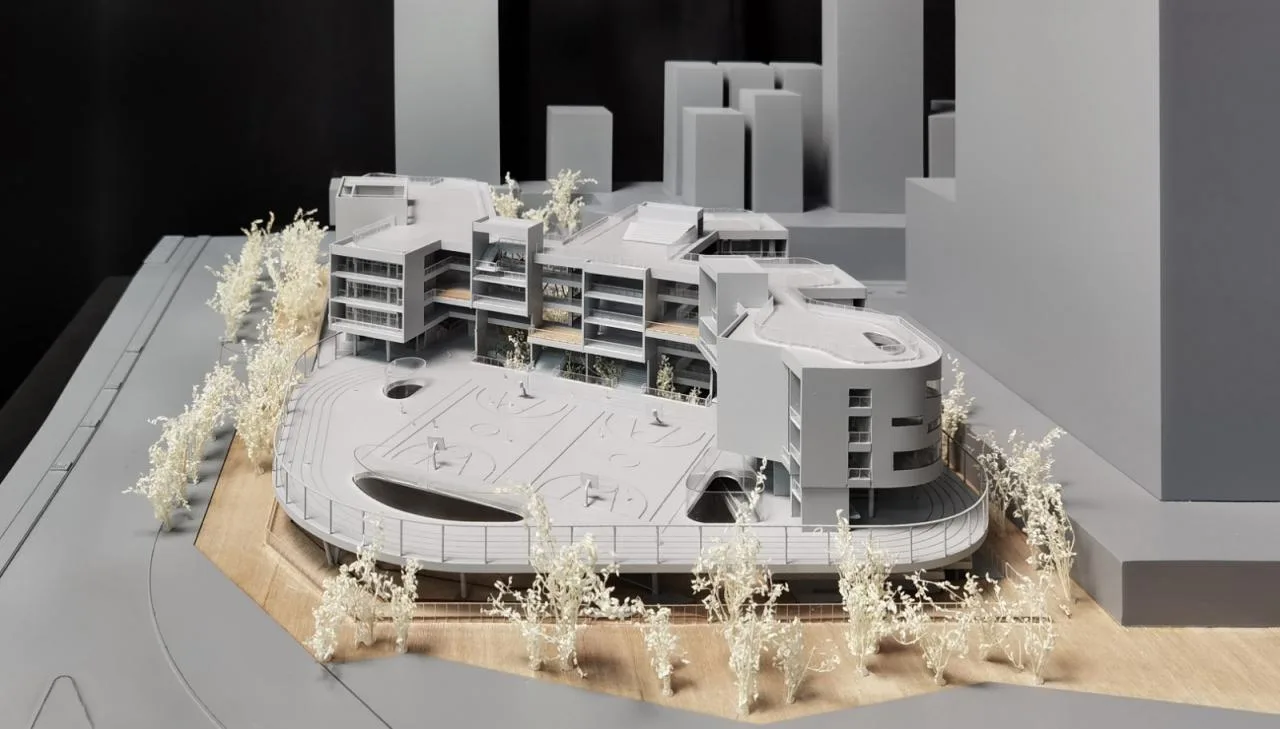
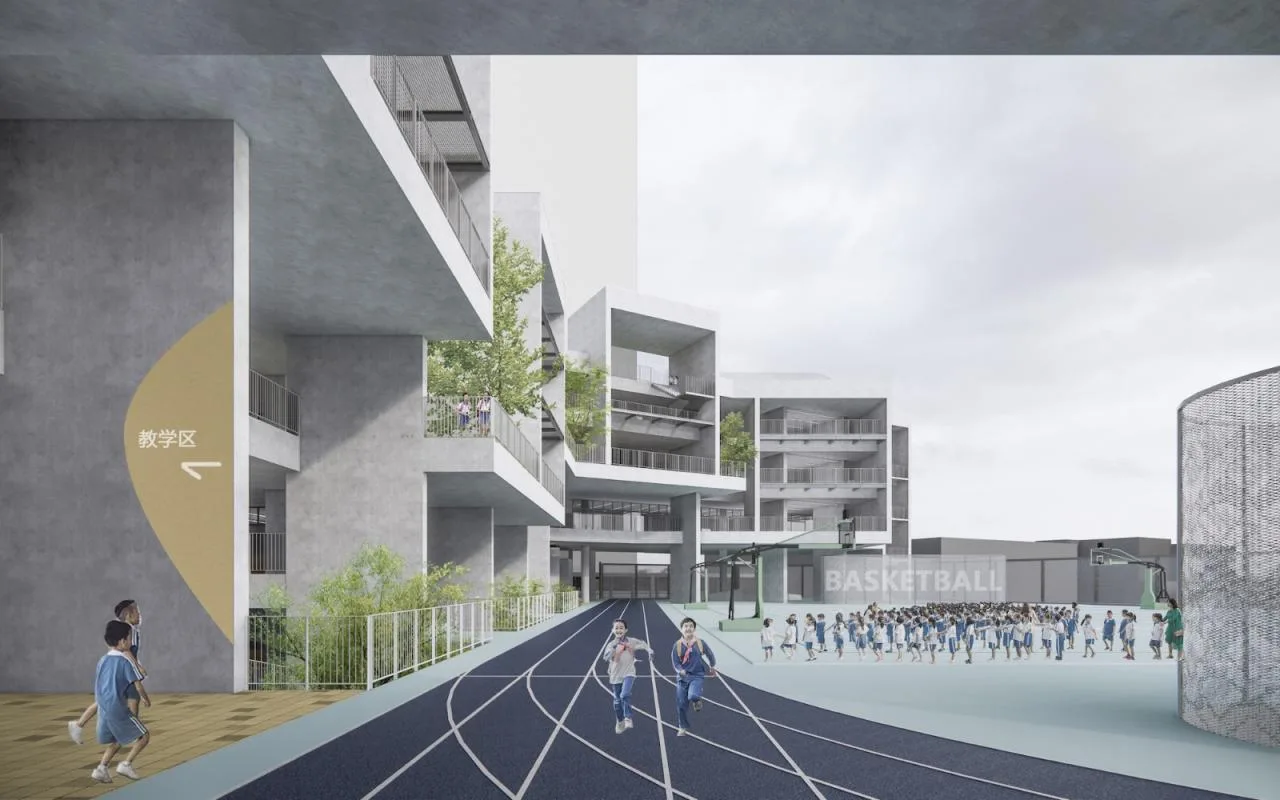
△ The corridor’s lower level is elevated and connects to the sports field
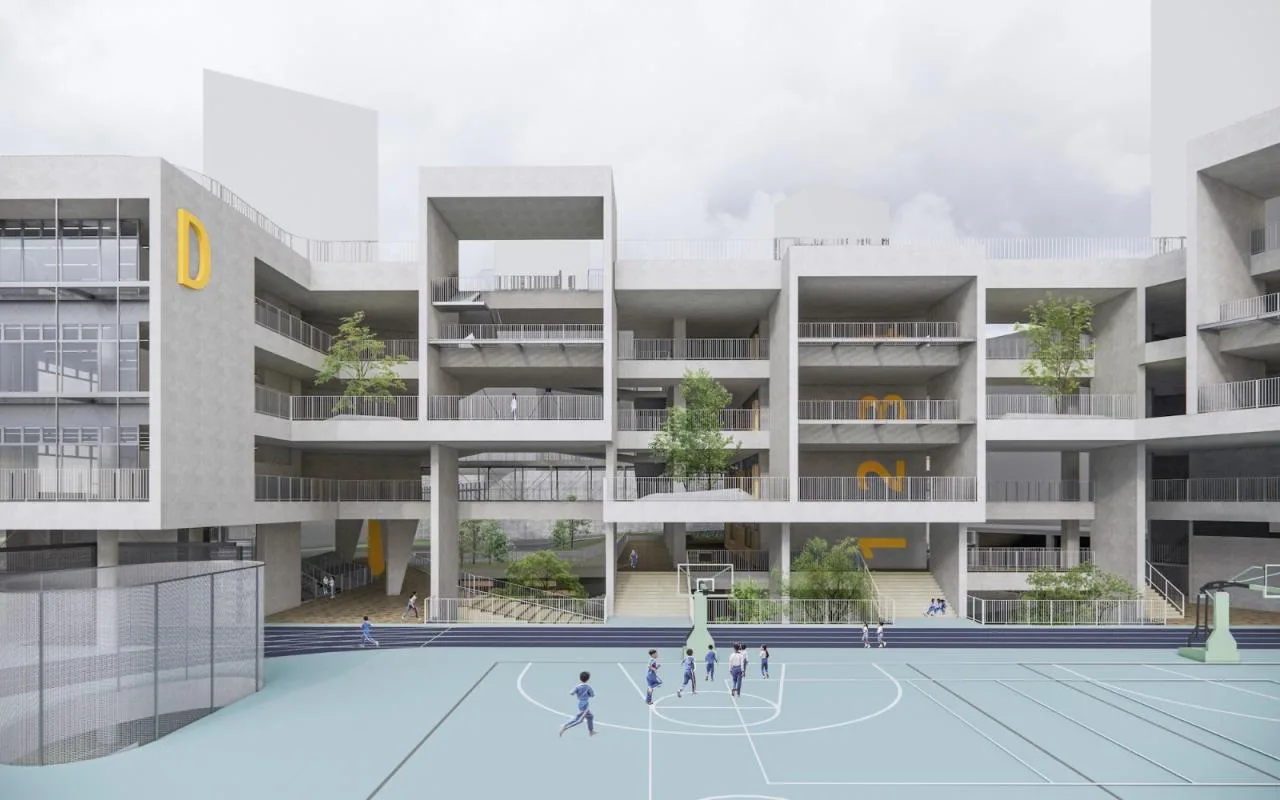
Background of the Sky Academy as a Sports Field
Engaging Campus Spaces
One key challenge in high-density campuses is creating diverse and engaging activity spaces. This design introduces a sunken courtyard teaching area at 72 meters elevation and a sports and landscape zone at 70 meters elevation on the ground level, organized through dynamic and static zoning.
The sunken courtyard acts as the core activity hub, housing public teaching facilities such as art classrooms and lecture halls. Vertically, a spiral path connects the multi-level entrance platforms with the ground-level art classrooms. Horizontally, it serves as a transition space for teachers and students accessing the cafeteria and gym.
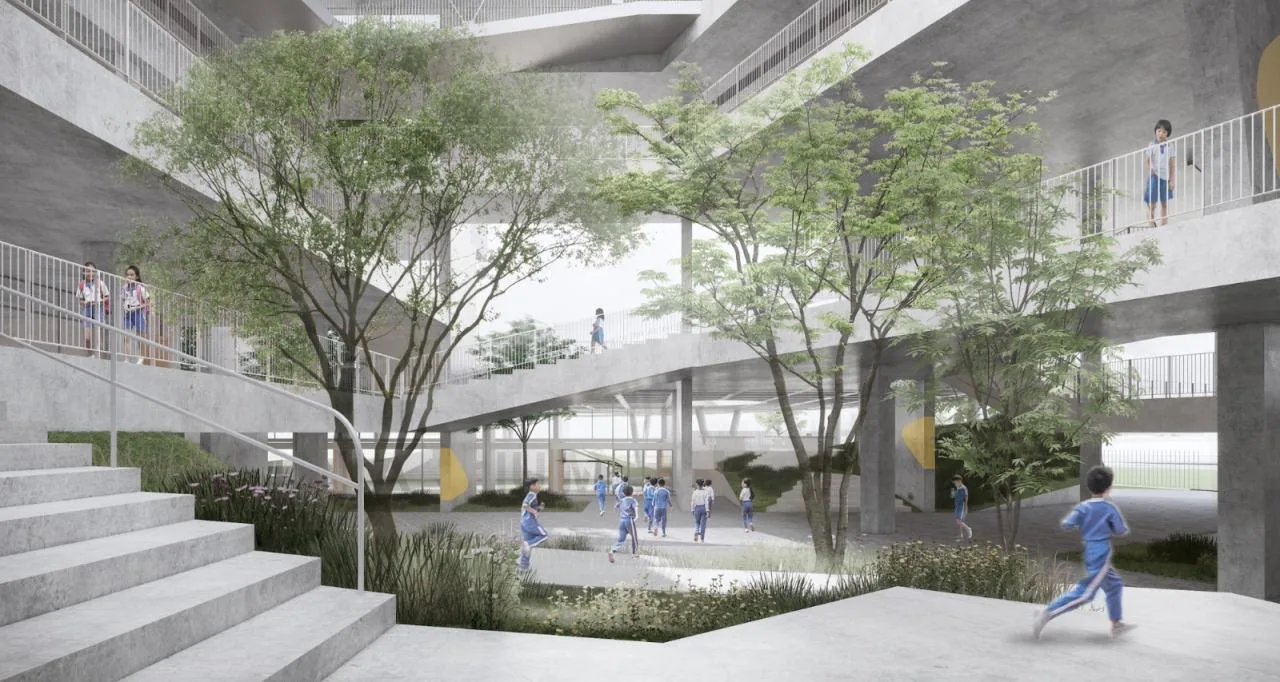
△ Sunken Courtyard
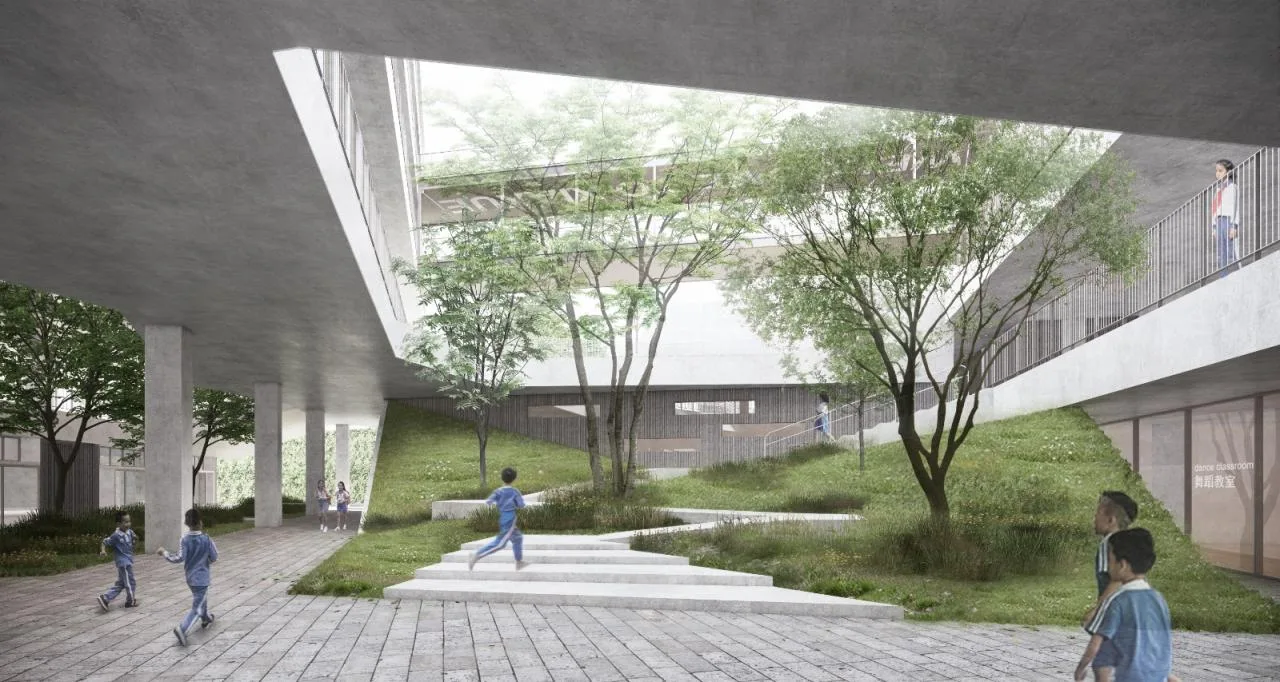
△ Sunken Courtyard Landscape and Activity Space
The gymnasium, cafeteria, and outdoor sports facilities are positioned along Huancheng East Road. This design extends the concept of a landscape corridor from the urban design, treating the street as an open landscape interface that could support shared use between the school and the community in the future.
Adjacent to the sports field, the gymnasium can open partitions to merge indoor and outdoor spaces. The 2-meter elevation difference between the gymnasium and sunken courtyard is cleverly utilized as stairs and spectator stands.
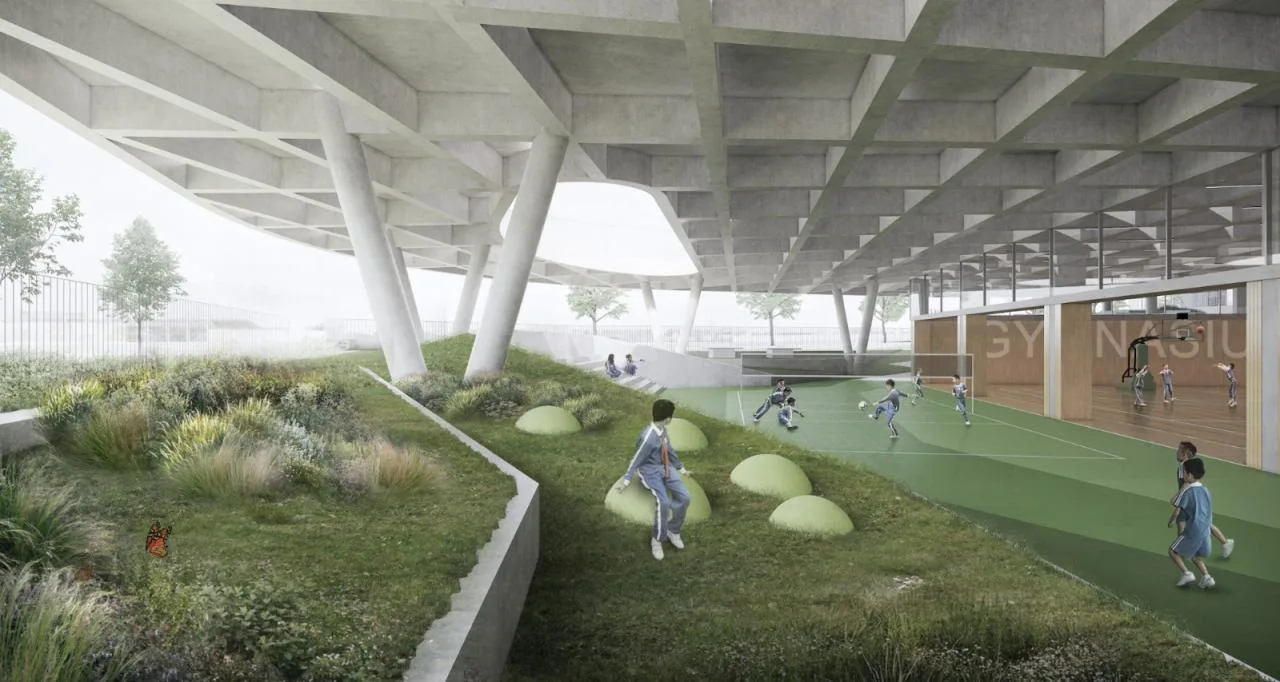
△ Urban Landscape Extension
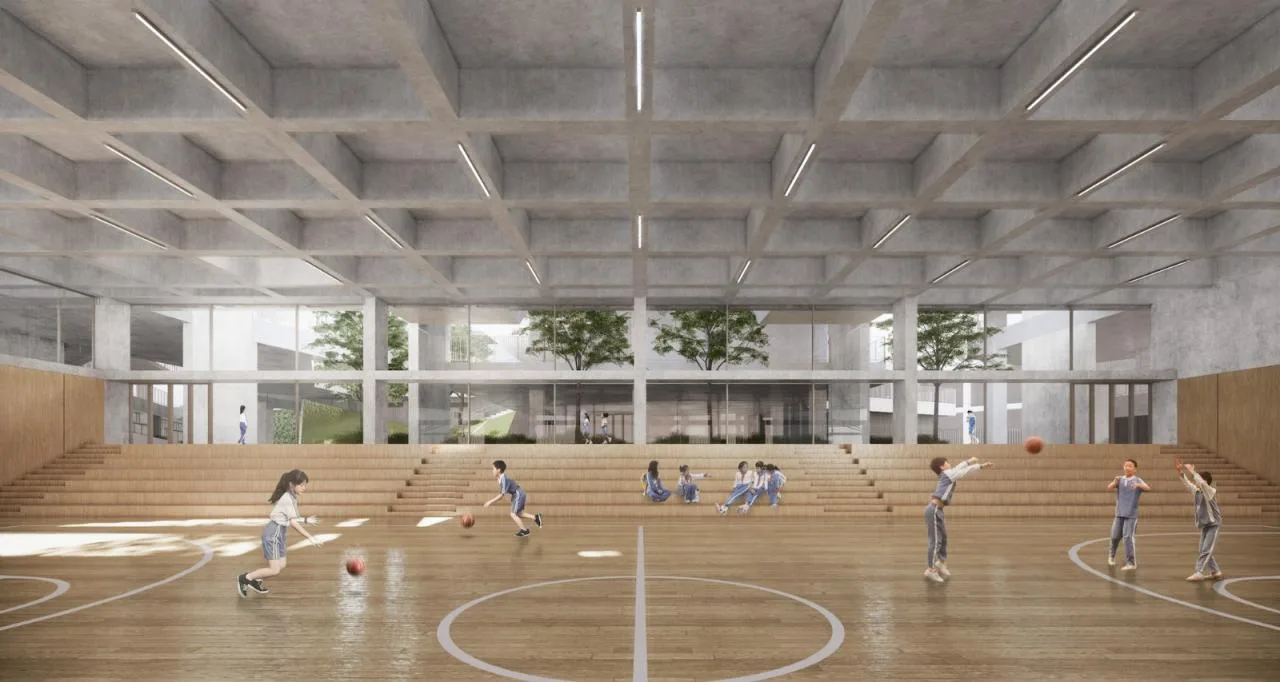
△ Sports Center
Enriched Teaching Spaces
The floating “academy” on the upper campus creates various recessed activity spaces due to the staggered teaching units. Additionally, the design incorporates numerous informal learning areas through aerial corridors and expanded passageways, supporting diverse, spontaneous extracurricular activities close to classrooms.
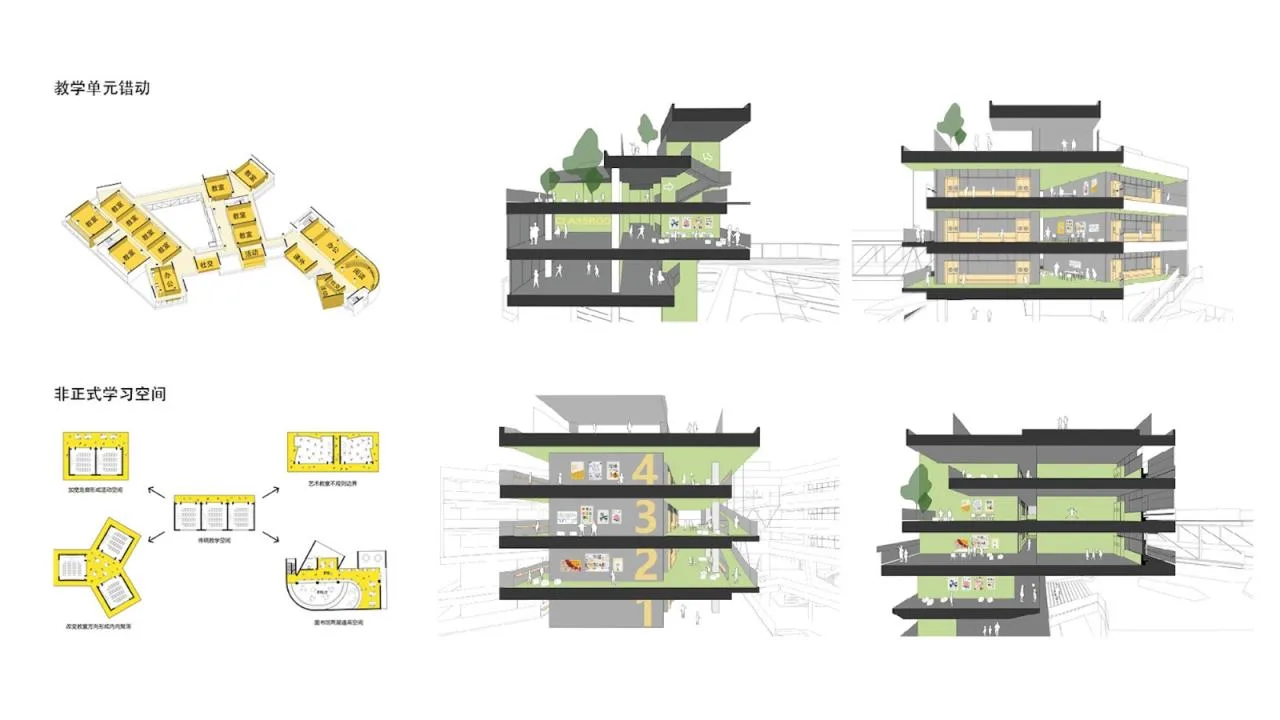
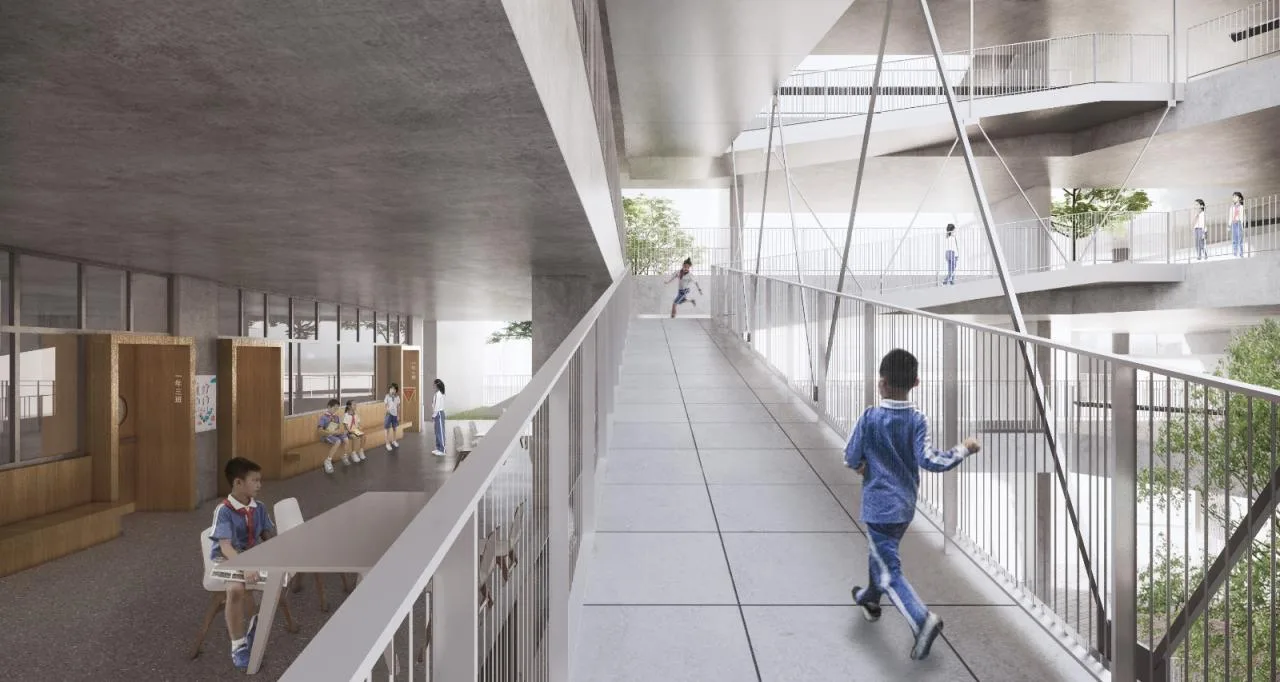
△ Teaching Corridors and Ramps
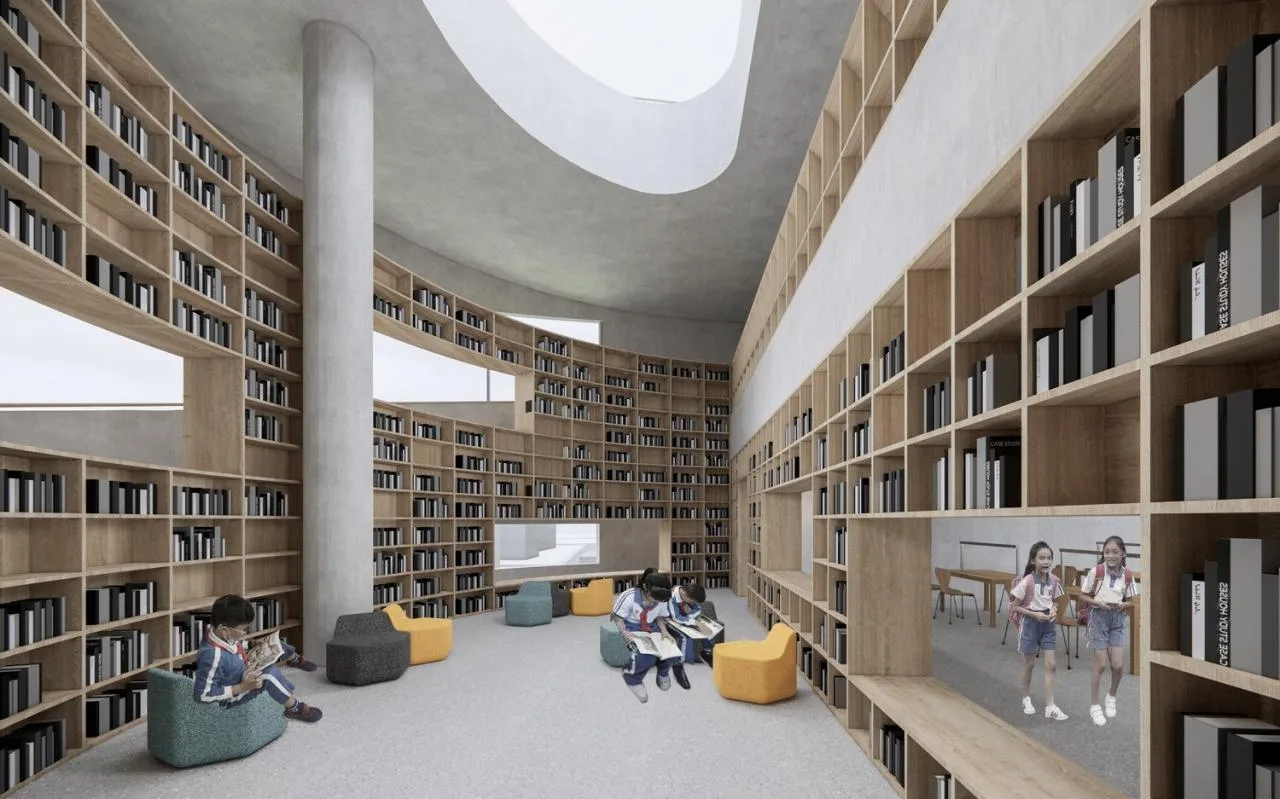
△ Library
Technical Drawings
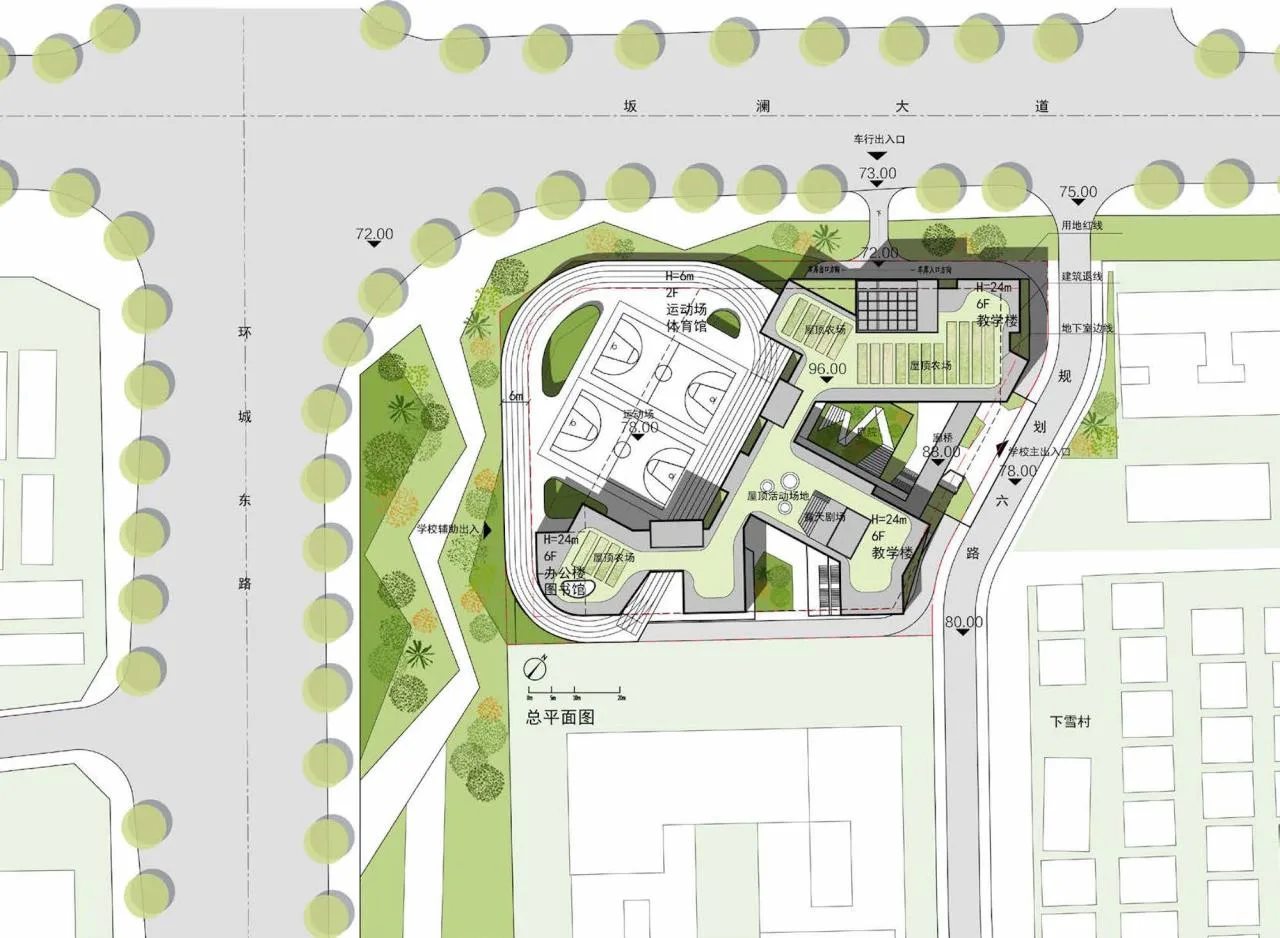
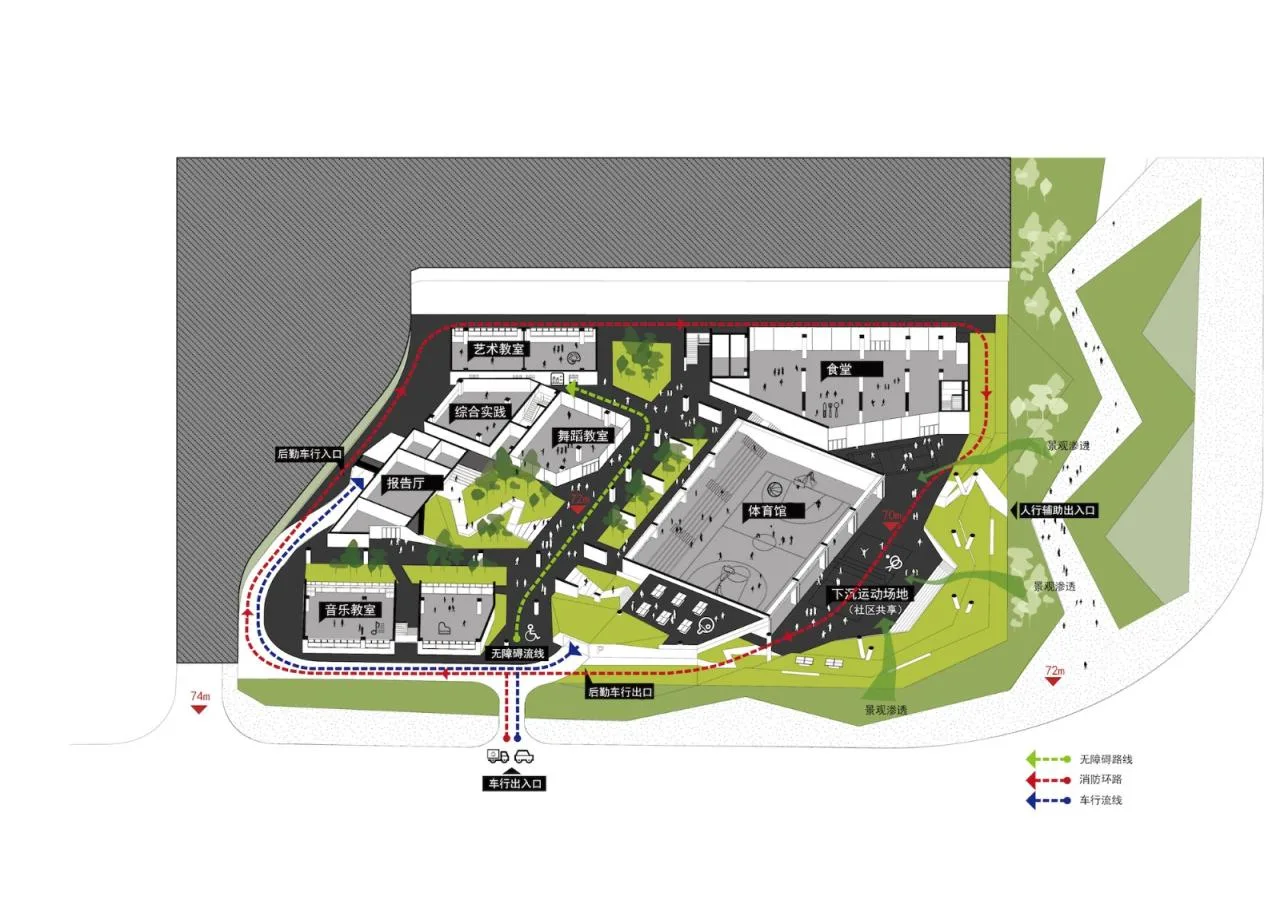
△ General Layout Plan
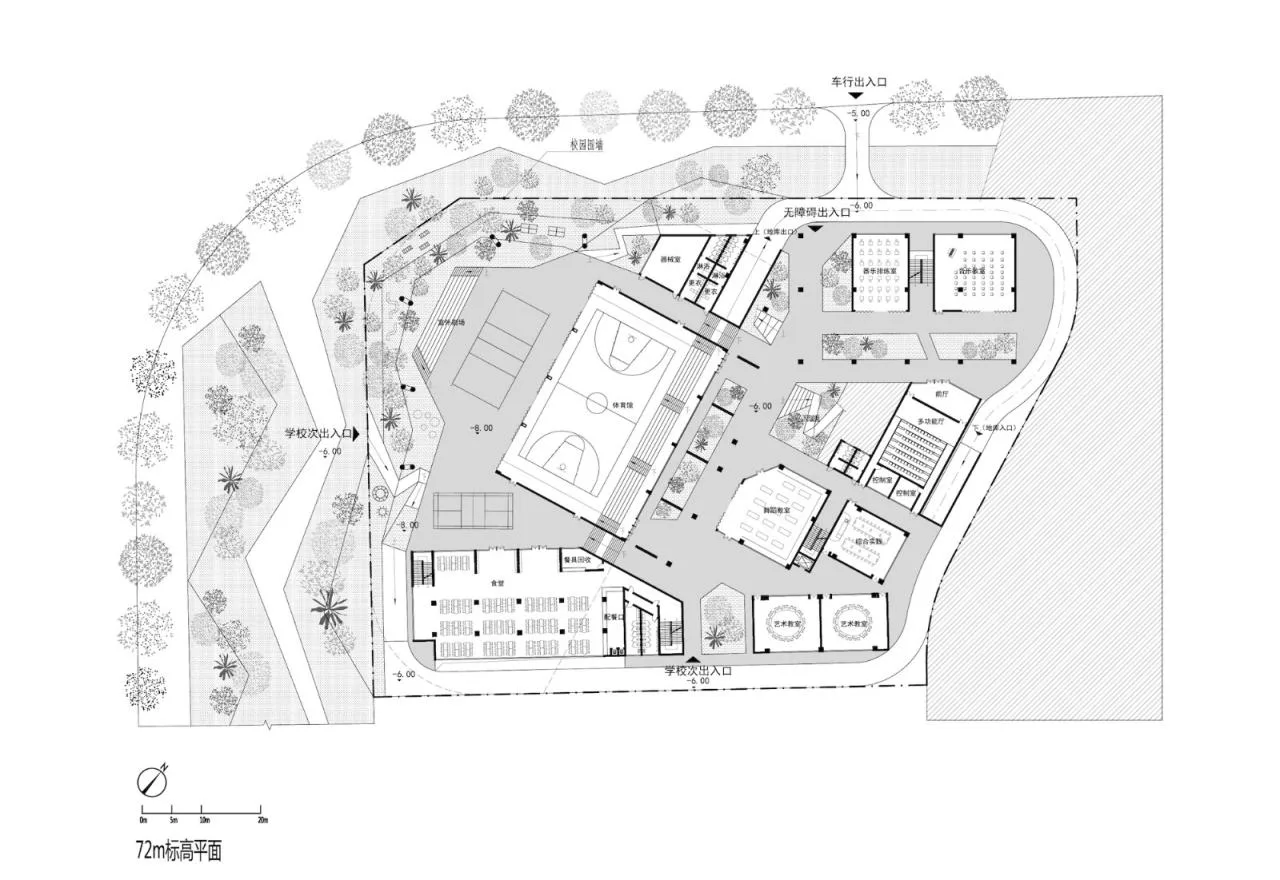
△ Ground Floor Plan
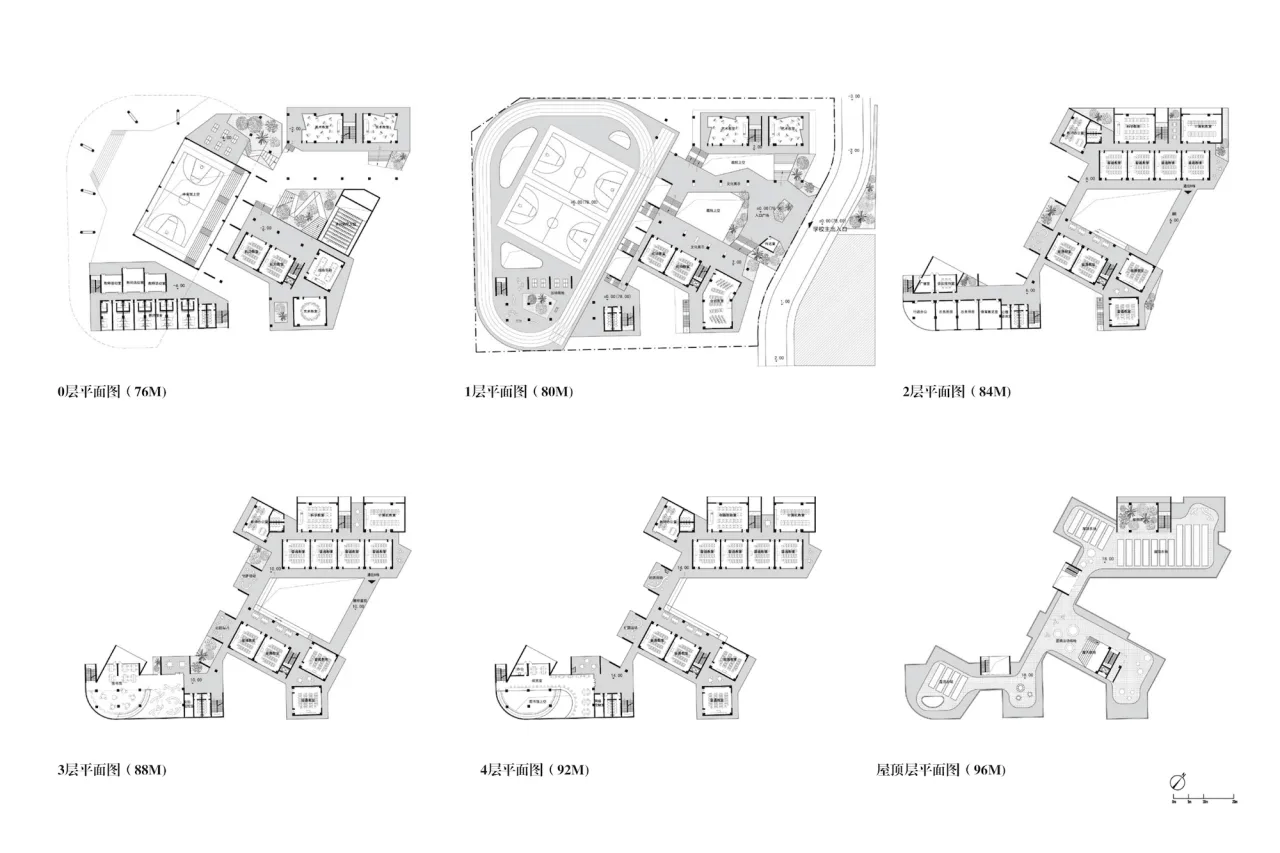
△ Floor Plans
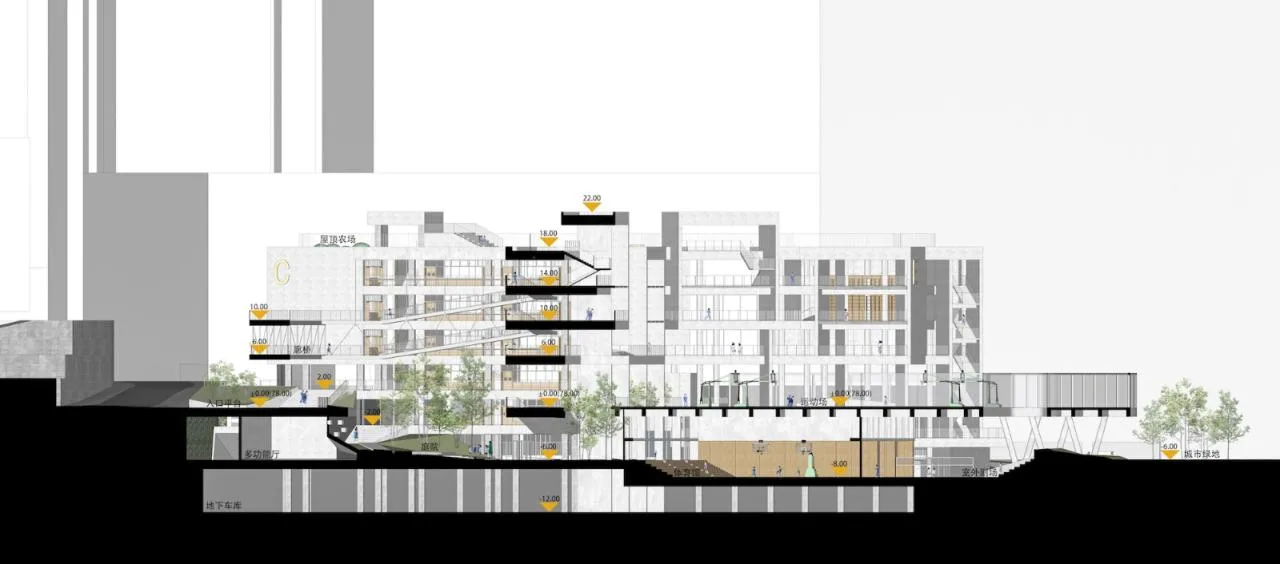
△ Section Diagram















Must log in before commenting!
Sign Up