
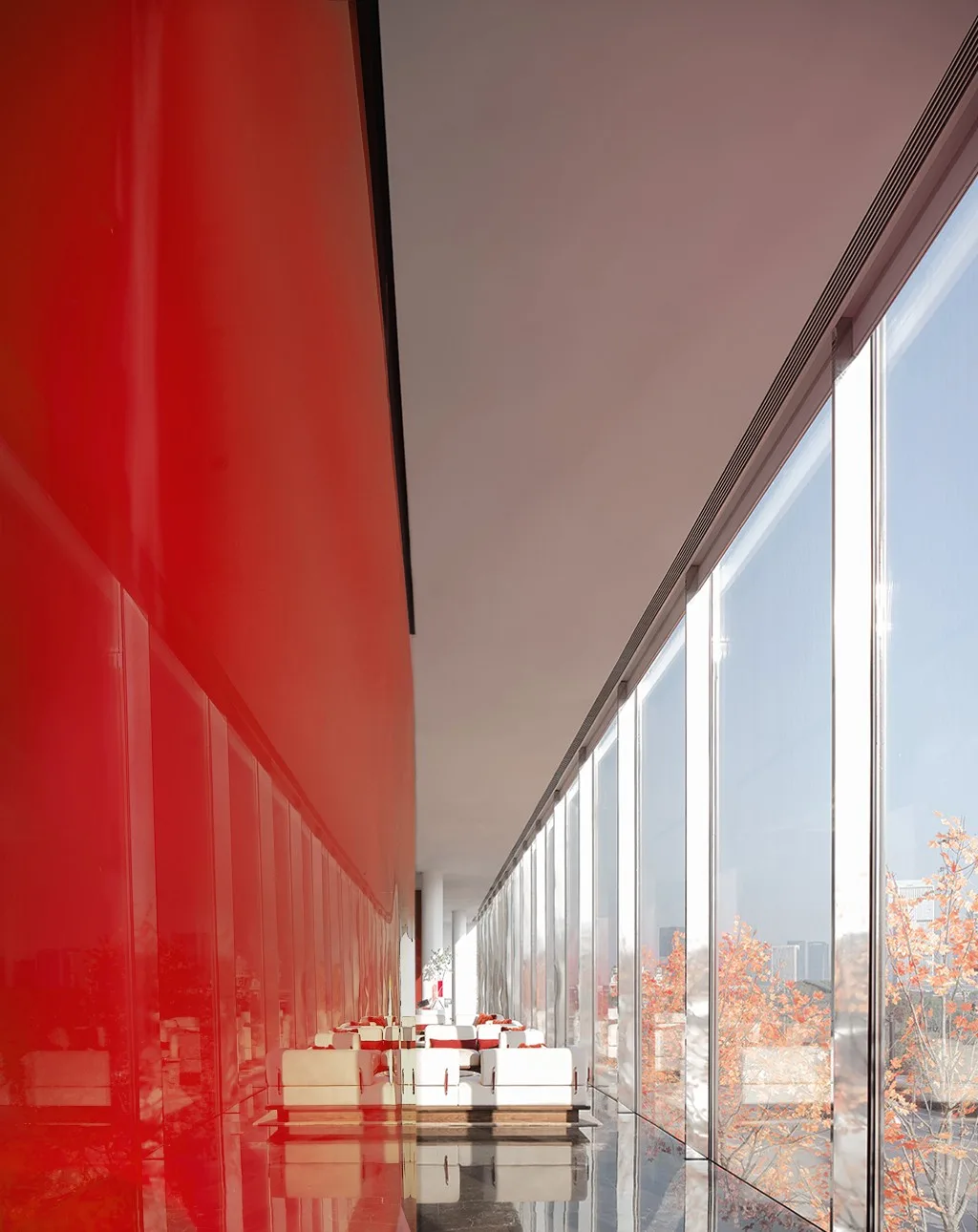
ZSD Zhuoshi presents Yiwu, a city built around a marketplace that embodies openness, fluidity, and connectivity—even amidst a global pandemic.
Yiwu is a city rich in diversity and history. It is the hometown of Luo Binwang, one of the “Four Heroes of the Early Tang Dynasty,” and today it stands as the world’s largest small commodity distribution center. Recognized by prominent international institutions such as the United Nations and the World Bank as the “world’s largest market,” Yiwu bustles daily with people of all ethnicities and languages. Its streets overflow with local traditions and culinary delights, creating a vibrant, welcoming atmosphere that continually draws young visitors from around the globe.
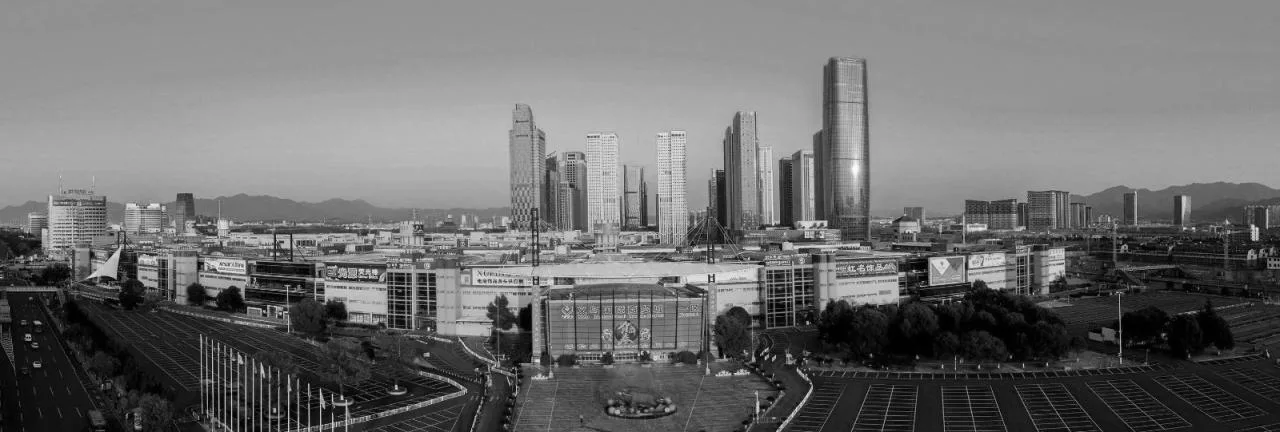
Impressions of Yiwu City: An Open Market and a Business Paradise
Yiwu Guiyu Lanting is positioned at the city’s core as a livable neighborhood blending residential comfort with cultural and exhibition spaces. Adjacent to the Yiwu International Cultural Center and surrounded by various residential communities and developing land, the project embodies the energy of a city on the rise.
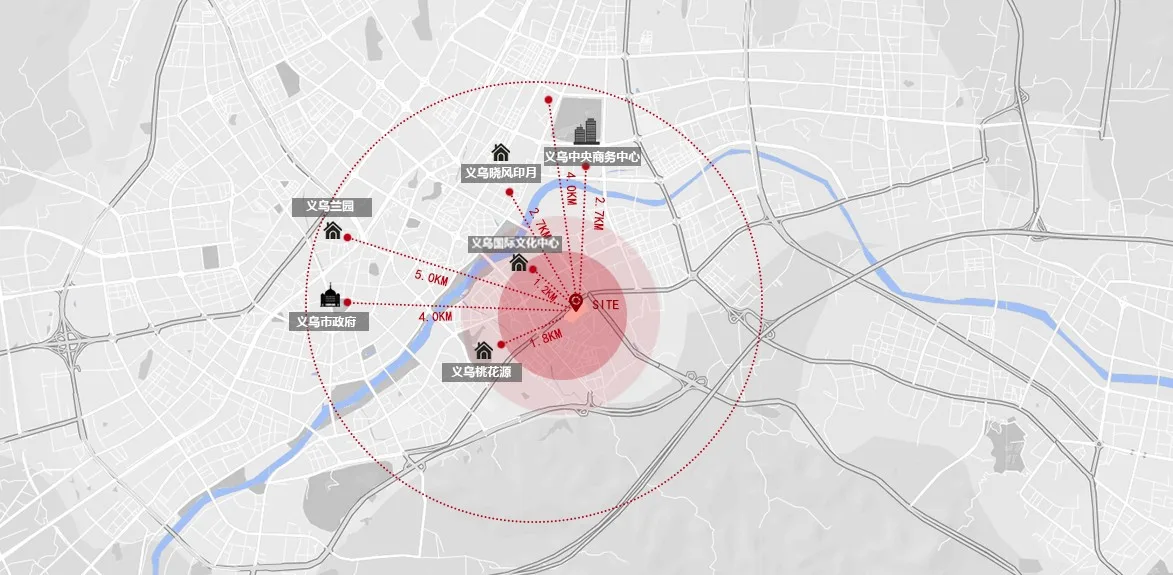
The Guiyu Lanting Life Aesthetics Museum is situated along a green belt at the intersection of the existing road and Zongze East Road on the project’s northeast side. Extending approximately 213 meters north to south, with a maximum width of 20 meters, the site’s elongated shape and terrain variation create a linear architectural landscape with excellent urban visibility.
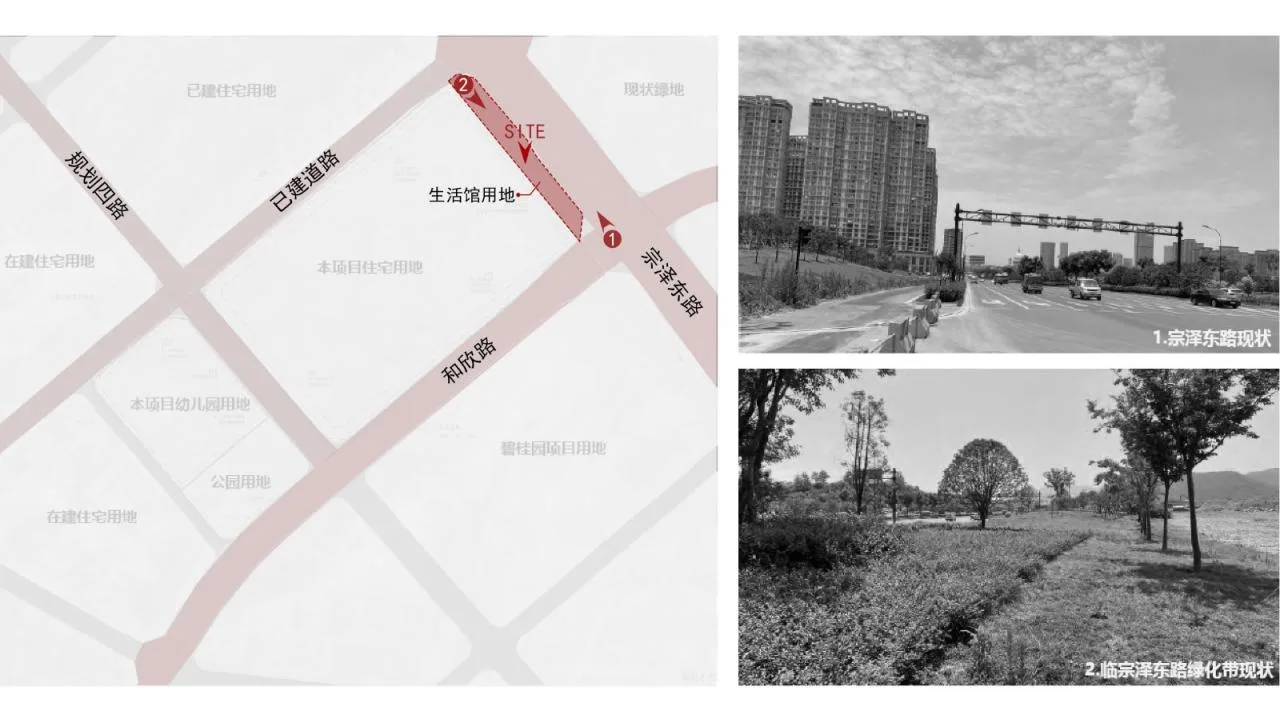
△ Site view before construction
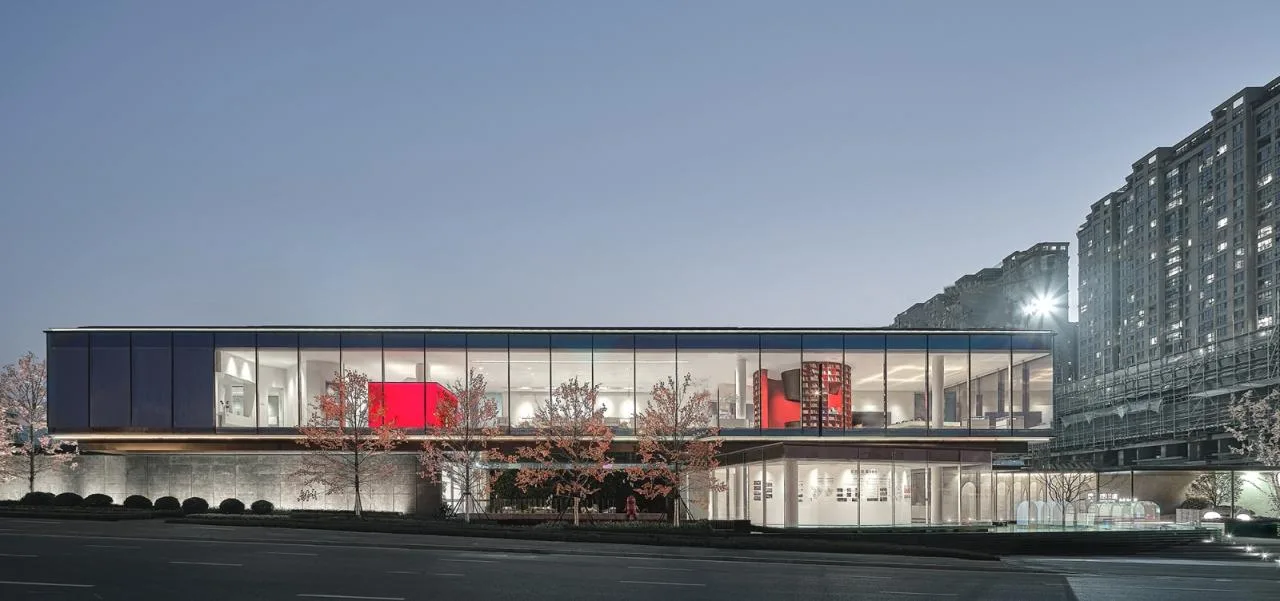
The architectural concept embraces Yiwu’s character as a “showcase,” combining three virtual and real “boxes” to form the museum’s structure. A parking area is located at the northern edge, guiding visitors from north to south. A stepped water feature at the front smooths the terrain difference and reflects the expanded spatial experience the building aims to create.
The two-story stacked and twisted blocks form a three-dimensional urban showcase with multiple displays, where solid walls and glass intersect to blend reality and illusion. The facade reveals interior functions, blurring boundaries and creating a seamless indoor-outdoor visual experience.
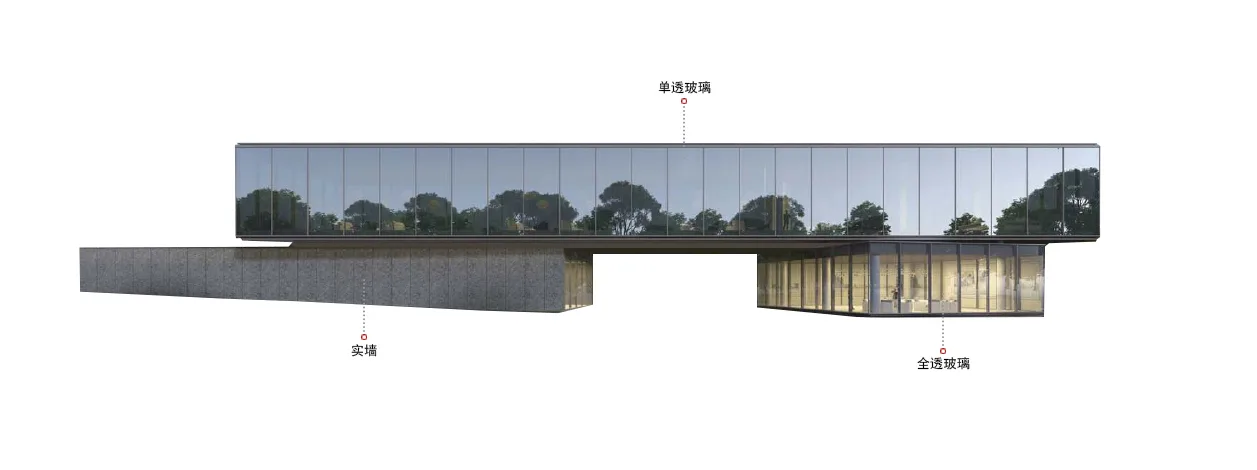
△ Building facade analysis
ZSD Zhuoshi is responsible for the interior design of the Aesthetics Museum, focusing on linking the scattered boxes to optimize functional flow. The design aims to enrich the “showcase” concept by integrating Yiwu’s market traits of openness, flow, and connection, expressing the city’s unique urban identity.
Tracing back to the Qianlong period of the Qing Dynasty, when trade involved exchanging chicken feathers for sugar, Yiwu evolved from a local market into a global trade hub by the 1980s. Its commercial spirit is marked by resilience, opportunism, and bold risk-taking—traits that have been amplified in today’s era of rapid transit and connectivity.
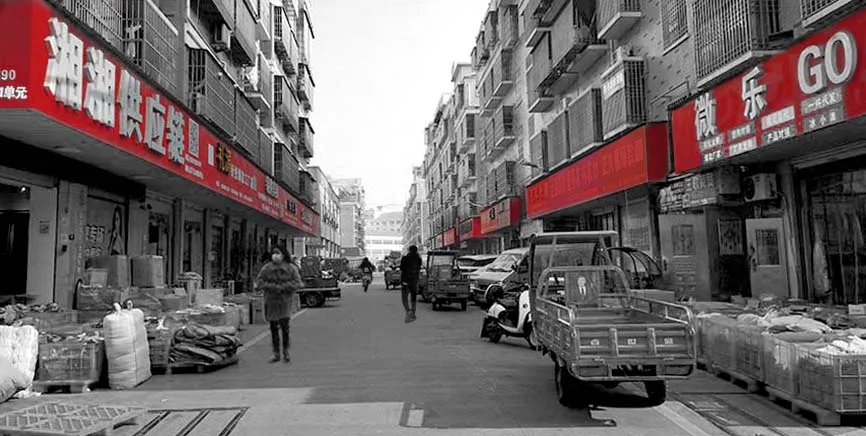
△ Yiwu Beixiazhu Village, known as China’s “Number One Village for Internet Celebrity Live Streaming,” features a unique commercial environment with “store-warehouse integration” and unified red storefront signage.
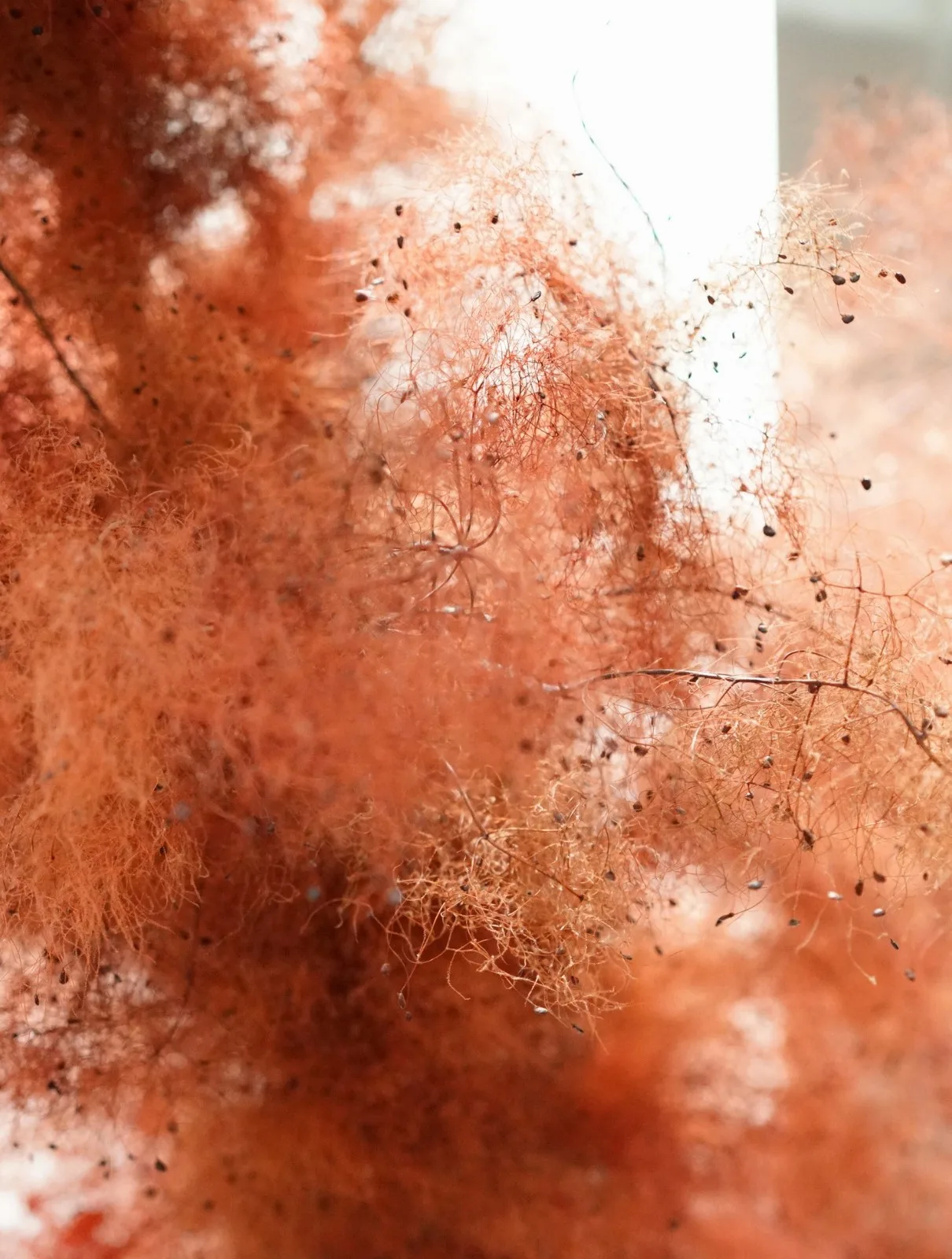
From its vibrant commodity markets to its role as a source of internet fame, Yiwu embodies vitality, enthusiasm, and energy. “Yiwu Red” has become a symbolic expression of the city’s spirit.
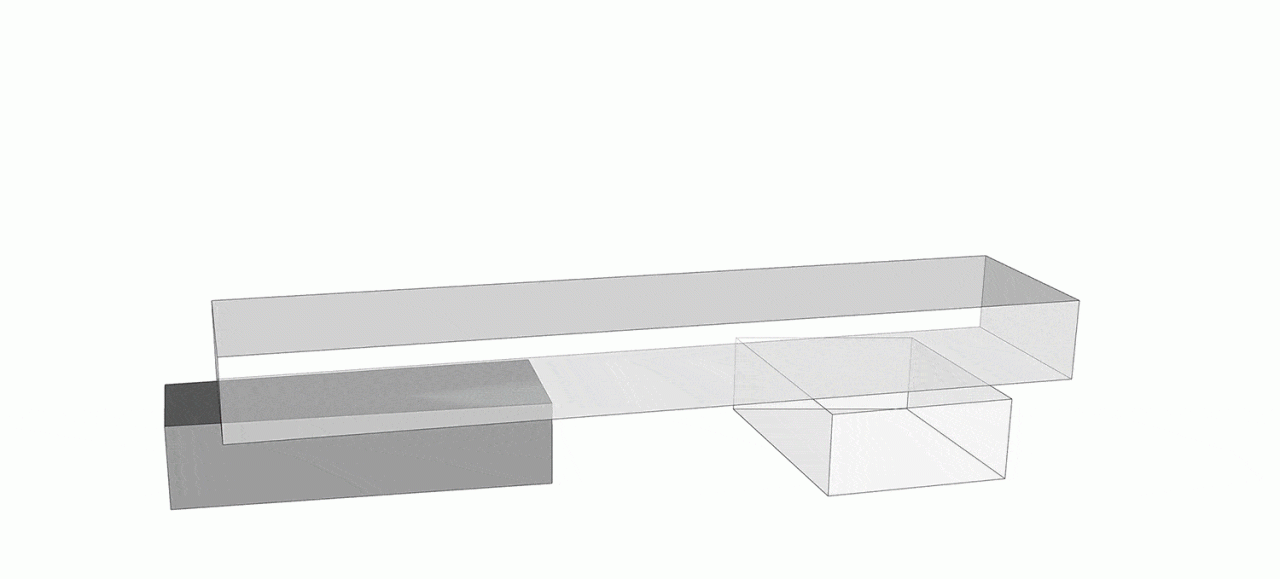
△ Design evolution
After extensive collaboration with the architectural team, the design finalized the traffic axis connecting the blocks, integrating the three boxes through functional flow lines. Architectural facades and structural elements are incorporated indoors to create an open and dynamic space. A bold red accent at the interior’s visual focal point reflects Yiwu’s optimistic and courageous character, serving as a memorable spatial landmark.
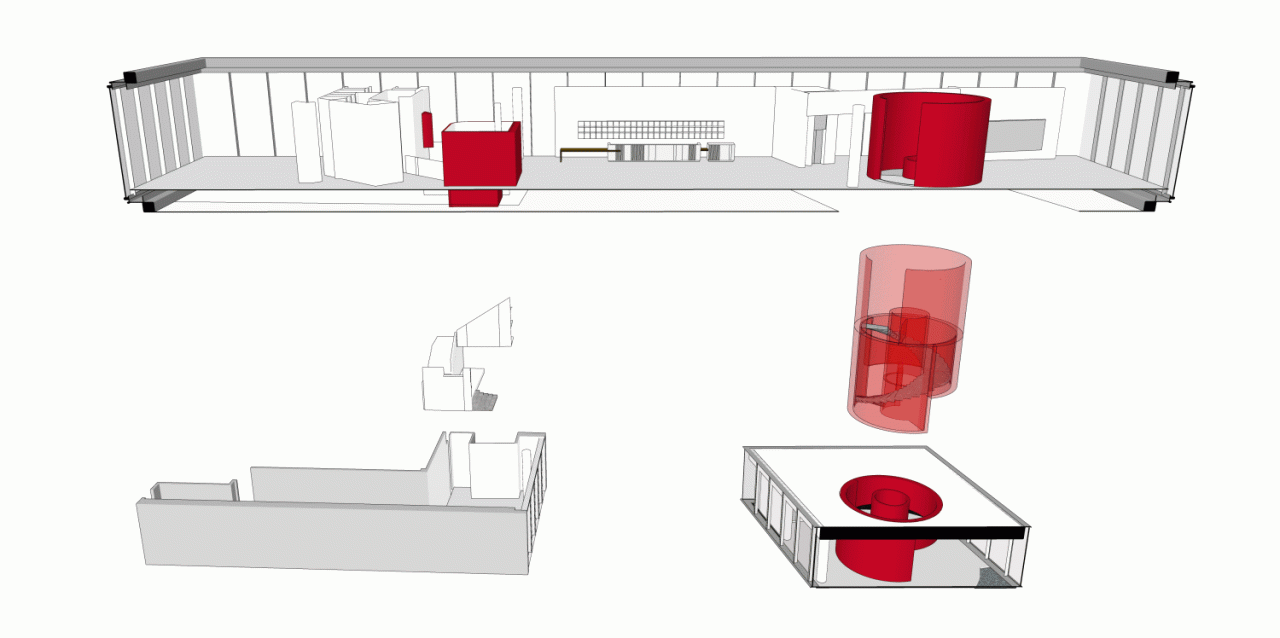
△ Functional flow diagram
The dynamic “pivot” element paired with vibrant red hues gives the “city showcase” a distinctive personality. Architecture, landscape, and interiors collaborate to create an ART-BOX concept for the aesthetic museum.
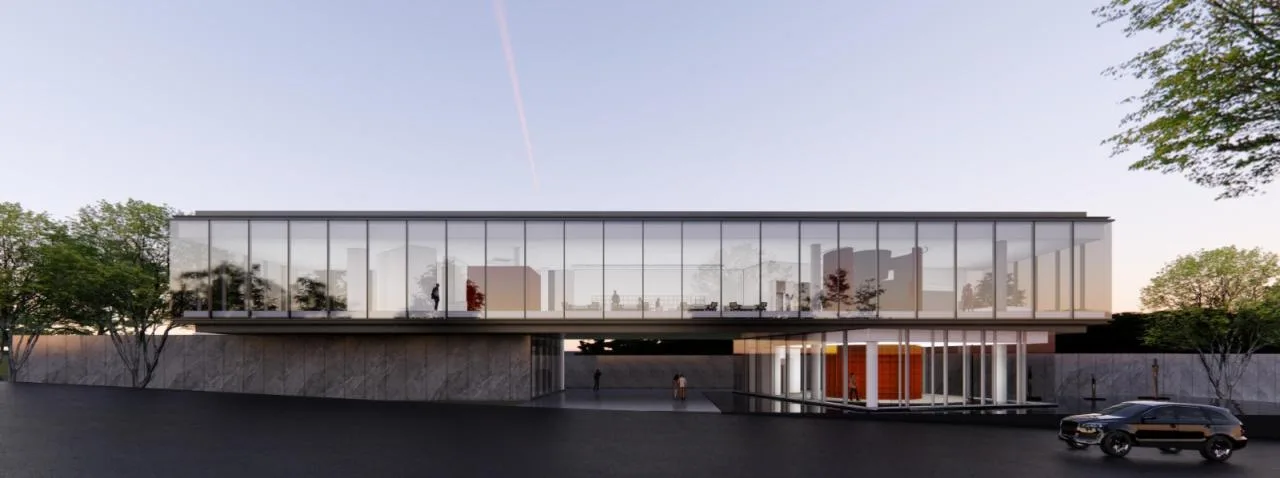
△ Spatial rendering
Space 1: A Cut Through Time and Space
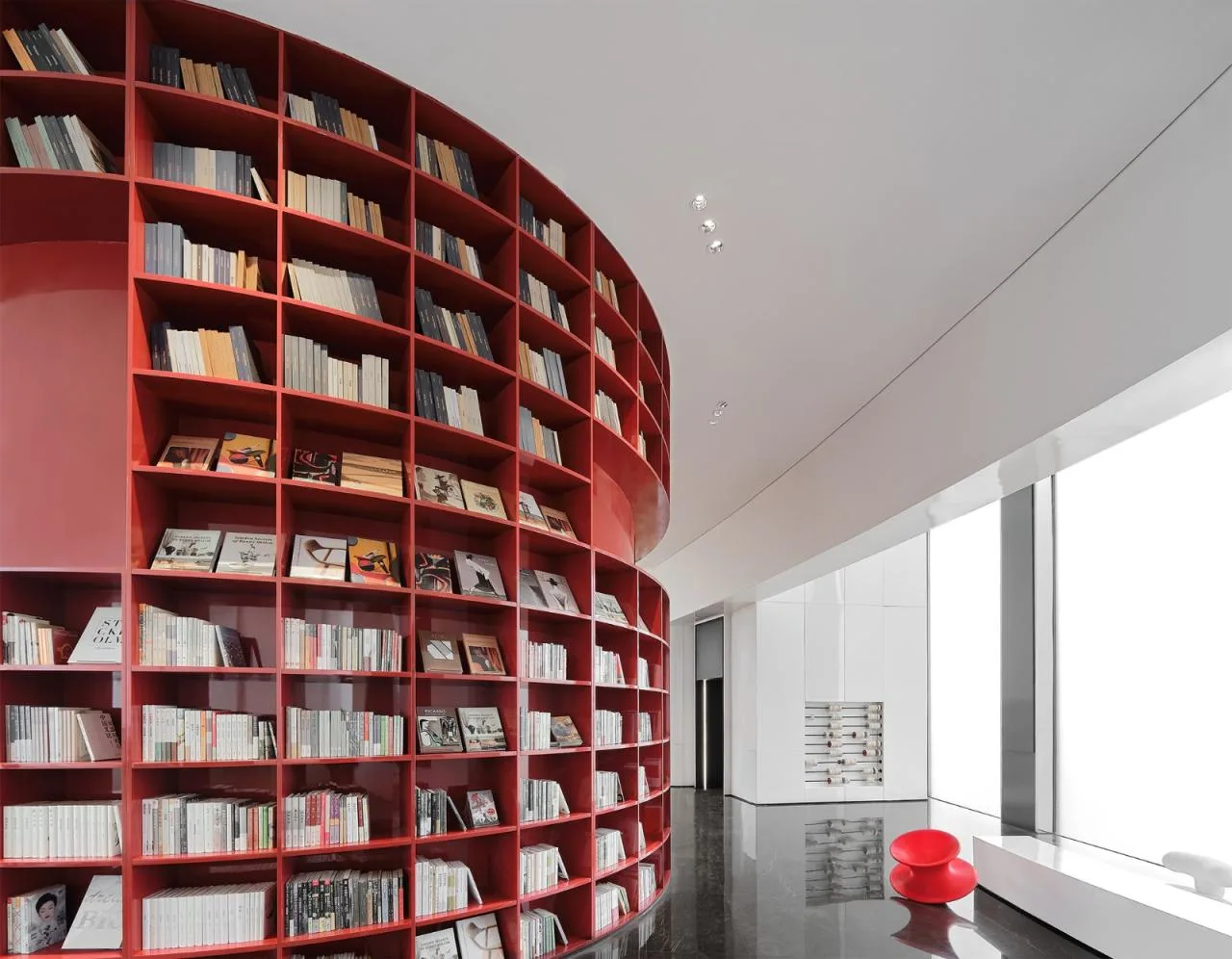
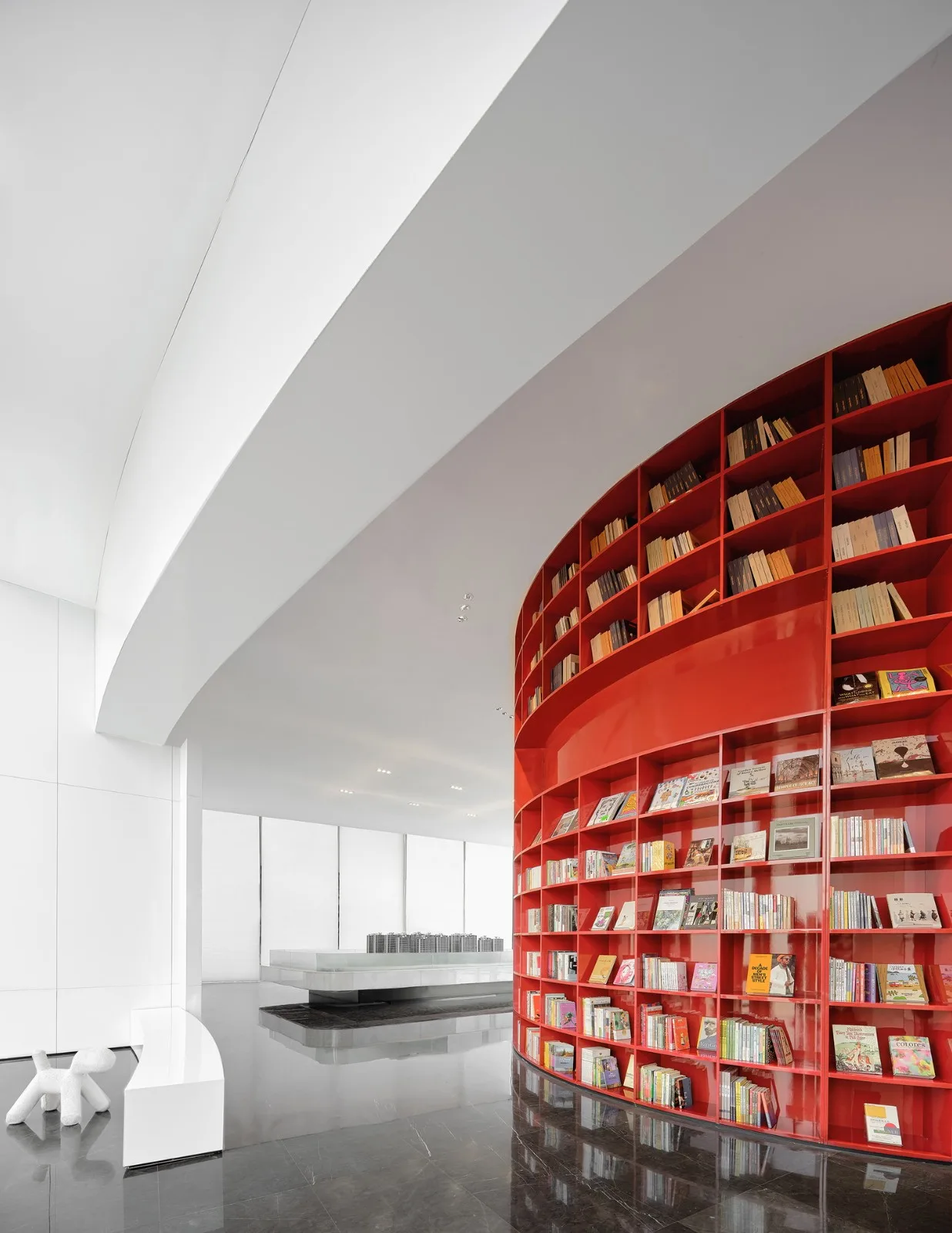
Box 1, the smallest of the three, boasts a crystal-clear texture and places a spiral staircase centrally to efficiently manage vertical circulation. A red cylindrical bookshelf spans two floors, acting as a connecting axis that unfolds a multidimensional spatial experience.
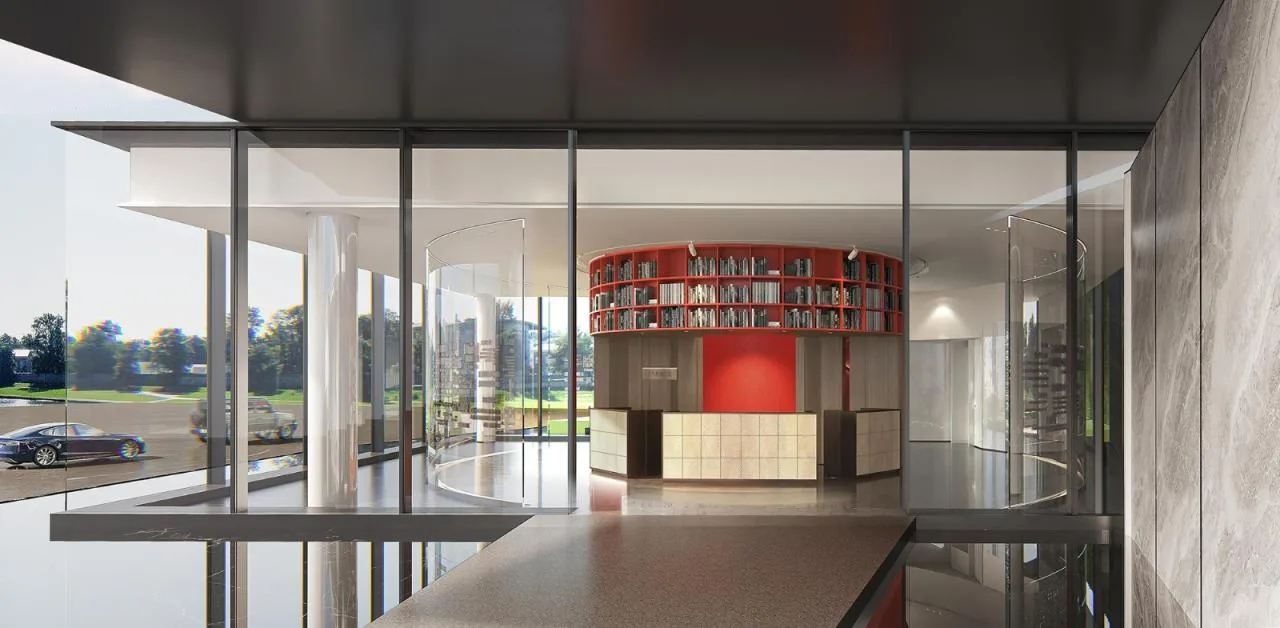
△ Main entrance rendering
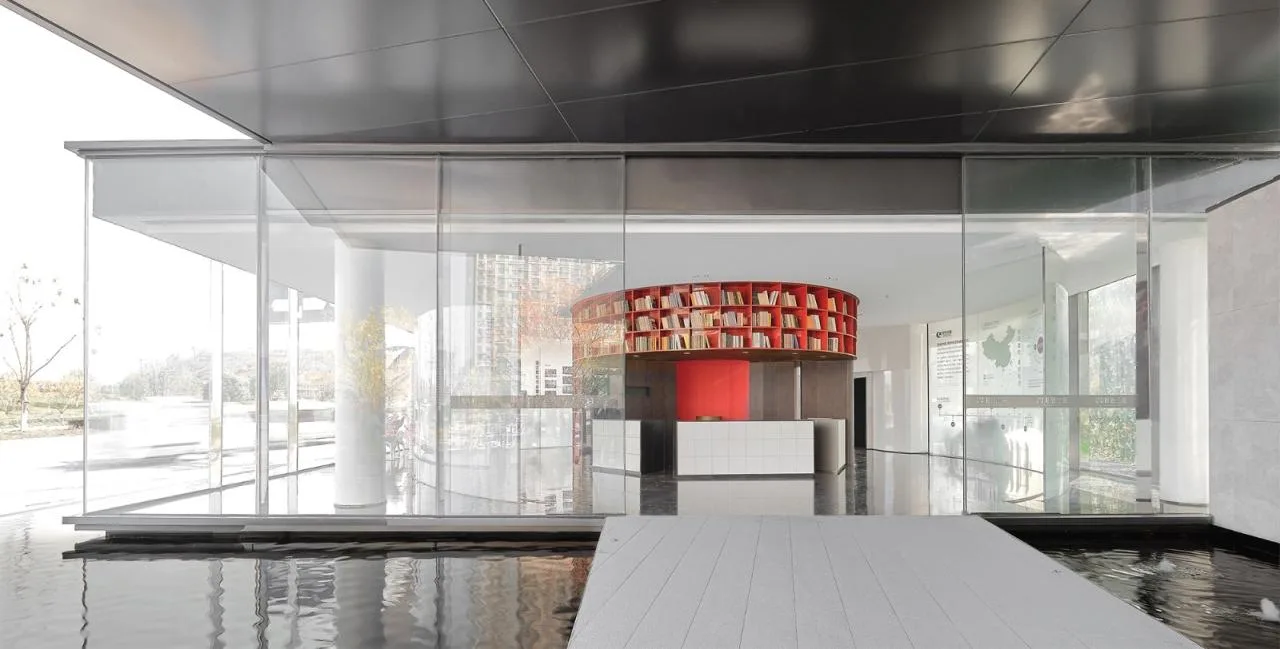
△ Main entrance photograph
This spiritual and visual hub connects the first and second floors, perfectly framing the reception area. Two semi-transparent glass elements symmetrically flank the north and south sides, resembling space rotations and showcasing the brand histories of Joy City and Greentown China—highlighting their growth and respect for the city.
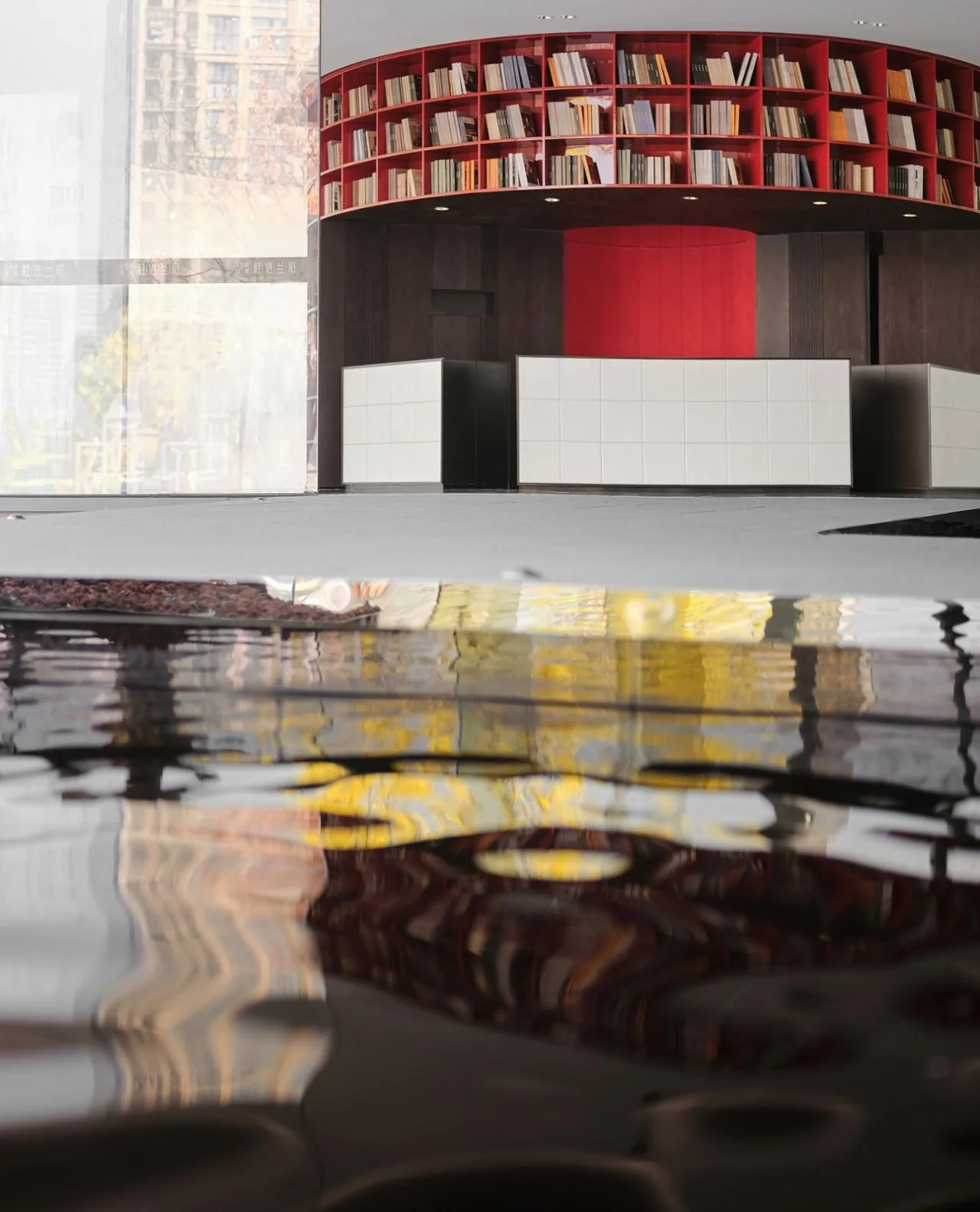
The use of transparent indoor materials combined with reflective water features creates a simple and comfortable atmosphere.
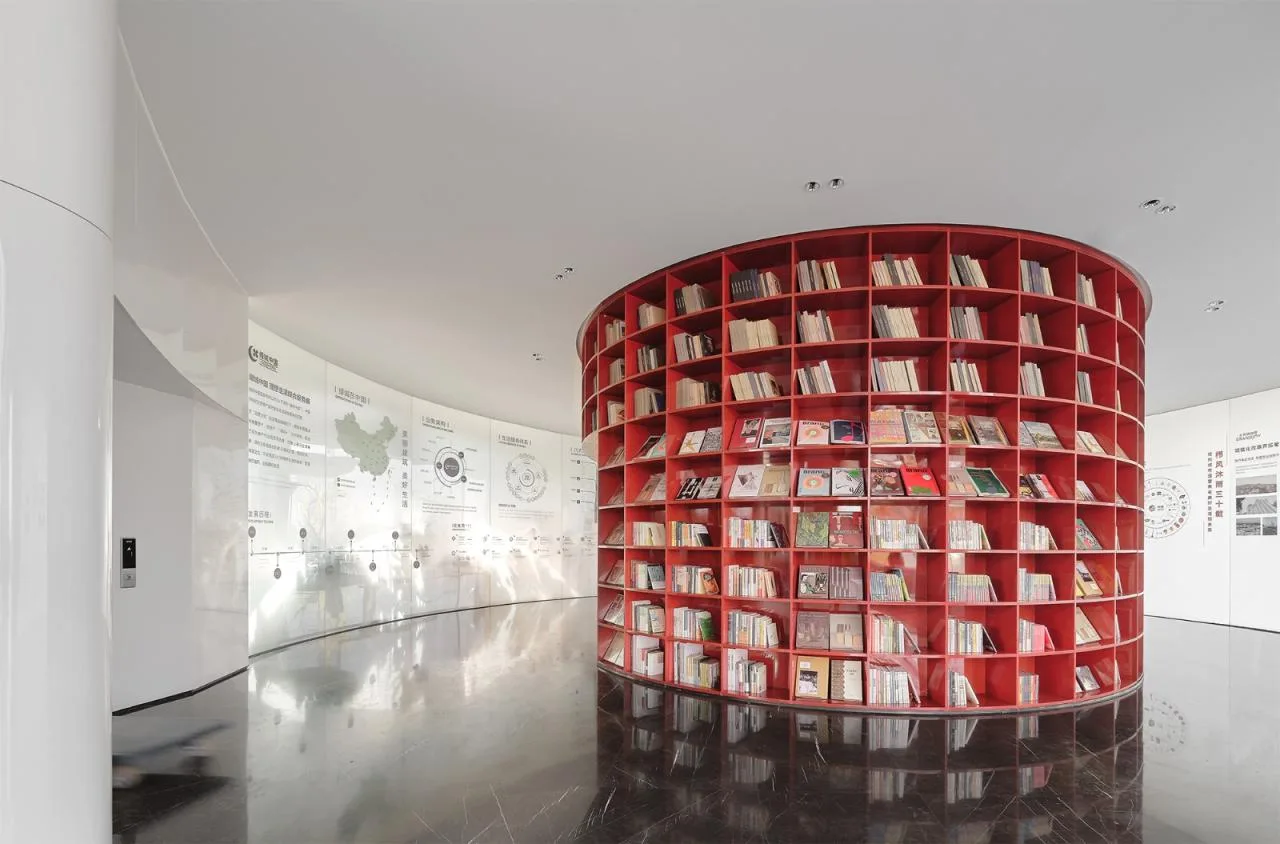
Exhibition space built with bookshelves and cultural walls.
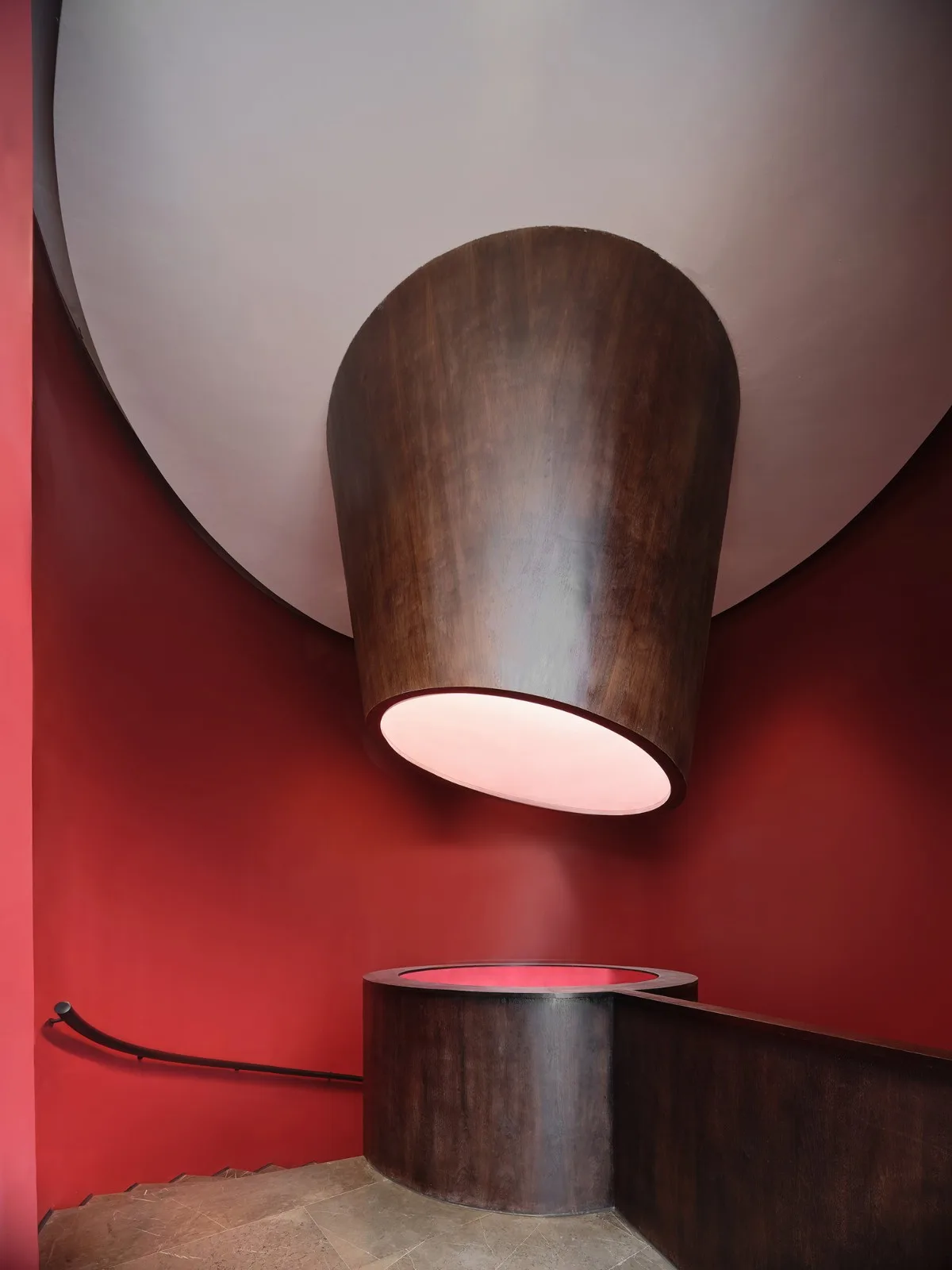
Inside the staircase, the contrast of red and dark brown hues fosters a serene and refined atmosphere. The circular courtyard, shaped like an hourglass, draws in natural sunlight, while the rotating endpoint offers a fresh perspective and emotional experience. This journey feels like a cut through time and space, transporting visitors to another dimension.
Space 2: Flow and Order
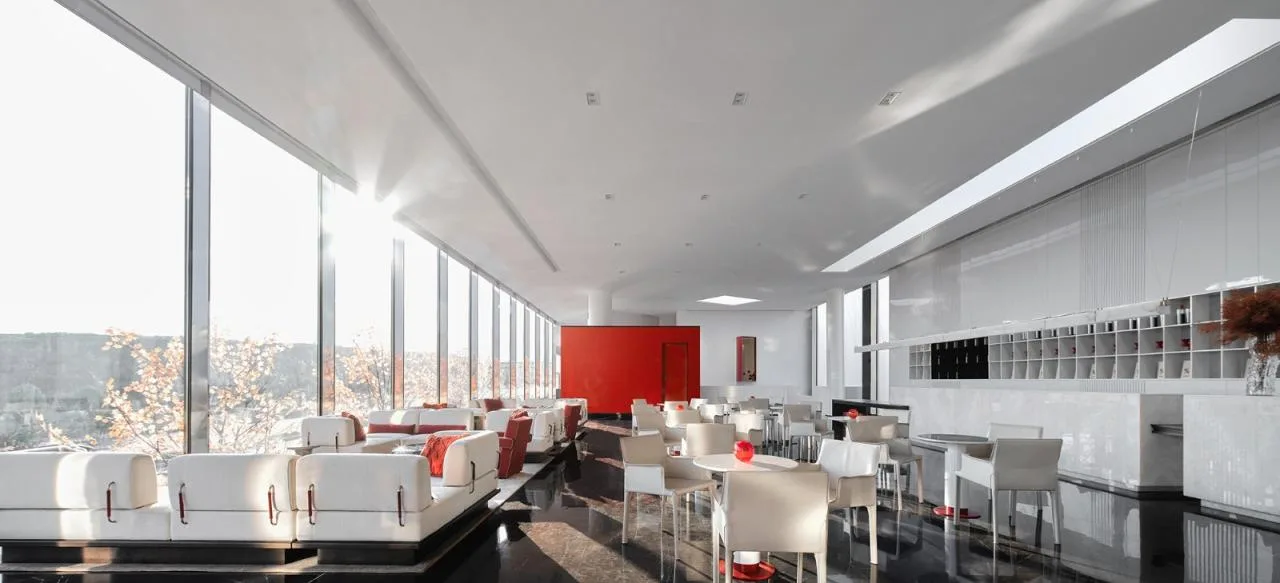
The second box is perched above the first and third, creating a large, stable open area. The design divides the second floor into a continuous hall featuring a sand table, cultural and creative spaces, a bar, reception, and work areas. This arrangement accommodates diverse activities—marketing, culture, and leisure—within an open, flowing environment.

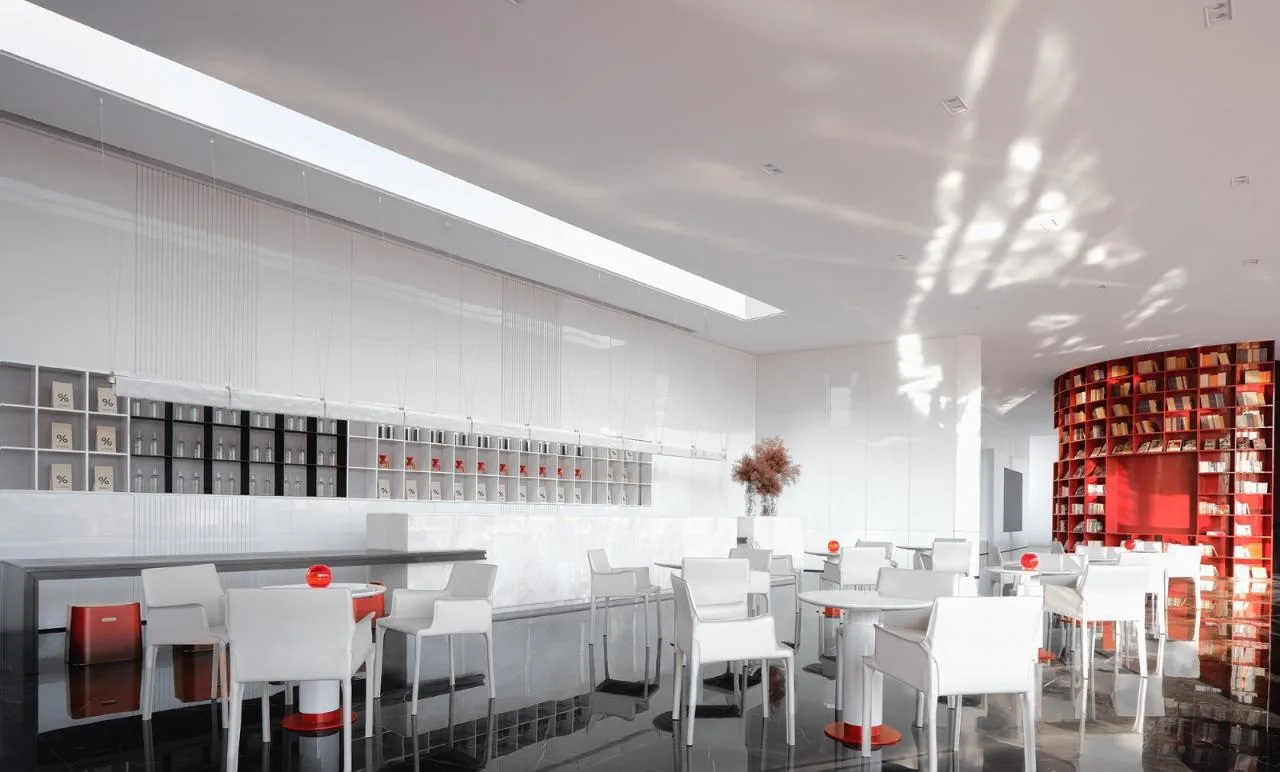
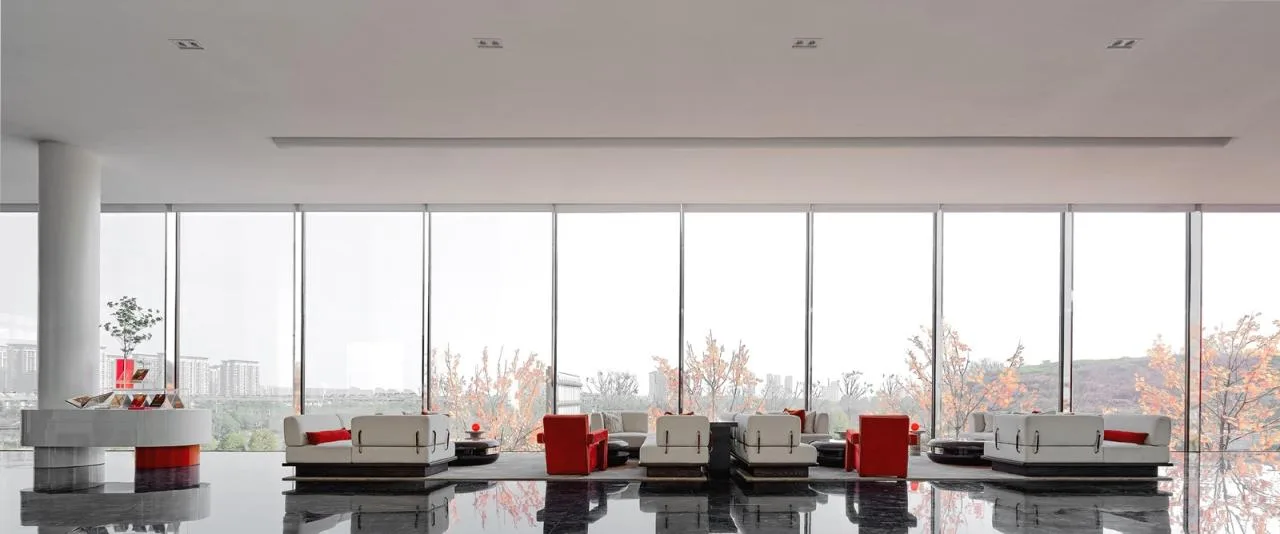
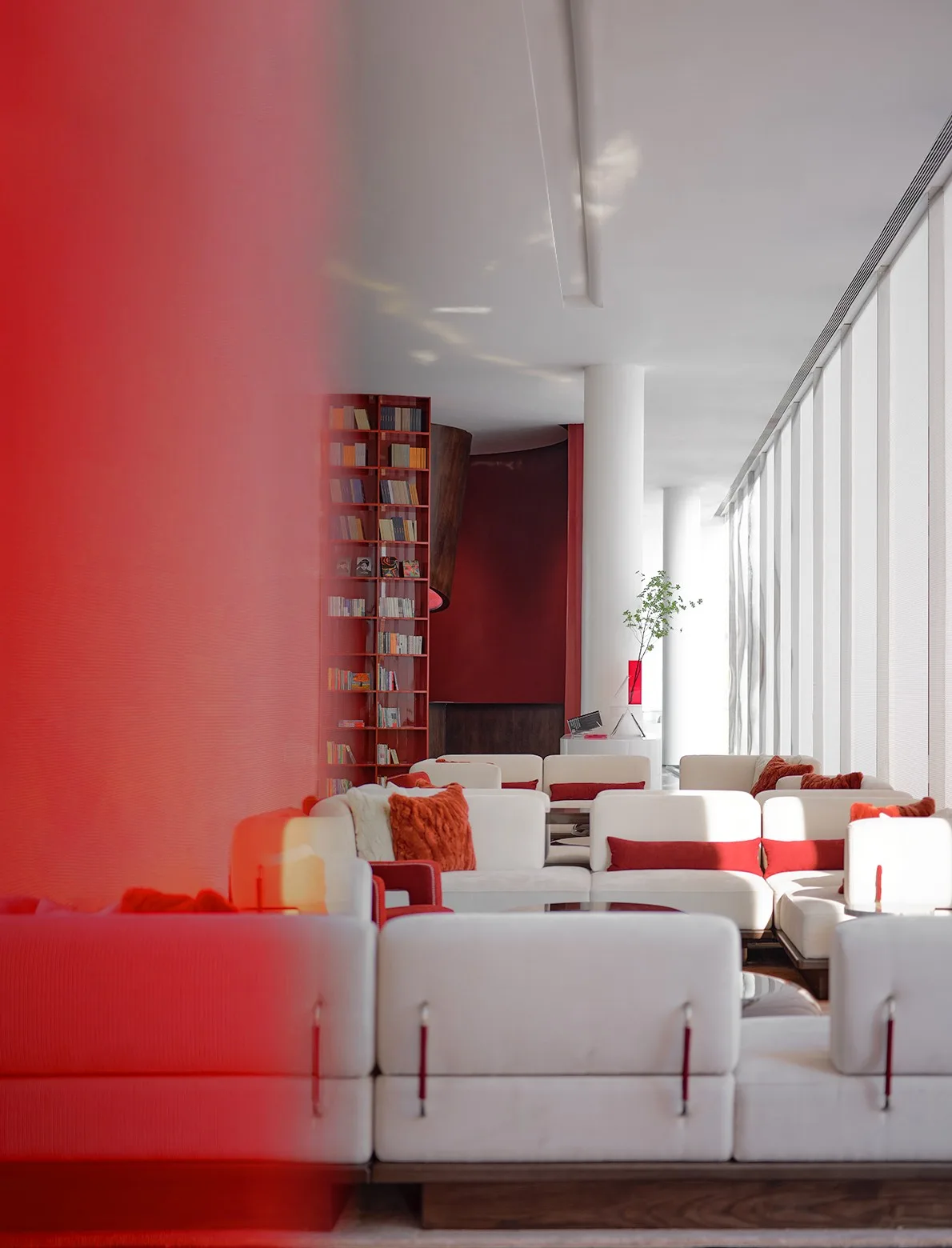
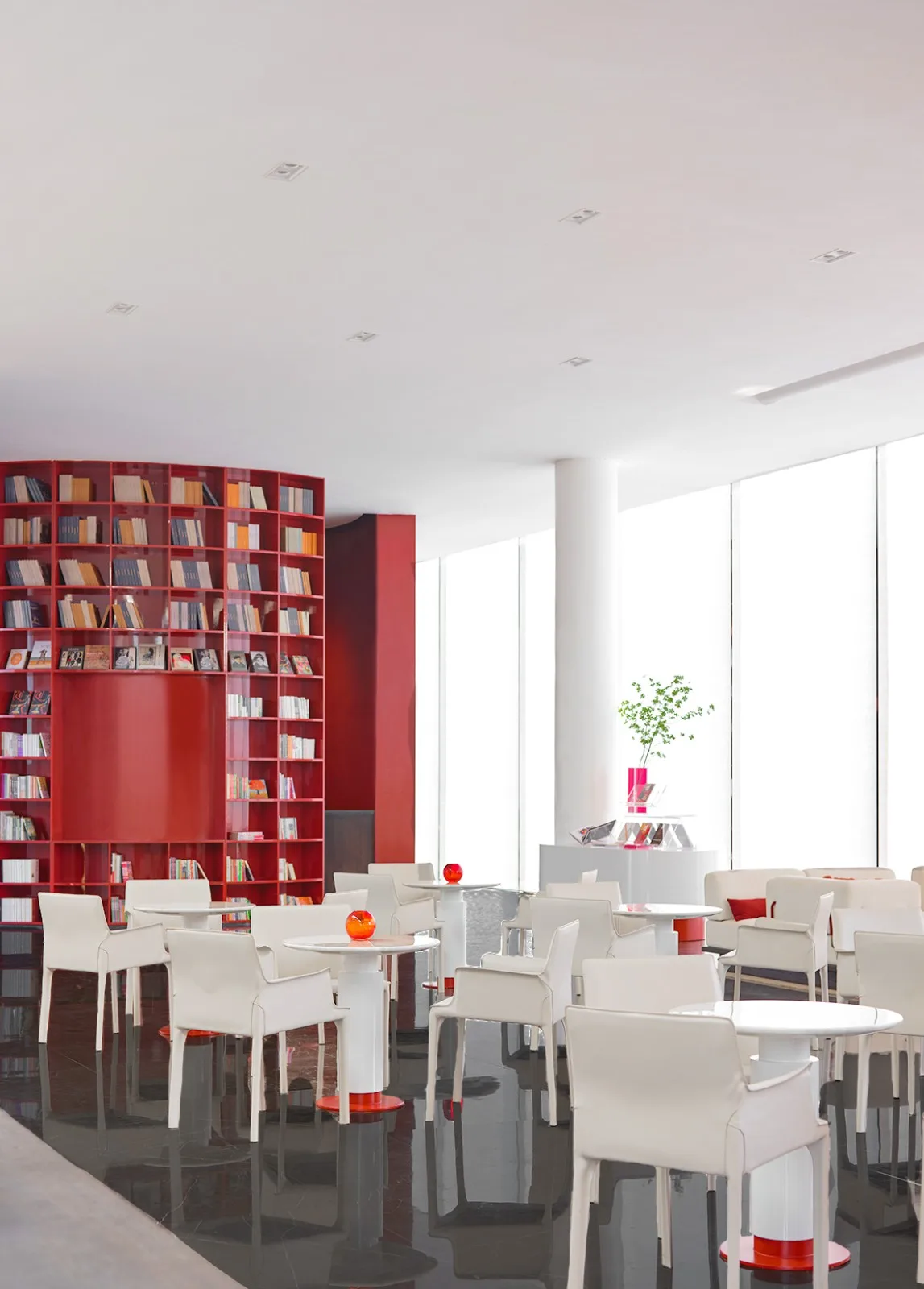
Bookshelves and VIP rooms are arranged along the north and south sides, highlighted by red accents that create two central visual points and emphasize spatial continuity. The interior materials—white and dark brown—contrast sharply with the red, enhancing the space’s layered and varied atmosphere and fostering subtle visual interactions.
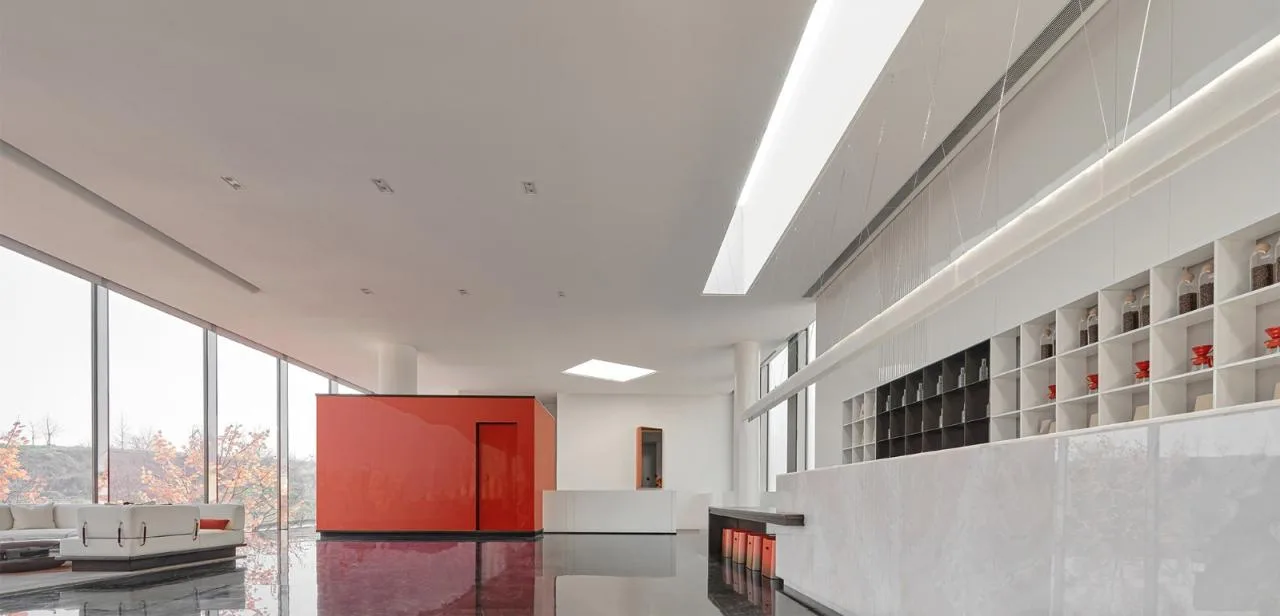
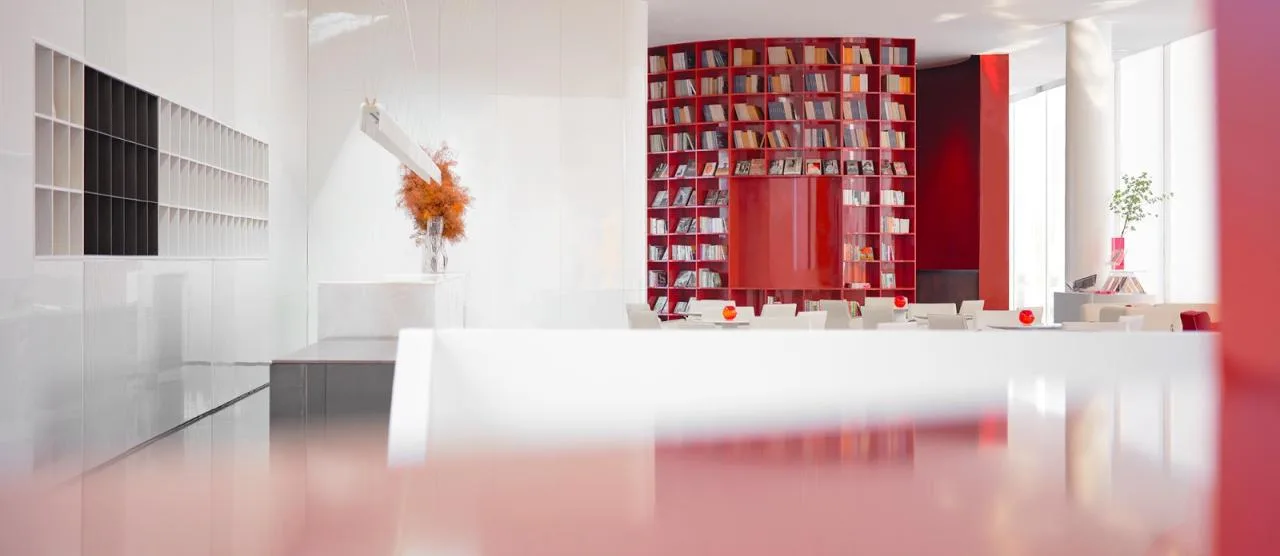
Natural daylight floods the space, coordinated with square and circular light wells that correspond to the staircases’ shapes. Above the bar, a long, continuous courtyard aligns with artificial light troughs on the sofa ceiling, creating changing patterns of light and shadow that evolve throughout the day.
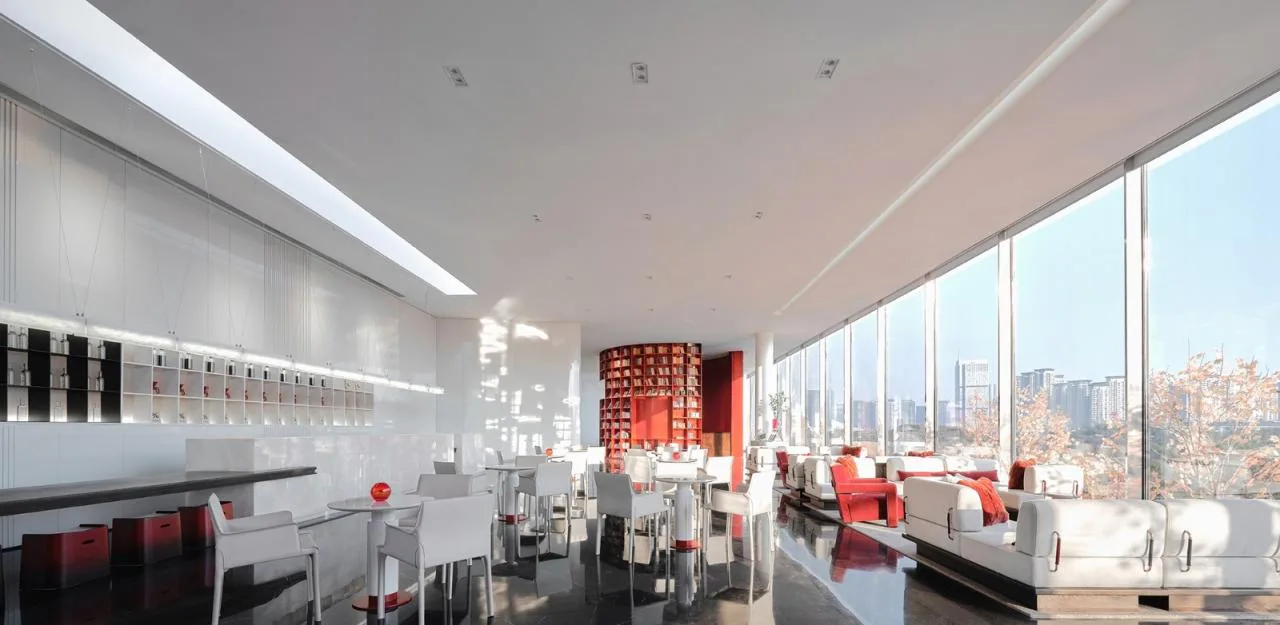
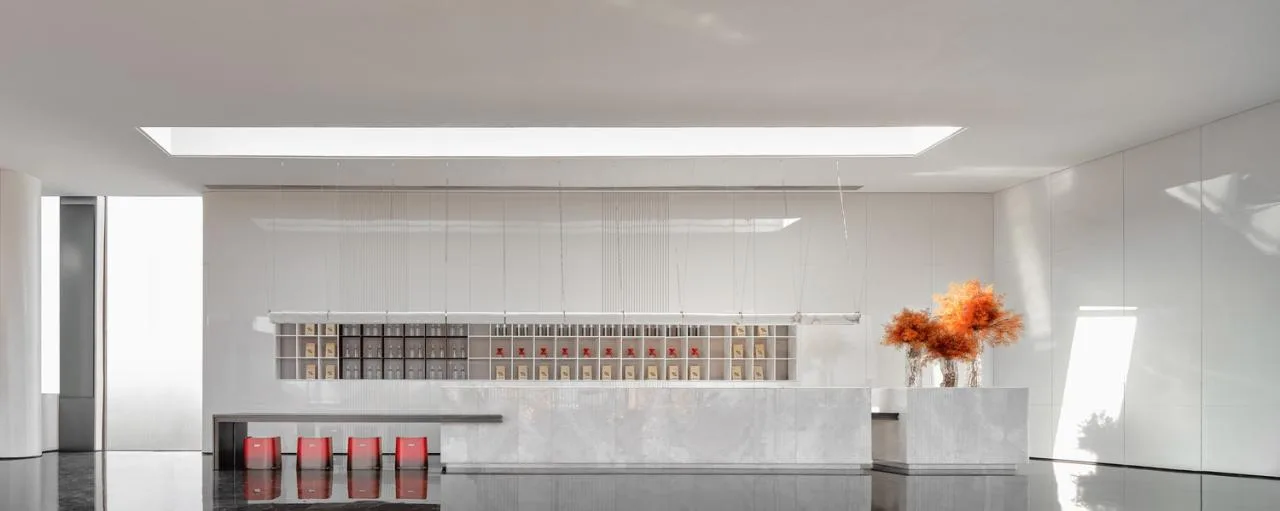
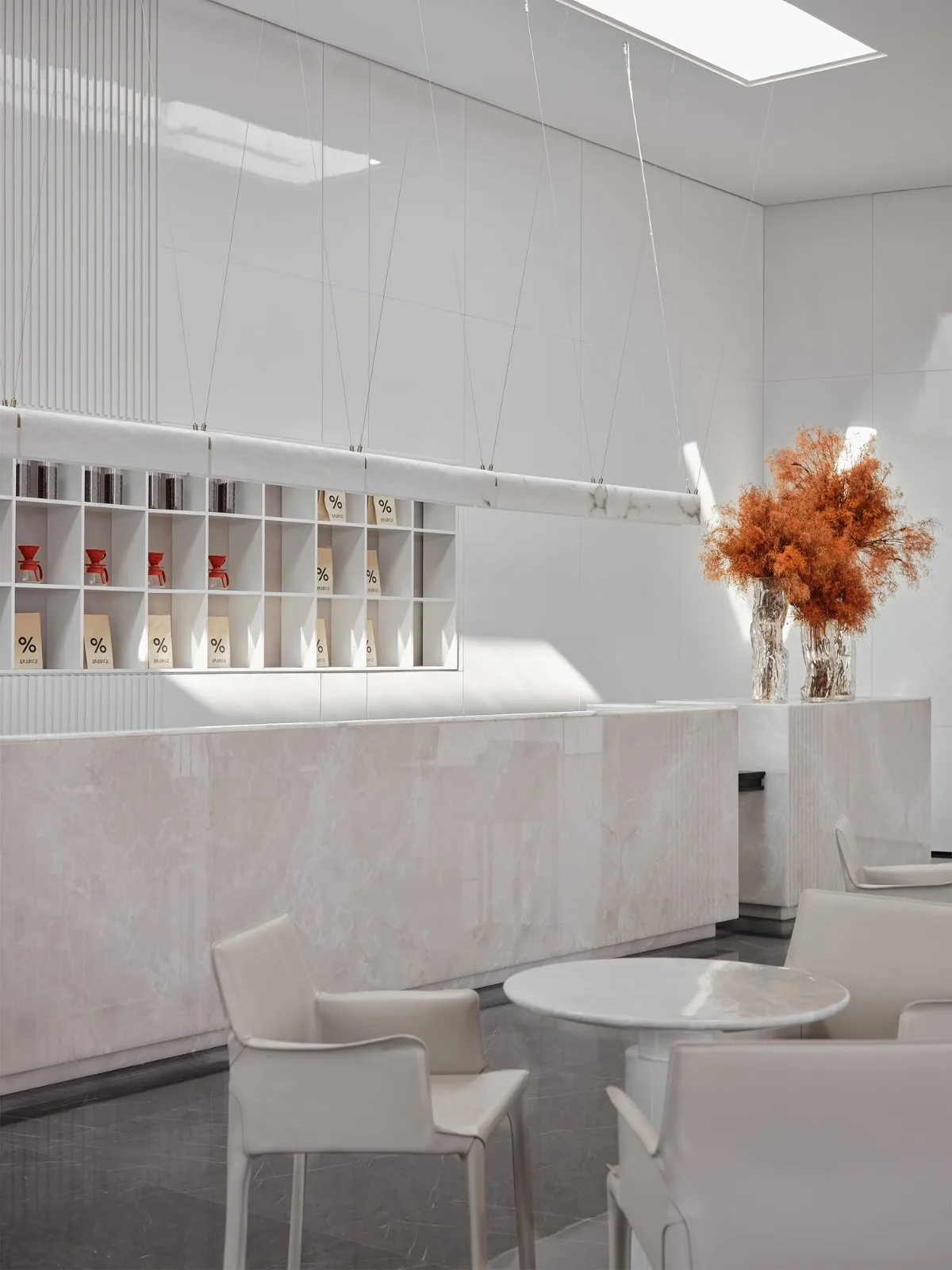
Within this transparent, open space, the bar area organizes soft seating to establish a sense of order and stillness, while the twisting forms introduce dynamic movement—creating a harmonious balance between calm and energy.
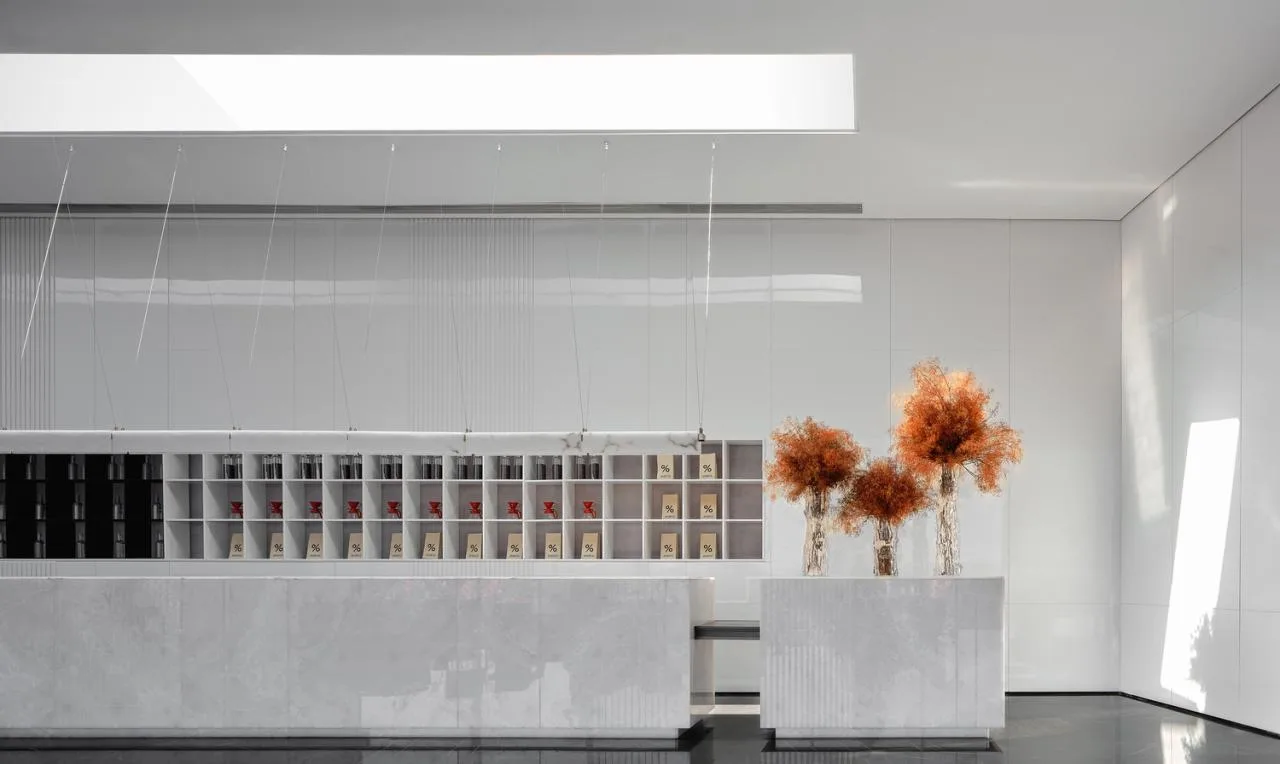
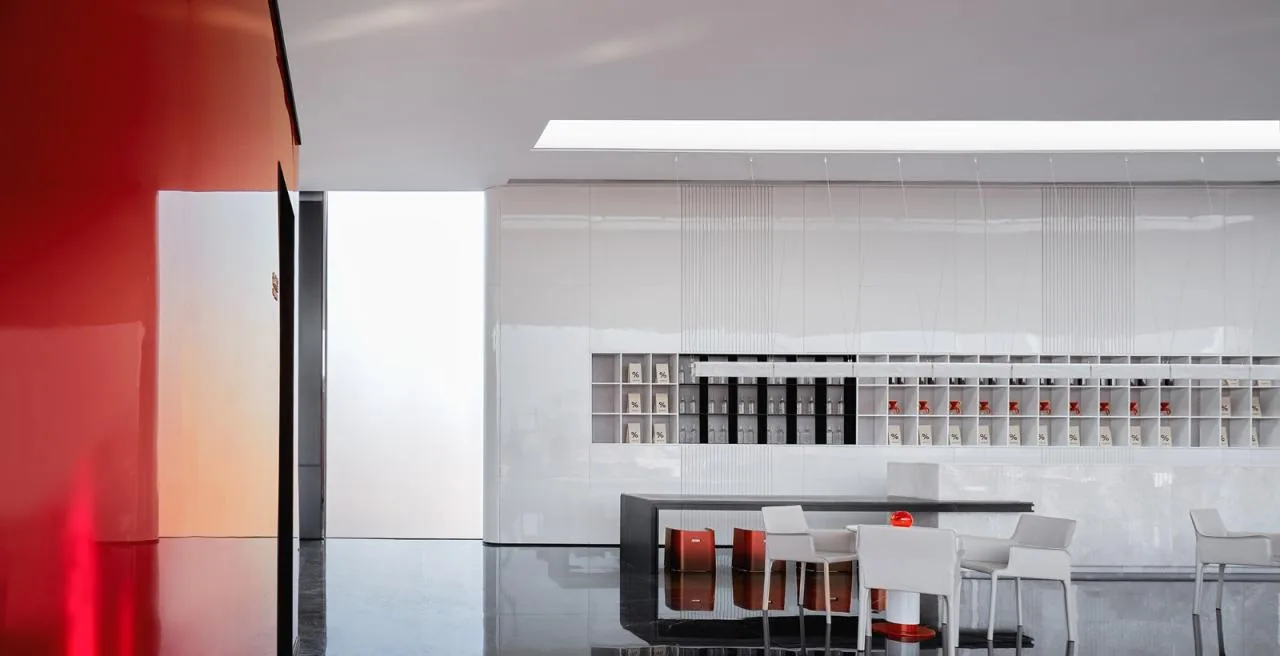
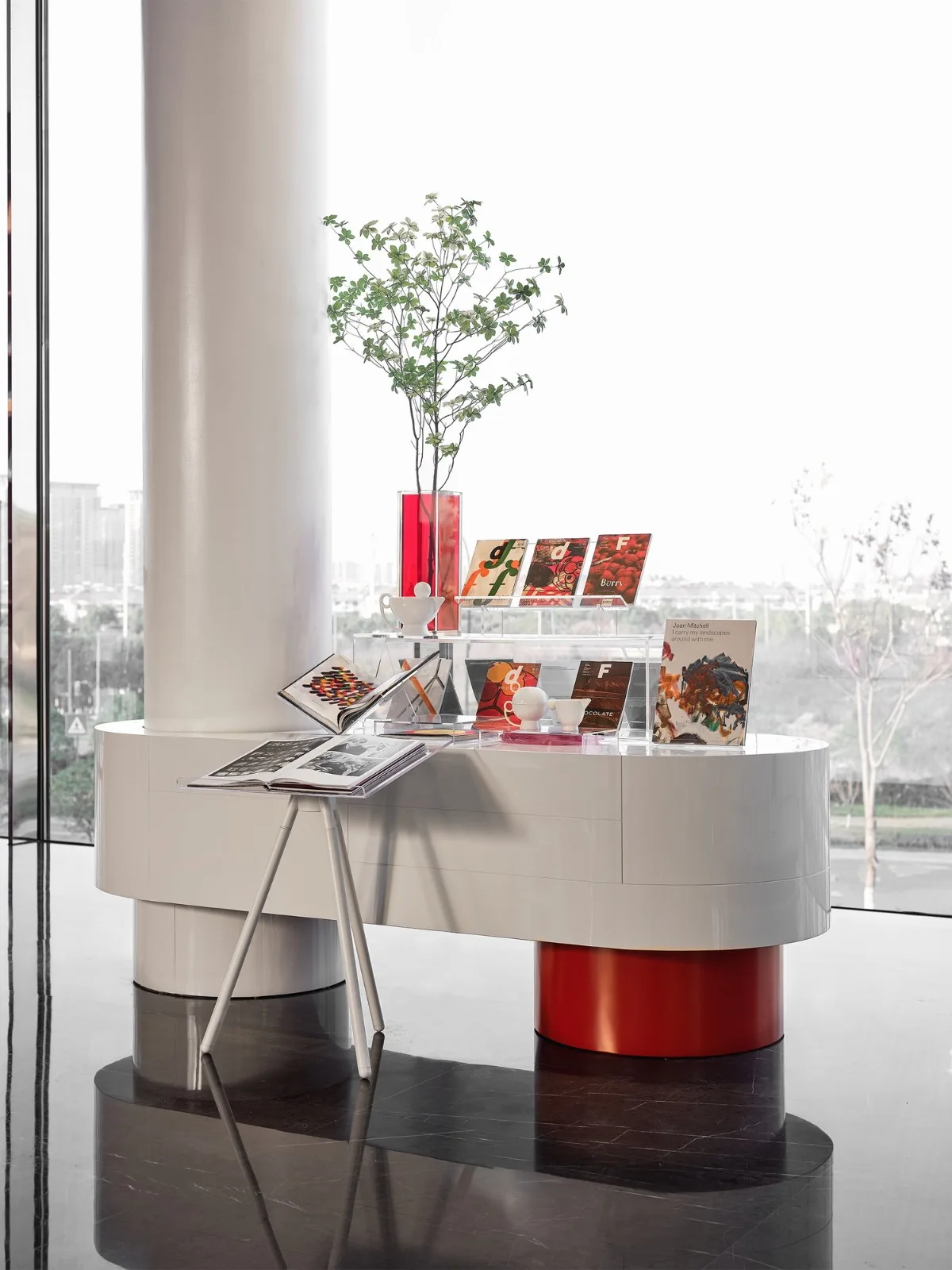
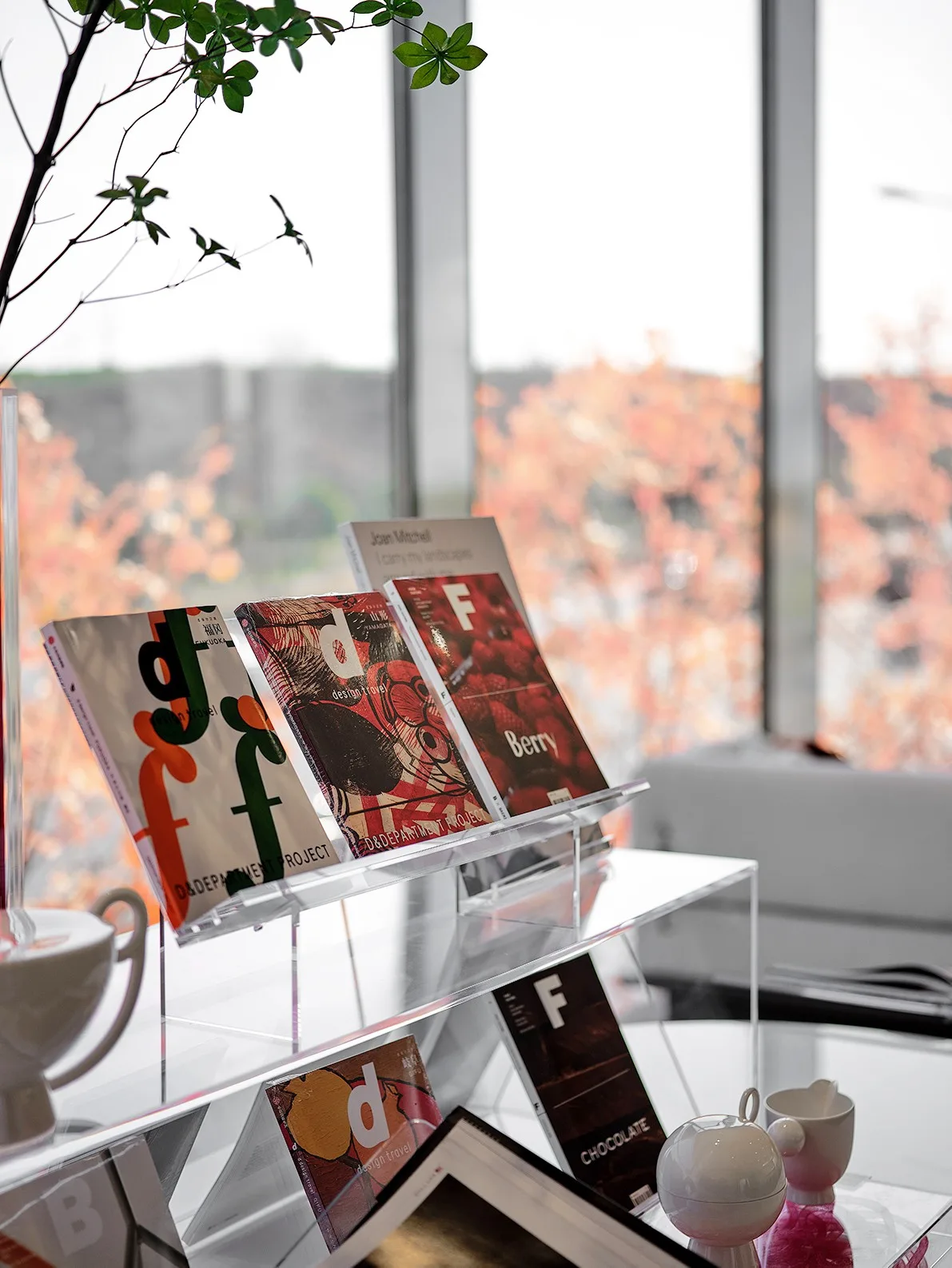
The book and cultural creative exhibition area simulates a real bookstore, enriching the reasons for visitors to linger.
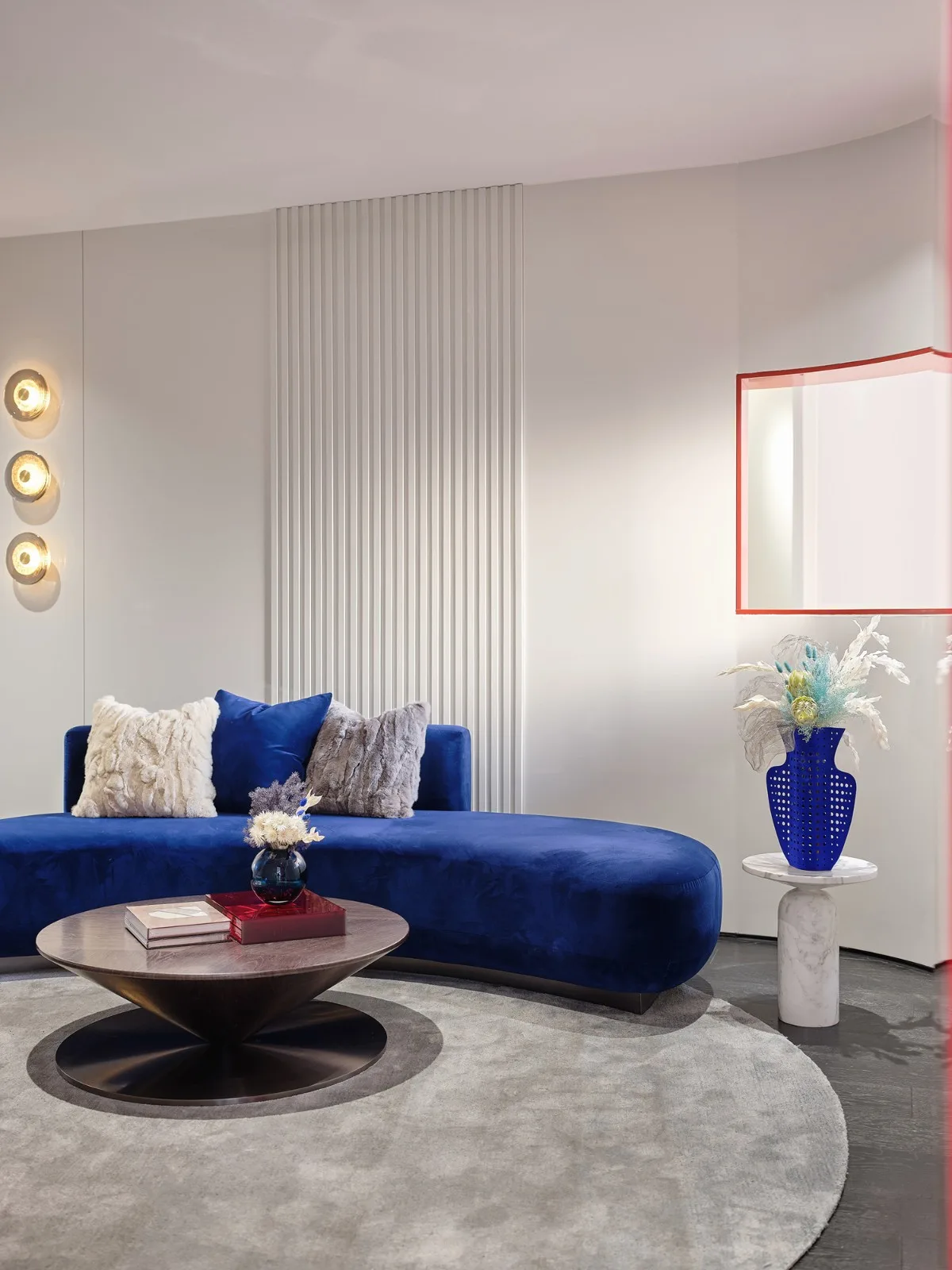
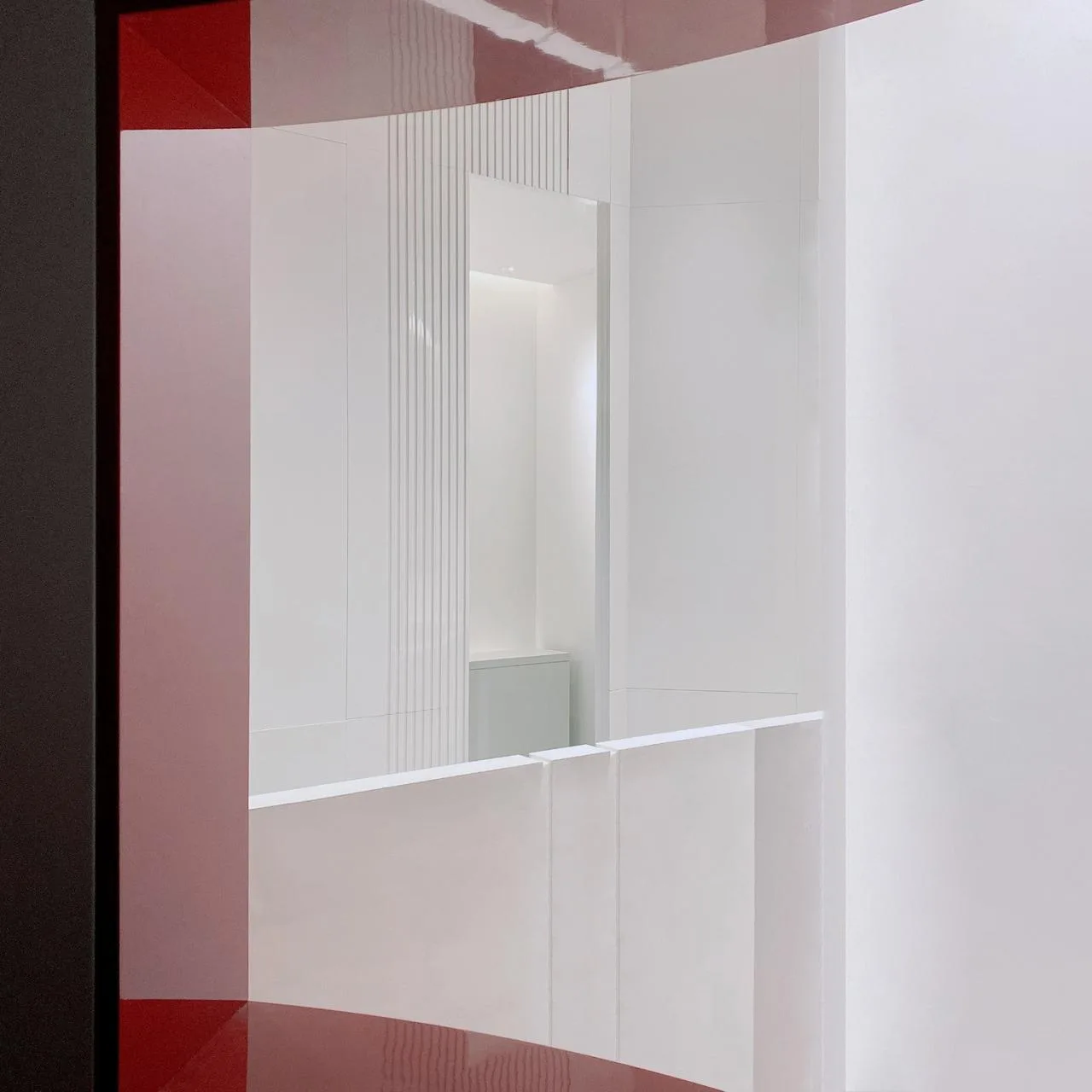
Yiwu is an inclusive, diverse city, enriched by people of different backgrounds, skin colors, and beliefs. Inside the VIP room, the bold clash of red and blue furnishings surprises visitors with vibrant fashion energy. The design employs perforated walls to create playful, multifaceted visual experiences between solid blocks and sightlines.
Space 3: Twisting the Game
The “twisting” concept extends indoors, where walls and building boundaries create unique angles to adapt to the site’s irregularities. These distinctive spaces accommodate functions like children’s play areas and bathrooms, narrating a story of fragmented transformation.
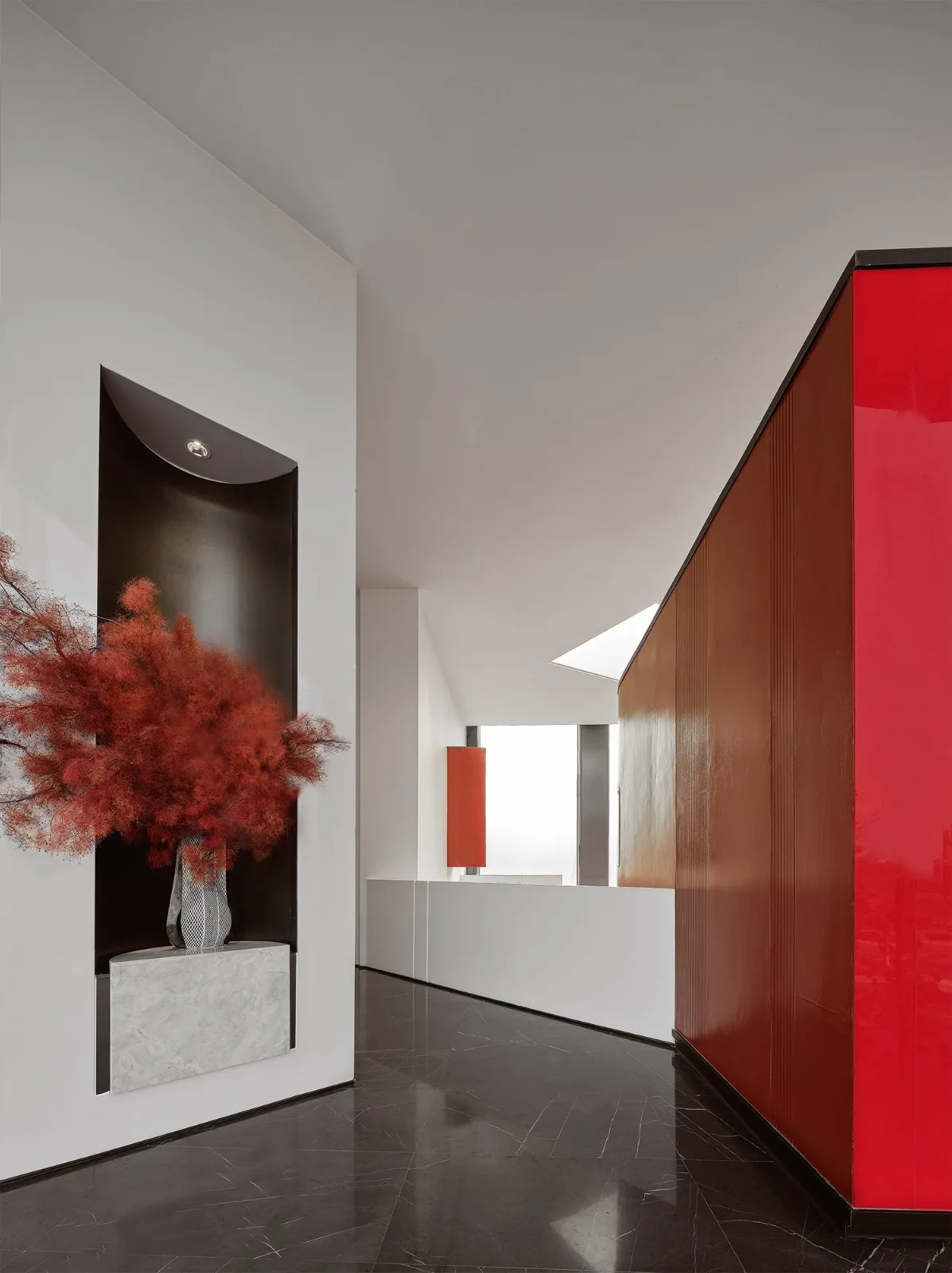
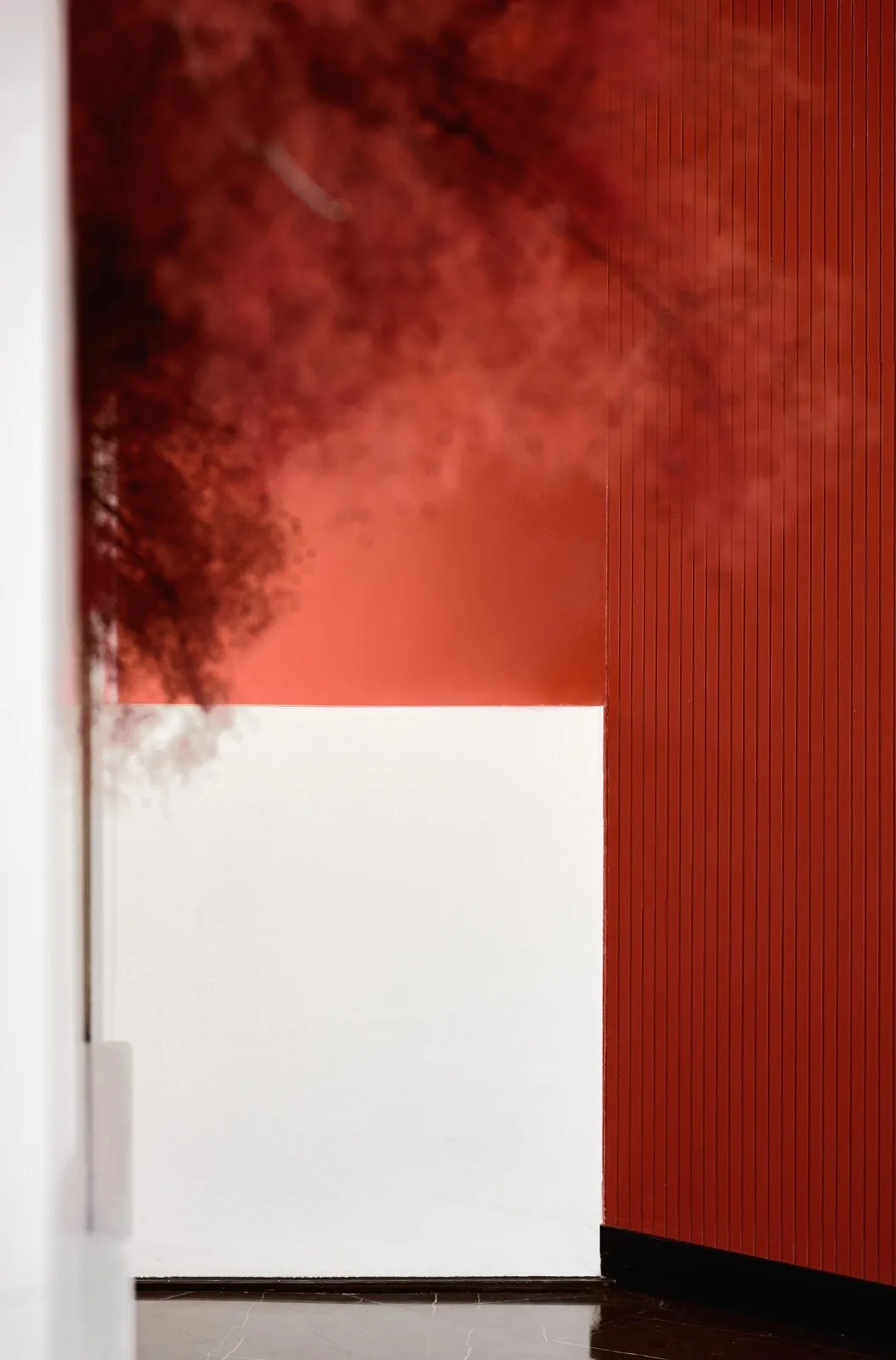
The curved facade is integrated into the interior through twisting techniques, breaking conventional design norms to create a dynamic “3D” visual experience that interacts with time and space.
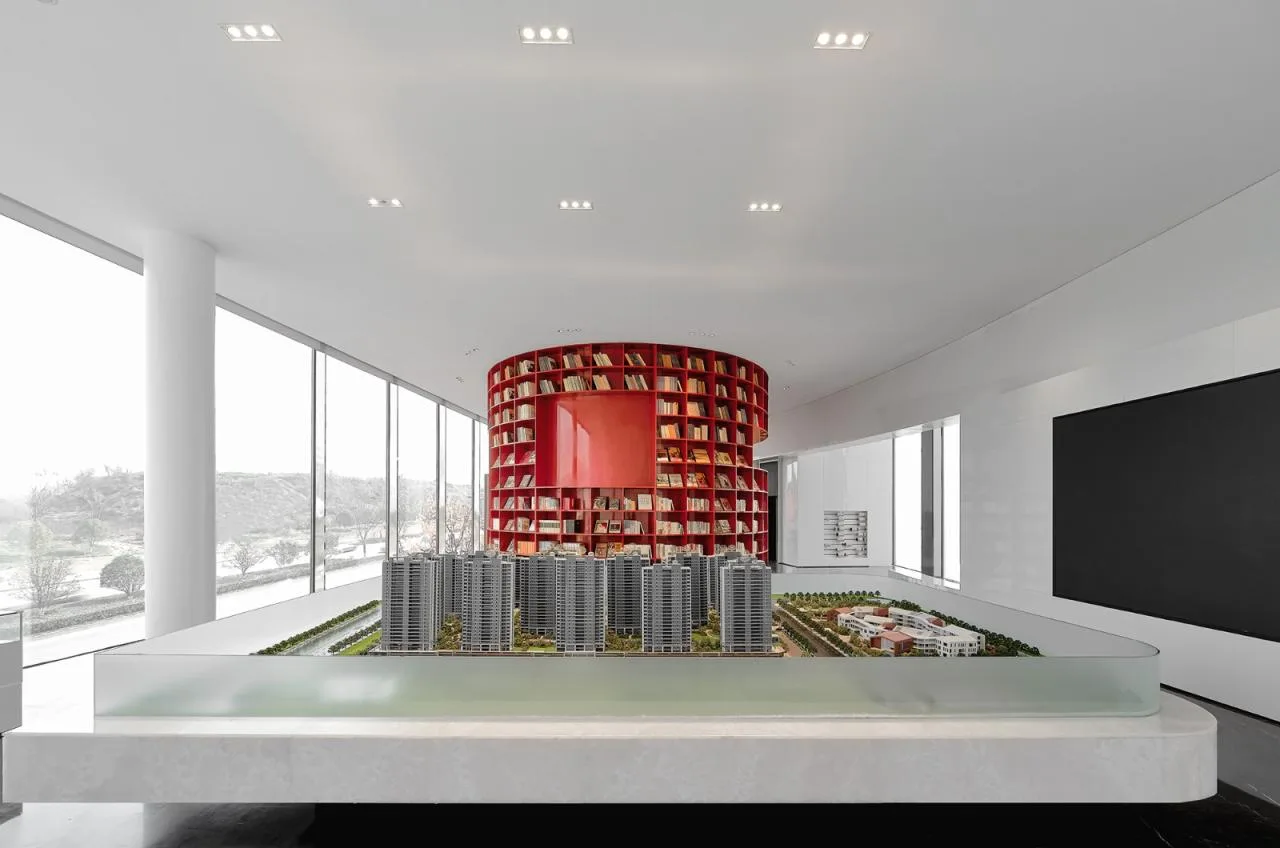
The third box functions as a model display area with a fully enclosed facade. The pathway connecting the second and third boxes uses architectural elements that intertwine lines and blocks, making spatial transitions engaging and dynamic.
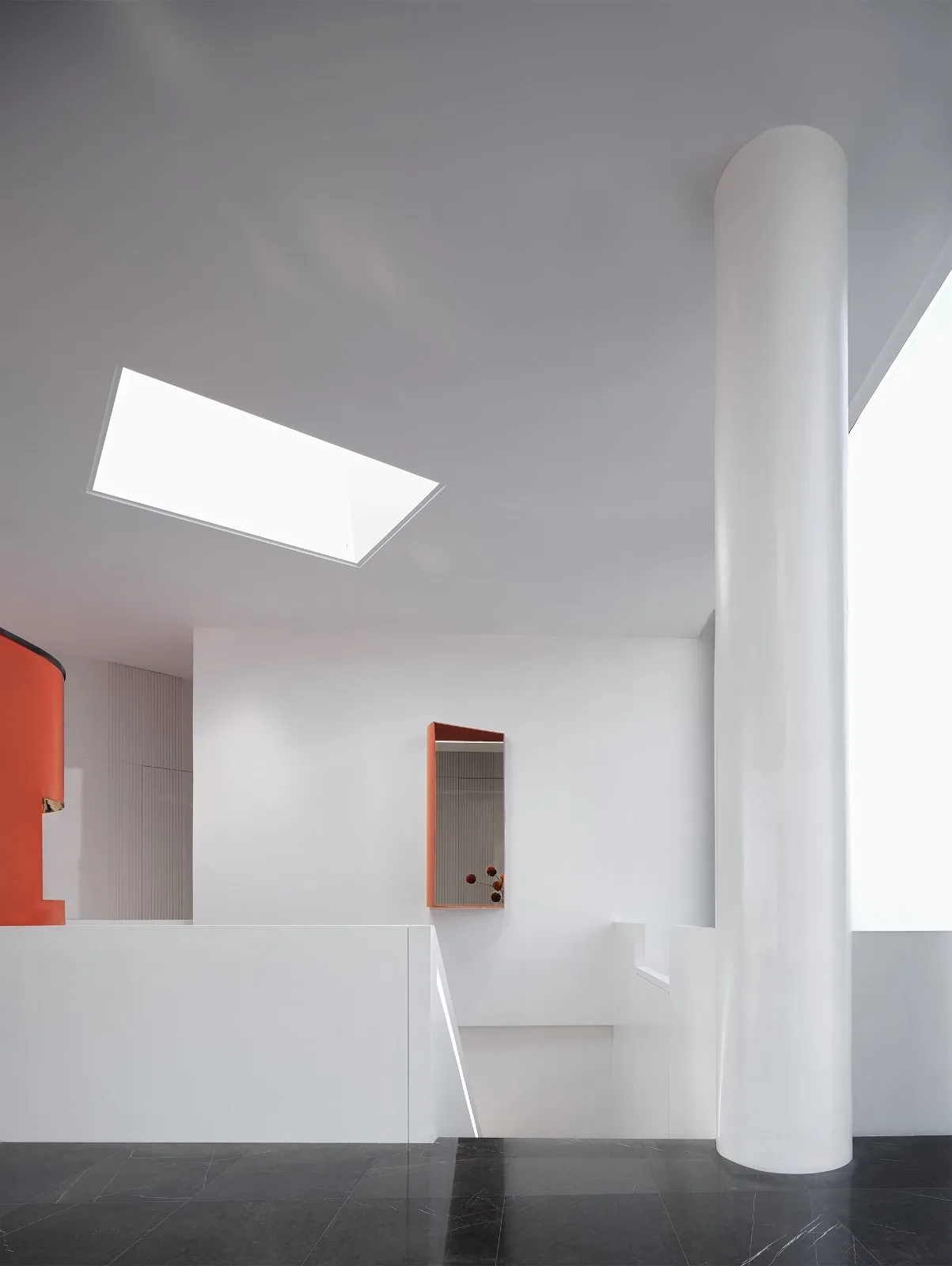
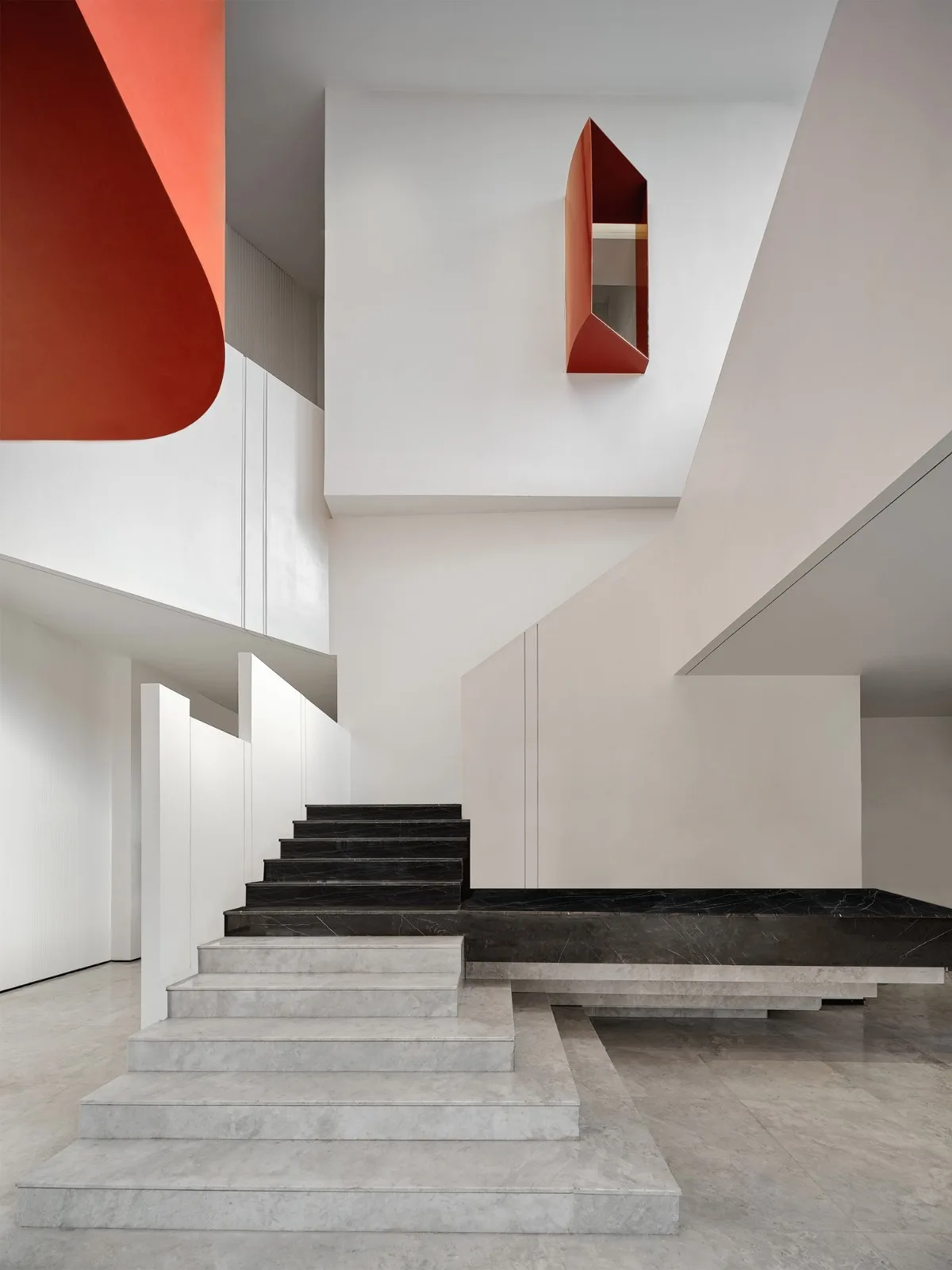
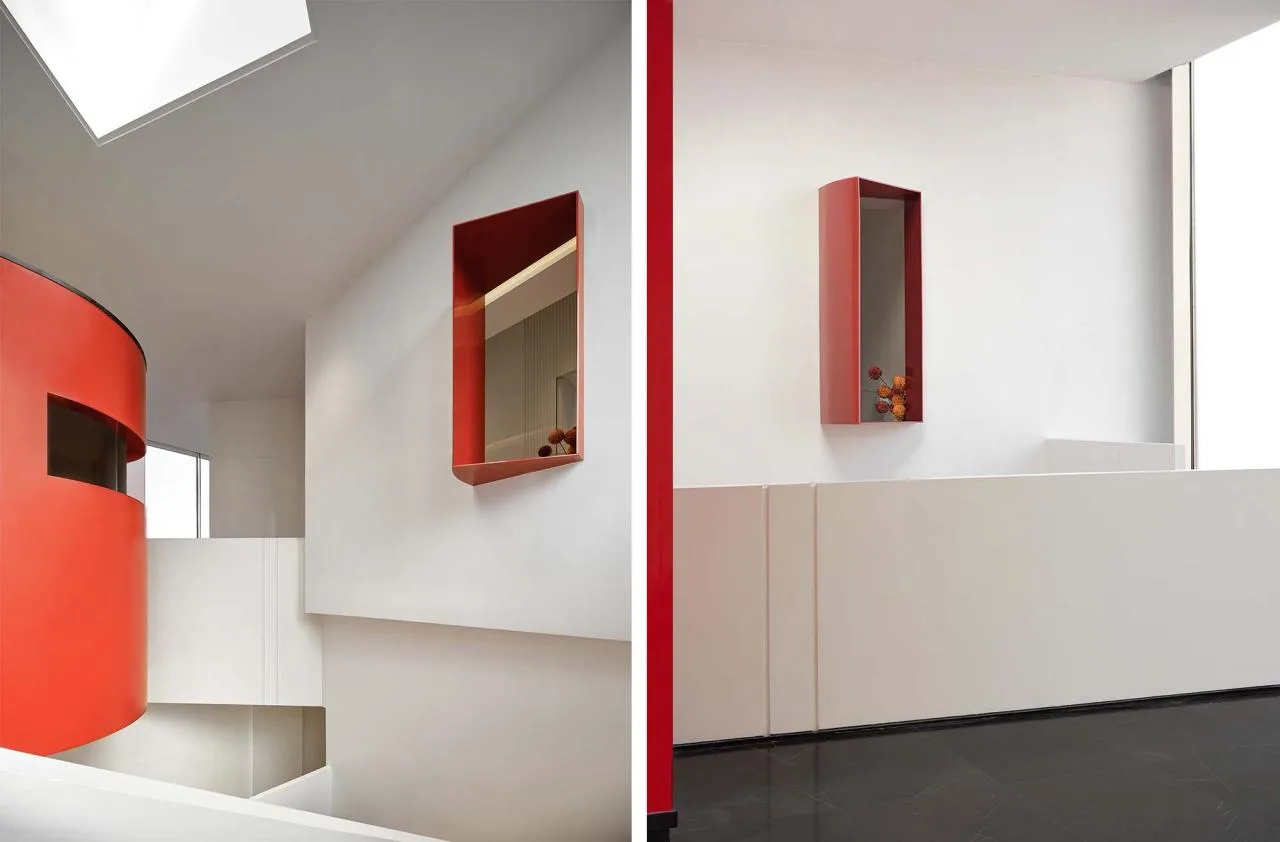
Zhuoshi’s vision was to create a relaxed, engaging, vibrant, and fashionable space. The success is evident as Guiyu Lanting has become a trendy destination, attracting young visitors as a popular check-in spot.
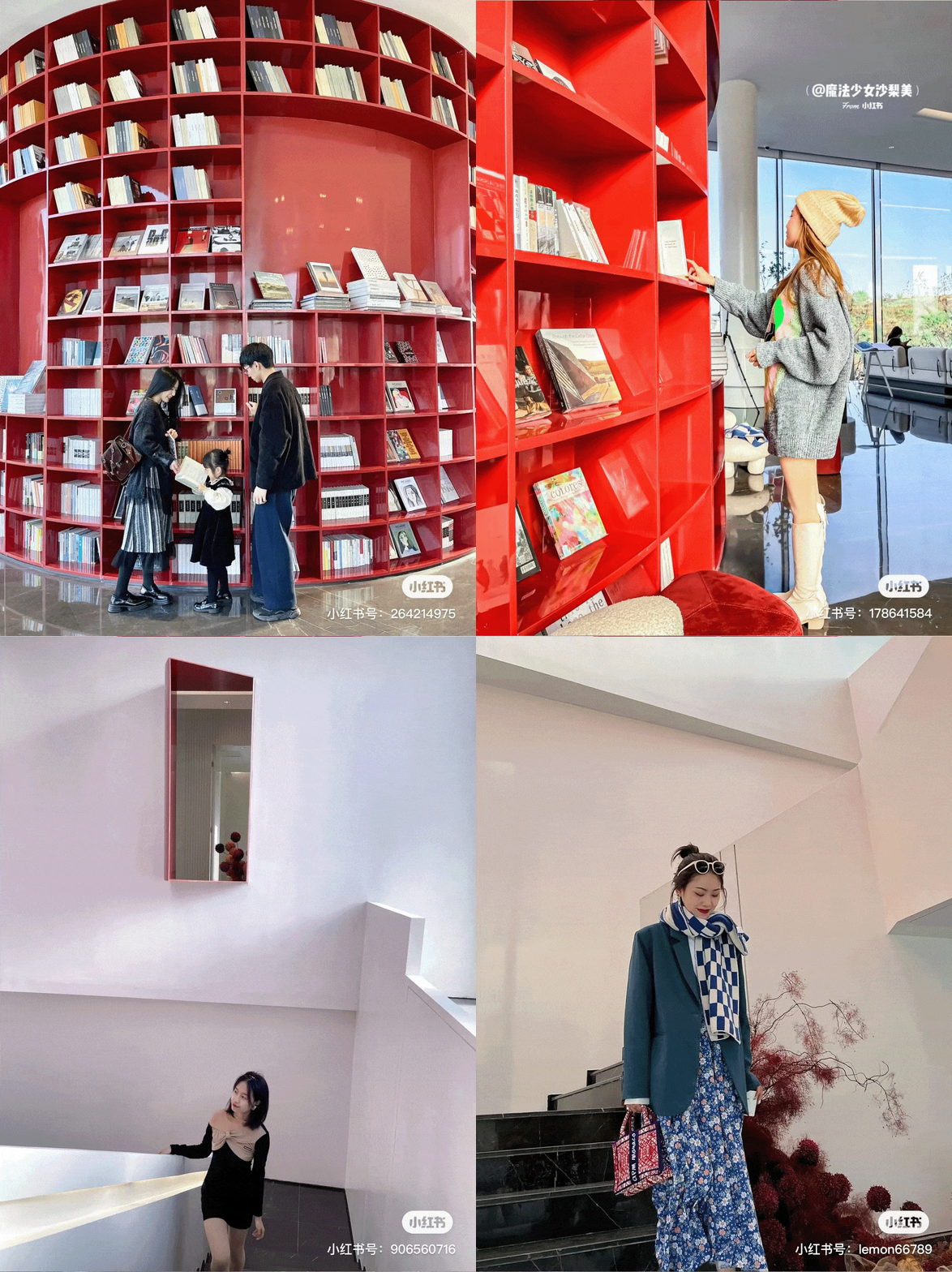
The Guiyu Lanting Life Aesthetics Museum has quickly become a popular cultural hotspot. © Image source network
Amid the surrounding landscape of undeveloped and unfinished land, the museum stands as a “future building” for Yiwu, heralding new trends and renewed enthusiasm for the region’s development.
Project Drawings
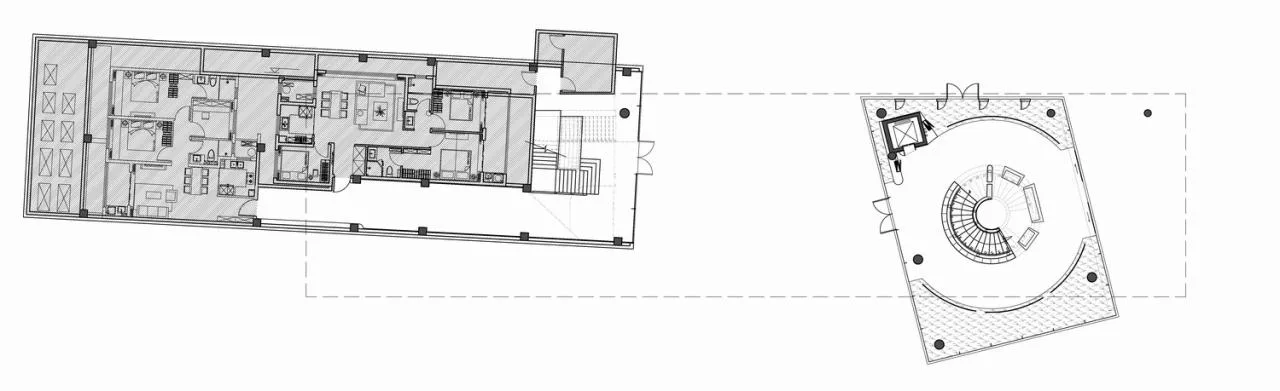
△ First floor plan
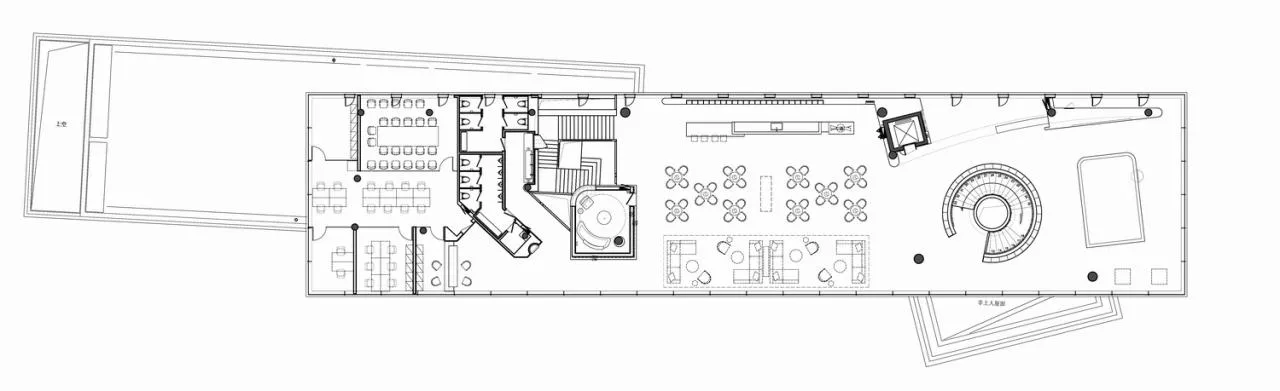
△ Second floor plan
Project Information
Project Name: Joy City Green City · Yiwu Guiyu Lanting
Project Type: Lifestyle Aesthetics Museum
Project Owners: Joy City, Greentown China
Location: Yiwu, Zhejiang
Design Completion: August 2021 – December 2021
Design Area: 1005 square meters
Hard Installation Design: ZSD Zhuoshi
Soft Decoration Design: ZSD Zhuoshi
Design Guidance: Yuan Xiaoyu
Design Team: Wu Yan, Wang Weiwei, Zeng Bin, Huang Shaoshou, Wang Qinyu, Shi Liqiang, Han Jiayun, Deng Miao, Cao Chang
Project Photography: Zhang Xi, Shen Xiaobing















Must log in before commenting!
Sign Up