
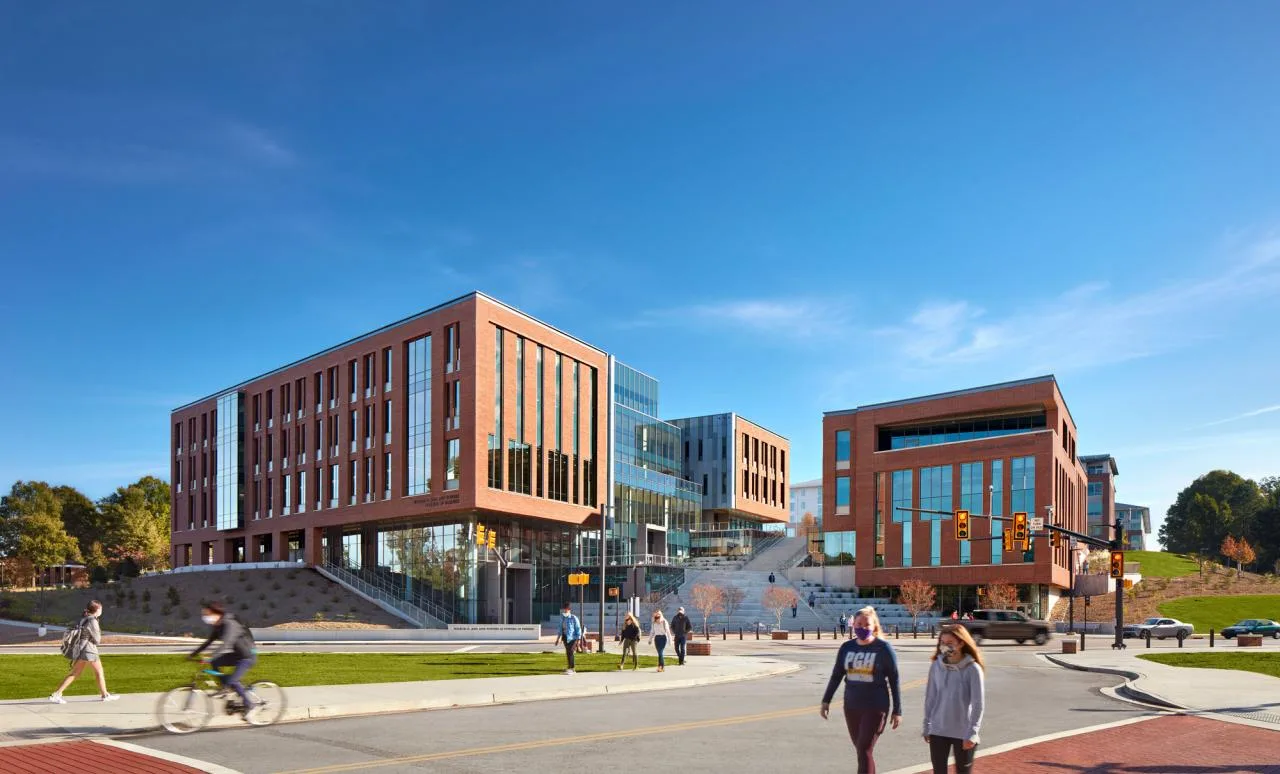
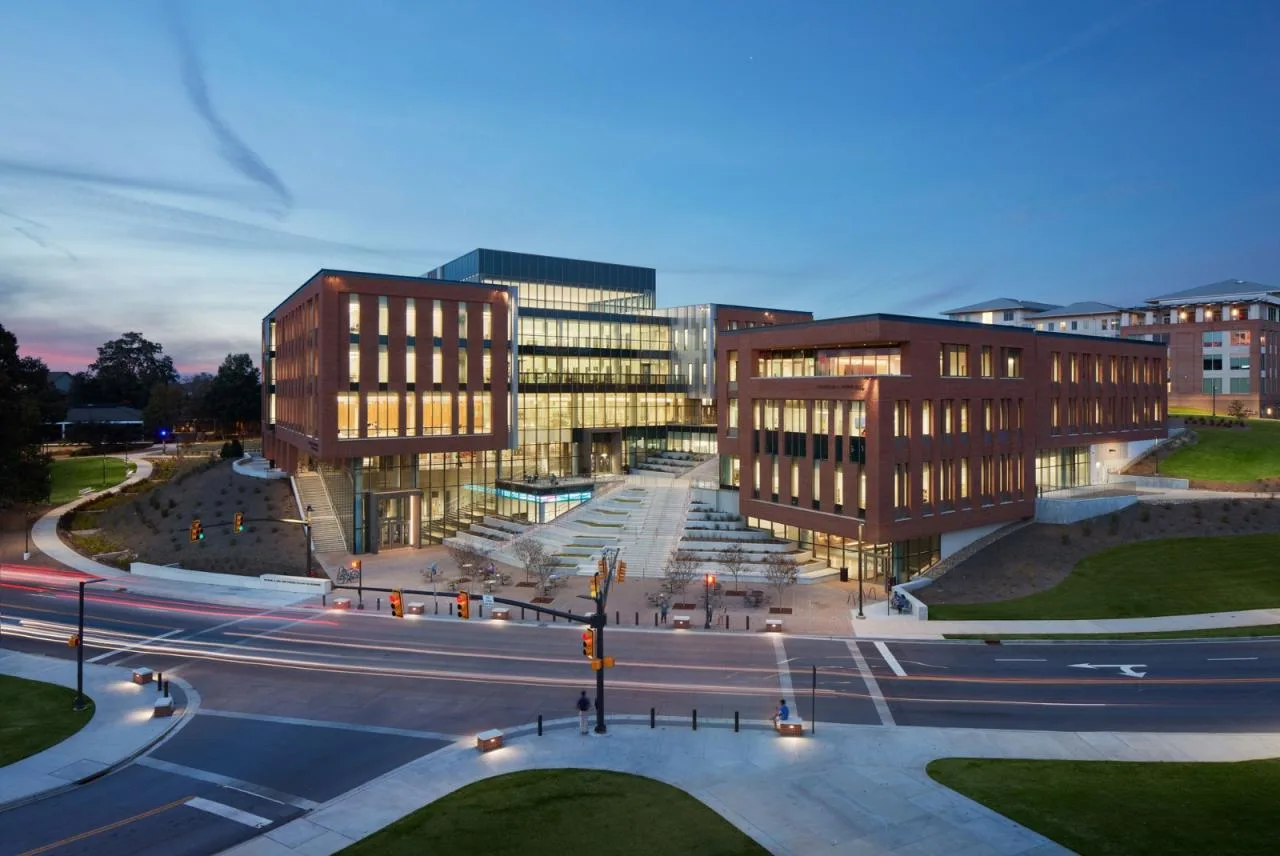
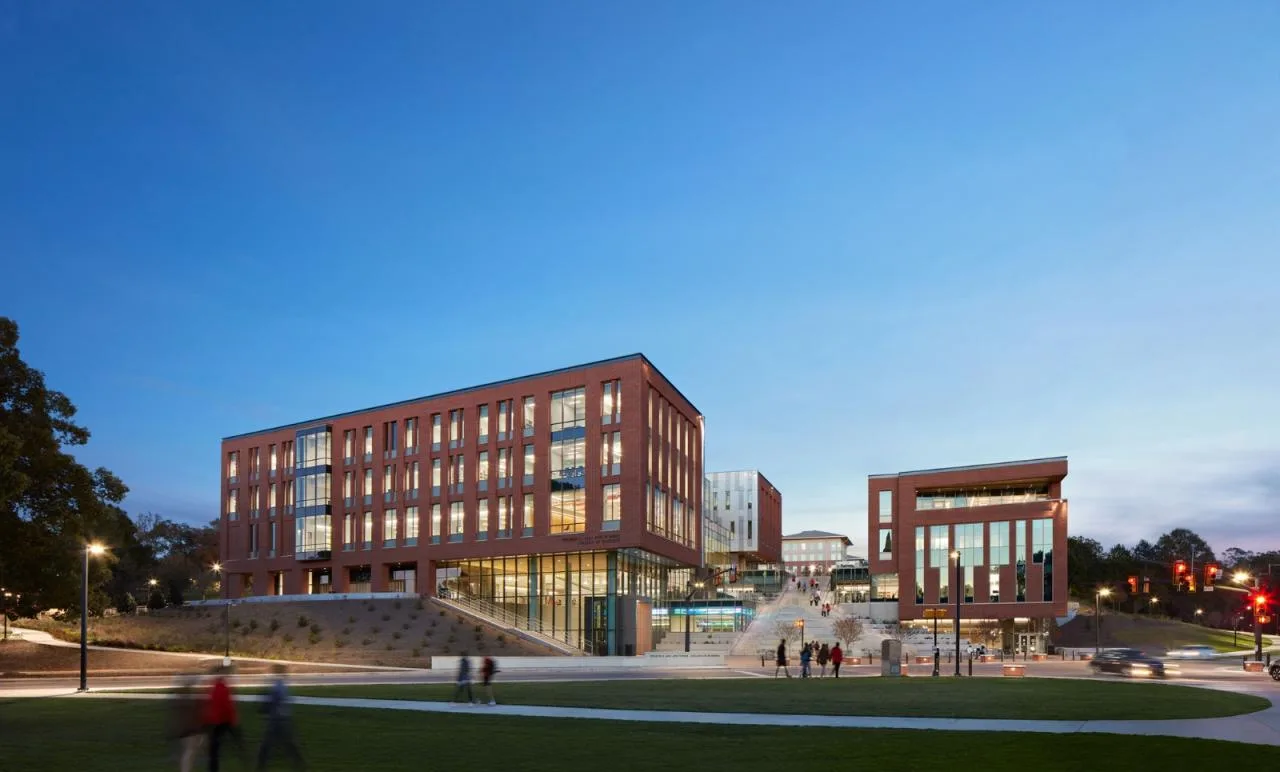
Situated at the base of the Blue Ridge Mountains, the five-story Wilbur O. & Ann Powers Business School serves as a new gateway for Clemson University. Drawing inspiration from the surrounding hills and natural landscape, the building is built into a hillside and features five entrances that converge into a central atrium, enhancing accessibility throughout the structure.
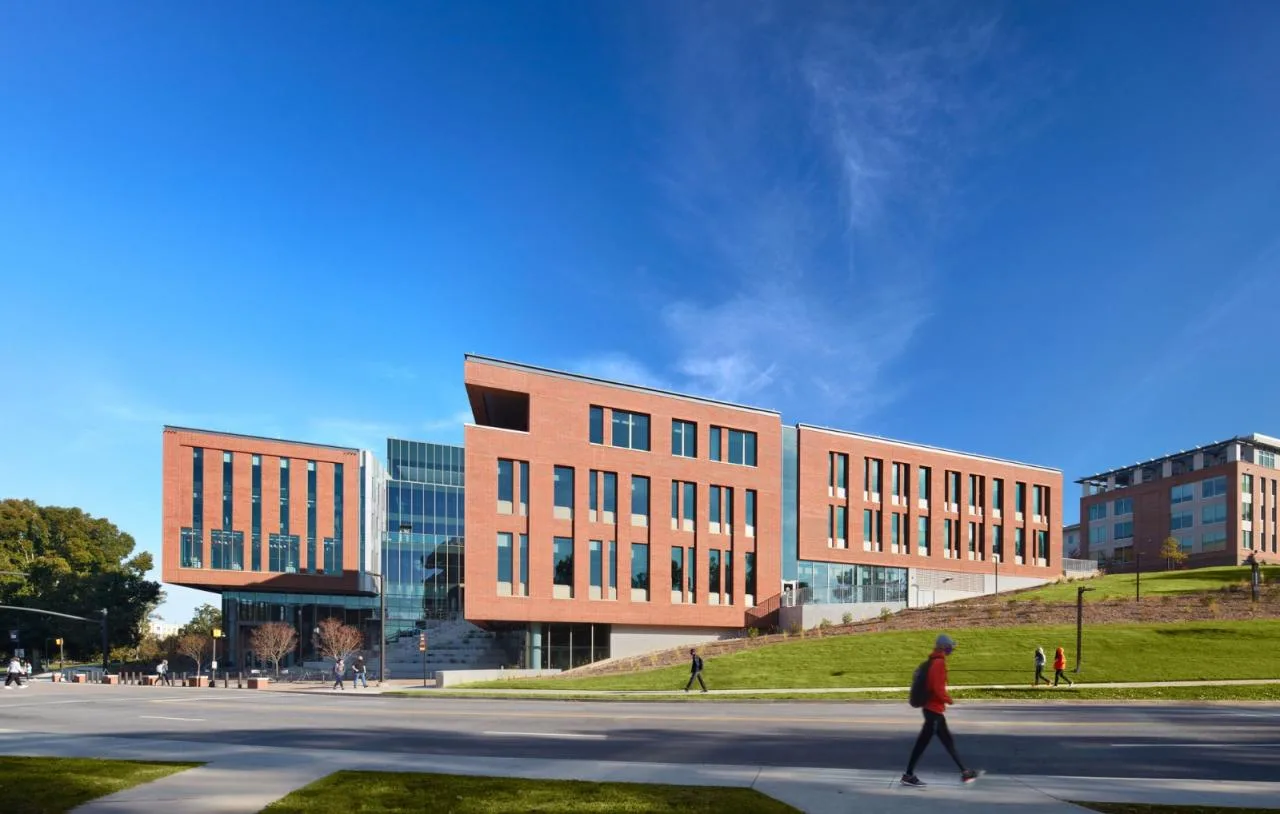
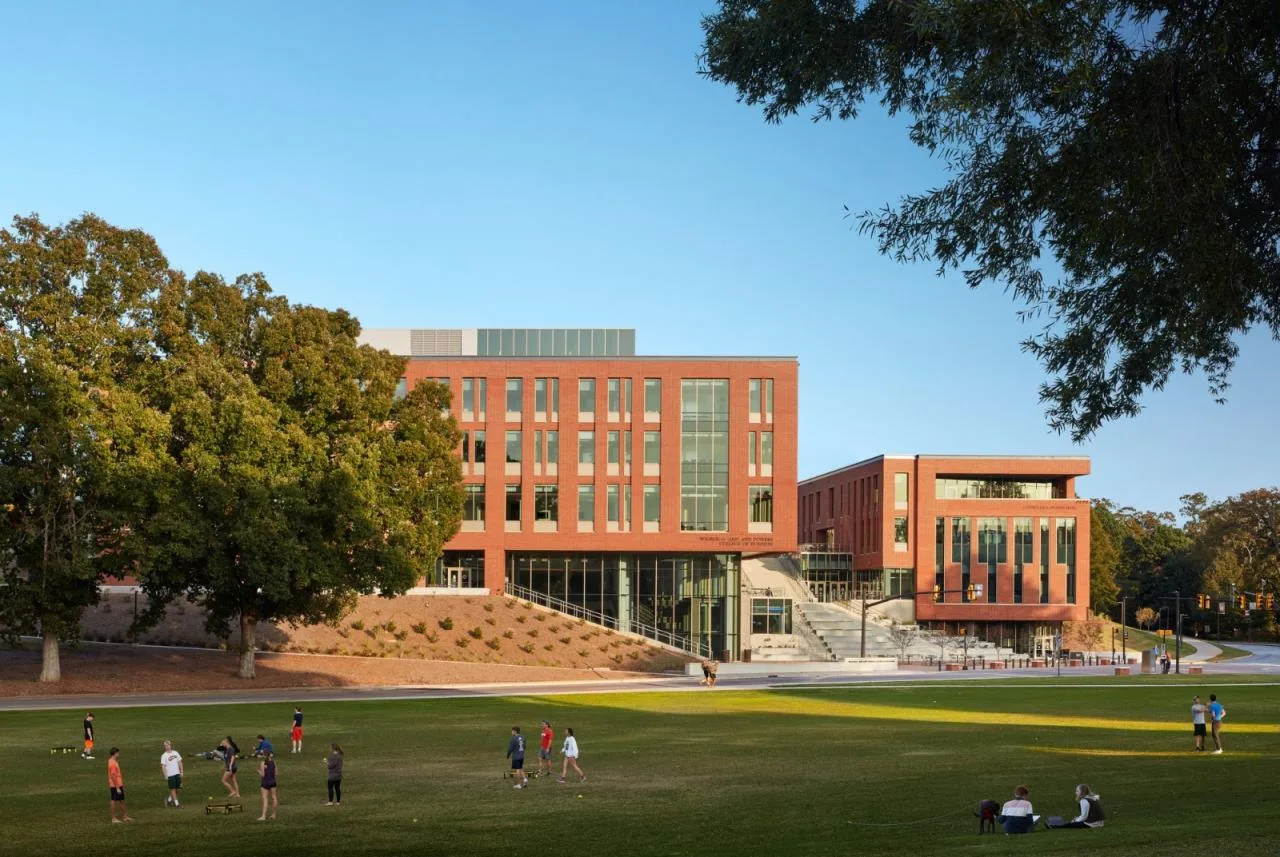
Dean Wendy York of Clemson University’s Wilbur O. & Ann Powers Business School remarked, “As a key project within our ClemsonForward 10-year strategic plan, this new facility establishes a dynamic gateway for the university. Our design team envisioned a student-focused think tank that fosters active learning, faculty engagement, and social collaboration among student groups. This transformative building emphasizes the significance of the College within Clemson University. It truly represents a major milestone for our campus.”
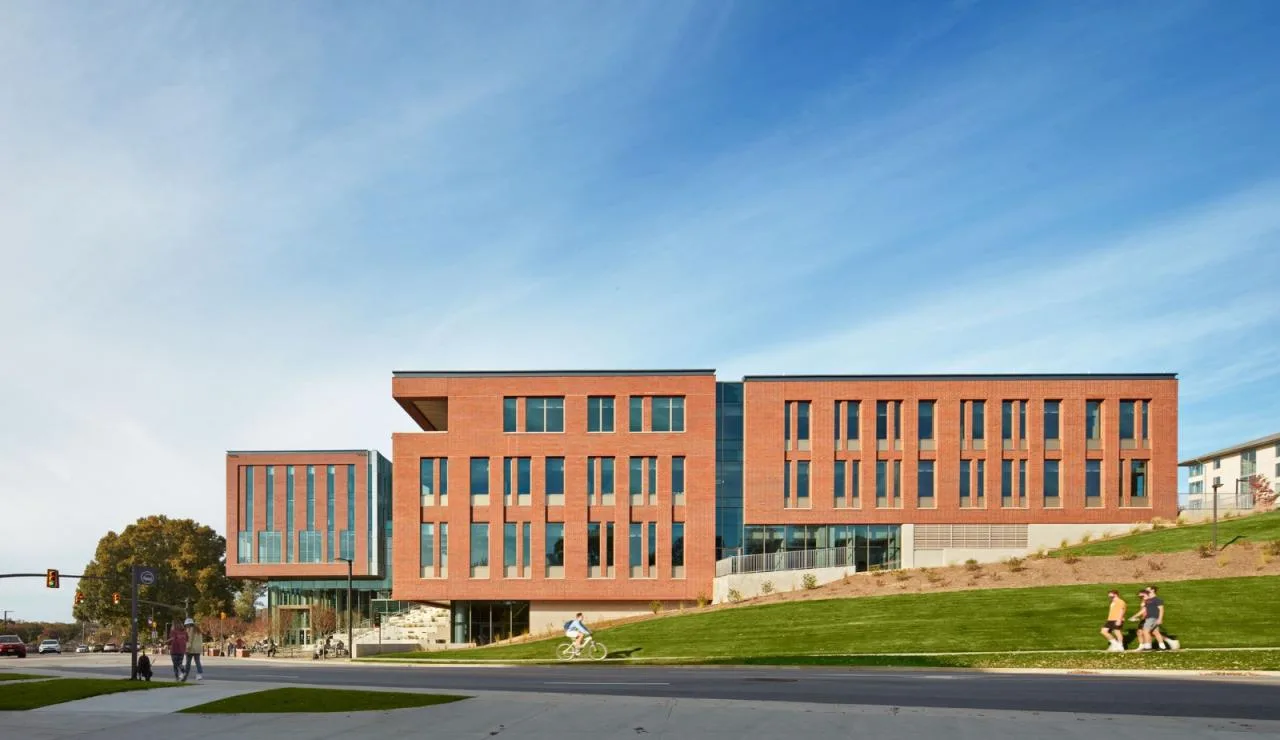
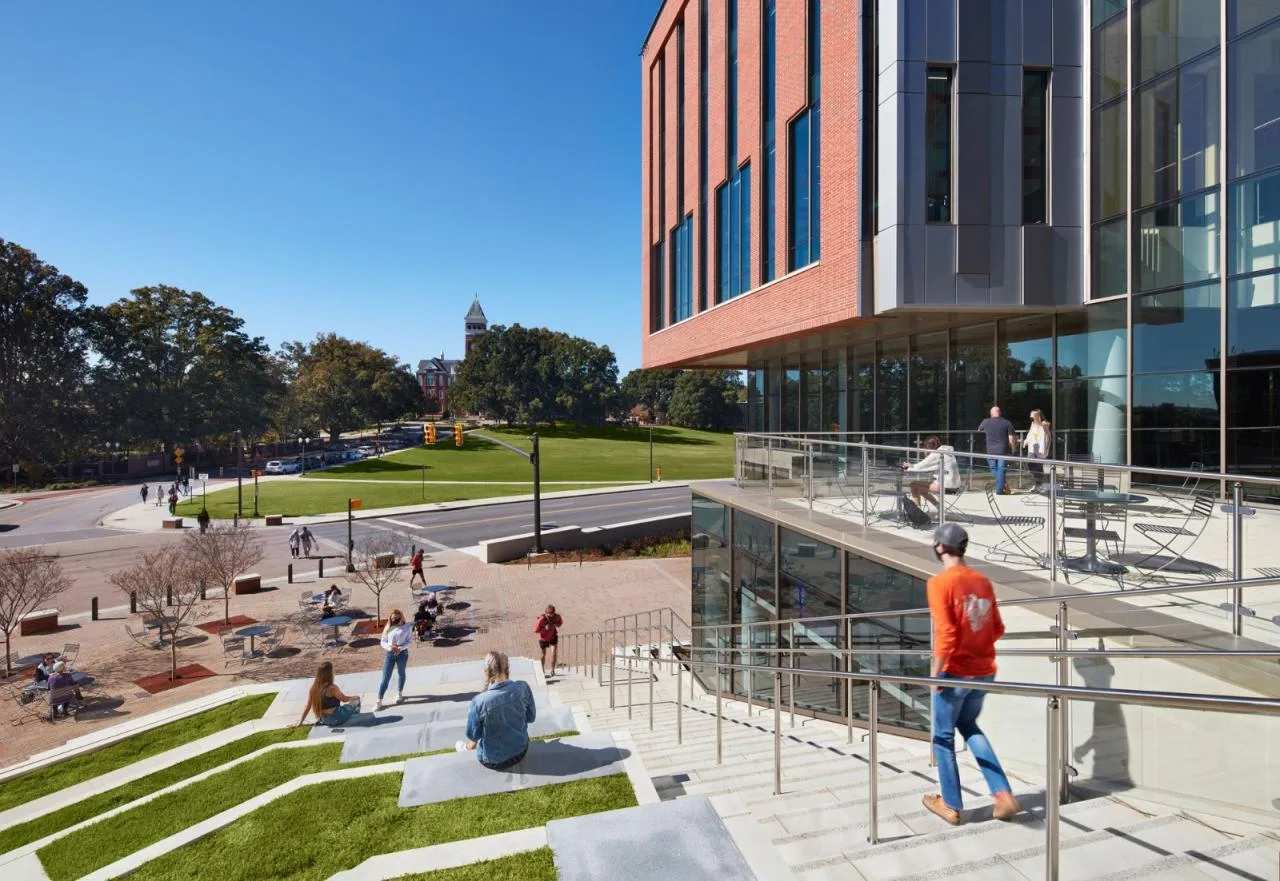
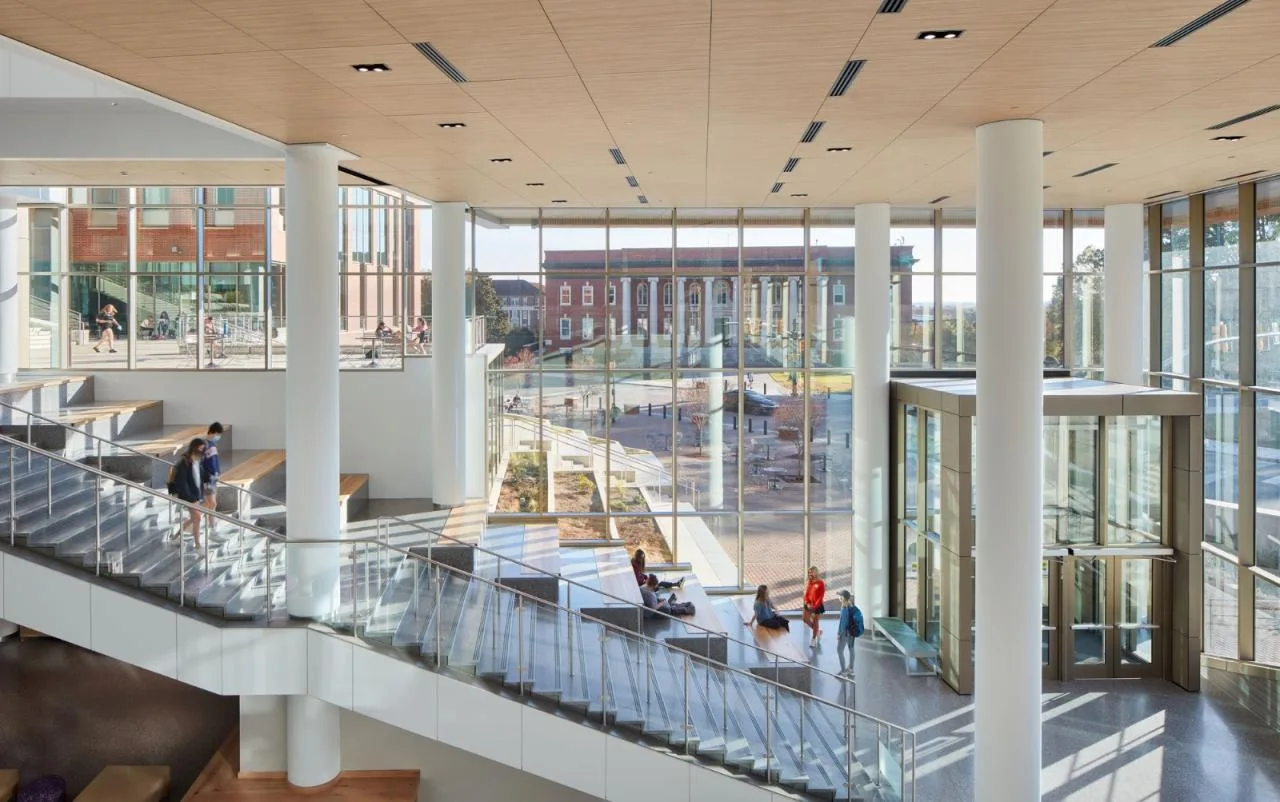
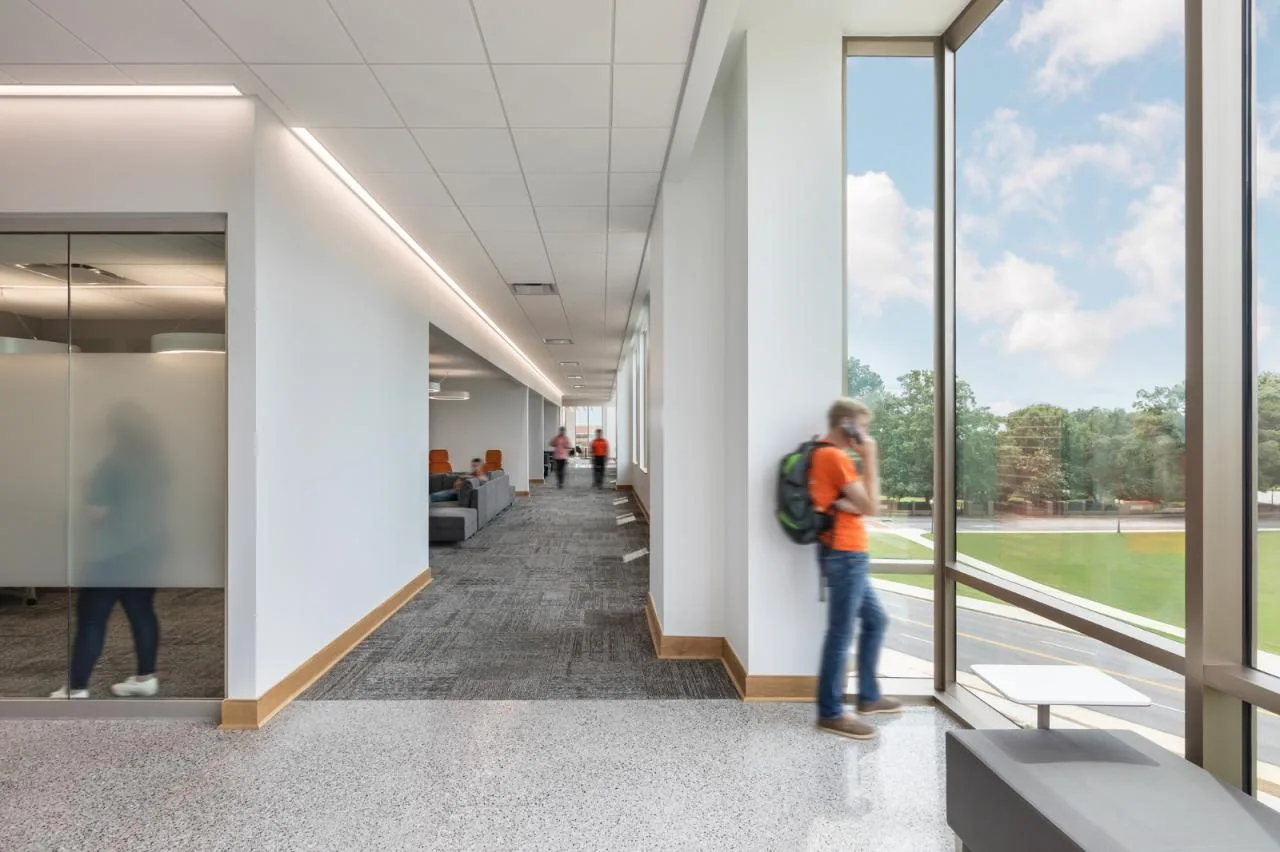
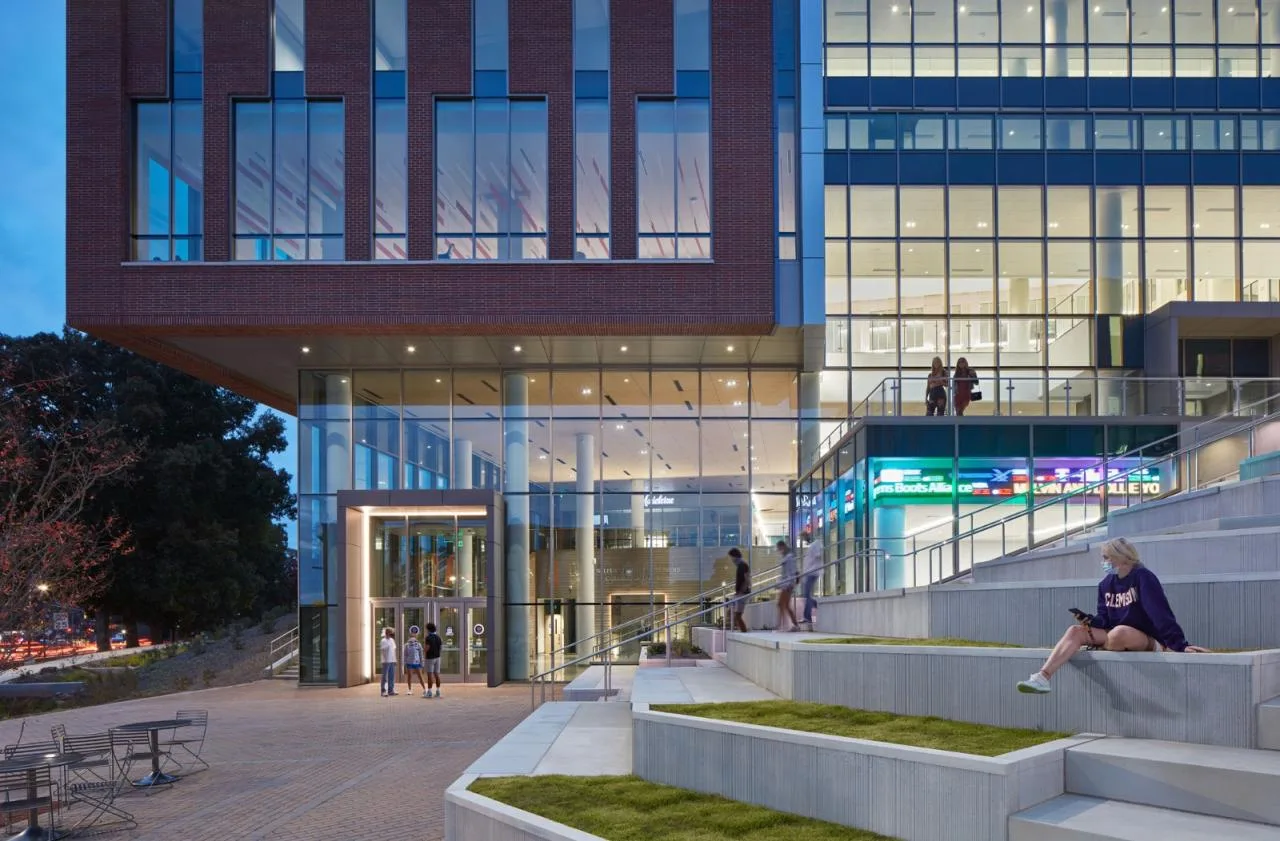
A grand public staircase connects the north and south wings of the building complex, guiding visitors westward into the historic heart of the campus, near dormitories, the iconic Bauman Stadium, and Tillman Hall. The project features entrances on three levels, allowing students direct access, while the base of the building opens up to Bauman Stadium, seamlessly linking classrooms with campus life. Rising dramatically from the ground, the design creates spacious, naturally-lit public areas that inspire collaboration among students, faculty, and community partners.
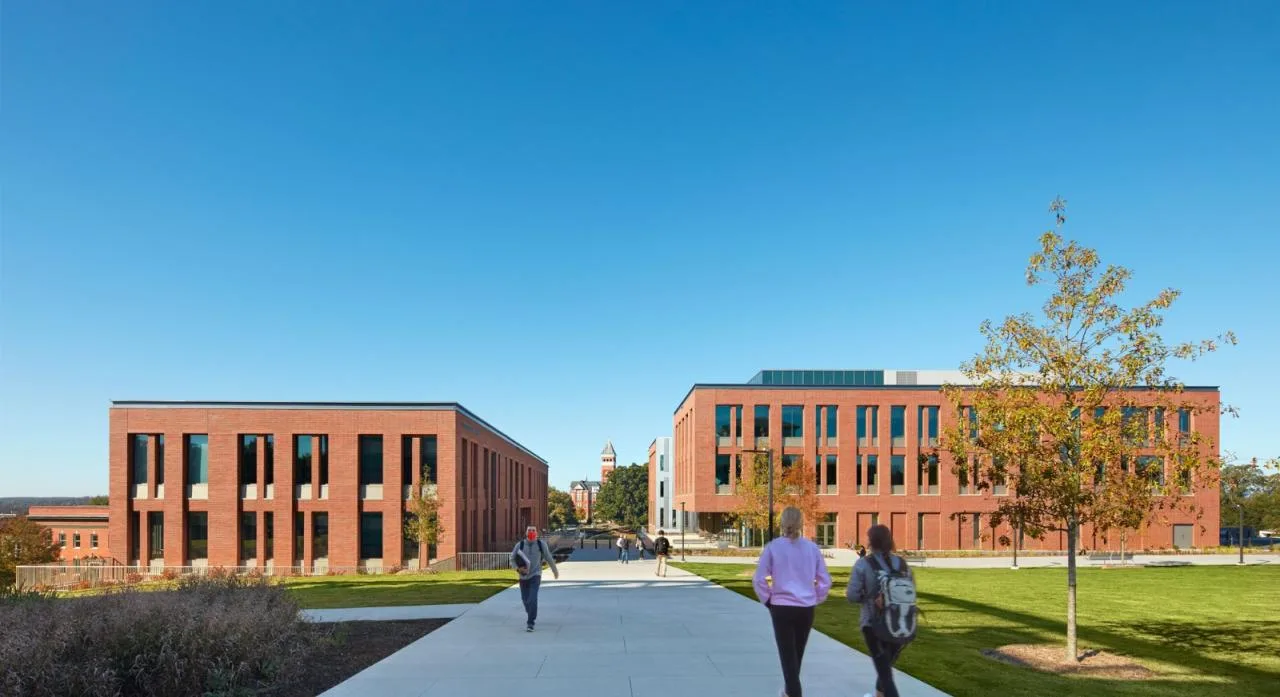
Rafael Viñoly Menendez, partner at LMN Architects, shared, “Our collaboration with LS3P and Clemson University began with former Dean McCormick’s vision to create an ‘unbreakable’ home for students across campus. As the first new academic building adjacent to Bauman Stadium in over a century, this structure honors its historic neighbors while showcasing an inspiring vision for Clemson’s global future over the next 100 years. Positioned at the intersection of academic, residential, and social zones, it uniquely integrates these energies into a vibrant activity center that brings the business school’s activities into the campus fabric.”
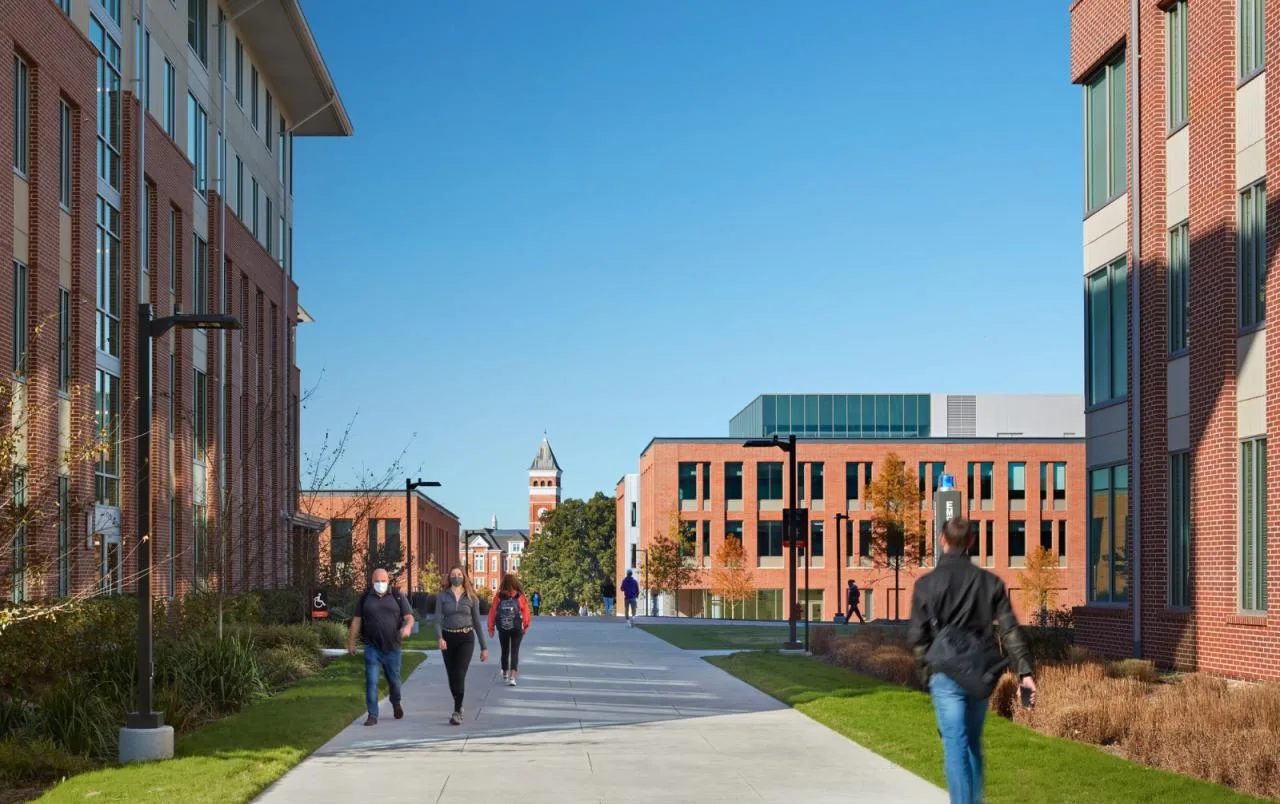
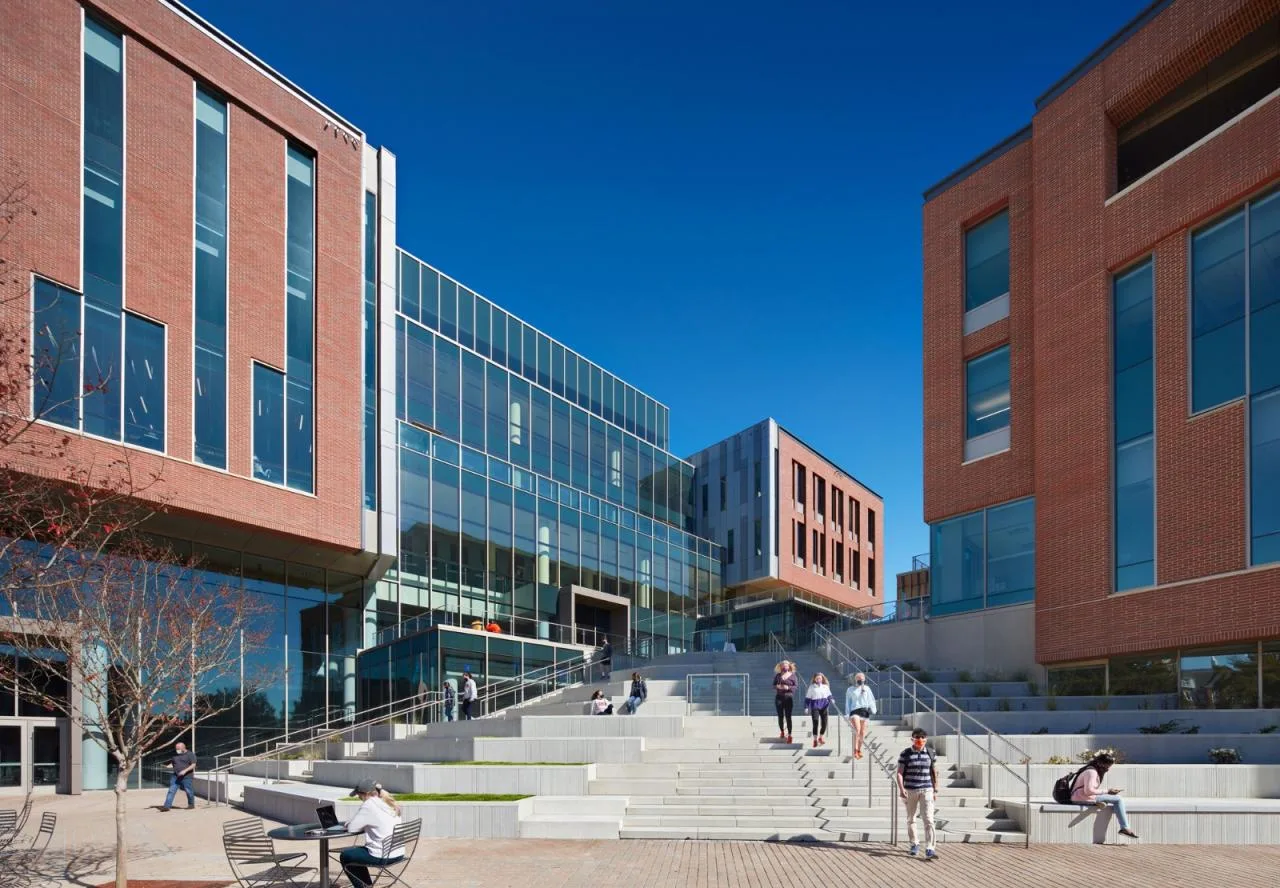
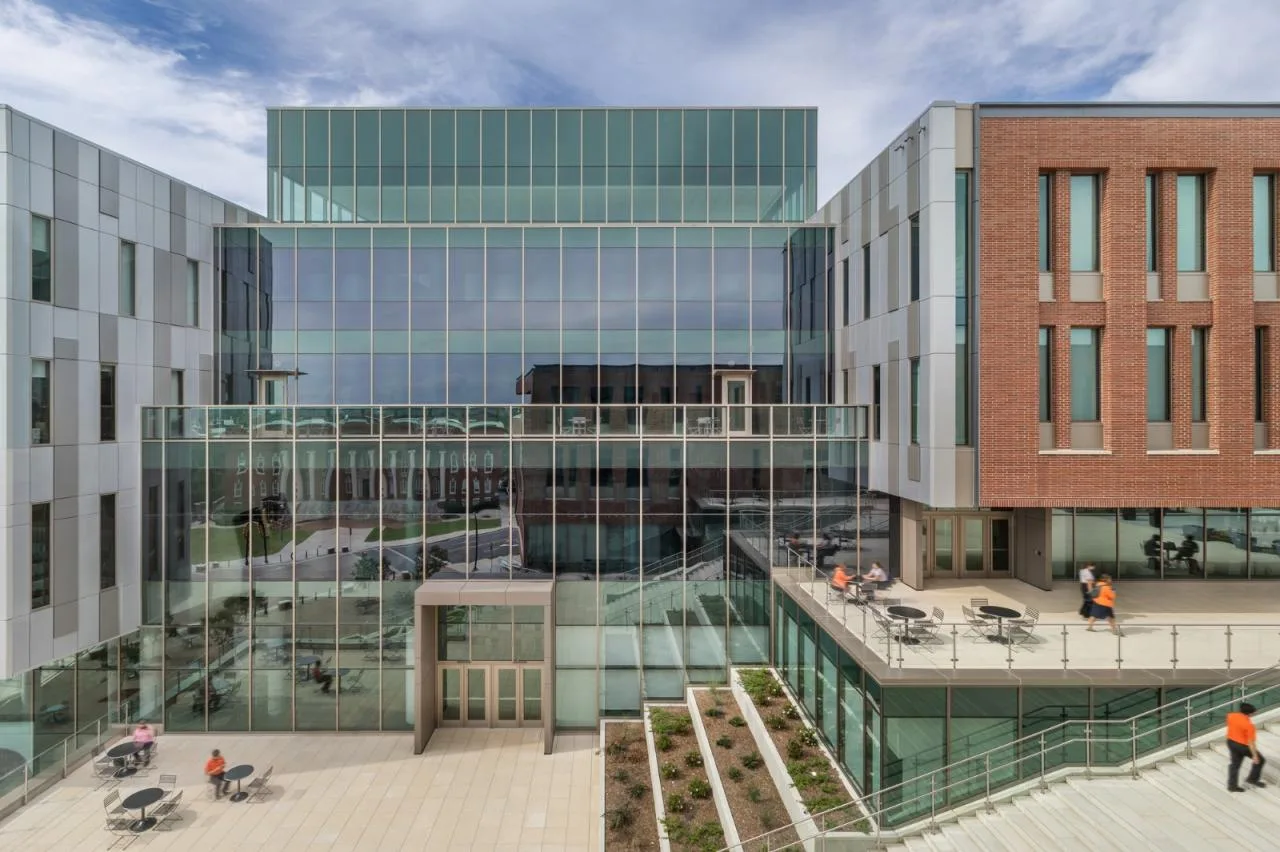
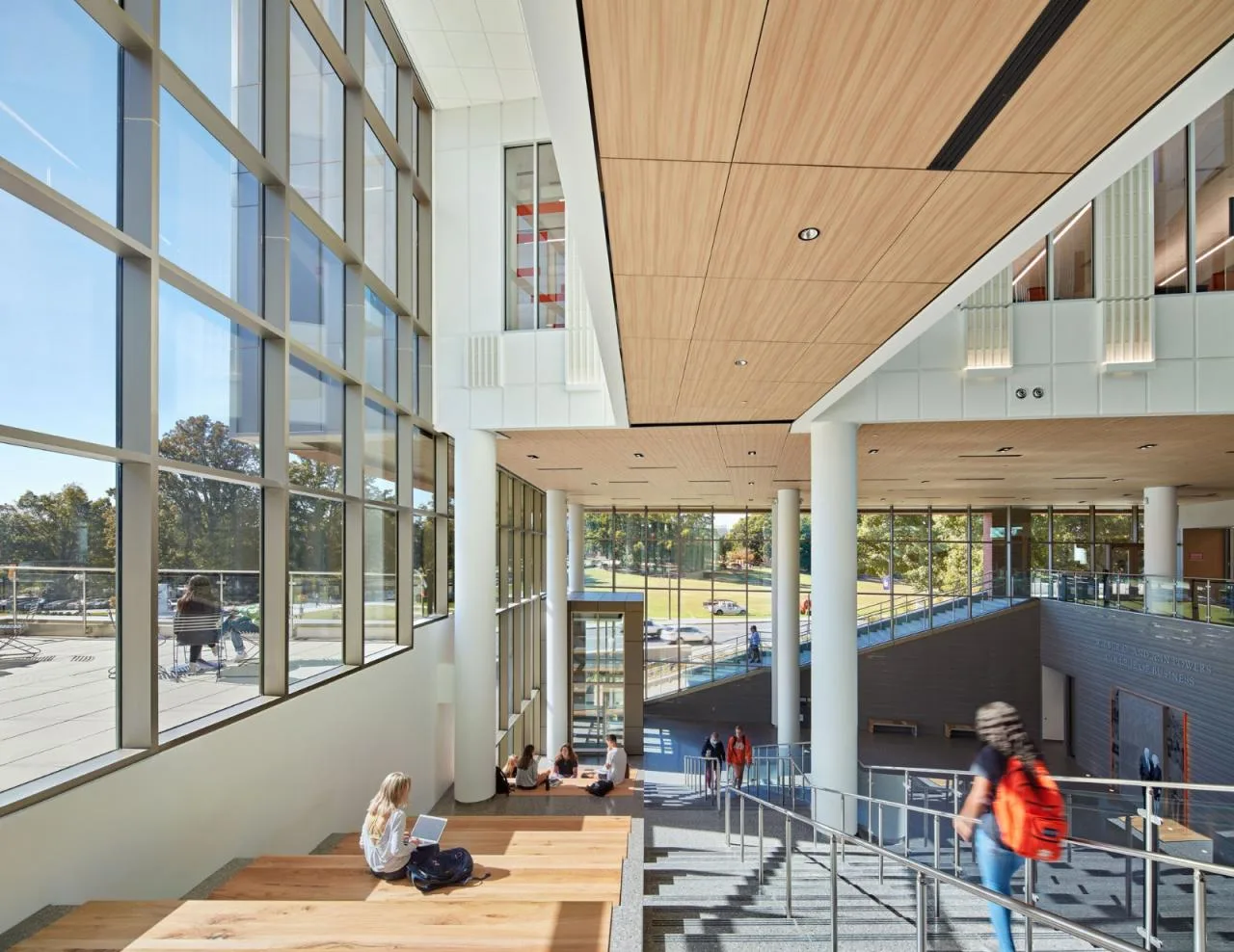
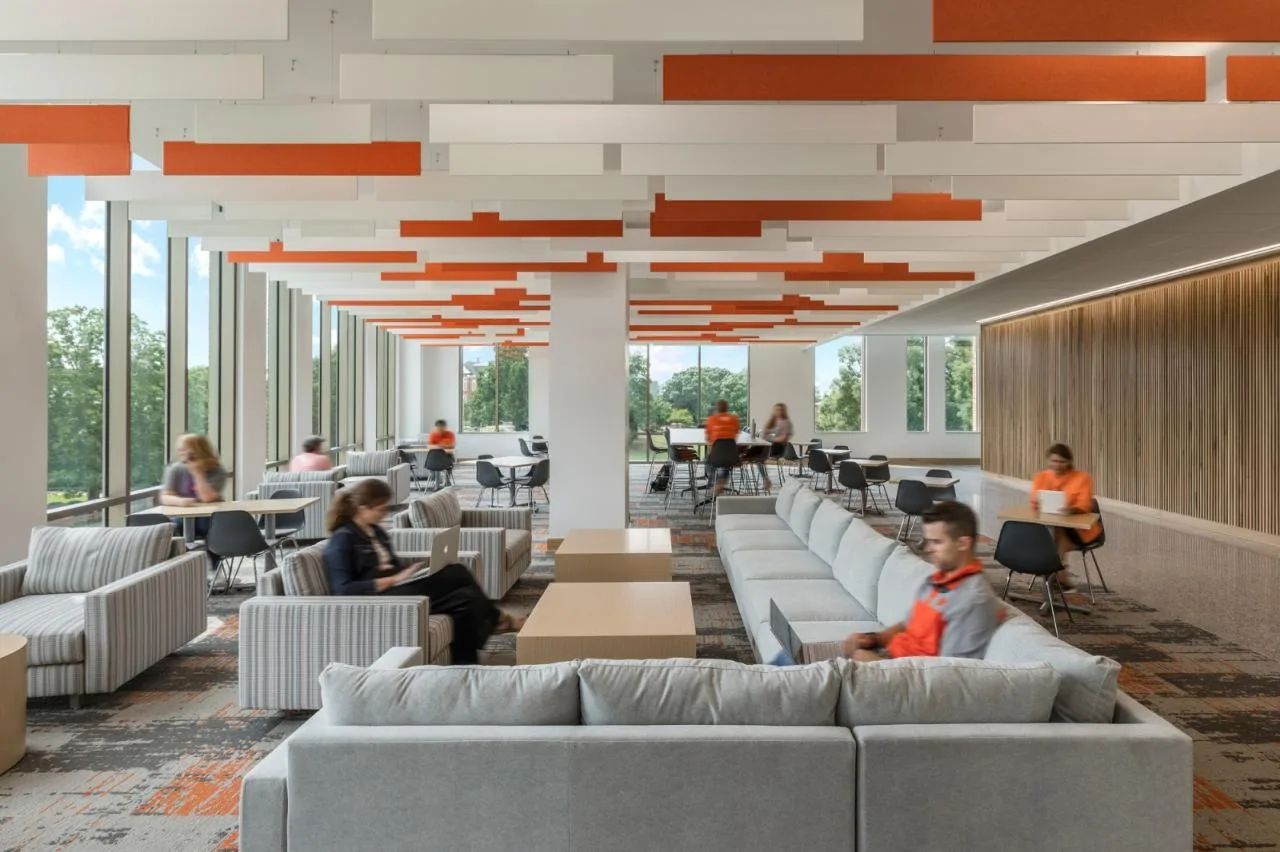
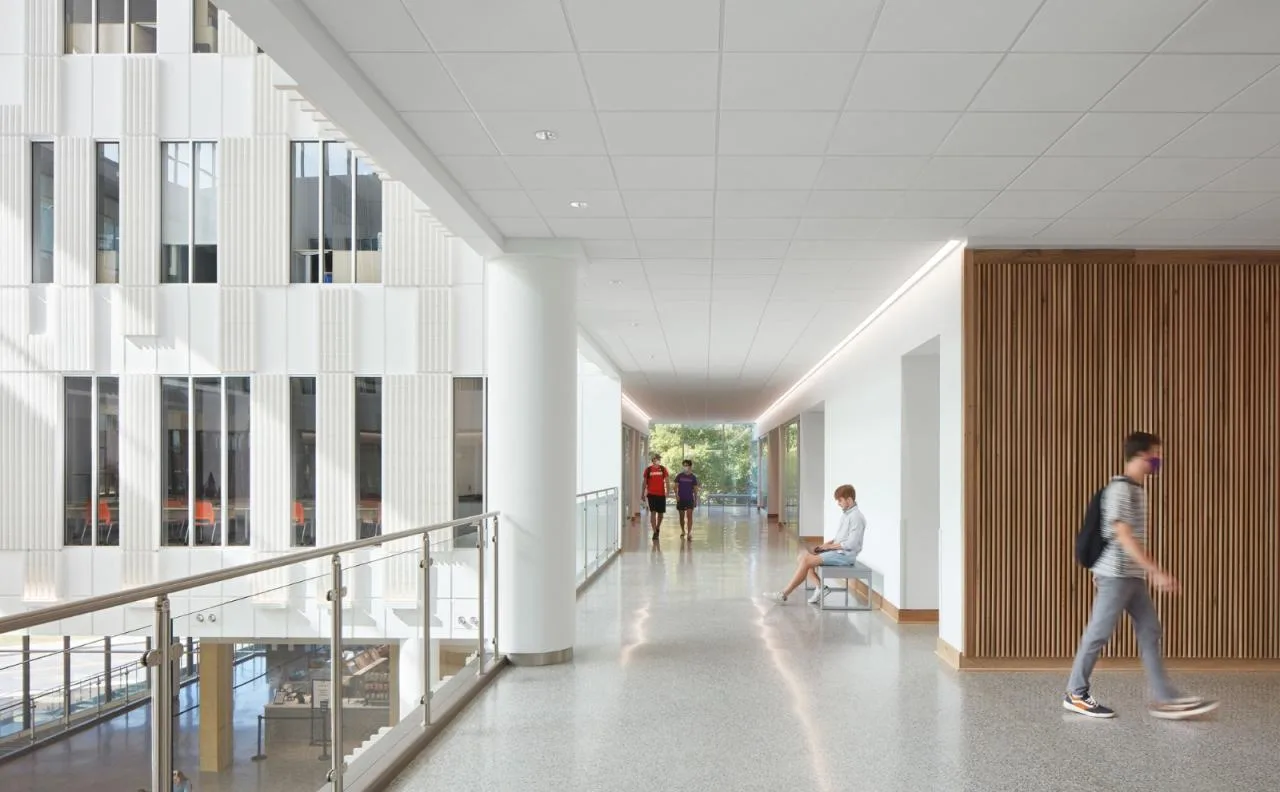
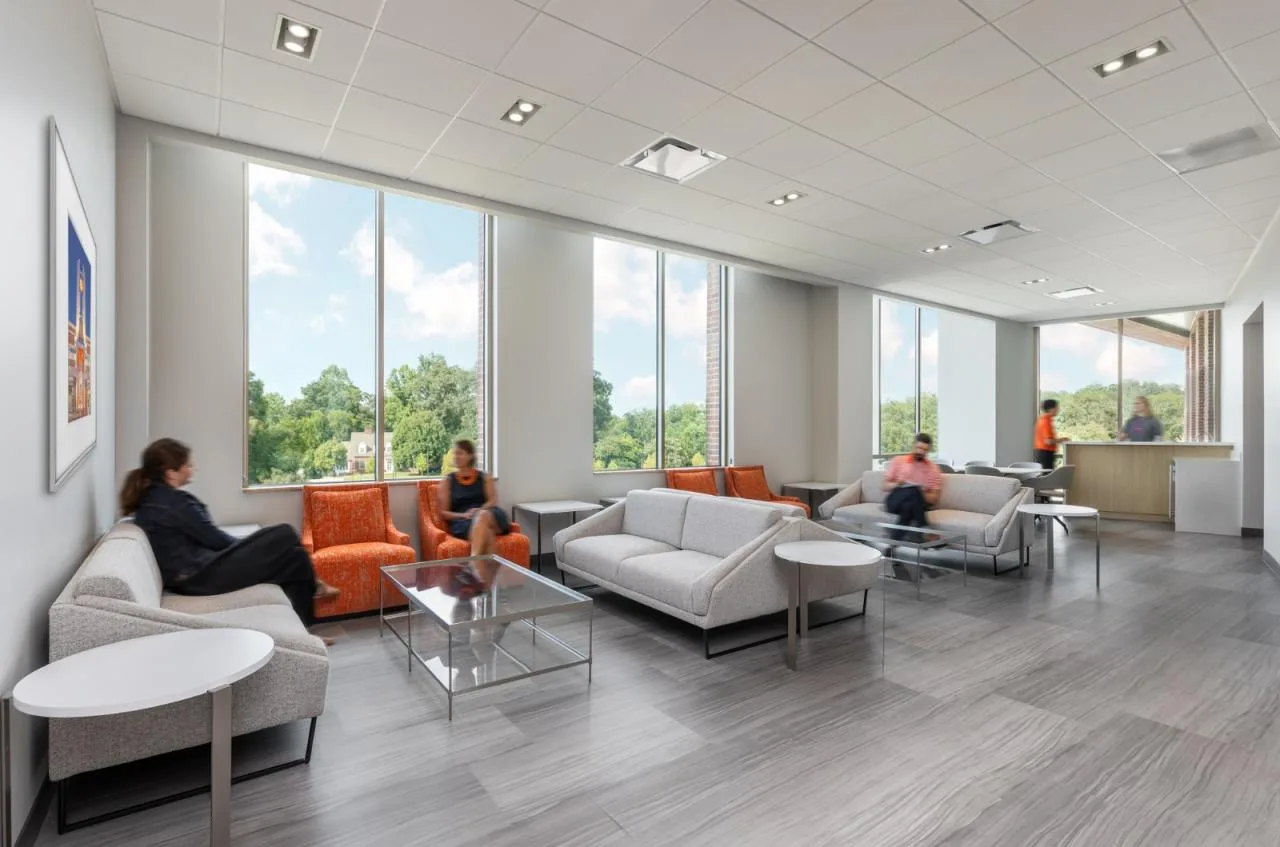
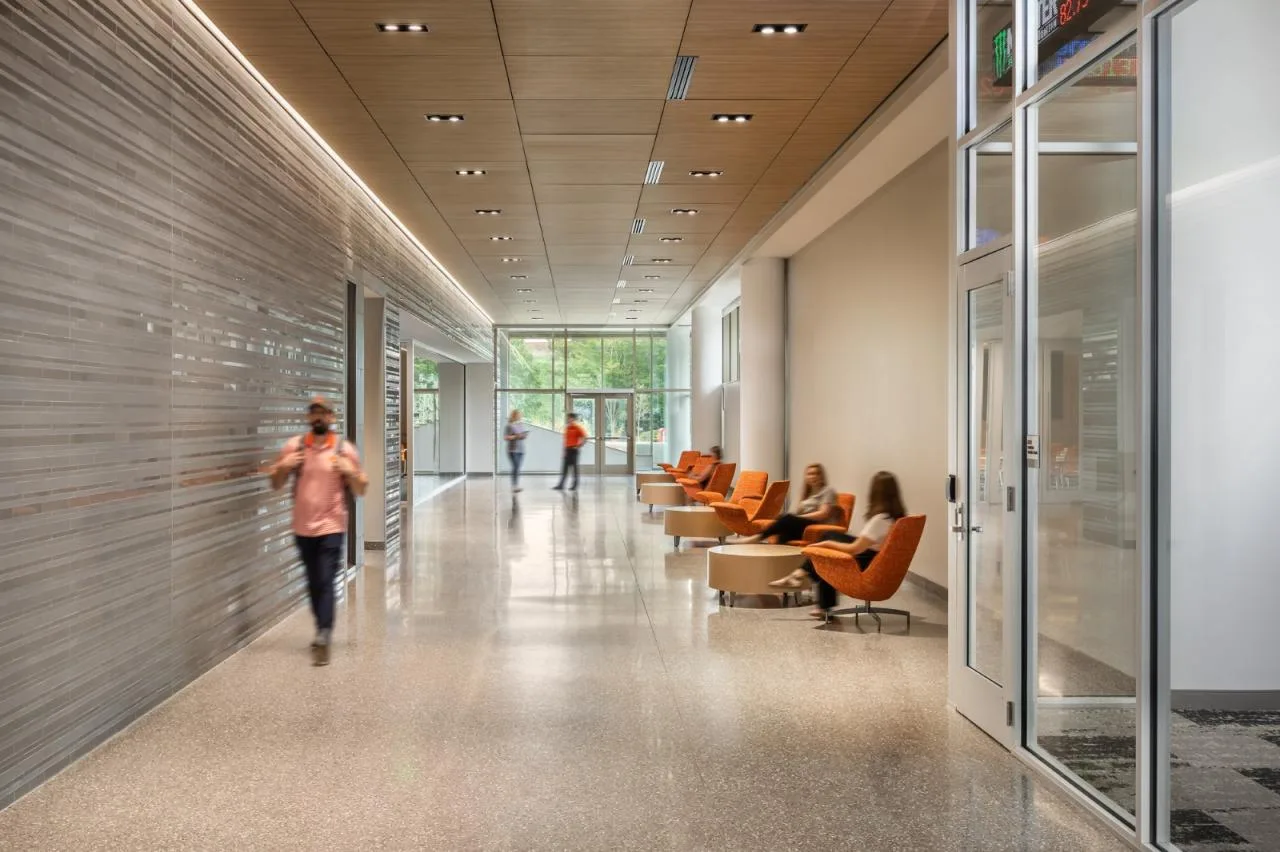
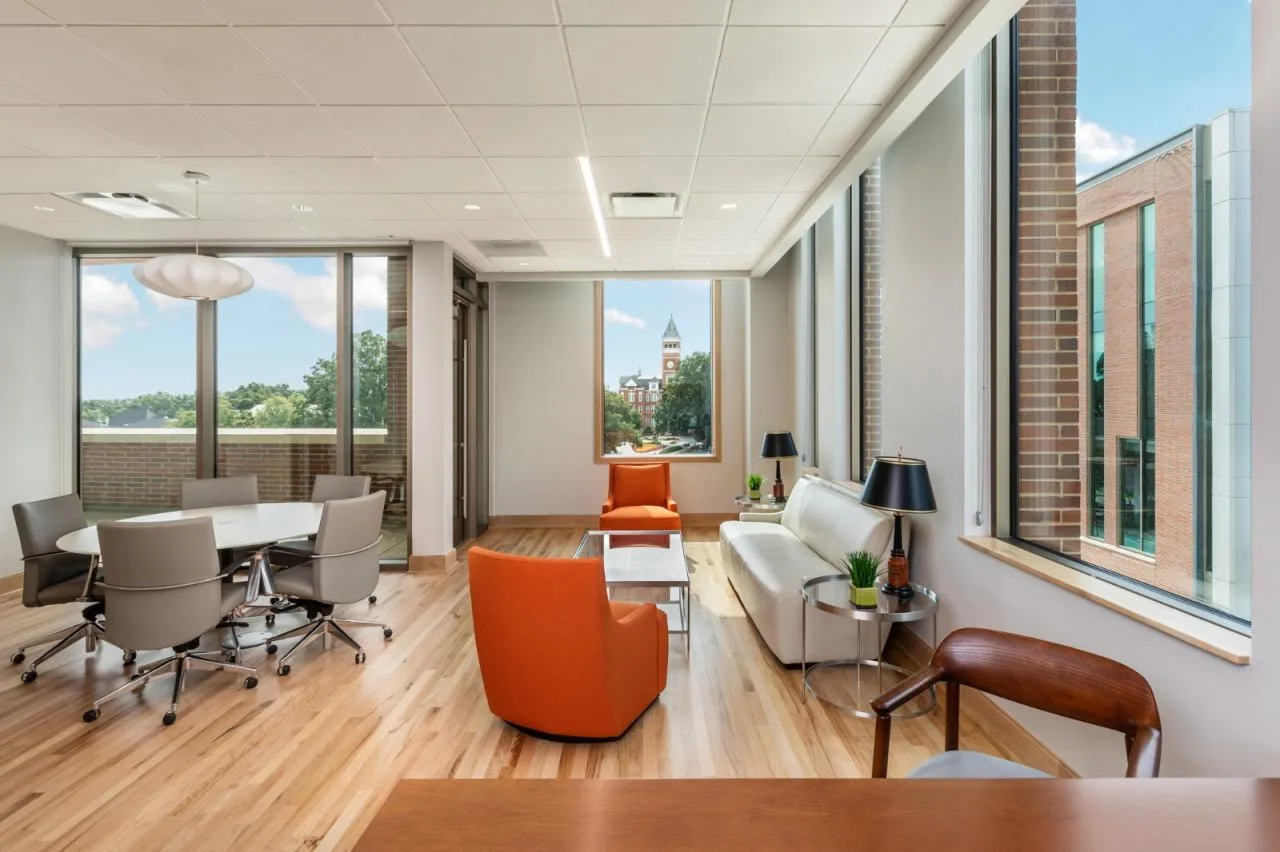
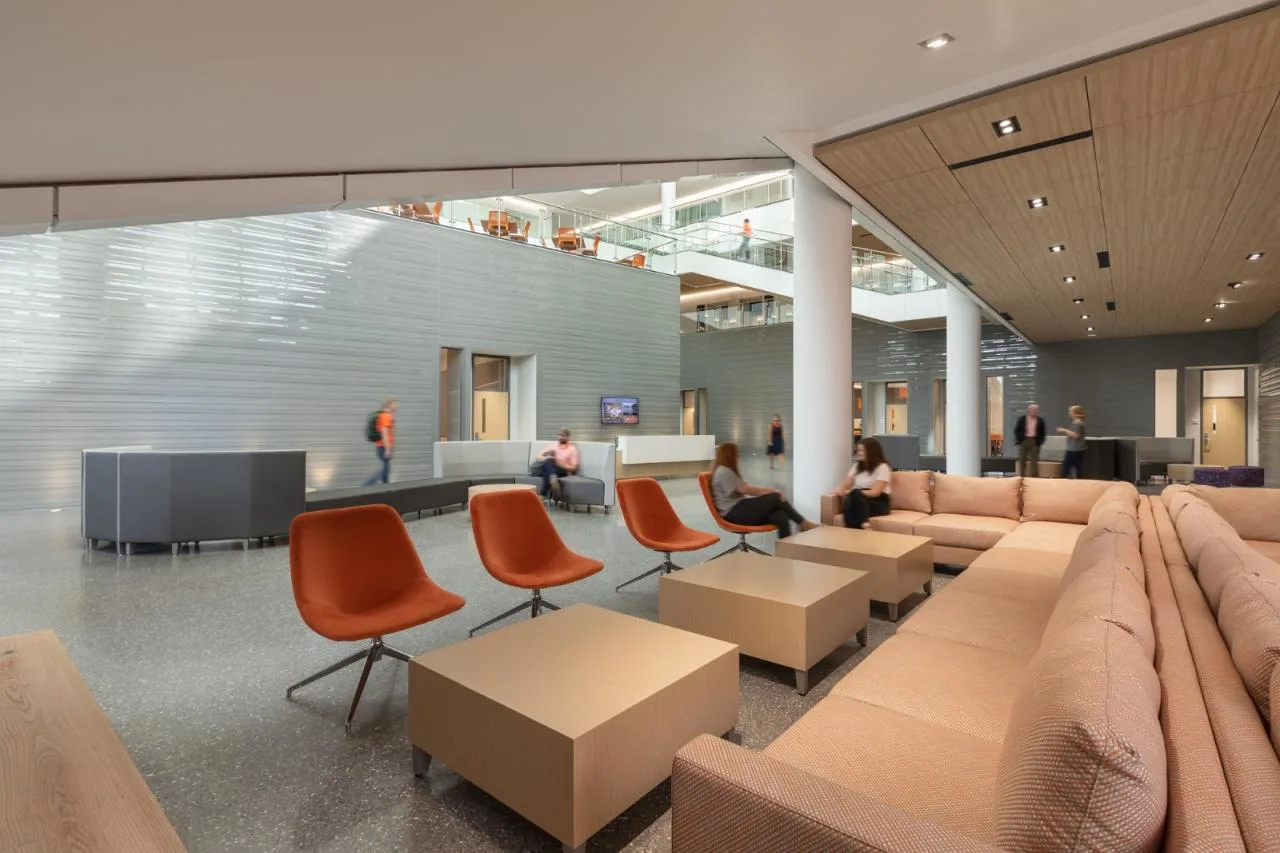
This cutting-edge educational facility stands out as the newest addition to the campus, featuring expansive glass walls, soaring ceilings, and monumental connecting staircases that embody a spirit of entrepreneurship. The complex boosts the school’s visibility, aids student recruitment, and improves rankings, preparing students to become leaders in today’s highly competitive market. Mirroring modern workplaces, the blend of formal and informal spaces fosters engagement through chance encounters, focused study, teamwork, research labs, and group presentations.
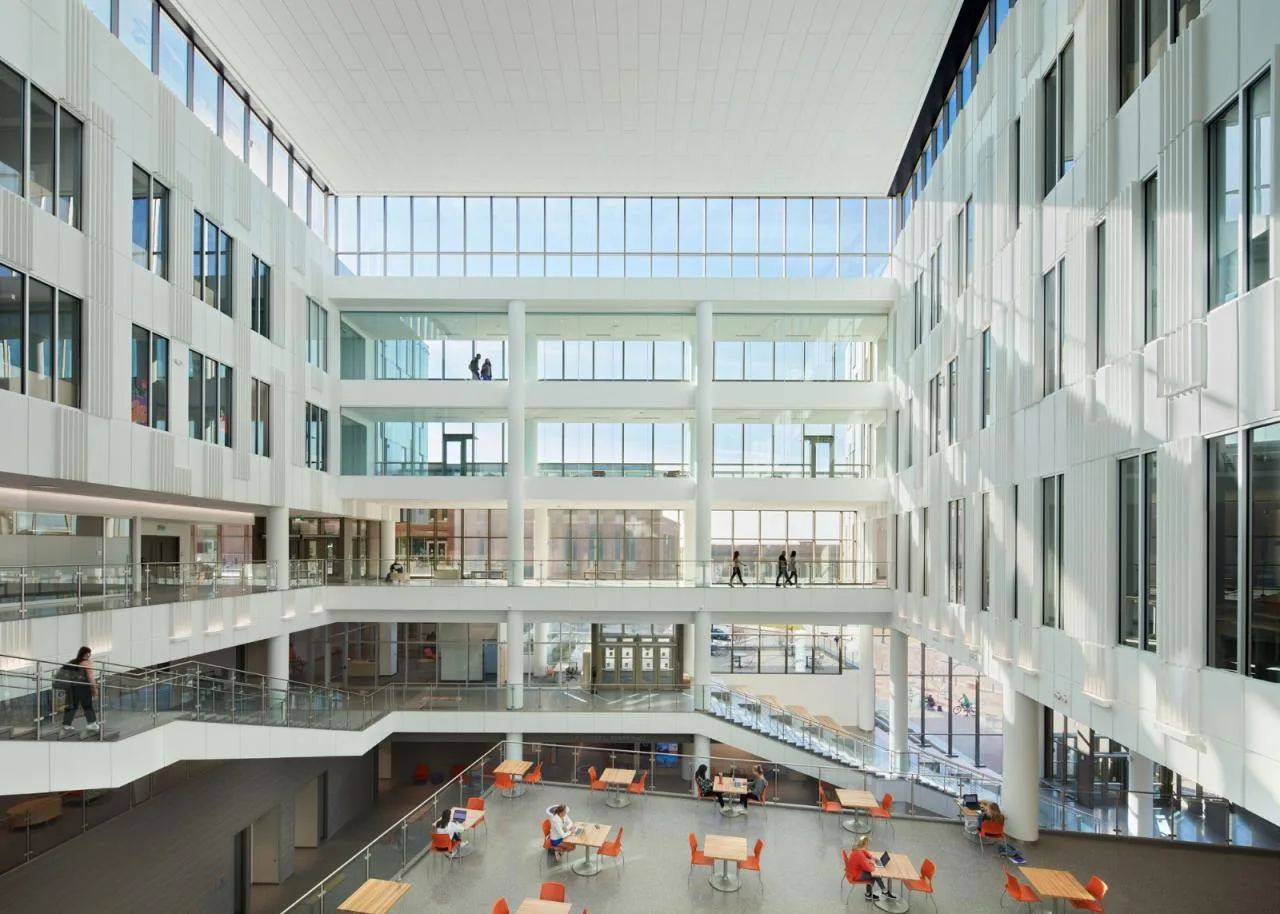
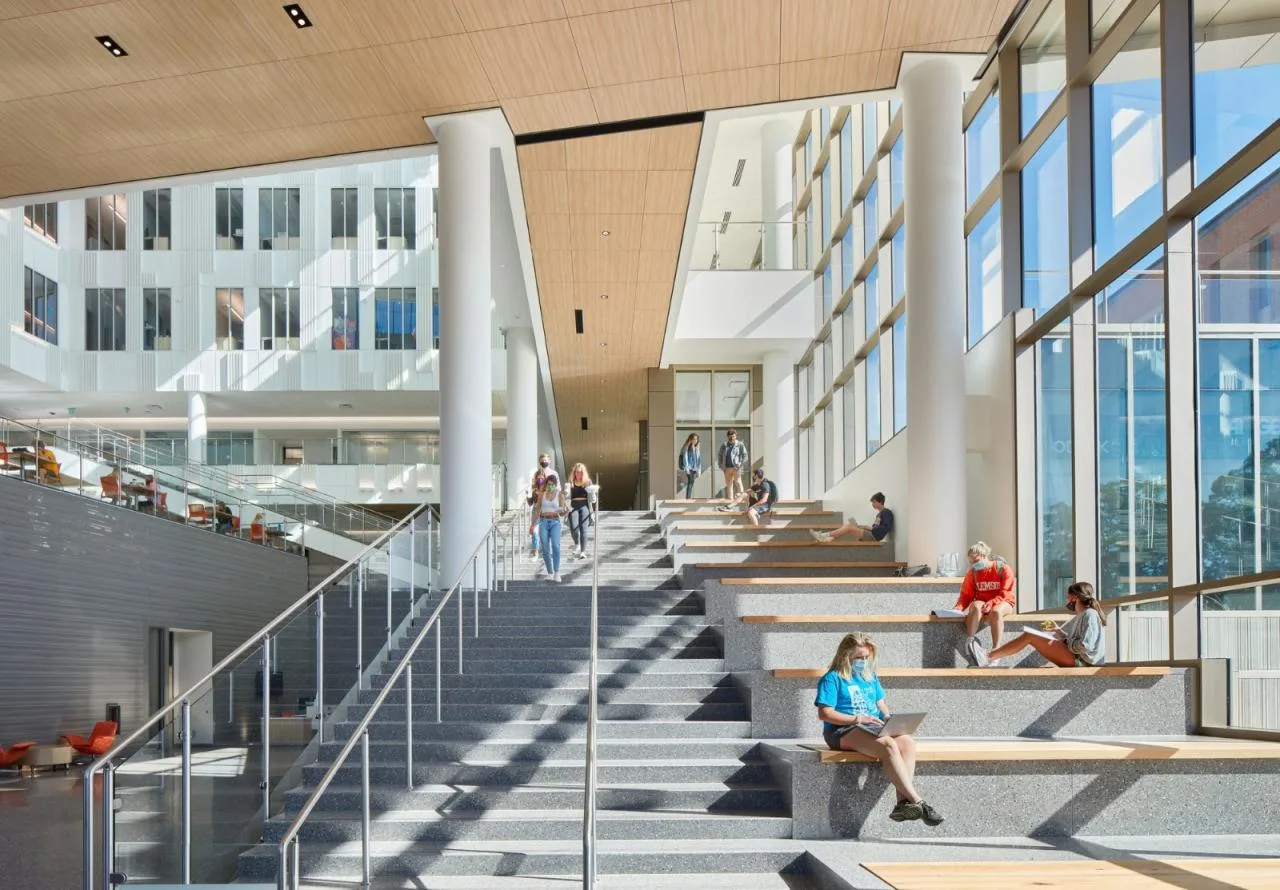
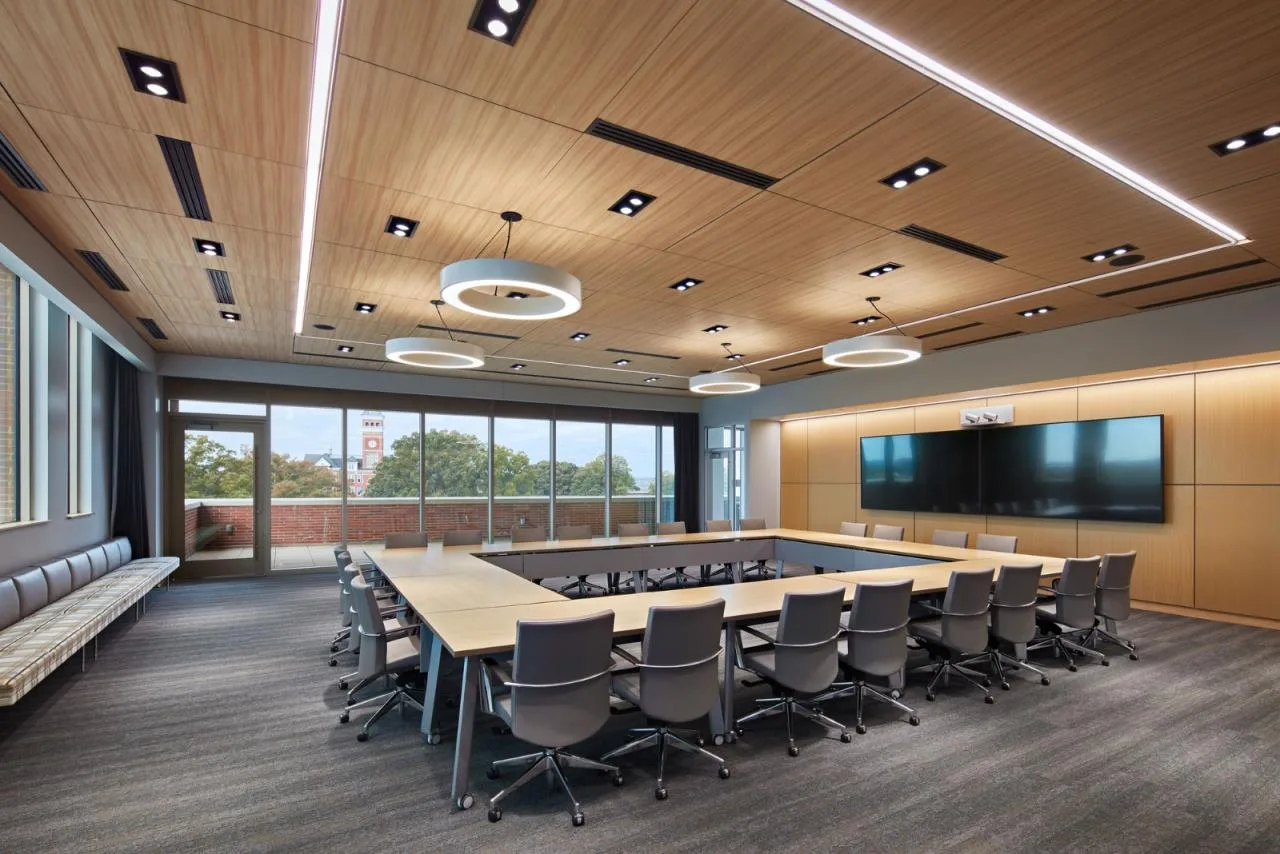
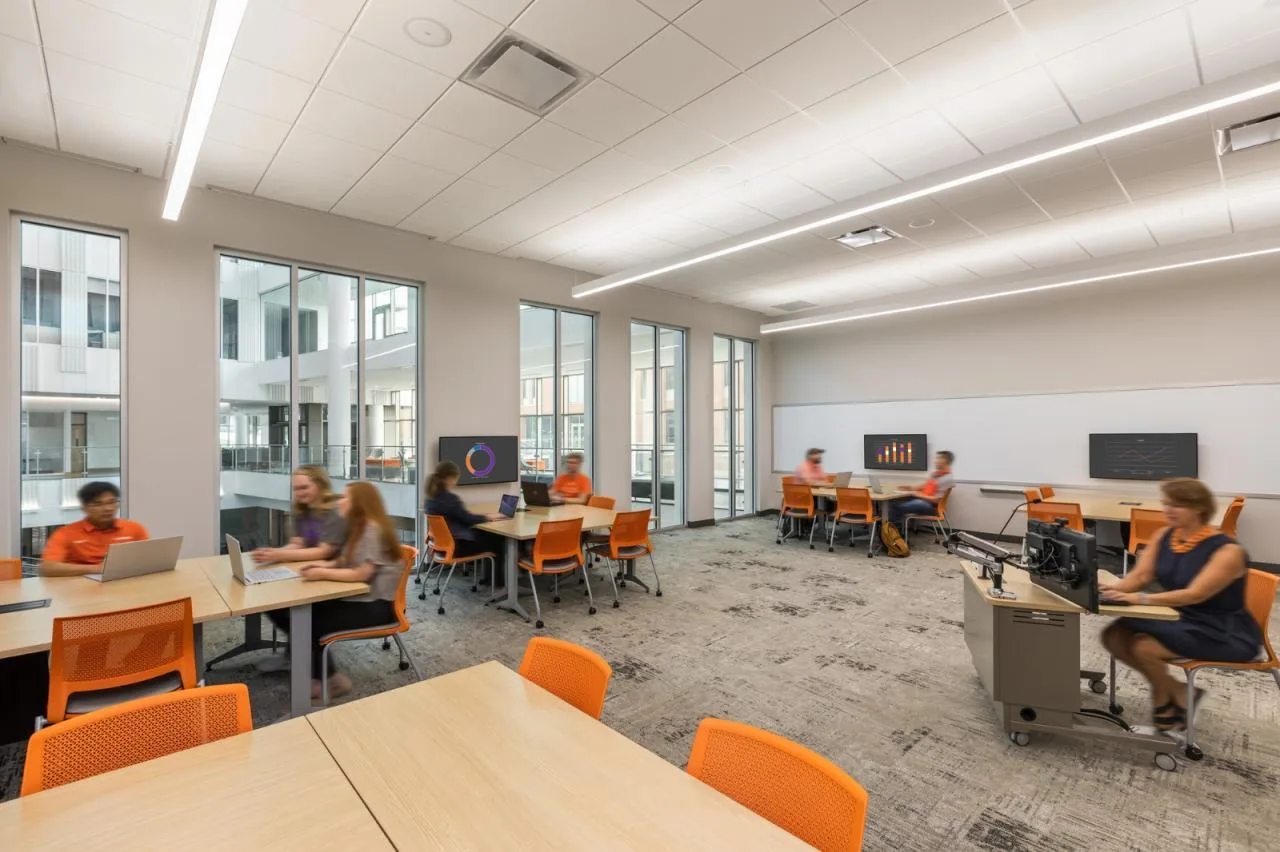
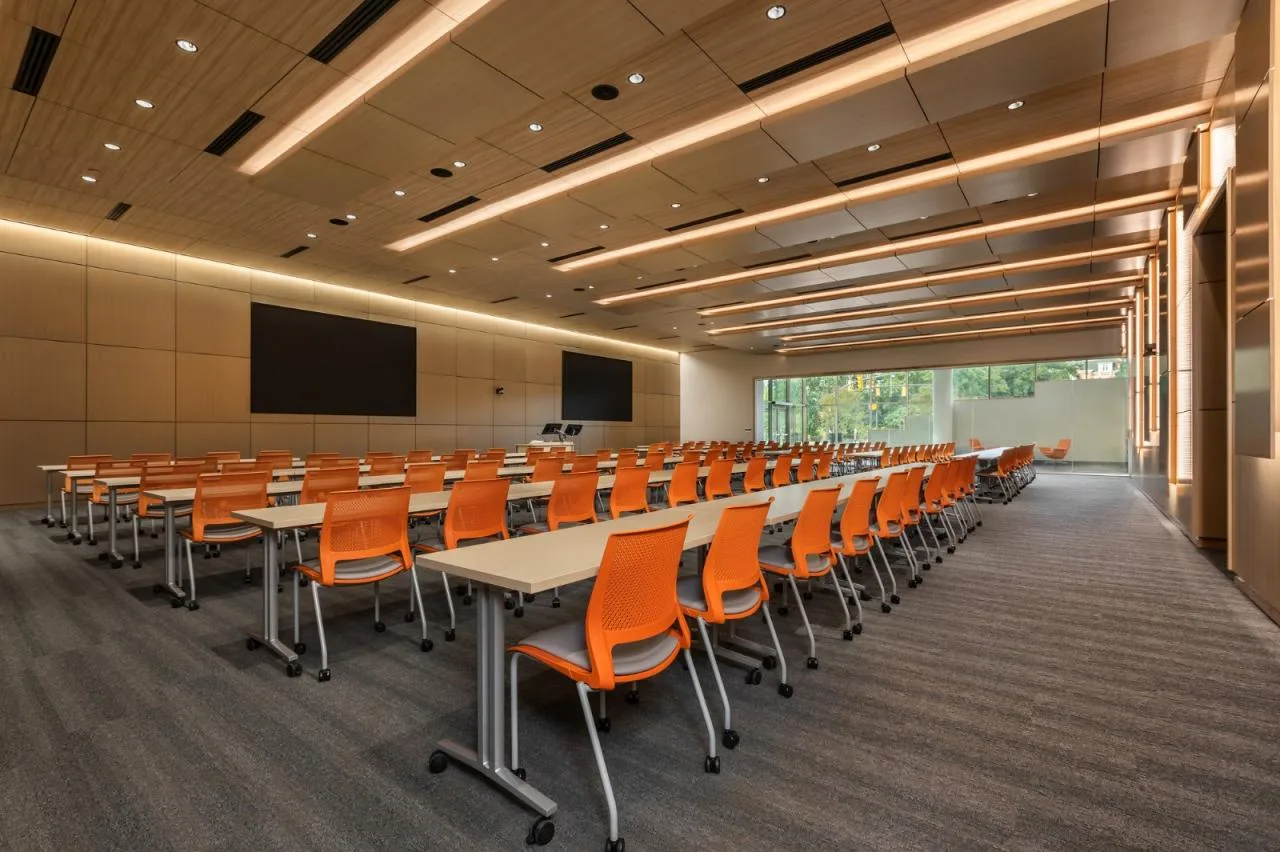
The building also offers a variety of convenient amenities for students, including dining services and lounge areas, allowing them to spend the entire day on site. Classrooms are designed with layered, flexible, and high-tech modules that accommodate evolving educational needs. Outdoor interactive spaces and scenic areas encourage ongoing dialogue beyond the classroom. Facilities simulating real-world sales and financial environments, alongside dedicated business incubators, foster collaboration with professionals and support students in launching their careers.
Scott May, head of LS3P’s higher education division, added, “From the project’s inception, it was clear this building would become a cornerstone of the campus community. The emphasis on connectivity and transparency is reflected in a warm, vibrant gathering space that responds to the site’s terrain. Its flexible design will allow adaptation to future teaching methods and technologies. We created a durable, collaborative, and resilient facility intended to serve its users well into the future.”
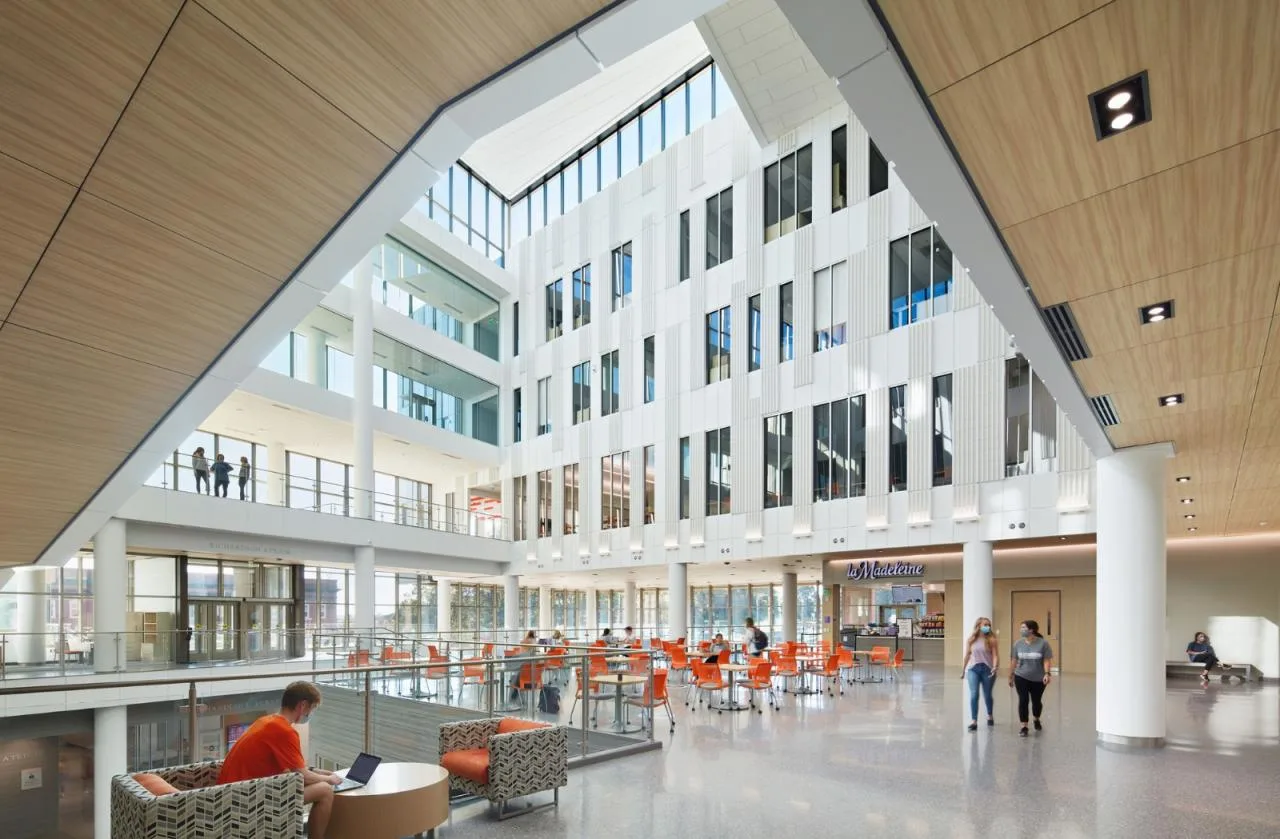
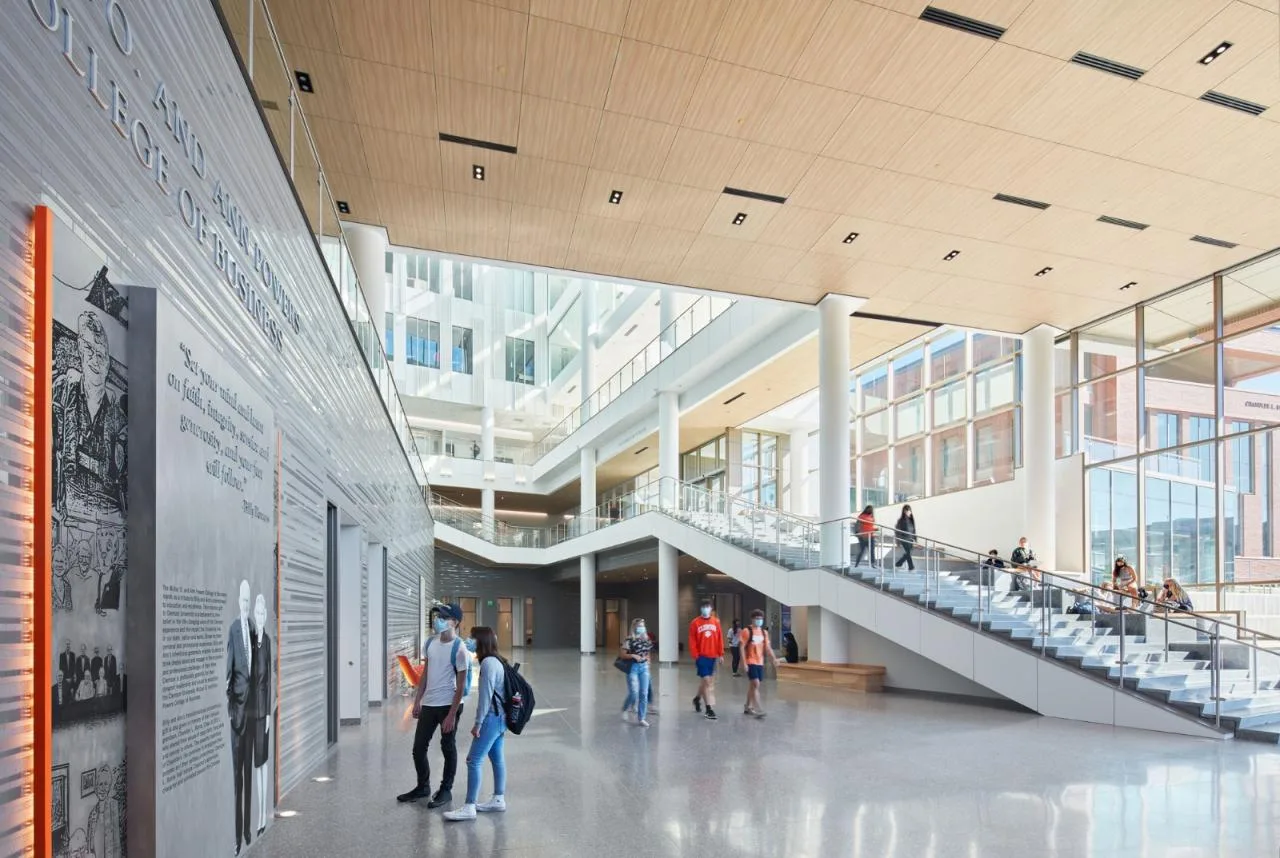
The interior design draws inspiration from the site itself, utilizing natural materials that echo the solidity of the mountains and the horizontal strata of the hillside. On upper levels, vertical and transparent textures create a striking contrast, symbolizing the building’s foundation on a historically rich campus while embracing modern, lighter materials. Paying homage to the past and embracing the future, the brick façade respects the campus’s historic and natural context, while advanced building technologies maximize transparency and energy efficiency.
The atrium’s transparent electrochromic glass façade dynamically adjusts to natural light, changing opacity with seasonal shifts. This seamless connection between building and hillside creates an open, transparent composition that redefines Clemson’s historic campus and establishes a new landmark for business education.
LMN Architects is a leading firm in higher education facility design across North America. Their portfolio includes notable projects such as the Bill and Melinda Gates Center for Computer Science and Engineering at the University of Washington, the Walksman Music Building at the University of Iowa, Edward J. Minkoff Hall at Michigan State University, and the Interdisciplinary Science Center at Eastern Washington University.
Project Drawings
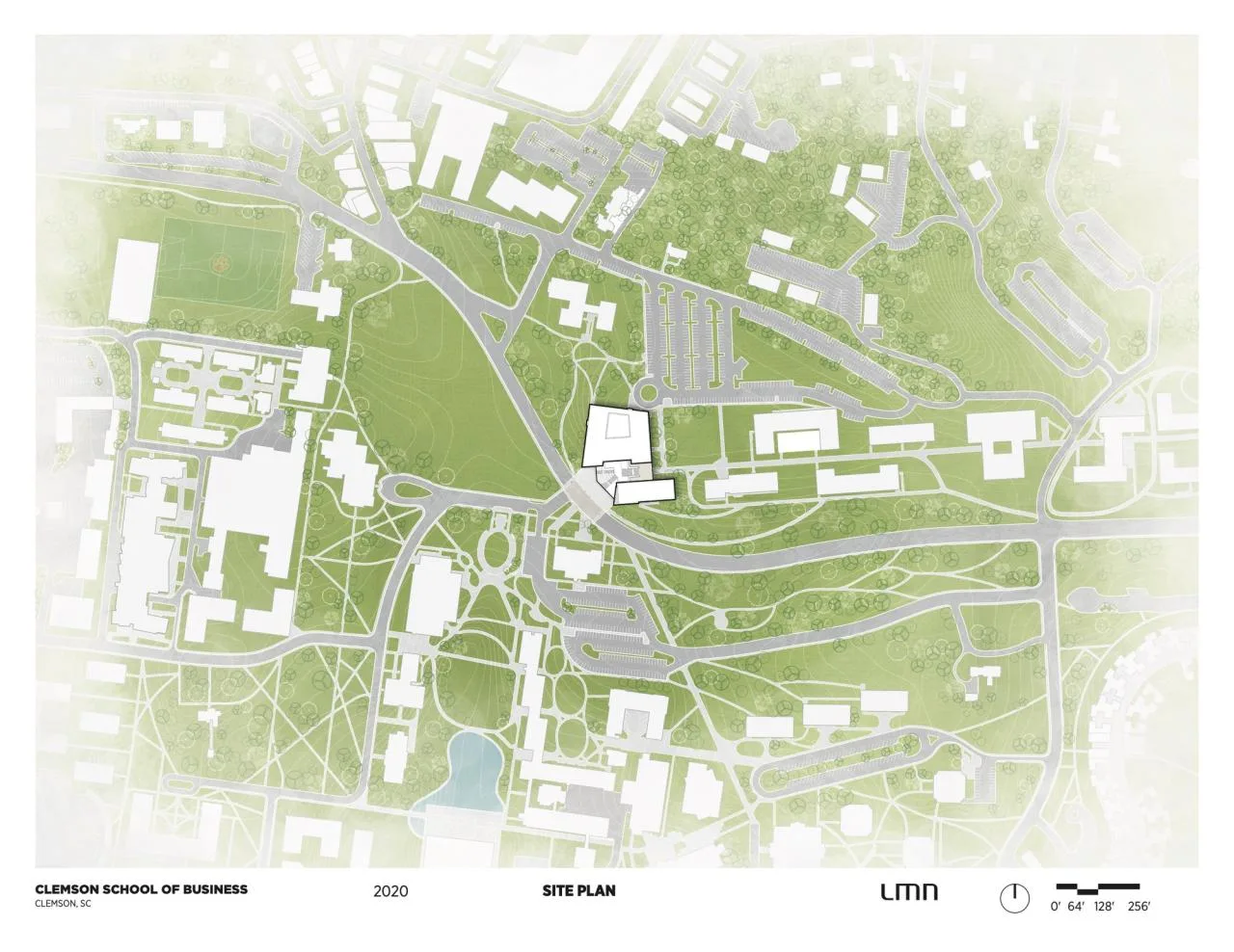
△ Base Schematic Diagram
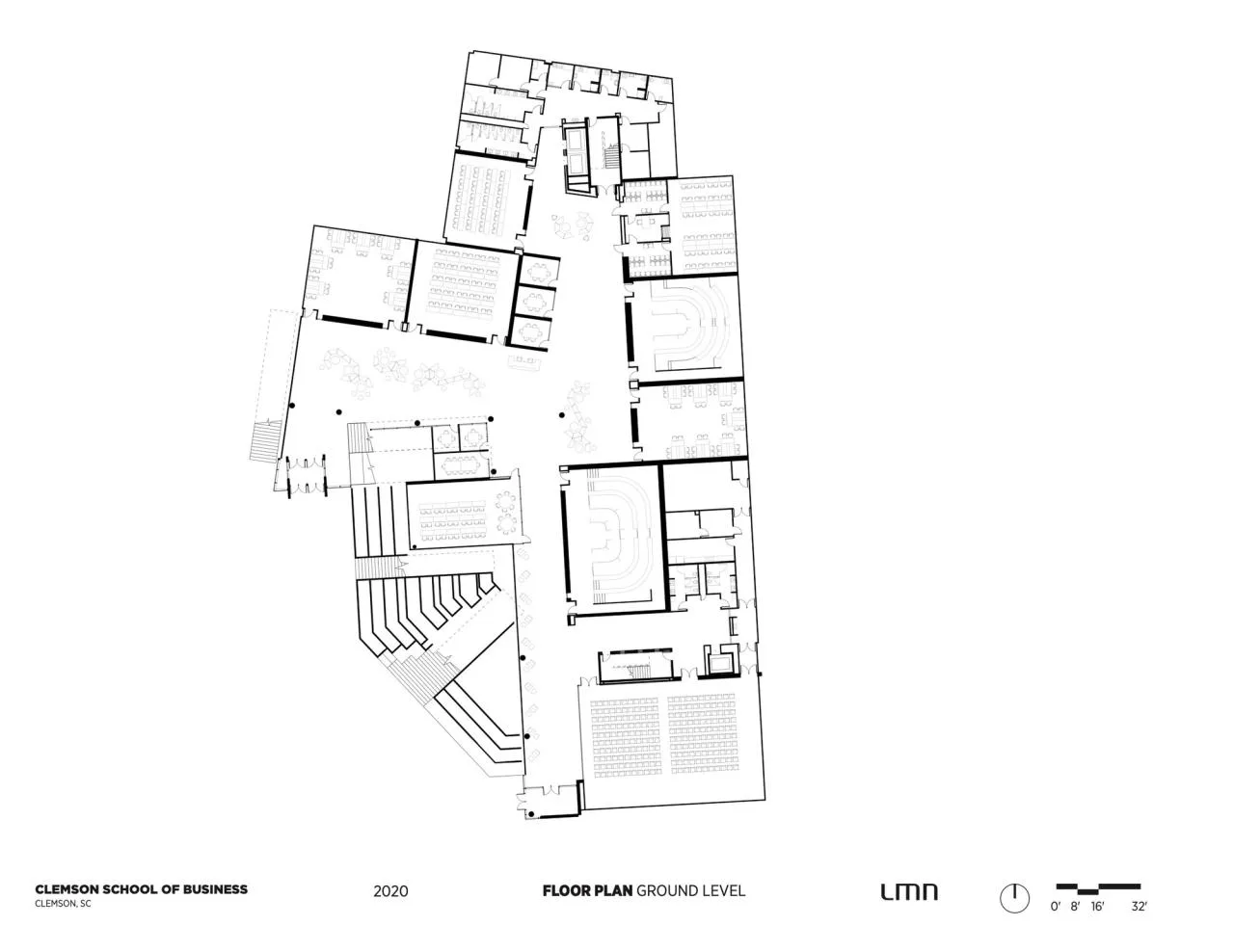
△ First Floor Plan
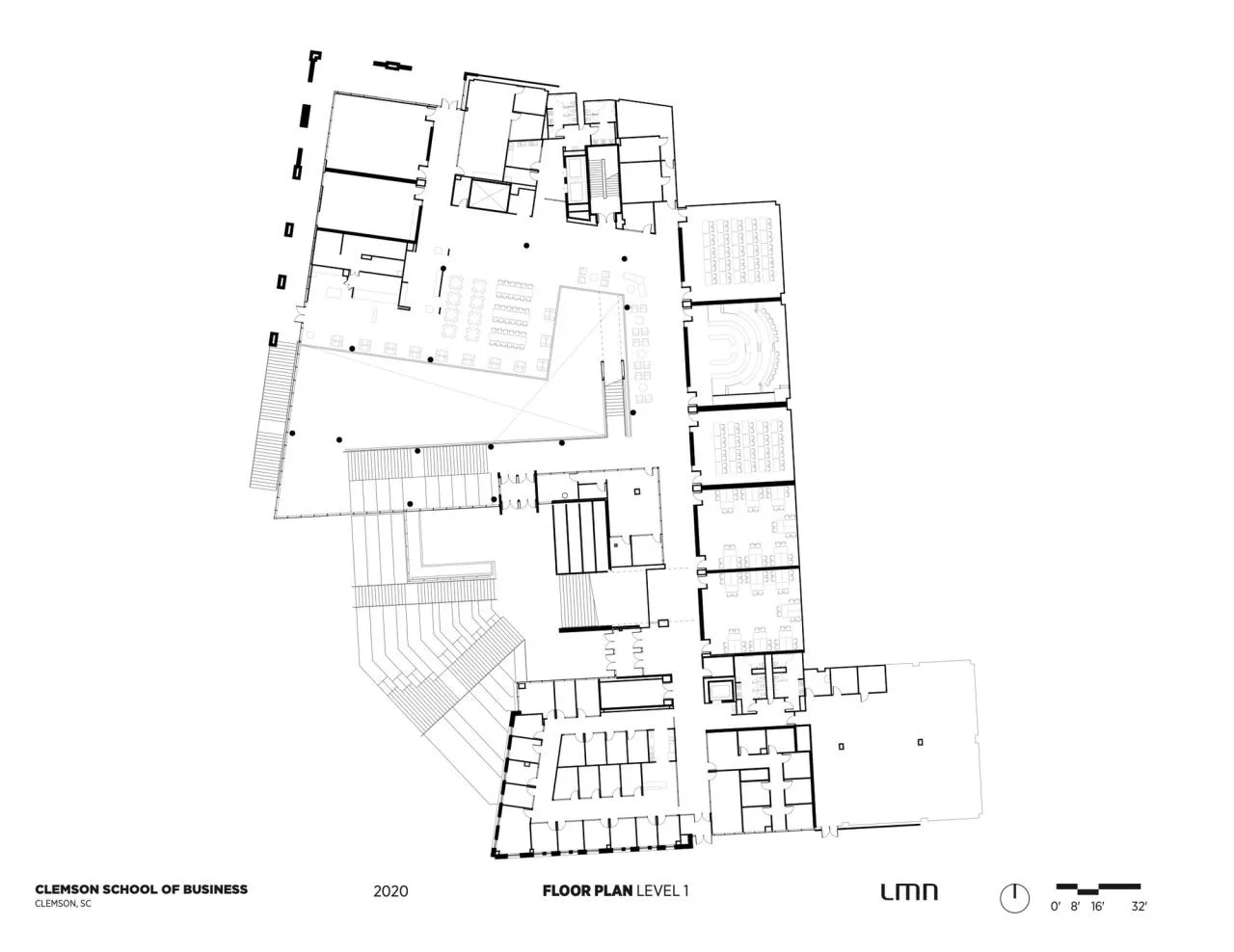
△ Second Floor Plan
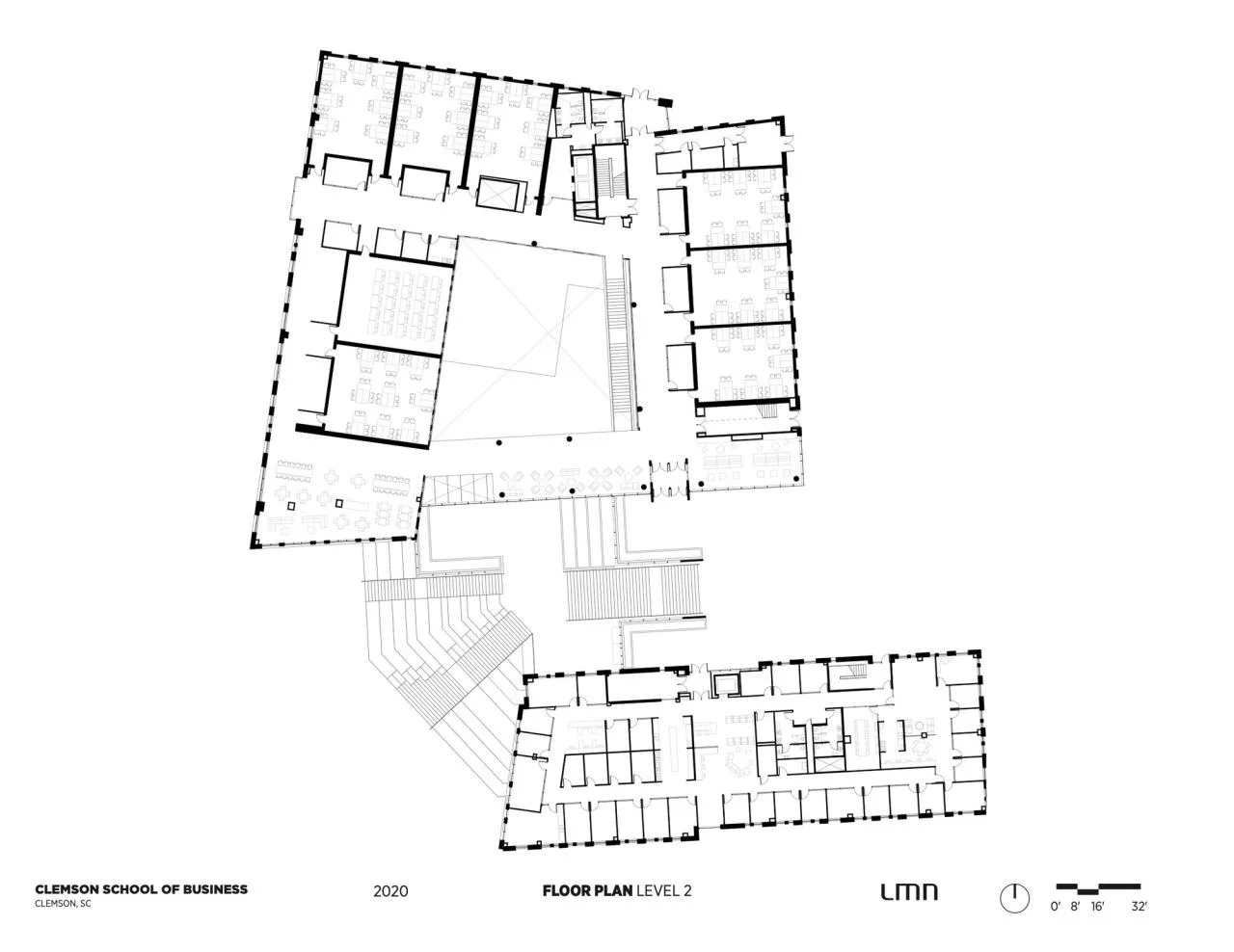
△ Third Floor Plan
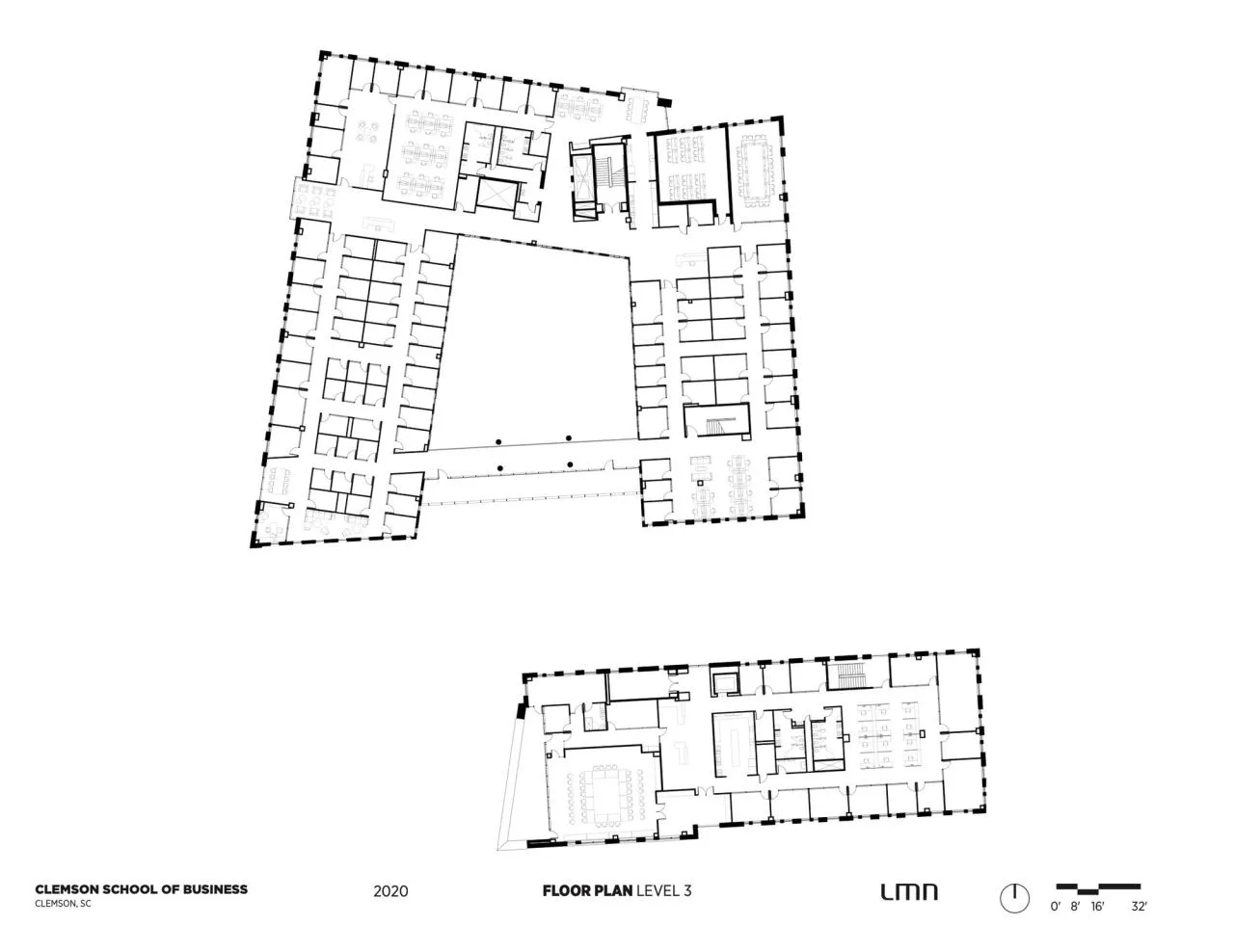
△ Fourth Floor Plan
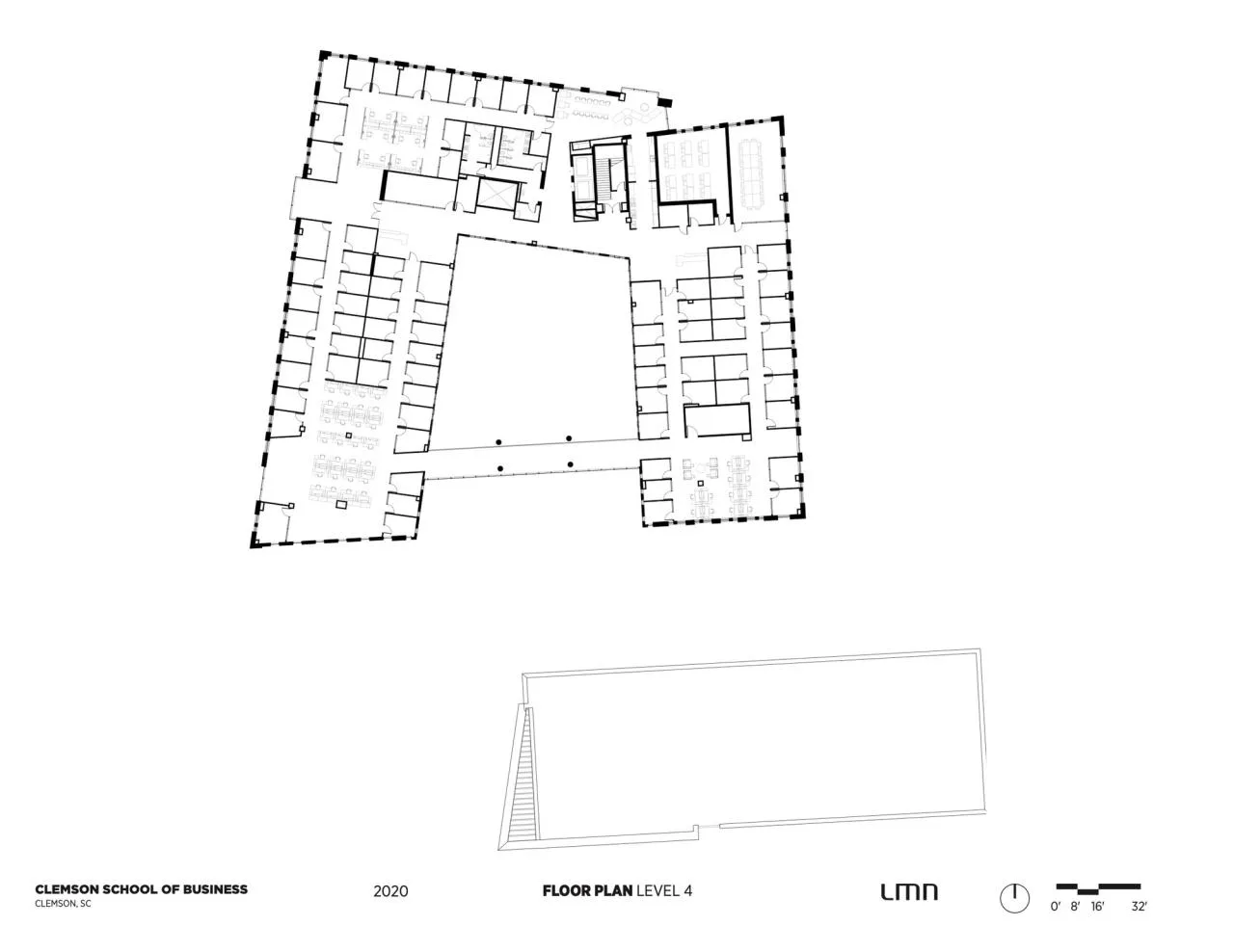
△ Fifth Floor Plan
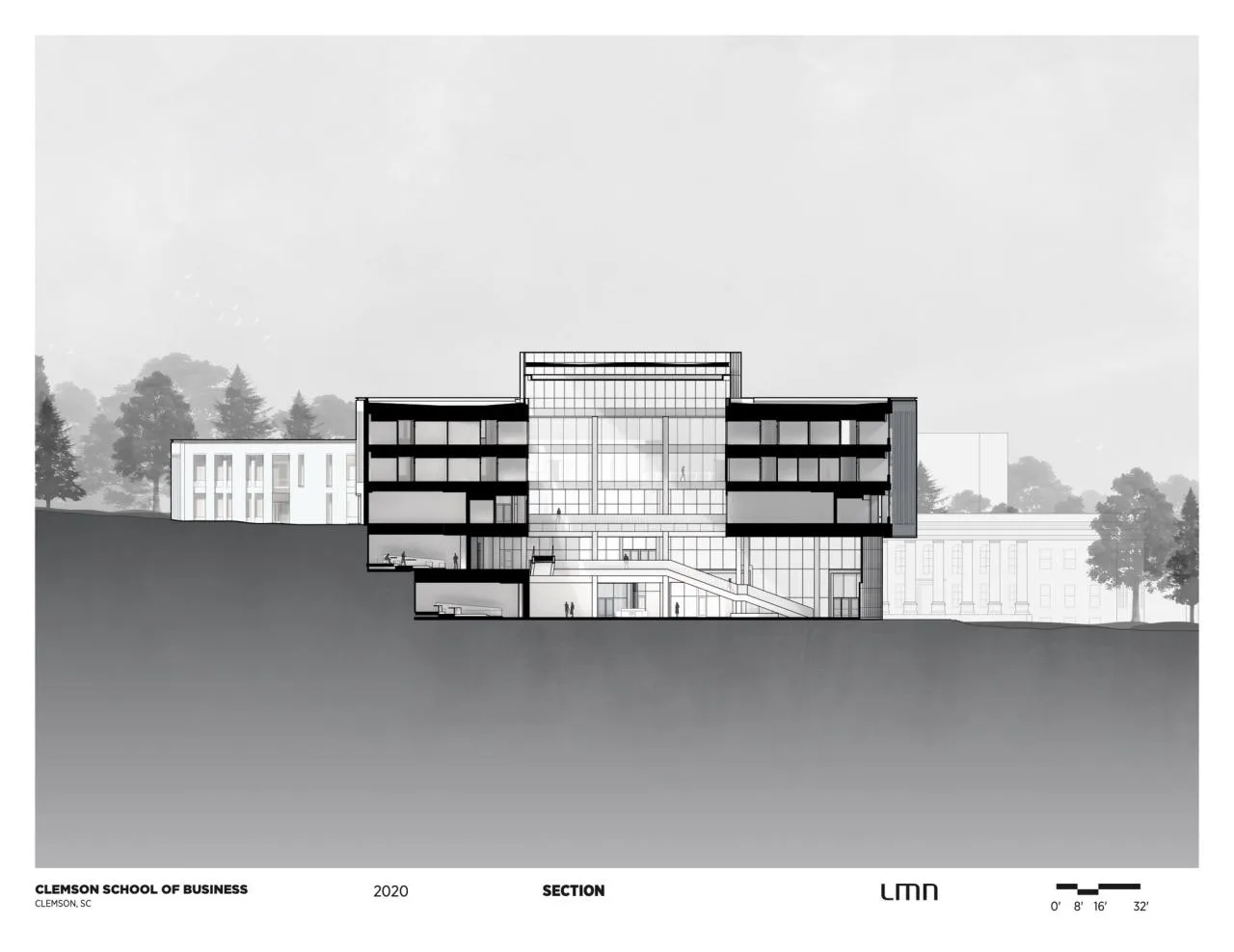
△ Section Diagram
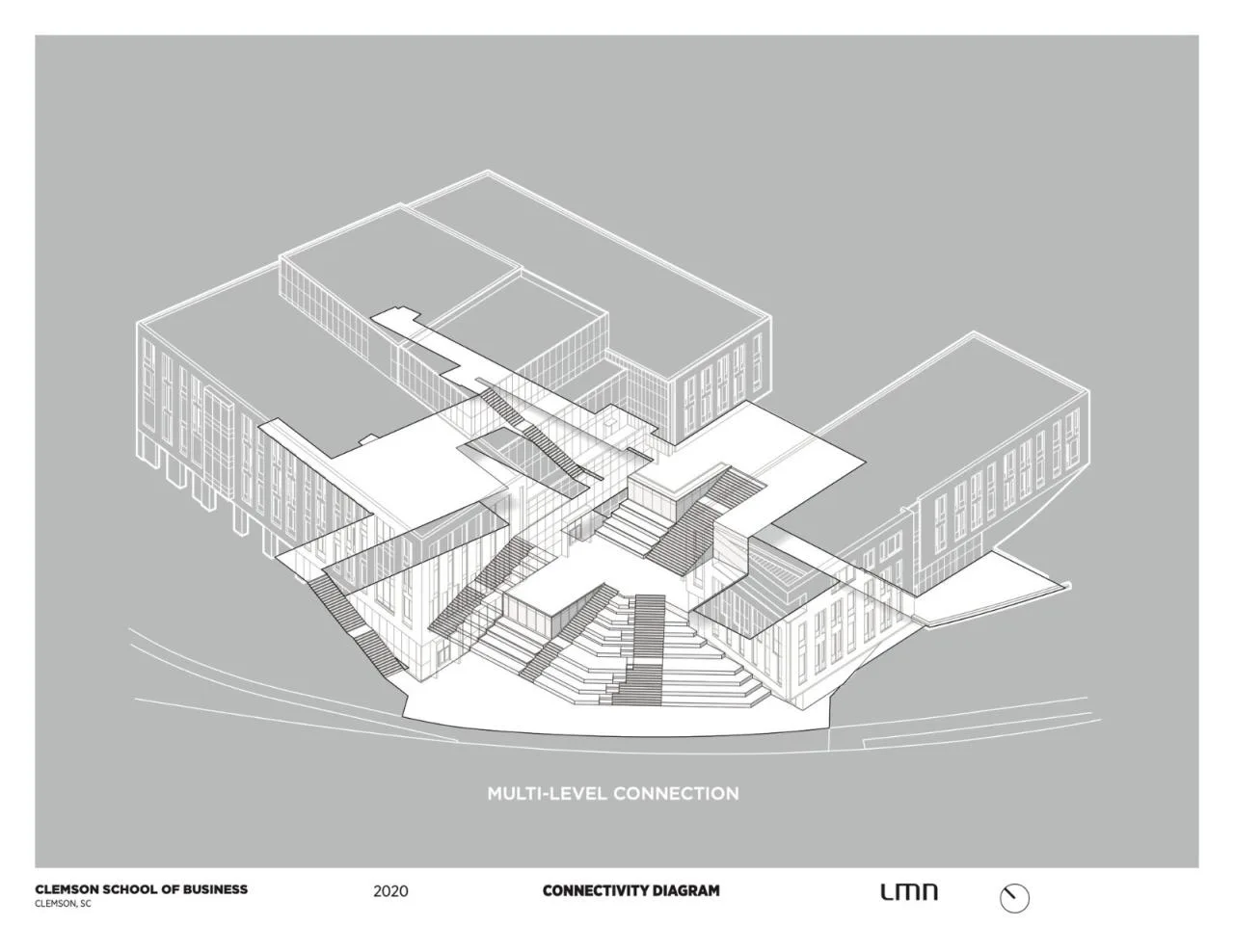
△ Analysis Chart
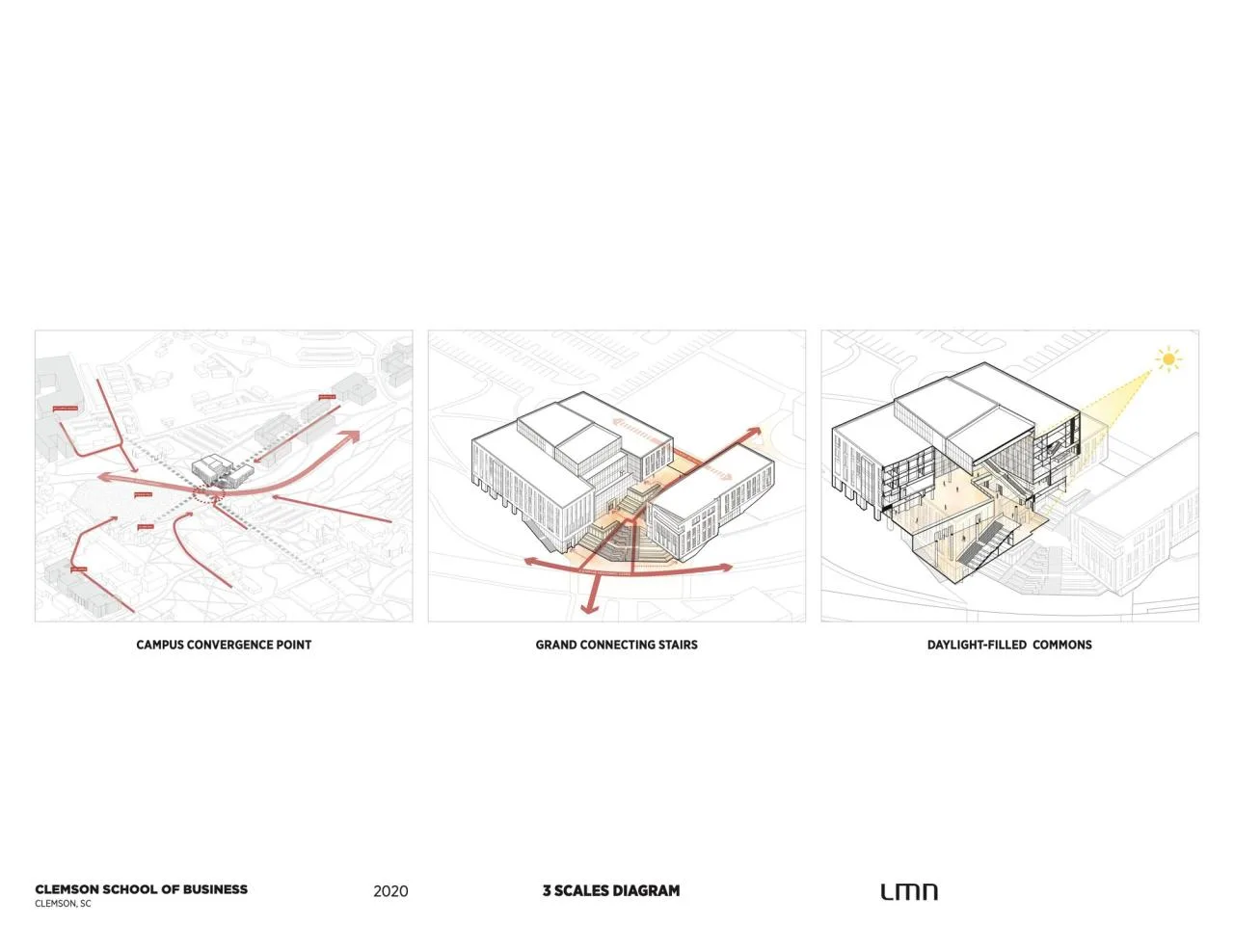
△ Analysis Chart
Project Information
Architectural Design: LMN Architects
Area: 176,000 square feet (16,350.9 square meters)
Project Year: 2022
Photography: Mark Herbottom Photography, LLC
Manufacturers: Hunter Douglas, YKK AP, Armstrong Ceilings, HBF Furniture, KI Furniture, National Office Furniture, Patcraft, SageGlass, Sit-On-It Seating, Symphony Tables, Terroxy, Vitro®
Location: Clemson, United States














Must log in before commenting!
Sign Up