
From Ruins to the Future
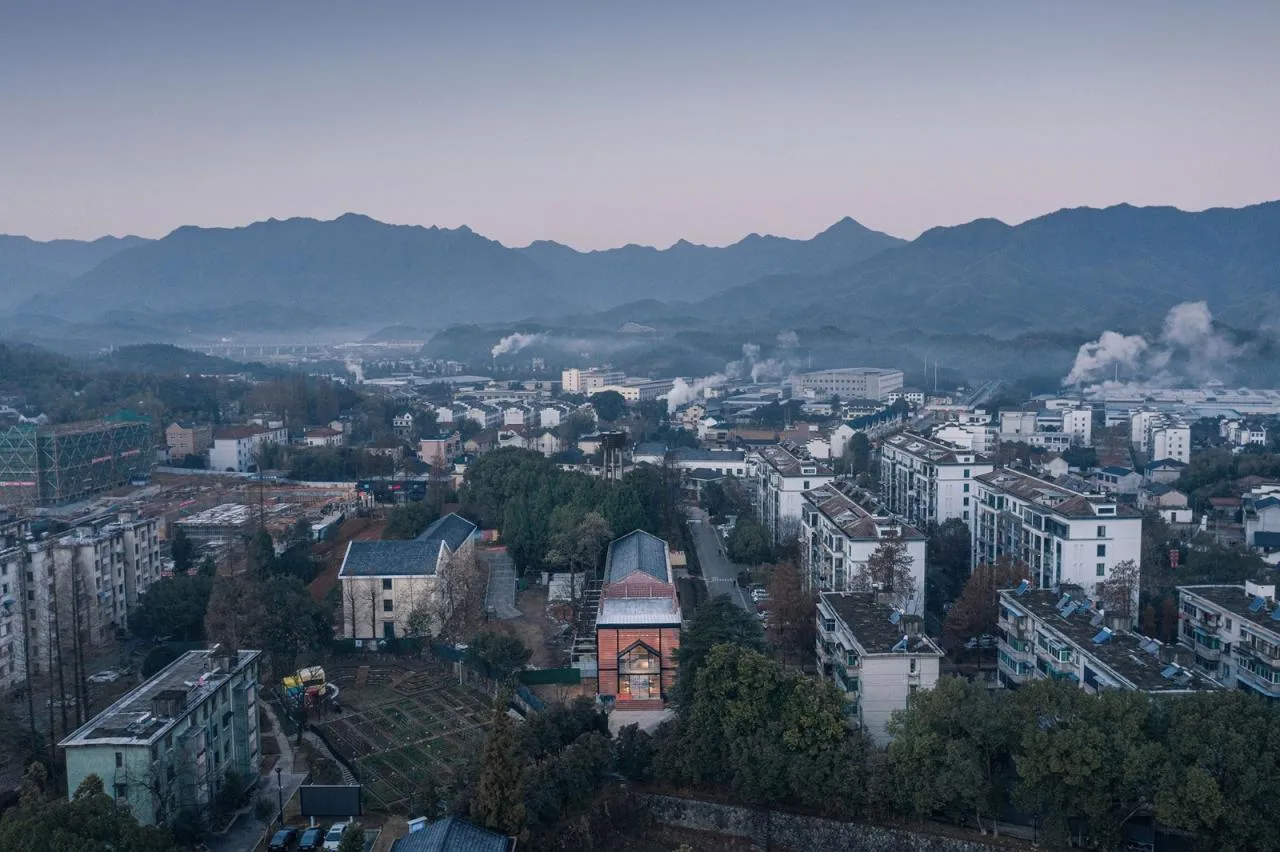
▲ Aerial view of the project © Architecture Photography
01. Current Situation
The project originally consisted of two buildings: one was a single-story warehouse with a sloped roof in a state of disrepair, and the other was a two-story flat-roofed abandoned warehouse. The site is located within the Huangnishan community, established in 1959. This community, historically home to pyrite workers, has a rich history spanning over 60 years and currently accommodates more than 500 households with over 1,000 residents.
During the first phase of the rural revitalization project in 2019, several new functions were introduced, including the Lianchuang Commune, a shared library, a smart sports field, and a communal canteen. Centered around the concept of a rural future community, these initiatives were warmly embraced by local residents. This phase not only breathed new life into previously unused buildings but also invigorated the community and site. Notably, the shared cafeteria and smart sports field have brought significant convenience to the neighbors.
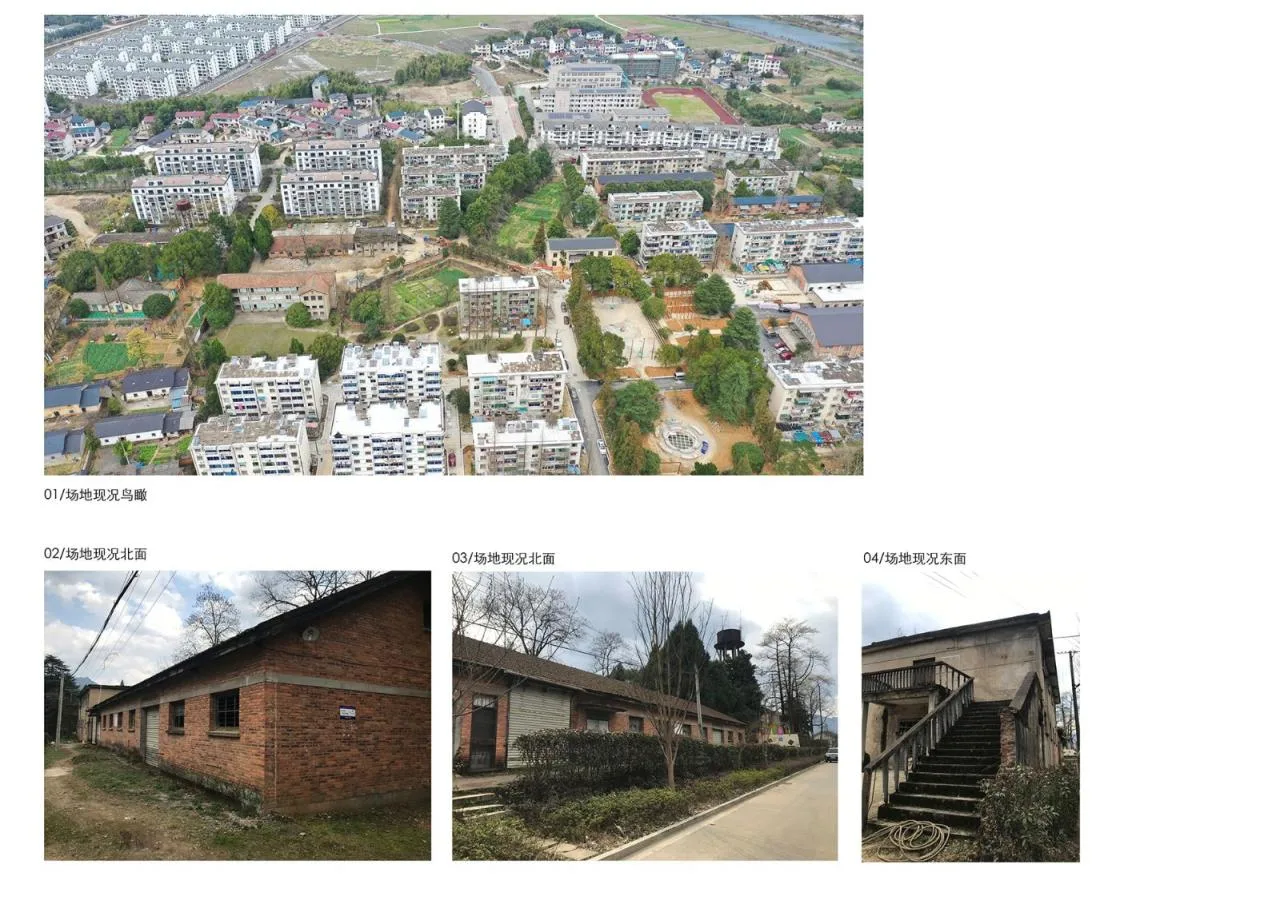
▲ Building facade before renovation © y.ad studio
Despite the widespread depopulation in rural areas, this site remains vibrant with constant activity, preserving a vivid memory of a thriving town and community.
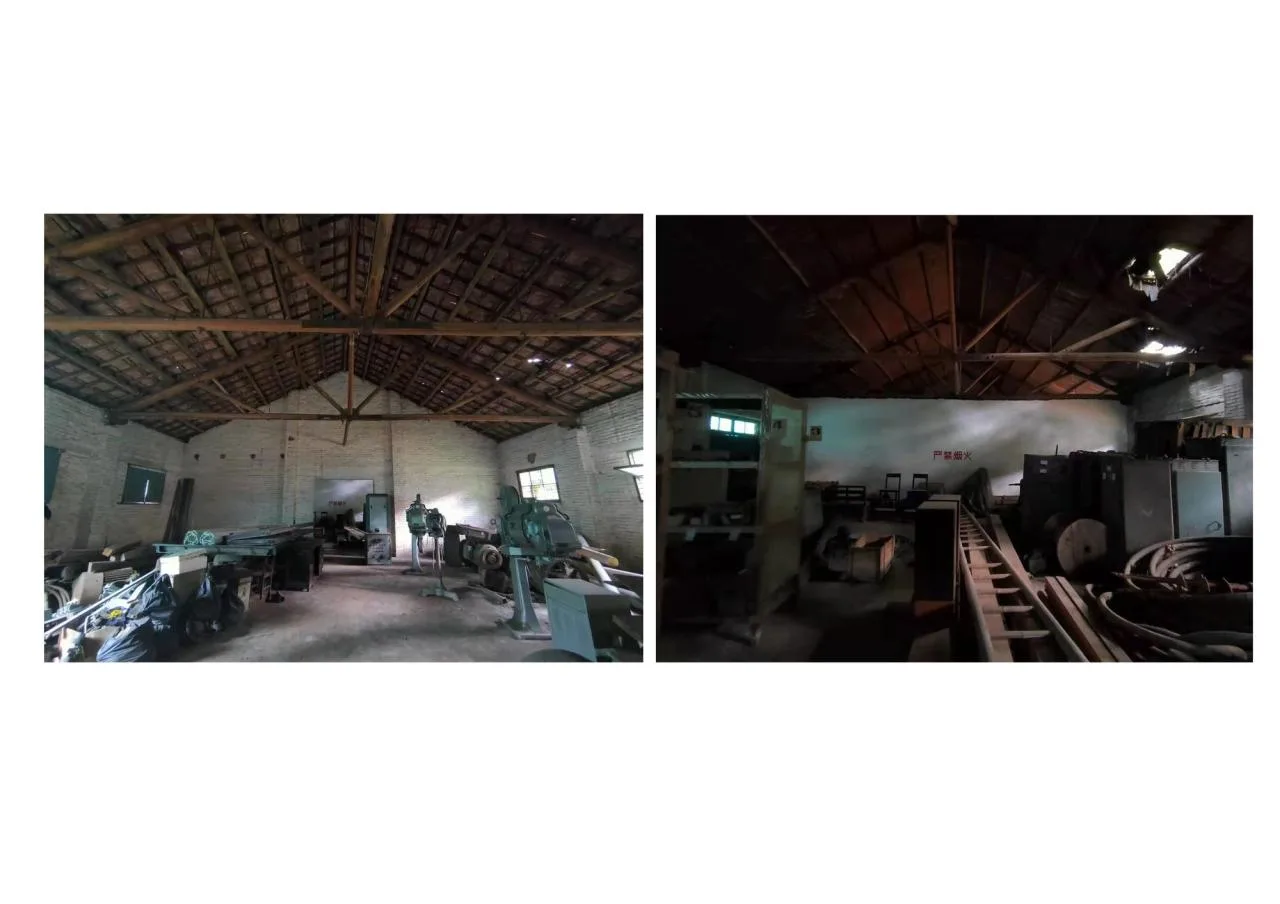
▲ Interior of the building before renovation © y.ad studio
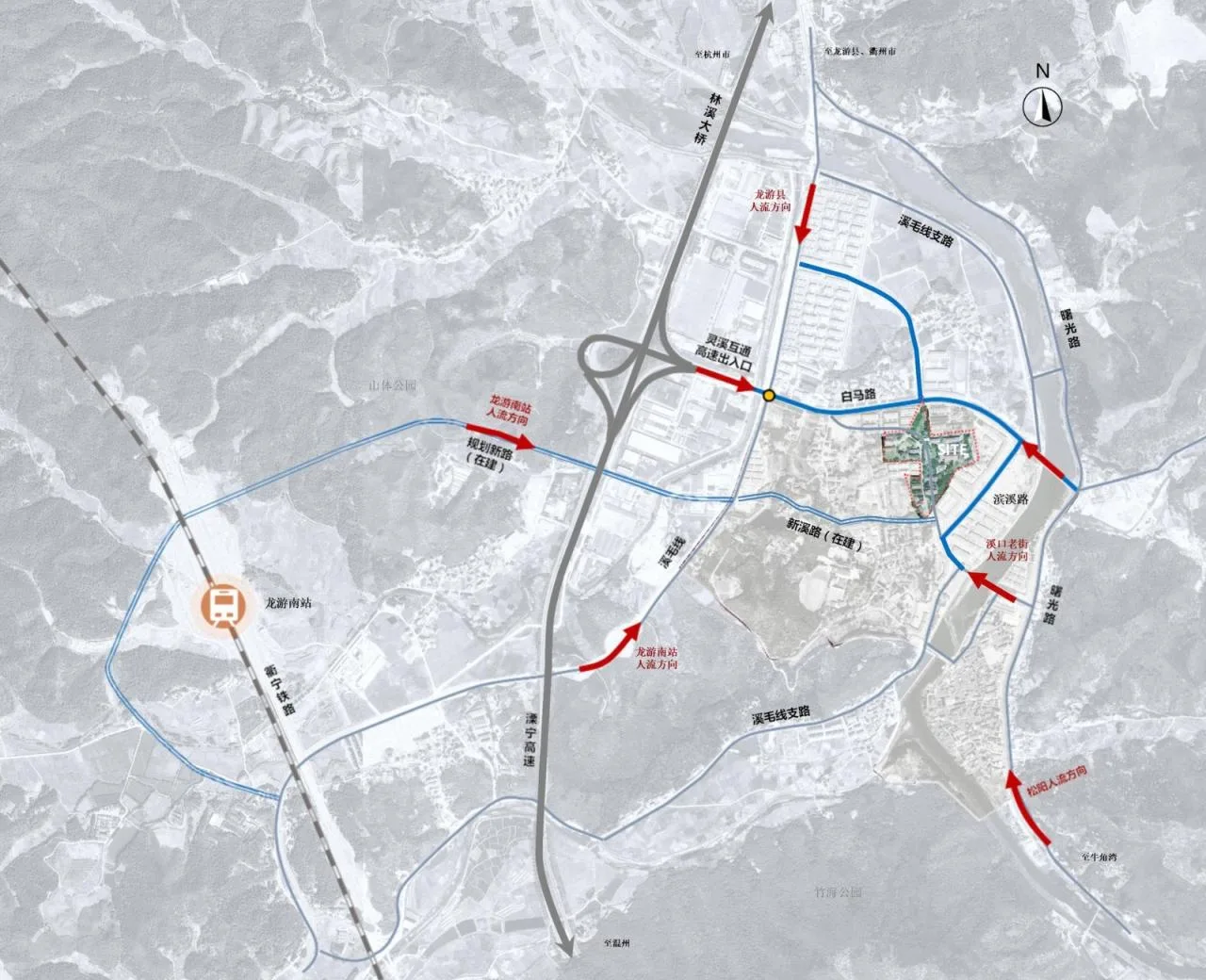
▲ Regional transportation © y.ad studio
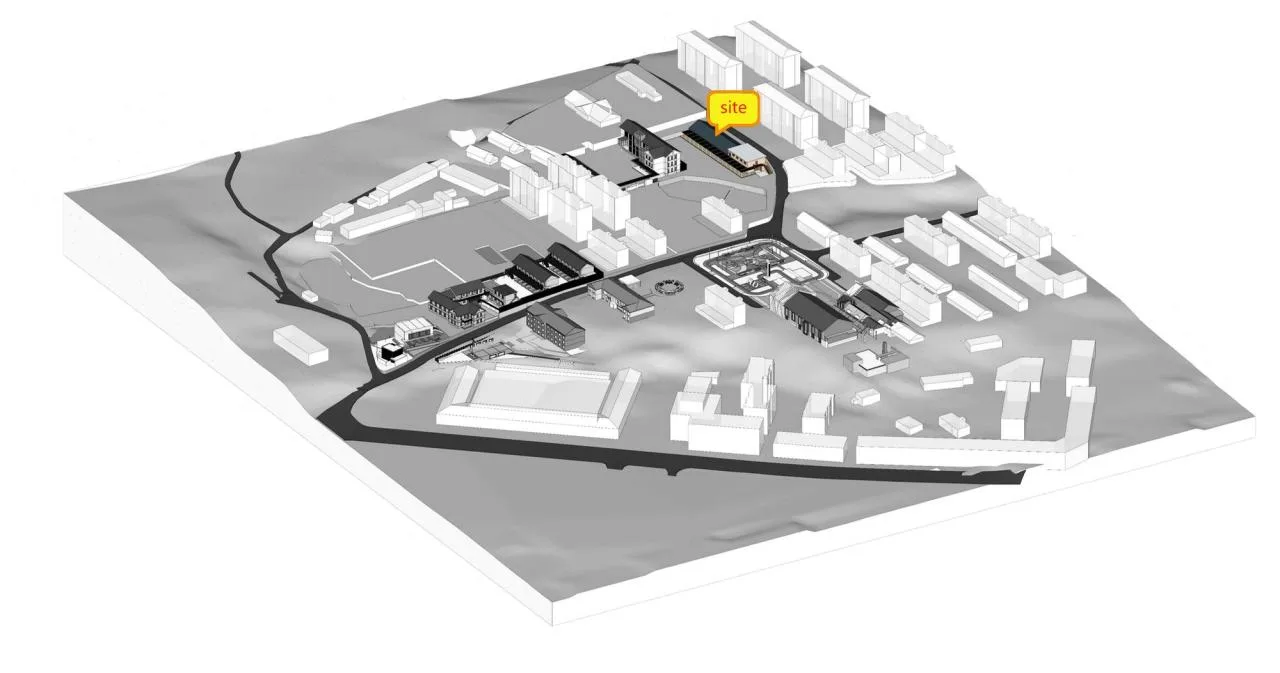
▲ Project location © y.ad studio
02. Integrating Historical Memory with Modern Needs
The second phase of renovation builds upon the foundation set in the first phase. Its goal is to improve, supplement, and elevate previously lacking aspects, activating the idle site further. After thorough investigation and discussions, the team chose to preserve the site’s unique historical character, blending it with modern and future living requirements. This approach has been a key focus for both the owner and the design team from the outset.
Functionally, the two buildings were reassigned based on current needs. The original two-story flat-roof building was designated as an independent ceramic expert workstation. The old staircase was removed, and a new vertical circulation path established, complemented by a newly constructed front hall for integration. Meanwhile, the single-story sloped roof building was repurposed as a multifunctional sports arena. Due to limited ceiling height, the old wooden roof structure was demolished, walls raised, and a new roof built. Additional facilities such as restrooms and showers were incorporated within the venue.
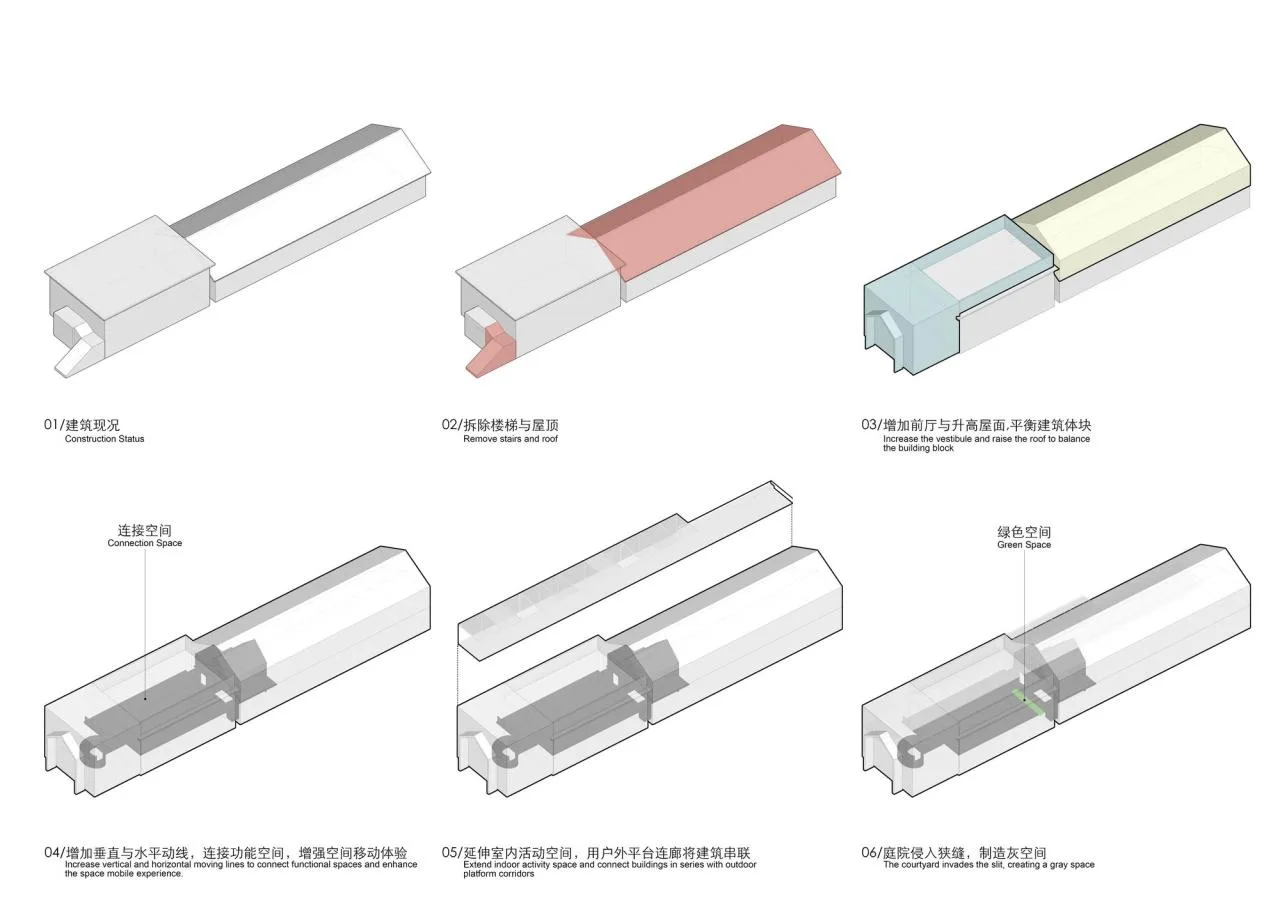
▲ Design Concept © y.ad studio
Material choices followed a “continuity” design strategy, with red bricks as the primary tone, enhanced by weathered steel elements to create a seamless visual integration with the original structures. Modern materials such as glass bricks and windows were introduced to break the monotony and dullness of the buildings.
The design merges old and new architectural forms to achieve balance and cohesion. Different bricklaying techniques were used on the front and rear buildings to complement each other, while weather-resistant steel window frames unify the design language and cleverly accommodate air conditioning units. Outdoor platforms and connecting corridors enhance the space’s usability, allowing people to move freely between exercise and work areas, strengthening the connection between the two buildings.
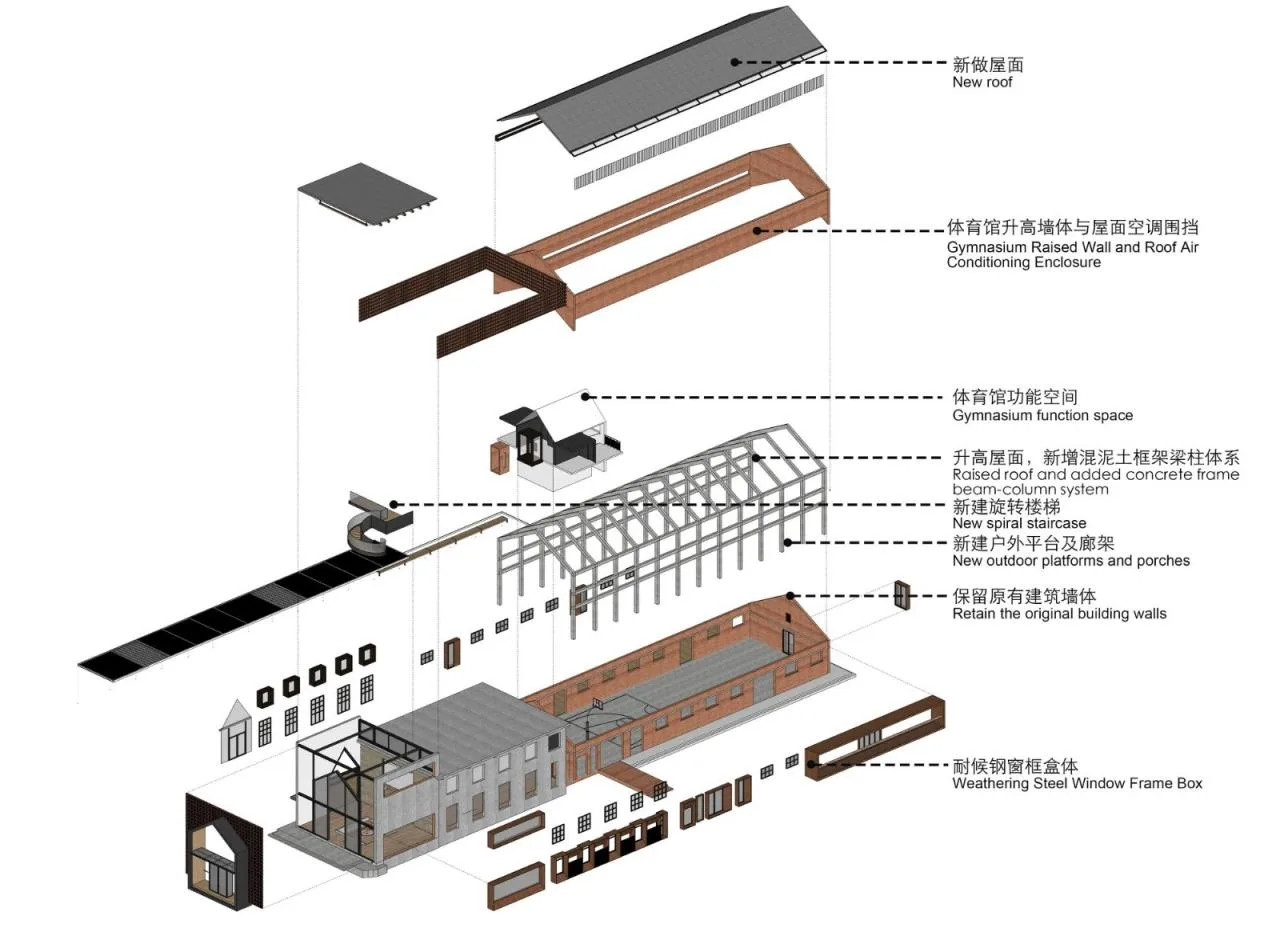
▲ Design analysis diagram © y.ad studio
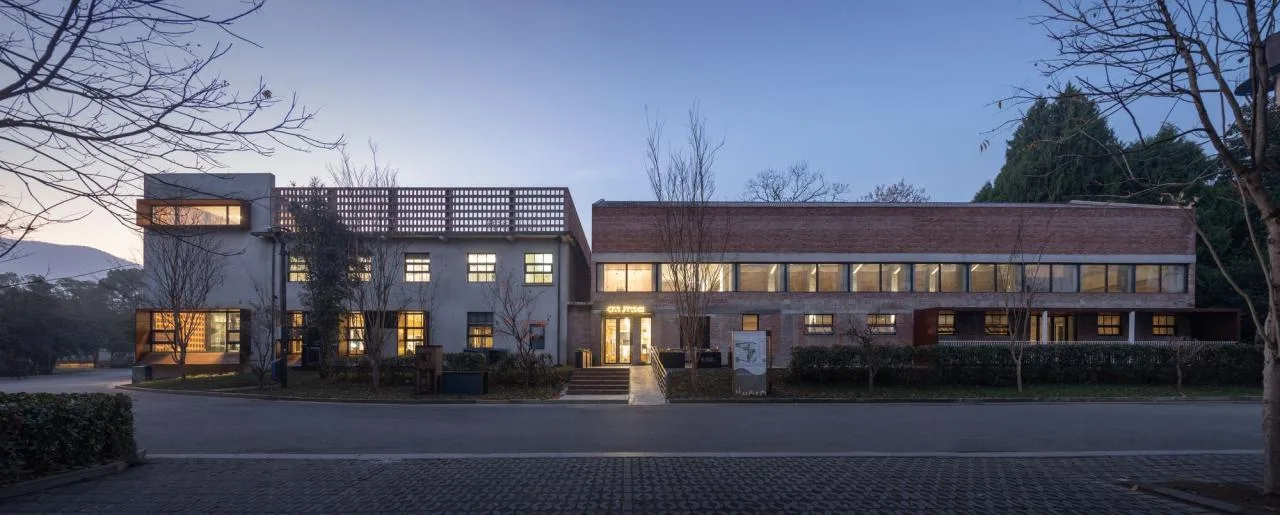
▲ Panoramic view of the north facade © Architecture Photography
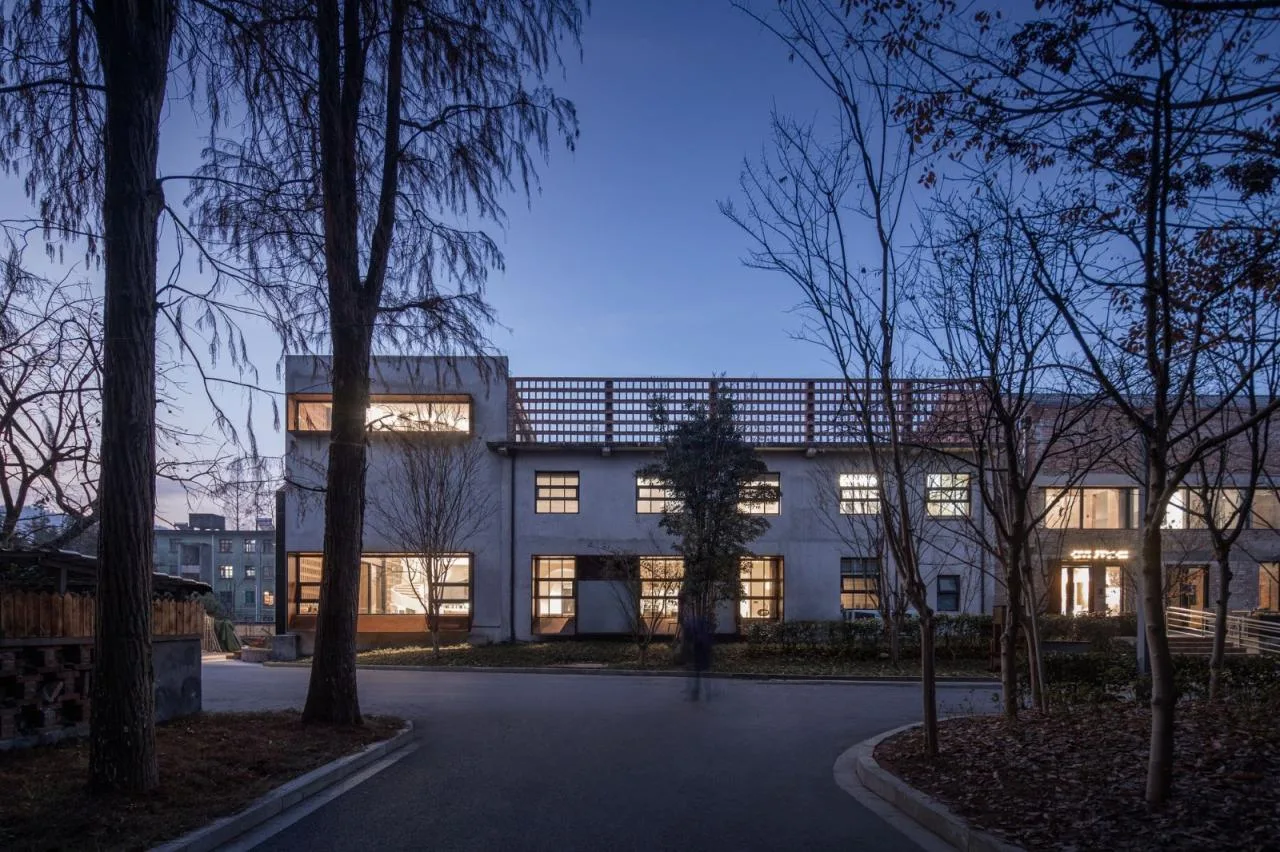
▲ North facade © Architecture Photography
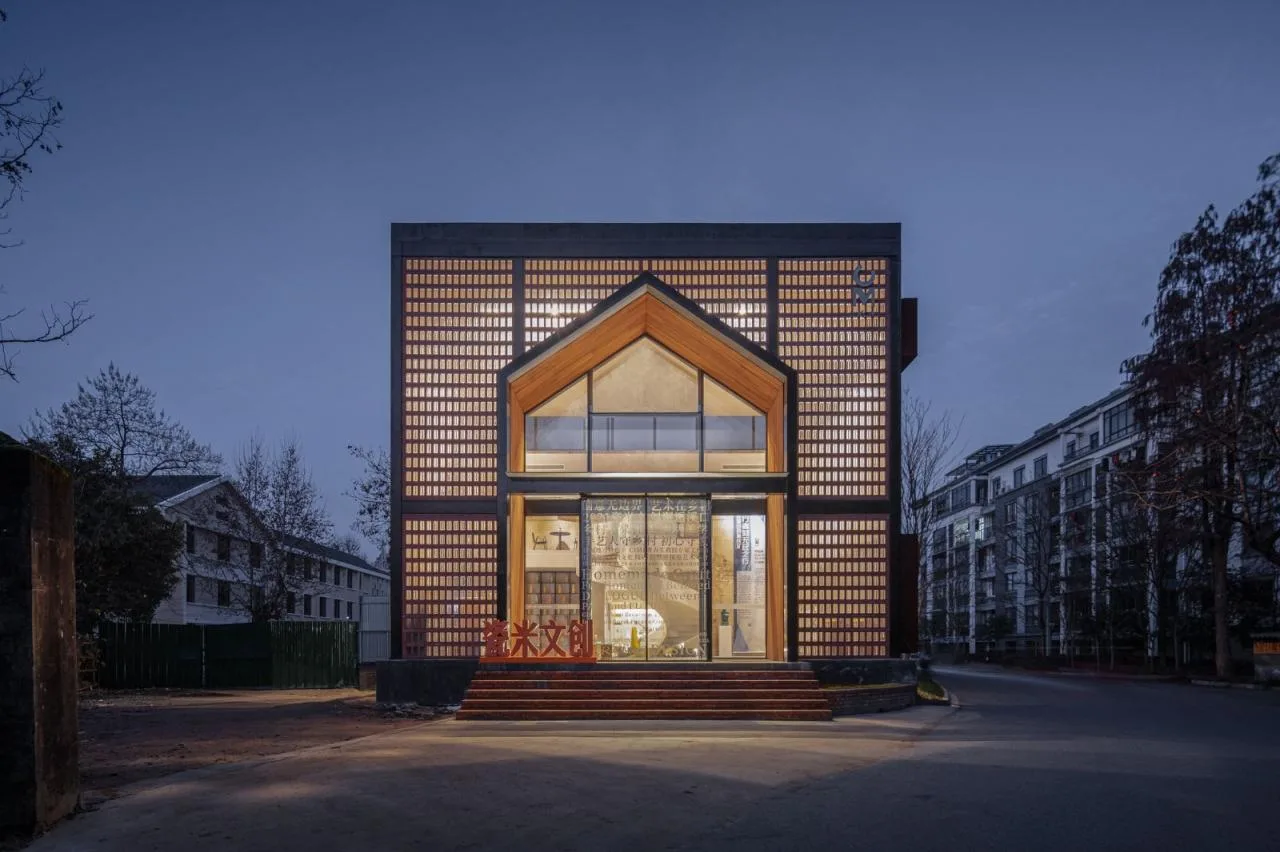
▲ East facade entrance © Architecture Photography
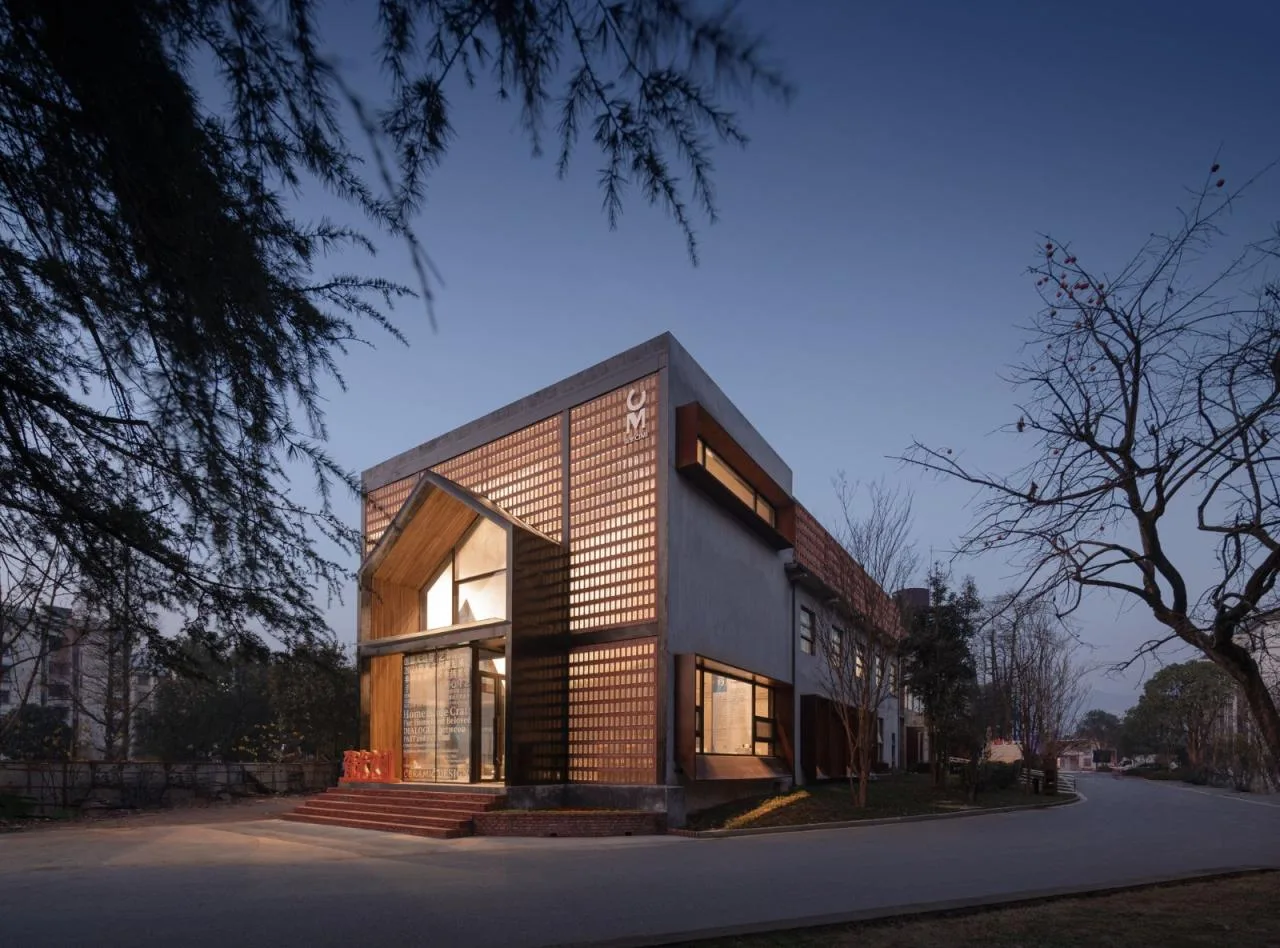
▲ East facade entrance © Architecture Photography
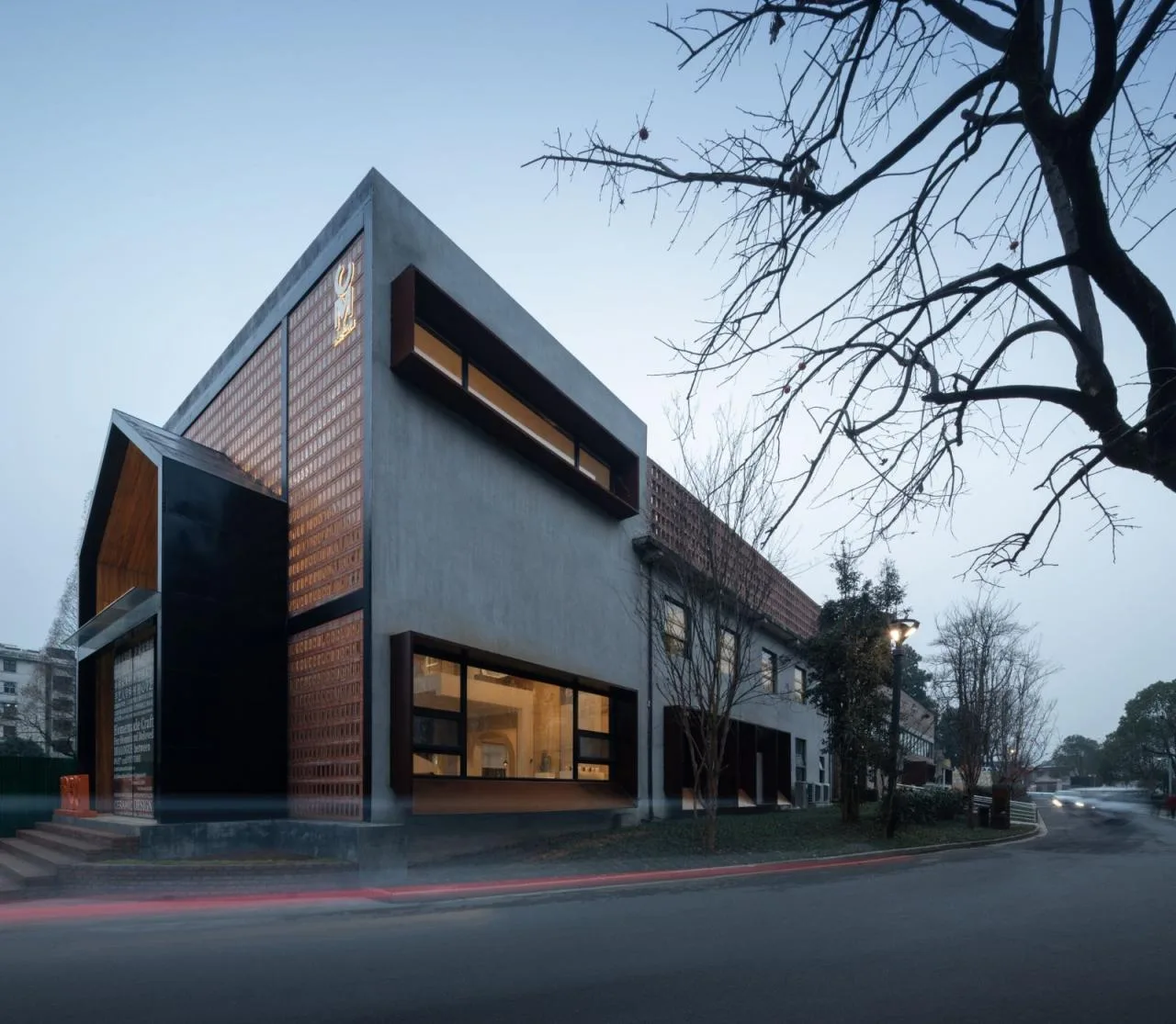
▲ East facade entrance © Architecture Photography
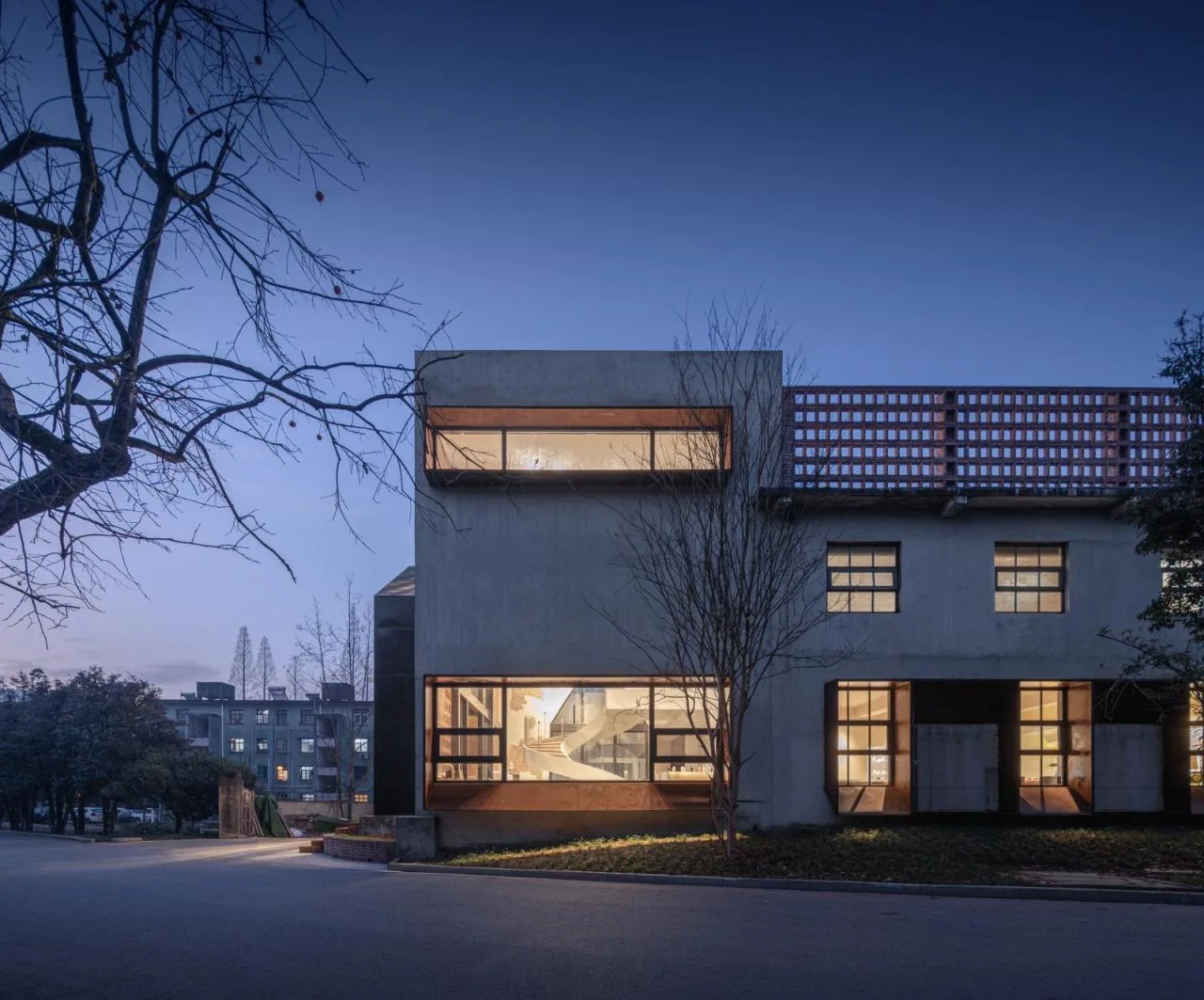
▲ Window view under the night sky © Architecture Photography
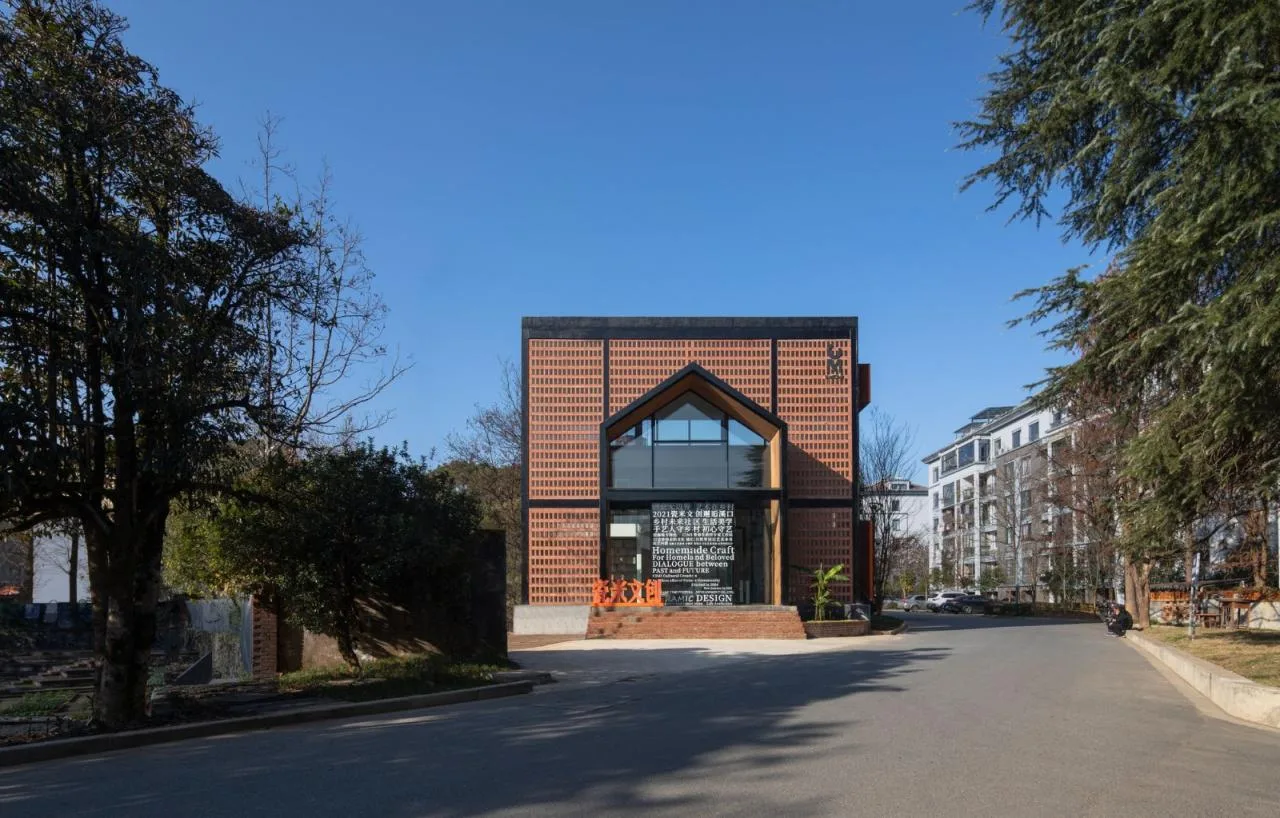
▲ East facade entrance in sunlight © Architecture Photography
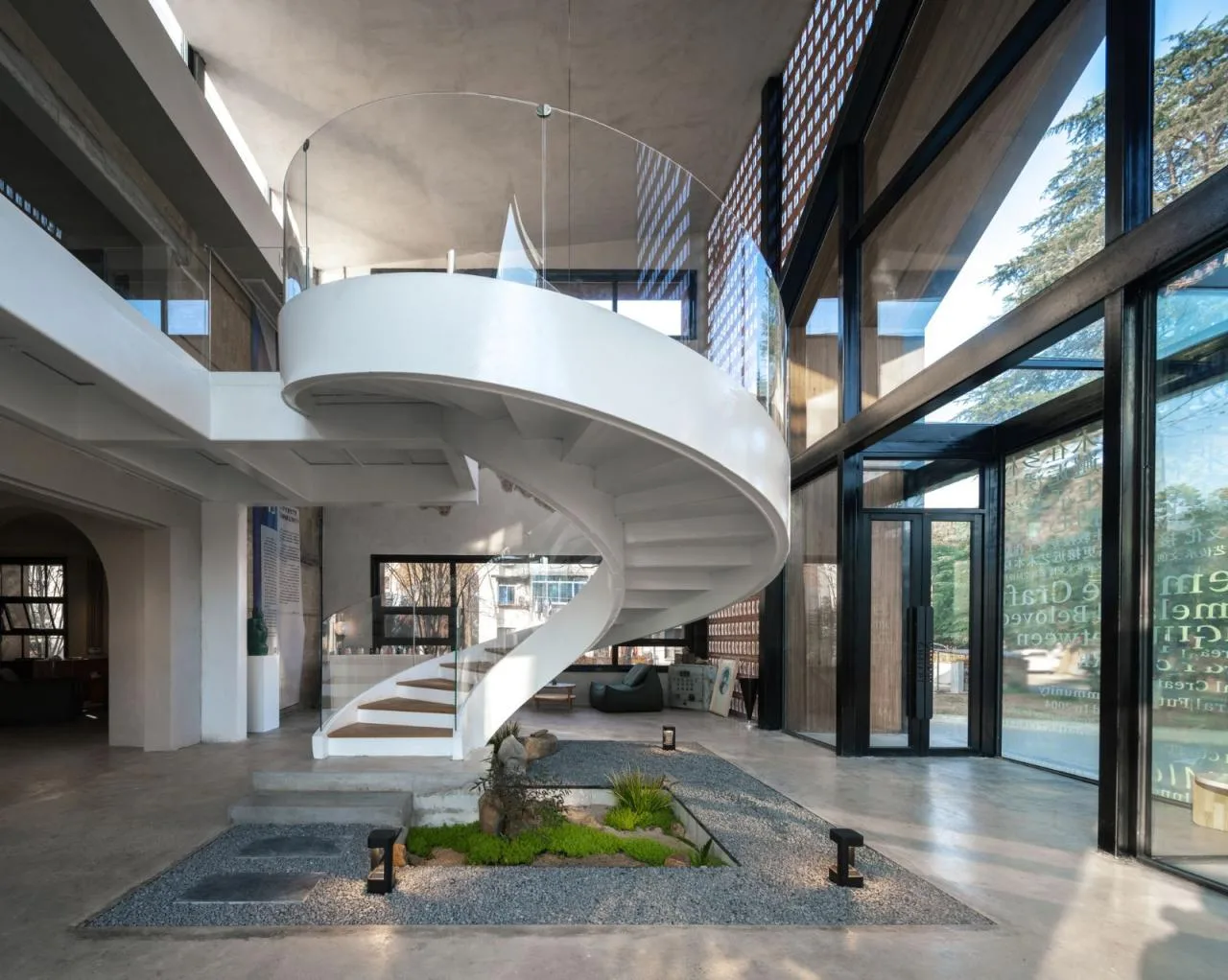
▲ Spiral staircase in front hall © Architecture Photography
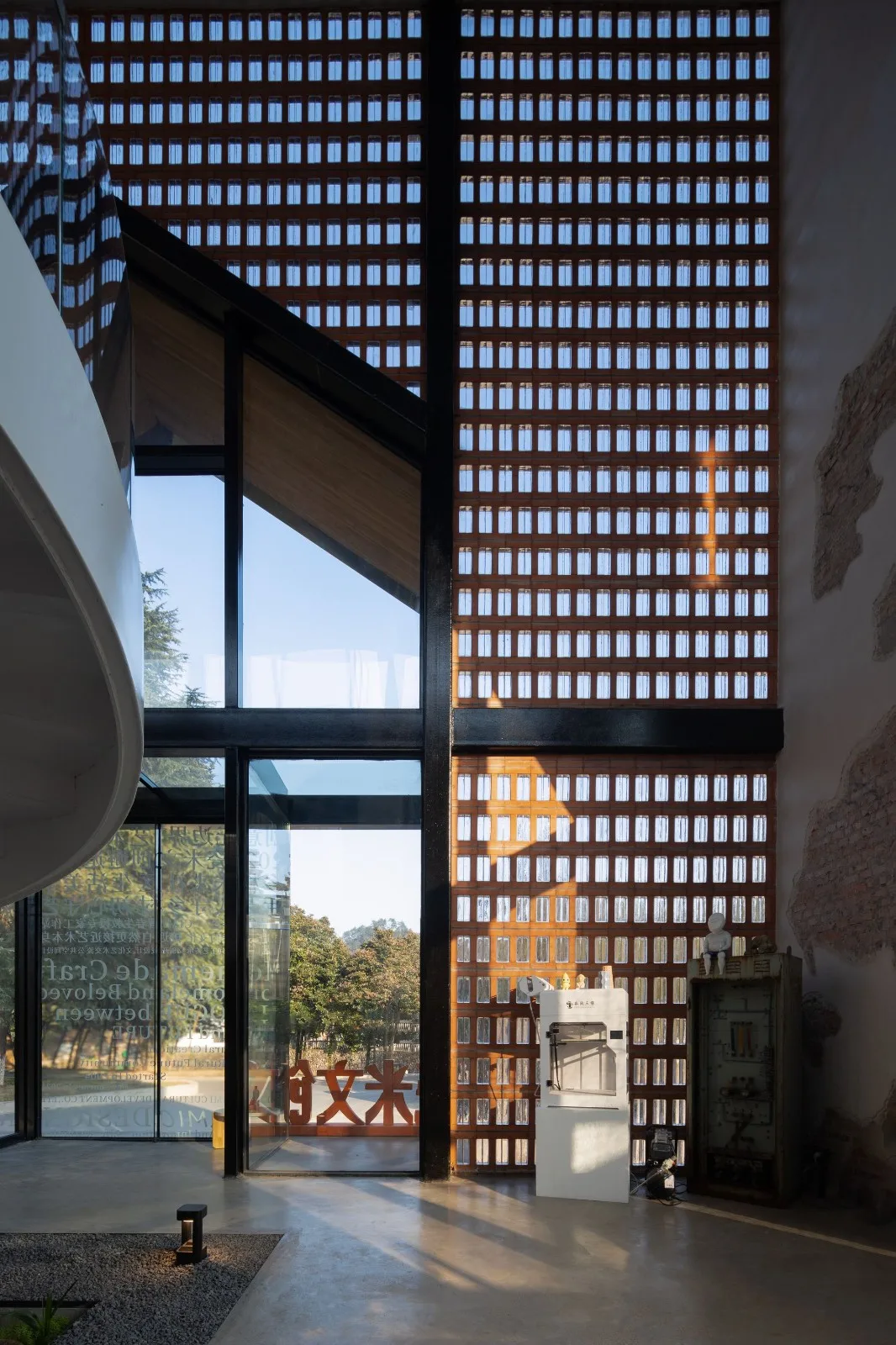
▲ Front hall glass brick and red brick wall on 1F © Architecture Photography
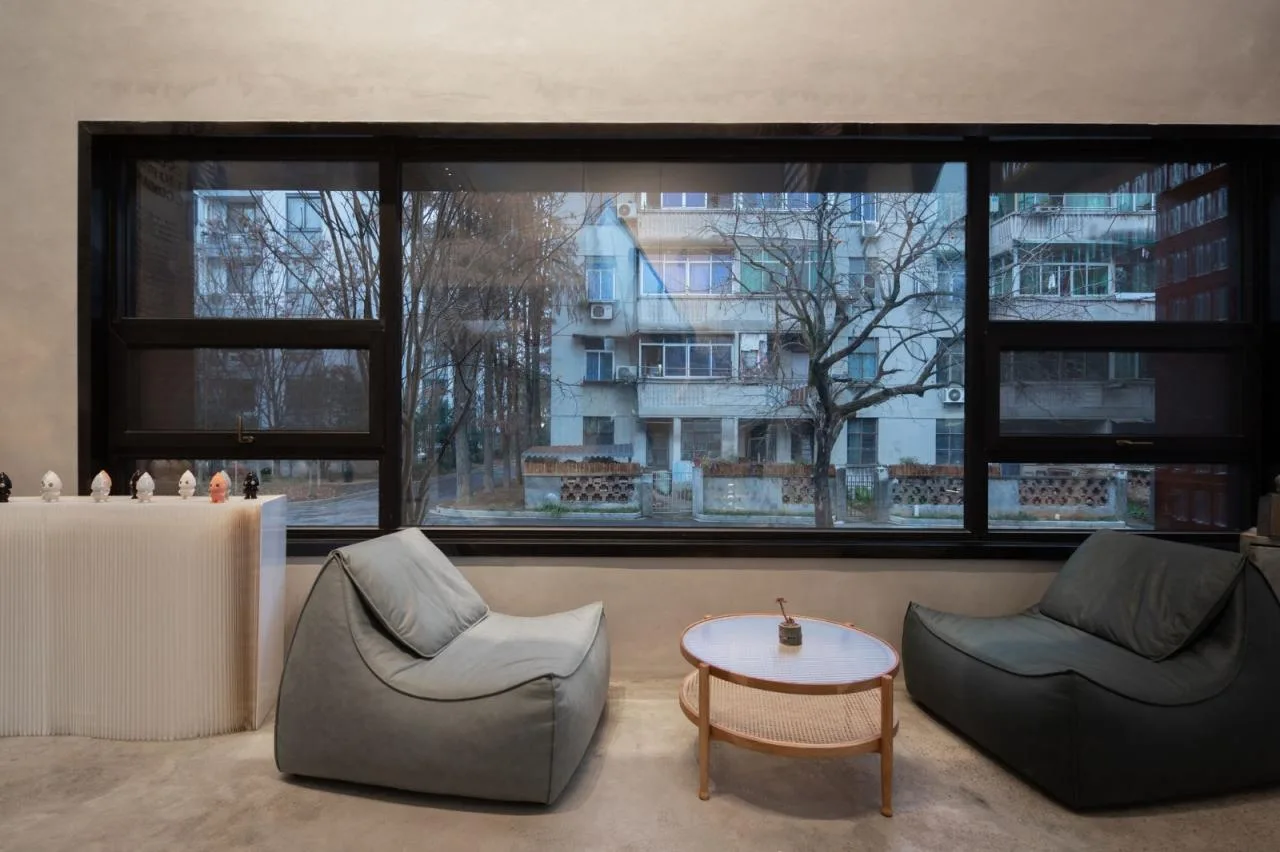
▲ Long window frame view on 1F © Architecture Photography
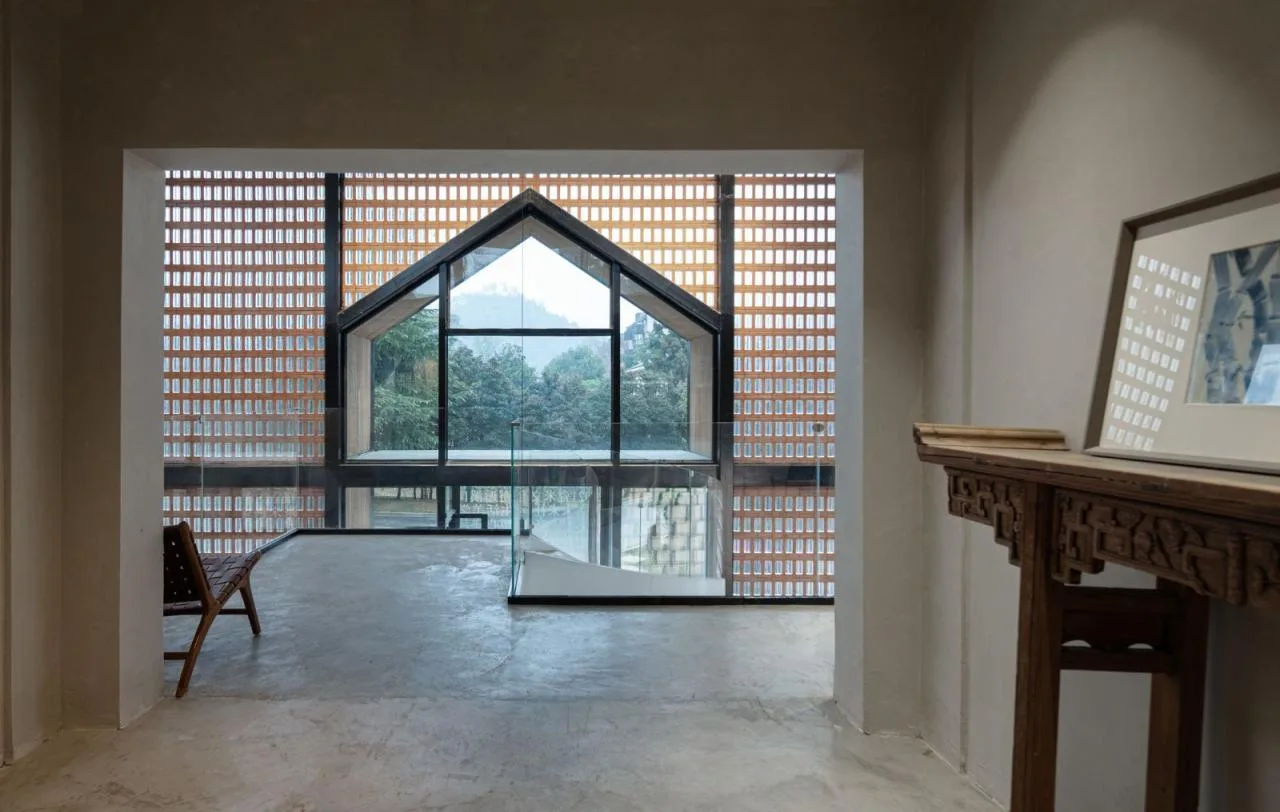
▲ View from 2F platform towards front hall © Architecture Photography
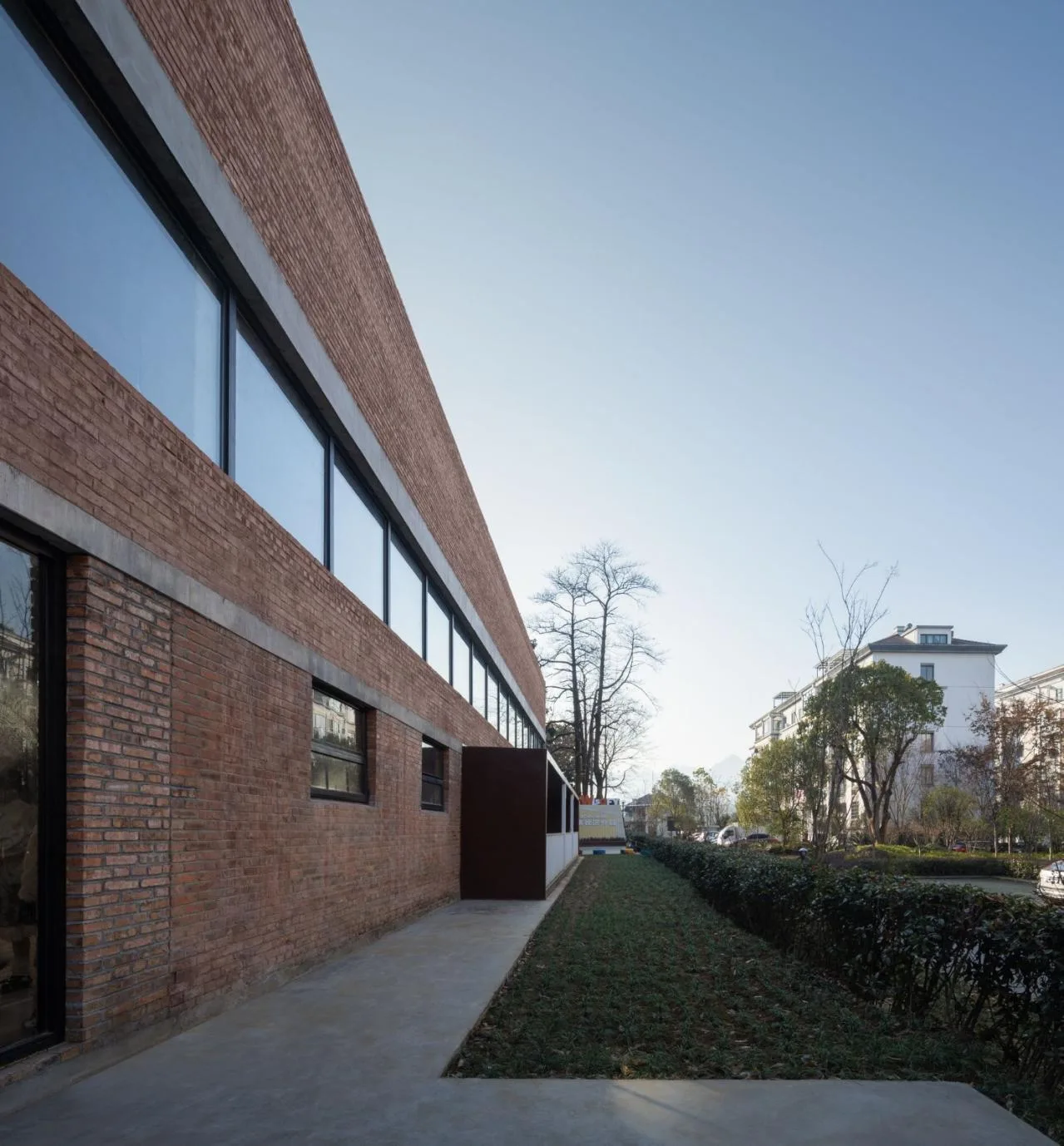
▲ North facade of the multifunctional Sports Center showing old and new overlays © Architecture Photography
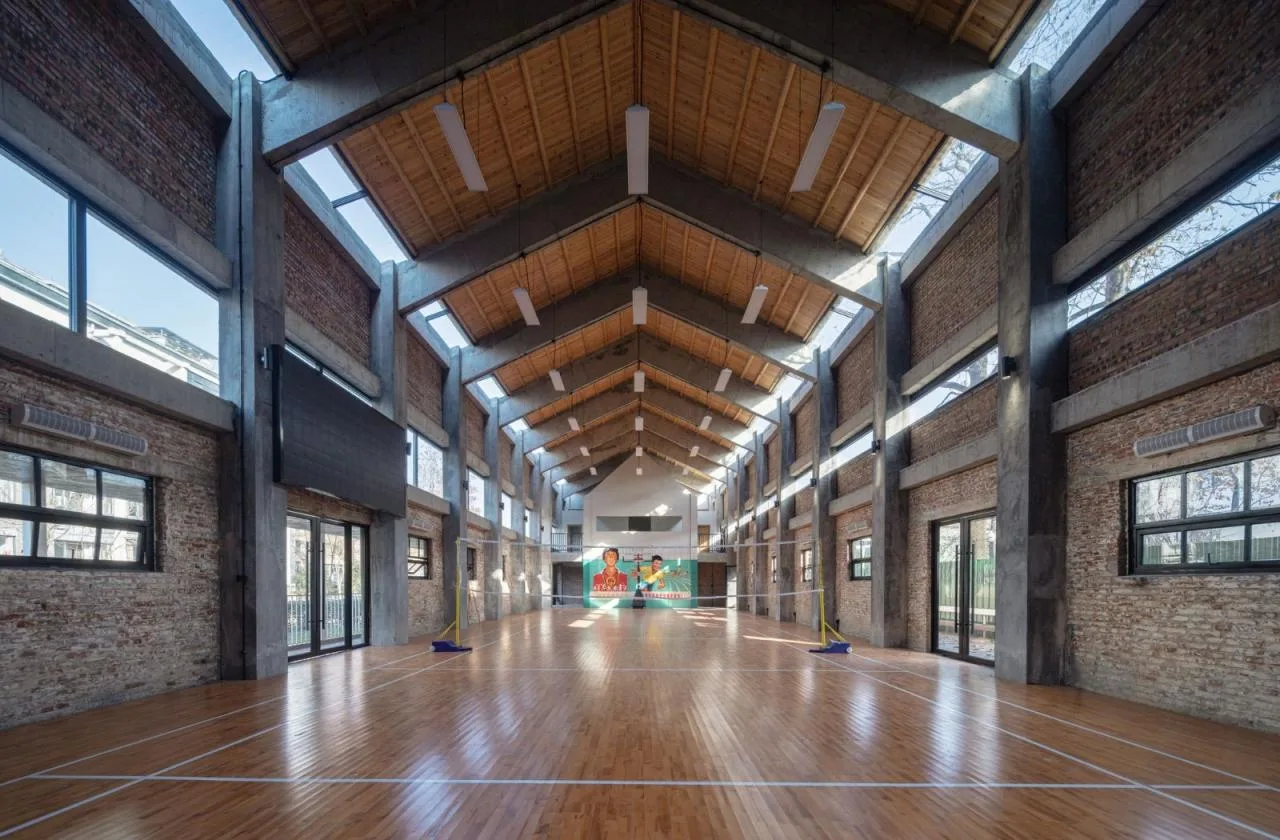
▲ Indoor view of the multifunctional Sports Center with old and new overlays © Architecture Photography
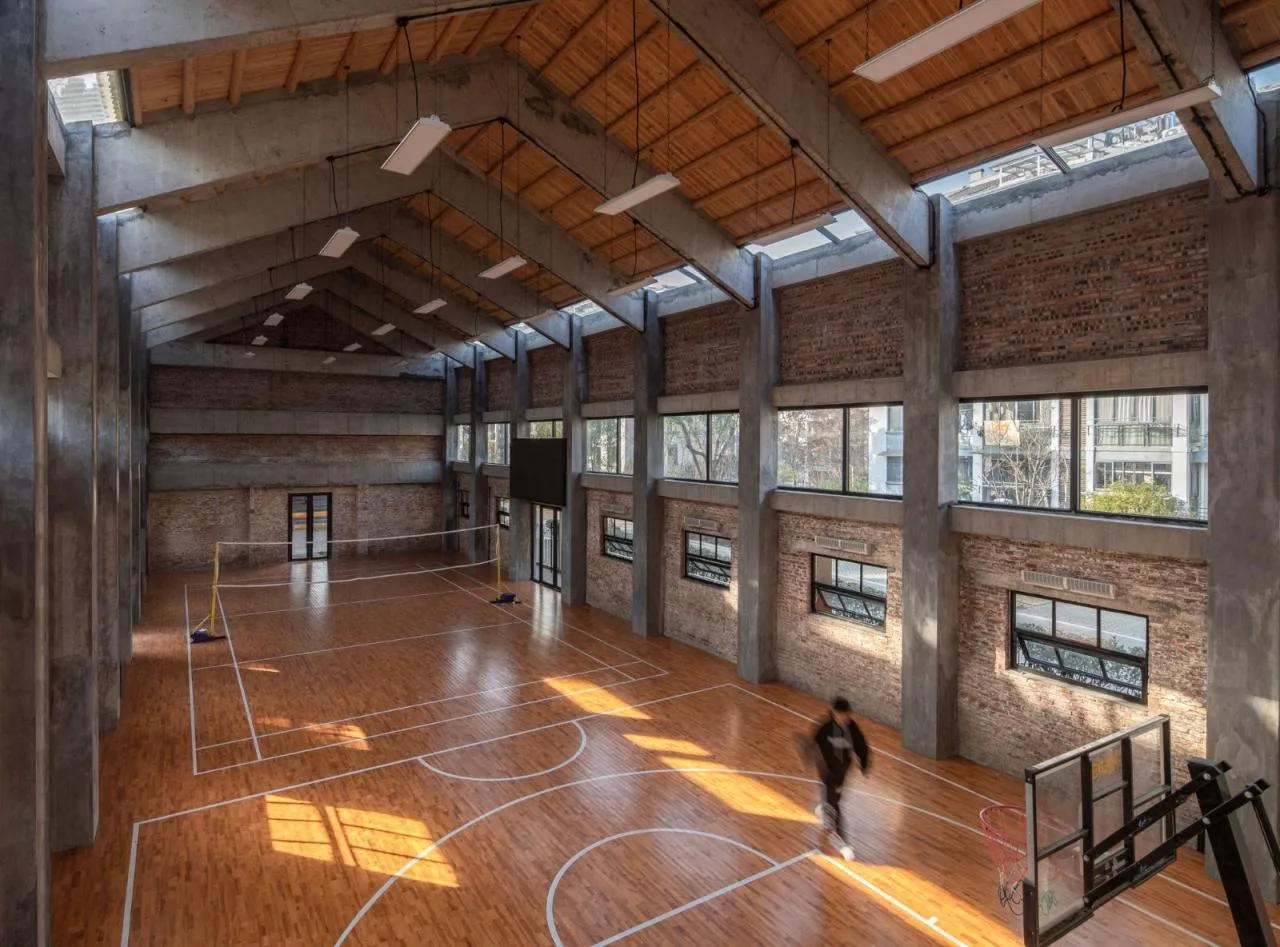
▲ Multifunctional sports hall in active use © Architecture Photography
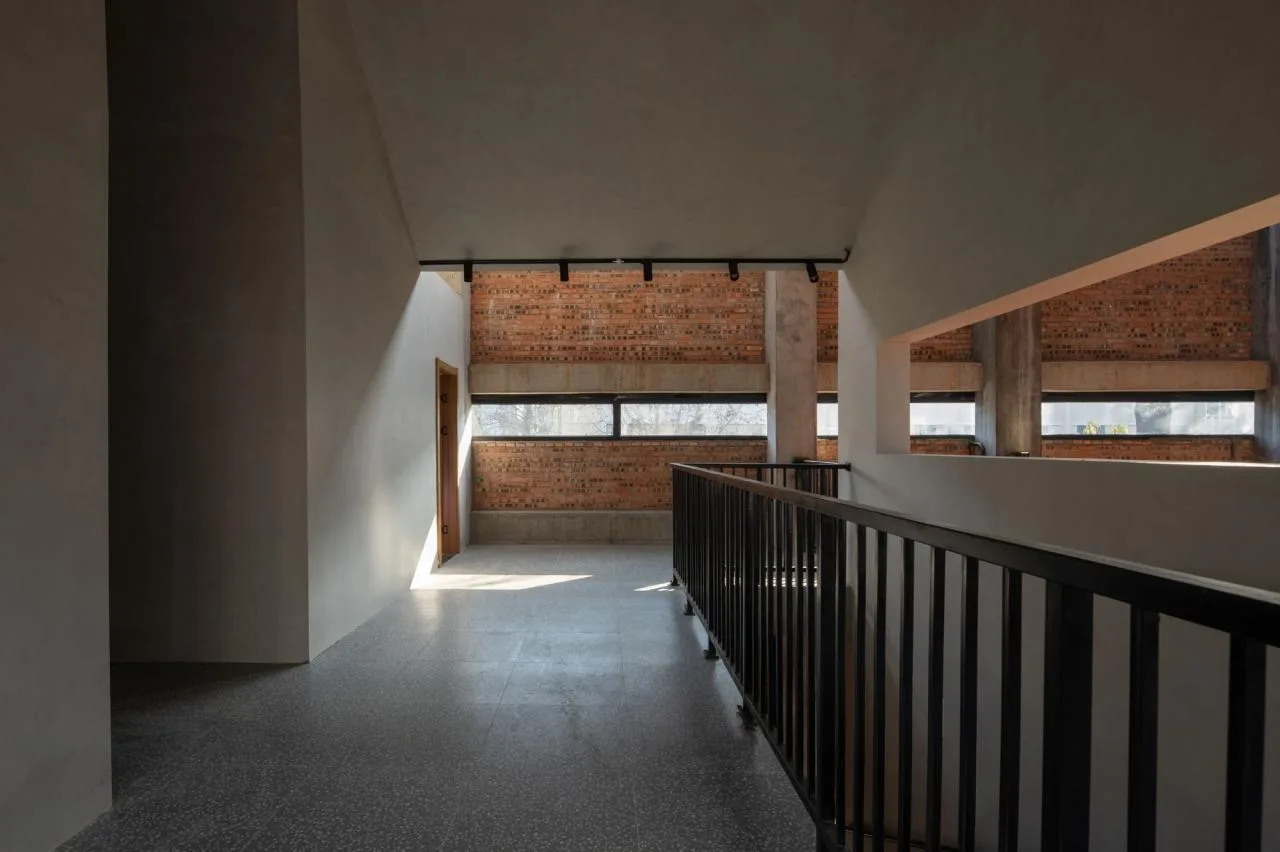
▲ 2F platform of the multifunctional Sports Center bathed in light and shadow © Architecture Photography
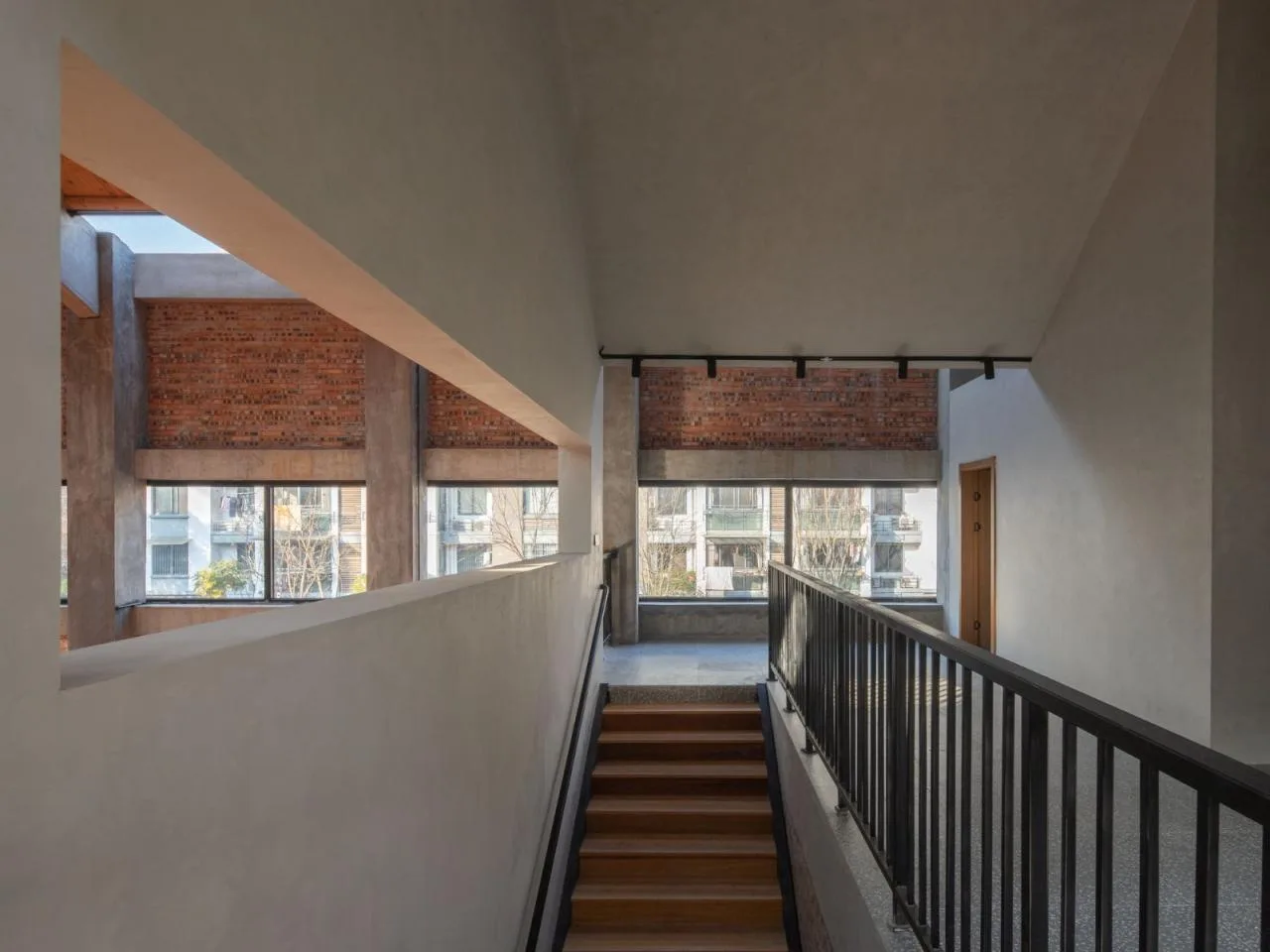
▲ Staircase space in multifunctional gymnasium © Architecture Photography
03. Returning to the Simple Beauty of Everyday Life
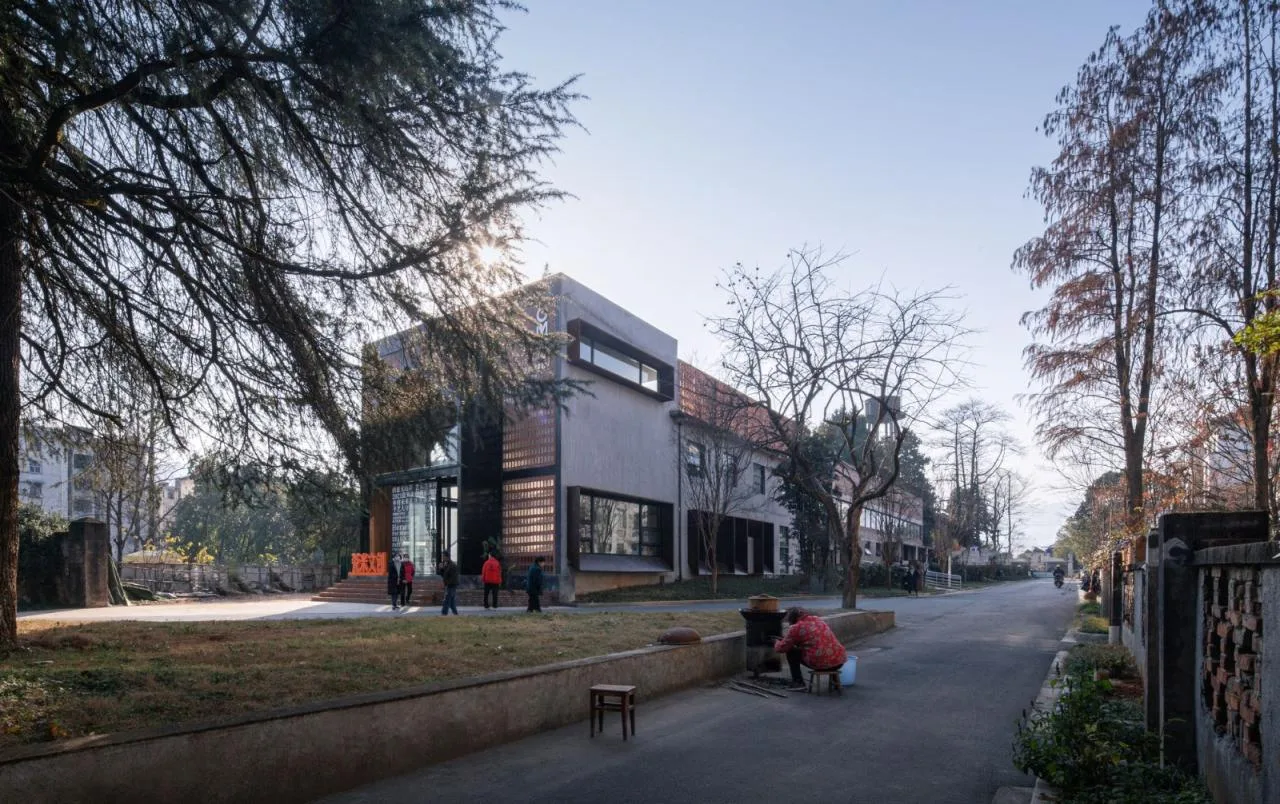
▲ Architectural perspective seamlessly integrated into daily life © Architecture Photography
In architectural projects, it is common to face challenges when handing over spaces to users or operators. Often, there are aesthetic conflicts or issues with how people use the spaces. We constantly ask ourselves how to maintain an authentic aesthetic in everyday use, avoiding overly deliberate or formulaic designs.
From the beginning of the design process, after setting the framework and principles, we deliberately avoided excessive fixed or deliberate design elements and materials. This approach preserved the flexibility, diversity, and potential of the space, allowing users to personalize and adapt it.
Many public designs end up unused or abandoned after completion, resulting in significant social resource waste. For this project, operational content and business formats were prioritized during design and renovation. As a result, the multifunctional sports hall is actively used by local residents for basketball, badminton, and even square dancing.
Fortunately, the space owner shares a strong artistic sensibility and aesthetic appreciation, which complements the original plan. This synergy allows even imperfect or “messy” spaces to convey an authentic daily aesthetic, preserving the beauty of the architecture while breathing new life and soul into the building.
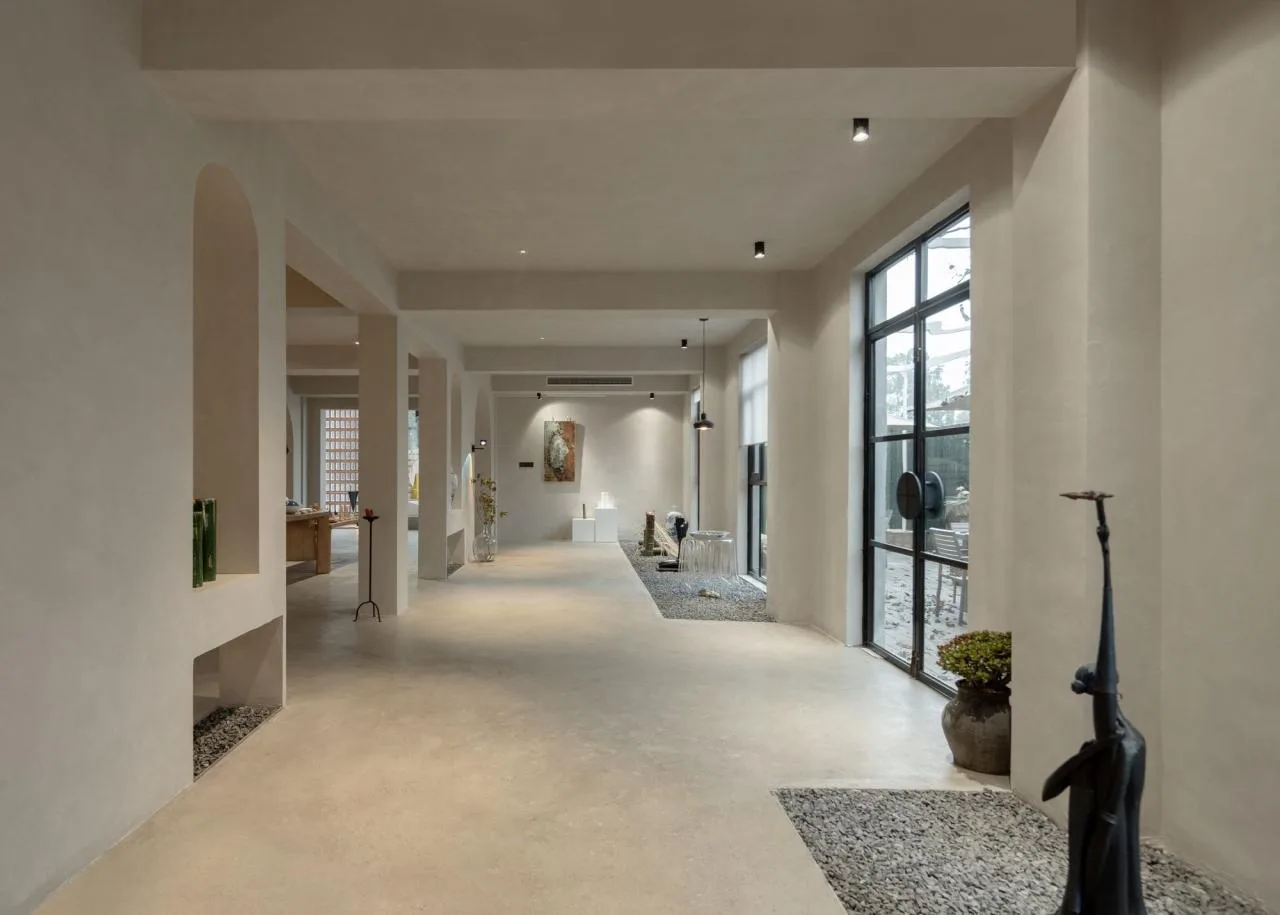
▲ Indoor space of Ceramic Rice Studio on 1F © Architecture Photography
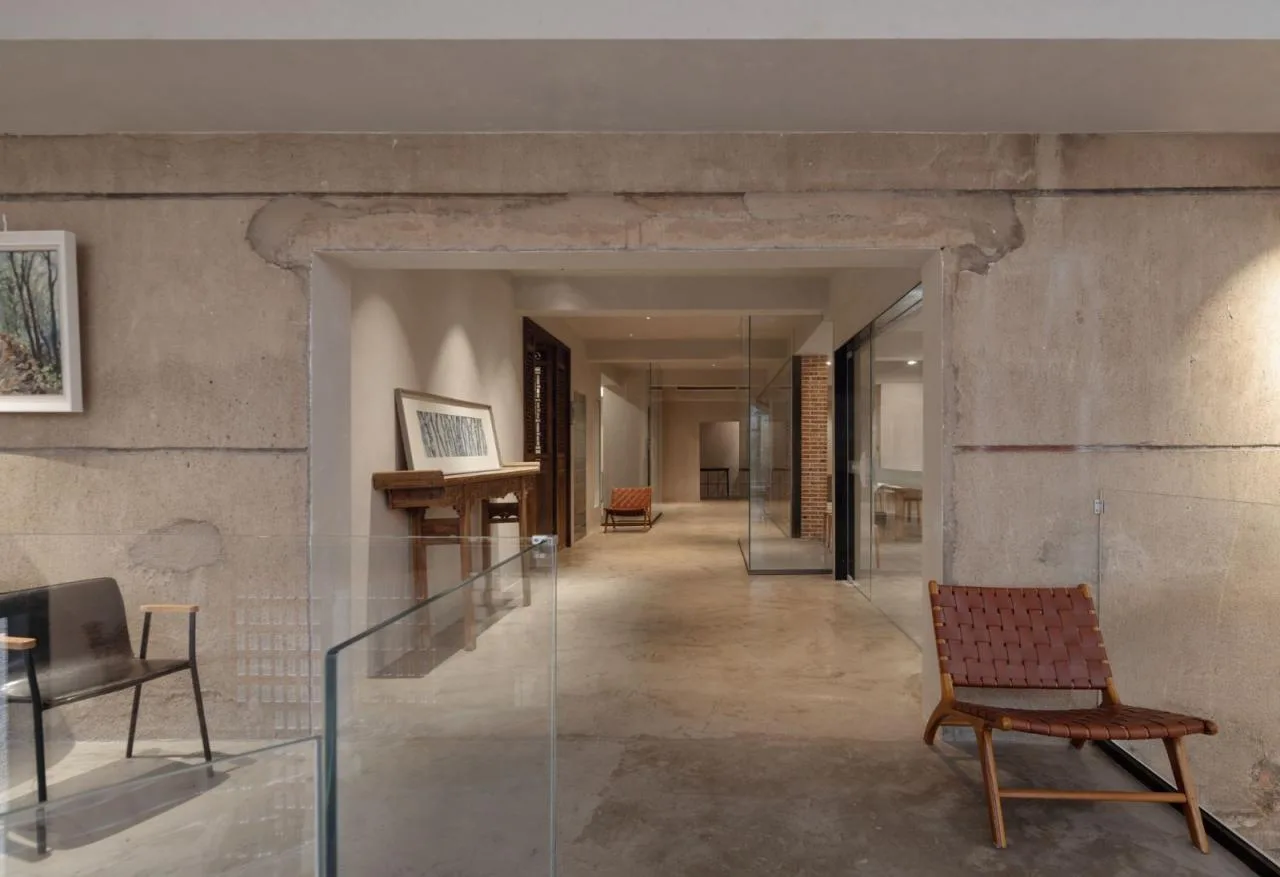
▲ Indoor space of Ceramic Rice Studio on 2F © Architecture Photography
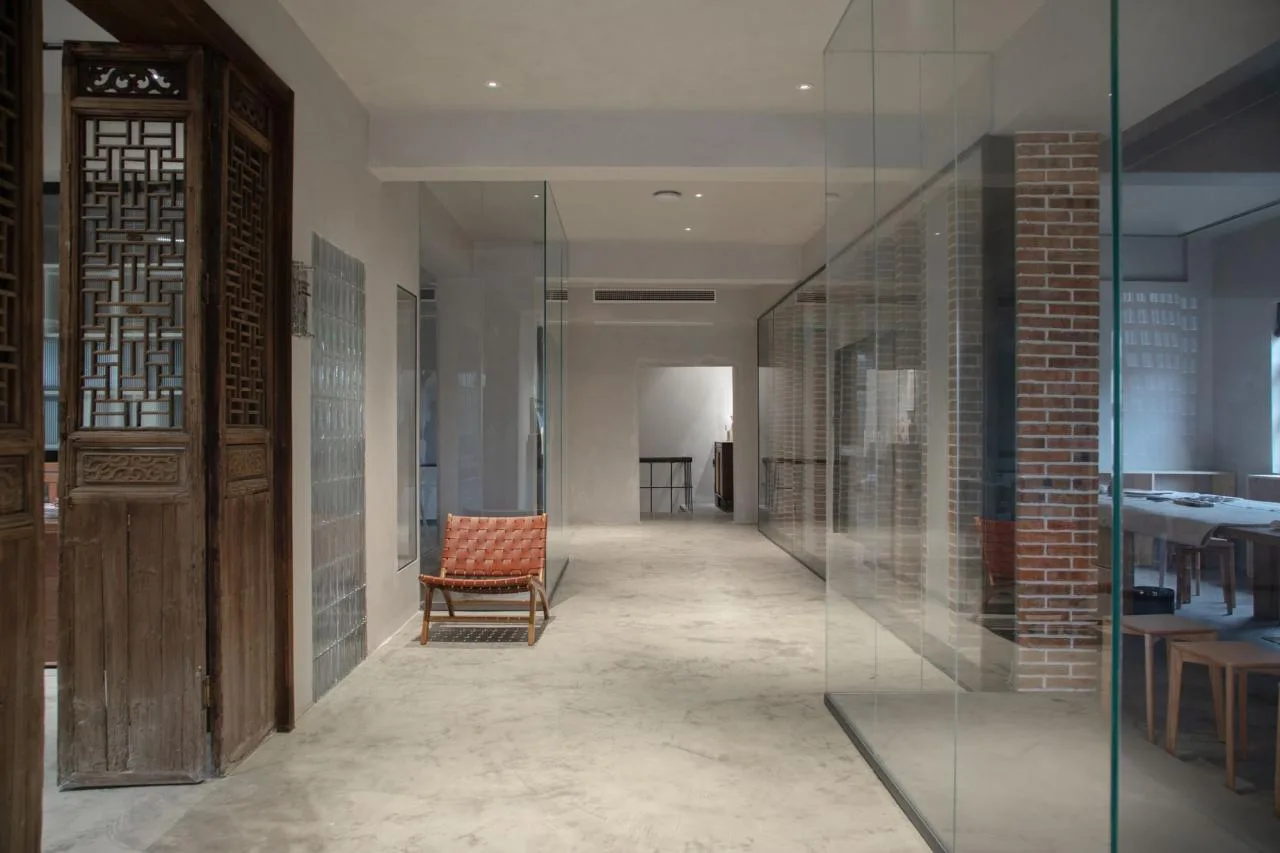
▲ 2F Ceramic Rice Studio indoor environment © Architecture Photography
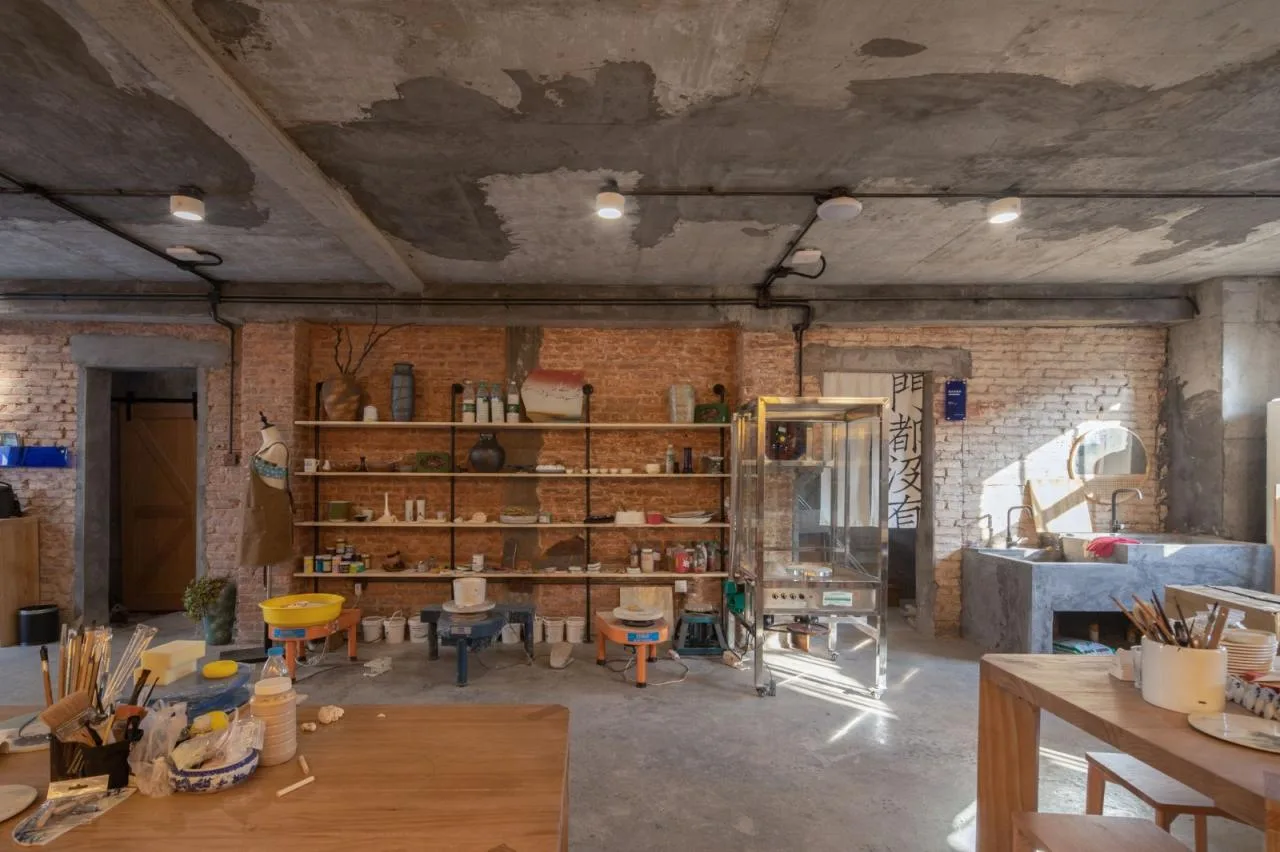
▲ Ceramic Rice Studio space in regular use © Architecture Photography
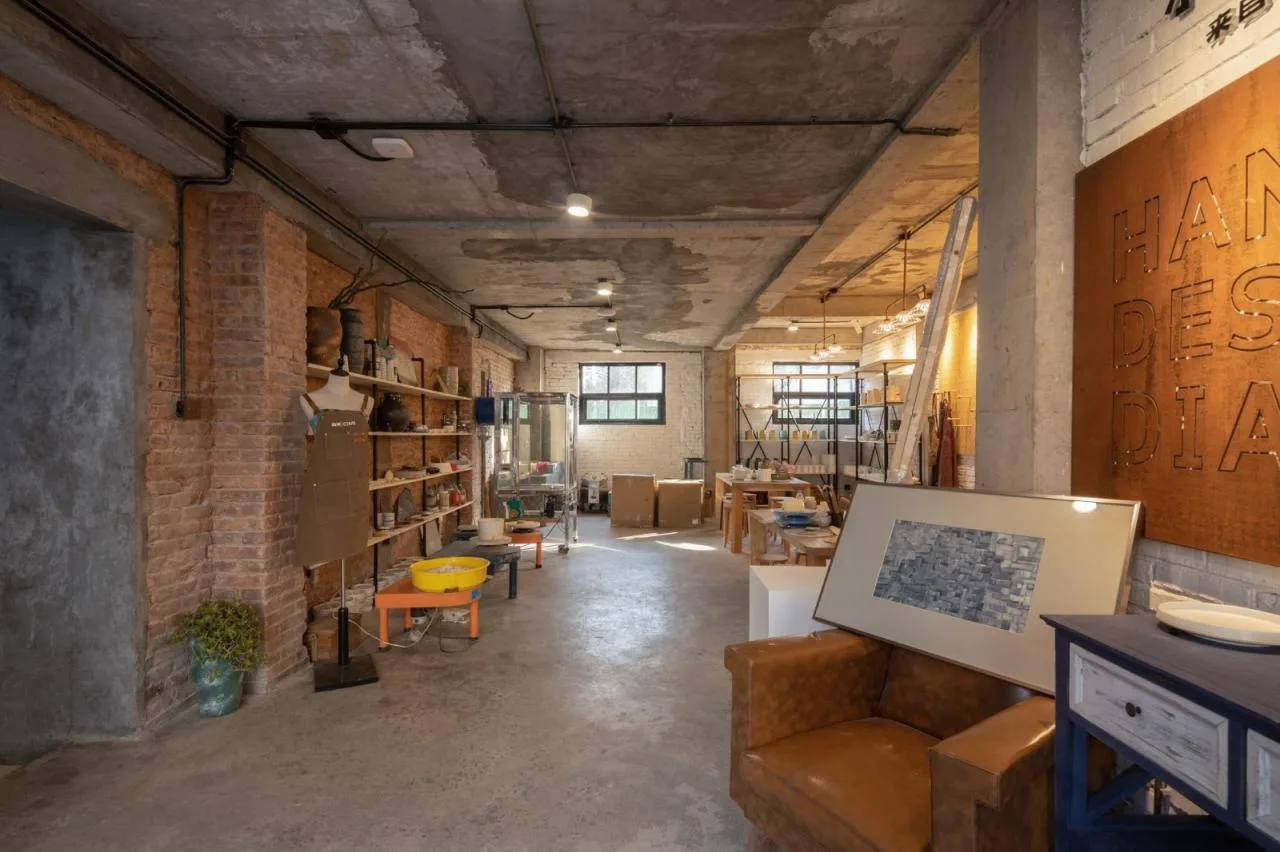
▲ Ceramic Rice Studio space in regular use © Architecture Photography
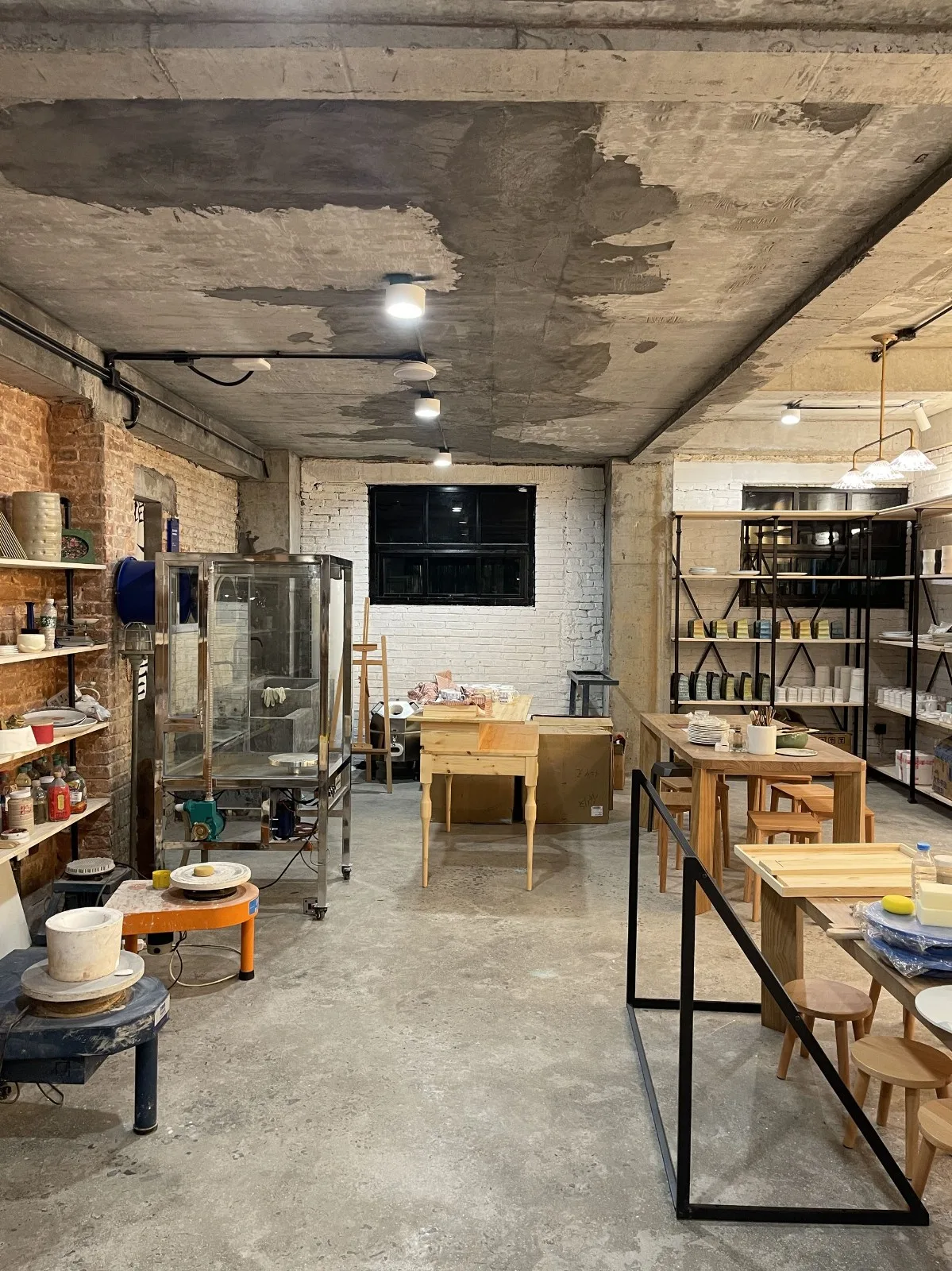
▲ Ceramic Rice Studio space in regular use © Yan Yang
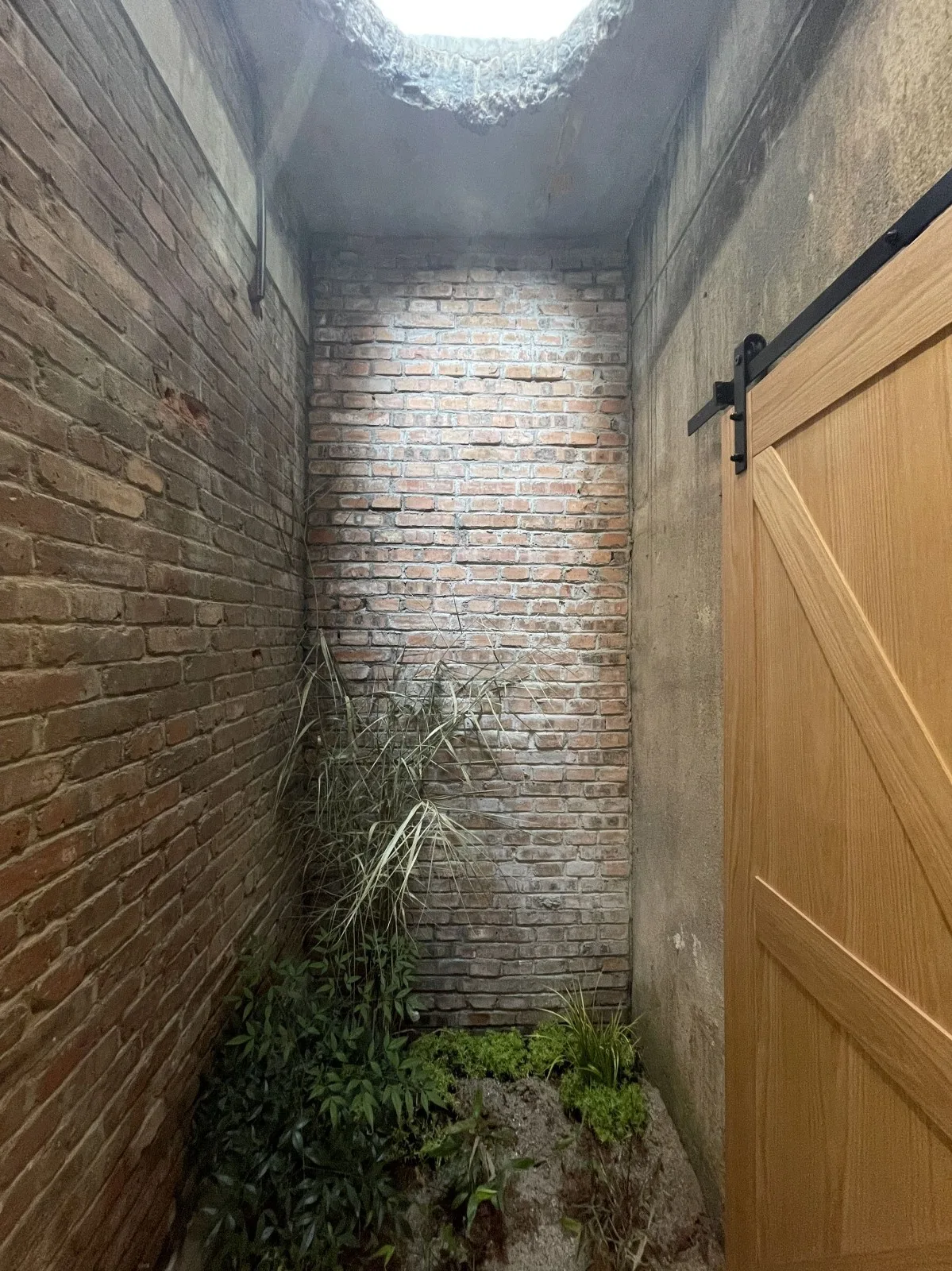
▲ Green growth space within a narrow slit © Yan Yang
Project Drawings
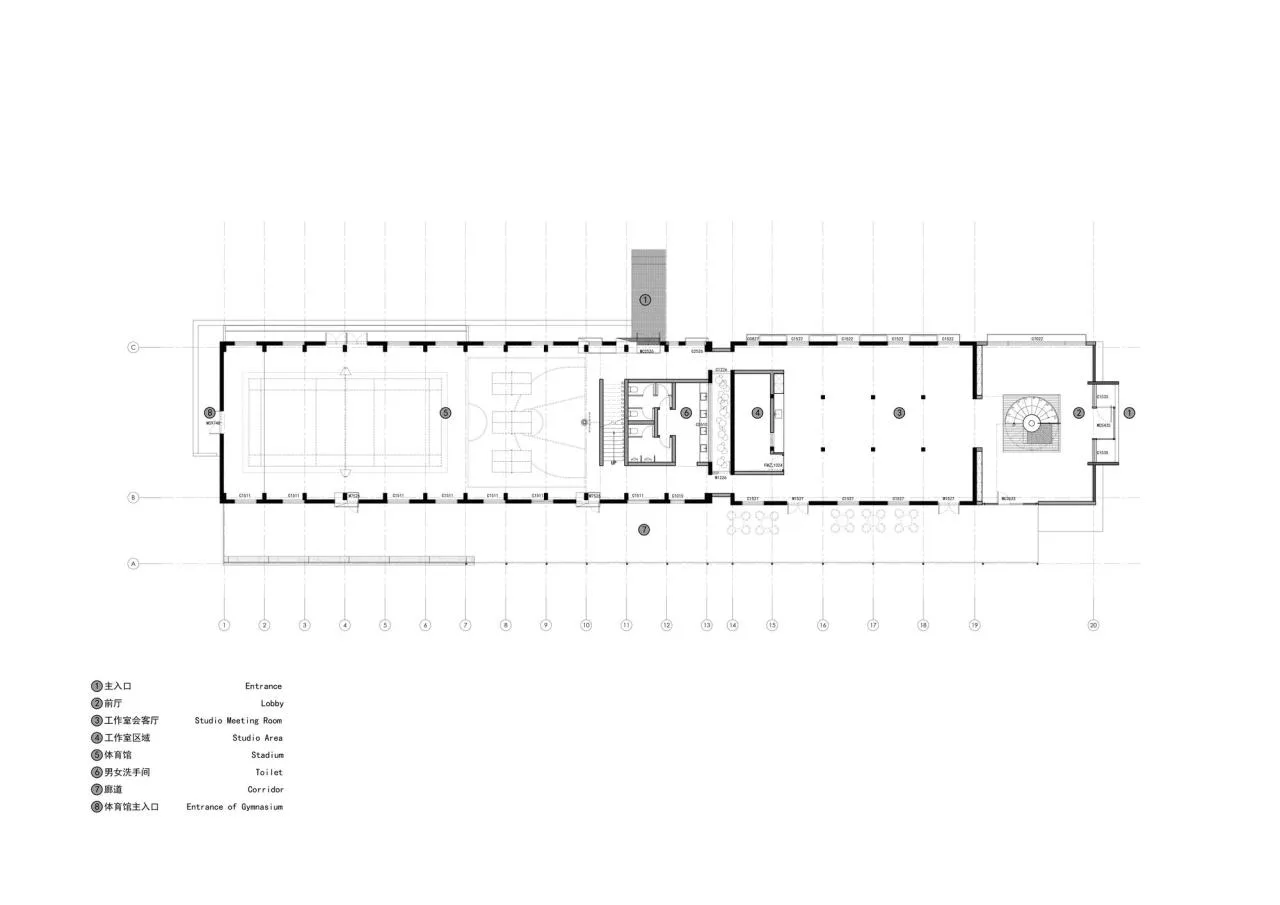
▲ 1F building floor plan © y.ad studio
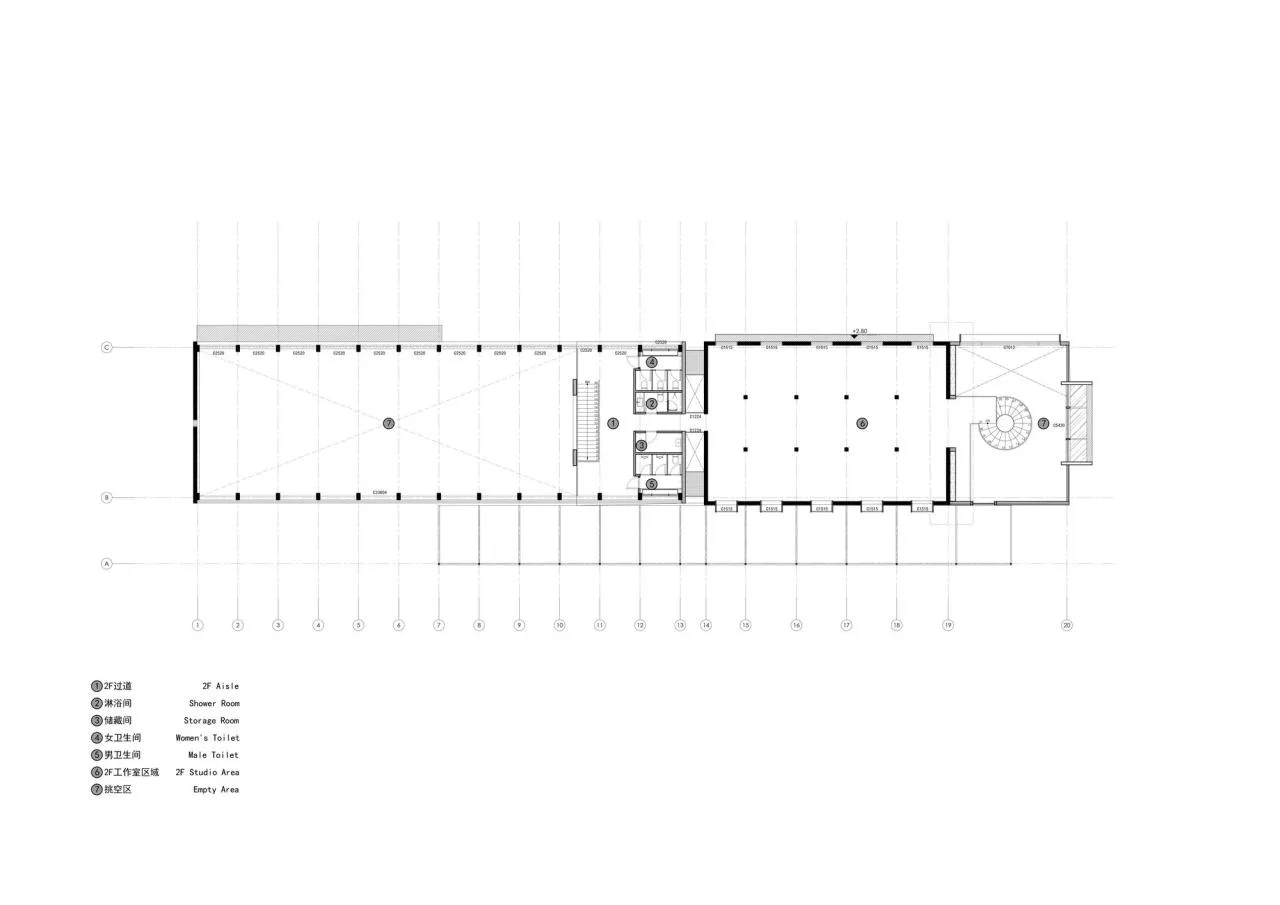
▲ 2F building floor plan © y.ad studio
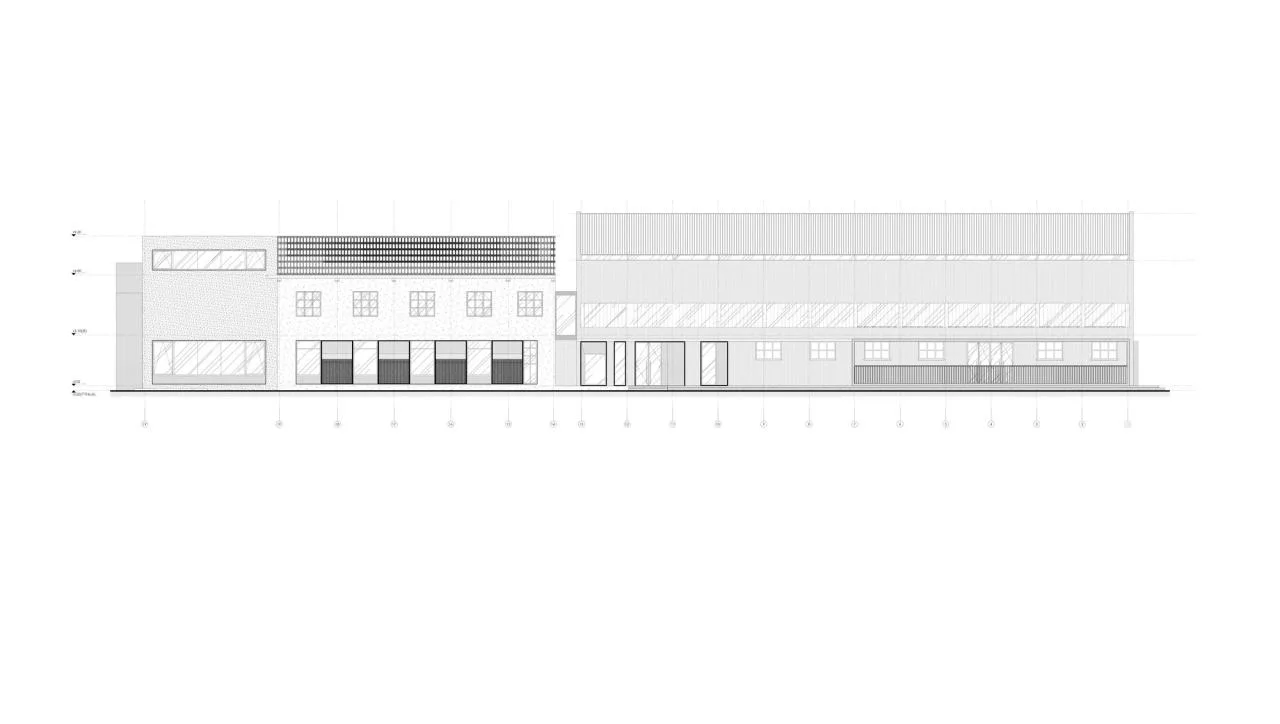
▲ North facade of the building © y.ad studio
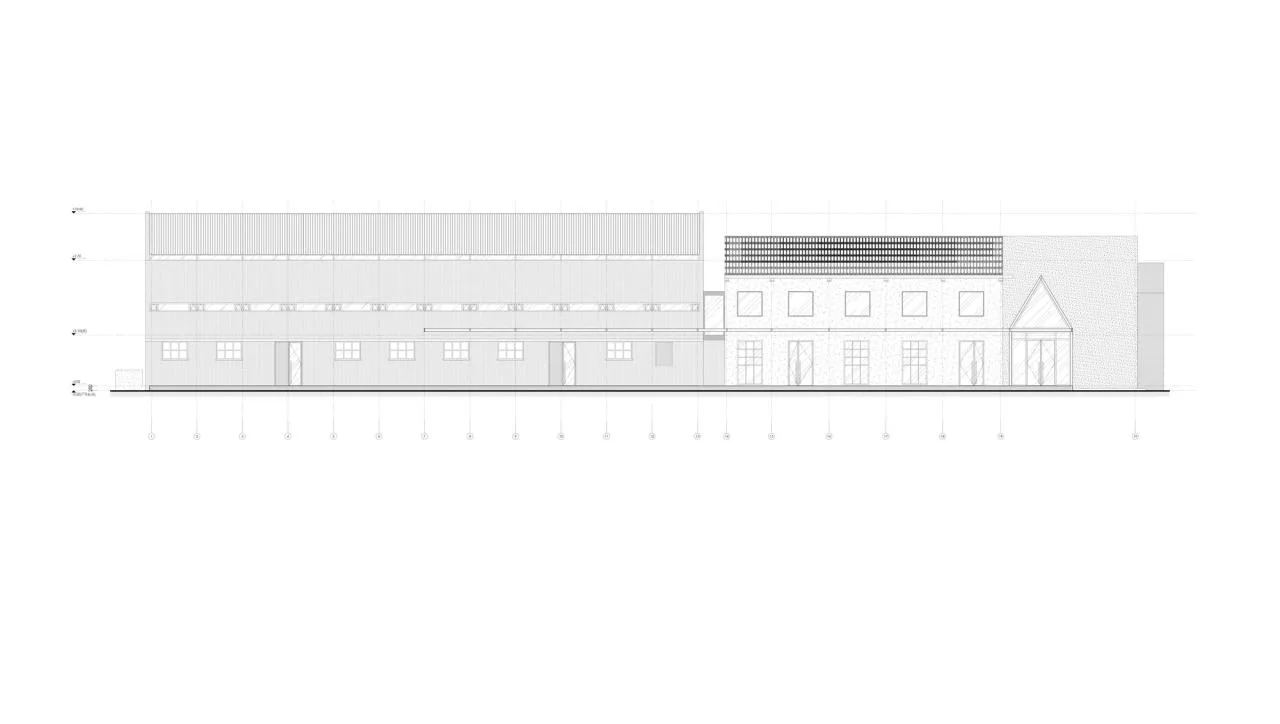
▲ South elevation of the building © y.ad studio
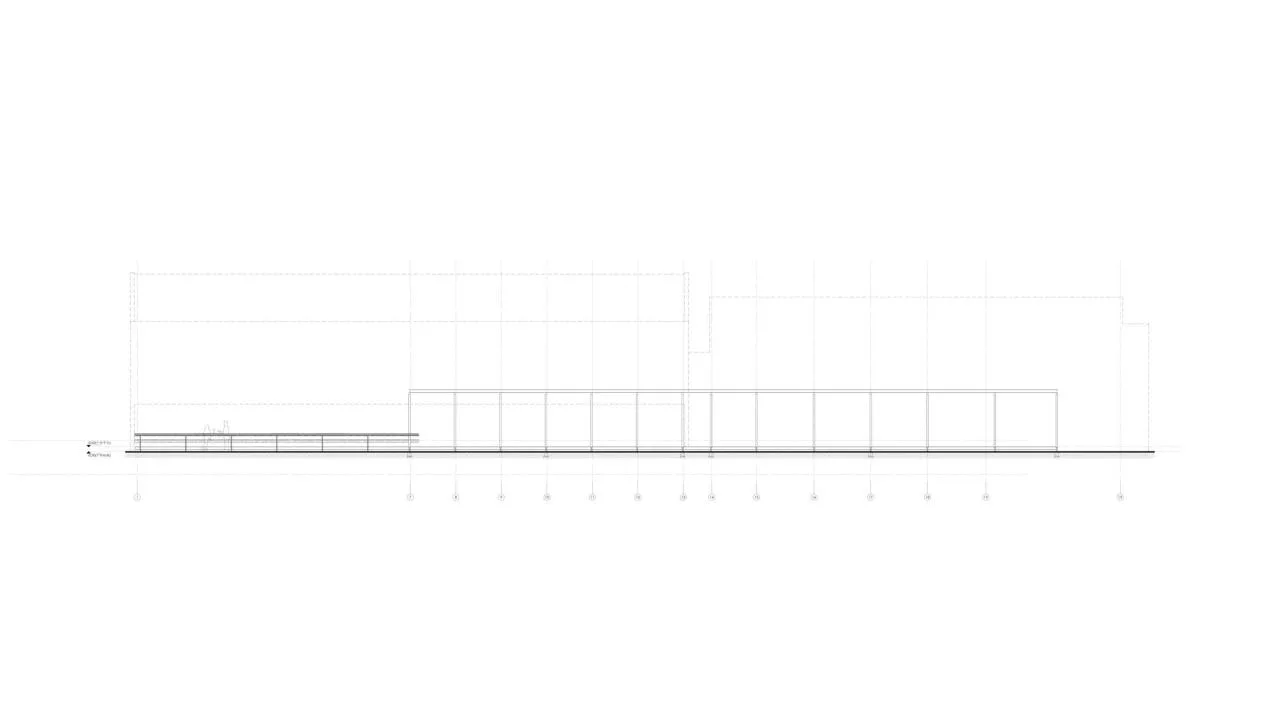
▲ South elevation of the building © y.ad studio
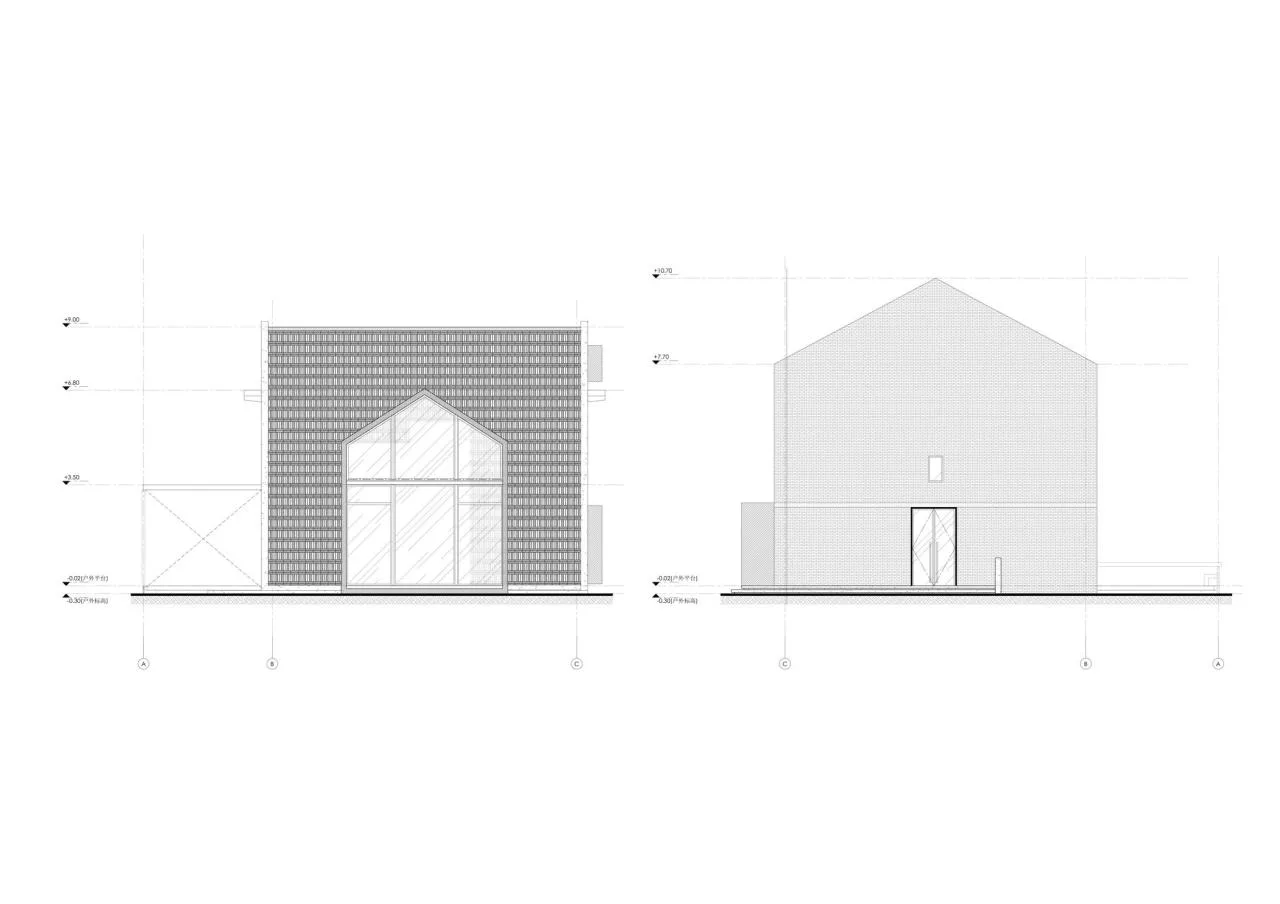
▲ East and West facades of the building © y.ad studio
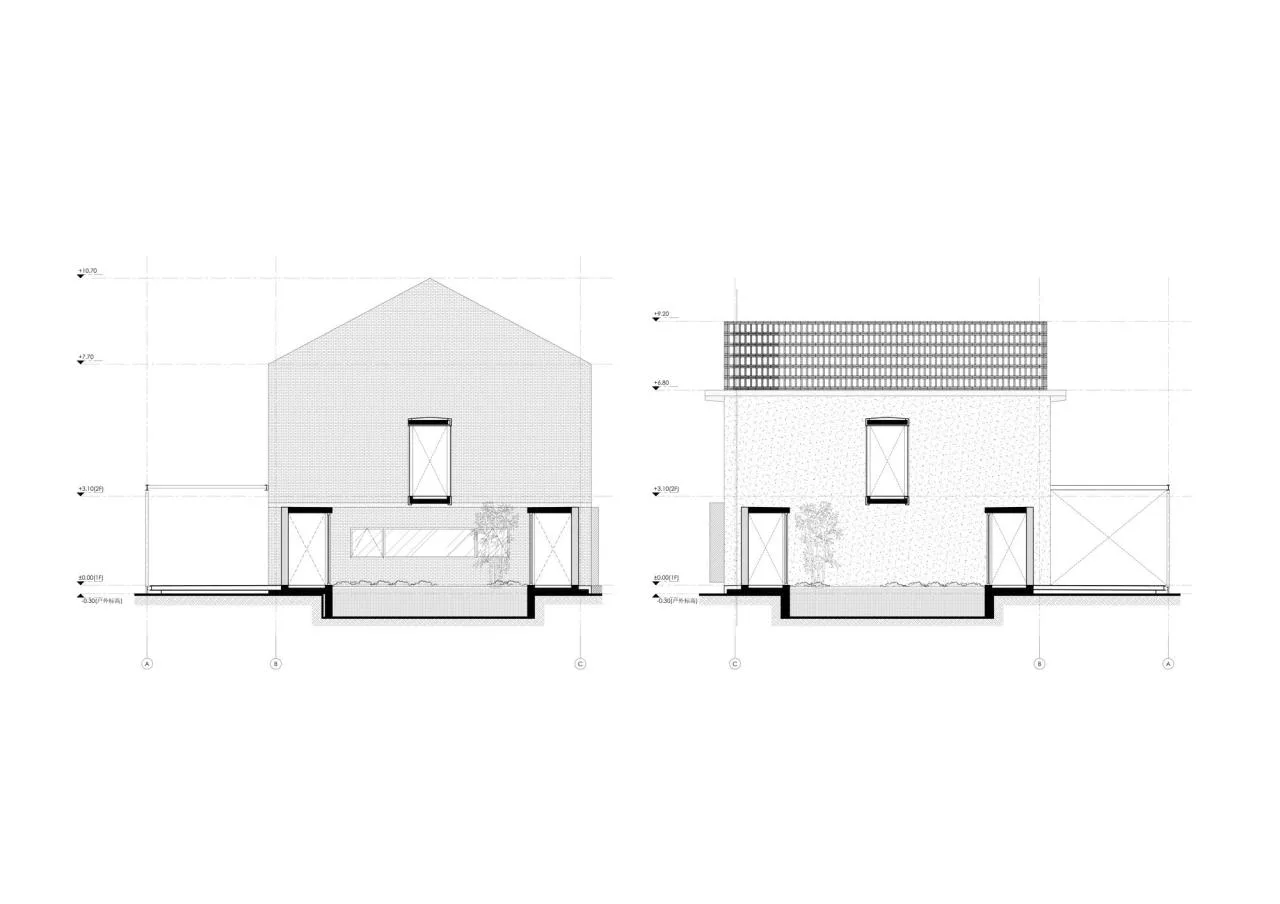
▲ Architectural sectional elevation © y.ad studio
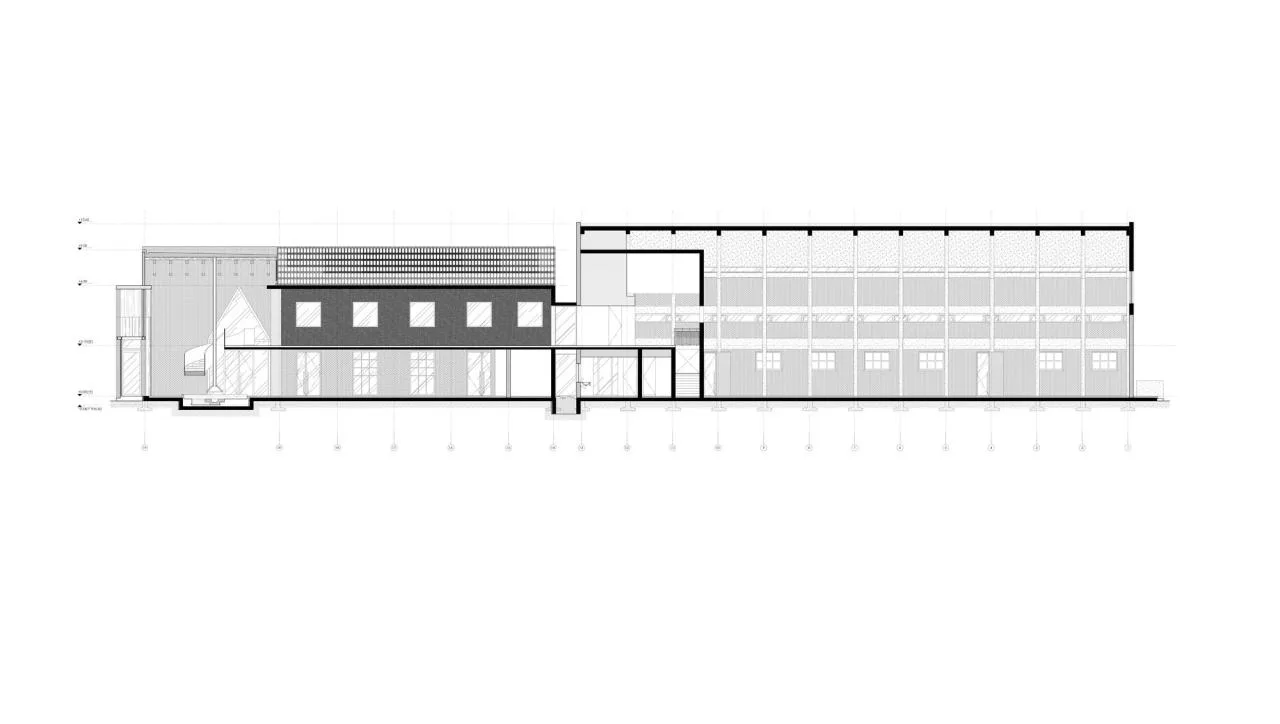
▲ Architectural sectional elevation © y.ad studio
Project Information
Project Name: Renovation of the Multifunctional Sports Center and Ceramic Expert Workstation in the Rural Future Community of Xikou Town, Longyou
Construction Unit: People’s Government of Xikou Town, Longyou County
Entrusting Unit: Xiangban Culture and Tourism Group
Design Unit: y.ad studio | Shanghai Yan Yang Architectural Design Studio
Lead Architect: Yan Yang
Project Designer: Wu Kejia
Architectural Design Institute: Shanghai Times Architectural Design Institute
Interior Design Team: Foshan Zon Interior Decoration Design Co., Ltd
Construction Drawing Deepening Design Team: Hangzhou Zhongya Architectural Design Co., Ltd
Project Design and Construction Management: Zhu Zhen, Gao Chengkai, Jia Yidong
Building Area: 1080 square meters
Main Materials: red brick, glass brick, weather-resistant steel, aluminum panels, Euclid sports flooring, Nippon Paint, Dazhuang outdoor bamboo, steel, and wood
Design Period: March 2020 to June 2020
Construction Period: March 2021 to December 2021
Photography Copyright: Ziran Architecture Photography (unless otherwise noted)
















Must log in before commenting!
Sign Up