
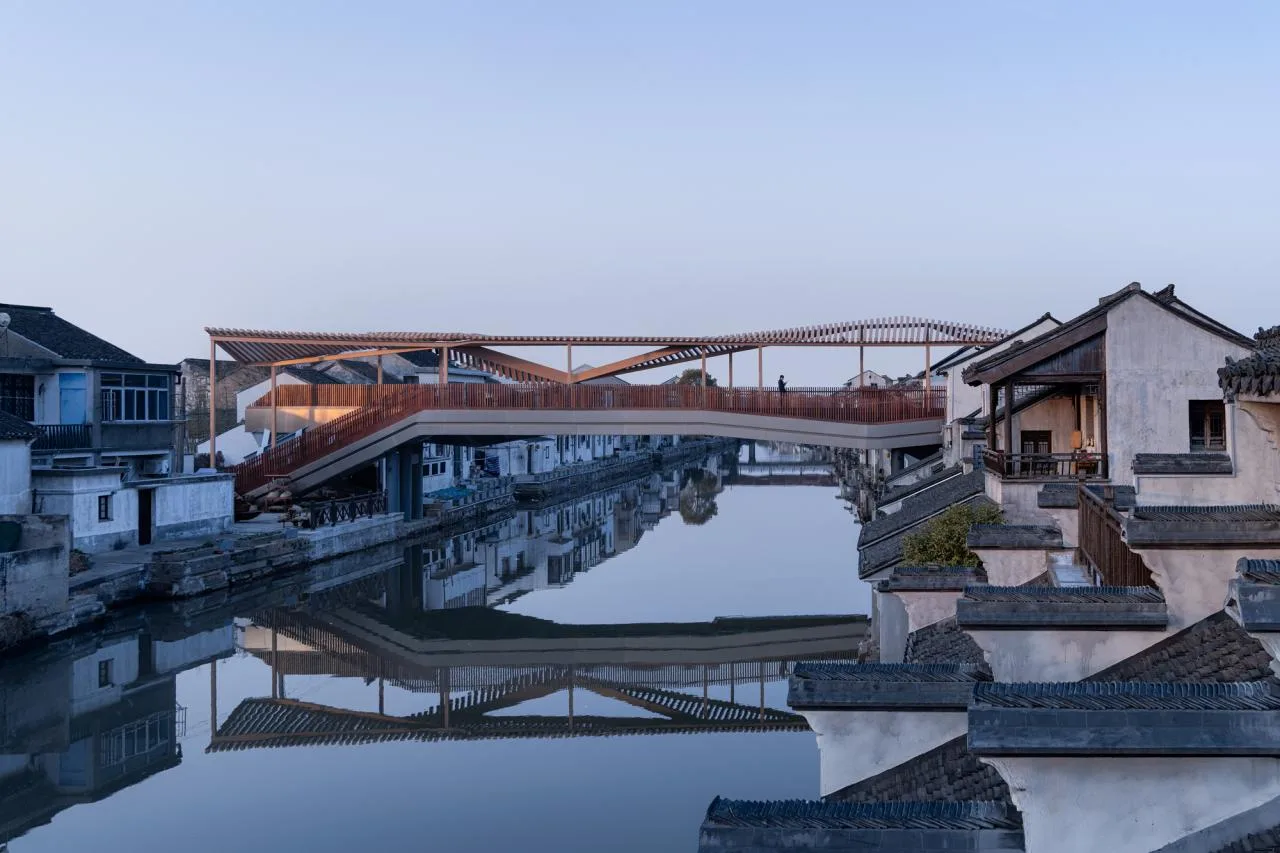
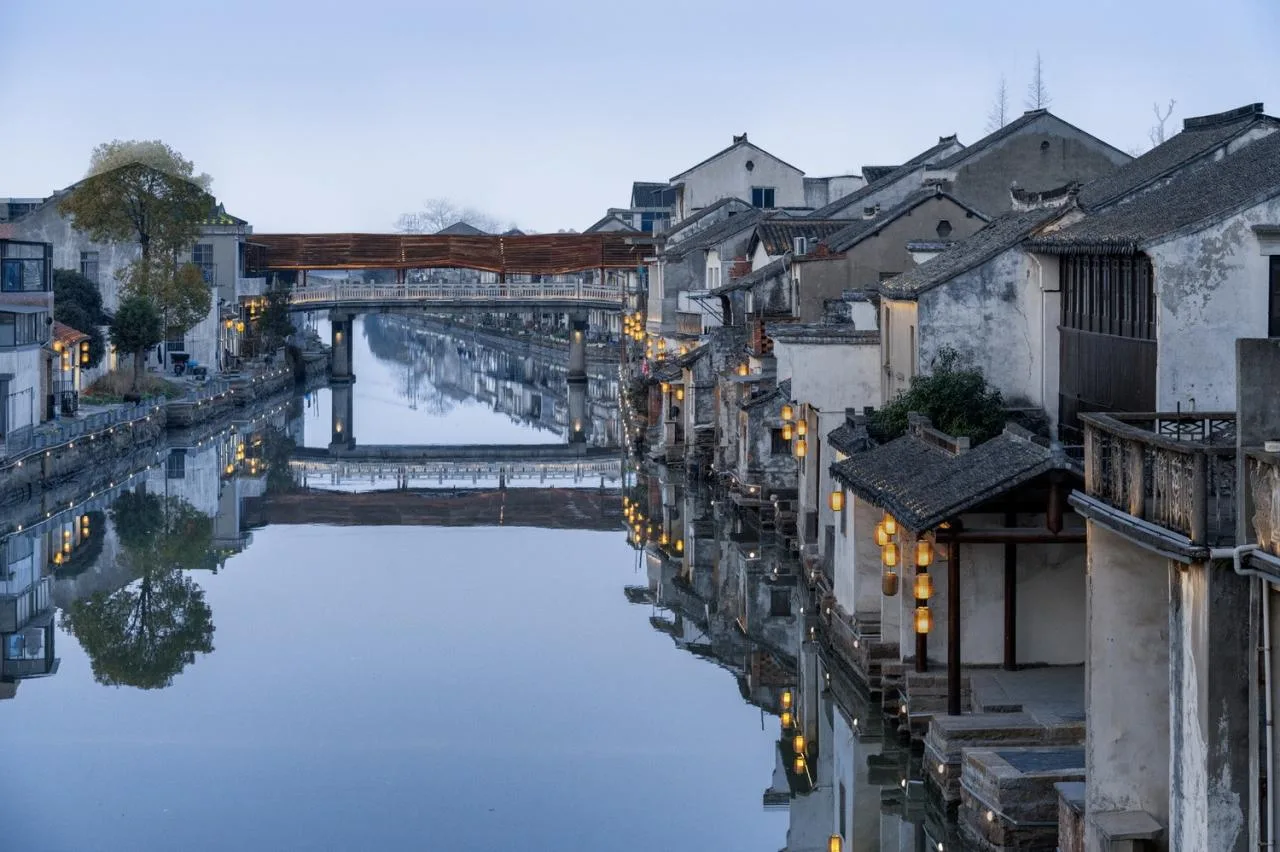
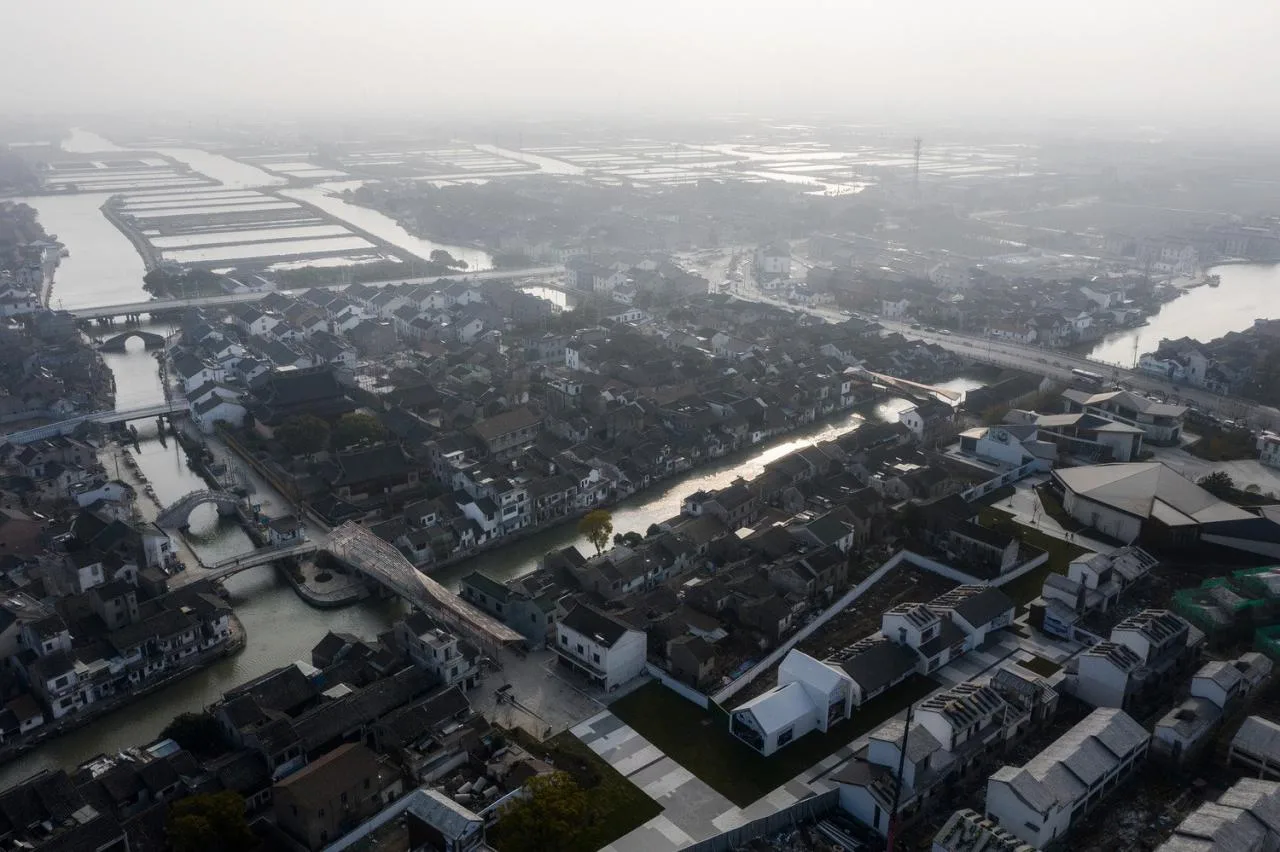
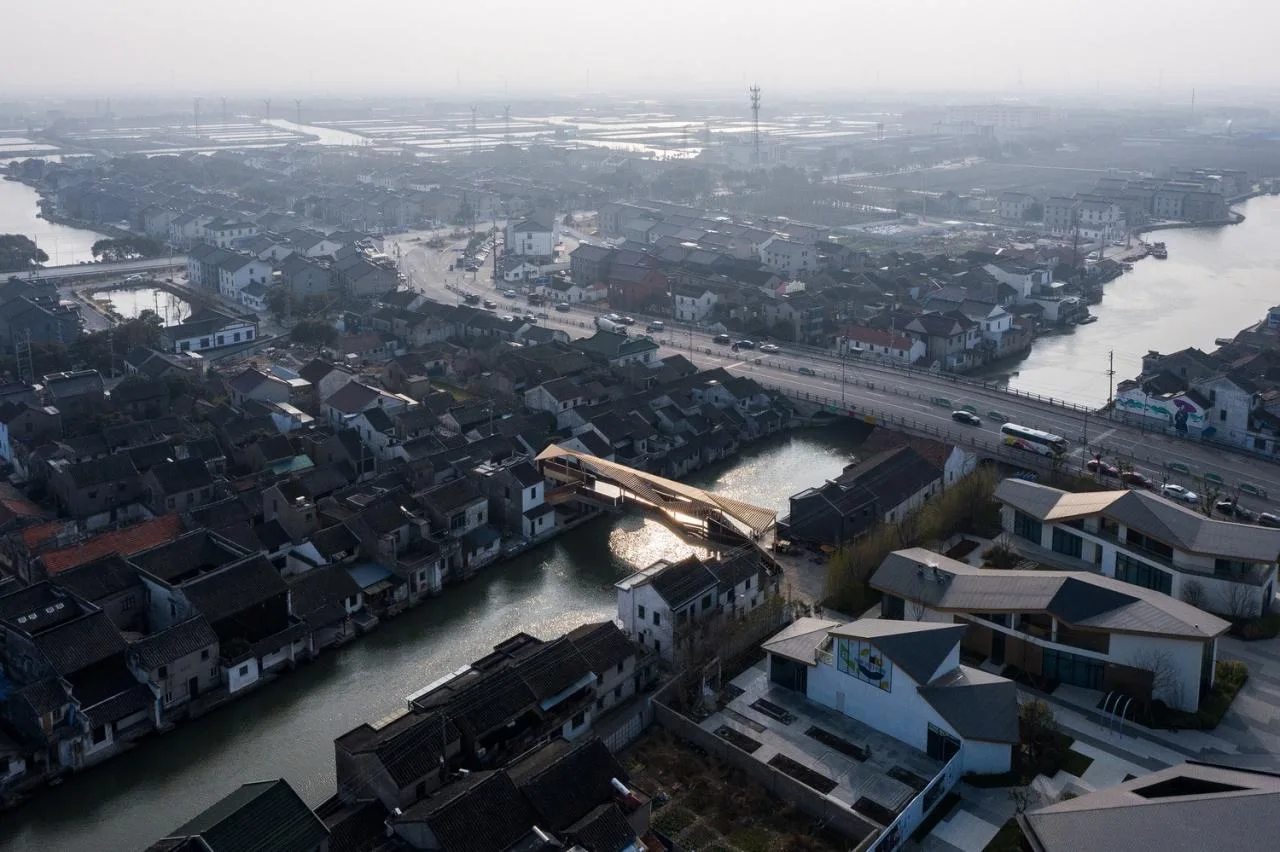
This project is situated in Shajiabang Time Town, Overseas Chinese Town, Changshu, Suzhou. It features the design and renovation of two bridges—named “Zhe” and “Qu”—which connect the new commercial district to the ancient town. These bridges serve daily needs of both residents and boat traffic, while also aiming to invigorate the ancient town’s atmosphere for visitors and locals alike.
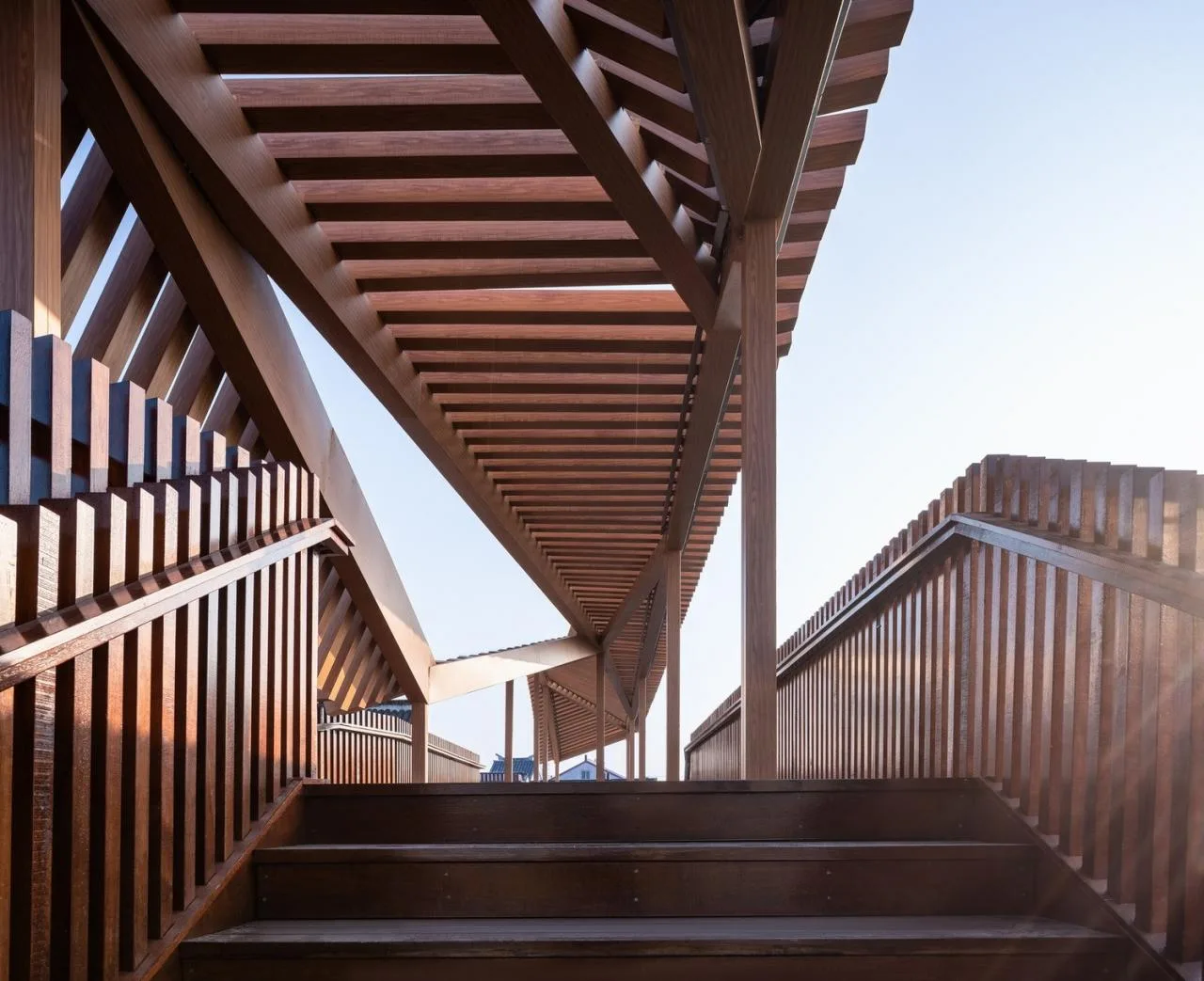
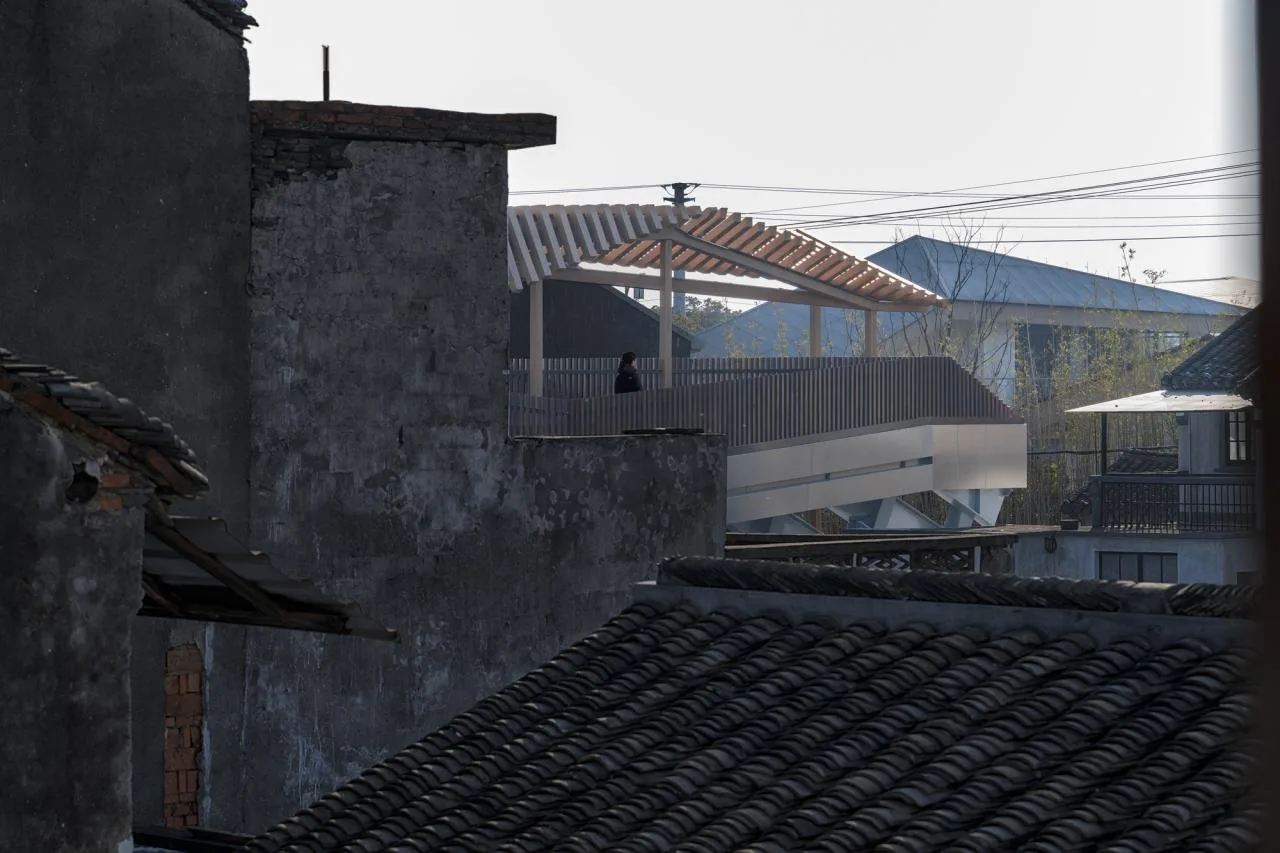
Folding Bridge Concept: As the sun rises, its light pierces through the misty ancient town, illuminating the folding bridge. The interplay of light and shadow on the folding surfaces creates a dynamic atmosphere. The bridge serves as a pause point for residents and tourists alike, awakening the sleeping ancient town through these moving and still moments.
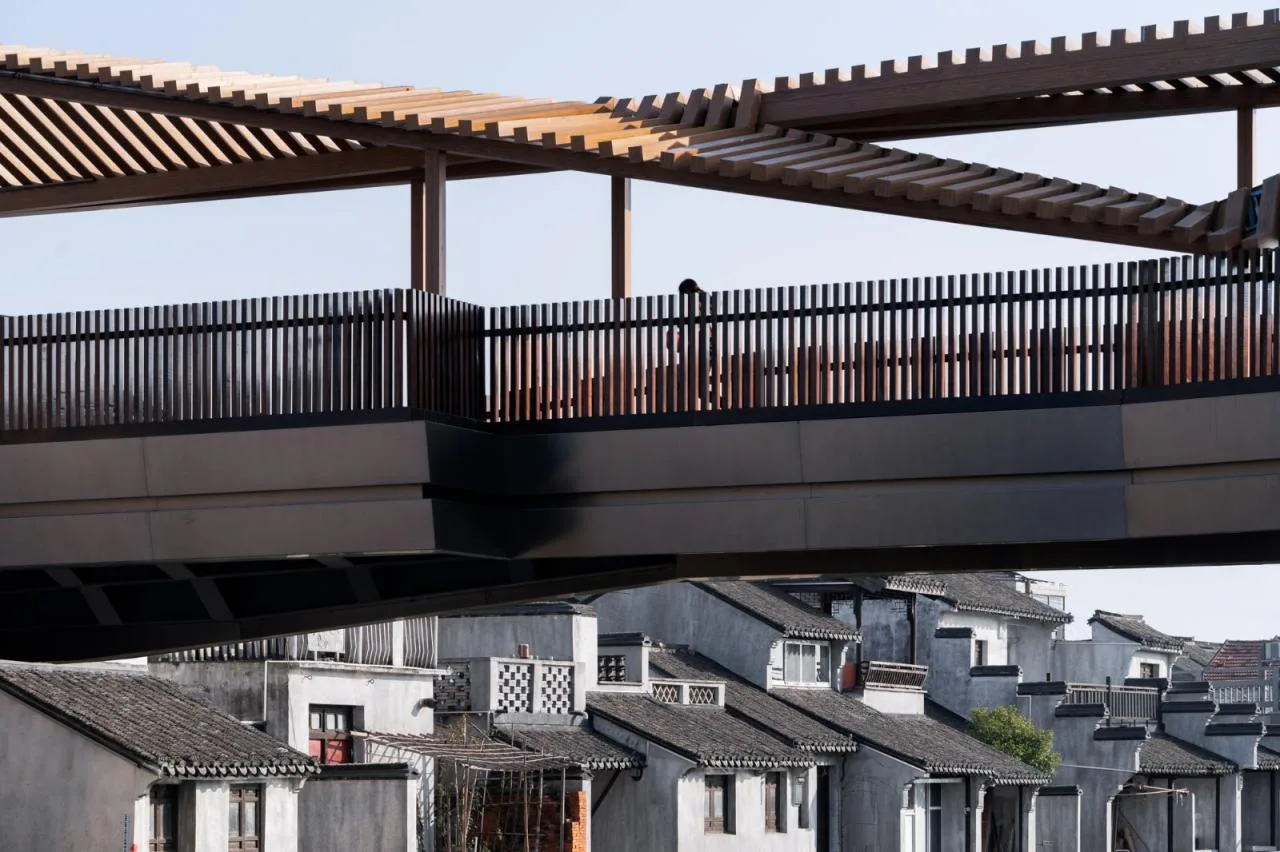
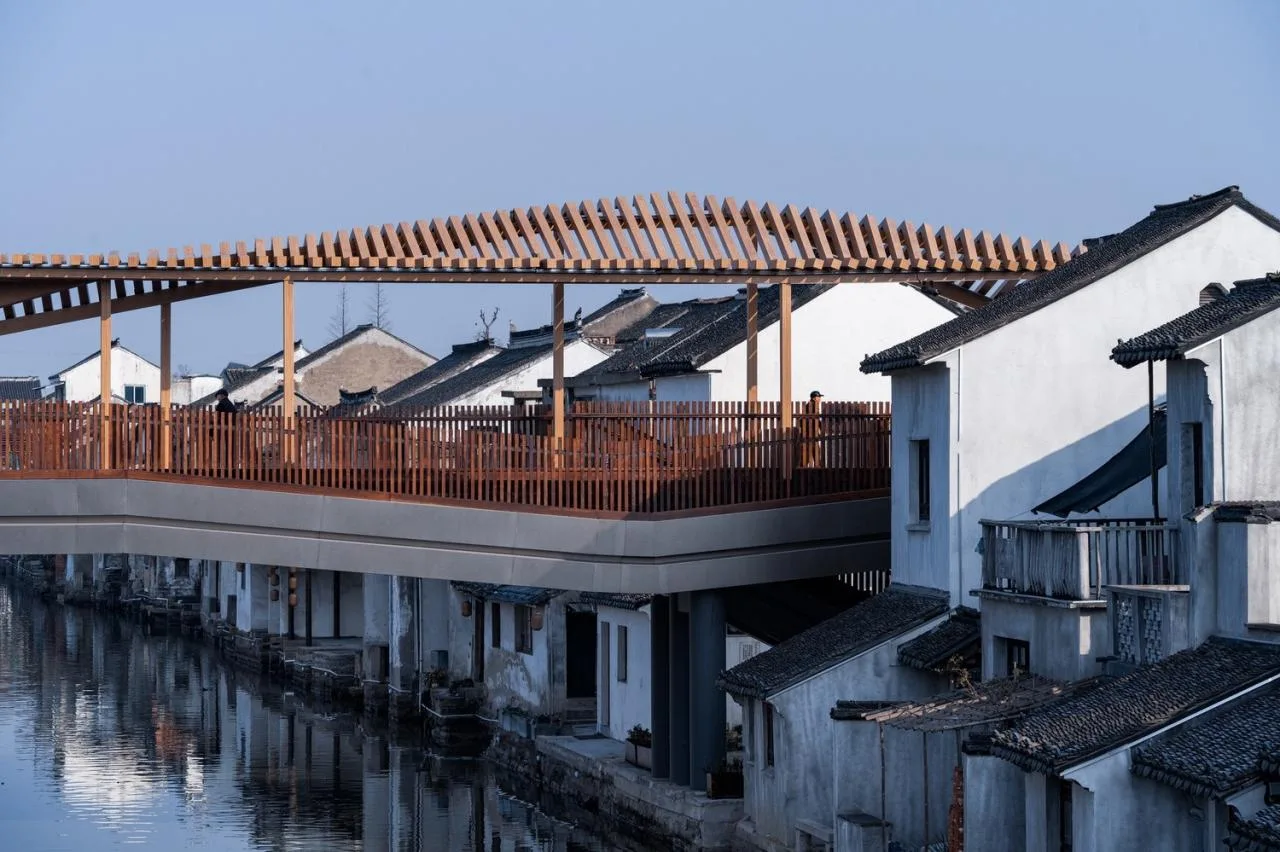
The “Zhe” bridge is a newly constructed pedestrian overpass designed to link the new commercial area with the ancient town’s main entrance. It also accommodates ship traffic, spanning a total length of 40.6 meters.
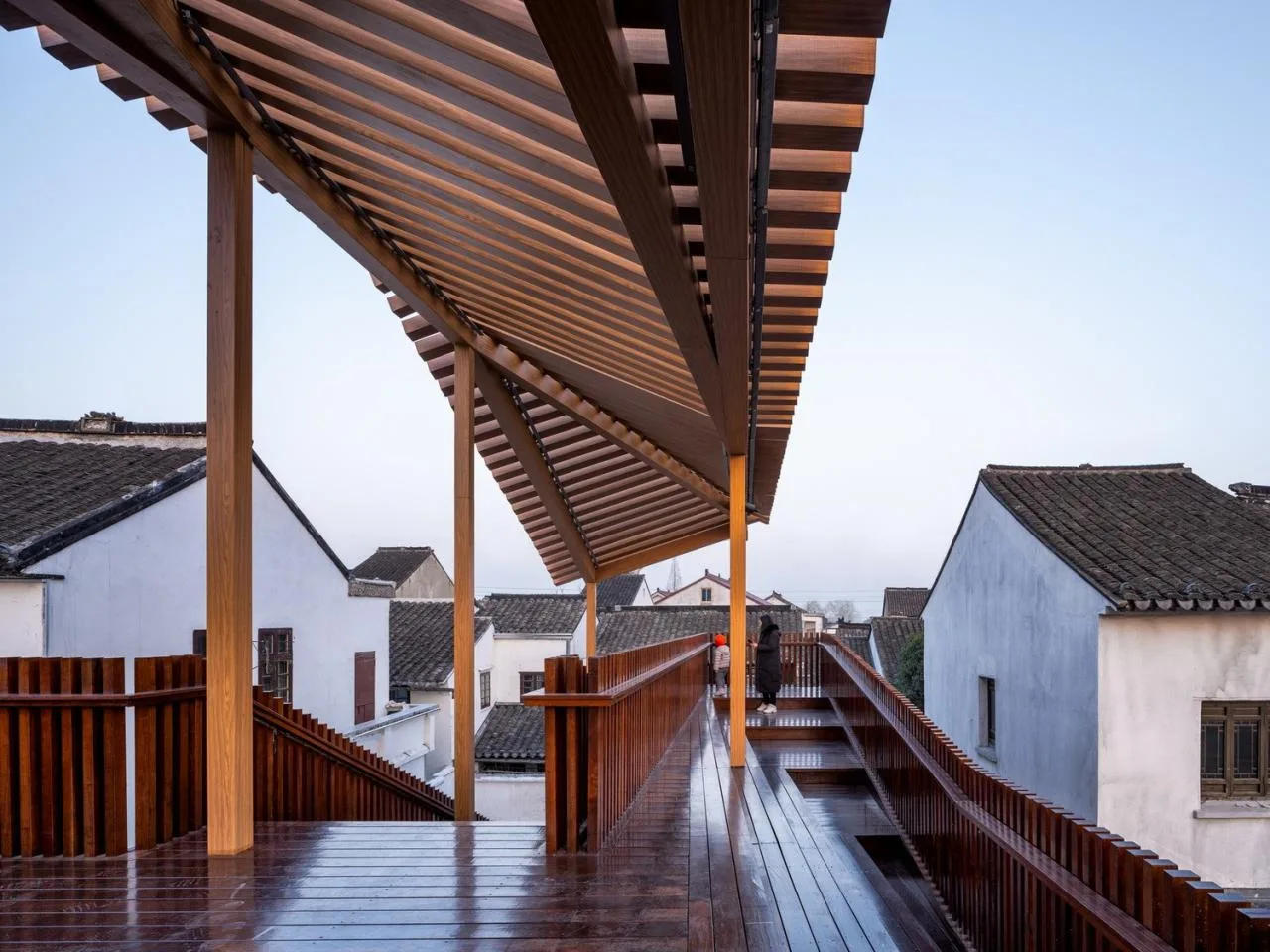
Our design aims to echo the texture of the ancient town’s old houses while introducing a sense of transparency. The bridge deck includes spaces encouraging people to linger—such as small platforms and sunken resting steps—enhancing the bridge’s dual function as both a thoroughfare and a place to stay. Whether tourists or residents, visitors can enjoy sunlight and the scenic views of the ancient town from the bridge, fostering a lively intersection between people and the blending of old and new architectural textures.
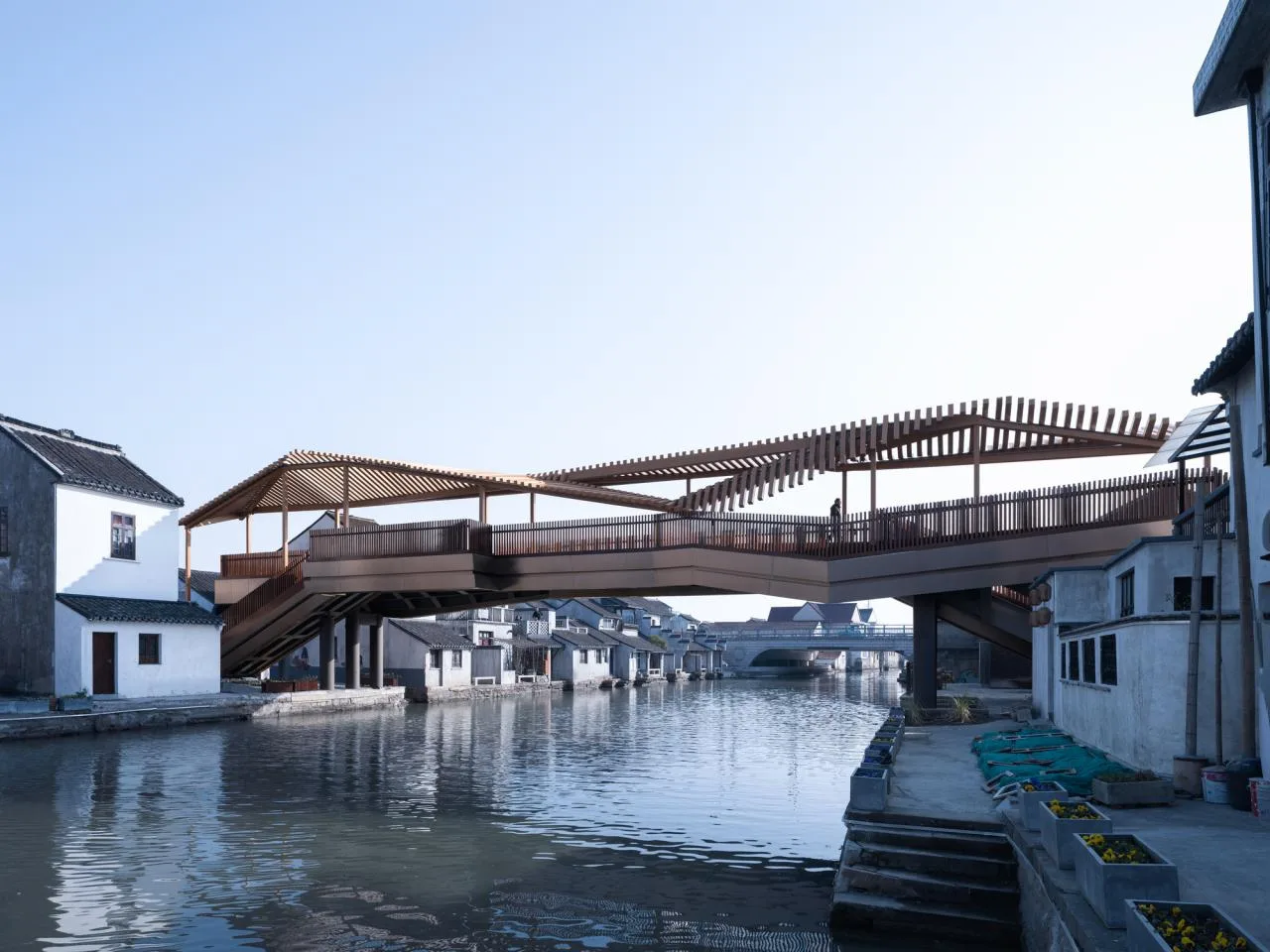
The folding bridge is positioned at the ancient town’s main entrance. To preserve visual accessibility and highlight the town’s character, the top folding grille includes openings near human scale. These not only open views from the city into the ancient town but also create a transparent visual experience for those crossing the bridge.
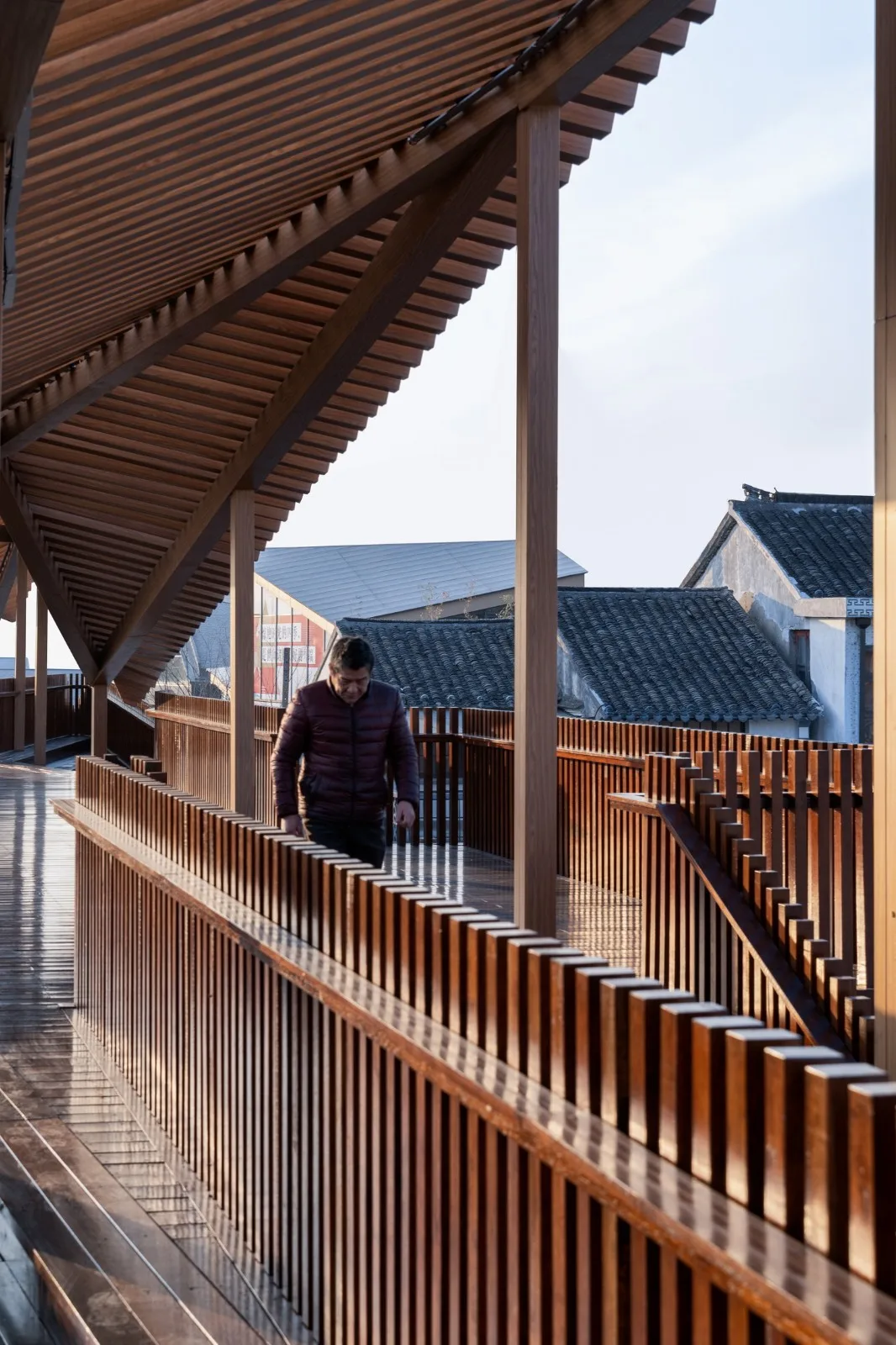
The bridge railing is crafted from anti-corrosion wood arranged in a grid pattern, generating an enchanting play of light and shadow as sunlight and pedestrians move beneath, controlled by a balance between virtual and real proportions.
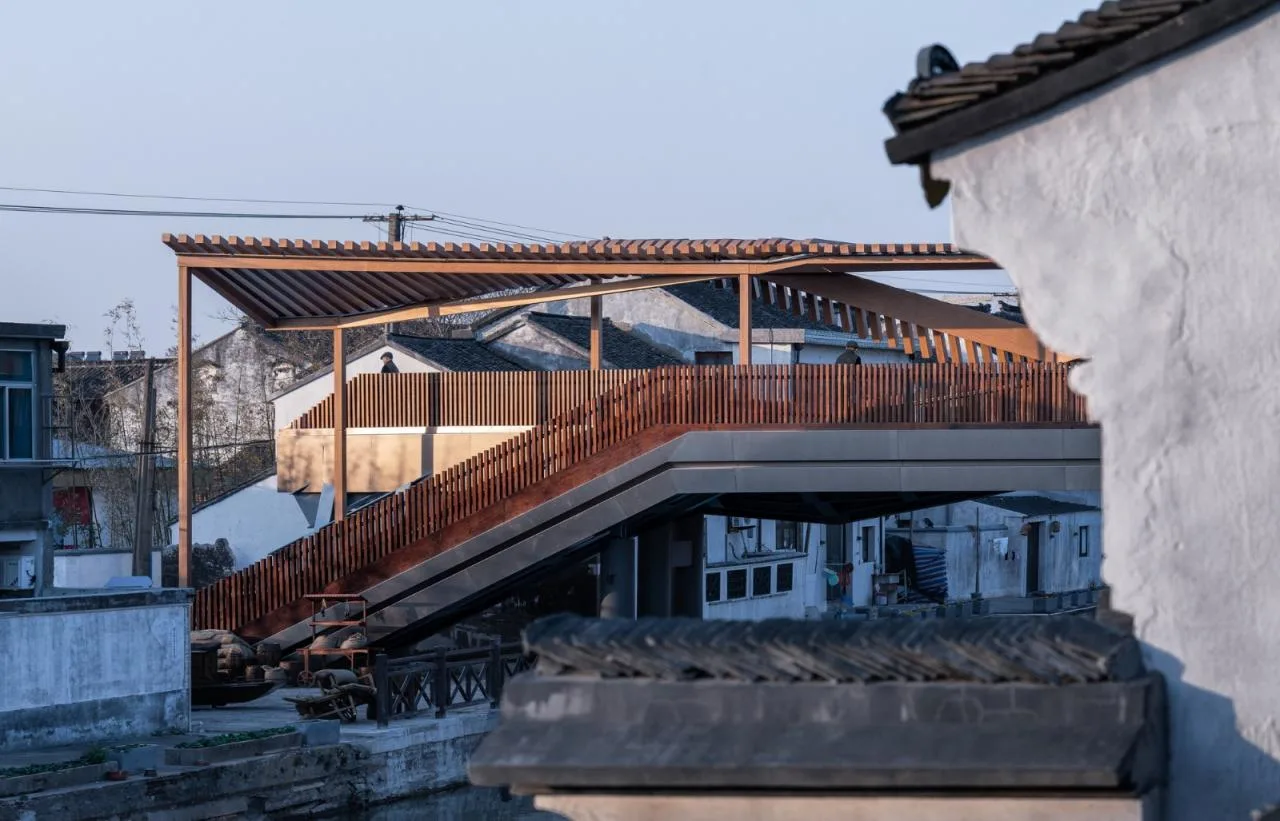
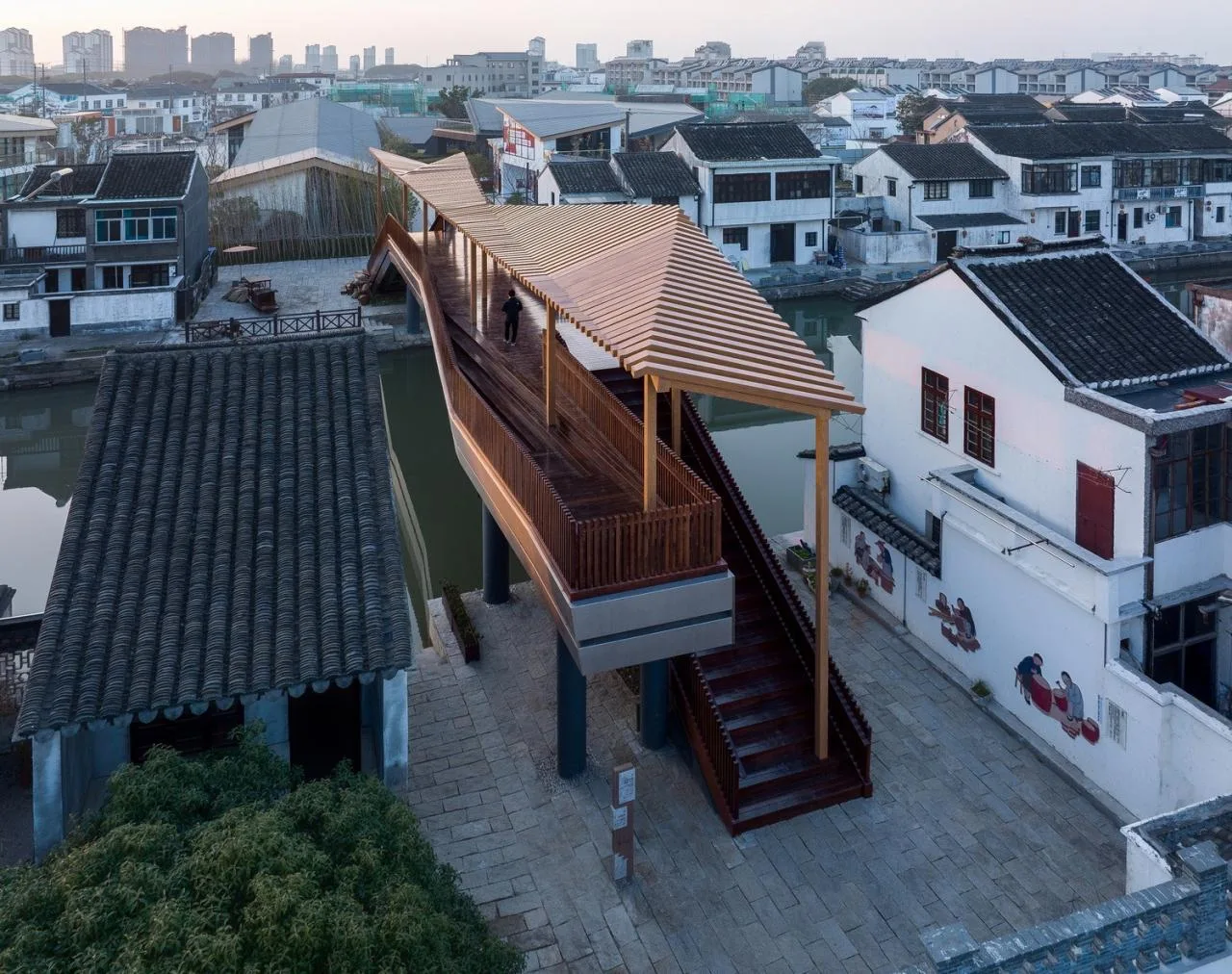
At both ends of the bridge, sunken stairs provide resting spots with views of the ancient town. The bridge’s top features multiple folding surfaces, with some folding points elevated close to human scale. These hollowed sections increase overall transparency and offer unique landscape perspectives.
The bridge structure is newly built from steel, with side curtain walls clad in silver-gray satin stainless steel that softly reflects the environment. Portions of the steel framework remain exposed underneath, creating a striking contrast between the raw structure and the sleek curtain walls.
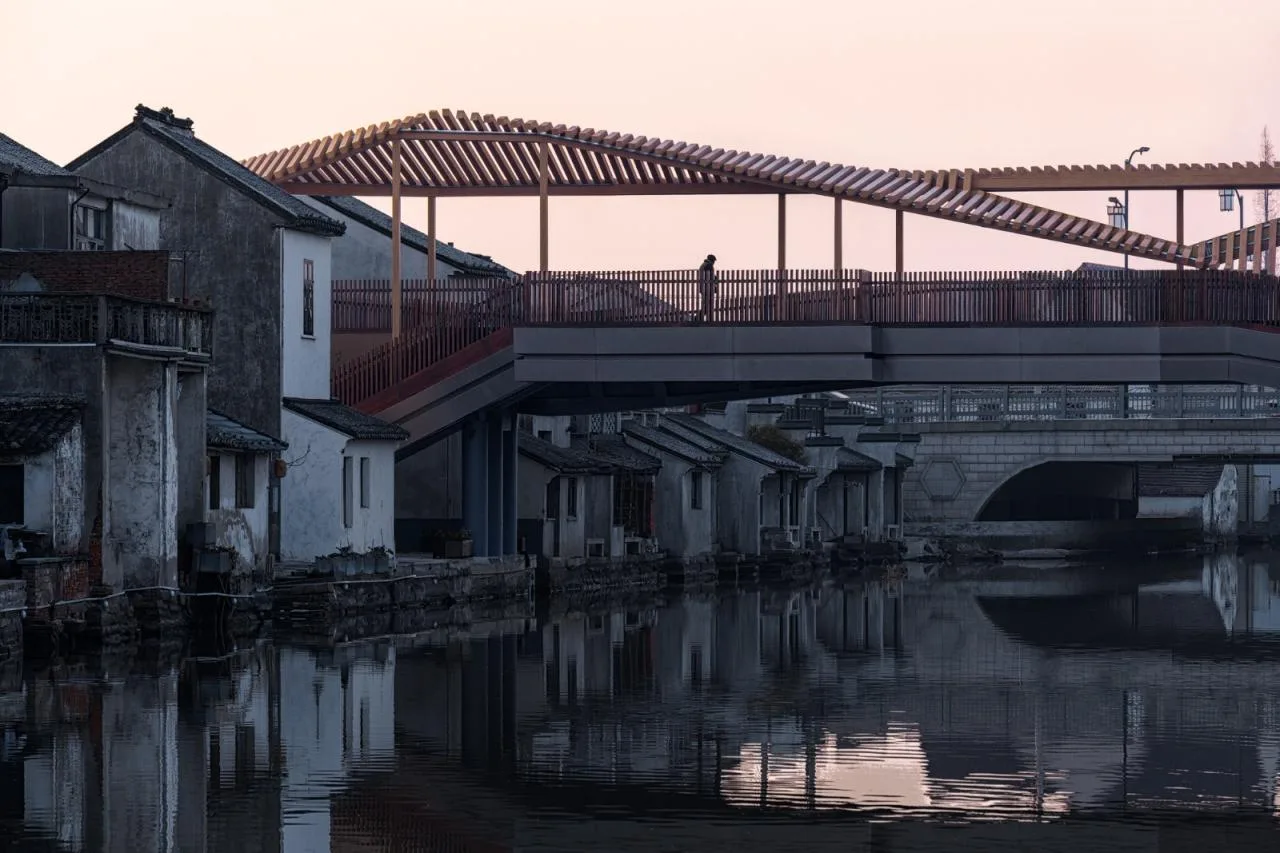
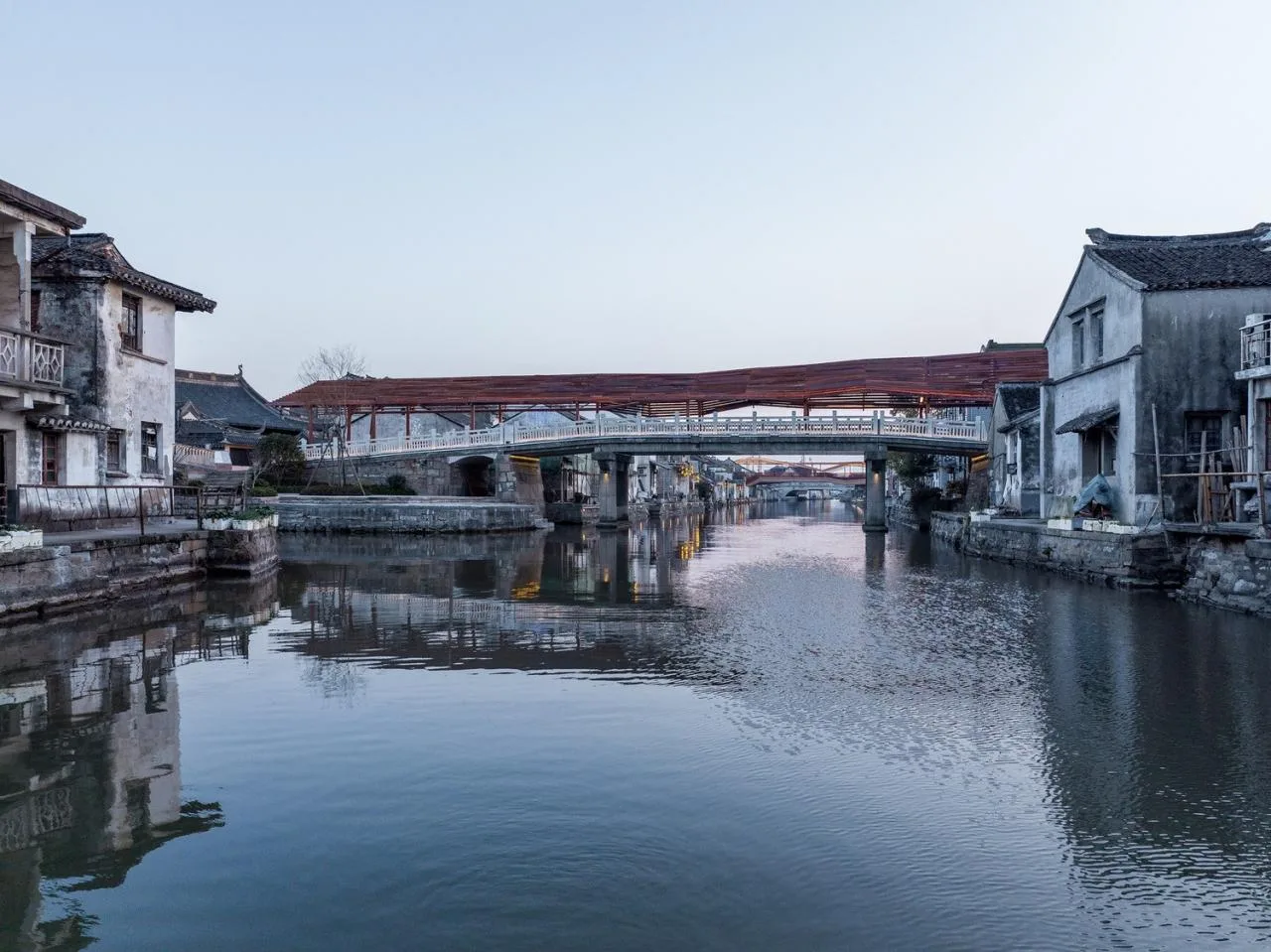
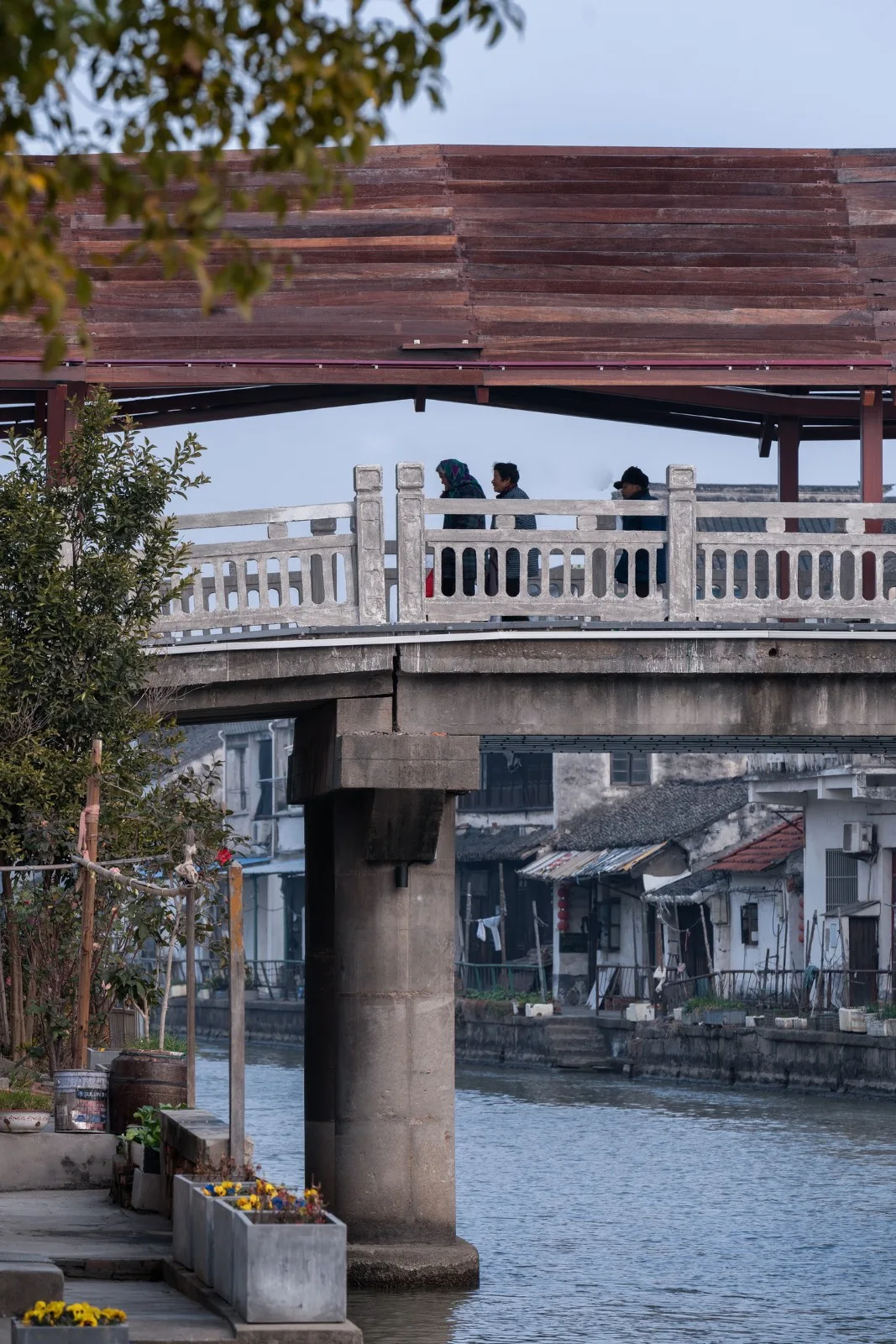
Qu Bridge Scene: On the historic Wan’an Bridge, old friends stroll side by side while motorcycles pass through. The combination of long lines, antique wood, and concrete offers a distinctive commuting experience, marking an iconic corridor for the ancient town.
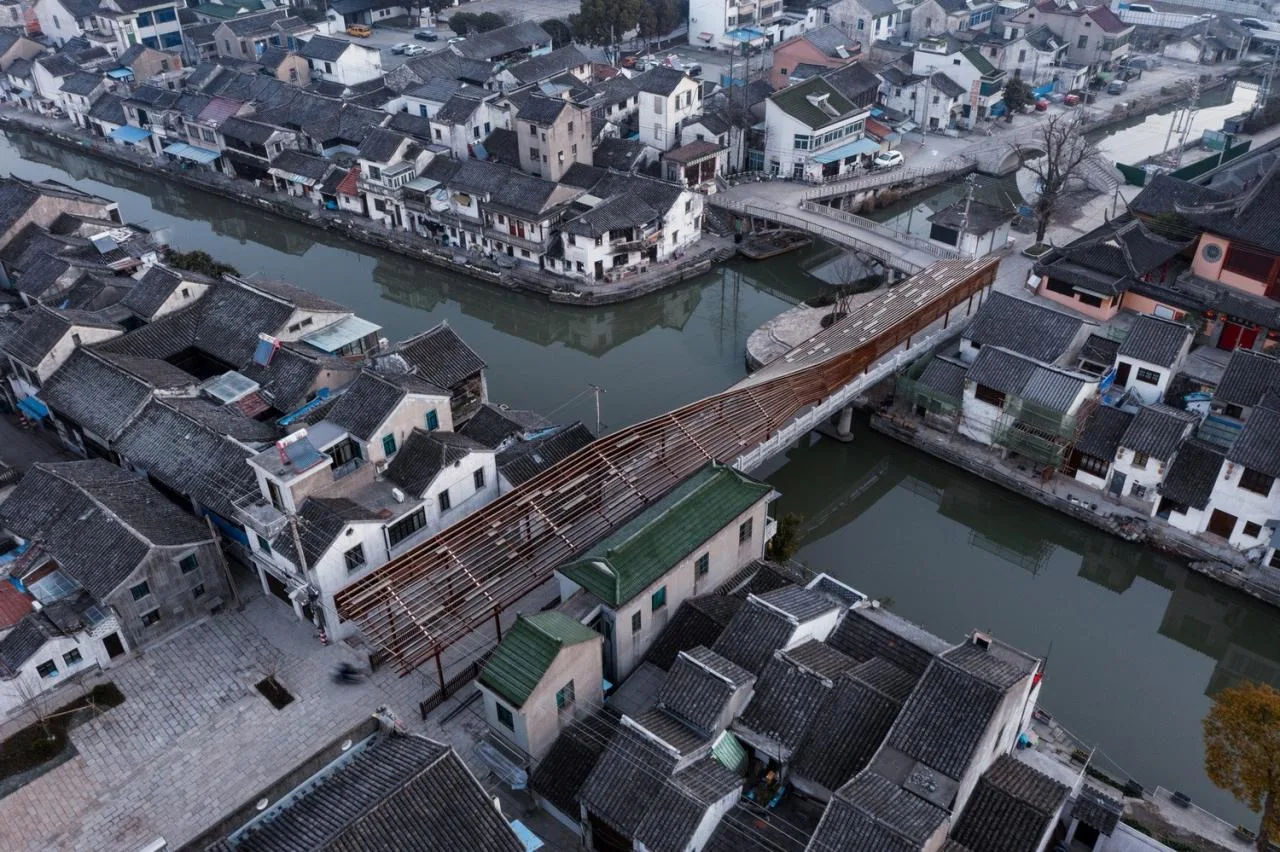
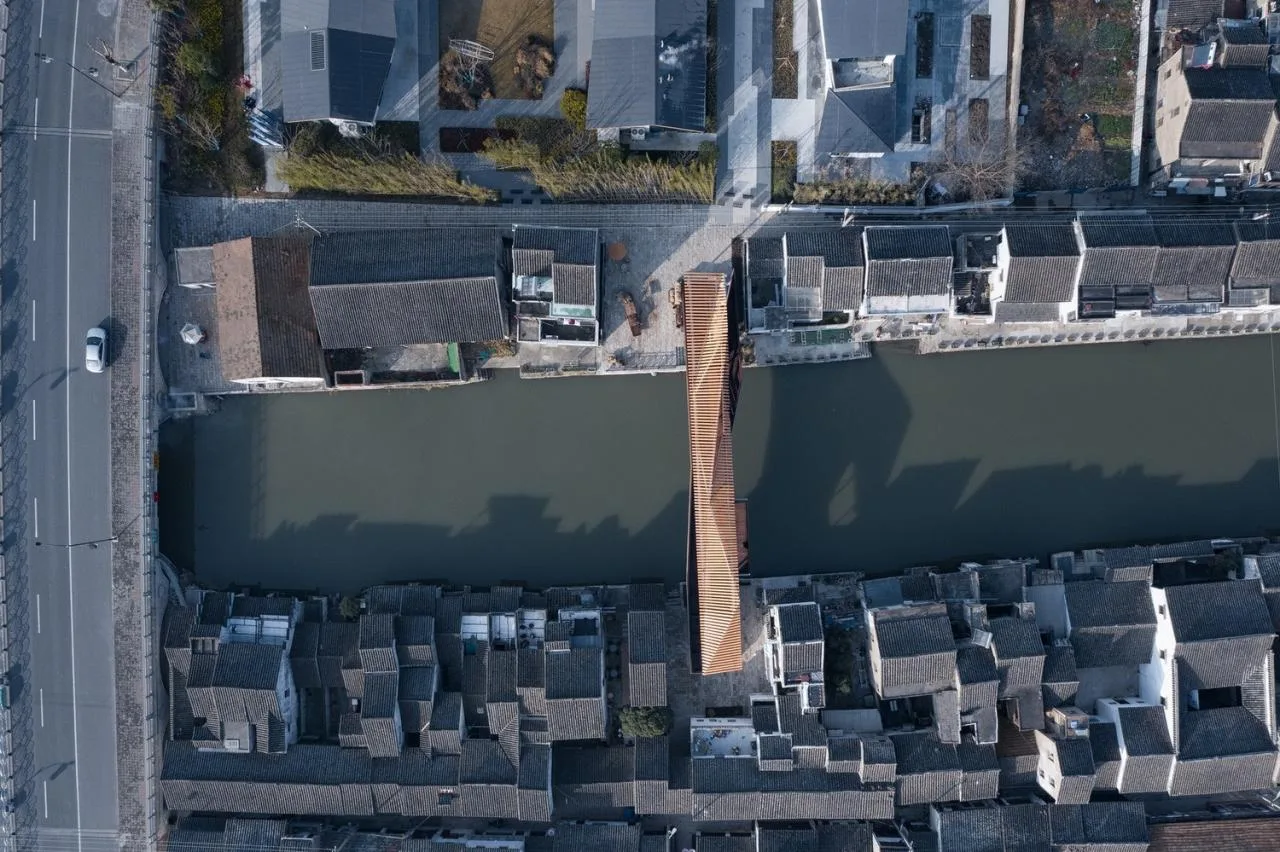
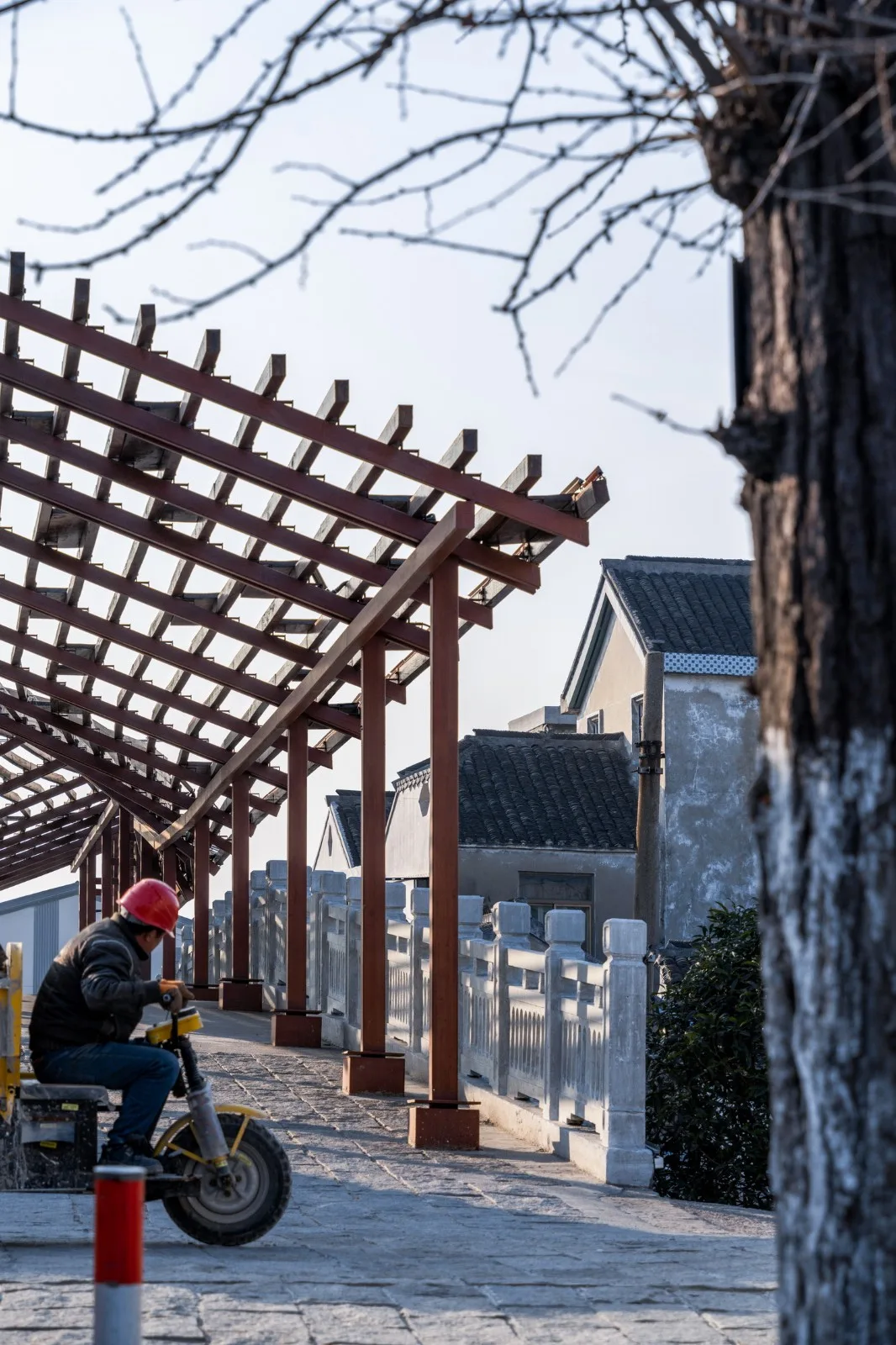
The “Qu” bridge refers to Wan’an Bridge, a reconstructed historic bridge stretching 60 meters in length.
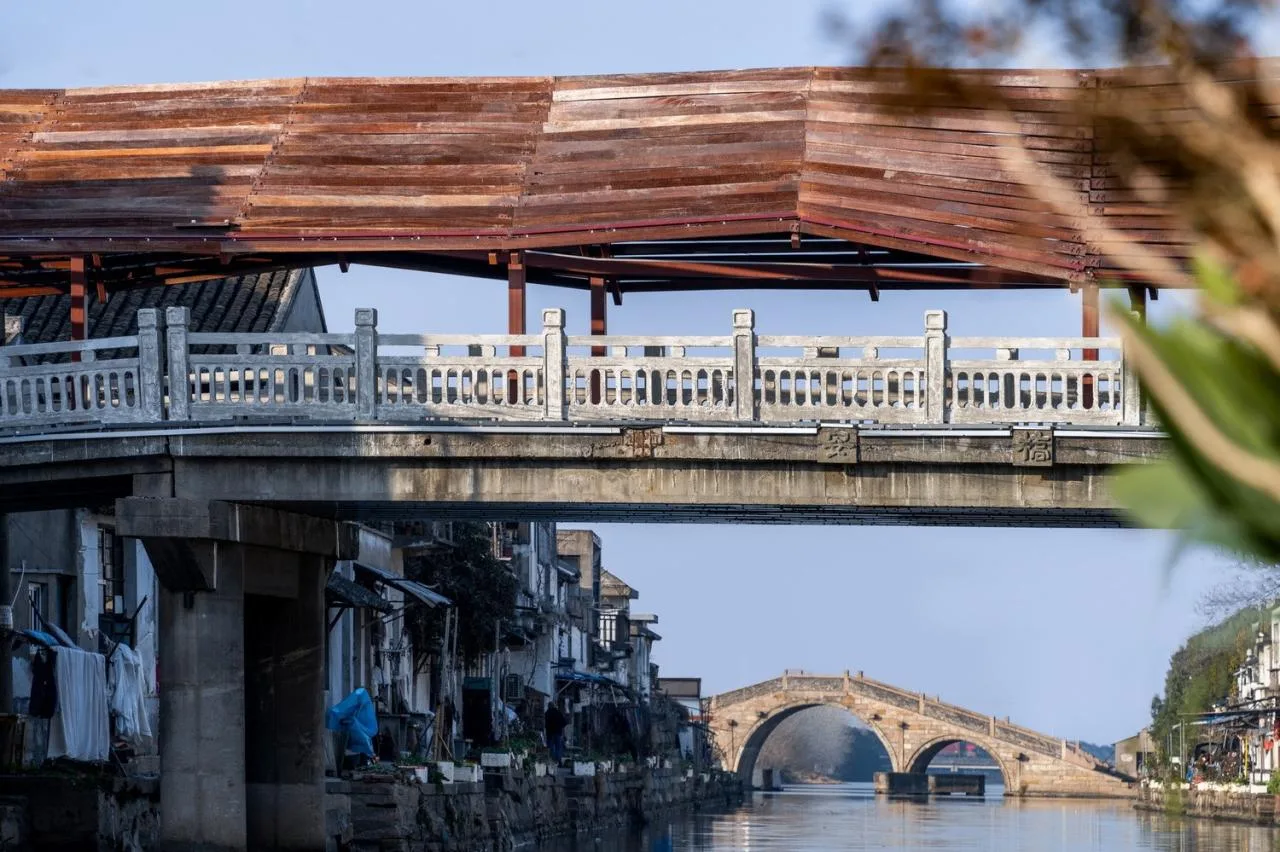
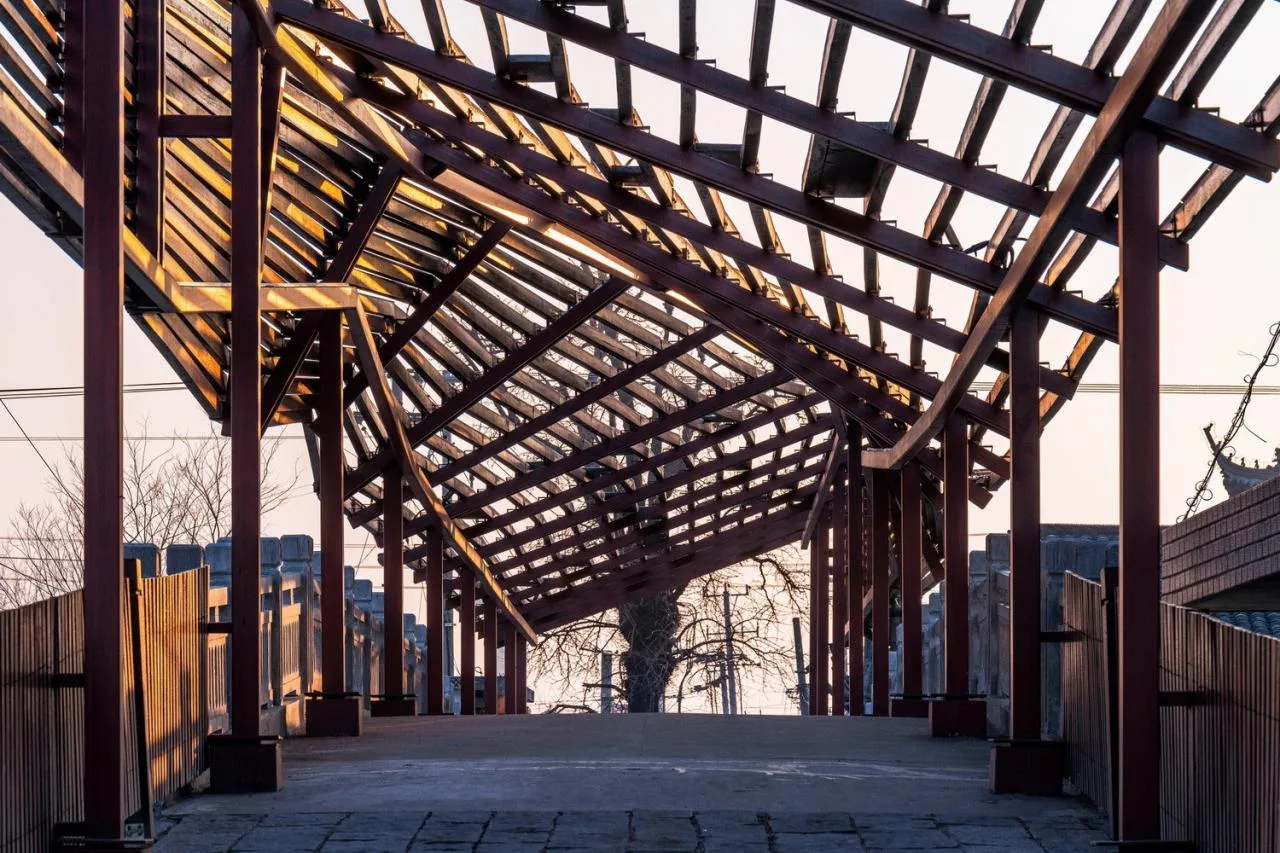
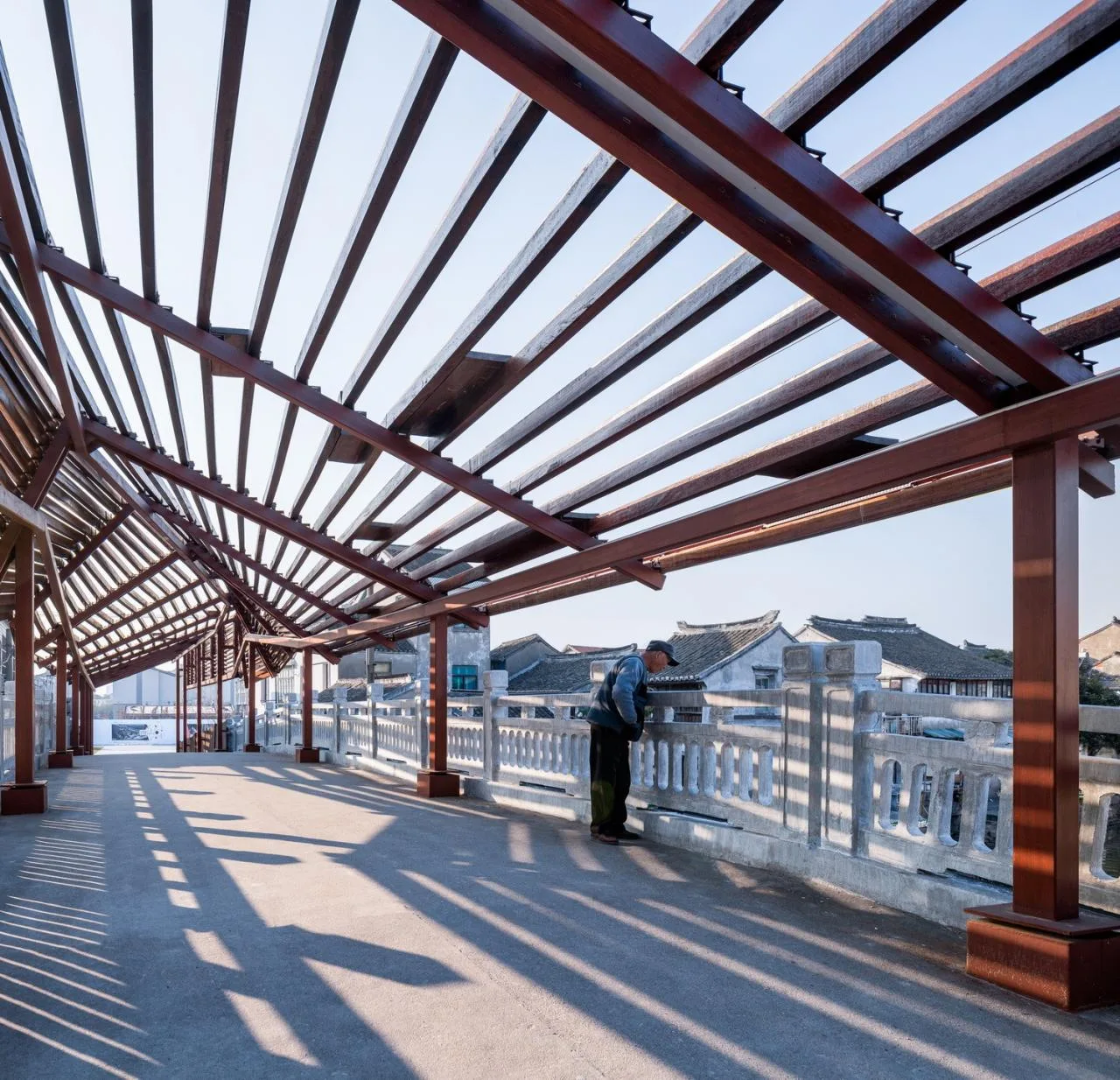
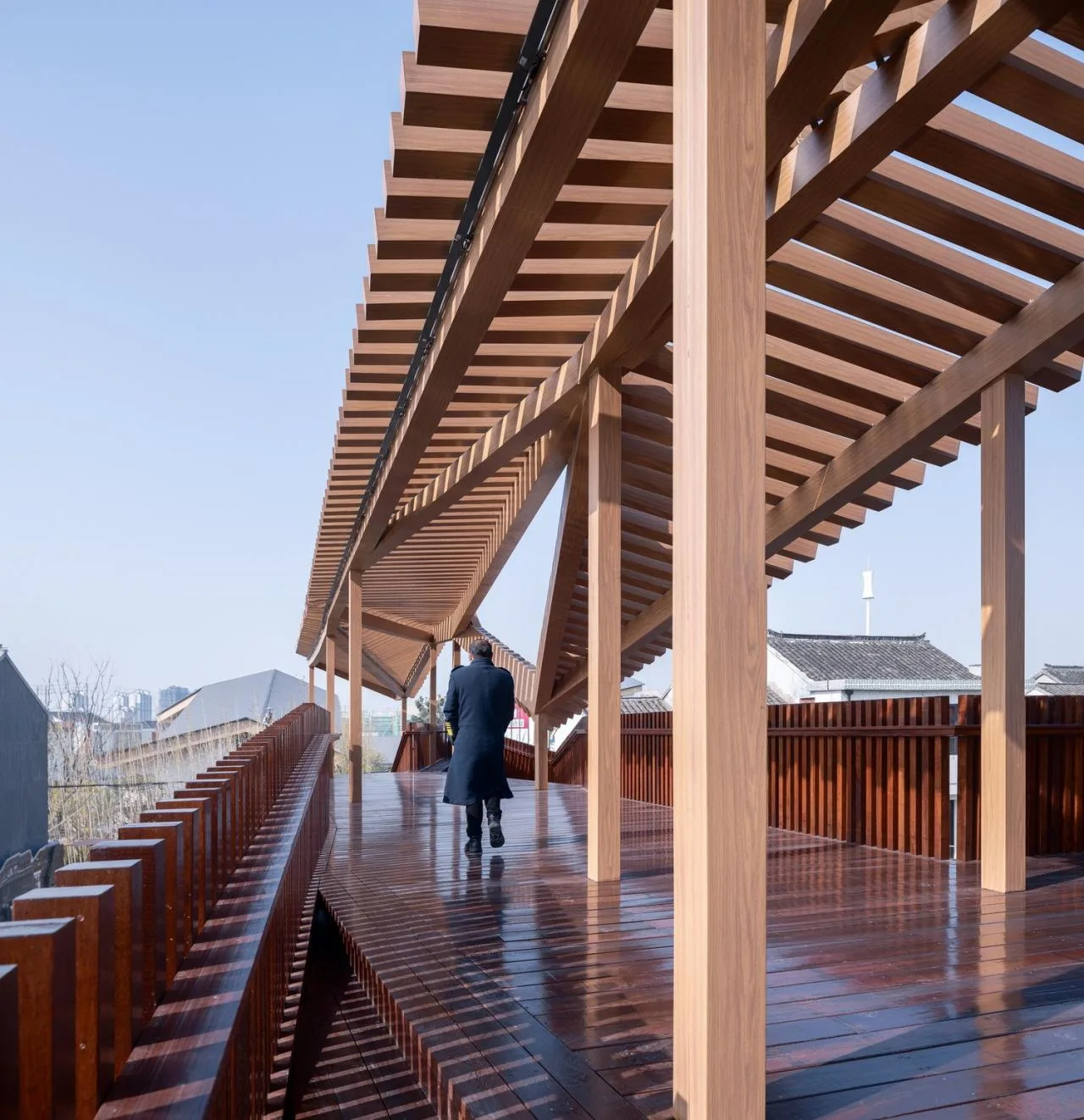
Conceptually related to the “folding” bridge, “Qu” takes inspiration from the textures of the ancient town’s sloping roofs. The design uses the ridges of varying roof slopes as a continuously evolving element along the 60-meter bridge. This creates a winding corridor shaped by the changing density of a wooden grid formed by these ridgelines.
From a distance, the bridge appears quaint and substantial, while up close, it offers a human-scaled transparency. The original concrete structure of the bridge has been preserved, while newly renovated sections use steel and anti-corrosion wooden grids. The segmented design supports rapid construction and cost efficiency on site.
Project Drawings
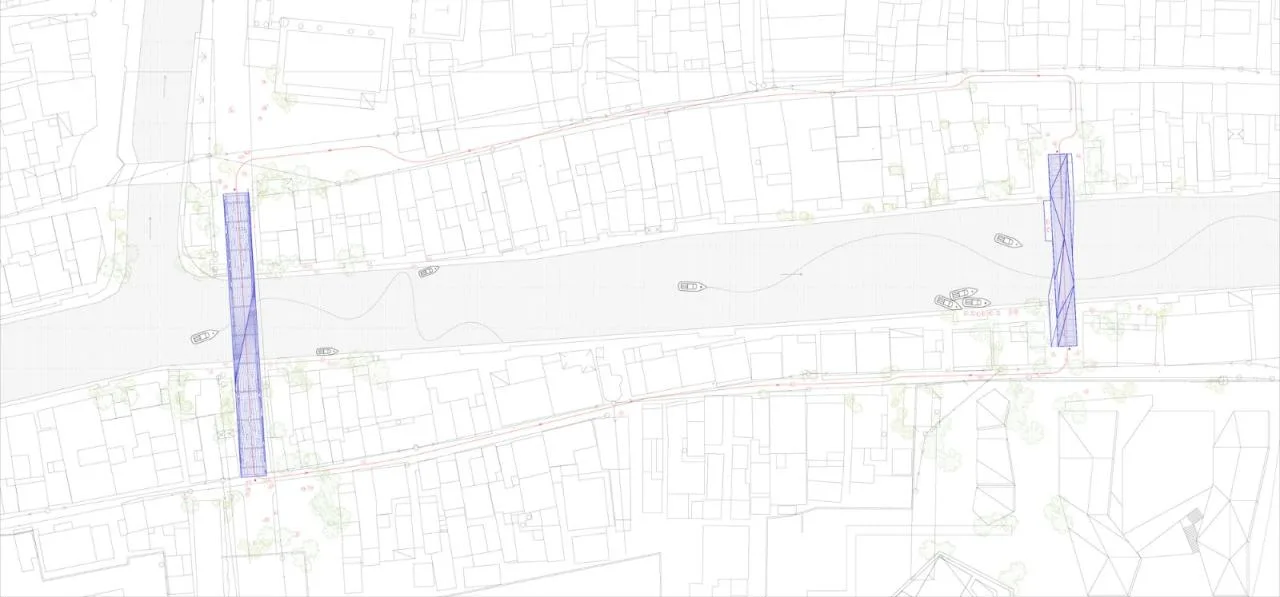
△ General Layout Plan
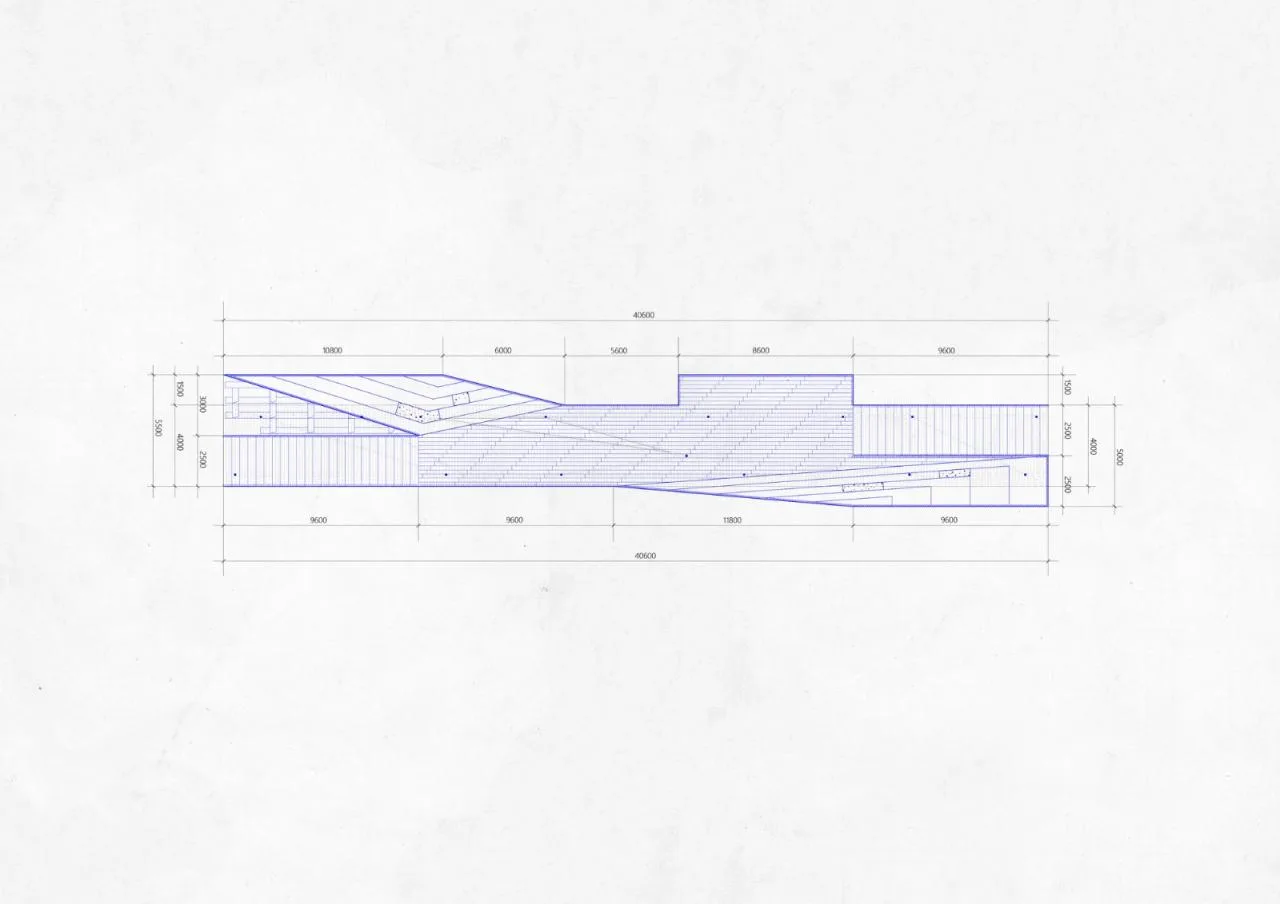
△ Plan View
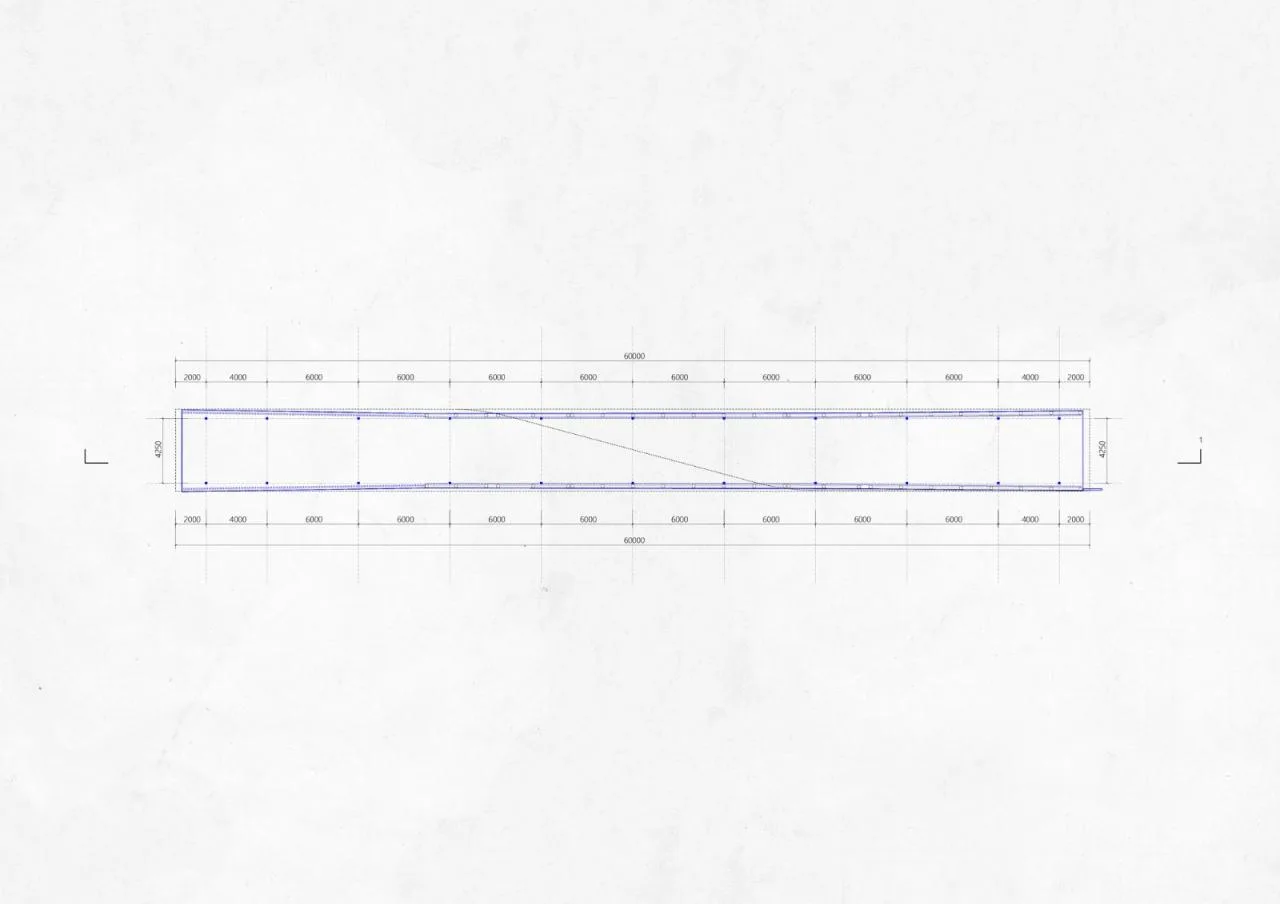
△ Plan View
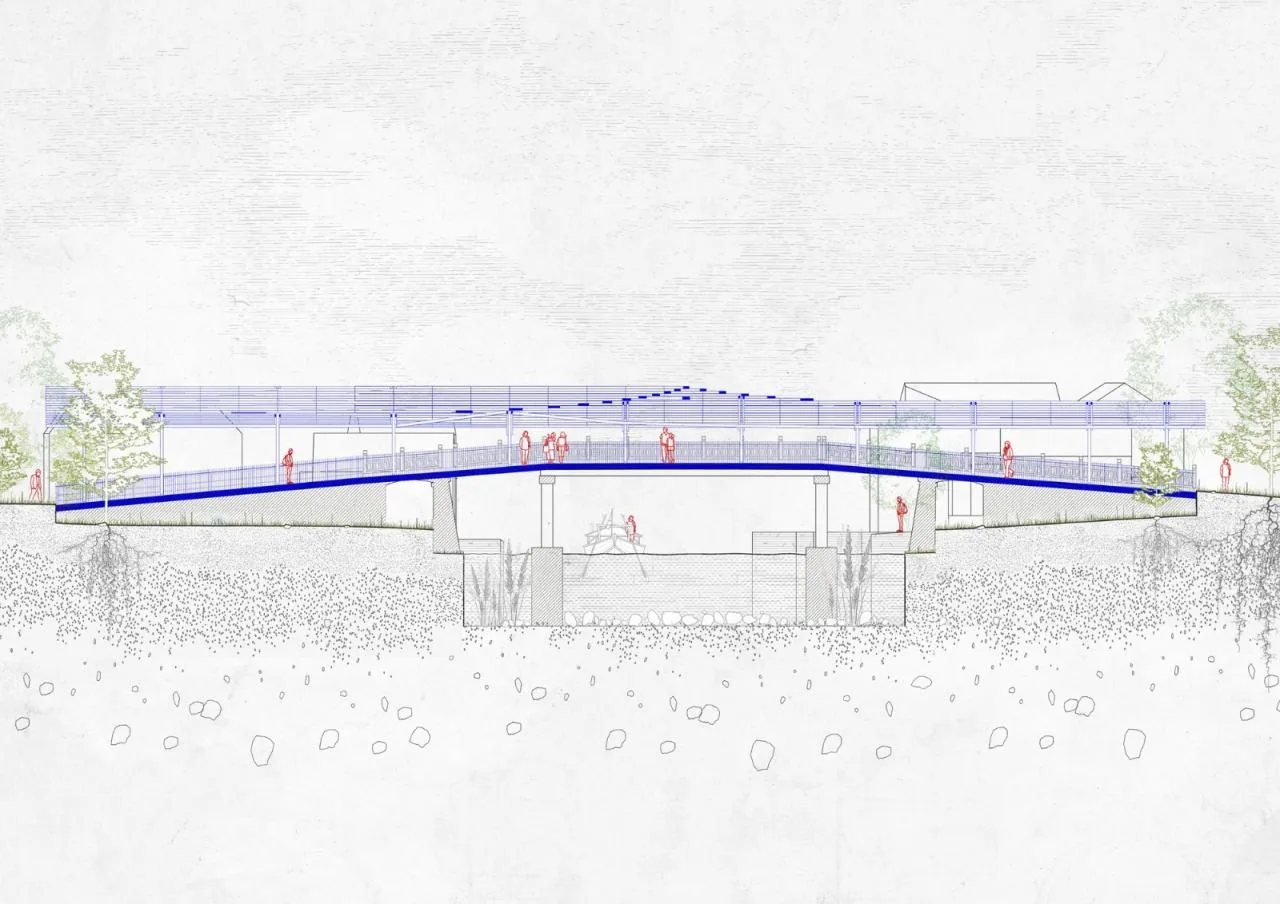
△ Section Diagram
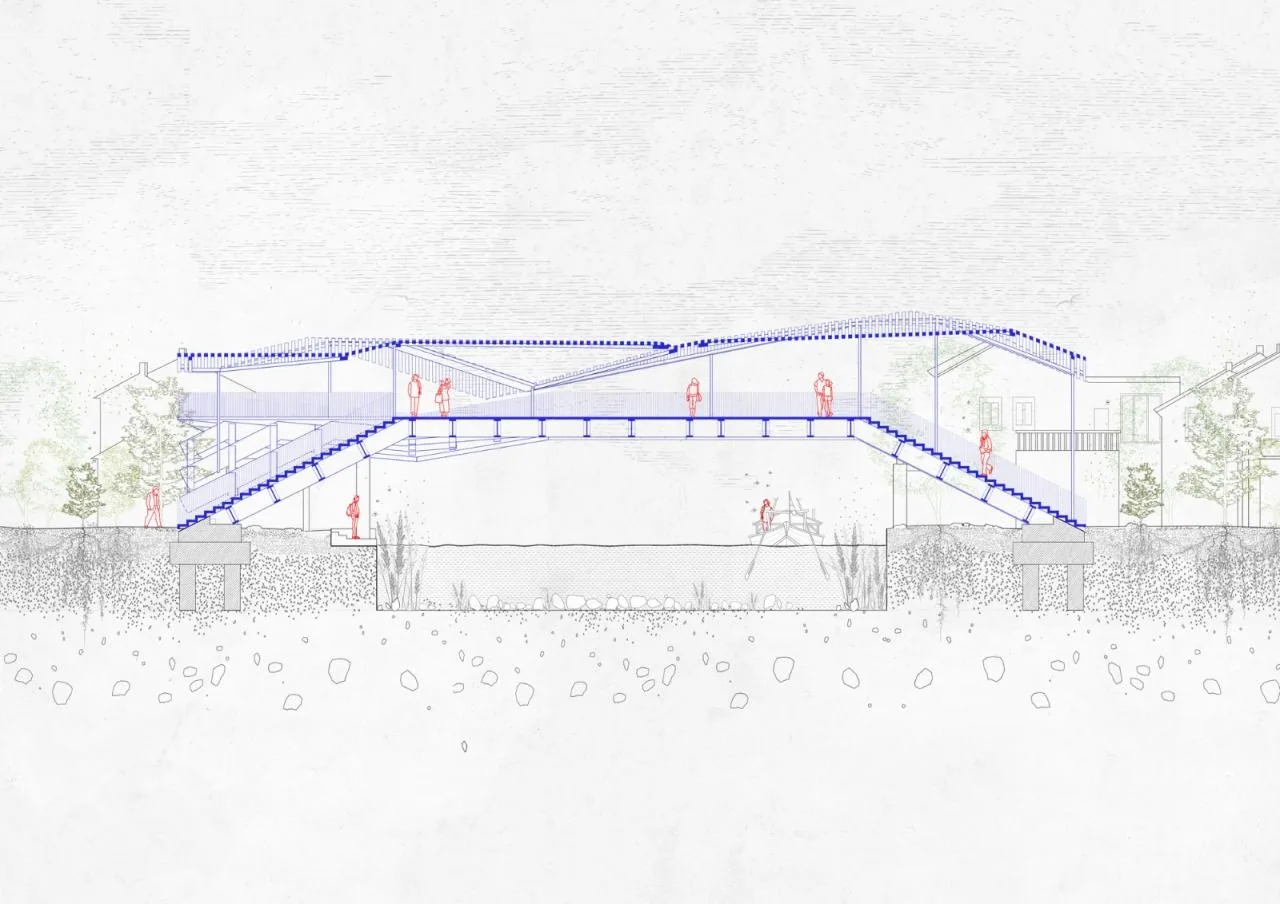
△ Section Diagram
Project Information
Architectural Design: Shenzhen Huahui Design
Project Year: 2022
Photographer: Wu Qingshan
Architects: Mao Weiwei, Zhu Ying
Owner: Changshu Overseas Chinese Town















Must log in before commenting!
Sign Up