
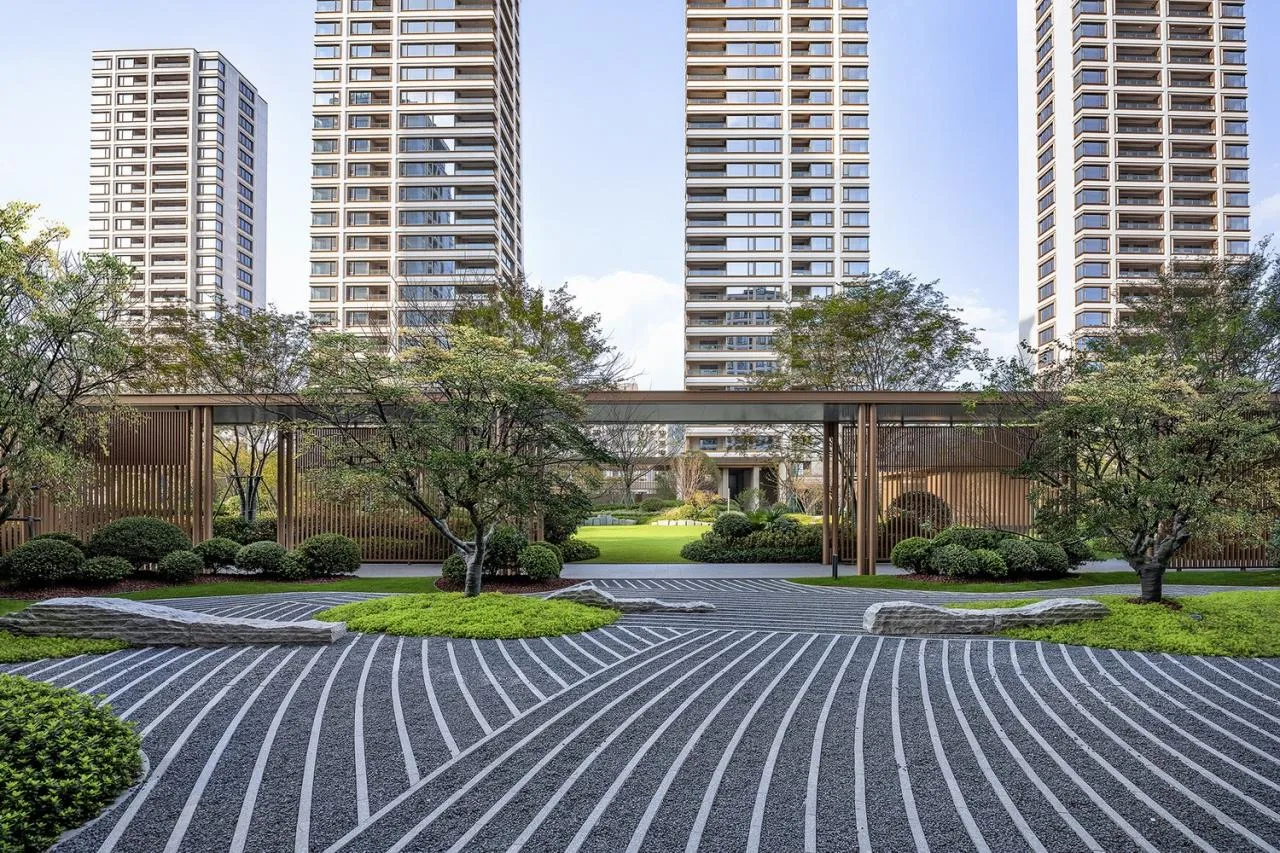
Chuanchen Mansion is situated in the northeast of Hangzhou City, just east of Gongchen Bridge. The project developer, Da Jia Real Estate, is a company deeply rooted in Hangzhou’s local culture. Initially, the project was known as “Hangzhou Da Jia,” a name that still resonates today. These four characters embody the owner’s commitment to creating a landmark urban living experience, which has become the design team’s unified ambition.
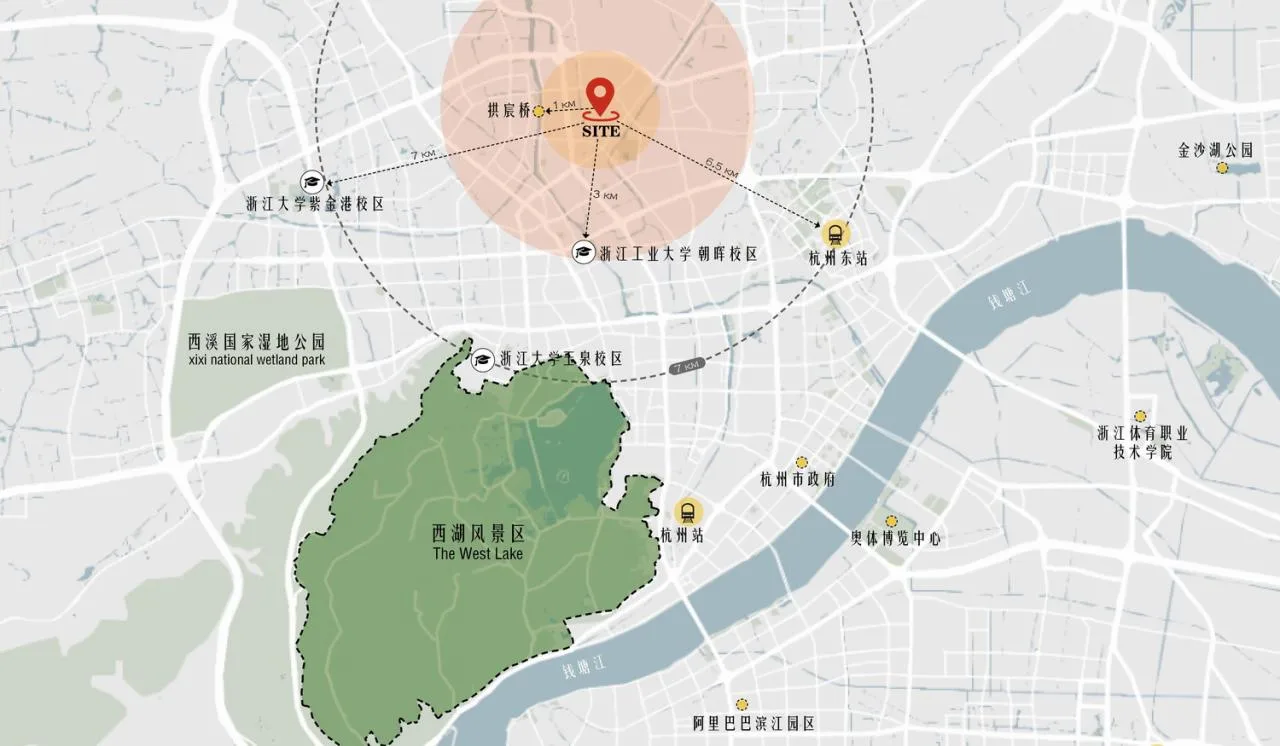
△ Project Location
In 2018, when we first secured the site, it was part of a new urban district developed over the preceding decade. The surrounding buildings and streets appeared bland and lacked distinct identity. Despite the rich cultural heritage of Gongchen Bridge and the Grand Canal, the area’s overall impression remained uninspiring. This raised a crucial question: can we evoke the spirit of Hangzhou and weave the city’s memories into the landscape of this emerging urban zone, distant from the iconic West Lake?
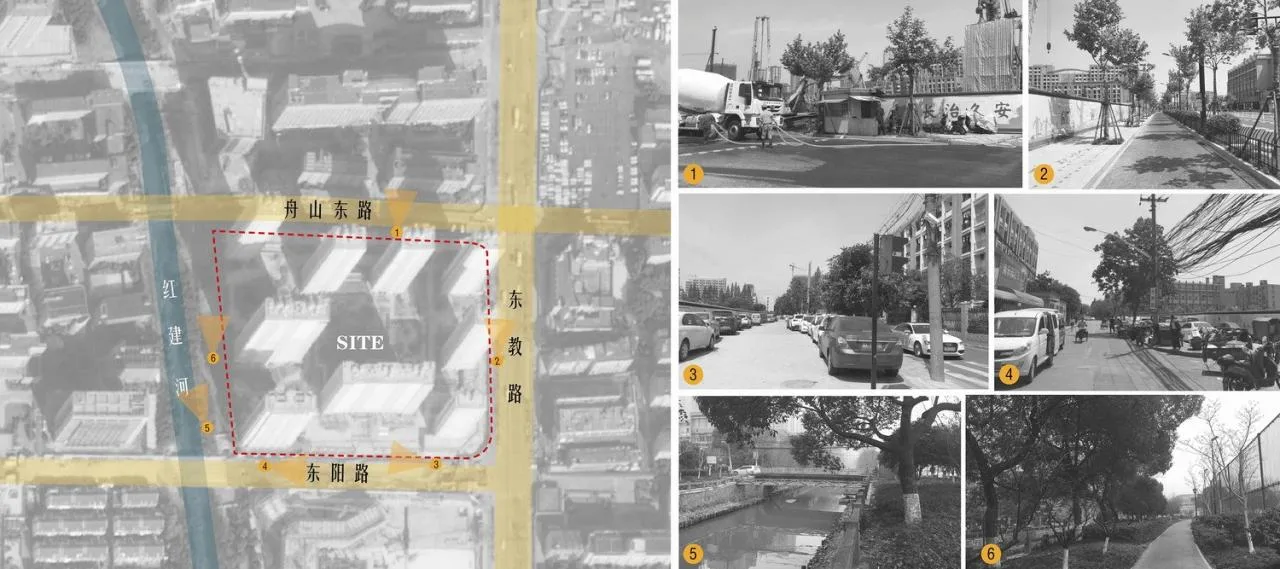
△ Real Scene Before Construction
Hangzhou is our home city – a place envied by visitors for its quality of life. This project gave us a chance to rethink the city’s landscape and lifestyle. So, what is Hangzhou? Answers vary, but to us, it is a city surrounded by “three sides of cloud-covered mountains and one city,” essentially a vast garden and a living urban forest.
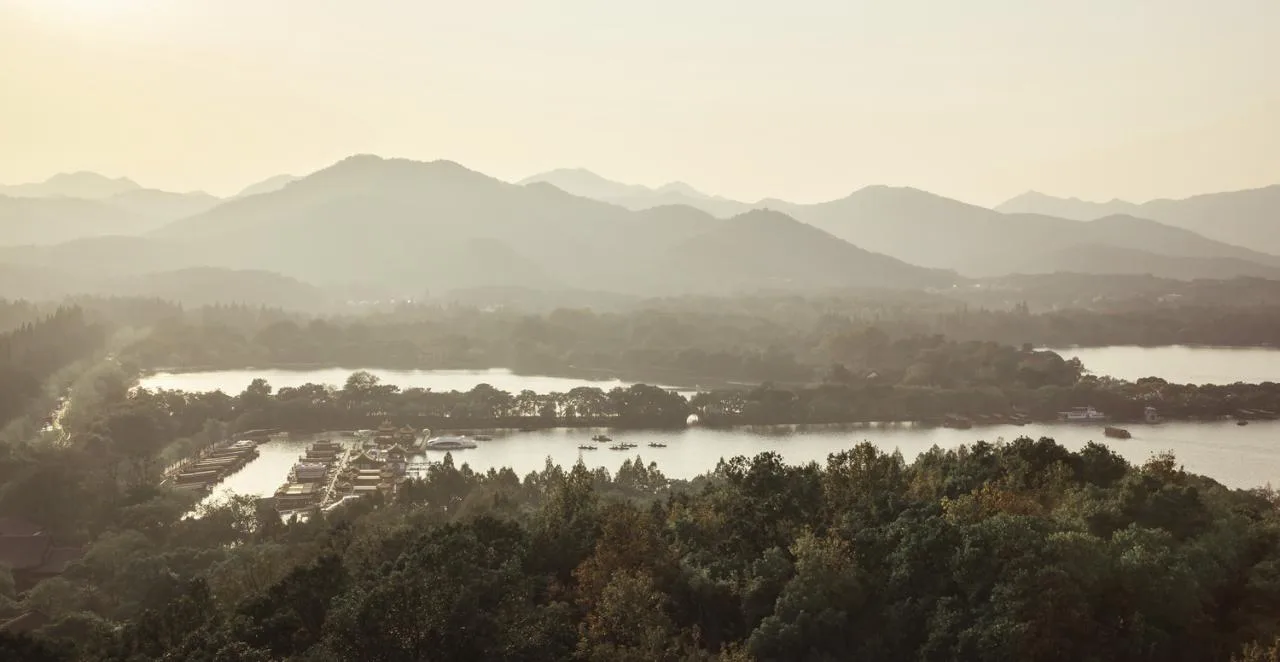
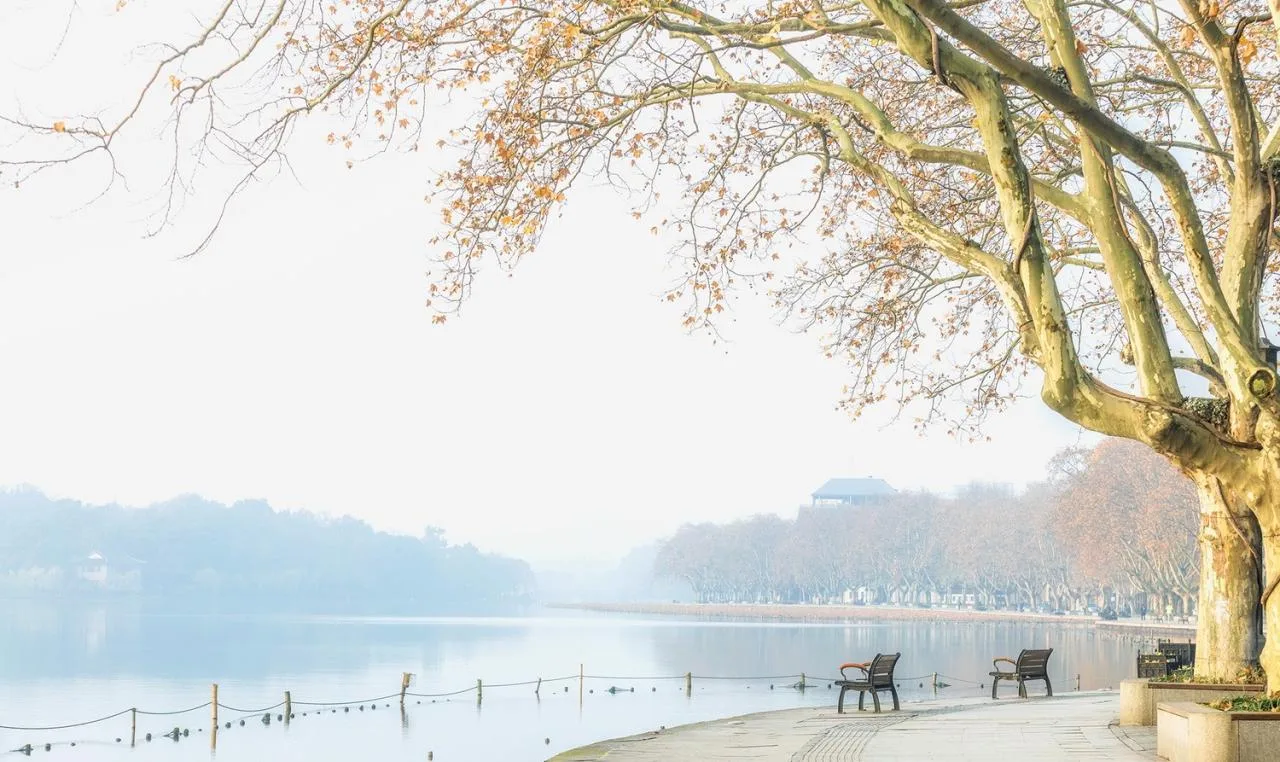
△ City Impression – Realistic Scene of West Lake, Hangzhou
Beyond the iconic lakes and mountains that shape Hangzhou’s urban landscape, “residential gardens” like Hu Xueyan’s former residence and Guo Zhuang reinforce the city’s cultural tradition of living harmoniously with nature. However, limited urban land makes private homesteads a dream for most. This project aims to establish a new model of modern homesteads through a secure, enclosed community landscape. Here, 568 households form the “homestead,” while the “garden” is a shared park for all residents to enjoy leisure and social activities.
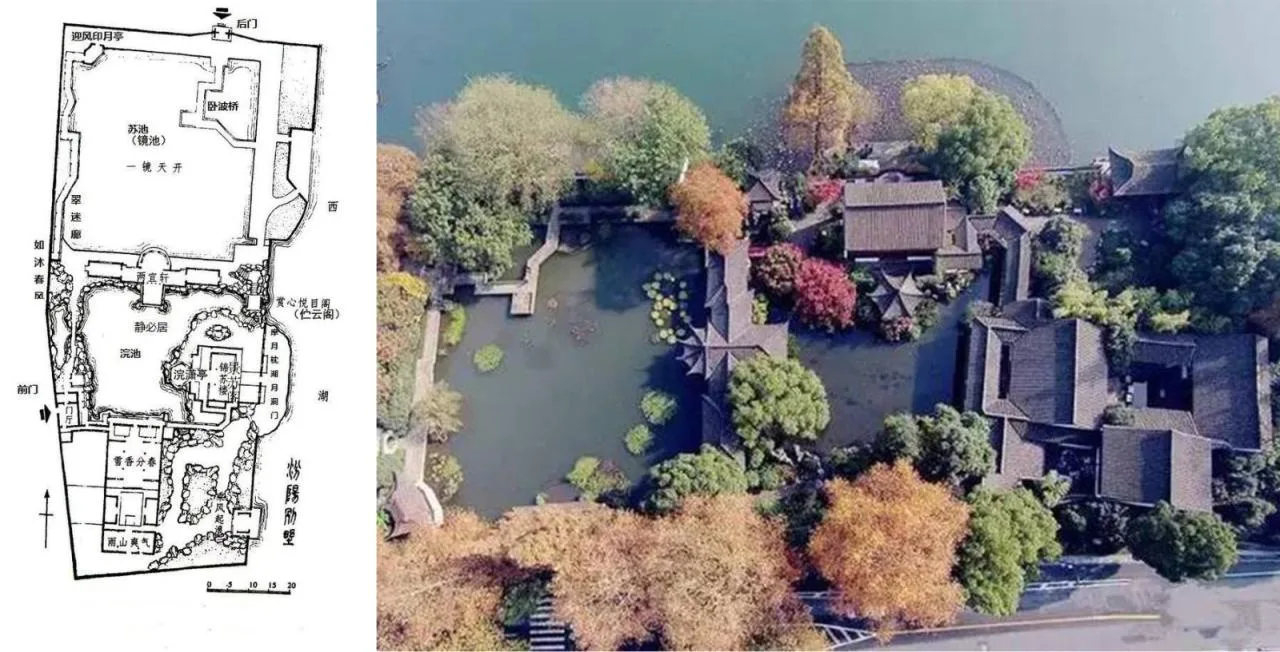
Landscape Layout – Guozhuang (Fenyang Villa)
Space Creation
The building layout we inherited was precisely calculated to comply with regulations such as plot ratio, height limits, and sunlight requirements, resulting in a nearly definitive plan. Each building emphasizes classical symmetry, especially at the north and south entrances, reinforcing a strong axial presence. Yet, sunlight requirements caused a 10.4-meter offset along the north-south axis within the park, and limited space prevented architectural adjustments to address this.
A completely symmetrical landscape would not harmonize with the building layout. Instead, the landscape needed to bridge symmetry and offset within a short north-south depth, creating a transitional spatial relationship.
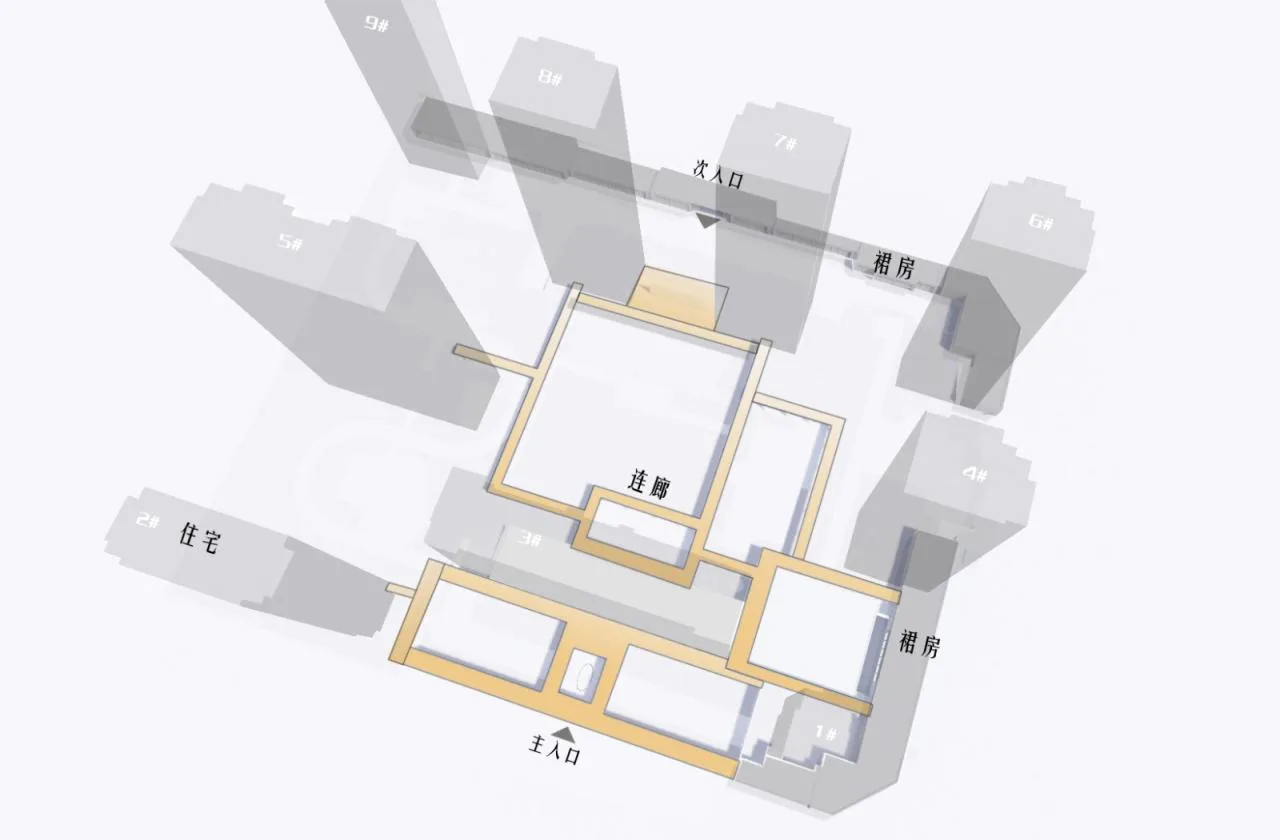
△ Original Architectural Structure Layout
Chinese architectural tradition intertwines two philosophies. Confucian principles emphasize Zhongzheng (centrality) and Lixu (sequence), dominant in architectural spaces, while gardens embrace Taoist ideals of natural freedom and romantic innocence.
This incomplete symmetry at Chuanchen Mansion offers an opportunity: within a high-density urban community dominated by buildings, the landscape may carve out its own realm, rediscovering traditional spatial charm.
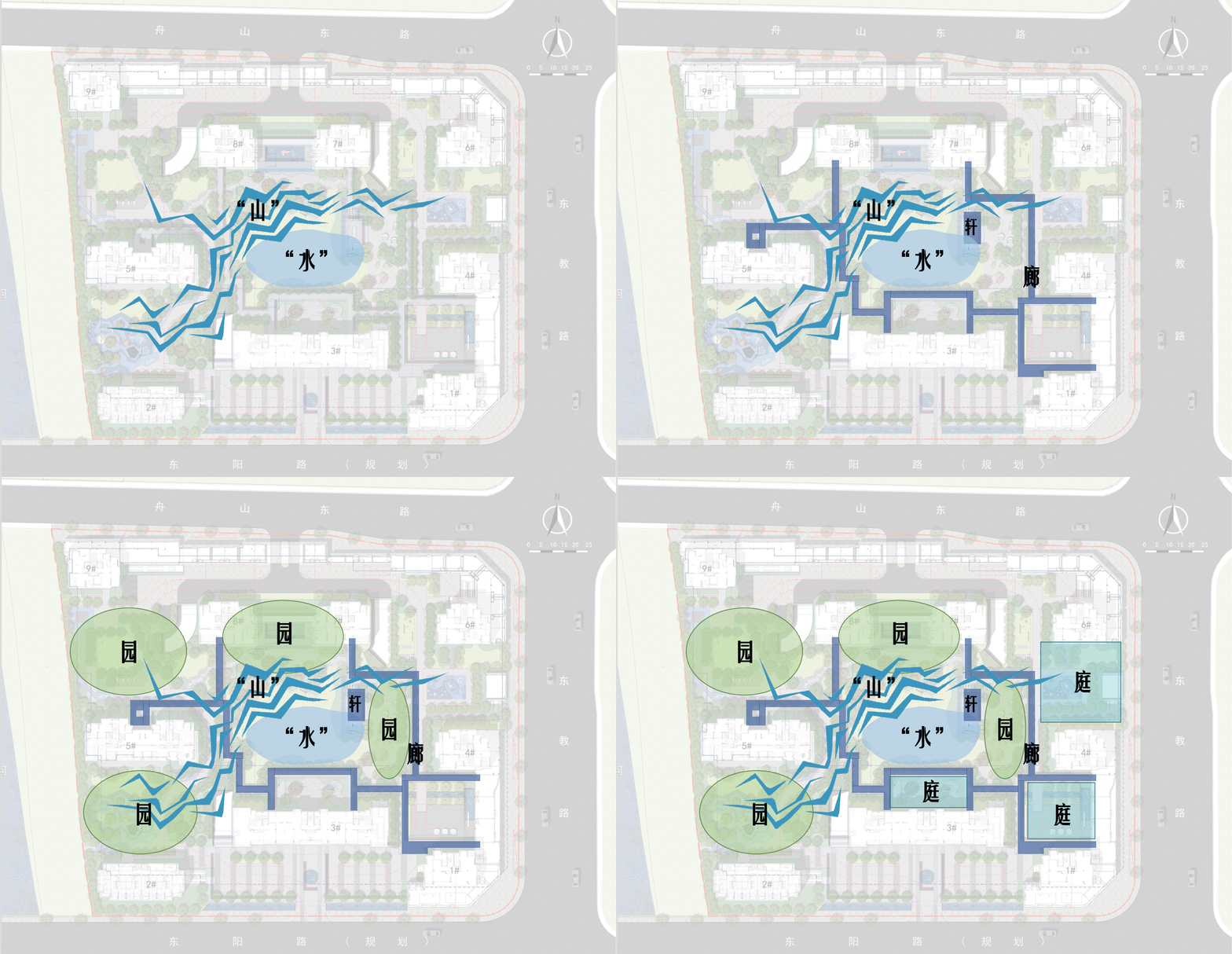
Landscape Planning Analysis
After analyzing spatial constraints, we aligned with the owner on the theme: “Contemporary Landscape Architecture in Urban Forests.”
The site includes nine buildings, naturally creating four courtyards framed by symmetrical north and south entrances and east and west wings, centered around a landscape area enclosed by corridors. These corridors are designed to meander and evoke traditional garden pathways, serving as spatial dividers and connectors.
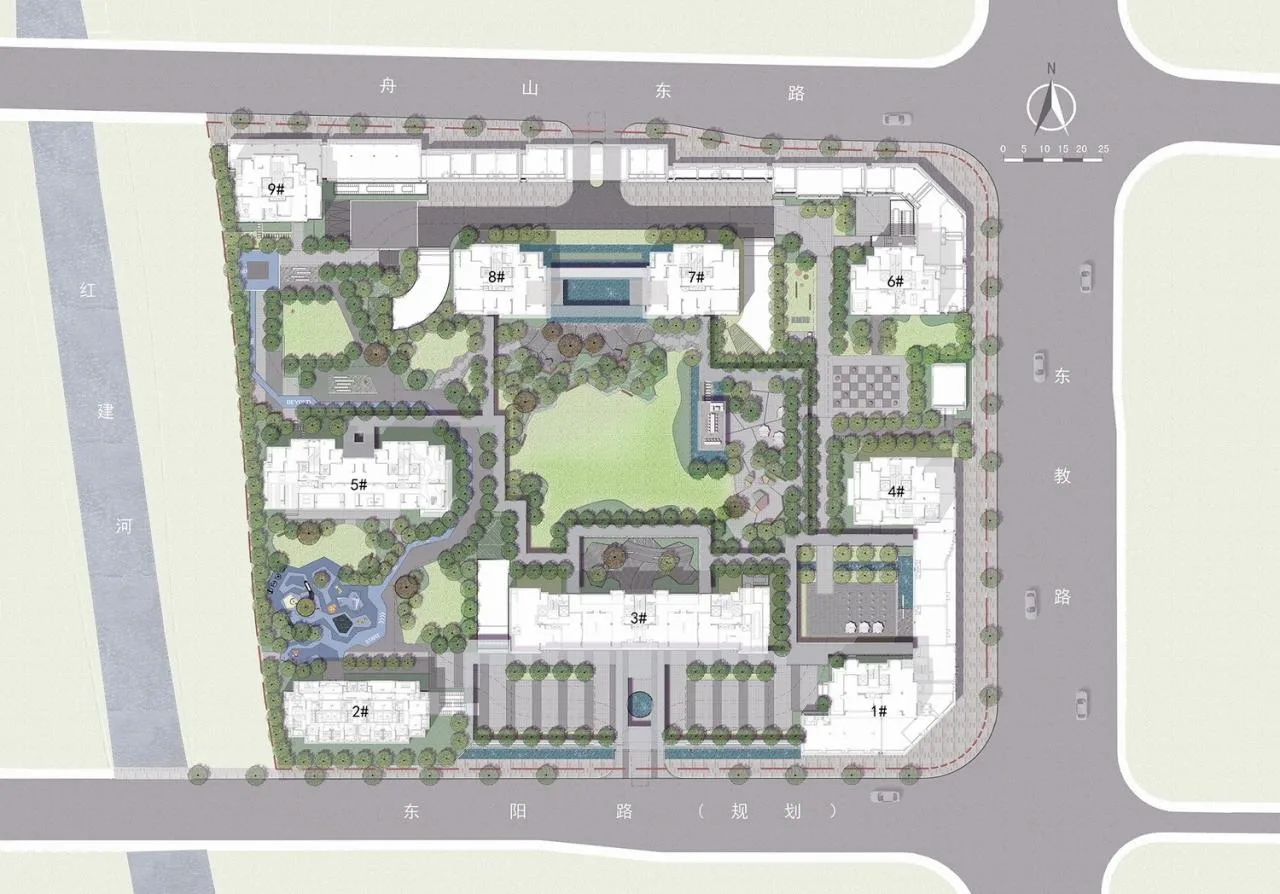
△ Landscape Master Plan
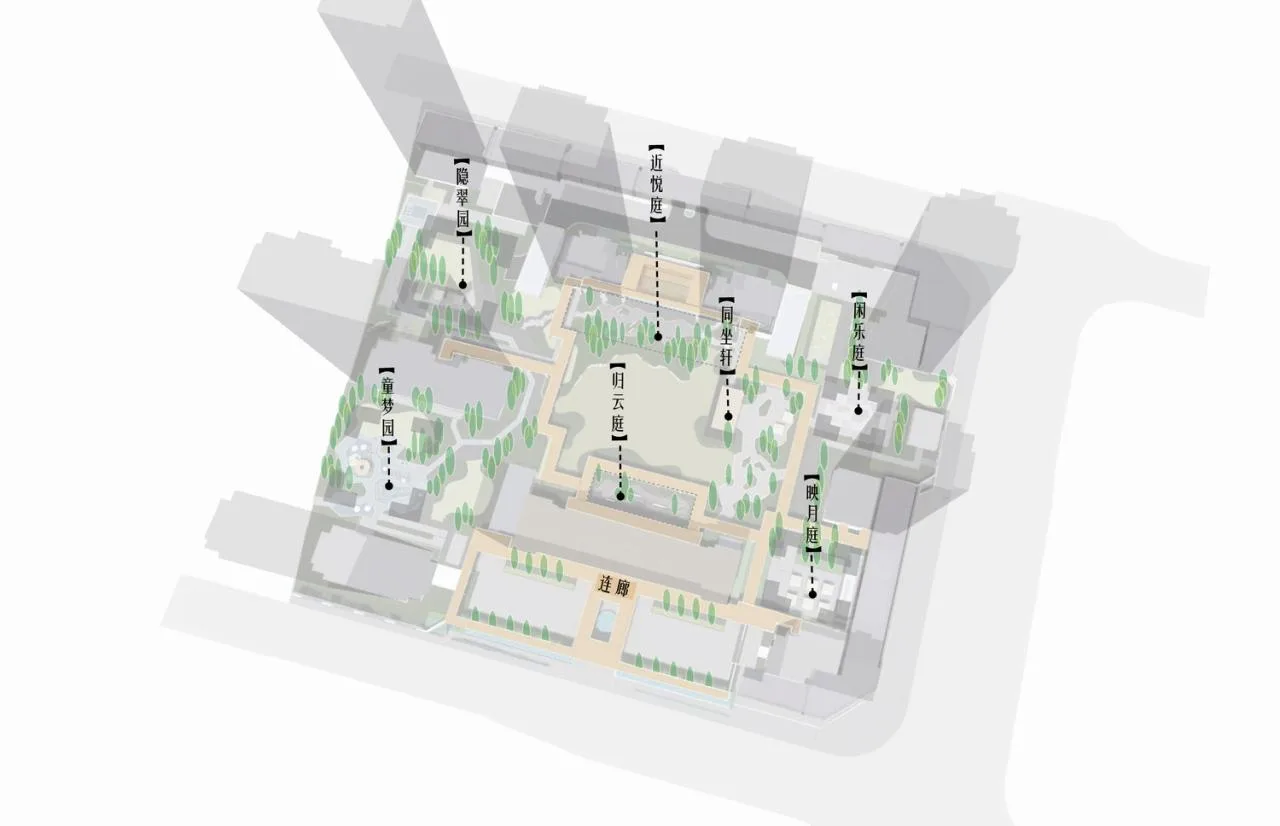
△ Key Landscape Nodes
To address the north-south axis offset, two independent courtyards, “Guiyun” and “Jinyue,” were designed to embrace each other. The central landscape is bordered by a forested soil mound to the north and a sunlit lawn to the south, symbolizing the contrast between West Lake and North Mountain. The northeast corner features a corridor structure named “Sitting Together,” serving as a focal point of the central landscape. The west side overlooks the lawn, while the east connects to the forested living area.
Beyond the integrated spaces and corridors linked to the architecture, most landscape elements use broken lines to evoke mountain and forest imagery.
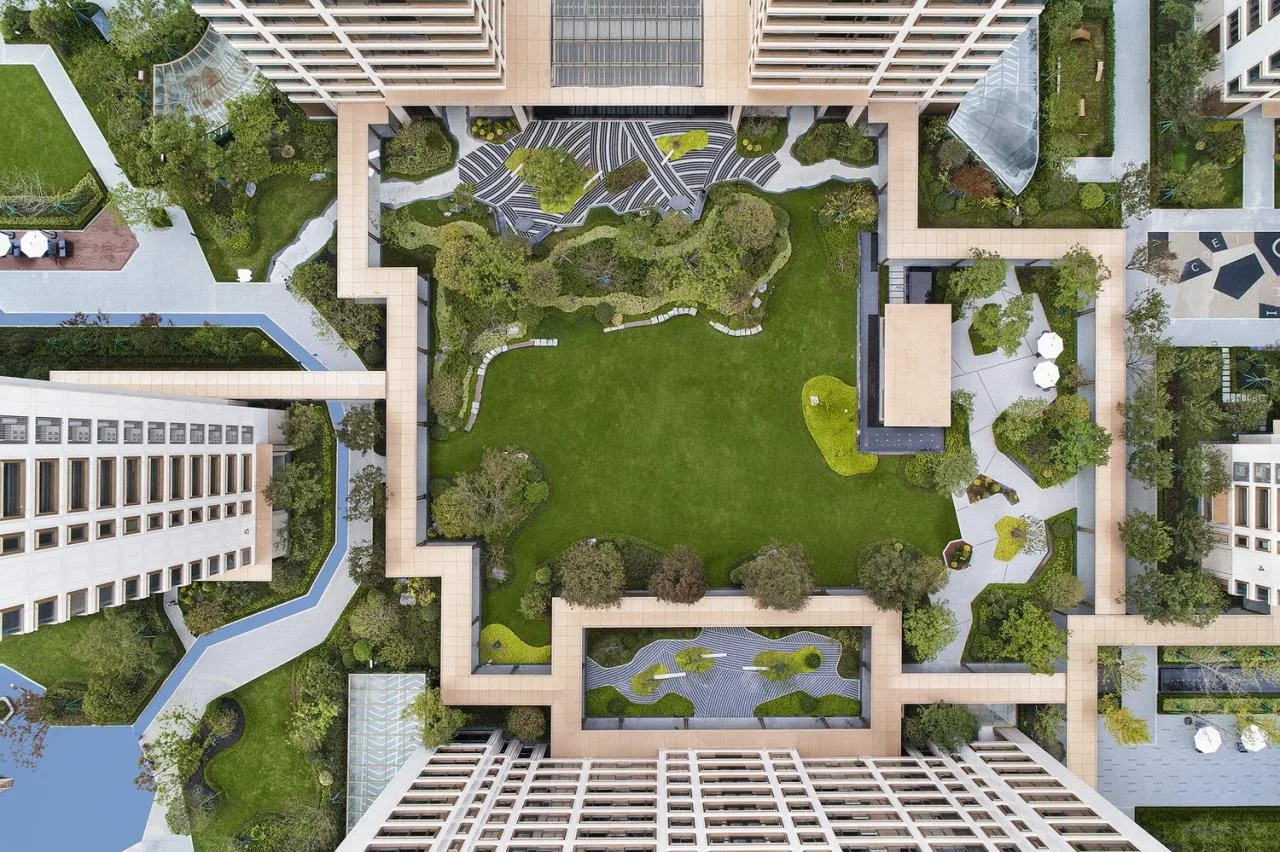
△ Aerial View of the Atrium
Multiple Pathways
Chinese gardens traditionally emphasize lingering and enjoyment, often featuring multiple intertwined routes that inspire a sense of boundless imagination within limited space.
Once the residential garden’s spatial framework was established, the design focus shifted to human movement and exploration. The folding corridor linking the main buildings provides clear circulation for both transit and sightseeing. Additionally, the landscape offers subtler paths that encourage leisurely meandering, enriching the spatial experience beyond a simple straight route. These paths connect main nodes and elevation changes, fostering diverse social interactions within the community.
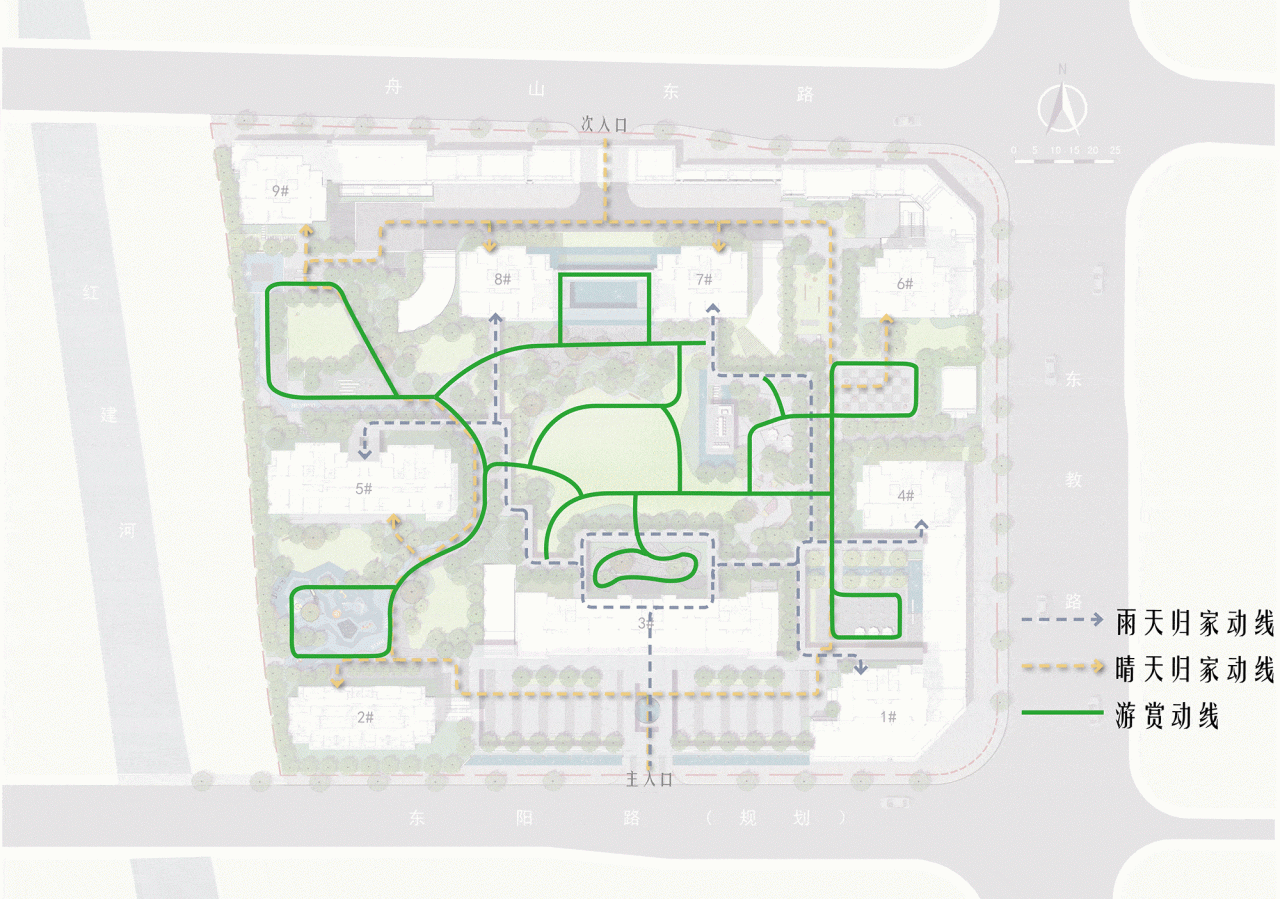
△ Landscape Migration Routes
Integrated Design
Three years ago, Hangzhou Dajia Demonstration Zone stood out for the seamless integration of architecture and landscape. We aim to continue this refined “less is more” design philosophy in this project.
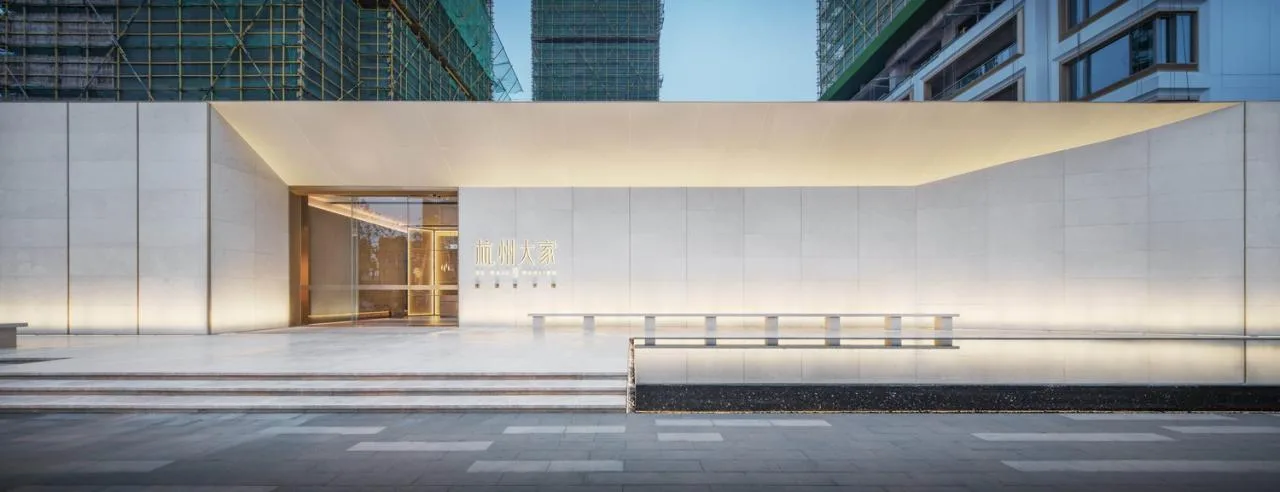
△ Demonstration Zone Scene
The facade of Chuanchen Mansion draws inspiration from iconic New York architecture. Its light-colored aluminum panels and golden window frames create an international aesthetic, contrasting with the “mountains and forests” and “residential gardens” imagery of the landscape. Balancing Eastern cultural sentiment with contemporary global architectural language, and harmonizing landscape and building details, became a crucial focus throughout design and construction.
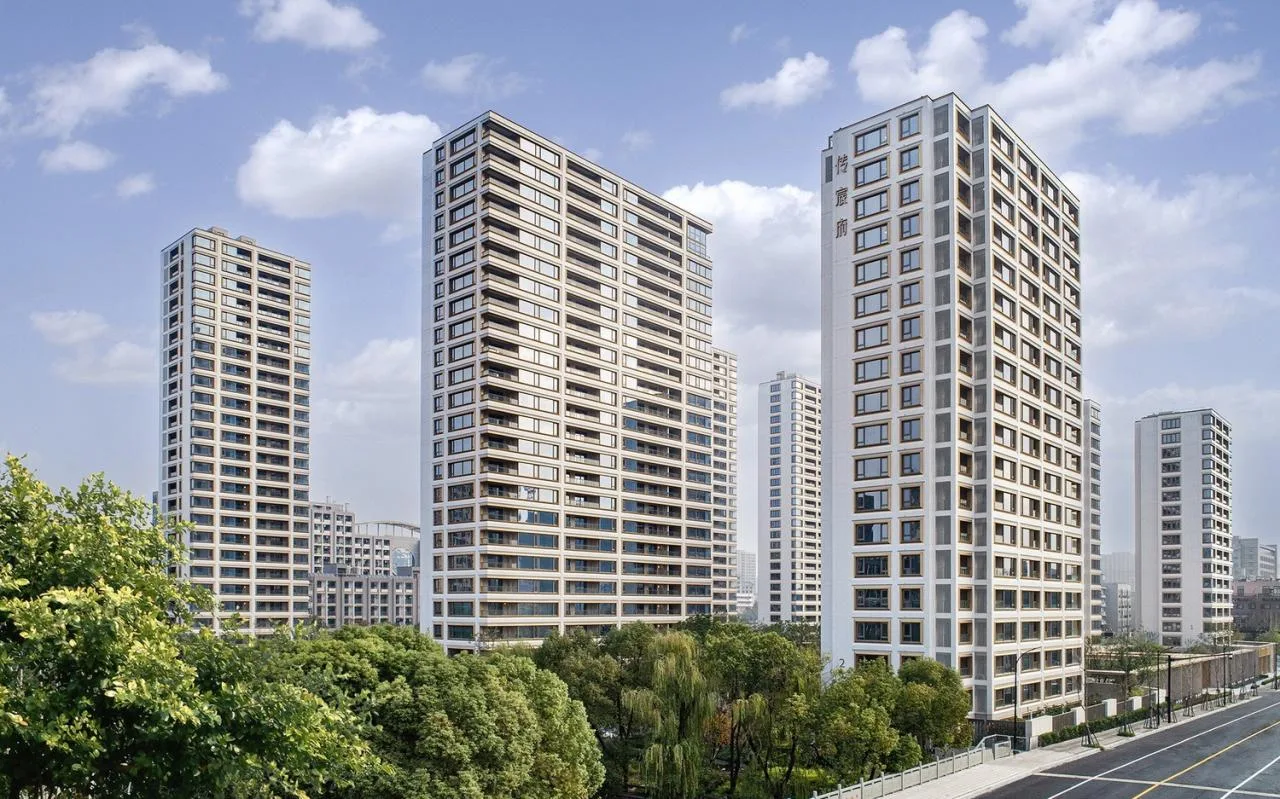
△ Building Facade
North and South Entrances
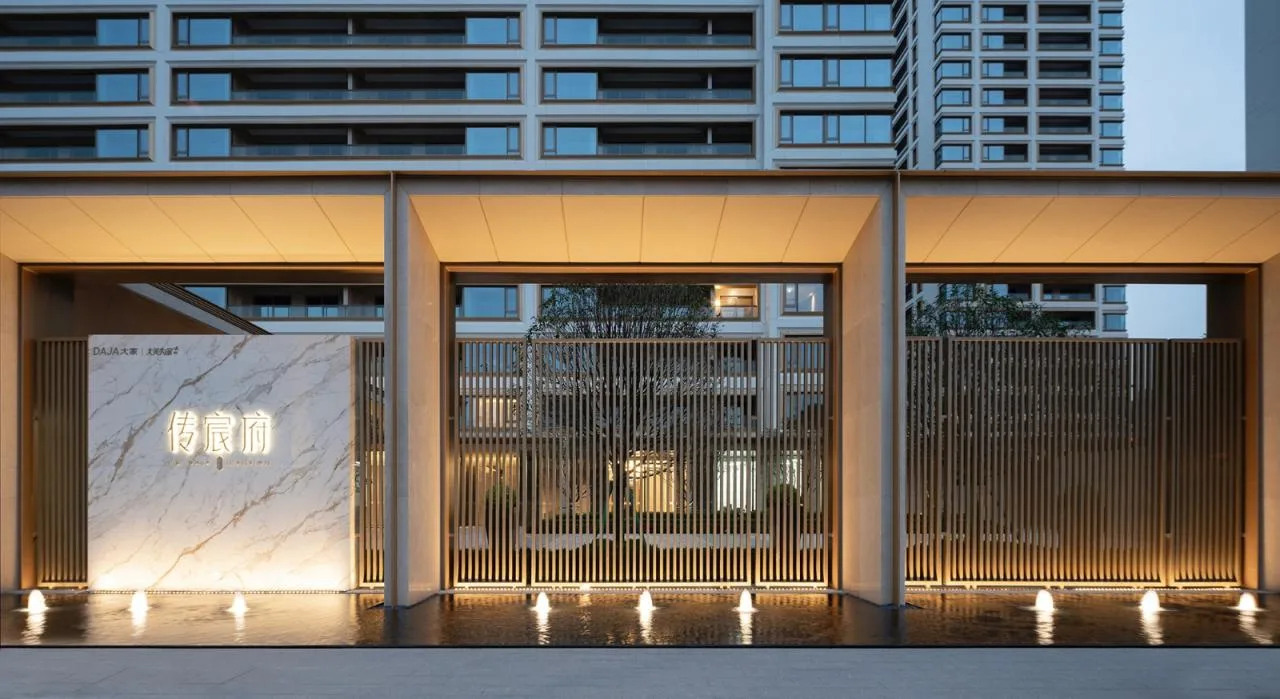
The central buildings at both entrances are set back, creating an enclosed feeling. The south entrance serves as the project’s main visual gateway and, after extensive collaboration with the architectural team, embodies the image of a “city showcase.”
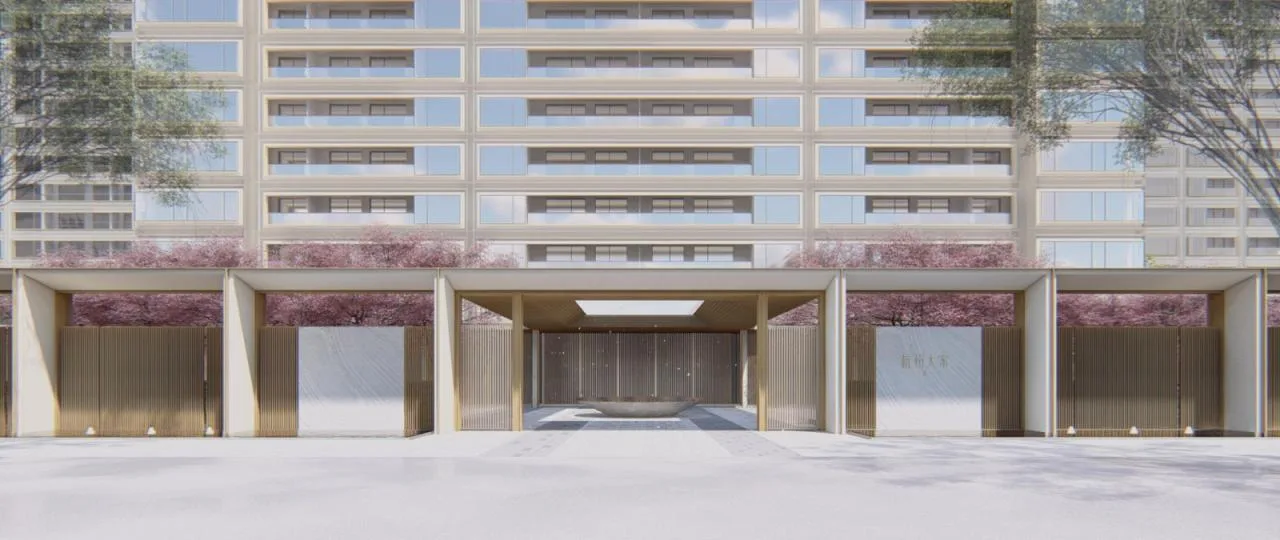
△ South Entrance Rendering
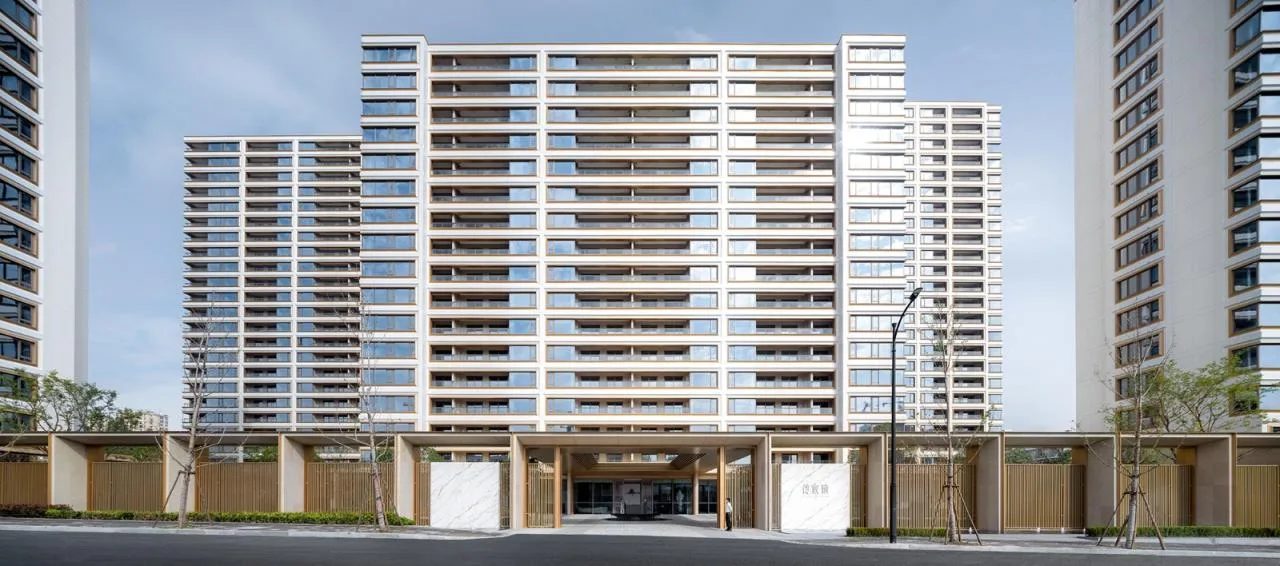
△ South Entrance Real Photo
The continuous 11-span archway not only reveals the Yazhong community’s urban image but also encloses a secure courtyard inside, creating a welcoming psychological threshold for residents returning from the bustling city.
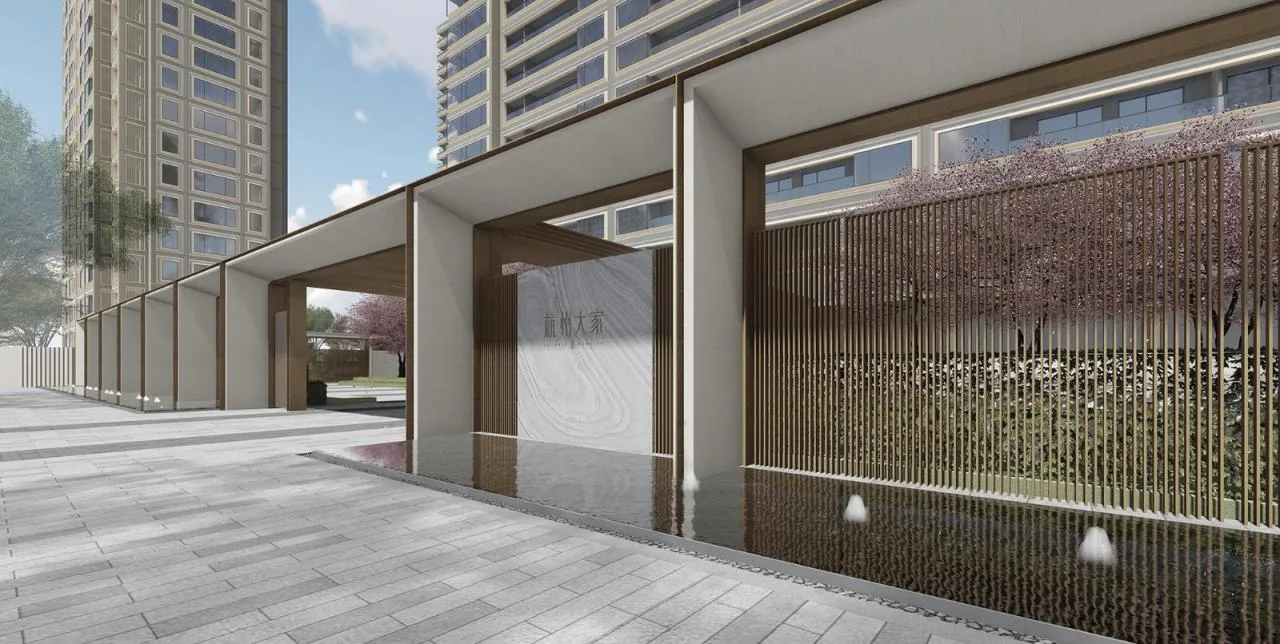
△ South Entrance Rendering
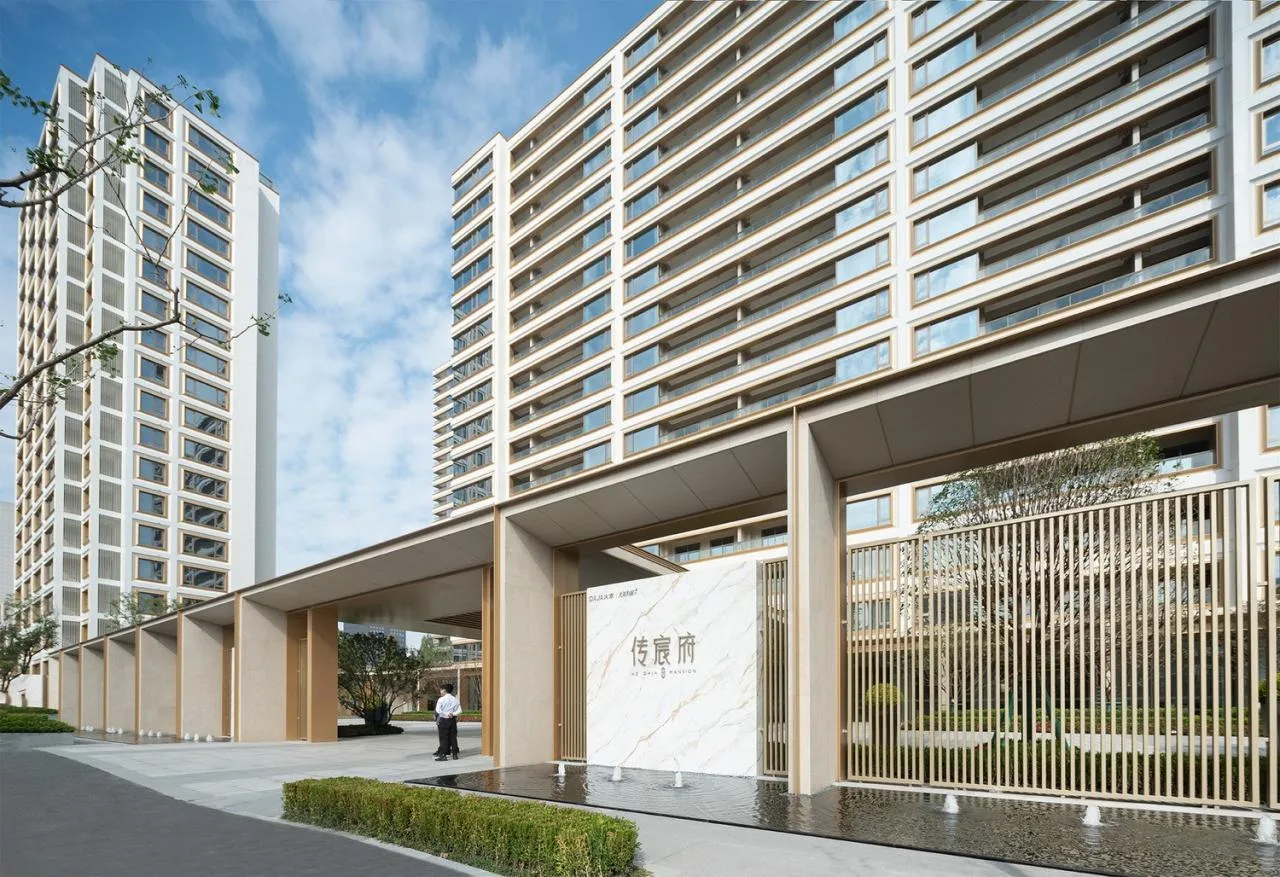
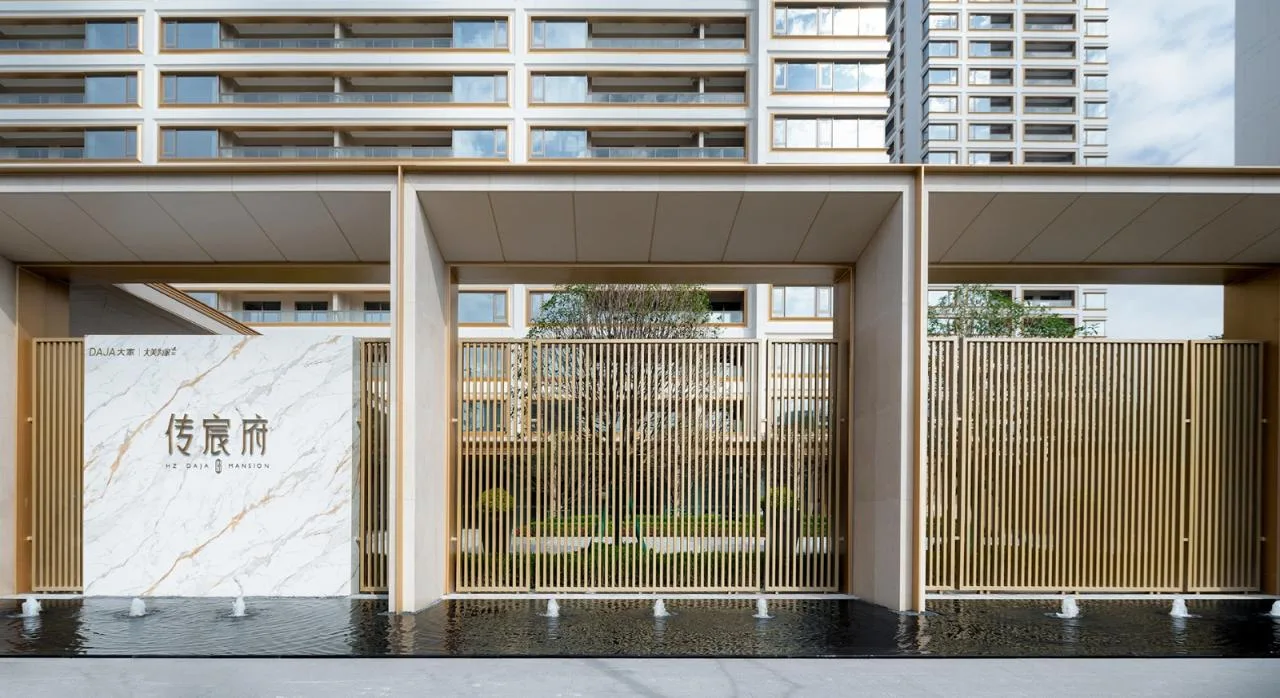
△ South Entrance Real Photos
The agarwood beige stone, golden metal lines, and latticework seamlessly integrate with the building facade, presenting a unified appearance. The entrance’s logo walls were meticulously selected from numerous materials to match the stone’s color and texture. After extensive layout adjustments, the final design was perfected.
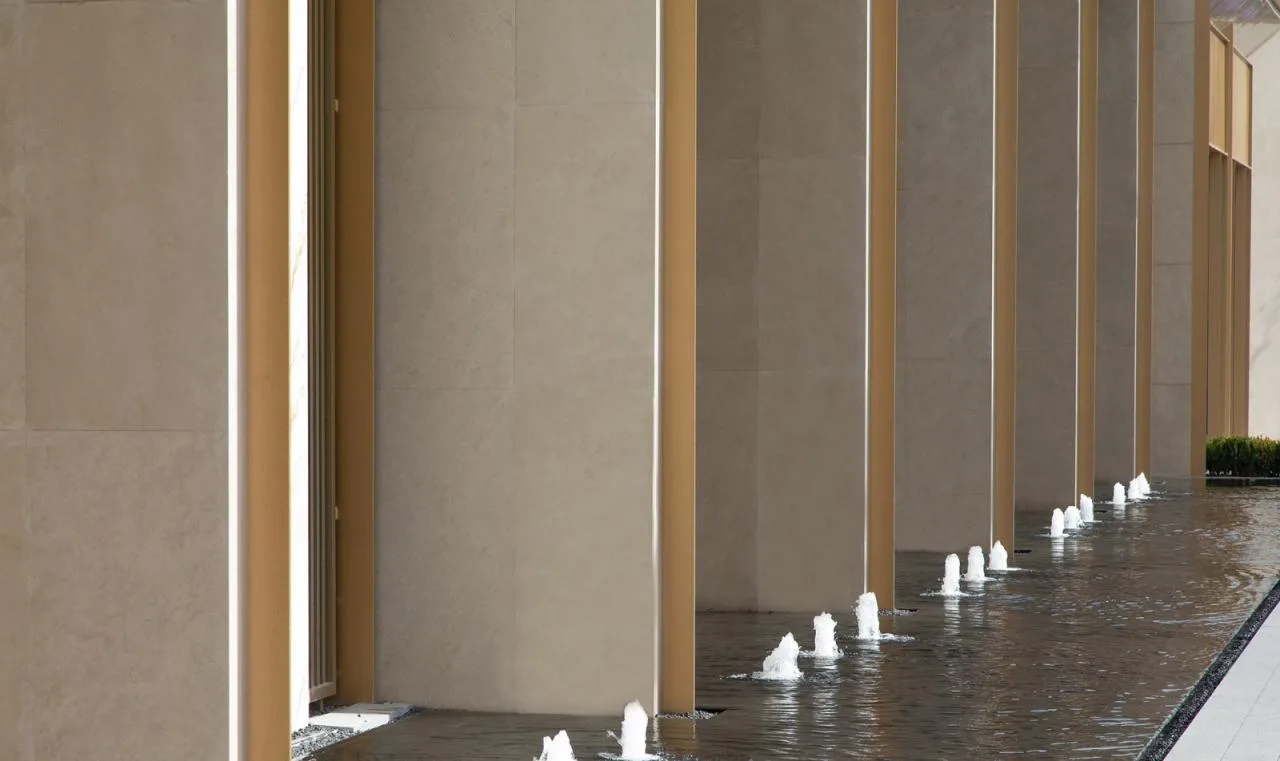
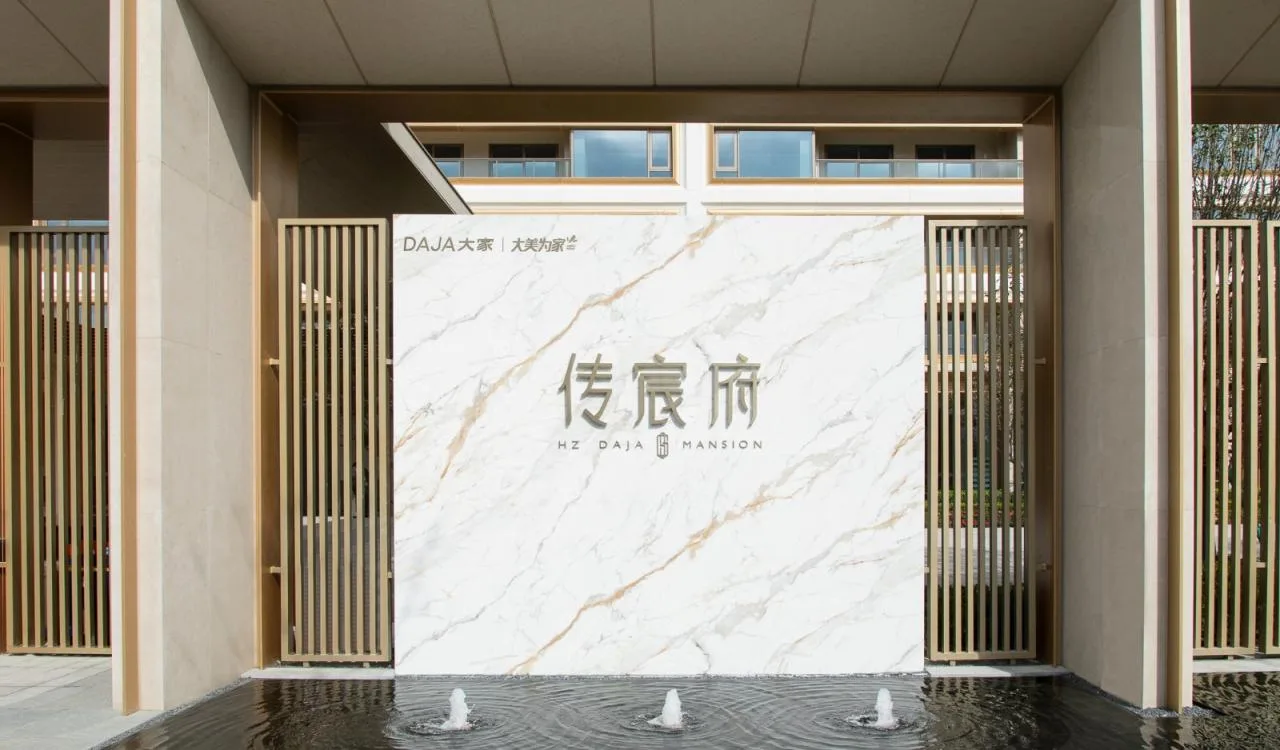
△ Detail Showcase
The building facing the main entrance hall features a grand double-eaved square roof, symbolizing dignity and presence. A minimalist circular stone water mirror complements the landscape, blending virtual and real elements that convey Eastern harmony between structure and surroundings.
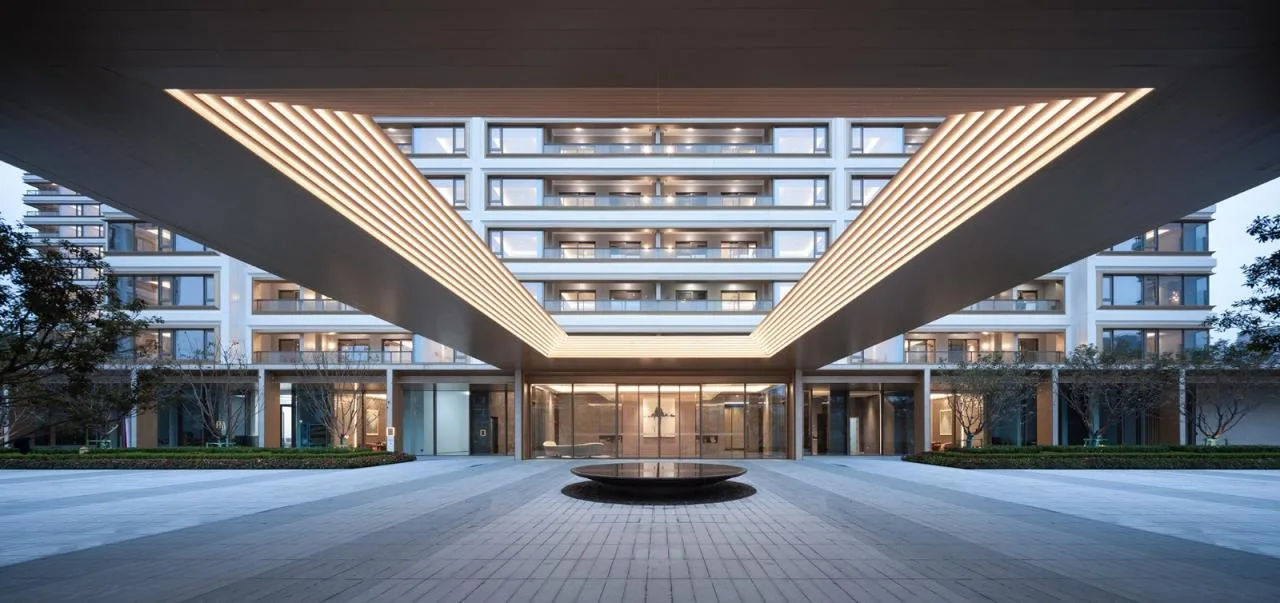
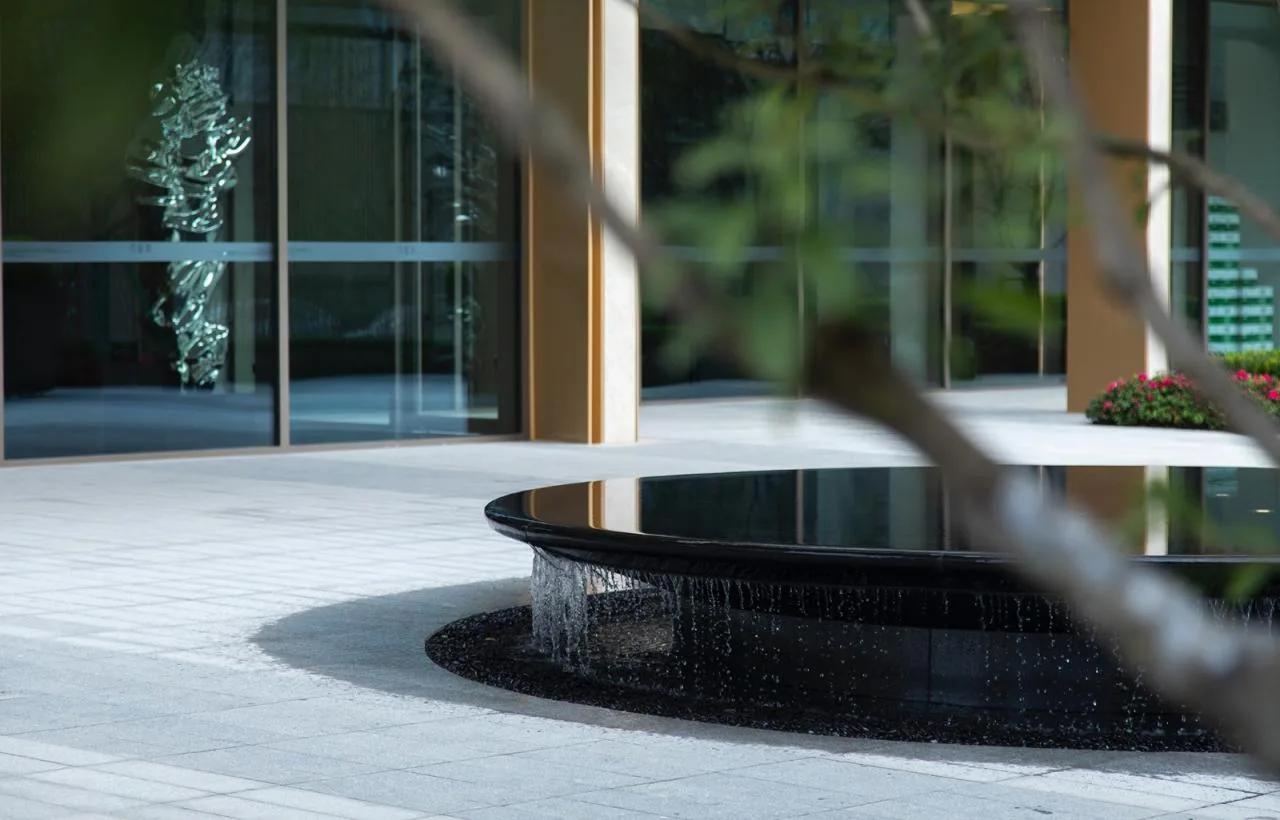
△ Entrance Lobby
The north entrance serves as the main vehicle access, with a lower road elevation and simpler architecture compared to the south. A 19.3-meter-wide, 3-meter-high landscape wall screens car lights and noise, ensuring peace within the courtyard.
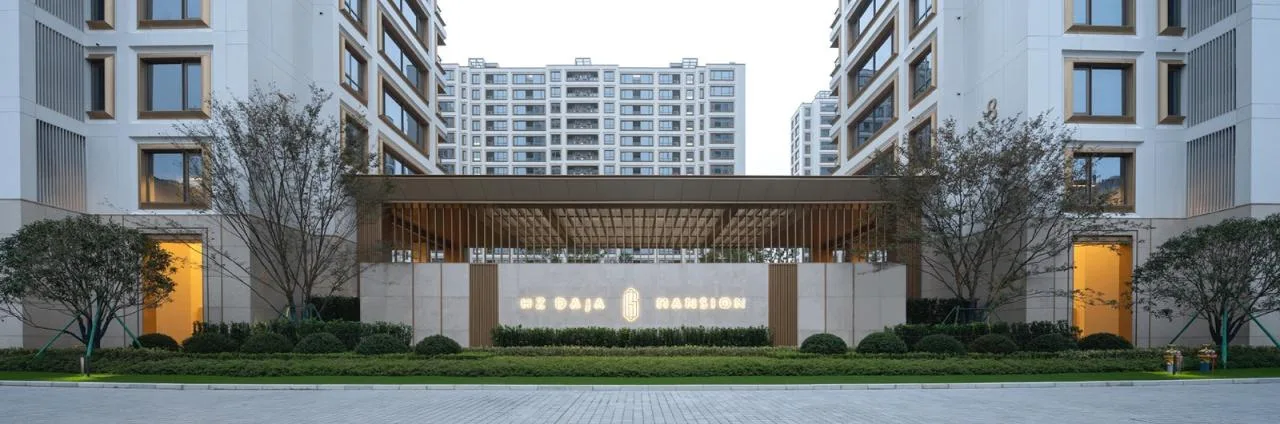
Folding Corridor
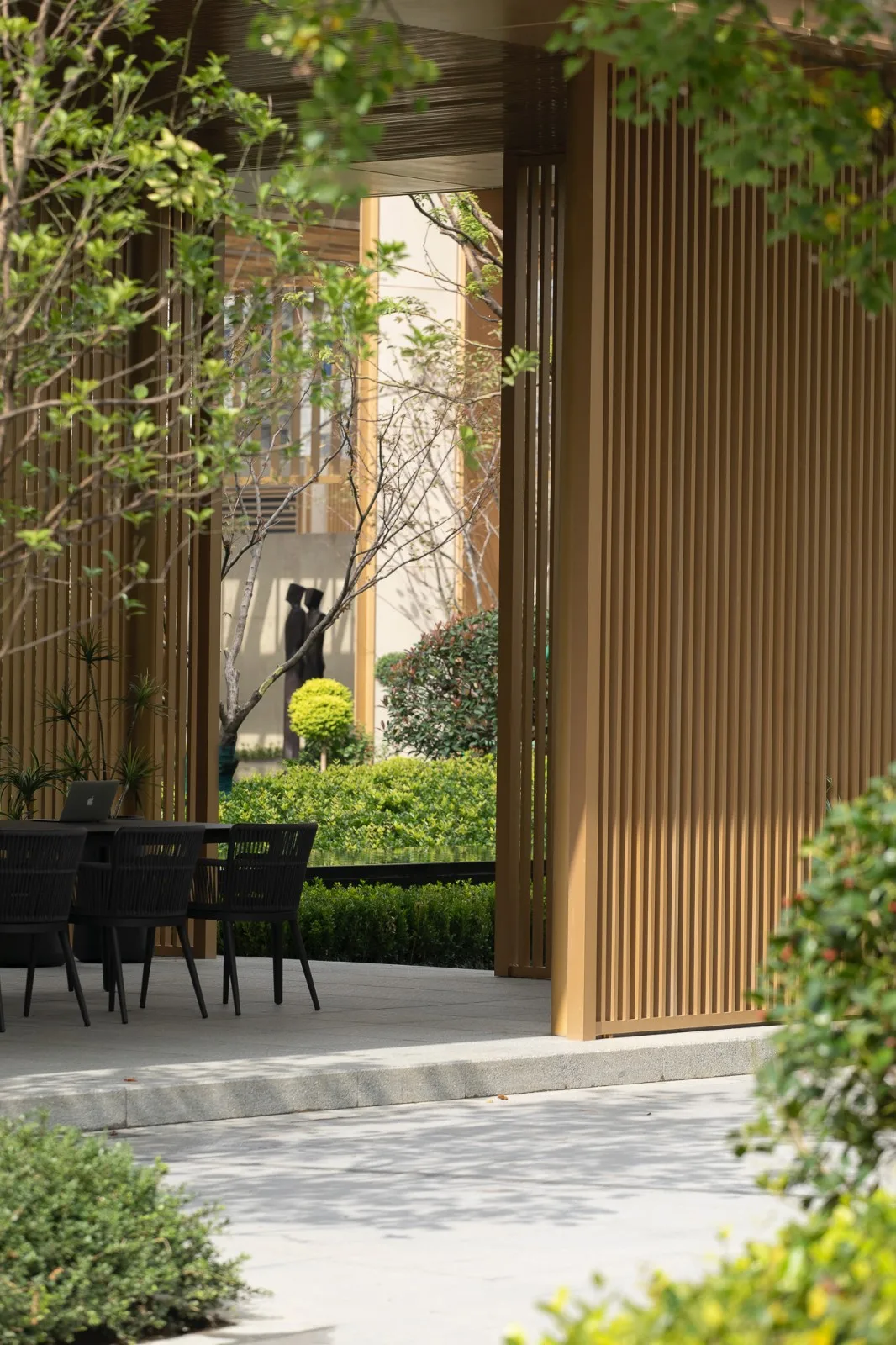
The community’s moderate size allows for covered corridors connecting five of the nine buildings, linking the north and south entrances. Besides serving as a welcoming path home, these corridors provide shelter from wind and rain while offering visual and sensory enjoyment. At certain nodes, residents can retreat into vibrant gardens for quiet moments.
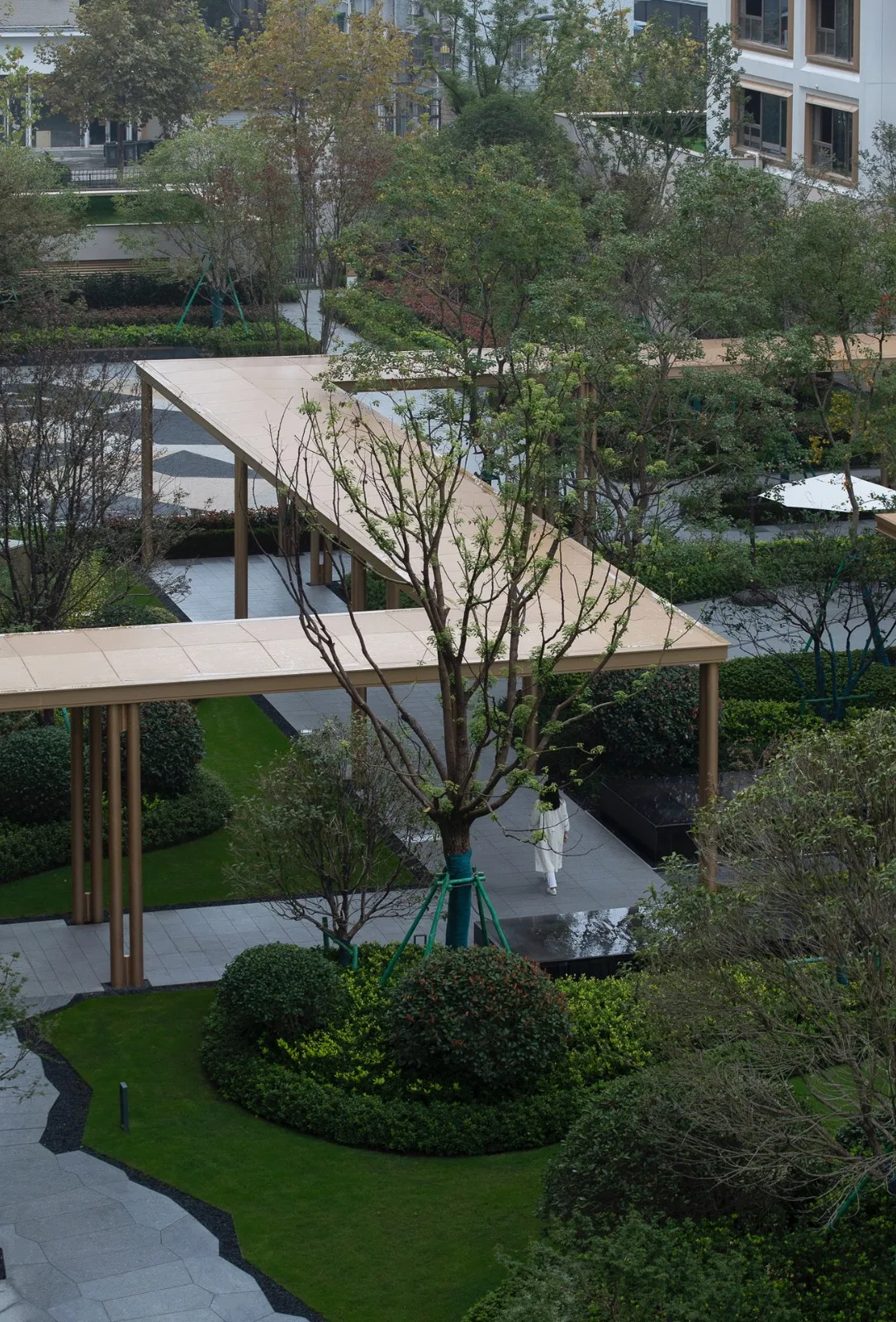
△ Wind and Rain Corridor
The folding corridor directly connects to residences and plays a key role in dividing landscape spaces, becoming a prominent feature within the otherwise enclosed spatial scale.
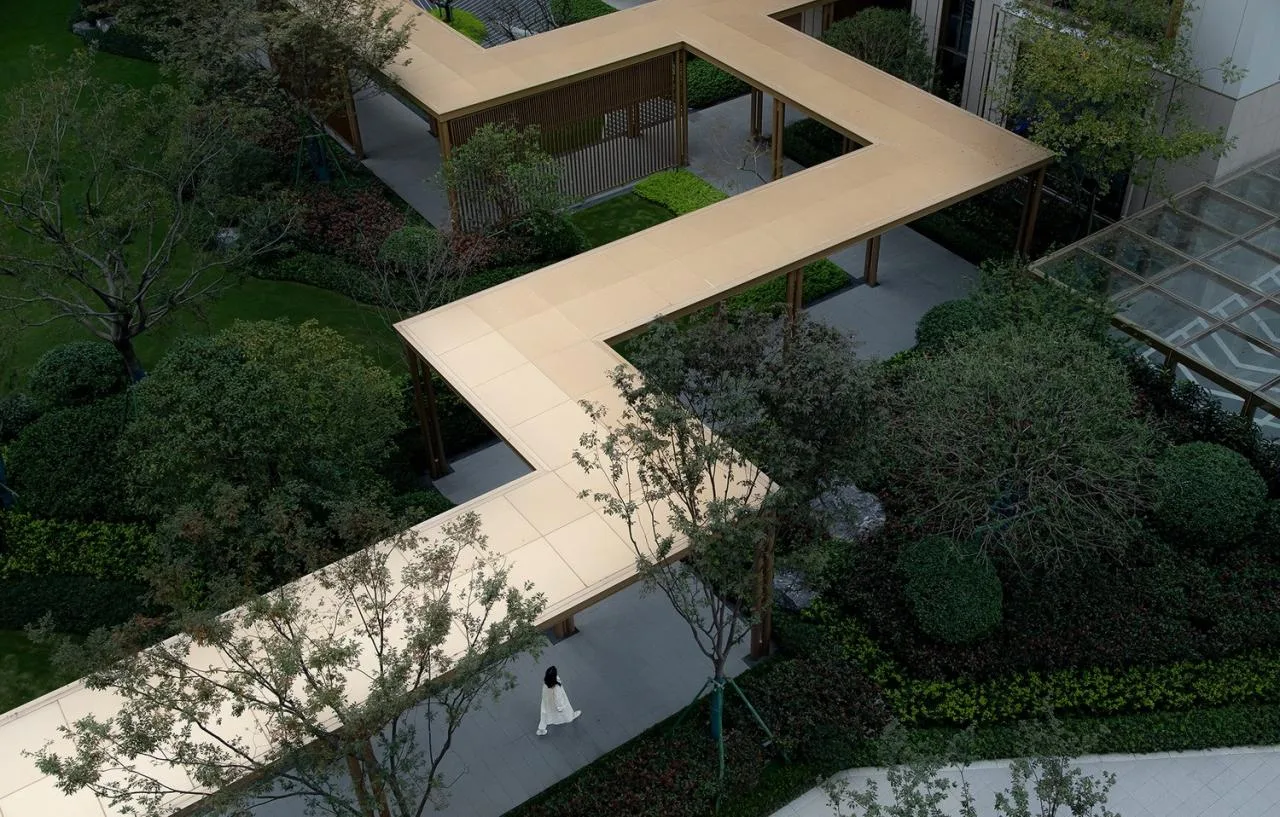
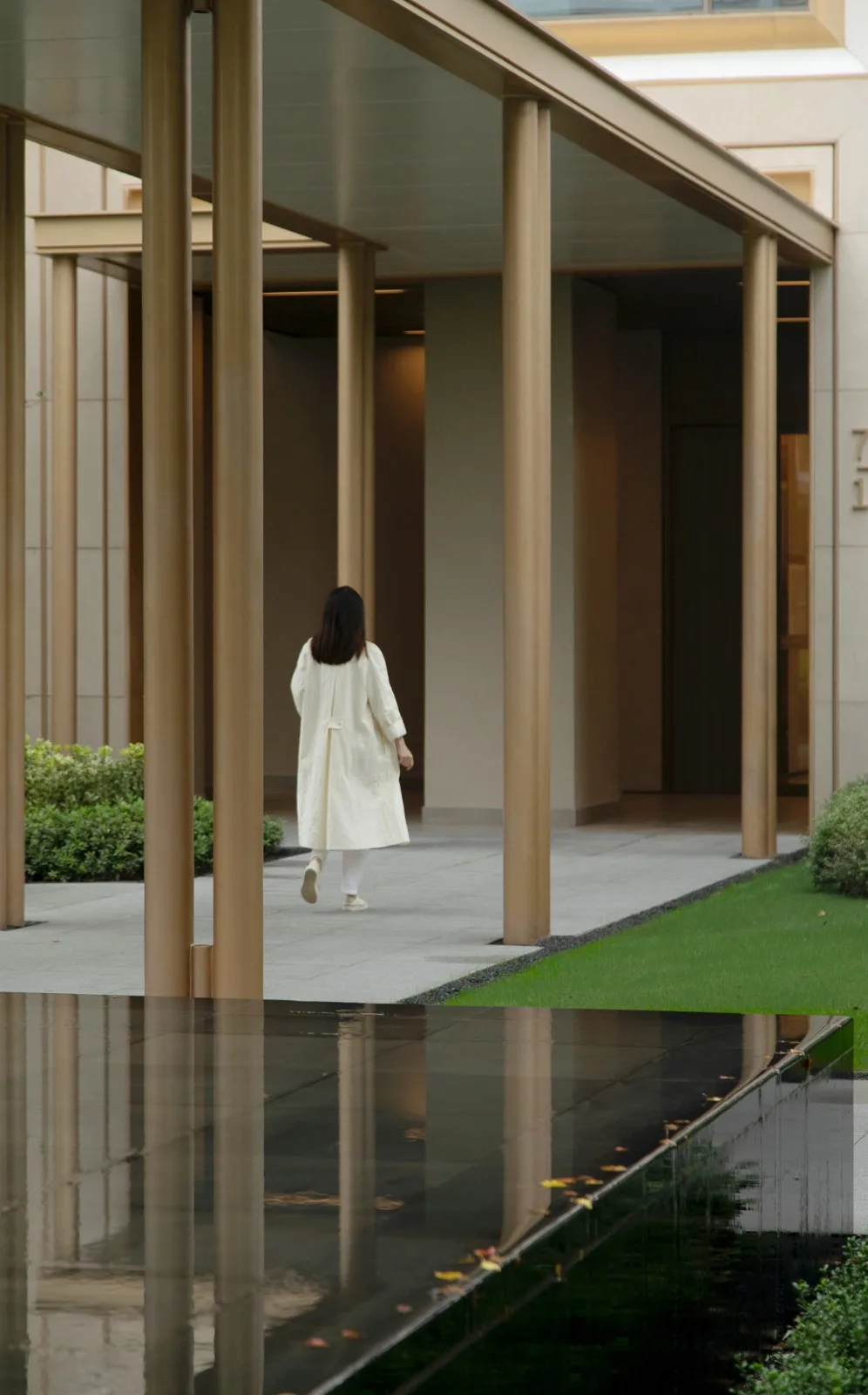
Material, color, height, width, and eave design of the folding corridor are carefully coordinated with the building’s underlying components. The use of double columns softens the visual impact at eye level, reducing fragmentation of the landscape and plantings. Night lighting details are also thoughtfully integrated.
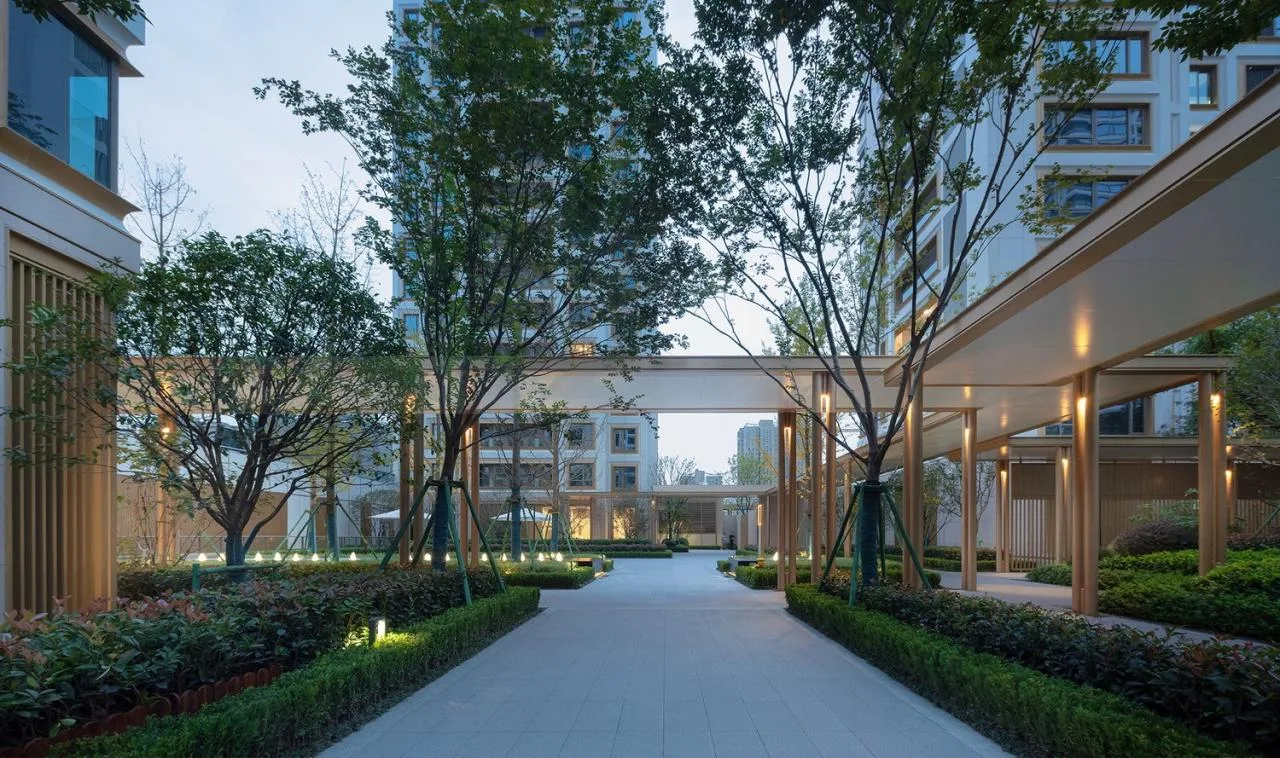
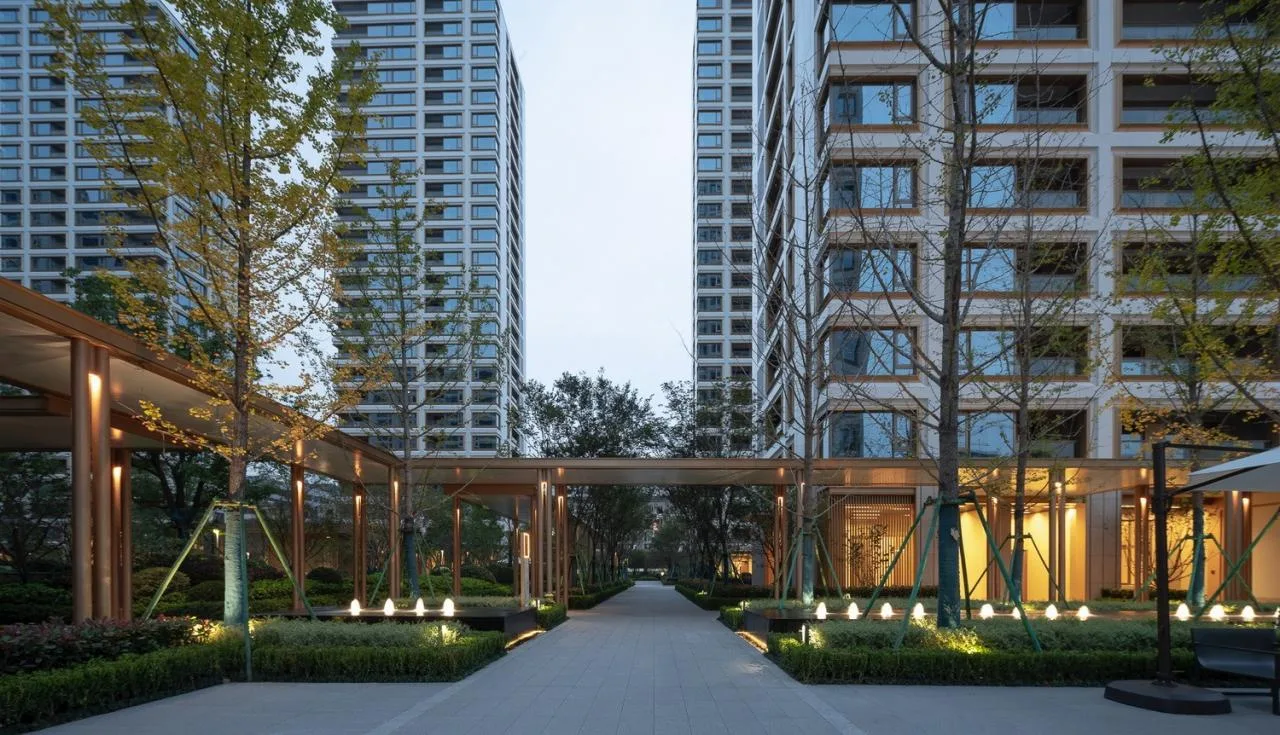
△ Night Atmosphere of the Folding Corridor
Core Landscape
In today’s fast-paced cities, traditional community bonds weaken despite shared physical spaces. Landscape design must transcend visual appeal to foster spatial forms that encourage neighborly interaction and community engagement.
Guiyun Courtyard
Located north of the south entrance lobby, Guiyun is the first courtyard encountered upon entering. The metaphor of “clouds” captures the feeling of living in a city corner—departing from home daily and drifting through urban life, yearning for the warmth of return at dusk.
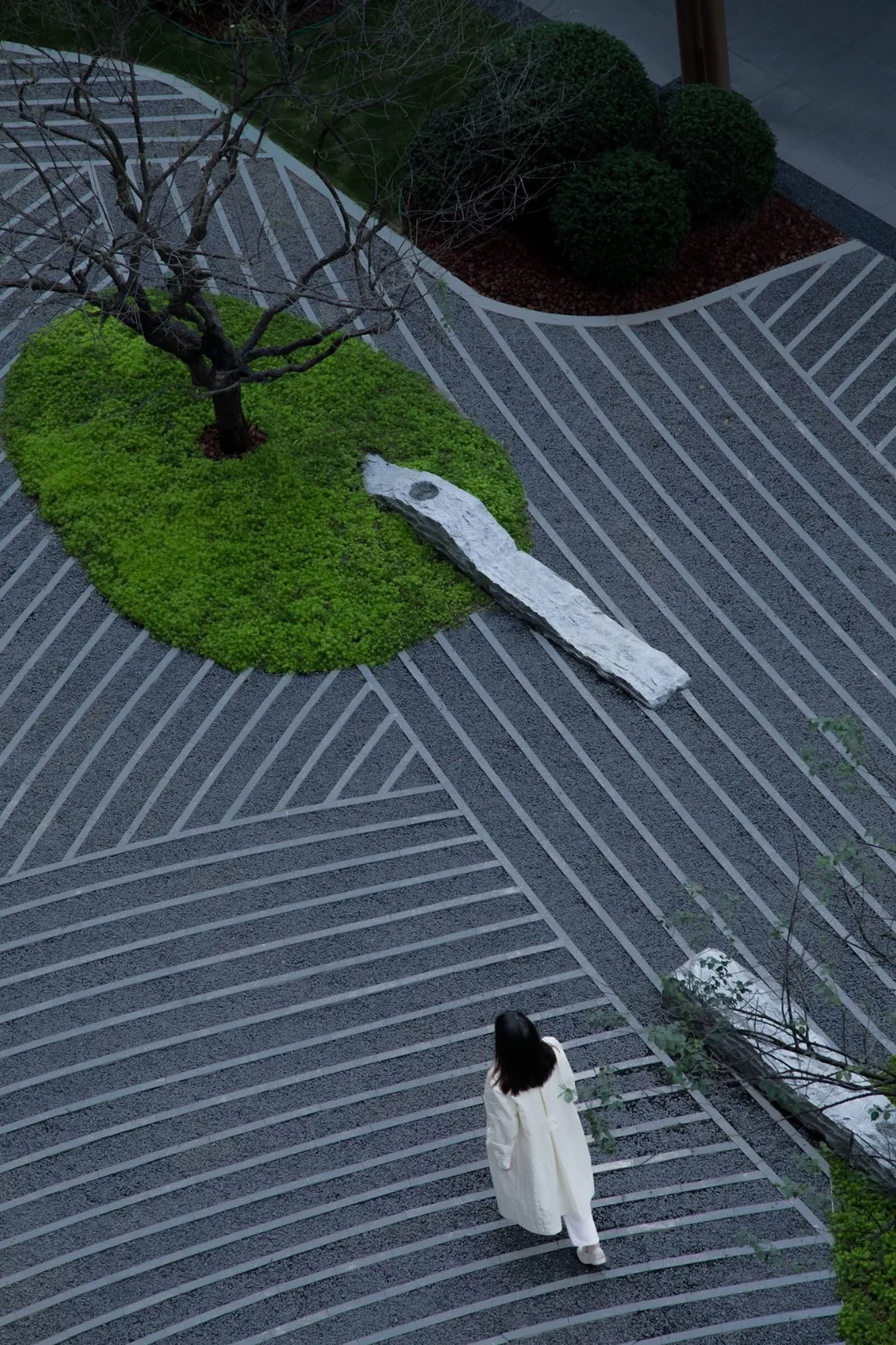
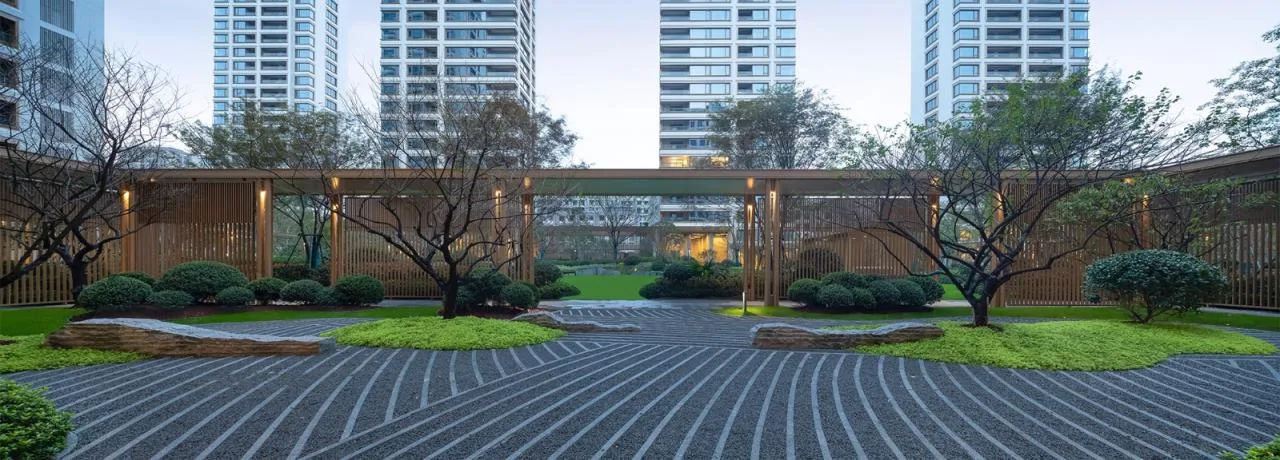
Returning to Yunting
The folding corridor surrounding Guiyun Pavilion incorporates grid elements that provide transparency and a visual connection to the adjacent lawn and landscape. Walking this corridor, residents experience a harmonious blend of natural plantings and refined details, creating a tranquil, leisurely atmosphere.
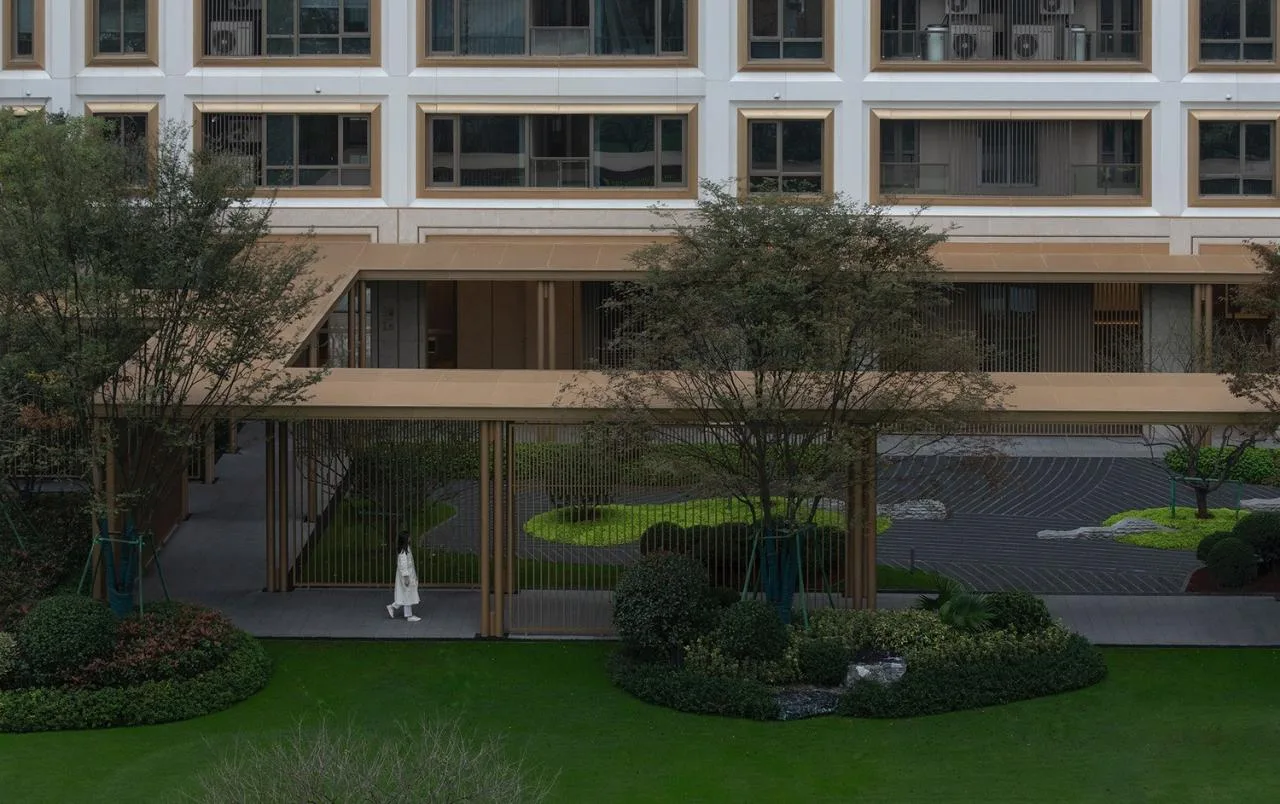
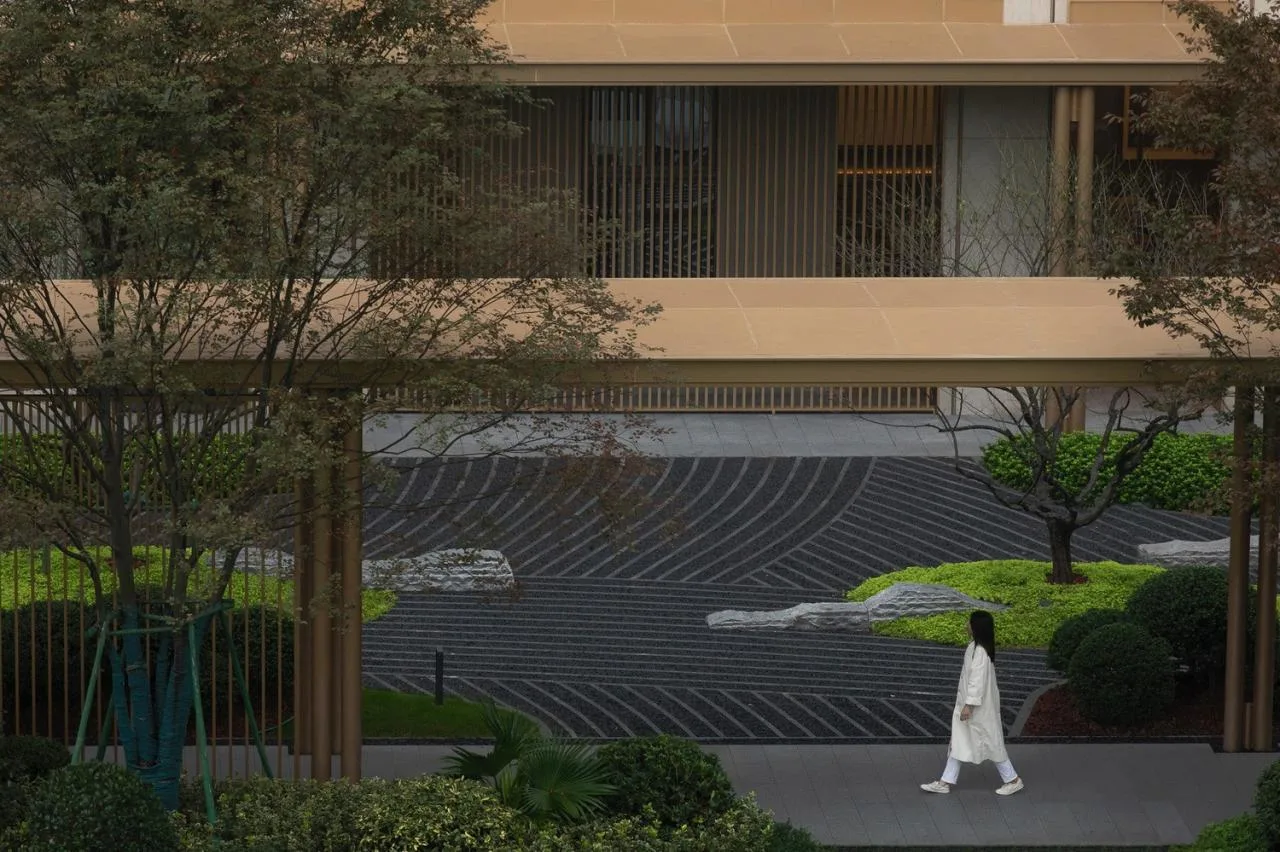
△ Courtyard View Through Folding Corridor Grille
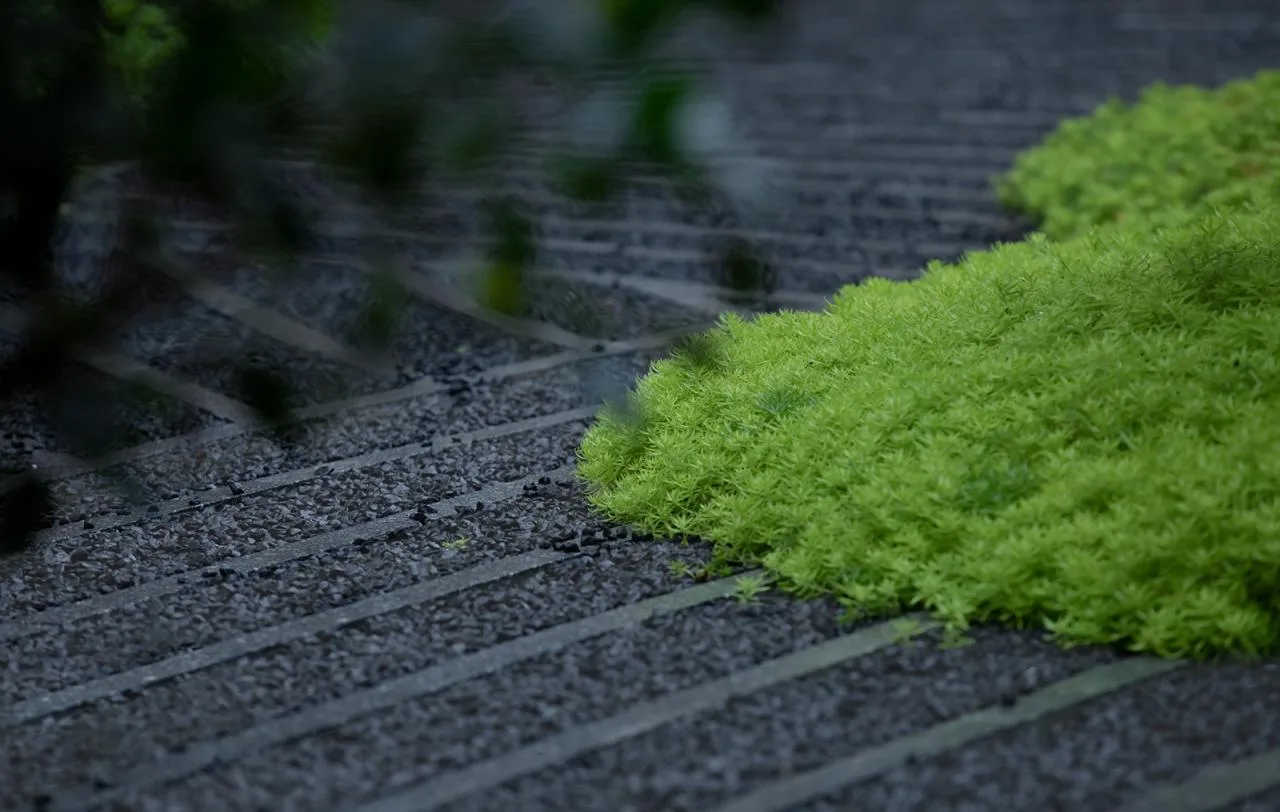
The courtyard is framed by five carefully chosen red plum trees, strategically planted to optimize views from multiple angles within the surrounding folding corridor. Horizontal stones symbolizing clouds are placed between the green island and gravel ground. As the plum blossoms bloom each year, they will create a shared memory and expectation for Chuanchen Mansion residents, symbolizing the arrival of spring amid snow and frost.
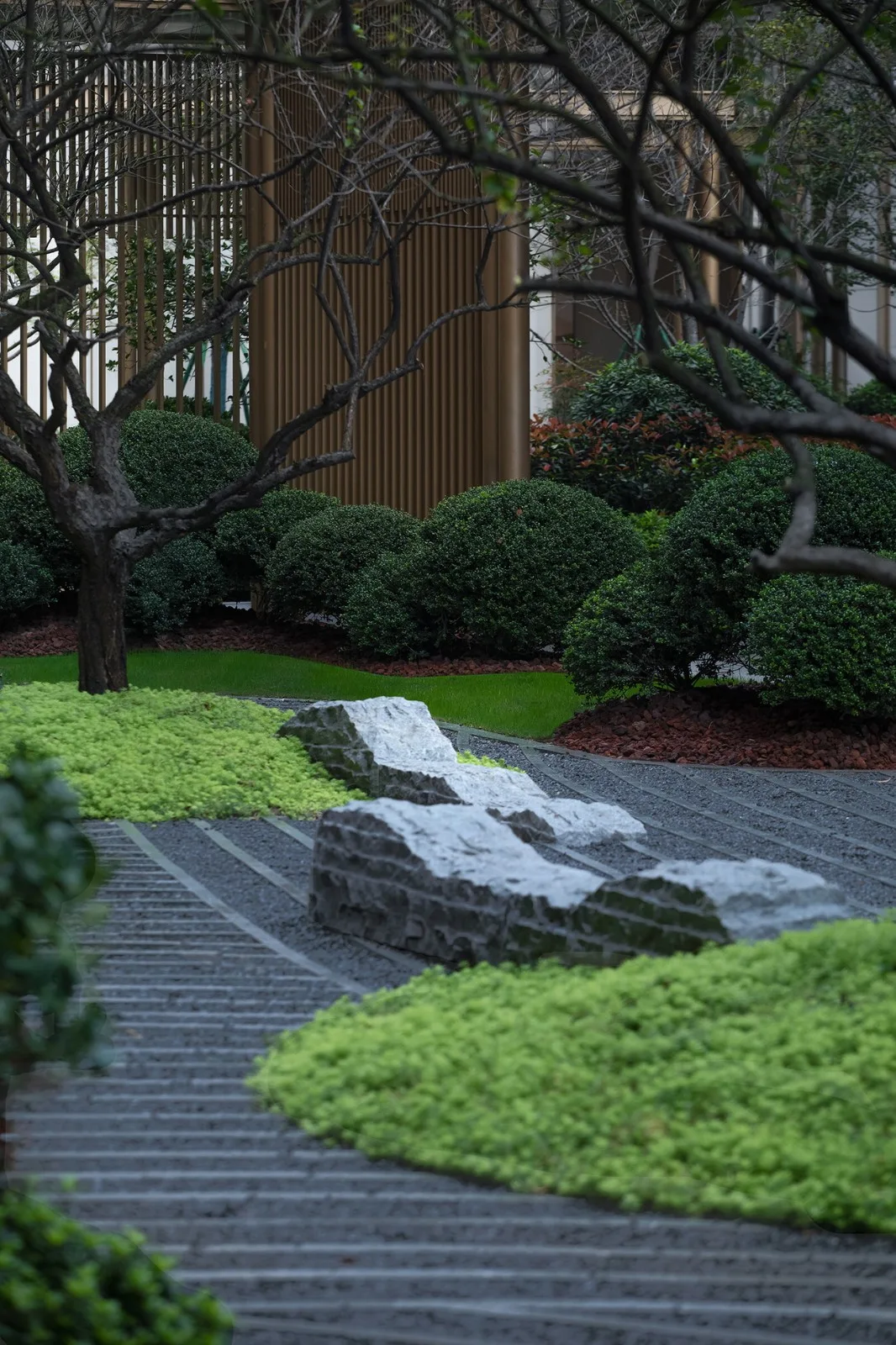
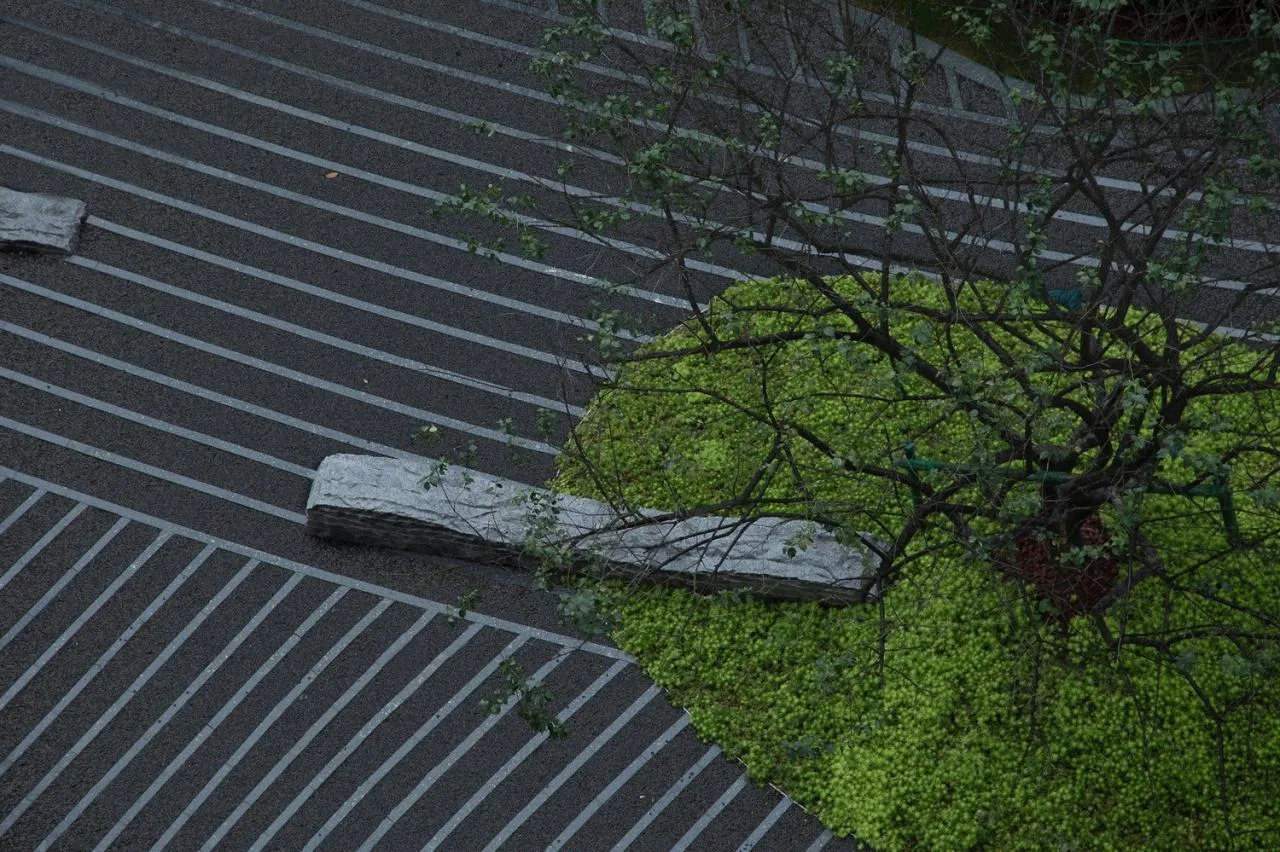
Exquisite Details
Lake and Mountain
Beyond Guiyun Court lies the central lawn and planted hills, which form a natural visual barrier and backdrop. Framed by folding corridors on both sides, this is the largest landscape area within the park.
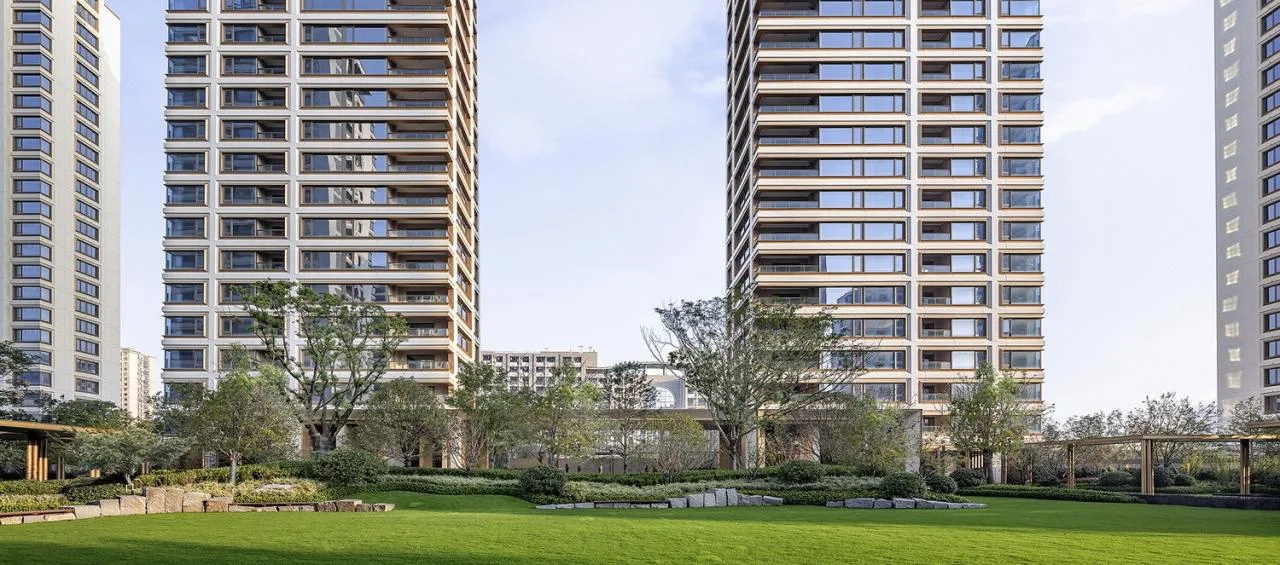
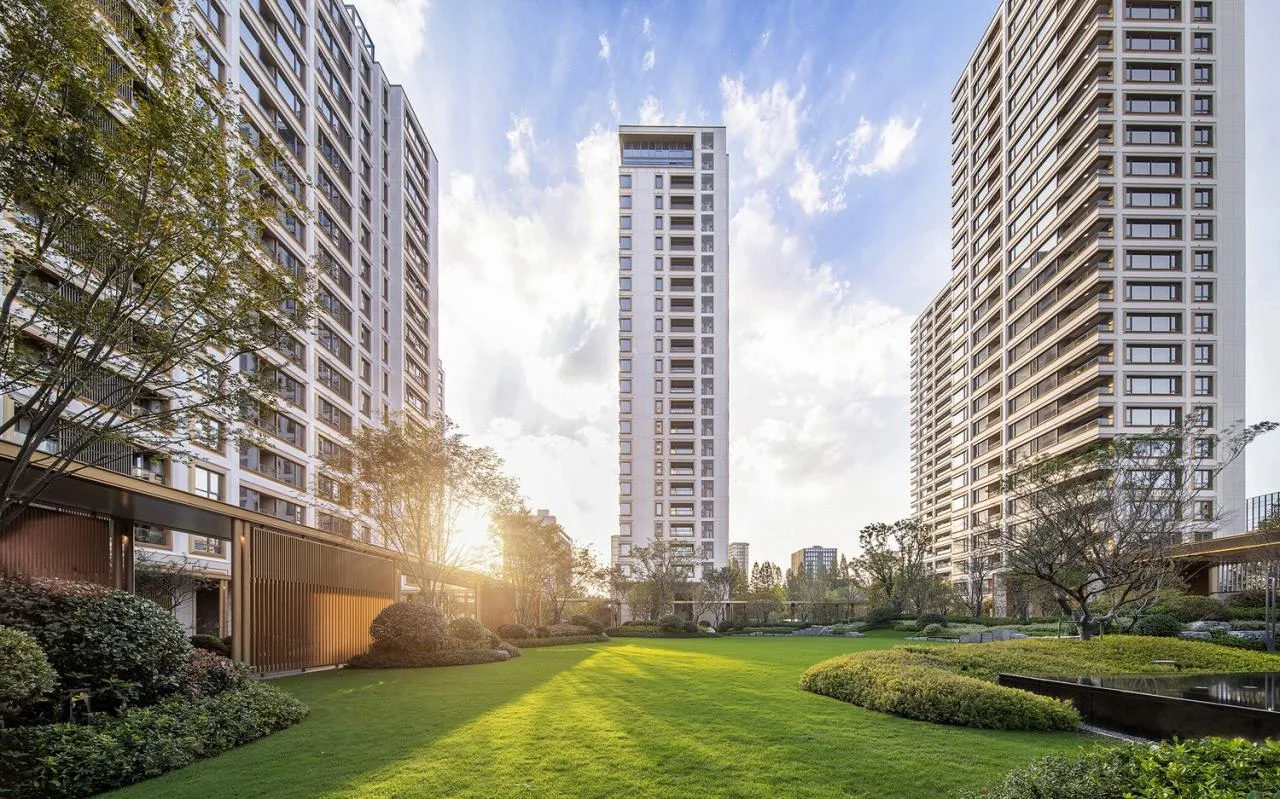
Mouri Lawn
The central landscape resolves the north-south building axis offset naturally and subtly. The southern “mountain” surrounds the lawn, while the north side forms a quiet courtyard, creating a multi-layered landscape experience.
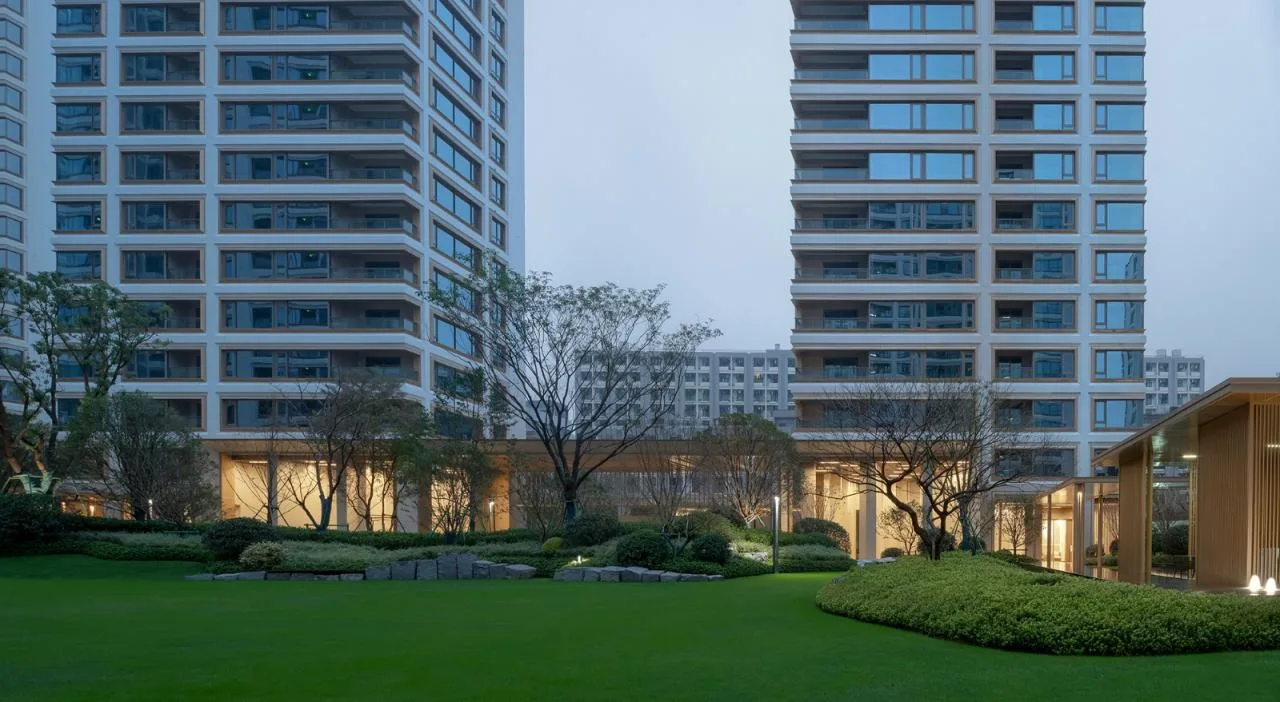
The lawn boundary breaks from the regular architectural grid, mimicking the contours of West Lake and North Mountain. Its winding edge resembles a lakeshore, with a terrain slope of up to 1.5 meters on the northern side. Large trees and shrubs enhance volume and form, while rough-cut natural stones double as seating and reinforce the mountain imagery.
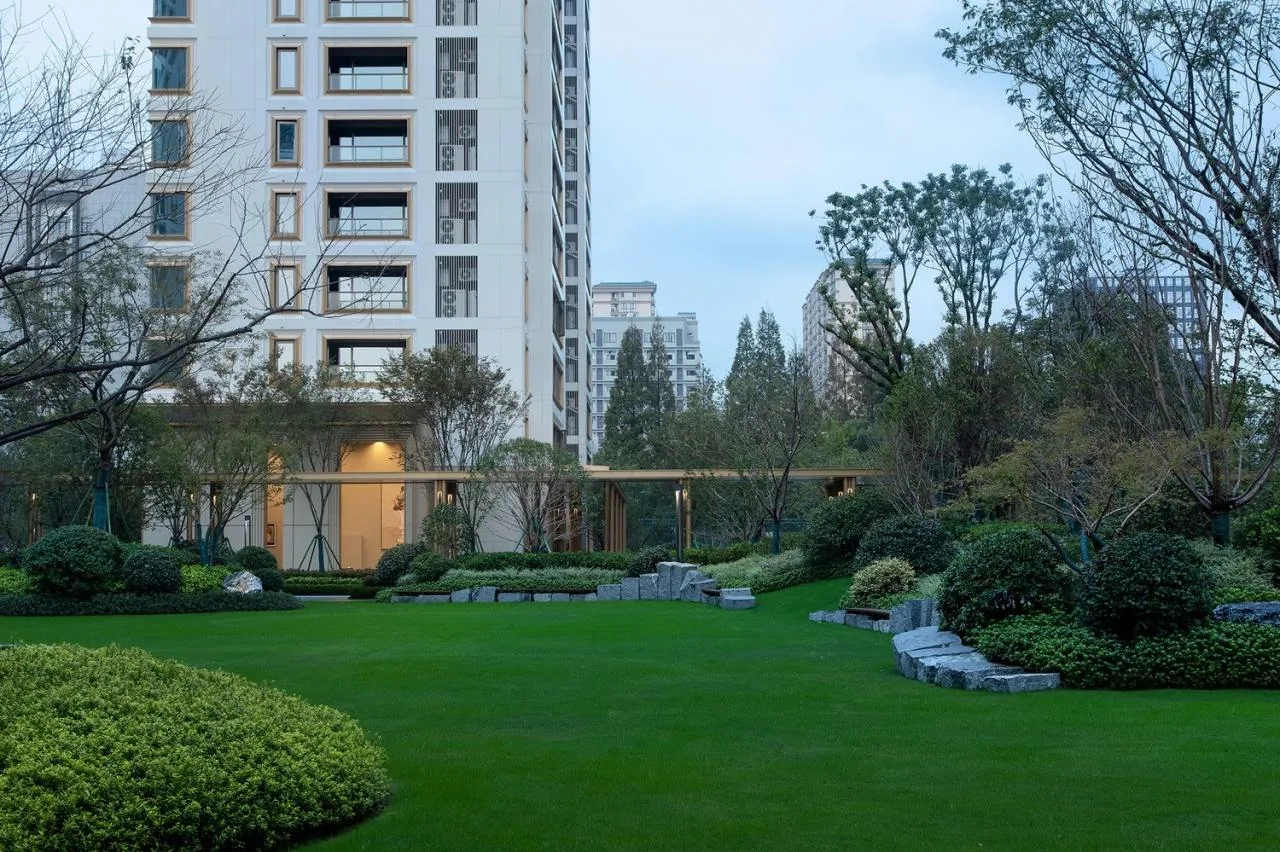
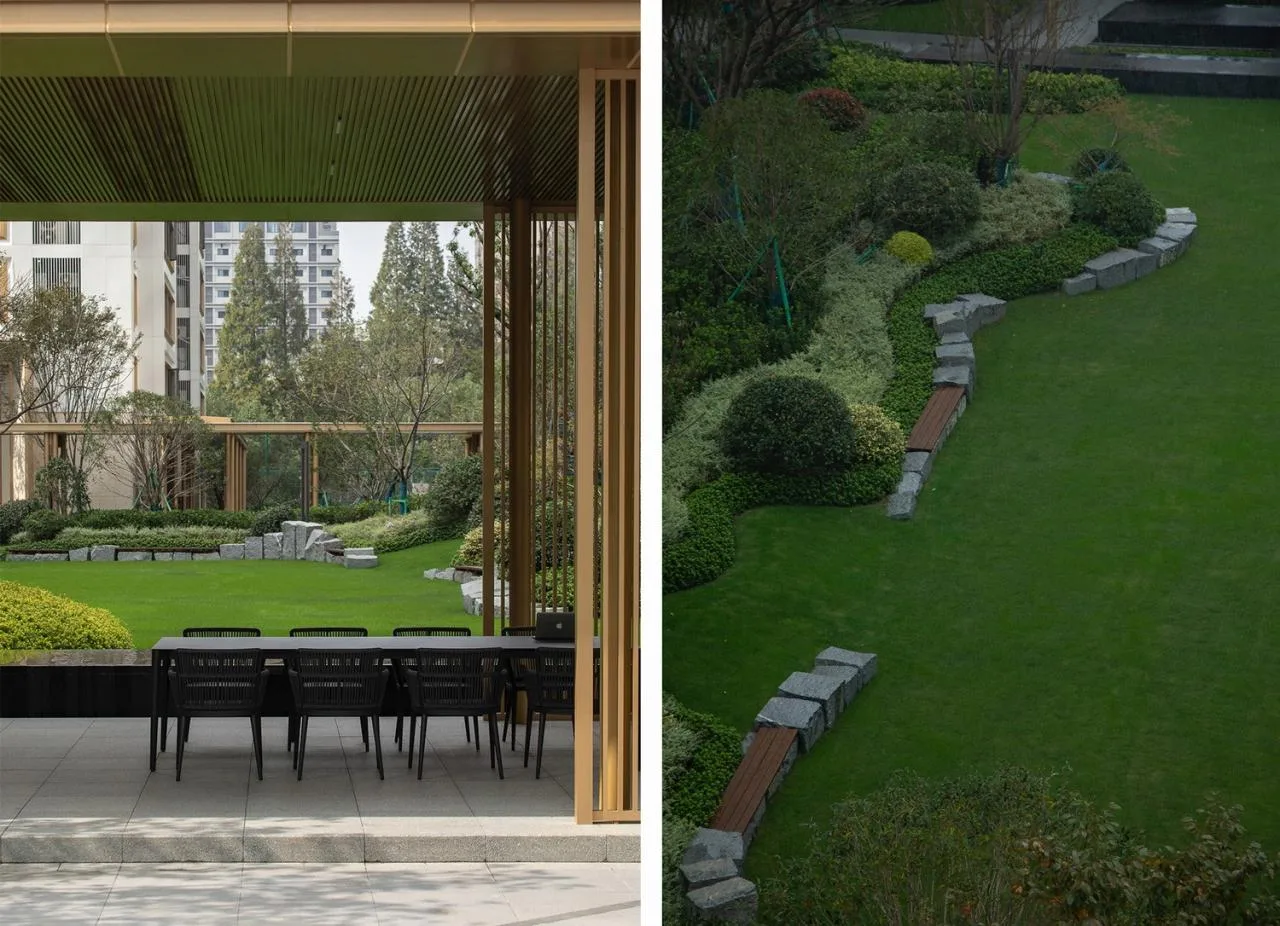
Irregular stone benches delineate the transition between the lawn and plant communities.
Sitting Together Pavilion
Located northeast of the central landscape, Tongzuo Pavilion plays a pivotal role, creating an asymmetrical yet balanced focal point. Flanked by two L-shaped water features, it not only stabilizes spatial use but also metaphorically represents the “xuan” (pavilion) formed by water in traditional Chinese gardens.
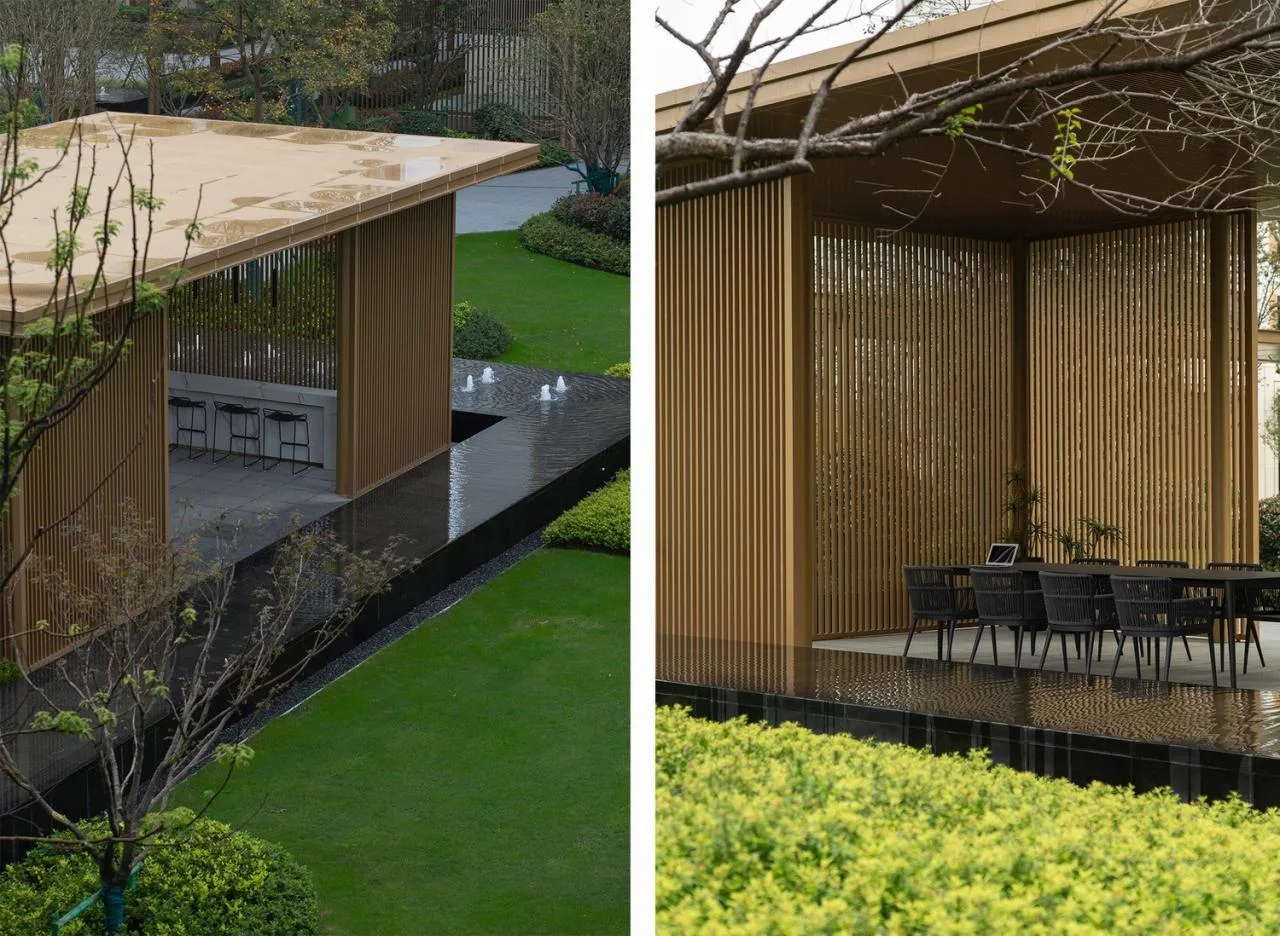
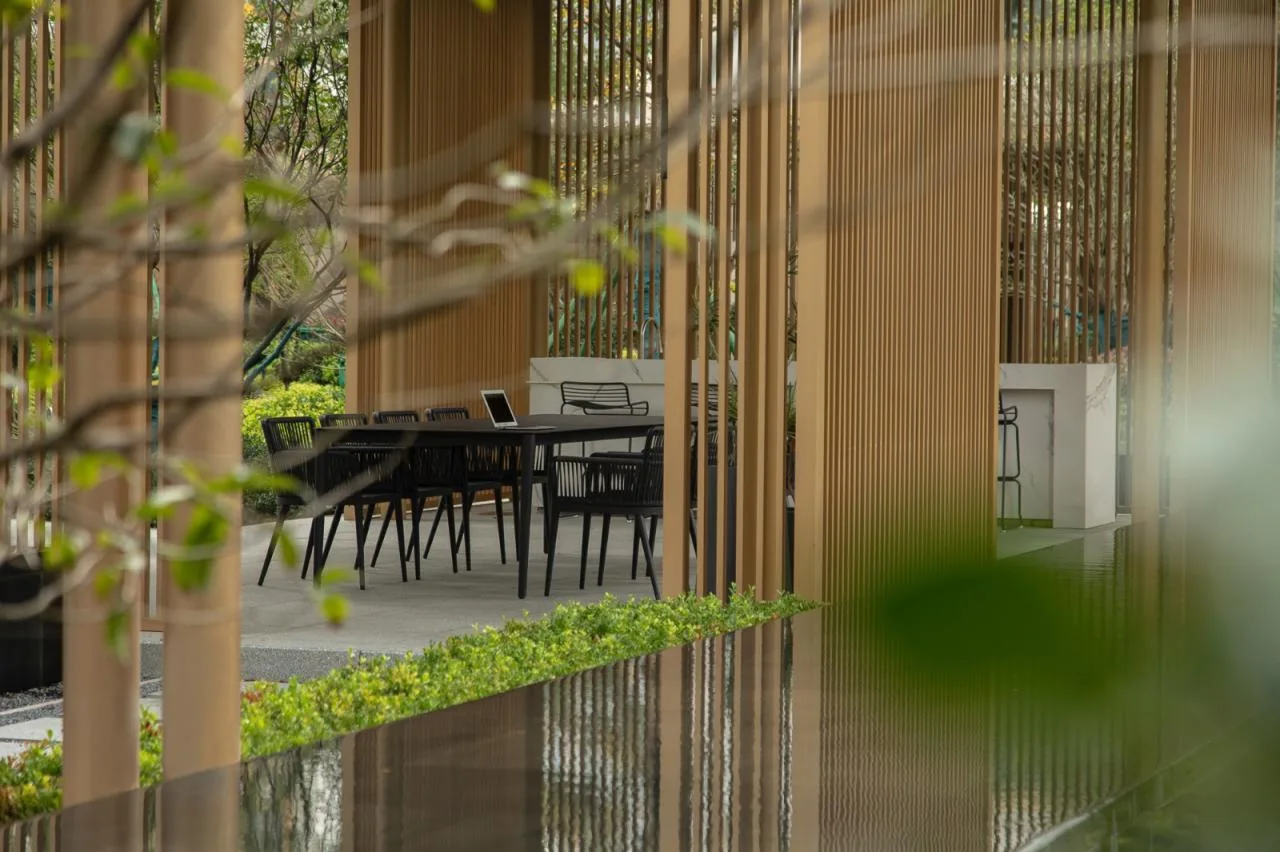
△ Sitting Together Pavilion – Landscape Reception Room
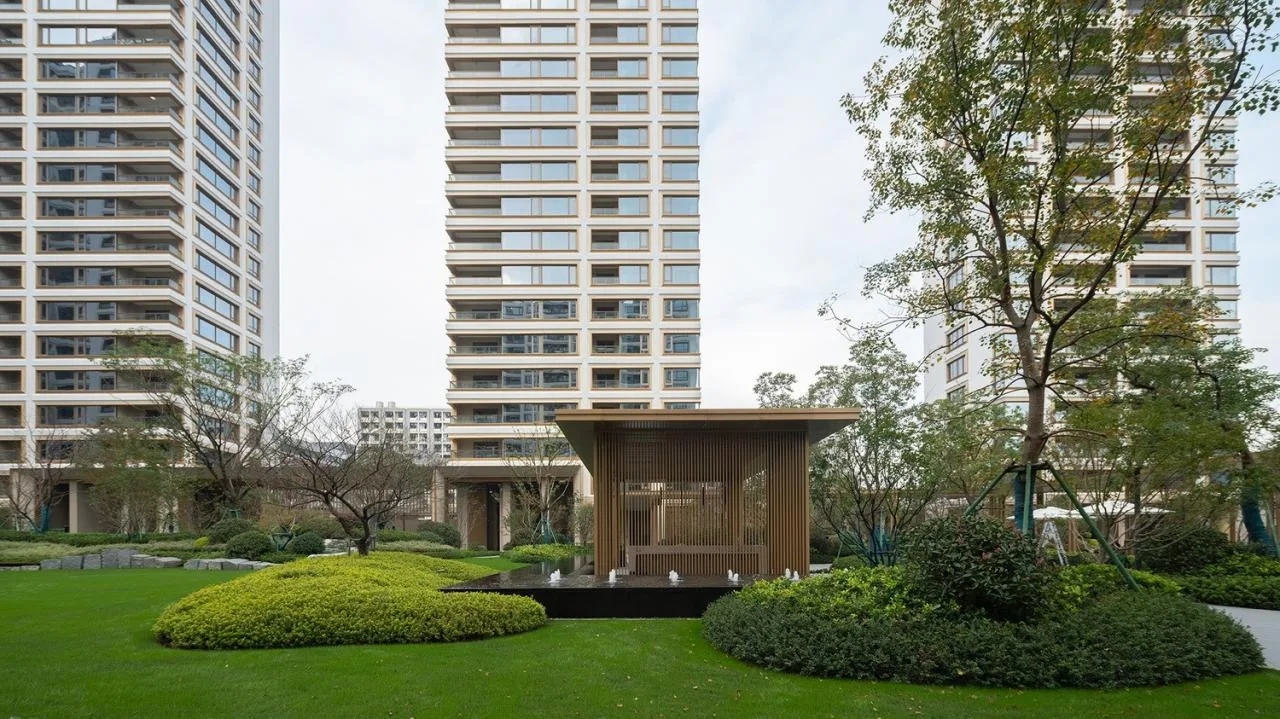
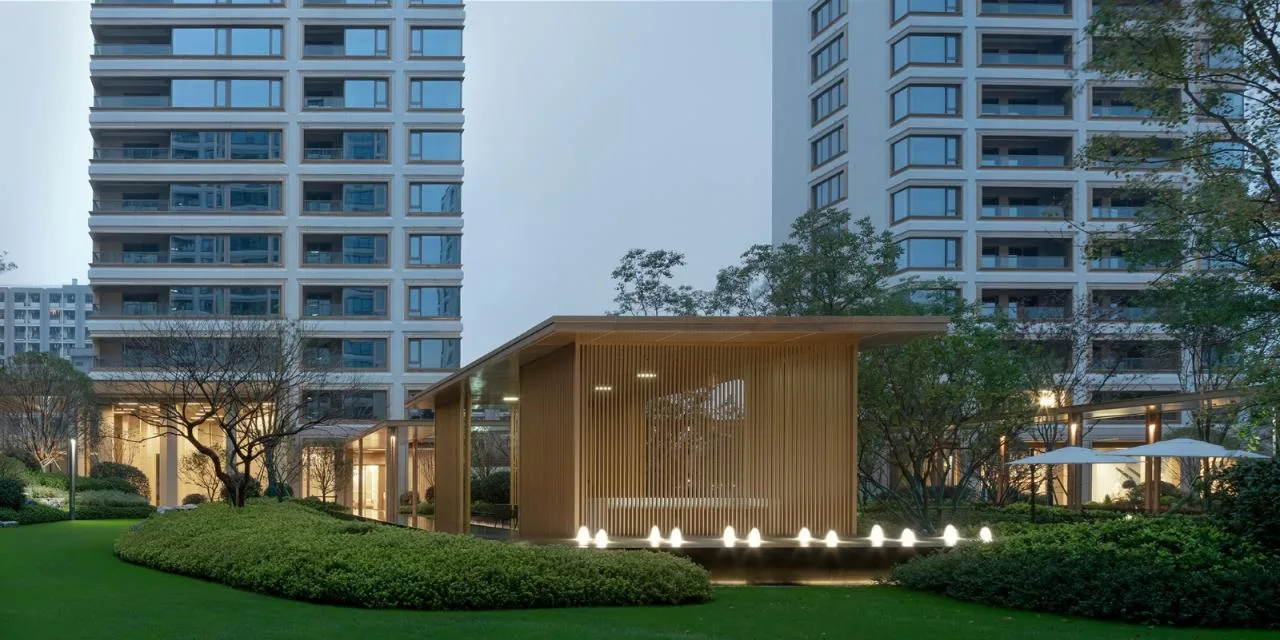
Water features surrounding the pavilion create a serene and inviting atmosphere.
The pavilion and its surroundings create a dynamic relationship of “looking and being seen,” serving as the visual centerpiece and best viewing spot in the park. Framing views to the west, south, and east, it especially shines under warm afternoon light. From the west, one can see water features, lawns, folding corridors, building facades, and distant plantings, resulting in a rich and layered visual experience.
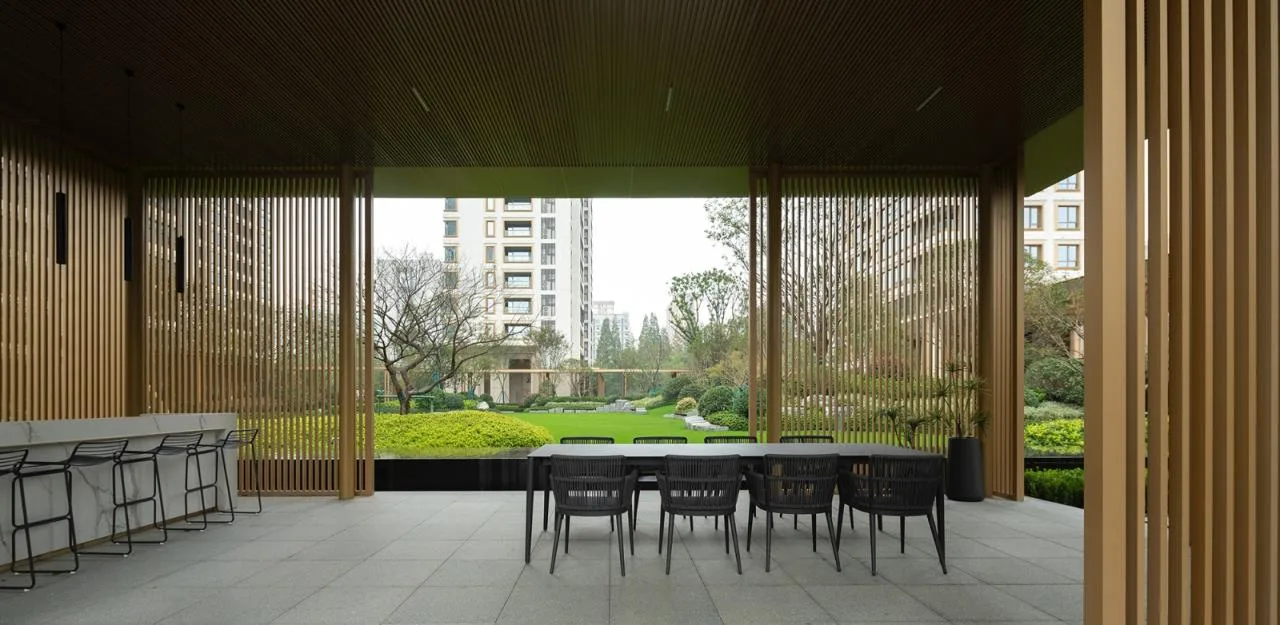
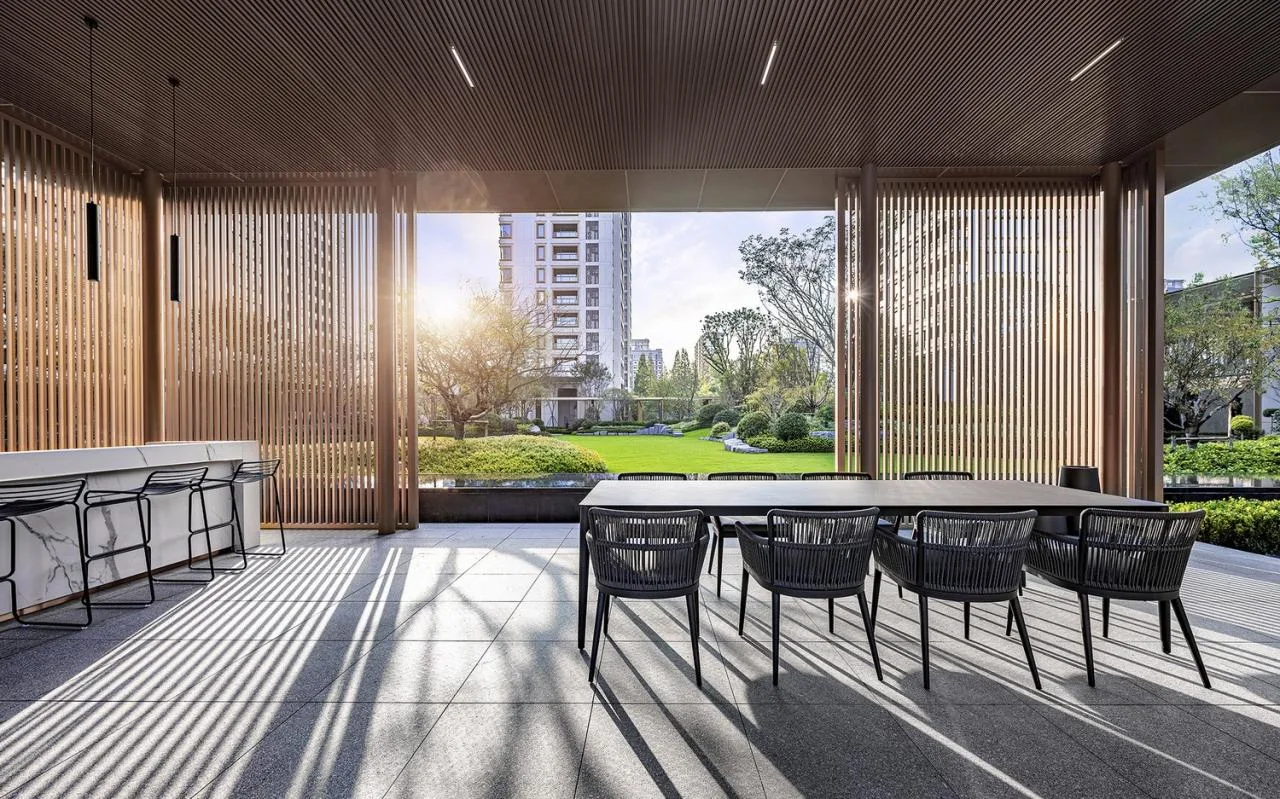
△ A dual-purpose reception and viewing pavilion
The east understory area offers a community space for interaction and events beyond the pavilion’s structure. Tall Chinese parasol trees brighten autumn with vibrant colors, while flowering and aromatic plants below create a four-season garden to stimulate the senses. This shaded corner accommodates quiet solitude or small family gatherings, such as birthday and festive celebrations on weekend afternoons.
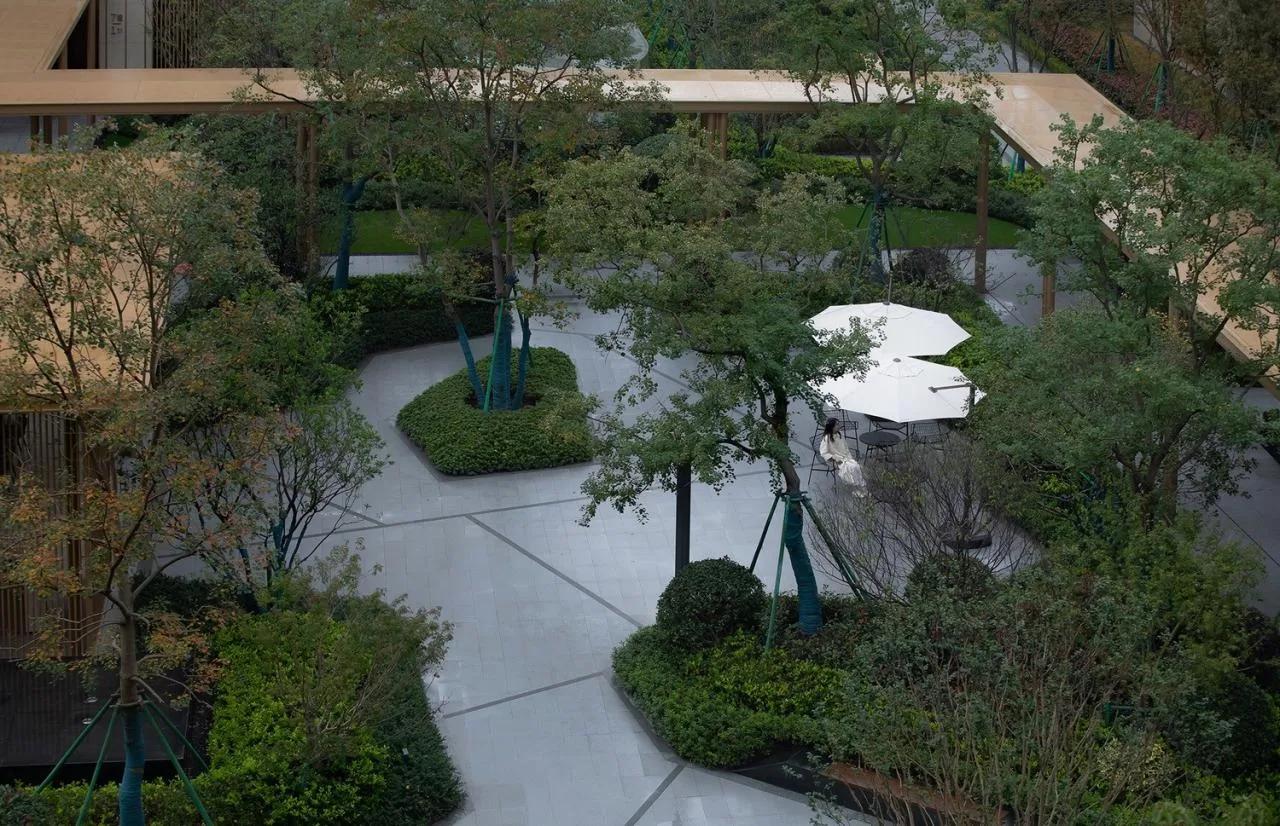
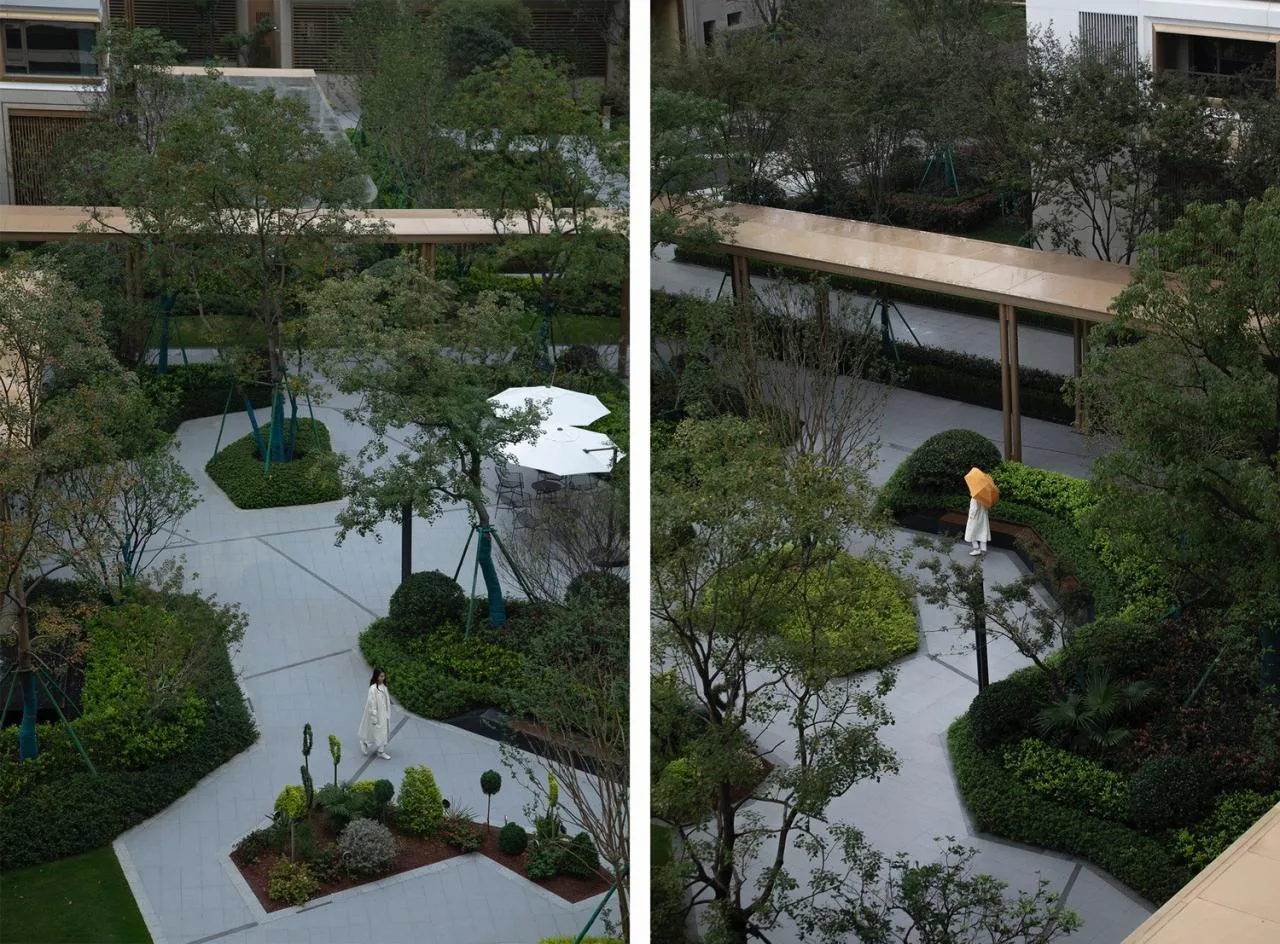
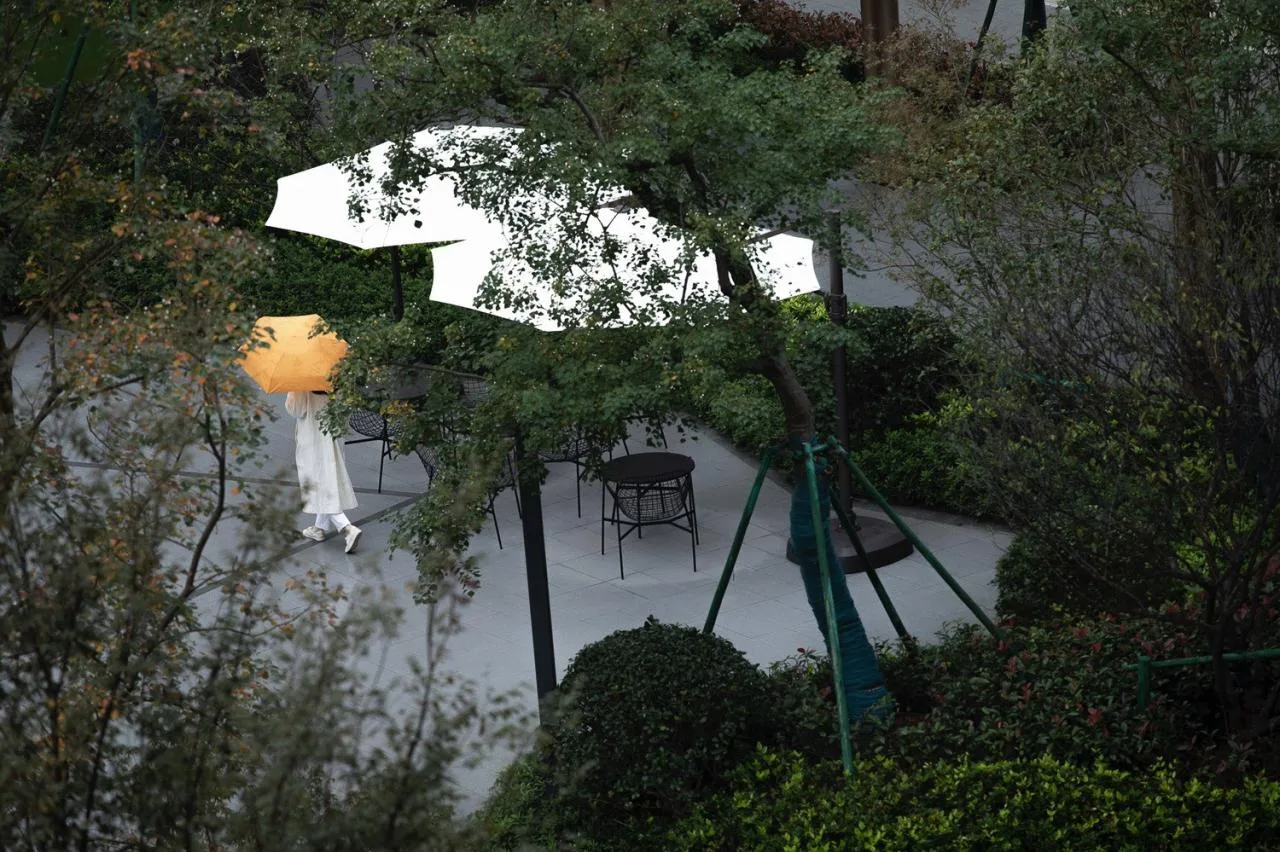
△ Sapium Tree-Lined Space
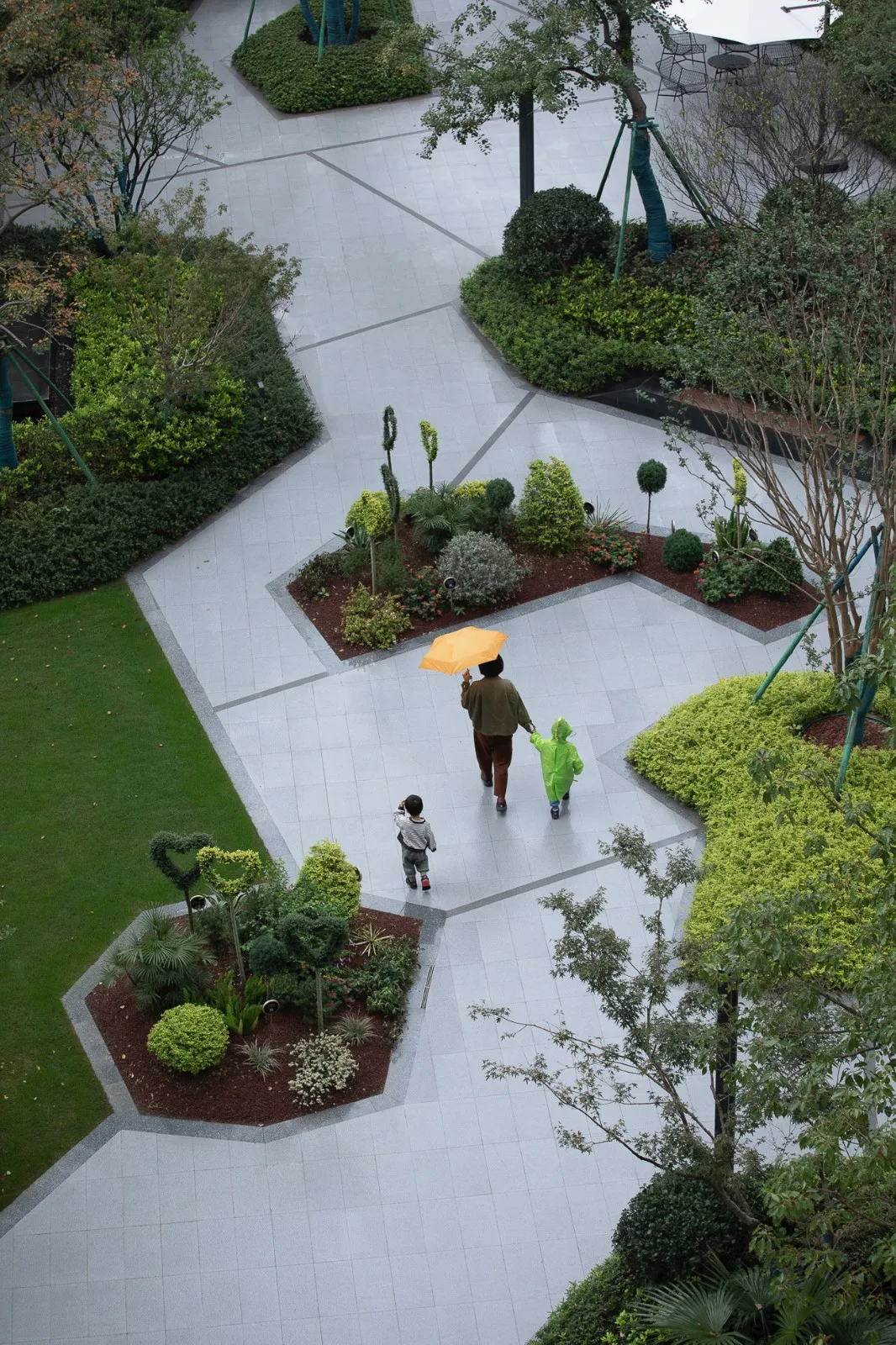
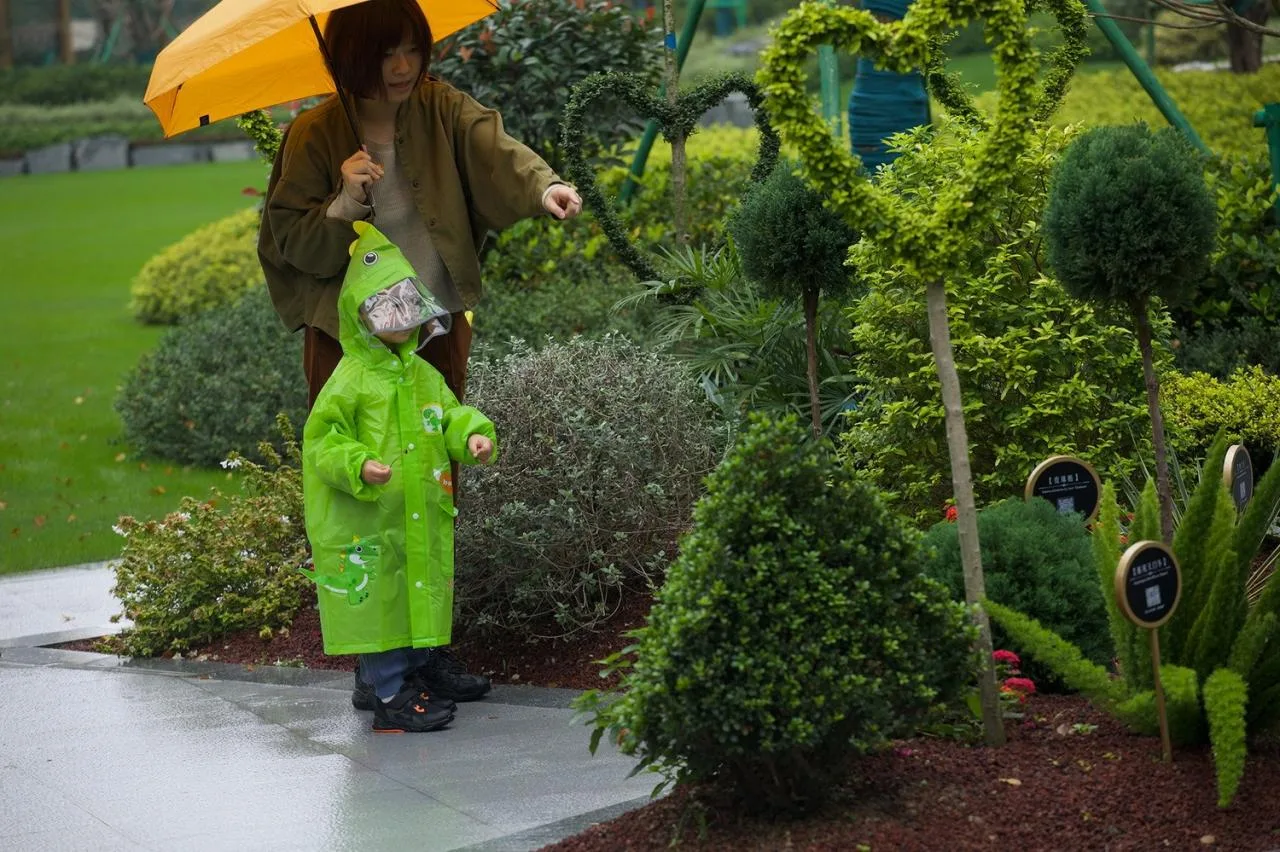
△ Four Seasons Sensory Garden
Jinyue Courtyard
Hidden behind the central lake and mountain lies another garden—Jinyue Court—positioned opposite Guiyun Court along the north-south axis.
Two buildings along the north entrance axis are connected by a two-story structure, exhibiting a strong architectural presence and perfect symmetry. This space is envisioned as a “garden art museum,” blending landscape and architecture, artifice and nature in a grand yet comfortable setting, inviting visitors to pause and explore.
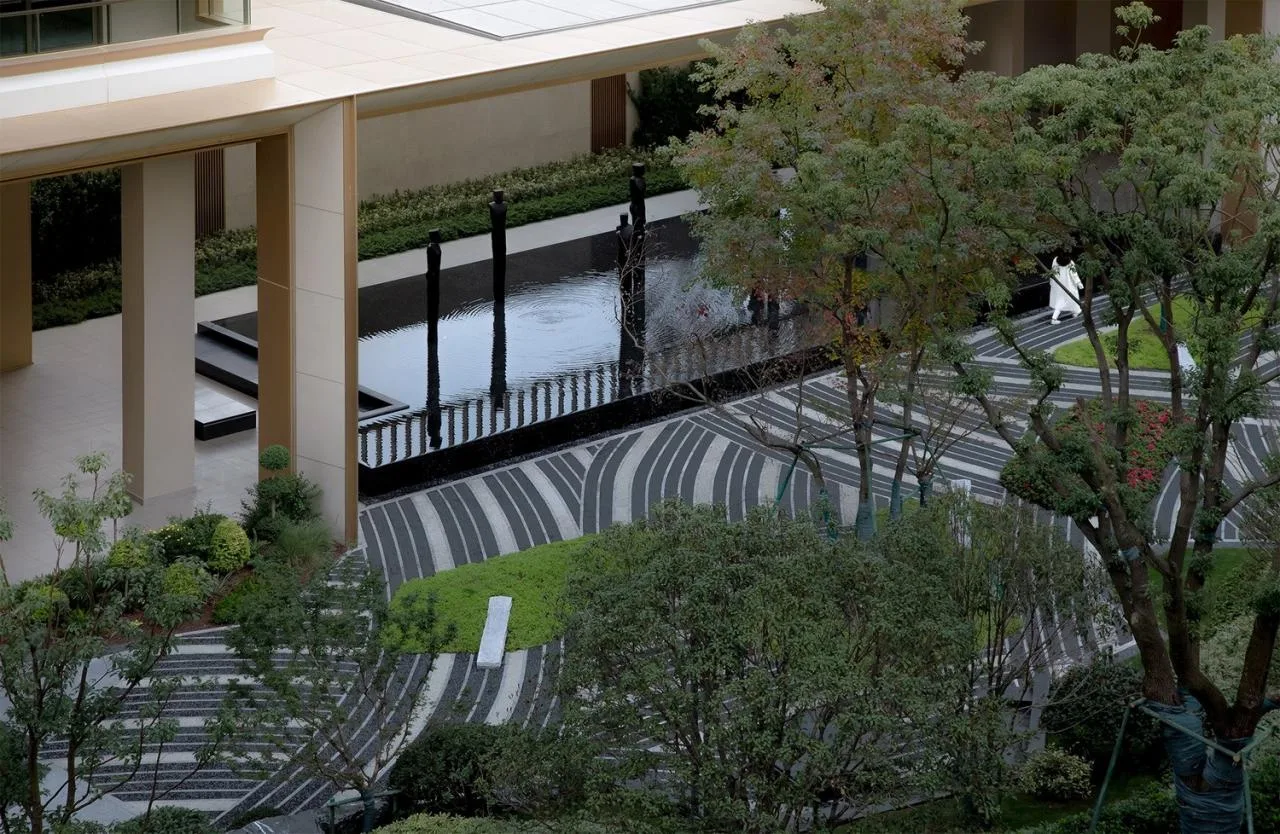
△ Near Yueting
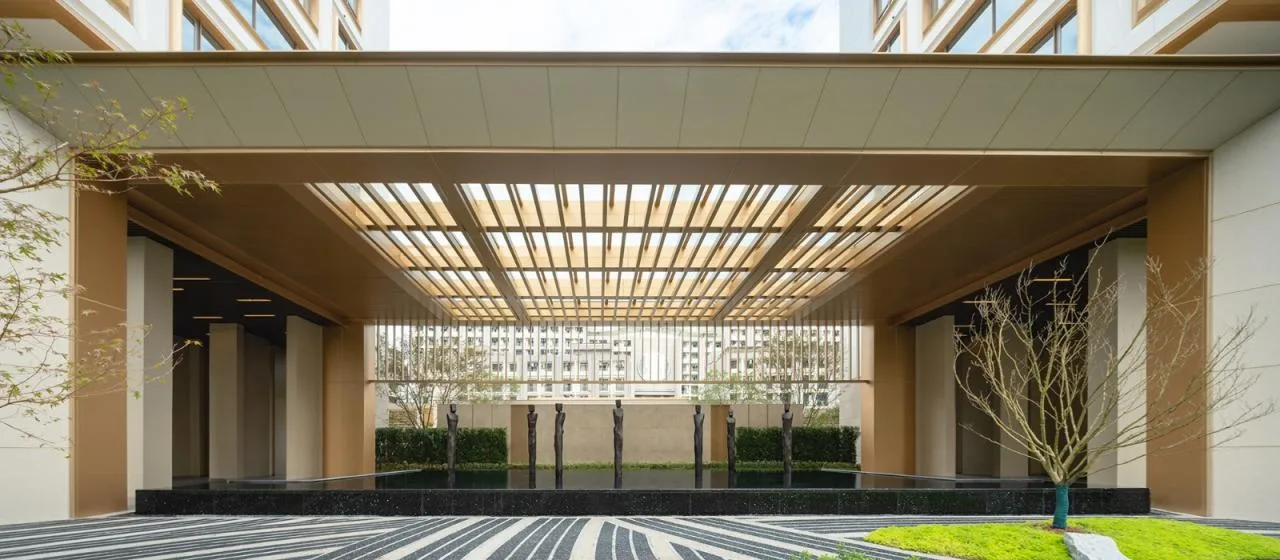
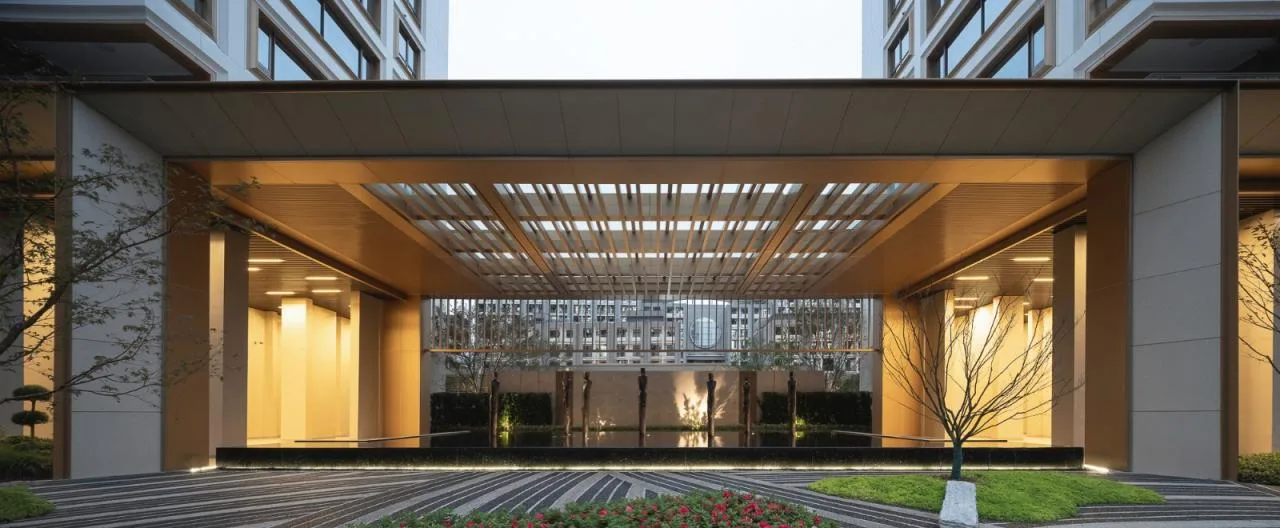
△ Courtyard Art Museum in Front of Residence
The landscape wall at the north entrance creates a serene enclosure, complementing the quiet reflective pool above. The demonstration area’s abstract sculpture installation is permanently situated here, enhancing the space’s artistic ambiance.
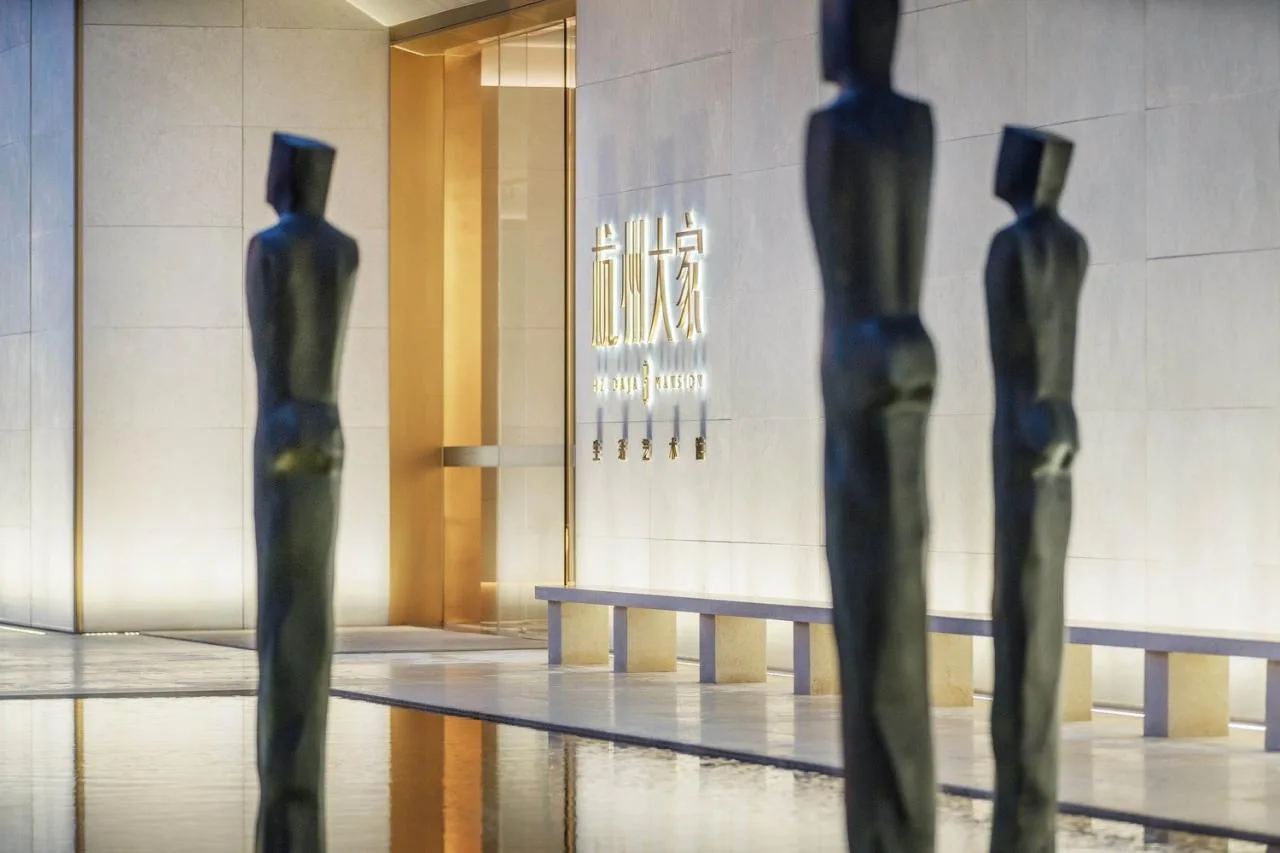
△ Demonstration Zone Scene
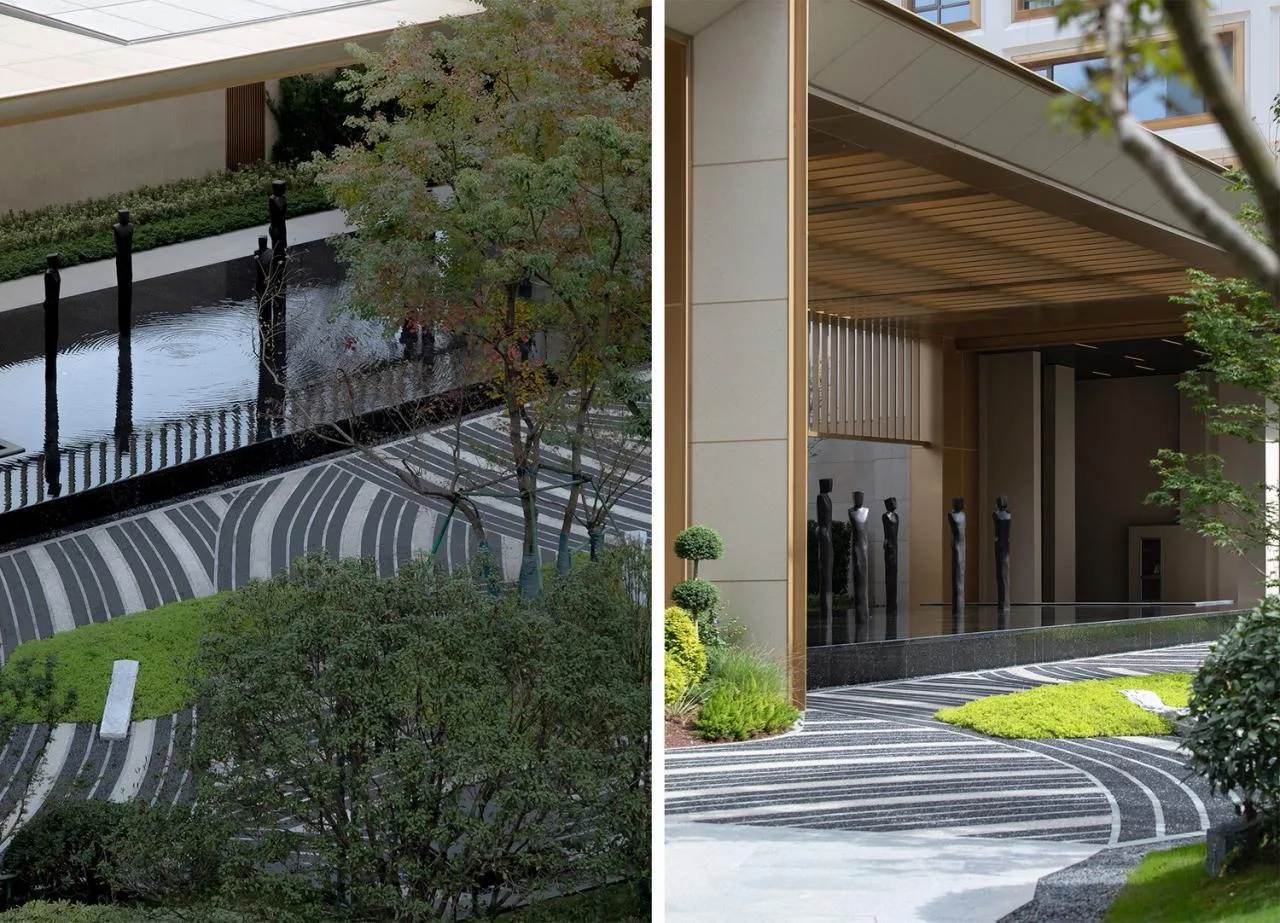
△ Realistic View of Joyful Courtyard
South of the water features are fixed seating areas nestled within hill boundaries, offering tranquil spots to appreciate water art and sculptures, enriching the space’s timeless artistic atmosphere.
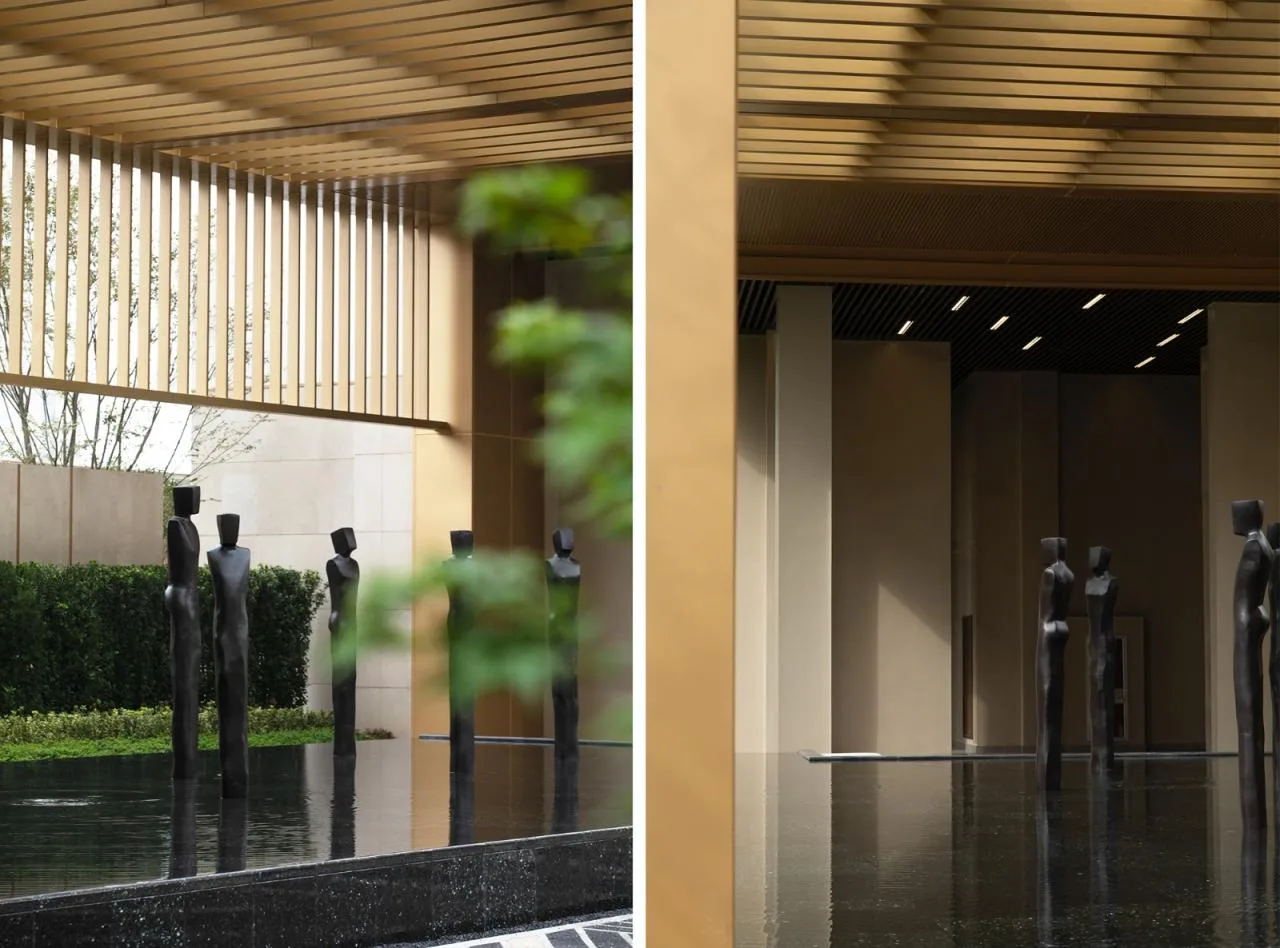
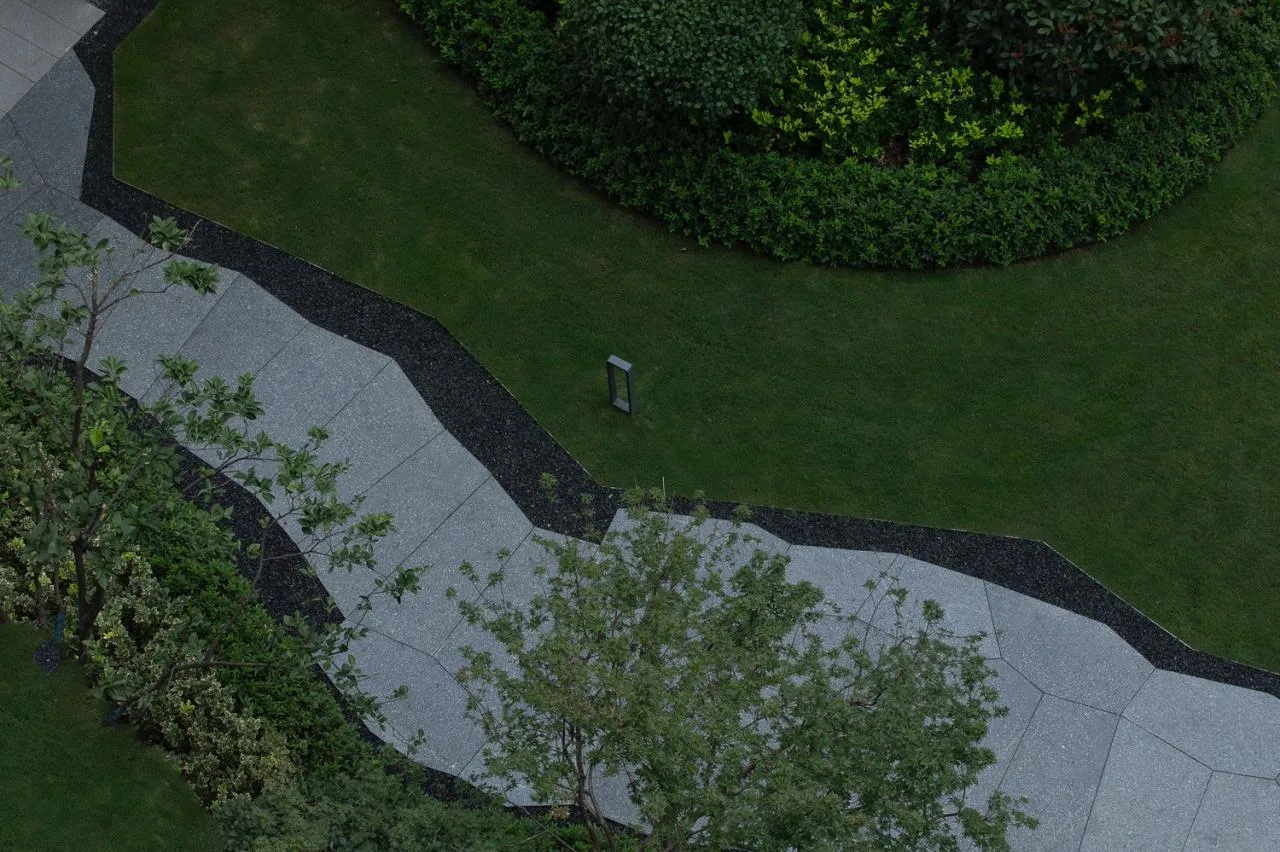
Beautiful Community
Zhuoshi collaborates closely with real estate partners to research lifestyle-oriented products that fulfill people’s aspirations for better living. We focus on the daily life of each “small home” unit, placing user convenience, thoughtfulness, and warmth at the center of design. As a developer, Zhuoshi helped standardize the “Beautiful Community 1.0” model, with Hangzhou Chuanchen Mansion being the first project to showcase this commitment to quality living environments and elevated floor designs.
Neighborhood+
Community interaction extends into transitional spaces between residences and landscapes, blurring boundaries of “home.” “Neighborhood+” spaces host afternoon teas, chess games among old friends, or peaceful solitude during leisure. Elevated levels become spacious, natural, and transparent “second living rooms.”
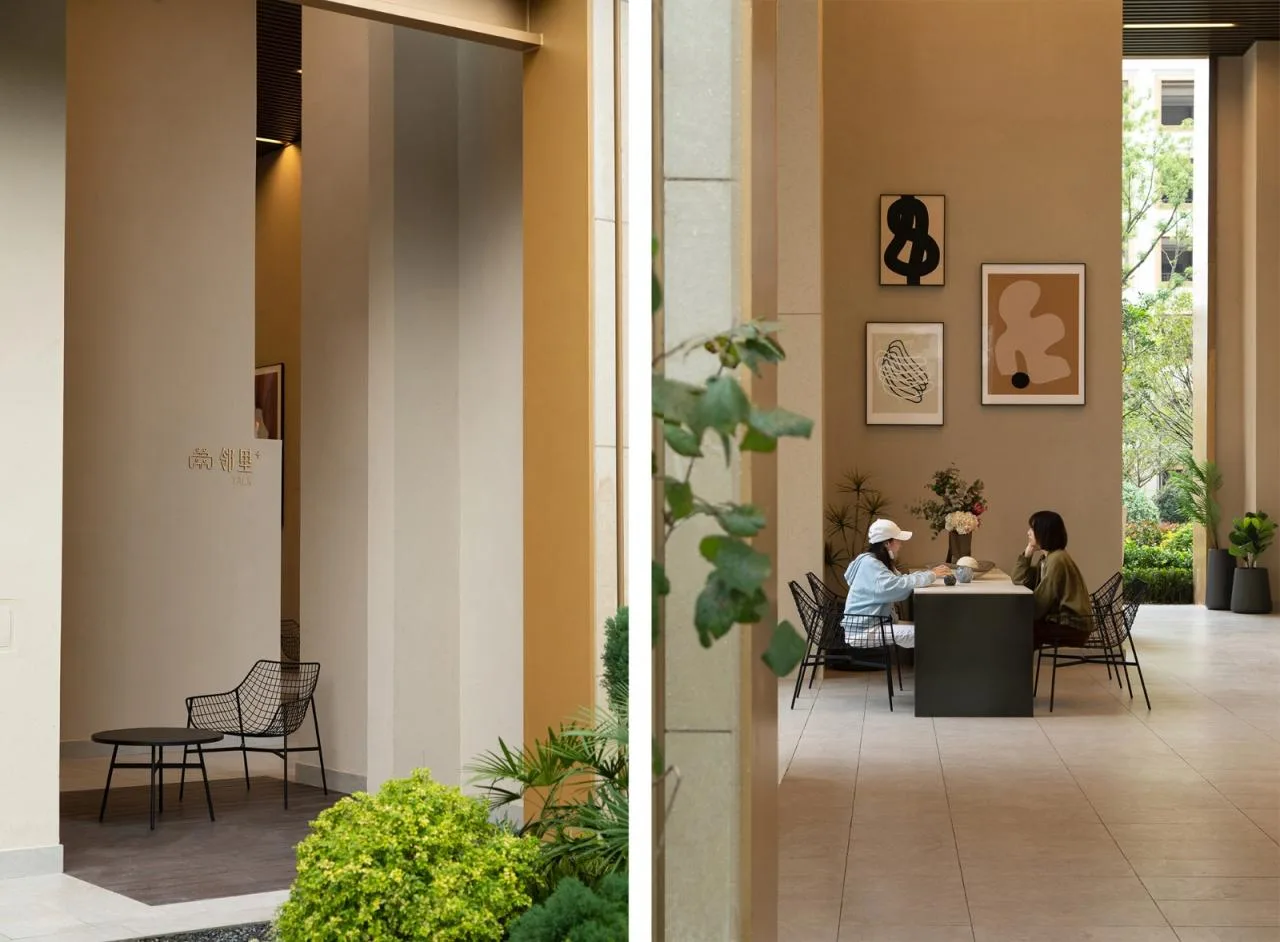
△ Elevated-Level Community Neighborhood Space
The beige walls evoke calm and serenity, while curated oil paintings enrich the artistic atmosphere. The building’s facade frames the landscape like a gallery, allowing two-way viewing between interior and exterior. The soaring 8-meter-high space doubles as an art gallery, making community exhibitions a regular feature.
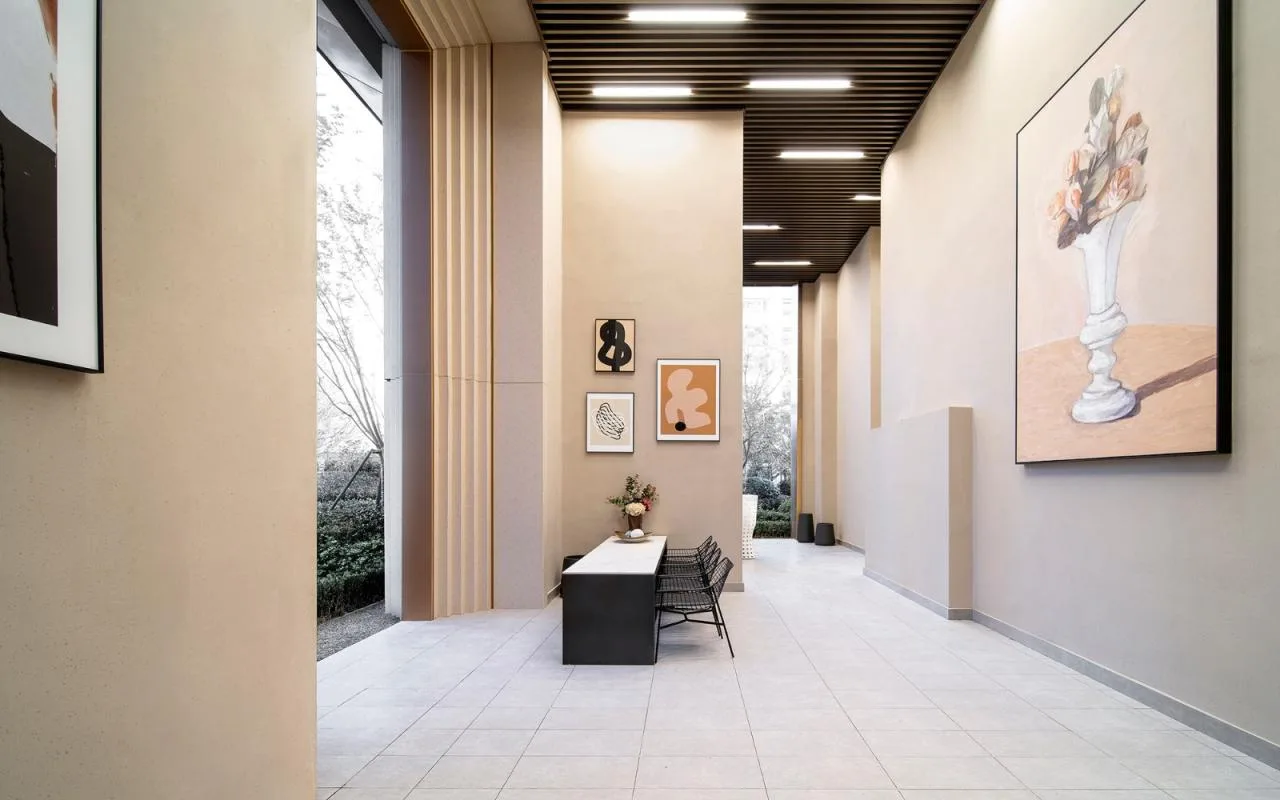
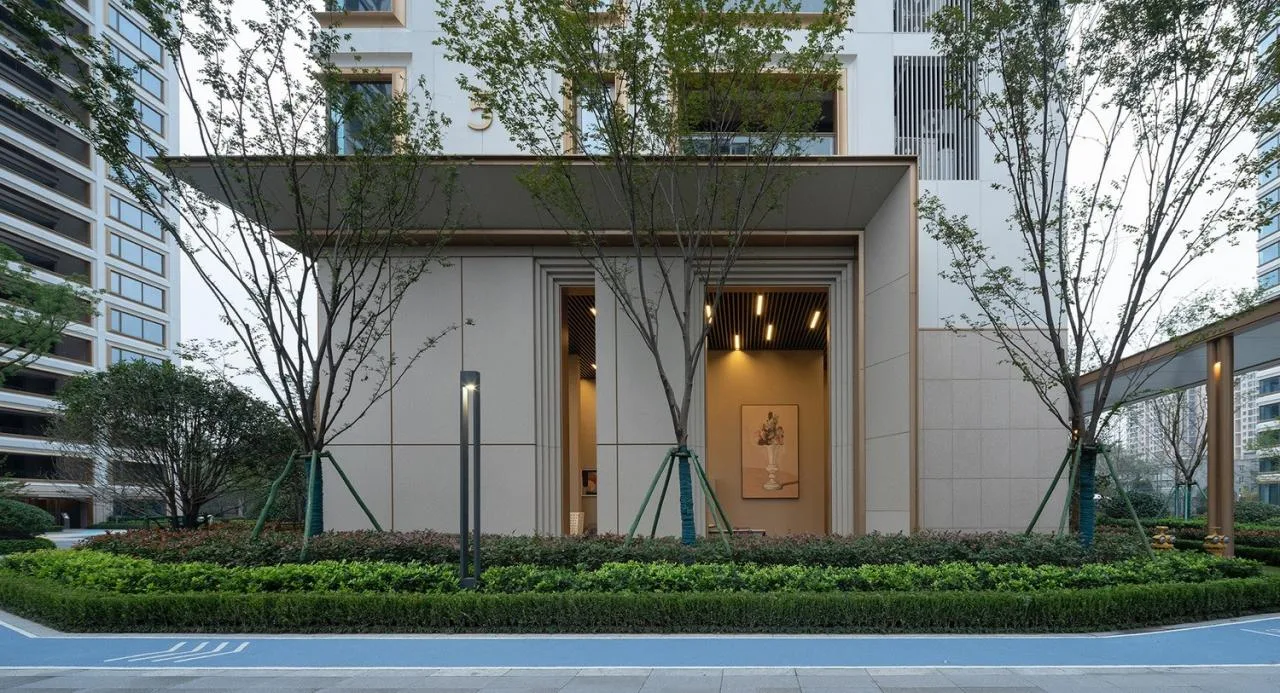
View toward neighborhood space along the trail
Childhood Fun+
“Childhood Fun+” is a colorful children’s playground themed around elephants, designed to offer kids joyful, worry-free growth alongside their families.
The outdoor palette of gray, blue, and yellow offers a vibrant yet elegant contrast to the “mountains and forests” landscape. The central second-floor treehouse is a favorite climbing spot and a place for children to observe and connect with nature, exploring textures and growth patterns of trees with family and friends.
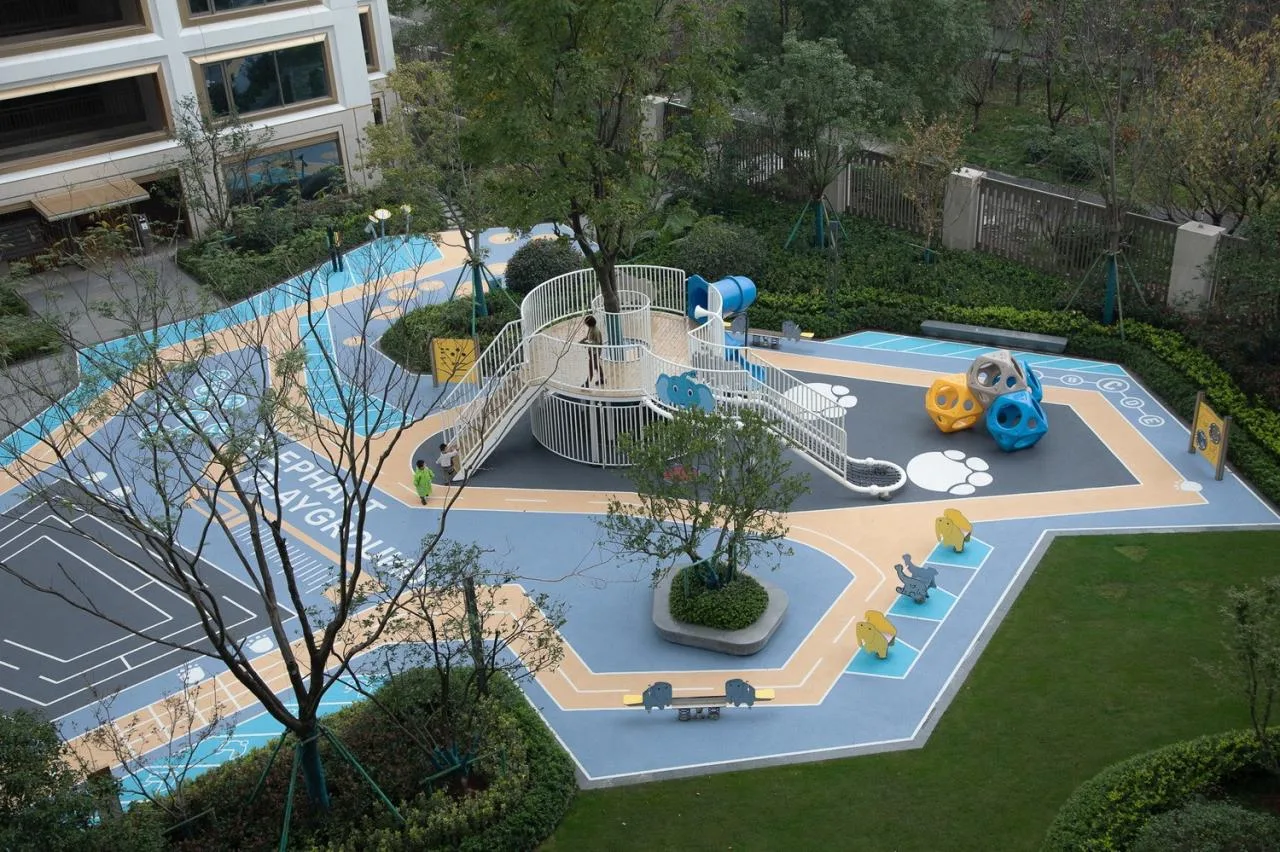
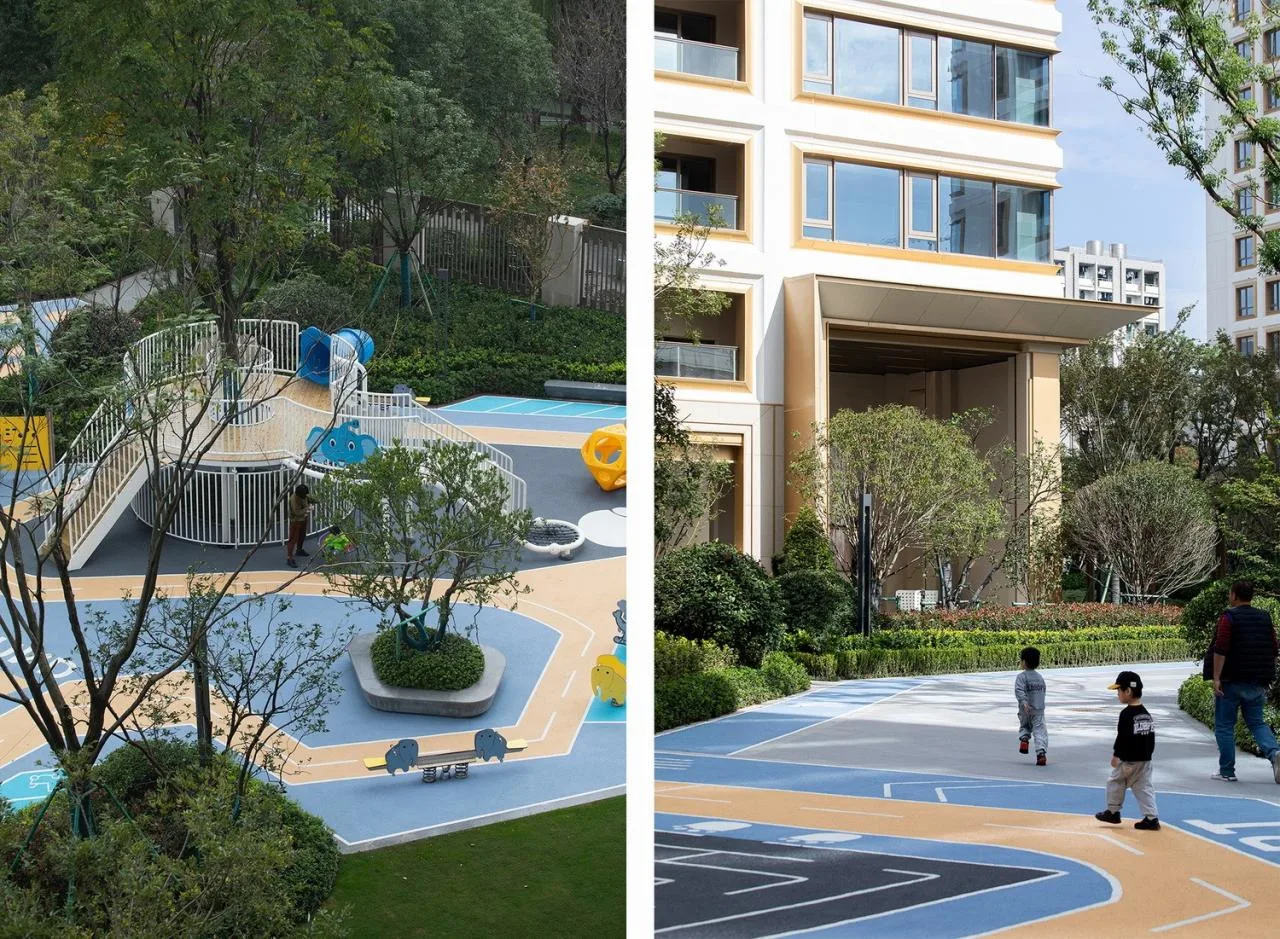
△ Children’s Activity Park
Indoor furnishings tailored for children integrate reading, play, building blocks, and drawing, creating a parent-child playground that seamlessly connects indoor and outdoor spaces, mixing active and quiet activities to enhance family interaction.
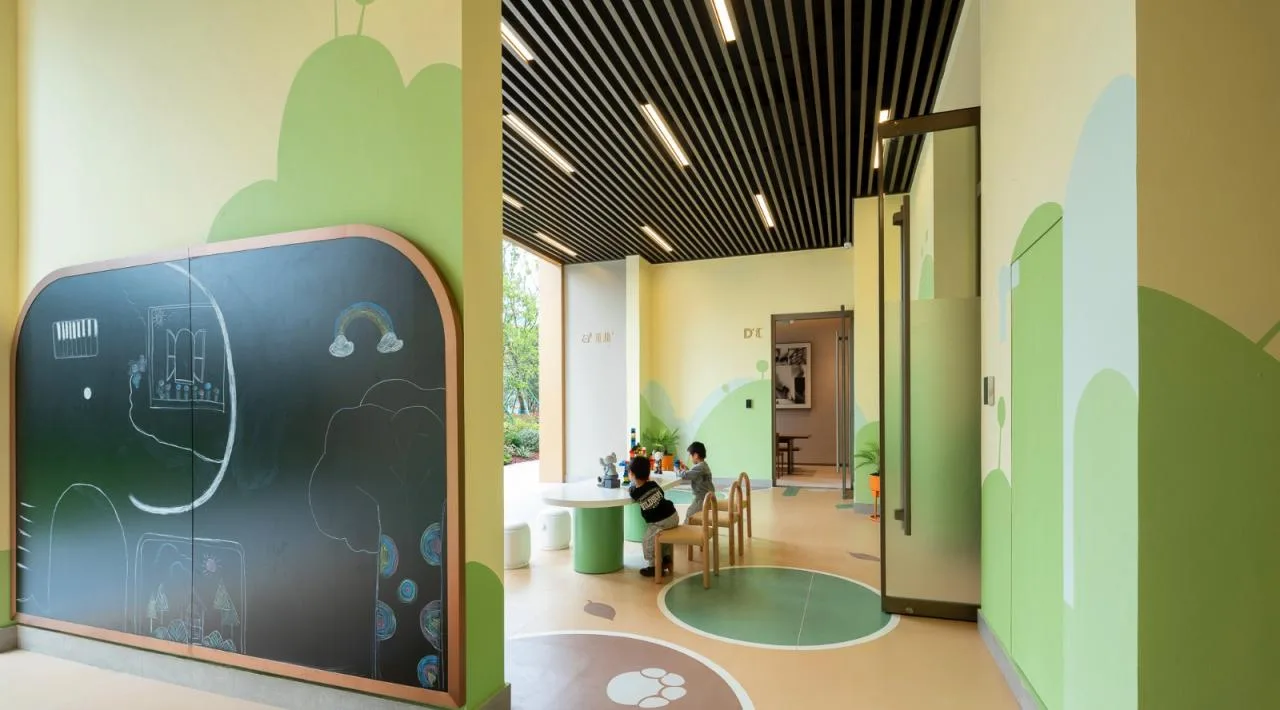
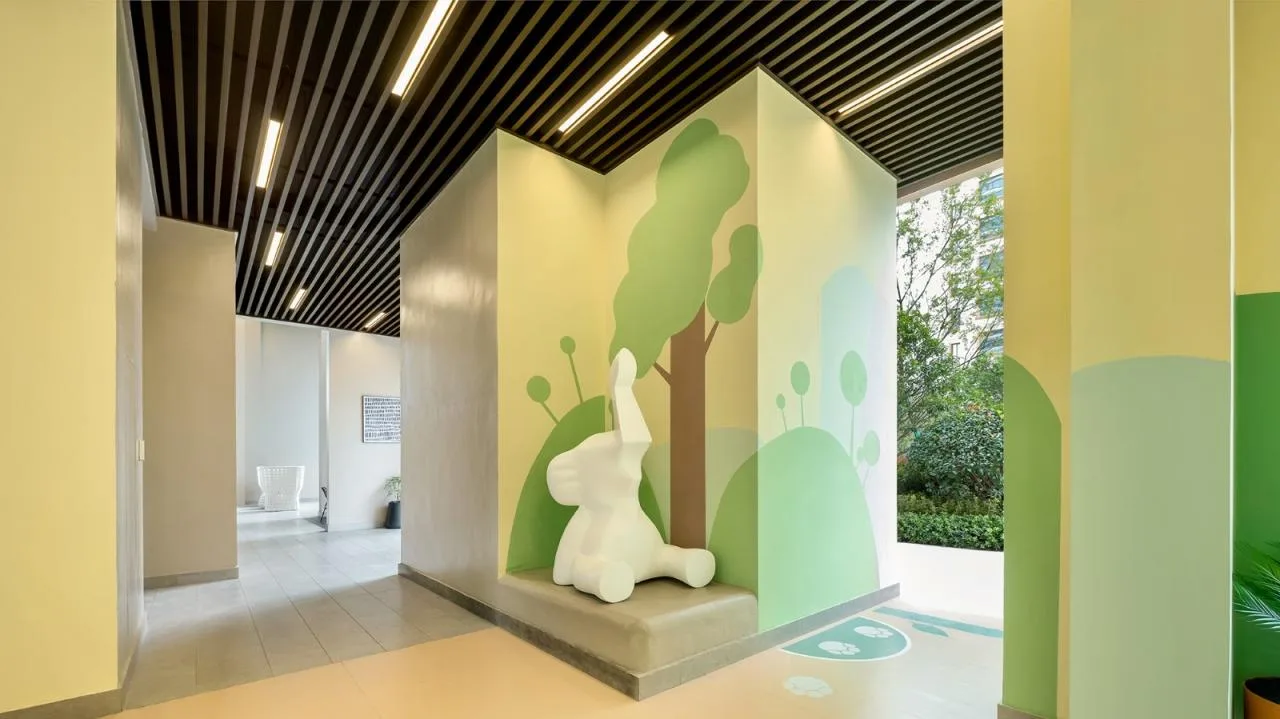
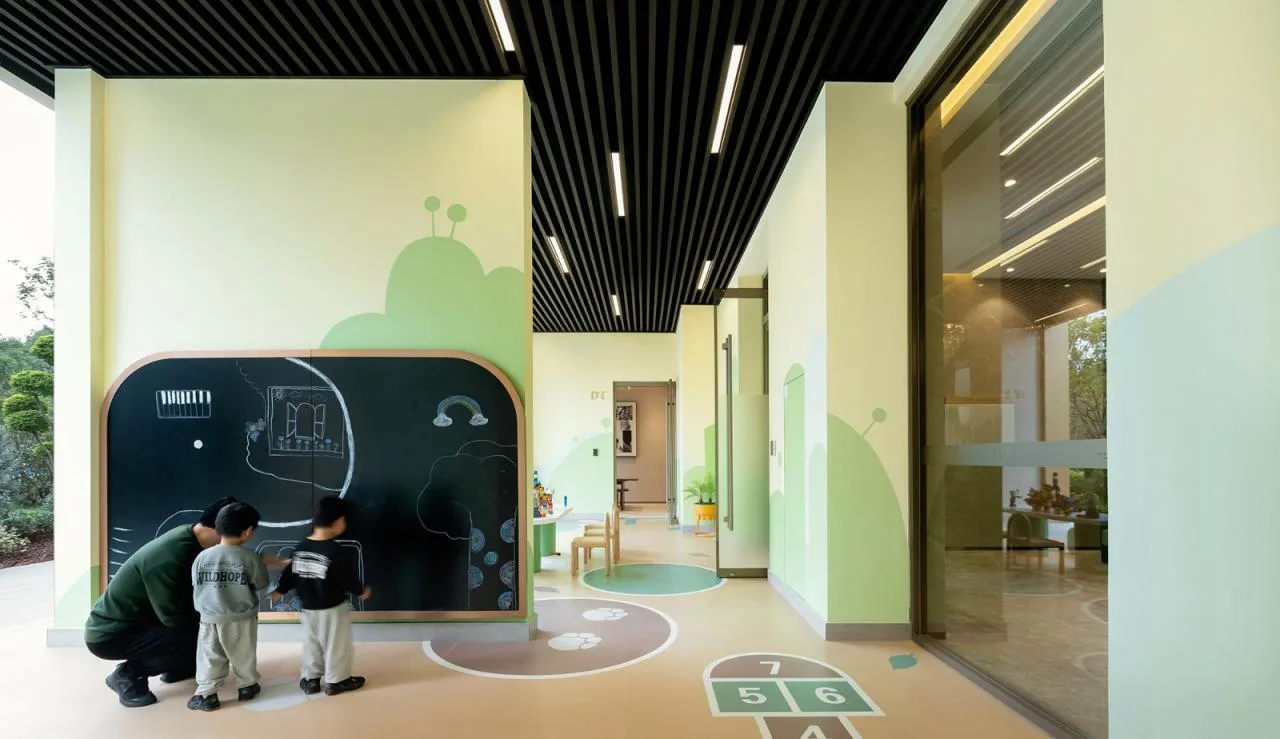
△ Elevated Level – Outdoor Children’s Playground Extension
Power+
With many urban residents leading sedentary lives, Chuanchen Mansion aims to cultivate a healthy community through “Power+” — a focus on physical wellbeing.
The semi-indoor fitness area on the elevated level offers minimalist yet functional equipment, ideal for solo workouts such as calisthenics, aerobics, and yoga. A table tennis table adds interactive, skill-based exercise options.
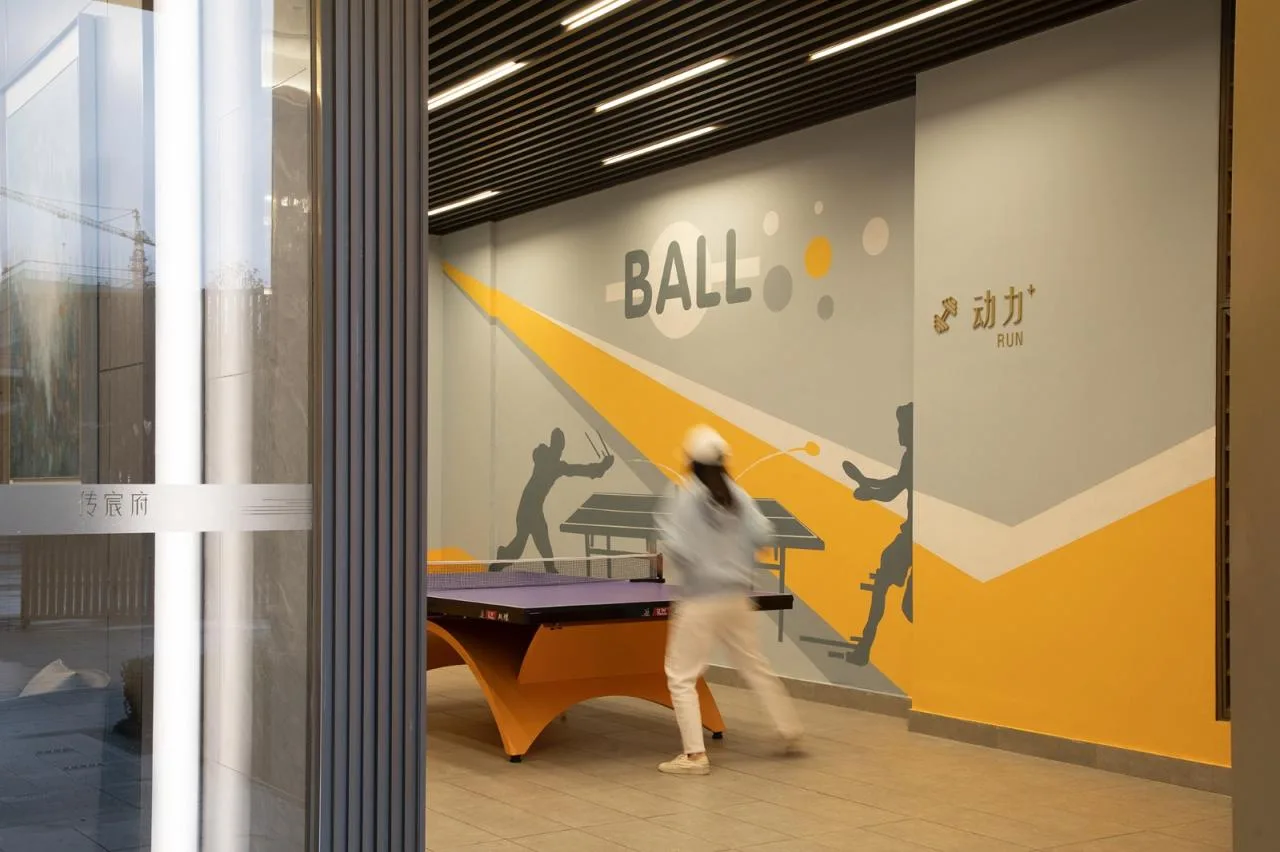
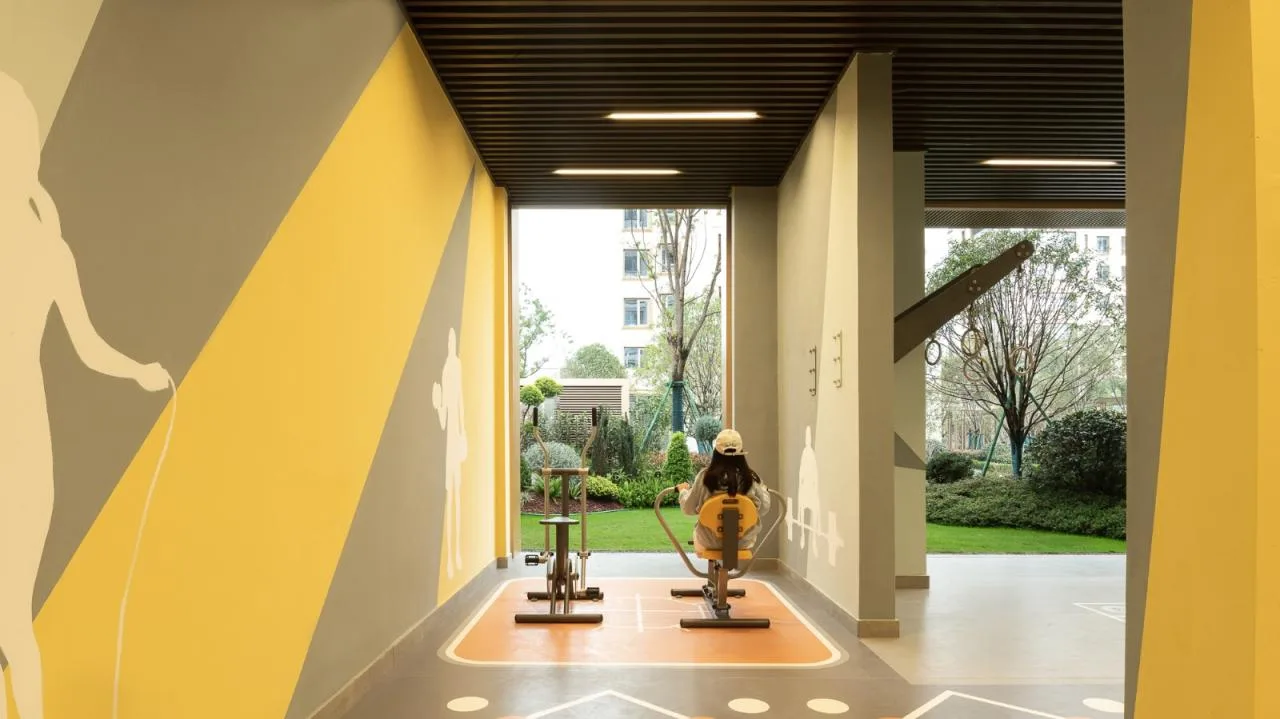
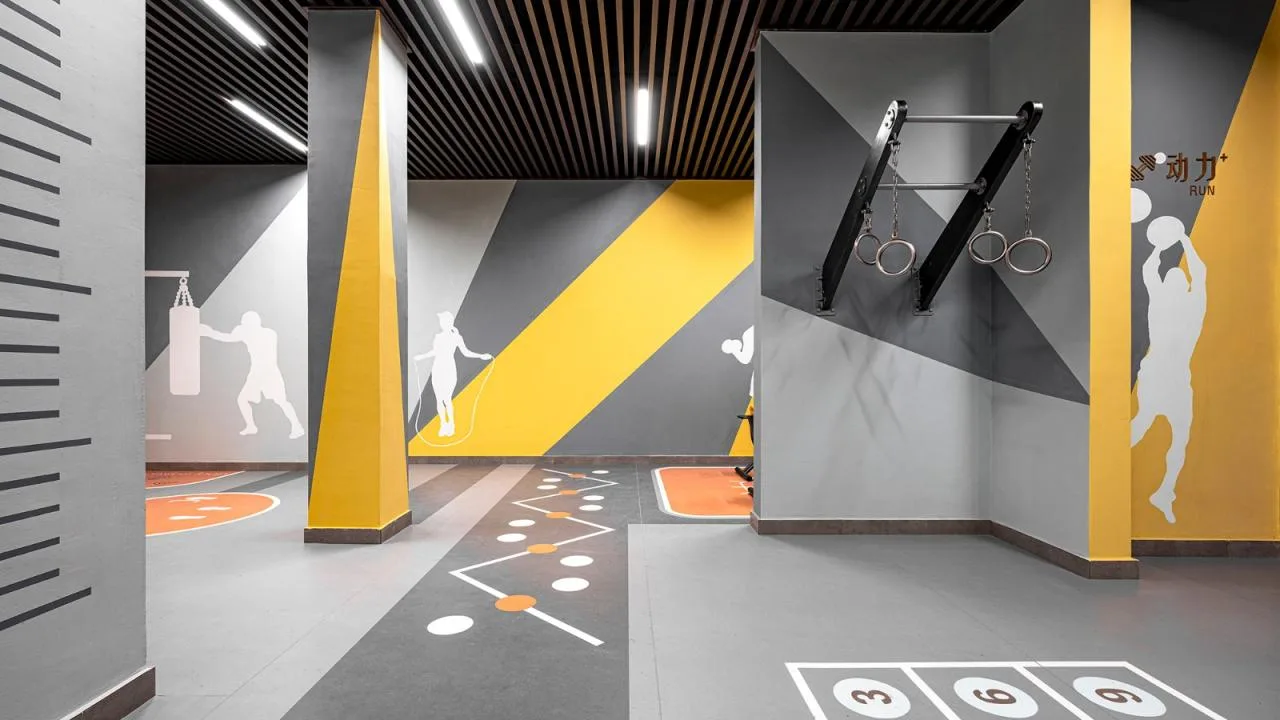
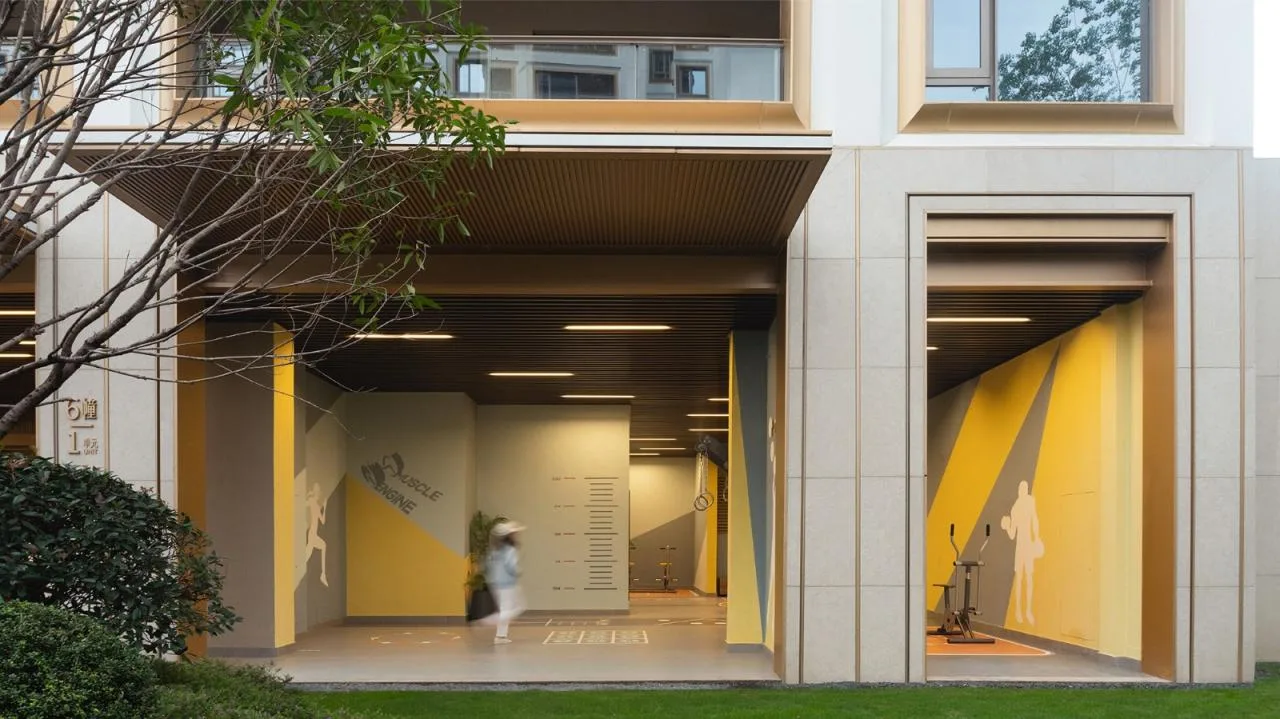
△ Elevated Level – “Power+” Indoor Fitness Space
An illuminated outdoor running track caters to both day and night exercise, while a dedicated Cute Pet Park offers a fitness area designed for the community’s furry family members.
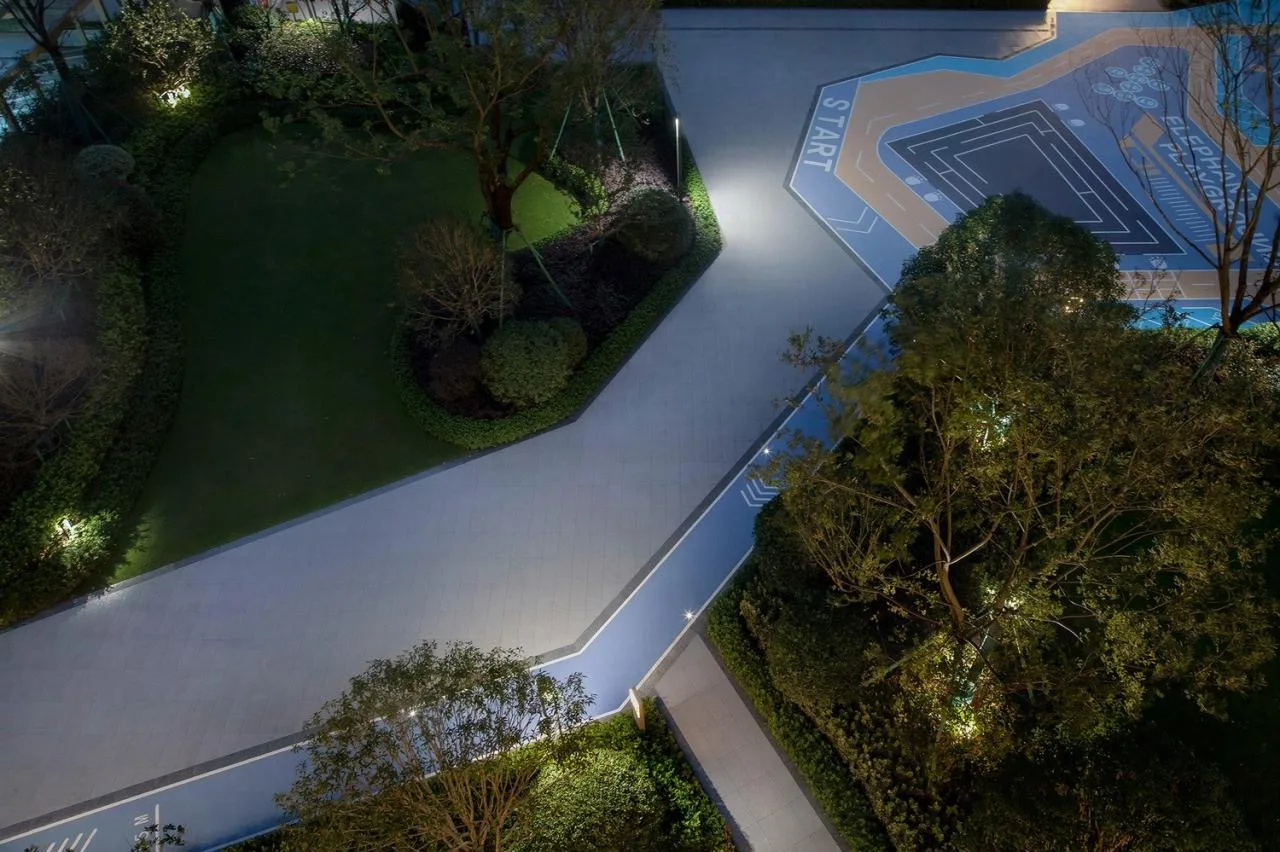
△ Night-lit Running Track
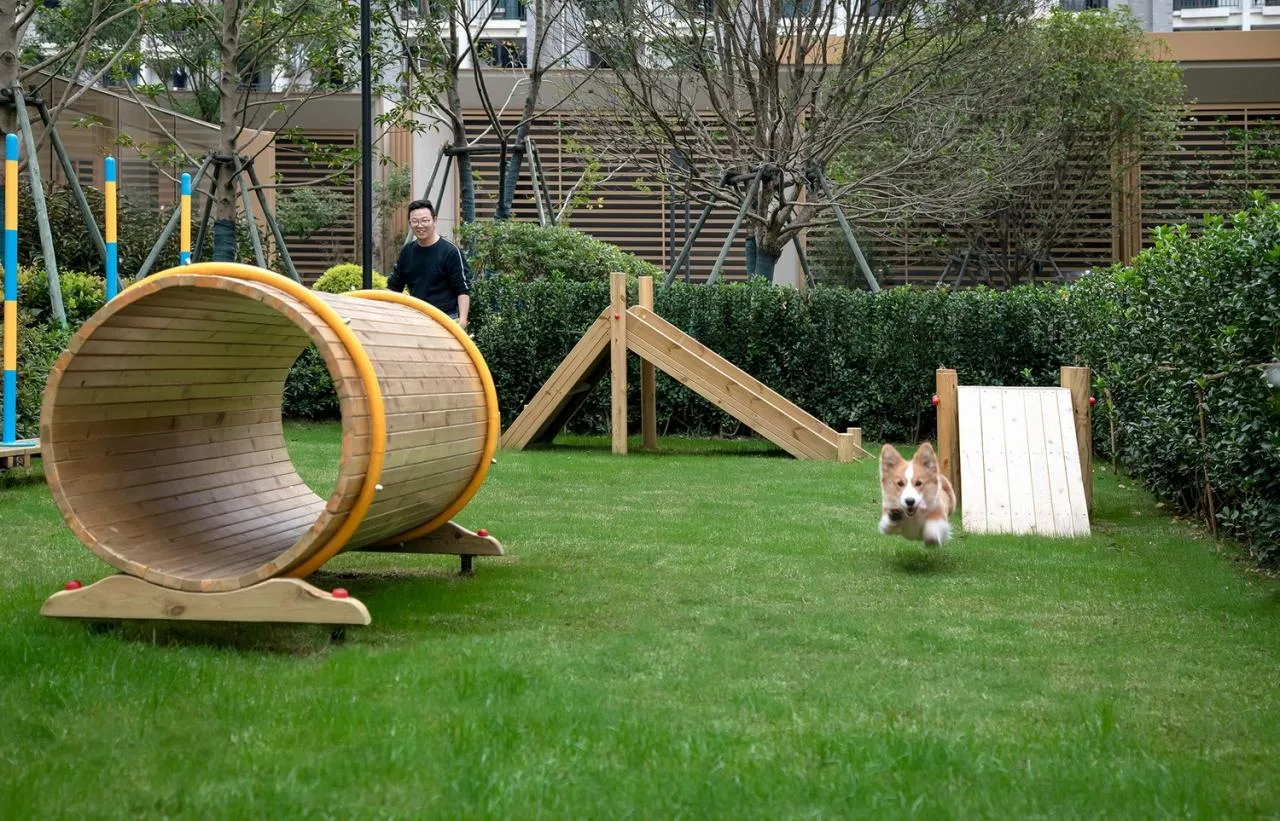
△ Cute Pet Paradise
Conclusion
By focusing on real-life scenarios from the user’s perspective, Chuanchen Mansion’s landscape design fosters community interaction through thoughtfully crafted public spaces. It combines Eastern philosophy with modern architectural context to create a garden for everyone—a harmonious blend of city and forest, home and garden.
Project Information
Project Name: Everyone · Hangzhou Chuanchen Mansion
Project Type: Region
Project Owner: Everyone Real Estate
Location: Hangzhou, Zhejiang
Design Period: March 2018 – October 2021
Design Area: 23,000 square meters
Landscape Design: ZSD Zhuoshi
Design Guidance: Yuan Xiaoyu
Design Team: Yu Yujun, He Jiabin, Wang Licheng, Li Yuanyuan, Dou Longfei, Lin Xiaoye, Huang Zhichao, Jiang Yao, Cheng Yajing
Project Photography: XF Photography, Xue Yutao, et al.















Must log in before commenting!
Sign Up