
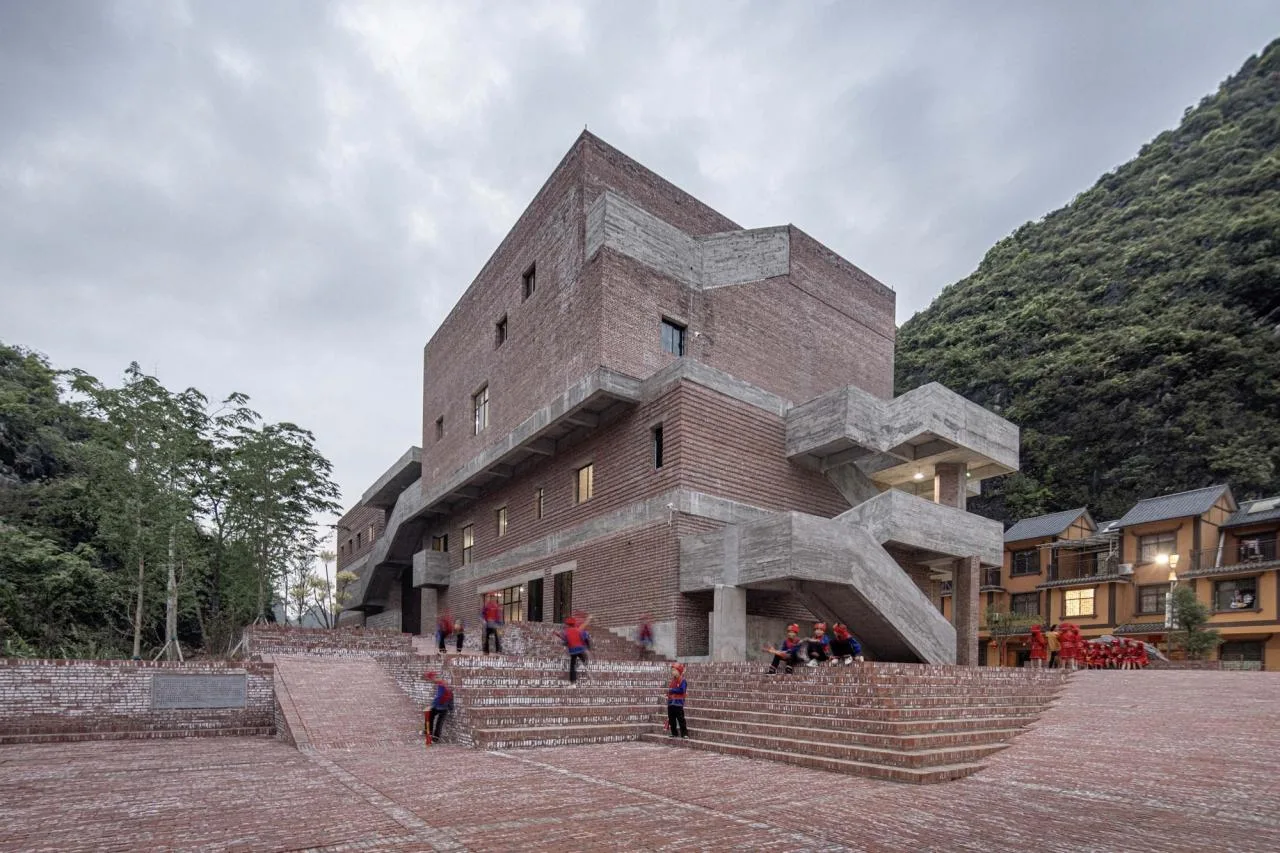
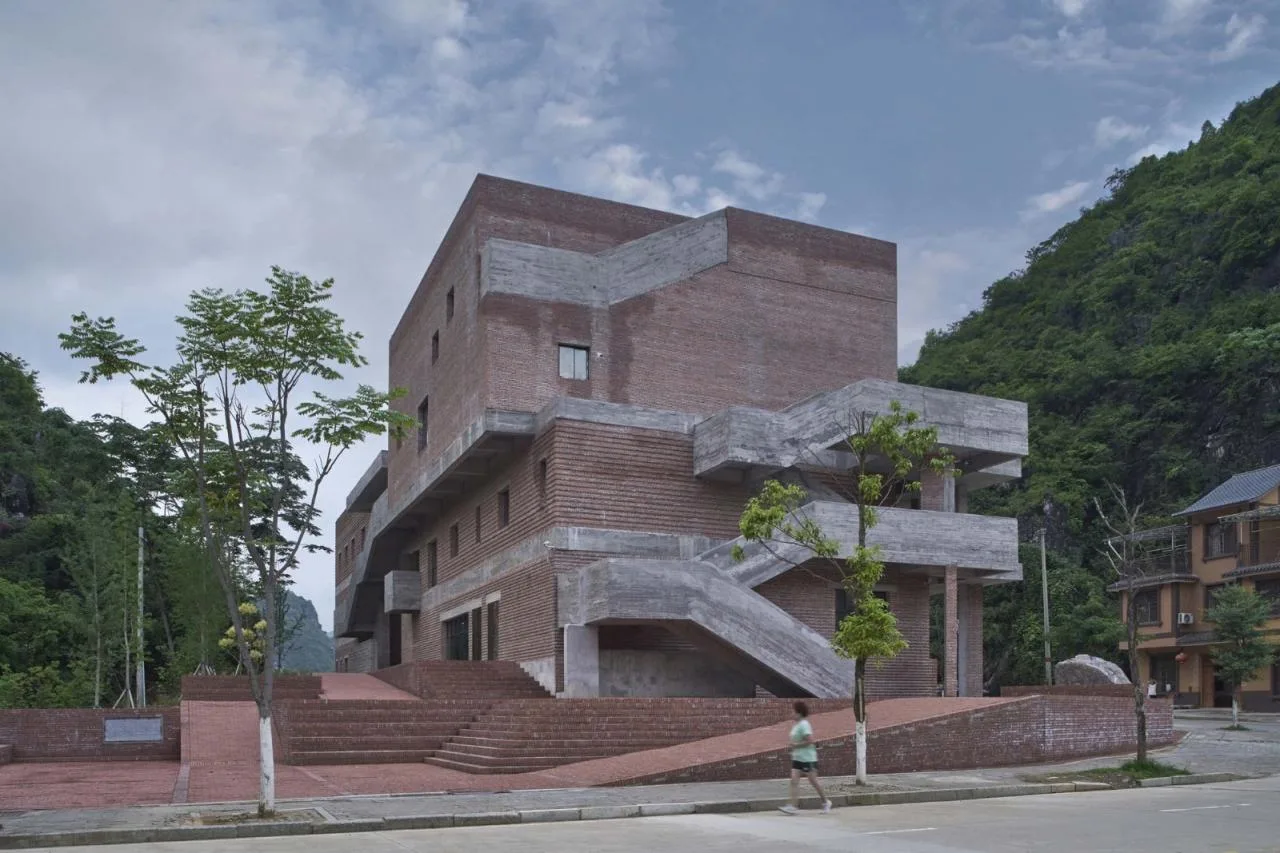
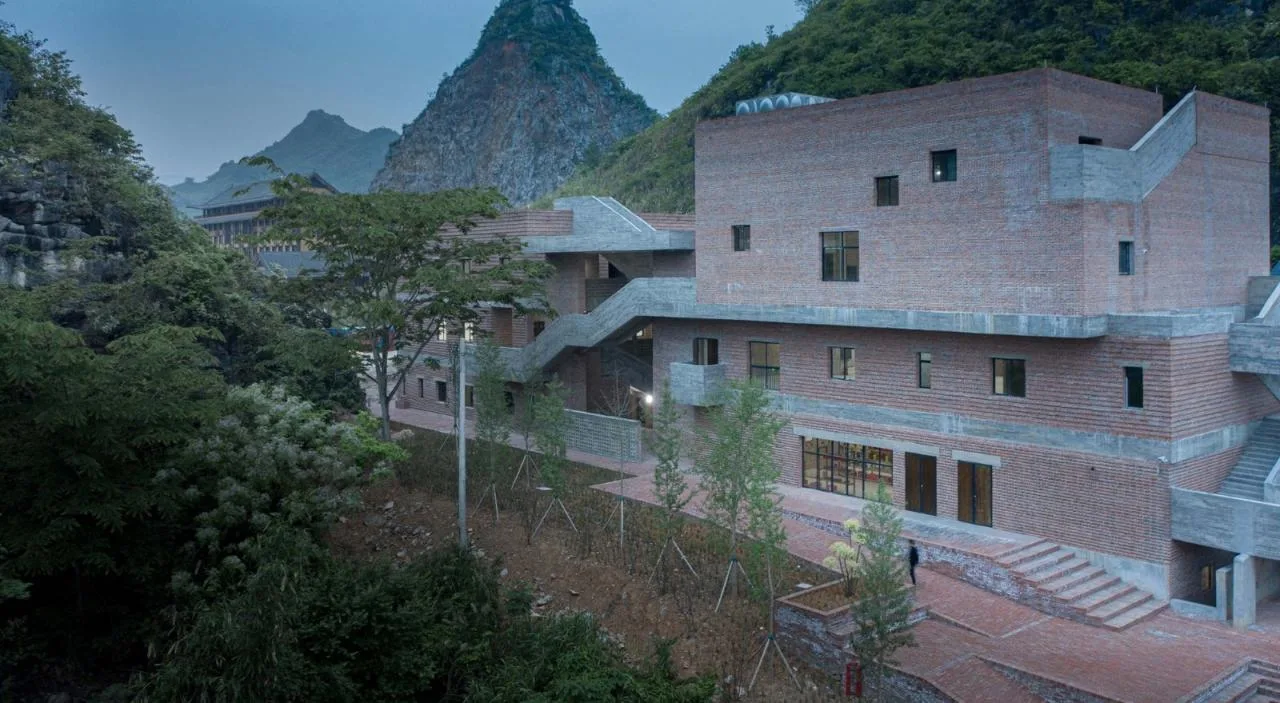
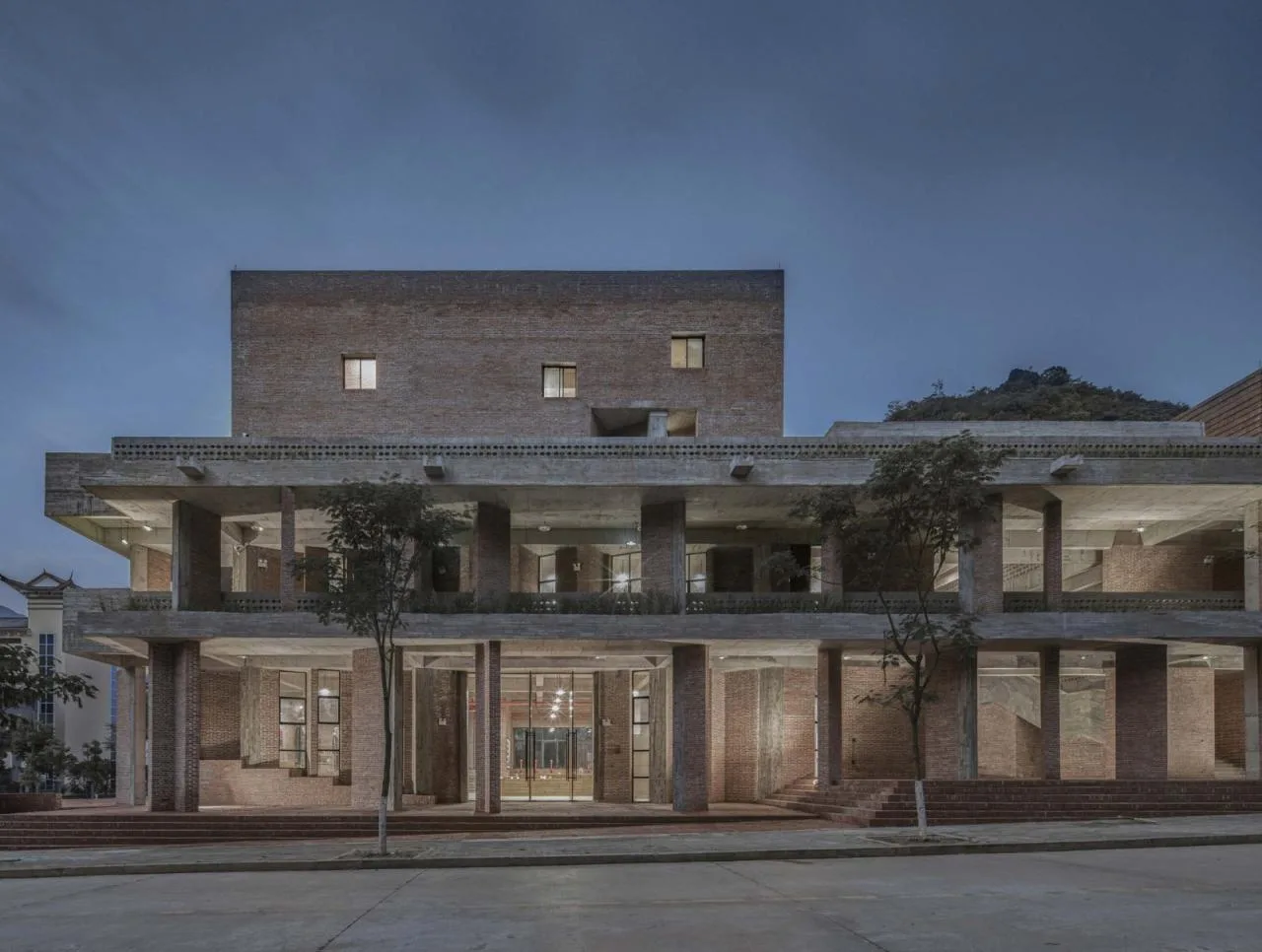
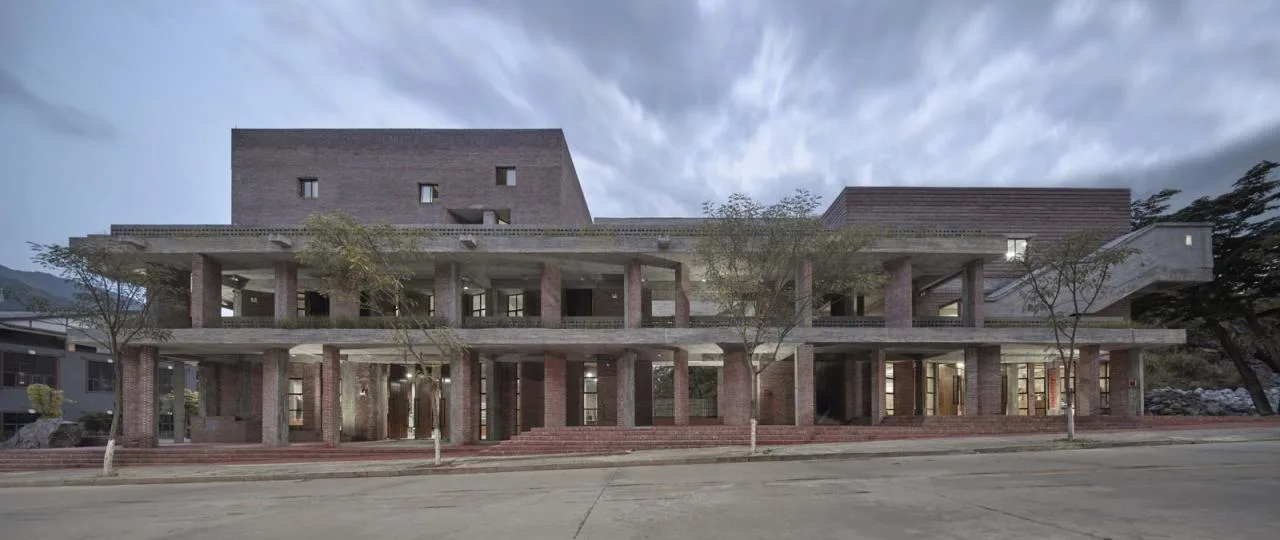
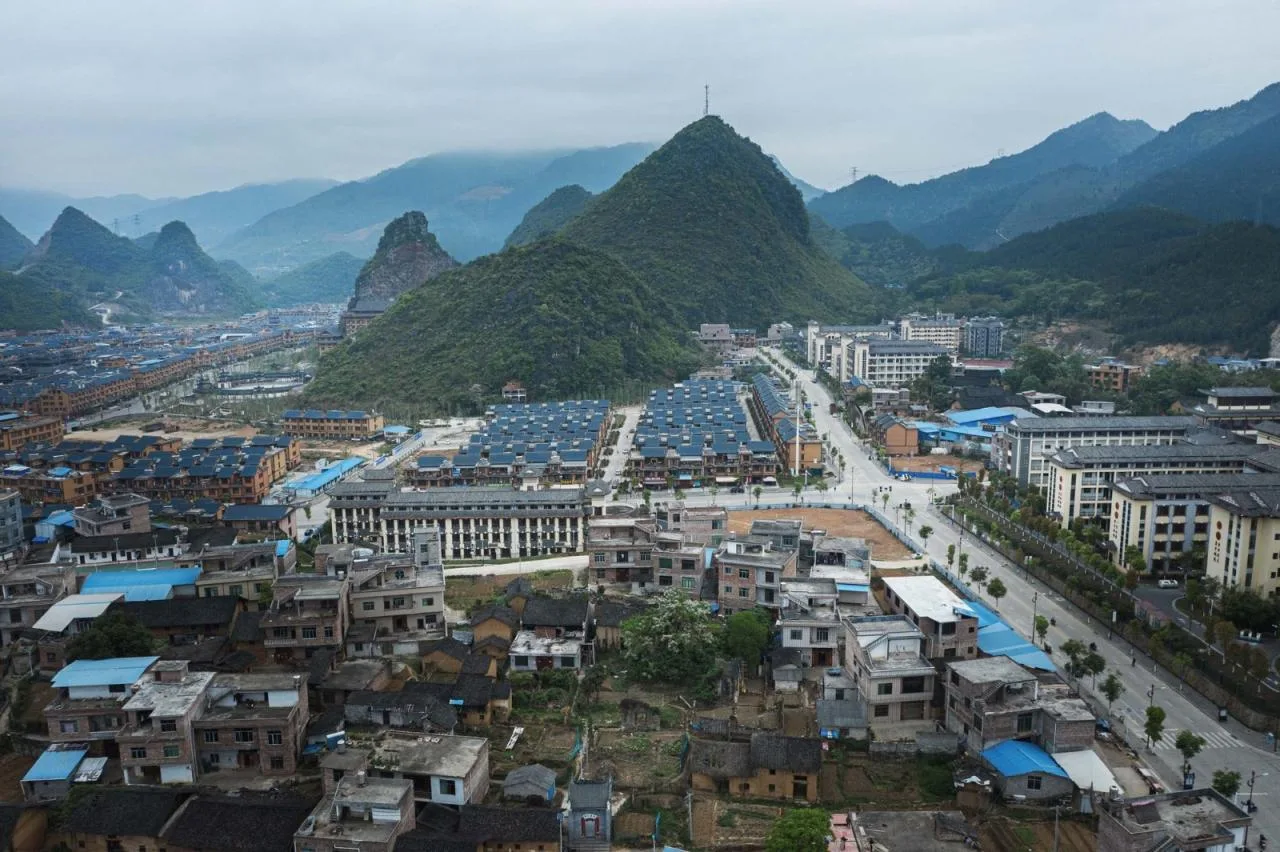
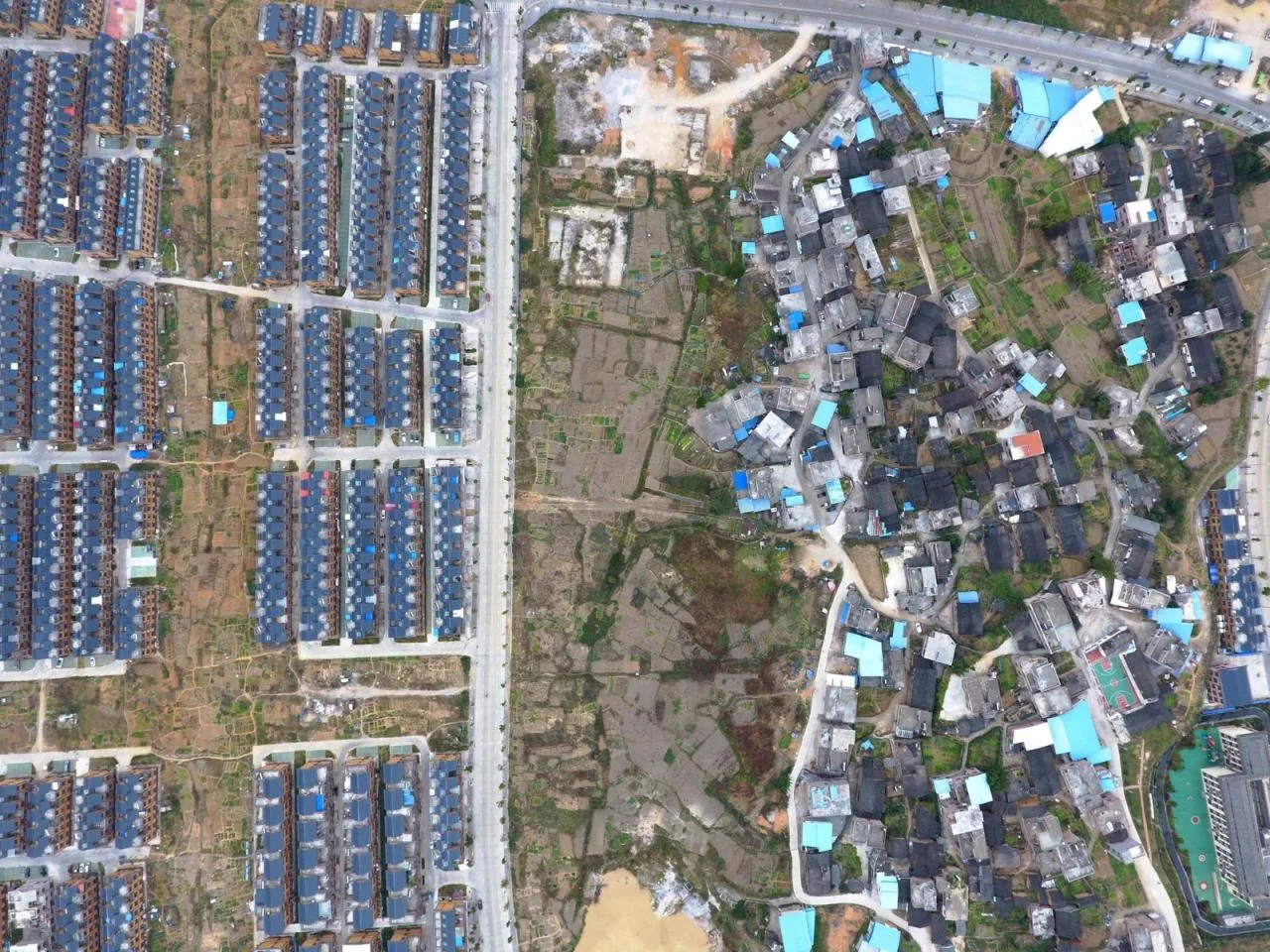
The Ruyi Village Cultural Service Center and Featured Workshop, designed by Wei Chunyu and a local studio, is situated in Shuikou Town, Jianghua Yao Autonomous County, Yongzhou City, Hunan Province. This town is a newly developed immigrant area formed through the relocation and expansion of the original town, which was submerged by the Centian River Reservoir expansion project. The planning follows the natural, tree-like distribution of the original villages.
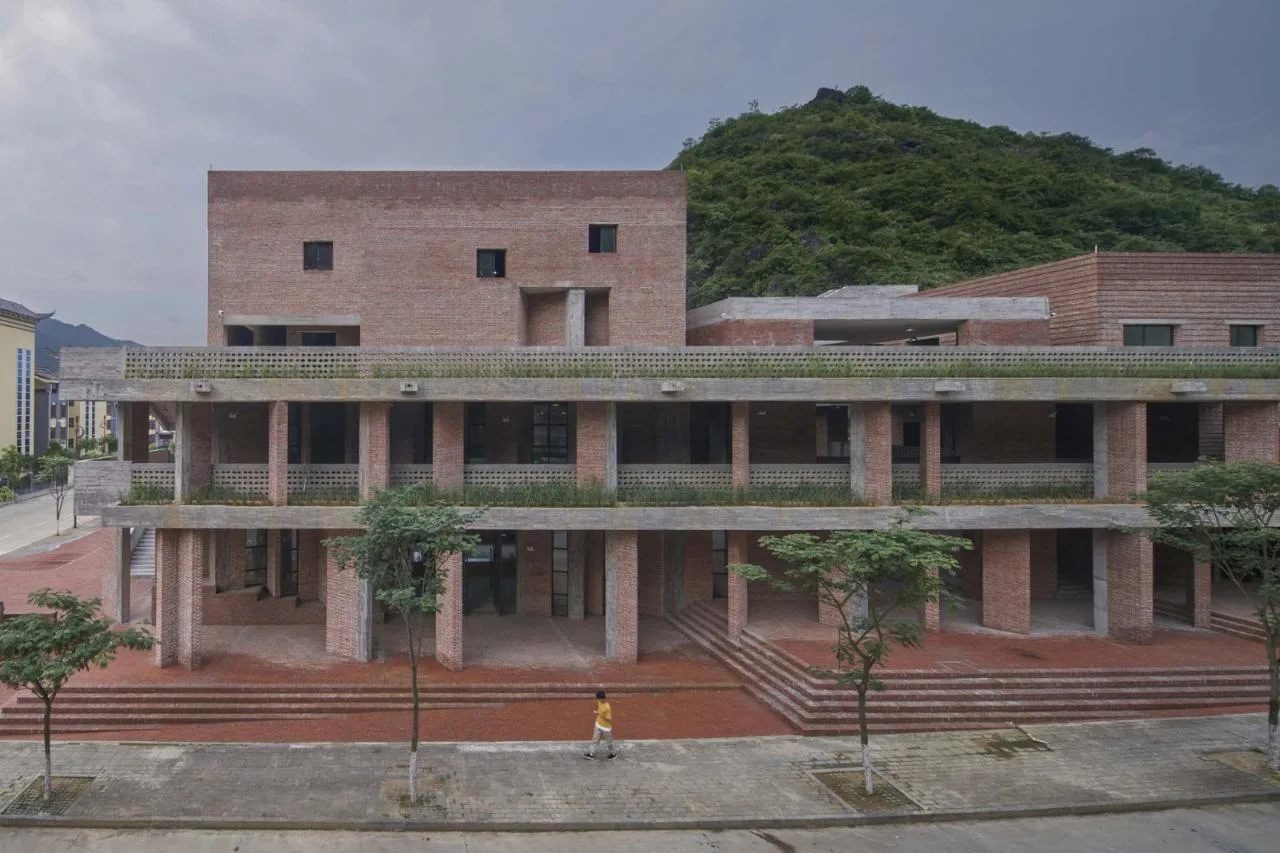
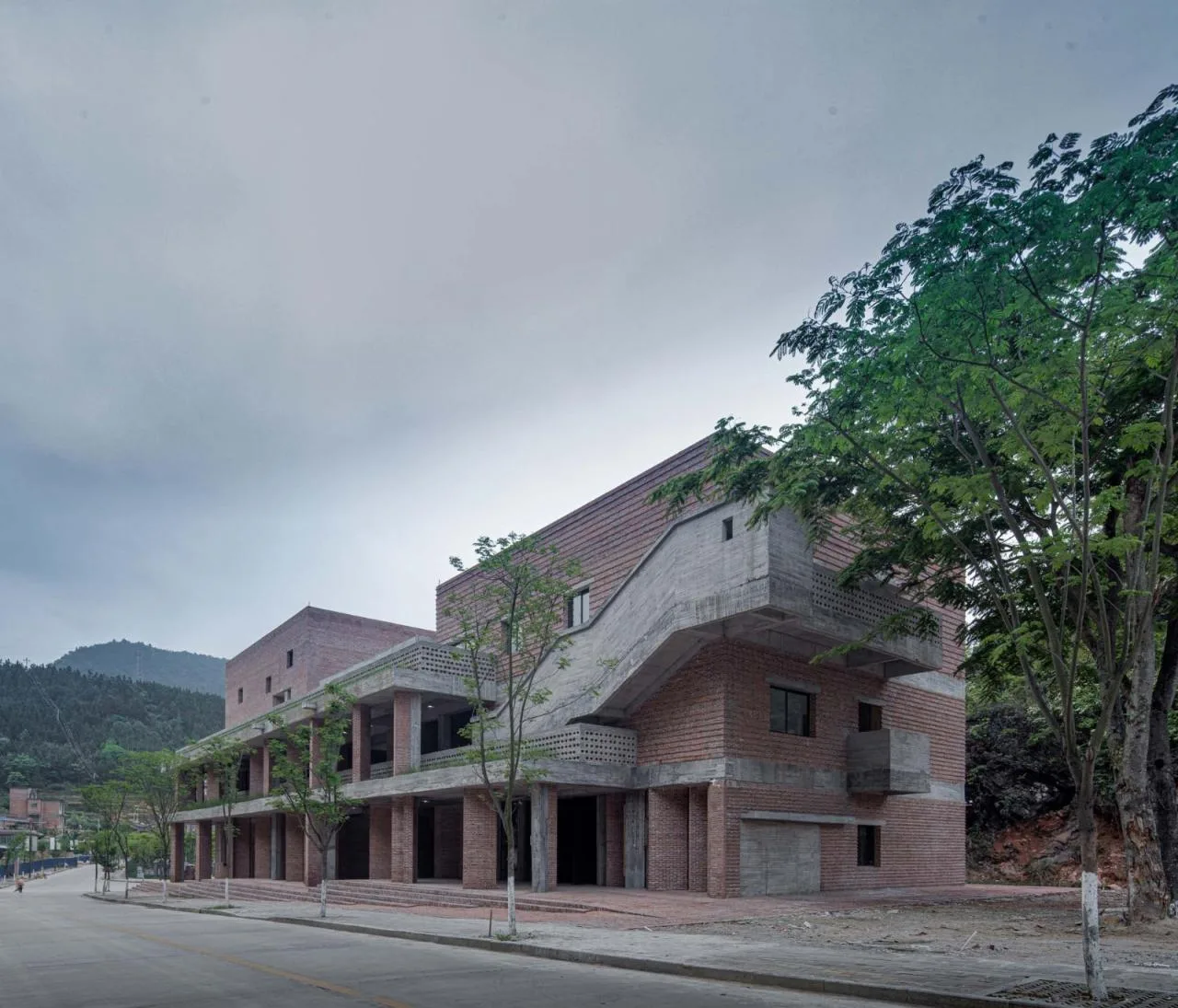
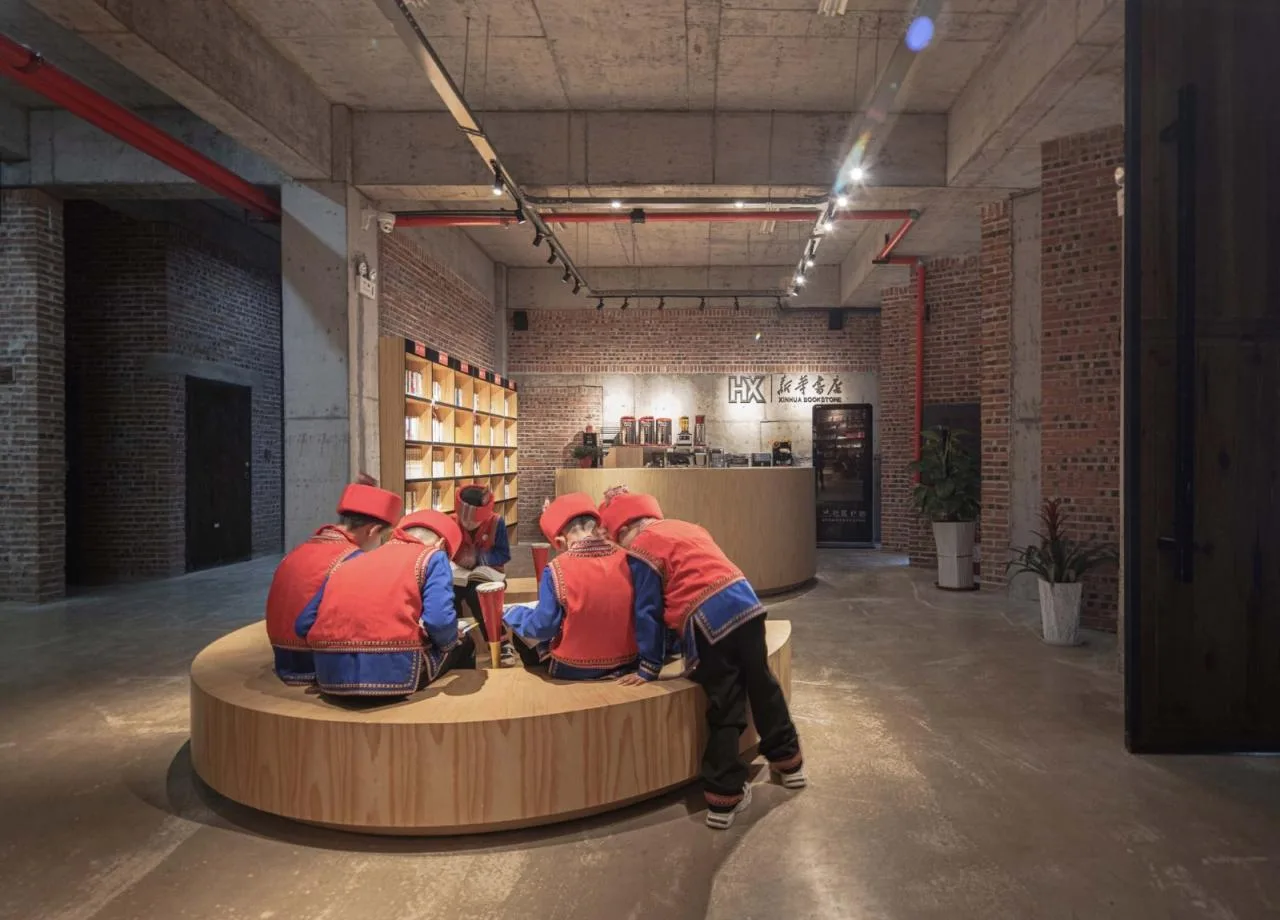
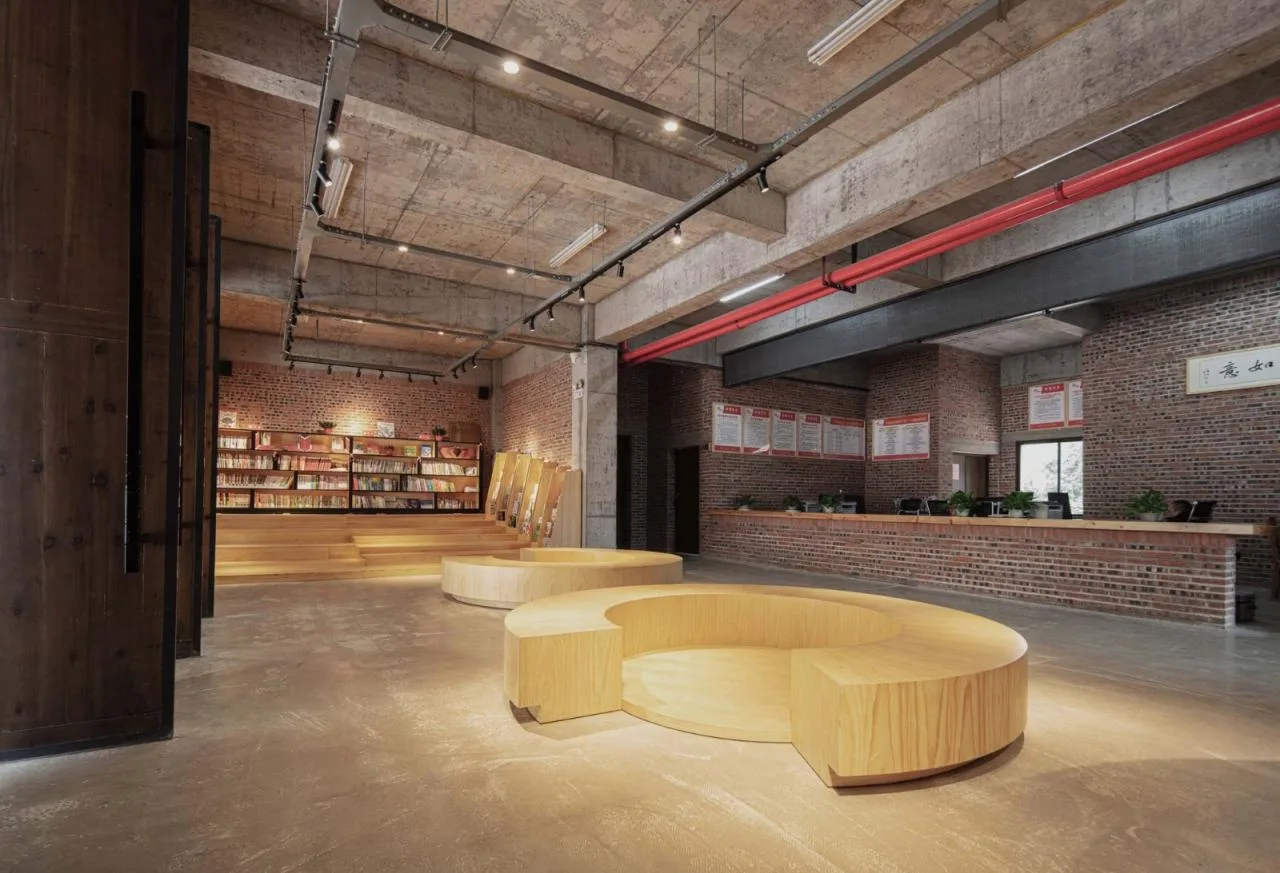
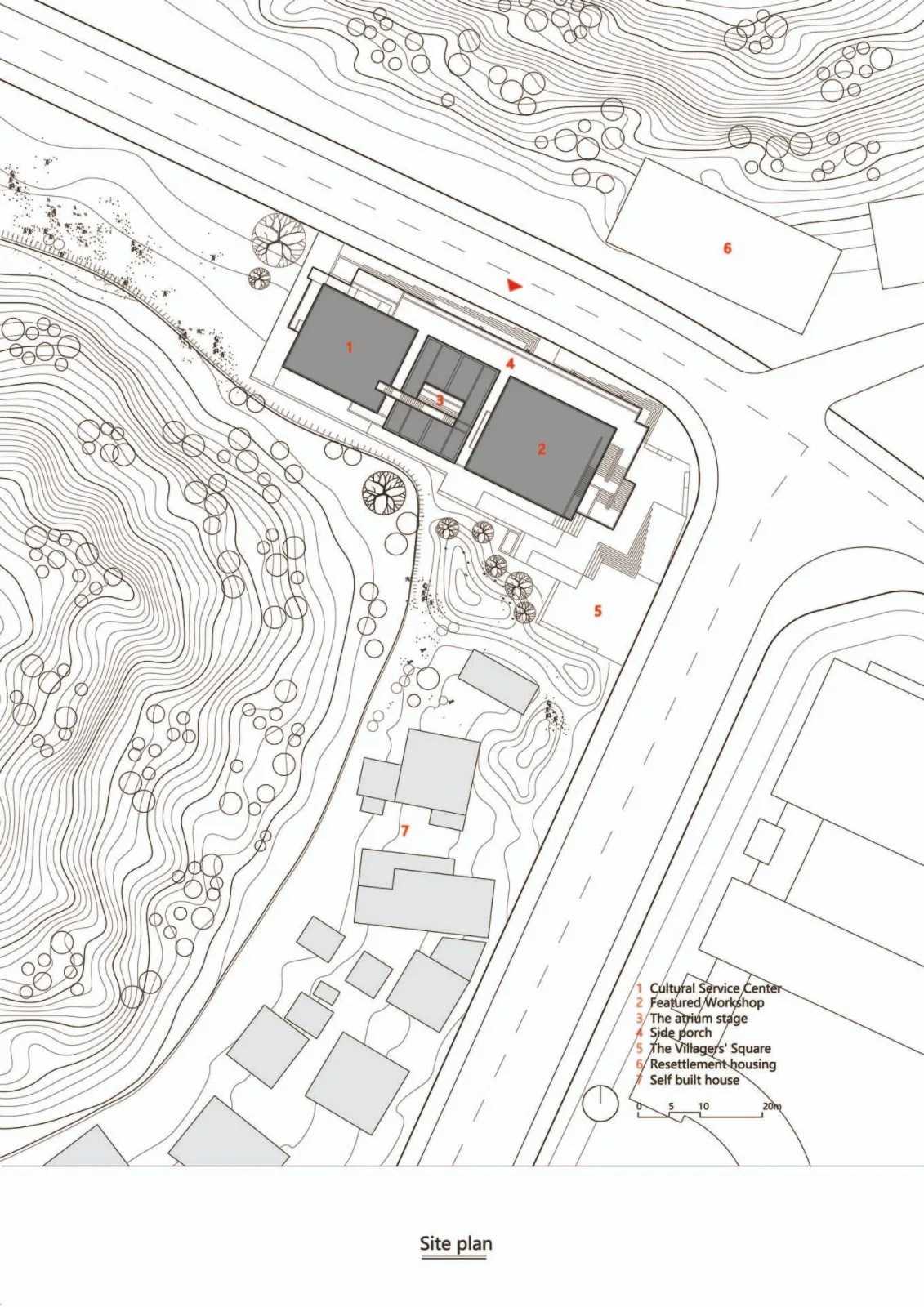
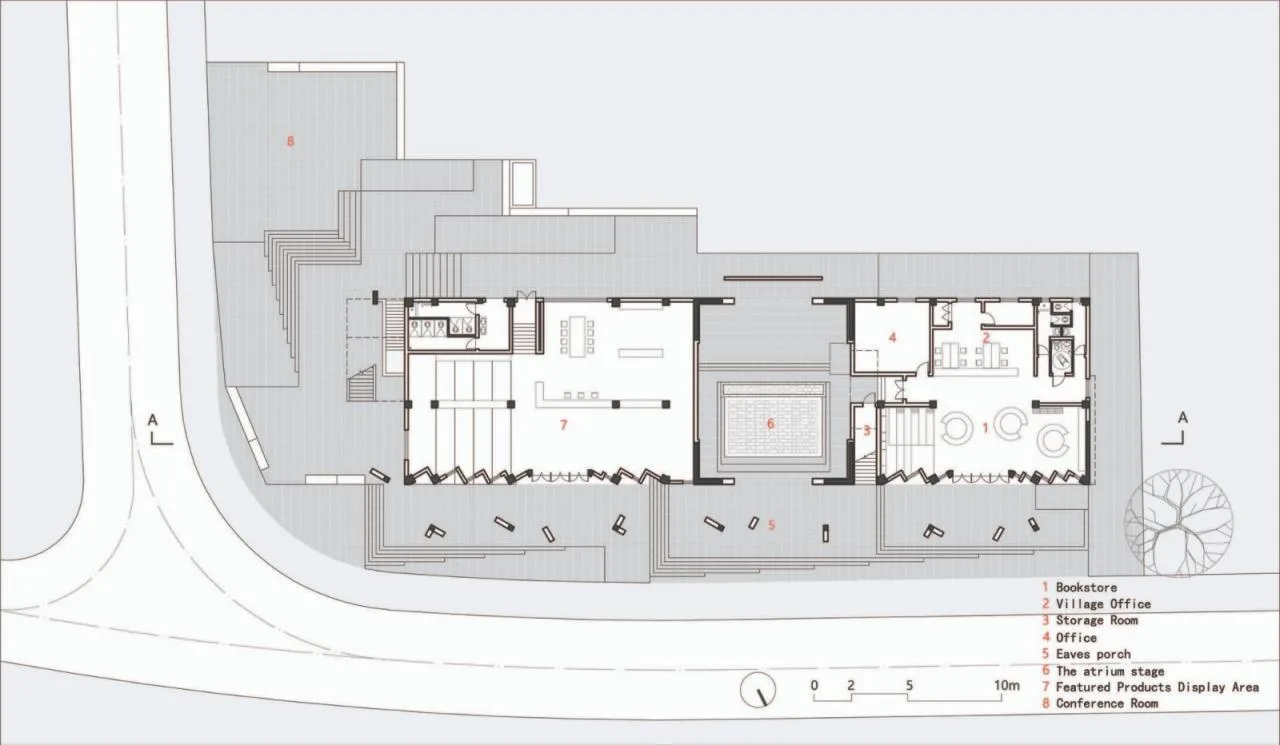
The Cultural Service Center and Characteristic Workshop cover approximately 1,835 square meters of land, with a building area of about 2,093 square meters. This small township cultural complex combines multiple functions: village administrative offices, community activities, reading spaces, literary and artistic performances, local cultural and tourism promotion, and the display and sale of specialty products.
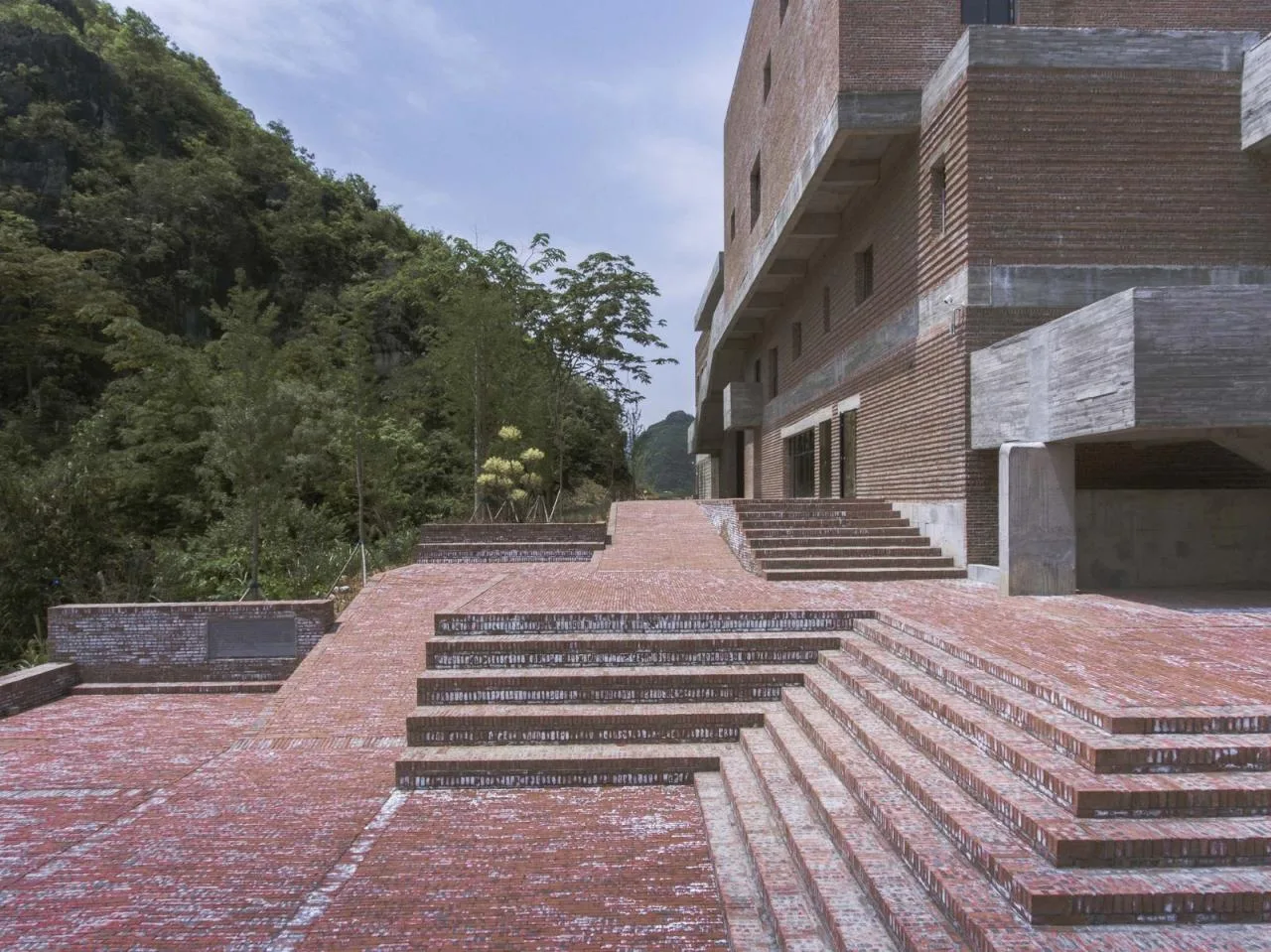
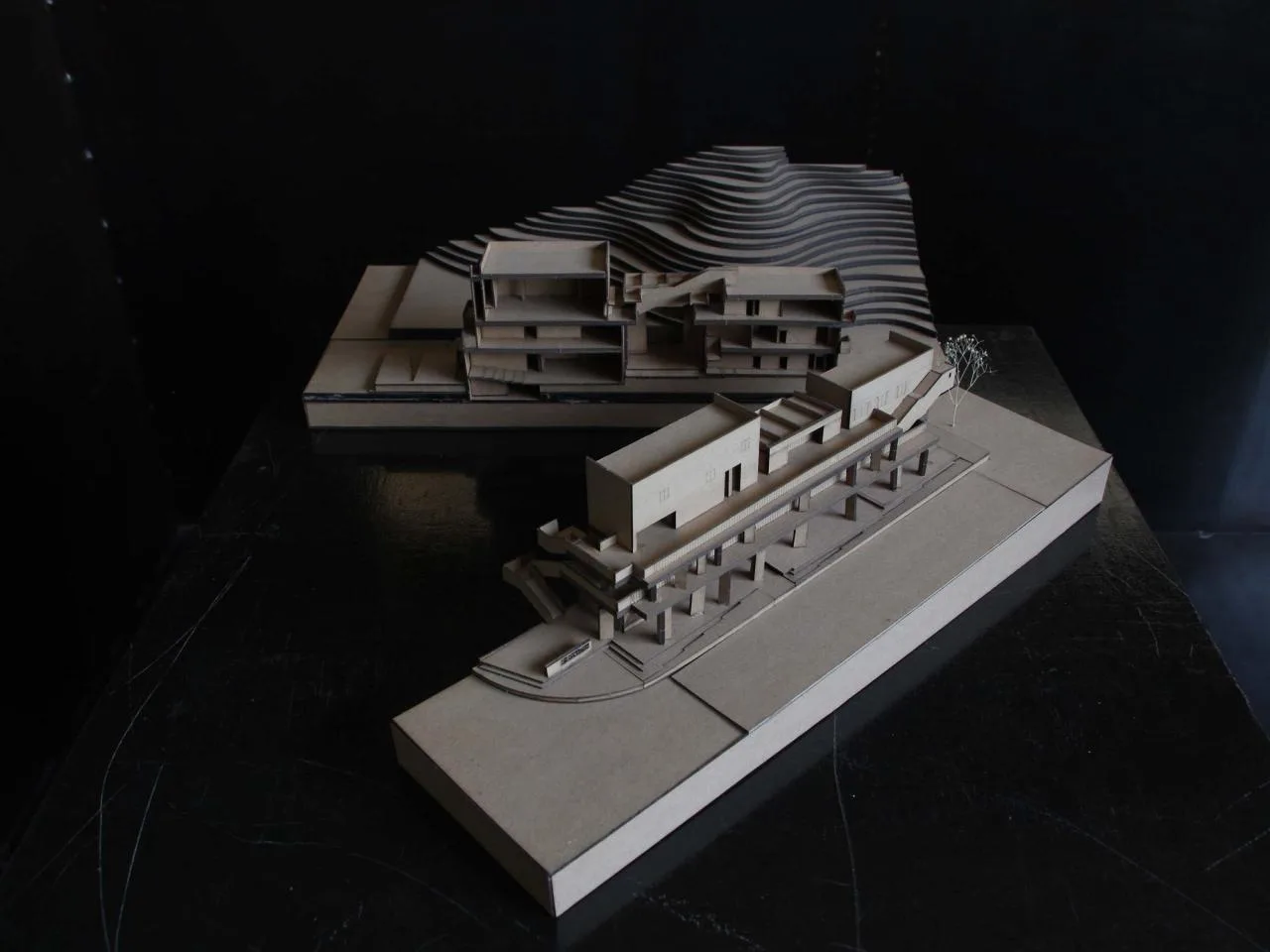
The site features a two-meter elevation difference from west to east and is organized into three terraces: the Cultural Service Center, Courtyard Stage, and Characteristic Workshop, arranged sequentially from west to east.
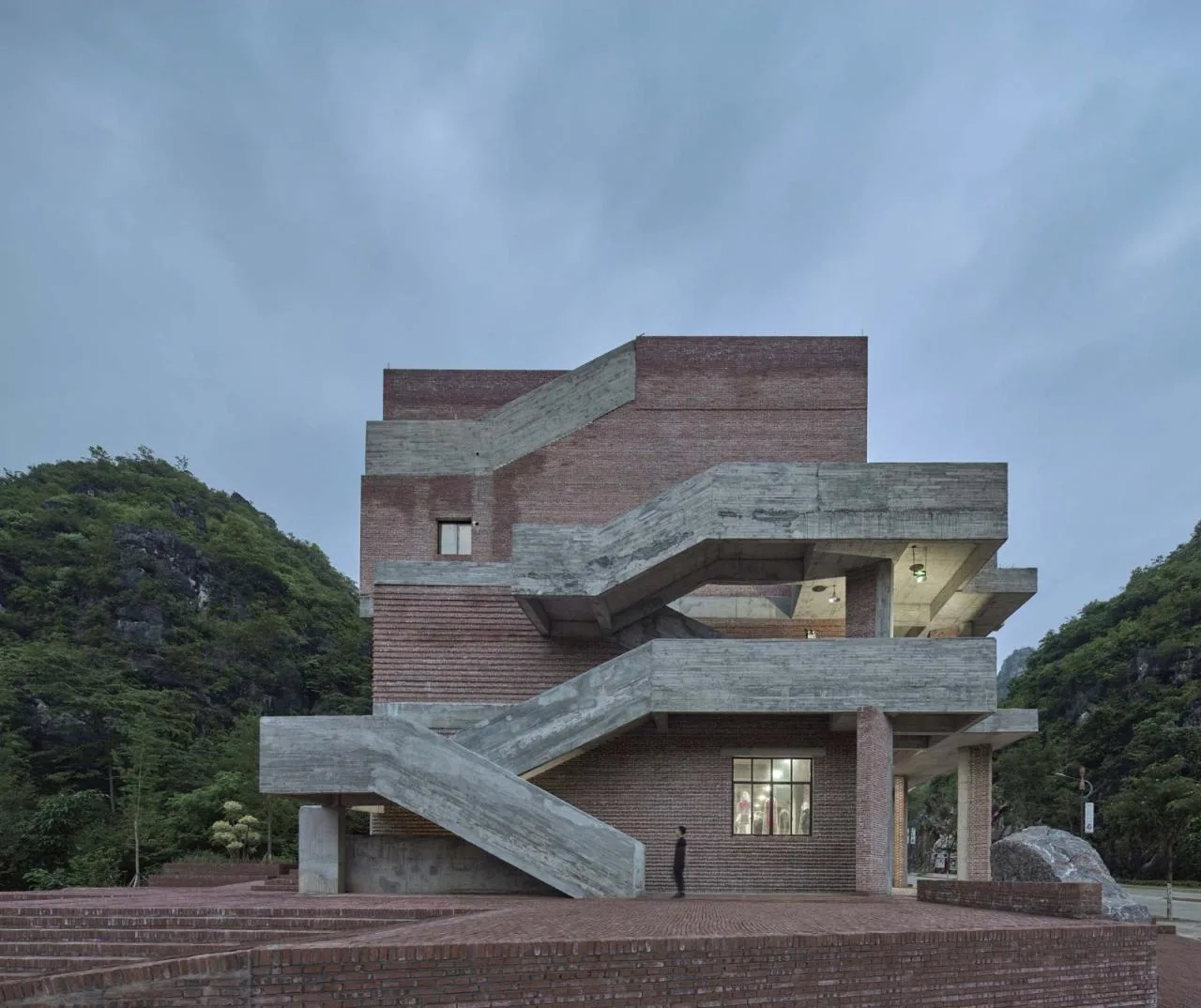
Located in the heart of the Nanling Mountains, Jianghua Yao Autonomous County is home to the largest concentration of Yao people, earning it the title “Yao Capital of China.” The Yao community of Ruyi Village in Shuikou Town, originally from remote mountainous and forested areas, are known as the “Gao Shan Yao.”
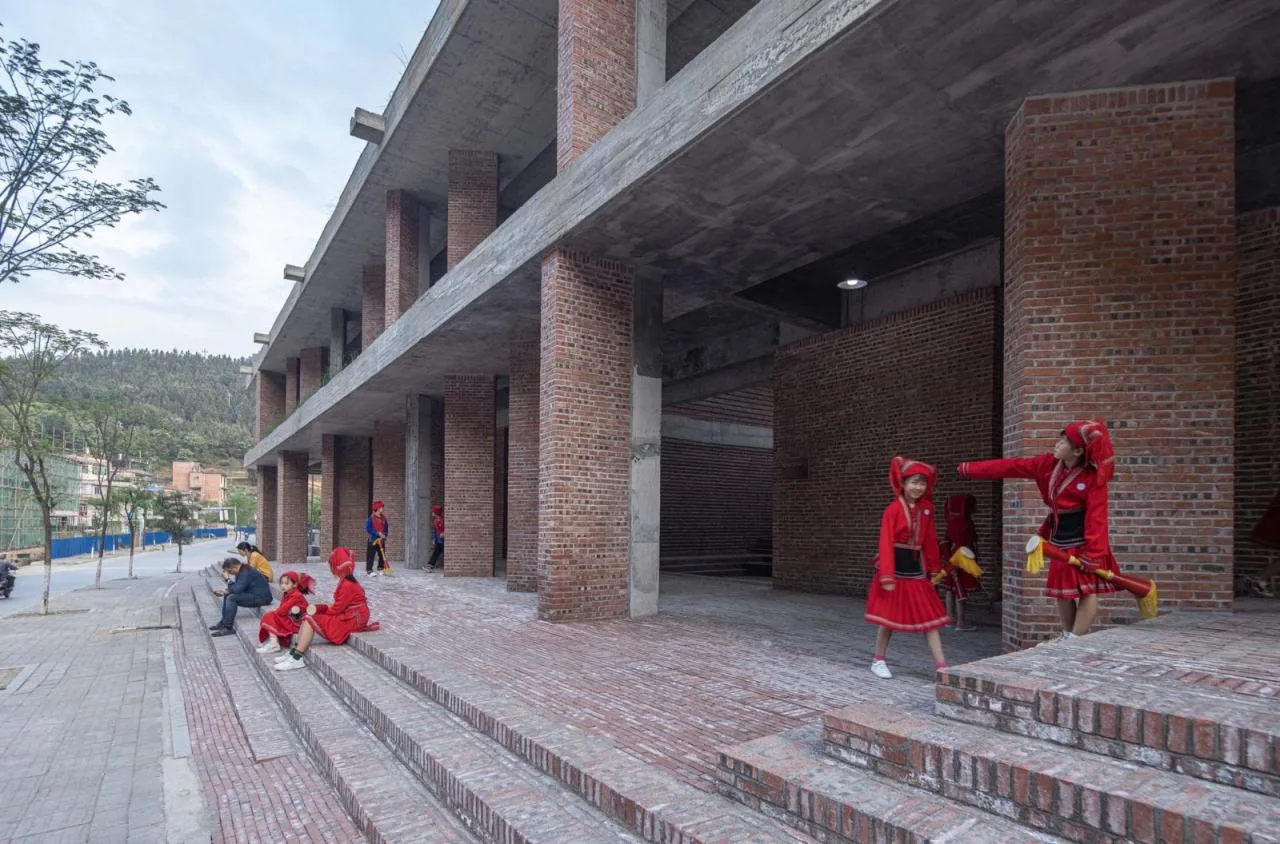
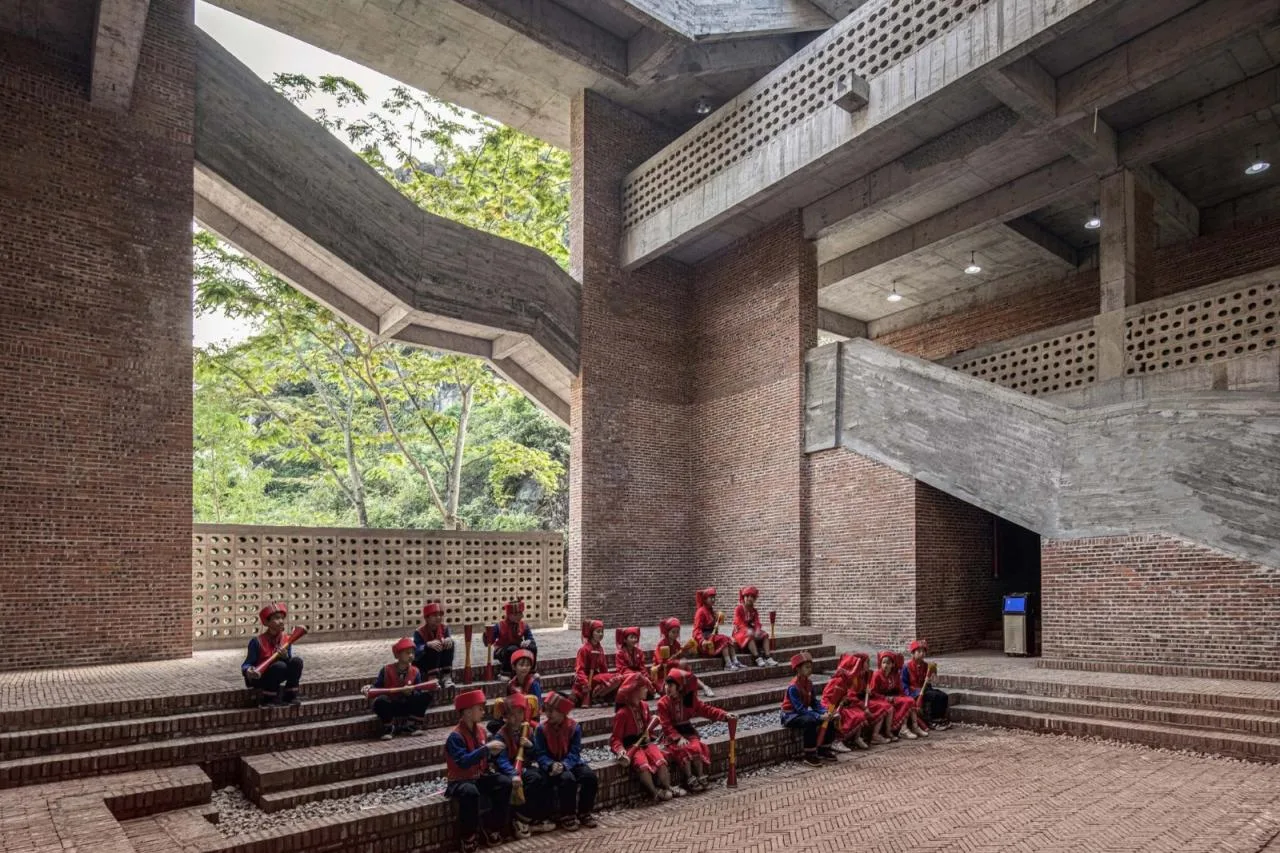
They revere King Pan as their ancestor and celebrate the “King Pan Festival,” also called the local “Second Spring Festival,” every year on the 16th day of the tenth lunar month. During this time, Yao families don traditional costumes, play long drums and sheng instruments, and express their culture through the vibrant long drum dance, performed at both the festival and other special occasions.
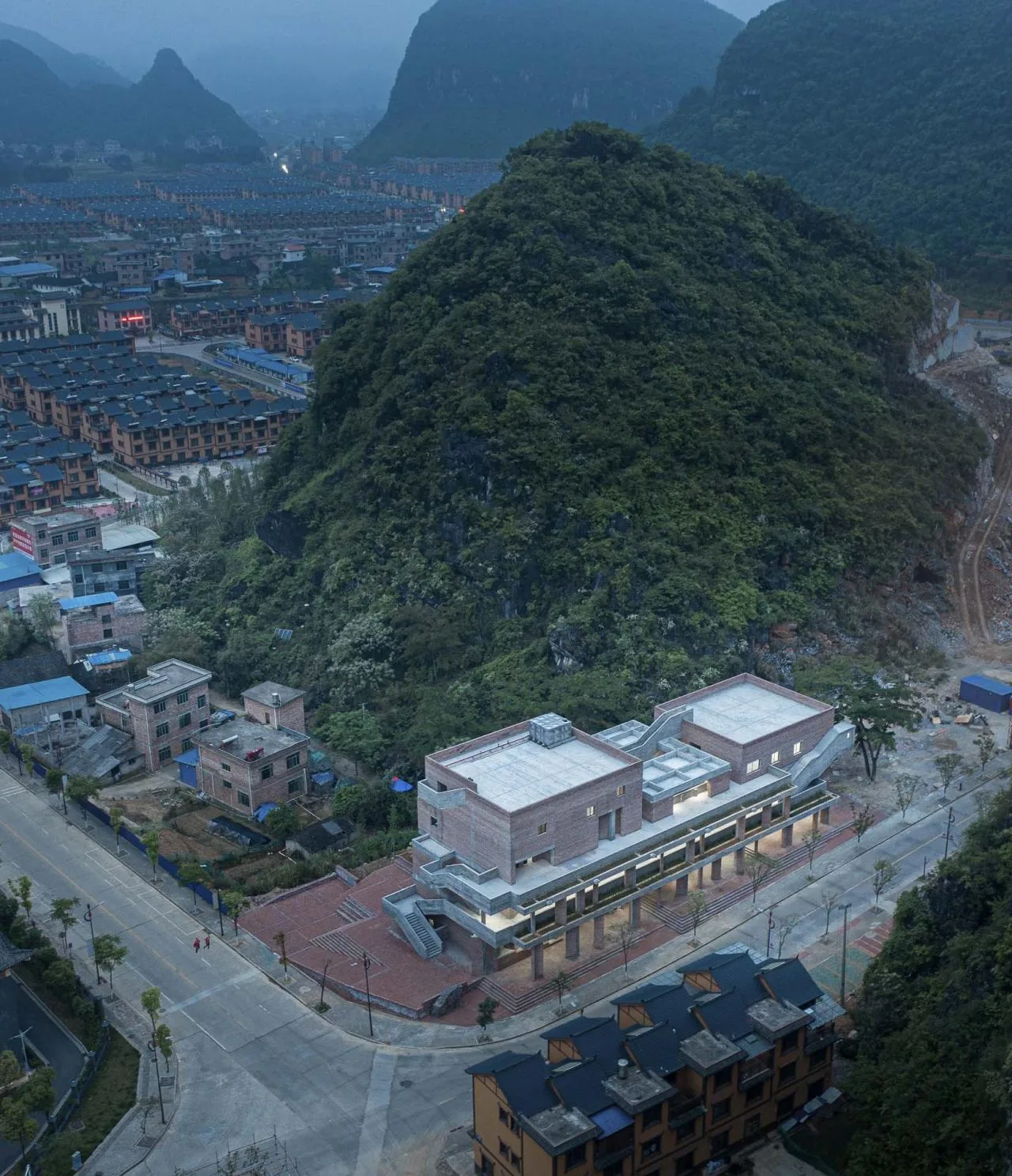
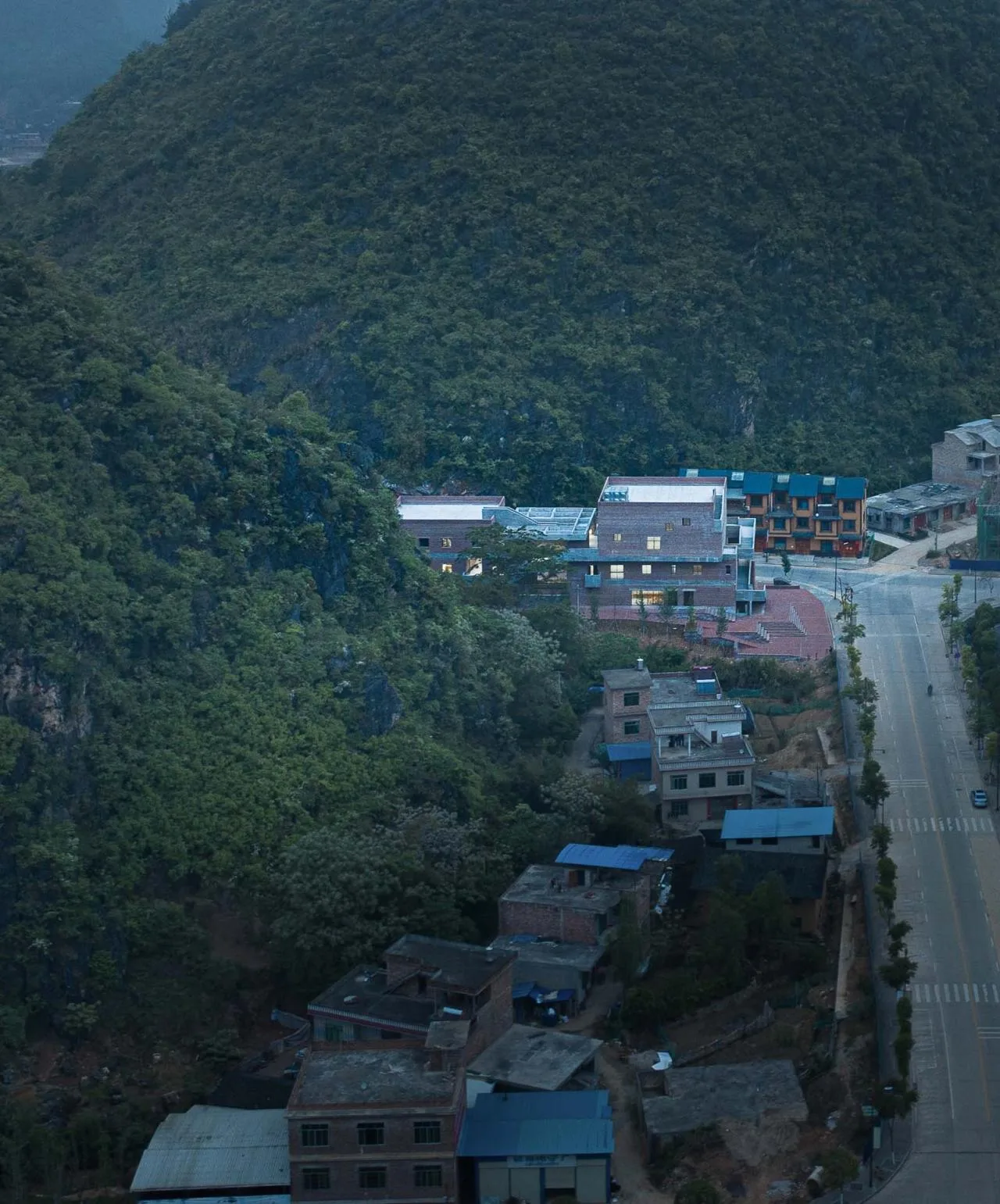
The building functions as a hub for both cultural and administrative activities, while also accommodating local customs such as ancestral worship. This dual role inspired the design to create a space that holds both material and spiritual significance, serving as a kind of ancestral hall for the community.
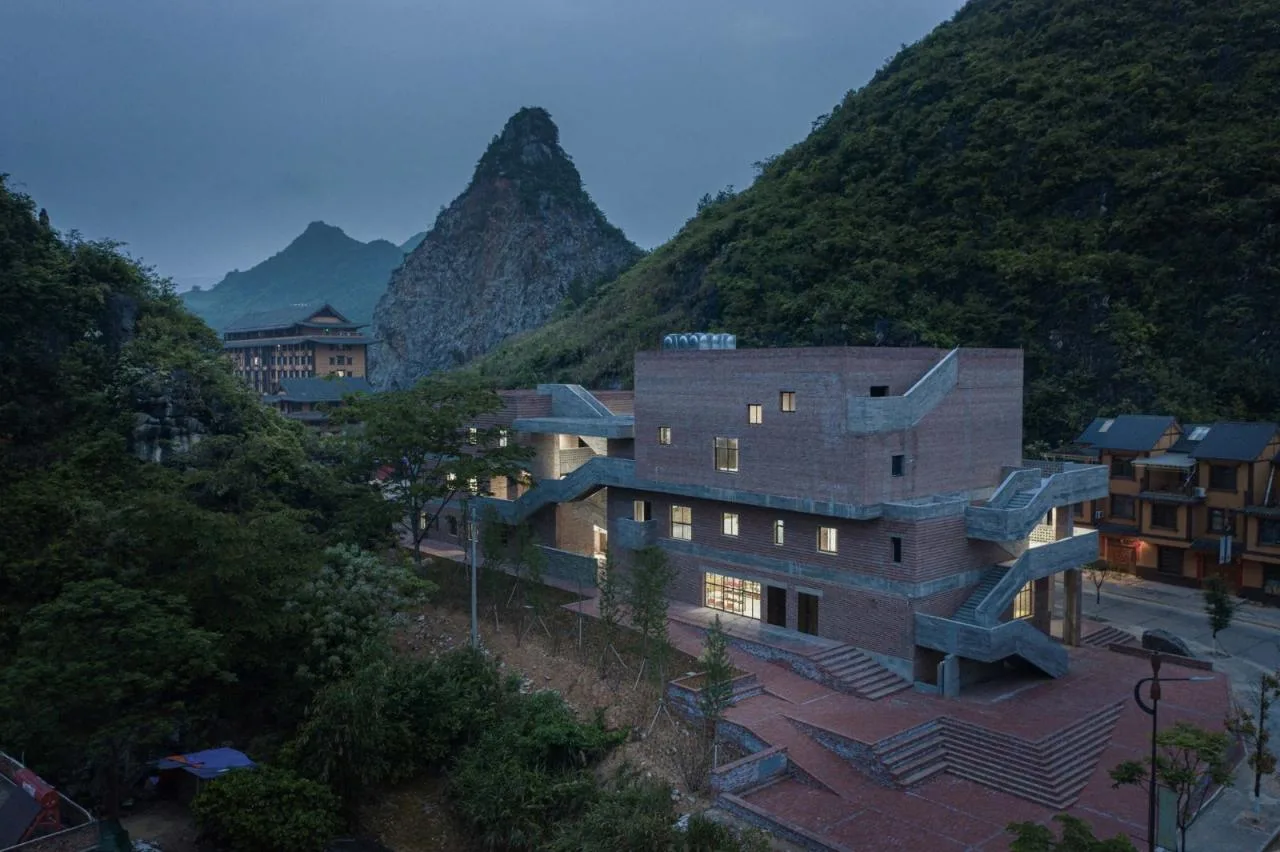
Courtyard and ‘Hall’
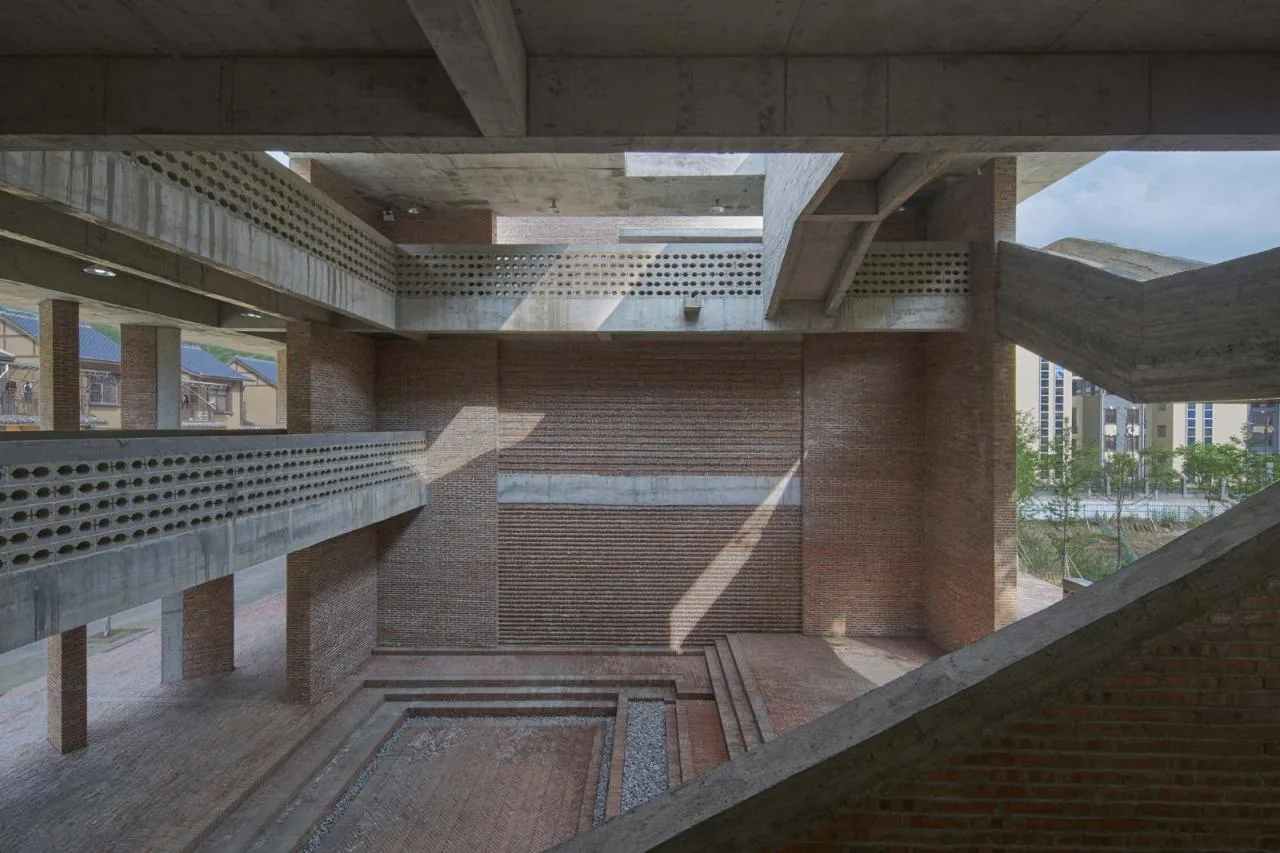
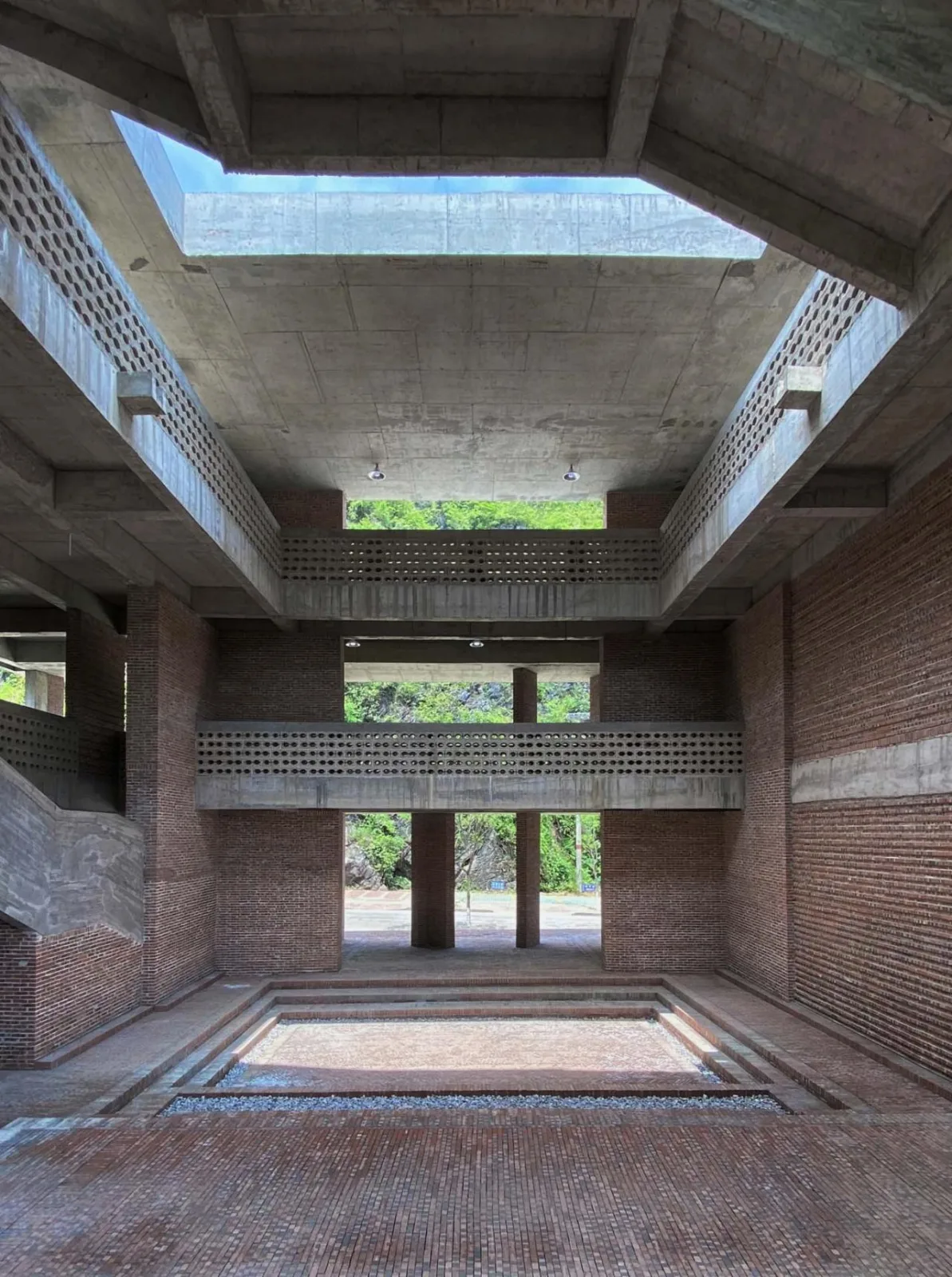
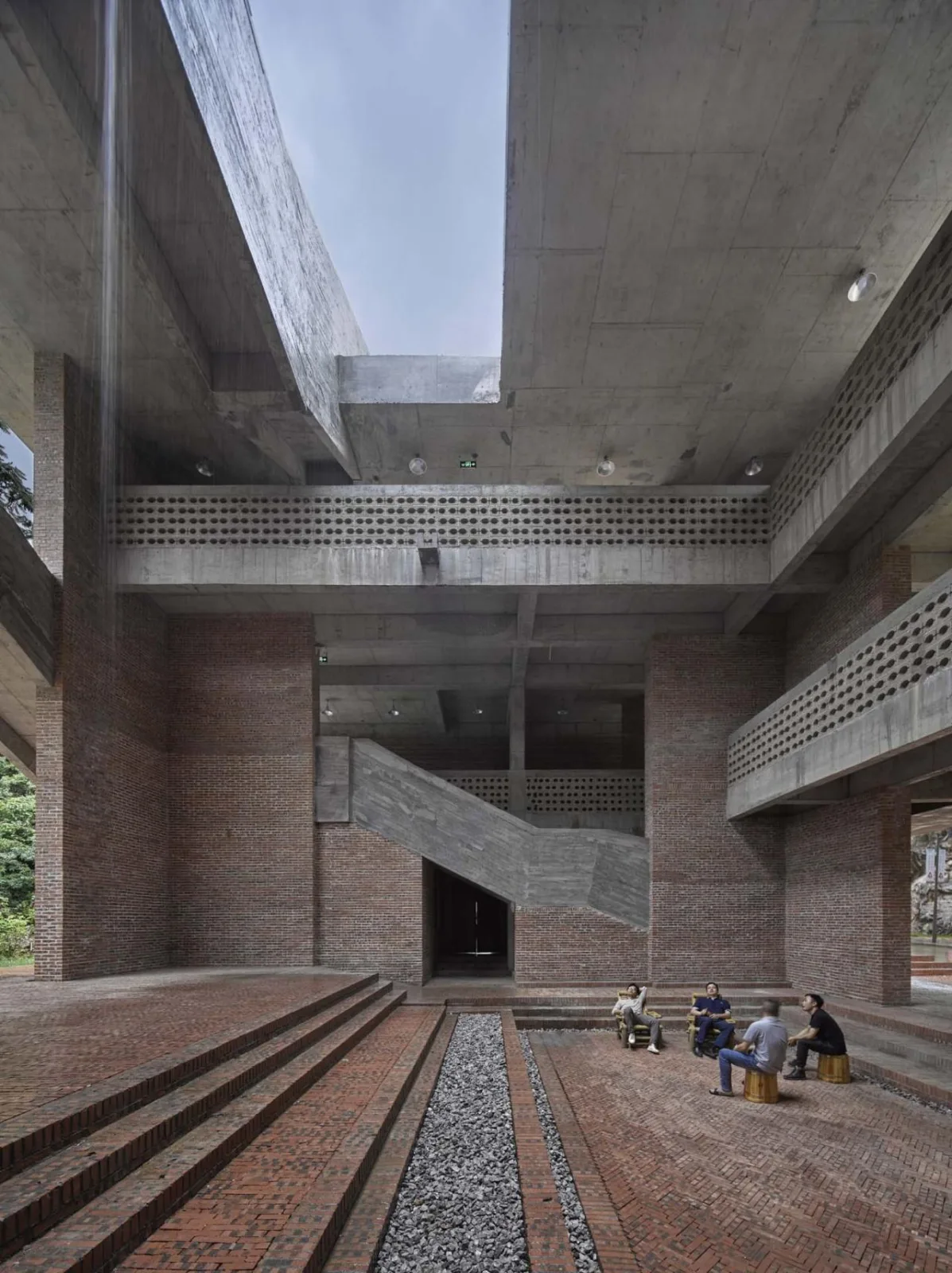
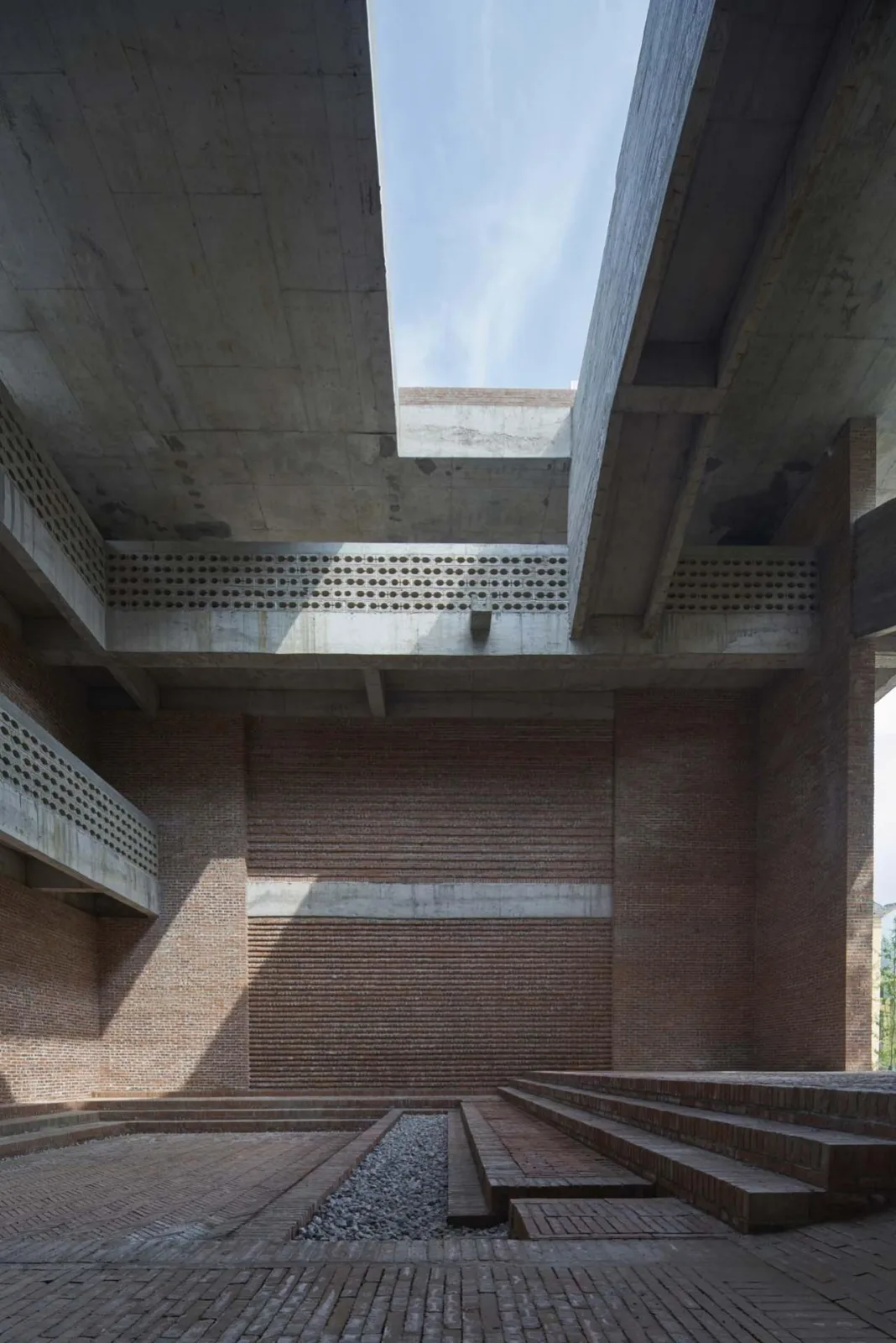
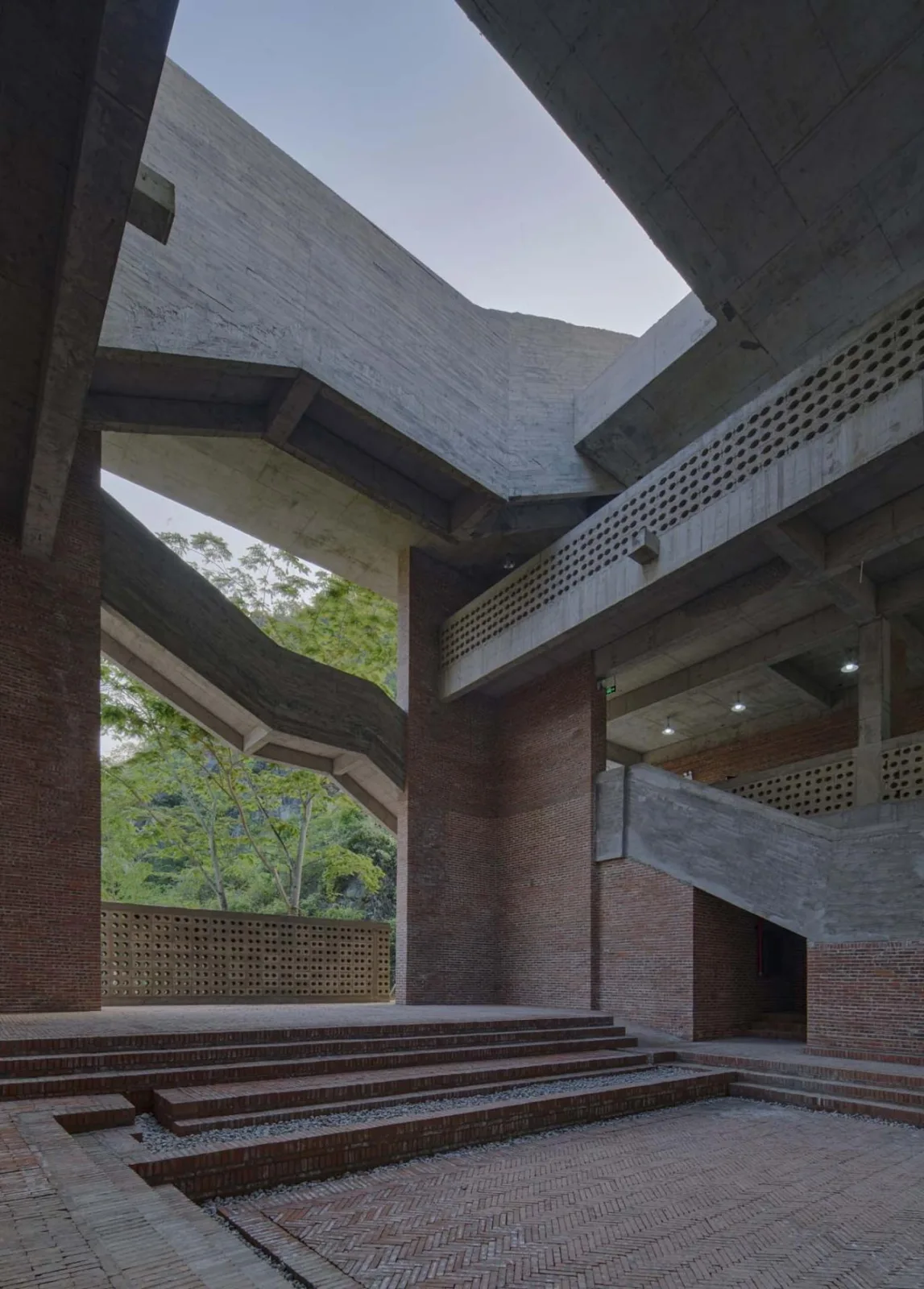
The design of the courtyard stage draws inspiration from the traditional central halls and courtyards of local residents, blending both old and new elements. This space acts as a ceremonial venue for festivals and a gathering place for daily leisure.
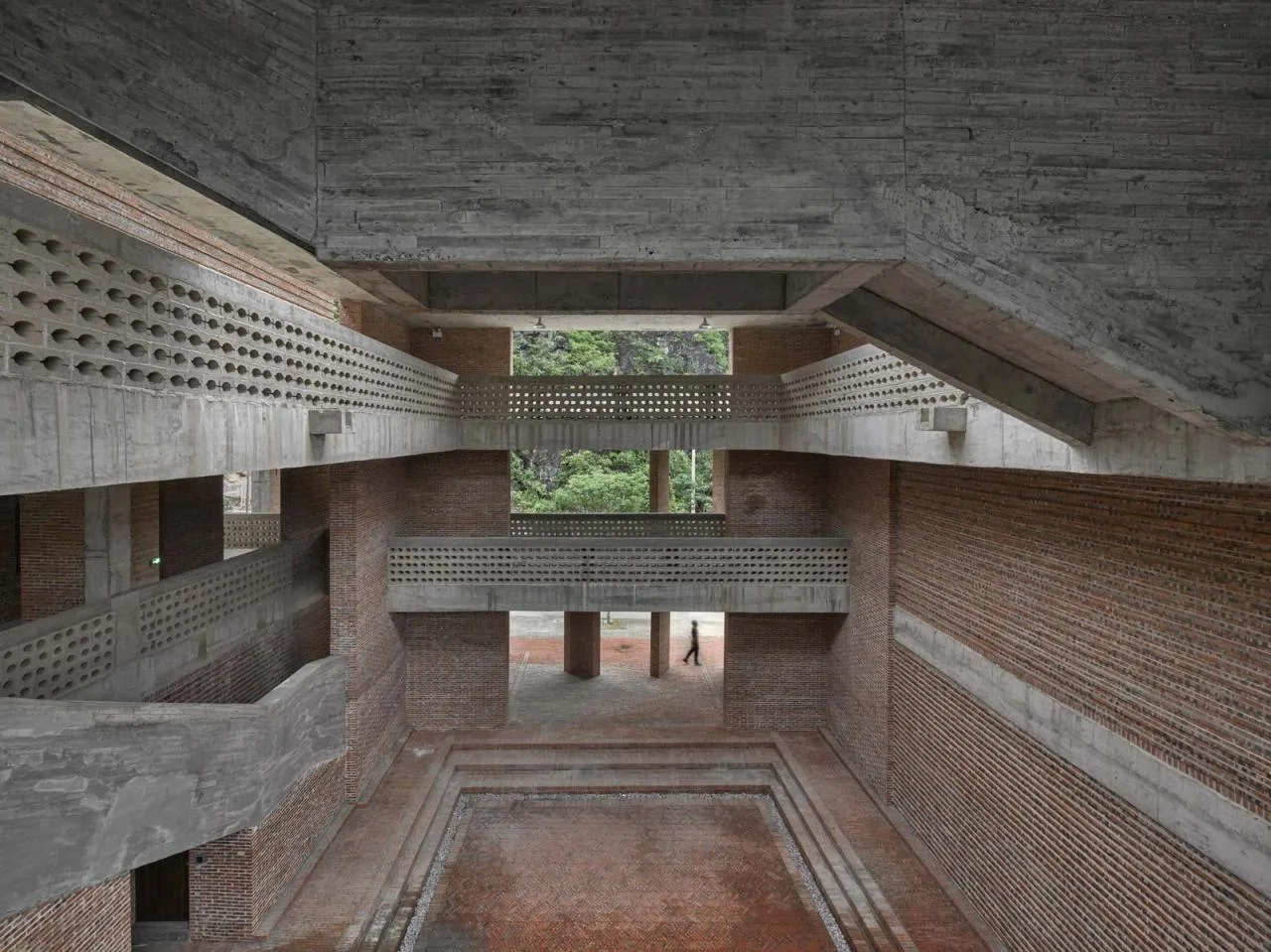
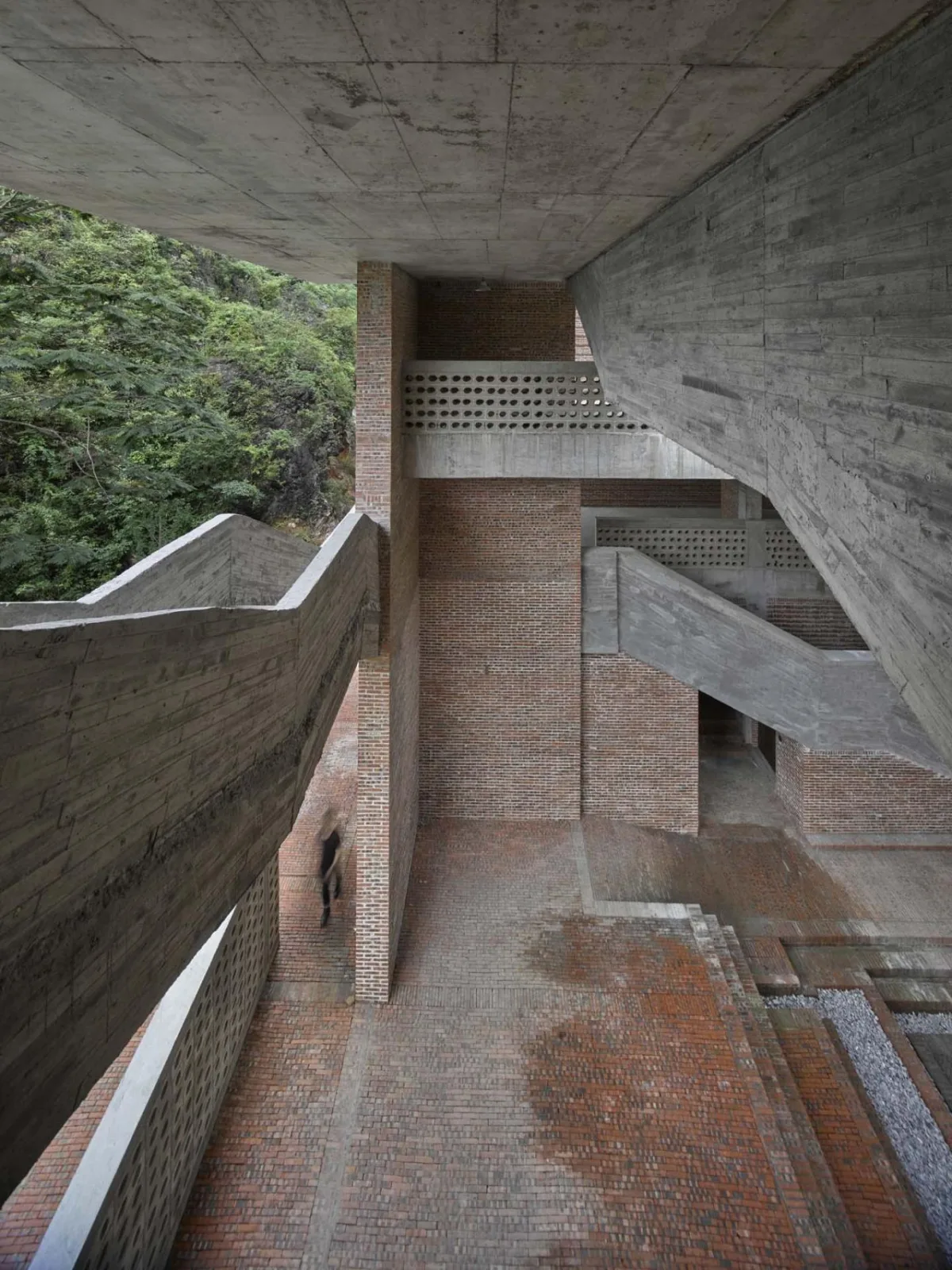
The architectural layout integrates an eaves corridor, atrium, courtyard, and stage, creating a spatial sequence described as “row door courtyard courtyard courtyard hall.” The intention is to build a setting where ritual and everyday life coexist, embodying a “heaven and earth” consciousness.
Eaves and Stairs
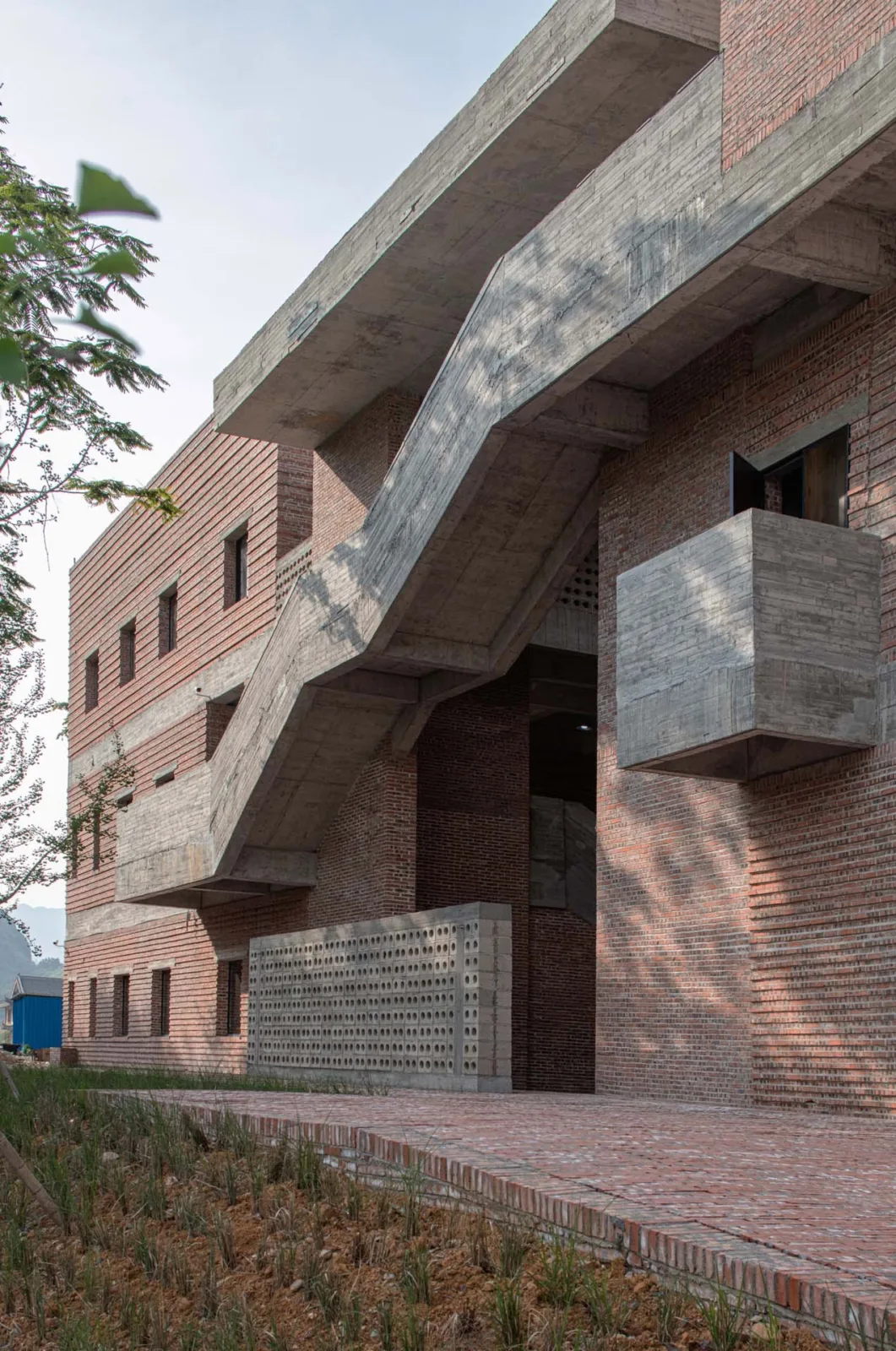
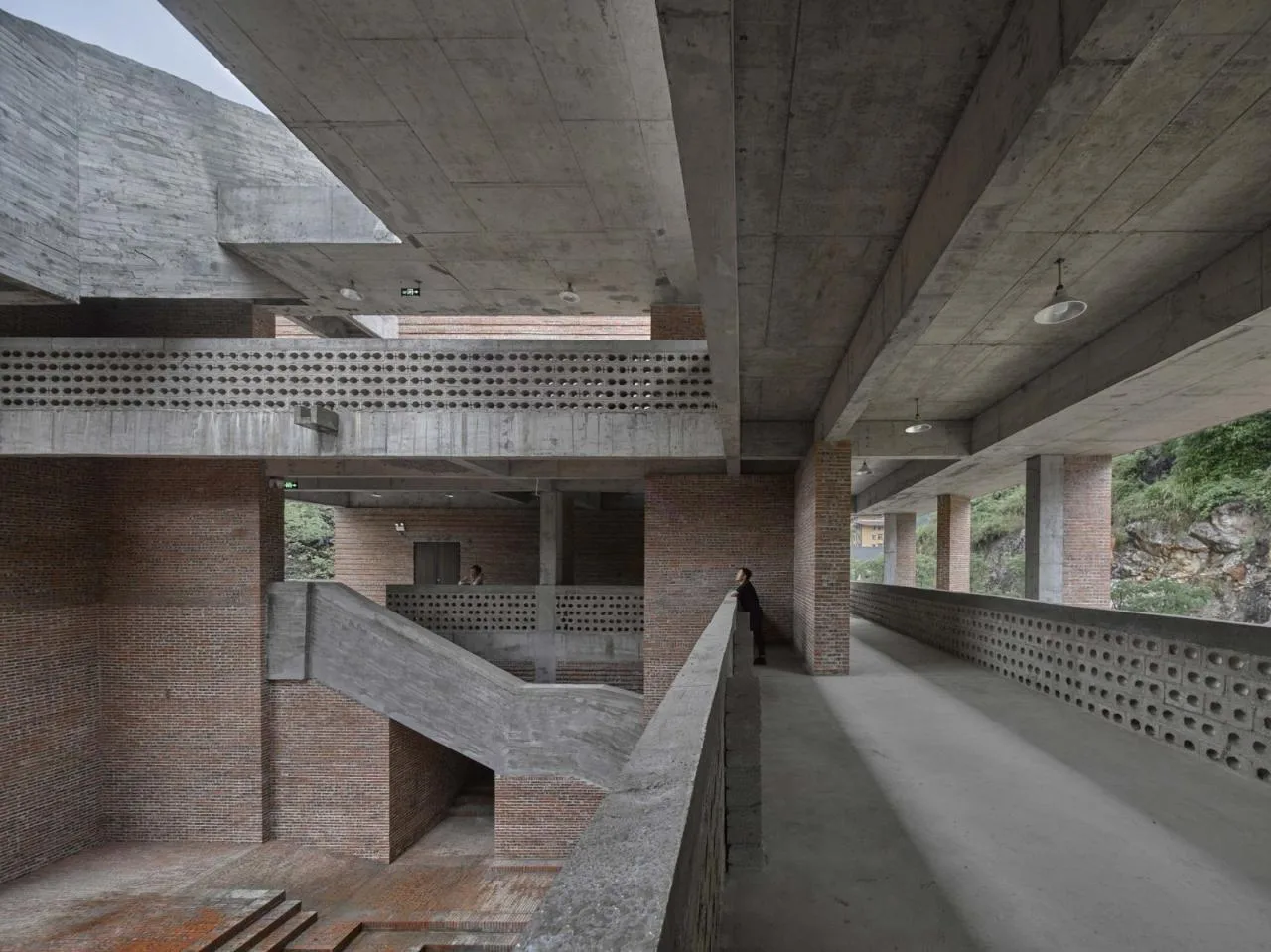
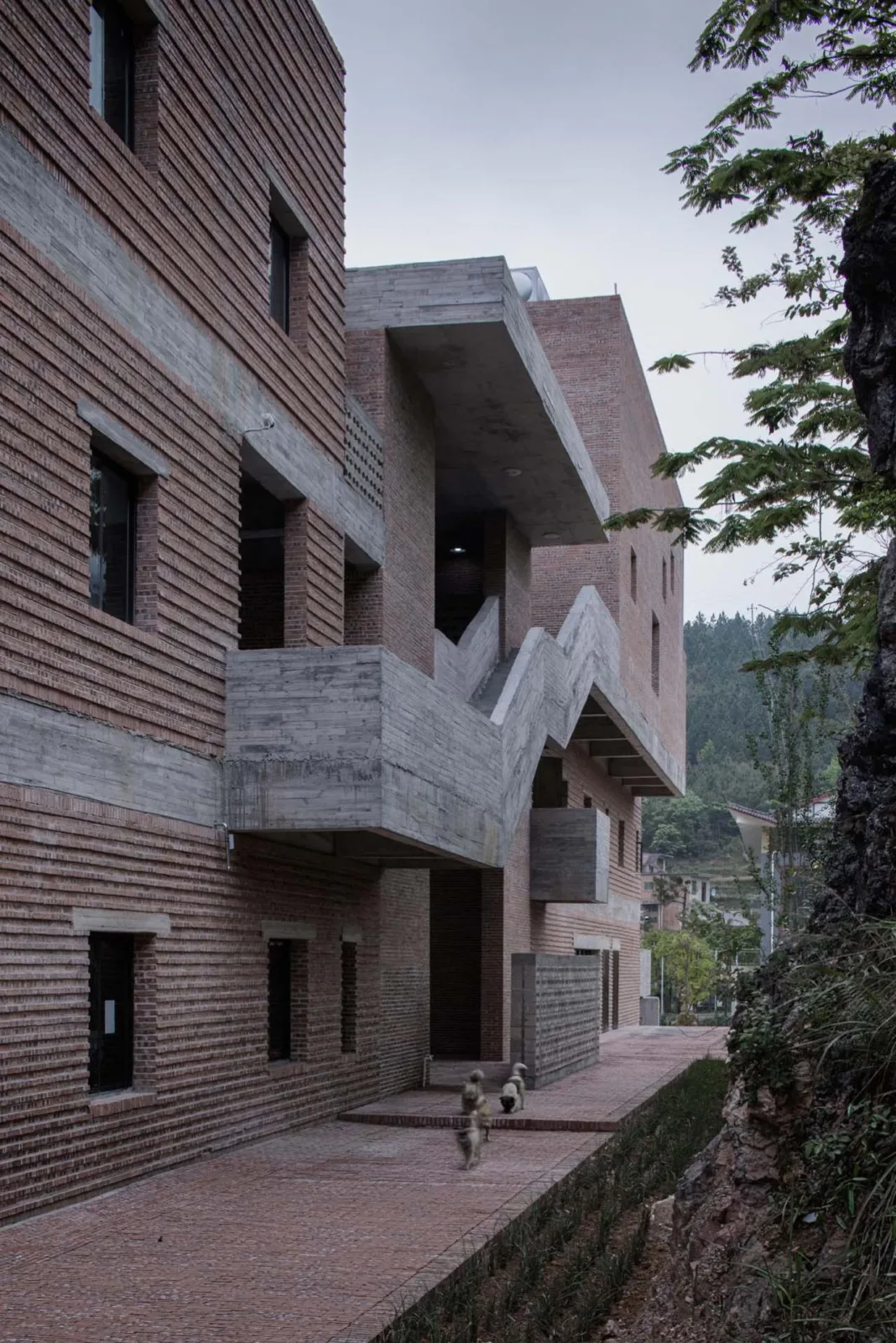
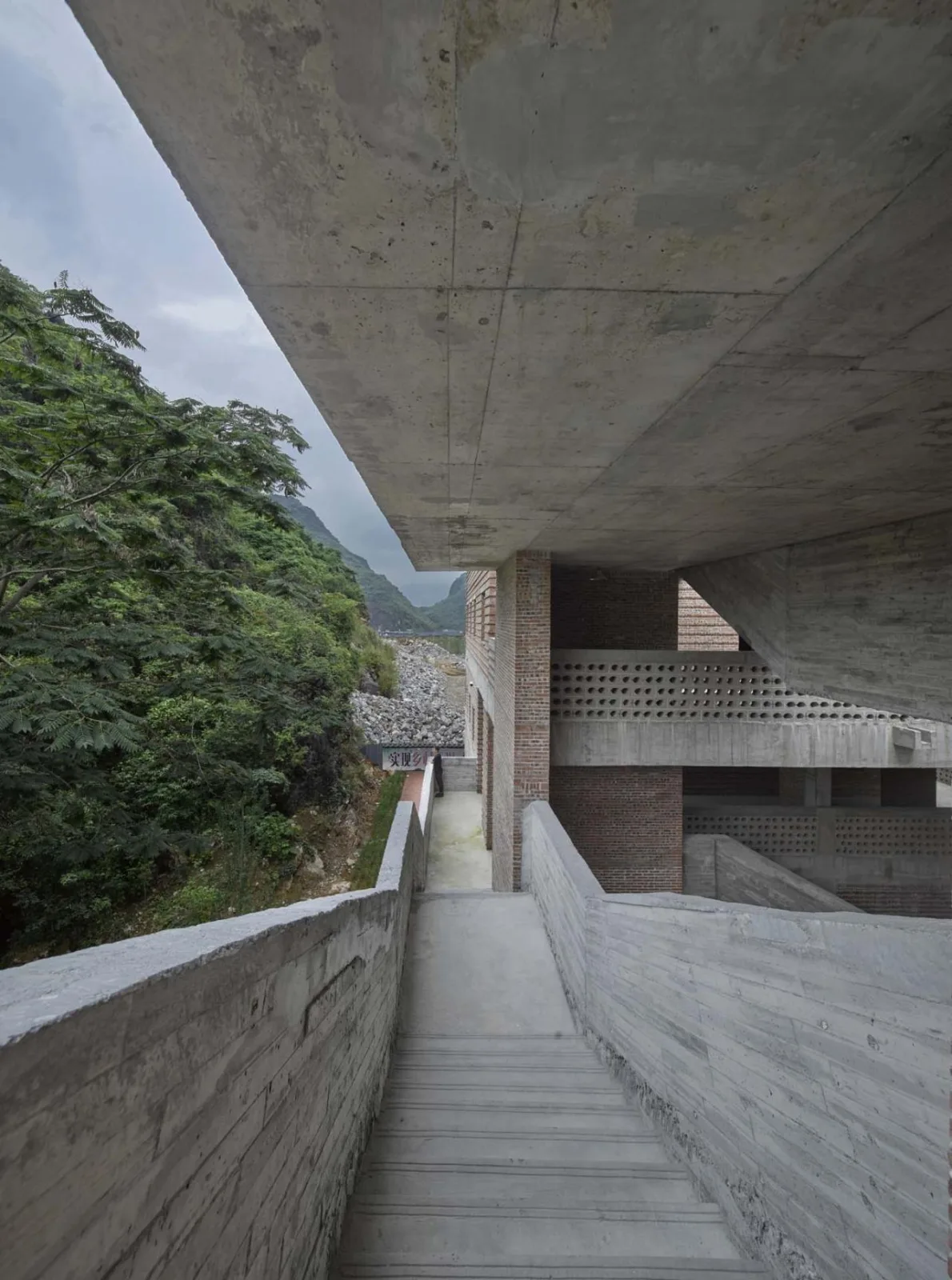
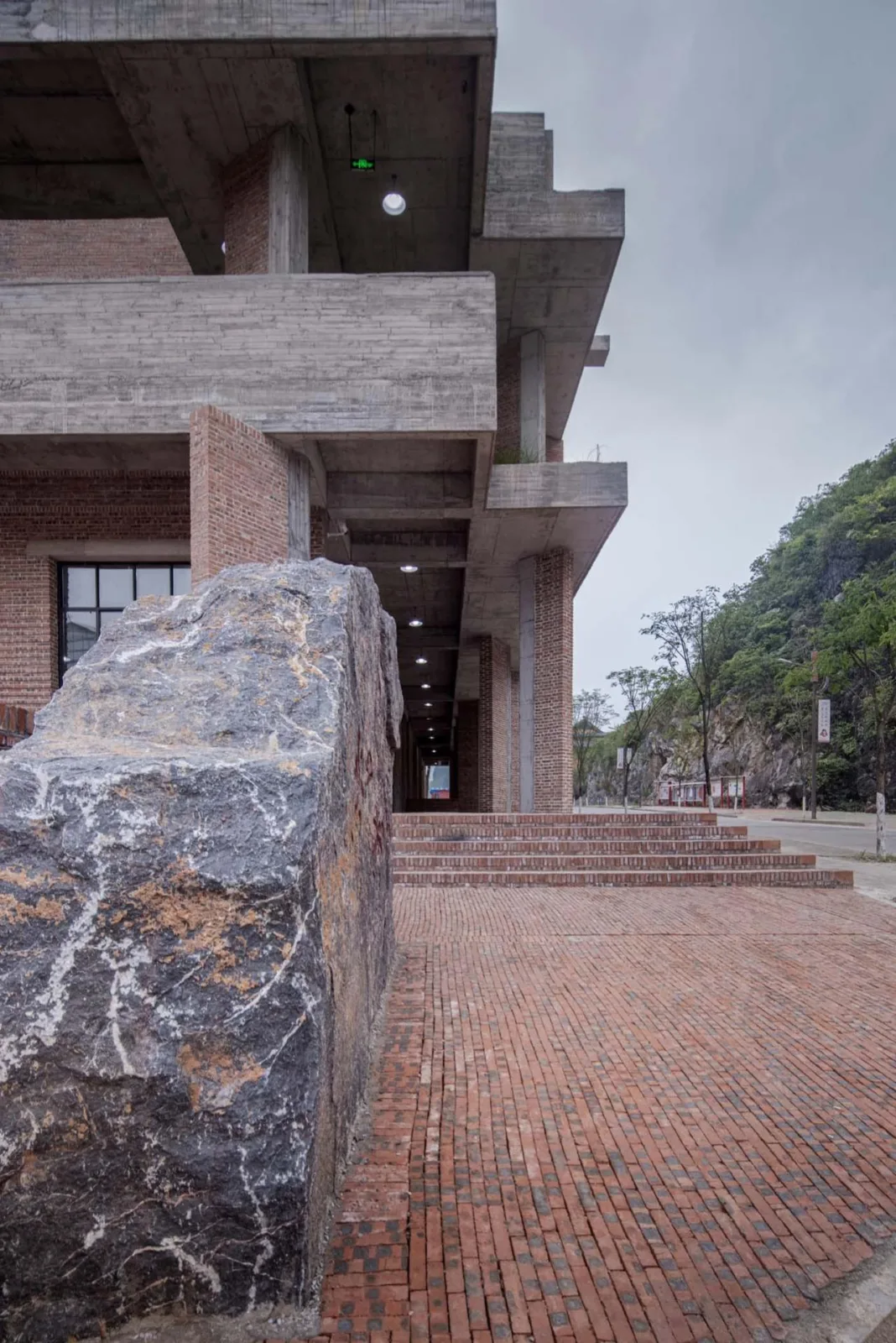
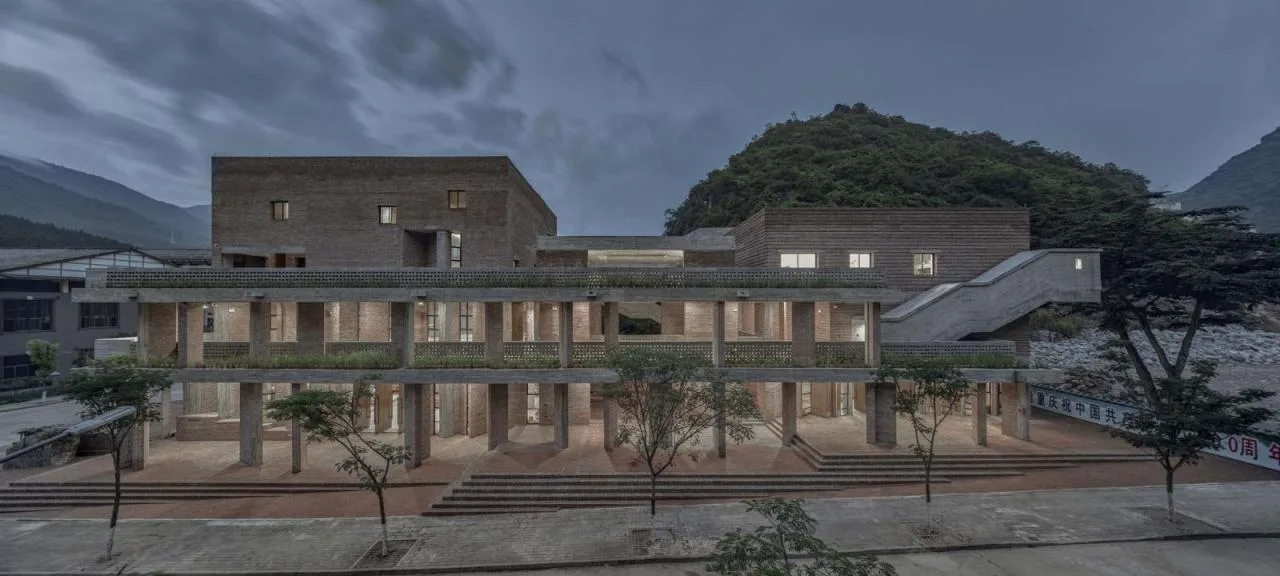
The prominent architectural features of eaves and stairs form a three-dimensional circular path guiding visitors from the exterior to the interior of the building. The eave corridor is well-suited to the local hot and rainy summer climate, providing shade and shelter while enhancing the openness and accessibility of the building.
Meanwhile, the staircase not only facilitates vertical circulation but also acts as a distinctive spatial and graphic element, enriching the architectural language of the space.
Terrace
The building’s flat roof functions as a public sunbathing and activity platform for local villagers, as well as a viewing deck. As the highest point, the roof naturally opens to expansive mountain views and the sky, offering a serene and spacious environment distinct from other areas within the building.
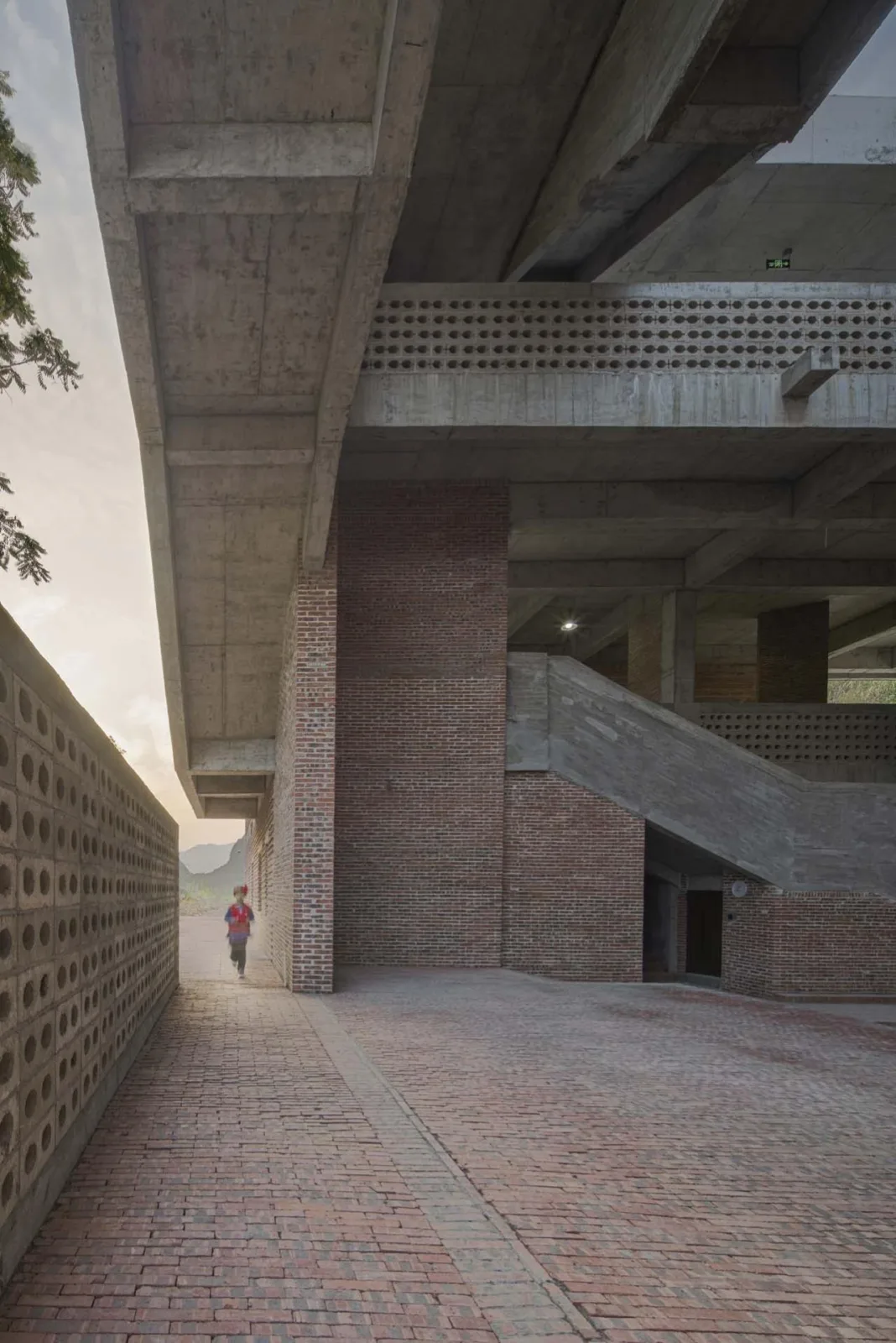
Following completion, the project earned widespread acclaim from both local government officials and villagers. This success is attributed to the straightforward and pure design strategy that harmonizes with the villagers’ self-built homes.
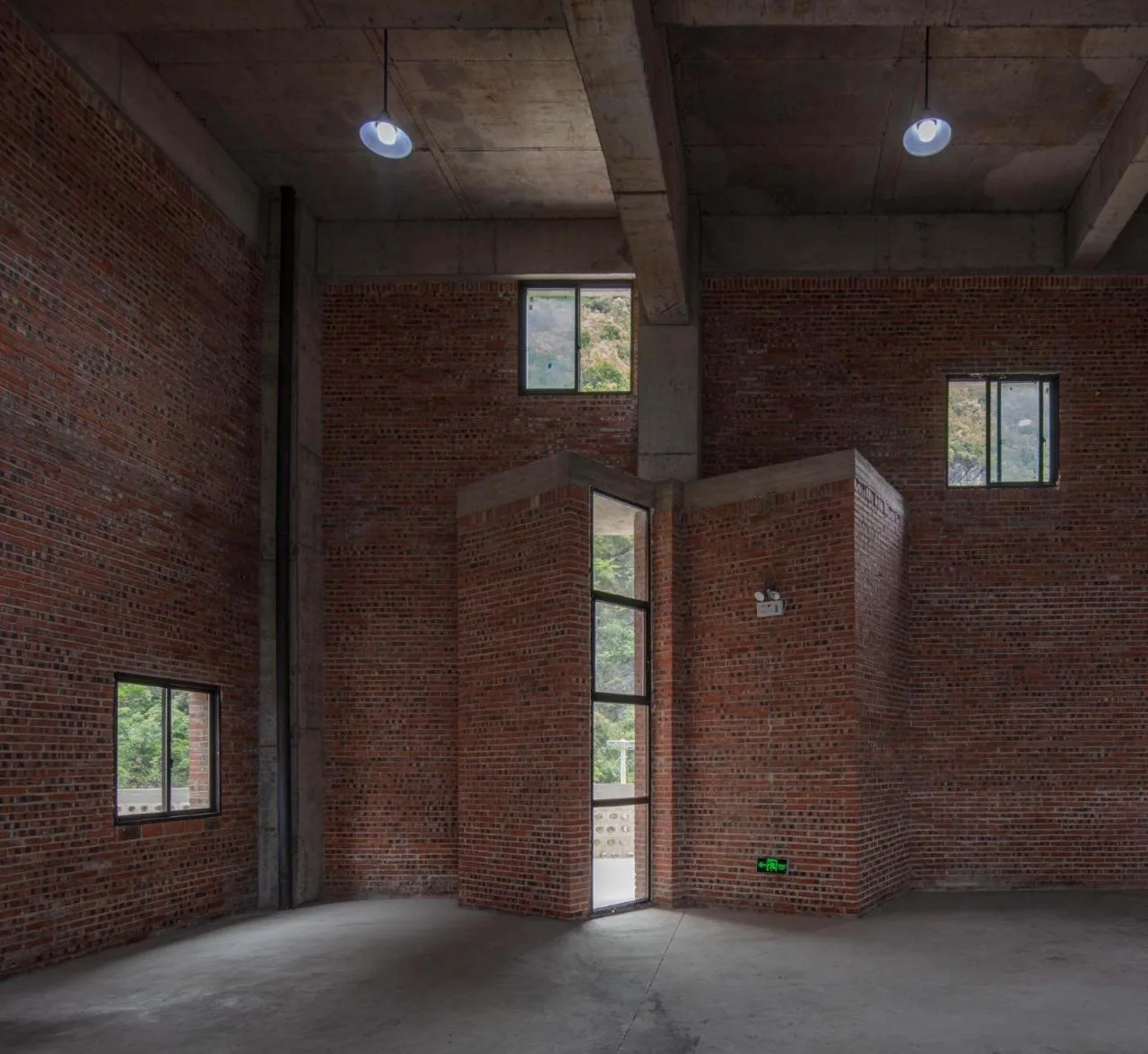
The use of affordable, locally sourced materials such as red bricks, cement bricks, and concrete reflects the familiar construction methods of the area. By integrating authentic elements that distinguish new and old residents, the design fosters a sense of “familiarity” within an otherwise new or unfamiliar environment.
Project Drawings
△ Model Diagram
△ General Layout Plan
△ First Floor Plan
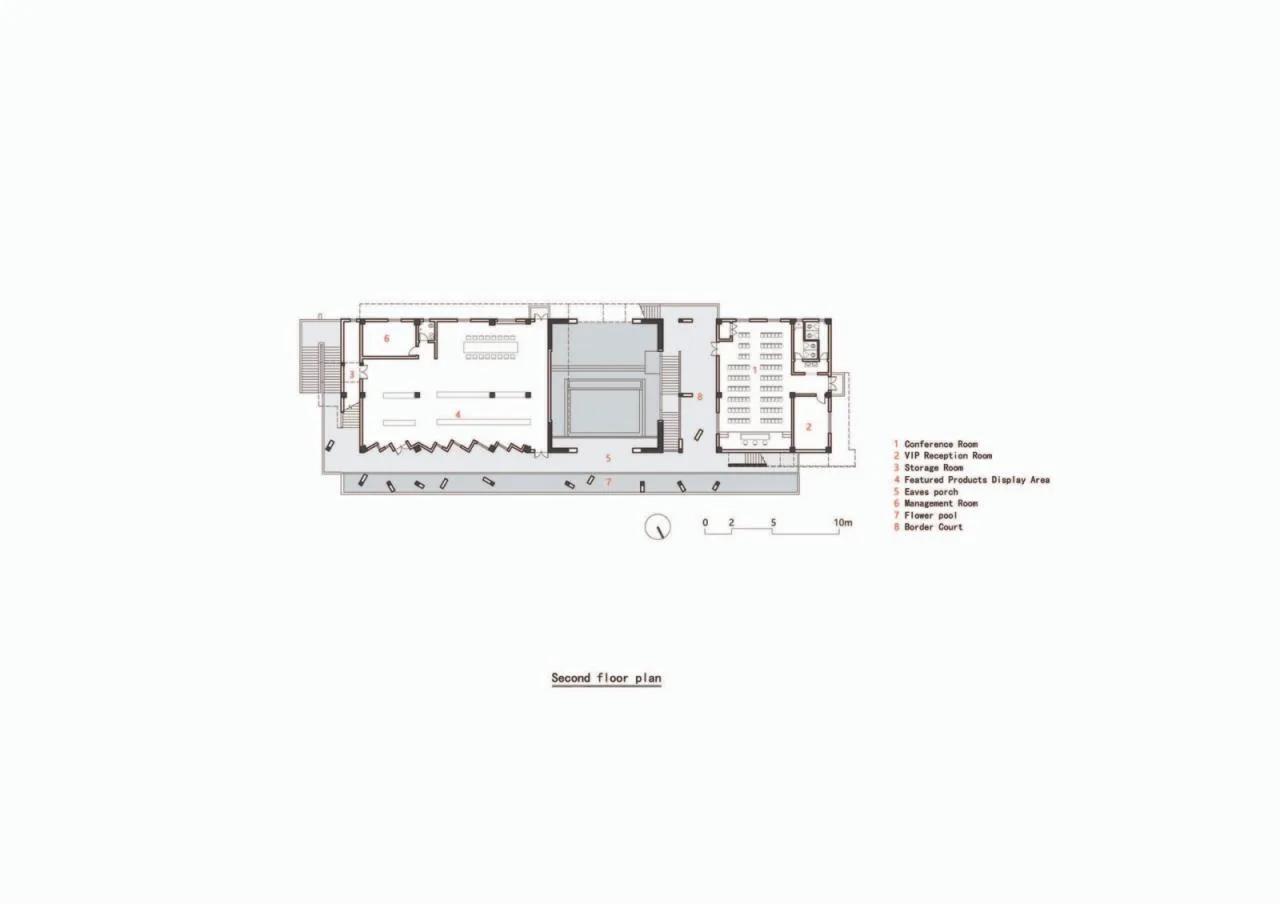
△ Second Floor Plan
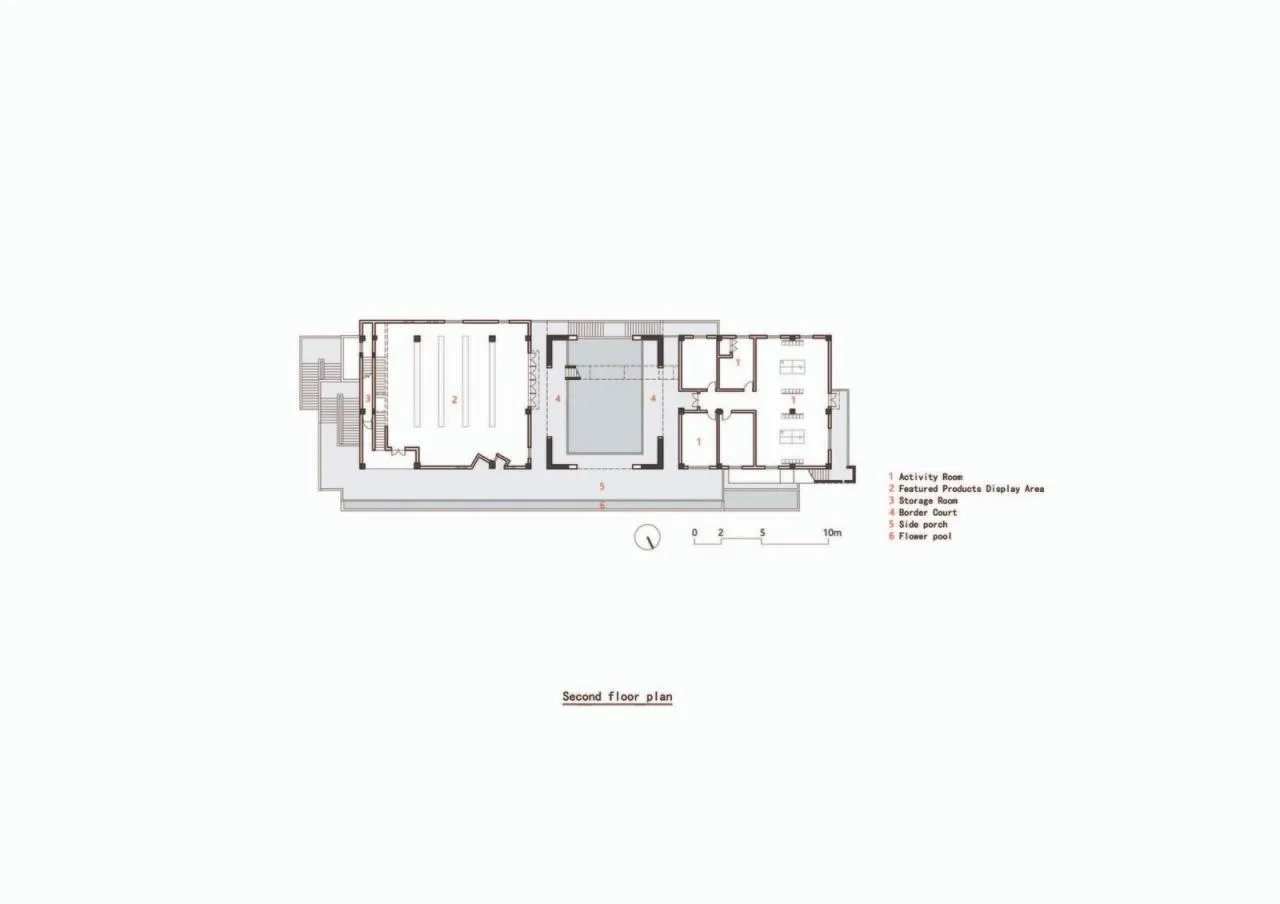
△ Third Floor Plan
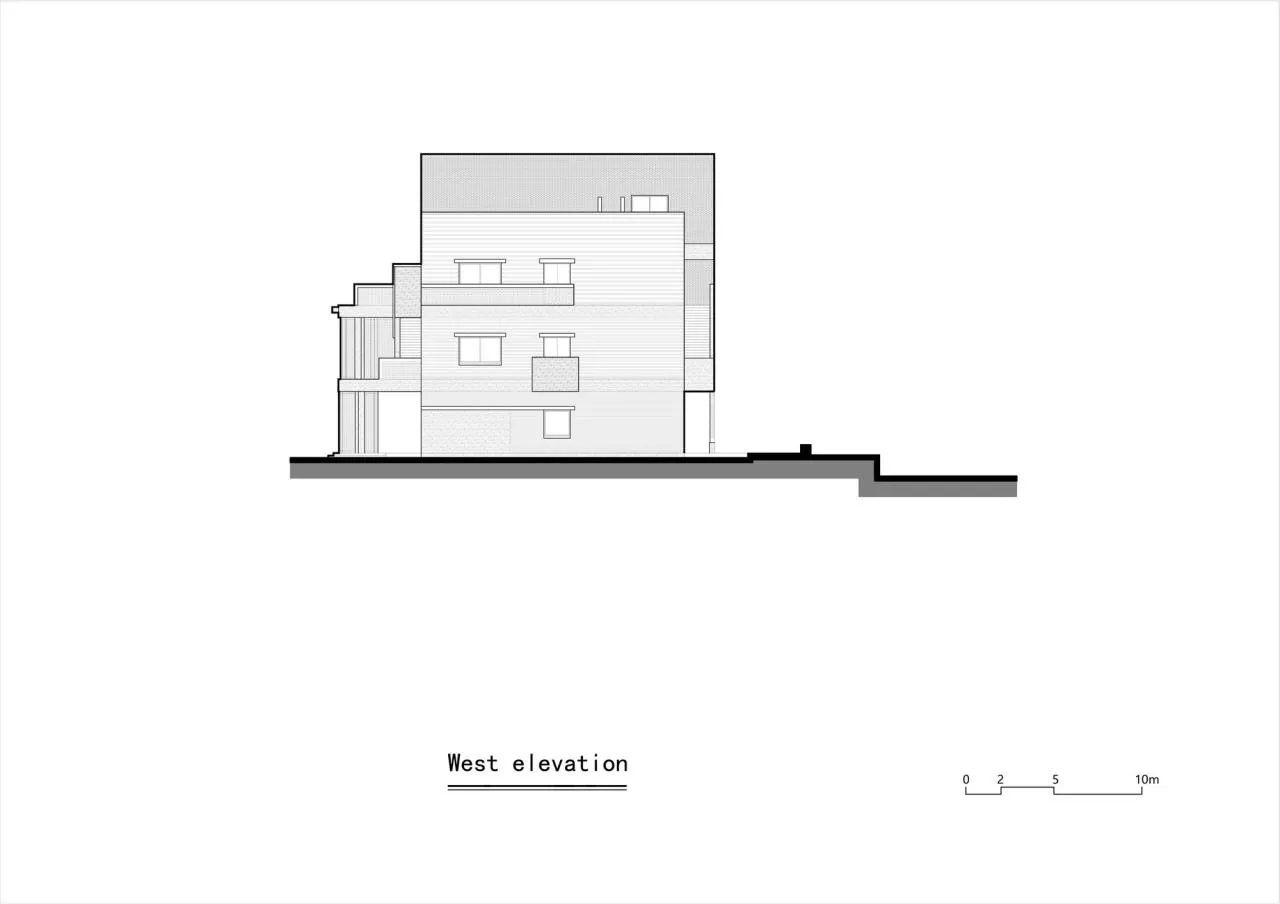
△ Elevation Drawing
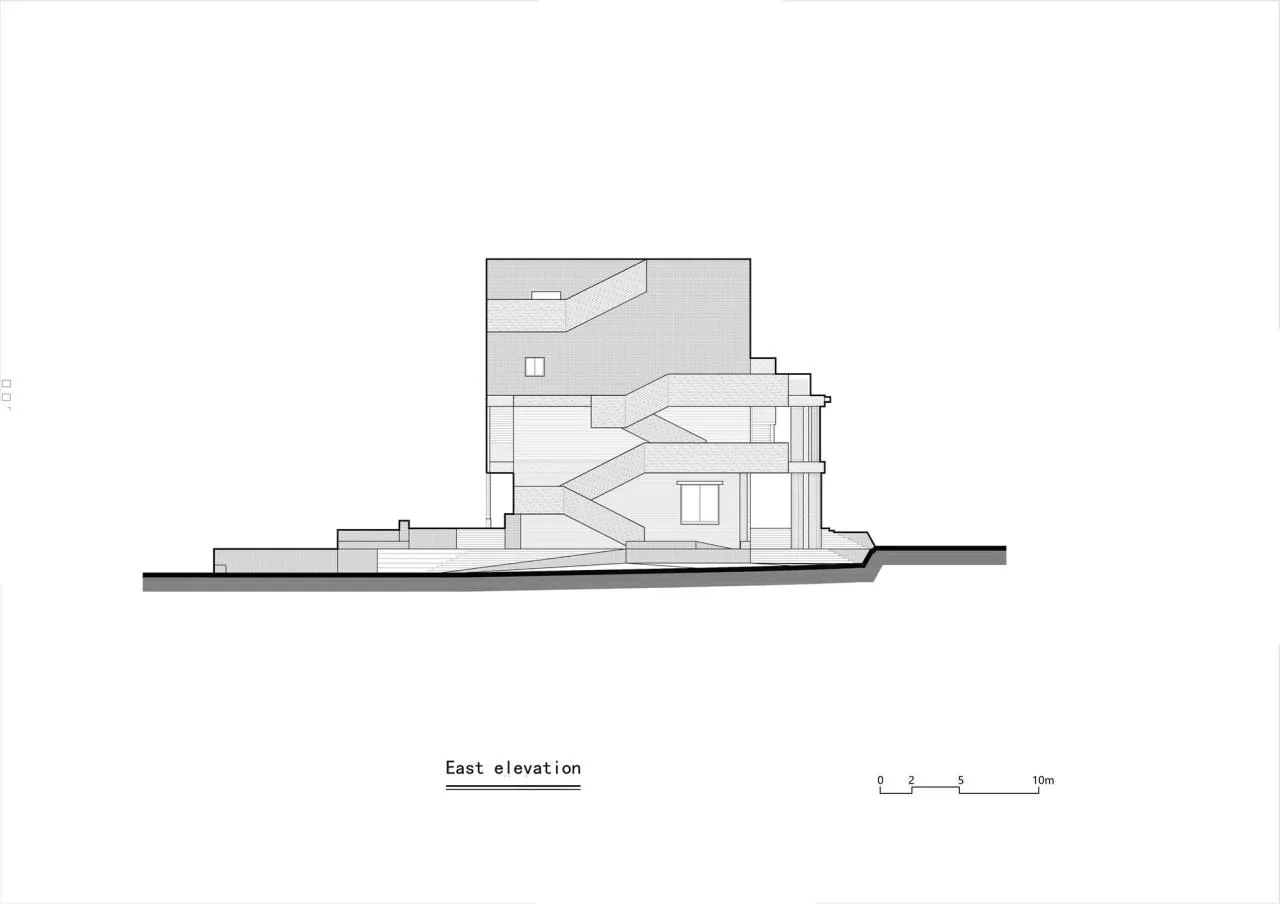
△ Elevation Drawing
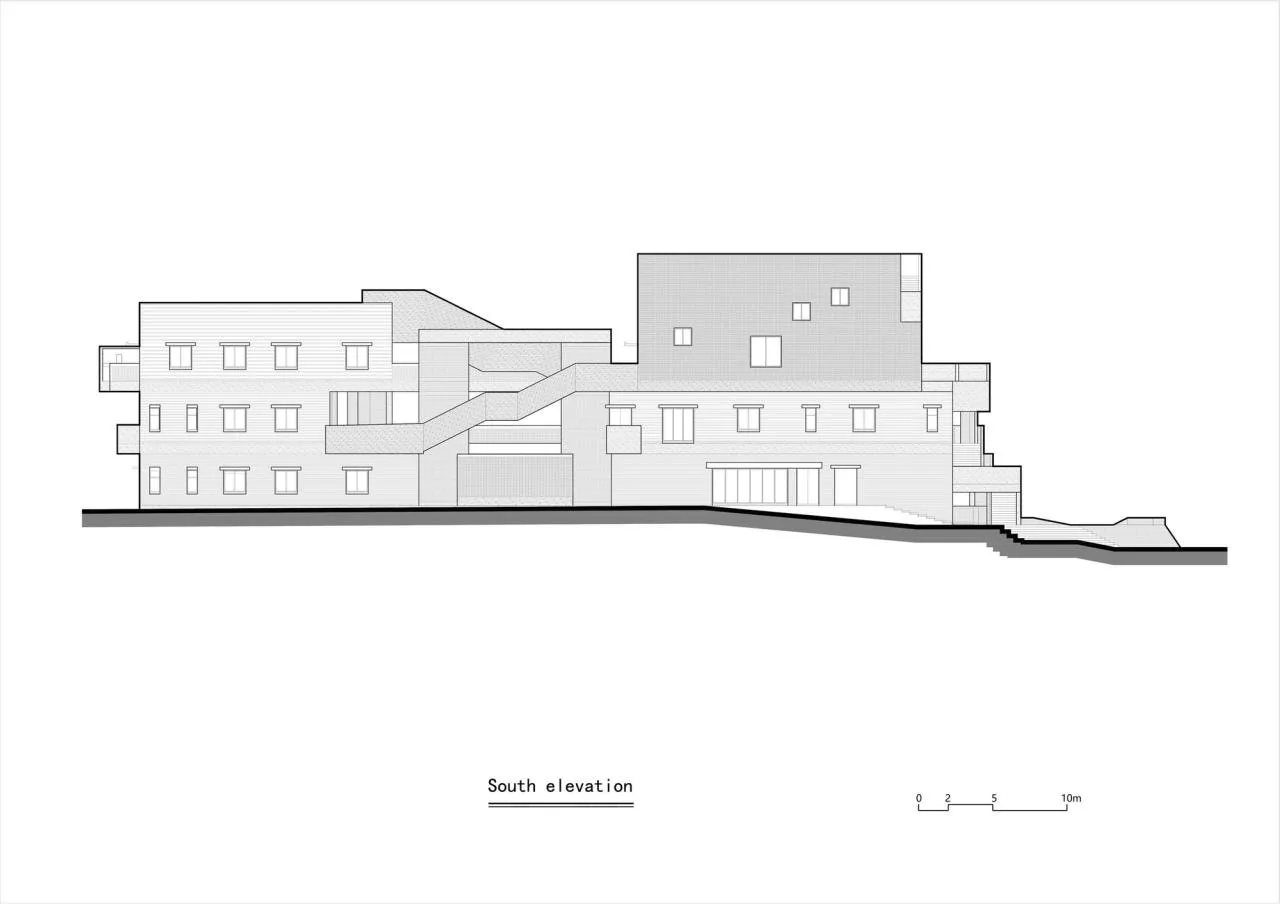
△ Elevation Drawing
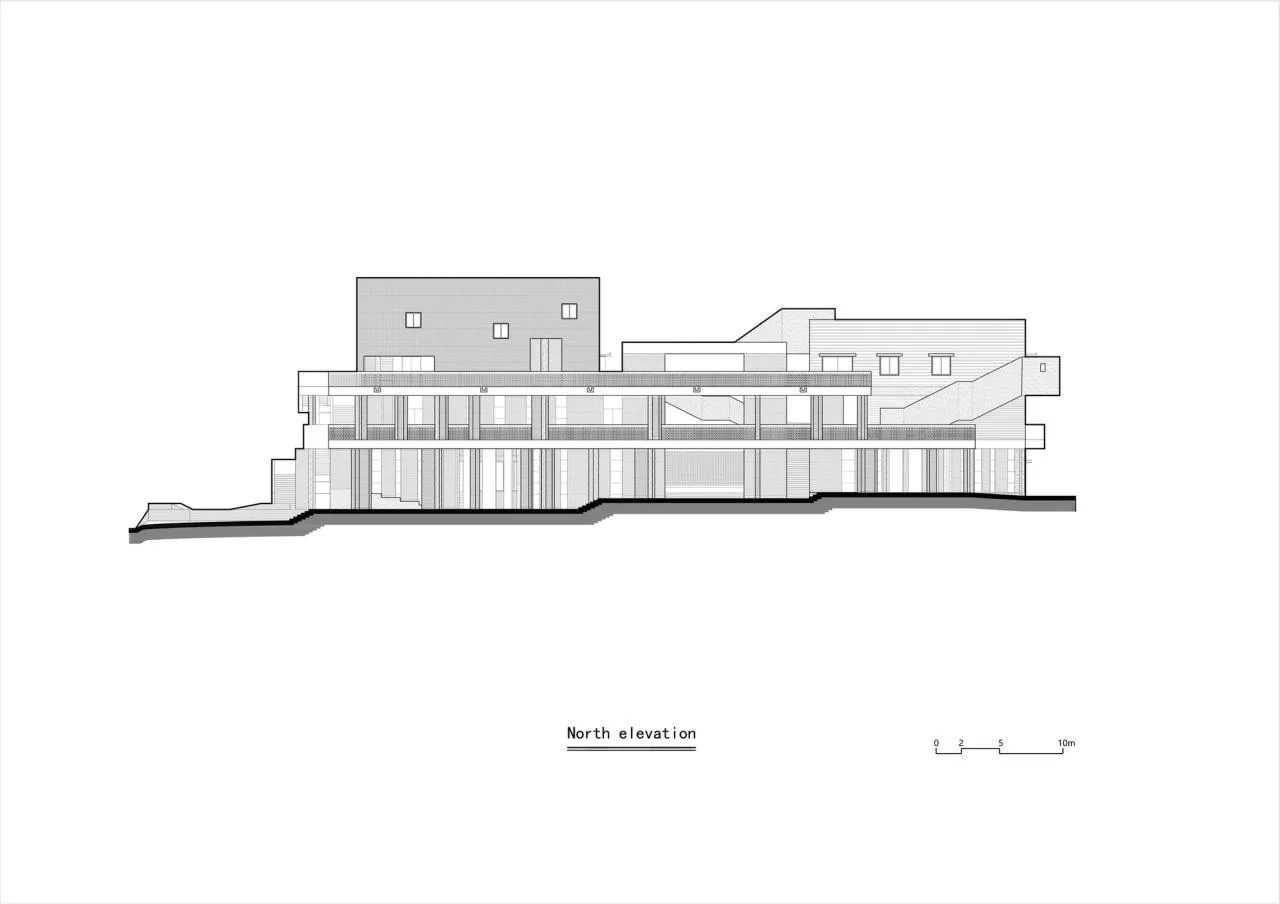
△ Elevation Drawing
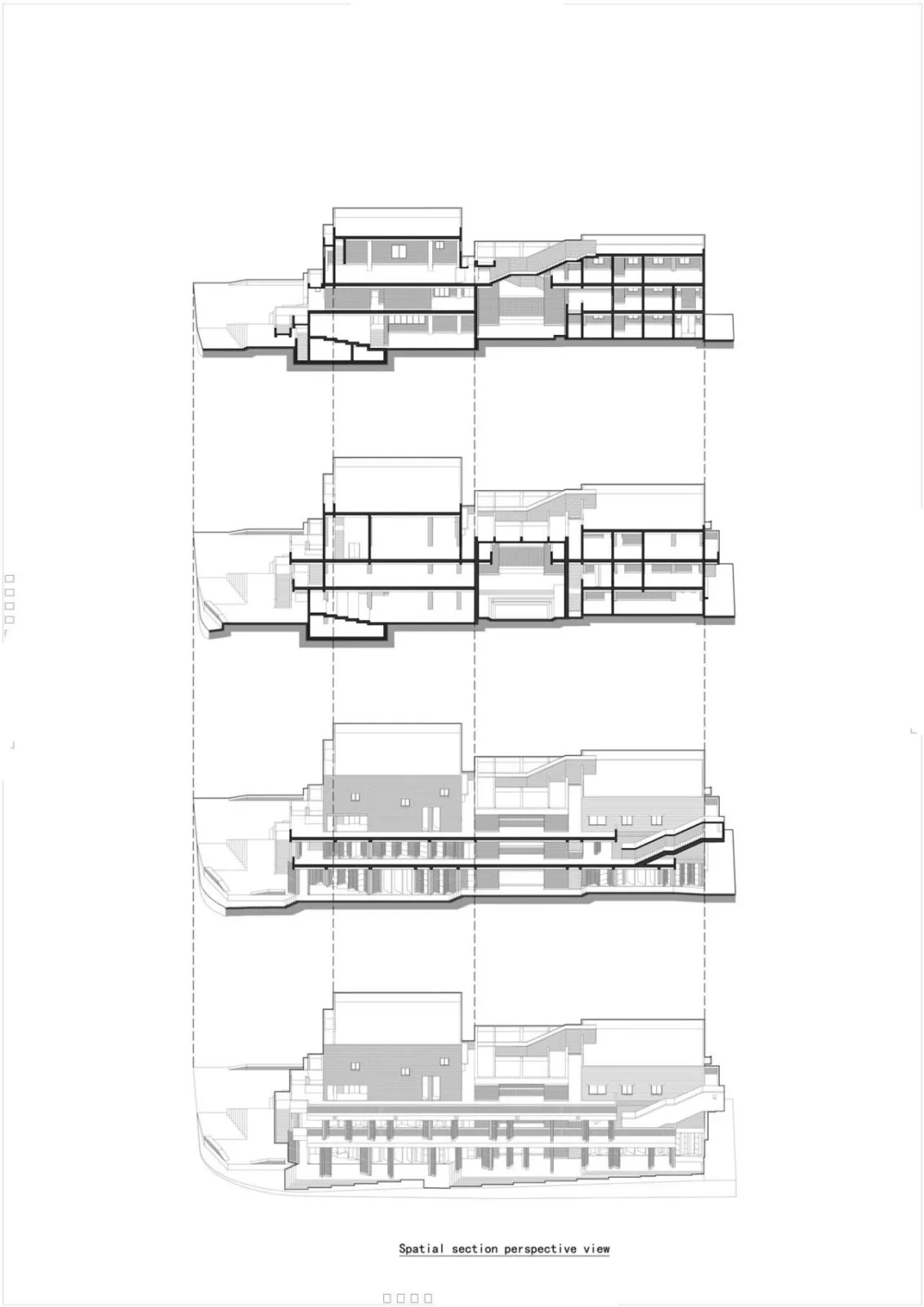
△ Special Section Diagram
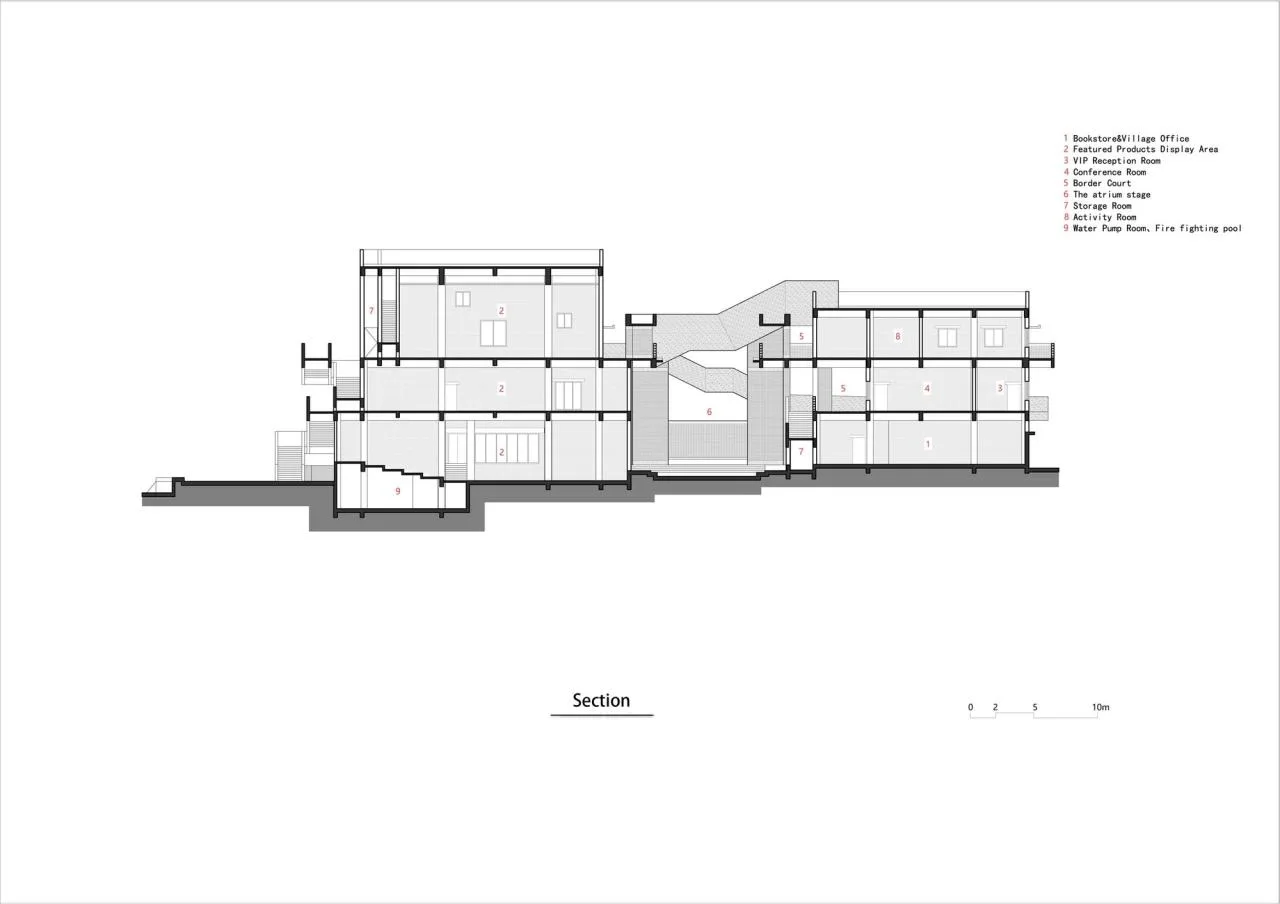
△ Section Diagram
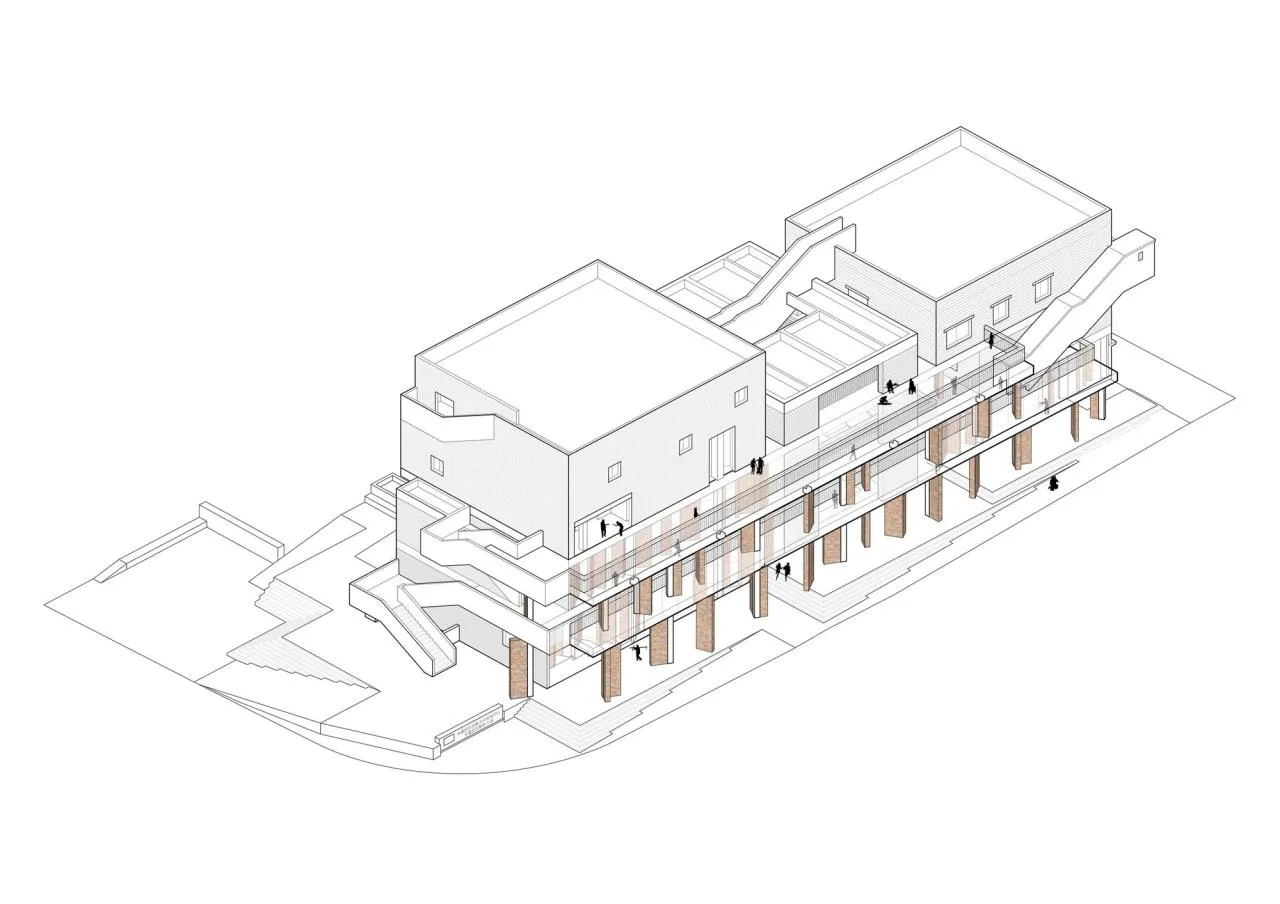
△ Axonometric Diagram
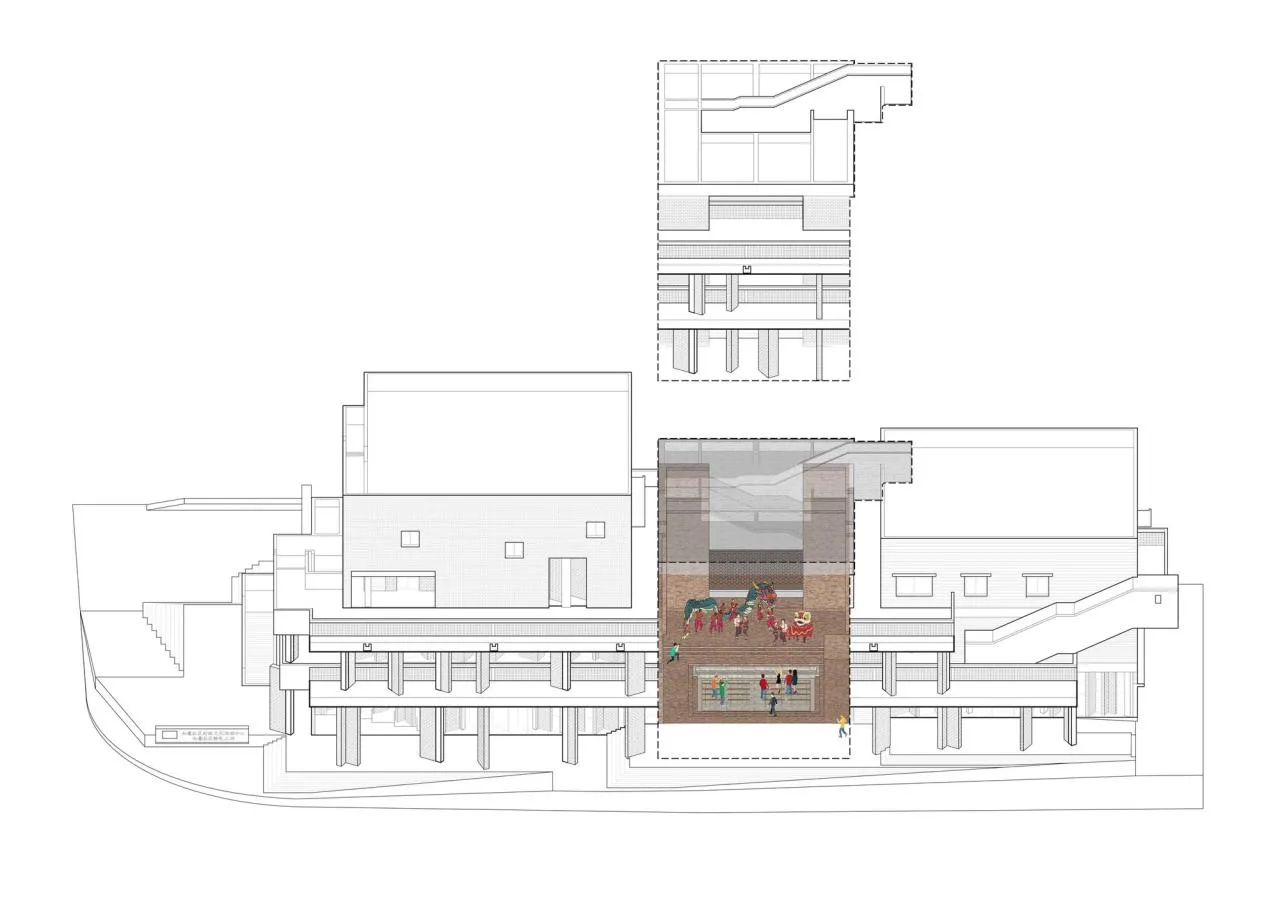
△ Perspective View of Atrium
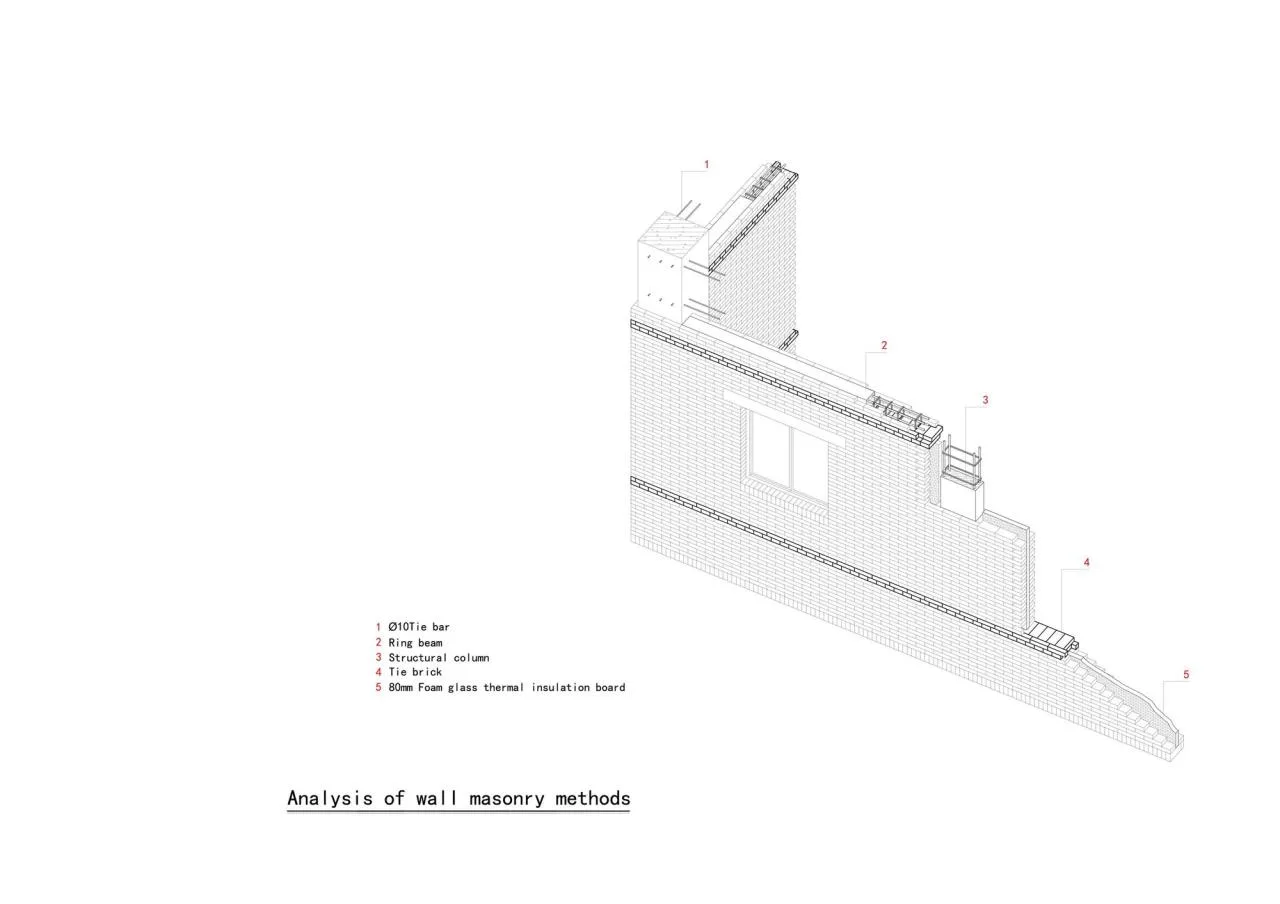
△ Analysis Chart
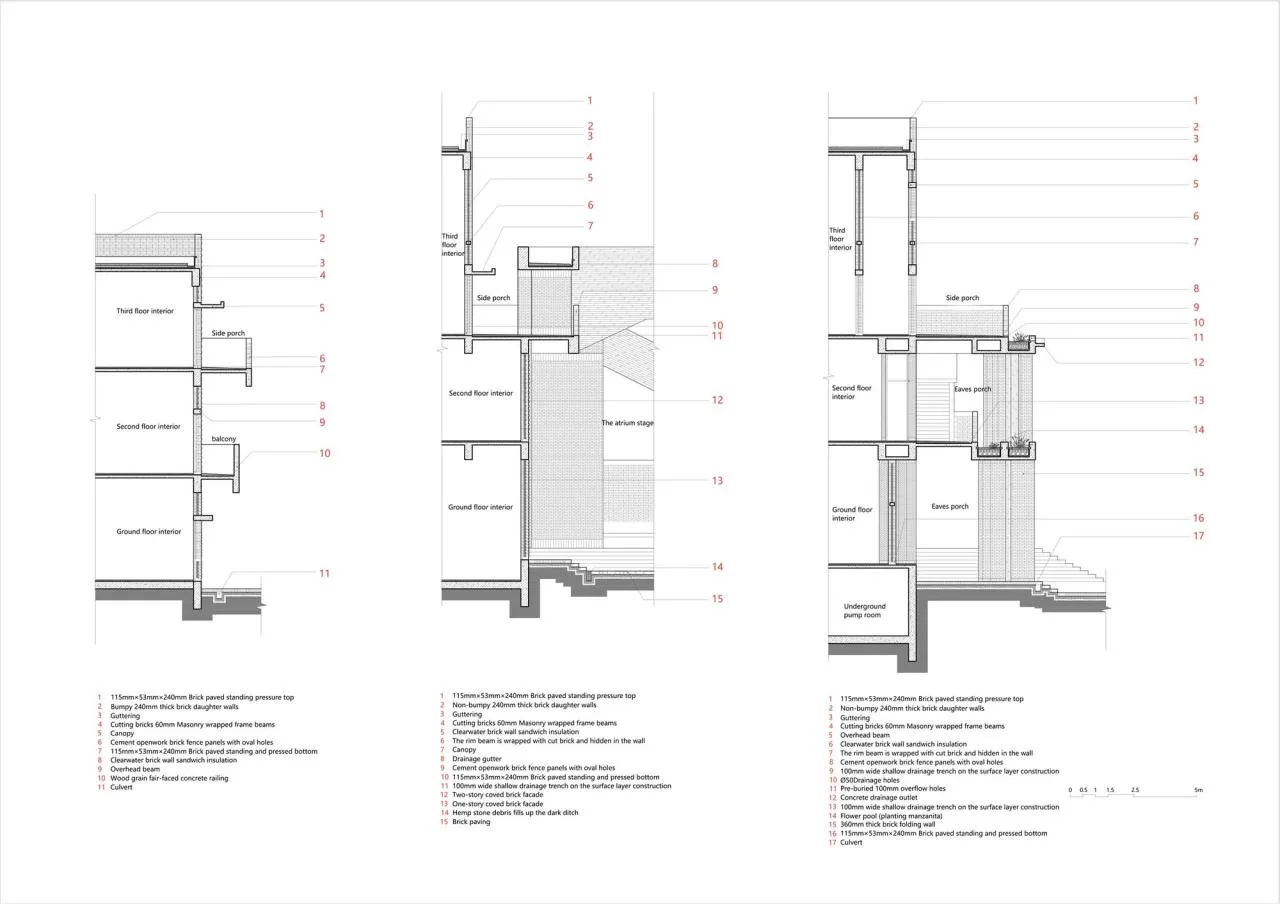
△ Node Detail Diagram
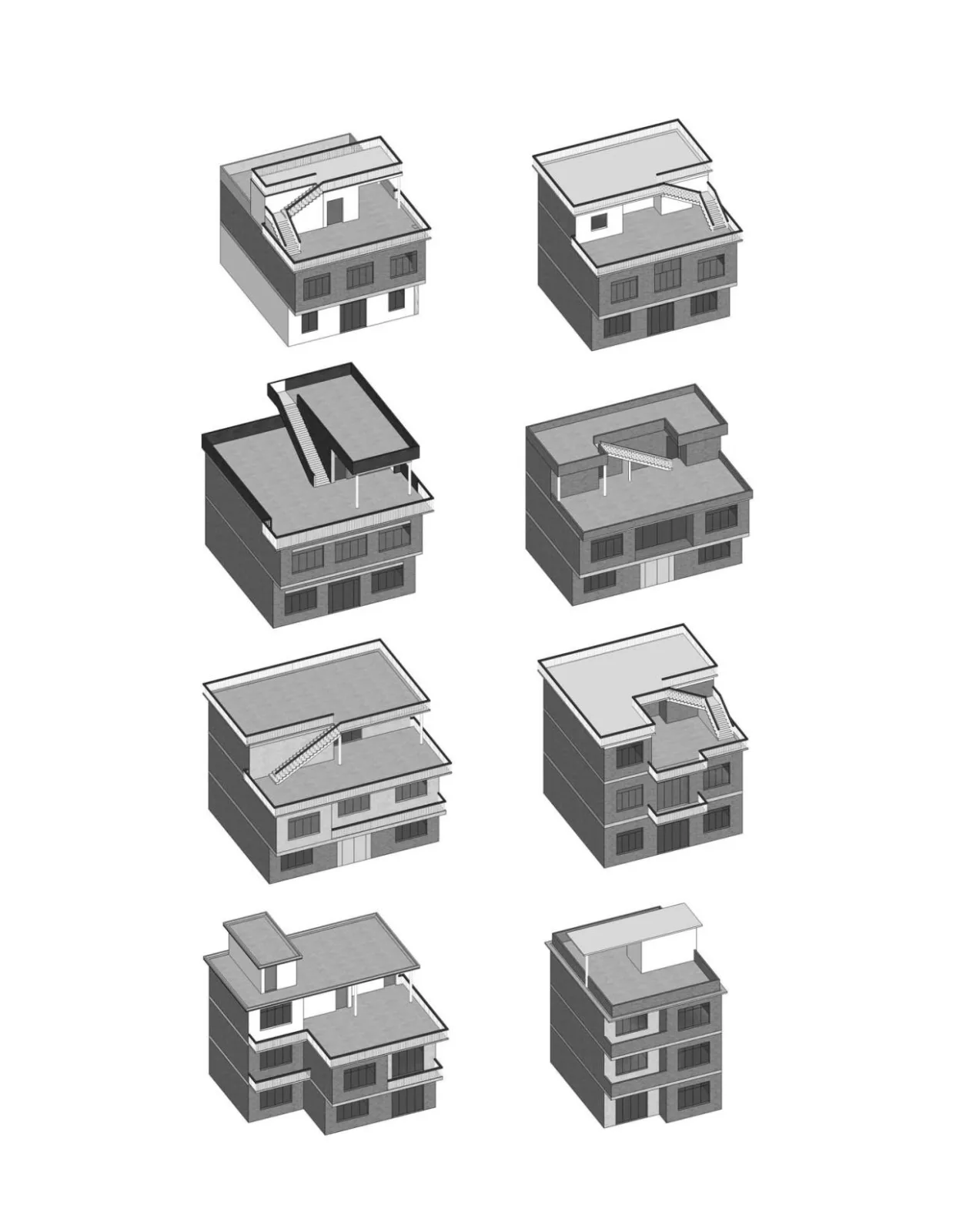
△ Analysis Chart
Project Information
Architectural Design: Local Studio
Area: 2,093 m²
Project Year: 2021
Photographers: Xu Haohao, Sheng Ouyang, Juncheng Meng, Biao Hu
Principal Architects: Wei Chunyu, Ouyang Sheng, Ren Rong
Design Team: Cao Guang, Meng Juncheng, Zhu Sainan, Chen Xing, Tan Qian, Xie Zifei, Hou Shuaidong, Tu Xin
Collaboration Team: Zhu Jianhua, Deng Yuan, Liu Jian, Sun Mulan, Zhang Ning
Owner: Shuikou Town People’s Government, Jianghua Yao Autonomous County
Partner: Hunan University Design and Research Institute Co., Ltd
Location: Jianghua Yao Autonomous County, China
















Must log in before commenting!
Sign Up