
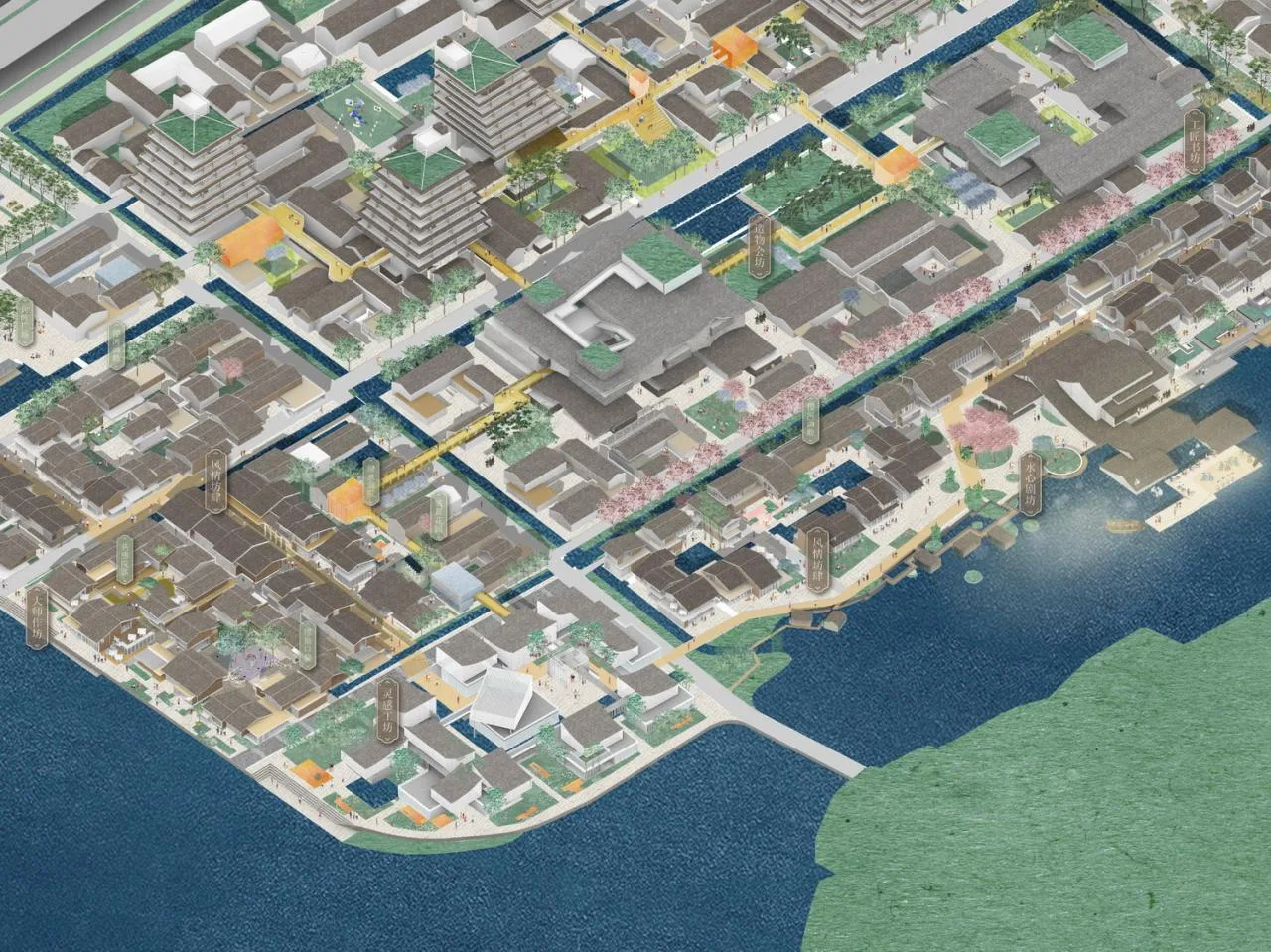
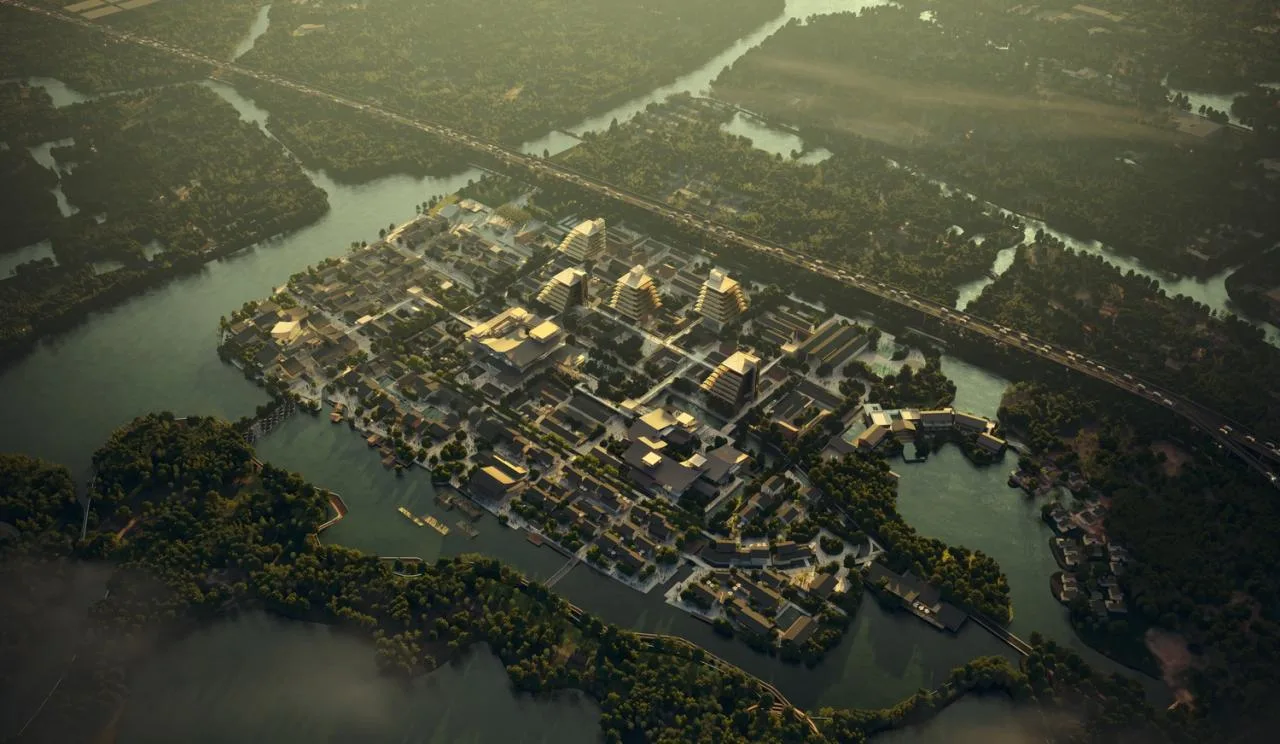
The Suzhou Qingtai Sino-Japanese Industrial Design Village International Competition focuses on developing Qingtai Village in Suzhou into a Sino-Japanese design industry complex centered on design. Covering over 500 acres, including water surfaces, this project integrates commerce, tourism, culture, and production. It features permanent venues for international design awards, master studios, designer apartments, as well as commercial facilities such as Sino-Japanese commercial streets and specialty hotels.
01 Qingtai Creation Environment
Empowering Creative Scenarios Through Space as a Medium
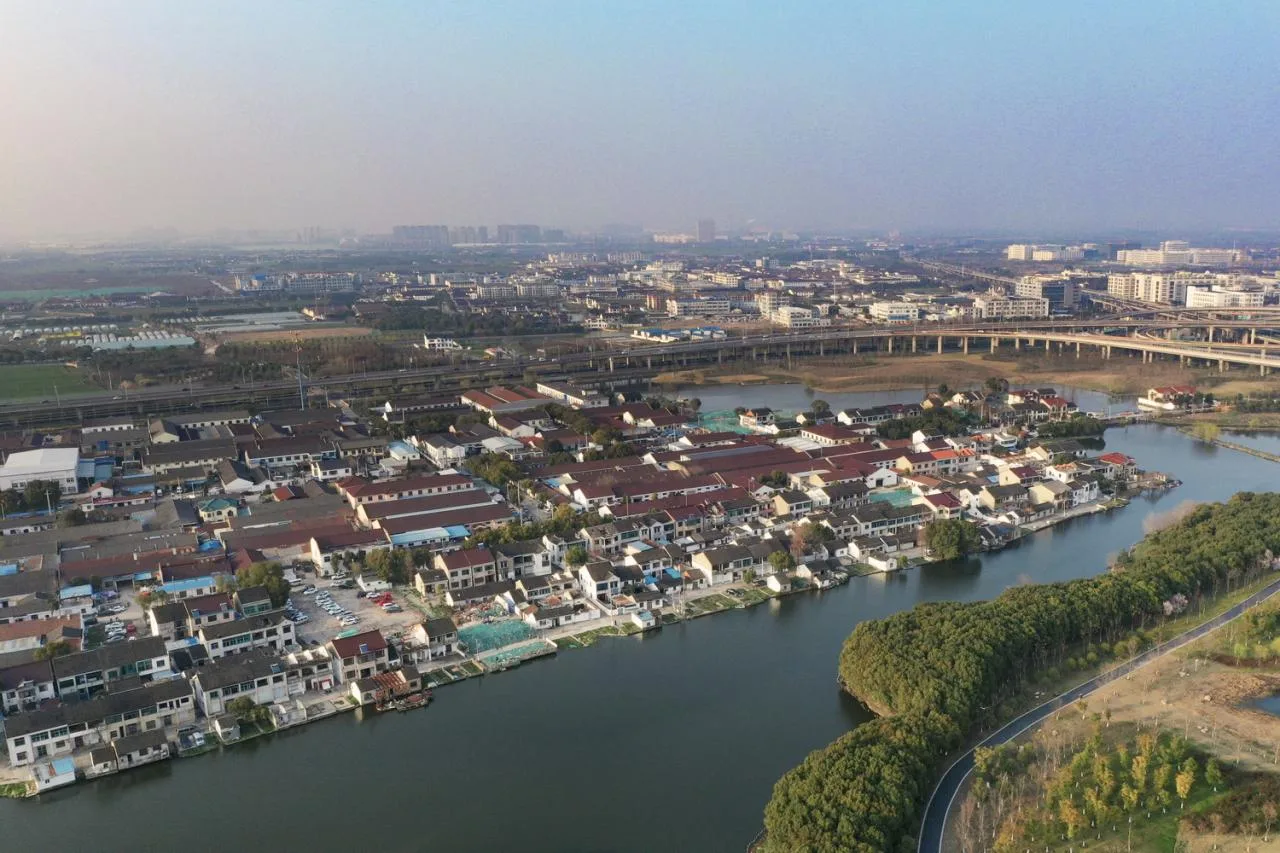
Located in the southern part of Xiangcheng City, Suzhou, Qingtai Village lies near the vibrant ancient city while being embraced by nature. Since the Qing Dynasty, the area has developed aquaculture, evolving from fishing villages into industrial villages surrounded by natural wetlands through agricultural cooperation and industrial transformation. This blending of tranquil water towns and industrial production creates a unique, yet simple, mixed environment—factories and villages intertwined, fragmented spaces, and a fusion of daily life and manufacturing scenes.
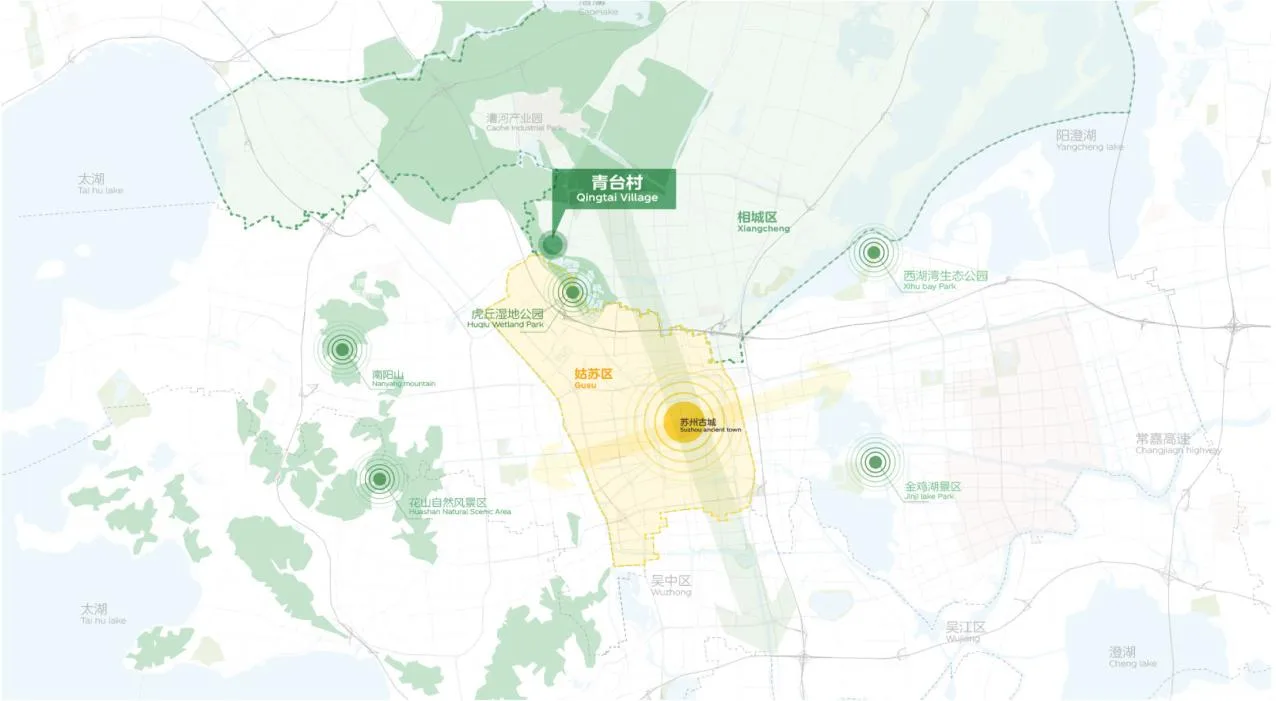
△ Location Map
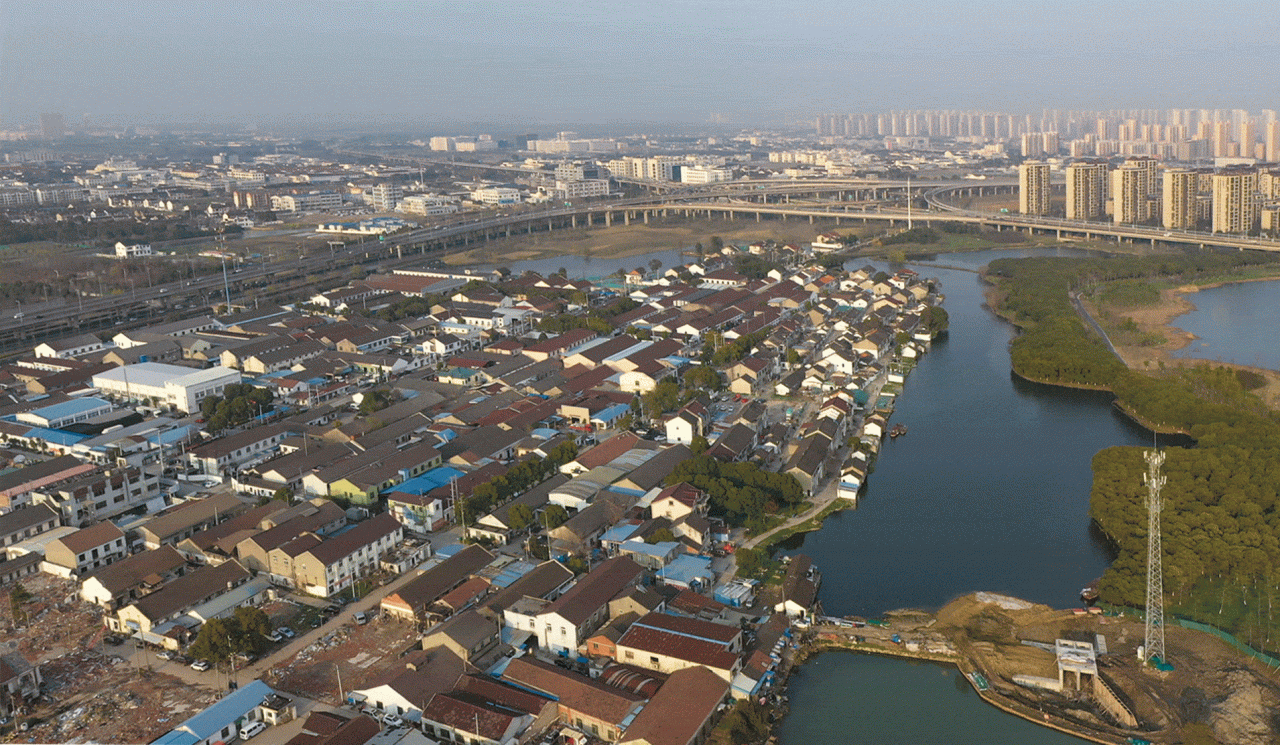
△ Current State of Qingtai Village
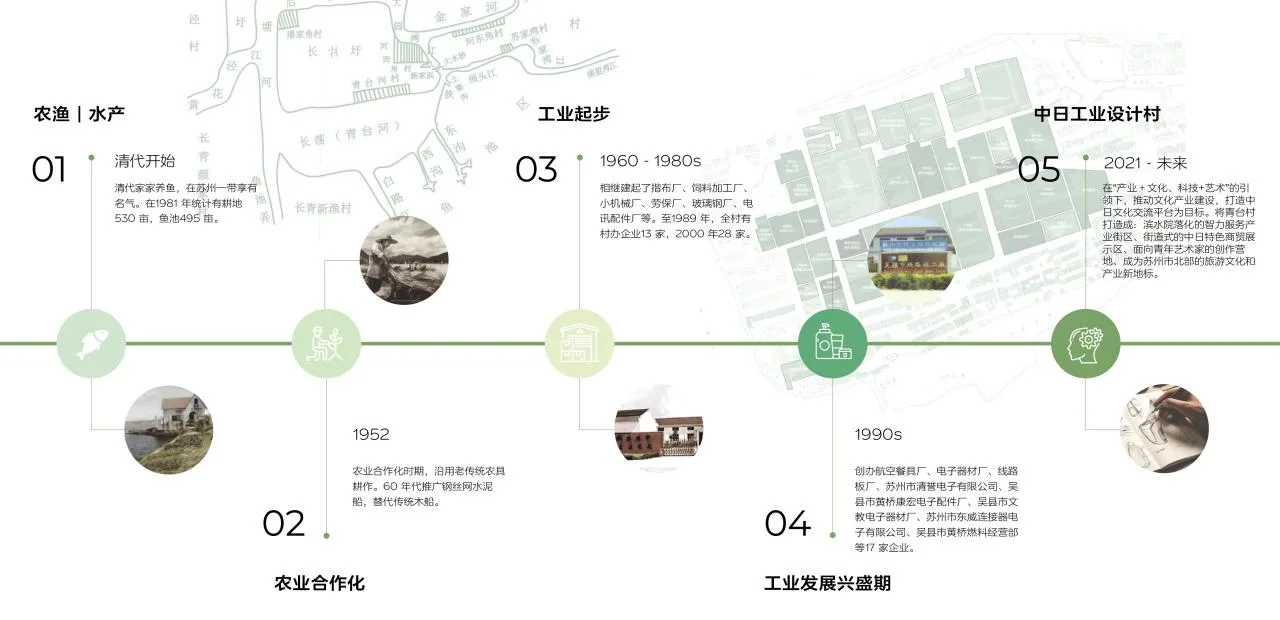
From Fishing Village to Industrial Design Hub
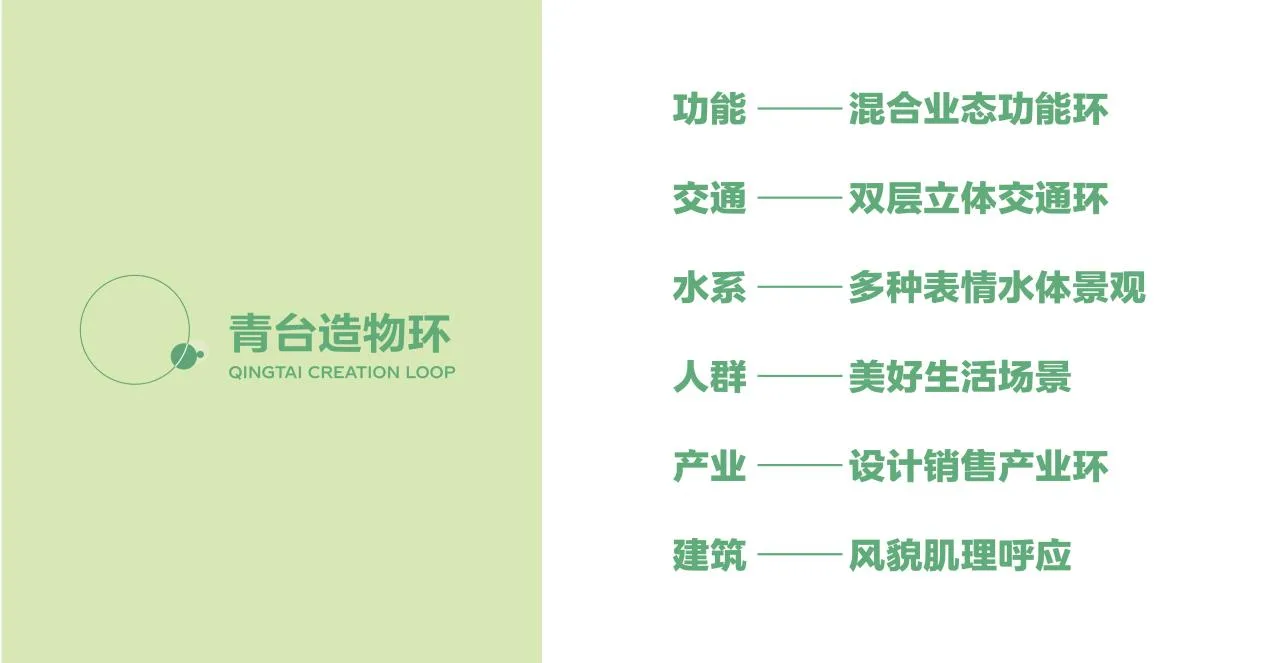
Line+, in collaboration with MLA+, introduces the concept of a “creation loop” in their design plan. This concept integrates industrial and spatial flows into a closed loop. The idea of a “ring” is a primary response to complex design challenges and remains a guiding philosophy throughout the project.
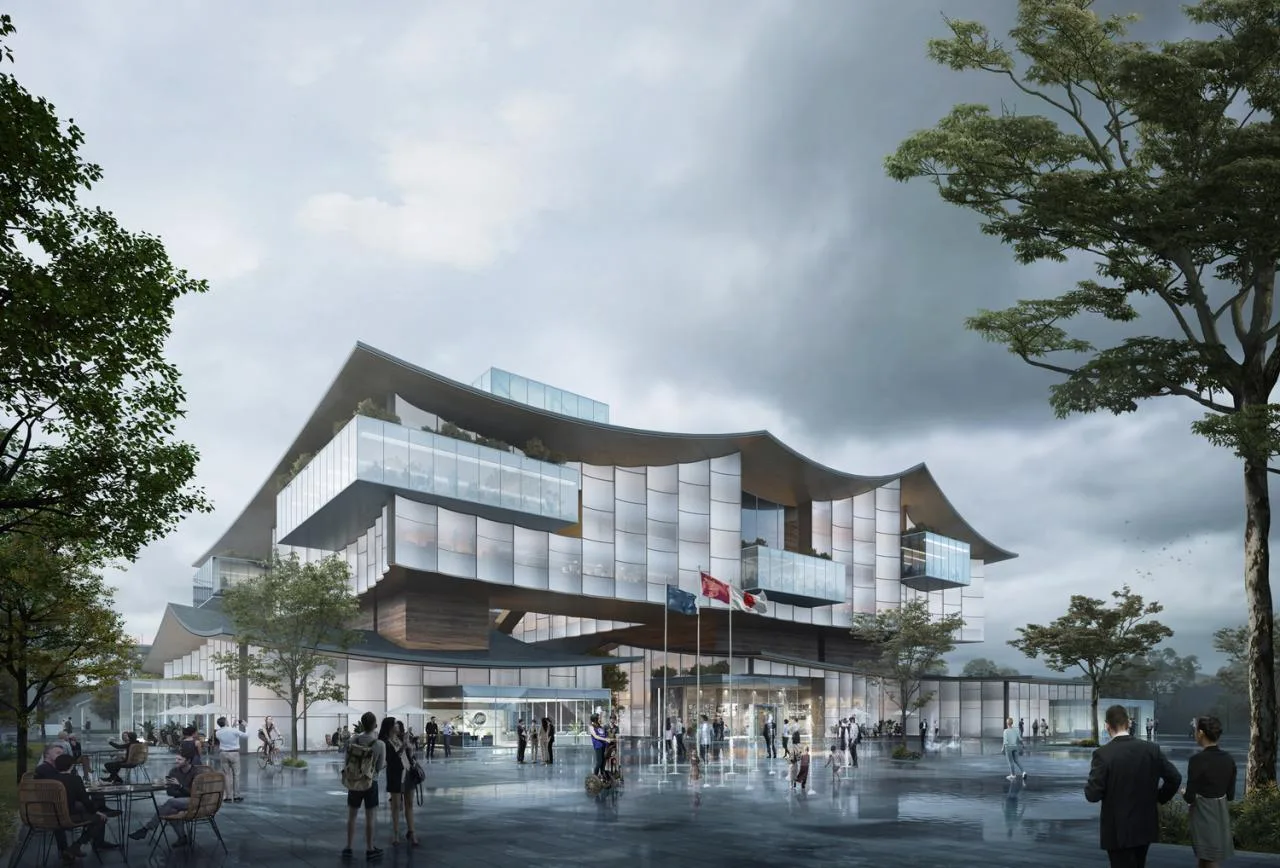
△ Creation Workshop: Permanent Site of the International Design Award
The “Creating Environment” is structured around three key content areas: an efficient and intensive functional environment, a clear and accessible transportation environment, and an integrated production and sales industrial environment. These are supported by four empowerment strategies: preserving local architectural textures, enhancing water landscape expressions, fostering multi-group settlement scenes, and offering diverse experiential landscapes.
Surrounded by water on all sides, the industrial village’s existing architectural texture includes a large factory area at the site’s center, extending along intersecting streets. Traditional family-run factories are clustered in units of 3 to 5 buildings, arranged either in rows or enclosed groups to form independent factory units.
△ Current Distribution of Base Factories
In redesigning the industrial village, select features such as the small residential buildings along the southern river, the large-span factory structures, the spatial layout of the intersecting streets, and the foundational ecological landscape are preserved. Updates to site texture, spatial structure, business functions, and ecological landscapes are balanced with the preservation and continuation of the original urban context.
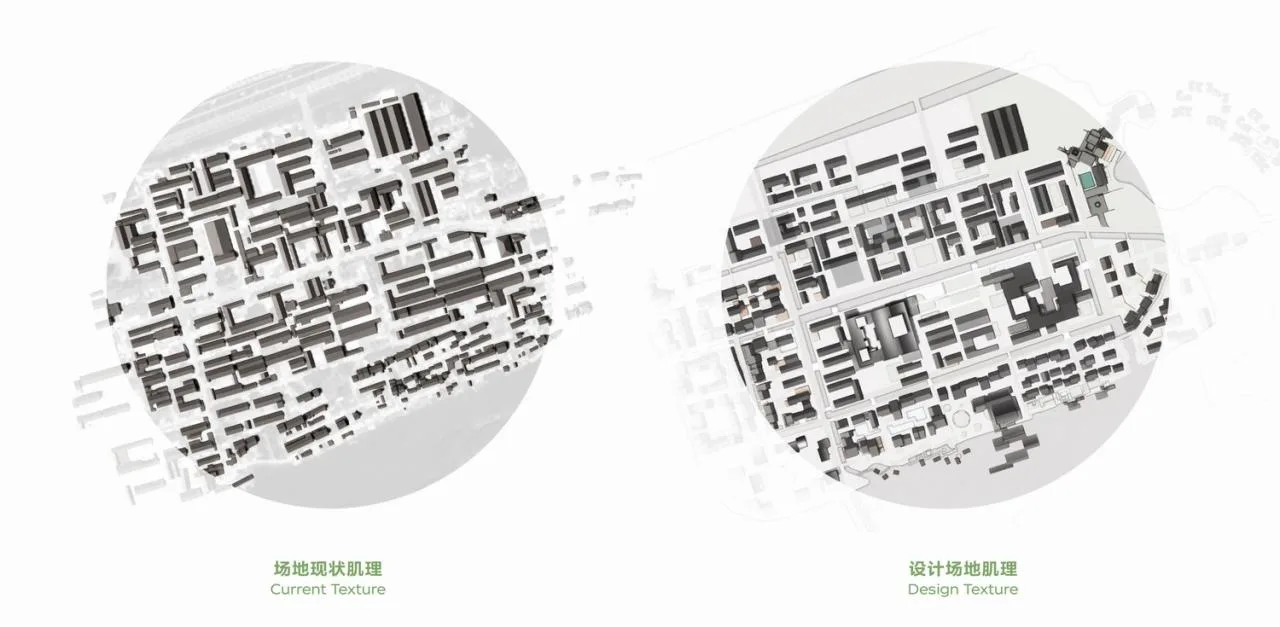
△ Before and After Texture Comparison
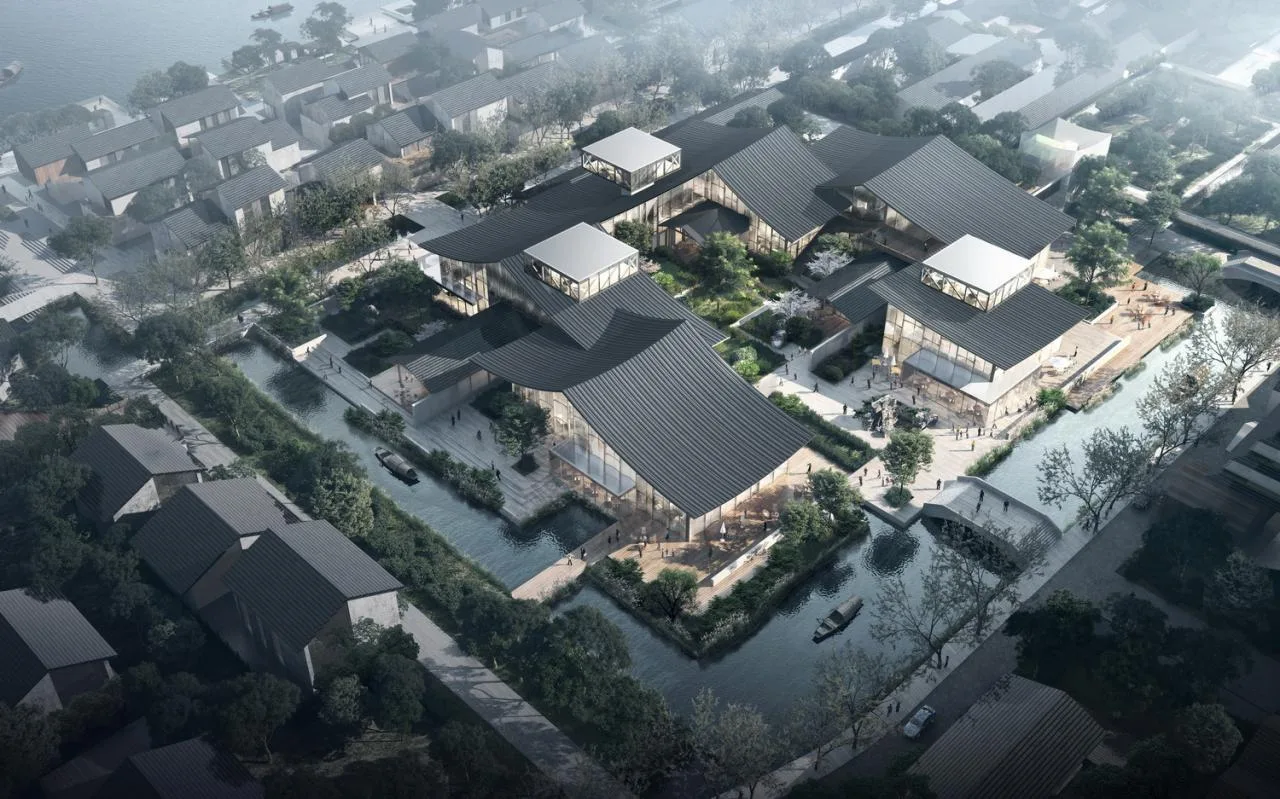
Craftsman Bookstore: Industrial Design Library
Water bodies are another vital component of the site. The traditional Jiangnan town features “streets formed by water,” and the design respects this by following the existing water and road network. A multi-centered linear water network system was chosen for its alignment with the overall planning concept and feasibility. This disperses water usage by intersecting multiple water systems to form central areas that are then divided into a network of water spaces.
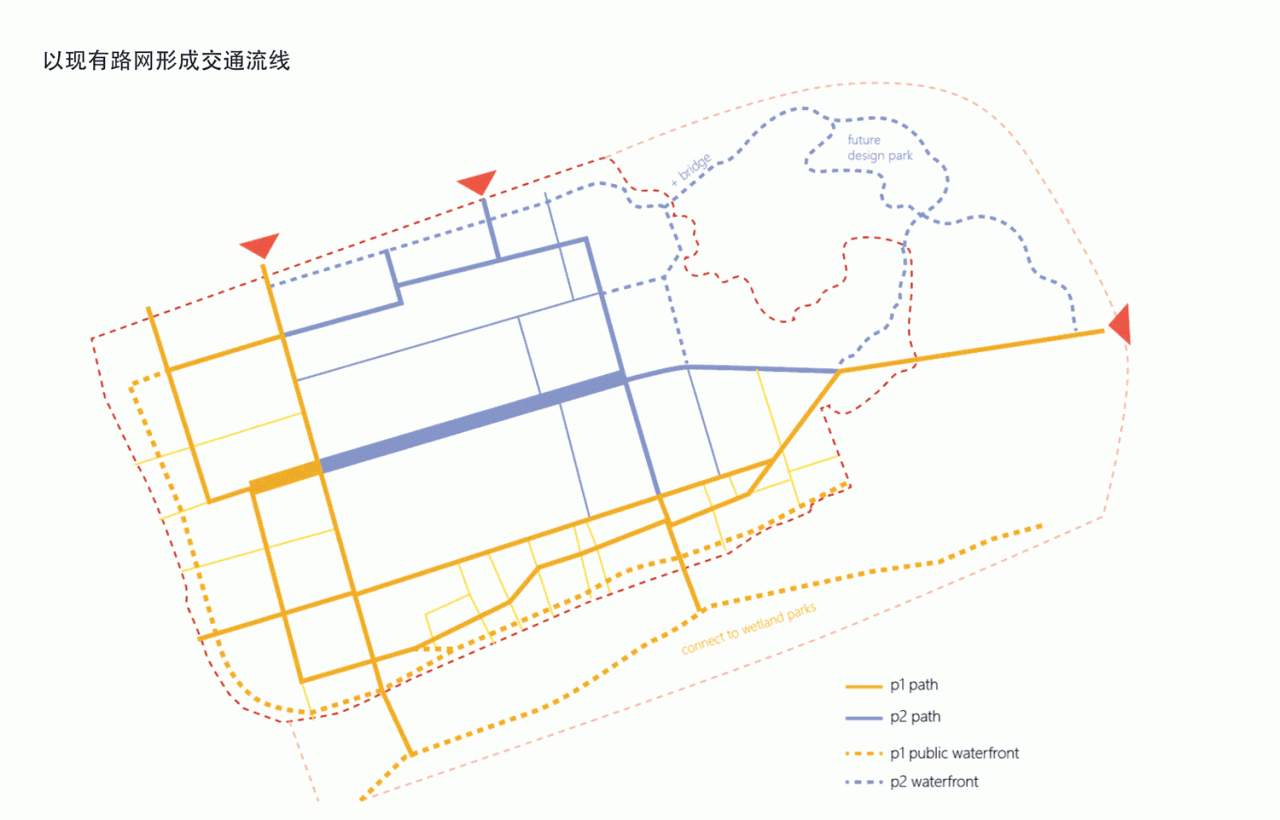
△ Water Network Generation
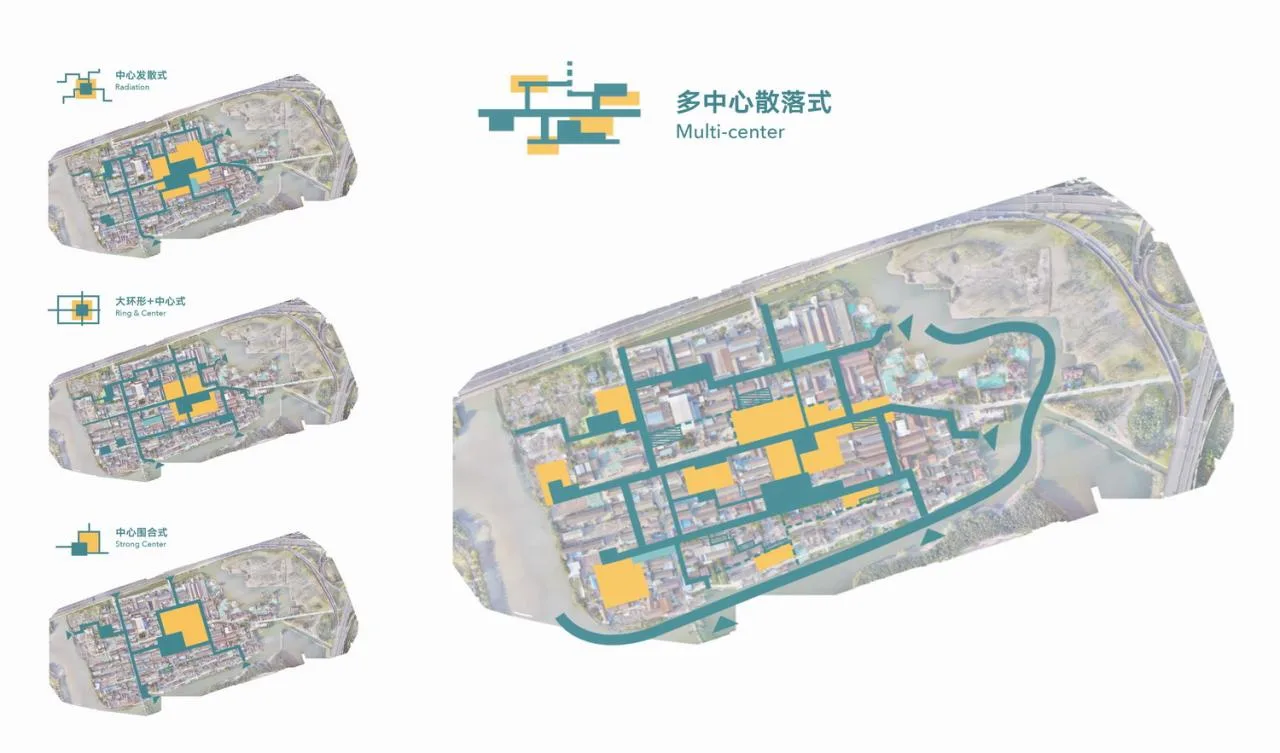
After evaluating various water network layouts, the multi-centered scattered arrangement was finalized.
Water features of varying scales create diverse landscape expressions that are scattered yet interconnected. Elements such as waterfront docks, water play boats, water-viewing bridges, and boardwalks provide a unique and immersive water and garden experience at every step.
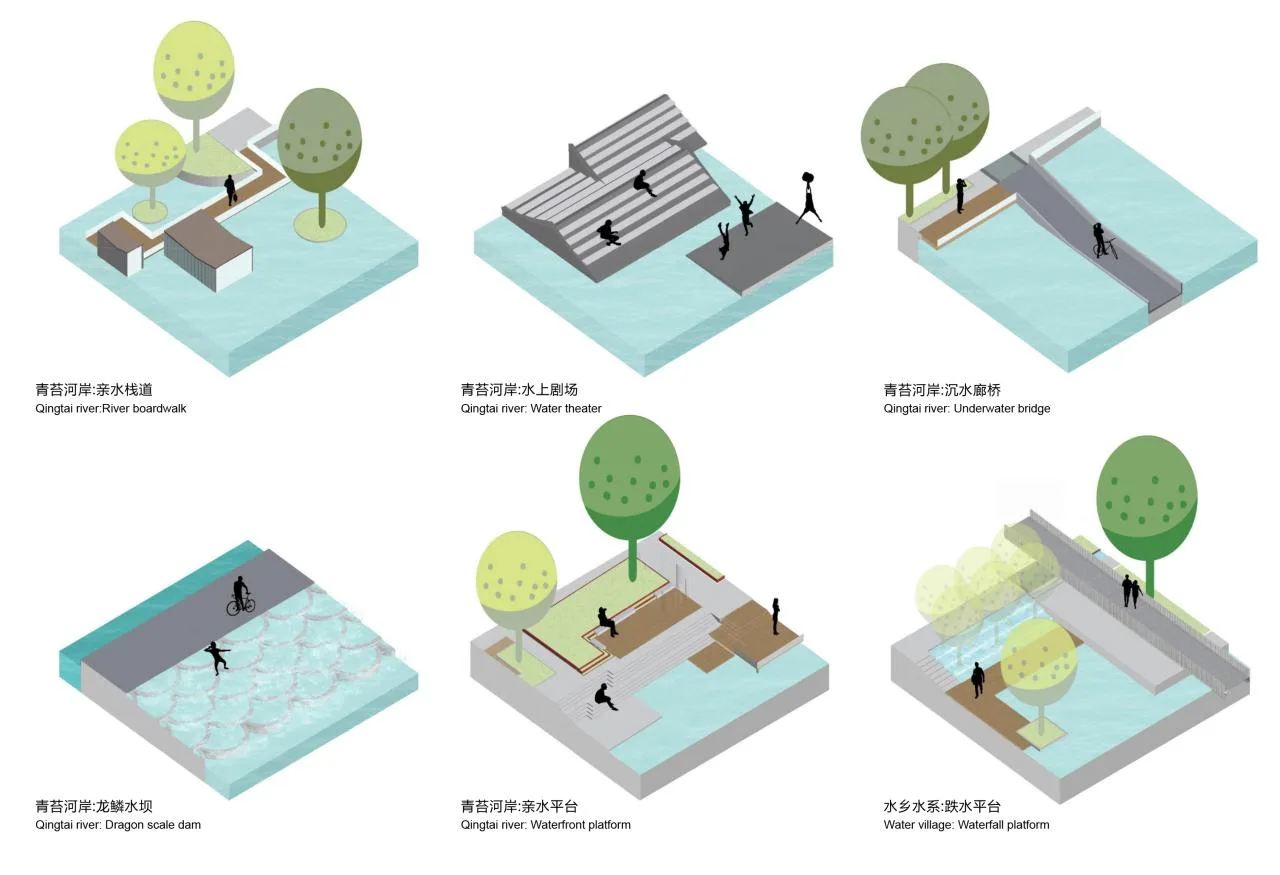
Rich Variety of Water Features
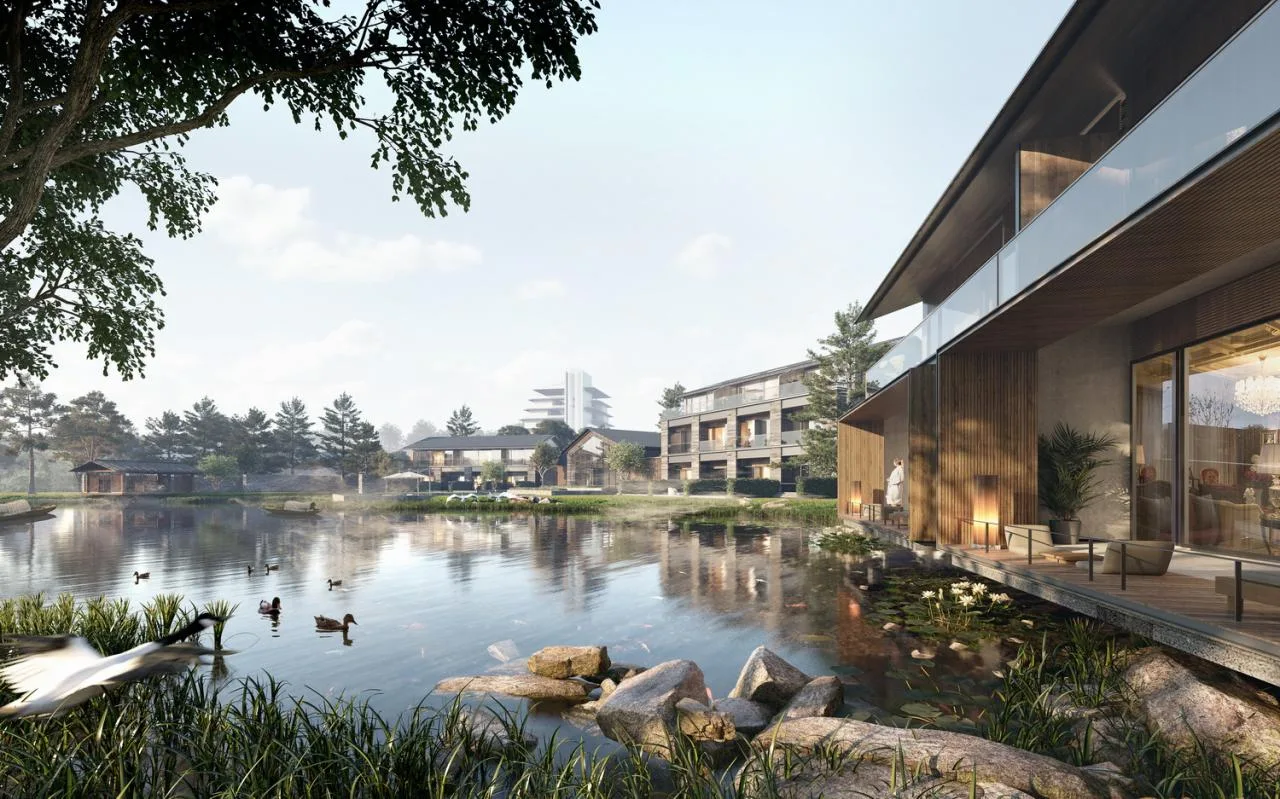
Waterfront Guest House: Design Hotel
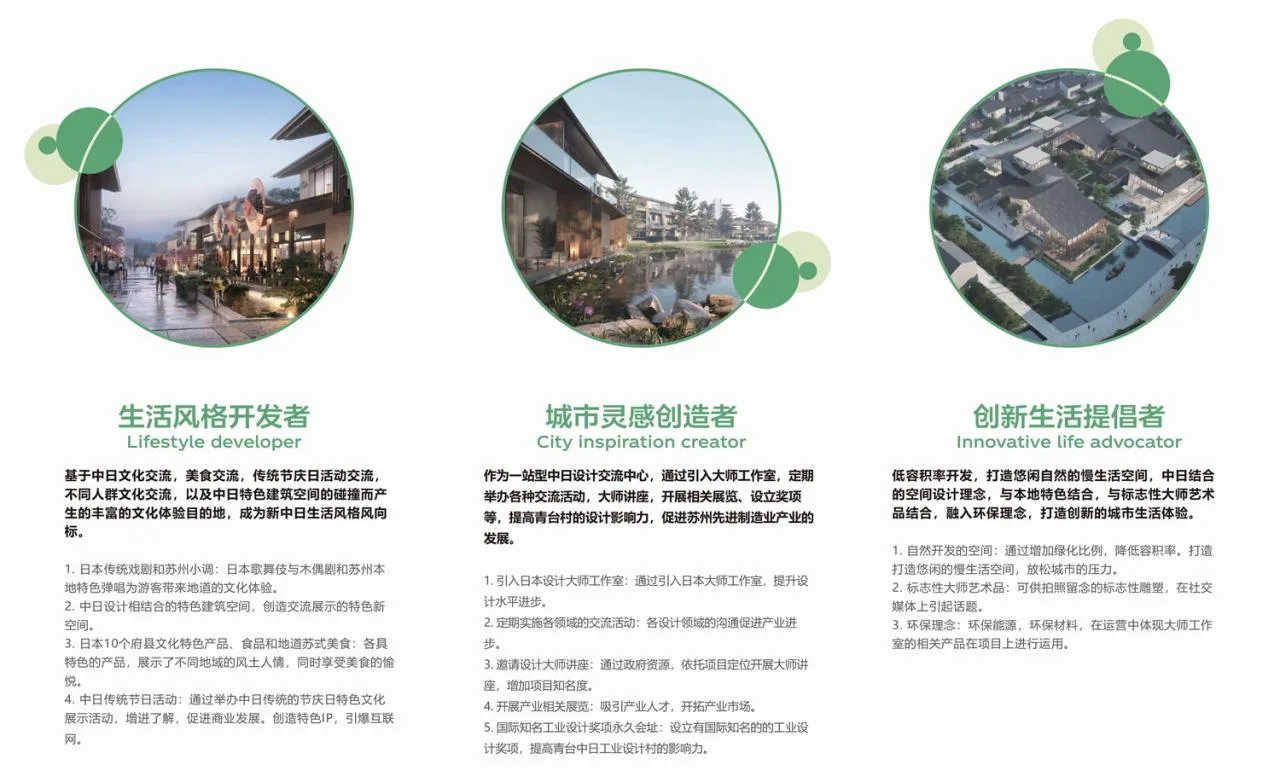
This industrial village is not intended as an entertainment amusement park but as a new type of industrial village that integrates Suzhou’s urban temperament into its street scenes through urban renewal. It aims to cultivate substantial industrial content, promote immersive tourism experiences, and support residential living. The future Qingtai Village is envisioned as a pioneer in the industrial design sector, a developer of new Sino-Japanese lifestyles, an advocate for innovative urban living, and a source of inspiration to foster Sino-Japanese design exchange and development.
△ Video Introduction
02 Composite Functional Ring
Breaking Down, Refining, and Reorganizing
The design divides over ten business formats, including commercial, office, and leisure facilities, into a circular layout. This approach aims to dissolve the subjective spatial experience caused by homogeneous functional clusters. It also expands originally concentrated support functions like dining and commerce, broadening the service area and creating a “daily life-oriented” pedestrian path.
Unlike a simple linear pedestrian street, the “functional ring” forms a circular experience zone with radiating extensions beyond the main street. This organic combination of fragmented functions creates new spatial relationships. Instead of conventional street and alley scales, courtyard clusters serve as new scale units, broadening the vertical experience dimension while preserving the original site texture. These nested courtyard clusters form a “composite functional ring” that enriches the tourism experience with porous and open connectivity.
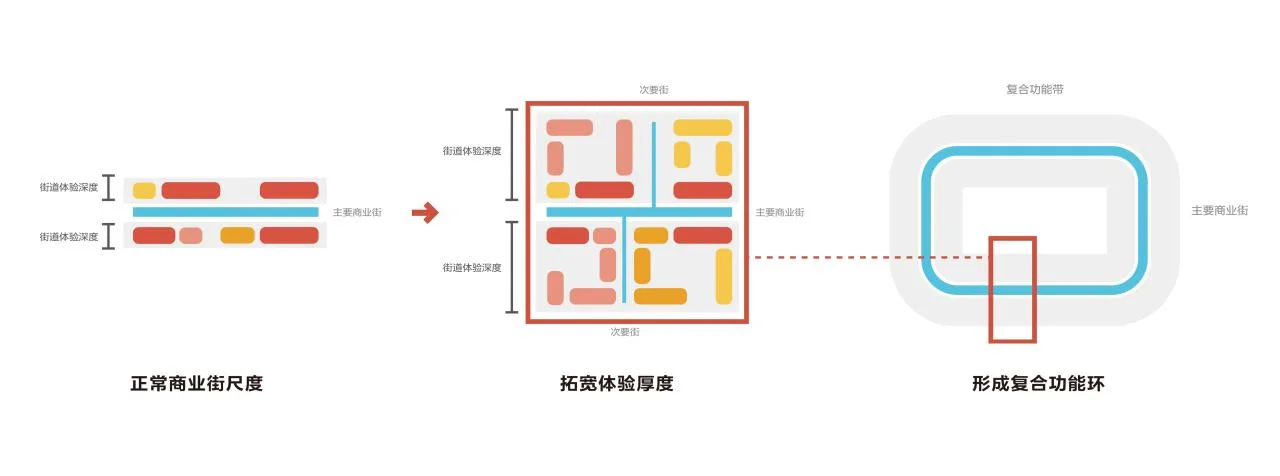
△ Composite Functional Ring
Regarding courtyard cluster forms, typological principles were applied by extracting common demands to create four unit prototypes: the neighborhood model with front store and back workshop, a business model featuring downward movement and upward stillness, a business model emphasizing continuity and depth, and a working model with shared street supporting facilities.
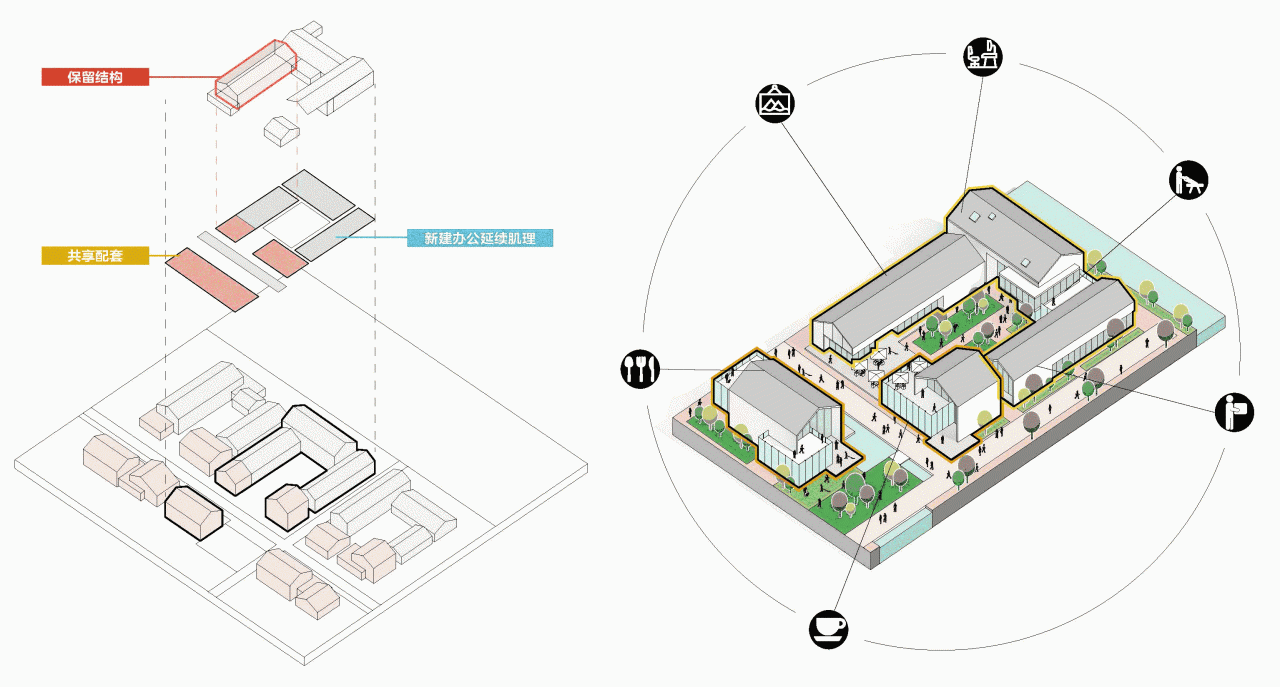
Four Unit Prototype Types
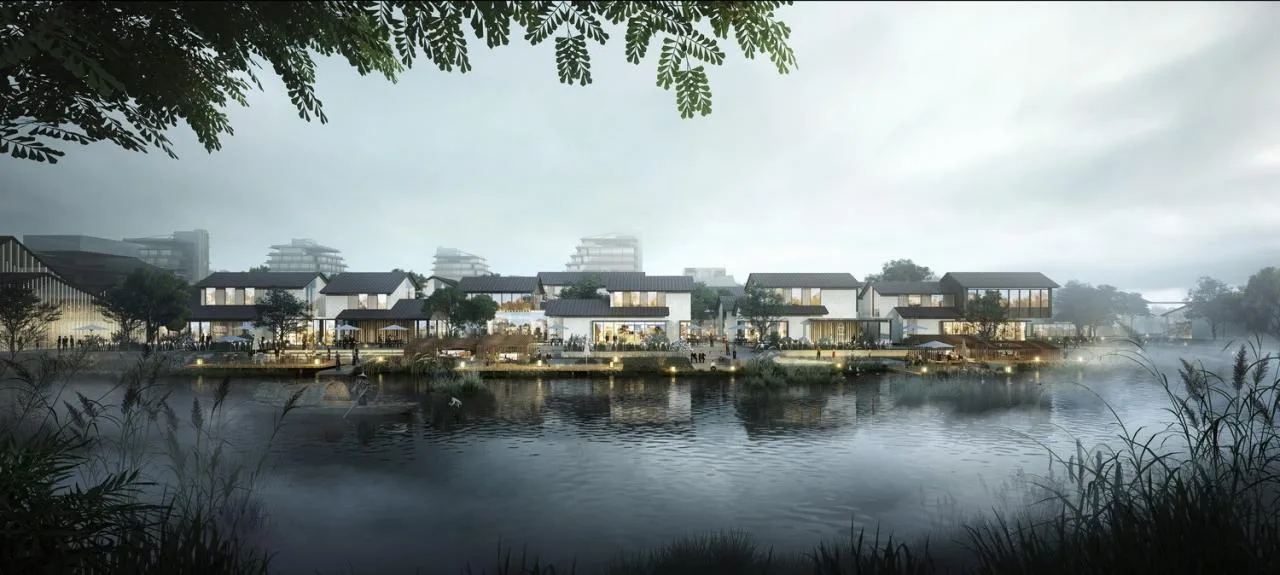
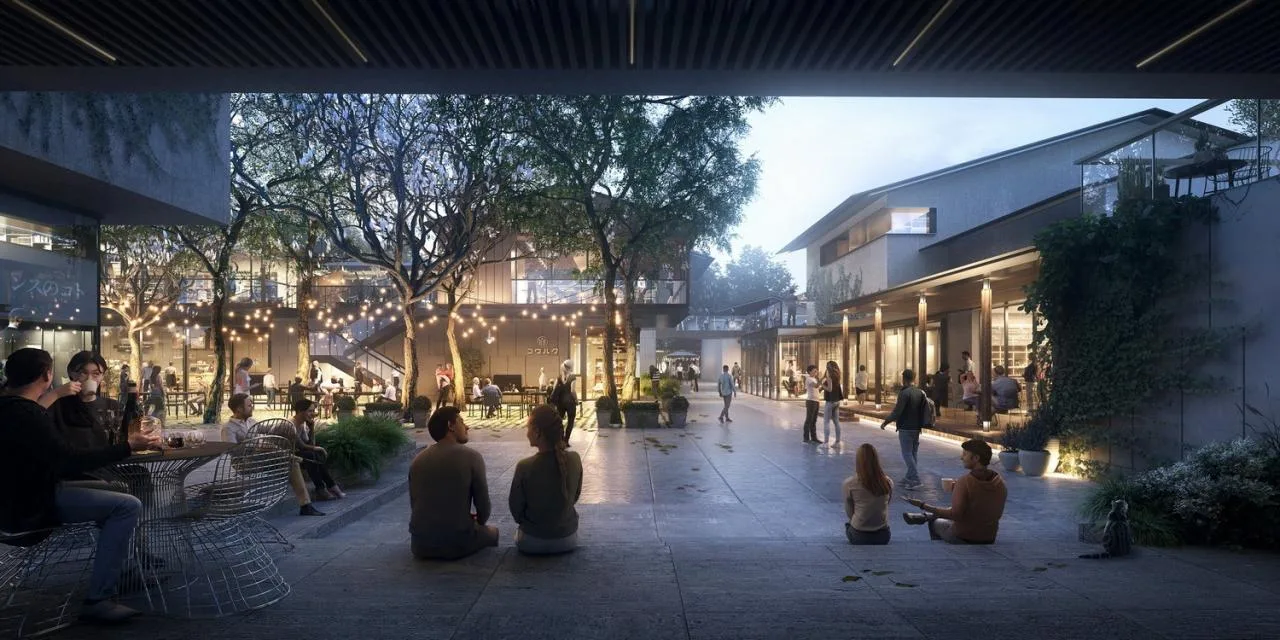
△ Street Views Inside and Outside Unit Clusters
The unit clusters largely preserve and renovate original buildings. New functional volumes are vertically integrated to create variations in density and intensify functionality. This multi-layered stacking within three-dimensional spaces expresses the transparency between historical and modern elements, forming a spatial pattern that juxtaposes old and new textures in layers.
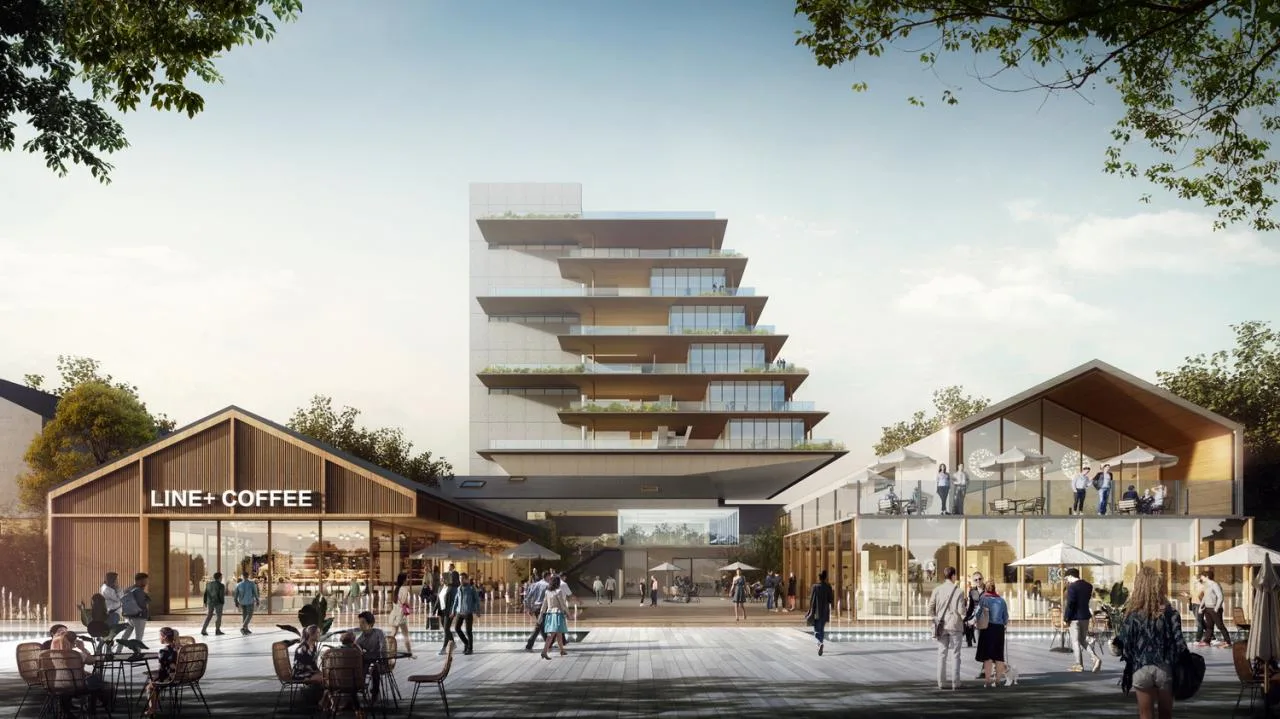
03 Three-Dimensional Transportation Environment
Balancing Daily and Leisure Needs
The transportation design considers two user groups within the community: permanent residents and tourists. Residents include studio designers, shop assistants, and local inhabitants with daily and efficient movement needs. Tourists seek leisurely, park-like strolls. A three-dimensional transportation system accommodates these differing demands simultaneously.
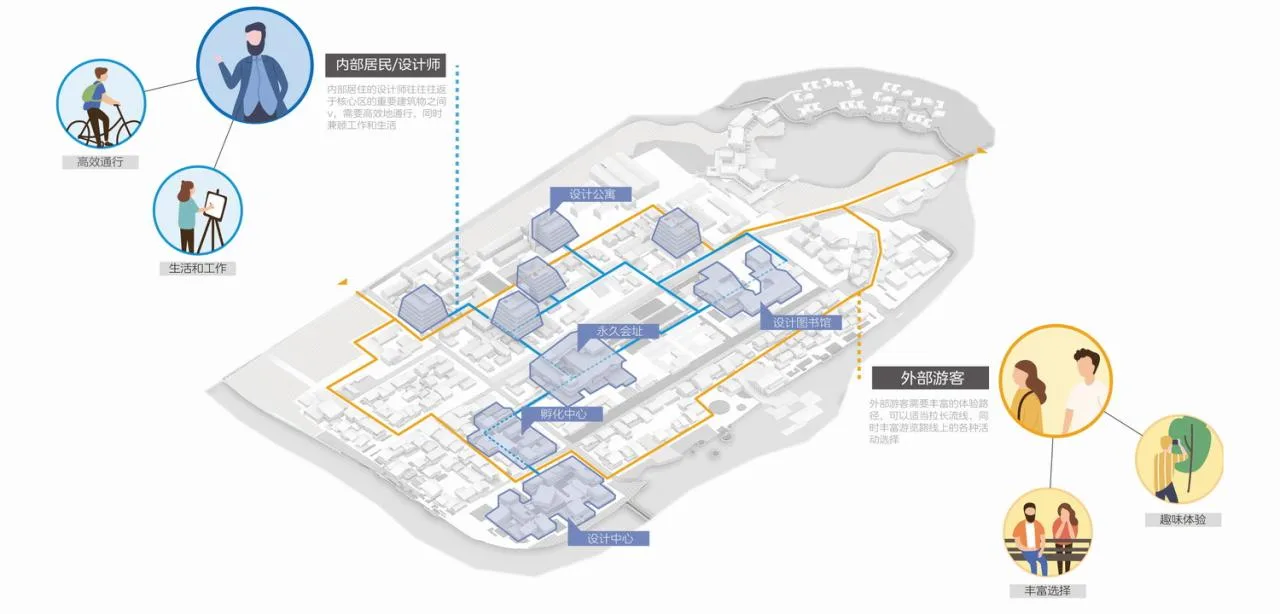
Analysis of Target Group Demands
The tourist flow centers on a commercial street and a water system, with the “Activity Water Street” serving as the central axis. This creates a winding, engaging circulation connecting inner and outer water networks and commercial streets. A two-level corridor system, elevated throughout the site, connects key nodes to provide fast access for residents. Its distinctive roofscape also serves as a major attraction for visitors.
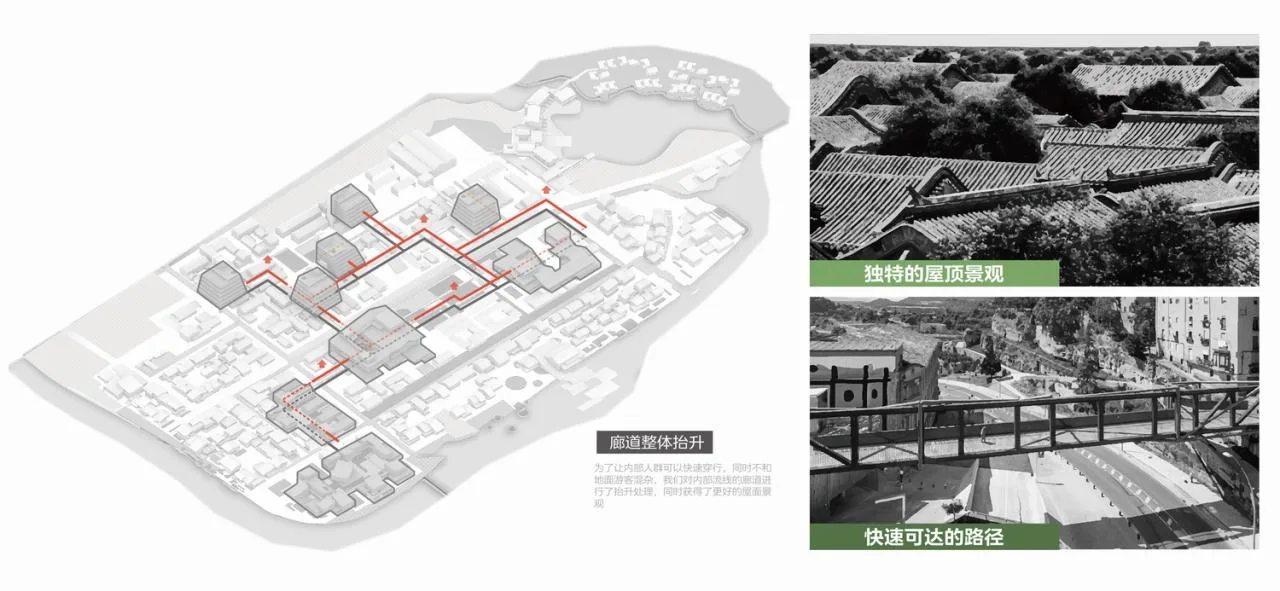
△ Efficient Two-Level Corridor System
04 Moss Ten Blocks
Diversity in Public Buildings
The “Ten Blocks” represent ten key urban spaces within the site, designed to break homogeneous textures and articulate the unique identity of the new industrial village. By interpreting local architecture, these blocks balance the mixed Sino-Japanese industrial environment with contemporary Asian aesthetics. Architectural forms across multiple scales—function, time, scene, and public accessibility—were carefully considered to reflect the daily nature of public spaces, functional complexity, and contemporary landmarks.
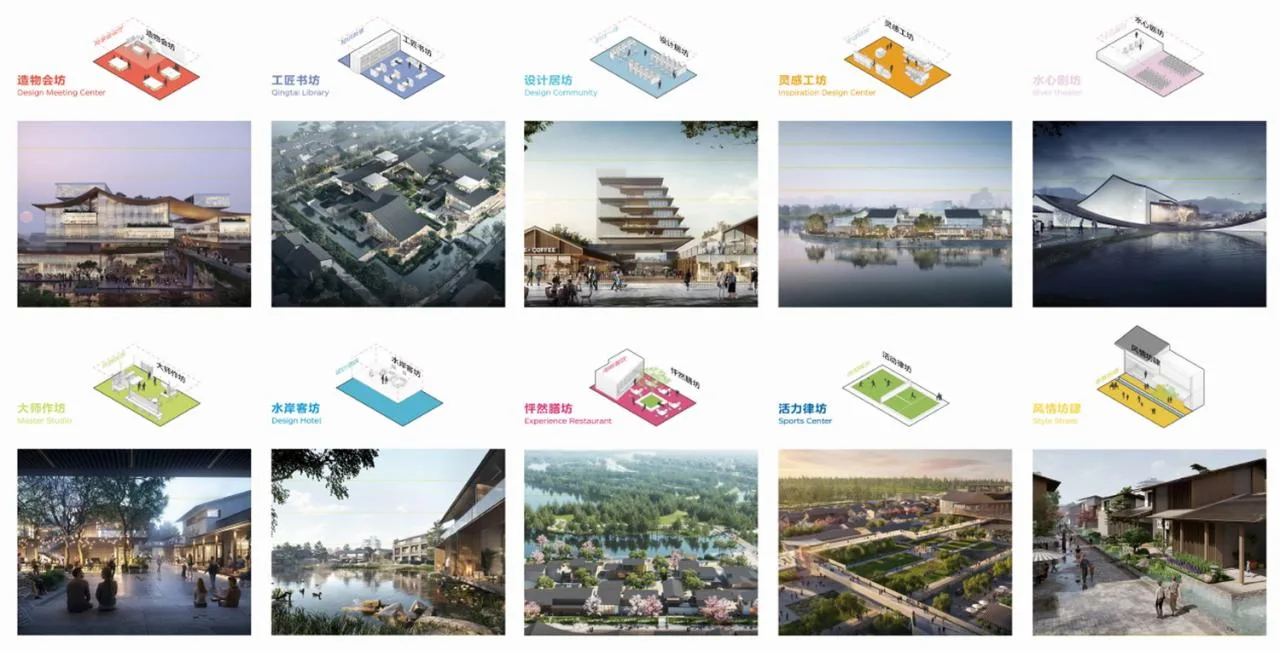
△ Moss Ten Blocks
4.1 Creation Workshop: Permanent International Design Award Venue
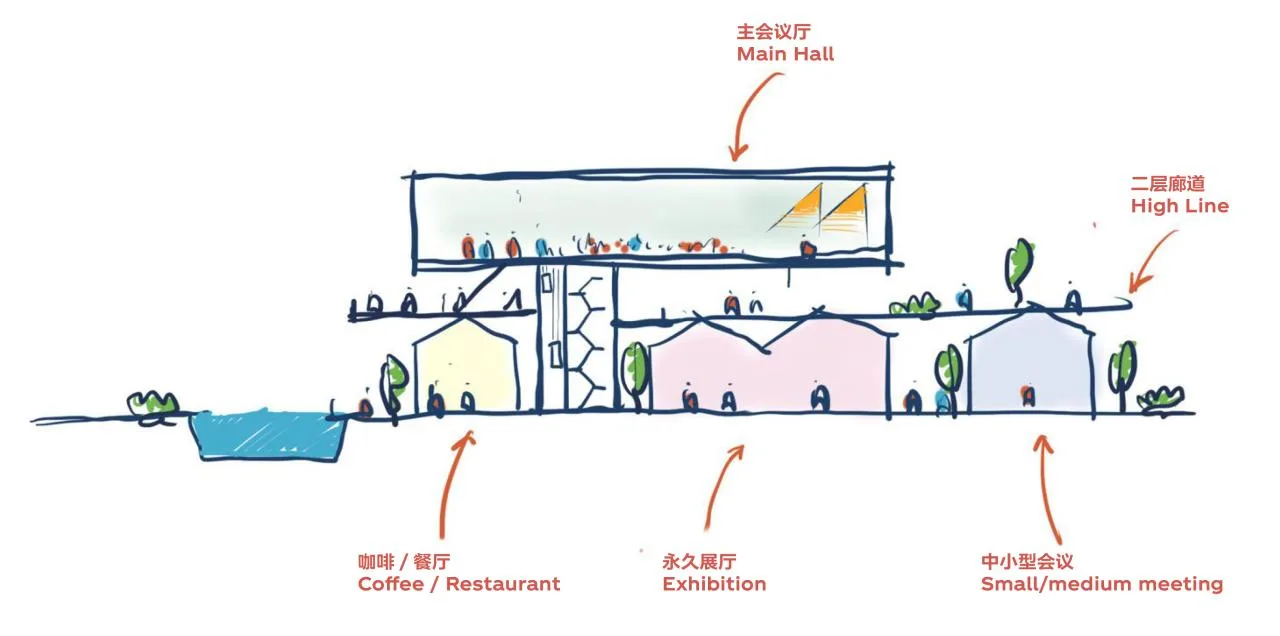
△ Open Three-Dimensional Community
To increase usage beyond the traditional conference center, the concept of “community” is integrated into the design.
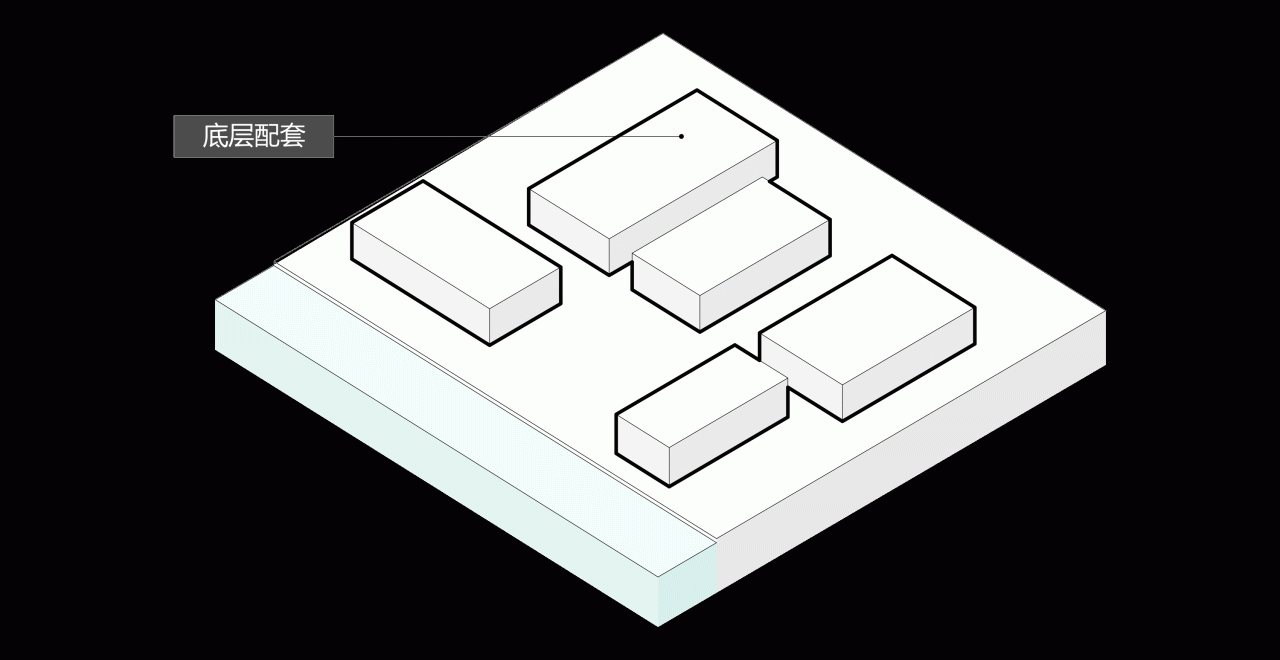
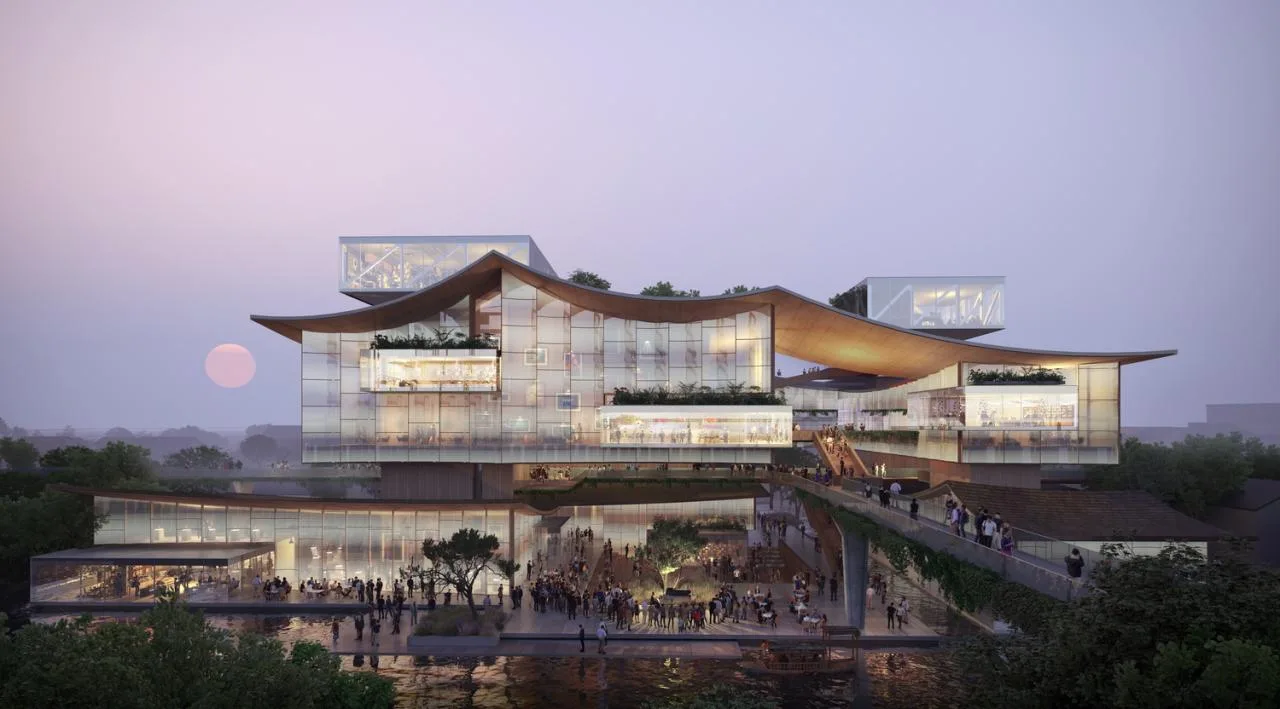
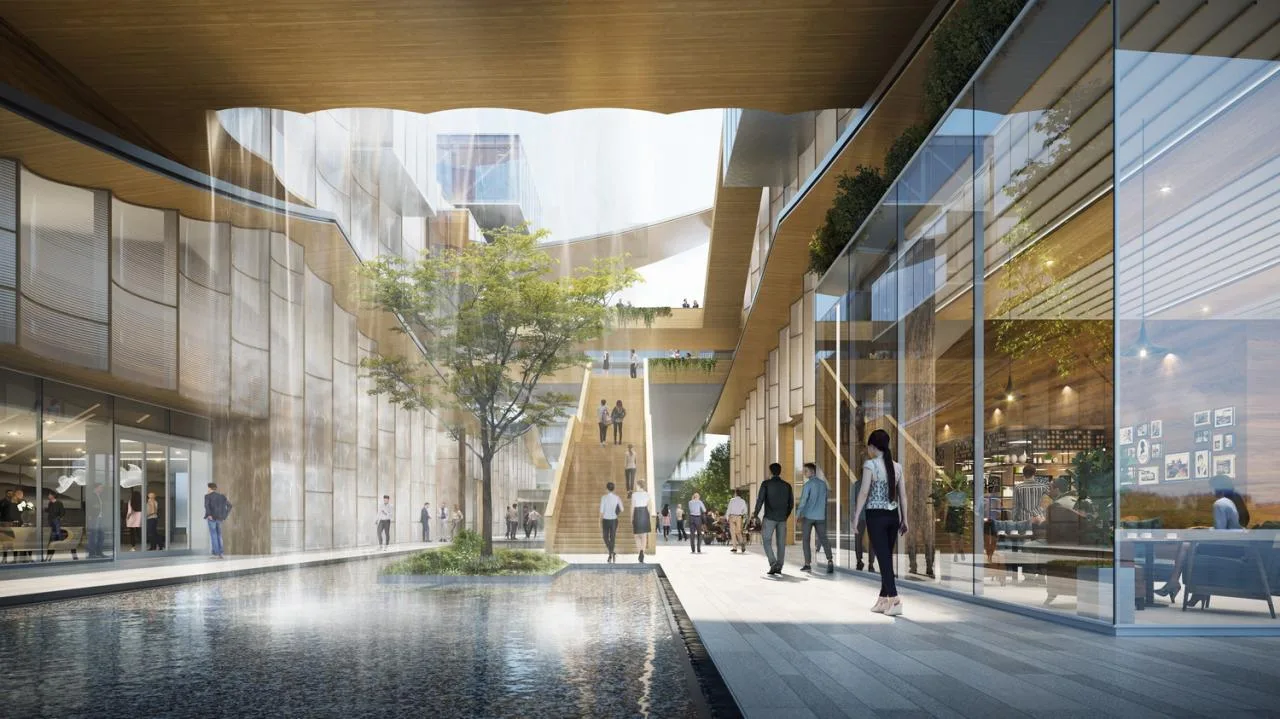
Exhibition halls, creative workshops, and design restaurants occupy the ground floor, open to the public as courtyard blocks, providing a dynamic interface. The main conference hall, with lower usage frequency, is stacked above and capped with a sloping roof featuring distinct regional characteristics. Continuous gray spaces promote public interaction, forming an open, three-dimensional community.
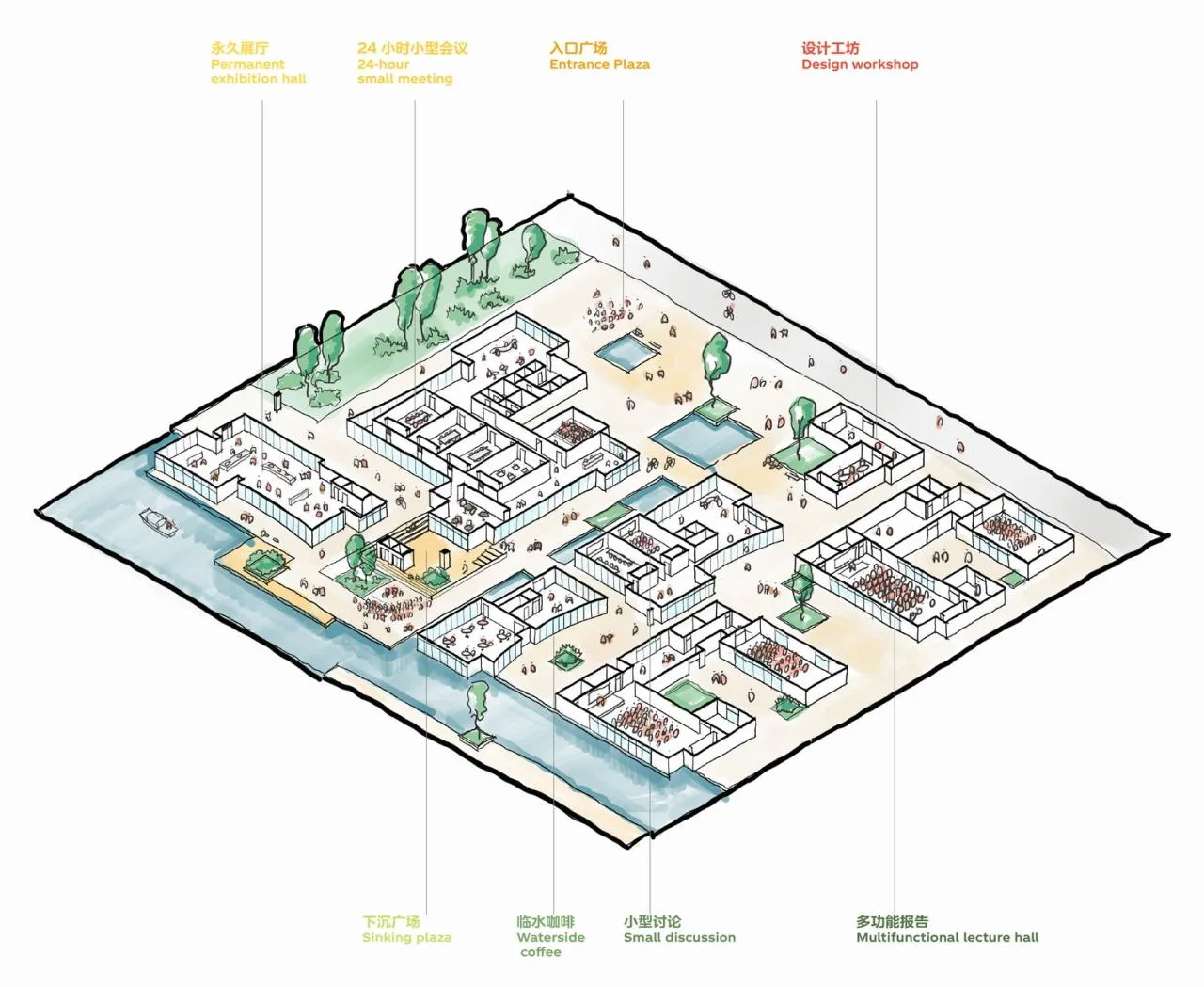
24-Hour Design Community
4.2 Design Residence: Designer Apartments
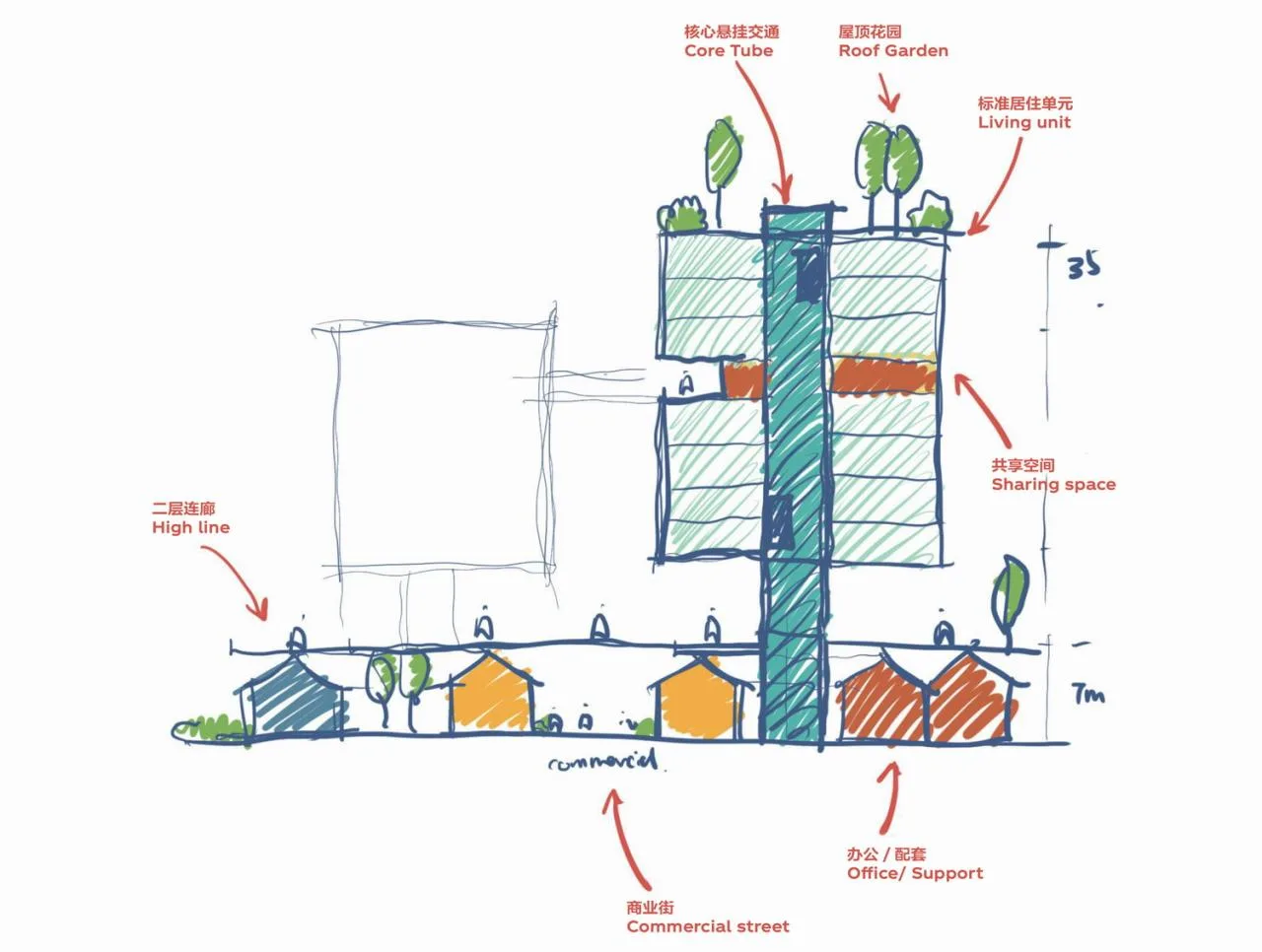
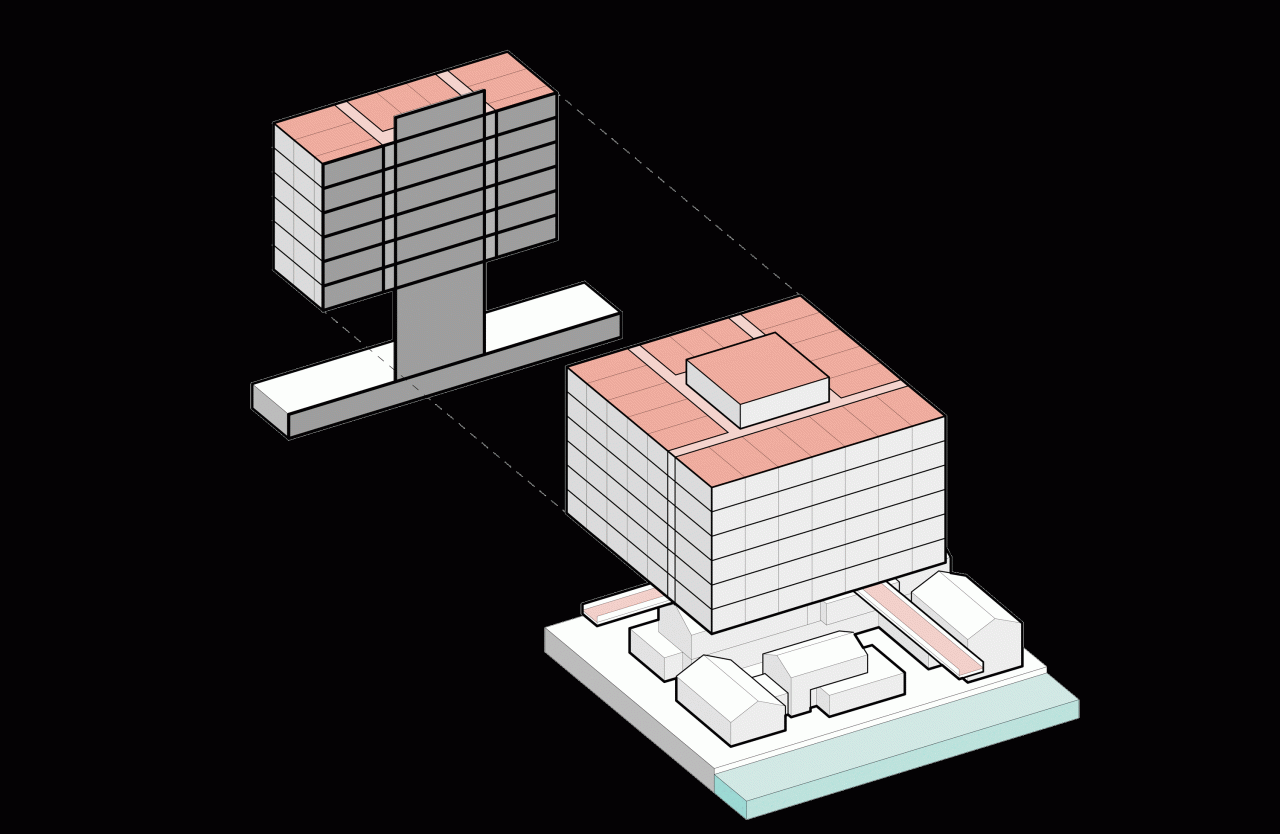
A Three-Dimensional Residential Model
Residential clusters are composed of replicable unit groups suspended within the spatial structure of commercial streets and alleys on the ground floor, stacking additional living spaces vertically. Shared spaces, community facilities, rooftop gardens, and other vertical public areas create a “three-dimensional garden” style neighborhood fostering interaction among young residents.
The five scattered apartment buildings are oriented to maximize landscape views and are connected by a two-story corridor to create a cohesive residential complex.
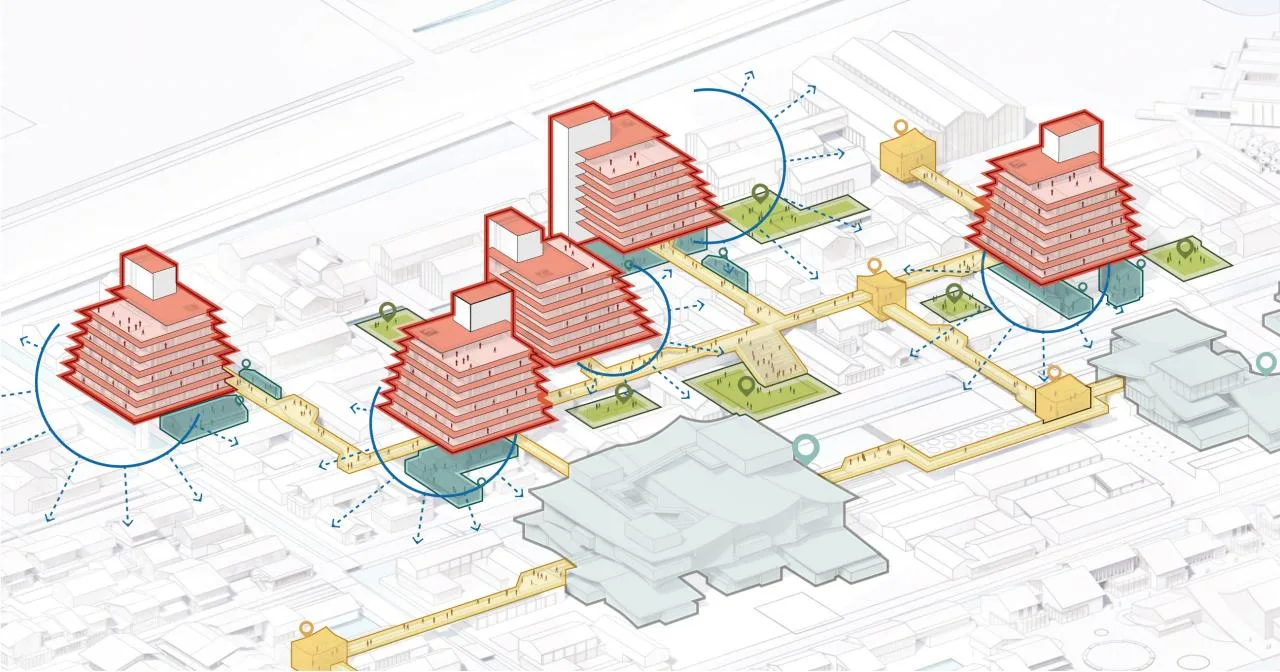
△ Stereoscopic Layout
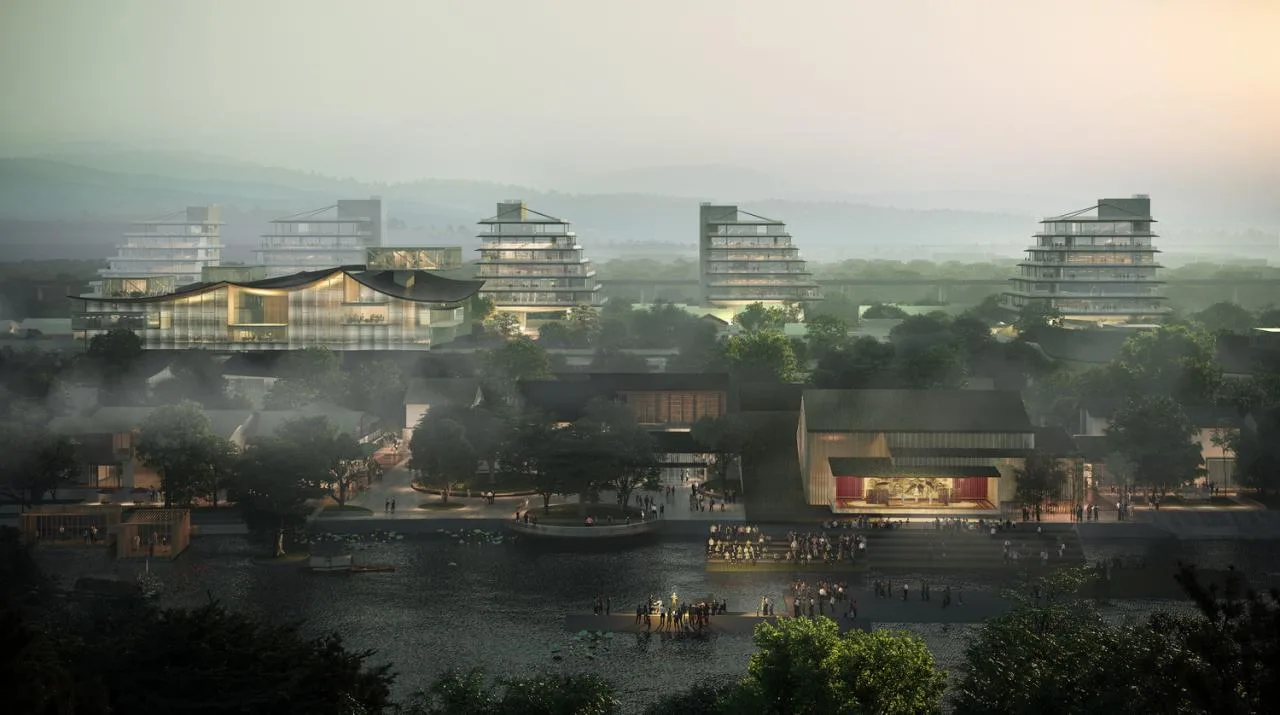
4.3 Shuixin Theater Workshop: Cultural Theater
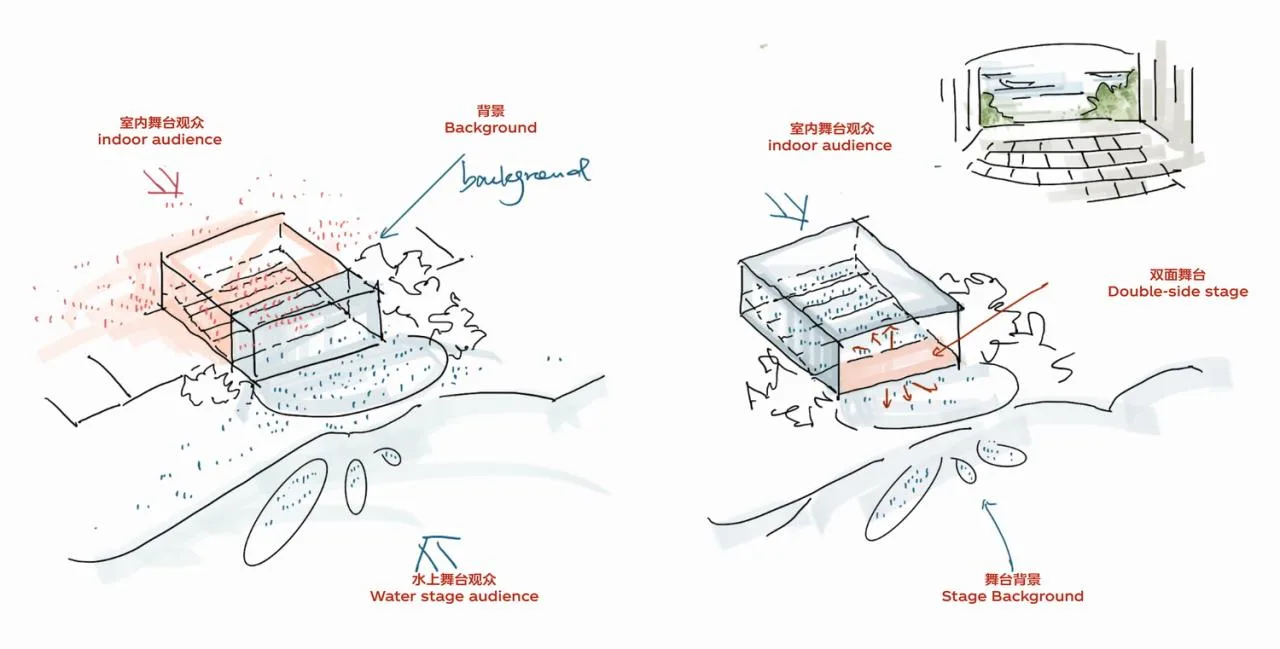
△ Double-Sided Theater on Water
Situated on the south shore with optimal views, the theater’s two-way stage concept fully integrates the environment into its versatile performance spaces.
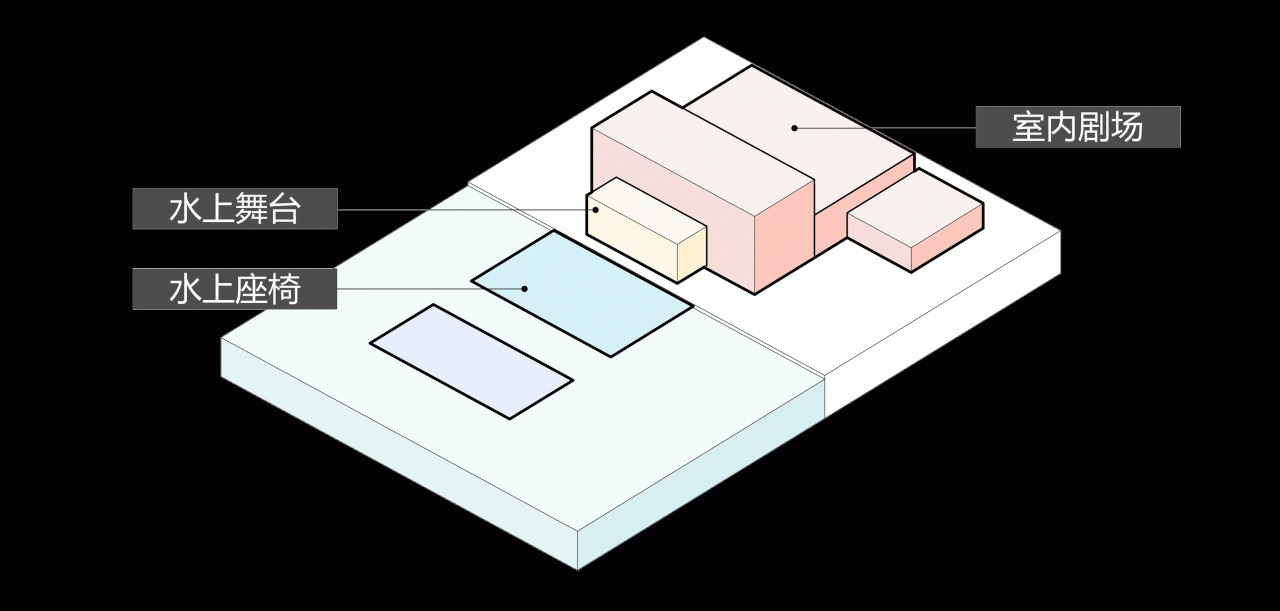
The gently curved roof naturally envelops the indoor theater, outdoor stage, viewing platform, and surrounding water landscape.
05 Comprehensive Industrial Environment
A Positive Cycle Integrating Design and Sales
The industrial village operates through three primary pillars: the industrial design industry, cultural and creative tourism, and urban living. The “industrial environment” concept stems from the co-development logic of the Chinese and Japanese industrial design sectors. It creates an integrated closed-loop system combining design and sales, including:
- Creation: Inspiration Workshop & Craftsman’s Bookstore
- Production: Master’s Workshop & Design Studio
- Promotion: Creation Workshop & Shuixin Theater
- Sales: Pang Ran Mountain House & Fengqing Workshop
- Experience: Waterfront Customer Workshop
This “Vitality Law Square” model fosters a positive cycle between design and sales. Furthermore, diverse production spaces act as media to empower creative environments and anchor the symbiotic relationship between life and design, strengthening emotional connections among tourists, designers, and residents.
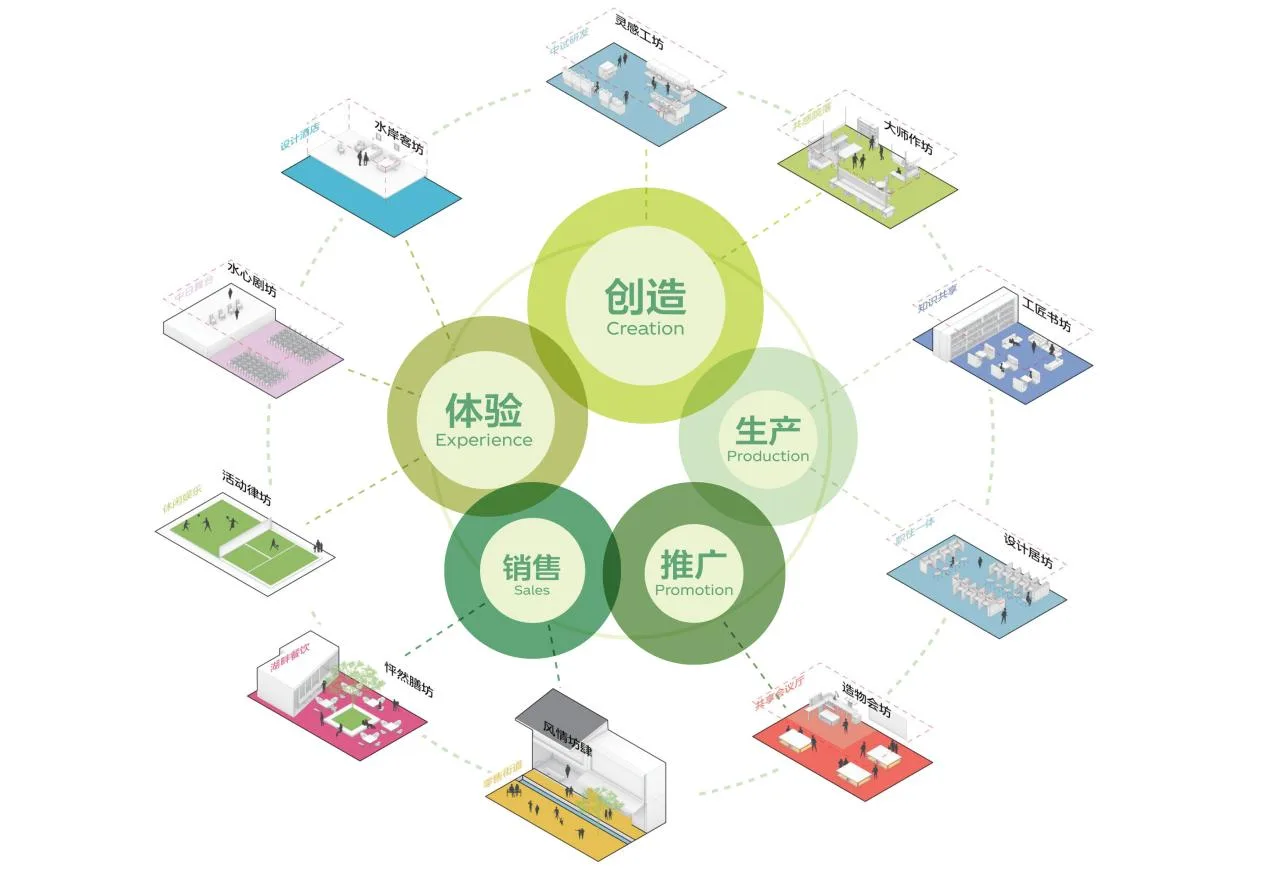
Building a Closed-Loop Industrial Design Process
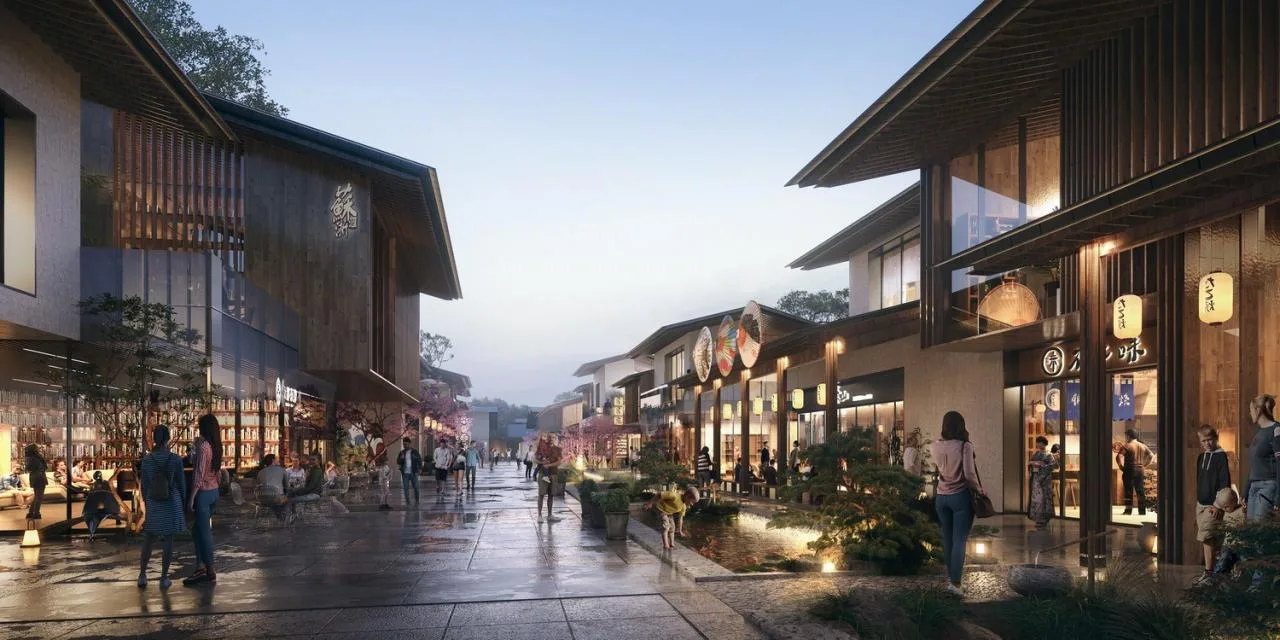
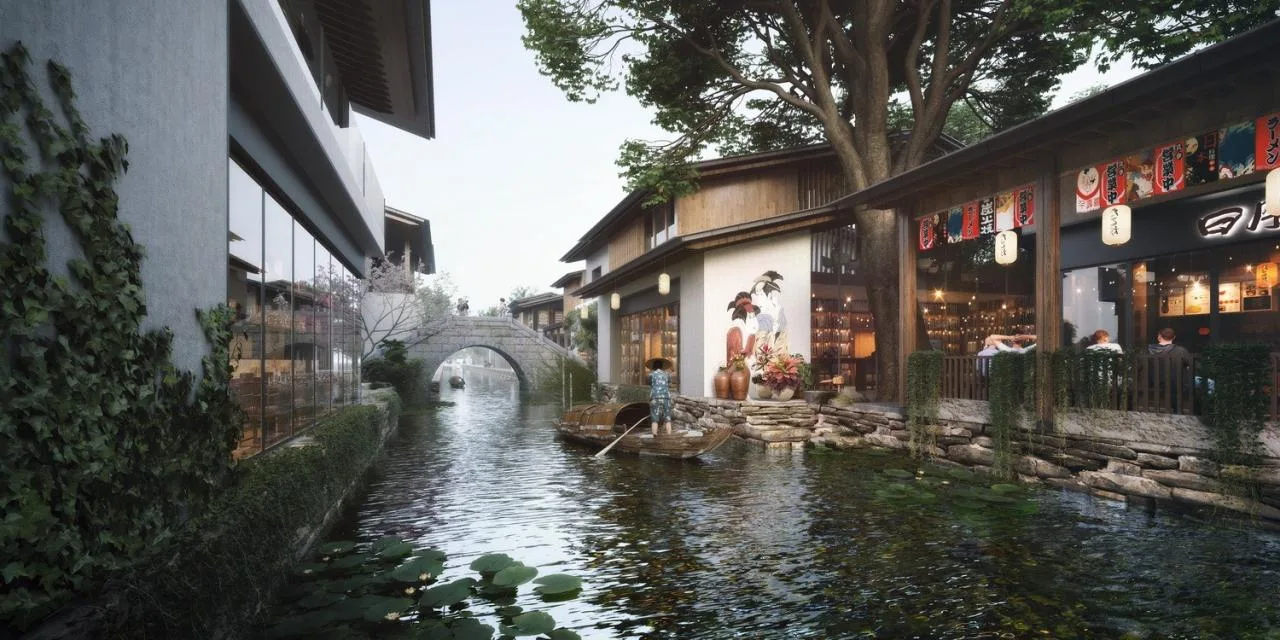
△ Fengqing Workshop & Pang Ran Restaurant
06 Conclusion
The concept of the “ring” carries infinite meanings in traditional semantics and graphic symbolism. Qingtai’s “creating ring” seeks to harmonize mixed forms and diverse styles into a clear and rational balance.
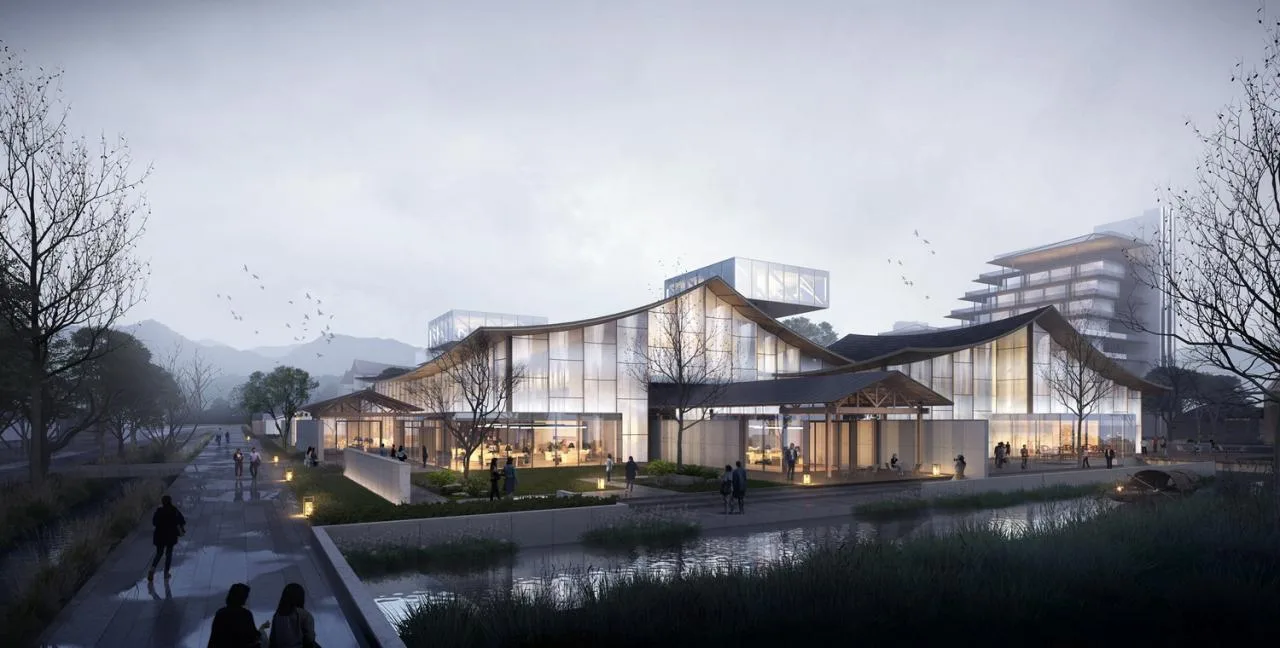
Craftsman Bookstore: Industrial Design Library
The Suzhou Qingtai Sino-Japanese Industrial Design Village represents a forward-looking exploration of new industrial practices. It embraces modern planning and design concepts such as three-dimensional development and composite layouts to address practical challenges and promote the large-scale renewal and growth of industrial villages. Simultaneously, it prioritizes authenticity and transparency, thoughtfully considering the needs of space users to provide a distinctive, diverse, and organic public space for the city.
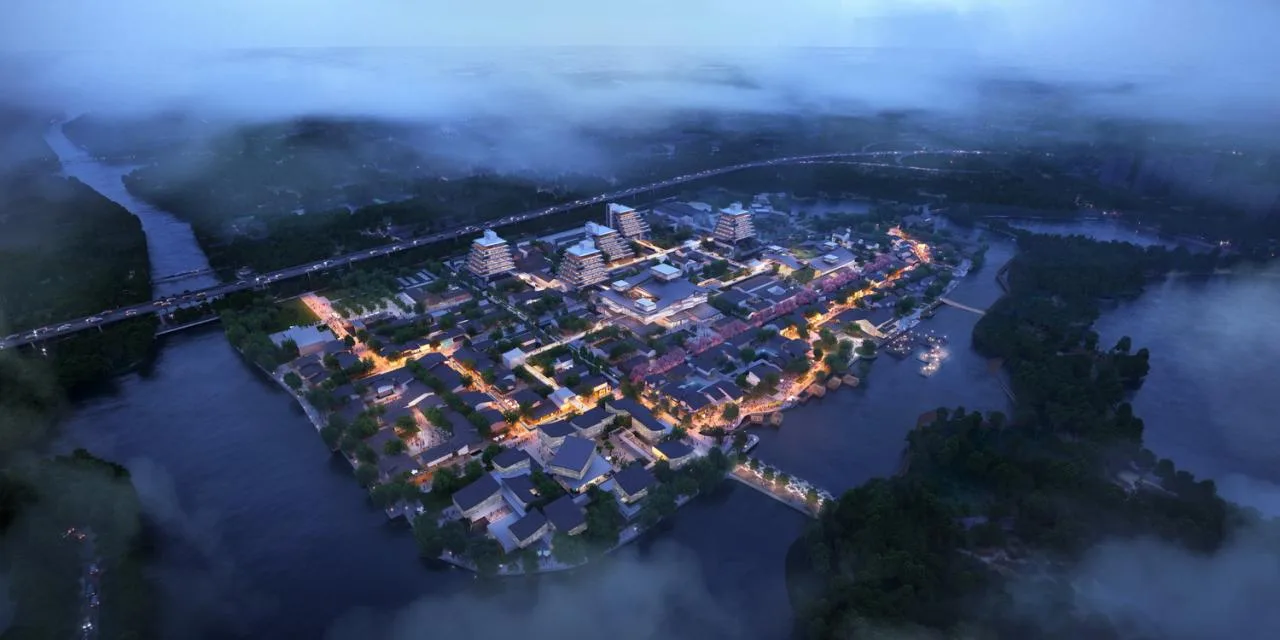
Project Information
Project Name: Suzhou Qingtai Sino-Japanese Industrial Design Village
Location: Xiangcheng District, Suzhou
Design Firms: Line+ Architectural Firm, MLA+ Mu Jia
Design Team (Line+): Meng Fanhao, Su Kelun, Yang Hanyue, Zhu Xiaojing, Huang Yukun, Zhou Shaoqing (Intern)
Design Team (MLA+): Martin Probst, Cao Ruizhi, Wu Ruojing, Chen Xian, Chen Di, Shang Yeqing (Intern), Yang Wenqi (Intern), Wu Meisi (Intern)
Building Area: Approximately 170,000 square meters
Design Year: 2021
Developer: Suzhou Qingtaizao Construction Management Co., Ltd.















Must log in before commenting!
Sign Up