
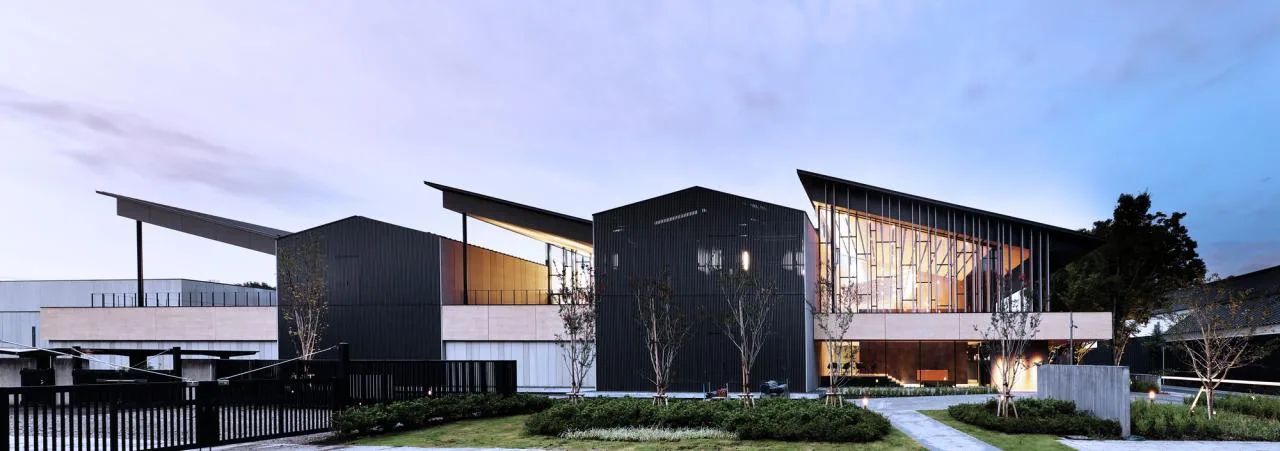
Connecting the Environment with the City’s History
This research laboratory is located in Noda City, Chiba Prefecture, northeast of Tokyo. The history of Kameiwan Co., Ltd. dates back 200 years, to the early days of local soy sauce production in Japan. At that time, several families formed a brewing cooperative, which gradually grew into the large company it is today.
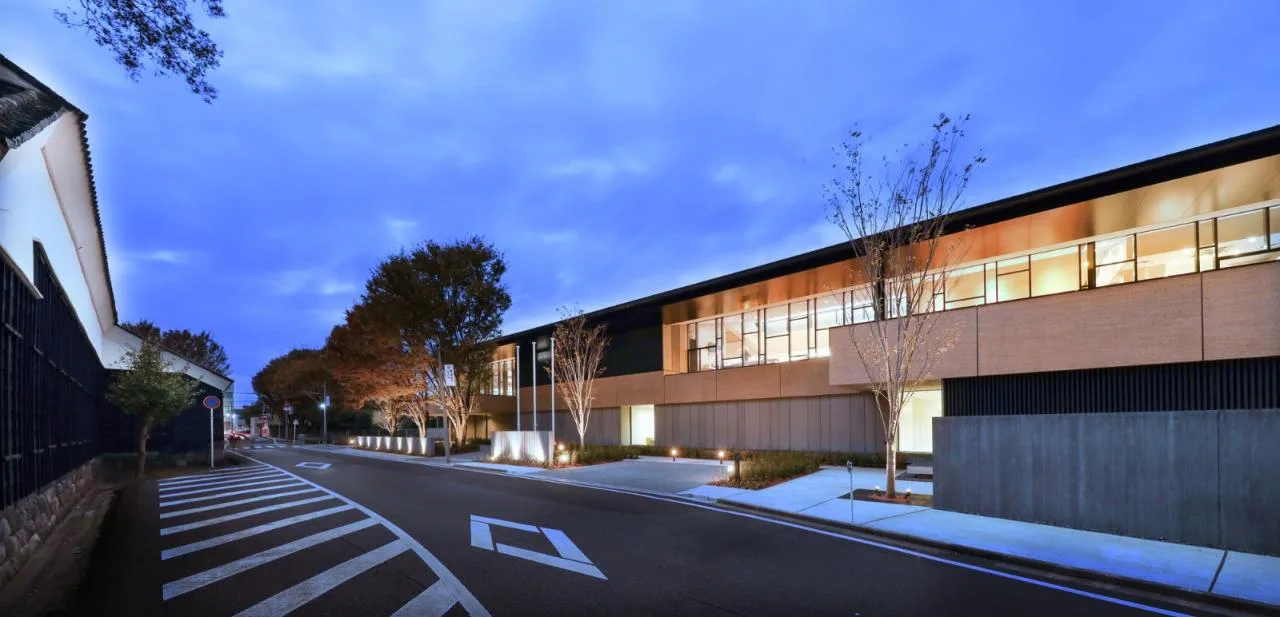
The project site is nestled within a traditional street that preserves this rich history. The existing Wan Xianqian research laboratory in Kucha is a concrete building with over 60 years of heritage. The architects believe that studying soy sauce and food requires a location that can sensitively capture the seasons, time, the five senses, and the continuity of nature. Furthermore, Kucha Wan Corporation hopes the new building will allow researchers to experience subtle changes in the natural environment while working.
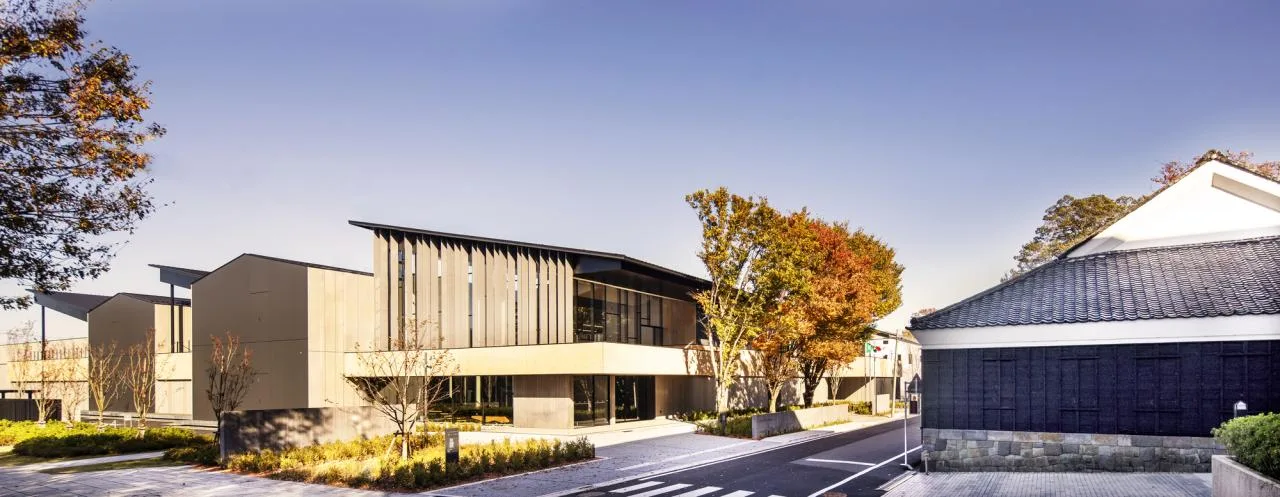
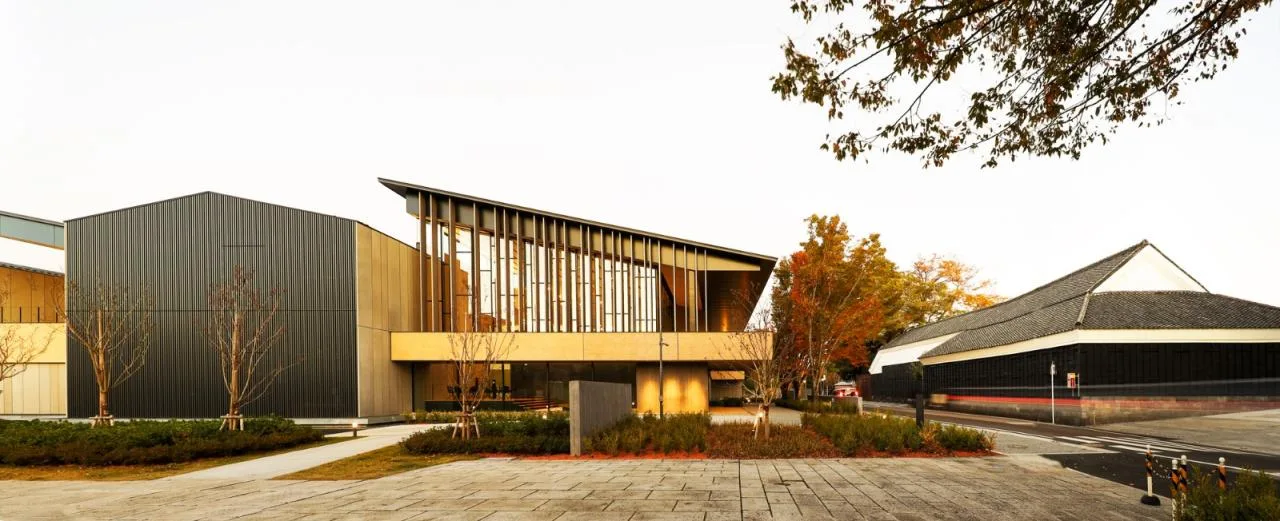
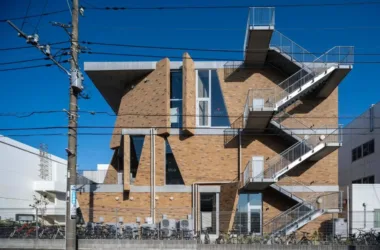
Inspired by the traditional soy sauce-making landscape around the site, the concept of “inheritor design” was developed. Historically, the street connected directly to narrow alleys, with rows of houses clustered to form breweries, shops, and residences, interspersed with courtyard-style spaces. These characteristics are fully embraced in the new building’s design and balanced against its vertical elements.
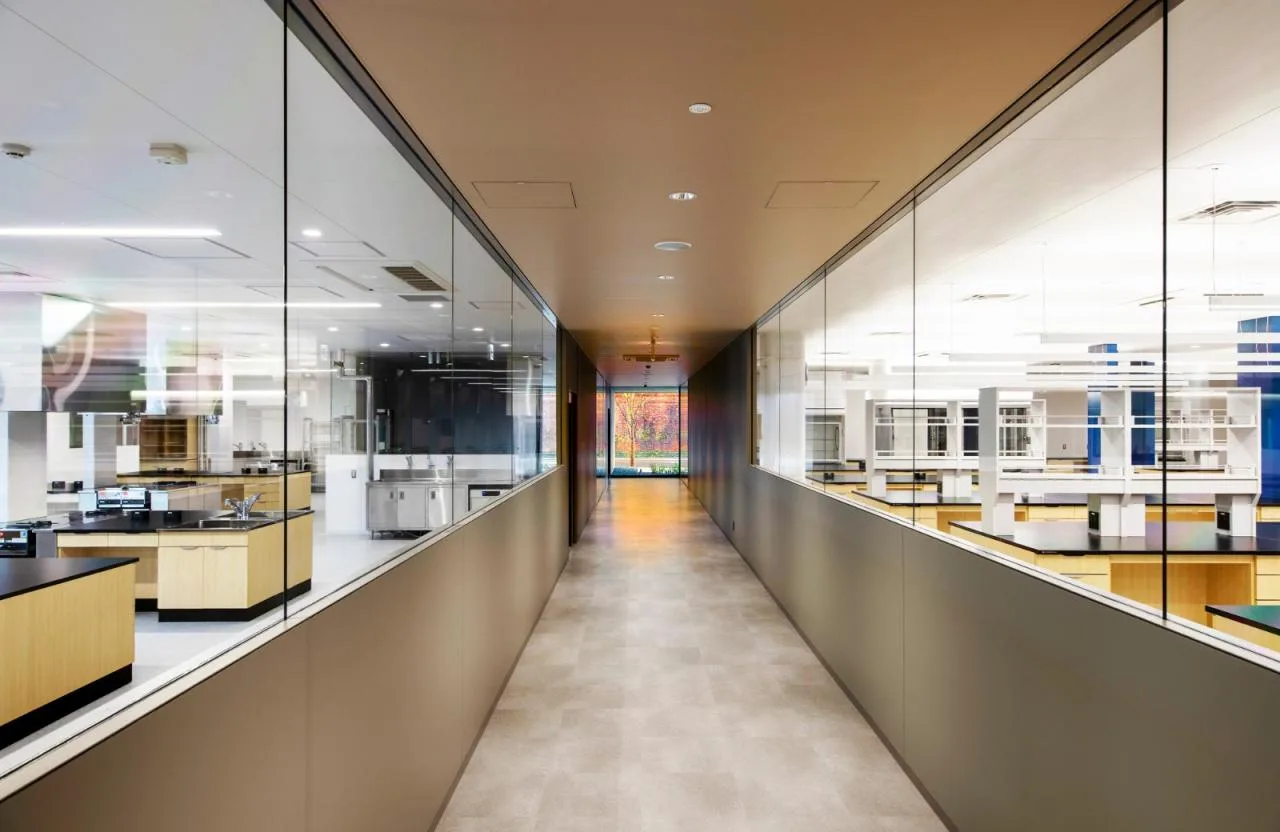
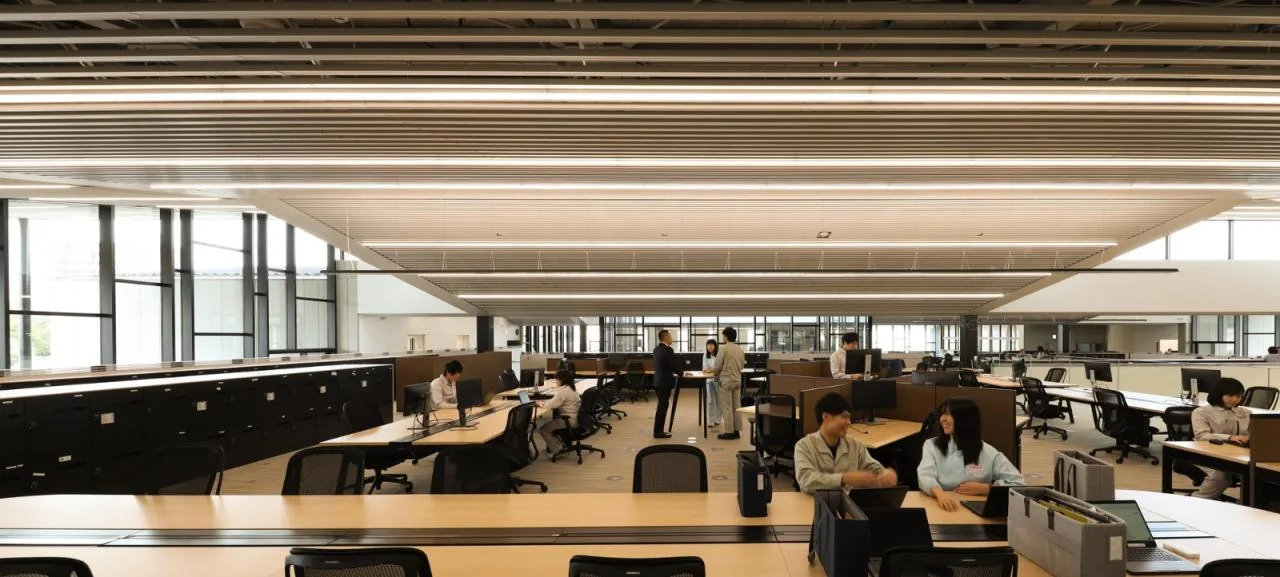
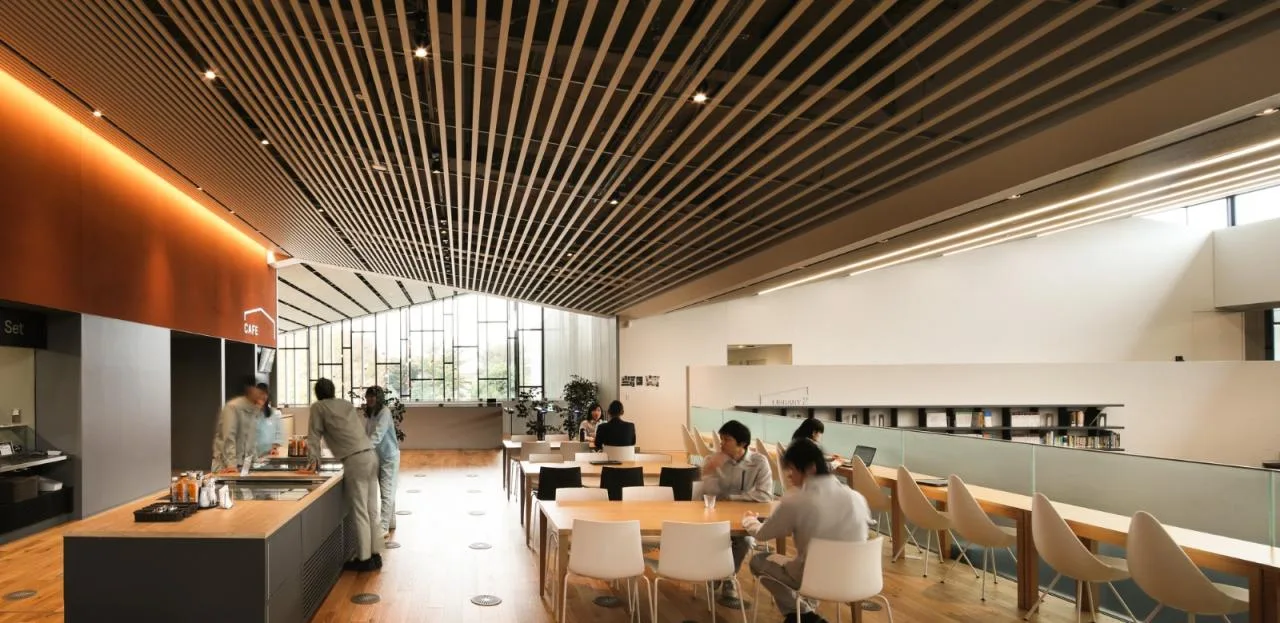
The 10,000 square meter facility consists of only two floors with a straightforward functional layout: the first floor houses experimental areas, while the second floor is dedicated to offices and open workspaces.
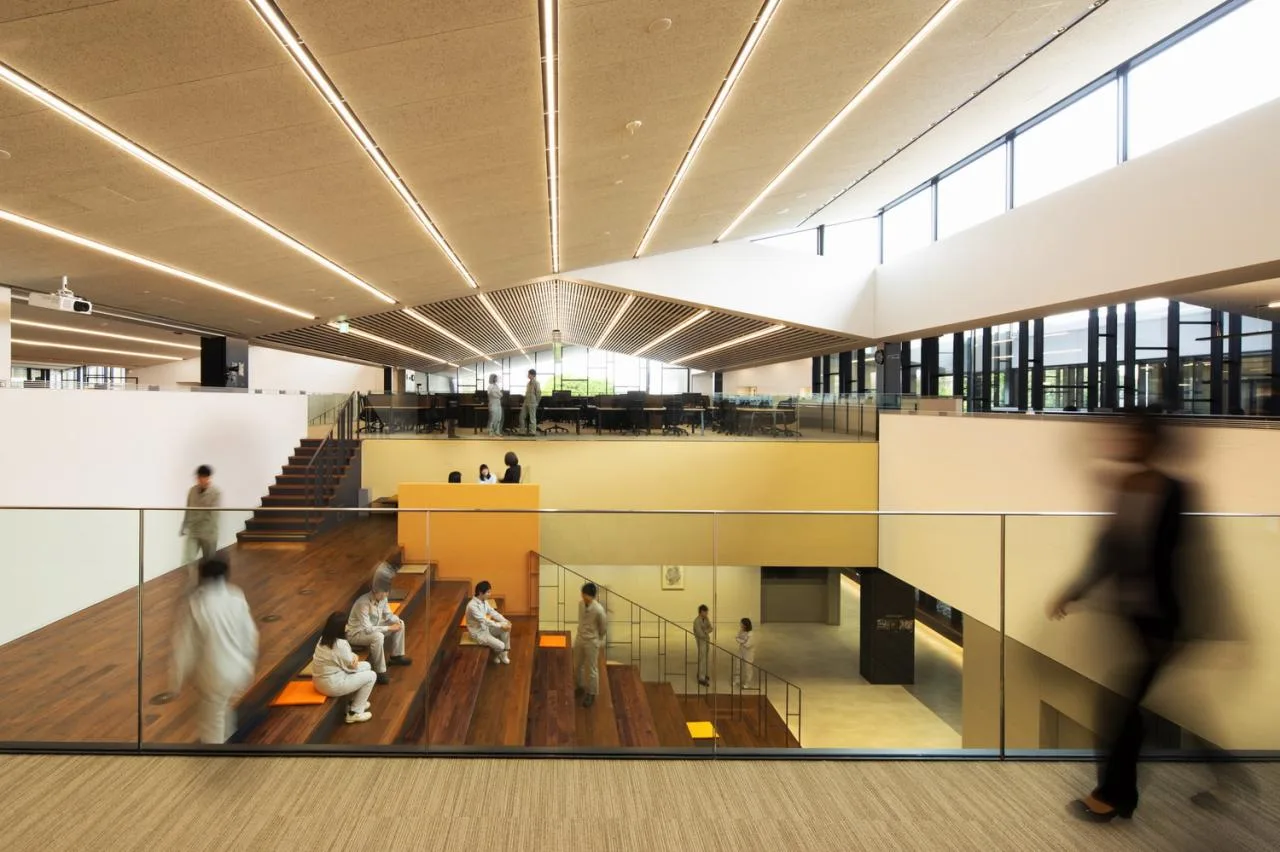
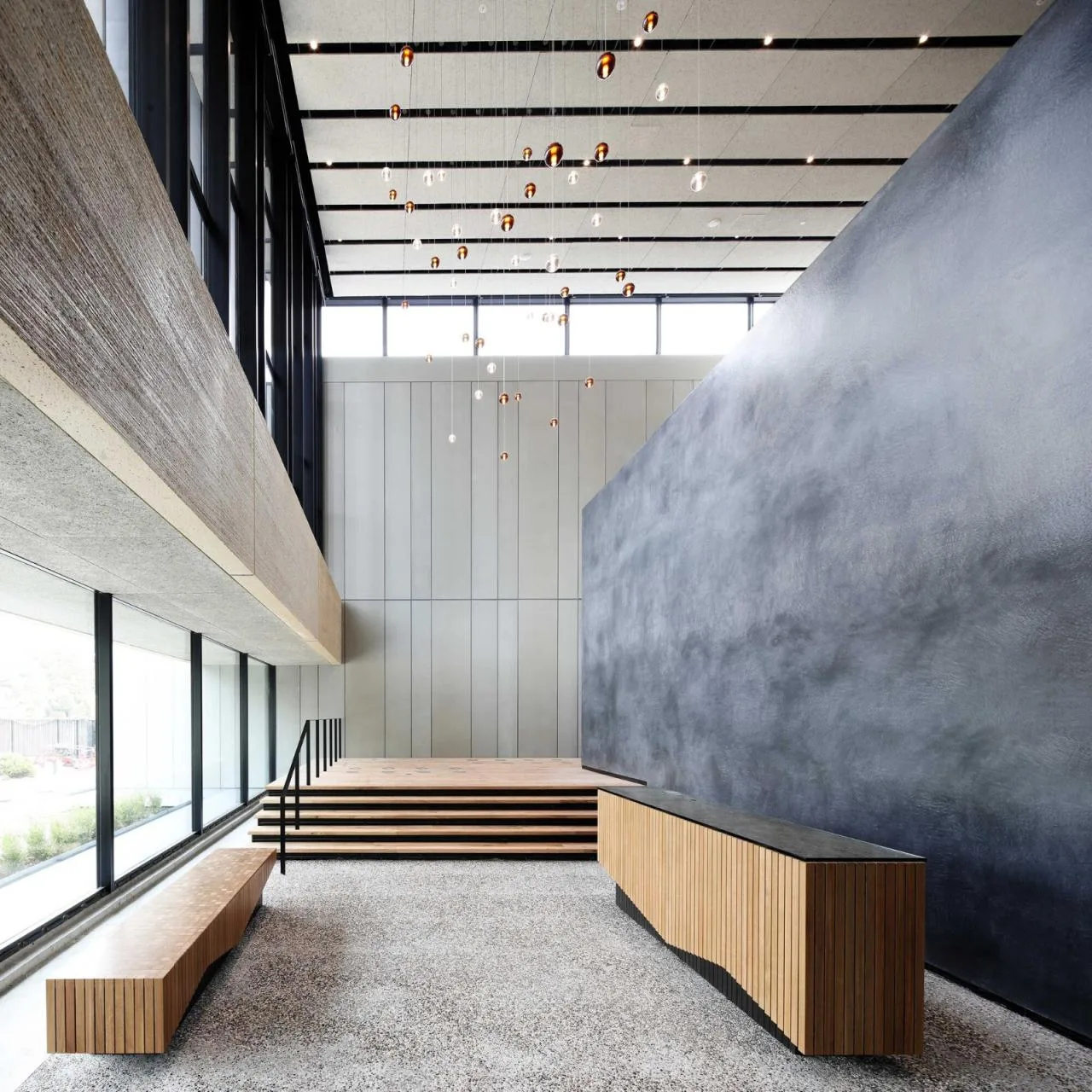
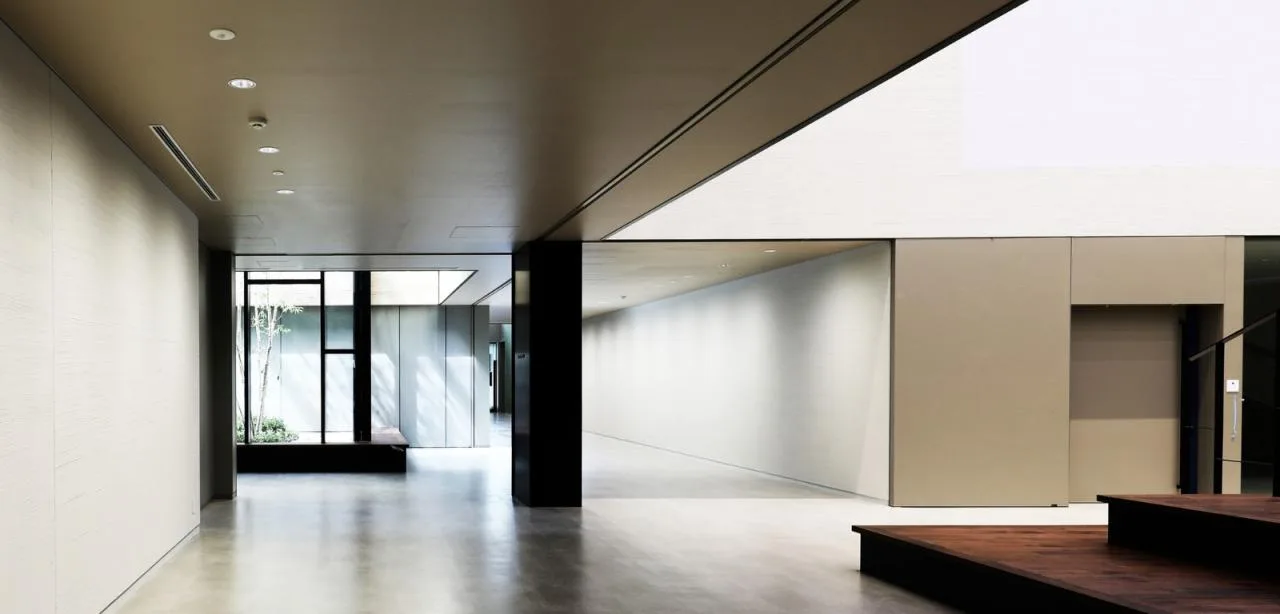
The spacious first floor is designed for maximum flexibility. The second floor’s workspace is arranged like a chessboard, with “white” quadrilateral areas surrounded by “black” blocks representing atriums, courtyards, and terraces. The floor height subtly varies with each “square” in the layout.
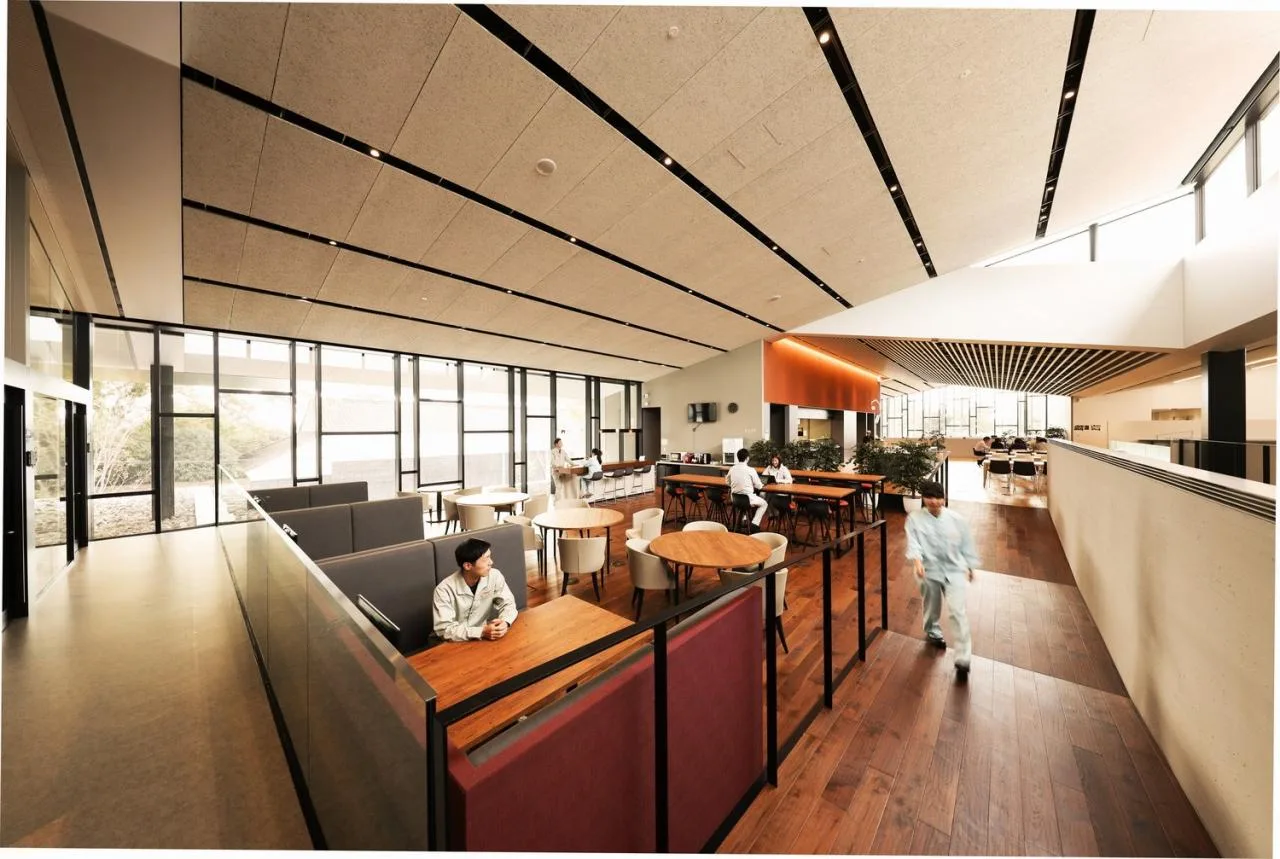
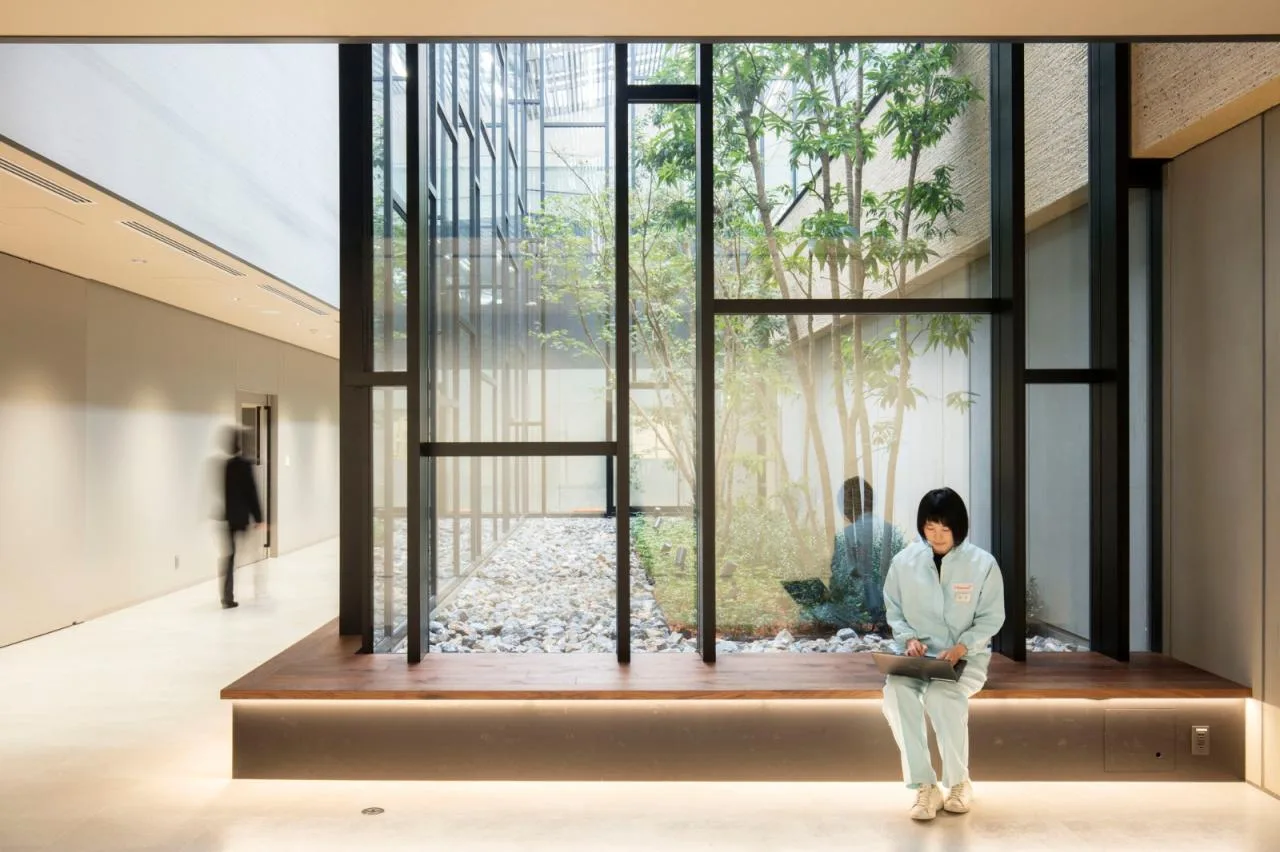
Additionally, the building’s gable roof is partially “flipped upward,” creating a courtyard beneath that allows natural light and ventilation to flow inside. Wherever you observe the building, both floors offer spaces that connect occupants with natural changes. After a long period of isolation due to the pandemic, this connection to nature provides a comforting environment for users.
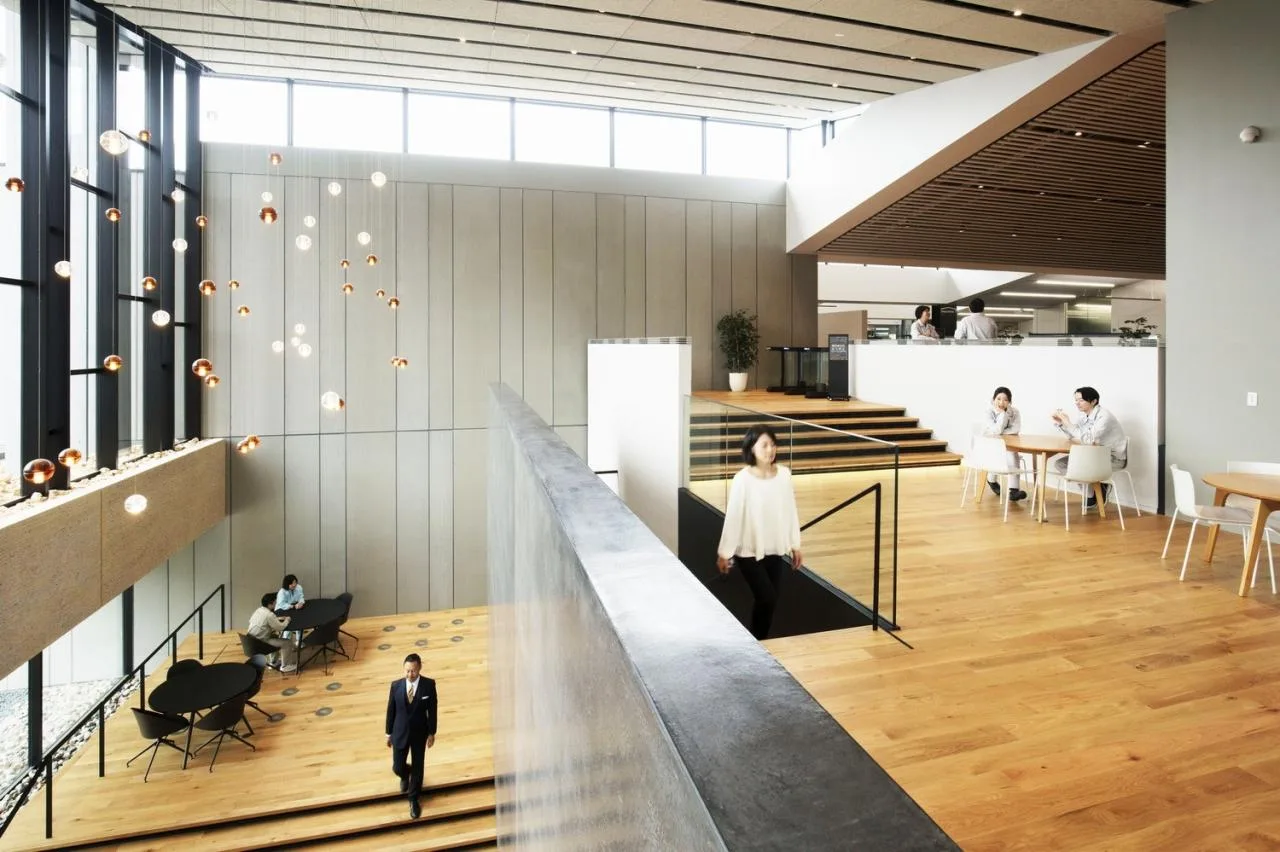
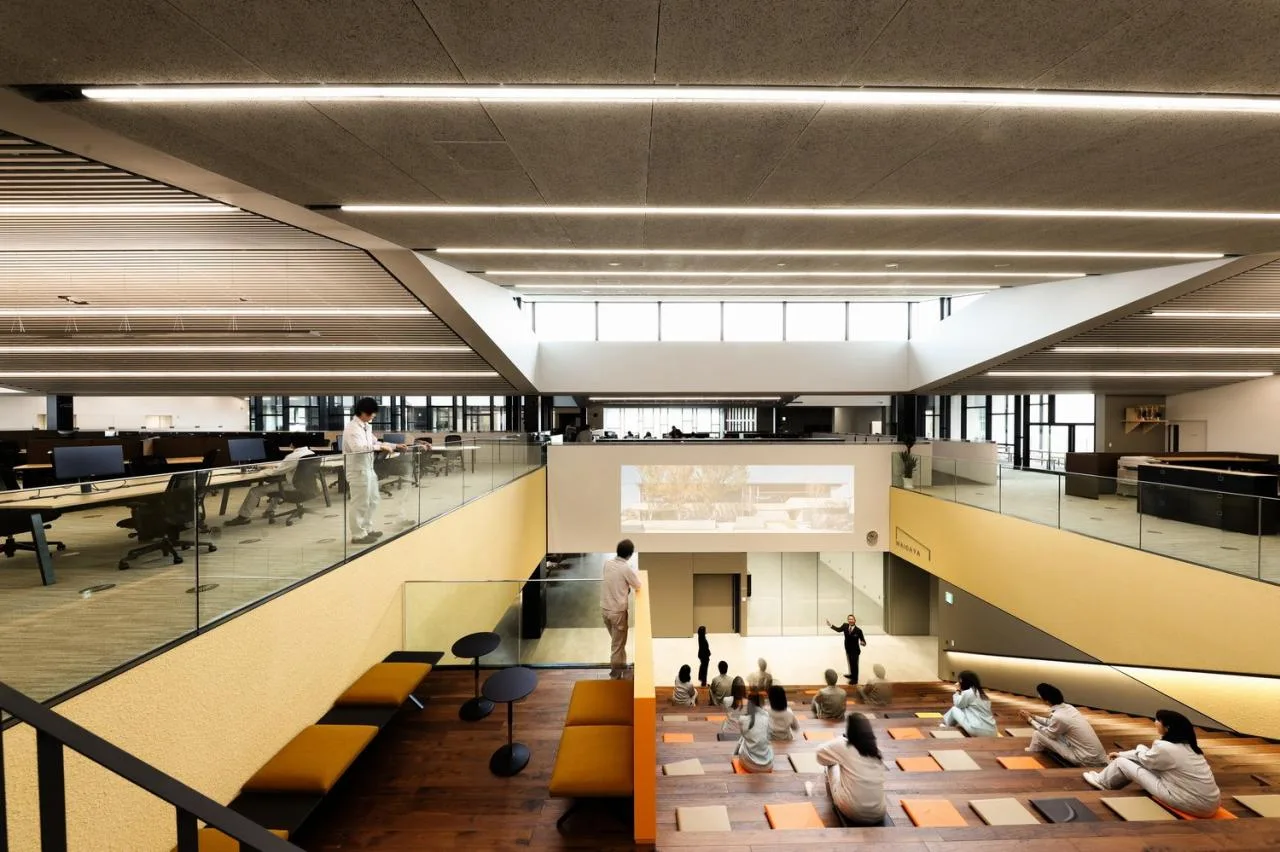
The traditional chemical process of soy sauce manufacturing continues here, performed in spaces that blend urban landscapes with natural surroundings. The new Guijia Wan R&D Center embraces this heritage through its thoughtful design: rather than simplifying or isolating these elements, the architects chose to “multiply” and “ferment” them, crafting a building that reflects terrain variation and natural rhythms, allowing occupants to experience harmony between nature and tradition at all times.
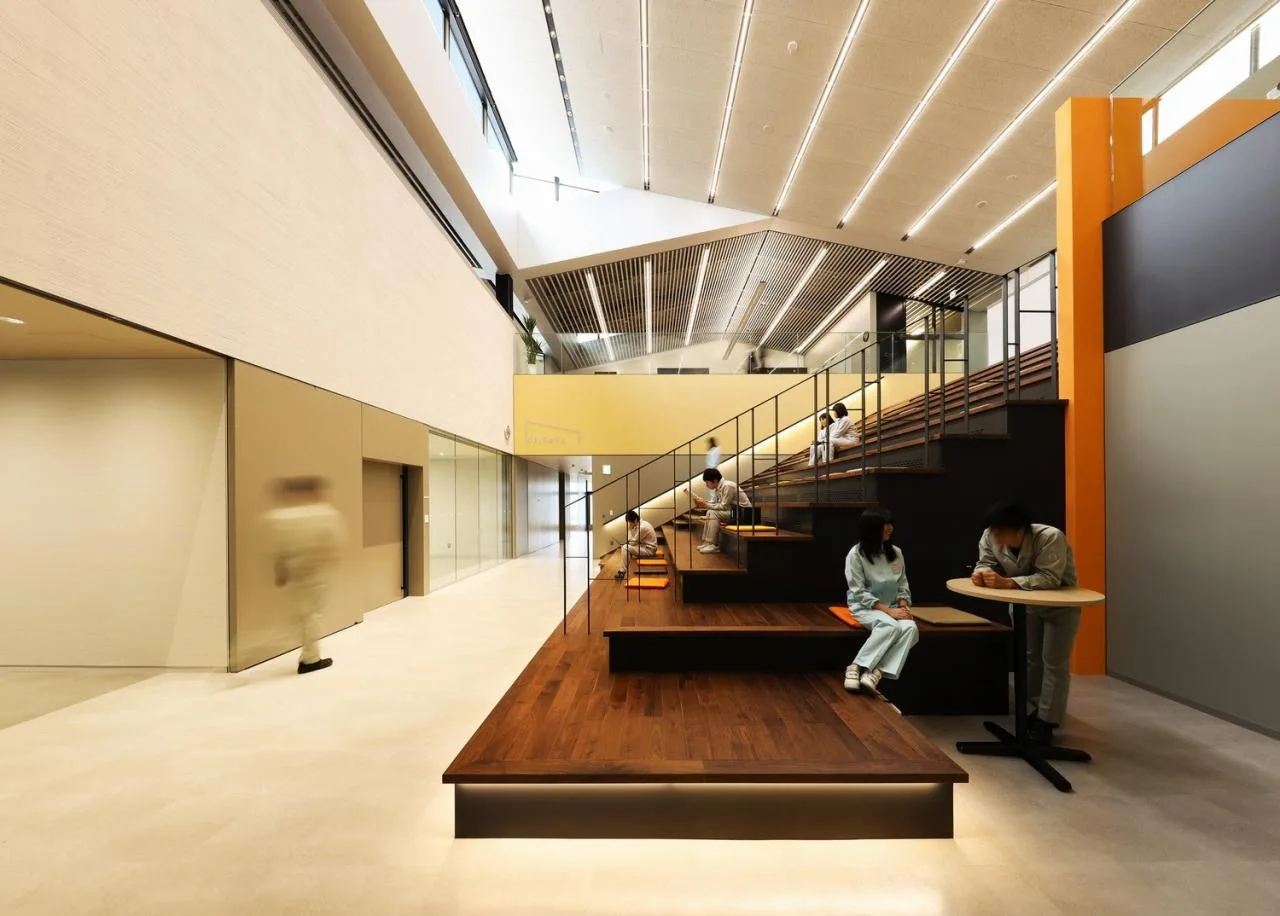
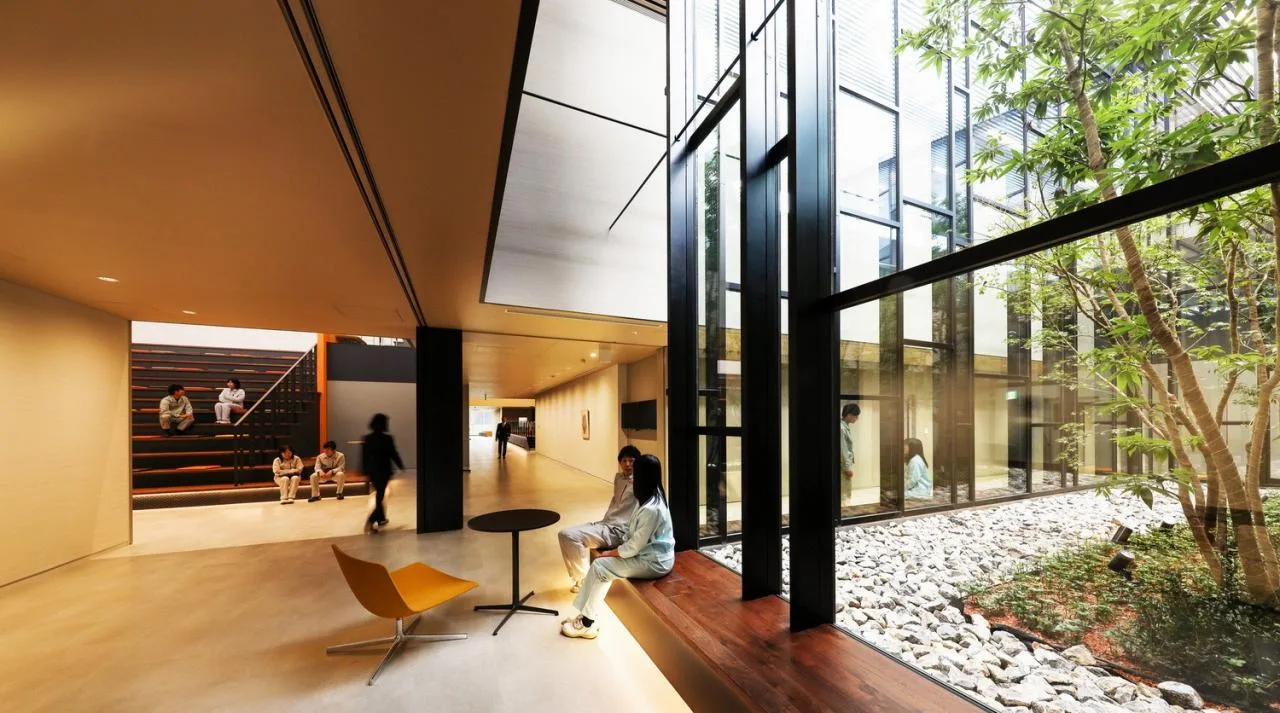
The stepped floor design on the second floor features a 350-millimeter height difference between each “checkerboard” space and adjacent floor slabs, cleverly concealing air conditioning ducts beneath the floor. The first floor’s ceiling height of 4.95 meters accommodates the dense network of ventilation and water pipes above the laboratories.
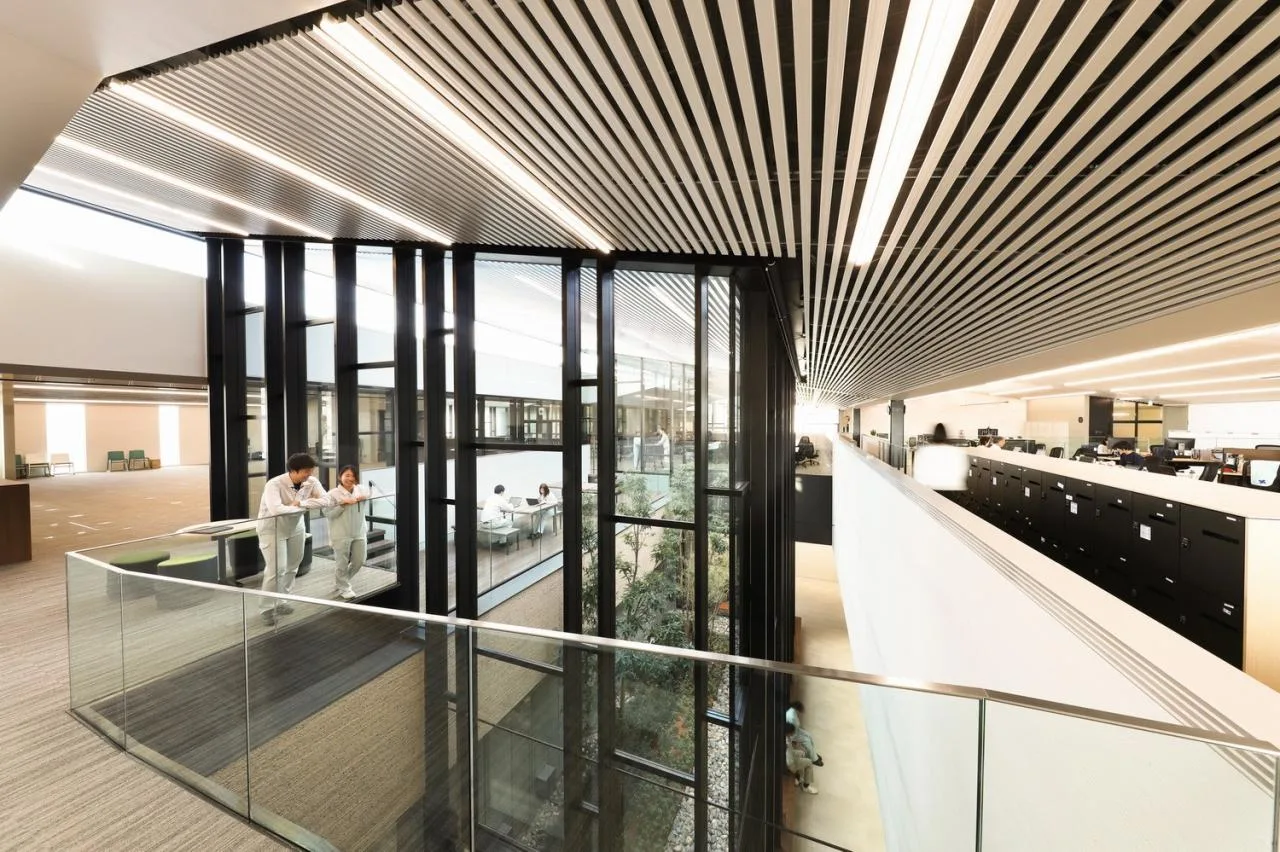
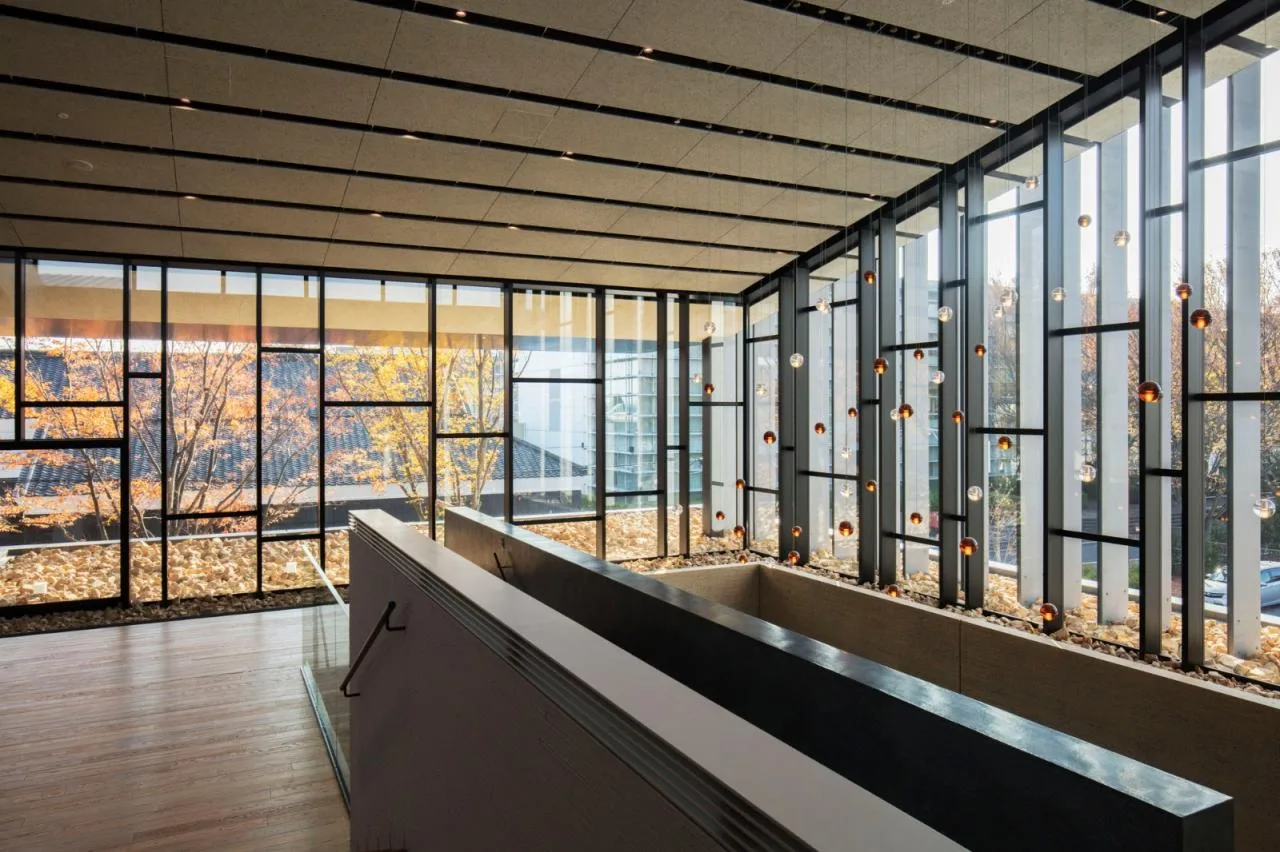
On the second floor, the staircase platform is about one meter lower than the surrounding floor slabs, while the floor height difference itself reaches 1.7 meters. This “basin-shaped” terrain creates a relaxed environment, where high sidelights, courtyards, and outdoor terraces provide constant access to natural views from any point within the building.

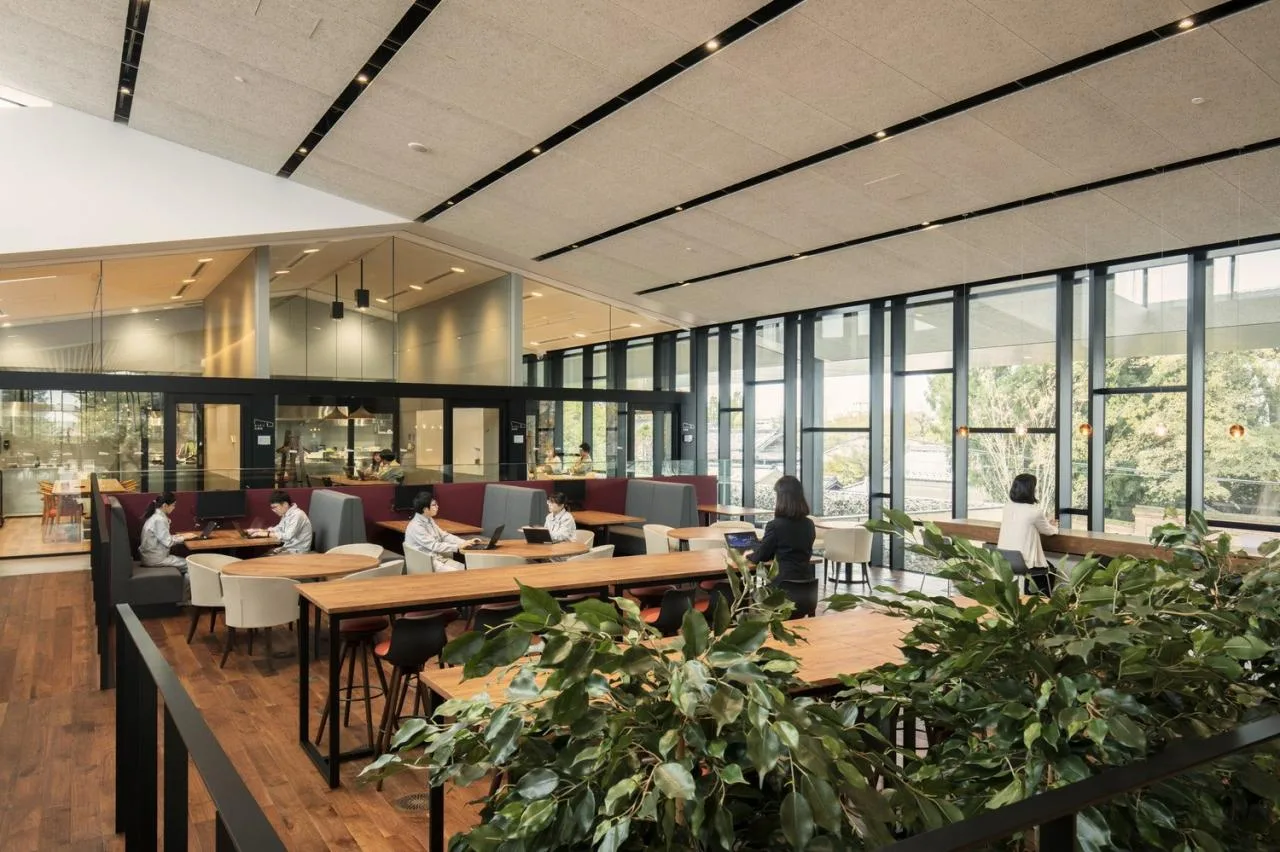
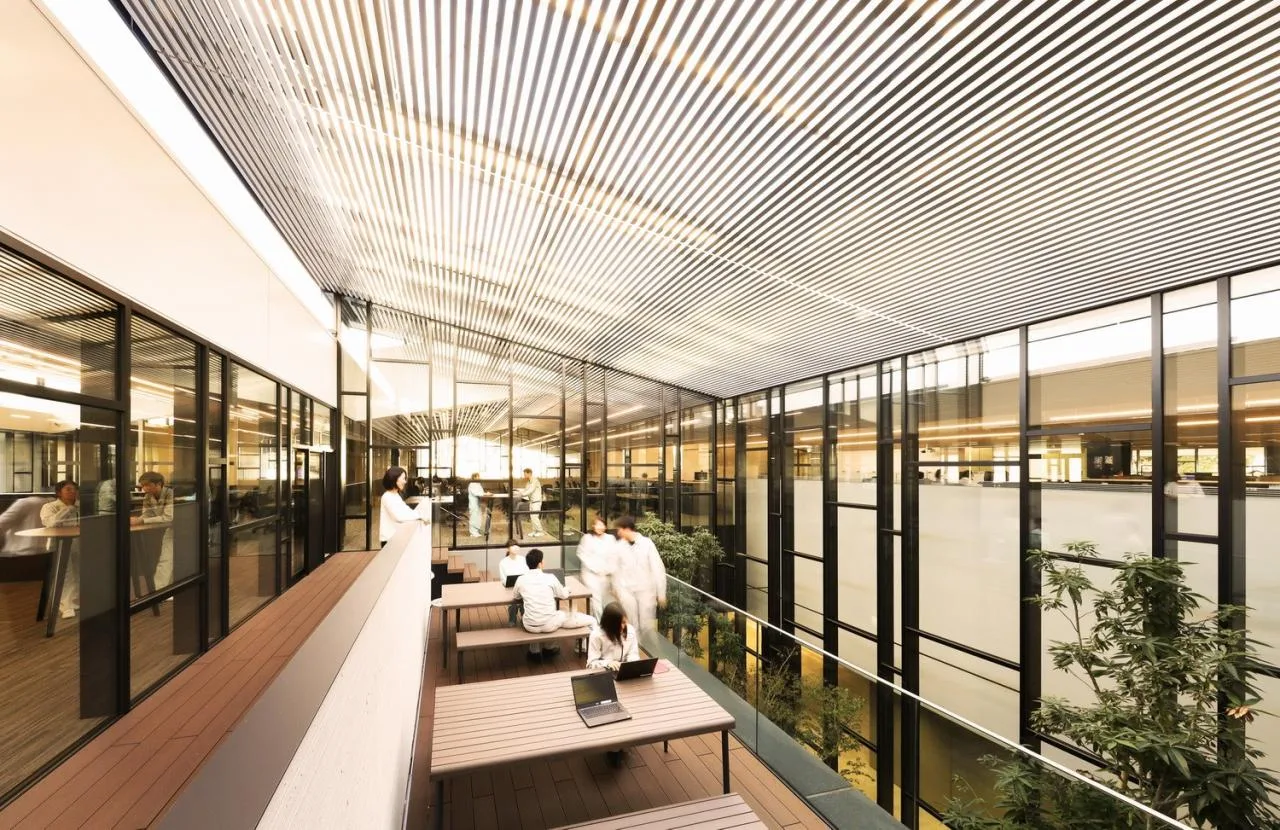
The building’s use of glass and wall-style protective railings, combined with staggered floor slabs, creates multiple “viewing” platforms at different heights. These platforms provide accessible natural experiences for people whether standing or sitting.
Within the building’s uniform grid, these varying indoor viewpoints create diverse and inspiring spaces for researchers. Between the different floor heights, two types of railings—0.7 meters and 1.1 meters tall—can be combined to form 1.8-meter-high partitions, offering a continuous sense of enclosure suitable for focused work.
These wall-type railings also house the air conditioning inlets, complementing the ground-level outlets to establish an efficient indoor air circulation system.
Project Drawings
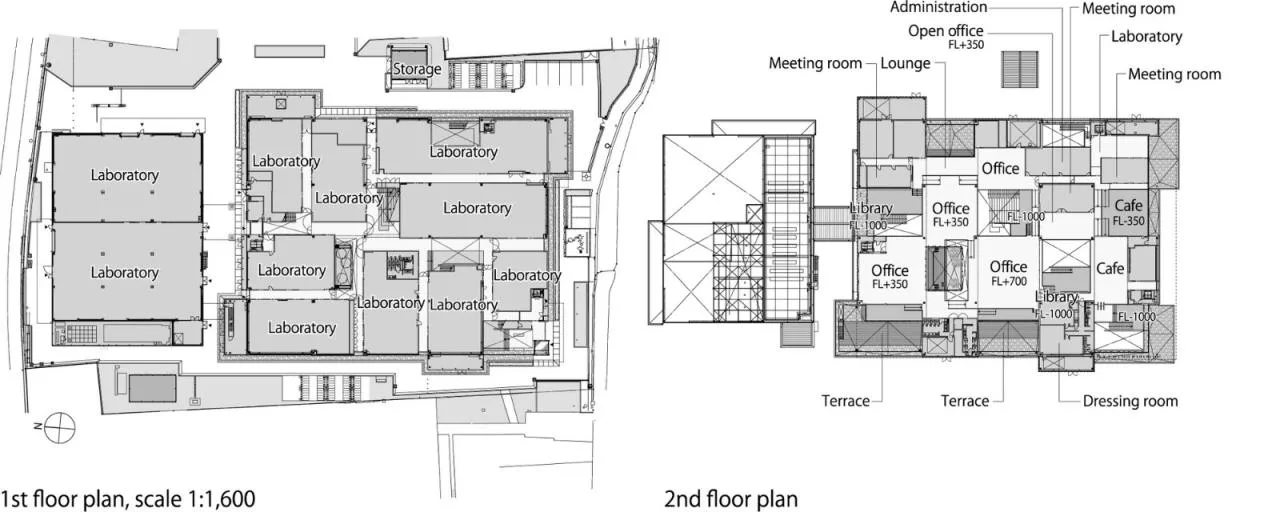
△ Plan View
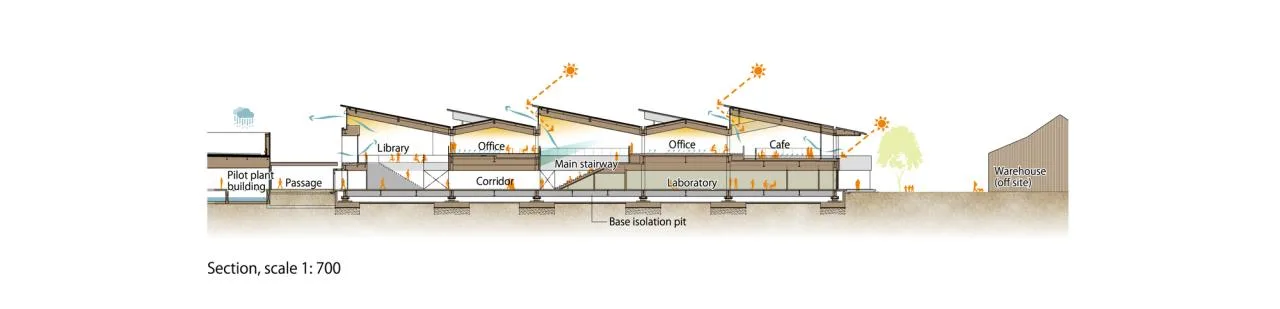
△ Section Diagram
Project Information
Architectural Design: Japanese Architecture Design
Area: 11,707 m²
Project Year: 2019
Photographers: Gangosha, Harunori Noda
Owner: Guijia Wan Co., Ltd.
Design Development: Kajima Corporation













Must log in before commenting!
Sign Up