
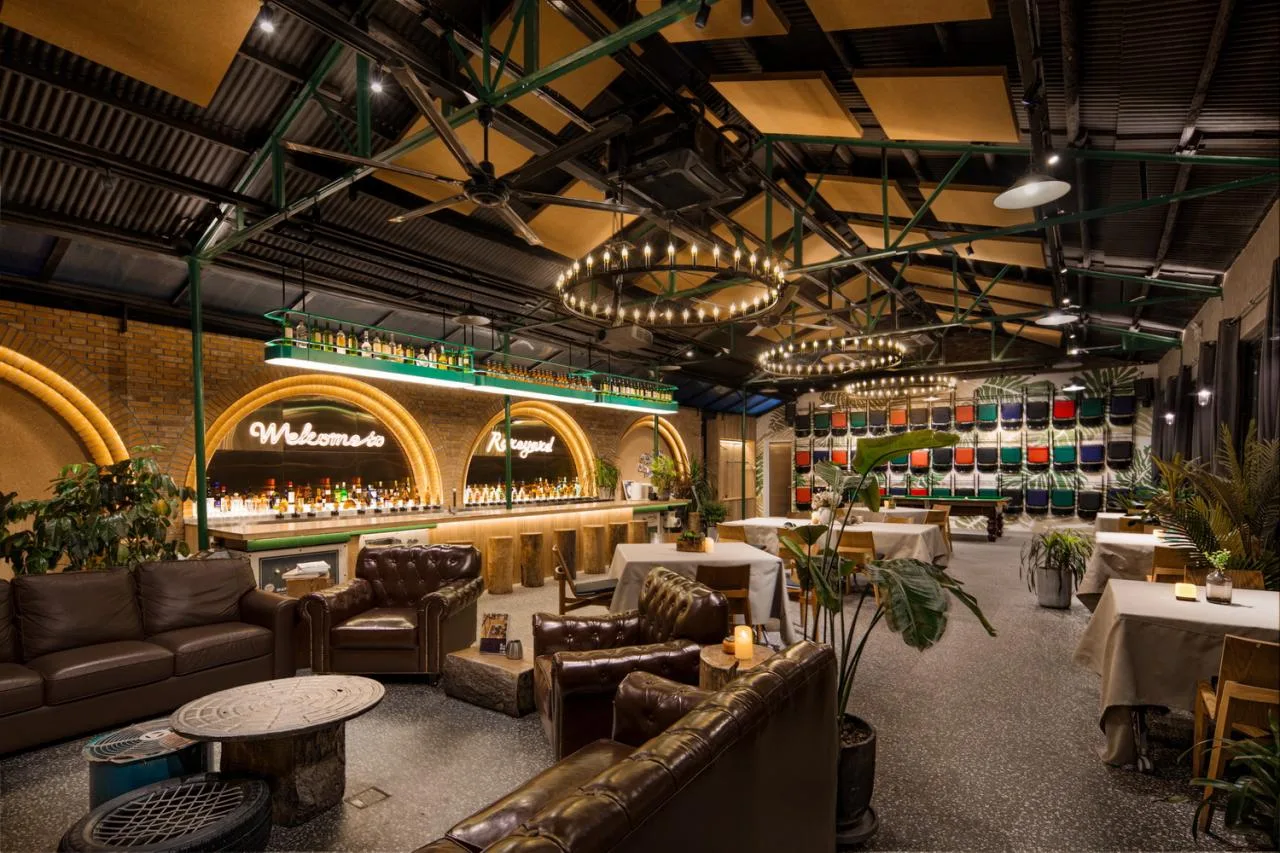
Serving as the primary public activity area for the Beijing-based homestay brand “Rareyard Village,” the workshop first underwent renovation in 2017. Over the past four years, it has witnessed the backyard’s growth and expansion, gradually becoming the central hub connecting various functional spaces within the property.
Timeline: Before Renovation – First Renovation in 2017 – Second Renovation in 2021
With the onset of the post-pandemic era, suburban leisure has emerged as a key growth sector in China’s urban tourism. Simultaneously, consumer perceptions of homestays have evolved: these spaces are no longer seen merely as places for relaxation and lodging.
The pursuit of distinctive visual and functional “branding,” the blending of diverse sensory experiences, and the merging of rural and urban lifestyles have compelled the workshop’s renovation to address multiple operational needs as well as leverage the “aggregation power” inherent in spatial design.
PART 01: Former Woodworking Museum | Renovation in 2017
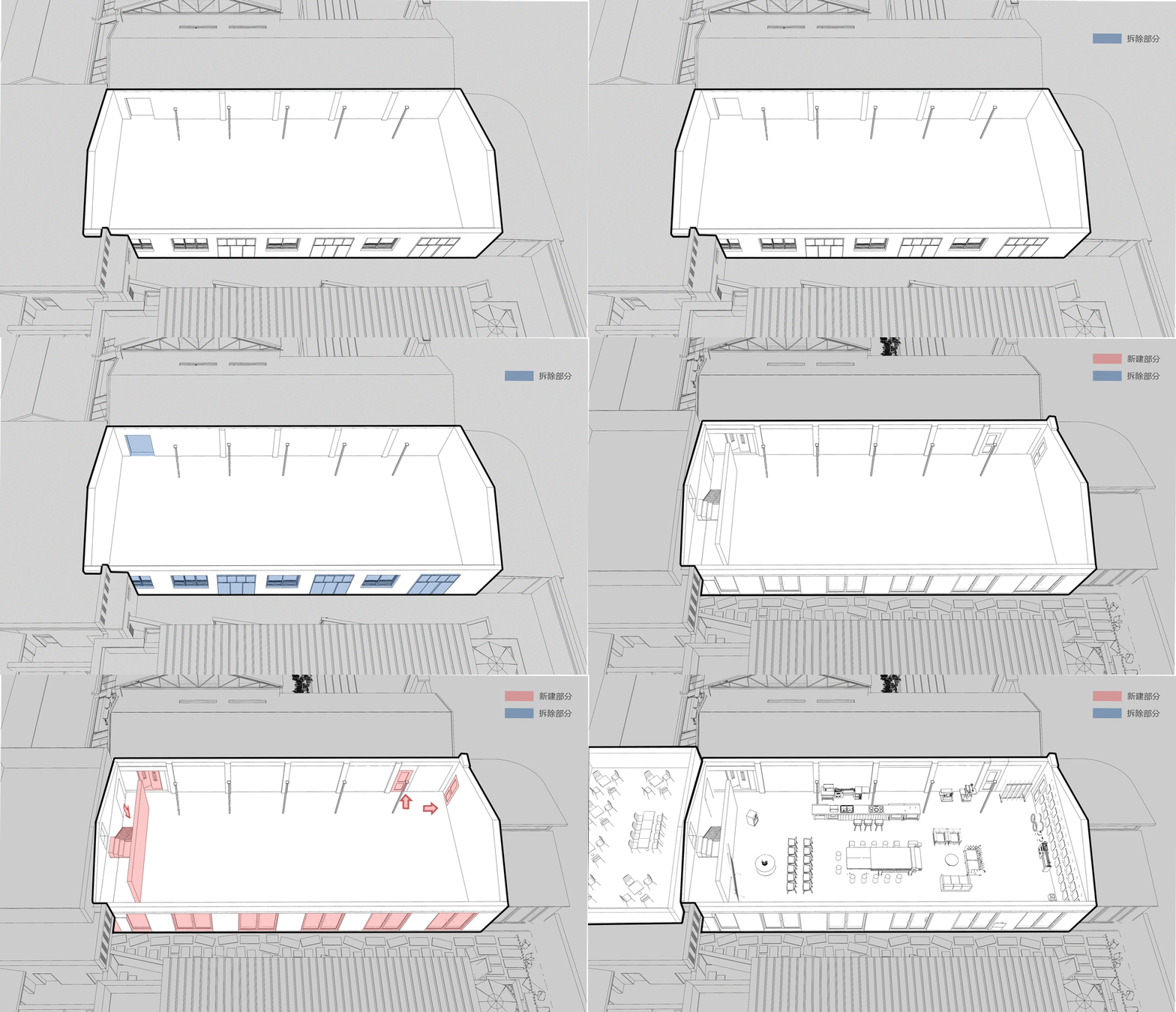
By late 2017, the backyard’s second courtyard, Weishu, had just been completed. To accommodate larger groups for activities and meetings, the original woodworking factory was transformed into a versatile venue.
Animation illustrating the workshop’s first renovation
This renovation introduced a half-height brick wall on the west side, serving as a backdrop for conference settings. The adjacent bungalow’s roof, enclosed by bamboo fencing, became a leisure platform for moon and star gazing. These two spaces are linked by a steel-framed staircase, establishing the main activity venue for the backyard homestay.
△ 2017 Workshop First Renovation Plan
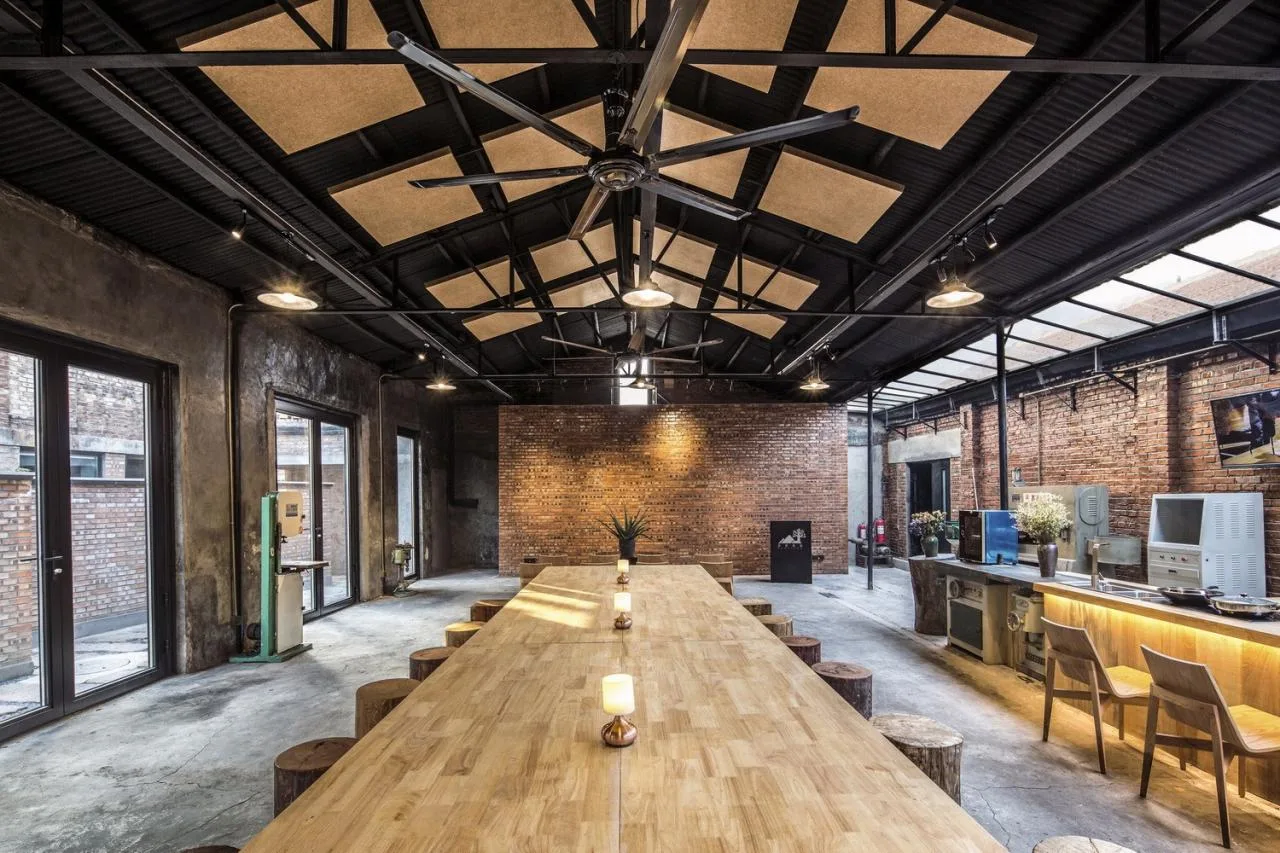
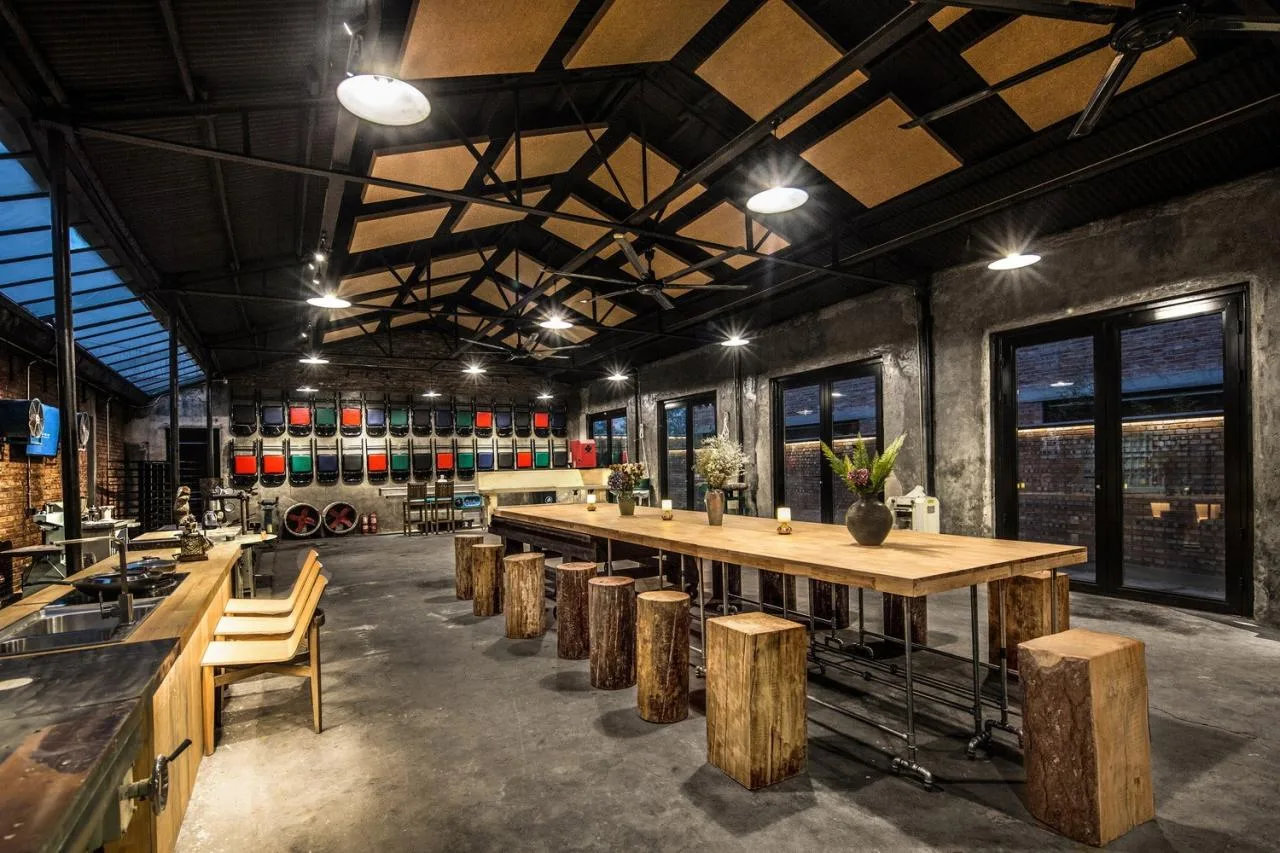
The design respected the original character of the woodworking factory, aiming to restore its authentic atmosphere. The space was themed as a “Woodworking Museum,” where an old woodworking lathe was repurposed into a bar counter and long table. Remaining equipment such as sanding machines and planers were preserved, becoming permanent exhibits within the space.
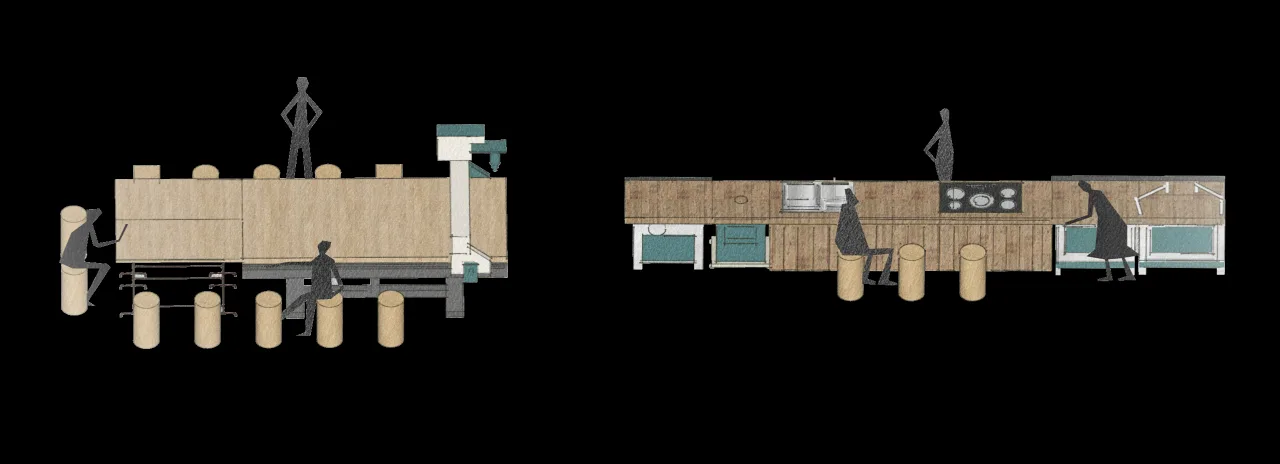
△ 2017 renovation drawings and lathe details
PART 02: Multifunctional Small Bar | Second Renovation in 2021
Over the following four years, the workshop remained the focal point as additional buildings such as the backyard factory warehouse, dusk area, butler dormitory, and office were completed. With the growing number of homestay guests, new functional demands arose for the main activity spaces.
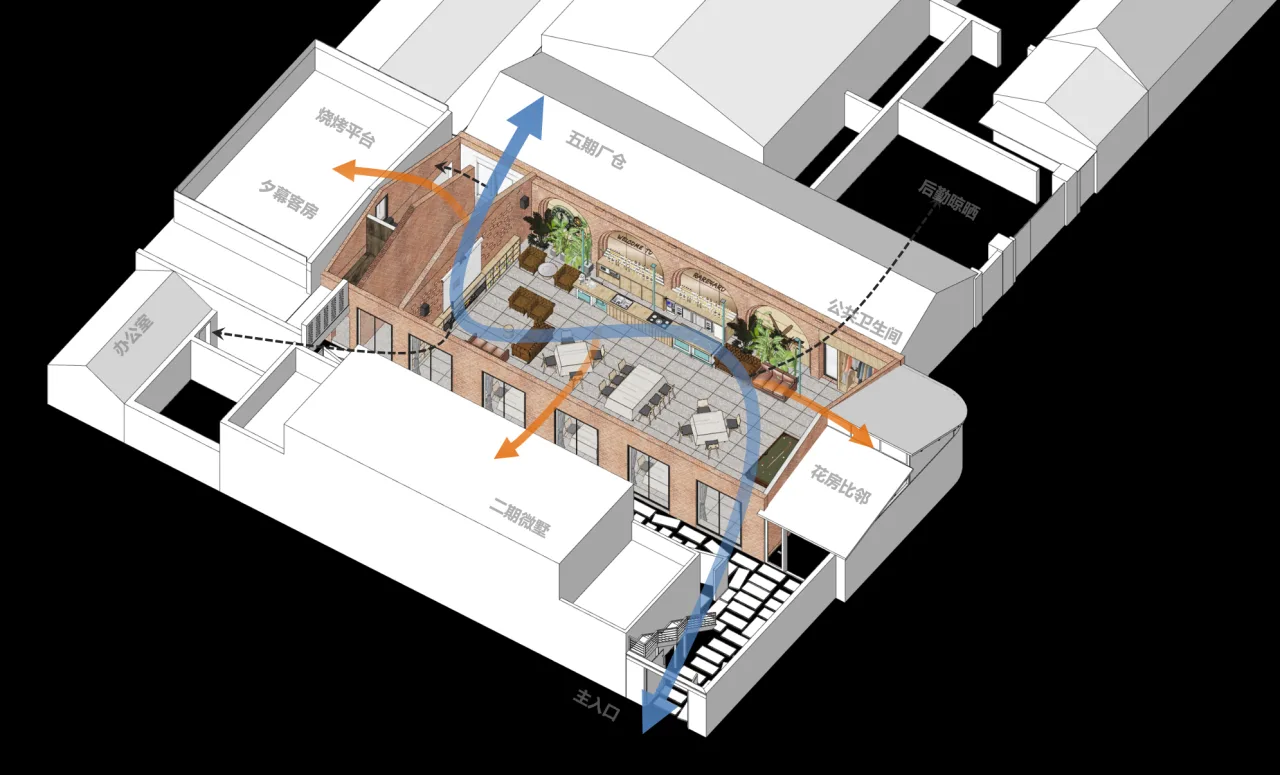
△ Workshop Core Hub Analysis Diagram
Operational experience revealed that as the venue’s only public reception area, the workshop struggled to keep guests for extended periods and was unable to fully support the important “aggregation” function of the northern courtyard.
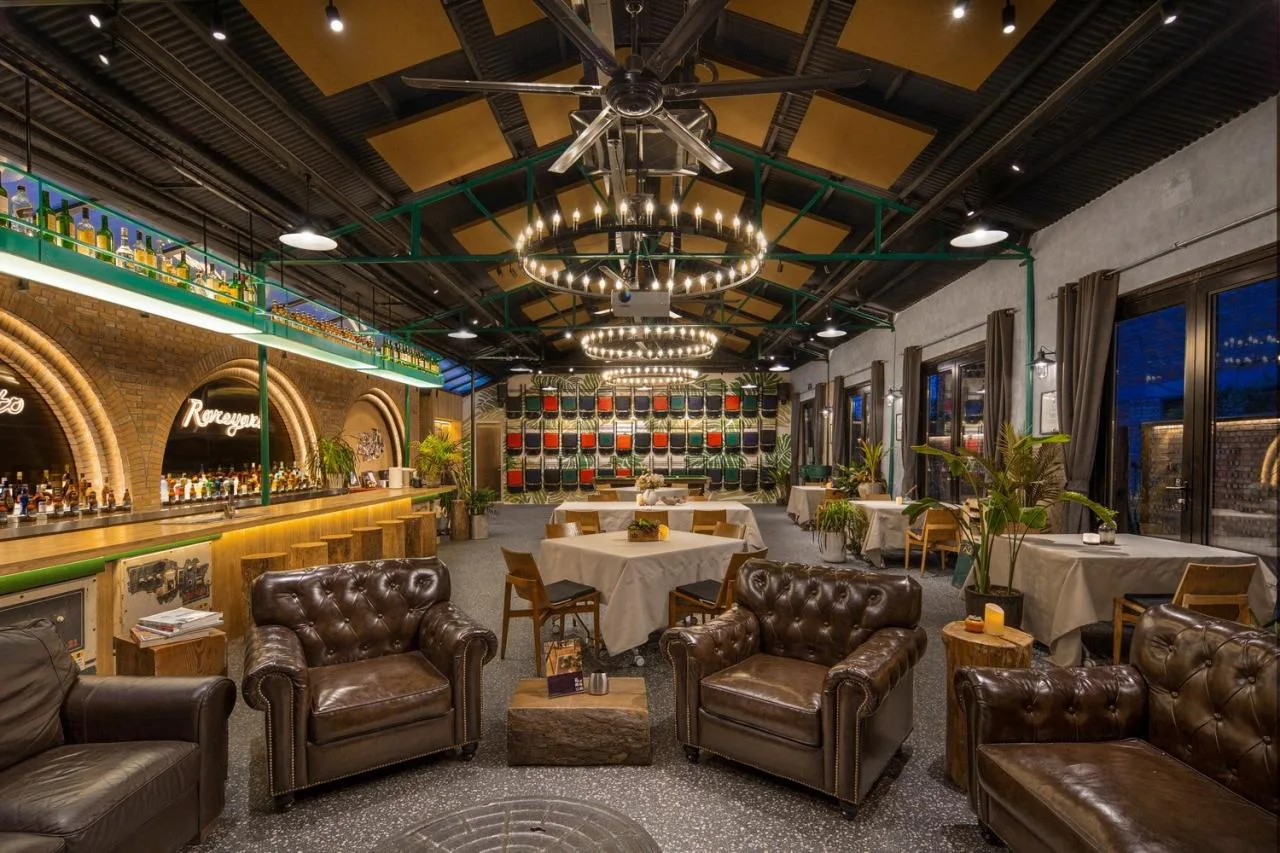
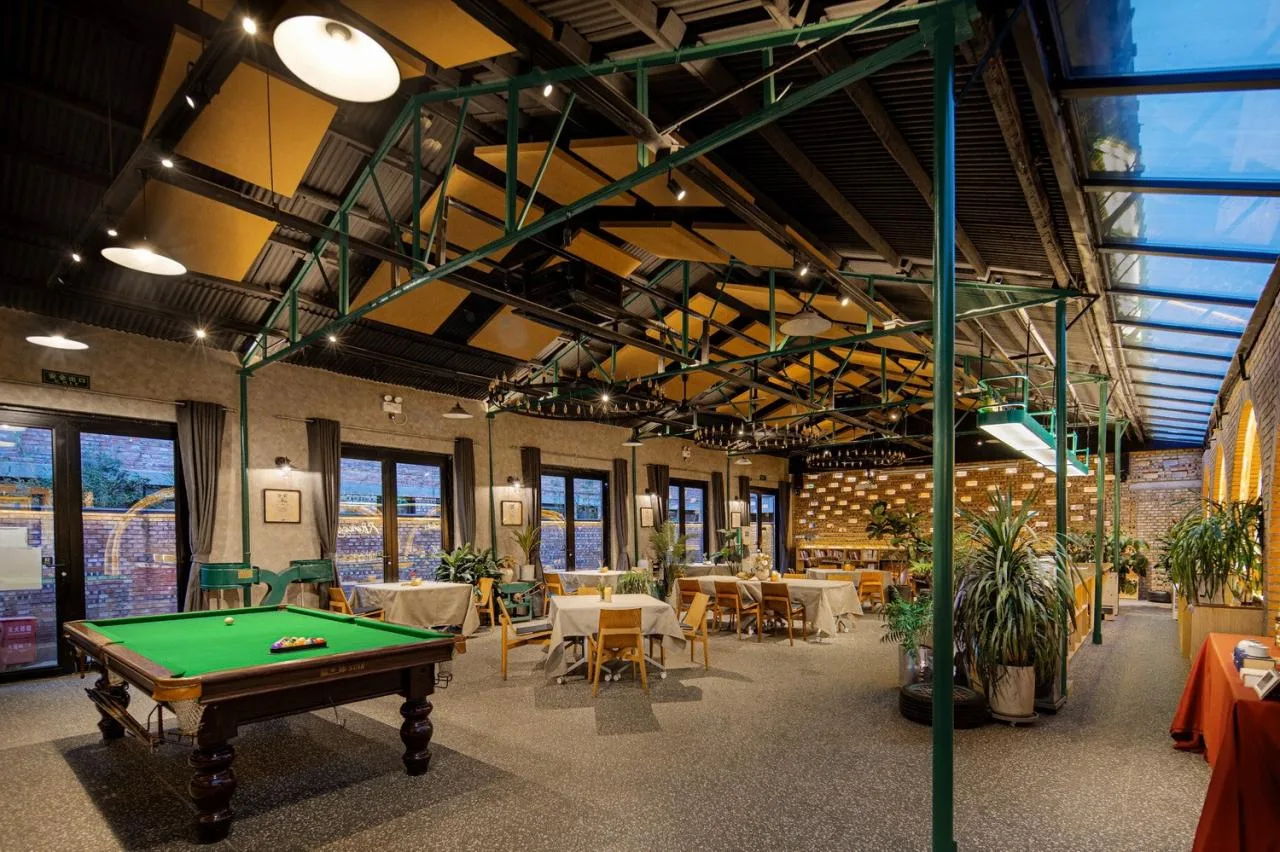
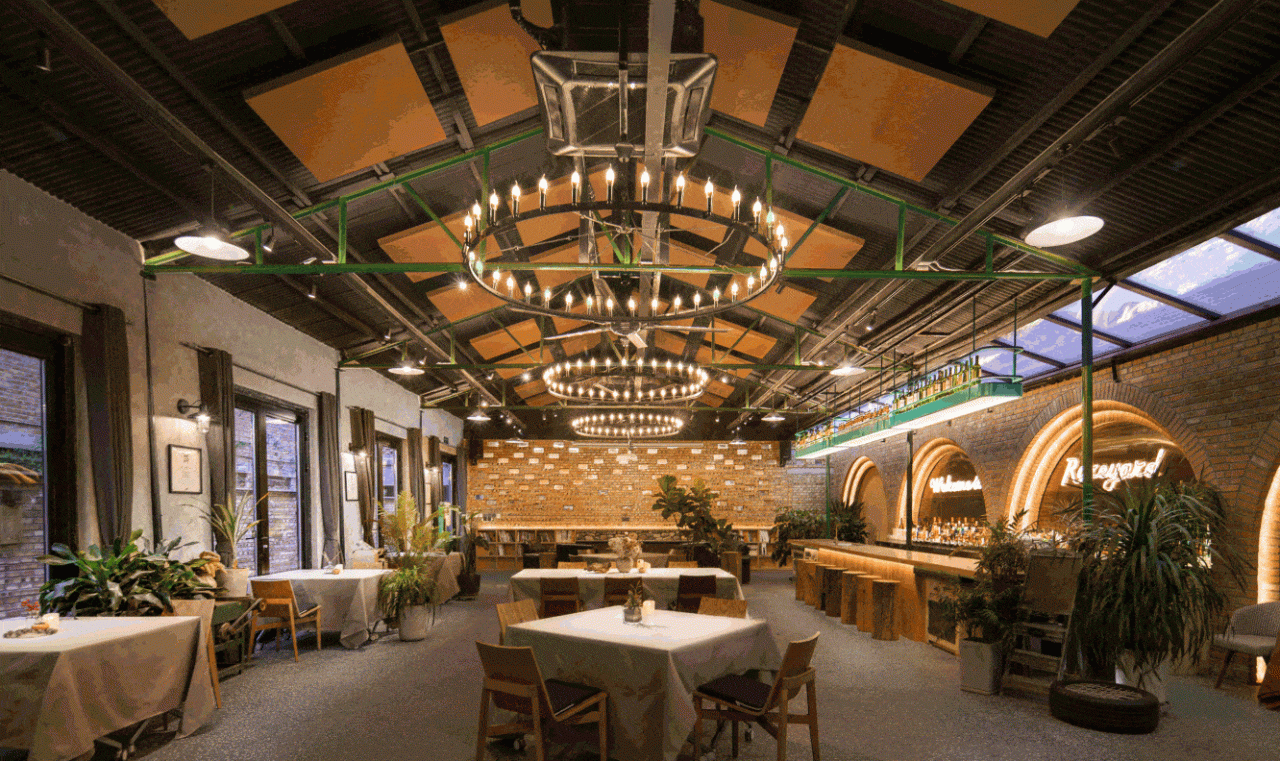
△ Workshop space after the second renovation
After careful evaluation, the workshop’s function was redefined to allow flexible transitions between restaurant, bar, and conference settings, accommodating both entertainment and meetings with a cohesive spatial atmosphere.
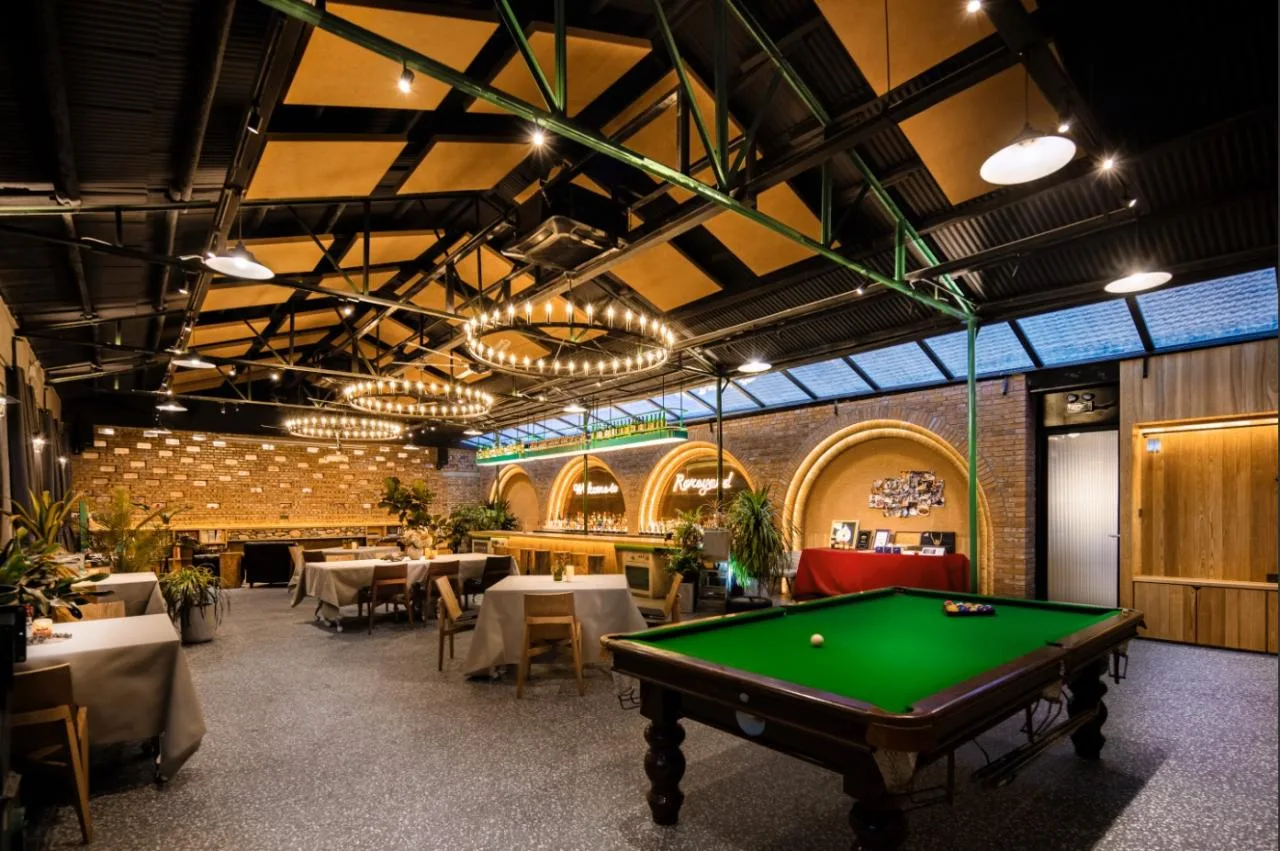
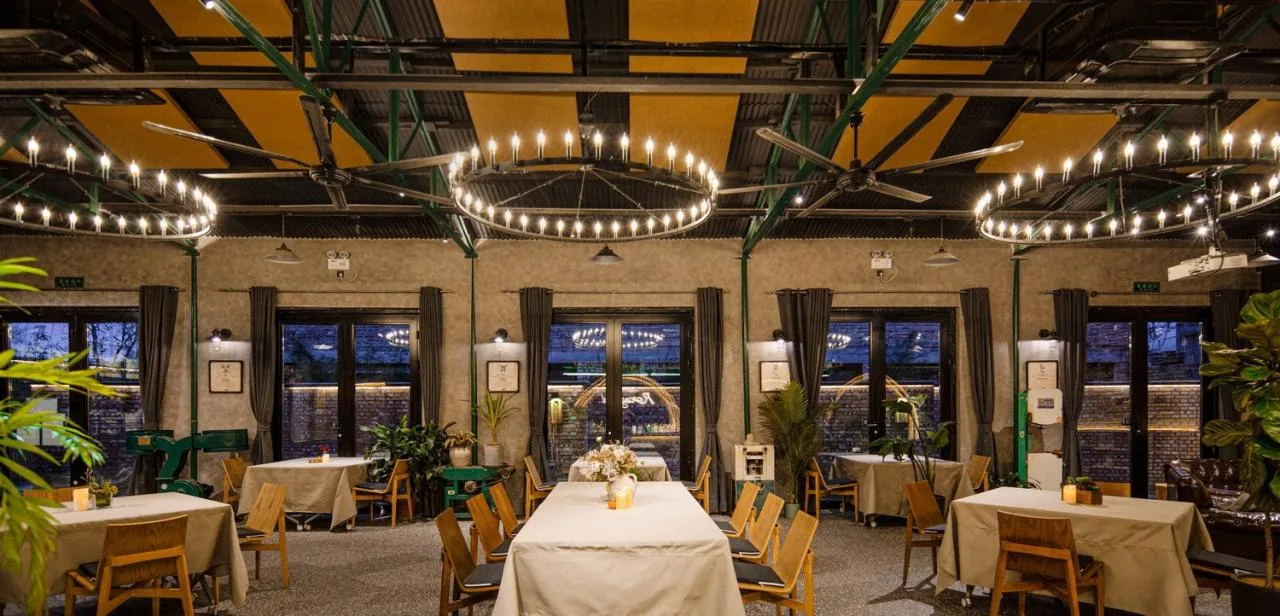
△ Workshop space after the second renovation
>> Streamlined Service Flow
Addressing complex circulation was a priority in the renovation to ensure seamless connectivity among spaces without interference. A new high wall was constructed under the second beam on the west side, which, combined with the existing half-height wall, creates a dual-channel “gray space.”
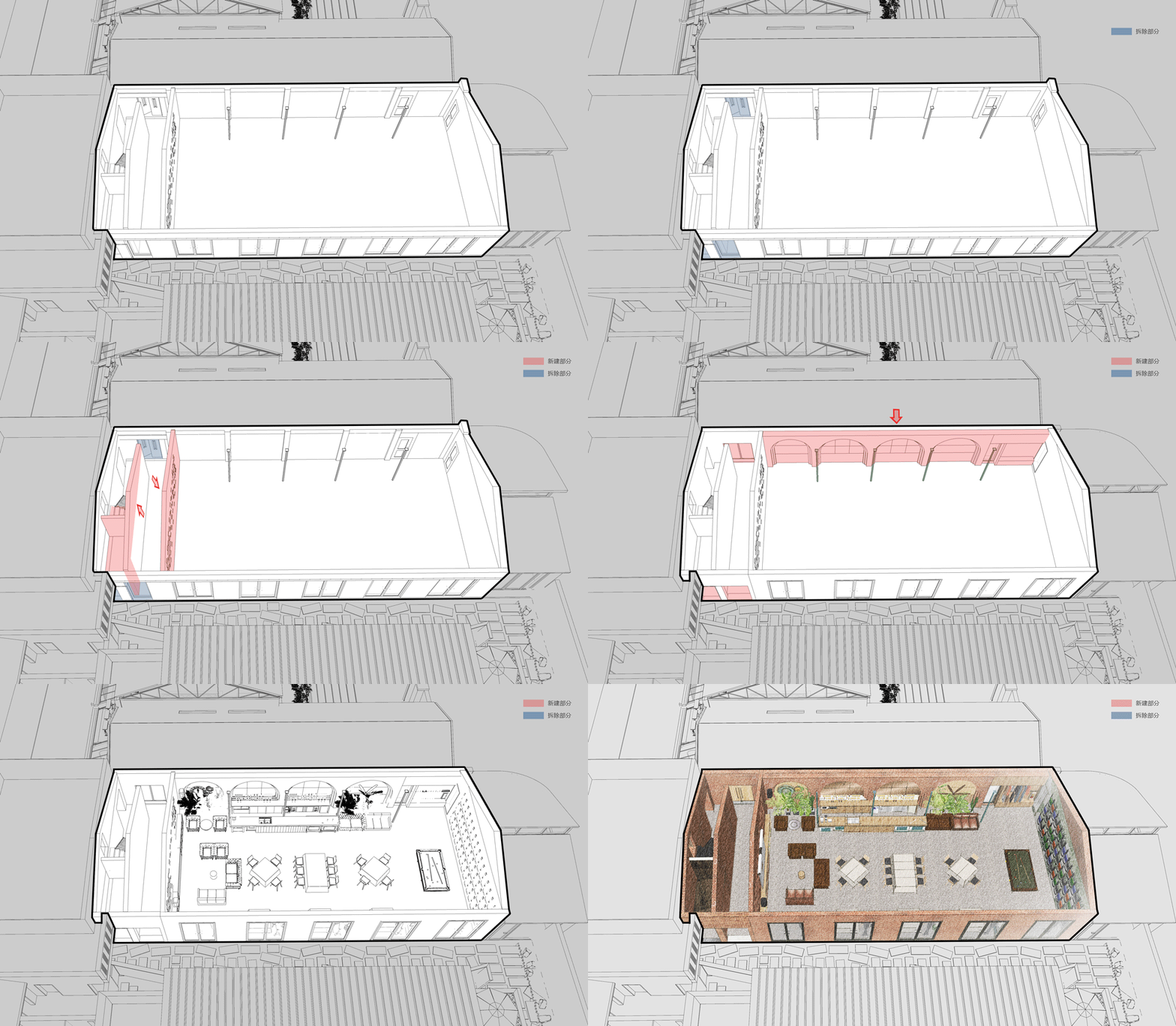
Animation illustrating the second renovation’s circulation design
This corridor extends northward to guest rooms, the factory warehouse, butler dormitory, and a second-floor stargazing platform. To the south, it connects with the main courtyard road leading to guest rooms and logistics offices in the dusk area. The space beneath the steel staircase has been cleverly utilized as an entrance setting for dusk residences. This “gray space” serves as a transportation hub, efficiently integrating the entire site.
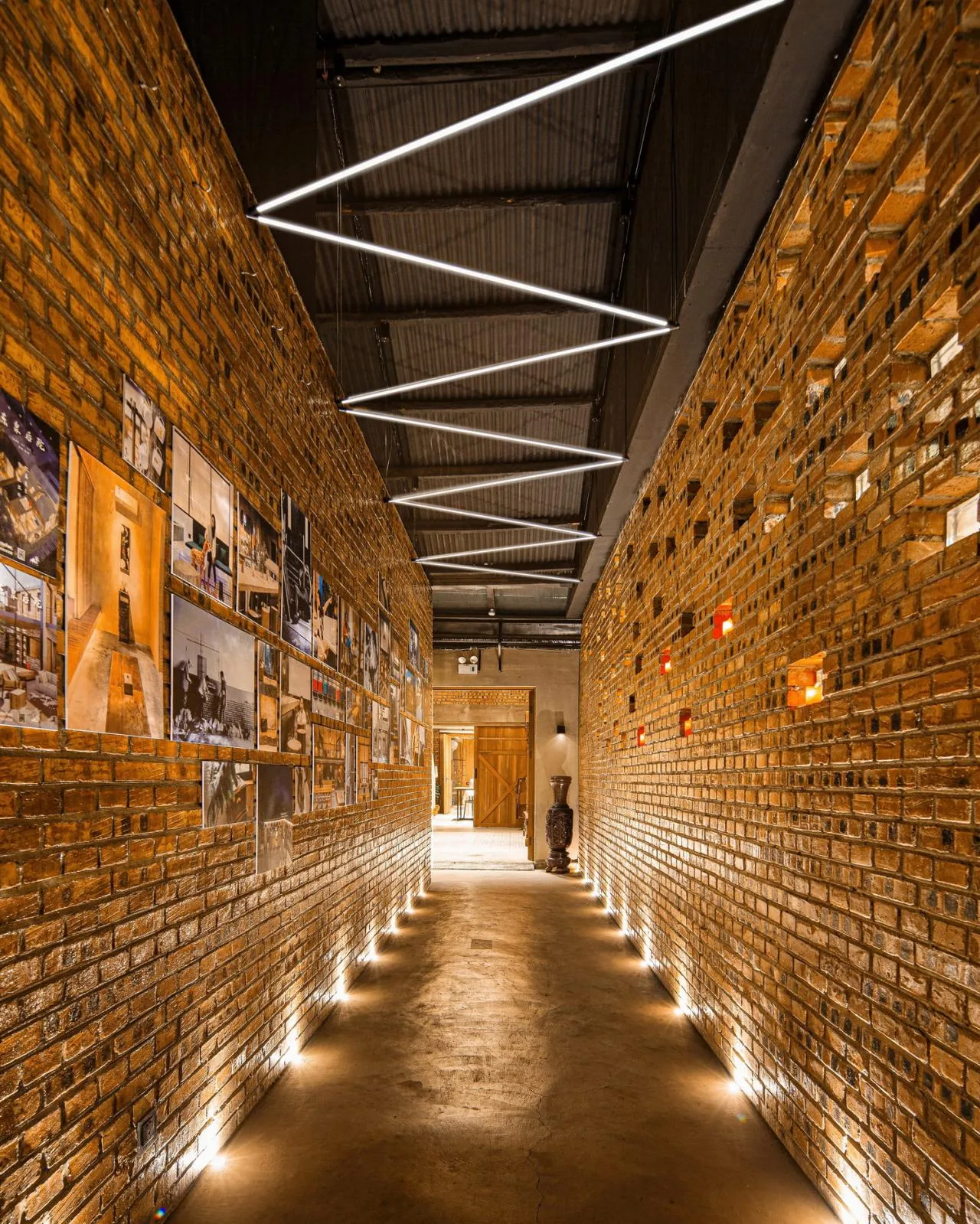
△ Corridor and twilight entrance
>> Enhancing ‘Gathering’ Through Design
The interior renovation focused on the north and west walls. As the primary visual feature upon entering, the space was divided into four continuous arches aligned with the beam-column structure, accentuated with LED light strips to emphasize their contours.
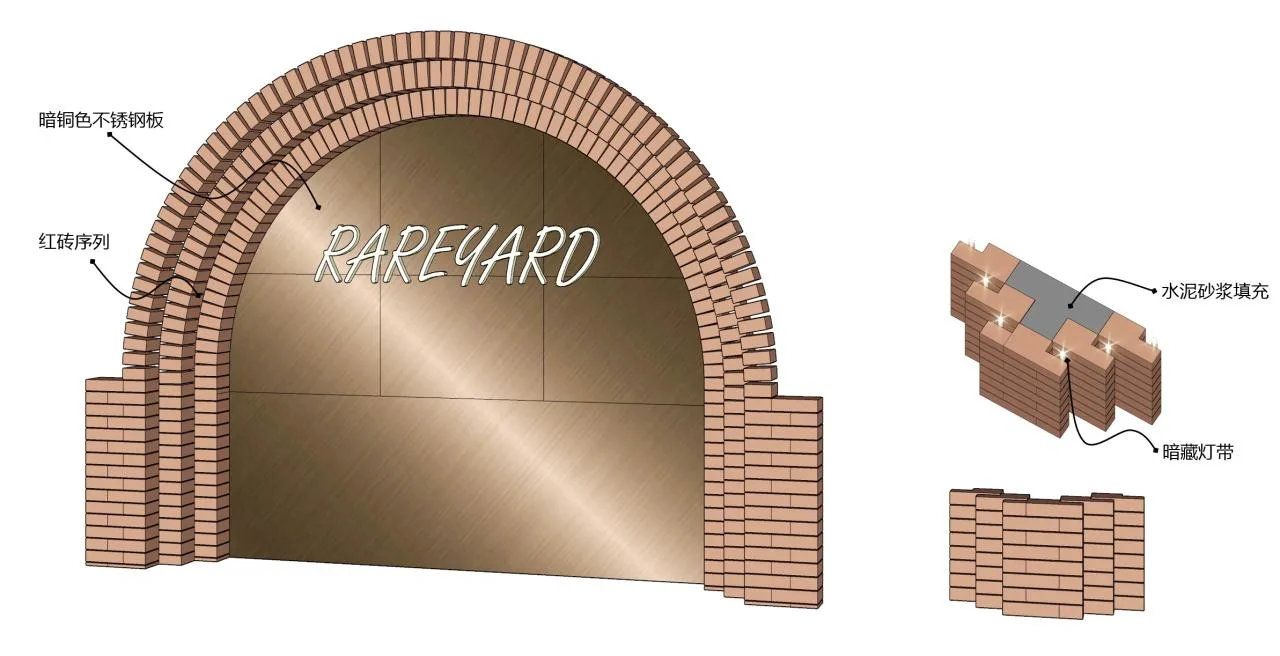
Analysis of the north side arches in the workshop
The two central arches, combined with the bar counter and a coat rack, form the bar area and serve as the visual focal point of the entire space. Steel beams are highlighted with green paint, balancing the otherwise muted color palette.
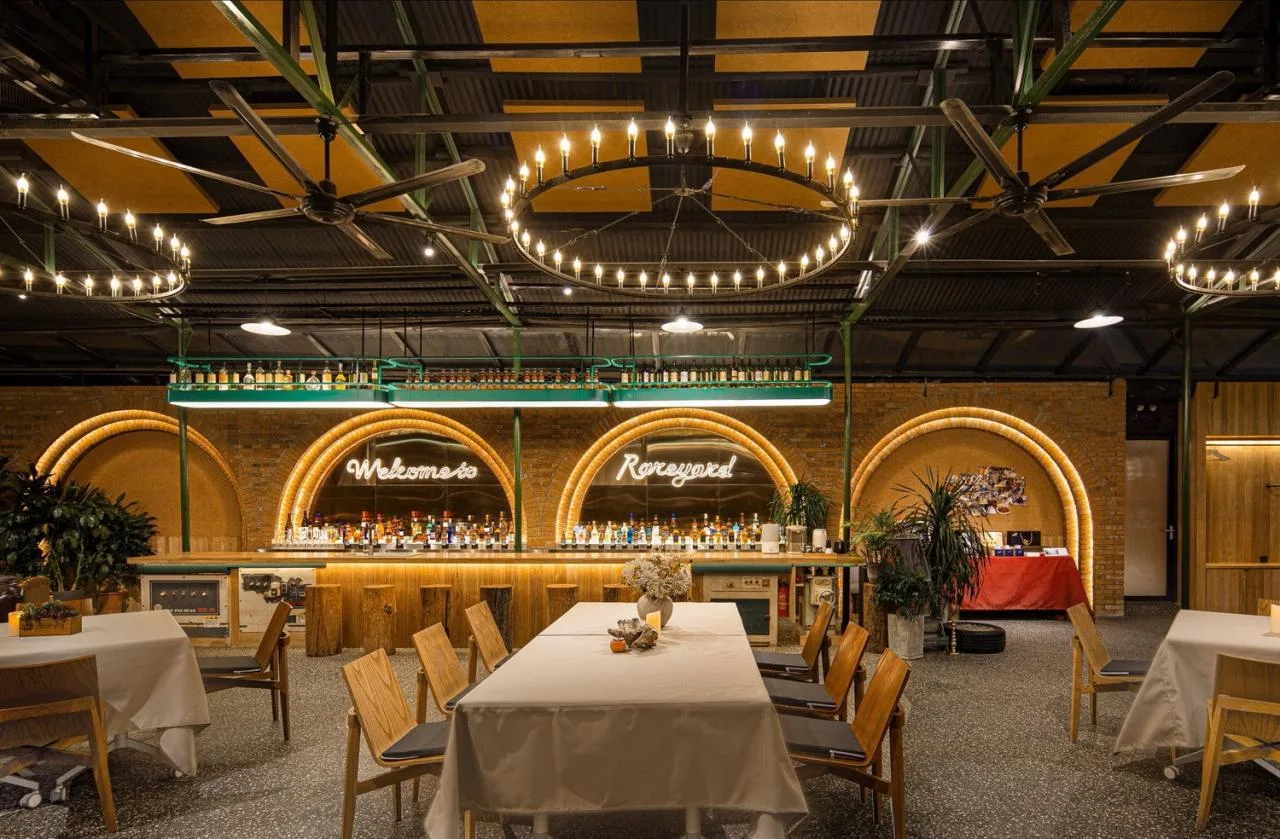
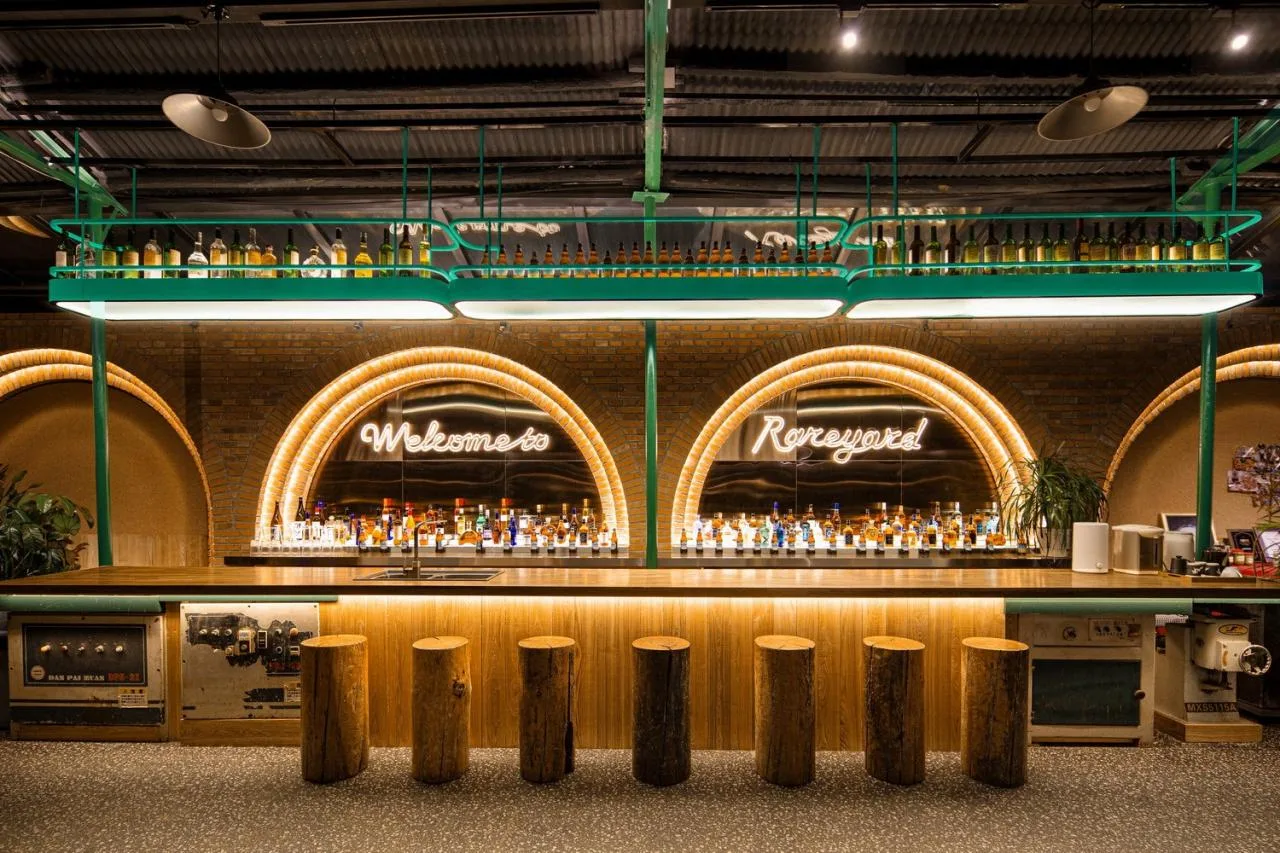
△ Viewing bar area on the south side
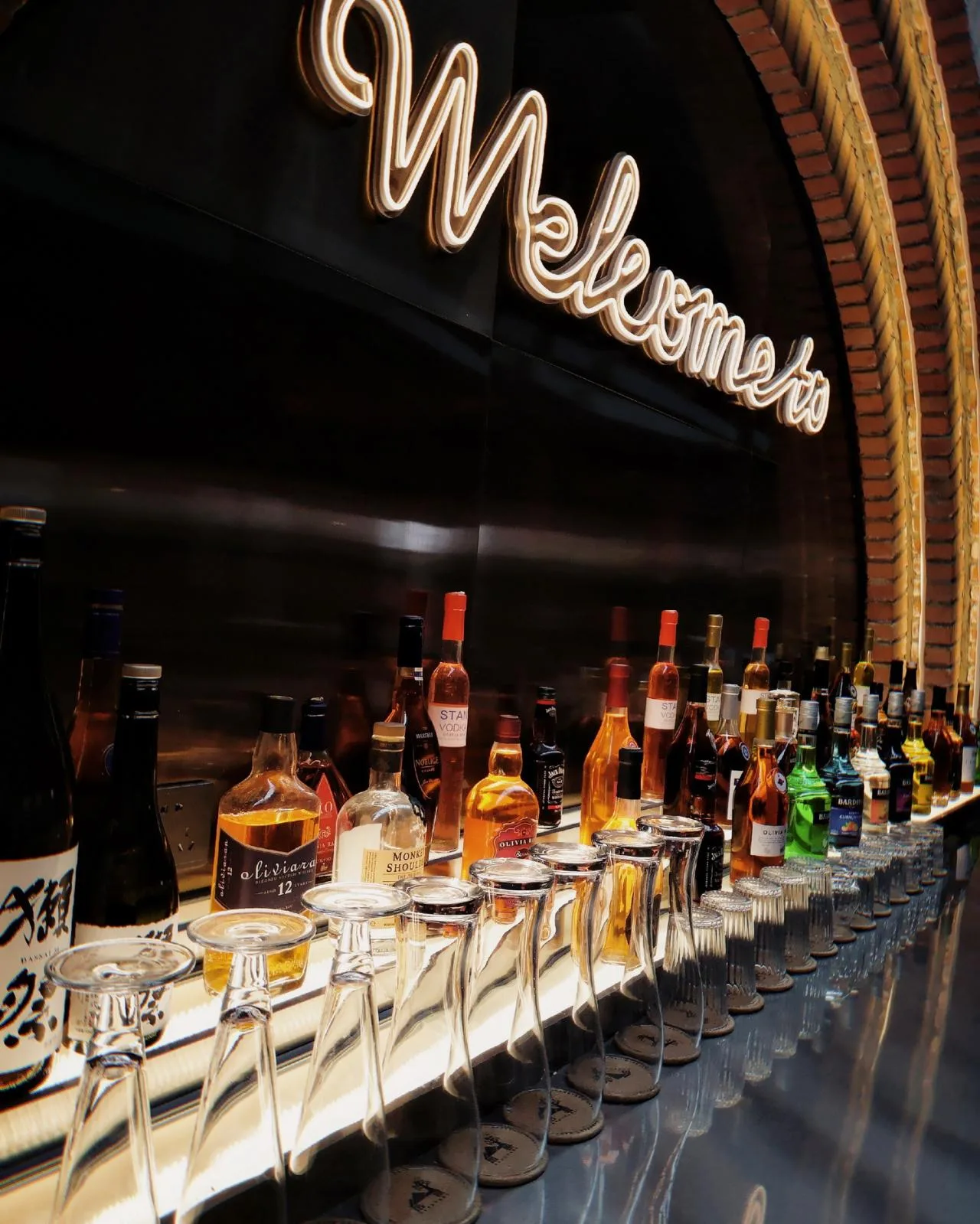
△ Detailed view of the bar counter wall arch on the south side
The west side features a cozy sofa area, utilizing existing seating complemented by a fireplace and bookshelf, creating an inviting setting for nighttime conversations. Since this wall also serves as a conference backdrop, the upper portion retains its integrity through a random arrangement of glass bricks that allow light from the corridor behind to filter through, enhancing transparency.
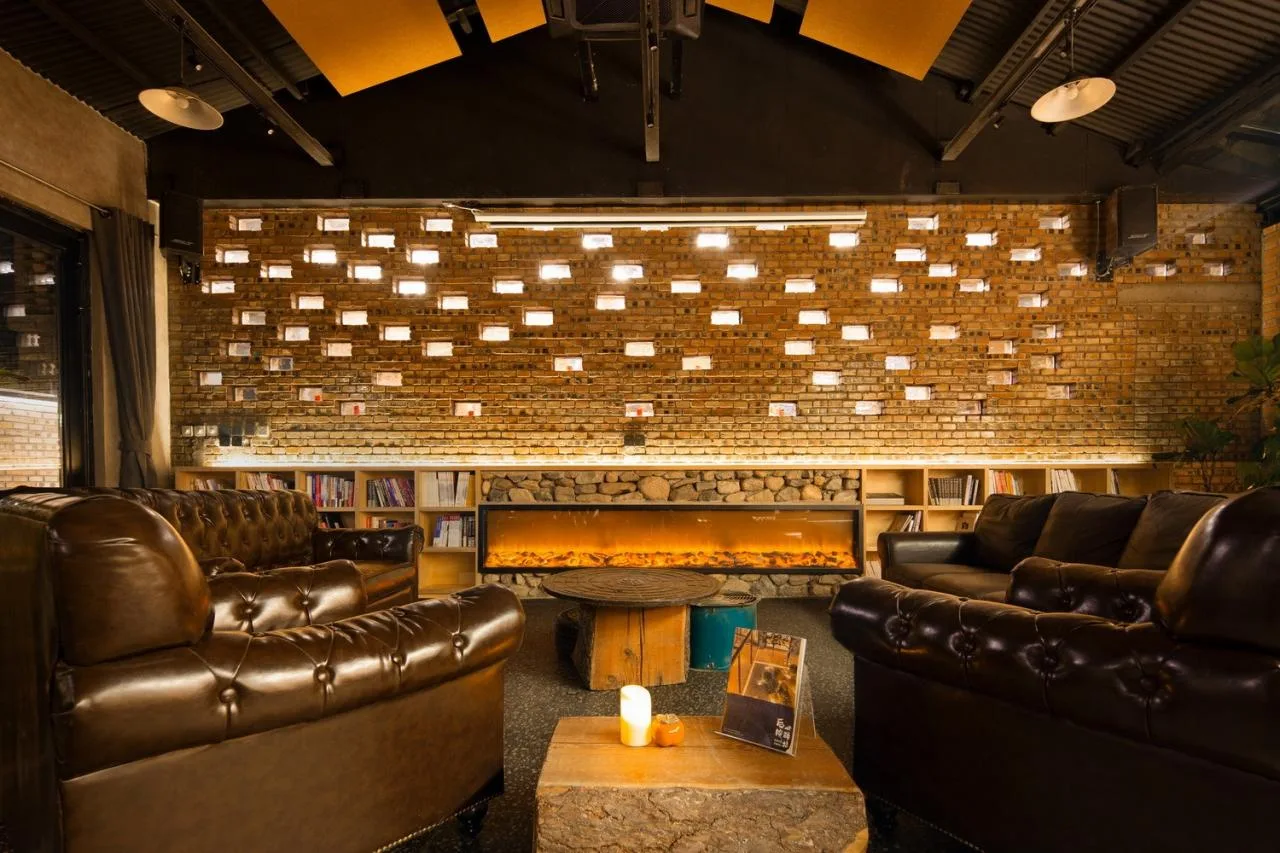
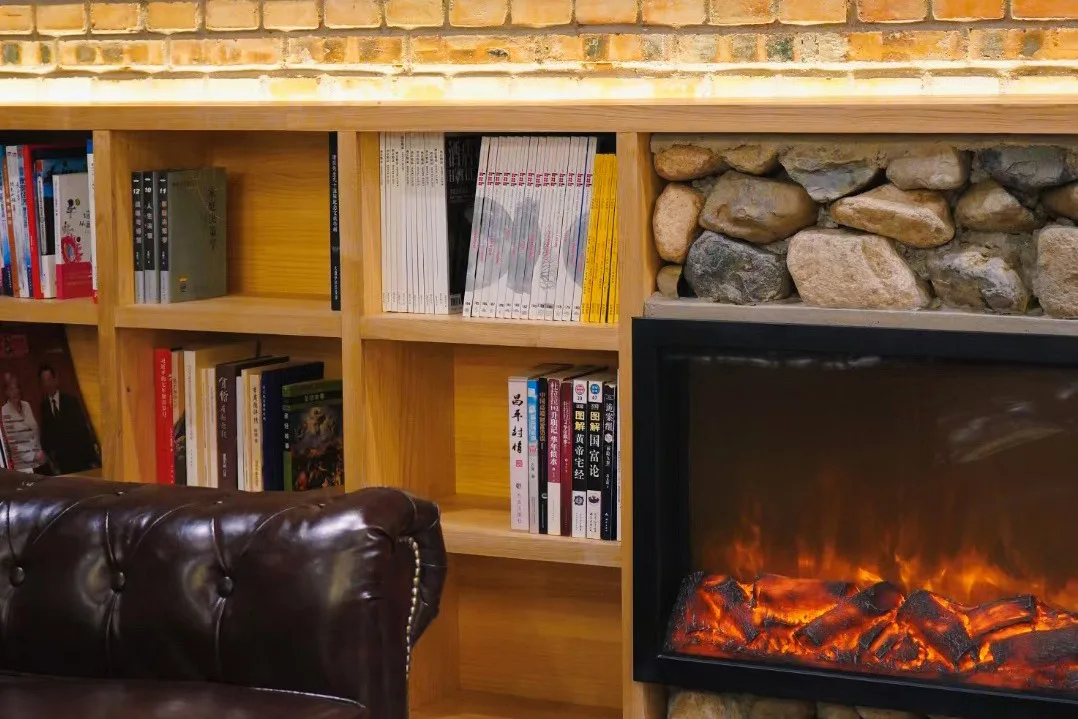
△ Furnace area on the west side
The entire east wall is adorned with folding chairs in various colors, which not only solve storage challenges for extra furniture but also serve as decorative elements. Behind these chairs is a hand-painted mural themed around green plants. When the chairs are removed, the mural is fully revealed, complementing the greenery throughout the space and creating a comfortable atmosphere for guests.
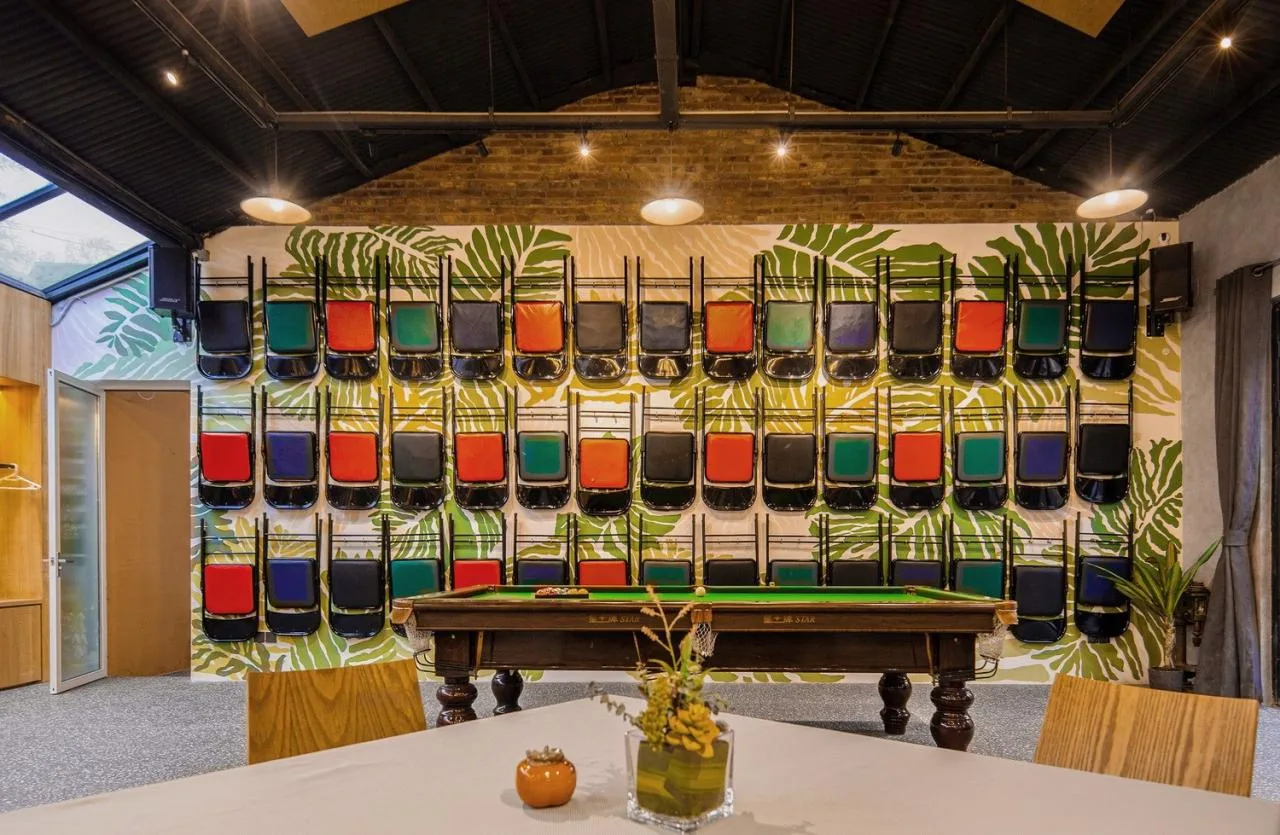
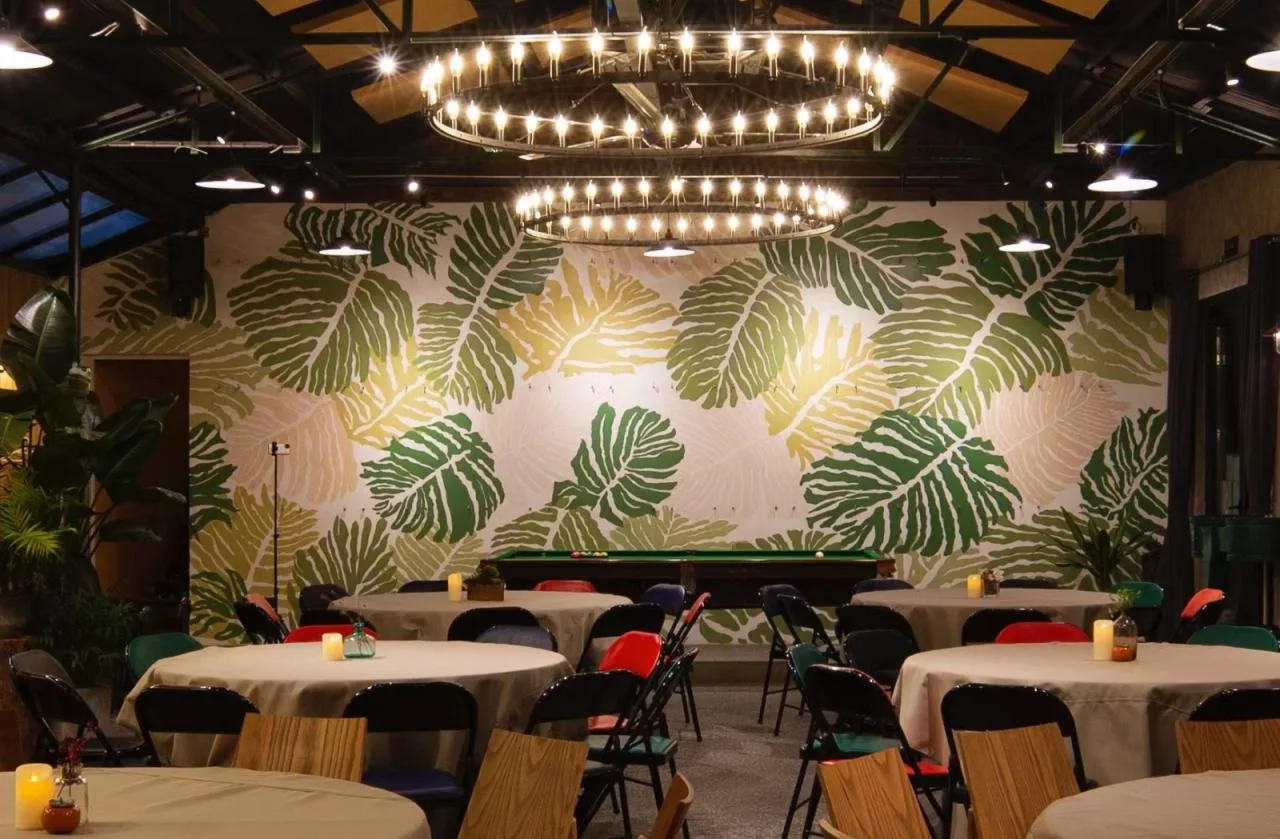
△ East wall of the workshop
>> Functional Evolution from an Operational Perspective
From its initial renovation as the Woodworking Museum to its current upgrade, the workshop has evolved from an industrial, “cold” atmosphere to one embodying “aggregation” and “kinship.” It now optimizes multi-mode, multi-scene functionality, serving as the main entertainment and team-building venue within the backyard homestay.
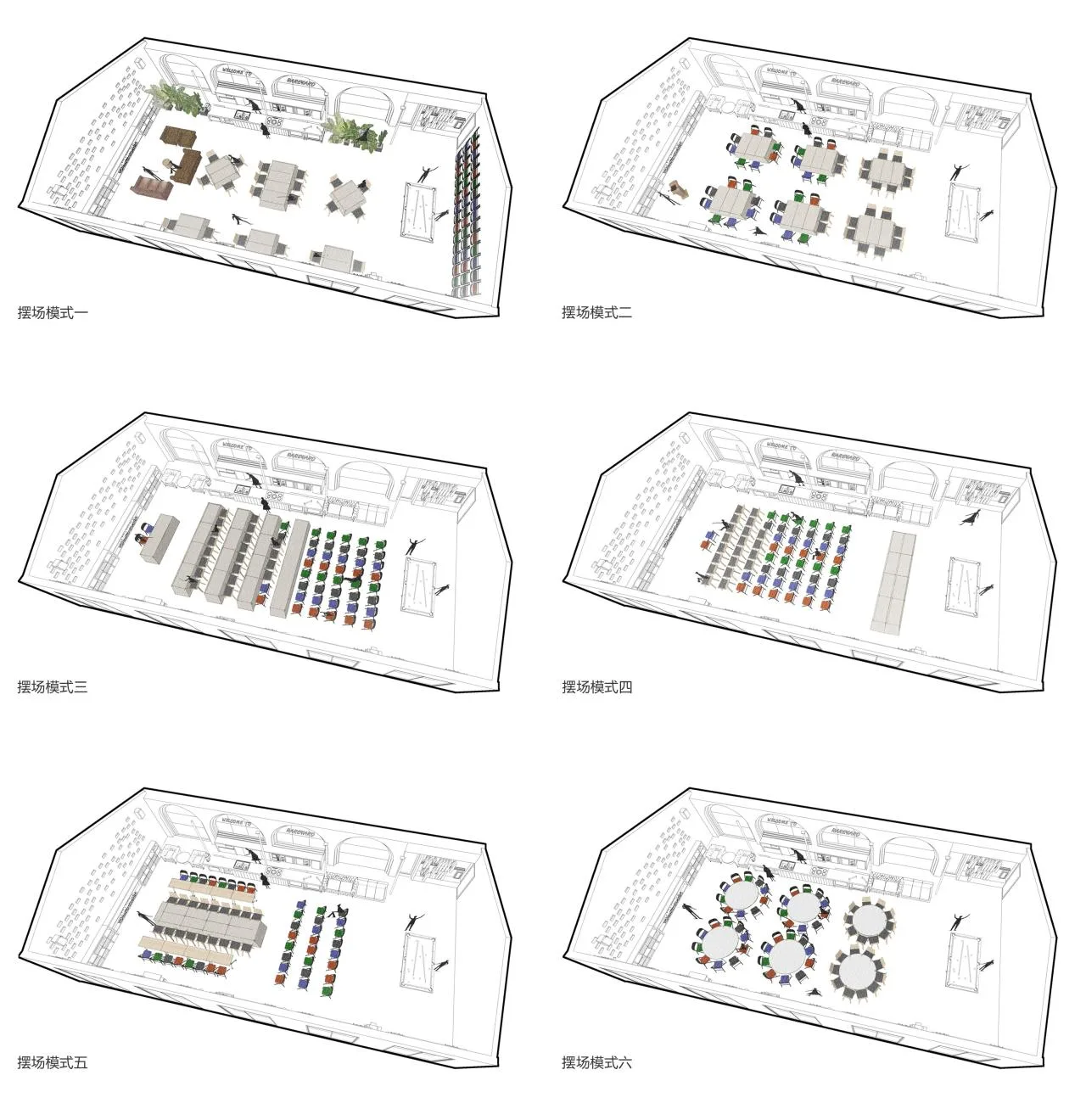
Analysis of workshop space usage patterns
Following the second renovation, the workshop offers enhanced versatility. Beyond its daily bar mode, it supports banquet and various meeting setups through adaptable lighting and furniture arrangements. This flexibility accommodates gatherings of up to 60 people, providing rich spatial variety and aligning perfectly with operational demands.
△ Workshop space showcased in different configurations
Rooted in the concept of backyard group-building homestays, the workshop’s second renovation aims to create a more diverse and immersive gathering space that caters to young people’s leisure and entertainment needs. This includes a mini bar, banquet dining, café, and movie theater settings, all designed with operational efficiency in mind. These varied scenarios enrich the social experience of the backyard homestay, extending opportunities for meaningful gatherings beyond typical accommodation functions.
Project Information
Project Name: Renovation of the “Woodworking Museum” Workshop at Rareyard Village Backyard
Project Type: Homestay Renovation
Design Team: CCDI International Smart Interior Design Center
Design & Completion Date: November 2021 – December 2021
Interior Lead Designer: Li Zhiyu
Interior Design Team: Zeng Huifan, Du Jinlai, Gong Lei
Location: Changping District, Beijing
Design Area: 220 m²
Photography: Lu Fei, Ren Enbin
Wine Management Team: Rareyard Village Boutique Homestay in the Backyard
Main Indoor Materials: Red bricks, stainless steel plates, terrazzo tiles, and water chestnut solid wood panels















Must log in before commenting!
Sign Up