
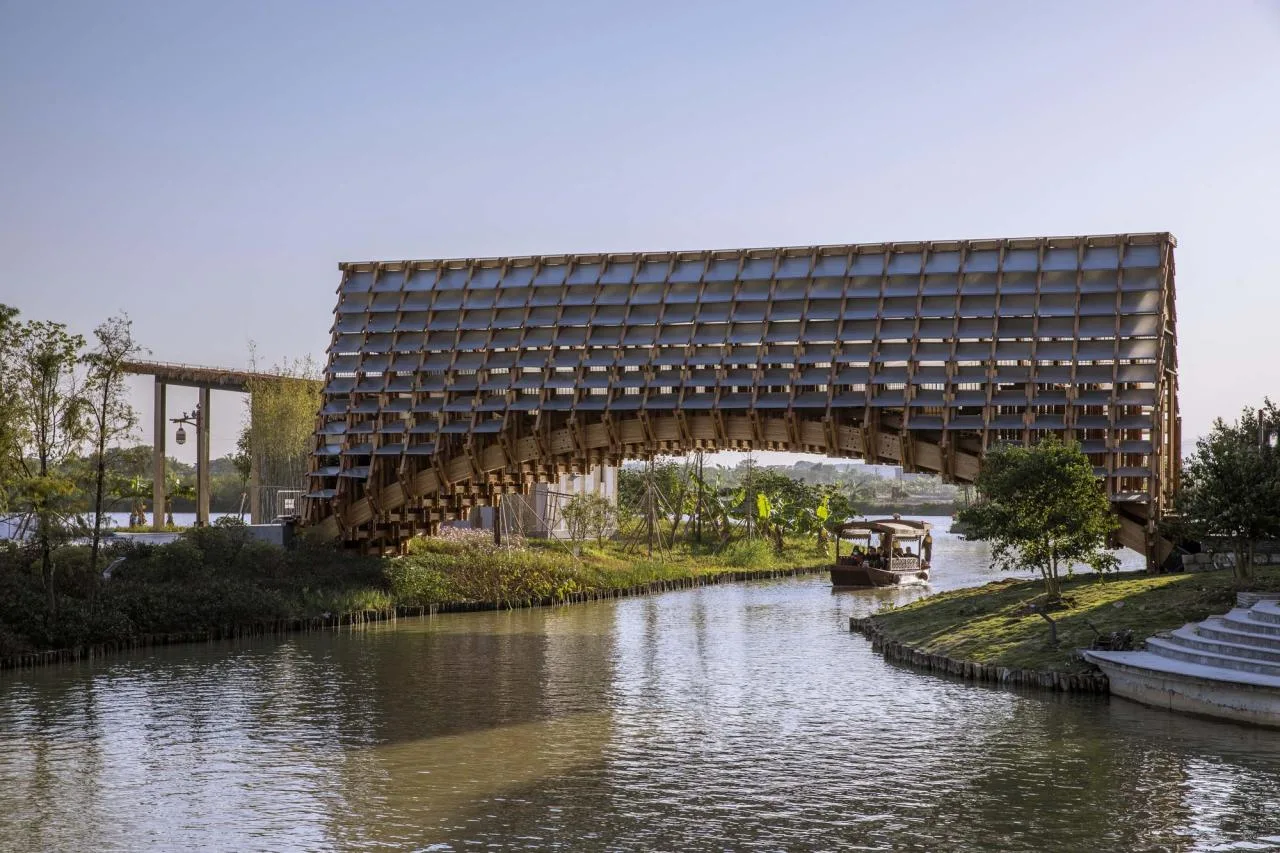
Reclaiming piers to revitalize Jiangmen Gulao has been a longstanding tradition, shaped by the unique geography of the mudflat. Historically, water systems and fish ponds have covered large areas within the villages, dividing land into many plots. In this context, bridges have played a crucial role as connectors between different regions.
As the Greater Bay Area urban agglomeration rapidly develops, many villagers have abandoned traditional fishing and farming lifestyles, opting instead for urban living. Consequently, water villages that depended on fishing are gradually disappearing amid urban expansion.
Gulao Water Town represents a regional development initiative led by Overseas Chinese Town, framed within the context of rural revitalization. The project aims to preserve the spatial texture of the surrounding environment while seamlessly integrating urban and rural development with the village’s historical background.
The development maintains the fundamental riverine layout characteristic of a water town and organically combines elements such as natural education, family-friendly leisure activities, and fishing and animal husbandry culture. To support these diverse functions, the construction of bridges in strategic locations is essential to ensure smooth passage for both pedestrians and fishing boats.
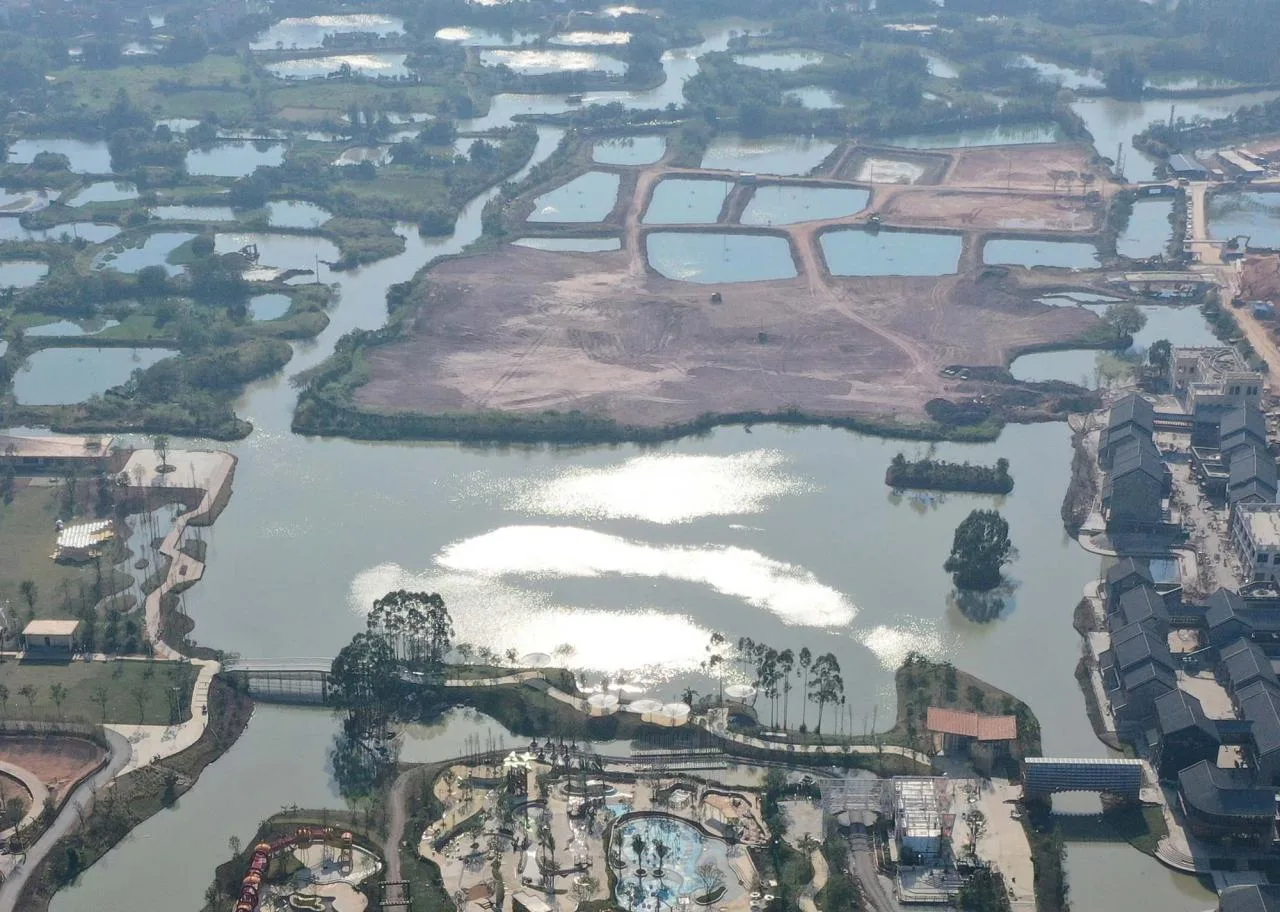
During the era dominated by fishing and farming civilizations, land transport was limited and often inefficient. Water transport was indispensable for navigation and logistics, requiring bridges that allowed both foot traffic and boat passage beneath.
Arched bridges provided ample clearance under the bridge, enhancing navigational efficiency. In traditional Chinese bridge construction, arches were favored for their ability to maximize functional space and structural effectiveness. The southern region, rich in rivers and forests, also has a heritage of wooden bridge-building.
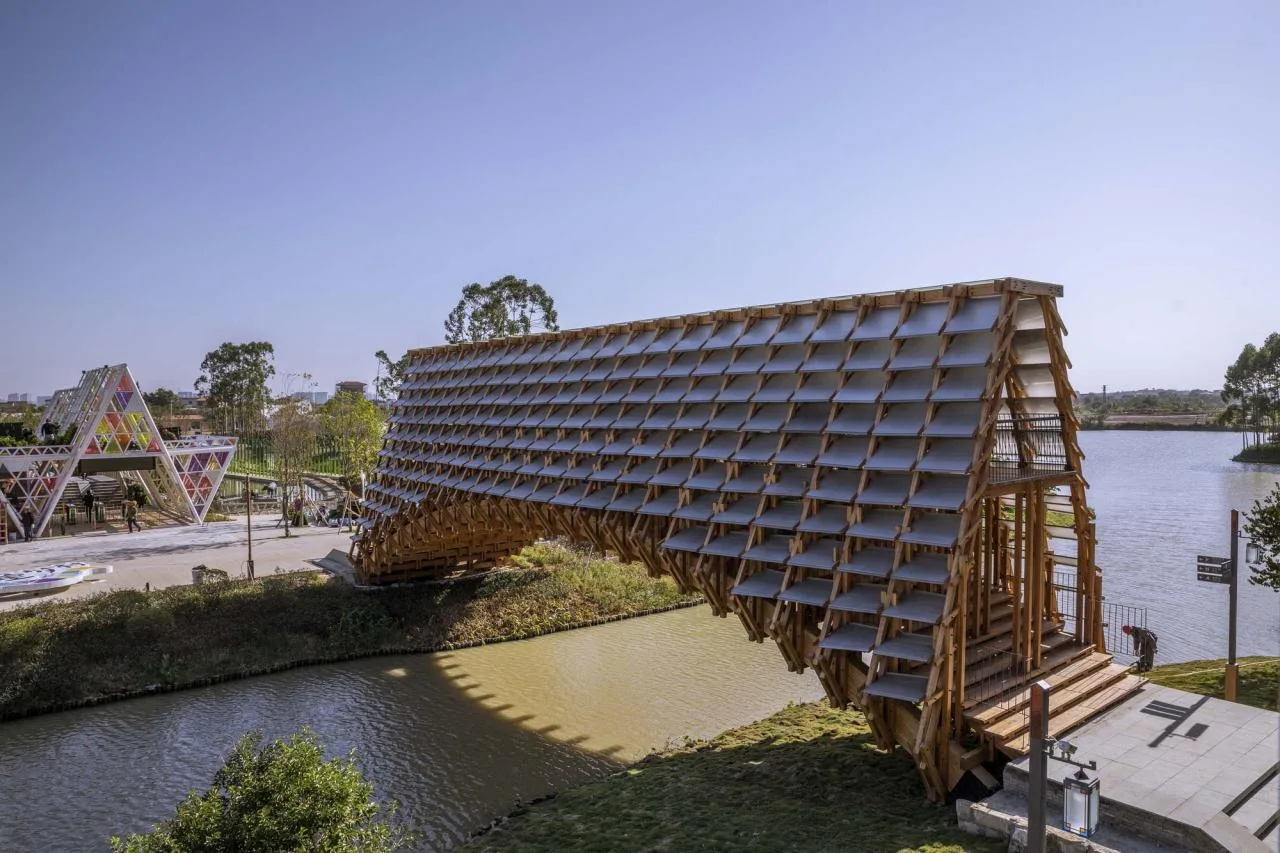
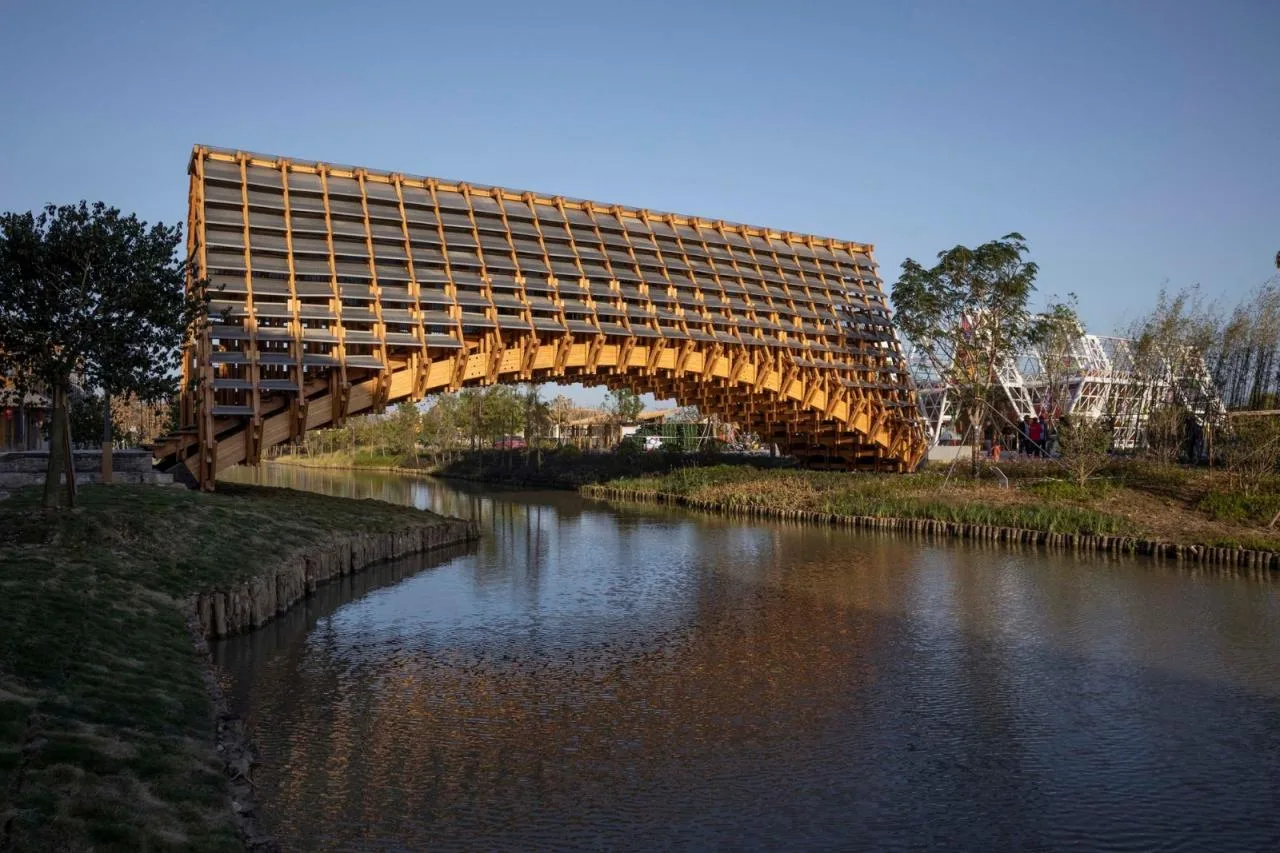
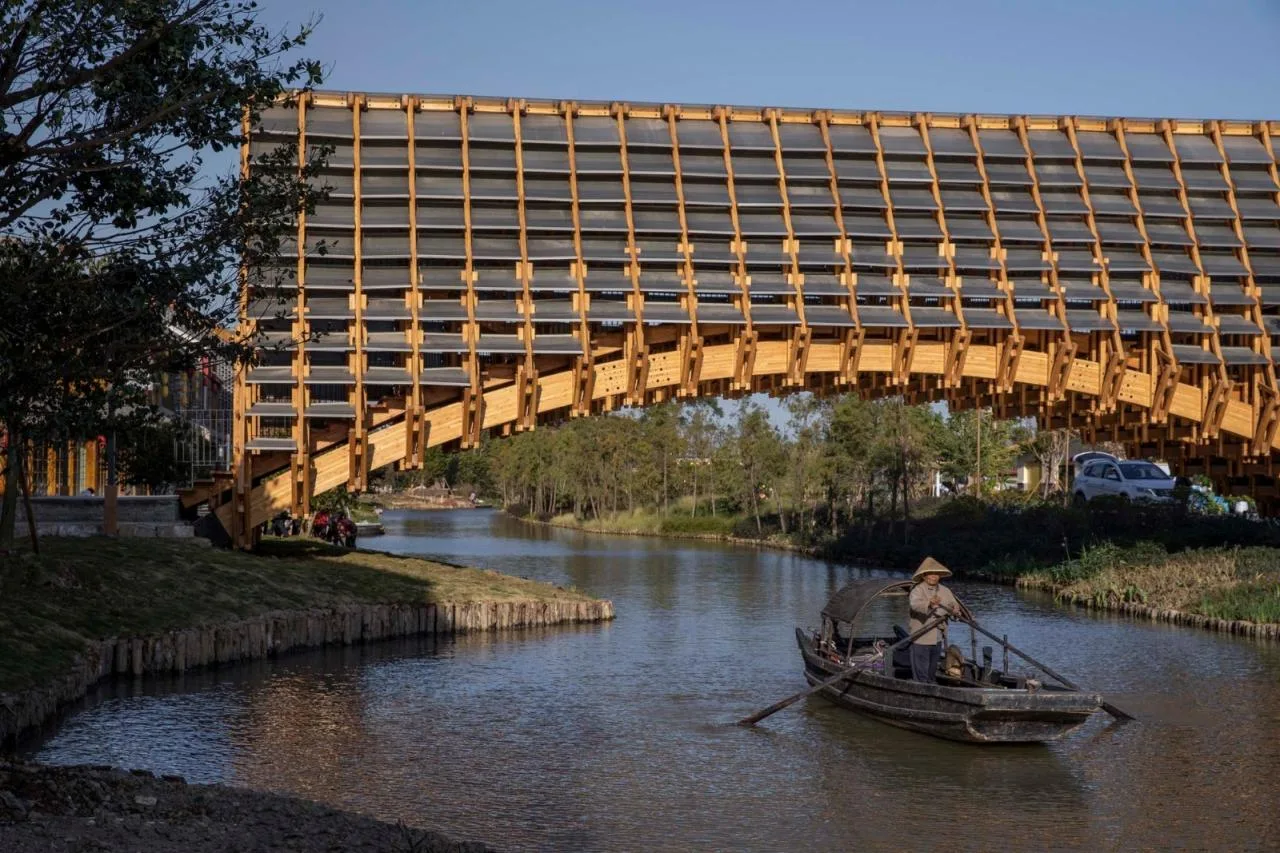
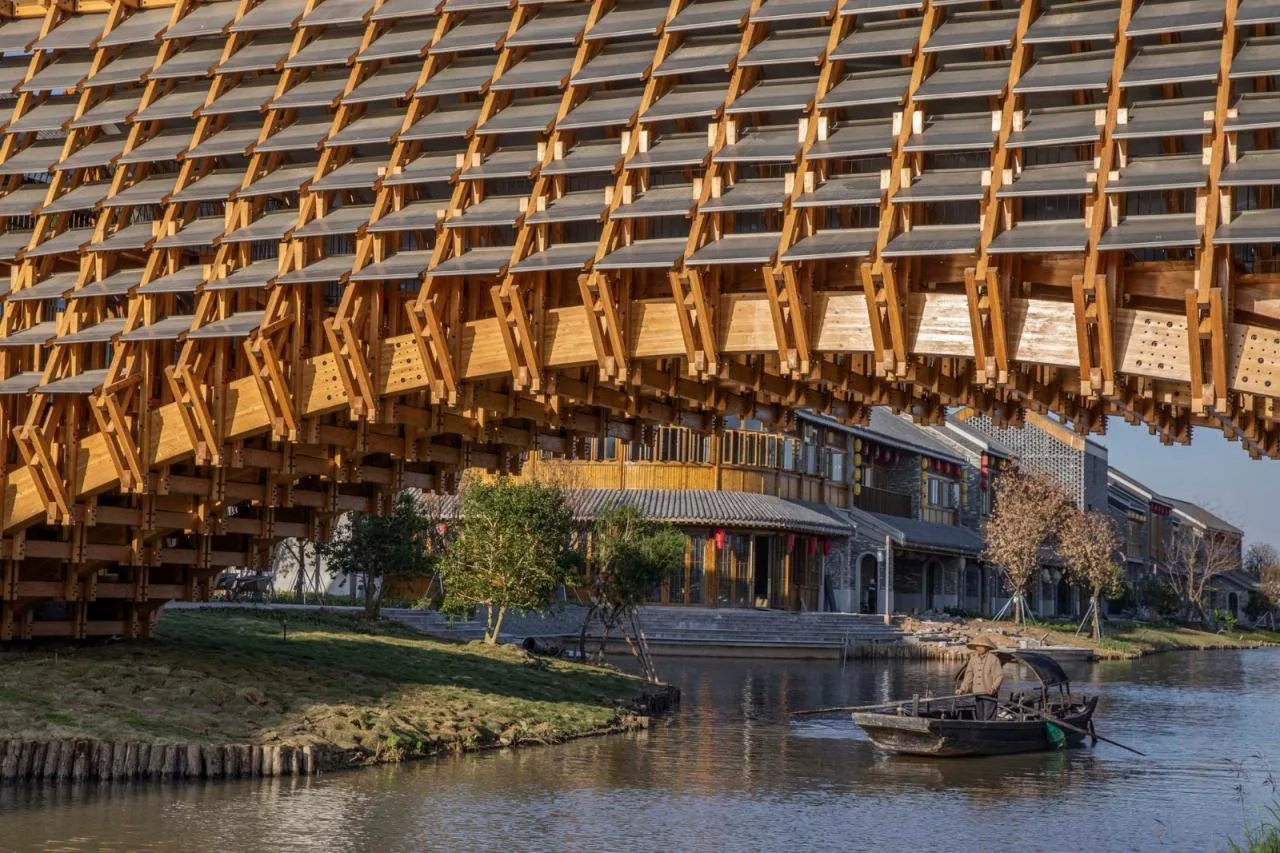
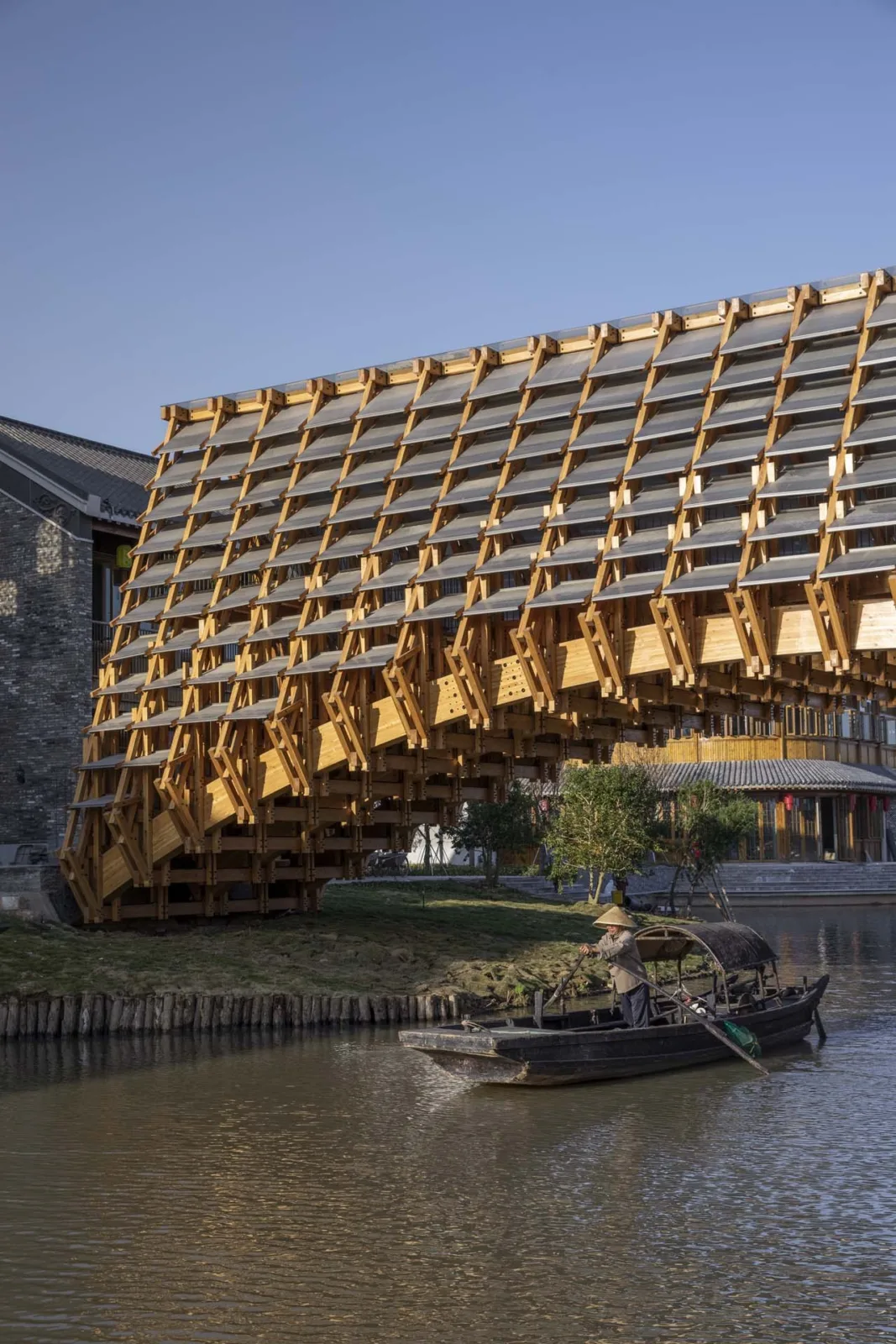
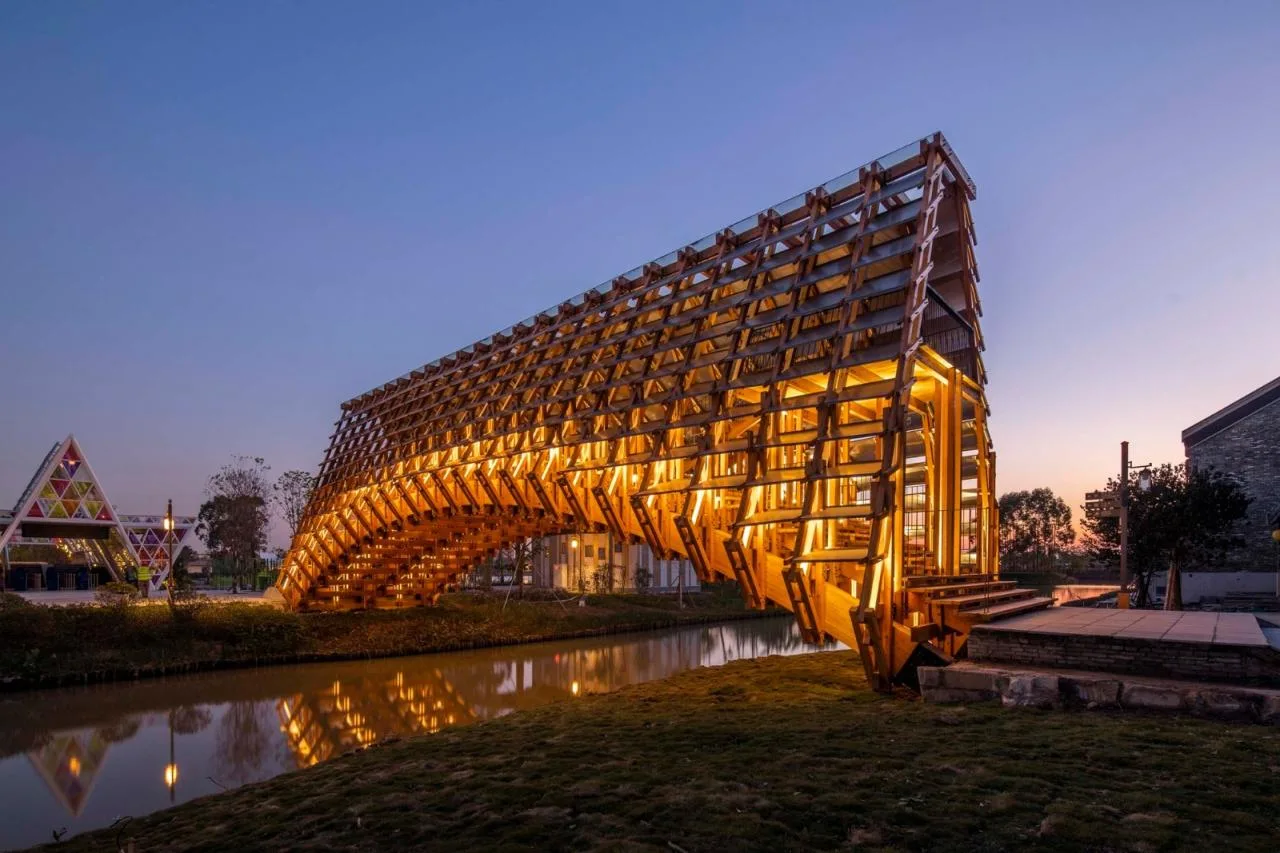
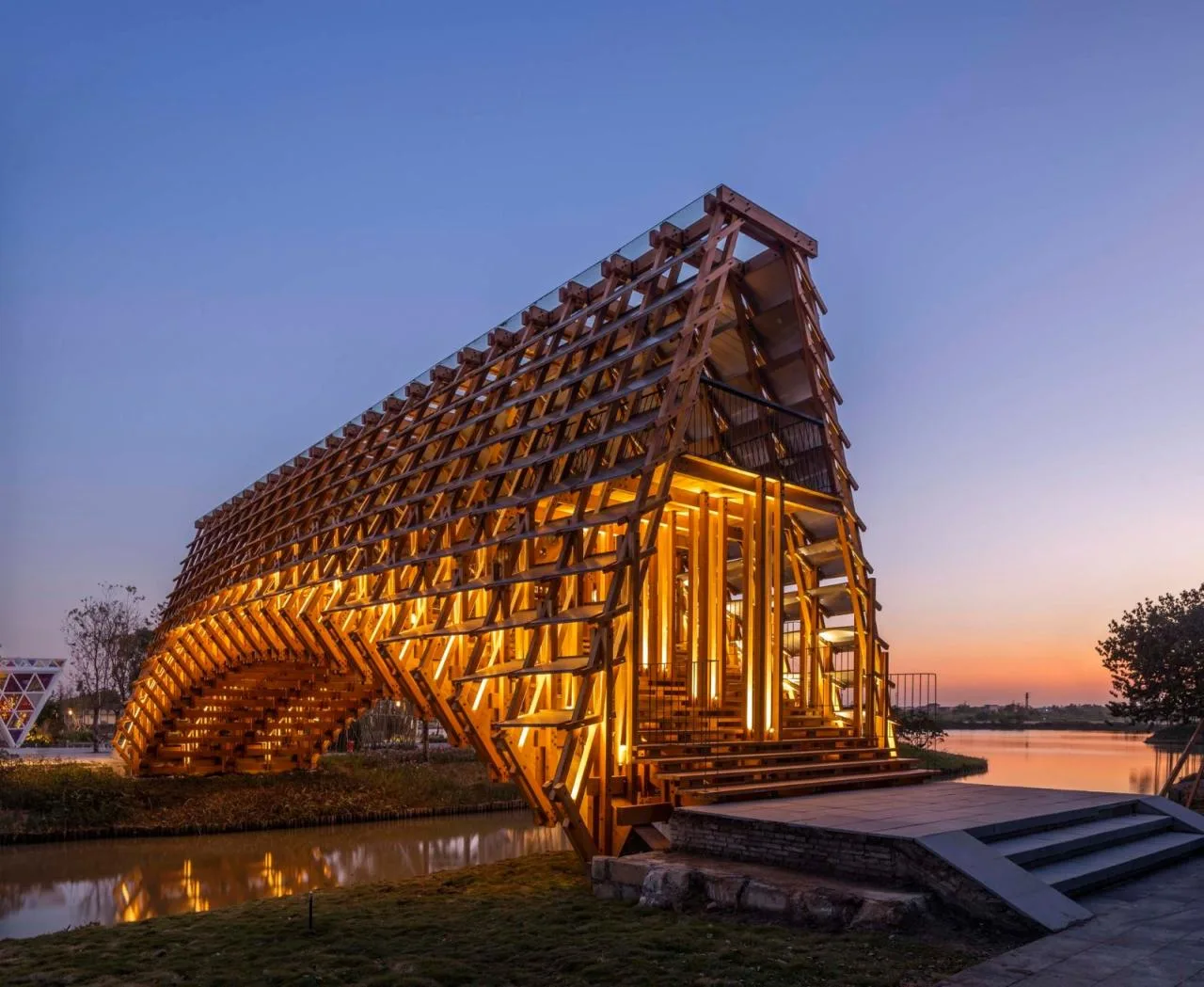
Muqiao is one of the many historic bridges in the ancient Laoshui Township. To distinguish itself from urbanization and to revitalize traditional local culture, Muqiao features an arched bridge constructed with natural wood materials.
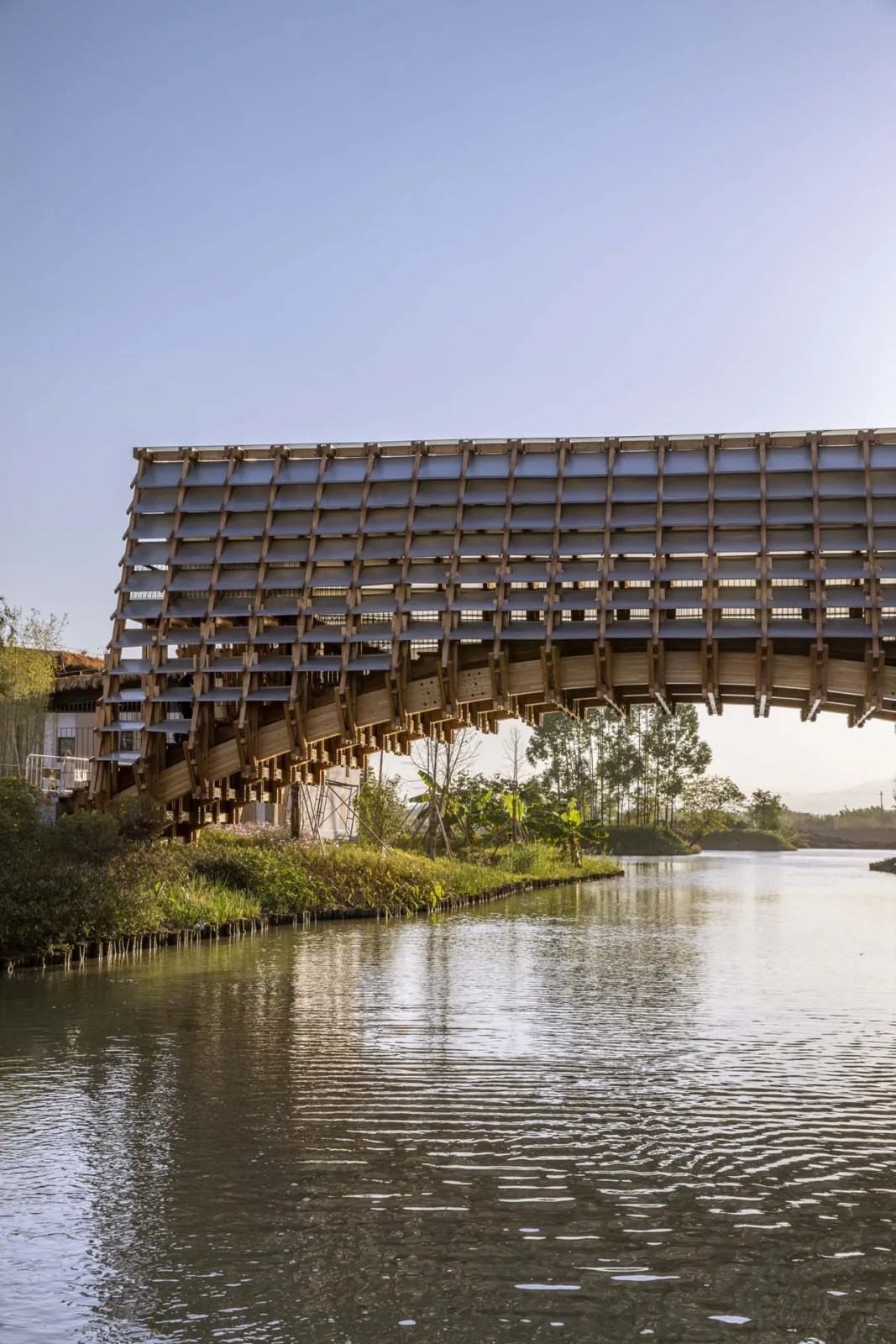
Besides accommodating small wooden fishing boats, the water town also offers larger boats for tourists. To ensure smooth passage for all types of vessels, the arch’s bottom at the two end caps is positioned 1.35 meters above the normal water level, with the arch chord height reaching 2.8 meters. Combined, these measurements provide more than 4 meters of clearance, meeting the necessary height requirements for boat passage beneath the bridge.
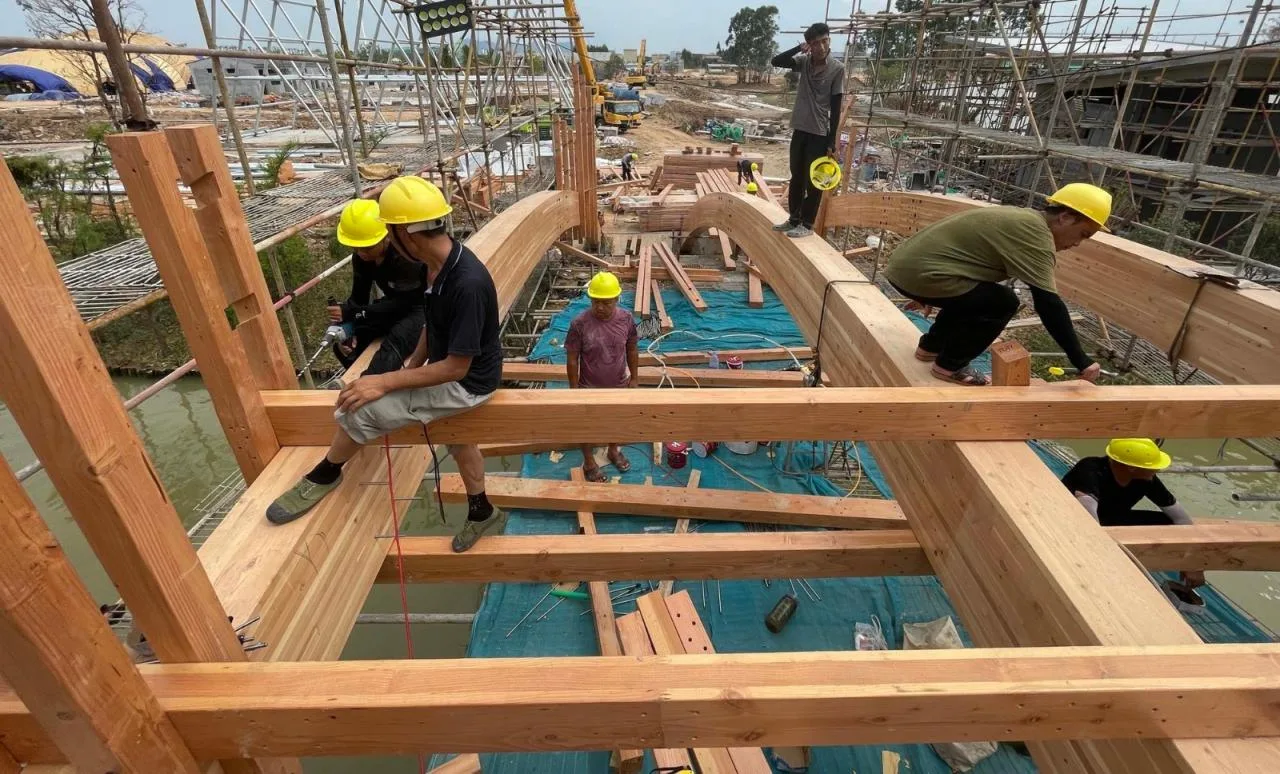
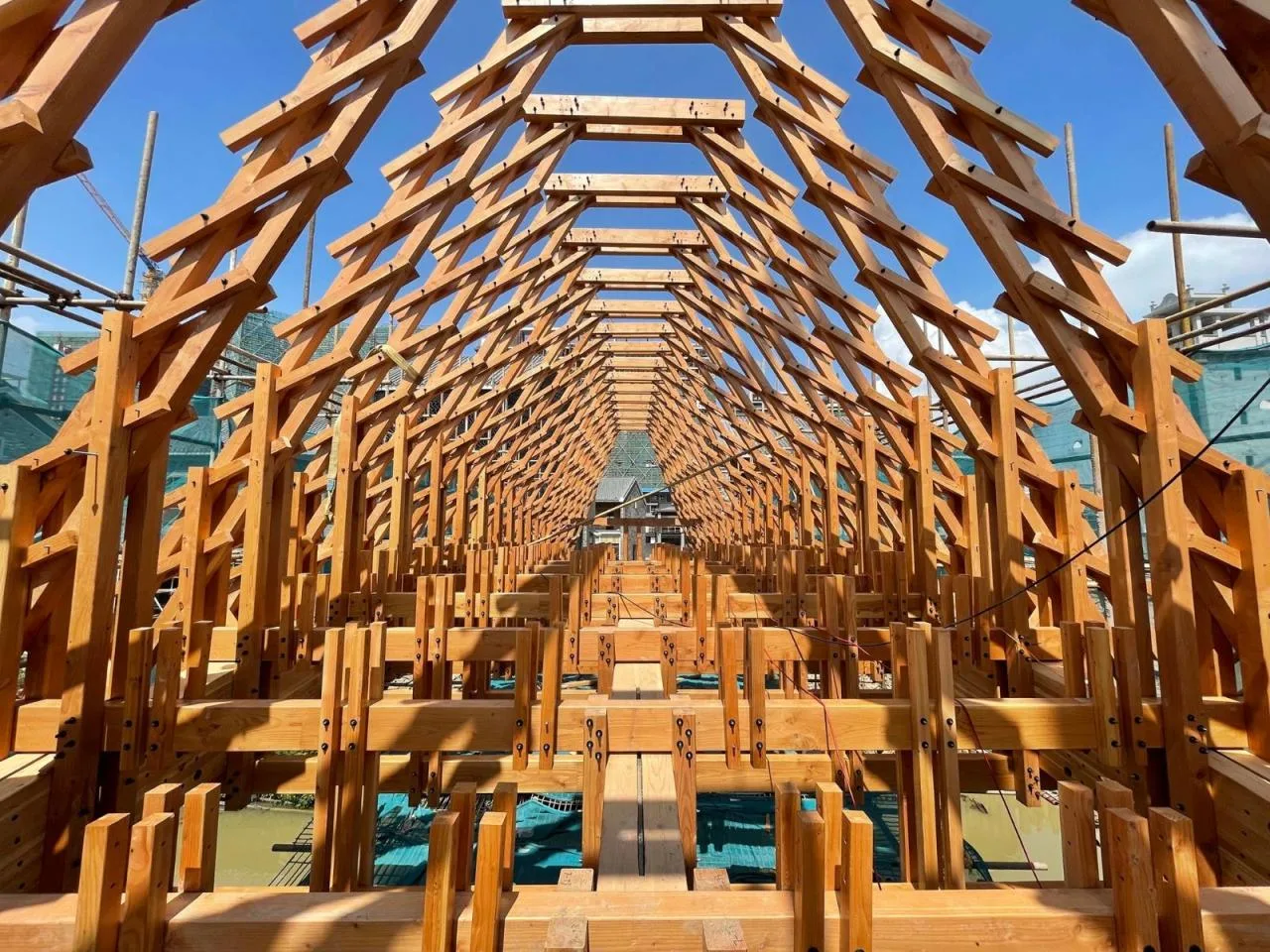
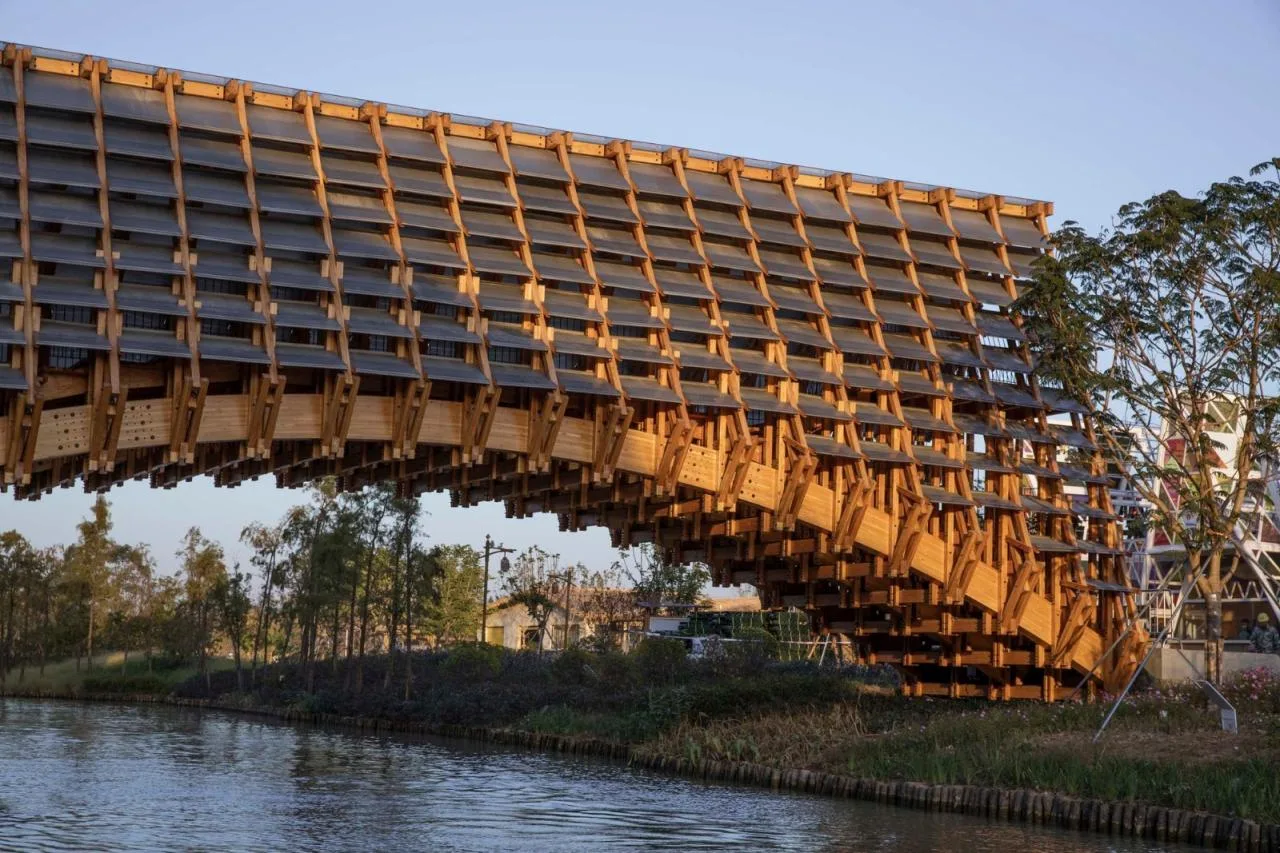
The bridge arch spans 25.2 meters, a dimension determined by geological surveys and optimal bank spacing. Structurally, three curved wooden beams serve as the primary components, arranged parallel to each other with an axis spacing of 2.7 meters. For cost efficiency in processing and transport, each beam is divided into three sections connected by mortise and tenon joints and steel bolts at strategic points. These segments are assembled onsite to form a continuous arch beam.
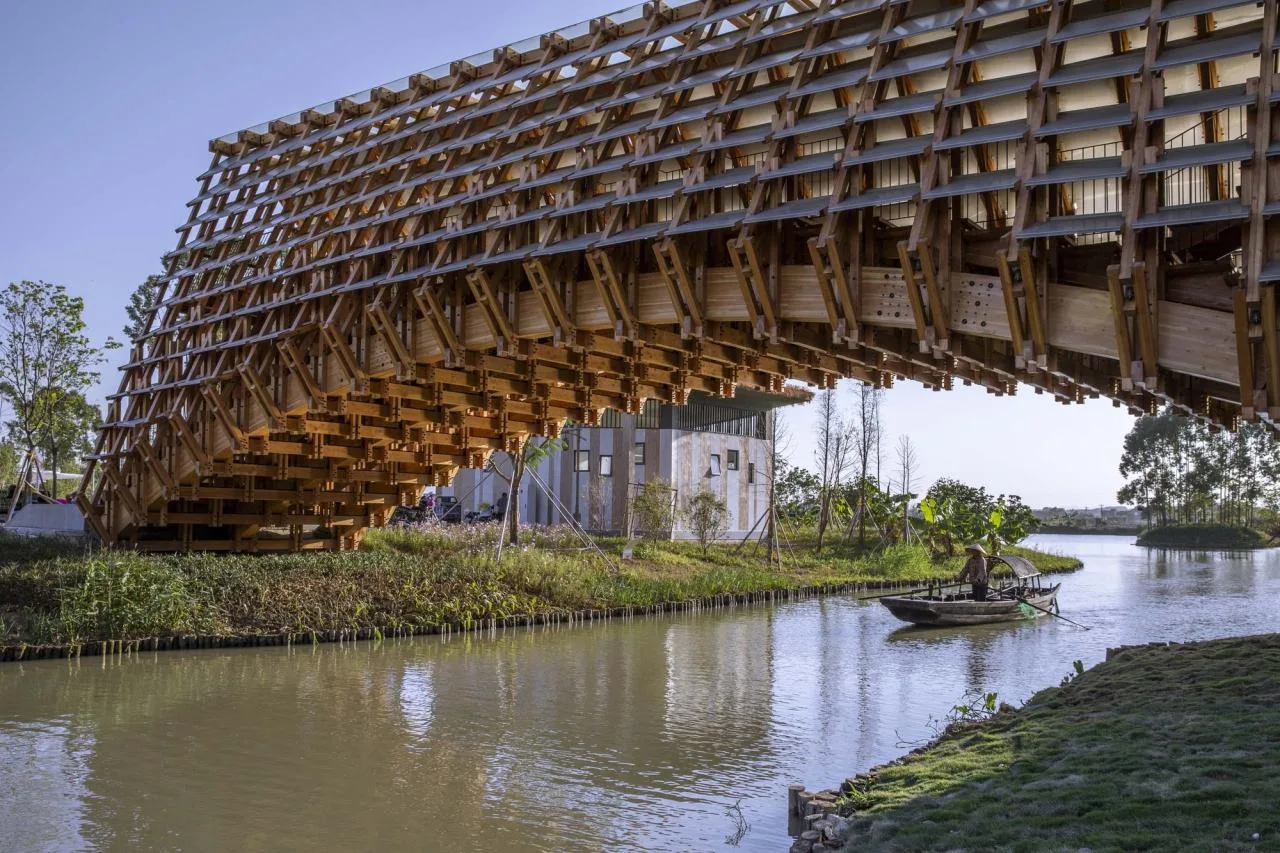
The bridge is situated at the intersection of a bustling historic commercial district and a children’s amusement park. Unlike typical open landscape bridges, this one features a relatively enclosed corridor space, which distinctly separates and strengthens the spatial experience of the two contrasting areas.
This design creates a ceremonial sense of transition for visitors moving from the vibrant commercial street into the dreamlike water town amusement area, enhancing their overall experience.
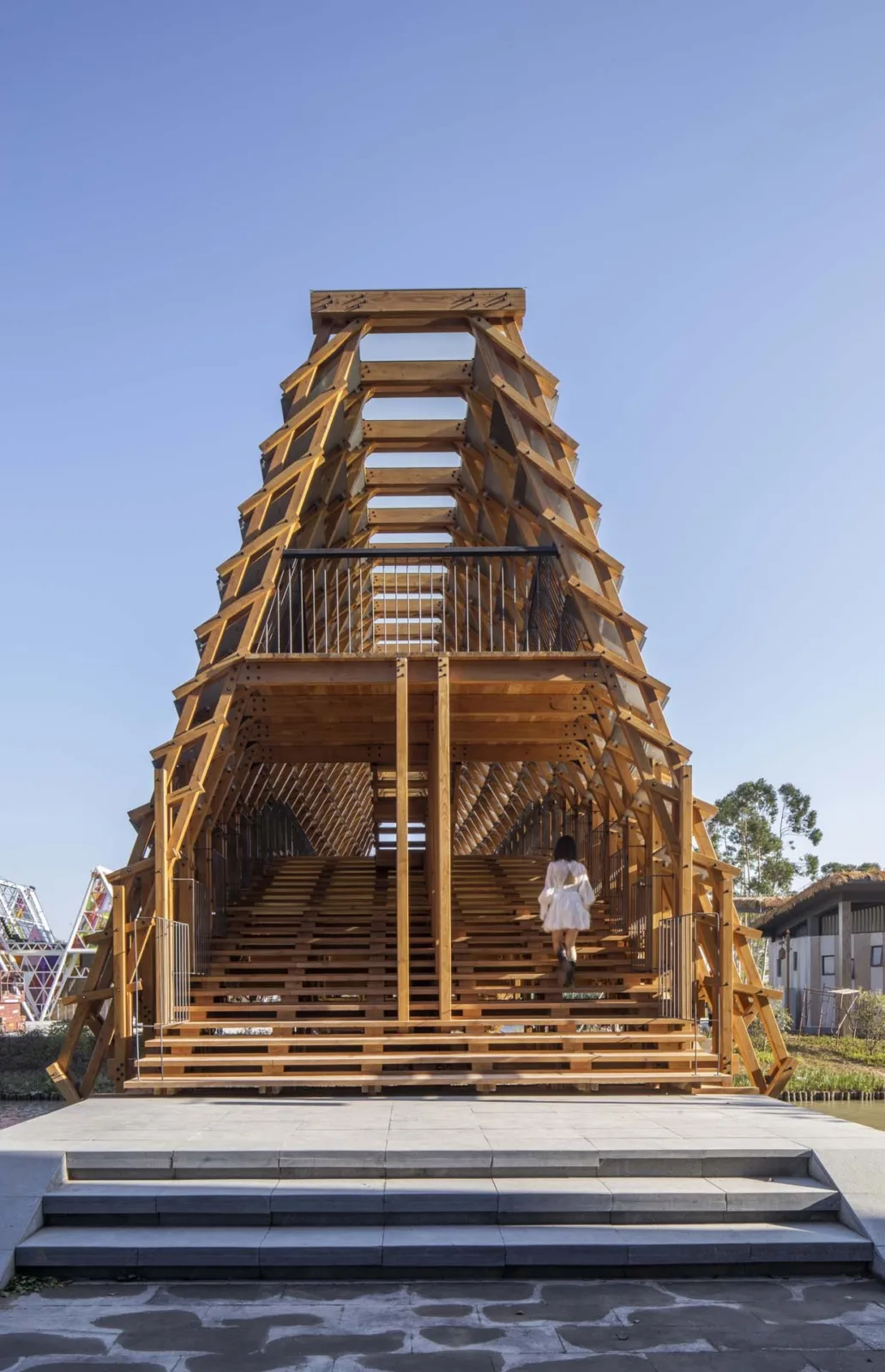
The tradition of bridge-mounted galleries dates back to ancient times. Historical records describe how bridges supported by beams were often topped with vertical houses to complete their structure. This design protected the bridge from sun and rain damage, preventing rot and extending its lifespan.
Originating during the Spring and Autumn and Warring States periods, bridge galleries were initially constructed to reinforce the structure and shield wooden components from weather. The wooden bridge in Gulao Water Town follows this time-honored wisdom, featuring gallery houses that stabilize the structure while protecting the arch below from sun and rain exposure.
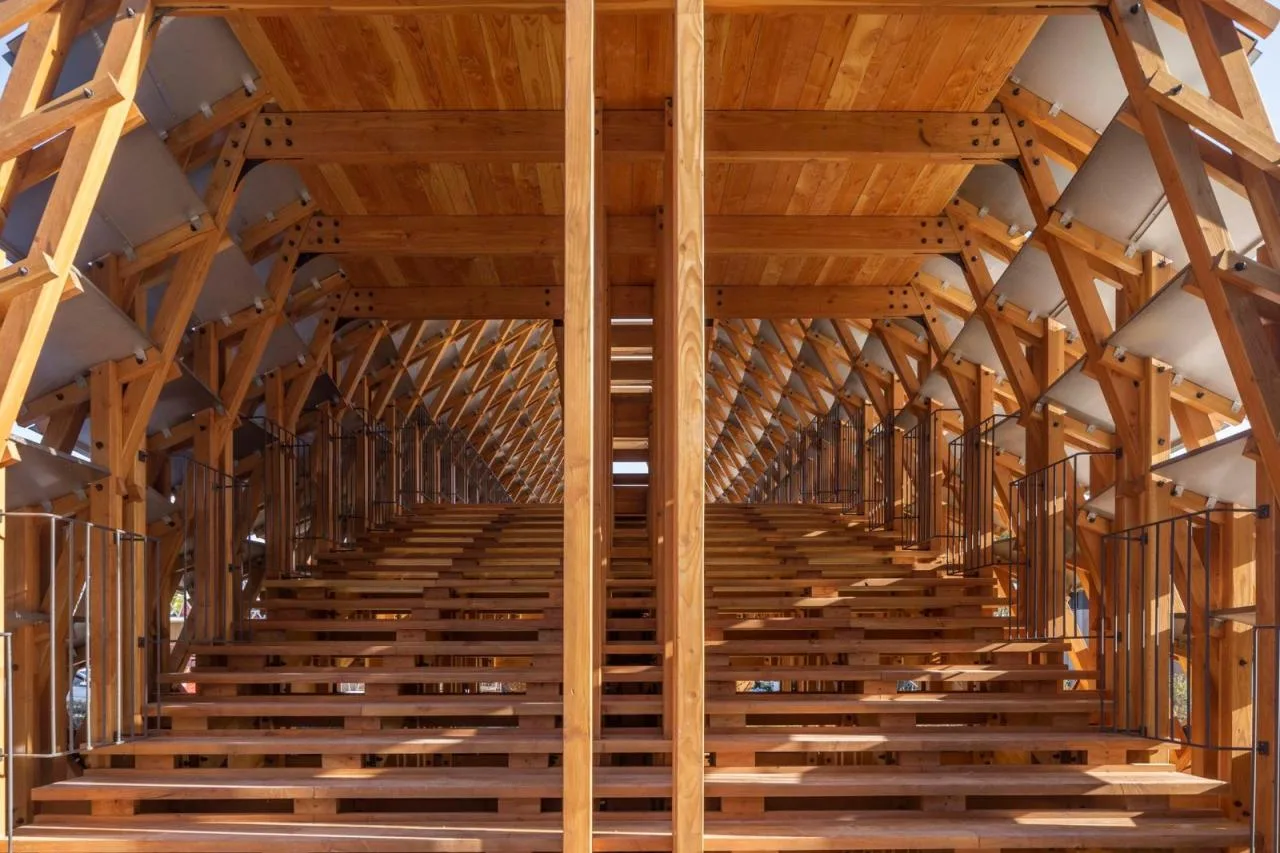
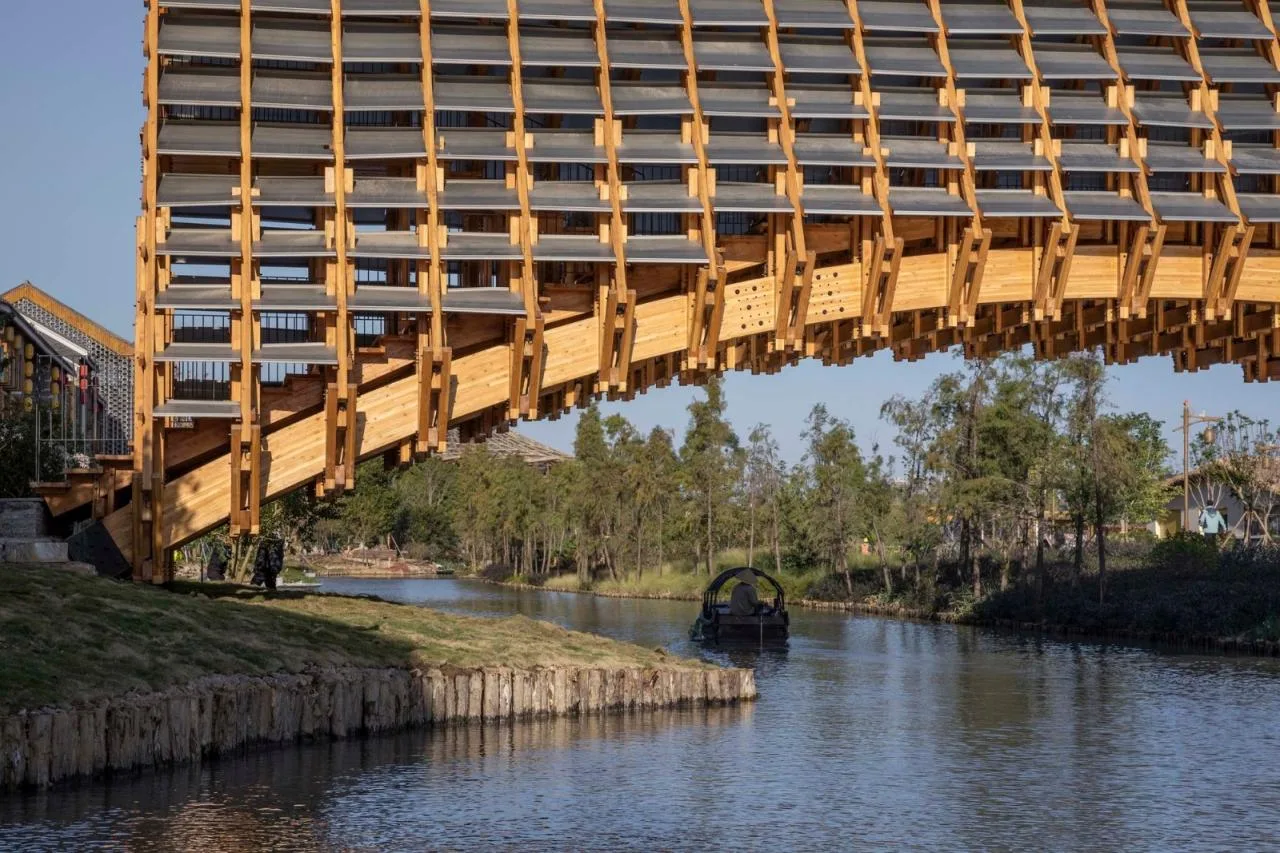
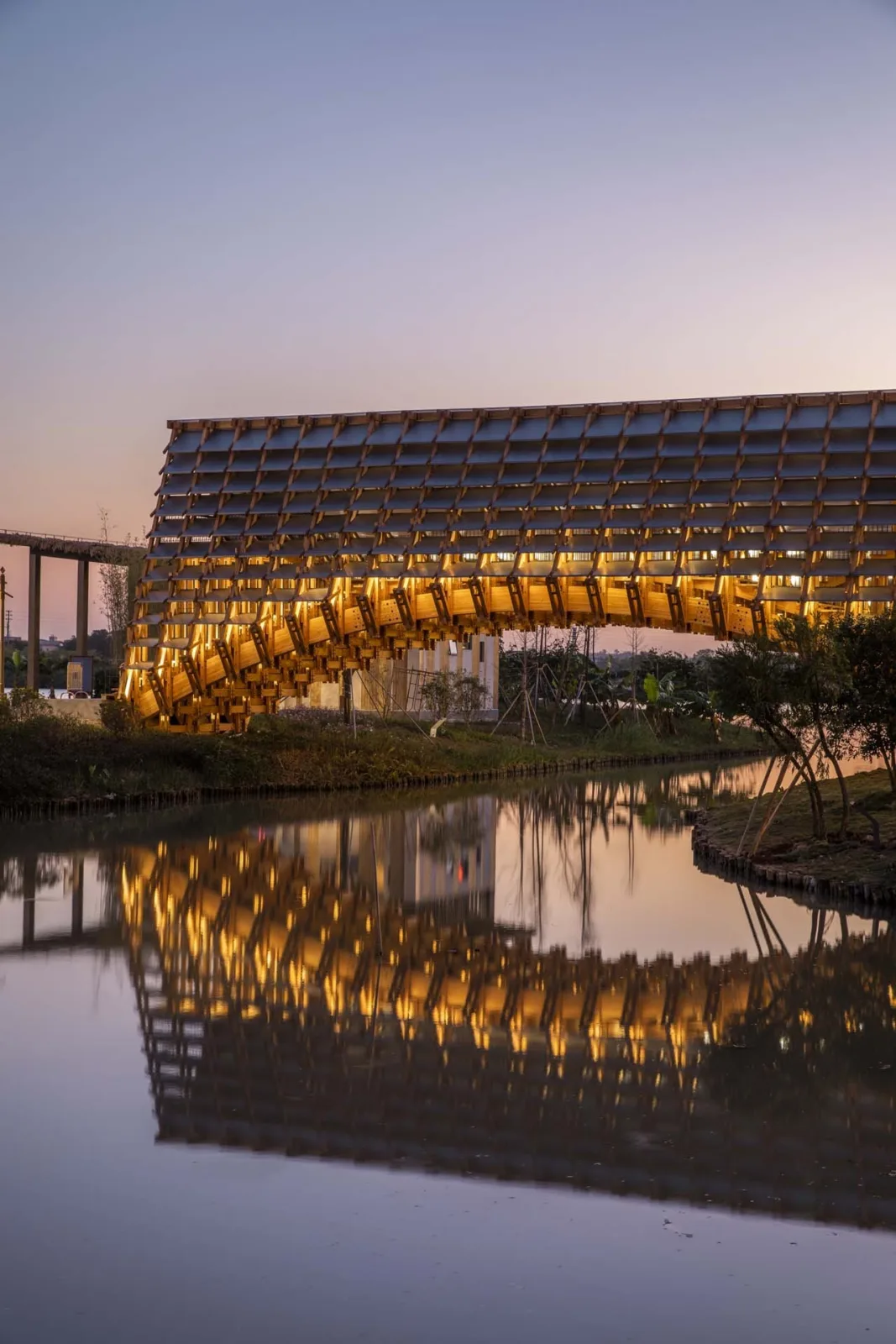
Due to the abundant rainfall in the western Pearl River Delta region, the corridor bridge employs a relatively closed construction method. Its exterior is layered with overlapping metal plates, providing effective rain protection and creating a cohesive corridor space.
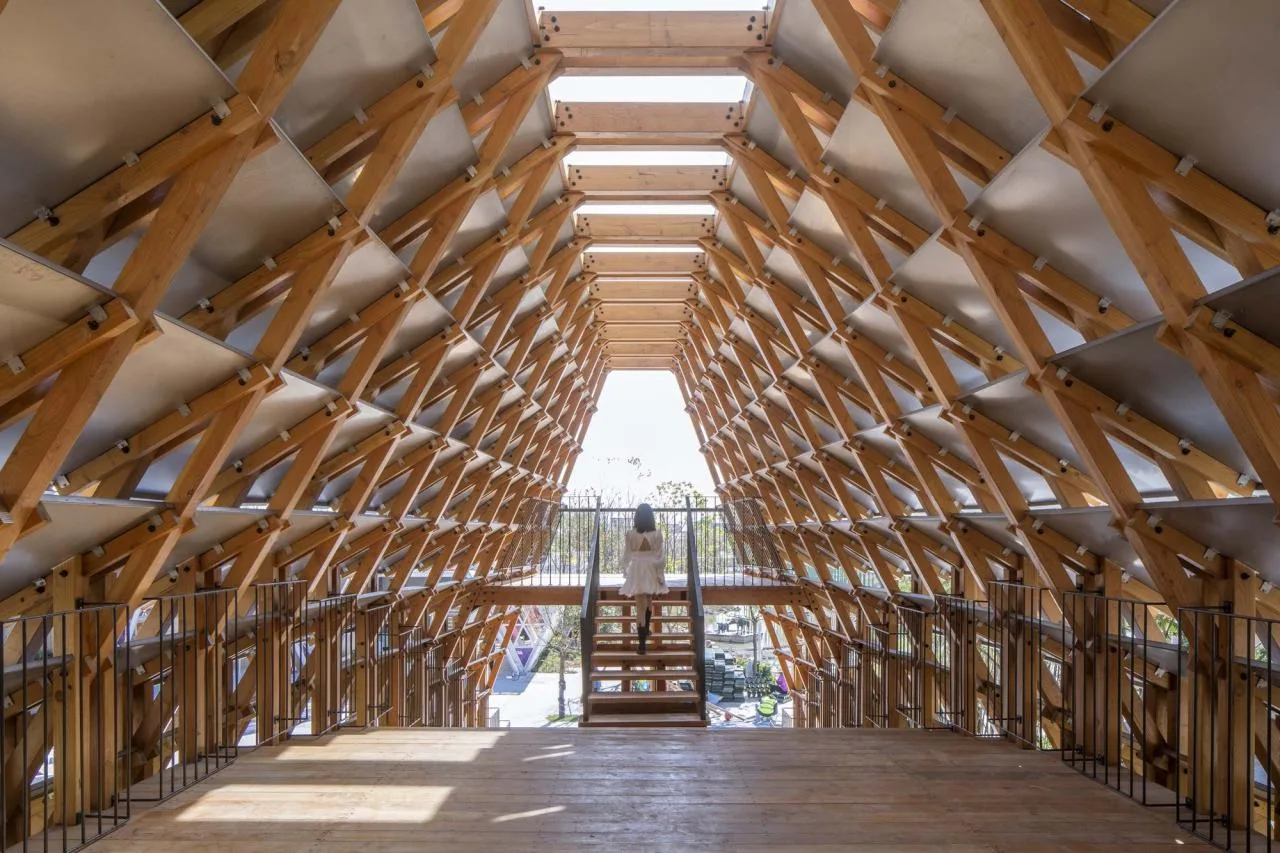
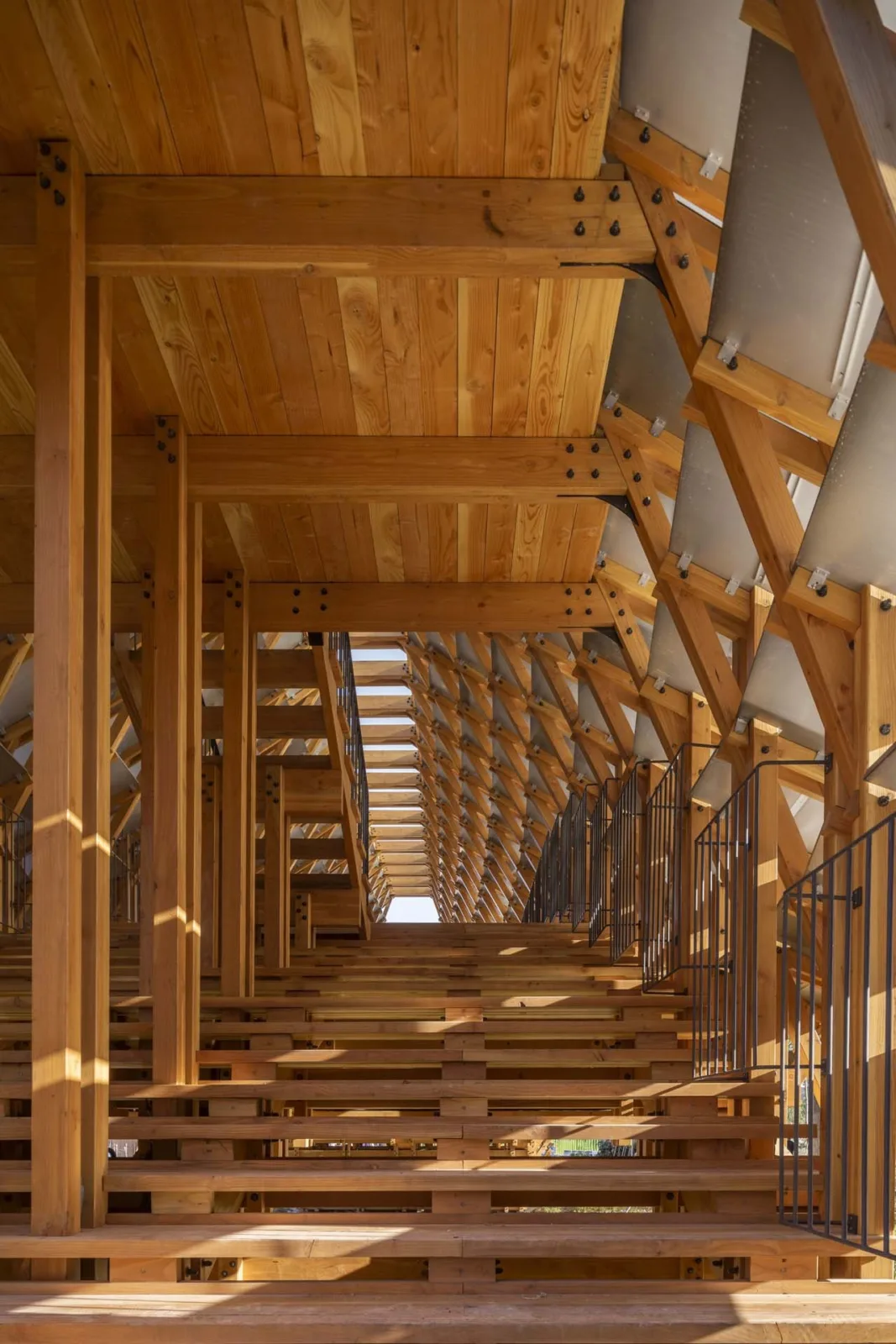
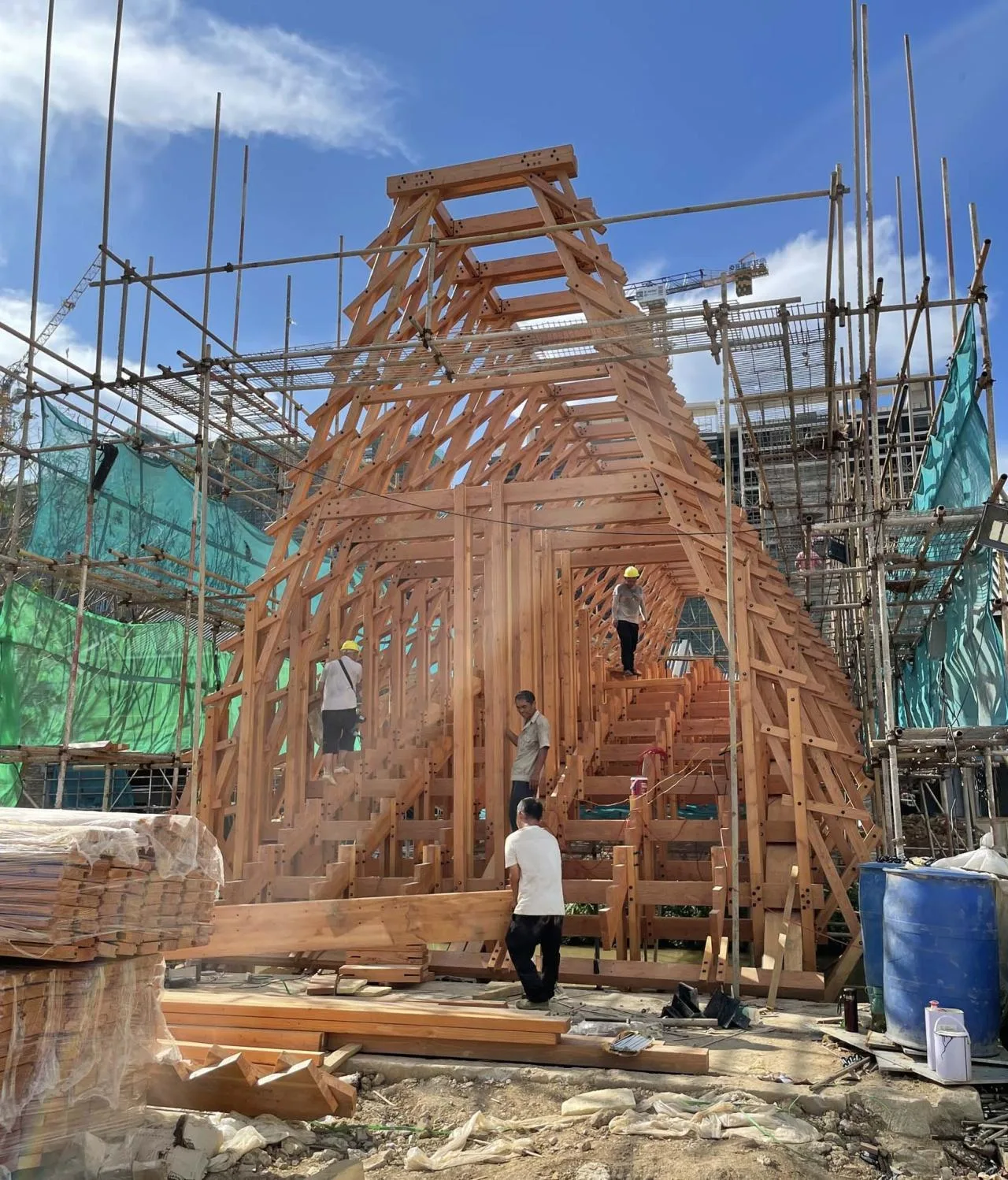
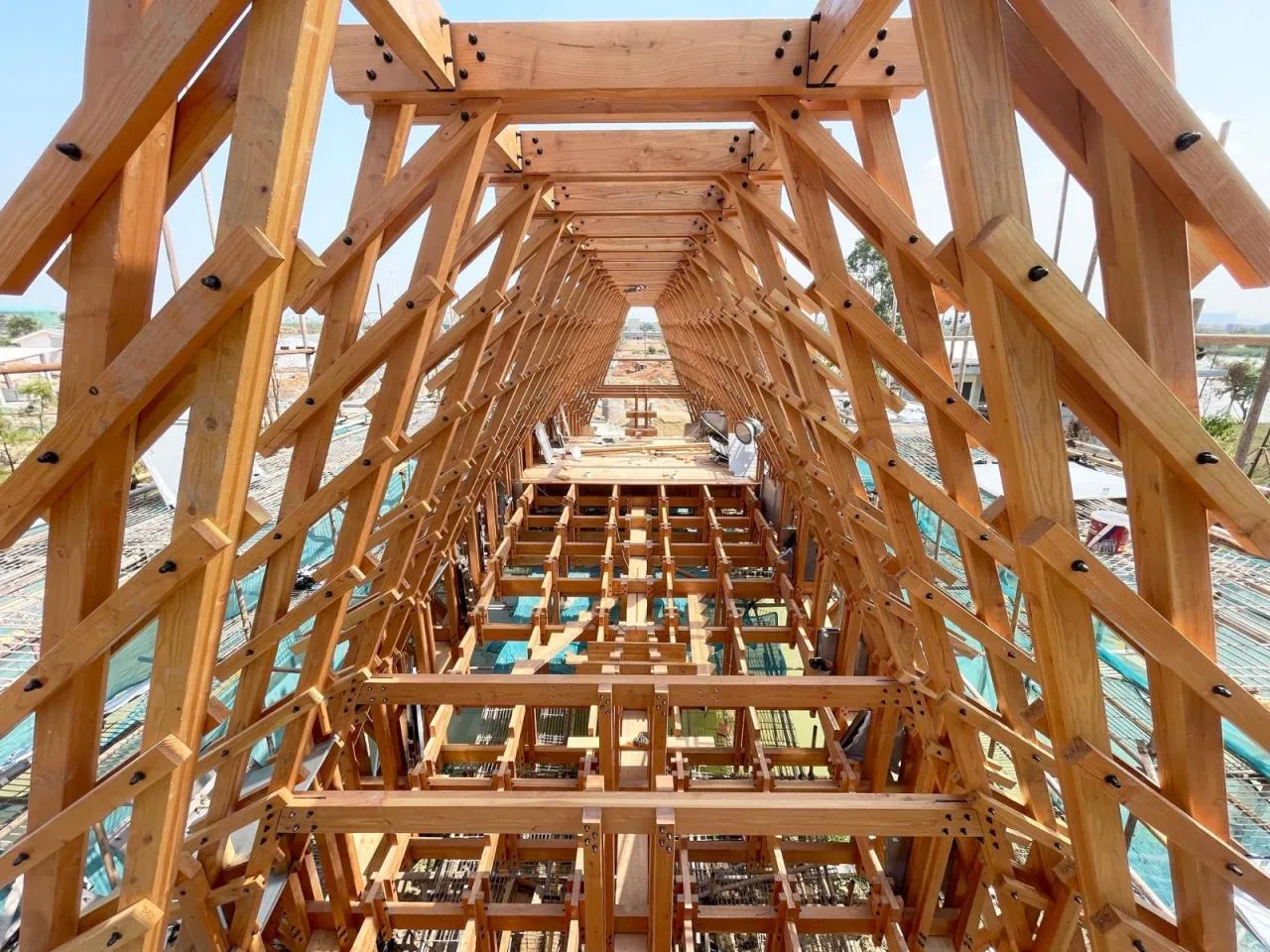
The bridge’s secondary structural system utilizes small-section timber (100mm x 100mm and 100mm x 50mm), except for the three main large timber arch beams measuring 600mm x 300mm, which bear the primary load.
Small-section timbers are fixed by interlocking the upper and lower beams onto the three main beams, forming a triangular stress pattern that rises from both ends. This design ensures structural stability and distributes loads efficiently.
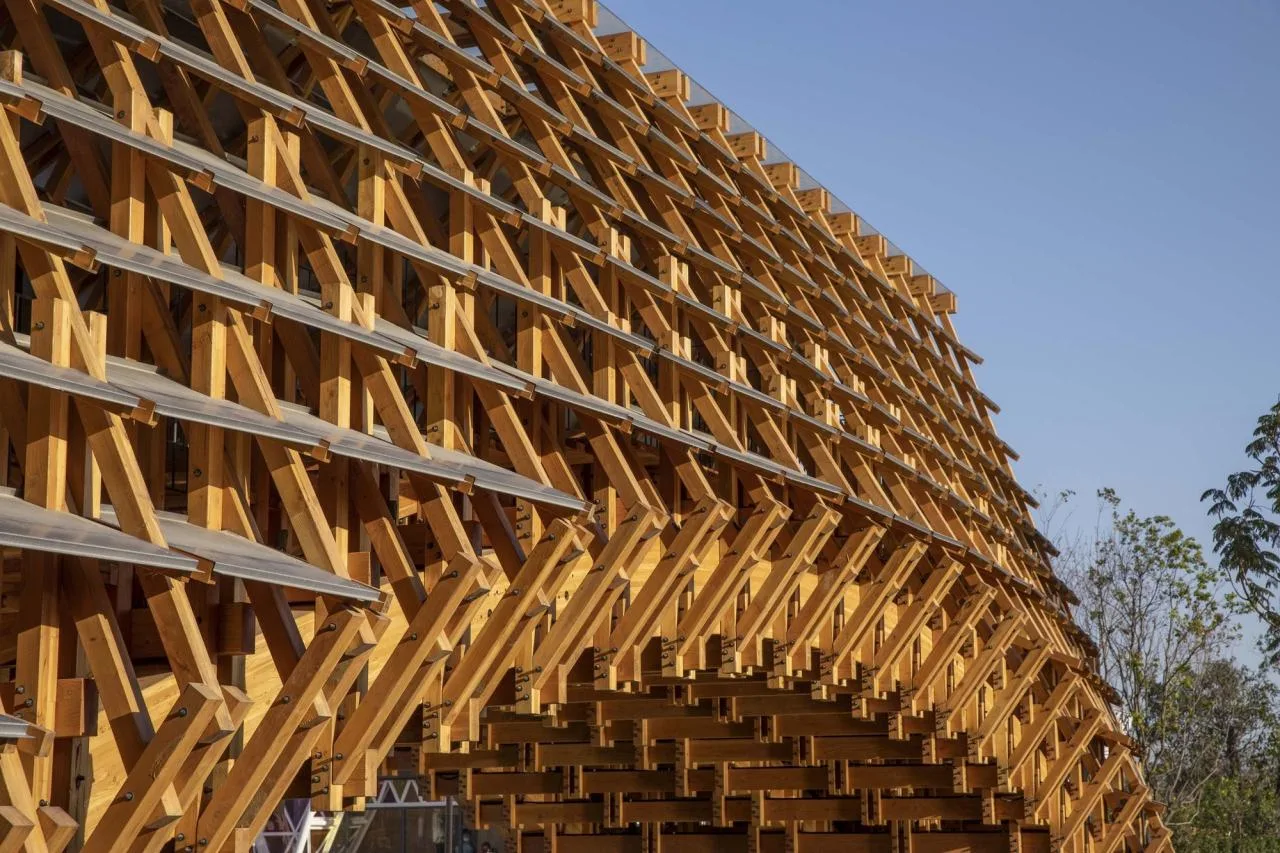
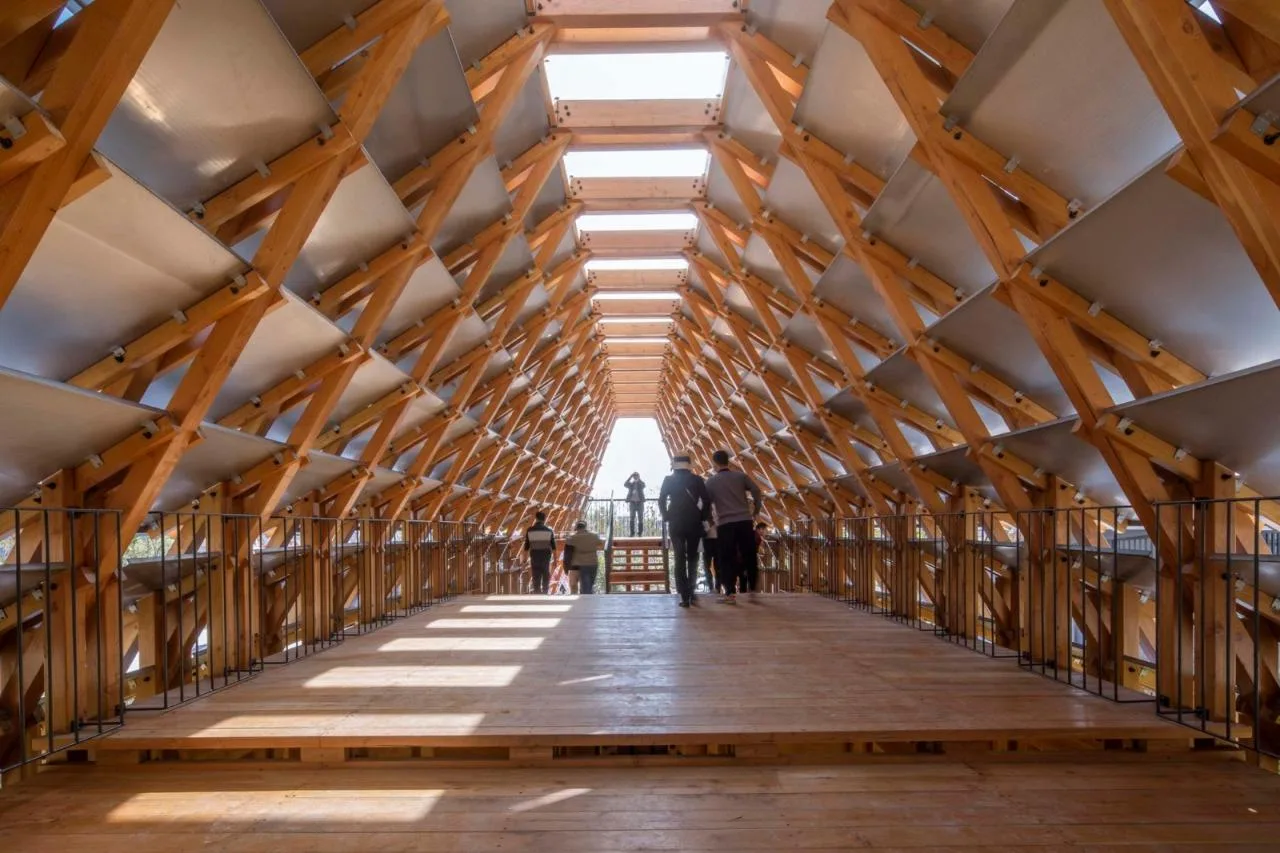
The bridge’s top view reveals a complete square shape. The facades on the top, left, and right sides maintain this square contour, while the bottom naturally curves in alignment with the arch, creating a “high-low-high” spatial gradient within the corridor.
Due to the higher spaces at both ends of the corridor, transverse connecting rods are installed in the middle section for added structural stability. Two viewing platforms are incorporated into the design, breaking spatial monotony and providing clear interior views from the corridor exit.
This small cross-section substructure not only demonstrates impressive craftsmanship but also offers a unique visual experience for passengers on boats passing beneath the bridge, showcasing the intricacies of its construction.
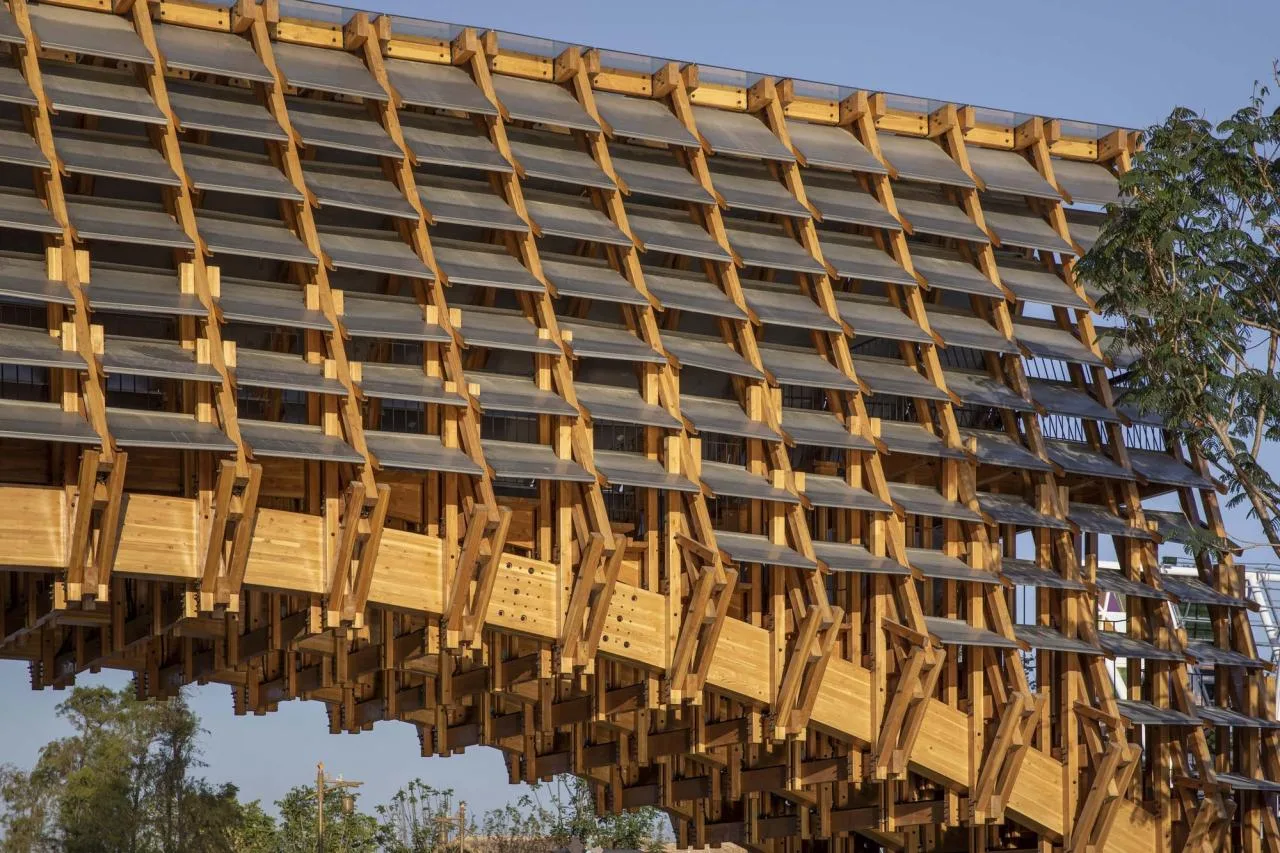
The modular design and material specifications of the small-section timber correspond to a small spacing arrangement, with axis intervals of 1000mm between each secondary structural beam. This scale aligns well with the construction dimensions of the steps and the outer metal skin.
In areas with steep arches, the steps form three height levels, while gentler arches have two. The outer metal skin panels are sized around 900mm per side, fitting neatly within the 1000mm axis intervals, facilitating processing, transport, and manual installation.
The 900mm spacing also provides a comfortable area for individuals to stand, lean, and rest between frames.
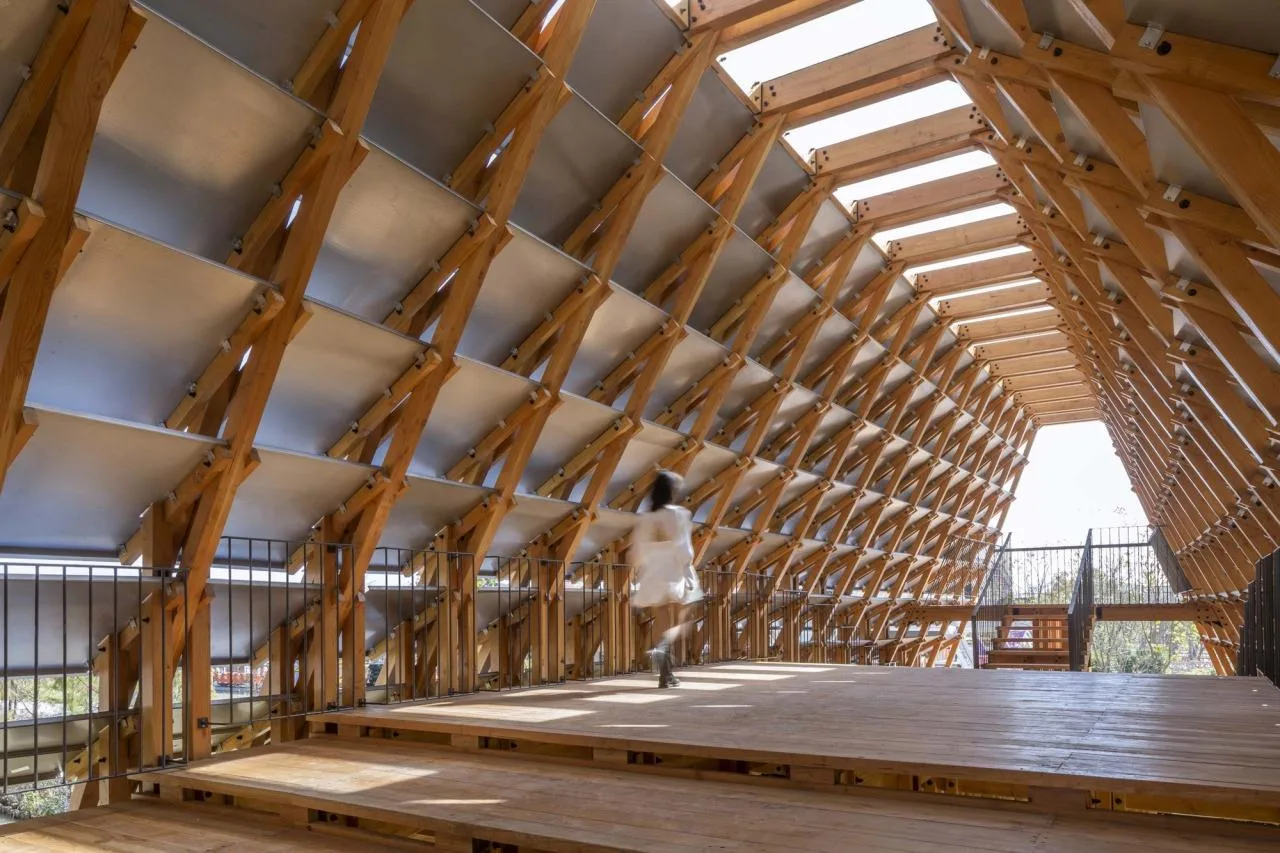
The corridor’s lighting design carefully controls gaps between the upper and lower levels of side and bottom floor steps, maintaining a 70mm gap. The metal skin on the corridor sides features a transparent gap of about 200mm between overlapping panels. A 1500mm-wide daylight strip runs along the corridor’s center roof.
As visitors slowly enter the corridor from either end, their gaze is drawn to the shimmering water visible through narrow gaps between the steps. Climbing the bridge, refracted light filtering through the metal seams encourages visitors to look through the side panels, creating an intimate, enclosed experience distinct from open bridge designs.
At the corridor’s center, light and shadow fully reveal themselves, evoking a sense of calm and expansiveness, and establishing a continuous spatial rhythm moving from compression to openness.
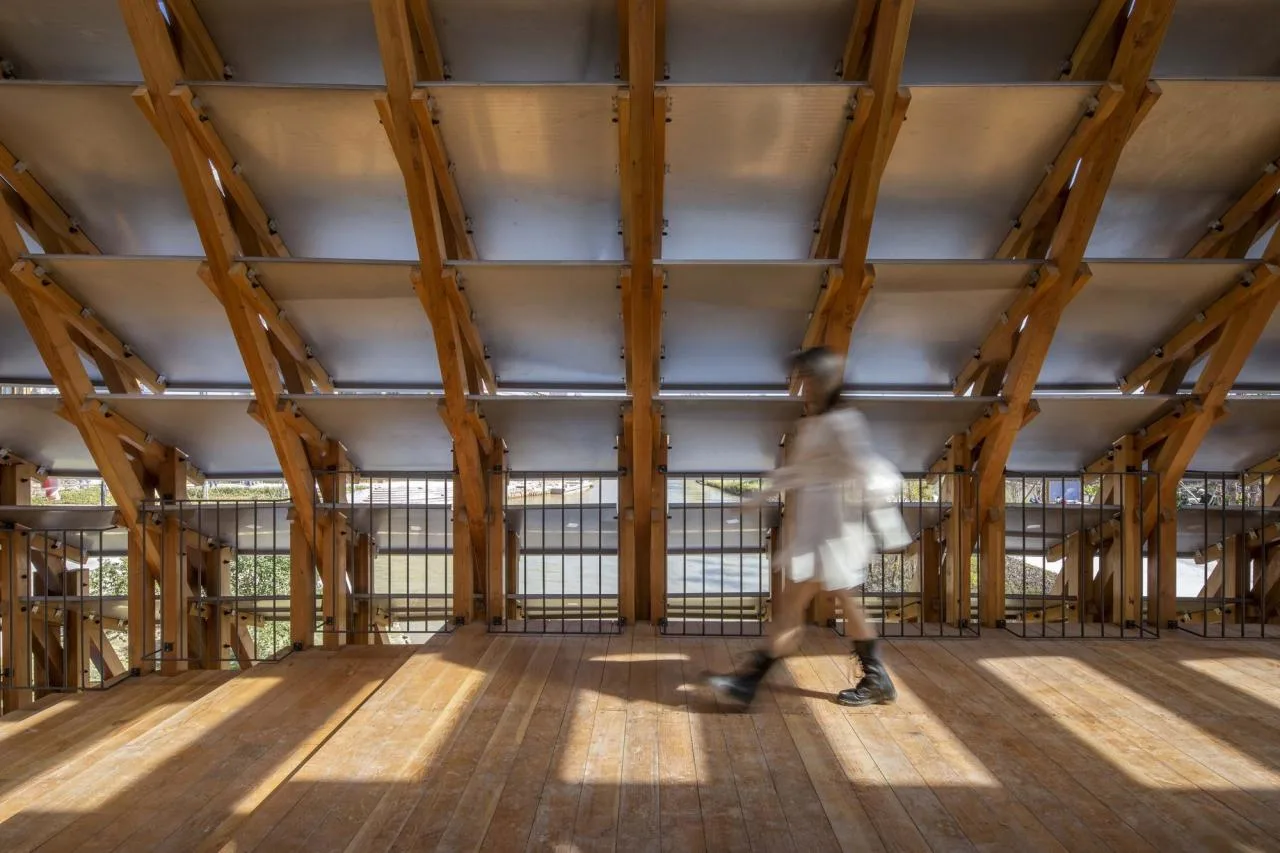
The materials are handcrafted yet produced under industrial standards. The wood and metal components are fabricated using modern industrial technology.
While large machinery assists with lifting beams during installation, subsequent construction processes emphasize local craftsmanship. The design allows workers to transport and assemble components manually, preserving the project’s regional character and ensuring construction efficiency.
Project Drawings
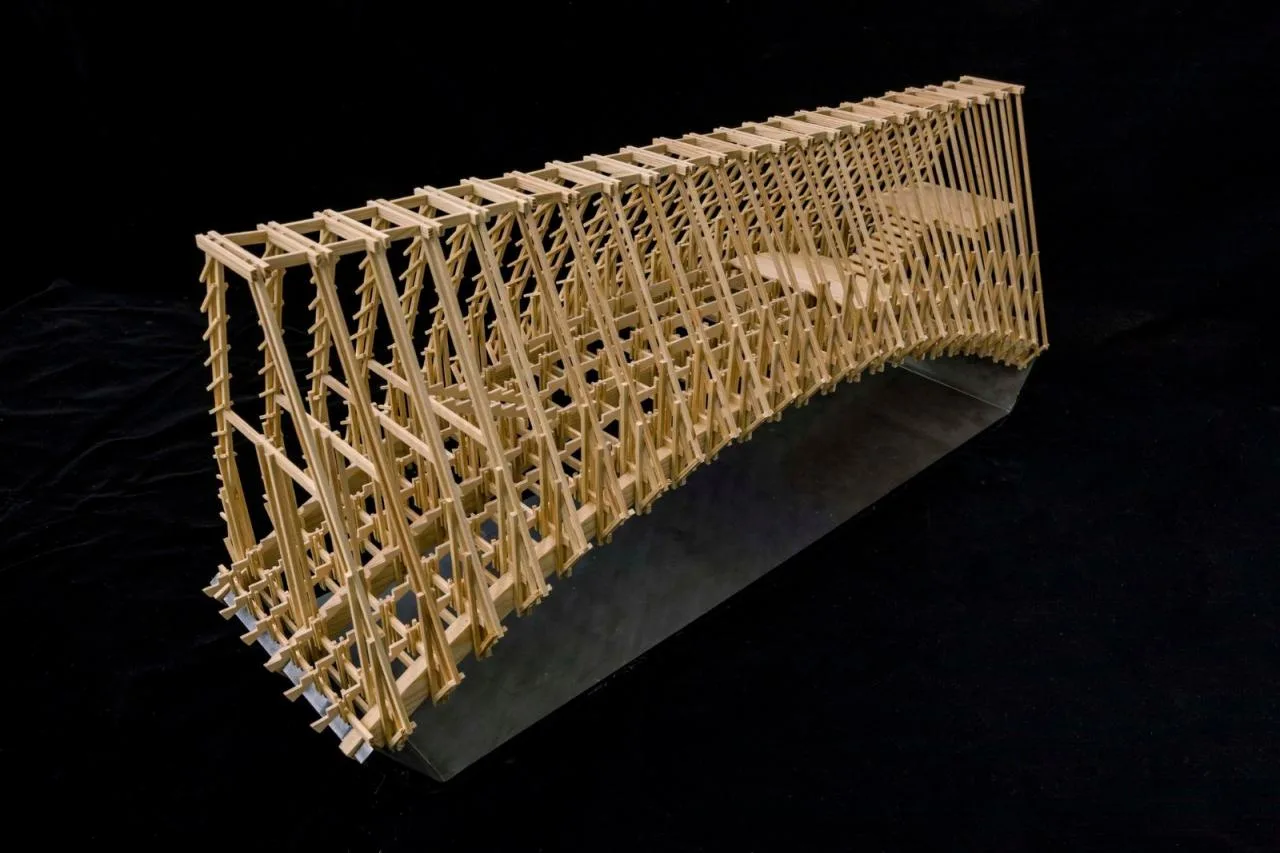
△ Model Diagram
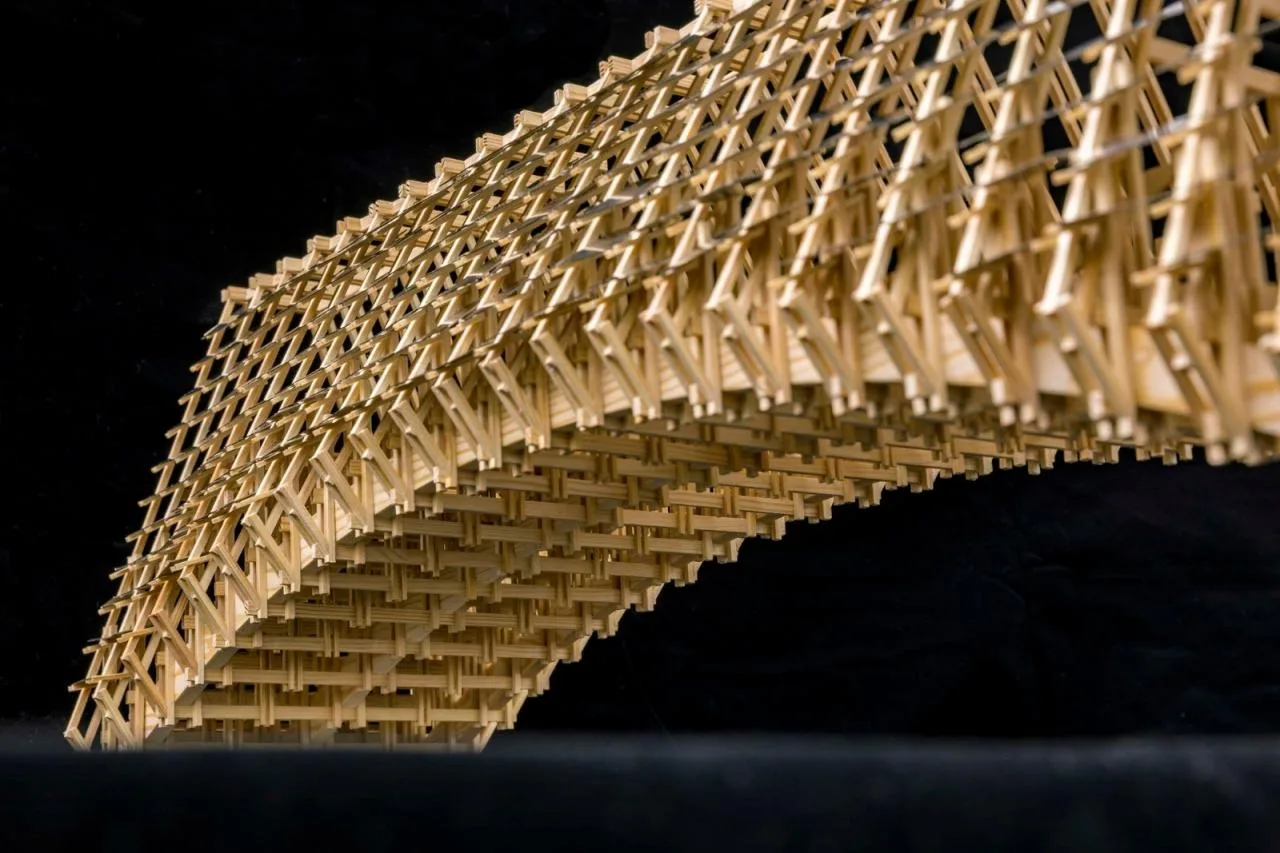
△ Model Diagram
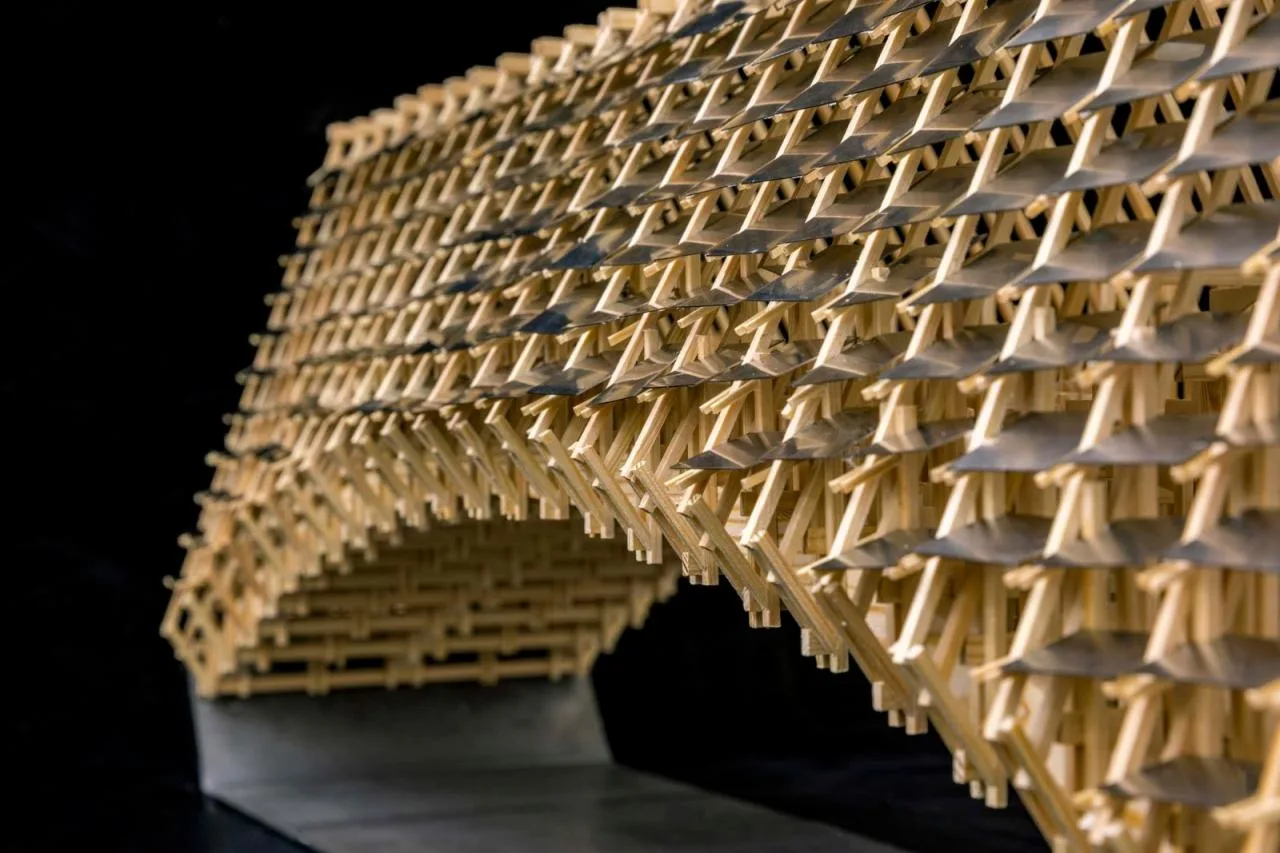
△ Model Diagram
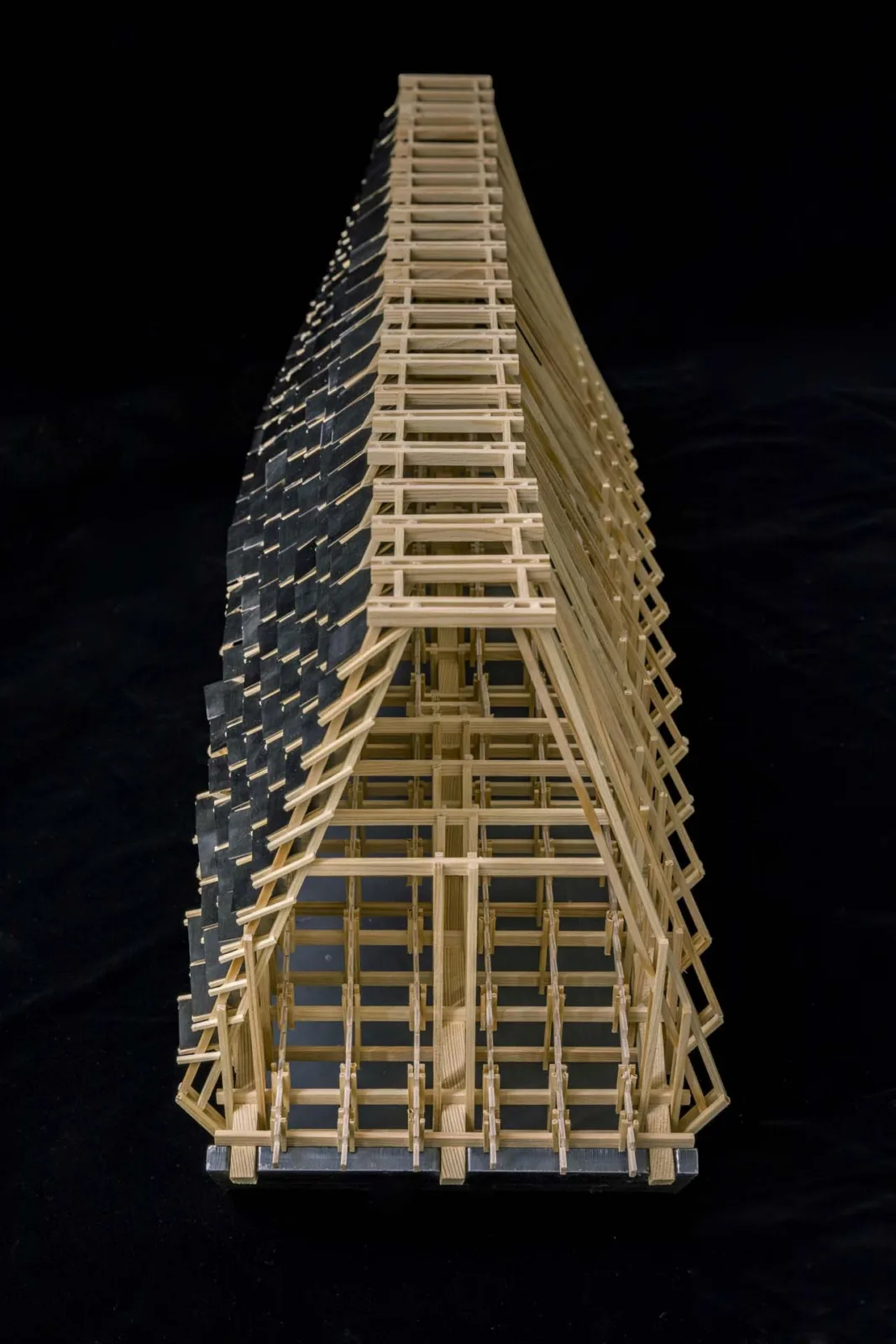
△ Model Diagram
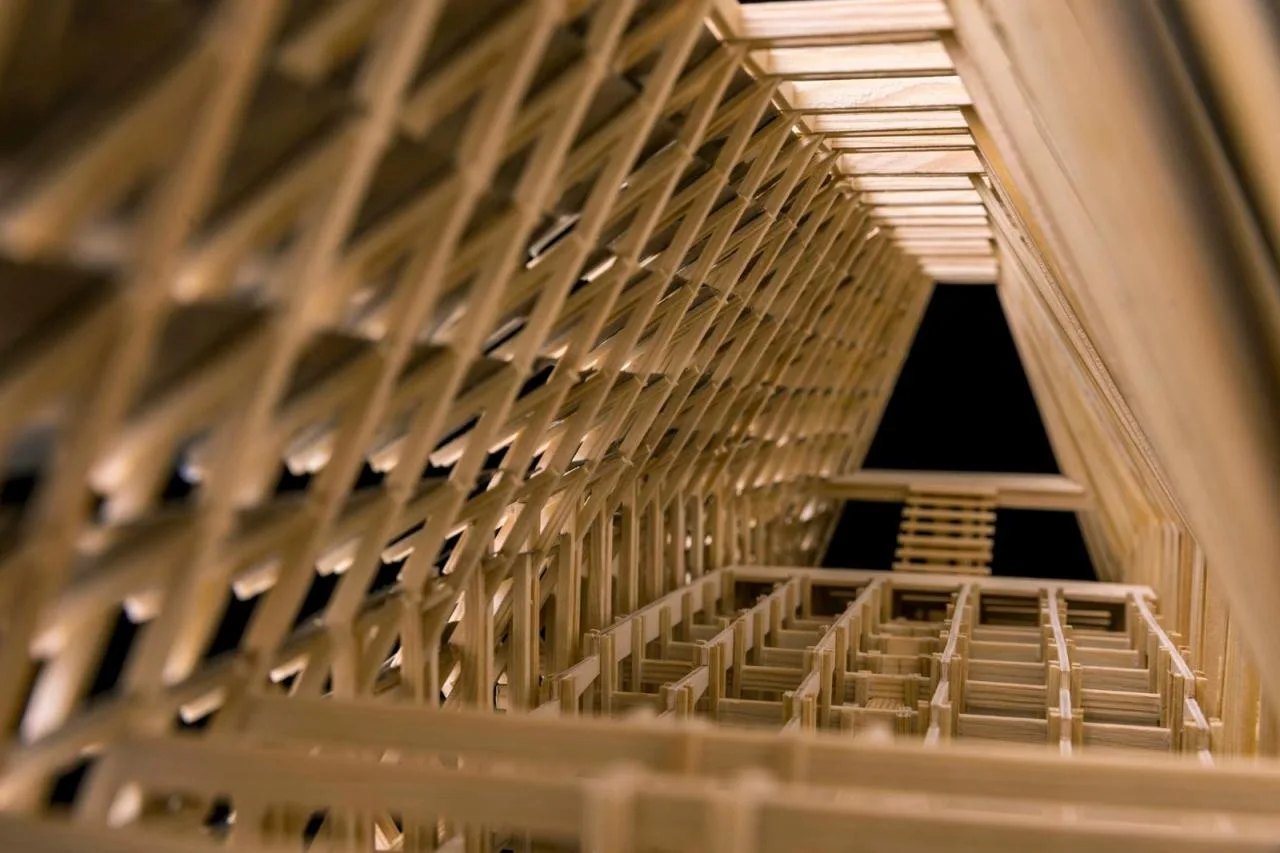
△ Model Diagram
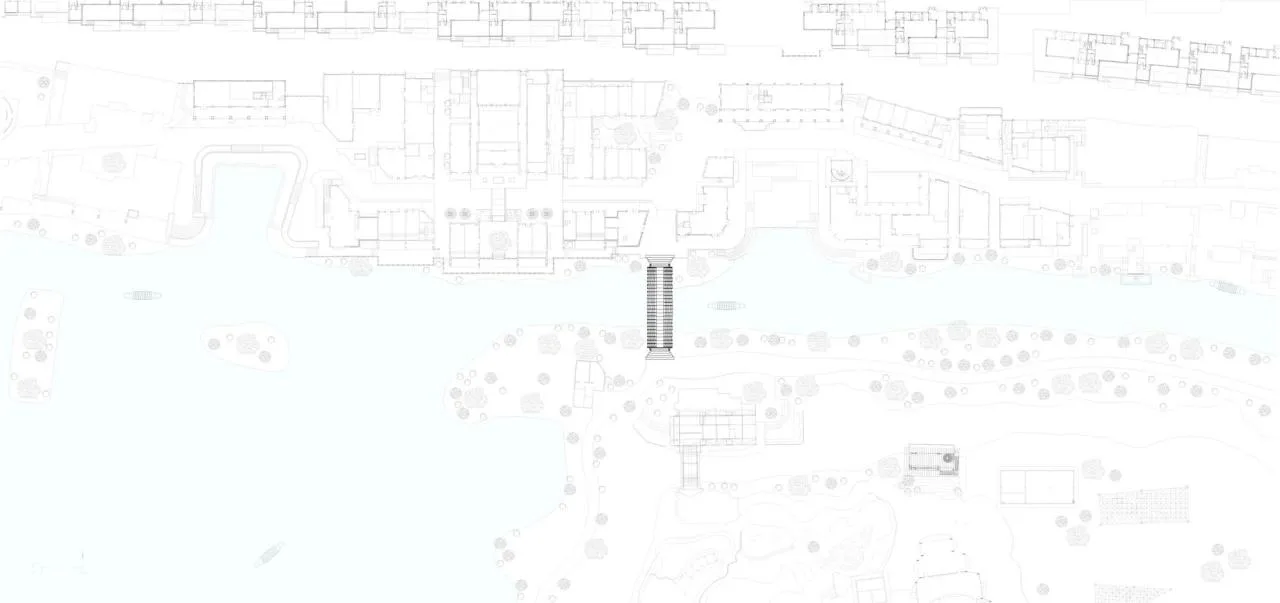
△ General Layout Plan
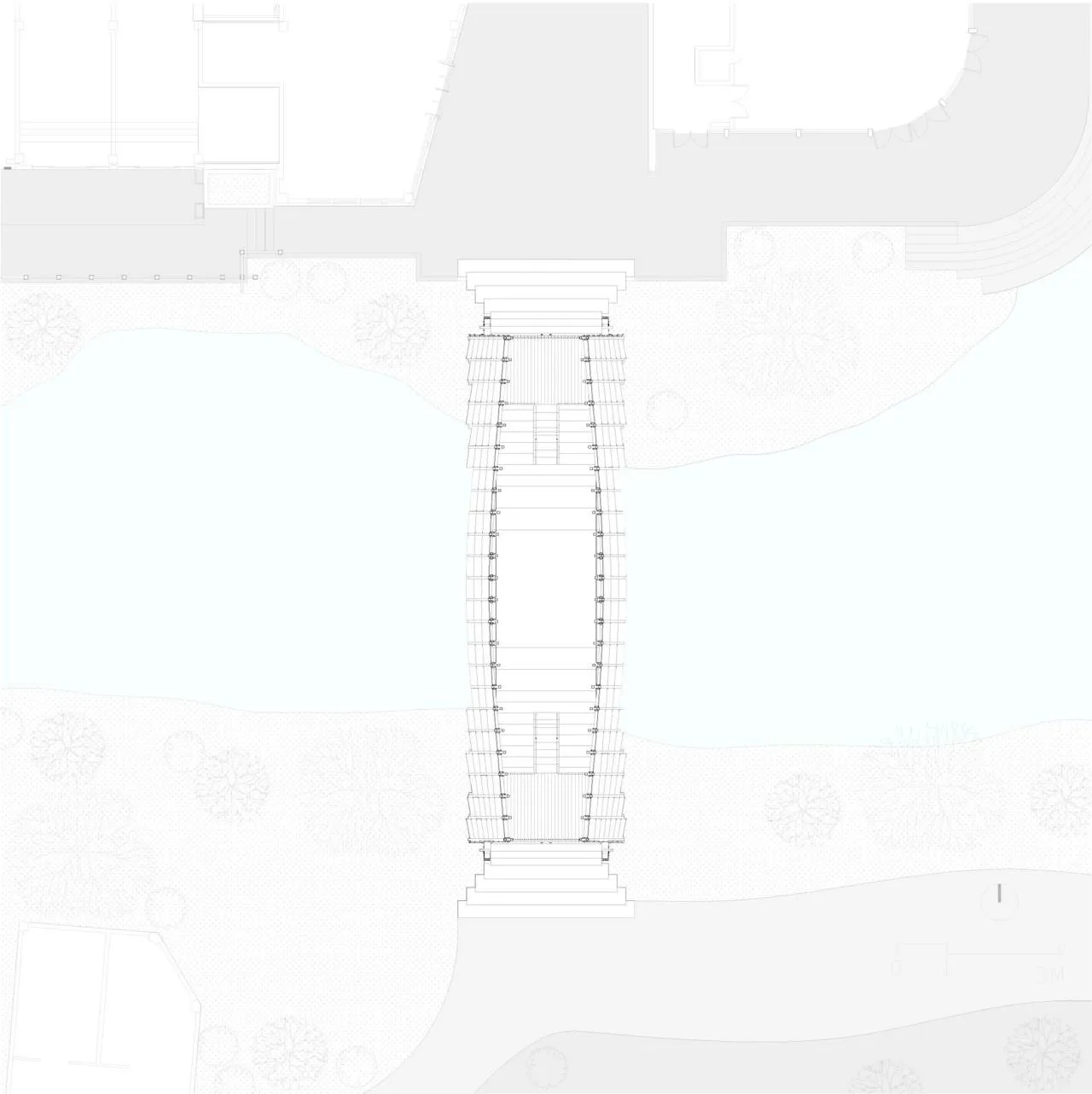
△ First Floor Plan
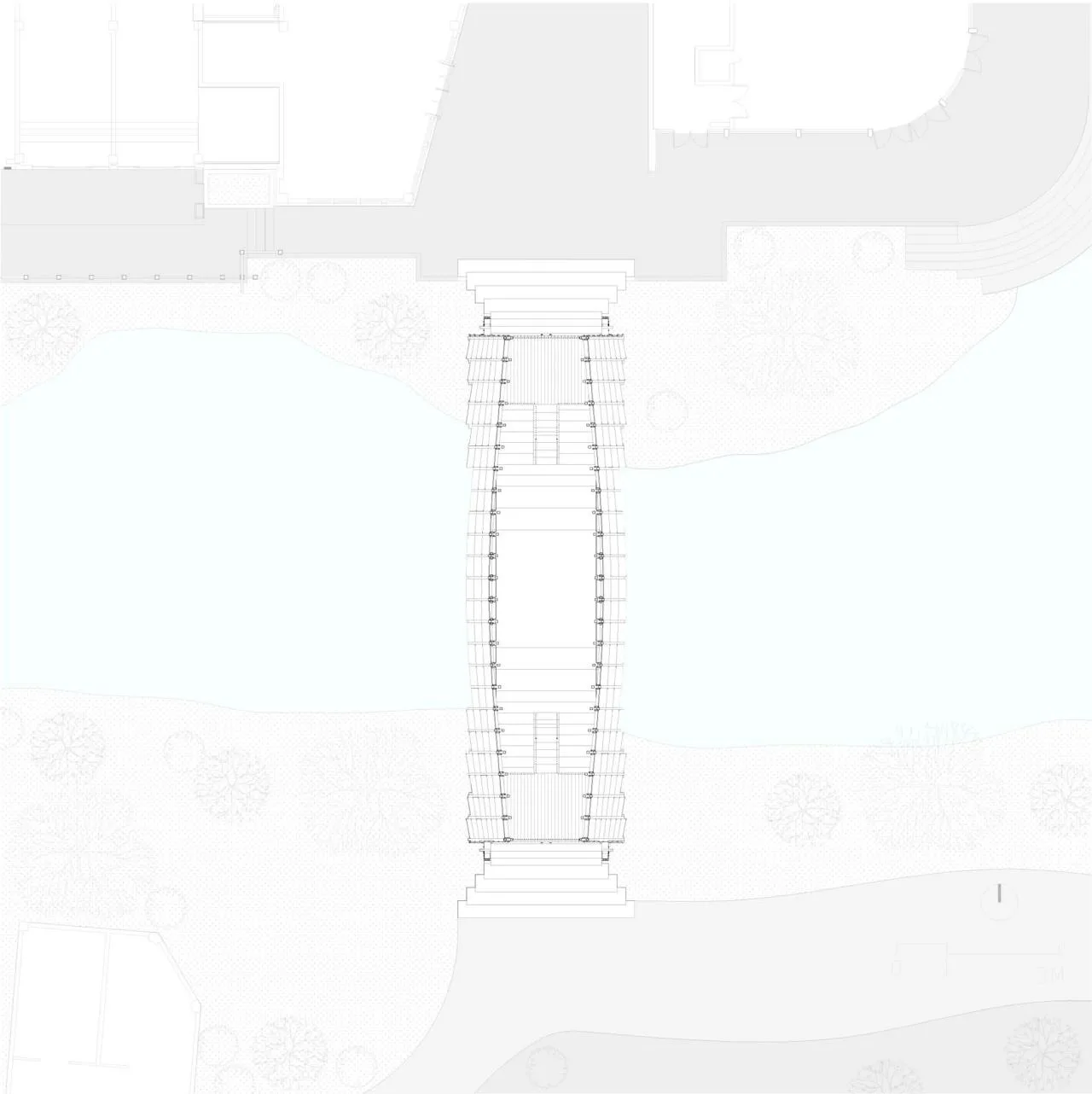
△ Second Floor Plan
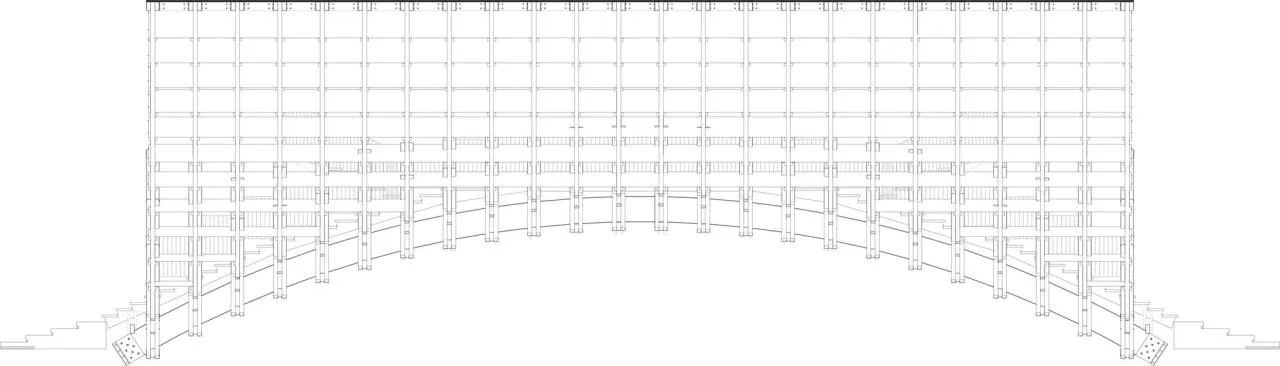
△ Facade
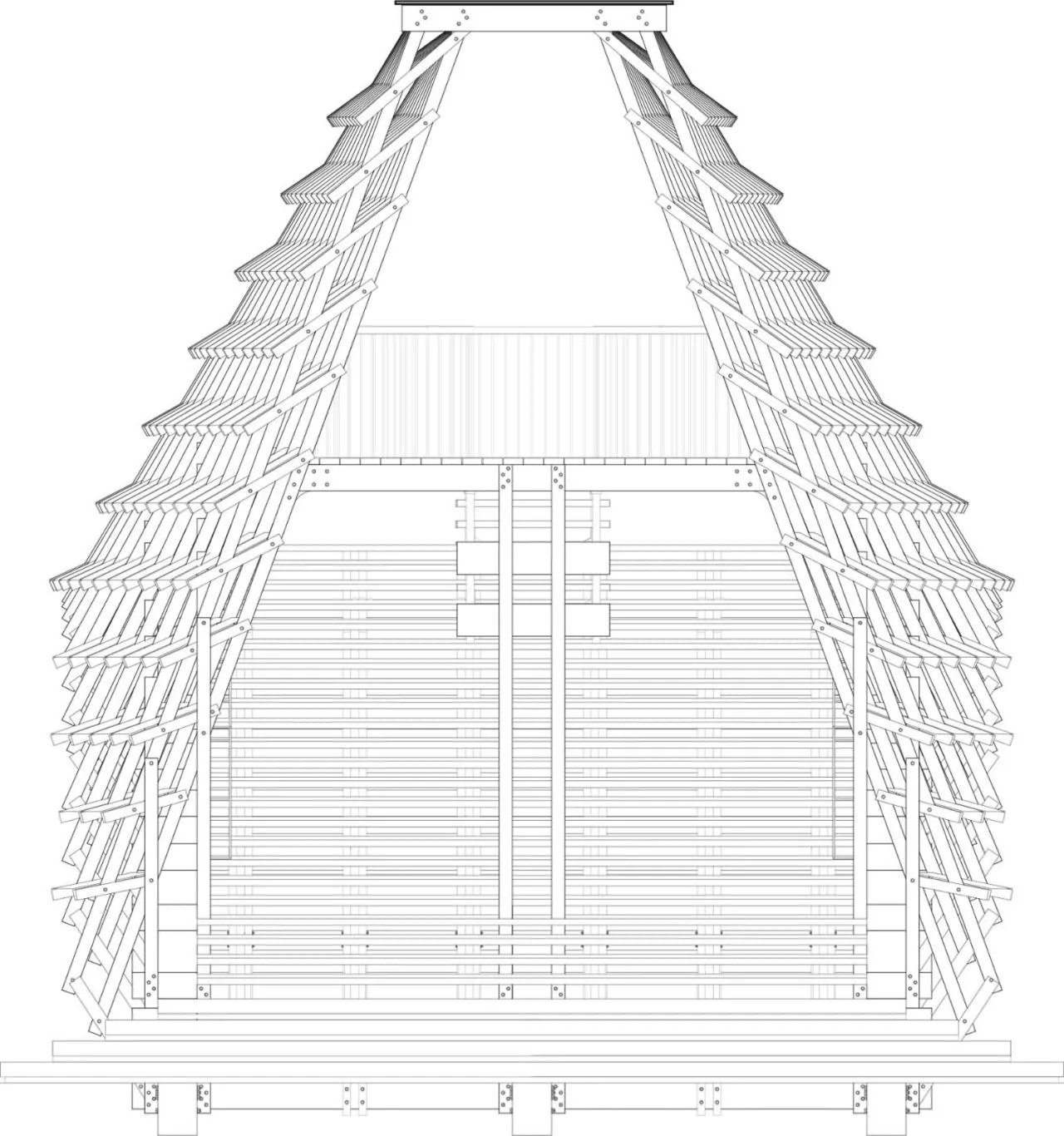
△ Entrance Facades at Both Ends
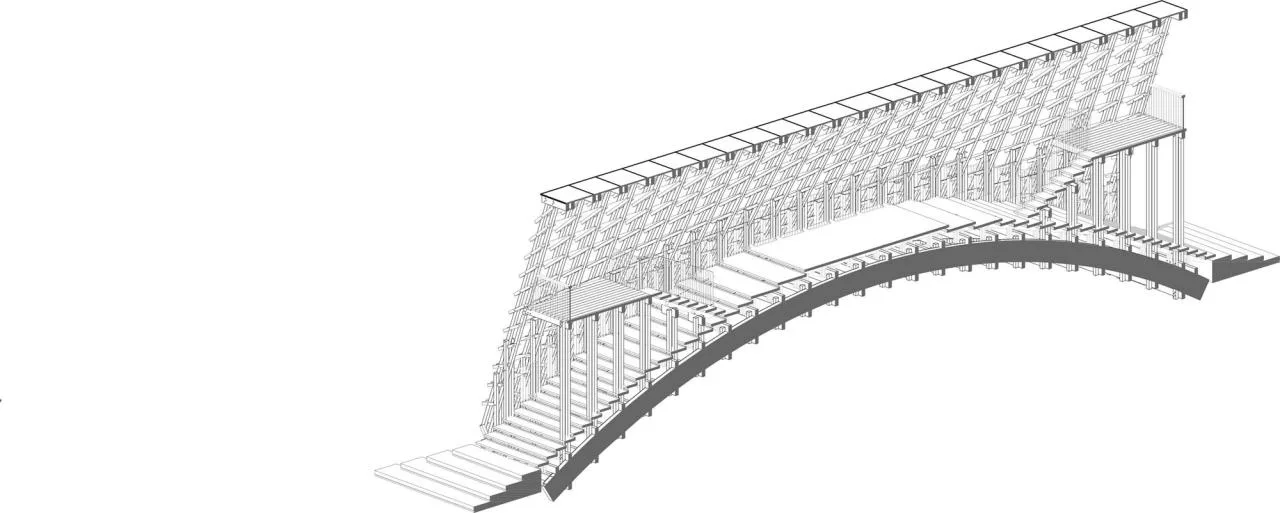
△ Axial Side View
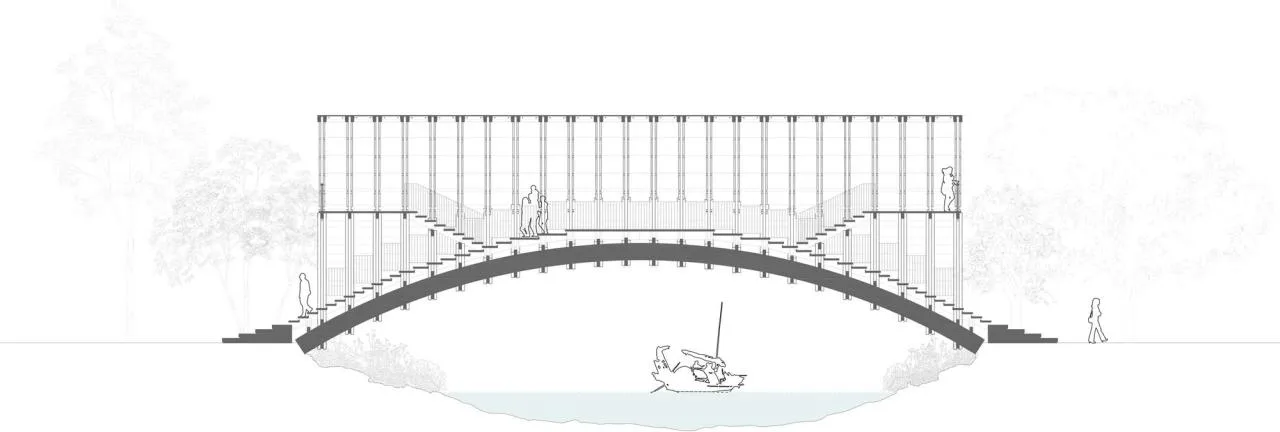
△ Section Diagram
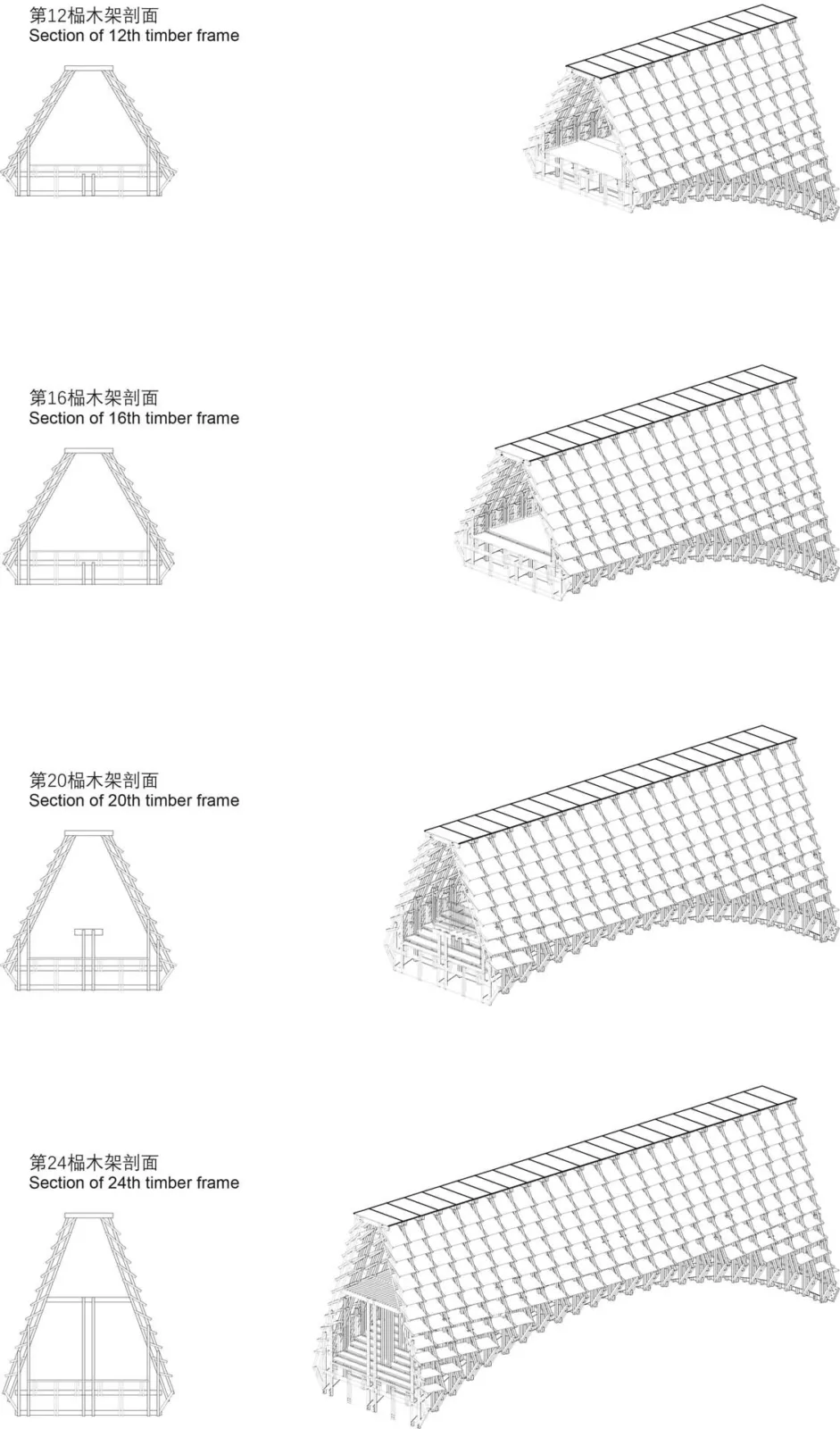
Analysis of Variable Cross-Section of the Wooden Frame
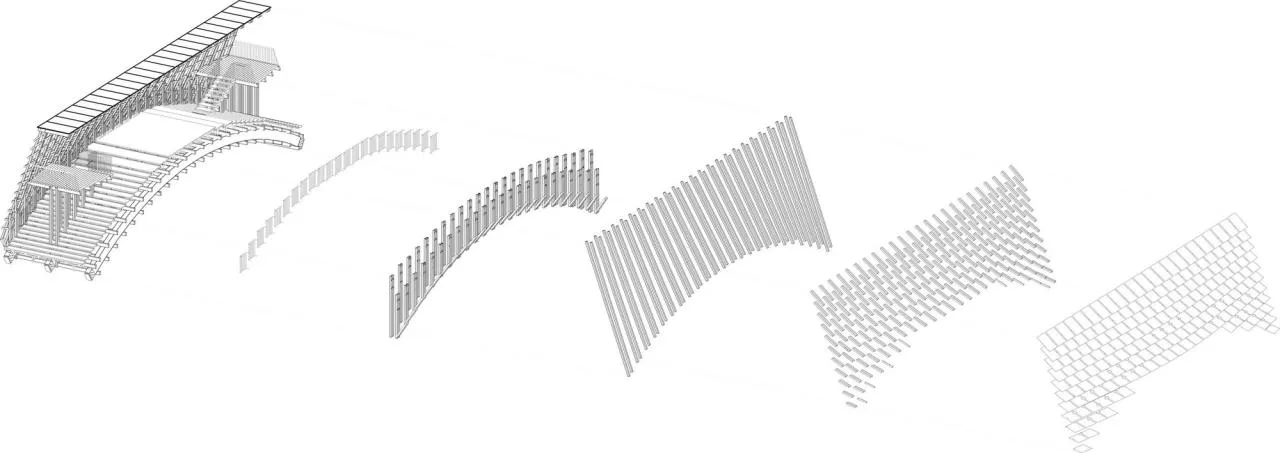
Analysis of the Side Guard Structure of the Corridor
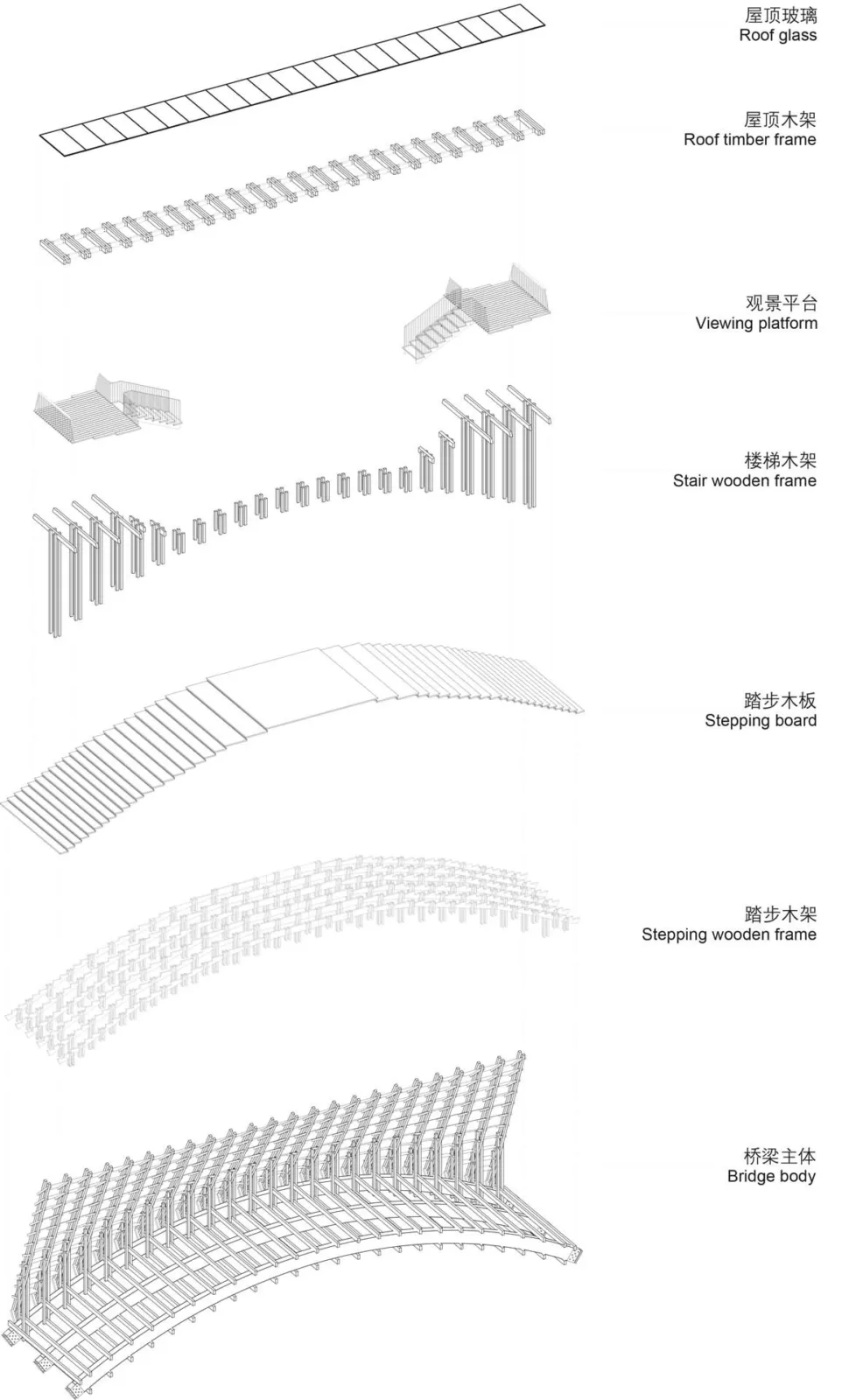
△ Structural Decomposition Diagram of the Bridge’s Top, Side, and Bottom
Project Information
Architectural Design: Luo Yujie Studio
Area: 166 square meters
Project Year: 2022
Photographer: Jin Weiqi
Manufacturers: Shanghai Shengthausen Wood Structure Co., Ltd., Guangdong Meteoryu Digital Lighting Co., Ltd., Liaoning Jinbaisheng Wood Structure Technology Co., Ltd.
Design Team: Luo Yujie, Lu Zhuojian, Wang Beilei
Structural Consultant: Luan Cong Construction Design Firm
Construction Party: Shenzhen Zhenhui Construction Engineering Co., Ltd.
Location: Jiangmen, China















Must log in before commenting!
Sign Up