
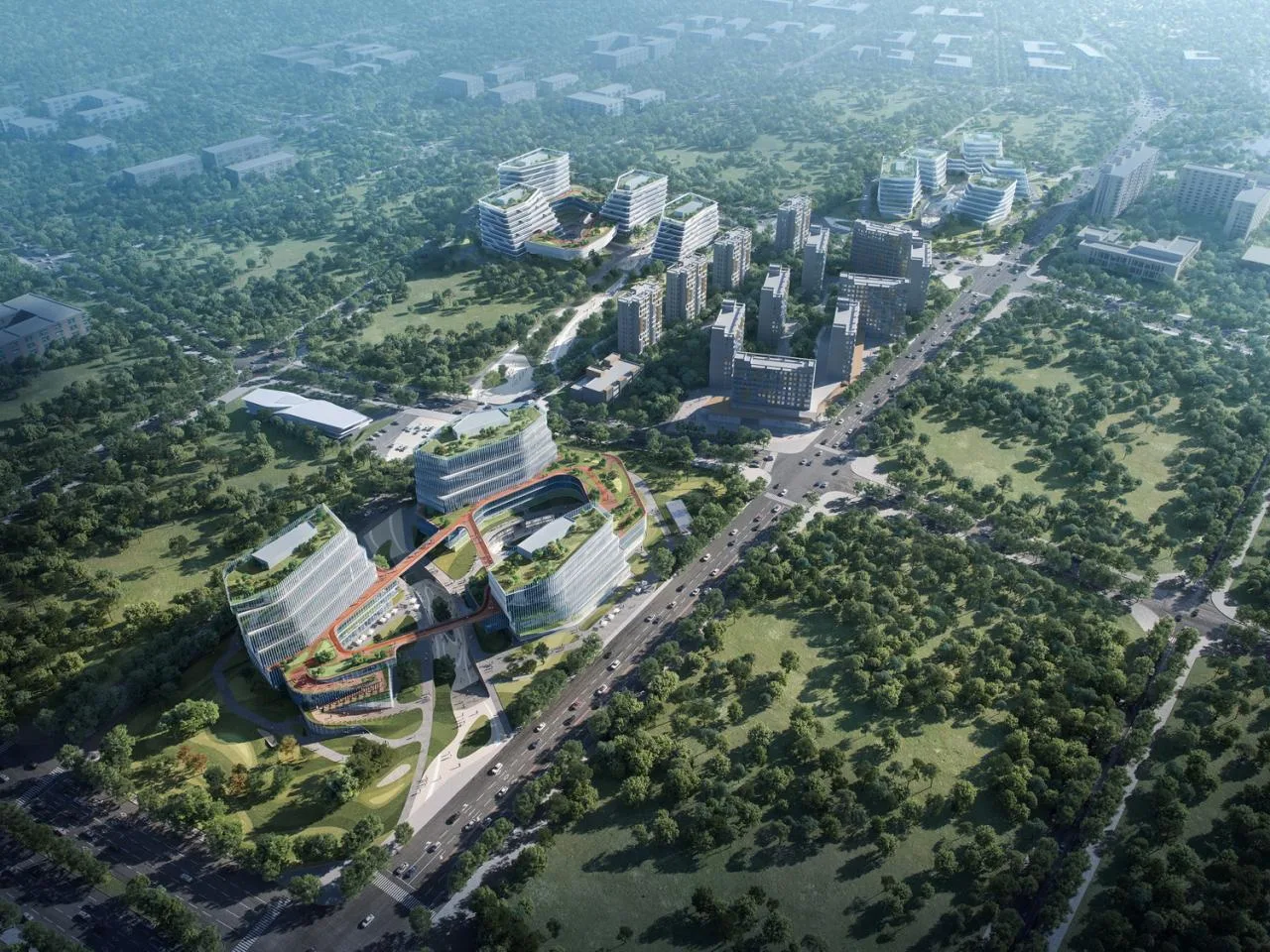
Led by Liu Haowei, CAA Architecture Firm has unveiled the urban and architectural design for “Xishan Zhigu – Beijing Collaborative Innovation Park.” This project is among Beijing’s key “3 100” engineering initiatives for 2021. The largest building cluster within the project, Phase I North Block, has officially commenced construction.
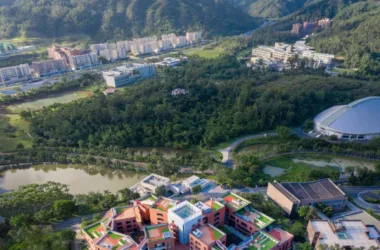
Situated in the Sujiatuo area of Haidian District, the site is surrounded by the Xishan and Xiangshan mountains, offering unique natural environmental advantages. It lies at the core of scientific and technological innovation within the Beijing Free Trade Zone and serves as a new hub for the international evolution of the Zhongguancun Industrial Development Belt.
At the foot of the Xishan Mountains, facing an area rich in natural resources, we have created a dialogue between architectural forms inspired by mountains, rivers, courtyards, and settlements with the rolling Xishan landscape. This vision fosters a future city that blends nature and technology, embodying openness, greenery, and intelligence. We call it Xishan Zhigu.” – Liu Haowei
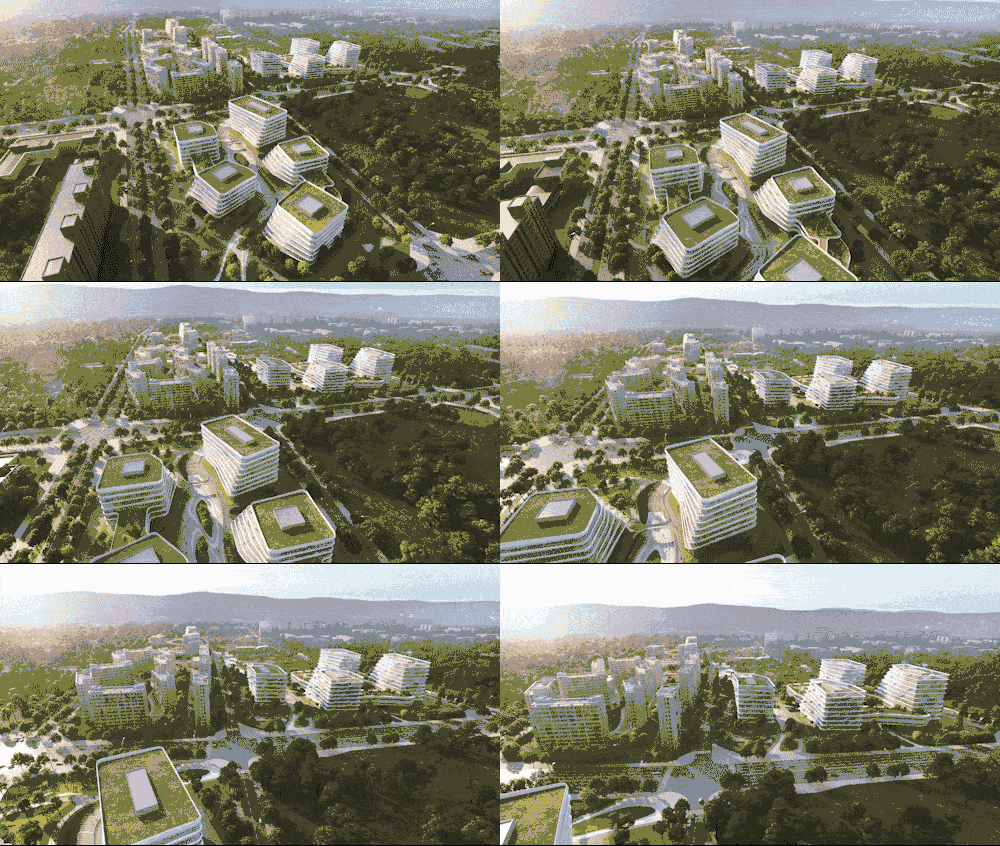
CAA Architecture Firm entered the international competition for the urban and architectural design of Beijing Collaborative Innovation Park in late 2019. After multiple rounds of rigorous evaluation, their concept, titled “Shanshui Intelligent Valley,” featuring a free-form ring connecting different plots, emerged victorious among top global architectural firms. CAA secured the project’s overall architectural design rights and will provide ongoing professional services.
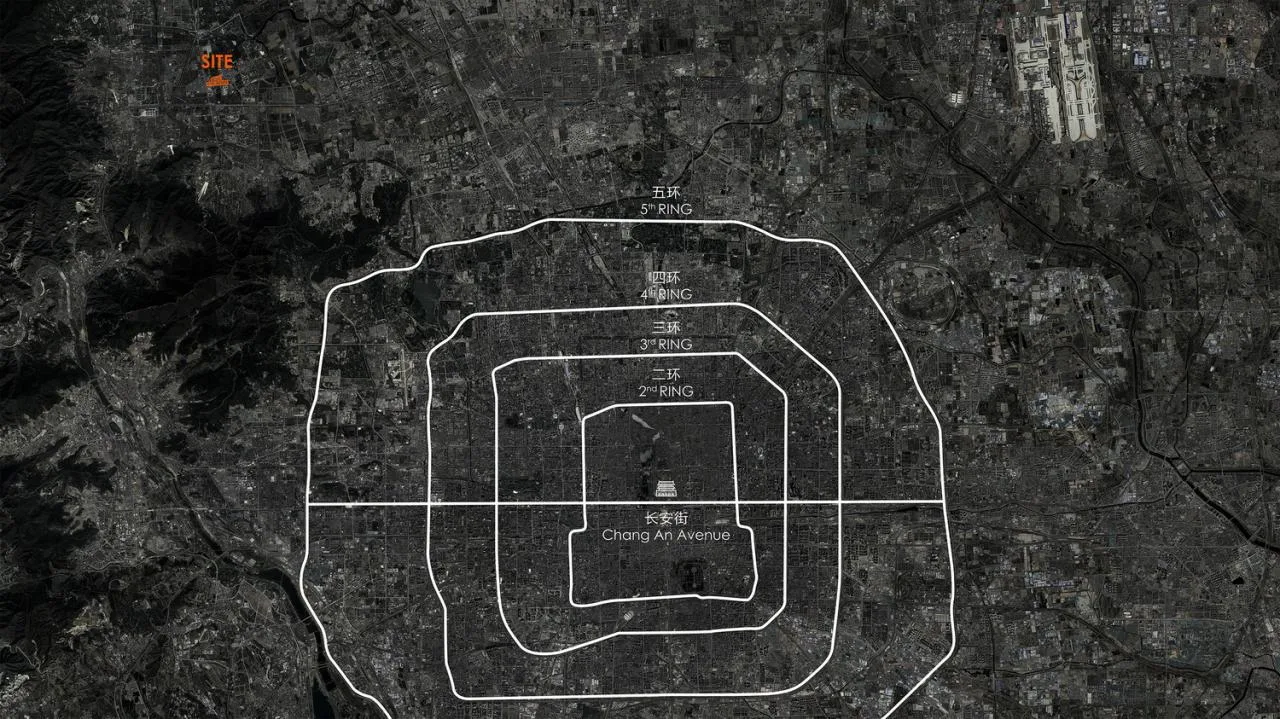
△ Location Analysis
China currently possesses the abundant resources and deep market potential necessary for a world-class science and technology innovation center, reshaping the global political, economic, and technological landscape. As Beijing’s core area for scientific innovation, Haidian Zhongguancun has attracted numerous unicorns and leading enterprises, establishing itself as the “Silicon Valley of China.”
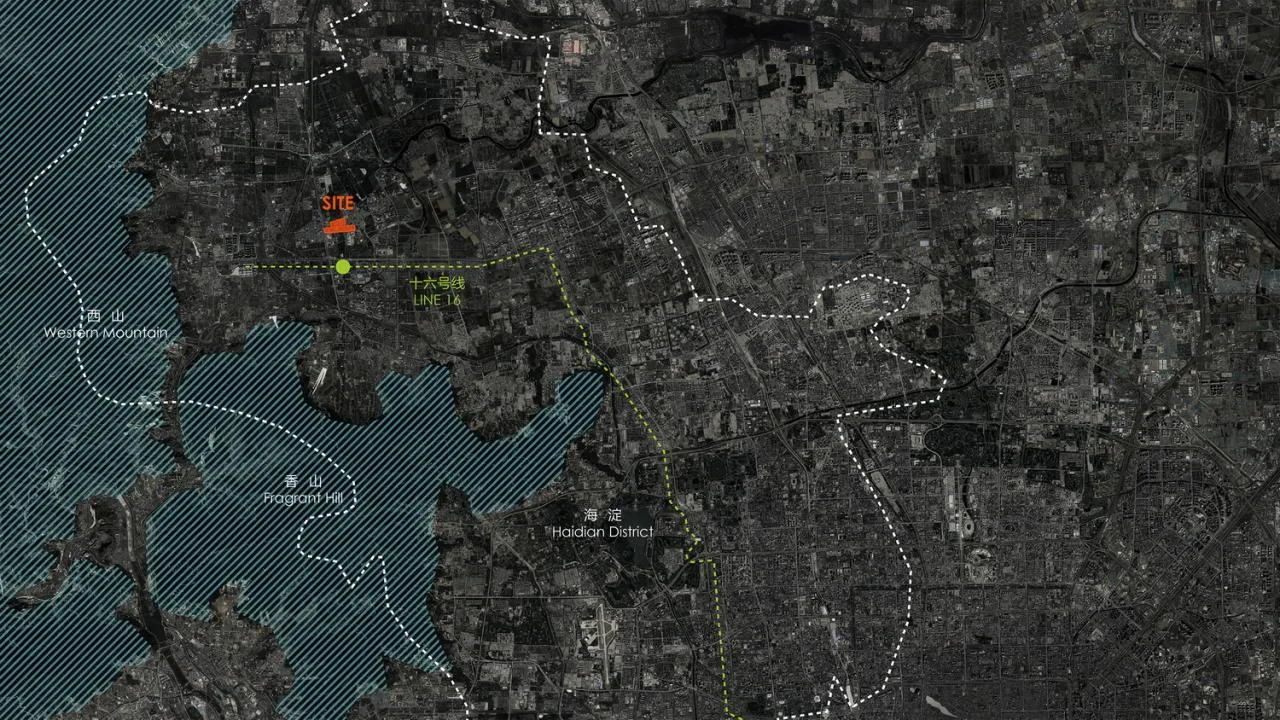
△ Location Analysis
As the industrial spillover core of Zhongguancun, Beijing Collaborative Innovation Park is a key project supporting scientific and high-precision industry innovation in northern Haidian District. Leveraging its strategic location, it implements Haidian District’s “Two New and Two High” policies, reimagining the integration of industry and urban life, and establishing a leading platform for technology, talent, and innovative economic demonstration.
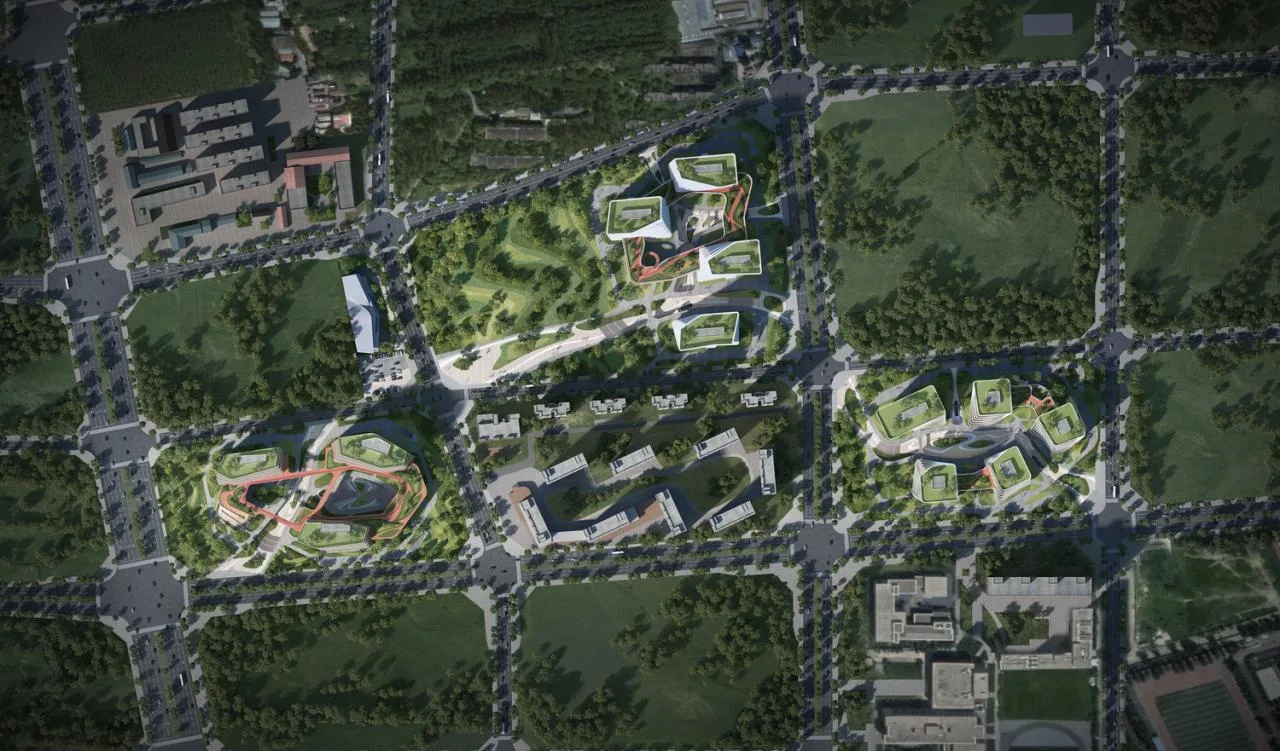
CAA’s design integrates the outstanding ecological features of Xishan with the rich cultural resources of Sujiatuo. Centered on innovation, sustainability, and openness, it respects the local context and human scale while anticipating future regional development trends. The project is envisioned as an innovative smart park, focusing on scientific research and technology services, and combining unicorn company headquarters, national engineering labs, technology centers, life and health hubs, innovation offices, and leisure and commercial spaces.
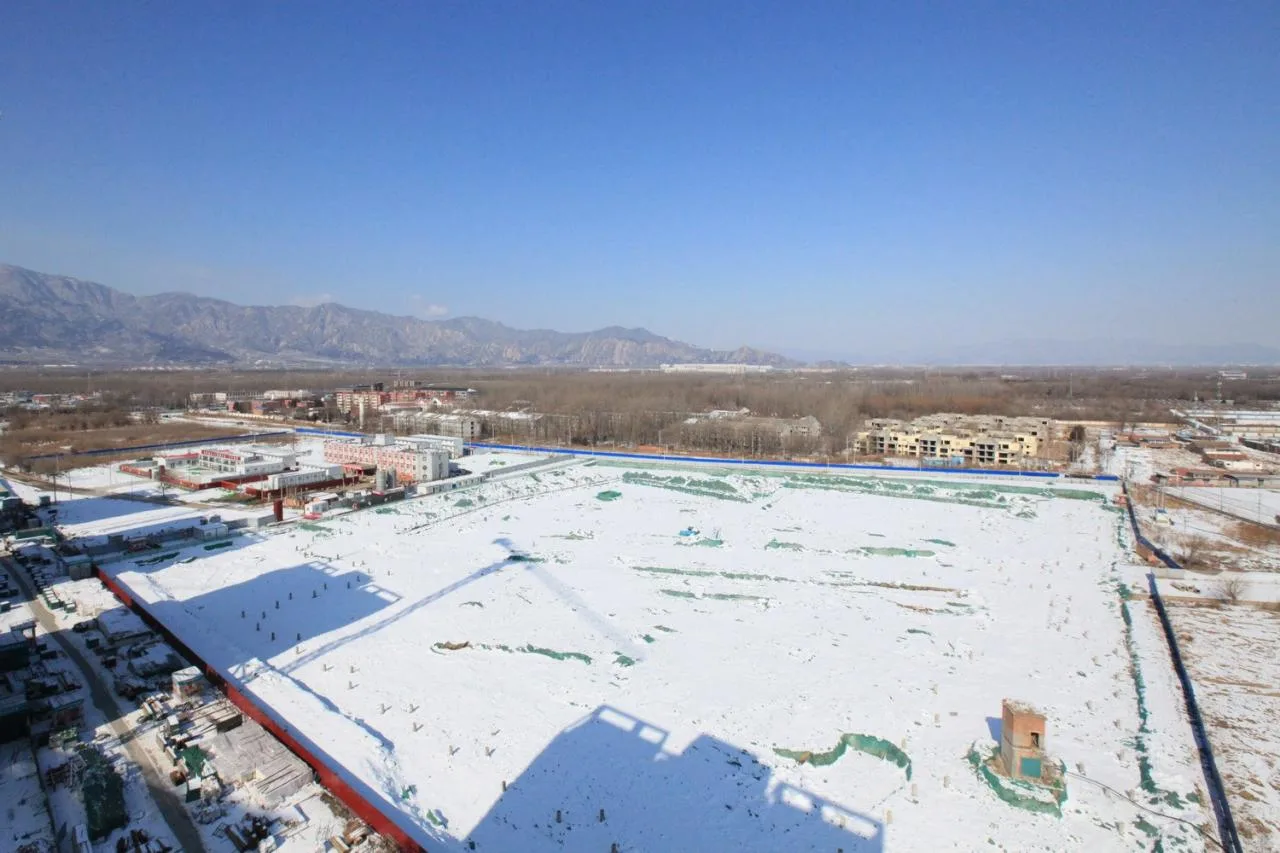
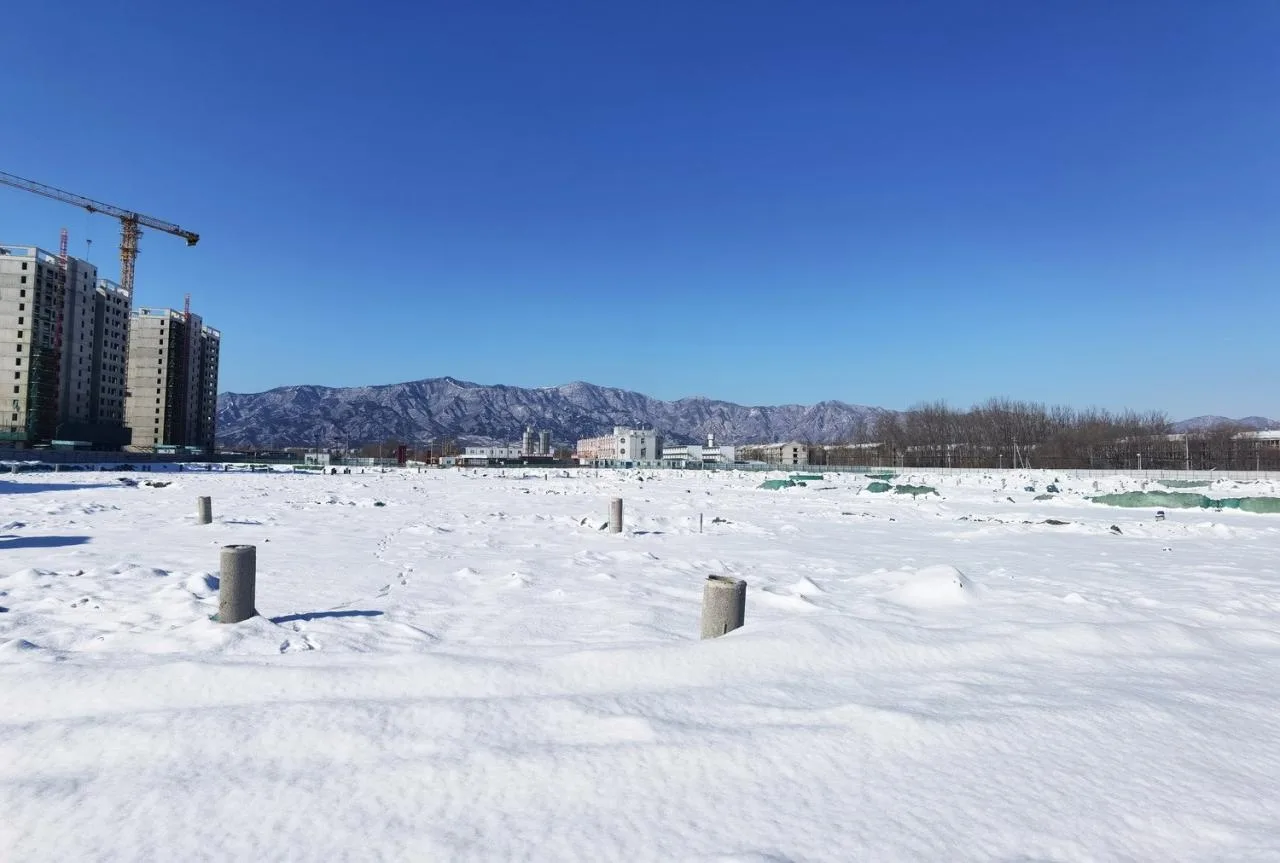
△ North Plot Construction Site
The project covers approximately 12 hectares, with a total built-up area of around 288,000 square meters, a floor area ratio of 1.8, and a greening rate reaching 30%. It is divided into three main plots: west, north, and east, accommodating unicorn enterprises, growth-stage companies, and startups with various building scales and floor layouts. The above-ground area spans roughly 186,000 square meters, while the underground area covers 102,000 square meters. The ground and basement levels house commercial facilities, shared spaces, and public services, while floors above accommodate office spaces with integrated parking.
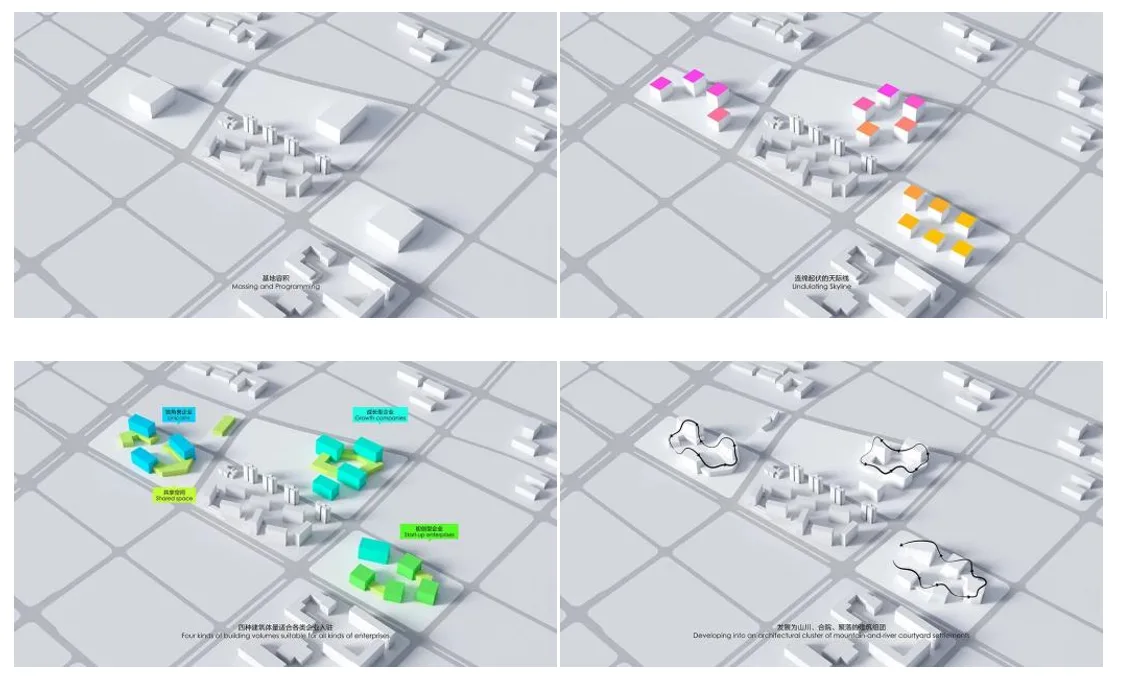
△ Morphological Concept Development
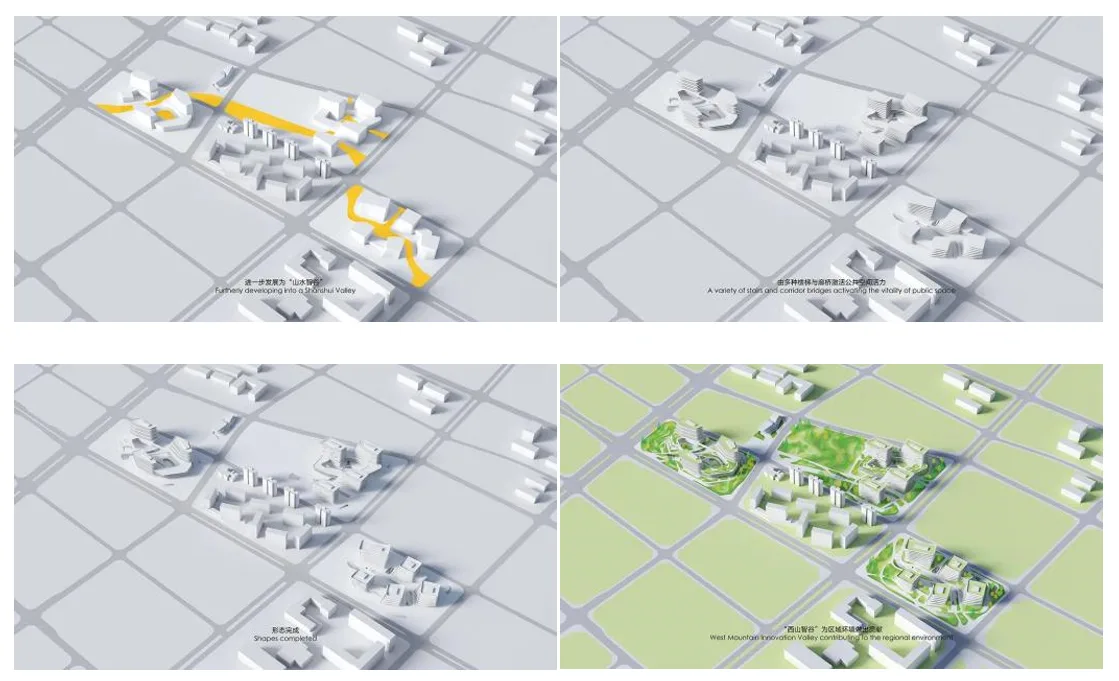
Concept Evolution of Shanshui Zhigu
Once known as the “head of the Taihang Mountains,” Xishan serves as a vital ecological barrier for Beijing and is revered as the “right arm of the divine capital.” It boasts royal gardens, religious heritage, rich cultural resources, and favorable climate and location. This unique geography shapes the project’s design possibilities, bridging ecological conservation and urbanization. CAA embraces this by moving away from dense, rigid urban forms, instead fostering a harmonious integration of city, nature, and culture.
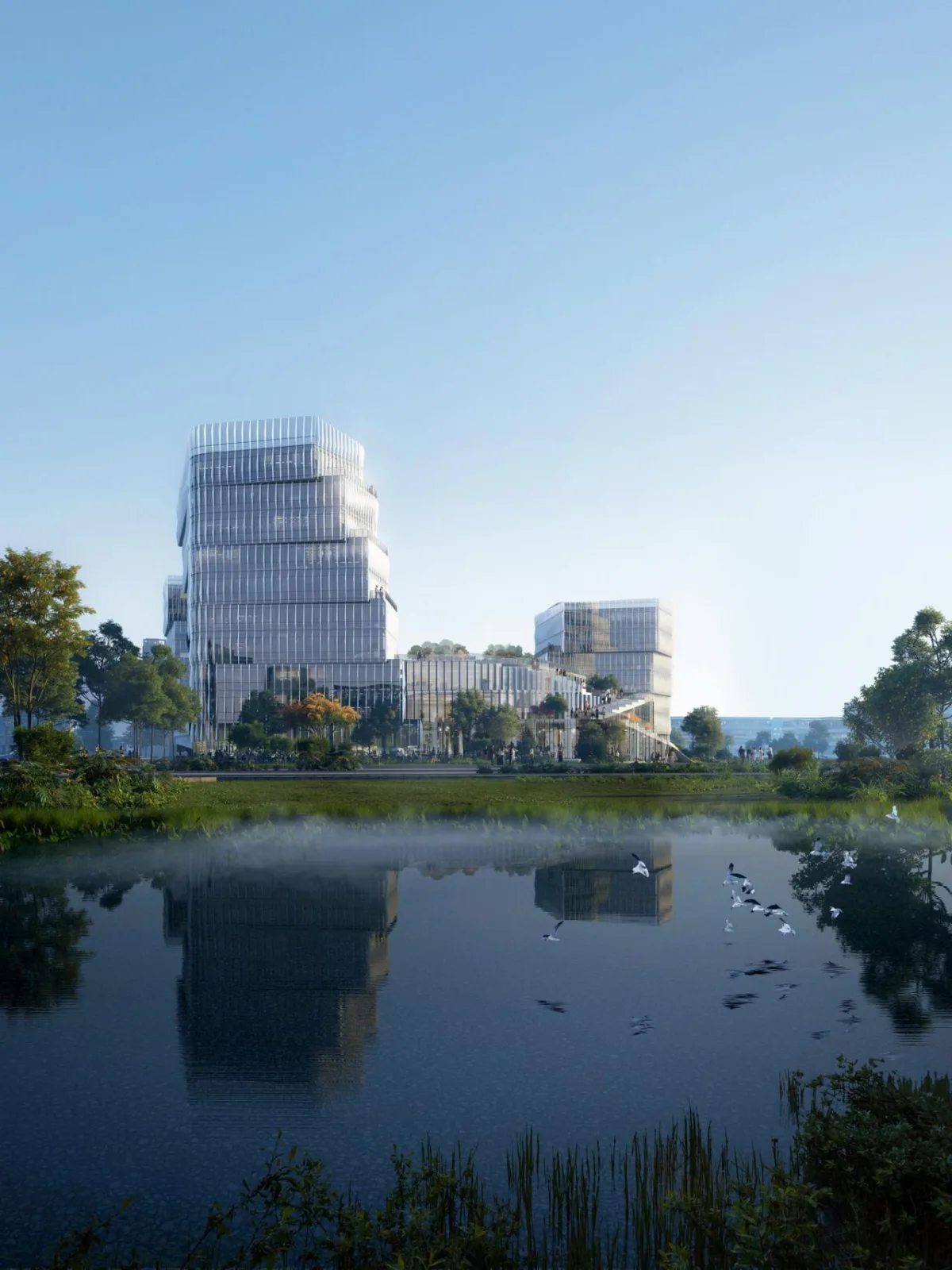
△ West Mountain
CAA blends traditional Chinese courtyard concepts with natural landscapes, shaping architectural forms to mimic mountain peaks and flowing curves reminiscent of layered mountains. Landscape and architectural elements complement each other, seamlessly integrating with the urban surroundings to create a lush, three-dimensional garden environment.
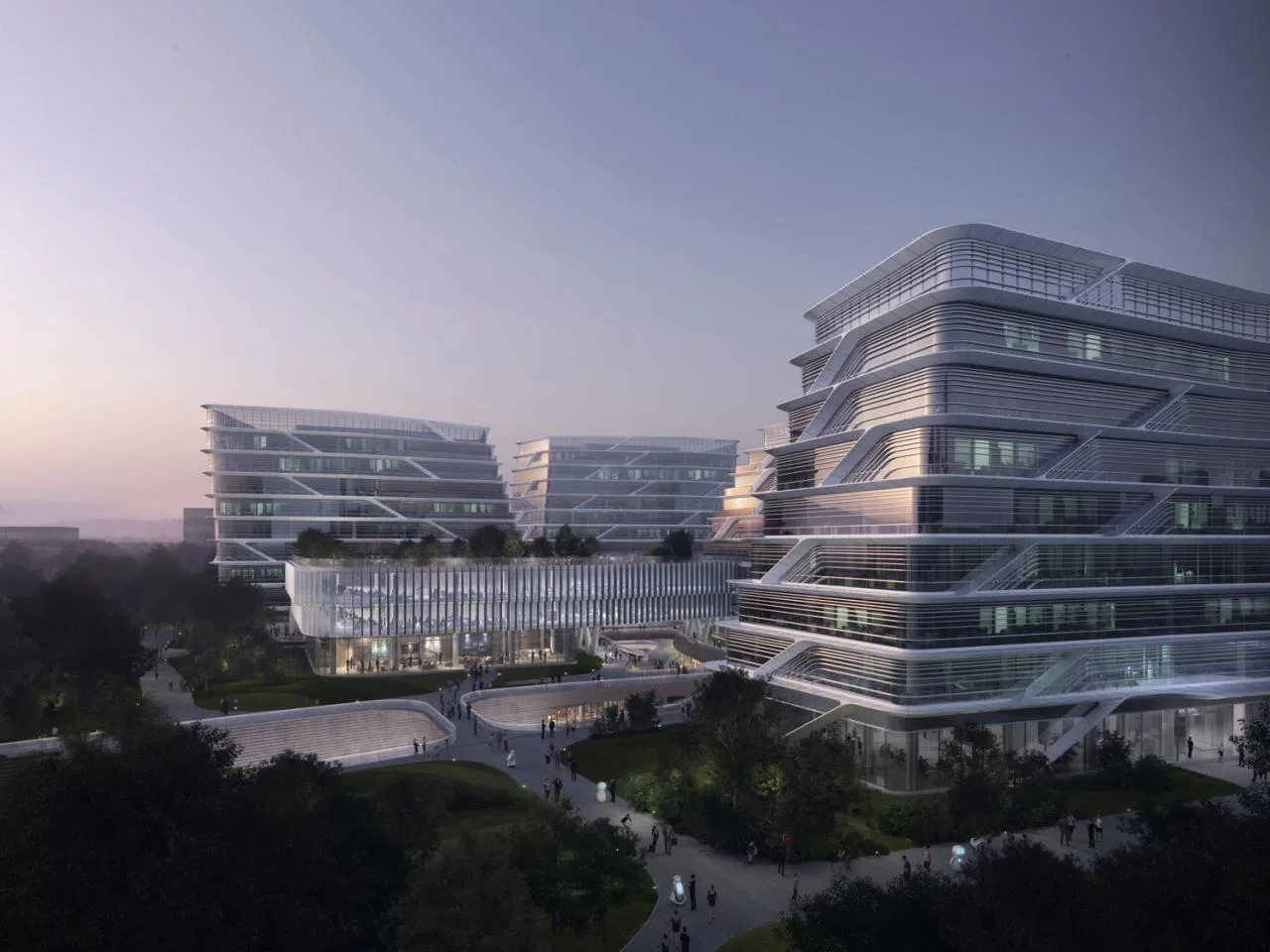
△ North Campus
The Beijing Collaborative Innovation Park’s undulating terrain complements the Xishan Mountains, integrating natural and cultural elements. Architectural forms combine with courtyard-style enclosed spaces to create districts named “Xishan,” “Beiyuan,” and “Dongchuan,” each with distinct forms and rhythms yet unified into a cohesive landscape painting of mountains, rivers, courtyards, and settlements.
“By embedding the essence of traditional Chinese courtyards into the physical forms of mountains and rivers, visitors can wander through spaces that evoke the tangible sensation of clouds, flowing water, and rivers weaving through the mountains.” – Liu Haowei
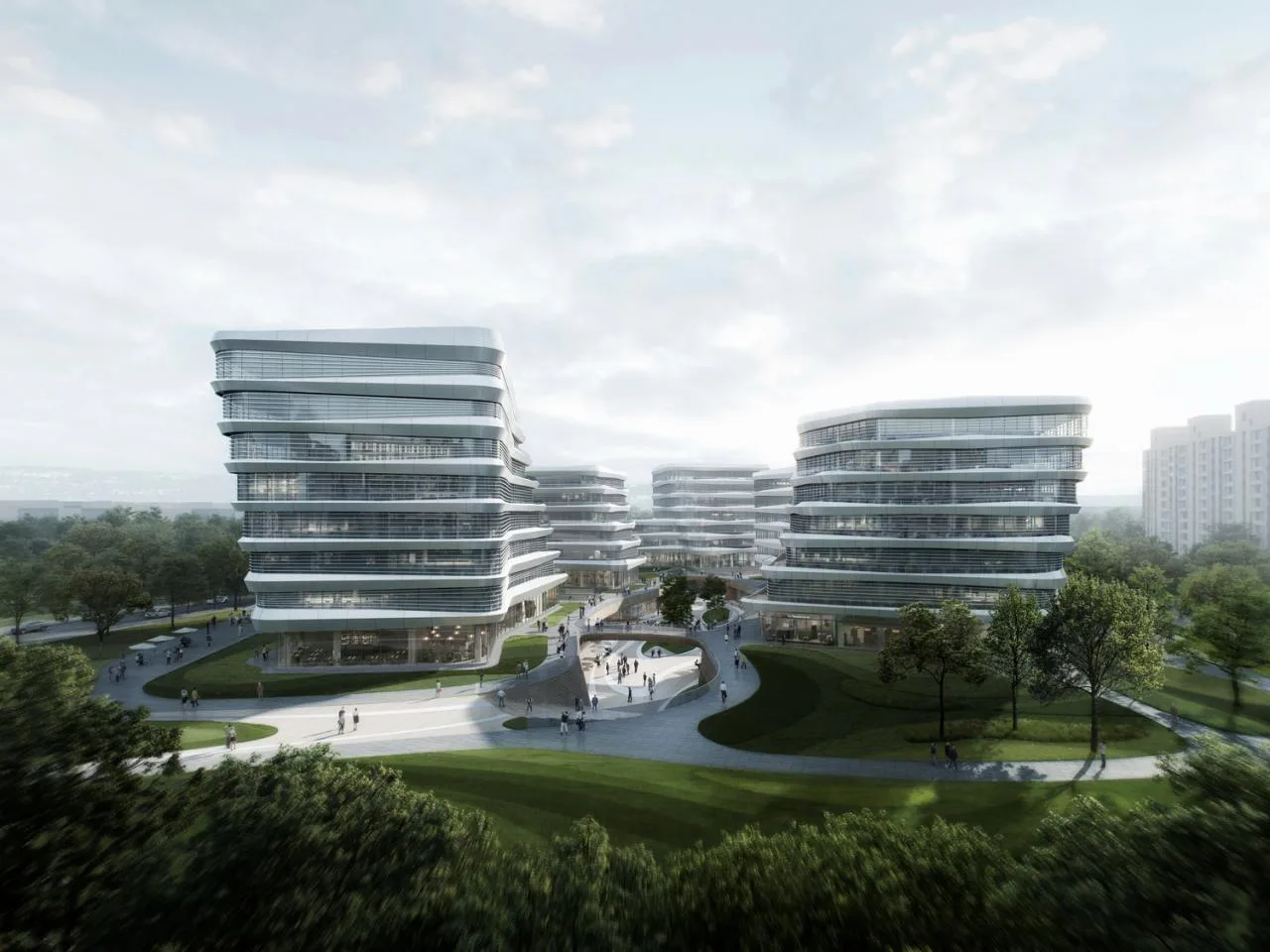
△ Dong Chuan
Visitors gradually enter the city through flowing, staggered spaces organized around a “mountain and water ring,” creating an immersive experience akin to walking through a landscape painting. This encourages exploration, offering vistas for climbing high or sailing along waterways, blending technology, nature, and culture.
West Mountain
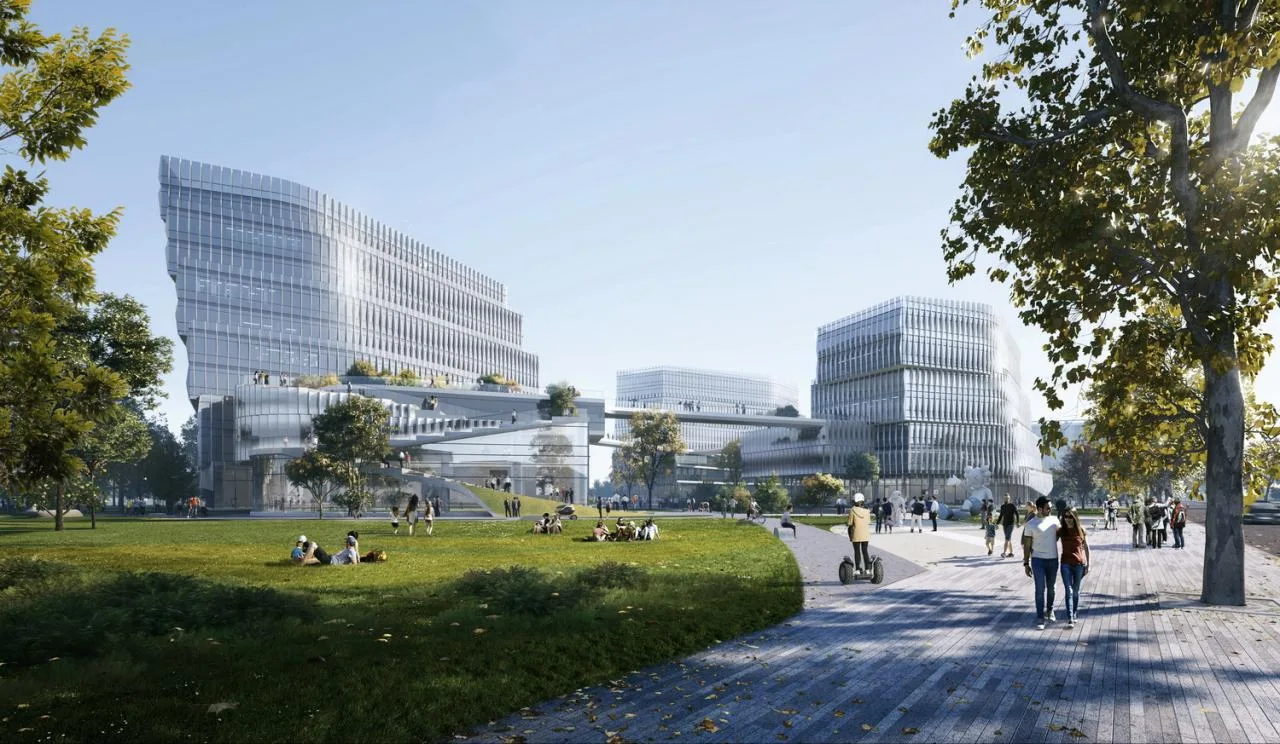
The western plot embraces the “mountains and waters” theme combined with courtyard-enclosed spatial forms. The cluster centers on a grand mountain and water landscape. Three main towers resemble mountains, connected by aerial bridges, gardens, and sloping pedestrian ramps. The staggered “mountains and rocks” create layered terraces. This area is planned as the headquarters for unicorn companies, with a white podium surrounding the towers serving as flexible, open shared office spaces, like clouds lingering in the mountains.
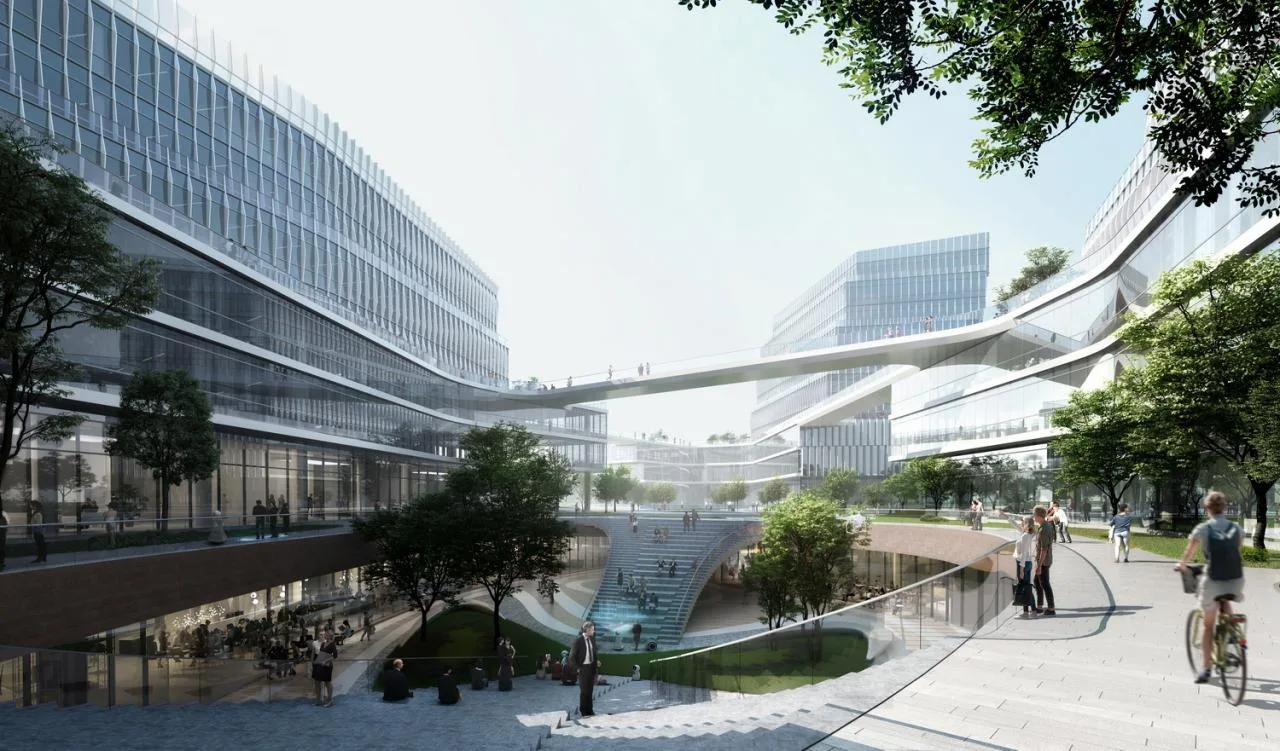
Located at the intersection of key urban roads, the Xishan plot functions as an important gateway, forming the primary urban facade for the park. Designed to guide pedestrian and vehicular flow, it leads visitors into an enclosed yet open interior space.
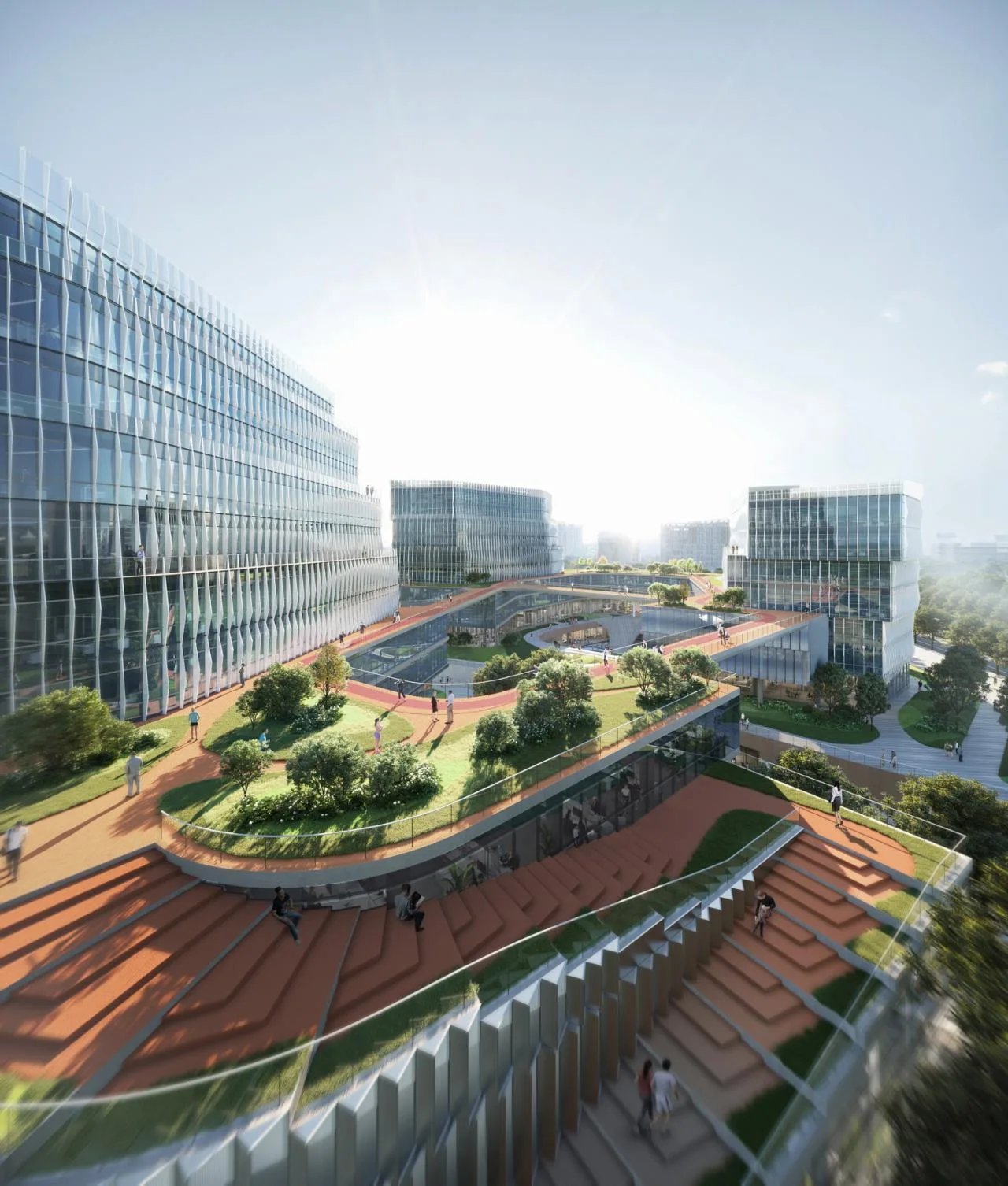
Public green spaces combine with the large-scale natural landscape to form a “city living room” square. A winding staircase with three turns transforms the podium roof into an open sky garden, where streams cascade down from the mountains, creating lively, engaging spaces.
North Courtyard
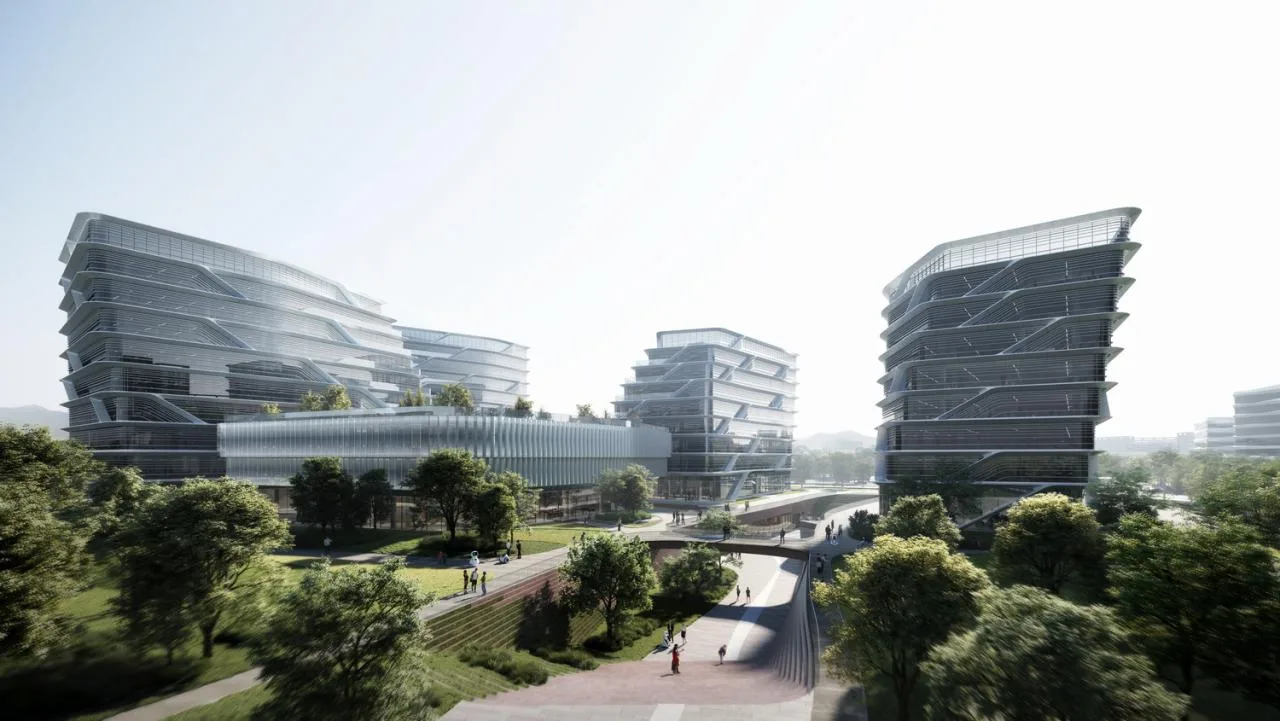
The northern plot’s architectural plan integrates an adjacent large public green space with traditional Chinese courtyard aesthetics, merging solemn oriental imagery with modern technological functions. The innovative spatial system of mountain-shaped towers and courtyard-style podiums offers flexibility, allowing spatial configurations to adapt to enterprises’ growth stages.
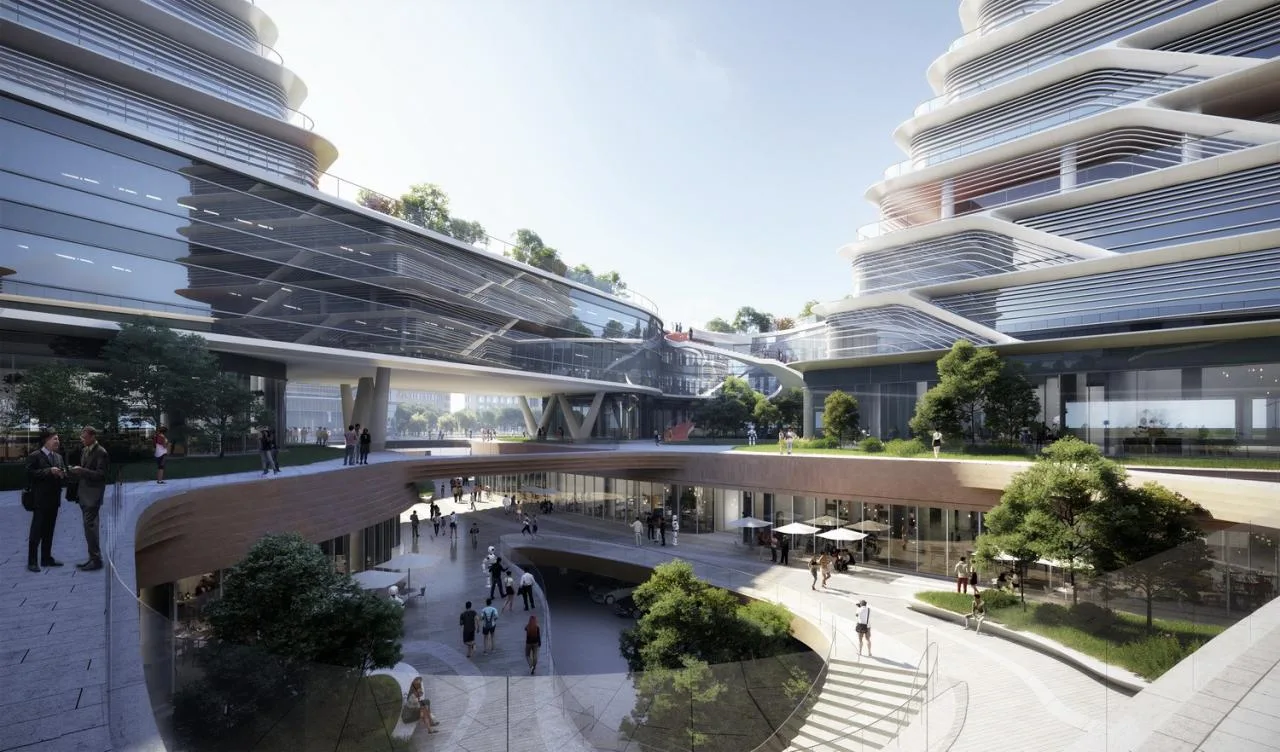
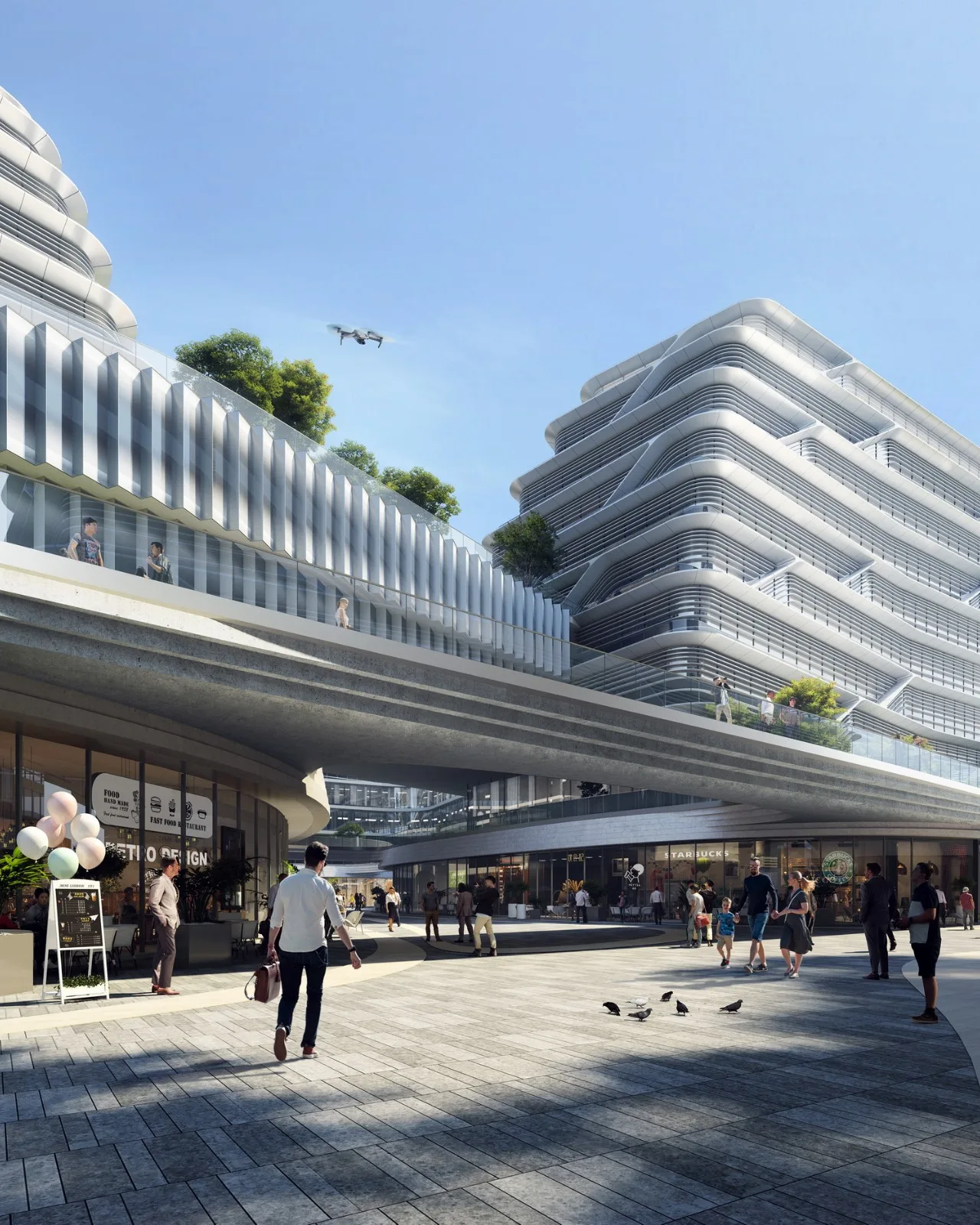
Clusters of smaller high-rise towers reduce sky density, improving views for occupants. Rich natural landscaping extends from the ground to the underground level via open spatial design, providing well-lit, dynamic public squares. Elevated pedestrian systems like aerial bridges open the ground environment to the city while maintaining smooth internal pedestrian circulation.

Dong Chuan
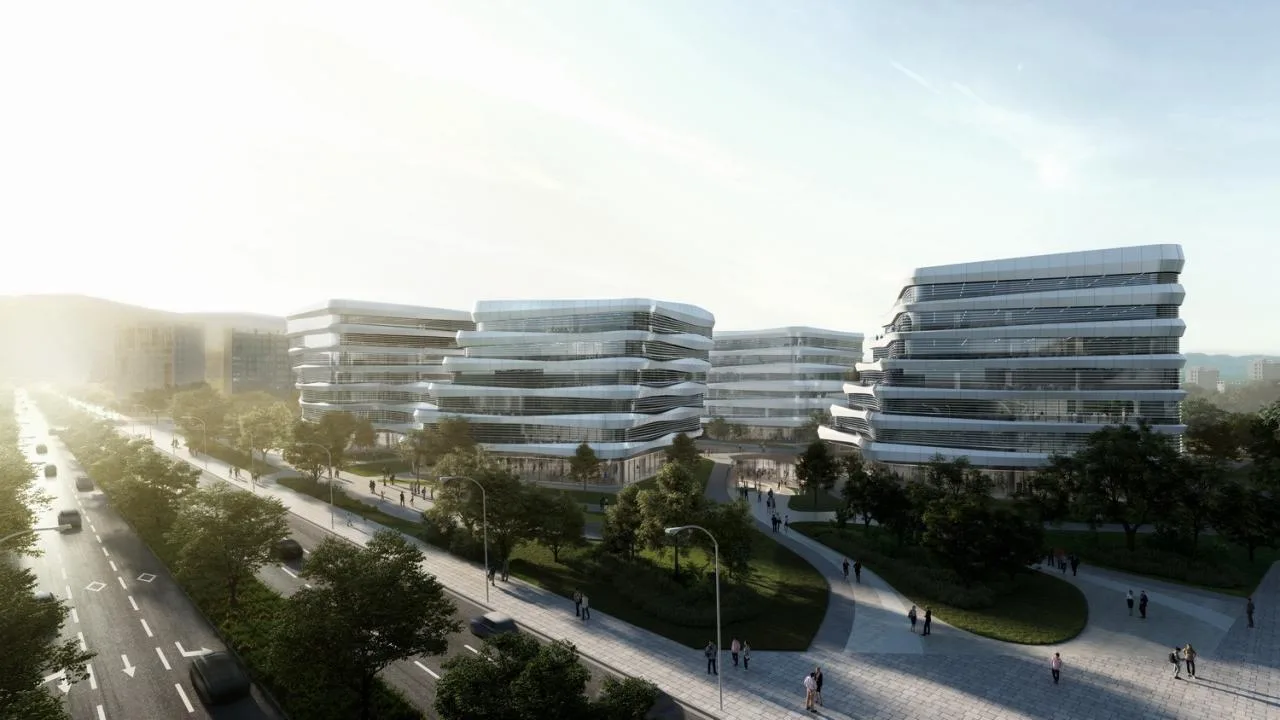
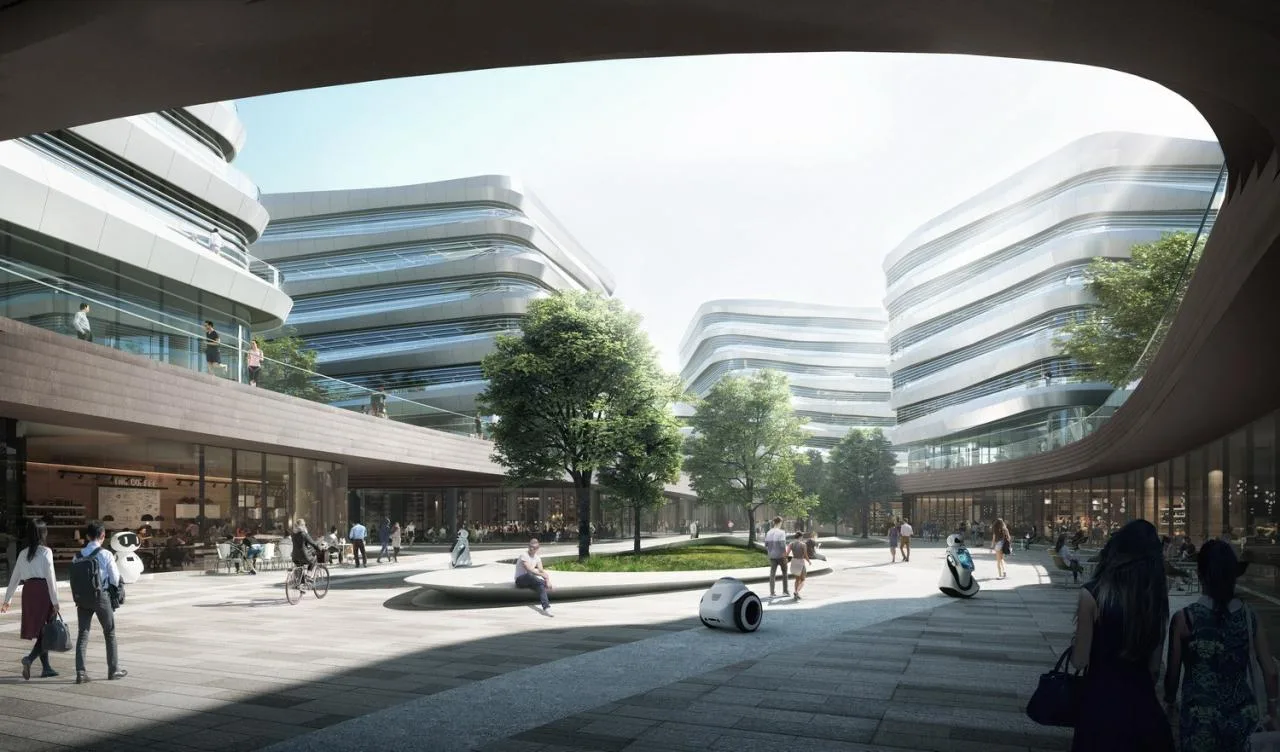
Designed for small and medium enterprises with standalone offices, buildings on the north and south sides form a “settlement” pattern. A flowing “river” runs west to east through the central courtyard towards the city park. This water feature, combined with staggered architecture, creates spatial relations evoking mountains, rivers, and valleys, symbolizing their natural flow.
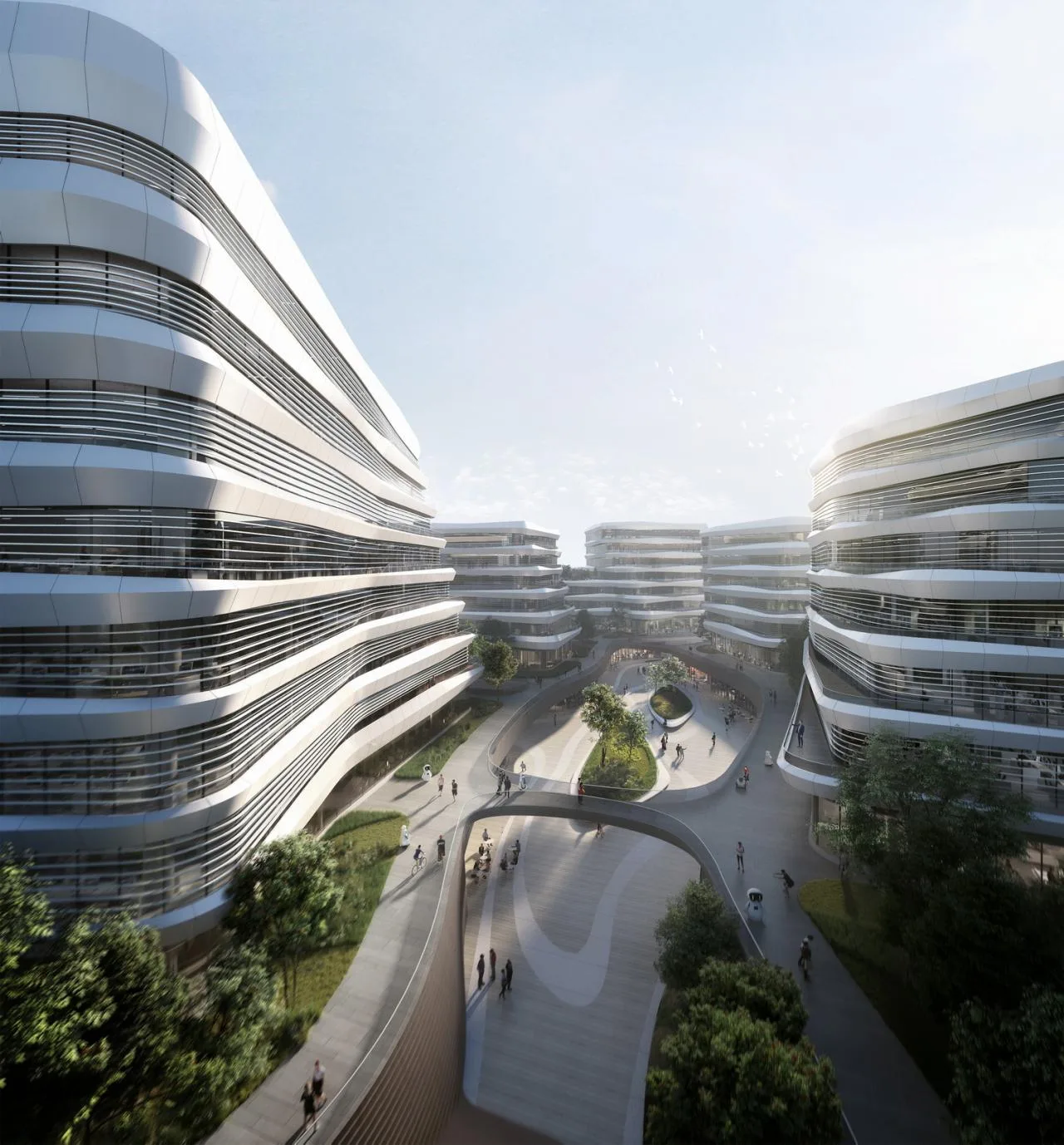
The modular design offers flexibility, allowing office spaces to be divided or combined to meet the evolving needs of startups, maximizing efficiency and operational vitality.
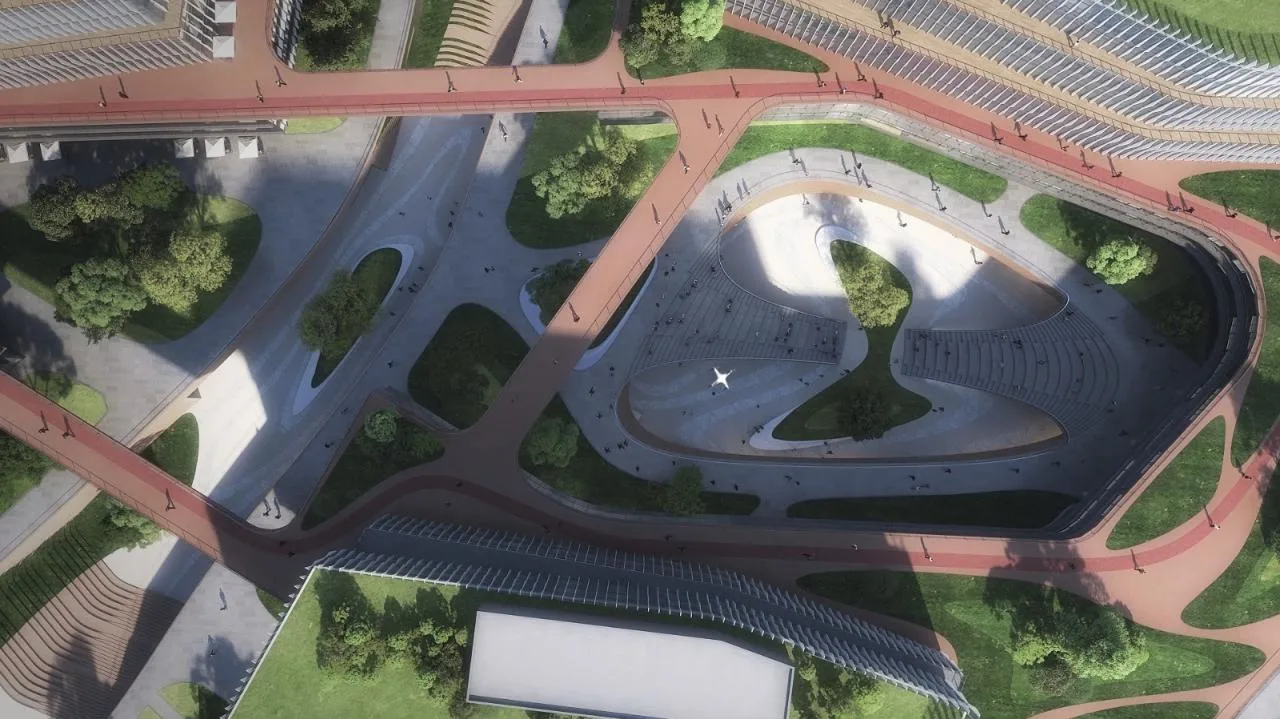
Buildings are subtly twisted to create setbacks, reducing wind loads through staggered stacking while enhancing views. The landscape design extends natural elements vertically, with podium roof gardens and open-air running tracks offering vibrant public spaces for social and fitness activities, becoming new urban landmarks. Transparent and open layouts on the ground and underground floors connect interior and exterior spaces, providing small squares, gardens, and courtyards for the community and enhancing the urban environment.
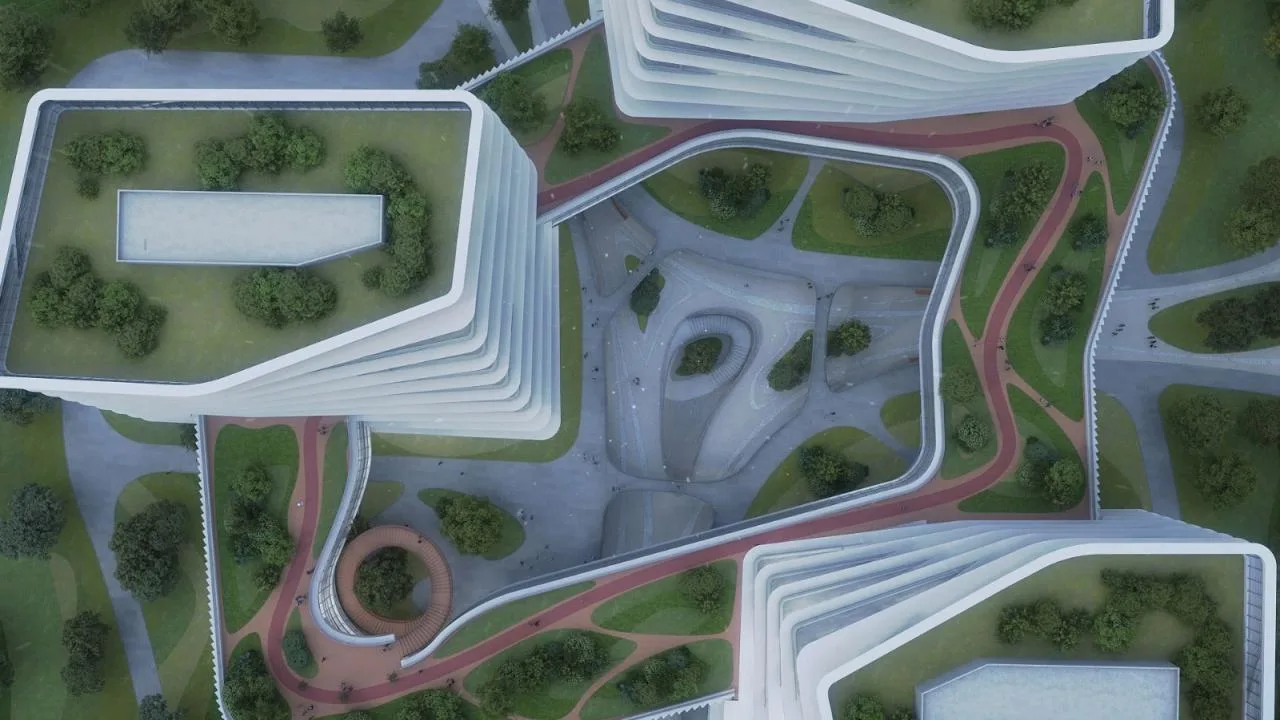
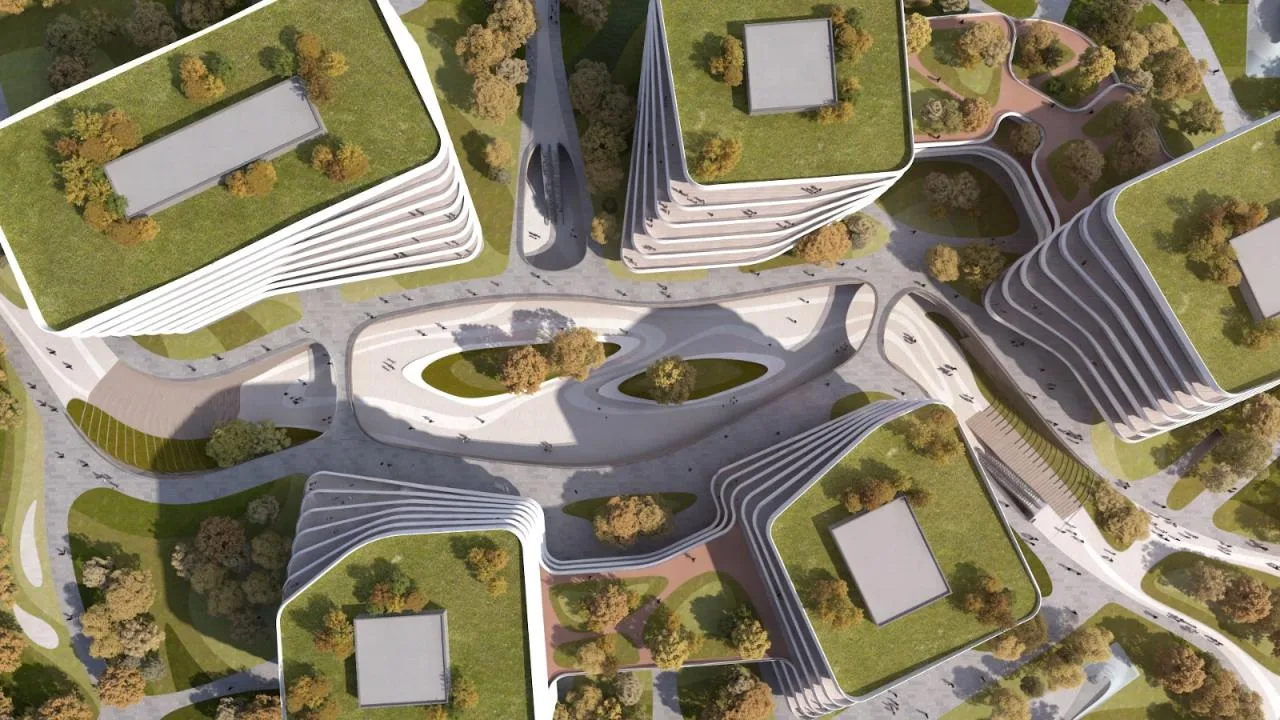
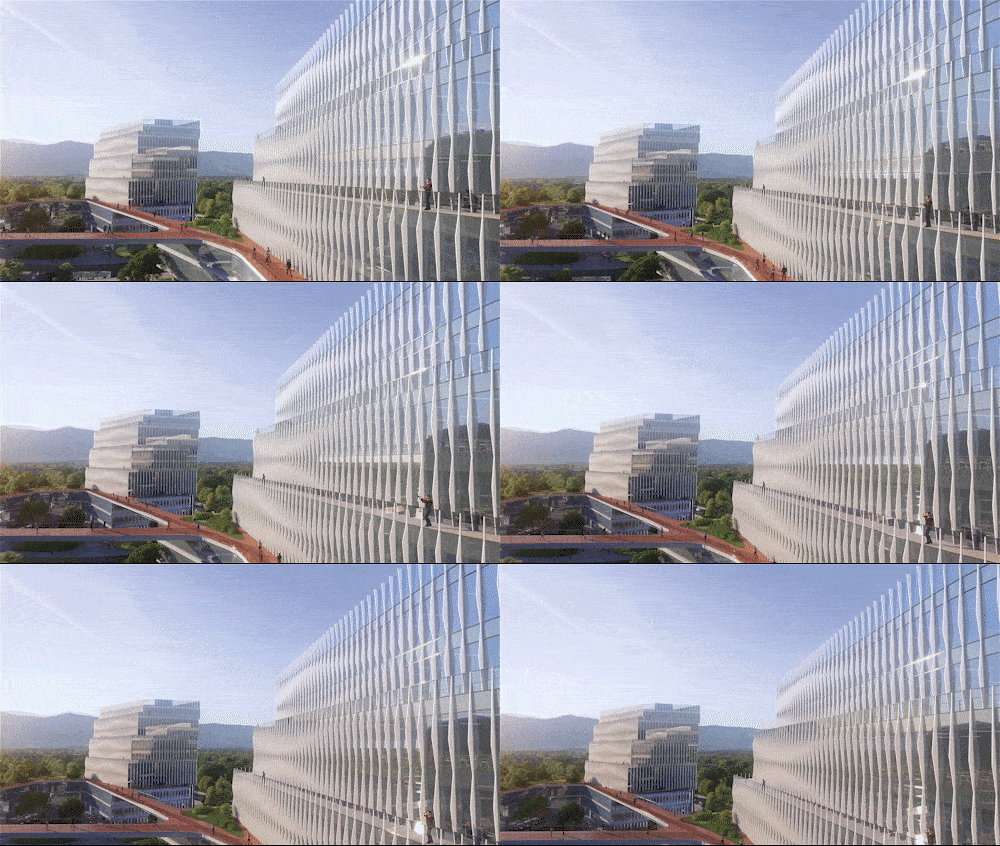
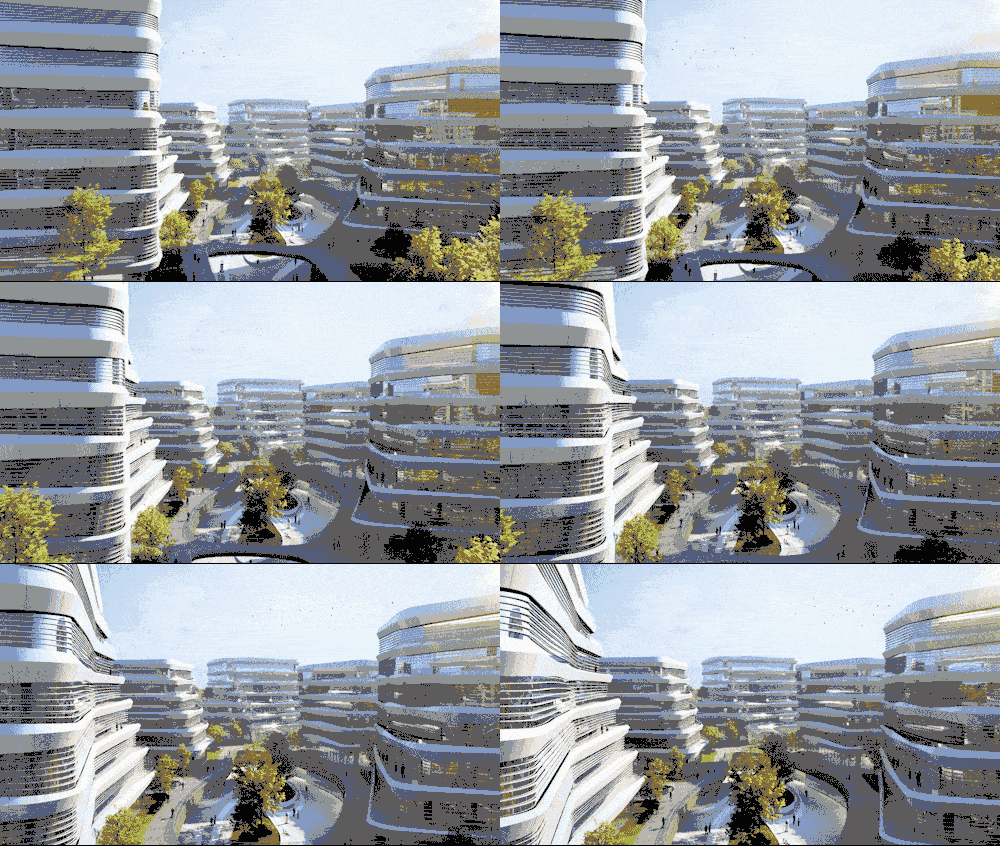
CAA draws inspiration from the traditional Chinese landscape painting “Dwelling in Fuchun Mountain” for the building curtain walls. Each plot’s exterior details express different design languages, using digital and green technologies to evoke the painting’s freehand brushstrokes, merging mountains, water, and clouds into a natural “water cloud space.”

△ Tour of “Dwelling in Fuchun Mountain”

△ Curtain Wall Design Concept
The curtain wall details create a sense of lightness and transparency in each building, enhancing interior comfort and natural light. The varying building forms visually intersect, forming a cohesive landscape painting.
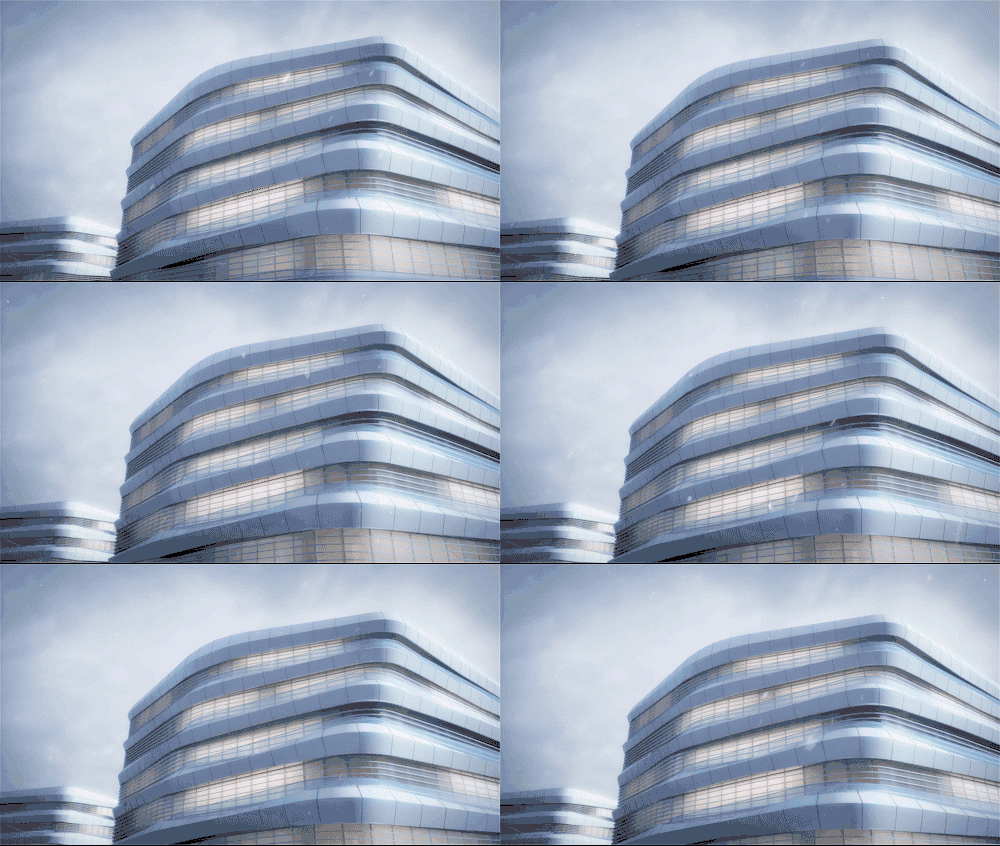
With a green space ratio of 30%, the project introduces natural landscapes to create a greener, low-carbon environment aimed at sustainable development. A slow-moving urban corridor, the “Landscape Ring,” connects green spaces across plots, forming an extensive green and healthy network. Employing high-performance glass curtain walls and external sunshade louvers, the design aspires to meet China’s highest three-star green building standards.
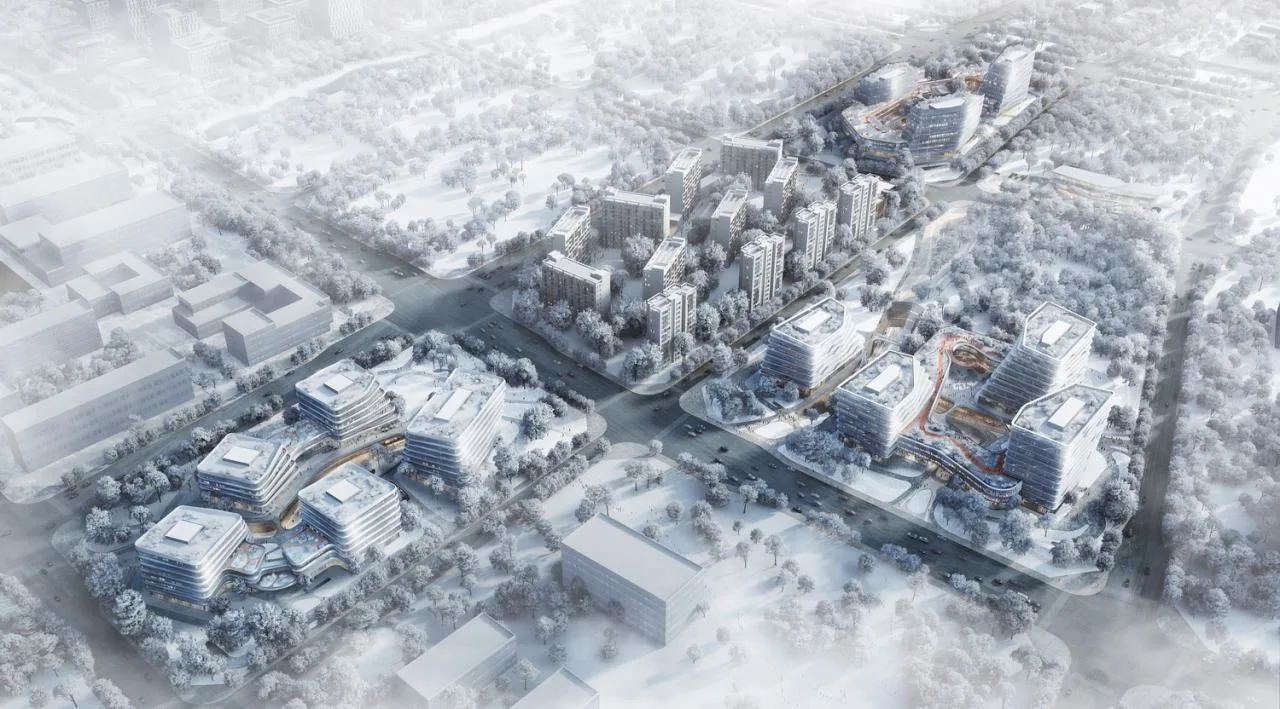
The “Xishan Intelligent Valley,” led by Liu Haowei’s CAA team, marks a breakthrough in spatial scale and dimensional thinking, moving beyond traditional industrial park models. It integrates futuristic ideas with Eastern humanistic values, creating social impact while responding to trends in urban development, nature, culture, and technological innovation. The result is a multidimensional urban garden, embodying a future vision where nature and technology coexist in harmony.
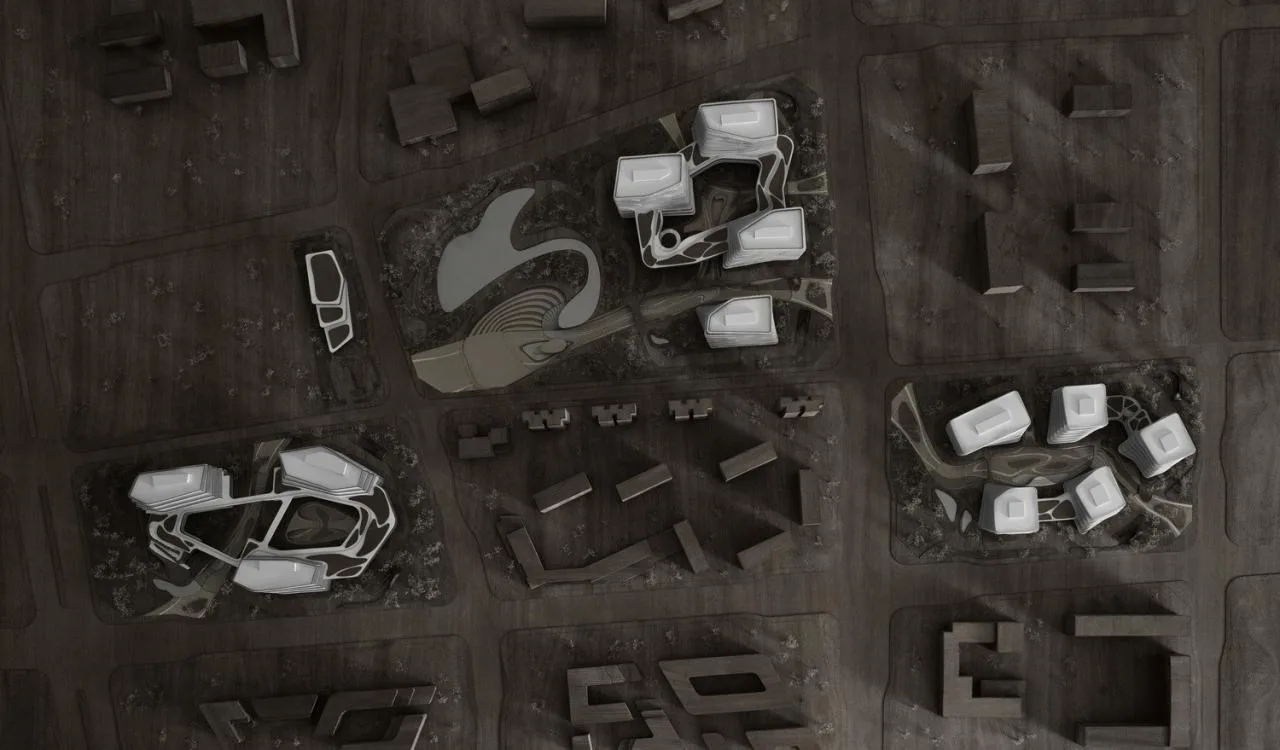
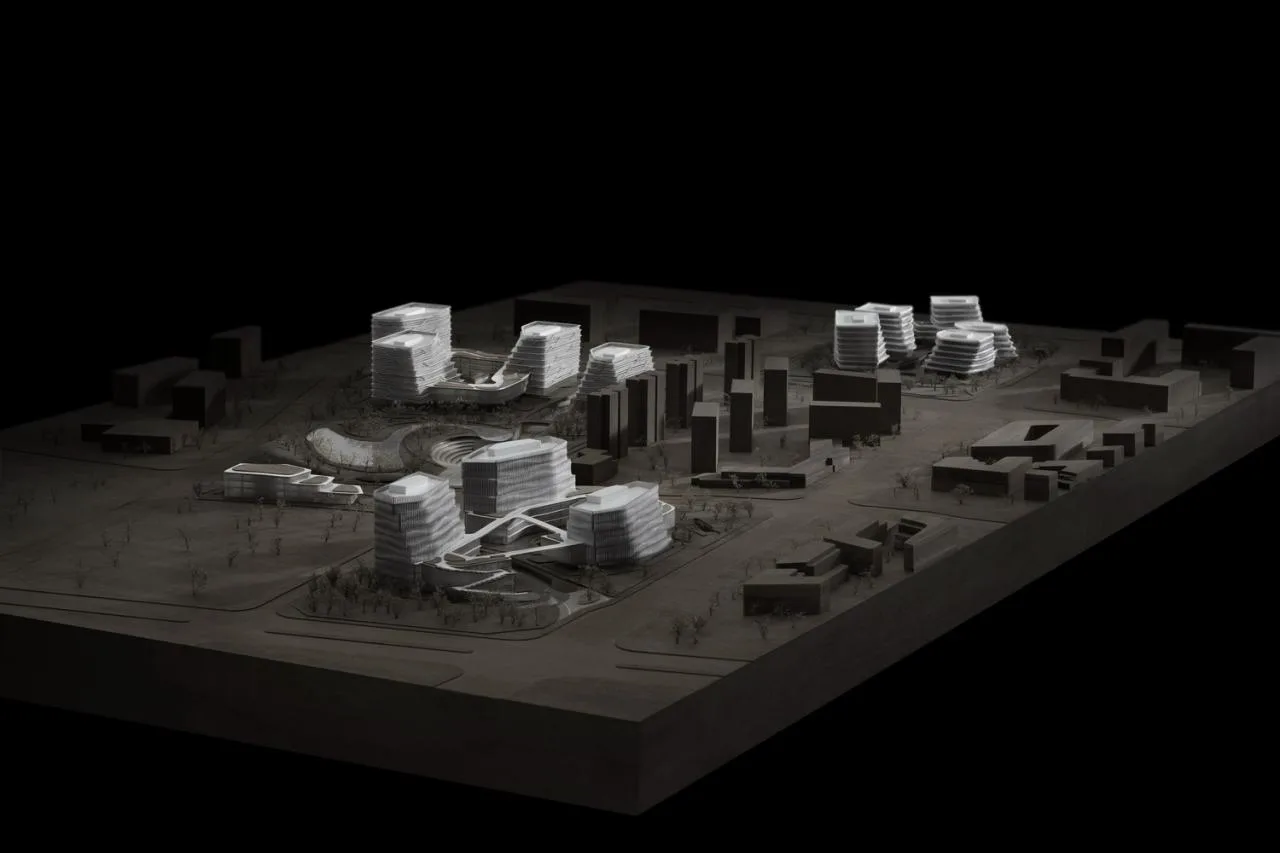
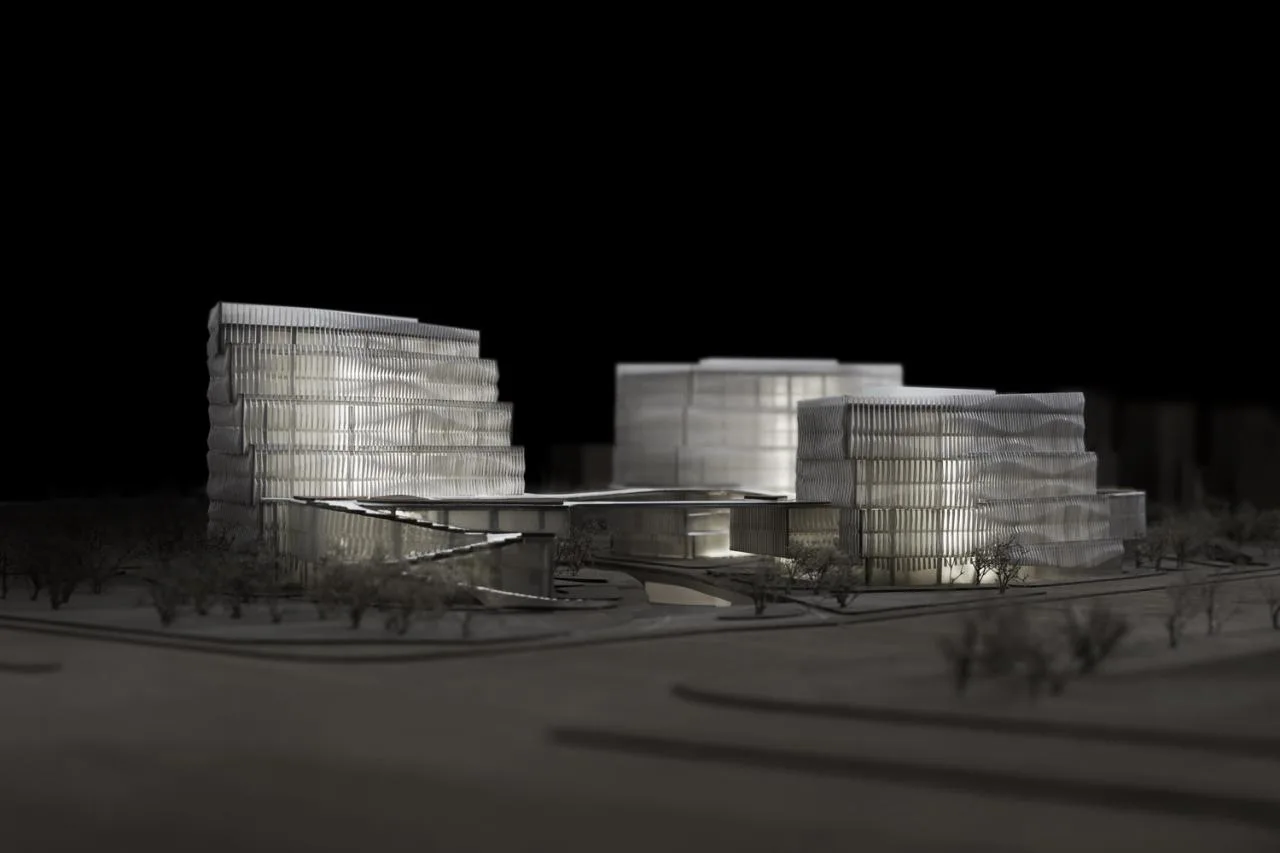
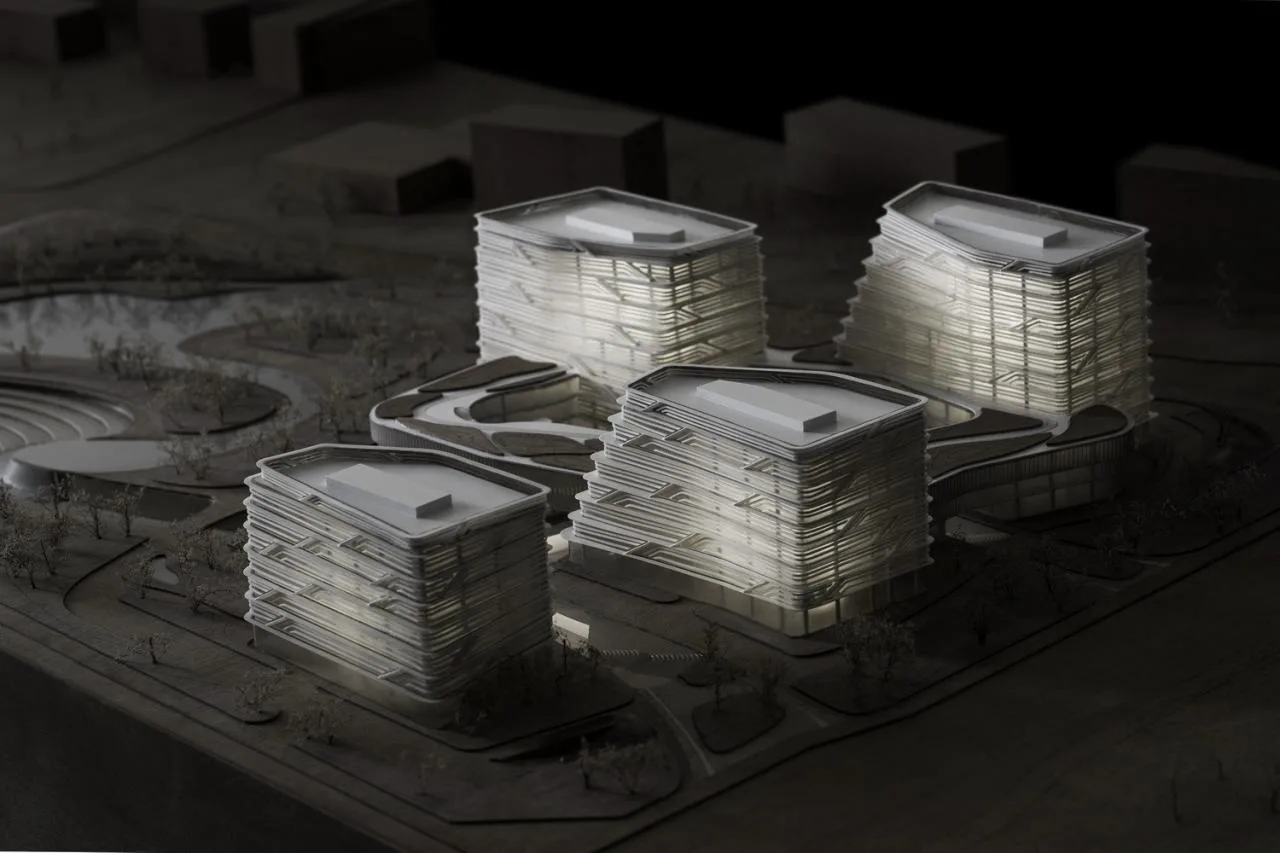
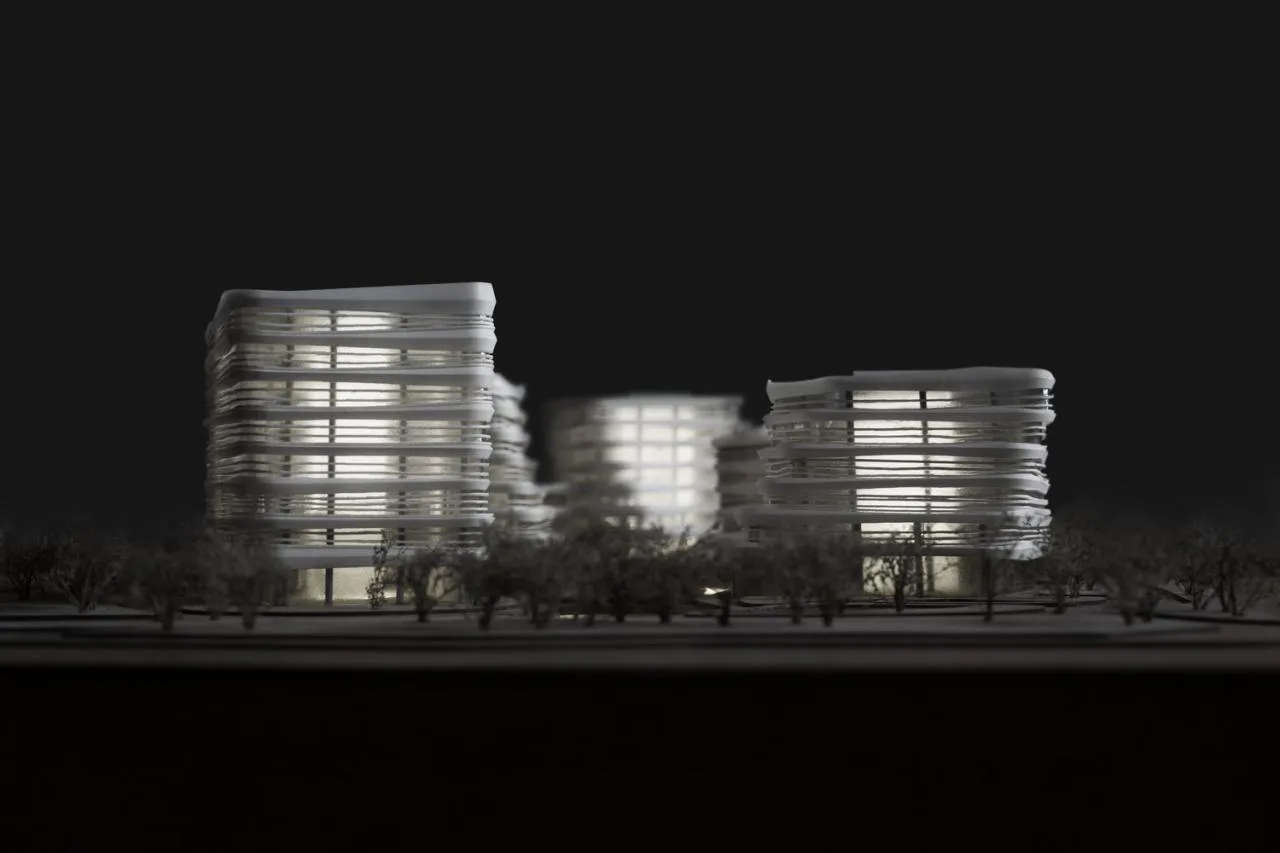
△ Model Photo
Project Drawings
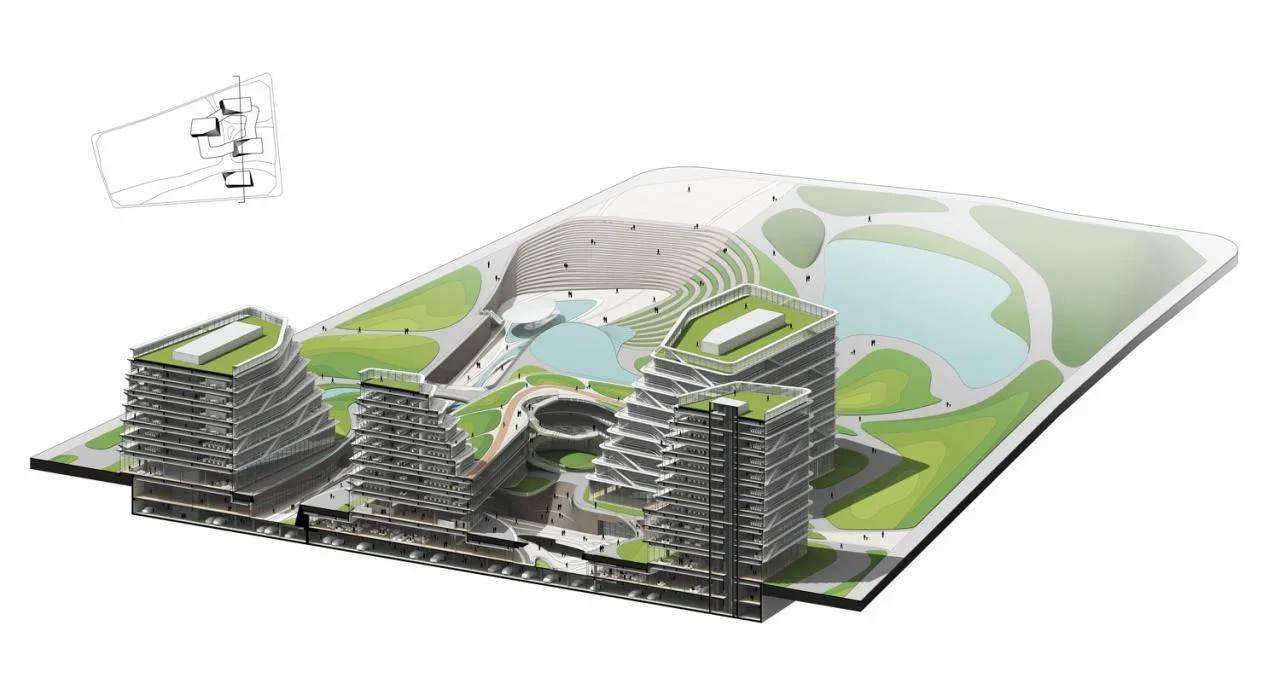
△ Northern Plot – Sectional Perspective
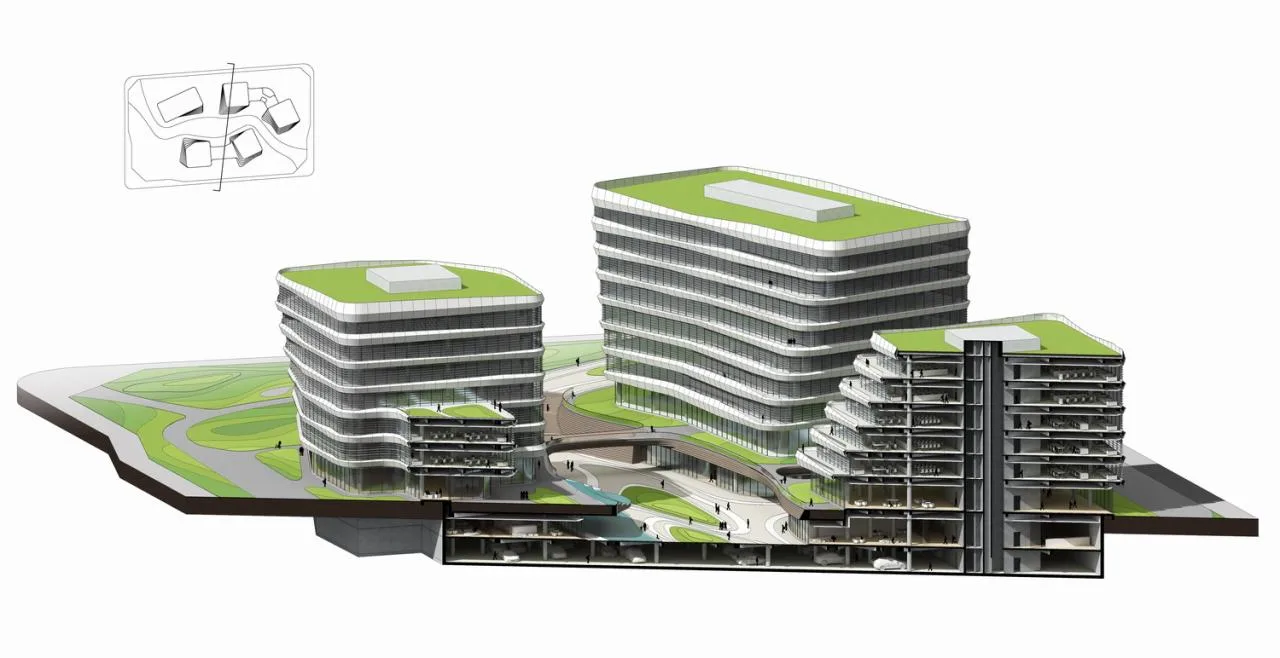
△ Eastern Plot – Sectional Perspective
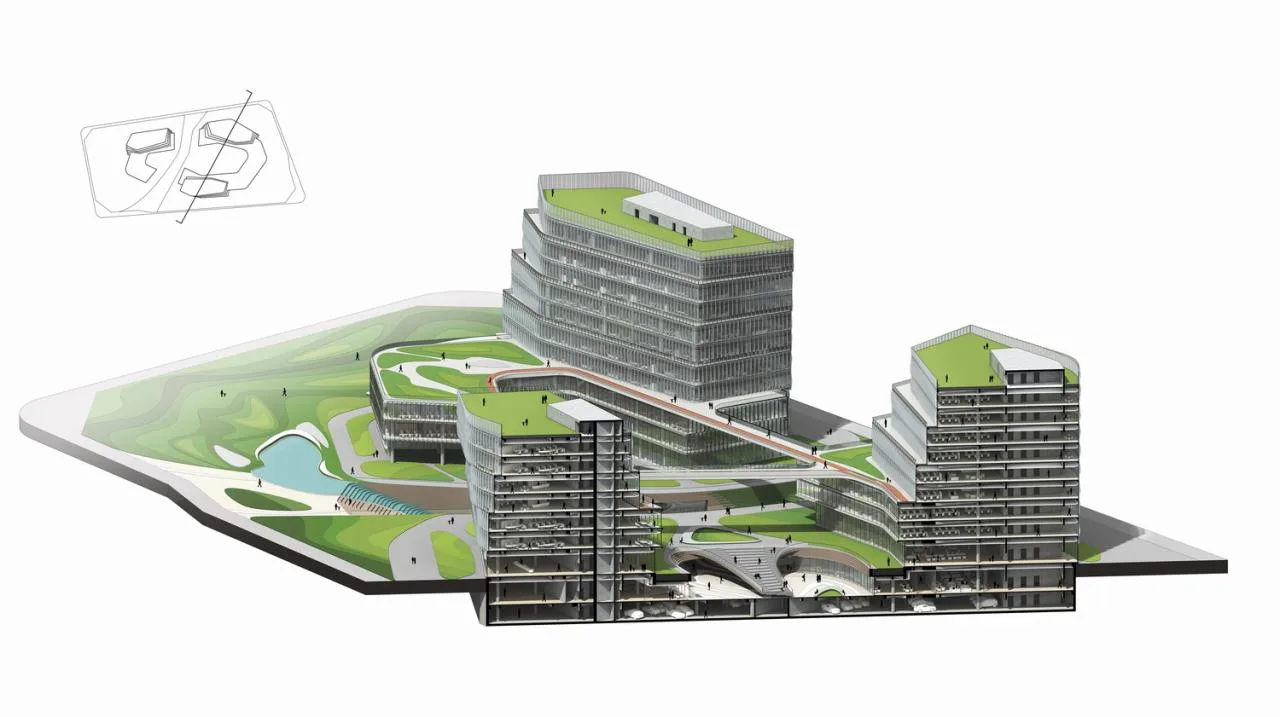
△ Western Plot – Sectional Perspective
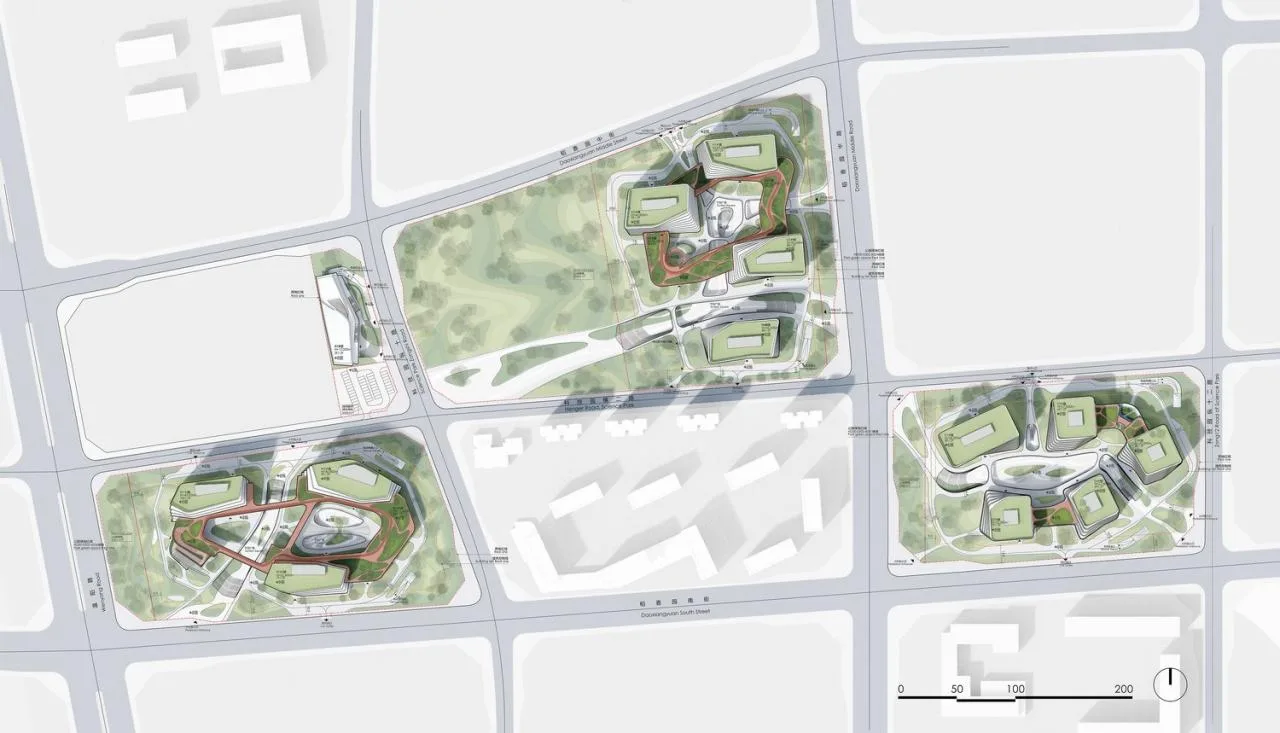
△ General Layout Plan
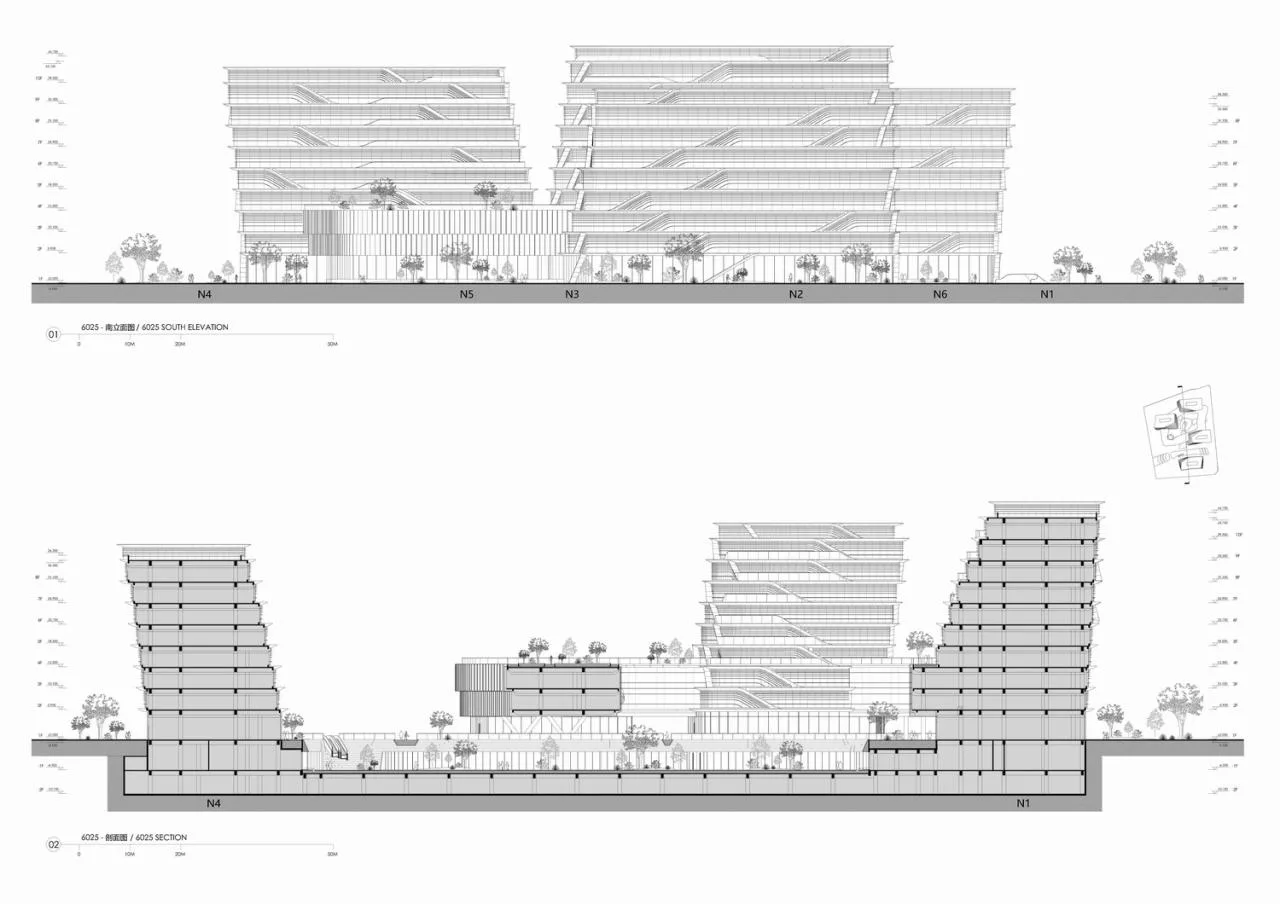
△ North Plot Elevation Profile
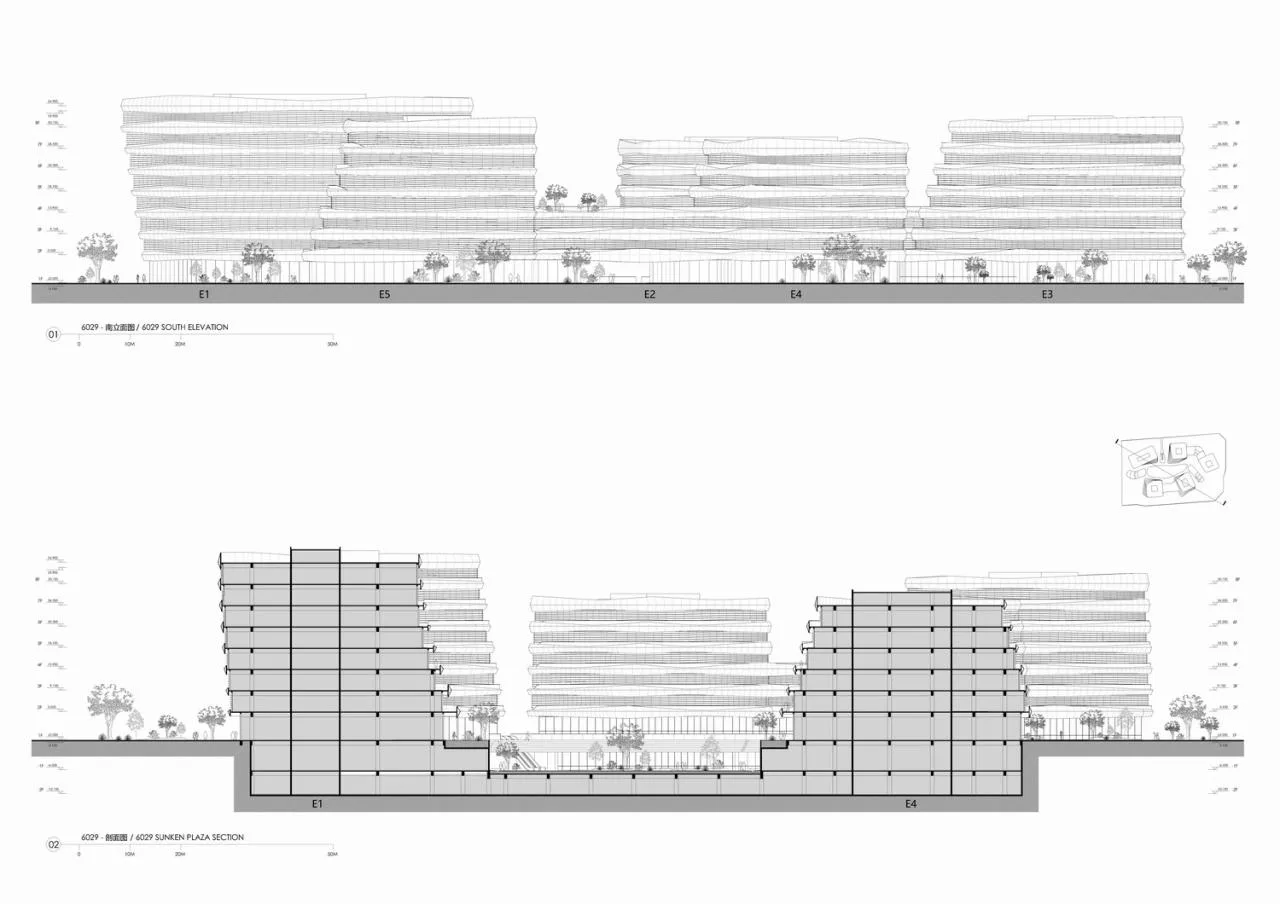
△ East Block Vertical Section
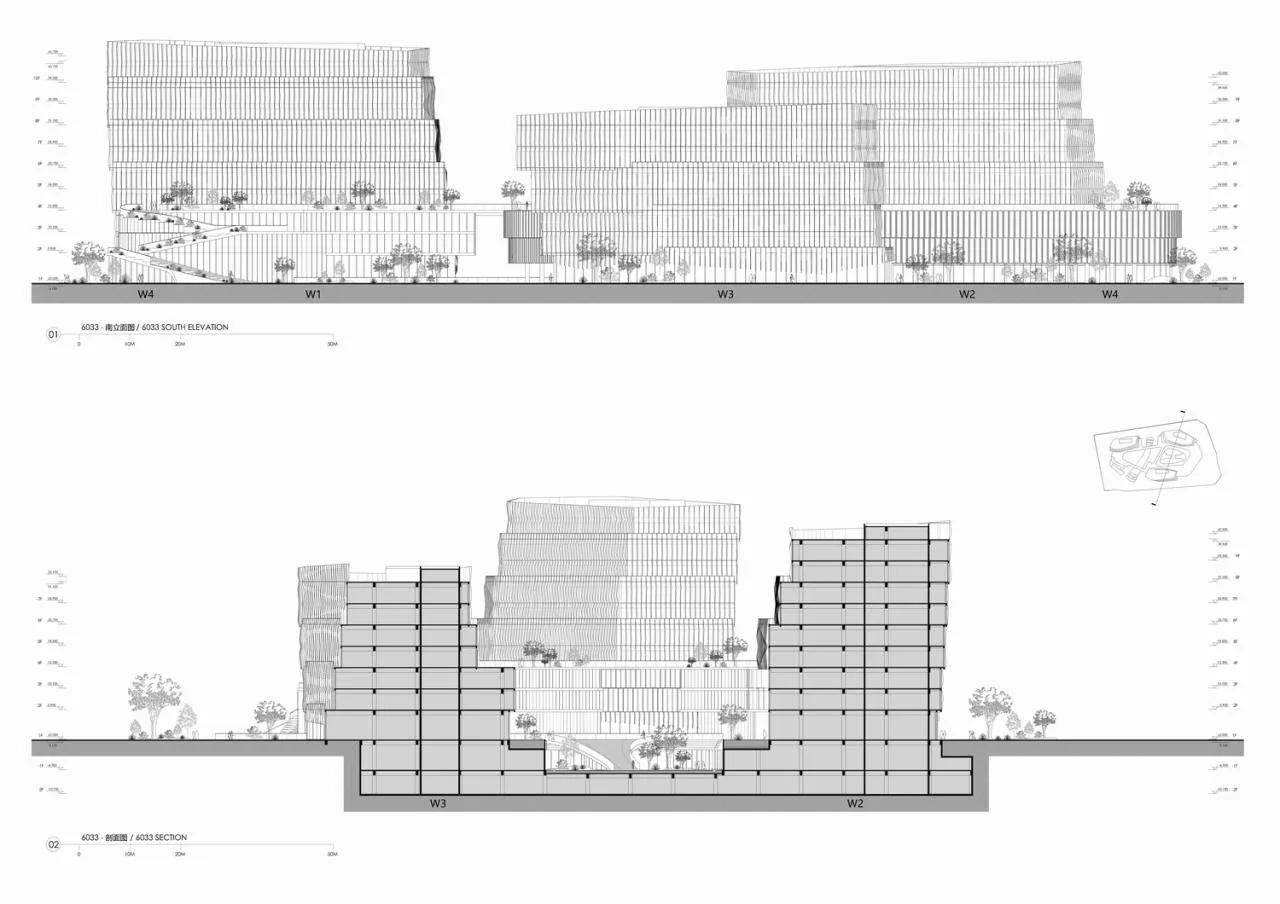
△ Western Plot Vertical Section
Project Information
Project Name: Beijing Collaborative Innovation Park
Location: Haidian, Beijing, China
Design Period: 2019–2022
Expected Completion: 2024
Project Type: Office Complex
Land Area: 12 hectares
Total Built-up Area: 288,000 square meters
Above-ground Area: 186,000 square meters
Underground Area: 102,000 square meters
Green Building Rating: China’s Three-Star Green Building Standard
Designer (Urban and Architectural Design): CAA Architecture Firm
Lead Architect: Liu Haowei
Technical Directors: Leo Dy. Ajima, Miriam Llorente
Project Management: Zhang Pan, Luo Xuan, Tang Xiaojing
Architectural Consultant: Wang Dongchun
Structural Consultant: Wang Changxing
Design Team: Ye Wenjie, Edward Ednilao, Zhao Xingyun, Joseph Kahaya, Chen Wanyu, Zhu Ying, Yan Jianxin, Deng Haibo, Yang Jing, Liu Hongliang, Jiang Chuanhao, Cai Chenxi, Luo Yuhang, Shen Ao, Xiao Peng, Su Lide
Owner: Sujiatuo Town Cooperative Economic Union, Haidian District, Beijing
Class A Design Institute Partners: Xidi (Beijing) International Architectural Design Consulting Co., Ltd., China Construction Design Group Co., Ltd.
Industrial Planning Consultant: Beijing Urban Construction Design and Development Group Planning and Research Institute Creation Center
Curtain Wall Consultant: Tongchuang Jintai Building Technology (Beijing) Co., Ltd.
Green Building Consultant: Beijing Shichuang Xincheng Energy Saving Technology Co., Ltd.
Business Planning Consultant: Beijing Jiayi Huxiao Commercial Management Co., Ltd.
Construction General Contractor (Phase I): Beijing Construction Engineering Group Co., Ltd.
Engineering Supervision (Phase I): Beijing Zhongxie Cheng Engineering Management Co., Ltd.
Visual Digital Technology Support: FANCY, BEN, SAN, STONE
Image Art Support: VISION DIGITAL, AGENT PAY















Must log in before commenting!
Sign Up