
① Project Overview
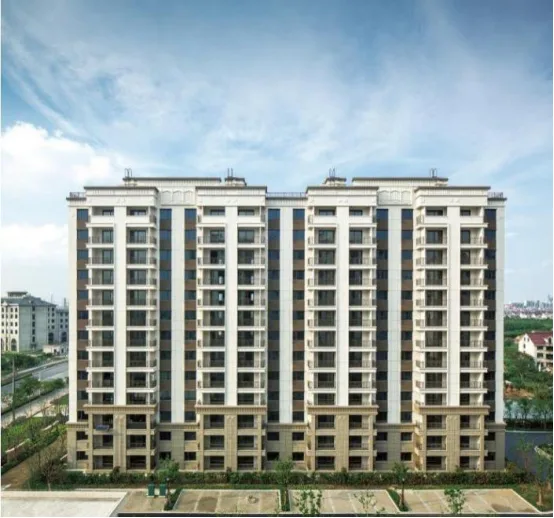
Located in Building 23, Huinan New Town, Pudong New Area, Shanghai, this project serves as a demonstration for industrial residential development. It is a joint venture between Huajian Group and Baoye Group. Initially, the project was not planned as a prefabricated building and was designed using traditional two-dimensional methods. However, after design approval, the project was converted into a prefabricated building due to various factors.
This transformation introduced challenges and limitations in applying BIM technology. After optimization, the project adopted a double-sided composite panel concrete shear wall system, achieving an overall prefabrication rate of 30%. The BIM technology application focused on integrated design across architecture, structure, and MEP, along with construction simulation (see Figure 1).
Compared to conventional construction, this approach offers significant benefits: 70% material savings, 36% water savings, and 30% energy savings.
② BIM Application
1) Comprehensive Multi-disciplinary BIM Model
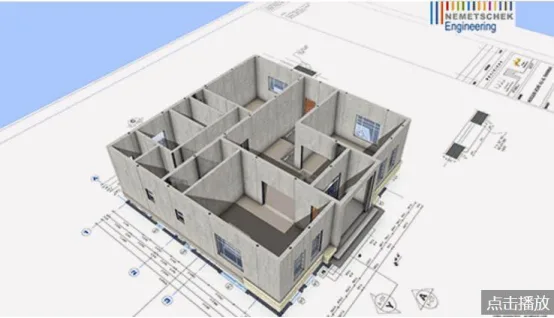
This project utilized Revit for BIM modeling, complemented by Allplan for structural and construction coordination. This combination facilitated seamless collaboration among architectural, structural, and MEP design teams (see Figure 2).
2) Residential Design Optimization
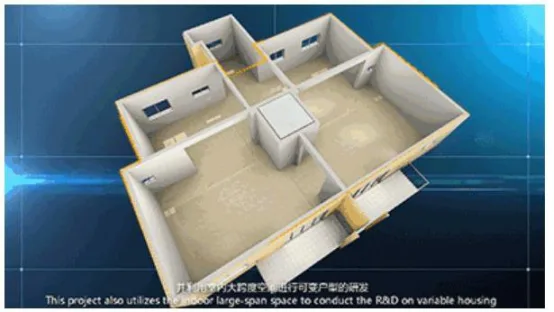
The structural system was optimized from the original plan to eliminate interior columns and centralize vertical pipe wells. This design creates a flexible, large open space adaptable to various layouts. Additionally, multiple layout options were developed early on to cater to diverse market needs, enhancing the project’s marketing appeal (see Figure 3).
3) Clash Detection
During the project, BIM was extensively used for comprehensive 3D pipeline inspection, generating clash detection reports, and calculating engineering quantities—standard BIM practices ensuring design accuracy and coordination.
4) Drawing Generation
At the construction drawing stage, BIM was used to replace complex and often unclear 2D drawings. The project leveraged BIM for visual design, producing renderings, animations, real-time walkthroughs, 2D drawings, and 3D details of complex nodes. This approach enhanced the clarity and intuitive understanding of building information.
















Must log in before commenting!
Sign Up