
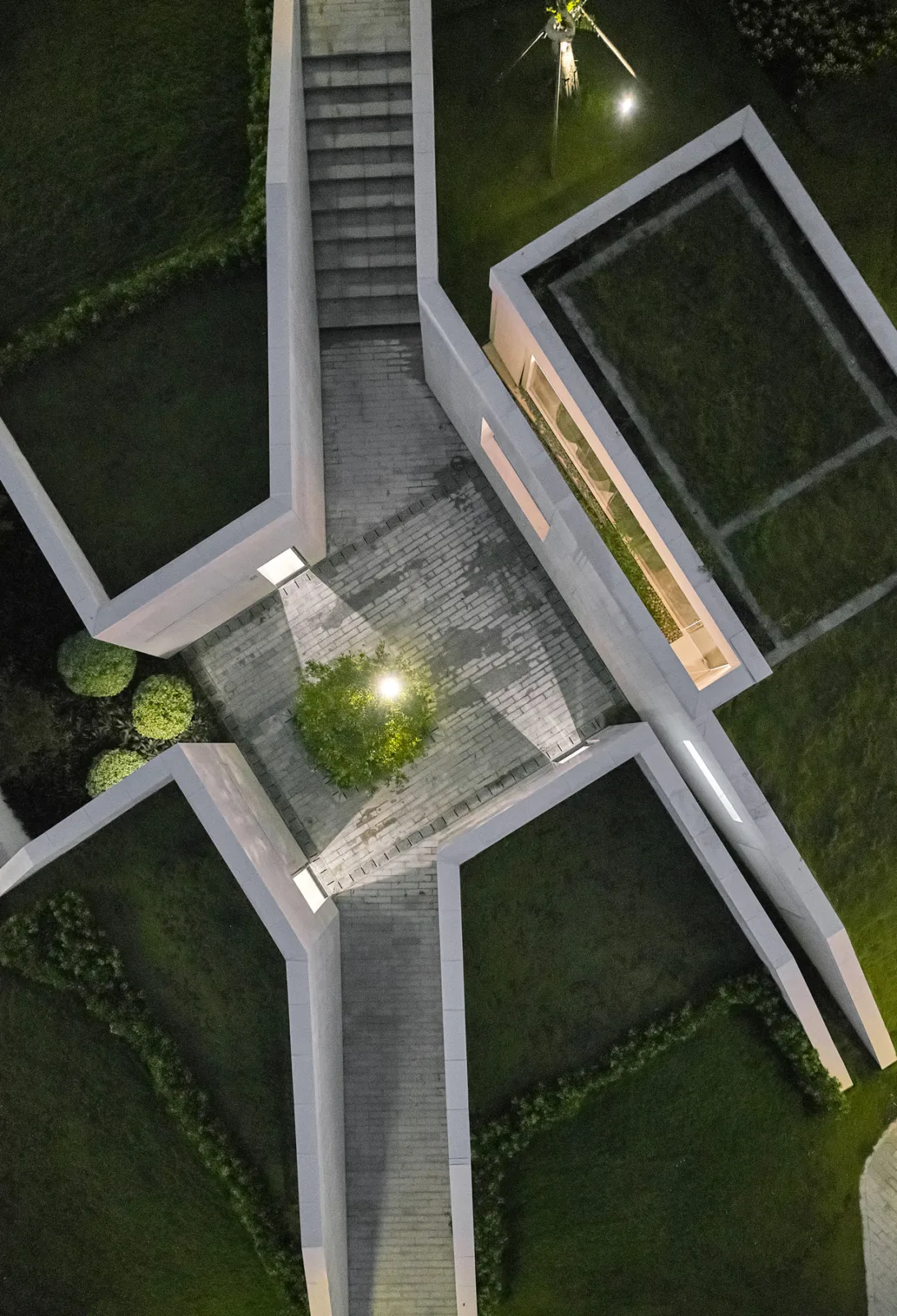
The fertile land beneath the night sky is illuminated, where an open stone path weaves together visible and hidden elements. At the heart of the Xiuzhen courtyard, a large tree draws the attention and footsteps of visitors.
Architect Yang Gail once wrote in his book Communication and Space: “The ability to enter and exit spaces easily and confidently; to find joy in the architecture and urban environment; to gather with others, whether informally or formally—these are fundamental needs. They require a better, more suitable environment for everyday life. These needs are timeless and invaluable, or rather, they mark a beginning.”
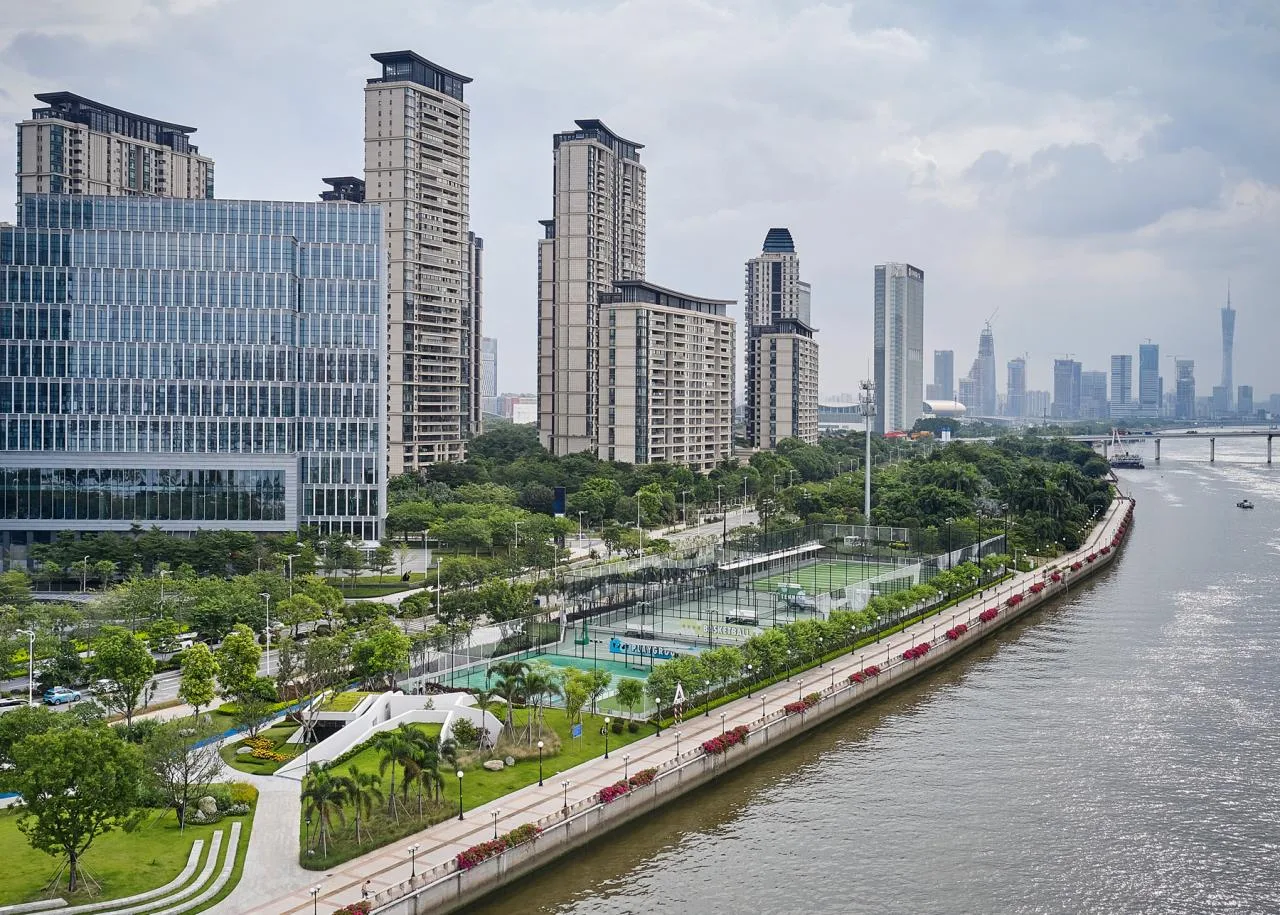
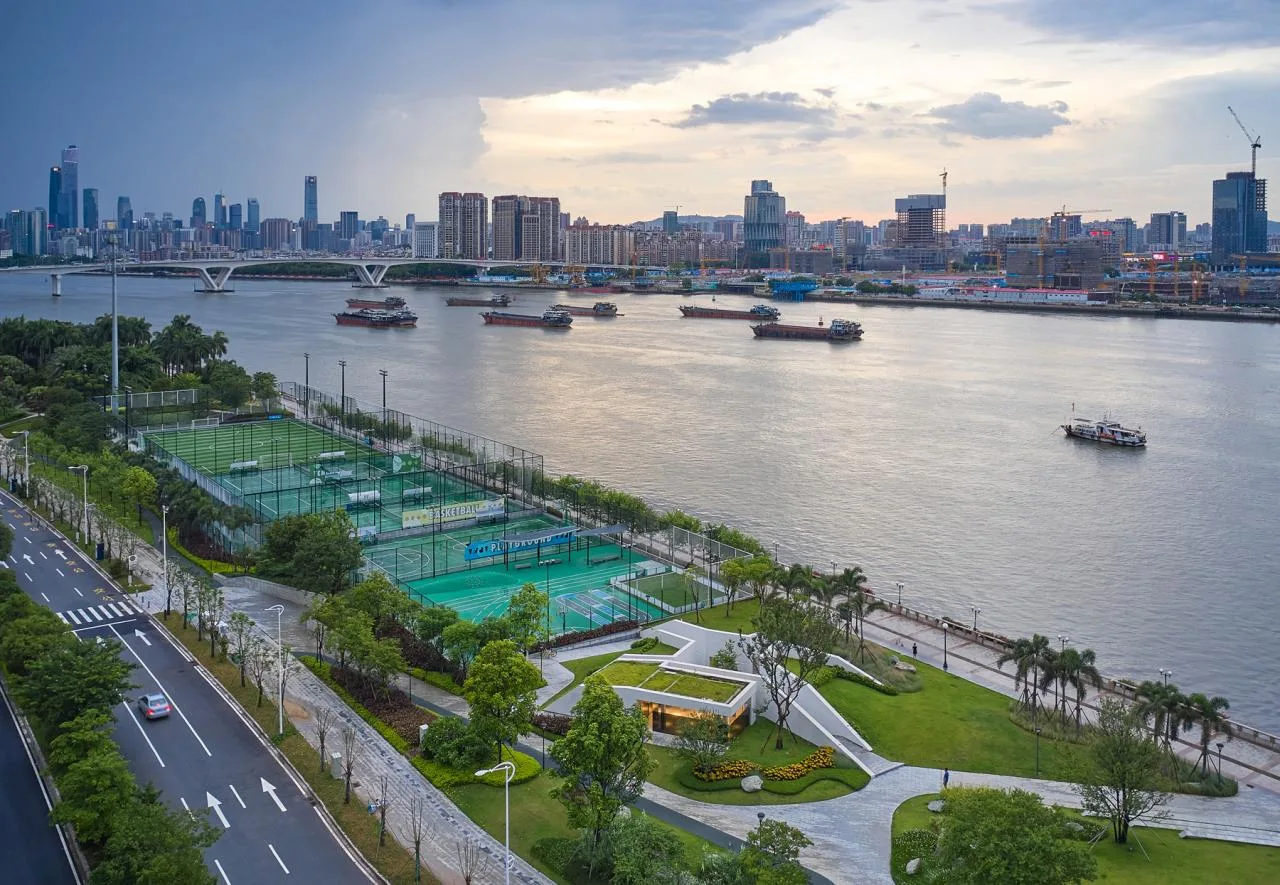
△ The public service space supporting the sports park faces the Pearl River, backed by dense urban developments including Poly Plaza, Intercontinental Hotel, and upscale residences.
The Public Image of Pazhou’s Riverside
During the Wanli period of the Ming Dynasty, Pazhou was part of the Pearl River, surrounded by water. Today, it has transformed from a trading green island into a core zone for Guangzhou’s artificial intelligence and digital economy initiatives. When we first arrived in Pazhou in spring, the southern bank of the Pearl River was already lined with solid, elegant, and towering square buildings. The coastal waterfront landscape had long been established.
Our project is situated here as the supporting public service center for the Binjiang Sports Park. It accommodates functions such as consultation and reception, rest areas, changing rooms, and public restrooms. Facing the Pearl River, the sports park is sheltered by Poly Plaza, Intercontinental Hotel, and other dense urban structures. From a vantage point, the park’s lush green landscape near the water is visible. Therefore, the design’s primary goal was to create a subtly “hidden” public service space that organically grows from the fertile soil at a lower elevation, seamlessly integrating into the surrounding environment.
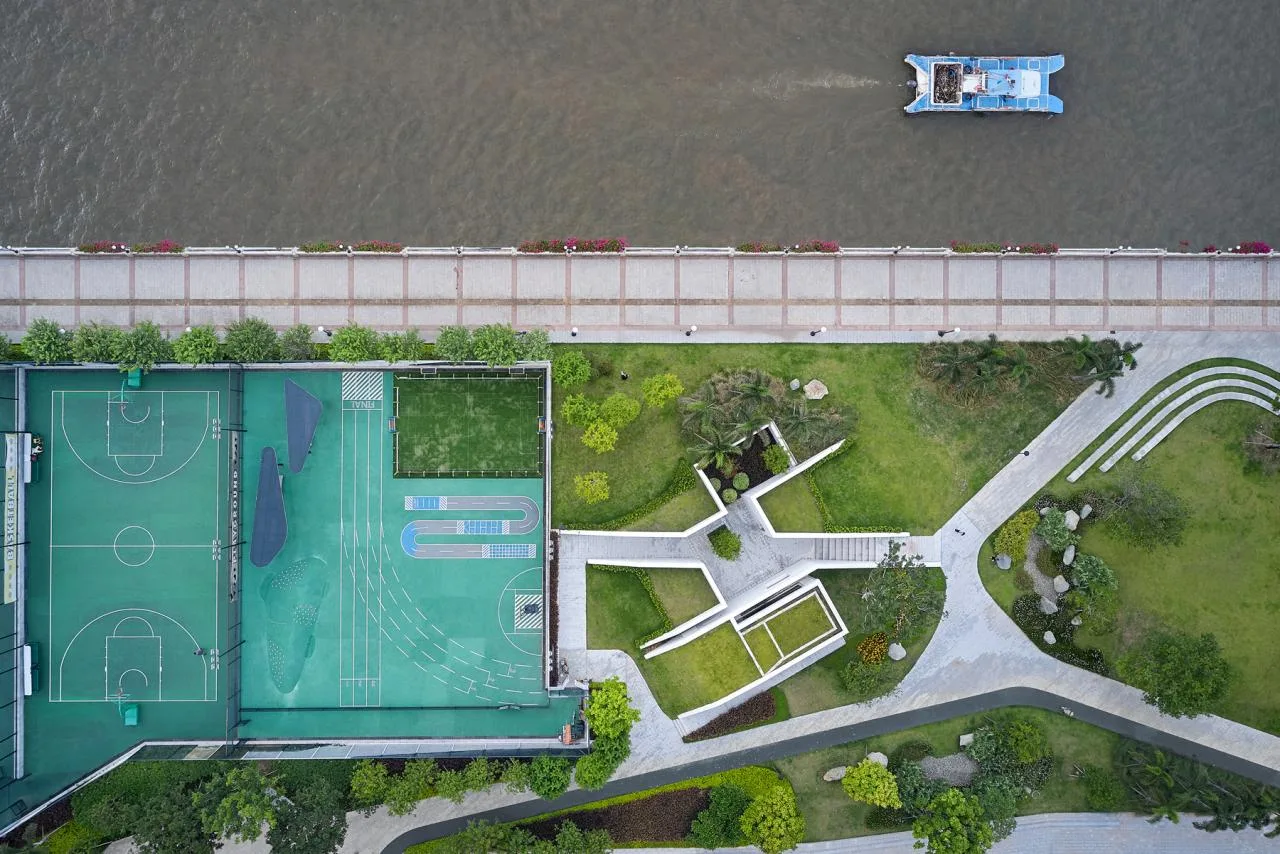
Viewed from above, the project naturally melds with the waterfront landscape. The “Cross Trail” extends the existing landscape path, offering both open and secluded spaces. The nearby river stretches wide, with boats gently drifting along.
Building on the existing landscape flow, the design needed to accommodate two modes of interaction: people gathering around the building and those passing through it. Early in the design phase, a naturally protruding green space was “piled” onto the original terrain. This was then “cut” open by a path shaped like a cross.
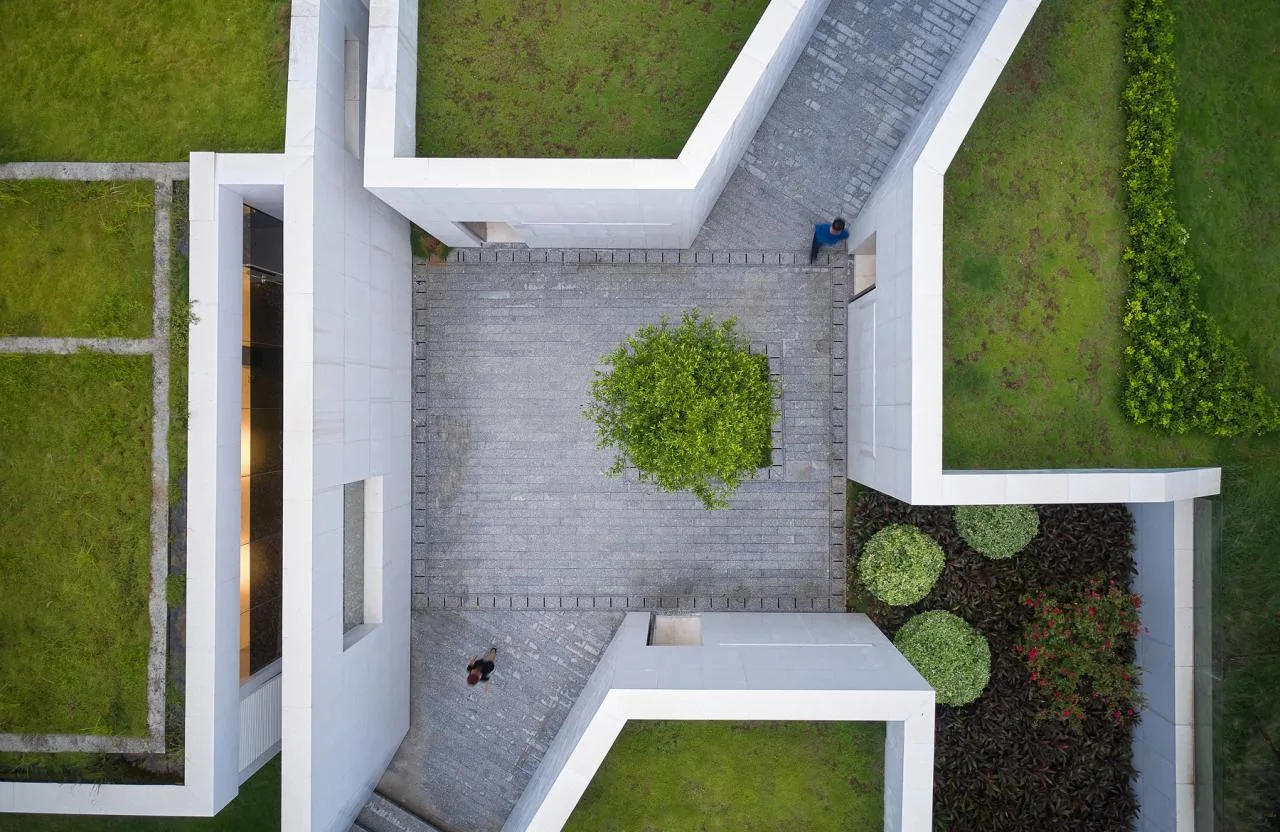
Four functional volumes are placed on either side of the path, creating a charming central courtyard.
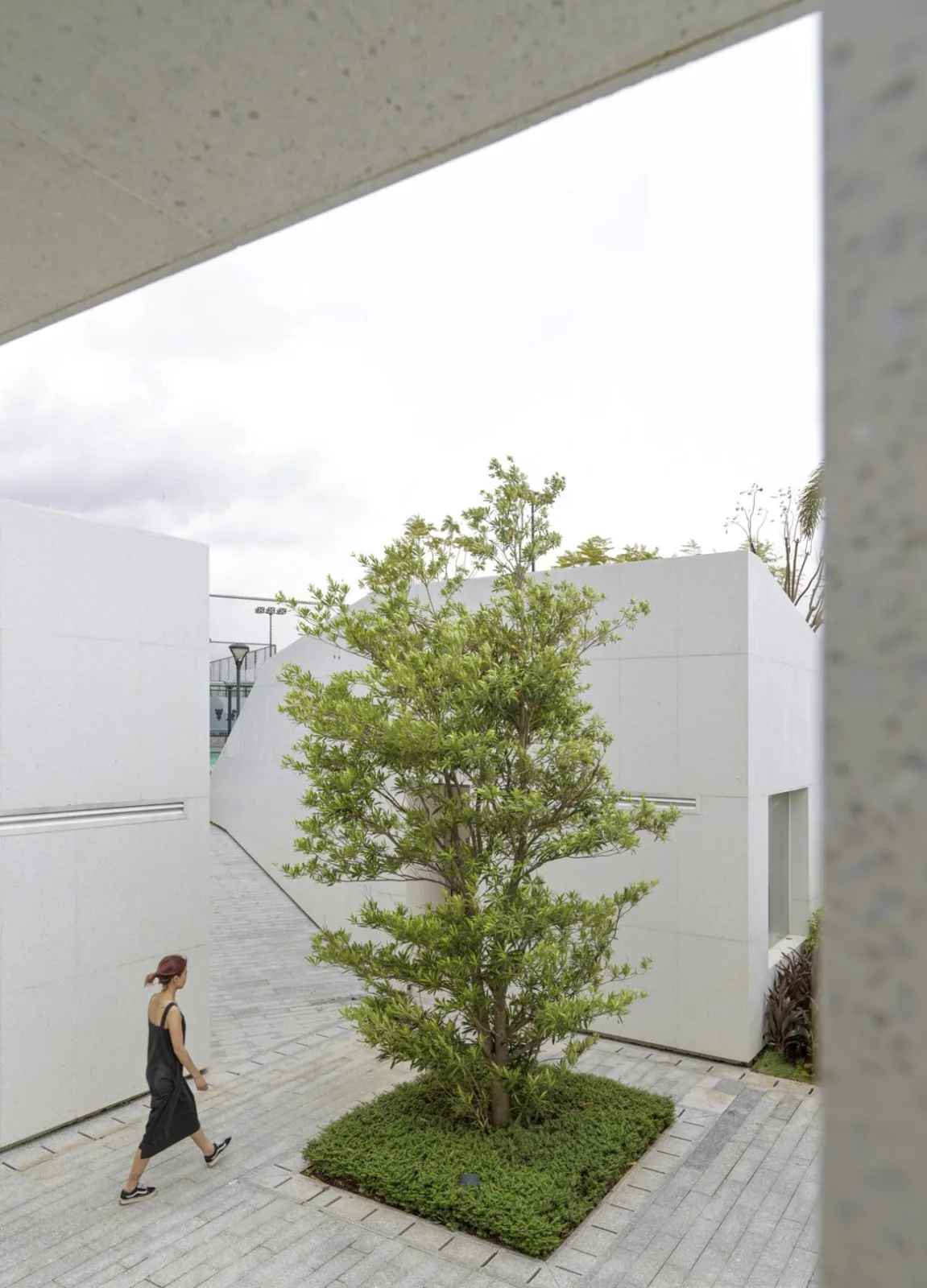
The soil-covered roof forms natural undulations, allowing the space to subtly disappear amid the grass and shrubs.
These four volumes include a consultation hall, lounge, public restroom, and equipment room, arranged along the intersecting “cross path” to enclose a transitional pocket courtyard at the center. The soil-covered structures blend simply and naturally with the sports park’s original landscape, relying on nature to harmonize the design.
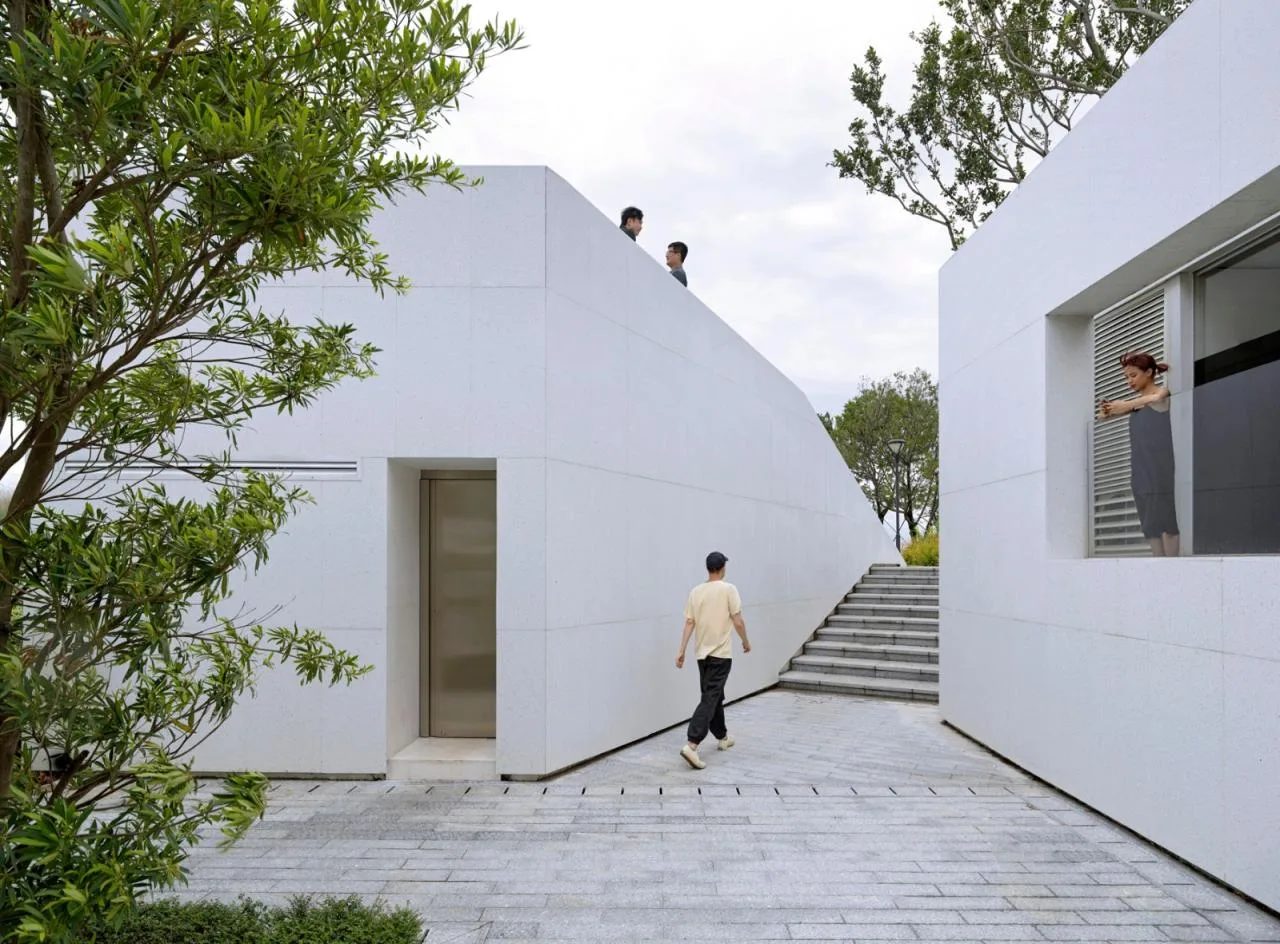
A line of green trees in the inner courtyard forms a focused sightline, while the “cross path” directs visitor movement through the space.
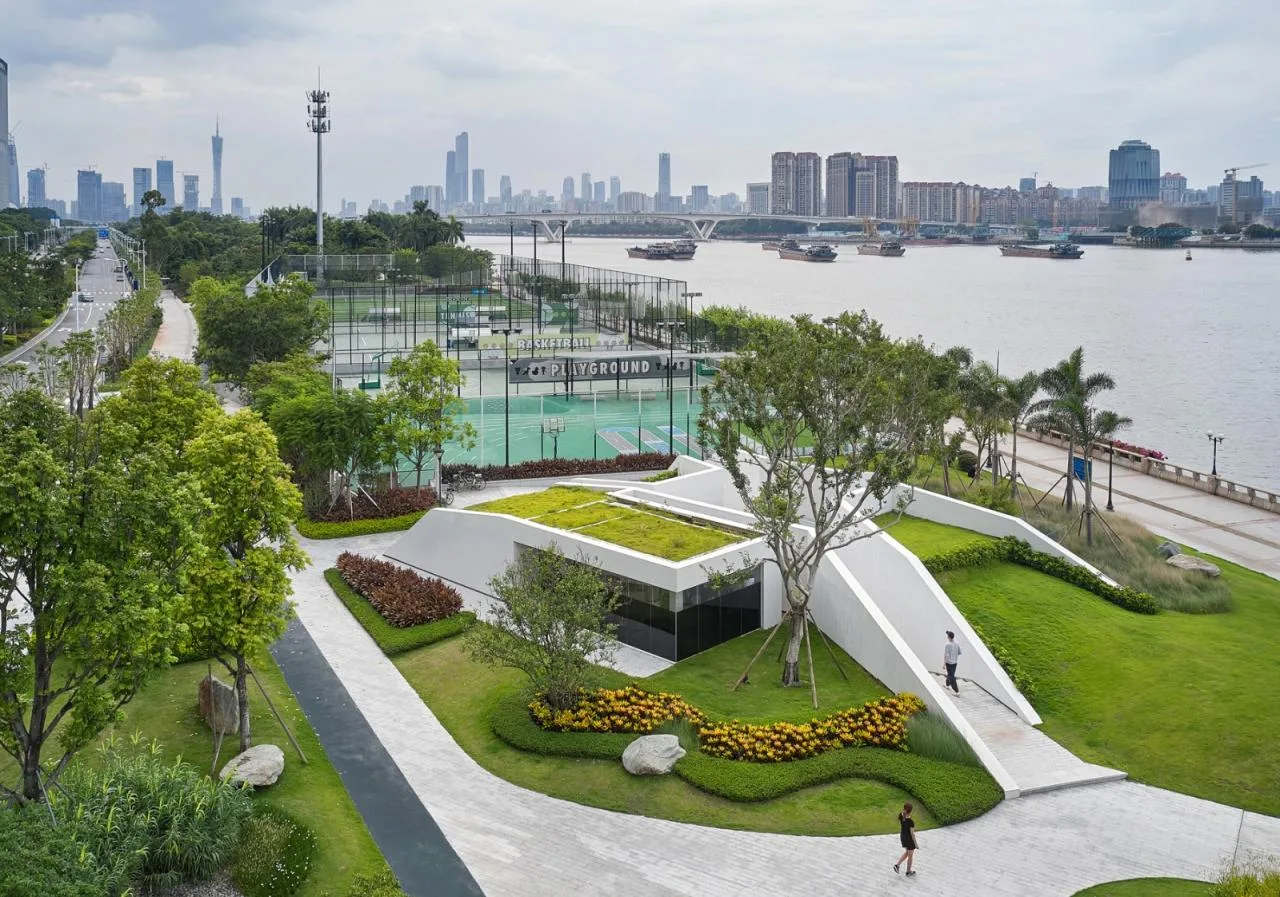
Various functional spaces nestle beneath fertile soil, with undulating white barriers. The consultation hall and entrance pathways feature clear signage.
While blending with nature, public service facilities require clear entrances and identifiable features. Accordingly, portions of the space are elevated to form a three-dimensional “cross-shaped” path combining explicit and subtle elements. The fifth façade—the roof—presents a diffuse sky view with one or two pedestrians. The open paths border the original trails. The undulating roof nestles between grass and shrubs, balancing accessibility with tranquility.
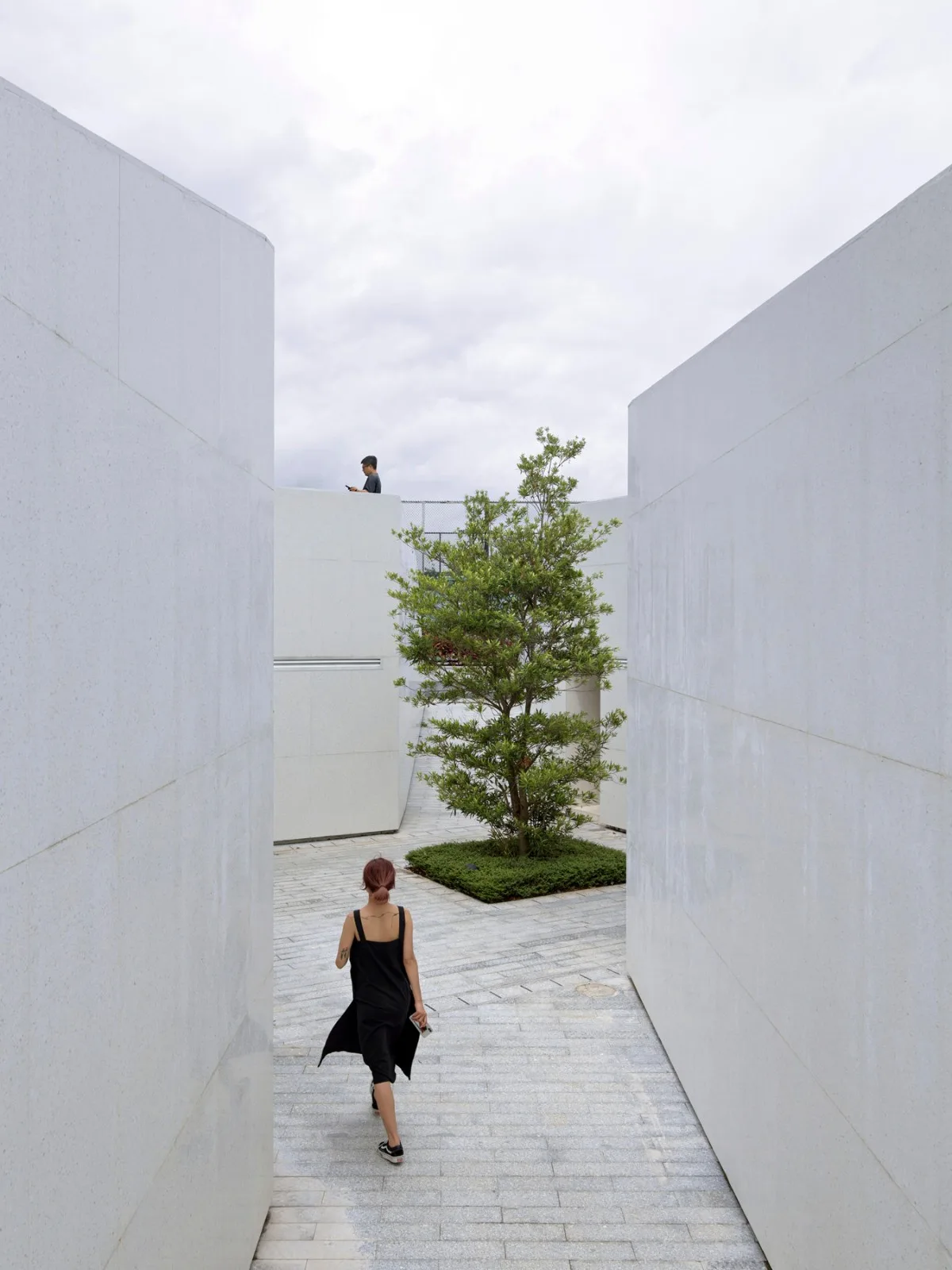
Intersecting paths and white terrazzo façades create a natural, textured finish.
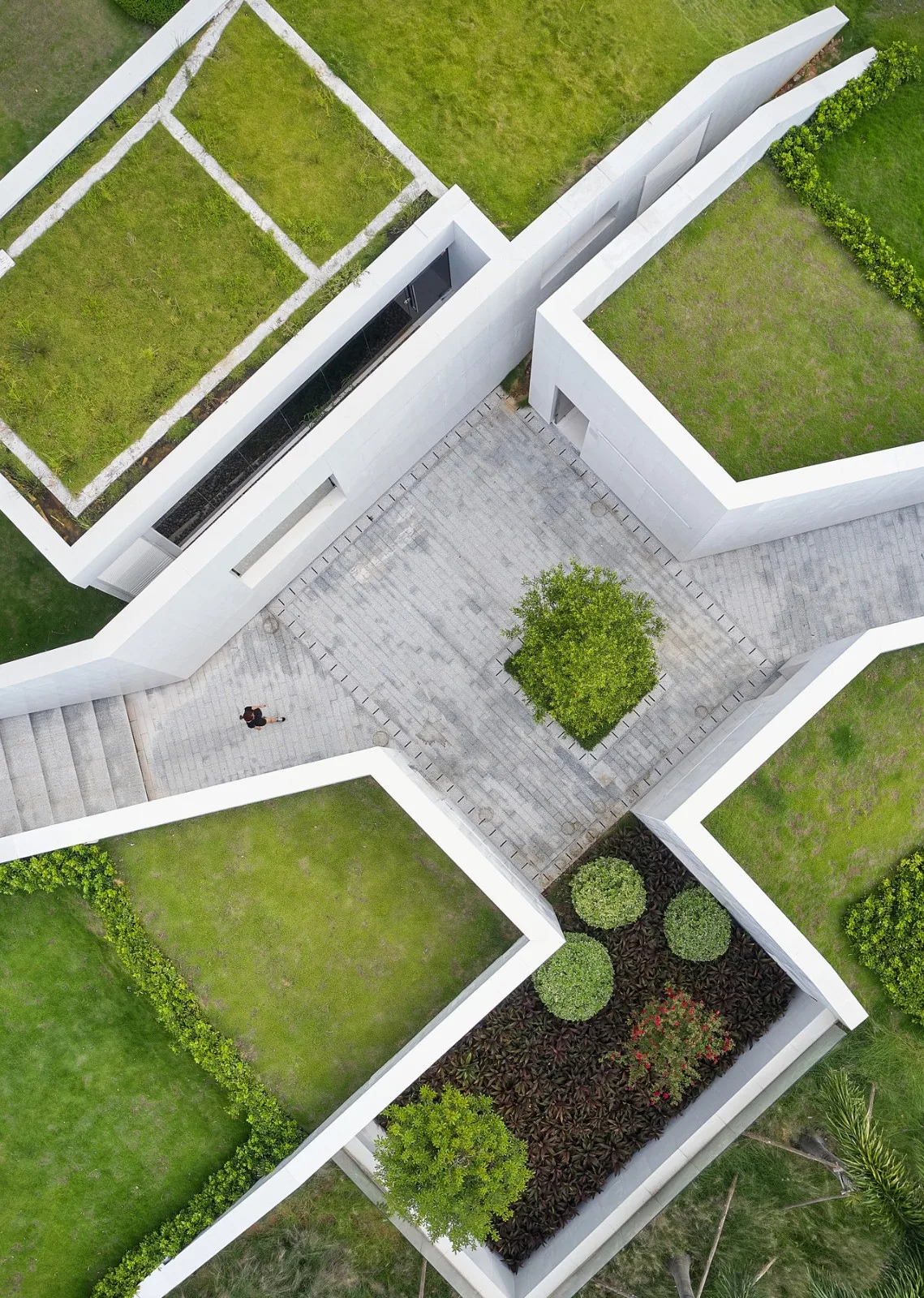
The “Cross Trail” guides visitors toward the Xiuzhen Courtyard, where greenery and layered plants provide a hidden sanctuary.
From Noise to Quiet: Changing the Perception of Public Restrooms
Have you ever hesitated to use a public restroom? Traditional public toilets often carry stigma and negative associations due to their singular function and uninspired design. A key goal of this project was to overcome these ingrained perceptions.
In 1953, French architect Jean Prouvé transformed public facilities by introducing spontaneous social activity through thoughtful spatial design and seating at a petrol station. Inspired by this, we aimed for our facility to become a seamless part of daily life rather than a detached, purely functional space. The combined functions of consultation, rest, changing rooms, and toilets respond to user needs more holistically, demonstrating that public toilets can be much more than mere utilitarian structures.
Soft lighting begins to glow inside the consultation hall.
From afar, the undulating white barriers rise and fall, appearing and disappearing with the landscape. Entering the courtyard, the white terrazzo exterior walls reveal a naturally textured surface, achieved through meticulous assembly. The white surfaces highlight the architect’s intentional spatial “cuts.”
Inside, we chose raw concrete and brushed stainless steel as primary materials. Exposed ceilings, columns, furniture, and sanitary fixtures create a “calm” and “quiet” atmosphere, contrasting with the exterior and providing moisture resistance. Entering from the noisy, warm outdoors, visitors experience a visual “cooling” effect.
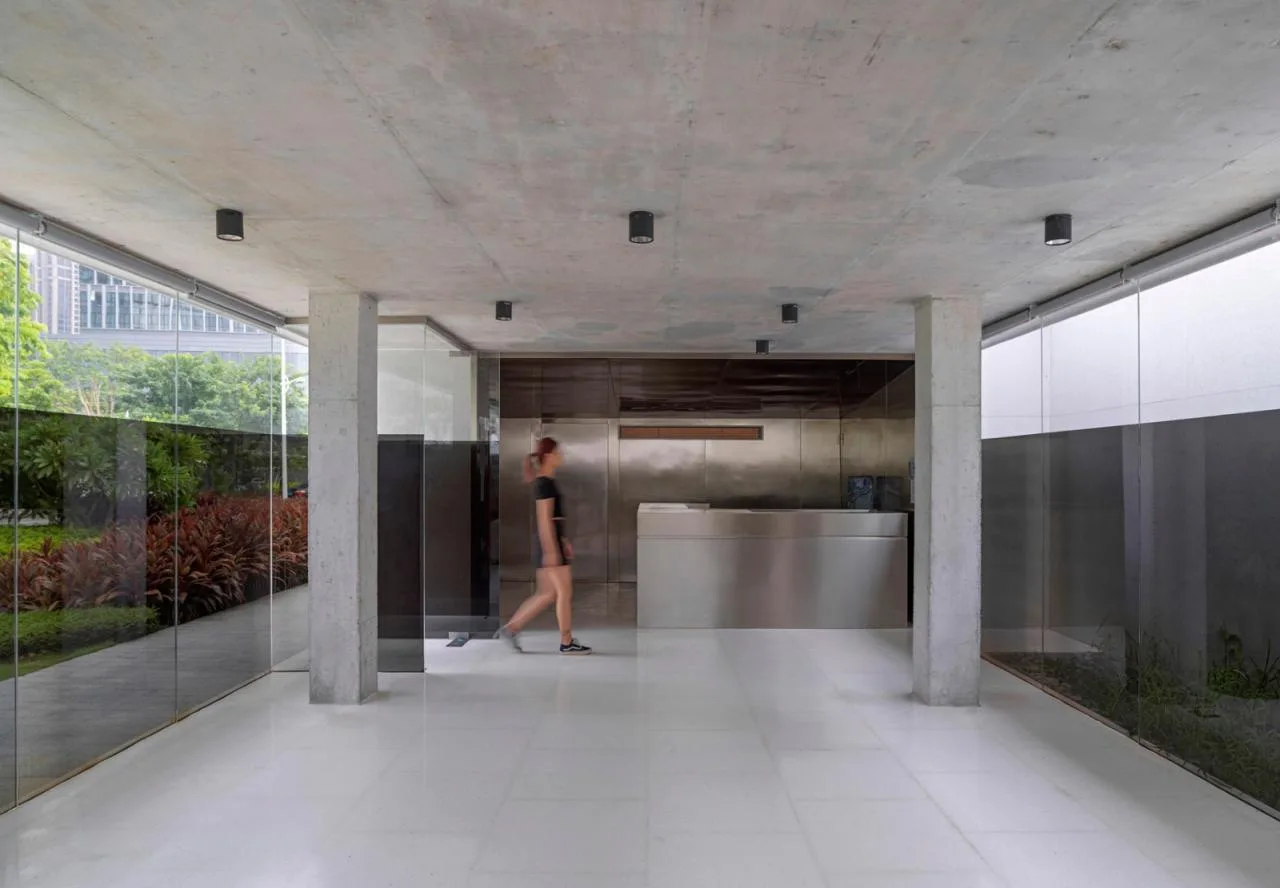
The exposed plain concrete ceiling and columns reinforce the cool, tranquil ambiance of the consultation hall.
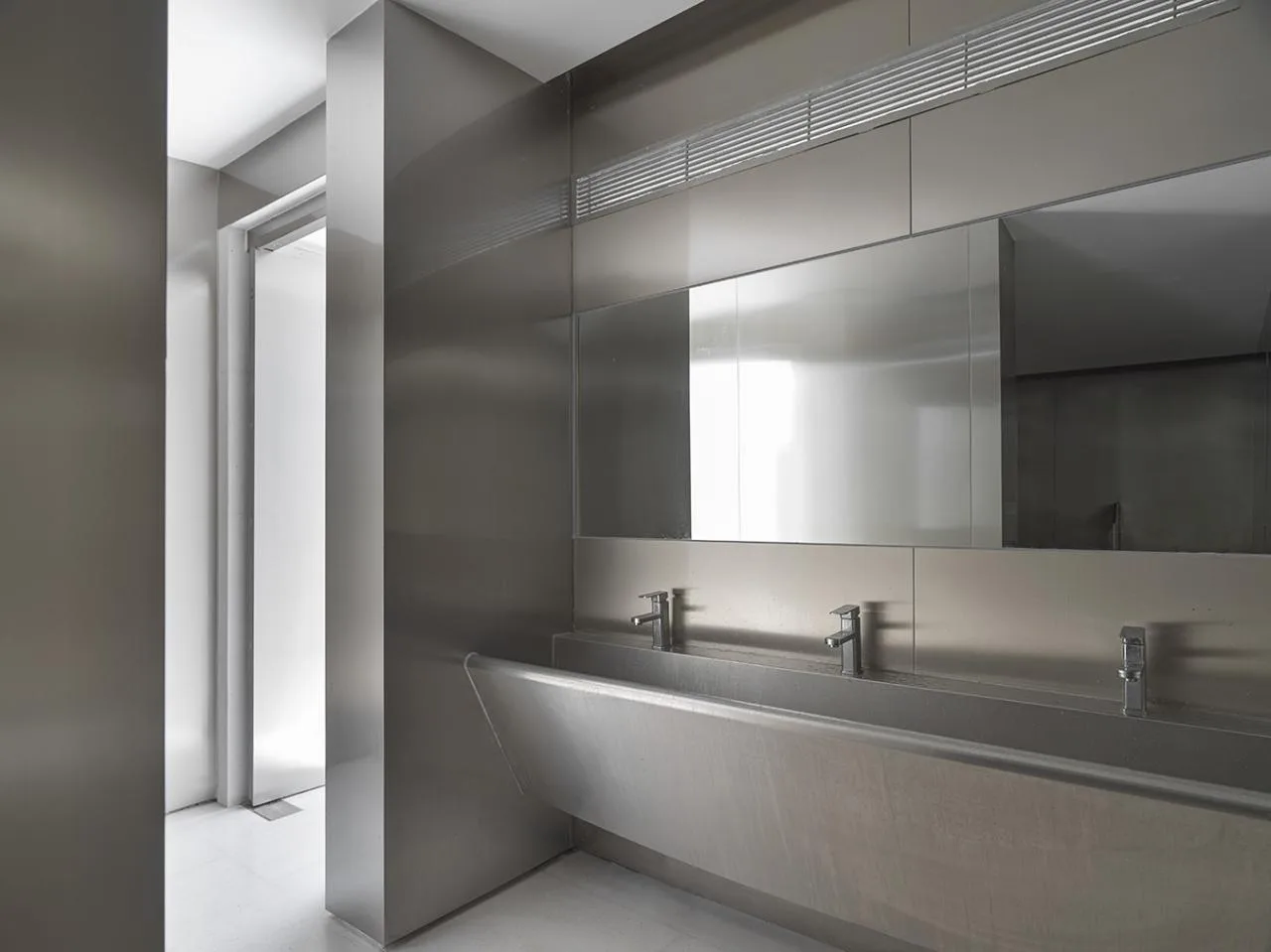
Custom brushed stainless steel furniture and sanitary ware inside the restroom enhance the visual cooling effect.
As night falls, warm interior light spills from the cave-like entrance, drawing the eye between natural and artificial elements.
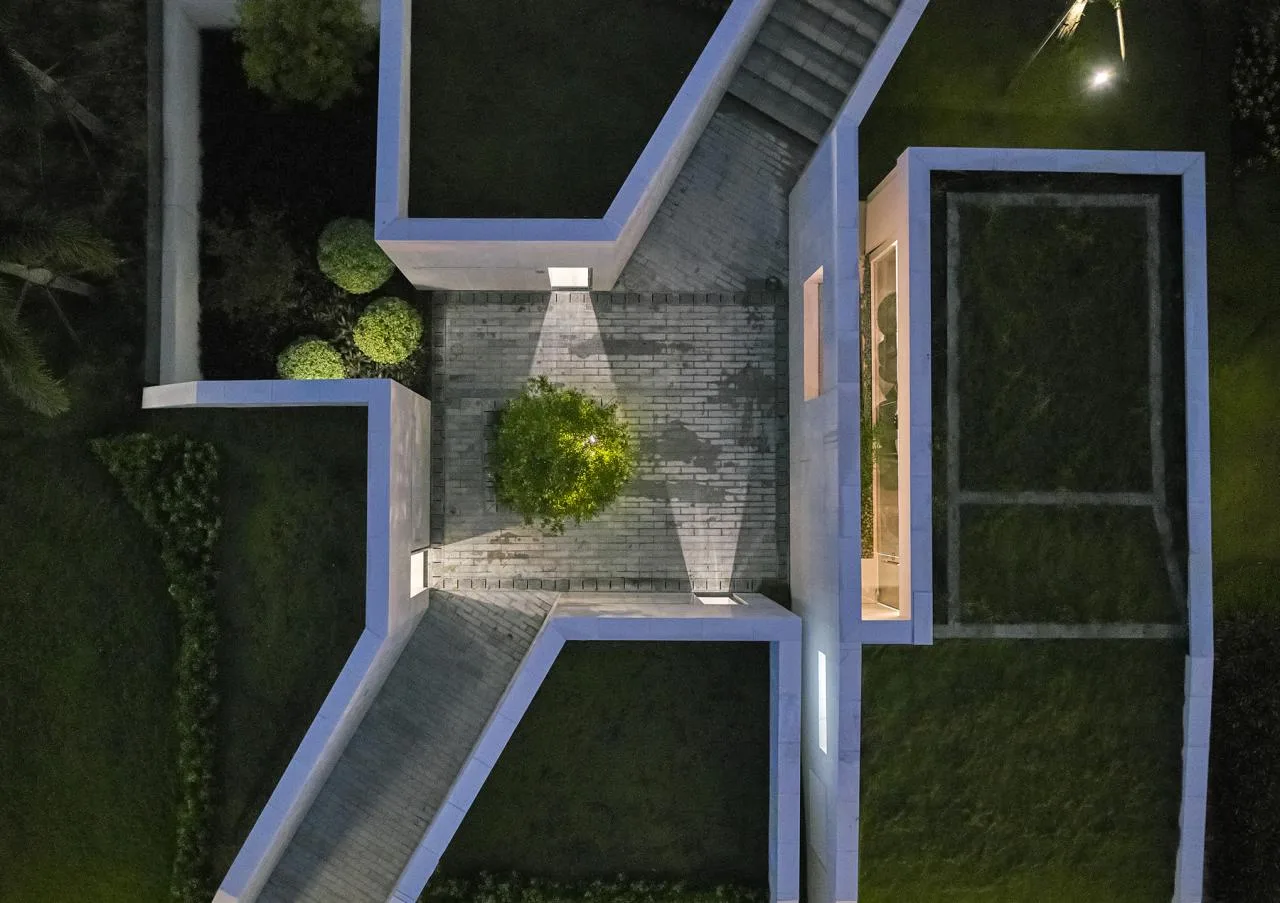
When night descends, the space can be viewed from top to bottom, with indoor light flowing out of the cave entrance and a subtle interplay between natural and manmade elements.
Design Reflections and Future Potential
As a soil-covered building integrated into the waterfront landscape, the project strives to extend harmoniously from existing surroundings. However, uncontrollable later landscaping complicated planting arrangements, somewhat hindering the construction of soil-covered structures. Additionally, the originally planned seamless terrazzo façade was replaced by prefabricated terrazzo panels due to time and budget constraints, compromising some simplicity of the building’s exterior.
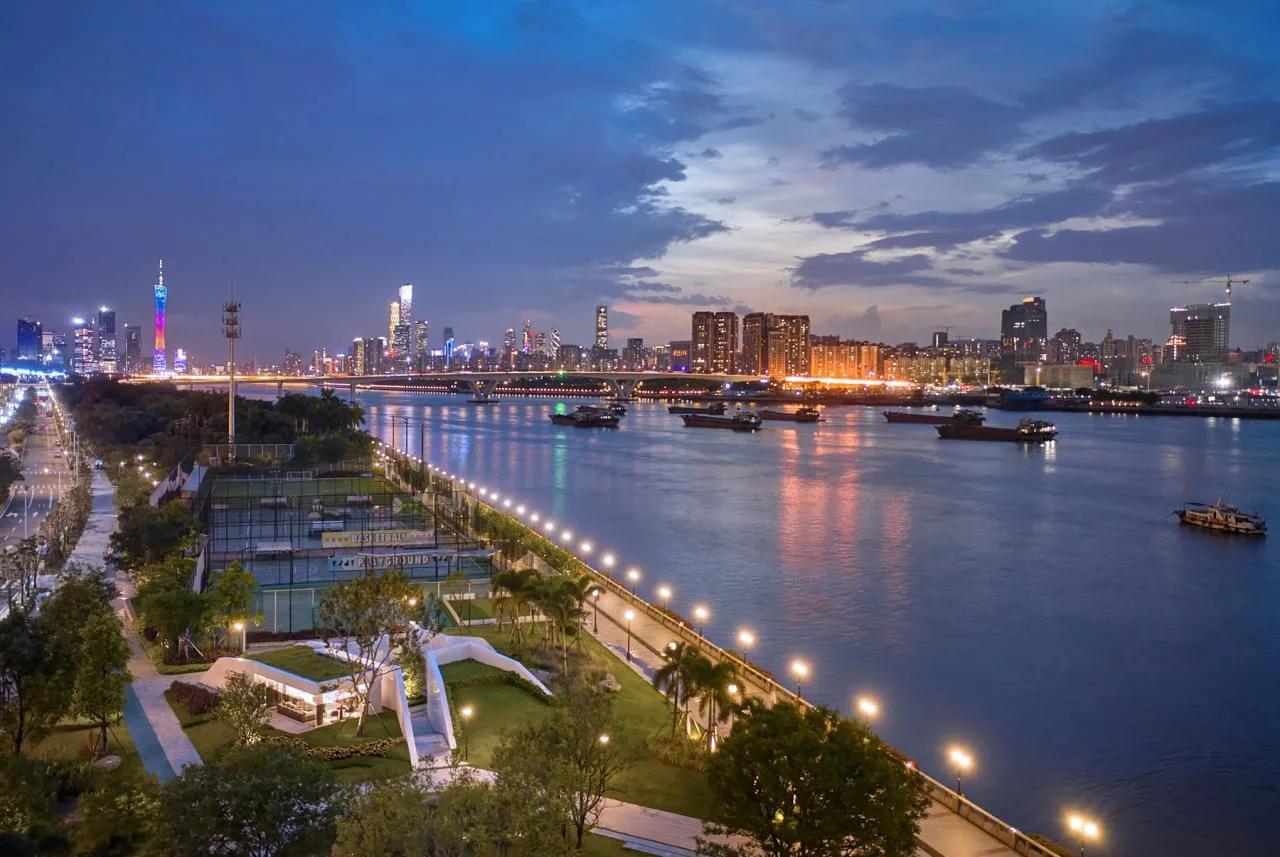
At dusk, city lights twinkle while the vast river hosts rows of boats. White barriers outside the buildings rise and fall like natural growths emerging from the green landscape.
As the city evolves day and night, the “fertile soil” building grows in harmony with its environment. We have witnessed Pazhou’s transformation firsthand. As a public service space within the waterfront park, “Wotu” holds promise for replication. One day, it may “grow” in other parks and riverbanks, adapting its form to new contexts.
Project Drawings
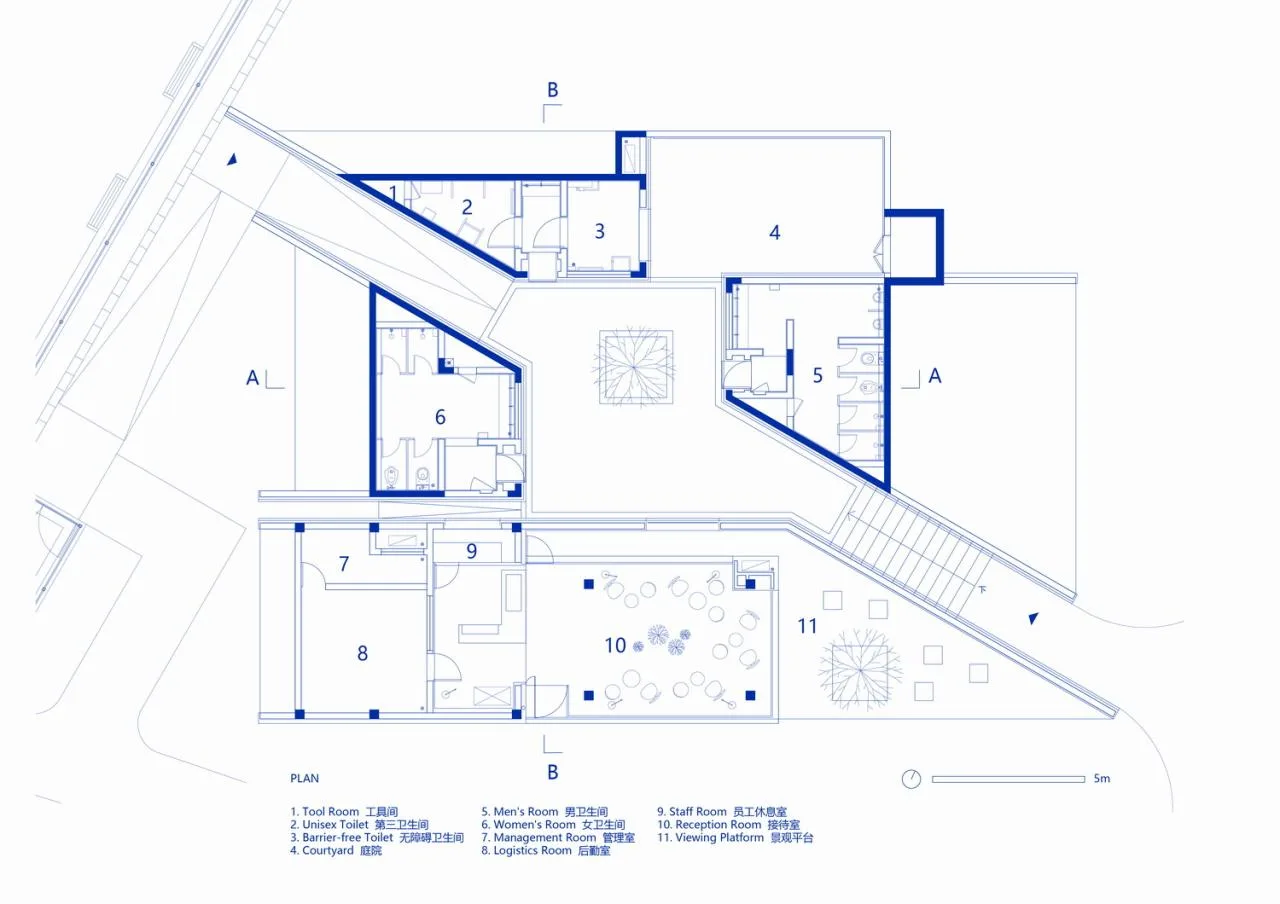
△ Plan View
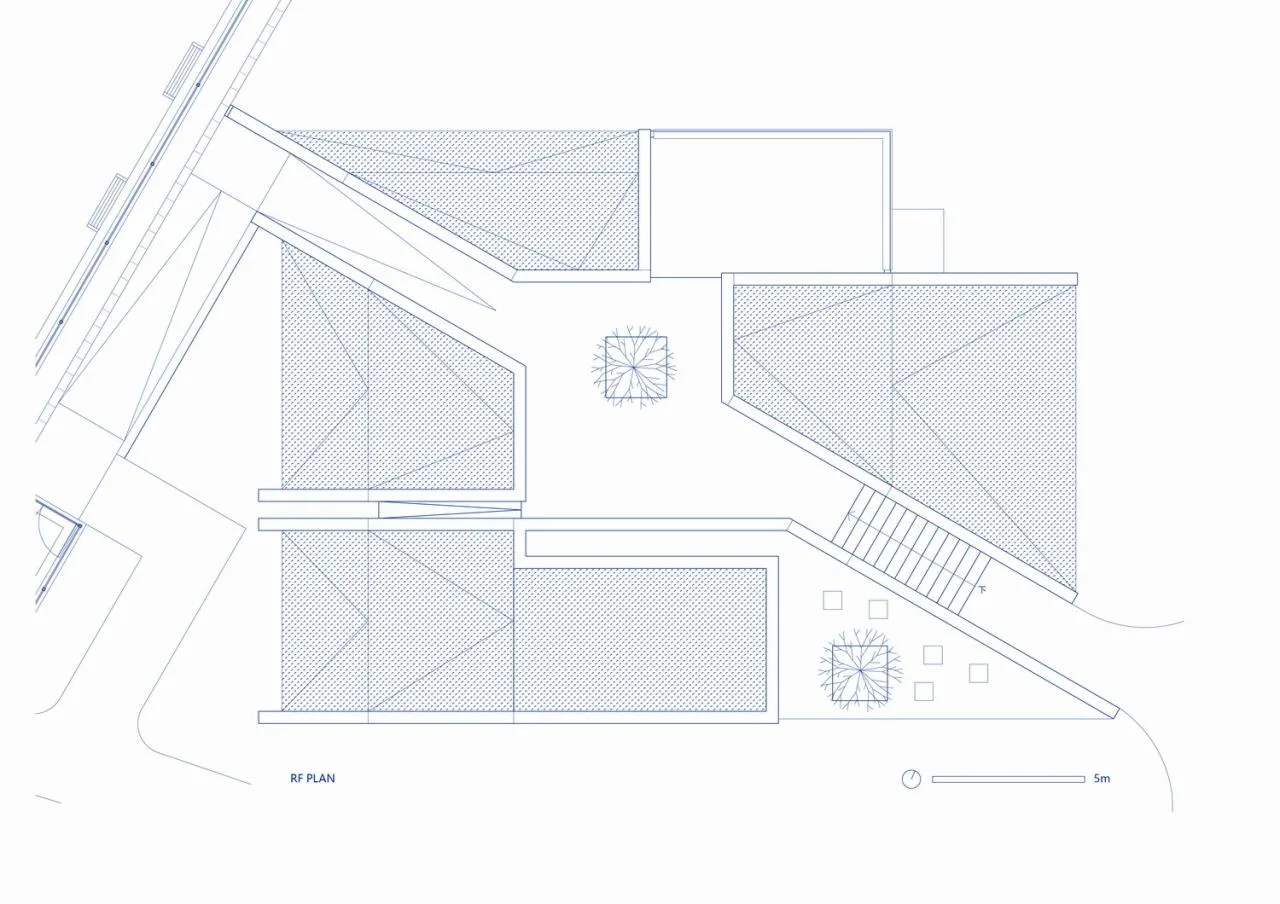
△ Roof Plan
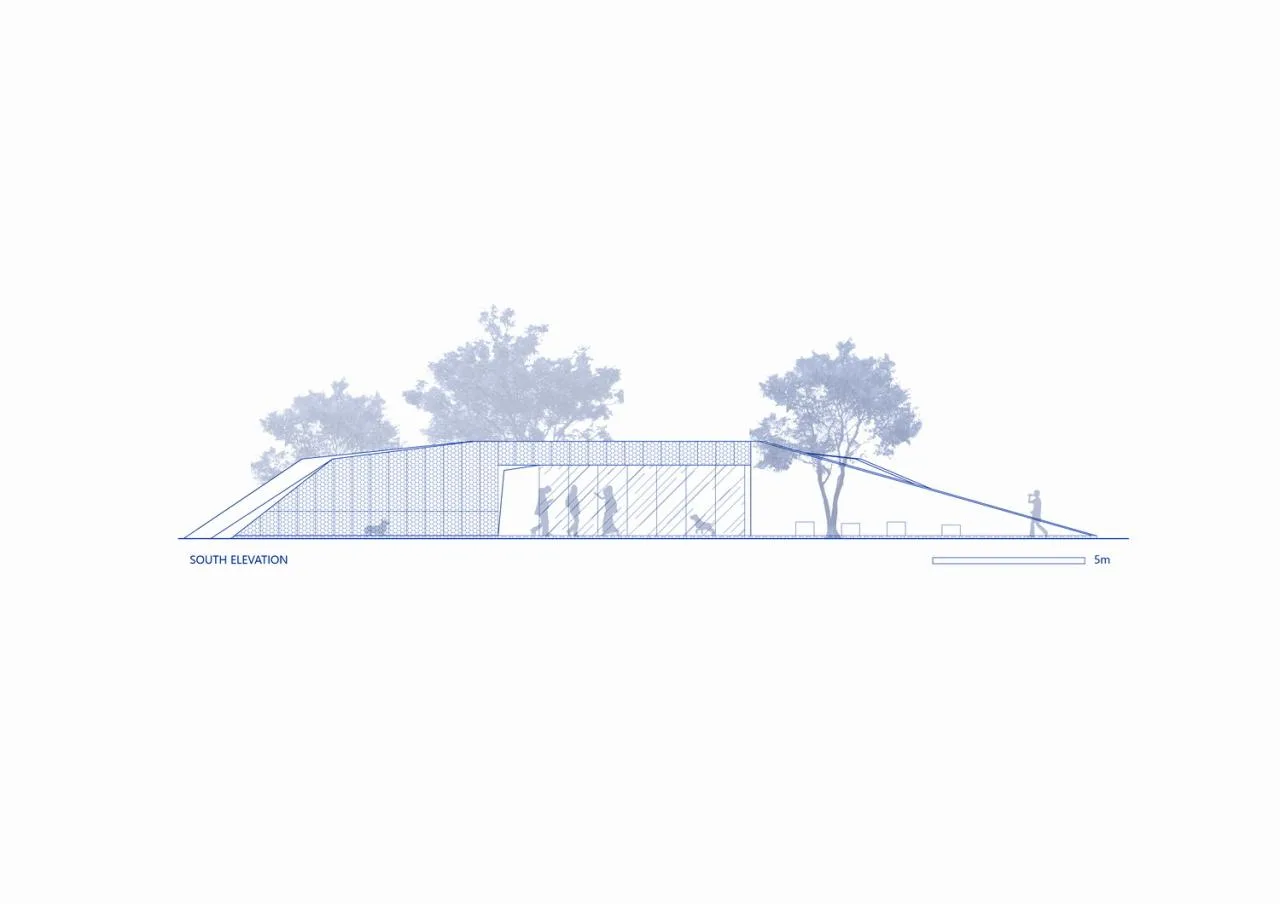
△ Elevation Drawing
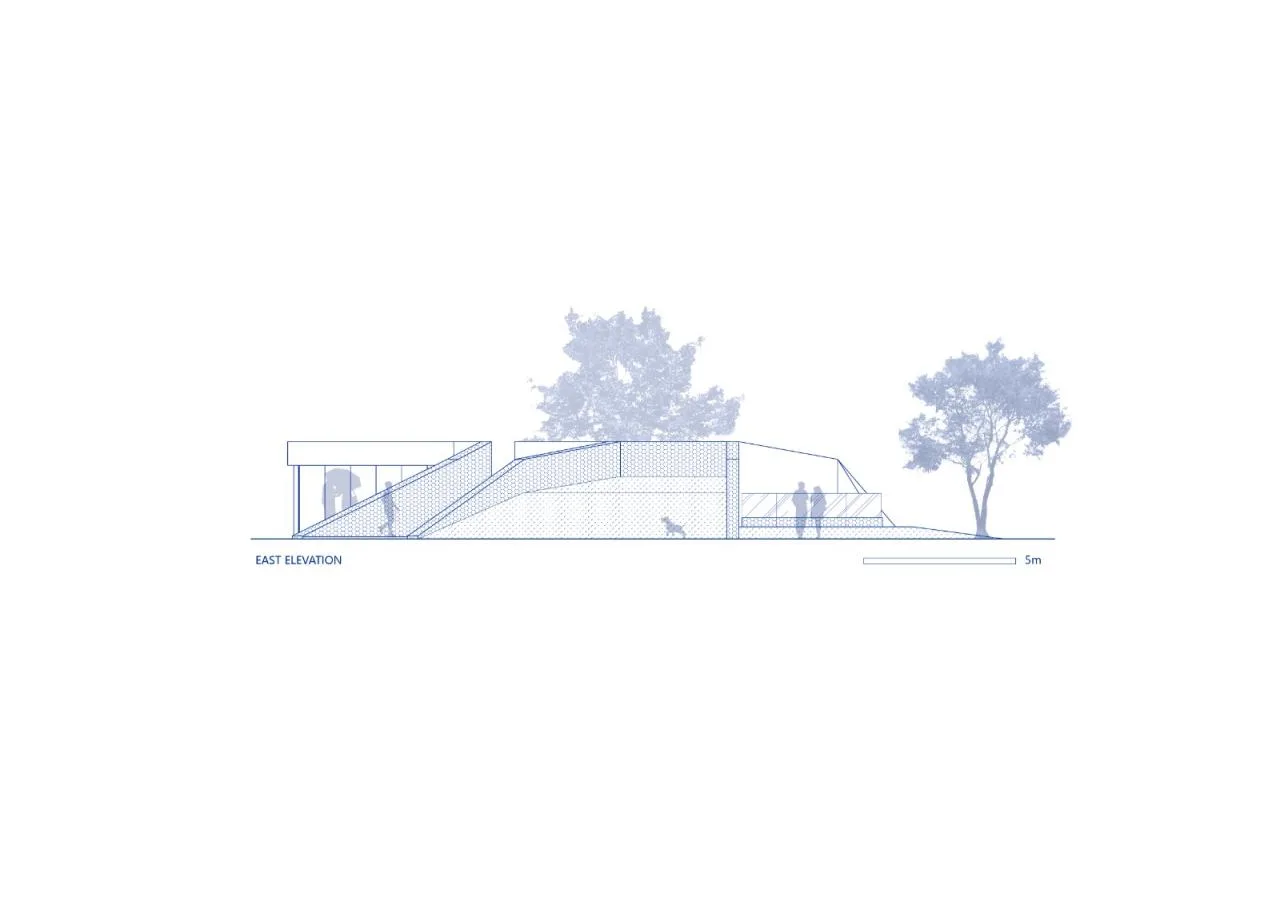
△ Elevation Drawing
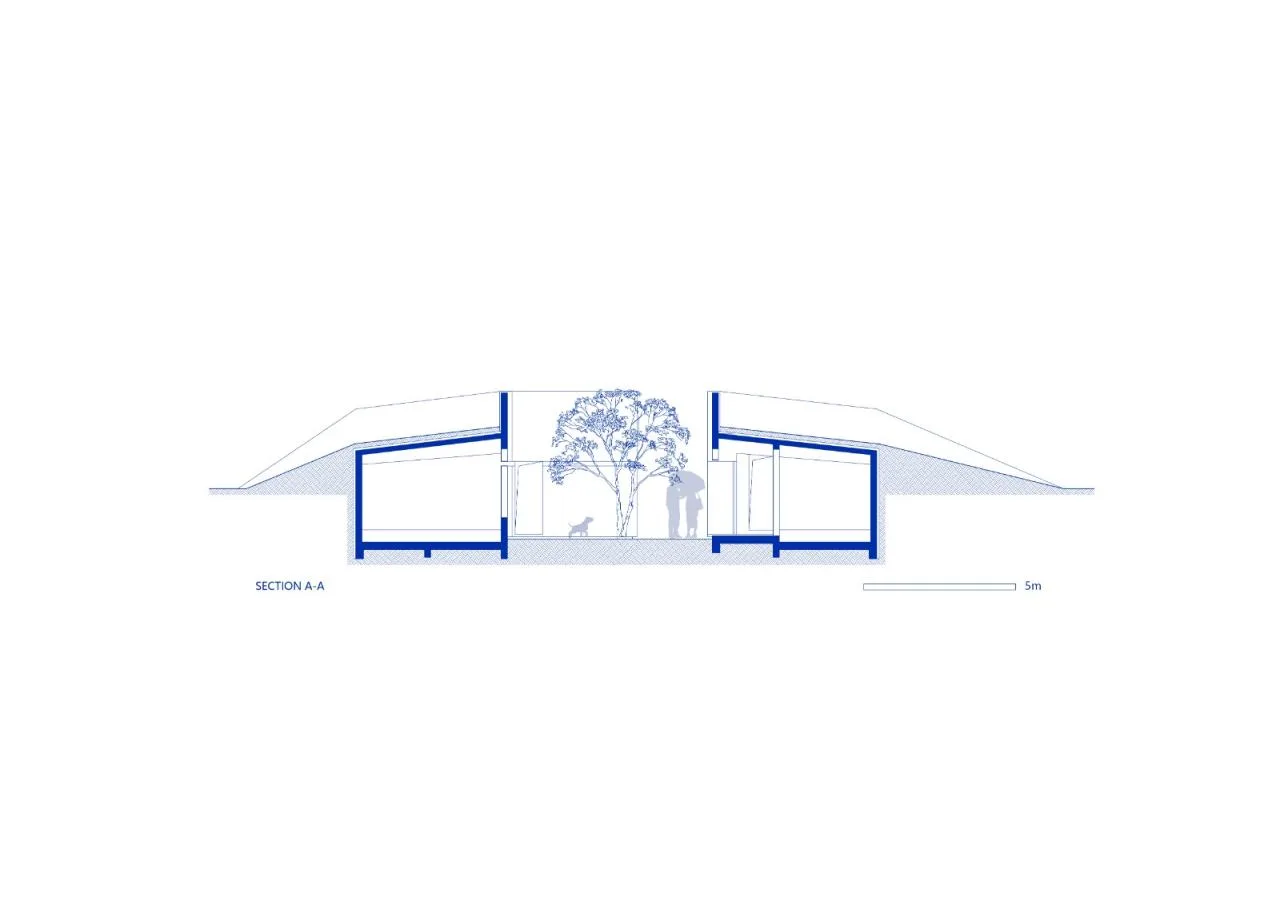
△ Section Diagram
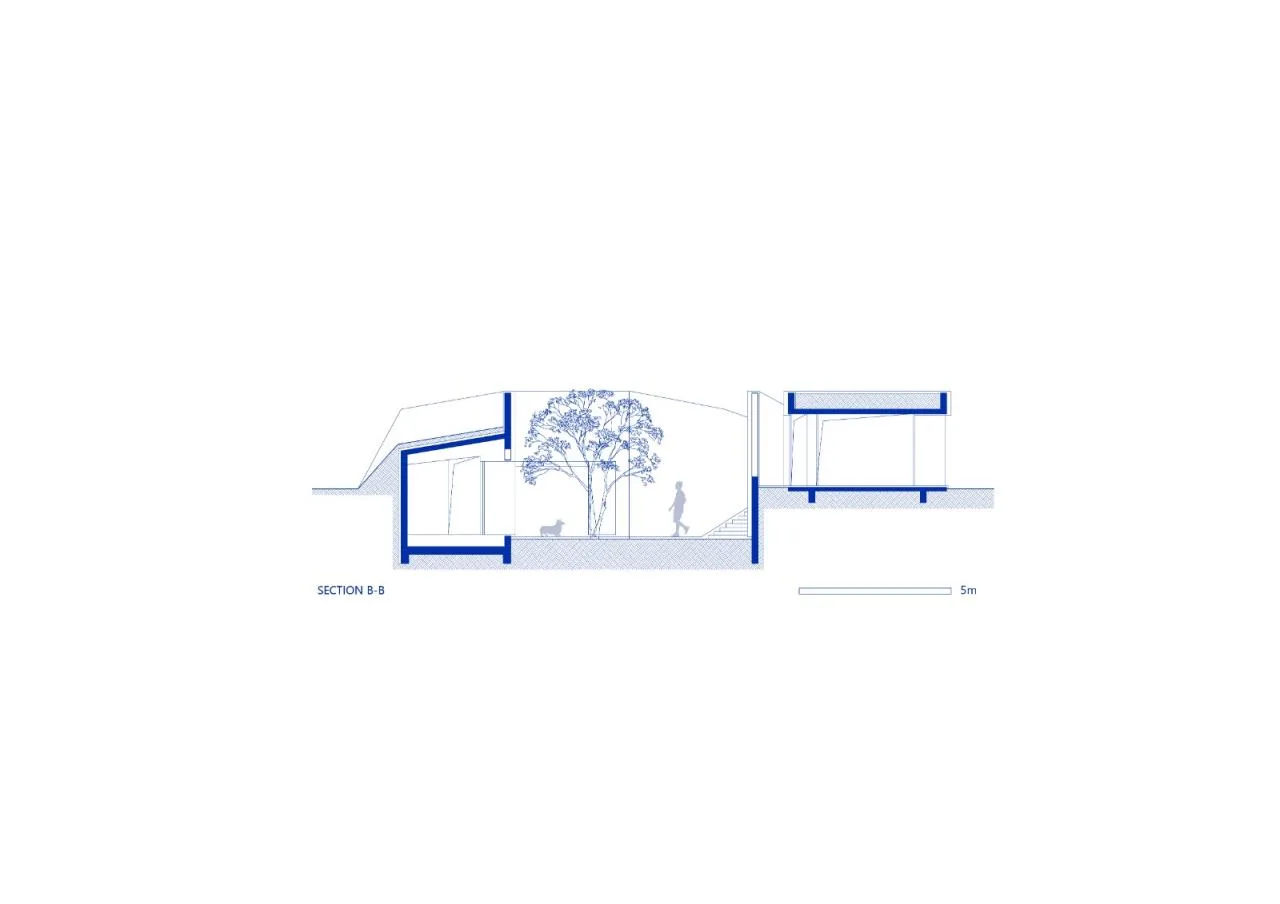
△ Plan View
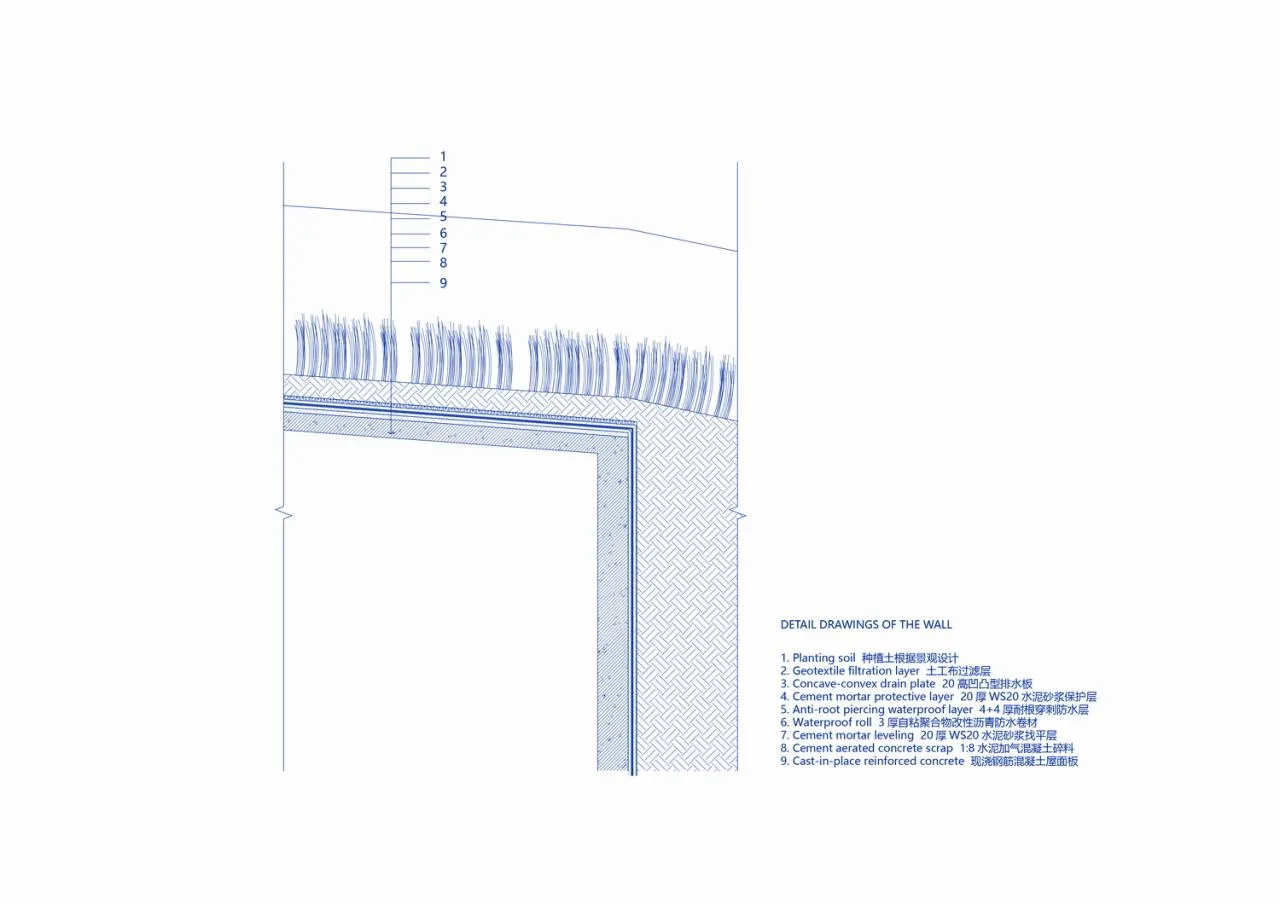
△ Wall Detail Drawing
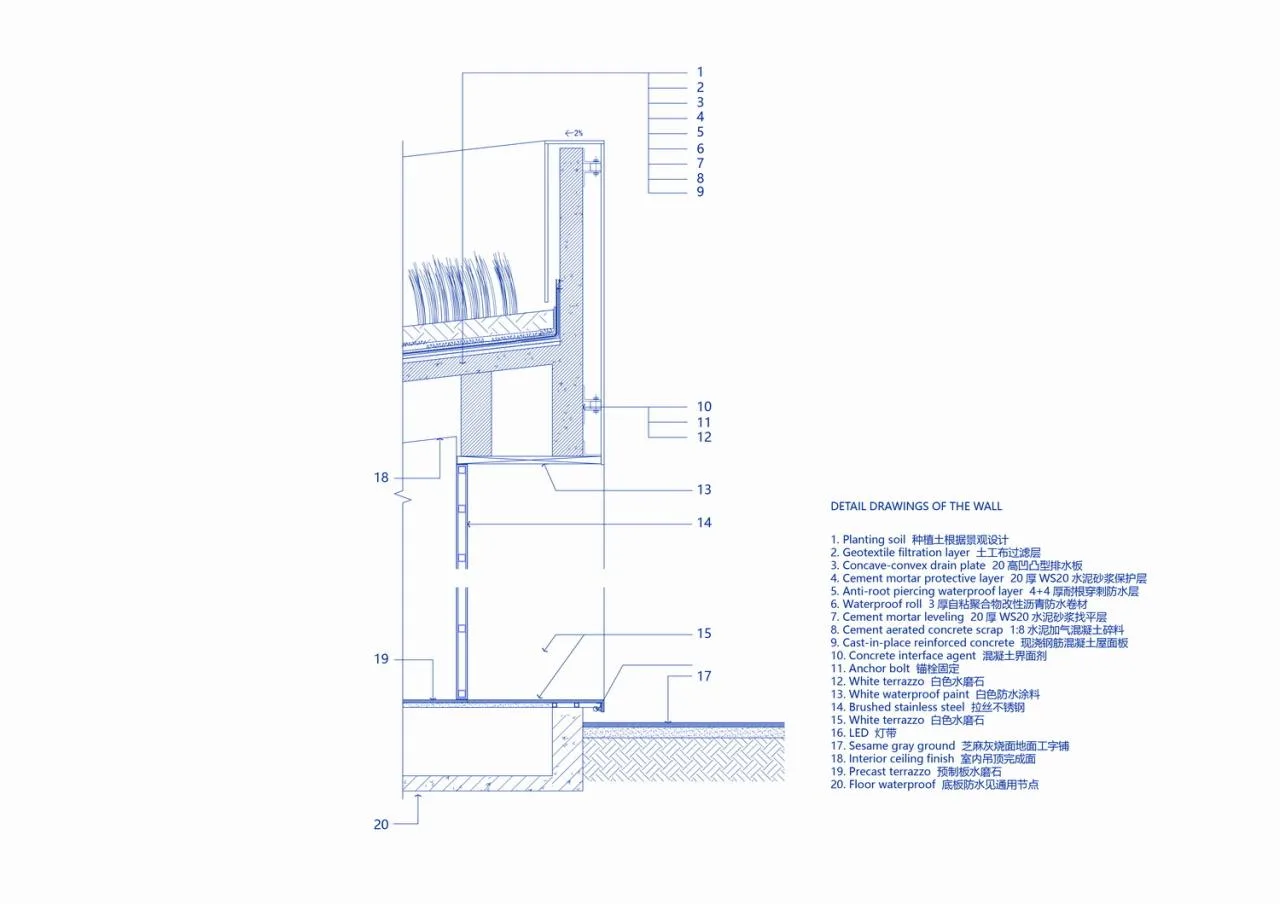
△ Wall Detail Drawing
Project Information
Project Name: Wotu | Pazhou Poly Sports Park Service Center
Functions: Service Center, Public Restroom, Rest Area
Design Period: May 2018 – September 2019
Construction Period: September 2019 – December 2019
Location: Poly Sports Park, Pazhou, Haizhu District, Guangzhou City
Building Area: 194.8 square meters
Team: Xiao Lei, Ziye Yousi, Yang Yuqiong, Wang Han, Cao Yi, Eleonora Nucci
Collaboration: Hezuo Structural Architecture Research Institute
Owner: Guangzhou Poly
Type: Architecture and Interior
Status: Completed
Photographer: Lei Tantan
















Must log in before commenting!
Sign Up