
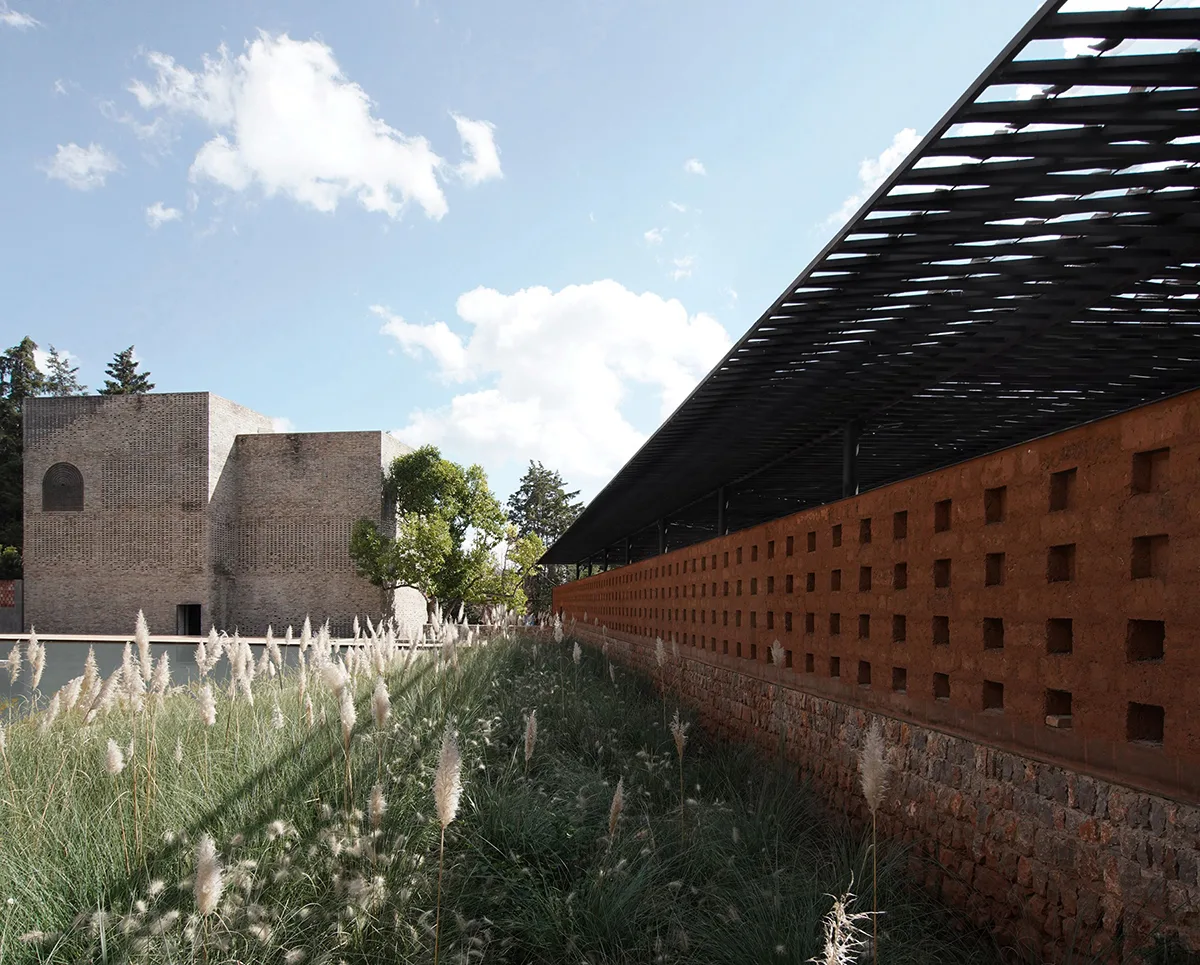
▲ Southwest perspective view © Ruan Xiaozhou
Background:
This project is situated in the Chengjiang Luchong Scenic Area by Fuxian Lake in central Yunnan. Known for its crystal-clear waters, Fuxian Lake was noted by Ming Dynasty traveler Xu Xiake in his travelogue “Xu Xiake’s Travels”: “Dian Mountain is mostly soil, with many streams flowing into the sea, often turbid, but Fuxian Lake is the clearest.”
To protect the lake’s water quality, local authorities have gradually relocated residential areas along the shore, aiming to reduce human pollution. This relocation led to the demolition of old houses, enabling the reuse of brick and tile materials in this project.
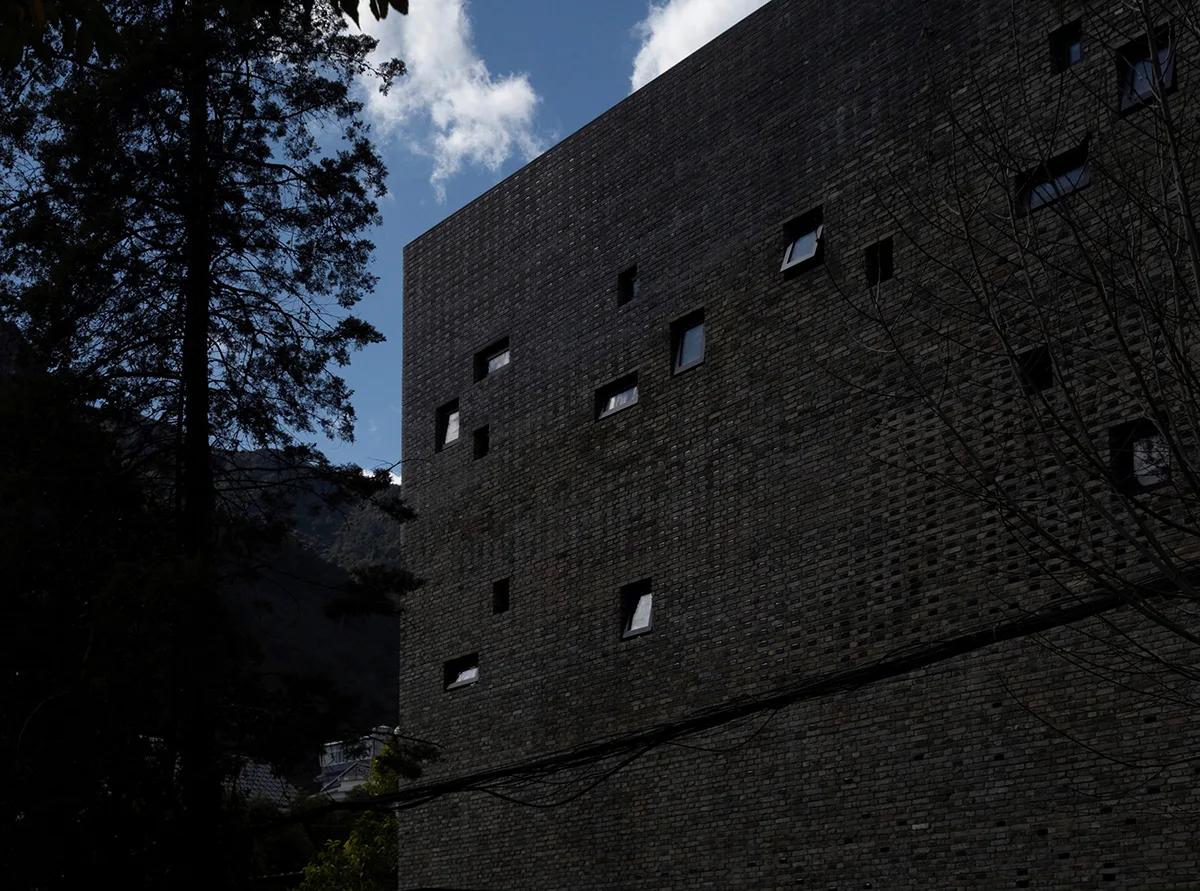
▲ Street view perspective © Yang Wenlong
The original site included a three-and-a-half-story frame structure, four two-story brick and concrete villas, and several one-story ancillary buildings. Covering a building area of 2,457 square meters on a 7,790 square meter plot, the original business was a modest rural homestay.
This article focuses on the renovation strategy for the three-story frame brick building, alongside the construction of new floating houses, earth screens, Youhuangli, Yuting, tile pavilions, slope pavilions, and micro-transformations of existing walls. These interventions illustrate eight distinct rural construction styles, emphasizing localized transformation approaches.
Brick Building: Poetic Dwelling
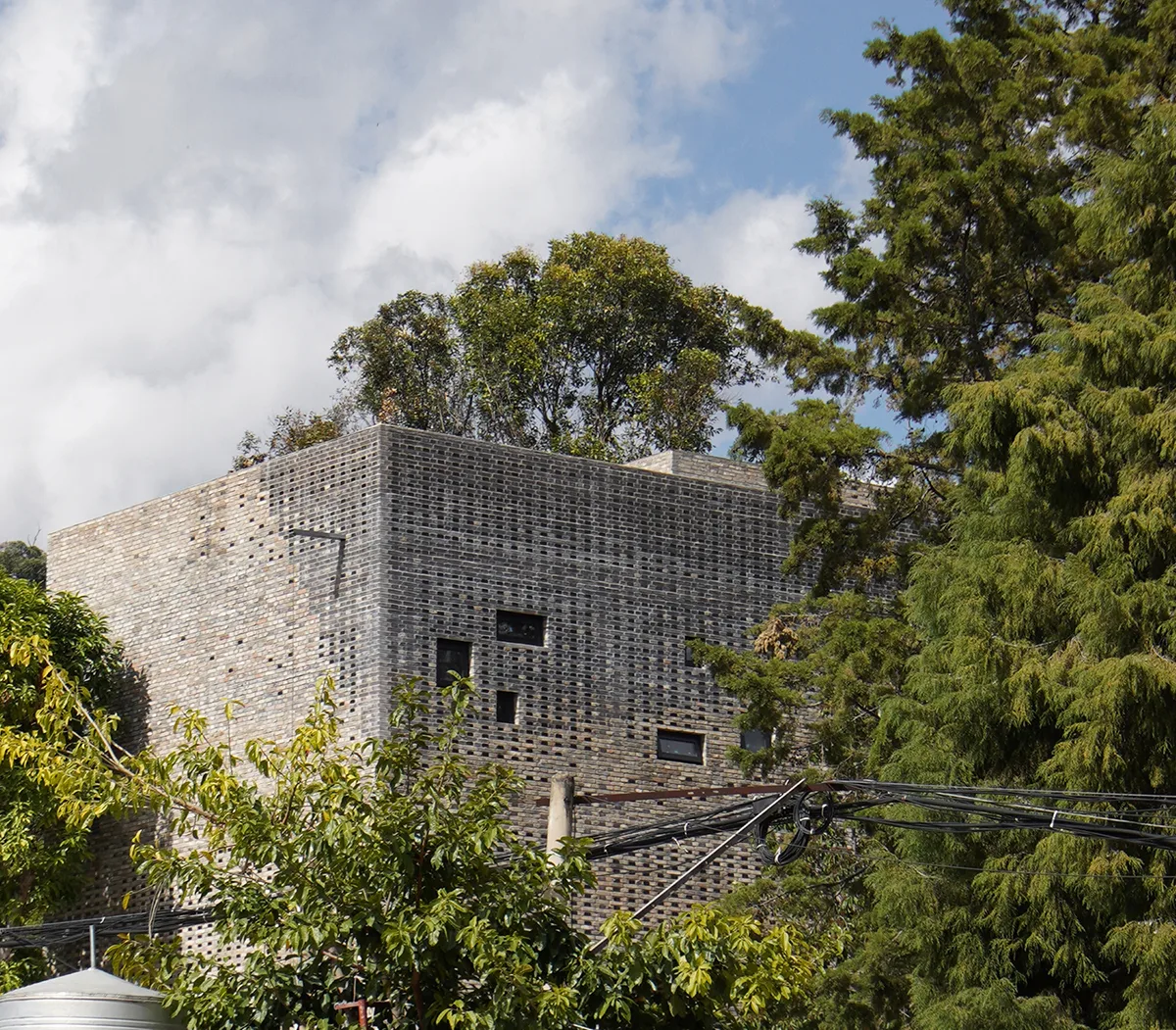
▲ Main façade along the street © Yang Wenlong
The three-and-a-half-story brick building originally featured large glass windows partially filled with red bricks and white porcelain tiles on its exterior. With the homestay’s functional shift, the renovation involved removing these infill materials while preserving the original frame’s beams and columns. This required reconsidering appropriate wall materials and structural overlaps.
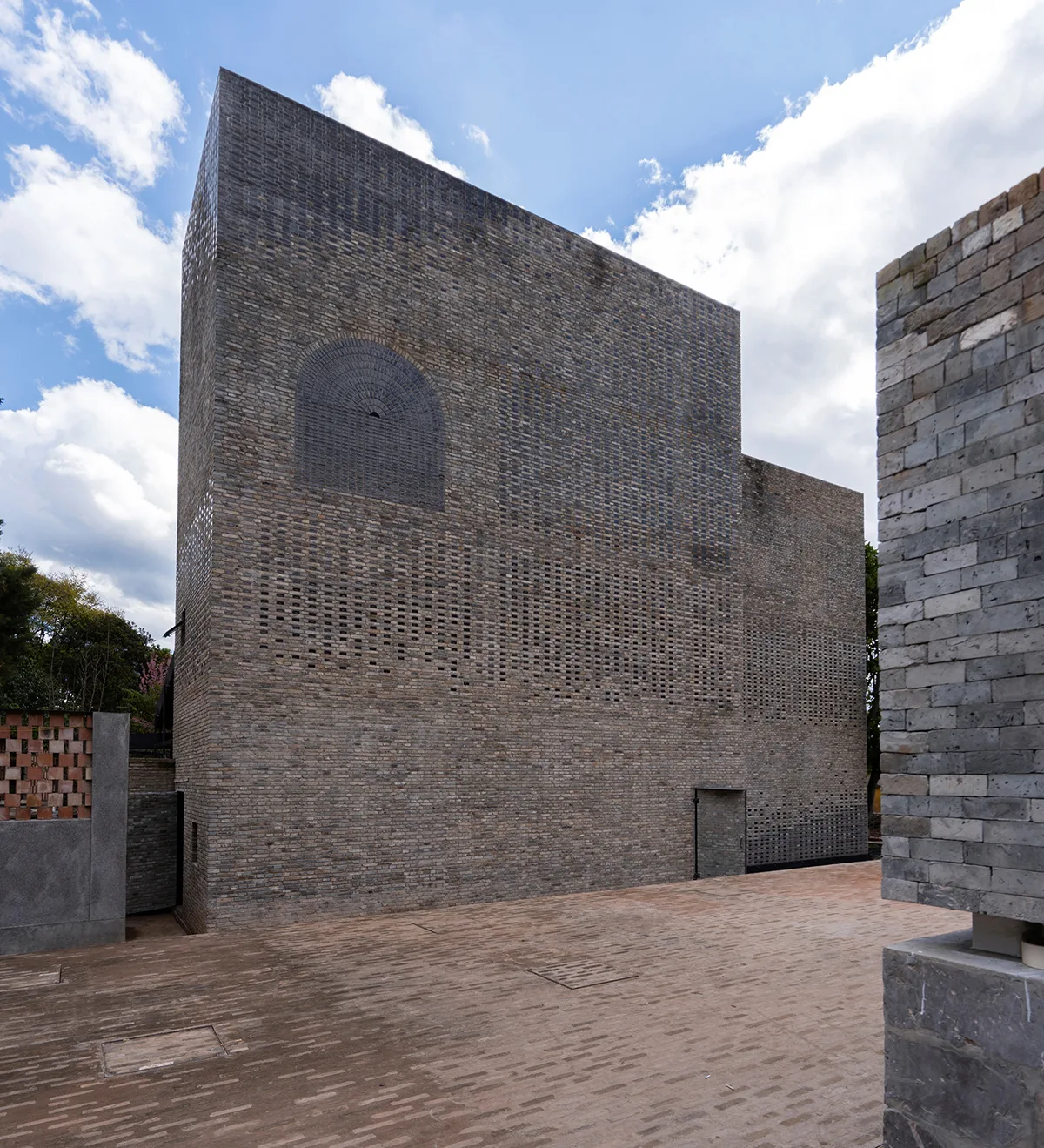
▲ Northwest perspective © Ruan Xiaozhou
Located at the project entrance and serving as a street icon, this brick building is closest to the lake, offering an immersive water culture experience. We designed pathways leading to entrance revetments and introduced water features around the building to enhance its proximity to the waterfront.
Inspired by the local “car water fishing” culture, which uses bamboo baskets, the building skin mimics the basket’s weaving technique. This transparency allows natural infiltration and forms structural characteristics. The building’s exterior combines the weaving of old green bricks and transparent glass bricks.
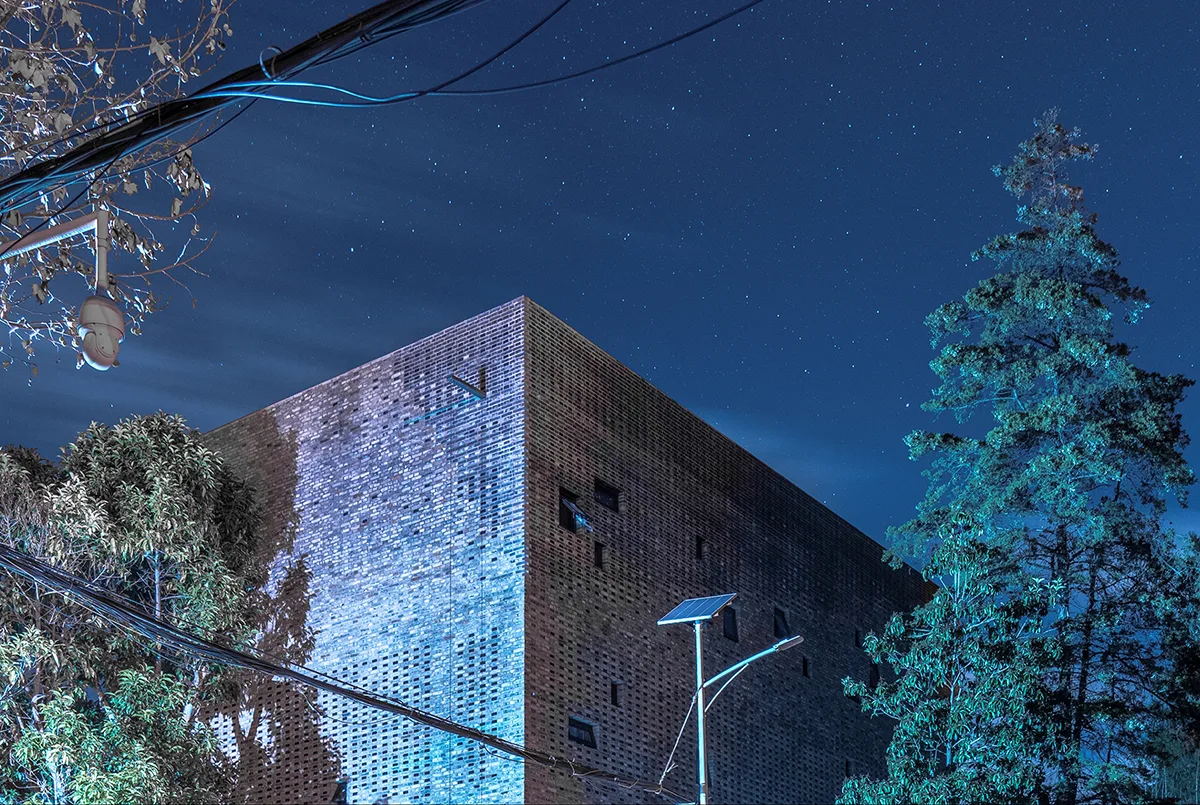
▲ Night perspective © Yang Wenlong
The western façade lacks windows to block the view of nearby mountain tombs, harmonizing with the inward-facing scale of the first and second floors.
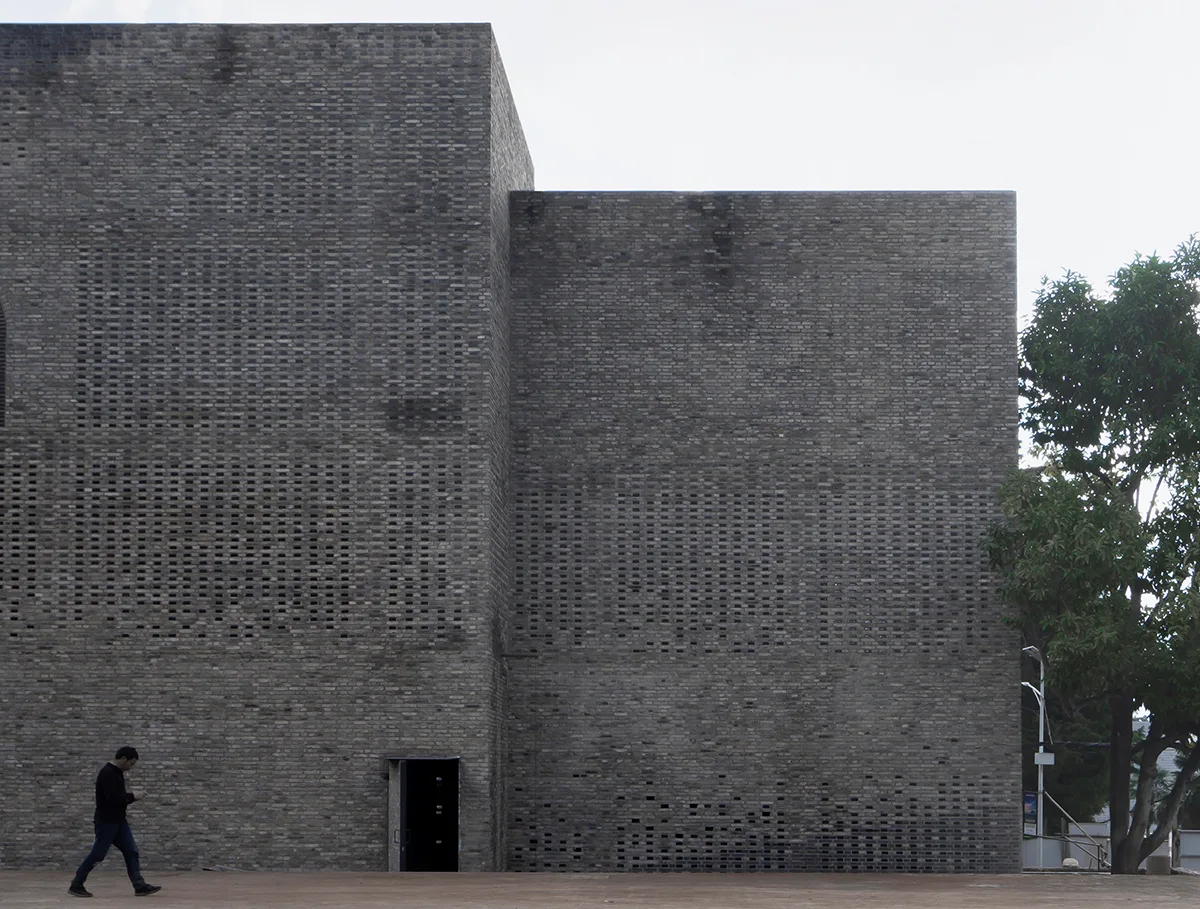
▲ Western façade perspective © Ruan Xiaozhou
The first floor functions as a restaurant, positioned closest to the water where gentle breezes flow. Semi-transparent glass tiles arranged in gradients reflect the dynamic water surface and tree shadows inside, complementing old porcelain tile flooring to create a serene, vibrant waterfront atmosphere. Customized brick sizes allow for ventilation windows on the east and west sides, enhancing air circulation.
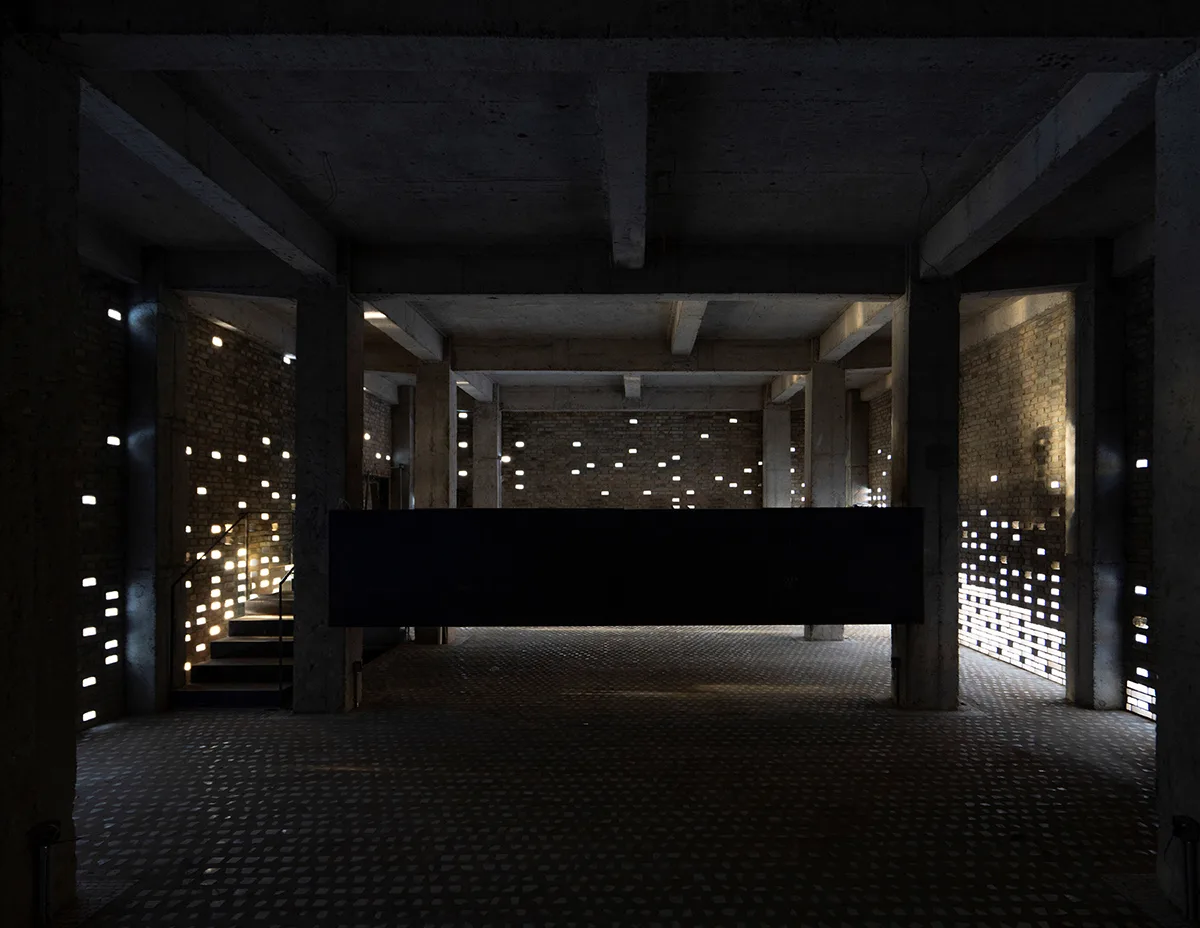
▲ Interior space on the first floor © Yang Wenlong
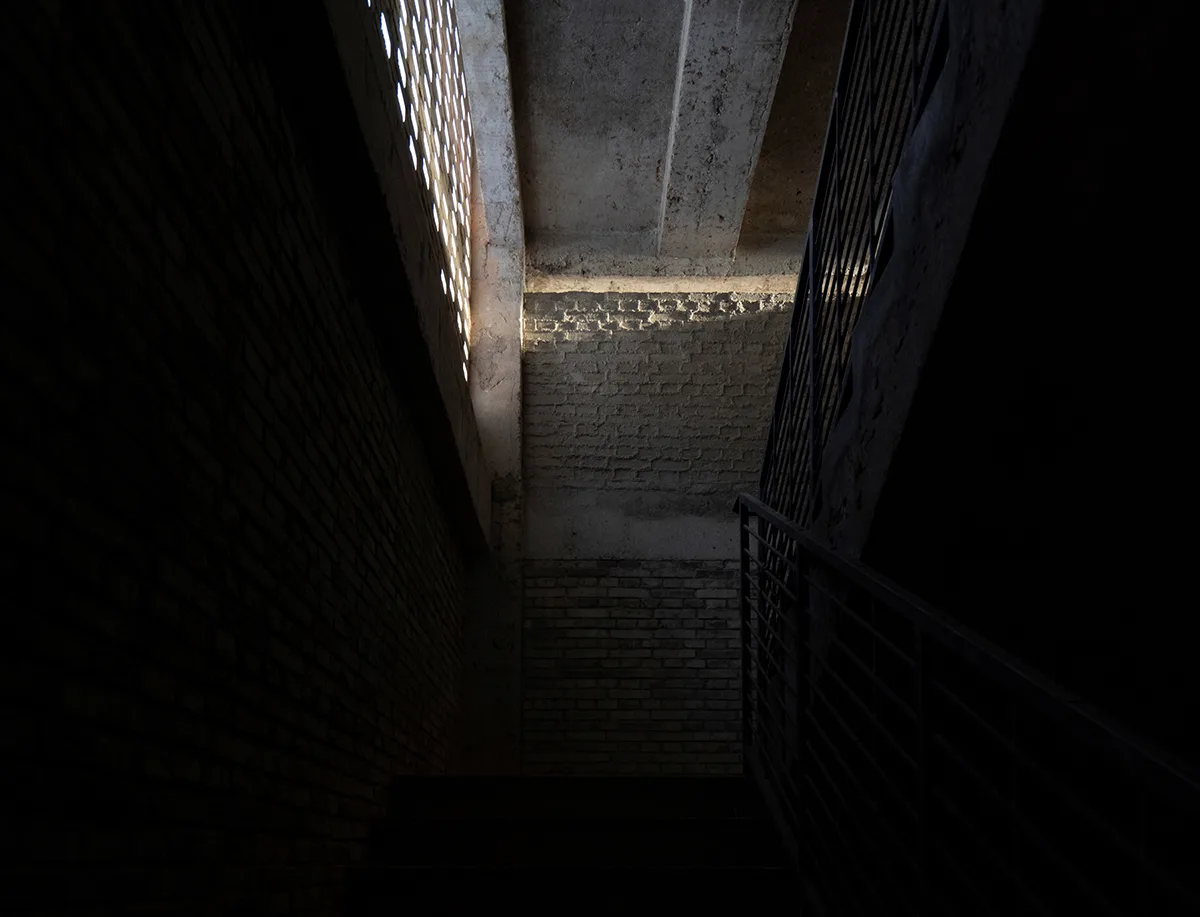
▲ Staircase between first and second floors © Yang Wenlong
The second floor serves as a multifunctional hall. Since the second floor is elevated from the ground, we expanded spatial connections inward by creating a loft space using local green brick formwork pouring technology. This design supports temporary meetings and a book bar, with a 240mm-high attic gap allowing light reflected by glass bricks to filter through an outer corridor before illuminating the interior.
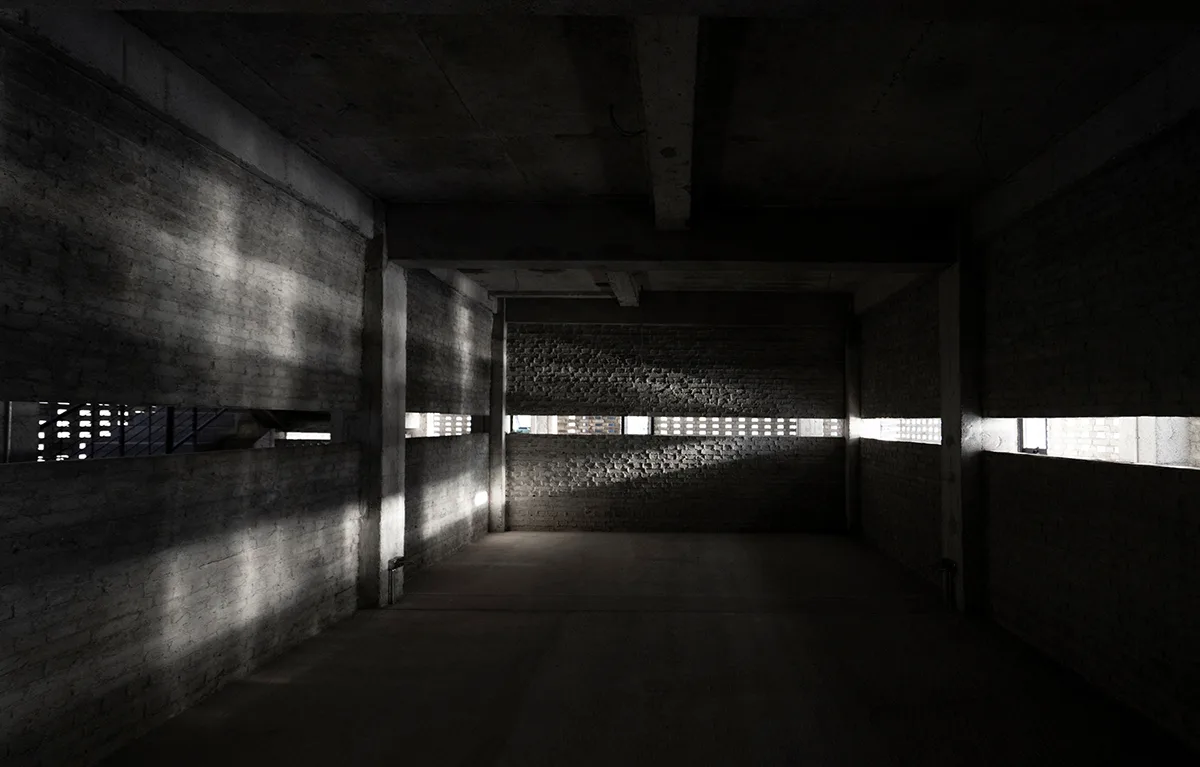
▲ Spacious interior on the second floor © Yang Wenlong
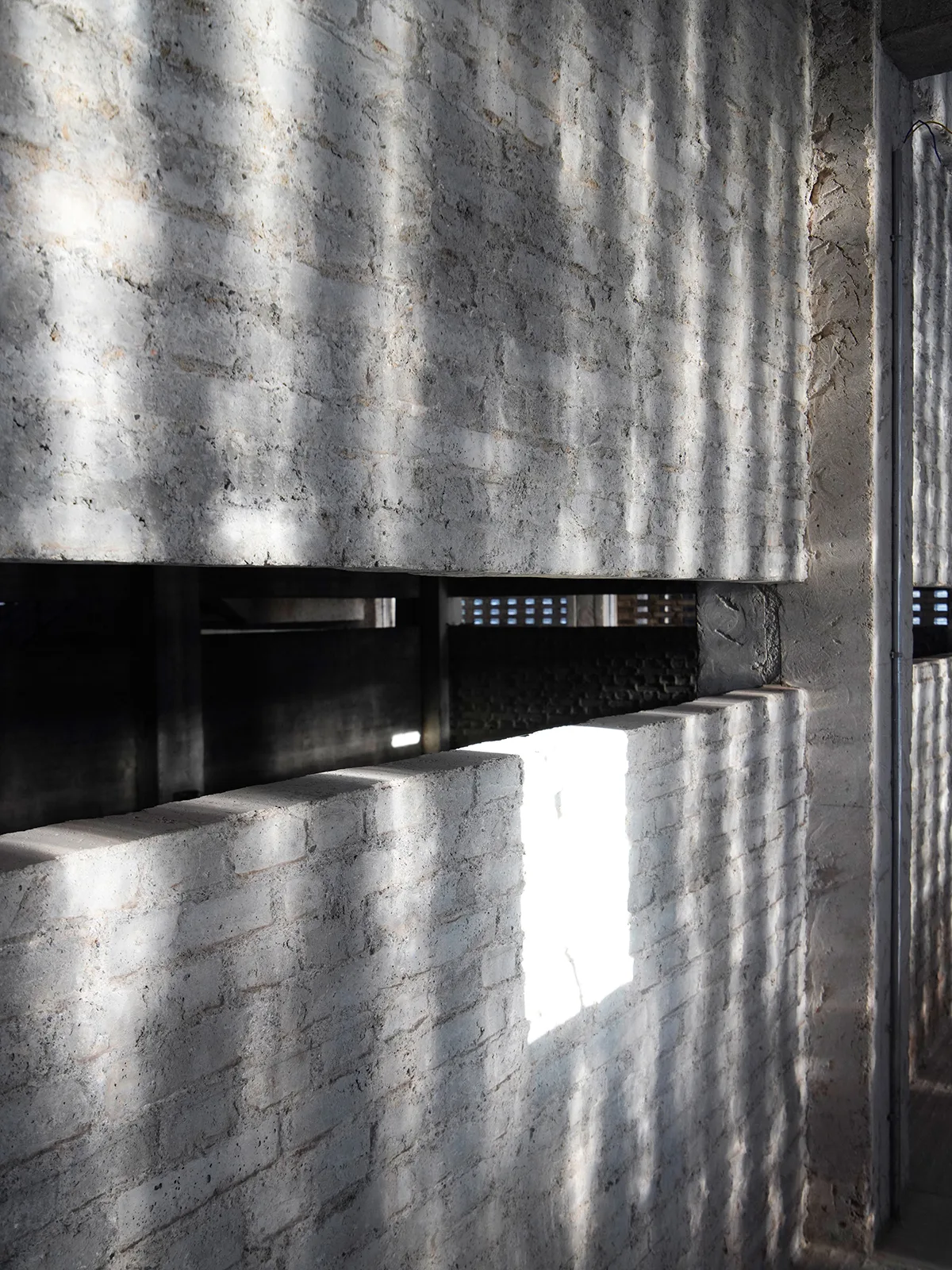
▲ Light filtered on the second floor wall © Yang Wenlong
The attic’s gaps create dynamic spatial divisions inside and outside the multifunctional area, transforming the architecture into a temporal and spatial experience.
Ventilation ducts located on the stair landing between the third and fourth floors provide both airflow and lighting, while also facilitating rainwater collection.
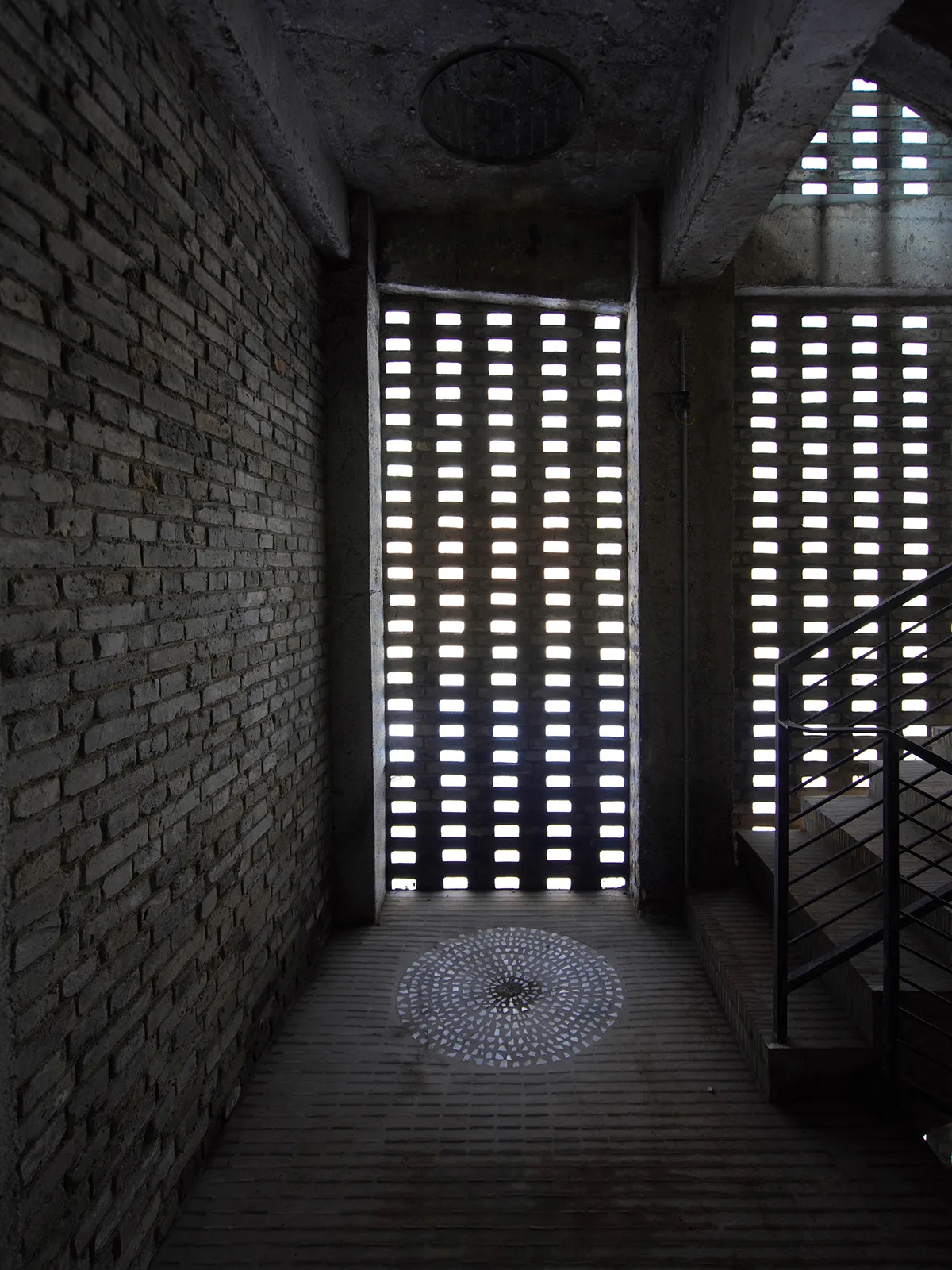
▲ Three-story staircase with blue brick ventilation duct © Yang Wenlong
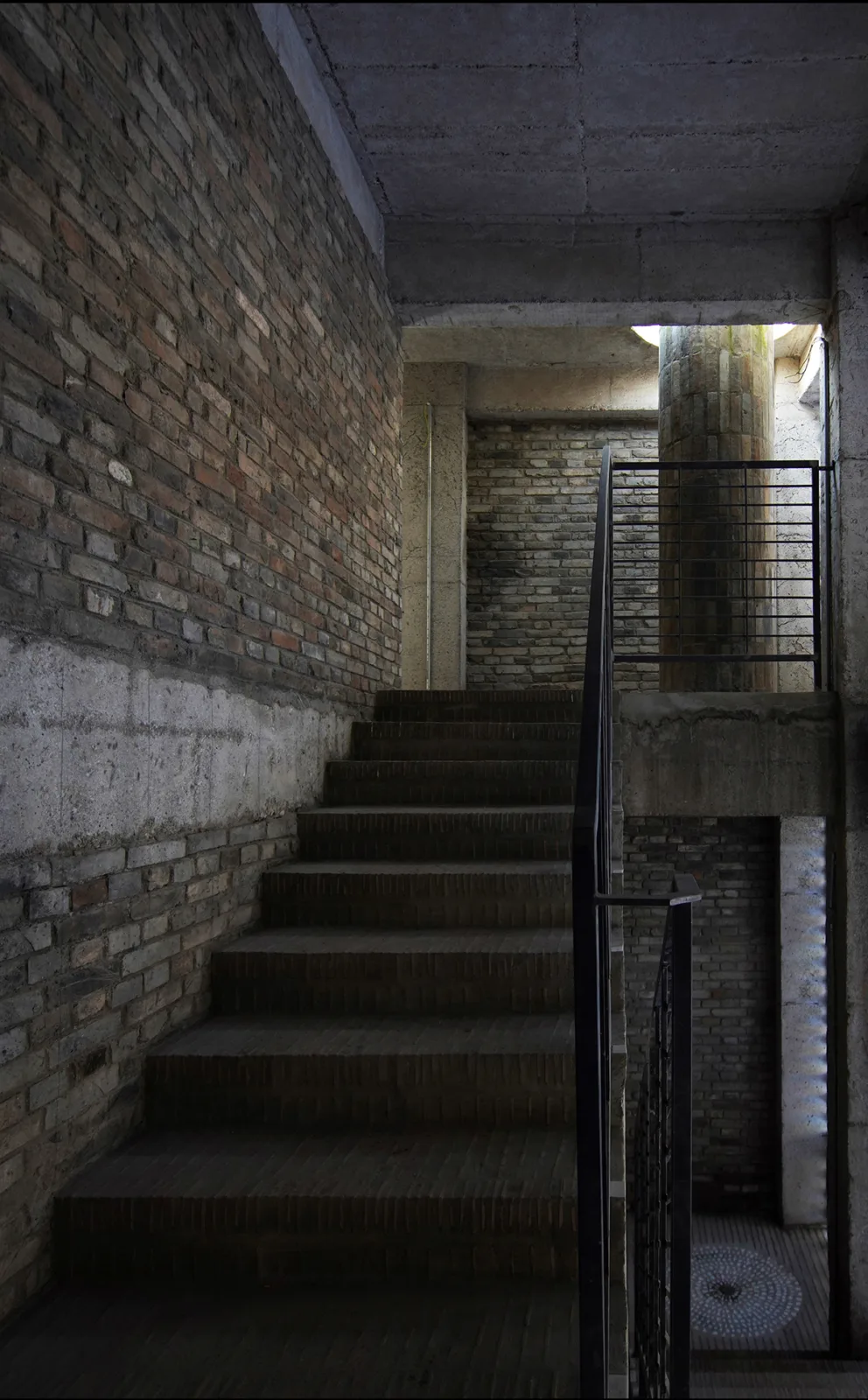
▲ View of the blue brick ventilation ducts on the stairs between third and fourth floors © Yang Wenlong
The third floor guest rooms feature glass brick arches at the quiet aisle’s end, allowing sunlight from east sunrises and west sunsets to create a dynamic light experience. This space serves as a meditation area for one to four people, a tea room, and a private chapel.
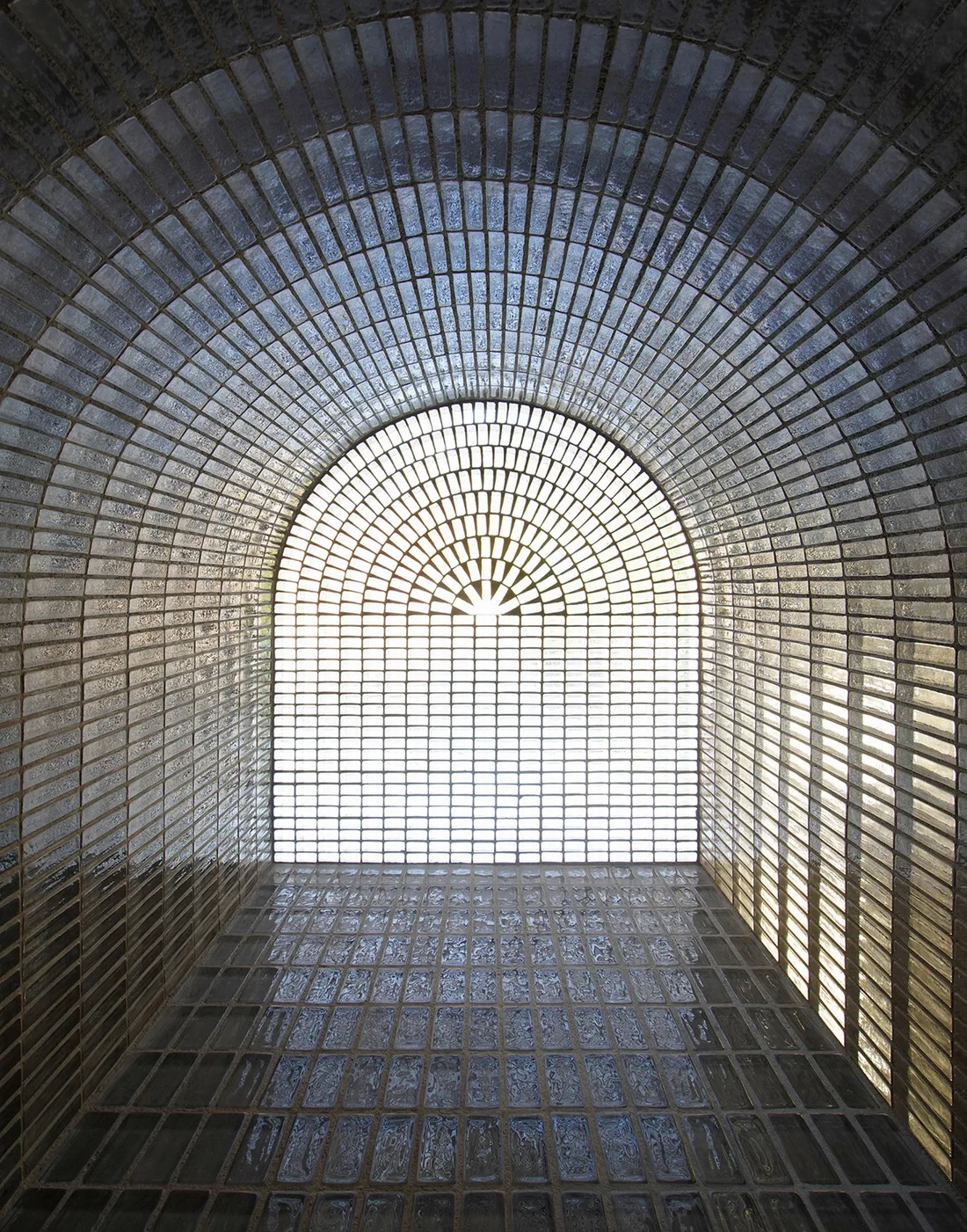
▲ Perspective of three-layer glass brick space © Yang Wenlong
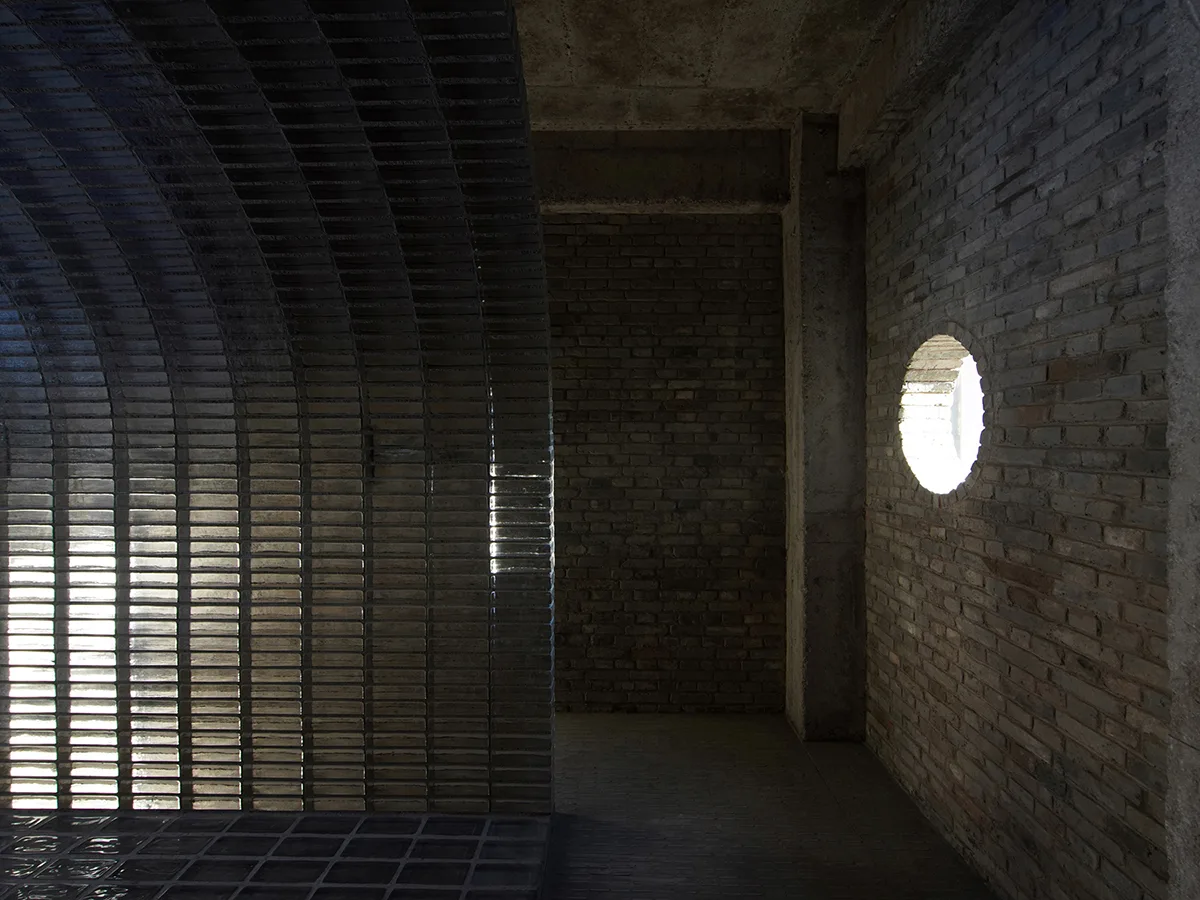
▲ Side view of the three-layer glass brick space © Yang Wenlong
Light is guided through ventilation ducts on the fourth floor to the mountain-shaped slope outside the roof. On sunny days and at night, two or three people can relax on the slope, gazing at the sky and enjoying nature.
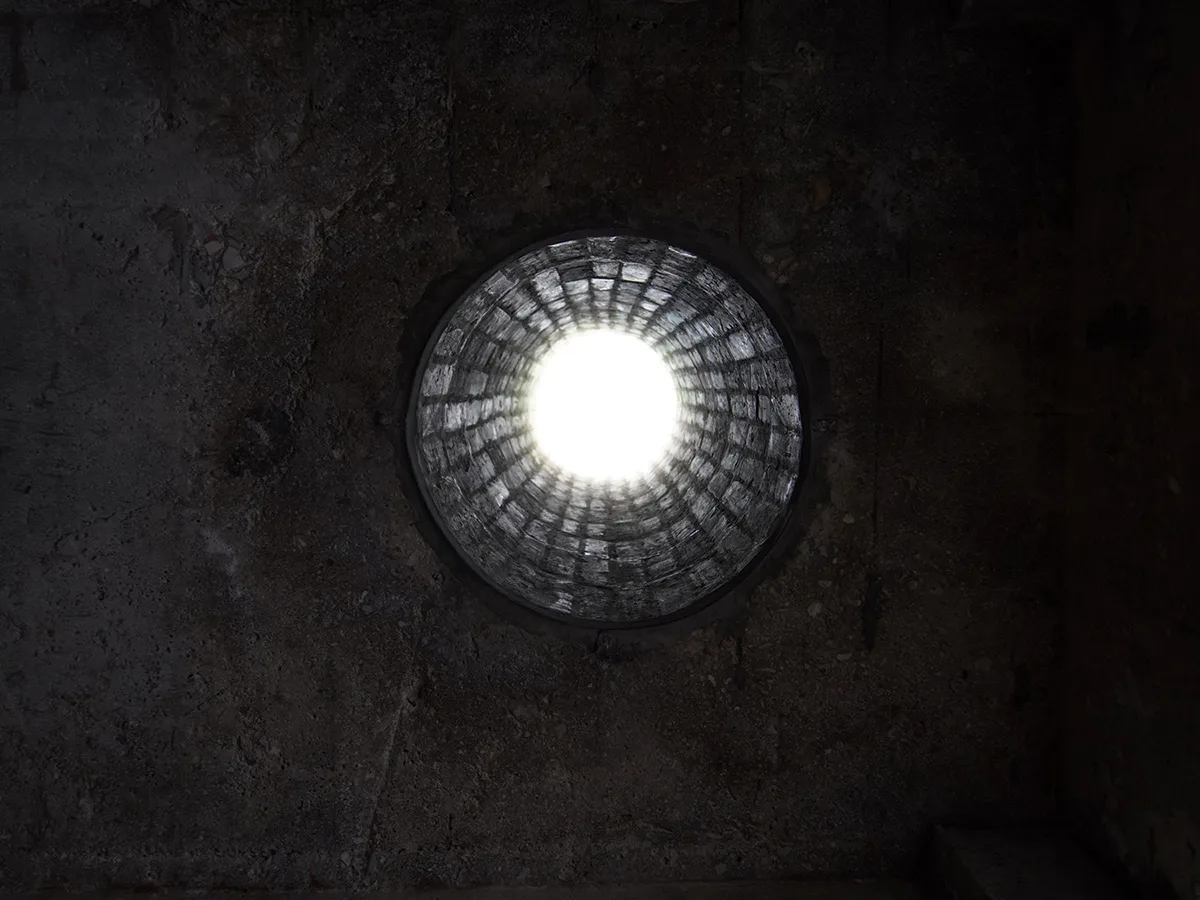
▲ Looking up at the blue brick ventilation duct © Yang Wenlong
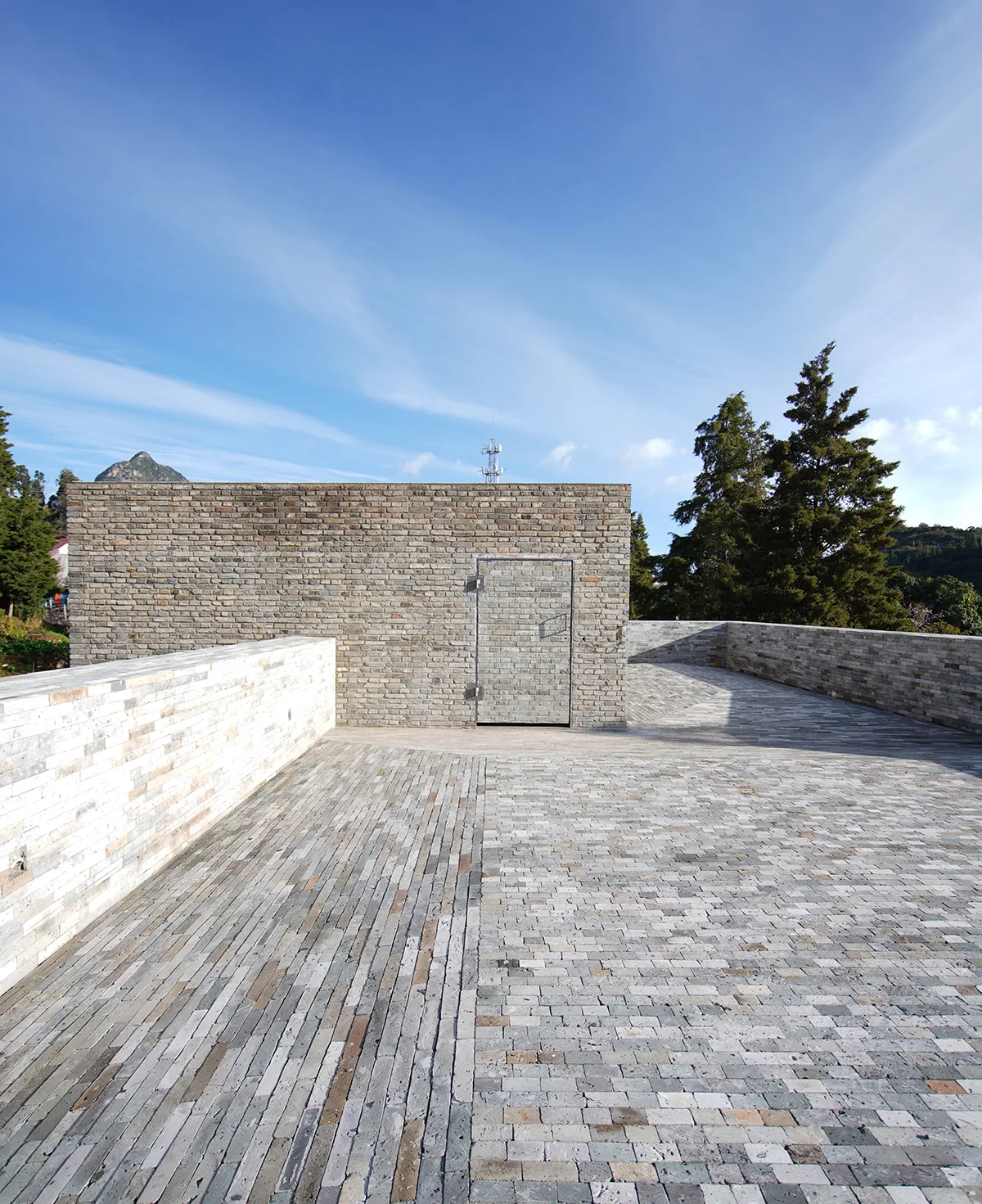
▲ Roof terrace space © Yang Wenlong
Craftsmanship Inspiration – Brick and Concrete Walls: Based on the frame structure, old green bricks were replaced as infill wall material. The floor slab thickness outside the 24th wall is 0.12 meters, with green bricks forming the building’s skin. The three-layer glass brick arch space continues the traditional local brick kiln arch masonry method: wooden boards shape the arch, glass bricks replace the bricks structurally after mold removal.
The flooring uses broken ceramic tiles from the building’s exterior wall glass. Tile spacing varies based on slip resistance, arranged flat or vertically. The tile’s gloss overlays with the glass tiles on the wall to create light and shadow effects.
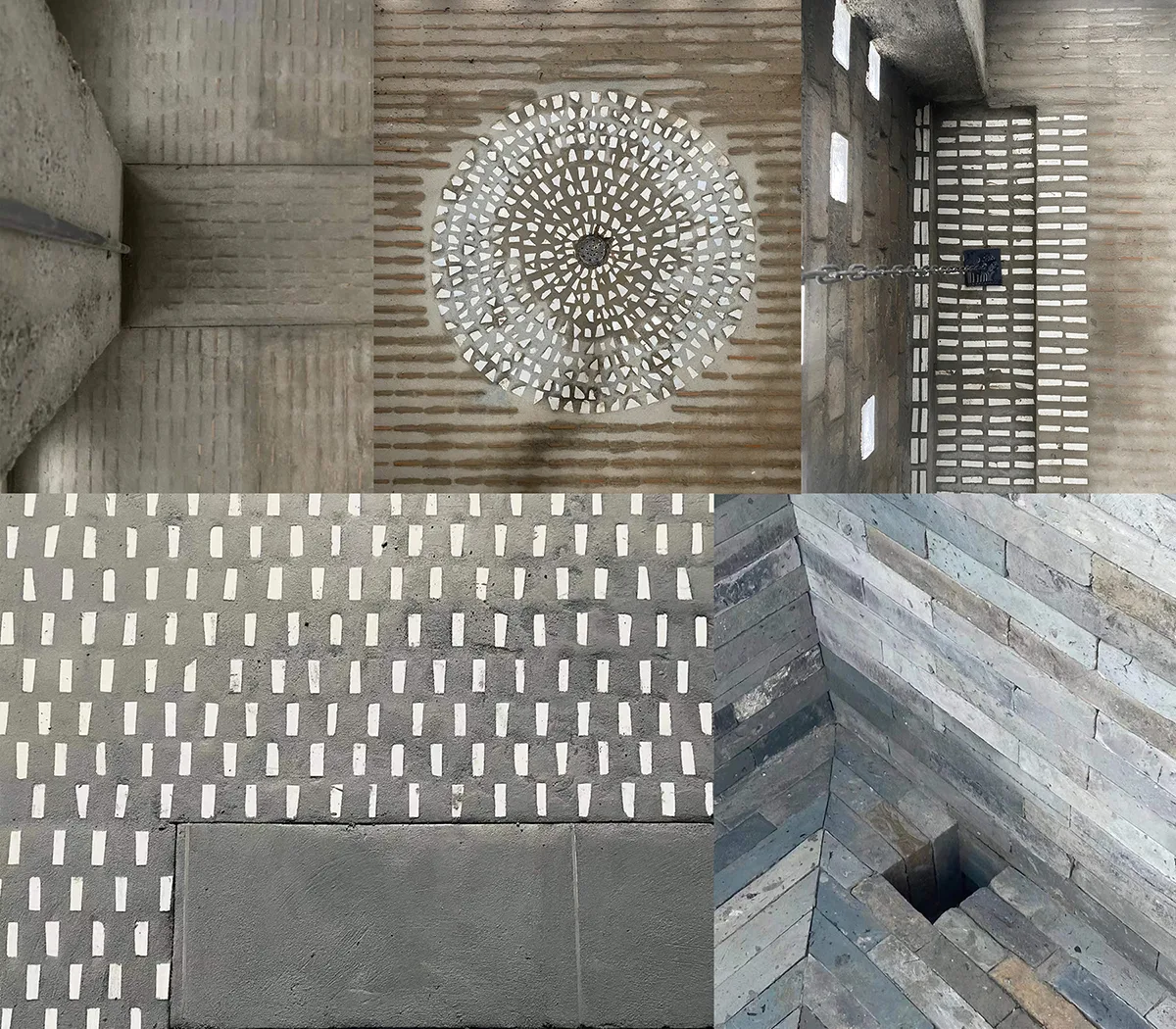
▲ Floor laying details © Ruan Xiaozhou
The attic space’s concrete slabs on the second floor use green bricks as molds. Due to the hanging structure above, pouring was done in one go. Post-demolding, the bonded old green bricks’ colors remain, giving a rough texture.
Local craftsmen traditionally lack formwork and use temporary cement bricks to enclose molds. This inspired using green bricks as molds, matching the green brick exterior walls and concrete beams. This brick-concrete wall forms a high-strength, reinforced structure—combining bricks as molds with concrete infill.
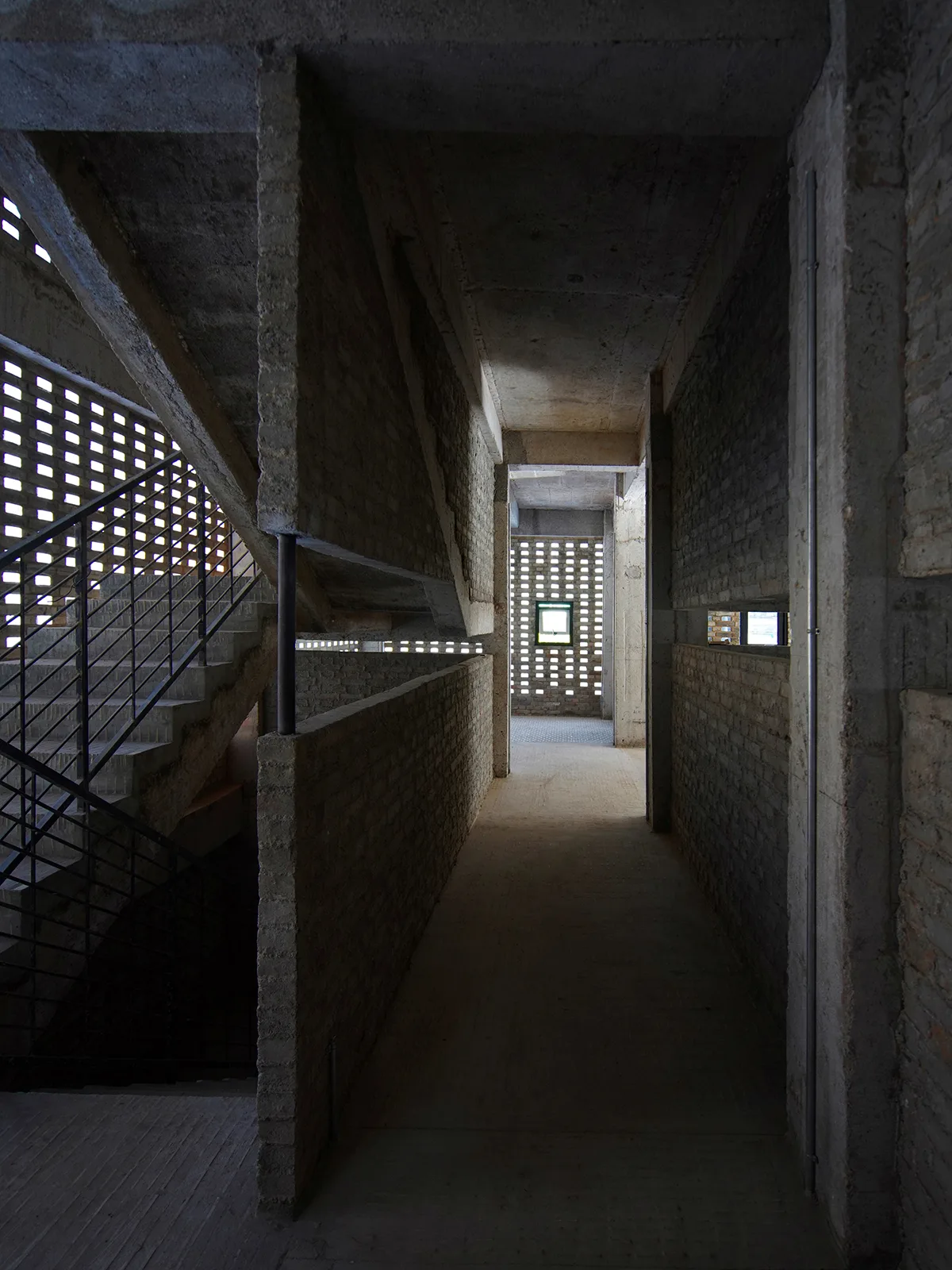
▲ Brick and concrete wall viewed from the second floor hallway © Yang Wenlong
Three main challenges arise when constructing brick and concrete walls:
- Ensuring the masonry is formed in one continuous pour, using low-cement mortar to ease formwork removal.
- Timing the demolding correctly to avoid concrete bonding too tightly with bricks, which could damage the wall.
- Removing formwork in sections, coordinating construction stages for reusability—reflecting traditional practices of using bricks as reusable formwork.
Brick-concrete wall buildings differ from conventional brick-concrete or shear wall buildings. Their load-bearing elements are steel bars and concrete, equivalent structurally to shear wall buildings but superior to typical brick-concrete ones. Adding green brick technology to shear wall buildings creates an expressive construction method, differentiating it from standard brick-concrete buildings.
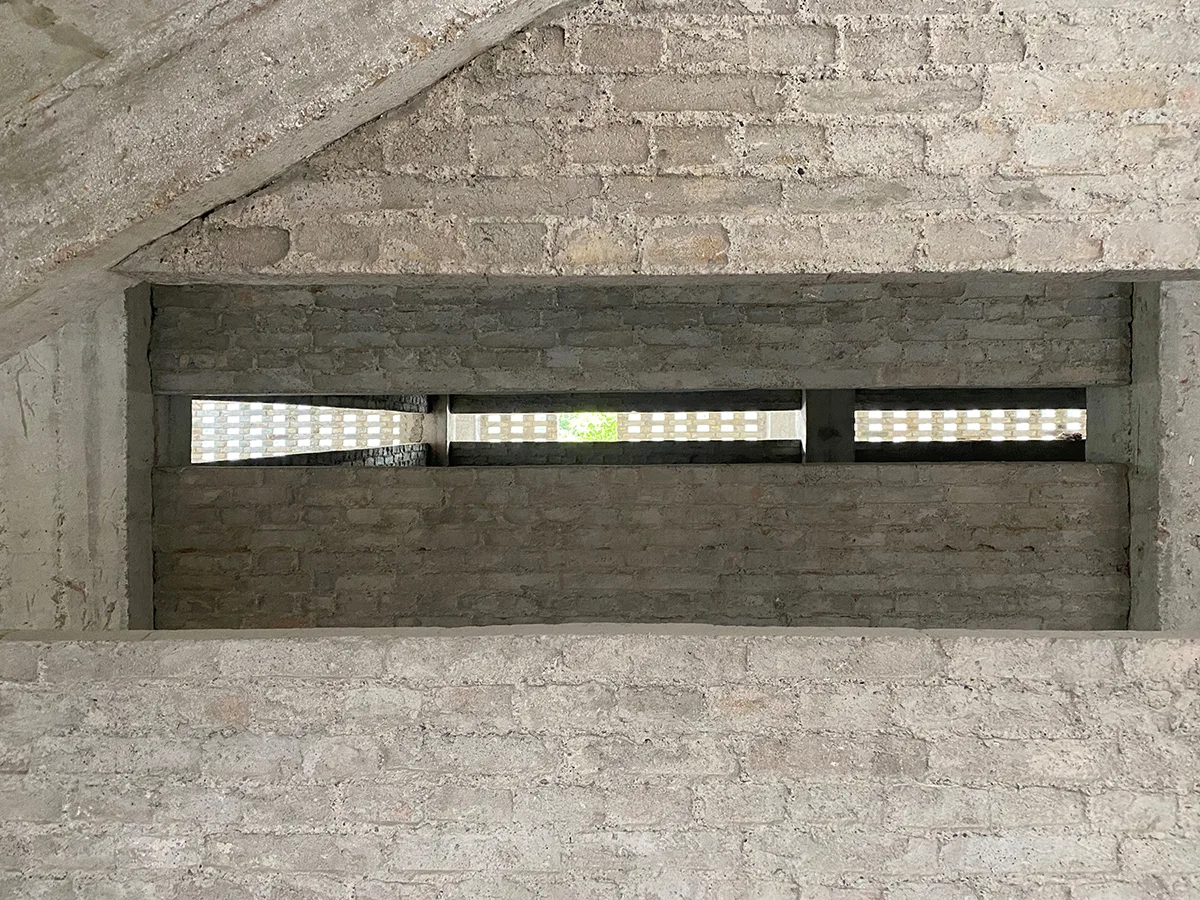
▲ Close-up of the second floor brick-concrete wall © Ruan Xiaozhou
Architectural Prototype: The seamless transition between old green bricks and glass bricks on the exterior, combined with minimal windows, emphasizes massiveness while diminishing scale. Like a solitary stone in a lake, the building bridges nature and architecture.
Functionally, the brick building’s stone dwelling echoes the cave prototype of residential architecture—the primal human shelter providing protection from elements. This project artificially designs natural ventilation, lighting, and rainwater collection systems, echoing moss growth and subtle reflections on exterior walls, revealing the poetic potential of living within a “cave.”
Are humans living inside stones, or creating stones externally? Joseph Rickwater, in “The House of Adam,” reflects on primitive huts: “The eternal thirst for renewal is inescapable… People seek renewal in seasonal changes and rituals, much like theorists reforming habits by referencing primitive huts. This approach remains a learning template for those who care about architecture. The primitive hut exists in a place, perhaps unreachable by historians and archaeologists, a place I call Eden—both a promise and a memory.”
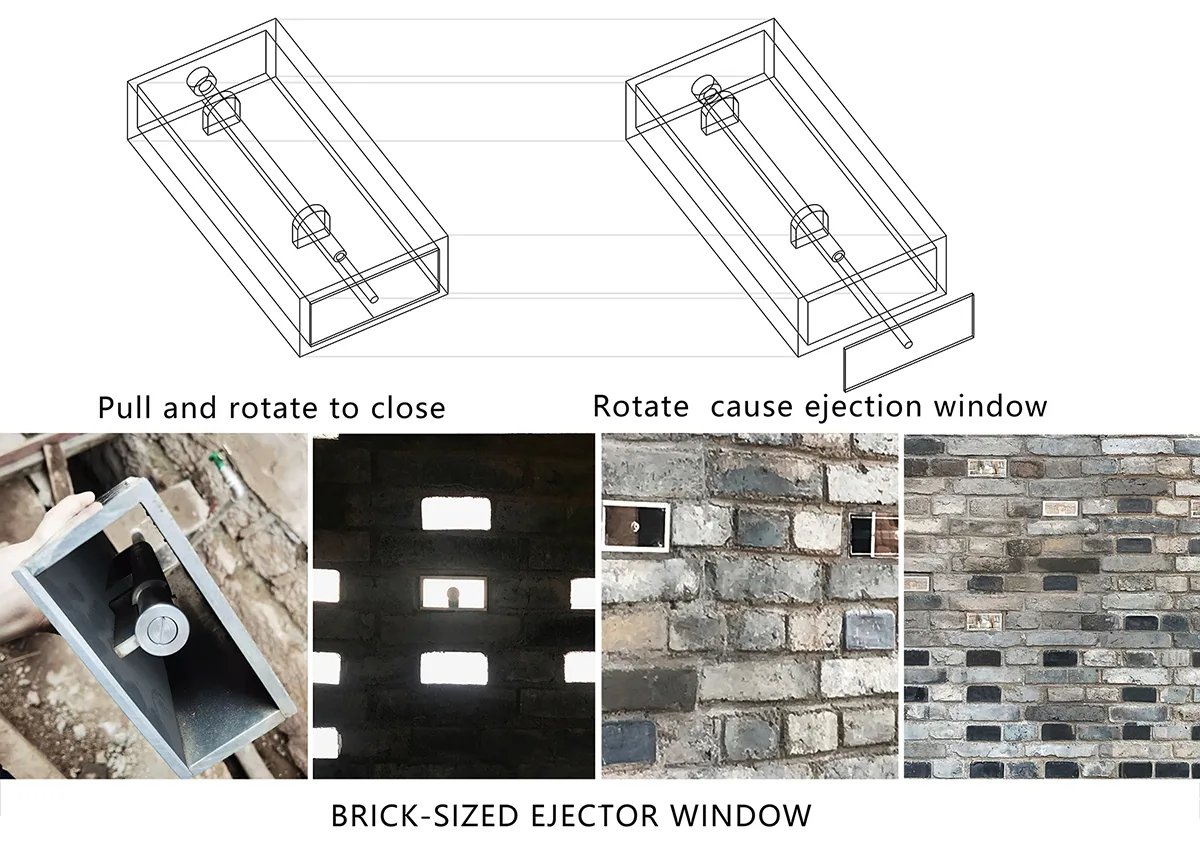
▲ Glass brick window © Ruan Xiaozhou Design Studio
Floating Residence: Living in the Future
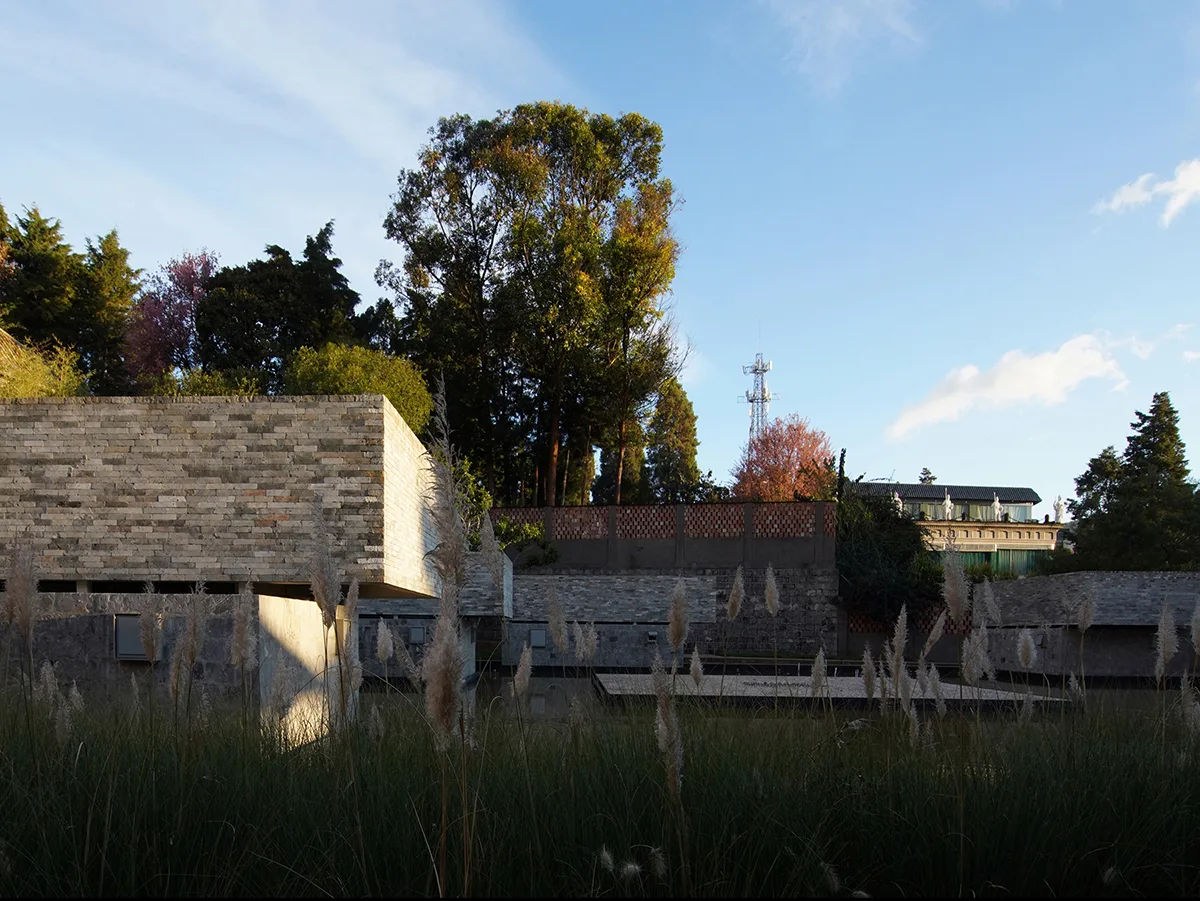
▲ Overall perspective © Yang Wenlong
The floating house combines features of residential buildings and boats.
This design integrates living and mobility on water by introducing water into the site to create a lake interface. The floating houses retain traditional stone walls at 1.4 meters high with ventilation windows. Above, a rectangular top cover at 1.4 meters height features narrow 0.1-meter gaps above and below, maximizing visual openness between units.
The top cover extends over the base at the front and remains open underneath, forming private water gardens with independent water views. This design balances livability, practicality, and privacy, creating a playful landscape. A gentle slope enables an upward flow as people walk in, enhancing the sense of movement in this “boat.”
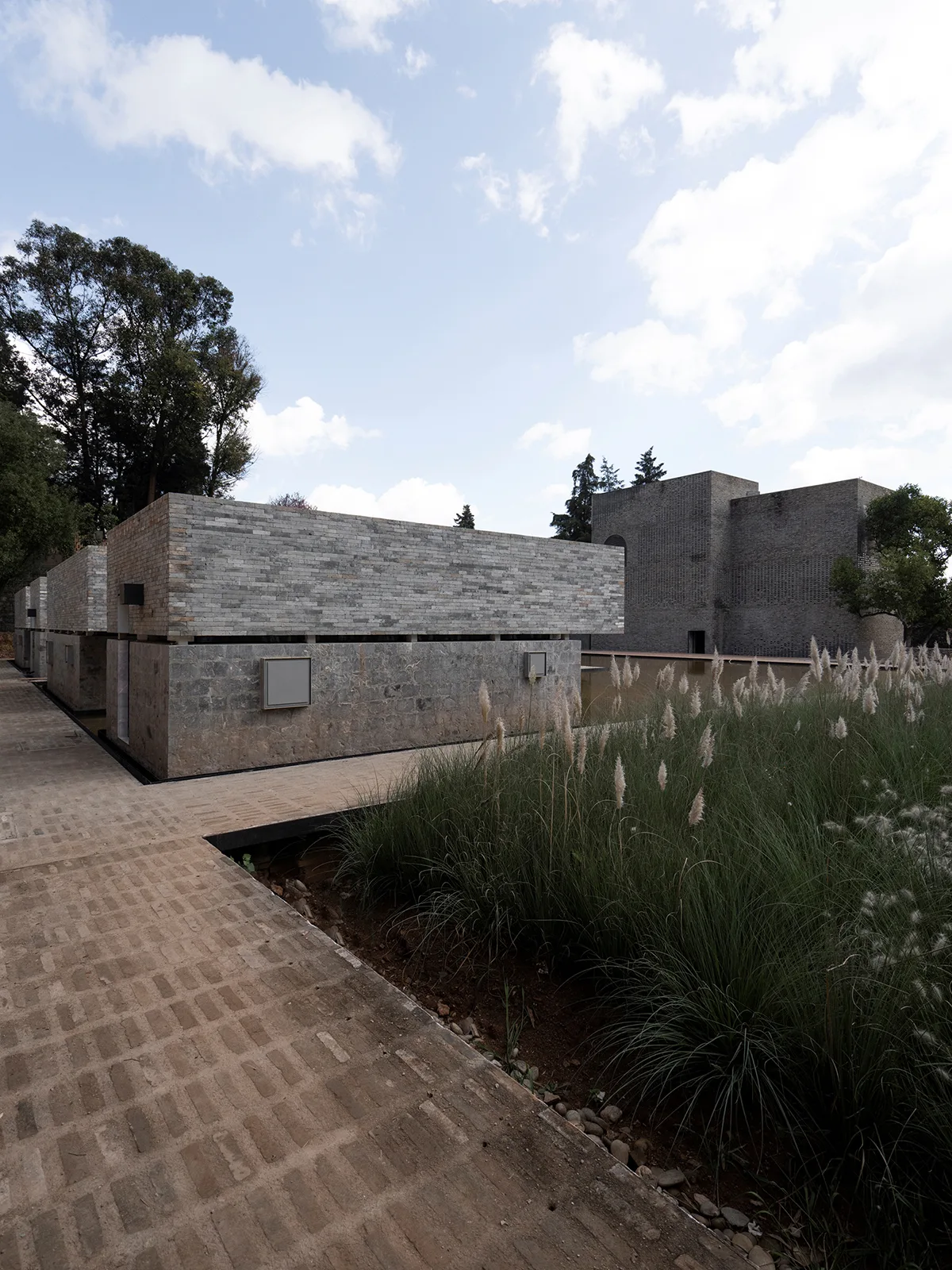
▲ Distant perspective © Yang Wenlong
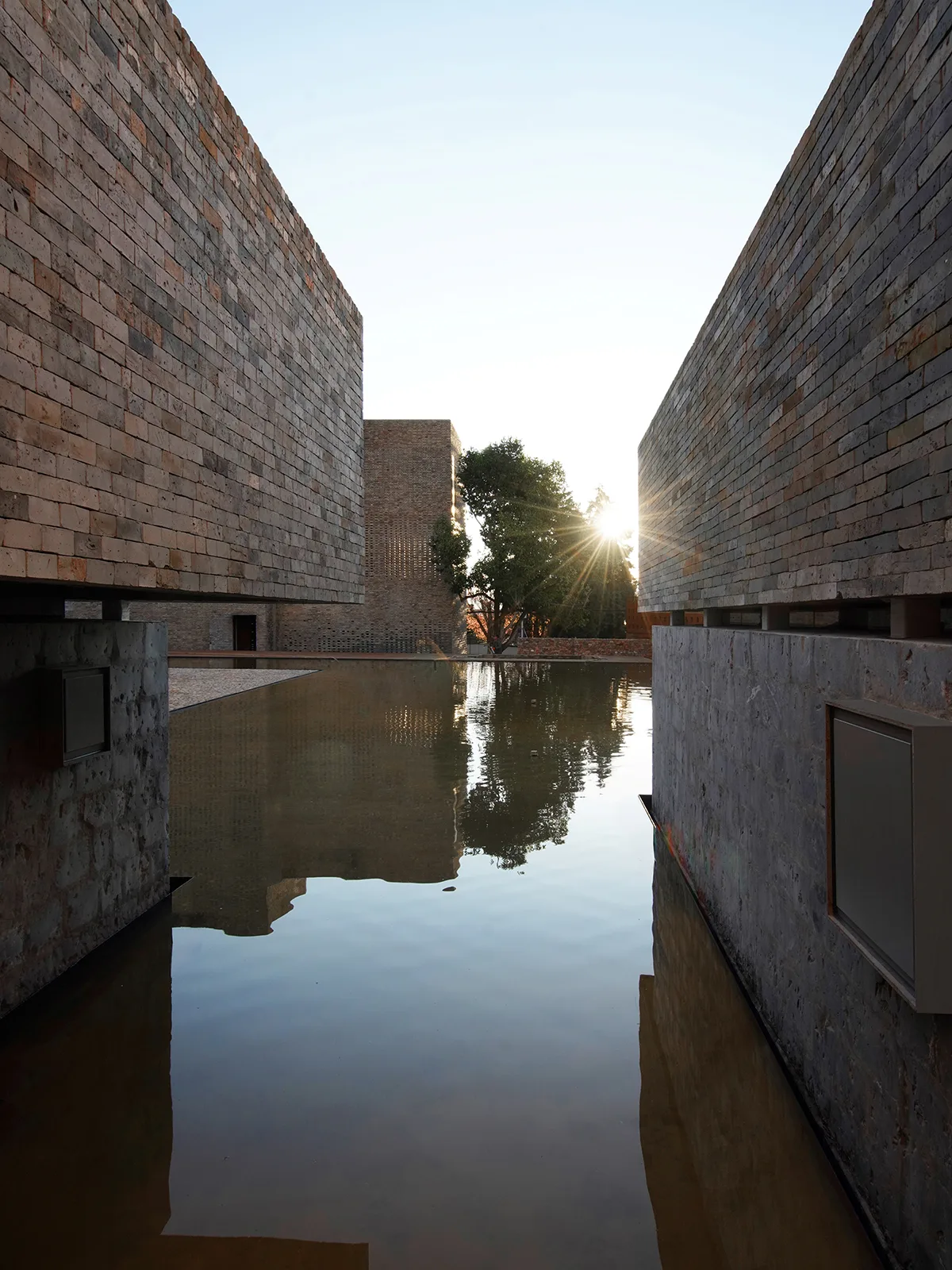
▲ Floating residence and waterfront relationship © Yang Wenlong
Construction Details: The floating house’s stone walls span 1.5 meters with a 0.1×0.1 meter cross-section. Square tubular columns form arched steel door frames, transitioning to flat steel frames at the roof.
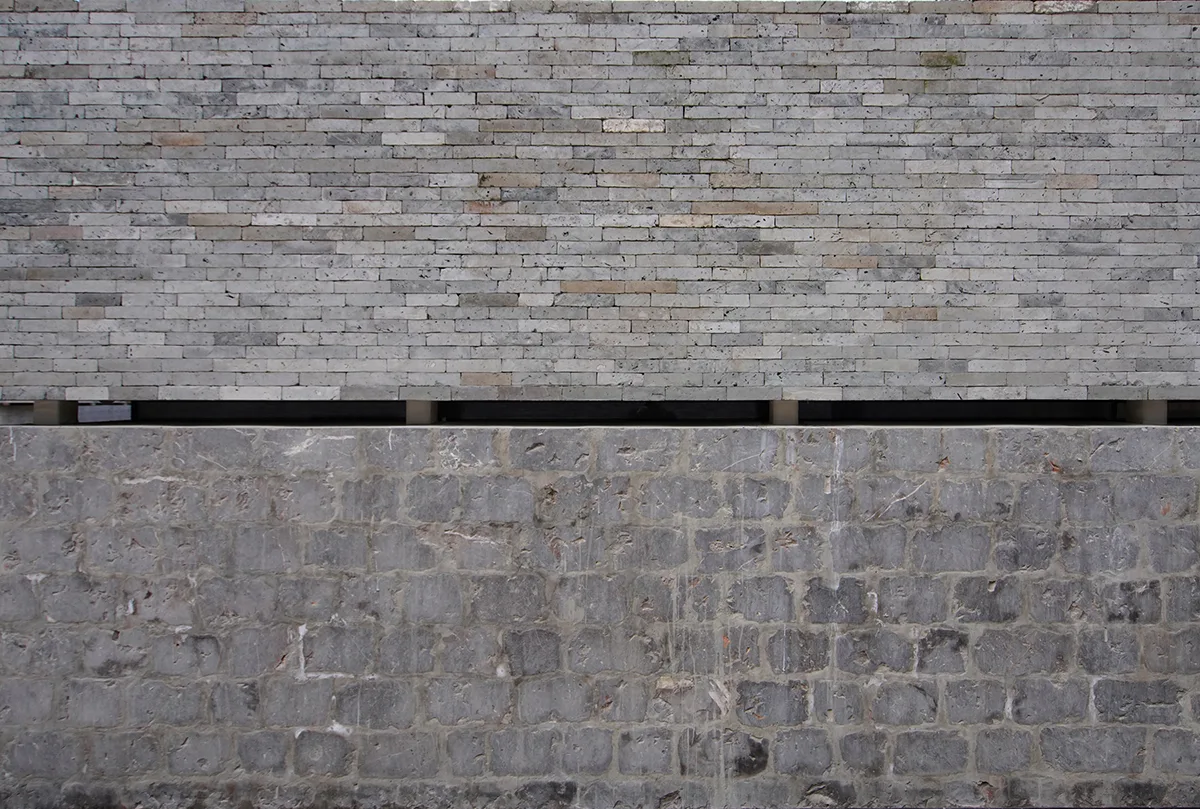
▲ Construction detail close-up © Ruan Xiaozhou
The flat top pattern of the living space harmonizes spatially with the arched canopy, combining the structure of the lower house with the upper boat.
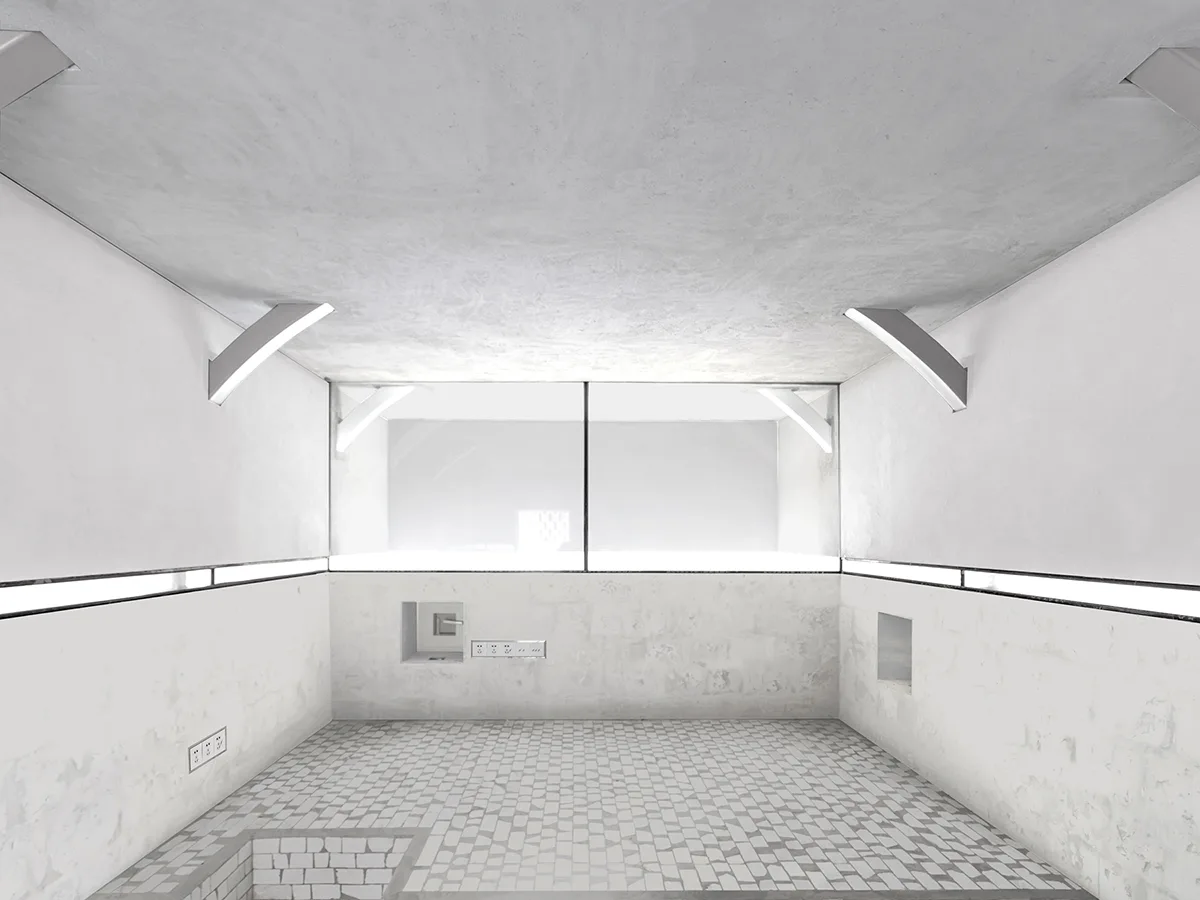
▲ Floating interior © Ruan Xiaozhou
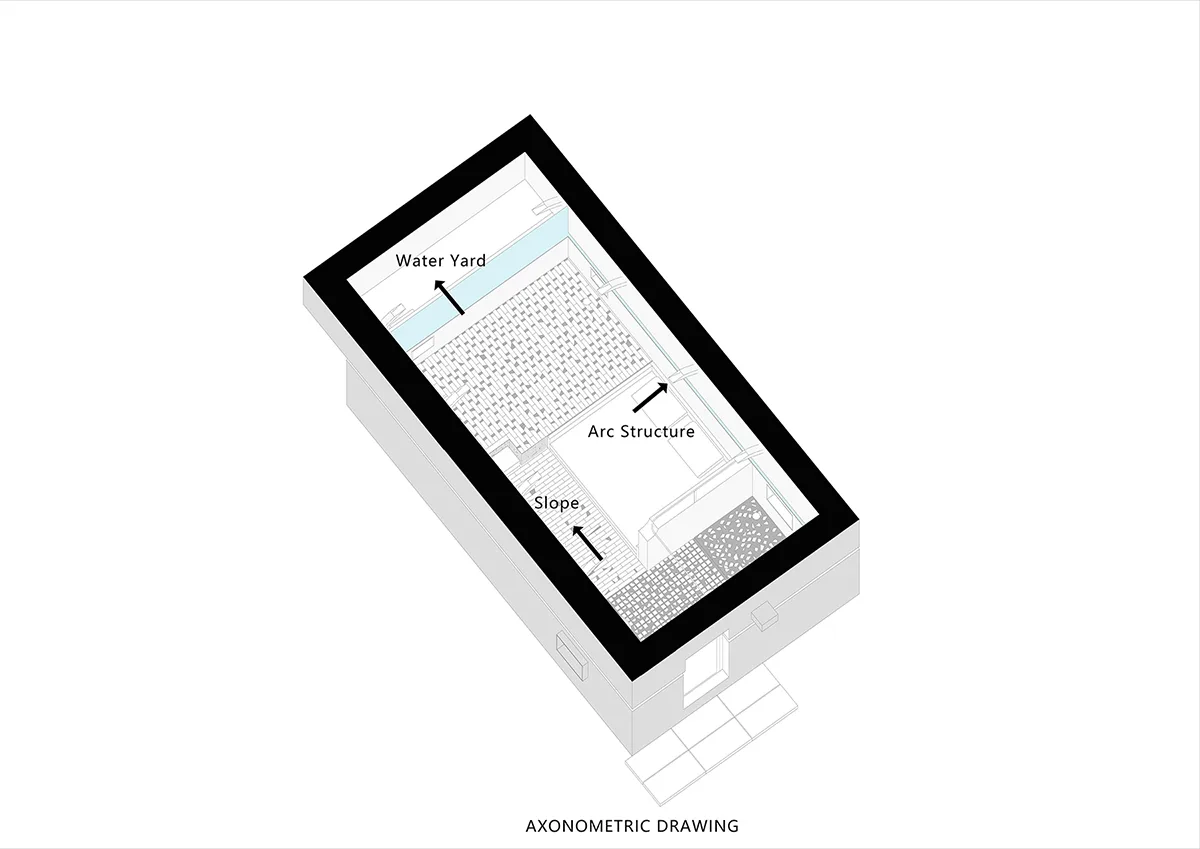
▲ Floating axis side © Ruan Xiaozhou Design Studio
Tu Ping: Responding to Rural Environment
Site Context and Strategy: The site features a 6-meter elevation difference between upper and lower terraces. The main building and watchtower are on the lower terrace; four villas and ancillary rooms are on the upper terrace. Surrounding high-rise residential buildings (5-7 floors) are constructed and renovated in a disorderly manner, detracting from the project’s background.
Three strategies were considered:
- Building a fence to isolate the site; however, conventional walls violate rural planning and fail to isolate visually.
- Softening with vegetation, such as a 6-meter bamboo forest, but this forms an artificial enclosure with insufficient scale.
- Chosen strategy: focus inward by shifting the visual focus and constructing barrier walls between terraces, creating internal visual emphasis.
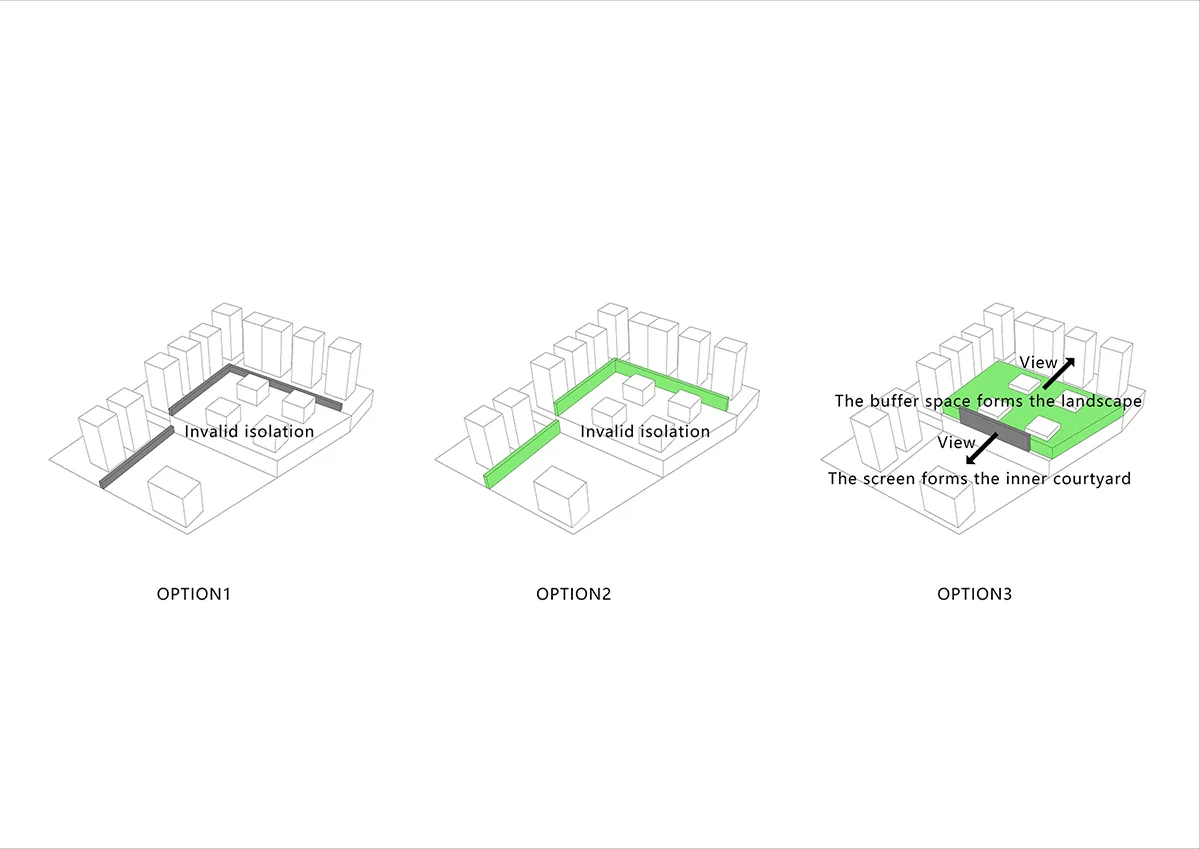
▲ Strategy analysis chart © Ruan Xiaozhou Design Studio

▲ Half bird’s-eye view from a distance © Yang Wenlong
Barrier walls create a spatial relationship between upper and lower houses, with spacious stepped areas planted densely with bamboo, complementing villa courtyards. This contrast defines the courtyard experience and naturally pushes the surrounding environment further away. The scattered bamboo patches mitigate the rigid separation from the surroundings.
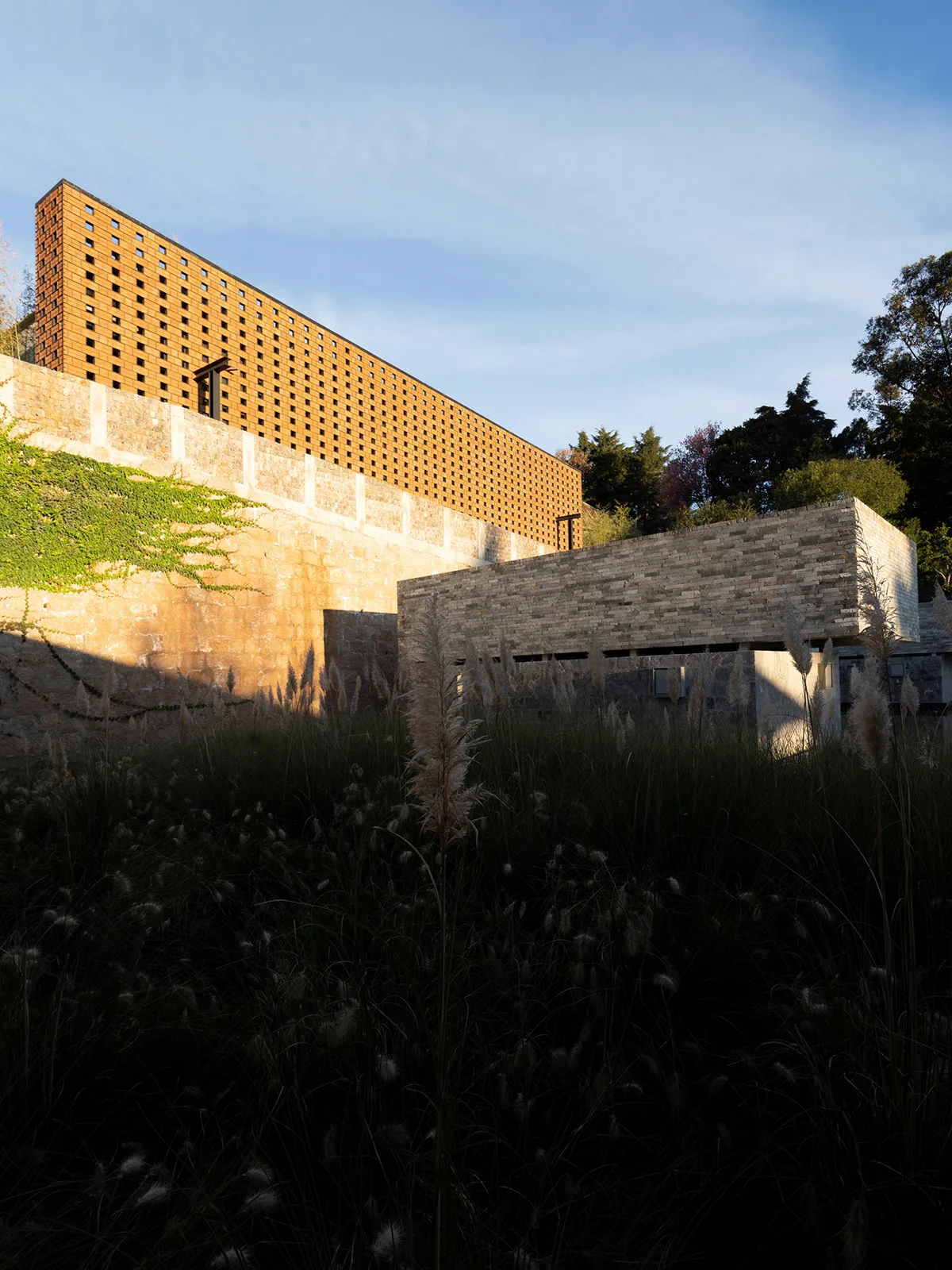
▲ View of the earth screen from a low angle © Yang Wenlong
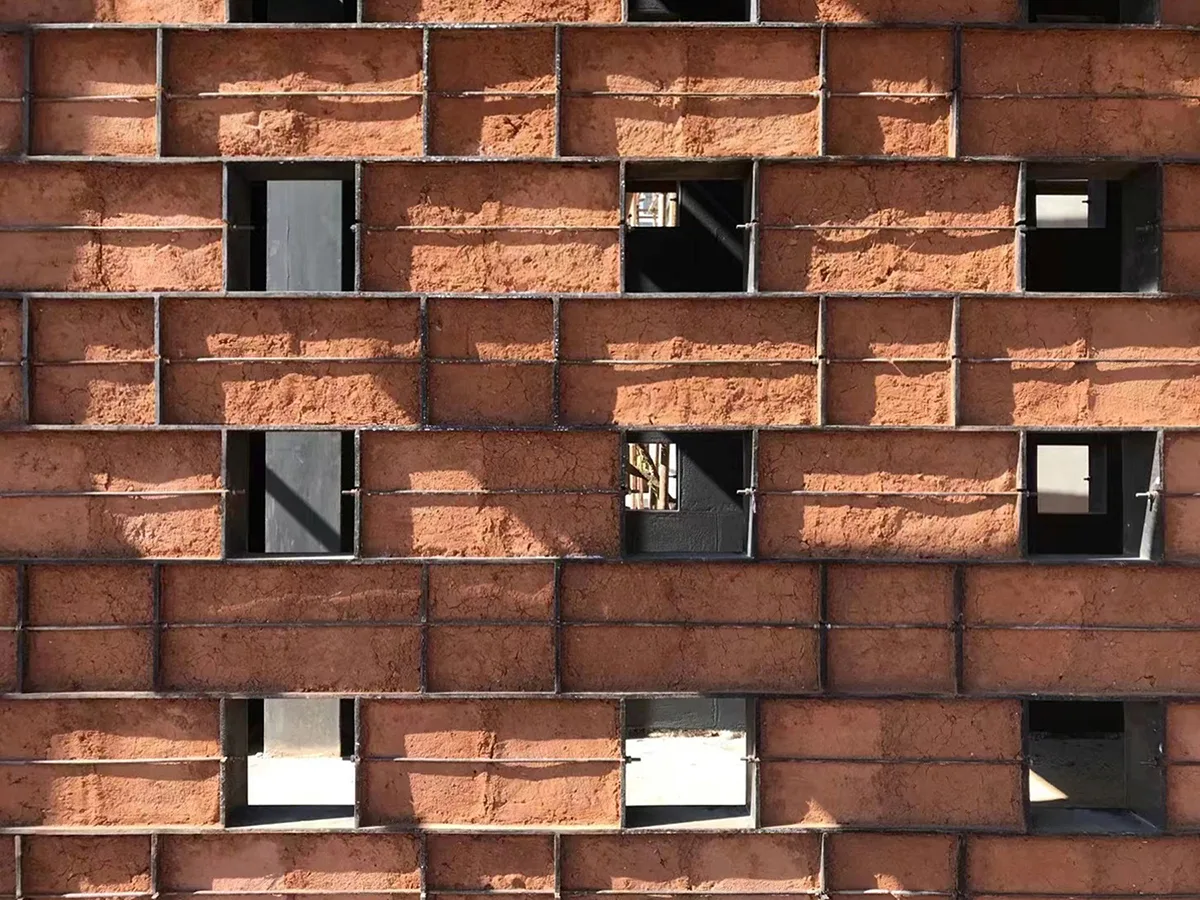
▲ Construction detail © Ruan Xiaozhou
Earth Screen Construction: The soil screen stands 7.1 meters high and 1.4 meters thick. It features internal corridors and elevated viewing platforms connected by steel stairs. The main structure uses an HW200×200×8×12 I-beam frame. The soil foundation wall is 0.1 meters thick, reinforced with 8×100 steel plates framing 60mm thick soil blocks.
The outer side secures soil blocks with a zipper system; the inner side hangs a mesh filled with mortar for stability. To optimize lighting and ventilation, some soil blocks are staggered or hollowed. Steel framing addresses strength and light permeability issues common in traditional soil structures.
To improve waterproofing, hydrated lime proportions were increased, and permeable waterproof agents applied. The soil screen acts as both wall and room, providing enclosed space with good ventilation and lighting.
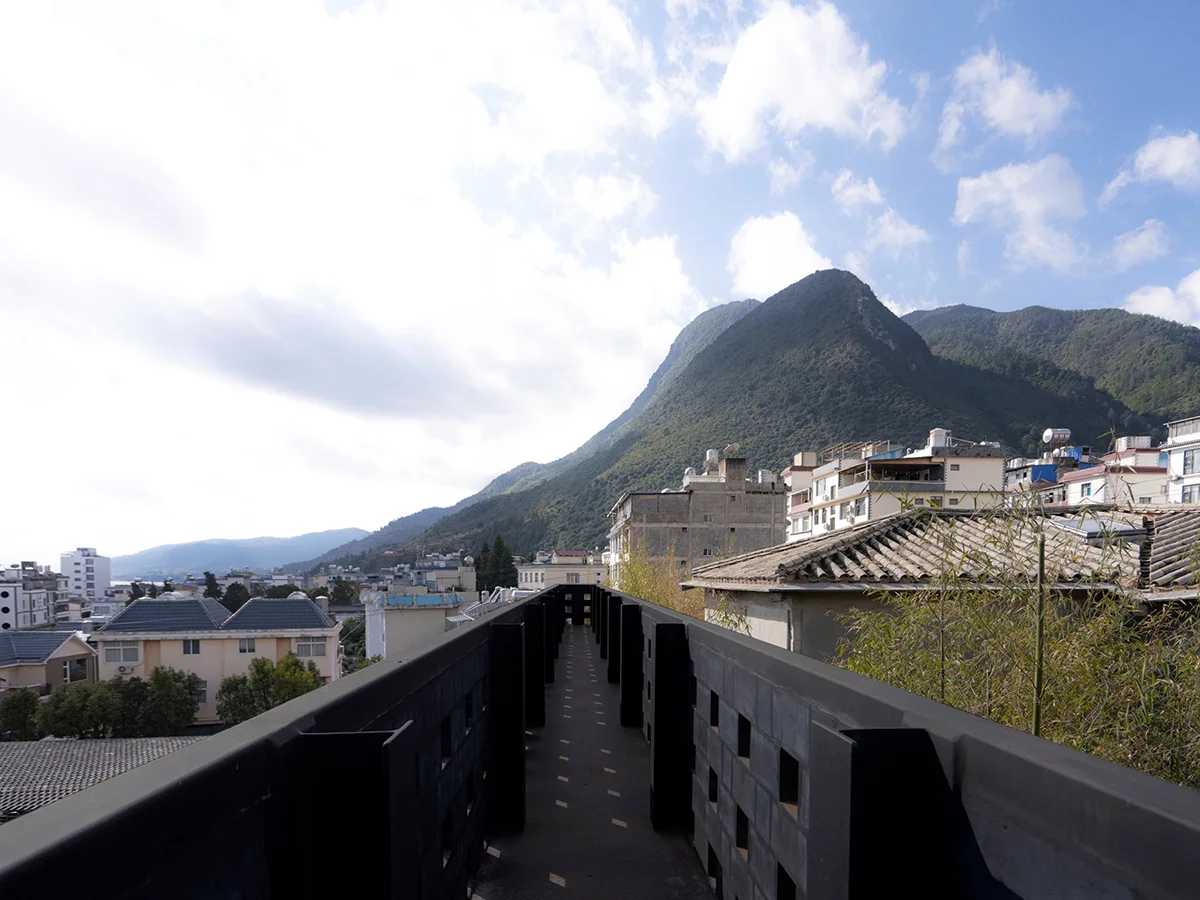
▲ Earth screen roof aisle © Ruan Xiaozhou
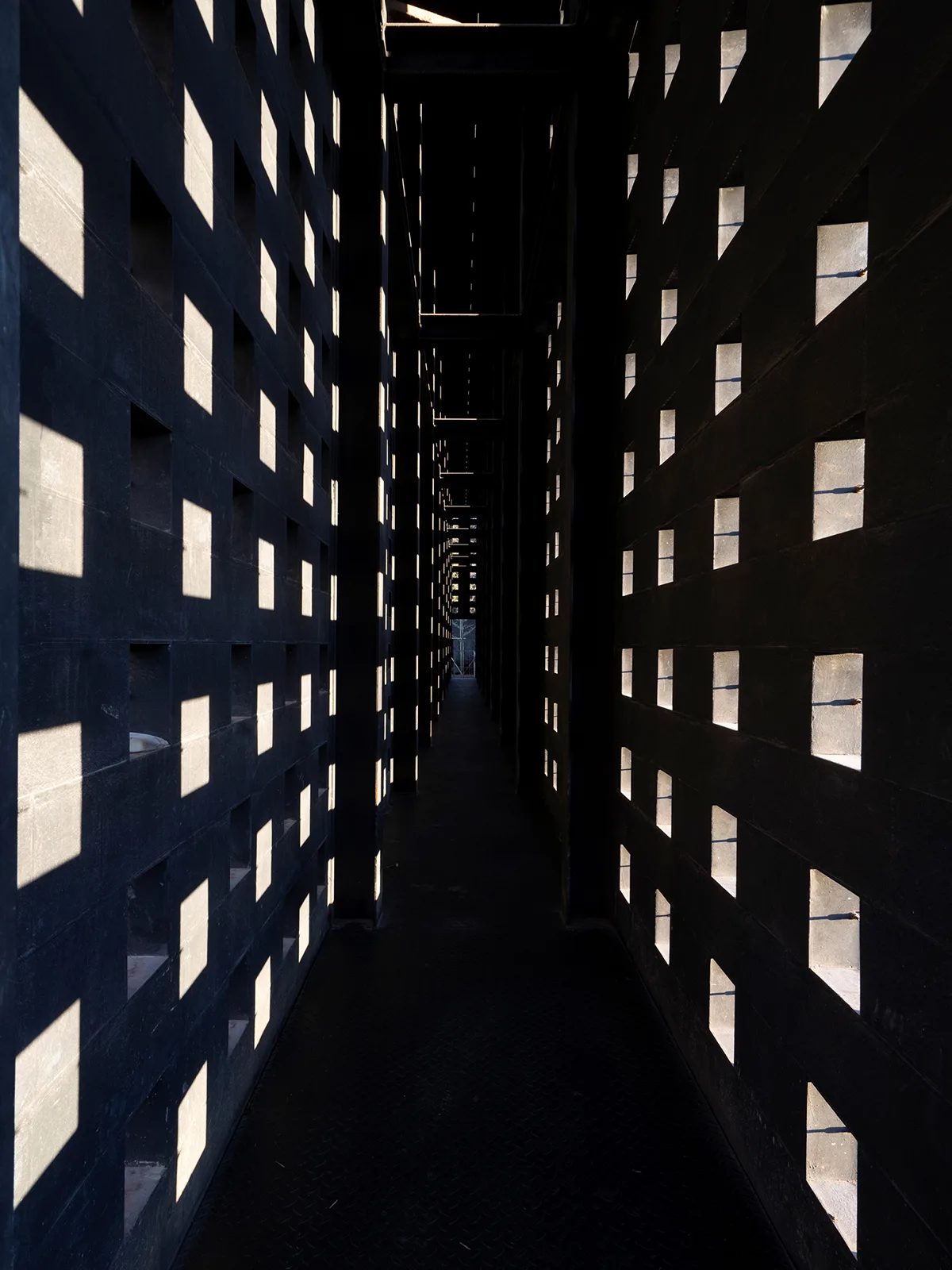
▲ Interior space of the earth screen © Yang Wenlong
Yuting: A Space for Community Sharing
Conceptual Components:
Brick wall = brick + mortar + structural column
Tile wall = tile + mortar + structural column
Tile wall + single-sided steel plate eaves = tile wall eaves
Two symmetrical tiled eaves = wall pavilion
With a wall thickness of 0.78 meters (based on three old tile widths), height of 3.5 meters, and length of 27 meters, the steel plate eaves extend 1.6 meters. A 0.24-meter gap is reserved between the two tile wall eaves. Ignoring thin eaves, the wall pavilion functions as an independent wall; ignoring gaps, it becomes a pavilion.
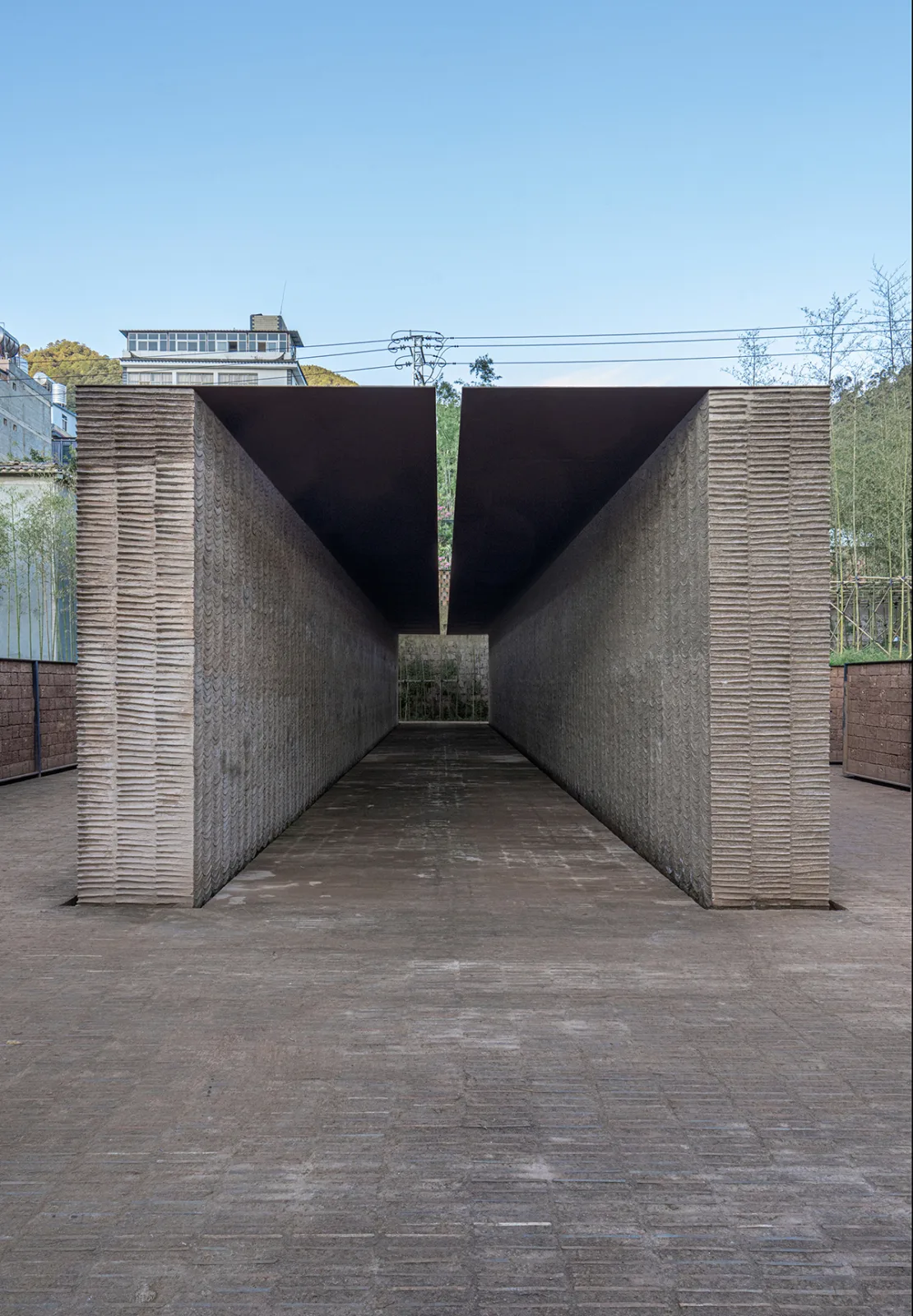
▲ Rain pavilion perspective © Yang Wenlong
Tile Functionality: Stacked tiles challenge their traditional drainage role by serving as load-bearing elements. Steel plates on the tile wall eaves discharge rainwater both from gaps and outer tiles, preserving the tile’s original drainage role.
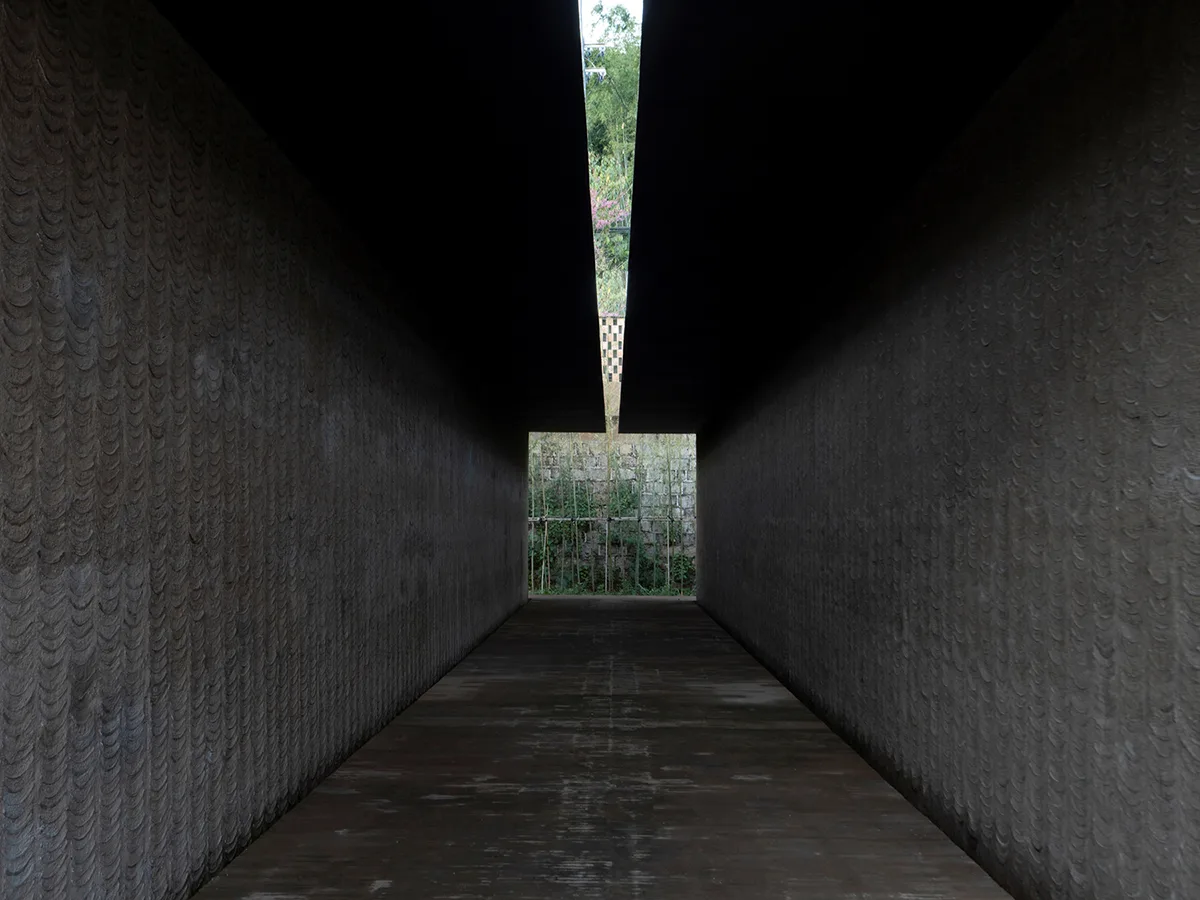
▲ Interior perspective of Yuting © Yang Wenlong
Drainage: Roof drainage flows in two directions and is collected by ground-level drainage ditches. During rain, water runs on the ground, making the wall pavilion unsuitable for long stays. On rainy days, the wall pavilion becomes a rain pavilion, returning to its natural state.
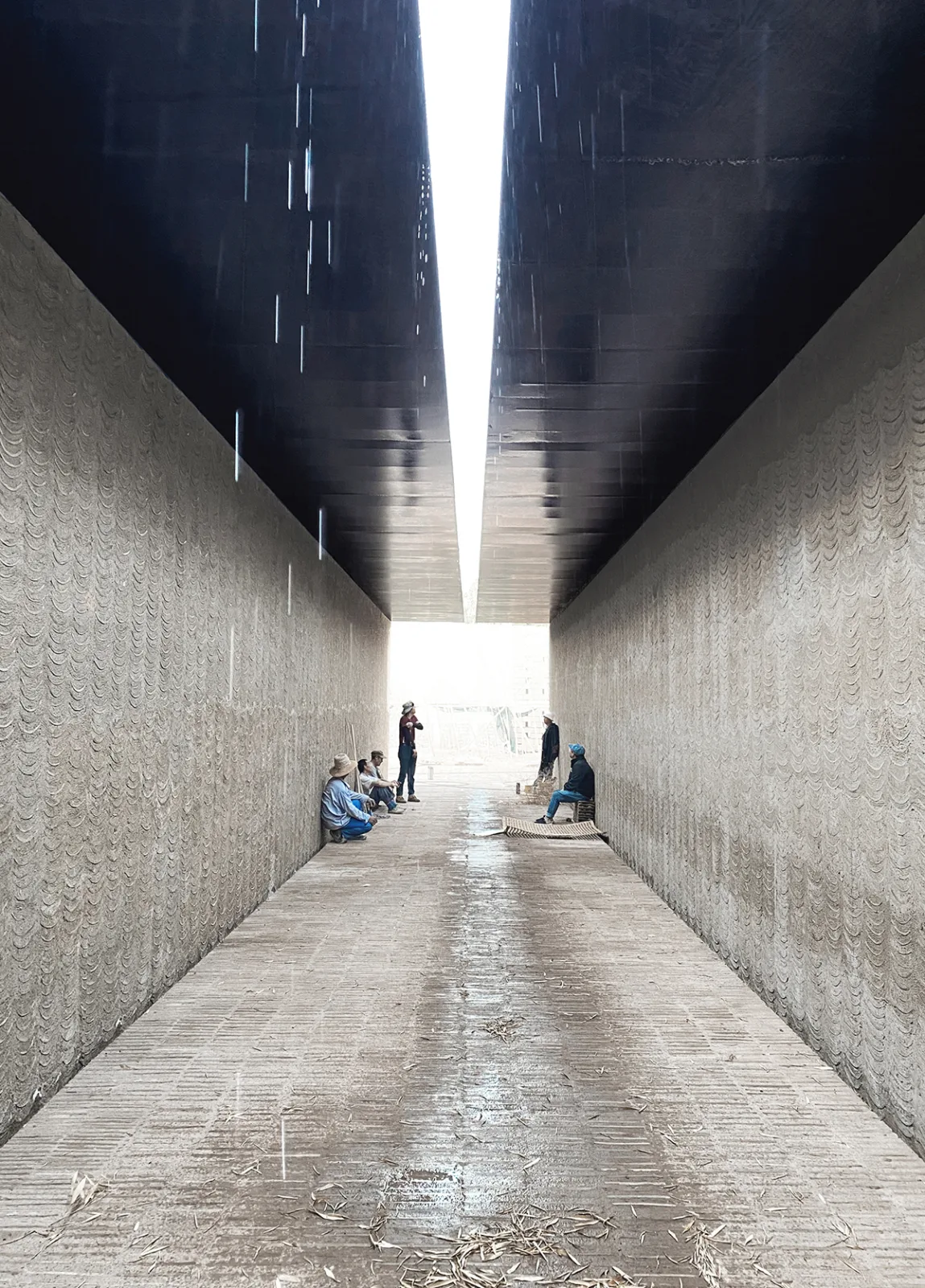
▲ Rain pavilion in rainy weather © Ruan Xiaozhou
Spatial Qualities: On sunny days, the tile eaves provide shade, defining interior space, while the side without eaves is exterior. On rainy days, both sides become exterior spaces unless one stands under the eaves in slippers, experiencing the rain atmosphere, which blurs inside and outside distinctions.
The symmetrical tile wall eaves echo traditional house eaves, where the eaveless side represents living space—an inward, memory-infused area—while the tiled eaves mark external space. These spatial attributes frequently shift during human interaction.
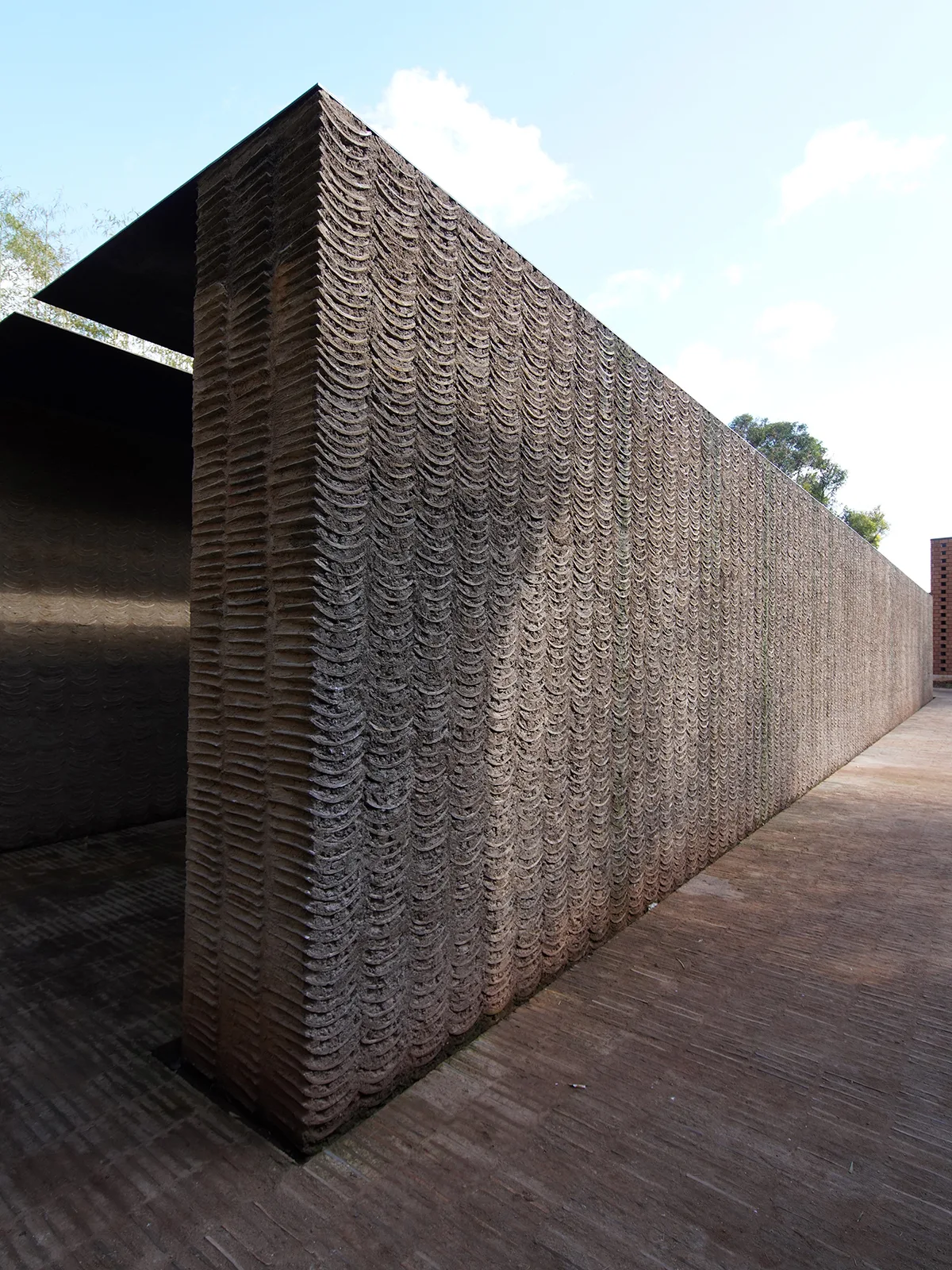
▲ Side perspective of the rain pavilion © Ruan Xiaozhou
Function & Structure: Yuting serves as an open community space for exhibitions, gatherings, lectures, and social interaction, awakening memories of the past.
The wall uses a concrete frame with a steel plate roof protruding 1.6 meters. Steel bars of 16mm diameter are hidden behind the wall. Roof panel leveling is adjusted with steel plates spaced 250mm apart and cross-sections of 10×60mm.
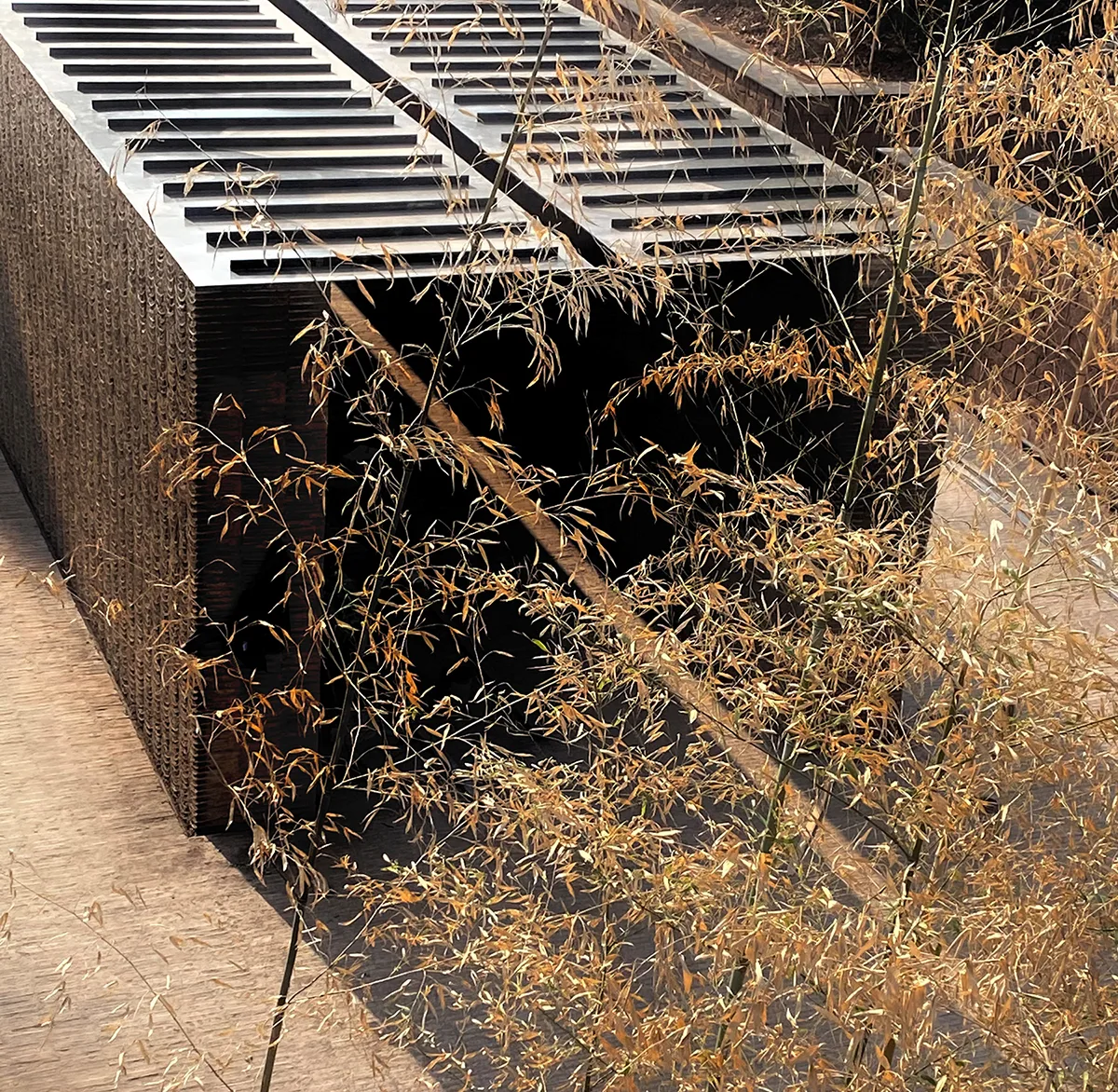
▲ Half bird’s-eye view of Yuting © Ruan Xiaozhou
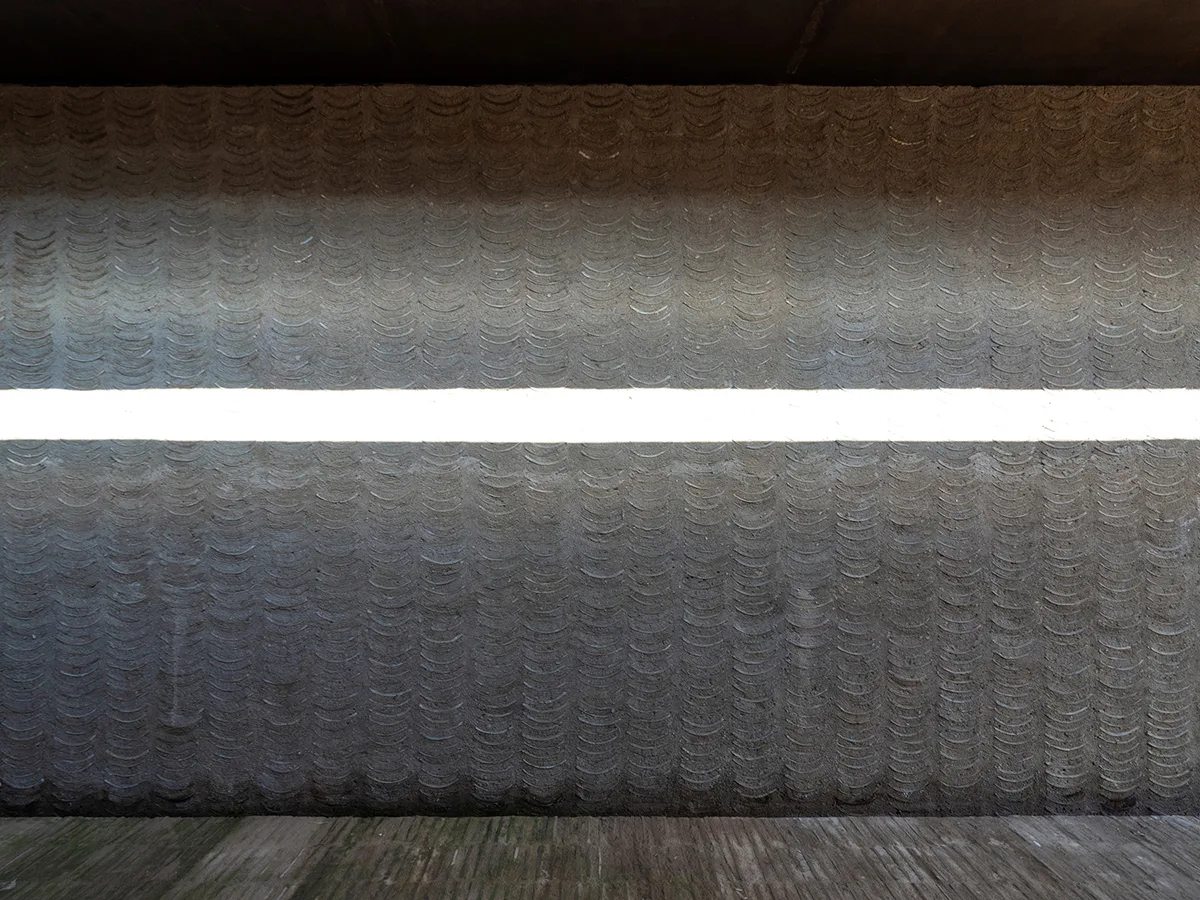
▲ Close-up of rain pavilion light effect © Yang Wenlong
Youhuangli: Naturally Formed
Concept: First, the concrete ground is excavated, and concrete waste is used to create waste walls enclosing courtyard-like spaces at specific locations. Two steel plate sunshades are added within the walls to provide resting areas. Bamboo forests are planted evenly outside these enclosures and roofs.
The paths are informal, allowing free movement and unrestricted bamboo forest boundaries.
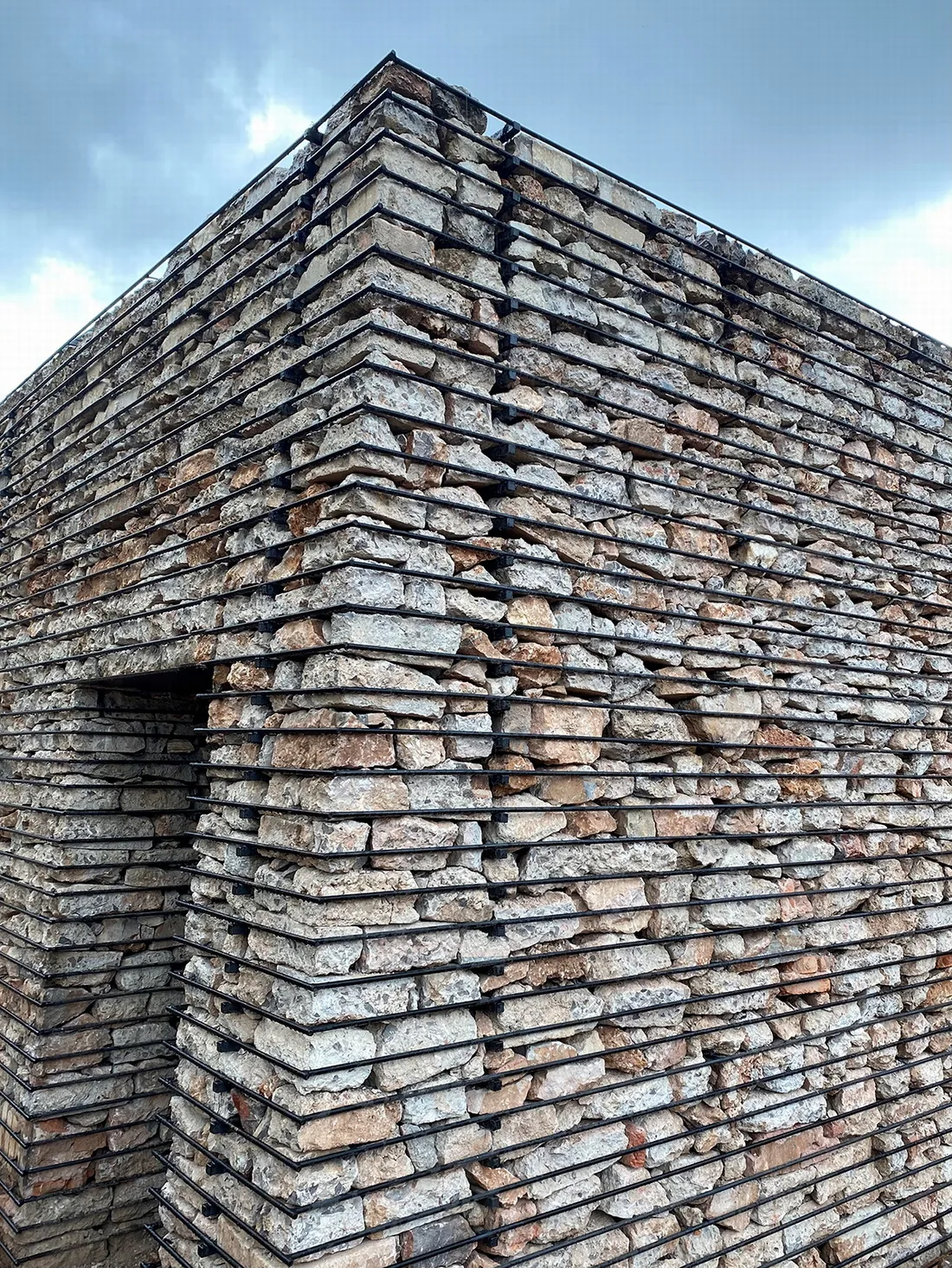
▲ Corner perspective © Ruan Xiaozhou
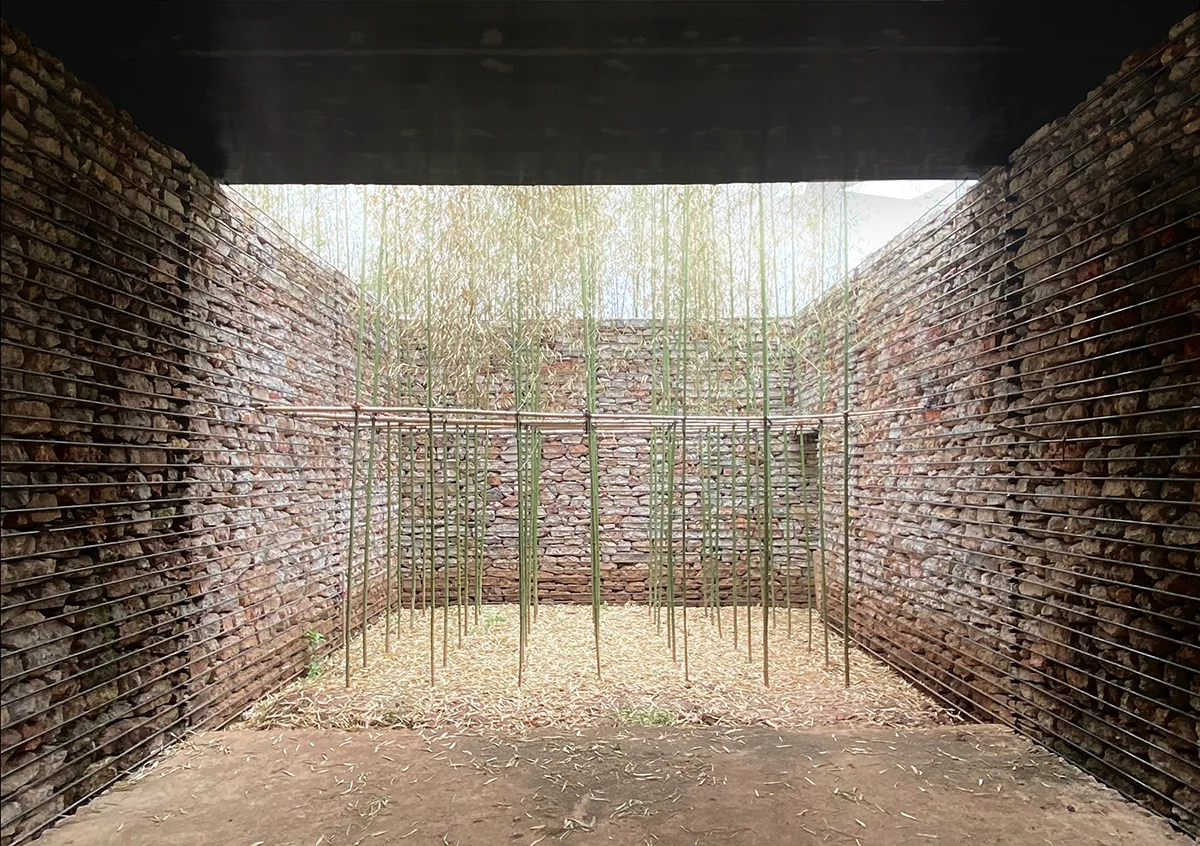
▲ Internal courtyard © Ruan Xiaozhou
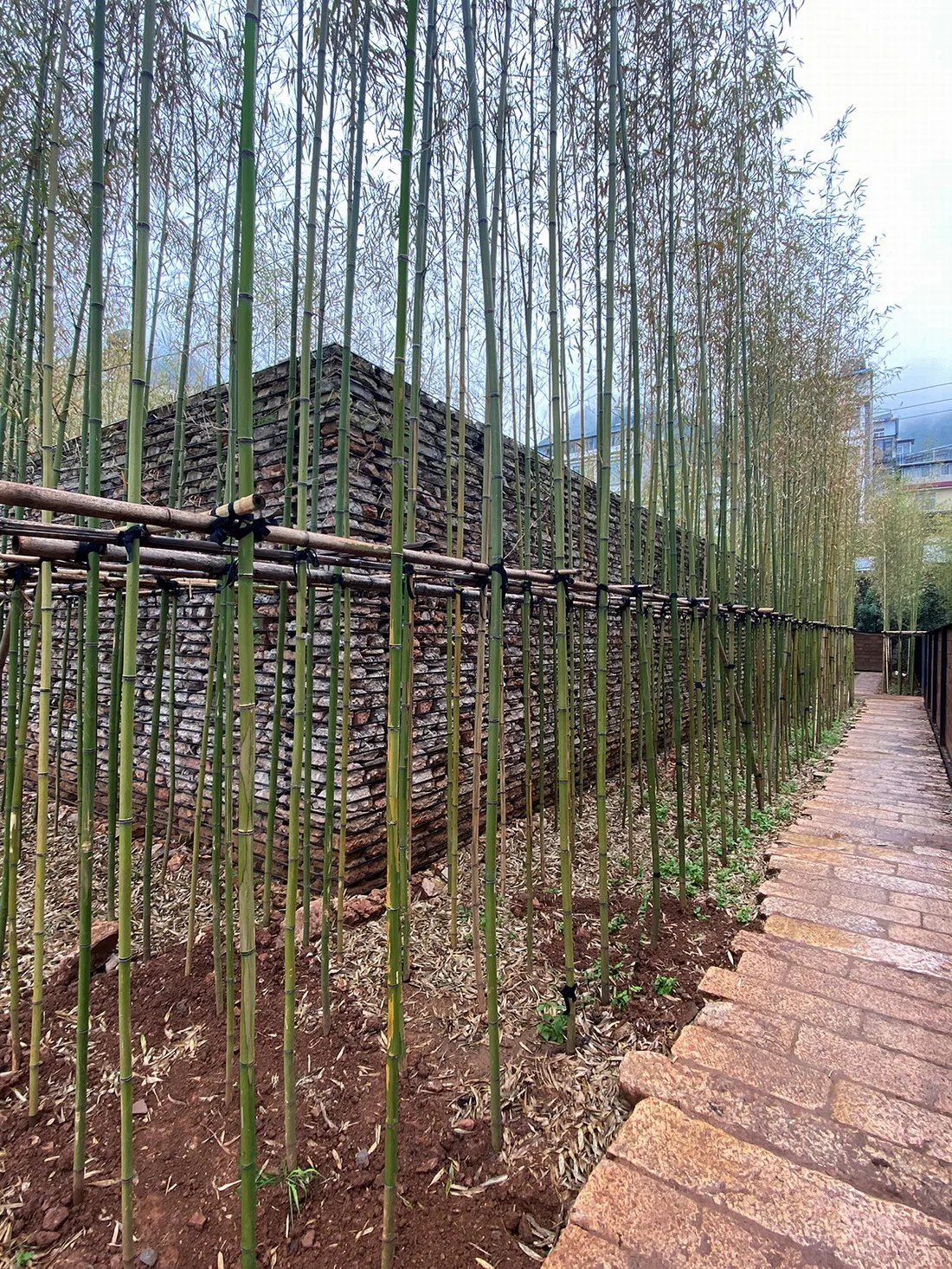
▲ View of secluded surroundings from external road © Ruan Xiaozhou
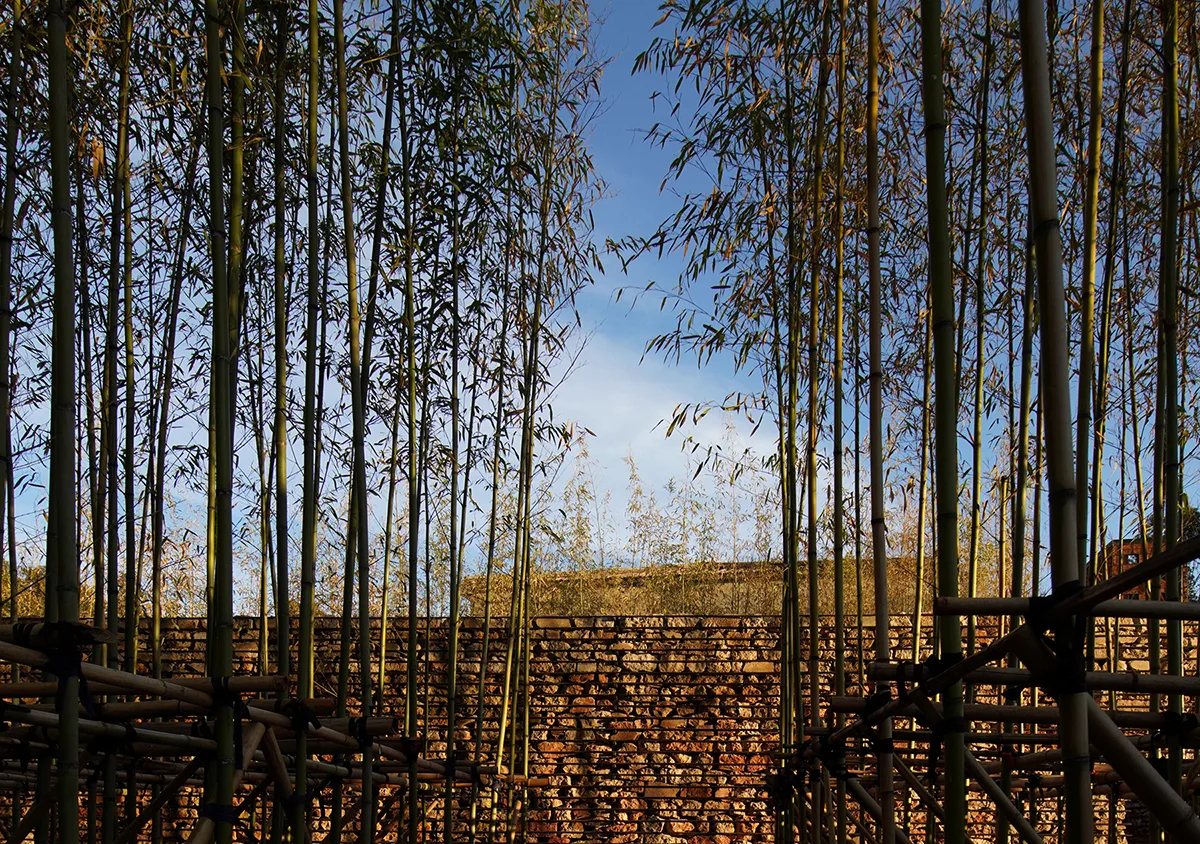
▲ Side perspective © Yang Wenlong
Wating: Contemporary Rural Spaces
Project Requirements: The tile pavilion is designed to provide shade over a parking lot.
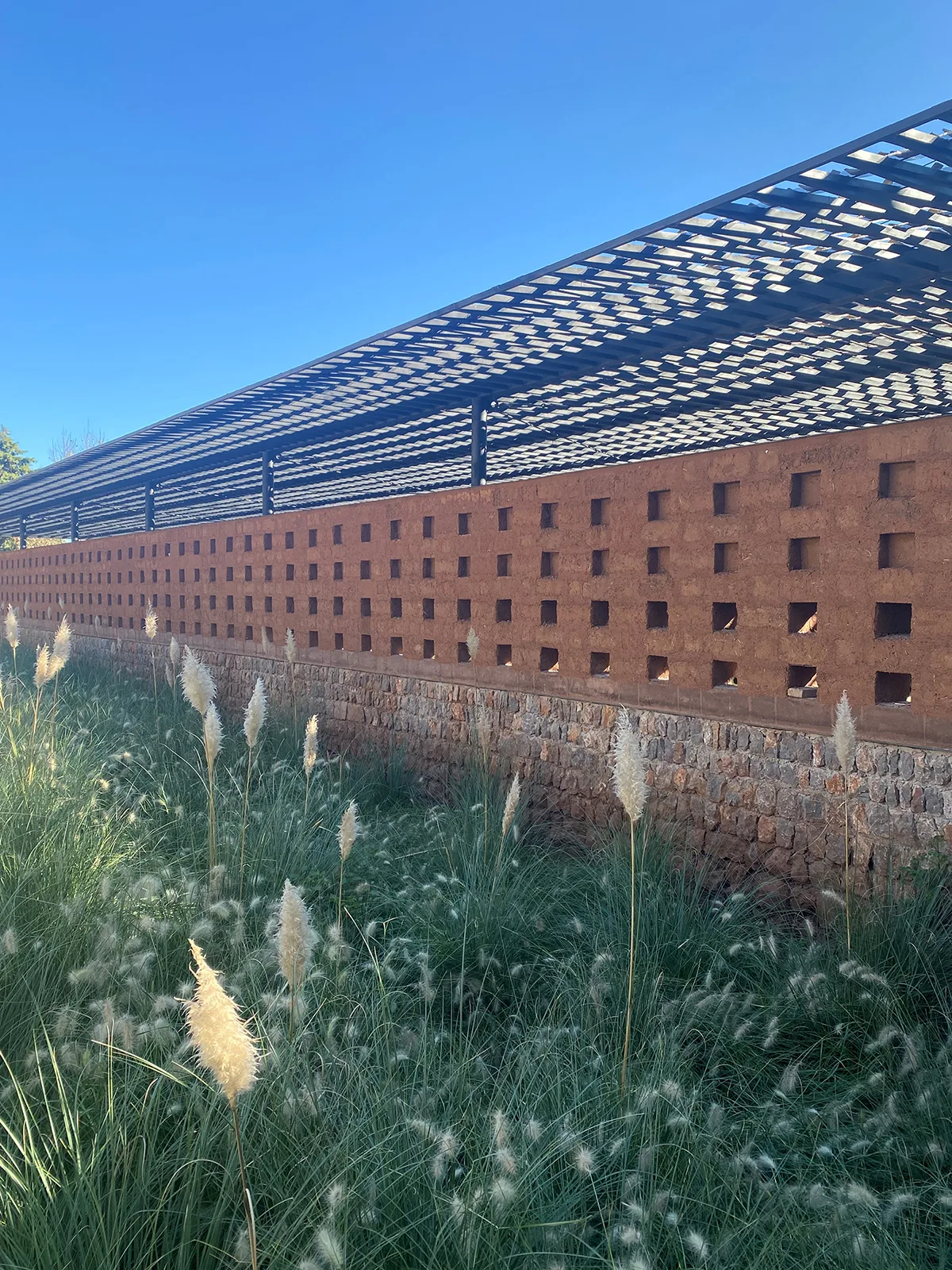
▲ External perspective © Ruan Xiaozhou
Due to planning constraints, a physical roof is not permitted; the roof surface must be hollowed out and serve as a structural corridor.
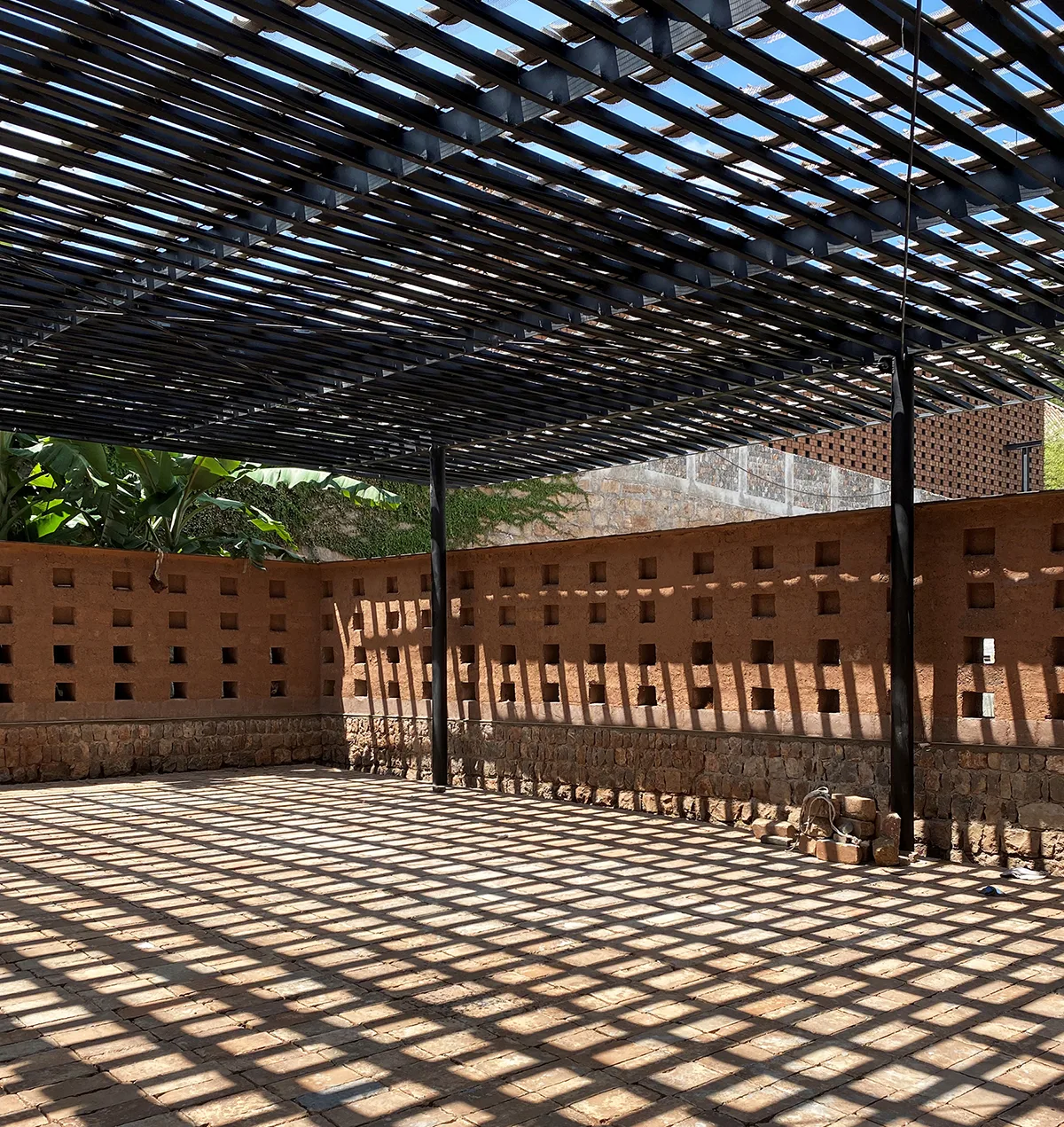
▲ Interior perspective © Ruan Xiaozhou
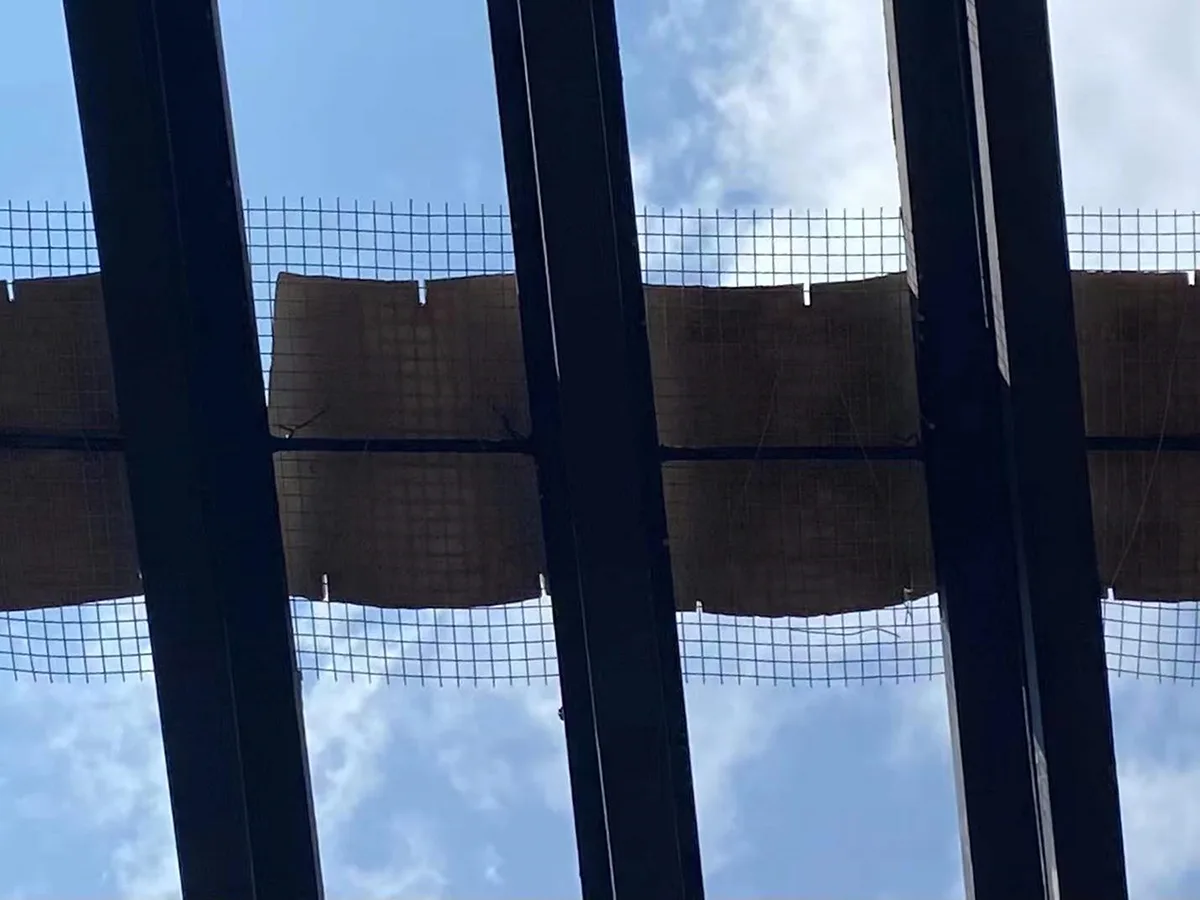
▲ Close-up of tile binding details © Ruan Xiaozhou
High-tech Meets Local Craftsmanship: The lightweight steel frame system requires skilled construction crews. Tile binding is completed by local artisans, necessitating on-site collaboration to optimize efficiency. This blend of advanced technology and traditional techniques adapts well to the contemporary material context.
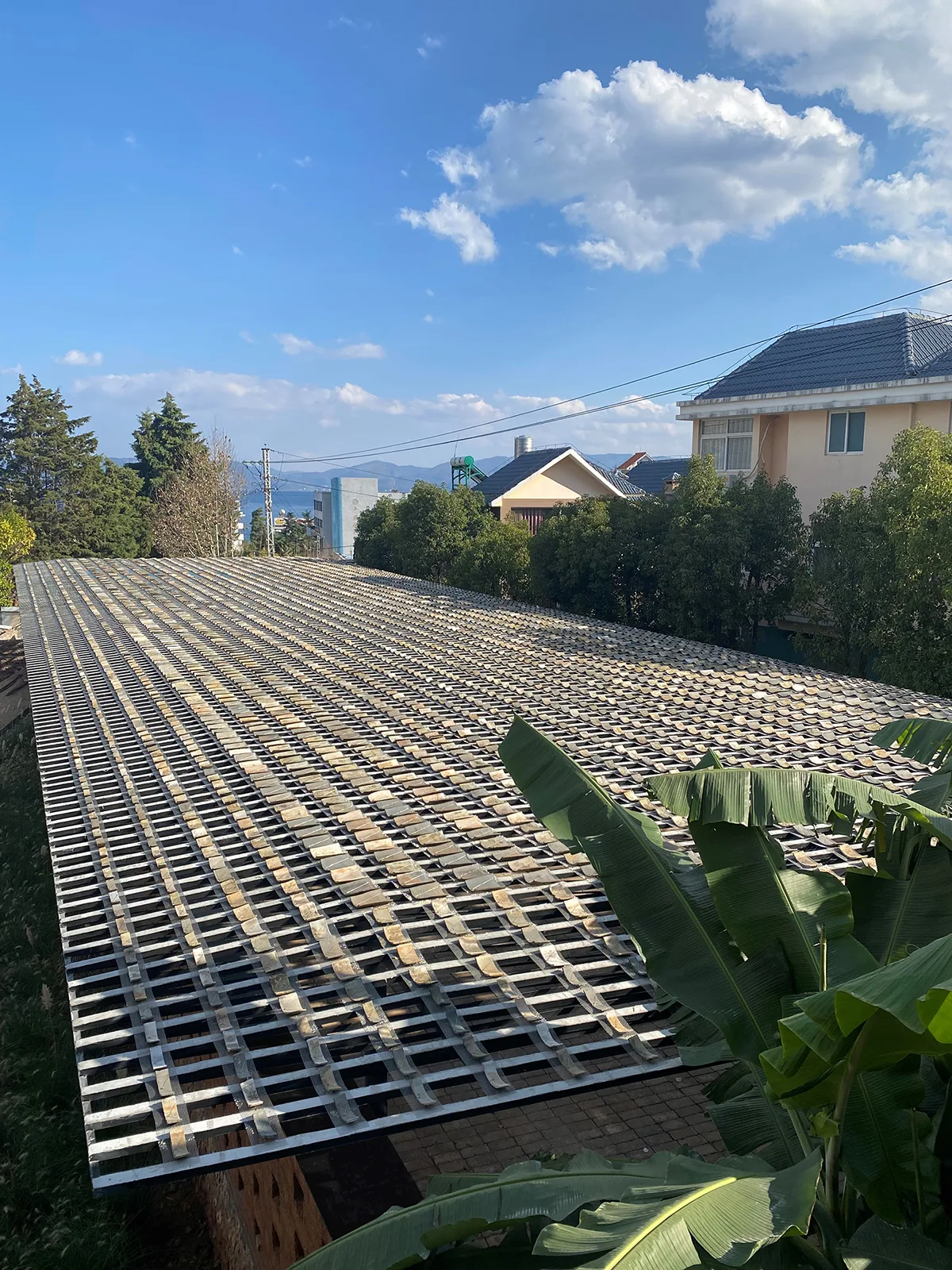
▲ Overall semi bird’s-eye view © Ruan Xiaozhou
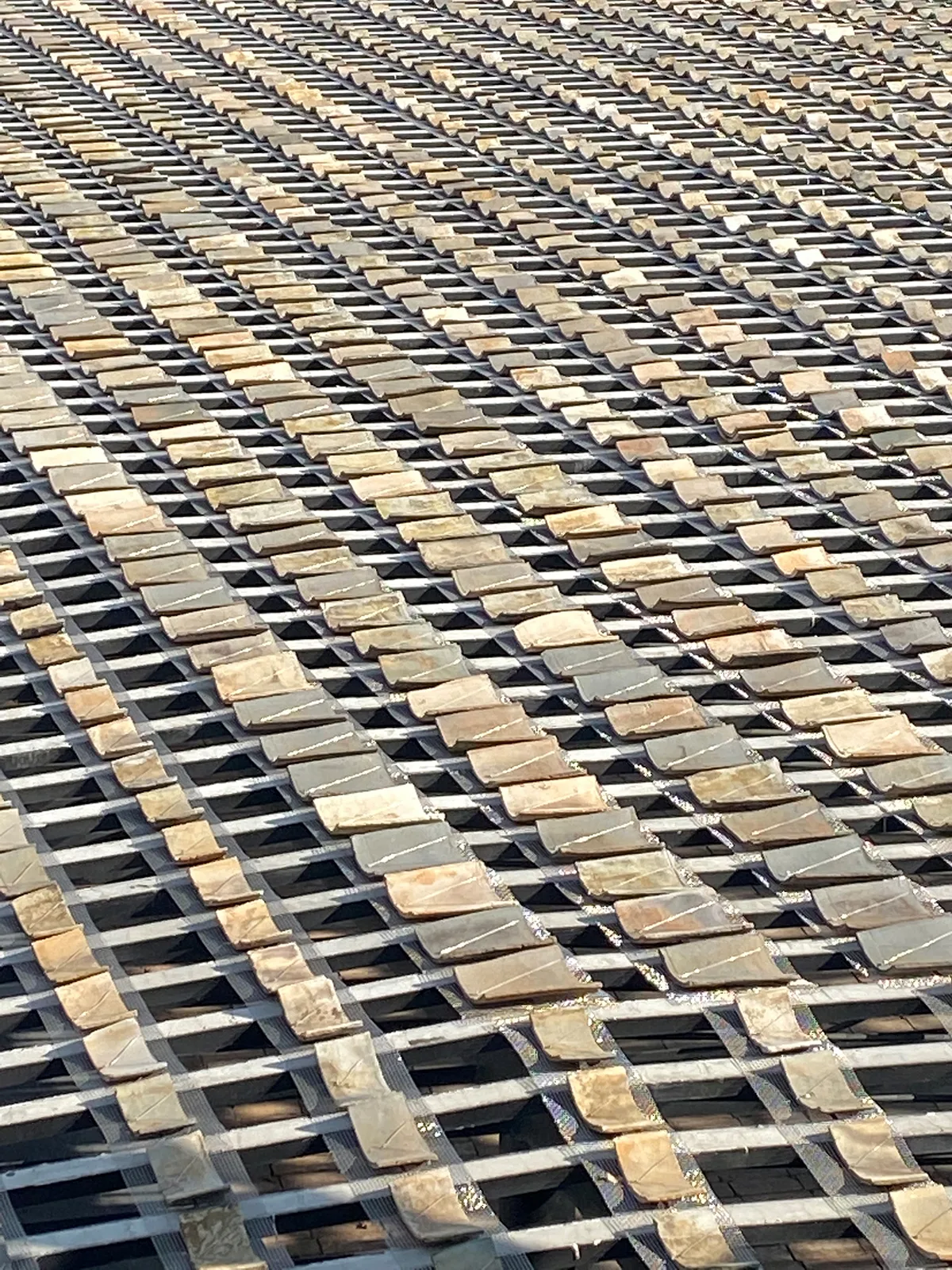
▲ Close-up of upper details © Ruan Xiaozhou
Poting: Mountain Dwelling Intentions
Site Formation: Situated on a slope, the original terrain connected the homestay’s upper and lower floors. By widening the trapezoidal slope, a new function emerged—a coffee shop leveraging the slope’s characteristics.
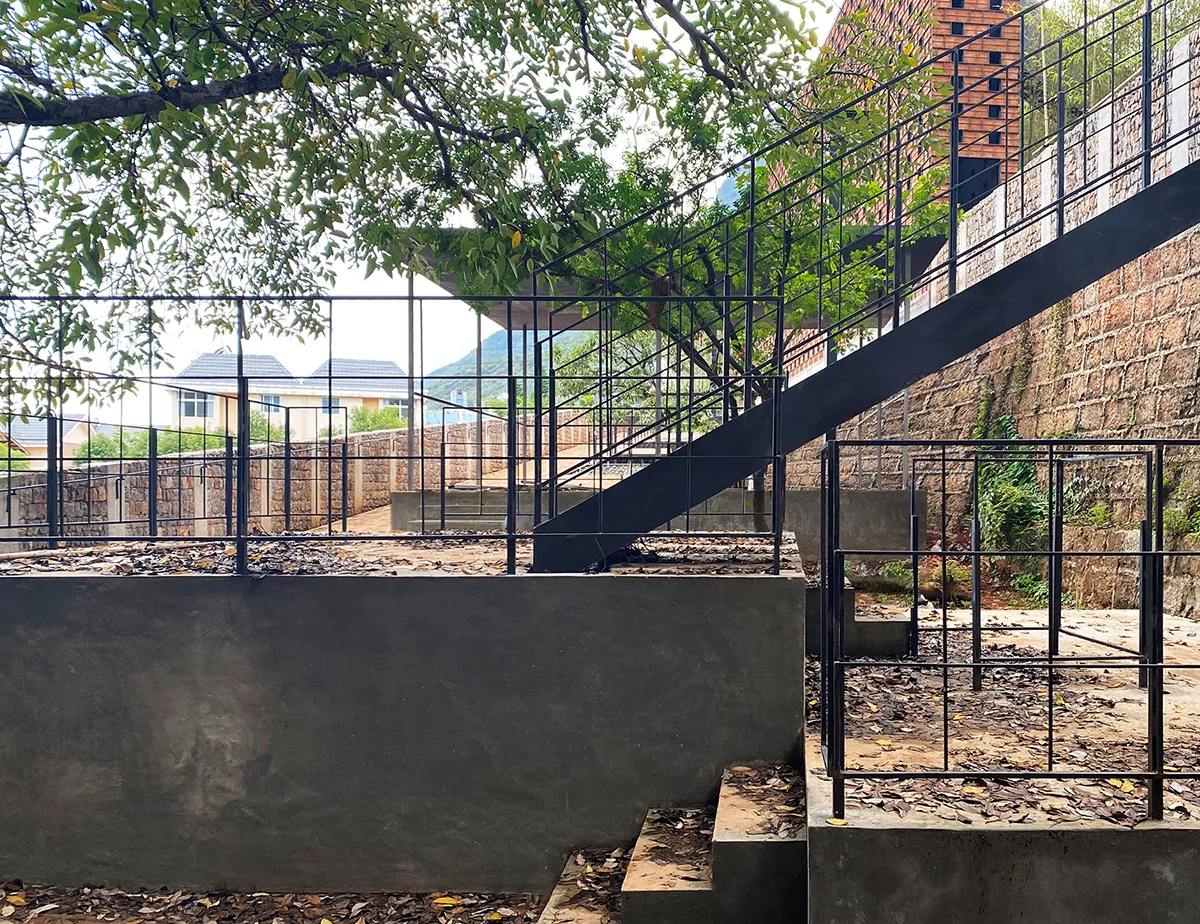
▲ Pavilion perspective beneath the slope © Ruan Xiaozhou
The design carves a concave platform with an upper pavilion at the front, a convex platform with a lower pavilion at the rear, and the largest main coffee shop platform—Xianxian Pavilion—in the center, forming a tiered slope space.
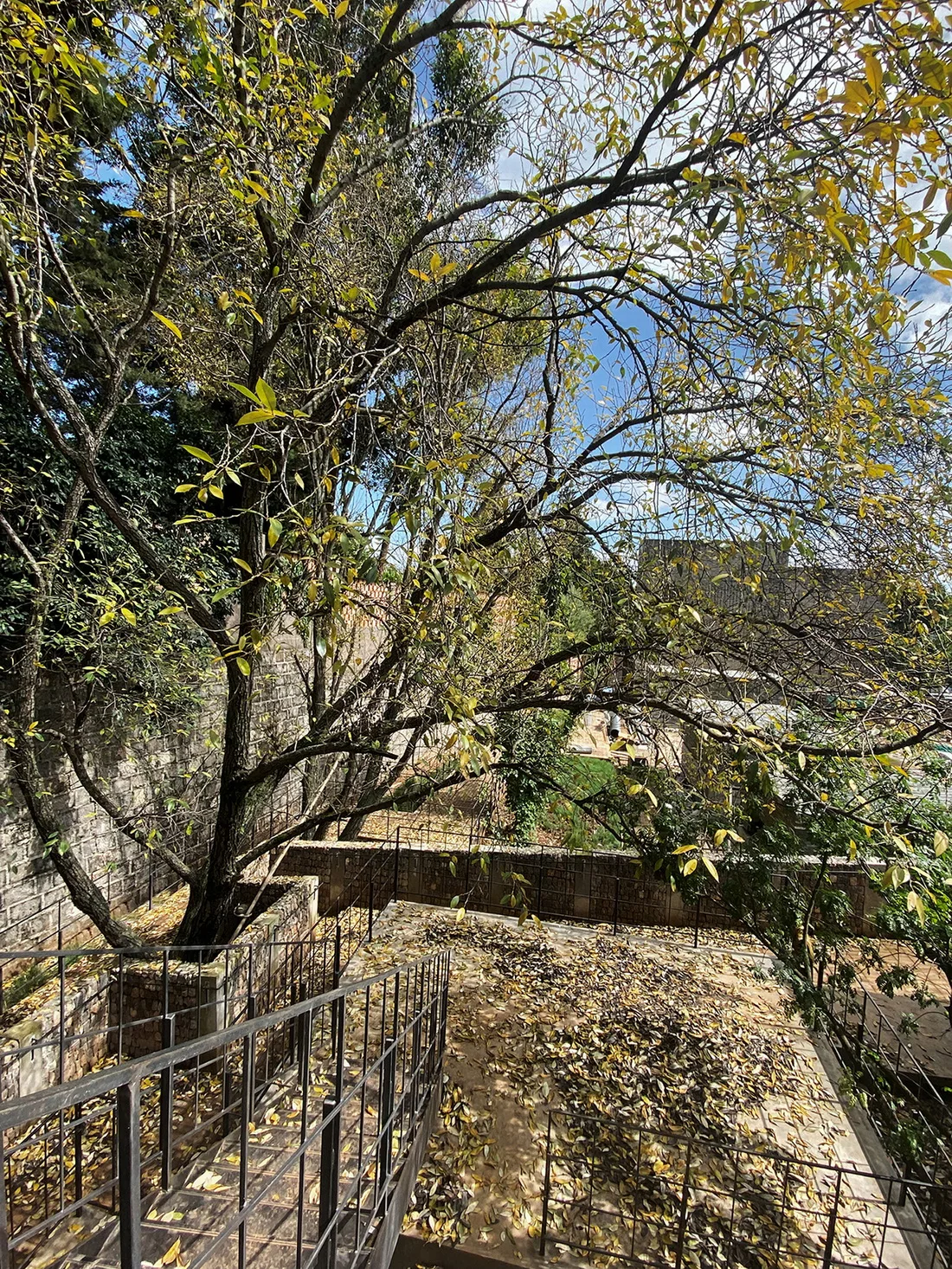
▲ Platform beneath Poting stairs © Ruan Xiaozhou
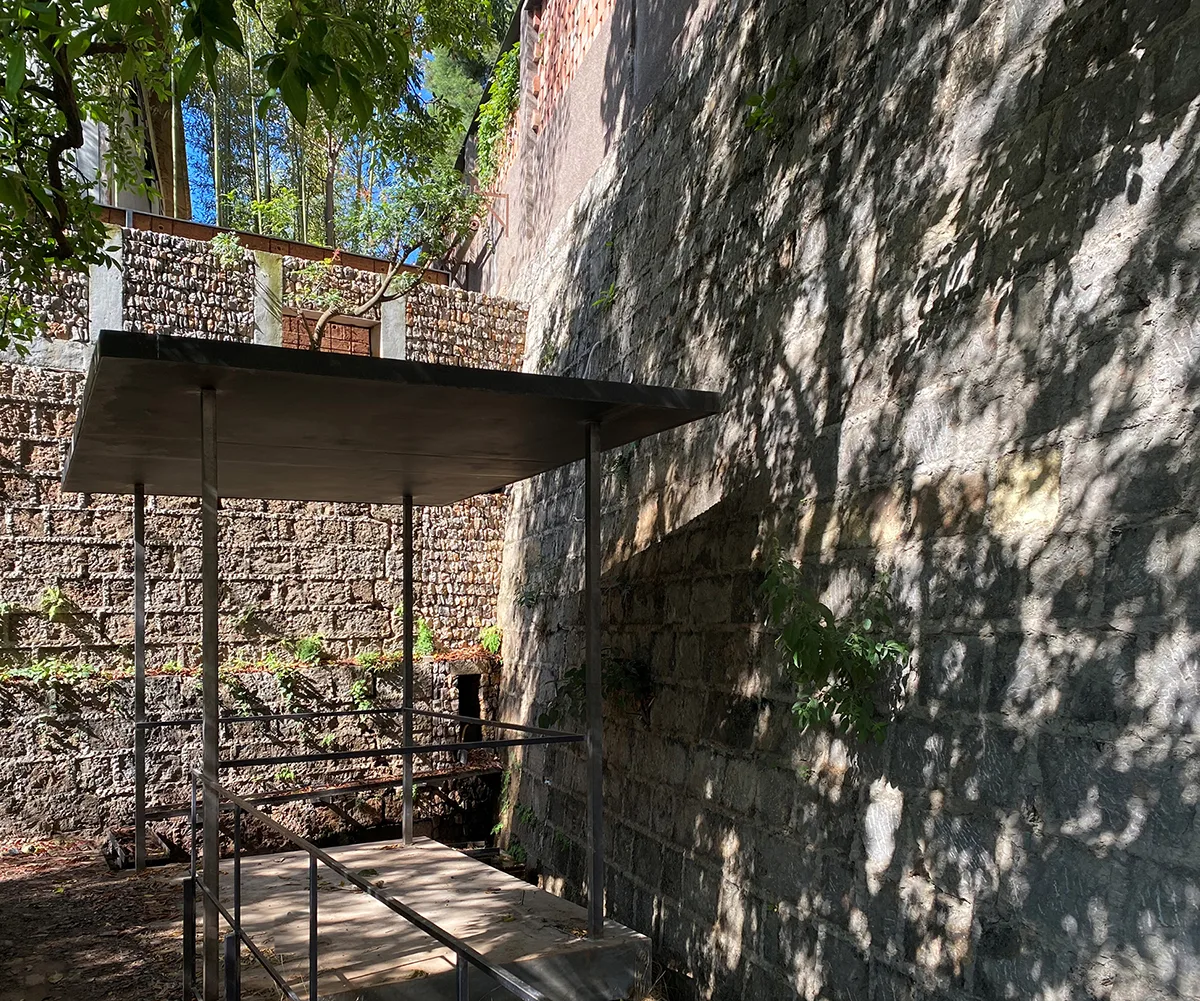
▲ Perspective of Xiating © Ruan Xiaozhou
Mountain Dwelling Evolution: Later adjustments enclosed Xianxian Pavilion with a bridge connection from the upper platform, adding shelter and rooftop viewing areas, while preserving upper and lower pavilions.
This transformed the traditional three-pavilion mountain dwelling into a one-bedroom, one-mountain living relationship with enhanced cohesion. The construction can be summarized as excavation and filling, manifestation and storage, aggregation and dispersion, and artificial and natural integration.
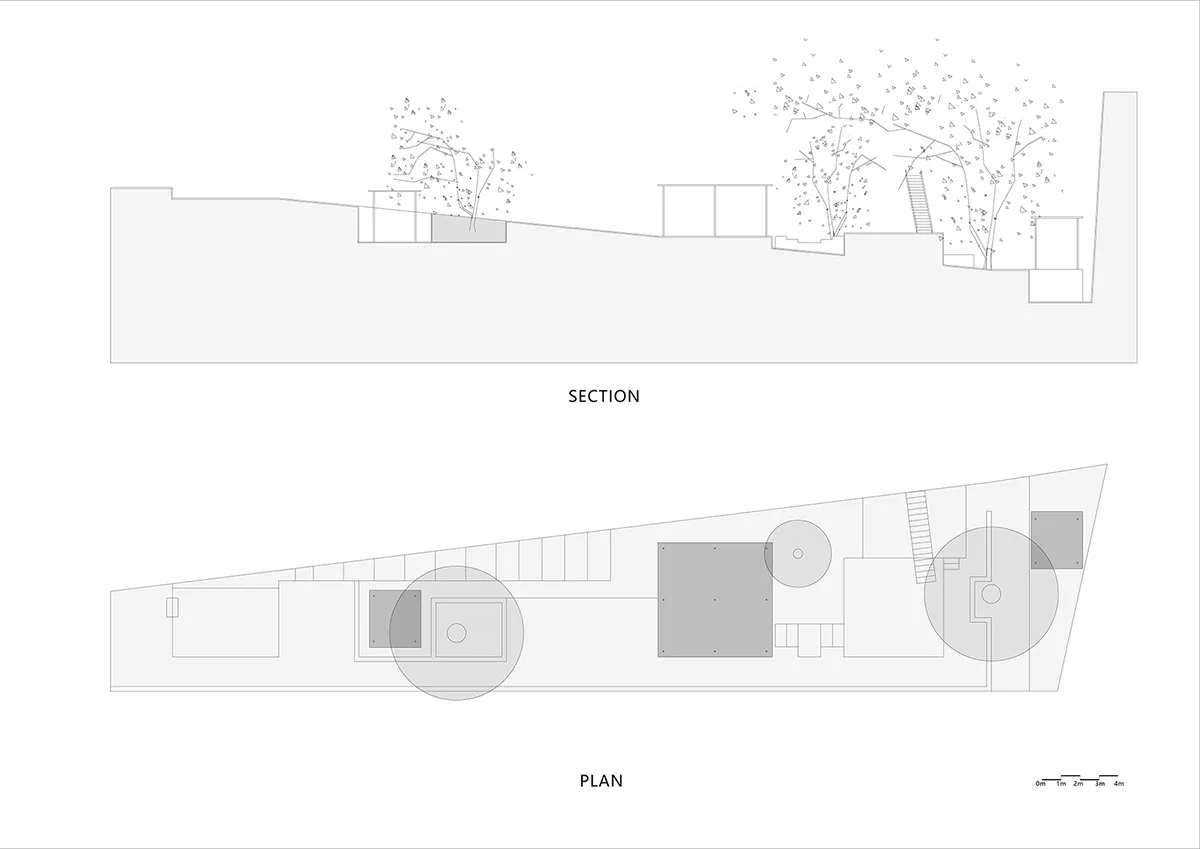
▲ Slope pavilion diagram © Ruan Xiaozhou Design Studio
Original Wall: Returning to Simplicity
Renovation Strategy: The four two-story old villas were eclectic, neither purely traditional nor Western. Minor interior and exterior wall modifications were made, referred to as “original walls.”
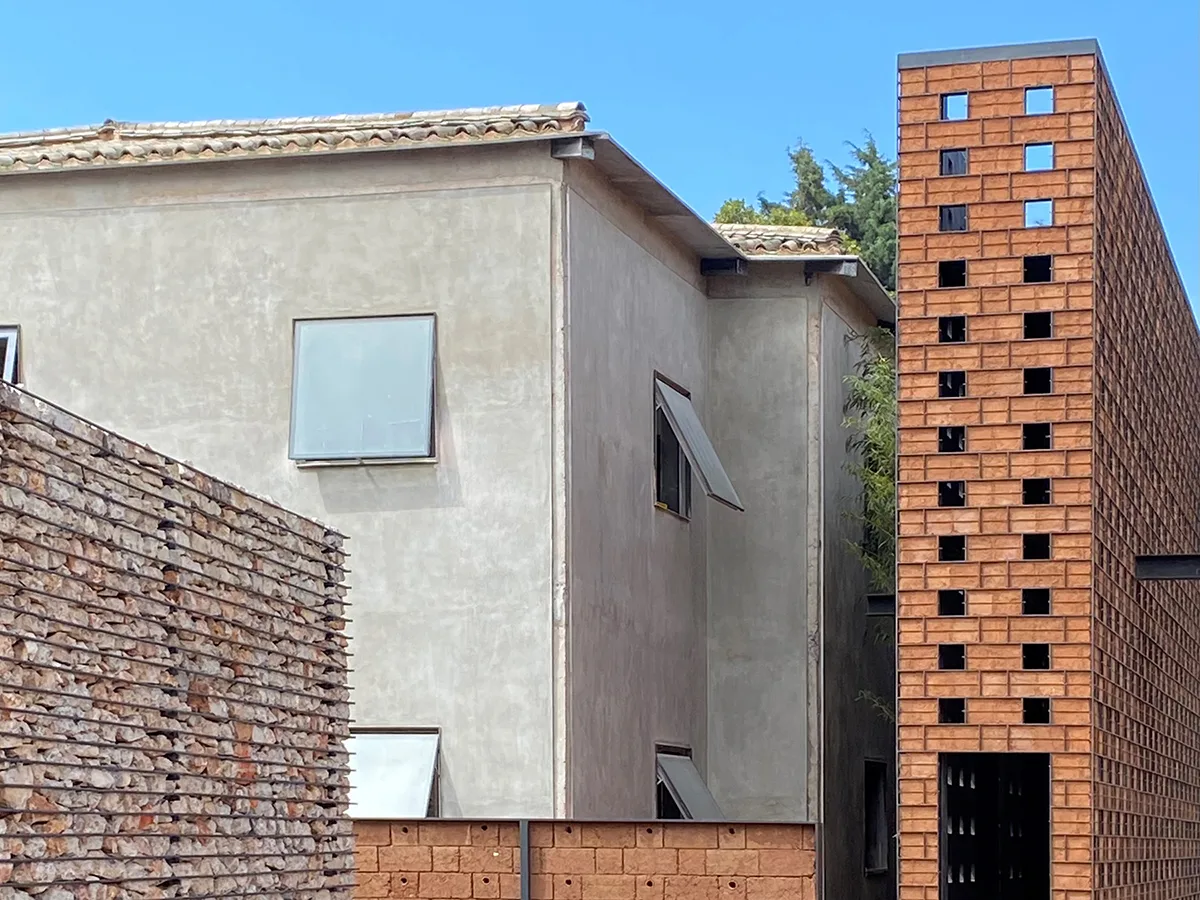
▲ Villa perspective © Ruan Xiaozhou
Dialectics of the Original Wall: Given the suitable local climate, internal and external insulation layers were unnecessary. The original wall’s foundation is the red brick wall exposed after removing paint layers, considered the old wall.
Applying adhesive infill and surface polishing enhanced structural strength and texture. Adding cement introduced new elements, effectively creating a new wall. This dialectical expression captures architectural authenticity during renovation.
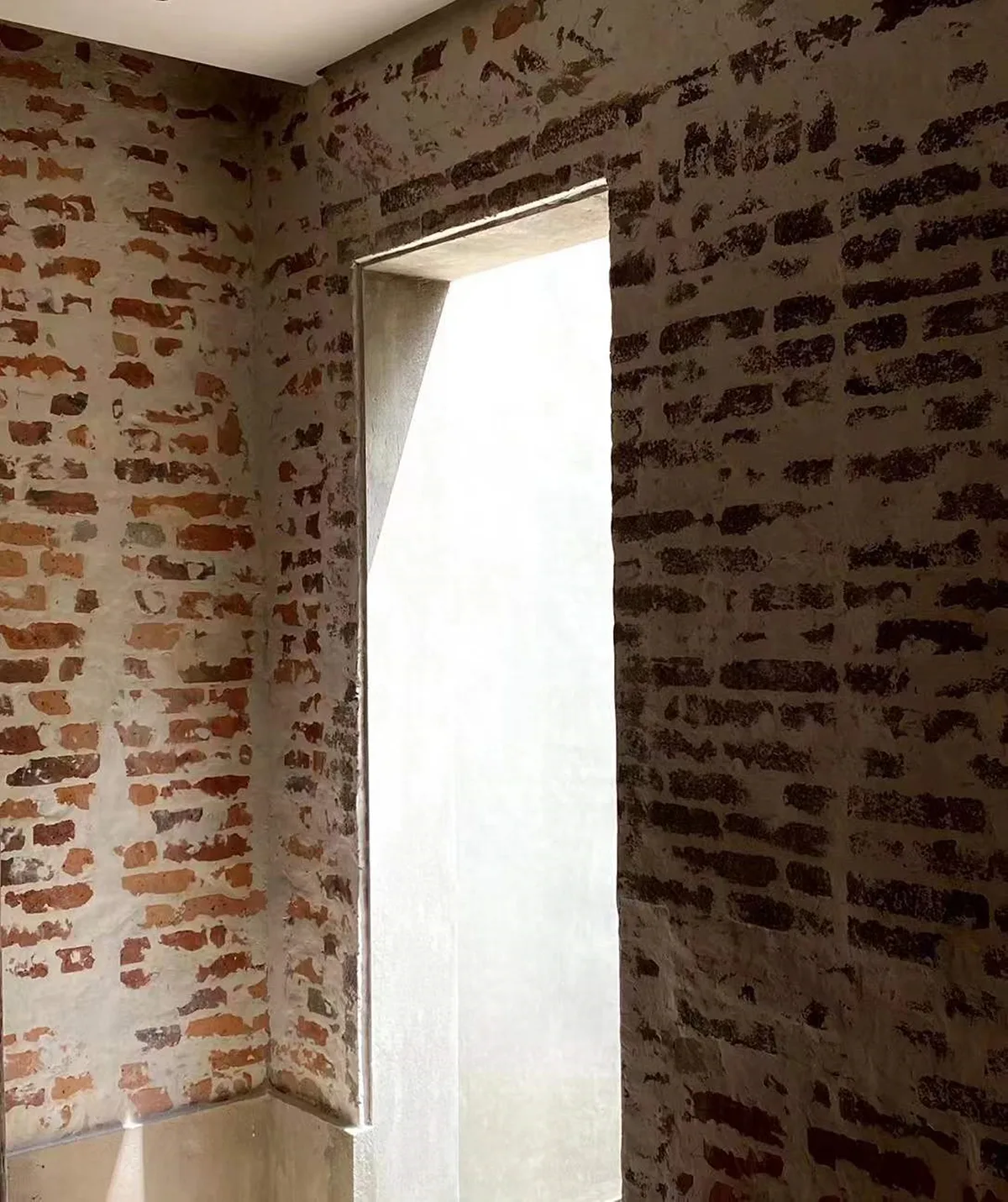
▲ Interior wall perspective © Ruan Xiaozhou
Exterior walls originally clad in small porcelain tiles, mismatched with the architectural style, were stripped. A batch mortar finish with waterproofing layers inside and outside ensures practicality. Mortar covers half the column, leaving half exposed to protect the waterproof layer at brick junctions, preventing moisture ingress.
The finished mortar showcases craftsmanship texture, while exposed old columns reveal raw materials, coexisting harmoniously. The original wall blurs old and new, decoration and structure, presenting a dialectical construction relationship.
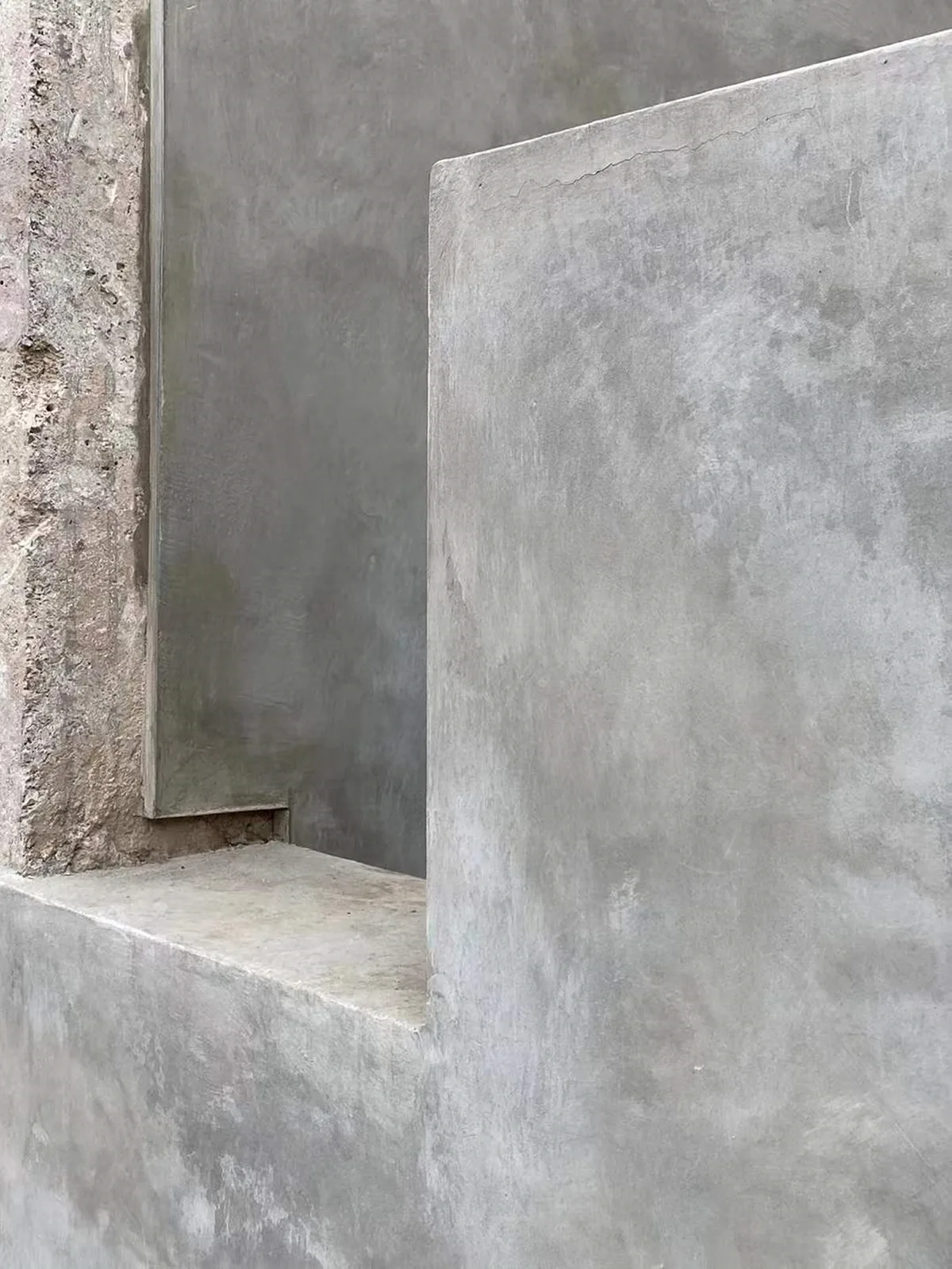
▲ Detailed exterior wall structure © Ruan Xiaozhou
Summary
The Eight Forms of Rural Construction summarize a four-year design and construction rural case. While the method has limitations, it is grounded in a deep understanding of construction. Construction is vital for architectural speculation, echoing Joseph Rickwater’s sentiment: “We always look back at the original prototype to re-understand architecture’s essence.” The origins of architectural technology are most evident in rural architecture.
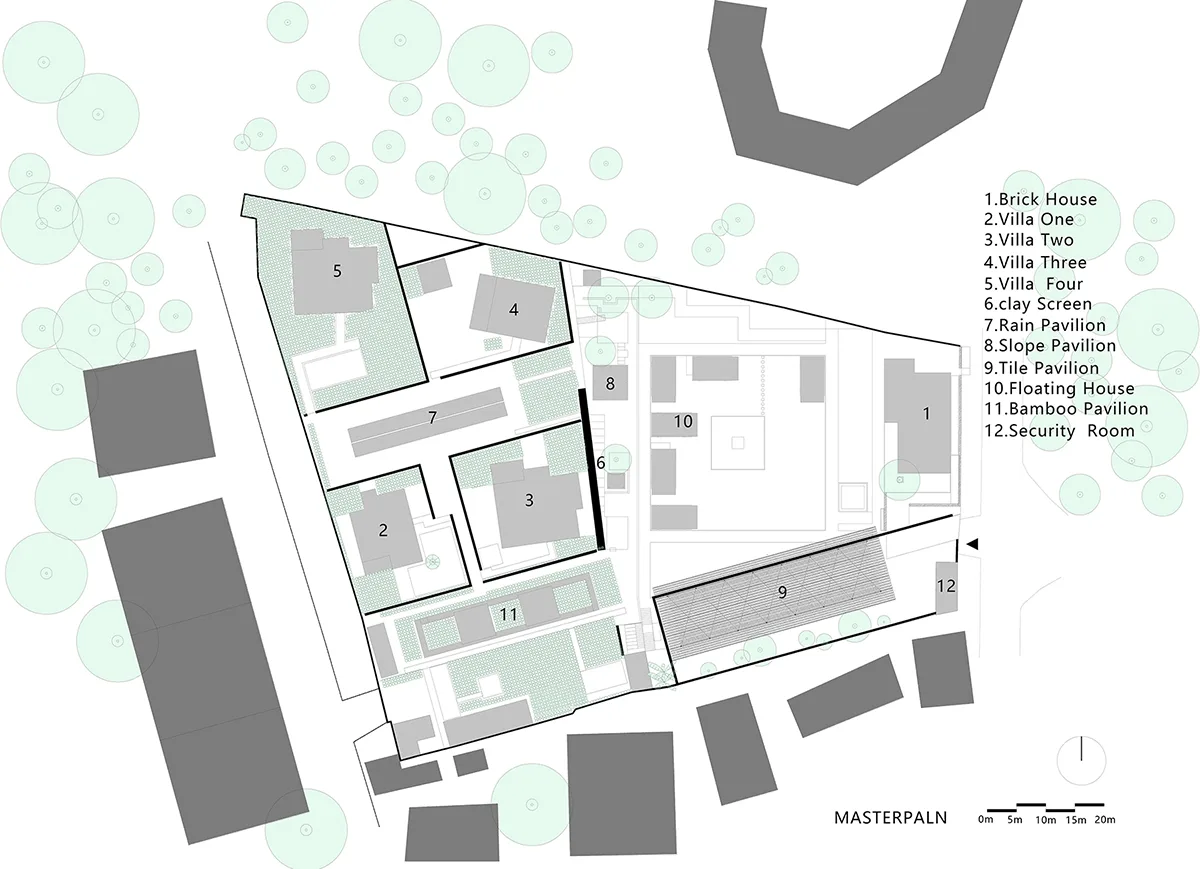
▲ General layout plan © Ruan Xiaozhou Design Studio
Project Information
Project Name: Eight Forms of Rural Construction | Rural Construction Practice Based on the Renovation of Yunnan Dazhi Leisure Homestay
Location: Luchong Scenic Area, Chengjiang, Yuxi City
Investor: Dazhi Xianxian Homestay
Design Period: April 2018 – December 2021
Construction Period: March 2019 – January 2022
Building Area: 2,457 square meters
Overall Planning and Architectural Design: Ruan Xiaozhou Design Studio
Design Studio Location: Shanghai, China
Lead Architect: Ruan Xiaozhou
Design Team: Ruan Xiaozhou, Zhang Jun, Yu Yihong, Xue Zhipeng, Liu Lijun
Design Consultants: Xiao Yi, Ruan Zhouliang, Zhang Haoqing, Chen Ling, Chen Shangming, Xu Dongsheng, Lu Kang, Pei Fuxing
Structural Engineers: Peng Li, Hu Xiaojie, Zhao Peng
Structural Consultants: Peng Li, Zhang Zhun, Hu Xiaojie, Leng Chaoqun
Civil Construction: Local construction team
Steel Structure Construction: Kunming Xiaotongren Crafts Co., Ltd., local construction team
Metal Customization: Ningbo Bend Design Studio, Kunming Xiaotongren Crafts Co., Ltd.
Interior Construction: Yunnan Yuexin Decoration Engineering Co., Ltd., local construction team
Furniture Procurement: Shanghai Zhencang Decoration Co., Ltd., local furniture supplier
Identification System Design: Joyful Studio, Ruan Xiaozhou Design Studio
Lighting Design: Kunming Comma Technology Co., Ltd., Ruan Xiaozhou Design Studio
Lighting Detailing and Production: Kunming Comma Technology Co., Ltd.
Photography: Yang Wenlong and Ruan Xiaozhou
Main Construction Supervisors: Yang Kun, Yang Yong, Chen Bihong, Li Qing, Li Chongjin, Li Guoming, Mo Jianxin, Huang Zuoming, Huang Zhixiong, Huang Xingyuan, Chen Jinhui, Xu Zhixing, Cao Jinfu, Sheng Jiafu, Ruan Xiang, Li Fulin















Must log in before commenting!
Sign Up