
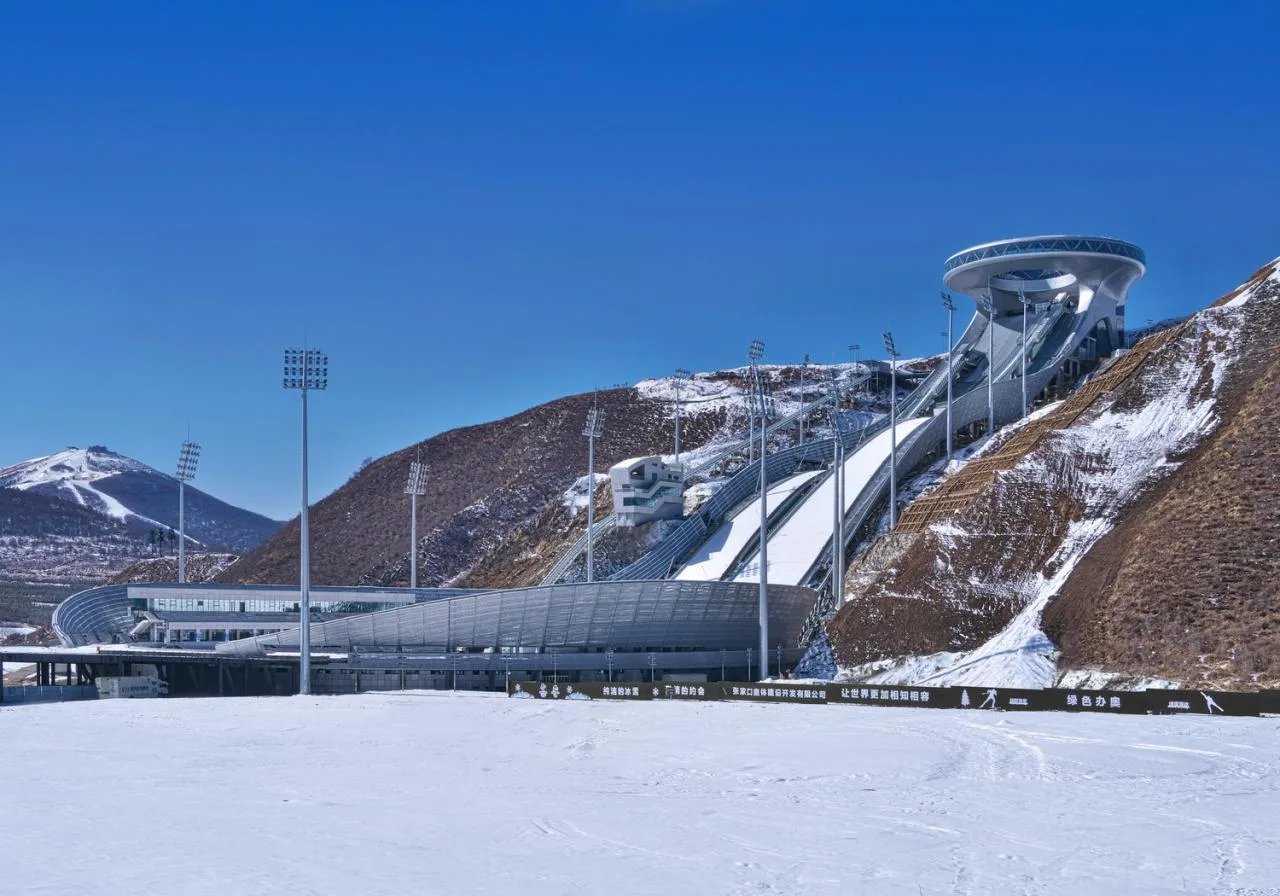
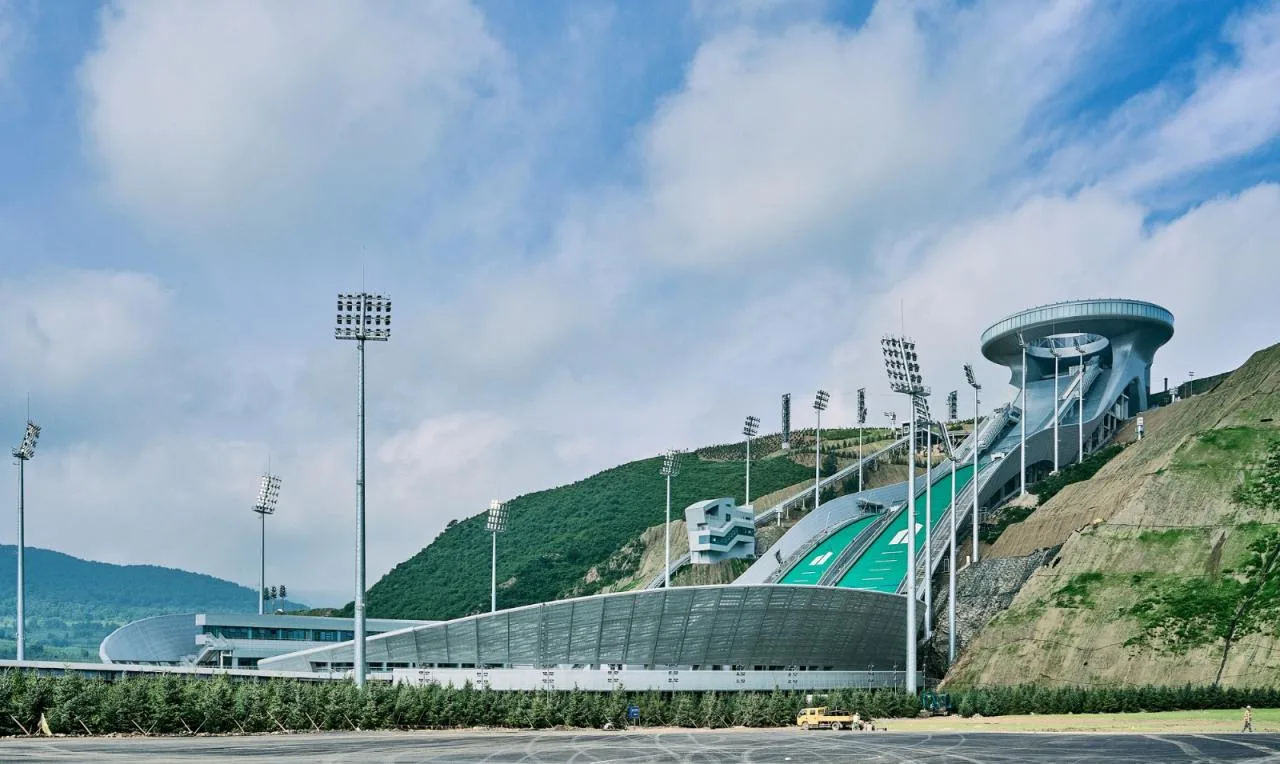
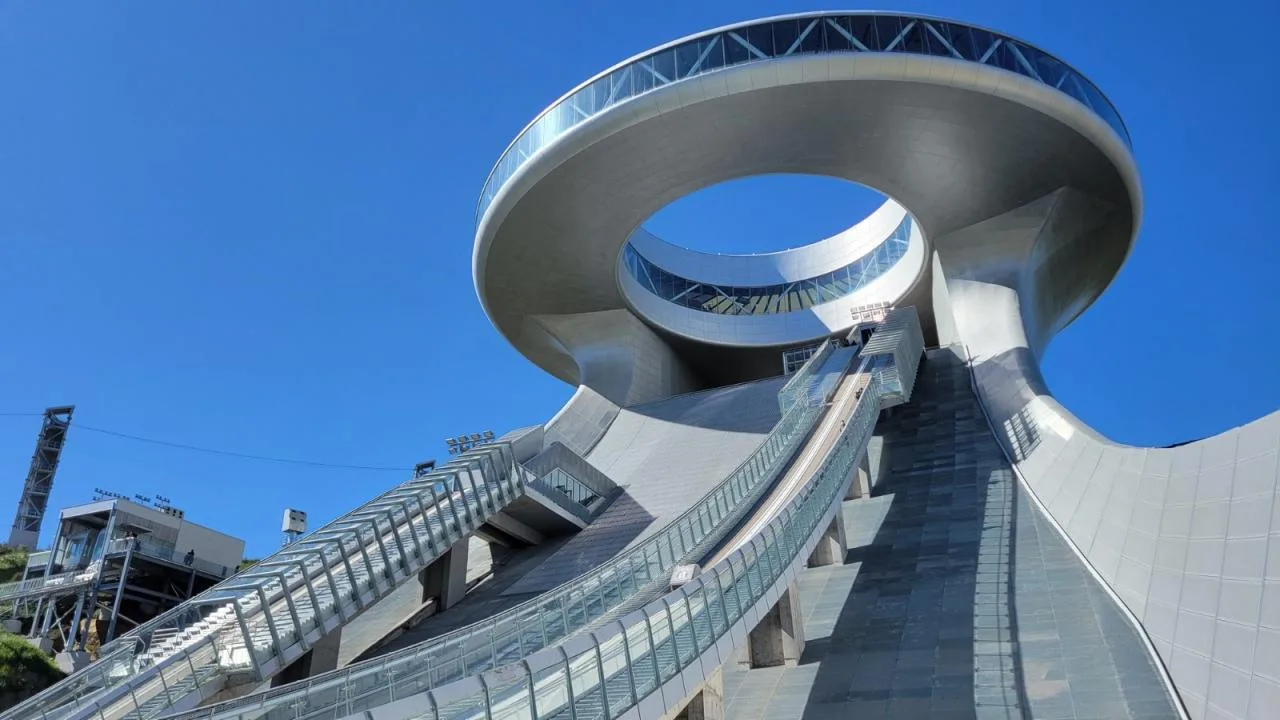
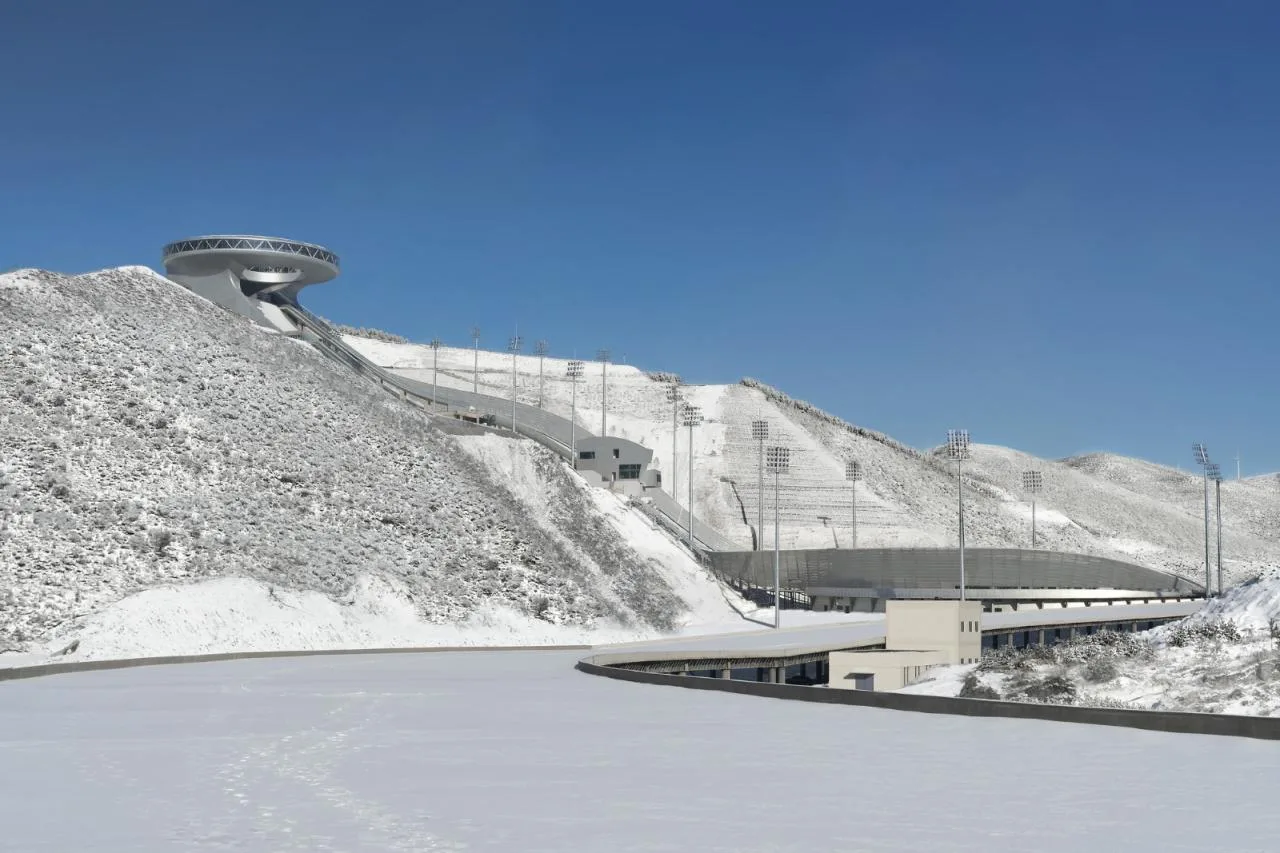
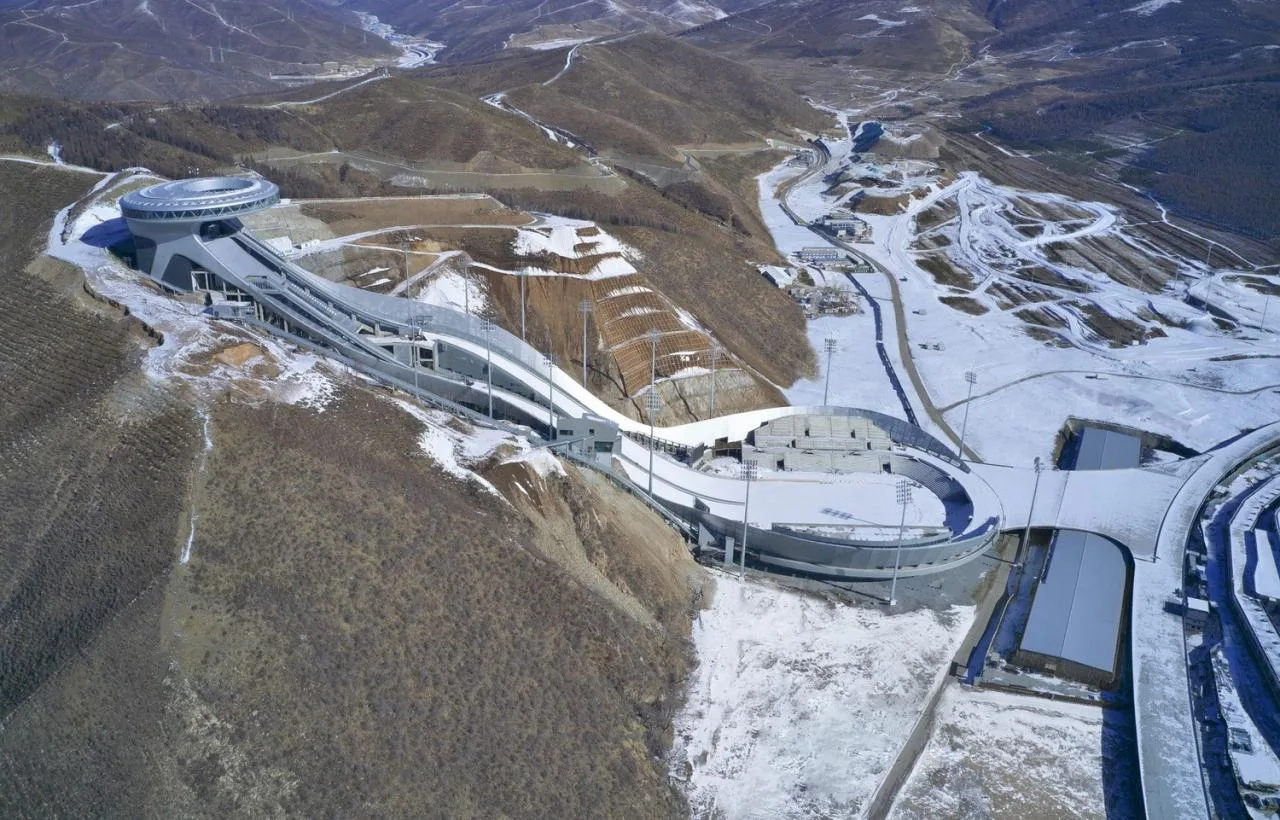
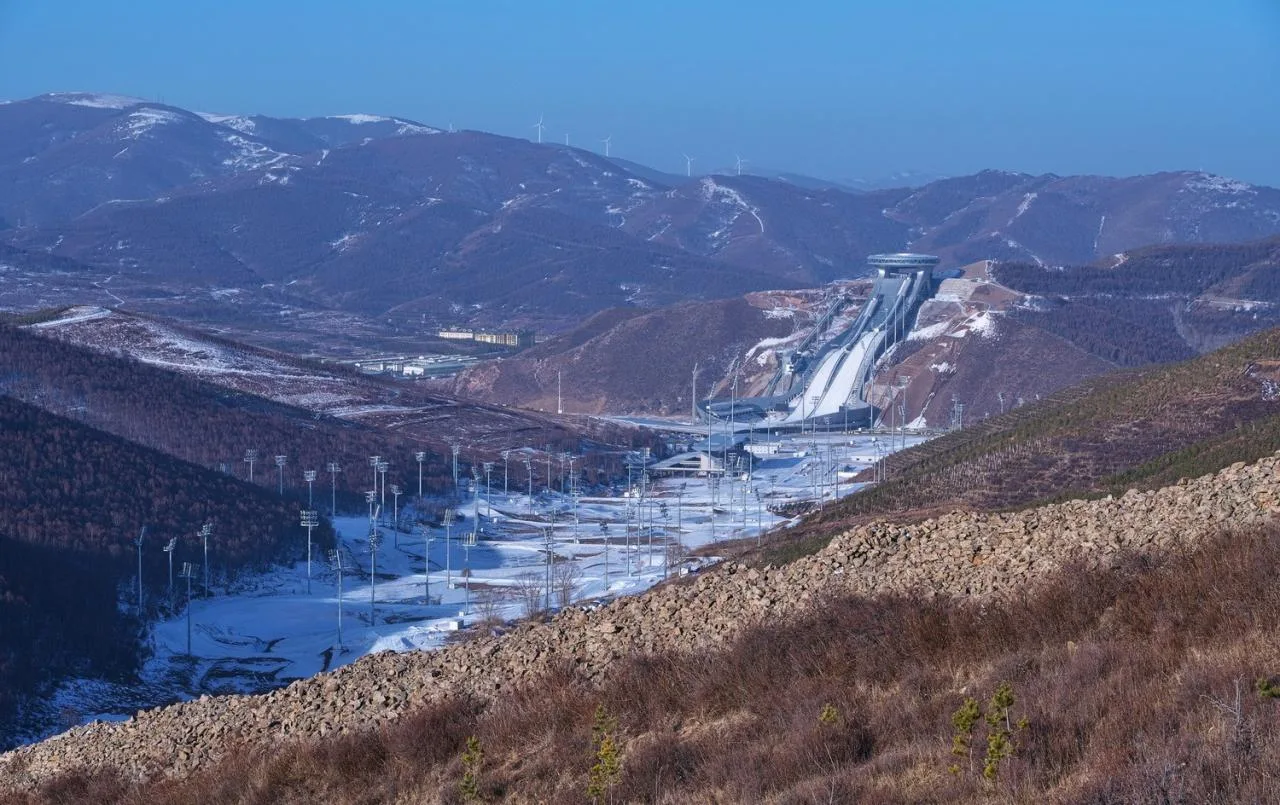
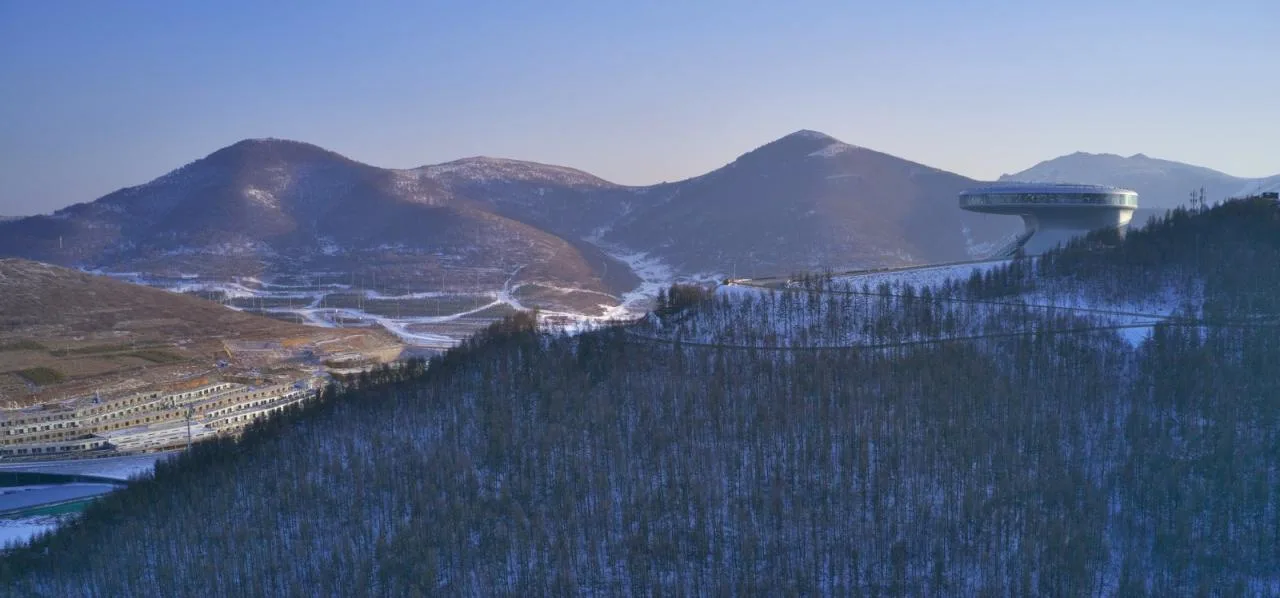
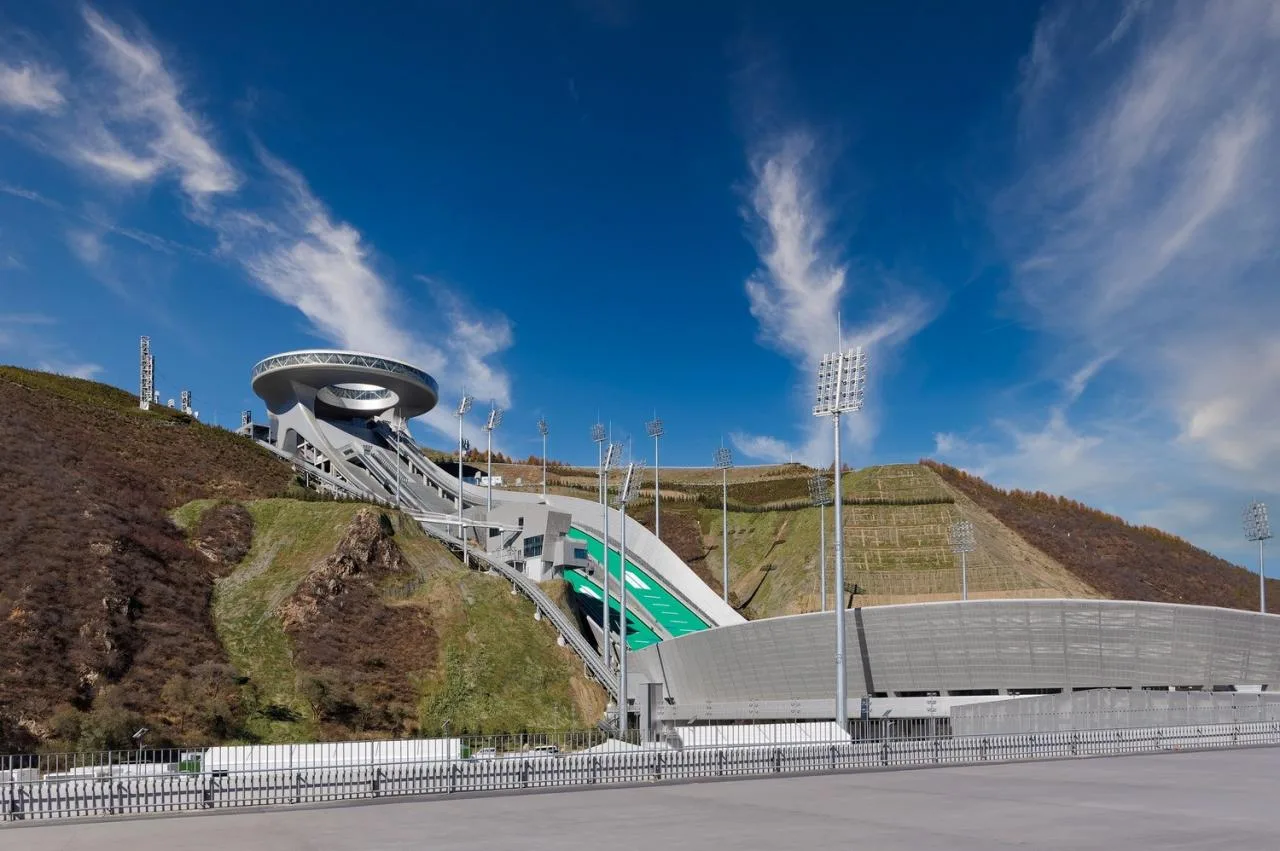
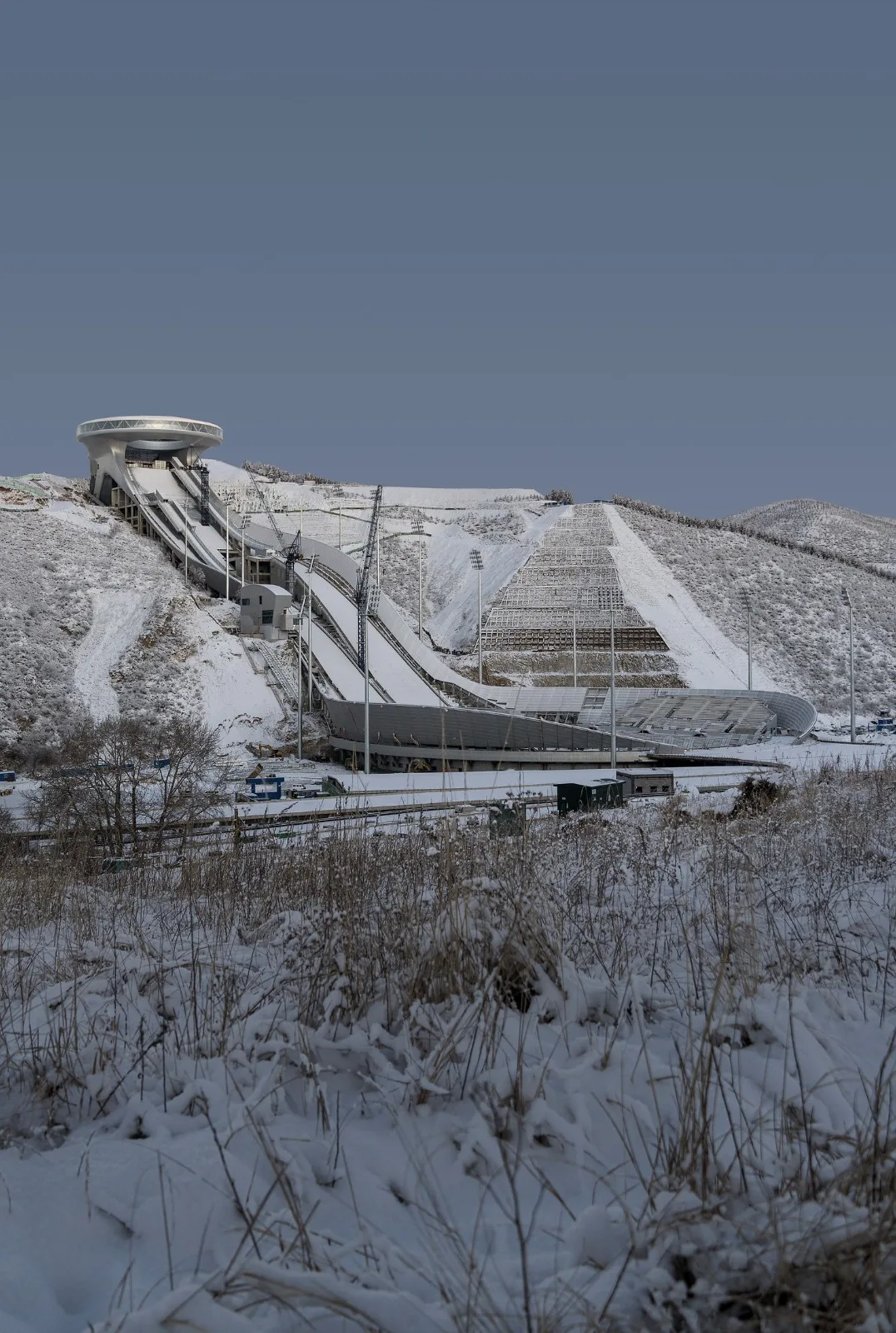
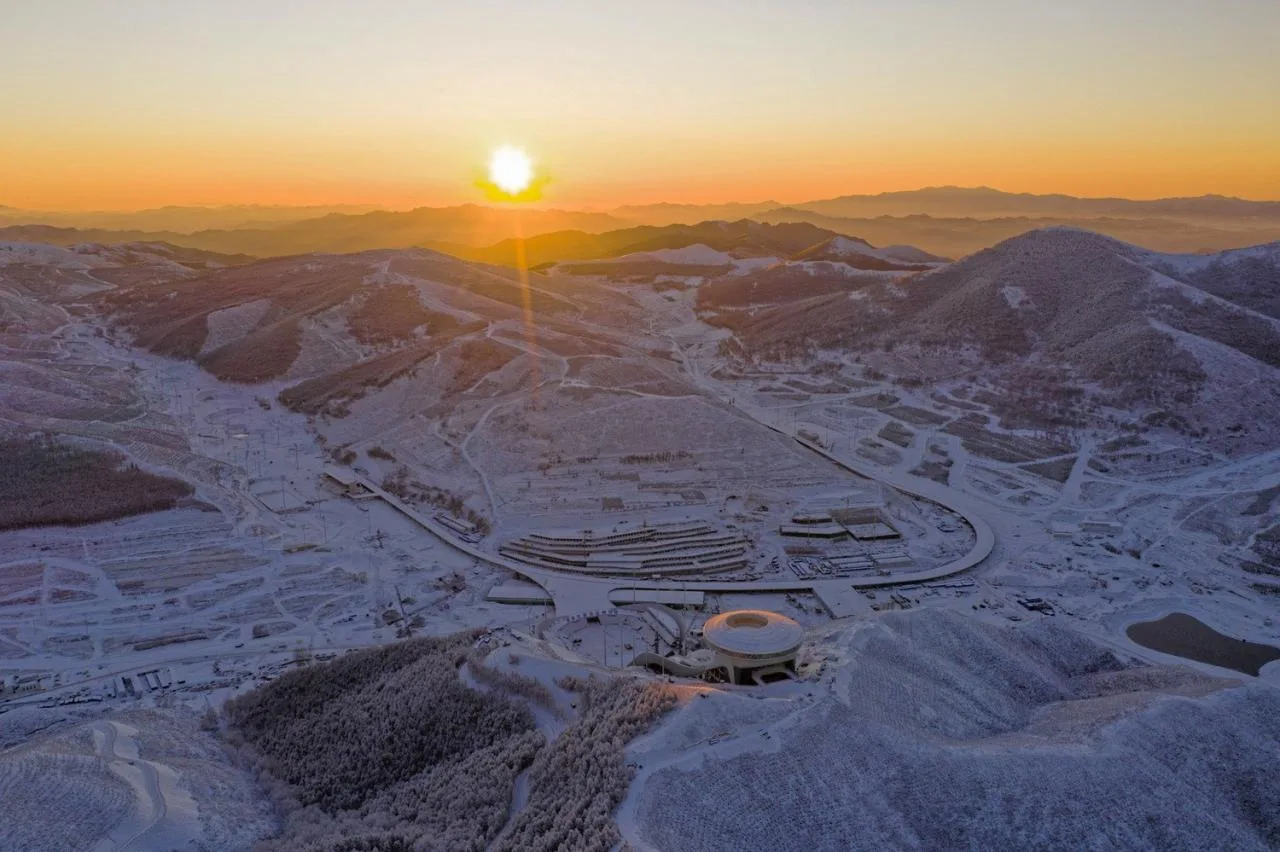
The National Ski Jumping Center, also known as “Xueruyi,” is a flagship venue for the Zhangjiakou competition zone of the Beijing 2022 Winter Olympics. Spanning approximately 62 hectares, it is situated at the northwest corner of an ancient poplar tree cluster in Zhangjiakou, about 600 meters in a straight line from the main entrance square of the poplar grove. The design of the competition venue draws inspiration from the traditional Chinese ornament “Ruyi,” integrating elements such as the Mountain Peak Club, the grandstand area at the foot of the mountain, the competition zone, and the comprehensive support areas.
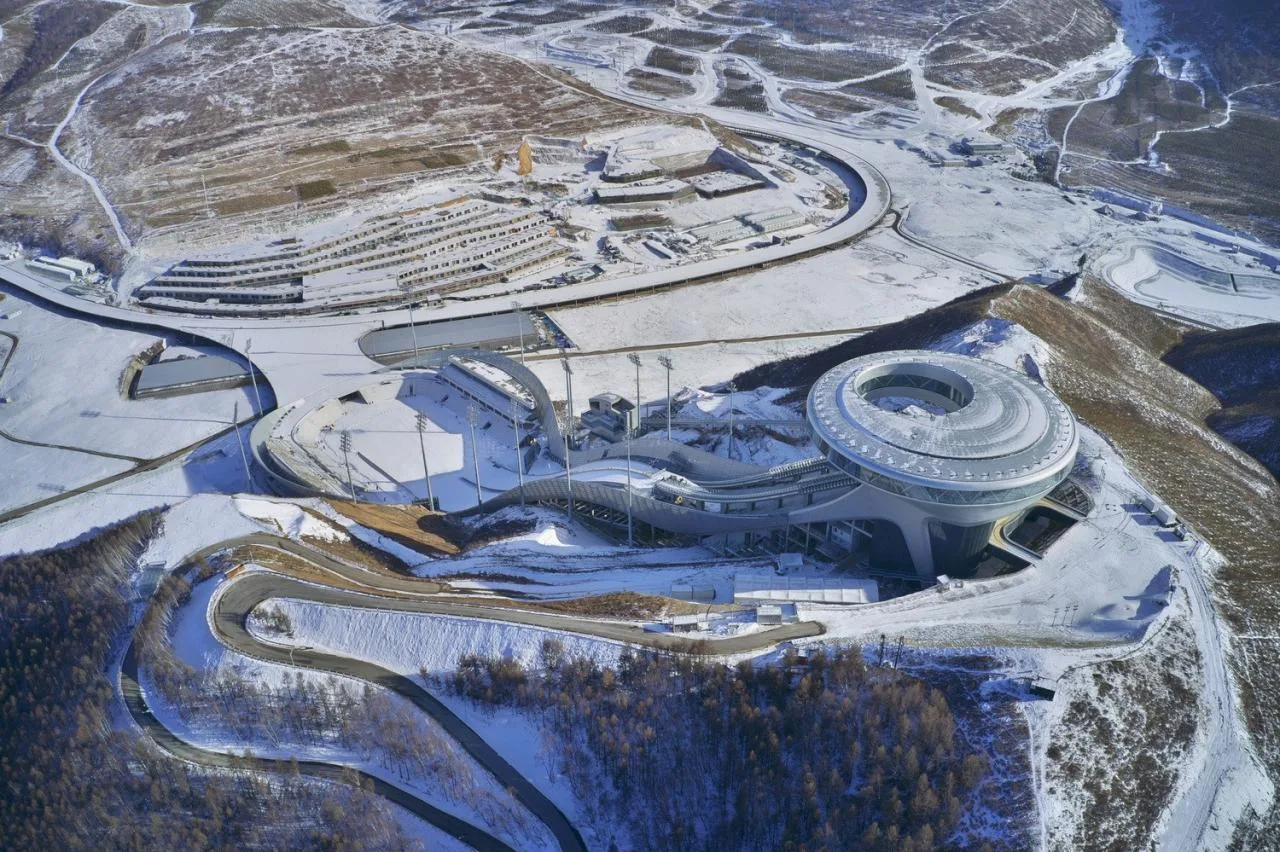
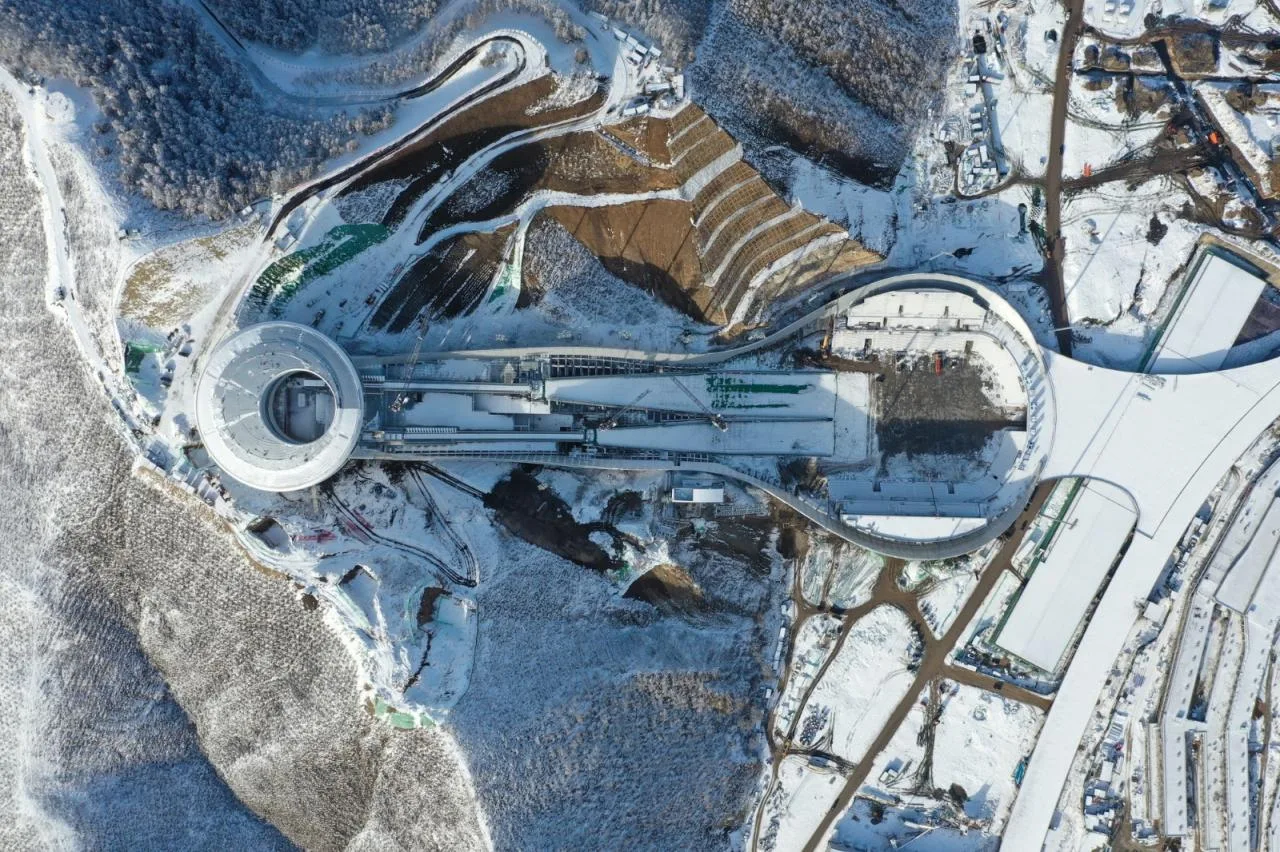
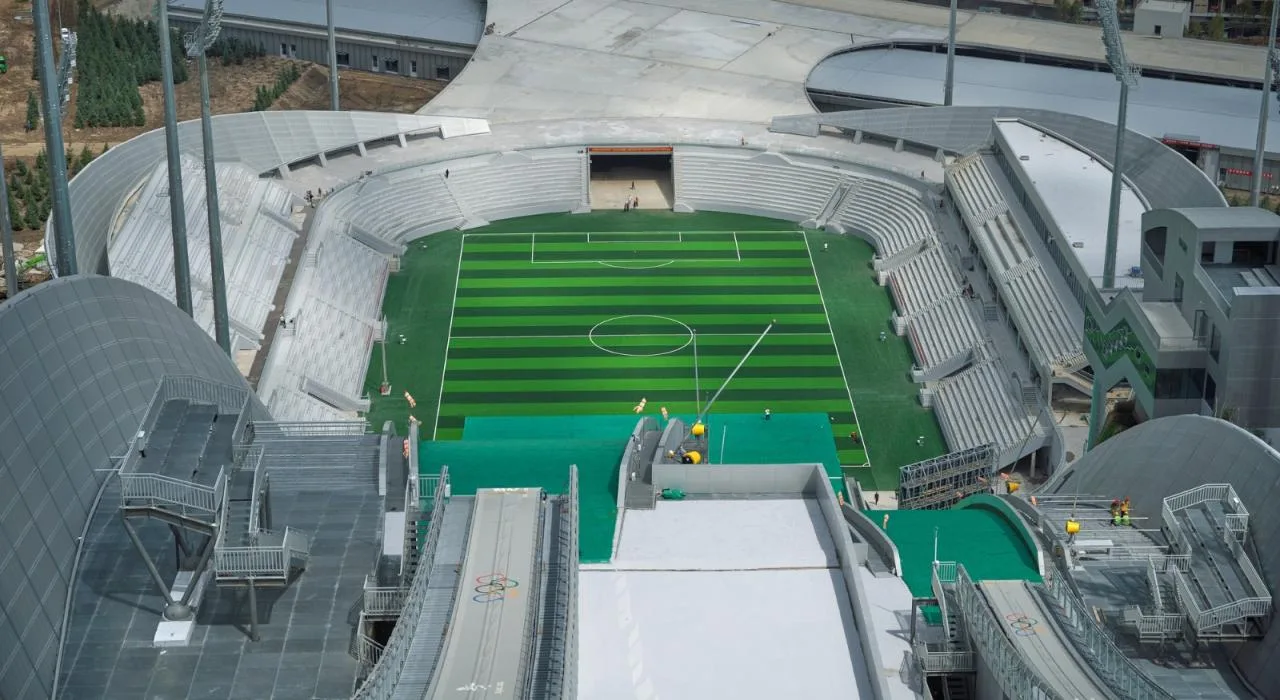
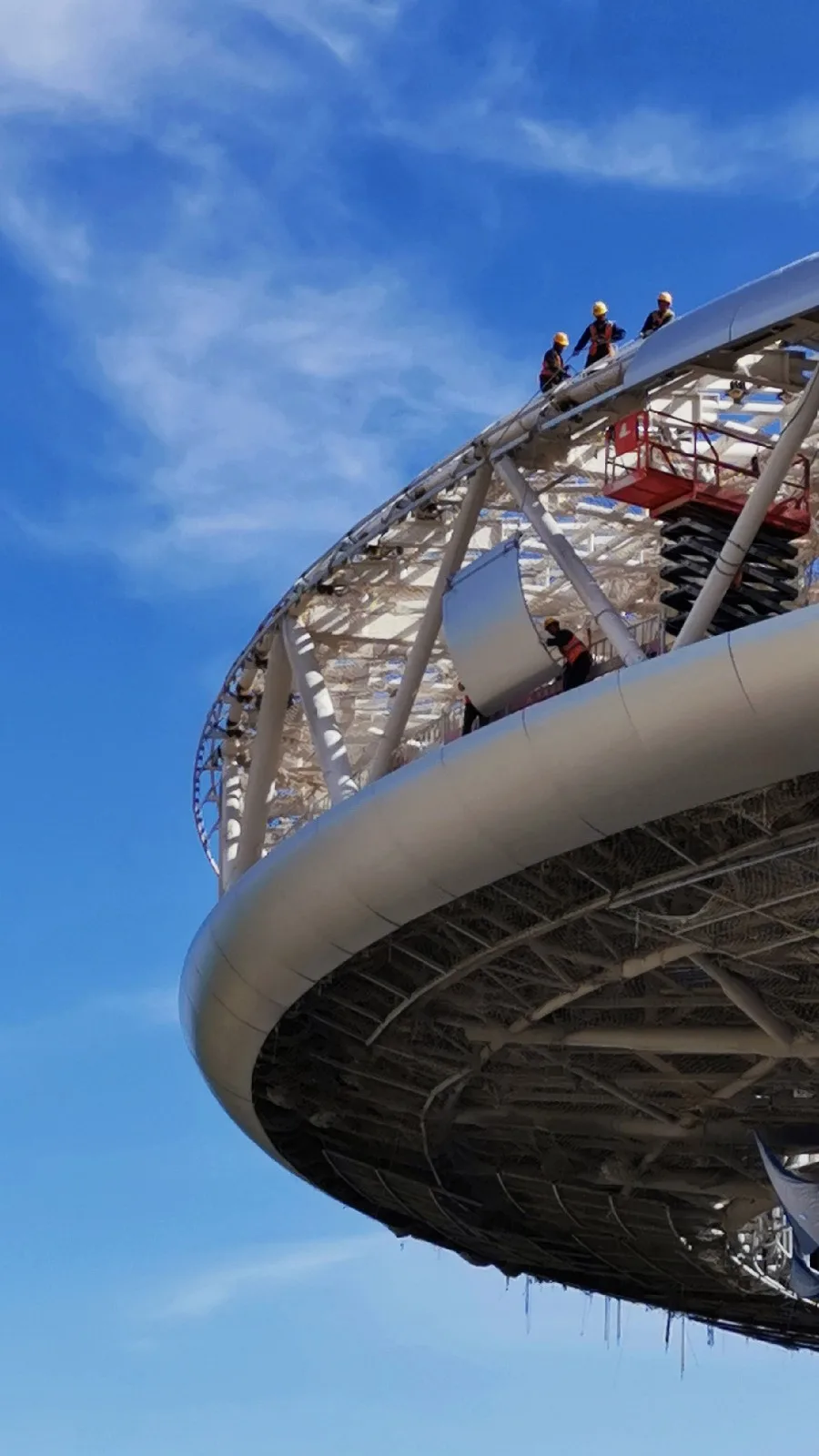
The Mountain Peak Club primarily serves as a space for post-competition sightseeing and meetings. The grandstands at the base of the mountain are divided into two sections: the southern stand includes seating for spectators, media reporters, and commentators, with the technical building located underneath. This building also houses the Olympic family facilities. On the north side, an additional spectator stand is provided.
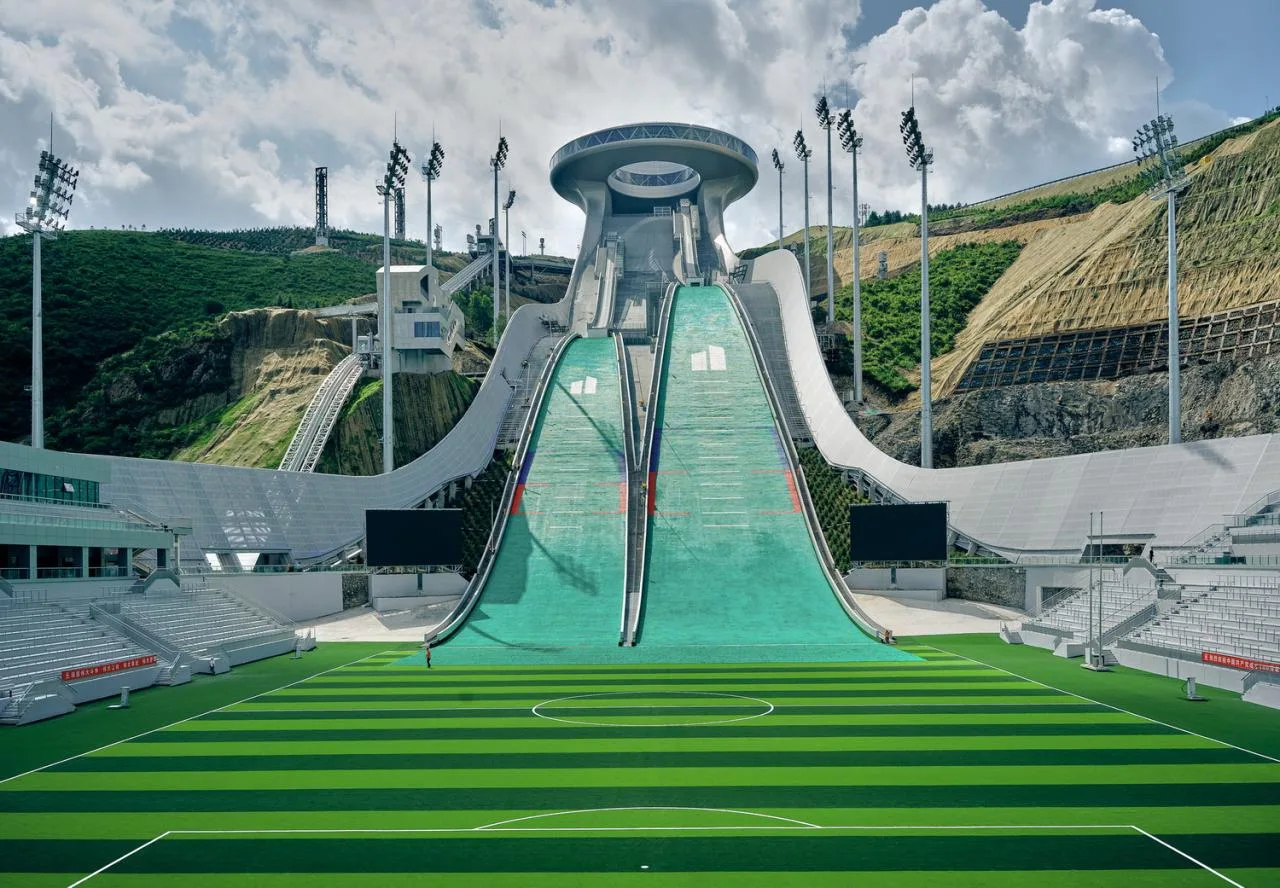
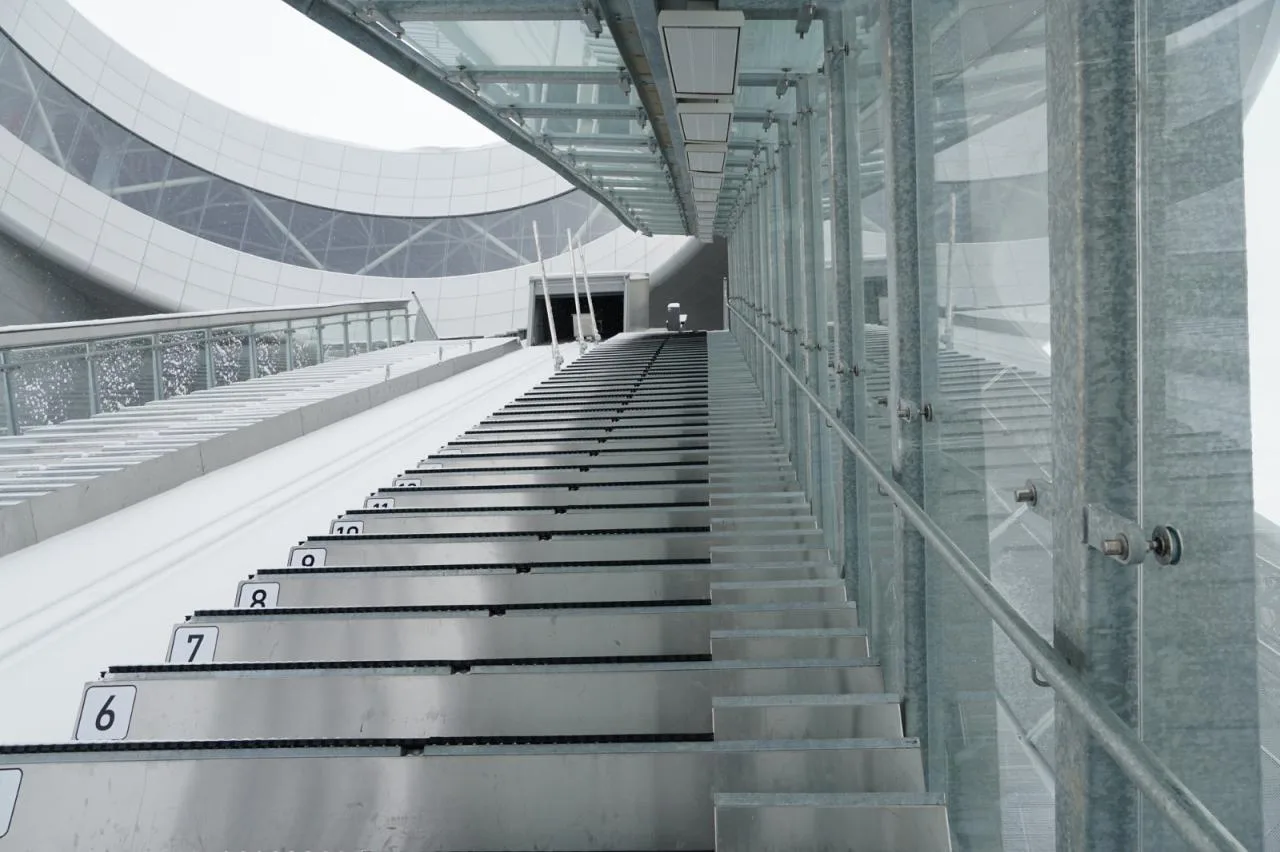
The competition area features two ski jump ramps: a large hill (HS140) and a normal hill (HS106). The referee tower is positioned alongside the normal hill. On the south side of the landing zone, a mixed interview area is planned, with a ceremony area located on the eastern side. Athletes’ comprehensive facilities are situated at the starting point of the normal hill. Additionally, on the north side of the grandstand area at the mountain’s base, there is a parking lot, helicopter landing pad, and training ski jump ramp, while the south side houses a broadcasting complex.
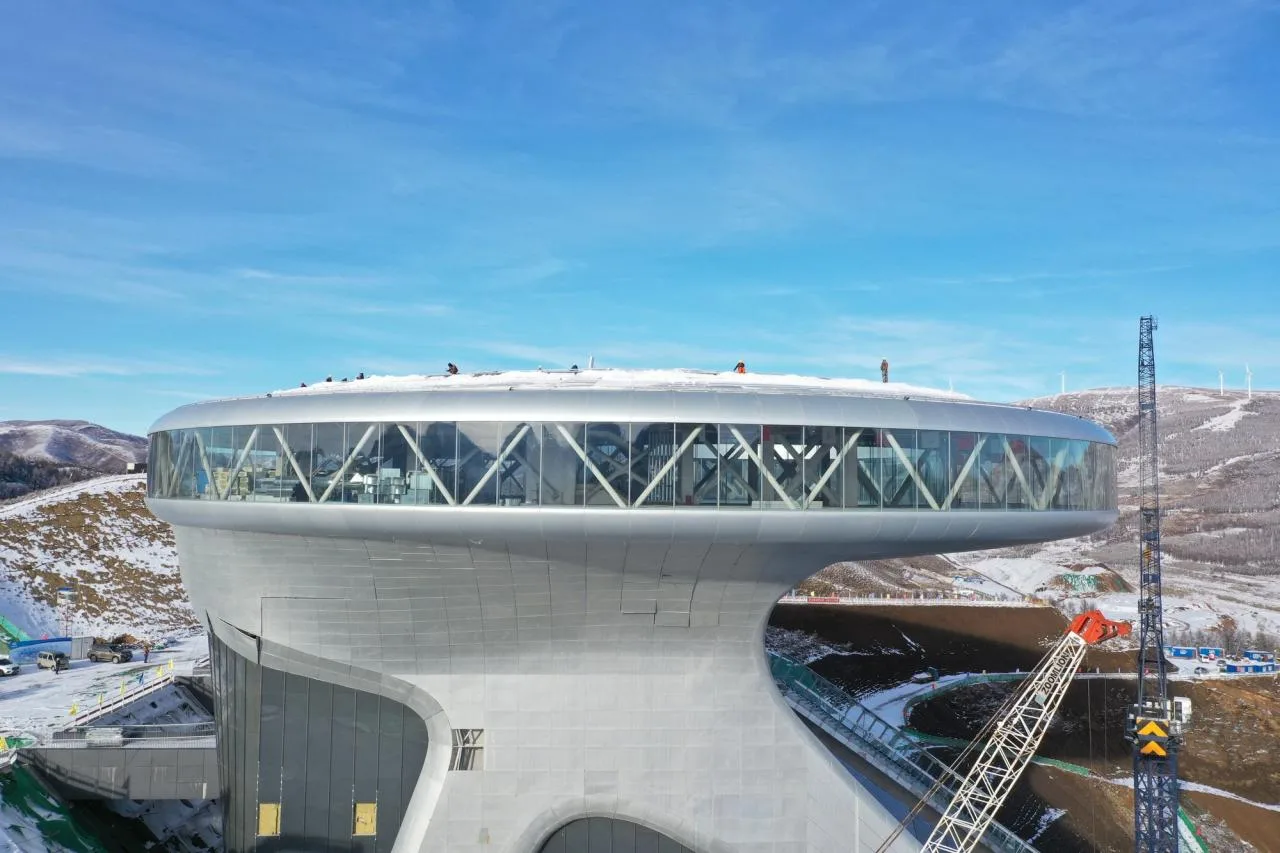
Designing and constructing iconic Winter Olympic venues in mountainous regions often presents sustainability challenges. These include ecological impacts like microclimate disruption and forest loss, increased construction expenses due to terrain and climate constraints, underutilization of mountain venues outside competition times leading to resource waste, and spectator discomfort caused by low temperatures. In response to Beijing 2022’s sustainability goals and China’s commitment to sustainable development, the National Ski Jumping Center employs innovative strategies. These include digital design of venue forms, precise shaping of track profiles, multifunctional post-event operations, and environmentally conscious competition and viewing experiences. Through comprehensive spatial interventions, these approaches address the key sustainability concerns.
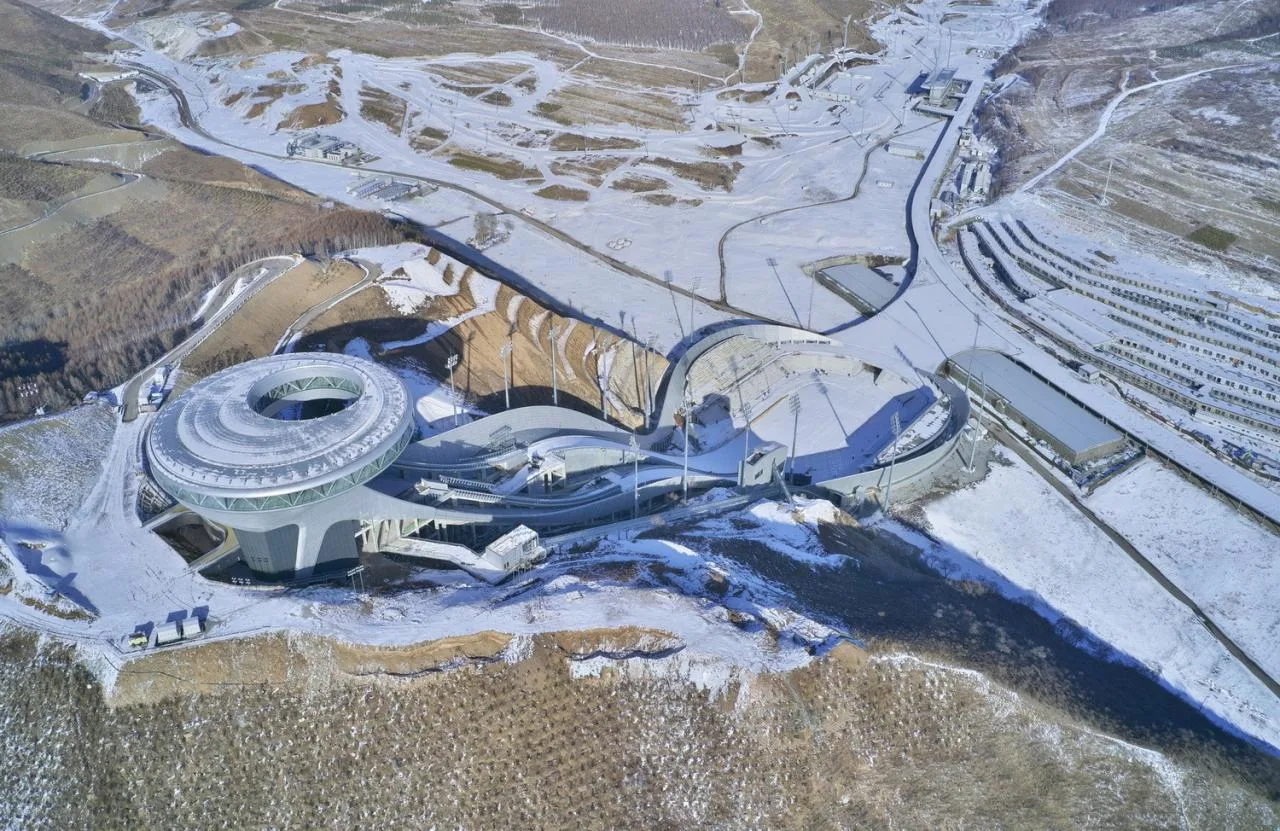
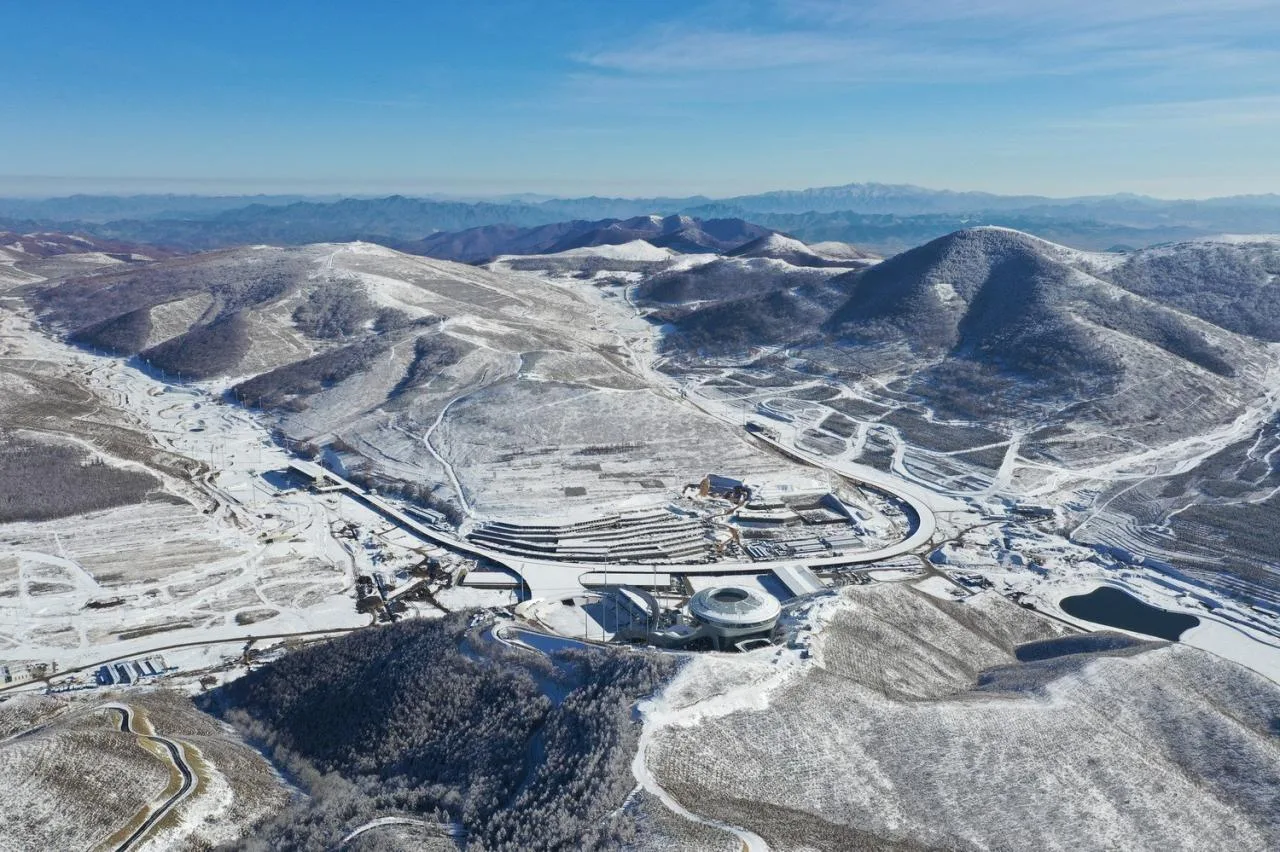
From a comprehensive spatial perspective, the design strategy addresses sustainability across four scales: the far scale (within 15-30 minutes walking distance), the medium scale (1-15 minutes walking distance), the near scale (within 1 minute), and the micro scale (individual action range).
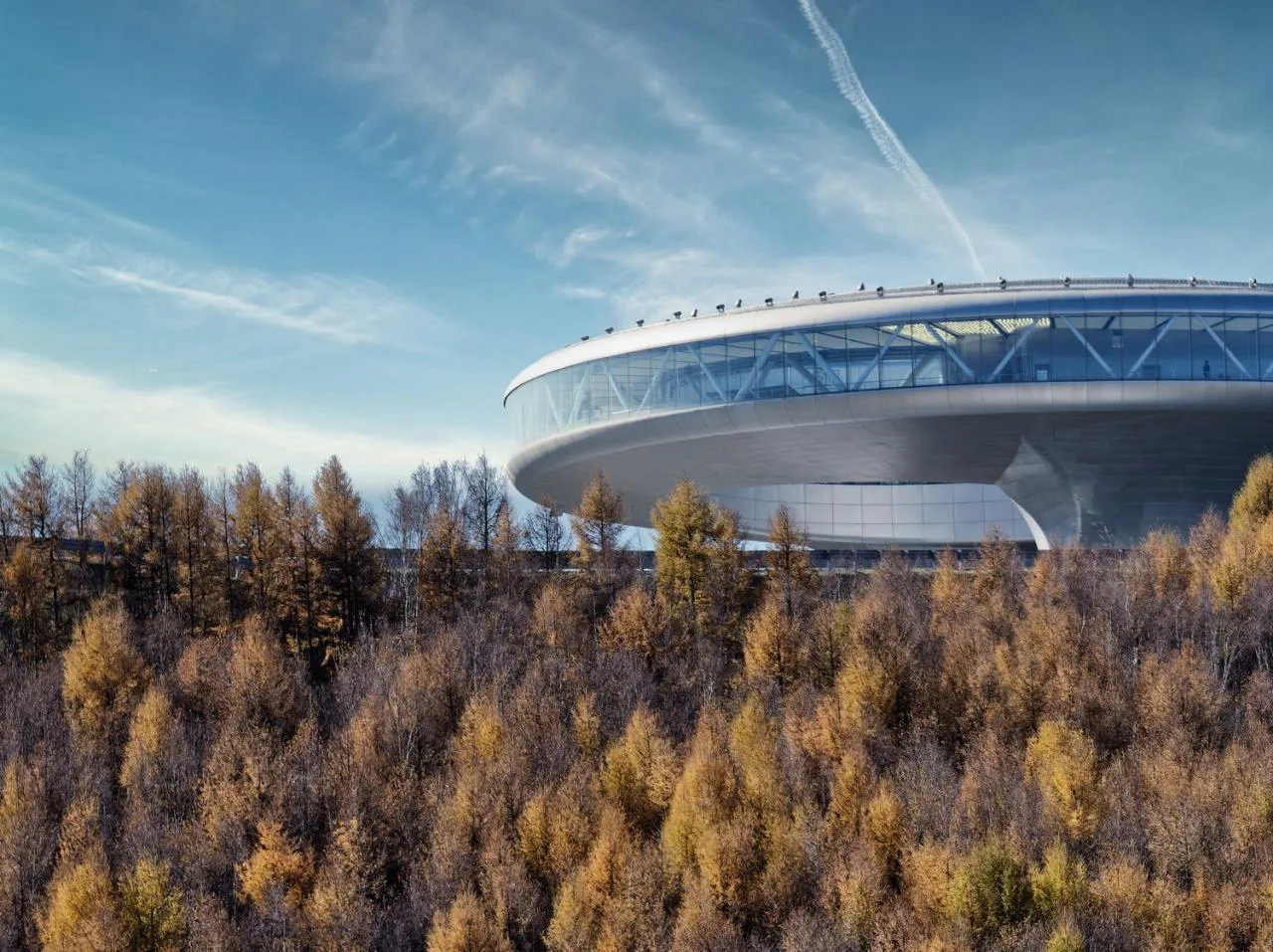
At the far scale, the National Ski Jumping Center supports cultural outreach by visually linking ski jumping directions to the nearby Great Wall ruins. The medium scale emphasizes the integration of Chinese cultural elements, multifunctional event site positioning, and mountain engineering techniques to minimize ecological impacts, focusing on cultural, economic, and ecological sustainability. At the near scale, the center addresses construction challenges posed by rugged terrain and harsh cold through prefabricated building methods.
At the micro scale, focusing on individual experience, innovations include precise track profiles, new ski slope surface materials, and integrated technologies for capturing athletes’ takeoff actions and flight trajectory analysis in the takeoff zone. These features help athletes improve their performance. Additionally, enhancing local thermal comfort in spectator areas improves the viewing experience, contributing to the sustainable development of winter sports and the Olympic movement.
Project Drawings
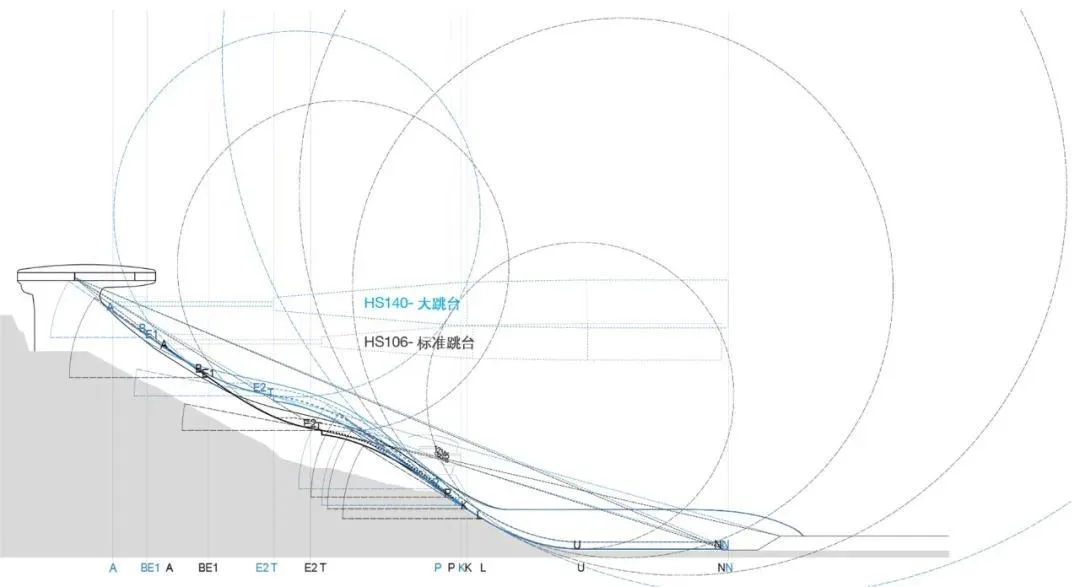
Concept Diagram of the National Ski Jumping Center
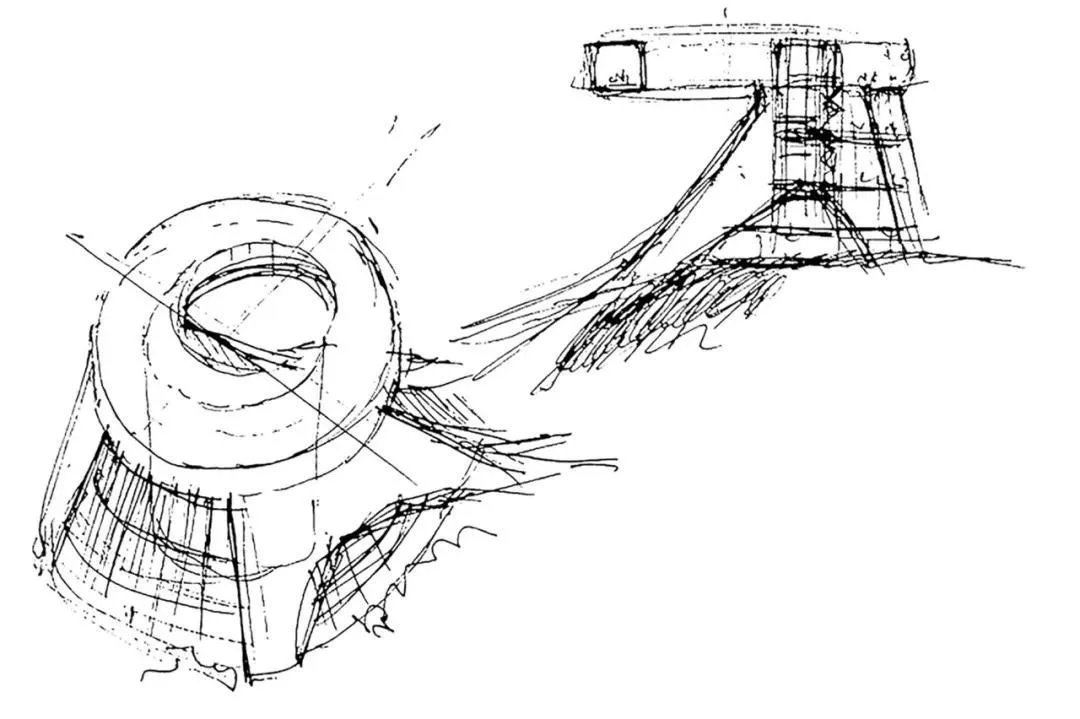
△ Sketch
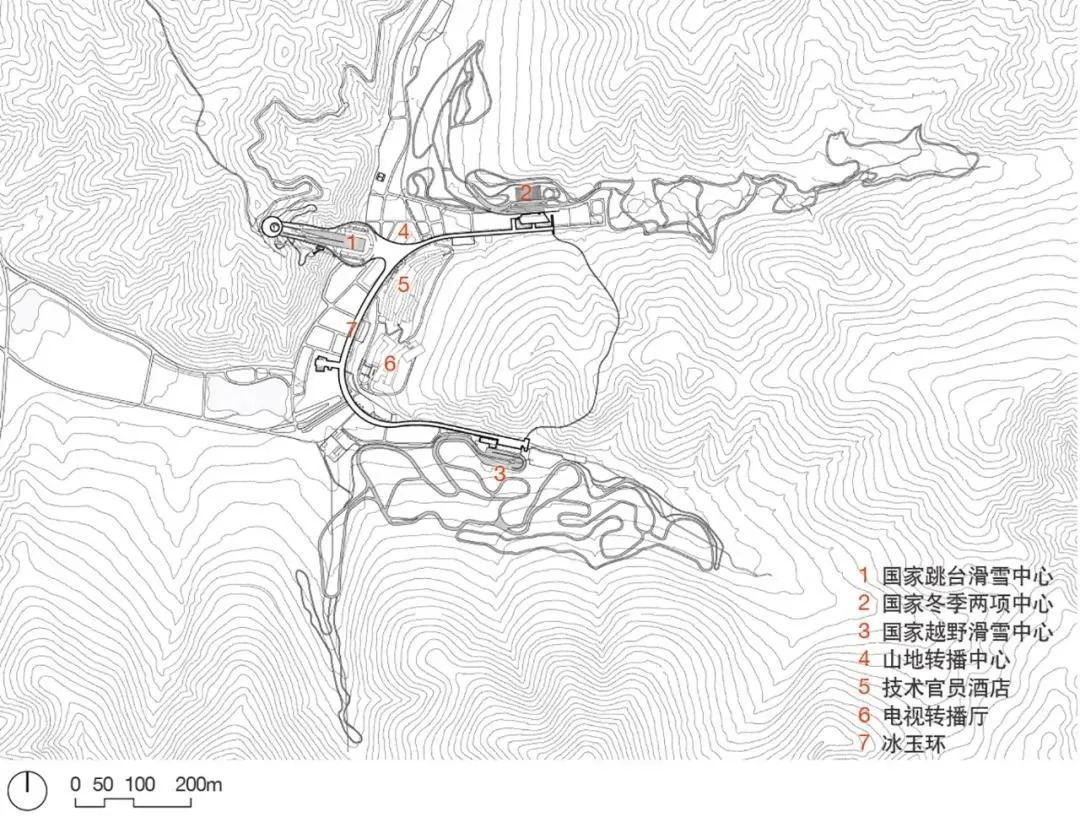
△ General Plan of Ancient Poplar Venue Area
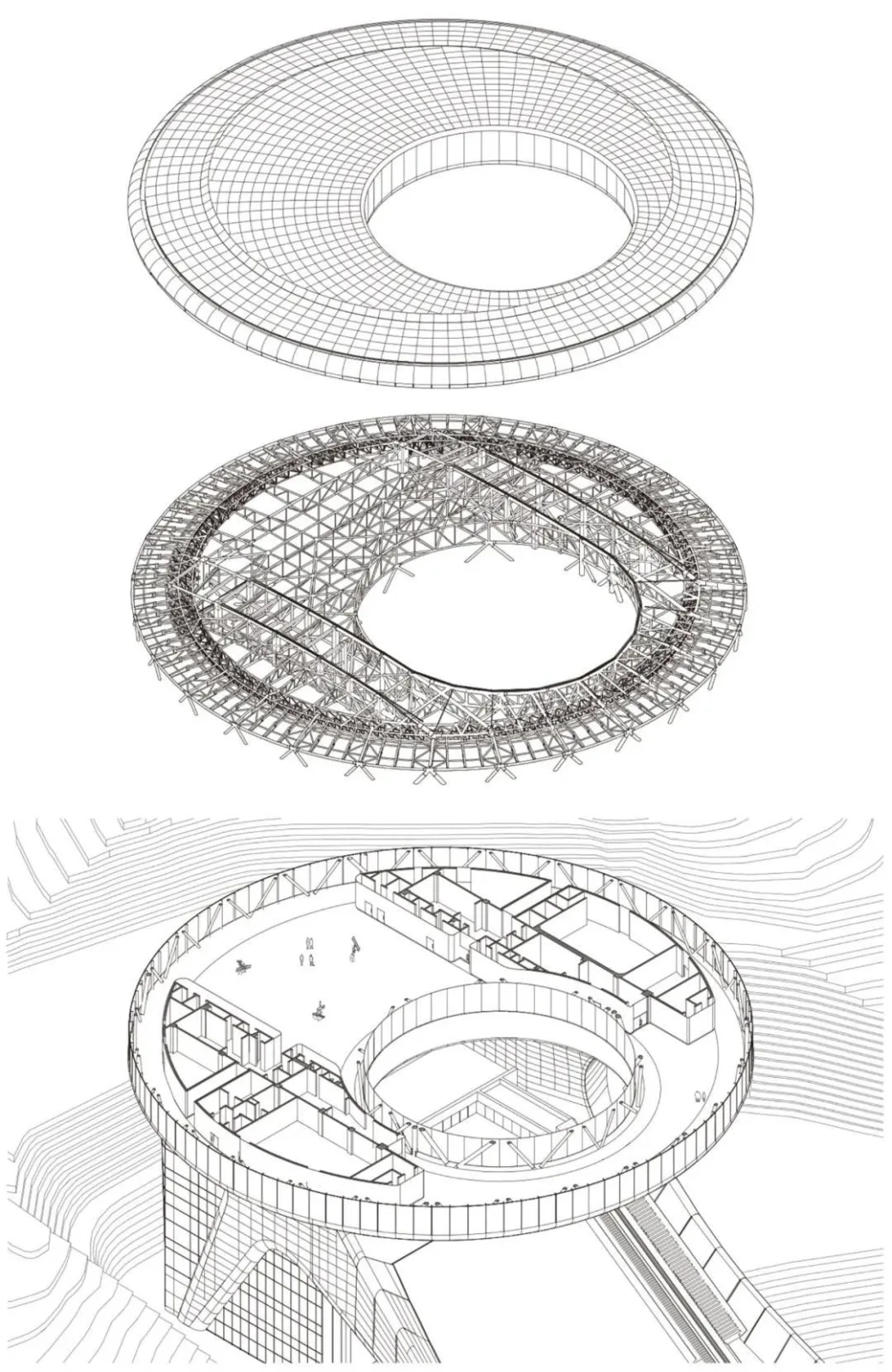
△ Axonometric View of the Peak Club
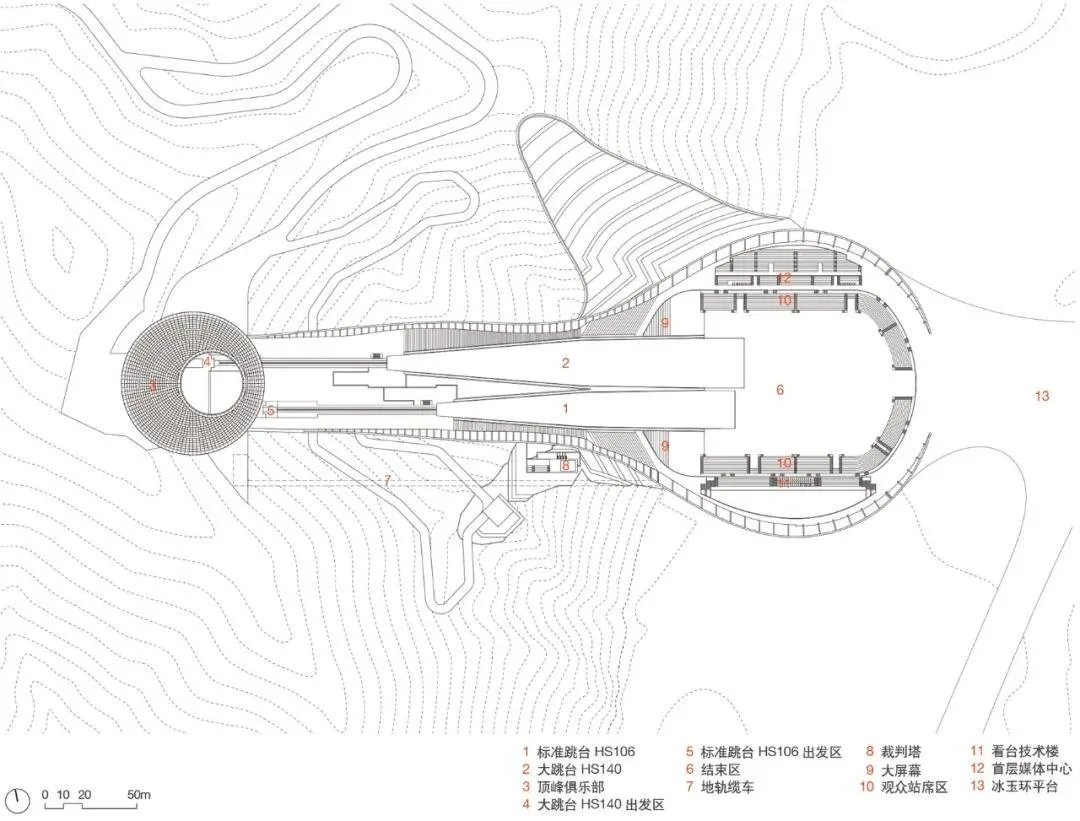
△ Overall Site Plan
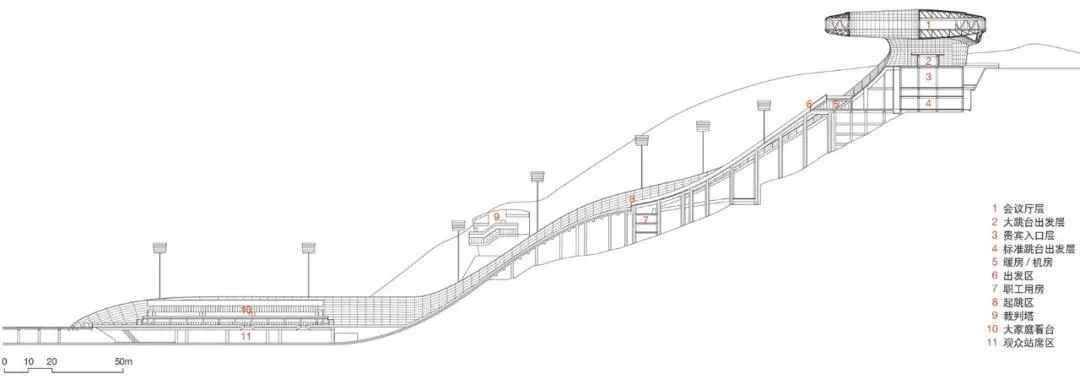
△ Profile View
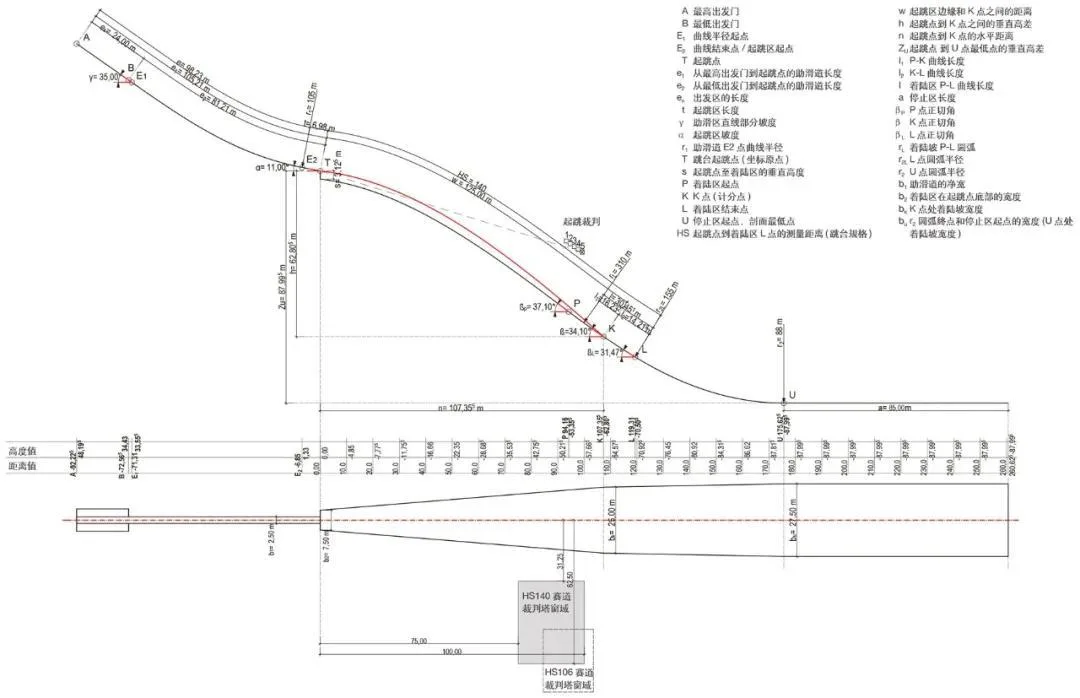
△ Section and Plan of HS140 Large Ski Jump Platform
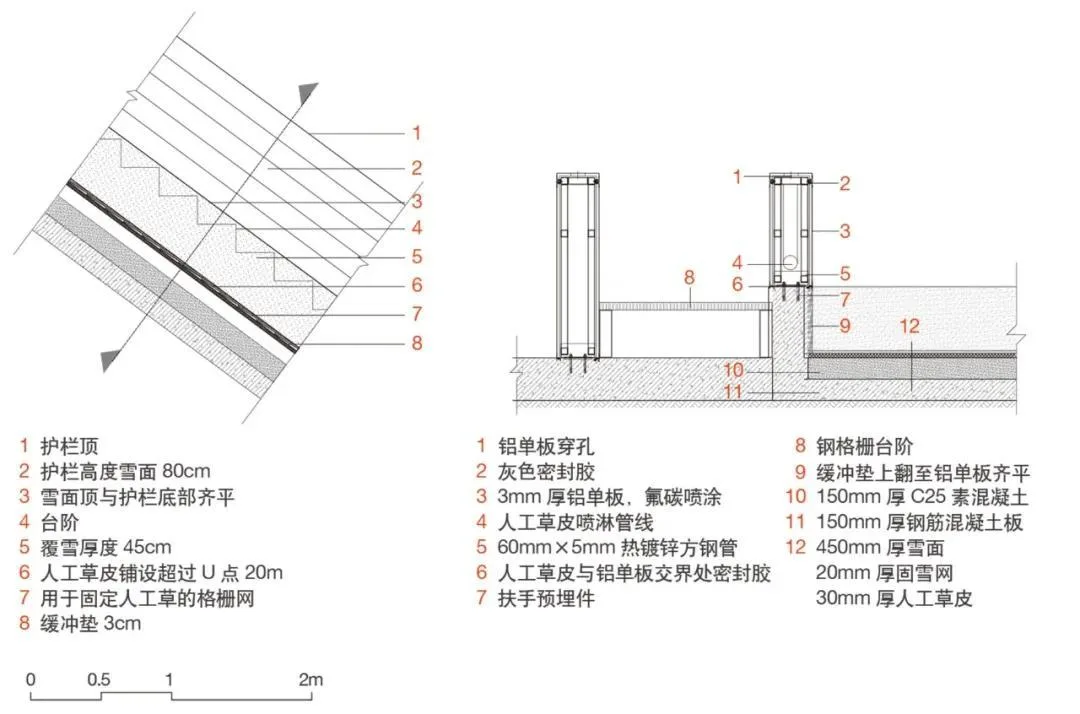
△ Detailed Drawing of Landing Slope
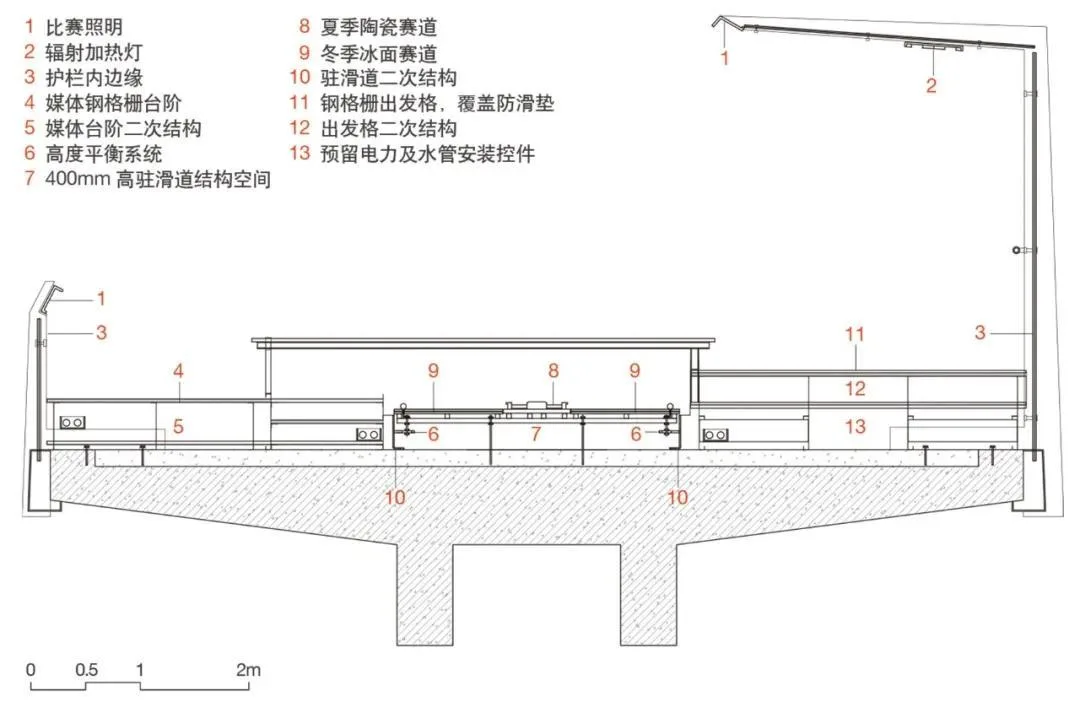
△ Detailed Section of the Ski Jump Track
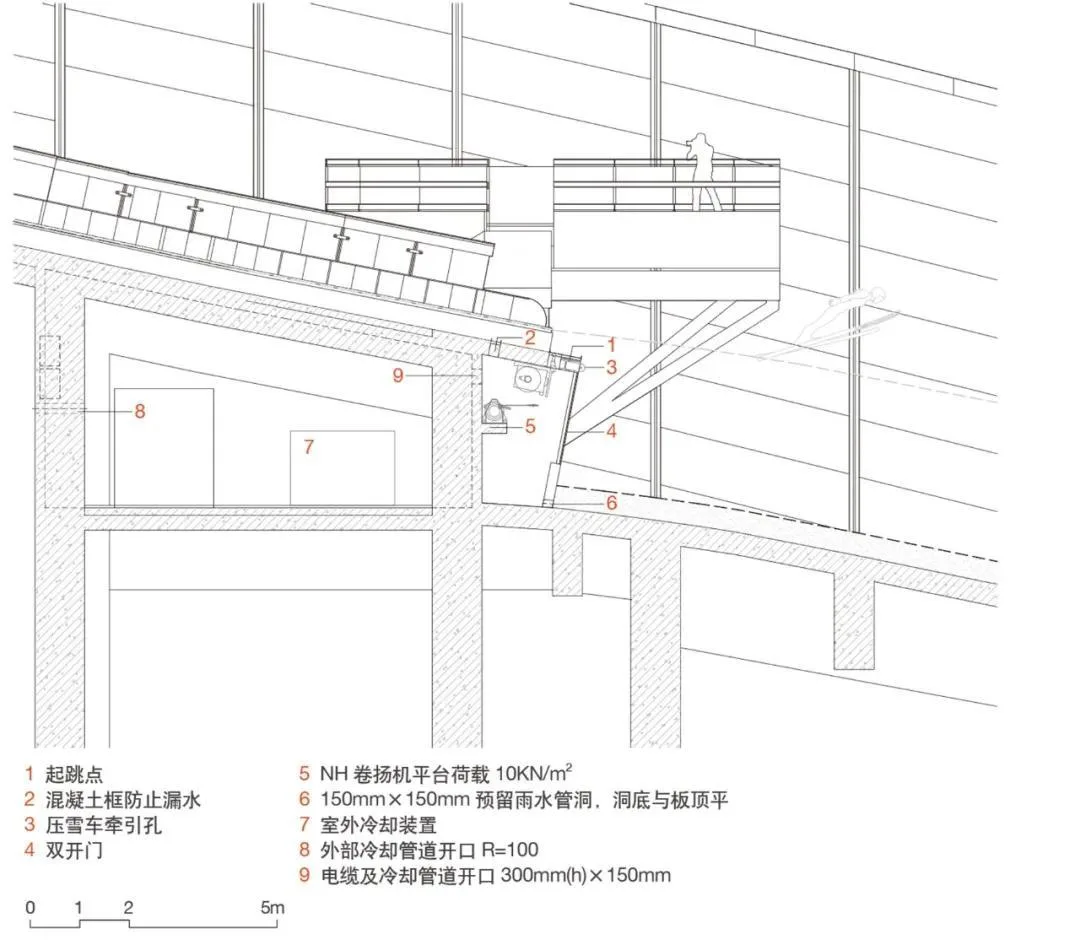
△ Detailed Drawing of Take-off Point
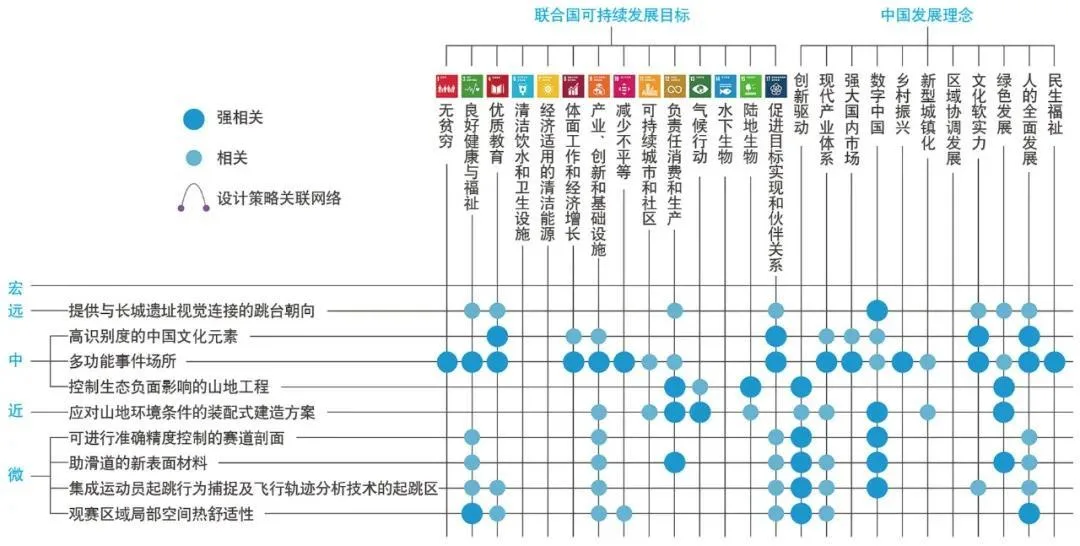
△ Sustainability Matrix for the National Ski Jumping Center Design Strategy
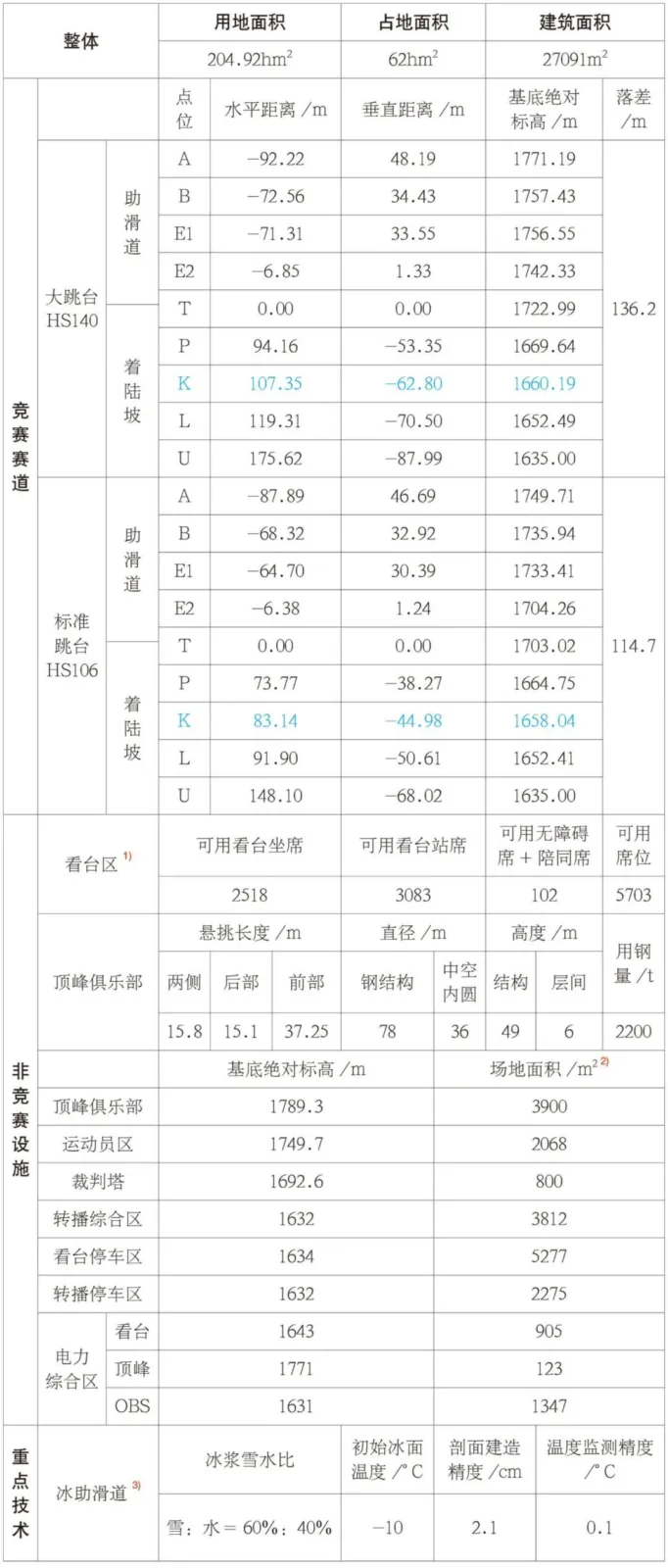
△ Data Related to the National Ski Jumping Center
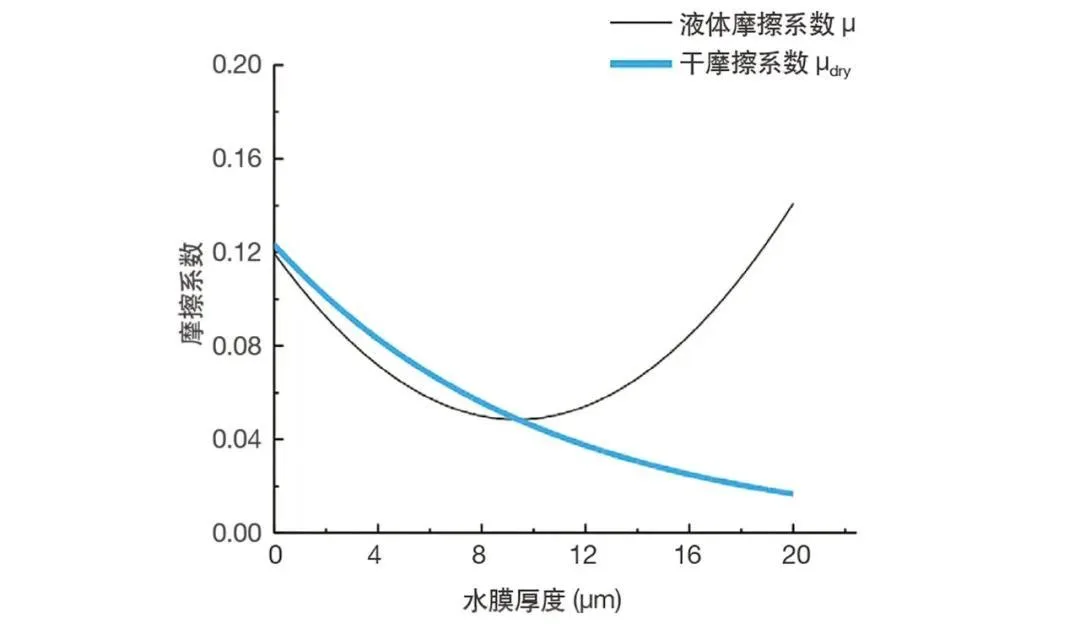
△ Relationship Curve Between Water Film Thickness and Friction Coefficient
Project Information
Architectural Design: Tsinghua University Architectural Design and Research Institute
Area: 24,200 m²
Project Year: 2020
Lead Architects: Zhang Li, Zhang Mingqi, Zhang Kui, Yao Hong
Design Team: Zhang Li, Zhang Mingqi, Zhang Kui, Yao Hong, Wang Chong, Pan Rui, Jiang Xirui, Wu Xue, Liu Yongbin, Deng Huishu, Xia Mingming
Structural Design Team: Yang Xiao, Li Binfei
Water Supply and Drainage Design Team: Xu Jinghui, Liu Cheng
HVAC Design: Wang Yiyi
Electrical Systems (Strong/Weak Current): Liu Lihong
Track Profile Design: Hans Martin
Client: Zhangjiakou Olympic Sports Construction and Development Co., Ltd.
Location: Zhangjiakou, China















Must log in before commenting!
Sign Up