
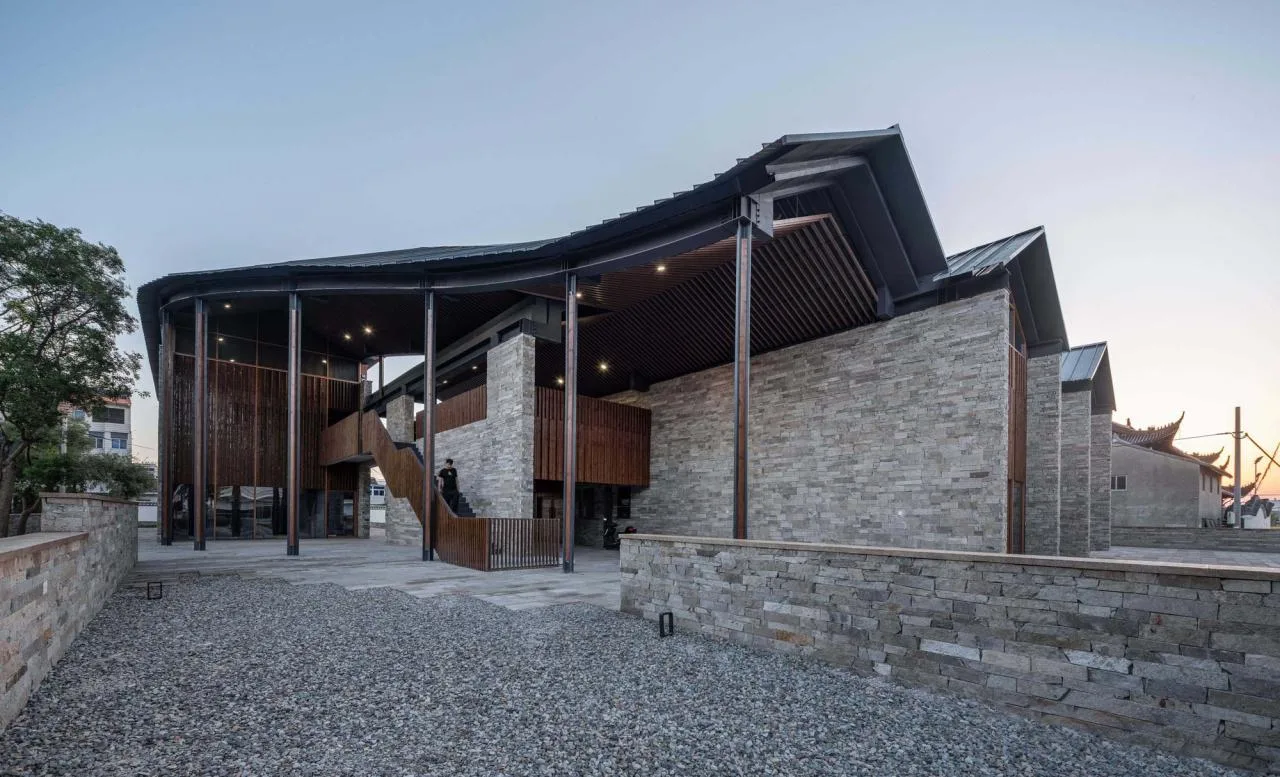
The Cultural Hall Garden is dedicated to creating a cultural space that seamlessly integrates landscape architecture. In 2019, we were invited by the People’s Government of Pengjie Town, Luqiao District, Taizhou City, to lead the cultural transformation and upgrade of Xiaowufen Village, a typical local village. As the centerpiece of rural cultural development, the cultural hall embodies the village’s cultural identity and spiritual significance.
However, due to time constraints during construction, there was often limited opportunity to fully explore the village’s cultural characteristics. The complexity of concurrent construction processes made the design challenge less about simply creating buildings or landscapes, and more about uncovering and reshaping the unique cultural essence of the village.
Cultural Exploration
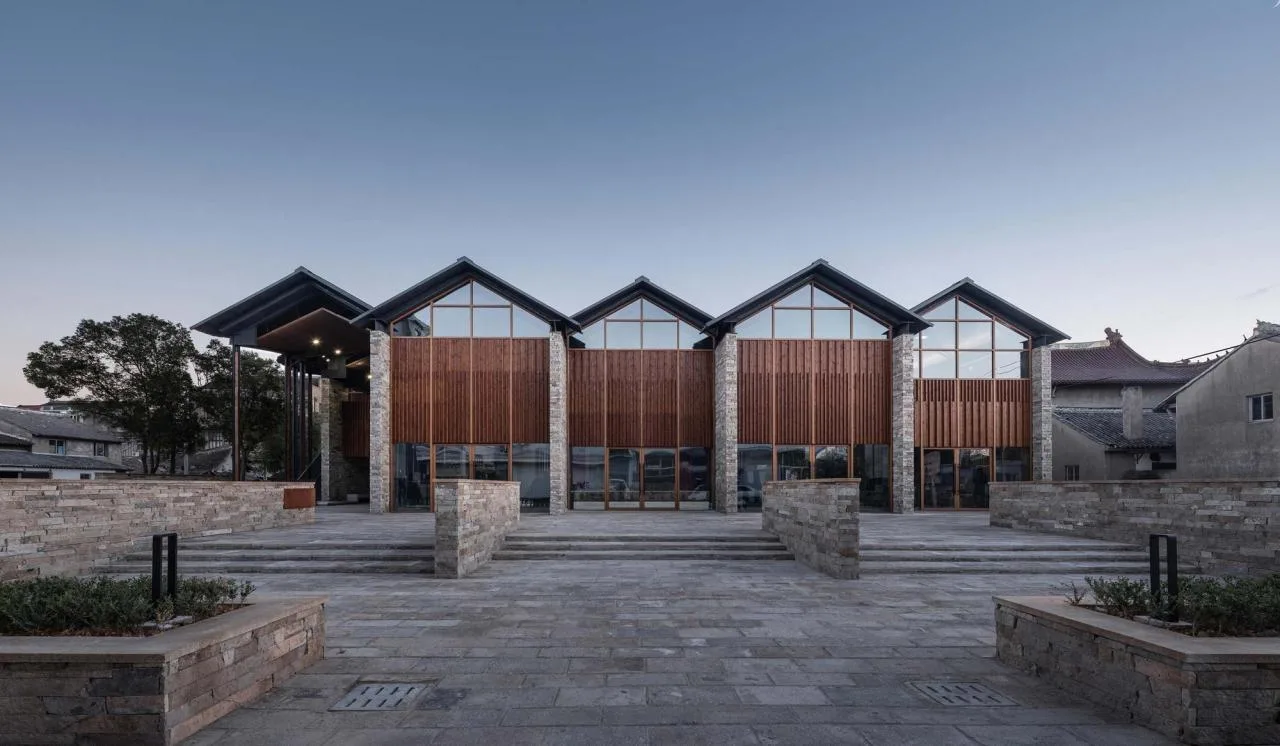
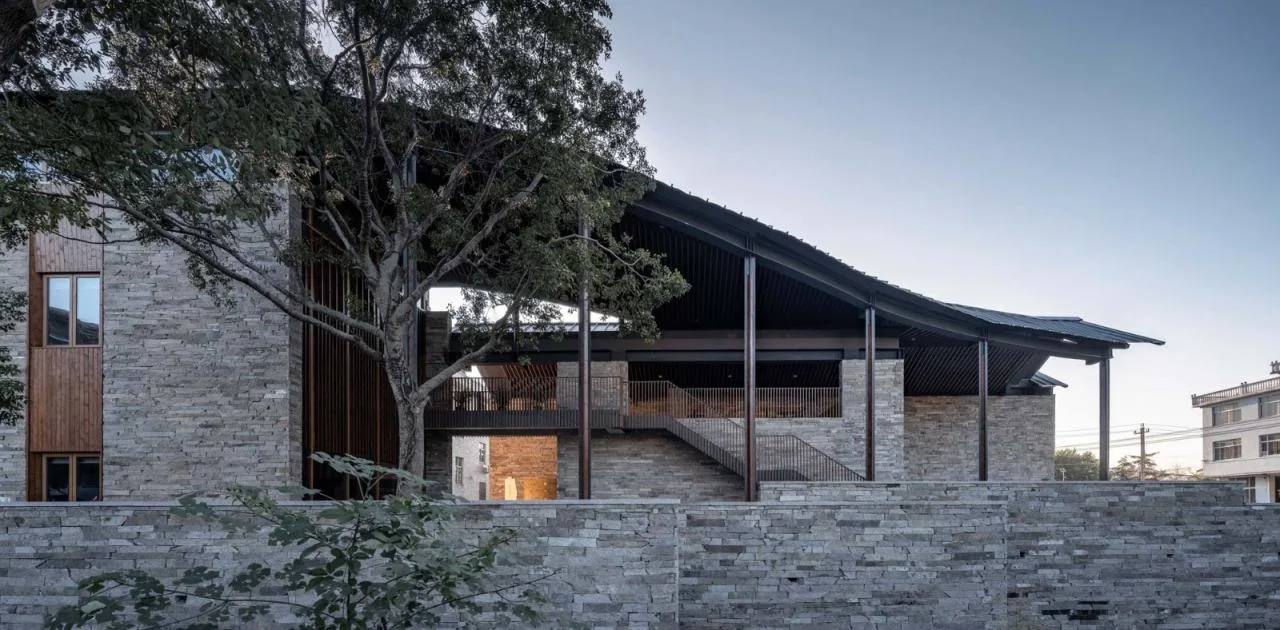
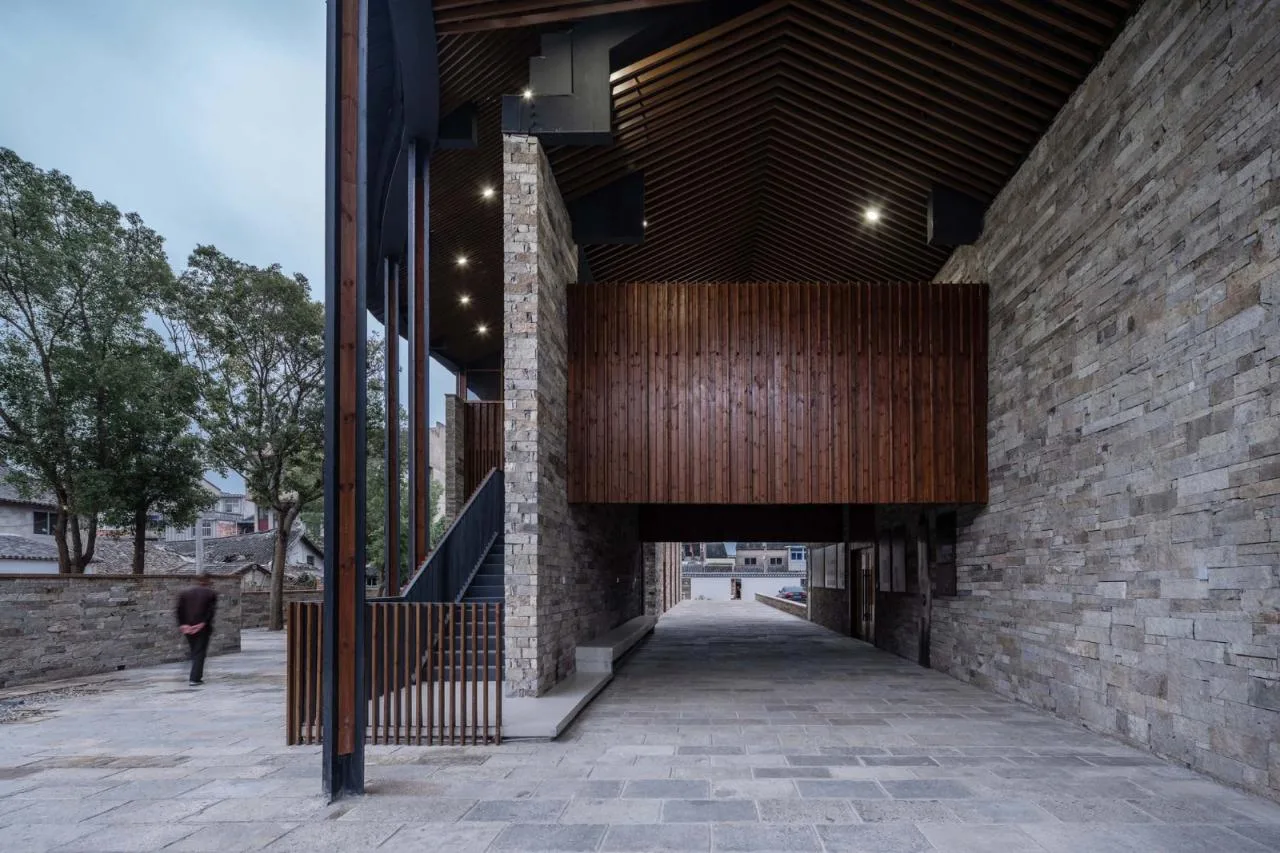
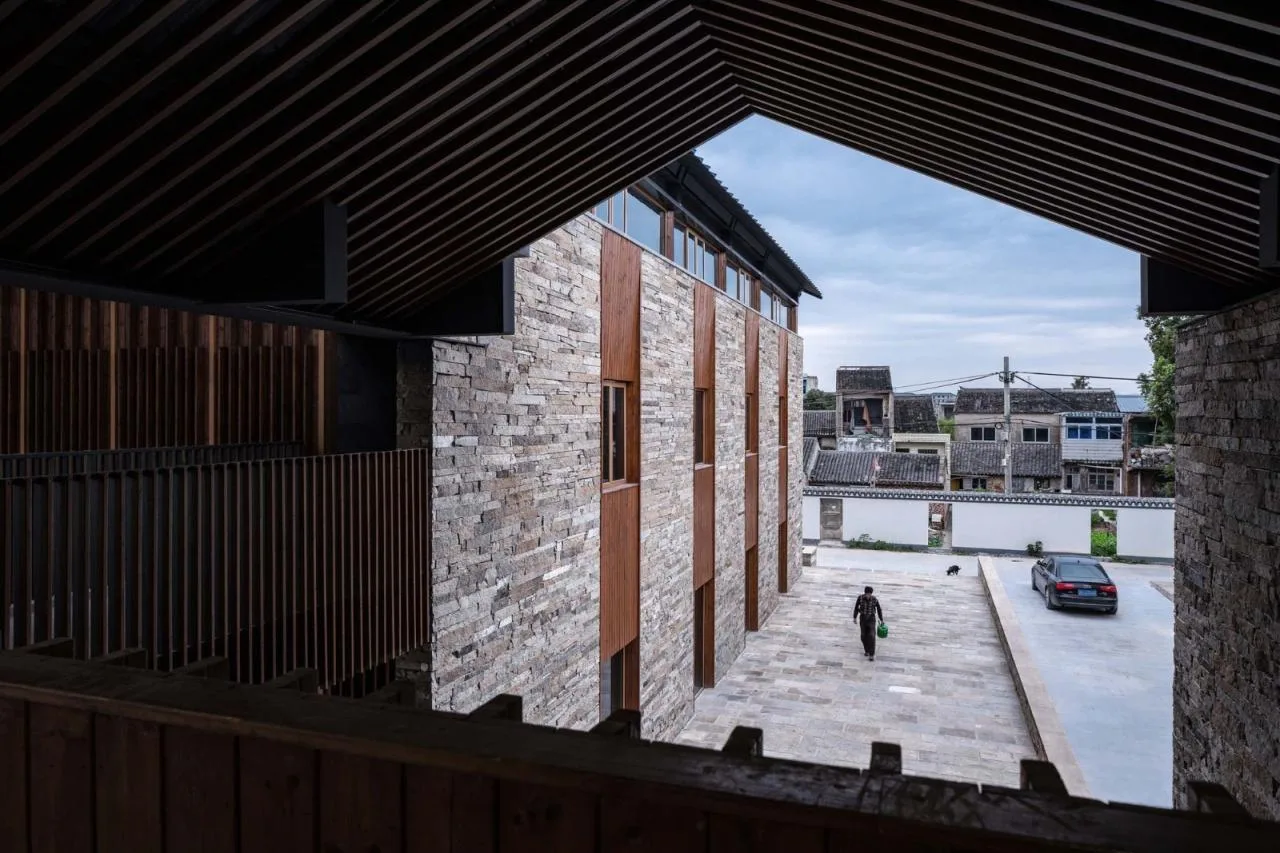
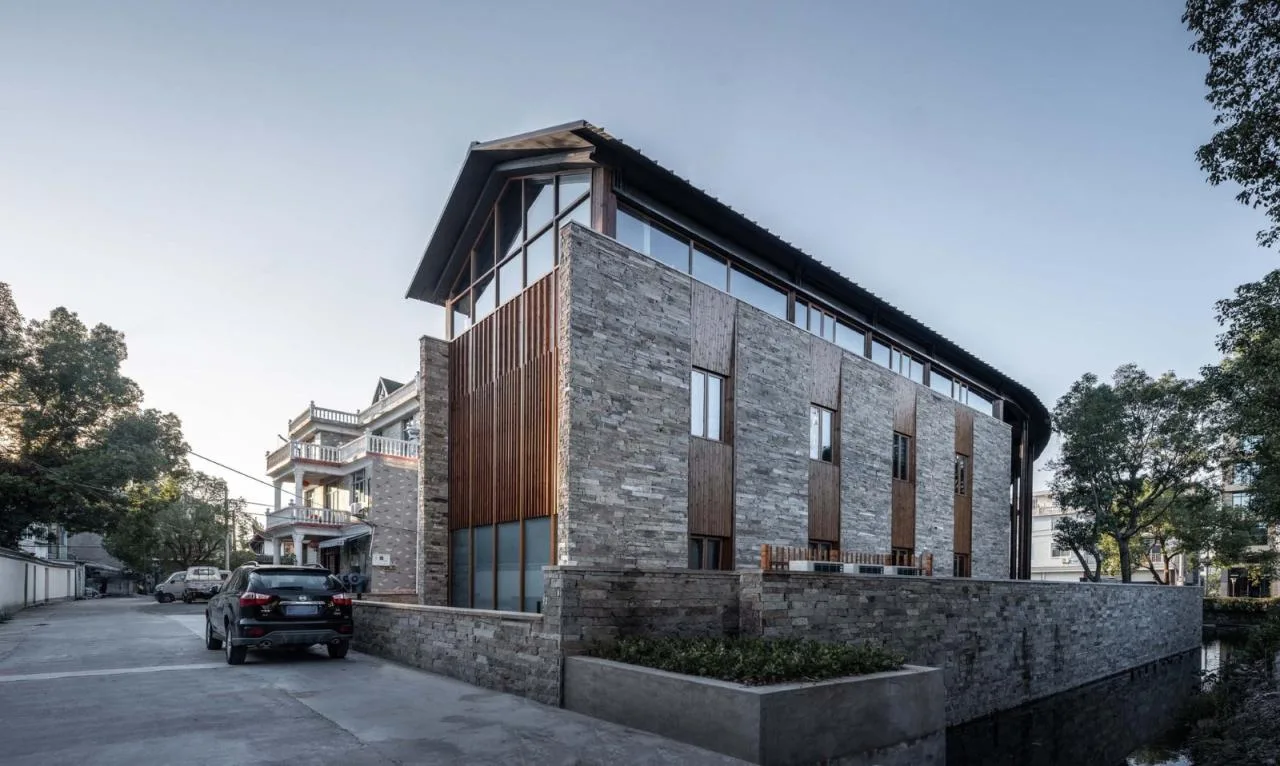
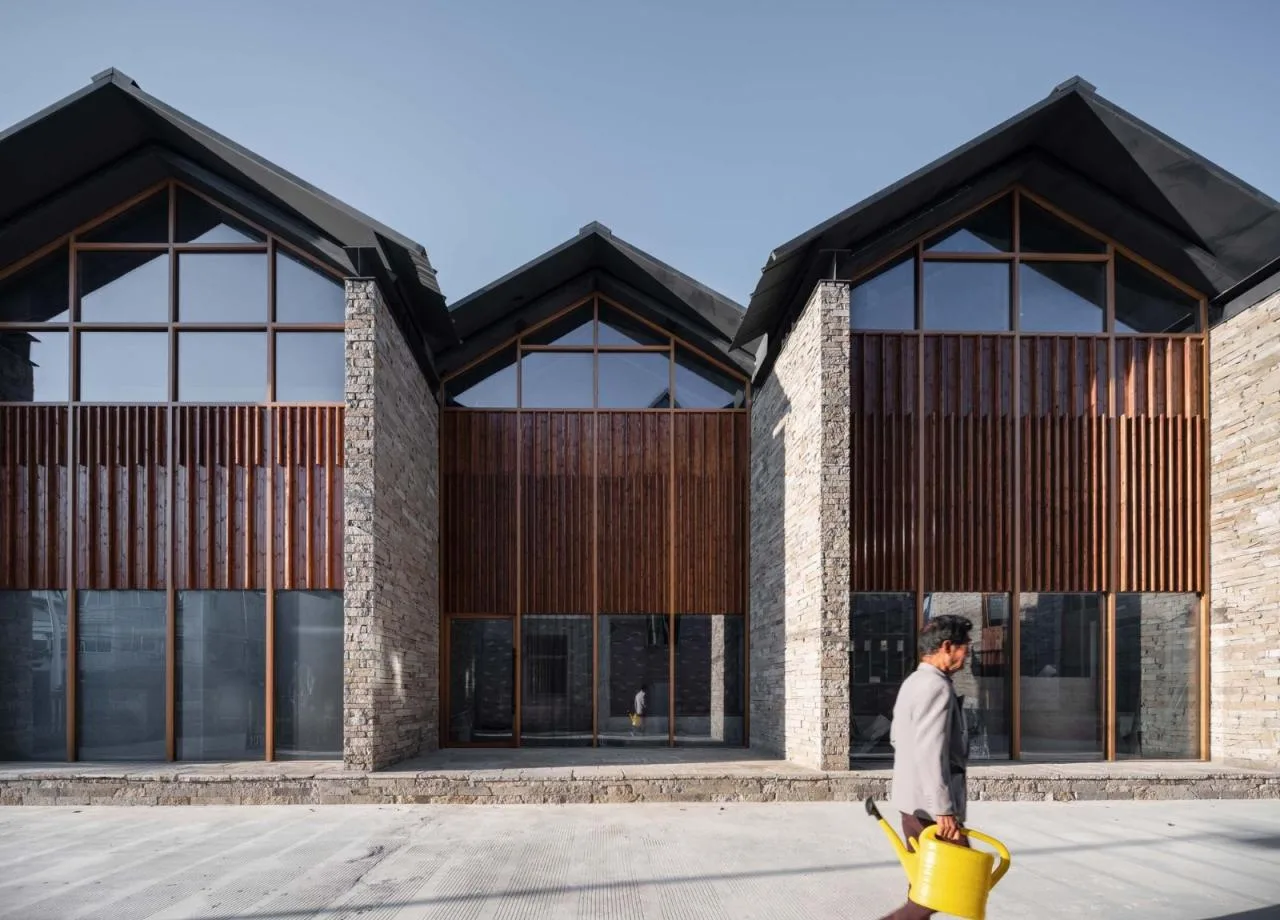
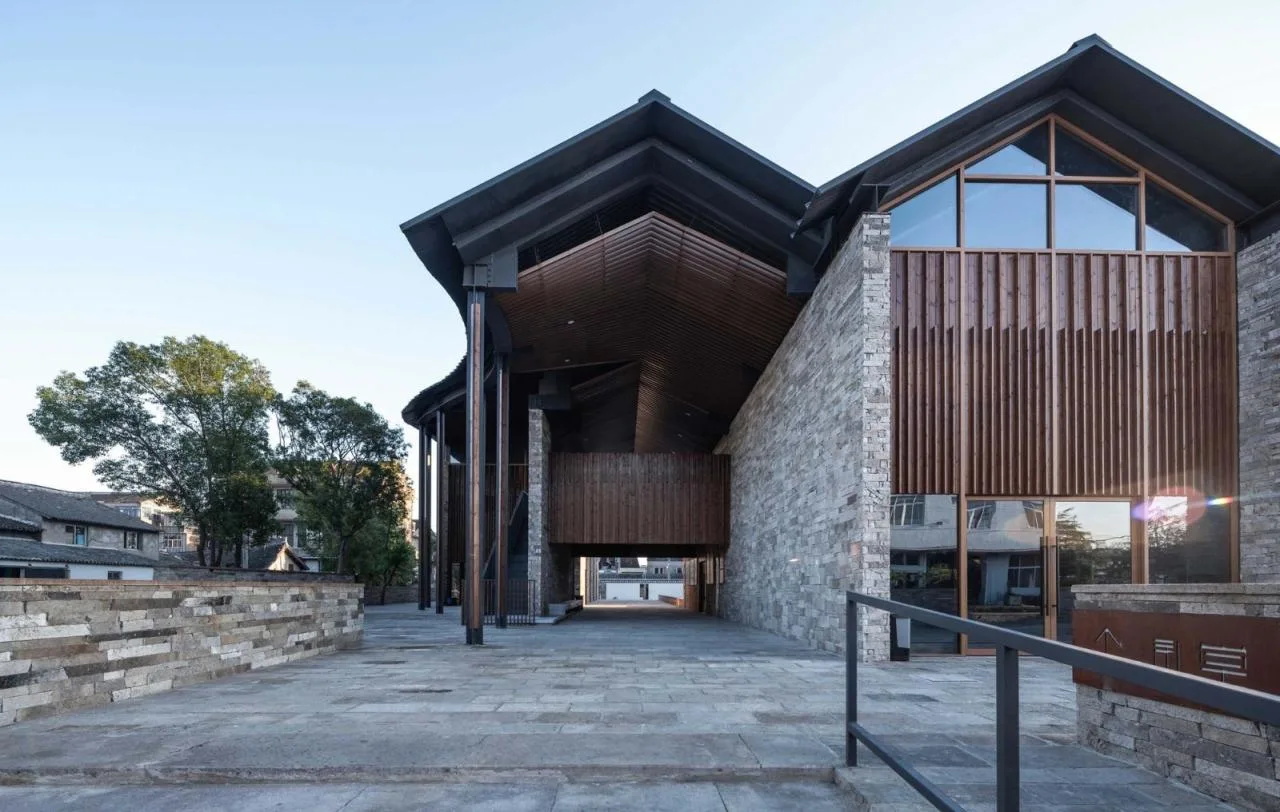
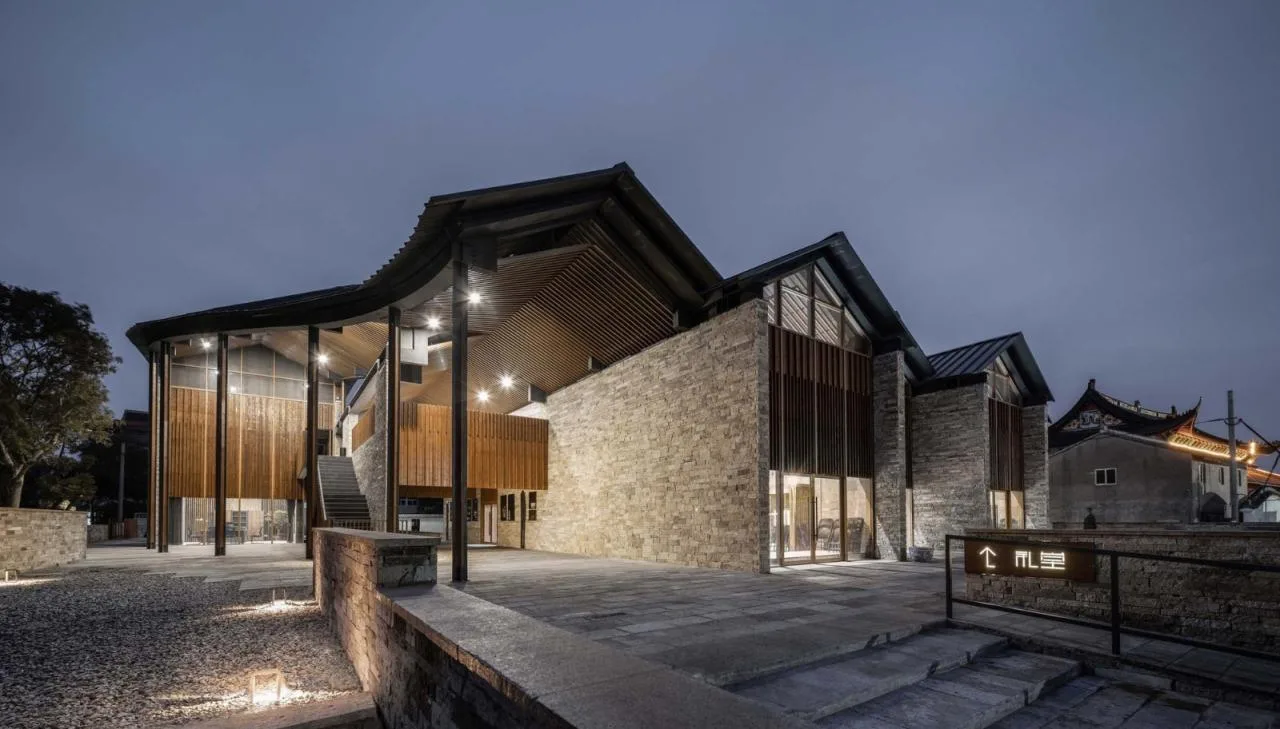
Xiaowufen Village is located in Pengjie Town, Taizhou. Legend has it that five families first settled here and gradually formed the village, giving rise to its name. Unlike the large-scale bays typical of auditoriums in Zhejiang, the design team focused on the “Wu Fen” (Five Bays) concept from the start. The building volume is divided into five distinct bays to harmonize with the small-scale surrounding village structures, creating five separate, house-like volumes aligned along the street.
Site and Function
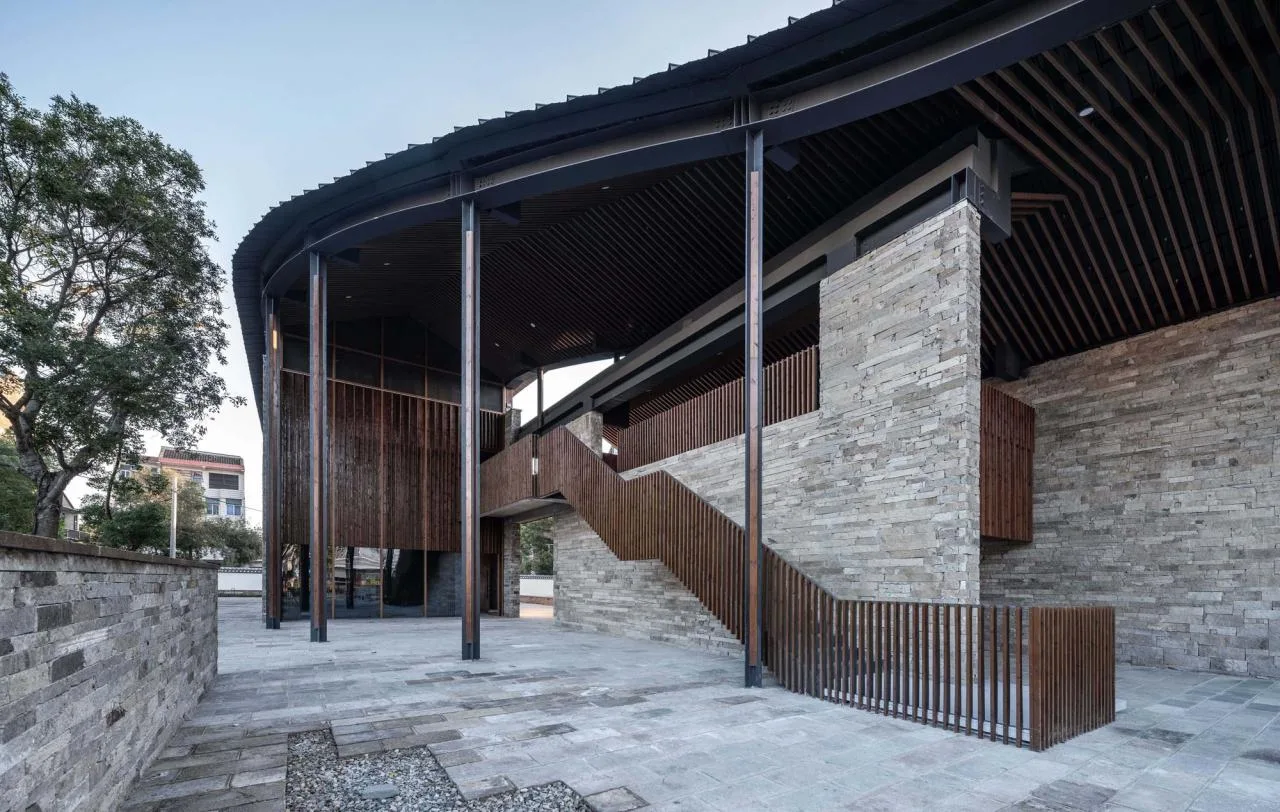
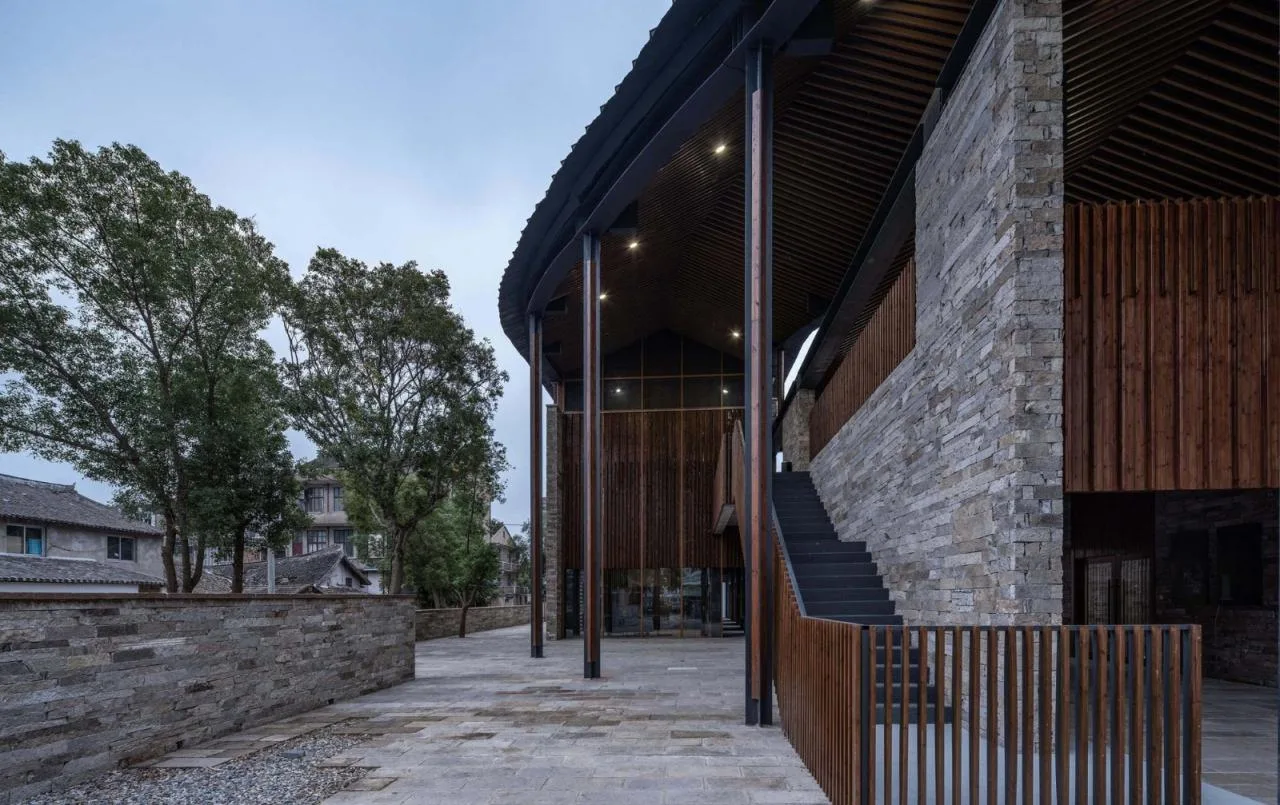
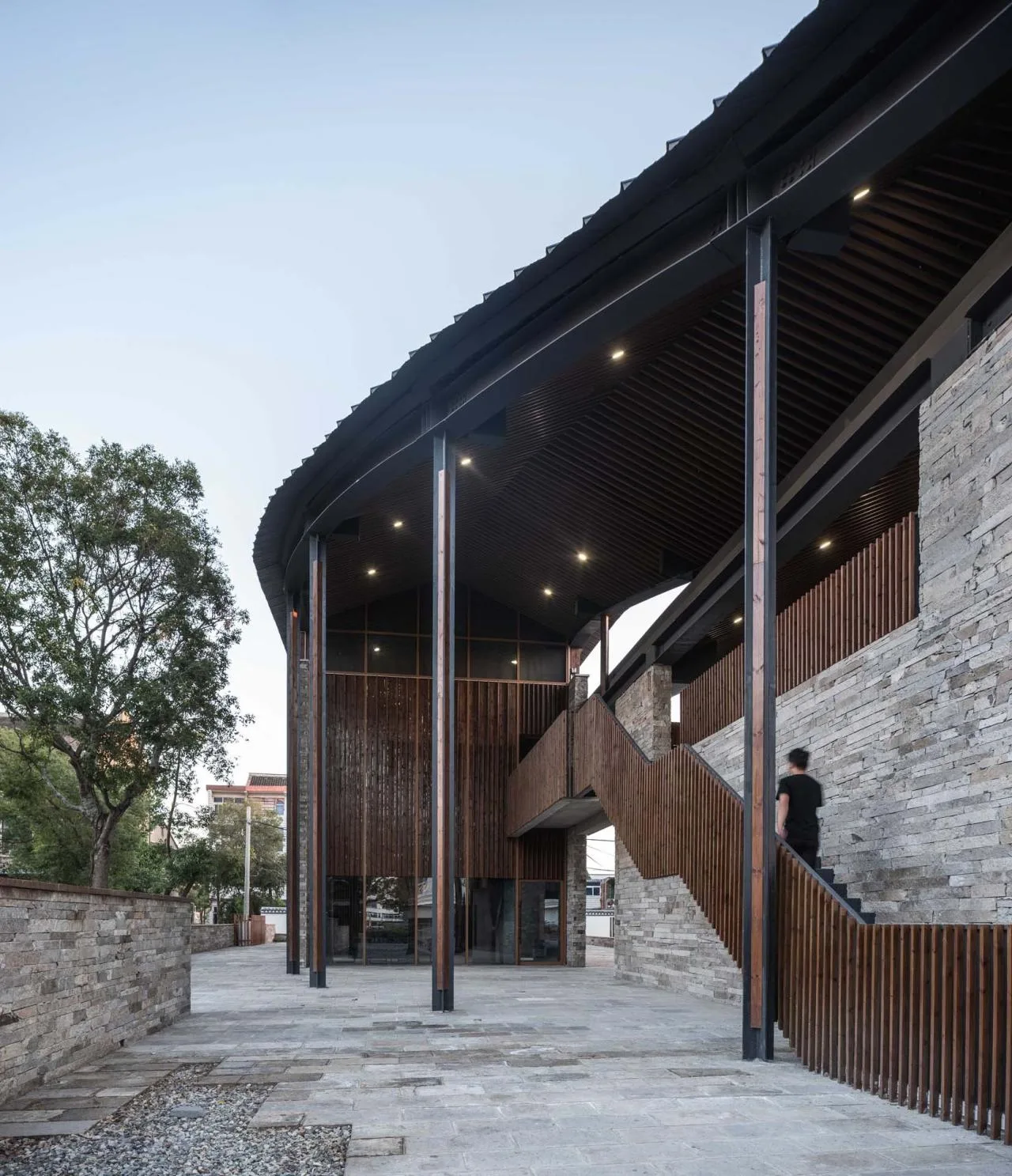
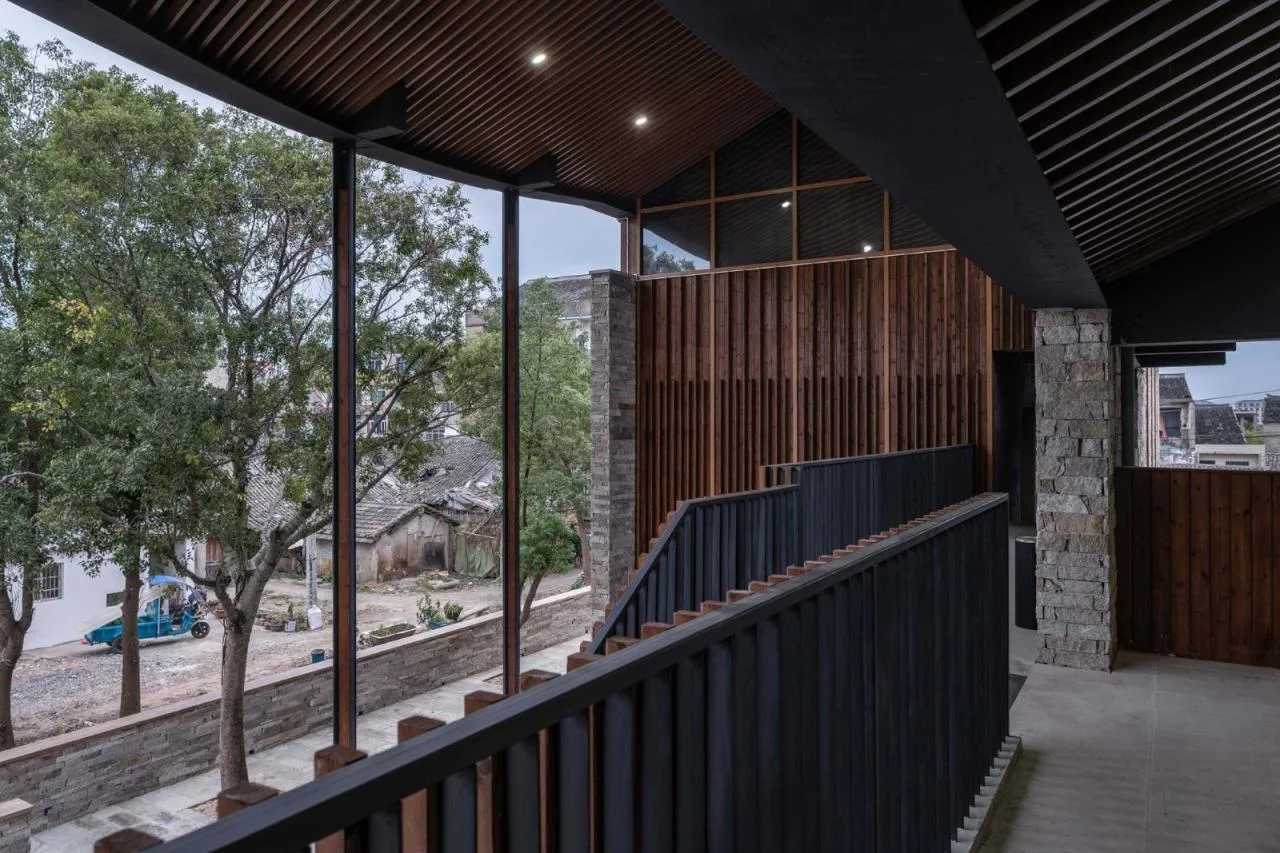
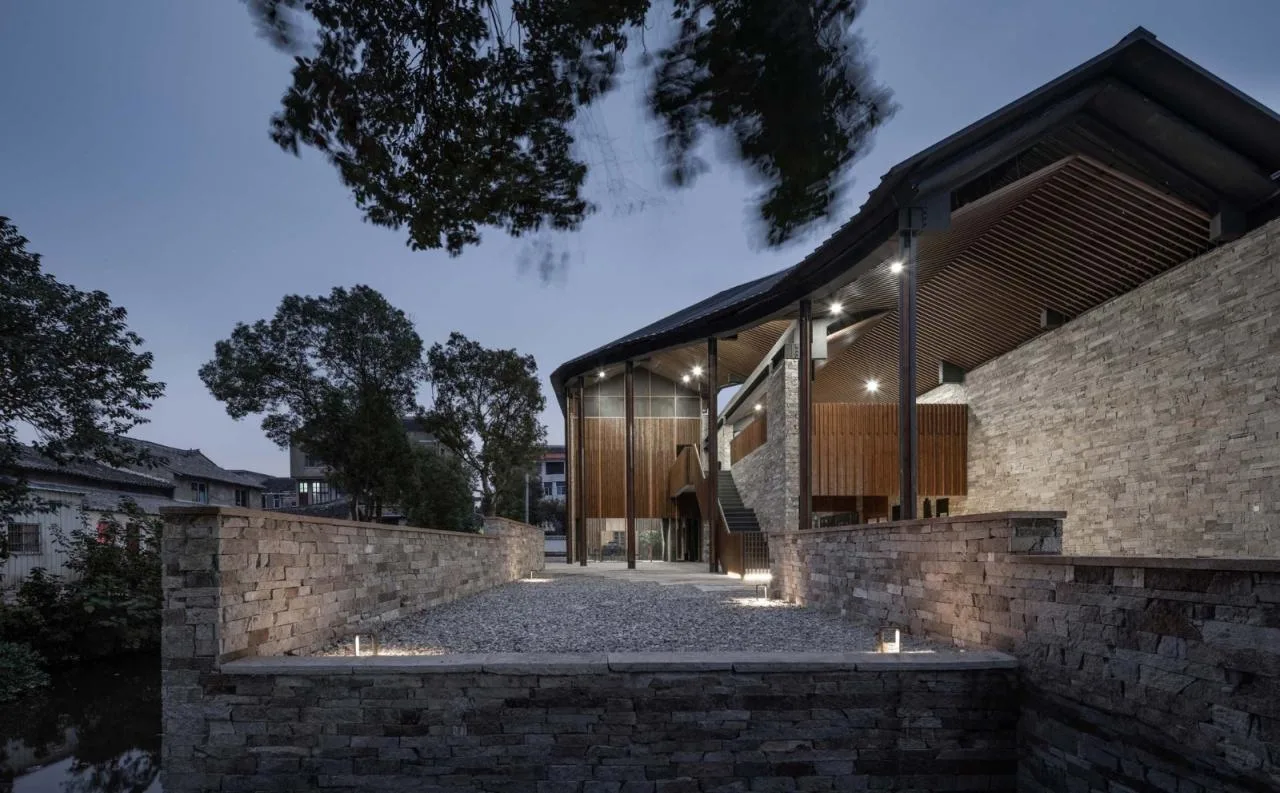
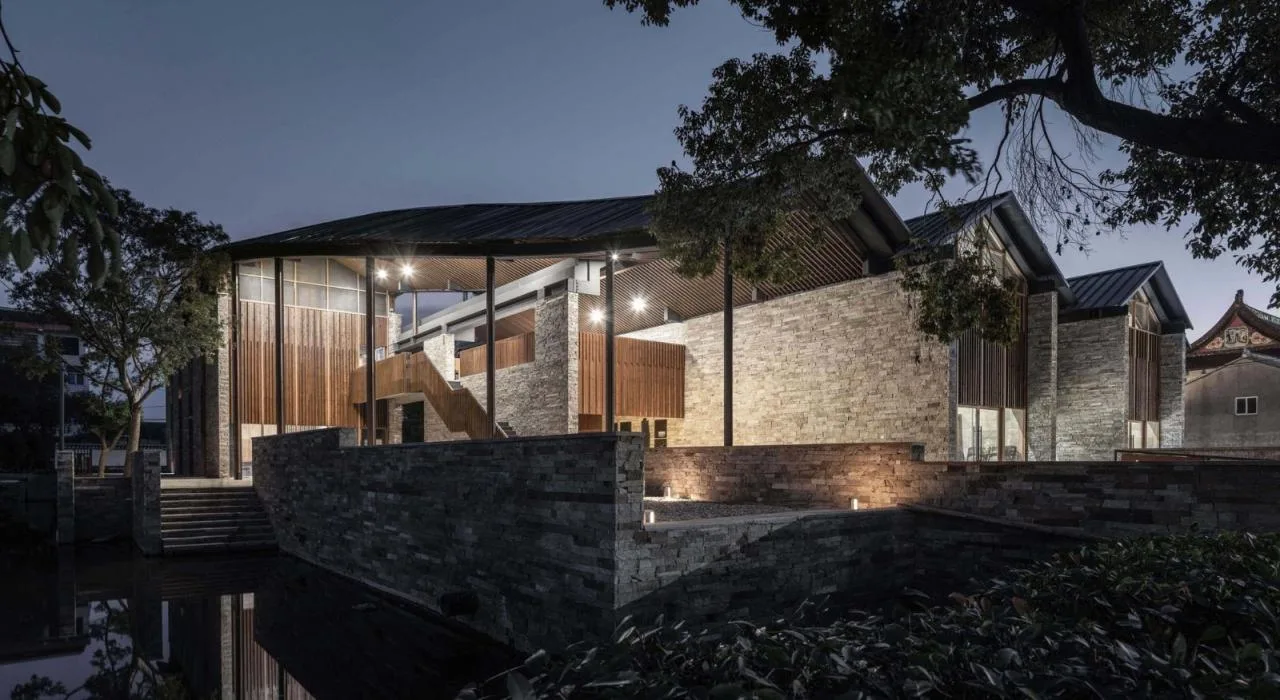
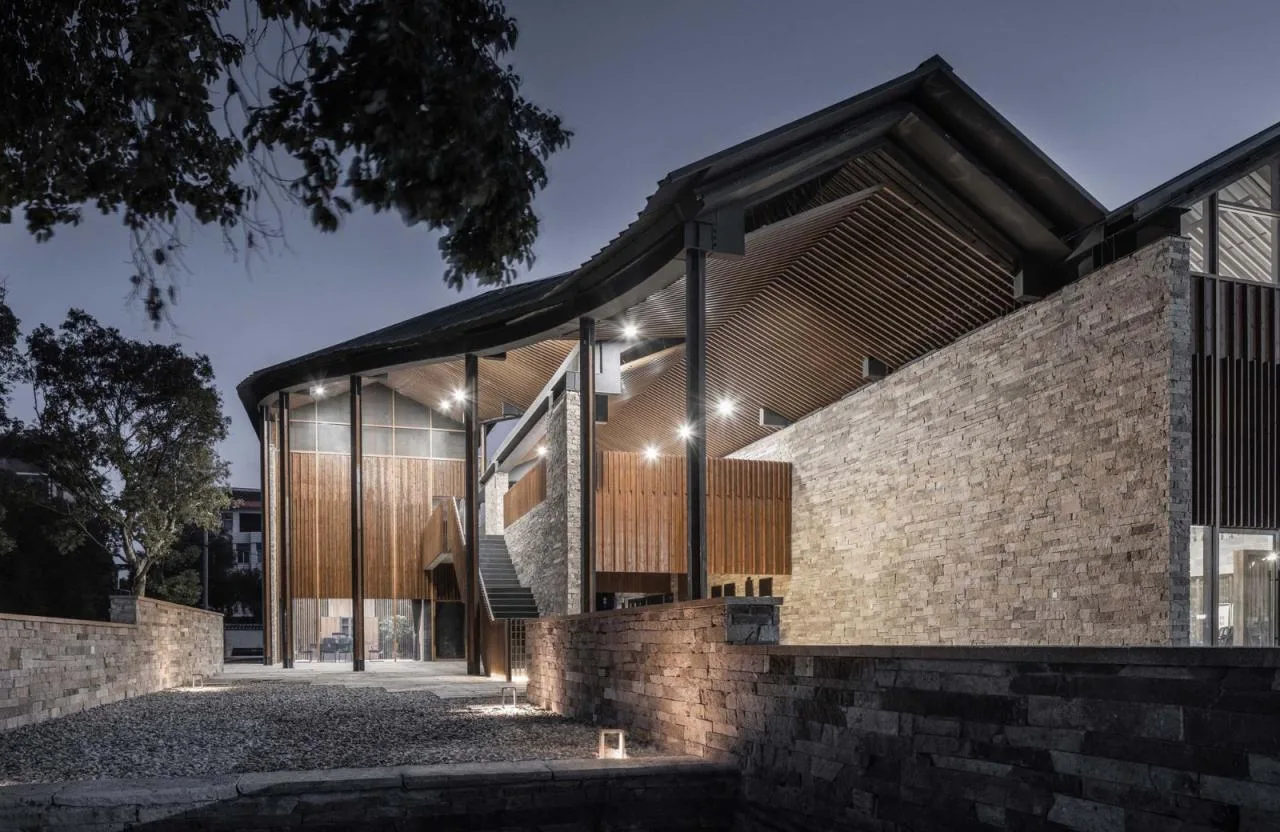
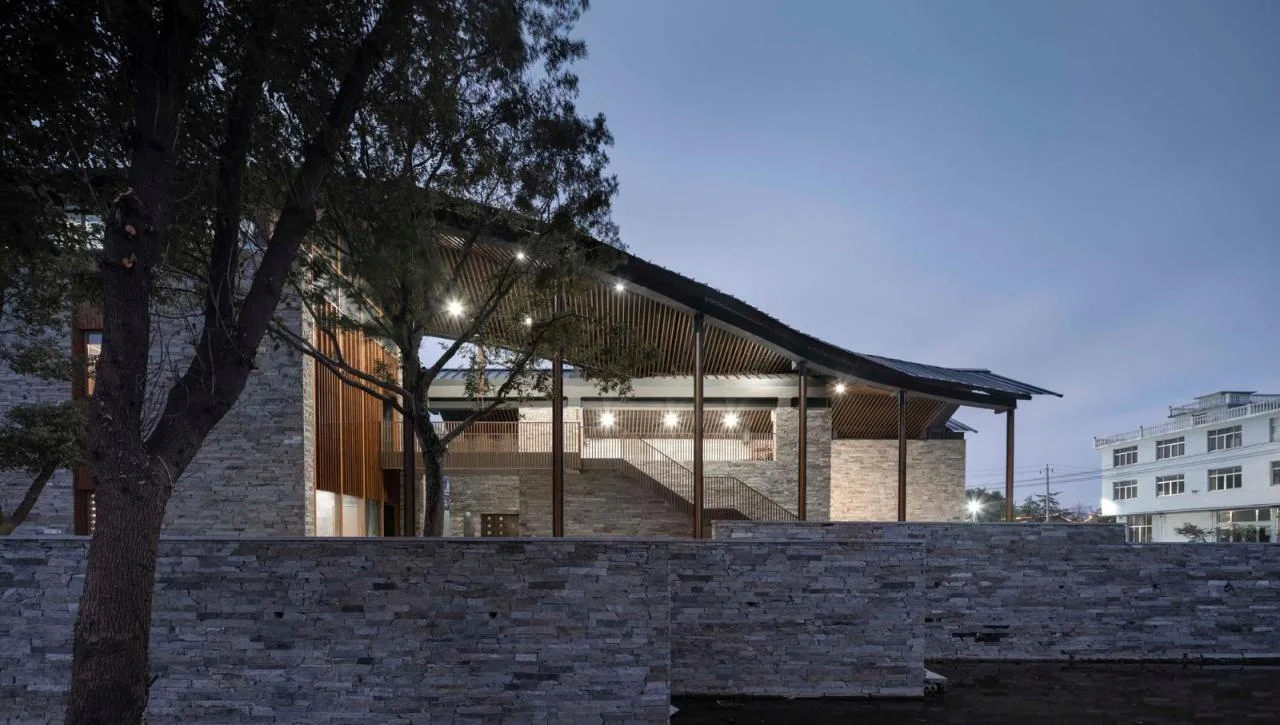
The venue is shaped like an “L,” extending along one side of the river. This layout allows the entrance hall, staircase, hallway, and interactive spaces to be arranged fluidly along the riverbank. A continuous curved corridor envelops these areas, establishing a spiritual heart for the entire site.
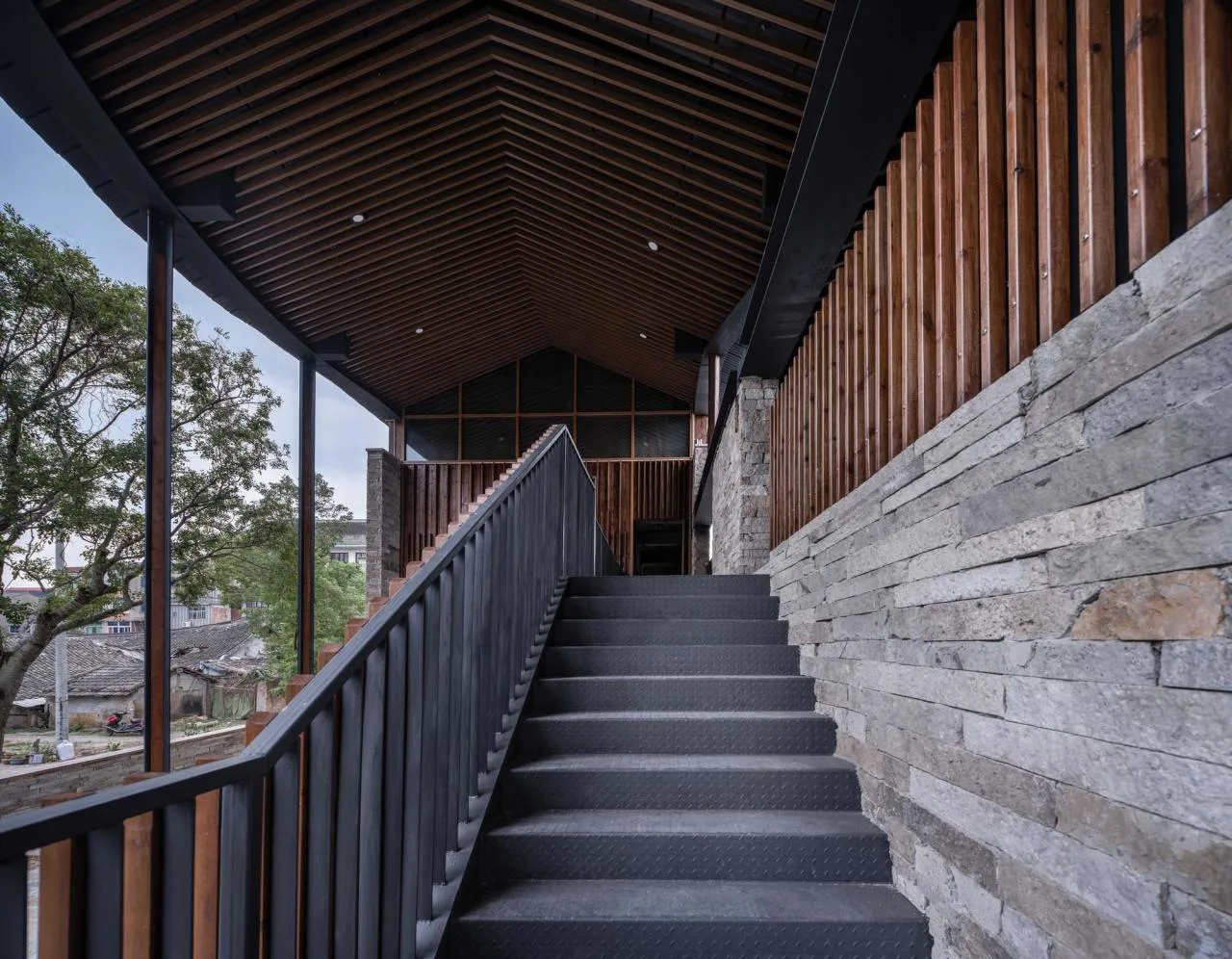
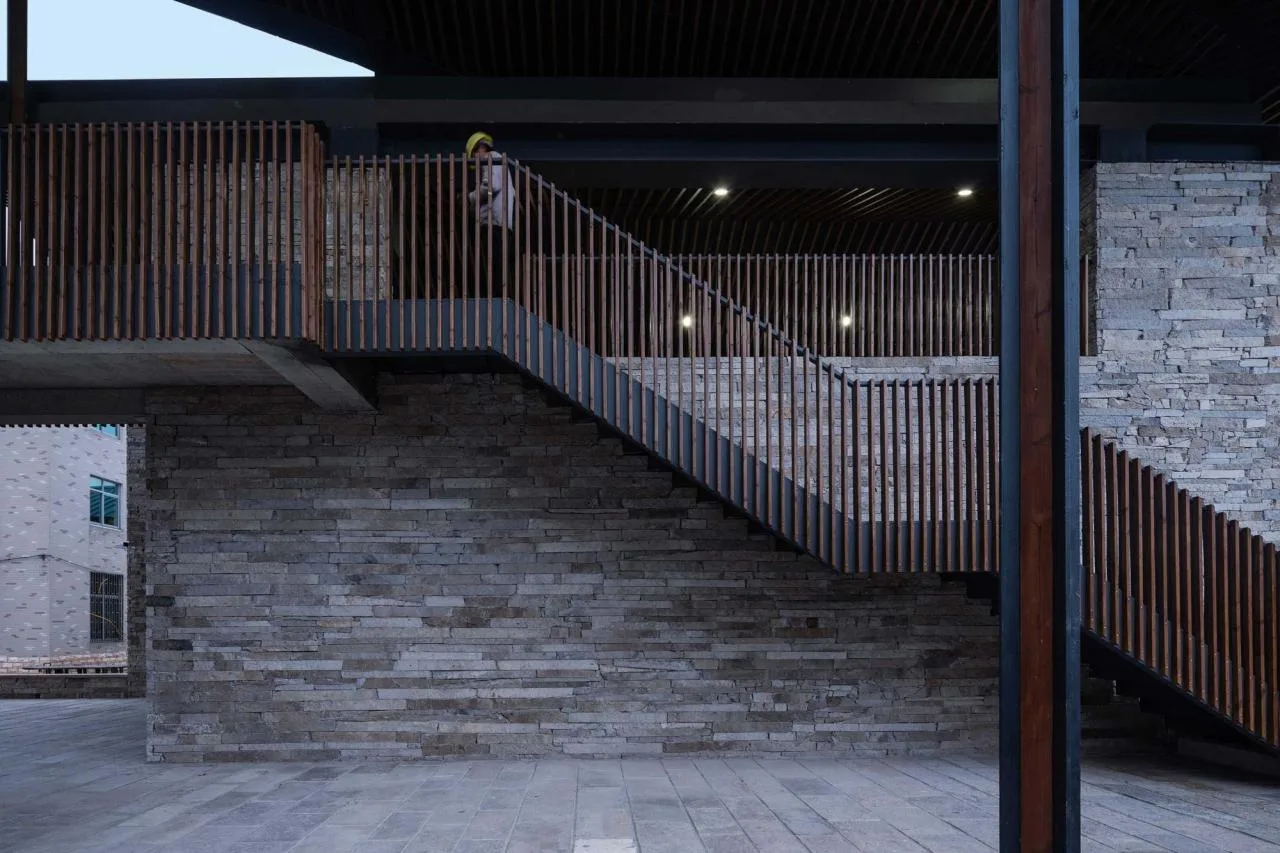
Functionally, the building is divided into three main sections. At its core is a multifunctional auditorium, flanked by service areas and village committee offices. This integration allows the space to support a variety of community activities: from hosting festive red and white celebrations, serving as a stage, ancestral hall, or banquet venue, to providing convenient services as the village committee headquarters. During leisure time, it becomes a welcoming place for villagers to relax and socialize after meals and tea.
Unlike many auditoriums in Zhejiang that often remain unused and rigid, this facility acts as a “rural cultural complex,” accommodating diverse aspects of rural life beneath its flowing roofs.
Materials and Construction
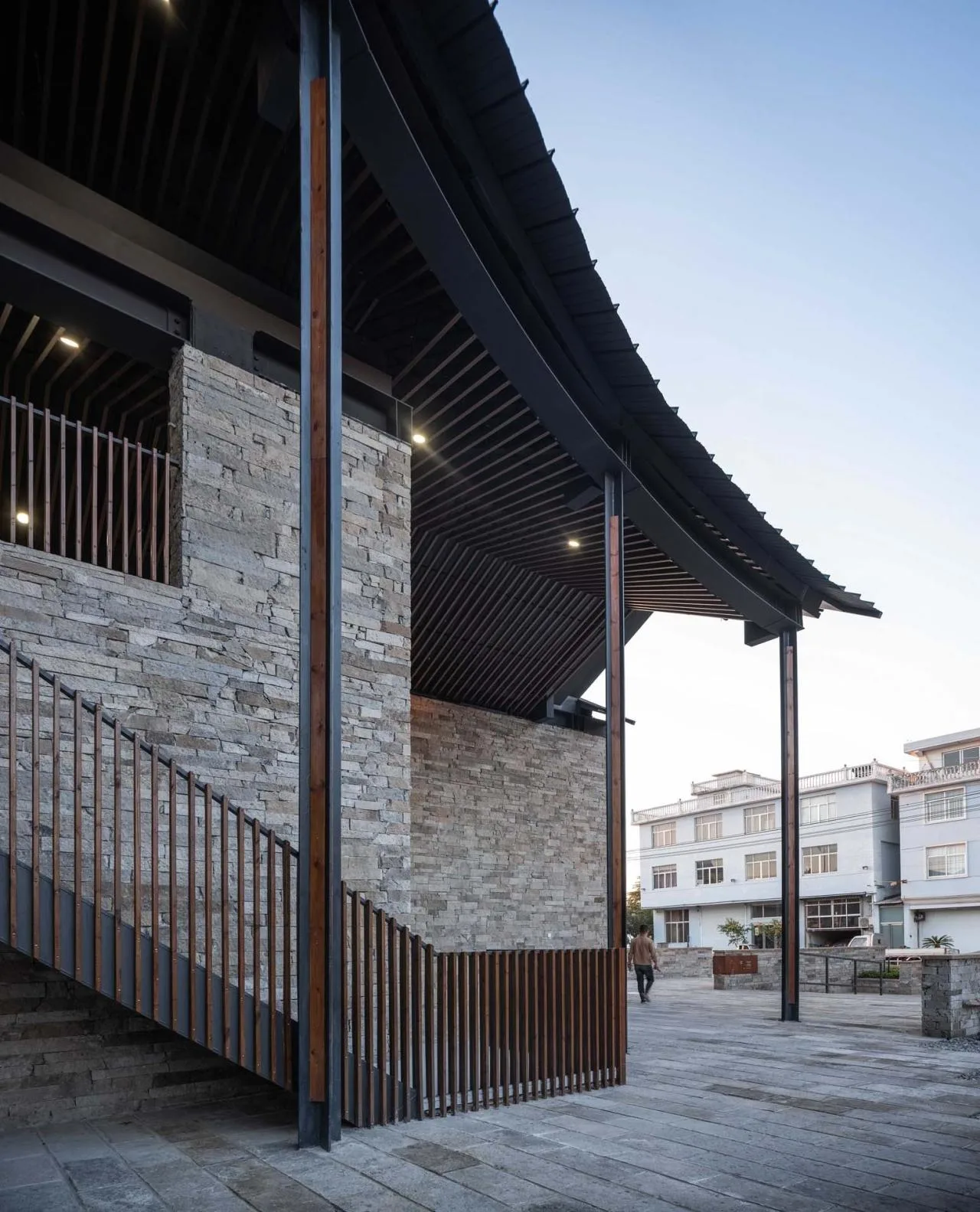
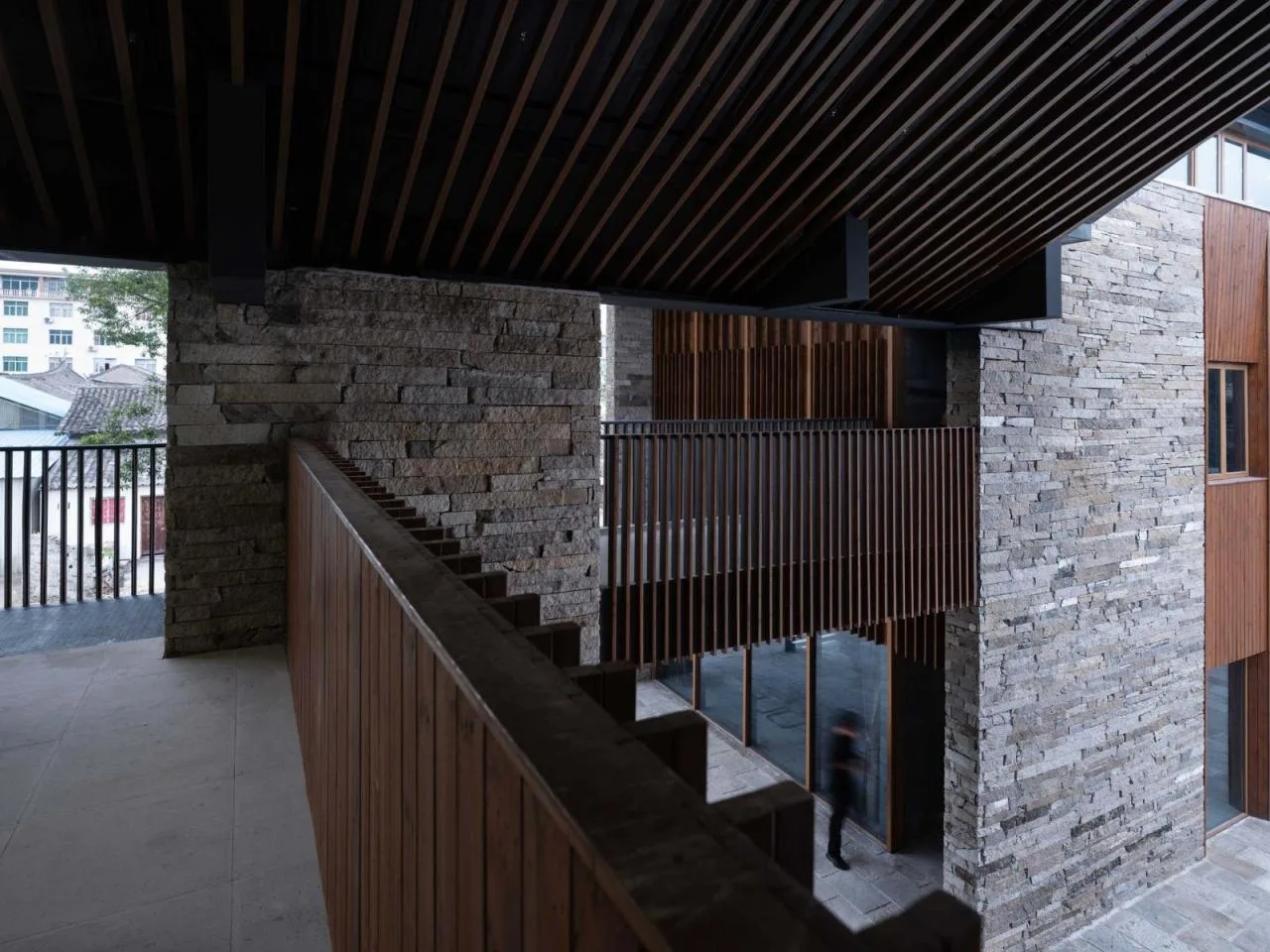
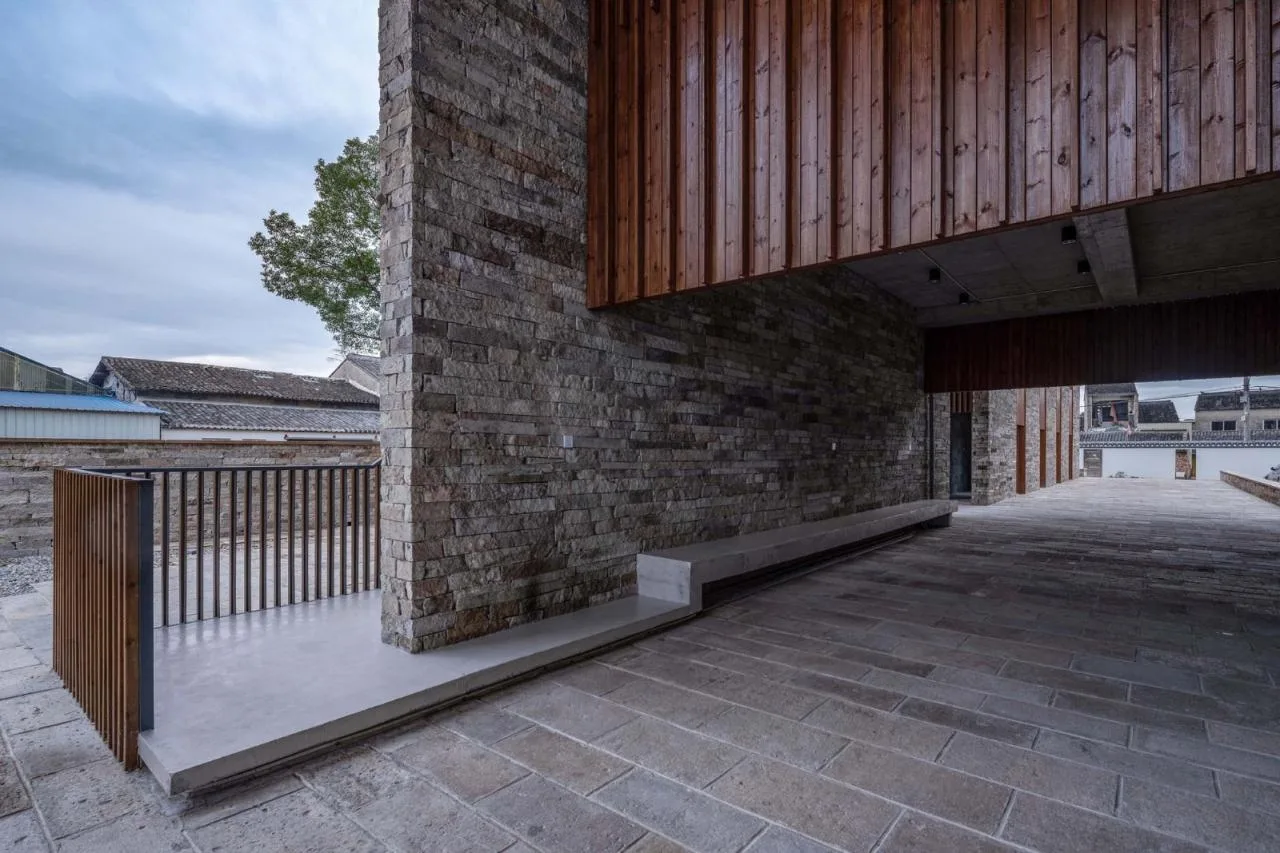
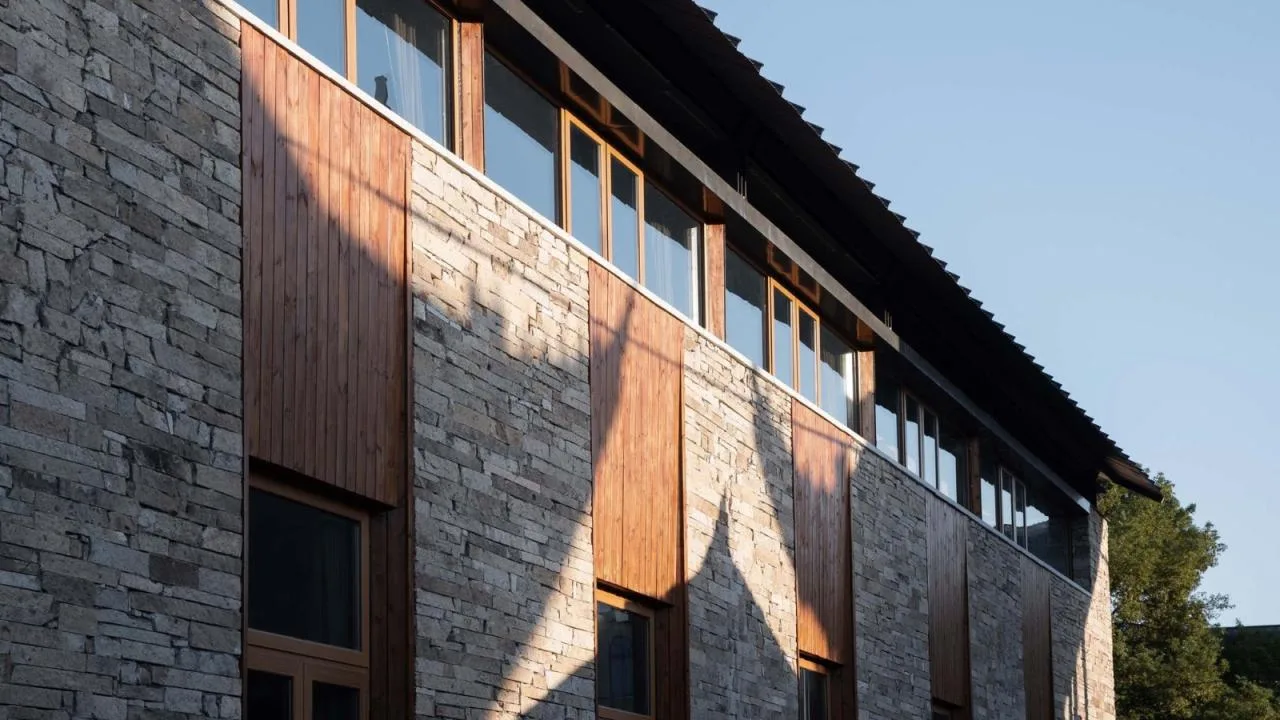
This “rural cultural complex” is constructed using local stone for the walls, traditional wooden veneers for the windows, modern flowing steel structures for the roofs, and transparent glass elements. This approach explores the potential for a localized, modern rural architecture that transcends the boundaries between traditional and contemporary styles.
Practice and Exploration
The surge in rural construction projects reflects a response to the challenges posed by urbanization. Acting as a precise intervention in rural development, the cultural hall redefines the rural “cultural auditorium” as a spiritual hub, offering a renewed vision of vibrant rural life and encouraging a shift in perceptions about urban-rural dynamics.
The team has been actively exploring cultural architecture in this region over recent years. The inherent contrasts in such projects—between traditional and modern, fluid and geometric forms—offer a rich stage to express the team’s evolving architectural narrative and identity.
Project Drawings
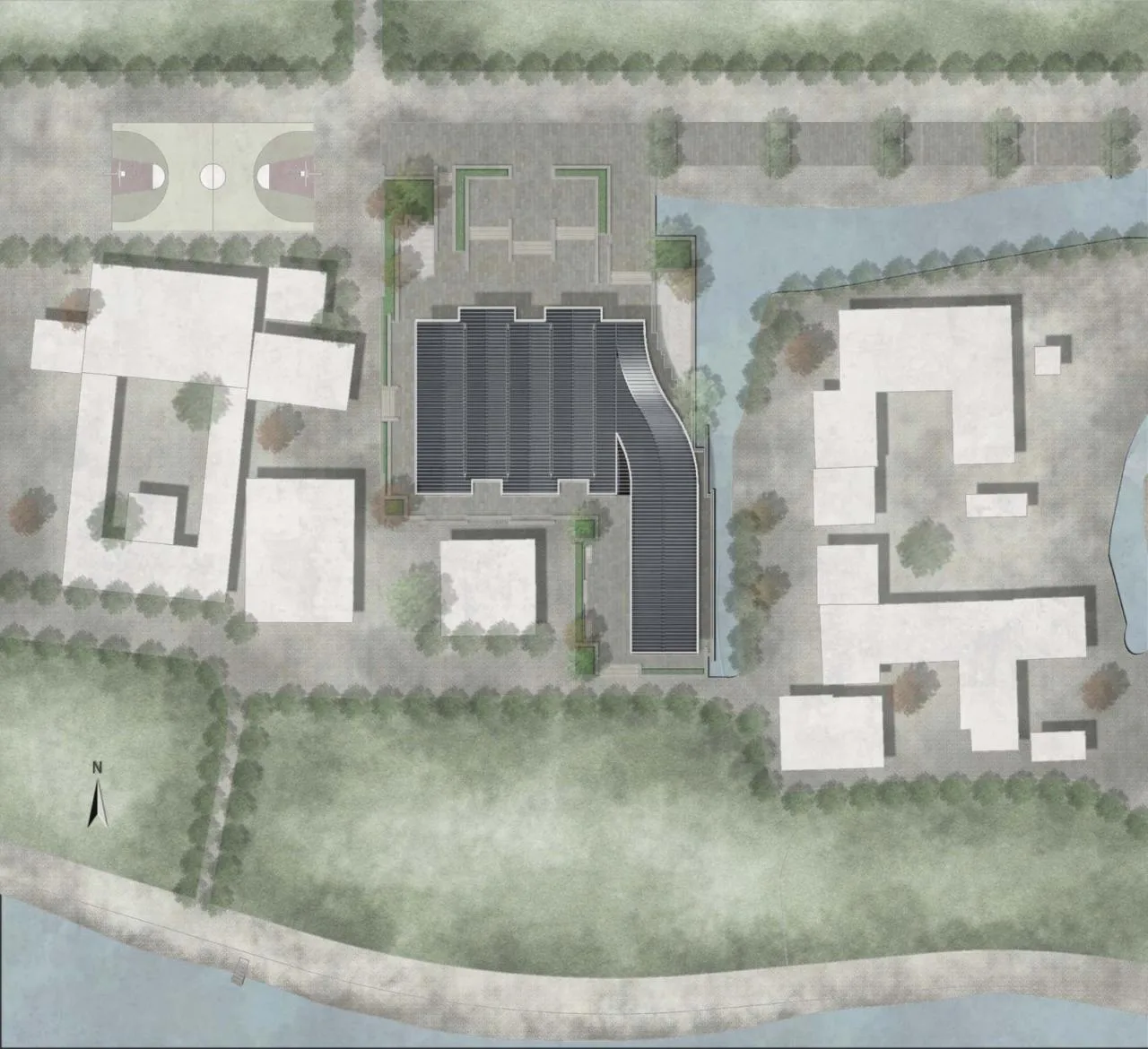
△ General Layout Plan
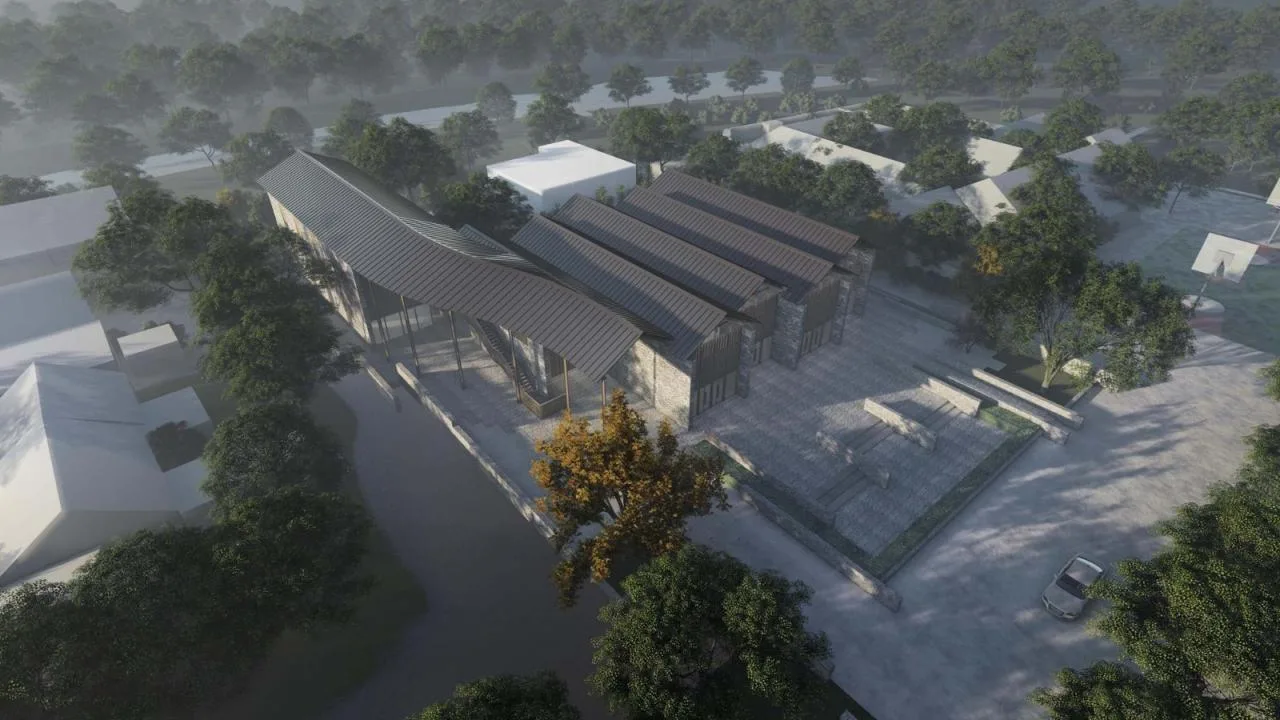
△ Aerial View
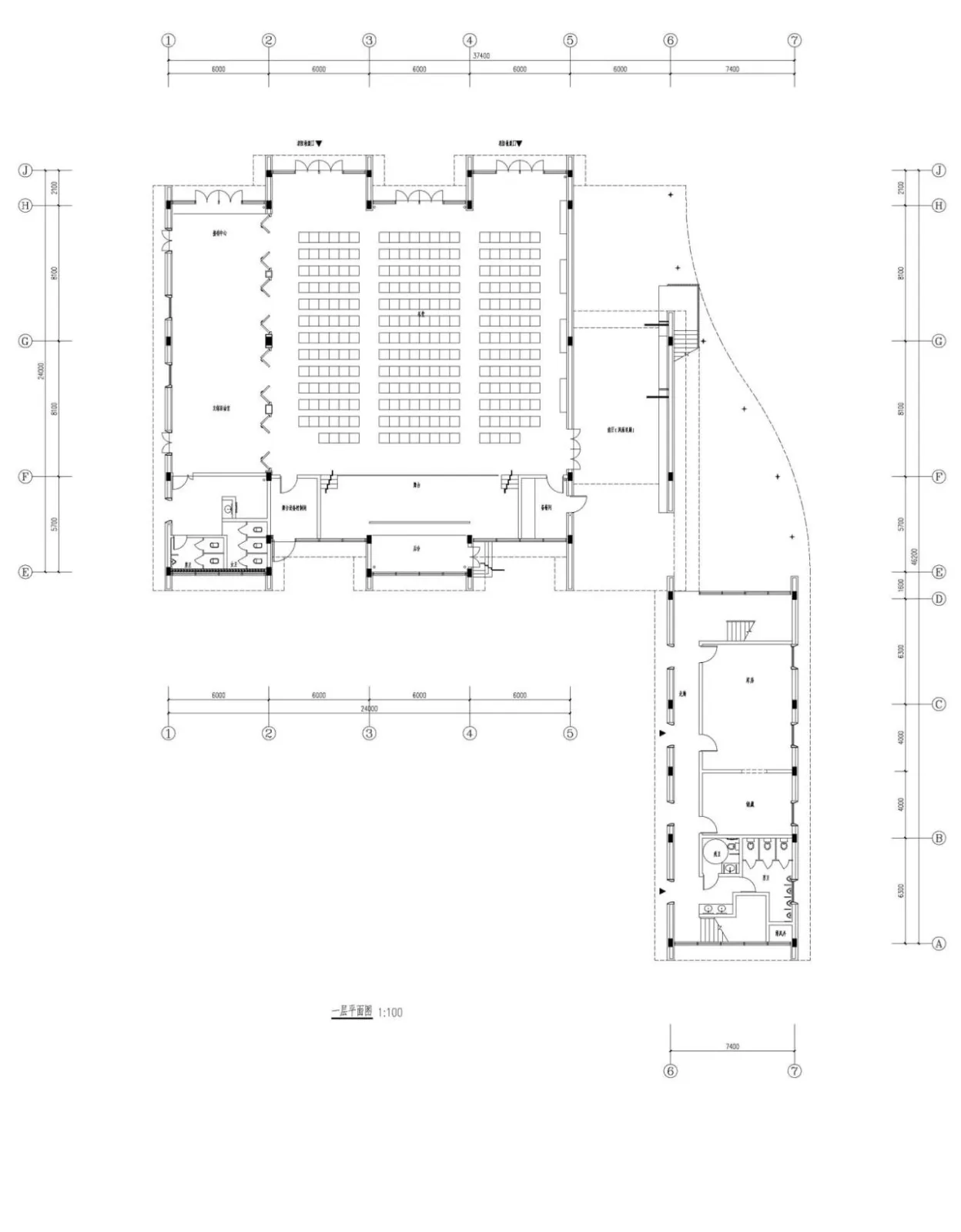
△ First Floor Plan
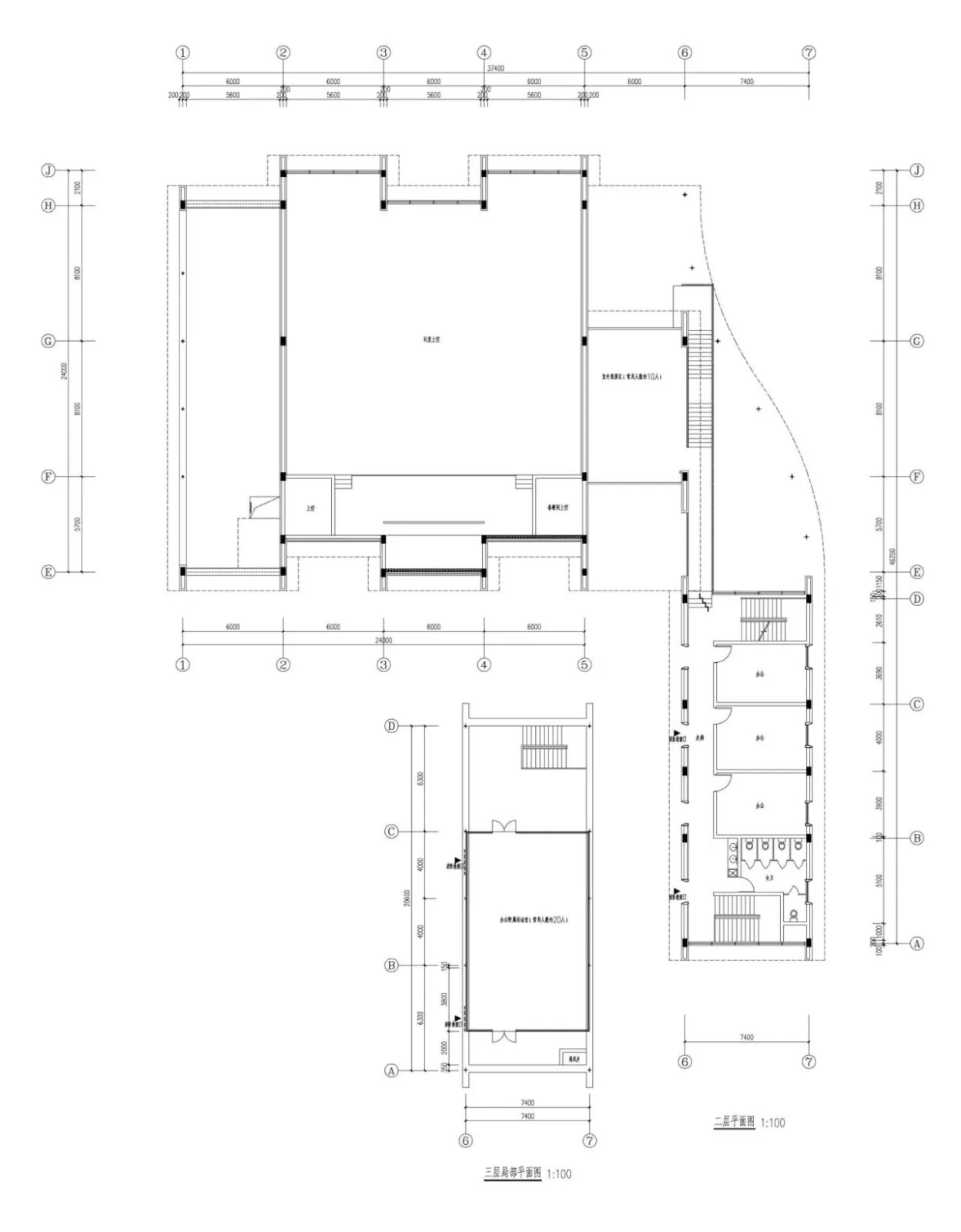
△ Second and Third Floor Plans
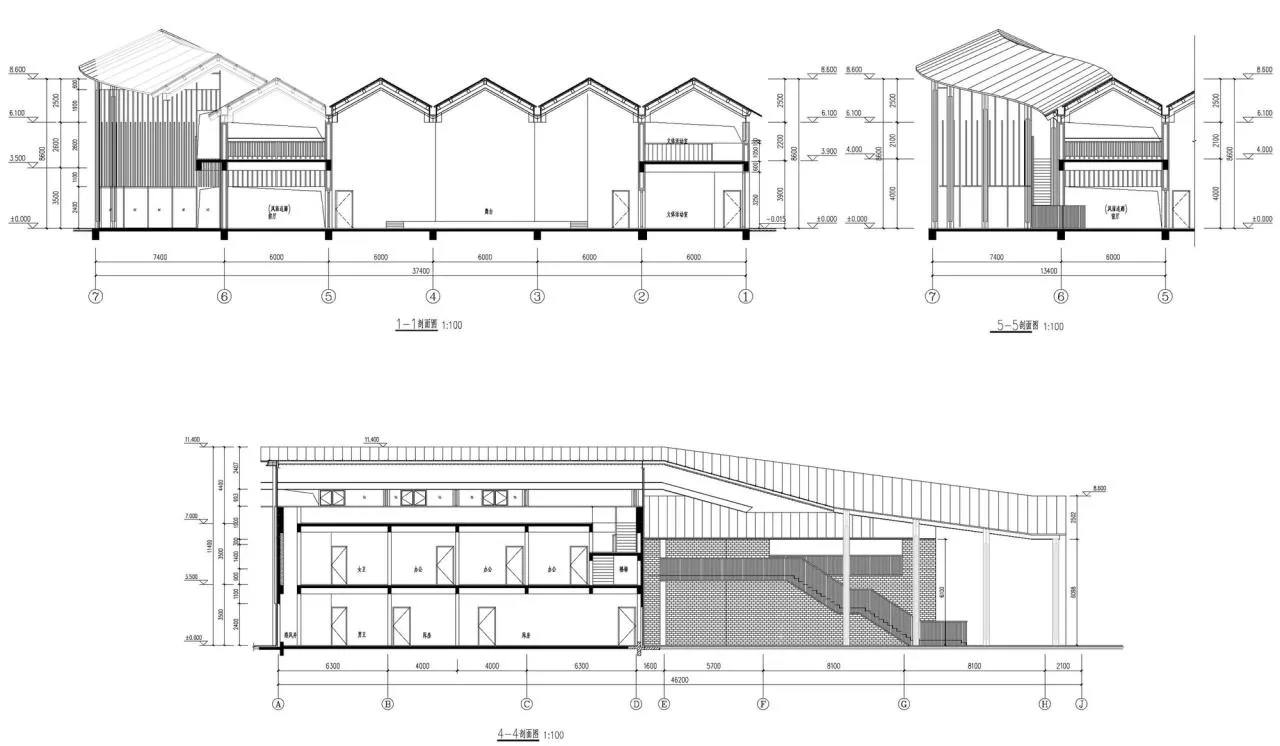
△ Section Diagram

△ Generation Diagram
Project Information
Architectural Design: One Design
Area: 1,200 m²
Project Year: 2020
Photography: Literal Translation Architectural Photography
Lead Architect: Ying Wangbo
Design Team: Cao Mo, Hao Xinghan, Chen Kerun, Zhang Minmin
Owner: People’s Government of Pengjie Town, Luqiao District, Taizhou City
Structural Design: CUC Isomorphism
Landscape Design: Nanjing Jimu Landscape Engineering Co., Ltd.
Location: Taizhou, China















Must log in before commenting!
Sign Up