
Source: Shangguan News, CNKI, Prefabricated Building Materials Industry Alliance, Prefabricated Construction Network. Please credit the source when reprinting.
Recently, an explosion occurred in a prefabricated affordable housing community in Shanghai. Shortly after the first residents moved in, during typhoon season, hundreds of households experienced water seepage through their walls, resulting in significant damage. In response, the developer implemented a repair method involving drilling holes and injecting adhesive into the leaking walls to improve waterproofing. However, when the typhoon season returned this year, water seepage reoccurred in the repaired walls. Residents believe their homes are still under the five-year warranty and expect the developer to resolve the water seepage issue fundamentally rather than just patching the leaks.
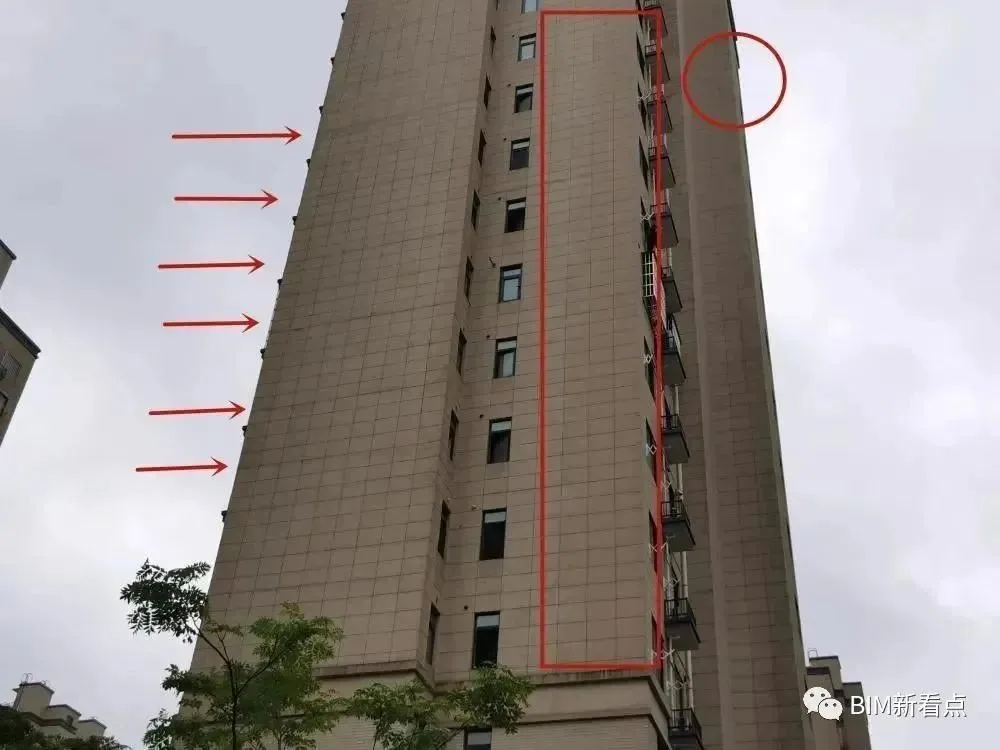
In many renovated homes, the corners of walls are the most vulnerable areas to water seepage.
Developer’s Statement: New Plan Guarantees No Water Leakage for Five Years
According to the project official, the water leakage occurred because this community was among the first in Pudong New Area to use prefabricated construction technology. Five years ago, the technical processes were still in their trial phase. Due to joints between prefabricated wall panels and cast-in-place components manufactured offsite, inadequate control of concrete shrinkage led to cracks. Repairing these finished buildings is costly; fixing the seams and gaps requires breaking walls and extensive reconstruction, potentially costing hundreds of millions of yuan.
Renyuan is a relocated residential area delivered in May 2020.
Currently, following the “Guidelines for Quality Management of Waterproofing Technology for Prefabricated Concrete Buildings in Shanghai,” issued by the Shanghai Municipal Commission of Housing and Urban Rural Development in March 2020, pilot repair work has been conducted on the exterior walls of two buildings. After water and wind resistance tests and a typhoon simulation, a waterproofing plan was finalized with an estimated maintenance cost of around 6 million yuan. The person responsible confirmed, “The repair plan guarantees no water leakage for five years.”
Source of the above news: Jiefang Daily Shangguan News
Prefabrication Jun interviewed relevant experts and agencies, who noted that exterior wall leakage is a common issue in modern residential buildings—whether cast-in-place or prefabricated. Water seepage compromises the house’s functionality, causing interior walls to suffer from alkali damage, efflorescence, paint blistering and peeling, stains, mold, and even indoor floor water accumulation. Addressing leakage in prefabricated building envelope systems requires a systematic engineering approach. This article briefly analyzes the root causes and solutions for exterior wall leakage in conventional prefabricated buildings.
Root Cause Analysis
Leakage Due to Sealant Quality Issues
A lack of suitable sealing materials for the upper and lower joints of prefabricated exterior walls can cause problems. Improper sealant selection often results in whitening, shrinkage, and poor adhesion. Once the sealant cracks or deteriorates, rainwater can seep into rooms along horizontal joints.
Leakage Caused by Structural Cracking
During high-rise construction, cracks between infill brick masonry and prefabricated exterior walls often lead to leaks. Causes include:
- Material factors: Different thermal expansion coefficients of brick masonry and reinforced concrete cause varying deformations under temperature changes, resulting in joint cracks and leaks.
- Construction factors: Mortar at vertical joints is often insufficiently dense, and embedding and compacting masonry to prefabricated walls is challenging, leading to severe cracking and seepage.
Leakage from Loose Seams
Gaps between window sills, frames, and exterior wall plaster, as well as poorly installed window frames, can also cause water infiltration.
Unstructured Waterproofing
Prefabricated wall panels are joined flat-to-flat without designed joint structures. Waterproofing depends solely on adhesive filling, which can fail if gaps or sealants are not secure, allowing rainwater to penetrate indoors.
Leakage from Scaffold Holes
Ordinary overhanging scaffolding uses I-beams that pass through exterior walls, leaving holes that are often prone to leakage later if not properly sealed.
Countermeasures
Proper Connector Design
Traditional waterproofing aims to block all water entry paths. For prefabricated buildings, a better approach is to allow water intake but control drainage effectively. Designing drainage paths guides any water breaching the outer waterproof layer safely outdoors, preventing further infiltration.
Wall panel joints are designed with grooves that slope from high inside to low outside, combined with pressure relief chambers to prevent capillary water backflow. Waterproofing includes concrete structure treatments, rubber waterstops, and multi-component weather-resistant adhesives, creating a truly leak-proof system.
Appropriate Sealant Selection
Joint sealants play a crucial role in waterproofing prefabricated structures. Selection principles include:
- Strong displacement resistance to accommodate joint size changes from temperature fluctuations.
- Weather resistance for long-term outdoor exposure.
- Excellent adhesion to various building materials.
- Anti-pollution properties to maintain exterior aesthetics.
- Ease of maintenance and repair in case of damage.
Standardized Construction Practices
Waterproofing prefabricated exterior wall joints remains complex and challenging. Construction plans and procedures should be tailored to the specific joint designs.
Pre-Installation Quality Inspection
Accurate processing and concrete curing of prefabricated wall panels directly affect installation precision and waterproofing. Before installation, wall panels must be inspected for correct dimensions, flatness, dense concrete surfaces, and absence of through-cracks. Panels with substandard concrete are strictly prohibited.
Embedded rubber strips around panels must be checked to ensure firm placement, undamaged corners, and no concrete contamination that could harden and reduce elasticity. Only defect-free rubber strips may be used.
Installation Accuracy and Quality Control
Wall panel installation must be precisely measured and laid out before lifting. Waterproofing at panel joints must follow established procedures with quality checks at every step.
Adhesive coating on joint exteriors should be applied according to design, with thorough cleaning of base layers and cavities using high-pressure air. The backing depth and glue thickness must meet design specifications. Primers should improve adhesion between adhesive and concrete panels. Construction joints should be carefully prepared with overlapping areas at least 5 cm wide to ensure continuity.
Post-Construction Waterproof Testing
After waterproofing, a water spray test is essential to detect any leaks promptly. Key areas include panel connections, prefabricated-to-cast-in-place interfaces, and window frames. A fire hose is used to simulate rain, checking for adhesive detachment, drainage performance, and any visible watermarks inside.
Regulatory Measures
While government policies encourage the growth of prefabricated buildings, strict standards are necessary to ensure design, products, and construction comply with regulations. Enhancing product quality and construction workforce training reduces human-factor-related defects.
Prefabricated construction represents the future of architecture, and resolving enclosure system leakage is crucial for residents’ wellbeing. Similar to reinforced concrete buildings’ waterproofing systems, the success of prefabricated building waterproofing relies on four pillars: design as the foundation, quality materials, skilled construction, and effective management.
Effective waterproofing combines structural and material waterproofing with scientifically designed joints. Sealants must possess excellent physical and mechanical properties—reliable adhesion, low modulus, high elasticity, stress relaxation, and resistance to weathering and aging. Along with professional construction teams, standardized management, and government oversight, these measures ensure the safety and reliability of prefabricated building waterproofing systems.
















Must log in before commenting!
Sign Up