
With the rapid advancement of digitalization in the construction industry, numerous favorable policies supporting Building Information Modeling (BIM) technology have been introduced at both national and provincial levels. Thanks to these policies, BIM technology is becoming increasingly prevalent in engineering applications. Many companies are now investing in cultivating BIM talent to drive industry growth. Could BIM expertise soon become the construction sector’s most sought-after skill? If you still doubt the value of learning BIM, think again.
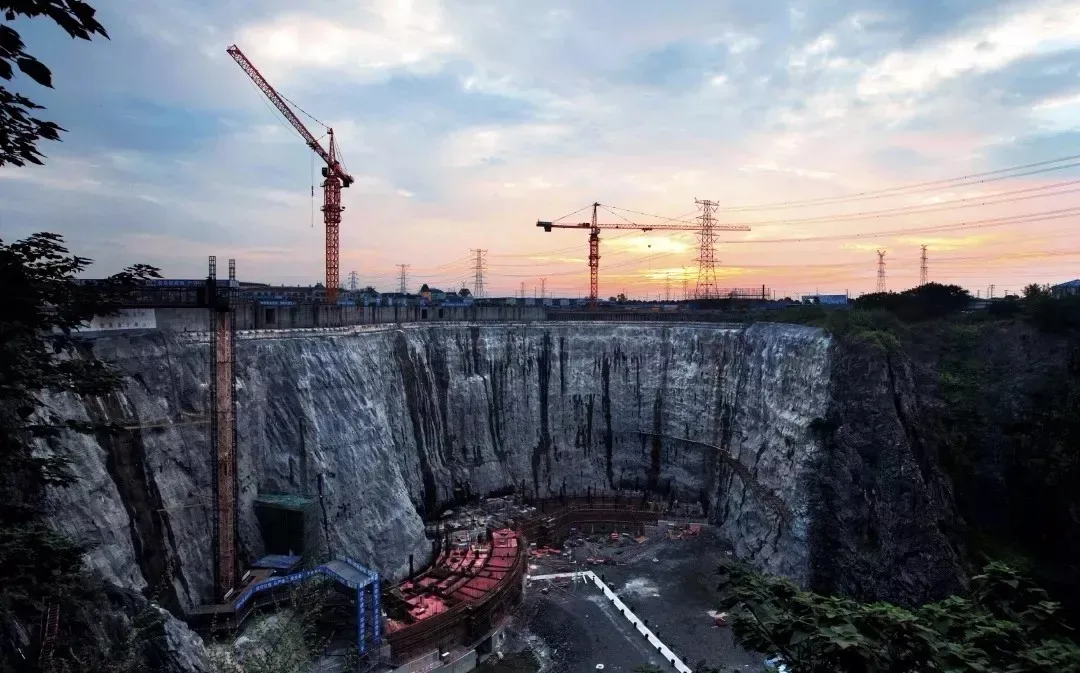
National and Provincial Policies
Driving the Sound and Orderly Development of BIM Technology
1. Ministry of Housing and Urban-Rural Development: Focus on intelligent construction and accelerate BIM research and application.
Recently, the Ministry released its 2021 report on informatization development in China’s construction industry, emphasizing intelligent construction. The report highlights the importance of digital design, intelligent production, smart construction, and intelligent operation and maintenance, with an accelerated focus on BIM technology research and practical application.

2. Zhejiang Province: Announcement of construction reform goals for the next five years.
The Zhejiang Provincial Government recently issued an implementation plan to promote high-quality development through reform and innovation in the construction industry. By 2025, the province aims to achieve significant progress in industry reform, promote new construction methods and organizational approaches, enhance the “Zhejiang Construction” brand, and establish itself as a national benchmark for new construction industrialization.

3. Jilin Province: Incentives for bidding units adopting new technologies like BIM.
The Jilin Department of Housing and Urban-Rural Development issued a notice on full-process consulting services for housing and municipal infrastructure projects, setting five-year development goals. It specifies that units with full-process consulting experience over the past three years will receive bonus points, with additional points awarded to those employing new technologies such as BIM. When scores between “full license” and consortium consulting units tie, preference will be given to “full license” units. Joint ventures within the same corporate group count as “full license” enterprises.
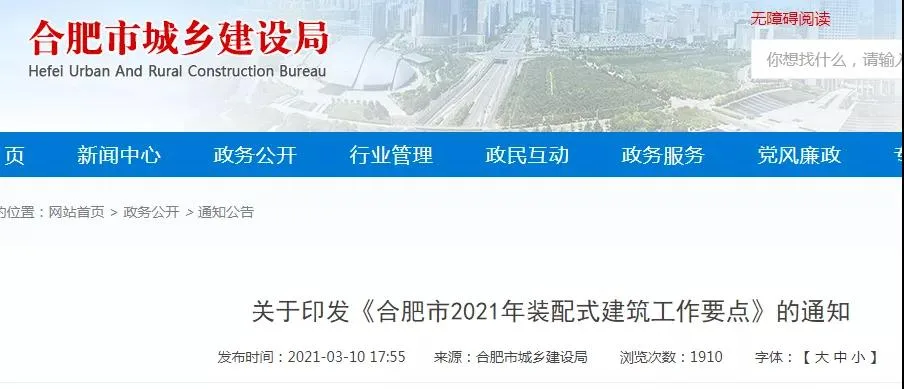
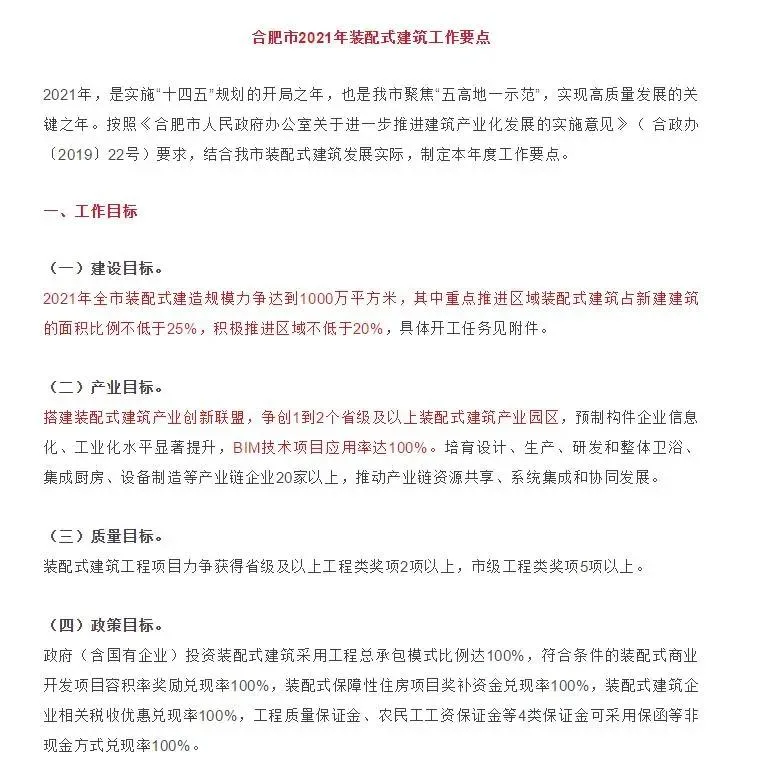
4. Hefei City: Targeting 100% BIM project application rate.
The Hefei Urban and Rural Construction Bureau outlined key points for prefabricated construction in 2021, aiming for a prefabricated construction scale of 10 million square meters. The plan includes ensuring prefabricated construction accounts for at least 25% of new key area builds and actively promoting at least 20% in other areas. An innovation alliance for the prefabricated construction industry will be established, with a goal to create 1-2 provincial-level industrial parks. The city also aims to significantly enhance informatization and industrialization levels of prefabricated component enterprises and achieve a 100% BIM application rate in projects.
5. Nanjing City: Promoting BIM technology application in new construction projects.
On February 26, 2021, the Nanjing Municipal Commission of Urban and Rural Development, together with the Bureau of Planning and Natural Resources, issued a notice accelerating BIM application. Starting March 1, 2021, many new construction projects meeting criteria must use the Nanjing Engineering Construction Project BIM Intelligent Review System for BIM planning, construction drawing review, and completion acceptance management.

6. Jinan City: Officially promoting BIM technology application.
The Housing and Urban Rural Development Bureau of Jinan released draft management measures for general contracting of housing and municipal projects, explicitly promoting BIM use. The draft highlights three key points: encouraging BIM in engineering general contracting, establishing a BIM information management platform, and specifying BIM requirements in bidding documents.

7. Sichuan Province: Strong push for digital water conservancy infrastructure.
Sichuan’s “Action Plan for Accelerating the Construction of New Infrastructure (2020-2022)” emphasizes building digital water conservancy infrastructure. It promotes integrating technologies like 5G, BIM, and 3S (remote sensing, positioning, navigation) with water conservancy construction, operations, and water resource management.

8. Shanghai: Up to 1 million yuan subsidy for BIM and demonstration projects.
On January 12, 2021, the Huangpu District Development and Reform Commission issued special support measures for building energy efficiency and green building demonstration projects. BIM application demonstration projects that pass expert review can receive subsidies: 50,000 yuan for basic approval, 80,000 yuan for good evaluations, and 100,000 yuan for excellent evaluations. The maximum subsidy per project can reach 1 million yuan.

9. Jiangsu Province: Vocational training subsidies for BIM-related skills.
On March 15, the Jiangsu Department of Human Resources and Social Security published a list of 100 scarce occupations eligible for high-skilled talent training subsidies in 2021. The list includes BIM technicians, firefighters, and prefabricated construction workers. Workers who complete relevant training and certification can access increased subsidies.

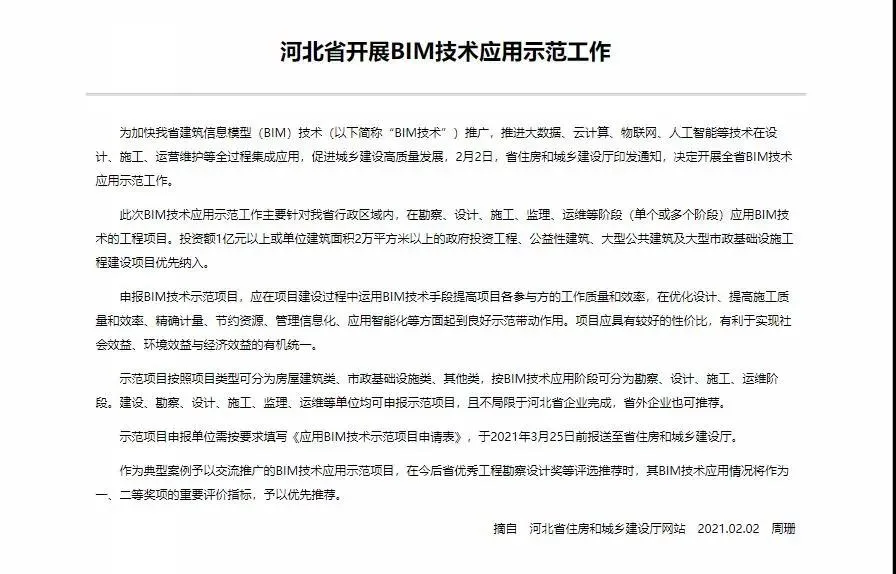
10. Hebei Province: BIM technology application demonstrations prioritized.
Hebei targets engineering projects that utilize BIM technology across survey, design, construction, supervision, and operation phases. Priority is given to government-funded projects, public welfare buildings, large-scale public buildings, and municipal infrastructure projects with investments exceeding 100 million yuan or building areas over 20,000 square meters.
11. Chongqing: Digital construction mandatory for all projects by 2025.
Chongqing is advancing BIM technology across all phases of intelligent construction, emphasizing the development of independent BIM capabilities. Requirements include creating a BIM model storage system for components, submitting models through the BIM project management platform, enhancing BIM design collaboration, and integrating BIM with 5G, VR, AR, drones, and other advanced technologies on construction sites and industrial decoration.

Why You Must Learn BIM: Six Compelling Reasons
In 2021, BIM’s role in transforming the construction industry continues to deepen, accelerating the shift toward informatization and industrialization. Mastering BIM technology is now a vital skill for construction professionals. Here are six reasons why learning BIM is essential. If you haven’t started yet, now is the time to act.
01. A green passport for career advancement. In the digital age, talent selection prioritizes those skilled in BIM, strengthening enterprise transformation capabilities.
02. Essential for talent reserves in major state-owned enterprises such as China Construction, China Railway, CCCC, AVIC, MCC, Country Garden, Evergrande, and Vanke.
03. Provides bonus points for enterprise bidding. With national policies encouraging BIM adoption and government funding support, enterprises are future-proofing their operations.
04. BIM is more than a tool upgrade—it’s an innovation in construction methods and industry development models.
05. 3D modeling enables you to see exactly what you get, allowing early detection of errors and omissions, which reduces costs.
06. BIM represents the future of construction: green, energy-efficient, cost-effective, and productivity-enhancing, paving the way for smart construction sites.
What Are BIM Professionals Doing?
BIM specialists typically work in the following organizations:
1. BIM centers within owners (Party A) and real estate companies, responsible for overall planning, standard development, coordination, and effectiveness evaluation of BIM processes.
2. BIM centers at design institutes, managing BIM bidding and delivering BIM design outputs.
3. BIM centers in engineering consulting firms, applying BIM for cost estimation, supervision, and construction management.
4. Engineering and construction companies, using BIM in construction operations.
While BIM is not yet mandatory at every company, the requirements and policy incentives from owners are guiding its adoption. BIM technology impacts the construction industry on multiple fronts. The BIM skills you acquire today will prove invaluable very soon. Enhancing your BIM competency has become essential for professional growth.
















Must log in before commenting!
Sign Up