
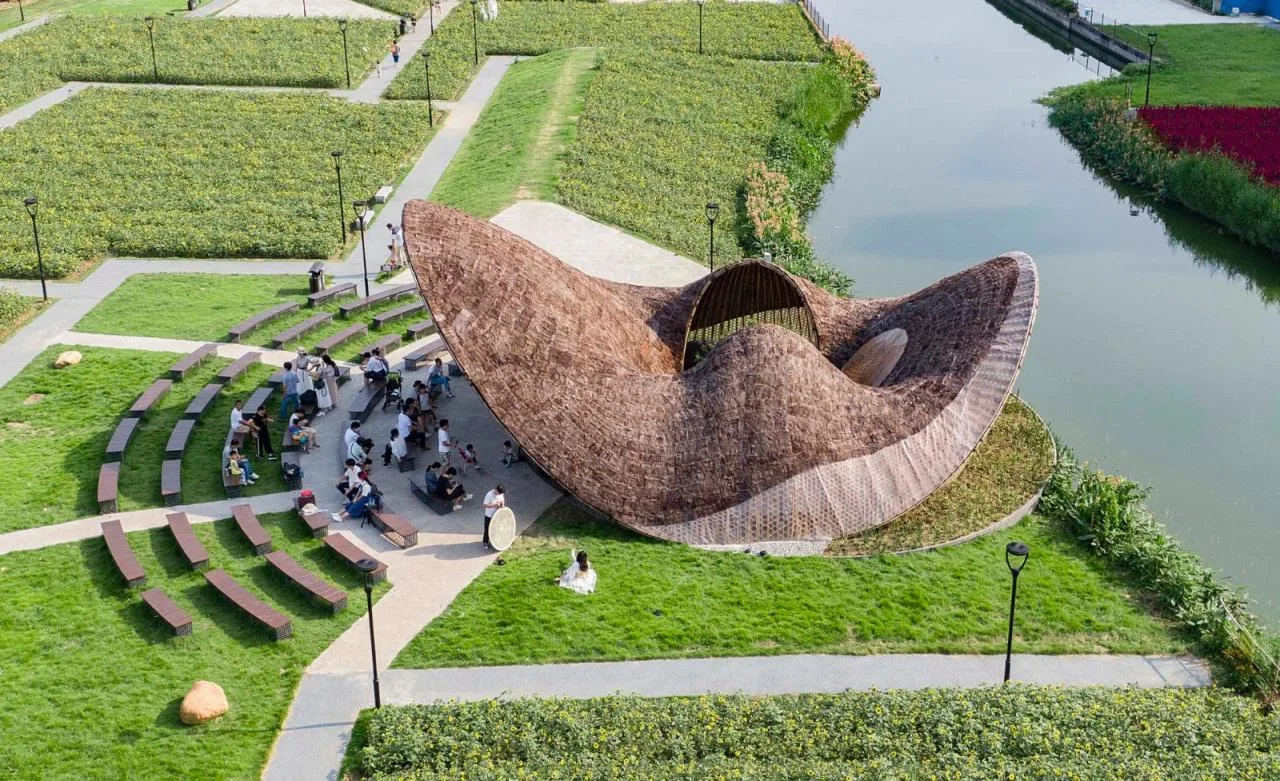
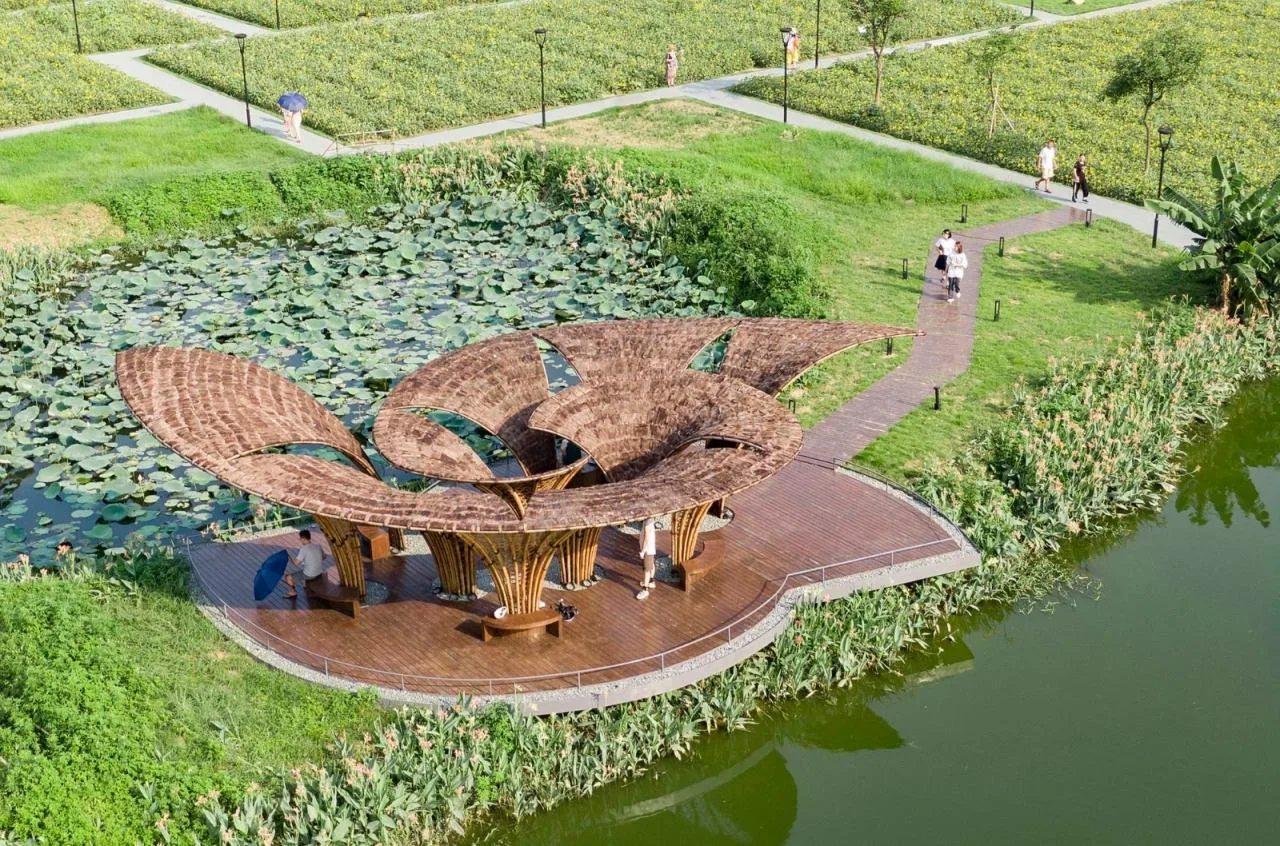
Since June 2019, the Zhuliang Society has successfully completed two projects: the Changqi Village Stadium Bamboo Corridor and the Huanglong Village Waterfront Bamboo Corridor. In September 2020, commissioned by the Beijiao Town Government, they designed two bamboo structures in the central Huanmo Huatian Landscape Park, enhancing the park’s living environment quality. From the Changqi Stadium bamboo corridor to the Huanglongbin Water bamboo corridor, and finally to the Xianmo Flower Field Pavilion and Huiting, the Vertical Beam Society has advanced bamboo architecture through four evolutionary stages (1.0 to 4.0), refining form logic and construction details.
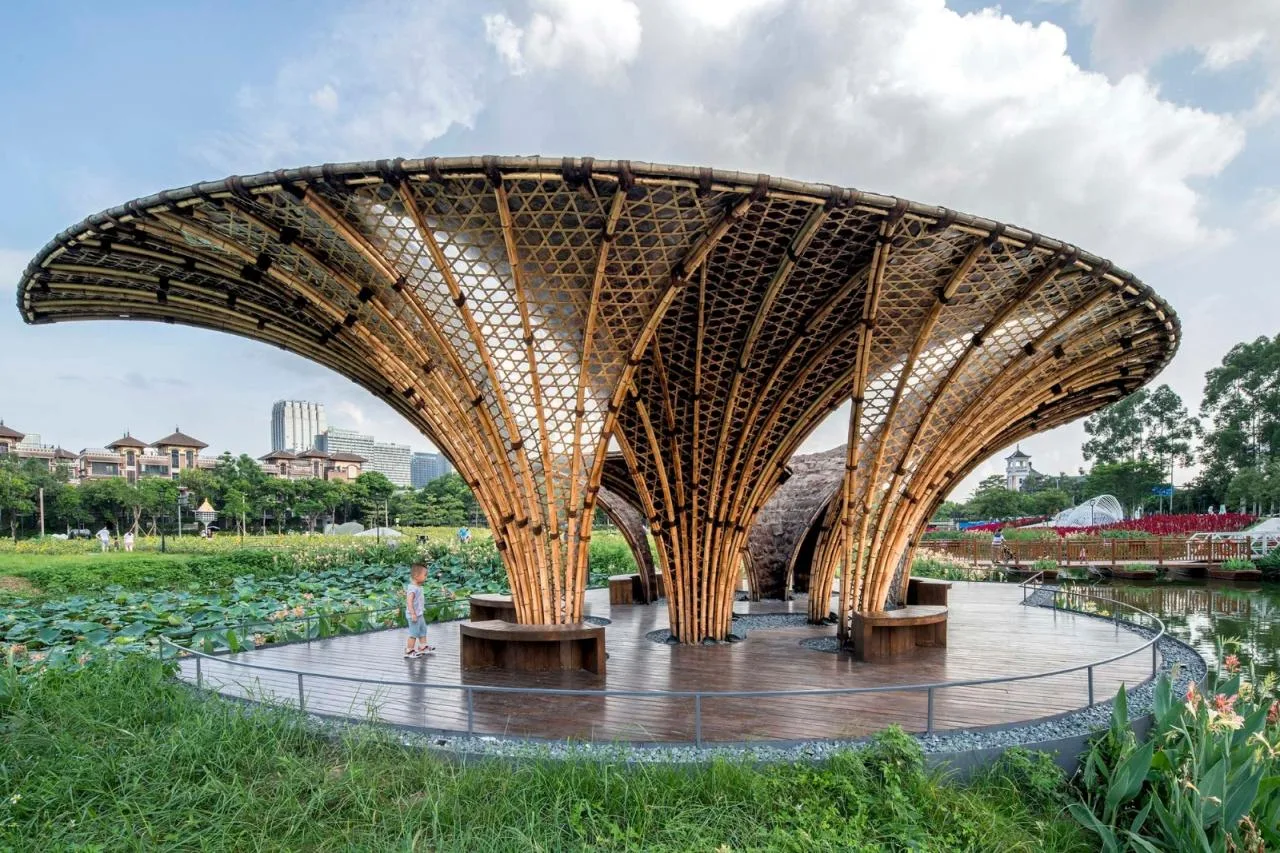
The integrated bamboo structure series is inspired by bamboo’s excellent tensile and bending strength. By bending bamboo, the design naturally forms three-dimensional enclosures that provide shade and create semi-outdoor gray spaces offering ventilation and shelter in humid, rainy subtropical climates. This concept began with a basic “shell” shape. In the 1.0 version at Changqi Stadium Bamboo Corridor, an array of four “shells” was replicated to enhance the most active public stadium’s side, creating shaded areas for the stands. The 2.0 iteration at Huanglongbin Water Bamboo Corridor involved deforming and connecting five “shells” in two directions, providing a shaded resting space bridging the village activity square and river platform. The 3.0 and 4.0 versions at Xianmo Flower Field Pavilion and Huiting introduced richer form variations, expanding spatial possibilities.
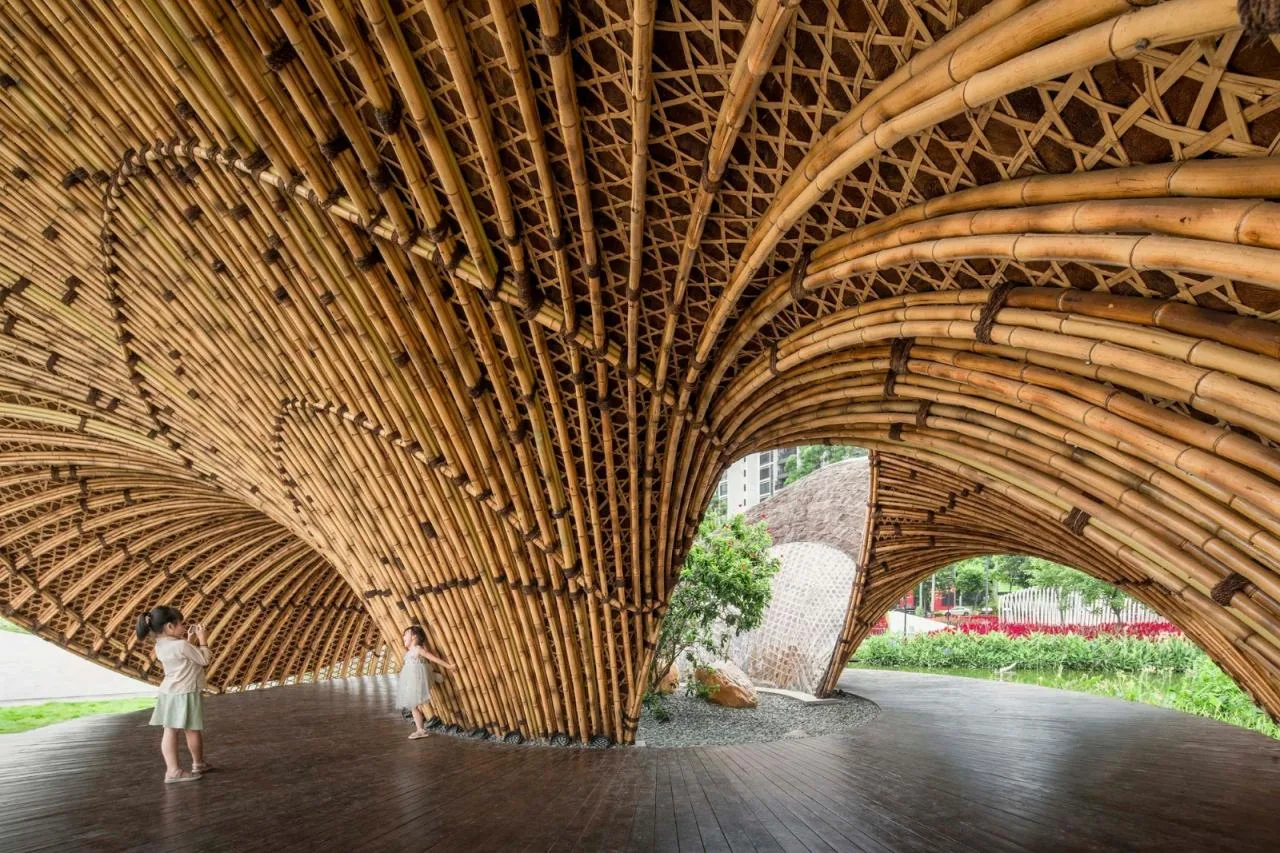
The Huanmo Flower Field, located at the heart of Beijiao Town, is a public park themed around flowers, showcasing seasonal blooms year-round. However, the park’s lack of shaded areas and resting facilities results in low visitor usage. Residents mainly gather at dusk, with most visits limited to sightseeing. To enhance the park’s appeal, the main goals were to increase landscape amenities, improve livability, extend visiting hours, and boost overall usage.
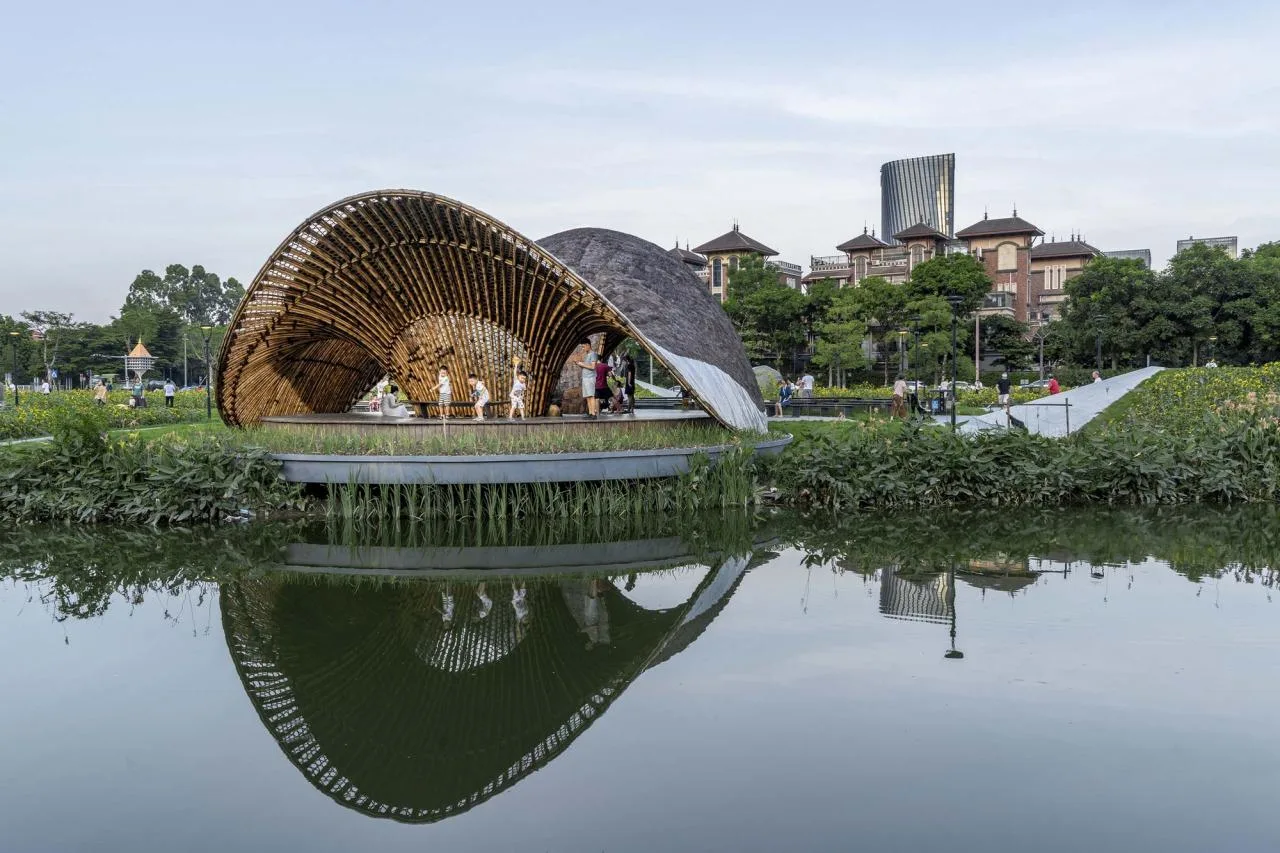
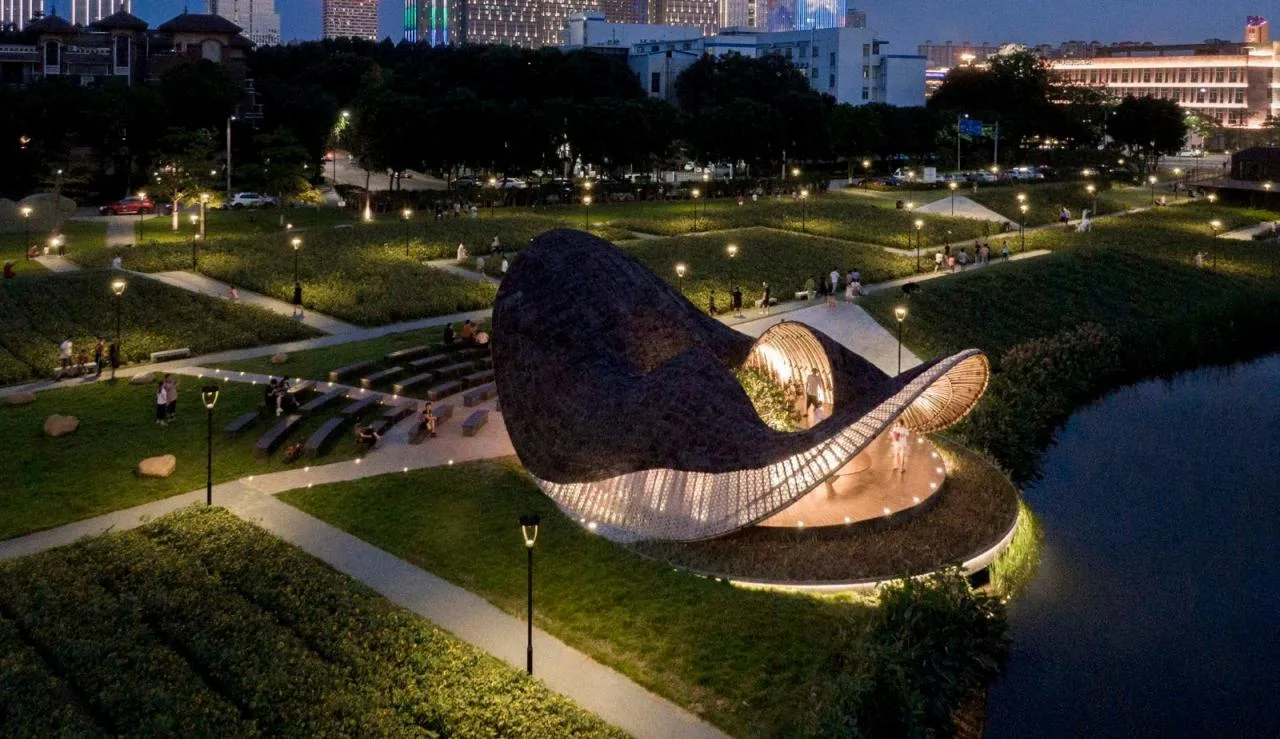
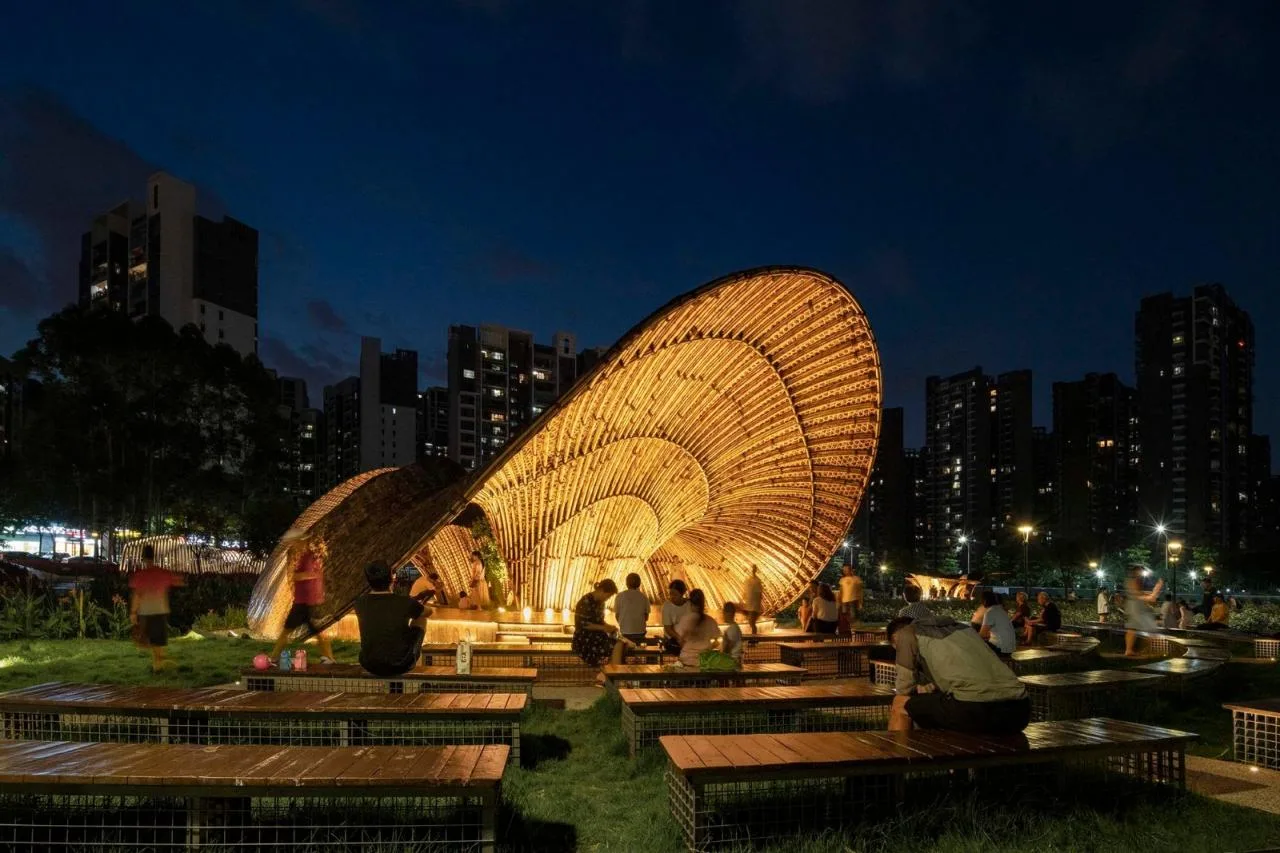
To address this, two bamboo pavilion structures were introduced to offer shaded resting spaces for residents. These pavilions also serve multiple functions: hosting small events, enriching the tourism experience, providing waterfront views, and acting as landscape landmarks. As standalone landscape features, the Zhuting pavilions offer rich spatial experiences and iconic imagery, while integrating seamlessly with the environment to support visitors during the flower viewing season.
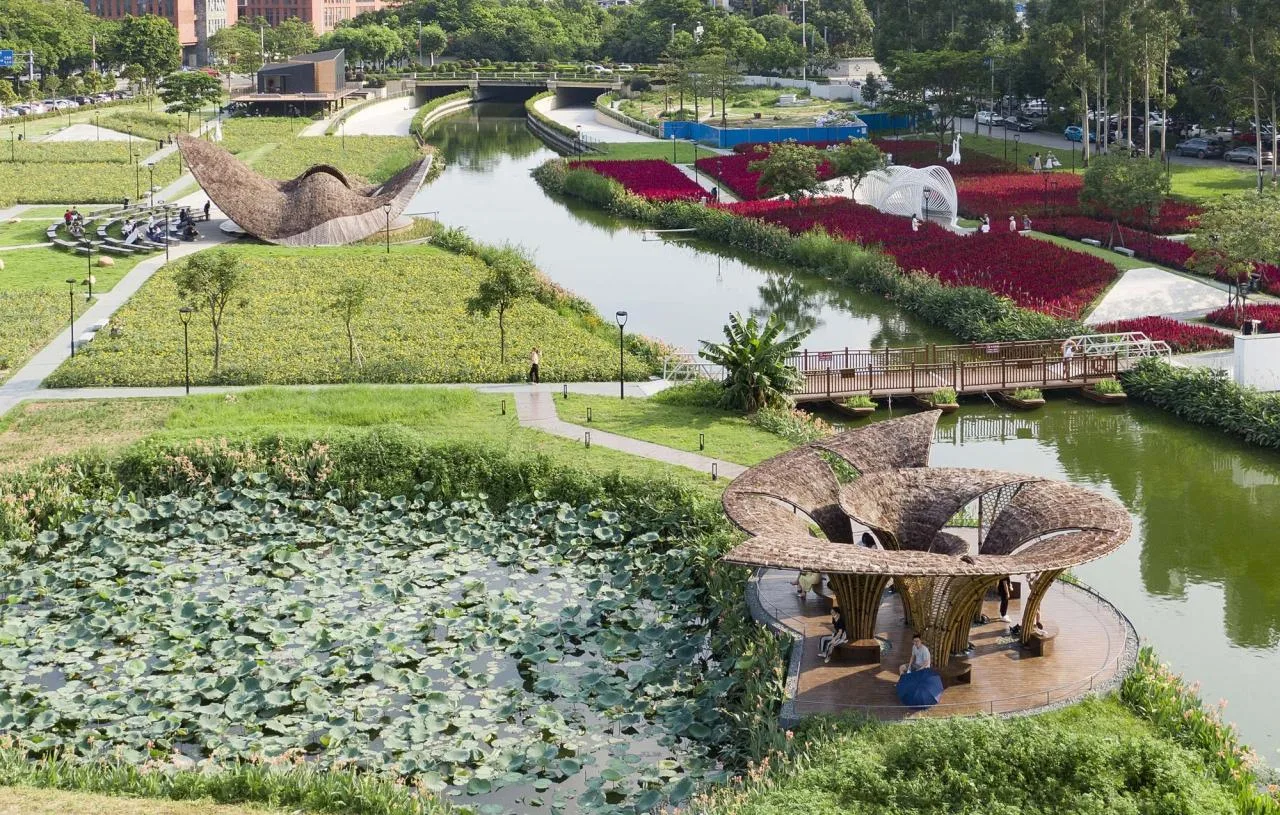
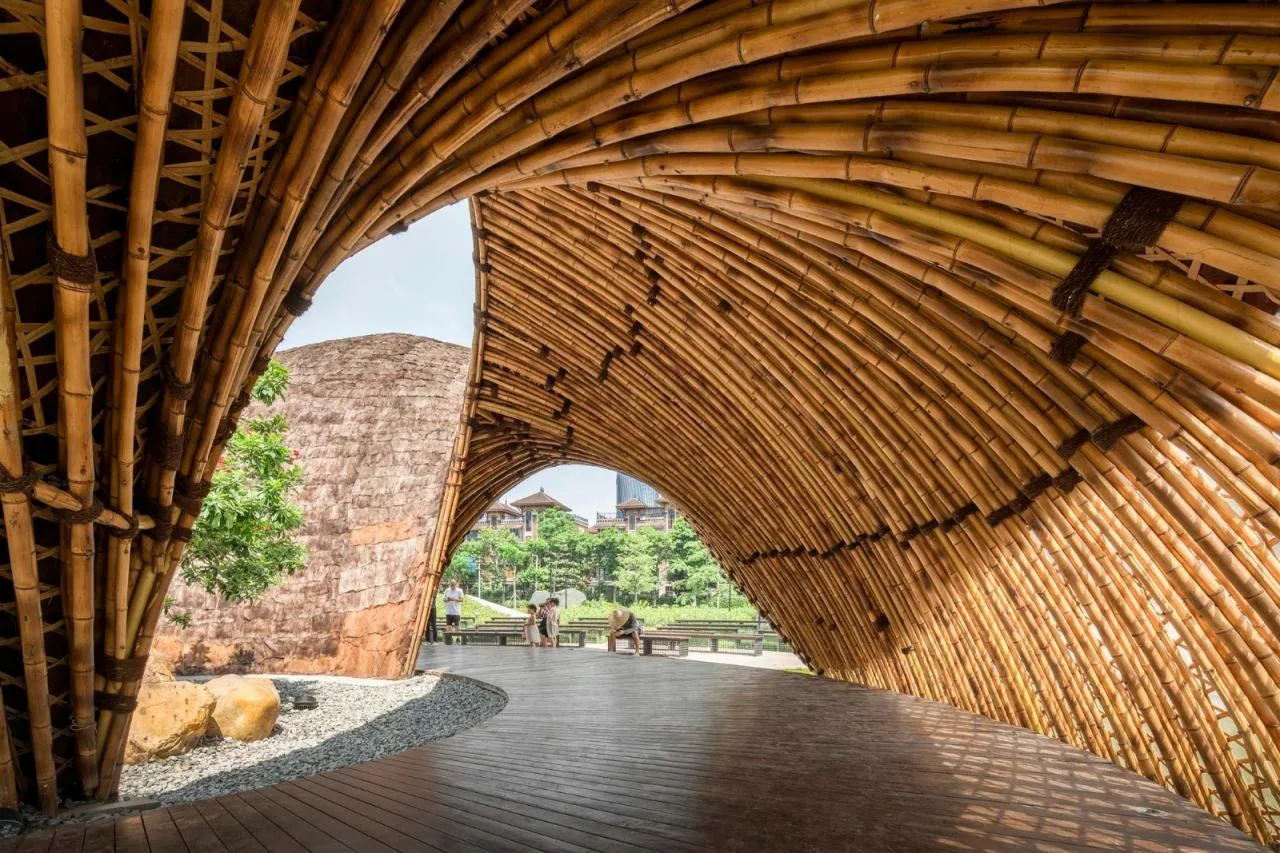
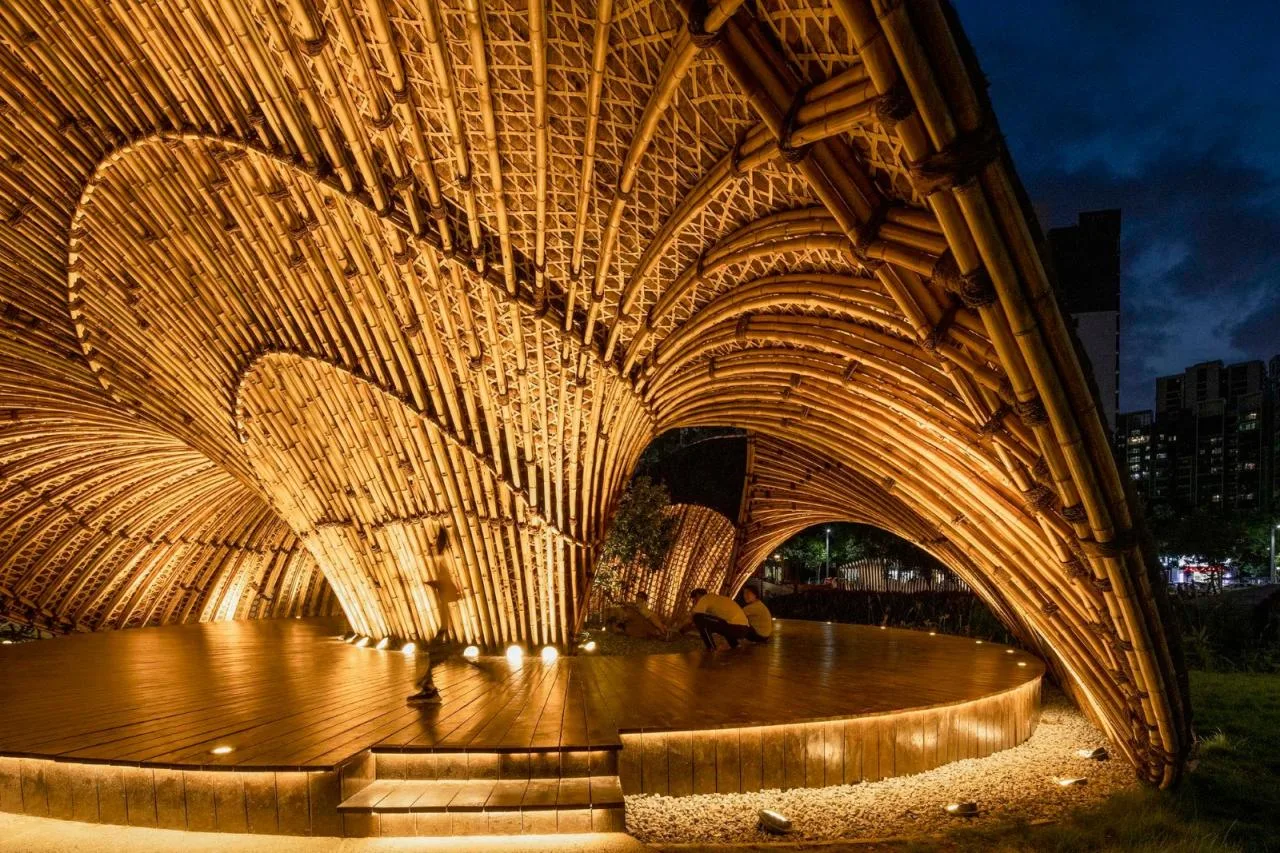
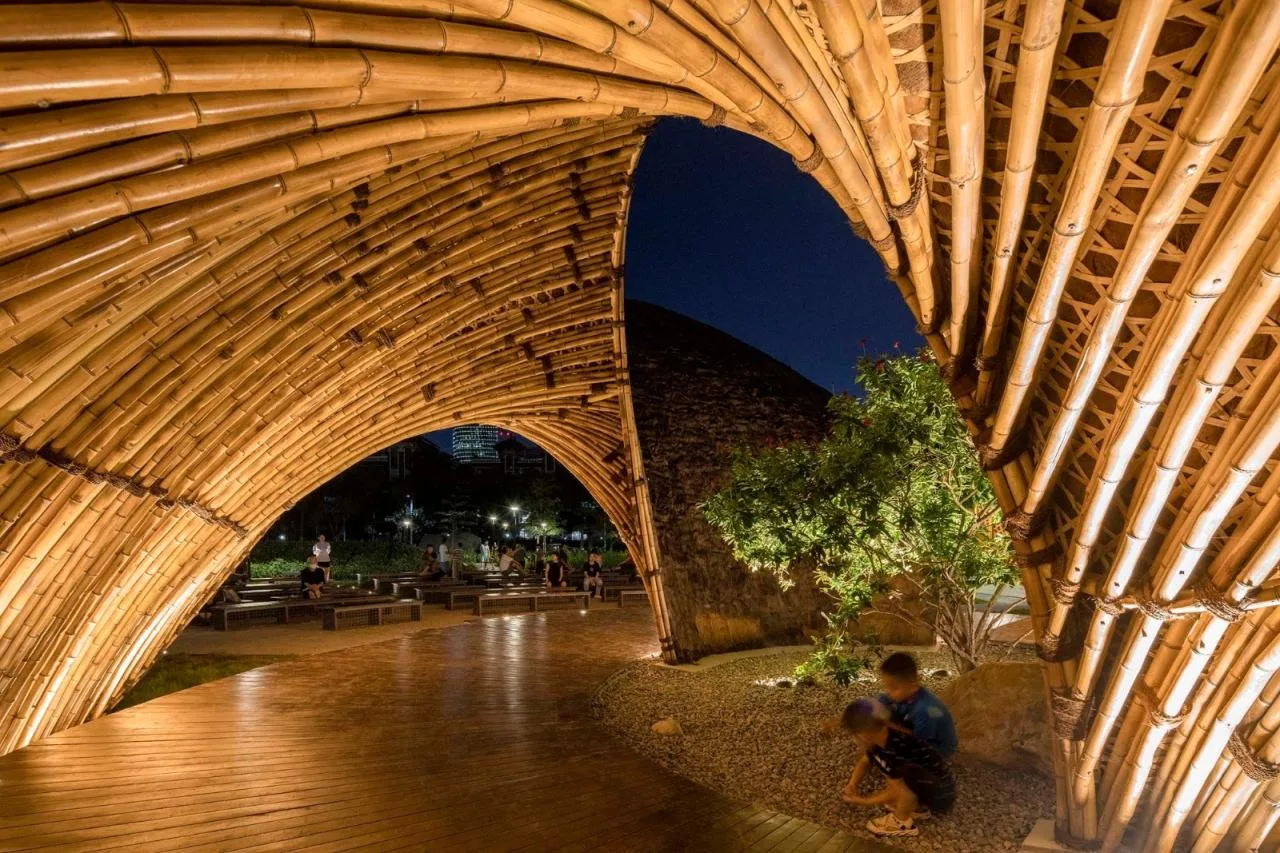
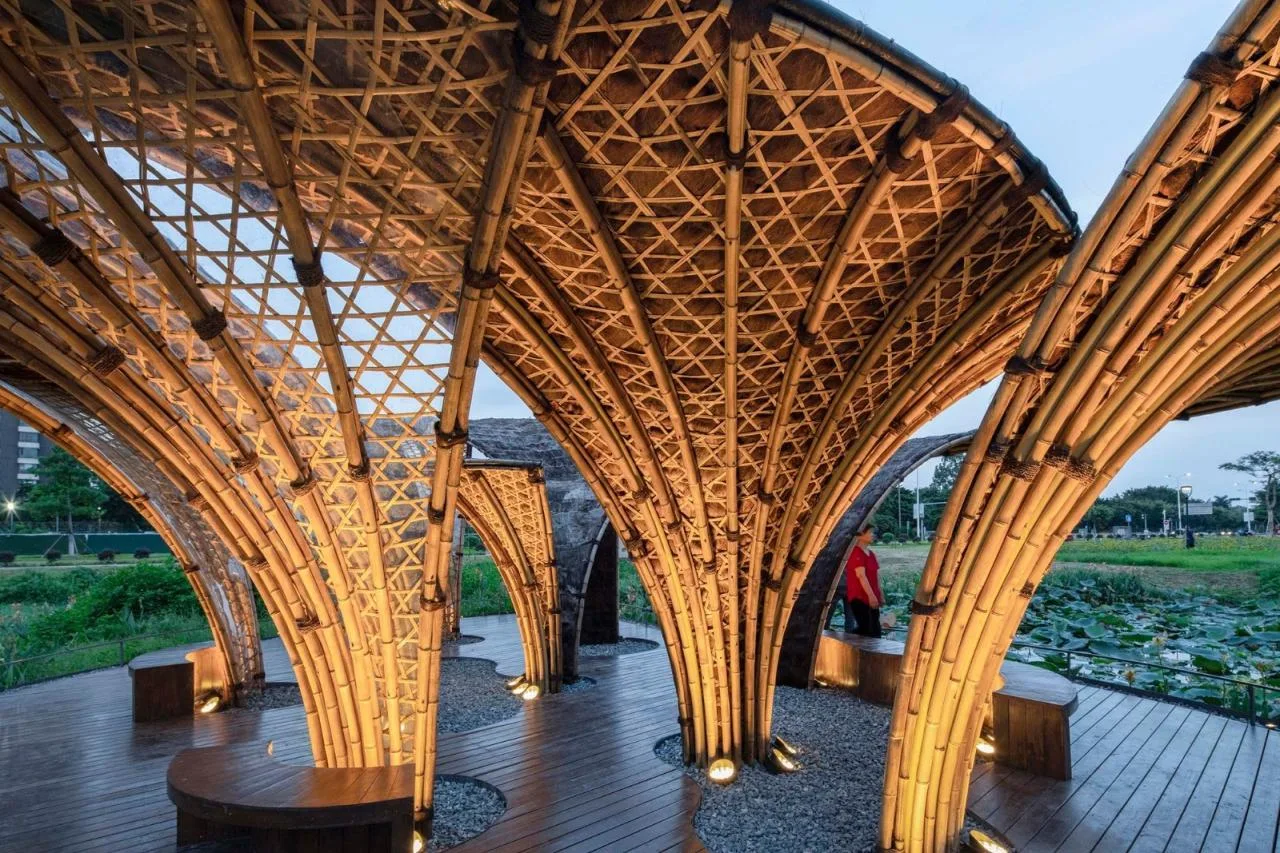
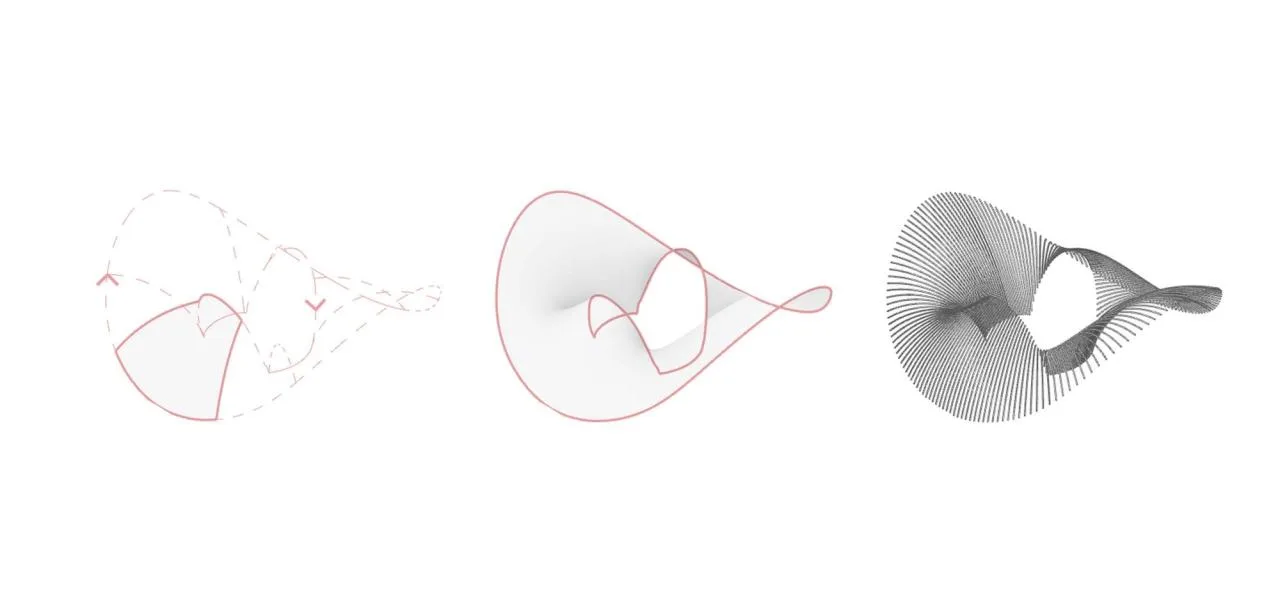
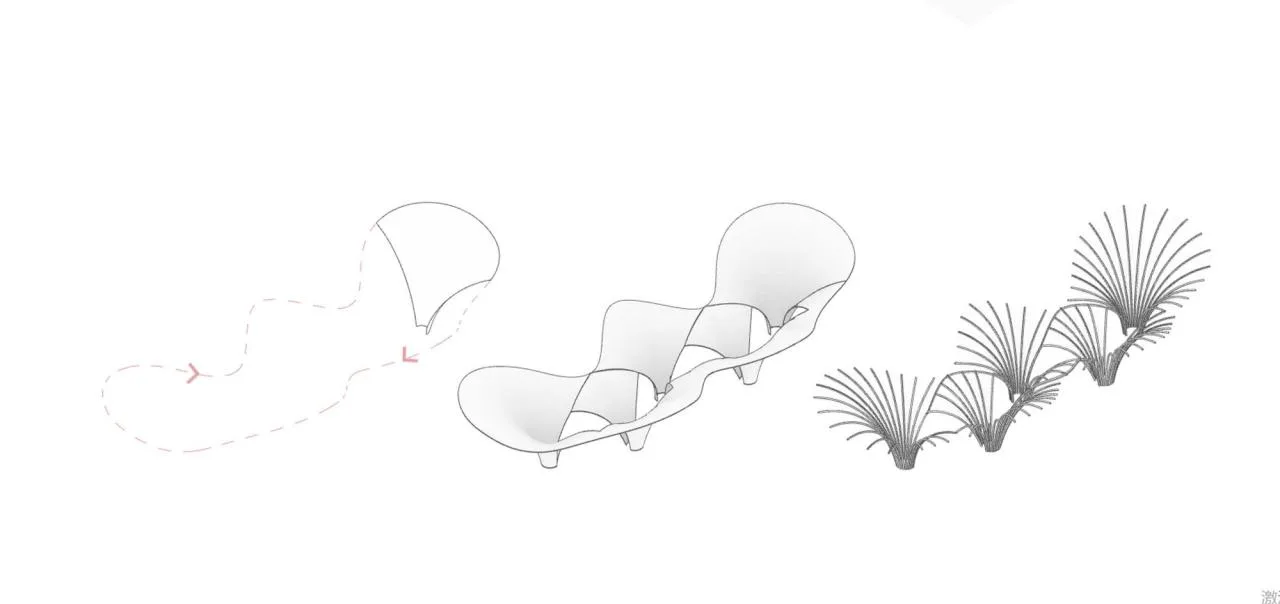
The Flower Sea Pavilion and Return Pavilion, Bamboo Structure versions 3.0 and 4.0, build upon earlier designs from Changqi Village Stadium and Huanglong Village Waterfront Bamboo Corridors. The Flower Pavilion follows the fundamental logic of the “shell” shape, arranged along spiral lines to create a rhythmic unfolding of cantilevered scales from small to large toward the water, generating a dynamic spatial hierarchy. The Huiting Pavilion consists of two reverse “shell”-shaped modules connected end-to-end to form a closed loop. A suspended three-dimensional, bidirectionally curved surface spans 12 meters, creating both a large stage area and a smaller waterfront viewing space, with a dramatic spatial twist at their transition point.
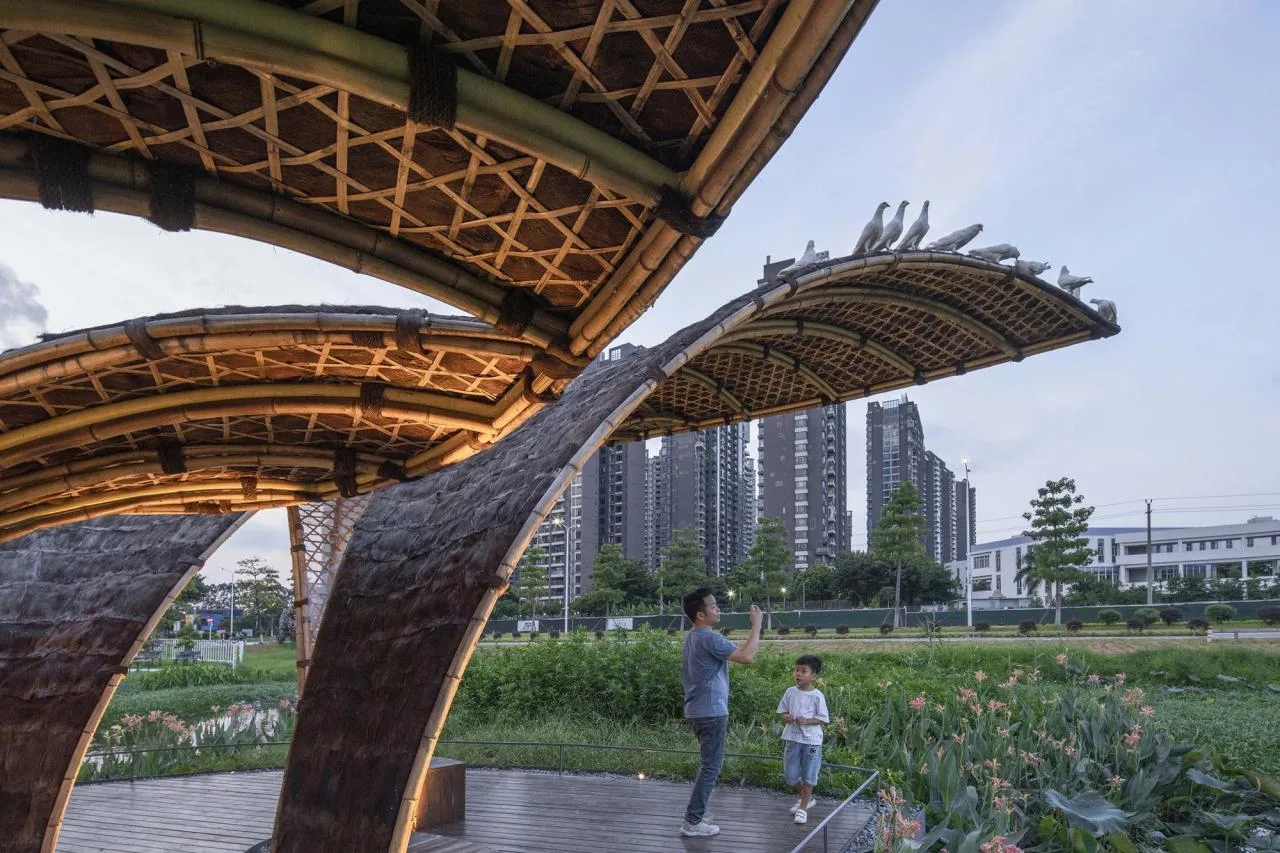
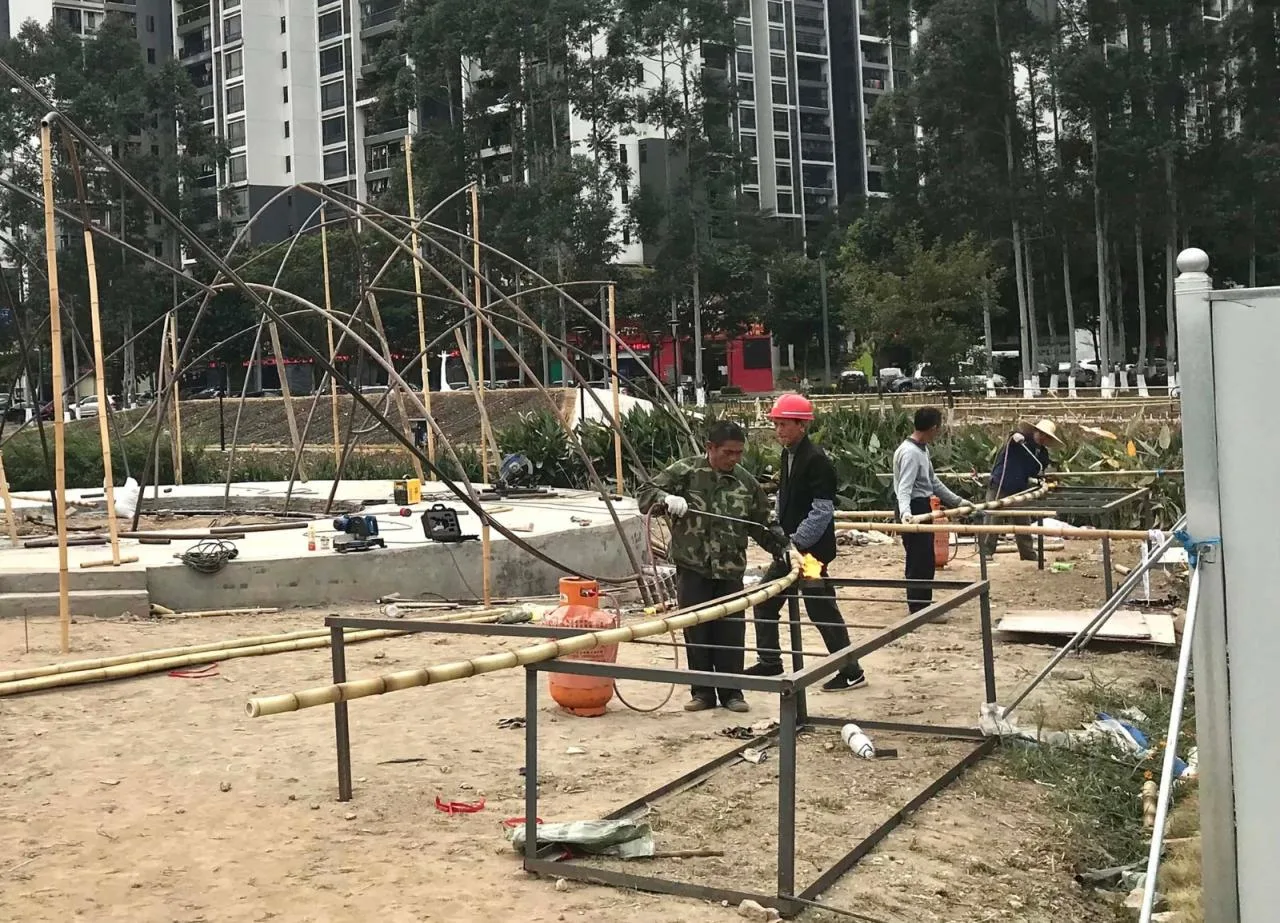
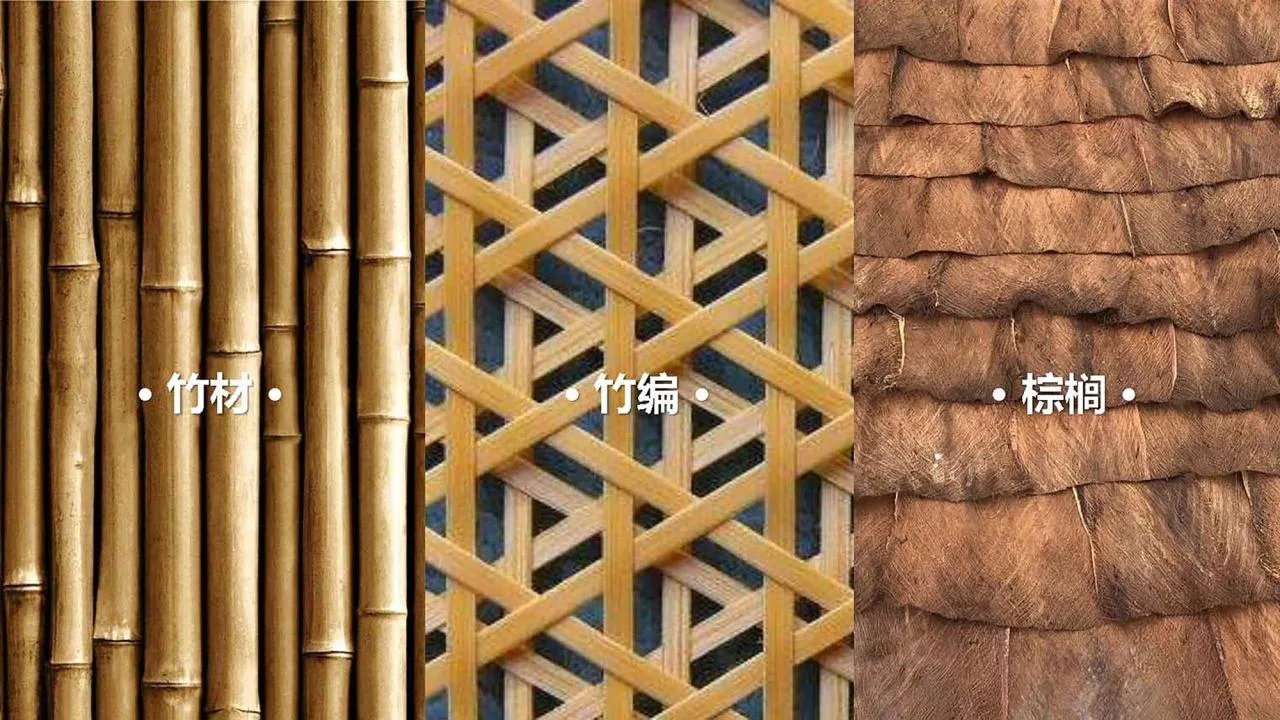
Construction materials and detailing continue the series’ consistent logic, utilizing “shell”-shaped modules made of unidirectional curved bamboo cantilever units combined with traditional bamboo weaving techniques. Roofs are woven from bamboo strips and covered with palm skin, creating partially translucent surfaces that highlight the structure’s beauty through light and shadow. The introduction of palm skin represents a significant innovation in bamboo structure versions 3.0 and 4.0, drawing inspiration from traditional raincoat designs.
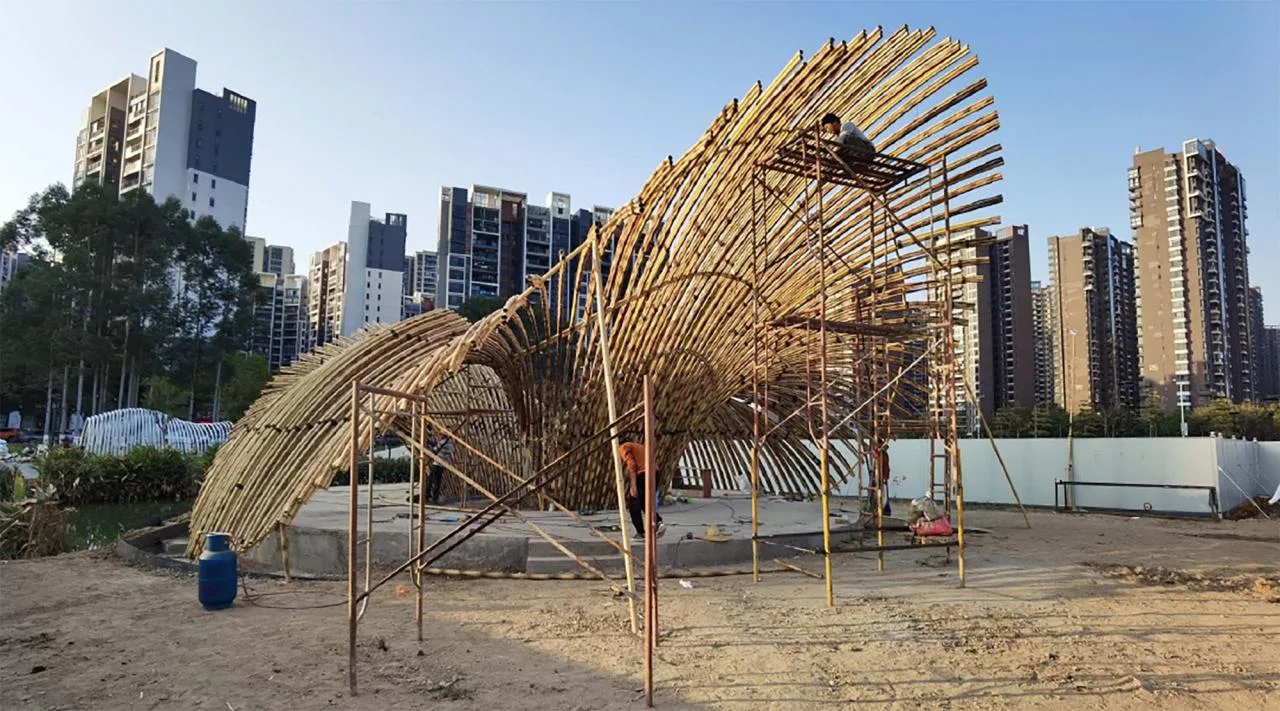
Palm leather, traditionally used for raincoats, offers excellent weather and water resistance. Although plastic raincoats have largely replaced it, palm skin remains an eco-friendly, readily available material with outstanding durability. Building on lessons from Bamboo Structures 1.0 and 2.0, palm skin was selected for the pavilion’s roofing to enhance weather resistance. Its modular arrangement evokes the rhythm of traditional tiled roofs. Additionally, the original hemp rope used for binding bamboo was replaced with a more weather-resistant brown rope.
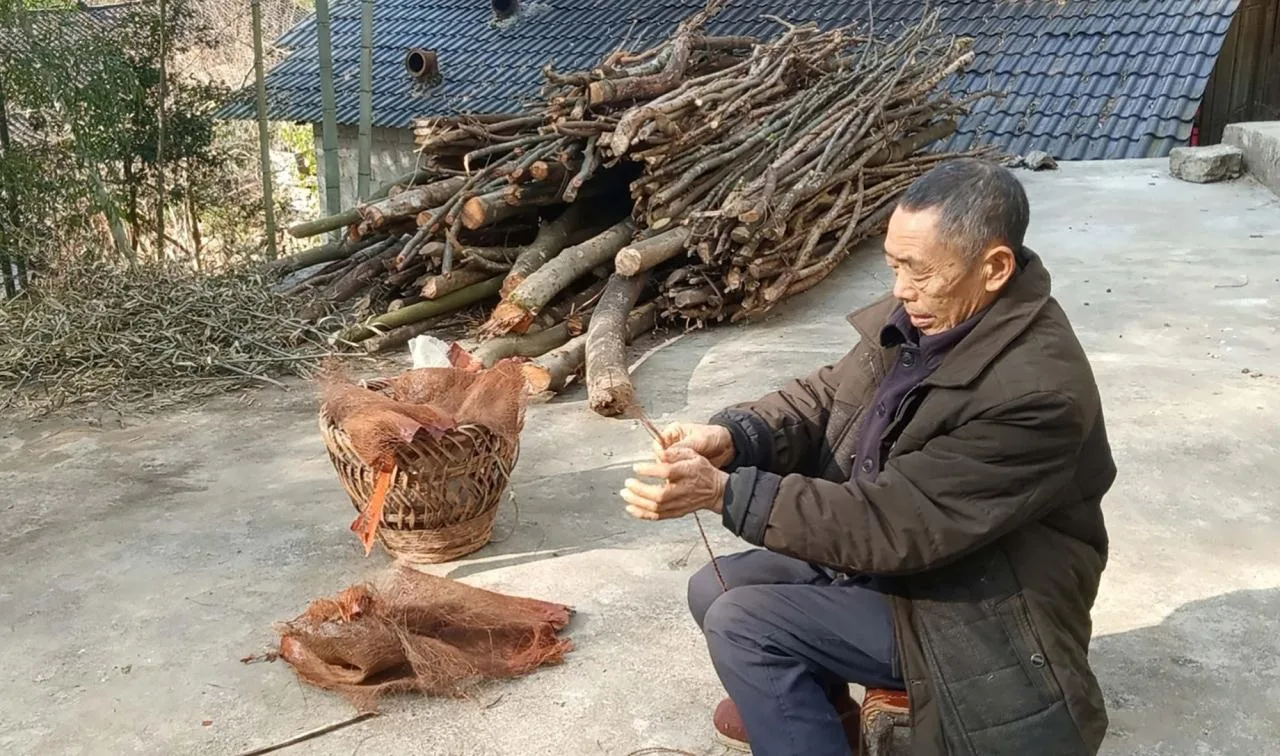
Traditionally, palm skin is secured using palm rope stitching. However, due to the small size of individual palm pieces, a tile-like installation would be labor-intensive. Instead, a modular prefabrication method was adopted: palm skin sheets were sewn into 1m by 1m units offsite, then connected and trimmed on location to form the roof.
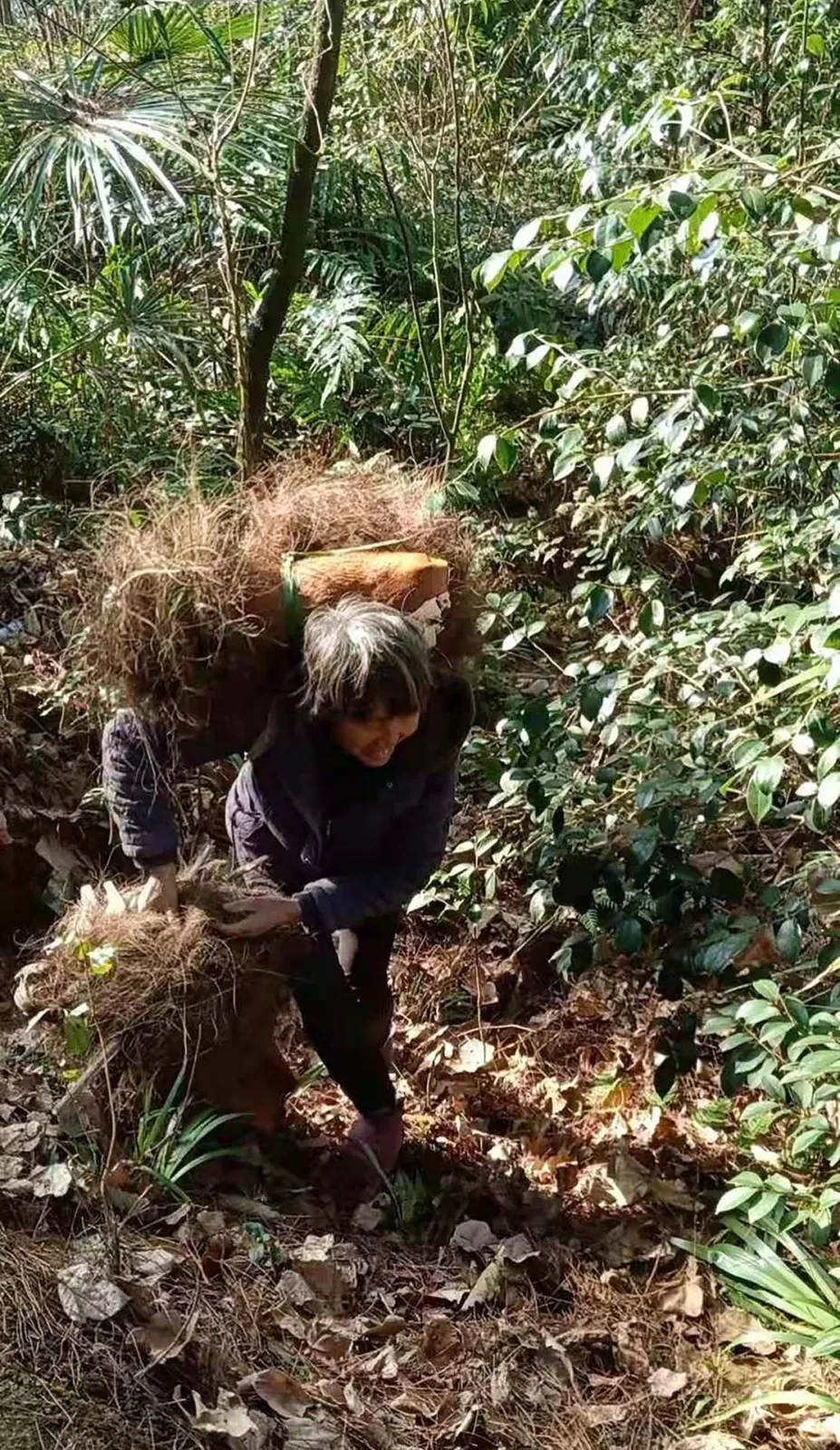
Interestingly, after proposing palm peel as a roofing material, the construction manager Mr. Chun discovered it was abundant in his hometown of Hubei. Collaborating with local village officials, he initiated a poverty alleviation project, mobilizing villagers to produce and process palm peel and palm rope. This effort not only sourced materials locally but also contributed significantly to rural revitalization. Remarkably, a bamboo structure thousands of miles away has generated social benefits back in its material’s place of origin.
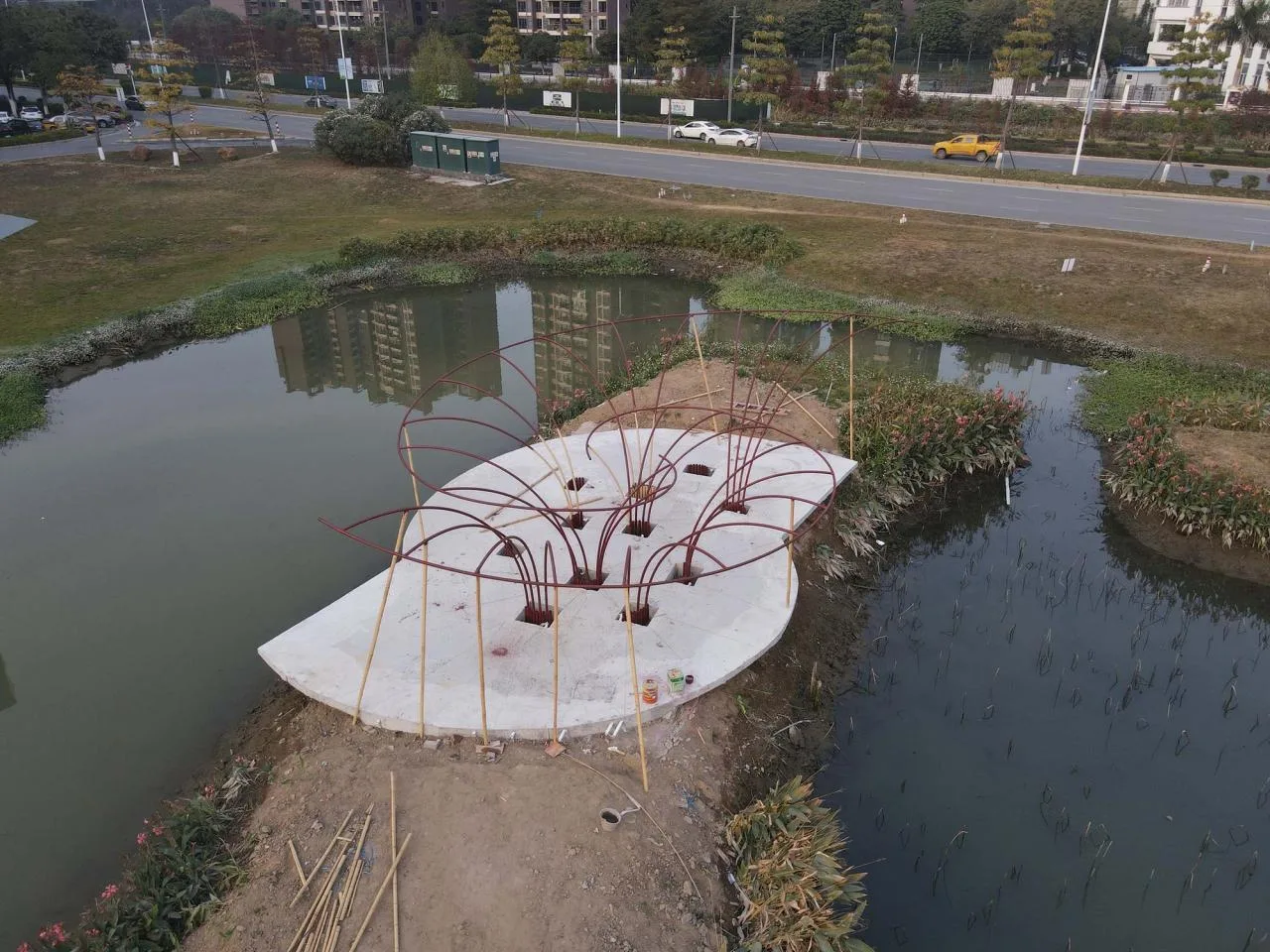
Beyond bamboo constructions, the Pianmao Flower Field project incorporated steel art installations to activate space use. The wind corridor features a simple elliptical form that rotates around an axis to create a channel along essential paths within the flower field. Visitors experience changing light, shadows, and spatial twists while passing through, leaving a lasting impression. Wind chimes add an auditory element, engaging visitors and enriching the soundscape.
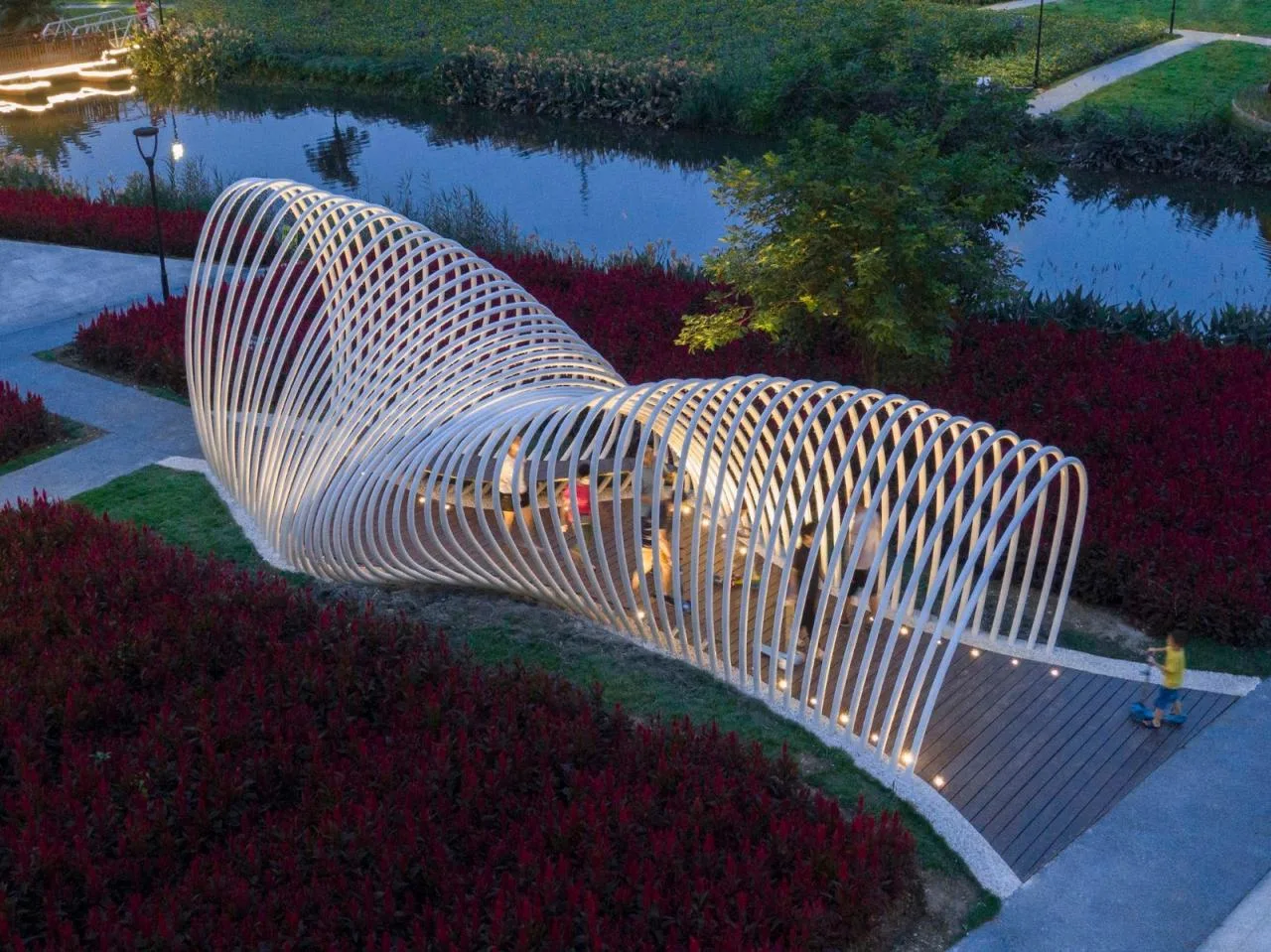
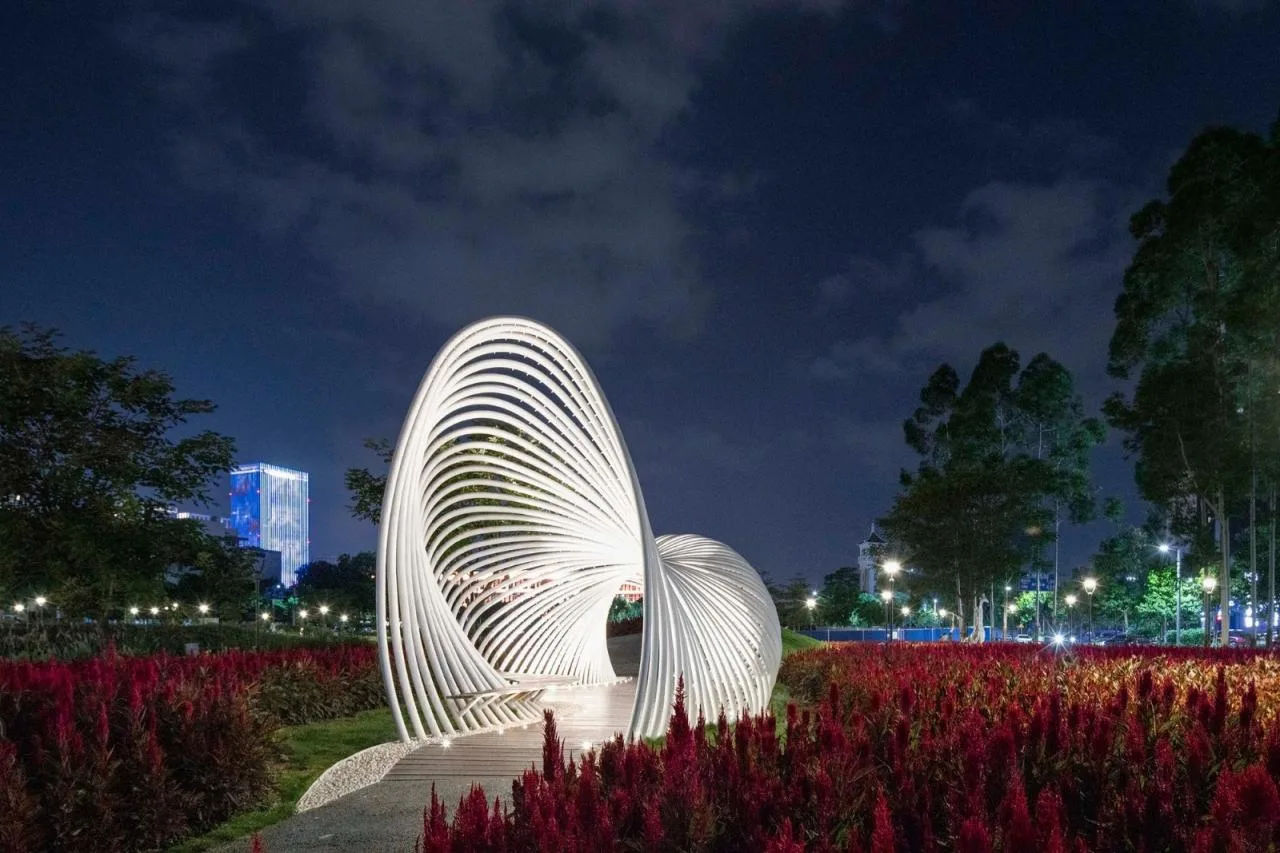
After the bamboo structures were completed, visitors eagerly took photos and engaged in diverse activities under and around the bamboo corridors: sightseeing, resting, parent-child play, fitness, and social meetups. As a result, Huanmo Flower Field attracted more visitors and hosted events such as the 2021 Beijiao Town Cultural and Sports Activity Launch Ceremony. These spaces fostered community interaction and shared storytelling, strengthening social bonds.
Project Drawings
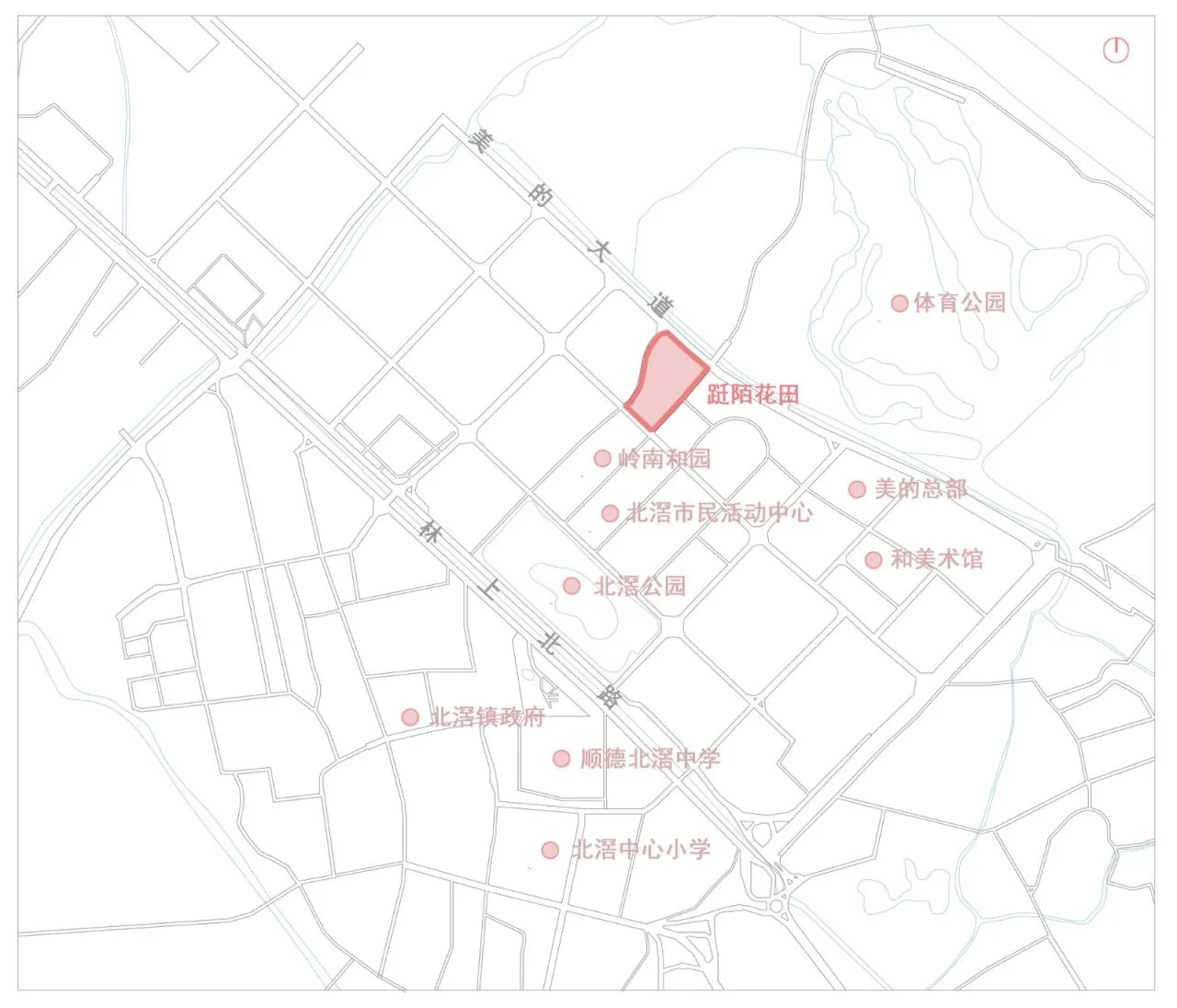
△ Base schematic diagram
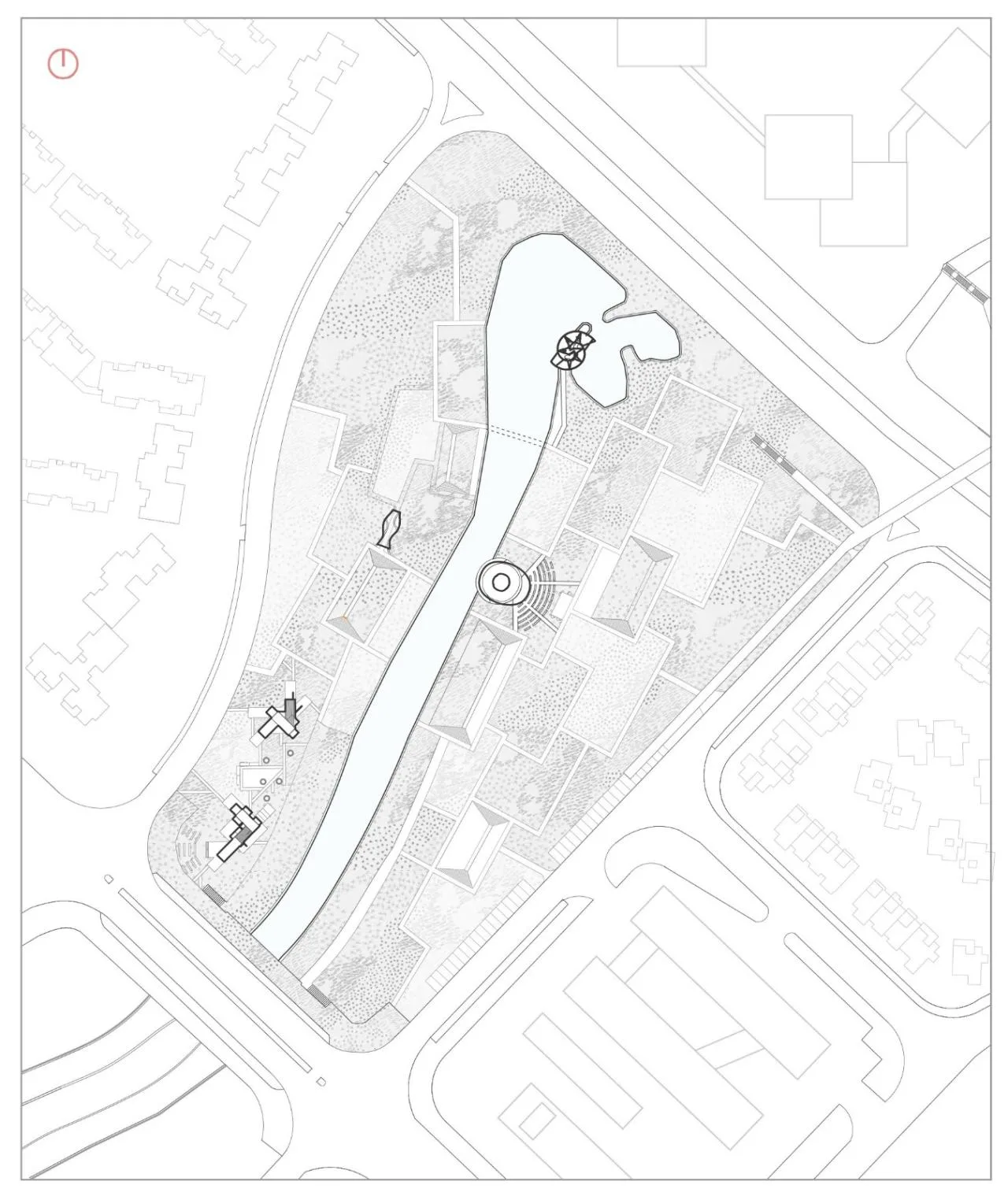
△ General layout plan
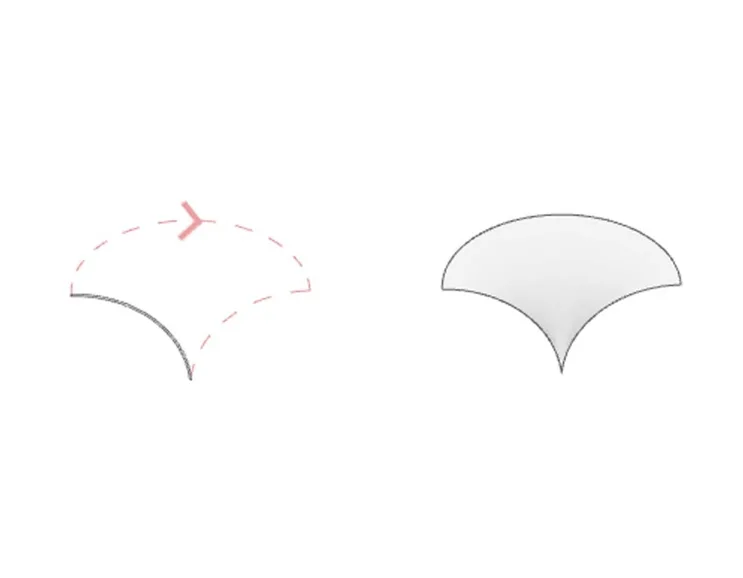
△ Basic type
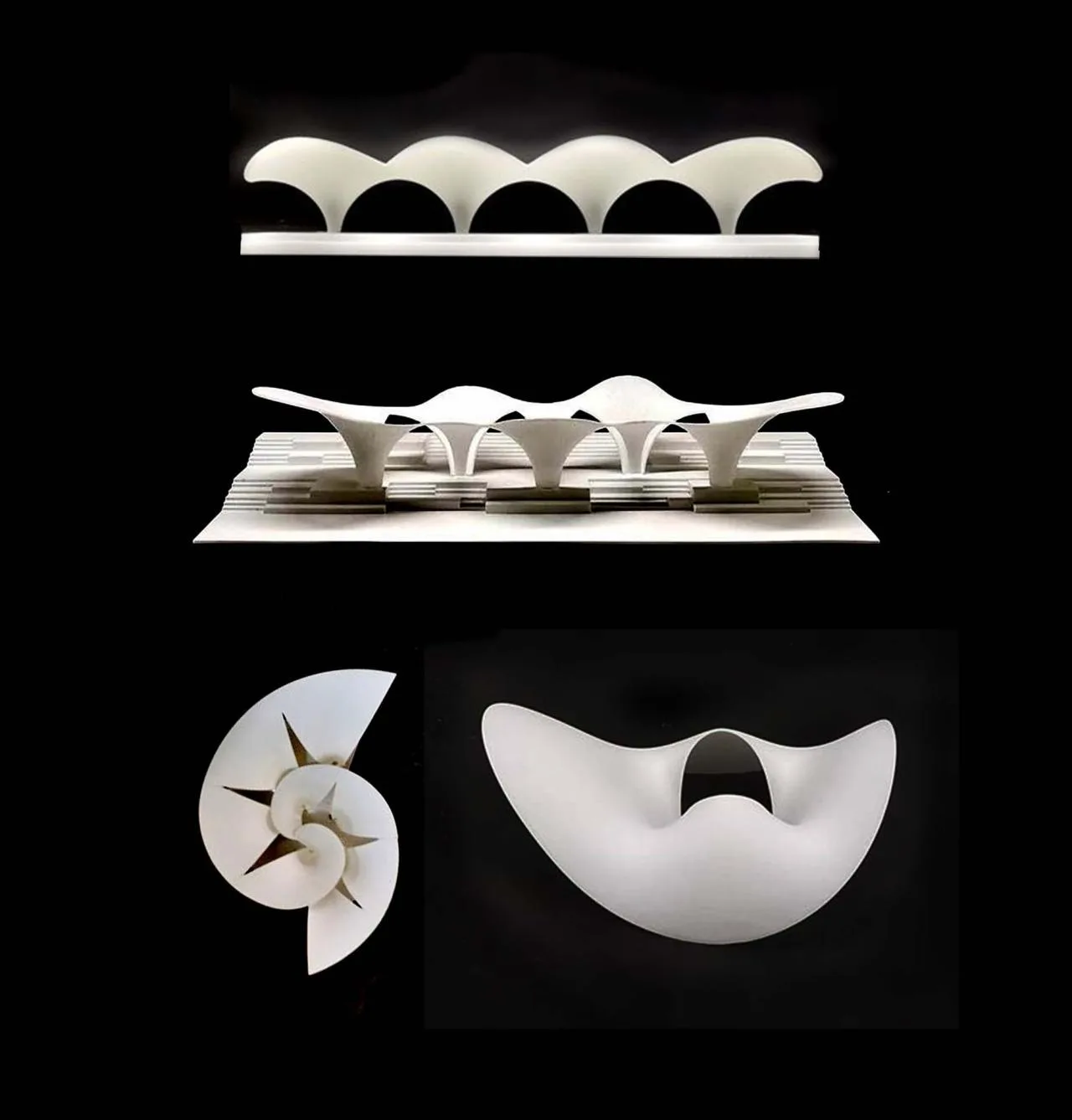
△ Shape generation diagram
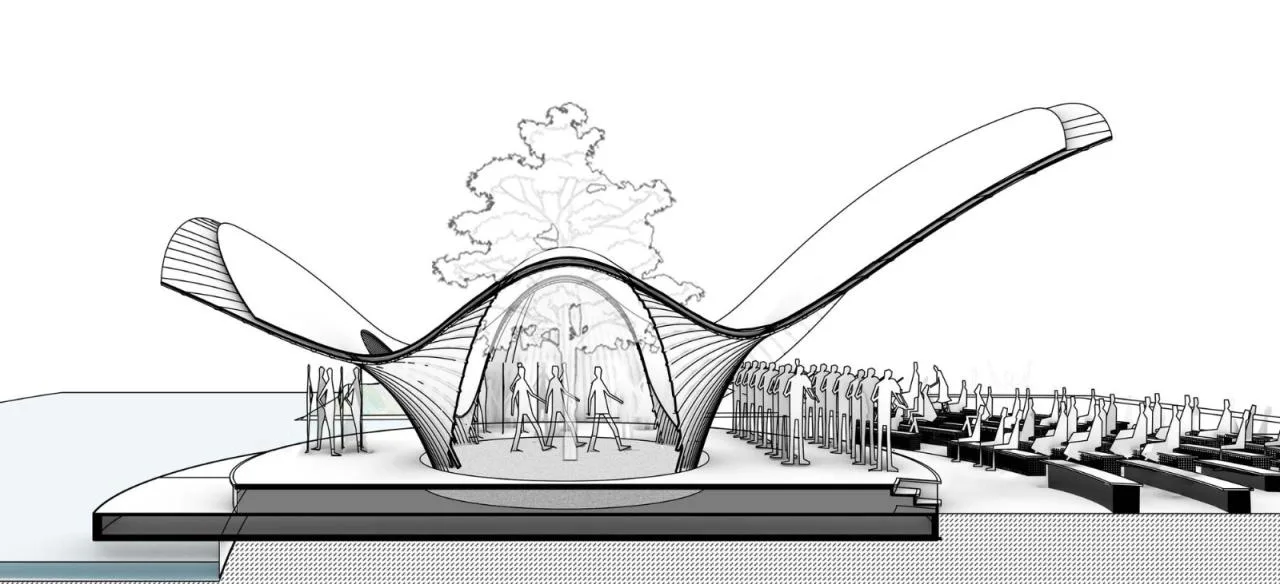
△ Circular section diagram
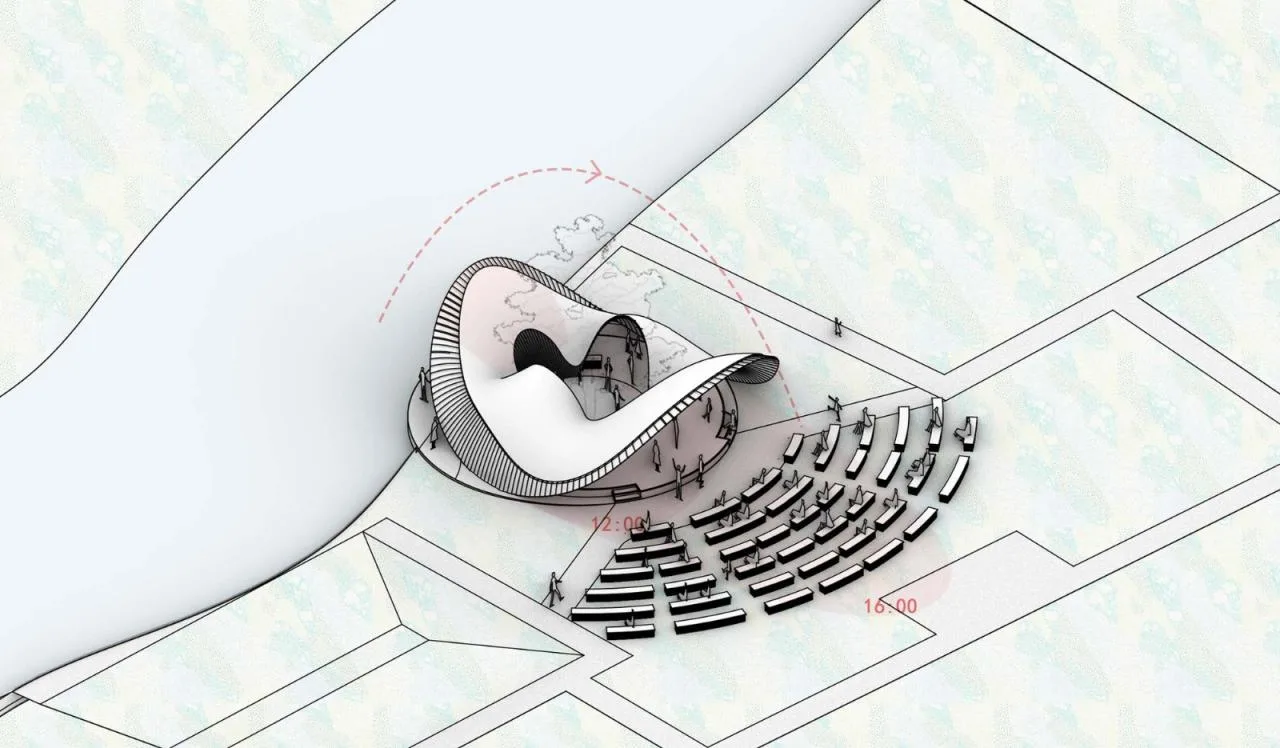
△ Circular Sunshine Analysis Diagram
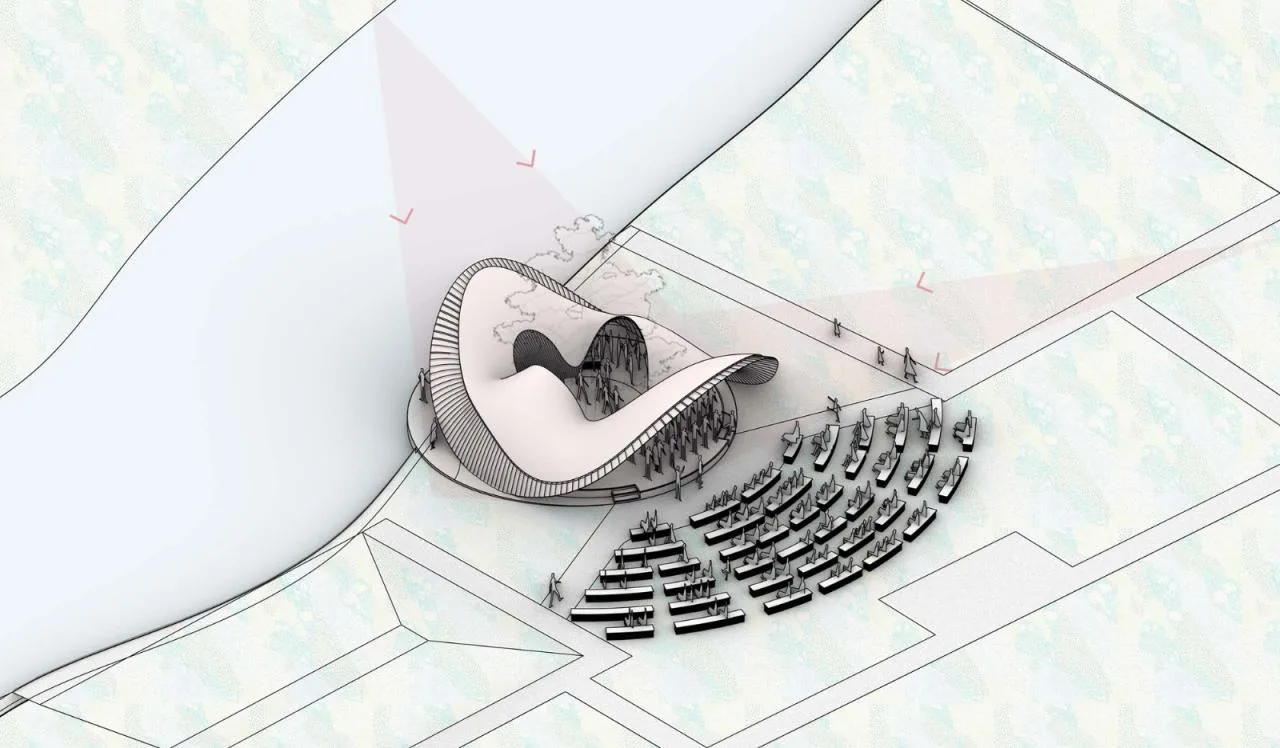
△ Loop line of sight analysis diagram
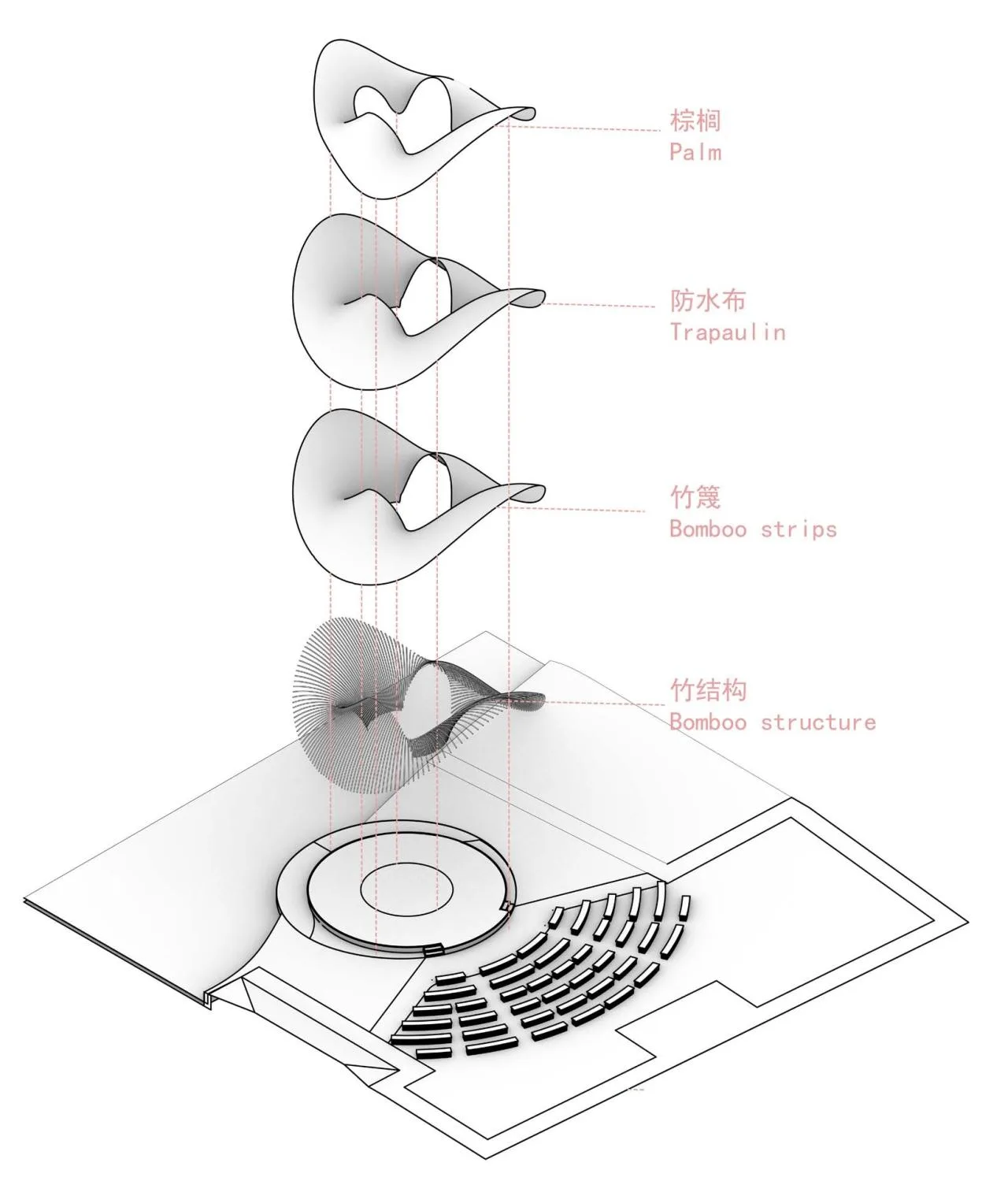
△ Circular structure analysis diagram
△ Circular structure analysis diagram
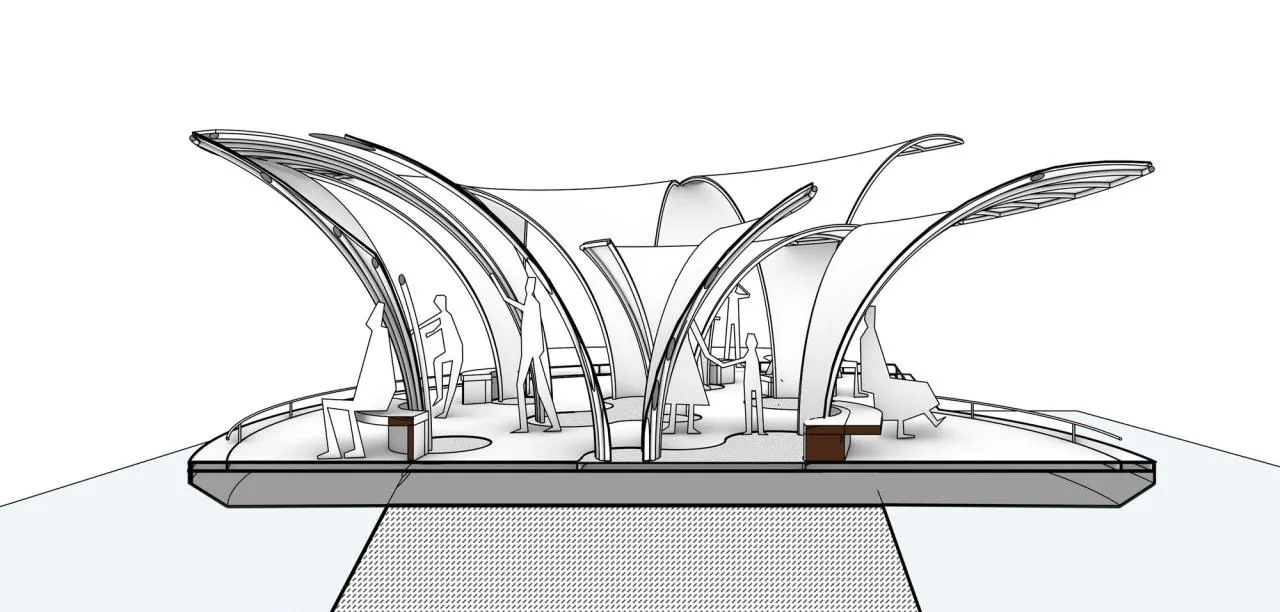
△ Flower profile diagram
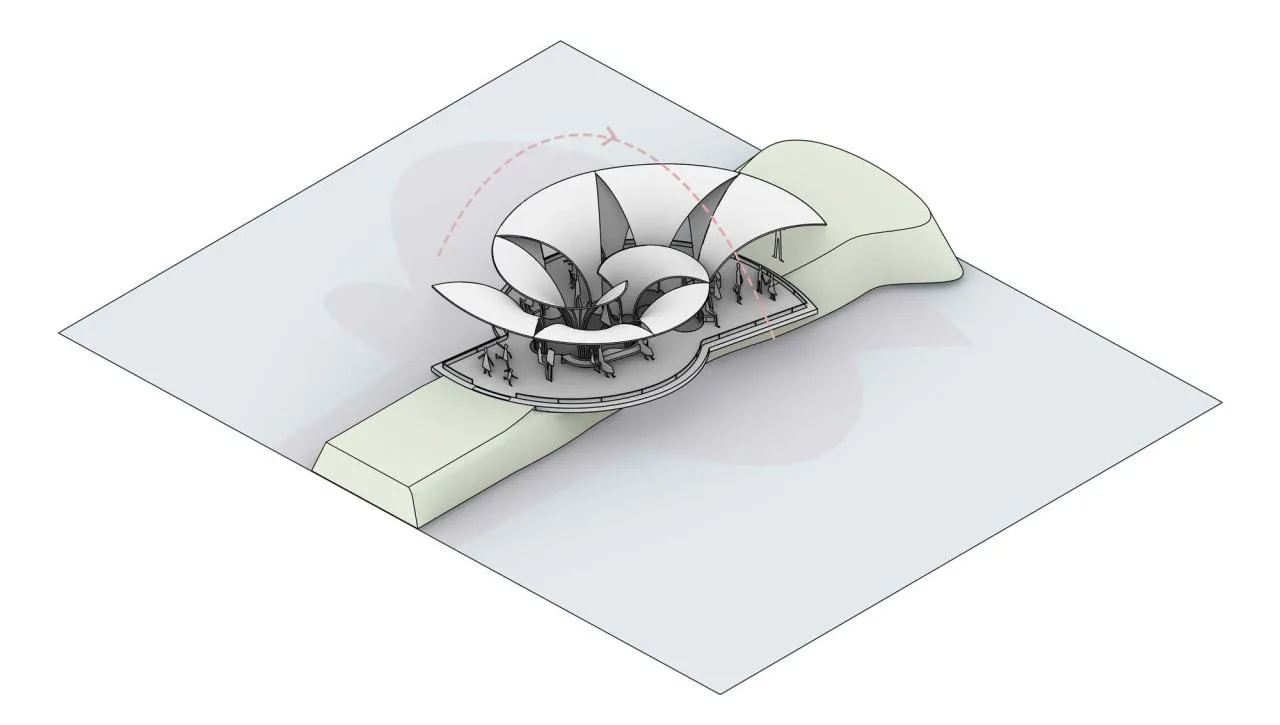
△ Flower-shaped sunshine analysis diagram
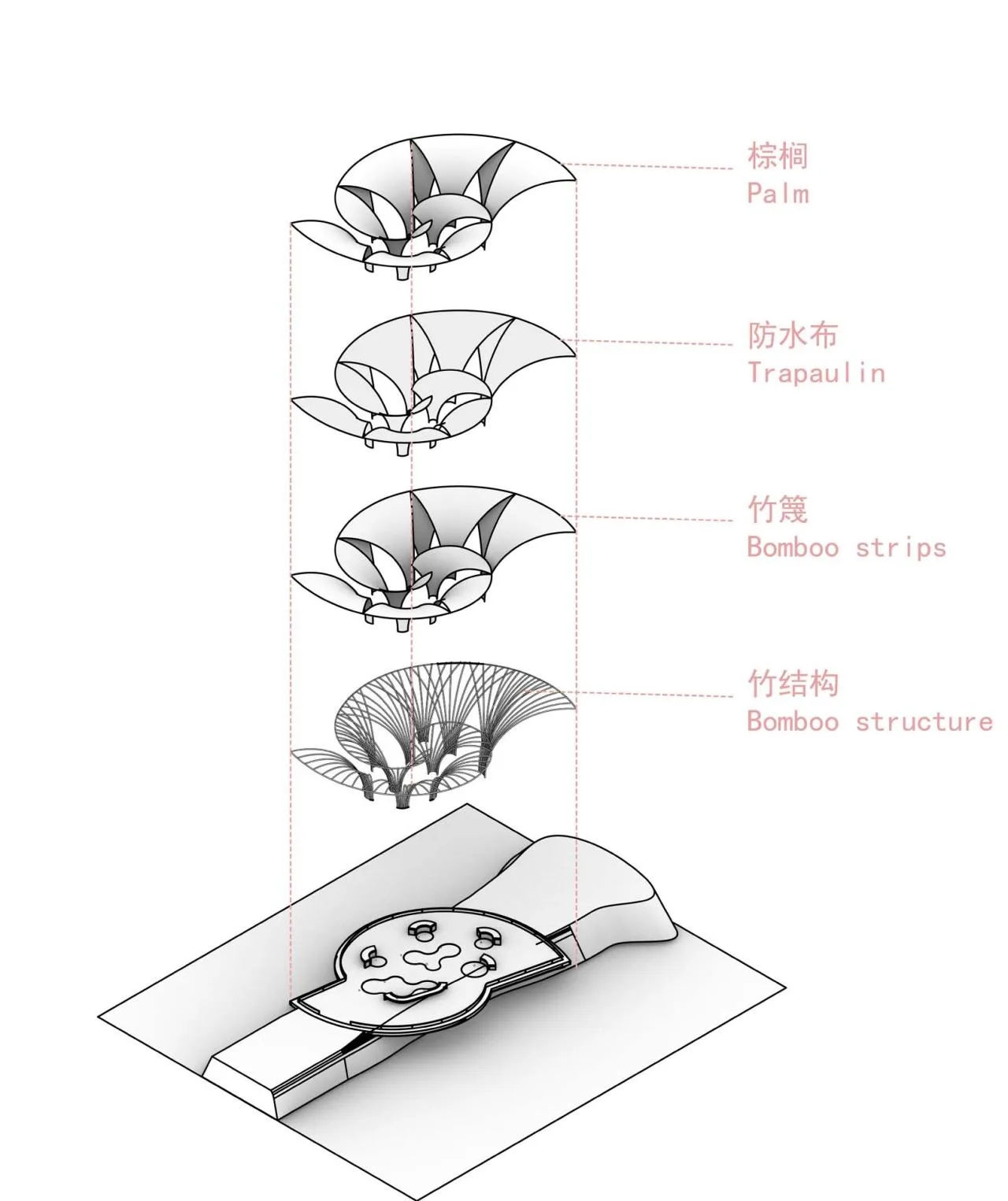
△ Schematic diagram of flower pattern structure
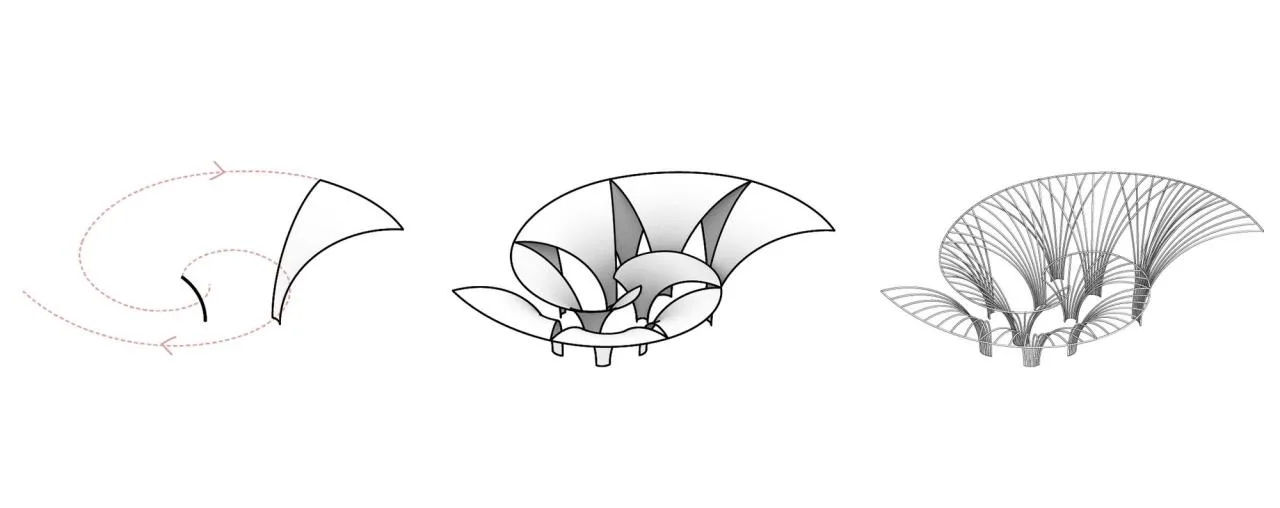
△ Pattern structure diagram
△
△ Huanglongbin Water Bamboo Corridor
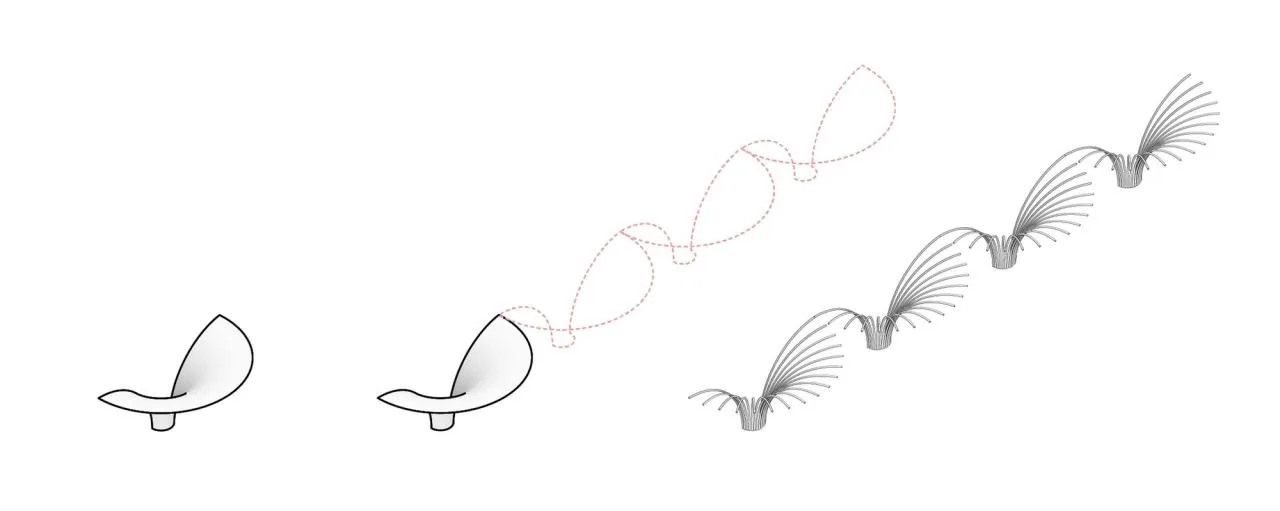
△ Changqi Stadium Bamboo Gallery
Project Information
Architectural Design: Vertical Beam Society Architecture, School of Architecture, South China University of Technology
Area: 480 m²
Project Year: 2021
Photographer: Siming Wu, Guangzhou Vertical Beam Society Architectural Design Co., Ltd
Lead Architects: Zhong Guanqiu, Lin Hairui, Zhang Wenhao
Lead Architects: Zhong Guanqiu, Song Gang, Zhu Zhiyuan
Design Team: Lin Hairui, Huang Wenxuan, Yang Li, Lu Longyuan, Deng Zhanchong, Zhao Hang
Team Leader: Zhong Guanqiu
Student Team: Zhang Wenhao, Zhang Wenchu, Huang Yuhao, Tan Zhixian, Gu Xinyue, Lu Longyuan
Principal: Beijiao Town Government, Foshan City
Location: Foshan, China















Must log in before commenting!
Sign Up