
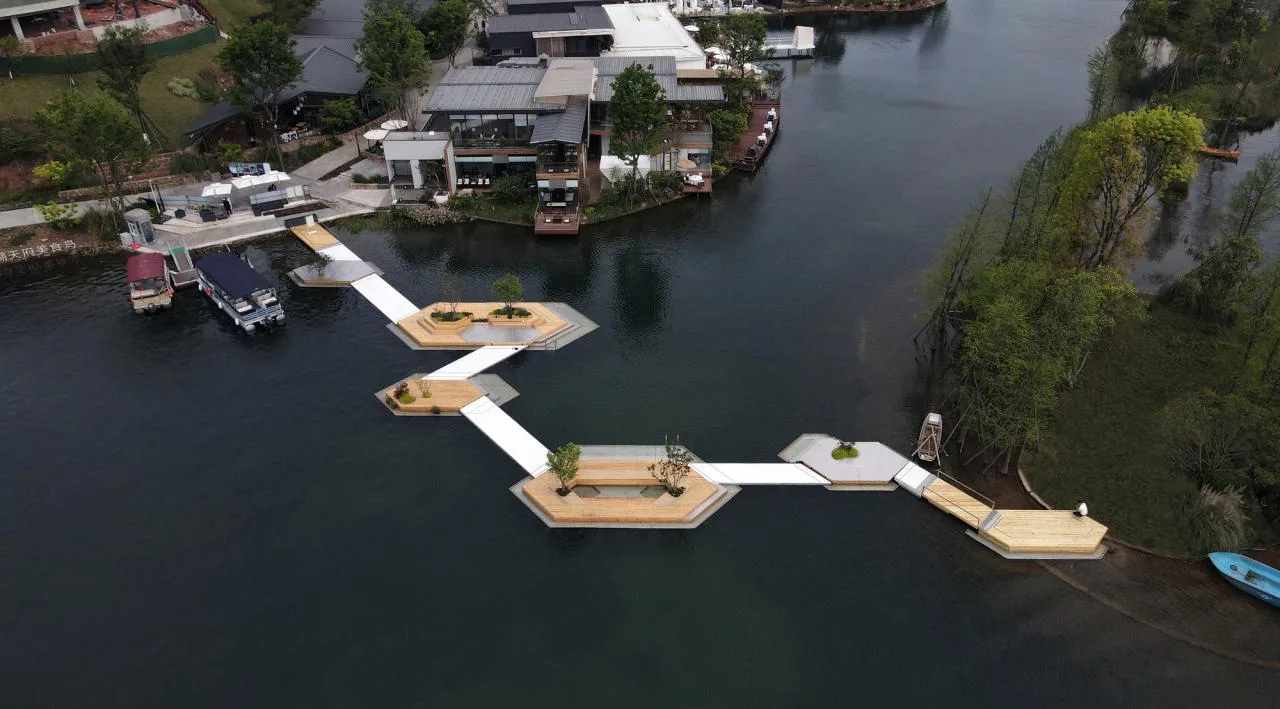
A floating bridge is a unique type of structure that rests on the water’s surface without large underwater fixed components, making it mostly temporary. Its primary purpose is to provide passage across water. Notable examples include the short-term floating dock created by the artist duo Christo on Lake Issio in 2016 and the Copenhagen mini floating platform designed by Marshall Blecher and Folkstrom. These projects successfully blend design, functionality, and art. For us, designing floating bridges offers an intriguing and challenging experience.
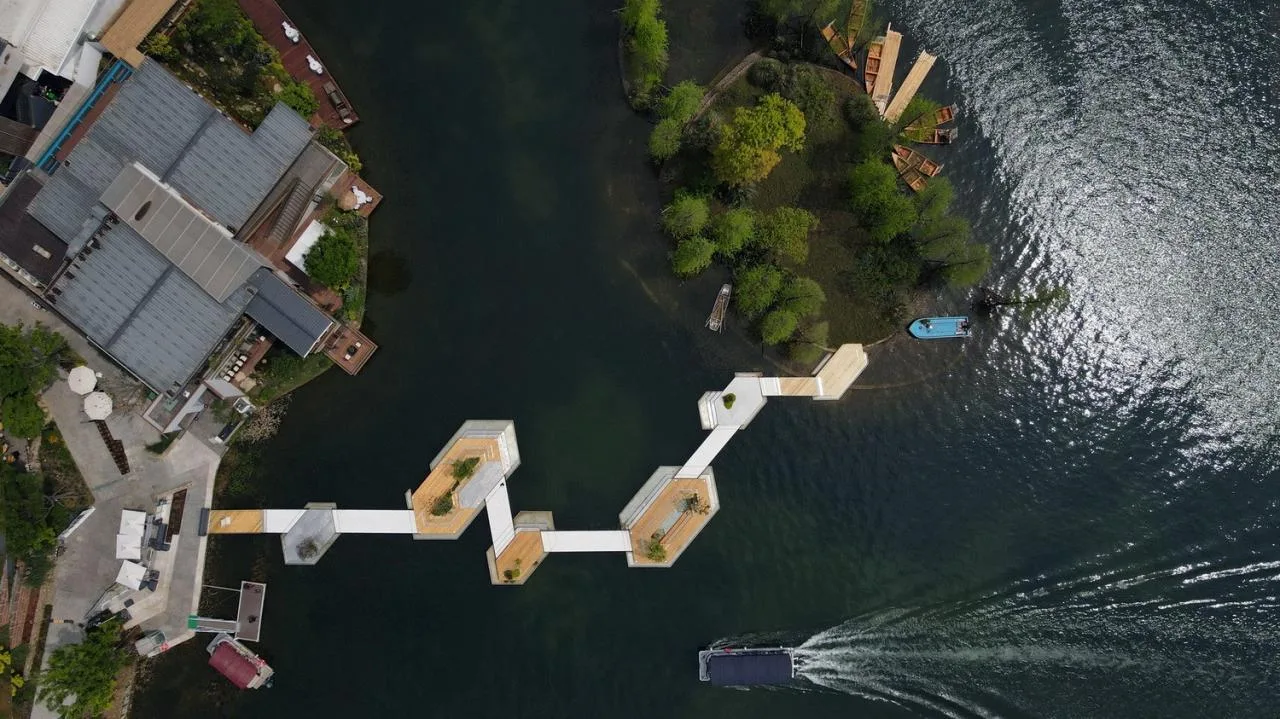
Last year, the floating bridge was commissioned by the A8 Design Center on behalf of Wanhua Real Estate. It connects the C9 plot of Luke Island in Luhu Water City with the “Chengdu Rainbow Cottage” designed by Japanese artist Tsuneno Sekuchi, spanning over 70 meters in a straight line. The design brief called for a “low-cost new design” that required innovations in form and materials, a service life of at least ten years, and removability after use.
Besides strict cost management, the design faced several challenges: ensuring diverse and rich forms, adding functions beyond mere transit, and addressing revetment transitions caused by fluctuating water levels. The design process unfolded in three stages, with concepts evolving and refining at each step to ensure a rational and effective final solution.
Initial Design Concept: The Disappearing Floating Bridge
The “disappearing” concept focuses on concealment. By using materials on the bridge surface that closely match the color of the lake water, the sky’s floating clouds are reflected, visually blending the structure into its surroundings. Additionally, water-permeable hydrophilic zones are discreetly incorporated beneath the waterline on both sides and the center of the bridge. This not only enhances the bridge’s interaction with its aquatic environment but also eliminates the need for guardrails, achieving a near-invisible floating bridge effect.
To maximize stability and wave dissipation, we introduced the idea of “pre-buoyancy.” This involves steel cables anchored to the lakebed that can be dynamically adjusted to stabilize the bridge without imposing extra load. These cables can be tightened or loosened based on water level changes, preventing sinking or excessive movement under typical loads. This system keeps the bridge’s height at the water surface within a few centimeters, enhancing the seamless visual effect.
Due to significant water level fluctuations in Luhu Lake, managing the transition between the bridge and the shoreline was another major challenge.
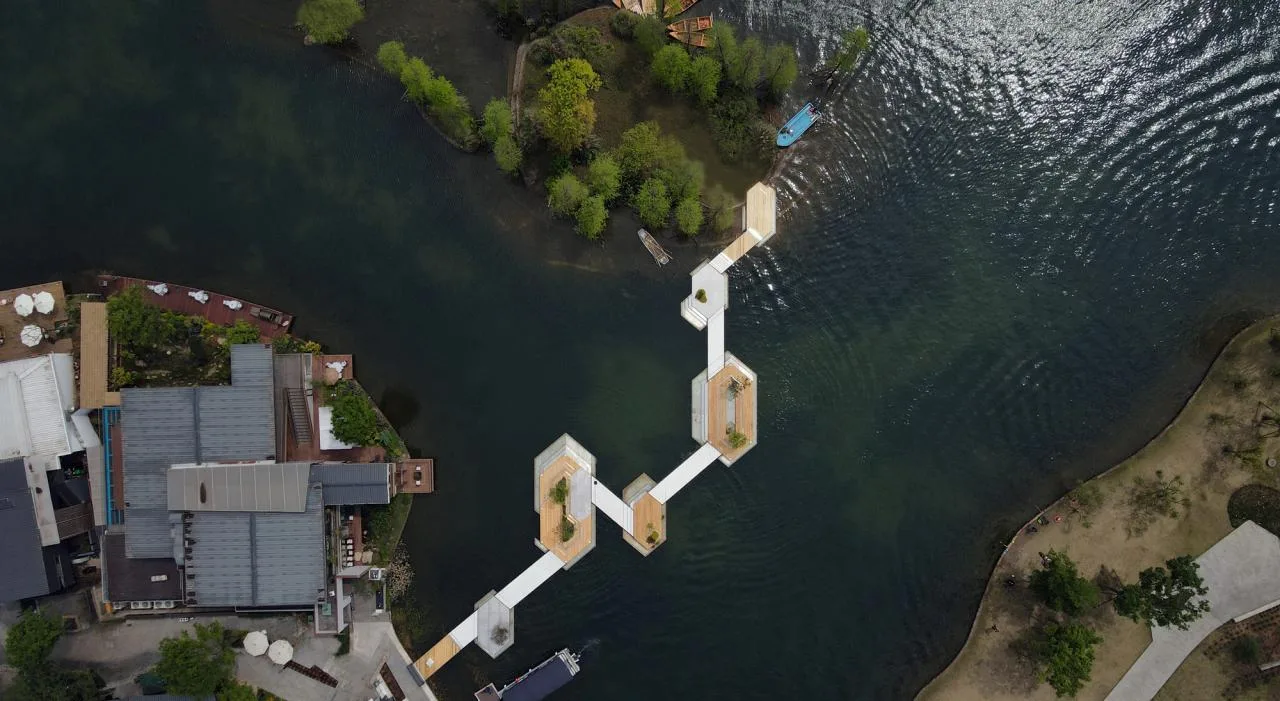
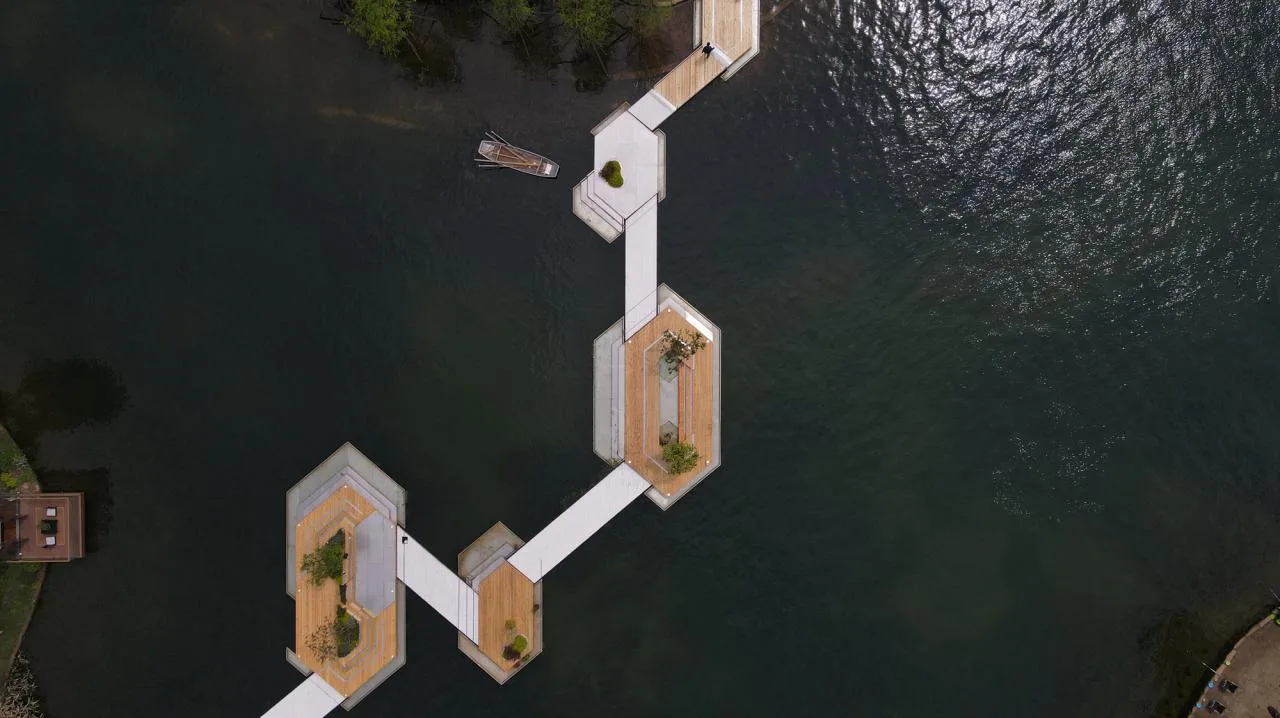
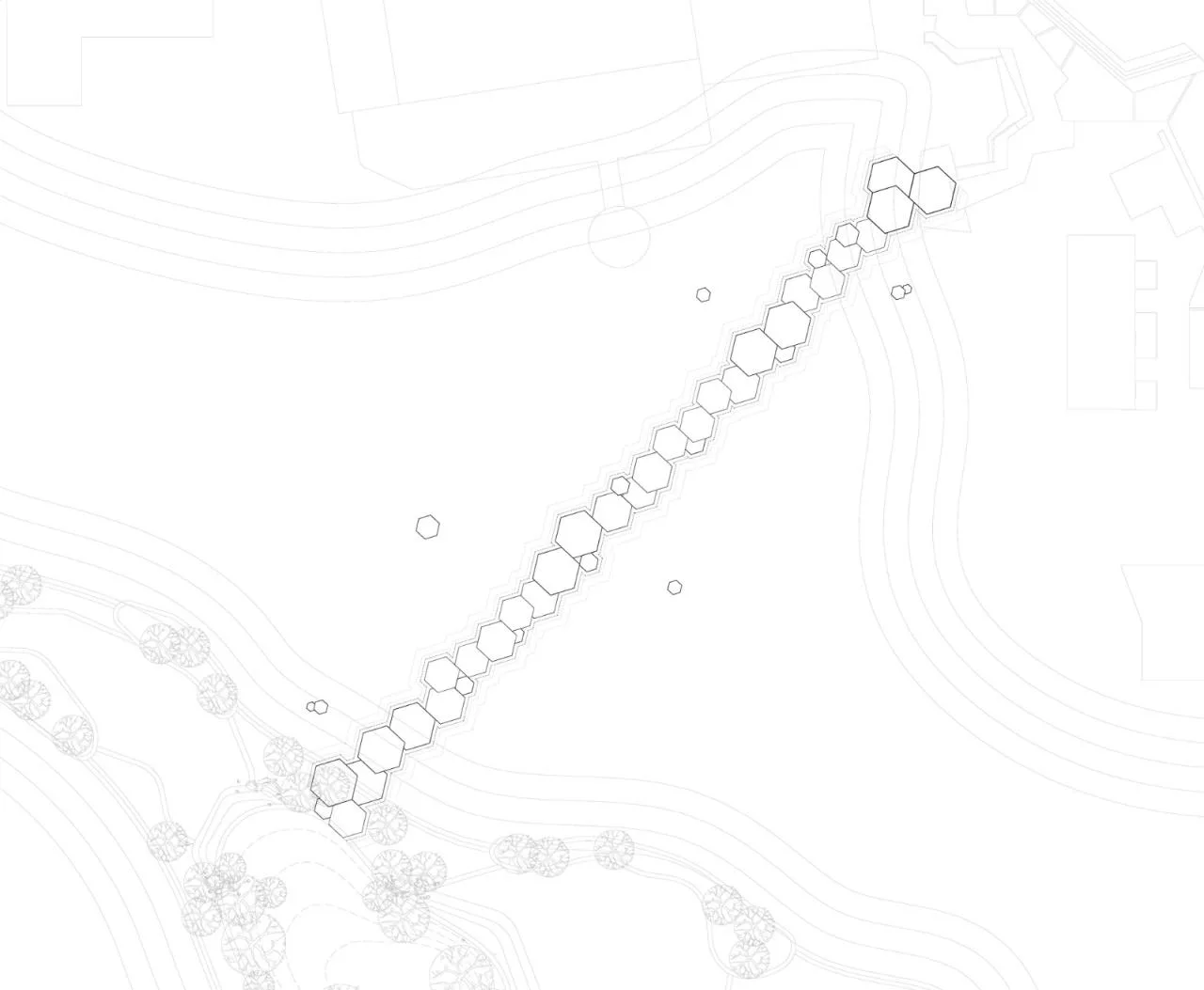
To achieve a pixelated sky reflection that contrasts with the curved forms of the Rainbow Cottages and island edges, we designed the bridge surface as a matrix of interlocking regular hexagons in four to five sizes. These shapes overlap and oscillate slightly along an axis. The surface material is stainless steel treated with sandblasted raised patterns, providing both reflective qualities and anti-slip functionality. The hydrophilic zones are partially perforated to allow water permeability without affecting buoyancy.
Structurally, the bridge was divided into three sections: the middle span, the starting point, and the endpoint. Different approaches to pre-buoyancy were explored in each segment. Three methods for managing shore transitions were proposed. One notable solution connects hexagonal blocks near the shore with vertical sliding rails and adjusts buoyancy through internal water storage, creating stepped effects that correspond to seasonal water level changes. During dry seasons, blocks stack with noticeable steps near the shore; during wet seasons, the surface becomes relatively flat, allowing the floating bridge to dynamically adapt with the lake’s natural fluctuations.
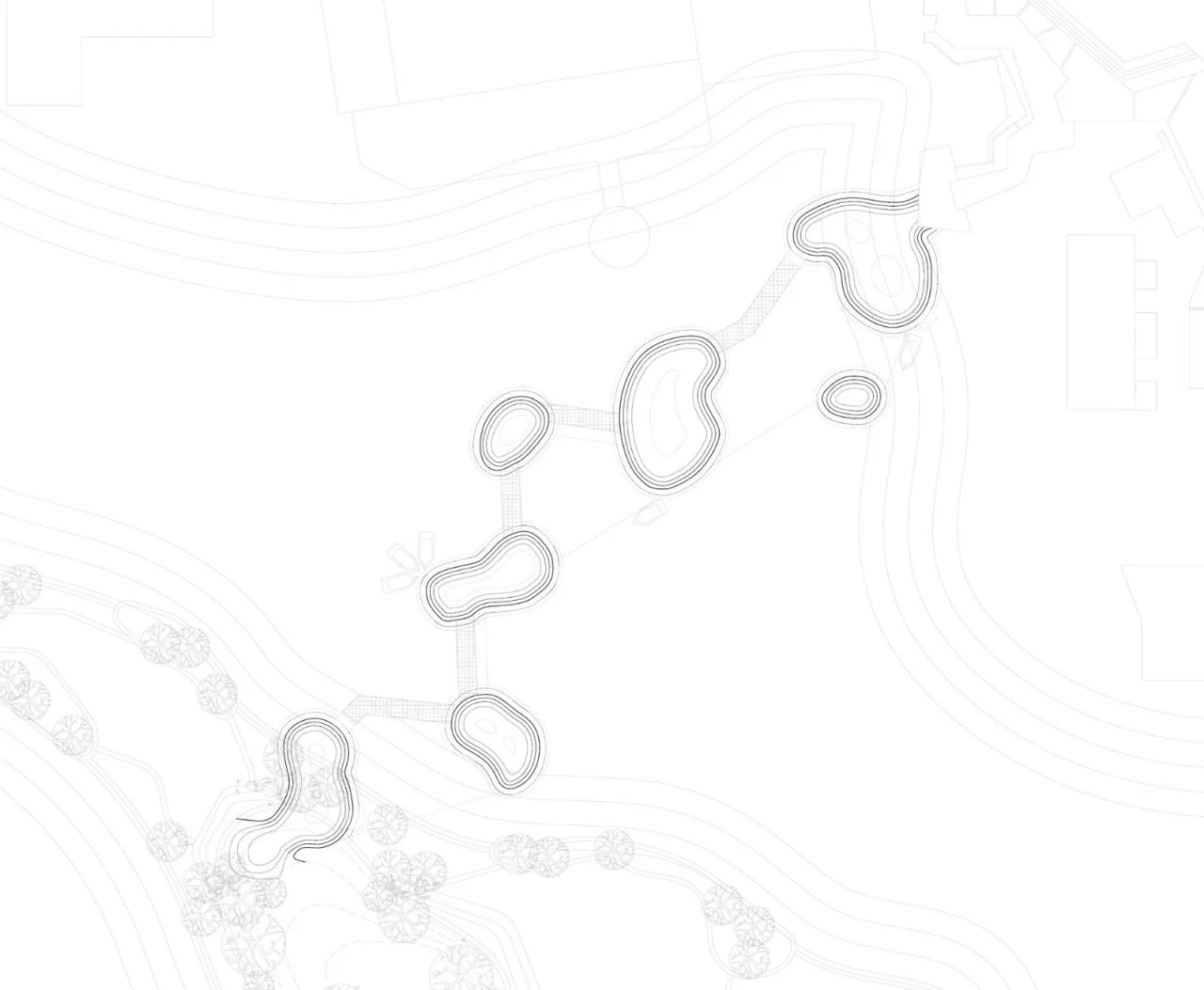
Mid-Term Design Concept: Archipelago Floating Bridge
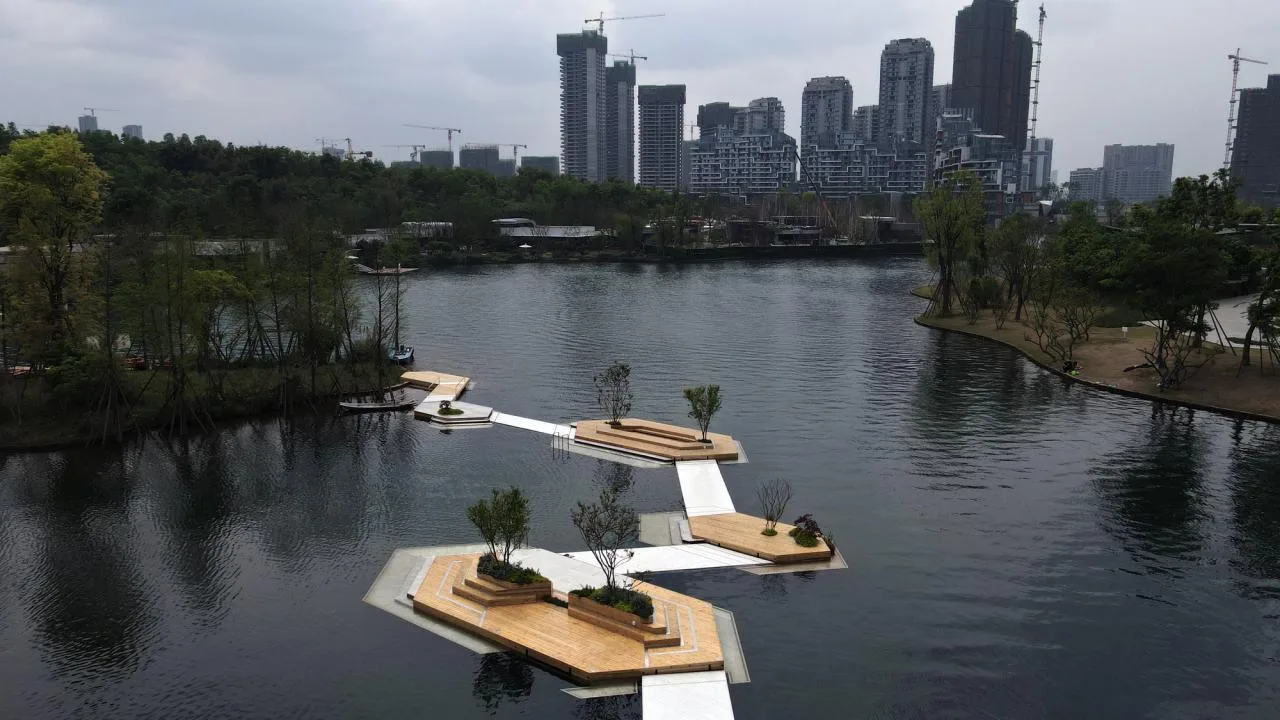
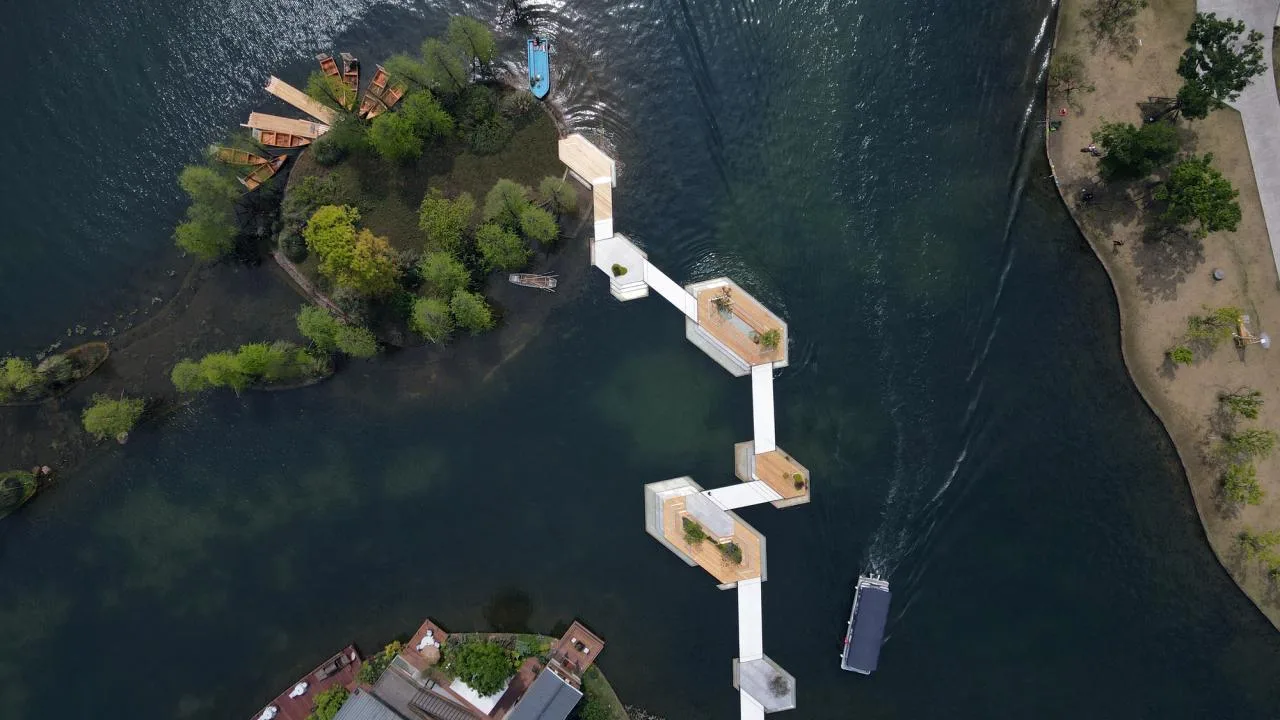
Due to budget constraints and the bridge’s primary function as a transportation route, we explored a new approach: if the bridge cannot fully disappear between water and sky, why not integrate it into the water island environment as a natural settlement? This led to the creation of seven small islands covered with green vegetation, scattered in a staggered arrangement across the water.
These small islands naturally accommodate the shore’s slope, solving the water level difference challenge. They are connected by underwater trails, but for visitors who prefer not to wade through water, inflatable rafts can be manually pulled along ropes, offering dual modes of access and interaction with the water.
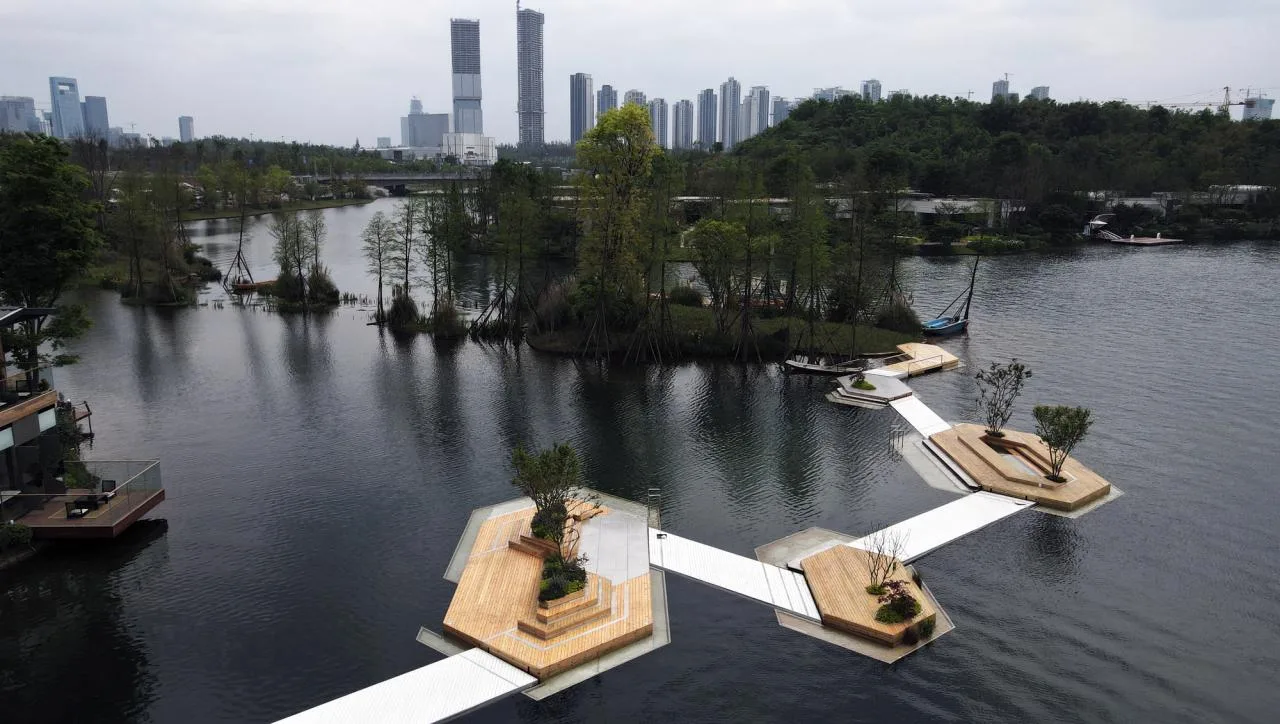
Each island offers spaces for fishing, picnicking, and relaxation, enhanced with light strips and misting devices to create contrasting atmospheres. Together, these connected artificial islands form an archipelago that complements the surrounding water island landscape.
We named this the Archipelago Floating Bridge. To fit within Luhu Lake’s design language, we replaced the natural island shapes with hexagonal forms from the original design. This ensured multiple connection points and maintained visual contrast with the existing natural environment.
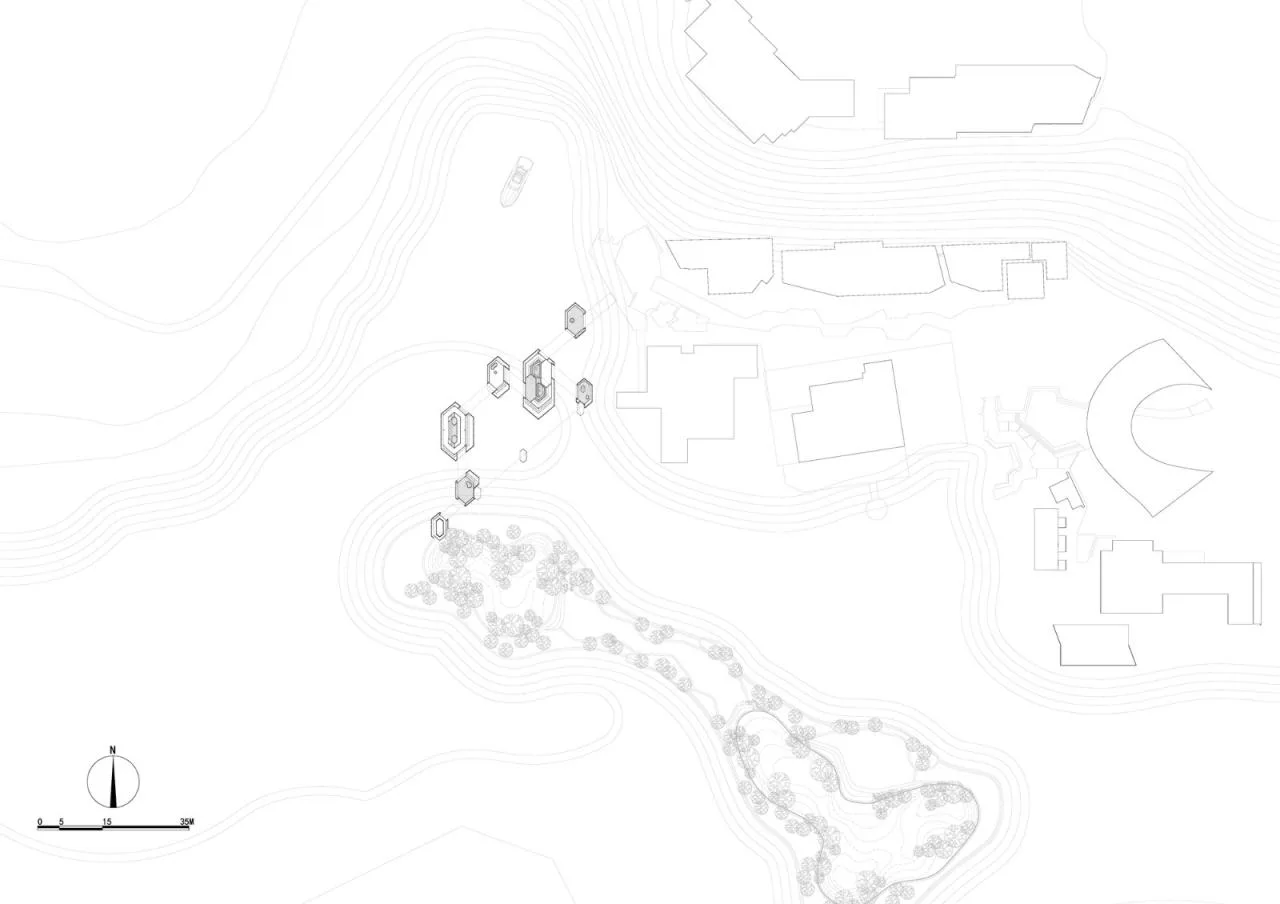
Final Design Concept: Sky Floating Island
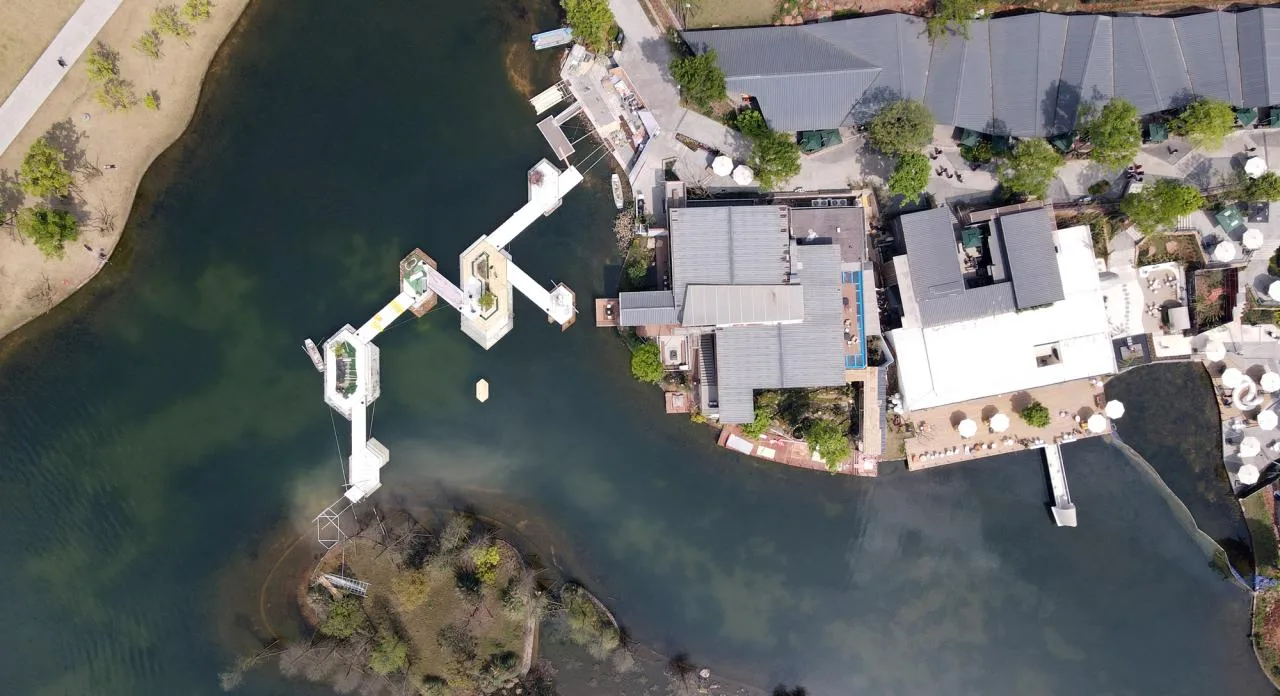
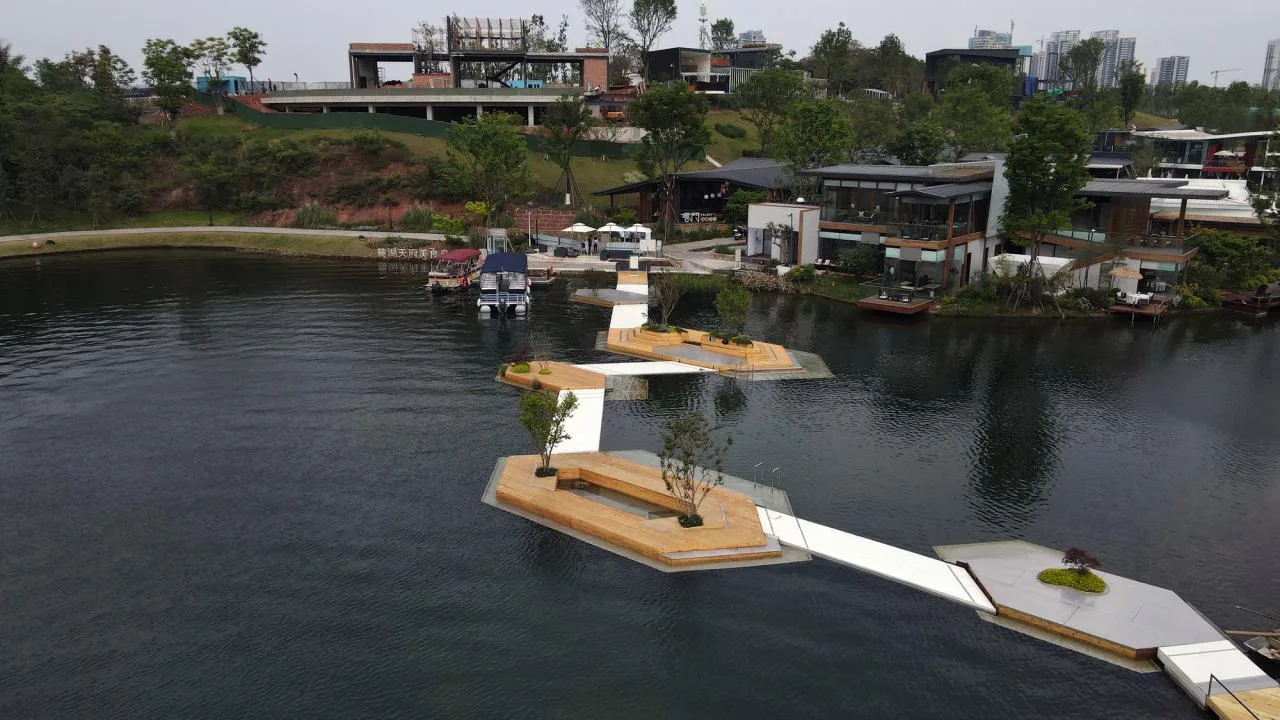
After confirming that water quality met safety standards, we incorporated a swimming area into the final layout. To reduce costs and match the scale of the water body, we downsized the two main islands, adjusted their relative positions and textures, and concentrated the wading hydrophilic zone around the swimming area.
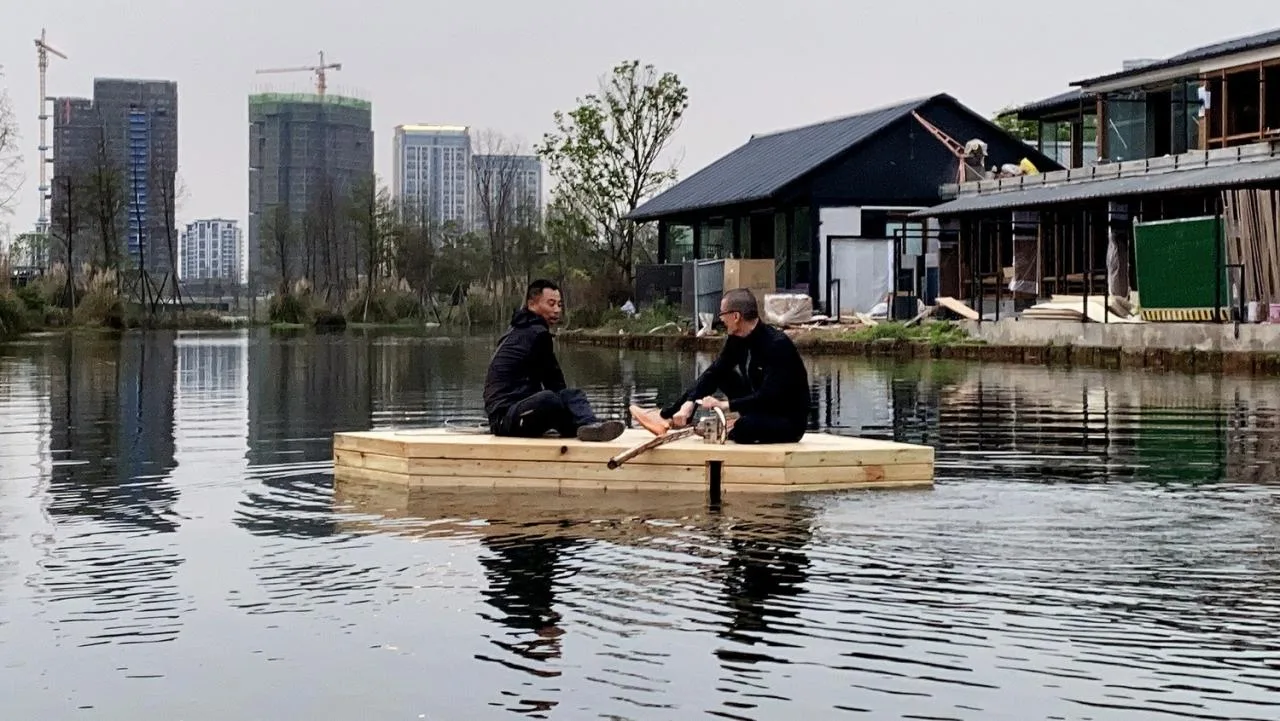
We replaced the rope-pulled rafts with a small floating island powered by a manual propeller, turning it into a movable floating platform.
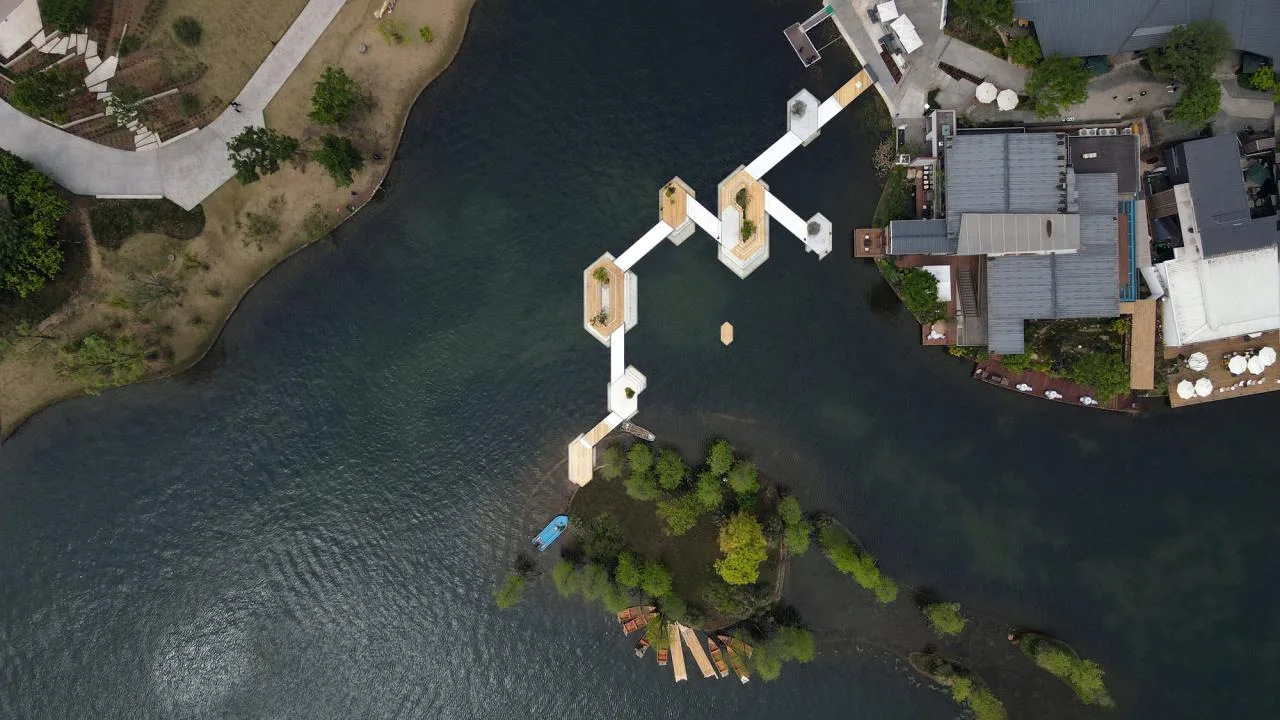
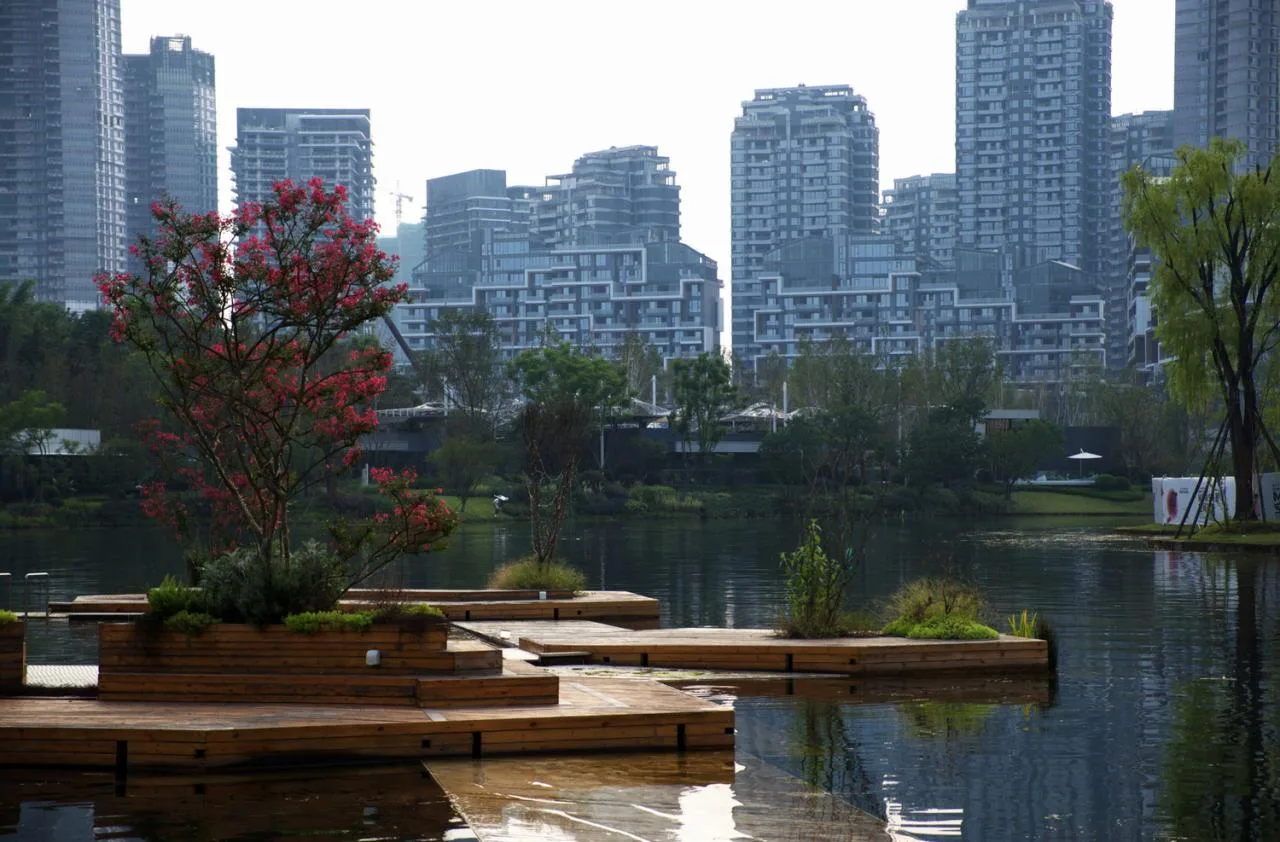
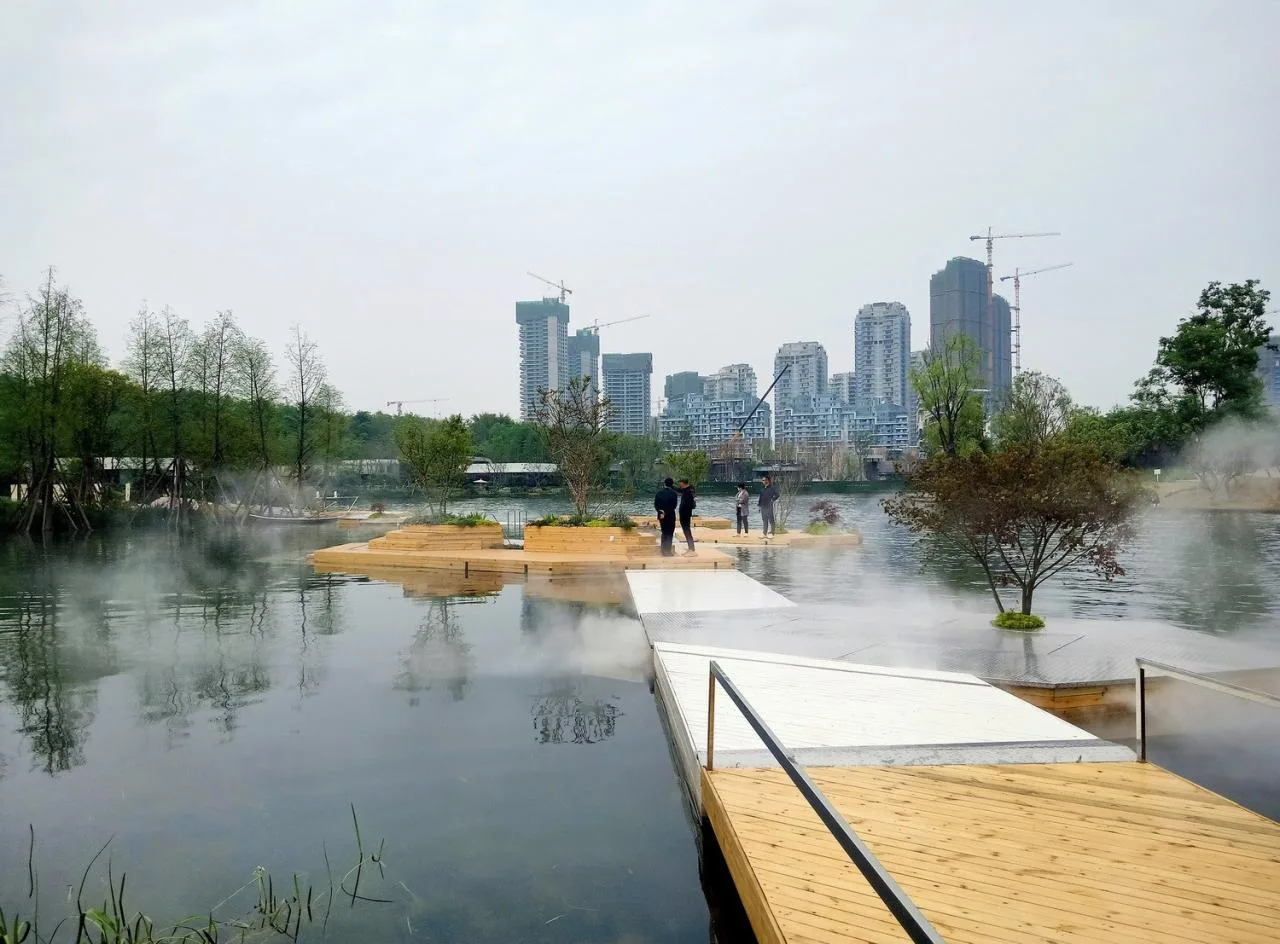
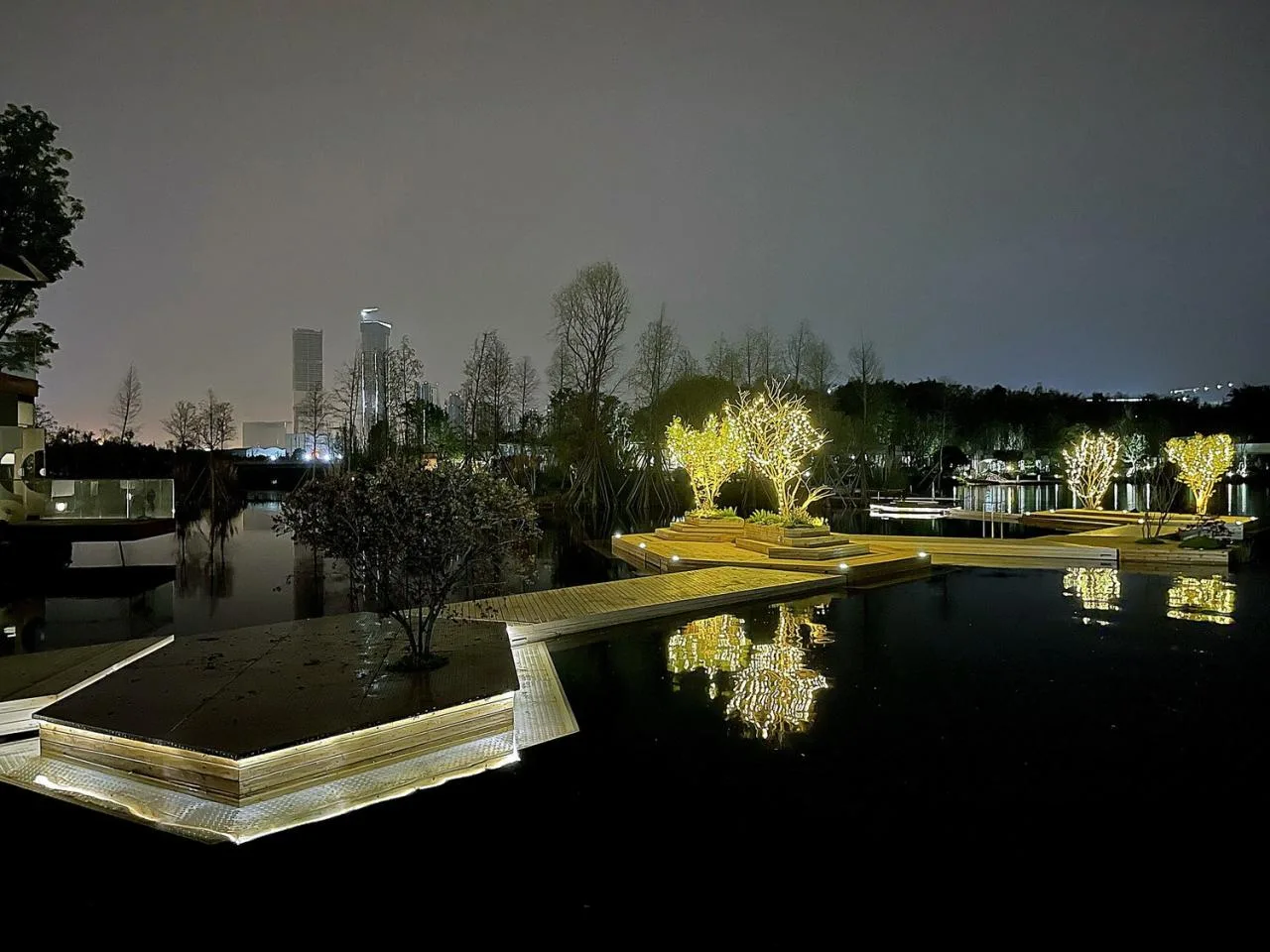
Our vision is to create a space that combines clever landscape design with an engaging experience, allowing visitors to enjoy a unique form of recreation. This floating bridge sometimes partially disappears between water and sky, balancing functionality with playfulness. Visitors can walk on reflected clouds, experience the sensation of suspension, and feel the hidden power of the water beneath.
We hope these artificial floating islands will blend harmoniously with the sky and lake, forming a layered archipelago that complements the Rainbow Cottage and becomes a new landmark at Luhu Lake.
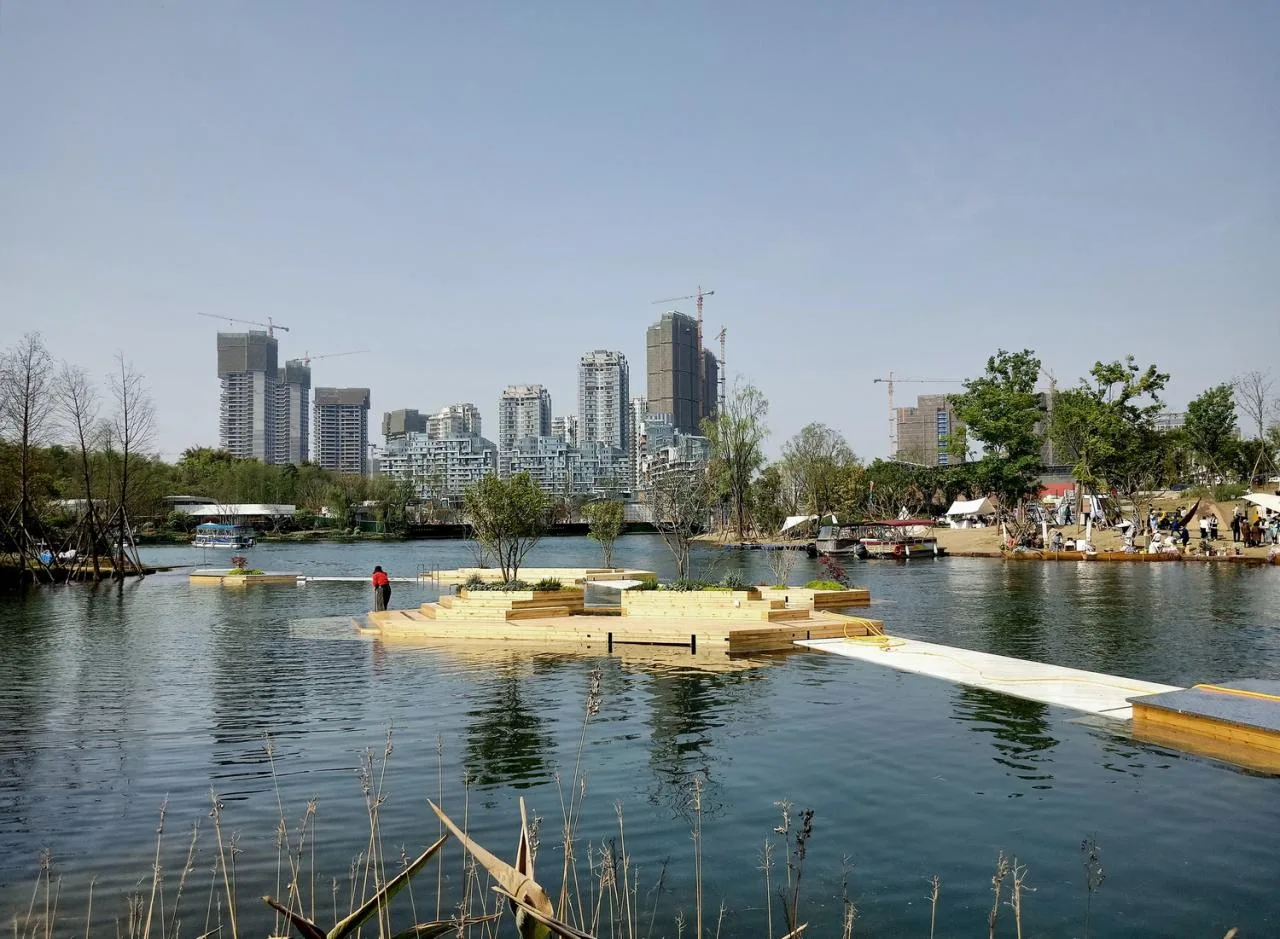
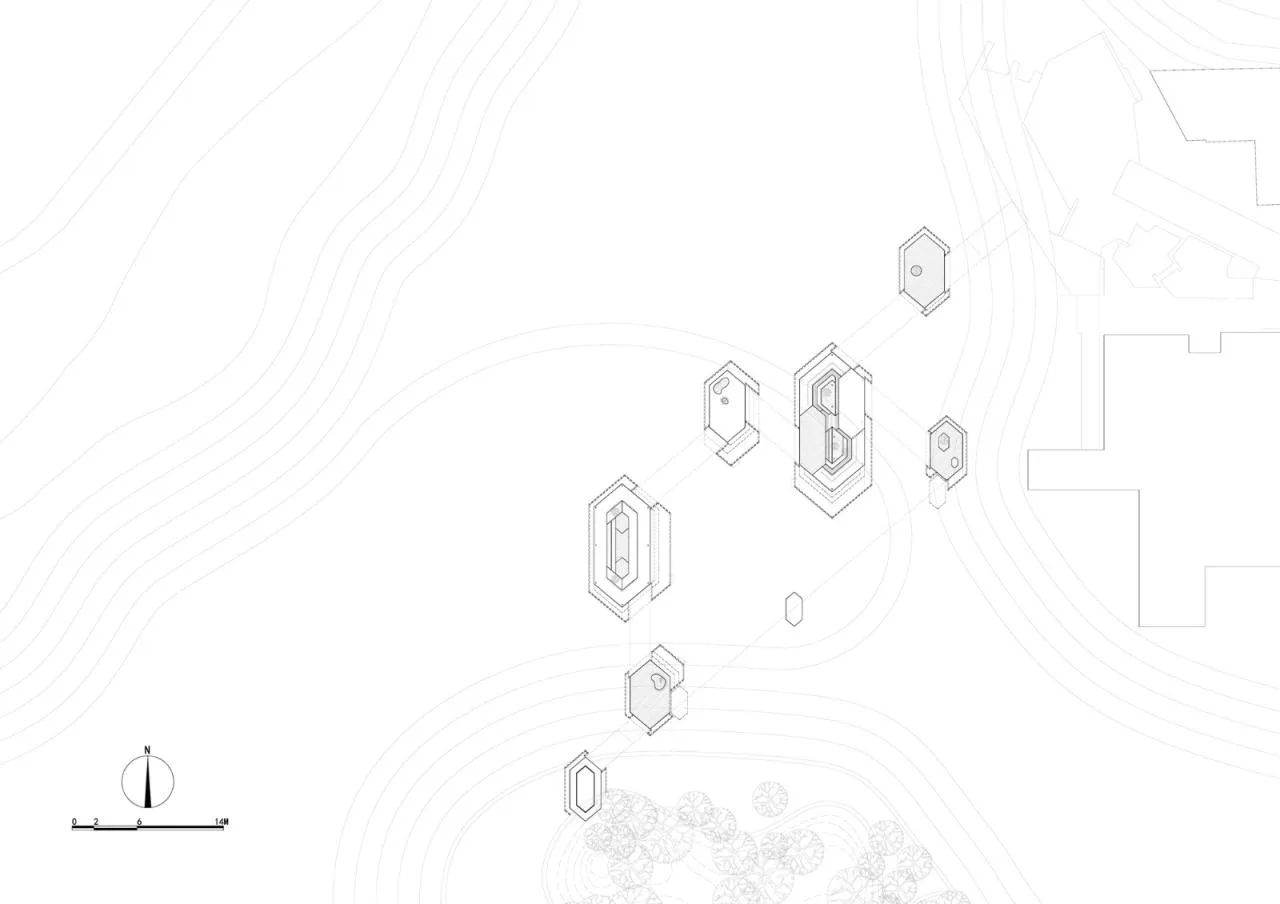
The Sky Floating Island was essentially completed by mid-year, with our team overseeing the entire construction. Using simple, efficient methods, we met the dynamic lifting requirements of the connecting bridges between the floating islands, ensuring the system’s strength and stability.
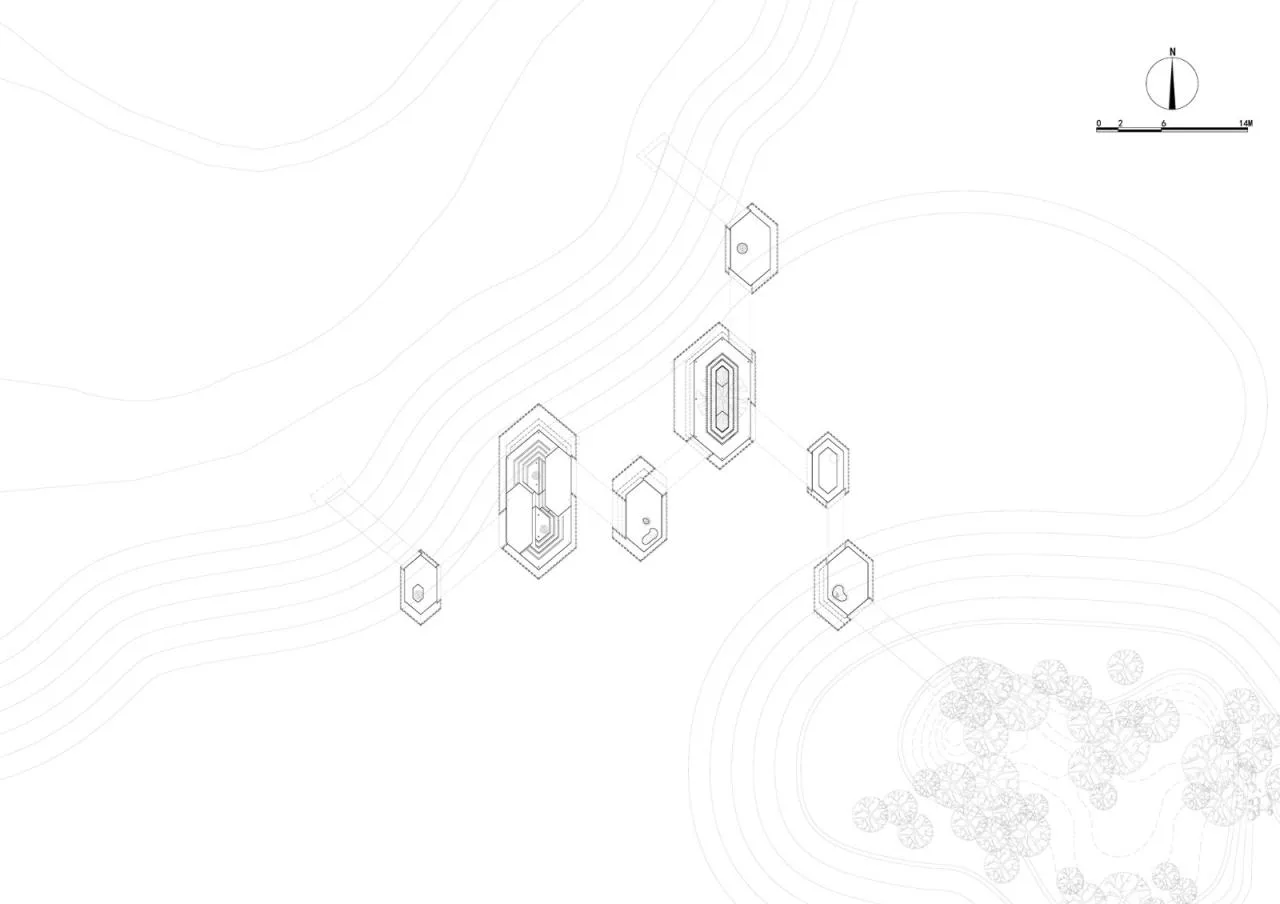
Without precisely measuring the density of the anti-corrosion wood and the gas-filled steel pipes used locally, we successfully leveled all floating island surfaces of varying sizes through careful weighting. We also studied the adaptability for future modular assembly and designed a 2.0 version of the Sky Floating Island.
One branch has been tested, while the main bridge will evolve its form further after some use, continuing to become a dreamlike place for visitors to connect with the sky and lake.
Project Drawings
Initial Concept
Mid-Term Concept
△ Final Concept
△ Sky Floating Island 2.0 Version
△ Plan View
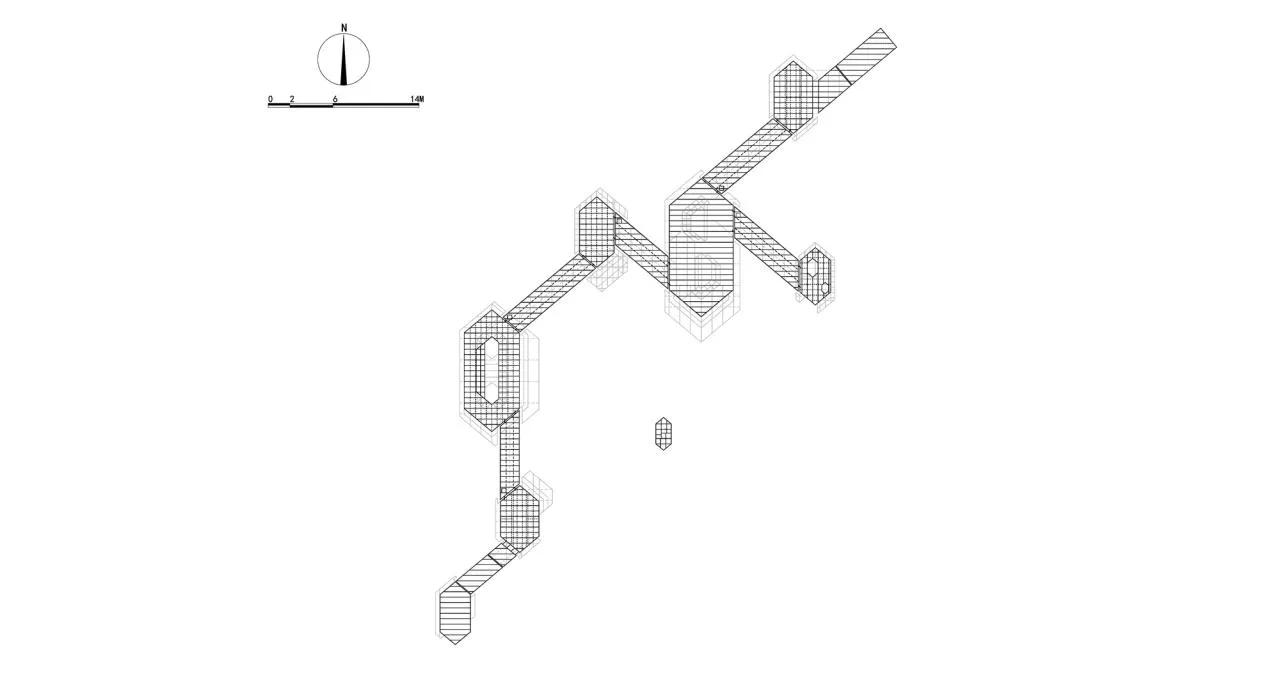
△ Structural Diagram
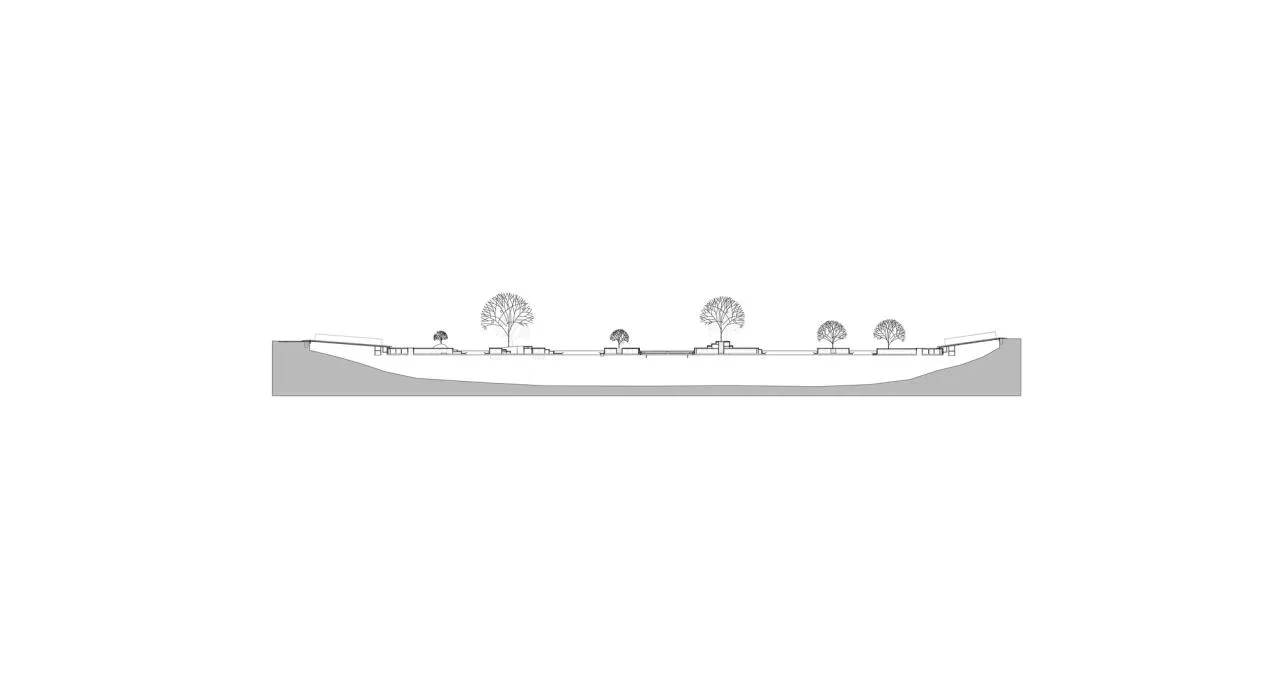
△ Section Diagram
Project Information
Architectural Design: unarchitecte
Area: 347 m²
Project Year: 2021
Lead Architect: Zhang Hetian
Design Team: Zhang Hetian, Fan Yonggang, Zhang Jinxian, Xu Xuan, Liu Qi, Liu Jing
Client: Chengdu Wanhua New City Development Co., Ltd., A8 Design Center
Structural Design: unarchitecte & Superstructure
Location: Chengdu, China















Must log in before commenting!
Sign Up