
Historically, the geography and politics of ancient China were focused on the mainland, with coastal regions regarded as peripheral areas. Due to their distance from central governance, these coastal zones developed a more relaxed and diverse folk culture. The unique geography—where land meets water—fostered stronger local identity and cultural consciousness. In modern times, as maritime civilizations expanded globally, these coastal areas became vital contact points between ancient China and foreign cultures, enriching both the tangible and intangible cultural landscapes of today’s coastal settlements.
The project site is located in Shanwei City, formerly the heart of the Hailufeng coastal region. This area accounts for over 10% of the province’s coastline and has a sea area three times larger than its land area. The dominant language spoken is the Fulao dialect, part of the Minnan language family. Archaeological evidence from the Neolithic Age reveals that communities here sustained themselves through fishing and animal husbandry. The area’s distinct geography, where mountains meet the sea, has cultivated a serene natural environment and a peaceful, simple cultural atmosphere.
Along the expansive South China Sea coast, fishing settlements have long been established by diverse ethnic groups relying on marine resources for survival. Fishermen traditionally depend on the sea, often fishing for extended periods to sustain their livelihoods, forming distinctive coastal fishing villages. Over time, some of these villages have evolved into larger settlements and commercial towns. Through trade and exchange, these communities have connected to form a network of coastal villages and towns, integrated with the bays and hills along the mainland’s edge. This network has shaped a unique cultural and geographical system, fostering agricultural and commercial towns throughout southern Guangdong’s southeast coast.
Recently, new transportation infrastructure and an influx of capital from central cities have spurred development in this once-remote area, rich in tourism and natural landscapes. New urban centers are emerging in the spaces between growing cities and traditional towns. This urban expansion introduces high-density, heterogeneous elements to the region, quickly filling the gaps between original villages and cities and driving a new wave of coastal urbanization largely fueled by real estate development.
The coastline extends westward from our base, passing through seaside hills and reaching Magong Town, a community still engaged in marine fishing. The fishing port is vibrant with numerous boats and bustling shore markets. While a few traditional residential buildings remain, most locals have constructed multi-story bungalows aligned on the traditional homestead grid. The village is gradually urbanizing, influenced by seafood commerce and tourism development.
Generations of fishermen have lived and worked along the edges of land and sea, often spending long periods at sea during fishing seasons. In the vastness of the ocean, individuals appear small and vulnerable. This has fostered a deep psychological and emotional connection between fishermen, their homes, and the mainland, seeking protection and blessings from deities. The Mazu culture, which originated along China’s southeast coast, reflects this spiritual connection. It has spread widely throughout Southeast Asia and the global diaspora of this region’s population.
At the heart of Magong Town lies the cultural square, featuring a traditional-style auditorium that serves as the ceremonial center for local festivals and gatherings, comparable to chapels in Western towns. Behind the auditorium is a large statue of Mazu, standing on a platform facing the South China Sea. For fishermen working far from shore, this elegant figure is the first sight upon returning to the waterfront town, symbolizing protection and spiritual connection.
Connected to the Sea
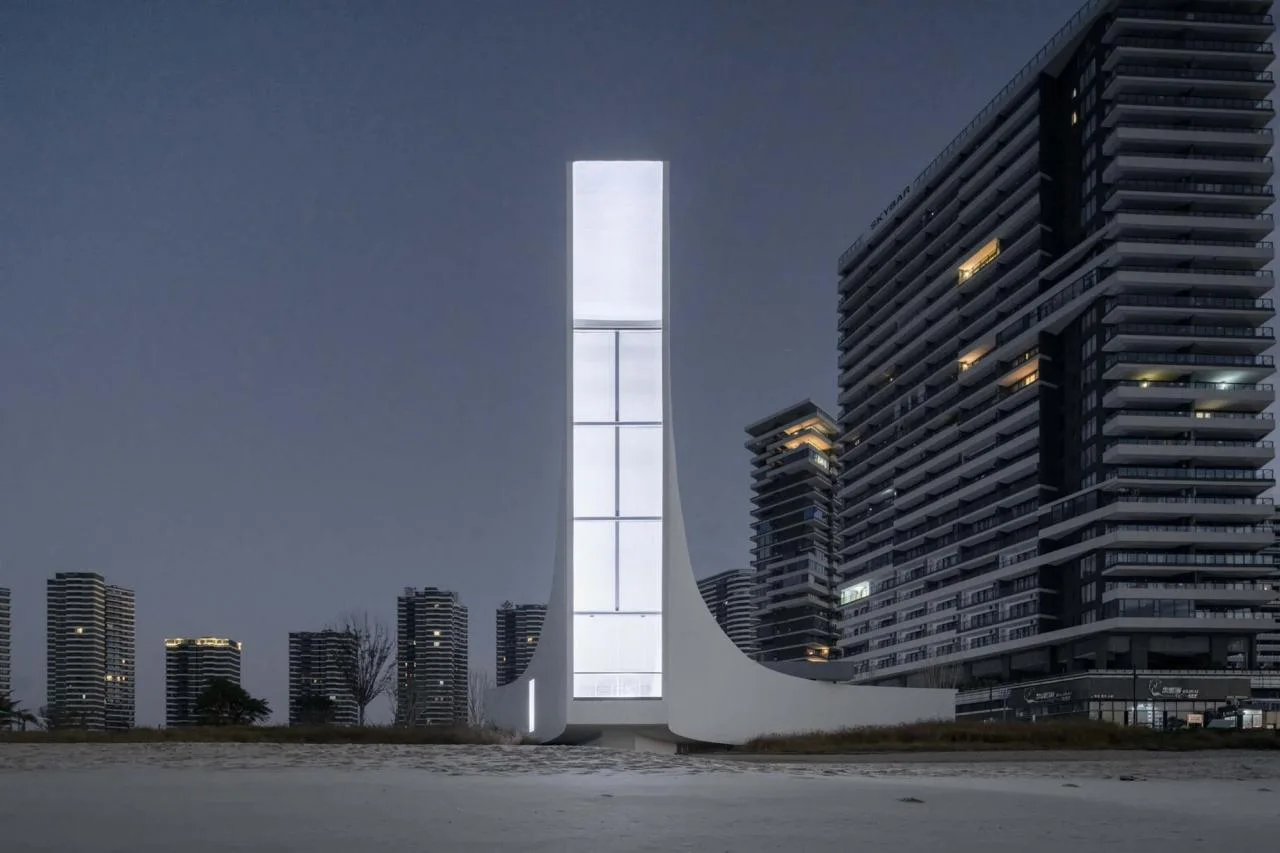
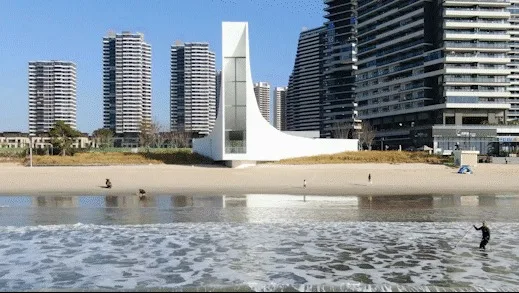
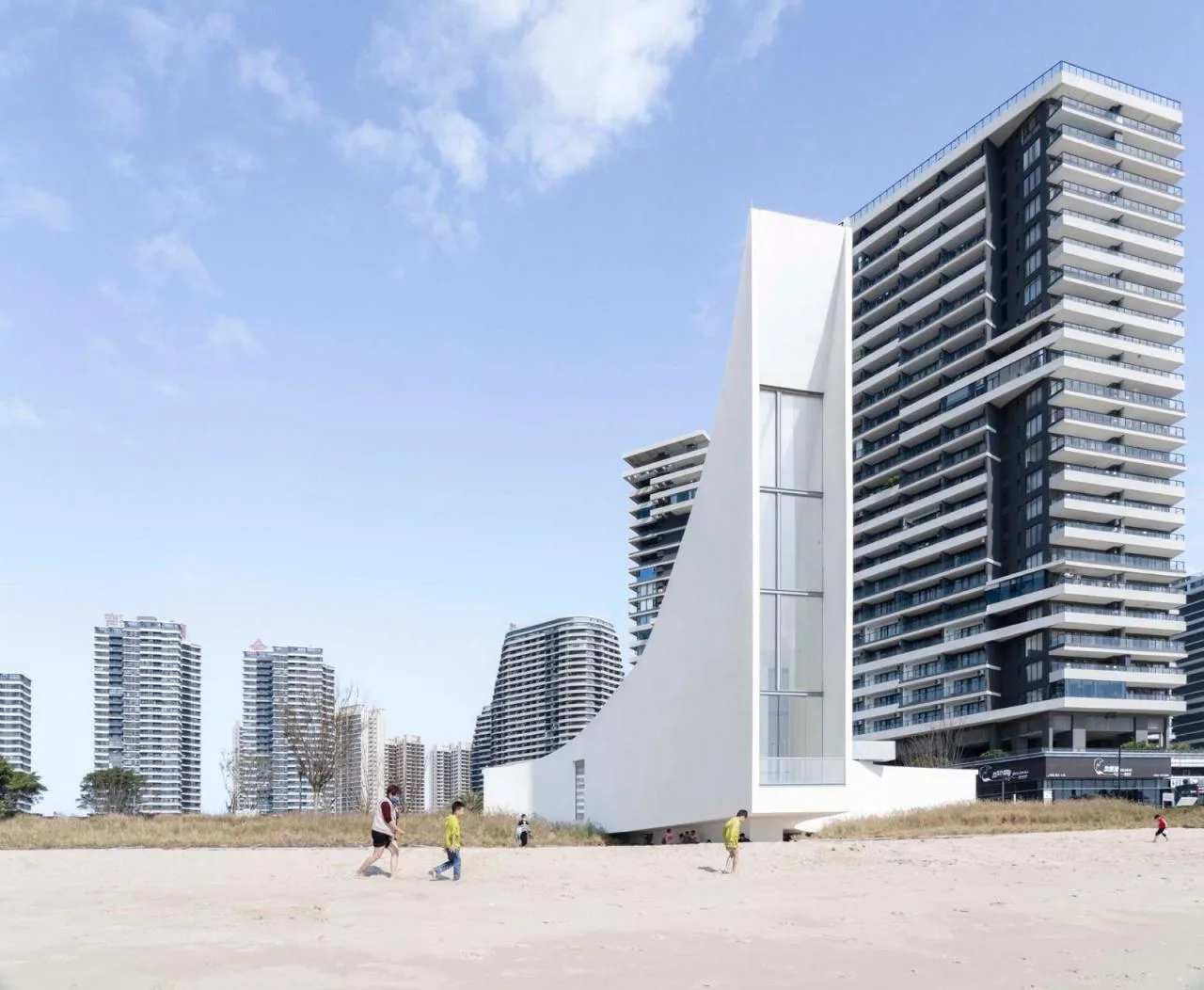
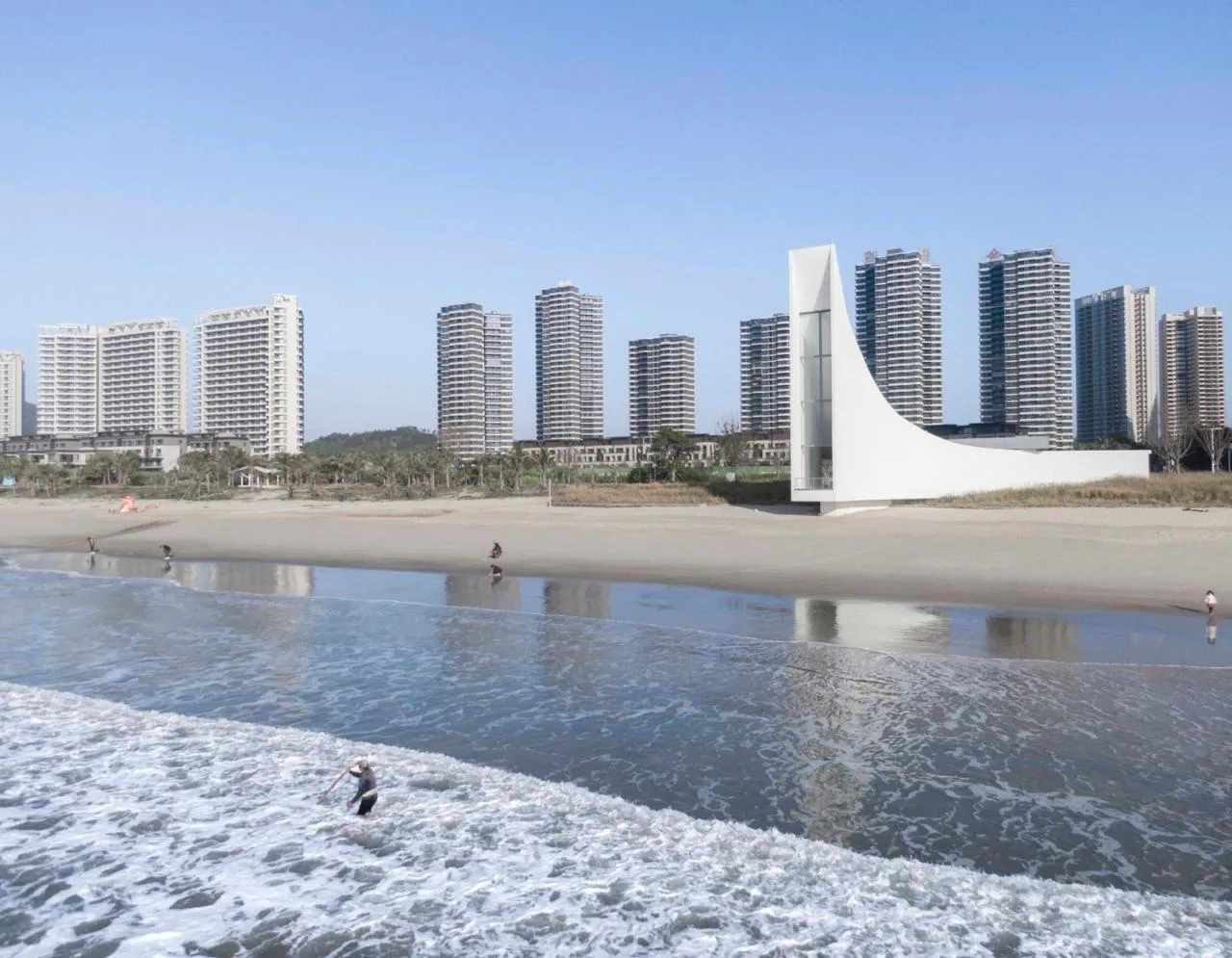
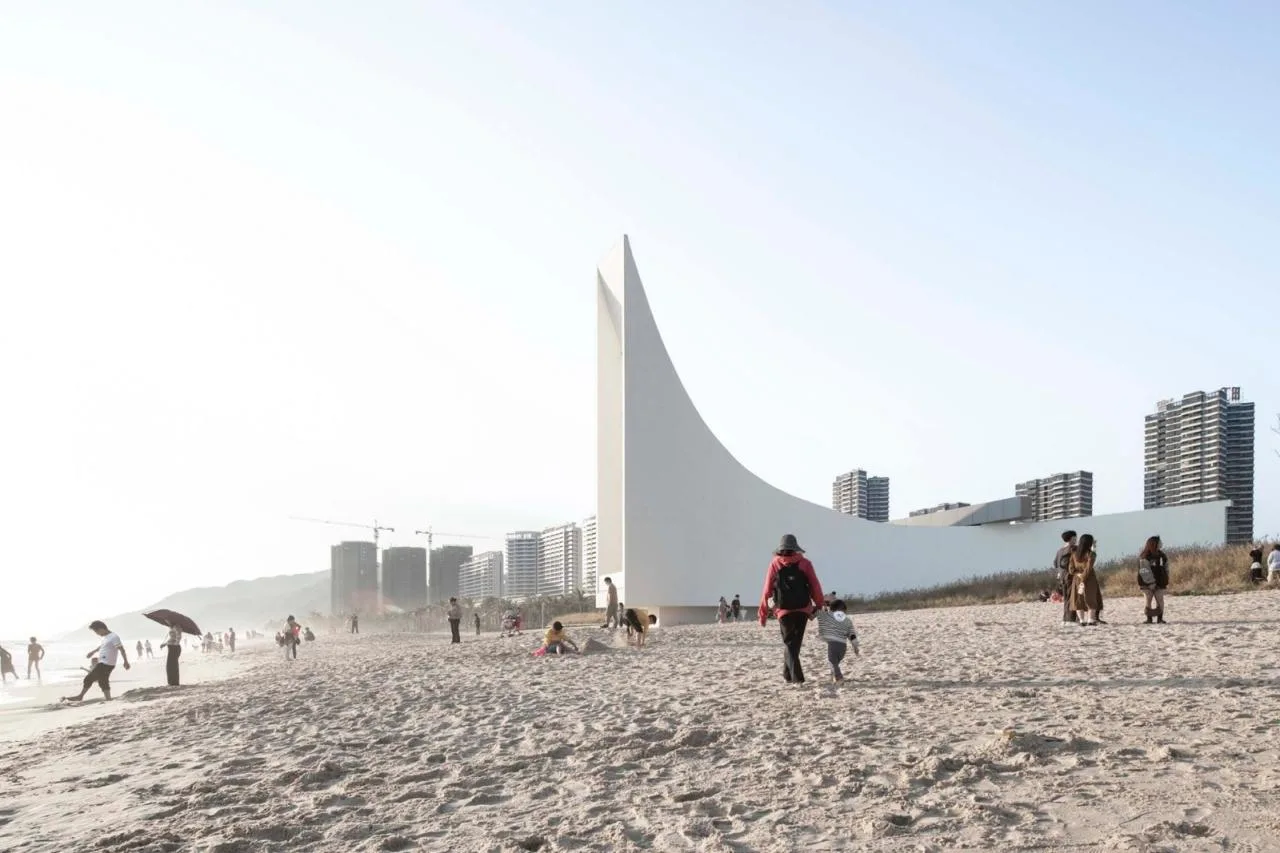
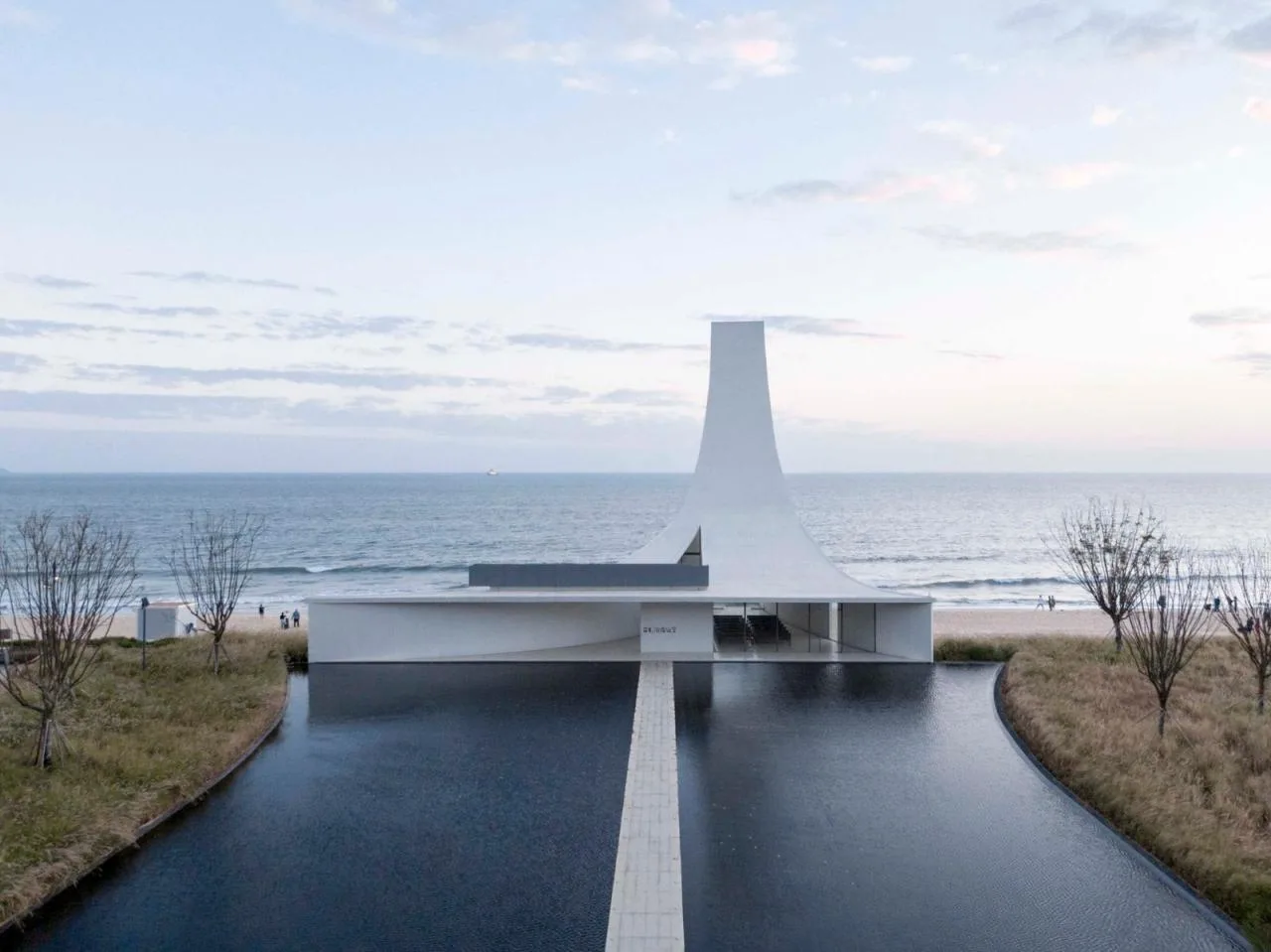
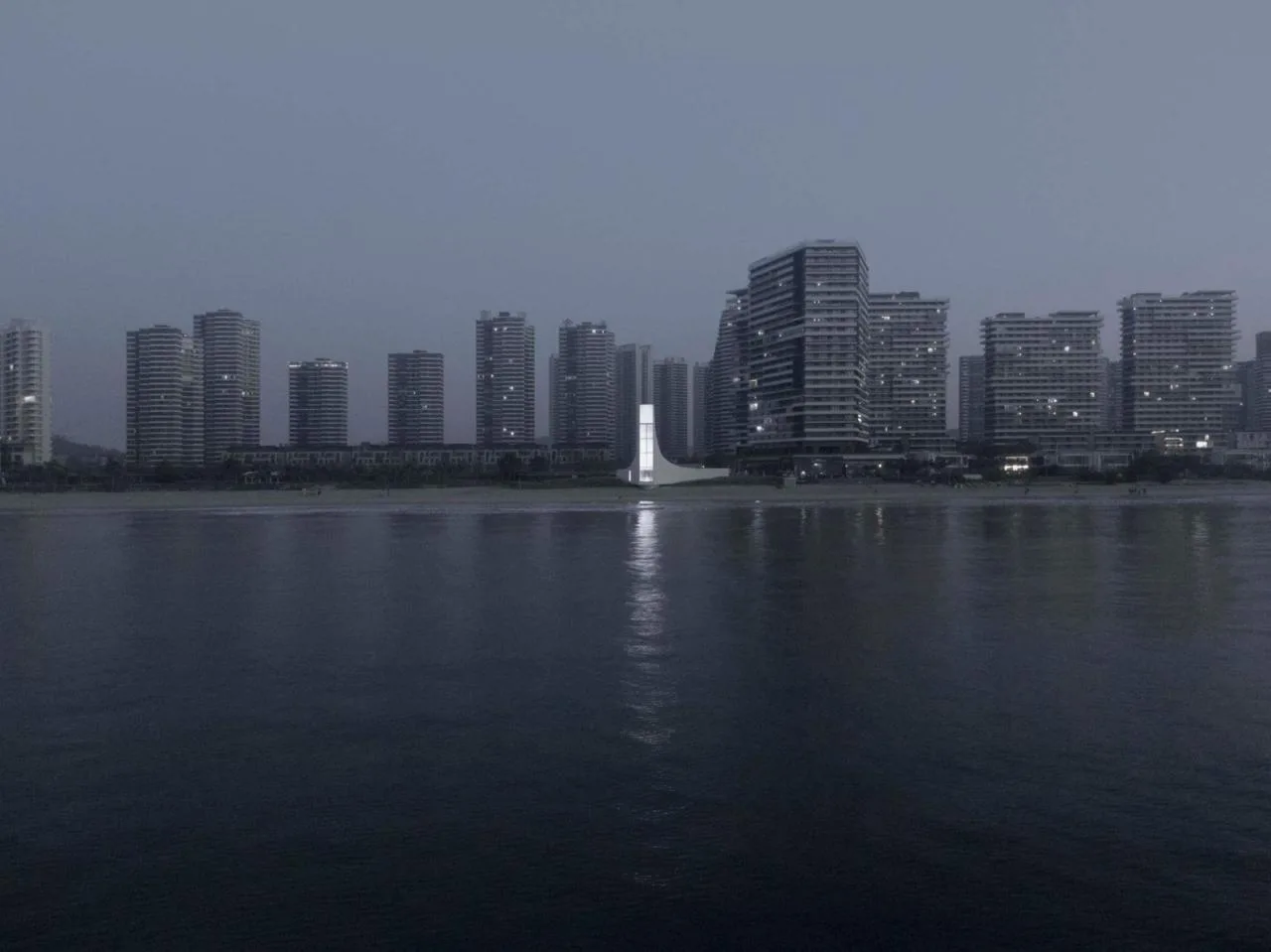
Following this exploration and research, we returned to the beach of Jincheng Bay, where high-rise residential communities stand scattered amid the natural landscape, and tourists enjoy the sandy shore. For many visitors, the sea represents a new vision and experience. When invited to design a ceremonial space at the end of the city’s central axis facing the sea, we sought to reinterpret and create a new ‘sea statue’ through a parallel historical lens.
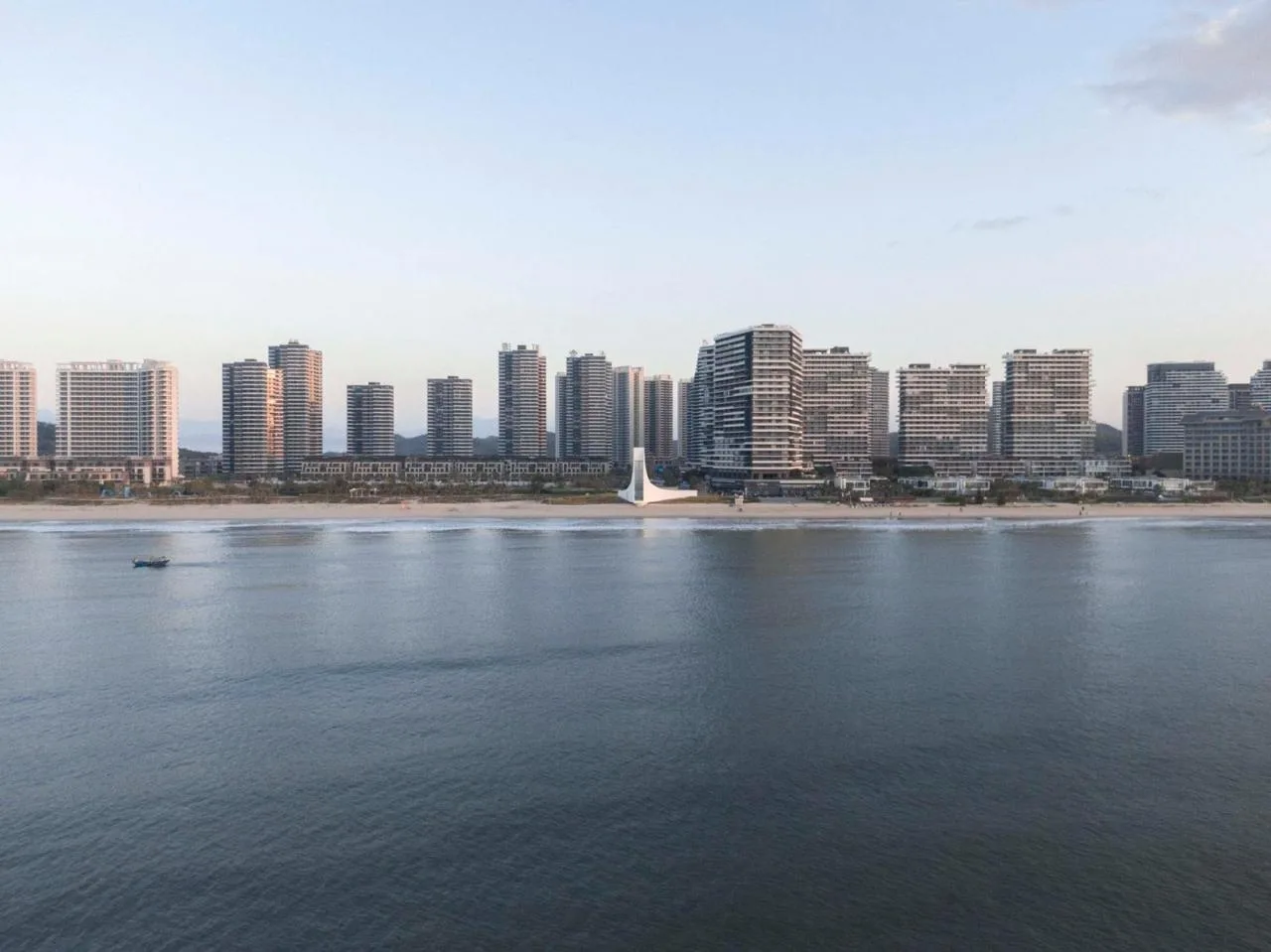
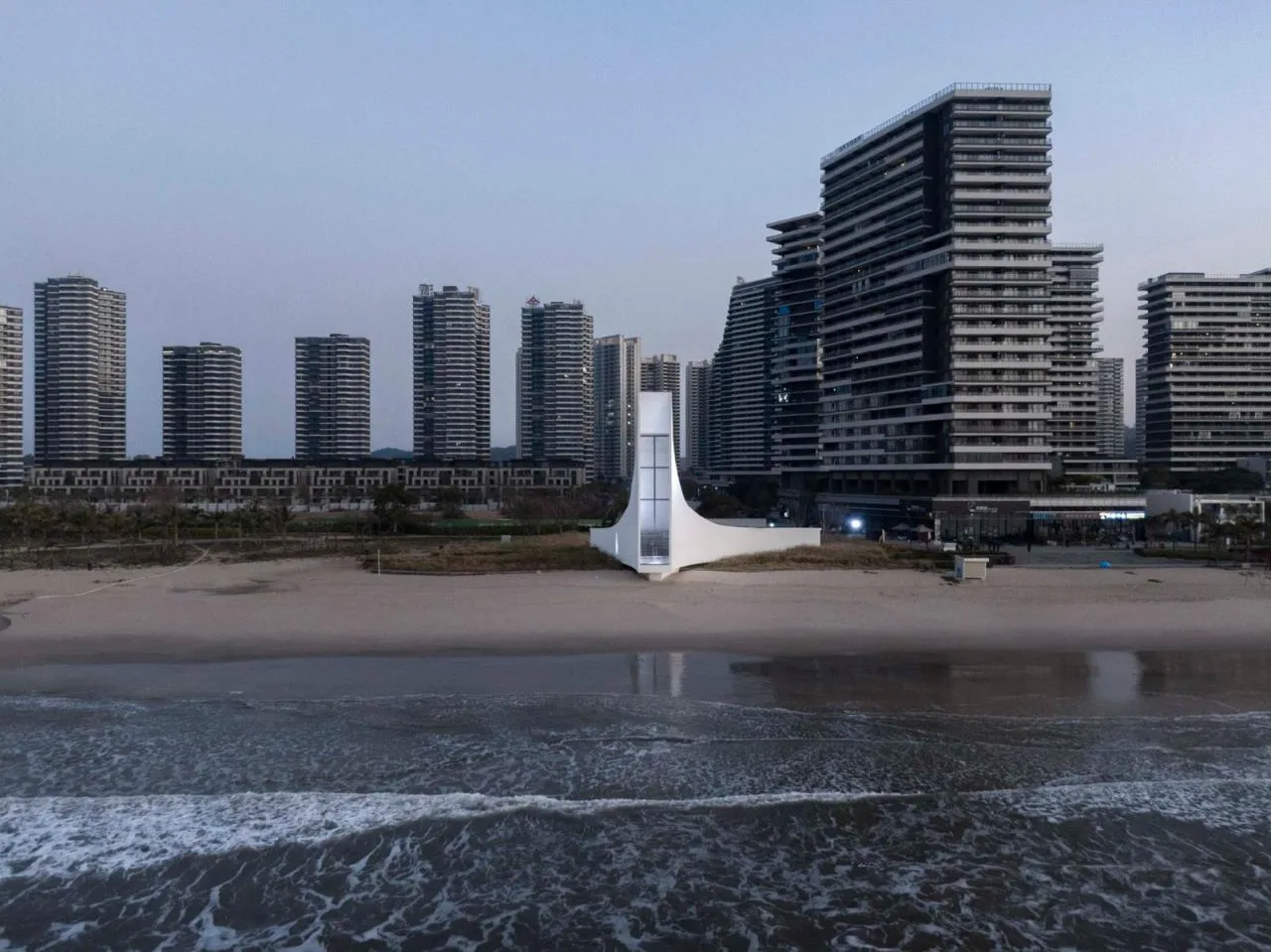
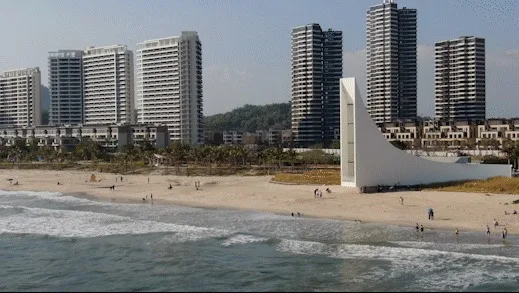
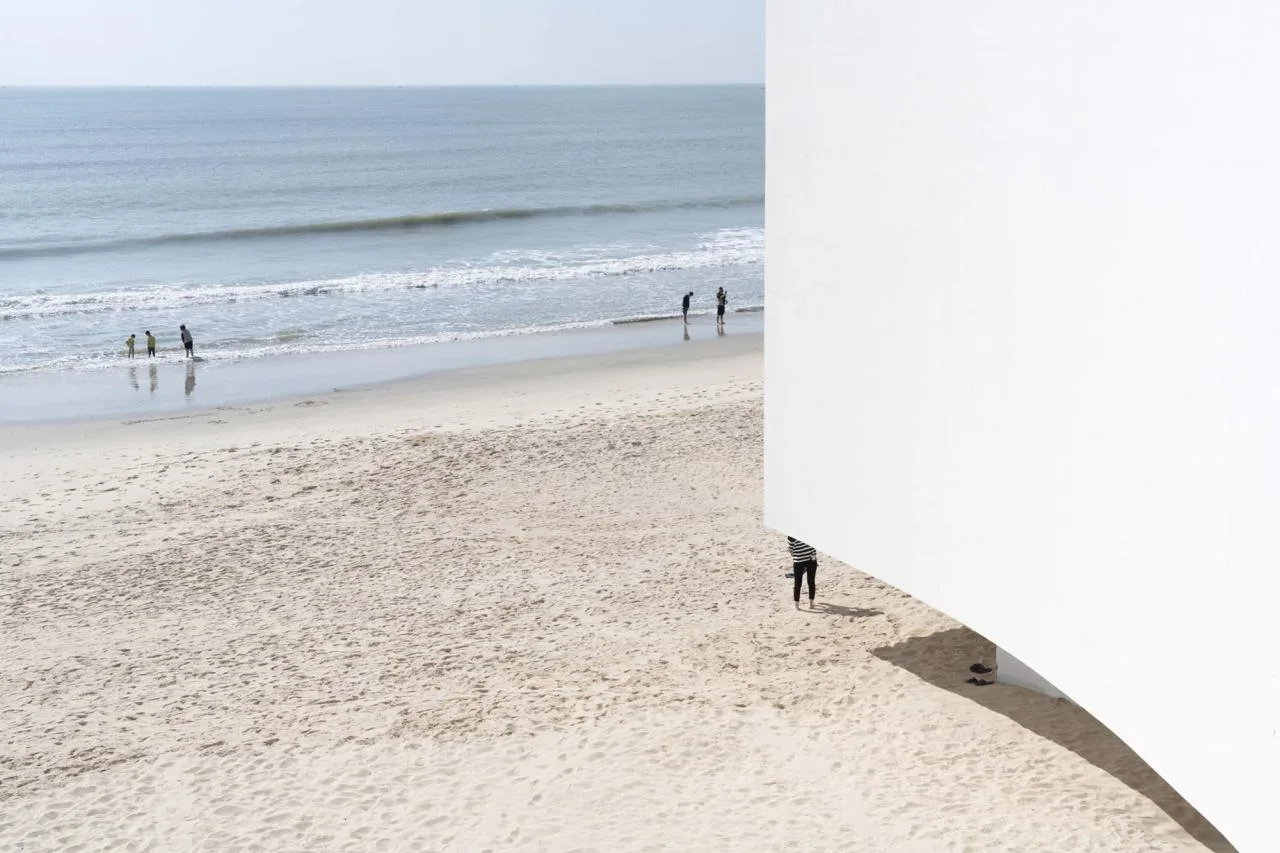
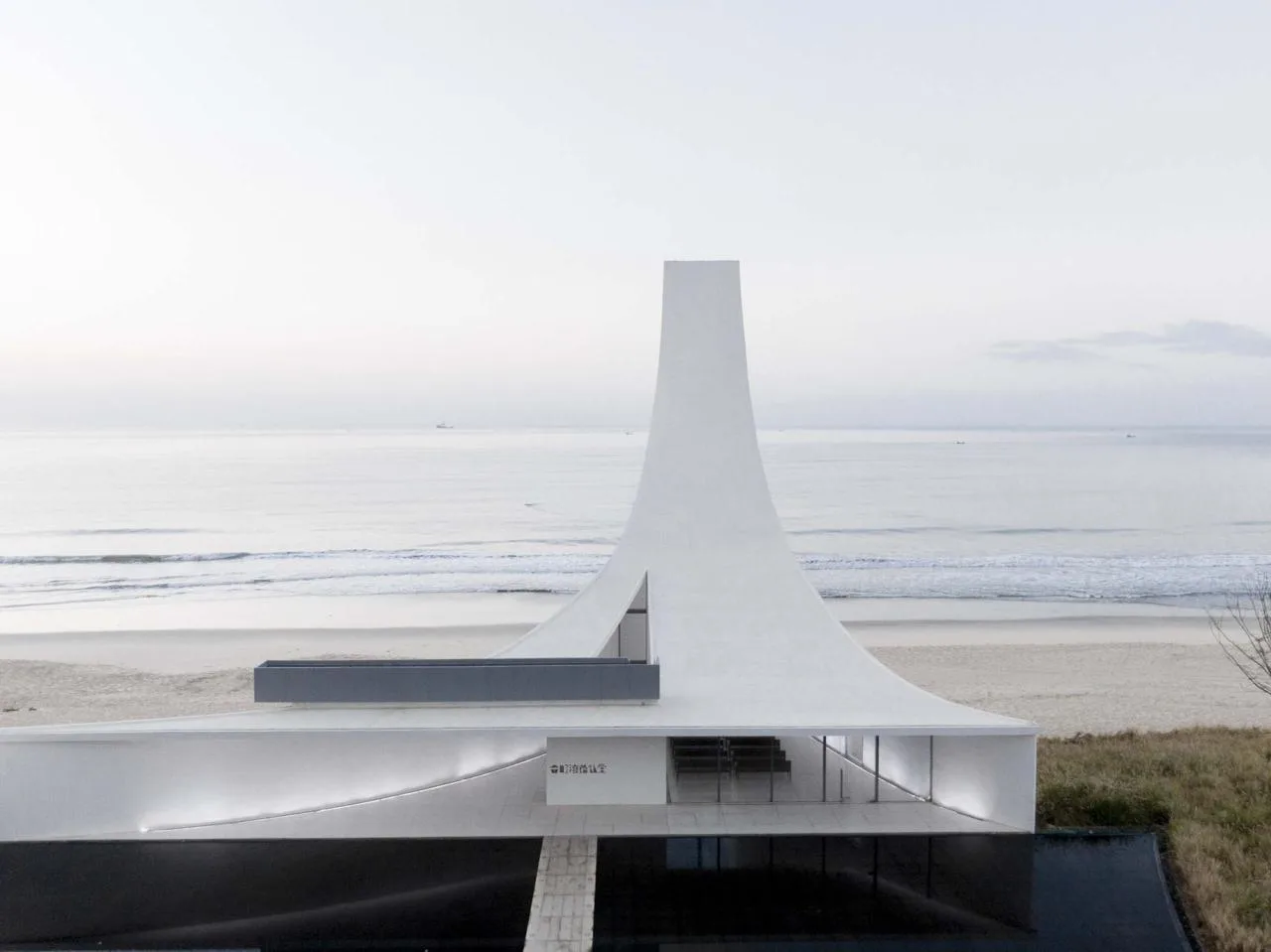
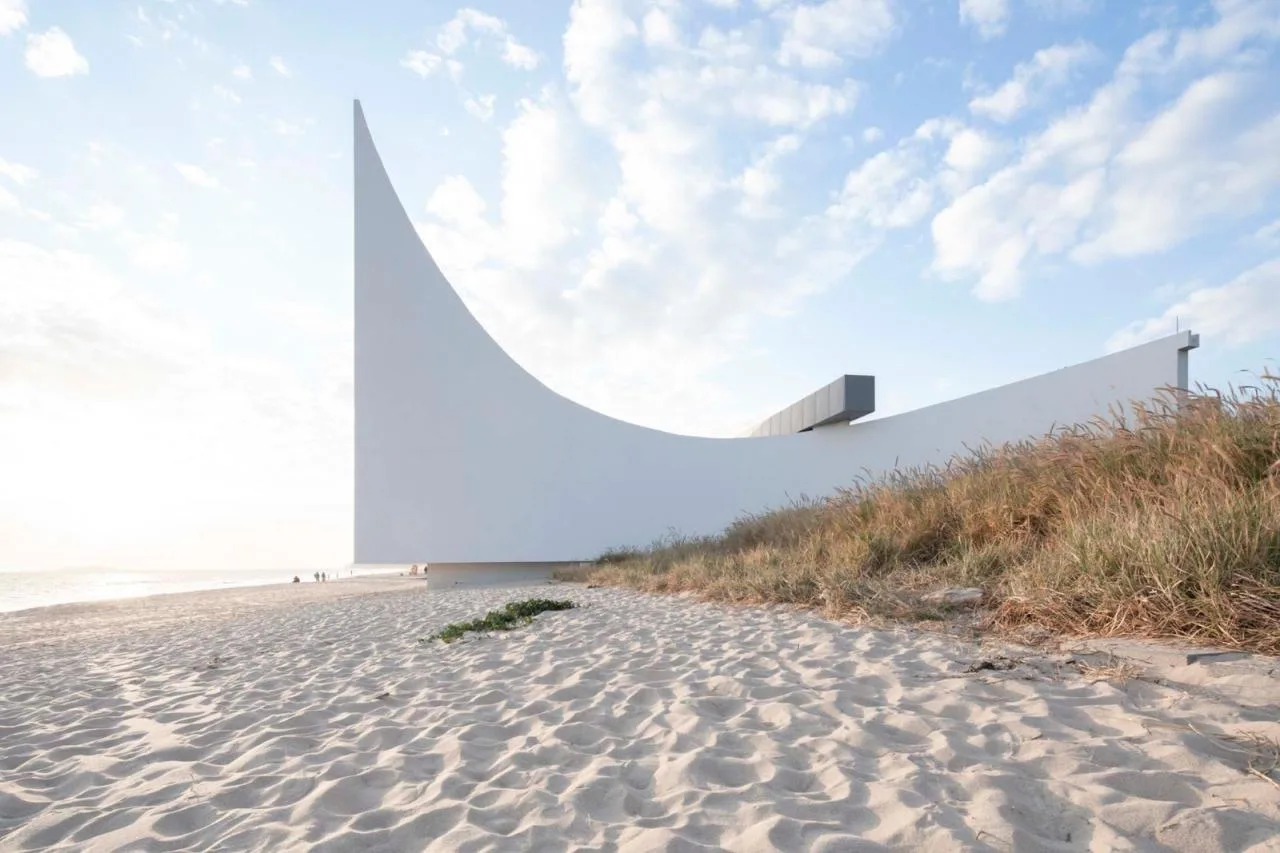
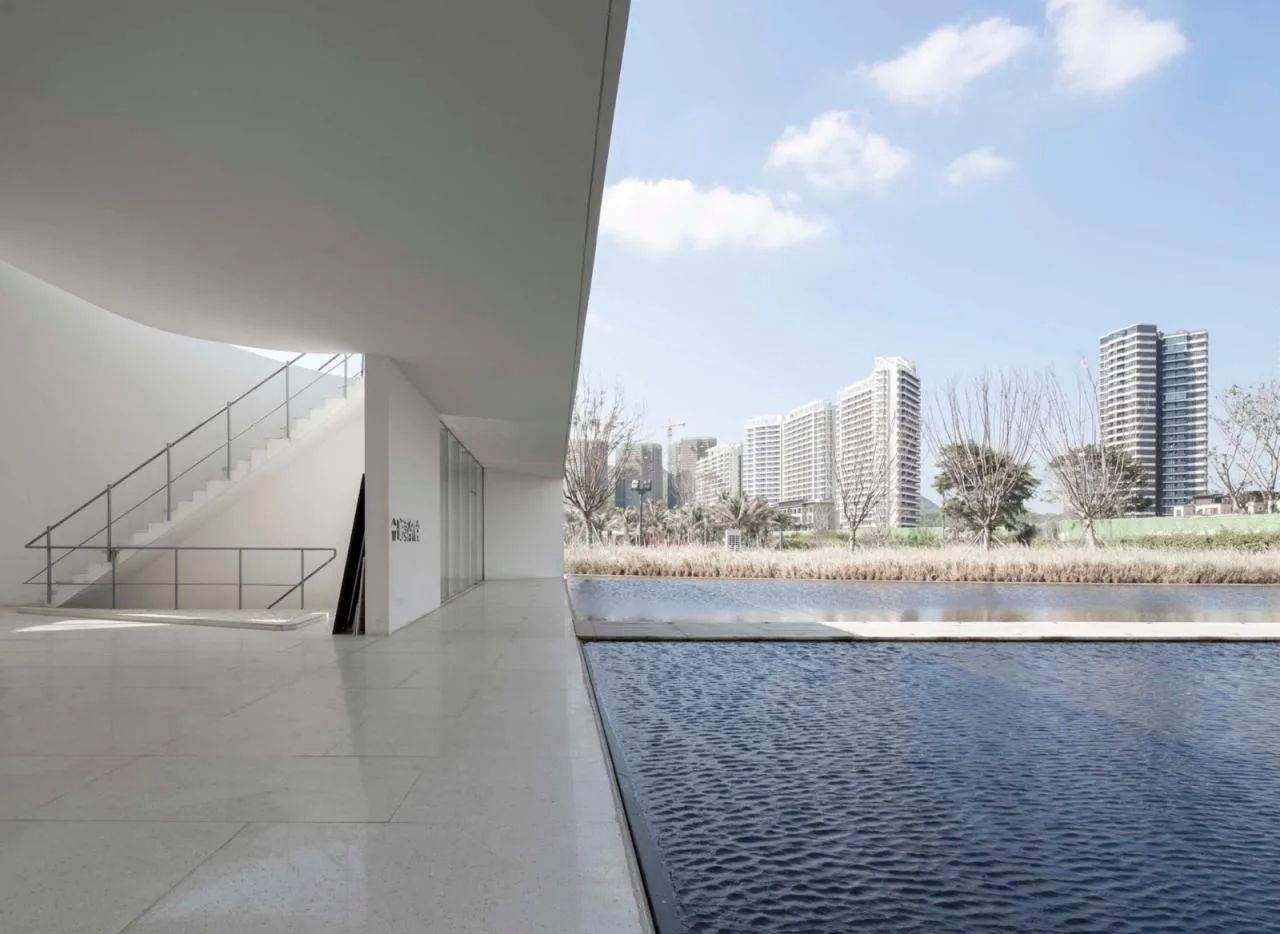
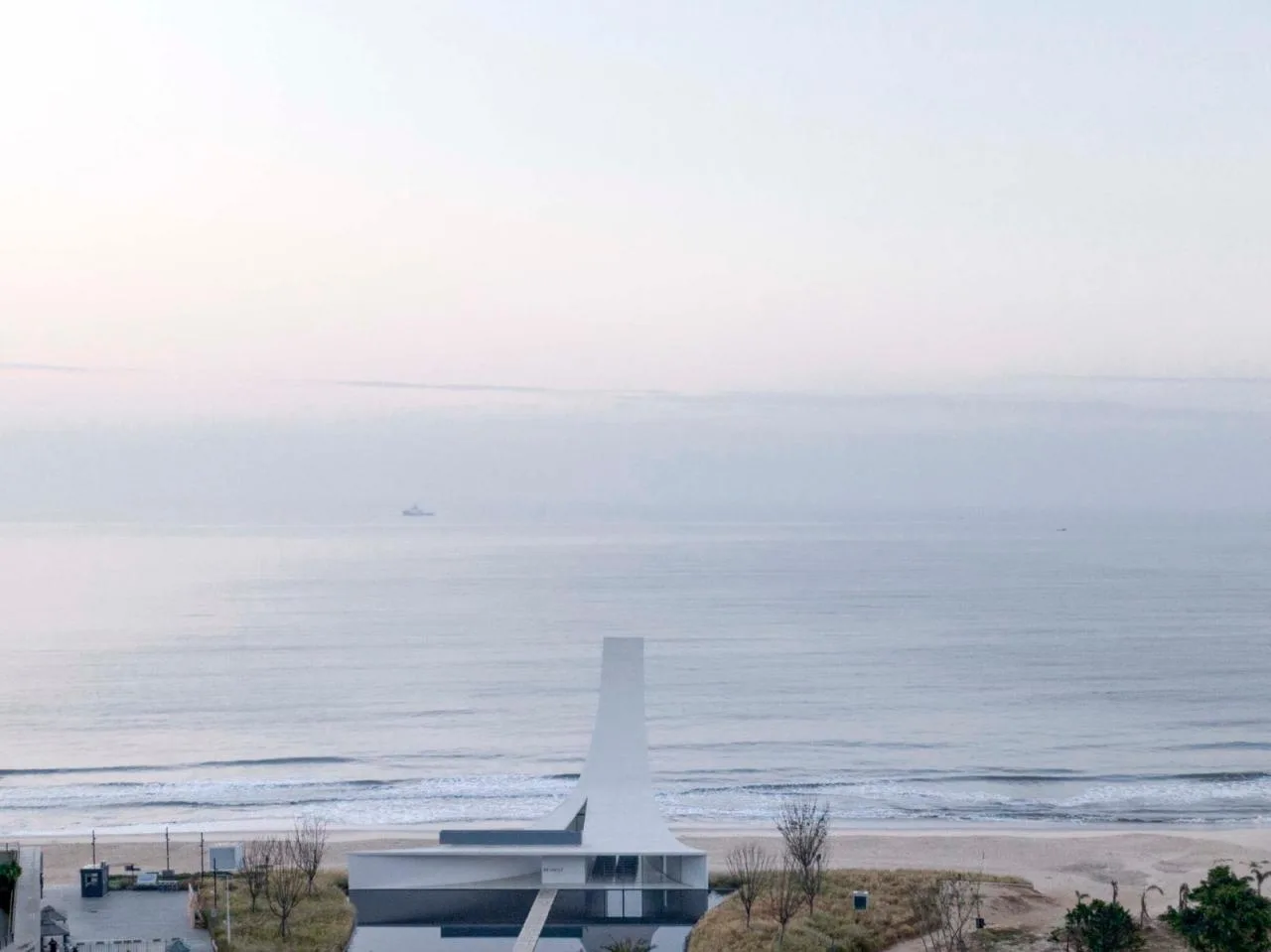
At the terminus of the ceremonial axis, oriented towards the mainland and the emerging city, a horizontal space with a width nearly ten times its height is formed. This space features abstract mountain screens, courtyards, and halls, aligned along the city’s central axis, offering residents living among towering urban buildings a place for spiritual calm. A 36-meter-long eaves corridor borders a shallow reflective pool, framing scenic views and serving as a stage for performances. The ocean-facing end dramatically compresses and extends into a tall tower standing at the water’s edge. This tower features a transparent vertical window with a height-to-width ratio of almost 5:1, emphasizing solitude in the face of the vast sea. Beyond the window, the soaring eaves reach towards the sky, making the sky and ocean both the ceremony’s endpoint and the beginning of spiritual imagination towards the sea.
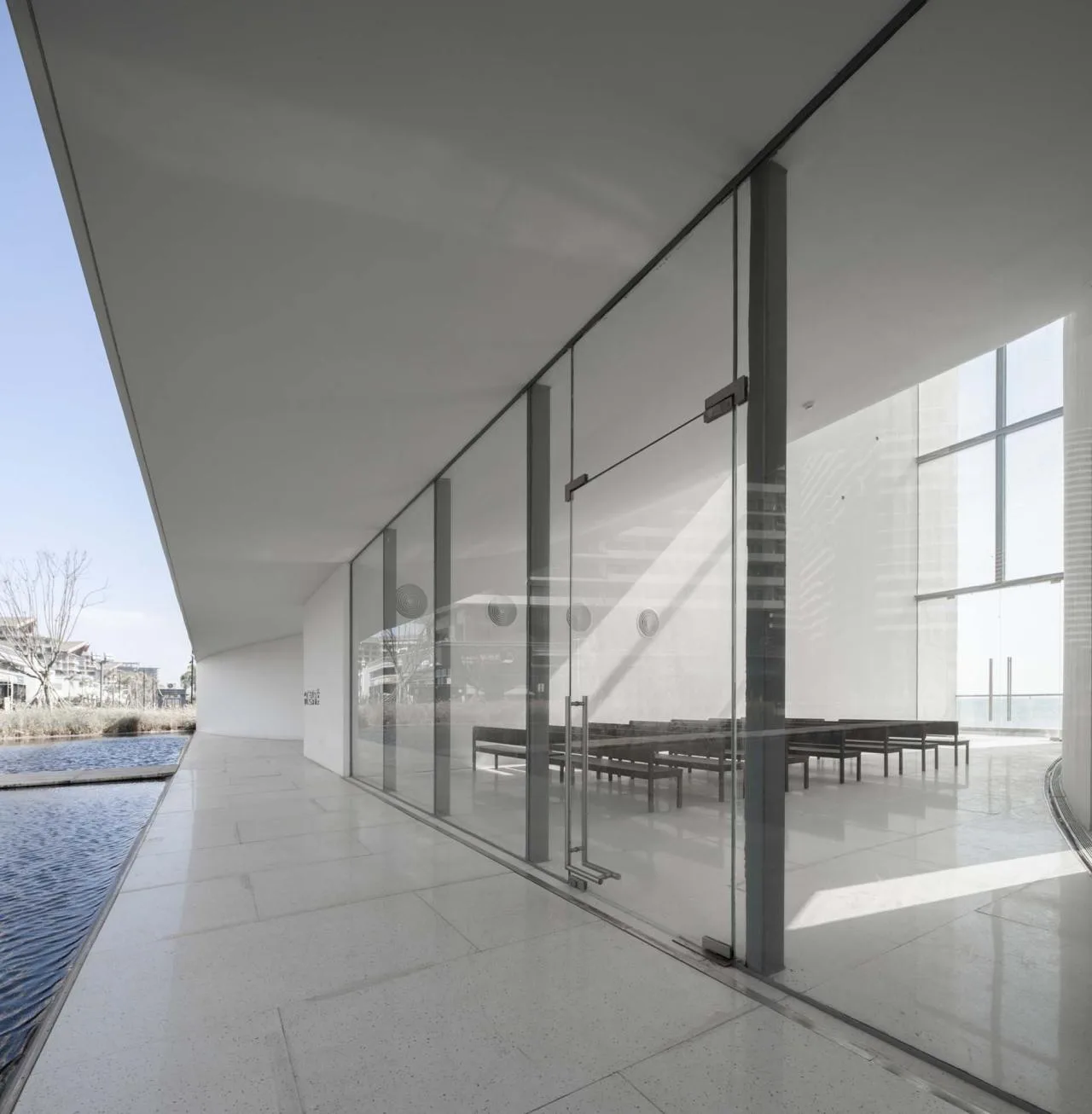
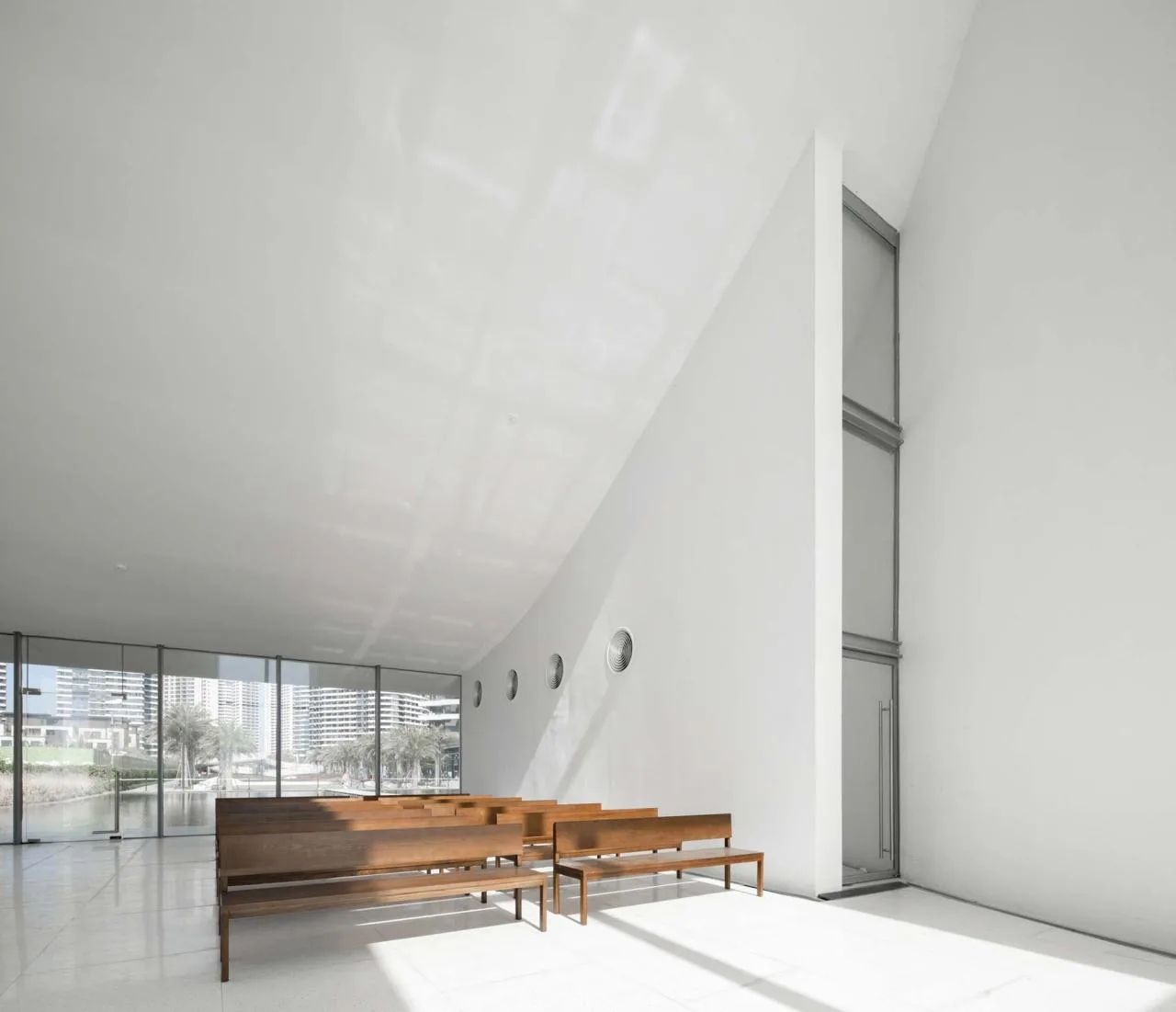
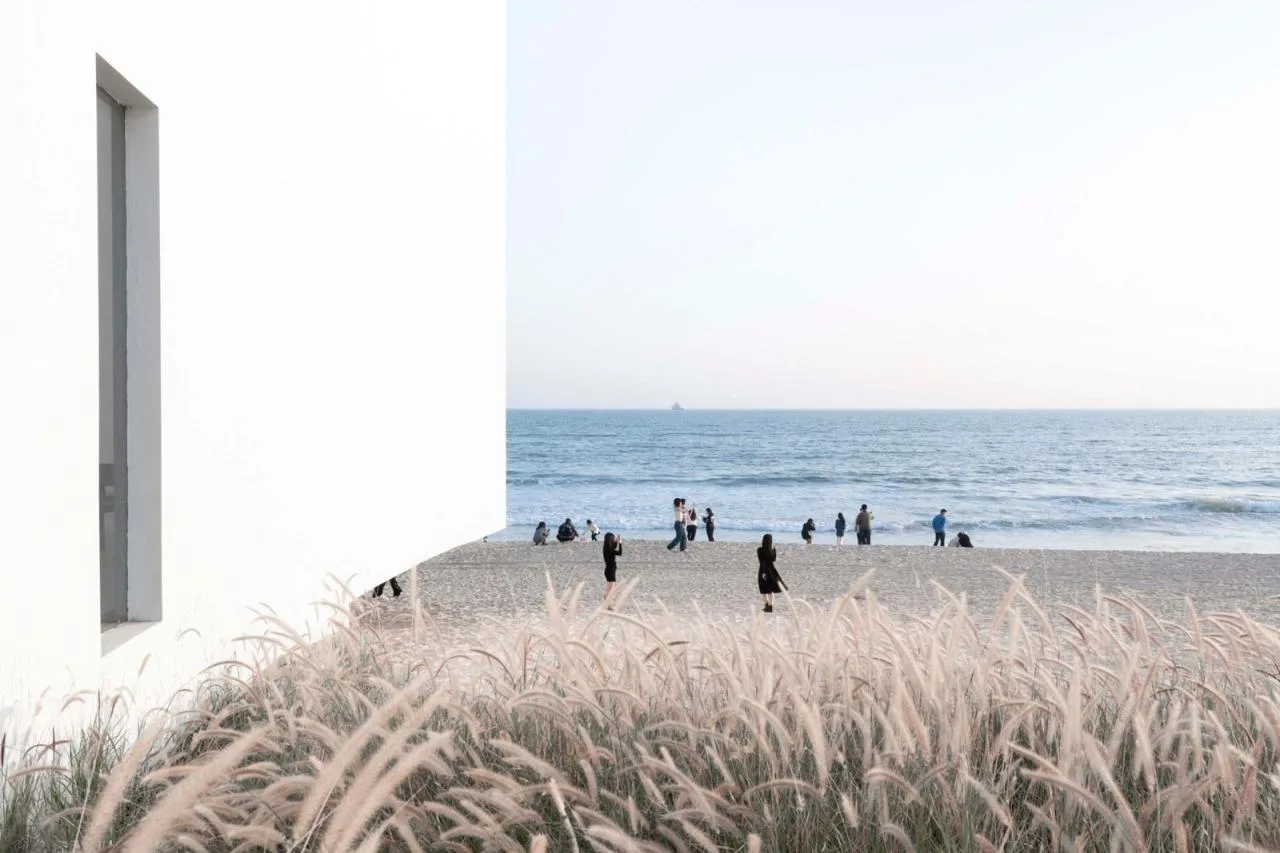
From an external perspective, the new ‘Statue of the Sea’ serves as both a spiritual and visual anchor for the rapidly expanding coastal city. It also aims to restore a historical and temporal connection between urban and rural areas, linking the continent with the vast ocean.
Project Drawings
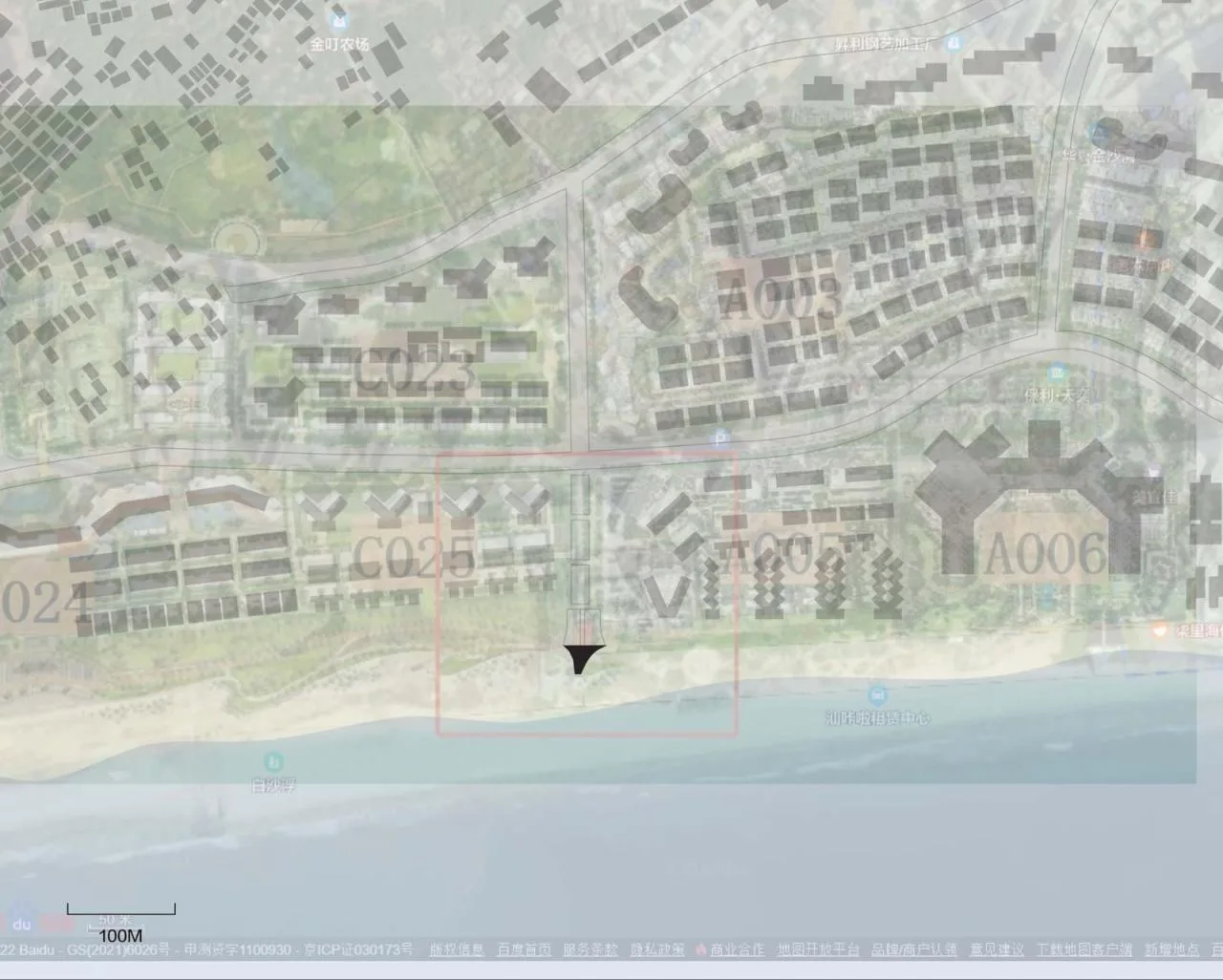
△ Location diagram
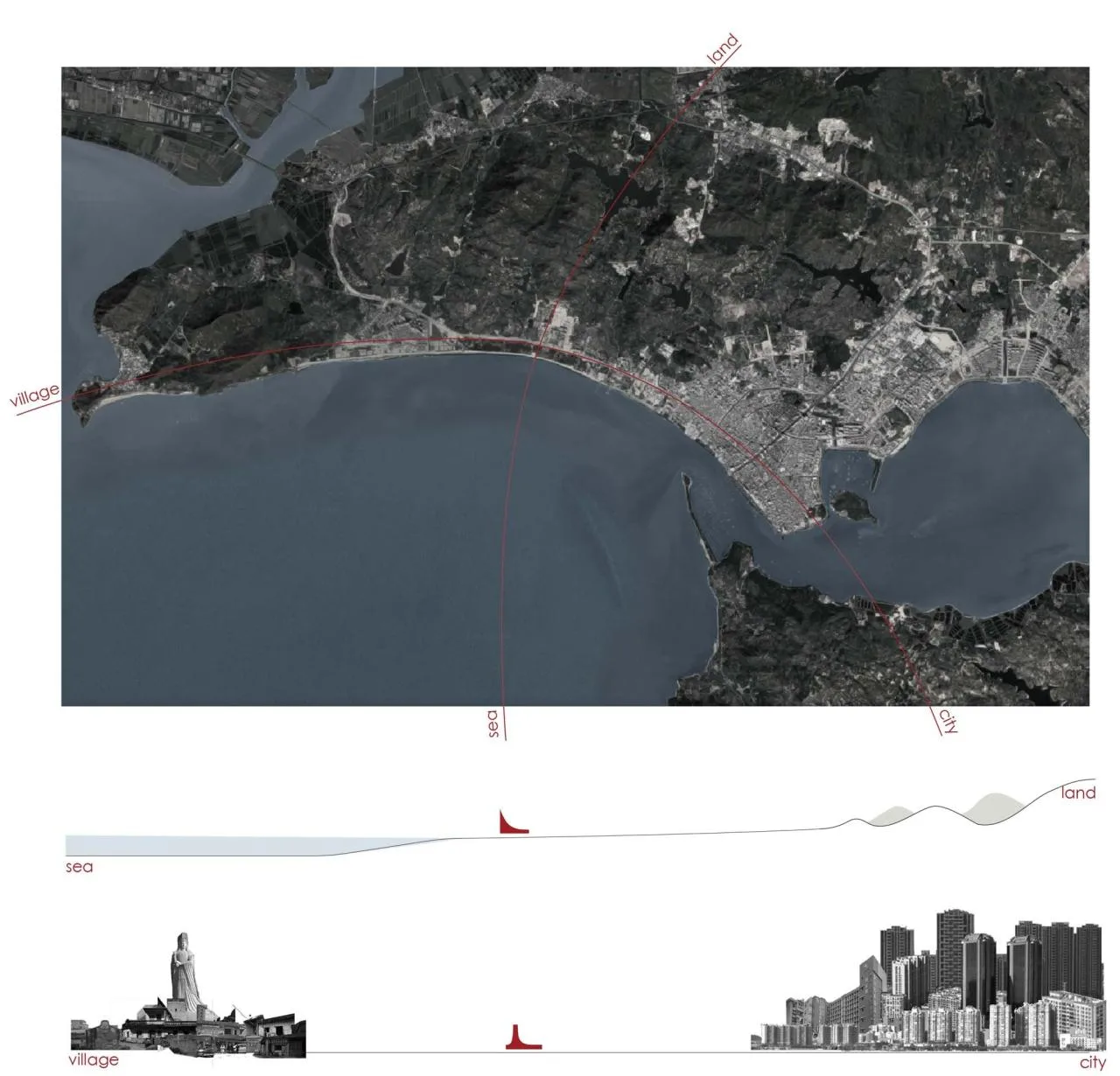
△ Terrain analysis map
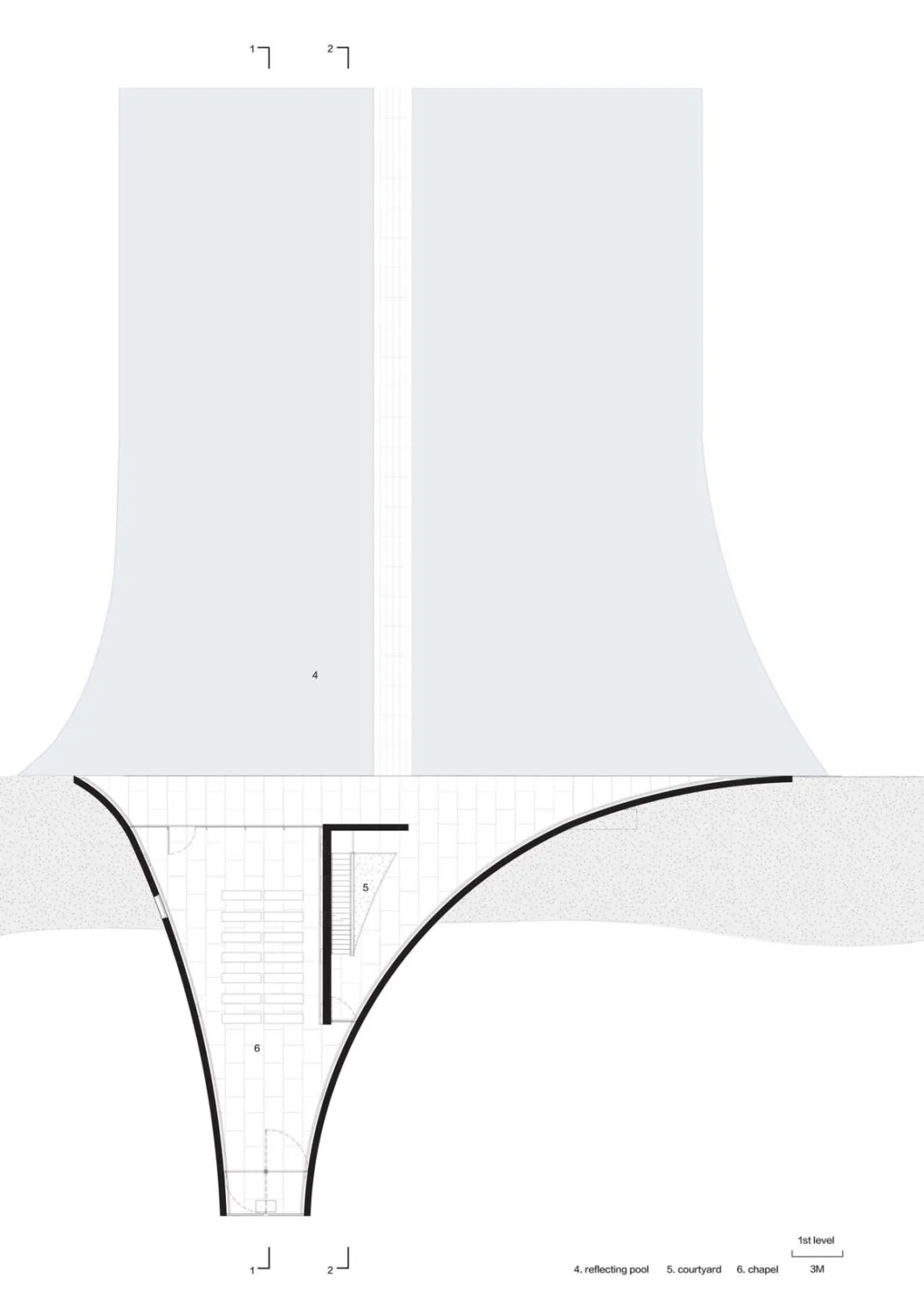
△ First floor plan
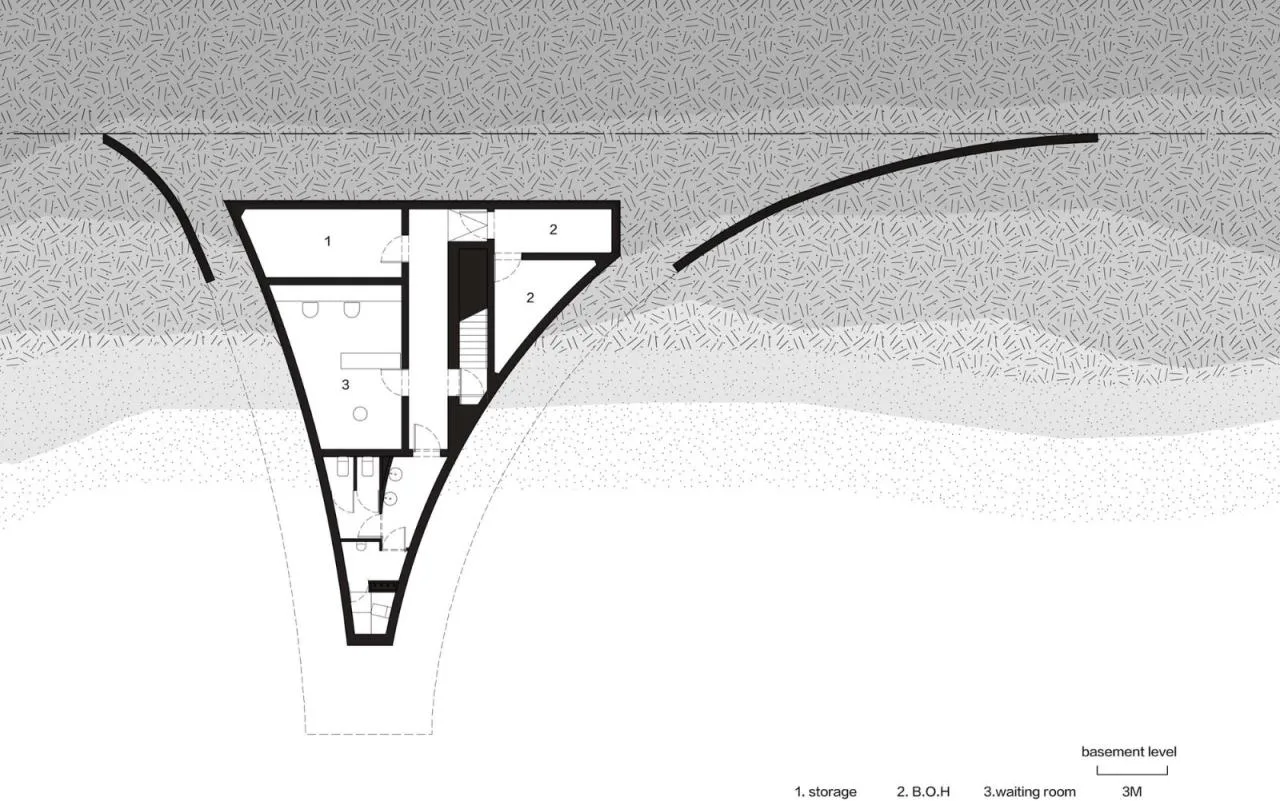
△ Underground floor plan
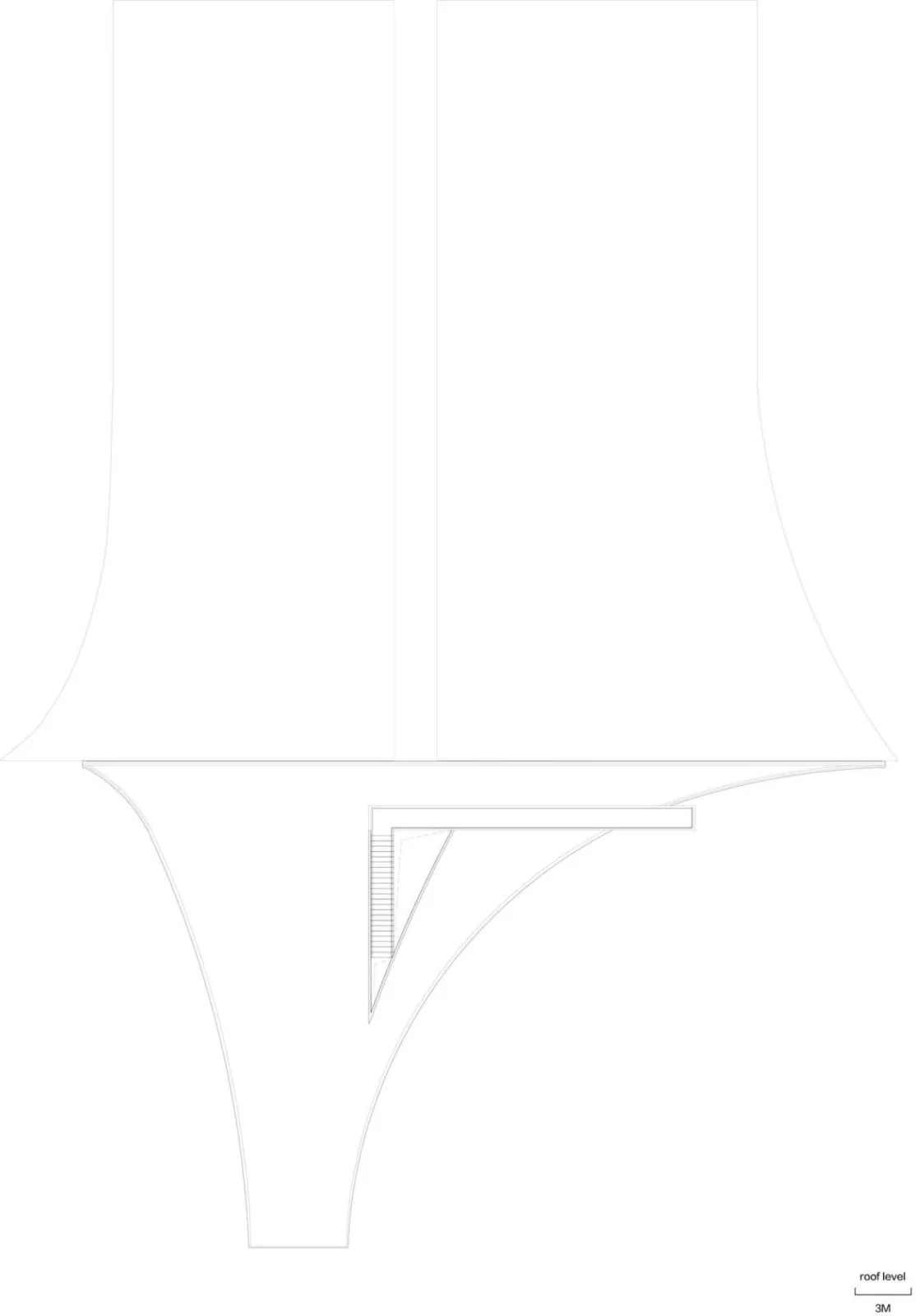
△ Roof plan
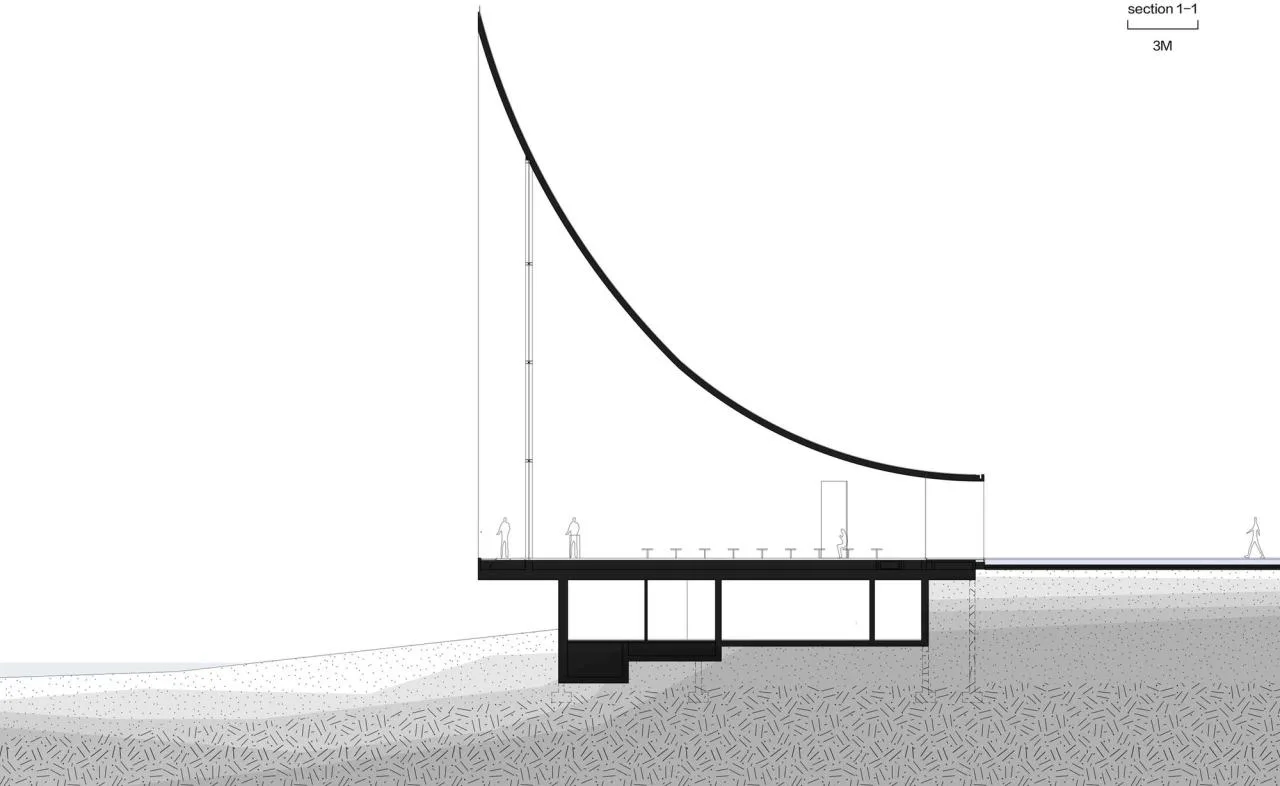
△ Section diagram
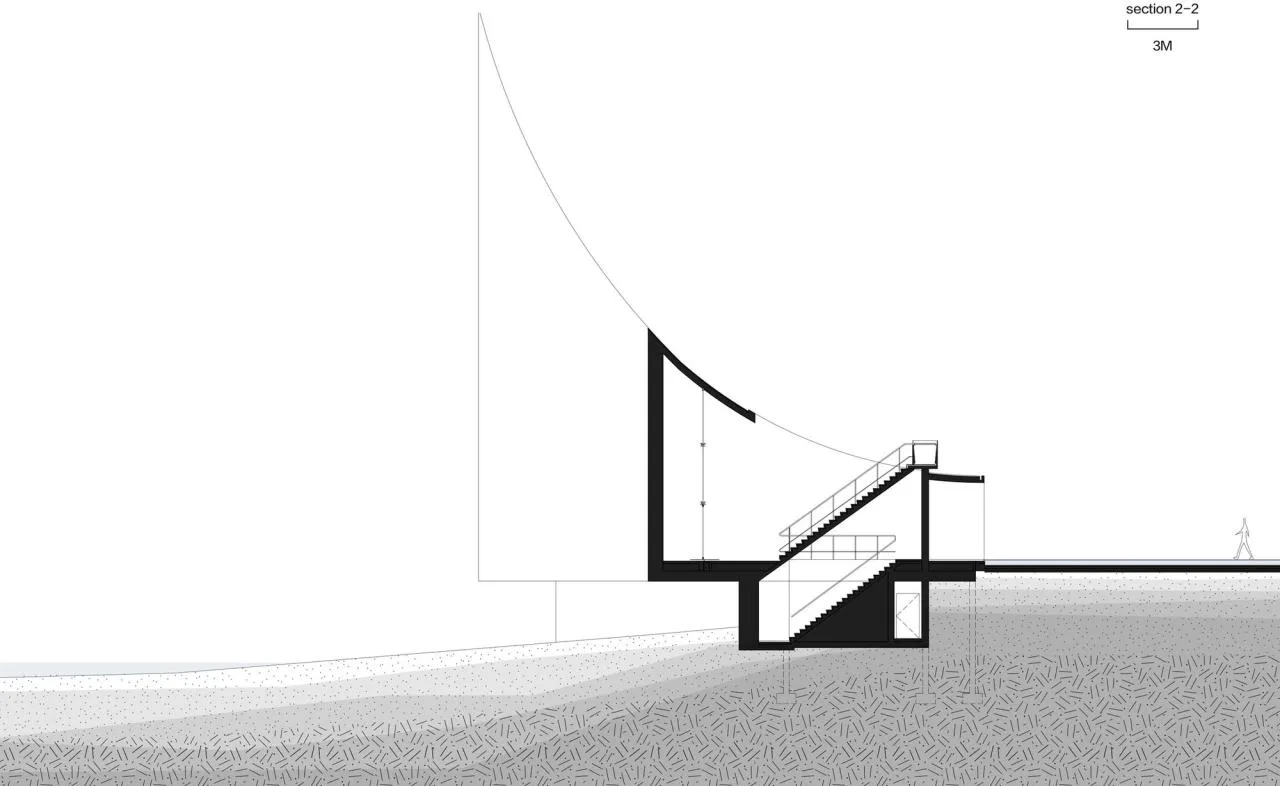
△ Section diagram
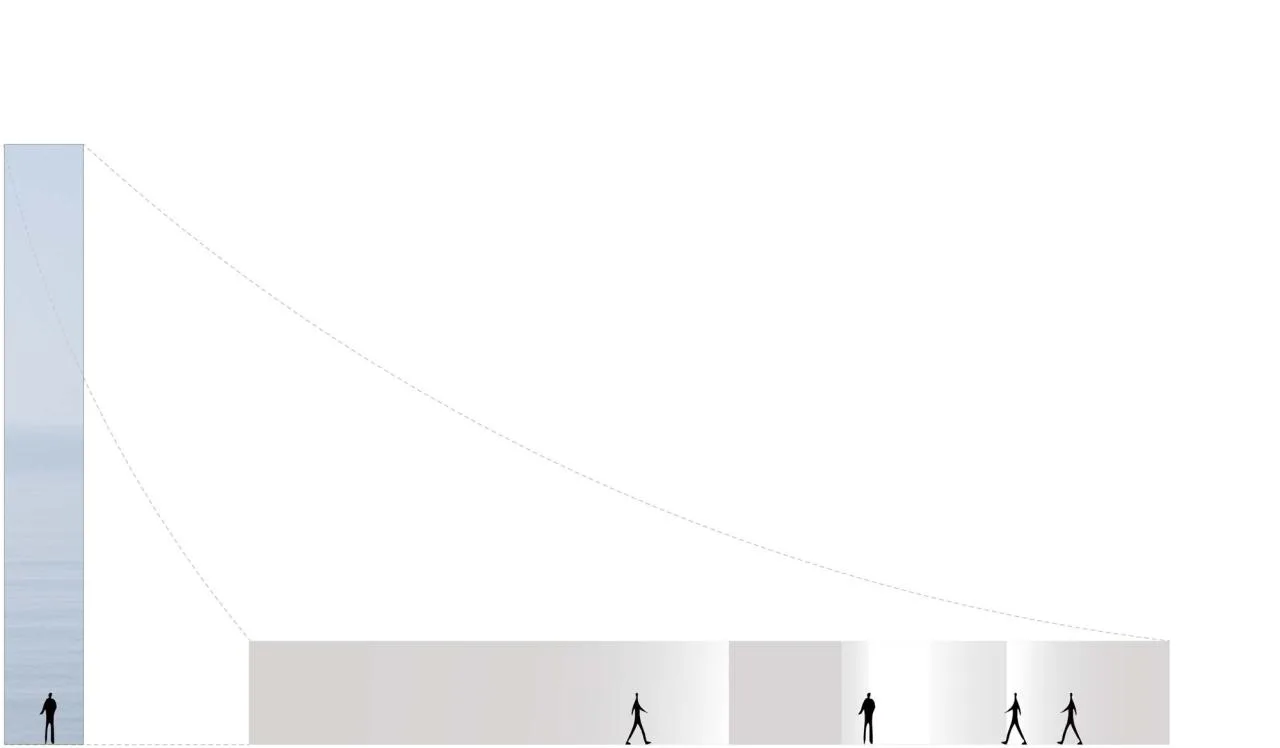
△ Analysis chart
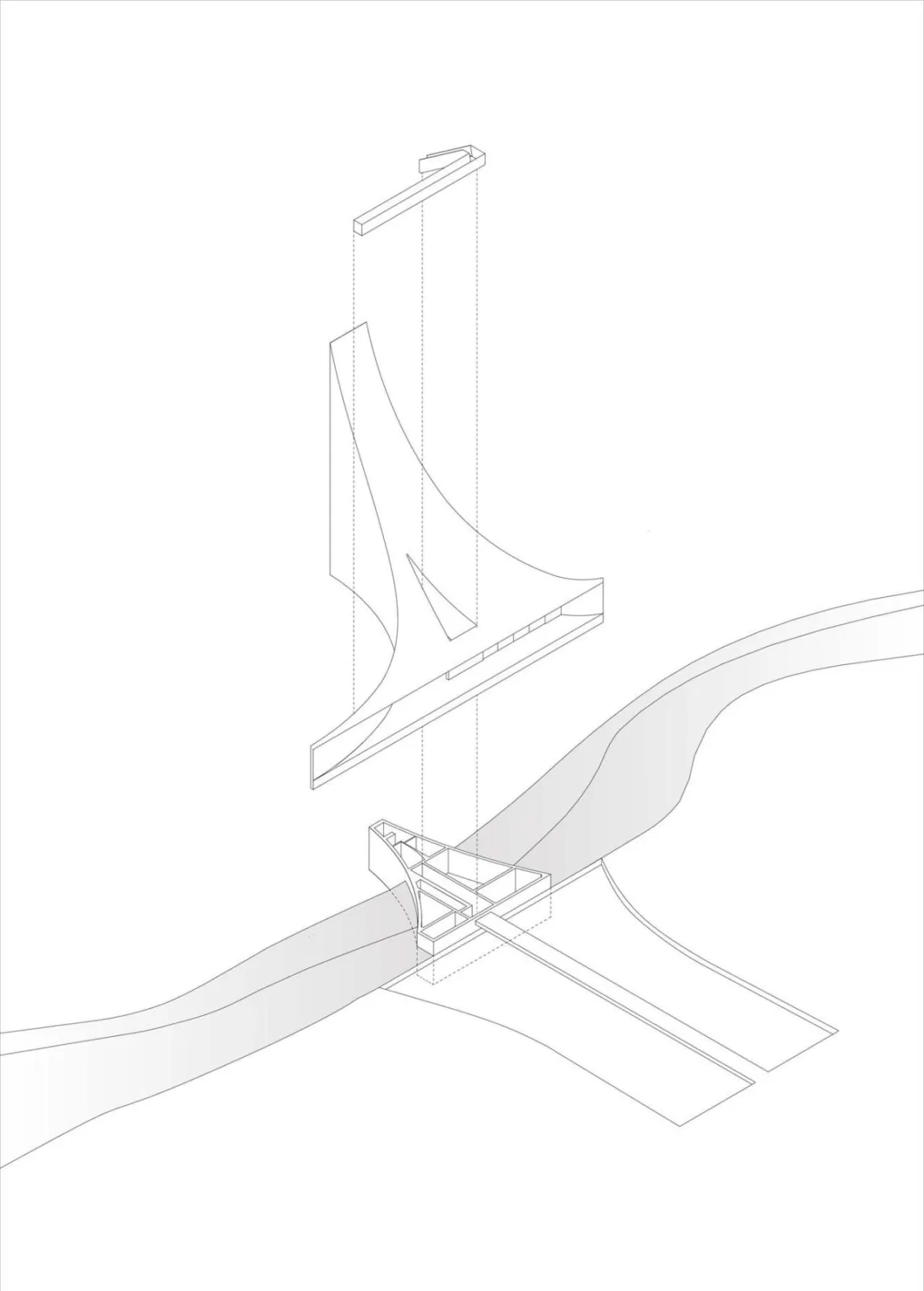
△ Analysis chart
Project Information
Architectural Design: Source Planning Studio
Area: 384 square meters
Project Year: 2020
Photographer: Wu Siming
Lead Architects: He Jianxiang, Jiang Ying
Design Team: Huang Chengqiang, Cai Xinqian, Peng Weisen
Structural Consultants: Lao Xiaojie, Sang Xiling
Mechanical and Electrical Design: Guangzhou Benzhen Mechanical and Electrical Engineering Design Consulting Co., Ltd
Floodlight Design: BPI Bi Pu Lighting Design Company
Location: Shanwei City, China















Must log in before commenting!
Sign Up