
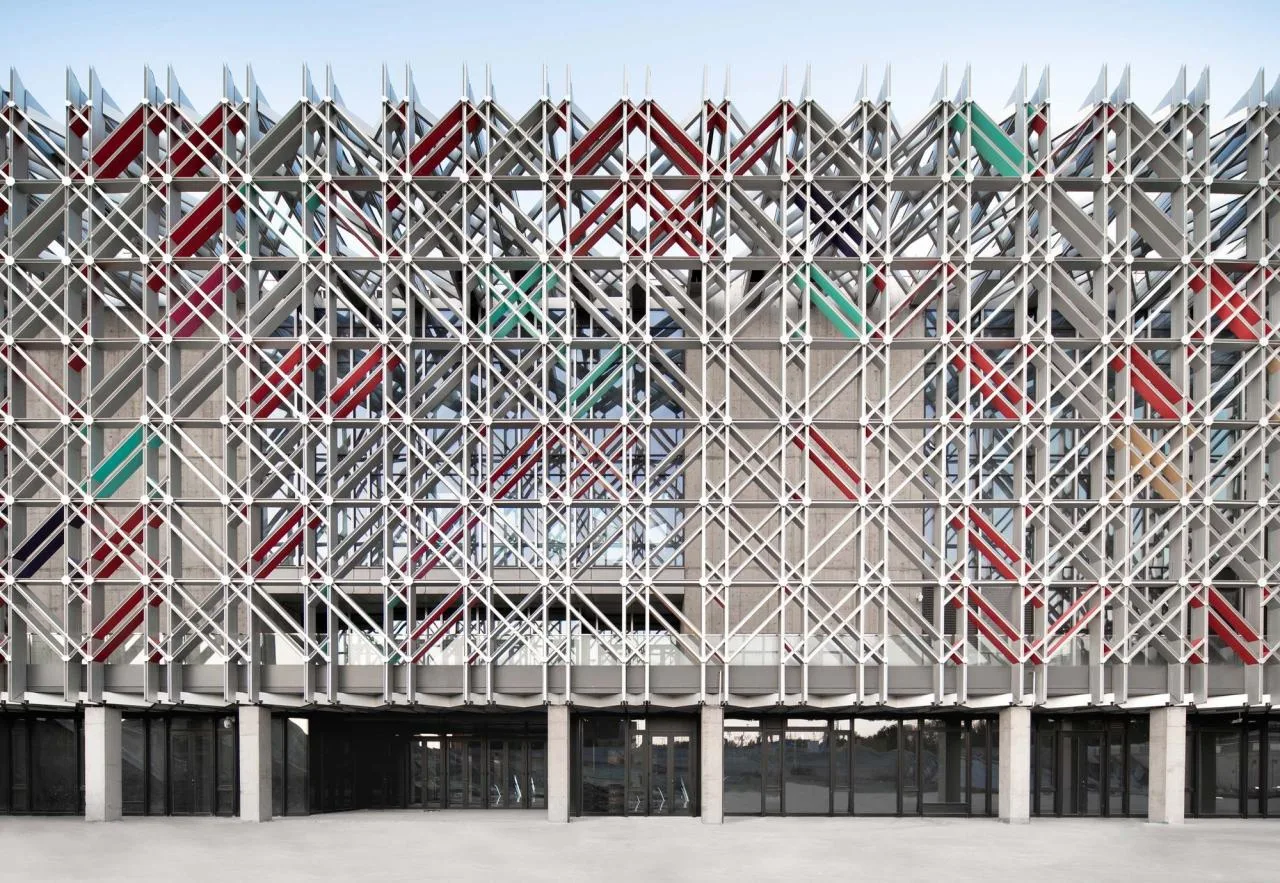
The Wukesong Ice Sports Center served as the ice hockey training venue for the 2022 Beijing Winter Olympics. Situated adjacent to Chang’an Avenue, it occupies the southeast corner of the Wukesong Cultural and Sports Center in Beijing. The center is symmetrically arranged around the Wukesong Basketball Center, with the basketball square positioned to the west.
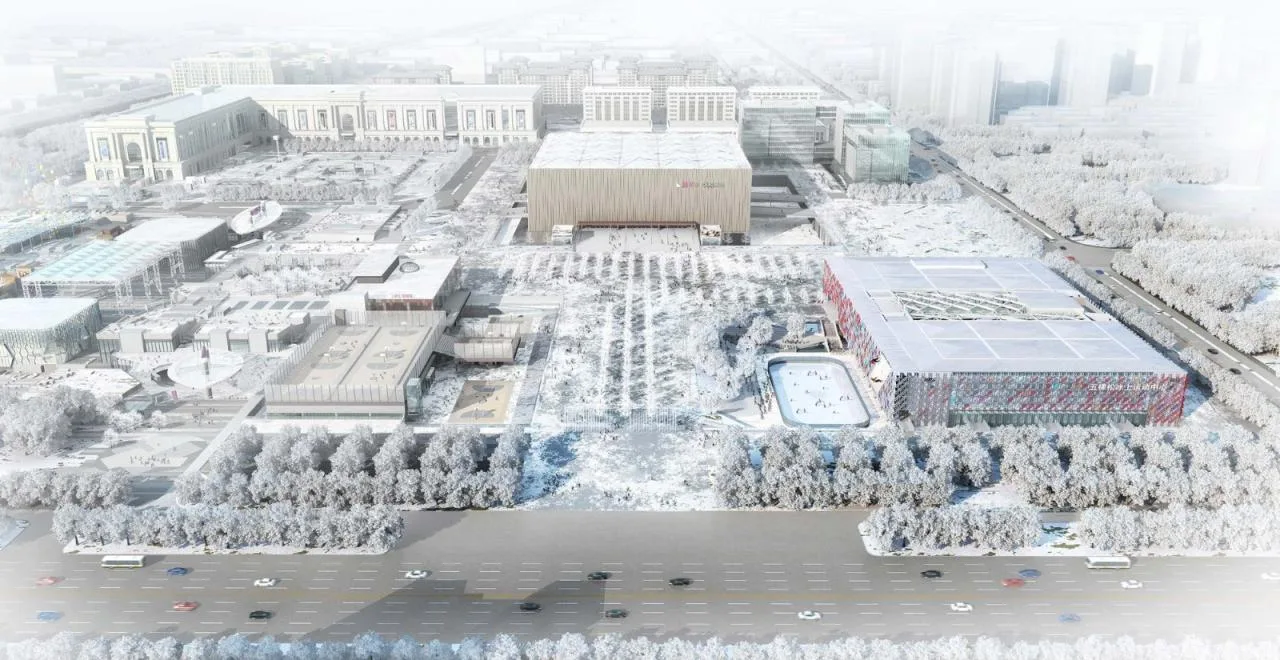
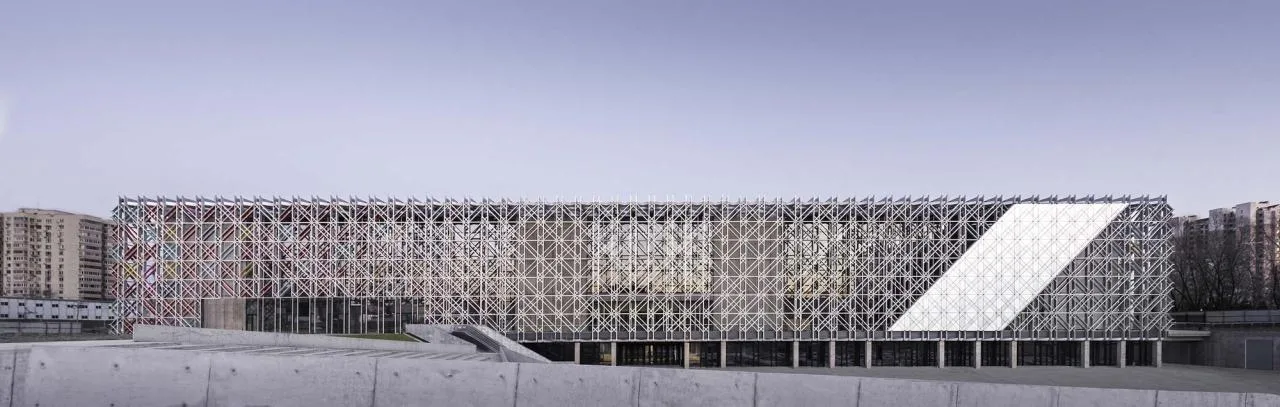
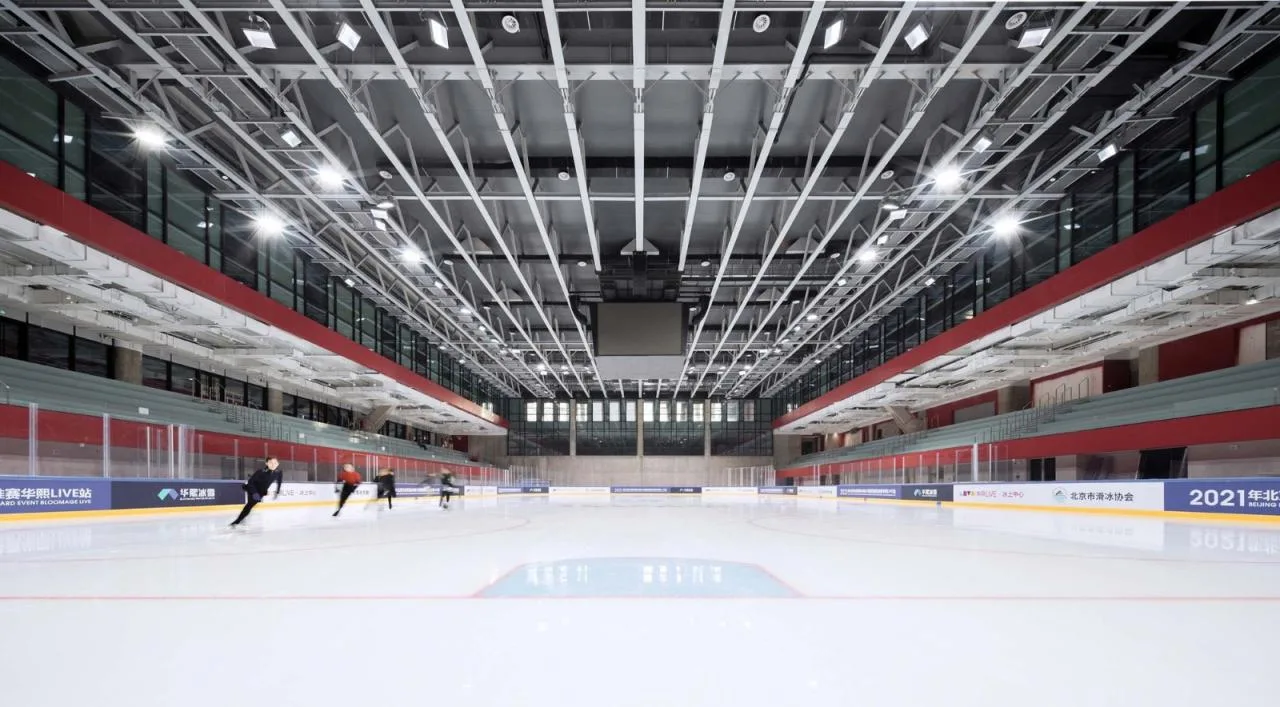
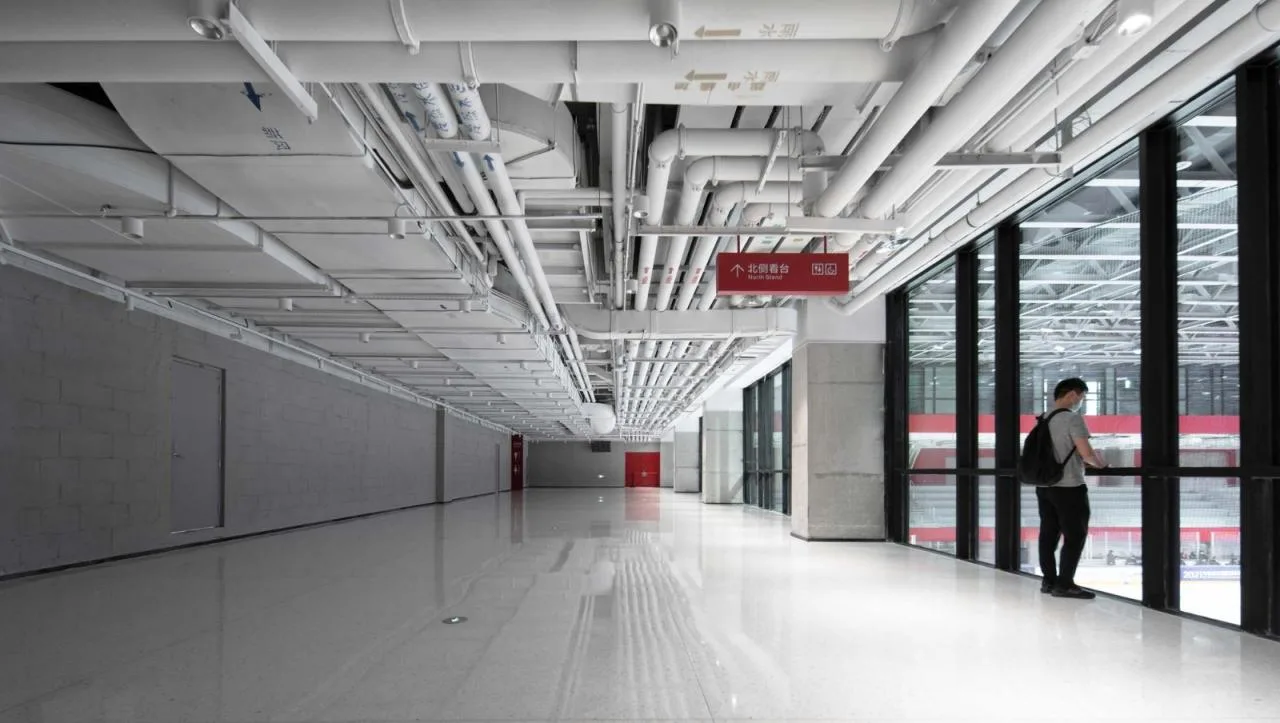
The facility spans four floors: two underground and two above ground. The underground levels house the ice rink and a fixed seating area for 1,900 spectators, designed to support training and warm-up activities during the Olympic Games. Surrounding the rink is a leisure observation area, offering diverse viewing experiences, alongside supporting functional spaces. Above ground, the two floors accommodate sports and cultural facilities, including a 910-seat theater. The Wukesong Ice Sports Center has earned the China Green Building three-star design certification and was constructed adhering to ultra-low energy consumption standards, making it the largest ultra-low energy sports venue in China to date.
Symbolism and Emotion: As one of the few newly constructed venues within the Winter Olympics urban competition area, and due to its prominent city location, the Wukesong Ice Sports Center carries the important role of embodying the commemorative and symbolic spirit of the Winter Olympics. During the Games, it functioned as a training and warm-up site for ice hockey. Post-Olympics, it stands as a crucial ice and snow-themed sports facility in Beijing, designed to inspire the local population to engage in winter sports. The architectural design connects deeply with the ice and snow world through symbolism, expressing the emotional energy and spirit of ice and snow sports.
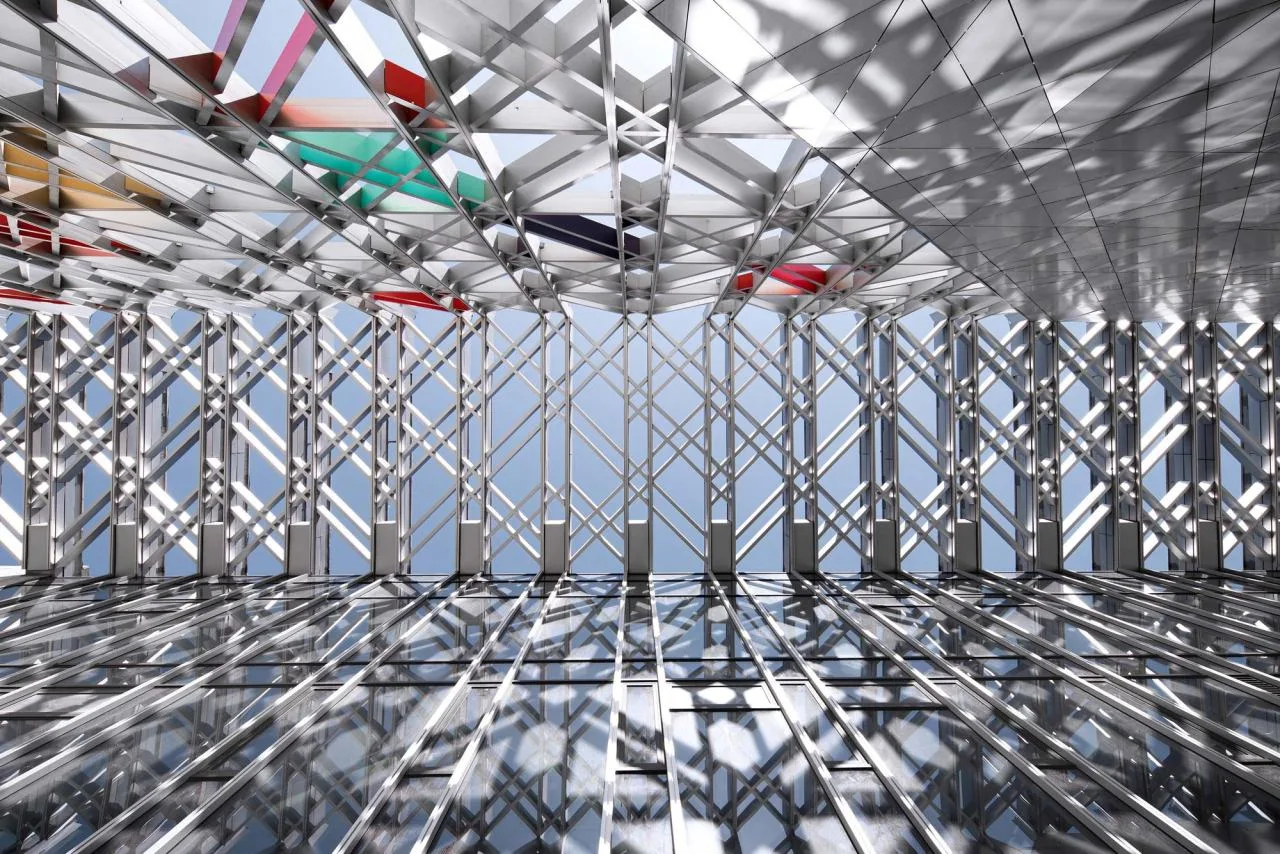
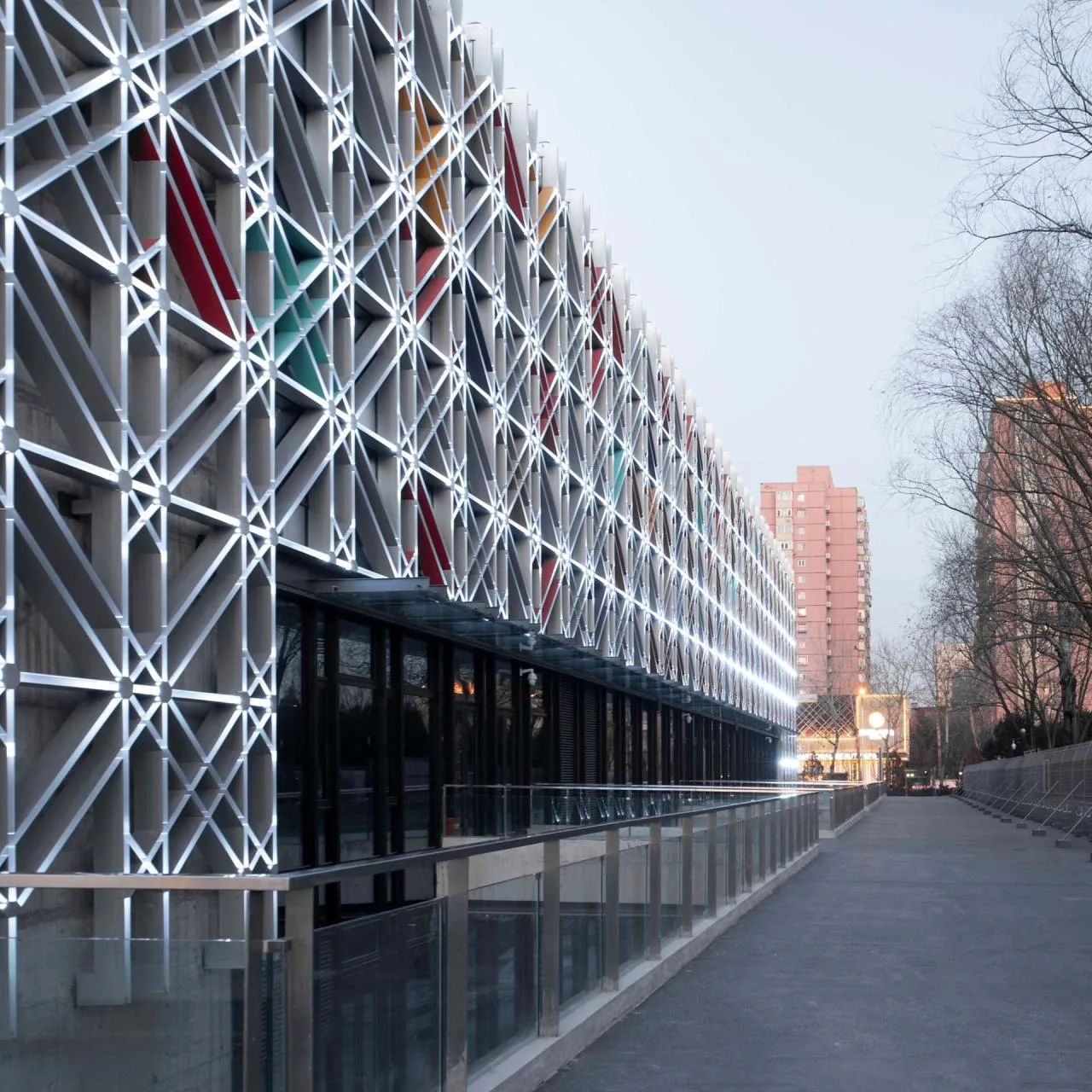
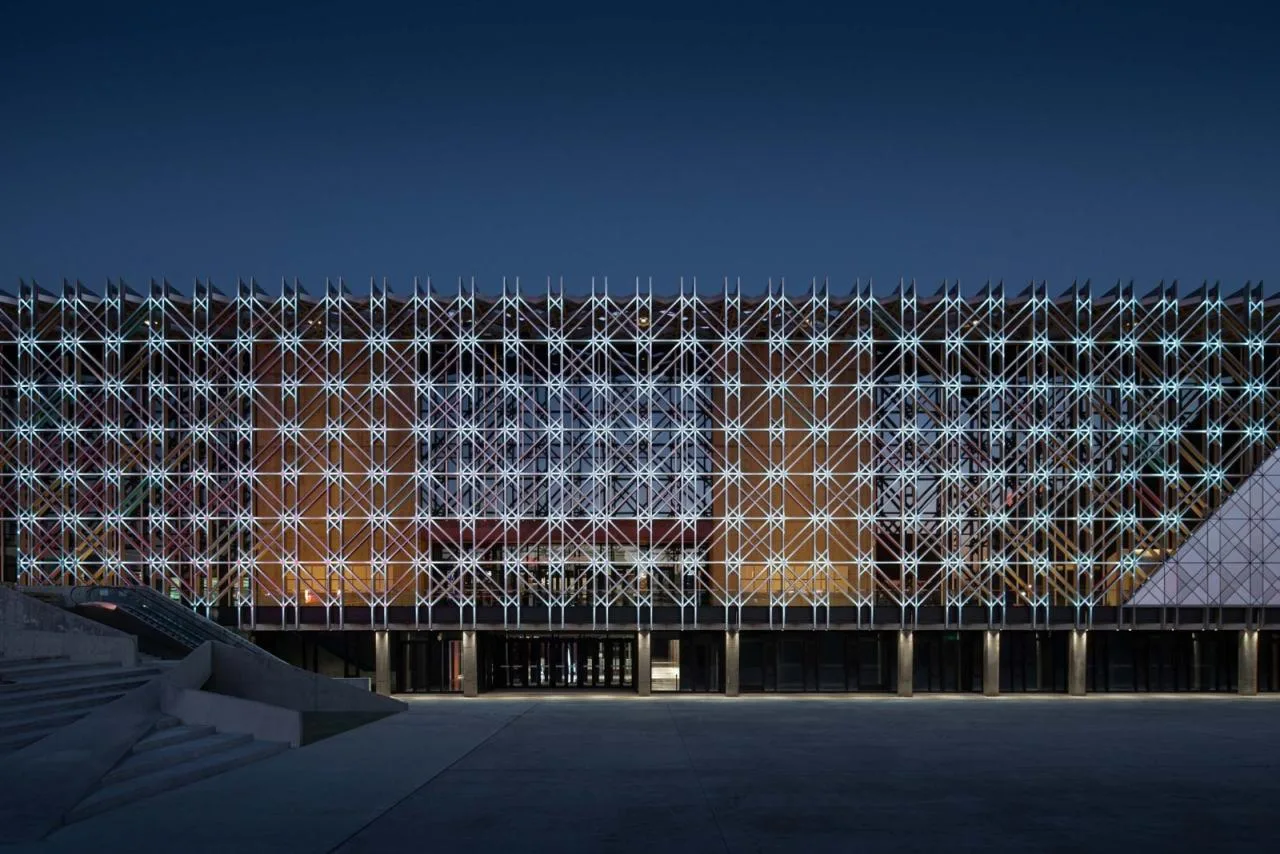
The design concept portrays the Wukesong Ice Sports Center as a textured snow and ice formation, inspired by clusters of falling “ice water chestnut flowers.” This motif is abstracted and interwoven with the architectural structure, evoking symbolic meaning while sparking anticipation and enthusiasm for the Winter Olympics and winter sports through a nuanced interplay of opacity and transparency.
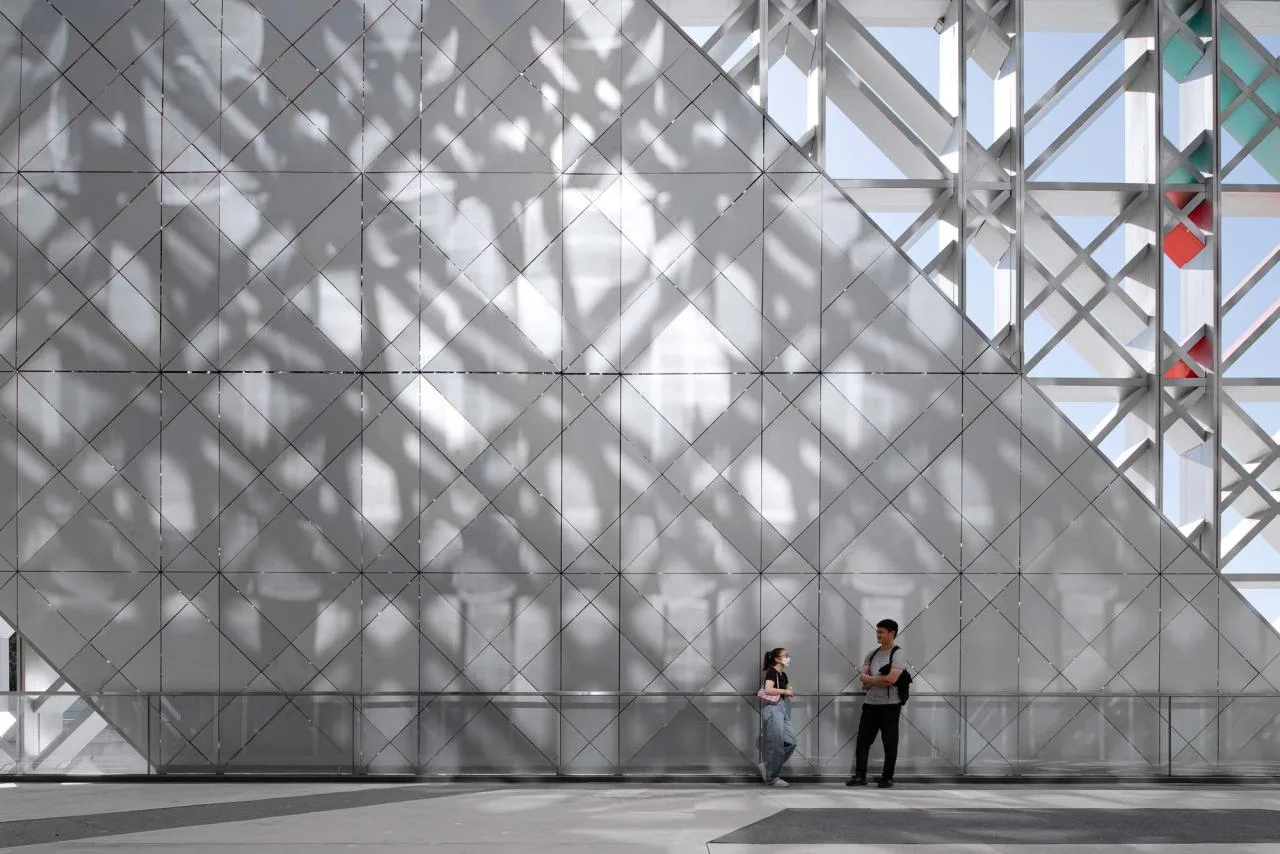
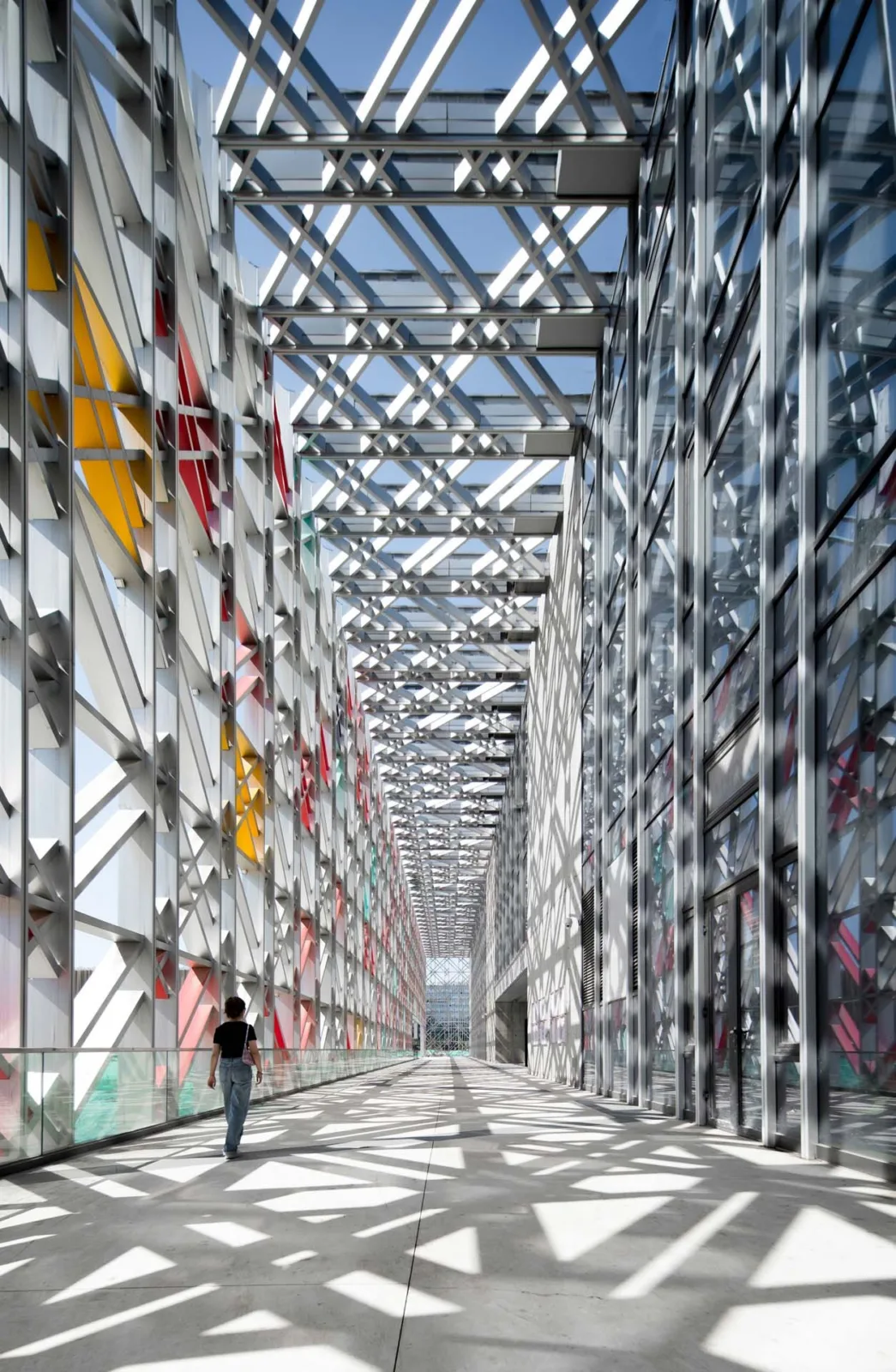
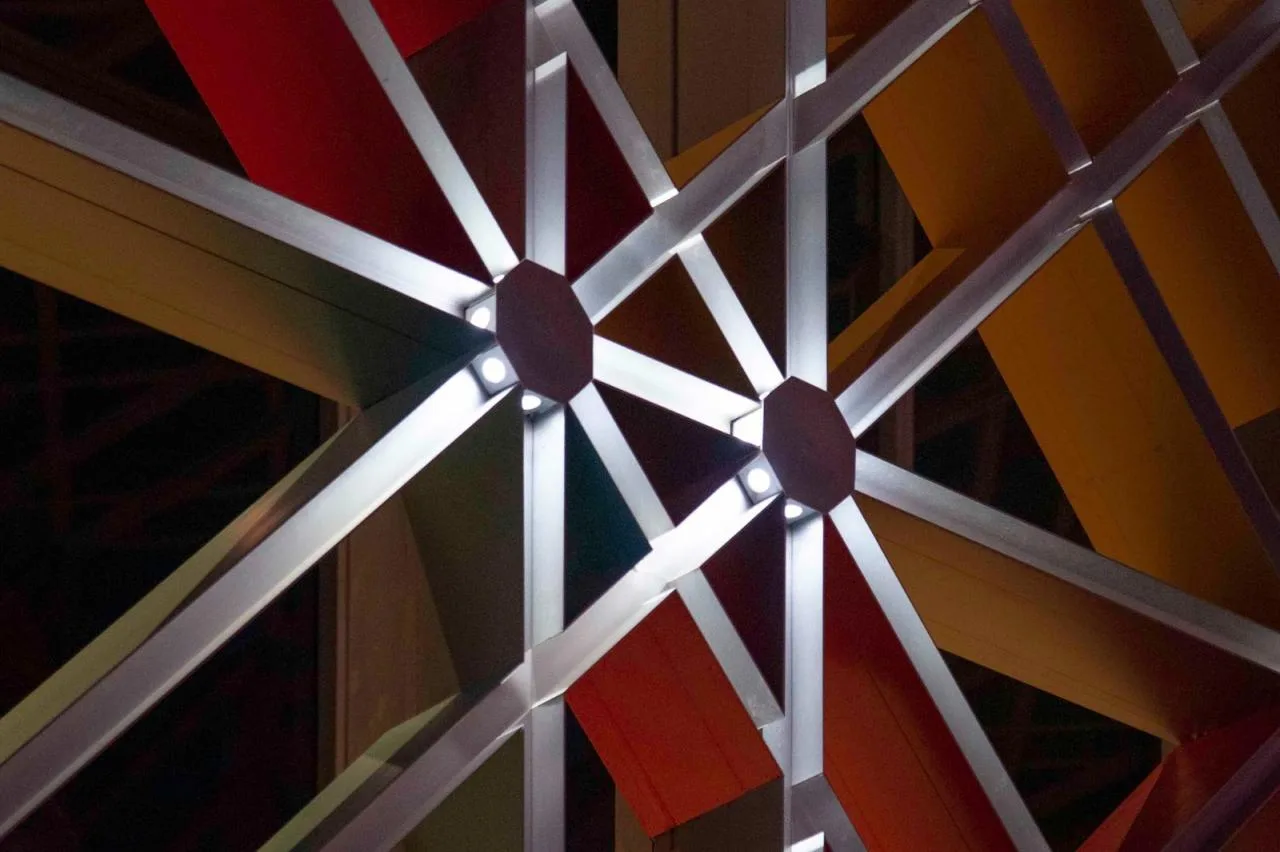
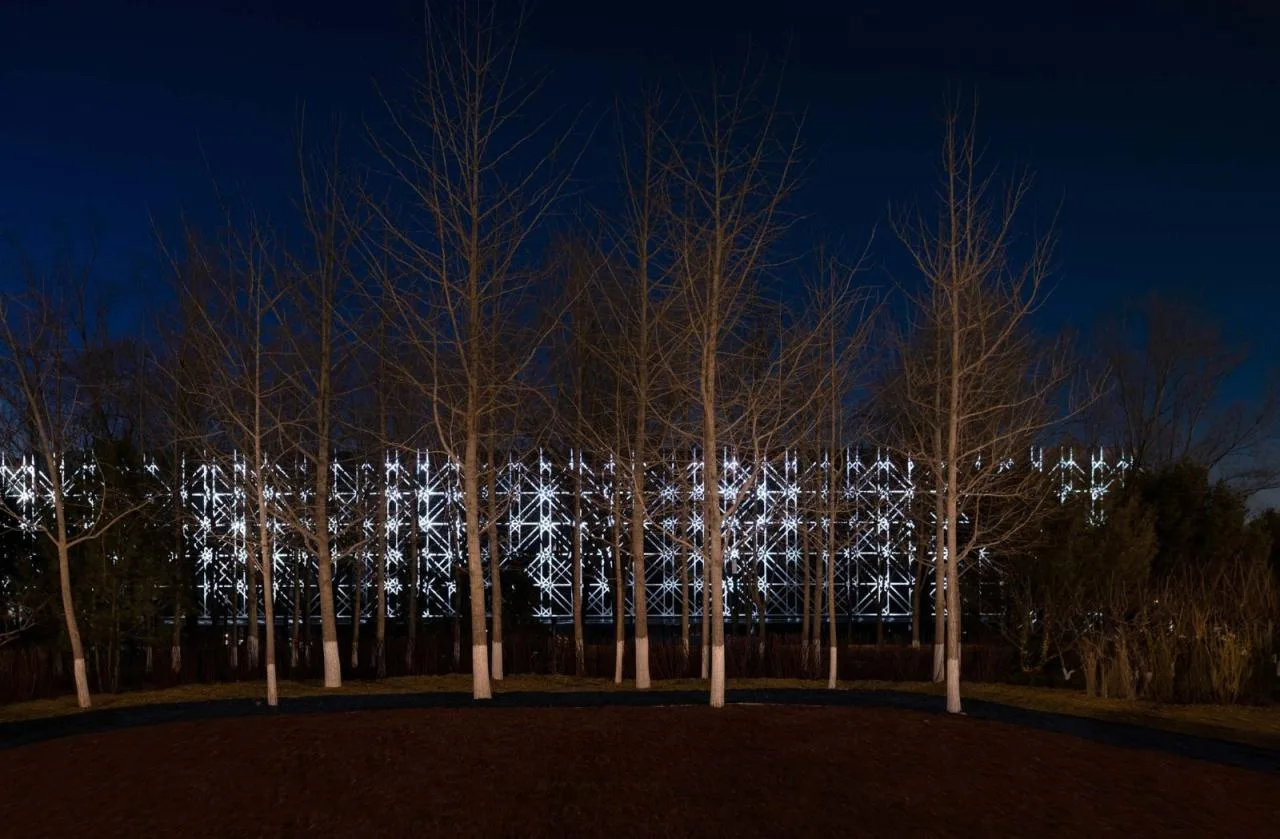
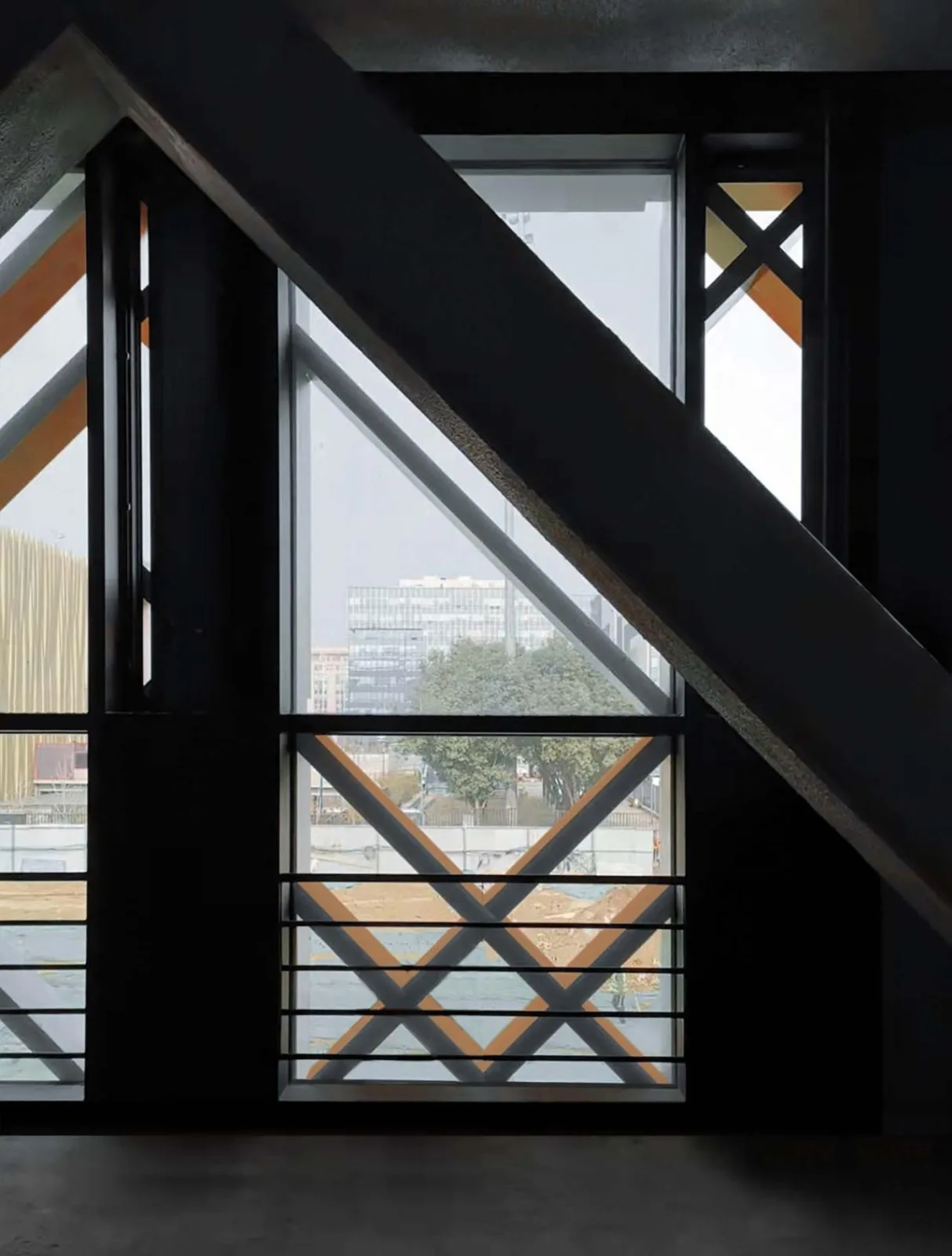
The building’s distinctive grid curtain wall system features diagonal grids intersecting at 45°, mimicking the appearance of ice cracks. This multi-layered grid adds depth to the facade, and the fine scale of the grid helps to visually break down the building’s large mass, giving it a lighter, more refined presence. Between the curtain wall and the main structure lies the “Winter Olympics Corridor,” a ceremonial and commemorative space. Sunlight filters through the hollowed-out ice diamond flower grids, creating dynamic patterns of light and shadow on the floor and facade, which accentuate the symbolic ice diamond flower motif.
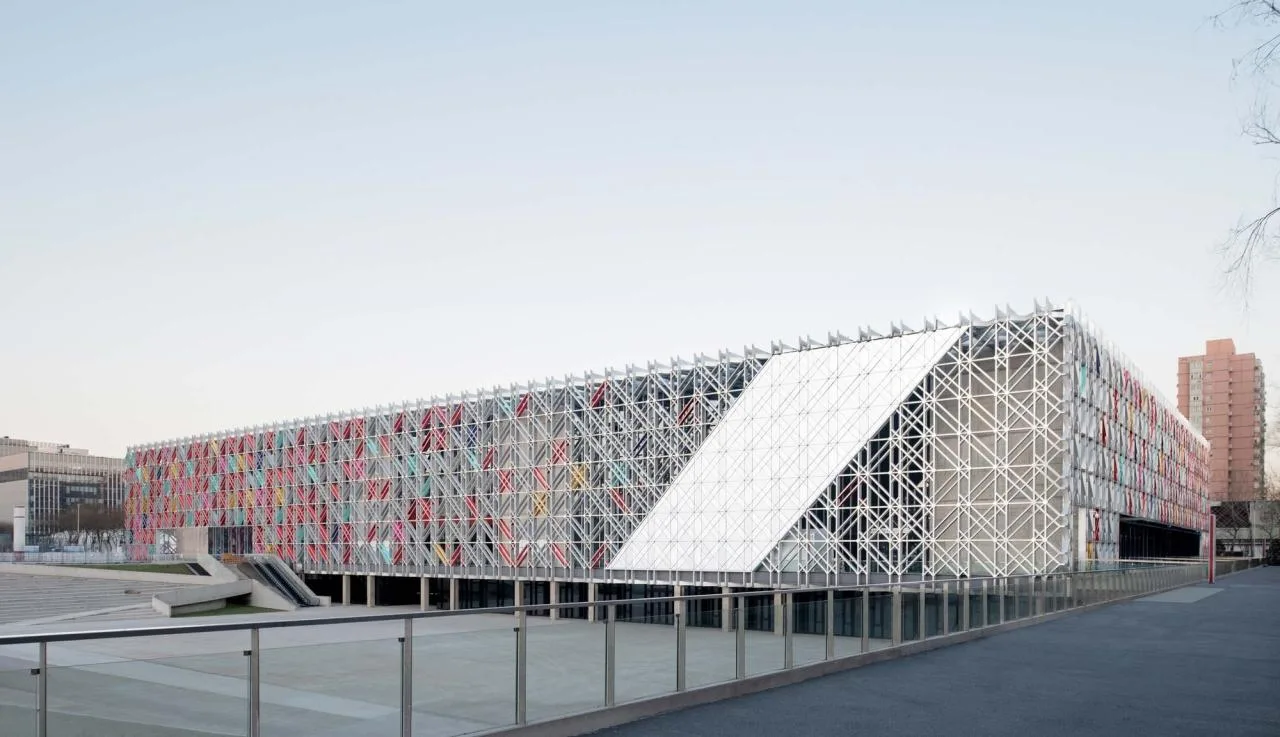
The structural system consists of a massive diagonal truss pattern that corresponds with the ice water chestnut motif on the facade, intersecting at a 45° angle. The steel truss components inside align topologically with the curtain wall’s grille elements, creating a harmonious integration between the building’s structure and its symbolic skin. This relationship allows the structure to appear and disappear visually, unifying the building’s external appearance and internal space. The design balances engineering rigor and aesthetic appeal, immersing visitors in the imagery of ice and snow both inside and out. The truss system’s mechanical form merges with the concrete ice water chestnut pattern, achieving a mysterious interplay of opacity and transparency that strengthens the symbolic impact.
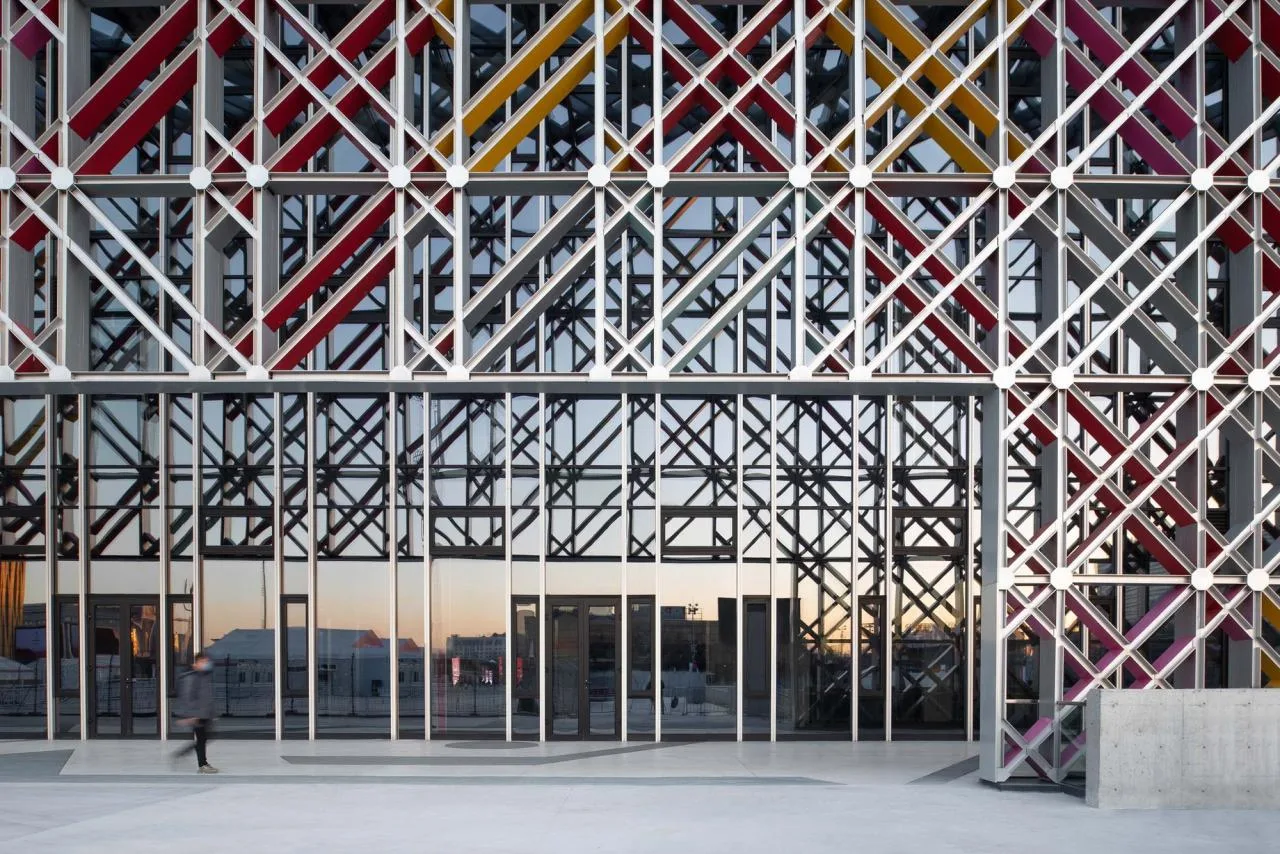
To enhance the vibrancy and richness of the symbolic design, the aluminum grille curtain wall members were selectively reduced, and color accents were applied to the facade to highlight the energetic atmosphere of the sports venue. Strategic lighting further creates a poetic ambiance, immersing visitors in the enchanting world of ice and snow.
Project Drawings
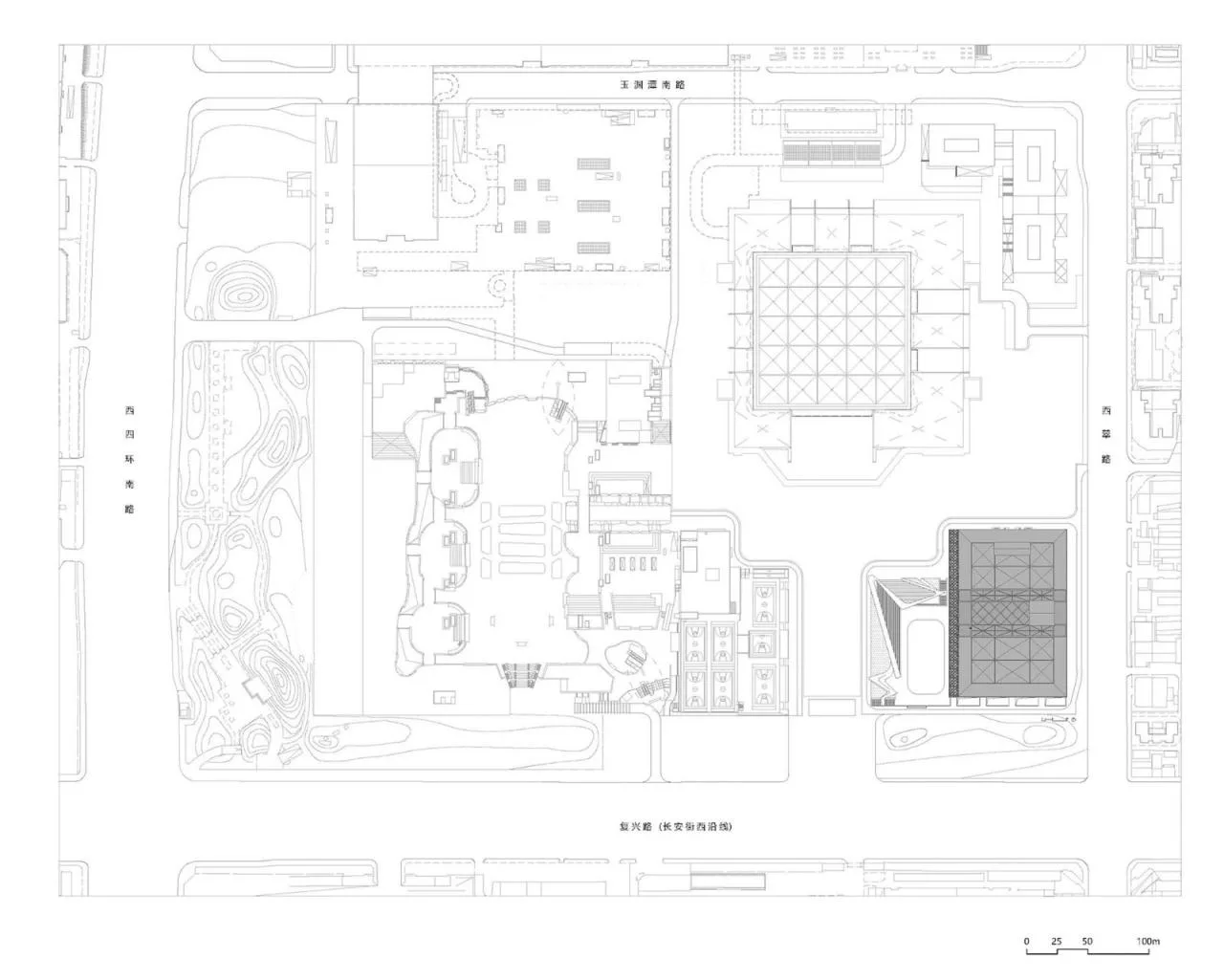
△ General Layout Plan
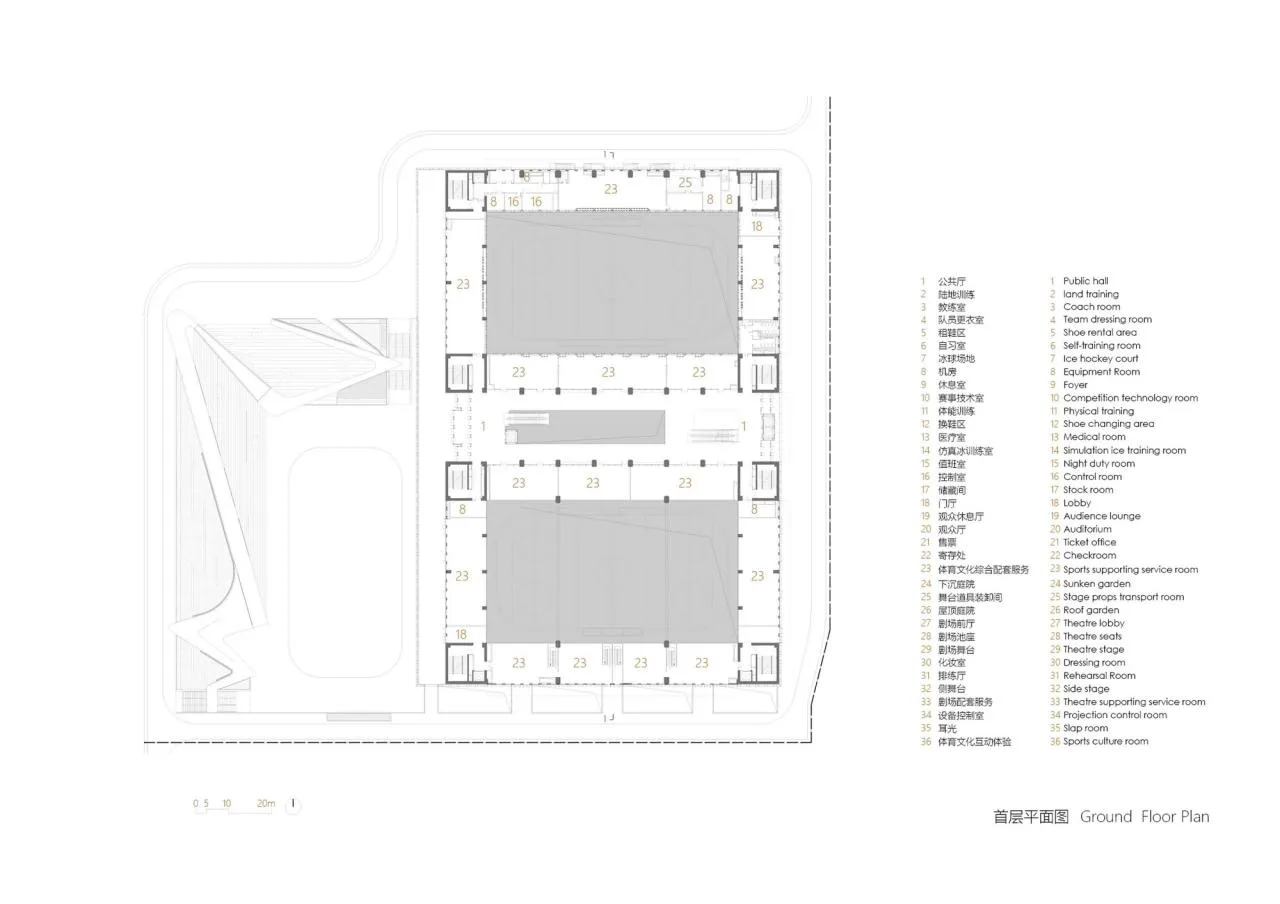
△ First Floor Plan
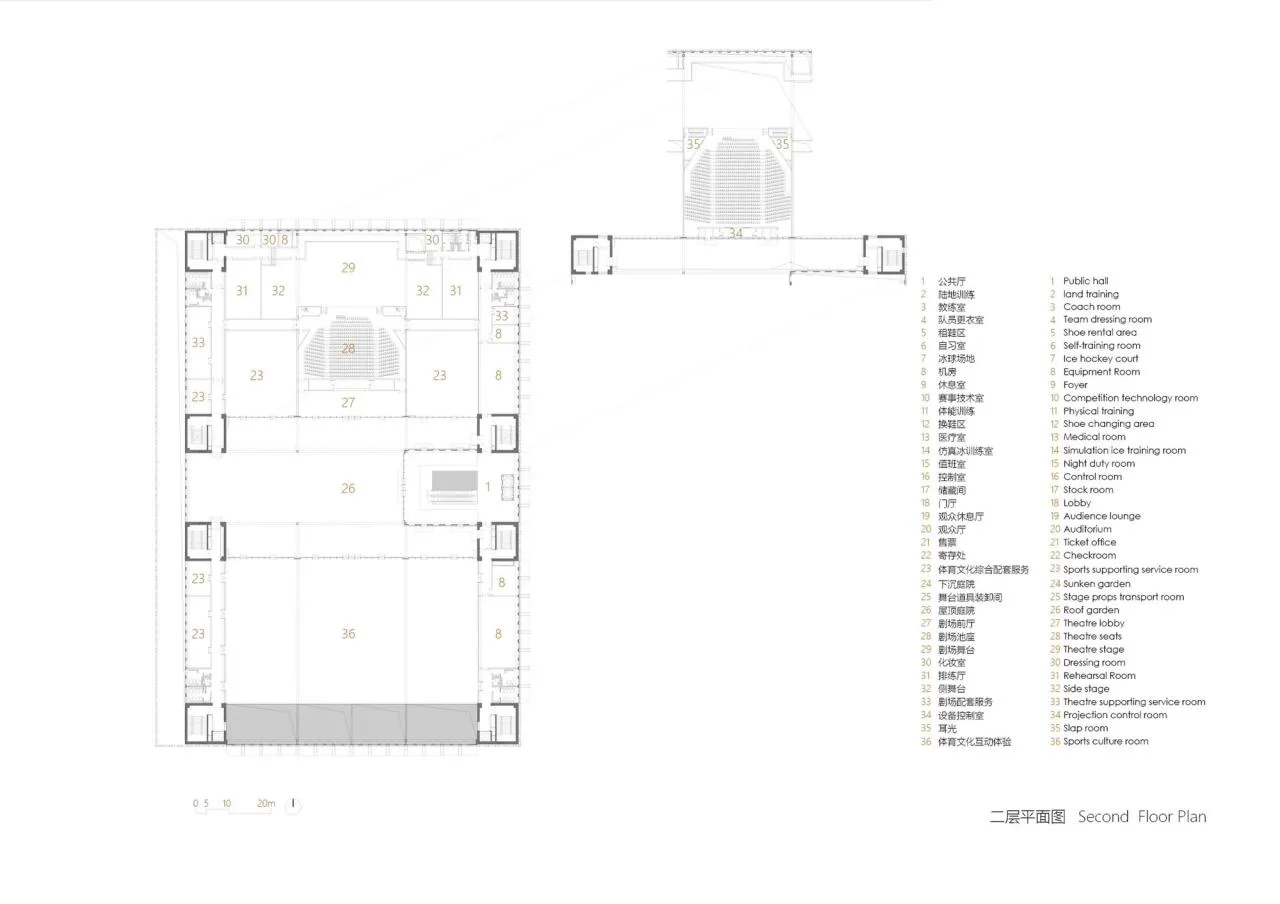
△ Second Floor Plan
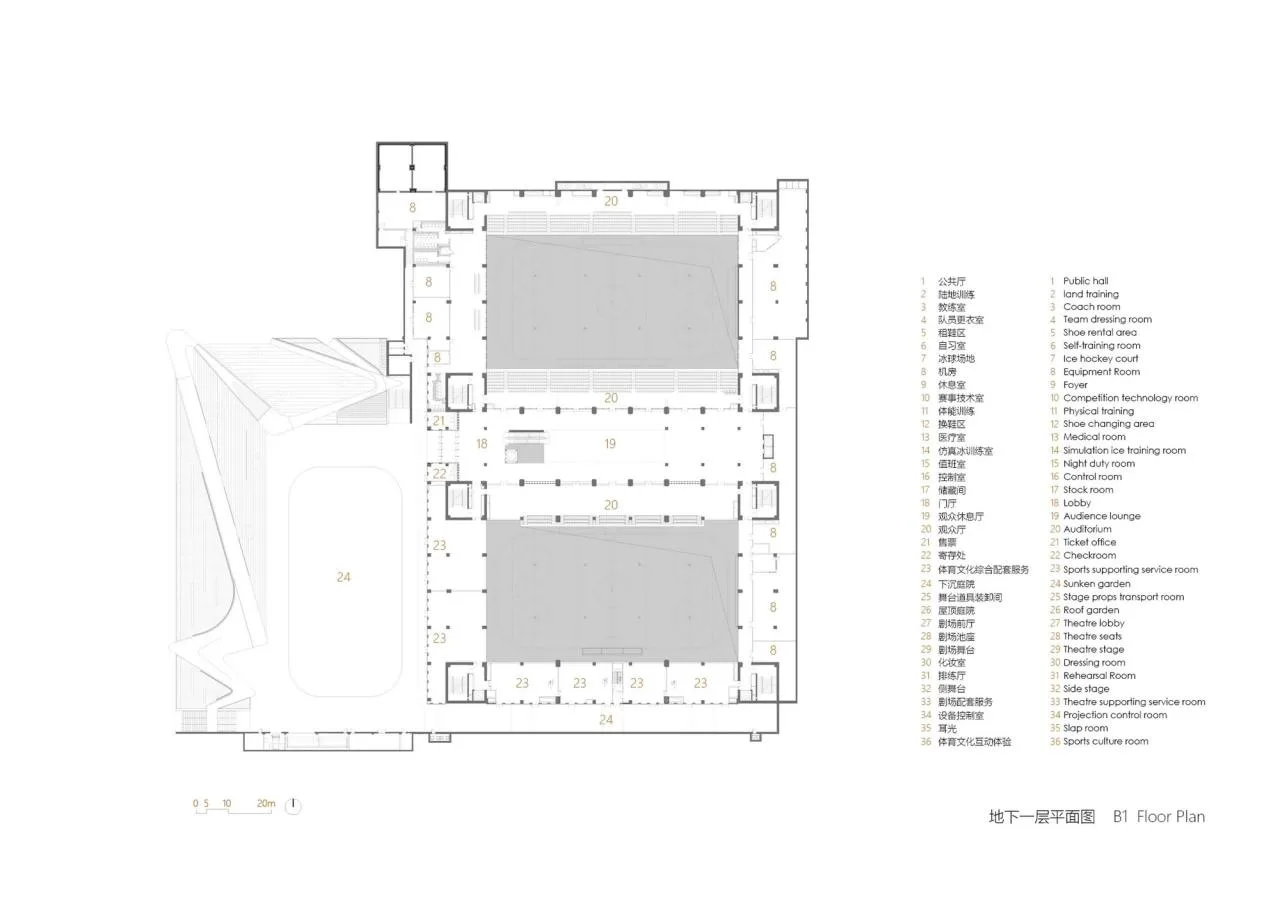
△ Underground Floor Plan
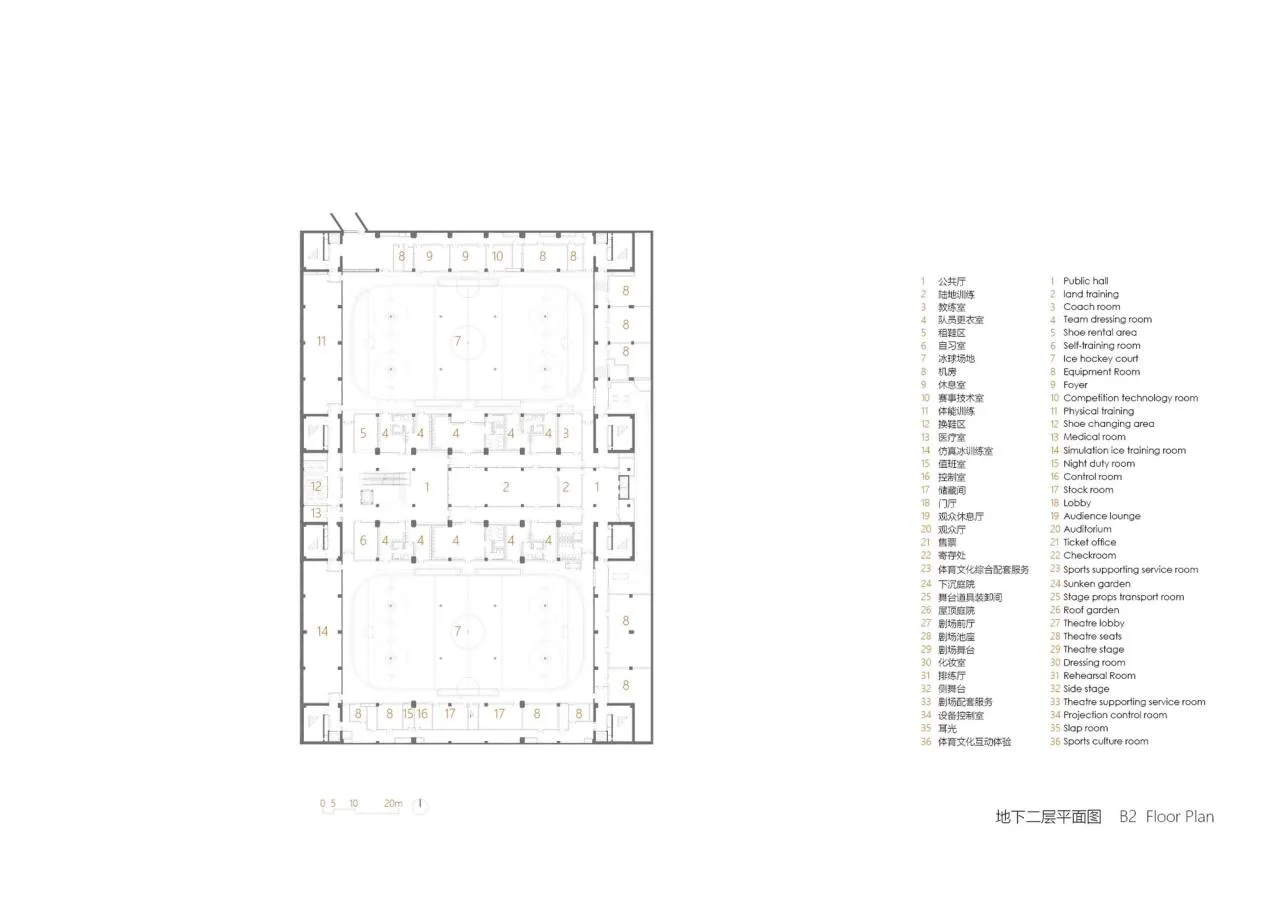
△ Underground Second Floor Plan
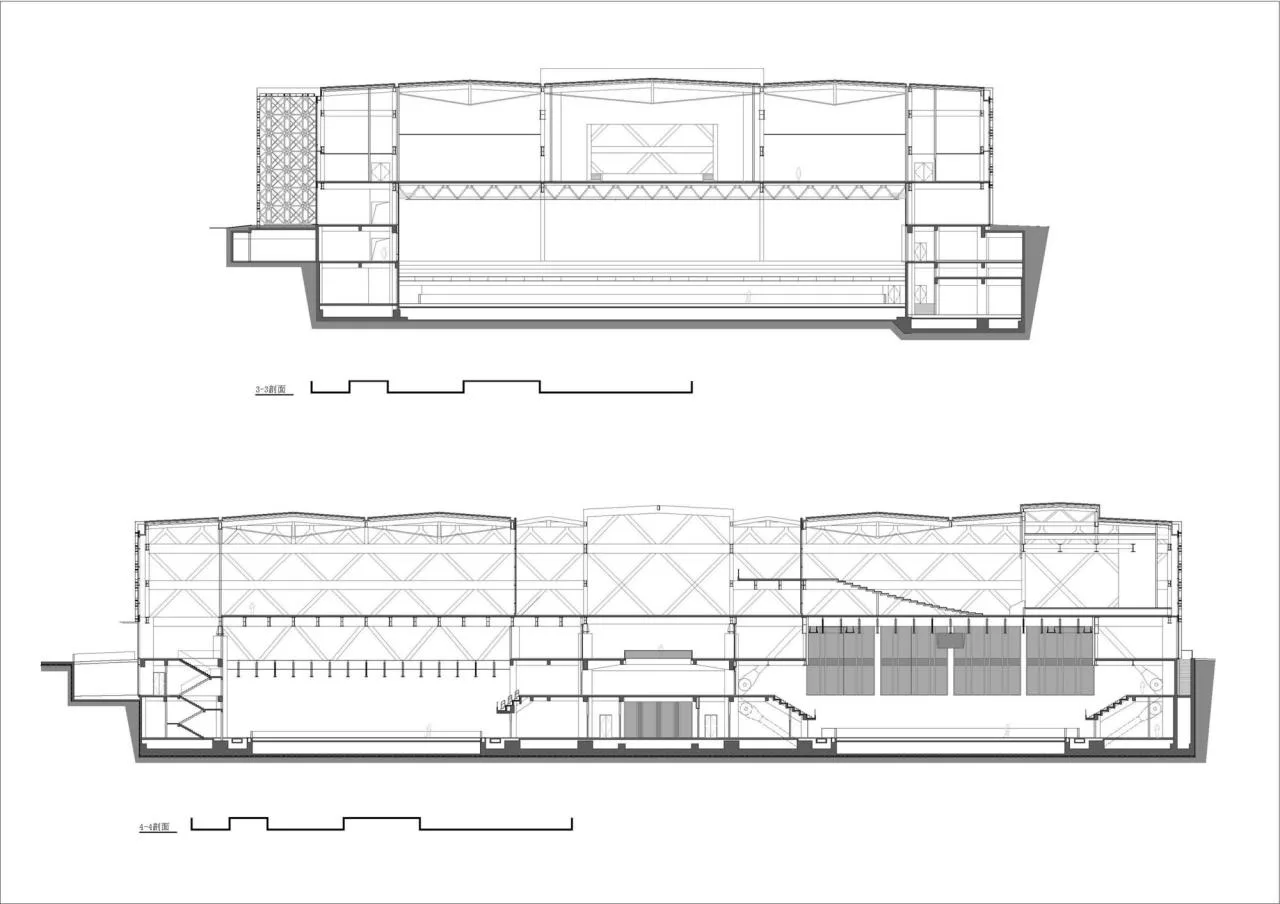
△ Section Diagram
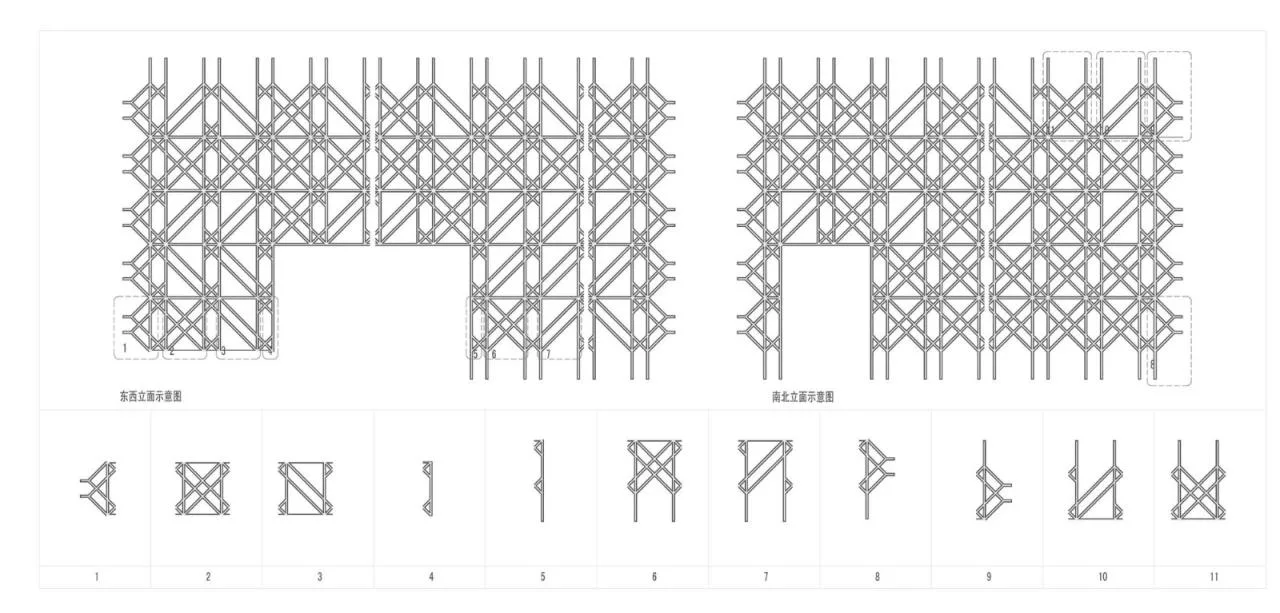
△ Facade Schematic Diagram
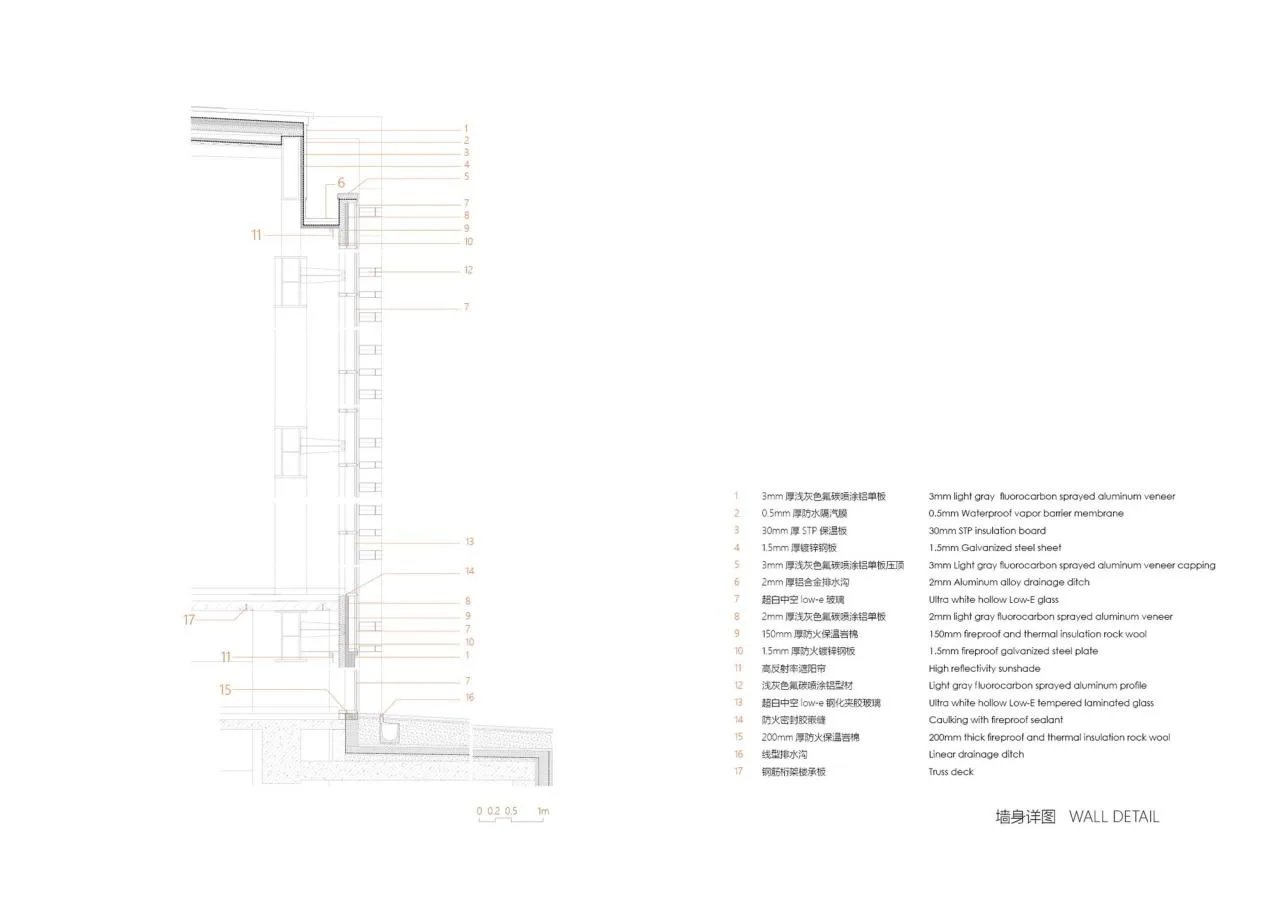
△ Wall Detail Drawing
Project Information
Architectural Design: Zhu Xiaodi Studio · BIAD
Area: 38,960 sq meters
Project Year: 2021
Photographer: Zhang Zheping
Manufacturers: Tangshan Zhonghou Plate Co., Ltd., Tianjin Nanbo, Wuyang Iron and Steel Co., Ltd., Qingdao Honghai
Lead Architect: Zhu Xiaodi
Design Team: Zhu Xiaodi, Wang Dawei, Zhu Yong, Zhang Zhepeng, Sun Yanliang, Zhang Renran, Zhang Xin, Han Shuang, Jingyang, Liu Wenjing
Structural Design: Liu Lijie, Han Bo, Wang Hui
Equipment Design: Zhang Jianpeng, Shi Lei, Zhou Rui
Electrical Design: Jiang Qinghai, Wang Shuang, Chen Lu
Lighting Design: Beijing Guanghu Purui Lighting Design Co., Ltd., Hu Fang
Sustainability and Zero Energy Consultant: Beijing Tsinghua Tongheng Planning and Design Institute Co., Ltd., Xiao Wei
Owner: Beijing Wukesong Cultural and Sports Center Co., Ltd
Interior Design: Beijing Lihengyuan Decoration Co., Ltd
Location: Beijing, China















Must log in before commenting!
Sign Up