
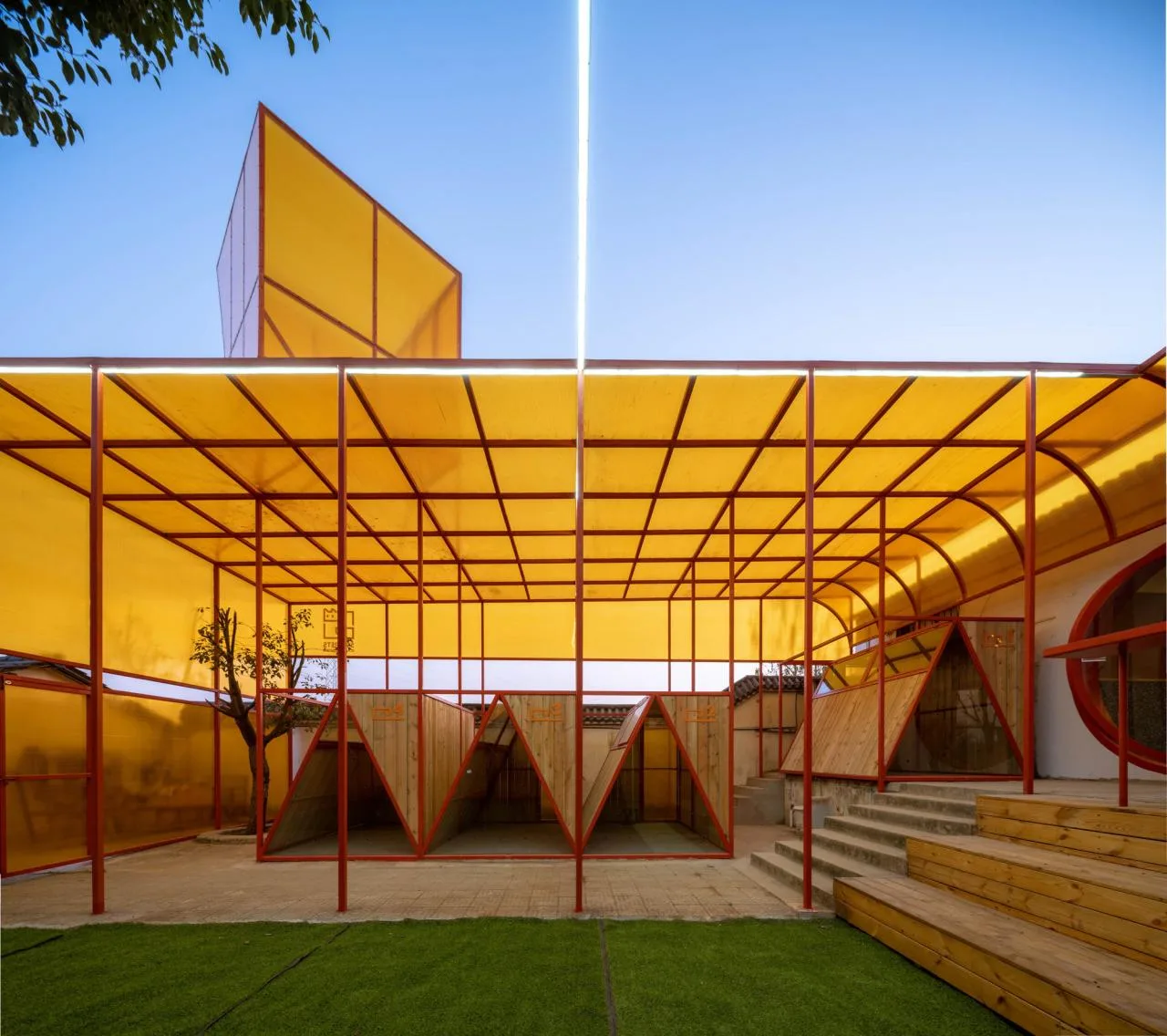
This public welfare project is a collaborative effort between Luhu A8 Design Center, Asia Animal Fund, and the Wuhan Small Animal Association. It focuses on renovating and designing the adoption area within the association’s science education base. The project covers an outdoor space of 150 square meters and an indoor space of 30 square meters.
The adoption process has been carefully analyzed and simplified into a clear sequence: arrival, meeting, selection, signing, photographing, and departure. A crucial aspect of this flow is the transition between indoor and outdoor spaces, symbolizing the journey of the adopted puppy from rescue to a new home.
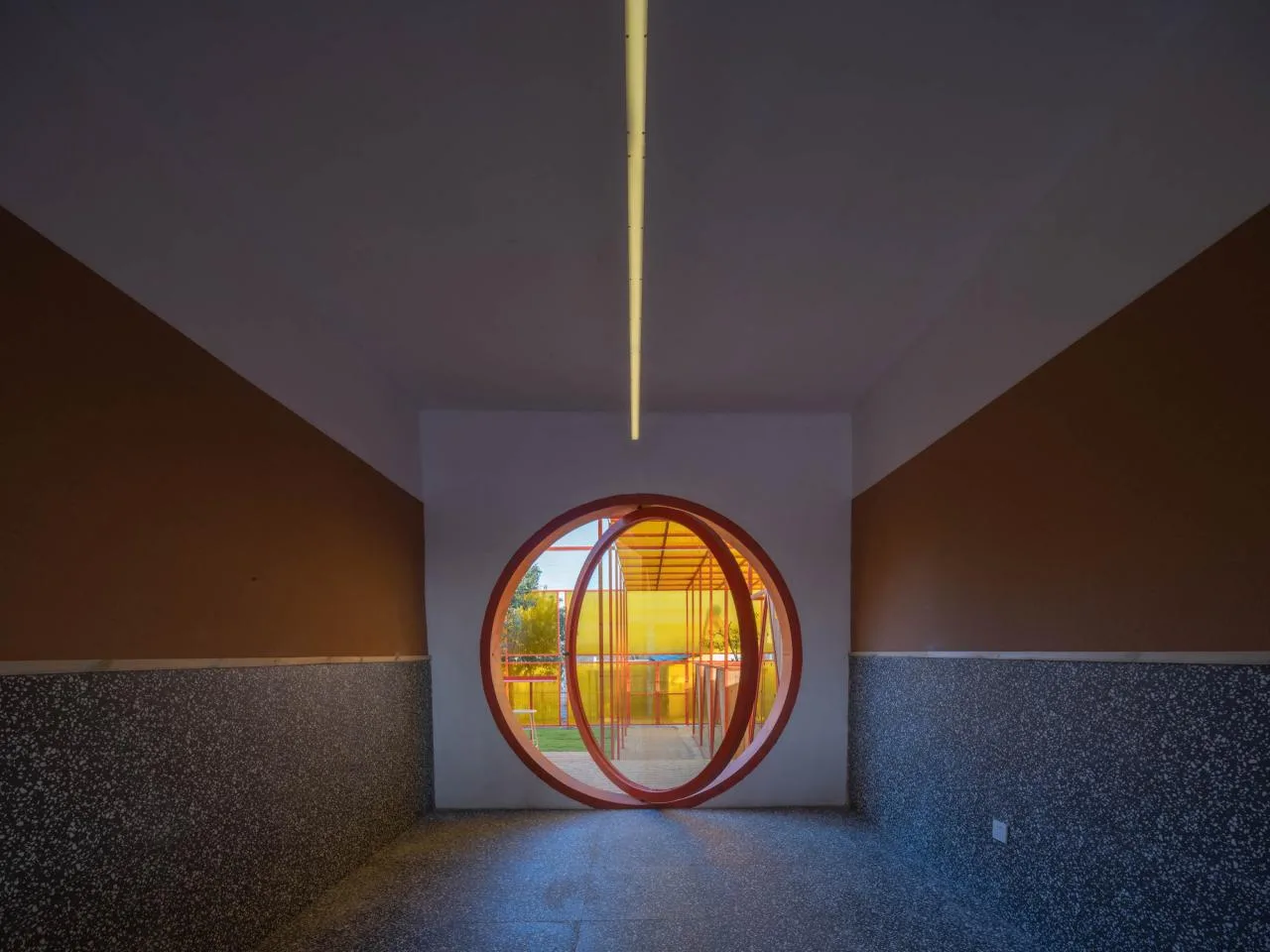
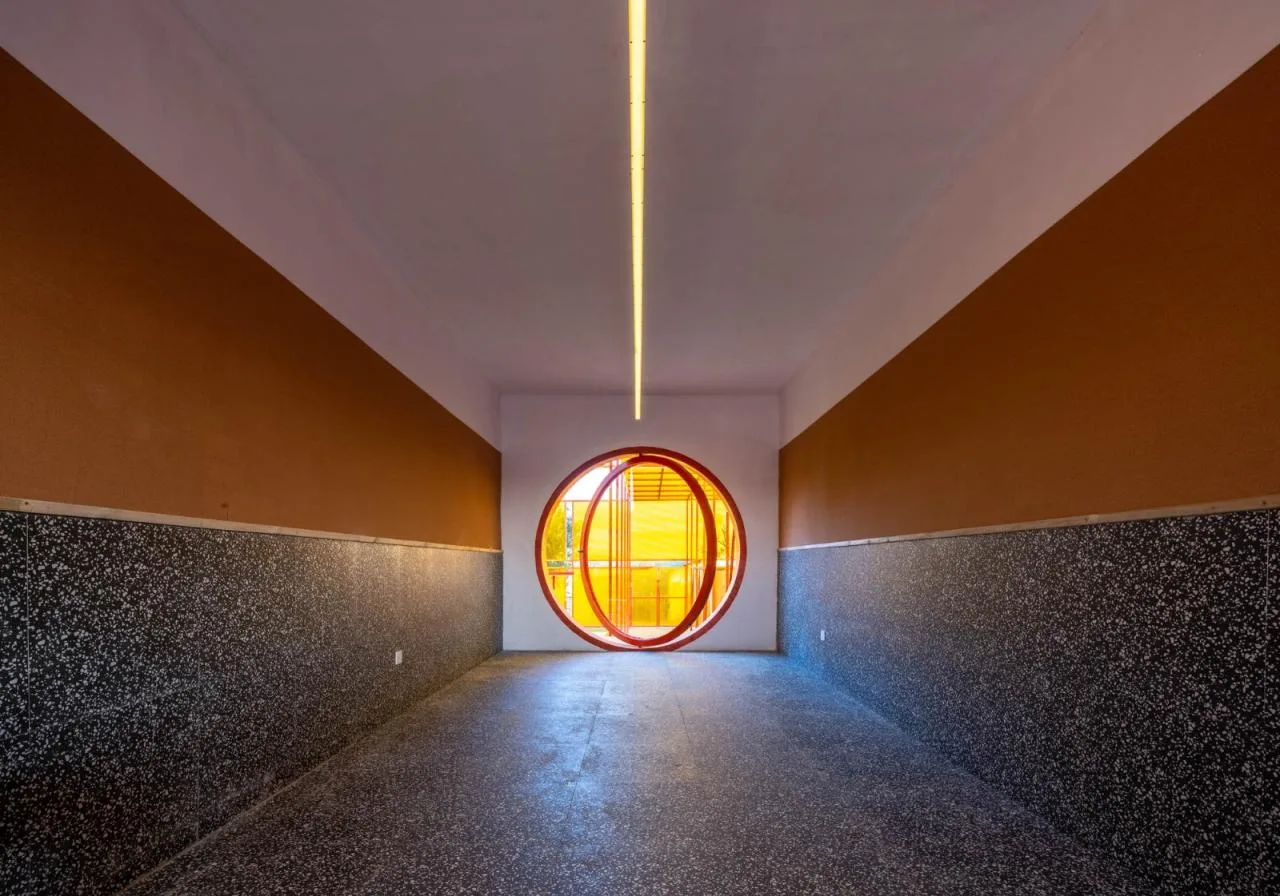
To emphasize this meaningful moment, a revolving door design was introduced to create a strong visual and emotional impact. Passing through this door represents the puppy crossing into a warm and loving home, becoming a “born winner.”
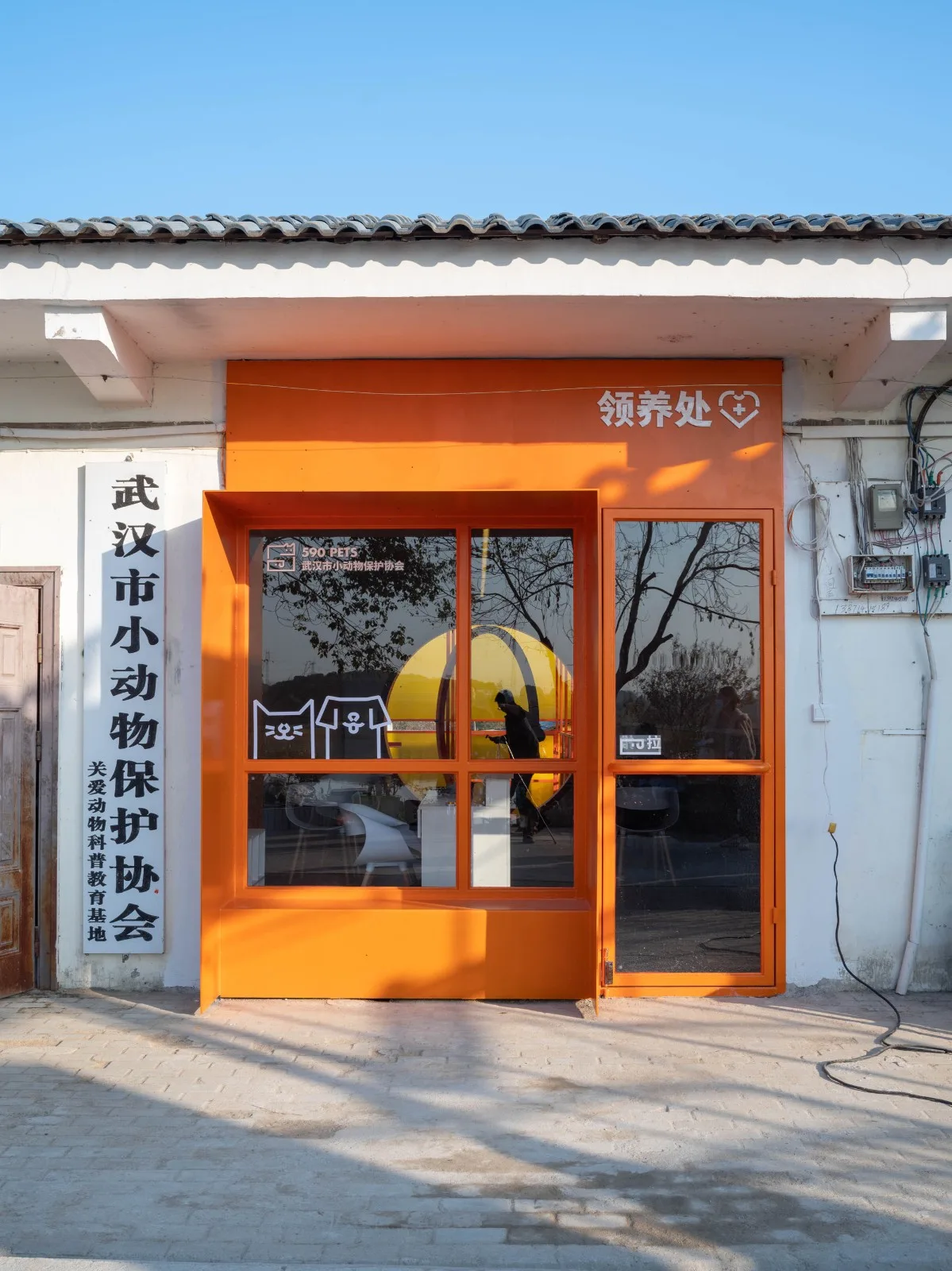
Another key feature is the low windowsill at the entrance. Resembling those found at street-side coffee shops, this spot was intentionally designed as a photo area for successful adopters to capture moments with their new puppies. This setting encourages future adopters by displaying joyful families, inspiring them to find their own beloved companions.
To achieve a cost-effective yet impactful indoor design, two 600×600 terrazzo tiles were installed to form a 1200mm-high wainscoting along the walls. The tiles feature bold patterns and vibrant colors for visual interest. Above this, a soft wooden panel was added—not only affordable but practical, as it allows easy application of stickers and posters.
This solution helped organize the previously cluttered “Love Wall” stickers into a visually pleasing display, balancing casualness with aesthetic appeal.
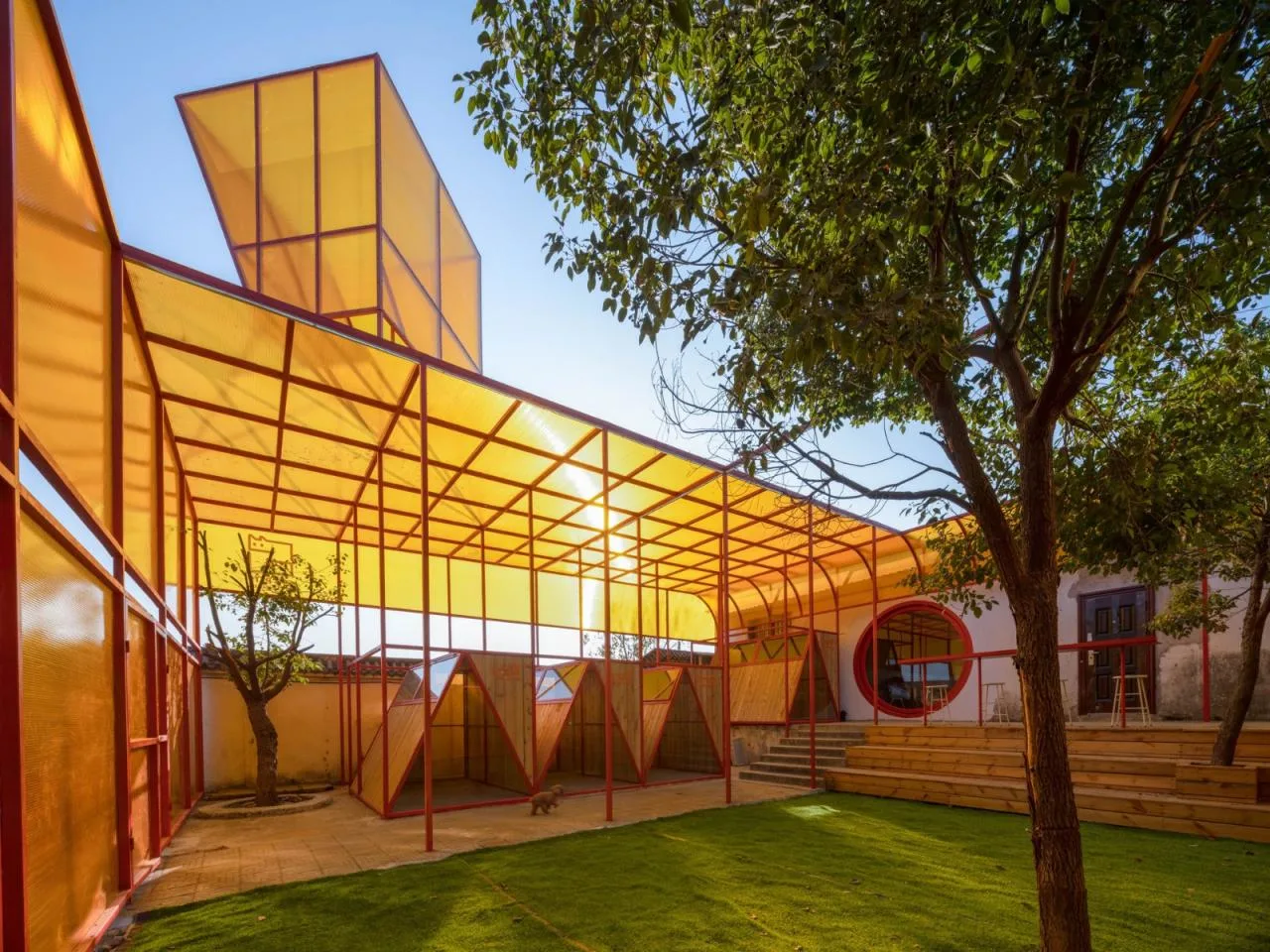
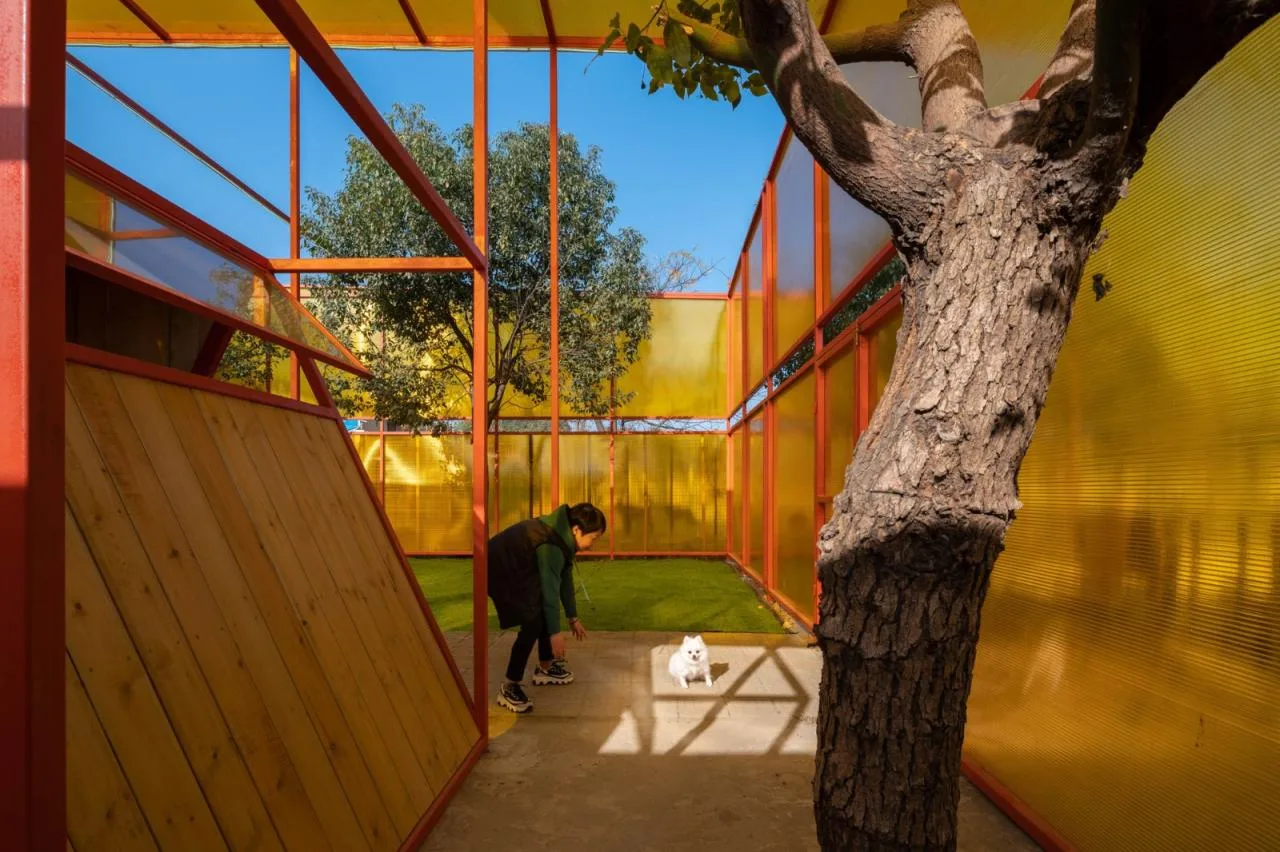
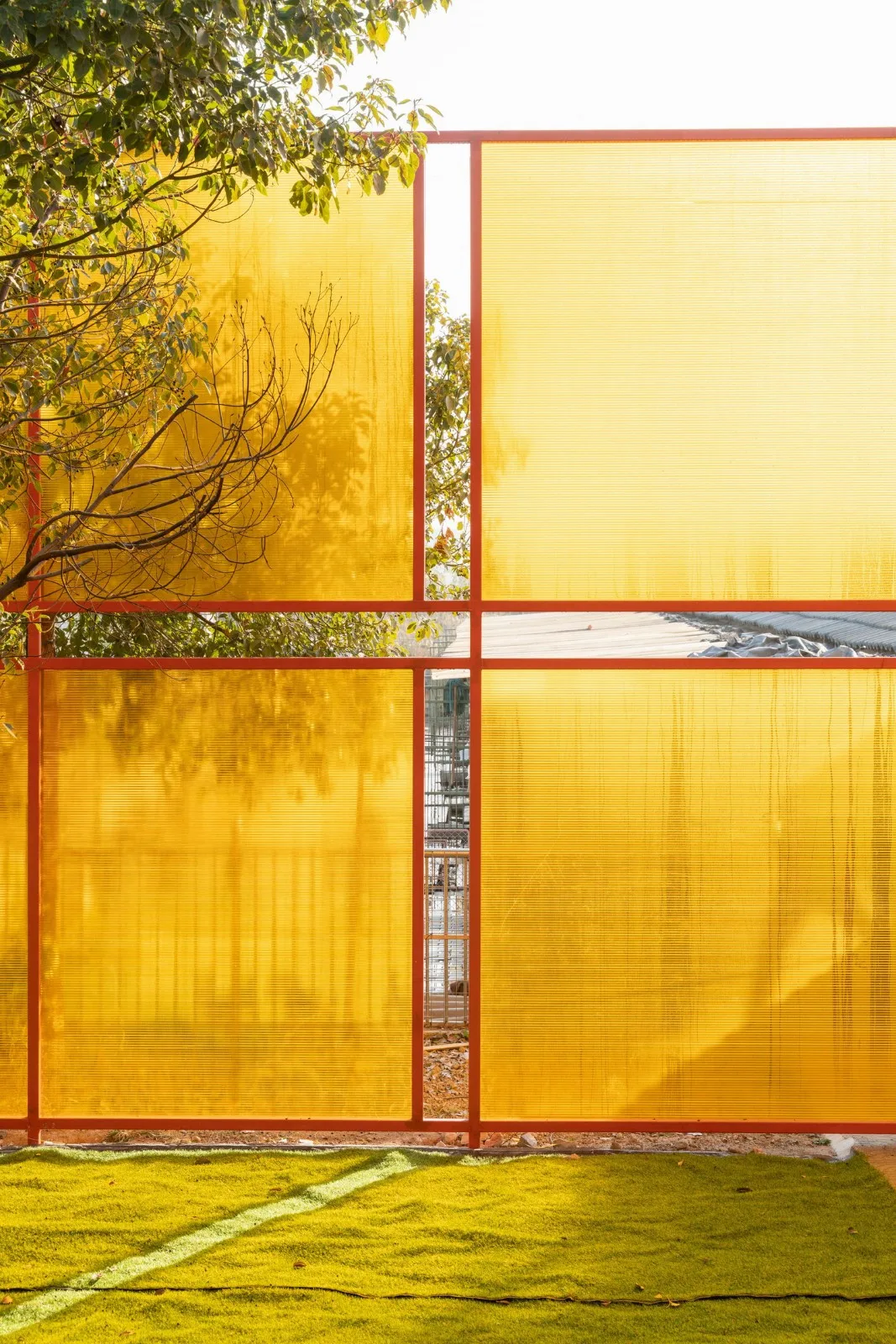
The outdoor design prioritized privacy by blocking views of other dogs, using 40x40mm galvanized square tubes to create a large enclosure, which is then surrounded by sun panels. This “big cage” concept resonates with the theme of rescue and returning home.
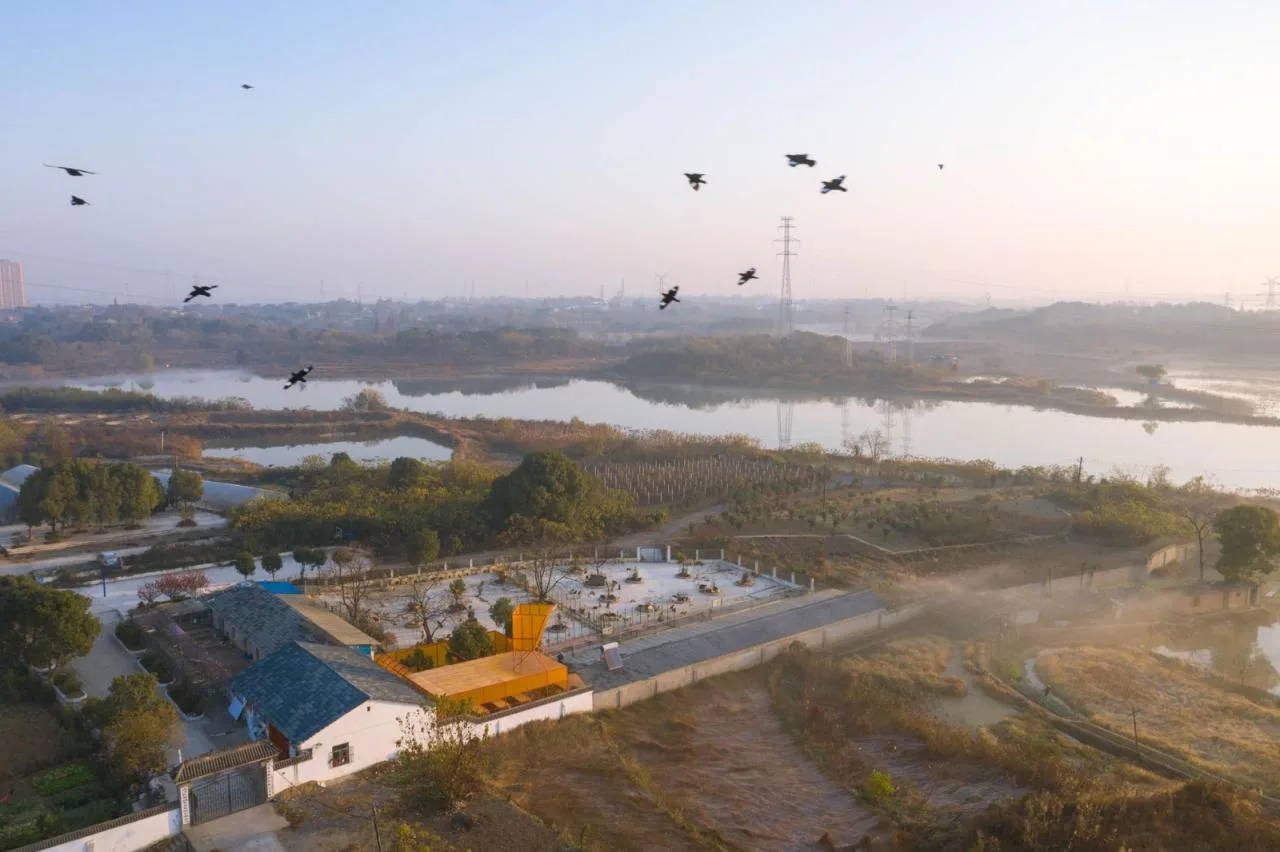
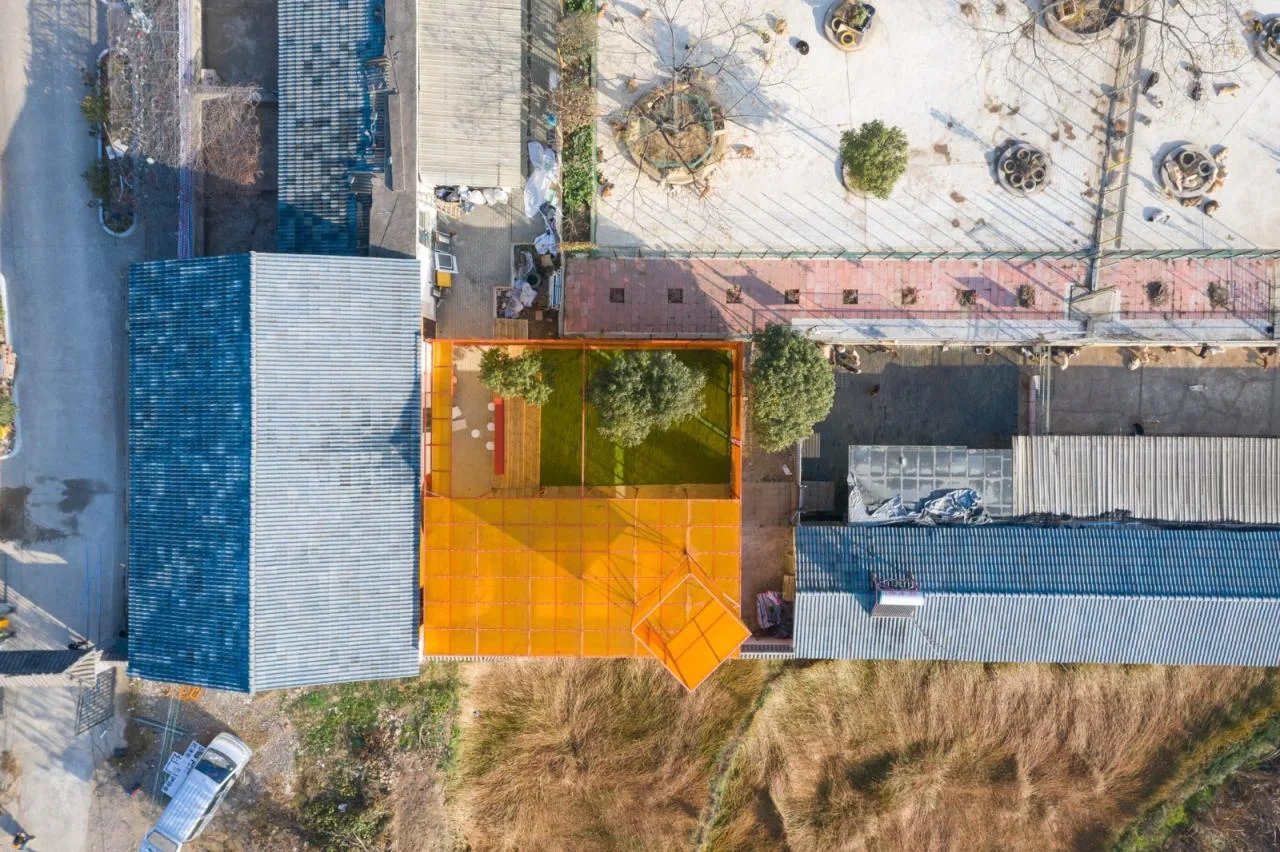
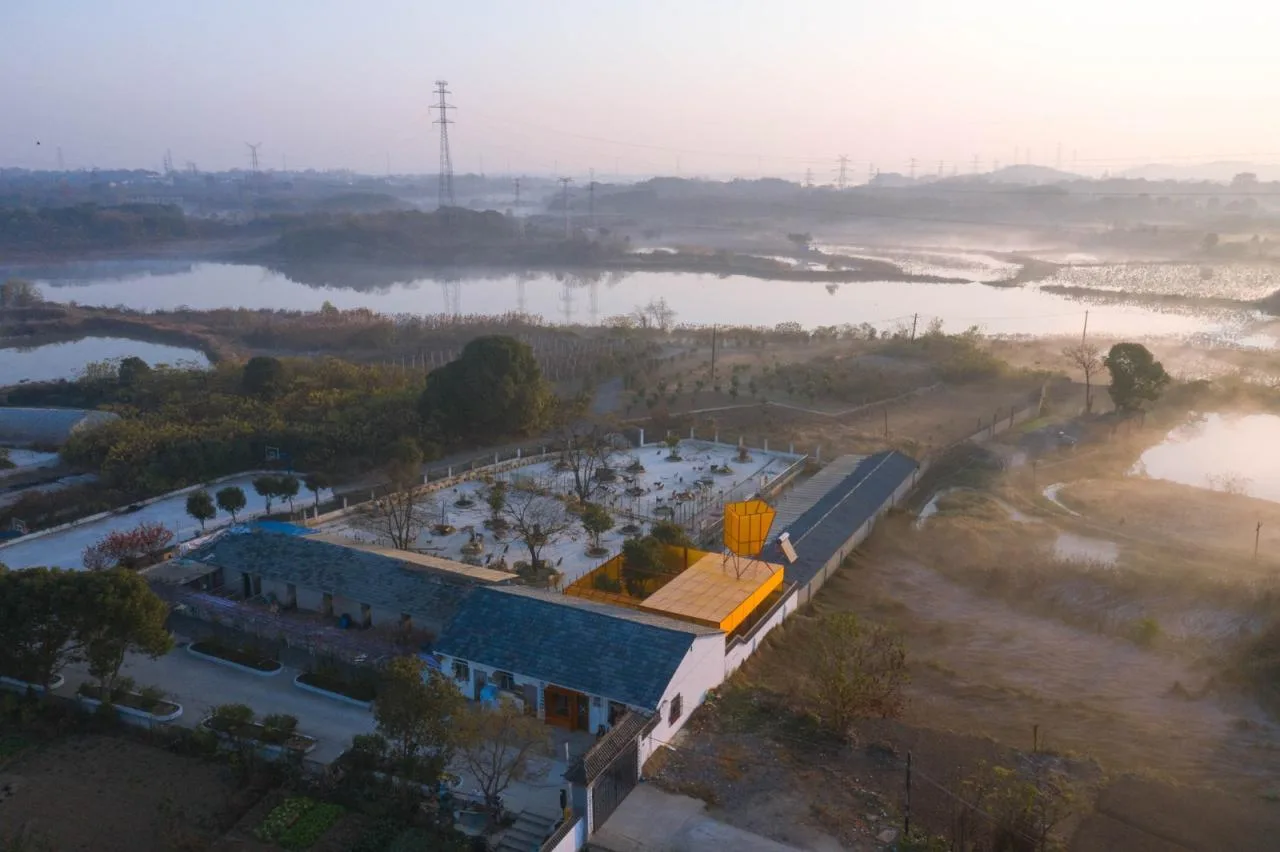
This enclosure fills the outdoor renovation area and fits naturally between the two adjacent buildings, visible only from above. The space includes two outdoor levels with four small trees preserved on site. These trees, though modest in size, carry emotional significance as they were planted by Teacher Du Fan and volunteers when the base was first established.
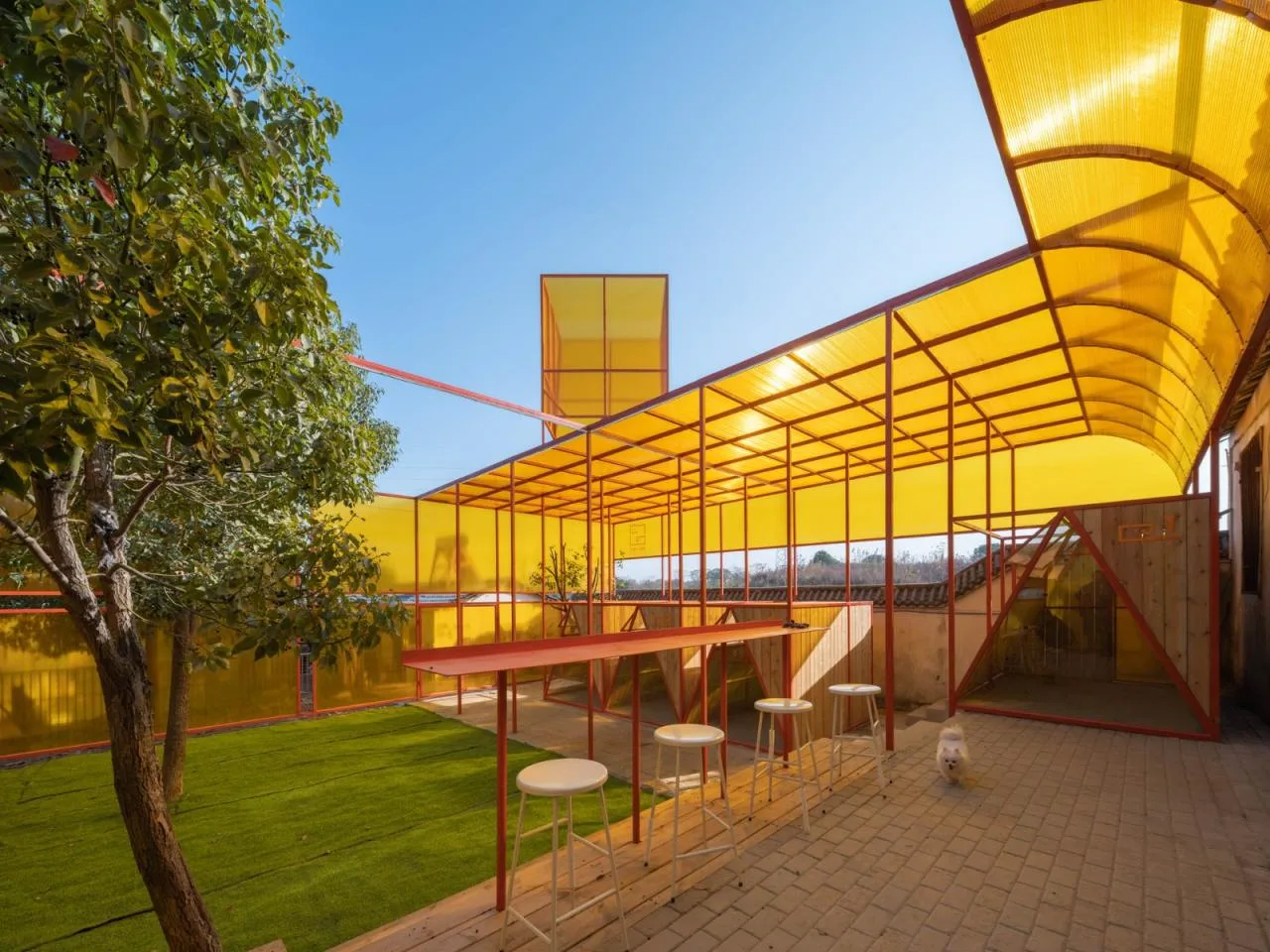
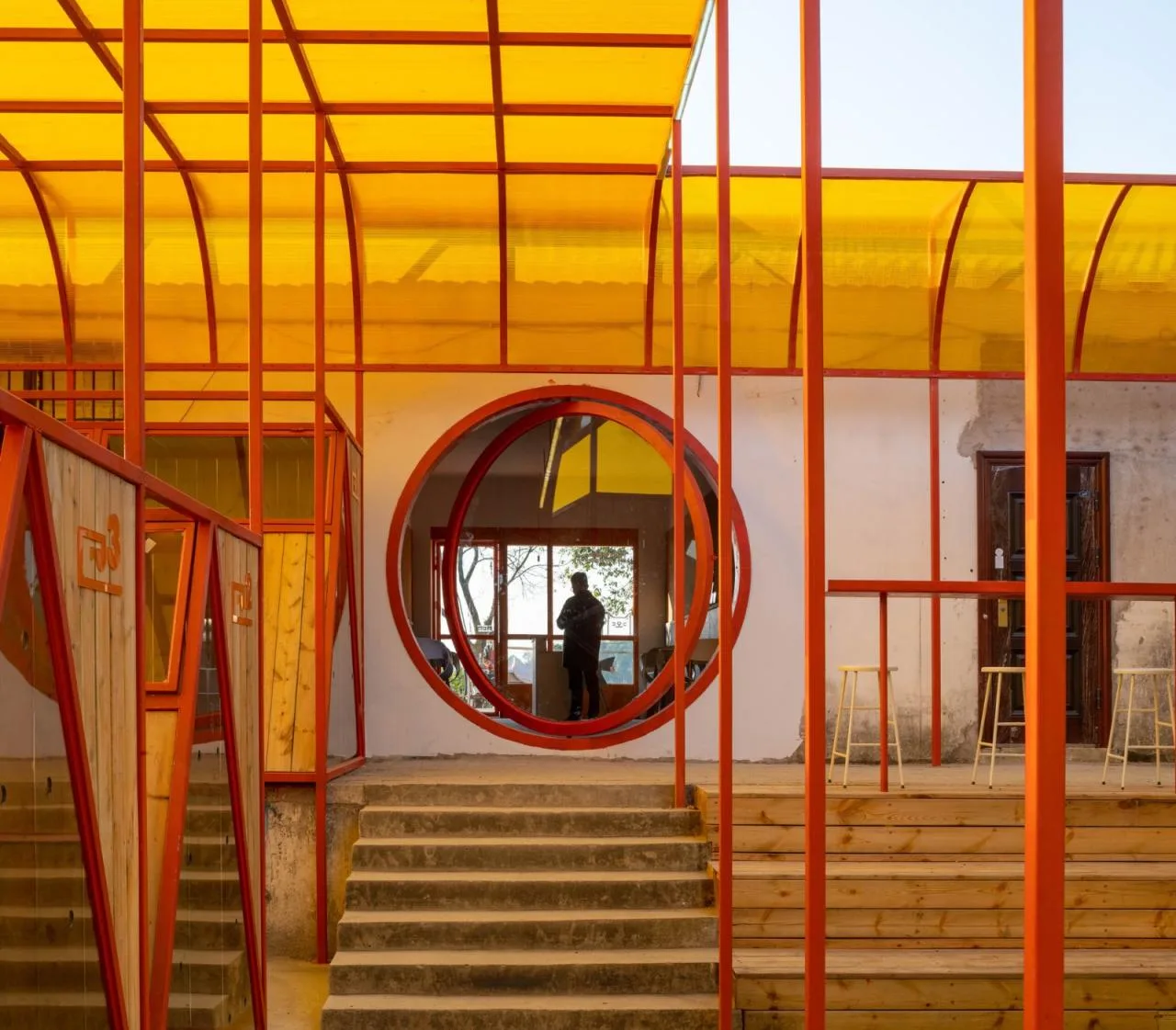
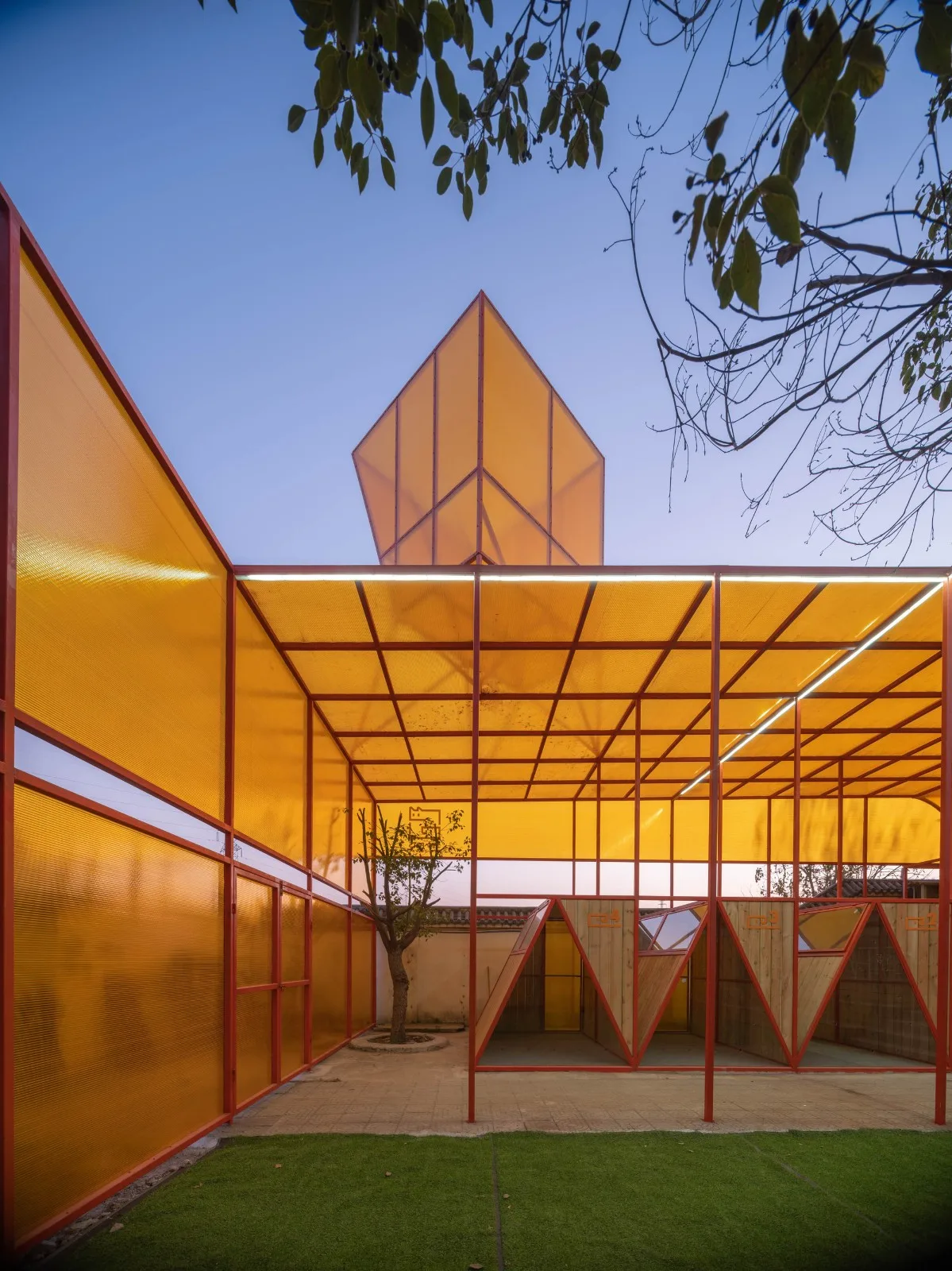
The side with more trees serves as an outdoor activity area for interactions between potential adopters and puppies, while the opposite side is designated as a residential dog house area. The dog house section requires protection from sun and rain, so a 2-meter column grid supports a 5-meter-high ceiling. This grid, constrained by the 40×40 steel pipe dimensions and cost considerations, enhances the structure’s slenderness and lightness.
This design also creates an unusual visual proportion by combining a small footprint with a tall façade, expressing a sense of sacredness through minimalist architectural language.
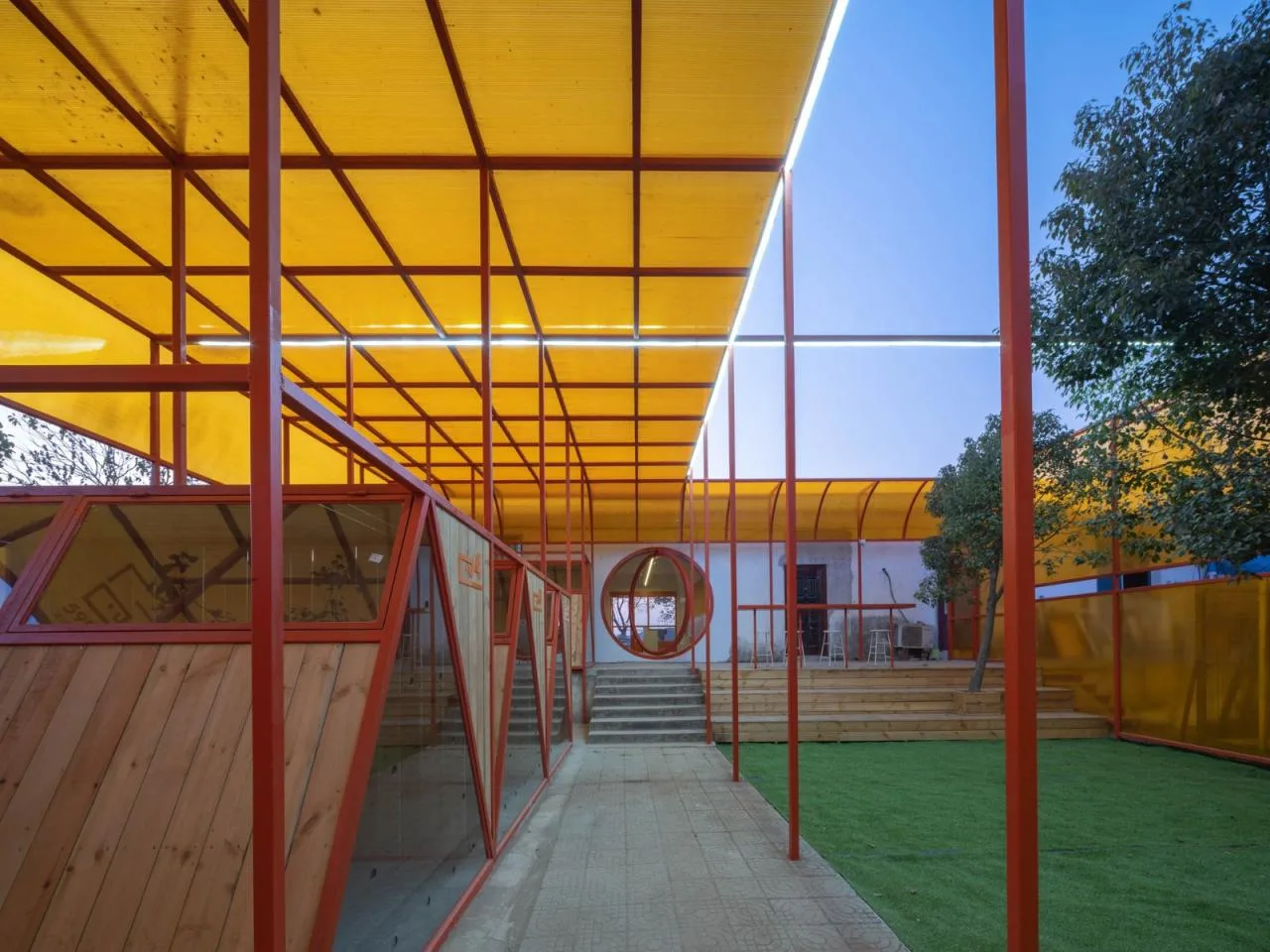
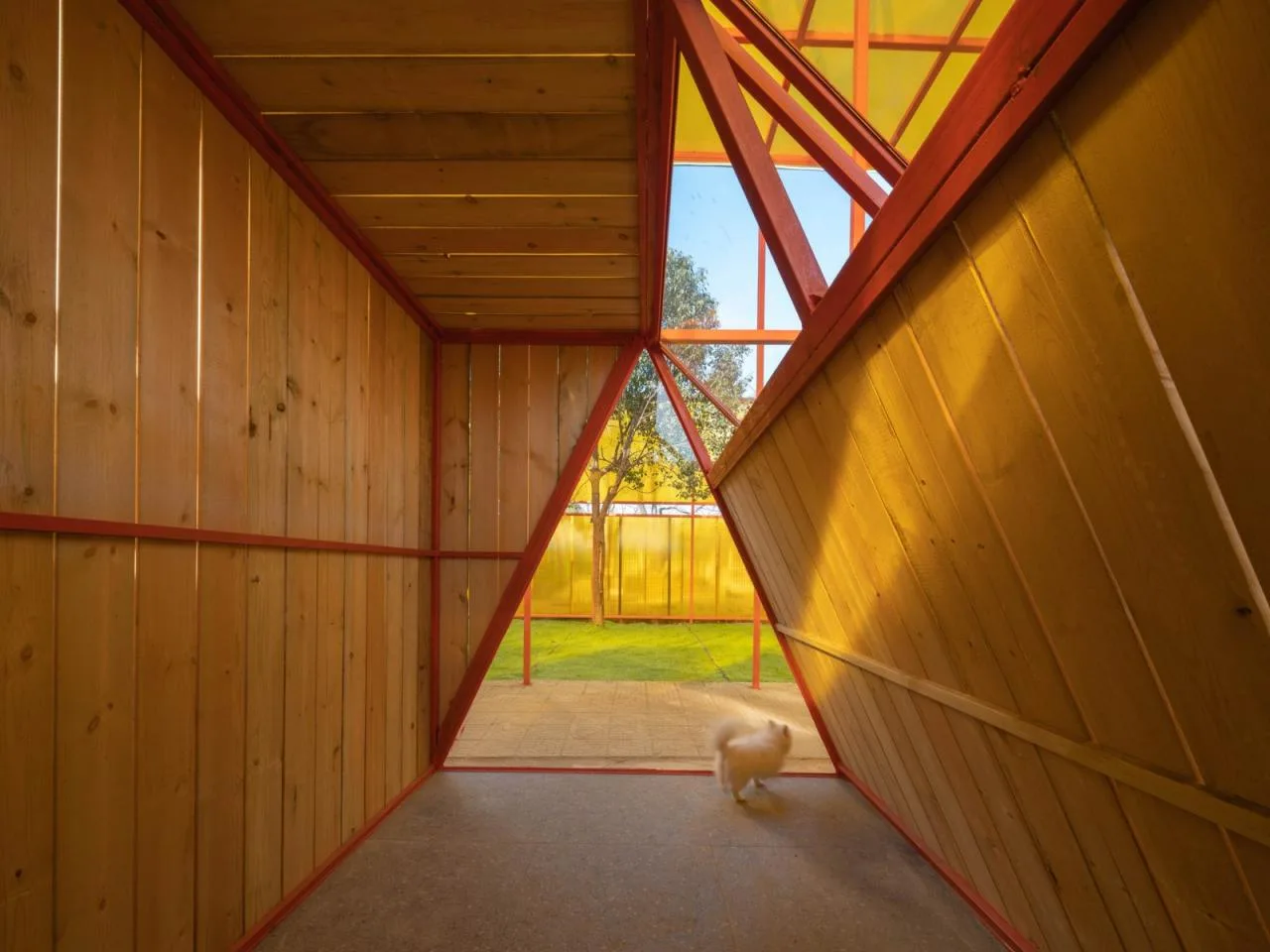
On the activity side, the area is left open to the sky with only a central beam remaining, creating a light and airy contrast with the dog house section. Below this beam, cross-shaped light strips were installed as a personal design touch, forming a red cross pattern at the ceiling. Although this idea was not immediately understood by colleagues, it stands as a subtle “Easter egg” within the project.
Additionally, extra light strips were installed indoors to strengthen the axis aligned with the revolving door, enhancing the overall spatial experience.
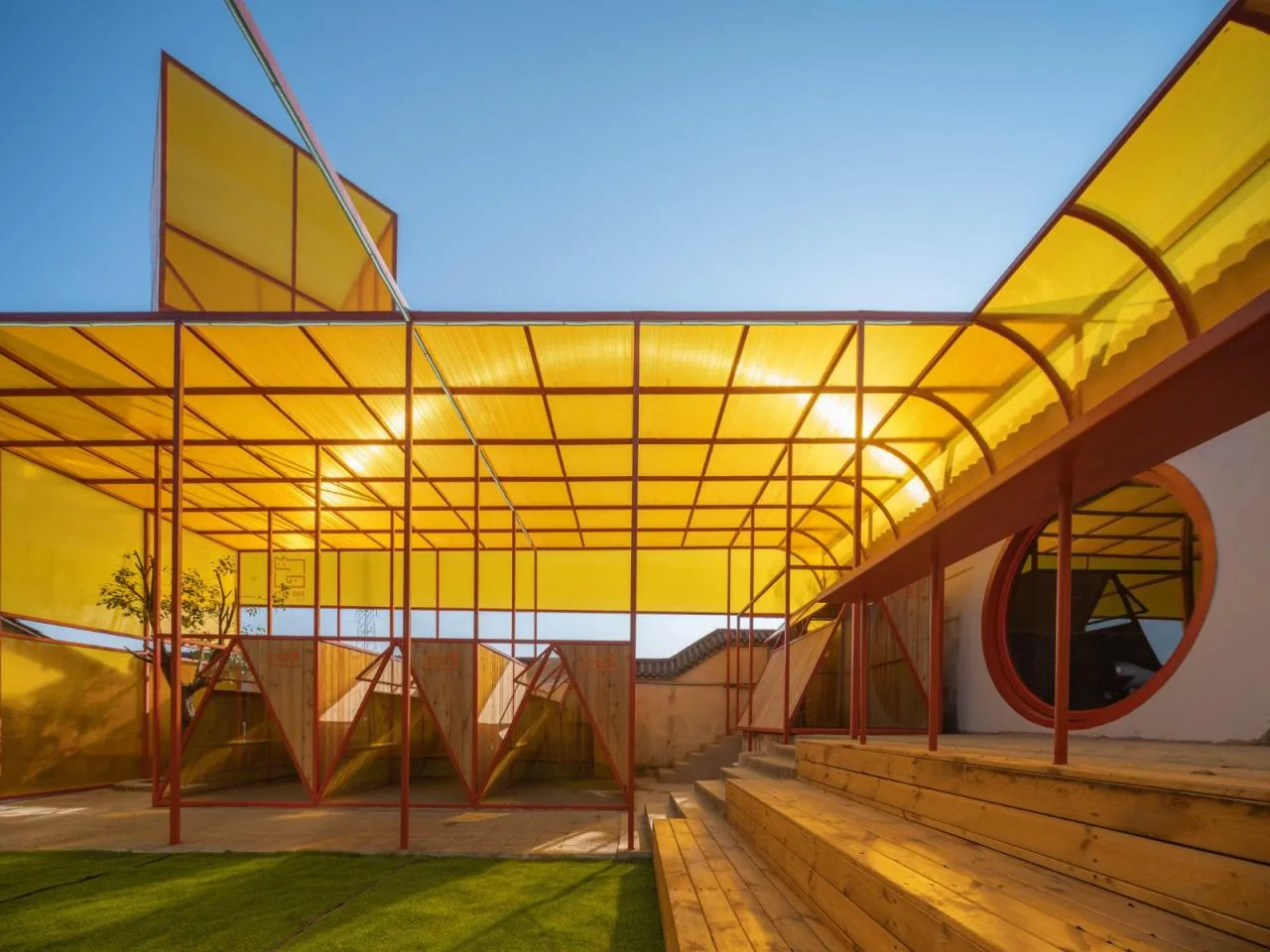
Initially, galvanized steel pipes were used without paint due to their corrosion resistance, paired with milky white polycarbonate panels as enclosure walls. However, feedback from multiple parties highlighted the need for greater visibility and recognition, given the project’s public welfare nature.
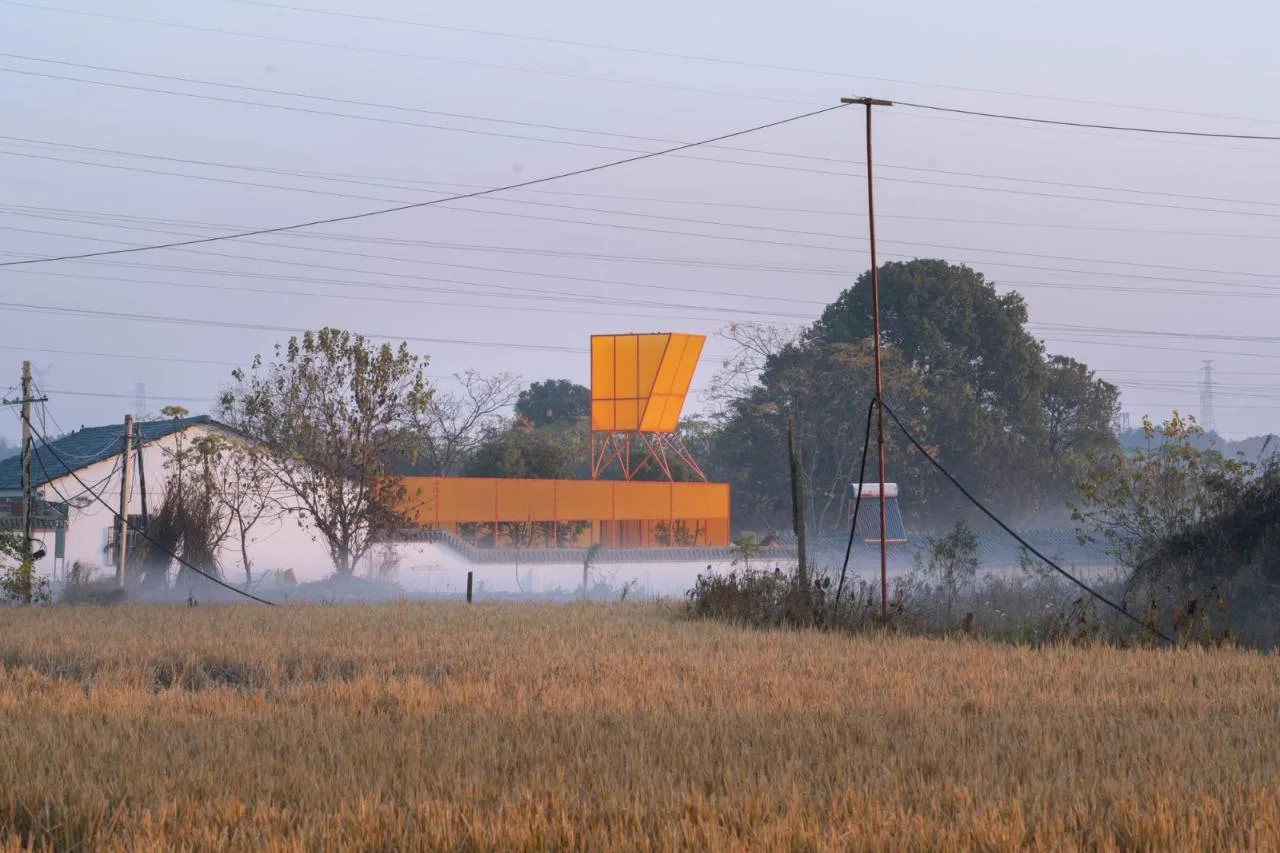
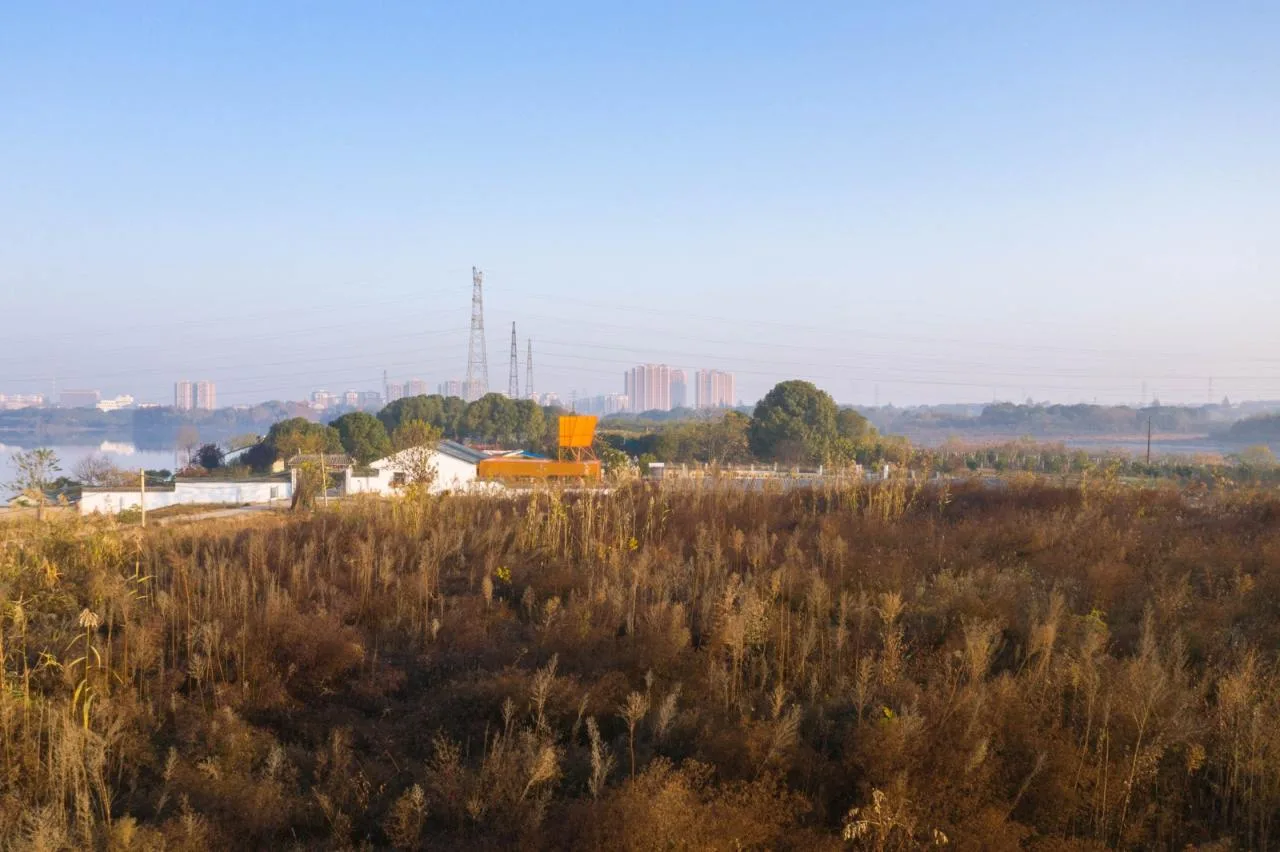
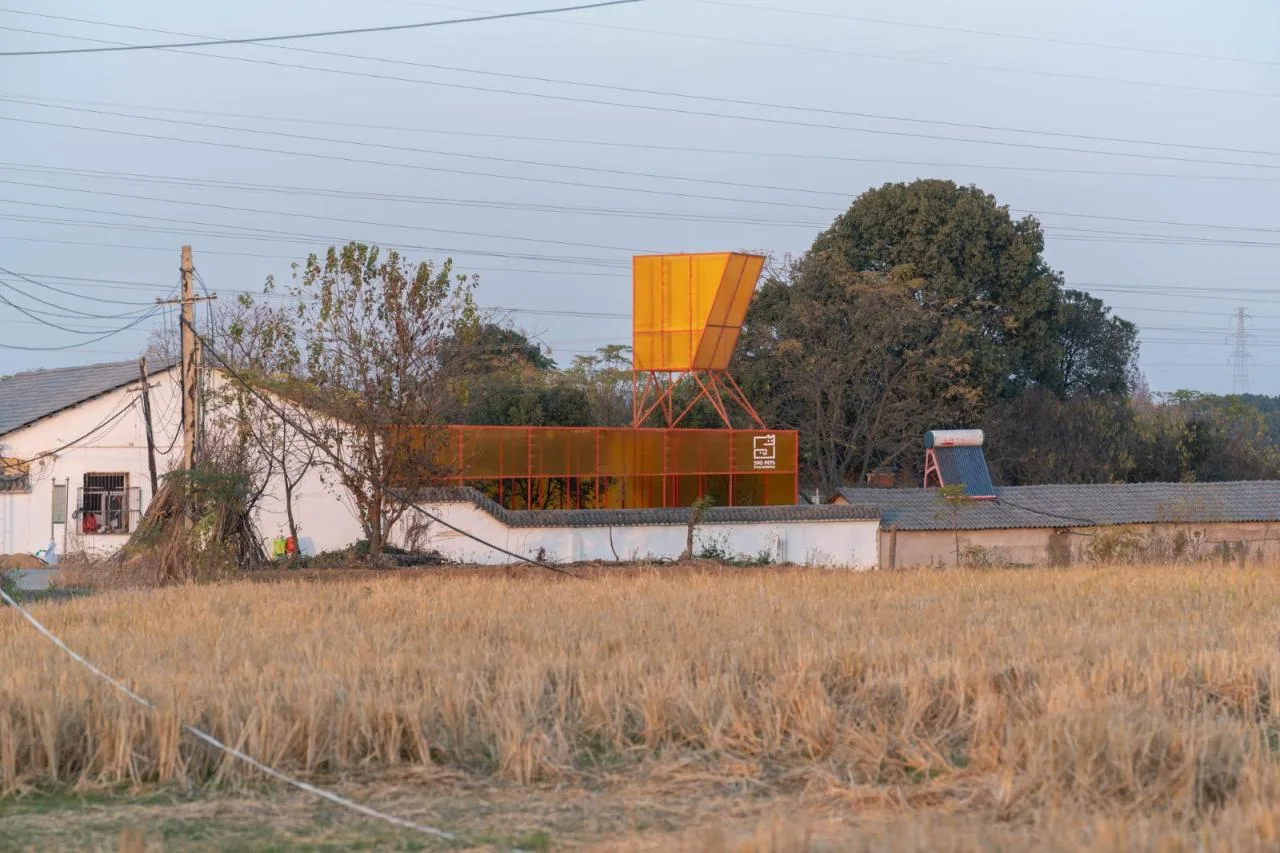
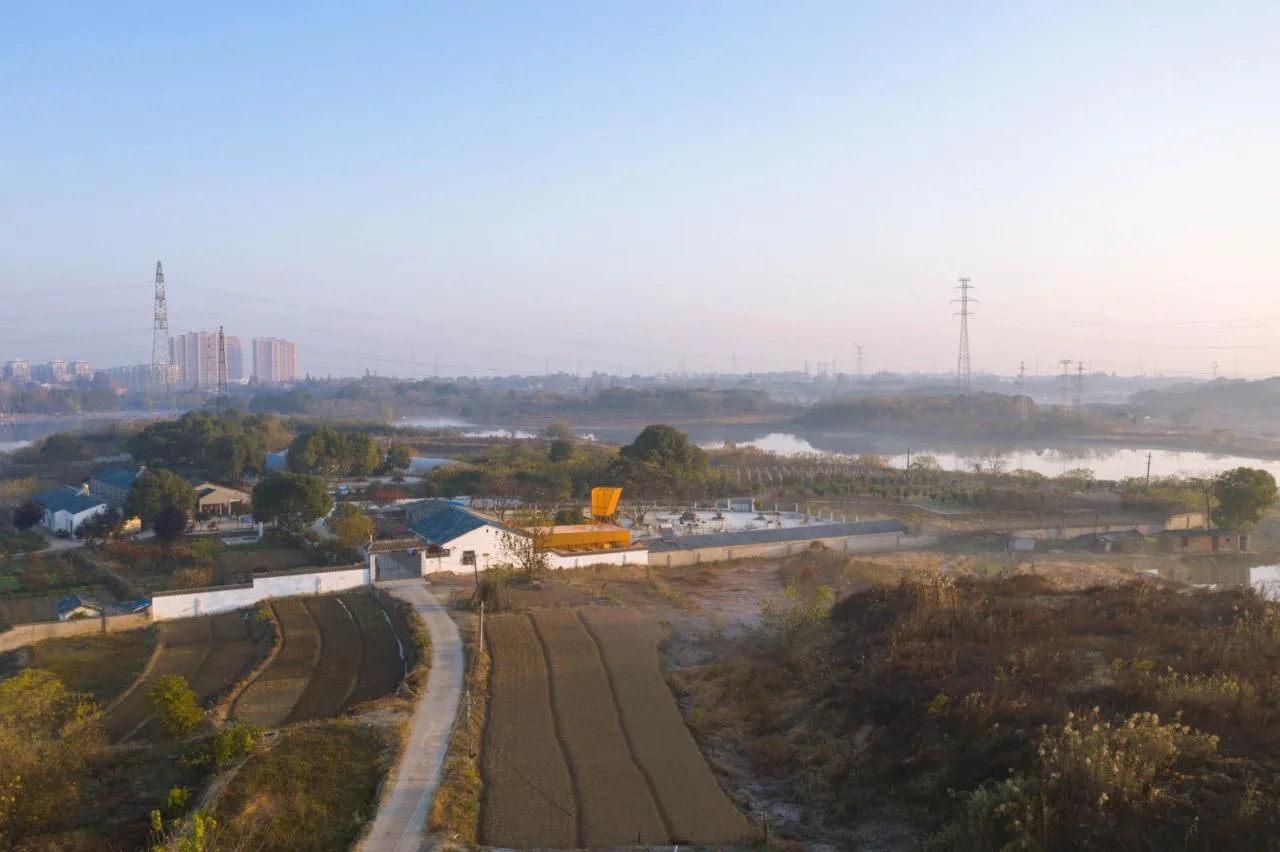
In response, the design was updated with an orange color scheme and a “dog head” structure atop the building. This feature is not intended to mimic a dog but to help first-time visitors and volunteers easily identify the base’s location near the last bridge over the highway. The bright orange color also appears on the entrance windowsill and transparent sun panels, casting a warm golden glow over both indoor and outdoor areas.
We extend our heartfelt thanks to the Luhu A8 Design Center, Asia Animal Fund, and Wuhan Small Animal Association for their collaboration. Special appreciation goes to Mr. Liang Rui for entrusting us with Ziluo and Nana, and to Rainy Beauty for her coordination and communication throughout the project.
We also thank the two inspiring women, Yadong SUKI and Wu Liping, and Teacher Du Fan for his patience with our designers’ meticulousness. Our gratitude extends to colleagues Xiaopang, Haiyang, and Longgong, who contributed directly to outdoor, indoor, and structural designs, as well as Lu Zhou and Kong Fanyi for early-stage support.
Finally, thanks to Mr. Xu Chao, general manager of Datong Steel Structure, and Liang Ge, brand manager of the construction team. Many others contributed to this renovation—thank you all for your dedication and hard work.
Project Drawings
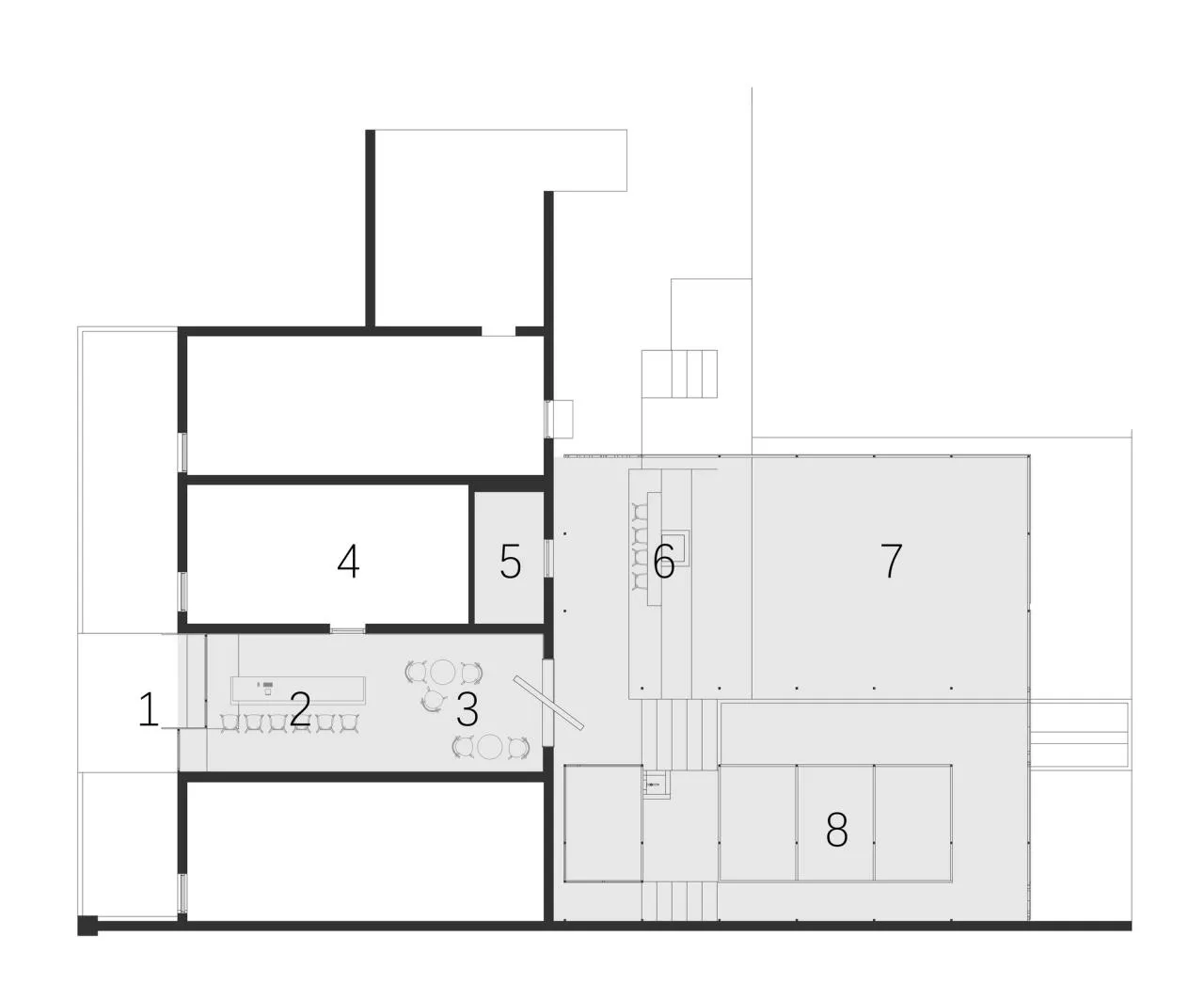
△ Plan View
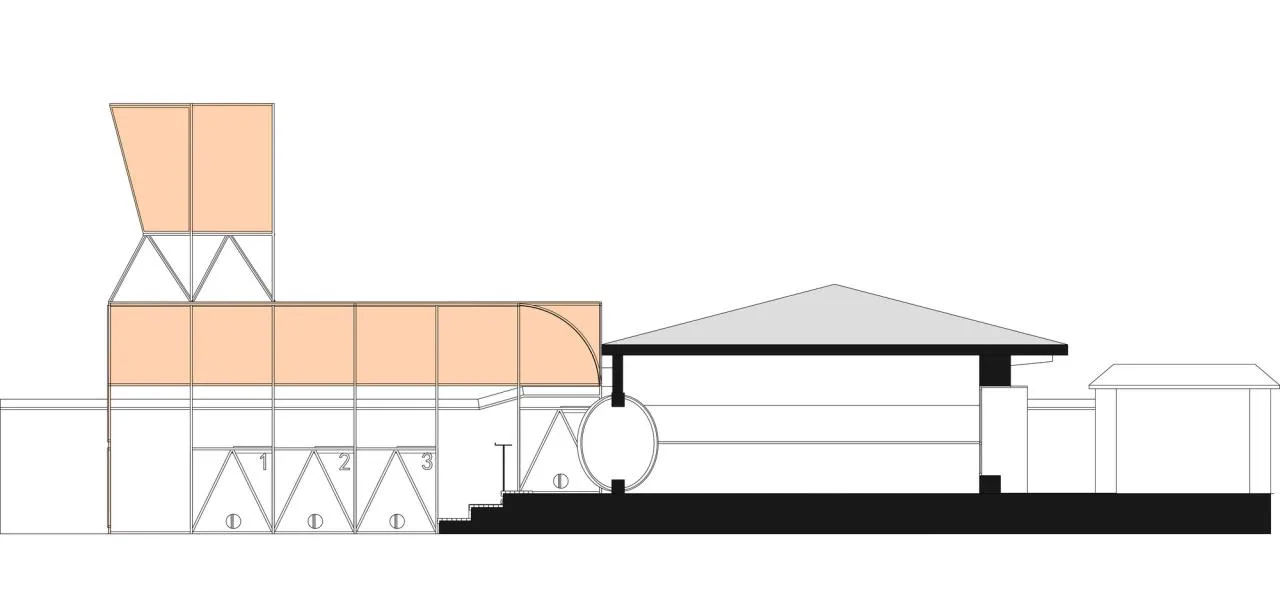
△ Section Diagram
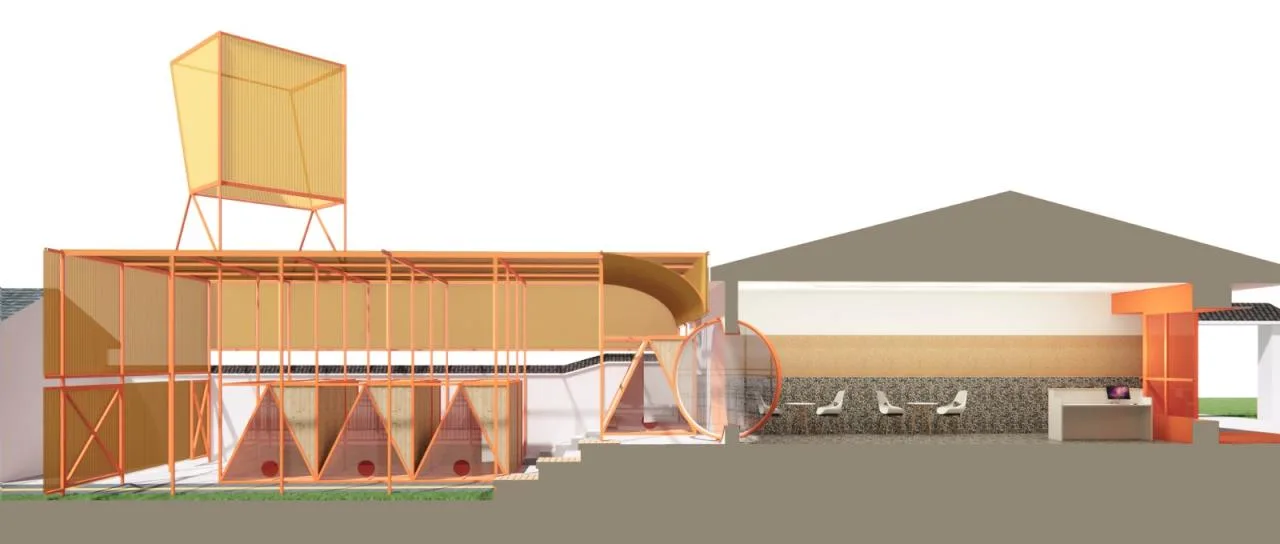
△ Sectional Perspective
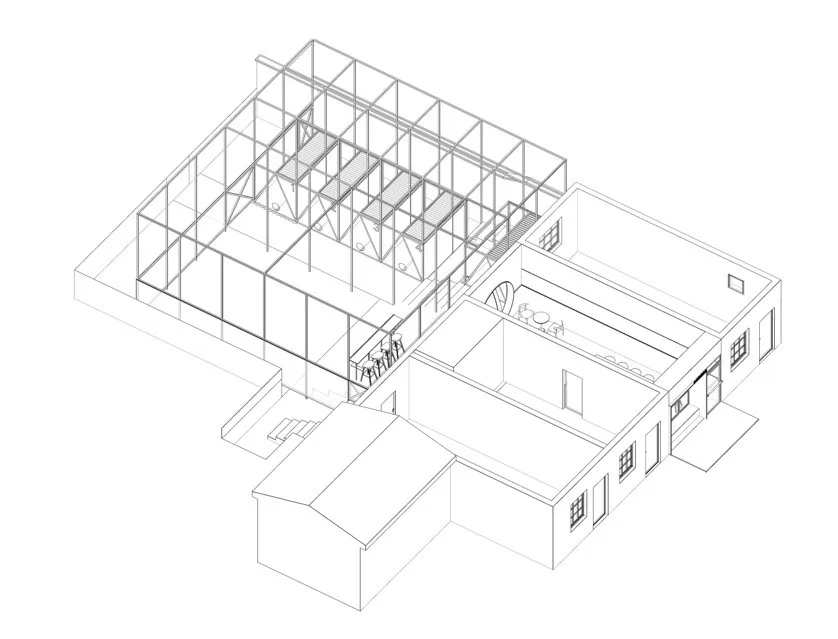
△ Axonometric Diagram
Project Information
Architectural Design: UAO Ruituo Design
Area: 180 square meters
Project Year: 2021
Photographer: Zhao Yilong
Lead Designer: Li Tao
Participating Designers: Zhang Jieming, Jiang Haiyang, Long Kecheng, Lu Zhou, Kong Fanyi
Owners: Luhu A8 Design Center, Asia Animal Fund, Wuhan Small Animal Protection Association
Location: Wuhan, China















Must log in before commenting!
Sign Up