
Selection of Graduation Design Projects by the Autumn 2021 Architecture Master’s Students at Tianjin University
Preface: What competencies should a master’s student in architecture demonstrate? Since 2018, the School of Architecture at Tianjin University has been advancing reforms in graduate education. Central to this reform is the shift from thesis-based evaluation to design schemes as the core outcome of graduation assessments. Students’ design research and projects emphasize research-driven design applied to engineering practice. Over three years, a comprehensive quality management system centered on design—including proposal review, progress evaluation, defense, and exhibition—has been established. At Tianjin University, mastering the integration of deep theoretical thinking and systematic research methods into design practice is essential for cultivating outstanding master’s students in architecture, aligning with national and industry needs. This article presents a selection of graduation design outcomes from the latest cohort who graduated in December 2021, reflecting diverse approaches to engineering challenges.
-01-
Research on Traditional Courtyard Residential Design Generation Using Shape Grammar: A Jiaoxi Village Case Study
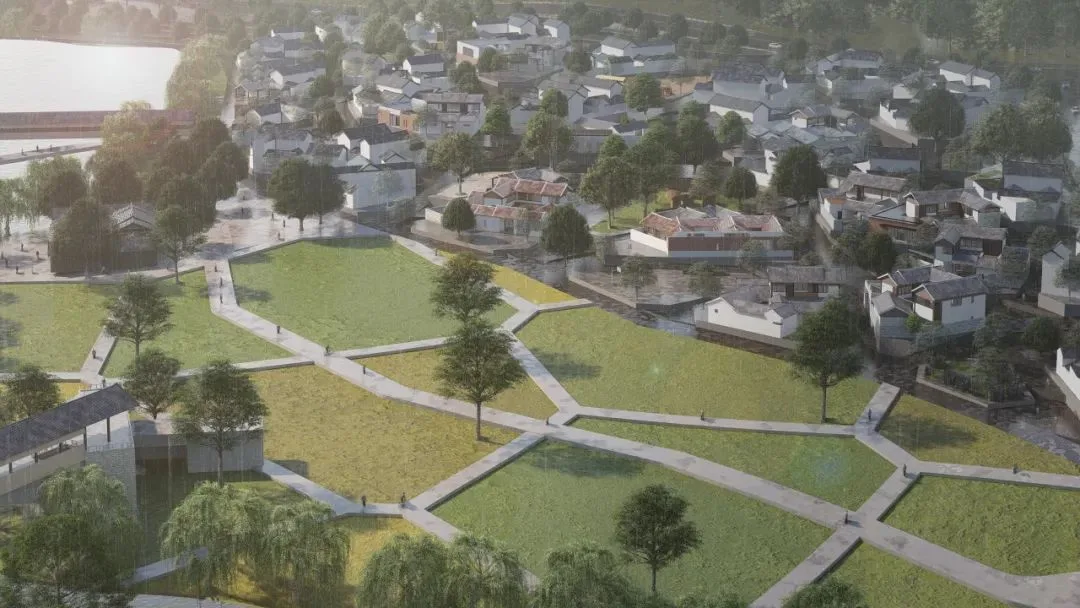
Project Origin
Overview
“I observe in my hometown and know the ease of the royal path.” — The Book of Rites: The Meaning of Drinking in the Countryside
The development of a nation has long been linked to rural prosperity, with ongoing discussions about future rural development. This project centers on traditional Minnan courtyard houses. Through spatial deconstruction and quantitative analysis, the spatial structure, room layout, and scale of Minnan ancient houses are translated into programmatic rules and algorithms based on shape grammar. Python and Grasshopper tools facilitate automated design generation of Minnan traditional dwellings.
Understanding Traditional Chinese Residences
Interpretation
The design begins with an analysis and classification of traditional Chinese dwellings, resulting in a detailed distribution map.
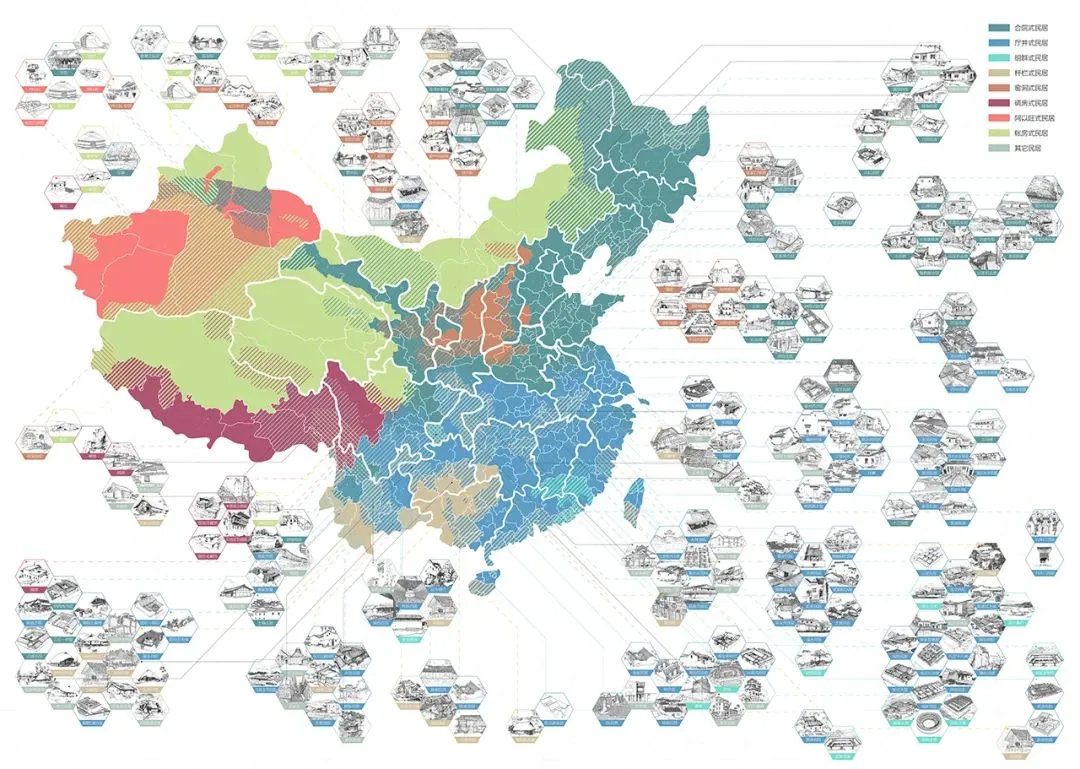
△ Classification and Distribution of Traditional Chinese Residences
Using this map, traditional courtyard dwellings were analyzed from courtyard hierarchy, homogeneity distribution, and spatial openness. The Minnan region, home to these designs, features a richer courtyard hierarchy with abundant corridors and eaves, leading to diverse spatial openness levels—often reaching a level 4 or higher—enabling varied spatial outcomes.
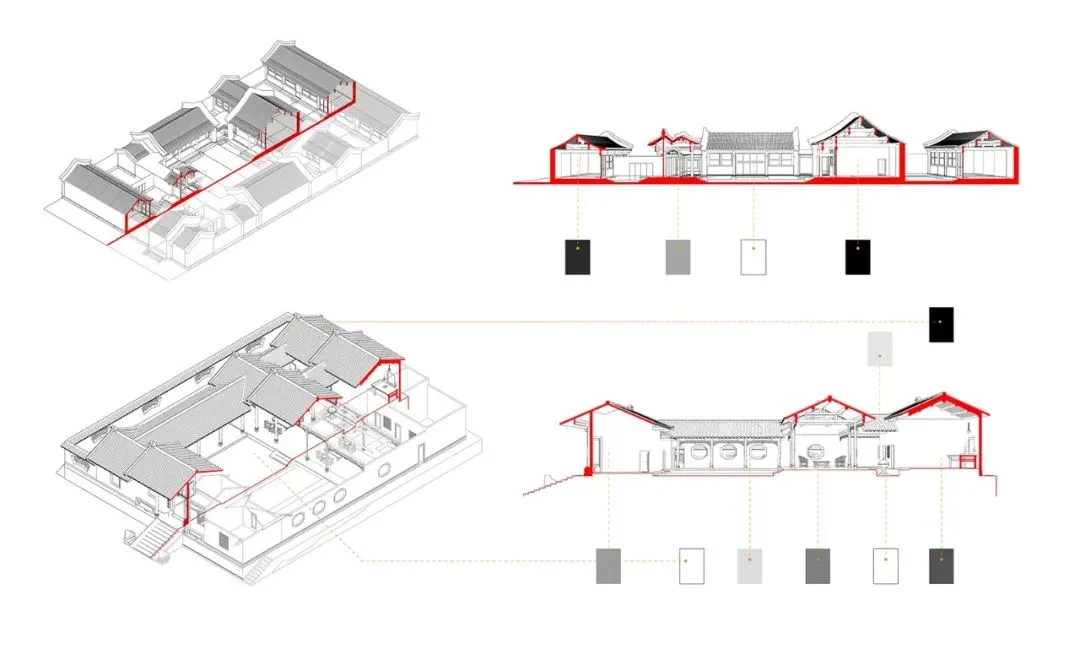
△ Residential Spatial Hierarchy
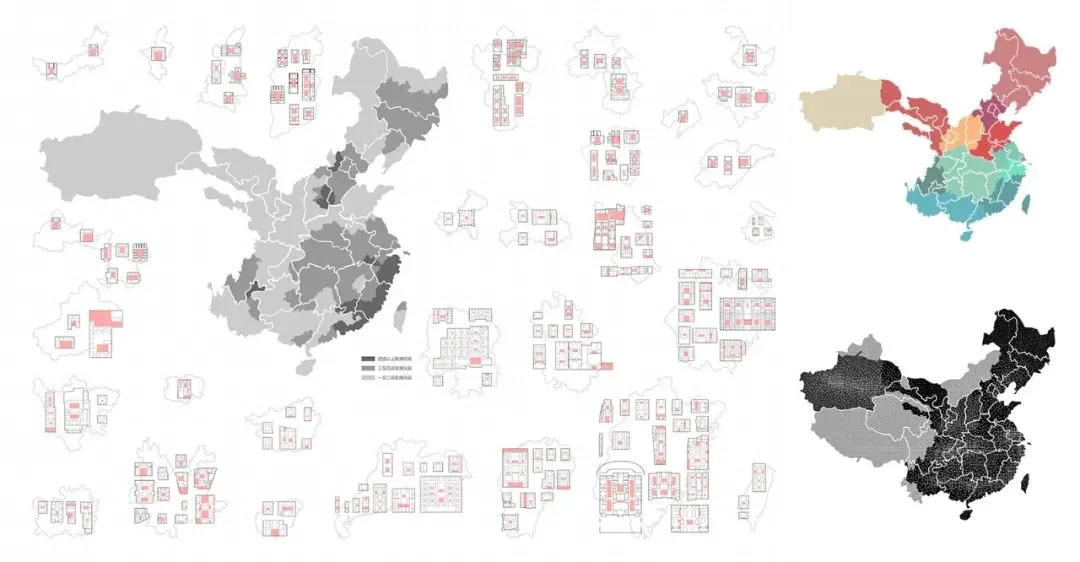
△ Hierarchical, Homology, and Spatial Distribution Maps of Chinese Traditional Courtyard Residences
The study focused on two- and three-dimensional analyses of various traditional courtyard dwellings in Fujian, finding a shared architectural prototype derived from the single courtyard “Jutouzhi”. A representative case was analyzed for spatial topology and scale—using the top hall as an example—to establish mathematical relationships that inform the subsequent automatic generation program.
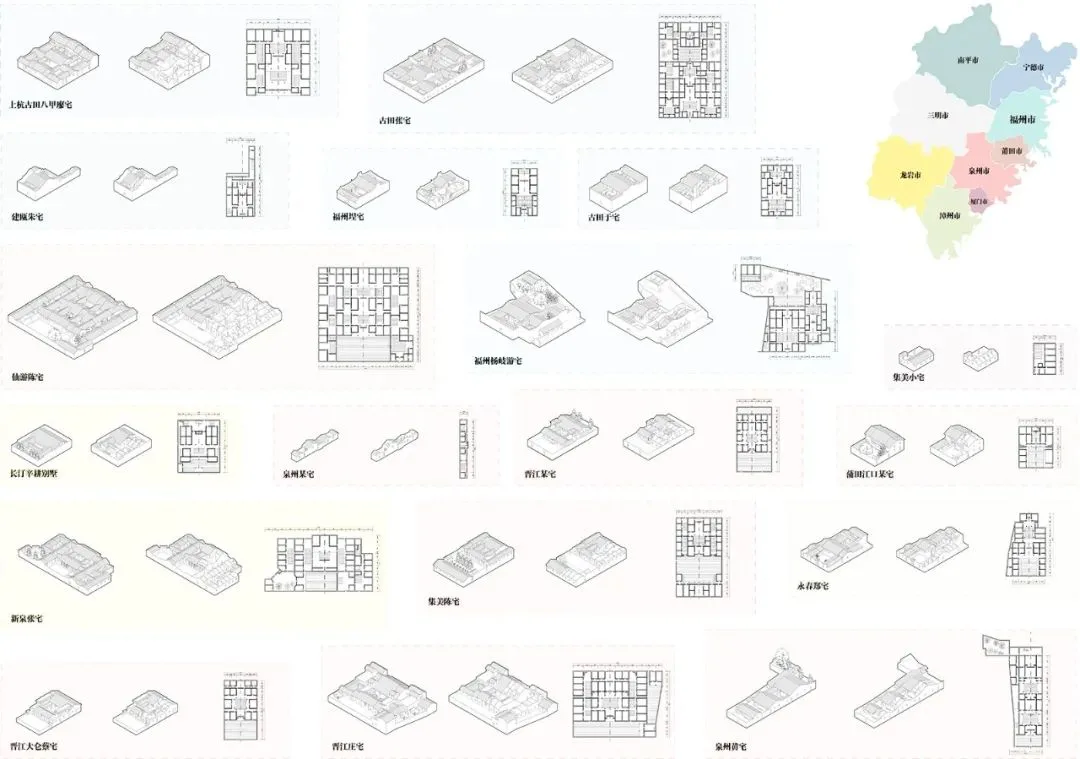
Typical Traditional Fujian Residences
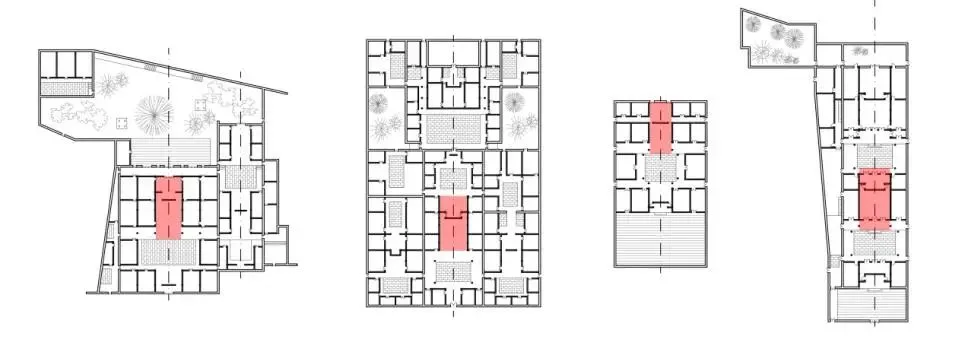
Location of the Top Hall
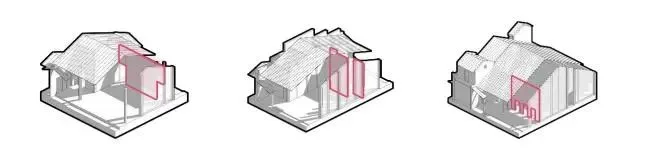
△ Top Hall Longevity Screen and Comb Window Door
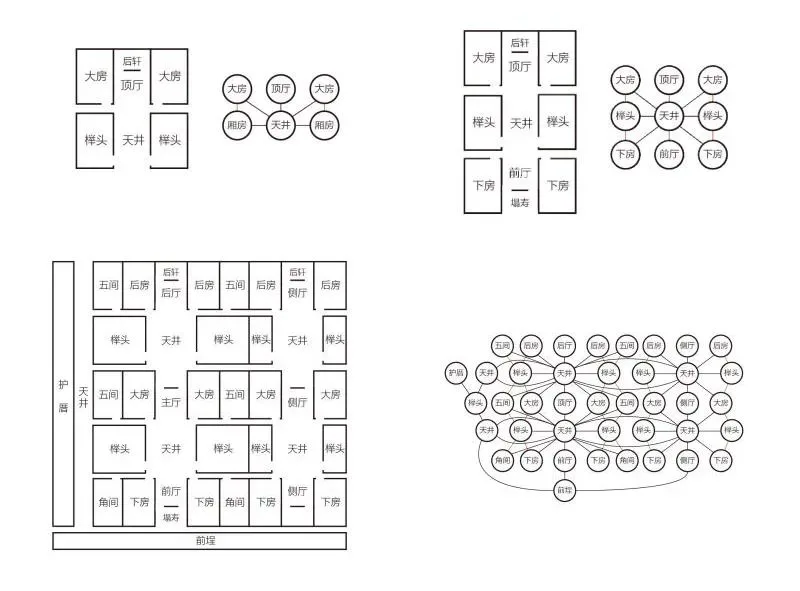
△ Spatial Topology: Jutouzhi, Sanjianzhang Liangluo Dacuo, Multi-axis Parallel Dajin
Beyond building scale, external environmental factors such as density, road adjacency, and building spacing were analyzed to provide quantitative data for village planning.
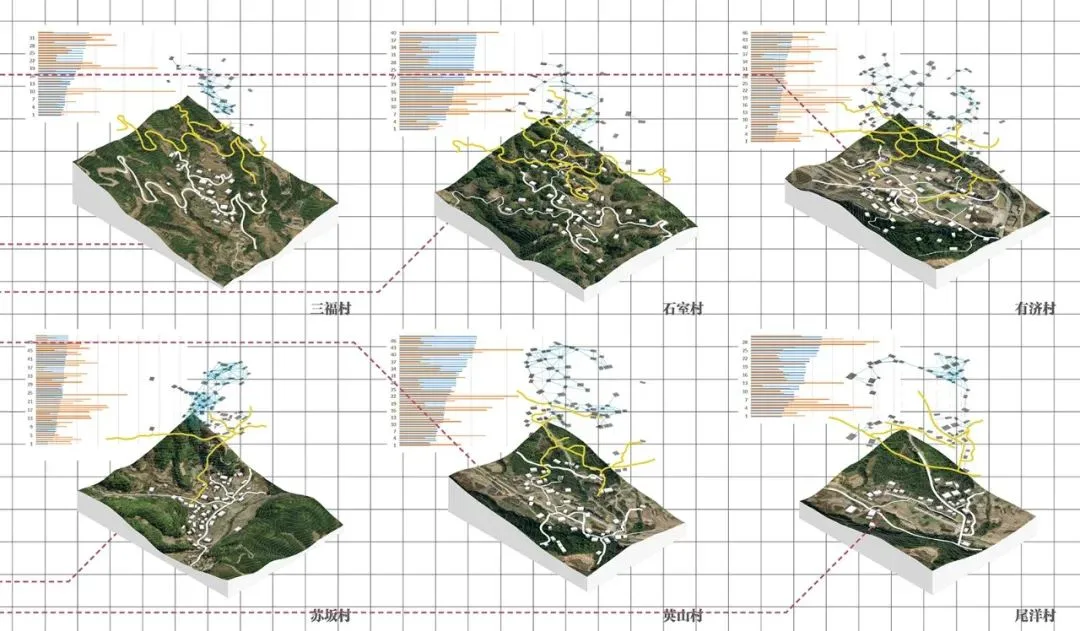
Analysis of External Environmental Factors
Algorithm for Automatic Generation of Minnan Ancient Houses
Algorithm Development
Minnan ancient houses exhibit strong mathematical relationships between spaces, with surrounding room size and location controlled by the hall’s scale. Using previously quantified spatial data, control rules were compiled, enabling a shape grammar-based generation program for traditional Minnan houses. Parameters such as courtyard count and axis position can be adjusted.
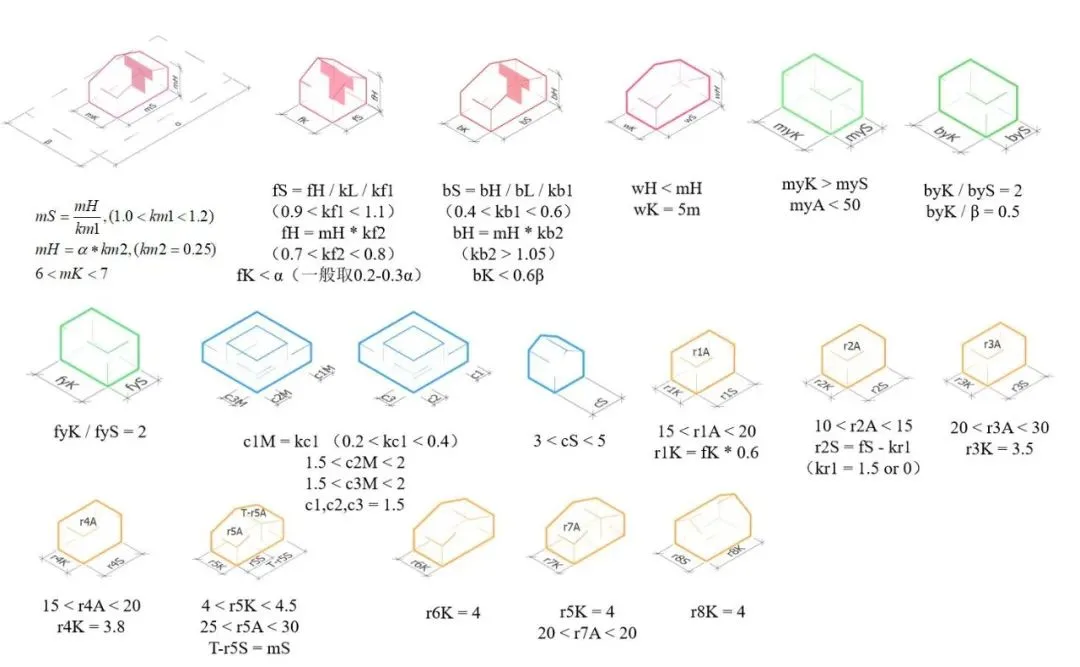
△ Spatial Control Rules
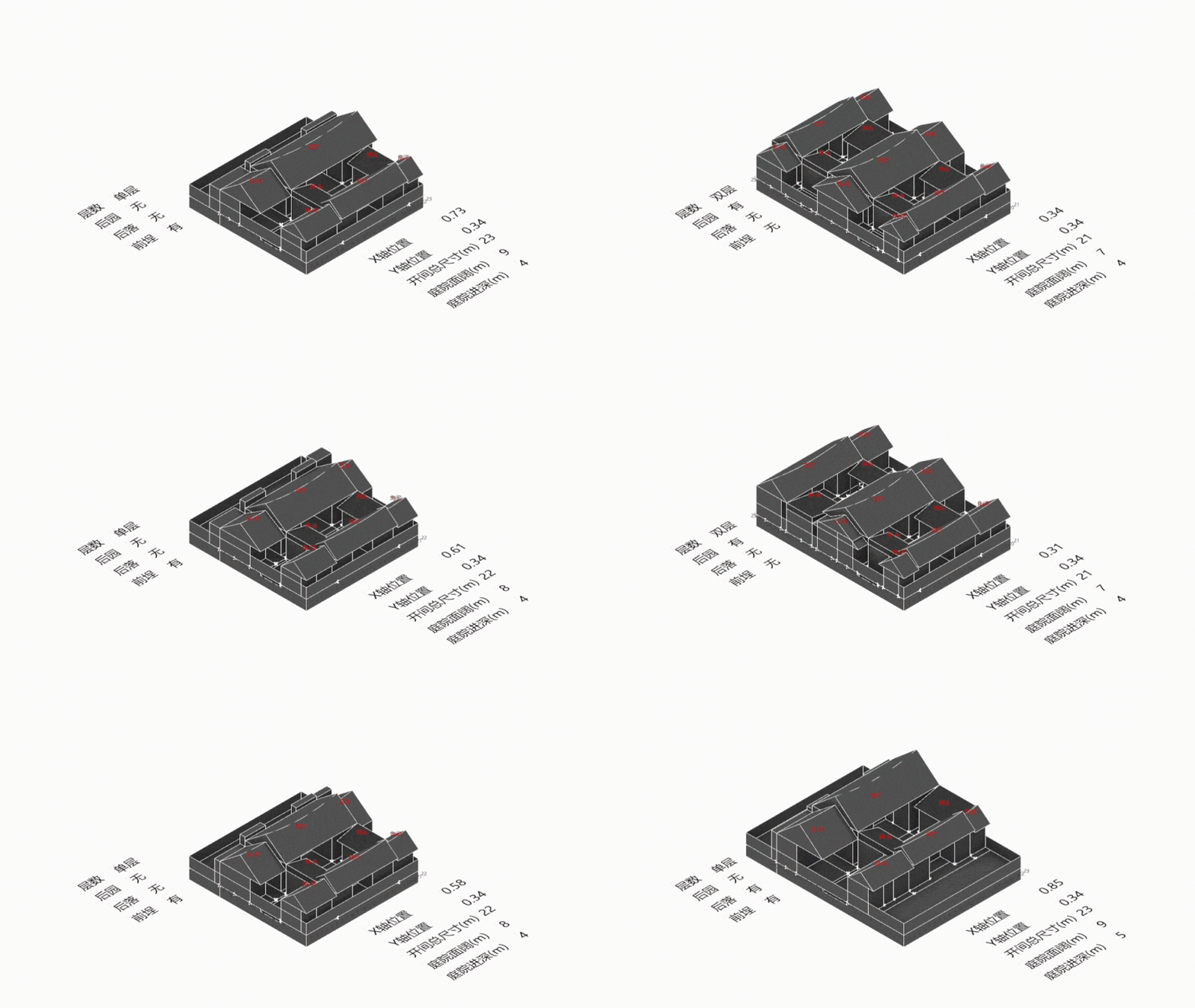
△ Traditional Minnan Ancient House Generation Program
Algorithmic Generation of Traditional Village Growth in Quanzhou, Fujian
Generation Process
The automatic generation of traditional courtyard dwellings involves village texture, architectural spatial organization, and component detailing, progressing from macro planning to structural elements like walls and windows to produce a complete village design.
The author introduced the concept of equal slope lines—line segments with consistent Z-axis slopes relative to their horizontal projections—to organize road networks aligning with contour and slope constraints. Road slope is controlled by adjusting circle radii along contours.
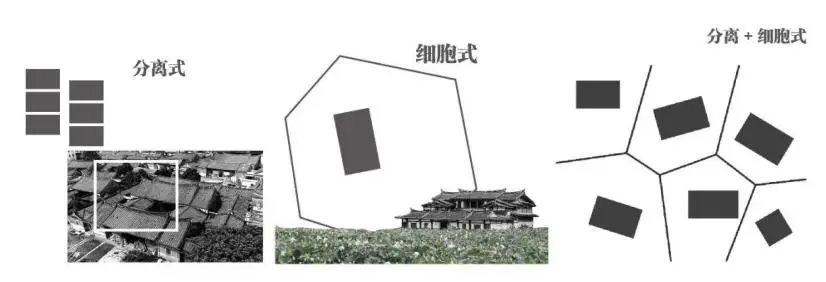
△ Relationship Between Building and Land
Village building plots follow an internal logic with regular patterns. Combining separation and cell-type land relationships maximizes their advantages. The concept of farmland land boundaries is introduced as a basis for generating building plots.
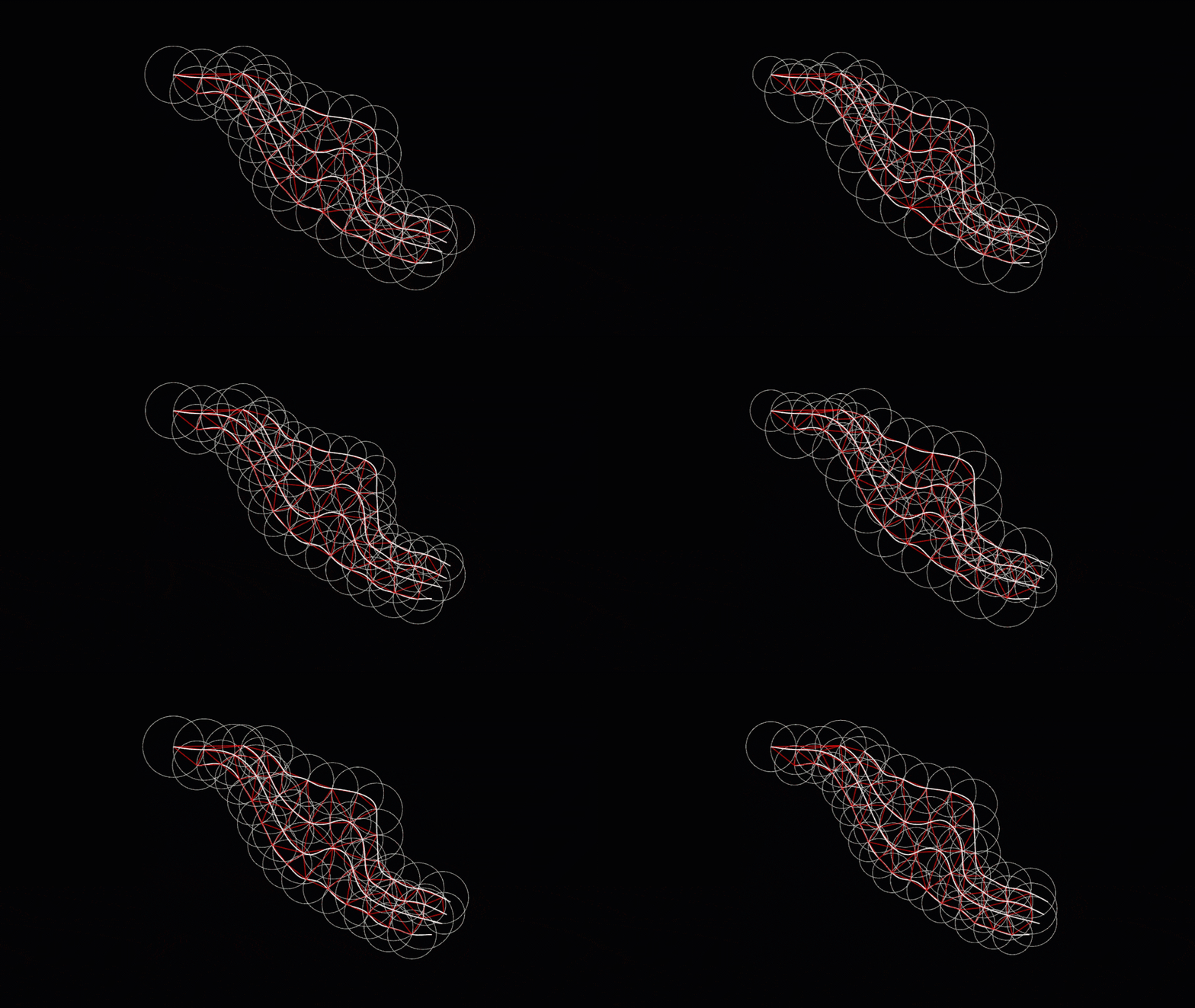
△ Road Generation via Equal Slope Lines
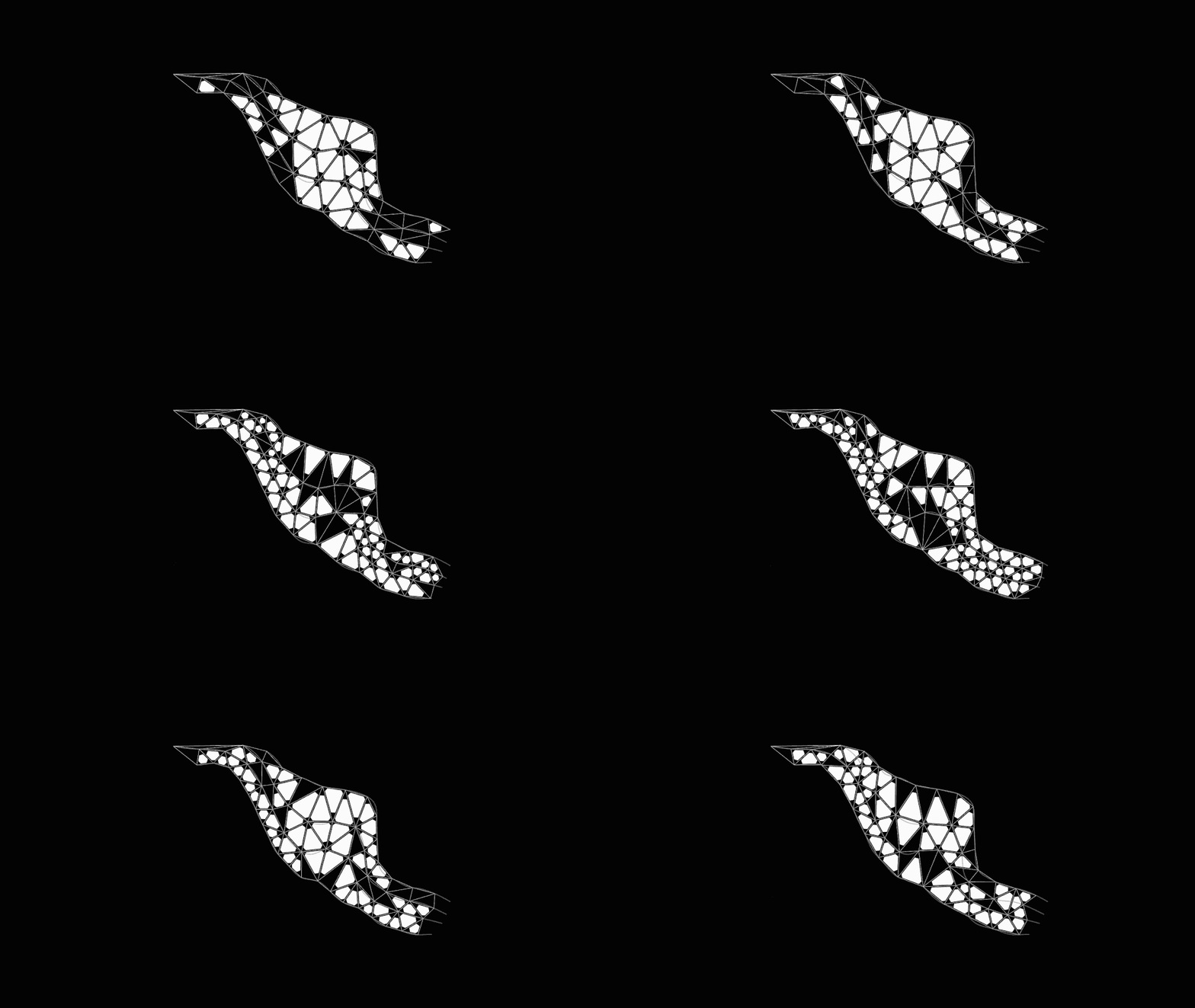
△ Field Generation
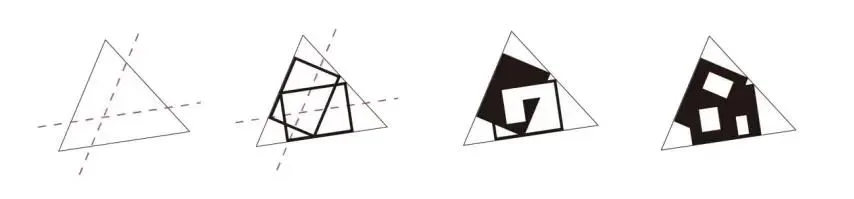
△ Axis Variation
Once building scale and courtyard hierarchy are set, plan spaces are organized. In traditional ancient houses, the “roof drop” spatial pattern is prioritized to preserve roof integrity. Secondary spaces adapt their forms to align with the main courtyard and corridors.
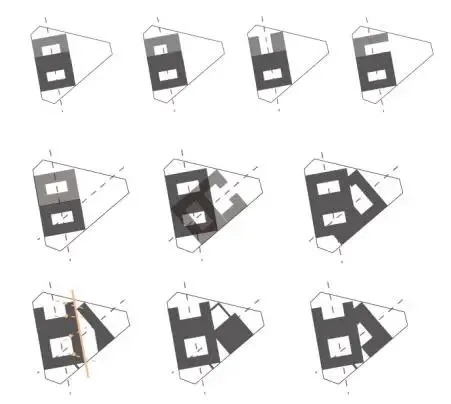

△ Plan Generation
After dividing planes, spatial openness levels are assigned to enclosed areas, enriching spatial quality by inheriting traditional eaves spaces and introducing variety.
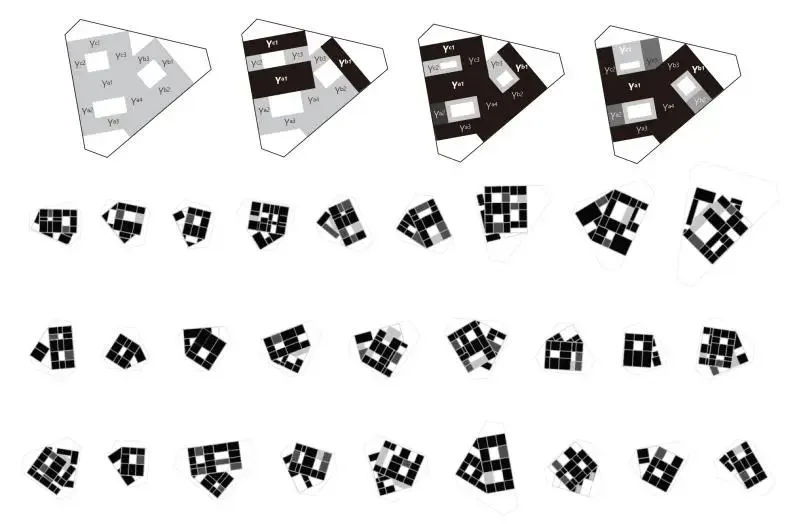
△ Spatial Hierarchy Assignment
Height is assigned to planes to generate first-floor volumes. Then, second-floor volumes are generated corresponding to “top hall” spaces, with quantity guided by required building area.
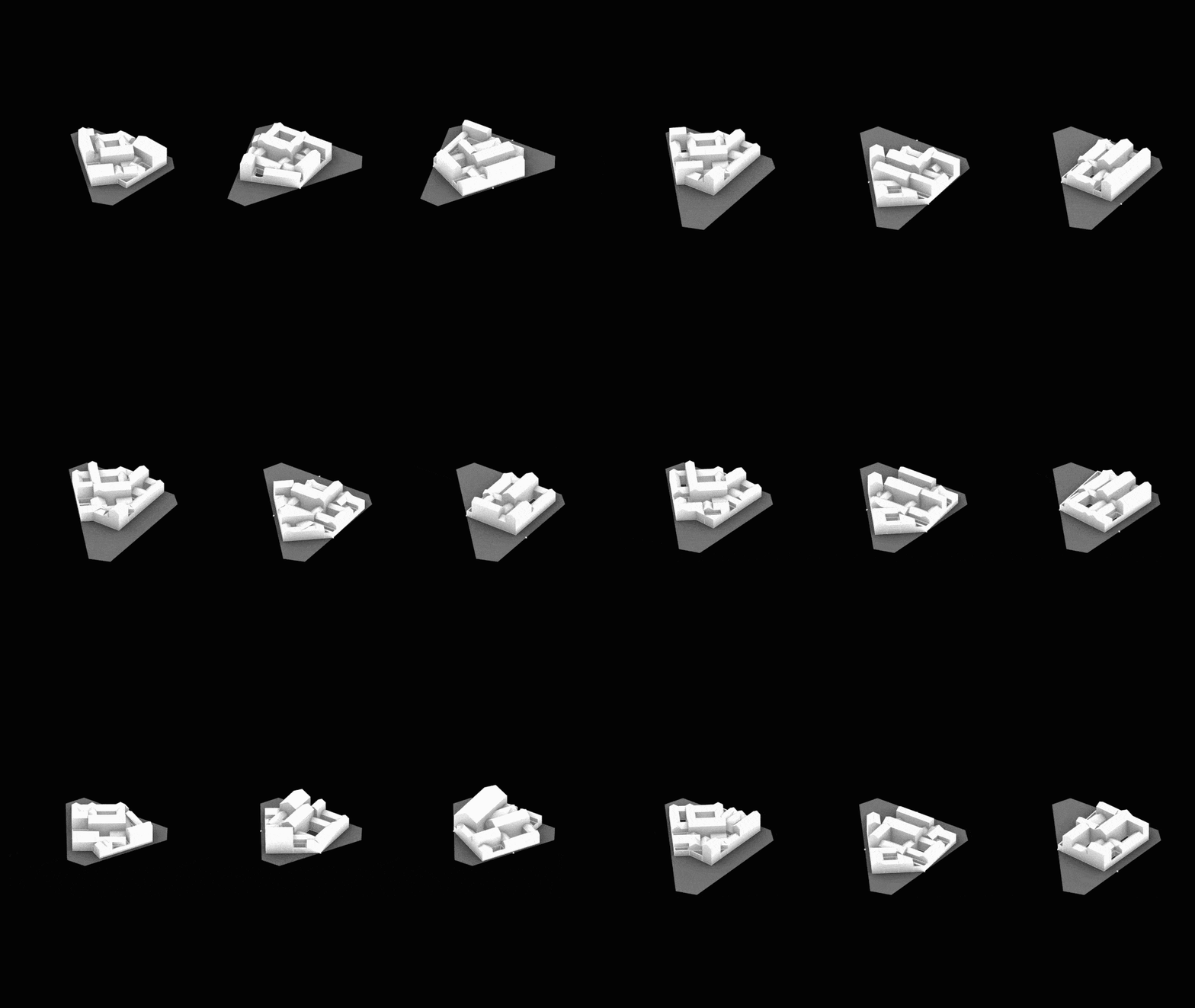
△ Volume Assignment
Building component detailing—structure, roof, walls, windows—is translated from traditional forms into automated generation using Grasshopper.
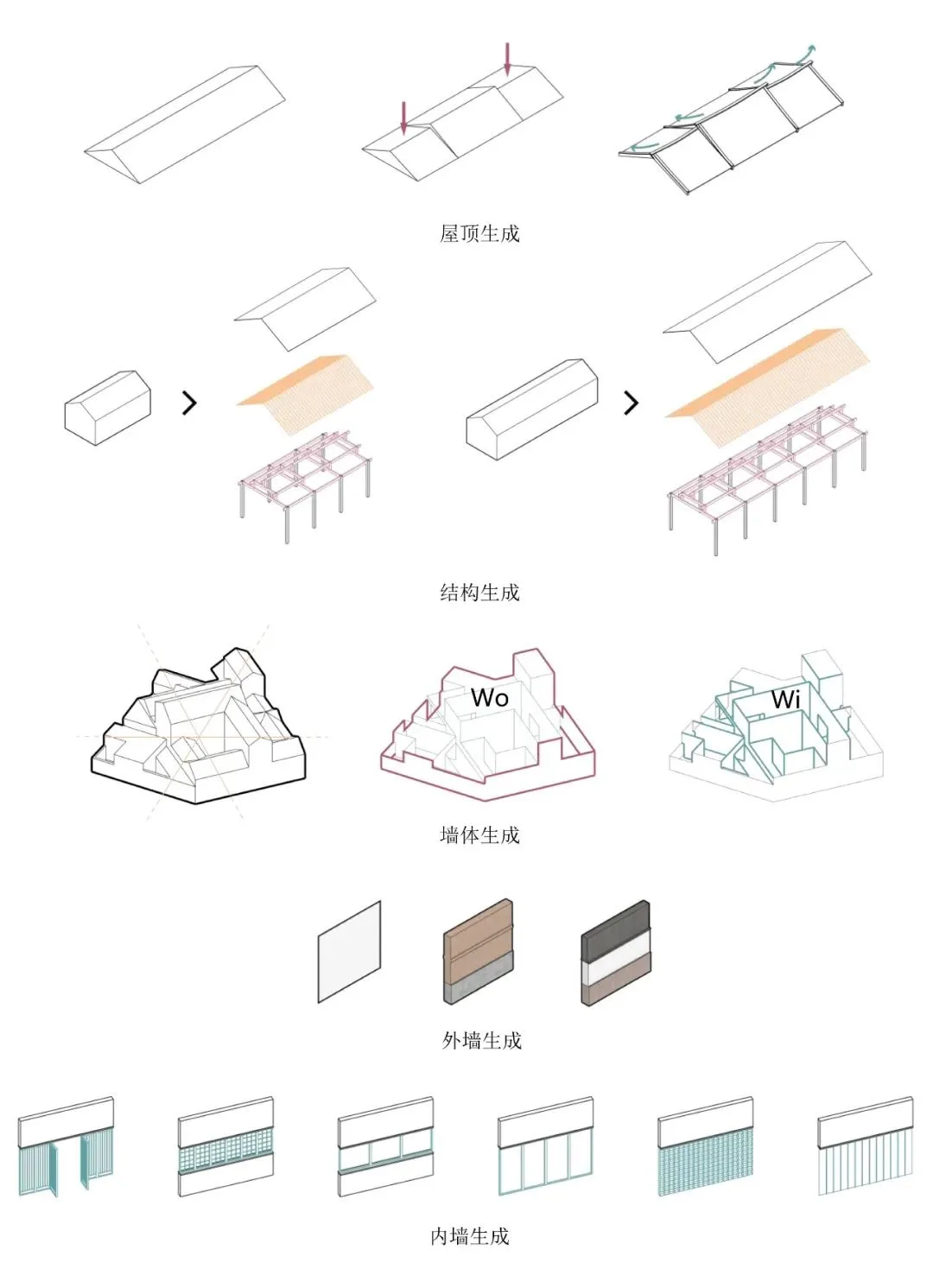
△ Generation Process
Design Application
Project Implementation
This project applies the methods to Jiaoxi Village in Dehua County, Quanzhou City, covering 19.9 hectares and accommodating 65 households with new homesteads. Supporting infrastructure includes transport, village activity centers, officials’ residences, and public buildings, totaling 49,700 square meters with a plot ratio ≤ 0.25.
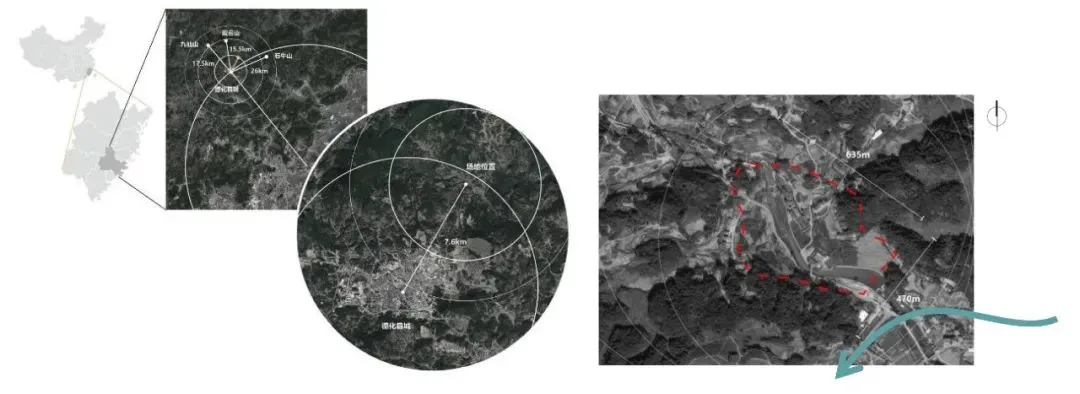
△ Site Overview
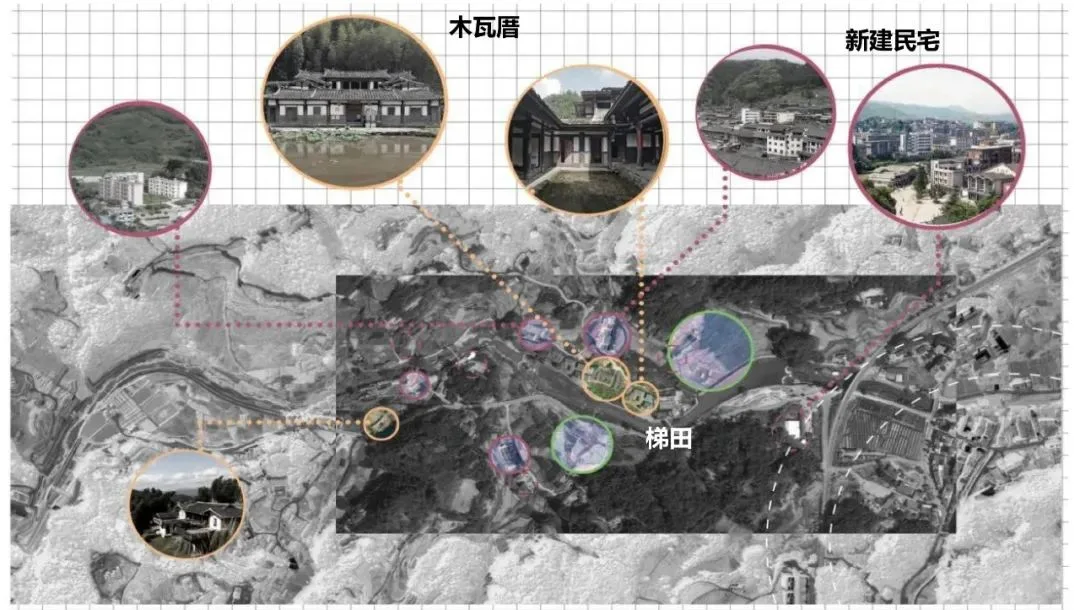
△ Surrounding Site Conditions
Using the automatic generation program, an equal slope road network is produced and the residential system is optimized based on usage scale and sightlines.
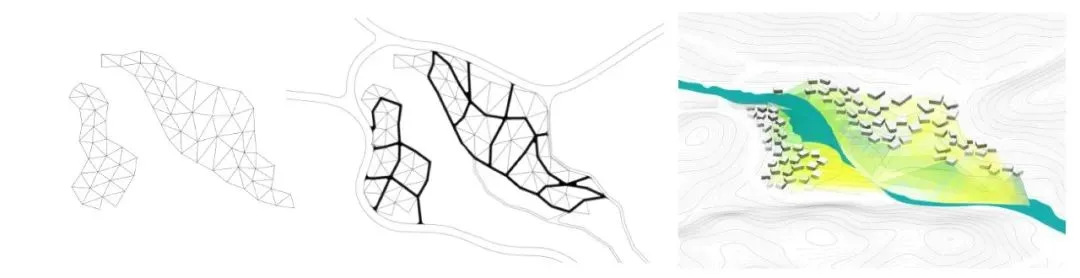
△ Road Network System (left) and Residential Optimization (right)
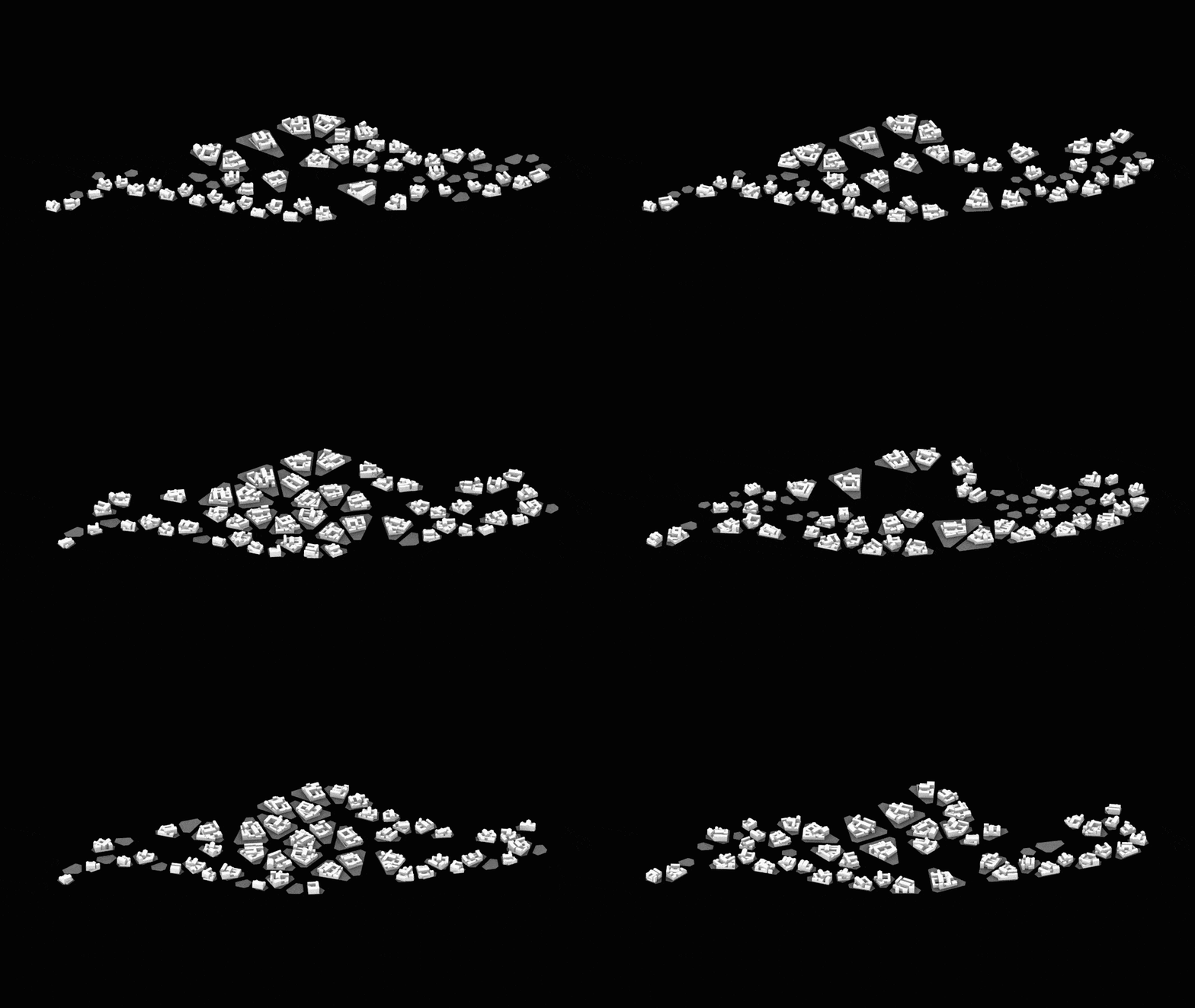
△ Residential System Generation
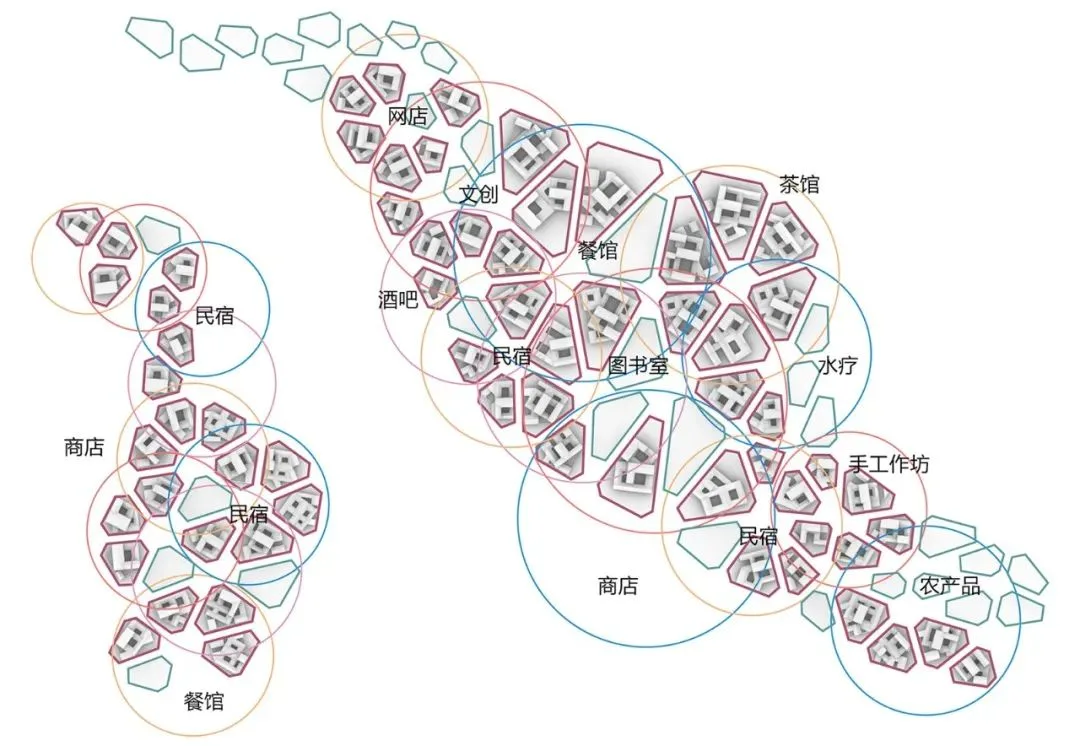
△ Community Spaces
Many evenly distributed vacant “fields” are transformed into varied square spaces through site design to serve community needs.
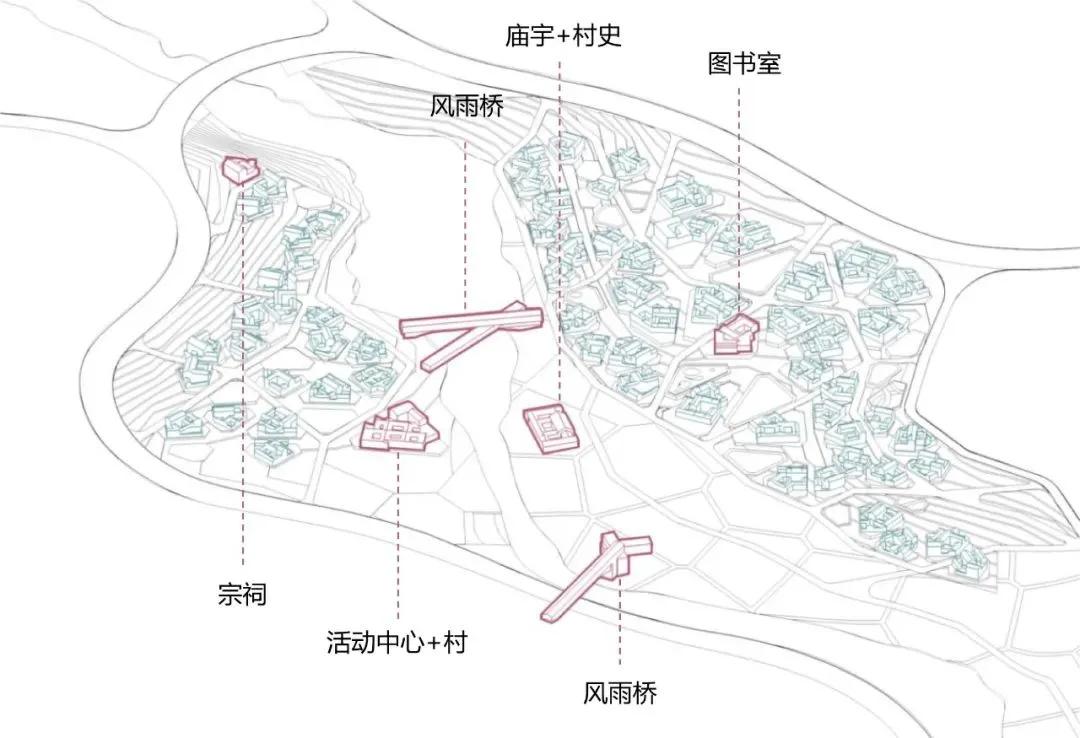
△ Public Building Distribution
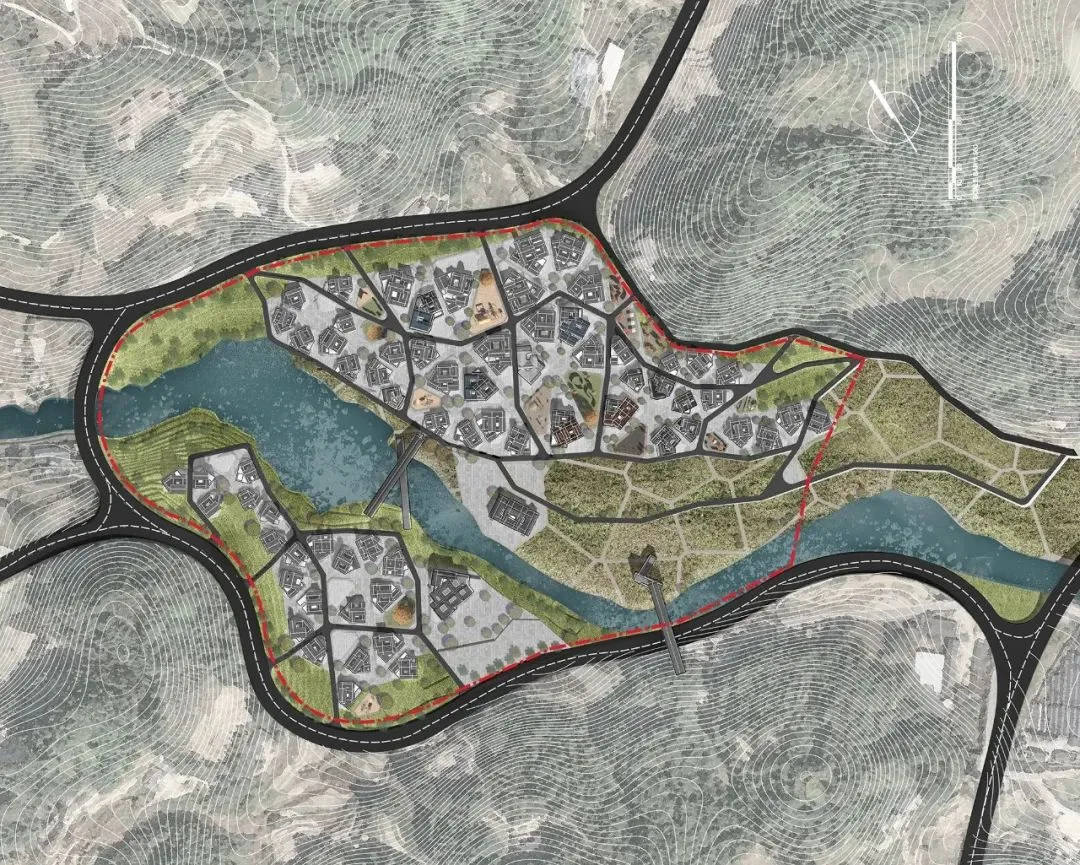
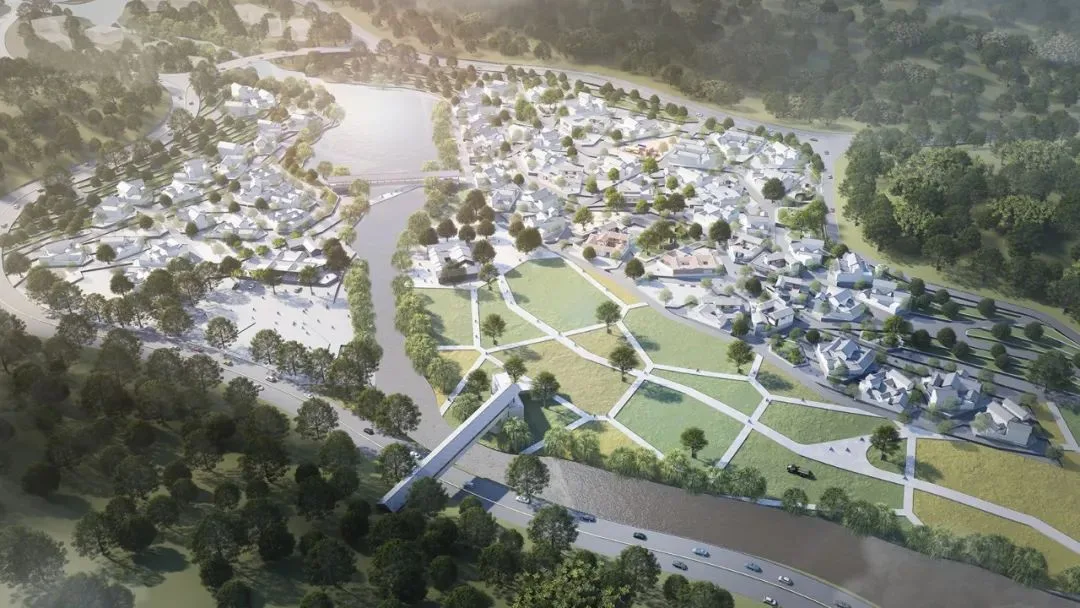
Overall Village Planning
After analyzing user needs and profiles, further design refines the generated residential buildings for 11 hypothetical owners, integrating residential and additional functions to leverage tourism opportunities. This approach supports family economic growth and enhances village community functions.
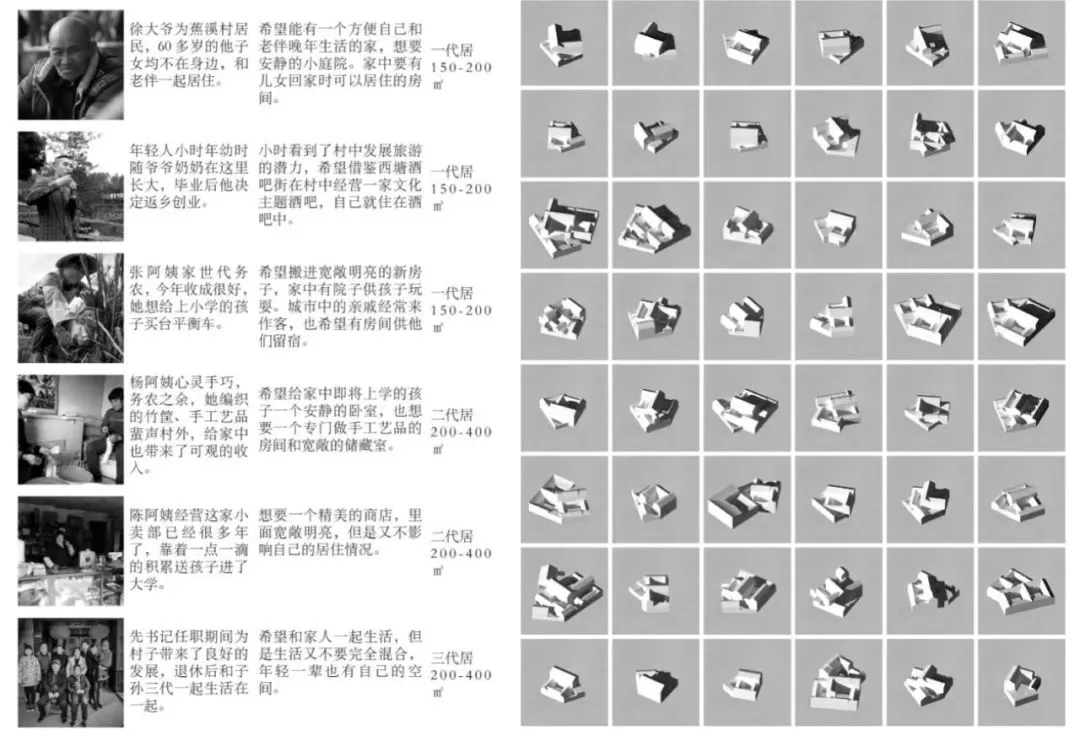
△ User Profiles
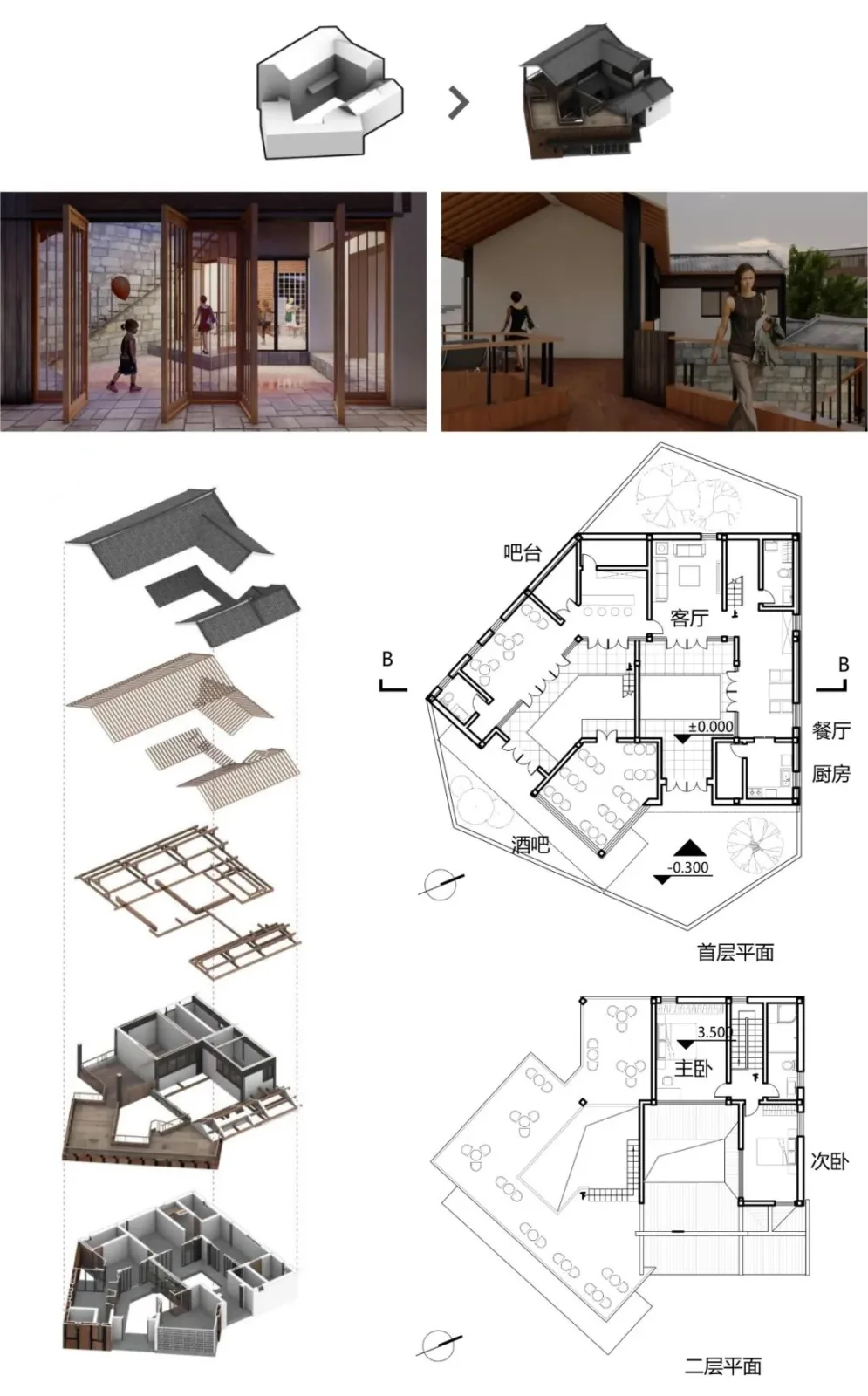
△ Hour’s Home – Tavern
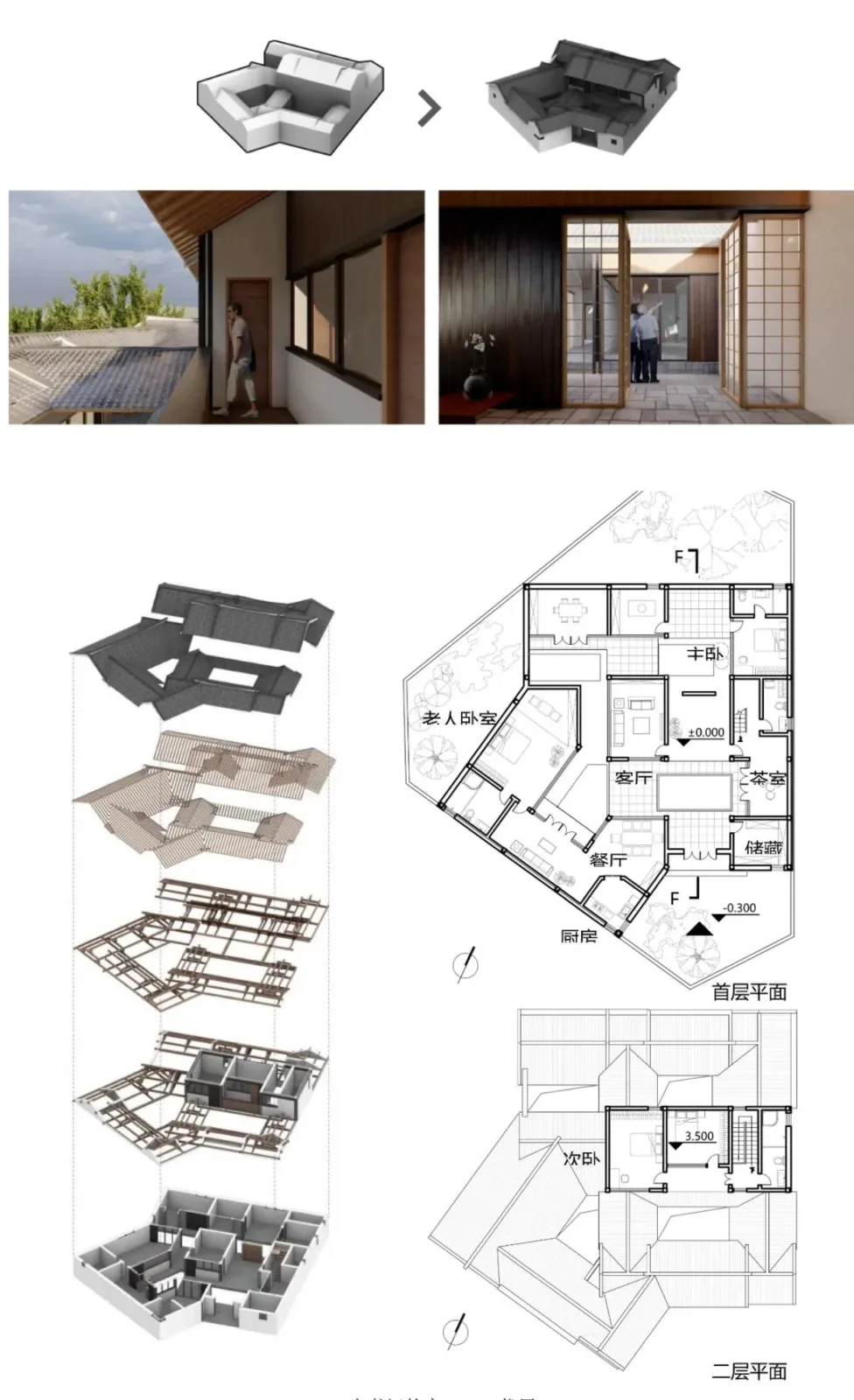
Former Secretary’s Residence – Three-Generation Home
Volumes for the activity center, village office, and library are generated using the residential building program. Residential spaces prioritize privacy with “thick outside, thin inside” walls, creating introverted interiors. Public spaces invert this to “thick inside, thin outside,” fostering openness. The lively residential courtyard becomes a quiet indoor space, while exterior walls open to public areas, emphasizing communal character.
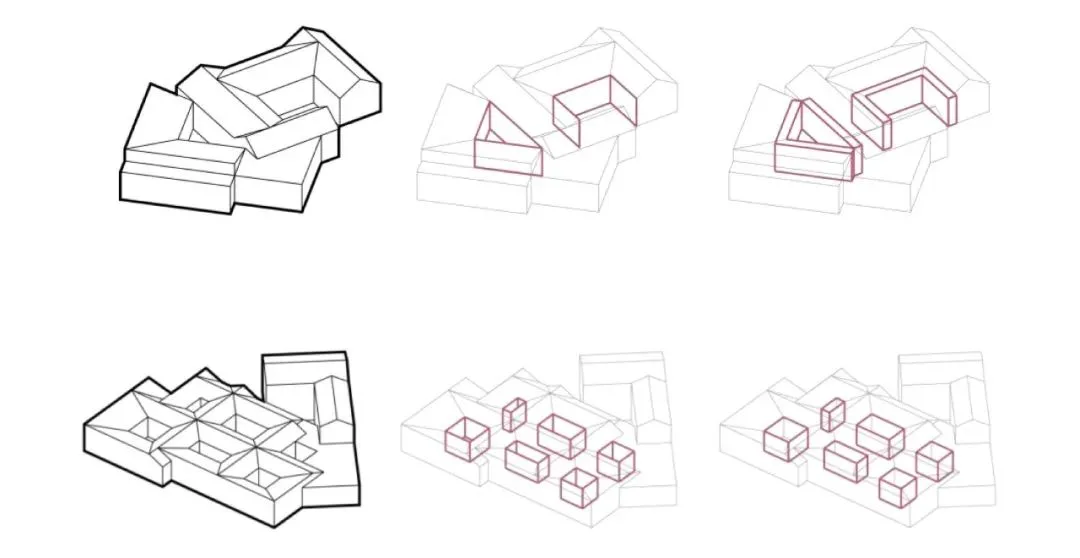
△ Spatial Inversion
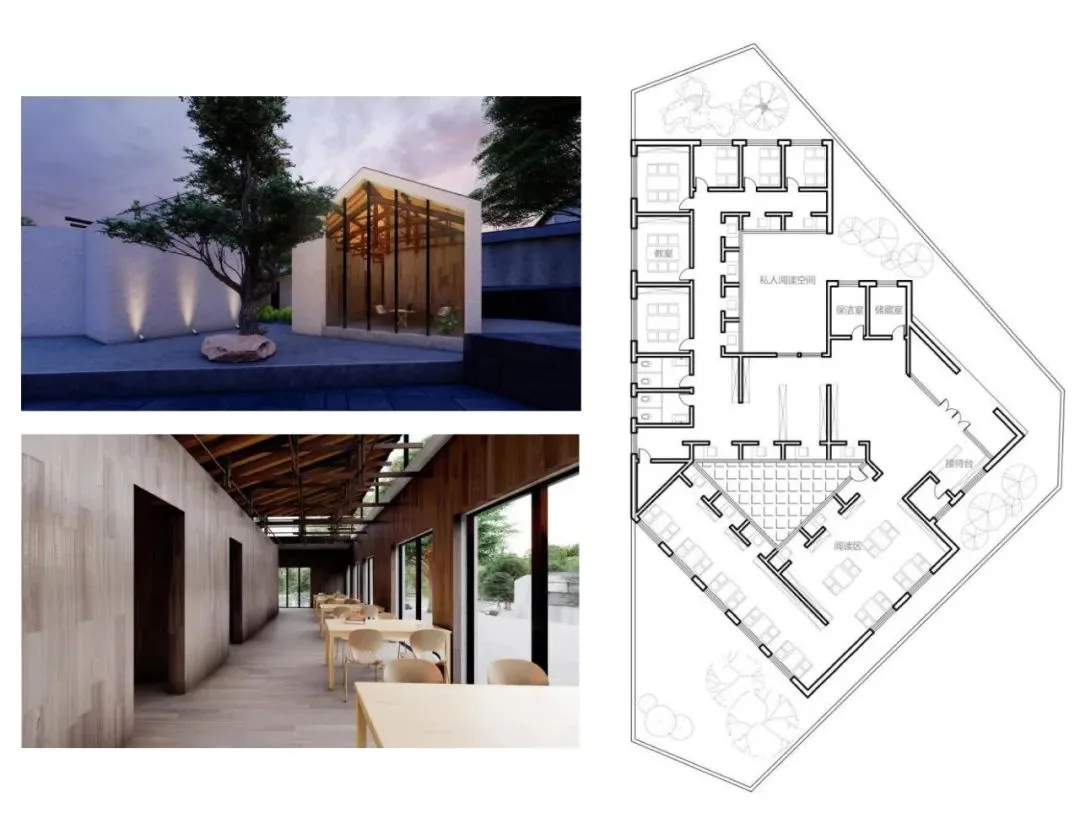
△ Library
Generous eaves provide shade for social activities. The roof centers resemble “core tubes” housing bathrooms, water, and storage.
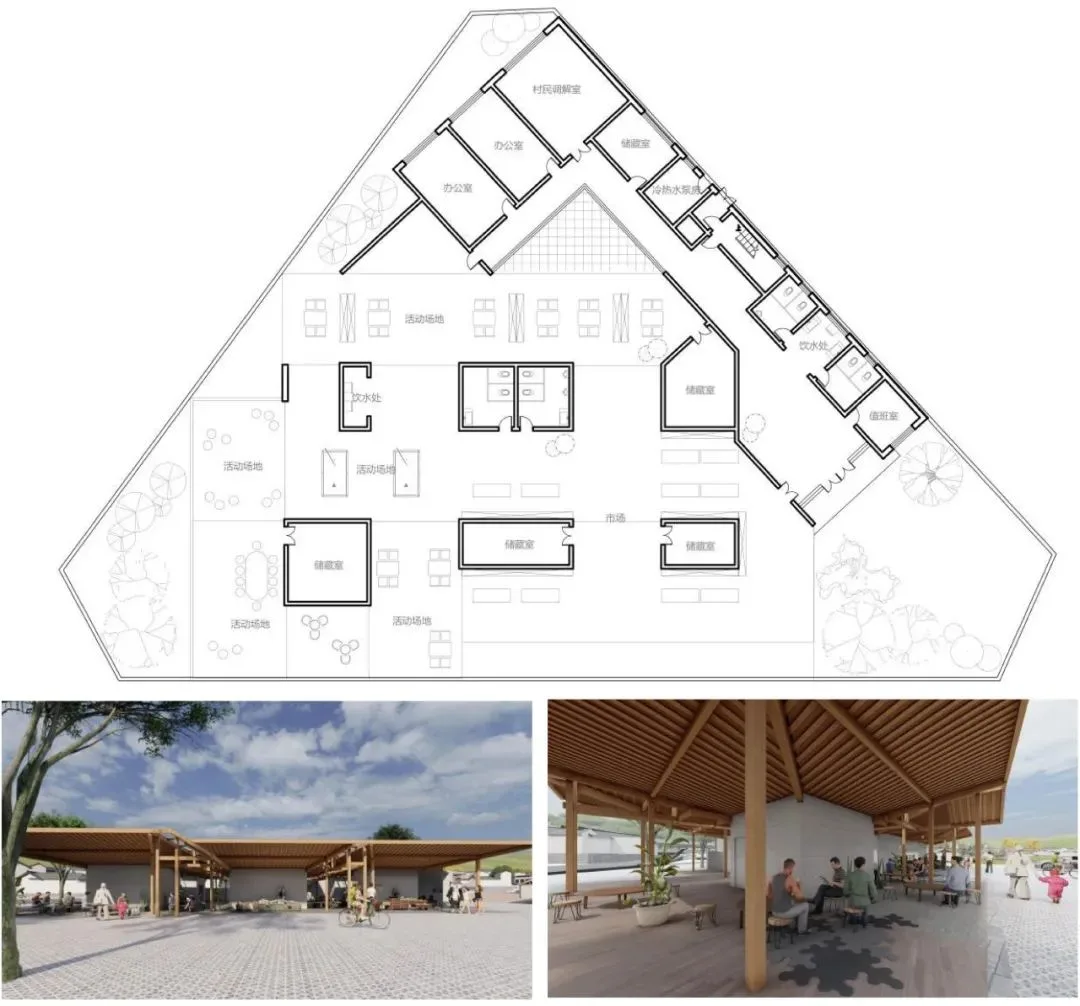
△ Village Activity Center
Traditional Chinese dwellings should not only symbolize cultural heritage but inspire contemporary design. This study on Minnan ancient houses employs spatial analysis and shape grammar-based automated generation to inform new rural construction and preserve traditional culture.
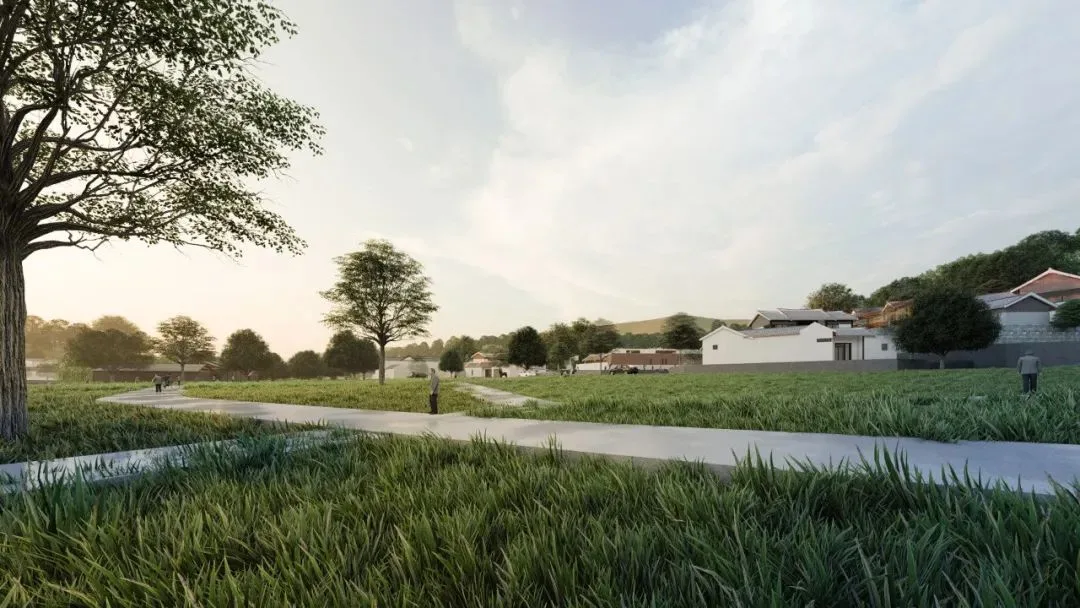
△ Design Rendering
-02-
Structure, Space, and Body: Reconstruction of the East Side Area of Nanputuo Temple, Xiamen
“Structural beauty lies within reasonable proximity.” — Pingjing Shansheng
Structural design master Yoshikatsu Hirai, collaborator on projects like Yoyogi Gymnasium, highlights that structural beauty balances technical rationality and conceptual harmony. This structure-oriented design embraces “balance” as a guiding principle, deepening understanding of place, structure, and space.
Research Phase: Balancing Structure, Space, and Body
Research
Structure shapes space, and misunderstandings arise when structure and space are unbalanced. From bodily perception’s perspective, this study investigates how perception influences structural and spatial design, aiming to harmonize both through bodily intervention.
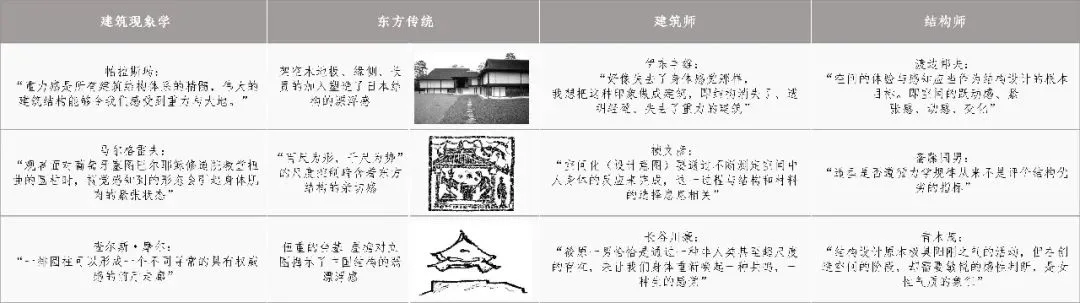
Observing Eastern architecture, especially Japanese, reveals eight bodily perception tendencies in structural design, grouped into four categories and analyzed historically.
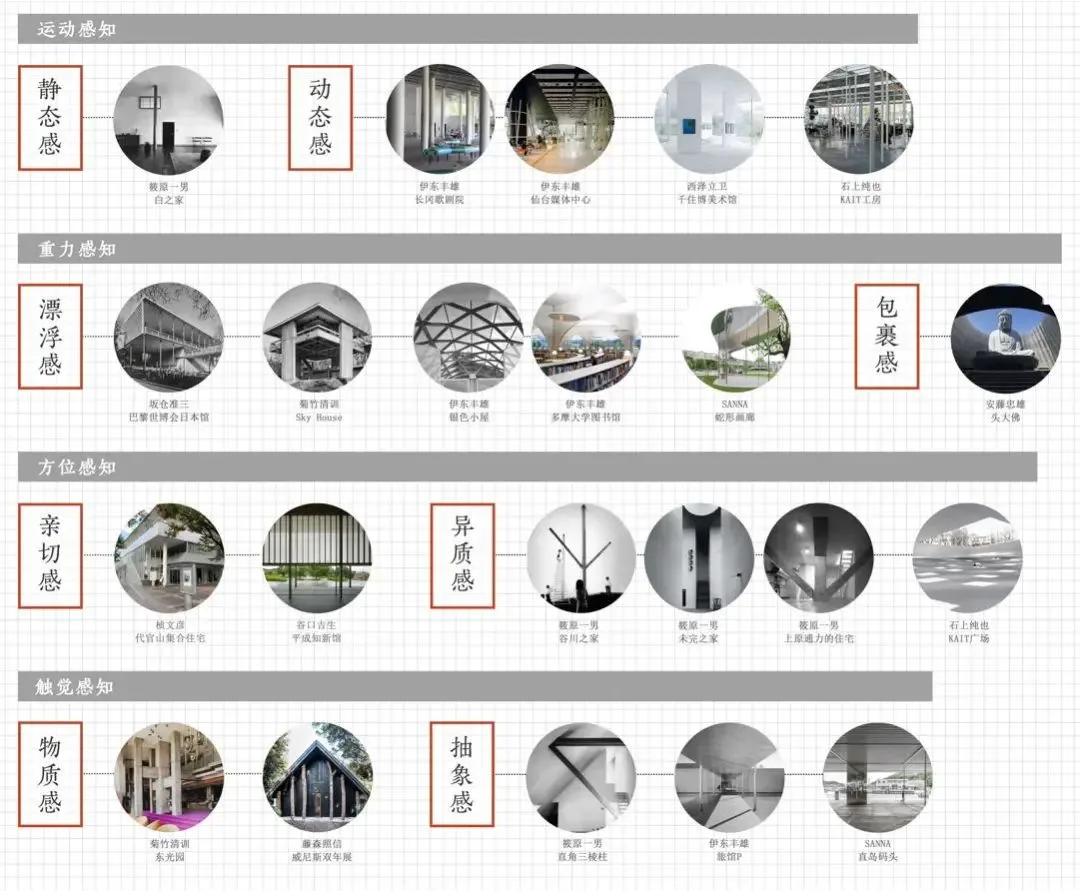
The study further explores perception-guided structural design, examining structures at macro, meso, and micro levels to initiate design.
Planning Phase: Balancing Architecture, History, and Nature
Planning
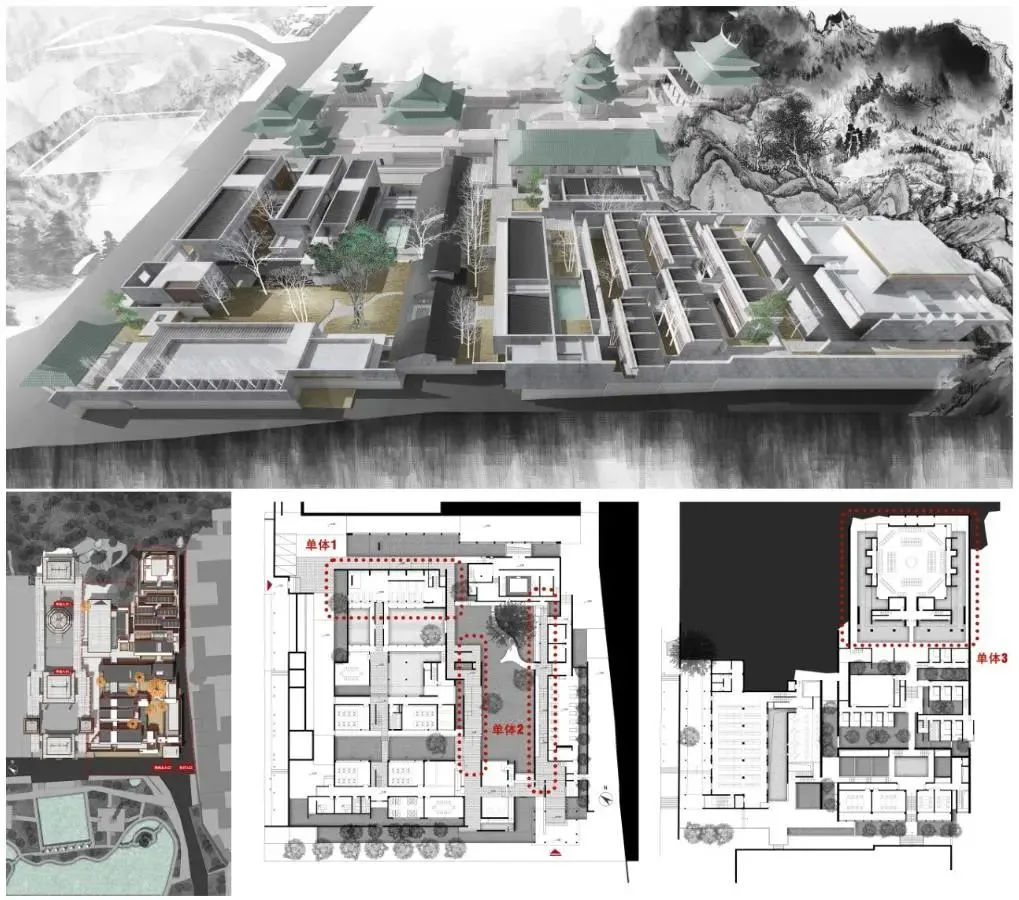
Based on a real project brief, the design rebuilds the vacant east side of Nanputuo Temple in Xiamen to support monks’ teaching, dining, reception, and meditation. With rich history and forest environment, planning adheres to balance, fostering bodily perception.
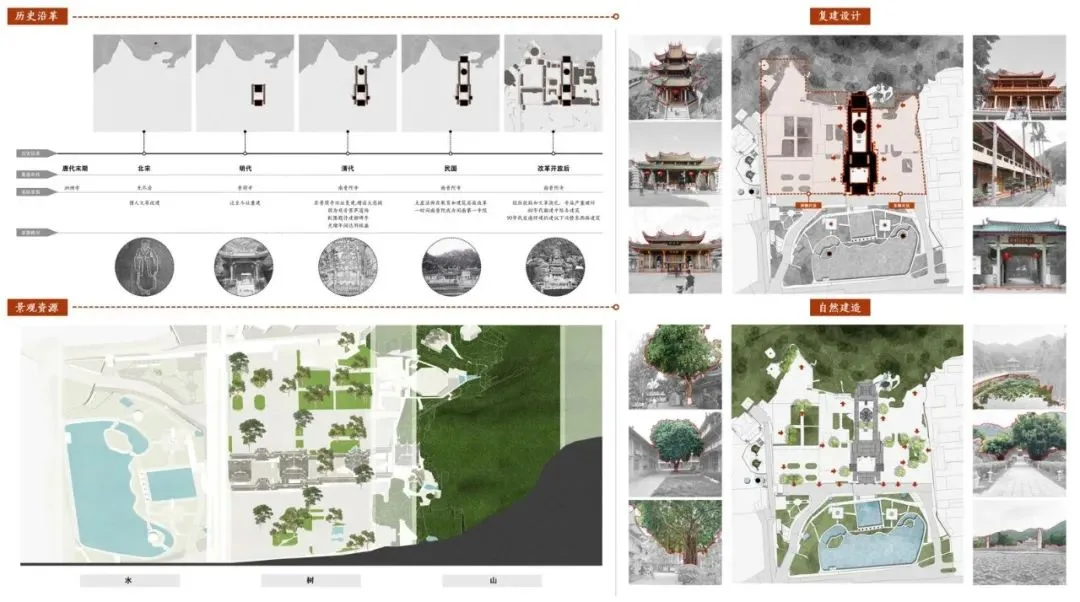
Key site feature: proximity to historical buildings on the main axis. The design employs a low-key, concise approach maintaining historical balance by limiting building size and height, and creating courtyard views emphasizing historical dominance. Adjusted height differences and visual connections enrich the experience.
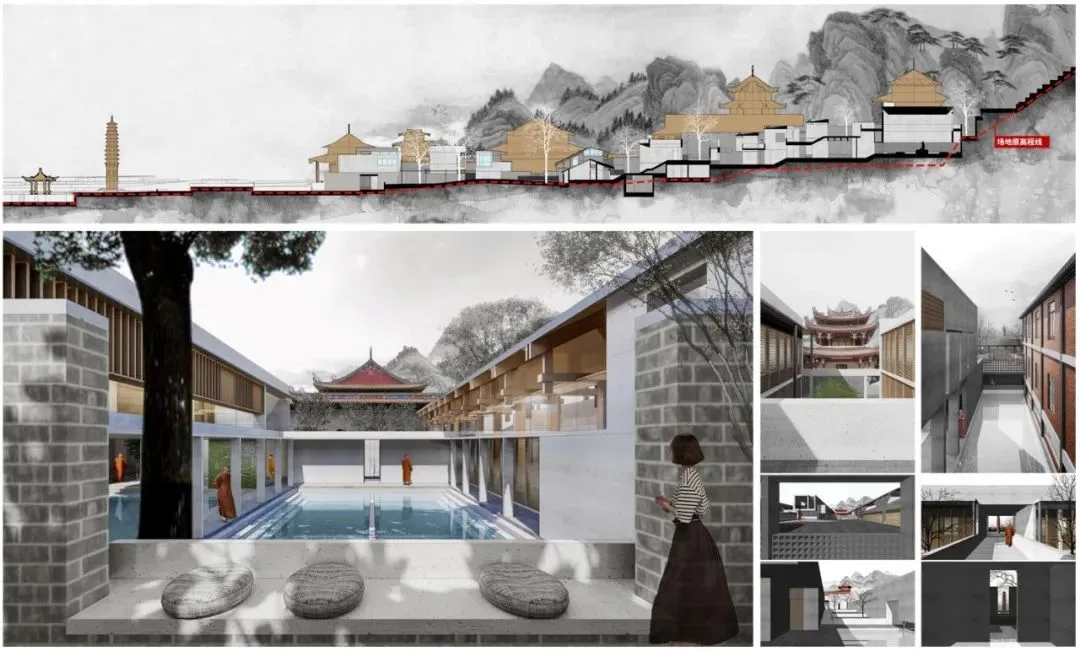
The site features water, trees, and mountains from south to north. The design integrates these landscapes into architecture:
- Water: Transparent grille facade opens toward water.
- Trees: Preservation of ancient trees, with a large banyan at the center serving as landscape core, linked by corridors, courtyards, roofs, and terraces.
- Mountains: Horizontally framed mountain views created through framing and over-white techniques, with controlled visibility to accentuate spatial climax.
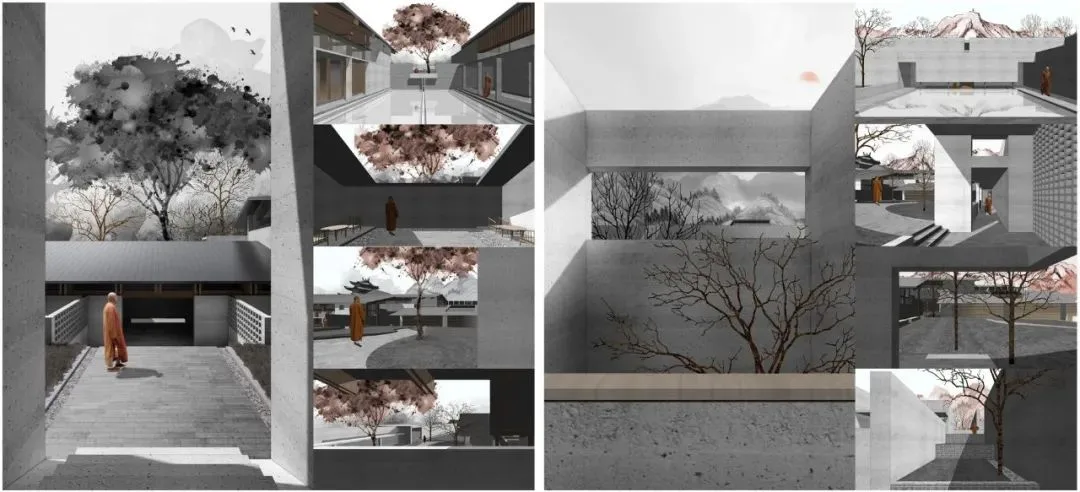
The architecture also balances regional elements like wind, rain, and materials.
Building Phase: Balancing Bodily Perception and Connection
Construction
Three buildings are designed for detailed development. The challenge is the smooth transition from planning to individual units. Structure-oriented design guides structural selection and spatial layout, yet symbolic structures can conflict with planning. The key is aligning place perception with the planning-structure balance.
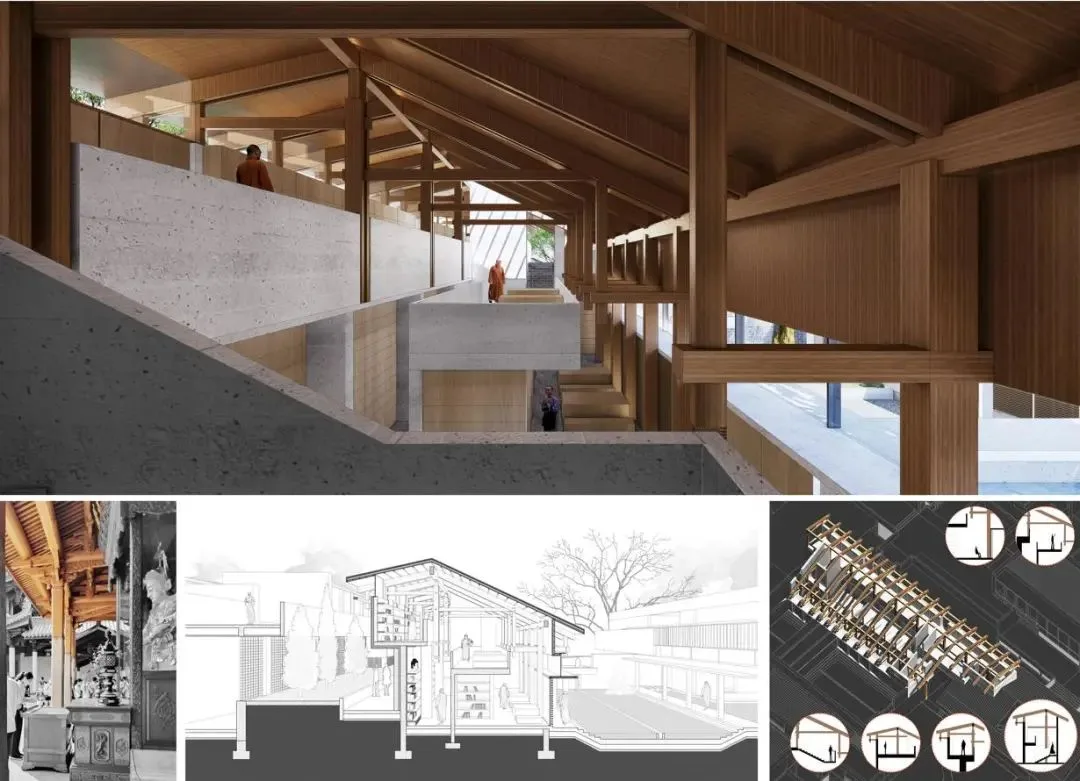
Unit 1: Public Reading Space Between Mountains and Rivers
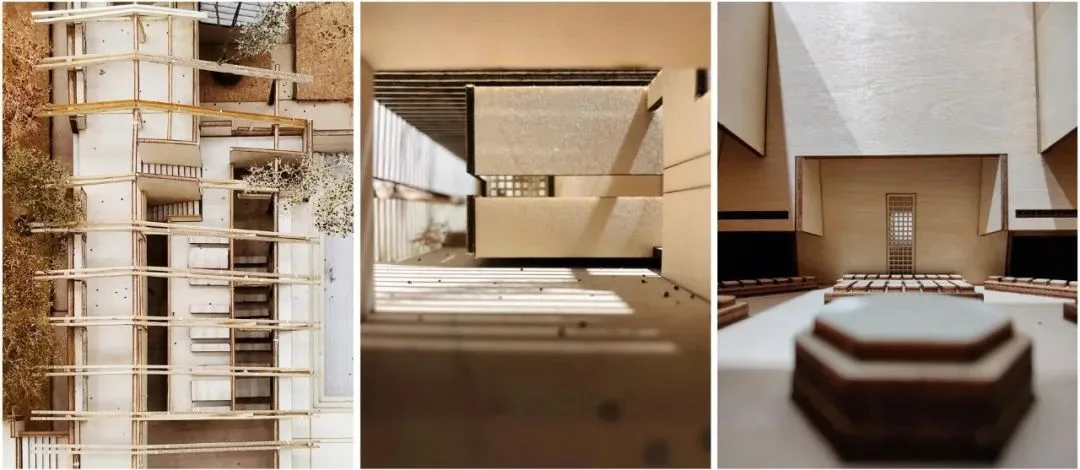
Inspired by the roof truss floating on stone pillars along the central historical axis, the design combines wood and shear wall structures, controlling scale and light to create varied bodily perceptions across three levels: enveloping lower book stacks, floating interlayer reading, and enveloping upper gallery, all transitioning visually from water to mountain scenery.
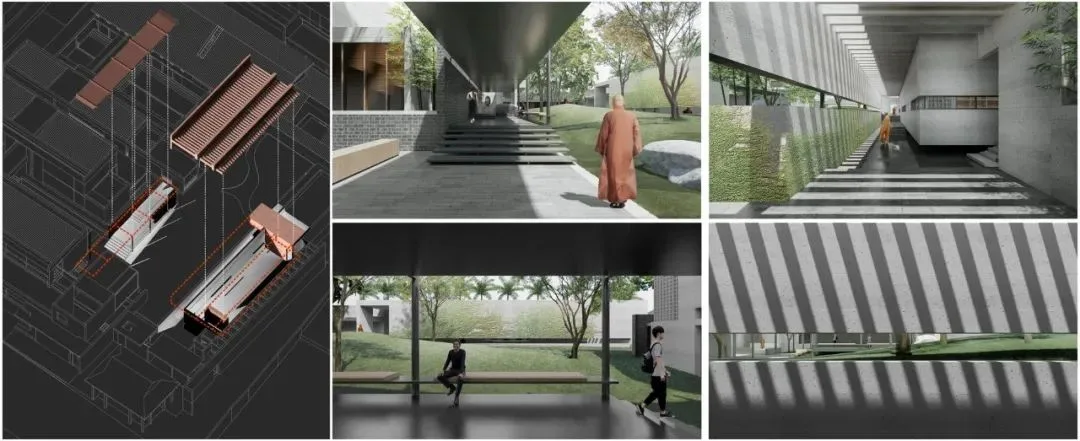
Unit 2: Facing Monk and Tourist Corridors
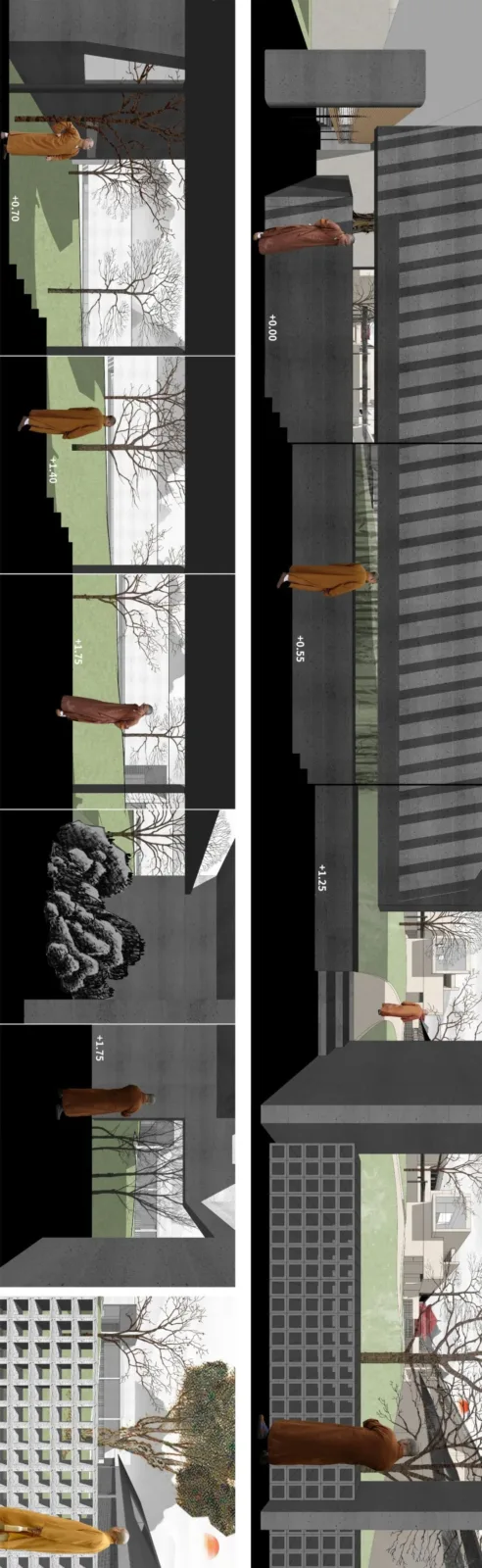
Perception arises from a preserved landscape belt between corridors, with undulating terrain offering distinct experiences for pedestrians. The tourist corridor uses lightweight steel at low elevations, evoking floating sensations during ascent. The monk’s corridor employs gym-like structures with suspended concrete walls and retaining walls to limit views, creating an enveloping atmosphere. Contrasting the two satisfies diverse spiritual needs and enriches corridor experiences.
The following images are best viewed in landscape mode. Please rotate your phone 90 degrees.
Rotate your phone back.
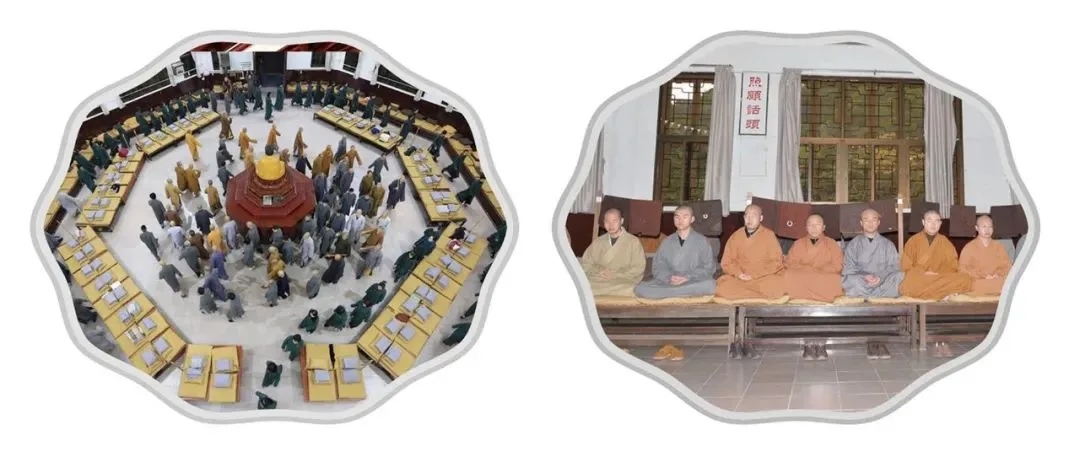
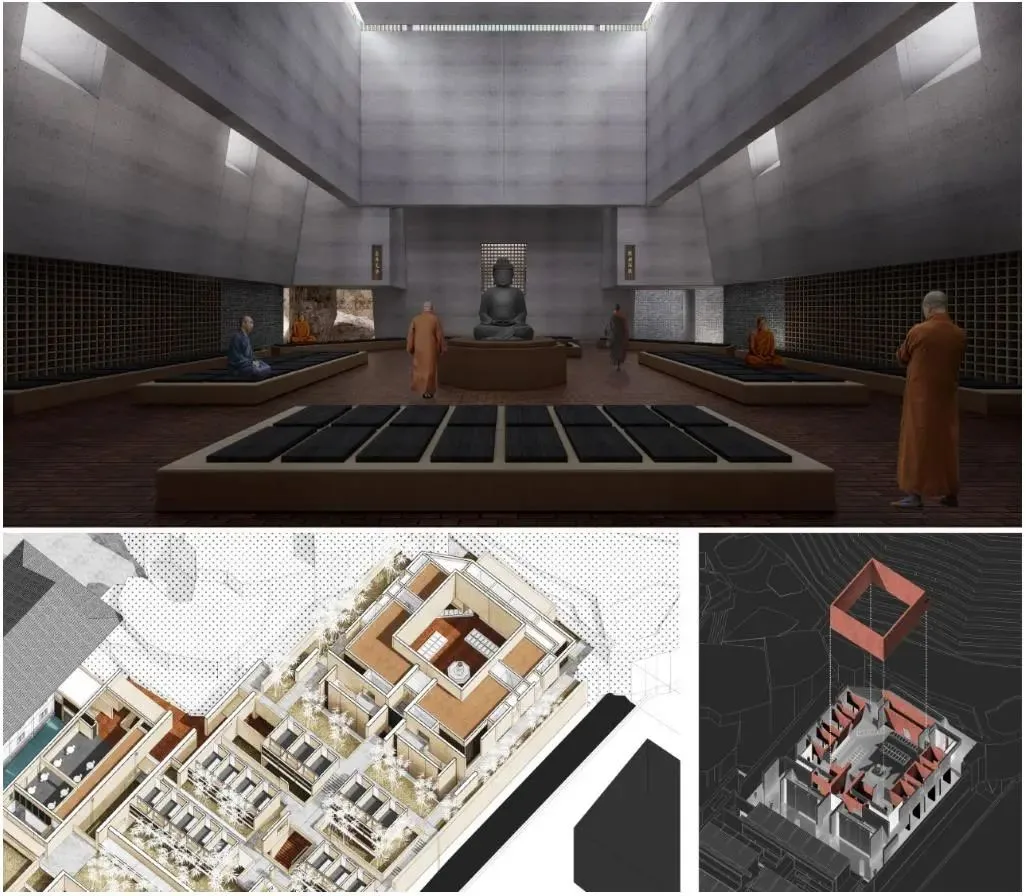
Unit 3: Public Reading Space Inspired by Old Zen Hall
This unit draws on the dim, quiet atmosphere of the old Zen hall to create a strong body-wrapping sensation. Using a reinforced concrete deep beam structure echoing traditional coffered ceilings, inward sloping walls provide pressure and enclosure. High windows between structures introduce sacred light, with detached deep beams and open corners enhancing openness.
Conclusion
Summary
Reflecting on the final design journey—from critiquing structural rationality to embracing “strong structure” concepts—reveals the limitations of singular approaches. I extend sincere gratitude to Professor Zhou Kai for his invaluable mentorship and guidance throughout this process.
-03-
Generation Design and Research of the Suzhou Theatre Art Museum
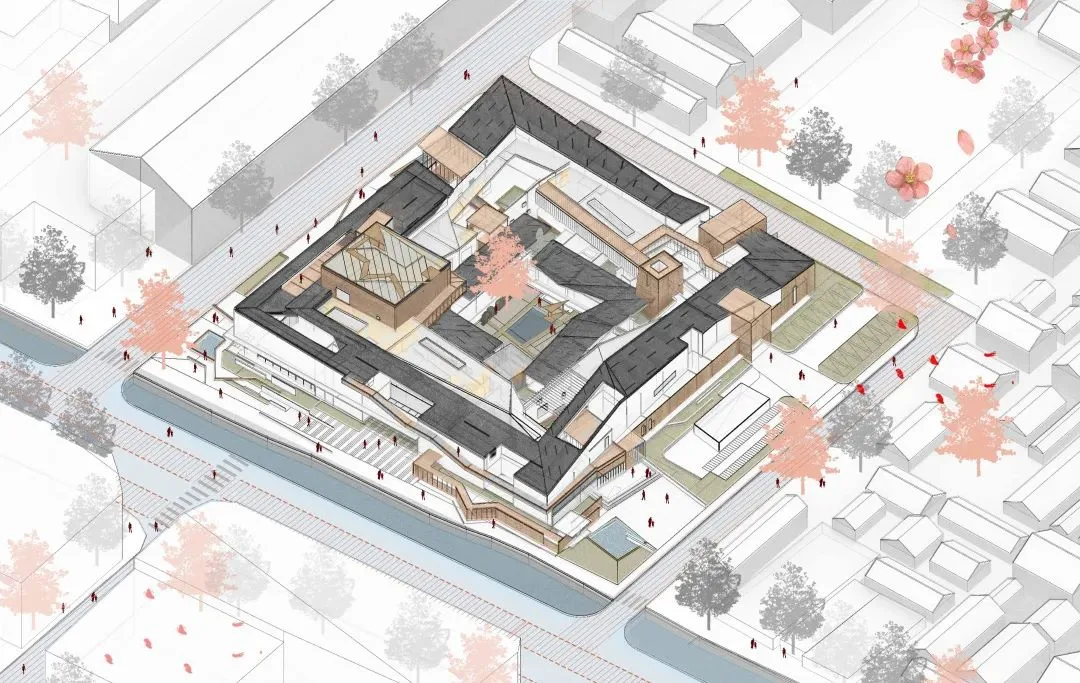
Classical Chinese gardens feature dynamic topographies, hidden spaces, alternating rhythms, and layered views, offering unique visual experiences. Despite extensive research, their design has often been characterized by “endless variation and no fixed form.” This project explores how to uncover objective design mechanisms and develop effective processes to assist designers.
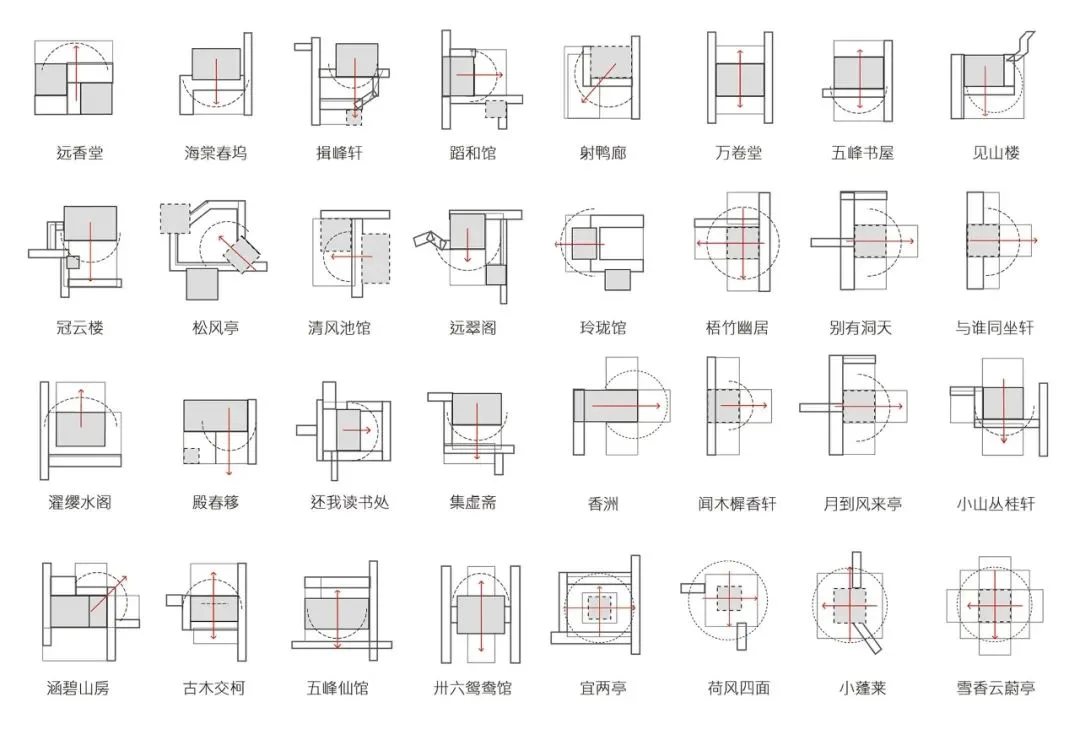
The Flat Prototype of Suzhou Gardens
Design Objectives
Goals
The project focuses on three aims:
- Classify and quantify garden morphology to identify key factors influencing classical garden layouts, extracting underlying design mechanisms.
- Develop programmatic tools for personalized garden generation by controlling core variables, enabling interactive multi-solution design.
- Semantically expand and reinterpret existing plans to create modern, livable garden spaces, situating the garden experience at the Suzhou Theatre Art Museum to broaden cultural access.
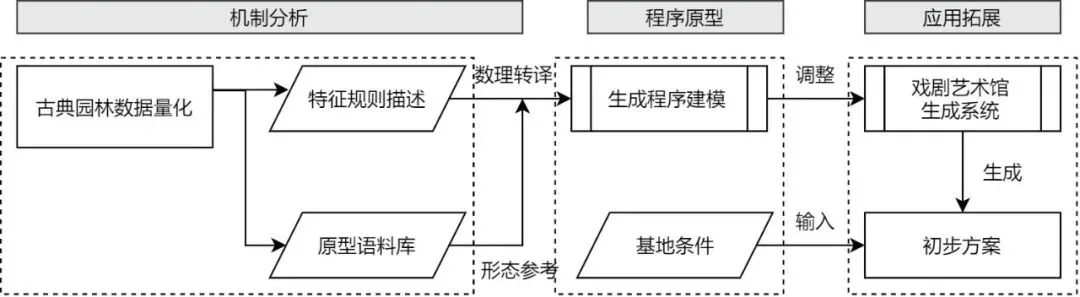
△ Design Process
Research Process
Design Methodology
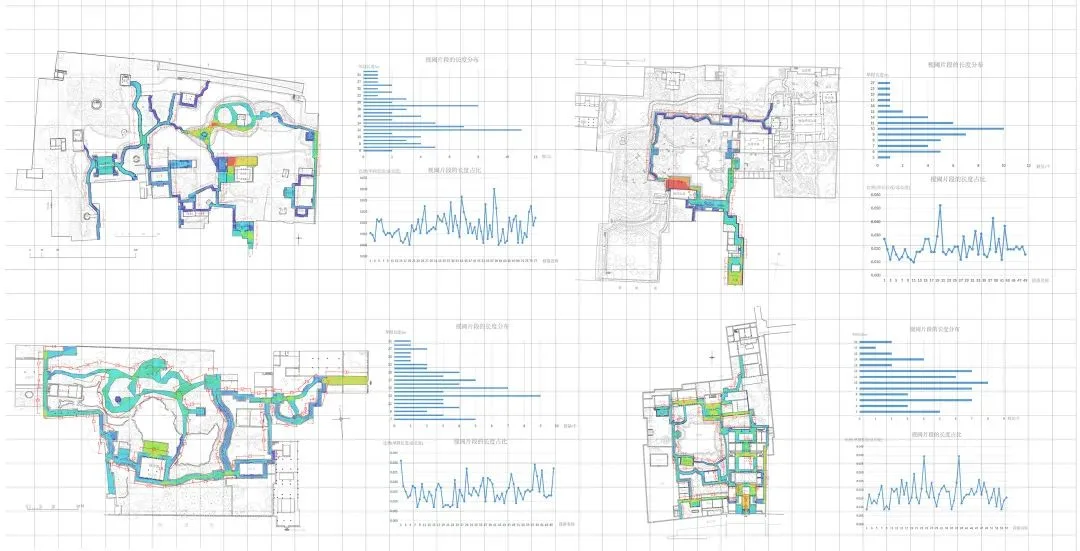
Quantitative Analysis of Suzhou Garden Layouts
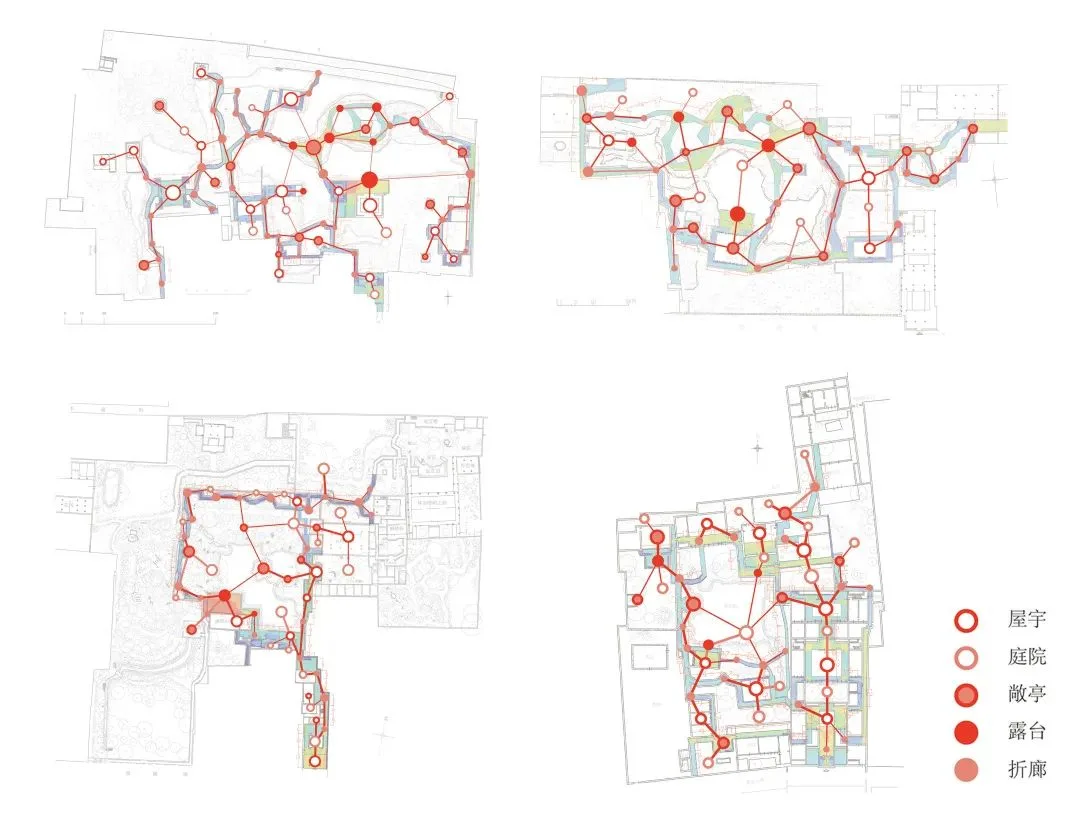
Examining representative classical gardens—the Humble Administrator’s, Lingering, Webmaster’s, and Joyful Gardens—reveals rich tourism experiences and design excellence. A comparative study of spatial layouts and architectural nodes abstracts types and features, establishing a garden architecture corpus to inform future design.
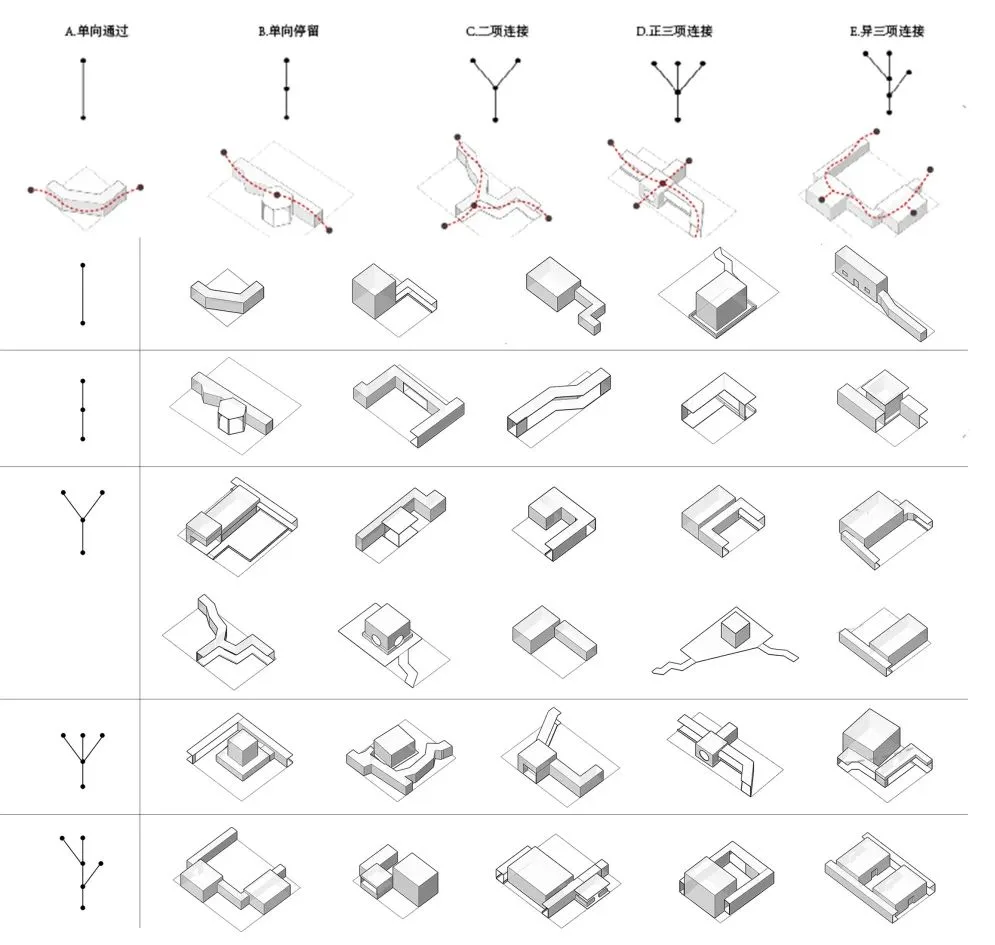
Analysis of Garden Architecture Nodes
Garden fragments show rich spatial features creating diverse landscape experiences. The new plan aims to replicate this with intersecting, enclosing paths, forming a platform for immersive narratives.
Generation Experiment
Experimentation
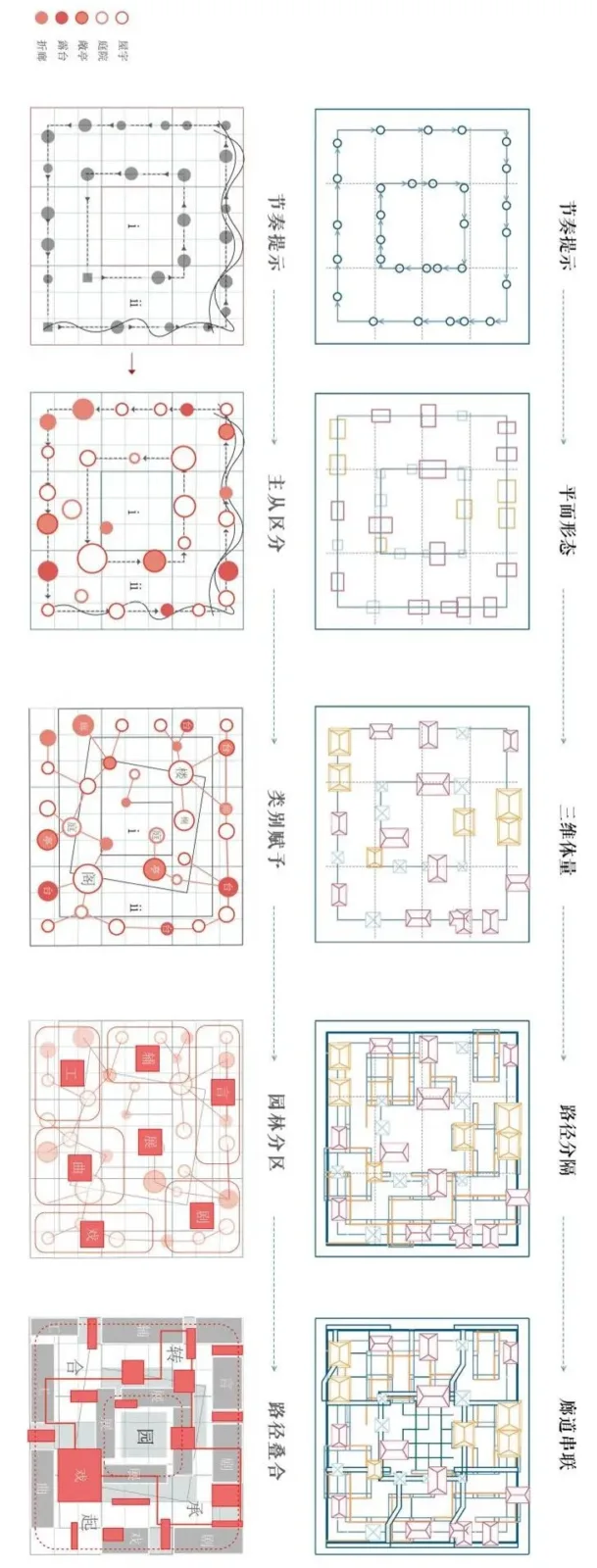
Using architectural statistics, the author conducted form generation experiments:
- Path rhythm points were derived separately from inner and outer loops.
- Plan shapes were generated based on building types centered on rhythm points.
- Plan shapes were adjusted per case aspect ratios.
- Building volumes with roofs were produced according to height statistics.
- Main corridor and pedestrian paths were generated on a 10m × 12m grid.
The following images are best viewed in landscape mode. Please rotate your phone 90 degrees.
Rotate your phone back.
Base Environment
Location
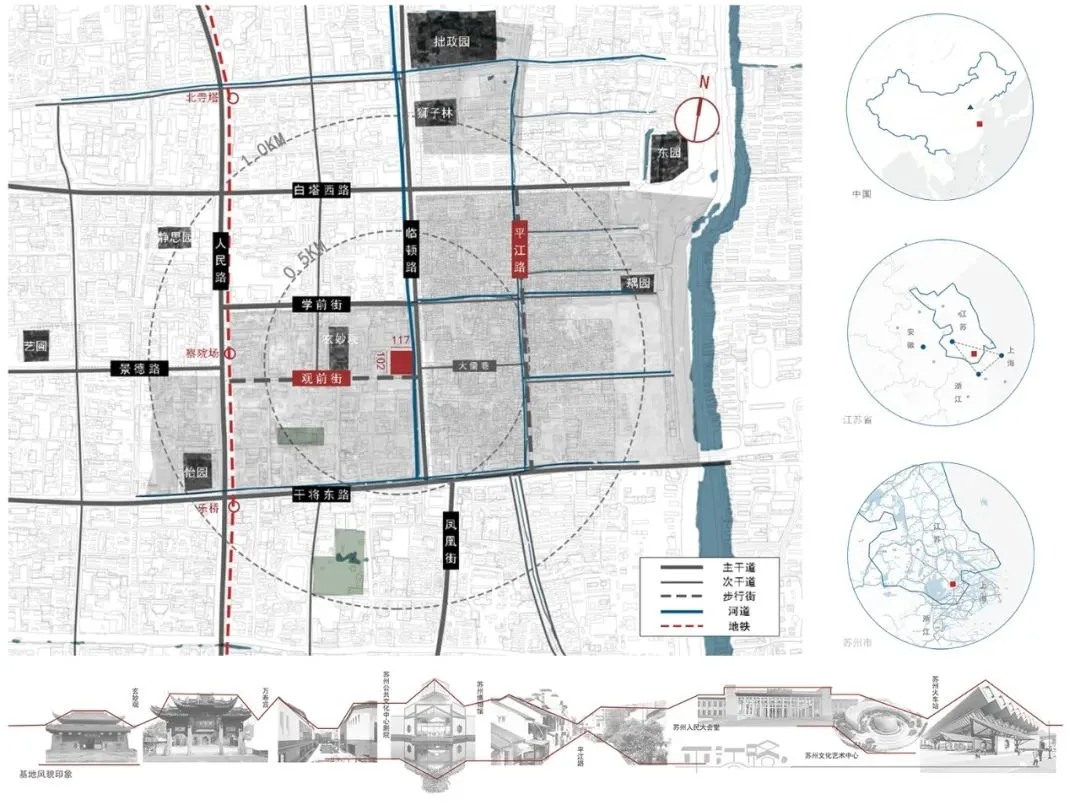
△ Base Location and Style
The site is in Suzhou’s Gusu District at Lindun Road and Guanqian Street, 3.3 km from Suzhou Railway Station, with excellent public transport. The southern road, Guanqian Street, is a bustling 780m commercial zone.
Function Planning
Functional Analysis
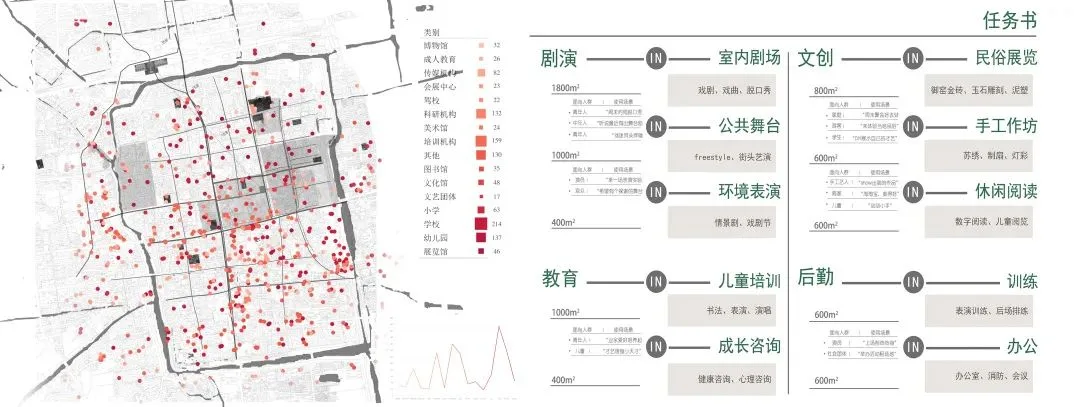
△ Functional Statistics and Planning
Analysis identified 16 cultural categories and 1,185 facilities in Gusu District. Despite many cultural sites, functions are traditional and limited. The plan centers on theater performances, integrating cultural creativity, education, and exhibition functions to diversify and enrich the commercial surroundings.
Generation Process
Form Creation
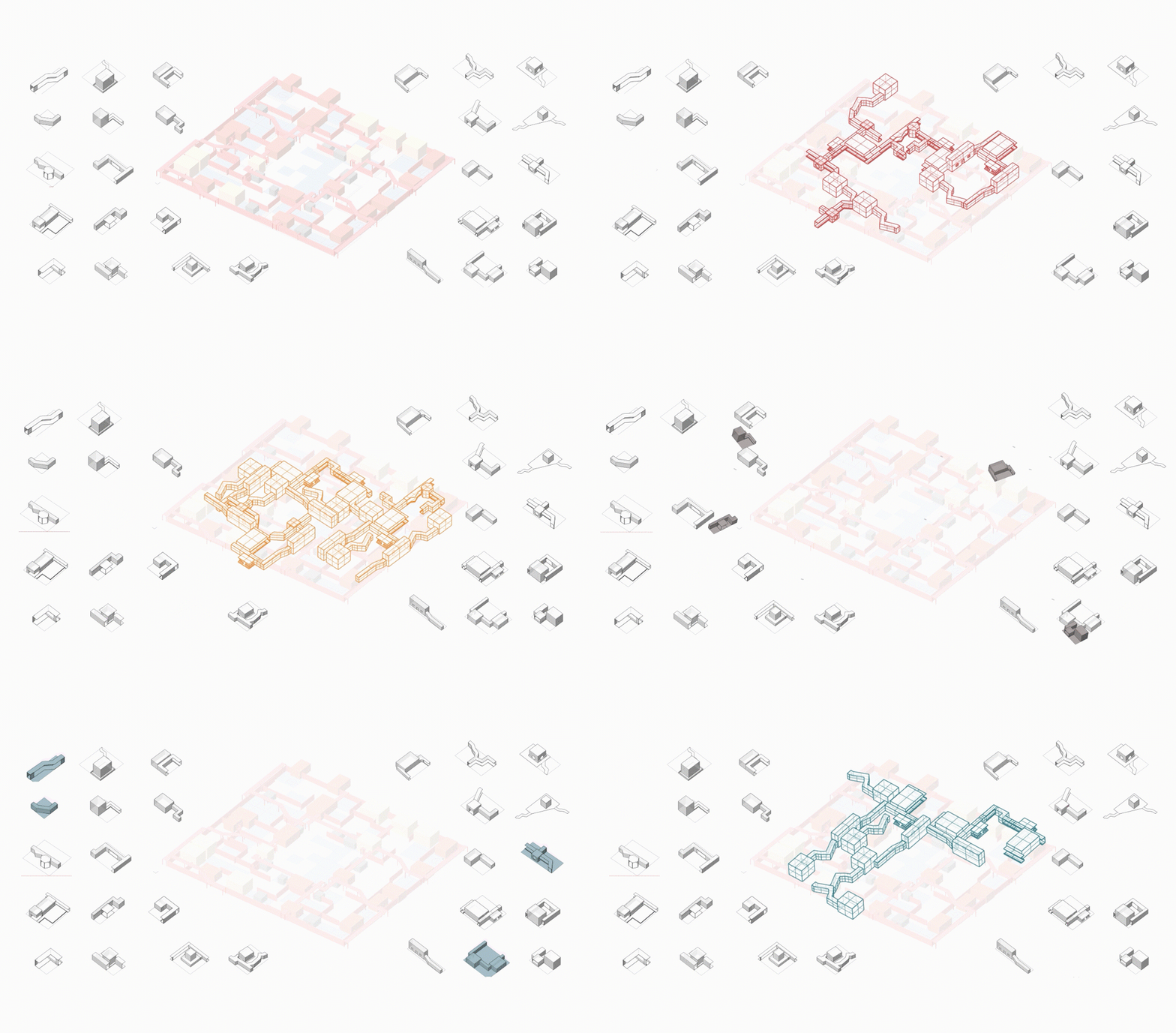
△ Aggregation Process
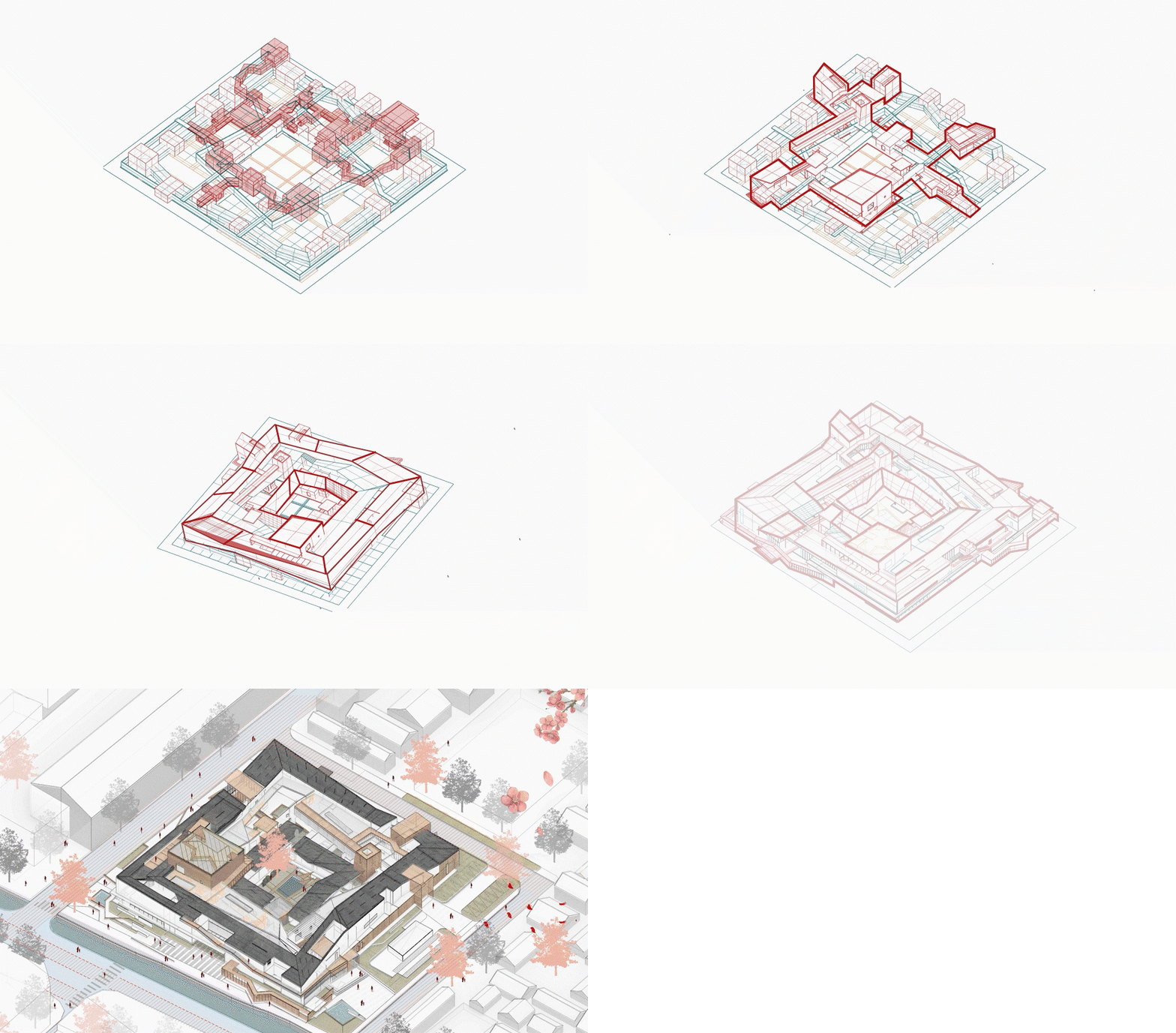
△ Shape Generation
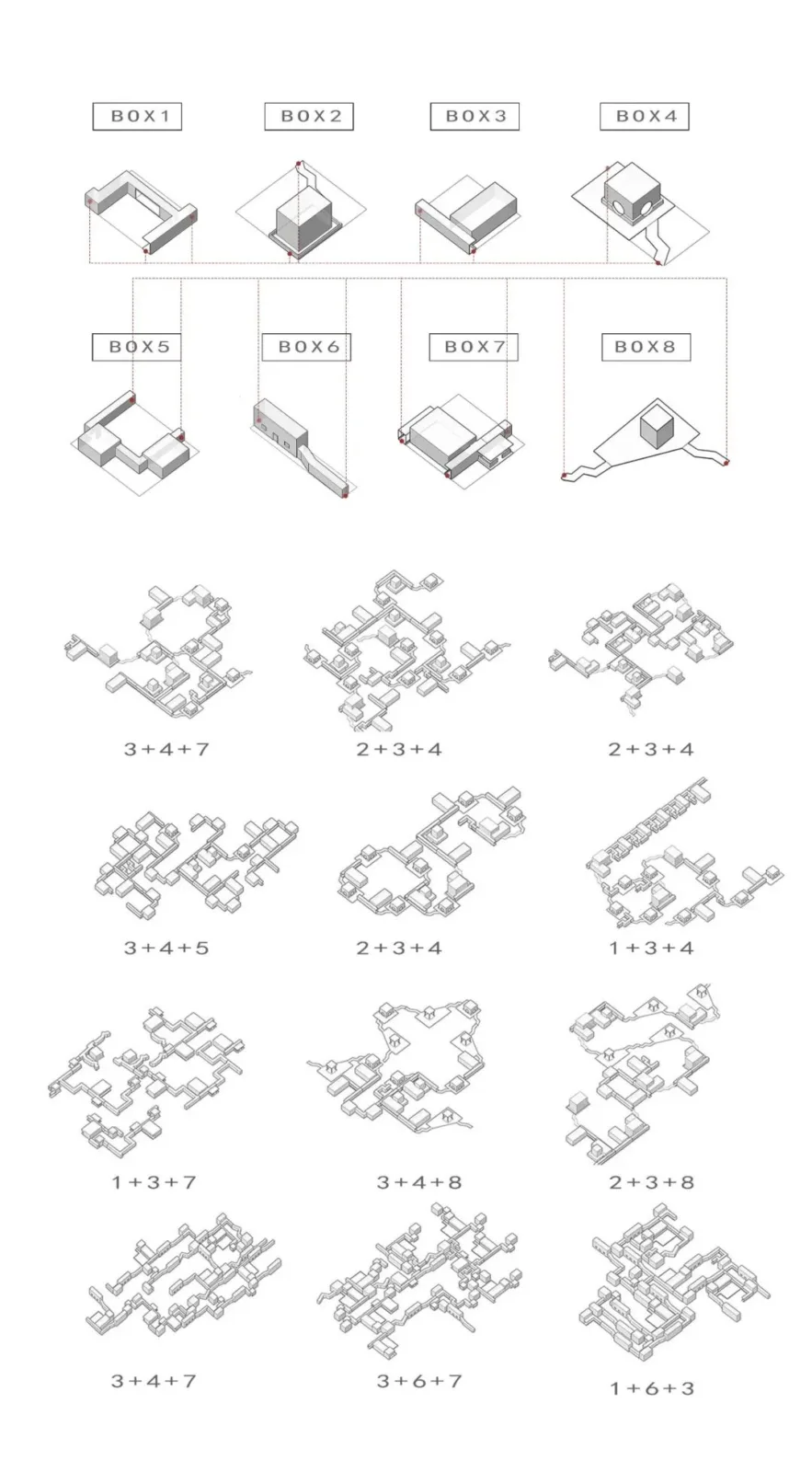
△ Generated Aggregations
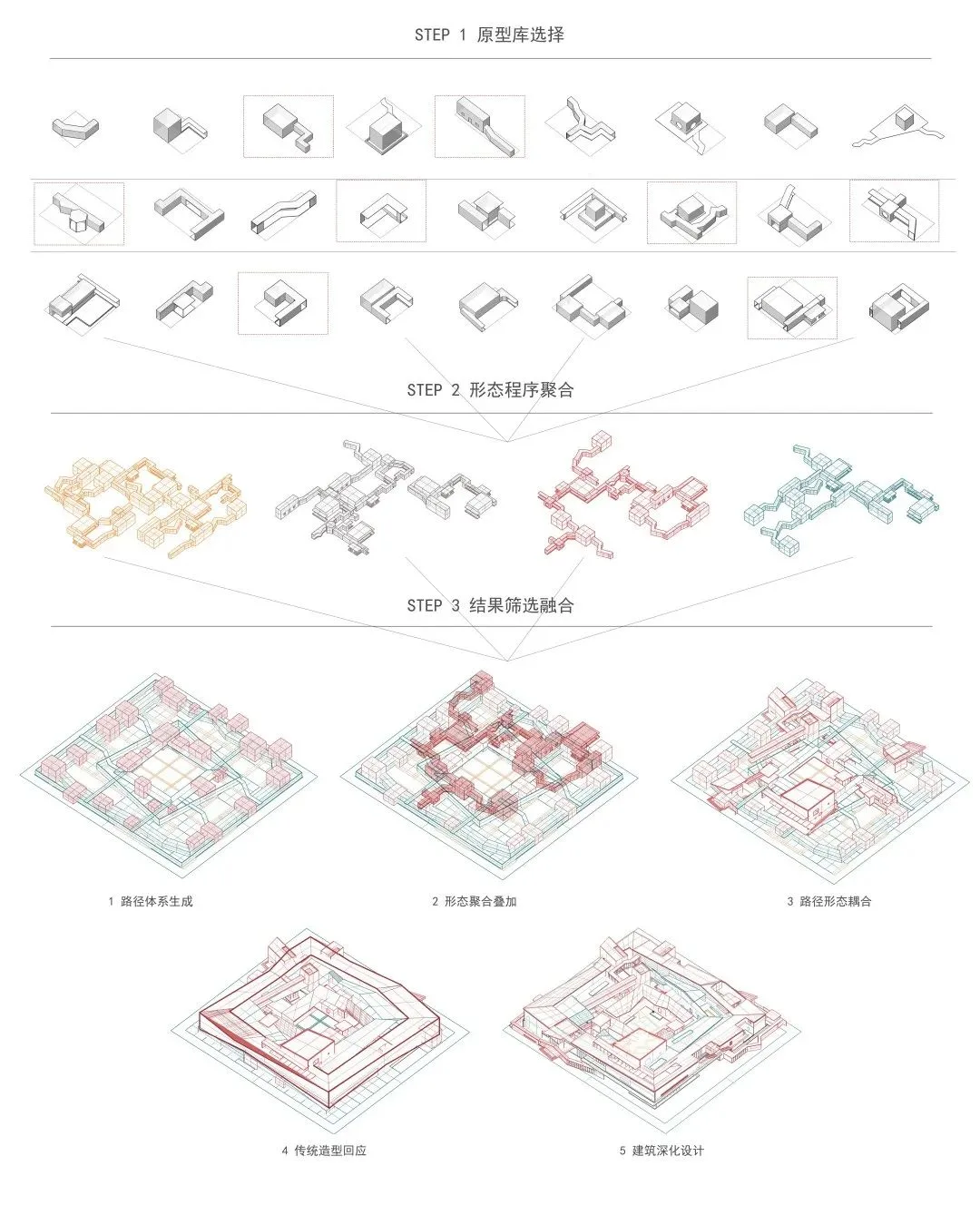
Following spatial planning concepts, plane layouts are computationally derived:
- Select garden node building prototypes to integrate into aggregation programs.
- Define connections between prototypes, run programs, and obtain multiple aggregations.
- Select optimal design results and overlay onto paths and architectural frameworks.
- Refine based on function, designing roofs and facades aligned with local styles; finalize site design.
△ Additional Simulation Results
These prototype-based aggregations generate diverse 3D forms by varying prototype types, quantities, and connection rules. Despite topological similarities, morphological variety emerges. This bottom-up approach explores form potential independent of function, leveraging computational power to enrich creativity.
Design Outcomes
Final Results
△ Design Outcomes
The layout uses “streamline node” organization, with a twisting “migratory route” connecting spatial nodes with distinctive functions, enriching the exhibition experience.
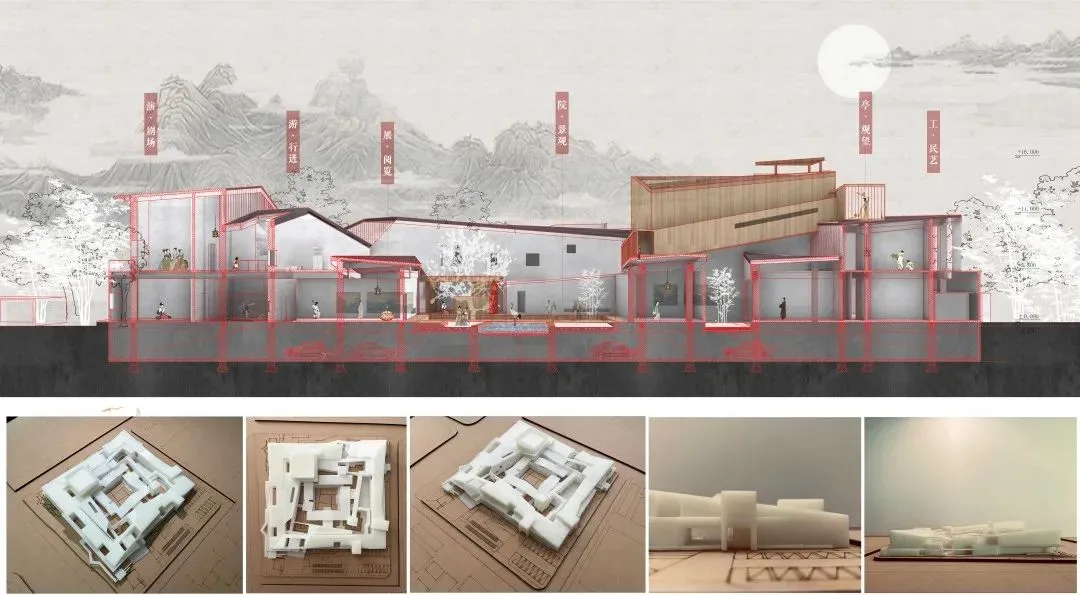
△ Profile
The plan’s three main functional areas are theater performance, exhibition, and office. Theater flows follow an outer ring, guiding audiences through contemporary and traditional performance units. The inner building layers host exhibitions and reading spaces, providing gathering areas.
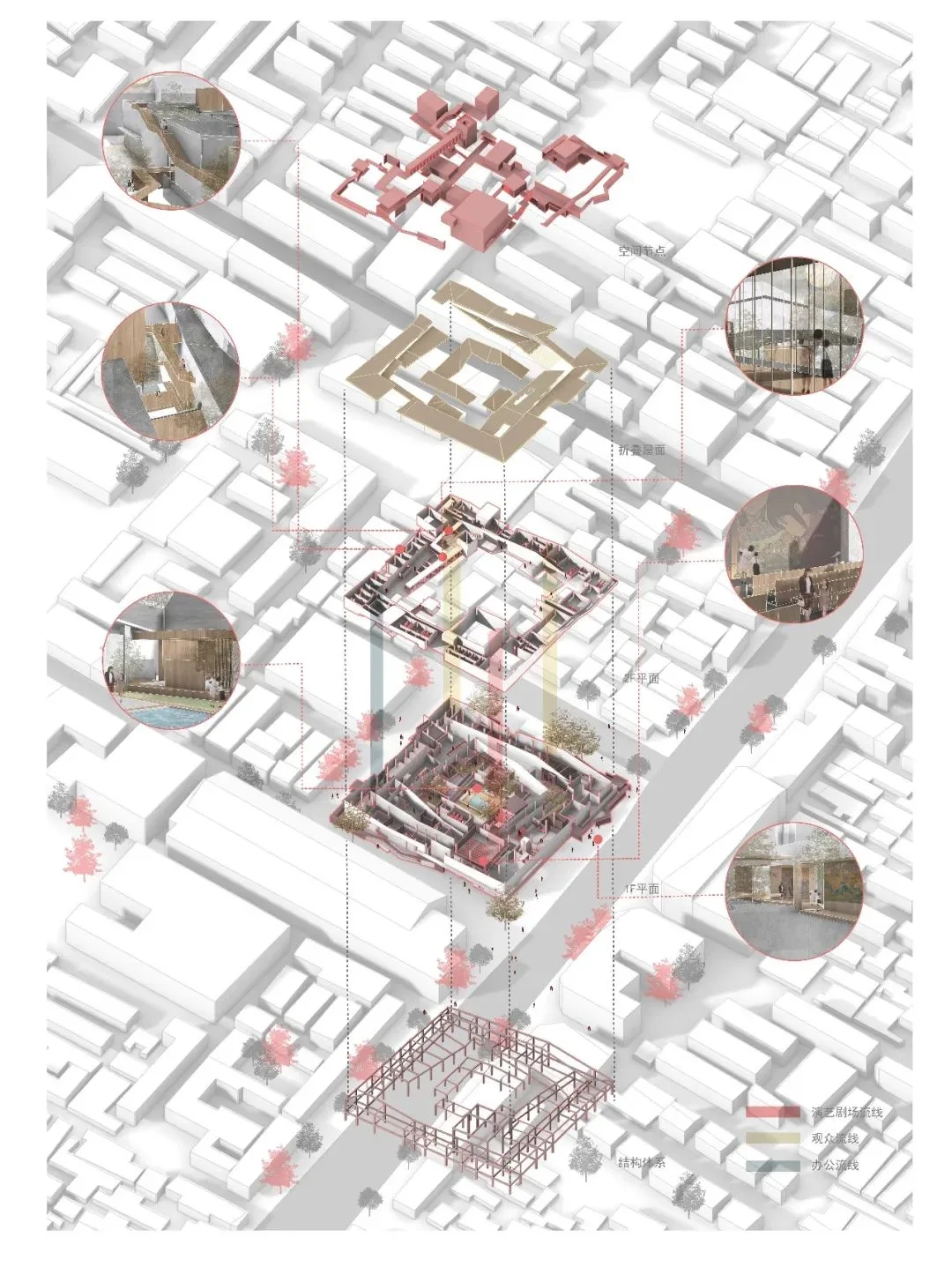
△ Decomposition Axis Measurement
Spatial openings and closings create changing experiences, with “corridors” mimicking garden pathways and elevated stages supporting public activities. Roof climbing mimics garden height variations.
The following images are best viewed in landscape mode. Please rotate your phone 90 degrees.
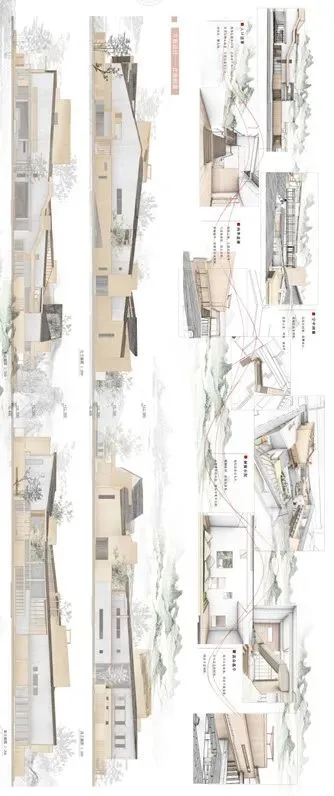
Rotate your phone back.
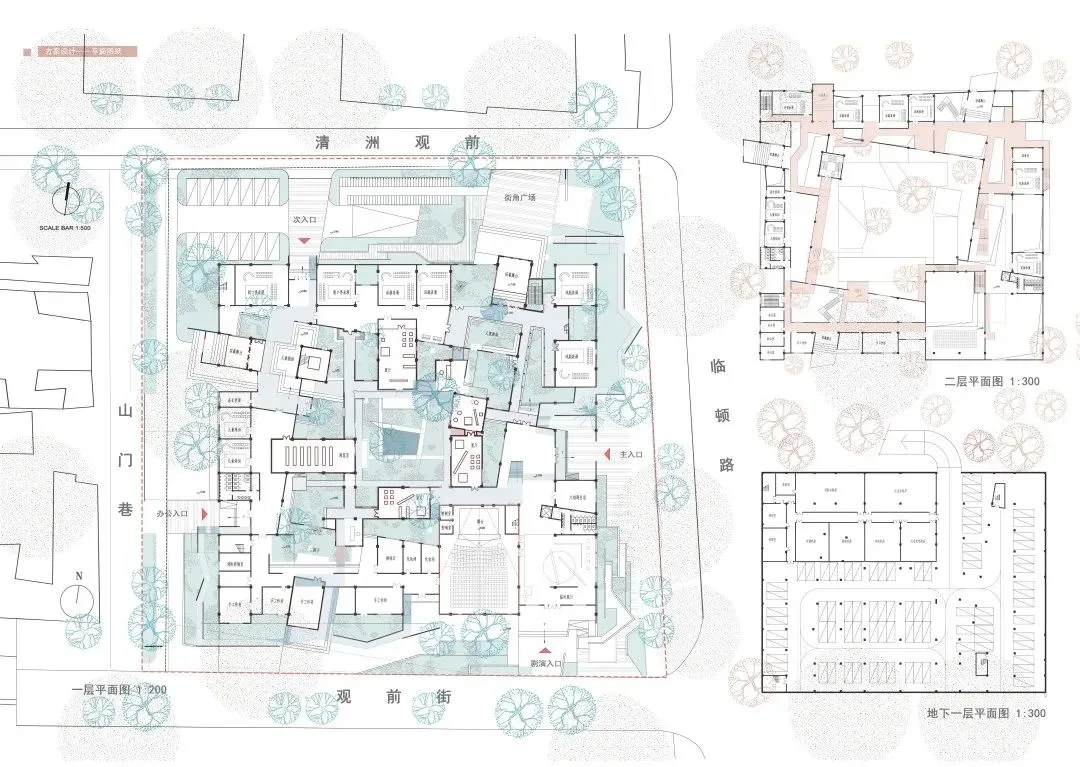
△ Graphic Design
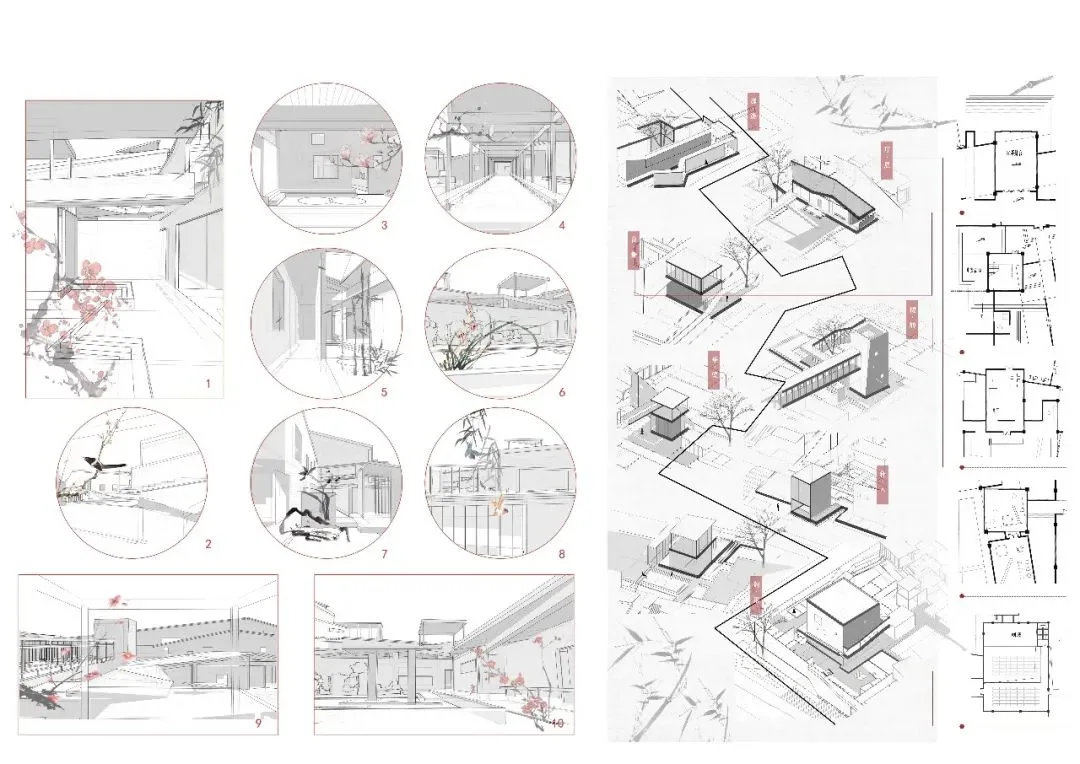
△ Scene Perspective
Applying classical garden design principles—landscape borrowing, framed views—creates diverse courtyard spaces with layered spatial hierarchies, interweaving near, medium, and distant landscapes seamlessly.
Summary
Conclusion
Classical Suzhou gardens are complex systems influenced by many interacting elements. Understanding requires scientific analysis alongside subjective experience. Utilizing data analysis and generative tools, this plan recreates the essence of classical garden design—orderly paths, vivid scenes, and distinctive structures—enhancing subjective experience and design satisfaction.
-04-
Enhancing Building Openness via Continuously Changing Public Spaces: Discovery Partners Institute, University of Illinois, USA
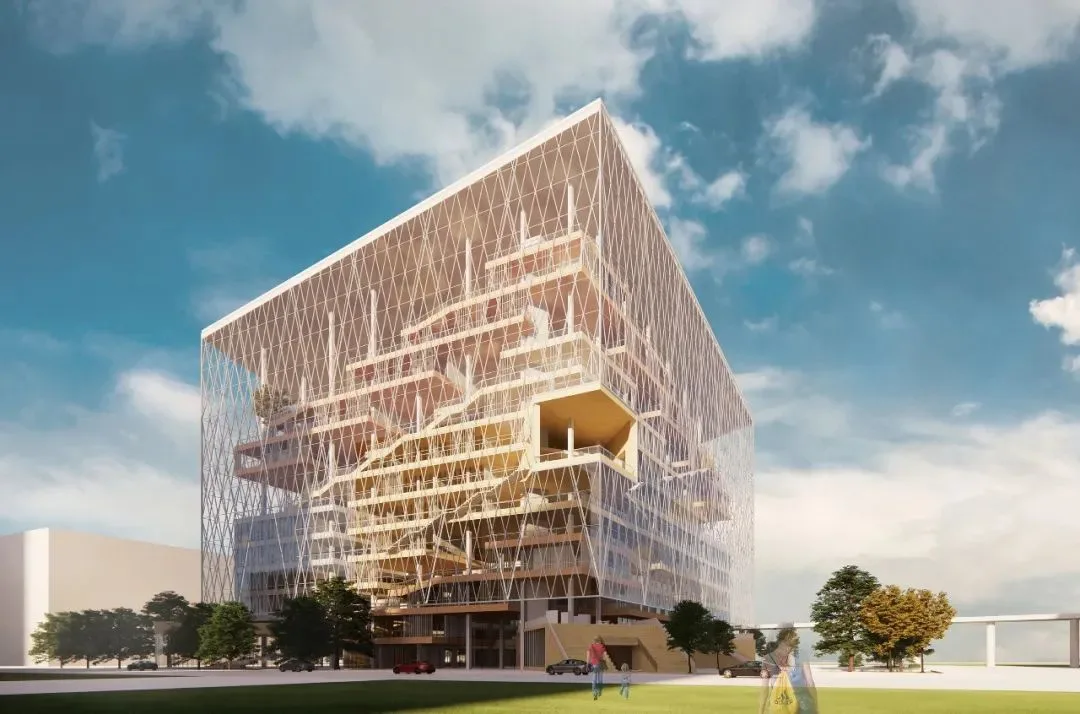
Solution Overview
Project Summary
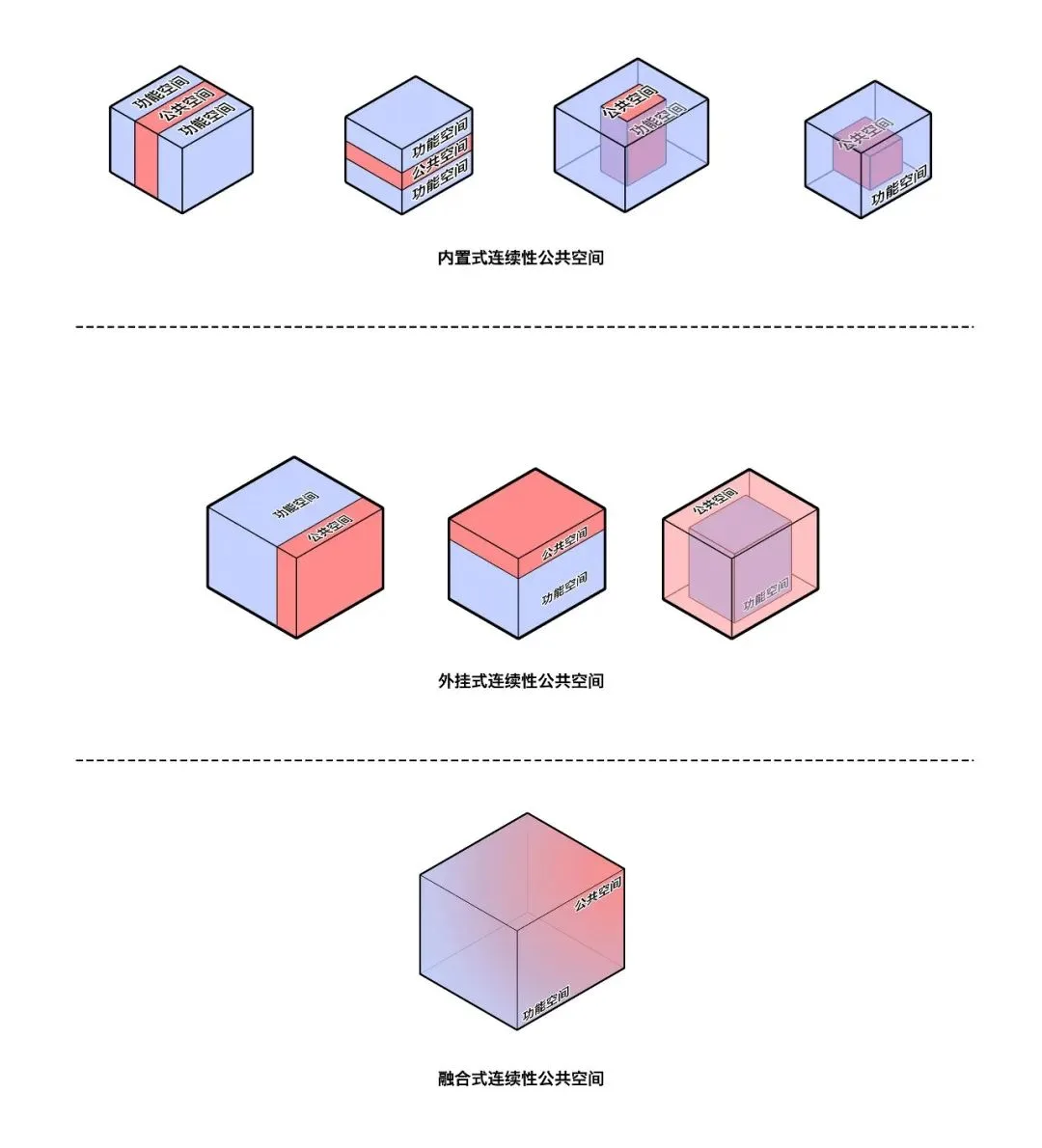
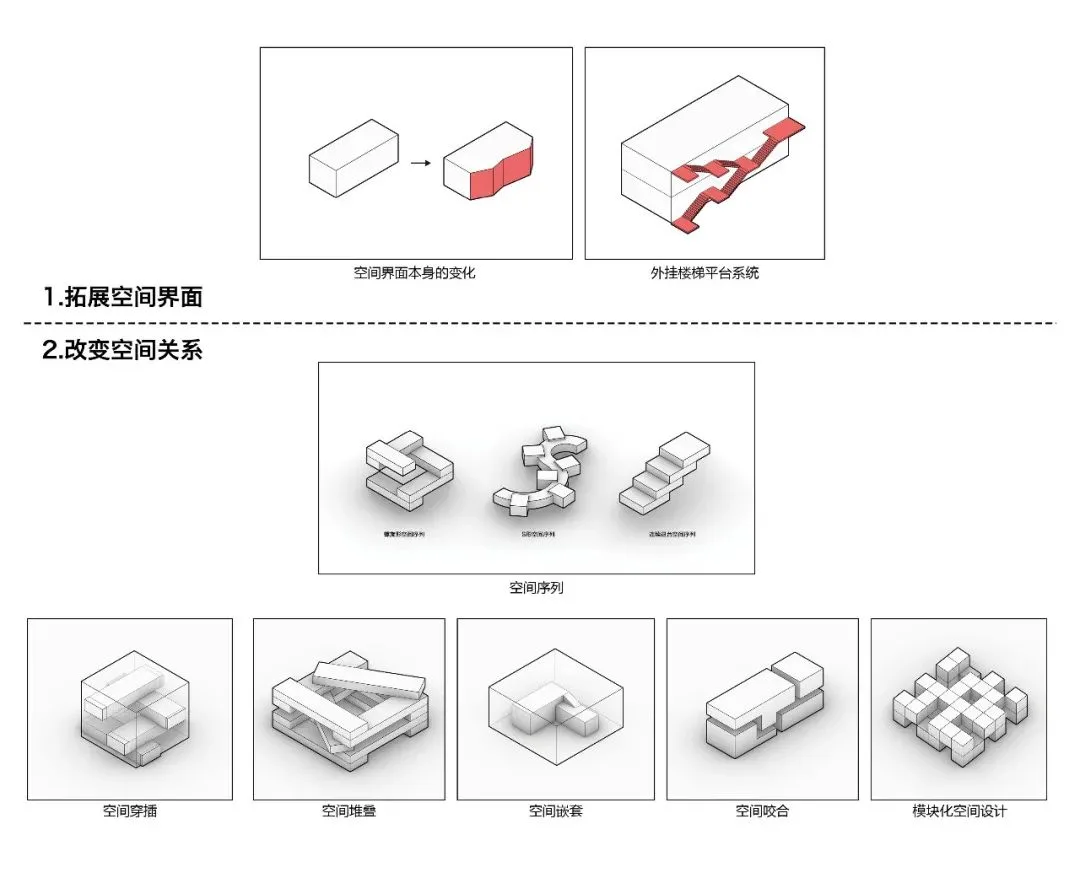
This research-driven design explores continuous and evolving public spaces within architecture to support diverse functions and enhance user experience. Preliminary studies analyzed numerous cases to identify three spatial positions for continuous public spaces and eight transformation techniques applicable across categories.
Project Introduction
Overview
The Discovery Partners Institute (DPI) in Chicago is a collaborative research center encompassing offices, labs, research, and teaching facilities.
Located in the southern portion of The 78 campus—a major new Chicago development surrounded by academic institutions and parks—DPI benefits from excellent transportation and scenic surroundings.
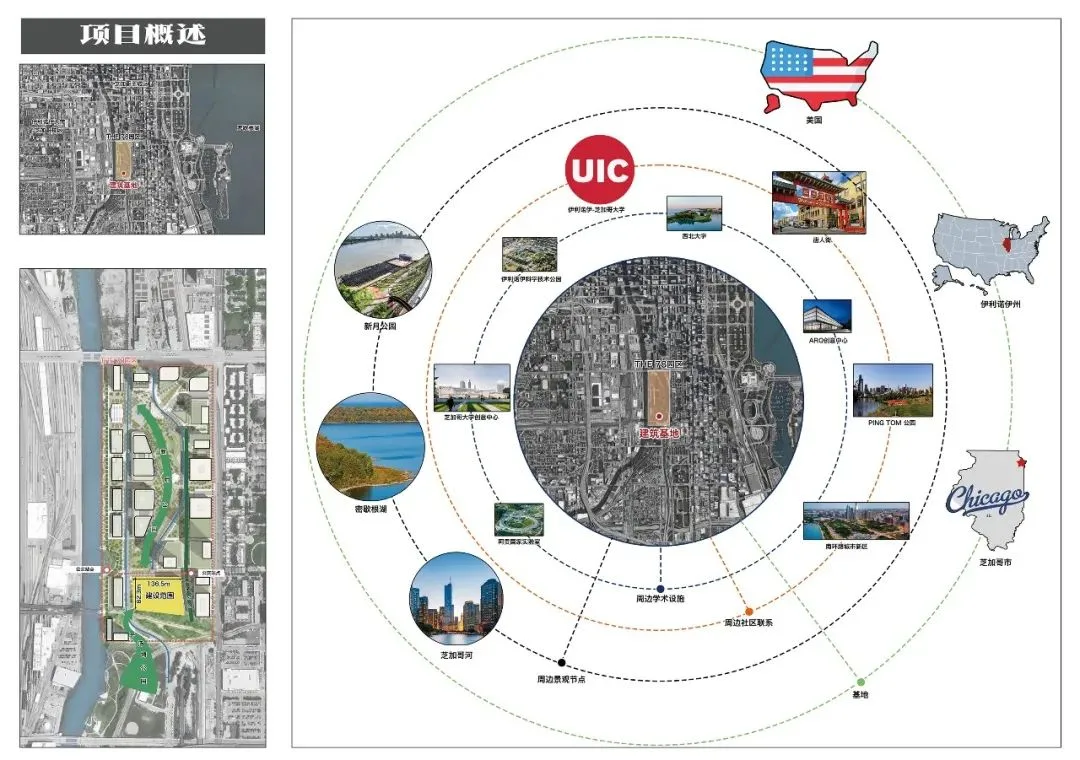
DPI sits at the park’s edge, focusing on landscape connection, community gathering, and urban openness.
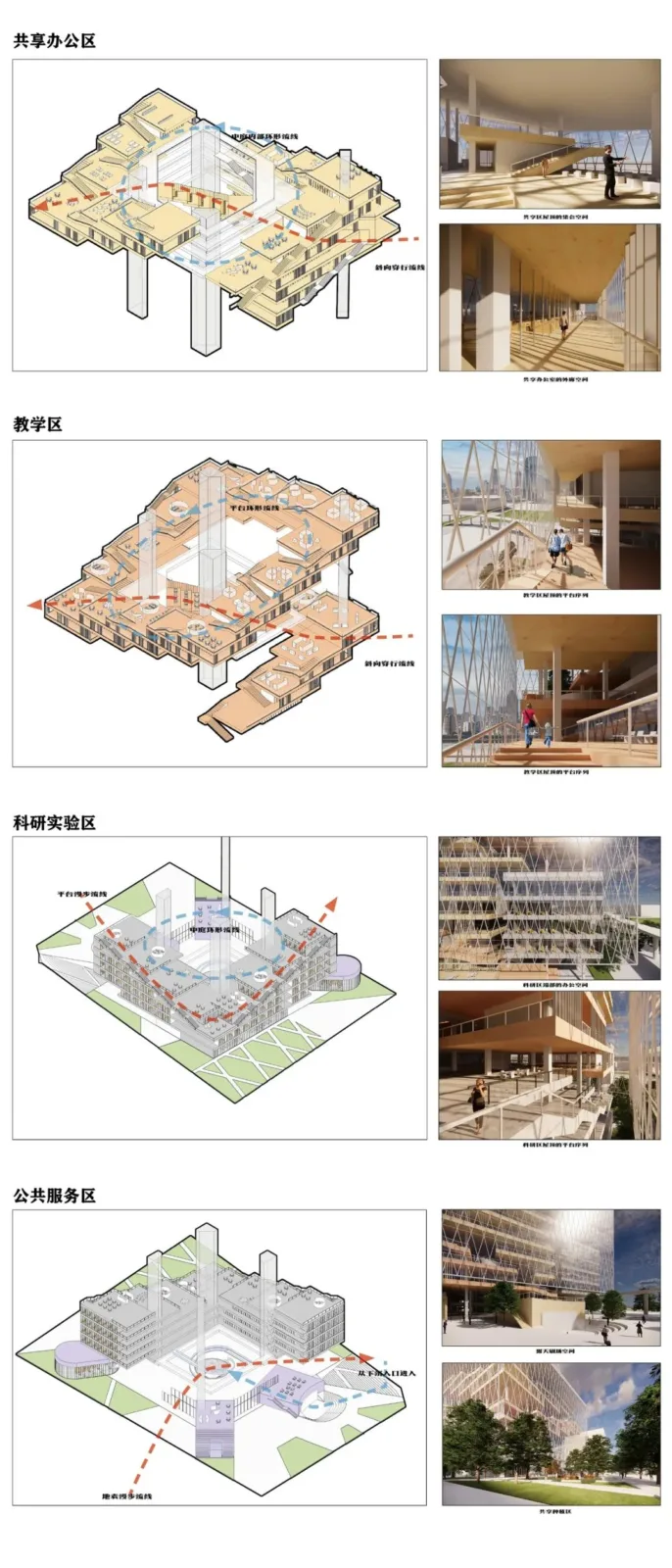
Its functions include scientific research, shared offices, teaching, and public services. The design aims to balance internal functional demands with openness to surrounding areas, enhancing service to the city.
Design Concept
Ideas
Functional zoning and user groups reveal that citizen activity zones are limited and building openness low. However, the influence of users on openness increases progressively.
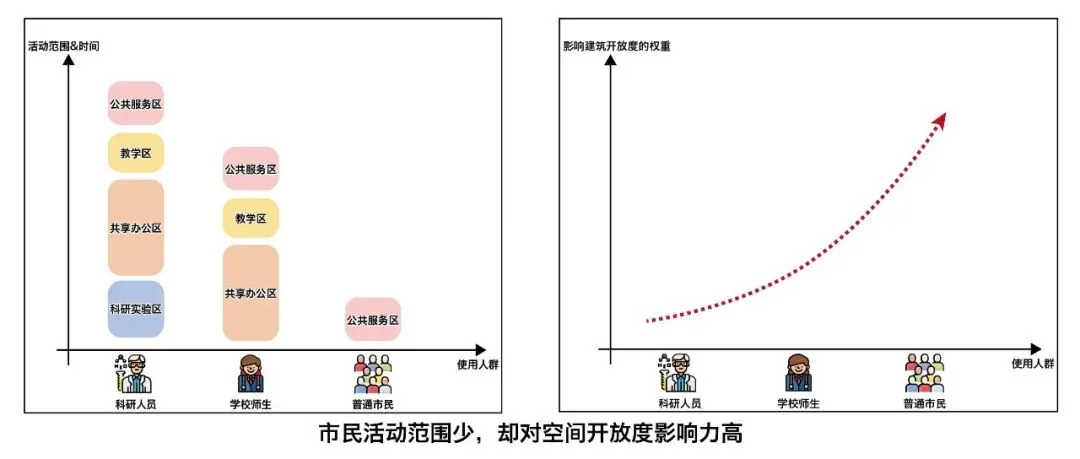
Breaking spatial constraints liberates citizen activity and increases openness. Functional subdivision and reorganization create continuous public spaces, transforming one-way flows into two-way, expanding activity range. A stepped box spatial prototype provides continuous, changing platforms while maintaining internal function accessibility.
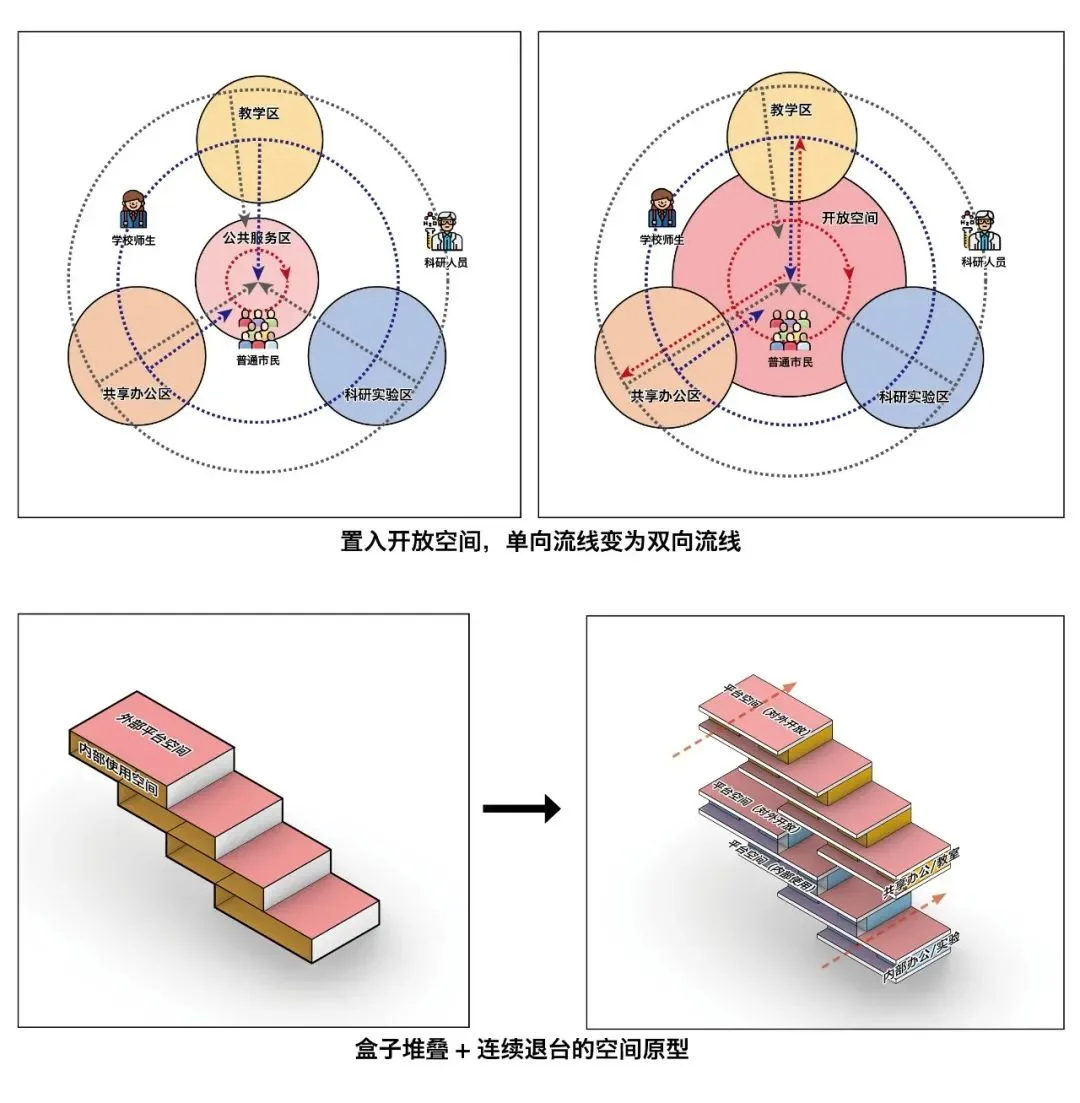
Form Generation
Shape Development
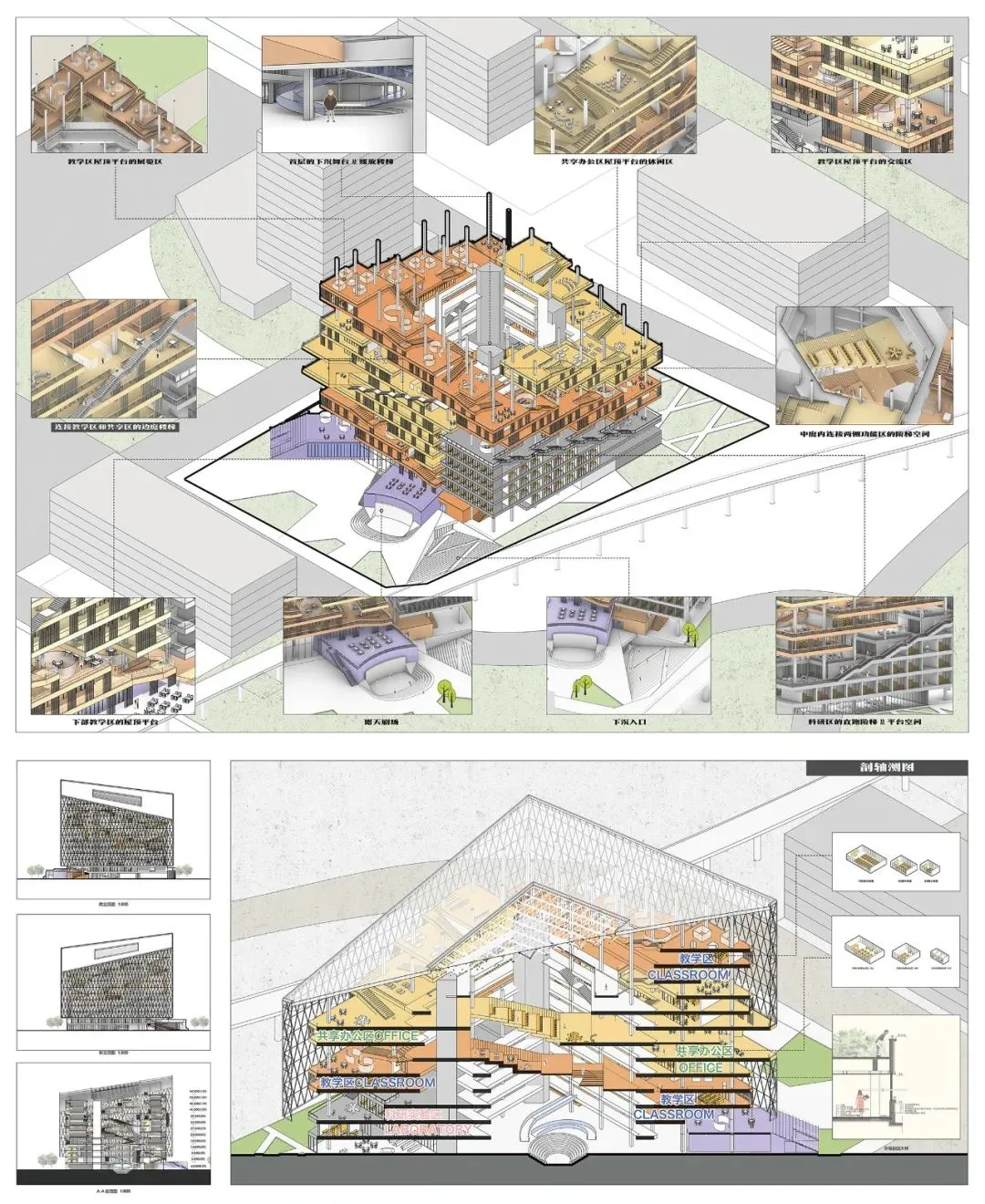
Spiral setback of functional blocks combined with spatial interweaving and nesting techniques shape the architecture. Public service and research areas occupy the ground floor, with spiral upward teaching and shared offices interlocking to form a spiral sequence. An external enclosure completes the “spiral loop + offset interlock + spatial nesting” structure.
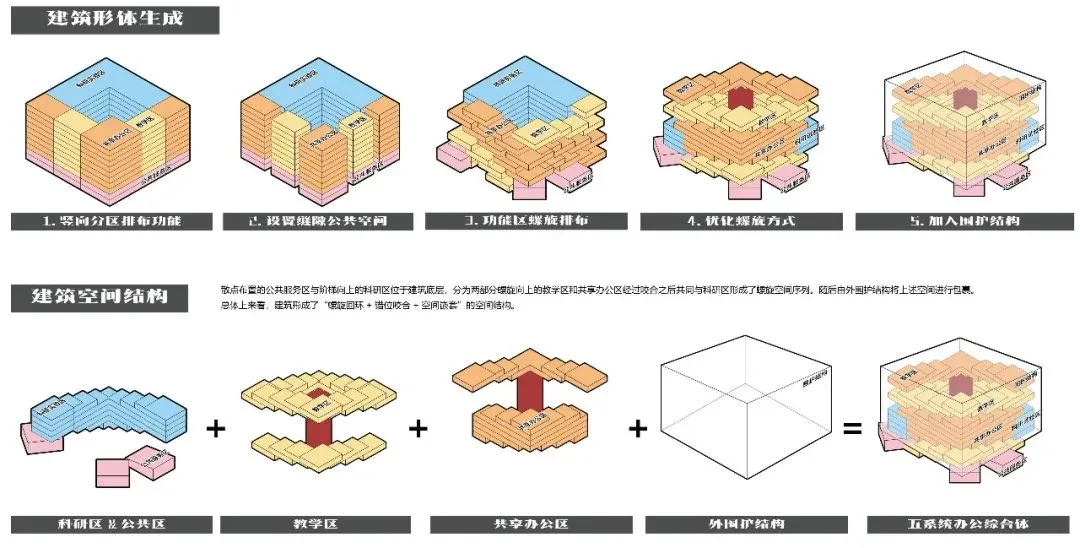
Space Design
Spatial Arrangement
Four vertical traffic cores at building corners organize vertical movement, and a circular corridor in the atrium manages horizontal flow. Stairs connect corridors and side courtyards, linking functional zones.
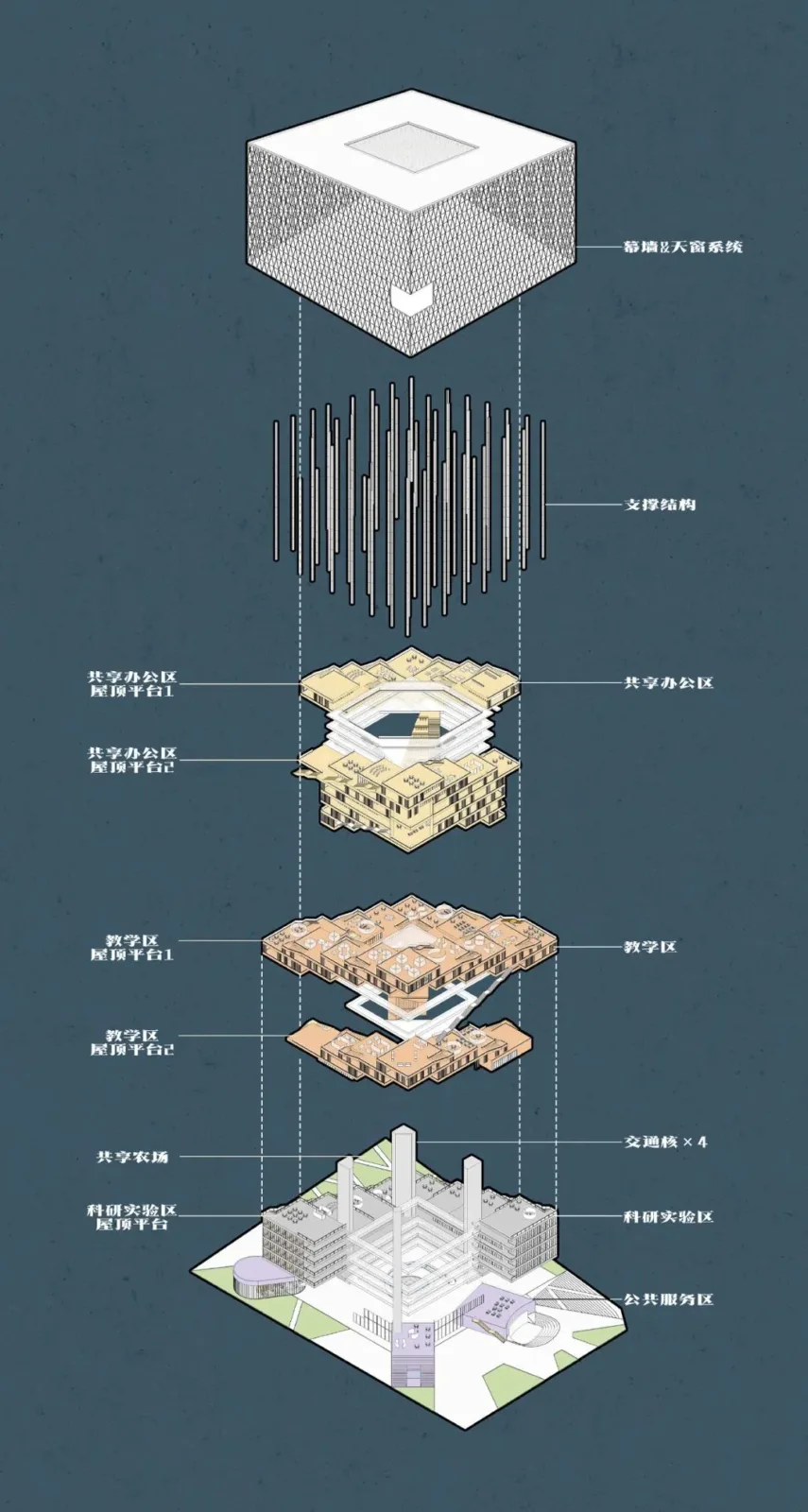
The building’s top features a continuous platform space connected by stairs, forming a layered public space system from the exterior inward, including edge courtyards, platforms, atrium corridors, and staircases.
Modeling and Site
Facade and Landscape
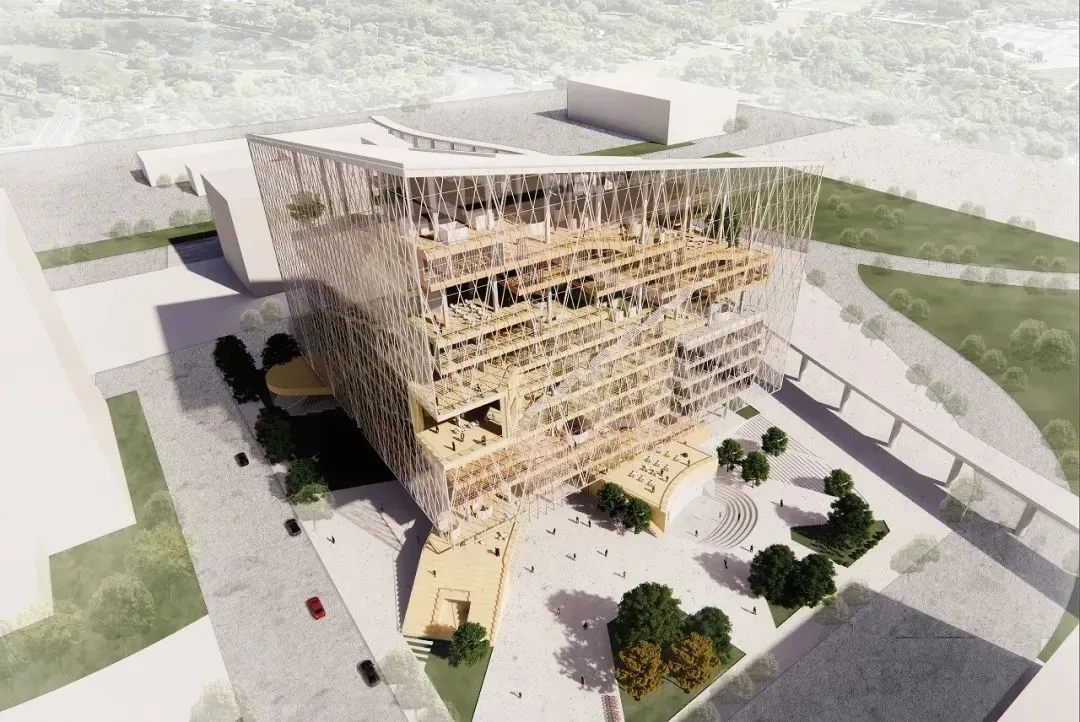
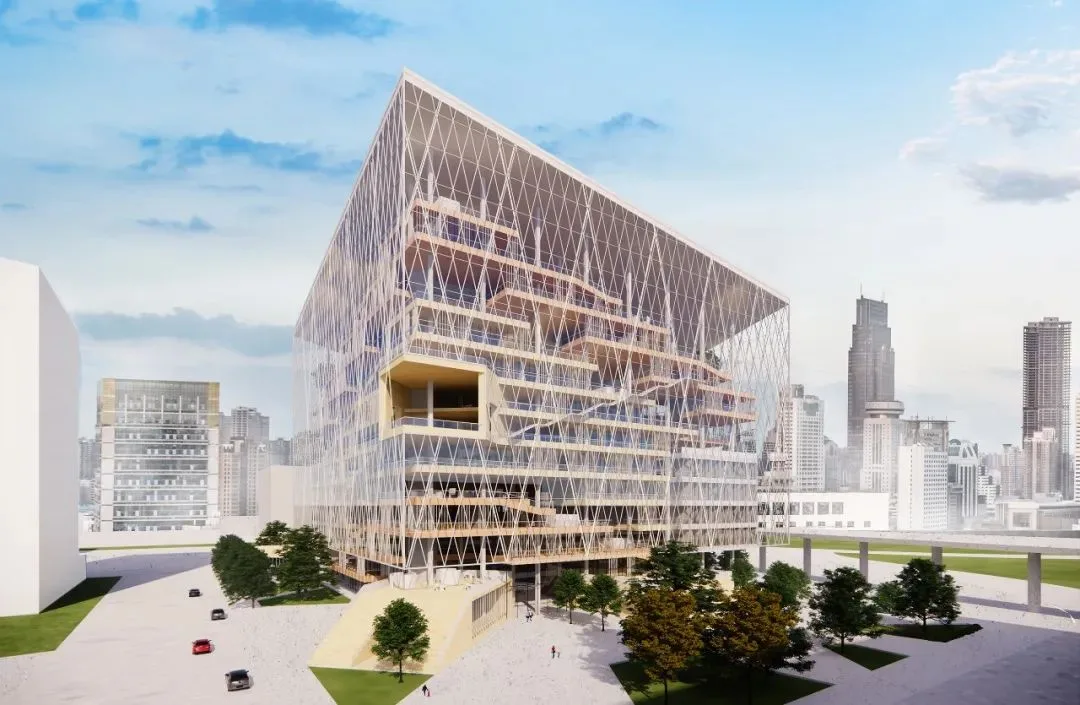
The building features a glass curtain wall with low visual presence, maximizing visibility of evolving public spaces inside. A sloping curved roof completes the enclosure. Site design aligns with the facade’s diagonal texture, with radially arranged activity squares and greenery.
Summary
Conclusion
This design establishes a fusion-style continuous public space inside the building, employing spiral sequences, interweaving, interlocking, and nesting techniques to generate dynamic public spaces. This expands citizens’ activity ranges, enriches movement flows, and enhances building openness.
-05-
Shadow Play in the Gaps: Design of a New Community Library Adjacent to Laoli Lane, Tianjin
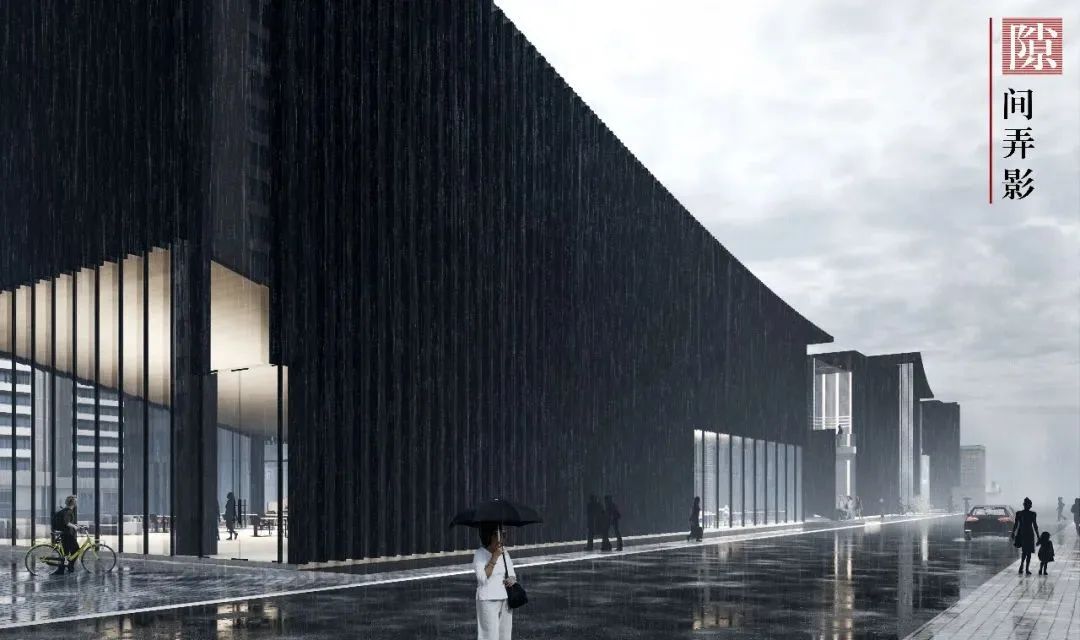
Design Background
Concept
This exploratory design studies Tianjin’s urban characteristic spaces. Observations suggest that street and alley “gaps” at scales matching public buildings create intimate activity places. The project aims to reshape these gaps in a new library, fostering cultural continuity and place memory within urban renewal.
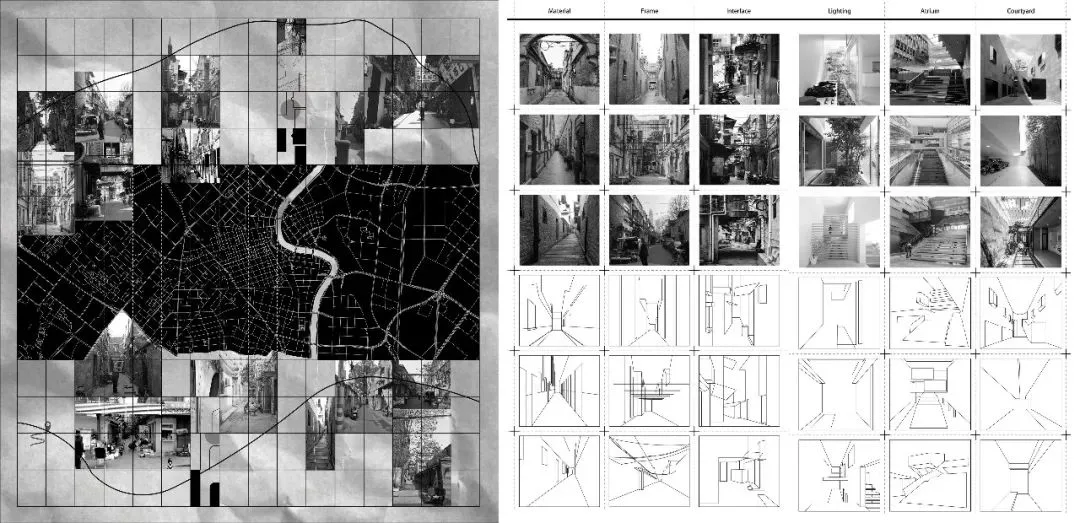
△ ‘Gap’ Spatial Imagery
Location and Urban Context
The site is in Tianjin’s Heping District, irregularly shaped and situated on a congested street corner, where three urban forms converge: a lane-style old community (south), multi-story enclosed blocks (west), and high-rise towers (north).
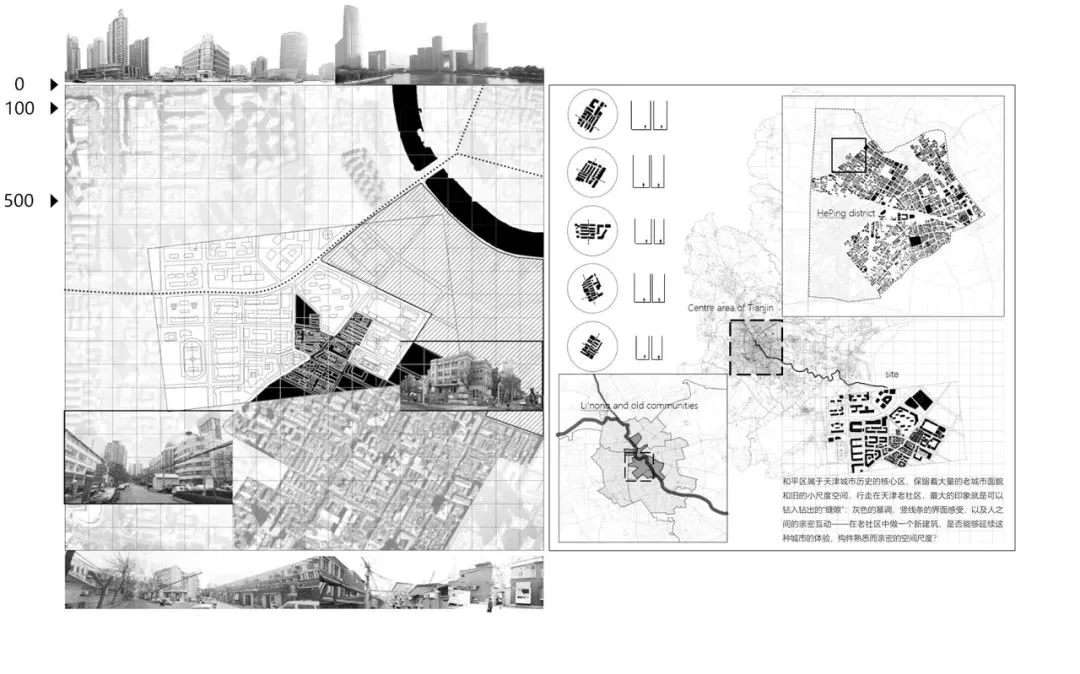
Site Condition Analysis

△ Site Analysis
Exploring ‘Gap’: Design Research
Research
Key characteristics of ‘gap’ spaces in the old community include:
- Spatial Scale: Three levels of H/D ratios and widths ranging from wide streets to small alleys.
- Space Structure: Fishbone-like planar form with clear primary/secondary axes, transparent sightlines, and continuity.
- Spatial Imagery: Unified textures, constructed skeletons, and an “inside-out” spatial feeling.
The design explores public space prototypes at three scales, adjusting sizes during library construction.
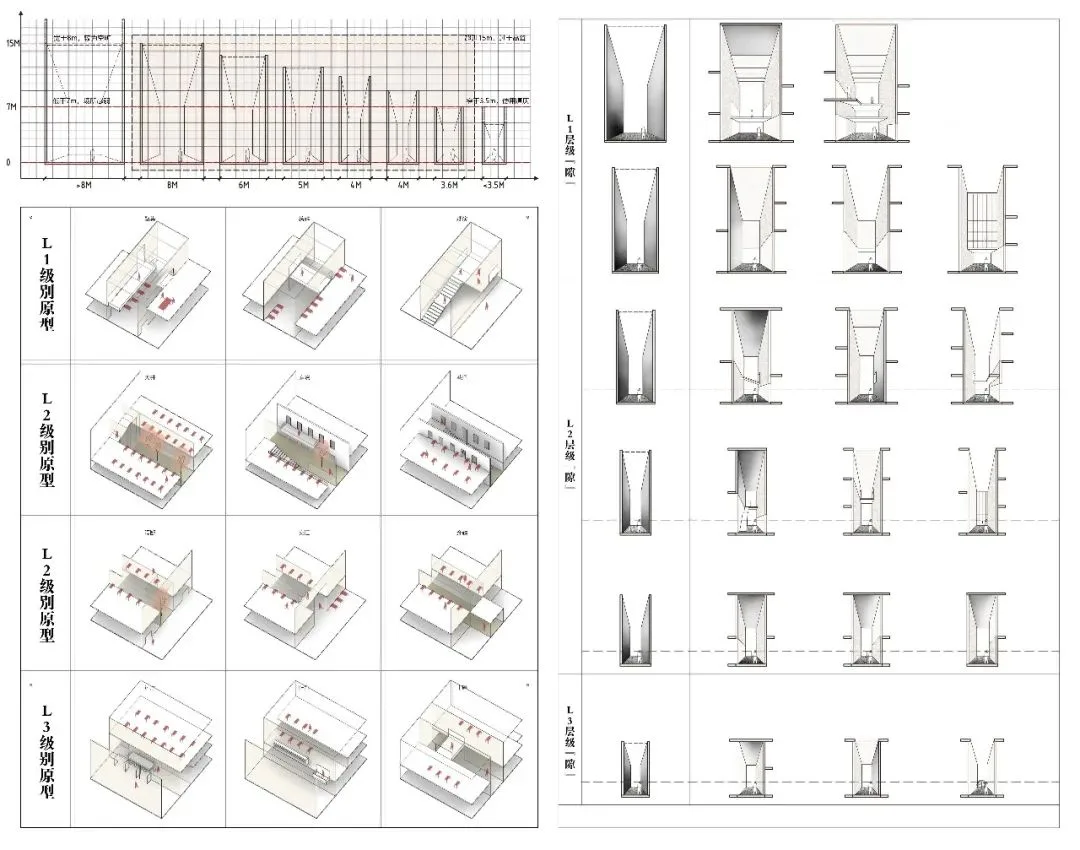
Construction and Prototype of Spatial Scales for ‘Gap’ in New Buildings
Functional roles and proportions for three gap levels in the library are defined.
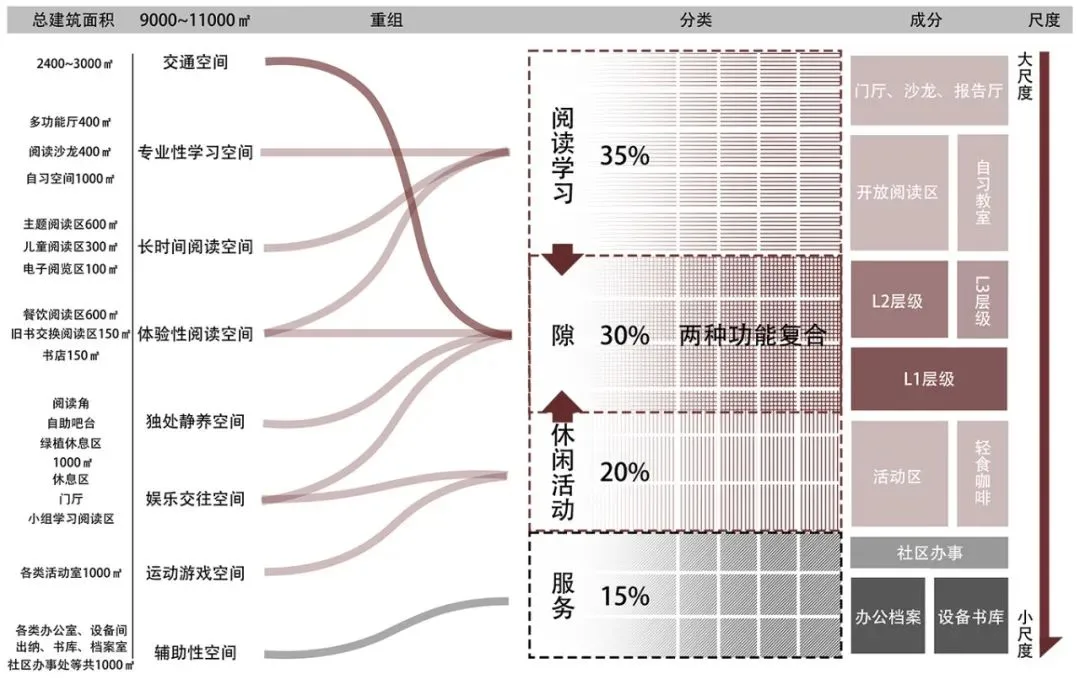
△ Functional Integration and Reorganization
Based on site analysis, the form generation uses volume cutting and excavation.
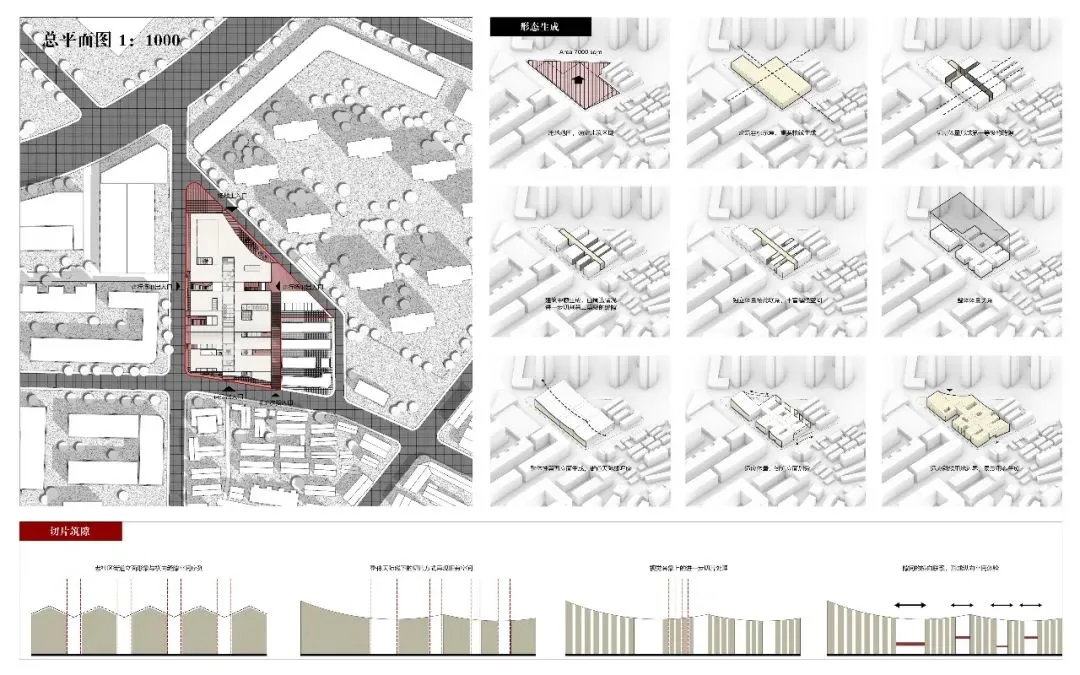
△ Shape Generation Diagram
Design Development: Building Gaps
Design Details
Flat organization aligns internal flow and existing external spaces in a fishbone style, connecting old and new.
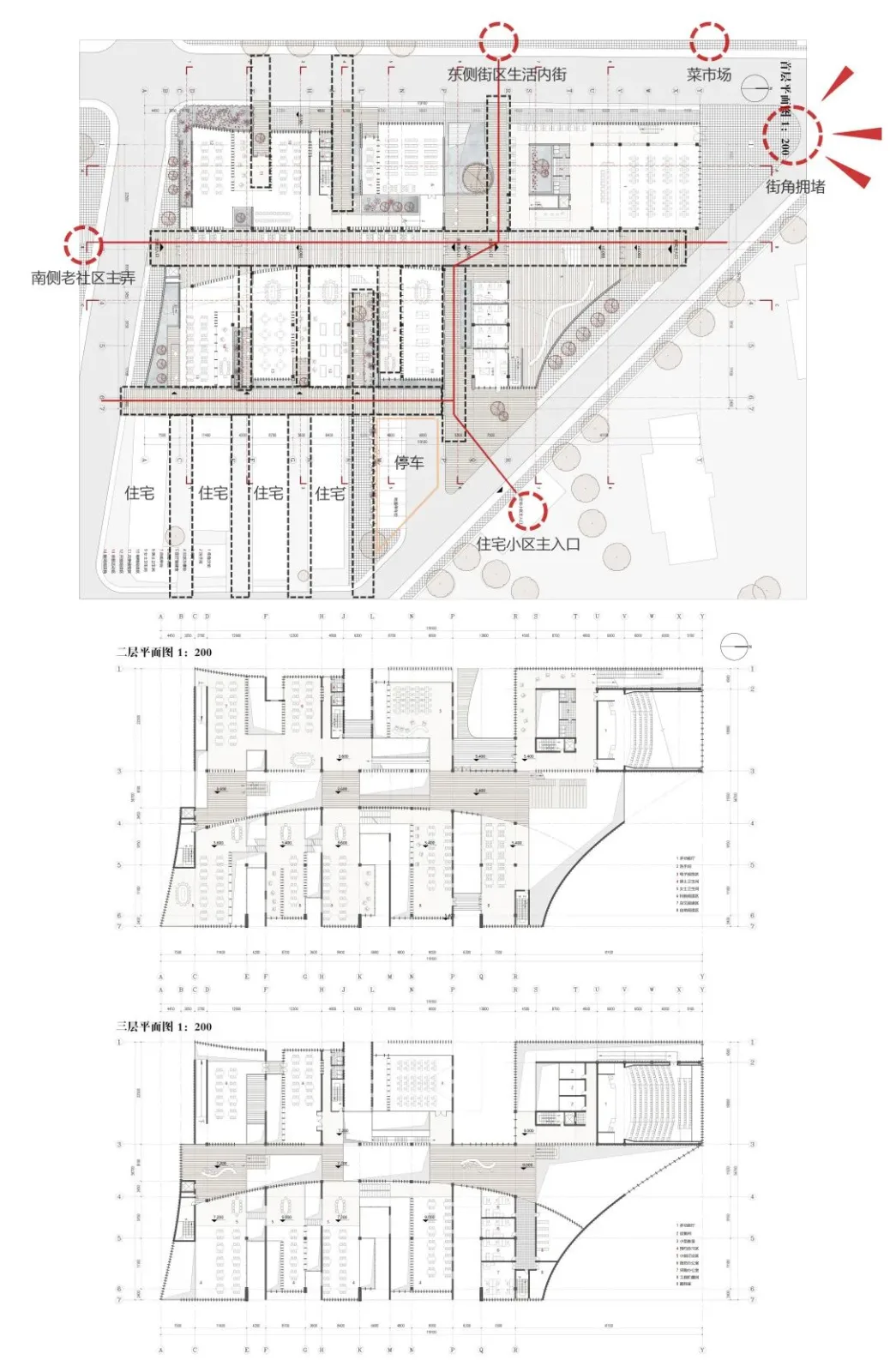
△ Floor Plan
Space design uses continuous horizontal segmentation to reflect diverse sectional designs, expanding south to north. Vertical perspectives reveal multi-level gap spaces and interlayer spatial experiences.
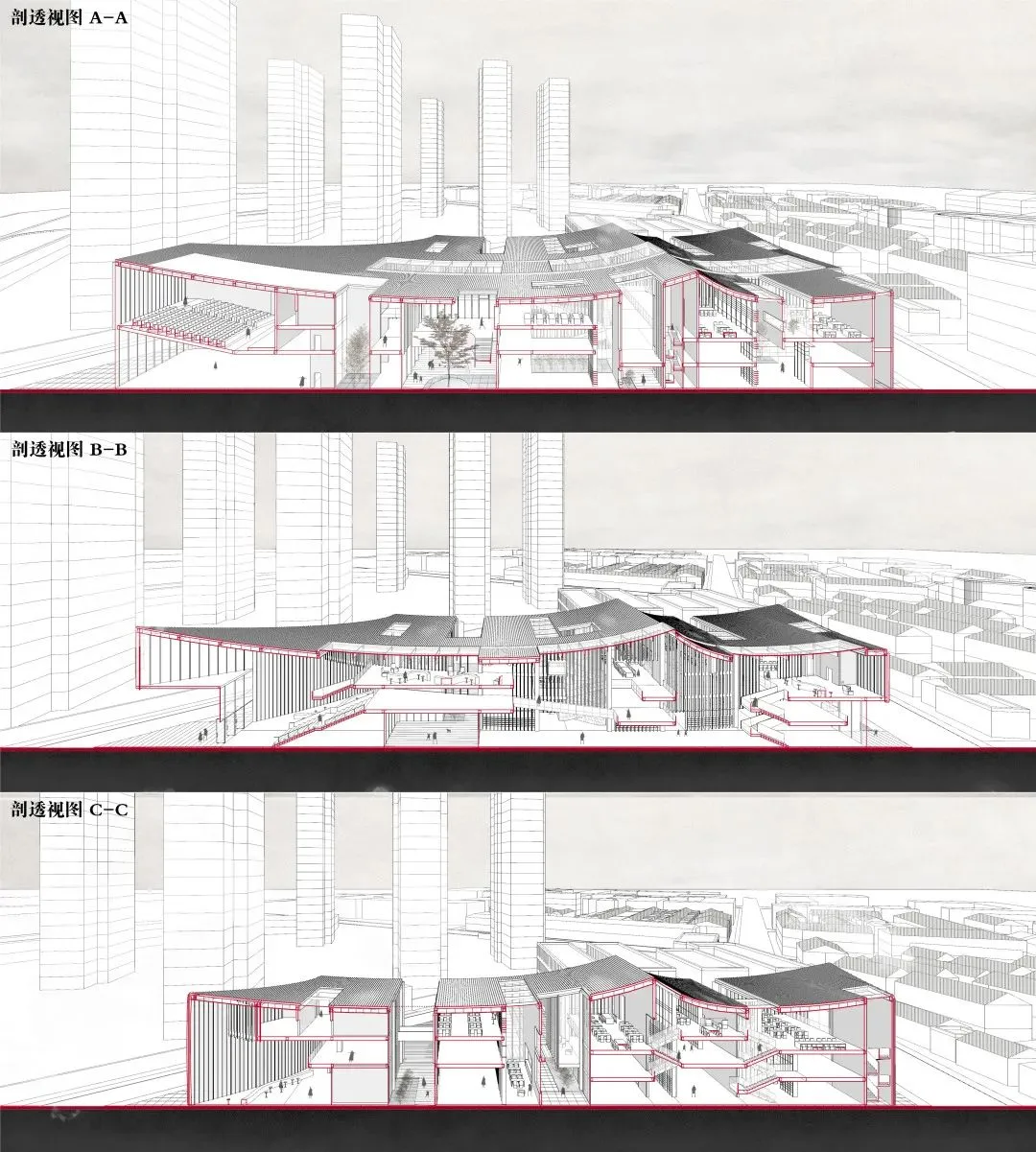
△ Longitudinal Section Perspective
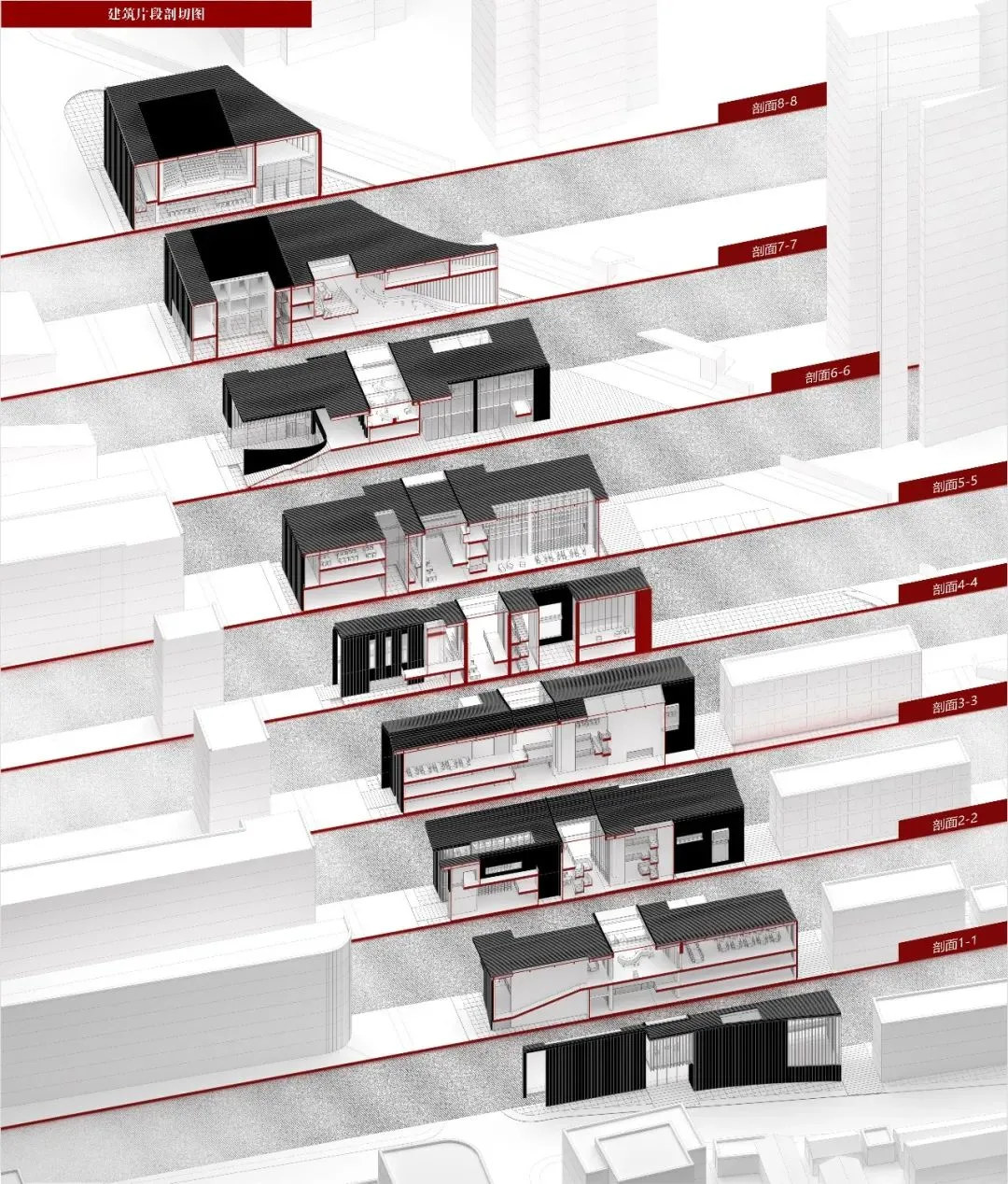
△ Continuous Section Axonometric
The building’s axis measurement aligns with the slope shape and old community character, with local spaces matching street scale, providing fresh spatial experiences.
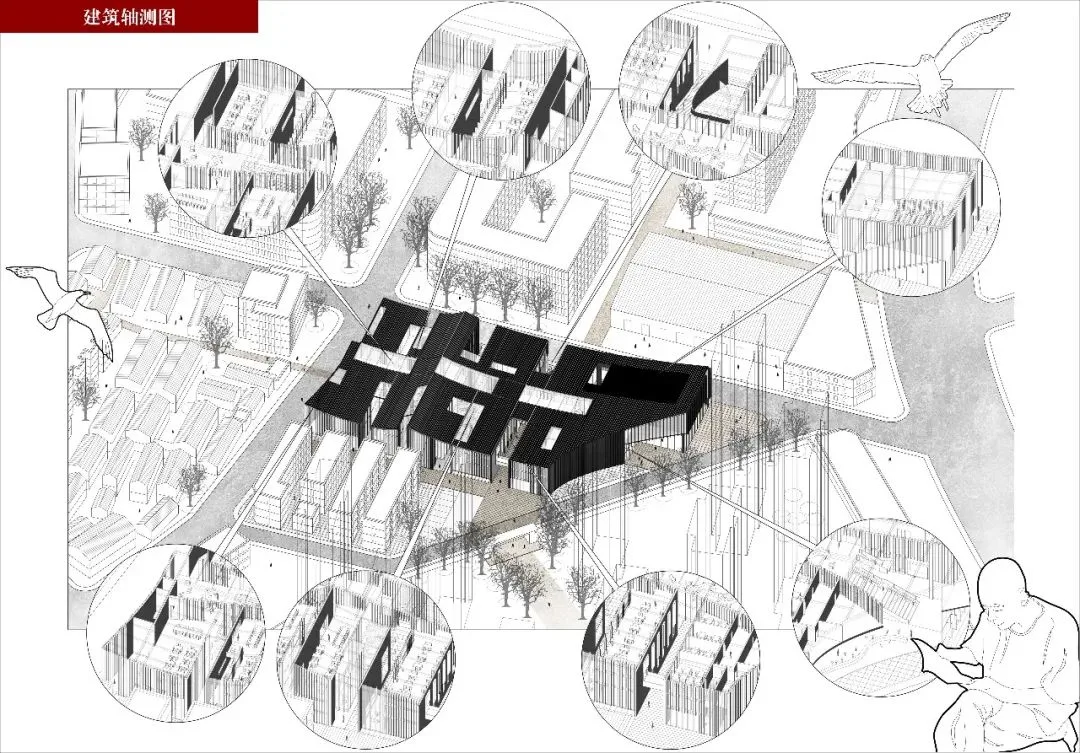
△ Axonometric View
Construction employs beam-column frames for large northern spaces and transverse shear wall systems with recycled bricks for smaller southern spaces. Steel frames support beams and columns, with a central corridor connecting sides.
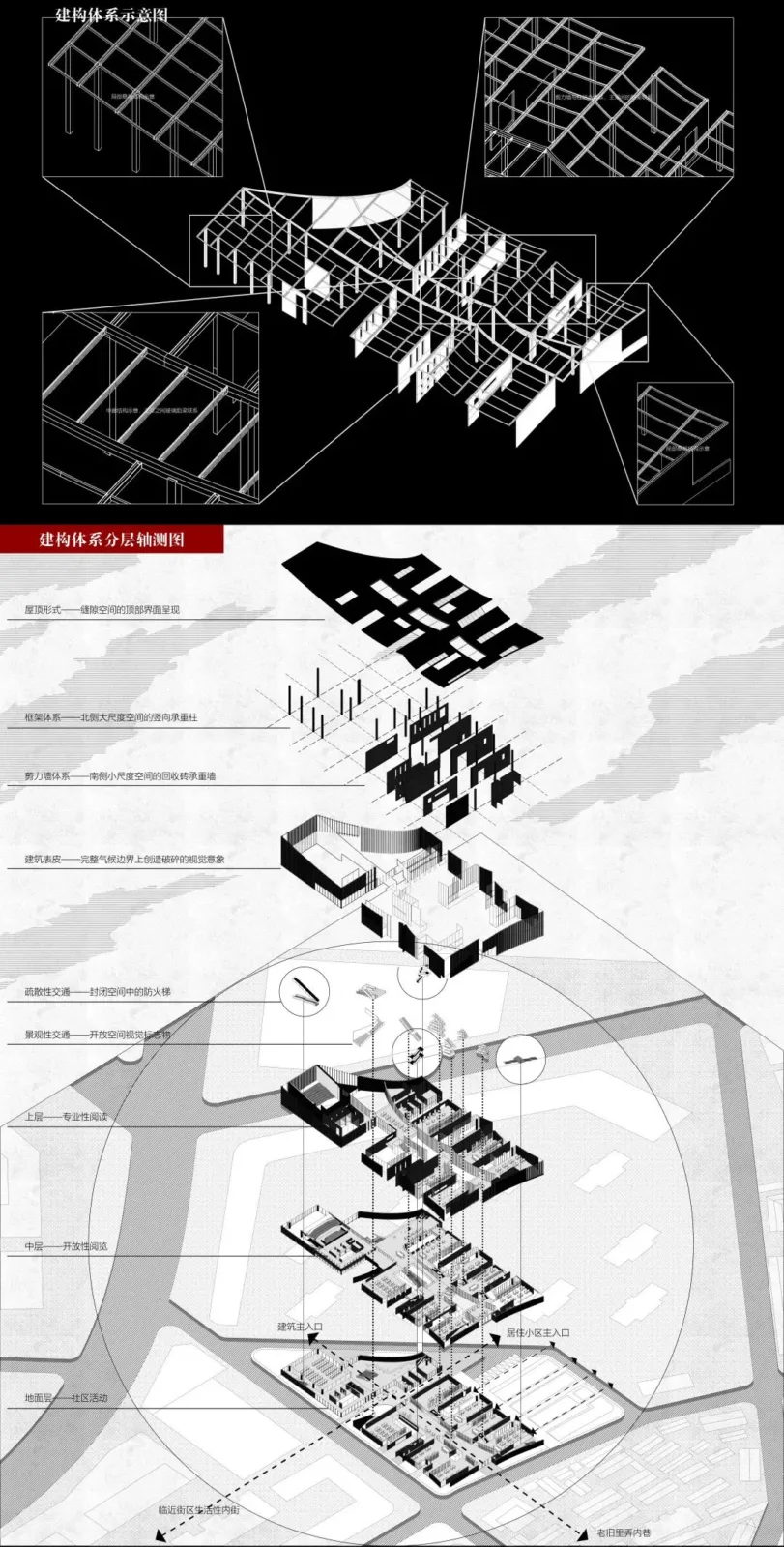
Construction System Diagram
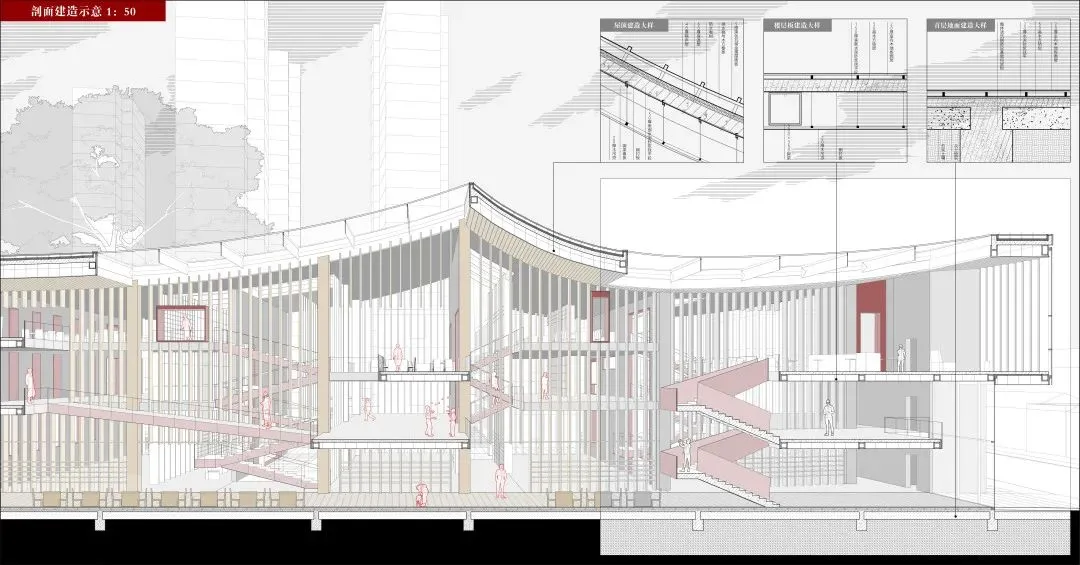
△ Central Corridor Section Perspective
Interior and exterior semi-transparent interfaces share component forms, enhancing visual interaction while maintaining facade solidity. Functional combinations include open shelves, storage, desks, and landscape walls indoors.
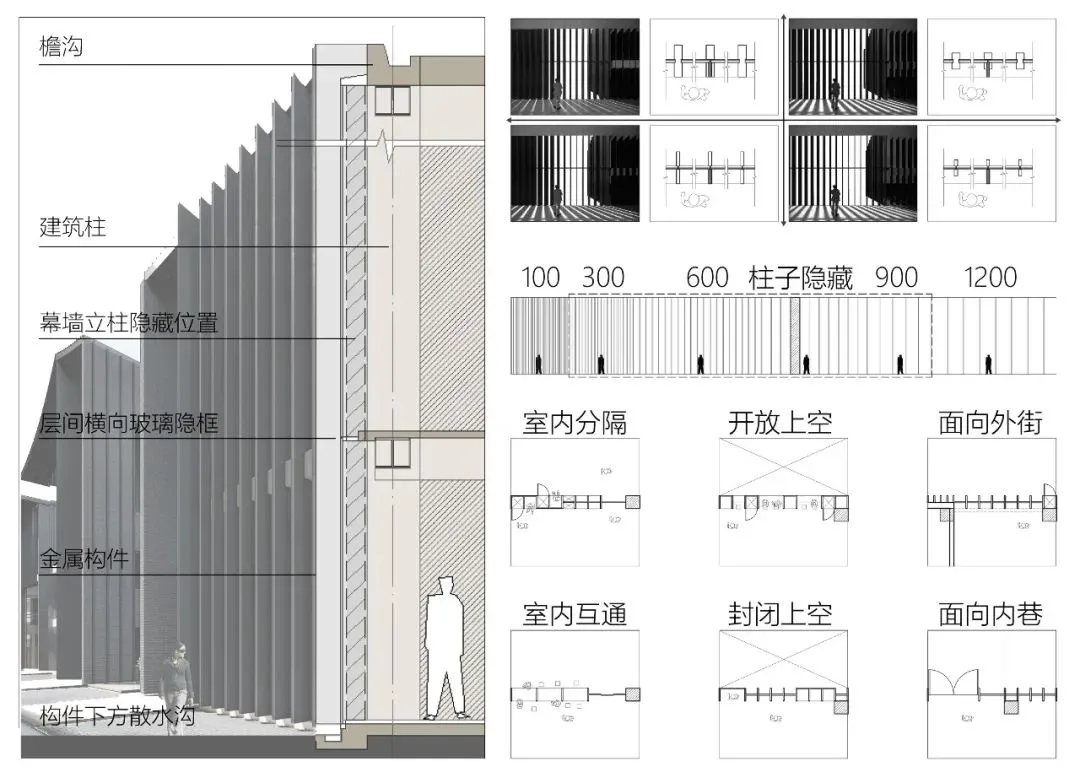
△ Unified Curtain Wall Components
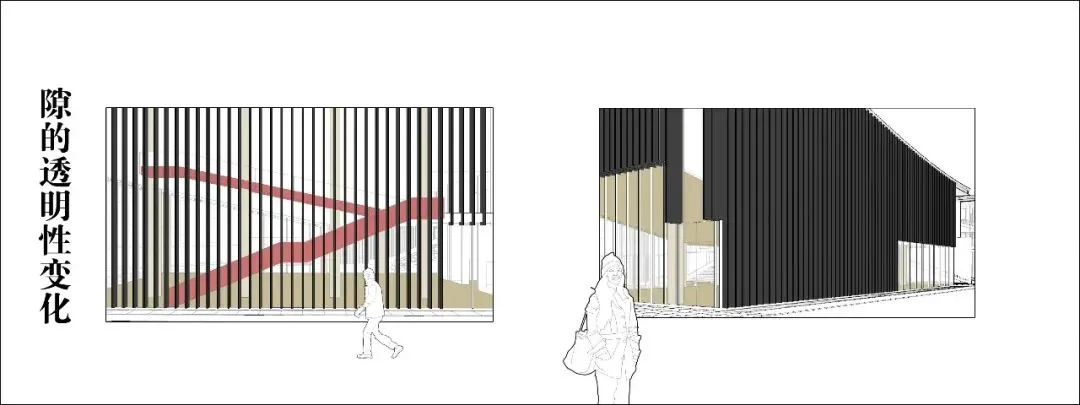
Facade Transparency Variations
The top interface includes a black metal roof with sound insulation and a glass skylight in the central corridor with structural concealment.
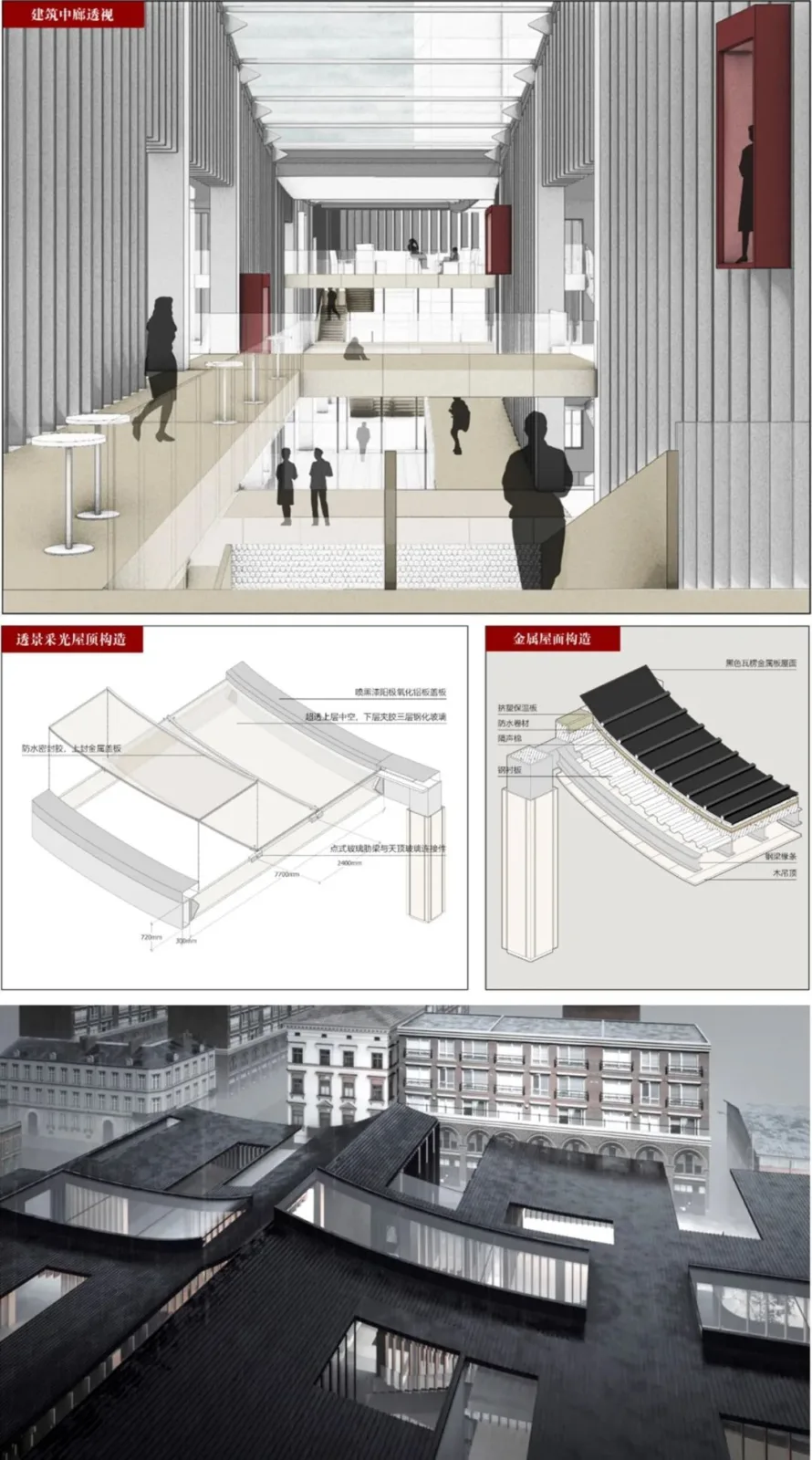
Roof and Interior Perspective
Exterior walls use recycled bricks painted warm gray, integrating with the old community. Interior walls are decorated with black bricks behind insulation.
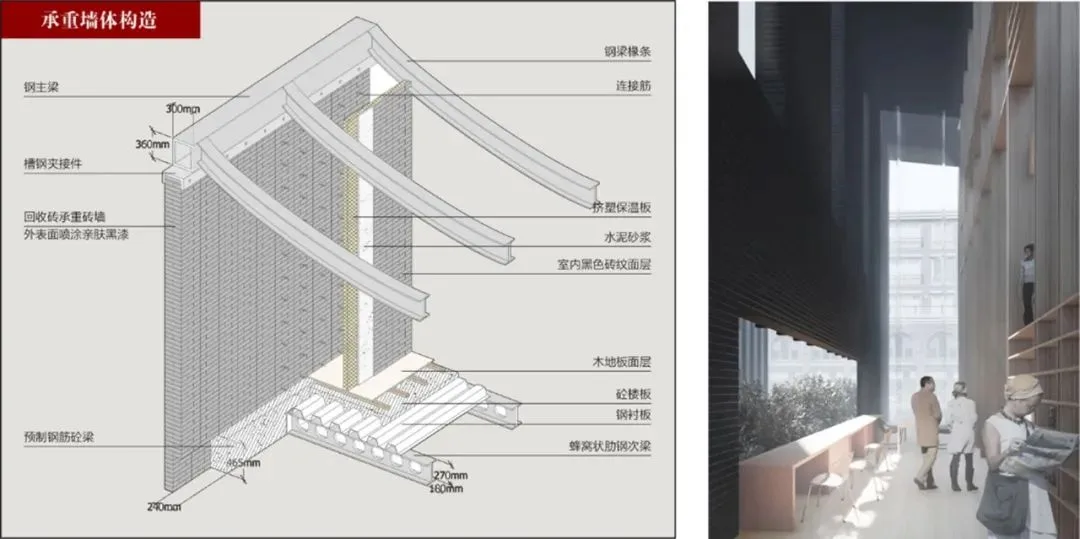
△ Black Brick Wall Interface
Barrier-free design is implemented at the main entrance. Curtain wall drainage is concealed below components. Outdoor floors use recycled blue bricks.
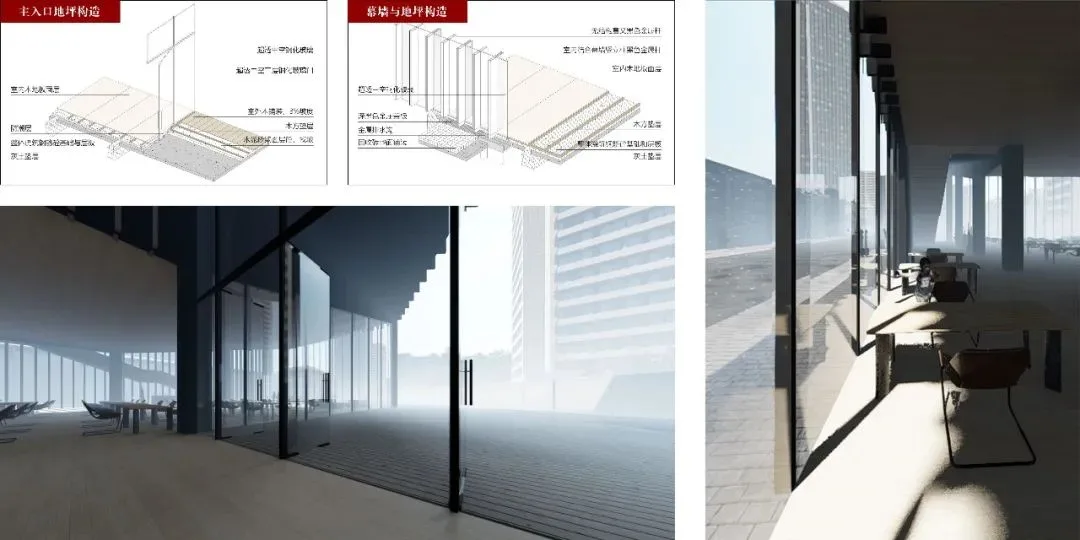
△ Floor Structure Design
The building’s warm gray exterior blends into the old community streetscape, creating a large display at the corner with subtle daily and novel views.
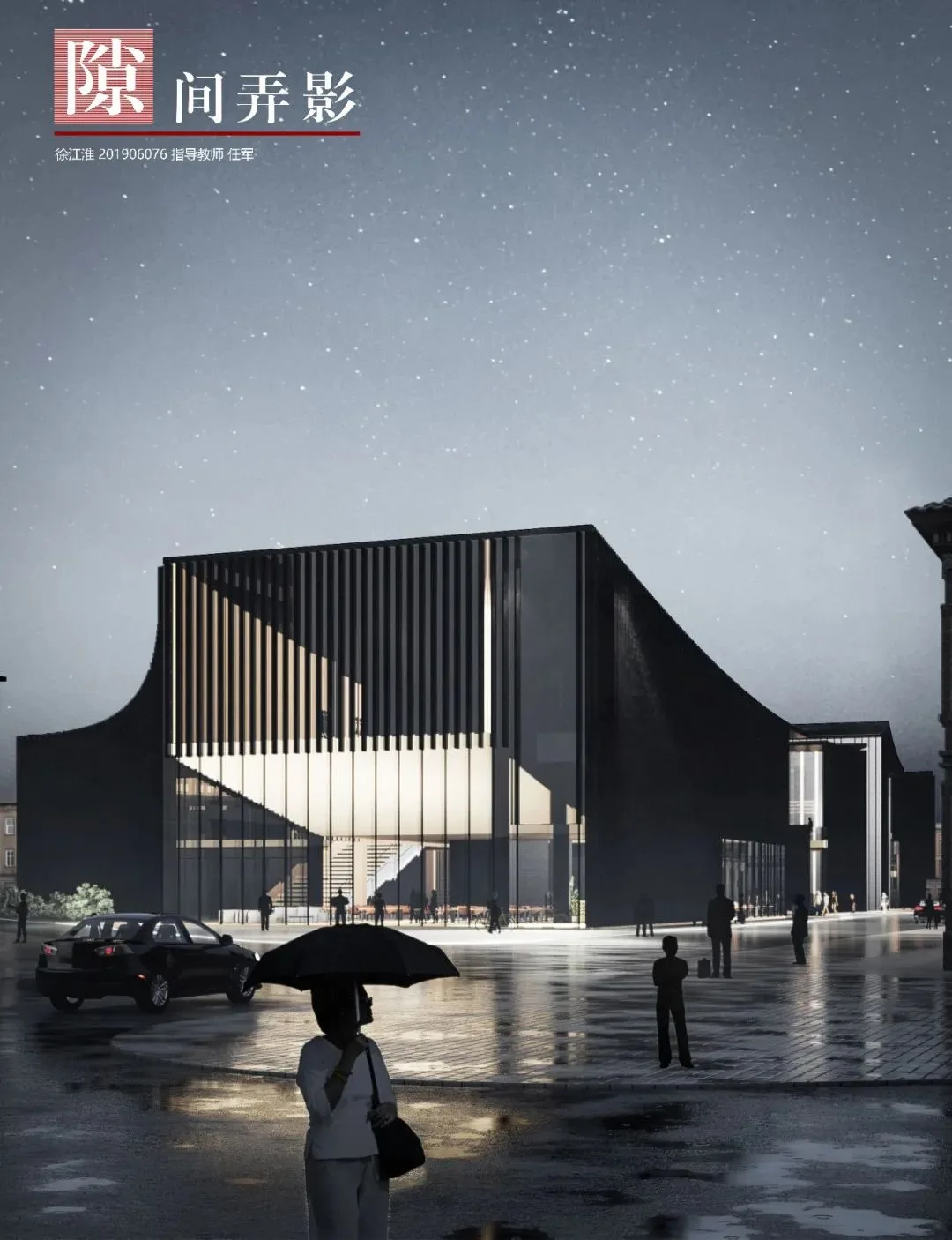
△ Building Perspective at Street Corner
Summary
Conclusion
This exploration of “gap” spaces extends architectural practice beyond old-new correspondence, fostering freer spatial forms. Despite some limitations, the design is a coherent, rational attempt. Special thanks to Teacher Ren Jun for comprehensive guidance.
-06-
Design Proposal for Sanchahekou Cultural Complex
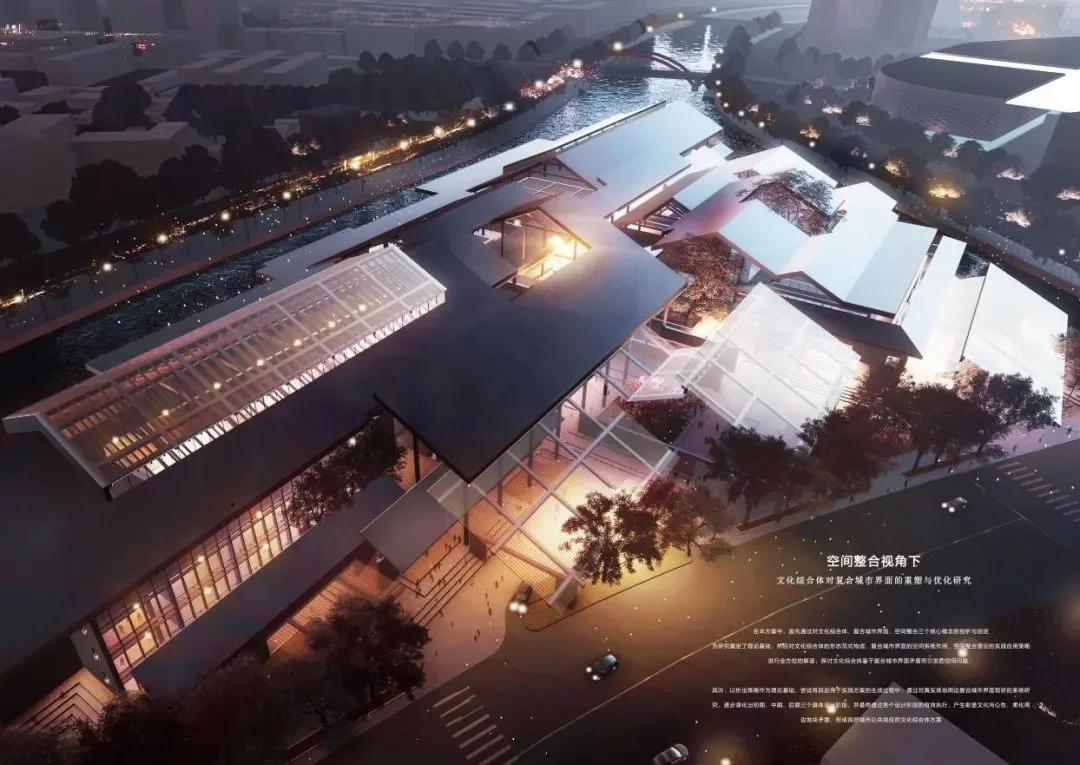
△ Aerial View of the Plan
Research Overview
Study Focus
This research-oriented design investigates how cultural complexes reshape and optimize interface spaces in composite urban contexts through spatial integration. Unlike traditional cultural buildings with singular functions, cultural complexes foster public openness, attracting and engaging diverse users via spatial centripetal features. They accommodate cultural needs of composite groups and mitigate spatial conflicts between adjacent cities.
Project Overview
Site Description
The Sanchahekou Art Complex is on triangular land east of Ziyahe South Road, west of Haihe River, and north of South Canal, about 3 km from Tianjin’s center near attractions like Jinmen Hometown and Tianjin Eye. The west side serves as the main entrance, with riverside and scenic locations making it a tourist hub. The complex urban interface presents challenges and opportunities for cultural spatial integration.
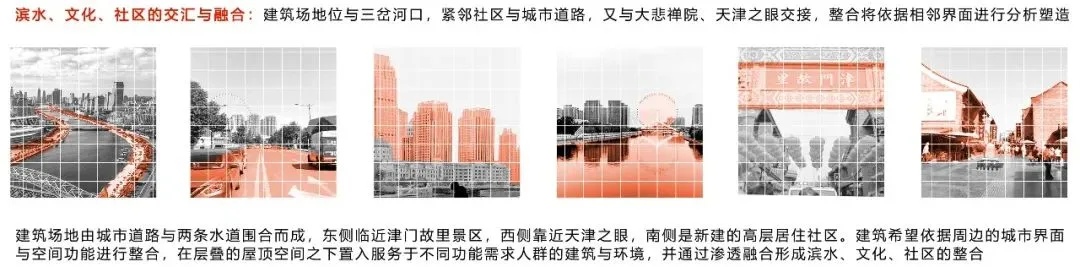
Interface Overview of Surrounding Composite Cities
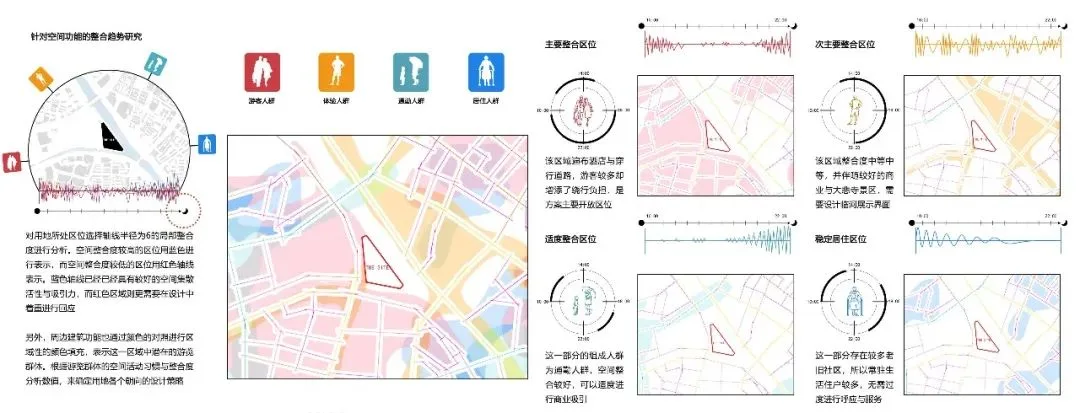
Location and Target Audience Analysis
Spatial Integration Strategy Based on Composite Urban Interfaces
Strategy
Key integration focuses are waterfront views, cultural consumption along scenic areas, and spontaneous community participation. Their interaction generates a cultural centripetal effect exceeding the sum of parts.
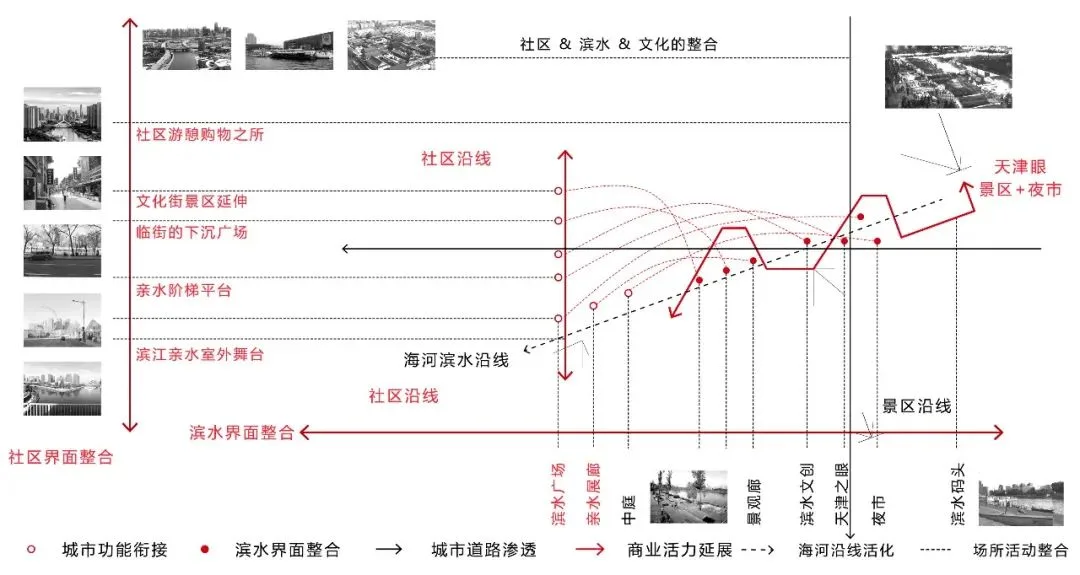
Composite Urban Interface Integration Analysis
The waterfront interface serves as a walkway and cultural display, integrating waterfront activities and public landscapes.
Community interfaces emphasize public activity and spatial permeability, featuring sunken squares, landscape trails, and riverside plazas.
The scenic area interface, lacking adjacent site correlation, transitions through cultural and creative commerce.
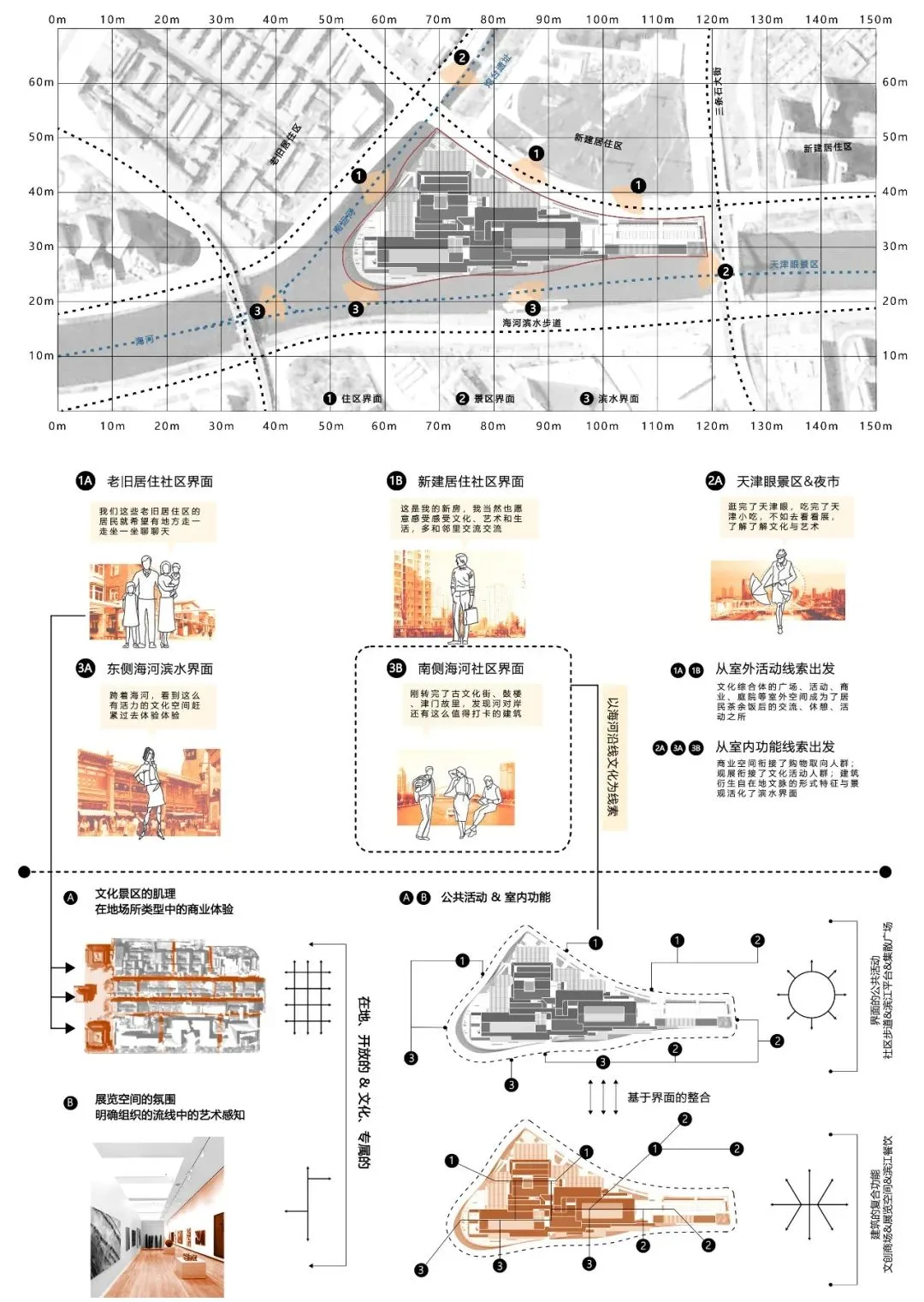
Spatial Design Element Translation
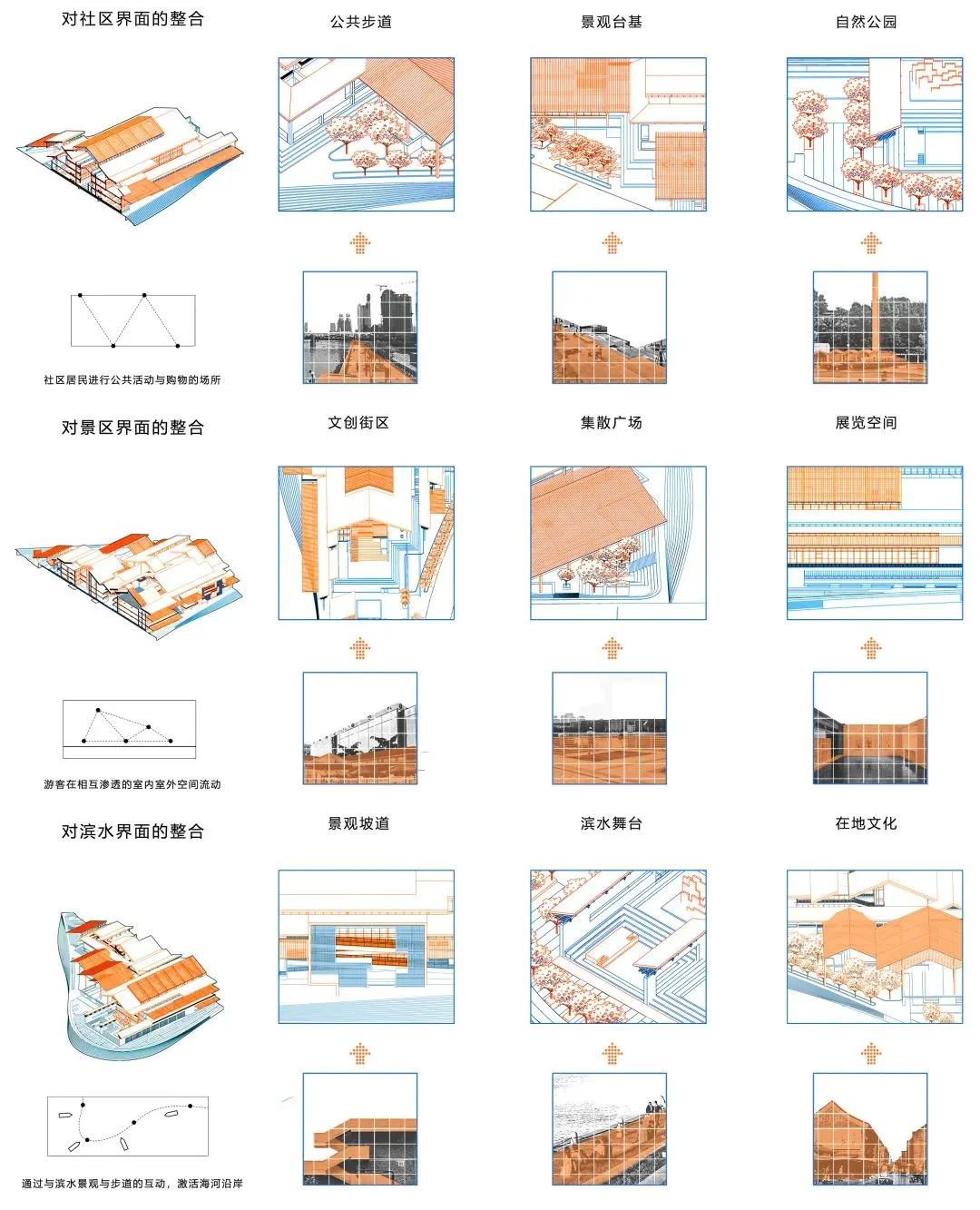
Refining Integration Logic
Logic Development
Two core integration paths—outdoor and indoor—are planned. The design controls activity types and behaviors of interface groups using spatial elements, creating a diverse, engaging spatial experience through their interplay.
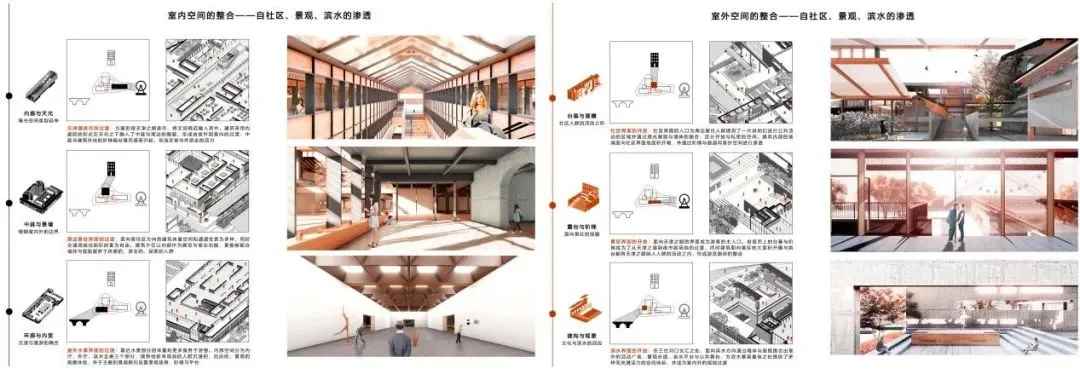
△ Indoor-Outdoor Space Integration Logic
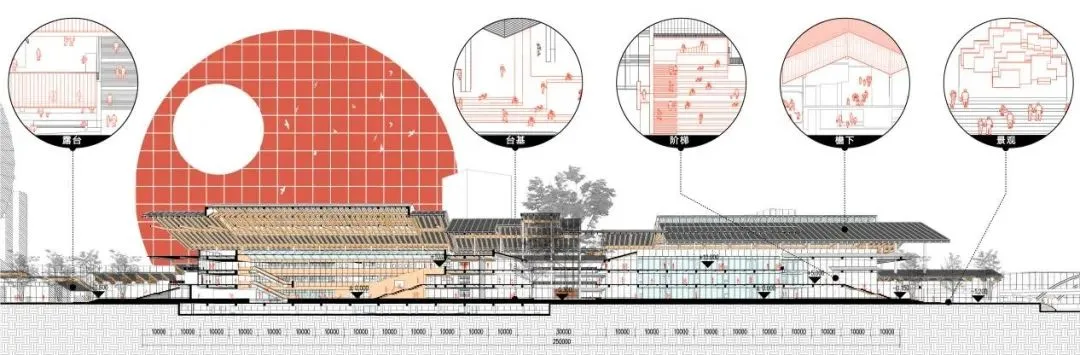
△ Sectional Perspective
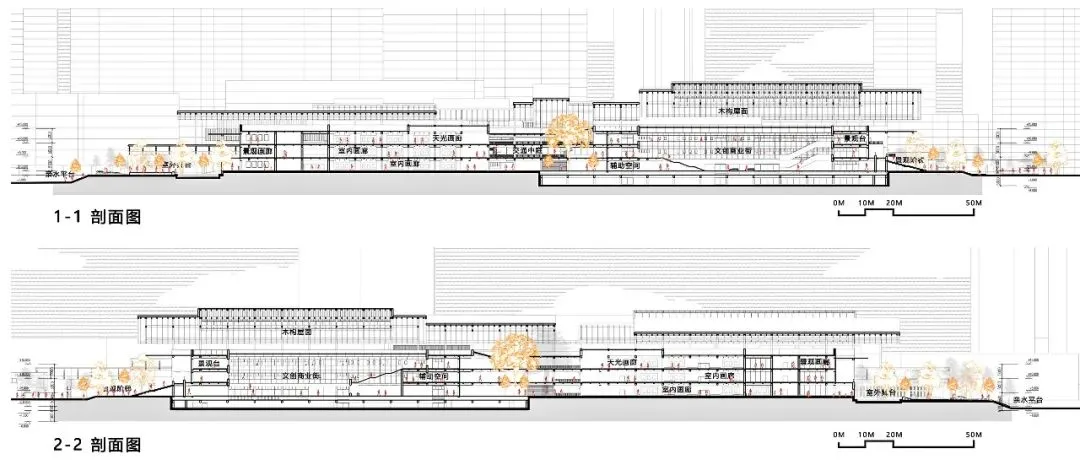
△ Profile Diagram
Indoor space divides into inward exhibition, outward exhibition, and cultural-creative mall areas, serving visitors, residents, and tourists. Outdoor spaces, dependent on cultural units, foster interaction with landscapes, guiding pedestrian flow and group interaction. Transparent roofs, sheet walls, and waterfront platforms divide outdoor spaces, supporting public events, markets, and exhibitions.
Complete Spatial Display
Scene Presentation
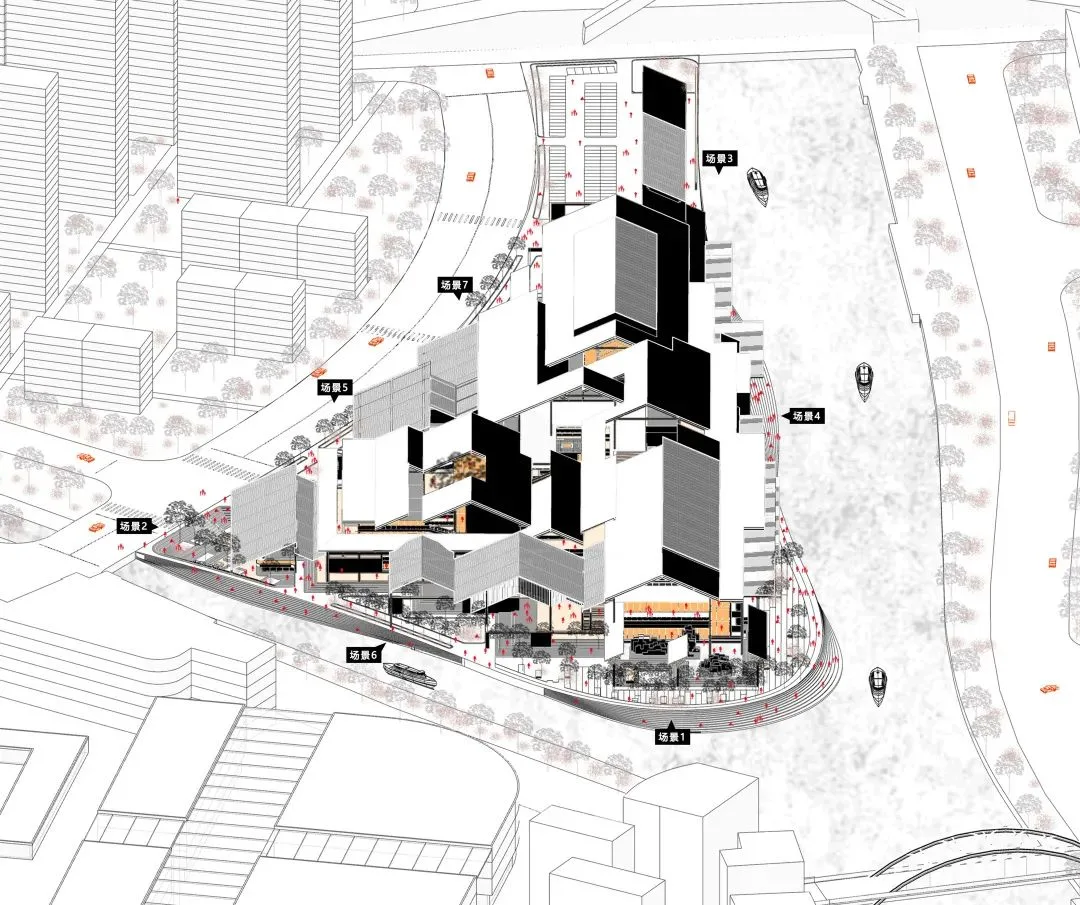
△ Aerial View
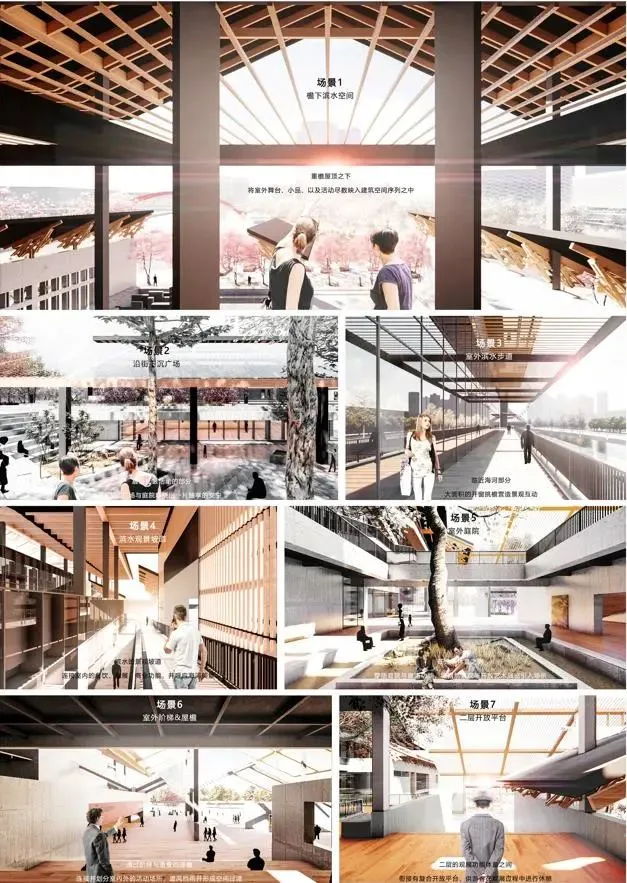
△ Scene Rendering
The design integrates three composite urban interfaces with distinct uses, groups, and spatial needs. Despite conflicts, the design creates a cultural center addressing the lack of comprehensive cultural functions in the surrounding and central Tianjin areas.
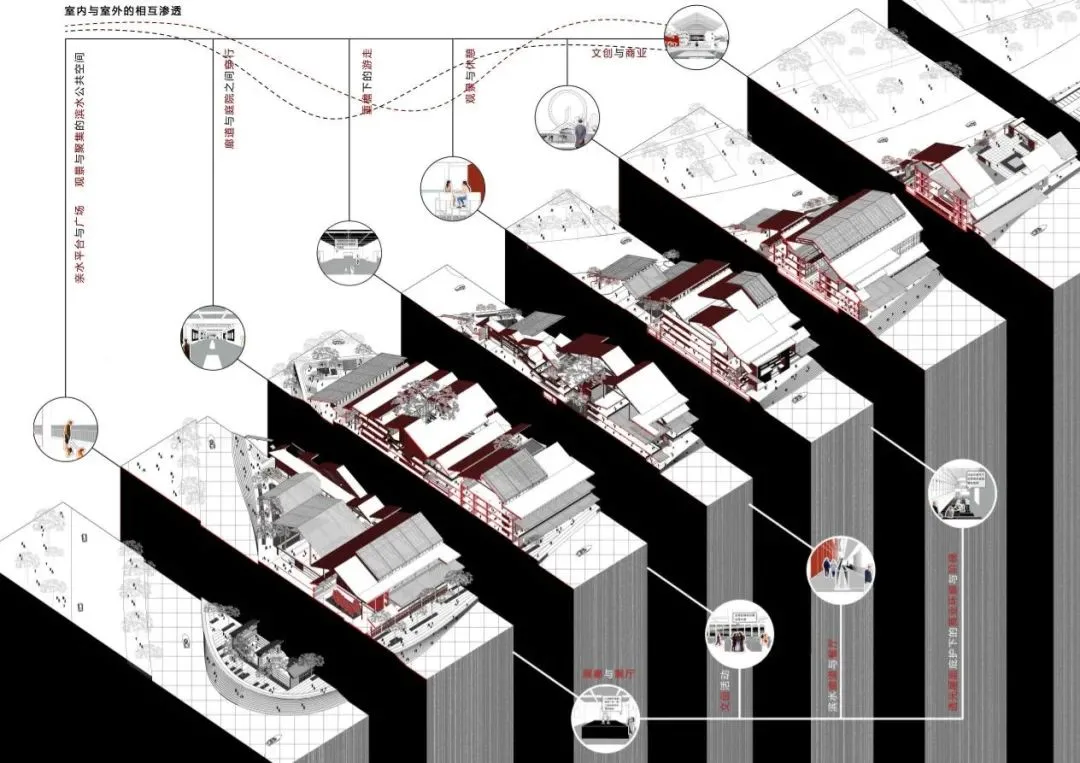
△ Section Diagram
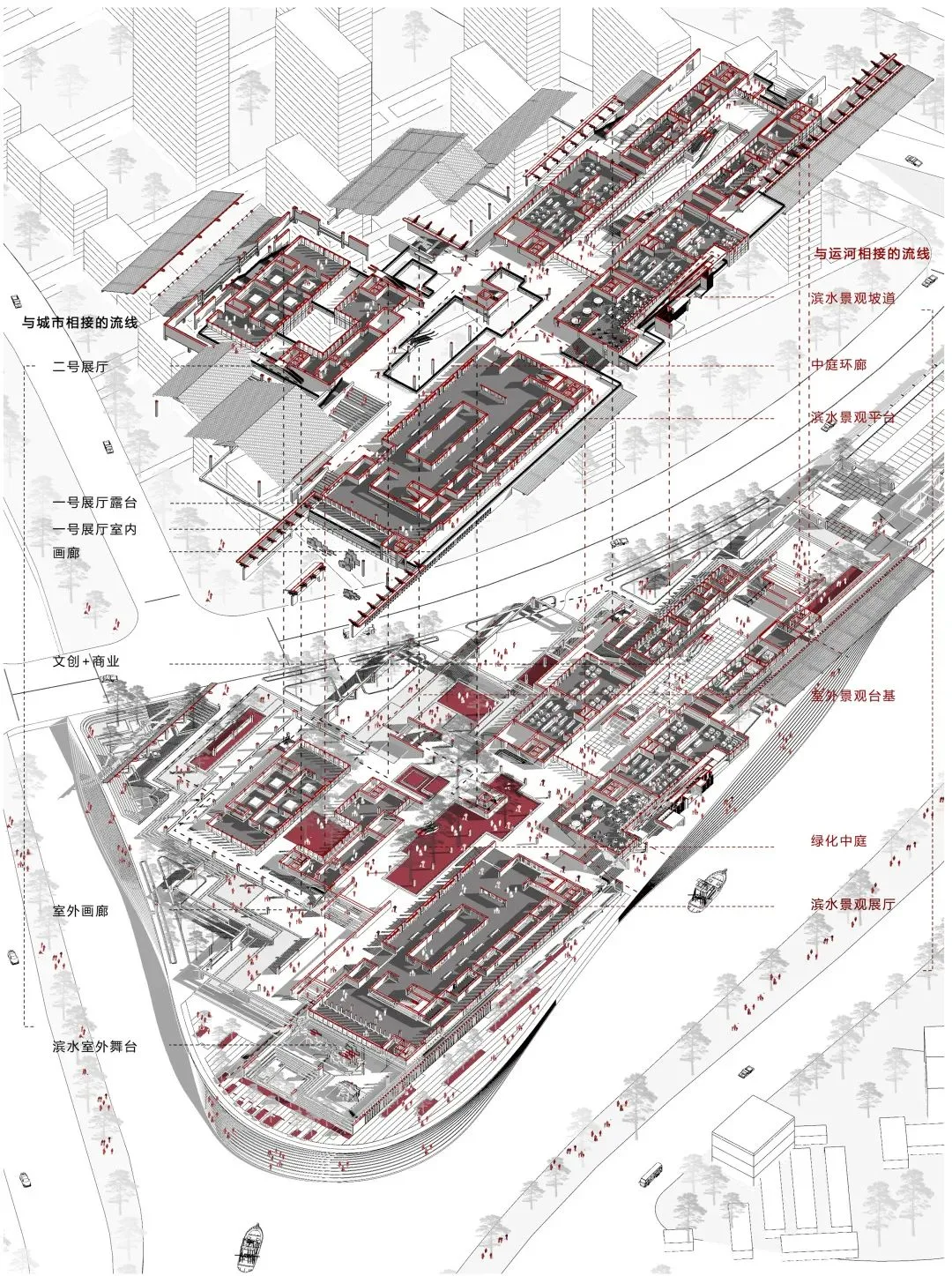
△ Streamline Diagram of Plan Integration
Conclusion
Summary
This study addresses cultural complexes reshaping composite urban interfaces through spatial integration. It organizes architectural elements, operational paradigms, and integration responses, exploring practical feasibility via a detailed design application. Though not without limitations, the plan fulfills initial expectations and marks a satisfying conclusion to the author’s master’s design journey. Thanks to Professor Jing Ziyang for expert guidance.
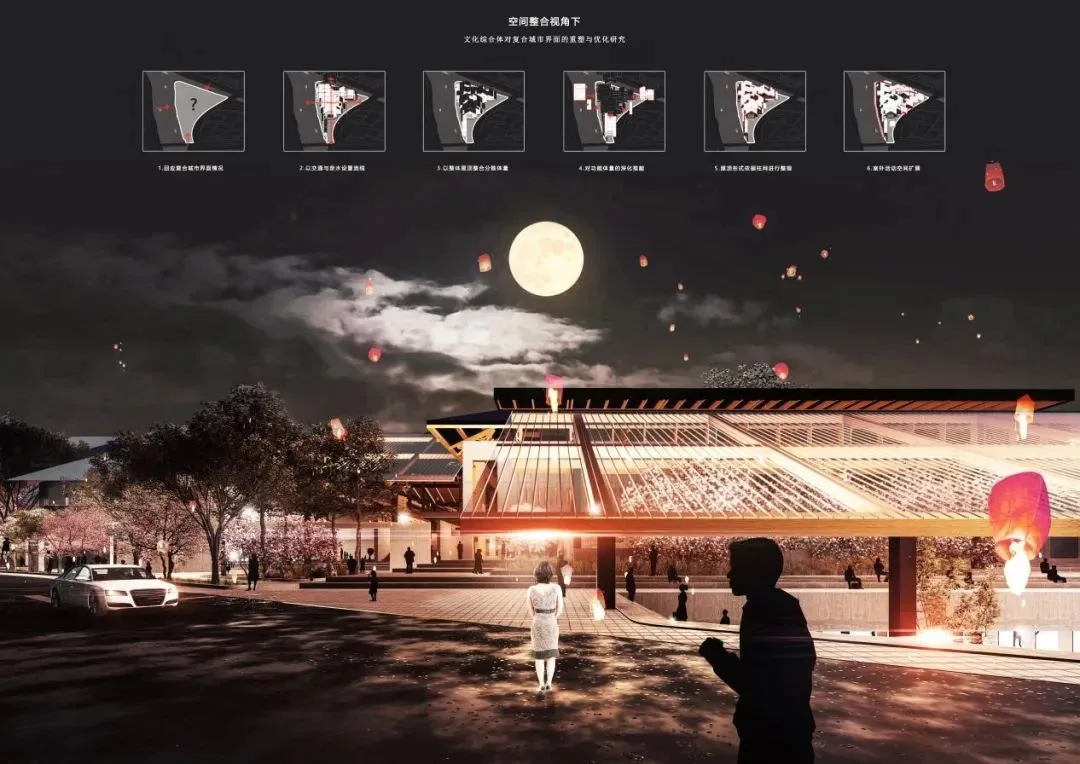
△ Community Interface Rendering
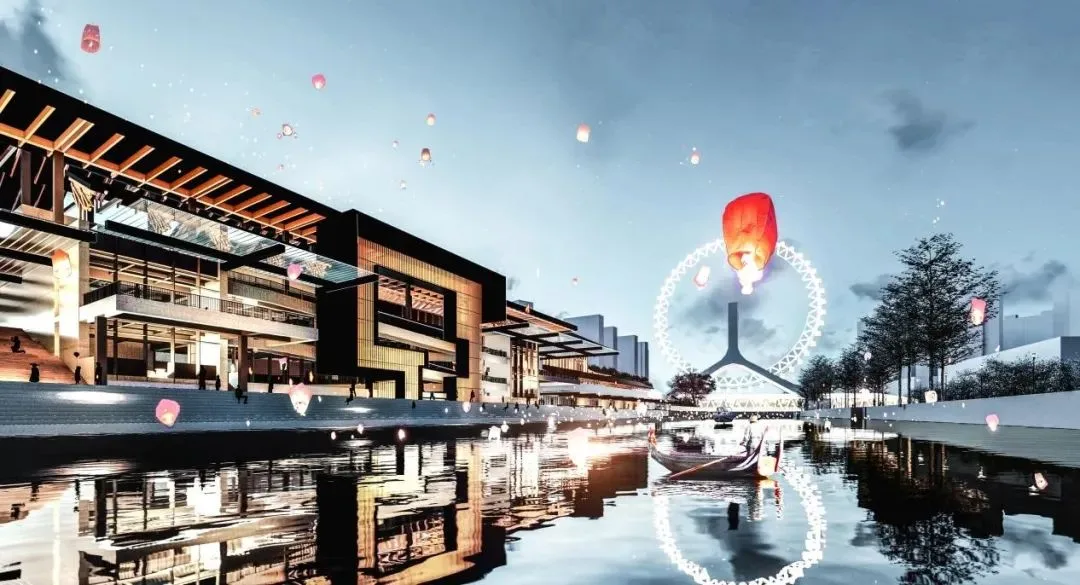
△ Waterfront Interface Rendering












Must log in before commenting!
Sign Up