
Abstract The “Xintiandi Business Center” is planned as an international secondary business hub and cultural creative park, combining culture, entertainment, business leisure, and headquarters functions. Once completed, it will become the largest urban complex in Hangzhou.
1. Project Background
1. Project Name: “Hangzhou Gate” Project
2. Project Design Unit: China United Engineering Corporation
China United Engineering Corporation is a leading technology-based engineering company, formed around the former Second Design and Research Institute of the Ministry of Machinery Industry, together with the Third and Eleventh Design and Research Institutes, and other national Grade A survey and design units. It is part of the central large-scale enterprise group, China Machinery Industry Group Corporation, headquartered in Hangzhou.
As one of China’s earliest large-scale comprehensive design units, with over 50 years of experience, the company has expanded its services from mechanical industry design to over 20 industries including construction and electricity. Its service model now covers engineering design, consulting, surveying, planning, construction supervision, project management, procurement, commissioning, and engineering general contracting. In recent years, to address challenges posed by China’s WTO accession and industry reforms, the company has adjusted its business structure, strengthening design consulting while actively expanding EPC and project management capabilities, and participating in international competition.
3. Related Software Applications:
– Autodesk Revit Architecture
– Autodesk Revit Structure
– Autodesk Revit MEP
– Autodesk Navisworks
– Autodesk Ecotect
– AutoCAD
4. BIM Application Evaluation and Feedback:
“Autodesk provides a communication platform that helps us avoid many detours.” — Ge Jun, Assistant General Manager, China United Engineering Corporation, Director of Civil Engineering Center
“Without the BIM analyses during preliminary design and the optimization guidance it provided, completing the ‘Hangzhou Gate’ design in six months would have been impossible.” — Zhu Zhiyuan, Architectural Designer, First Architectural Engineering Design and Research Institute, China United Engineering Corporation
“Autodesk’s Revit has created an excellent 3D BIM platform; we hope it continues to be refined and specialized.” — Hu Junwen, HVAC Engineer, First Architectural Engineering Design and Research Institute, China United Engineering Corporation
2. Main Text
Based on the “Hangzhou Gate” Project – Green Design and Analysis
Project Overview
The Xintiandi Business Center is located in Dongxin Street (formerly the “Hangzhong” plot) in northern Xiacheng District. It borders Hangzhou Xuanhua Railway to the east, Dadawu Road (planned) to the south, Dongxin East Road to the west, and Shixiang Road to the north. It lies approximately 6 kilometers from Wulin Square and 7.5 kilometers from West Lake, with convenient transportation links. The west is bordered by the Dongxin and Shangtang Rivers, and the north by a half-mountain area, providing a superior natural environment.
To meet urban and social development needs, the Hangzhou Municipal Party Committee and Government decided to relocate the heavy machinery plant and develop this area into an international secondary business center and cultural creative park integrating cultural entertainment, business leisure, and headquarters functions under the name “Xintiandi Business Center.” Upon completion, it will become Hangzhou’s largest urban complex. The current development, Plot J, is located in the southern block of the Xintiandi project.
The planned building area of the Xintiandi Business Center is 5,493 ㎡, with a construction area of 1,920 ㎡. The total above-ground floor area is 23,619 ㎡, and the underground floor area is 9,234 ㎡. The building density is 35%, and the floor area ratio is 4.3.
Design Approach
In designing the Hangzhou project, China United Engineering Corporation gained a deep understanding of the city’s essence—not only its urban development and natural environment but also its cultural characteristics and geographical location. Hangzhou is one of China’s wealthiest cities, rich in geographical features and diverse architectural styles, long harmonizing with its natural ecological environment.
To establish the project as a landmark in Hangzhou, the company emphasized five key design principles:
1. Landmark: As the “South Gate” of the overall Xintiandi plan, Plot J should be architecturally distinct to attract tourists and visitors.
2. Guidance: The project must guide visitors from Dawangwu Road into the core Xintiandi area and smoothly transition tourists towards other plots (D and O) and the industrial heritage core. Managing this internal flow is a critical design challenge.
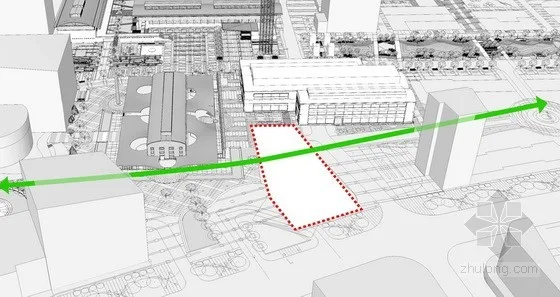
Figure 2: Connecting the East and West Commercial Plots of Xintiandi
3. Humanistic Care: Beyond guidance and landmark status, the project aims to create public spaces by reducing building area, enhancing community activity for residents.
4. Simplicity: All architectural elements serve functional purposes, from facade to structure, avoiding unnecessary decoration to achieve a clean, timeless design.
5. Nature Care: Amid urbanization, residents are distanced from nature. The design fosters a humane working environment with sunlight, greenery, and fresh air accessible via bright, open spaces.
Physical Layout and BIM Model
1. City Gate: The building rises 15 floors above ground at 60 meters tall. The hollowed base interprets traditional Chinese city gates in a modern, three-dimensional form, creating an inviting entrance and open space for visitors.
The H-shaped design symbolizes Hangzhou’s gate but poses challenges such as irregular floor layouts, structural modeling, floor area calculation, and net height control. BIM technology and Autodesk Revit models were introduced to solve these issues.
2. Roof: Removing volume from the upper floors enhances natural light and views. The top floor features an independent roof garden or terrace, allowing users to enjoy sunshine, fresh air, and greenery through French windows, and overlooking the Xintiandi industrial heritage area.
3. Blinds: Stone louvers are extensively used on glass curtain walls and windows to block direct summer sunlight without obstructing views. This consistent architectural element gives a simple, elegant appearance, especially at the curved base of the entrance.
4. Window Display: The first two floors serve as commercial, retail, and dining spaces, featuring two-story display windows and glass curtain walls on the south, west, and sunken square-facing facades, creating a unified commercial atmosphere.
BIM Model and Energy-Saving Technologies
1. Energy-Efficient Architectural Design: The building’s shape coefficient is 0.16, promoting energy efficiency. Two towers with roof setbacks and French windows improve lighting and ventilation, offering users excellent views.
2. Building Envelope: High-performance insulation materials—polyurethane roof insulation, mineral wool, glass wool boards, and low-E glass—are used for superior thermal performance.
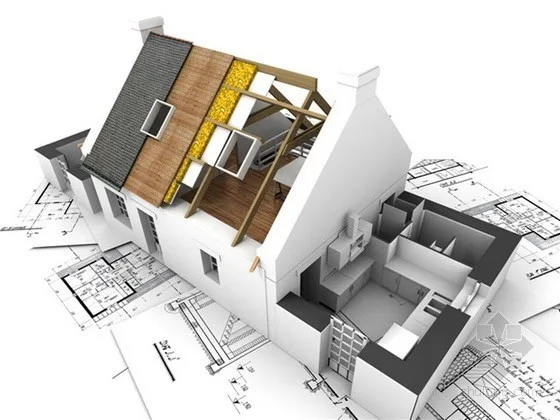
Figure 3: Building Envelope Structure
3. Building Equipment Energy Control:
– HVAC: The building uses a multi-unit air conditioning system with energy-efficient equipment. Outdoor units placed on recessed platforms feature guide ducts to optimize airflow, prevent short circuits, and maintain efficiency.
– Electrical: Lighting employs high-efficiency fluorescent and other energy-saving lamps with electronic ballasts, complemented by an intelligent control system.
– Water Supply: Utilizes municipal water pressure and adopts water-saving devices.
– Solar Thermal: Domestic water heating partially relies on a solar thermal system assisted by electric heating.
4. Greening: Roof and vertical greening improve shading and insulation. Wind and thermal environment simulations verified that plantings enhance the microenvironment effectively.
Throughout the energy-saving design process, Autodesk Revit software enabled detailed 3D BIM modeling, allowing designers to conduct precise calculations and optimize the project accordingly.
Green Design Analysis of BIM Models
China United Engineering Corporation integrated environmental protection, energy conservation, and sustainability into the “Hangzhou Gate” project by leveraging Autodesk BIM software for early-stage optimization and analysis.
These analyses included meteorological data collection, visualization, sunlight simulation, thermal radiation, wind environment, and more.
1. Meteorological Data Analysis
At the project’s outset, Autodesk Ecotect was used to collect and analyze local meteorological data.
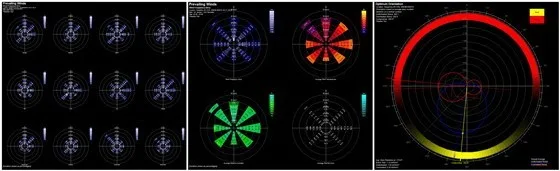
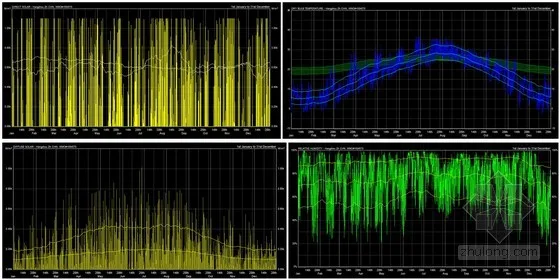
Figure 4: Meteorological Data Analysis
2. Visual Model Analysis
Using Autodesk Navisworks, visual analysis identified design weaknesses, allowing targeted optimizations.
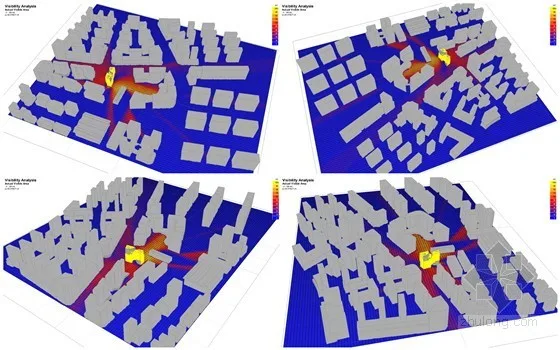
Figure 5: Visual Analysis
3. Sunlight Analysis
Autodesk Ecotect simulated annual sunlight exposure, gathering data to guide lighting and shading strategies by identifying areas with insufficient sunlight.
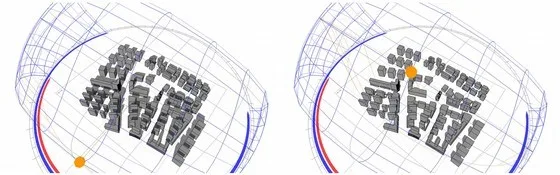
Figure 6: Annual Sunlight Simulation in January/April
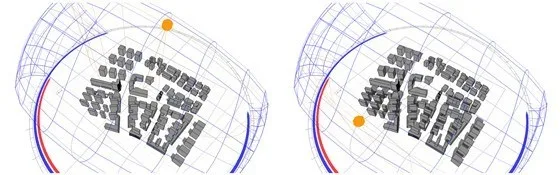
Figure 7: Annual Sunlight Simulation in July/October
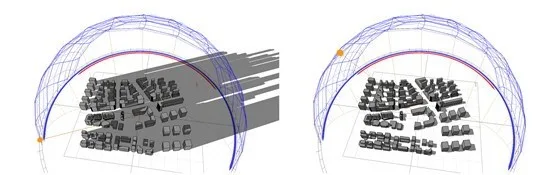
Figure 8: Full Day Sunlight Simulation at 5:15/9:15
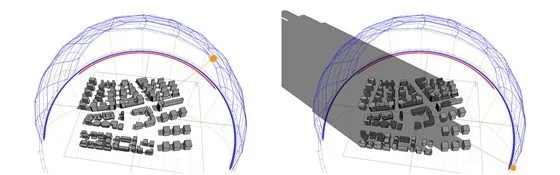
Figure 9: Full Day Sunlight Simulation at 14:15/19:15
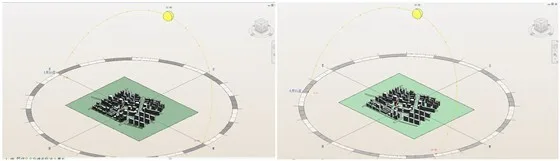
Figure 10: Four Seasons Sunlight Simulation (Spring Equinox 12:00 / Summer Solstice 12:00)
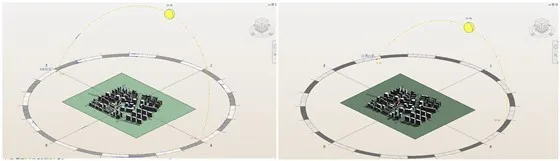
Figure 11: Four Seasons Sunlight Simulation (Autumn Equinox 12:00 / Winter Solstice 12:00)
4. Thermal Radiation Analysis
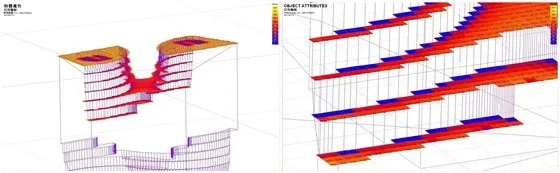
Figure 12: Thermal Radiation Analysis
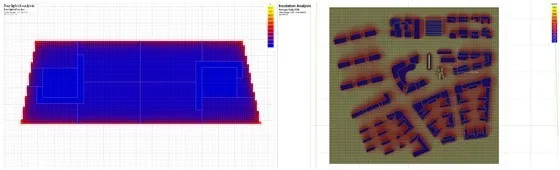
Figure 12-13: Standard Floor Indoor Lighting & Outdoor Solar Radiation
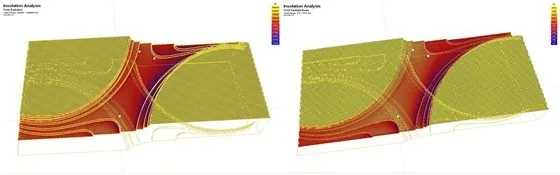
Figure 14-15: Total Annual Radiation on Roof & Annual Sunshine Hours on Roof
5. Wind Environment Simulation
Wind simulations analyzed the unique H-shaped building for winter and summer conditions.
Winter Simulation
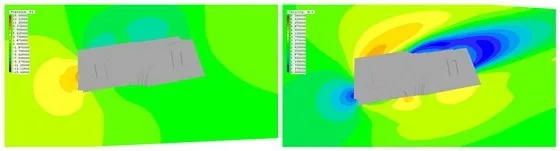
Pressure and velocity distribution at 1.5m above ground
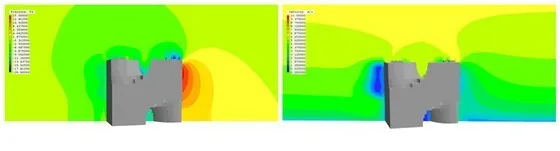
Vertical pressure and velocity distribution
Figure 24: Winter Operating Condition Simulation
Analysis Conclusion:
- Flow Field: With a NNW wind at 3.8 m/s, pedestrian ventilation is good around the building.
- Wind Speed: At 1.5m height, speeds remain below 5 m/s in main areas.
- Pressure Difference: Approximately 8 Pa between north and south sides, aiding indoor ventilation but requiring sealing and insulation in winter.
Summer Simulation
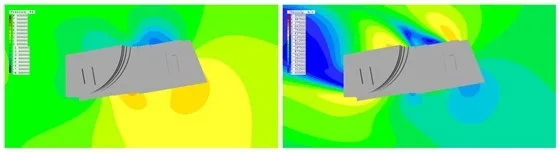
Pressure and velocity distribution at 1.5m above ground
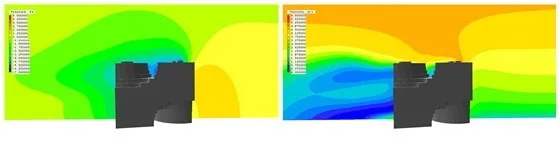
Vertical pressure and velocity distribution
Figure 25: Summer Operating Condition Simulation
Analysis Conclusion:
- Flow Field: With a SSW wind at 2.7 m/s, pedestrian ventilation remains effective.
- Wind Speed: At 1.5m height, speeds in main areas are below 5 m/s.
- Pressure Difference: Greater than 2 Pa, facilitating natural ventilation.
Summary
Through the extensive use of Autodesk BIM software, China United Engineering Corporation has transformed the Xintiandi Business Center into a green, environmentally friendly, and sustainable landmark in Hangzhou.












Must log in before commenting!
Sign Up