
Background
With the rapid urbanization, cityscapes have transformed significantly, while rural areas have gradually lost their vitality, leading to numerous “hollow villages.” The Weimei Motan Homestay Project is a regeneration initiative aimed at revitalizing such hollow villages. Located in Dawei Town, Baohe District, Hefei City, Anhui Province, the project is bordered by Feihe Wetland Park to the north and Chaohu Lake to the east, surrounded by farmland.
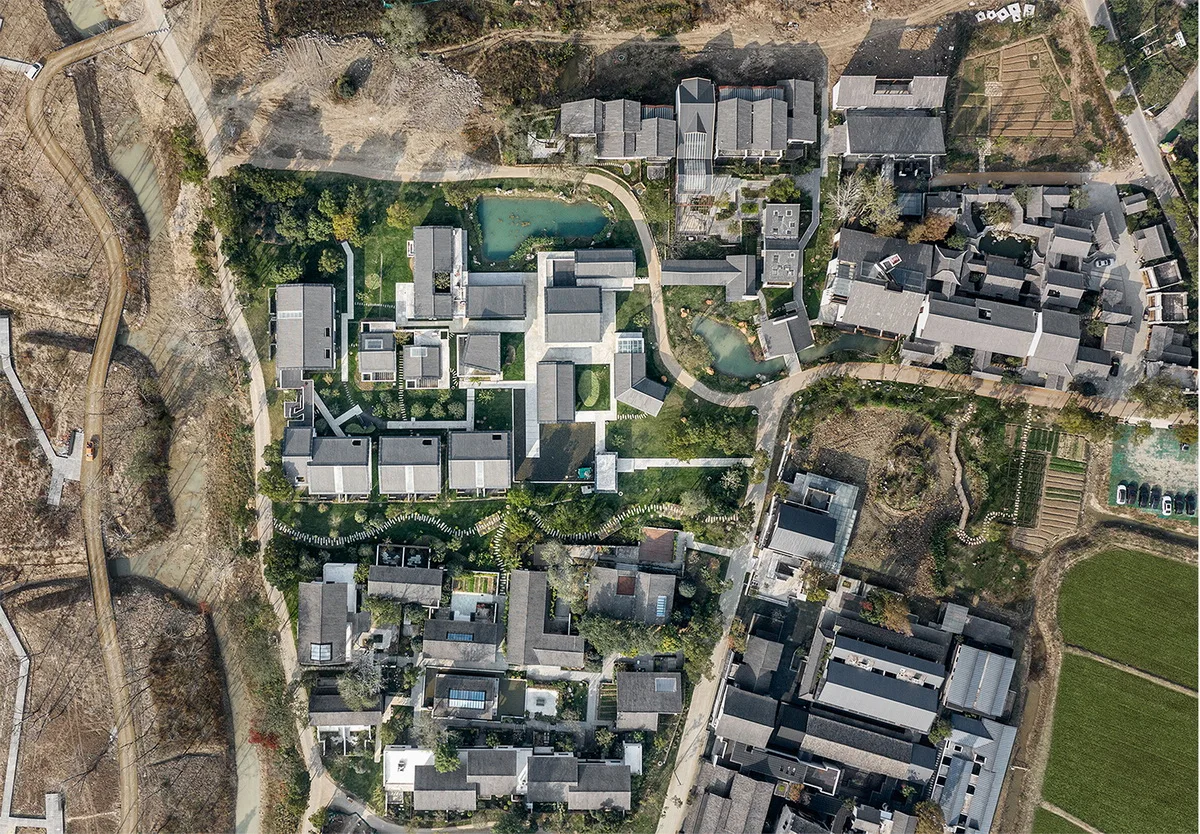
The designers drew inspiration from the cultural heritage of the Jianghuai region by extensively studying local materials. Their design respects the natural climate and construction traditions, using surrounding residential buildings as prototypes. Rather than strictly replicating traditional Jianghuai architecture’s appearance, volume, and scale, the design redefines the relationship between buildings and courtyards, streamlines circulation, and adapts spaces to new functional needs. Flexible modern techniques are employed to enrich the spatial hierarchy and architectural expression.
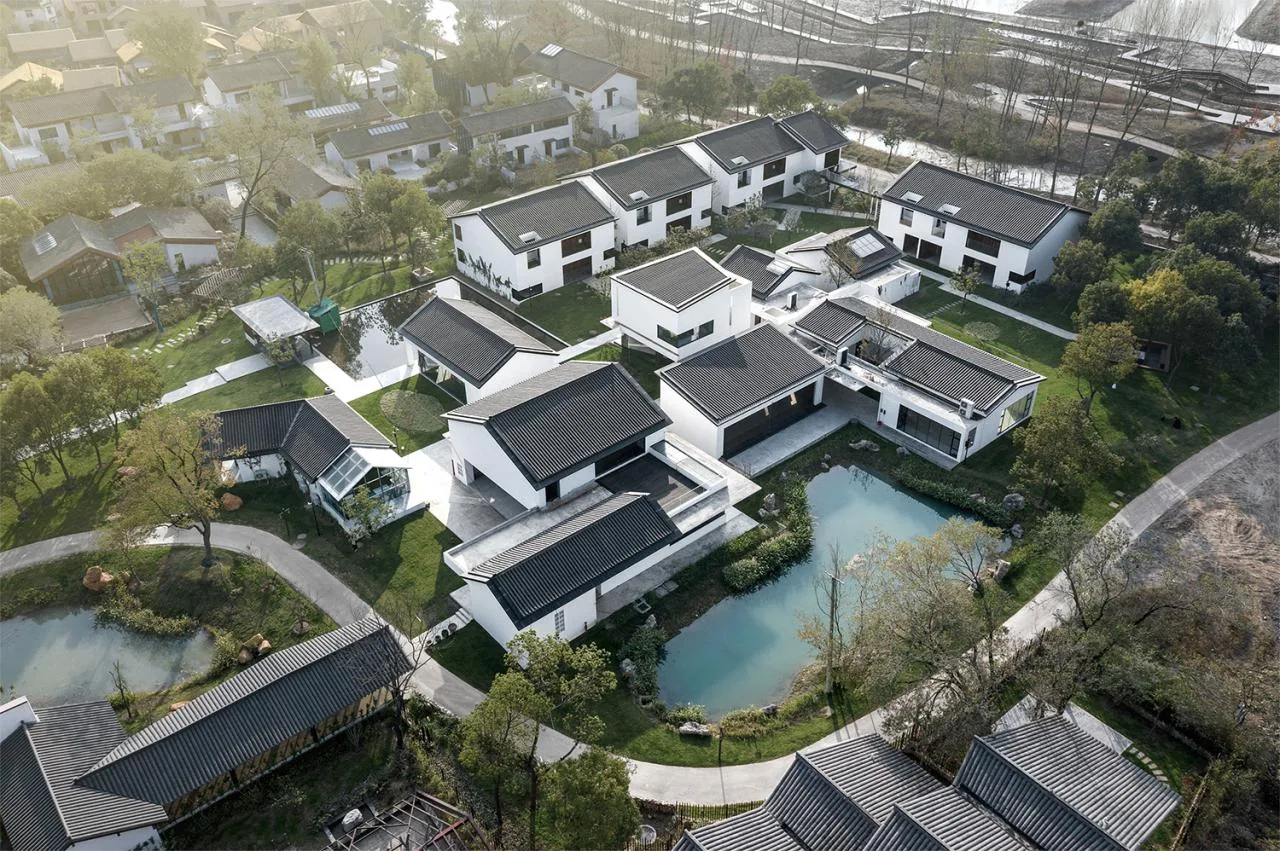
The Jianghuai region sits between the Yangtze and Huai Rivers, characterized by low mountains and hills. Jianghuai residential buildings blend the “courtyard style” of the northern Central Plains with the “hall, well, and tower style” of Huizhou architecture. The layouts tend to be compact and well-ordered, while architectural decoration emphasizes simplicity. Most structures are single-story, with some two-story buildings.
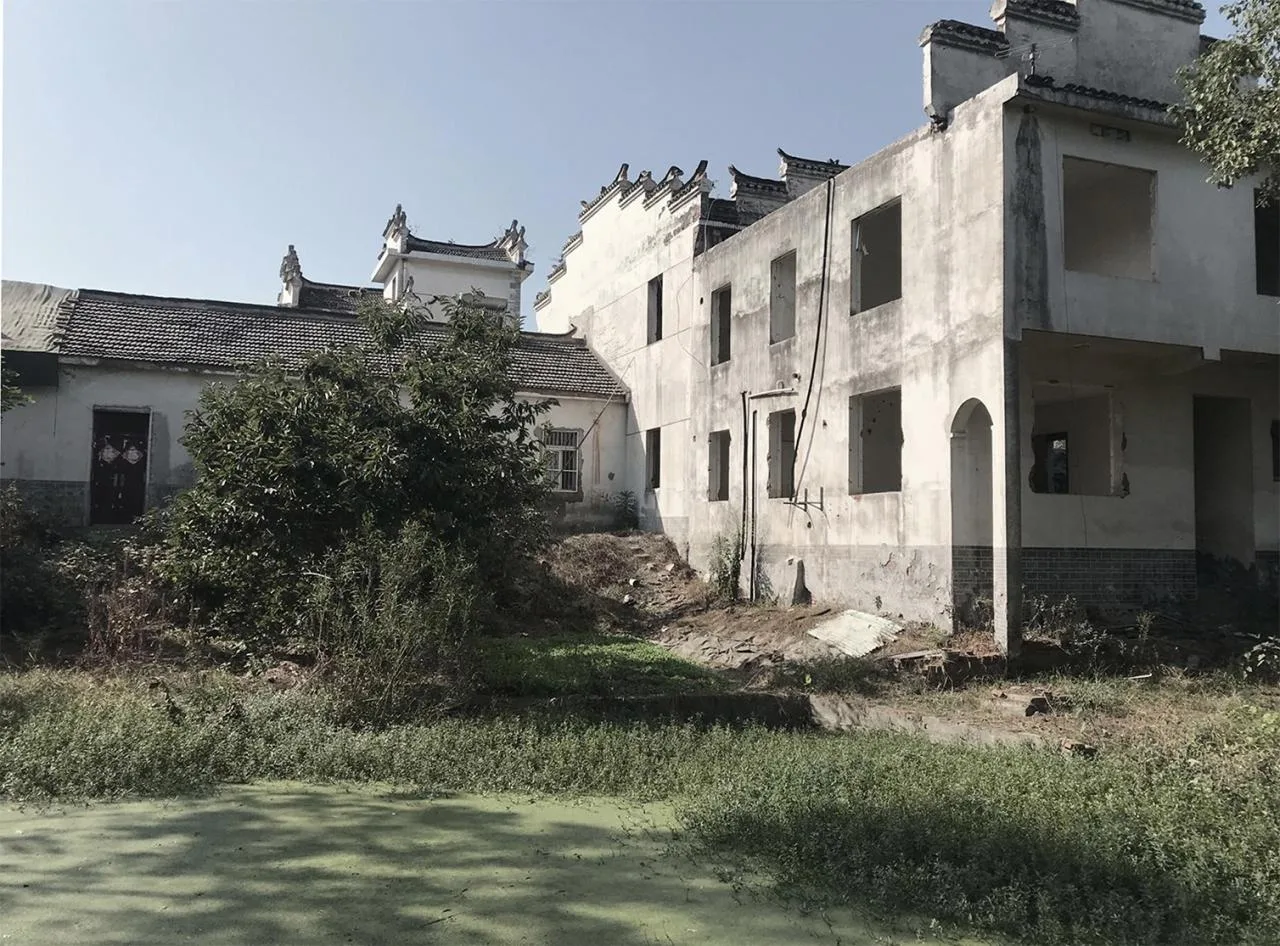
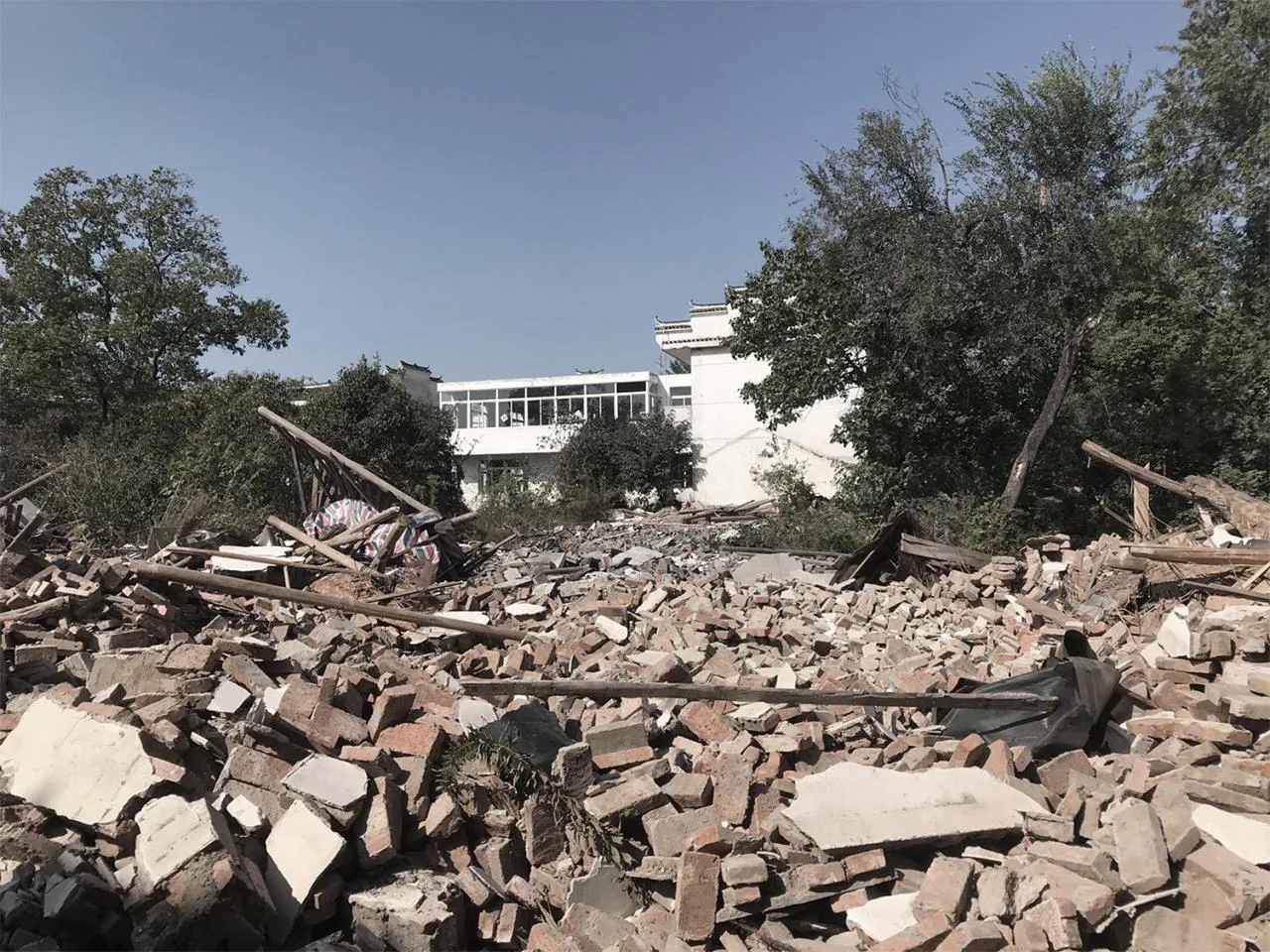
△ Original state of the project before renovation
The homestay’s color palette predominantly features black, white, and gray. The exterior walls are painted white, complemented by gable roofs with modern minimalist cornices and small gray tiles, blending traditional charm with contemporary simplicity.
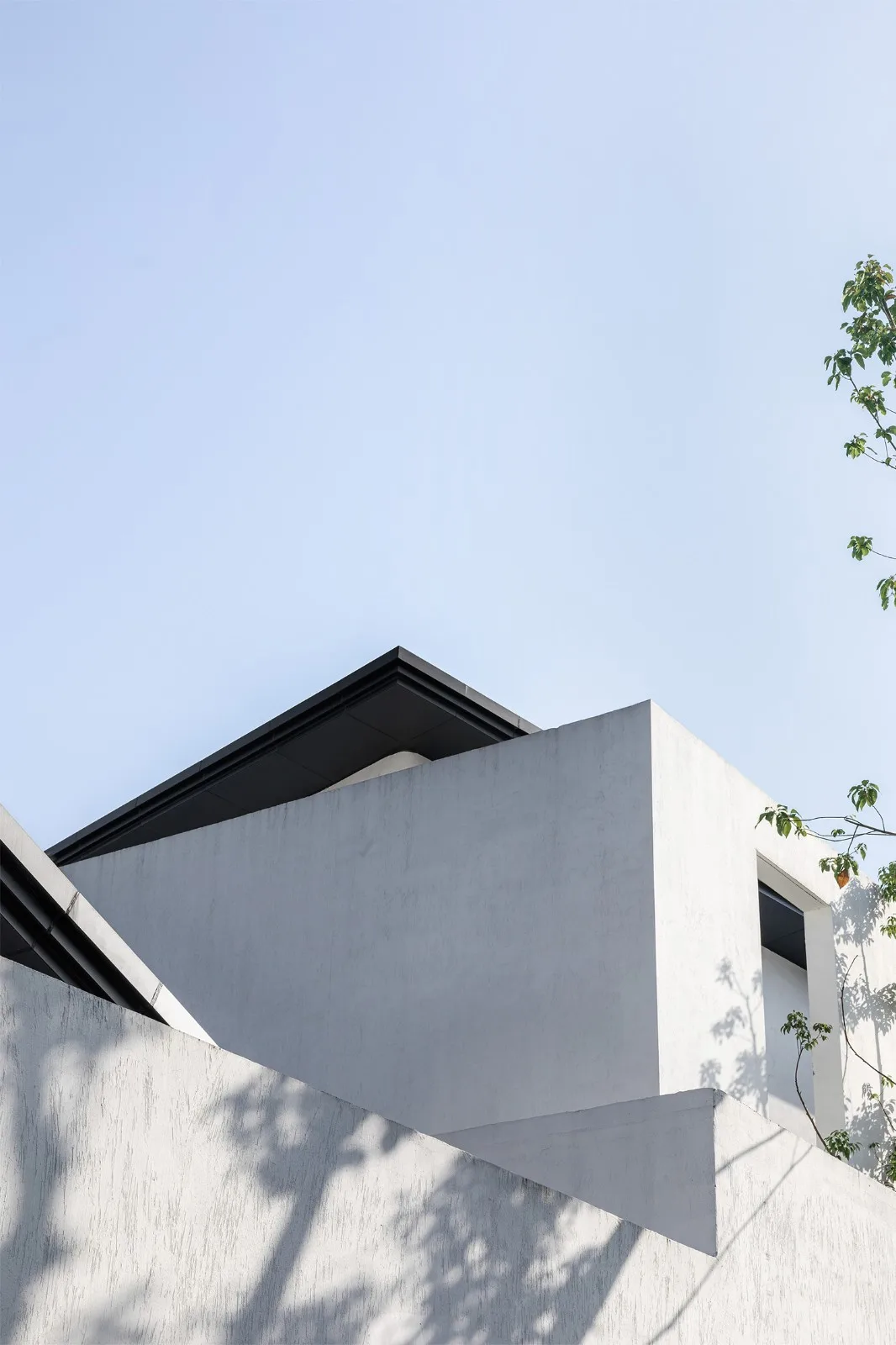
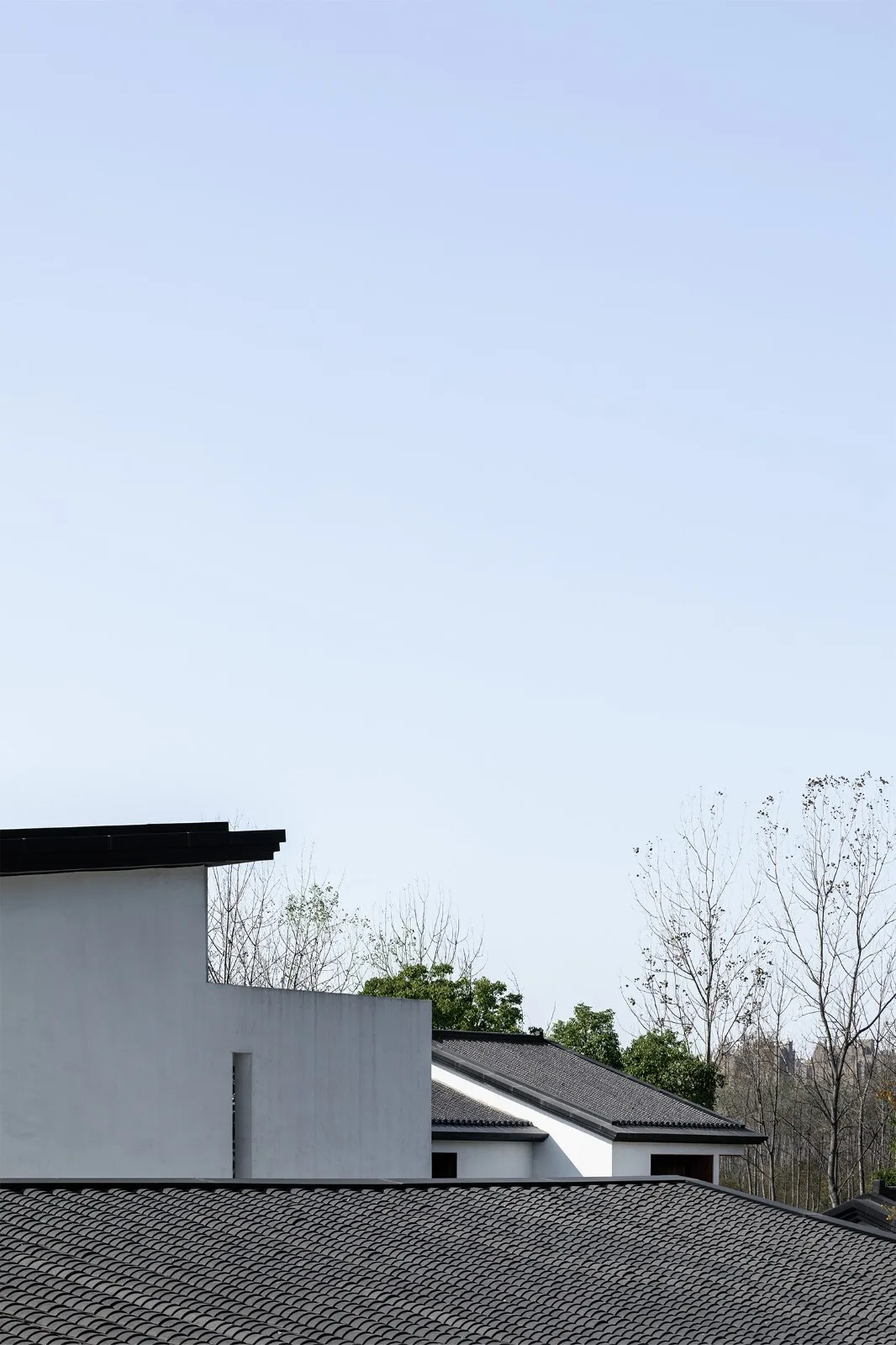
△ Black and white buildings under a bright, clear sky
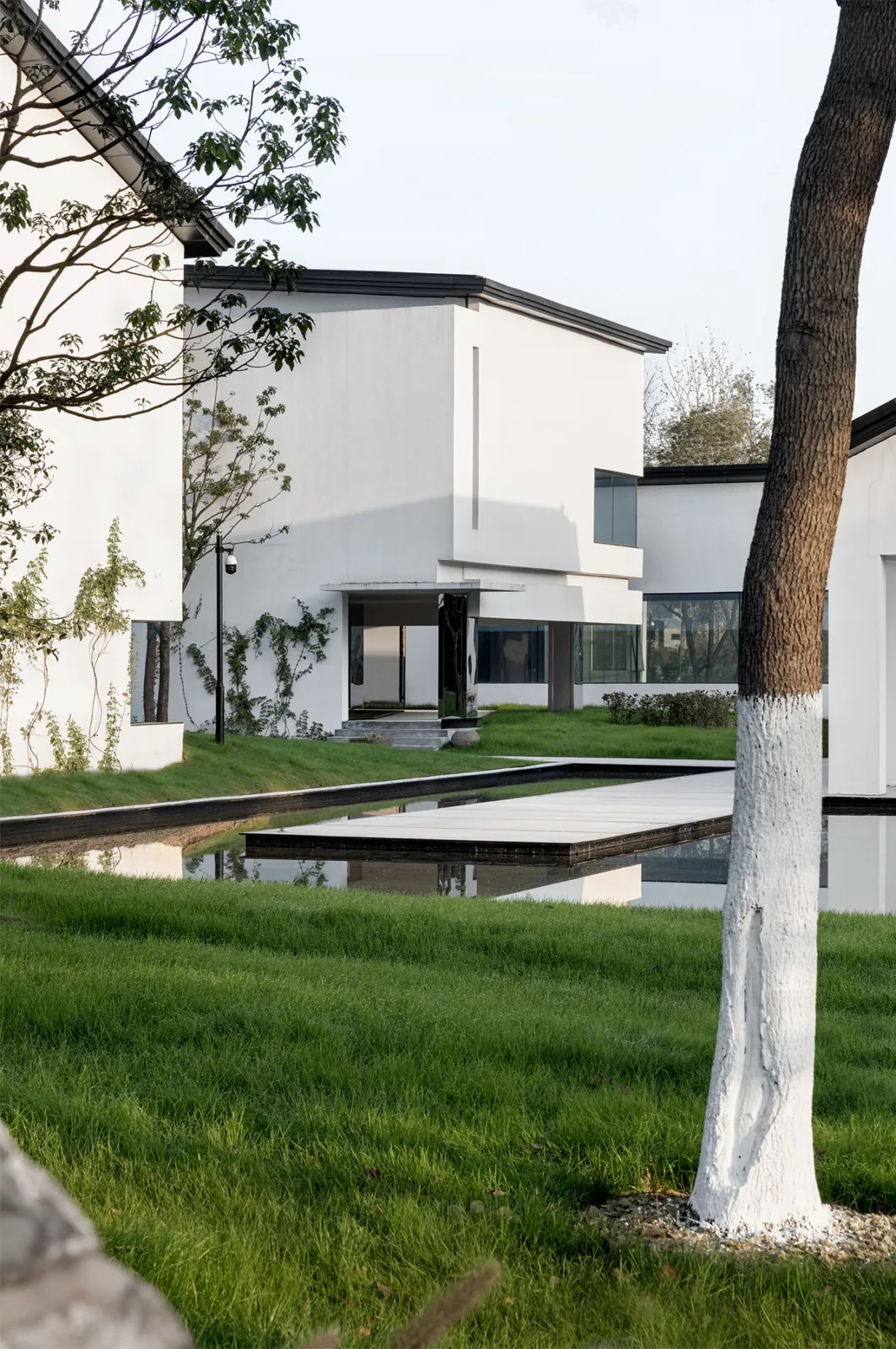
△ A serene and peaceful atmosphere
The pathway ‘Roaming Tingbu’ gently guides visitors into the homestay.
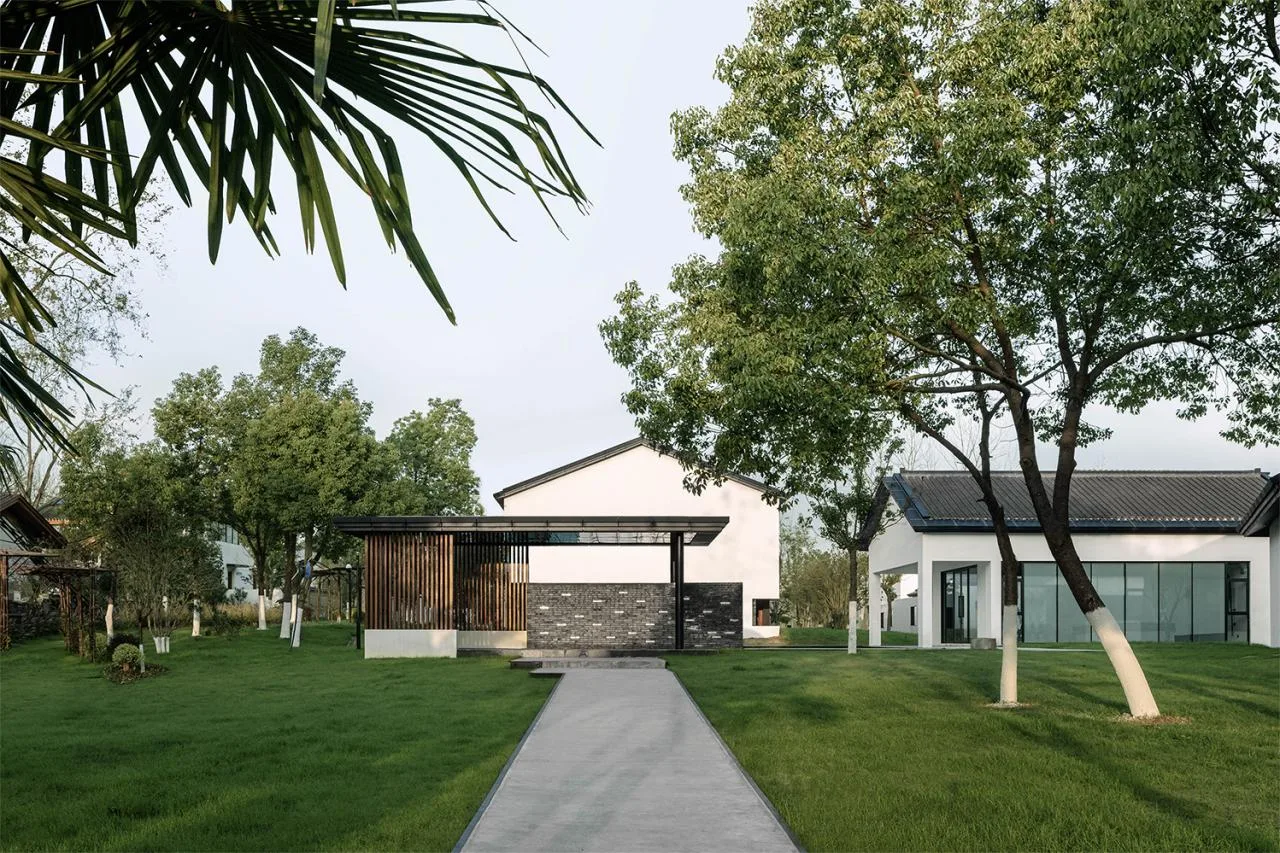
△ Main entrance
The building’s main entrance features a shallow water surface creating a semi-circular corridor that leads to the central structure—the “Lobby Bar.” This space exemplifies the typical “hall house” style of Jianghuai architecture and serves as a multifunctional public area for today’s homestay experience.
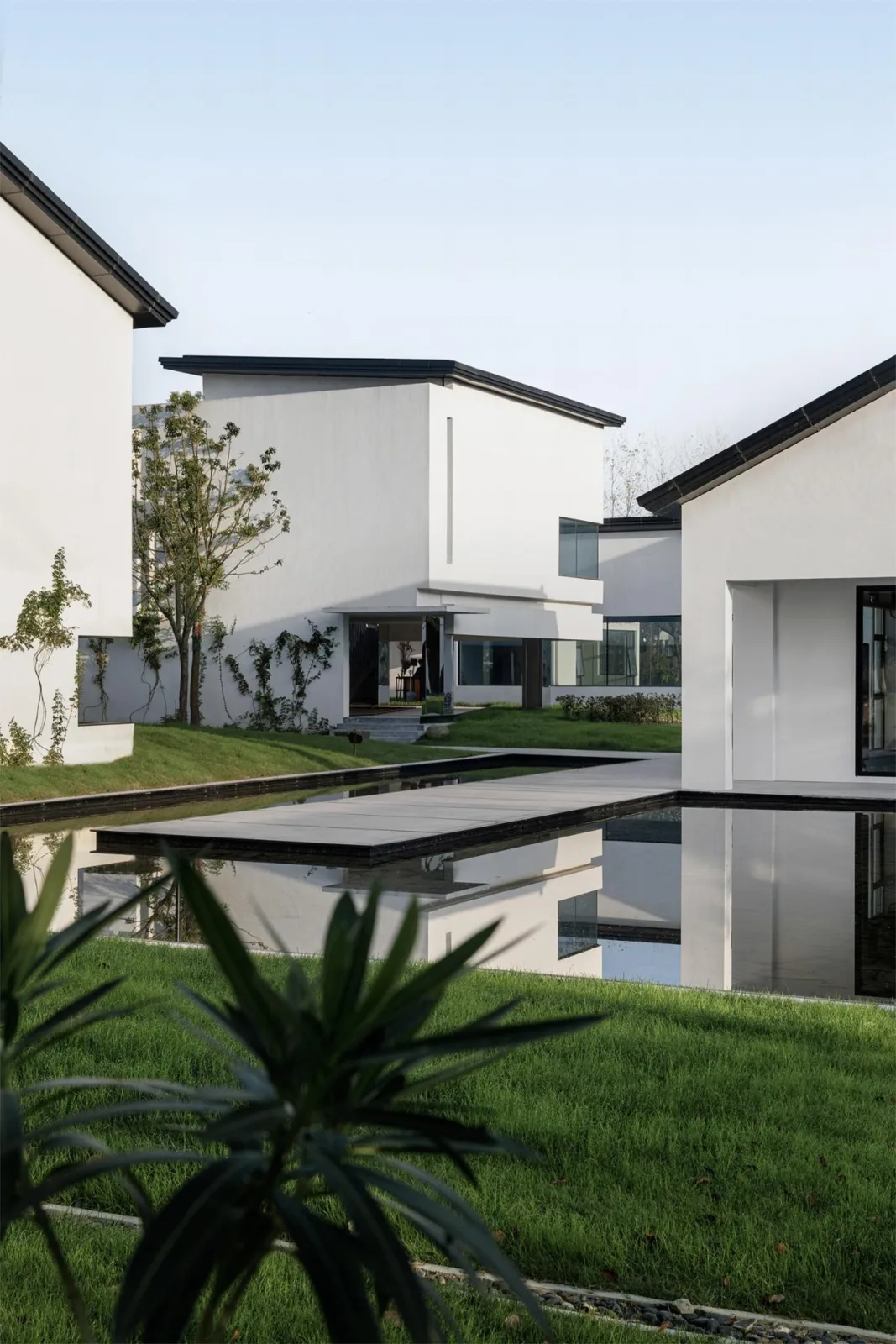
Architecture in harmony with nature
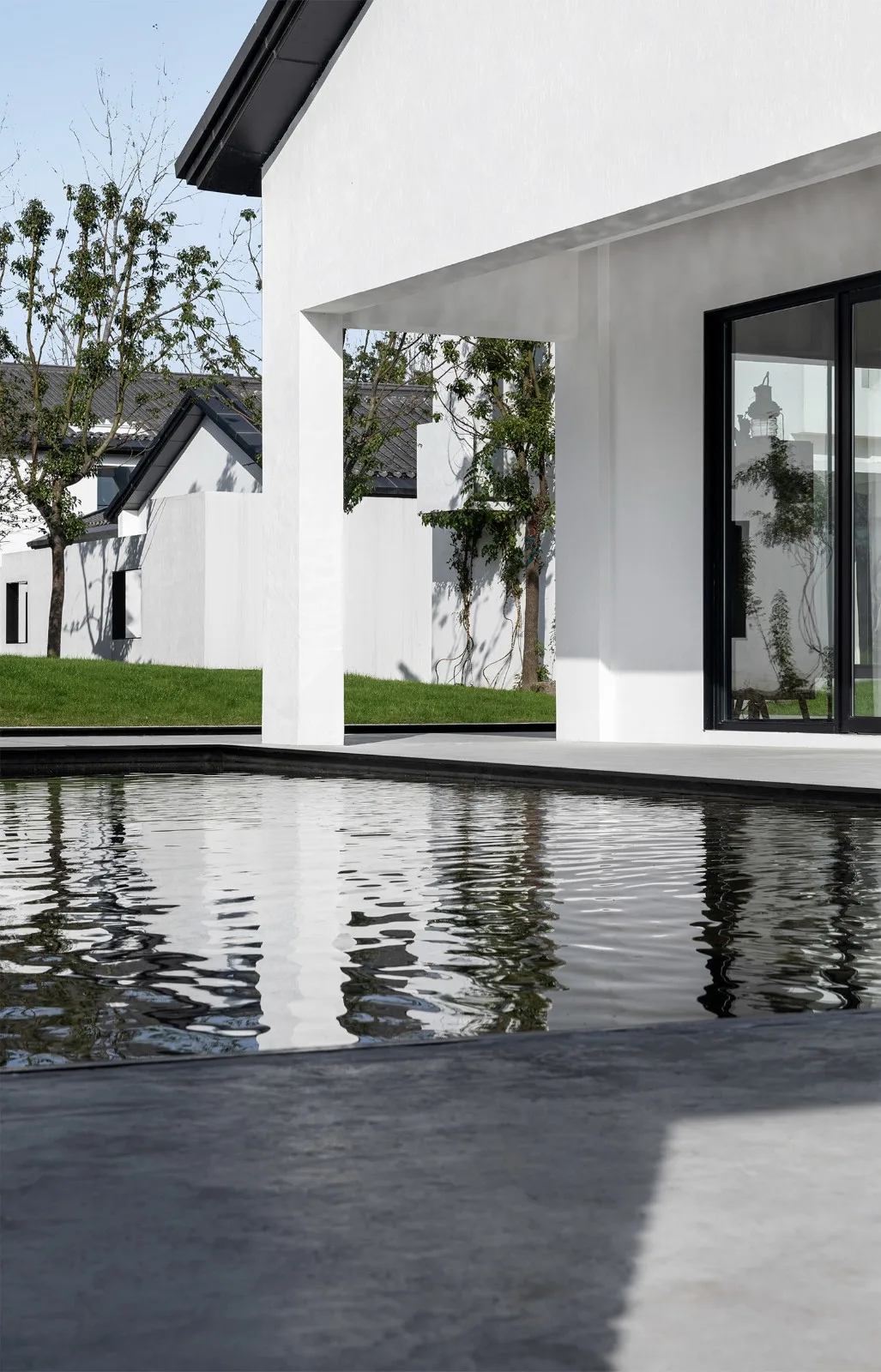
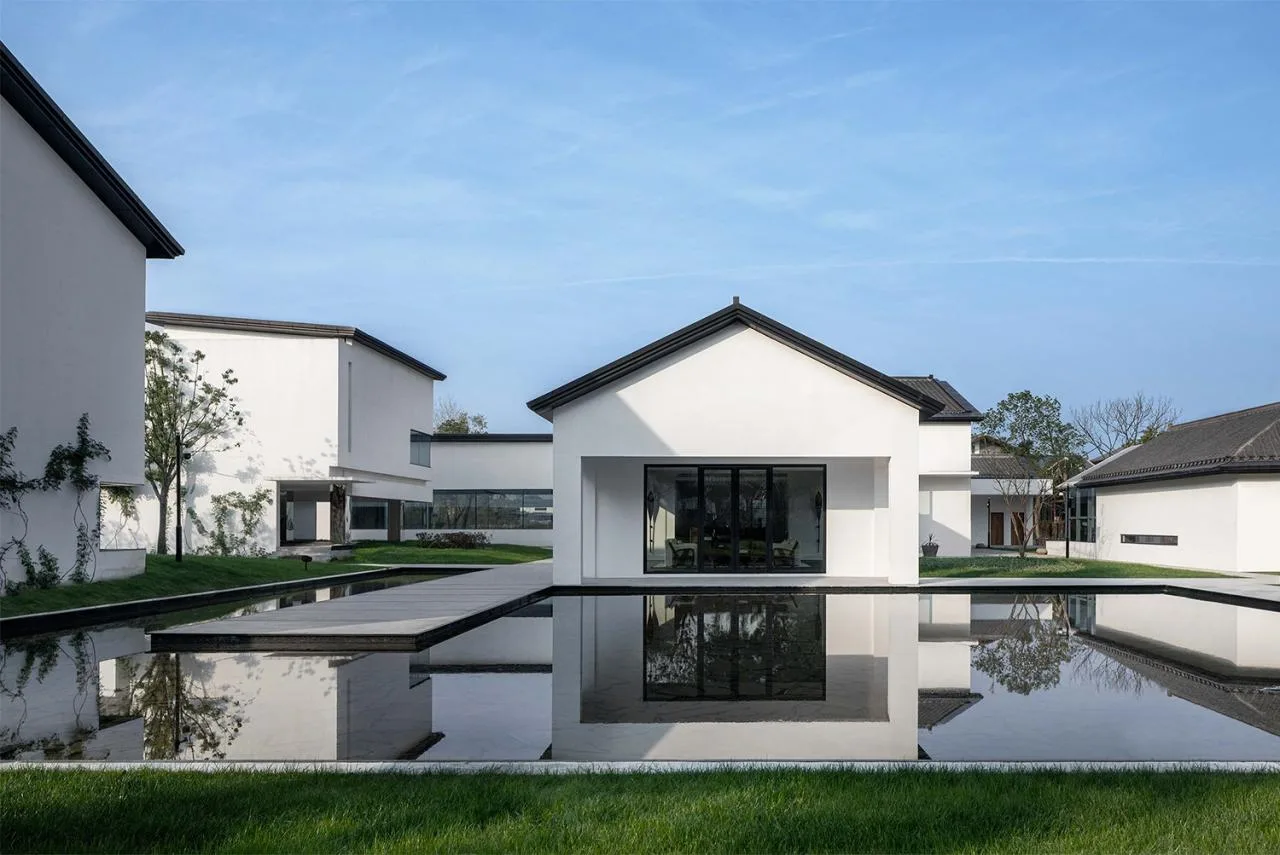
Mirror-like water surfaces reflect the blue sky
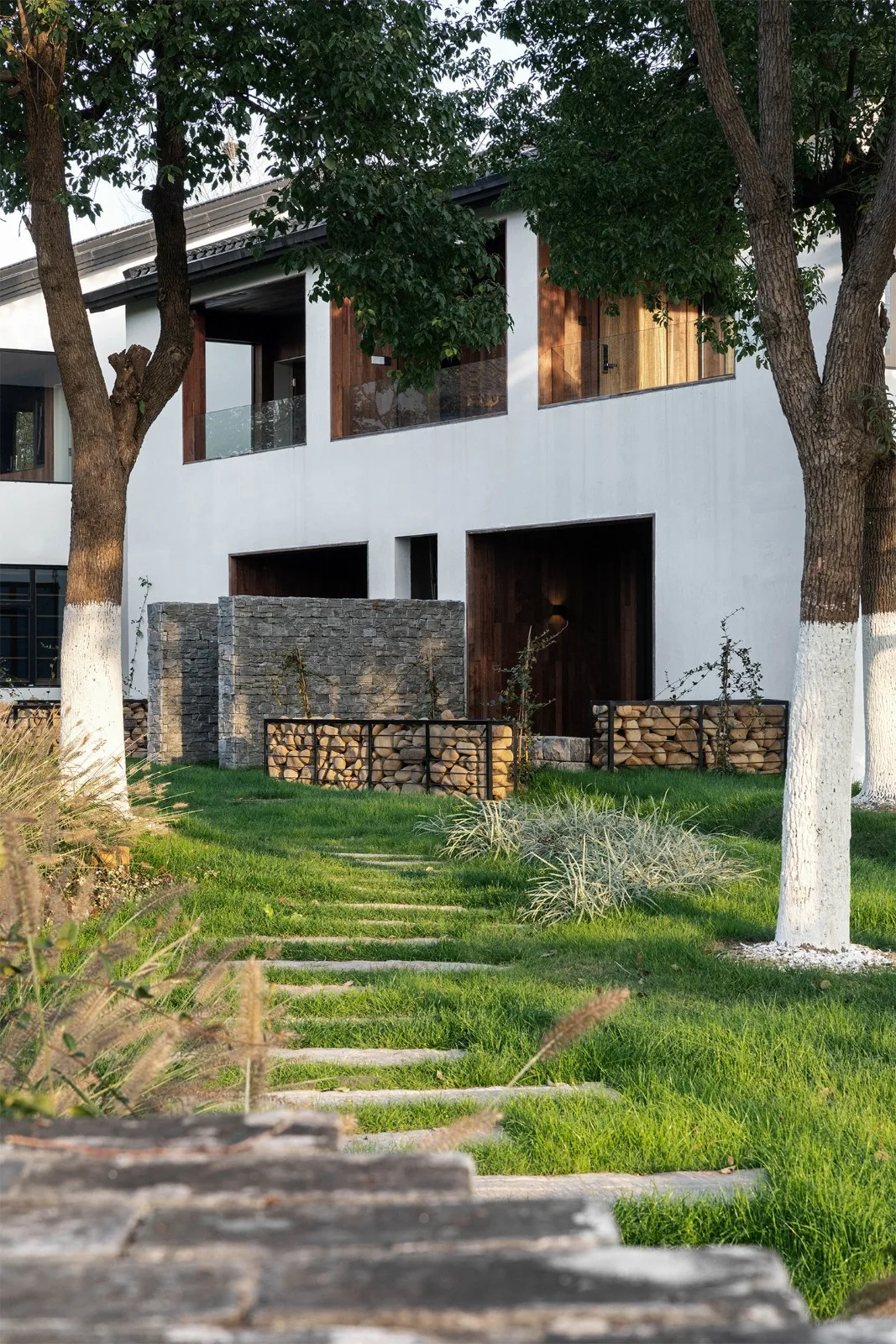
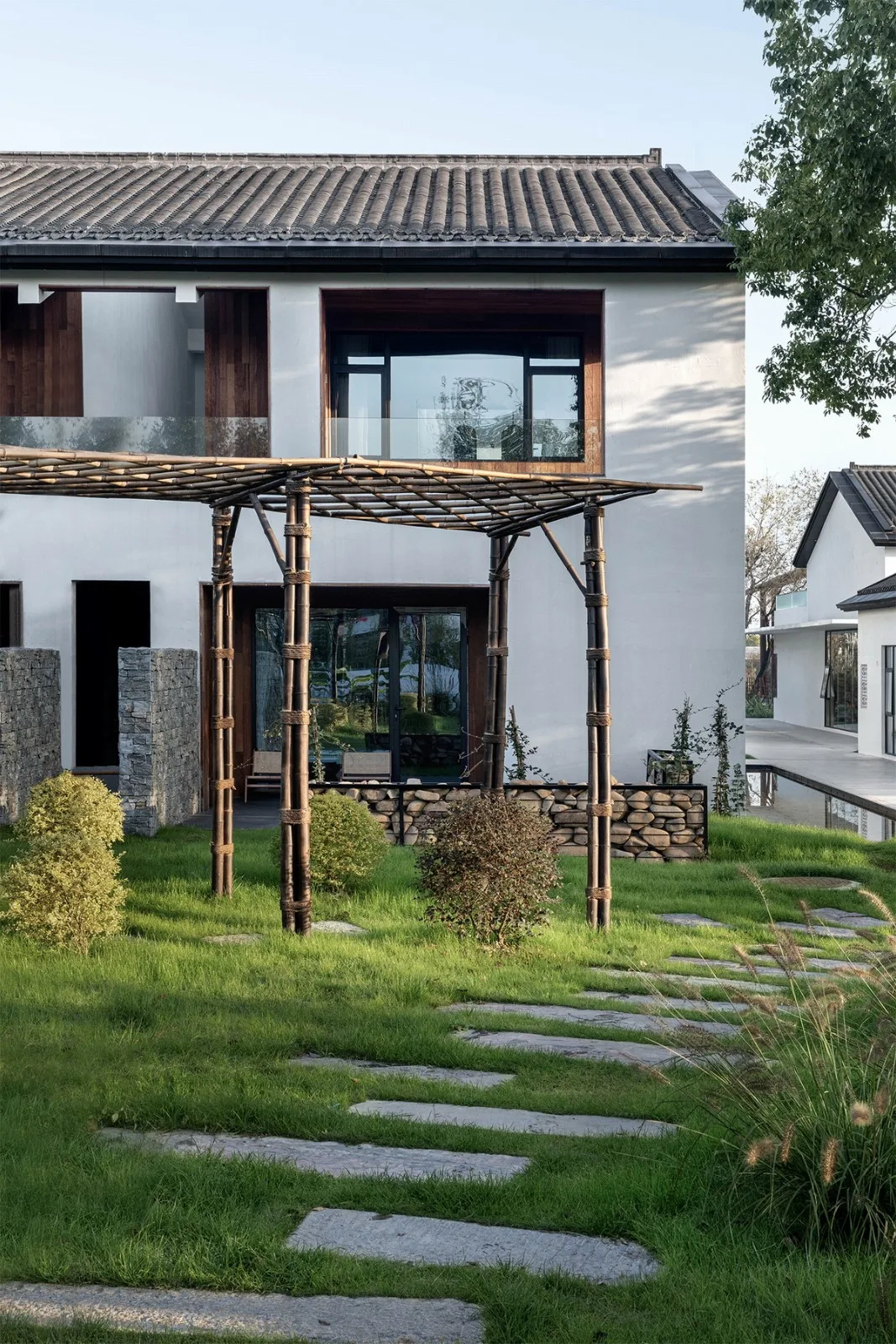
The corridors and bluestone pathways are integrated within varied spatial forms and boundaries, serving as dynamic connectors between buildings.
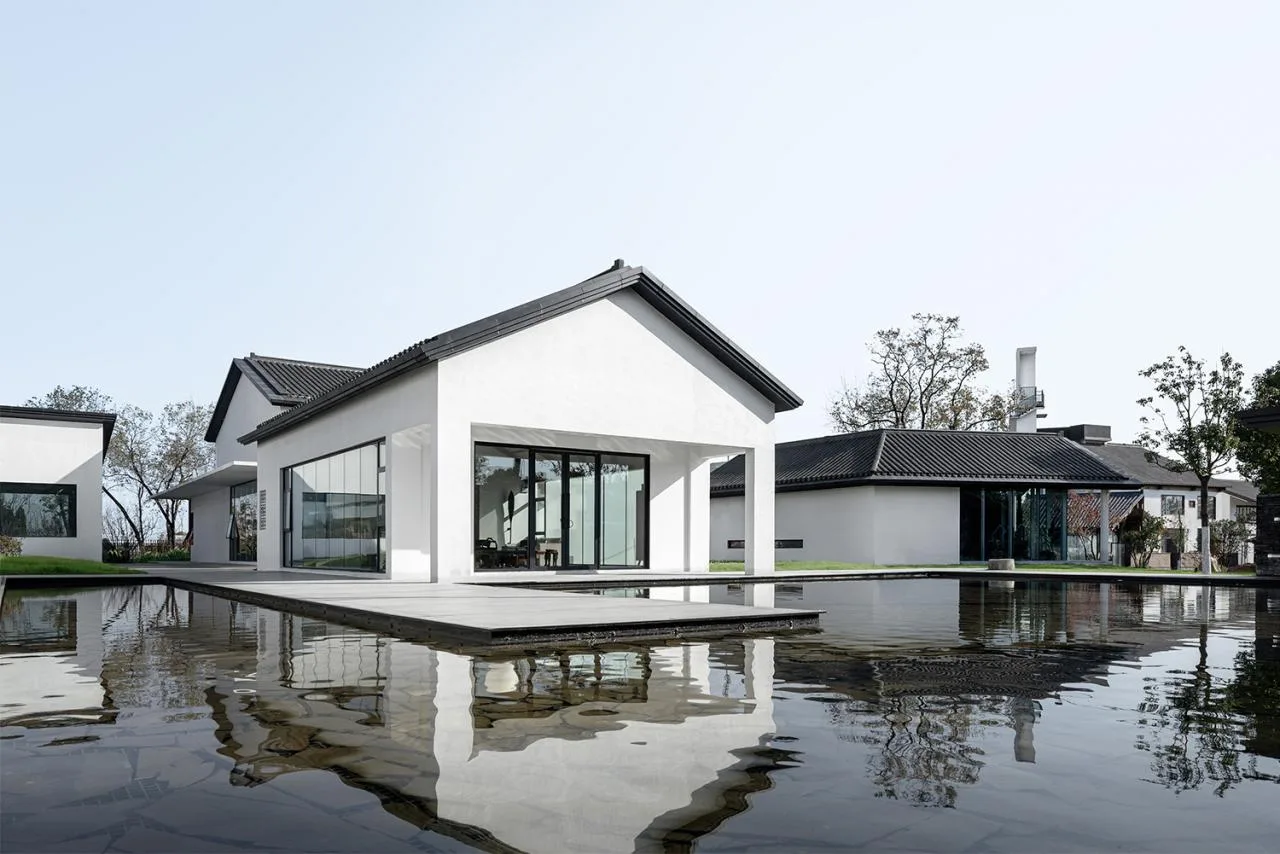
Following the carefully crafted route by the designers, views evolve step by step with the changing interplay of space and time.
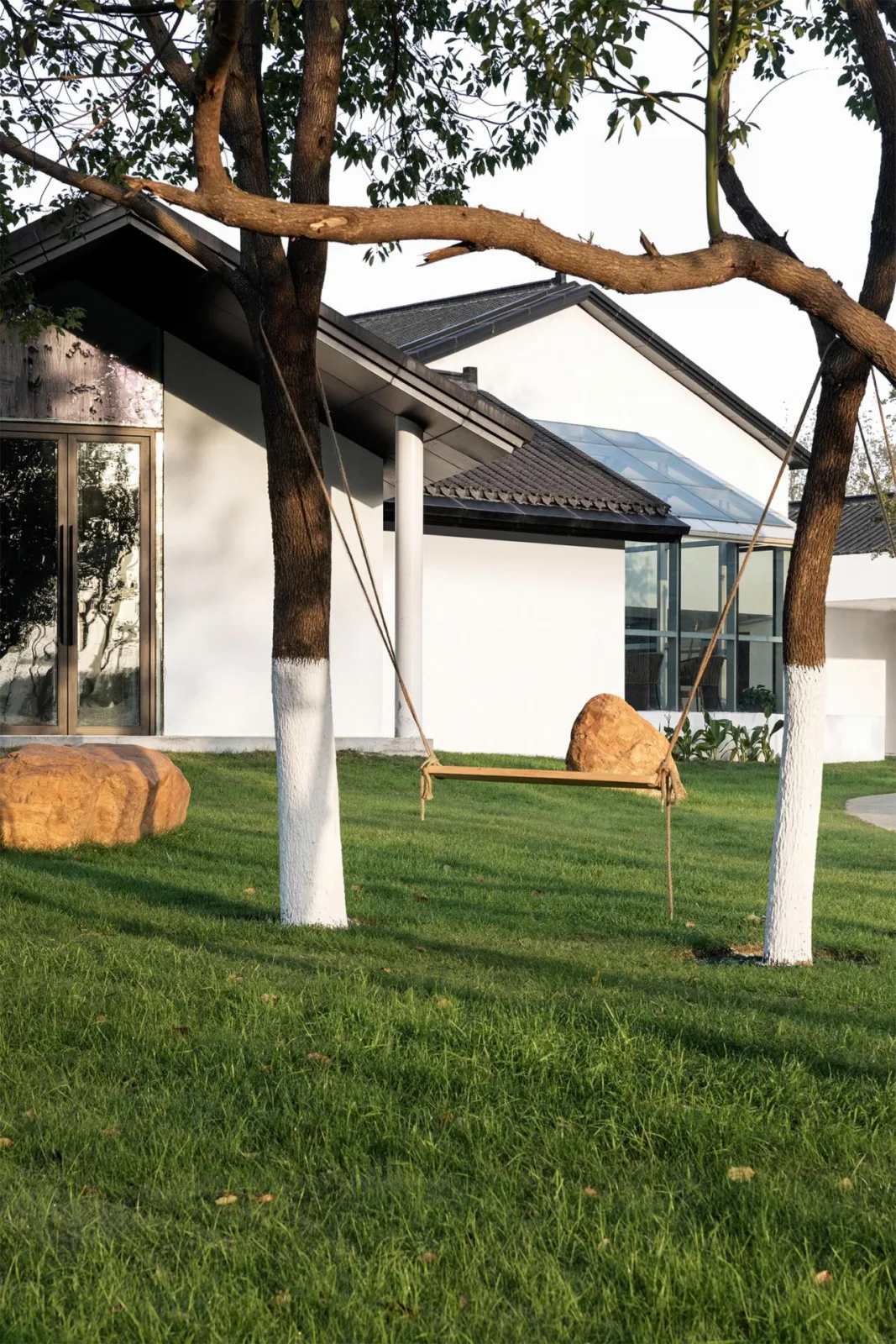
△ Bai Ding Book Bar
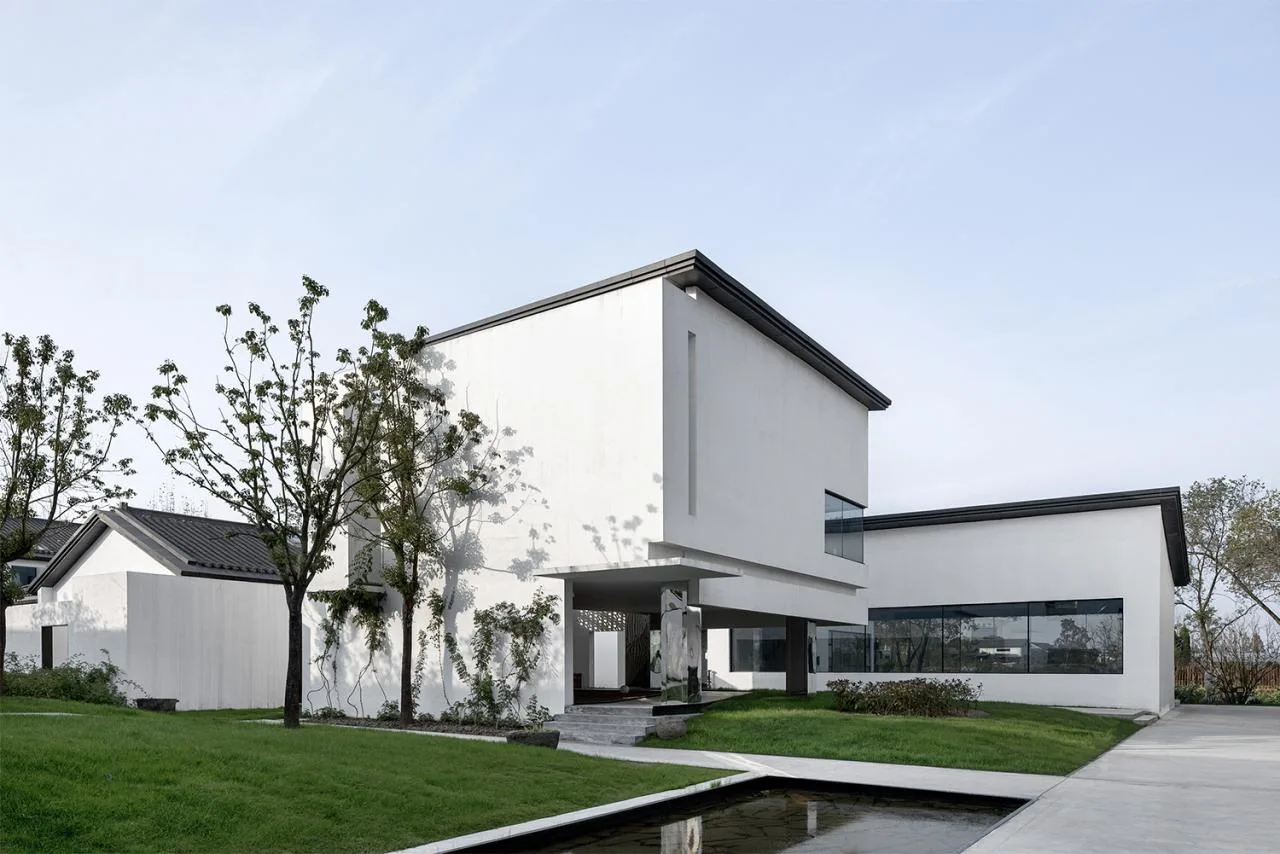
The central architectural art museum within the homestay cluster
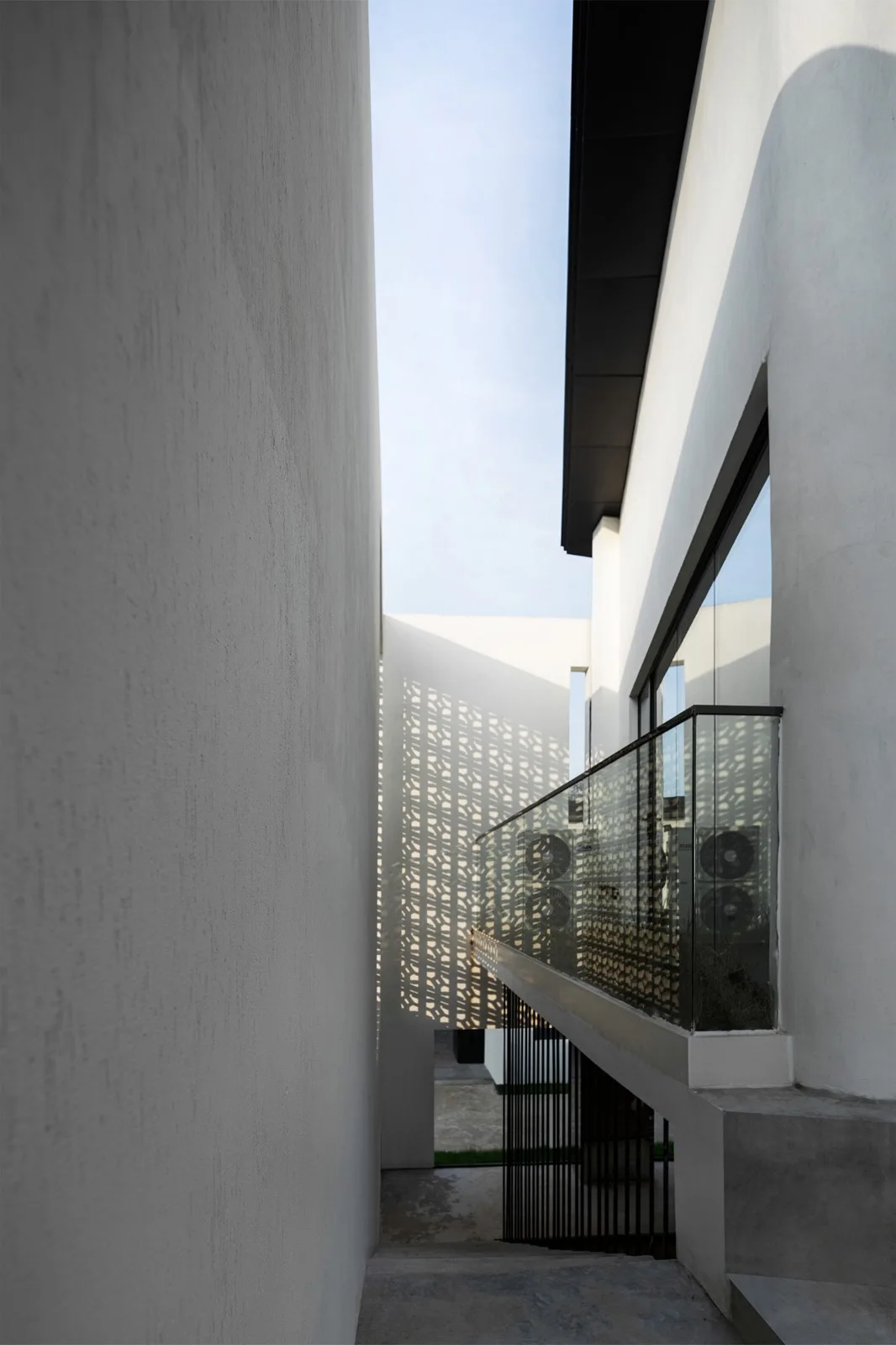
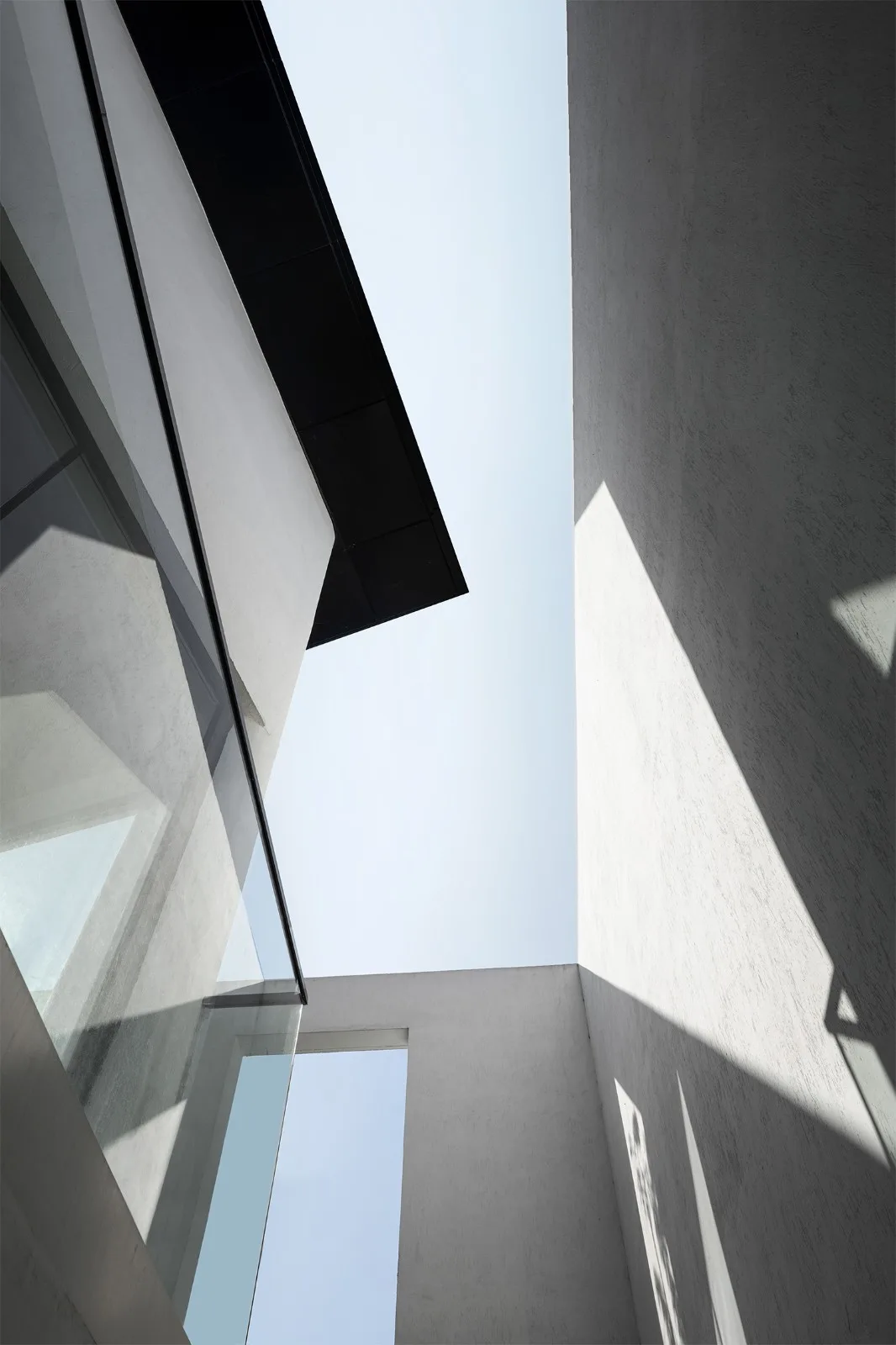
Based on a new spatial definition, usage requirements were carefully considered, employing flexible modern techniques to enhance the architectural and spatial hierarchy.
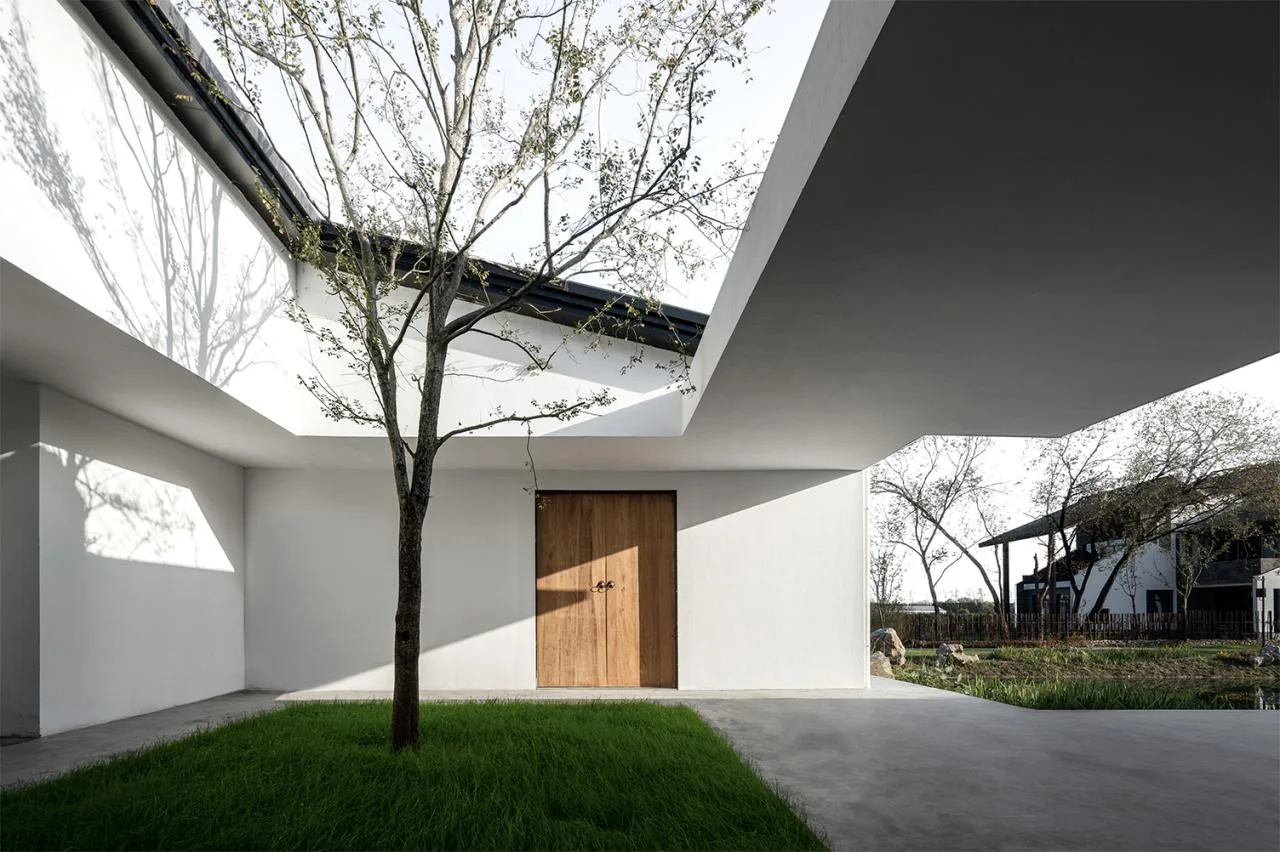
The courtyard of the urban reception hall
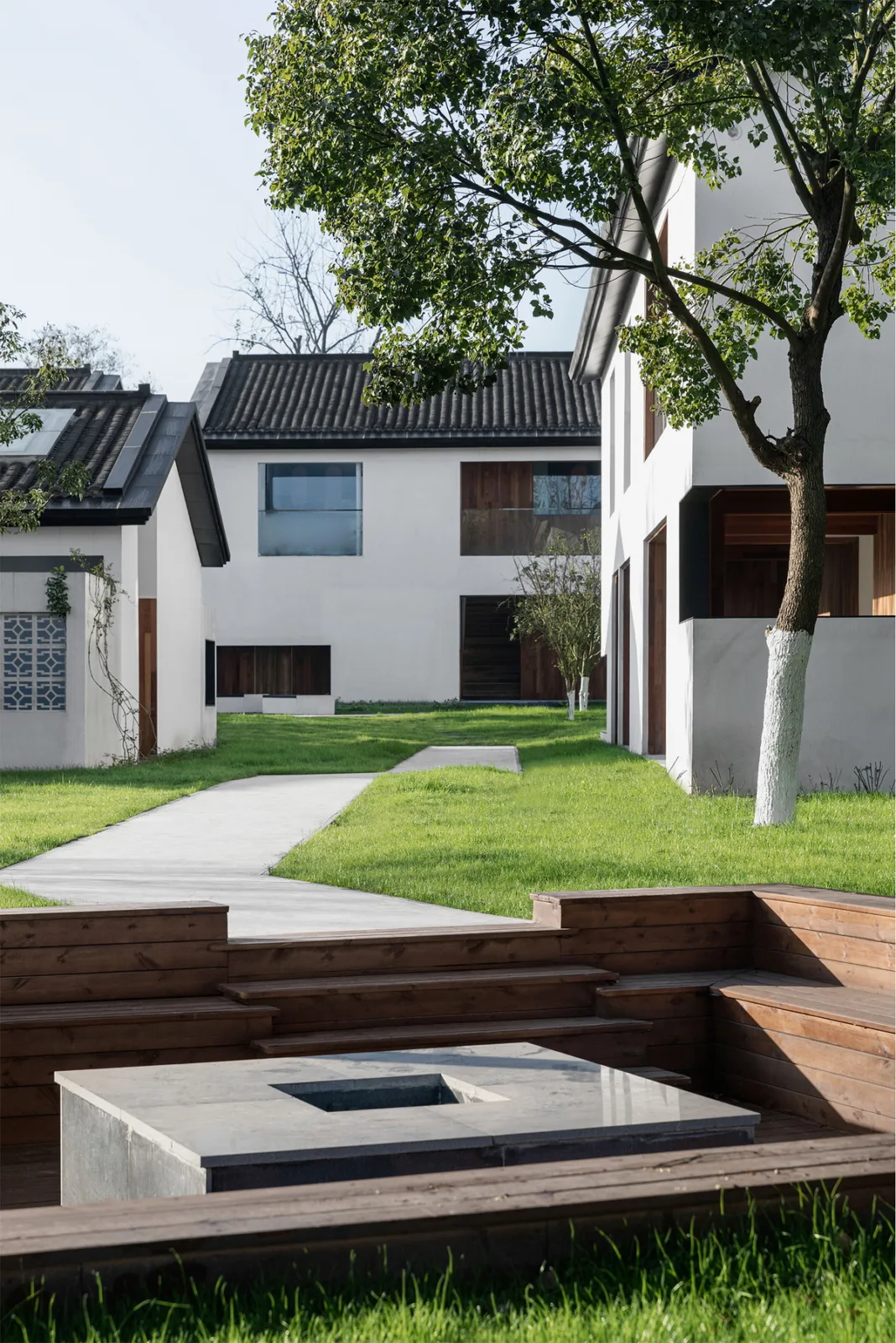
A sunken leisure space within the complex
Spatial sequence and design philosophy
Chinese architectural tradition emphasizes “following the trend,” which refers both to the terrain and human potential. Regarding terrain, designs should conform to the local climate and lifestyle, respect elevation differences, and minimize environmental impact. Concerning human factors, the design must align with the target audience’s needs. The original site presented irregular elevation changes, and the architectural design harmoniously follows the slope.
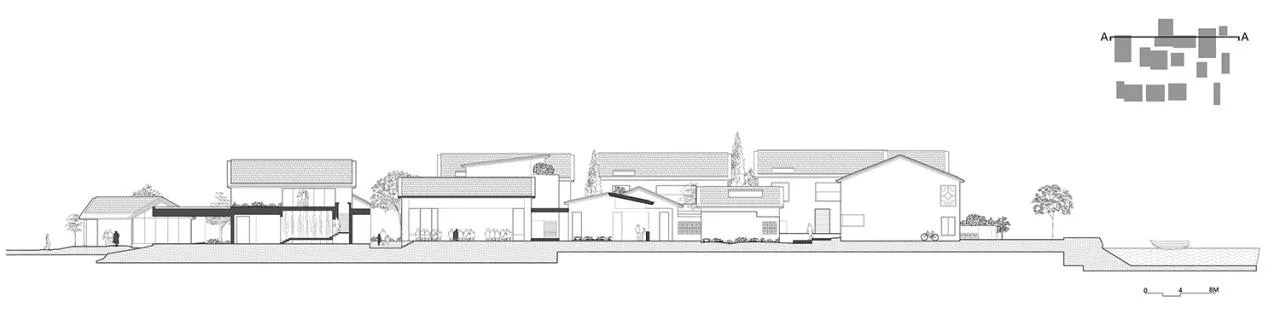
△ Section diagram
Spatial expression
Building upon traditional Jianghuai architecture, large glass panels were introduced to avoid monotony, allowing natural light to fill interiors and creating varied, transparent spaces.
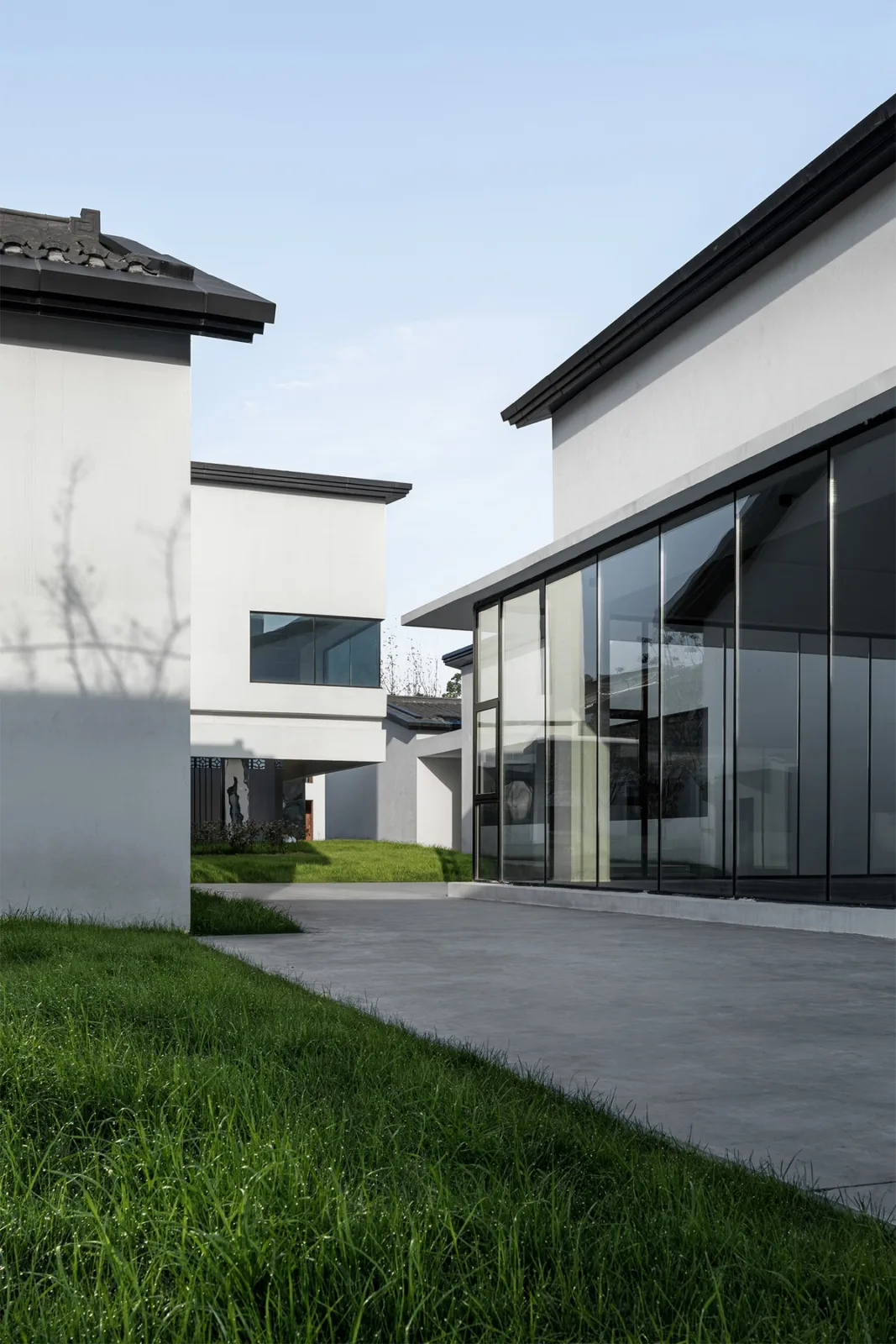
Interior spaces
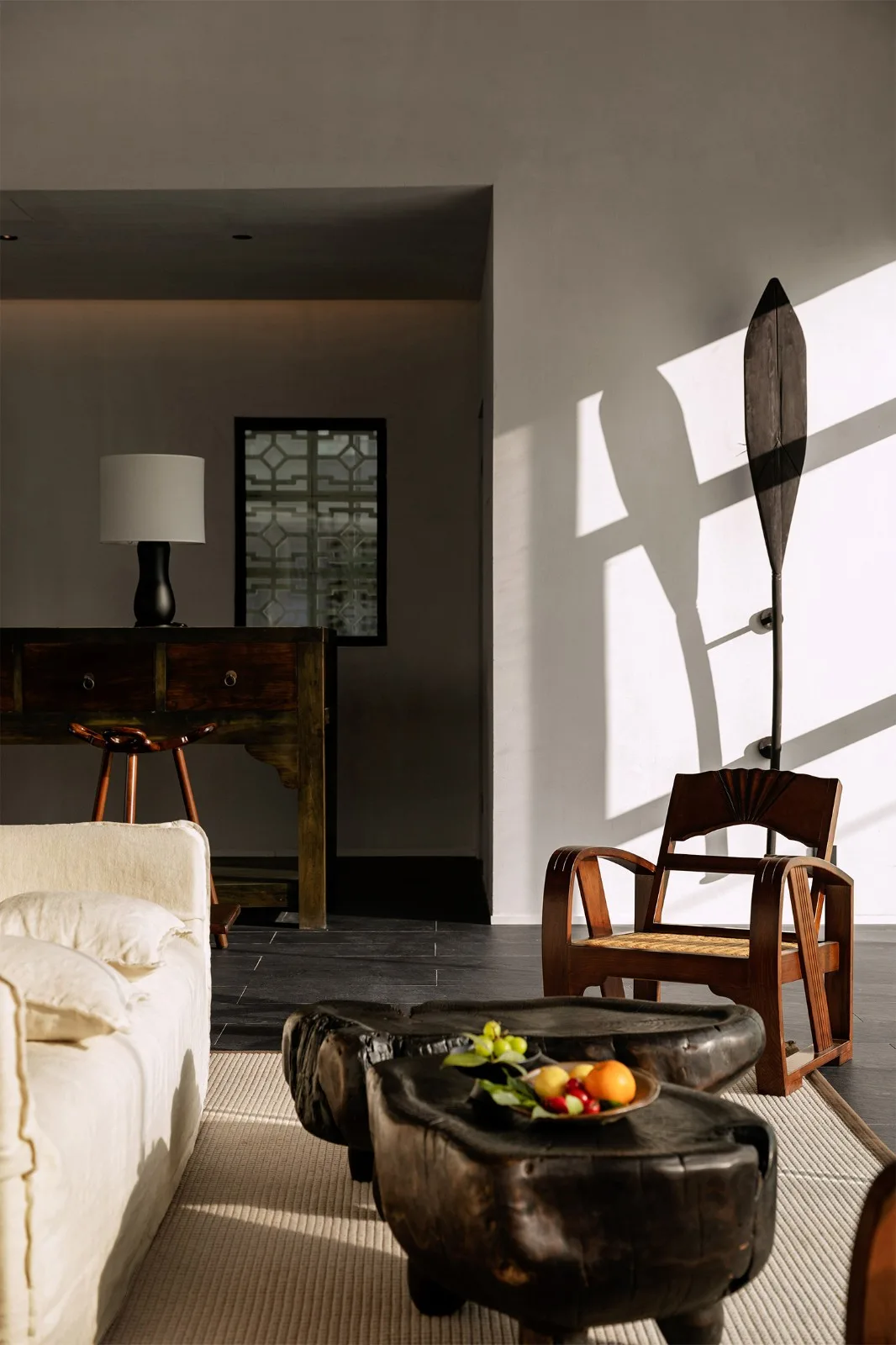
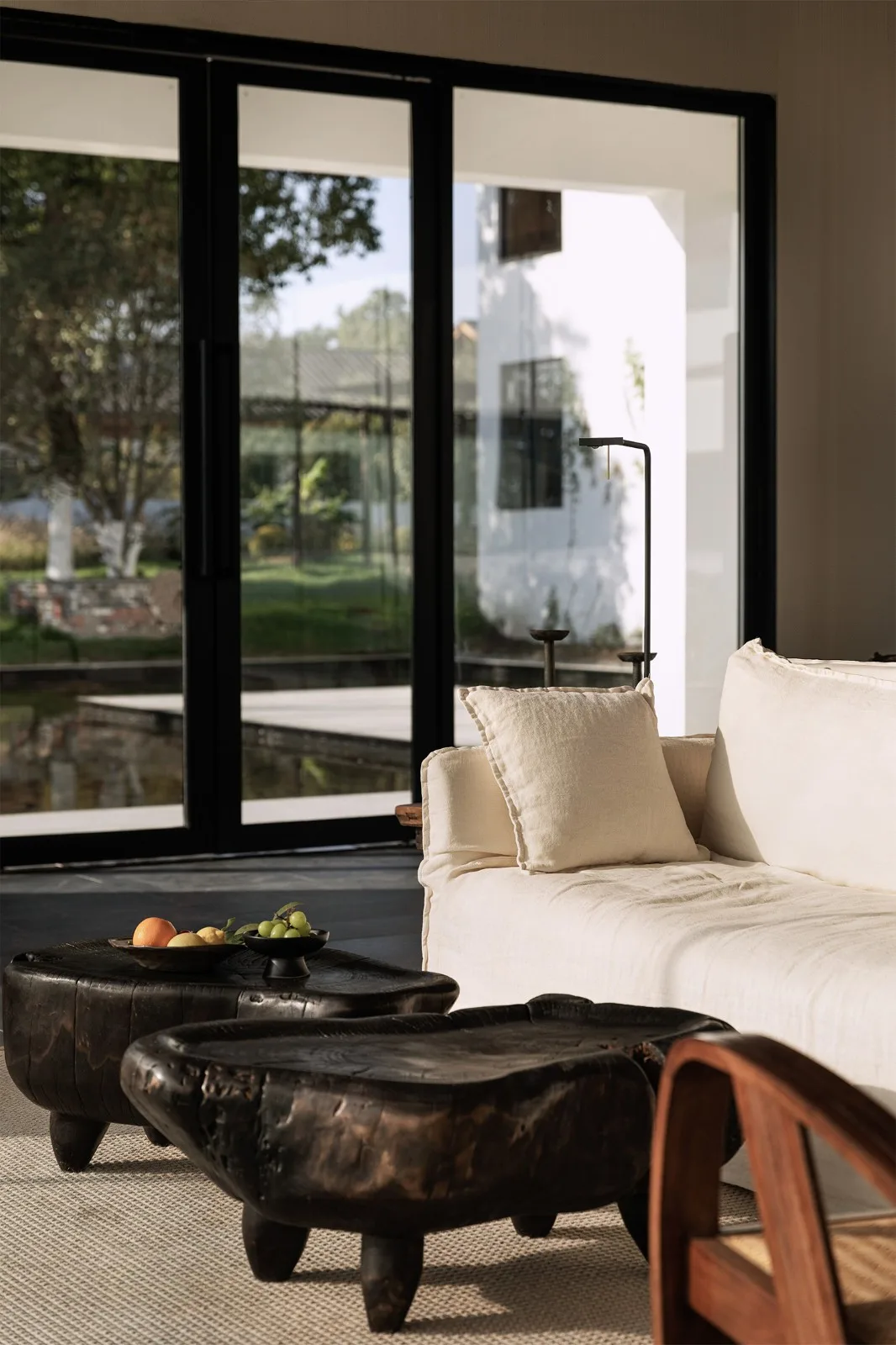
△ Lobby Bar
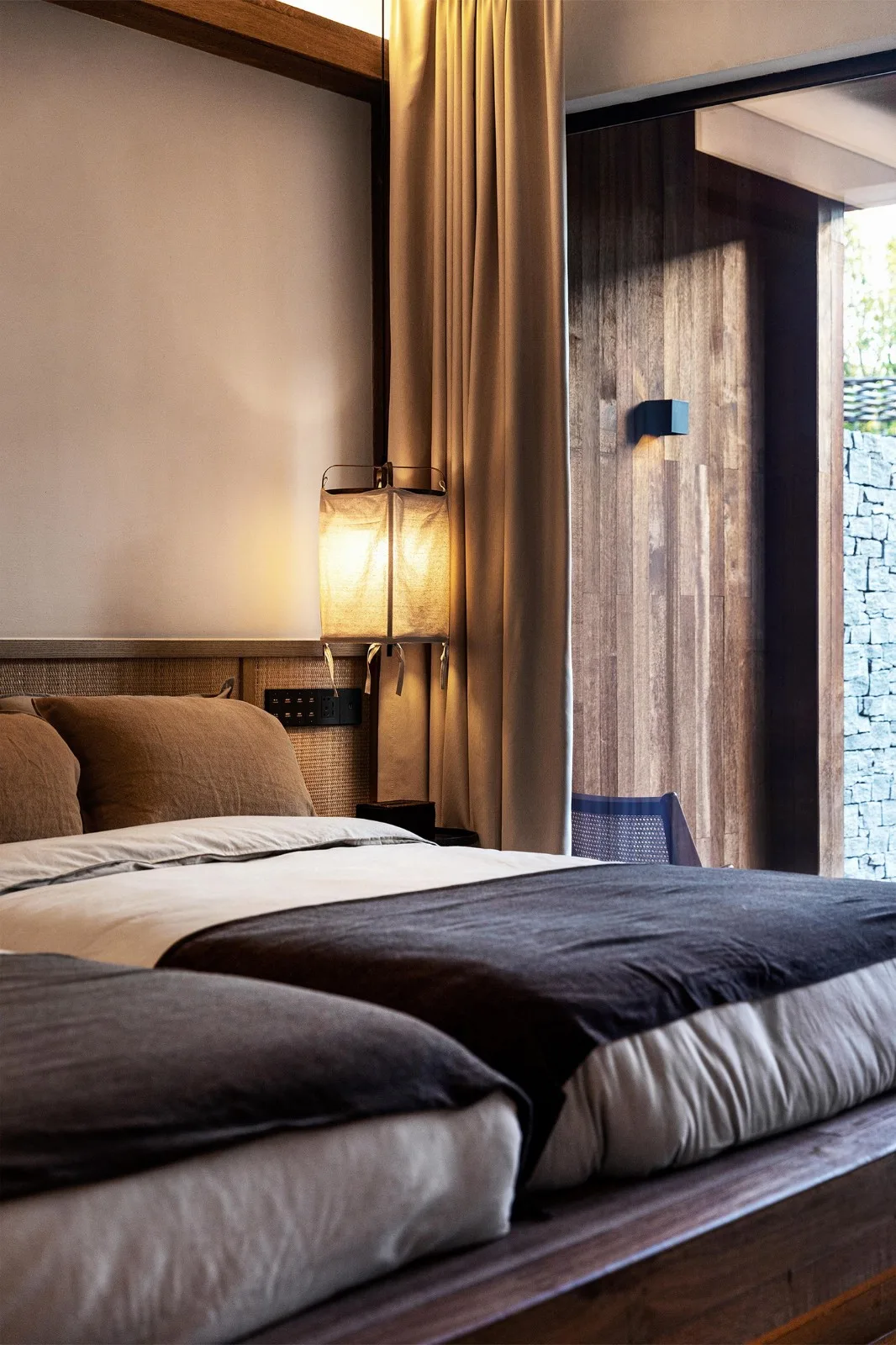
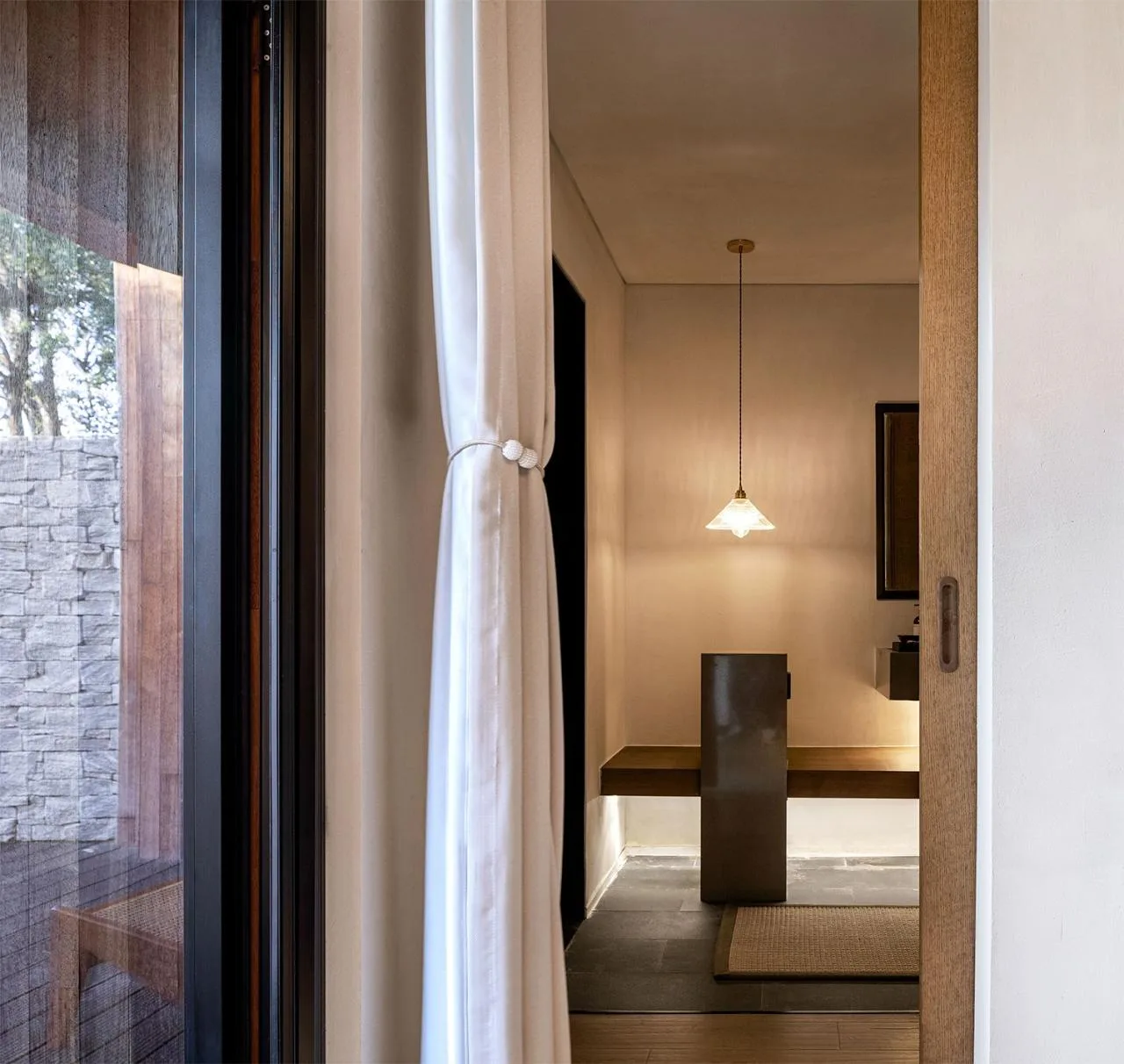
△ Guest Room
Summary
As the saying goes, “One place nurtures its own people.” The homestay design focuses on enabling visitors to immerse themselves in the unique local culture and natural scenery. While Jianghuai architecture is influenced by northern and southern styles, it has developed distinct characteristics over time. This rural revitalization project embraces the local expression of Jianghuai dwellings, explores their cultural value, summarizes design techniques, and contributes to the ongoing development of Jianghuai architectural design.
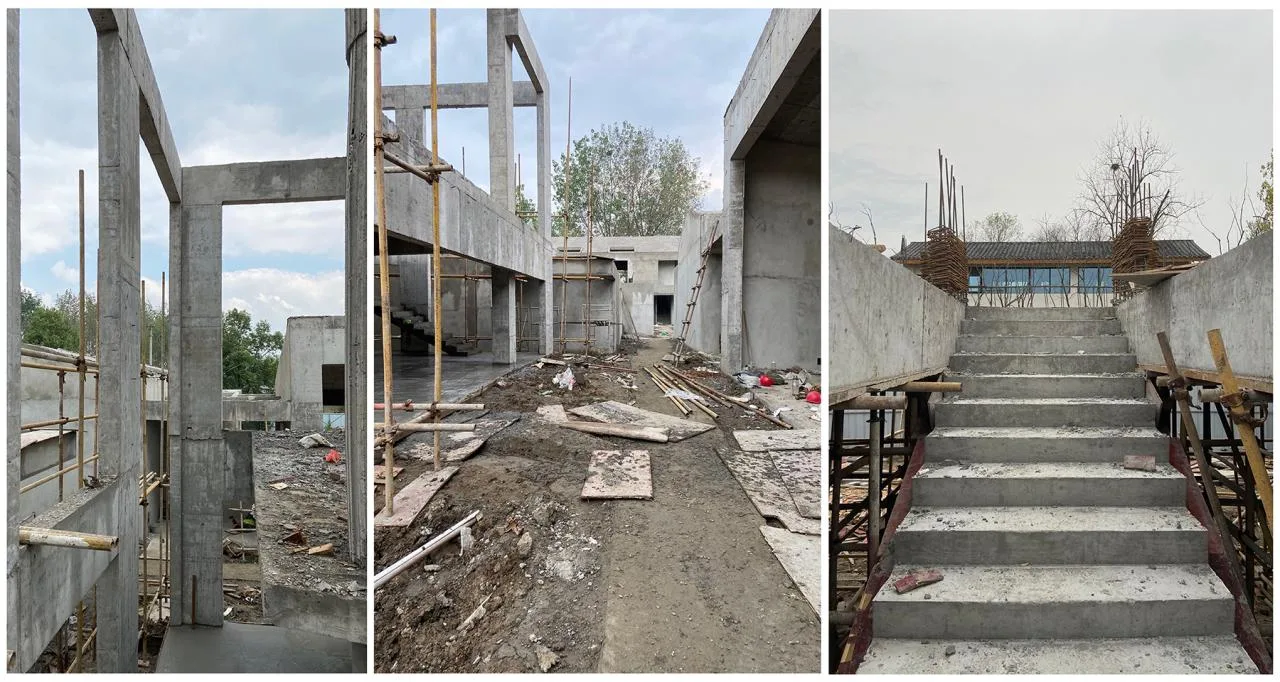
△ Construction photos
Project Drawings
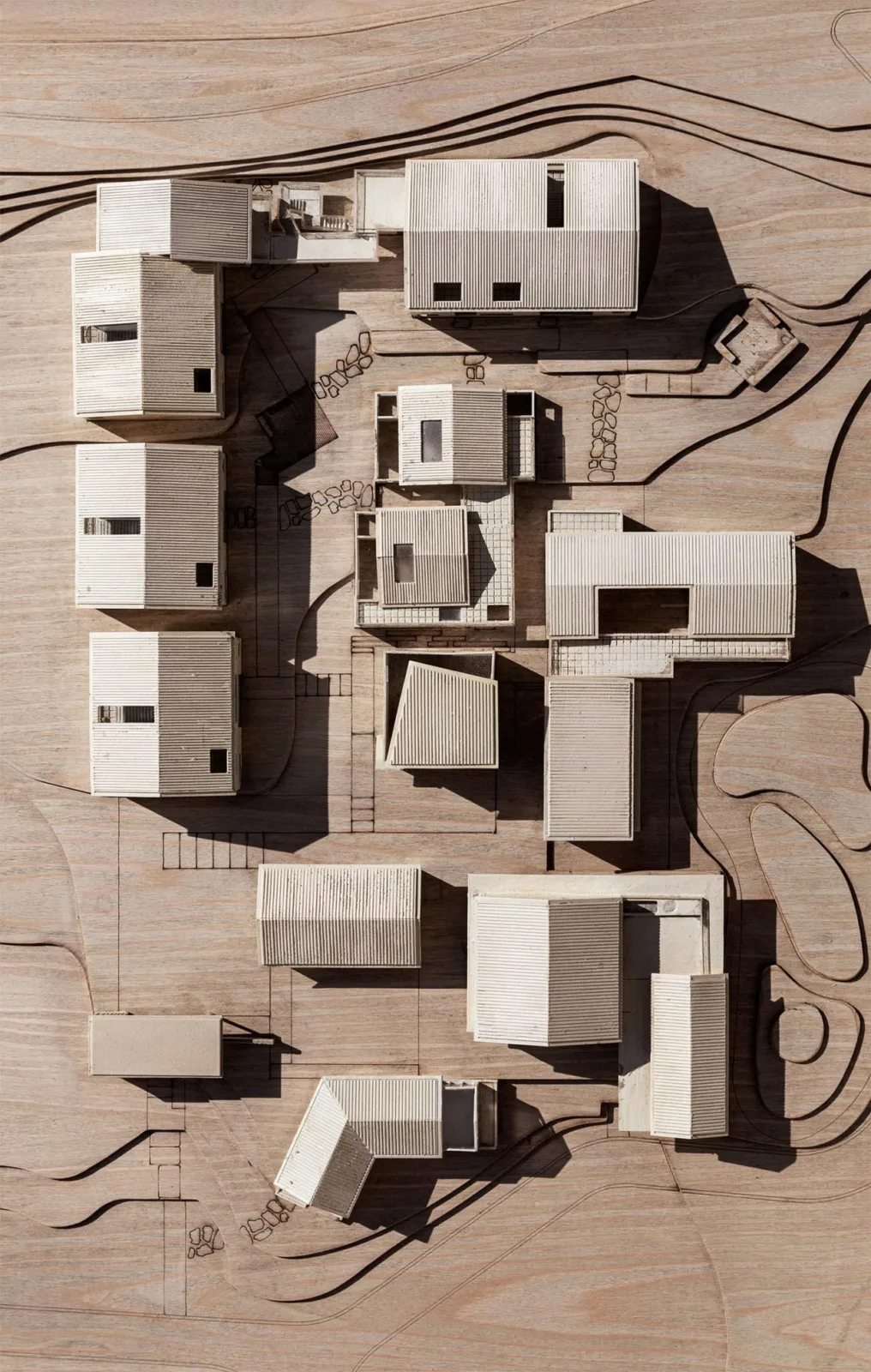
△ Working Model
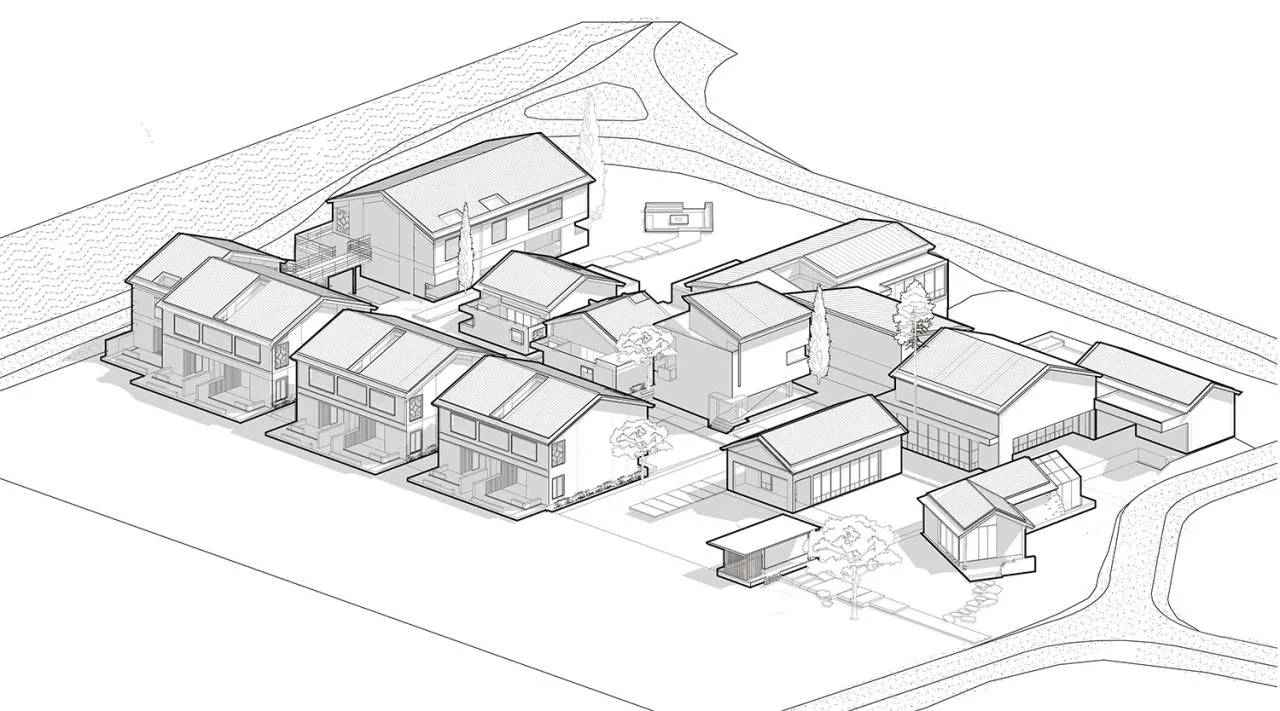
△ Axonometric diagram (side view 22.0)
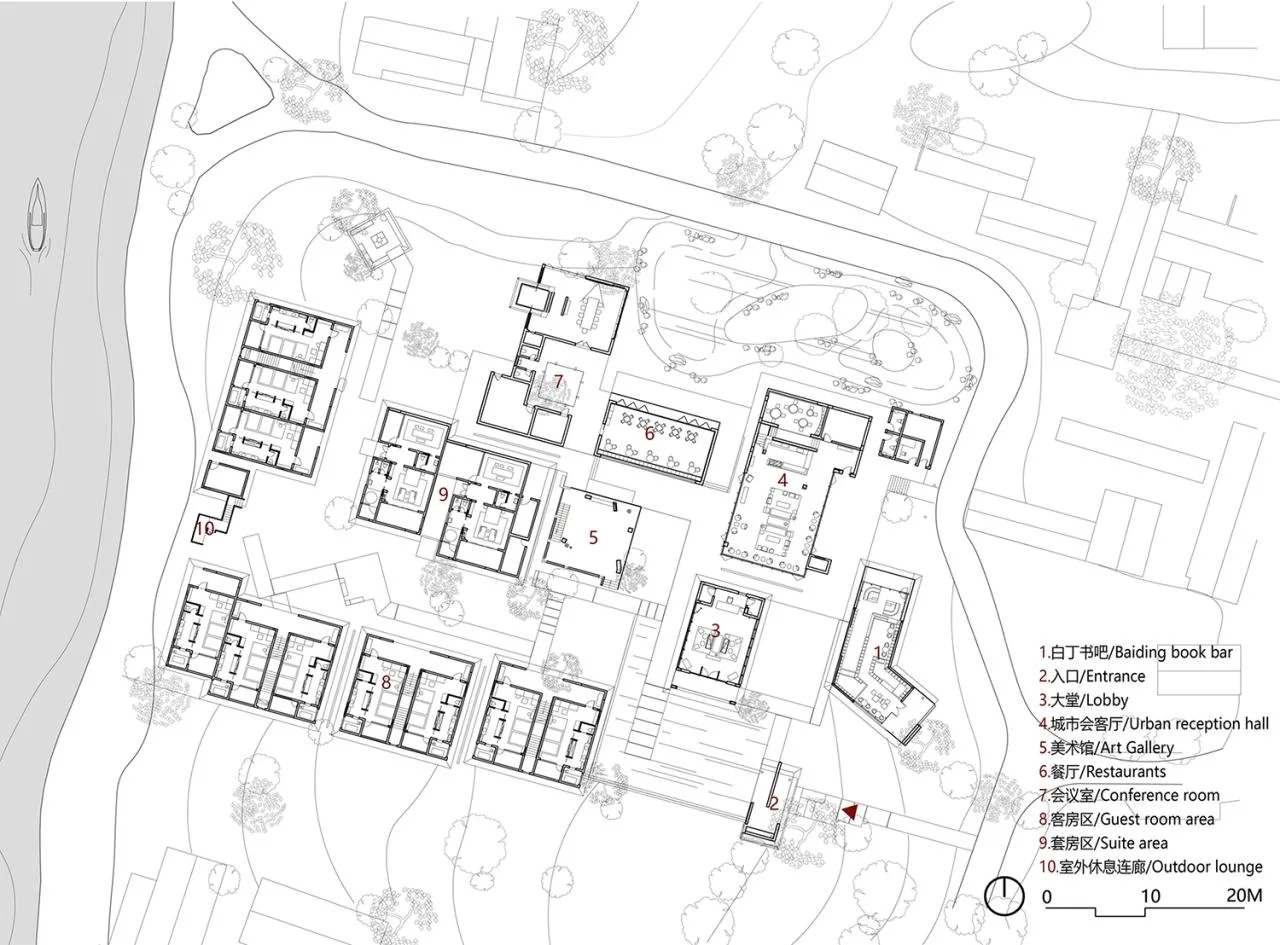
△ First floor plan
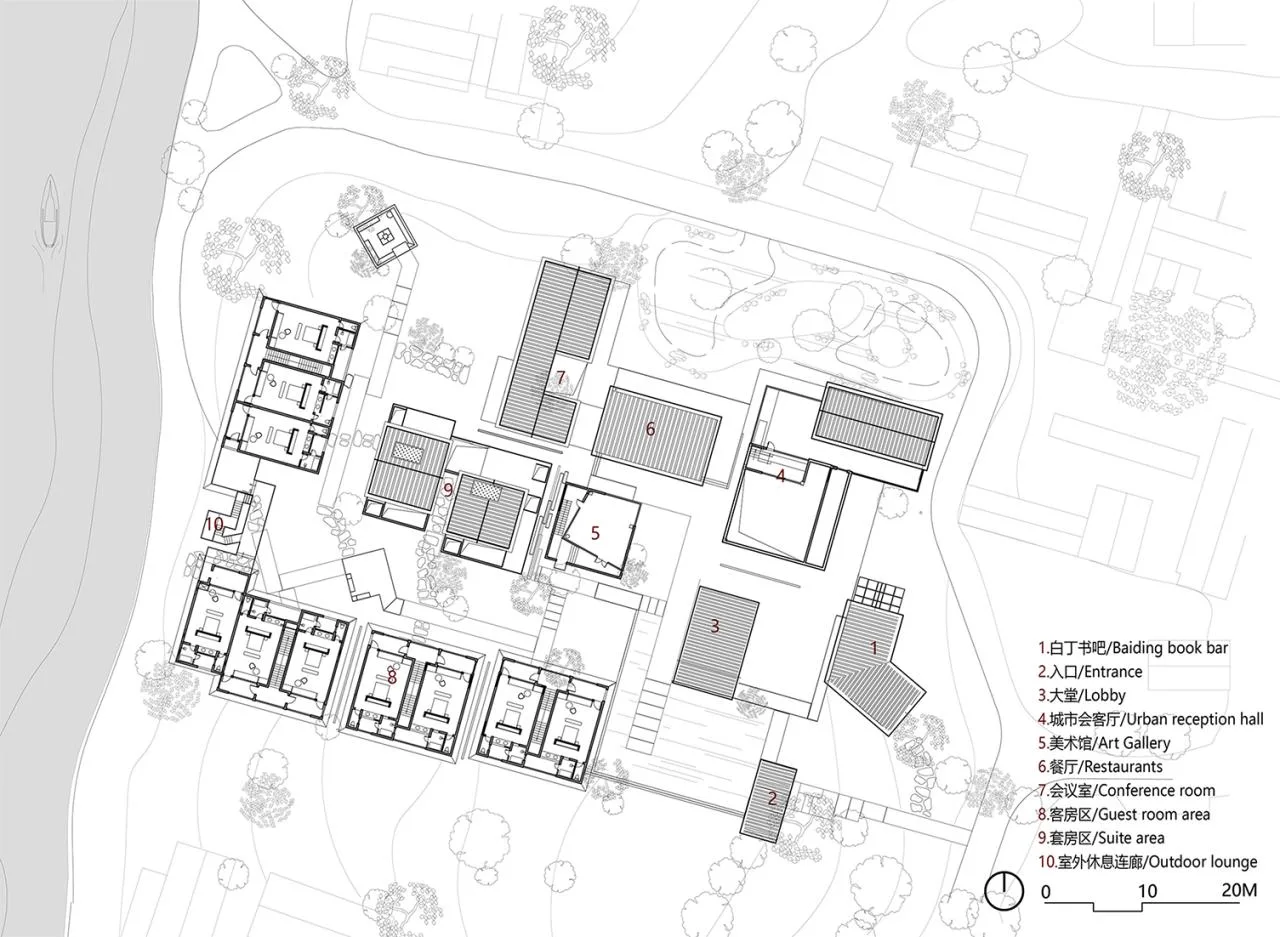
△ Second floor plan
Project Information
Project Name: Research and Design on the Localization of Jianghuai Residential Buildings – Weimei Village Houses
Designer: Anhui Ketu Architectural Design Institute Co., Ltd.
Project Design & Completion: November 2019 – October 2021
Lead Architects: Liu Xuedan, Cao Wei
Design Team: Li Yuyao, Fan Guangying, Li Yin, Guo Kaiyue
Project Location: Dawei Town, Baohe District, Hefei City, Anhui Province
Building Area: Approximately 3,239 m²
Photography Copyright: Ren Teng
Client: Hefei Binhu Investment Holding Group Co., Ltd.















Must log in before commenting!
Sign Up