
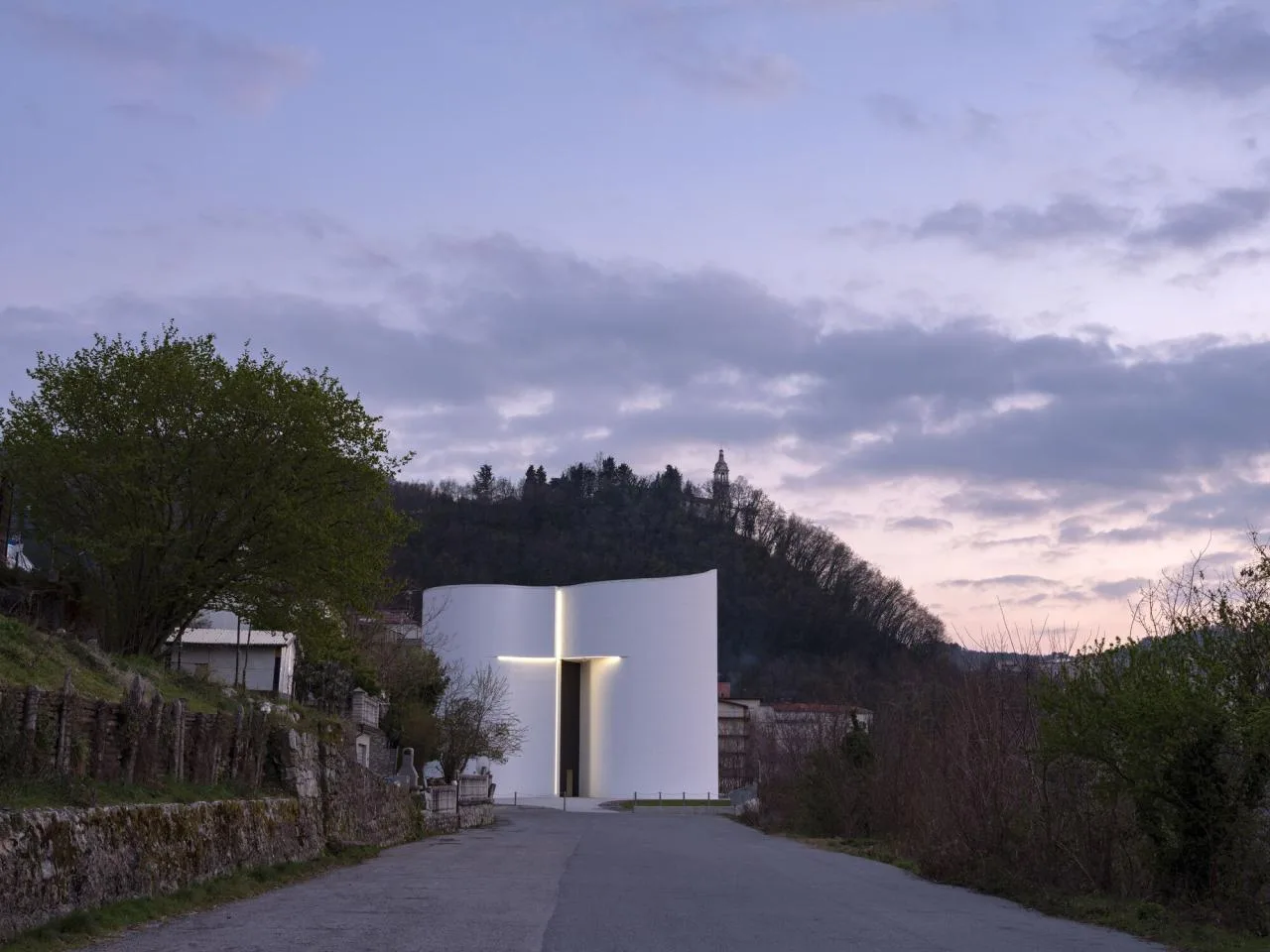
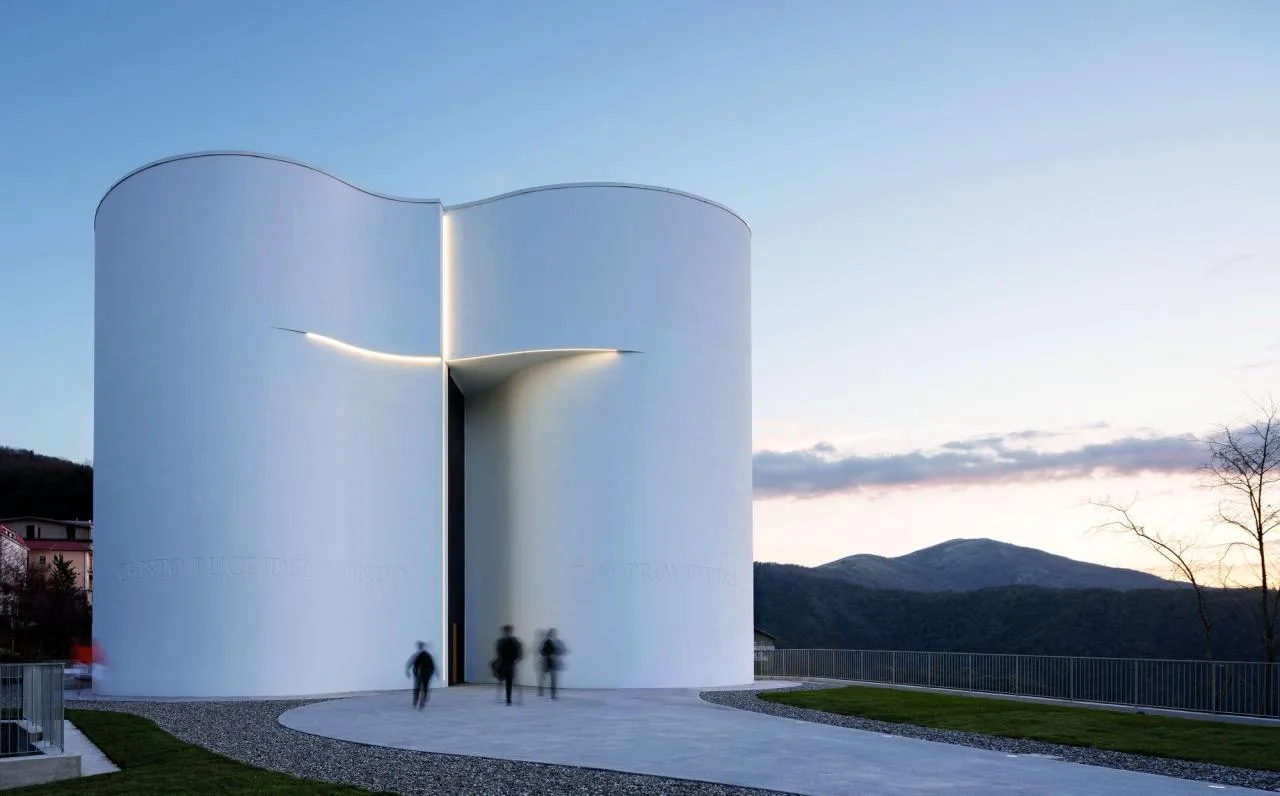
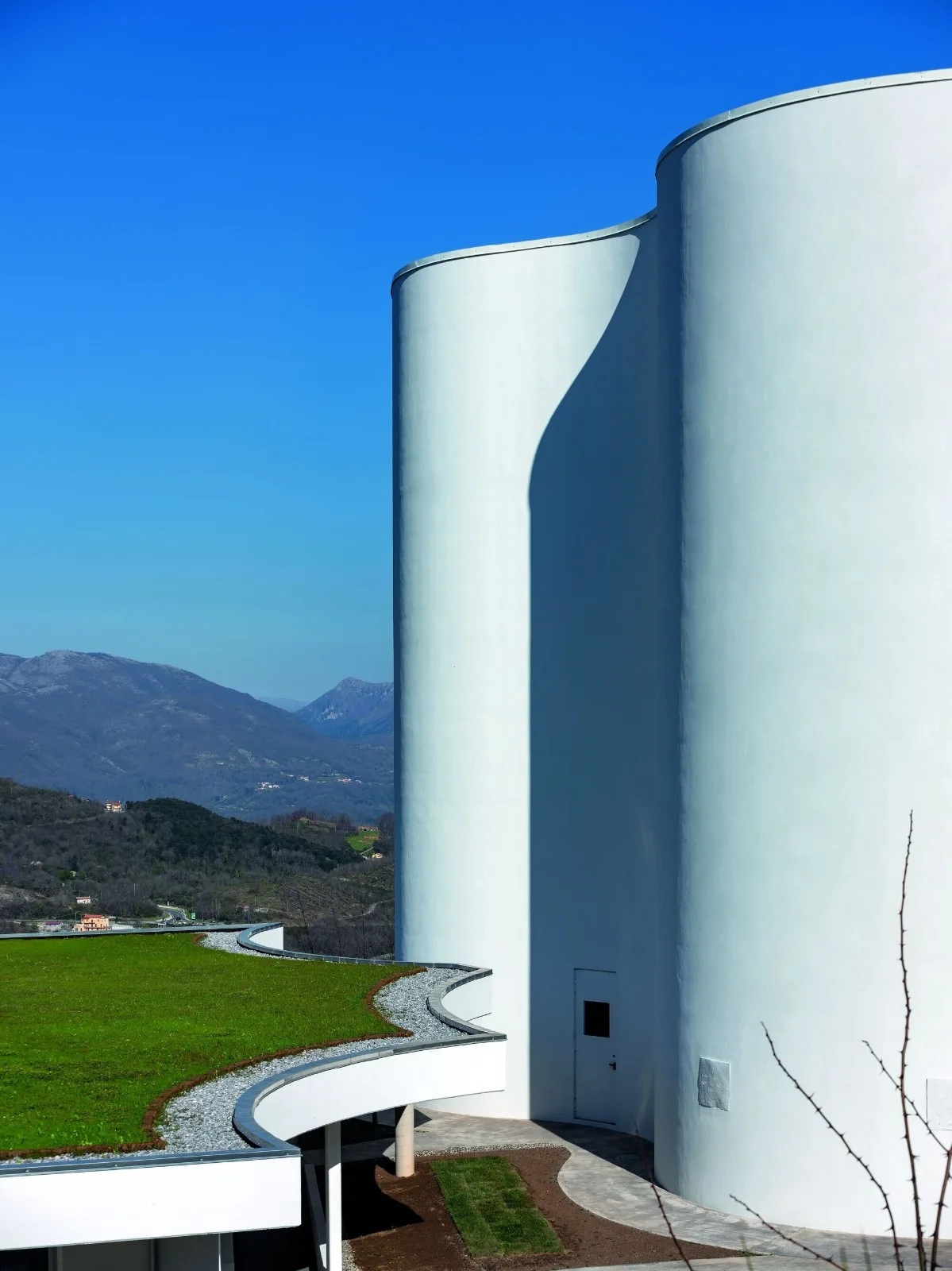
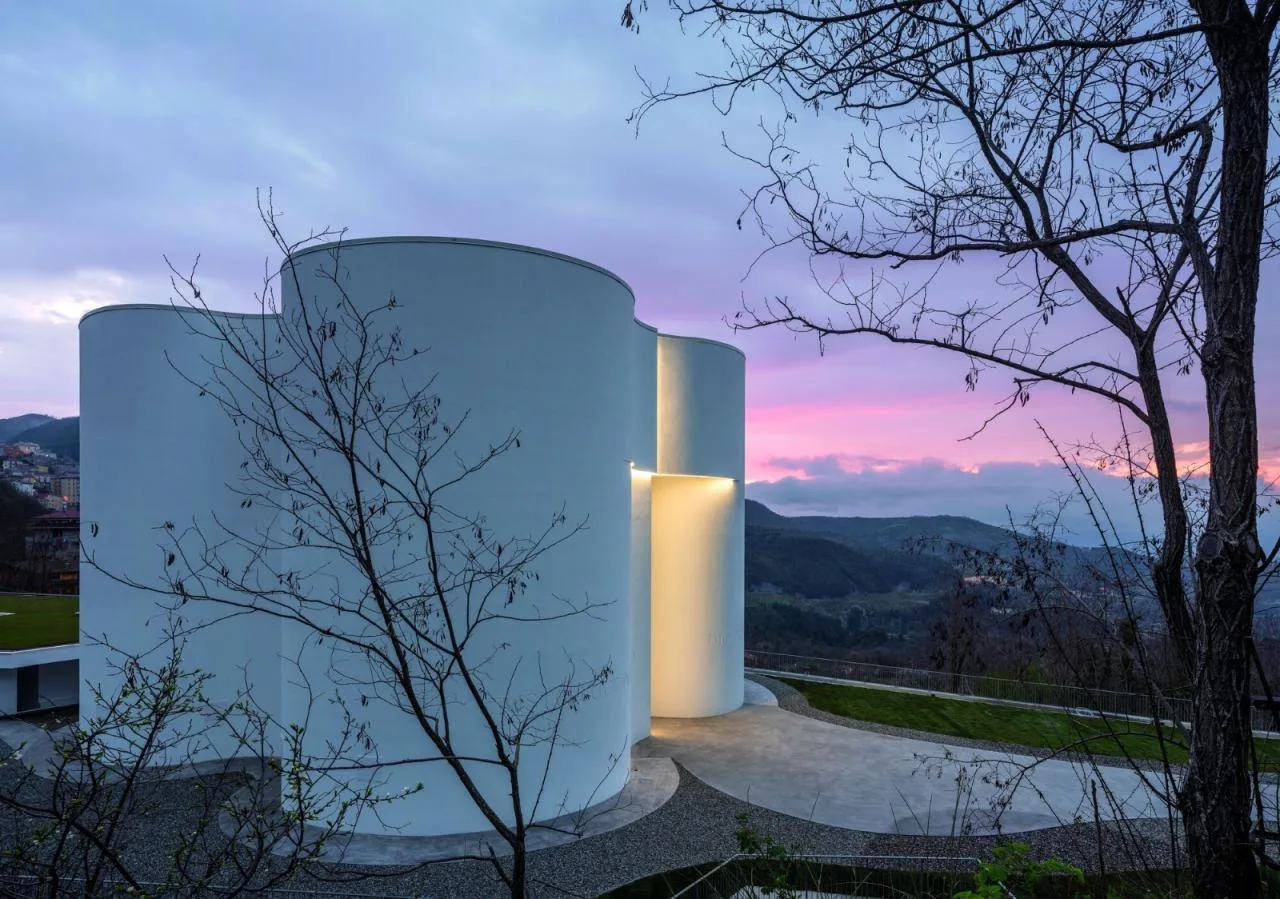
The newly built Church of Santa Maria Gretti stands independently with a solemn and quiet presence. Rising from the northern edge of the Calabrian hill town of Mormanno, it overlooks the rolling mountains of Pollino National Park. Designed by Mario Cucinella Architects, the church resembles a sentinel watching over a grassy field. Its streamlined architecture draws inspiration from natural forms and reflects the simplicity and beauty of the historic Calabrian churches built by monks fleeing persecution in the eastern regions of the former Roman Empire. Set amidst an interplay of history and nature, this church is dedicated to Saint Maria Goretti (1890–1902), the youngest saint of the Catholic Church. Named in her honor, the church appears timeless and eternal.
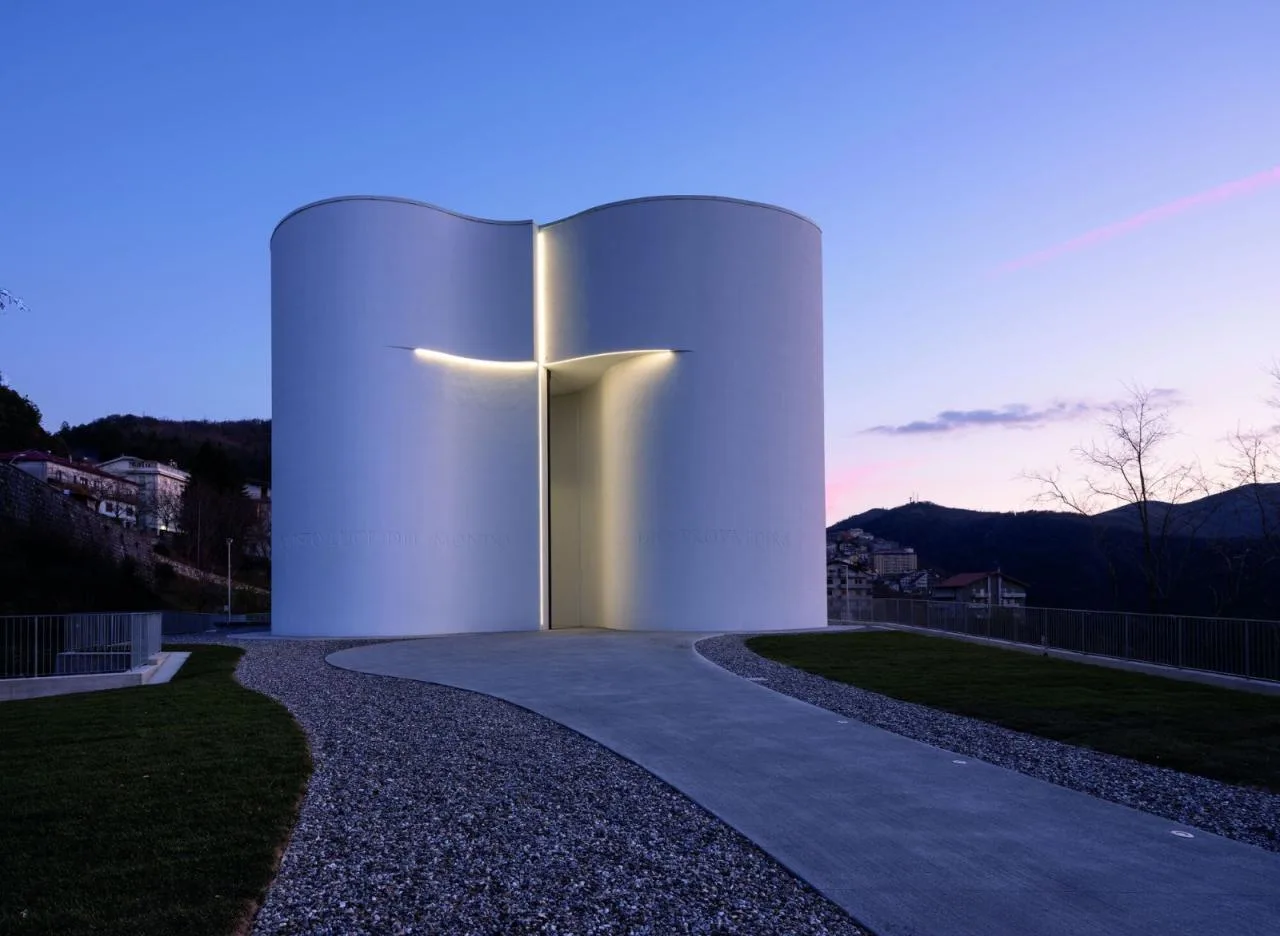
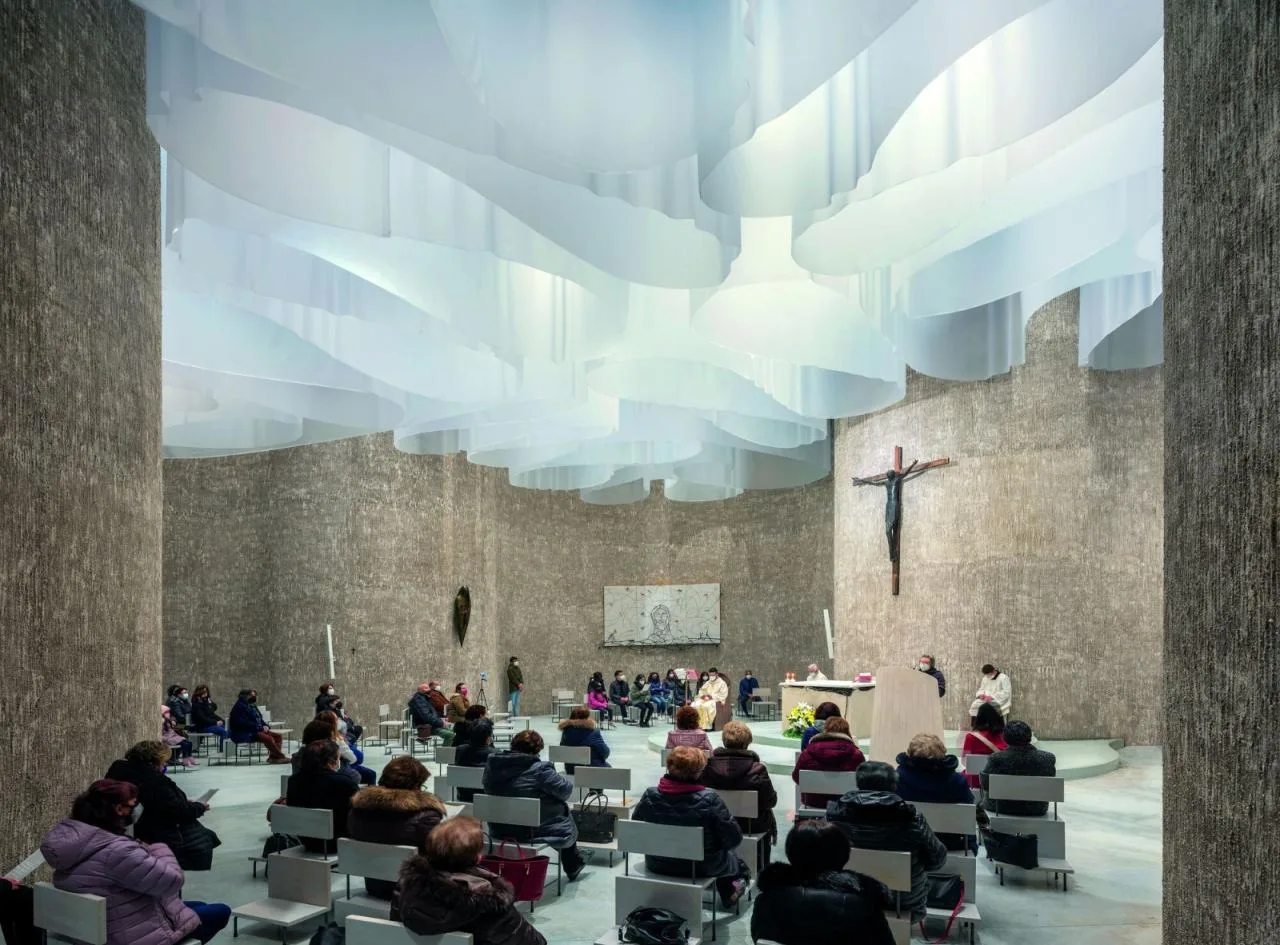
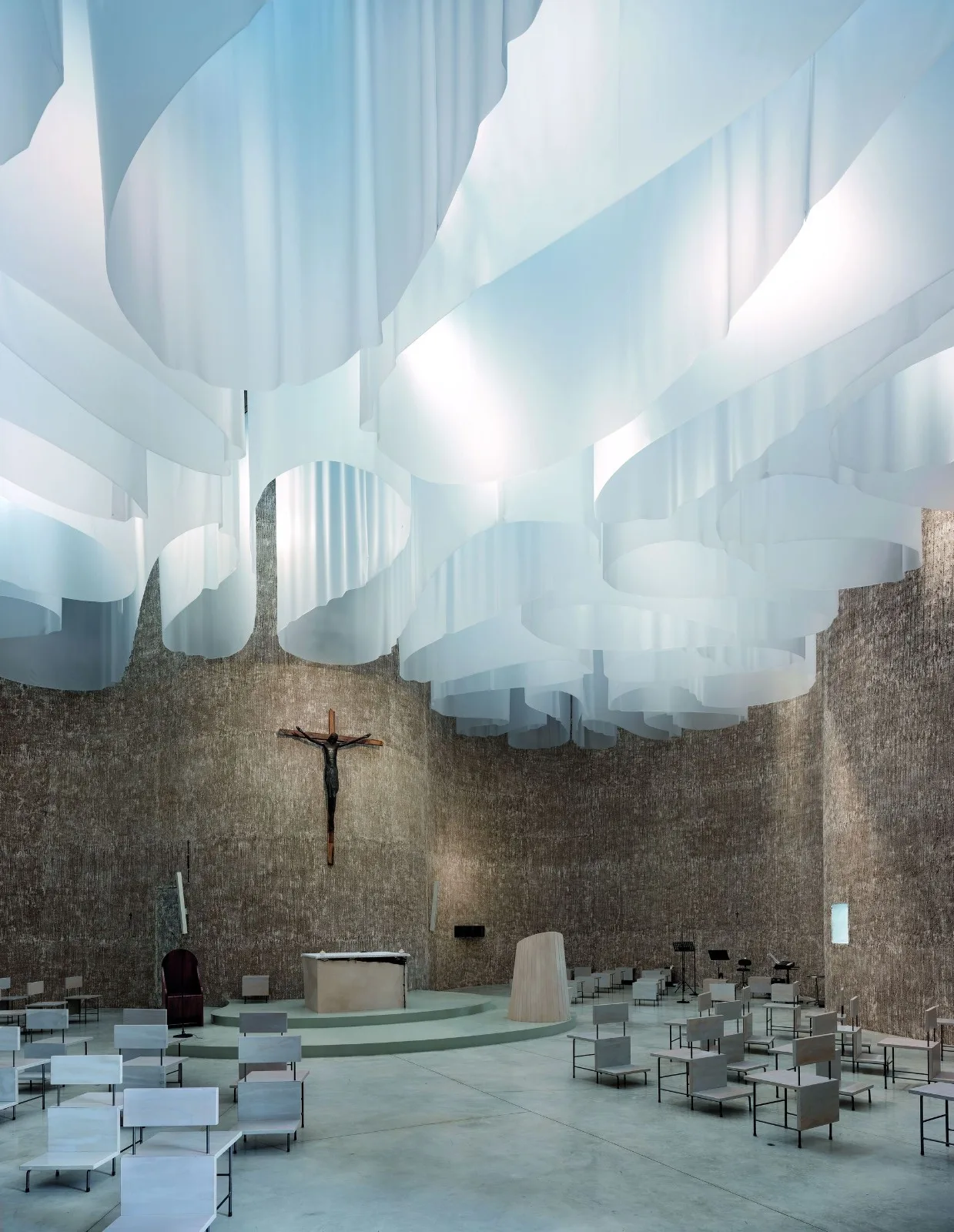
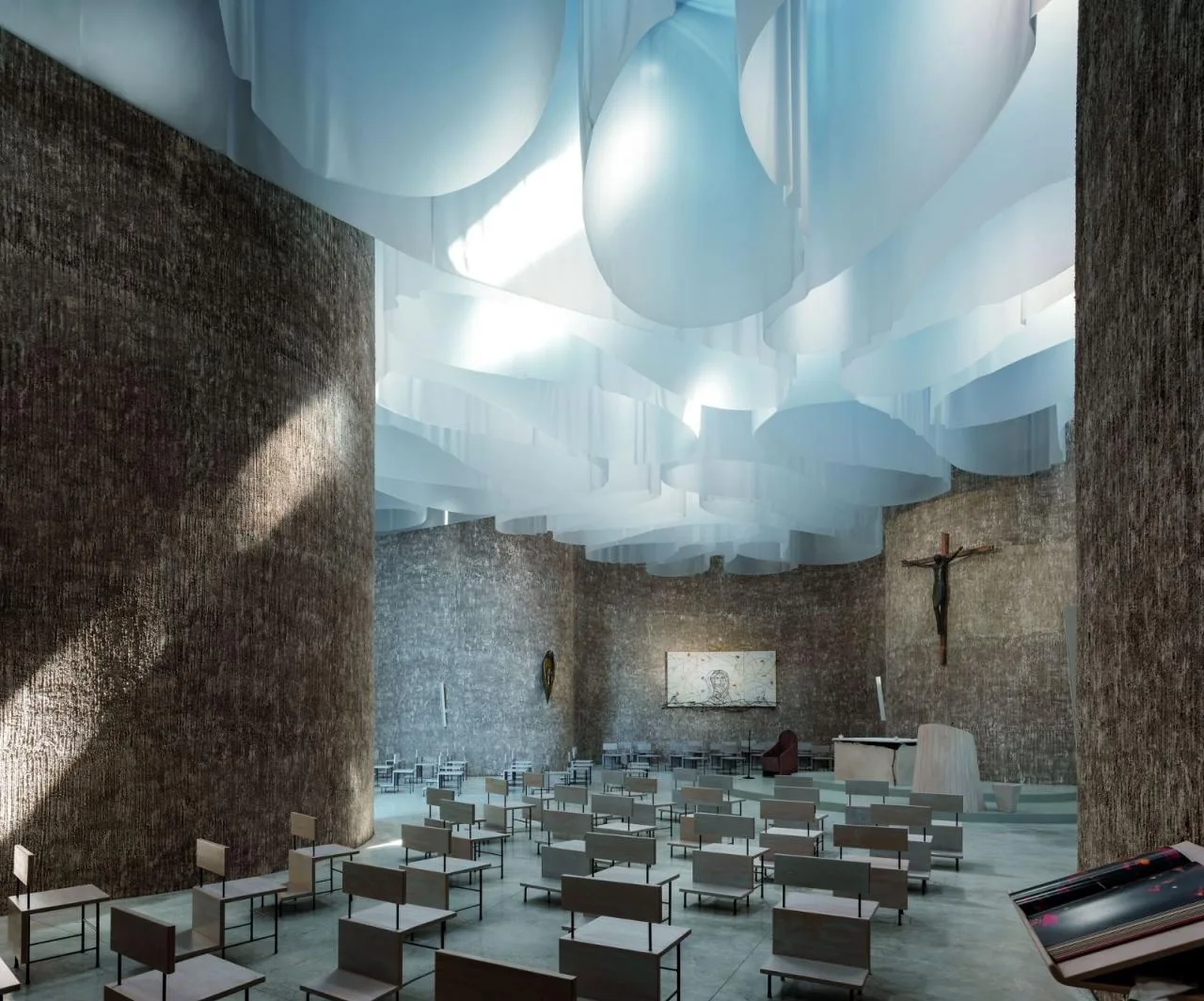
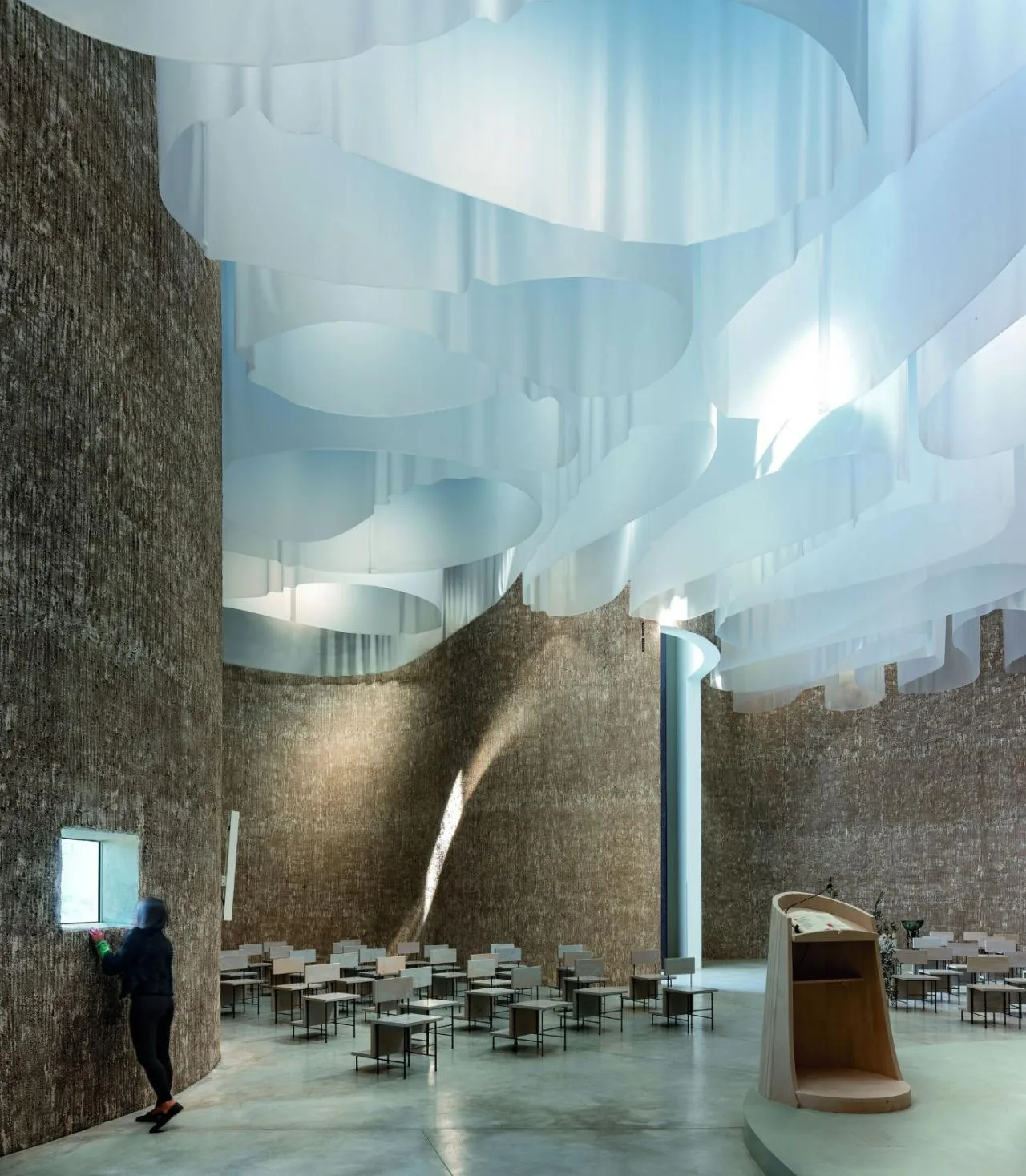
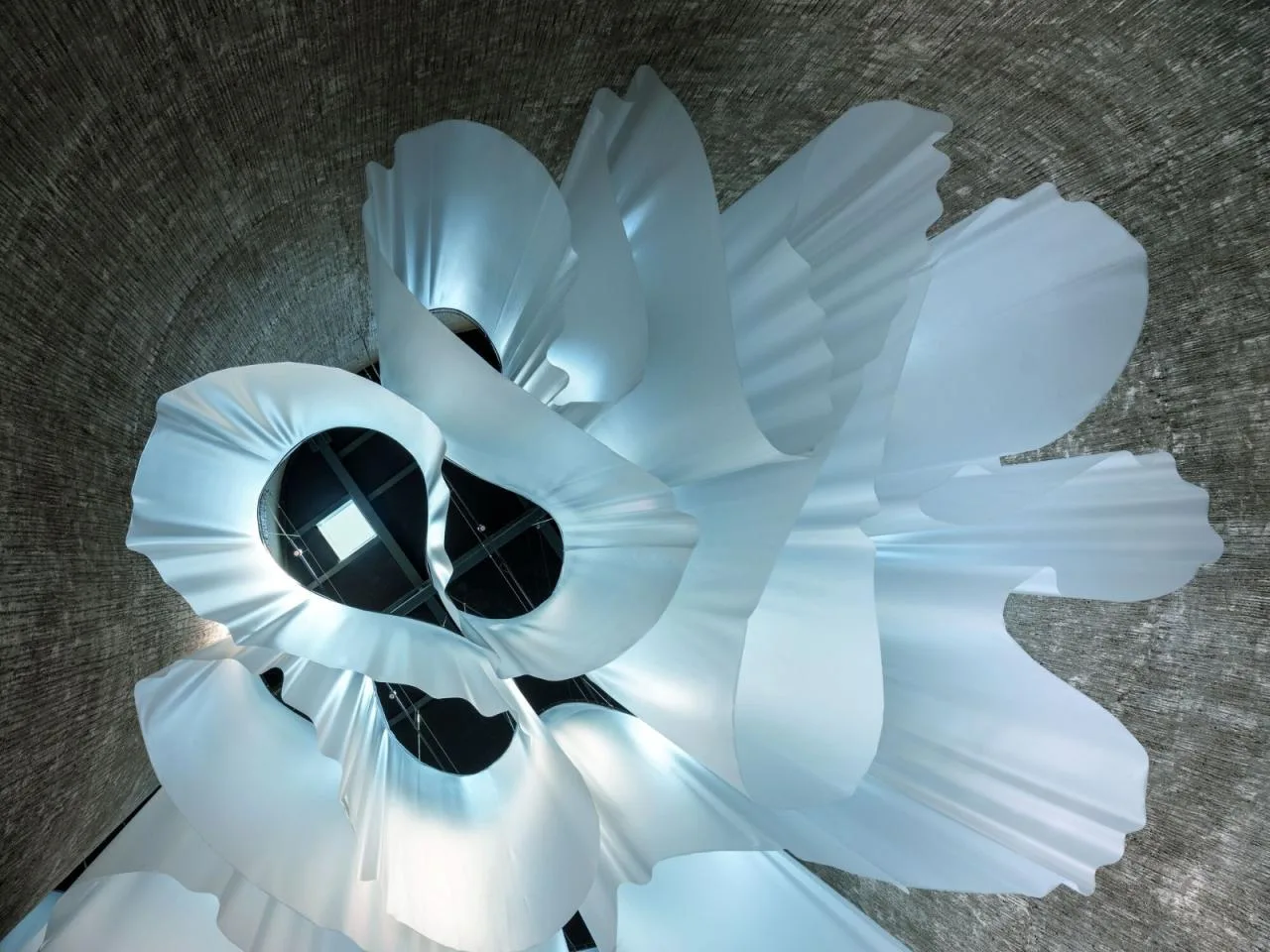
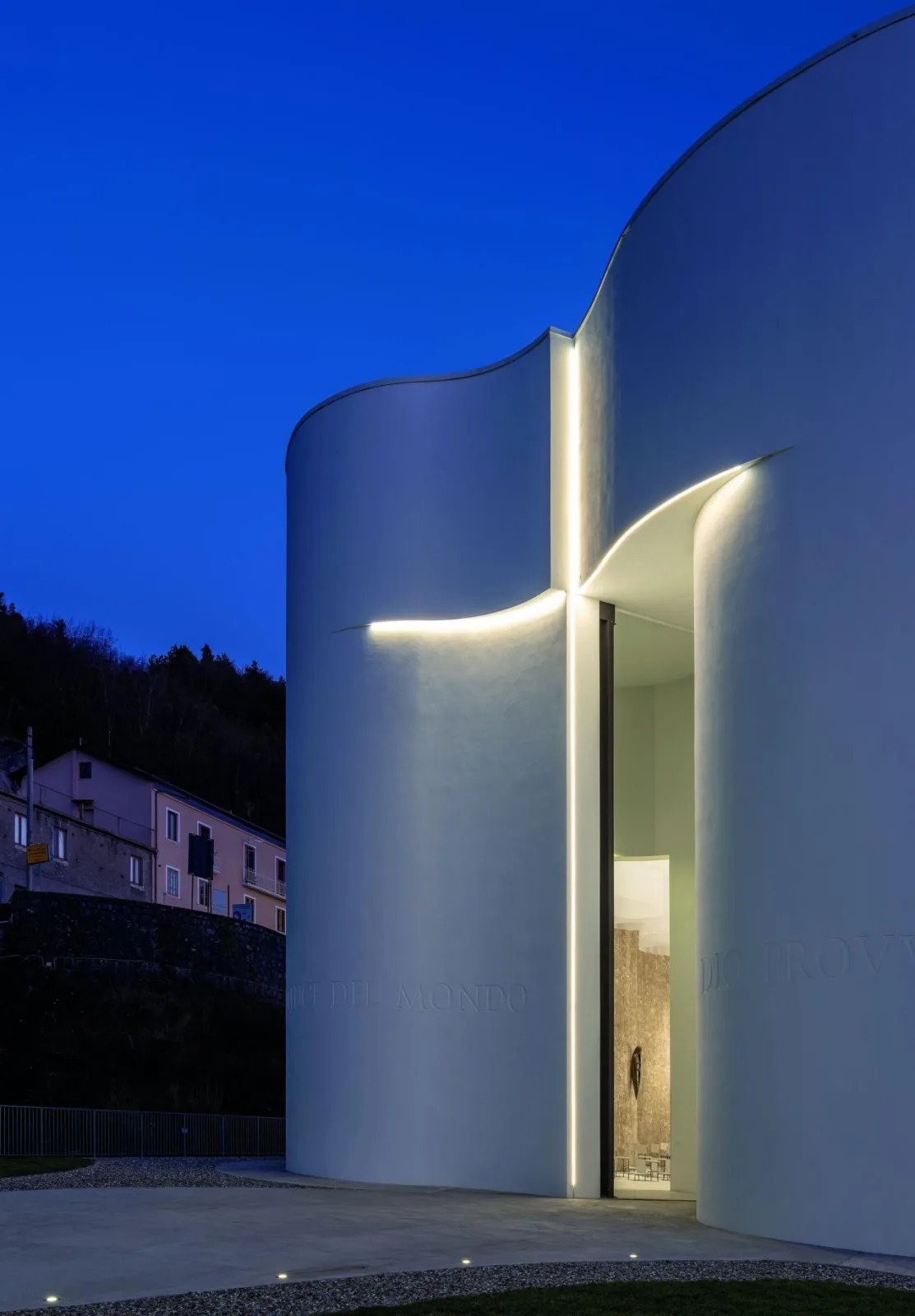
The church’s entrance is situated at a high, straight cut where four white concrete semi-circular apses intersect. This cut also forms a cross on the exterior façade. When illuminated at night, the church serves as a beacon, guiding visitors like a lighthouse. Inside, the space is filled with an air of mystery: translucent fabrics cascade from the 16-meter-high ceiling, softly diffusing natural light to create an ethereal atmosphere. This subtle lighting enhances focus on the Eucharist and prayer, while the flowing fabric forms evoke the Baroque Roman churches of Francesco Borromini, such as San Carlo alle Quattro Fontane and Sant’Ivo alla Sapienza.
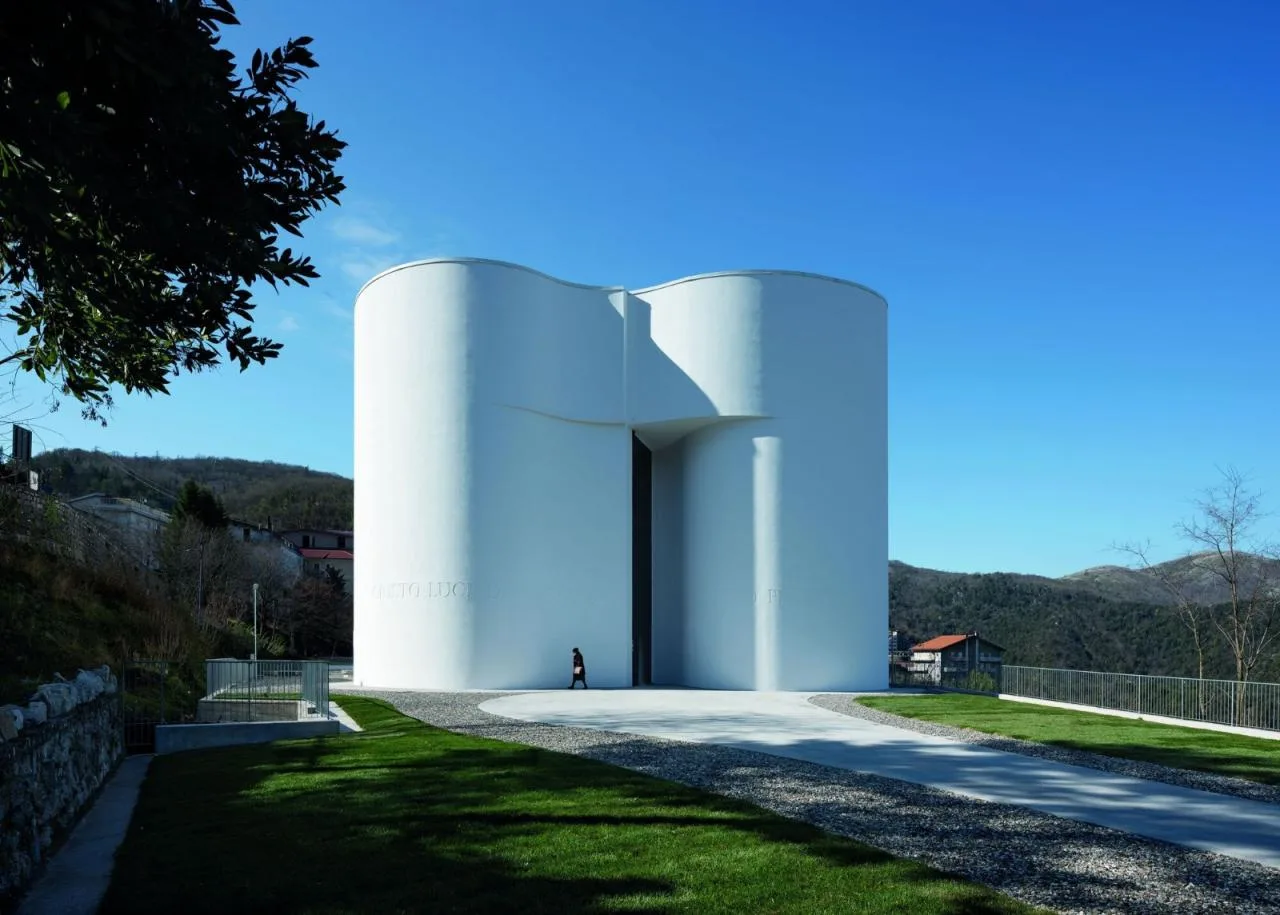
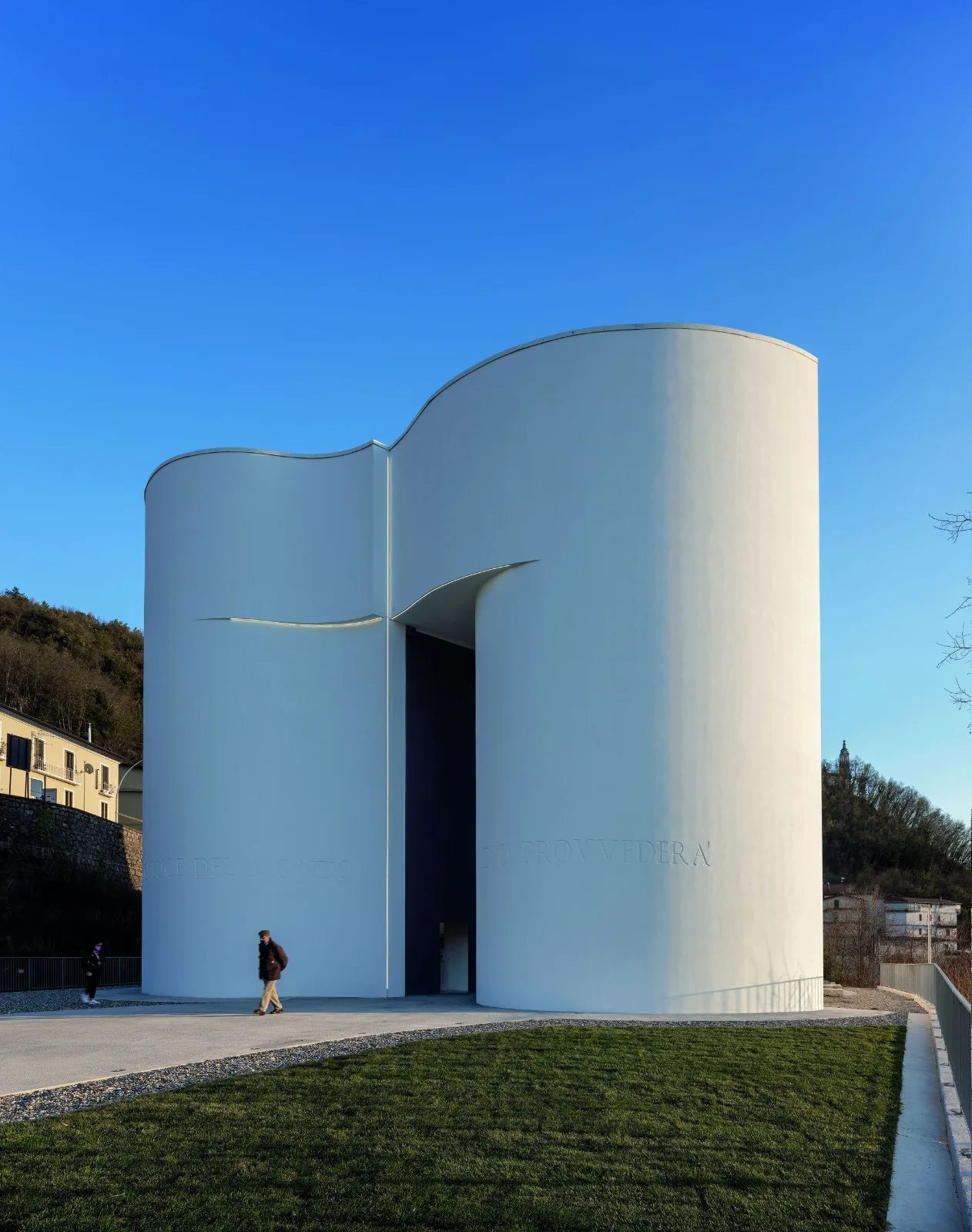
The design competition for the Church of Santa Maria Gretti was hosted by the Episcopal Conference of Italy (CEI) and won by Mario Cucinella Architects. Construction began in 2015 and was completed in 2021. Visitors can access the church via a dedicated paved road. Additionally, the church serves as the centerpiece of a newly established diocese, also designed by Mario Cucinella Architects.
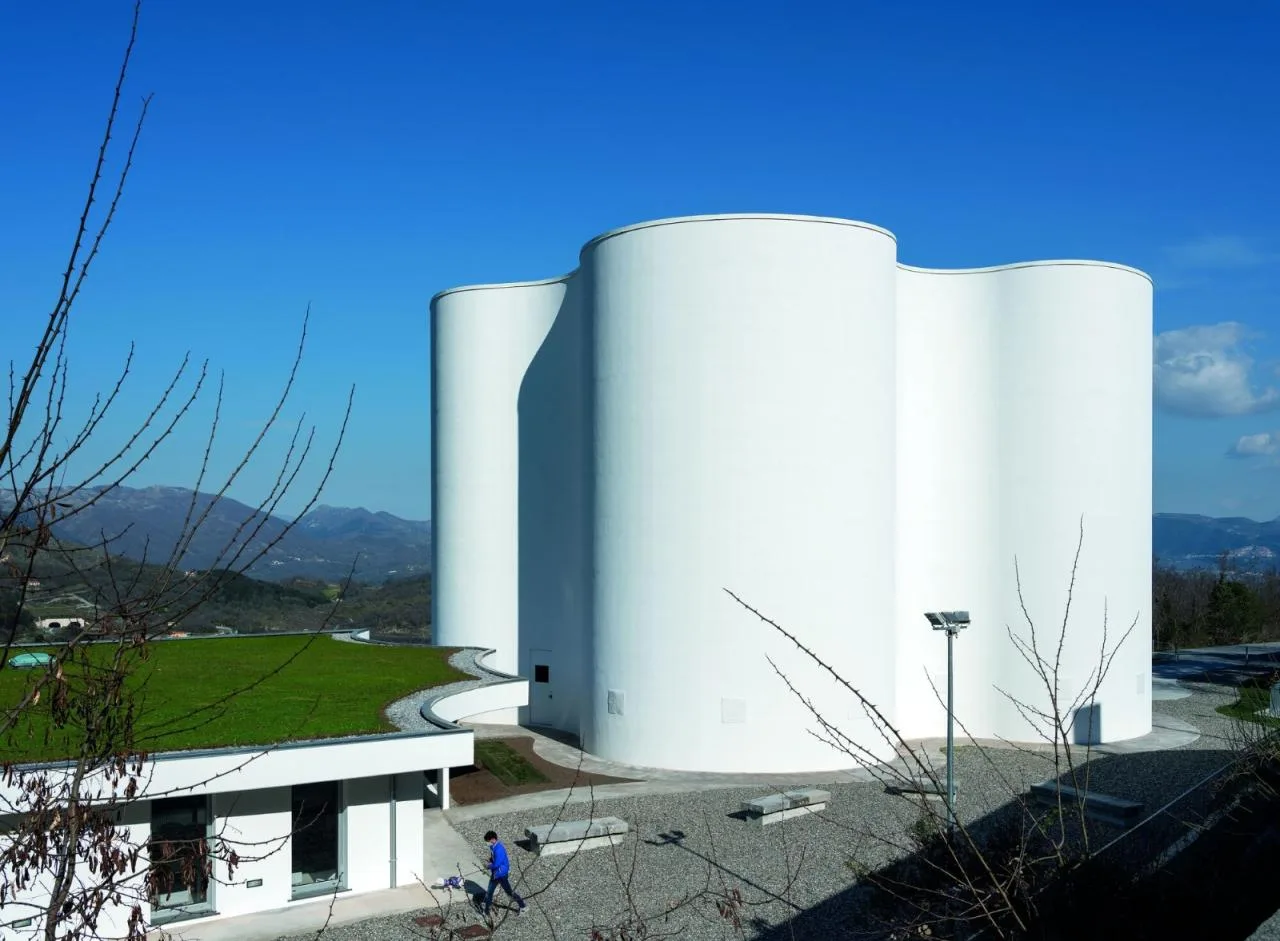
The church features a large concrete frame and is based on a transformed cross-shaped floor plan. Surrounding a central courtyard filled with greenery, it includes parish meeting rooms, classrooms, and priest residences, all beneath a vibrant green roof. On the north side of the parish center, a fan-shaped eave mirrors the church’s overall form and its four-leaf clover-shaped layout. Clergy enter the church through the sacristy located behind the altar, discreetly tucked within the curved walls. The church bells are also hidden within these walls, creating a resonant but gentle sound throughout the parish.
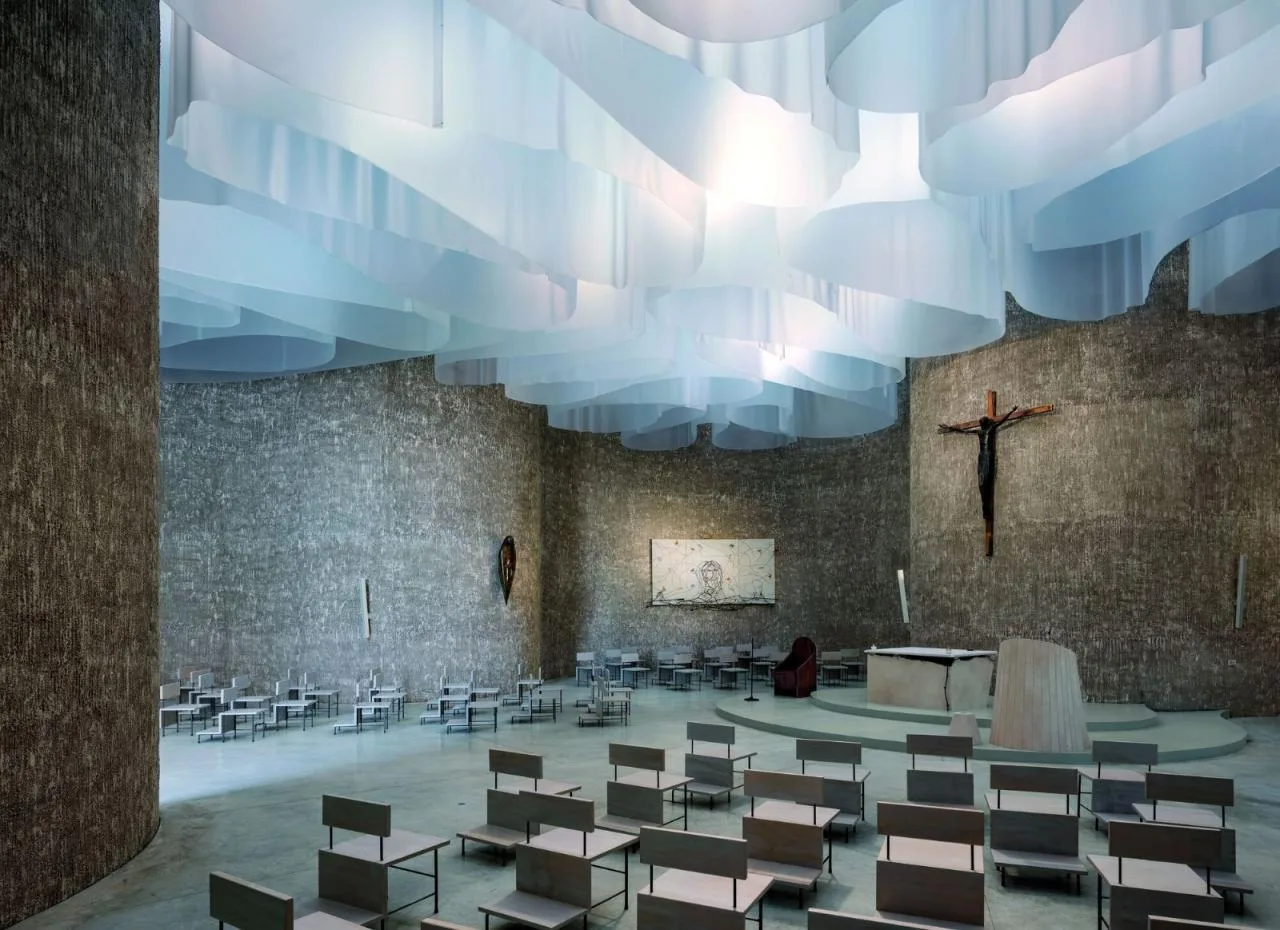
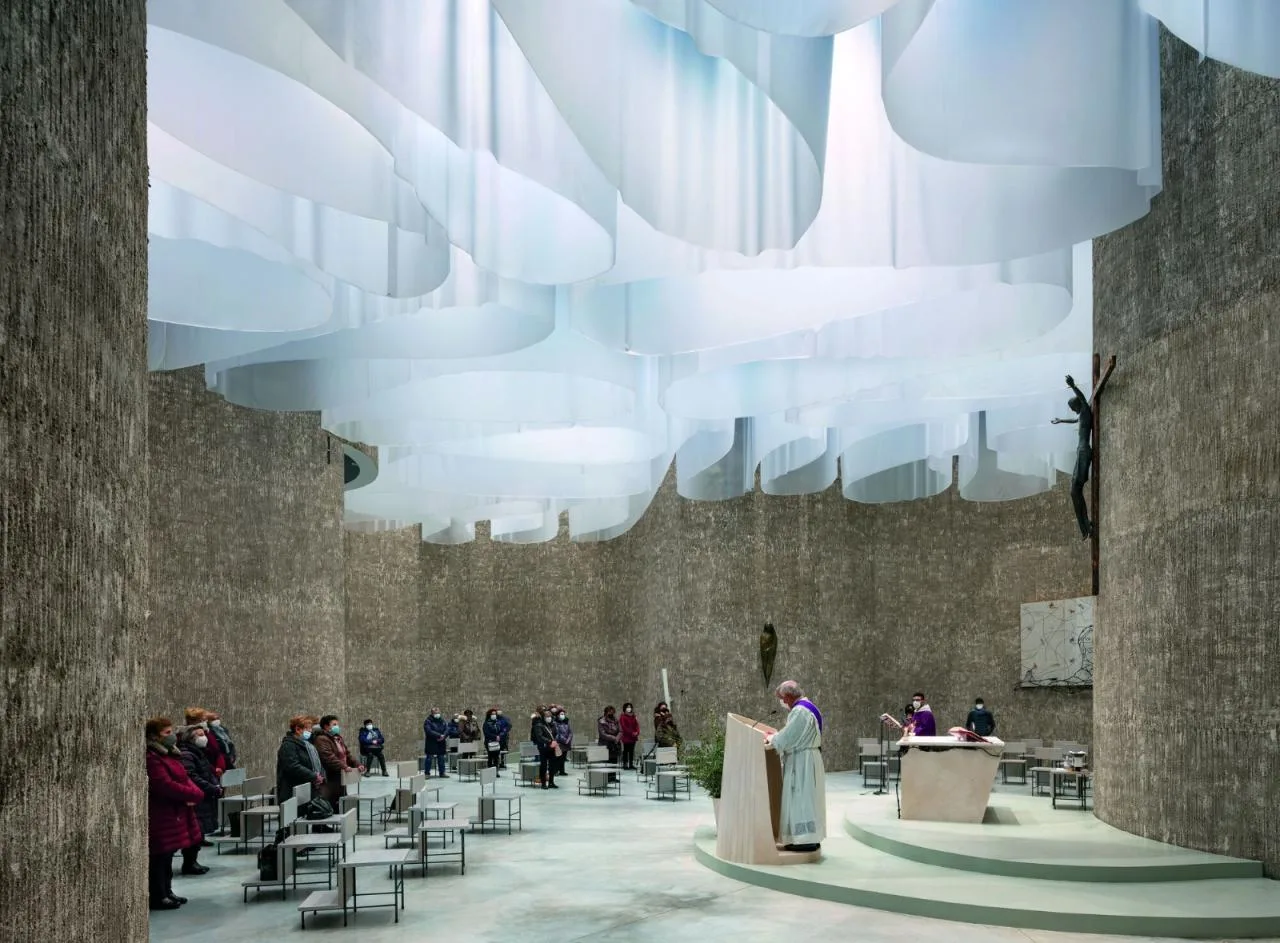
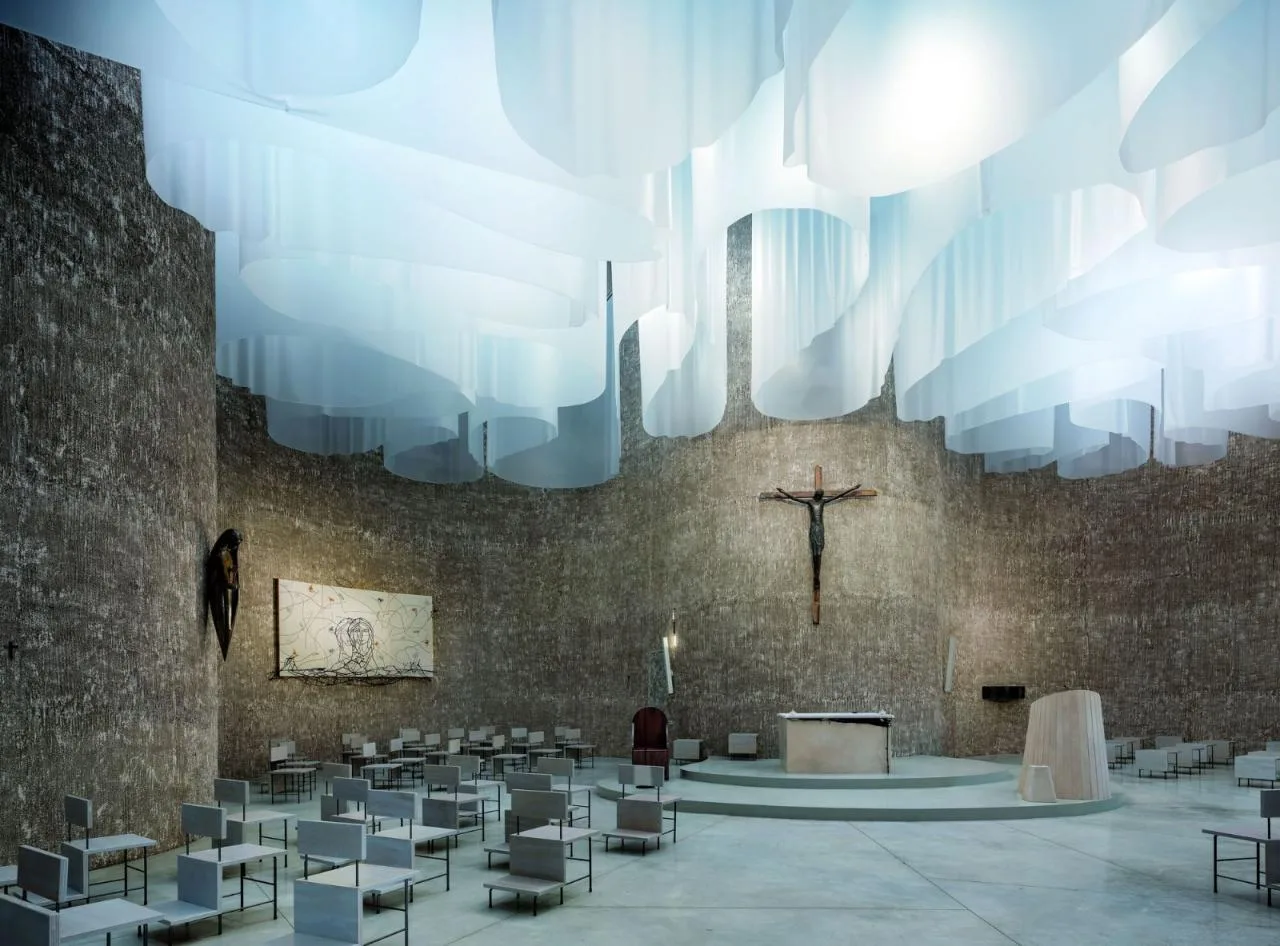
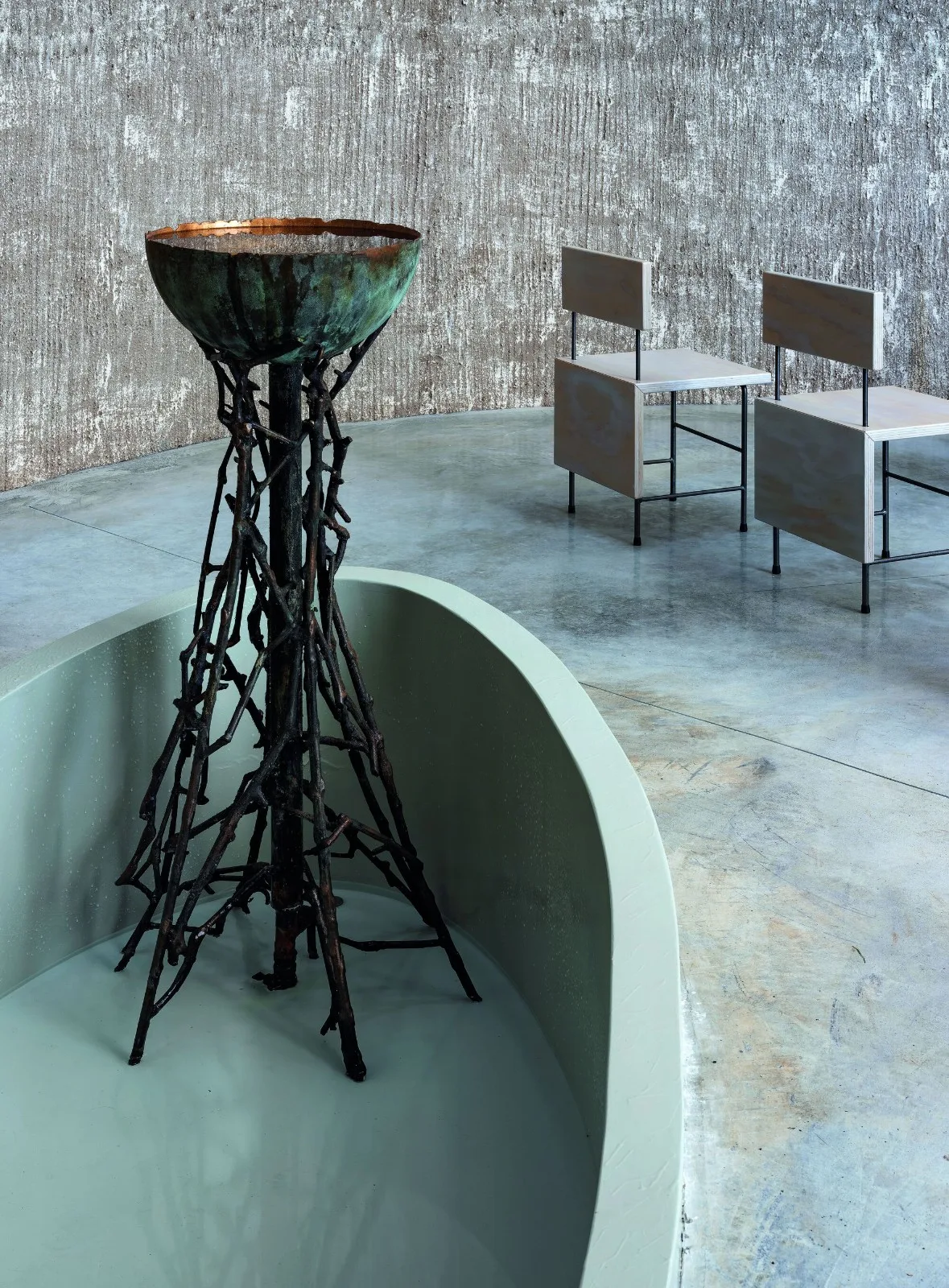
The furniture, designed by Mario Cucinella Design, uses wood and steel to create minimalist, simple pieces that complement the church’s sculptural architecture. Natural light filters through the ceiling’s hanging veil, and on July 6th, the feast day of Saint Maria Goretti, a beam of sunlight shines directly through a carefully designed opening in the cross behind the altar. This church embodies a harmonious spiritual coexistence of nature, art, architecture, faith, and symbolism. The design also emphasizes energy efficiency and low maintenance. The green roof, internal plant courtyard, and organic garden in front of the diocese provide sustainable and eco-friendly benefits for the local community.
Project Drawings
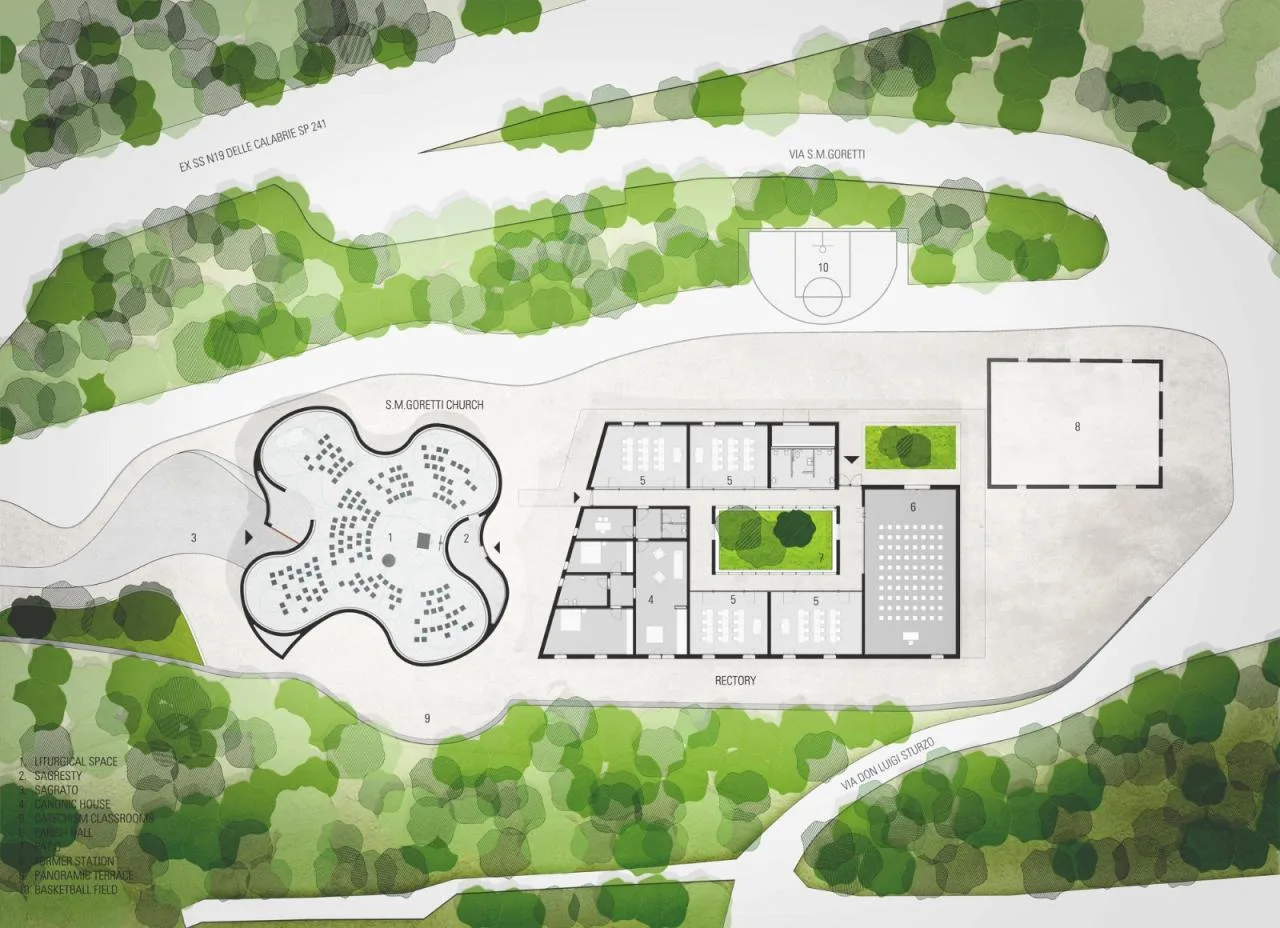
△ General layout plan
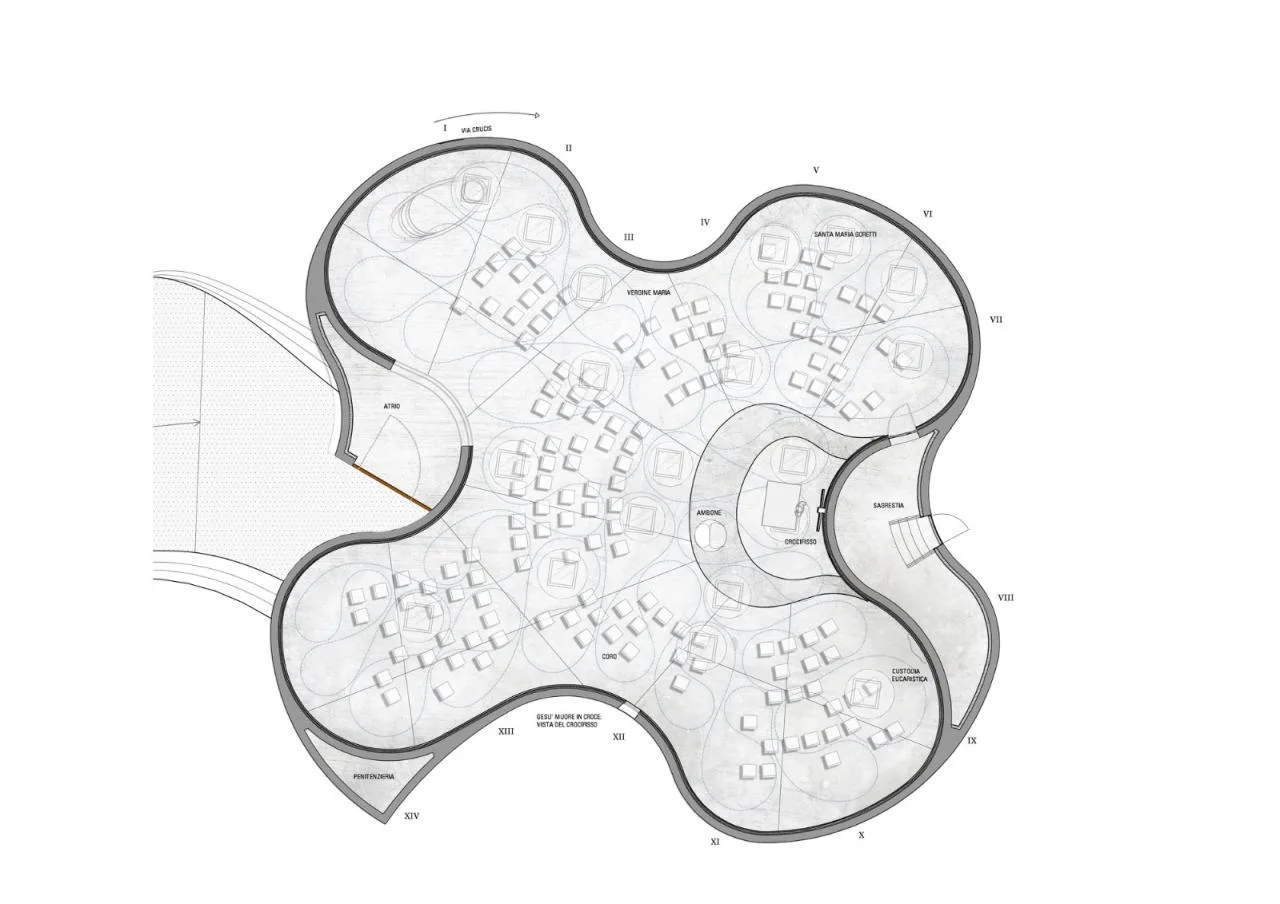
△ Plan view
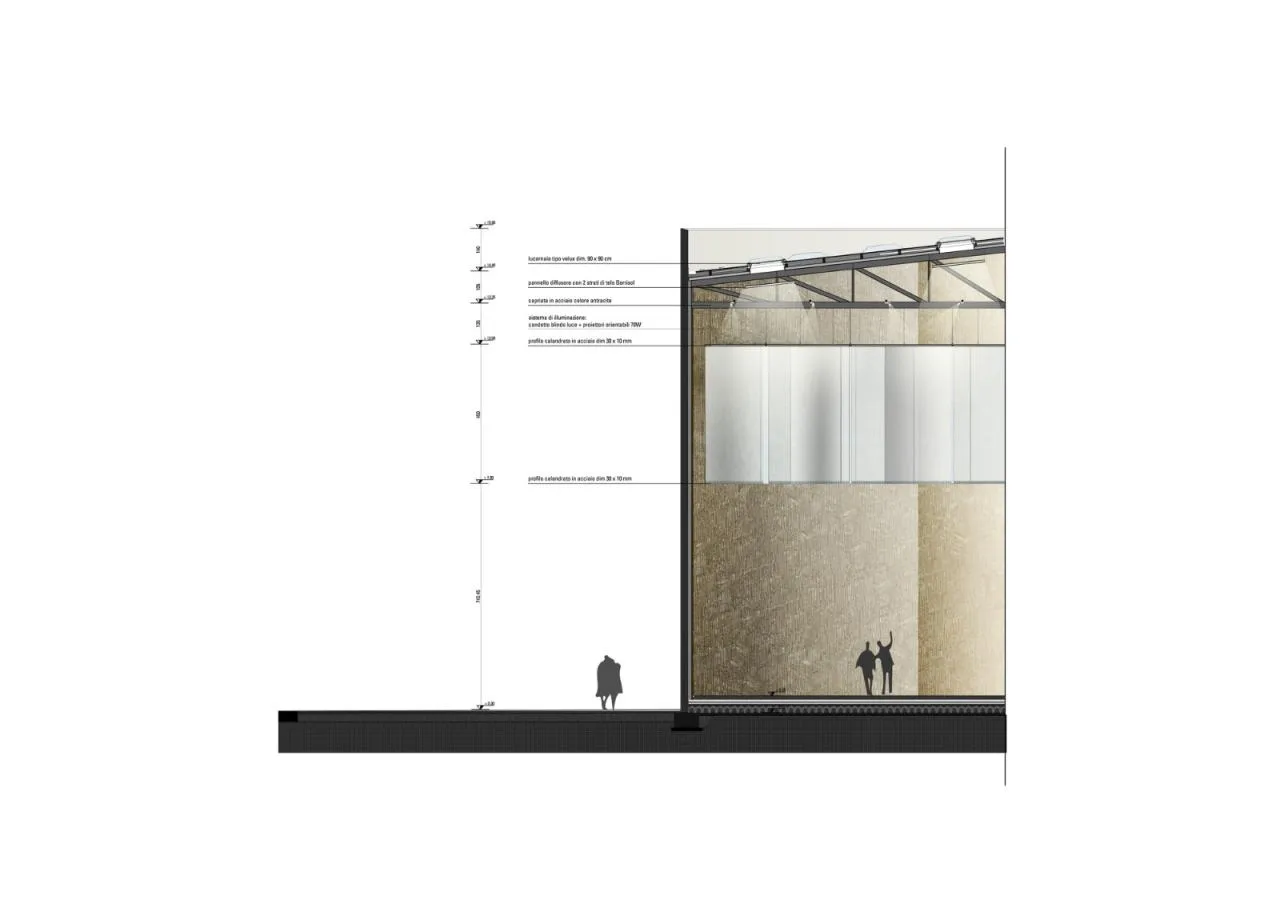
△ Structural detail drawing
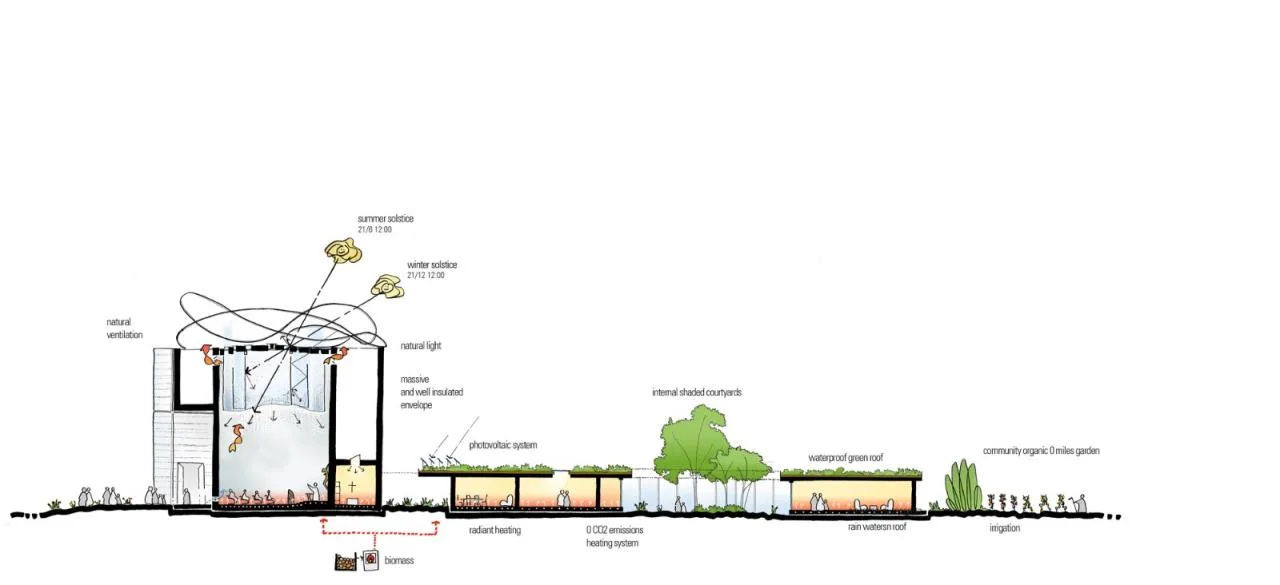
△ Analysis chart
Project Information
Architectural Design: Mario Cucinella Architects
Area: 950 square meters
Completion Year: 2021
Photographer: Duccio Malagamba
Suppliers: EXENIA, HD SYSTEM, KEIM, Velux, Zumtobel
Design Director: Mario Cucinella
Project Management: Luca Sandri
Artist: Giuseppe Maraniello
Etiquette Master: Don Amilcare Zuffi
Competition Team: Alberto Bruno, Alberto Casarotto
Final Design Team: Emanuele Dionigi, Enrico Pintabona, Michele Roveri
Imagery: Faenza, Engram, Mario Cucinella Visual, Ravenna
Physical Model: Mario Cucinella Architects
Construction Company: Lagonegro, Generali Costruzioni
Structural Engineering: Milan Engineering Milan
Owner: Diocese of Cassano all’Jonio












Must log in before commenting!
Sign Up