
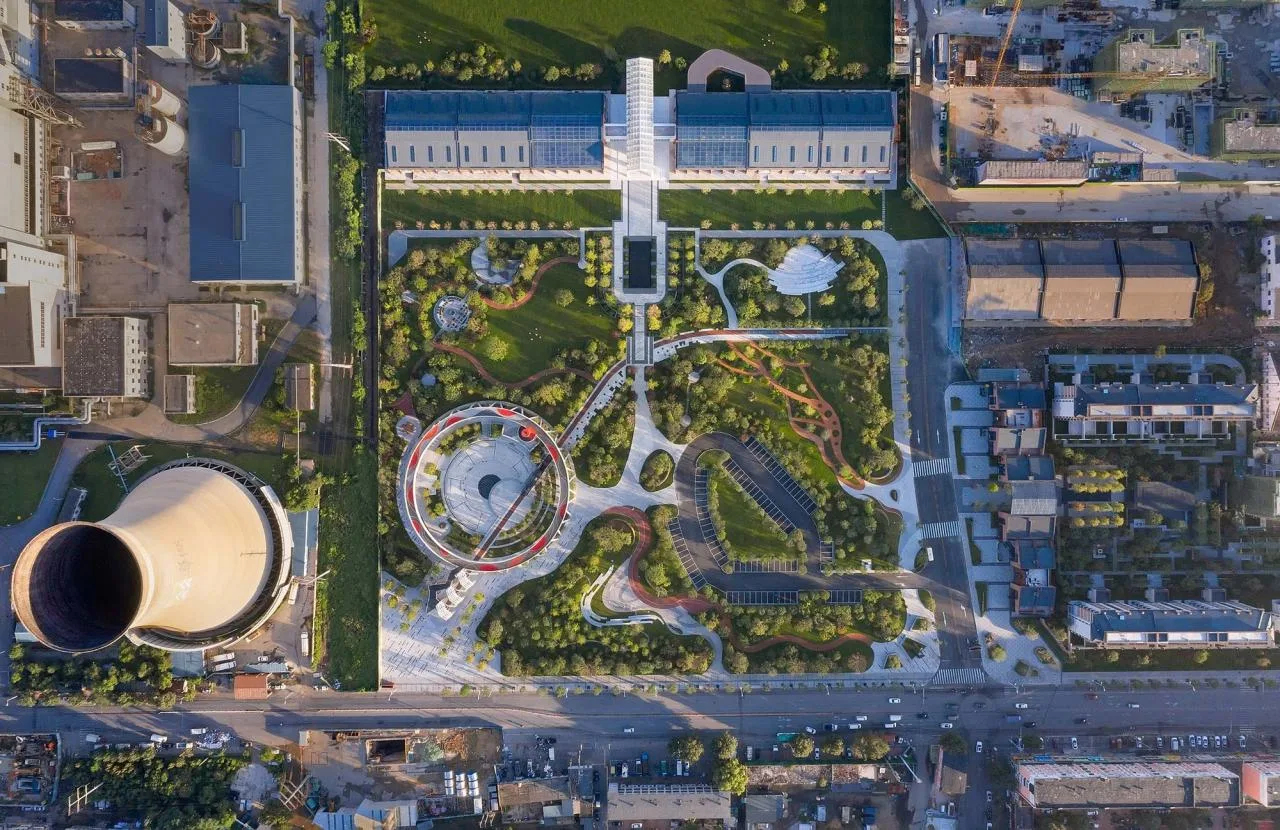
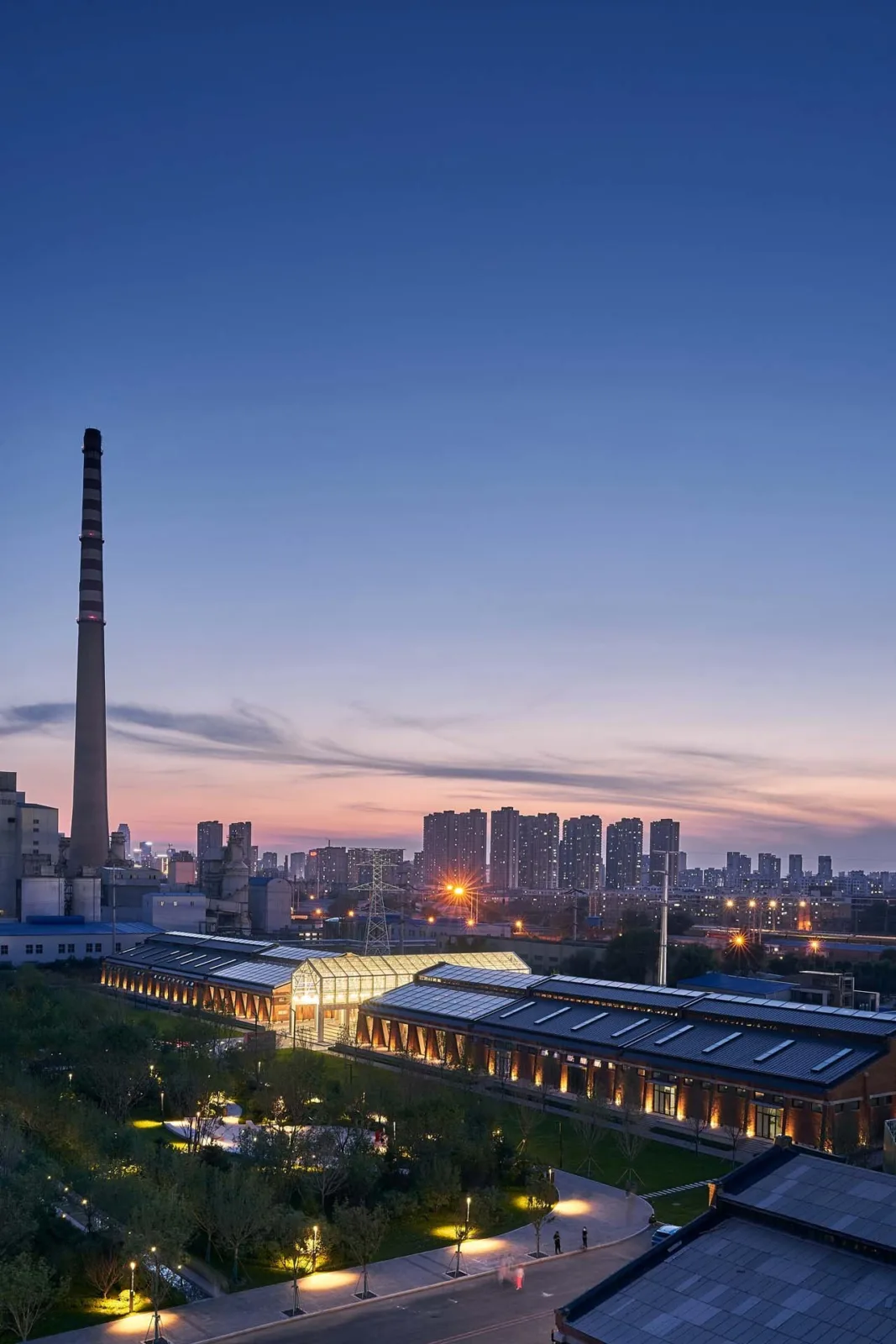
Dongmao Warehouse, originally the storage facility for the Northeast Trade Department and later the first branch of Shenyang Storage and Transportation Group Co., Ltd., represents the first generation of warehousing parks in the Republic, constructed during the Korean War in 1950 and continuously used since. Located on the south side of Shenyang East Station, the site comprises over 30 individual warehouses, making it the earliest, largest, and best-preserved collection of civil storage buildings in Shenyang. It holds significant value for research into the development of storage buildings and parks in both Shenyang and the broader Northeast region.
In 2019, the “Dongmao Warehouse Historical Building Complex” was included in the “Fifth Batch of Preliminary Selection List of Historical Buildings in Shenyang City.” Early in 2020, to balance preservation with development, experts and government officials decided to preserve seven distinctive historic buildings and one railway line, while allocating the remaining land for real estate development—conditioned on the protection and adaptive reuse of these historic structures. After the 2020 Spring Festival, Building 7 of the East Trade Warehouse was selectively preserved. Once plans were finalized, URBANUS Urban Practice was commissioned to design the non-residential public spaces for the project. The completion of the first phase of the Dongmao Warehouse renovation has revitalized the community, confirming the importance of a critical path approach in decision-making during rapid urban renewal projects.
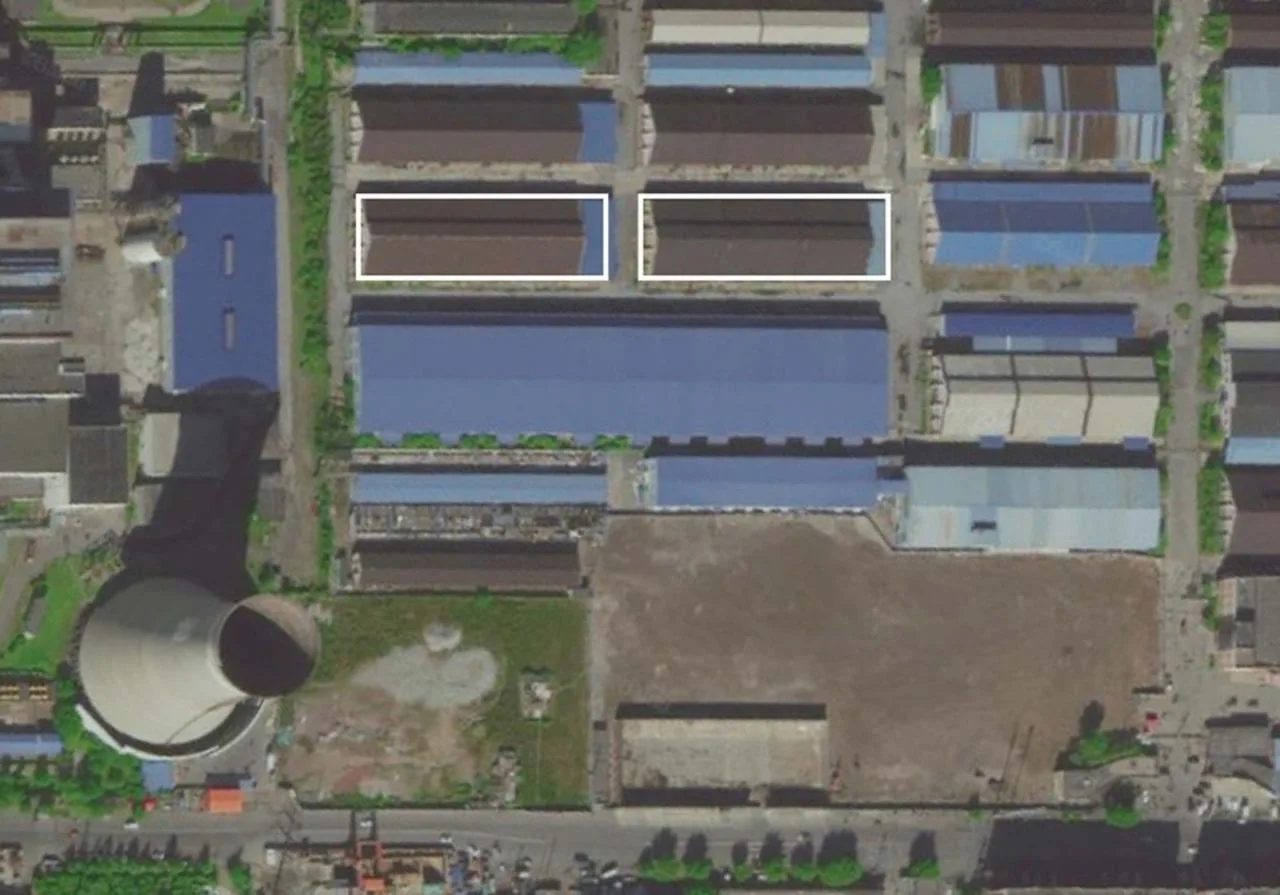
Before the renovation
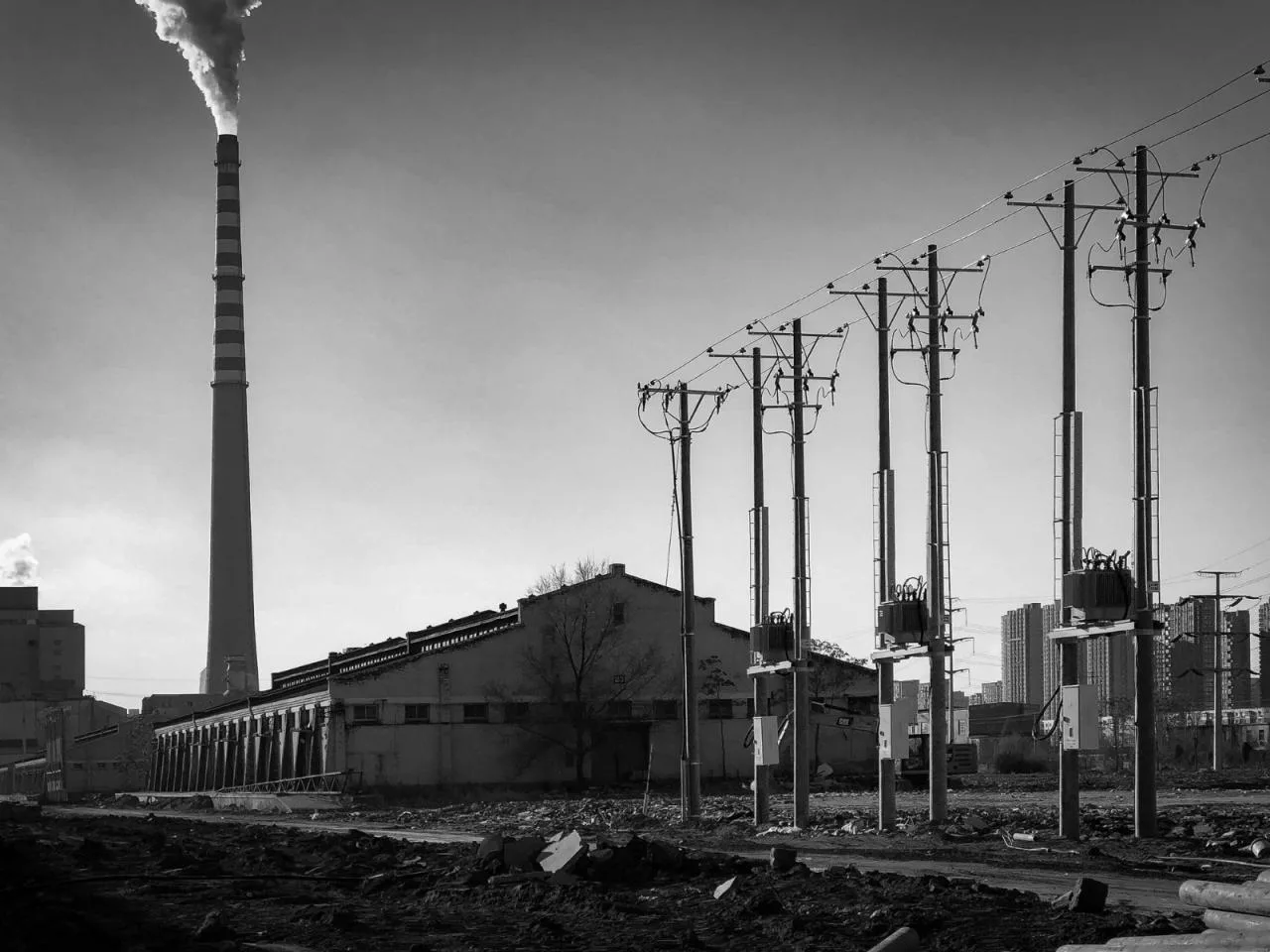
Before the renovation
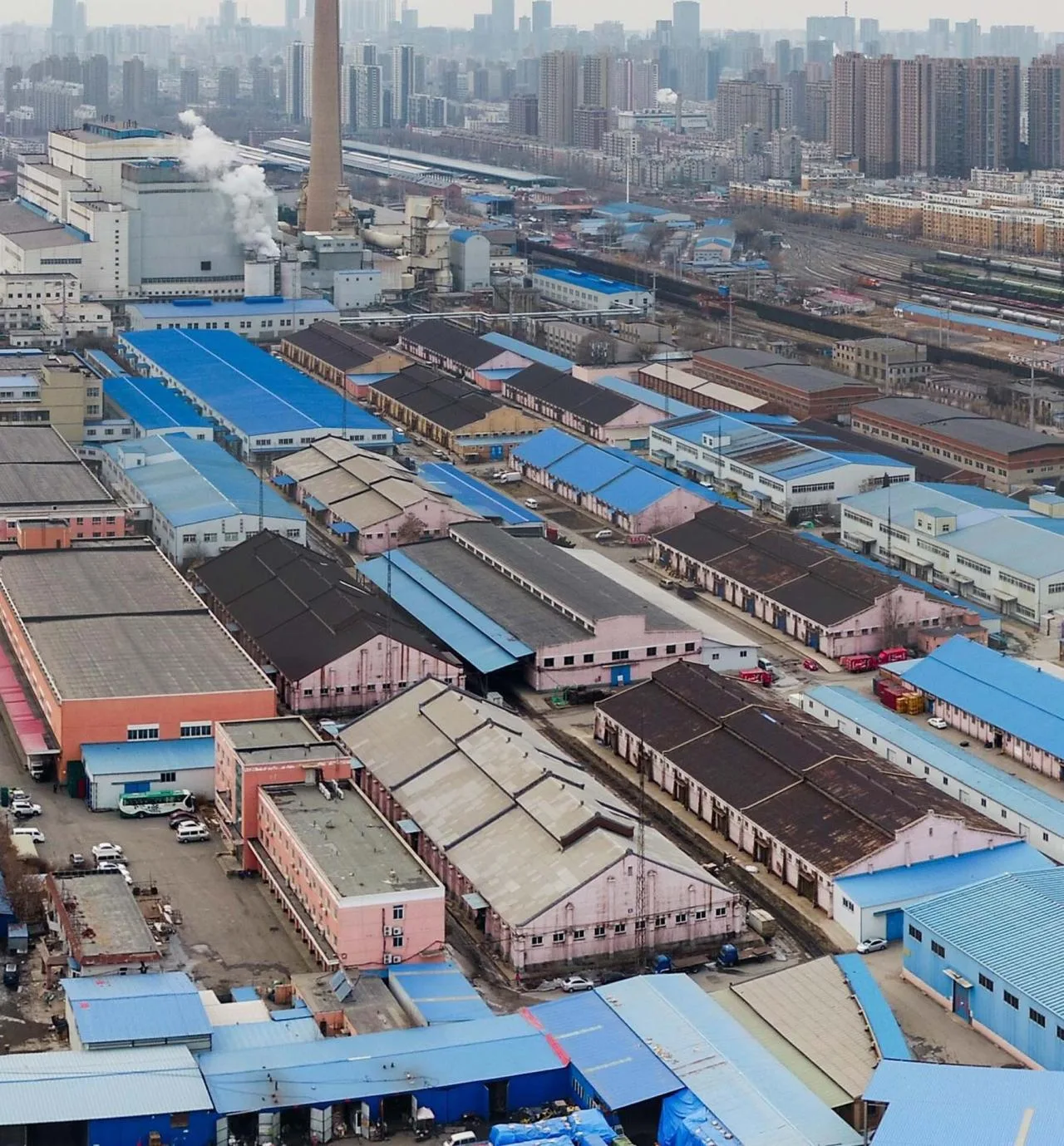
Before the renovation
The project’s design, aimed at redirecting resources in the East Trade Warehouse area by amplifying its heritage along a critical path, started right after the intense period of the 2020 Spring Festival. Initially, the design team could only rely on photos for site information. As a result, the first version of the exhibition center design failed to integrate with the old factory buildings. When the epidemic situation improved, the team quickly conducted a site visit and was struck by the grandeur of the warehouse complex. The yet-to-be-demolished Dongmao Warehouse site revealed a raw and authentic vitality:
- Architectural ensemble: The warehouse complex imparts a powerful overall presence.
- Individual scale: Each building, measuring approximately 30 by 90 meters, asserts a strong sense of autonomy.
- Interior spatiality: Though listed as historical buildings, the aesthetic potential of Dongmao Warehouse had been largely overlooked due to material abundance. Visitors on the inspection were deeply impressed by the indoor lighting and spatial qualities, witnessing the true beauty of the warehouse for the first time.
Following this on-site investigation, the design team abandoned their initial plan and decided to utilize the warehouses themselves as exhibition centers. This approach, aimed at immediate use, significantly reduces the time required for approvals and construction and received approval from the client’s decision-makers. Moreover, the team shifted their perspective from treating old warehouses as secondary to new public buildings, instead seeing public spaces as containers that embrace historic structures.
Among the more than thirty warehouses, only seven were preserved. Due to this limited selection, preservation decisions were based on the individual value of each building rather than the overall layout. Therefore, connecting these seven warehouses became a challenging “involution” process, requiring the discovery and amplification of resources—such as public buildings and landscapes outside residential areas—to accommodate them effectively.
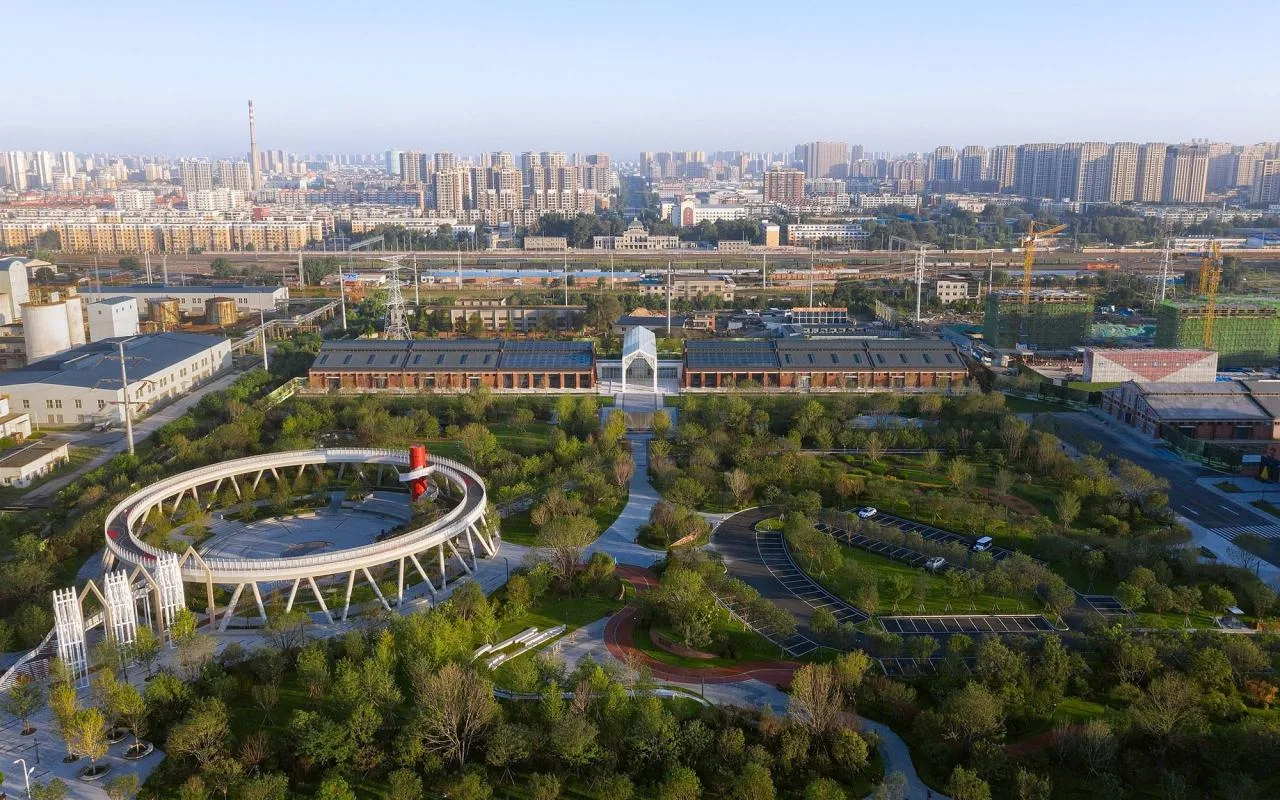
At this stage, the design team’s focus shifted from creating individual exhibition centers to spatial design centered on regenerating all public space resources within the East Trade Warehouse area. This comprehensive approach required entrusting the design of all public buildings to a single firm for coordination, ensuring the realization of the project’s overall cultural value. Recognizing the importance of this strategy, the client appointed URBANUS Urban Practice to handle all public building designs, making the holistic revitalization of the East Trade Warehouse project feasible.
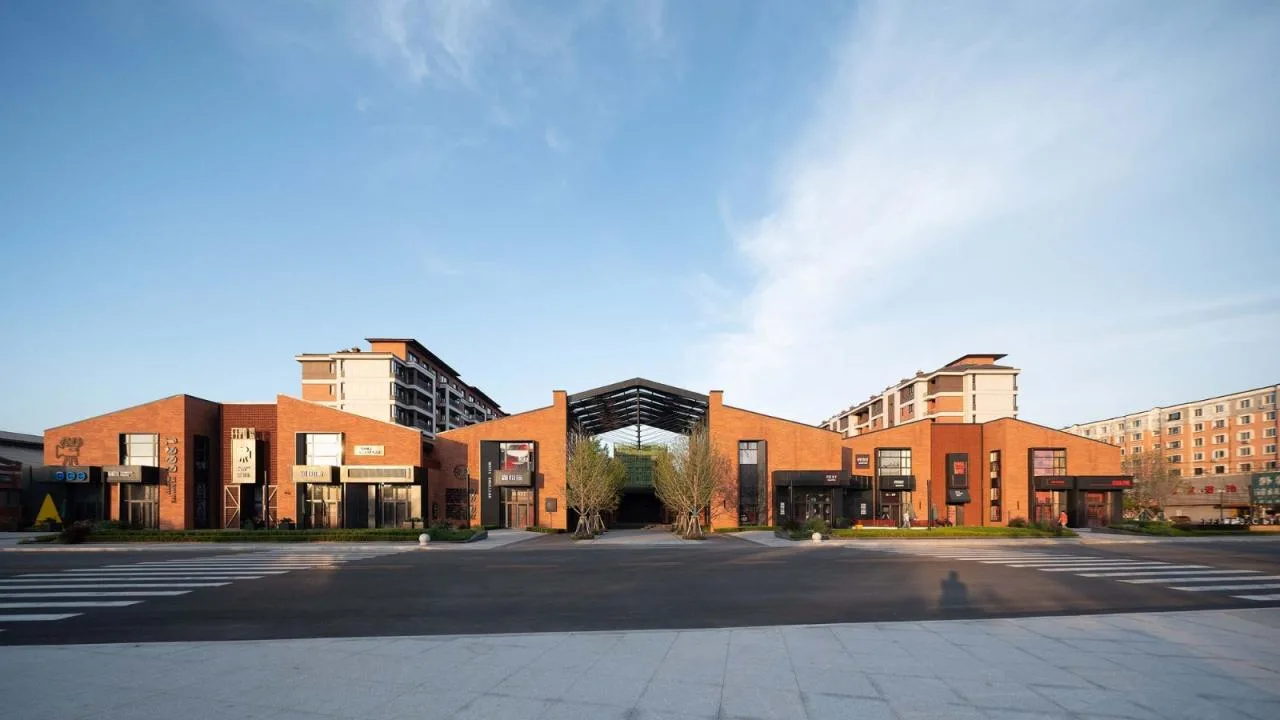
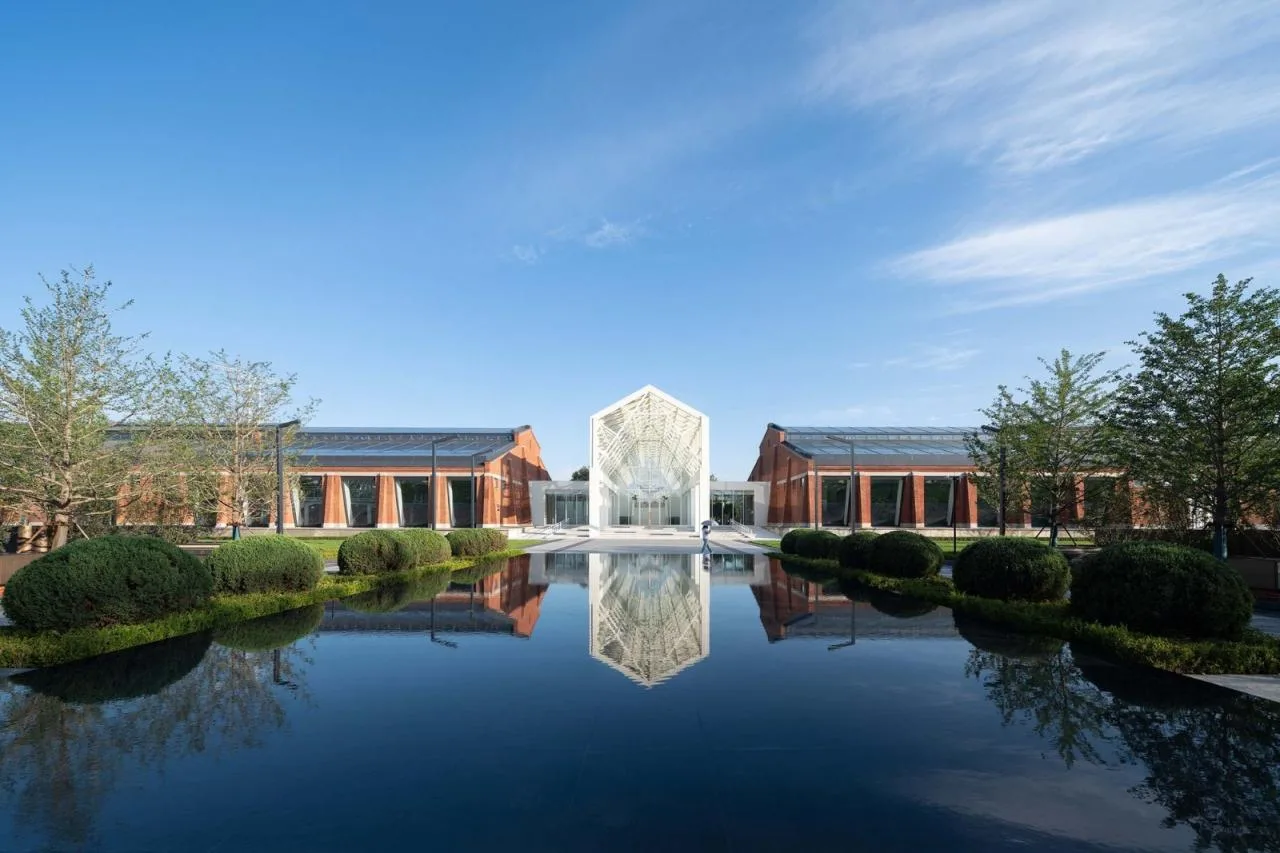
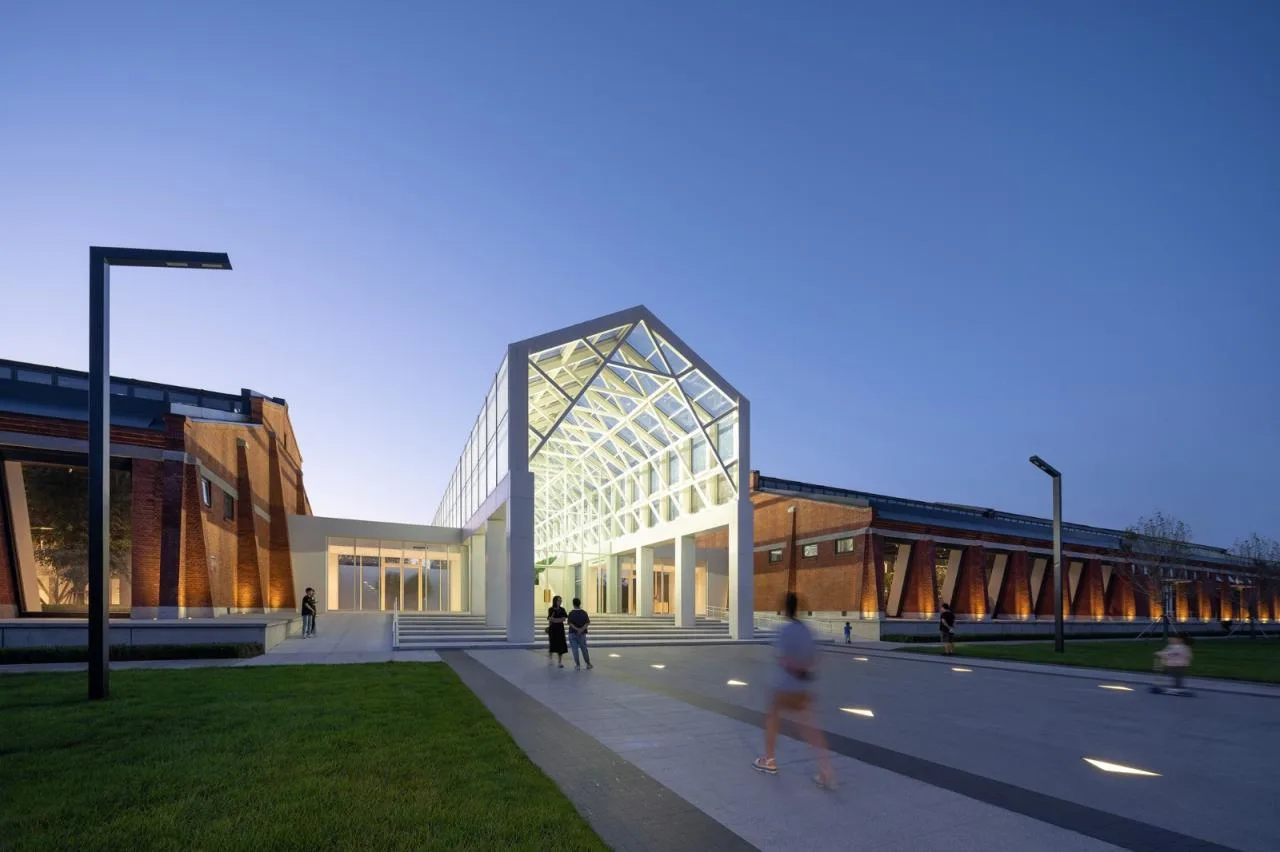
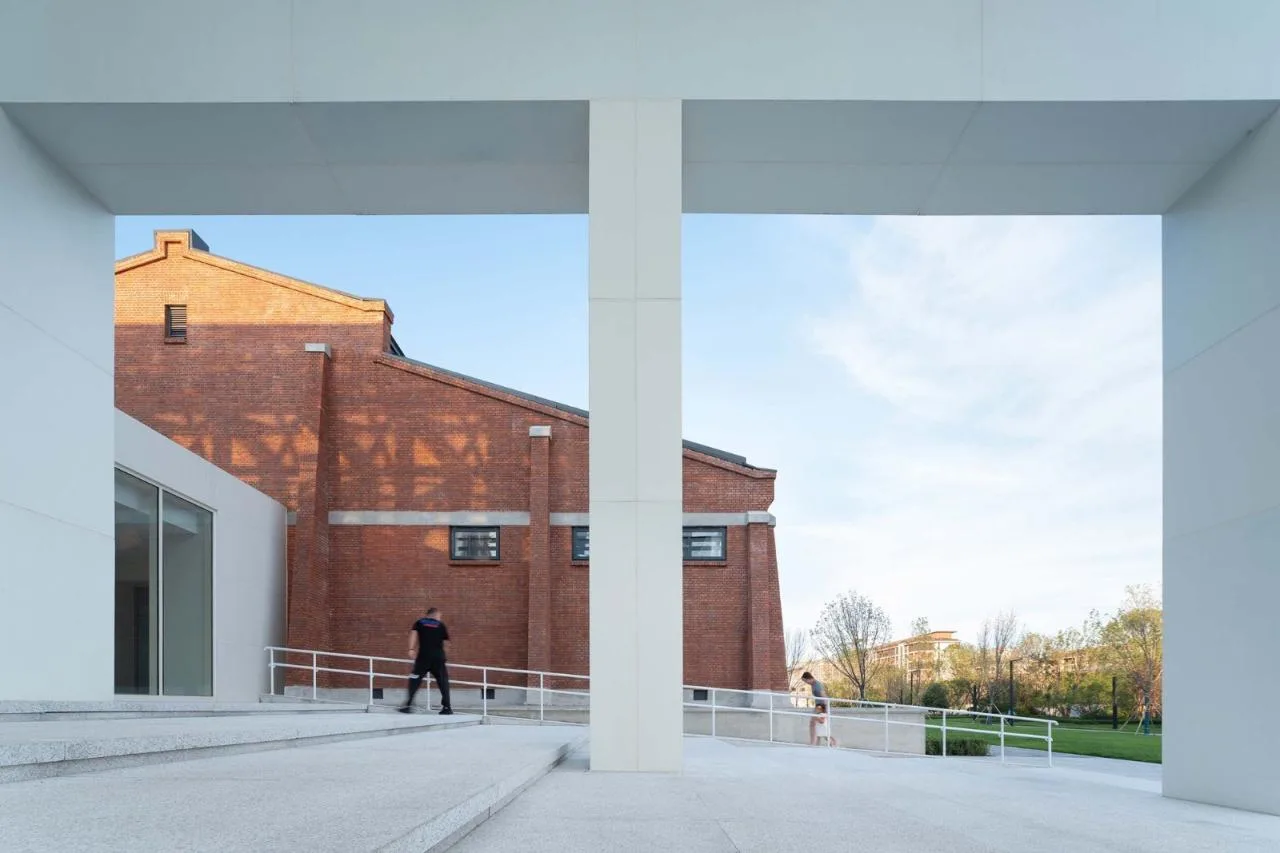
Architecturally, the design highlights the 30-meter-wide gable walls of the Dongmao Warehouse as the main theme. Using morphological methods, various geometric transformations were applied to create new building shapes that not only harmonize volumetrically with the old warehouses but also introduce fresh architectural ideas compatible with the original industrial style.
From a planning perspective, the original warehouse district featured a linear logistics layout, whereas the current residential area follows a grid pattern. The new planning emphasizes activating the East Trade Warehouse by integrating these contrasting systems. Two community parks were planned to the north and south, with warehouses #2 and #4 serving as scenic backdrops. By using a planned road as a cross-axis, the design integrates the old warehouses into the residential street interface, completing the transition between old and new urban fabrics.
Critical Path 2: Ensuring Procedural Justice in Preservation and Use
In China, existing cultural heritage plans often emphasize protection over utilization, limiting the functional reuse of historic buildings. The Dongmao Warehouse project provides an opportunity for architects and heritage planners alike to rethink and innovate. Led by Professor Chen Bochao from Shenyang Jianzhu University, the cultural preservation plan was developed in tandem with the architectural design, enabling close collaboration with conservation planners and developers within a tight timeframe. Through professional surveying, testing, and repair efforts, the team rationalized the conservation strategies and formalized the adaptive reuse designs.
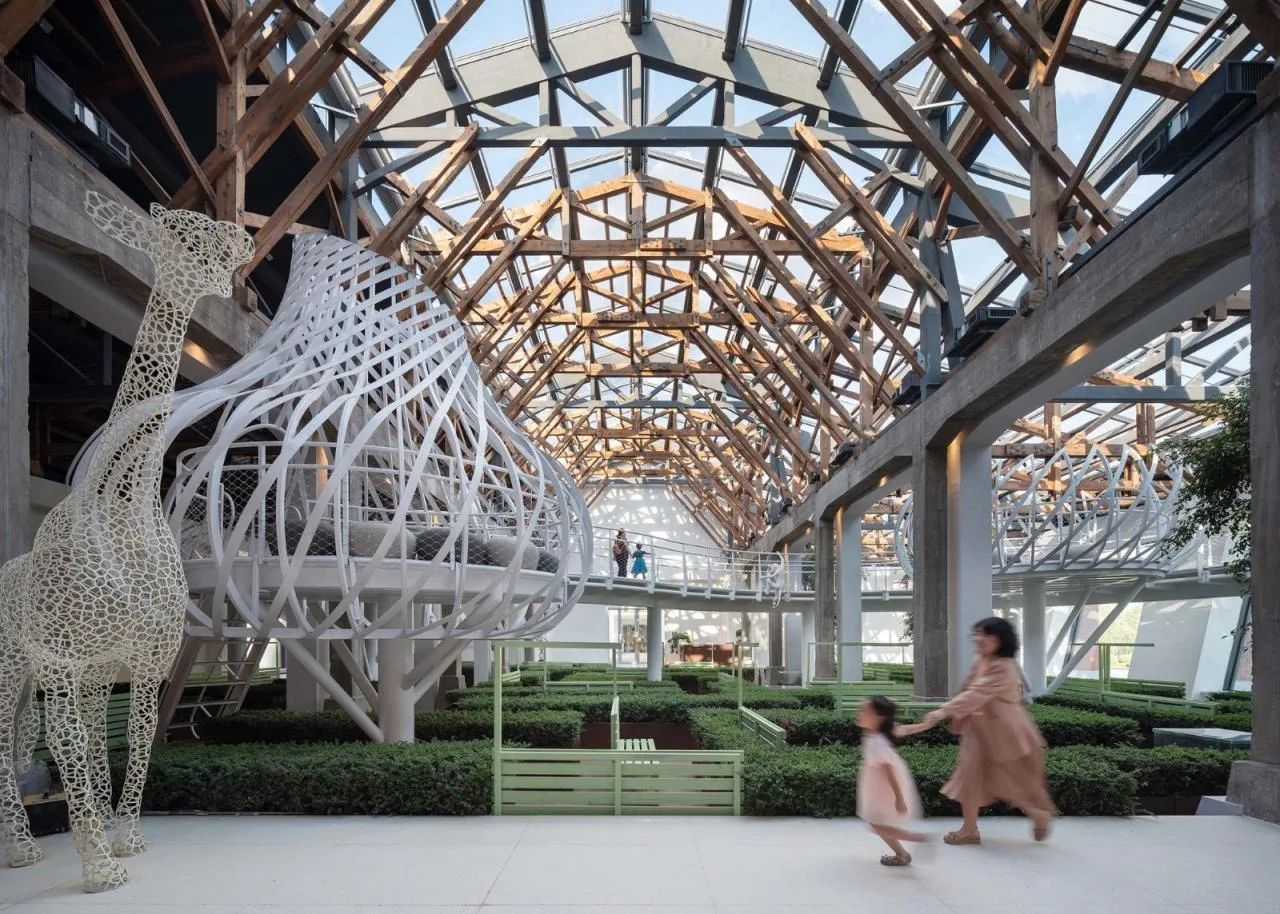
One major technical challenge in the silent regeneration and renovation of the wooden structures was reconciling their reuse with current building regulations. The original roofs of warehouses #2 and #4 featured Soviet-era triangular wooden trusses—scientifically engineered, precise, and designed to channel natural light through high side skylights—exemplifying geometric beauty and structural strength. However, current structural and fire safety codes restrict the direct reuse of these wooden frames. Increasing component sizes to meet regulations would significantly alter the original design’s appearance.
To address this, structural engineers collaborated to insert steel trusses of similar shapes within the existing wooden truss systems. This strategy relieved the wooden structures of load-bearing functions without altering their visual character, ensuring compliance with regulations. Steel trusses replaced the wood at column positions, carrying the weight of the new roof through thickened chords and inter-column purlins, effectively isolating the roof load from the wooden trusses. Consequently, the wooden trusses remain purely decorative elements. To maintain visual continuity, original third-grade wood trusses were retained between pairs of steel trusses, and wooden diagonal supports were continued as decorative features within the steel framework, preserving the original structural aesthetic.
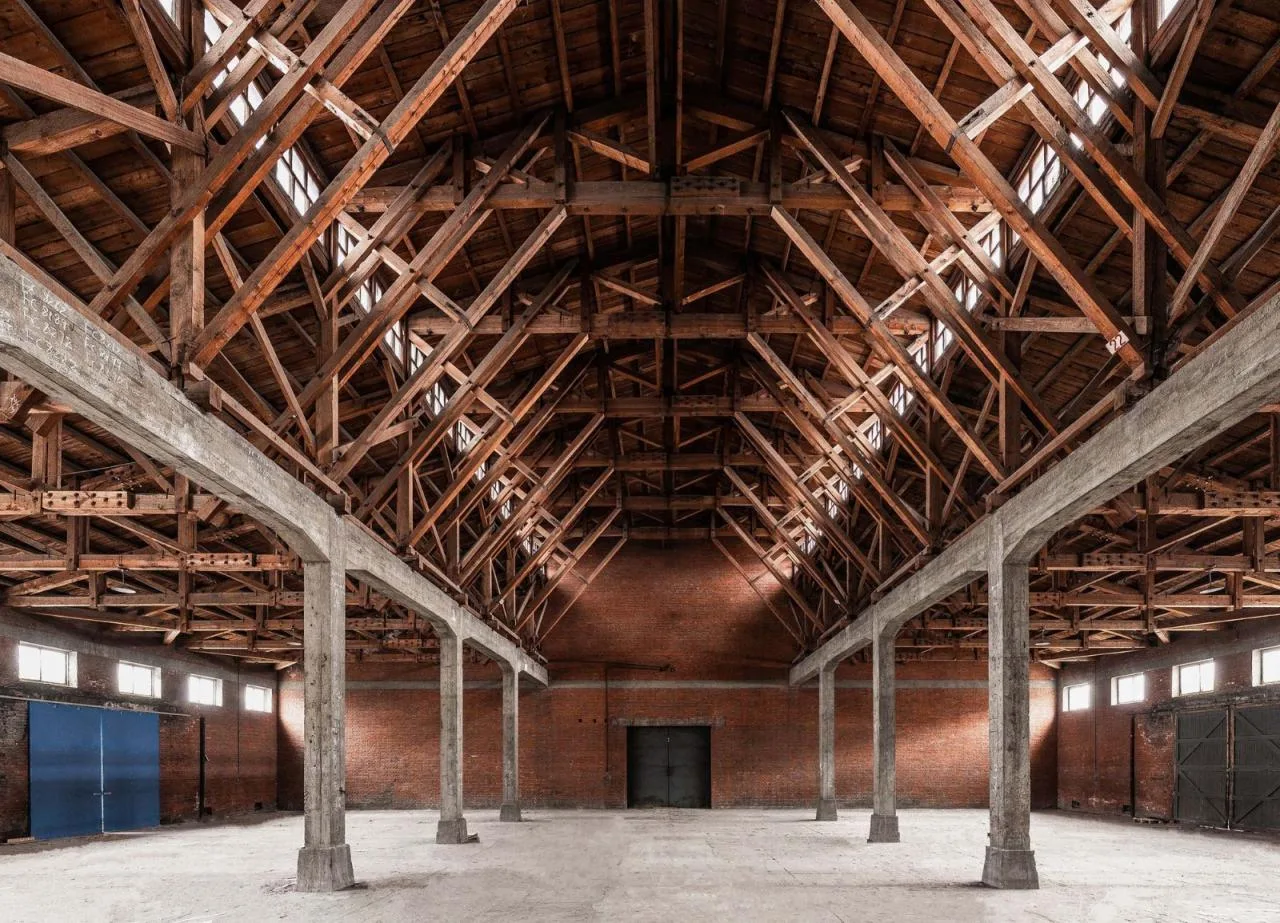
△ Wooden structure before renovation
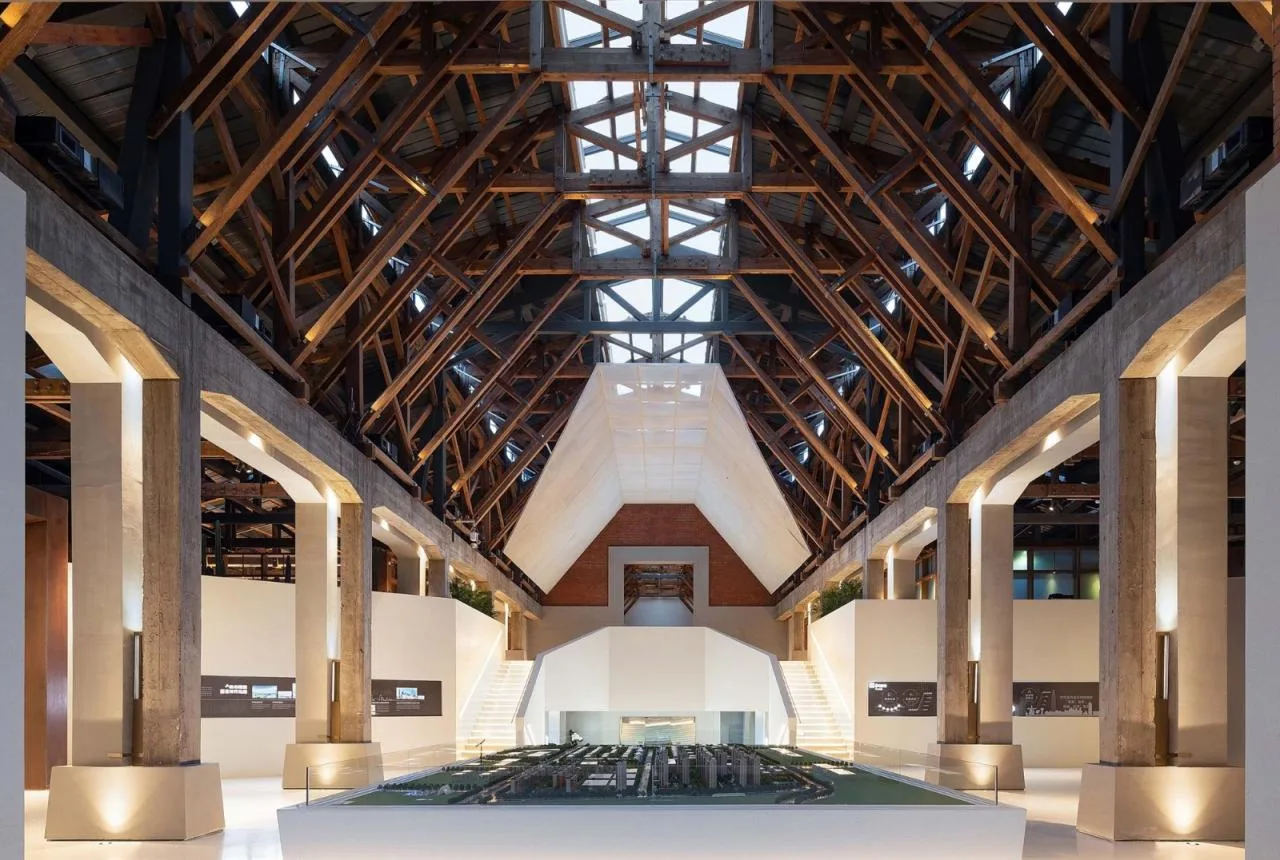
△ Modified wooden structure
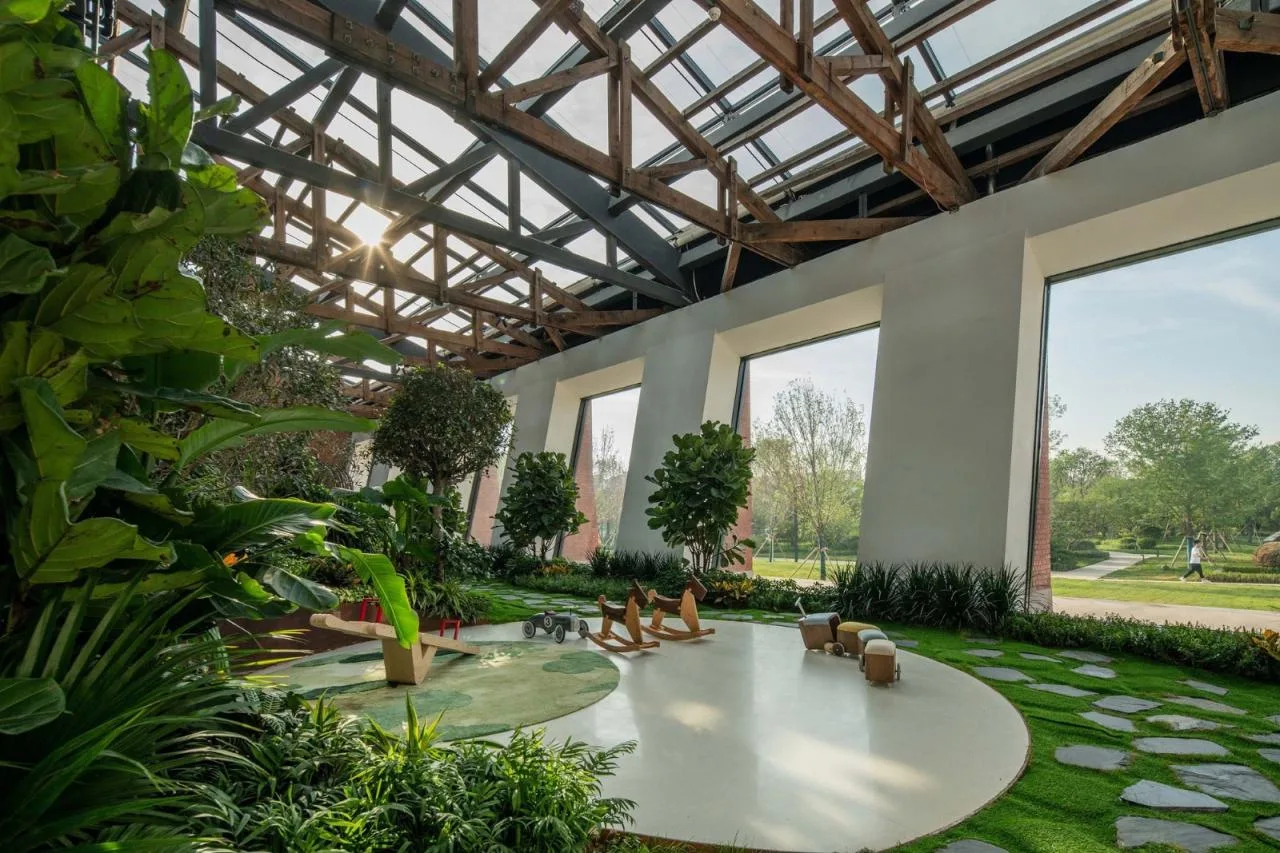
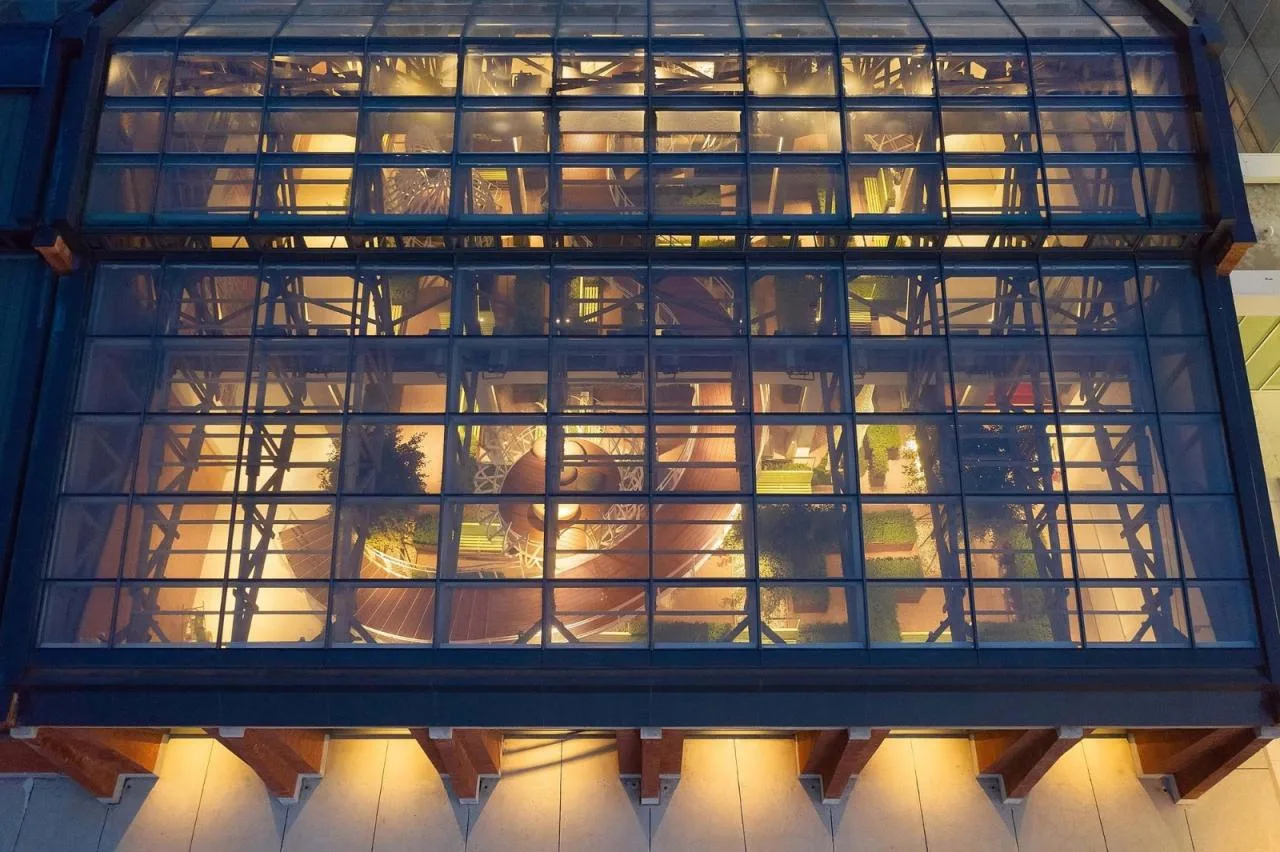
The community development of the Key Path Four Greenhouse Garden began with the renovation of warehouses #2 and #4, each consisting of three 30m by 30m units. Preservation guidelines allowed only minor alterations to the exterior facades. For buildings with large entrances and small windows, skylights were added to provide natural lighting and smoke ventilation. Since skylights existed, the concept of transforming these spaces into greenhouses was embraced.
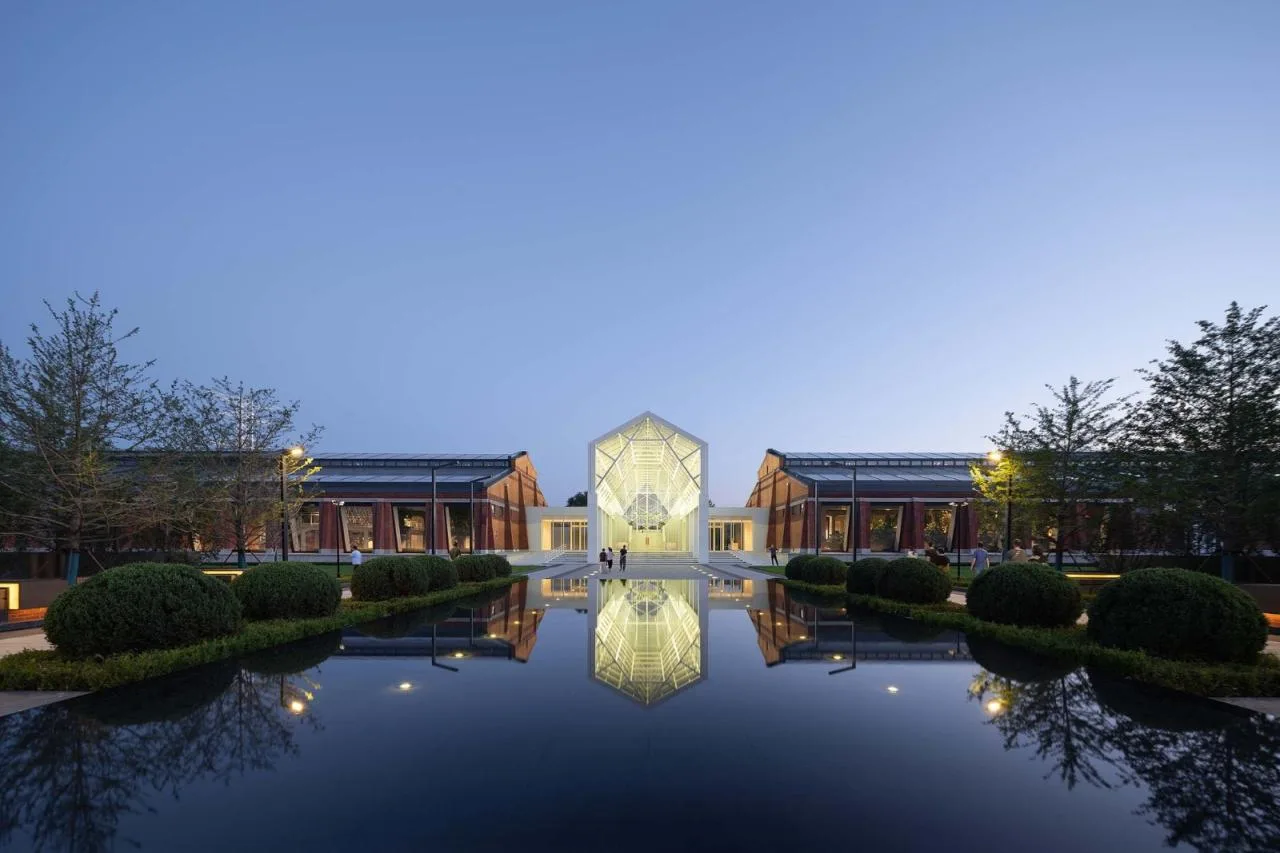
This spatial concept envisions each warehouse as a three-part entry space, approached from one end. The first entry functions as a greenhouse, offering scenic views and creating a new typology of industrial heritage reuse suitable for the harsh climate of Northeast China.
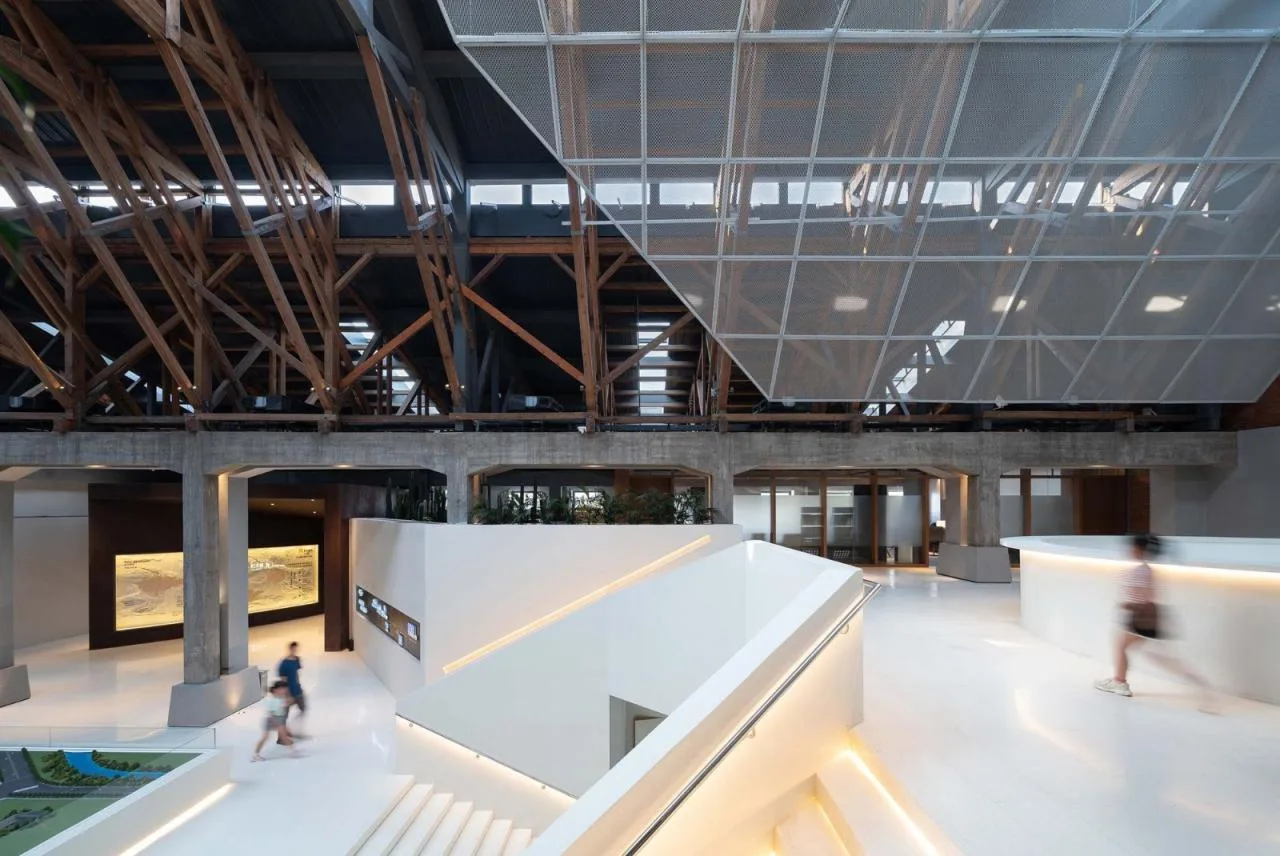
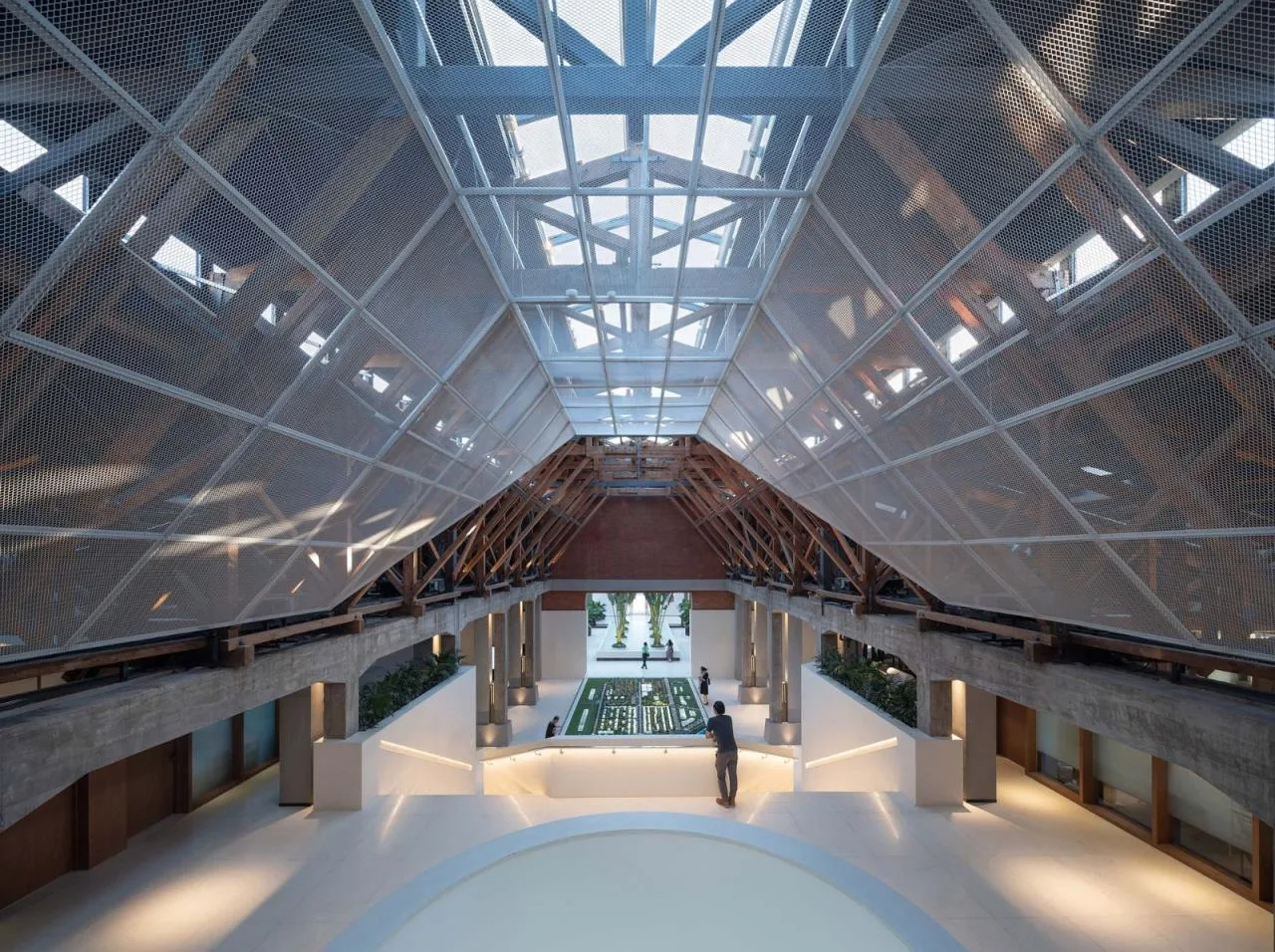
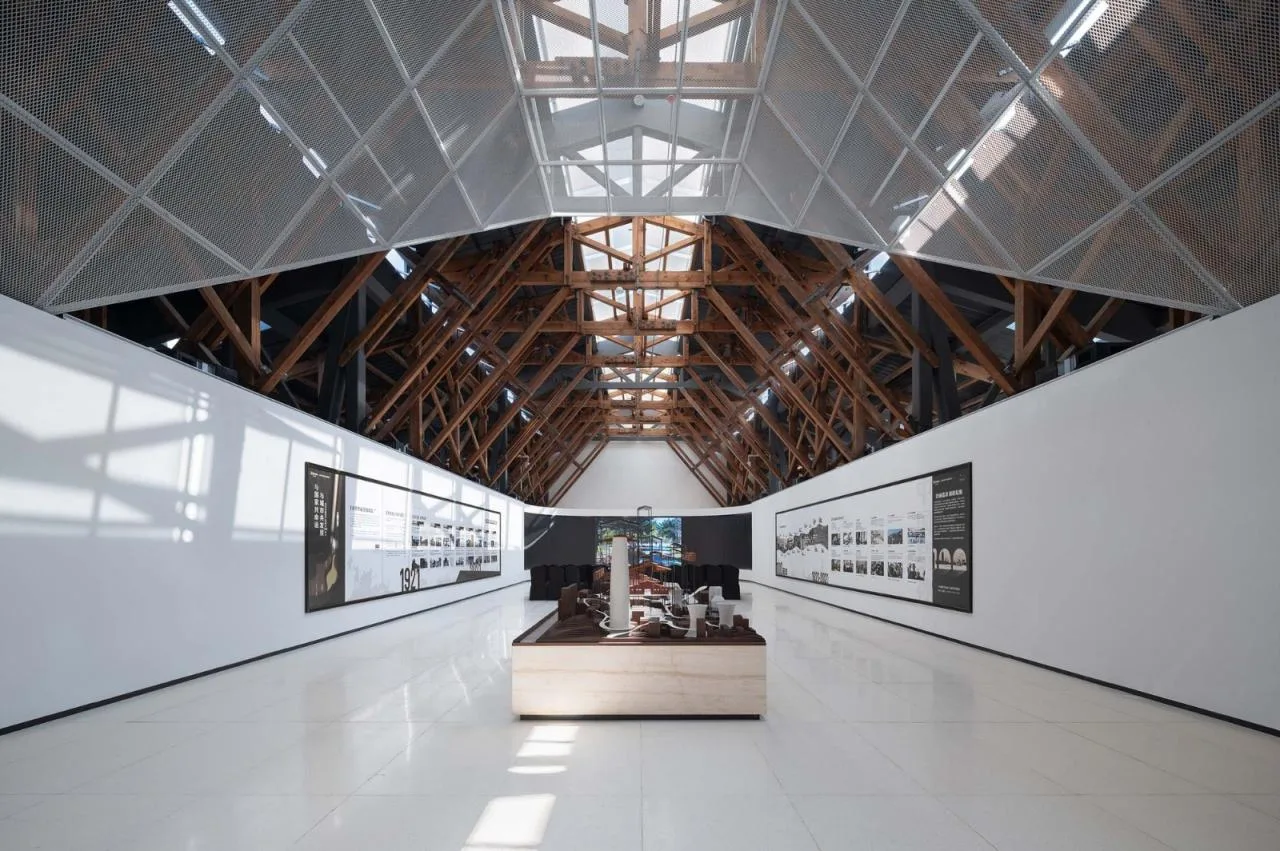
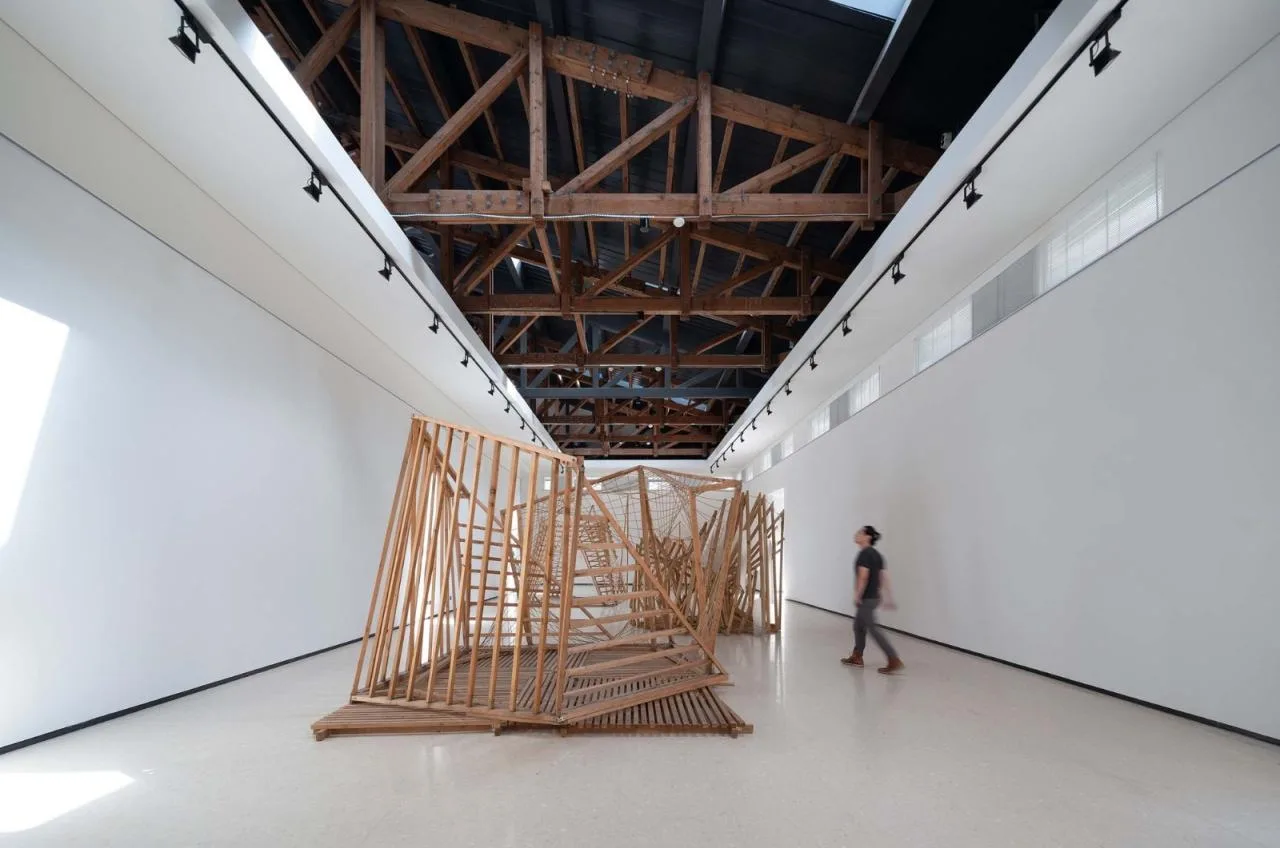
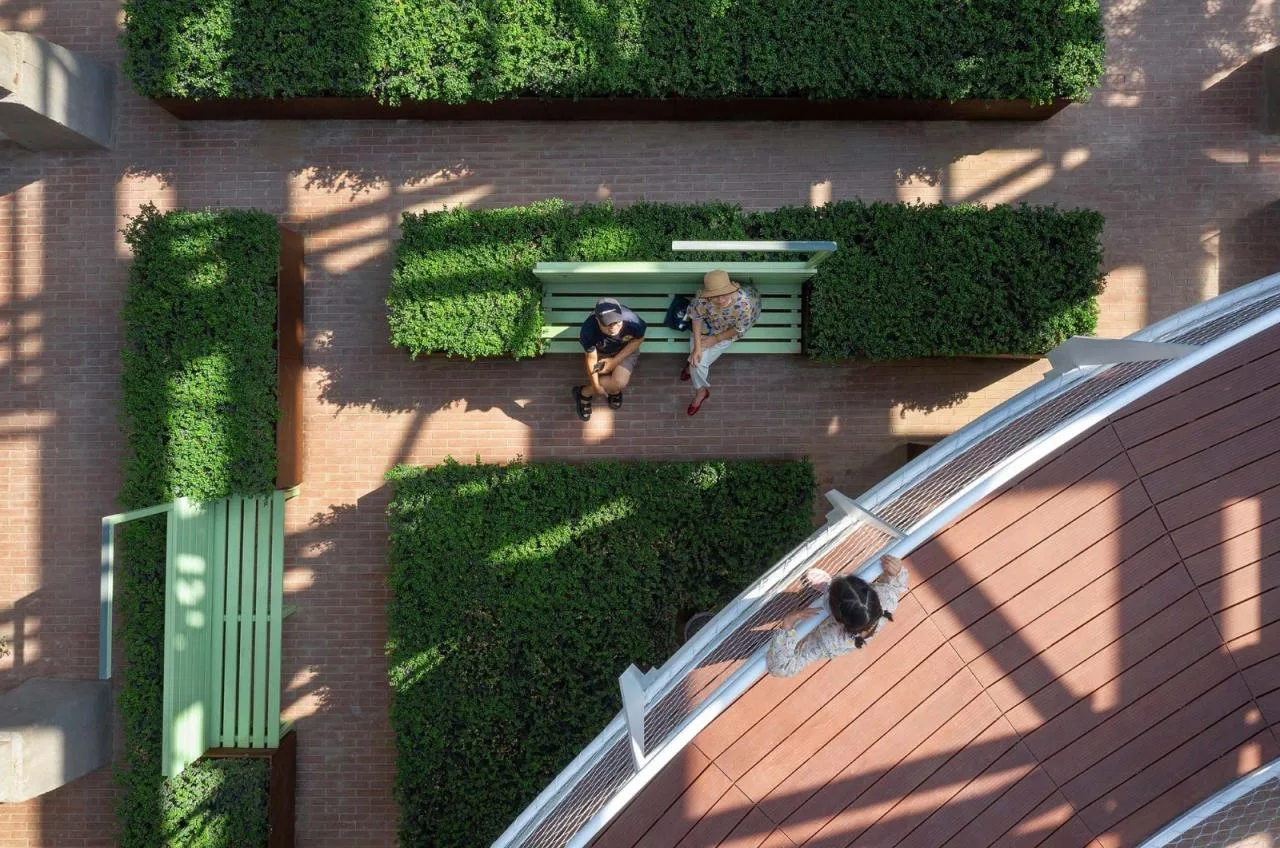
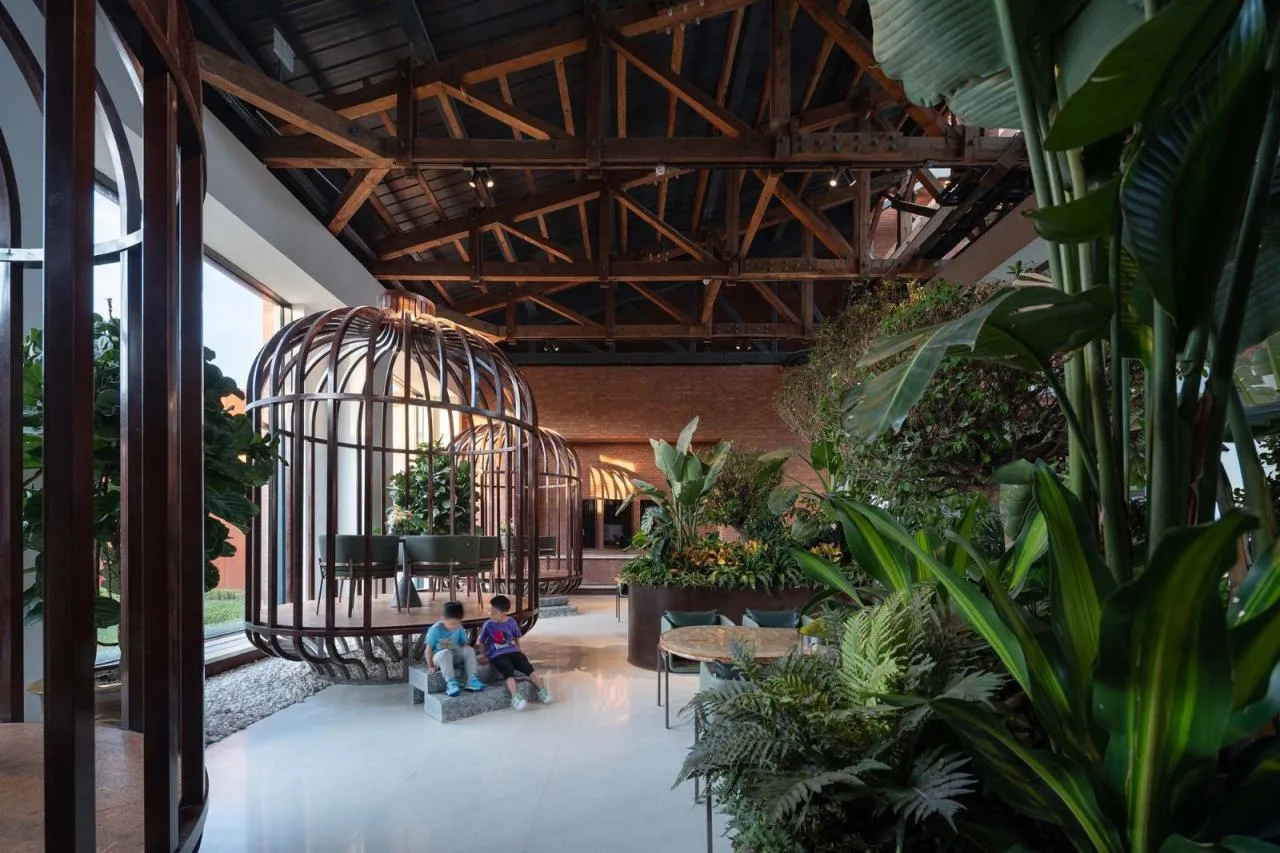
Warehouse #2 has been transformed into a community library. In an era of declining physical book reading, creating an inspiring spatial atmosphere and visual impact within the reading area is crucial to attracting visitors. The warehouse’s structural form establishes a “temple of reading” ambiance, while the greenhouse concept replaces the traditional reading room with a park-like environment.
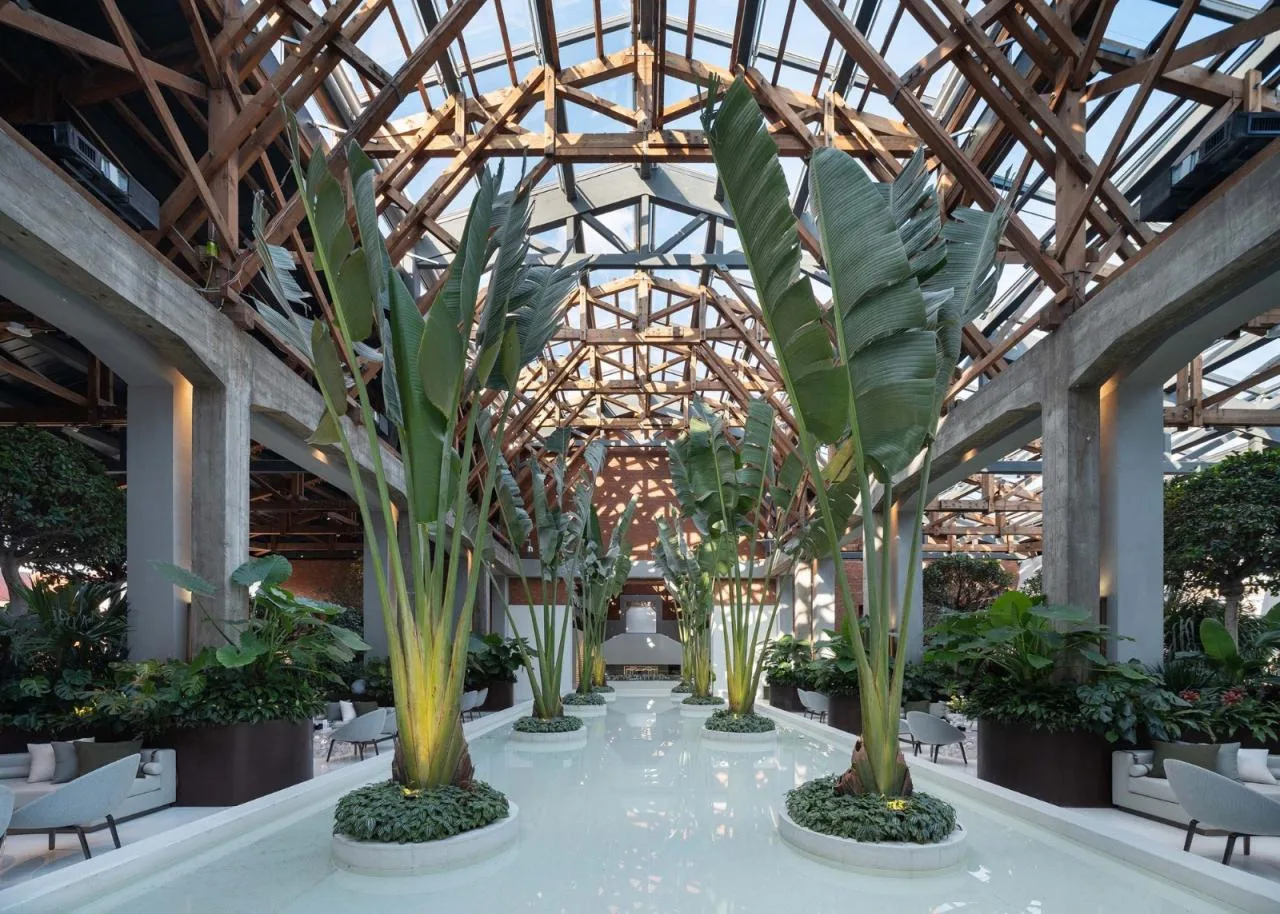
Warehouse #4 serves as a marketing and display center. Its first entrance, dubbed the “Eden Garden,” centers around a pond surrounded by banana trees. This negotiation area, filled with lush flowers and greenery, functions as the community’s reception space. Gardening techniques create varied perspectives and a winding flow, enriching the greenhouse experience.
Critical Path Five: Achieving Spatial Justice in Urban Renewal
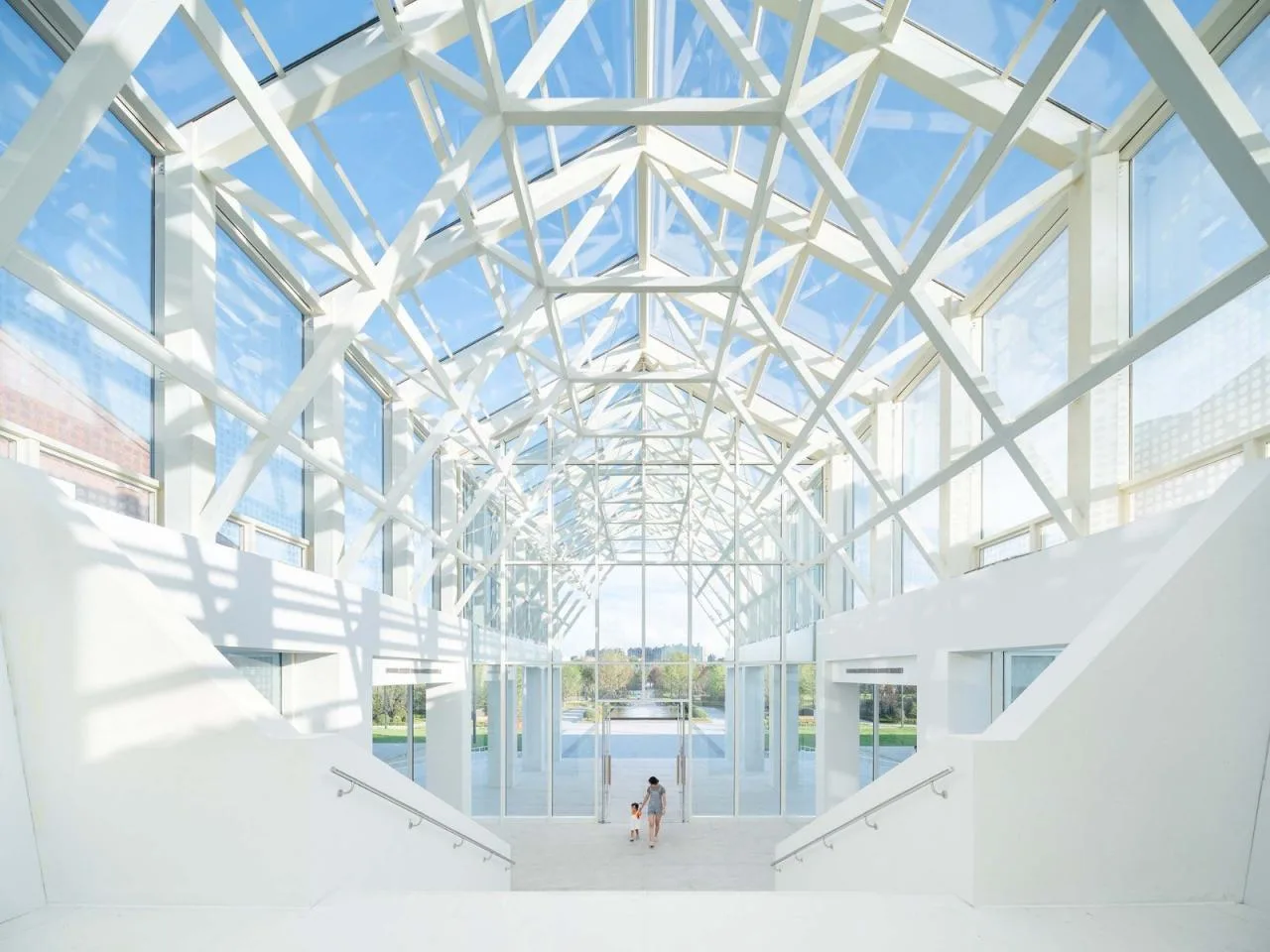
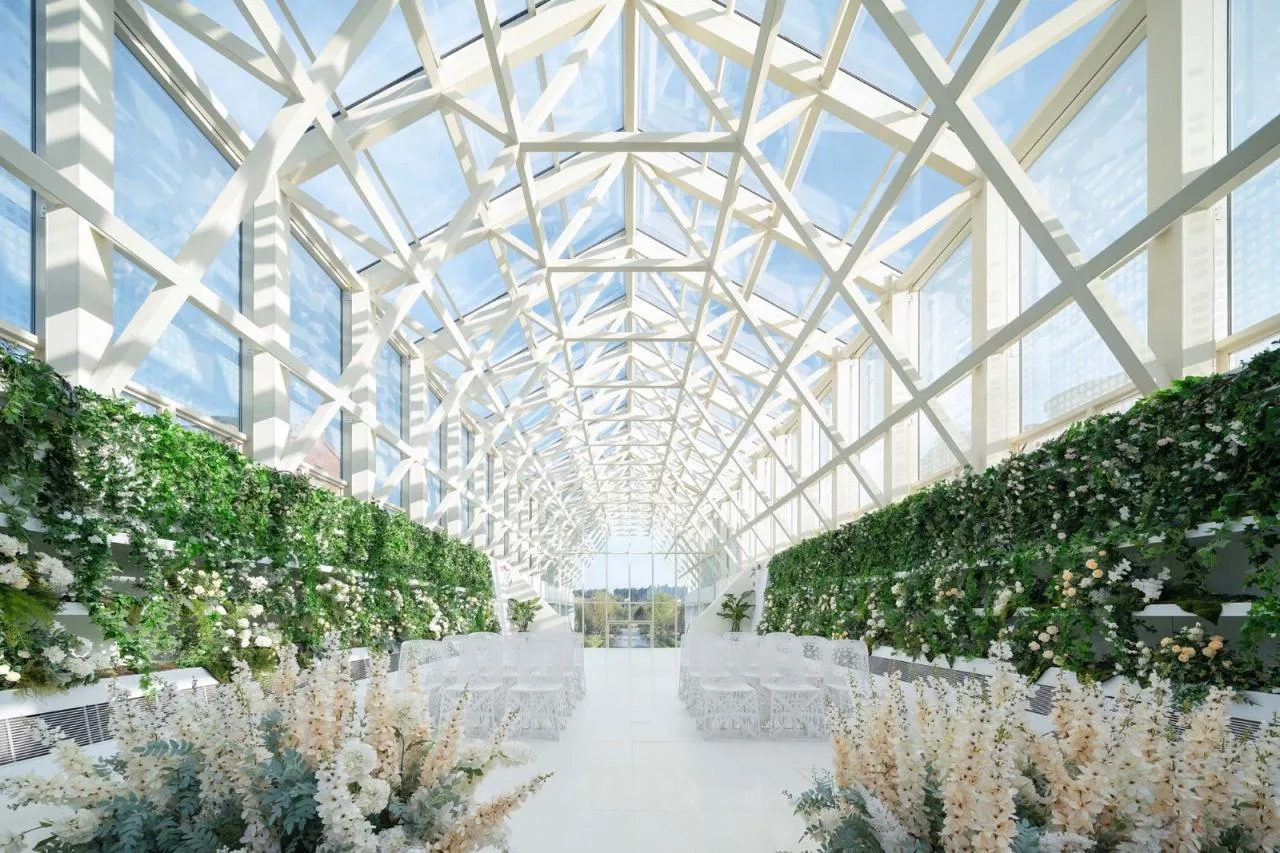
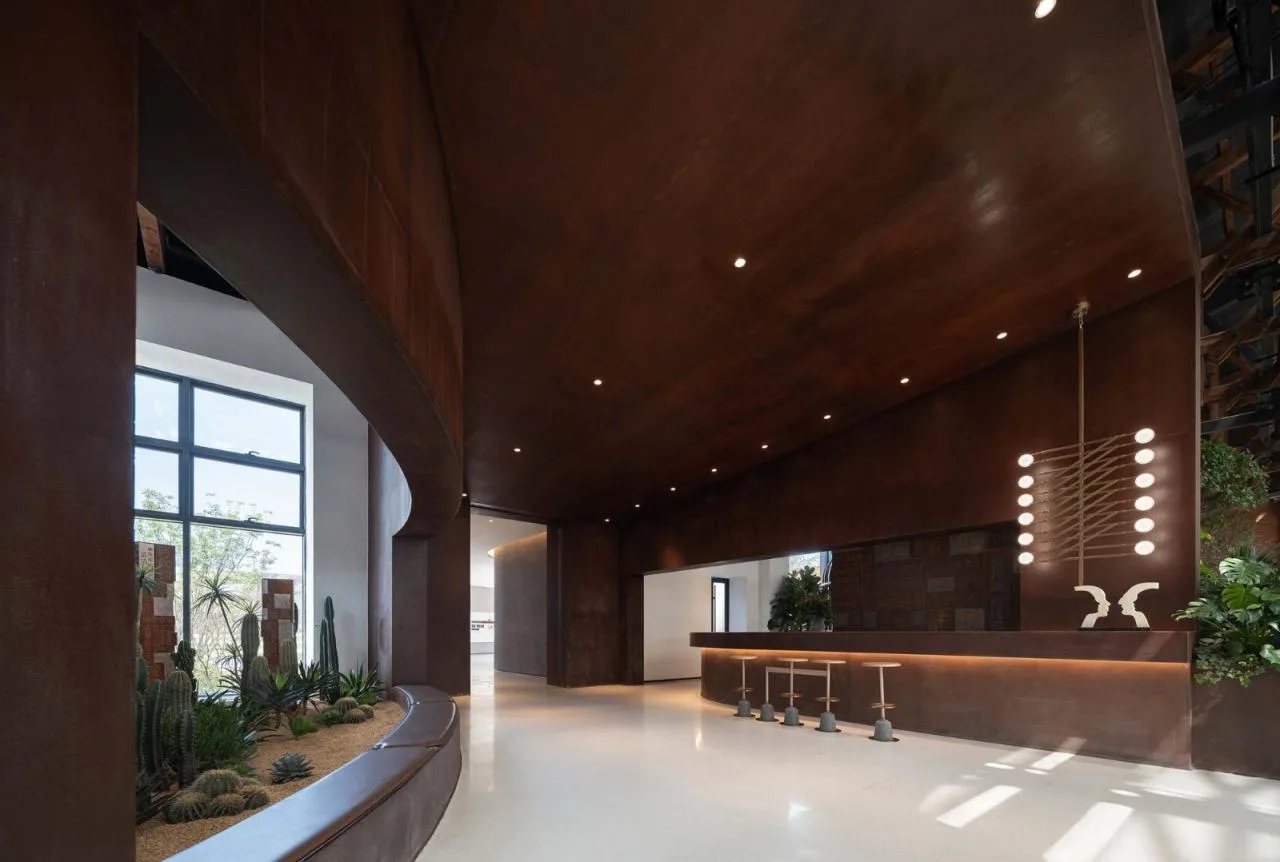
Two renovated warehouses have been connected to form a community center stretching over 200 meters, serving as the backdrop for a public park. The connecting structure abstracts the scale and form of the old warehouse’s central hall truss, creating an elegant entrance that functions as a marriage registration hall, highlighting the simple, solid character of the historic warehouse.
The concept of “spatial justice” broadly refers to securing equitable access to urban public spaces for vulnerable groups, while narrowly addressing spatial discrimination in housing sectors. The Dongmao Warehouse public space renovation presents an opportunity to advance spatial equality in the city. Through thoughtful design and programming, the industrial heritage buildings become shared cultural landmarks that foster a sense of community identity among diverse social groups. The space resonates with nostalgia for the elderly, fashion for the youth, and dignity for all, regardless of income level. This cultural landscape softens social distinctions, cultivating an “imagined community” of social harmony.
Conclusion
Initiated after the 2020 epidemic without the possibility of on-site inspections, the Dongmao Warehouse urban renewal was completed within a very tight timeframe. This process emphasized logical simplicity—adhering to cultural heritage guidelines, revitalizing industrial heritage, and integrating historic buildings within the community in the most straightforward manner. Such direct expression depends on following a rational critical path, as outlined in this article.
Currently, construction is progressing vigorously, and the two renovated warehouses inspire optimism for the community’s future. The wooden frames from dismantled warehouses have been quietly repurposed as a gray space atop the elementary school building, returning to the community to overlook the new landscape from above.
Project Drawings
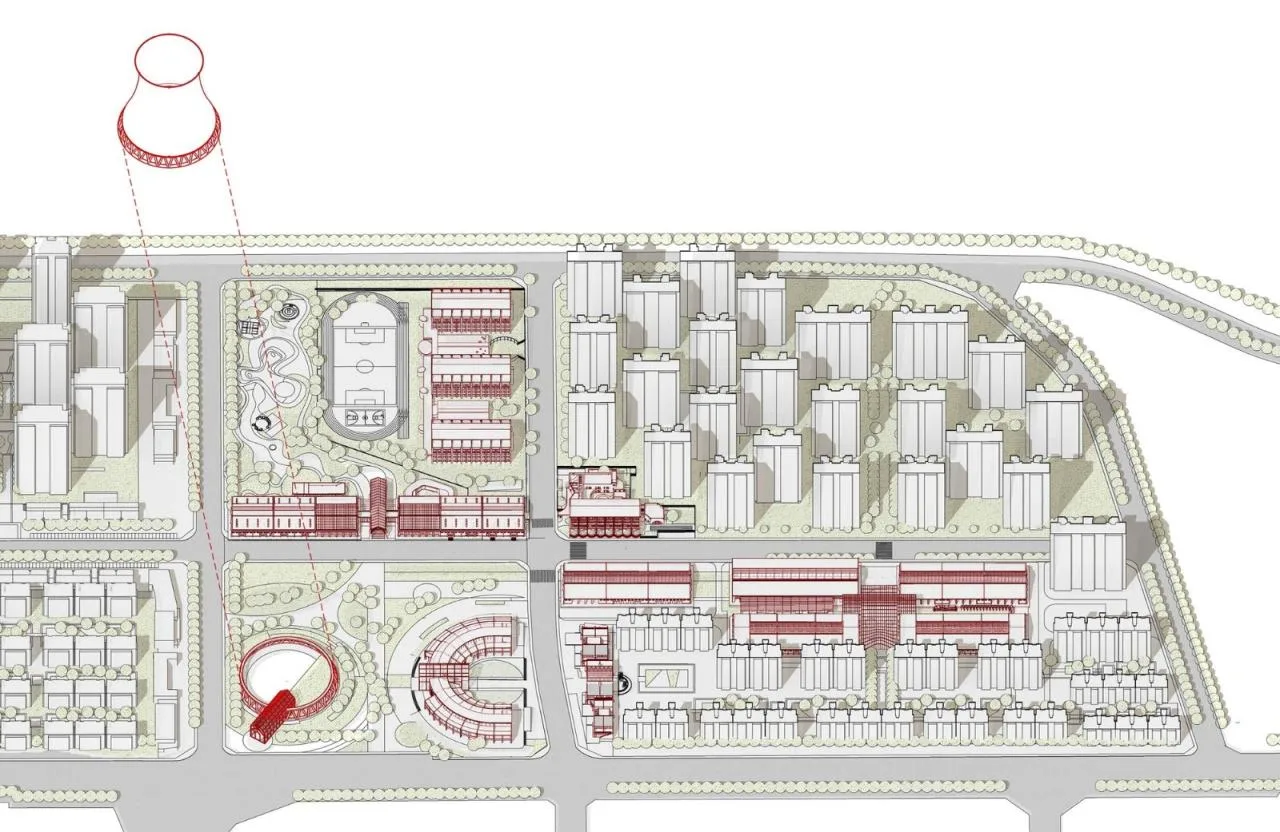
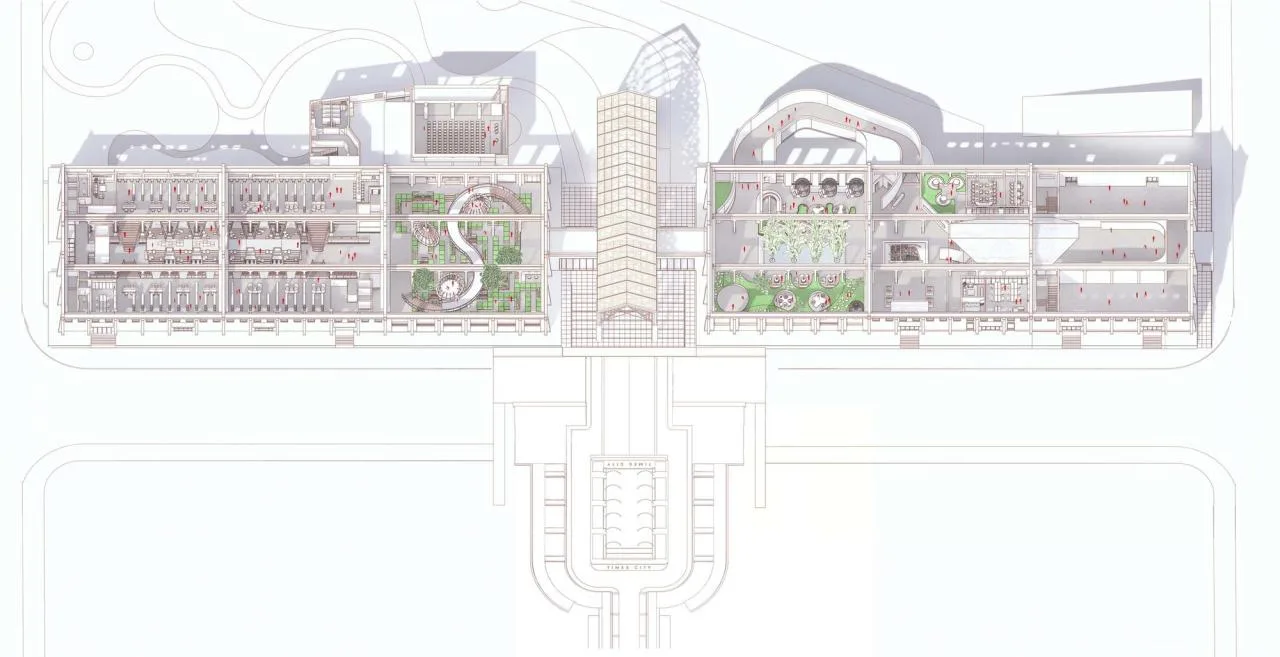
Overall Planning Scheme
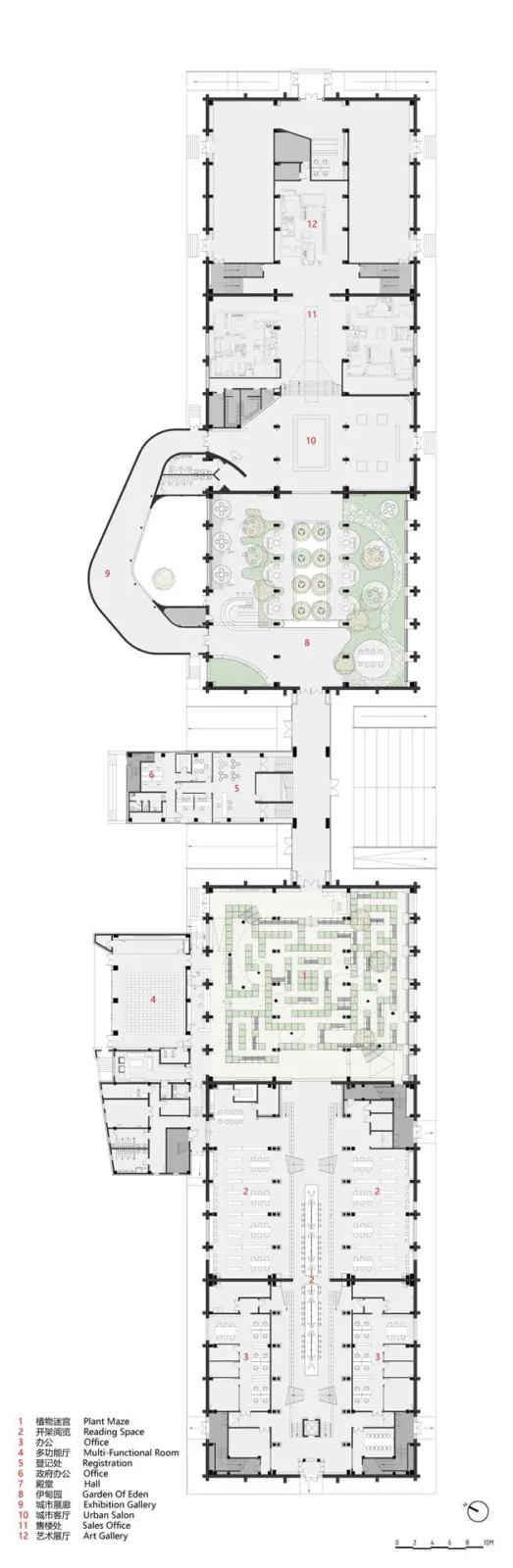
△ First Floor Plan
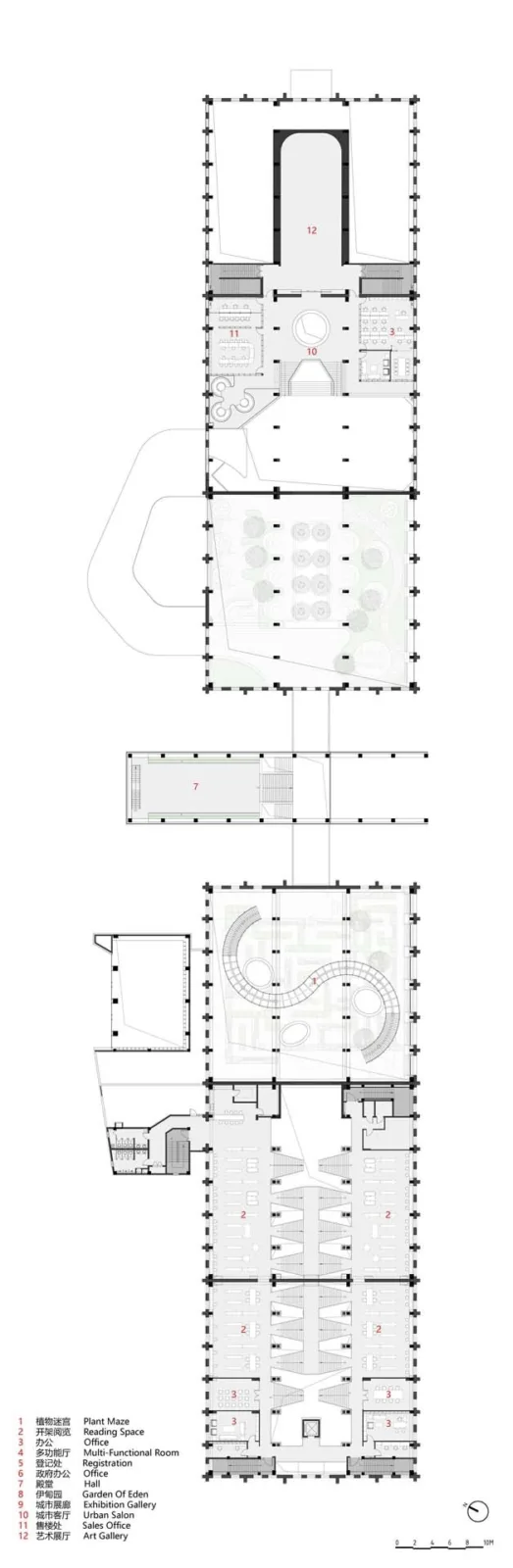
△ Second Floor Plan
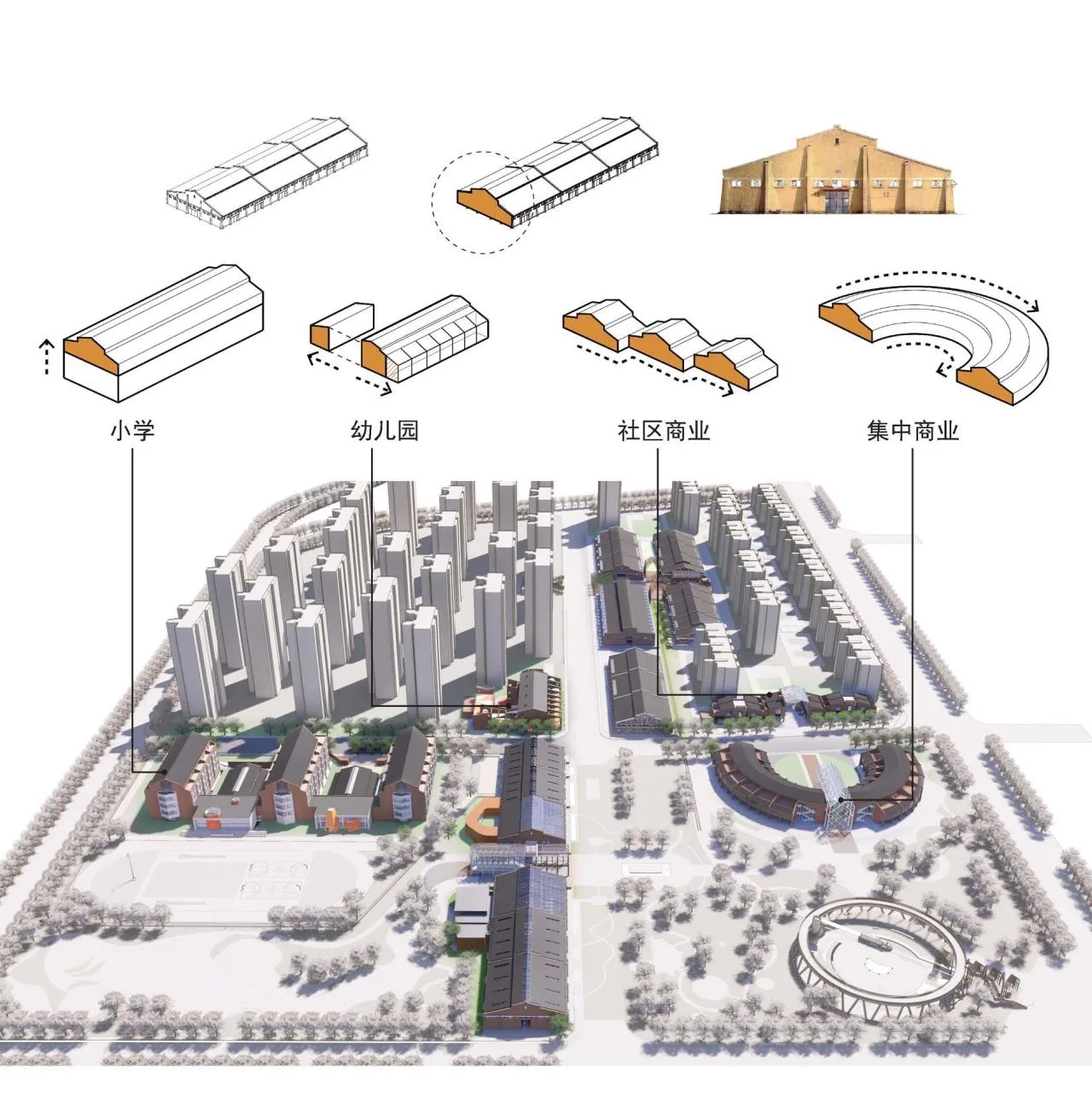
Motif Extraction of Mountain Walls to Form New Architectural Volumes
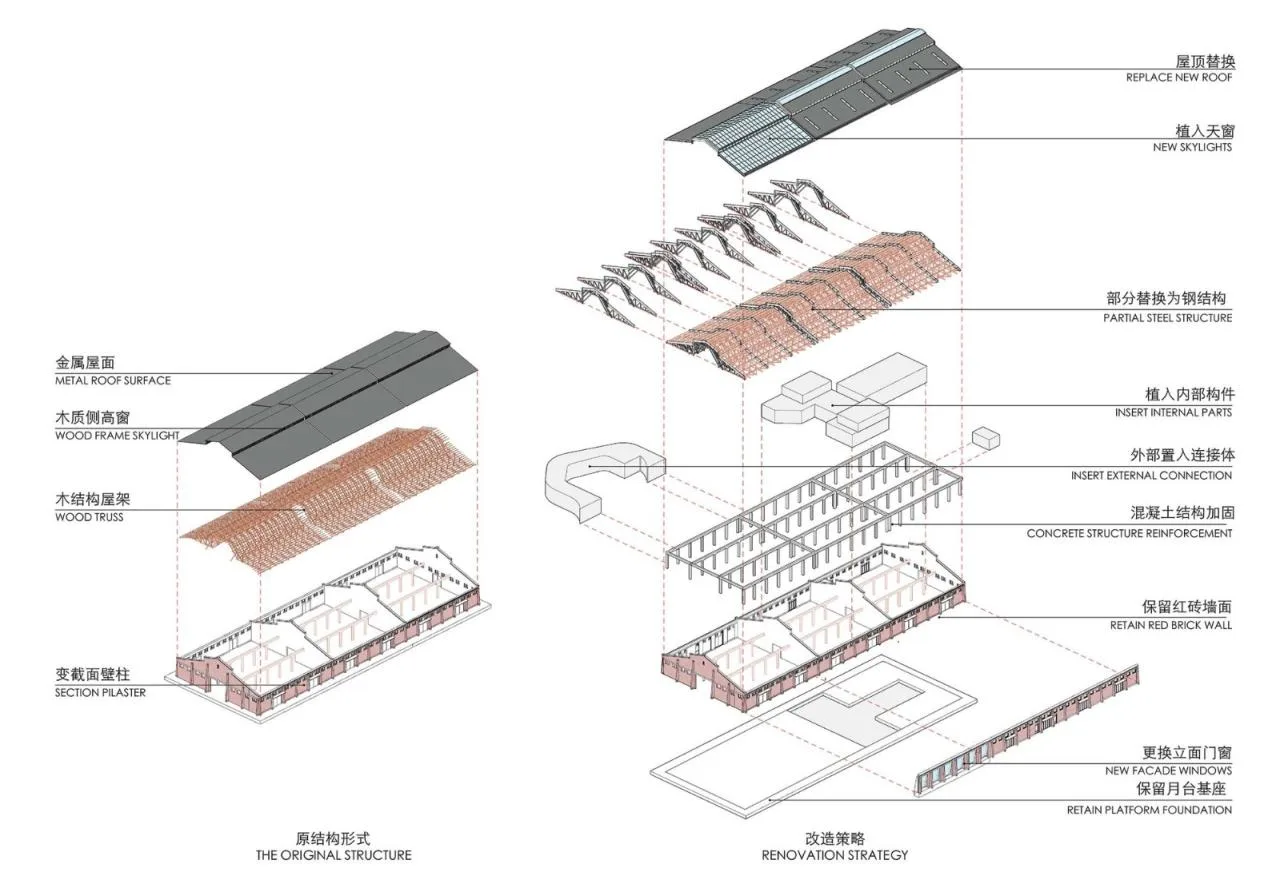
△ Warehouse Renovation Diagram
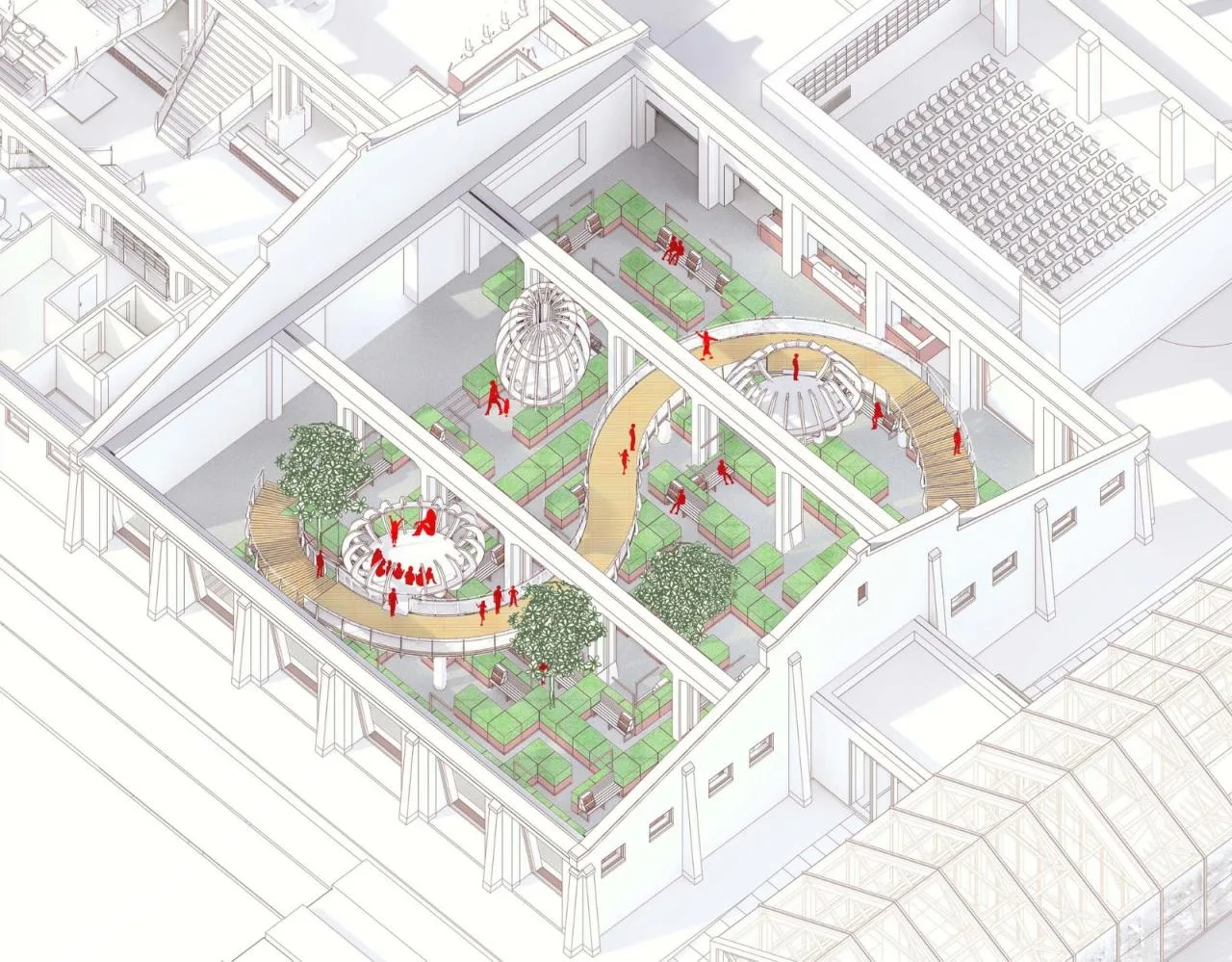
△ Maze Reading Park Axis Measurement
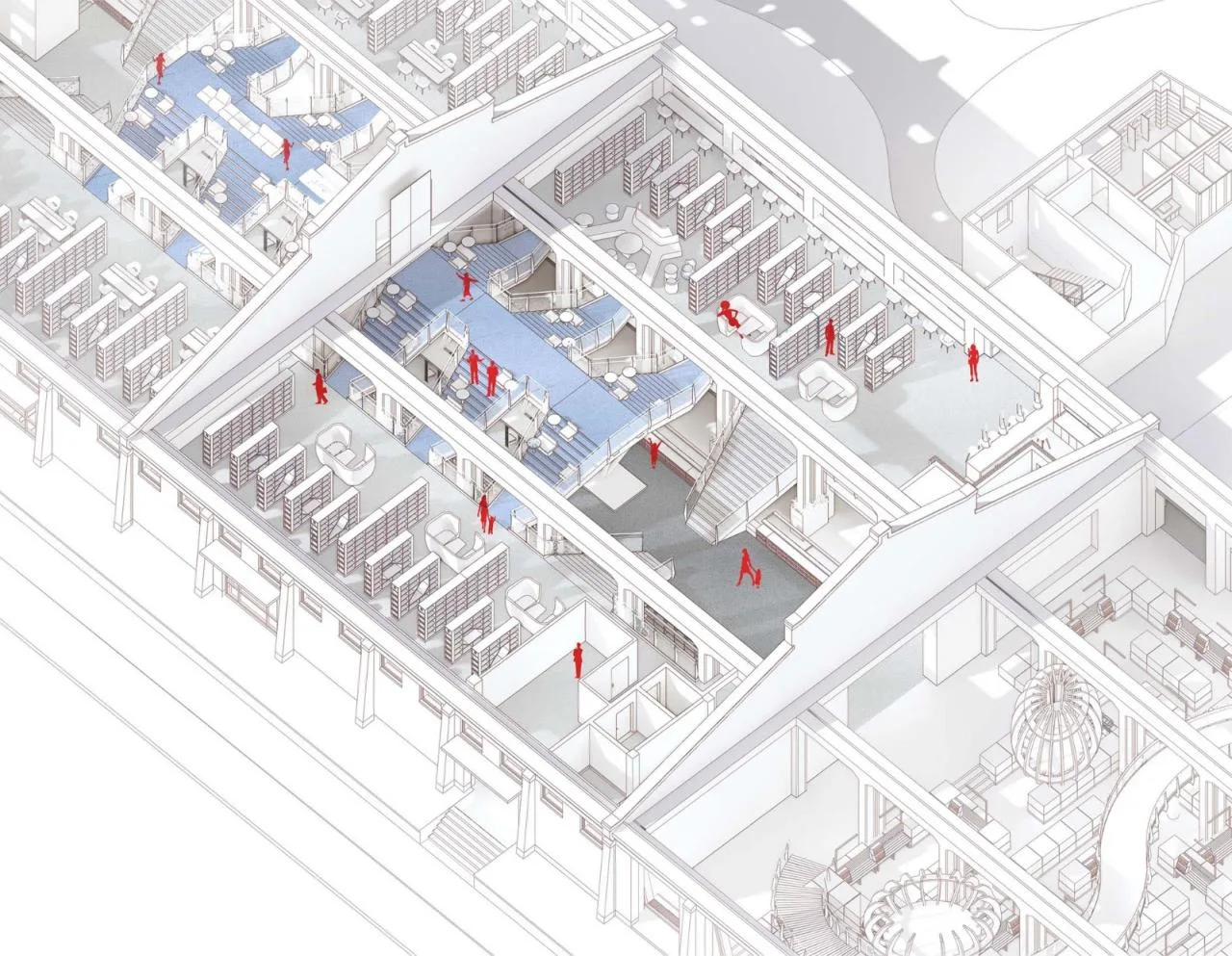
△ Library Reading Room Axis Measurement
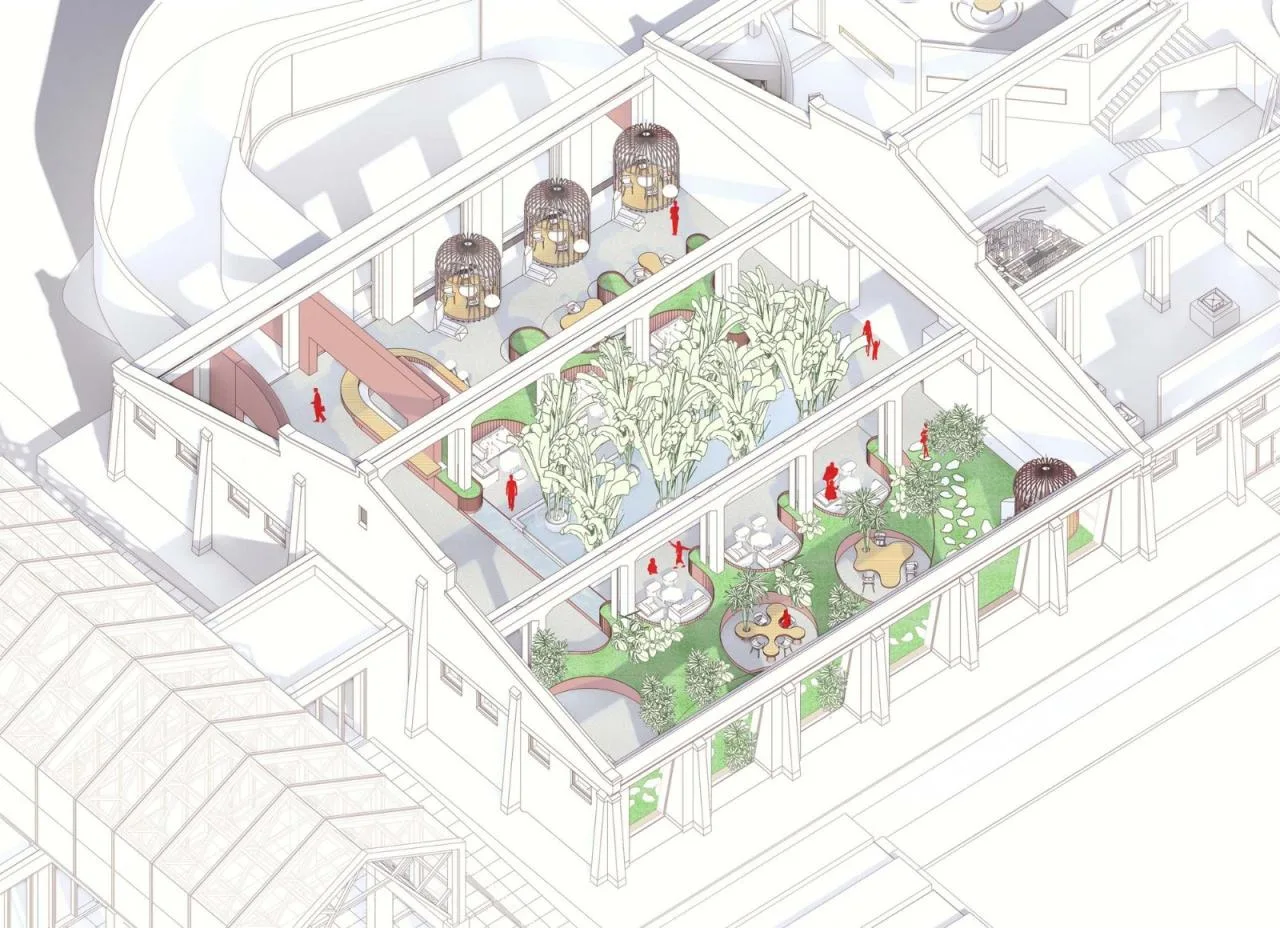
△ Eden Garden Axis Measurement
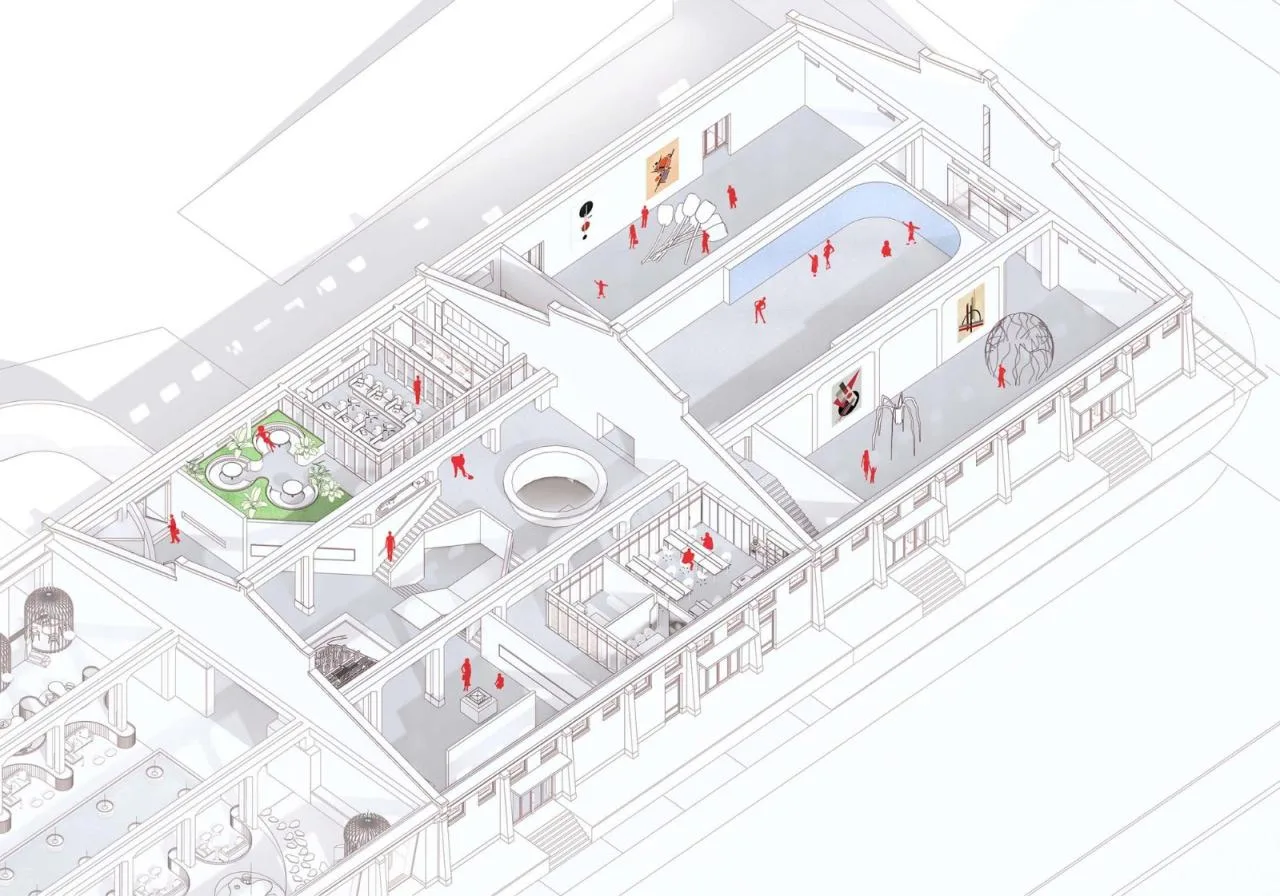
Axis Measurements of Urban Living Rooms and Exhibition Halls
Project Information
Architectural Design: URBANUS Urban Practice
Area: 9,944 m²
Project Year: 2021
Photographers: Zeng Tianpei, ZOOM/Cut Ink Architectural Photography, Jiao Ruibiao
Lead Architect: Wang Hui
Design Team: Yao Yongmei (Technical Director), Wei Xi, Dou Yonghui, Chen Yu, Jiang Zhongyu, Han Jizhe, Chai Bingjiang, Wang Kun, Zheng Na, Huang Jia, Li Gang, Wang Lei, Gao Zixu, Wang Jingyu | Ding Yihan, Lian Jiaxin, Tang Zeling, Wang Qingyi, Wu Hao, Zhang Zhongtian, Zhang Xiangyue, Zhu Kaiyuan, Zhuo Kexiu (Interns)
Construction Drawing Team: Liu Xudong, Song Chun, Zhu Yaojun, Zhang Yu, Zhang Yuxin, Guo Xing, Shi Yang, Cheng Yao
Indoor Construction Drawing Team: Jiang Xiaoyu, Lu Yong
Landscape Design: HA+STUDIO from Shenyang Jianzhu University, Shanshui Bide Design Co., Ltd., Zhu Ling, Liu Yida
Lighting Design: Handu Design, Hu Yankai, Yang Zhechen, ISHIOKA MAKIKO
Interior Construction Drawing Design: Antong Hongfang Architectural Design Consulting (Beijing) Co., Ltd
Exhibition Design: Fantuo Creative
Construction Drawing Design: China Construction Design Group Co., Ltd
Location: Shenyang, China















Must log in before commenting!
Sign Up