
Origin: Transformation from Rural to Urban Functional Areas
Shangen Village is situated in the Chashan area of southern Wenzhou, on the southern edge of the city center, just about ten kilometers away. When the SpActrum team first visited in early 2017, the villagers were preparing to relocate the entire community to a high-rise complex on the northern part of the site as part of a redevelopment plan. This small mountain village, nearly deserted, was scattered with many dilapidated houses.
Despite this, residential buildings spanning from the Qing Dynasty through the 1990s—which represent the history of the “Overseas Chinese Village” in southern Zhejiang—have been preserved intact under the guidance of government and developers, making them highly valuable.
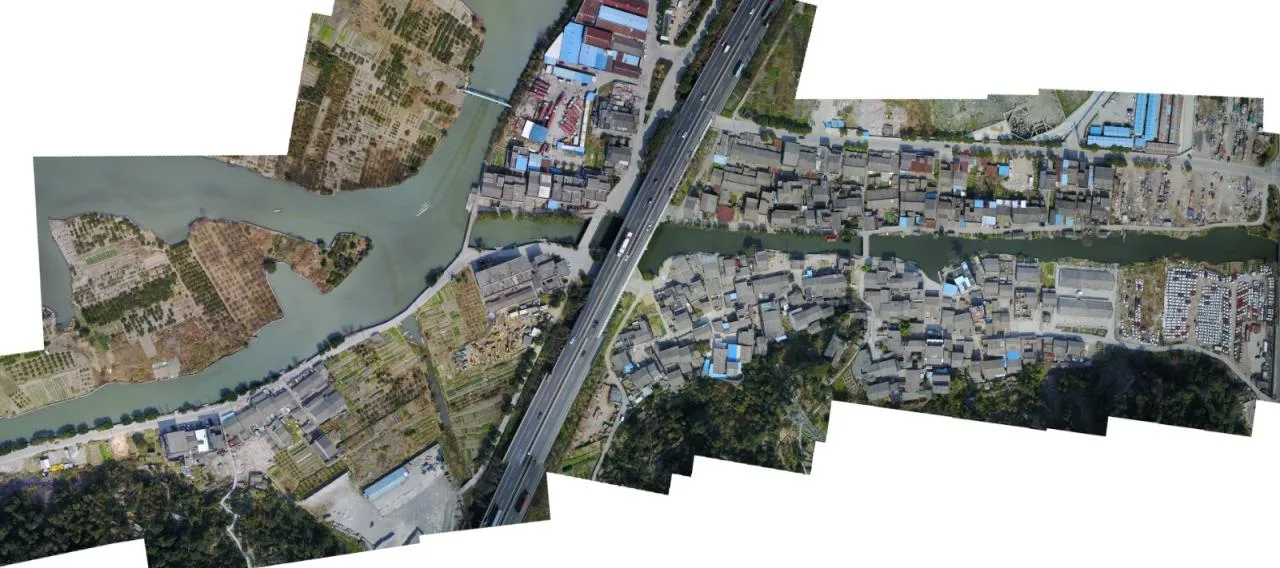
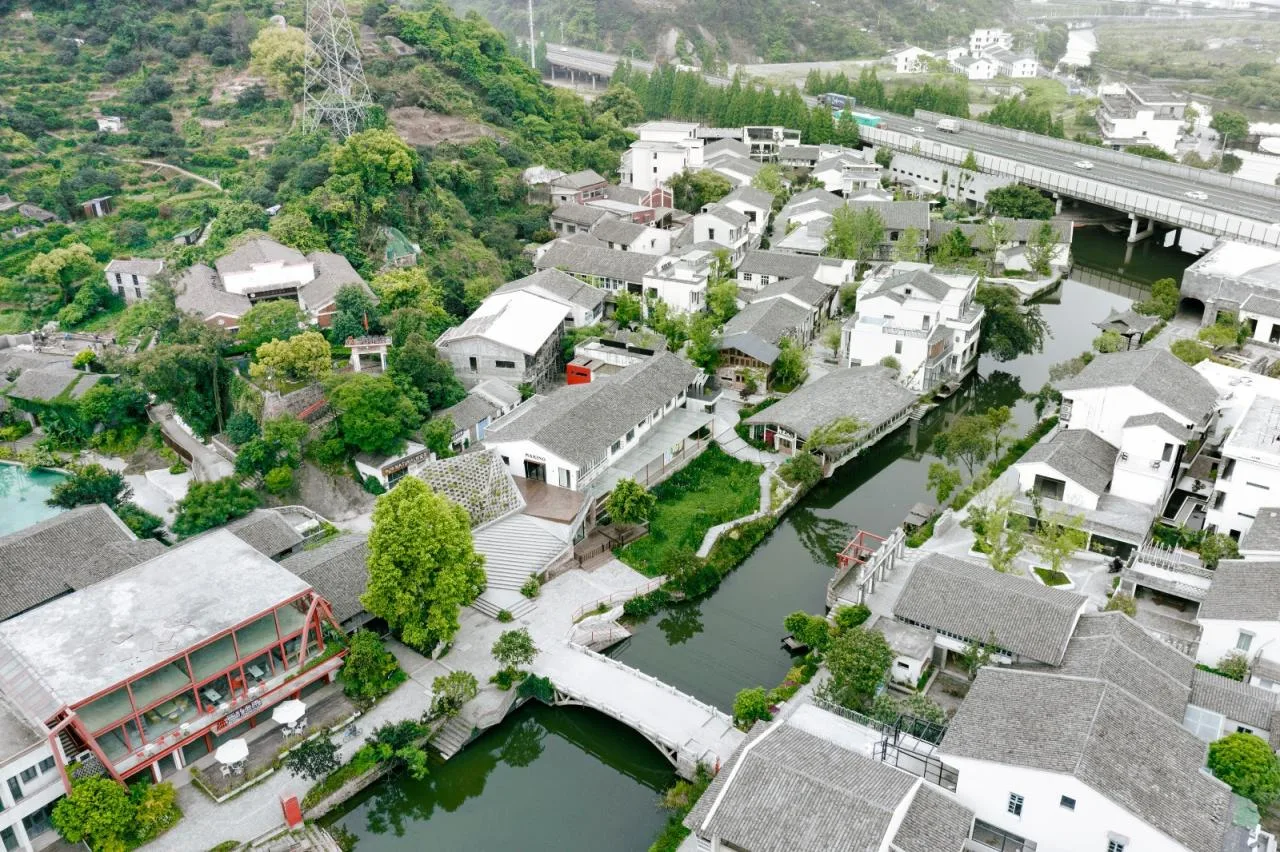
△ Aerial view of Shangen Village before renovation (2017)
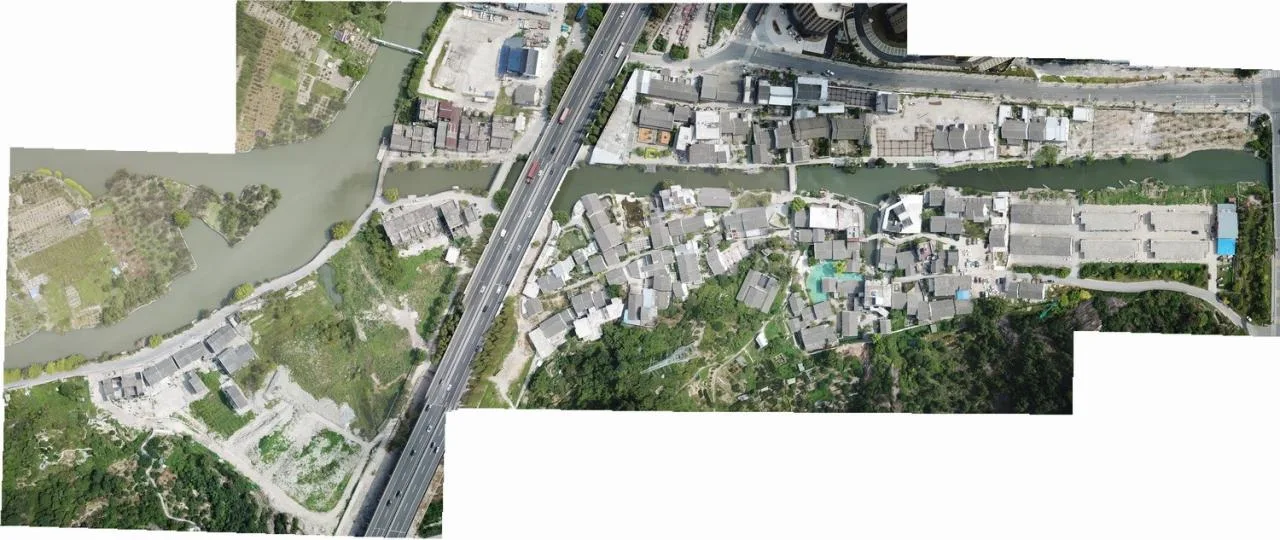
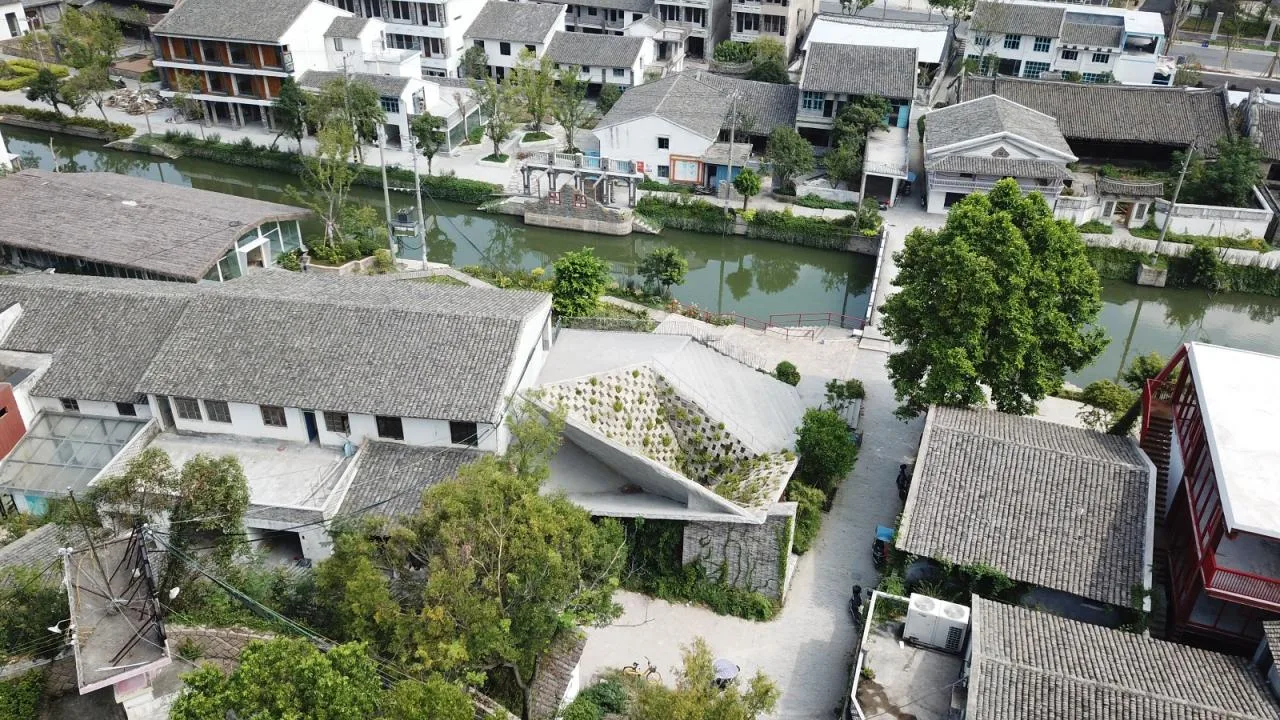
△ Aerial view of Xinshangen Village after renovation (2020)
In 2018, SpActrum contributed to the planning and renovation strategy. The plan restored the basic layout of the north bank, which had been obscured by years of unregulated construction, by reestablishing three parallel streets as the village’s structural backbone. Meanwhile, the south bank was integrated with the mountain terrain behind the village to create a clustered formation.
The architects adopted a primitive approach to the remaining buildings, advocating for minimal intervention—even preserving certain “ruins.” They see the state of ruin as meaningful, viewing it as an essential characteristic of the site rather than something to be erased.
Another key strategy was to evaluate existing buildings comprehensively based on their structural integrity and aesthetic value, selectively demolishing some and inserting new buildings in their place. The new structures employ contemporary construction techniques and grids, adding a modern layer to this collection of rural architecture.
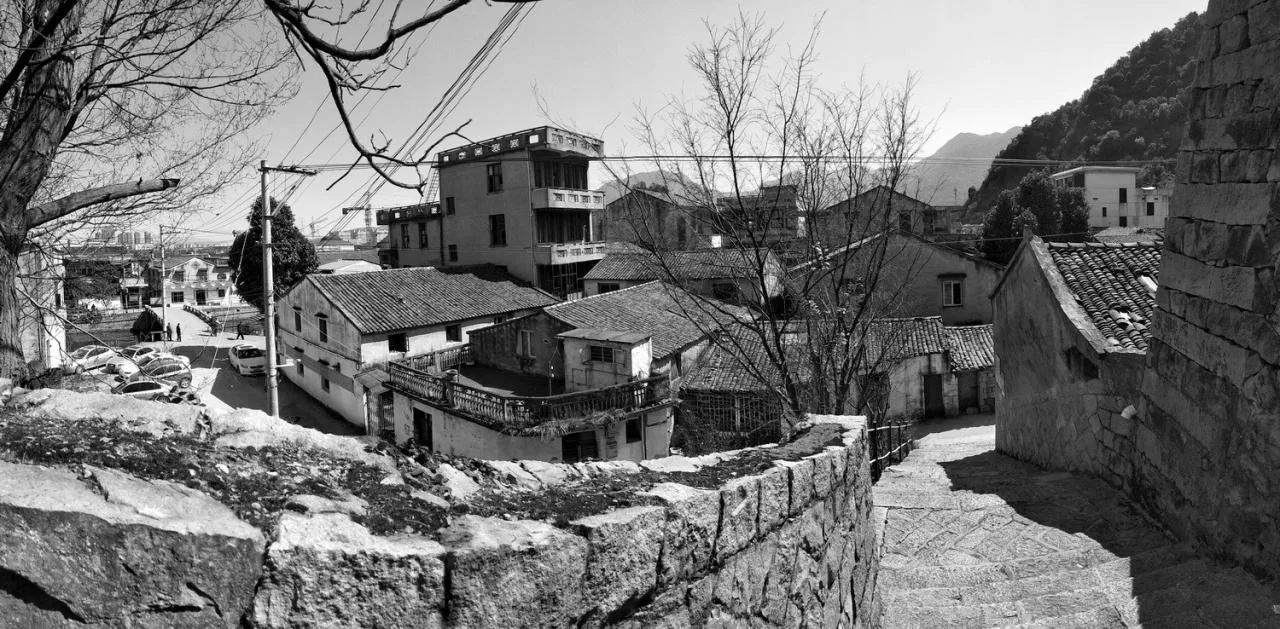
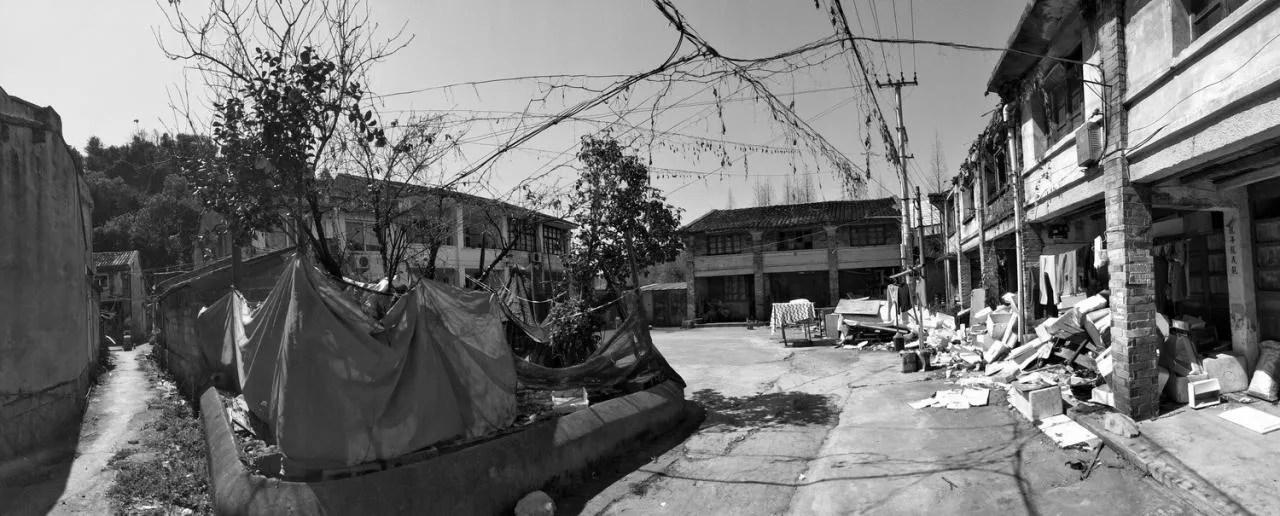
One of Shangen Village’s original charms lies precisely in this mix of vitality (2017).
Based on this plan, four representative buildings from different eras have been largely preserved, showcasing rural architectural development over time. They include:
- Ancient self-built architecture from the late Qing Dynasty, influenced by Baroque styles due to the region’s close foreign ties;
- Buildings from the 1930s Republic of China era, featuring hollow brick columns and local red granite beams, typical of southern Zhejiang;
- Mid-20th century rural brick and concrete buildings with clear traces of Soviet-influenced modernist architecture, blending local materials with Chinese decorative motifs;
- Post-reform buildings commissioned by overseas Chinese returning to China, featuring more personalized designs often by foreign architects.
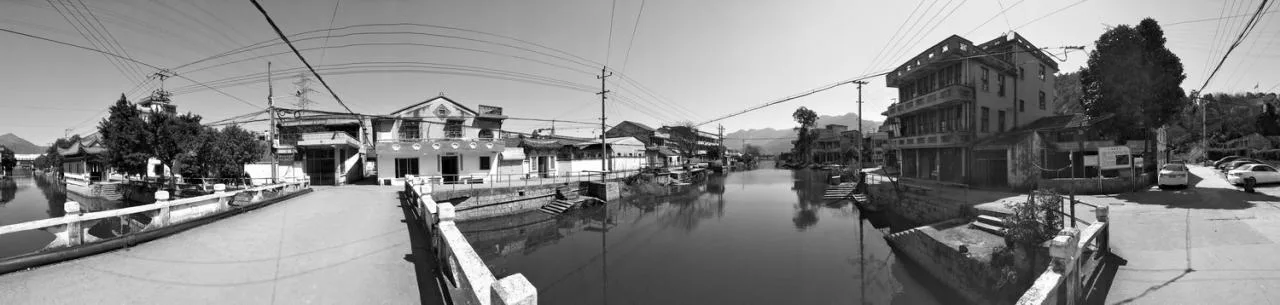
Shangen Village serves as a living fossil of residential evolution across southern Zhejiang’s history. (Photo showing representative residential cases from various periods in Shangen Village, 2017)
This planning approach embodies a shared vision among government, developers, and architects: preserving multiple architectural styles as a fundamental respect for rural history—without resorting to imitation or enforcing a uniform era style. This represents a progressive stance within contemporary, government-led rural tourism renovations.
Though this project focuses on rural areas, it effectively acts as a form of urbanization, fundamentally differing from conventional rural construction. Under SpActrum’s guidance, Shangen Village is transitioning into a comprehensive cultural and tourism destination, blending ancient and modern elements, artistic expression, and rustic charm.
Return: The Revival of Chaos
After completing the planning scheme, the design team stepped back and did not participate in the later construction phases. Upon returning to the site, they observed that some precious site characteristics had been significantly diminished. Although the ambitious goal of preserving the century-old residential styles was largely achieved, the village’s original charm—the spontaneous, layered accumulation of time, life, and nature—was noticeably lost.
What was once a bit “wild” and “untamed” had become overly clean and tidy, treated with more conventional and ordinary construction methods. Additionally, refined new building designs and the envisioned spatial and temporal experiences were not realized due to technical and funding limitations.
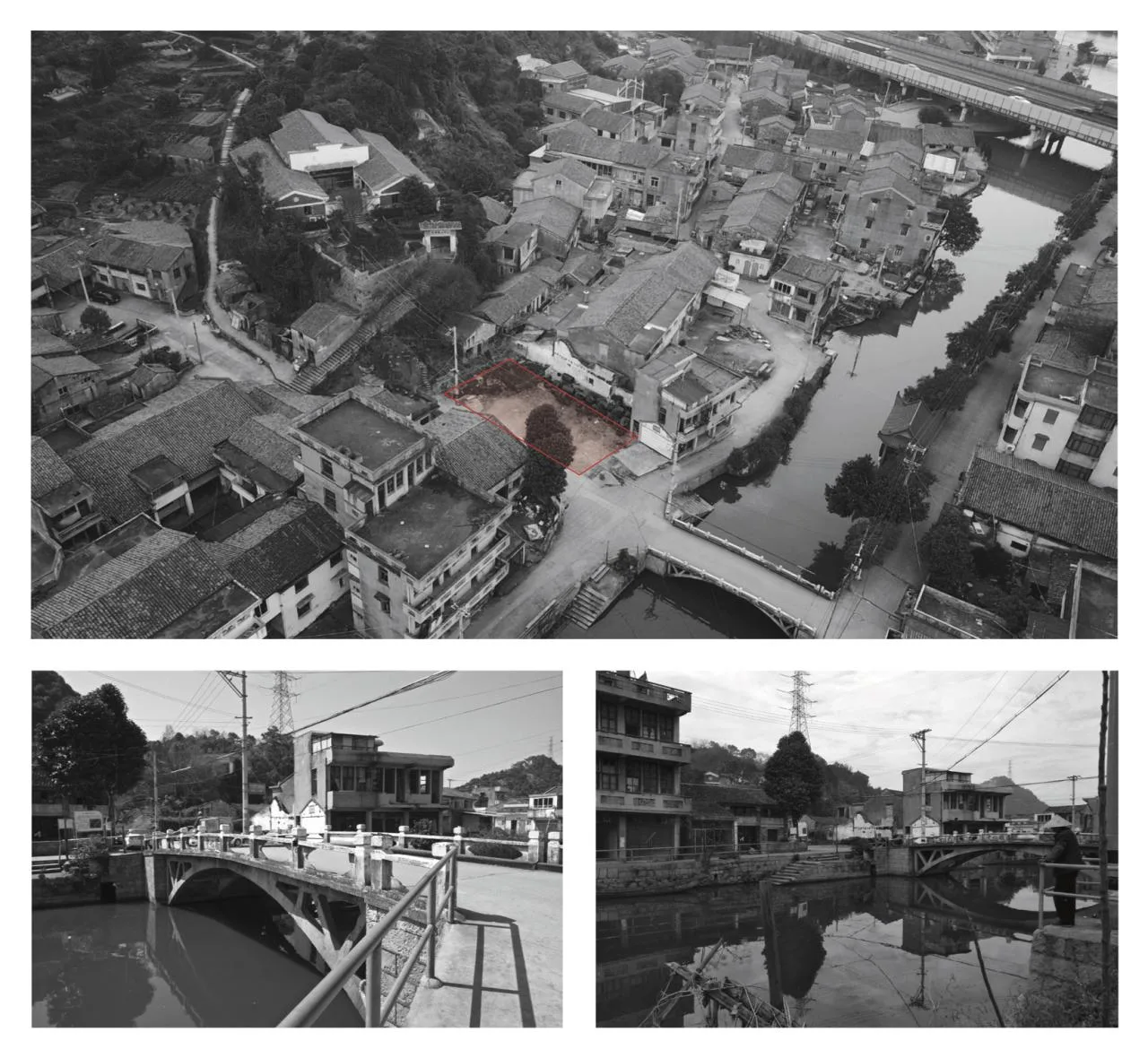
Original condition of the “Flower of Mountain Roots” site (2017)
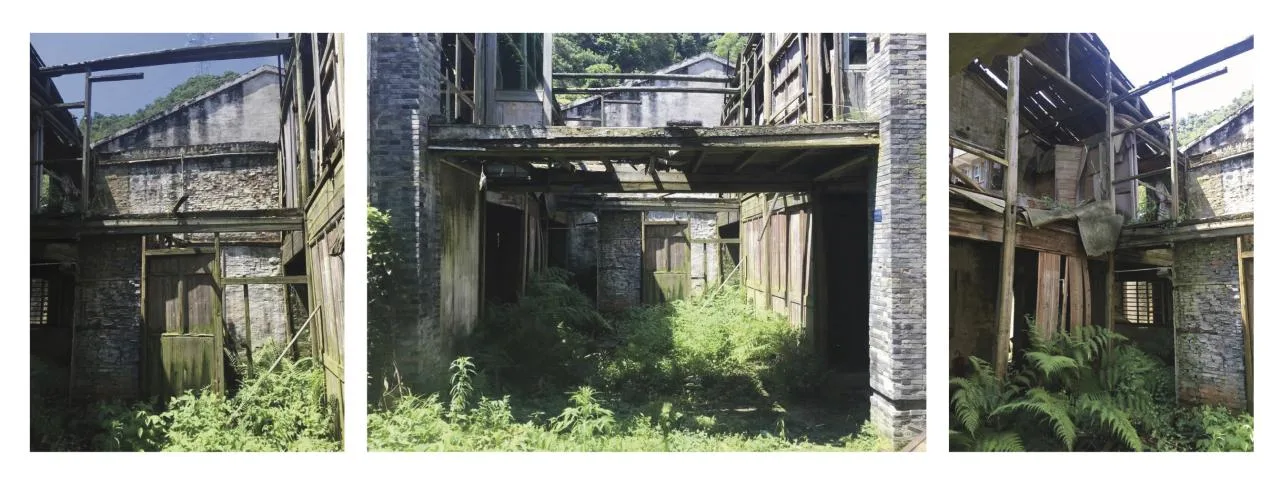
The inspiration behind the design concept “Flower at the Roots of the Mountain” came from a dilapidated house near the site, where vibrant ferns had reclaimed the original living space. This natural takeover blurred the boundaries between architecture and landscape, inspiring a design that defies simple definition.
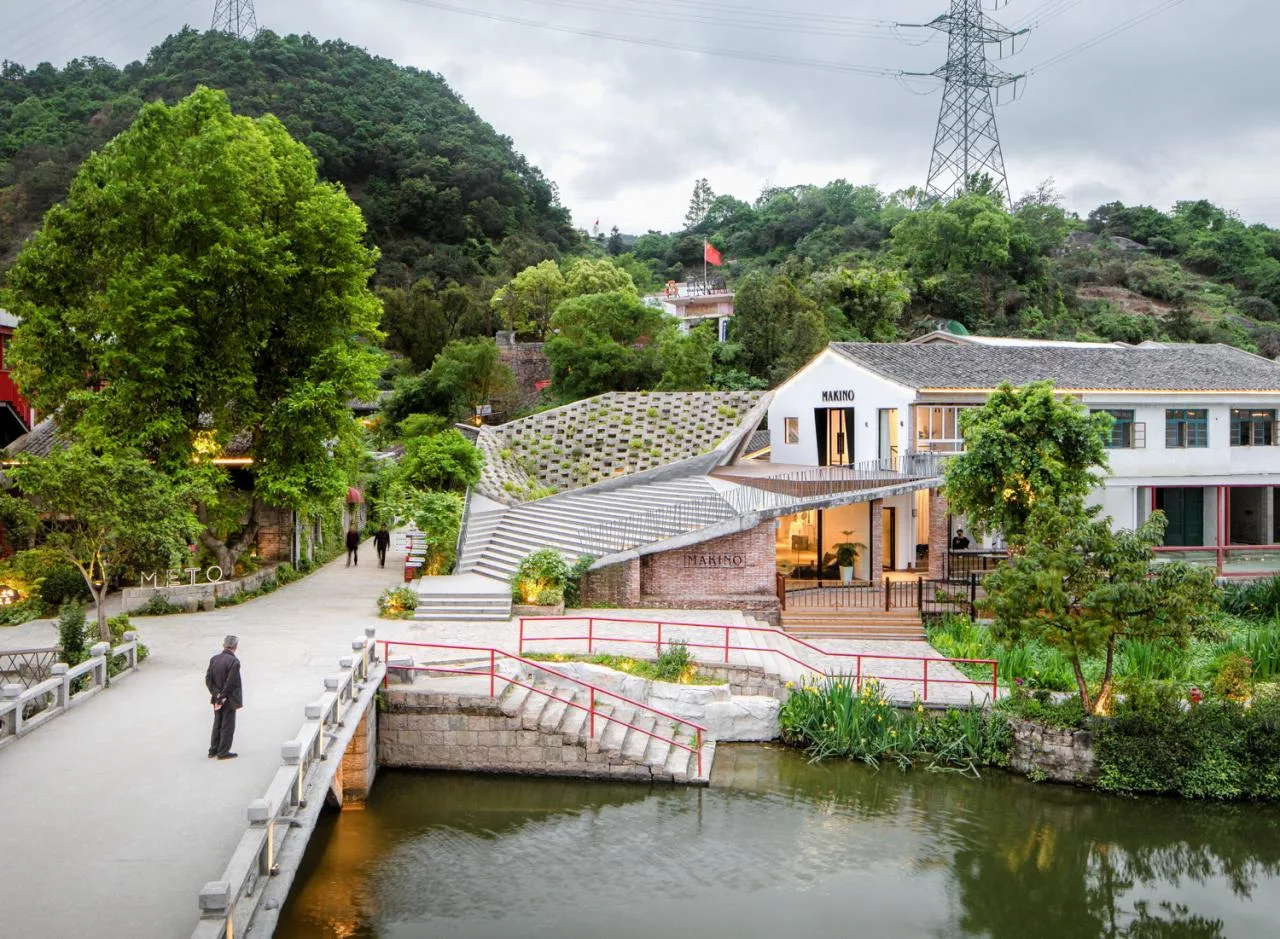
Following the demolition of an old building at the foot of Yamane Bridge, an open space emerged. The client invited SpActrum to design a small open pavilion as a rural gathering point. The architects seized this chance to express their design philosophy through practice, providing a creative solution for this unique challenge.
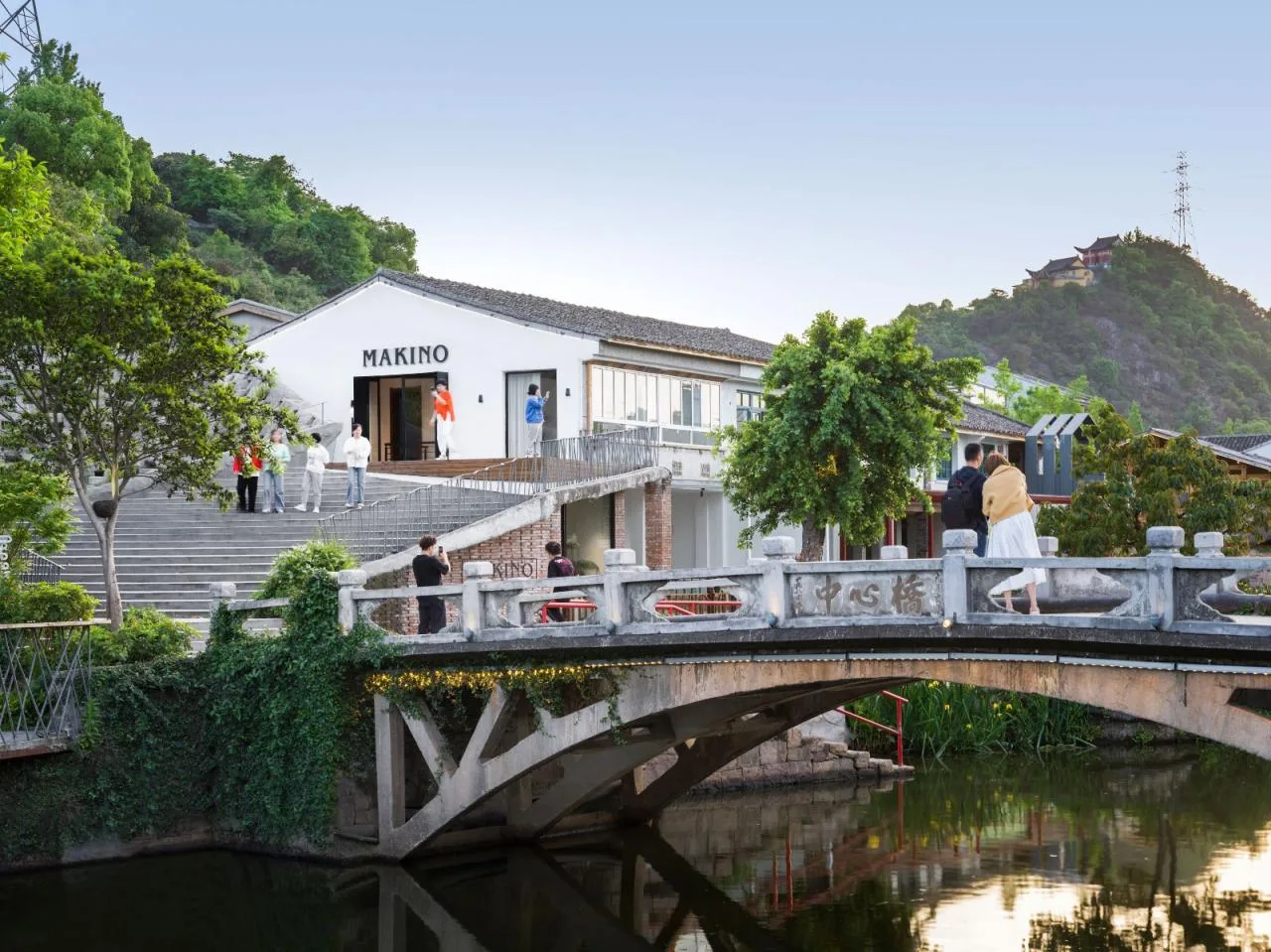
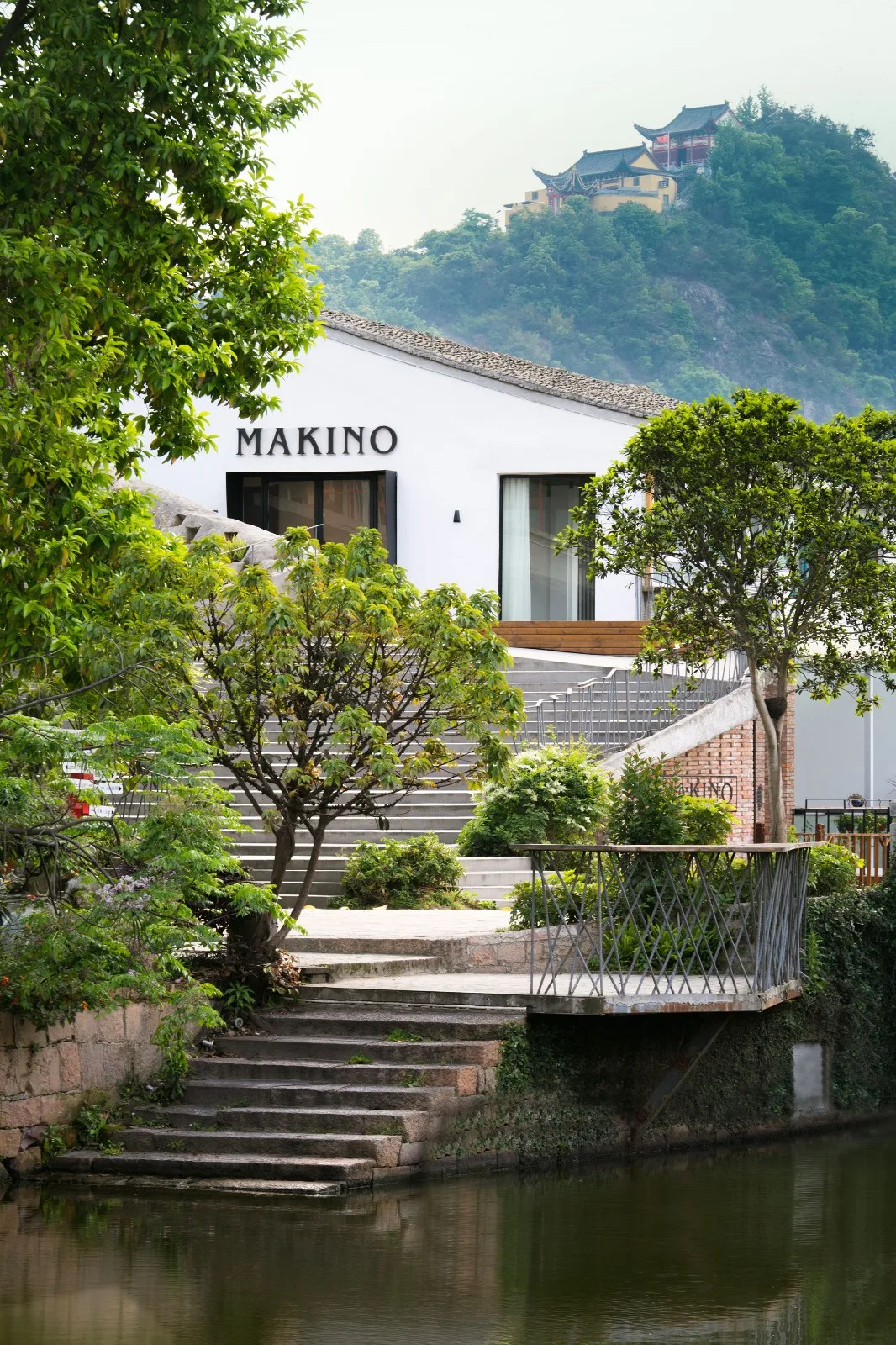
In many Zhejiang villages, the village head and bridgehead serve as memorable landmarks. Bridges not only facilitate transportation but also socially connect both riverbanks, creating rare visual corridors that offer a comprehensive view of the village. The Kugen Central Bridge is such a landmark.
On the bridge’s north bank stand several of the best-preserved 19th-century rural houses. The south bank borders two clusters, with the western cluster partially demolished to create a large open space facing the bridgehead and backed by a rising rocky mountain.
Facing the dilapidated courtyard and the unforgettable fern thicket in Shangen, the architects deeply contemplated vitality bursting through a simple framework. SpActrum envisioned the “Flower of the Roots,” dedicating this undefined structure to the village’s roots.
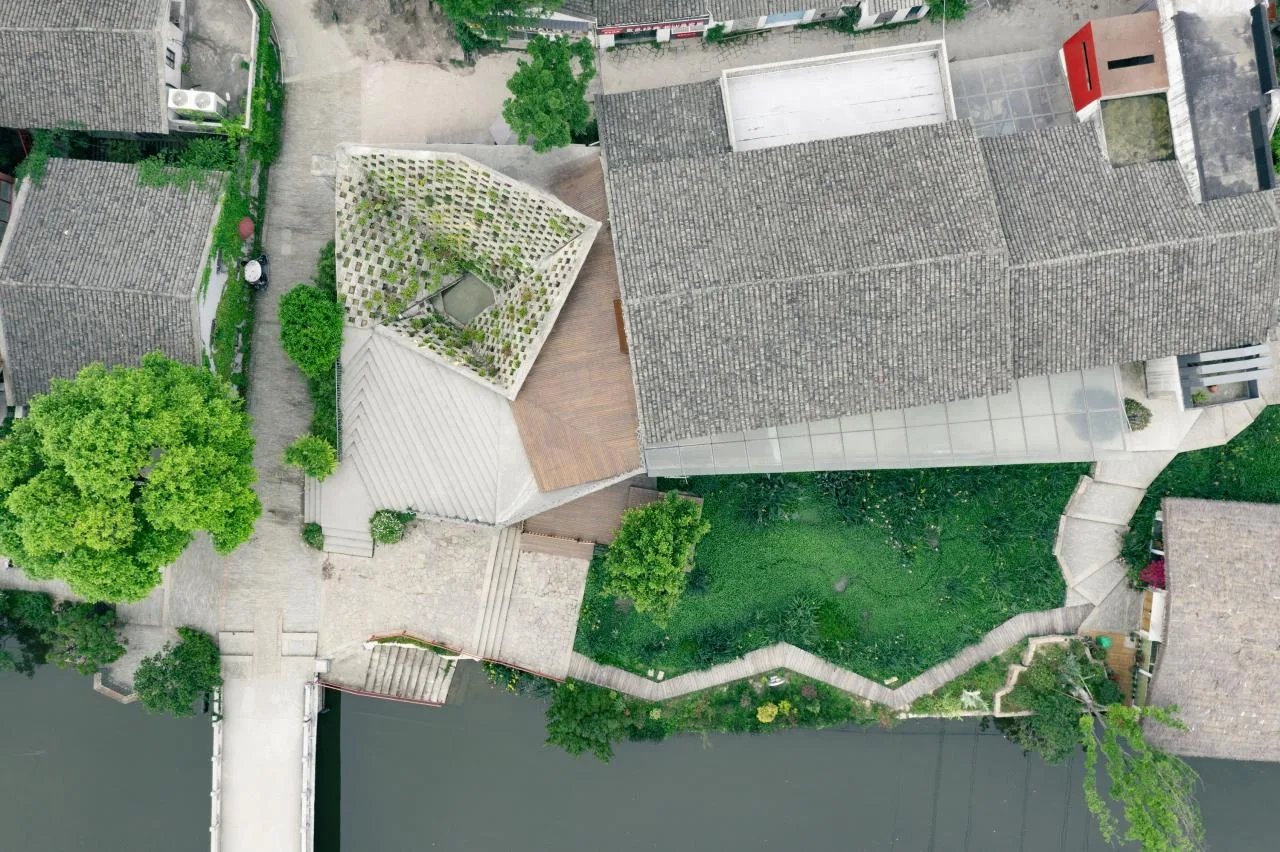
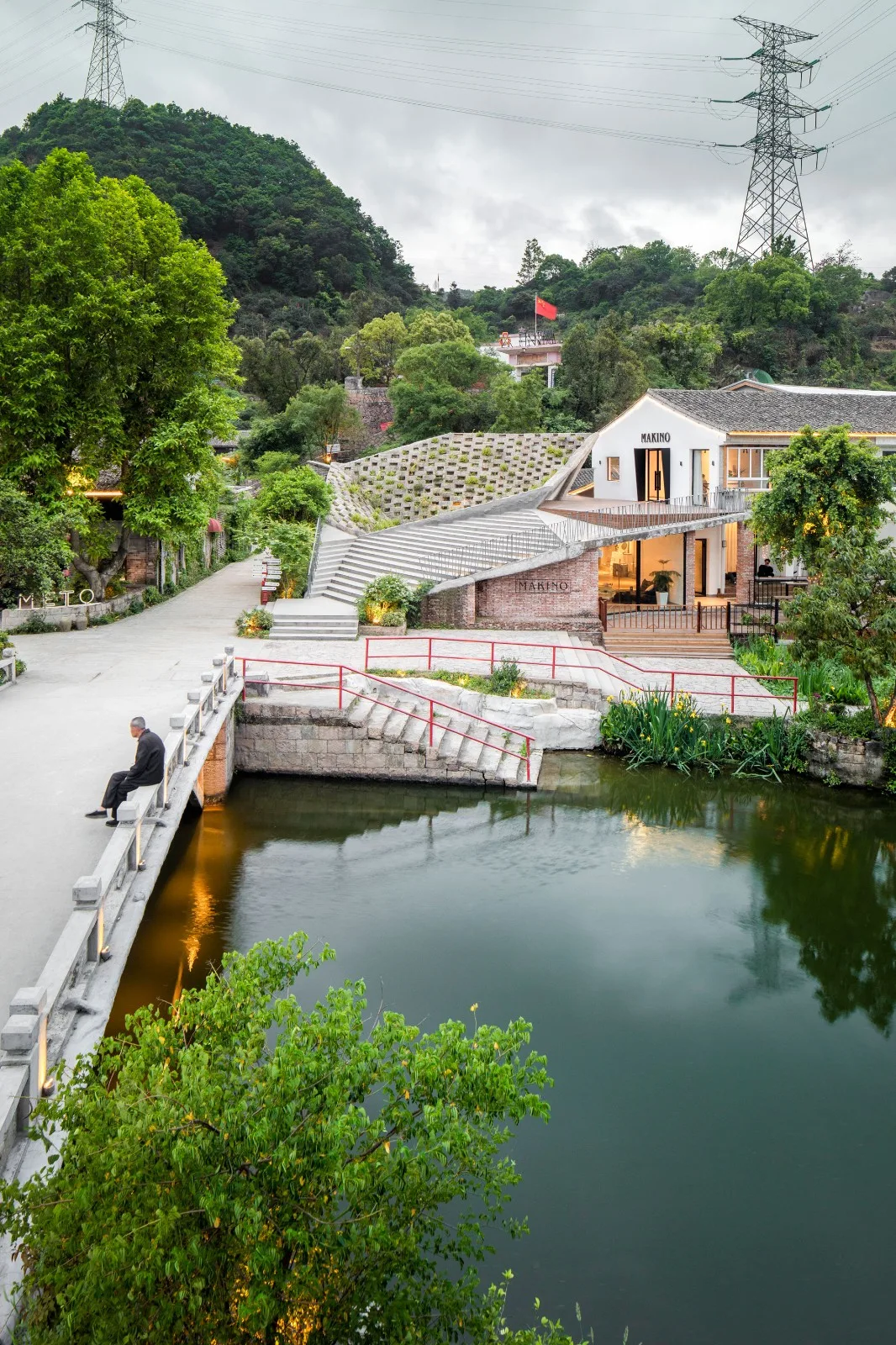
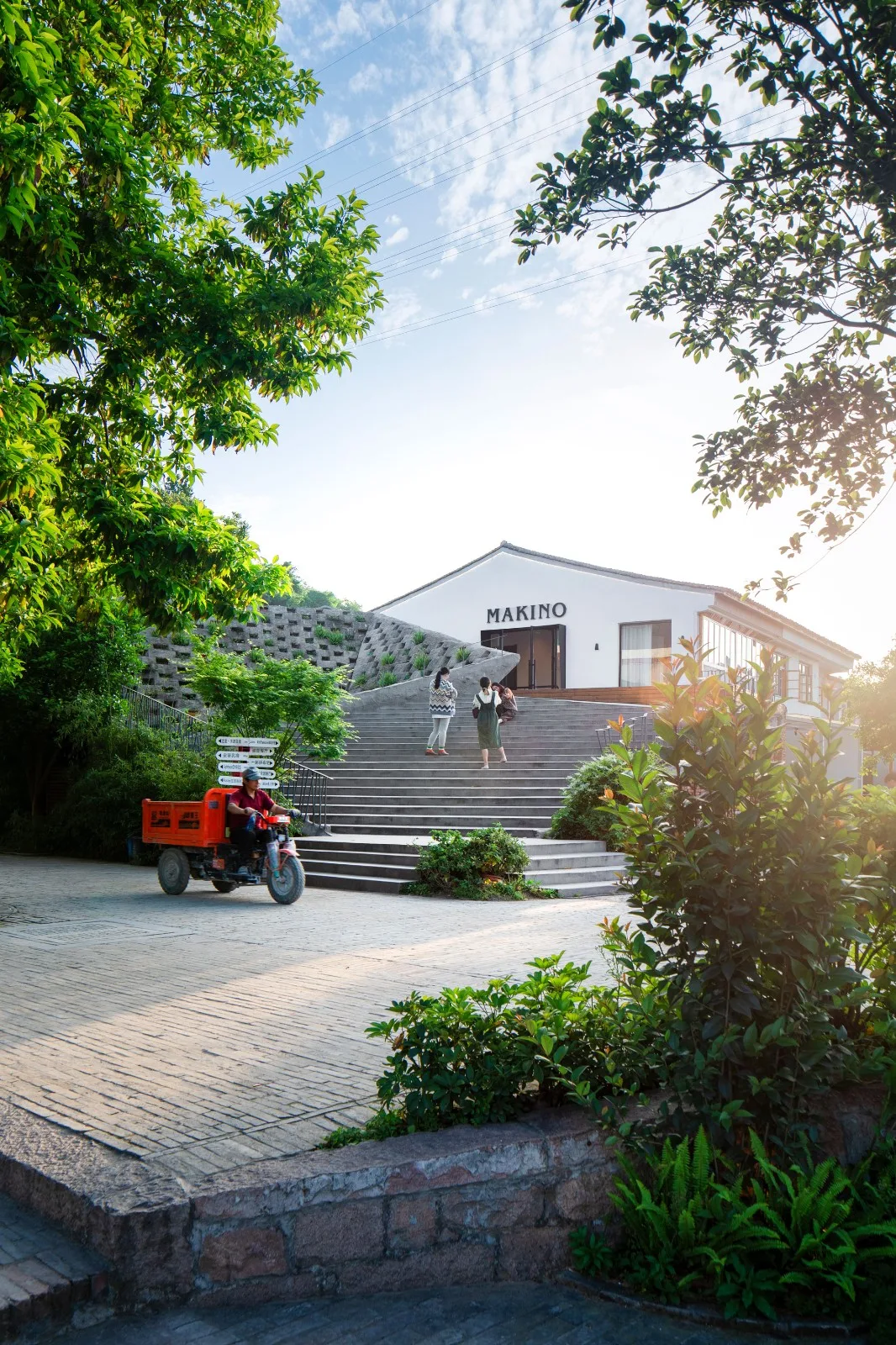
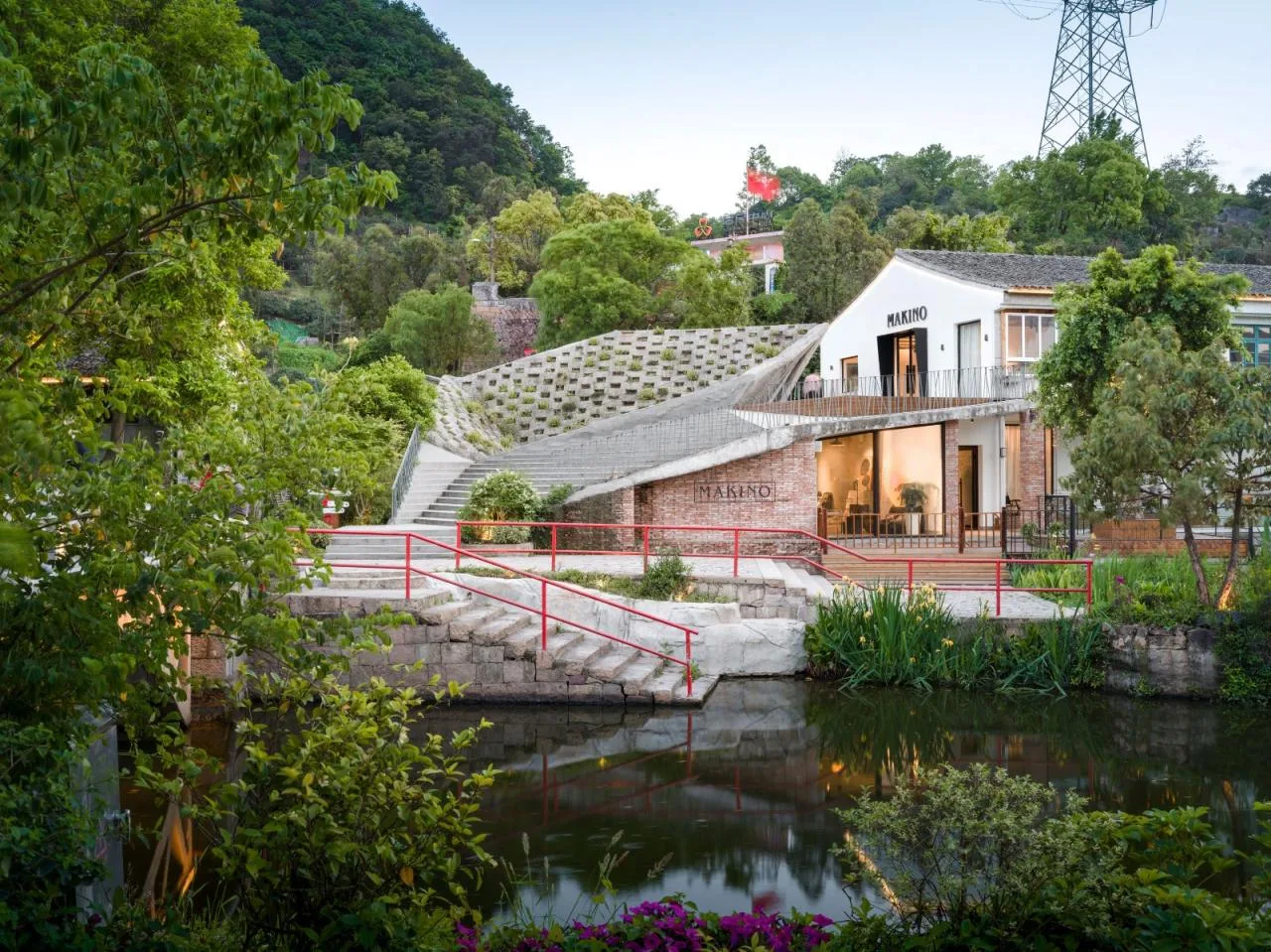
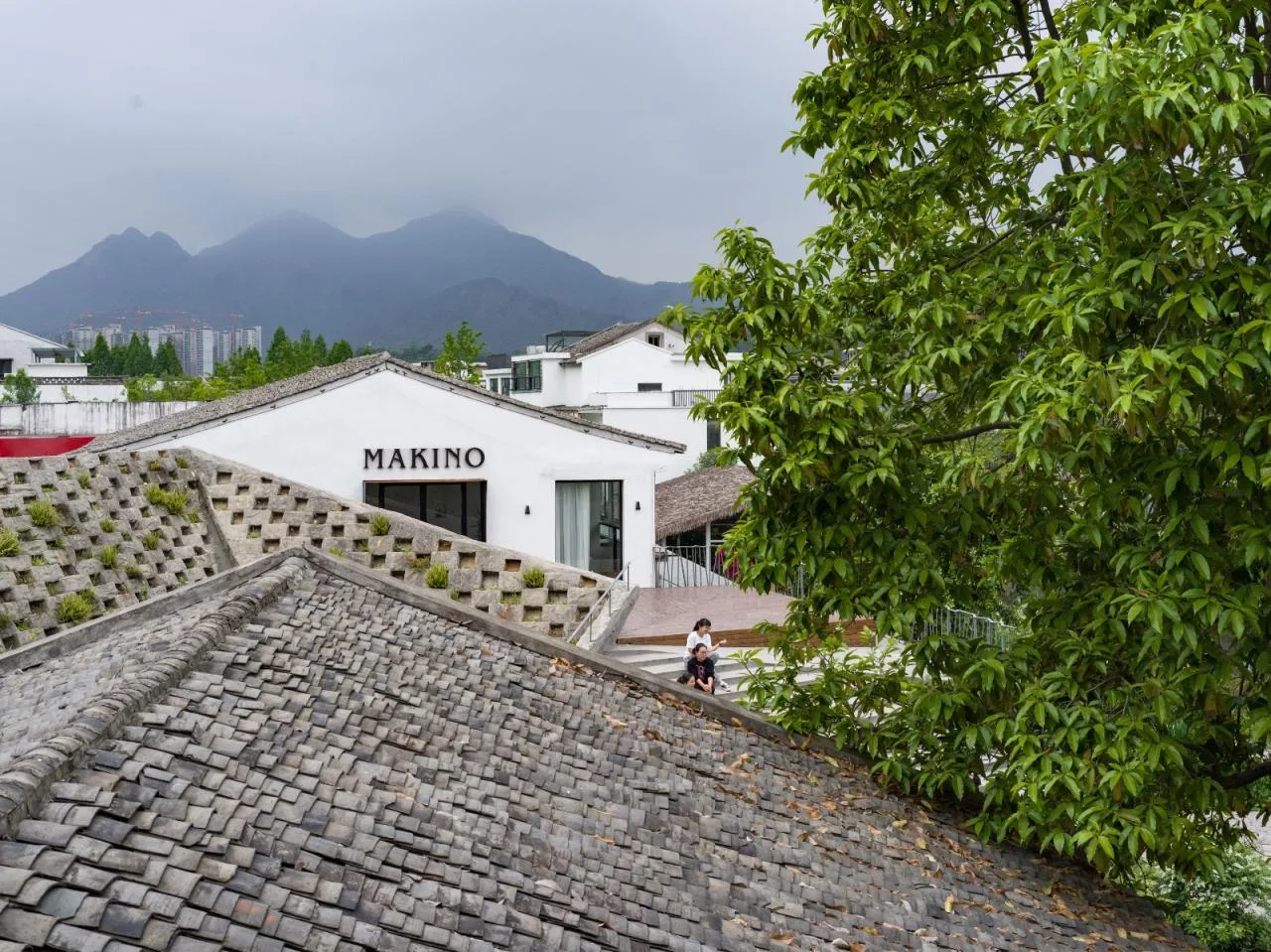
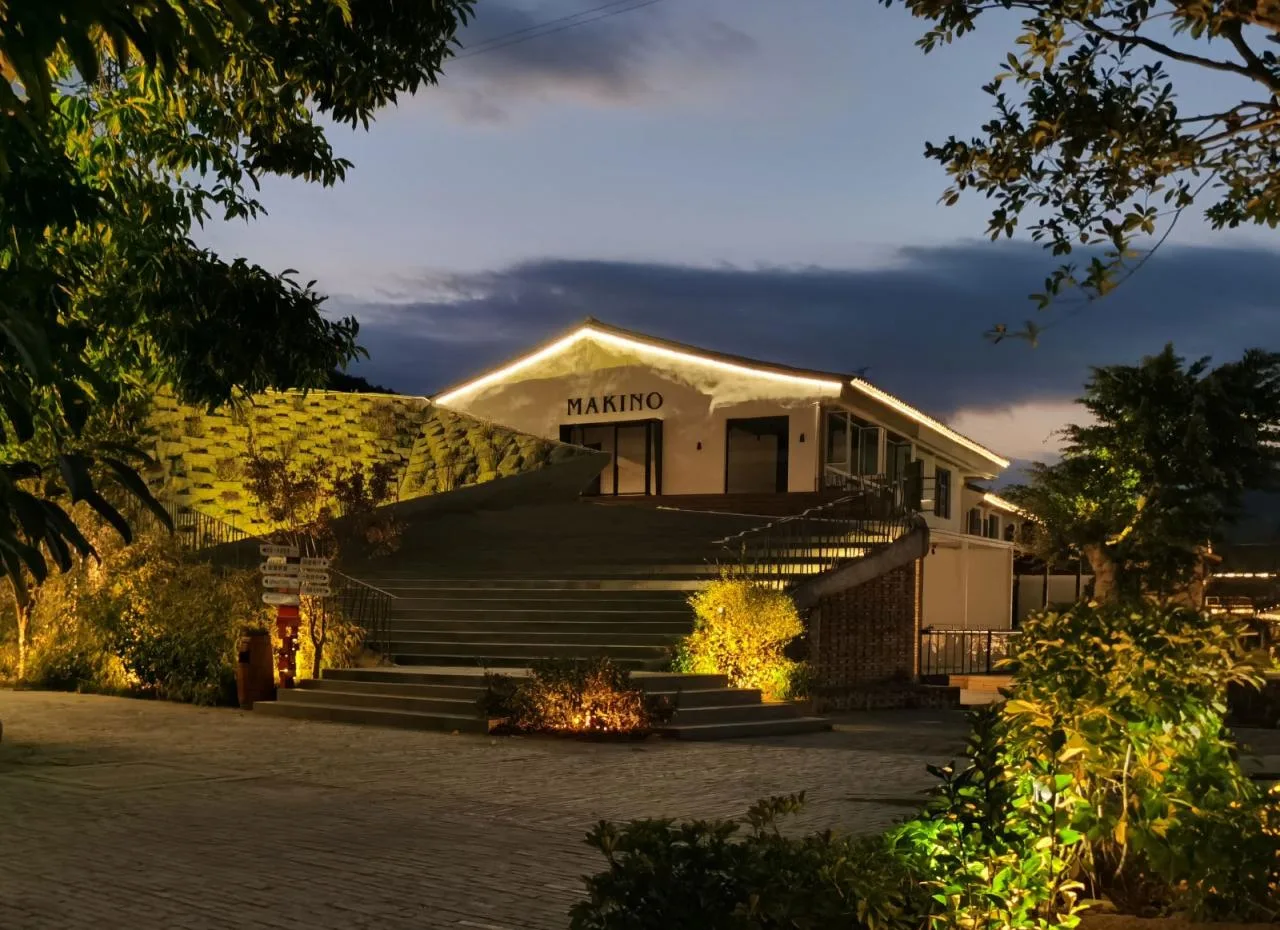
The “Flower of Mountain Roots” is an open pavilion located on vacant land at the bridgehead, serving as a rural gathering place. The design employs digital methodologies to connect the pavilion with the overall site context. It begins at ground level by linking to the bridgehead, then elevates to form an observation platform overlooking the bridgehead, which also connects to existing buildings in the cluster.
The structure spirals upward, rotating along two tracks that serve as its outer and inner boundaries, forming a complex curved surface that rises from the ground, creates a platform, and continues upward into a collar-like outline, culminating in a converging spiral form.
This model is conceptual rather than a finalized building volume. Based on local construction experience, architects recognized the limitations of delving into structural details here, leaving much of that to the construction team. Their role focused on controlling an accurate volumetric scheme.
Therefore, they proactively simplified the complex geometry—not as a loss but as a creative reinterpretation—transforming intricate curved surfaces into a series of triangles and quadrilaterals. This resulted in a clearer, more directed form, defying conventional flat shaping methods.
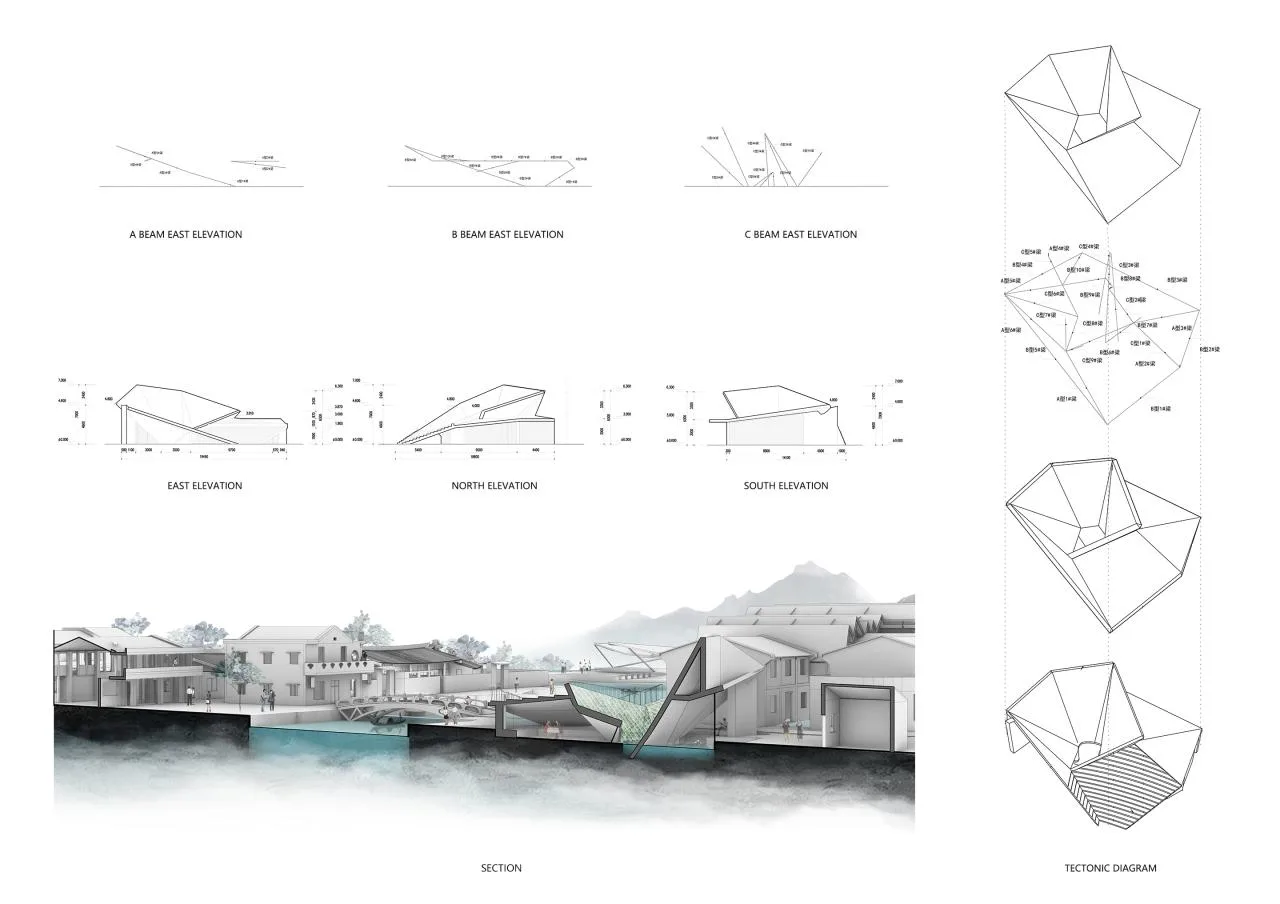
The computer-generated continuous spiral surface is translated into a sequence of feasible continuous folds suitable for rural construction.
This new formal language reflects SpActrum’s architectural philosophy: innovative forms emerge from addressing specific functional and structural questions through the generative design process, rather than direct sculptural manipulation.
Design is a process of creation and interpretation, where flattening complex surfaces helps clarify architectural issues like behavior and structure. A key goal here is to create usable space while maintaining an intentional ambiguity, imbuing the building components with a sense of openness and mystery.
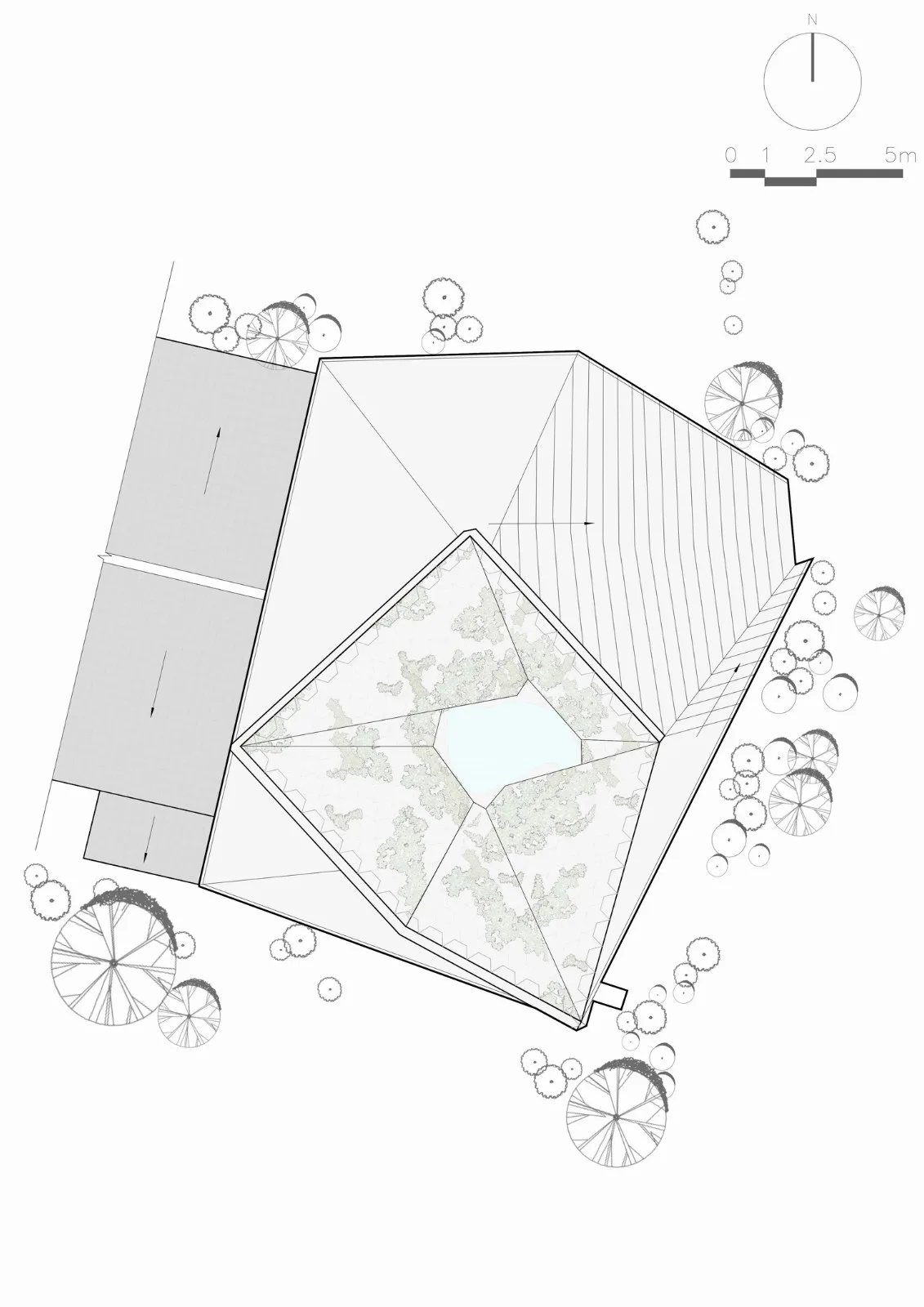
△ General plan of “Flower of Mountain Roots”
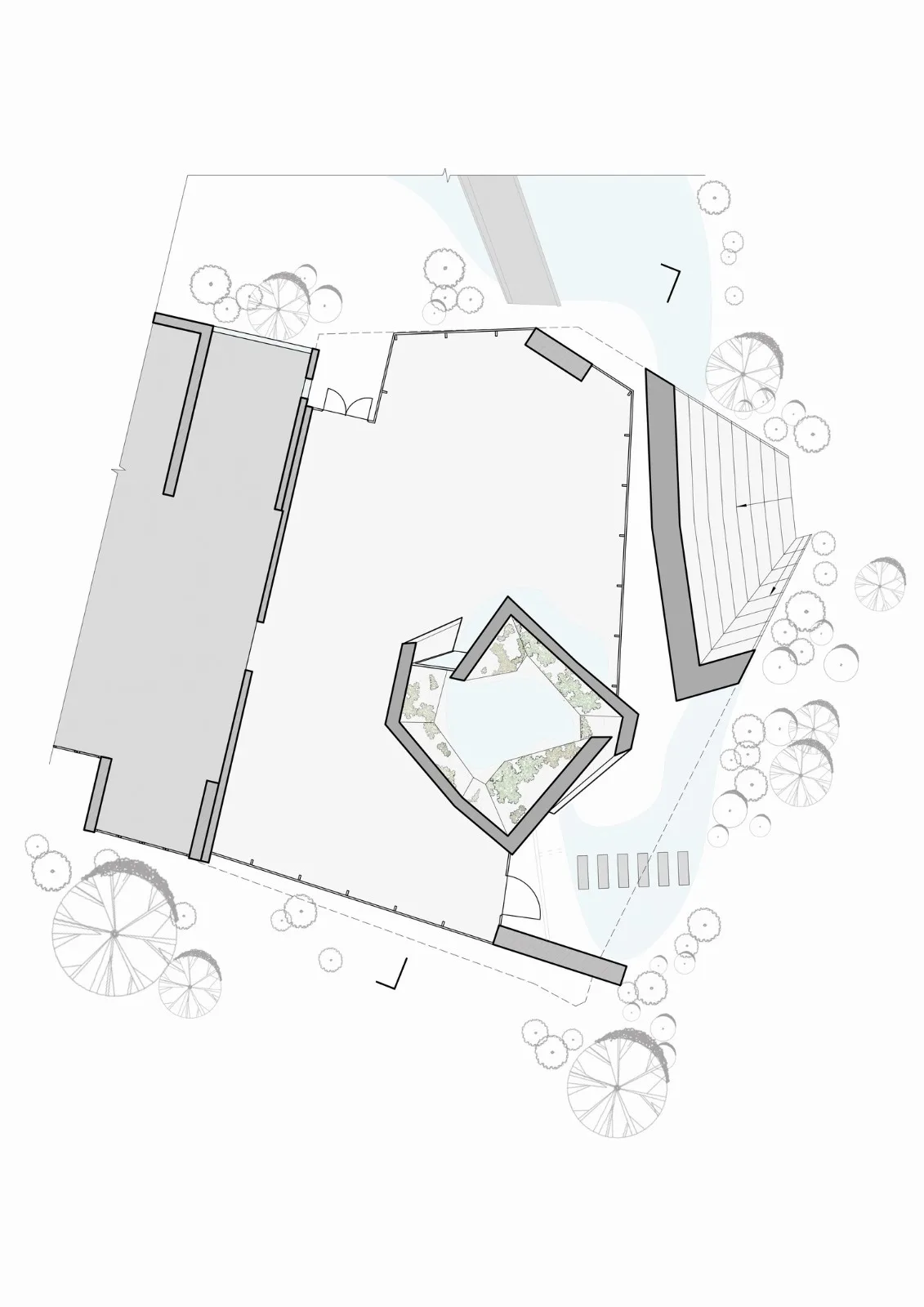
△ First-floor plan of “Flower of Mountain Roots”
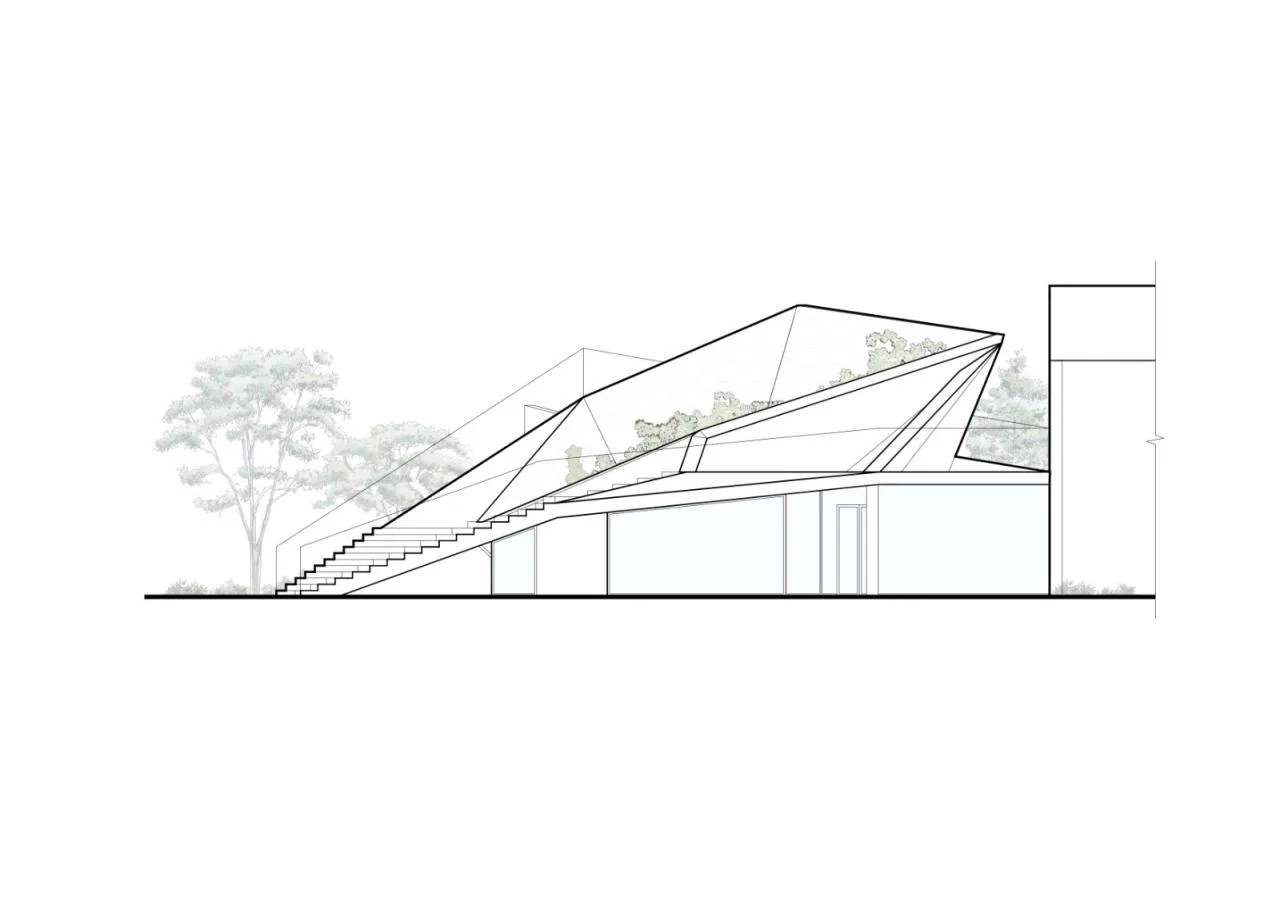
△ North elevation
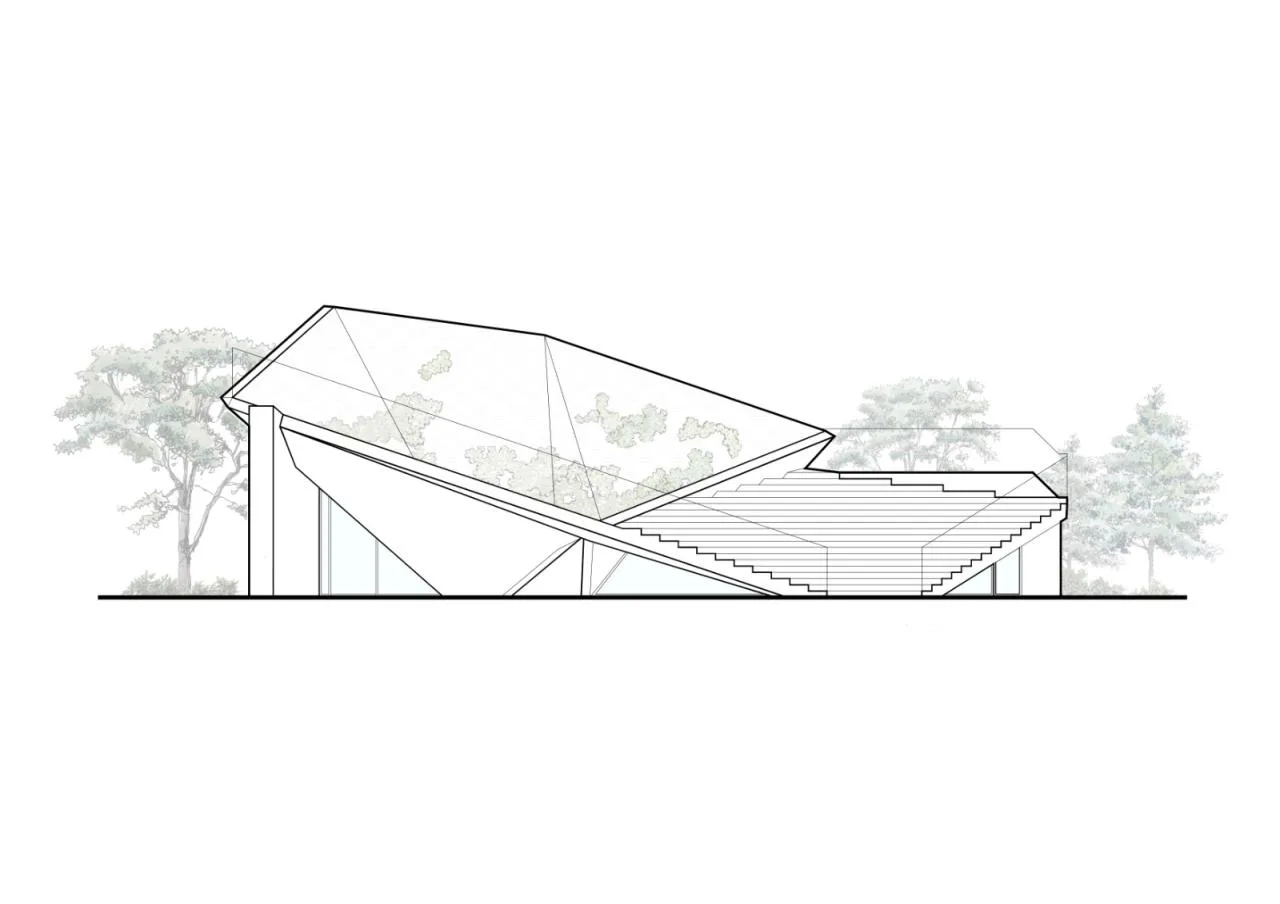
△ East elevation
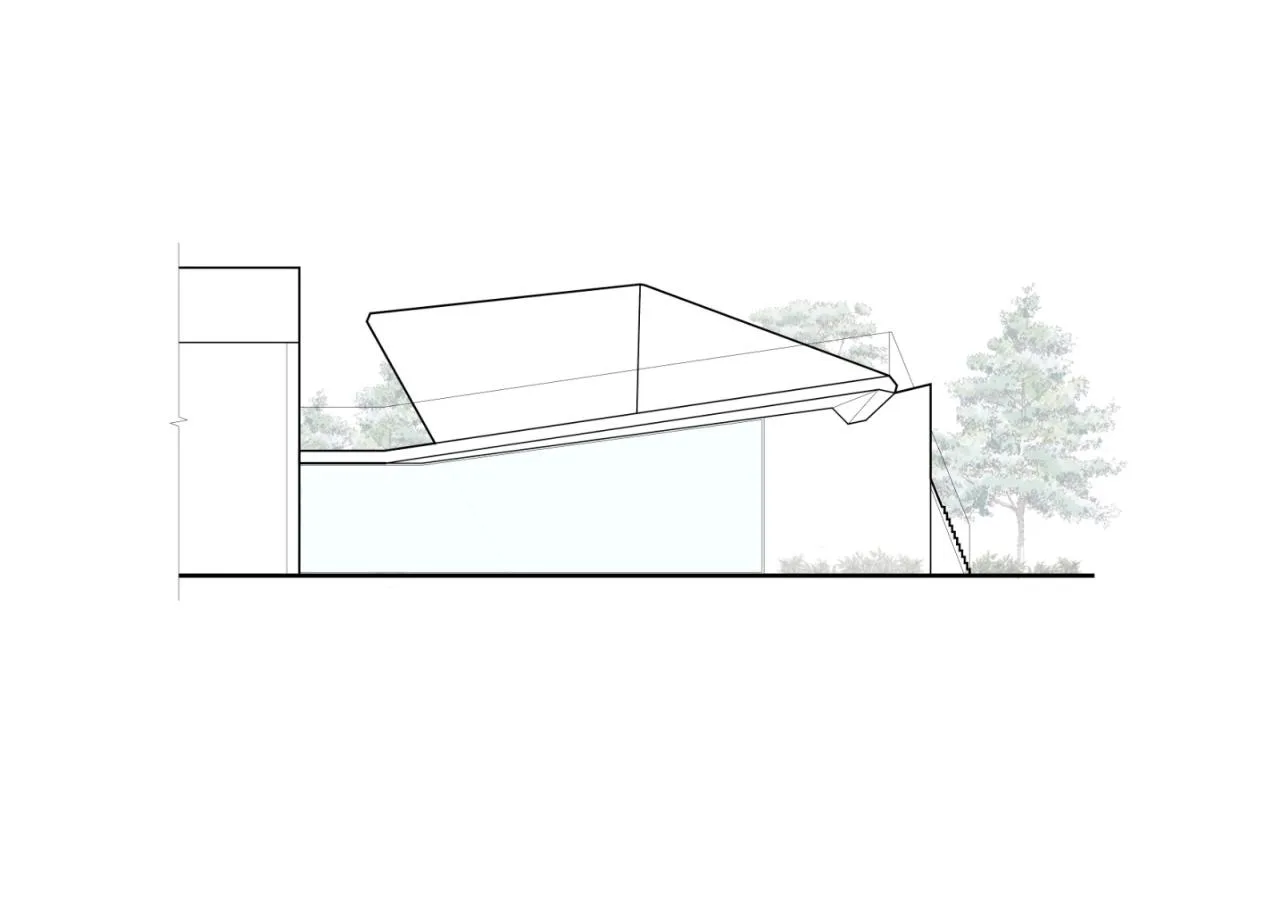
△ West facade
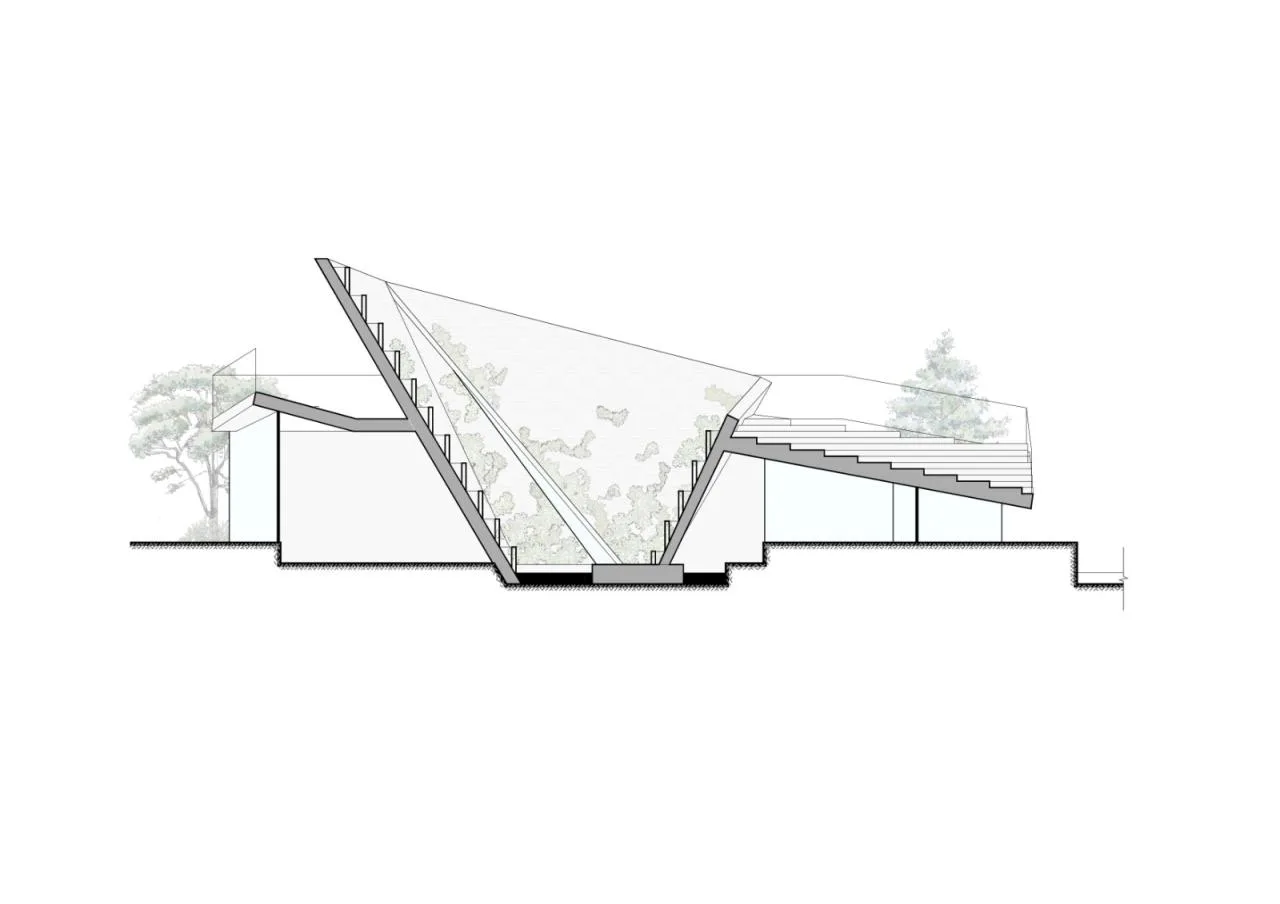
△ Section diagram
Once the constructible form was finalized, the next challenge was twofold.
First, accurately positioning and laying out this unconventional geometric form on-site during construction required a precise method. The SpActrum team developed a positioning system combining planar coordinates with angle elevations, producing documentation that supported detailed construction drawings and on-site form placement. This approach extended ground positioning into three-dimensional spatial layout by linking spatial points.
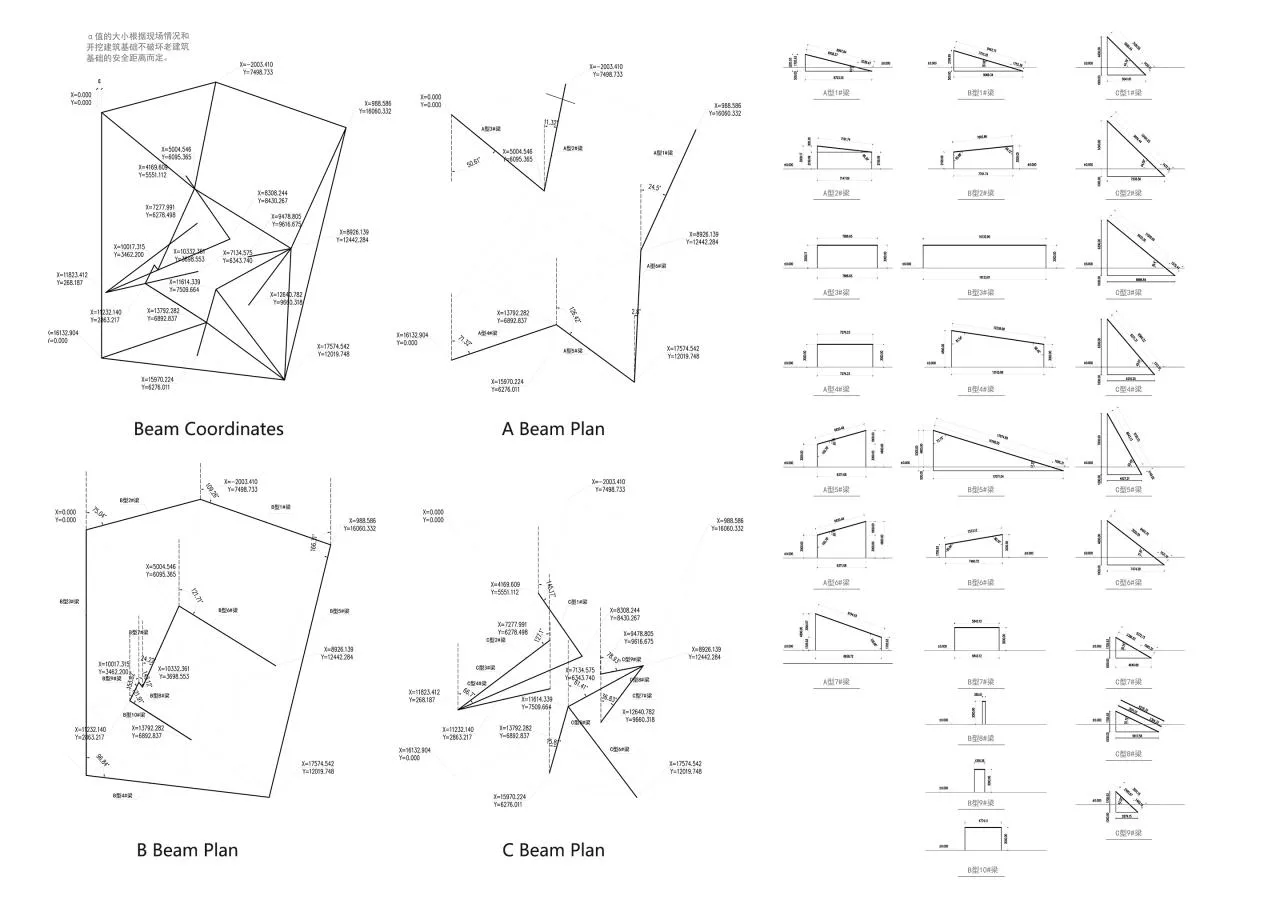
Spatial positioning map for the construction of “Flower of Mountain Roots”
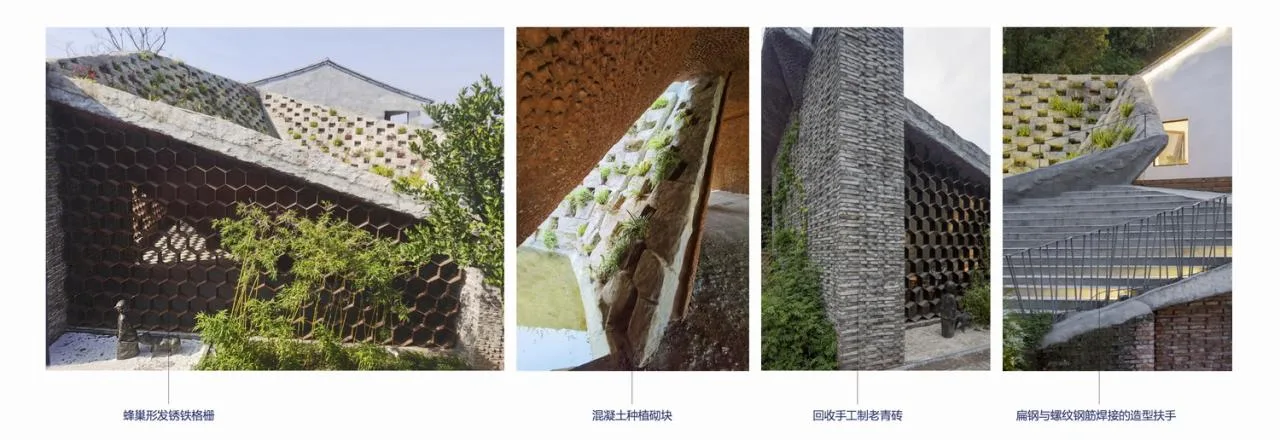
The “Flower of Mountain Roots” employs traditional local construction techniques and materials, including sprayed concrete blocks, recycled handmade green bricks, oyster shell ash coating, glass, and steel.
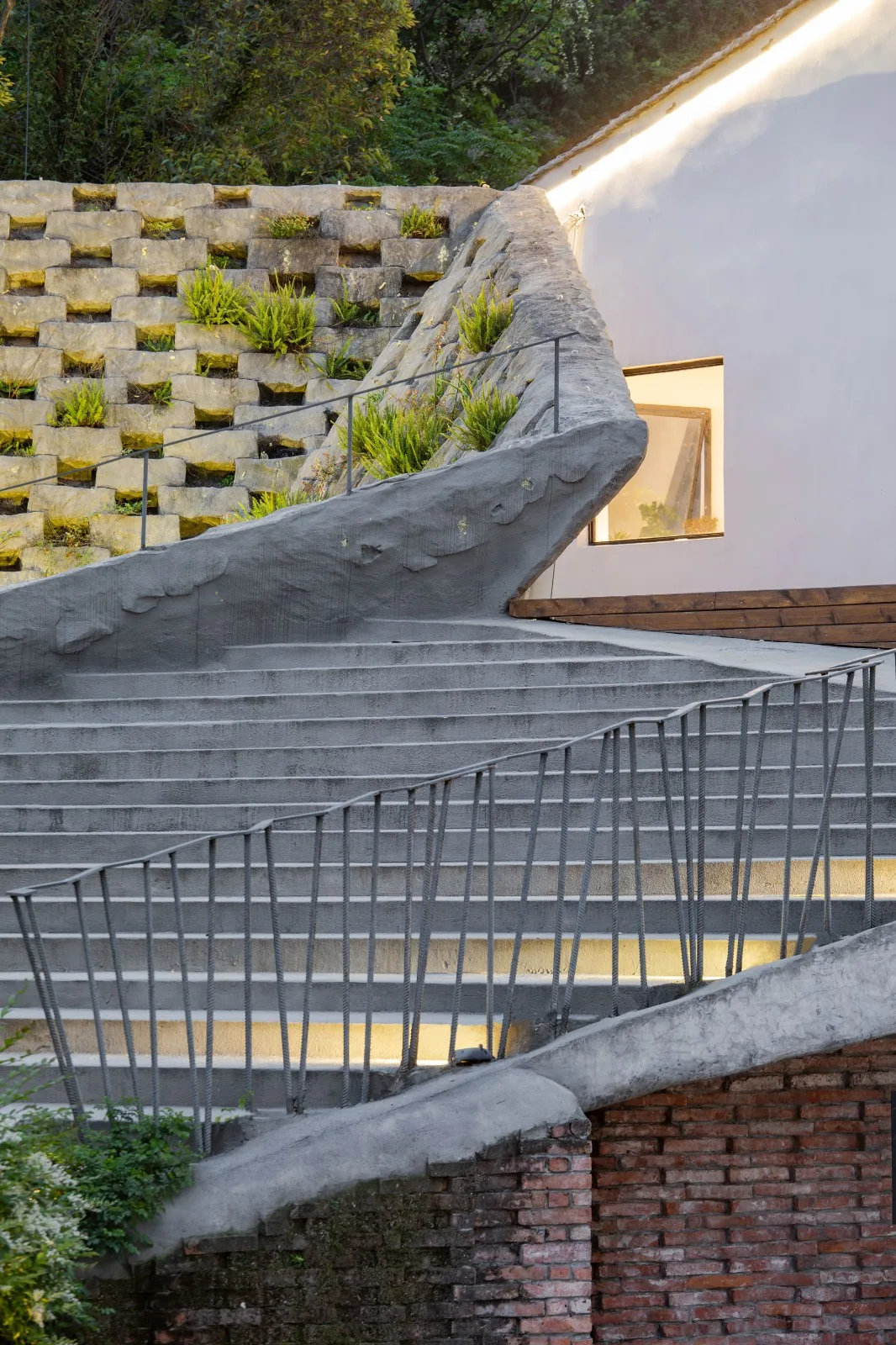
Secondly, integrating functional elements such as stairs, railings, masonry, and interior finishes was essential for usability. The design maximized the use of local, organic materials. For example, the handrails are crafted from highly industrialized threaded steel for precise shaping.
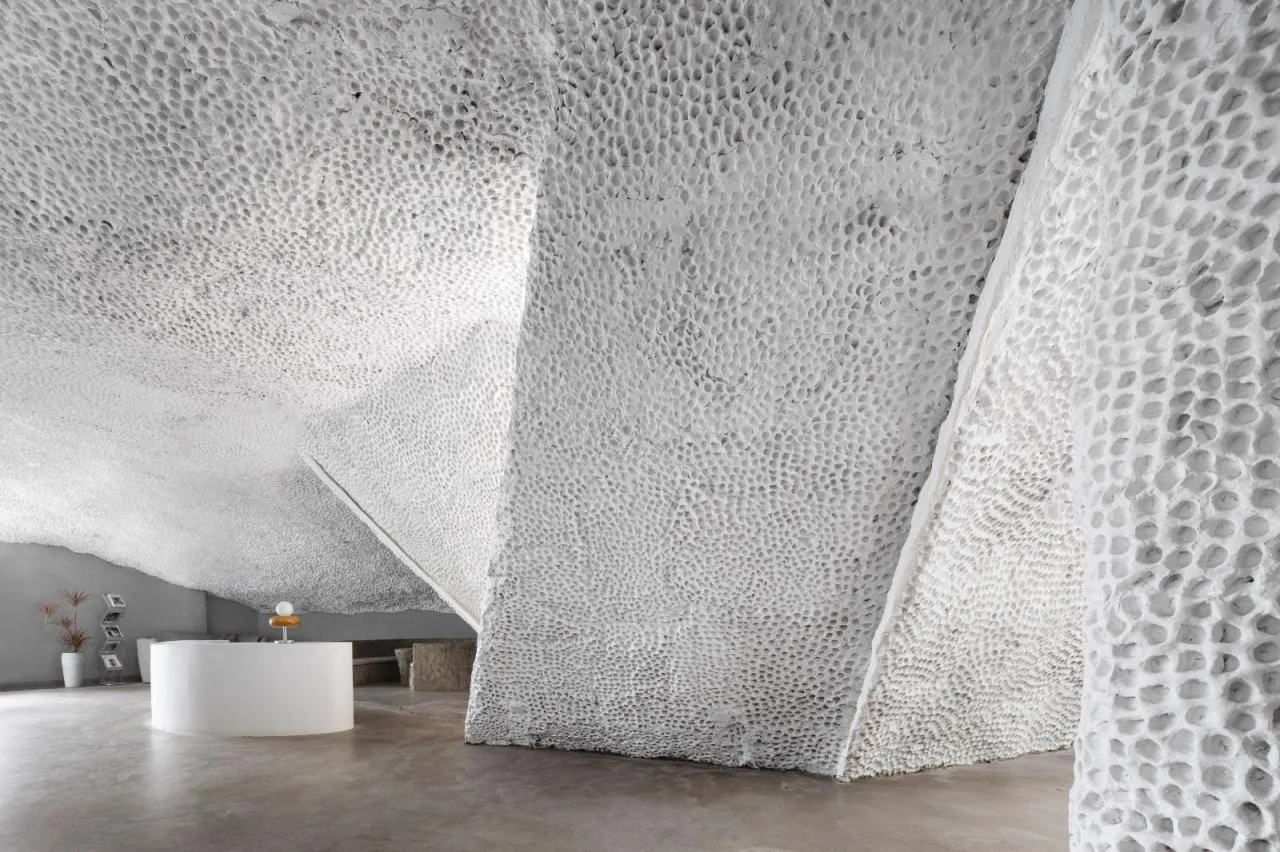
Notably, inspired by traditional Zhejiang oyster wall and oyster ash painting techniques, the interior walls feature a distinctive rough mortar finish, creating a unique texture and atmosphere.
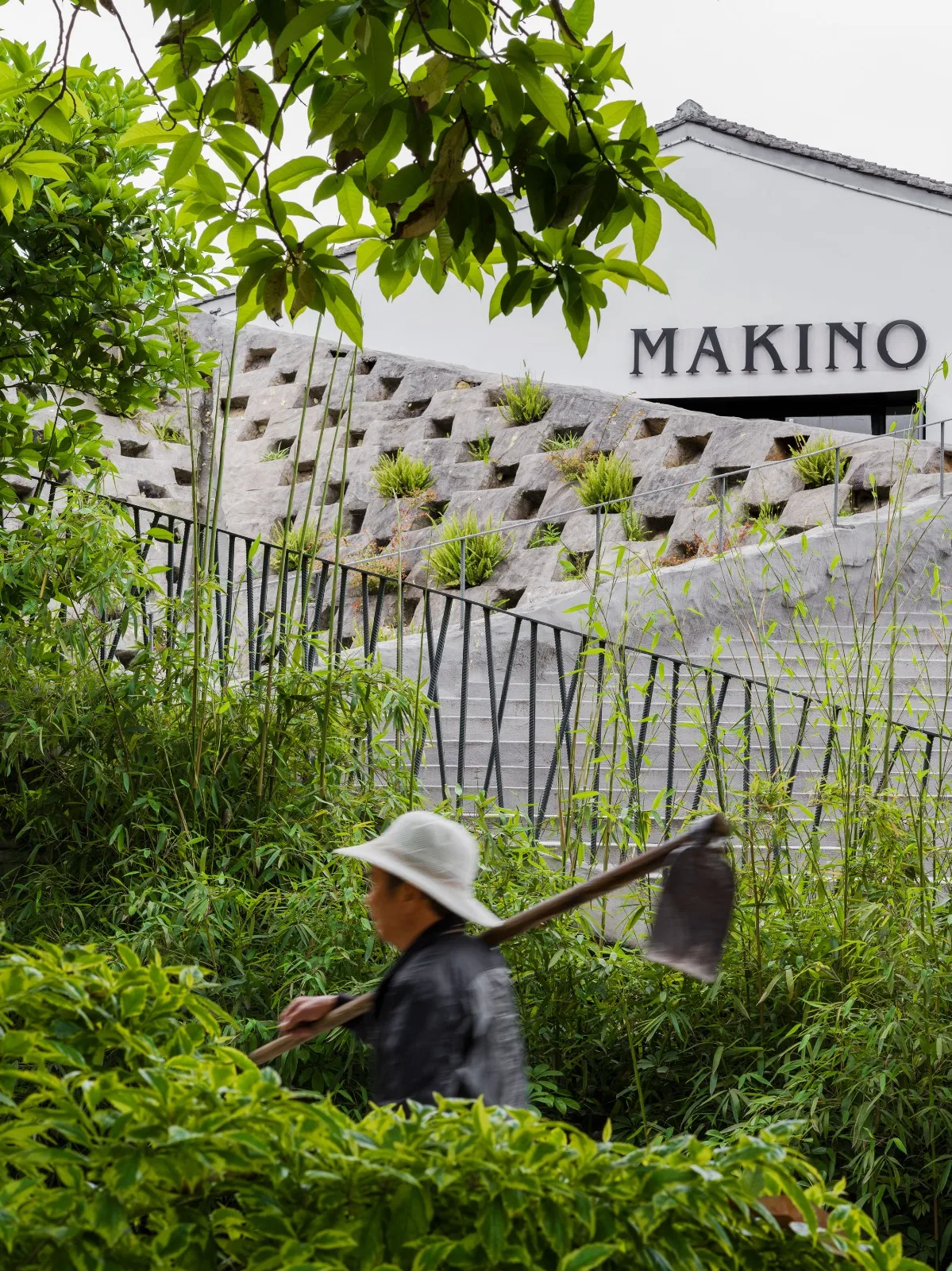
The internal inverted cone structure supports the entire platform while opening to the sky to channel rainwater inside. At its base, it merges into a pond connected to an external ecological pool. Water flowing down the inner walls nourishes ferns growing in wall grooves, effectively blurring the boundaries between interior and exterior, architecture and landscape.
The pavilion’s spine is divided into two halves with staggered light gaps, allowing natural light to enter even the darkest interior corners.
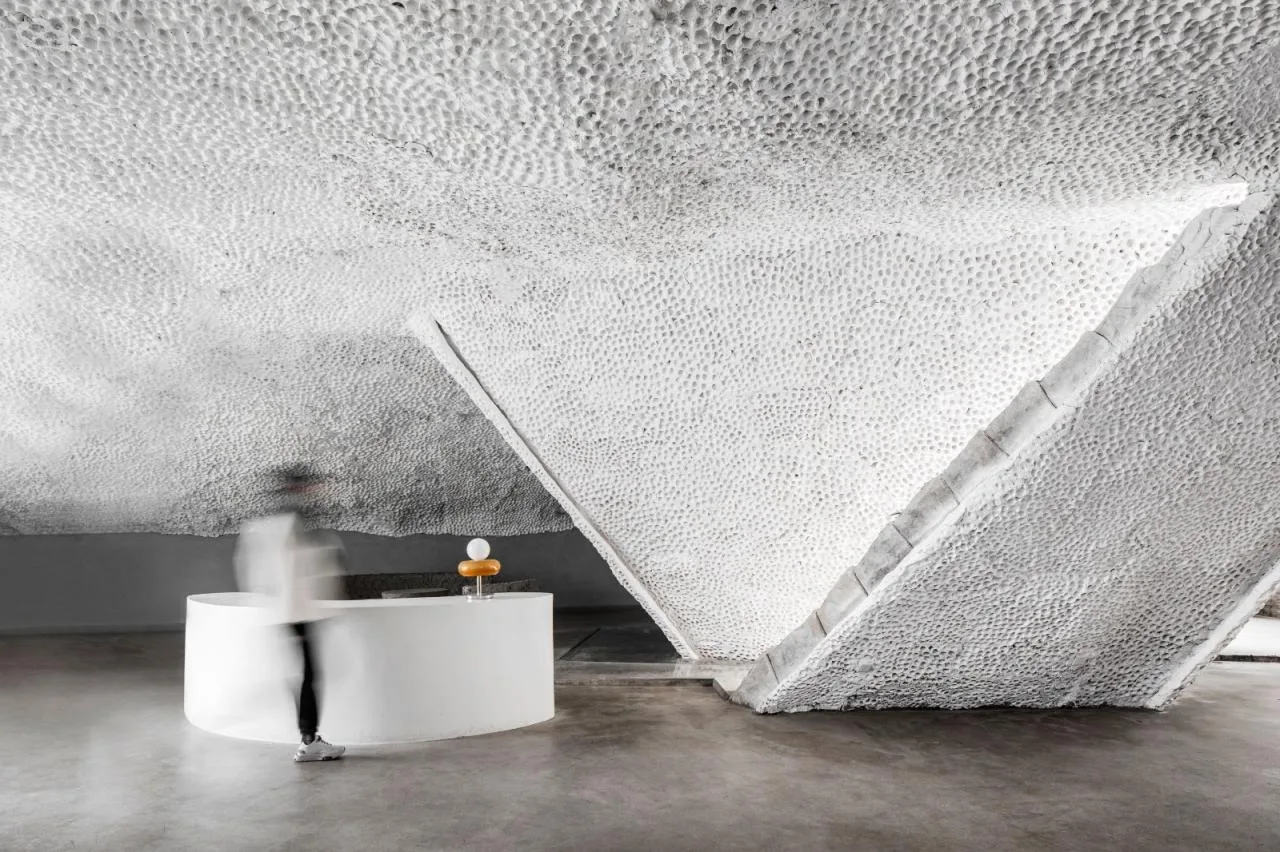
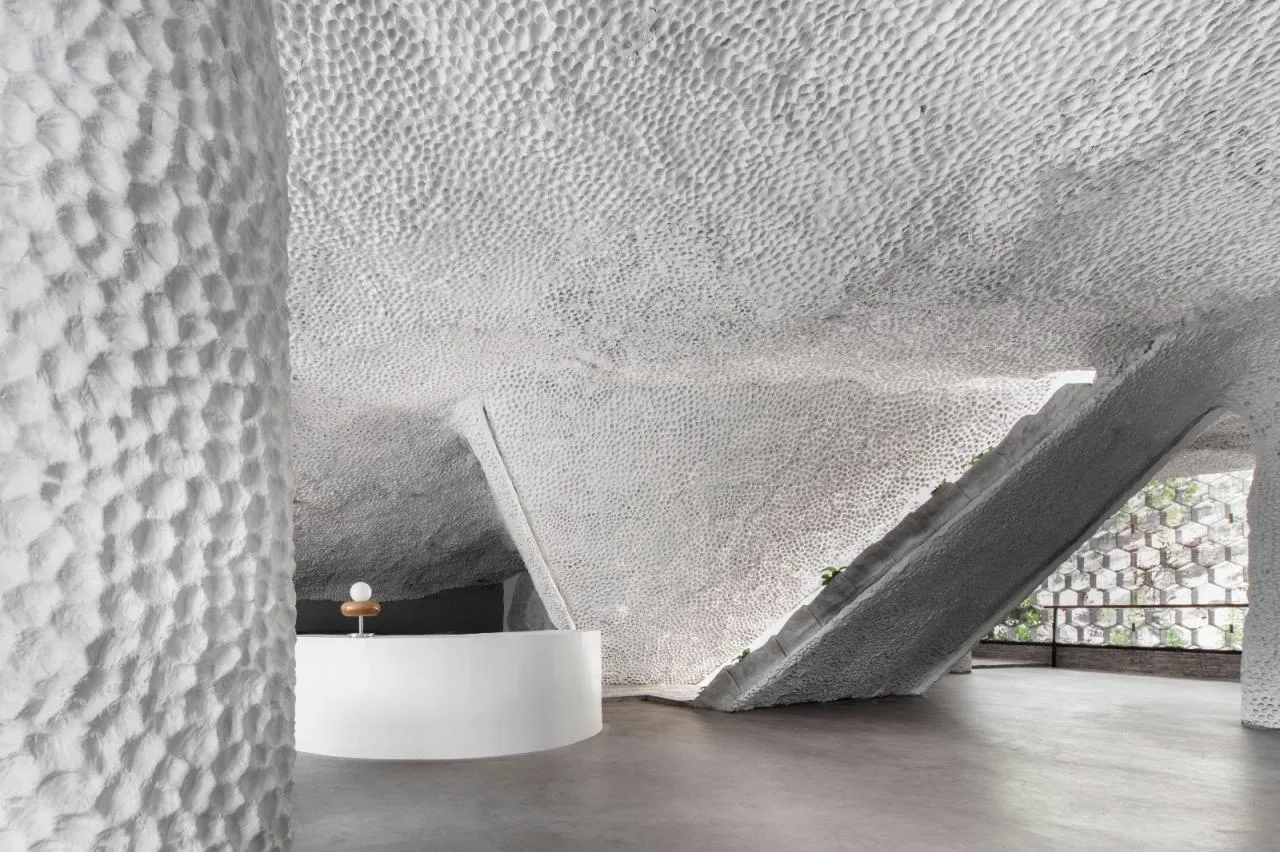
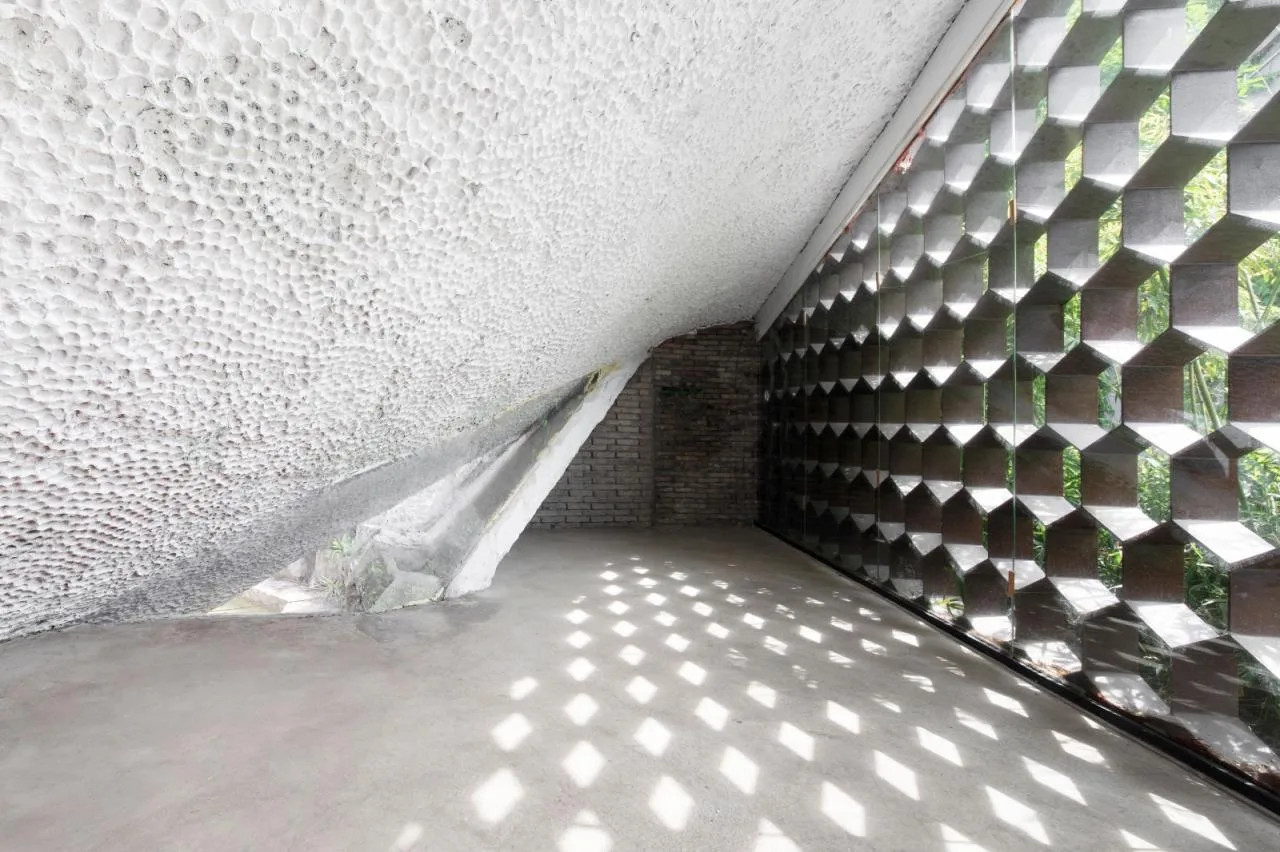
The “Flower of Mountain Roots” celebrates life, nature, and the intangible psychological needs and behaviors that architecture can evoke. In the coming years, as vines climb the brick walls, ferns cover the inner cone, and duckweed and calamus flourish in the pond, this place will come alive.
When people gather on the steps during summer afternoons to watch sunsets and enjoy coffee beneath the platform, the architects will take pride in having nurtured a bit of wildness here—helping the power of natural chaos to return.
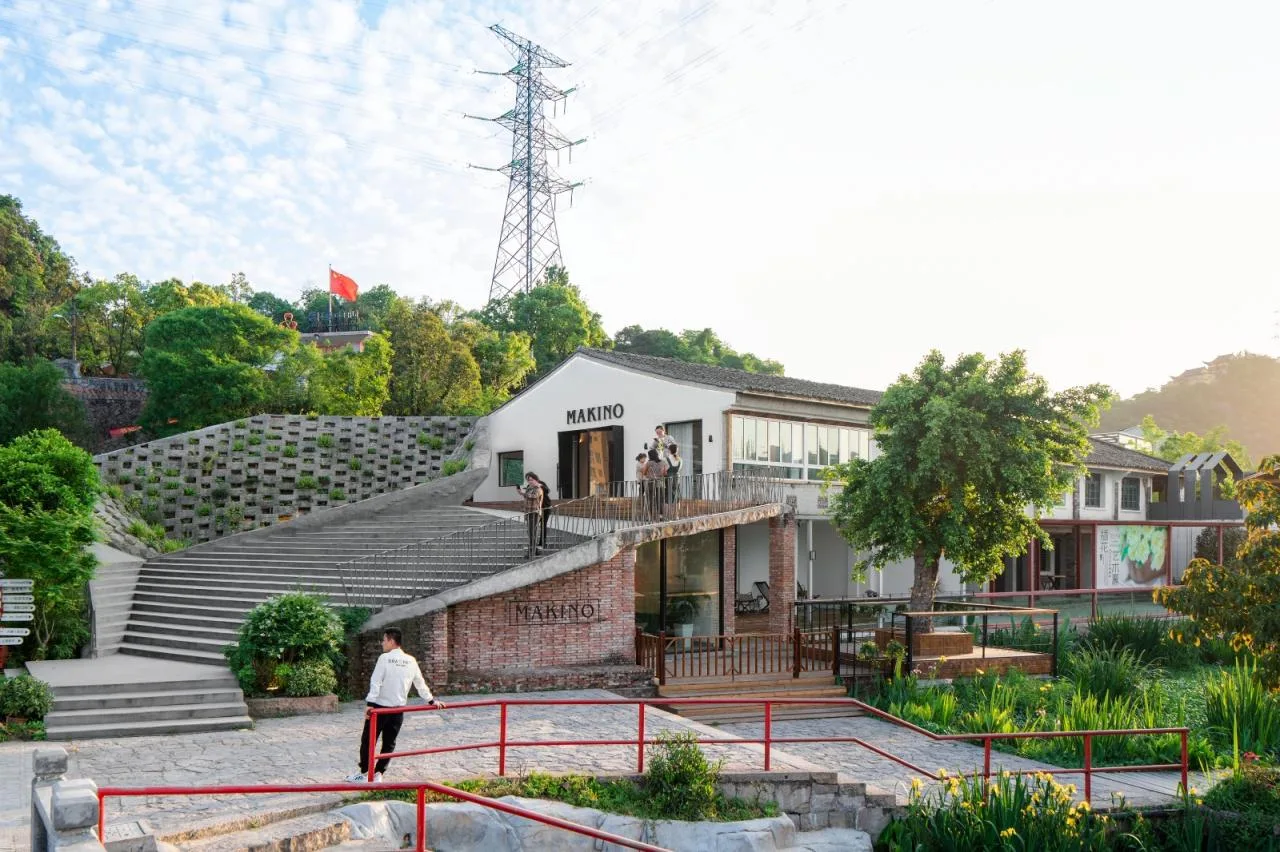
Project Information
Project Name: Flower of Mountain Roots
Location: Shangen Village, Wenzhou City, Zhejiang Province
Type: Architectural and Landscape Design
Client: Zhejiang Yunjian Tourism Investment Co., Ltd
Status: Completed
Design Firm: SpActrum / Spectrum Architecture
Lead Designer: Pan Yan
Design Team: Pan Yan, Li Zhen, Tang Yimeng, Chen Junyou
Design Period: 2019-2020
Completion Year: 2020
Total Area: 120 square meters
Construction Drawings & Contractor: Yunjian, Zhejiang
Materials: Sprayed concrete blocks, recycled handmade green bricks, oyster shell ash coating, glass, steel
Photographer: Judy















Must log in before commenting!
Sign Up